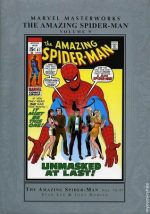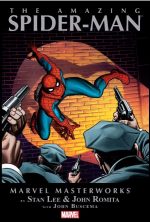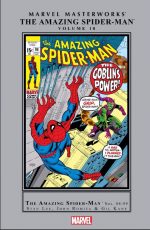
Amazing Spider-Man Masterworks volume 10


By Stan Lee, John Romita, Gil Kane, Jim Mooney & various (Marvel)
ISBN: 978-0-7851-2932-5 (HB)

Amazing Spider-Man was always a comicbook that matured with – or perhaps just slightly ahead – of its fan-base. As the Swinging Sixties segued into the Sordid Seventies, that feeling seemed to intensify with every issue…

This breathtaking tenth titanic full-colour tome of chronologically compiling the early adventures of the Arachnoid Amazement sees the World’s Most Misunderstood Hero achieve truly national prominence as the real world intersected with the niche realm of comics…

After a shaky start The Amazing Spider-Man quickly became a popular sensation with kids of all ages. Before too long the quirky, charming, thrillingly action-packed comics soap-opera would become the model for an entire generation of younger heroes impatiently elbowing aside the staid, (relatively) old thirty-something mystery-men of previous publications and hallowed tradition.

Smart-but-alienated Peter Parker was bitten by a radioactive spider during a school trip. Discovering strange superhuman abilities which he augmented with his own natural chemistry, physics and engineering genius, the kid did what any lonely, geeky nerd would do with such newfound prowess: he tried to cash in for girls, fame and money.

Making a costume to hide his identity in case he made a fool of himself, Parker became a minor media celebrity – and a criminally self-important one. To his eternal regret, when a thief fled past him one night he didn’t lift a finger to stop him, only to find when he returned home that his guardian uncle Ben Parker had been murdered.

Crazed and vengeful, Peter hunted the assailant who’d made his beloved Aunt May a widow and killed the only father he had ever known, discovering, to his horror, that it was the self-same felon he had neglected to stop. His irresponsibility had resulted in the death of the man who raised him, and the traumatised boy swore to forevermore use his powers to help others…

Since that night, the Wondrous Wallcrawler tirelessly battled miscreants, monsters and madmen, with a fickle, ungrateful public usually baying for his blood even as he perpetually saves them…

Re-presenting Amazing Spider-Man #88-99 – originally released between September 1970 and August 1971 – the spider-sagas revel in the fact that Peter and his ever-expanding cast of comrades were practically household names and the darlings of college campuses and the media intelligentsia throughout America and the world. Stan Lee’s scripts tapped into the always-evolving zeitgeists of the times and the deft use of soap opera plots kept older readers glued to the series even if the bombastic battle sequences didn’t. And here a sharp reminder came – that in those days at least – funnybooks were not immune to tragedy…

The wonderment starts to unfold in ‘The Arms of Doctor Octopus!’ (Lee, John Romita & Jim Mooney) with the many-tentacled terror escaping jail and capturing a jetliner full of Chinese diplomats. It all ends with explosive suddenness and apparent suicide after the wallcrawler intervenes but is promptly followed by ‘Doc Ock Lives!’ which heralded a new era of visual dynamism as Gil began a sporadic but memorable run as penciller whilst Romita reverted to inker. The octopus rampages through town causing carnage until Spider-Man again confronts him. The battle took a lethal turn in ‘And Death Shall Come!’ wherein Peter Parker’s attempts to stop him led to the death of a beloved cast member…

With that tragic demise of a cast regular, the webslinger became a wanted fugitive and already fanatical publisher J. Jonah Jameson began backing “Law and Order” election hopeful Sam Bullitt in a campaign ‘To Smash the Spider!’, utterly unaware of the politician’s disreputable past and ultra-right-wing agenda, but the secret came out in #92 ‘When Iceman Attacks’…

The ambitious demagogue convinced the youngest X-Man that Spider-Man had kidnapped Parker’s paramour Gwen Stacy but the Wondrous Wallcrawler’s explosive battle against the mutant exposed the corrupt and explicitly racist Bullit in an all-out action extravaganza featuring some of the best fight-art of the decade by two of the industry’s greatest names.

Romita resumed pencilling with issue #93, which saw the return of an almost forgotten frenemy in ‘The Lady and… The Prowler!’. Hobie Brown was a super-burglar gone straight, but when he saw that the Amazing Arachnid was wanted, he too was all too ready to believe the media hype…

Amazing Spider-Man #94 (Lee, Romita & Sal Buscema) offered a fresh glimpse of the hero’s fabled origin as part of a dynamic dust-up with The Beetle ‘On Wings of Death!’, after which Peter headed for London to woo his estranged girlfriend Gwen, who had fled the manic violence of America.

Sadly, ‘Trap for a Terrorist’ found the city under threat from a gang of bombers, which apparently only Spider-Man could handle, so she returned home, never knowing Parker had come after her.

Everything was forgotten in the next issue when deeply disturbed and partially amnesiac industrialist Norman Osborn abruptly remembered he once had another more macabre persona before once more attacking Peter in #96’s ‘…And Now, the Goblin!’ by Lee, Kane & Romita.

Lee had long wanted to address the contemporary drugs situation in his stories but was forbidden by Comics Code Authority strictures. When the US Department of Health, Education and Welfare approached him to tackle the issue, Lee crafted the 3-part Green Goblin tale. When it was refused Code approval, the writer-editor went ahead and published it anyway…

Although the return of the madman who knew all Spider-Man’s secrets was the big fan-draw, the real meat of the tale was how Osborn’s son Harry – a perfectly normal rich white kid and Peter Parker’s best friend – could be drawn into a web of addiction, abuse and toxic overdose…

Frank Giacoia began inking Kane with the second instalment, ‘In the Grip of the Goblin!’ as the elder Osborn ran riot, almost killing the webslinger and preparing for his final deadly assault even as his son lay dying, before the saga spectacularly concluded with ‘The Goblin’s Last Gasp!’ as, in the clinch, the villain’s deeply-buried paternal love proved his undoing and Parker’s salvation…

This collection closes with a placeholder yarn designed to set up major events for the anniversary 100th issue.

Amazing Spider-Man #99 portrays ‘A Day in the Life of…’: an all-action, social drama-tinged palate-cleanser with Peter and Gwen finally getting their love-life back on track, only marginally diverted by a prison breakout easily quelled by the Arachnid Avenger, whilst highlighting the growing scandal of prison conditions.

The best was yet to come…
© 1970, 1971, 2012 Marvel Characters, Inc. All rights reserved.
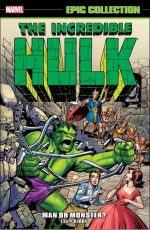
Incredible Hulk Epic Collection: Man or Monster?


By Stan Lee, Jack Kirby, Steve Ditko, Dick Ayers & various (Marvel)
ISBN: 978-0-7851-9600-6

Chronologically collecting the Jade Juggernaut’s earliest appearances, this titanic tome (available as a hefty paperback and relatively weightless digital edition) gathers Incredible Hulk #1-6, Fantastic Four #2 and 25-26, Avengers #1-3 and 5, Amazing Spider-Man #14, Tales to Astonish #59 and a memorable clash with Thor from Journey into Mystery #112: cumulatively spanning early 1962 to the end of 1964.

The Incredible Hulk was new-born Marvel’s second new superhero title, although technically Henry Pym debuted earlier in a one-off yarn in Tales to Astonish #27 (January 1962). However, he didn’t become a costumed hero until the autumn, by which time Ol’ Greenskin was not-so-firmly established.

The Hulk smashed right into his own bi-monthly comic and, after some classic romps by Young Marvel’s finest creators, crashed right out again. After six issues the series was cancelled and Lee retrenched, making the Gruff Green Giant a perennial guest-star in other Marvel titles until such time as they could restart the drama in their new “Split-Book” format in Tales to Astonish where Ant/Giant-Man was rapidly proving to be a character who had outlived his time.

Cover-dated May 1962, the Incredible Hulk #1 sees puny atomic scientist Bruce Banner, sequestered on a secret military base in the desert, perpetually bullied by the bombastic commander General “Thunderbolt” Ross as the clock counts down to the World’s first Gamma Bomb test.

Besotted by Ross’s daughter Betty, Banner endures the General’s constant jibes as the timer ticks on and tension increases.

At the final moment Banner sees a teenager lollygagging at Ground Zero and frantically rushes to the site to drag the boy away. Unknown to everyone, the assistant he’s entrusted to delay the countdown has an agenda of his own…

Rick Jones is a wayward but good-hearted kid. After initial resistance he lets himself be pushed into a safety trench, but just as Banner prepares to join him The Bomb detonates…

Somehow surviving the blast, Banner and the boy are secured by soldiers, but that evening as the sun sets the scientist undergoes a monstrous transformation. He grows larger; his skin turns a stony grey…

In six simple pages that’s how it all starts, and no matter what any number of TV or movie reworkings or comicbook retcons and psycho-babble re-evaluations would have you believe that’s still the best and most primal take on the origin. A good man, an unobtainable girl, a foolish kid, an unknown enemy and the horrible power of destructive science unchecked…

Written by Stan Lee, drawn by Jack Kirby with inking by Paul Reinman, ‘The Coming of the Hulk’ barrels along as the man-monster and Jones are kidnapped by Banner’s Soviet counterpart the Gargoyle for a rousing round of espionage and Commie-busting. In the second issue the plot concerns invading aliens, and the Banner/Jones relationship settles into a traumatic nightly ordeal as the good doctor transforms and is locked into an escape-proof cell whilst the boy stands watch helplessly. Neither ever considers telling the government of their predicament…

‘The Terror of the Toad Men’ is formulaic but viscerally and visually captivating as Steve Ditko inks Kirby; imparting a genuinely eerie sense of unease to the artwork. Incidentally, this is the story where the Hulk inexplicably changed to his more accustomed Green persona…

Although back-written years later as a continuing mutation, the plain truth is that grey tones caused all manner of problems for production colourists so it was arbitrarily changed to the simple and more traditional colour of monsters.

The third issue presented a departure in format as long, chaptered epics gave way to complete short stories. Dick Ayers inked Kirby in the transitional ‘Banished to Outer Space’ which radically altered the relationship of Jones and the monster, with the story thus far reprised in 3-page vignette ‘The Origin of the Hulk’ after which Marvel mainstay of villainy the Circus of Crime debuts in ‘The Ringmaster’. The Hulk goes on an urban rampage in #4’s first tale ‘The Monster and the Machine’ before aliens and Commies combine in the second escapade ‘The Gladiator from Outer Space!’

The Incredible Hulk #5 is a joyous classic of Kirby action, introducing immortal Tyrannus and his underworld empire in ‘The Beauty and the Beast!’ whilst those pesky Commies came in for another drubbing when the Jolly Green freedom-fighter prevents the invasion of Lhasa in ‘The Hordes of General Fang!’

Lee grasped early on the commercial impact of cross-pollination and – presumably aware of disappointing sales – inserted the Jade Juggernaut into his top selling title next.

Fantastic Four #12 (March 1963) featured an early crossover as the team were asked to help the US army capture ‘The Incredible Hulk’: a tale from Lee, Kirby & Ayers packed with intrigue, action and bitter irony as  series of spectacularly destructive sabotage incidents puts the heroes on the trail of a monster when they should have been looking at spies…

Despite the sheer verve and bravura of these simplistic classics – some of the greatest, most rewarding comics nonsense ever produced – the Hulk series was not doing well, and Kirby moved on to more appreciated arenas. Steve Ditko handled all the art chores for #6: another full-length epic and an extremely engaging one.

‘The Incredible Hulk Vs the Metal Master’ has astounding action, sly and subtle sub-plots and a thinking man’s resolution, but nonetheless the title died with the issue, also dated March.

Another comic debuted that month and offered a life line to the floundering Emerald Outcast.  ‘The Coming of the Avengers’ is one of the cannier origin tales in comics. Instead of starting at a zero point and acting as if the reader knew nothing, creators Lee, Kirby & Ayers assumed that interested parties had at least a passing familiarity with Marvel’s other titles, and wasted very little time or energy on introductions in the premiere issue.

In Asgard Loki, god of evil, is imprisoned on a dank islet but still craves vengeance on his step-brother mighty Thor. Observing Earth the villain finds the monstrous Hulk and engineers a situation wherein the man-brute goes on a rampage, hoping to trick the Thunder God into battling the bludgeoning brute. When sidekick Rick Jones radios the Fantastic Four for assistance, Loki diverts the transmission so they cannot hear it and expects his mischief to quickly blossom. However. other heroes pick up the SOS – namely Iron Man, Ant Man and the Wasp.

As the costumed champions on the desert converge to search for the Hulk, they realize something’s amiss…

This terse and compelling yarn is Lee & Kirby at their bombastic best, and one of the greatest stories of the Silver Age (it’s certainly high in my own top ten Marvel Tales of all time!) and is promptly followed by ‘the Space Phantom’ (Lee, Kirby & Reinman), another unforgettable epic, in which an alien shape-stealer almost destroys the group from within.

Ever-changing, the tale ends with the volatile Hulk quitting the team only to return in #3 as a villain in partnership with ‘Sub-Mariner!’ This globe-trotting romp delivered high energy thrills and one of the best battle scenes in comics history.

Three months later Fantastic Four #25 featured a cataclysmic clash that had young heads spinning in 1964 and pretty much ever since. Inked by George Roussos, ‘The Hulk Vs The Thing’ and concluding tale ‘The Avengers Take Over!’ in FF #26 offered a fast-paced, all-out Battle Royale as the disgruntled man-monster comes to New York in search of sidekick Rick with only an injury-wracked FF in the way of his destructive rampage.

A definitive moment in the character development of the Thing, the action amplifies when a rather stiff-necked and officious Avengers team horns in claiming jurisdictional rights on “Bob” Banner (this tale is plagued with pesky continuity errors which would haunt Lee for decades) and his Jaded Alter Ego.

Notwithstanding the bloopers, this is one of Marvel’s key moments and still a visceral, vital read.

Over in Avengers #5, ‘The Invasion of the Lava Men!’ (Lee, Kirby & Reinman) revealed another incredible romp as Earth’s Mightiest battled superhuman subterraneans and a lethally radioactive mutating mountain with the unwilling assistance of the Hulk… his last appearance there for many months…

The next cameo came in Amazing Spider-Man #14 (July 1964): an absolute milestone as a hidden criminal mastermind debuted by manipulating a Hollywood studio into making a movie about the wall-crawler. Even with guest-star opponents such as the Enforcers the Incredible Hulk steals all the limelight in ‘The Grotesque Adventure of the Green Goblin’ (by Lee & Ditko) which is only otherwise notable for introducing Spider-Man’s most perfidious and flamboyant enemy (sarcasm alert!).

The second chapter of the man-monster’s career was about to take off and Tales to Astonish #59 (September) offered a bombastic prologue as ‘Enter: The Hulk!’ (Lee, Ayers & Reinman) sees the Avengers inadvertently inspiring Giant-Man to hunt down the Green Goliath.

Although the Human Top devilishly engineered that blockbusting battle, Lee was the real mastermind, as with the next issue The Hulk began starring in his own series and on the covers whilst Giant-Man’s adventures shrank back to a dozen or so pages.

This wonderfully economical compendium of wonders closes with the lead story from Journey into Mystery #112 (January 1965). ‘The Mighty Thor Battles the Incredible Hulk!’ is a glorious gift to all those fans who perpetually ask “Who’s stronger…?” Possibly Kirby and Chic Stone’s finest artistic moment, it details a private duel between the two super-humans that occurred during that free-for-all between Earth’s Mightiest, Sub-Mariner and Ol’ Greenskin in Avengers #3. The raw power of that tale is a perfect exemplar of what makes the Hulk work and would an ideal place to close proceedings but fans and art lovers can enjoy further treats in the form of assorted House Ads, original artwork by Kirby and Ditko, a gallery of classic Kirby covers modified by painter Dean White (originally seen on assorted Marvel Masterworks editions), plus reproduced Essentials collection and Omnibus covers by Bruce Timm and Alex Ross…

Hulk Smash! He always was and with material like this he always will be.
© 1962, 1963, 1964, 1965, 2016 Marvel Characters, Inc. All rights reserved.
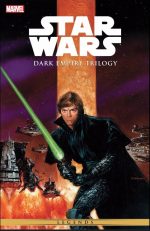
Star Wars: Dark Empire Trilogy


By Tom Veitch, Cam Kennedy & Jim Baikie (Marvel)
ISBN: 978-1-3024-6653-4

I’m sure we’re all familiar with the mythology of Star Wars which – in the UK and thanks to the science fictional nature of time zones – celebrated its 40th anniversary yesterday. What you might not know is that the first sight future fanatics got of its breathtakingly expansive continuity and the mythology-in-the-making way back in 1977 was the premier issue of the Marvel comicbook tie-in.

It hit shelves two weeks before the film launched in cinemas, setting the scene for a legion of kids and beginning a mini-phenomenon which encompassed the initial movie trilogy and expanded those already vast imaginative horizons.

Marvel had an illustrious run with the franchise – nine years’ worth of comics, specials and paperback collections – before the option was left to die.

Comicbook exploits were reinstated in 1993 by Dark Horse Comics who built on the film legacy with numerous superb titles and tales until Disney acquired the rights to Star Wars in 2012.

Around the same time, the home of Donald & Mickey also bought Marvel Comics and before long the original magic was being rekindled…

When Marvel relaunched the enterprise, they included not just a core title but also solo books for the lead stars. Moreover, rather than ignore what had passed between their two bites of the cherry, Disney/Marvel began reissuing the Dark Horse material too.

Amongst the very best of it was a tryptic of miniseries digitally released as one grand adventure under the Star Wars Legend imprint.

Scripted by Tom Veitch, Star Wars: Dark Empire Trilogy is set after the movie Return of the Jedi and comprises two 6-issue miniseries – Dark Empire and Dark Empire II – plus 2-part concluding mini-epic Empire’s End. Also included in this galactic grimoire is full information on all the characters involved courtesy of Star Wars Handbook 3: Dark Empire.

The drama unfolds about ten years after the Battle of Endor and the death and redemption of Darth Vader. Although the Emperor is gone, the war continues.

The militaristic remnants of the Empire are still battling for every inch of the galaxy. The New Republic is desperately hard-pressed. Han Solo and his wife Leia, although new parents, are as deeply involved as ever, and Luke Skywalker is pushed to ever-more desperate measures as he attempts to destroy the pervasive unleashed evil corrupting the Universe. His solution to rebalance the Force is to revive and rebuild the fabled Jedi Knights…

A mysterious new leader and ingenious new super-weapons are winning the war for the Empire, and the heroes must separate to succeed. As Han and Leia pursue the strategic aspects of the conflict, Luke heads directly to the source and succumbs to the Dark Side when a dead foe returns.

…And Leia’s newly conceived child is destined to become the greatest threat the galaxy has ever faced… Can the heroes reunite before all is lost?

Dark Horse kicked off its entire Star Wars franchise with this supremely moody, action-packed thriller. Cam Kennedy (reuniting with Veitch after previously collaborating on the excellent and peculiar Light and Darkness War), illustrating in his own unique and magnificent manner, provides quirky but reassuringly authentic settings and scenarios for a space opera romp that satisfyingly captures the feel and pace of the cinema versions, whilst building on the canon for Force-starved fanatics everywhere.

Veitch & Kennedy returned in a blaze of glory after the runaway success of Dark Empire with a superb continuation of the further battles of Luke Skywalker, Princess Leia, Han Solo and all those other movie favourites…

The ghost of Emperor Palpatine, deprived of the clone bodies he was incubating to ensure his return to chilling physicality, is intent on possessing the unborn child in Leia’s belly even as his Dark Side lieutenants struggle to become his successor.

The Empire’s last infrastructure remnants are producing more diabolical planet killing weapons to terrorise and subdue the battered, war-weary galaxy.

…And Skywalker has flown off on a wild goose chase in pursuit of lost Jedi survivors. How can the good guys possibly win this time…?

With extreme verve, style and panache, apparently, as this big budget blockbuster fairly rockets along full of tension and invention, with action aplenty and spectacular set pieces for the fans – although it might be a tad bewildering if your Star Wars IQ is limited.

Capping off the gusher of cosmic thrills and chills is the final story-arc of the sequence, Empire’s End, with Jim Baikie replacing Kennedy as artist for a much shorter adventure that wraps up all the plot-threads in a fittingly spectacular if somewhat rushed fashion.

After that true Jedi adepts can enhance their SWIQ by memorising a veritable avalanche of new friends and foes in the data-drenched Star Wars Handbook 3: Dark Empire

and also reacquaint themselves with old favourites – everybody and everything from Boba Fett to the Jedi Holocron…

Even more sheer joy can be experienced by viewing the huge gallery of covers from the individual issues as originally painted by Dave Dorman.

Unchallenging fun, beautiful pictures, and an utter delight for devotees of a galaxy not so very far, far away.
Star Wars and related text and illustrations are trademarks and/or copyrights in the United States and other countries of Lucasfilm Ltd. and/or its affiliates. © & ™ Lucasfilm Ltd. All rights reserved.

Superman and the Legion of Super-Heroes


By Geoff Johns, Gary Frank & Jon Sibal (DC Comics)
ISBN: 978-1-4012-1819-5 (HC)                    978-1-4012-1904-8 (TPB)

Almost 79 years ago Superman started the whole modern era of fantasy heroes: outlandish, flamboyant indomitable, infallible, unconquerable.

He also saved a foundering industry and created an entirely new genre of storytelling – the Super Hero. Since June 1938 he has grown into a mighty presence in all aspects of art, culture and commerce even as his natal comicbook universe organically grew and expanded.

Long ago and far away a scientifically advanced civilisation perished, but not before its greatest genius sent his baby son to safety is a star-spanning ship. It landed in Kansas and the interplanetary orphan was reared by decent folk as one of us…

Once upon a time, in the far future, a band of super-powered kids from dozens of alien civilisations took inspiration from the greatest legend of all time and formed a club of heroes. One day these Children of Tomorrow came back in time and invited that legend to join them…

And thus began the vast and epic saga of Superman and tangentially the Legion of Super-Heroes: as first envisioned by writer Otto Binder and artist Al Plastino in the landmark Adventure Comics #247 (April 1958). Since that time, the fortunes and popularity of the Legion have perpetually waxed and waned, with their future history tweaked and rebooted, retconned and unwritten over and again to comply with editorial diktat and popular whim.

One popular trend is to re-embrace the innocent, silly, joyous, stirring and utterly compelling pre-Crisis on Infinite Earths tales but to shade them with contemporary sensibilities and with this in mind Geoff Johns gradually reinstituted the Lore of the Legion in a number of his assignments during the early part of this century.

Beginning most notably with Justice League of America: The Lightning Saga and culminating in the epic New Krypton and War against Brainiac sagas the Legion were back and once more carving out a splendid niche in the DC Universe.

Along the way came this superb, nostalgia-laced cracker of a tale which re-established direct contact between the futuristic paladins and the Man of Tomorrow…

Compiling Action Comics #858-863 (spanning December 2007 through May 2008), this collected chronicle – also sporting an Introduction from veteran LSH creator Keith Giffen – finds the Legion back in the 21st century, summoning Superman to save Tomorrow’s World once more. Long ago the Legion had regularly visited: spiriting the young Kryptonian to a place and time where he didn’t have to hide his true nature. However, once he began his public career, the visits ceased and his memories were suppressed to safeguard the integrity of history and the inviolability of the time-line.

Now a desperate squad of Legionnaires must reawaken those memories since the Man of Steel is the last hope for a world on the edge of destruction. In the millennium since his debut Superman has become a beacon of justice and tolerance throughout the Utopian Universe, but a radical, xenophobic anti-alien movement has swept Earth, marginalising, interning and even executing all non-Terrans.

Moreover, a super-powered team of Legion rejects has formed a Justice League of Earth to lead a crusade against all extraterrestrial immigrants, claiming Superman was actually a true-born Earthling, and declaring him their spiritual leader…

Of course, Kal-El of Krypton must travel to the future and not only save the day but scour the racist stain from his name – a task made infinitely more difficult because Earth-Man, psychotic xenophobic leader of the Earth-First faction, has turned our yellow sun a power-sapping red…

Bold, thrilling and absolutely enthralling, the last-ditch struggle of a few brave aliens against a racist, fascistic and completely ruthless totalitarian tomorrow is the stuff of pure comic-book dreams. Superman strives to unravel a poisonous future where all his hopes and aspirations have been twisted, with only his truest childhood friends to aid him with the incredibly intense and hyper-realistic art of Gary Frank & Jon Sibal making it all seem not only plausible but inevitable…

Sweetening the deal is a stunning covers and variants gallery by Gary Frank, Adam Kubert, Steve Lightle, Mike Grell and Al Milgrom plus pages of notes, roughs and designs from Frank’s preparatory work before embarking on the epic adventure.

Total Fights ‘n’ Tights future shock in the best way possible
© 2007, 2008 DC Comics. All Rights Reserved.

Jonah Hex volume 7: Lead Poisoning


By Justin Gray, Jimmy Palmiotti, Jordi Bernet, Rafa Garres, David Michael Beck, Rob Schwager & Rob Leigh (DC Comics)
ISBN: 978-1-4012-2485-1

When Justin Grey & Jimmy Palmiotti reinvigorated modern Western legend Jonah Hex they deftly blended a blackly ironic streak of wit with a sanguine view of morality and justice to produce some of the most accessible and enjoyable comics fiction available from the period. They also had the services of extremely talented people such as colourist Rob Schwager and letterer Rob Leigh and the pick of top artists such as European maestro Jordi Bernet who illustrates fully half the gritty tales in seventh trade paperback (or digital, should you be so inclined) compilation from 2009. The contents comprise issues 37-42 of the superb and much-missed iteration…

I first recognised Jordi Bernet’s work on The Legend Testers. By “recognised” I mean that very moment when I actually understood that somebody somewhere drew the stuff I was adoring, and that it was better than the stuff either side of it.

This was 1966 when British comics were mostly black and white and never had signatures or credits so it was years before I knew who had sparked my interest…

Jordi Bernet Cussó was born in Barcelona in 1944, son of a prominent and successful humour cartoonist. When his father died suddenly Jordi, aged 15, took over his father’s strip Doña Urraca (Mrs. Magpie).

A huge fan of Alex Raymond, Hal Foster and particularly expressionist genius Milton Caniff, Bernet yearned for less restrictive horizons and left Spain in the early 1960s to chance his hand at dramatic storytelling.

He worked for Belgium’s Spirou, Germany’s Pip and Primo, before finding work on English weeklies. Bernet toiled on British publishers between 1964 and 1967, and as well as the Odhams/Fleetway/IPC anthologies Smash, Tiger and War Picture Library he also produced superlative material for DC Thomson’s Victor and Hornet.

He even illustrated a Gardner Fox horror short for Marvel’s Vampire Tales #1 in 1973, but mainstream America was generally denied his mastery (other than some translated Torpedo volumes and a Batman short story) until the 21st century reincarnation of Jonah Hex.

His most famous strips include thrillers Dan Lacombe (written by his uncle Miguel Cussó), Paul Foran (scripted by José Larraz) the saucy Wat 69 and spectacular post-apocalyptic barbarian epic Andrax (both with Cussó again).

When General Franco died Bernet returned to Spain and began working for Cimoc, Creepy and Metropol, collaborating with Antonio Segura on the sexy fantasy Sarvan and dystopian SF black comedy Kraken. His other job was collaborating with Enrique Sánchez Abulí on gangster and adult themes tales that have made him one of the world’s most honoured artists, and which culminated on the incredibly successful crime saga Torpedo 1936…

The rawhide dramas commence with Bernet in top form as Hex tangles and torridly tussles with a trio of female former circus performers who take up bounty hunting and prove that ‘Trouble Comes in Threes’, after which ‘Hell or High Water’ finds the gritty gunslinger enduring horrific tortures at the hands of a sheriff he once shamed.

The brutal psychopath has no idea what real vengeance feels like until Jonah gives him a fast and final lesson…

Baroque stylist Rafa Garres supplies art and colours for a grim parable examining ‘Cowardice’ wherein a rookie sheriff gets life lessons in doing his job after Hex tracks murderous escaped convicts to a quiet country backwater, after which David Michael Beck depicts a gruesome two-part tale of savage madness.

When Hex and sometime ally/constant foil Tallulah track a serial-killing civil war surgeon teaching other perverts his bloody discoveries, the red-handed butcher displays enough body-shredding acumen to almost end them both. However, even his gory assaults and inclinations to devil-worship of the ‘Sawbones’ are no match for Jonah Hex in a mood to display his all-consuming displeasure and irritation…

Bernet wraps things up in inimitable blackly comedic style as ‘Shooting the Sun’ offers a shocking glimpse at the bounty hunter’s formative years with parental sadist Woodson Hex…

Apparently, the abusive behaviour made Jonah the man he is: someone able to turn an inescapable death-trap into a private shooting gallery offering the added attraction of long-deferred vengeance on the bullies who garnished little Jonah’s hellish childhood with extra misery…

With captivating covers from Bernet, Garres and Beck, Lead Poisoning is another explosively grim, yet bleakly hilarious outing for the very best Western anti-hero ever created: an intoxicating blend of action and social commentary no fan of the genre or cream-of-the-crop comics magic will want to miss.
© 2009 DC Comics. All Rights Reserved.

Amazing Spider-Man Masterworks volume 9


By Stan Lee, John Romita, John Buscema, Jim Mooney & various (Marvel)
ISBN: 978-0-7851-2462-7

Amazing Spider-Man was always a comicbook that matured with – or perhaps just slightly ahead of – its fan-base.

This nail-biting ninth full-colour compilation of chronological Arachnoid Amazement sees the World’s Most Misunderstood Hero navigate another rocky period of transformation and tribulation on the road to becoming the world’s most popular comics character.

After a shaky start The Amazing Spider-Man quickly became a popular sensation with kids of all ages. Before too long the quirky, charming, thrillingly action-packed comics soap-opera would become the model for an entire generation of younger heroes impatiently elbowing aside the staid, (relatively) old thirty-something mystery-men of previous publications and hallowed tradition.

Smart-but-alienated Peter Parker was bitten by a radioactive spider during a school trip. Discovering strange superhuman abilities which he augmented with his own natural chemistry, physics and engineering genius, the kid did what any lonely, geeky nerd would do with such newfound prowess: he tried to cash in for girls, fame and money.

Making a costume to hide his identity in case he made a fool of himself, Parker became a minor media celebrity – and a criminally self-important one. To his eternal regret, when a thief fled past him one night he didn’t lift a finger to stop him, only to find when he returned home that his guardian uncle Ben Parker had been murdered.

Crazed and vengeful, Peter hunted the assailant who’d made his beloved Aunt May a widow and killed the only father he had ever known, discovering, to his horror, that it was the self-same felon he had neglected to stop. His irresponsibility had resulted in the death of the man who raised him, and the traumatised boy swore to forevermore use his powers to help others…

Since that night, the Wondrous Wallcrawler has tirelessly battled miscreants, monsters and madmen, with a fickle, ungrateful public usually baying for his blood even as he perpetually saves them…

The rise and rise of the Amazing Arachnid increased pace as the Swinging Sixties drew to a close and, by the time of the tales collected herein (re-presenting Amazing Spider-Man #78-87, originally released between November 1969 and August 1970), Peter and his ever-expanding cast of comrades were practically household names and the darlings of college campuses and the media intelligentsia throughout America and the world.

Stan Lee’s scripts tapped into the always-evolving zeitgeists of the times and the deft use of soap opera plots kept older readers glued to the series even if the bombastic battle sequences didn’t.

One of those American “time-ghosts” was crime and gangsterism and dependence on flamboyant costumed super-foes as antagonists was finely balanced with the usual suspect-pool of thugs, hoods and mob-bosses, but these were not the individual gangs of the Ditko days.

Now Organised Crime and was a huge cultural touchstone with comics cashing in on modern movies, novels and headlines…

Illustrated by John Buscema, Amazing Spider-Man#78 opens this volume with ‘The Night of the Prowler!’ featuring John Romita Junior’s first ever creator-credit for “suggesting” dissatisfied young black man Hobie Brown who briefly turned his frustrations and innate inventive genius to costumed criminal purposes until set straight by Spider-Man in the concluding ‘To Prowl No More!’

With #80 a policy of single-issue adventures was instituted: short, snappy stand-alone thrillers delivering maximum thrills and instant satisfaction. First off was a return for the wallcrawler’s very first super-foe as ‘On the Trail of the Chameleon!’ found the criminal charlatan indulging in a spree of robberies after which an action-packed if somewhat ridiculous punch-up resulted from ‘The Coming of The Kangaroo!’, including a clear contender for daftest origin of all time…

Romita senior then returned as penciller for ‘And Then Came Electro!’ with the voltaic villain attempting to slaughter Spidey live on national TV.

There were big revelations about the Kingpin in the 3-part saga that featured in issues #83-85 with the introduction of ‘The Schemer’ (Lee, Romita sr. & Mike “DeMeo” Esposito): a mysterious but extremely well-heeled criminal outsider determined to destroy the power of the sumo-like crime-lord and usurp his position in the underworld.

‘The Kingpin Strikes Back!’ (Romita sr., Buscema & Mooney) and ‘The Secret of the Schemer!’ changed the Marvel Universe radically, not just by disclosing some of the family history of one of the company’s greatest villains, but also by sending Peter Parker’s eternal gadfly Flash Thompson back to a dubious fate in Vietnam.

It wasn’t the kid’s first tour but now the war was becoming unpopular at home and the bombastic jingoism of earlier issues was being replaced by more contemplative concern as evoked by authorial mouthpiece Stan Lee…

‘Beware… the Black Widow!’ then gave Romita and Mooney a chance to redesign and relaunch the Soviet super-spy and sometime-Avenger in an enjoyable if highly formulaic misunderstanding/clash-of-heroes yarn with an ailing Spider-Man never really endangered. The entire episode was actually a promotion for the Widow’s own soon-to-debut solo series…

The dramas conclude for now with ‘Unmasked at Last!’ which found Parker, convinced that his powers were fading forever and suffering from a raging fever, exposing his secret identity to all the guests at his girlfriend’s party…

Using the kind of logic and subterfuge that only works in comics and sitcoms, Parker and Hobie Brown convinced everybody that it was only a flu-induced aberration…

This is another fabulous celebration of an important teen icon and symbol. Spider-Man at this time became a permanent, unmissable part of many youngsters’ lives and did so by living a life as close to theirs as social mores and the Comics Code would allow. Blending cultural authenticity with spectacular art, and making a dramatic virtue of the awkwardness, confusion and sense of powerlessness that most of the readership experienced daily, resulted in an irresistibly intoxicating read, delivered in addictive emotionally-intense instalments, but none of that would be relevant if the stories weren’t so compellingly entertaining. This book is Stan Lee’s Marvel and Spider-Man at their peak.
© 1969, 1970, 2014 Marvel Character, Inc. All rights reserved.

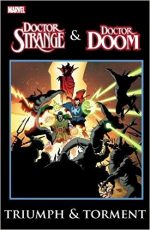
Doctor Strange & Doctor Doom: Triumph & Torment


By Roger Stern, Michael Mignola & Mark Badger, Gerry Conway, Gene Colan, Bill Mantlo, Kevin Nowlan & various(Marvel)
ISBN: 978-0-7851-8454-6

This occult odd couple concoction is perhaps one of the very best Marvel Universe yarns from the post-Kirby years and tells a powerful tale by contrasting the mandatory origin sequences of the two doctors to produce effective motivations for and deeper insights into both characters.

Adding even greater interest and incentive, this collection from 2016 – also released as an eBook – offers loosely associated material from Astonishing Tales #8, Doctor Strange #57 (February 1983) and Marvel Fanfare #16 and 43…

Victor Von Doom is a troubled gypsy genius who escaped the oppression of his homeland on a scholarship to America. Whilst there he succumbed to an intense rivalry with young Reed Richards, even then perhaps the most brilliant man alive.

The arrogant Von Doom performed unsanctioned experiments which marred his perfect features, leading him down a path to super-science and an overwhelming hunger for power and control. His mother, a sorceress, burns in hell for the unholy powers she used in life, powers which her son also possesses.

Steven Strange was America’s greatest surgeon, a vain and arrogant man who cared nothing for the sick, except as a means to wealth and glory. When a drunken car-crash ended his career, Strange hit the skids until an overheard barroom tall tale led him to Tibet, an ancient magician, and eventual enlightenment through daily redemption. He battles otherworldly evil as the Sorcerer Supreme, Master of the Mystic arts.

When a magical call goes out to all the World’s adepts offering a granted wish to the victor in a contest of sorcery, both Doom and Strange are among the gathered. After mystic combat reduces the assemblage to the two doctors, Doom’s granted wish is to rescue his mother’s soul from Hell…

A classic quest saga, Triumph & Torment sees the two mages storm the gates of the Underworld in a mission of vain hope and warped mercy, battling the hordes of Mephisto and their own natures in a mesmerizing epic of power and pathos.

Roger Stern is at his absolute writing peak here and the unlikely art team of Michael Mignola and Mark Badger defy any superlatives I could use. The art is simply magical, especially the mesmerising colouring, also courtesy of Mr Badger.

High drama, heroism, perfidy and plenty of surprises wrapped in superb craftsmanship typify all that’s best in the “Marvel Style” and this tale has it all aplenty.

The bonus material kicks off with ‘… Though Some Call it Magic!’ by Gerry Conway, Gene Colan & Tom Palmer: a tense vignette from Astonishing Tales #8 (October 1971) which first revealed details of the arcane annual ritual in which the metal-shod monarch of Latveria battled with the King of Hell for possession of a gypsy witch’s soul, after which Doctor Strange #57 (February 1983) revealed Roger Stern’s first stray thoughts on the forthcoming Triumph & Torment epic…

Although the story mainly dealt with other acolytes trying to become the sorcerer’s latest apprentice, ‘Gather My Disciples Before Me!’ – illustrated by Kevin Nowlan & Terry Austin – saw Doom attempt to swallow his gargantuan pride and also petition Stephen Strange to become his tutor in the ways of magic…

The story portion of this graphic grimoire concludes with a brace of salty sea tales starring Prince Namor, the Sub-Mariner both illustrated by then callow newcomer Mike Mignola and scripted by Bill Mantlo. The undersea action opens with ‘A Fable’ (Marvel Fanfare #16, September 1984) with the Sea King striving to save a beautiful beast from the callous cruelty of sailors whilst from MF #43 (April 1989) ‘Time After Time’ – inked by P. Craig Russell – sees the Sub-Mariner fall through time to an age of piracy and share a brief, overpowering passion with a ferocious female freebooter…

Sweetening the pot is a full cover gallery, Mignola Namor pin-ups, a Marvel Age article on Triumph & Torment (by Peter Sanderson) and a couple of delicious Mignola parody ads. Also included are Mignola sketches, and a gallery of pin-ups by Austin, Carl Potts, Ken Steacy, Ian Akin & Brian Garvey, Bret Blevins, Bob Layton, Gregory Wright, Craig Hamilton, Mike Machlan, Joe Sinnott, Kerry Gammill, Nowlan & Paul Ryan.

Sheer comic enchantment, this a book no lover of the fantastic fiction can afford to ignore.
© 1971, 1983, 1984, 1989, 2013, 2016 Marvel Characters, Inc. All rights reserved.
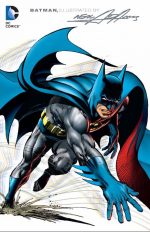
Batman: Illustrated by Neal Adams volume 1


By Neal Adams with Bob Haney, Leo Dorfman, Cary Bates & various (DDC Comics)
ISBN: 978-1-4012-0041-1 (HC):                   978-1-4012-3537-6 (PB)

As the 1960s began Neal Adams was a young illustrator who had worked in advertising and ghosted some newspaper strips whilst trying to break into comics. Whilst pursuing a career in advertising and “real art” he did a few comics pages for Archie Comics and subsequently became one of the youngest artists to co-create and illustrate a major licensed newspaper strip – Ben Casey (based on a popular TV medical drama series).

That comics fascination never faded however, and Adams drifted back to National/DC doing a few covers as inker of penciller and eventually found himself at the vanguard of a revolution in pictorial storytelling…

He made such a mark that DC chose to reprint every piece of work Adams ever did for them into a series of commemorative collections. Batman: Illustrated by Neal Adams is the first of three superb tomes (available in  variety of formats) featuring the “Darknight Detective” – as he was dubbed back then – and featuring every cover, story and issue in original publication order.

‘From Me to You: An Introduction’ gives you the history of his early achievements in his own words, after which the covers of Detective Comics #370 (December 1967, inking Carmine Infantino) and the all-Adams Brave and the Bold #75 (January 1968), Detective #372 (February), B&B #76 (February/March), Batman #200 and World’s Finest Comics #174 (both March) all serve as a timely taster for the artist’s first full-length narrative…

The iconoclastic penciller first started truly turning heads and making waves with a couple of enthralling Cape & Cowl capers beginning with World’s Finest Comics #175 (April 1968) and ‘The Superman-Batman Revenge Squads!’

Scripted by Leo Dorfman and inked by Dick Giordano, the story detailed how an annual – and friendly – battle of wits between the crime-busters is infiltrated by alien and Earthly criminal groups intent on killing their foes whilst they are off-guard…

WFC #176 (June) then featured a beguiling enigma in ‘The Superman-Batman Split!’ – written by fellow newcomer Cary Bates. Ostensibly just another alien mystery yarn, this twisty little gem has a surprise ending for all and guest stars Robin, Jimmy Olsen, Supergirl and Batgirl, with Adams’ hyper-dynamic realism lending an aura of solid credibility to even the most fanciful situations.

It also ushered in an era of gritty veracity to replace previously anodyne and frequently frivolous Costumed Dramas…

More Dynamite Covers follow: Batman #203 (July/August) leads to Brave & Bold #79 (August/September) and heralded Adams’ assumption of the interior art chores for a groundbreaking run that rewrote the rulebook for strip illustration…

‘The Track of the Hook’ – written by Bob Haney and inked Giordano – paired the Gotham Guardian with justice-obsessed ghost Deadman: formerly trapeze artist Boston Brand who was hunting his own killer, and whose earthy, human tragedy elevated the series’ costume theatrics into deeper, more mature realms of drama and action.

The stories aged ten years overnight and instantly became every discerning fan’s favourite read.

Covers for World’s Finest Comics #178-180 (spanning September through November) segue sweetly into Brave and the Bold #80 (October/November 1968) with ‘And Hellgrammite is his Name’ finding Batman and the Creeper clashing with an infallible, insect-themed super-hitman again courtesy of Haney, Adams & Giordano.

B&B #81 saw the Flash aid the Caped Crusader against an unbeatable thug in ‘But Bork Can Hurt You!’ (inked by Giordano & Vince Colletta) after which Aquaman became ‘The Sleepwalker from the Sea’ in an eerie tale of mind-control and sibling rivalry.

Interwoven through those thrillers are the covers for World’s Finest #182 (February 1969, inking Curt Swan’s pencils), #183 (March, inking over Infantino), Batman #210 and Detective #385 (both March and all Adams).

B&B # 83 took a radical turn (and is the only story herein without a cover since that one was limned by Irv Novick) as the Teen Titans try to save Bruce Wayne‘s latest foster-son from his own inner demons in ‘Punish Not my Evil Son!’ (Haney & Giordano as ever on board) but the next team-up was one that got many fans in a real tizzy in 1969.

Before that though you can enjoy the fabulous frontage for World’s Finest #185 (June 1969) after which ‘The Angel, the Rock and the Cowl’ recounts a World War II exploit where Batman and Sgt. Rock of Easy Company hunt Nazi gold together, only closing the case 25 years later.

Try to ignore the kvetching about relative ages and which Earth we’re on: you should really focus on the fact that this is a startlingly gripping tale of great intensity, beautifully realised, and one which has been criminally discounted for decades as “non-canonical”.

Detective Comics #389 (July), World’s Finest #186 (August and pencilled by Infantino) precede Brave and the Bold #85. Behind a stunning cover is arguably the best of an incredible run of action adventures…

‘The Senator’s Been Shot!’ reunites Batman and Green Arrow in a superb multi-layered thriller of politics, corruption and cast-iron integrity, with Bruce Wayne being appointed as a stand-in for a law-maker whilst the Emerald Archer receives a radical make-over that turned him into the fiery liberal gadfly champion of the relevancy generation and still informs his character today, both in funnybooks and on TV screens…

Wrapping up this initial artistic extravaganza are the covers for Detective Comics #391 and 392, (September and October 1969) completing a delirious run of comics masterpieces no ardent art lover or fanatical Fights ‘n’ Tights aficionado can do without.
© 1967, 1968, 1969, 2003 DC Comics. All Rights Reserved.

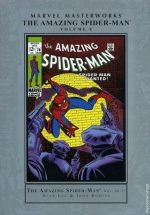
Amazing Spider-Man Masterworks volume 8


By Stan Lee, John Romita, John Buscema, Ross Andru, Jim Mooney, Bill Everett & various (Marvel)
ISBN: 978-0-7851-2074-2) (HB)                   978-0-7851-8807-0 (TPB)

This eighth astounding full-colour compilation of webspinning wonderment again follows the World’s Most Misunderstood Hero through deadly dangers and romantic rollercoasters as the second great era of Amazing Arachnid artists moved inevitably to a close. Although the elder John Romita would remain closely connected to Spider-Man’s adventures for some time yet, these tales would be amongst his last long run as lead illustrator on the series.

After a shaky start – suffering cancellation before his first issue – The Amazing Spider-Man quickly became a popular sensation with kids of all ages. Before long the quirky, charming, thrillingly action-packed comics soap-opera became the model for an entire generation of younger heroes impatiently elbowing aside the staid, (relatively) old thirty-something mystery-men of previous publications and hallowed tradition.

Peter Parker was a smart-but-alienated kid bitten by a radioactive spider during a school science trip. Discovering astonishing arachnid abilities – which he augmented with his own natural chemistry, physics and engineering genius – the kid did what any lonely, geeky nerd would do with such newfound prowess: he tried to cash in for girls, fame and money.

Making a costume to hide his identity in case he made a fool of himself, Parker became a minor media celebrity – and a criminally self-important one. To his eternal regret, when a thief fled past him one night he didn’t lift a finger to stop him, only to find when he returned home that his guardian uncle Ben Parker had been murdered.

Crazed and vengeful, Peter hunted the assailant who’d made his beloved Aunt May a widow and killed the only father he had ever known, discovering, to his horror, that it was the self-same felon he had neglected to stop. His irresponsibility had resulted in the death of the man who raised him, and the traumatised boy swore to forevermore use his powers to help others…

Since that night, the Wondrous Wallcrawler has tirelessly battled miscreants, monsters and madmen, with a fickle, ungrateful public usually baying for his blood even as he perpetually saves them…

The rise and rise of the Amazing Arachnid accelerated as the Swinging Sixties drew to a close and, by the time of the tales collected herein (Amazing Spider-Man#68-77 originally released between January-October 1969, plus an obscure thriller from Marvel Super-Heroes #14), Peter and his ever-expanding cast of comrades were on the way to being household names as well as the darlings of college campuses and the media intelligentsia.

Stan Lee’s scripts were completely in tune with the times – as observed by most kids’ parents at least – and the increasing use of soap opera plots kept older readers glued to the series even if the bombastic battle sequences didn’t.

Thematically, gangsterism dominated (probably due to the contemporary buzz caused by Mario Puzo’s novel The Godfather) and an increasing use of mystery plots balanced a dependence on costumed super-foes as antagonists: all finely balanced with the usual suspect-pool of thugs, hoods and mob-bosses, but these were not the individual gangs of the Ditko days.

Now Organised Crime and Mafia analogue The Maggia were the big criminal-cultural touchstone as comics caught up with modern movies and headlines.

Issue #68 (by Lee, Romita & Jim Mooney) started a lengthy saga featuring the pursuit of an ancient stone tablet by various nefarious forces, beginning with The Kingpin who exploited a topical moment of student dissent to foment a ‘Crisis on the Campus!’

When a seemingly inevitable riot erupted, the Big Bad tried to swipe the artefact, leaving a few teenagers we’re all too familiar with looking very guilty…

Meanwhile Peter Parker, already struggling with debt, a perpetually at-Death’s-Door Aunt May, relationship grief with girlfriend Gwen Stacy and no time to study, was accused of not being involved enough by his fellow students…

During this period scripter Lee increasingly tapped into the student unrest of the times in various Marvel titles and ‘Mission: Crush the Kingpin!’ further tightened the screws as the student unrest exploded into violence whilst the corpulent crime czar incriminated Spider-Man in the tablet’s theft.

Hounded and harried in ‘Spider-Man Wanted!’ the web warrior nevertheless managed to defeat the Kingpin only to (briefly) believe himself a killer after he attacked personal gadfly J. Jonah Jameson in a fit of rage; causing an apparent heart attack in the obsessive, hero-hating publisher.

At his lowest ebb, and now stuck with the tablet, Parker is attacked by sometime-Avenger Quicksilver in ‘The Speedster and the Spider!’ (#71), before John Buscema signs on as layout-man in ‘Rocked by the Shocker!’

No sooner does Spider-Man leave the stone tablet with Gwen’s dad – former Police Chief Stacy – than the vibrating villain attacks, pinching the petrified artefact and precipitating a frantic underworld civil war. The Maggia dispatch brutal over-sized enforcer Man-Mountain Marko to retrieve it at all costs in ‘The Web Closes!’ (Lee, Buscema, Romita & Mooney) as upstart lawyer Caesar Cicero makes his long-anticipated move to depose aged Don of Dons Silvermane…

However, the frail, elderly crime-lord knows the true secret – if not the methodology – of the tablet. To that end, he abducts biologist Curt Connors and his family to reconstruct the formula hidden on the stone and bring him ultimate victory.

Unfortunately, nobody but Spider-Man knows Connors is also the lethal Lizard and that the slightest stress might unleash the reptilian monster within to once more threaten all humanity. ‘If this be Bedlam!’ (Romita & Mooney) leads directly into ‘Death Without Warning!’ as the decrypted power of the tablet causes a cataclysmic battle that seemingly destroys one warring faction forever, decimating the mobs, but also freeing a far more deadly threat…

Amazing Spider-Man #76 sees John Buscema become full penciller with ‘The Lizard Lives!’ whilst concluding chapter ‘In the Blaze of Battle!’ witnesses the webspinner trying to defeat, cure and keep the tragic secret of his friend Connors, all whilst preventing guest-starring Human Torch Johnny Storm exterminating the marauding rogue reptile forever…

Closing this comics compendium is a one-off yarn from Marvel Super-Heroes #14 (May 1968). ‘The Reprehensible Riddle of the… The Sorcerer!’ actually debuted a year previously in the try-out title and reads to me like an inventory tale rushed out to fill a deadline gap or printed just before its “use-by” date expired. Nonetheless, as crafted by Lee, Ross Andru & Bill Everett, it offers a different spin on the wallcrawler as an enigmatic psychic targets Spider-Man, using psionic strikes and voodoo tricks to draw the hero to New Orleans and a death duel with a synthetic, science-tinged homunculus…

Spider-Man became a permanent unmissable part of many teenagers’ lives at this time and did so by living a life as close to theirs as social mores and the Comics Code would allow. Blending cultural authenticity with glorious narrative art, and making a dramatic virtue of the awkwardness, confusion and sense of powerlessness most of the readership experienced daily, resulted in an irresistibly intoxicating read, delivered in addictive soap-opera slices, but none of that would be relevant if the stories weren’t so compellingly entertaining.

This book is Marvel and Spider-Man at their peak. Why not see why…?
© 1968, 2012 Marvel Characters, Inc. All rights reserved.

Guardians of the Galaxy Prelude


By Dan Abnett & Andy Lanning, Mike Friedrich, Bill Mantlo, Stan Lee, Larry Lieber, Steve Englehart, Wellinton Alves, Daniel Govar, Andrea Di Vito, Jim Starlin, Sal Buscema, Steve Gan, Bob McLeod & various (Marvel)
ISBN: 978-0-7851-5410-5

With another Marvel Filmic Fantasy premiering around the world, here’s a timely trade paperback collection to augment the cinematic exposure and cater to movie fans wanting to follow up with a comics experience.

Comprising a big bunch of reprints and digital material designed to supplement the first movie release, this compilation contains Marvel’s Guardians of the Galaxy Prelude #1-2, Marvel’s Guardians of the Galaxy Infinite Comic #1 and Guardians of the Galaxy #0.1, plus debut or early appearances of Drax, Gamora, Rocket Raccoon, Groot and Star-Lord as first seen in Iron Man #55, Strange Tales #181, Incredible Hulk #271, Tales to Astonish #13 and Marvel Preview #4.

Thanks to all that fabulous, futuristic technology, you can even look at this treasure chest of thrills on screen too through its digital iteration if you prefer…

The sky-high high jinks kick off with a glimpse at the frankly horrific childhoods of Gamora and Nebula with big daddy Thanos, by Dan Abnett, Andy Lanning, Wellinton Alves & Manny Clark: set just before the first film begins (the clue’s in the name as it comes from Marvel’s Guardians of the Galaxy Prelude #1), after which # 2 provides a similarly candid review of Rocket and Groot as their quest for cash draws them into a questionably legal repo job for a criminal big shot…

Next up is Marvel’s Guardians of the Galaxy Infinite Comic #1 by Abnett & Lanning, storyboarder Daniel Govar and artist Andrea Di Vito: a screen-based adventure, rather uncomfortably reformatted for the printed page. Here Taneleer Tivan, The Collector commissions Gamora with the retrieval of a certain Orb…

Of course, all these plot strands get knotted together in the movie…

The classic appearances kick off with Iron Man#55 (February 1973), scripted by Mike Friedrich and illustrated by Jim Starlin & Mike Esposito. ‘Beware The … Blood Brothers!’ introduces Drax the Destroyer, an incredibly powerful alien… or so he seems at first glance.

Trapped by another extraterrestrial newcomer – Thanos – under the desert, Drax is rescued by the Armoured Avenger, but it’s merely a prelude to the main story which appeared in Captain Marvel #25-33, a saga to be savoured elsewhere…

Gamora was first seen in Strange Tales #181 (August 1975), as Avatar of Life Adam Warlock made his way across the cosmos, battling the depredations of the Universal Church of Truth and his own evil future self The Magus. Technically it was her second, but in this yarn she got a name and speaking part…

‘1000 Clowns!’ – by Starlin and Al Milgrom – saw the accursed hero trapped in an insidious psychic prison even as in the notionally real world, a green-skinned gamin was slowly eradicating his tormentors. She was about to free the golden saviour, when Warlock escaped under his own steam. If he’d known that Gamora was actually working for his cosmic nemesis Thanos, he might not have bothered…

Rocket Raccoon was a minor character who first appeared in backup serial ‘The Sword in the Star’. His actual debut was in Marvel Preview #7 in 1976 but in 1982, writer Bill Mantlo brought him into the mainstream of the Marvel Universe with a choice starring role in Incredible Hulk #271 (May 1982).

Like Wolverine and the Punisher years before, the foul-mouthed, fuzzy faced iconoclast then simply refused to go away quietly…

Illustrated by Sal Buscema, ‘Now Somewhere in the Black Holes of Sirius Major There Lived a Young Boy Name of… Rocket Raccoon!’ find Earth’s jade juggernaut stranded on an alien world where sentient animals used super-scientific gadgetry to battle robot clowns. They do this to preserve the security of humans who seem incapable of caring for themselves. When Green-skin arrives, a simmering civil war is just breaking out…

With the Hulk safely removed from the combat zone, Rocket faded from view for a few years before returning in a new-fangled format for comicbooks: a miniseries…

More sidereal shenanigans surface in an absolute classic of the gloriously whacky “Kirby Kritter” genre, predating the birth of the Marvel Age. Crafted by Stan Lee, Larry Lieber, Jack Kirby & Dick Ayers, ‘I Challenged Groot! The Monster from Planet X’ (Tales to Astonish #13, November/December 1960) reveals how a studious biologist saves humanity from a rapacious walking tree intent on stealing Earth cities and shipping them back to his distant world. The tree titan might have started life as a disposable notion, but he too grew into a larger role over the unfolding decades…

Notional leading man Star-Lord premiered in monochrome mature-reader magazine Marvel Preview # 4 (January 1976), appearing thrice more – in #11, 14 and 15 – during the height of the Star Wars-inspired Science Fiction explosion of the late 1970s and 1980s.

Years previously a warrior prince of an interstellar empire was shot down over Colorado and had a brief fling with solitary Earther Meredith Quill. Despite his desire to remain in idyllic isolation, duty called the starman back to the battle and he left, leaving behind an unborn son and a unique weapon…

A decade later, the troubled boy saw his mother assassinated by alien lizard men. Peter Jason Quill vengefully slew the creatures with Meredith’s shotgun, before his home was explosively destroyed by a flying saucer.

The orphan awoke in hospital, his only possession a “toy” ray-gun his mother had hidden from him his entire life. He became obsessed with the stars – astronomy and astrology – and overcame all odds to become a part of America’s budding space program… but he made no friends and plenty of enemies on the way…

Years later his destiny found him, as the half-breed scion was elevated by the divinity dubbed the “Master of the Sun”, becoming Star-Lord. Rejecting both Earth and his missing father, Peter chose freedom, the pursuit of justice and the expanse of the cosmos…

From such disparate strands movie gold can be made, but never forget that the originating material is pretty damned good too and will deliver a tempting tray of treats that should have most curious fans scurrying for back-issue boxes, bookshop shelves or online emporia…
© 1960, 1973, 1975, 1976, 1982, 2014 Marvel Characters, Inc. All rights reserved.