
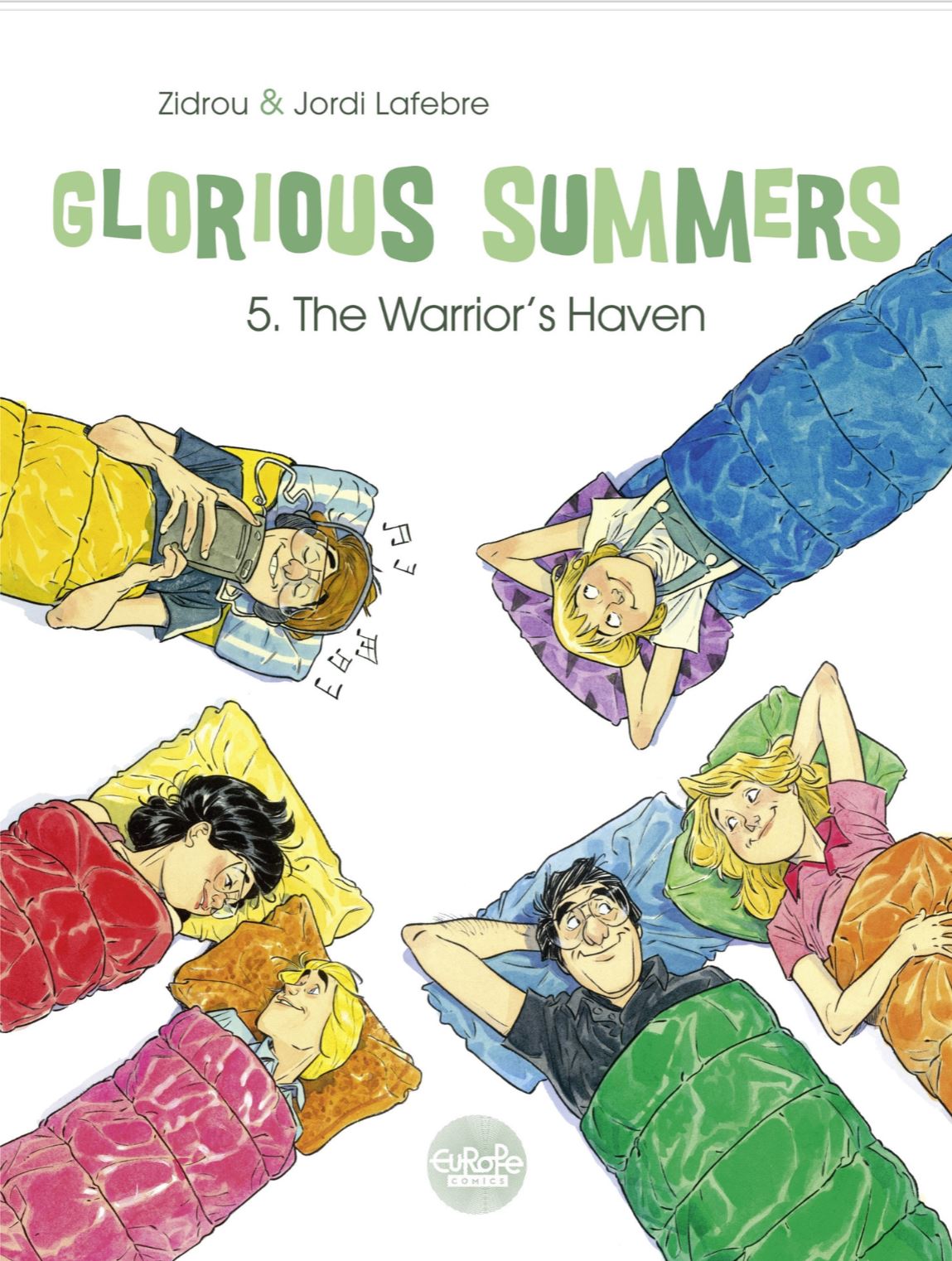
By Zidrou & Jordi Lafebre, with additional colour by Mado Peña, translated by Lara Vergnaud (Europe Comics)
No ISBN: Digital edition only
I’ve had this ready for weeks but couldn’t face running it as so many locations mentioned are smoking ruins at the moment. However, as has been pointed out to me, this is a beautiful, sublimely respectful evocation of places and people and so, in anticipation of regrowth and better times that must surely come, here it is. Just squint your eyes a bit, engage your imaginations and please have hope…
Until comparatively recently, comics in the English-speaking world mostly countenanced comedic or numerous adventure sub-genres (crime, superhero, horror, sci fi), with only a small but vital niche of “mundane world” ventures, usually depicted via graphic biographies and autobiographies like They Called Us Enemy, Love on the Isle of Dogs, Wage Slaves or Sour Pickles offering a different feel and flavour. Even historical sagas were treated as extraordinary moments with larger-than-life characters whenever possible.
What we have never had – and still largely don’t -is a comics equivalent to general fiction, drama and melodrama. That’s not so in Japan, South Korea or Europe, where a literal “anything goes” attitude has always accommodated and nurtured human-scaled slice-of-life tales depicting ordinary people in as many quiet as extraordinary moments. Surely it can’t be that hard to tell engaging stories in pedestrian, recognisably ordinary settings? Medical traumas, love stories, school tales and family tragedies about common folk seem to play well on various-sized screens around the world, so why not in English language comics? The closest we seem to get are comedies like John Allison’s superb Giant Days (which I really must review soon) which all operate on the immortal closing line of every pub drawn out conversation or failed dinner party anecdote “well, maybe you had to be there…”
People being people is more than enough for Europeans. There apparently is an insatiable appetite for everyday events aimed at properly “mature readers”, joyfully sans vampires, aliens or men in tights. These even have sub-genres of their own. For example, there’s the wealth of superb comics just about going on holiday. So, since our own Government-in-Absurdia have ensured that it’s now all-but-impossible for any UK-based citizens to pop across and have une petite vacances in Europe, let’s stare & glare covetously at them having a good time. After all, over there holidays are an inalienable right, and they have some simply fabulous tales about a simple break. This one is probably amongst the best you’ll ever see…
An absolute exemplar of fantasy vacations made real, Glorious Summers: Southbound! (1973) was a nostalgia-drenched confection by Zidrou and regular collaborator Jordi Lafebre: a sublime example of idyllic group memory made into graphic sorcery in an everyday account utterly unafraid to temper humorous sweetness and light with real-world tragedy and suspense.
Perhaps some context is in order. Summer holidays – “Midi” – are a big deal in France and Belgium. The French divide into two tribes over the annual rest & recuperation period, which generally lasts an entire month. Juilletistes only vacation in July, wielding dogmatic facts like rapiers to prove why it’s the only way to take a break. They are eternally opposed, heart, soul, and suntan lotion, by majority faction the Aoûtiens, who recharge their batteries in August whilst fully reciprocating the suspicion, disdain and baffled scorn of the early-leavers. Many European sociologists claim the greatest social division today is not race, religion, gender, political affiliation or whether to open boiled eggs from the top or the bottom, but when summer holidays begin and end.
Les Beaux Étés 1: Cap au Sud! was the first in a string of family visits that began in 2015 courtesy of scripter Benoît “Zidrou” Drousie and Spanish illustrator Jordi Lafebre. Drousie is Belgian, Brussels-born in 1962 and was a school teacher prior to quitting marking books in 1990 to instead make them. His main successes include school dunce series L’Elève Ducobu, Petit Dagobert, Scott Zombi, La Ribambelle, Le Montreur d’histoires, the revival of Ric Hochet, African Trilogy, Léonardo, Shi and many more. His most celebrated and beloved stories are this memorable sequence and 2010’s Lydie, both illustrated by Lafebre.
That gifted, empathically sensitive illustrator and art teacher was born in Barcelona in 1979 and has created comics professionally since 2001, first for magazines like Mister K, where he limned Toni Font’s El Mundo de Judy. He found regular work at Le Journal de Spirou, creating the romance Always Never and collaborated with Zidrou on La vieille dame qui n’avait jamais joué au tennis et autres nouvelles qui font du bien, Lydie, and La Mondaine.
A combination of feel-good fable and powerful comedy drama, Glorious Summers depicts cherished memories of an aging couple recalling their grandest family moments, beginning with a momentous vacation in 1973 where their four kids nearly lost their parents….
Here, however, final Anglicized volume (so far) The Warrior’s Haven – continentally Les Beaux Étés tome 4: Le Repos du Guerrier – focuses on the close of July 1980, as – just for once – infinitely patient Maddie Faldérault is not waiting for her comic illustrator hubby to finish a late assignment before the brood can head off on holiday! Pierre even has time to complete a little side project and give some life/career advice to studio junior Benoit who has come to the house to pick up the completed pages of latest hit-in-waiting G.I. Girl! (finished almost nine hours ahead of schedule!) and not at all to see oldest daughter Jolie-Julie…
This time the necessary angst and drama are all the preserve of rebellious. acting-out, chain-smoking seventeen year old Nicole who has convinced her folks to bring along her nervous, wealthy, spoiled boyfriend Jean-Emmanuel. All too soon though the parents stop reacting to the horny brats snogging at every opportunity. Now the annual escape from gloomy Brussels for a month in sun-drenched France can start. Even sixteen year old sole Faldérault son Louis is packed and prepared with his books, art supplies and music, and still-precocious nine-year-old wild child Paulette (AKA Peaches) can finally embrace the adventure to come…
And this year offers the beginning of a whole new era and way of life for family Faldérault, as Pierre and his brother Xavier are now proud co-owners of a brand-new, purpose built timeshare house. A fully fitted “turnkey vacation home” is waiting for them in the south of France: clean, fresh, stocked with everything needed and ready for occupation and memory making. No more roughing it in tents and hostels or hotels stuffed with strangers. Now it’s indoor plumbing, a personalised kitchen, a barbeque pit, comfortable sofas and proper beds… a place where they can relax and be themselves. They know exactly what it will be like because Maman picked it all out and designed it from the catalogue and sales brochures. Proud Pierre has already packed the handcrafted shingle for his “Warrior’s Haven”…
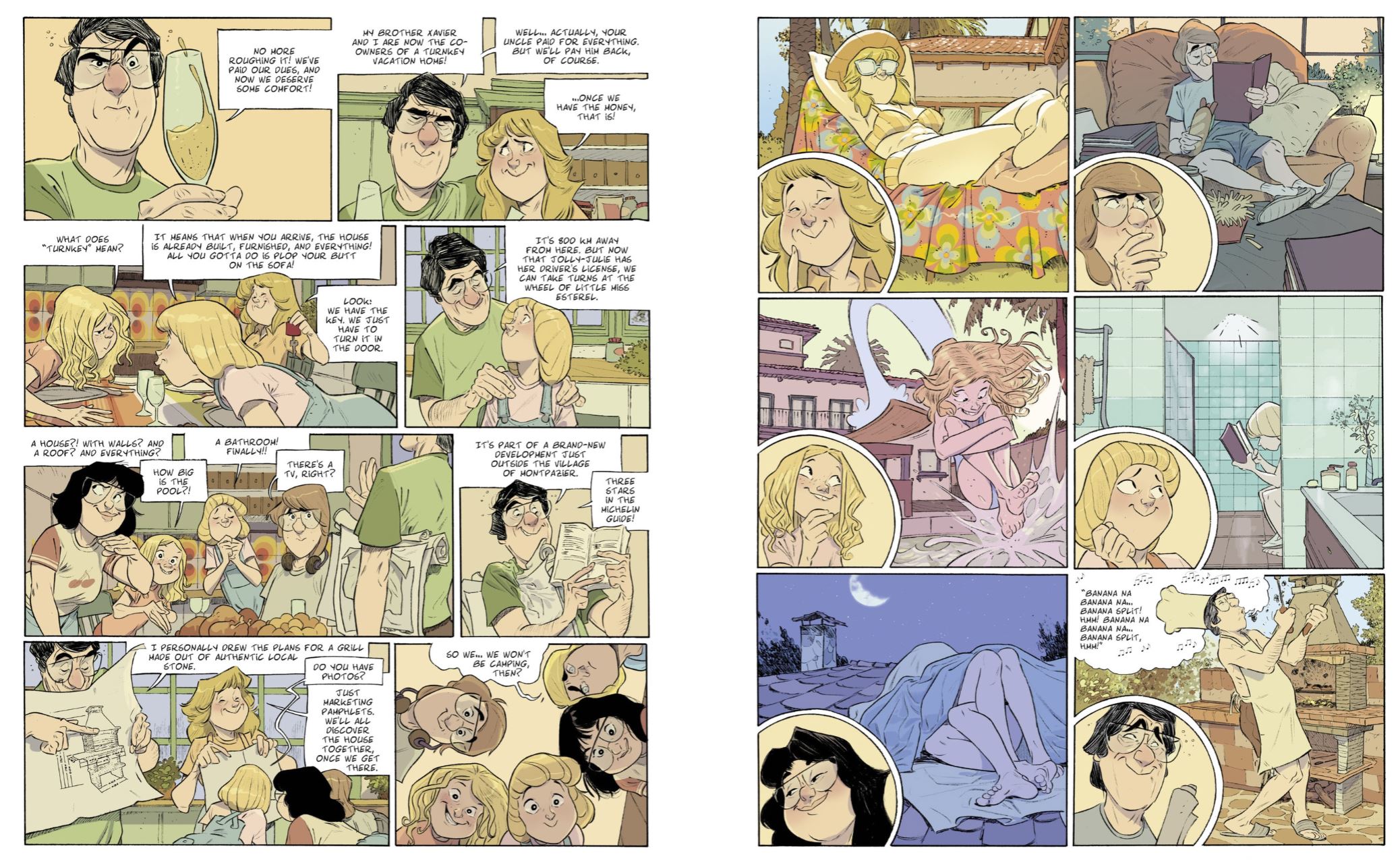
As the apparently-expanding family discuss the prospect over one last meal before setting off, the inevitable hammer falls. Pierre’s publisher thinks G.I. Girl! will be a monster hit and has tripled the print run in advance of release! Of course, that will mean the brilliant DILIGENT artist simply must add a giant poster for the promised TV ads, but it shouldn’t take more than a few days if he works flat-out…
The result is Papa stays and faithful transport Mam’zelle Estérel (translated here as Little Miss Esterel) is jam-packed with everybody else for the southbound trek to the sun. Even with Julie now designated driver, the raucous clan rituals (stupid jokes, constant awful singing and barbed off-colour remarks) are in full flow. Not even Nicole and “Jean-Manu”’s constant revolting actions in the backseat – which Louis dubs “vacuum-cleaning faces” – can stop them…
Still in Belgium, having accepted a now staggered vacation start, Pierre sets to and ponders joining them later before suddenly being struck by inspiration. Instead of imparting fatherly advice to impromptu assistant/courier/would-be son-in-law Benoit, he offers ingratiating responsibility to the gifted lad. He can get his big break by finishing the poster for father Faldérault! Crucial decision made, Pierre is soon hurtling south by train…
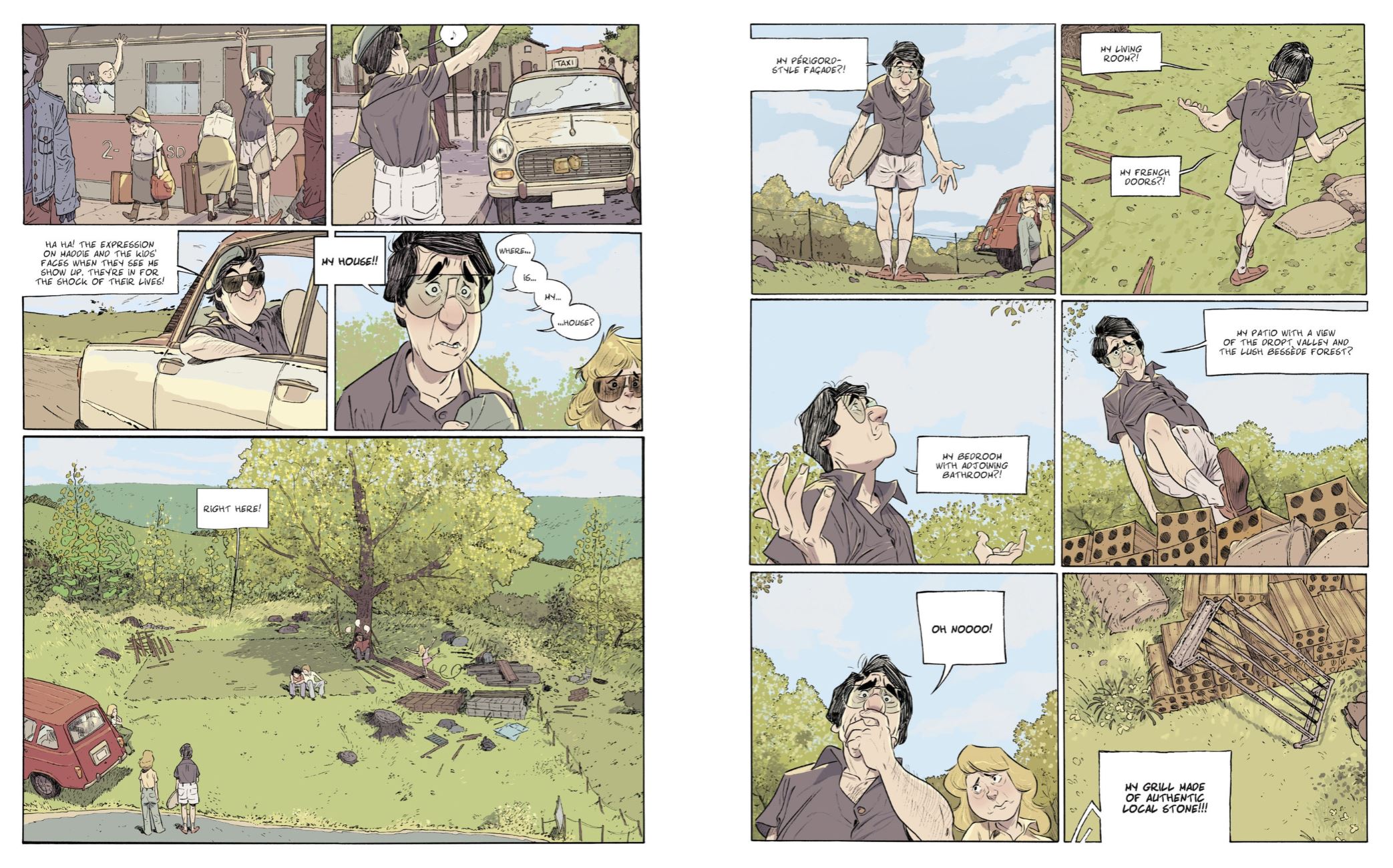
Near the scenic village of Monpazier, road trek and rail journey fortuitously converge, allowing them all to be reunited on their own doorstep – or at least it would have if they hadn’t been the latest victims of a huge property scam. Sitting under a tree in the vacant lot that should be their second home, the family reel in shock. Gradually, they meet other hopefuls of the utterly fictitious Oasis Turnkey Villas Holiday Complex.
They all bought a dream sight unseen, and soon the sadder, wiser vacationers have banded together. As steps begin to track down the fraudsters and the entrepreneur idiot-brother Xavier recommended, the old warrior spirits return. As they all make the best of it, united with their new notionally-homeless neighbours in not letting bad people take their holiday as well as their money more memories are made…
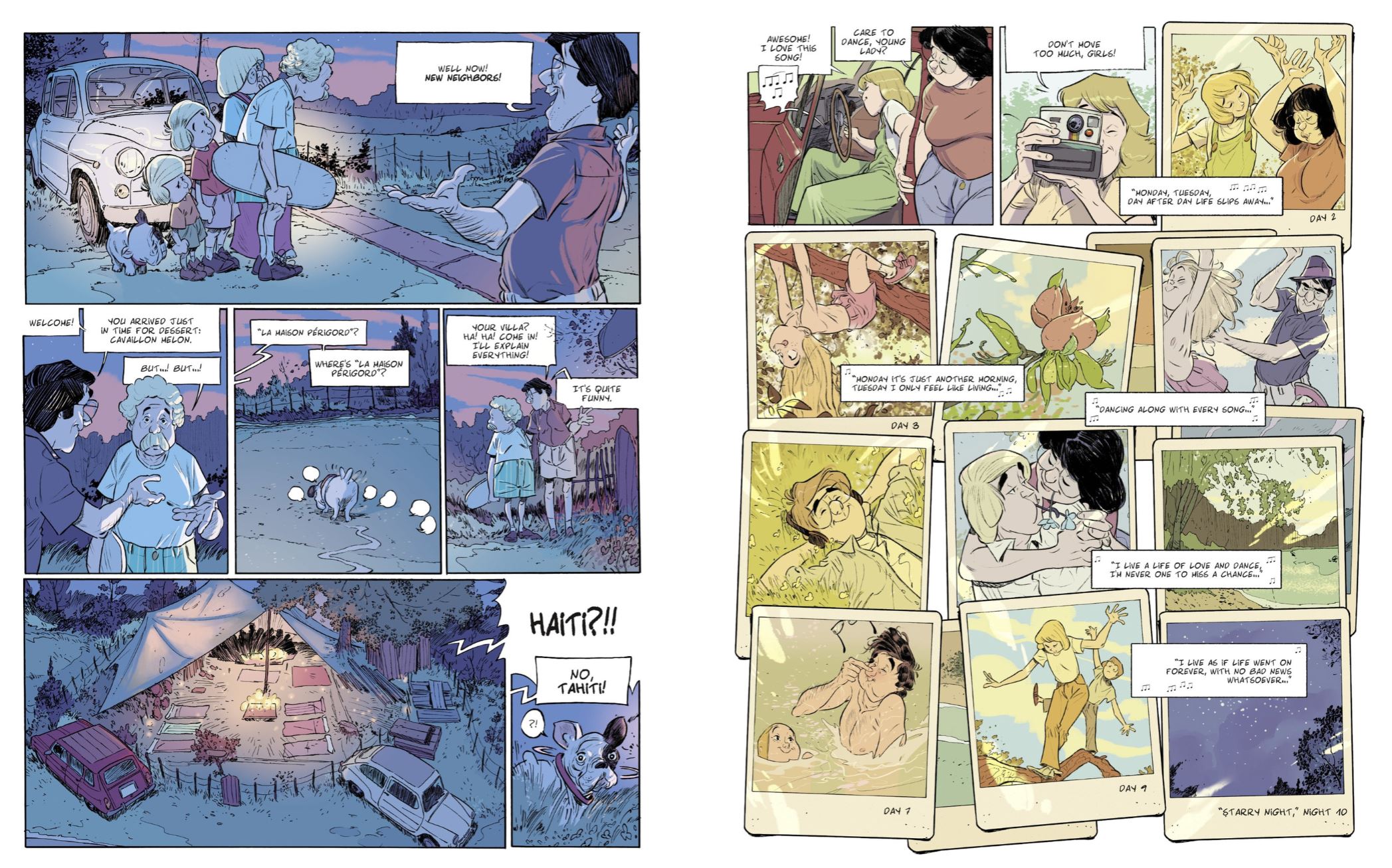
Of course the youngsters are initially crushed, embarrassed, petulant and indignant, but rich-boy Jean-Manu – who has stayed in penthouses all over the world but never, ever been camping – unexpectedly proffers some wisdom, solace and a little enhanced perspective. Moreover, although the cops might be less than helpful, the local villagers are all sympathetic and kind. With immense grace and no pretensions, they quietly chip in to make the victimised visitors feel welcome and less stupid. When fresh suckers turn up they too are comforted by all, and embraced as another community family forms. Days go by, unforgettable moments are enjoyed and life goes on…
Even return to the real world is graced by warmth, friendships and beloved customs and rituals that serve to reinforce the past and welcome what the future offers. What follows is timeless weeks of wonder and unforgettable explorations on endlessly sunny days, with local villagers and distressed wanderers forgetting woes and overcoming the worst the world can offer: a welcoming lesson in humanity at its best…
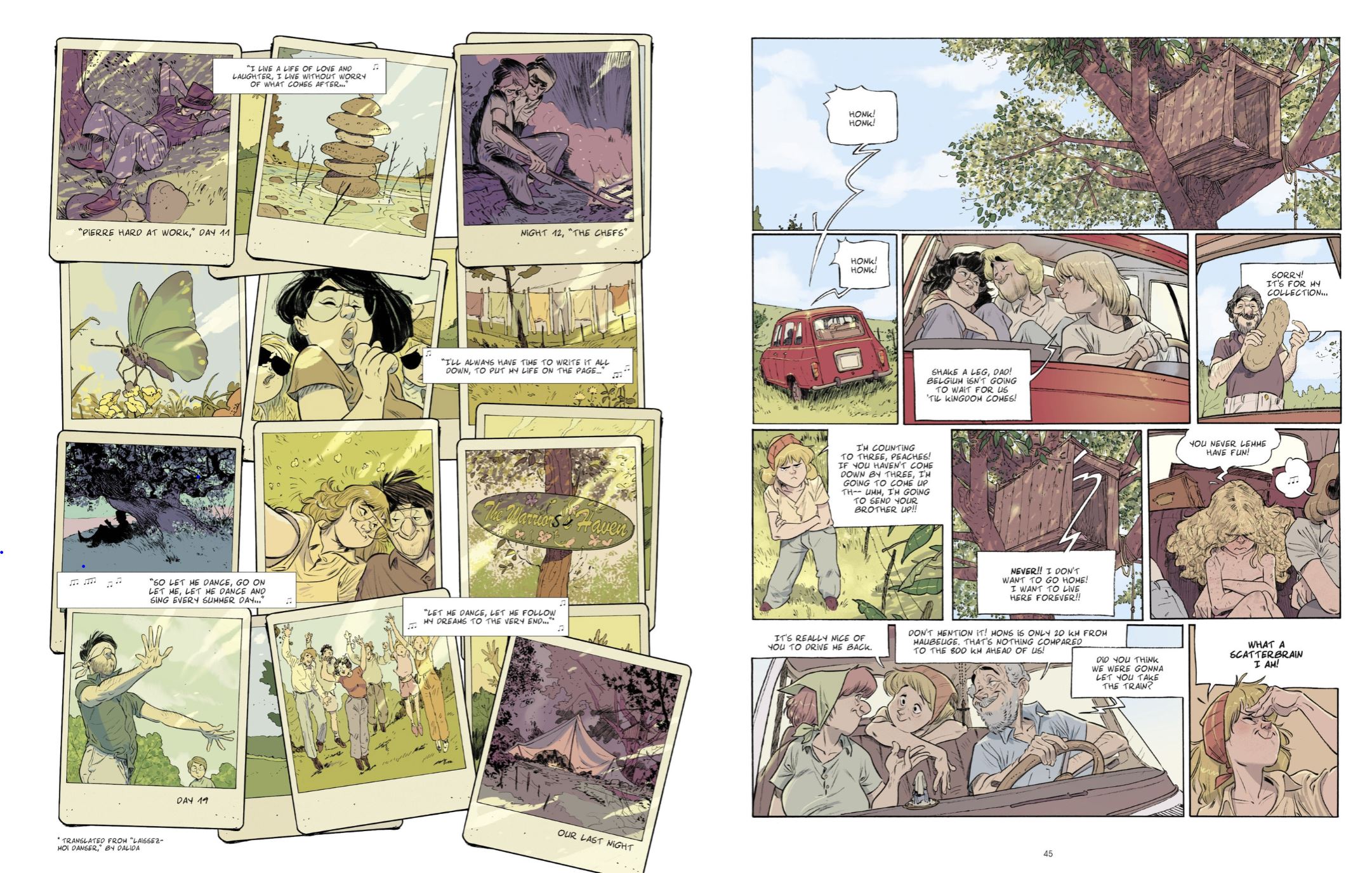
This tale is another beautifully rendered, enticingly realised album of happy days stitched seamlessly together. It’s funny, sweet and charming whilst delivering painful blows you never see coming. There aren’t any spectacular events and shocking crises and that’s the whole point…
If you’re British – and old enough – this series (six translated albums thus far, plus a French omnibus edition) will echo revered family sitcoms like Bless This House or Butterflies and generational ads starring the “Oxo Family”. (If that description doesn’t fit you, I pity your browsing history if you look up any of that). The rest of you in need of an opening (but unfair) comparator could break out the Calvin and Hobbes collections and re-examine the bits with his embattled parents when the kid’s out of the picture…
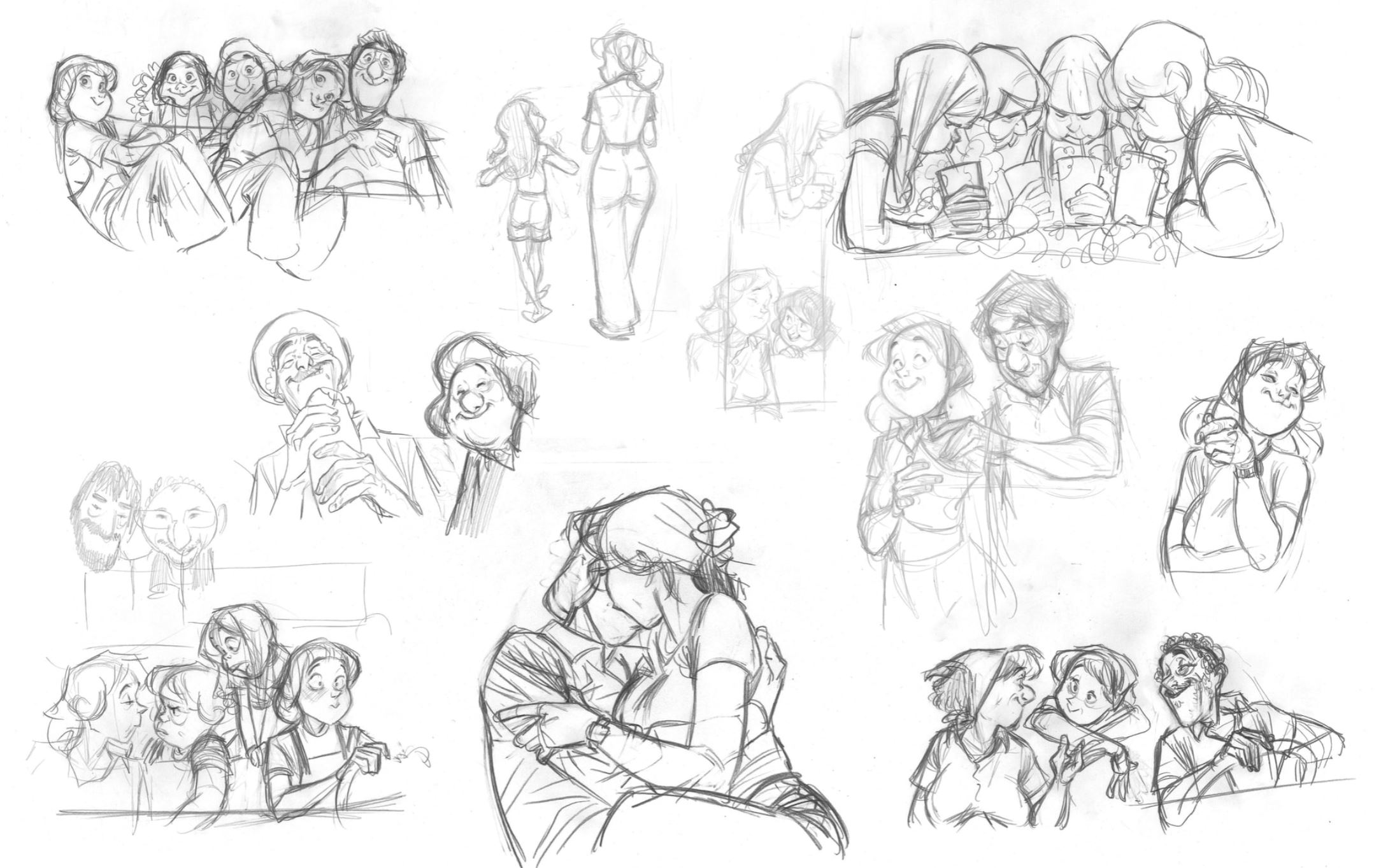
Lyrical, laconic, engagingly demure, and debilitatingly nostalgic, this holiday romance (blessed at the end with Jordi Lafebre’s glorious gallery of pencil sketches) is sheer visual perfection wrapped in sharp dialogue and a superbly anarchic sense of mischief. Vacations and downtimes are built of moments and might-have-beens, such as packaged here in compelling clips to make the mundane marvellous.
© 2019 – DARGAUD BENELUX (Dargaud-Lombard s.a.) – ZIDROU & LEFEBRE, LLC. All rights reserved.
Today in 1932, French artist Jean-Jacques Sempé (Le petit Nicholas, The New Yorker) was born, sharing a birthday with pioneering cartoonist, scholar, feminist and comics historian Trina Robbins (It Ain’t Me, Babe, The Silver Metal Lover, Wimmin’s Commix, Wonder Woman, Friends of Lulu, Dope, Women and the Comics) in 1938; writer Rachel Pollack (Doom Patrol, New Gods, Unquenchable Fire), in1945; artist Alex Saviuk (The Flash, Green Lantern, The Amazing Spider-Man: Parallel Lives OGN, numerous Spider-Man series) in 1952; comic book royalty John Romita Jr. (Superman, Daredevil, Spider-Man, The Eternals, Iron Man, Kick-Ass, Uncanny X-Men, Incredible Hulk) in 1956 and writer/editor Andy Helfer (Justice League of America, The Shadow, Judge Dredd, Justice Inc.) in 1958.