Batman: The Golden Age volume 1


By Bob Kane, Bill Finger, Gardner Fox, Whitney Ellsworth, Sheldon Moldoff, Jerry Robinson, George Roussos & various (DC Comics)
ISBN: 978-1-4012-6333-1 (TPB/Digital edition)
Win’s Christmas Gift Recommendation: Vintage Comic book Perfection… 10/10

Next year marks Batman’s 85th Anniversary and we’ll be covering many old and new books about the Dark Knight over the year. However, why not pre-load the noir wonderment with this perfect compilation of how it all began. It’s not too big – like an Omnibus edition – or too small – like a measly pamphlet comic book – and would therefore make an ideal gift for the fan in your life (and we all know I mean you, right…)?

Batman: The Golden Age re-presents the Gotham Guardian’s earliest exploits in original chronological order, forgoing glossy, high-definition paper and reproduction techniques in favour of a newsprint-adjacent feel and the same flat, bright-yet-muted colour palette which graced the originals. There’s no fuss, fiddle or Foreword, and the book steams straight into the meat of the matter with the accumulated first year and a half of material featuring the masked mystery-man, plus all those stunning covers spanning Detective Comics #27-45, Batman #1-3 and the Dynamic Duo’s story from New York World’s Fair Comics 1940. That cumulatively covers every groundbreaking escapade from May 1939 to November 1940.

As Eny Fule Kno, Detective #27 featured the Darknight Detective’s debut in the ‘Case of the Chemical Syndicate!’ by Bob Kane and as yet still anonymous close collaborator/co-originator Bill Finger.

A spartan, understated yarn introduced dilettante playboy criminologist Bruce Wayne, drawn into a straightforward crime-caper as a cabal of industrialists are successively murdered. The killings stop when an eerie figure dubbed “The Bat-Man” intrudes on Police Commissioner Gordon’s stalled investigation to ruthlessly expose and deal with the hidden killer.

The following issue saw the fugitive vigilante return to crush ‘Frenchy Blake’s Jewel Gang’ before encountering his very first psychopathic killer and returning villain in Detective Comics #29. Gardner Fox scripted these next few adventures beginning with ‘The Batman Meets Doctor Death’, in a deadly duel of wits with deranged, greedy general practitioner Karl Hellfern and his assorted instruments of murder: the most destructive and diabolical of which was sinister Asiatic manservant Jabah…

This is my cue to remind all interested parties that these stories were created in far less tolerant times with numerous narrative shortcuts and institutionalised social certainties expressed in all media that most today will find offensive. If that’s a deal-breaker, please pass on this book… and most literature, pop songs and films created before the 1960s…

Confident of their new villain’s potential, Kane, Fox and inker Sheldon Mayer encored the mad medic for the next instalment and ‘The Return of Doctor Death’, before Fox & Finger co-scripted a 2-part shocker debuting the first bat-plane, Bruce’s girlfriend Julie Madison and undead horror The Monk in an expansive, globe-girdling spooky saga. ‘Batman Versus the Vampire’ concluded the tale with an epic chase across Eastern Europe and a spectacular climax in a monster-filled castle in issue #32.

Detective #33 featured Fox & Kane’s ‘The Batman Wars Against the Dirigible of Doom’: a blockbusting disaster thriller which just casually slips in the secret origin of the grim avenger, as mere prelude to intoxicating air-pirate action, before Euro-trash dastard Duc D’Orterre finds his uncanny science and unsavoury appetites no match for the mighty Batman in ‘Peril in Paris’.

Bill Finger returned as lead scripter in issue #35, pitting the Cowled Crusader against crazed cultists murdering everyone who had seen their sacred jewel in ‘The Case of the Ruby Idol’ – although the many deaths are actually caused by a far more prosaic villain. Inked by new kid Jerry Robinson, grotesque criminal genius ‘Professor Hugo Strange’ debuted with his murderous man-made fog and lightning machine in #36, after which all-pervasive enemy agents ‘The Spies’ prove no match for the vengeful Masked Manhunter in DC #37.

Detective Comics #38 (April 1940) changed the landscape of comic books forever with the introduction of ‘Robin, The Boy Wonder’: child trapeze artist Dick Grayson – whose parents are murdered before his eyes – thereafter joins Batman in a lifelong quest by bringing to justice mobster mad dog Boss Zucco

After the Flying Grayson’s killers were captured, Batman #1 (Spring 1940) opened proceedings with a recycled origin culled from portions of Detective Comics #33 and 34. ‘The Legend of the Batman – Who He Is and How He Came to Be!’ by Fox, Kane & Moldoff delivers in two perfect pages what is still the best ever origin of the character, after which ‘The Joker’ (Finger, Kane & Robinson – who also produced all the remaining tales in this astonishing premiere issue) launches the greatest villain in DC’s pantheon via a stunning tale of extortion and wilful wanton murder.

‘Professor Hugo Strange and the Monsters’ follows as an old adversary returns, unleashing laboratory-grown hyperthyroid horrors to rampage through the terrified city whilst ‘The Cat’ – who later added the suffix ‘Woman’ to her name to avoid any possible doubt or confusion – plies her felonious trade of jewel thief aboard the wrong cruise-liner and falls foul for the first time of the dashing Dynamic Duo.

The initial issue ends with the ‘The Joker Returns’ as the sinister clown breaks jail to resume his terrifying campaign of murder for fun and profit before “dying” in mortal combat with the Gotham Guardians.

Following a superb pin-up (originally the back cover of that premier issue) of the Dynamic Duo by Kane, tense suspense and all-out action continues in Detective #39 and Finger, Kane & Robinson’s ‘The Horde of the Green Dragon’ – “oriental” Tong killers in Chinatown – after which ‘Beware of Clayface!’ sees the Dynamic Duo solving a string of murders on a film set which almost sees Julie Madison the latest victim of a monstrous movie maniac…

Batman and Robin solved the baffling mystery of a kidnapped boy in Detective #41’s ‘A Master Murderer’ before enjoying their second solo outing in a quartet of comics classics from Batman #2 (Summer 1940). It begins with ‘Joker Meets Cat-Woman’ (Finger, Kane, Robinson & new find George Roussos) wherein svelte thief, homicidal jester and a crime syndicate all tussle for the same treasure. with our Caped Crusaders caught in the middle.

‘Wolf, the Crime Master’ then offers a fascinating take on the classic Jekyll & Hyde tragedy after which an insidious and ingenious mystery ensues in ‘The Case of the Clubfoot Murderers’, before Batman and Robin confront uncanny savages and ruthless showbiz promoters in poignant monster story ‘The Case of the Missing Link’.

‘Batman and Robin Visit the New York World’s Fair’ comes from the second New York World’s Fair Comics. Finger, Kane & Roussos followed the vacationing Dynamic Duo as they track down a maniac mastermind with a metal-dissolving ray, after which Detective Comics #42 again finds our heroes ending another murderous maniac’s rampage in ‘The Case of the Prophetic Pictures!’ before clashing with a corrupt mayor in #43’s ‘The Case of the City of Terror!’

An unparalleled hit, Batman stories never rested on their laurels. The creators always sought to expand their parameters, as with Detective #44’s nightmarish fantasy of giants and goblins in ‘The Land Behind the Light!’. Then, Batman #3 (Fall 1940) has Finger, Kane, Robinson & Roussos rise to even greater heights, beginning with ‘The Strange Case of the Diabolical Puppet Master’: an eerie episode of uncanny mesmerism and infamous espionage…

A grisly scheme unfolds next as innocent citizens are mysteriously transformed into specimens of horror, and artworks destroyed by the spiteful commands of ‘The Ugliest Man in the World’ before ‘The Crime School for Boys!!’ registers Robin infiltrating a gang who have a cruel and cunning recruitment plan for dead-end kids…

‘The Batman vs. the Cat-Woman’ lastly reveals the larcenous lady in well over her head when she steals for – and from – the wrong people…

The issue also offered a worthy Special Feature as ‘The Batman Says’ presents an illustrated prose Law & Order pep-talk crafted by Whitney Ellsworth and illustrated by Robinson.

The all-out action concludes here with a magnificent and horrific Joker jape from Detective Comics #45 as ‘The Case of the Laughing Death’ displays the Harlequin of Hate undertaking a campaign of macabre murder against everyone who has ever defied or offended him…

With full Creator Biographies and comic covers by Kane, Robinson & Roussos plus all the other general action ones by Fred Guardineer & Creig Flessel (crafted before the superheroes took over the front page forever), this is a stunning monument to exuberance and raw talent. Kane, Robinson and their compatriots created an iconography which carried the Batman feature well beyond its allotted life-span until later creators could re-invigorate it. They added a new dimension to children’s reading – and their work remains captivatingly accessible.

These primal stories set the standard for comic superheroes. Whatever you like now, you owe it to these stories. Superman gave us the idea, but writers like Finger and Fox refined and defined the meta-structure of the costumed crime-fighter. Where the Man of Steel was as much Social Force and wish fulfilment hero, Batman and Robin did what we ordinary mortals wanted to do. They taught bad people the lessons they deserved…

These are tales of elemental power and joyful exuberance, brimming with deep mood and addictive action. Comicbook heroics simply don’t come any better. More than anything else, this book serves to perfectly recapture the mood and impact of a revolutionary masked avenger and, of course, delights my heavily concealed inner child no end.
© 1939, 1940, 2016 DC Comics. All Rights Reserved.

Mighty Marvel Masterworks X-Men volume 3: Divided We Fall


By Roy Thomas, Werner Roth, Dick Ayers, John Tartaglione, Art Simek, Joe Rosen & various (MARVEL)
ISBN: ?978-1-3029-4901-3 (TPB/Digital edition)

Win’s Christmas Gift Recommendation: Celebrate in X-quisite Classical Style… 9/10

These stories are timeless and have been gathered many times so here’s my now-standard advisory on format.

The Mighty Marvel Masterworks line is designed with economy in mind. Classic tales of Marvel – such as the birthday boys and girl on show today – have been an archival book staple since the 1990s, but always in lavish, expensive hardback collectors’ editions. The new tomes are far cheaper, on lower quality paper and smaller, about the size of a paperback book.

Your eyesight might be failing and your hands too big and shaky, but at 152 x 227mm, they’re perfect for kids. If you opt for the digital editions, that’s no issue at all…

Way back in 1963 things really took off for the budding Marvel Comics Group as Stan Lee & Jack Kirby expanded their meagre line of action titles: putting a bunch of relatively new super-heroes (including hot-off-the-presses Iron Man) together as The Avengers; launching a decidedly different war comic in Sgt. Fury and his Howling Commandos and creating a group of alienated heroic teenagers united to fight a rather specific, previously unperceived threat to humanity. Those halcyon days are revisited in this splendid trade paperback/eBook compilation, gathering from May 1966 to February 1967, the contents of X-Men #20-29.

Way back in the summer of 1963, the premiere issue had introduced Cyclops/Scott Summers, Iceman/Bobby Drake, Angel/Warren Worthington III and The Beast/Henry “Hank” McCoy: extremely special students of Professor Charles Xavier. This brilliant, driven, charismatic and wheelchair-bound telepath was dedicated to brokering peace and integration between the masses of humanity and the emergent off-shoot race: human mutants called Homo Superior. The story saw the students welcome newest classmate Jean Grey, who would be codenamed Marvel Girl. She possessed the ability to move objects with her mind.

No sooner has the Professor explained their mission than an actual Evil Mutant – Magneto – singlehandedly took over American missile base Cape Citadel. A seemingly unbeatable threat, the master of magnetism was nonetheless driven off in under 15 minutes by the young heroes on their first combat mission…

These days, young heroes are ten-a-penny, but it should be noted that these kids were among Marvel’s first juvenile super-doers (unless you count Spider-Man or Human Torch Johnny Storm) since the Golden Age, so it’s perhaps unsurprising that in early tales the youngsters regularly benefitted from a little adult supervision, such as is the case in the landmark tale that opens this book…

With Werner Roth & Dick Ayers making the pictures, in X-Men #20, the writing reins were turned over to Roy Thomas, who promptly jumped in guns blazing with ‘I, Lucifer…’: an alien invasion yarn starring Xavier’s arch-nemesis as well as old adversaries Unus the Untouchable and the Blob. Most importantly, it revealed in passing how Professor X lost the use of his legs.

With canny concluding chapter ‘From Whence Comes Dominus?’, Thomas & Roth completely made the series their own: blending juvenile high spirits, classy superhero action and torrid soap opera with beautiful drawing and stirring adventure.

At this time Marvel Comics had a vast and growing following among older teens and college kids, and the youthful Thomas spoke and wrote as they did (or maybe a little better?). Coupled with his easy delight in large casts, this would increasingly make X-Men a most welcoming read for any educated adolescent – like you or me…

As suggested already, X-Men was never one of young Marvel’s top titles, but it found a devout and dedicated following, with the frantic, freakish energy of Jack Kirby’s heroic dynamism comfortably transiting into the slick, sleek attractiveness of Roth as the fierce tension of hunted, haunted juvenile outsider settled into a pastiche of college and school scenarios familiar to the students who were the series’ primary audience.

The action continues with a crafty 2-parter resurrecting veteran Avengers villain Count Nefaria who employs illusion-casting technology and a band of other heroes’ second-string foes (The Unicorn, Porcupine, Plantman, Scarecrow and Eel, if you’re wondering) to hold Washington DC hostage and frame the X-Men for the entire scheme.

‘Divided… We Fall!’ and ‘To Save a City!’ form a fast-paced, old-fashioned Goodies vs. Baddies battle with a decided sting in the tail. Moreover, the tale concludes with Marvel Girl yanked off the team when her parents insist she furthers her education by leaving the Xavier School to attend New York’s Metro University…

Illustrated by Roth & Ayers she is off the team and packed off to college but here visits her old chums to regale them with tales of life outside. Her departure segues neatly into a beloved plot standard – Evil Scientist Grows Giant Bugs – when she enrols and meets an embittered recently-fired professor, leading her erstwhile comrades to confront ‘The Plague of… the Locust!’

Perhaps X-Men #24 isn’t the most memorable tale in the canon but it still reads well and has the added drama of Jean Grey’s departure crystallizing the romantic rivalry for her affections between Cyclops and Angel: providing another deft sop to readers as it enabled many future epics to include Campus life in the action-packed, fun-filled mix…

Somehow Jean still managed to turn up in every issue even as ‘The Power and the Pendant’ (#25, October 1966) finds the boys tracking new menace El Tigre. This South American hunter is visiting New York to steal the second half of a Mayan amulet which willgrant him god-like powers…

Having soundly thrashed the male X-Men, newly-ascended and reborn as Kukulkan, the malign meta returns to Amazonian San Rico to recreate a fallen pre-Columbian empire with the heroes in hot pursuit. The result is a cataclysmic showdown in ‘Holocaust!’ which leaves Angel fighting for his life and deputy leader Cyclops crushed by guilt…

Issue #27 see the return of some old foes in ‘Re-enter: The Mimic!’ as the mesmerising Puppet Master pits power-duplicating Calvin Rankin against a team riven by dissention and ill-feeling, before ‘The Wail of the Banshee!’ sees Rankin join the X-Men in a tale introducing the sonic-powered mutant (eventually to become a valued team-mate and team-leader) as a deadly threat.

This was the opening salvo of an ambitious extended epic featuring a global coalition of sinister, mutant-abductors… Factor Three.

This turbulent tome terminates with John Tartaglione replacing Ayers as regular inker beginning with bright and breezy thriller ‘When Titans Clash!’, wherein the power-duplicating Super-Adaptoid almost turns the entire team into super-slaves before ending the Mimic’s career…

Supplemented by original art – an unused Roth cover for X-Men #25 – these charming idiosyncratic tales are a million miles removed from the angst-ridden, breast-beating, cripplingly convoluted X-brand of today’s Marvel, and in many ways are all the better for it. Superbly rendered, highly readable adventures are never unwelcome or out of favour and it should be remembered that everything here informs so very much of the mutant monolith. These are stories for dedicated fans and the rawest converts. Everyone should have this book.
© 2023 MARVEL

Mighty Marvel Masterworks Doctor Strange volume 2: The Eternity War


By Stan Lee & Steve Ditko, Art Simek, Sam Rosen & various (Marvel)
ISBN: 978-1-3029-4887-0 (PB/Digital edition)

Win’s Christmas Gift Recommendation: Magical Marvel Unleashed… 10/10

When the emergent House of Ideas introduced a warrior wizard to their burgeoning pantheon in the summer of 1963 it was a bold and curious move. Bizarre adventures and menacing monsters were still incredibly popular, but most mention of magic or the supernatural (especially vampires, werewolves and their eldritch ilk) were harshly proscribed by a censorship panel dictating almost all aspects of story content. Almost a decade after a public witch-hunt led to Senate hearings on the malign influences of words and pictures in sequence, comics were ferociously monitored and adjudicated by the draconian Comics Code Authority. Even though some of the small company’s strongest sellers were still mystery and monster mags, their underlying themes and premises were almost universally mad science and alien wonders, not necromantic or thaumaturgic terrors.

Companies like ACG, Charlton and DC – and Atlas/Marvel – got around edicts against mystic thrills and chills by making all reference to magic benign or even humorous; the same tone adopted by TV series Bewitched about a year after Doctor Strange debuted. That eldritch embargo probably explains writer/editor Stan Lee’s low-key introduction of Steve Ditko’s mystic adventurer: an exotic, twilight troubleshooter inhabiting the shadowy outer fringes of society…

Prior to being Marvel, the company had already published a quasi-mystic precursor: balding, trench-coated savant. Doctor Droom – later rechristened (or is that re-pagan-ed?) Dr. Druid – had an inconspicuous short run in Amazing Adventures (volume 1 #1-4 & #6: June-November 1961).

He was a psychiatrist, sage and paranormal investigator tackling everything from alien invaders to Atlanteans (albeit not the ones Sub-Mariner rules). Droom was subsequently retro-written into Marvel continuity as an alternative candidate and precursor for Stephen Strange‘s ultimate role as Sorcerer Supreme.

After a shaky start, the Master of the Mystic Arts became an unmissable icon of the cool counter-culture kids who saw, in Ditko’s increasingly psychedelic art, echoes and overtones of their own trippy explorations of other worlds. That might not have been the creators’ intention but it certainly helped keep the mage at the forefront of Lee’s efforts to break comics out of the “kids-stuff” ghetto…

This enchanting full colour paperback compilation – also available as a digital download – gathers the spectral sections of Strange Tales #130-146 and Amazing Spider-Man Annual #2: spanning cover-dates March 1965 to July 1966. With no fuss or muss, a classic extended saga opens with ‘The Defeat of Dr. Strange’ as an enigmatic outer-dimensional sponsor enters into a pact with arch-foe Baron Mordo. He will be supplied with infinite power and ethereal minions in return for the death of Earth’s magical guardian. With the Ancient One assaulted and in a deathly coma, Strange is forced to go on the run: a fugitive hiding in the most exotic corners of the globe as remorseless, irresistible forces close in all around him…

A claustrophobic close shave trapped aboard a jetliner in in #131’s ‘The Hunter and the Hunted!’ expands into cosmic high gear a month later as Strange doubles back to his sanctum and defeats the returning foe The Demon only to come ‘Face-to-Face at Last with Baron Mordo!’ Crumbling into weary defeat as the villain’s godly sponsor is revealed, the hero is hurled headlong out of reality to materialise in ‘A Nameless Land, A Timeless Time!’ before confronting tyrannical witch-queen Shazana.

Upon liberating her benighted realm, Strange resumes being the target of relentless pursuit: recrossing hostile dimensions and taking the fight to his foes in ‘Earth Be My Battleground’.

Returning to the enclave hiding his ailing master, Strange gleans a hint of a solution in the mumbled enigmatic word “Eternity” and begins searching for more information as, in the Dark Dimension, a terrified girl seeks to sabotage Dread Dormammu’s efforts to empower Mordo…

As the world went superscience spy-crazy and Nick Fury Agent of S.H.I.E.L.D. took over the lead spot with Strange Tales #135, the Sixties also saw a blossoming of alternative thought and rebellion. Doctor Strange apparently became a confirmed favourite of the blossoming Counterculture Movement and its recreational drug experimentation subculture. With Ditko truly hitting his imaginative stride, it’s not hard to see why. His weirdly authentic otherworlds and demonstrably adjacent dimensions were utterly unlike anything anyone had ever seen or depicted before…

‘Eternity Beckons!’ as Strange is lured to an ancient castle where an old ally betrays him and, after again narrowly escaping Mordo’s minions, the Mage desperately consults the aged senile Genghis in #136: a grave error in judgement. Once more catapulted into a dimension of deadly danger, Strange barely escapes a soul-stealing horror after discovering ‘What Lurks Beneath the Mask?’

Back on Earth and out of options, the Doctor is must test his strength against the Ancient One’s formidable psychic defences to learn the secret of Eternity in ‘When Meet the Mystic Minds!’ Barely surviving the terrible trial, he uses newfound knowledge to translates himself to a place beyond reality and meet the embodiment of creation in ‘If Eternity Should Fail!’

His quest for solutions or extra might failed, he despondently returns to Earth to find his mentor gone and his unnamed female friend prisoners of his worst enemies in anticipation of a deadly showdown…

Strange Tales #139 warns ‘Beware…! Dormammu is Watching!’, but as Mordo – despite being super-charged with the Dark Lord’s infinite energies – fails over and again to kill the Good Doctor, the Overlord of Evil loses all patience, dragging all concerned into his domain.

Intent on making a show of destroying his mortal nemesis, Dormammu convenes a great gathering before whom he will smash Strange in a duel using nothing but ‘The Pincers of Power!’ He is again bathed in ultimate humiliation as the mortal mage’s wit and determination score a stunning triumph in concluding episode ‘Let There Be Victory!’

As the universes tremble, Doctor Strange wearily heads home, blithely unaware his enemies have laid one last trap. The weary victor returns to his Sanctum Sanctorum; unaware his foes have boobytrapped with mundane explosives.

Scripted by Lee and plotted and illustrated by Ditko, Strange Tales #142 reveals ‘Those Who Would Destroy Me!’ as Mordo’s unnamed disciples prepare one final stab at the Master of the Mystic Arts. They would remain anonymous for decades, only gaining names of their own – Kaecillius, Demonicus and The Witch – upon their return in the mid-1980s.

Here, however, they easily entrap the exhausted wizard warrior, imprisoning him with a view to plundering all his secrets. It’s a big mistake as – in the Roy Thomas dialogued sequel ‘With None Beside Me!’ – Strange outwits and subdues his captors…

In #144 Ditko & Thomas take the heartsick hero ‘Where Man Hath Never Trod!’ Although Dormammu was soundly defeated and humiliated before his peers and vassals, the demonic tyrant takes a measure of revenge by exiling Strange’s anonymous female collaborator to realms unknown. Now, as the Earthling seeks to rescue her while searching myriad mystic planes, he stumbles into a trap laid by the Dark One and executed by devilish collector of souls Tazza

On defeating the scheme, Strange returns to Earth and almost dies at the hands of far weaker, but sneakier, wizard Mister Rasputin in a yarn scripted by Dennis O’Neil. The spy and swindler uses meagre mystic gifts for material gain but happily resorts to base brutality ‘To Catch a Magician!’

All previous covers had been Kirby S.H.I.E.L.D. affairs but finally, with Strange Tales #146, Strange and Ditko won their moment in the sun. Although the artist would soon be gone, the Good Doctor remained, alternating with Fury’s team until the title ended.

Ditko & O’Neil presided over The End …At Last!’ as deranged Dormammu abducts Strange before suicidally attacking the omnipotent embodiment of the cosmos called Eternity.

The cataclysmic chaos ruptures the heavens over infinite dimensions and when the universe is calm again both supra-deities are gone. Rescued from the resultant tumult, however, is the valiant girl Strange had loved and lost. She introduces herself as Clea, and although Stephen despondently leaves her, we all know she will be back…

This sideral swansong was Ditko’s last hurrah. Issue #147 saw a fresh start as Strange went back to his Greenwich Village abode under the auspices of co-scripters Lee & O’Neil, with comics veteran Bill Everett suddenly and surprisingly limning the arcane adventures. More of that next time.

Before that though there are still treats in store, beginning with a pinup published in 1967’s Marvel Collectors’ Item Classics #10 before we revel in one last Lee/Ditko yarn to enthral and beguile: Although a little chronologically askew, it is very much a case of the best left until last.

In October 1965 ‘The Wondrous World of Dr. Strange!’ (from Amazing Spider-Man Annual #2) was the astonishing lead feature in an otherwise vintage reprint Spidey comic book. The entrancing fable unforgettably introduced the webslinger to arcane adventuring and otherworldly realities as he unwillingly teams up with the Master of the Mystic Arts to battle power-crazed wizard Xandu: a phantasmagorical, dimension-hopping masterpiece involving ensorcelled zombie thugs and the purloined Wand of Watoomb

After this story it was clear Spider-Man worked in any milieu and nothing could hold him back – and the cross-fertilisation probably introduced many fans to Lee & Ditko’s other breakthrough series.

But wait, there’s even more! Wrapping up the proceeding is a contemporary T-shirt design by Ditko, and the briefest selection of original art.

Doctor Strange has always been the coolest of outsiders and most accessible fringe star of the Marvel firmament. This glorious grimoire is a magical method for old fans to enjoy his world once more and the perfect introduction for recent acolytes or converts created by the movie iteration to enjoy the groundbreaking work of two thirds of the Marvel Empire’s founding triumvirate at their most imaginative.
© 2023 MARVEL.

Showcase Presents Superman volume 4


By Edmond Hamilton, Robert Bernstein, Jerry Siegel, Leo Dorfman, Al Plastino, Curt Swan, George Klein & various (DC Comics)
ISBN: 978-1-4012-1847-8 (TPB)

By the time of the stories in this fabulous fourth monochrome compendium Superman was a truly global household name, with the burgeoning mythology of lost Krypton, modern Metropolis and the core cast familiar to most children and many adults.

The Man of Tomorrow was just beginning a media-led burst of revived interest. In the immediate future, television exposure, a rampant merchandising wave thanks to the Batman-led boom in superheroes generally, highly efficient world-wide comics, cartoon, bubble gum cards and especially toy licensing deals would all feed a growing mythology. Everything was in place to keep the Last Son of Krypton a vibrant yet comfortably familiar icon of modern, Space-Age America: particularly constantly evolving, ever-more dramatic and imaginative comicbook stories.

Spanning October 1962 to February 1964 and taken from Action Comics #293-309 and Superman #157-166, here the Man of Tomorrow faces evermore fantastic physical threats and critical personal and social challenges.

AC #293 gets things off to a fine start with Edmond Hamilton & Al Plastino’s ‘The Feud Between Superman and Clark Kent!’ as another exposure to randomly metamorphic Red Kryptonite divides the Metropolis Marvel into a rational but powerless mortal and an aggressive, out of control superhero, determined to continue his existence at all costs…

Superman #157 (November 1962) opens with fresh additions to mythology as ‘The Super-Revenge of the Phantom Zone Prisoner!’ – Hamilton, Curt Swan & George Klein – introduces permanently power-neutralising Gold Kryptonite and Superman’s Zone-o-phone – allowing him to monitor and communicate with the incarcerated inhabitants in a stirring tale of injustice and redemption. Convicted felon Quex-Ul uses it to petition Superman for release since his sentence has been served, and despite reservations our fair-minded hero agrees. However, further investigation reveals Quex-Ul was framed and innocent of any crime, but before Superman can make amends, he must survive a deadly trap the embittered (and partially mind-controlled) parolee had laid for the son of the Zone’s discoverer…

The issue also carried a light-hearted espionage yarn as the Action Ace becomes ‘The Super-Genie of Metropolis!’ (Robert Bernstein & Plastino) as well as ‘Superman’s Day of Doom!’ from Jerry Siegel, Swan & Klein, wherein a little kid saves the hero from a deadly ambush set during a parade in his honour.

Action #294 contains a classic duel between Superman and Lex Luthor in Hamilton & Plastino’s ‘The Kryptonite Killer!’ wherein the sinister scientist makes elemental humanoids to destroy his hated foe, whilst #295’s ‘Superman Goes Wild!’ (Bernstein, Swan & Klein) features an insidious plot by the Superman Revenge Squad to drive him murderously insane.

Issue #158 of his solo title hosted full-length epic ‘Superman in Kandor!’ (Hamilton, Swan & Klein) as raiders from the preserved Kryptonian enclave attack the Man of Steel in ‘Invasion of the Mystery Supermen’, describing him as a traitor to his people. Baffled, Action Ace and Jimmy Olsen infiltrate the Bottle City: creating costumed alter egos Nightwing and Flamebird to become ‘The Dynamic Duo of Kandor!’ By solving the enigma, they save the colony from utter destruction in ‘The City of Super-People!’

Action #296 seemingly offers a man vs. monster saga in ‘The Invasion of the Super-Ants!’ (Hamilton & Plastino) but the gripping yarn has a sharp plot twist and timely warning about nuclear proliferation, before in #297’s ‘The Man Who Betrayed Superman’s Identity!’ (Leo Dorfman, Swan & Klein), veteran newsman Perry White is gulled into solving the world’s greatest mystery after a head injury induces amnesia.

Editor Mort Weisinger was expanding the series’ continuity and building the legend, and realised each new tale was an event adding to a nigh-sacred canon: what he printed was deeply important to the readers. However, as an ideas man he wasn’t going to let that aggregated “history” stifle a good plot, nor would he allow his eager yet sophisticated audience to endure clichéd Deus ex Machina cop-outs which might mar the sheer enjoyment of a captivating concept. Thus “Imaginary Stories” were conceived as a way of exploring non-continuity plots and scenarios, devised at a time when editors felt that entertainment trumped consistency and fervently believed that every comic read was somebody’s first and – unless they were very careful – their last…

Taken from Superman #159, this book’s first Imaginary Novel follows, as ‘Lois Lane, the Super-Maid of Krypton!’ (Hamilton, Swan & Klein) sees a baby girl escape Earth’s destruction by rocketing to another world in ‘Lois Lane’s Flight from Earth!’ Befriending young Kal-El, she grows to become a mighty champion of justice. Clashing with ‘The Female Luthor of Krypton!’ and repeatedly saving the world, Lois tragically endures ‘The Doom of Super-Maid!’ at a time when attitudes apparently couldn’t allow a woman to be stronger than Superman – even in an alternate fictionality…

Dorfman, Swan & Klein’s ‘Clark Kent, Coward!’ leads Action #298 wherein a balloon excursion dumps Jimmy, Lois and the clandestine crusader in a lost kingdom whose queen finds the timid buffoon irresistible. Unfortunately the husky hunks of the hidden land take extreme umbrage at her latest dalliance…

In #160 of his eponymous publication, our hero temporarily loses his powers in ‘The Mortal Superman!’ (Dorfman & Plastino), almost dying in ‘The Cage of Doom!’ before his merely human wits prove sufficient to outsmart a merciless crime syndicate, after which the mood lightens as – fully restored – he becomes ‘The Super-Cop of Metropolis!’ to outwit spies in a classy “why-dunnit” from Siegel, Swan & Klein.

Action #299 reveals the outlandish motives behind ‘The Story of Superman’s Experimental Robots!’ in a truly bizarre tale by Siegel & Plastino, whilst Superman #161 offers an untold tale revealing how he tragically learned the limitations of his powers. In ‘The Last Days of Ma and Pa Kent!’ (Dorfman & Plastino) a vacation time-travel trip led to his foster parents’ demise and only too late did the heartbroken hero learn his actions were not the cause of their deaths. It’s supplemented by ‘Superman Goes to War’ (Hamilton, Swan & Klein) lightening the mood as a war game covered by Daily Planet staff devolves into the real thing after Clark discovers some participants are actually aliens.

Action Comics reached #300 with the May1963 issue ,and to celebrate Hamilton & Plastino crafted brilliantly ingenious ‘Superman Under the Red Sun!’ wherein the Man of Tomorrow is trapped in the far, far future where Earth’s sun has cooled to crimson and his powers fade. The valiant chronal castaway suffers incredible hardship and danger before devising a way home, just in time for #301 and ‘The Trial of Superman!’ – by the same creative team – as the Man of Steel allows himself to be prosecuted for Clark Kent’s murder to save America from a terrible threat.

Dorfman, Swan & Klein’s ‘The Amazing Story of Superman-Red and Superman-Blue!’ (Superman #162) is possibly the most ambitious and influential tale of the entire “Imaginary Tale” sub-genre: a startling utopian classic so well-received that decades later it influenced and flavoured the post-Crisis on Infinite Earths Superman continuity for months. It still does today. The Metropolis Marvel permanently divides into two equal beings in ‘The Titanic Twins!’, who promptly solve all Earth’s problems with ‘The Anti-Evil Ray!’ and similar scientific breakthroughs before both retiring with pride and the girls of their dreams, Lois Lane and Lana Lang (one each, of course) in ‘The End of Superman’s Career!’

There’s no record of who scripted Action #302’s ‘The Amazing Confession of Super-Perry White!’ but Plastino’s slick, beefy art lends great animation to a convoluted tale with the Man of Steel replacing the aging editor to thwart an assassination plot, accidentally giving the impression that podgy Perry is his actual alter ego…

Superman #163 offered crafty mystery in ‘Wonder-Man, the New Hero of Metropolis!’ (Hamilton, Swan & Klein) who almost replaces the Man of Steel, were it not for his tragic foredoomed secret, before ‘The Goofy Superman!’ (Bernstein & Plastino) sees Red K deprive the hero of powers and sanity, resulting in a fortuitous stay in the local Home for the Perpetually Bewildered – since that’s where a cunning mad bomber is secretly hiding out…

In Action #303 Hamilton, Swan & Klein have the infernal mineral transform Superman into ‘The Monster from Krypton!’, almost dying at the hands of the army and a vengeful Supergirl who believes her cousin has been eaten by the dragon he’s become, and #304 hosted ‘The Interplanetary Olympics!’ (Dorfman, Swan & Klein), as Superman deliberately throws the contest and shames Earth…  but only for the best possible reasons!

Courtesy of Hamilton, Swan & Klein in Superman #164 (October 1963) comes classic clash The Showdown Between Luthor and Superman’, pitting the lifelong foes in an unforgettable confrontation on post-apocalyptic planet Lexor – a dead world of lost science and fantastic beasts. ‘The Super-Duel!’ offers a new side to Superman’s previously 2-dimensional arch-enemy and the issue also includes ‘The Fugitive from the Phantom Zone!’ (Siegel & Plastino): a smart vignette with Superman outwitting a foe he can’t beat by playing on his psychological foibles…

Action #305 featured Imaginary Story ‘Why Superman Needs a Secret Identity!’ (Dorfman, Swan & Klein) detailing personal tragedies and disasters following Ma & Pa Kent’s proud and foolish public announcement that their son is an alien Superboy, whilst Superman #165’s ‘Beauty and the Super-Beast!’ and conclusion ‘Circe’s Super-Slave’ (Bernstein, Swan & Klein), see the Man of Steel seemingly helpless against the ancient sorceress. In fact, the whole thing is an elaborate hoax to foil alien invaders of the Superman Revenge Squad. The issue’s third tale, ‘The Sweetheart Superman Forgot!’ (Siegel & Plastino) offers heartbreaking forbidden romance wherein powerless, amnesiac and disabled Superman meets, loves and loses a good woman who wants him purely for himself. When memory and powers return, Clark has no recollection of Sally Selwyn, who’s probably still pining faithfully for him…

Action #306 sees Bernstein & Plastino tweak the Prince and the Pauper in ‘The Great Superman Impersonation!’ as Kent is hired to protect a South American President because he looks enough like Superman to fool potential assassins. Of course it’s all a byzantine con, but by the end who’s conning who?

The reporter’s crime exposés make ‘Clark Kent – Target for Murder!’ in Action #307 (by an unattributed scripter with Swan & Klein) but villainous King Kobra makes the mistake of his life when the hitman he hires turns out to be the intended victim in disguise, after which #308 concentrates on all-out fantasy as ‘Superman Meets the Goliath-Hercules!’ (anonymous & Plastino) after crossing into a parallel universe. Before returning, the Action Ace helps a colossal demigod perform “the Six Labours of King Thebes” in a yarn clearly cobbled together in far too much haste.

Superman #166 (January 1964) features ‘The Fantastic Story of Superman’s Sons’ by Hamilton, Swan & Klein: an Imaginary Tale/solid thriller built on a painful premise – what if only one of Superman’s children inherits his powers? (Sounds a bit familiar now, no?) The saga starts with Jor-El II and Kal-El II’ and the discovery that Kal junior takes after his Earth-born mother. He subsequently grows into a teenager with real emotional problems and, hoping to boost his confidence, dad packs both boys off to Kandor so they’ll be physically equal. Soon the twins find adventure as ‘The new Nightwing and Flamebird!’

However, when a Kandorian menace escapes to the outer world, it’s up to the human son to save Earth following ‘Kal-El II’s Mission to Krypton!’ which wraps everything up in a neat and tidy bundle of escapist fun.

This volume closes with a strange TV tie-in tale from Action Comics #309 as an analogue of This Is Your Life honours Superman by inviting all his friends – even the Legion of Super-Heroes and especially Clark Kent – to ‘The Superman Super-Spectacular!’ (Hamilton, Swan & Klein). With no other option, the hero must share his secret identity with someone new so that they can impersonate him. Although there must be less convoluted ways to allay Lois’ suspicions, this yarn includes perhaps the oddest guest star appearance in comics’ history…

These tales are the comic book equivalent of bubble gum pop music: perfectly constructed, always entertaining, occasionally challenging and never unwelcome. As well as containing some of the most delightful episodes of a pre angst-drenched, cosmically catastrophic DC, these fun, thrilling, mind-boggling and yes, frequently moving all-ages stories also perfectly depict changing mores and tastes that reshaped comics between the safely anodyne 1950s to the seditious, rebellious 1970s, all the while keeping to the prime directive of the industry – “keep them entertained and keep them wanting more”.

I know I certainly do…
© 1962-1964, 2008 DC Comics. All Rights Reserved.

El Diablo


By Brian Azzarello, Danijel Zezelj & various (Vertigo)
ISBN: 978-1-4012-1625-2 (TPB) 978-1-84576-777-8 (TPB Titan Books edition)

This extra-adult all-Vertigo interpretation of the classic DC Western avenger dates from a 2001 4-issue miniseries, and is an early precursor to the superb Loveless. None of these – as far as I’m aware – are available digitally yet, but they bloody well should be.

Moses Stone is a gunman turned sheriff in frontier town Bollas Raton. His fearsome reputation, as much as his actions, serves to keep the town peaceful, and he’s perfectly content not shooting anybody.

One night, the awesome and terrifying El Diablo comes to town: exacting his signature brand of gruesome vengeance on a band of outlaws, he inexplicably refuses to kill Stone when the lawman tries to halt the carnage.

Unable to understand or let it lie, sheriff and posse trail the vigilante to Halo, New Mexico where the bloodshed continues and a ghastly secret is revealed.

Although he is still a deep, brooding mystery tainted by supernatural overtones, fans of the original western avenger created by Robert Kanigher & Gray Morrow (who debuted in All-Star Western #2, October1970) will be disappointed to find that tragic Lazarus Lane – brutalised by thieves, struck by lightning and only able to wake from his permanent coma at the behest of Indian shaman White Owl – is all but absent from this darkly philosophical drama.

DC’s demonically-infested agent of vengeance is long, long overdue for a comprehensive reappraisal and definitive curated collection. The original occasional series of short tales from All-Star and Weird Western was illustrated by Morrow, Joe Kubert, Alan Weiss, Dick Giordano, Neal Adams, Alfredo Alcala and Bernie Wrightson, and the scripters included Sergio Aragonés, Cary Bates & Len Wein… And that’s not even counting the Sagebrush Satan’s many team-ups with the likes of Jonah Hex in various iterations of the bounty killer’s own titles.

In this moody epic, however, the phantom of the plains is more presence than personality.

There’s an awful lot of talking and suspense-building, but thanks to the moody graphics of Danijel Zezelj tension and horror remain intensely paramount and when the action comes it is powerful and unforgettable.

The dark star is a force but not a presence in El Diablo, but the tale of Moses Stone is nonetheless a gripping thriller to chill and intrigue all but the most devoutly traditional cowboy fans.

So can we PLEASE be having a proper compilation soon, yes?
© 2001, 2008 DC Comics. All Rights Reserved

Deadman Tells the Spooky Tales


By Franco and a few of his Fiendish Friends!Sara Richard, Andy Price, Derek Charm, Mike Hartigan, Christopher Uminga, Abigail Larson, Morgan Beem, Justin Castaneda, Tressina Bowling, Boatwright Artwork, Scoot McMahon, Isaac Goodhart, and Agnes Garbowska with Silvana Brys – & various (DC Comics)
ISBN: 978-1-7795-0384-8 (TPB/Digital edition)

Here’s a little post-Halloween treat for youngsters of every vintage to ease our communal dark awaiting us at the end of all things. Never to soon early to start traumatising preschoolers, right?

As the 1960s ended, the massive superhero boom resolved into a slow but certain bust, with formerly major successes unable to find enough readers to keep them alive. The taste for superheroes was diminishing in favour of traditional genres, and one rational editorial response reshaping costumed characters to fit evolving contemporary tastes.

Publishers swiftly changed gears and even staid, cautious DC reacted rapidly: redesigning masked mystery men to fit the new landscape. Newly revised and revived costumed features included roving mystic troubleshooter The Phantom Stranger and golden age colossus The Spectre, whilst resurgent genres spawned atrocity-faced WWII spy Unknown Soldier and cowboy bounty hunter Jonah Hex, spectral westerner El Diablo and game-changing monster hero Swamp Thing, spearheading a torrent of new formats, anthologies and concepts.

The earliest of that dark bunch was assassinated trapeze artist Boston Brand who began his career by dying in Strange Adventures #205 (cover-dated October/November 1967). An ordinary man in a brutal, cynical world, Brand was a soul in balance until killed as part of a pointless initiation for a trainee assassin.

When the unlucky aerialist died, instead of going to whatever reward awaited him, he was given the chance to solve his own murder by conniving spirit of the universe Rama Kushna. That opportunity evolved into an unending mission to balance the scales between good and evil in the world. The ghost is intangible and invisible to all mortals, but has the ability to “walk into” living beings, possessing and briefly piloting them.

You should read all his stories because they are really good; all the previous has no real bearing on what follows. I just love showing off my wasted youth.

Here he holds the hallowed position of quirky narrator and curator to a collection of terror tales entirely scripted by Franco (Aureliani) and lettered by Wes Abbott, and drawn by a host of artists…

The eerie soirée and each following vignette are preceded by our supernatural star offering ‘A Die-er Warning’ (all limned by Sara Richard). Commencing in ‘The House of Madame Pyka’ – rendered by Andy Price in tones of blue – wilful Brooke moves into an expired spiritualist’s house…

Deadman interjects between tales to test our resolve but undaunted, we see Derek Charm illuminate in living colour the shocking result of Mr. Smith’s visit to the optician in ‘Eyes’, before Mike Hartigan exposes the spook in the ‘Litter Box’ and Christopher Uminga & Silvana Brys silently show the downside of too many ‘Neighborhood Cats’

Abigail Larson provides the art for an exceptionally effective argument for why kids should stay out of ‘The Cemetery’ and Morgan Beem captures the mordant gloom and imminent immolation of ‘Fall’ before Justin Castaneda homes in on little kids and playground bullies to expose ‘A Boy and His Skull’

Tressina Bowling renders tall tales painfully real in ‘The Fisherman’ whilst Boatwright Artwork take a long last look at ‘Mannequins’, before Scoot McMahon peeks ‘On the Inside’ of Batman’s most tragic foe.

Franco gets artistic with ‘The Fly’ prior to Isaac Goodhart exploiting DC’s monstrous back-catalogue for fearful film show ‘Inattentive Blindness’ before Agnes Garbowska & Silvana Brys confirm that the end is near and that bright shiny colours have no bearing on safety and security in ‘The Box’.

Silly and chilling, this splendidly glitzy grimoire shows that our love of scaring ourselves and each other starts early and never stops. Fearful fun for all: get some now!
© 2022 DC Comics. All Rights Reserved.

Hellboy in Mexico


By Mike Mignola, Richard Corben, Mick McMahon, Fábio Moon, Gabriel Bá, Dave Stewart & Clem Robins (Dark Horse Books)
ISBN: 978-1-61655-897-0 (TPB) eISBN: 978-1-63008-217-8

Happy Dia de los Muertos!

Let’s wind down our own Halloween celebrations and enjoy the more life-affirming Day of the Dead with a fabulously appropriate tome, formatted for your edification in both trade paperback and digital editions…

Towards the end of World War II an uncanny otherworldly baby was confiscated from Nazi cultists by American superhero The Torch of Liberty and a squad of US Rangers moments after his eldritch nativity on Earth. The good guys had interrupted a satanic ritual predicted by British parapsychologist Professor Trevor Bruttenholm and his associates who were waiting for Hell to literally come to Earth.

The heroic assemblage was stationed at a ruined church in East Bromwich, England when the abominable infant with a huge stone right hand materialised in an infernal fireball. “Hellboy” was subsequently raised by Bruttenholm, and grew into a mighty warrior fighting a never-ending secret war against the uncanny and supernaturally hostile. The Prof assiduously schooled and trained his happy-go-lucky foundling whilst forming and consolidating an organisation to destroy arcane and occult threats: the Bureau for Paranormal Research and Defense.

After years of such devoted intervention, education and warm human interactions, in 1952 the neophyte hero began hunting down agents of the malign unknown, from phantoms to monsters as lead field operative for the BPRD. Hellboy rapidly became its top operative; the world’s most successful paranormal investigator.

As decades passed, Hellboy uncovered snatches of his origins and antecedents, learning he was a supposedly corrupted beast of dark portent: a demonic messiah destined to destroy the world and bring back ancient powers of evil.

It is a fate he despised and utterly rejected…

This eerily esoteric collection of tales concocted by Mike Mignola and friends re-presents a selection of short stories as originally published Hellboy In Mexico, Dark Horse Presents volume 2 #7, 31-32, Hellboy 20th Anniversary Sampler, Dark Horse Presents volume 3 #7, and Hellboy: House of the Living Dead, which collectively span 2010 to 2015. The premise is that in 1956 Hellboy was working south of the border and, thanks to booze and an unspecified crisis, went way, way, wa-aay off the reservation…

With each piece preceded by informative commentary from Mignola, the arcane action opens with ‘Hellboy in Mexico or, A Drunken Blur’ (May 2010). illustrated by Richard Corben with colourist Dave Stewart & letterer Clem Robins adding their own seamlessly fitting talents.

In 1982 Hellboy and amphibious ally Abe Sapien are winding down after a strenuous mission in Mexico. Looking for a quiet drink they amble into a ramshackle cantina and discover a sort of shrine comprising a Holy Virgin statue and hundreds of faded photos, posters and tickets for luchadors (masked wrestlers). One of them features Hellboy and three grinning, hooded grapplers…

Shocked and stunned, Hellboy’s mind drifts back to a barely-recalled drunken binge three decades ago…

Thus is revealed an untold tale of sterling comradeship and collaborative chaos-crushing, as the Demon Detective joins a trio of fun-loving masked brothers who combine their travels on the wrestling circuit with a spot of monster-hunting and devil-destroying. Sadly, Hellboy also remembers how it all fell apart after young Esteban succumbed to the deadly embrace of vampiric bat-god Camazotz

When the golden times ended, Hellboy indulged in an epic, memory-eradicating booze-bender until – months later – BPRD agents found, dried out and brought home their errant top gun. Of course, since he was missing for months, there might be other exploits still unrecalled…

Fully crafted by Mignola, in Dark Horse Presents volume 2 #7 (December 2011) ‘Hellboy versus the Aztec Mummy’ returns to that lost time and place as the powerfully pixilated paranormal paragon hunts down a devil-bat, only to find himself overmatched in a clash with godly Quetzalcoatl, after which marvellous Mick McMahon picks up the illustrator’s brushes to render Mignola’s outrageous drunken tall tale ‘Hellboy Gets Married’ (DHP #31-32, December 2013 to January 2014).

This time, demon drink led to the infernal gladiator falling into an unlikely matrimonial match with a ghostly shapeshifter. Their wedding night was the stuff of nightmares…

Relentlessly following, ‘The Coffin Man’ (by Mignola and Fábio Moon from March 2014’s Hellboy 20th Anniversary Sampler) revisits another cantina night which was interrupted by a little girl whose recently interred uncle was being pilfered by a sinister Brujo (witchman). Hellboy’s best attempts to take back the beloved cadaver were insultingly inadequate…

The sequel ‘The Coffin Man 2: The Rematch’ was illustrated by Moon’s twin brother Gabriel Bá, having first appeared in Dark Horse Presents volume 3 #7 (February 2015). It happened a fortnight after that initial encounter, when the still smarting AWOL B.P.R.D. agent went looking for the corpse-stealer and yet again came off embarrassingly second-best.

‘House of the Living Dead’ originally emerged as an eponymous original graphic novel crafted by Mignola, Corben, Stewart & Robins. It was devised as loving tribute to the golden age of Universal monster movies, their Hammer Films descendants and legendary actors Boris Karloff, Glenn Strange, John Carradine & Lon Chaney Jr.

The saga starts during that hazy sun-drenched fugue season as Hellboy still revels in the heady thrills of the travelling wrestling ring. That only makes him a target for a cunning plan that starts with the offer of a lucrative private bout. Despite refusing, our soused champion is convinced to comply when the stranger shows him a photo of the girl who will be killed if he doesn’t fight…

Soon he’s reluctantly entering a dilapidated hacienda and climbing into a ring to clash with a mad doctor’s recently animated corpse-monster. And then vampires show up and the rising full moon bathes the deranged genius’ manservant…

A light-hearted romp with a potent twist and dark underpinnings, it’s no wonder Hellboy carried on drinking after all the grave dust settled…

Moderated and annotated by editor Scott Allie, a ‘Hellboy Sketchbook’ closes this festive fear fiesta, sharing story-layouts, doodles, roughs, character designs and pencilled pages, all accompanied by creator comments and garnished with a full cover gallery.

Delivered as short, sharp shockers of beguiling wit and intensity, this potent piñata of horror history is a perfect example of comics storytelling at its very best: offering astounding supernatural spectacle, amazing arcane action and momentous mystical suspense and horror-hued hilarity – something every fear fan and adventure aficionado can enjoy.
™ & © 2010, 2011, 2013, 2014, 2015, 2016 Mike Mignola. Hellboy is ™ Mike Mignola. All rights reserved.
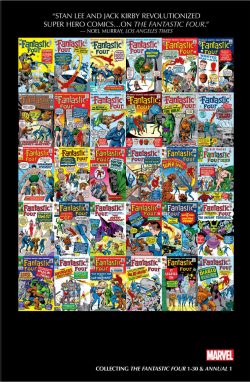
Showcase Presents Superman Family volume 4


By Otto Binder, Robert Bernstein, Jerry Siegel, Edmond Hamilton, Leo Dorfman, Curt Swan, Kurt Schaffenberger, Al Plastino & various (DC Comics)
ISBN: 978-1-4012-3837-7 (TPB)

When the Man of Steel debuted in Action Comics #1 (cover-dated June 1938) he was instantly the centre of attention, but even then the need for a solid supporting cast was apparent and cleverly catered for. Glamorous daredevil reporter Lois Lane premiered right beside Clark Kent and was a constant companion and foil from the outset, and – although unnamed – a plucky red-headed, befreckled kid started working alongside Lois & Clark from issue #6 (November 1938) onwards.

His first name was disclosed in Superman #13 (November-December 1941) having already been revealed as Jimmy Olsen to radio listeners when he became a major player in The Adventures of Superman show from its debut on April 15th 1940. As somebody the same age as the target audience, on hand for the hero to explain stuff to (all for the listener’s benefit) Jimmy was the closest thing to a sidekick the Action Ace ever needed. He’s remained a sporadic and amazingly popular one ever since.

When the similarly titled television show launched in the autumn of 1952 it was again an overnight sensation and National Periodical Publications began cautiously expanding their revitalised franchise with new characters and titles.

First to get a promotion to solo-star status was the Daily Planet’s impetuously capable if naive “cub reporter”. His addictively charming, light-hearted, semi-solo escapades began in Superman’s Pal Jimmy Olsen #1 (September-October 1954); the first spin-off star in the Caped Kryptonian’s ever-expanding entourage.

It took three years for the cautious Editors to tentatively extend the franchise again. In 1957, just as the Silver Age of Comics was getting underway, try-out title Showcase – which had already launched The Flash in #4 and Challengers of the Unknown in #6 – followed up with a brace of issues entitled Superman’s Girl Friend Lois Lane (#9-10). The “plucky News-hen” was rapidly awarded a series of her own. Technically it was her second, since for a period in the 1940s she had held a regular solo-spot in Superman.

In previous reviews I’ve banged on about the strangely patronising, parochial – and to at least some of us – potentially offensive portrayals of kids and most especially women during this period, and although at least fairer and more affirmative instances were beginning to appear, the warnings still bear repeating.

At that time Lois Lane was one of precious few titles with a female lead, and, in the context of today, one that causes many 21st century fans a few understandable qualms of conscience. Within the confines of her series the valiant, capable working woman careered crazily from man-hungry, unscrupulous bitch through ditzy simpleton to indomitable and brilliant heroine – often all in the same issue. The title was clearly intended to appeal to the family demographic that made I Love Lucy a national phenomenon, and many stories were played for laughs in the same patriarchal, parochial manner: a “gosh, aren’t ladies funny?” tone that appals me today – but not as much as the fact that I still love them to bits. That they’re mostly sublimely illustrated by the wonderfully whimsical Kurt Schaffenberger softens the repeated blows, but really, I should know better…

For the Superman Family and extended cast the tone of the times dictated a highly strictured code of conduct and parameters: Daily Planet Editor Perry White was a stern, shouty elder statesman with a heart of gold, Cub Reporter Jimmy was a brave and impulsive unseasoned fool – with a heart of gold – and Lois was brash, nosy, impetuous and unscrupulous in her obsession to marry Superman, although she too was – deep down – another possessor of an Auric aorta. There were also more people with blue or green skin than brown or other human shades, but as I’m trying to plug this book’s virtues I’m just shutting up now.

Somehow, even with these mandates in place the talented writers and artists assigned to detail their wholesomely uncanny exploits managed to craft tales both beguiling and breathtakingly memorable… and usually as funny as they were thrilling.

By today’s standards, Superman’s Pal Jimmy Olsen wasn’t quite as contentious, but still far too often stories meant to amuse portrayed the bright, bold boy in socially demeaning – if not downright cruel – situations and humiliating physical transformations. Even so, a winning blend of slapstick adventure, action, fantasy and science fiction (in the gentle but insidiously charming manner scripter Otto Binder had perfected 15 years previously at Fawcett Comics on the magnificent Captain Marvel) made the series one of the most popular of the era.

Again, originally most yarns were played for laughs in a father-knows-best manner and tone which can again appal me today, even though I still count them amongst some of my very favourite comics.

Confusing, ain’t it?

This fourth intriguingly intermingled, chronologically complete compendium collects the affable, all-ages tales from Superman’s Girlfriend, Lois Lane #17-26, (spanning May 1960-July 1961) and Superman’s Pal Jimmy Olsen #45-53 (ditto for June 1960-June 1961): a period of infinite wackiness and outrageous absurdity, which also saw the inevitable dawning of a far more serious milieu for the Man of Tomorrow and his human family.

This particular monochrome ethical conundrum commences with the Action Ace’s perpetual lady-in-waiting as SGLL #17 as Robert Bernstein & Schaffenberger introduce ‘The Girl that Almost Married Clark Kent!’, revealing how Lois covertly helps heiress Doris Drake win her reporter partner’s affections, unaware that the conniving rich girl has proof of the Caped Kryptonian’s secret identity…

‘Lana Lang, Superwoman!’ (Jerry Siegel, Curt Swan & Stan Kaye) then sees jealousy run wild as Superman gives first one then the other lady in his life superpowers: a secret scheme to foil Brainiac with no thought as to how either woman will feel once the crisis is over.

The issue ends with Binder & Schaffenberger’s ‘How Lois Lane Got Her Job’, disclosing how, even before she first met him, Superman was inadvertently helping the neophyte journalist score scoops…

SPJ #45, (illustrated throughout by Swan & John Forte) kicked off with Binder-scripted ‘Tom Baker, Power Lad!’: a sharp yarn wherein an apparently ordinary boy temporarily gains super powers. The shocking truth involves then-top-secret weapon Supergirl and the Bottle City of Kandor. Meddling with resident crackpot genius Professor Phineas Potter’s untested time machine hurls Jimmy back to the Wild West where he becomes accidental outlaw ‘The Gunsmoke Kid!’ (by a sadly anonymous scripter) whilst Bernstein’s ‘The Animal Master of Metropolis!’ portrays Jimmy as a local hero and target of crooked gamblers after he starts playing with a magic wand bestowing absolute mastery of the world’s fauna.

Lois Lane #18 opened with ‘The Star Reporter of Metropolis!’ (possibly Binder or Bernstein, but definitely limned by Schaffenberger) wherein a mousy protégé steals Lois’ thunder for the best possible reasons, whilst ‘The Sleeping Doom’ (Bernstein & Schaffenberger) is a superb thriller of aliens invading Earth by taking over people as they fall asleep. Valiant Lois staves off slumber for days until Superman returns to send the invaders packing, before ‘Lois Lane Weds Astounding Man!’ (Binder & Al Plastino), finds the flabbergasted journalist wooed by an alien wonder warrior with a very strange secret…

Another all-Swan & Forte art-extravaganza, Jimmy Olsen #46 opens with Siegel’s ‘Jimmy Olsen, Orphan!’ as an accident gives the cub reporter amnesia and he ends up in the same institution where Linda Lee is hiding whilst learning how to be a Supergirl. Bernstein then hilariously lampoons Hollywood as a succession of starlets romance the baffled but willing lad in The Irresistible Jimmy Olsen!’. Of course, these eager actresses are all operating on the mistaken assumption that our boy is Tinseltown’s latest genius Movie Producer…

The issue concludes with another outing for Jimmy’s occasional alter ego in ‘Elastic Lad’s Greatest Feats!’ with scripter Binder perfectly blending drama and comedy to deliver a punishing moral to the over-impulsive kid.

LL #19 (August 1960 and fully illustrated by Schaffenberger) opens with Bernstein’s ‘The Day Lois Lane Forgot Superman!’ as devoted sister Lucy convinces her perennially heartbroken elder sibling to try hypnosis and get over her destructive obsession. Of course, when it works, Lois finds time to pester Clark so much he has no time to save the world…

When an accident seemingly catapults Lois into the past she quickly becomes enamoured of Samson, a hero with a secret identity as ‘The Superman of the Past!’: a quirky yarn by Binder, before Jerry Siegel debuts a new occasional series.

‘Mr. and Mrs. Clark (Superman) Kent!’ was the first tale of a poignant comedy feature depicting the laughter and tears that might result if Lois secretly married the Man of Steel. Although seemingly having achieved her heart’s desire, she is officially only married to dull, safe Clark and must keep her relationship with the Man of Tomorrow quiet. She can’t brag or show pride and has to swallow the rage she feels whenever another woman throws herself at the still eligible bachelor Superman…

For an artefact of an era uncomfortably dismissive of women, there’s actually a lot of genuine heart and understanding in this tale and a minimum of snide sniping about “silly, empty-headed girls”. Perhaps it was the influence of the tailored-for-adults Superman newspaper strip leaking into the funnybook line….

SPJO #47 sees Jimmy in over his head impersonating an escaped convict Winky McCoy and trapped as The King of Crime! in a cracking suspense tale by Bernstein, Swan & Forte, and the impatiently under-age lad transforms into a husky 30-something thanks to another Prof. Potter potion in ‘Jimmy Grows Up!’ Binder sagely proves that maturity isn’t everything, before Siegel wraps up the issue with a thrilling romp as alien producers of horror movies starring Superman and Jimmy return seeking sequels. Their robot reporter doesn’t like the prospect of being junked at shooting’s end, however, and tries to replace the original in ‘The Monsters from Earth!’

SGLL #20 (October 1960) opens whimsically with ‘Superman’s Flight from Lois Lane’ (Siegel & Schaffenberger), with the Man of Steel escaping into his own past to see if a different life-path might result in a civilian existence unencumbered by a nosy snooping female. “Disc jockey” Clark soon realises his inquisitive assistant Liza Landis makes Miss Lane look positively disinterested and gladly ends the experiment, after which ‘The Luckiest Girl in Metropolis!’ (Bernstein & Plastino) sees Lois targeted by a Machiavellian mobster seeking to destroy her credibility as a witness, before ‘Lois Lane’s Super-Daughter!’ by Siegel & Schaffenberger revisits the Imaginary Mr. & Mrs. scenario wherein their attempts to adopt Linda (Supergirl) Lee lead to heartbreak and disaster…

That month in all-Swan & Forte Jimmy Olsen #48, anonymously scripted ‘The Story of Camp Superman!’ presents a heart-warming mystery as the cub works as counsellor to a bunch of youngsters – one of whom knows entirely too much about Superman – before ‘The Disguises of Danger!’ reprises undercover Jimmy’s acting abilities to get close to a cunning crook. Binder’s ‘The Mystery of the Tiny Supermen!’ then has Kandor’s miniscule Superman Emergency Squad repeatedly harass Jimmy: a clandestine scheme to stop him accidentally exposing the Man of Steel’s civilian identity…

The all-Schaffenberger November 1960 Lois Lane (#21) offers a double-length epic by author unknown wherein the Anti-Superman Gang utilise explosive toys to endanger the reporter in The Lois Lane Doll!’ forcing the Action Ace to hide her in his Fortress of Solitude. When even that proves insufficient she finds refuge – and unlikely romance – ‘Trapped in Kandor!’ Siegel then scripts a classic comic yarn as bitter rivals gain incredible abilities from a magic lake and duke it out like men in ‘The Battle Between Super-Lois and Super-Lana!’

Cover dated December 1960, Superman’s Pal Jimmy Olsen #49 begins with ‘Jimmy’s Gorilla Identity!’ as the luckless lad meets DC stalwart Congo Bill and gets his personality trapped in the hunter’s occasional alter ego, giant golden ape Congorilla. Next, Professor Potter is blamed for, but entirely innocent of, turning the cub reporter into ‘The Fat Boy of Metropolis!’ in a daft but clever crime caper prior to Siegel playing with contemporary trends as Jimmy impersonates a rock ‘n’ roll star to impress Lucy Lane in ‘Alias, Chip O’Doole!’…

Another all-Schaffenberger affair, LL #22 (January 1961), starts with a Red Kryptonite experiment afflicting the Man of Steel with a compulsion to repeatedly pop the question to an increasingly dubious and suspicious Lois on ‘The Day When Superman Proposed!’ (Binder), after which Bernstein’s ‘Lois Lane’s X-Ray Vision!’ sees irradiated sunglasses create a tidal wave of problems for the Metropolis Marvel, whilst in ‘Sweetheart of Robin Hood!’ another time-shift dream sees Lois courted by a very familiar-seeming Defender of Truth, Justice and the Nottinghamshire Way…

In SPJO #50, Siegel, Swan & Sheldon Moldoff’s ‘The Lord of Olsen Castle’ sees Jimmy as potential heir of a Swedish castle and title. All he has to do is accomplish a slew of fantastic feats and defeat an ogre, utterly unaware Superman and a host of Kryptonians are secretly pitching in. ‘The Weirdest Asteroid in Space’ (Binder, Swan & Moldoff) then offers a bold monster mystery before another Potter experiment shifts all Superman’s might into his teen pal in ‘The Super-Life of Jimmy Olsen!’ by an unknown author illustrated by Al Plastino.

Lois Lane #23 (February 1961) opens with Binder & Schaffenberger’s riotous romp ‘The 10 Feats of Elastic Lass!’ as our impetuous reporter borrows Jimmy’s stretching serum to track down mad bomber The Wrecker, whilst ‘The Curse of Lena Thorul!’ (Siegel) exposes a bewitching beauty’s incredible connection to Lex Luthor before another Seigel Imaginary visit to a possible future sees ‘The Wife of Superman!’ worn to a frazzle by twin super-toddlers and yearning for her old job at the Daily Planet…

March 1961’s Jimmy Olsen #51 reveals ‘Jimmy Olsen’s 1000th Scoop!’ (Bernstein, Swan & Forte), with the prospective milestone repeatedly delayed by Superman for the best possible reasons, after which a sultry alien takes an unlikely shine to the lad. Sadly, ‘The Girl with Green Hair’ (Binder, Swan & Forte) was the result of a scheme by a well-meaning third party to get Lucy to be nicer to Jimmy and it all goes painfully, horribly wrong…

The issue ends with ‘The Dream Detective!’ (Swan & Kaye) as the cub reporter inexplicably develops psychometric abilities and unravels mysteries in his sleep, whilst in Lois Lane #24 (April 1961) anonymously scripted ‘The Super-Surprise!’ sees Lois undercover as a platinum blonde, scuppering a deadly plot against the Superman, superbly linmed by Schaffenberger, as is Bernstein’s ‘The Perfect Husband!’, wherein a TV dating show led Lois into a doomed affair with a he-man hunk who was almost the spitting image of Clark Kent… almost…

The issue closes on Bernstein & Forte’s ‘Lois Lane… Traitor!’ with Lois in the frame for murdering the King of Pahla until the incredible, unbelievable true culprit comes forward…

Also available that April, Superman’s Pal Jimmy Olsen #52 featured Leo Dorfman, Swan & Kaye’s ‘The Specter of the Haunted House!’ as a gang of cunning thieves use supernatural sceptic Olsen as a patsy for a bold robbery scheme, before ‘The Perils of Jimmy Olsen!’ -illustrated by Swan & Forte – sees the laid-up apprentice journo employ a robot double to perform feats of escalating daring and stupidity. ‘Jimmy Olsen, Wolfman!’ (Siegel, Swan & Kaye) then delivers a welcome sequel to the original hit tale wherein Superman’s Pal is again afflicted by lycanthropy thanks to the pranks of other-dimensional imp Mr. Mxyzptlk

In Lois Lane #25 (May 1961) Siegel & Schaffenberger’s Imaginary series reaches an impressively bittersweet high point in Lois Lane and Superman, Newlyweds!’ as she convinces hubby to announce their relationship to the world and must live with the shocking consequences…

The brilliant reporter side was then highlighted in Bernstein’s diabolical thriller ‘Lois Lane’s Darkest Secret!’ with the daring reporter risking her life to draw out and capture a mesmeric master criminal before ‘The Three Lives of Lois Lane!’ (uncredited with Forte illustrating) sees the journalist surviving a car crash, only to be subsumed into the personalities of dead historical figures Florence Nightingale, Betsy Ross and Queen Isabella of Spain. Here, Superman can only stay near and try to limit the damage…

SPJO #53 opens with The Boy in the Bottle!’ (Siegel, Swan & Kaye) as the cub suffers future shock whilst trapped in Kandor, after which sheer medical mischance results in Siegel, Swan & Forte’s now-legendary saga of ‘The Giant Turtle Man!’ and an oddly casualty-free monster rampage before ‘The Black Magician!’ (unknown writer, Swan & Forte) reveals Jimmy banished to the court of King Arthur by spiteful Mr. Mxyzptlk.

Superman’s Girlfriend, Lois Lane #26 (July 1961) closes this titanic tome, with three more Schaffenberger classics, starting with Siegel’s ‘The Day Superman Married Lana Lang!’ In this imaginary tragedy, the Action Ace finally settles down with his childhood sweetheart, but lives to regret it, whilst Lois Lane’s Childhood!’ (Siegel) reveals how the lives of Kal-El on doomed Krypton and baby Lois on Earth were intertwined by fate and providence, before Bernstein’s The Mad Woman of Metropolis’ concludes the comics cavalcade on a stunning high. Here, Lois foils a diabolical plot by criminals to murder Clark and drive her insane…

As well as containing some of the most delightful episodes of the pre-angsty, cosmically catastrophic DC, these fun, thrilling, deeply peculiar and, yes, occasionally offensive tales perfectly capture the changing tone and tastes reshaping comics moving from the smug, safe 1950s to the seditious, rebellious 1960s, all the while keeping to the prime directive of the industry – “keep them entertained and keep them wanting more.”

Despite all the well-intentioned quibbles from my high horse here in the 21st century, I think these stories still have a huge amount to offer funnybook fun-seekers and strongly urge you to check them out for yourselves. You won’t be sorry…
© 1960, 1961, 2013 DC Comics. All Rights Reserved.

Hellboy Junior


By Mike Mignola, Bill Wray, Stephen DeStefano, Dave Cooper, Hilary Barta, Pat McEown, Glenn Barr, Kevin Nowlan, Dave Stewart, John Costanza & various (Dark Horse)
ISBN: 978-1-56971-988-6 (TPB)

Although probably best known for revitalising the sub-genre of horror-heroes via his superb Hellboy and B.P.R.D. tales, creator Mike Mignola (Batman, The Witcher, Rocket Raccoon) conceals a dark and largely unsuspected secret: he has a very dry, outlandish and wicked sense of humour…

Since 1997, whenever nobody was looking, he and co-conspirator Bill Wray (Big Blown Baby, Ren and Stimpy) have concocted outrageous, uproarious and vulgarly hilarious spoof tales which might – but probably weren’t – untold yarns of the scarlet scallywag’s formative days in hell before being drawn to earth and reared as a champion of humanity against the Things of the Outer Darkness…

Moreover, they convinced the gullible fools at Dark Horse Comics to publish them, first in the Hellboy Junior Halloween Special and again in an eponymous 2-issue miniseries in 1999 which also included many scurrilous and hilarious spoofs, pastiches and pokes at a host of family-friendly favourites from parental favourite Harvey Comics: beloved icons such as Casper the Friendly Ghost, Wendy the Good Little Witch, Stumbo the Giant, Baby Huey and Hot Stuff, the Little Devil

With most of the material scripted by Wray, this appallingly rude, crude, compelling compilation bolts all the material together and even springs for an all-new feature, beginning with Bill & Mike’s painfully cruel ‘The Creation of Hellboy Jr.: a Short Origin Story’, before tucking into ‘Maggots, Maggots, Everywhere!’ An all-Wray buffet of gastric ghastliness, here the stone-fisted imp, fed up with his meagre ration of icky bug-babies, goes looking for something better to eat. Perhaps, however, he shouldn’t have taken restaurant advice from that sneaky Adolf Hitler, whose rancid soul Junior should have been feindishly tormenting anyway…

After that monster-infested odyssey, Mignola illustrates a mordant, wry adaptation of a German folk tale in ‘The Devil Don’t Smoke’ before Stephen DeStefano (Ren and Stimpy) outrageously illuminates agonisingly hilarious ‘Huge Retarded Duck’ and Hilary Barta (Starslayer, American Flagg!, Plastic Man) lends his stylish faux-Wally Wood pastichery to ‘The Ginger Beef Boy’, wherein a frustrated crossdresser (sorry folks: it’s an old book and no other term will do here!) creates the son he always yearned for from the ingredients of a Chinese meal…

Following a stunning Kevin Nowlan (Doctor Strange, Plastic Man) pin-up (by him not of him – that would be silly), Dave Cooper (Futurama) draws ‘Hellboy Jr.’s Magical Mushroom Trip’, wherein our ever-starving imp and his pet ant disastrously attempt to grow their own edible fungus. They end up in deep shiitake when their psychotropic crop brings them into conflict with the big boss. Fans of evil dictators might appreciate and welcome a guest appearance by Idi Amin

Implausibly based on a true story, Wray & Mignolas’s ‘Squid of Man’ details the Grim Reaper’s wager with a mad scientist endeavouring to birth a new Atlantean race from the freshly dead remnants of cephalopods, arthropods, crustaceans, fine twine and lightning, whilst ‘The Wolvertons’ details the life and loves of an Alaskan lumberjack, his multi-tentacular alien wife and their extraordinarily hybrid kids Brad and Tiffany. Wray & Pat McEown (Grendel) spared no effort in their passionate tribute to Basil Wolverton, cartoon king of the Grotesque, so read this one before eating.

Back in Hell, Jr. regretfully experiences ‘The House of Candy Pain’ – by Wray, Barta, John Costanza & Dave Stewart (Daytripper, Michael Chabon Presents The Amazing Adventures of the Escapist) – when he and fellow imp Donnie flee to Storyland and the Forbidden Forest of Festible Dwellings. They should have stuck with the shack made from steaks or Tofu Terrace, but no, they have to enter the Gingerbread House…

Following a Barta bonus pin-up, Wray does it all for the tragic tale of ‘Sparky Bear’: a cub torn from his natural environment and raised by humans as a fire-prevention posterbeast and safety spokesperson, whilst Cooper-limned parable ‘Somnambo the Sleeping Giant’ proves that even if your village is overrun with demons, sometimes the cure is worse than the affliction….

That idea is echoed in ‘Wheezy, the Sick Little Witch’ (DeStefano): a poorly tyke whose cute li’l animal friends can neither cure nor survive contact with.

After surviving a nasty fast-food experience in ‘Hitler’ and a mock ad for your very own Spear of Destiny, the all-new ‘Hellboy Jr. vs Hitler’ (Wray & Stewart) depicts how the little devil can’t even escort the Fallen Fuhrer to the depths of Lower Hell without screwing up and giving the mono-testicular reprobate another chance to resurrect his Reich…

After a painted Wray Halloween scene and saucy Hell’s hot-tub pin-up from Glenn Barr (Seekers into the Mystery, Brooklyn Dreams), the mirthful madness concludes with Mignola & Stewart’s ‘Hellboy Jr. Gets a Car’ wherein the Hadean Half-pint takes an illicit test drive in a roadster meant for a Duke of Hell. It does not end well…

This Chymeric chronicle also includes a ‘Hellboy Junior Sketchbook’ with working drawings, colour roughs and layouts by Wray, McEown & DeStefano, topping off a wildly exuberant burst of tongue-in-cheek, sardonic and surreal adult fun: a jovially jocund, gut-bustingly gross gas for every lover of off-the-wall, near-the-knuckle fun.
Hellboy Jr. ™ & © Mike Mignola. All individual strips, art & stories © 1997, 1999, 2003 their individual creator or holder. All rights reserved.
Bizarro


By Heath Corson, Gustavo Duarte, Pete Pantazis, Lee Loughridge & Tom Napolitano, with Bill Sienkiewicz, Kelley Jones, Michelle Madsen, Francis Manapul, Fábio Moon, Gabriel Bá, Darwyn Cooke, Raphael Albuquerque, Tim Sale, Dave Stewart & various (DC Comics)
ISBN: 978-1-4012-5971-6 (TPB/Digital edition)

One of the most consistent motifs in fiction is the “Dark Opposite” or “player on the other side”: a complete antithesis of the protagonist. Rock yourself to sleep at night if you wish, listing deadly doppelgangers from Professor Moriarty to Sabretooth to Gladstone Gander

The Caped Kryptonian’s “imperfect duplicate” Bizarro either debuted as a misunderstood freak and unwilling monster in Otto Binder & George Papp’s captivatingly tragic 3-part novel ‘The Battle with Bizarro’ (Superboy #68, cover-dated October 1958) or in the similarly titled Superman newspaper strip sequence written by Alvin Schwartz (episode 105/#6147-6242 spanning August 25th – December 13th 1958) with the latter scribe claiming that he thought up the idea months earlier. The newsprint version was certainly first to employ those eccentric reversed-logic thought-patterns and idiomatic speech impediment…

Although later played primarily for laughs, such as in his short tenure in Tales of The Bizarro World (June 1961 to Aug 1962 in Adventure Comics #285-299), most earlier comic book appearances – 40 by my count – of the dippy double were generally moving, child-appropriate tragedies, unlike here where we commemorate his 65th anniversary with possibly the funniest book of the last twenty years… at least if you’re a superhero fan.

Post Crisis on Infinite Earths, he was a darker, rarer beast, but this tale by screenwriter and comics scripter Heath Corson (Justice League: War, Nightwing/Magilla Gorilla, Super Pets: The Great Mxy-Up) & Gustavo Duarte (Monsters! & Other Stories, Guardians of the Galaxy, Dear Justice League) stems from DC’s brief New 52 continuity sidestep and refers almost exclusively to his earlier exploits and character.

Collecting 6-issue miniseries Bizarro and material from DC Sneak Peek: Bizarro #1, the saga starts as another misunderstood and deeply unappreciated visit to Metropolis – augmented by a new origin – sees the lonely, bored, eternally well-intentioned living facsimile teamed up with boy reporter Jimmy Olsen on a road-trip to “Bizarro-America” (we call it Canada)…

It’s ostensibly to prevent a disastrous super-battle but more importantly, someone suggested that the journey could provide enough candid material for a best-selling coffee table book that could liberate the eternally cash-strapped kid from his financial woes…

Jim’s certain he can handle the big super-doofus, but not so sure that applies to a pocket alien Bizarro picked up somewhere. After ‘The Secret Origin of Colin the Chupacabra’, the story truly starts with ‘Bizarro-America: Part 6’ and a weary ‘Welcome to Smallville’ where the need to fix the car leads to a clash with a dynasty of very familiar villains at King Tut’s Slightly Used Car Oasis. It all goes without incident until some other ETs give papa Tut a reality-altering staff and he seeks to achieve his great dream – selling everyone a used car…

Having navigated their way out of that bad deal, the Road Worriers further embarrass themselves in ‘Bizarro-America: Part 5’ with stopovers and pertinent guest stars in Gotham, Central, Starling and Gorilla City, before doing more of the same in Louisiana, Chicago and all points lost. Somewhere along the way they pick up a tail and in seeking to ditch their pursuers drive into Ol’ Gold Gulch: a ghost town with real spooks and a distant descendant of a legendary gunfighter. Chastity Hex is a bounty hunter too, which comes in handy when Bizarro is possessed by an evil spirit in ‘Unwanted: Unliving or Undeaded’ and a destructive rampage triggers the spectral return of great grandpa Hex as well as Cinnamon, Nighthawk, Scalphunter and El Diablo

Another issue (‘Bizarro-America: Part 3’ if you’re still counting) and another city sees the automotive idiots catching mystic marvel Zatanna’s act in ‘Do You Believe in Cigam?’ and fresh disaster as Bizarro’s backwards brain allows him to accidentally access the sorceress’ backwards spells, prompting diversions to many, many alternate DC realities and Jimmy and Bizarro trading bodies (sort of) before order – if not sanity – is restored…

As they near their final destination, the covert shadows finally move in. A.R.G.U.S. agents Stuart “chicken Stew” Paillard and Meadows Mahalo get their X-Files on: compelling the travellers to infiltrate Area 51, but aren’t happy with the outcome once the idiots unleash every alien interned or interred there…

Ultimately the voyage concludes with ‘Bizarro-America: Part 1’ and long-deferred meeting with Superman (drawn by Tim Sale & Dave Stewart) in ‘Who Am on Last?’ The last of the Tuts returns for another stab at vengeance and high-volume marketing and as chaos reigns Colin comes up trumps, before assorted former guests coagulate as the never to be reformed Bizarro League to save the world in a way it has never been saved before.

All that’s left is to get Bizarro into Canada but there’s one last surprise in store…

This outrageous romp is punctuated with a round-robin of guest illustrators (Bill Sienkiewicz, Kelley Jones, Michelle Madsen, Francis Manapul, Fábio Moon, Gabriel Bá, Darwyn Cooke, Raphael Albuquerque and more) adding to the manic madness via their signature characters, and a variant cover gallery provides more boffo yoks courtesy of Kyle Baker and Kevin Wada. Topping off the fun is an unmissable sketch section by Duarte, packed with many scenes and moments somebody was too nervous to publish…

Fast, funny, fantastic and far too long forgotten, Bizarro is a superb romp that would make a magnificent movie. Do not miss it.
© 2015, 2016 DC Comics. All Rights Reserved.