Incredible Hulk Epic Collection volume 7: And Now… The Wolverine (1974-1976)


By Len Wein, Chris Claremont, Herb Trimpe, Sal Buscema & various (MARVEL)
ISBN: 978-1302933609 (TPB/Digital edition)

Bruce Banner was a military scientist caught in a gamma bomb detonation of his own devising. As a result of ongoing mutation, stress and other factors caused him to transform into a giant green monster of unstoppable strength and fury.

After an initially troubled few years, the irradiated idol finally found his size-700 feet and a format that worked, becoming one of young Marvel’s most popular features. After his first solo-title folded, Hulk shambled around the slowly-coalescing Marvel Universe as guest star and/or villain of the moment, until a new home was found for him in “split-book” Tales to Astonish: sharing space with fellow misunderstood misanthrope Namor the Sub-Mariner, who proved an ideal thematic companion from his induction in #70.

As the 1970s tumultuously unfolded, the Jade Juggernaut settled into a comfortable – if excessively, spectacularly destructive – niche. A globe-trotting, monster-mashing plot formula saw Banner hiding and seeking cures for his gamma-curse, alternately aided or hunted by prospective father-in-law US General Thaddeus “Thunderbolt” Ross and his daughter – the afflicted scientist’s unobtainable inamorata – Betty, with a non-stop procession of guest-star heroes and villains providing the battles du jour.

Herb Trimpe made the Hulk his own, displaying a gift for explosive action and unparalleled facility for drawing technology – especially honking great military ordnance and vehicles. Beginning with Roy Thomas, a string of skilful scripters effectively played the Jekyll & Hyde card for maximum angst – and ironic impact – as the monster became a ubiquitous foundational pillar of Marvel’s pantheon. You were nobody in the MU until you fought the Hulk…

This compulsive compendium revisits Incredible Hulk #179-200 and Annual #5 (cover-dates September 1974 to June 1976), heralding big changes. it opens without preamble as the Gamma Goliath returns to Earth after a cosmic collision with Adam Warlock on Counter Earth. Soon, the artistic reins would pass to another illustrator inextricably associated with the Jade Juggernaut, whilst writer Len Wein continued to insert fresh ideas and characters, redefining the man-monster for the modern age…

Incredible Hulk #179 signalled a long-overdue thematic reboot as Wein signed on as writer and editor with strong ideas on how to put some dramatic impact back into the feature. Illustrated by Trimpe & Jack Abel, ‘Re-enter: The Missing Link!’ sees the Hulk lose patience during his return rocket-ship trip: bursting out of his borrowed vessel just as America’s military defences start shooting at it.

Crashing to earth in the mining district of Appalachia, he reverts to befuddled Bruce Banner, and is kindly cared for by the dirt-poor Bradford family. They have a habit of taking in strays and have already welcomed a strange, huge yet gentle being they’ve christened Lincoln.

As time passes Banner recognises his fellow lodger as a former Hulk foe known as the Missing Link. The colossal brute is neither evil nor violent (unless provoked) but is lethally radioactive, and the fugitive physicist faces the dilemma of having to break up a perfect happy family before they all die slowly and horribly.

Link, of course, refuses to cooperate or go quietly…

Next comes the second most momentous story in Hulk history which starts with ‘And the Wind Howls… Wendigo!(#180, October 1974,). Here the Green Giant gallivants across the Canadian Border and encounters a witch attempting to cure her brother of a curse which has transformed him into a rampaging cannibalistic monster. Unfortunately, that cure means Hulk must become a Wendigo in his stead…

It is while the Great Green and Weird White monsters are tearing into each other that mutant megastar Wolverine first appears – in the very last panel – leading into the savage fist, fang and claw fest that follows.

‘And Now… The Wolverine!captivatingly concludes the saga as the Maple nation’s top-secret super-agent is unleashed upon both the Emerald Goliath and the mystical man-eating Wendigo in an action-stuffed romp teeming with triumph, tragedy and lots of slashing and hitting. The rest is history…

Back south of the border, Major Glenn Talbot – after being captured and tortured by (Soviet-era) Russians – has been reunited with his wife and family and is eagerly expecting a meeting with President Gerald Ford. With Trimpe taking sole charge of the art chores, ‘Between Hammer and Anvil! finds the ever-isolated Hulk meeting and forever losing a true friend in compassionate welcoming hobo Crackerjack Jackson.

The action portion of the tale centres on two escaped convicts who despise each other but are forced to endure togetherness because of an alien chain which shackles them together. Whilst it imparts overwhelming physical power and endurance it means they are tied together forever. It’s not nearly enough, however, to stop a fighting-mad, heartbroken Hulk…

Restlessly roaming, the broken behemoth stumbles into a return match with voltaic vampire and life-stealer ZZZAX in ‘Fury at 50,000 Volts!, promptly wrecking a new life Banner surreptitiously starts carving out for himself in Chicago…

‘Shadow on the Land!finds the wandering man-mountain battling shadily insubstantial extraterrestrial invader Warlord Kaa – a revival from the company’s pre-superhero monsters & aliens anthology era – who foolishly takes possession of the Hulk’s shadow and thinks himself untouchable and indestructible…

Their close encounter leads to Banner’s capture by Hulkbuster Base commander Colonel Armbruster just in time for the US President’s visit and a shocking ‘Deathknell!as the truth about Banner’s romantic rival (and Betty’s new husband) Glenn Talbot is exposed when the so-trustworthy Major attempts to assassinate the Commander-in-Chief.

During the attendant death and chaos, Hulk busts out and General Ross regains his shattered credibility by recapturing the man-beast. Sadly, Soviet infiltration of the base is rife and a hidden traitor dons experimental super-armour to continue the deadly attacks in ‘The Day of the Devastator!This time, when the Jade Juggernaut smashes their common foe, the American army are suitably grateful…

Sometime later, S.H.I.E.L.D. intelligence gatherers discover the real Talbot is still a prisoner in Siberia and that Hulkbuster Base’s current problems have all been caused by a vindictive Soviet mutant genius they’ve all battled before…

With Joe Staton joining the team as inker, ‘There’s a Gremlin in the Works!(IH #187) sees the return of the sinister spawn of the man-monster’s very first foe The Gargoyle. The son is a vicious and ambitious juvenile mastermind with vast resources and secret plans far beyond merely serving the Soviet state, and is holding Talbot at his polar fortress Bitterfrost

He is fully prepared and eagerly anticipating Ross and S.H.I.E.L.D. agent Clay Quartermain’s clandestine rescue bid, but all the cyborg super-soldiers and giant mutant monster dogs in the world are not enough when stowaway Banner joins the mission subsequently gets scared and goes full green…

The freakish fiend’s personality-altering technology is exposed in ‘Mind Over Mayhem!, but as the stalwart heroes desperately flee the base with Talbot’s comatose body, Hulk seemingly dies in the citadel’s explosive death-throes. Nothing is further from the truth and #189 sees the monster battle The Mole Man to secure a miracle-remedy for a sightless little Russian girl in ‘None Are So Blind…!

Veteran Hulk illustrator Marie Severin inks Trimpe on ‘The Man Who Came Down on a Rainbow!as alien philanthropist Glorian whisks the solitary colossus to a veritable promised land in the stars, only to have the idyll shattered by invading Toad Men hungry for the secret power fuelling the personalised paradise…

Despite murdering Glorian, ‘The Triumph of the Toad!(Trimpe & Staton) is short-lived and catastrophically self-destructive when the enraged Hulk and cosmically puissant Shaper of Worlds extract a measure of justice for their fallen friend…

Unwillingly banished back to Earth, the Green Giant lands in Scotland and gets between feuding hotheads with violently opposing attitudes to ‘The Lurker beneath Loch Fear!, after which Banner makes his way home way to America where Ross and Quartermain have recruited a famous psychologist to fix the catatonic Talbot…

‘The Doctor’s Name is… Samson!finds formerly gamma-powered psychiatrist Leonard Samson falling victim to another scientific fustercluck. Accidentally resurrected as a lime-tressed superstrong superhero, he is still unable to cure his current patient. For that he needs Banner, but when the wish comes true, the savant just isn’t tough enough to hold onto him…

After almost a decade pencilling the strip, Trimpe moved on to other things and Incredible Hulk #194 saw Sal Buscema take over in ‘The Day of the Locust!(with Wein & Staton still doing what they did best).

Lost in the American heartland, the Hulk stumbles upon young lovers pursued by an overly possessive dad determined to end the affair. However, this angry, overreaching tiger-parent is a former X-Men adversary who can enlarge insects to immense size, so the kids are more than grateful for the assistance of a Jolly Green Cupid. With Samson and the US Army one step behind, the meandering man-monster then befriends a small boy running away from home in ‘Warfare in Wonderland!

Eager for any advantage, Ross tricks gamma-powered maniac The Abomination into attacking the Hulk but is unprepared for the green gladiators teaming up rather than tussling again in #196’s ‘The Abomination Proclamation!

Typically, the villain’s innate viciousness soon alienates his temporary ally and, after triumphing in another spectacular battle, Hulk blasts off on a runaway rocket and is apparently atomised when it blows up…

To Be Continued?

You bet and right away as #197 (by Wein, Buscema & Joe Staton) reveals that the detonation merely left Hulk unconscious in the Florida Everglades, where the invidious Collector has made his latest lair and gleefully gathers up a trio of terrors. The phenomena fanatic is on a monster kick and – having scooped up Banner and a mute young man who is in actuality undead transmorph The Glob – feels he secured the perfect set as ‘…And Man-Thing Makes Three!.

However, the immortal maniac has grossly underestimated the deeply-buried humanity of his living trinkets and inevitably faces a mass-escape and loss of all his living exhibits after sparking ‘The Shangri-La Syndrome!

Behind a Jack Kirby cover, Hulk Annual #5 (November 1976) was the first all-new King-Size compendium since 1968 and featured a massive monster-mash, reviving a half dozen iconic threats and menaces from the company’s pre-superhero phase. Written by Chris Claremont, with art by Sal B & Jack Abel, ‘And Six Shall Crush the Hulk!offers little in the way of plot but mountains of monumental action as a procession of resurrected relics and reprobates attack one after another. It begins with ‘Where There’s Smoke, There’s Diablo!, ‘And Taboo Shall Triumph!before ‘It Is Groot, the Monster from Planet X!!who weighs in. Outnumbered but undaunted, Hulk fights on in ‘For I am Goom!!whilst ‘Beware the Blip!piles on the pressure until an evil mastermind in the shadows is revealed as grudge-bearing Defenders foe Xemnu in ‘A Titan Shall Slay Him!Even exhausted, the Hulk is too much for the spiteful schemer, whom I’m sure you recall was called “The Living Hulk” on his 1960 debut in Journey Into Mystery #62…

Back in monthly mag and building up to a spectacular anniversary, Incredible Hulk #199 finds ambivalent frenemies Leonard DocSamson and General Ross employing all of America’s most advanced assets in ‘…And SHIELD Shall Follow!(Wein, Sal B & Staton) to capture the critically necessary Green Gargantuan, but in the end it’s the headshrinker’s sheer guts and determination which win the day, allowing a big anniversary issue #200 resolution as Hulk is reduced to infinitesimal size and injected into amnesiac Glenn Talbots battered brain. There he battles materialised memories and a cruel sentient tumour as ‘An Intruder in the Mind!

The struggle to restore the mind of Banner’s rival for Betty Ross-Talbots undying affections is not without complications, however, and at the moment of his greatest triumph and sacrifice, Hulk suffers a major setback and begins uncontrollably shrinking beyond the ability of Samson and his team to reach or rescue him…

Now it’s To Be Hulk-inued…

This catastrophically cathartic tome is rounded out with the cover to Giant-Size Hulk #1, the covers and some interior pages from Hulk-themed Marvel Treasury Edition #5, crafted by John Romita, Marie Severin and Trimpe, as well as the last’s double page pin-up of Hulk foes from that tabloid-sized graphic treat, as well as house ads, #1 and a gallery of original art pages by Trimpe and Buscema. Also included is Sal’s 1960s try-out art page, doubling as a FOOM caption competition, and the corresponding winning entry from Russ Nicholson. John Romita’s first design sketches for Wolverine precede more house ads as well as covers and frontispieces by John Byrne & Abel and Trimpe from later Hulk/Wolverine reprint collections and closes with unused covers by Ed Hannigan and Trimpe.

The Incredible Hulk is one of the most well-known comic characters on Earth, and these stories, as much as the movies, cartoons, TV shows, games, toys and action figures are the reason why. For an uncomplicated, earnestly vicarious experience of Might actually being Right, you can’t do better, so why not Go Green – even if it’s only in your own delirious head?
© 2022 MARVEL.

Marvel Two-In-One Masterworks volume 6


By Mark Gruenwald, Ralph Macchio, Jerry Bingham, Ron Wilson, George Pérez, Michael Netzer, Frank Springer, Gene Day, Pablo Marcos, Chic Stone & various (MARVEL)
ISBN: 978-1-3029-3293-0 (HB/Digital edition)

Above all else, Marvel has always been about team-ups. The concept of team-up books – an established star pairing, or battling (often both) with less well-selling company characters – was not new when Marvel awarded their most popular hero the same deal DC had with Batman in The Brave and the Bold. Although confident in their new title, they wisely left options open by allocating an occasional substitute lead in The Human Torch.

In those distant days, editors were acutely conscious of potential over-exposure – and since superheroes were actually in a decline, they may well have been right.

Nevertheless, after the runaway success of Spider-Mans guest vehicle Marvel Team-Up, the House of Ideas carried on the trend with a series starring bashful, blue-eyed Ben Grimm – the Fantastic Fours most popular star. They began with a brace of test runs in Marvel Feature #11-12 before awarding him his own team-up title, with this sixth stirring selection gathering the contents of Marvel Two-In-One #61-74, covering March 1980-April 1981.

Preceded by a comprehensive and informative reverie in Ralph Macchio’s Introduction, the action resumes with the title continuing to rectify its greatest flaw. The innate problem with team-up tales was always a lack of continuity – something Marvel always prided itself upon. Writer/editor Marv Wolfman had sought to address this during his tenure through the simple expedient of having stories link-up through evolving, overarching plots which took Ben from place to place and from guest to guest. The trick was perfected in the vast-scaled, supremely convoluted saga known as The Project Pegasus Saga – as featured in the previous volume.

A stellar epic began in #61 with ‘The Coming of Her!’ (by Mark Gruenwald, Jerry Bingham & Gene Day) as time-travelling space god/31st century Guardian of the Galaxy Starhawk became embroiled in the birth of a female counterpart to artificial superman Adam Warlock.

The distaff genetic paragon awoke fully empowered and instantly began searching for her predecessor, dragging Ben Grimm’s girlfriend Alicia Masters and mind goddess Moondragon across the solar system, arriving where issue #62 observed ‘The Taking of Counter-Earth!’

Hot on their heels, The Thing and Starhawk catch Her just as the women encounter a severely wounded High Evolutionary, and discover the world so carefully built and casually discarded by that self-created science god has been stolen…

United in mystery, the strange grouping follow the planet’s trail out of the galaxy and uncover the incredible perpetrators but Her’s desperate quest to secure her predestined, purpose-grown mate ends in tragedy when she learns ‘Suffer Not a Warlock to Live!’

Clearly on a roll and dedicated to exploiting Marvel Two-in-One’s unofficial role as a clean-up vehicle for settling unresolved plotlines from cancelled series, Gruenwald & Macchio then dived into ‘The Serpent Crown Affair” in #64.

‘From the Depths’ (illustrated by Pérez & Day) sees sub-sea superhero Stingray approach FF boffin Reed Richards in search of a cure for humans who had been mutated into water-breathers by Sub-Mariner foe Doctor Hydro: a plotline begun in 1973 and left unresolved since the demise of the Atlantean prince’s own title.

Richards’ enquiries soon found the transformation had been caused by The Inhumans’ Terrigen Mist, but when he had Ben ferry the mermen’s leader Dr. Croft and Stingray to a meeting, the trip was cut short by a crisis on an off-shore oil rig, thanks to an ambush by a coalition of snake-themed villains.

The ‘Serpents from the Sea’ (art by Bingham & Day) were attempting to salvage dread mystic artefact the Serpent Crown, and would brook no interference, but luckily the Inhumans had sent out their seagoing stalwart Triton to meet the Thing…

Meanwhile, alternate-Earth “Femizon” Thundra had been seeking the men responsible for tricking her into attacking Project Pegasus but had fallen under the spell of sinister superman Hyperion – a pawn of corrupt oil conglomerate Roxxon. At that time, their CEO Hugh Jones possessed – or had been possessed by – the heinous helm…

With the situation escalating, Ben had no choice but to call in an expert and before long The Scarlet Witch joins the battle: her previous experience with the relic enabling the heroes to thwart the multi-dimensional threat of ‘A Congress of Crowns!’ (Pérez & Day) and a devastating incursion by diabolical primordial serpent god Set

With Armageddon averted, Ben diverted to Pegasus to drop off the now-neutered crown in #67 and found old ally Bill Foster had been diagnosed with terminal radiation sickness due to his battle with atomic foundling Nuklo. Thundra, seduced by promises of being returned to her own reality, wises up in time to abscond from Roxxon in ‘Passport to Oblivion!’ (Gruenwald, Macchio, Ron Wilson, Day & friends), but hasn’t calculated on being hunted by Hyperion. Although outmatched, her frantic struggle does attract the chivalrous attentions of Ben and superhero-neophyte Quasar

Marvel T-I-O #68 shifted gears with The Thing meeting former X-Man The Angel as they stumble into – and smash out of – a mechanise murder-world in ‘Discos and Dungeons!’ (art by Wilson & Day), after which ‘Homecoming!’ finds Ben contending with the time-lost Guardians of the Galaxy whilst striving to prevent the end of everything. The proximate cause is millennial man Vance Astro who risks all of reality to stop his younger self ever going into space…

Issue #70 offered a mystery guest team-up for ‘A Moving Experience’ (Gruenwald, Macchio, Mike Nasser/Netzer & Day) as Ben is again mercilessly pranked by old frenemies The Yancy Street Gang, and ambushed by genuine old foes when he helps Alicia move into new digs. Then, the so-long frustrated Hydromen finally get ‘The Cure!’ (Wilson & Day) after Ben and Reed travel to the Inhuman city of Attilan.

Sadly, a cure for the effects of Terrigen is also a perfect anti-Inhuman weapon, and when the process is stolen by a trio of freaks, the trail leads to a brutal clash with a deadly Inhuman renegade wielding ‘The Might of Maelstrom’ (Gruenwald, Macchio, Wilson & Chic Stone). The pariah is intent on eradicating every other member of his hidden race and just won’t stop until he’s done…

In Marvel Two-In-One #73, Macchio, Wilson & Stone tie up loose ends from the Pegasus epic as Ben and Quasar pursue Roxxon across dimensions to another Earth where the rapacious plunderers have enslaved a primitive population and begun sending their pillaged oil back here via a ‘Pipeline Through Infinity’ (#74), whilst Gruenwald, Frank Springer & Stone celebrate the festive season with ‘A Christmas Peril!’ as Ben and the Puppet Master are drawn into the Yuletide celebrations of brain-damaged, childlike, immensely powerful Modred the Mystic

Fiercely tied to the minutia of Marvel continuity, these stories from Marvel’s Middle Period are certainly of variable quality, but whereas some might feel rushed and ill-considered they are balanced by some superb adventure romps still as captivating today as they ever were.

Bolstered by house ads and original art and covers by Bingham, Day & Pérez; with biographies for the legion of creators contained herein. Most fans of Costumed Dramas will find little to complain about and there’s lots of fun to be found for young and old readers.
© 2021 MARVEL.

Superman: The Dailies 1939-1940


By Jerry Siegel & Joe Shuster with Paul Cassidy (DC/Kitchen Sink Press)
ISBN: 978-1-56389-460-2 (TPB)

It’s indisputable that the American comic book industry – if it existed at all – would have been an utterly unrecognisable thing without Superman. Jerry Siegel & Joe Shuster’s unprecedented invention was rapturously adopted by a desperate and joy-starved generation, quite literally giving birth to a genre if not an actual art form.

Within three years of his 1938 debut, the intoxicating blend of breakneck, breathtaking action and wish-fulfilment that epitomised the early Man of Tomorrow spawned an impossible army of imitators. The original’s antics and variations grew to encompass cops-and-robbers crime-busting, socially reforming dramas, science fiction fantasies, and whimsical comedy. Once the war in Europe and the East ensnared America, patriotic relevance for a host of gods, heroes and monsters exploded: all dedicated to exuberant, eye-popping excess and vigorous dashing derring-do.

In comic book terms Superman was master of the world. Moreover, whilst transforming the shape of the fledgling funnybook industry, the Metropolis Marvel relentlessly expanded into all areas of the entertainment media. Although we all think of the Cleveland boys’ iconic invention as the epitome and acme of comicbook creation, the truth is that very soon after his debut in Action Comics #1, the Man of Steel became a fictional multimedia monolith in the same league as Popeye, Tarzan, Sherlock Holmes and Mickey Mouse.

We parochial and possessive comics fans too often regard our purest, most powerful icons in purely graphic narrative terms, but the likes of Batman, Spider-Man, The Avengers and their hyperkinetic kind long ago outgrew four-colour origins and are now fully mythologized media creatures instantly recognisable globally across all platforms and age ranges…

Far more people have seen or heard an actor as Superman than have ever read his comic books. The globally syndicated newspaper strips alone reached untold millions, and by the time his 20th anniversary rolled around, Superman was a thrice-weekly radio serial regular and starred in an astounding animated cartoon series, two films, on TV and a prose novel by George Lowther.

He was a perennial sure-fire success for toy, game, puzzle and apparel manufacturers and had just ended that first smash live-action television presence. In his future were three more shows (Superboy, Lois & Clark and Smallville), a stage musical, a string of blockbuster movie franchises and an almost seamless succession of games, bubble gum cards and TV cartoons beginning with The New Adventures of Superman in 1966 and continuing ever since. Even his super-dog Krypto got in on the small-screen act…

Although pretty much a spent force these days, for the majority of the last century the newspaper comic strip was the Holy Grail that all American cartoonists and graphic narrative storytellers hungered for. Syndicated across the country – and often the planet – it was seen by millions, if not billions, of readers and generally accepted as a more mature and sophisticated form of literature than comic books. It also paid better.

And rightly so: some of the most enduring and entertaining characters and concepts of all time were created to lure readers from one particular paper to another and many of them grew to be part of a global culture.

Mutt and Jeff, Flash Gordon, Dick Tracy, Buck Rogers, Charlie Brown and so many more escaped their humble tawdry newsprint origins to become meta-real: existing in the minds of earthlings from Albuquerque to Zanzibar. Most of them still do…

However it was considered something of a risky double-edged sword when a comicbook character became so popular that it swam against the tide (after all, weren’t the funny-books invented just to reprint the strips in cheap accessible form?) to become a genuinely mass-entertainment syndicated serial strip.

Superman was the first comic book star to make that leap – six months after exploding out of Action Comics – with only a few ever successfully following. Wonder Woman, Batman (eventually) and teen icon Archie Andrews made the jump in the 1940s with only a handful like Spider-Man, Howard the Duck and Conan the Barbarian doing so since.

The Superman daily newspaper strip launched on 16th January 1939, and was eventually supplemented by a full-colour Sunday page from November 5th of that so momentous year. Originally crafted by Siegel & Shuster – whose primary focus switched immediately from comic books to the more prestigious and lucrative tabloid iteration – and their hand-picked studio (including Paul Cassidy, Leo Nowak, Dennis Neville, John Sikela, Ed Dobrotka, Paul J. Lauretta & Wayne Boring), the mammoth grind soon required the additional talents of Jack Burnley and even co-writers like Whitney Ellsworth, Jack Schiff & Alvin Schwartz.

This superb collection from 1999 – long overdue for re-release, especially in this anniversary year! – opens with an Introduction by James Vance, declaring ‘A Job for Superman’ before effusively recapping the overnight sensation conception, reviewing his antecedents and regaling us with the acts of his creators (and assistants like Cassidy).

Then we see the first 10 tales (nine and a half actually) of the primal powerhouse in all-action monochrome. Wisely and boldly, the first serial – ‘Superman Comes to Earth’ (16th – 28th January 1939) only depicts the Man of Tomorrow on the last of the 12 daily episodes. Instead, Siegel & Shuster took readers to doomed planet Krypton for the first time and revealed how desperate scientist Jor-L and wife Lora were thwarted in their attempts to save the population from their own indifference and ignorance and compelled in desperation to save their newborn son by sending him away in a prototype test rocket aimed at planet Earth. Almost as an afterthought, the last strip reveals how the infant was found, adopted, raised and now operates in secret as vigilante do-gooder Superman…

Whether in pamphlet or local periodical, these tales of the modern Hercules exploded into the consciousness of the world. No one had ever seen a fictionalised hero throw all the rules of physics away and burst into unstoppable, improbable action on every page and panel. In fact, editors and publishers’ greatest concern was that the implausible antics would turn off audiences. Clearly, they could not have been more wrong…

That’s only one reason why the indomitable champion confronted problems and issues every reader was familiar with. Second adventure ‘War on Crime’ (30th January – 18th February) combined social activism and civic corruption as the mighty Man of Tomorrow begins his crusading career by rescuing ten men trapped in a vault. In fact he only saves eight and realises that he needs to be in a place where information can reach him instantly. Thus Clark Kent applies for a job at The Daily Star and stumbles into a deadly case of graft, gangsterism and high-level corruption ferreted out by dynamic reporter Lois Lane. After Superman cleans up the racketeers, the shy unassuming new guy confirms his position by scooping Lois to the first interview with the mysterious costumed vigilante…

A boxing drama follows as the Man of Steel saves a derelict from suicide and uncovers a tragic case of match-fixing and shattered dreams. ‘The Comeback of Larry Trent’ (20th February – 18th March) begins with Superman masquerading as the supposedly finished former heavyweight champion in a whirlwind tour of spectacular bouts, whilst training and rehabilitating the stumblebum to reclaim his title personally in the big championship match. Of course, the Action Ace is on hand when Trent’s crooked manager tries to dope him a second time…

Lois begins her own rise to stardom when she’s relegated to the lonely hearts and lovelorn section, turning up a sinister case of a blackmailed husband entrapped by ‘Jewel Smugglers’ (20th March – April 1st) victimising refugees fleeing war in Europe. Naturally, Superman is lurking in the shadows, ready to handle any necessary roughness required…

A string of fatalities on a construction site takes the hero into the sordid depths of capitalism in ‘Skyscraper of Death’ (3rd – 29th April) as he tackles a saboteur and exposes a ruthless businessman happy to kill innocent workers to destroy a rival, after which ‘The Most Deadly Weapon’ (1st May – 10th June) reflects the tone of the times in a chilling tale of espionage and realpolitik. When Kent interviews Professor Runyan about his deadly new poison gas, the chemist is kidnapped and murdered by spies from a foreign nation. In hot pursuit, Kent discovers the plot was instigated by an arms dealer profiteering from an ongoing civil war and calls in his other – true – self to recover (and ultimately destroy) the formula, punish the perpetrators and even spectacularly force both sides to make peace…

Early episodes never stinted on action and increasingly ingenious ways of displaying Superman’s miraculous abilities. The plan was to simply establish the set-up of an Alien Wonder among us, masquerading as an extremely puny human at a “great metropolitan newspaper” when not crushing evil as his flamboyant alter-ego. These stories are all about constant action and escalating spectacle, displaying the incredible power of a bombastic, heroic man of the people…

Heralding longer stories and more evocative plots, Siegel returned to social crusading for ‘Superman and the Runaway’ (12th June – 22nd July), as the Man of Steel recues orphan Frankie Dennis from imminent destruction and discovers a tale of shocking corruption and abuse at the State Orphanage the boy would rather die than return to. Realising this is no job for Superman, Kent enlists Lois and Frankie to expose monstrous, murderous Superintendent Lyman, but severely underestimates the grafter’s ruthlessness…

Romance taints the air next as ‘Royal Deathplot’ (24th July – 11th November) finds Superman foiling a plan to literally torpedo the diplomatic mission of visiting dignitaries King Boru and Princess Tania of Rangoria. His epic and breathtaking sea battle against a submarine is only the tip of an iceberg of trouble as Superman – and even briefly Kent – find favour in the eyes of the princess, even as elements in the royals’ own embassage continually seek their destruction. Far from impressed, but hot on a scoop, Lois sticks close and plays fifth wheel and rival to super-smitten Tania until the Man of Steel can foil the plot, crush the sinister mad scientist behind it and stabilise the political situation at home and abroad…

Historians might be interested to know that during this yarn, the use of art assistant Cassidy became markedly more noticeable. Other than handling character faces himself, Shuster was happy for the other artists to express themselves in how Siegel’s scripts were interpreted…

Major events were in store both for the hero and the whole of humanity and ‘Underworld Politics’ (13th November – 16th December) signalled the closing of a chapter. Simple cathartic super-deeds would soon take a back seat to grander designs, but only after the tale of how Superman – and especially Lois – destroyed the seemingly impregnable party machine of crooked political boss Mike Hennessey. That well-connected unworthy thought he could terrorise and even murder a crusading new District Attorney, but he was so very wrong…

After his fall Lois thought she had the front page sewed up, but didn’t figure on World War being declared in Europe…

This initial volume of pioneering paper perils begins a saga of sabotage and ‘Unnatural Disasters’ (18th December 1939 – January 6th 1940) as a mysterious gang blow up a dam and then poison the reservoir. Moments too late in each instance, all Superman can do is save what lives he can and determine to avenge the dead…

To Be Continued…

Offering timeless wonders and mesmerising excitement for lovers of action and fantasy, the early Superman is beyond compare. If you love the era or just crave simpler stories from less angst-wracked times, these yarns are perfect comics reading, and this a book you simply must see.
Superman: The Dailies volume 1 copublished by DC Comics and Kitchen Sink Press. Covers, introduction and all related names, characters and elements are ™ & © DC Comics 1998, 1999. All Rights Reserved.

Secret Invasion


By Brian Michael Bendis, Leinil Francis Yu, Mark Morales & various (Marvel)
ISBN: 978-0-7851-3297-4 (TPB/Digital edition Marvel) 978-1-84653-405-8 (TPB Panini/Marvel UK)

The Skrulls are shape-shifting aliens who have threatened Earth since the second issue of Fantastic Four, and have long been a cornerstone of the Marvel Universe. After decades of use and misuse the insidious invaders were made the stars of a colossal braided mega-crossover event beginning in April 2008 and running through all the company’s titles until Christmas. That landmark worlds-shaking epic has since been adapted to the company’s burgeoning, blockbuster Marvel Cinematic Universe. If you were a real fan, you’d have already seen the first episode…

We, however, are all about the comics so let’s revisit the stunning and all-pervasive source material. The premise is simple enough: the everchanging, corruptive would-be conquerors have undergone a mass religious conversion and are now utterly, fanatically dedicated to taking Earth as their new homeworld. To this end they have replaced over an unspecified time a number of key Earth denizens – including many of the world’s superheroes.

When the lid is lifted on the simmering plot, no defender of the Earth truly knows who is on their side…

Moreover the cosmic charlatans have also unravelled the secrets of humanity’s magical and genetic superpowers, creating amped-up equivalents to Earth’s mightiest. They are now primed and able to destroy the heroic defenders in face-to-face confrontations.

With the conquest primed to launch, everything starts to unravel when Elektra dies in battle and is discovered to be an alien, not a ninja. Soon, two teams of Avengers (Iron Man, The Sentry, Wonder Man, Daredevil, Ms. Marvel, Spider-Woman, Wolverine, Luke Cage, Iron Fist, Ronin, Echo, Cloak and Black Widow) and certain agents of S.H.I.E.L.D.  are covertly investigating in discrete operations. All are painfully aware that they have no way of telling friend from foe…

Crisis and confusion are compounded when a Skrull ship crashes in the primordial Savage Land, releasing a band of missing heroes claiming to have been abducted and experimented on. Among them are another Spider-Man, Luke Cage, recently killed Captain America Steve Rogers, Phoenix/Jean Grey and Thor, plus other heroes believed gone forever. Some must be Skrull duplicates but are they the newcomers or the ones facing them…?

As the champions second guess each other, the second strand triggers. Earths space defence station S.W.O.R.D. is blown up and a virus rips through the internet shutting down crucial systems including the Starktech comprising the operating systems of S.H.I.E.L.D. and Iron Man’s armour…

Now all over Earth, Skrulls attack and heroes – and even villains such as Norman (Green Goblin) Osborn – respond and retaliate in a last ditch effort to survive: a war of survival that ends in shock, horror and unforeseen disaster…

Rather than give any more away, let me just say that if you like this sort of blockbuster saga you’ll be in seventh heaven, and a detailed familiarity is not vital to your understanding. However, for a fuller understanding, amongst the other Secret Invasion volumes accompanying this, you should particularly seek out Secret Invasion: the Infiltration, Secret War (2004), Avengers Disassembled, and Annihilation volumes 1-3, as well as the Avengers: Illuminati compilation.

This American volume contains all 8 issues of the core miniseries plus a monumental covers-&-variants gallery (31 in total) by Gabriele Dell’Otto, Steve McNiven, Leinil Yu, Mel Rubi, Frank Cho, Laura Martin and Greg Horn, and a series of chilling house ads imploring us to ‘Embrace Change’, but is just one of 22 volumes comprising the vast number of episodes in convergent storylines of the saga.

Fast-paced, complex, superbly illustrated and suitably spectacular, this twisty-turny tale and its long-term repercussions reshaped the Marvel Universe, heralding a “Dark Reign” that pushed all the envelopes. If you are a comics newcomer, and can find the British edition from Panini, it also includes one-shot spin-off Who Do You Trust? and illustrated data-book Skrulls which claims to provide a listing and biography for every shapeshifter yet encountered in the Marvel Universe (but if they left any out, could you tell?).
© 2017 Marvel Characters, Inc. All rights reserved.

Marvel Visionaries: John Romita, Sr.


By John Romita Sr., with Stan Lee, Roger Stern & various (MARVEL)
ISBN: 978-1-3029-1806-4 (TPB/Digital edition)

We lost one of last giants of the industry this week when John Romita died on Monday. He was 93 and his work is inextricably woven into the Marvel canon: permeating and supporting the entire company’s output from top to tail and from the Sixties to right now… and even before the beginning of the House of Ideas actually began. 

One of the industry’s most polished stylists and a true cornerstone of the Marvel Comics phenomenon, the elder John Romita began his comics career in the late 1940s (ghosting for other artists) before striking out under his own colours. eventually illustrating horror and other anthology tales for Stan Lee at Timely/Atlas.

John Victor Romita was born and bred in Brooklyn, entering the world on January 24th 1930. From Brooklyn Junior High School he moved to the famed Manhattan School of Industrial Art, graduating in 1947. After spending six months creating a medical exhibit for Manhattan General Hospital he moved into comics, in 1949, with work for Famous Funnies. A “day job” working with Forbes Lithograph was abandoned when a friend found him inking and ghosting assignments, until he was drafted in 1951. Showing his portfolio to a US army art director, after boot camp at Fort Dix New Jersey, Romita was promoted to corporal, stationed on Governors Island in New York Bay doing recruitment posters and allowed to live off-base… in Brooklyn. During that period he started doing the rounds and struck up a freelancing acquaintance with Stan Lee at Atlas Comics…

He illustrated horror, science fiction, war stories, westerns, Waku, Prince of the Bantu (in Jungle Tales), a fine run of cowboy adventures starring The Western Kid and 1954’s abortive revival of Captain America, and more, before an industry implosion derailed his – and many other – budding careers. Romita eventually found himself trapped in DC’s romance comics division – a job he hated – before making the reluctant jump again to the resurgent House of Ideas in 1965. As well as steering the career of the wallcrawler and so many other Marvel stars, his greatest influence was felt when he became Art Director in 197. He had a definitive hand in creating or shaping many key characters, such as Mary Jane Watson, Peggy Carter, The Kingpin, The Punisher, Luke Cage, Wolverine, Satana ad infinitum.

This celebratory volume from 2019 re-presents Amazing Spider-Man #39, 40, 42, 50, 108, 109, 365; Captain America & The Falcon #138; Daredevil #16-17; Fantastic Four #105-106; Untold Tales Of Spider-Man #-1; Vampire Tales #2; and material from Strange Tales #4; Menace #6, #11; Young Men #24, 26; Western Kid 12; Tales To Astonish #77; Tales Of Suspense #77 spanning cover-dates December 1951 to July 1997. It opens with a loving Introduction from John Romita Jr., sharing the golden days and anecdotal insights on the “family business”. Not only the second son but also his mother Virginia Romita were key Marvel employees: she was the highly efficient and utterly adored company Traffic Manager for decades.

A chronological cavalcade of wonders begins with official first Marvel masterwork ‘It!’. Possibly scripted by Lee and taken from Strange Tales #4 (December 1951), we share a moment of sheer terror as an alien presence tales over the newest member of a typical suburban family…

Next is verifiable Lee & Romita shocker ‘Flying Saucer!’ (Menace #6, August 1953) and a sneaky invasion attack preceding the first Romita superhero saga as seen in Young Men #24, December 1953.

In the mid-1950s Atlas tried to revive their Timely-era “Big Three” (and super-hero comics in general) on the back of a putative Sub-Mariner television series intended to cash in on the success of The Adventures of Superman show. This led to some impressively creative comics, but no appreciable results or rival in costumed dramas.

Eschewing here the Human Torch and Sub-Mariner segments – and with additional art from Mort Lawrence – ‘Captain America: Back From the Dead’ features a communist Red Skull attacking the UN, with school teacher Steve Rogers and top student Bucky coming out of retirement to tackle the crisis. The Star-Spangled Avenger gets another bite of the cherry in ‘Captain America Turns Traitor(Young Men Comics #26, March 1954) with guest shots for Subby and the Torch as the Sentinel of Liberty apparently goes from True Blue to a deadly shade of Red…

Latterly reimagined as one of the modern Agents of Atlas, ‘I, the Robot!’ began as a deadly threat to humanity in Menace #11, and is followed here by a yarn from Romita’s first residency as the wandering hero Tex Dawson and his dauntless dog Lightning and super steed Whirlwind survive sudden stampedes and tackle vile horse butchering killers in a tale from his own eponymous title (Western Kid #12, October 1956)…

Atlas collapsed soon after, due to market conditions when a disastrous distribution decision resulted in their output being reduced to 16 titles per month, distributed by arch rival National Comics/DC. Under those harsh conditions the Marvel revolution started small but soon snowballed, drawing Romita back from ad work and drawing romances for DC.

Romita’s return began with inking and a few short pencilling jobs for the little powerhouse publisher’s split books. Tales To Astonish #77 revealed ‘Bruce Banner is the Hulk!’ (March 1966, written by Lee, laid out by Jack Kirby and finished by the returning prodigal) with the gamma goliath trapped in the future and battling the Asgardian Executioner, whilst in his home era, Rick Jones is pressured into revealing his awful secret…

The Captain America story for May 1966’s Tales of Suspense # 77 added inker Frank Giacoia/Frank Ray to the creative mix for ‘If a Hostage Should Die!’: recounting a moment from the hero’s wartime exploits with a woman he loved and lost. These days we know her as Captain Peggy Carter

After a brief stint in his preferred role as inker, Romita took over illustrating Daredevil with #12, following a stunning run by Wally Wood & Bob Powell. Initially Kirby provided page layouts to help Romita assimilate the style and pacing of Marvel tales, but soon “Jazzy Johnny” was in full control of his pages. He drew DD until #19, by which time he had been handed the assignment of a lifetime… The Amazing Spider-Man!

A backdoor pilot for that jump came in Daredevil #16-17 (May and June 1996) with ‘Enter… Spider-Man’ wherein criminal mastermind Masked Marauder manipulates the amazing arachnid into attacking the Man Without Fear. The schemer had big plans, the first of which was having DD and the wallcrawler kill each other, but after Spidey almost exposes Matt Murdock’s secret in ‘None are so Blind!’ they mend fences and go after the real foe…

By 1966 Stan Lee and Steve Ditko could no longer work together on their greatest creation. After increasingly fraught months Ditko resigned, leaving Marvel’s second best-selling title without an illustrator. Nervous new guy Romita was handed the ball and told to run. ‘How Green Was My Goblin!’ and ‘Spidey Saves the Day!’ – “Featuring the End of the Green Goblin!” – as it so dubiously proclaimed) was the climactic battle fans had been clamouring for since the viridian villain’s debut. It didn’t disappoint – and still doesn’t today.

Reprinted from issues #39 and 40 (August & September 1966 and inked by old DC colleague Mike Esposito as “Mickey Demeo”), this remains one of the best Spider-Man yarns ever, and heralded a run of classic sagas from the Lee/Romita team that actually saw sales rise, even after the departure of the seemingly irreplaceable Ditko. If you need further convincing, it sees the villain learn Peter Parker’s identity, capture and torture our hero and share his own origins before falling in the first of many final clashes…

Amazing Spider-Man #42 heralded ‘The Birth of a Super-Hero!, with John Jameson (Jonah’s astronaut son) mutated by space-spores and going on a Manhattan rampage. It’s a solid, entertaining yarn that is only really remembered for the last panel of the final page.

Mary Jane Watson had been a running gag in the series for years: a prospective blind-date arranged by Aunt May who Peter had avoided – and Ditko skilfully never depicted – for the duration of time that our hero had been involved with Betty Brant, Liz Allen, and latterly Gwen Stacy.

Now, in that last frame the gobsmacked young man finally realises that for years he’s been ducking the “hottest chick in New York”! I’m sure we all know how MJ has built her place in the Marvel Universe…

Issue #50 (July 1967) featured the debut of one of Marvel’s greatest villains in the first chapter of a 3-part yarn that saw the first stirrings of romance between Parker and Gwen, the death of a cast regular, and re-established the webslinger’s war on cheap thugs and common criminals. Here it all begins with a crisis of conscience that compels him to quit in ‘Spider-Man No More!

Romita was clearly considered a safe pair of hands and “go-to-guy” by Stan Lee. When Jack Kirby left to create his incredible Fourth World for DC, Romita was handed the company’s other flagship title – in the middle of an on-going storyline. Here we focus on Fantastic Four #105-106 (December 1970 and January 1971 and both inked with angular, brittle brilliance by John Verpoorten). and ‘The Monster’s Secret’.

Scripted by Lee, they comprise a low-key yet extremely effective suspense thriller played against a resuming subplot of Johnny Storm’s failing romance. When his Inhuman girlfriend Crystal is taken ill – preparatory to writing her out of the series – Reed Richards’ diligent examination reveals a potential method of curing the misshapen Thing of his rocky curse.

Tragically, as Ben Grimm is prepped for the radical process in ‘The Monster in the Streets!’ a mysterious energy-beast begins tearing up Manhattan. By the time ‘The Monster’s Secret!is exposed, the team strongman is almost dead and Crystal is gone… seemingly forever.

Romita briefly and regularly returned to the Star-Spangled Avenger in the 1970s and June 1971’s Captain America & The Falcon #138 reveals how ‘It Happens in Harlem!’ sporting a full art job by Romita, Lee’s tale sees new hero The Falcon foolishly try to prove himself by capturing the outlaw Spider-Man, only to be himself kidnapped by gang lord Stoneface. Cue a spectacular three-way team up and just desserts all round…

The Amazing Spider-Man was never far from Romita’s drawing board and in #108 the secret of high school bully Flash Thompson – freshly returned from the ongoing war in Indochina – finally unfolds ‘Vengeance from Vietnam!’ With Romita inking his own pencils, it details how our troubled war hero was connected to an American war atrocity that left a peaceful village devastated and a benign wise man comatose and near-dead. The events consequently set a vengeful cult upon the saddened soldier’s guilt-ridden heels, which all the Arachnid’s best efforts could not deflect or deter.

The campaign of terror is only concluded in #109 as ‘Enter: Dr. Strange!sees the Master of the Mystic Arts divine the truth and set things right… but only after an extraordinary amount of unnecessary violence…

Marvel was expanding and experimenting as always and a horror boom saw them move into mature reader monochrome magazines. In Vampire Tales #2 (October 1973), Roy Thomas scripted a short vignette of a woman apparently imperilled who turned out to be anything but. Delivered in moody line and wash, Devil’s Daughter Satana began her predations via Romita before joining the Macabre Marvel Universe. Her debut is supplanted by a house ad…

Commemorating the hero’s 30th anniversary, Amazing Spider-Man 365 (August 1992) carried a bunch of extras including sentimental reverie ‘I Remember Gwen’ (Tom DeFalco, Lee & Romita) before we close with a wild ride from Roger Stern, inked by Al Milgrom.

‘There’s a Man Who Leads a Life of Danger’ comes from July 1997’s Untold Tales Of Spider-Man #minus 1: an adventure of Peter Parker’s parents and part of the Flashback publishing event. It pits the married secret agents against deadly Baroness Adelicia von Krupp and guest-stars a pre-Weapon-X Logan/Wolverine in a delightful spy-romp.

Added extras here include Romita’s unused splash page from Young Men Comics #24, character designs for Robbie Robertson, Mary Jane, Captain Stacy and his daughter Gwen, John Jameson, The Prowler, Wolverine and The Punisher; Fan sketches and doodles; an Amazing Spider-Man poster (painted); the covers of Spectacular Spider-Man Magazine #1 & 2 (ditto) plus original proposal art for the Amazing Spider-Man newspaper strip. There are also covers for F.O.O.M. #18, Amazing Spider-Man Annual #21 (1987), New Avengers #8 and Mighty Marvel Heroes & Villains (with Alex Ross) and a vintage self-portrait.

This is absolutely one of the most cohesive and satisfactory career compilations available and one no fan should miss.
© 2019 MARVEL.

For a slightly different selection, I’d advise also tracking down Marvel Masters: The art of John Romita Sr (ISBN: 978-1-84653-403-4), although that’s not available in digital formats.

Superman Smashes the Klan


By Gene Luen Yang & Gurihiru (DC Comics)
ISBN: 978-1-7795-0421-0 (TPB/Digital edition)

It’s indisputable that the American comic book industry – if it existed at all – would have been an utterly unrecognisable thing without Superman. Siegel & Shuster’s unprecedented invention was rapturously adopted by a desperate and joy-starved generation, quite literally giving birth to a genre if not an actual art form.

Spawning an astounding army of imitators within 3 years of his 1938 debut, the intoxicating blend of breakneck breathtaking action and cathartic wish-fulfilment epitomising the primal Man of Tomorrow expanded to encompass cops-&-robbers crime-busting, science fiction, fantasy, whimsical comedy, socially reforming dramas – and, once the war in Europe and the East engulfed America – patriotic relevance for a host of gods, champions and monsters, all dedicated to profit through exuberant, eye-popping excess and vigorous dashing derring-do.

In comic book terms Superman was master of the world and, whilst transforming the fledgling funnybook industry, the Metropolis Marvel was also inexorably expanding into all areas of entertainment media. Although we all think of Jerry & Joe’s iconic invention as the epitome and acme of kid stuff creation, the truth is that very soon after his debut in Action Comics #1, the Man of Steel became an all-ages fictional multimedia monolith in the same league as Popeye, Tarzan, Sherlock Holmes and Mickey Mouse.

We parochial, possessive comics fans too often regard our purest and most powerful icons in purely graphic narrative terms, but the likes of Batman, Spider-Man, The Avengers and all their hyperkinetic kin long ago outgrew their 4-colour origins. These days, comics characters don’t really succeed until they’ve been fully mythologized creatures instantly recognisable across all platforms and age ranges… especially by TV, video games and movies…

Far more people have seen or heard an actor as Superman than have ever read his comic tales. The globally syndicated newspaper strips alone reached untold millions, and by the time his 20th anniversary rolled around at the very start of what we know as the Silver Age of Comics, Superman had become an immensely popular, thrice-weekly radio serial milestone with its own spin-off: a landmark novel by radio-show scripter George Lowther.

The audible exploits were translated into 17 astounding animated cartoons by the Fleischer Studios and latterly into live action via two movie serials (Superman 1948 and Atom Man vs Superman 1950) plus a proper movie in 1951 (Superman and the Mole Men).

These paved the way for groundbreaking television series Adventures of Superman which owned the 1950s: running 104 original episodes across six seasons, from September 1952 to April 1958 and for decades after in reruns.

The Man of Steel was a perennial sure-fire success for toy, game, puzzle and apparel manufacturers and had just ended that first smash live-action television presence. In his future were more shows (Superboy, Lois & Clark, Smallville, Superman & Lois), a stage musical, two blockbuster movie franchises and an almost seamless succession of games, bubble gum cards and TV cartoons beginning with The New Adventures of Superman in 1966 and continuing ever since. Even superdog Krypto got in on the small-screen act, and that’s not including spin-offs for Supergirl and even planet Krypton

There have always been “other” versions of Superman, but arguably the most important – even more than his epic newspaper strip career – was the radio serial. The daily newspaper strip launched on 16th January 1939, supplemented by a full-colour Sunday page from November 5th and on February 12th 1940, the Mutual Network transmitted the Man of Tomorrow into homes across America. Initially sponsored by Kellog’s Pep and broadcast as 15-minute episodes three times a week (and in some regions 5 days a week), the show grew into half-hour instalments by August 1942 and continued until February 4th 1949. Thereafter it shifted to ABC in an evening slot and thrice weekly afternoons until March 1st 1951: a total of 2,088 episodes and 128 different storylines. There was even an Australian version with Anzac actors: a total of 1040 episodes from 1949 -1954…

The US serial’s scripters and directors (including B. P. Freeman & Jack Johnstone, Robert & Jessica Maxwell, George F. Lowther, Allen Ducovny & Mitchell Grayson) introduced many innovations that became canonical in comics continuity – such as team-ups with Batman & Robin, inventing Jimmy Olsen and Kryptonite and the immortal opening mantra that began “Up in the Sky! It’s a Bird! It’s a Plane!”…

The show fuelled the imaginations of millions through wonder and action, but also embraced the refugee hero’s socially crusading roots. In 1946, inspired by a resurgence of activity by the Ku Klux Klan, the writers used the 118th saga to fight back against intolerance and bigotry with ‘The Clan of the Fiery Cross’. It began on June 10th and ran16 episodes into July, detailing how a Chinese -American family moves to Metropolis and is targeted by hooded racists until the Action Ace steps in and steps up…

How that ancient tale was revived and adapted into a 3-issue miniseries for DC’s Young Adult imprint by award-winning Gene Luen Yang (American Born Chinese, Boxers and Saints, Avatar: The Last Airbender, New Super-Man) and Japanese women’s illustration collective Gurihiru AKA Chifuyu Sasaki & Naoko Kawano (Avatar: The Last Airbender, Sonic, Unbelievable Gwenpool Power Pack, Tails of the Pet Avengers and more) is recounted at the end of this enthralling adaptation.

‘Superman and Me by Gene Luen Yang’ traces the turbulent and often ludicrous history of the Ku Klux Klan; slavery in the US, Jim Crow laws; The Chinese Exclusion Act; the advent and impact of Superman; abuses of the well-intentioned 1944 G.I. Bill and the radio show that uniquely united non-racist Americans whilst effectively setting the Klan back 20 years…

The story itself is charming, inspirational and decidedly hard-hitting in a manner easily accessible to youngsters; beginning with the Metropolis Marvel still learning about his powers. Strong, fast and able to leap tall buildings, Superman knows very little about his origins but still drives himself tirelessly to save the helpless and punish the guilty.

That starts to change after a titanic battle against leftover Nazi terrorist Atom Man. In the course of a brutal clash, our hero is exposed to a strange green crystal empowering his foe: one that which makes him sick for the first time in his life and triggers bizarre hallucinations – weird smells, odd conversations and images of being a monstrous alien…

As Superman’s friend – “negro” Police Inspector William Henderson – carts off the defeated Nazi, across town Lan-Shin Li is also feeling billious. Her family are driving into Metropolis and their new house, but she already misses Chinatown. She also can’t get used to being called “Roberta Lee” now…

Father’s new job as Chief Bacteriologist for Doctors Segret Wilson and William Jennings at the Metropolis Health Department is a huge triumph and advancement, and her easy-going brother Tommy is ecstatic to move into a white neighbourhood, but mother speaks very little English and is always frightened. Roberta just hates change and misses old friends…

Her anxiety remains high even after new neighbour Jimmy Olsen welcomes them and invites the kids to join the local baseball team. It only really fades after seeing Superman running past at superspeed. Something about him nudges Roberta’s brilliant scientific mind…

Sporting paragon Tommy is a big hit at the Unity House community center, but Roberta just feels out of place, especially after starting pitcher Chuck Riggs uses racist slurs and is fired from the team.

The incident escalates when Chuck sounds off to his Uncle Matt, and that unrepentant racist has his friends leave a burning cross on the Lee’s lawn. As Grand Scorpion of the Klan of the Fiery Kross, he strives to keep America free from impurity, and decides it’s time Chuck also started defending the besieged white race…

Scared and already regretful and repentant, Chuck goes along with the adults, but when he tries to firebomb the house, Roberta recognises him despite his hooded robes…

By-passer Bill Henderson and his buddies help extinguish the flames, but the Inspector cannot convince the Lees to file a complaint. The incident does, however, make Roberta determined to stay and fight back…

Clark Kent and Lois Lane soon arrive and start asking questions. Something about little Roberta reminds the clandestine Kryptonian of growing up in Smallville, particularly those times when his hidden abilities made him feel like an outsider… or even a monster.

… And elsewhere, the secrets of Atom Man and the alien green rock are being decoded by mysterious scientists with a nasty agenda: potential tyrants intent on making mischief at the heart of a brave new society. Soon after, events escalate when the Klan kidnap Tommy and Roberta furiously confronts Chuck…

Thus begins a powerful and rewarding adventure detailing not simply the antagonisms of outsiders and ultra-conservatives, and incomers against entrenched privilege, but also how diversity and inclusion benefits everyone on so many levels. It’s also a smart saga of good versus evil, growth, accommodation and acceptance and a parable of how a wise child taught the Man of Steel where he was going wrong and how to use his powers correctly…

An immigrant’s tale about knowing oneself and adapting to change, Superman Smashes the Klan is wise and welcoming and wants you to see the best in everyone everywhere.
© 2020, DC Comics. All Rights Reserved. Essay by Gene Luen Yang © 2019 Humble Comics LLC.

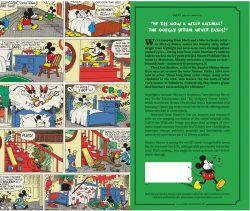
Popeye Classics volume 9: The Sea Hag’s ‘Magic Flute’ and More!


By Bud Sagendorf, edited and designed by Craig Yoe (Yoe Books/IDW Publishing)
ISBN: 978-1-63140-772-7 (HB) eISBN: 978-1-68406-092-4

How many cartoon classics can you think of still going after a century? Here’s one…

There are a few fictional personages to enter communal world consciousness – and fewer still from comics – but this grizzled, bluff, uneducated, visually impaired old tar with a speech impediment is possibly the most well-known of that august bunch.

Elzie Crisler Segar was born in Chester, Illinois on 8th December 1894. His father was a general handyman, and the boy’s early life was filled with the solid, dependable blue-collar jobs that typified the formative years of his generation of cartoonists. Segar worked as a decorator, house-painter and also played drums; accompanying vaudeville acts at the local theatre.

When the town got a movie-house, Elzie played silent films, absorbing all the staging, timing and narrative tricks from keen observation of the screen. Those lessons would become his greatest assets as a cartoonist. It was while working as the film projectionist, at age 18, that he decided to become a cartoonist and tell his own stories.

Like so many others in those hard times, he studied art via mail, specifically W.L. Evans’ cartooning correspondence course out of Cleveland, Ohio, before gravitating to Chicago where he was “discovered” by Richard F. Outcault – regarded as the inventor of modern newspaper comic strips with The Yellow Kid and Buster Brown. The celebrated pioneer introduced Segar around at the prestigious Chicago Herald. Still wet behind the ears, the kid’s first strip, Charley Chaplin’s Comedy Capers, debuted on 12th March 1916.

In 1918, Segar married Myrtle Johnson and moved to William Randolph Hearst’s Chicago Evening American to create Looping the Loop, where Managing Editor William Curley foresaw a big future for Segar and promptly packed the newlyweds off to New York: HQ of the mighty King Features Syndicate. Within a year Segar was producing Thimble Theatre, (launching December 19th 1919) in the New York Journal: a smart pastiche of cinema and knock-off of movie-inspired features like Hairbreadth Harry and Midget Movies, with a repertory of stock players acting out comedies, melodramas, comedies, crime-stories, chases and especially comedies for vast daily audiences. It didn’t stay that way for long…

The core cartoon cast included parental pillars Nana & Cole Oyl; their lanky, cranky, highly-strung daughter Olive; diminutive-but-pushy son Castor and the homely ingenue’s plain and (so very) simple occasional boyfriend Horace Hamgravy (latterly, plain Ham Gravy).

Thimble Theatre had already run for a decade when, on January 17th 1929, a brusque, vulgar “sailor man” shambled into the daily ongoing saga of hapless halfwits. Nobody dreamed the giddy heights that stubbornly cantankerous walk-on would reach…

In 1924, Segar created a second daily strip. Surreal domestic comedy The 5:15 featured weedy commuter/aspiring inventor John Sappo and his formidable spouse Myrtle. It endured – in one form or another – as a topper/footer-feature accompanying the main Sunday page throughout Segar’s career, survived his untimely death, and eventually became the trainee-playground of Popeye’s second great humour stylist – Bud Sagendorf.

After Segar’s premature passing in 1938, Doc Winner, Tom Sims, Ralph Stein and Bela Zambouly all took on the strip as the Fleischer Studio’s animated features brought Popeye to the entire world, albeit a slightly variant vision of the old salt of the funny pages. Sadly, none had the eccentric flair and raw inventiveness that had put Thimble Theatre at the forefront of cartoon entertainments. And then, finally, Bud arrived…

Born in 1915, Forrest “Bud” Sagendorf was barely 17 when his sister – who worked in the Santa Monica art store where Segar bought his drawing supplies – introduced the kid to the master cartoonist who became his teacher and employer as well as a father-figure. In 1958, after years on the periphery, Sagendorf finally took over the strip and all the merchandise design, becoming Popeye’s prime originator…

With Sagendorf as main man, his loose, rangy style and breezy scripts brought the strip itself back to the forefront of popularity and made reading it cool and fun all over again. Bud wrote and drew Popeye in every graphic arena for 24 years. When he died in 1994, his successor was controversial “Underground” cartoonist Bobby London.

Bud had been Segar’s assistant and apprentice, and in 1948 became exclusive writer/artist of Popeye’s comic book exploits. That venture launched in February of that year: a regular title published by America’s unassailable king of periodical licensing, Dell Comics.

On his debut, Popeye was a rude, crude brawler: a gambling, cheating, uncivilised ne’er-do-well, but was soon revered as the ultimate working-class hero. Raw and rough-hewn, he was also practical, with an innate, unshakable sense of what’s fair and what’s not: a joker who wanted kids to be themselves – but not necessarily “good”. Above all else he was someone who took no guff from anyone…

Naturally, as his popularity grew, Popeye mellowed somewhat. He was still ready to defend the weak and had absolutely no pretensions or aspirations to rise above his fellows, but the shocking sense of dangerous unpredictability and comedic anarchy he initially provided was sorely missed… except in Sagendorf’s sagas…

Collected here are Popeye #40-44, crafted by irrepressible “Bud” and collectively spanning April-June 1957 to April-June 1958. The stunning, nigh stream-of-consciousness slapstick sagas and nautical nuttiness are preceded by a treasure-stuffed treatise on ‘The Big Guy who Hates Popeye!’, as Fred M. Grandinetti details all you need to know about archetypal “heavy” Bluto. The lecture on the thug of many names is backed up by character and model sheets from animated appearances, comic book covers, and numerous comic excepts. Also emergent are strip precursors and alternate big bullies, original strip art from Sagendorf and London, plus a kind-of guest shot from Jackson Beck – the meaty matelot’s on-screen voice…

Sadly missing the usual ‘Society of Sagendorks’ briefing by inspired aficionado, historian and publisher Craig Yoe, and the ever-tantalising teasers of ephemera and merchandise of ‘Bud Sagendorf Scrapbooks’, we instead plunge straight back into ceaseless sea-savoured voyages of laughter, surreal imagination and explosive thrills with quarterly comic book #40, opening with a monochrome inside front cover gag concerning the sailor’s ward Swee’Pea and his fondness for digging in the dirt, before ‘Thimble Theatre presents Popeye the Sailor in The Mystery of the “Magic Flute!”’ once more pits the mariner marvel against the ghastly and nefarious Sea Hag.

Here she unleashes an army of agents to locate and secure a mystic talisman safeguarded by Popeye. With it, she can rid the world of her great enemy…

With the family house overrun, impetuous elder Poopdeck Pappy unthinkingly hands over the wishing whistle and instantly Popeye is whisked into a pit with lions, thugs and Bluto all lined up to kill him. It doesn’t work out well for any of them…

‘Popeye the Sailor and Eugene the Jeep’ then reintroduces another of Segar’s uniquely wonderful cartoon cryptids. The little marvel had originally debuted on March 20th 1936: a fantastic 4th dimensional beast with incredible powers whom Olive and Wimpy use to get very rich, very quickly. Of course, they quickly lost it all betting on the wrong guy in another of Segar’s classic and hilarious set-piece boxing matches between Popeye and yet another barely-human pugilist…

This time he pops up after Olive and the old salt clash over setting an engagement date, and Wimpey suggests asking the Jeep’s advice. Instantly he materialises, and the question is nervously asked. The response is ambiguous and draws nothing but trouble…

Prose filler ‘Ol’ Blabber Mouth’ tells how a parrot accidentally causes all his friends to be captured by pet trade hunters before we arrive at the ever-changing back-up feature. Sappo – now reduced to gullible foil and hapless landlord to the world’s worst lodger – endured the ethics-free experiments of Professor O.G. Wotasnozzle “The Professor with the Atomic Brain”.

Callously and constantly inflicting the brunt of his genius on the poor schmuck, here the boffin seizes top billing with The Brain of O.G. Wotasnozzle, building a robot replica of his landlord and running rings around the sap in ‘Double Double Who’s Got Trouble’

The issue ends with an endpaper monochrome gag with Popeye and the precious “infink” disputing bedtimes and a colour back cover jape with them disastrously fishing…

Issue #41 (July-September) opens with ‘Popeye the Sailor in Spinach Soap!’ as the sailor battles Olive’s new beau. He looks just like Bluto, but has one advantage the sailor cannot match …a steady job!

In response, the money-disdaining matelot calls his secret weapon and Wimpey takes charge of Popeye’s savings – a million bucks – all so that he can set up a business to employ the sailor man…

An engaging Micawber-like coward, cad and conman, the insatiably ravenous J. Wellington Wimpy debuted in the newspaper strip on May 3rd 1931 as an unnamed, decidedly partisan referee in one of Popeye’s pugilistic bouts. Scurrilous, aggressively humble and scrupulously polite, the devious oaf struck a chord and Segar made him a fixture. Preternaturally hungry, ever-keen to solicit bribes and a cunning coiner of many immortal catchphrases – such as “I would gladly pay you Tuesday for a hamburger today” and “Let’s you and him fight” – Wimpy was the perfect foil for our straight-shooting action hero and increasingly stole the entire show… and anything else unless it was very heavy or extremely well nailed down.

Full of good intentions but unable to control himself, Wimpey naturally embezzles it all and fobs off his pal with a get-rich-scheme. However when Popeye starts selling his vegetable-based cleanser door to door he soon finds his old tactics are enough to wash that man out of Olive’s hair…

Co-starring Popeye, Swee’Pea and the Jeep!, ‘Sucker Gold!’ sees the cowboy-obsessed kid head for the desert and perilous Apache Mountain to be a prospector. Happily, with Eugene along for the ride his safety and prosperity are assured…

The story of Bradley fills the prose section this revealing how the ‘Horse Student’ was kicked out of human high school, after which O.G. Wotasnozzle! thinks himself into an invulnerable, inert state and the authorities resort to explosives to wake him up, before the back cover finds Popeye giving his kid a (kind-of) haircut…

Cover-dated October-December, Popeye #42 opens with the main event as the entire cast is caught on ‘Trap Island!’ as The Sea Hag and her hefty hench-lout target them from her mobile mechanised islet, before using doppelgangers to lure the sailor into ultimately useless death traps. Even her monster spinach-fuelled gorilla Smash is helpless before the power of spinach inside Popeye…

Popeye then discovers Swee’Pea can get into trouble anywhere, anytime when he sends him to fetch ‘Today’s Paper!’ Through no fault of his own the mighty mite ends up trapped in a weather balloon, a target of the air force, 2300 miles from home in Harbor City, a blood enemy of angry Indian Chief Rock’n’roll and locked in a missile, before dutifully bringing back that pesky periodical…

A duck with a speech impediment finds his purpose in prose yarn ‘Big Toot’ prior to Sappo giving O.G. Wotasnozzle the push. Typically, the toxic tenant terrorises every prospective replacement for his lodgings and the status quo is reluctantly re-established…

Another endpaper monochrome gag sees Popeye and Olive experiencing a little car trouble before Popeye #43 (cover-dated January-March 1958) opens in mono with another dig at Swee’Pea and his shovel whilst main event ‘Mind over Muscles!’ finds Popeye in high spirits and utterly oblivious to Sea Hag’s sinister surveillance. As the sailor eagerly anticipates his annual physical exam, she sends in her Sonny Boy – AKA Bluto disguised as a physician – to undermine his confidence and poison his mind with the notion that spinach is killing him. However, even doctor’s orders can’t make him give up his green cuisine and everyone gets what they deserve in the end…

‘Popeye and Swee’Pea in “The Voyage!”’ finds the sailor man sent on a dangerous mission to an island of “wild savages” with his boy outrageously left behind and babysat by Poopdeck Pappy. The infernal infink’s unhappy state is swiftly shifted by capricious fate though, and his soapbox boat is caught by wind, tide and a welcoming whale. When Popeye finally arrives, there’s a big little surprise awaiting him…

Prose parable ‘Diet!’ reveals what happens when Mrs. Smith declares the family is going vegetarian and pet dog Winky disagrees, after which O.G. Wotasnozzle apparently mends his ways and declares himself ‘“A Friend to Man” or “Be Kind to Sappo Week!”’ Sadly, even his best intentions and domestic inventions are severely hazardous to his landlord’s health – and the town’s wellbeing…

Concluding with an endpaper monochrome gag seeing Popeye severely tested by the kid’s bath time and a spot of gardening brings us to the last happy hurrah as Popeye #44 (April-June 1958) opens with black & white wisdom and Wimpy showing Olive the only way to Popeye’s heart…

Full-colour feature ‘Popeye meets “Orbert”’ embraces a wider-screened, more dynamic illustration style for Sagendorf as occasional amorous arch rival Bluto makes another play for Olive. Whilst he and Popeye enjoy their violent clash, Swee’Pea opens the box Bluto brought and unleashes a strangely alien flying beast. When its odd orbits kayo the blustering brute, Swee’Pea christens it Orbert. Soon they are inseparable and its ability to grant wishes have turned the kid into a bully and tyrant, and it’s time for some stern parenting …and spinach…

Sappo’s détente with O.G. Wotasnozzle is still in play but comes under extreme pressure when the Prof joins a quiet day’s fishing, and starts devising ways to make the pastime more efficient…

‘Specks’ reflects in prose upon the life of short-sighted fish George, before Popeye and Swee’Pea star in self-proclaimed “horrible story” ‘Follow the Leader!’ as spies kidnap the kid and try to make him tell where Popeye’s pirate gold is stashed. The map he eventually draws them only leads to trouble and the issue and this volume wrap up on a monochrome end gag proving Swee’Pea’s punch is a powerful as his wits…

Outrageous and side-splitting, these universally appealing yarns are evergreen examples of narrative cartooning at its most absurd and inspirational. Over the last nine decades Thimble Theatre’s most successful son and his family have delighted readers and viewers around the world. This book is simply one of many, but each is sure-fire, top-tier entertainment for all those who love lunacy, laughter, frantic fantasy and rollicking adventure. If that’s you, add this compendium of wonder to your collection.
Popeye Classics volume 9 © 2016 Gussoni-Yoe Studio, Inc. All Rights Reserved. Popeye © 2016 King Features Syndicate. ™ Heart Holdings Inc.

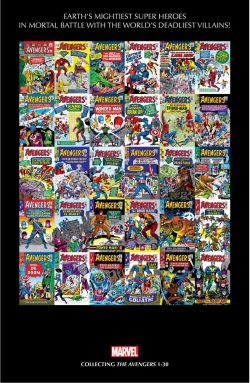
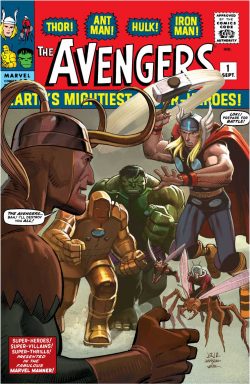
Mighty Marvel Masterworks The Avengers volume 3: Among Us Walks a Goliath


By Stan Lee & Don Heck with Frank Giacoia, Wallace Wood, Dick Ayers, John Romita & various (MARVEL)
ISBN: 978-1-3029-4895-5 (PB/Digital edition)

Probably Marvel’s biggest global franchise success, The Avengers celebrate their 60th anniversary in 2023, so let’s again acknowledge that landmark and offer more of the same…

These stories are timeless and have been gathered many times before but here we’re enjoying an example of The Mighty Marvel Masterworks line: designed with economy in mind and newcomers as target audience. These books are far cheaper, on lower quality paper and smaller – like a paperback novel. Your eyesight might be failing and your hands too big and shaky, but at 152 x 227mm, they’re perfect for kids. If you opt for digital editions, that’s no issue at all.

After a period of meteoric expansion, in 1963 the burgeoning Marvel Universe was finally ready to emulate the successful DC concept that had cemented the legitimacy of the Silver Age of American comics. The notion of putting a bunch of all-star eggs in one basket had made the Justice League of America a winner and subsequently inspired the moribund Atlas outfit – primarily Stan Lee, Jack Kirby & Steve Ditko – into conceiving “super-characters” of their own. The result – in 1961 – was The Fantastic Four

After 18 months, the fledgling House of Ideas had generated a small successful stable of costumed leading men (but still only 2 sidekick women!), allowing Lee & Kirby to at last assemble a select handful of them into an all-star squad, moulded into a force for justice and soaring sales…

Cover dated September 1963, and on sale from early July, The Avengers #1 launched as part of an expansion package which also included Sgt. Fury and his Howling Commandos and The X-Men. This edition collects The Avengers #21-30 (cover-dates October 1965 to July 1966): groundbreaking tales no lover of superhero stories can do without…

Here the team consists of Captain America, Hawkeye and mutant twins Quicksilver and The Scarlet Witch who had replaced big guns Thor, Iron Man, Giant-Man and The Wasp and were already proving a firm fan-favourite. Spectacle had been nudged aside in favour of melodrama sub-plots, leavening the action through compelling soap-opera elements which kept readers riveted.

After debuting insidious infiltrator Swordsman in the previous volume, scripter Stan Lee and illustrators Don Heck & Wally Wood launched another soon-to-be big-name villain in the form of Power Man. ‘The Bitter Taste of Defeat!(#21) depicted his origins and a diabolical plan hatched with evil Asgardian archfoe The Enchantress to discredit and replace the quarrelsome quartet. The scheme was only narrowly foiled in a cavalcade of cunning countermoves in concluding episode ‘The Road Back

An epic 2-part tale follows when the turbulent team is shanghaied into the far-future to battle against – and eventually beside – Kang the Conqueror. ‘Once an Avenger…’ (Avengers #23 with, incidentally, my vote for the best cover Jack Kirby ever drew) is inked by slick John Romita (senior), and pits the heroes against an army of fearsome future men. The yarn explosively and tragically ends in ‘From the Ashes of Defeat! with inker Dick Ayers backing up Lee & Heck.

The still-learning but ever-improving squad then face their greatest test yet after being lured to Latveria and captured by the deadliest man alive in #25’s ‘Enter… Dr. Doom!and forced to fight their way out of the tyrant’s utterly cowed, hyper-militarised kingdom…

As change is ever the watchword for this series, the next two issues combine a threat from subsea barbarian Attuma to drown the world with the epic return of some old comrades. ‘The Voice of the Wasp!and ‘Four Against the Floodtide!(pseudonymously inked by Frank Giacoia as Frank Ray) form a superlative action-romp but are merely prelude to the main event – issue #28’s revival of founding Avenger Giant-Man in a new guise. ‘Among us Walks… a Goliath! was an instant classic that reinvented the Master of Many Sizes whilst also introducing the villainous – and ultimately immortally alien – hobbyist dubbed The Collector whilst extending the company’s pet motif of heroic alienation. After rushing to save Wasp from the cosmic kleptomaniac and his stooge The Beetle, the team are unable to prevent Hank Pym becoming tragically trapped at a freakish ten-foot height, seemingly forever…

As Quicksilver and Scarlet Witch briefly bow out – returning to Europe to reinvigorate their fading powers – Avengers #29 features ‘This Power Unleashed!: bringing back Hawkeye’s lost love Black Widow as a brainwashed Soviet agent tasked with destroying the team.

Despite recruiting seasoned foes Power Man and Swordsman as cannon-fodder, her plan fails due to her incompletely submerged feelings for Hawkeye…

This titanic tome terminates on a cliffhanger as ‘Frenzy in a Far-Off Land!sees dispirited, despondent colossus Dr. Pym heading south to consult with his old college mentor Professor Anton. He never expected to find a hidden South American civilisation or become embroiled in a high-tech civil war that threatened to destroy the entire planet…

To Be Continued…

Supplementing the narrative joys is a single behind-the-scenes treasure: a Tee-shirt design by Jack Kirby & Wally Wood…

These immortal tales defined the early Marvel experience and are still an unbounded joy no fan should deny themselves or their kids.
© 2023 MARVEL.

Superman: The Man of Steel volume 1


By John Byrne, Marv Wolfman, Jerry Ordway, Dick Giordano, Terry Austin, Mike Machlan, Karl Kesel & various (DC Comics)
ISBN: 978-1-7795-0491-3 (HB/Digital edition)

In 1985 when DC Comics decided to rationalise, reconstruct and reinvigorate their continuity with Crisis on Infinite Earths they used the event to simultaneously regenerate their key properties at the same time. The biggest gun they had was Superman and it’s hard to argue that the change was not before time.

The big guy was in a bit of a slump, but he’d weathered those before. So how could a root and branch retooling be anything but a pathetic marketing ploy that would alienate the real fans for a few fly-by-night Johnny-come-latelies who would jump ship as soon as the next fad surfaced? This new Superman was going to suck…

They couldn’t have been more wrong.

The public furore began with all DC’s Superman titles being “cancelled” (actually suspended) for three months, and yes, that did make the real-world media sit-up and take notice of the character everybody thought they knew for the first time in decades. However, there was method in this seeming corporate madness.

The missing mainstays were replaced by a 6-part miniseries running from October to December 1986. Entitled Man of Steel, it was written and drawn by Marvel’s mainstream superstar John Byrne and inked by venerated veteran Dick Giordano.

The bold manoeuvre was a huge and instant success. So much so that when it was first collected as a stand-alone compilation album in 1991, it became one of comics’ premiere “break-out” hits in a new format that would eventually become the industry standard for reaching mass readerships. Nowadays few people buy the periodical pamphlets but almost everybody has read a graphic novel…

From that overwhelming start the Action Ace seamlessly returned to his suspended comic book homes, enjoying the addition of a third monthly title which premiered that same month.

Superman, Adventures of Superman, and Action Comics (which acted as a fan-pleasing team-up book guest-starring other favourites of the DC Universe, in the manner of the cancelled DC Comics Presents) were instant best-sellers.

So successful was the relaunch that by the early 1990’s Superman would be carrying four monthly titles as well as Specials, Annuals, guest shots and regular appearances in titles such as Justice League.

Quite a turnaround from the earlier heydays of the Man of Steel when editors were frantic about never overexposing their meal-ticket.

In Superman’s 85th year of more-or-less consecutive and continuous publication, this collection begins with the six self-contained stories from key points in Superman’s career, newly readjusted for contemporary consumption in the wake of that aforementioned worlds-shattering Crisis.

Spanning to cover-dates October 1986 to June 1987 and re-presenting The Man of Steel #1-6, Superman #1-4, Action #584-587 and Adventures of Superman #424-428 plus relevant pages from Who’s Who: Update ‘87 #1, 3, 4 this initial herculean compilation opens with the a reprinting of Byrne’s introduction from the 1991 collection ‘Superman: A Personal View’ before the revelations unfold…

Newsstands and comic stores on July 10th 1986 welcomed a startlingly new and bleakly dystopian Krypton in #1 as ‘Prologue: From Out of the Green Dawn…’ followed the child’s voyage in a self-propelled birthing matrix to a primitive world.

Discovered by childless couple Jonathan and Martha Kent, the alien foundling spends his years growing secretly in Smallville, indistinguishable from other earthlings until strange abilities begin to gradually manifest and hint at ‘The Secret’

Eighteen years after his arrival, the boy learns of his extraterrestrial origins and leaves home to wander the world. Clark Kent eventually settles in Metropolis and we get a rapid re-education of what is and isn’t canonical as he performs his first public super-exploit, meets with Lois Lane, joins the Daily Planet and gets an identity-obscuring costume in ‘The Exposure’ and ‘Epilogue: The Super-Hero’

Lois takes centre-stage for the second issue, scheming and manipulating to secure the first in-depth interview with the new hero before losing out to neophyte colleague Kent whose first big scoop becomes ‘The Story of the Century!’

The third chapter recounts the Metropolis Marvel’s first meeting with Batman as ‘One Night in Gotham City…’ reveals a fractious and reluctant team-up to capture murdering thief Magpie. The unsatisfactory encounter sees the heroes part warily, not knowing if they will become friends or foes…

‘Enemy Mine…’ in MoS #4 expands and redefines the new Lex Luthor: a genius, multi-billionaire industrialist who was the most powerful man in Metropolis until the Caped Crime-buster appeared. When the tycoon overreaches himself in trying to suborn the hero with cash, he is publicly humiliated and swears vengeance and eternal enmity…

By the time of ‘The Mirror, Crack’d…’ in #5, Luthor is Superman’s greatest foe – albeit one who scrupulously maintains a veneer of respectability and plausible deniability. Here, Luthor’s clandestine attempt to clone his own Man of Tomorrow results in a monstrous flawed duplicate dubbed Bizarro and introduces Lois’ sister Lucy to play hapless victim in a moving tale of triumph and tragedy.

The reimagination concludes with ‘The Haunting’ as a troubled Clark/Superman returns to Smallville. Reuniting with childhood sweetheart Lana Lang – who shares his secrets and knows as much as he of his alien origins – the strange visitor finally learns of his Kryptonian origins and heritage when the long-hidden birthing matrix projects a recorded message from his long-dead parents and details their hopes and plans for him…

The shock and reaction of his foster family only affirms his dedication and connection to humanity…

John Byrne was a controversial choice at the time, but he magnificently recaptured the exuberant excitement and visually compelling, socially aware innovation which informed and galvanised Jerry Seigel & Joe Shuster’s inspired creation. Man of Steel granted a new generation the same kind of intoxicating four-colour fantasy that was the original Superman, and made it possible to be a fan again, no matter your age or prejudice. Superman had always been great, but Byrne had once again made him thrilling. Rivetingly so.

The never-ending battle recommenced on a monthly schedule with Superman volume 2 #1, where Byrne & Terry Austin reveal a ‘Heart of Stone’: presenting a new Metallo as thug John Corben is remade as a Terminator-style cyborg with a human brain and a Kryptonite heart by a deranged xenophobic scientist. The transition culminates in a deadly battle and baffling mystery portending big troubles to come. The focus then shifts to Action #584 and ‘Squatter!’ (by Byrne & Giordano) as a body-snatching mental force suborns the Metropolis Marvel and necessitates a team-up with the Teen Titans. The accent is predominantly on breakneck pace and all-out costumed conflict here…

Superman #2 (by Byrne & Austin) then describes ‘The Secret Revealed!’ as modern-day robber baron Luthor makes the biggest mistake of his life after kidnapping and torturing Kent’s first girlfriend Lana Lang

This is followed by Marv Wolfman & Jerry Ordway’s ‘Man O’War!’ and ‘Going the Gauntlet’ (Adventures of Superman #424 & 425, and inked by Mike Machlan). The drama introduces tragic Dr. Emil Hamilton and rival reporter Cat Grant to the mythology as the Action Ace battles high-tech terrorists sponsored by rogue state Qurac and proves to be no respecter of international boundaries like his pre-Crisis counterpart…

These politically and socially aware dramas would become a truer and more lasting template for the modern Man of Tomorrow after Byrne’s eventual retirement from the character…

The Phantom Stranger guests in a battle against a deadly manifestation of unquiet spirits in ‘And the Graves Give Up Their Dead…’ (Byrne & Giordano, Action #585) before the next three chapters address the Superman segment of multi-part crossover event Legends.

Byrne & Austin’s Superman #3 began with ‘Legends of the Darkside!’, as Clark Kent is abducted to Apokolips by its evil master. He escapes to become a rebel leader of the lowly “Hunger Dogs” in Adventures… #426, wherein Wolfman, Ordway & Machlan give us an amnesiac Superman on Apokolips rising ‘From the Dregs’ before the rousing yarn concludes with ‘The Champion!’ as Action Comics #586 (Byrne & Giordano) reintroduces Jack Kirby’s New Gods post-Crisis icons Orion and Lightray, just in time for a blistering battle royale beyond the stars between the Man of Steel and deadly Darkseid

Once the cosmic dust settled, it was back to the regular Never-Ending Battle, with Superman #4 introducing deranged lone gunman ‘Bloodsport!’ courtesy of Byrne & inker Karl Kesel. The merciless shooter is more than just crazy, however: some hidden genius has given him the ability to manifest wonder weapons from thin air and he never runs out of ammo…

Wolfman & Ordway generally concentrated on longer, more suspensefully dramatic character-based tales. Adventures of Superman #427-428 (cover-dated April & May 1987) took the Man of Tomorrow on a punishing visit to rogue state Qurac and an encounter with hidden alien telepaths The Circle: a visceral and beautiful tale of un-realpolitik. ‘Mind Games’ and ‘Personal Best’ combine a much more relevant, realistic slant with lots of character sub-plots featuring assorted staff and family of the Daily Planet.

The story portion of this first volume concludes with Byrne & Giordano back in Action (#587), crafting spectacle, thrills and instant gratification with ‘Cityscape!’ by teaming Superman with Jack Kirby’s Etrigan the Demon. The magic happens when sorceress Morgaine Le Fay seeks to become immortal by warping time itself…

Augmenting the Costumed Dramas are more recovered text commentaries and appreciations from earlier collections: specifically Ray Bradbury’s ‘Why Superman? Why Today?’ (1991), Wolfman’s ‘Reinventing the Wheel’ (2003) and Ordway’s ‘The Adventures of Superman’ from 2004. These are followed by the covers of earlier Superman: The Man of Steel compendia – all by Ordway – and pages taken from supplemental comics reading tool Who’s Who: Update ‘87.

Plucked from issues #1, 3, 4 are Byrne’s Amazing Grace, Bizarro, Bloodsport, Host, Lex Luthor, Krypton and Kryptonite, Lois Lane, Magpie and Metallo before a big bold pin-up of the Man of Steel ends the fun for now.

The back-to-basics approach successfully lured many readers to – and back to – the Superman franchise, but the sheer quality of the stories and art are what convinced them to stay. Such cracking, clear-cut superhero exploits are a high point in the Action Ace’s decades-long career, and these collections are the best way to enjoy one of the most impressive reinventions of the ultimate comic-book icon.
© 1986, 1987, 2020 DC Comics. All Rights Reserved.

Fann Club: Batman Squad – the Justiest Justice of All


By Jim Benton (DC Comics)
ISBN: 978-1-7795-0889-8 (PB/Digital edition)

In recent years DC has opened up its vast and comprehensive shared superhero universe: generating Original Graphic Novels featuring its many stars in stand-alone adventures specifically tailored for kids and also that tricky demographic so sadly misnamed Young Adult. To date, results have been rather hit or miss, but when they’re good, they are very good indeed…

Another sublime example of the process at its best is this cheery elegy to the joys of crimefighting as channelled through the pristine but so-blinkered purview and perceptions of a youngster who believes in the process with all he’s got…

Ernest Fann is a little kid with a big imagination and a colossal passion. This drive has made him an absolute expert on Superheroes, Vengeance, Justice and The Batman, and that status comes with a necessary burden.

There is anxiety, impatience and even a motivating tragic loss – when something chewed his precious collectors’ item socks. His life is troubled by flashbacks and his sleep by the oddest dreams. It’s a mystery even his dog Westy can’t explain, whilst the neighbours’ kid and babysitter Harriet are completely oblivious to his inner life and secret…

Aware at he is probably the World’s Second Greatest Detective, he swears to share his gifts and the way of the Batman by founding… a fan club.

When willing recruits drawn by his cunning outreach arrive, he clothes them in the costumes he made and code names the (completely anonymous) strangers Night Terrier, Nightstand and Eyeshadow. He, of course, is the mighty Gerbilwing and Evil has never been more scared…

With his Batman Squad equipped it’s ‘Time to Begin: Fanning the Flames’ as their training montage shares secrets – like learning how to scowl and stand mysteriously – before going ‘On Patrol’ to note all the wickedness and mystery besetting the neighbourhood. All those little clues add up to trouble and before long Gerbilwing & Co. are unleashed when they intercept a bank robbery and uncover the true source of all the strange events…

Jim Benton began his illustration work making up crazy characters in a T-Shirt shop and designing greetings cards. Born in 1960, he’d grown up in Birmingham, Michigan before studying Fine Arts at Western Michigan University.

Tirelessly earning a living exercising his creativity, he started self-promoting those weird funny things he’d dreamed up and soon was raking in the dosh from properties such as Dear Dumb Diary, Dog of Glee, Franny K. Stein, Just Jimmy, Just Plain Mean, Sweetypuss, The Misters, Meany Doodles, Vampy Doodles, Kissy Doodles, jOkObo and It’s Happy Bunny via a variety of magazines and other venue…

His gags, jests and japes are delivered in a huge variety of styles and manners: each perfectly in accord with whatever sick, sweet, clever, sentimental, whimsical or just plain strange content each idea demanded, and his SpyDogs effortlessly made the jump to kids’ animated TV success.

He seamlessly segued into best-selling cartoon books (those are the best kind) such as Man, I Hate Cursive, Clyde, Catwad, Jop and Blip Wanna Know, Dog Butts and Love. And Stuff Like That. (And Cats) and Attack of the Stuff. It’ been 10 minutes since I started typing this, so there might be a few more published since then…

Perfectly capturing the wonder of childhood and sheer force of a kid’s unbridled imagination, Fann Club: Batman Squad is hilarious with a huge amount of heart and empathy and literally cloaked in the moody charisma of Frank Miller’s Dark Knight. The combination is utterly irresistible.

Also include is a teaser preview of ‘Young Alfred: Pain in the Butler’, but that’s not the point and can wait for its own review. Here you just need to swear your oath, kit up in your own justice gear and join The Bat Squad ASAP.

Tell them Gerbilwing said it was okay and Eyeshadow would be there to keep things safe…
© 20223 DC Comics. All Rights Reserved.

Fann Club: Batman Squad will be published on June 6th 2023 and is available for pre-order now.