Uncanny X-Men Marvel Masterworks volume 5


By Chris Claremont, Mary Jo Duffy, Bob Layton, John Byrne, Terry Austin, John Romita Jr., Bob McLeod, Dave Cockrum, Ricardo Villamonte, John Buscema, Klaus Janson, George Pérez, Alfredo Alcala & various (Marvel)
ISBN: 978-0-7851-5872-1 (TPB) 978-0-7851-1698-1 (HB)

In the autumn of 1963, The X-Men #1 introduced Scott (Cyclops) Summers, Bobby (Iceman) Drake, Warren (Angel) Worthington, Jean (Marvel Girl) Grey and Hank (The Beast) McCoy: very special students of Professor Charles Xavier.

The teacher was a wheelchair-bound telepath dedicated to brokering peace and integration between the masses of humanity and the emergent off-shoot race of mutants dubbed Homo superior; considered by many who knew him as a living saint.

After nearly eight years of eccentrically spectacular adventures the mutant misfits virtually disappeared at the beginning of 1970 during another periodic downturn in superhero comics sales. Just like in the closing years of the 1940s, mystery men faded away as supernatural mysteries and traditional genre themes once more dominated the world’s entertainment fields…

Although the title was revived at the end of the year as a cheap reprint vehicle, the missing mutants were reduced to guest-stars and bit-players throughout the Marvel universe and the Beast was refashioned as a monster fit for the global uptick in scary stories until Len Wein & Dave Cockrum revived and reordered the Mutant mystique with a brand-new team in Giant Size X-Men #1 in 1975.

To old foes-turned-friends Banshee and Sunfire was added one-shot Hulk hunter Wolverine, and all-original creations Kurt Wagner, a demonic German teleporter codenamed Nightcrawler, African weather “goddess” Ororo Monroe AKA Storm, Russian farmboy Peter Rasputin, who transformed at will into a living steel Colossus and bitter, disillusioned Apache superman John Proudstar who was cajoled into joining the makeshift squad as Thunderbird.

The revision was an instantaneous and unstoppable hit, with Wein’s editorial assistant Chris Claremont writing the series from the second story onwards. The Uncanny X-Men reclaimed their own comicbook with #94 and it quickly became the company’s most popular – and high quality – title.

Cockrum was succeeded by John Byrne and as the team roster shifted and changed the series rose to even greater heights, culminating in the landmark Dark Phoenix storyline which saw the death of arguably the book’s most beloved and imaginative character.

In the aftermath team leader Cyclops left but the epic cosmic saga also seemed to fracture the epochal working relationship of Claremont and Byrne. Within months of publication they went their separate ways: Claremont staying with the mutants whilst Byrne moved on to establish his own reputation as a writer on series such as Alpha Flight, Incredible Hulk and especially his revolutionised and freshly-groundbreaking Fantastic Four…

After Apache warrior Thunderbird became the team’s first fatality, the survivors slowly bonded, becoming an infallible fighting unit under the brusque and draconian supervision of Cyclops. When Jean seemingly died to be reborn as a fiery godlike super-psionic, the team’s adventures became unmissable reading as there seemed to be no telling what shocks might come next…

This fifth fabulous compilation (available in luxurious hardcover, trade paperback and eBook editions) is perfect for newbies, neophytes and even old lags nervous about reading such splendid yarns on fragile but extremely valuable newsprint paper. It celebrates the absolute peak of Claremont & Byrne’s collaborative synergy (with regular inker Terry Austin very much a part of the magical experience) as the mutants confirmed their unstoppable march to market dominance through groundbreaking, high-quality stories: specifically, issues #132-140 of the decidedly “All-New, All-Different” X-Men plus Annual #4 – spanning April 1980 to July 1981, plus chronologically askew treats from Phoenix: the Untold Story and Bizarre Adventures #27.

In the previous volume two new mutants – Kitty Pryde and Disco diva Alison “the Dazzler” Blair – debuted as the X-Man clashed with plutocratic secret society The Hellfire Club: a battle the heroes survived by the skin of their teeth, and now the saga resumes in #132 as ‘And Hellfire is their Name!’ brings the Angel back into the fold. Their latest foes are in actuality a centuries-old association of the world’s most powerful and wealthy individuals and Warren Worthington’s family have been members in good standing for generations.

What better way of infiltrating the organisation than with someone already deep on the ultra-privileged inside?

As Wolverine and Nightcrawler scurry through sewers beneath the society’s palatial New York headquarters, Warren inveigles the rest in through the grand front doors into the year’s swankiest soiree whilst he and the Professor await events.

It’s a bold move but a pointless one. Although the rank and file are simply spoiled rich folk, there is an Inner Circle led by mutant powerhouse Sebastian Shaw which comprises some of Earth’s most dangerous men and women… and they have been waiting and watching for the mutants-in-mufti’s countermove…

As soon as the heroes are inside, mystery mindwarper Jason Wyngarde strikes, pushing Jean Grey until she succumbs to a fictitious persona he has woven over months to awaken her darkest desires. With the Phoenix’s overwhelming power added to the Inner Circle’s might, former friends quickly fall before the attack of super-strong Shaw and cyborg human Donald Pierce. Even Wolverine is beaten, smashed through the floors to his doom by mass-manipulating mutant Harry Leland…

As the Inner Circle gloat, Cyclops – connected to Jean by their psionic rapport – sees the world through his lover’s corrupted, beguiled eyes and despairs. However, when Wyngarde, revealed as mutant illusion caster Mastermind, apparently stabs Cyclops, the effect on “his” Black Queen is far from anticipated…

Far below their feet, a body stirs. Battered but unbowed, ‘Wolverine: Alone!’ begins to work his ruthless, relentless way through the Club’s murderous minions. His explosive entrance in #134’s ‘Too Late, the Heroes!’ gives the captive heroes a chance to break free and strike back, soundly thrashing the Hellfire blackguards. Sadly for Mastermind, not all his tampering has been expunged, and when Jean catches him, Jason Wyngarde’s fate is ghastly beyond imagining…

As the mutants make their escape the situation escalates to crisis level as the mind-manipulation finally unleashes all Jean’s most selfish, self-serving desires and she shatteringly transforms into ‘Dark Phoenix’…

Manifested as a god without qualm or conscience, Jean attacks her comrades before vanishing into space. Soon she reaches a distant system and, cognizant that she is feeling depleted, consumes the star, indifferent to the entire civilisation that dies upon the planet circling it…

Passing the D’Bari system is a vast and powerful ship of the Shi’ar star fleet. Rushing to aid the already extinct world, they are merely a postprandial palate cleanser for the voracious Phoenix…

X-Men #136 opens with the horrified Shi’ar Empress Lilandra mobilising her entire military machine and heading for Earth, determined to end the threat of the ‘Child of Light and Darkness!’ On that beleaguered world Cyclops has called in the Beast to build a psychic scrambler to disrupt Jean’s immeasurable psionic might but when she cataclysmically reappears to trounce the team, the device burns out in seconds.

Sporadically Jean’s gentler persona appears, begging her friends to kill her before she loses control, but Dark Phoenix is close to destroying the world before, in a cataclysmic mental duel, Xavier shuts down her powers and establishes psychic circuit breakers to prevent her ever going rogue again…

With Jean left as little more than mind-maimed human, the exhausted heroes shudder in the aftermath of Earth’s latest close call when suddenly, in a flash of light, they all vanish…

The epic concludes in X-Men #137 as the outraged and terrified Shi’ar arrive in orbit to settle ‘The Fate of the Phoenix!’

With observers from the Kree and Skrull empires in attendance, Lilandra has come to exact justice and prevent the Phoenix from ever rising again. She is not prepared to accept her fiancé Charles Xavier’s word that the threat is already ended…

Summary execution is only avoided when Xavier invokes an ancient rite compelling Lilandra to accept a form of trial-by-combat. Relocating to the enigmatic Blue Area of the Moon (with its artificial pocket of breathable atmosphere) the mutants engage in all-out war with a brigade of cosmic champions the Shi’ar Imperial Guard (an in-joke version of DC’s Legion of Super Heroes). However, despite their greatest efforts they are pushed to the brink of defeat.

With collapse imminent and her friends doomed, Jean’s psychic shackles slip and the Phoenix breaks free again. Horrified at what will inevitably happen, Jean commits suicide to save the universe…

Days later on Earth, the X-Men mourn her passing in #138’s ‘Elegy’ as Cyclops recalls his life with the valiant woman he loved so deeply – and we get a comprehensive recap of the mutant team’s career to date. Heartbroken, the quintessential X-Man resigns just as phase shifting teenager Kitty Pryde moves in…

Breaking from the monthly run, X-Men Annual #4 then describes ‘Nightcrawler’s Inferno!’ (by Claremont, John Romita Jr.& Bob McLeod) as Doctor Strange is called in after Kurt Wagner is targeted by a demonic Lord of Limbo and uncovers a secret family connection to uber-witch Margali Szardos…

A new day dawns in issue #139’s ‘…Something Wicked This Way Comes!’ as the Angel returns to the squad just in time to see Nightcrawler join Wolverine in heading north for a reconciliation with the Canadian’s previous team, Alpha Flight. The visit turns into a hunt for carnivorous magical monster Wendigo, culminating in a brutal battle and an increasingly rare clean win in #140’s concluding chapter ‘Rage!’

Wrapping up the mutant mayhem are a selection of tales retroactively crafted for this period of X-history. The first is a marketing oddity of the period. Phoenix: The Untold Story was released in 1984 and reprinted in X-Men #137… mostly.

By all accounts that epic conclusion was originally completed with a different ending and Jean Grey surviving the battle against the Shi’ar. That was before then Editor-in-Chief Jim Shooter overruled the outcome and decreed that she should die for her sins. You can judge the merits of the decision for yourself. Also included here are ‘The Dark Phoenix Tapes – a candid conversation between Byrne, Shooter and Claremont’ on the contentious issue.

That’s followed by monochrome magazine Bizarre Adventures #27 (published in July 1981) which offered untold tales under the umbrella heading of ‘Secret Lives of the X-Men’…

Preceded by ‘X-Men Data Log’ pages by illustrated by Dave Cockrum, solo tales of idiosyncratic stars begin with Phoenix in ‘The Brides of Attuma’ by Claremont, John Buscema & Klaus Janson. Here the dear departed mutant’s sister Sara Grey recalls a past moment when they were abducted by the undersea barbarian and Jean proved to be more than any mortal could handle…

That’s followed by Iceman vignette ‘Winter Carnival’ by Mary Jo Duffy, George Pérez & Alfredo Alcala, wherein Bobby Drake becomes embroiled in a college heist with potential catastrophic consequences before ‘Show me the way to go home…’ by Bob Layton, Duffy, Cockrum & Ricardo Villamonte pits Nightcrawler against villainous teleporter the Vanisher in a light-hearted trans-dimensional romp involving warrior women, threats to the very nature of reality and gratuitous (male) nudity…

For many fans these tales – and those in the next volume – comprise the definitive X-Men look and feel. Rightly ranking amongst some of the greatest stories Marvel ever published they remain thrilling, groundbreaking and painfully intoxicating and an invaluable grounding in contemporary fights ‘n’ tights fiction no fan or casual reader can afford to ignore.
© 1979, 1980-1984, 2014 Marvel Characters, Inc. All rights reserved.

Green Arrow volume 3: The Trial of Oliver Queen


By Mike Grell, Ed Hannigan, Dan Jurgens, Dick Giordano, Frank McLaughlin & various (DC Comics)
ISBN: 978-1-4012-5523-7 (TPB)

Premiering in More Fun Comics #73 in 1941, Green Arrow is one of very few superheroes to be continuously published (more or less) since the Golden Age of American comicbooks. At first glance this blatant amalgamation of Batman and Robin Hood seems to have very little going for him but has always managed to somehow keep himself in vogue.

Probably his most telling of many makeovers came in 1987, when, hot on the heels of The Dark Knight Returns, writer/artist Mike Grell was tasked with making him the star of DC’s second “Prestige Format Mini-Series”.

Grell was one of comics’ biggest guns at the time. Beginning his rise with a laudable run on Legion of Super-Heroes, he went on to draw the revived Green Lantern/Green Arrow and practically saved the company with his Edgar Rice Burroughs-inspired fantasy epic Warlord. He had also notched up a big fan following illustrating many Aquaman, Batman and Phantom Stranger stories before establishing his independent creator credentials at First Comics with Starslayer and Jon Sable, Freelance…

In the grim ‘n’ gritty late Eighties, it was certainly time for another overhaul of the Emerald Archer. Exploding arrows yes, maybe even net or rope arrows, but arrows with boxing gloves or paint brushes on them just wouldn’t wash with a newer, more sophisticated readership. Thus, in an era of corrupt government, drug cartels and serial killers, the evergreen survivor adapted and thrived under the direction of a creator famed for the uncompromising realism of his work.

The Longbow Hunters focused on the superhero’s mid-life crisis as he relocated to Seattle and struggled to come to terms with the fact that since his former sidekick Speedy was now a dad, Oliver Queen had technically become a grandfather. Beside long-time “significant other” Dinah (Black Canary) Lance he began to simplify his life, but the drive to fight injustice never dimmed for either of them.

Dinah went undercover to stamp out a drug ring whilst Ollie became engrossed in the hunt for a psycho-killer dubbed “The Seattle Slasher”. The archer also learned of a second – cross-country – slayer who had been murdering people with arrows…

Eschewing gaudy costume and gimmicks, Queen reinvented himself as an urban hunter to stop such unglamorous, everyday monsters, stumbling into a mystery which led back to World War II involving the Yakuza, CIA, corporate America and even the Viet Nam war, even as it introduced a deadly female counterpart to the beleaguered bowman: an enigmatic, morally ambiguous archer called Shado…

The intricate plot, subtly blending three seemingly separate stories which were in fact one, still delivers a shocking punch even now in its disturbingly explicit examination of torture: a treatment which won the series undeserved negative press when it was first published. Although possibly tame to most modern tastes, this was eye-opening stuff in the 1980’s, which is a shame, as it diverted attention from the real issue… and that was a massive surge in quality and maturity.

The intricate, maturely sophisticated plot – interweaving themes of age, diminishing potency, vengeance and family – highlighted another turning point in American comics and led to an ongoing series specifically targeting that nebulous “Mature Readership”. The treatment and tone heavily influenced and flavoured today’s TV adaptation Arrow and has led to the release of Grell’s entire saga of nigh-forgotten urban predator tales in a range of economical, no-nonsense, full-colour trade paperbacks and digital editions.

This third collection, scripted by Grell with superbly efficient, powerfully understated art from Ed Hannigan, Dan Jurgens, Dick Giordano & Frank McLaughlin, re-presents Green Arrow volume 2 #13-20 (eclectically cover-dated “Holiday” and January-July 1989): a succession of two-part tales offering starkly authentic dramas ripped from headlines that have as much impact and relevance today as they did three decades ago…

Sparse, Spartan and startlingly compelling, the action begins – sans any preamble – with

‘Moving Target’ parts 1 & 2 (Jurgens & Giordano) wherein the hero carries on his crusade against street punks, petty thugs, wifebeaters and neo-Nazis, blithely unaware that only sheer dumb luck has prevented his assassination by a hired gun…

Once he’s caught up, Oliver eliminates all the usual suspects including the CIA and mercenary spy Eddie Fyres and almost misses his chance when the real would-be killer finally breaks cover for a final face-to-face confrontation…

‘Seattle & Die’ (Hannigan, Giordano & McLaughlin) then sees the archer on the trail of a mystery shooter who kills a gang of thieves to prevent a bloodbath in a night club. Determined to find the criminal saviour before the cops do, Queen becomes entangled in a devious web of intrigue involving an Australian Secret Service kill-team and suffers a chilling presentiment of how his own life might end…

Veteran fans in the know will enjoy the subtle tweaking of characters that allow Grell’s archer to notionally team up with his aforementioned indie hit John Sable…

Jurgens, Giordano & McLaughlin then combine to depict the sordid bloody saga of ‘The Horseman’ who hits Seattle hard, fast and furious in an uncompromising search for a missing stripper. His campaign of destruction sparks a brutal war amongst the drug dealers and flesh peddlers of the city, but by the time the Arrow gets involved, the conflict has escalated and working girls are being murdered in grotesque and obscene manner…

Before long, however, the mysterious Horseman is proven to have hidden motives for his brutal vendetta and another distasteful alliance is formed to find the real killers…

Always challenging and controversial, the themes hit especially hard in the final story as the Longbow Hunter gets it terribly wrong in a dark dingy alley and a young paintballer gets an arrow in the chest after seemingly shooting a cop.

Broken inside, the vigilante meekly submits to ‘The Trial of Oliver Queen’ (Hannigan, Giordano & McLaughlin) and, although completely exonerated in the eyes of the Law, condemns himself to death by dissipation – until an old friend intervenes in a most unconventional manner to restore Green Arrow’s equilibrium and moral compass…

Terse scripts, intelligent, flawed human interactions, stunning action delivered through economical and immensely effective illustration and an unfailing eye for engaging controversy make these epic yarns some of the most powerful sagas American comics ever produced. Compiled here with a cover gallery by Hannigan, Jurgens & Giordano, this compulsive retooling is yet another long-overlooked highpoint of superhero storytelling no lover of the genre will want to miss.
© 1988, 1989, 2015 DC Comics. All Rights Reserved.
Batman/Superman/Wonder Woman: Trinity – the Deluxe Edition


By Matt Wagner, with Dave Stewart & Sean Konot (DC Comics)
ISBN: 978-1-4012-5690-6 (HC)
Comics fans – especially diehard lifelong aficionados of the superhero genre – have an innate appreciation and love of mythologizing. The hunger lures like a siren, hits like a speeding locomotive and dictates our lives and fate like Doomsday freshly arrived. We just can’t help ourselves…

DC Comics have been responsible for many outstanding tales that have become modern day legends, ever since the primal creation of Superman, Batman and Wonder Woman: slowly interweaving the undying fantasy favourites into a rich tapestry of perfect adventure which has taken on a life of its own, inextricably entrenched in the dream-lives of generations of children and the adults – and screen icons – they became.

It was only relatively recently that DC fully acknowledged the imaginative treasure-trove they were sitting on: cannily building on the epic, cross-generational appeal and elder statesman status of their founding stars. One of the most impressive of the efforts is this evergreen fable, originally released in 2003 as a 3-part Prestige Format miniseries.

As seen in Batman and the Mad Monk, Sandman Mystery Theatre, The Shadow: The Death of Margo Lane or Zorro, auteur Matt Wagner has an uncanny gift for re-imagining and updating the raw power of Golden Age classics while celebrating and sustaining the core mystique of the originating concept. With Trinity he revealed a new canonical first collaborative venture of the all-conquering triumvirate, set in the brave new lone universe post-Crisis on Infinite Earths…

Following an effusive Introduction from novelist and A-List comics-scribe Brad Meltzer, the brief encounter opens in the Art Deco Metropolis as oafish Clark Kent‘s morning is ruined by an assassin who shoots a commuter train driver and brings the morning rush-hour to a screeching, crashing, cataclysmic halt…

It soon becomes apparent that the subsequent near-disaster has been devised simply to distract and assess the capabilities of the mighty Man of Steel. That night a daring raid on S.T.A.R. Labs is ruthlessly foiled by a silent, caped visitor to the “City of Tomorrow”, but Superman knows nothing about it until it’s all over.

…And at the bottom of the world, more mysterious masked minions at last liberate Superman’s warped and retarded clonal antithesis Bizarro from its icy imprisonment deep beneath the Antarctic mantle…

Another promising day is spoiled for the reporter by a visit from Bruce Wayne, a reluctant occasional ally, and equally obnoxious whether in his playboy charade or as his true self: the dread Batman.

The visit is a courtesy call between distant colleagues. A terrorist group calling itself “The Purge” would have obtained samples of Kryptonite had the Dark Knight not intervened. Now they plan to raid Lex Luthor‘s citadel and professional courtesy demands that Superman be fully apprised…
Meanwhile, in a most secret hideaway a strangely formidable young girl named Diana auditions for the Most Dangerous Man on Earth: a criminal overlord in need of a perfect warrior to lead his massed forces…

Ra’s Al Ghul always gets what he wants and after the charismatic Demon’s Head charms Bizarro with honeyed words of friendship, the freakish doppelganger is only too happy to bring him a present…

Tragically, Russian nuclear submarines are a bit tricky to handle and the super-simpleton manages to drop one of its atomic missiles en route. The lost nuke explodes far from any regular shipping lines, however. Apart from fish, the only creatures affected are a race of immortal women warriors, invisible to mortal eyes and forgotten by Man’s World for millennia…

As mysterious mercenary Diana prepares to carry out The Demon’s orders, in Metropolis another Amazon tracks down Superman and politely enquires why he dropped an A-Bomb on her home. Eschewing rash accusations or pointless fisticuffs they soon come to realise the true nature of the horrific event and unite to track the stolen sub to the Sahara, promptly falling into an ambush by Al Ghul’s fanatical forces. The guns, knives, nerve gas and suicide bombers prove no problem, but a booby-trapped nuke is another matter entirely…

Barely surviving the detonation, Man of Steel and Princess of Power head for Gotham City to seek the grudging assistance of The Demon’s most implacable foe, only to find the Dark Knight is already on the case, having just unsuccessfully engaged with Al Ghul’s Amazonian field commander.

Reluctant to admit a need for allies and inherently suspicious of bright and shiny super-people chronically unable to make hard decisions or get their hands dirty, Batman nevertheless enters into a tenuous alliance with the dilettante champions to stop the insane plans of an immortal madman determined to wipe out modern civilisation and cleanse the Earth of toxic humanity…

Hard-hitting, epic and spectacular, this Wagnerian saga (you have no idea how long and hard I struggled before succumbing to that painful pun) superbly illustrates the vast gulfs between the oh-so-different heroes and how they nevertheless mesh to form the perfect team. Strongly character-driven throughout, the protracted struggle to defeat Al Ghul and his infamous allies offers tension, mystery, genuine humour and powerful plot-twists galore, all wrapped up in a bombastic feast of frenzied action supplemented with savvy cameos and guest shots by other – albeit lesser – keystones of the DCU.

Stunningly illustrated by Wagner, lavishly coloured by Dave Stewart and subtly lettered by Sean Konot, this Deluxe hardcover and digital edition also includes a glorious cover gallery – including the tie-in covers to the miniseries that graced Adventures of Superman #628, Wonder Woman #204 and Batman #627, plus a beautiful Sketchbook section featuring a wealth of the artist’s preliminary drawings, layouts, designs and ideas.

When producing this type of tale there’s always the dilemma of whether to trade on current continuity or to deconstruct and attain a more grandiose, mythic feel, but part-time and casual readers need not worry. Wagner has hewn to the timeless fundamentals to craft a gratifyingly “Big” story which still manages to reveal more about the individual stars involved than a year’s worth of periodical publishing.

Trinity is primal adventure: accessible, exciting and rewarding, with Superman, Batman and Wonder Woman as they should always be but so seldom are. Team ups and retrofits should all be this good.
© 2003, 2004, 2015 DC Comics. All Rights Reserved.
Superman: The Man of Steel volume 2


By John Byrne, Marv Wolfman, Jerry Ordway & various (DC Comics)
ISBN: 978-1-4012-0005-3

In 1985, when DC Comics decided to rationalise and reconstruct their continuity with Crisis on Infinite Earths, they used the event to regenerate their key properties at the same time. The biggest gun they had was Superman and it’s hard to argue that the change was not before time.

The big guy was in a bit of a slump, but he’d weathered those before. So how could a root and branch retooling be anything but a pathetic marketing ploy that would alienate the real fans for a few fly-by-night Johnny-come-latelies who would jump ship as soon as the next fad surfaced? The popular wisdom amongst fans was that this new Superman was going to suck.

They couldn’t have been more wrong.

Both Superman titles were cancelled or suspended for three months, and yes, that did make the real-world media sit-up and take notice of the character for the first time in decades. But there was method in the corporate madness.

Beginning with 6-part miniseries Man of Steel – written and drawn by mainstream superstar John Byrne and inked by venerated veteran Dick Giordano – the experiment was a huge and instant success. So much so, that when it was first collected as a stand-alone graphic novel in the 1980s it became one of the industry’s premiere ‘break-out’ hits. From this overwhelming start the character returned to his suspended comic-book homes with the addition of a third monthly title premiering that same month.

Superman, Adventures of Superman, and Action Comics (which morphed into a fan-pleasing team-up book that guest-starred other favourites of the DC Universe) were instant best-sellers. So successful was the relaunch that by the early 1990’s Superman would be able to sustain four monthly titles as well as Specials, Annuals, guest shots and his semi-regular appearances in titles such as Justice League. It was quite a turnaround from the earlier heydays of the Man of Steel when editors were frantic about not over-exposing their biggest gun.

This trade paperback and/or digital collection was the first of a far-too-infrequent sequence collecting those early editions, patterned on the Man of Steel compendium. Volume 2 begins a more or less (narrative permitting) chronological representation of the regular monthly titles, with this outing gathering Superman #1-3, Action Comics #584-586 and Adventures of Superman #424-426 covering January to March 1987 and includes relevant pages from the DC Who’s Who Update 1987.

Following co-author Marv Wolfman’s introductory reminisces and commentary in ‘Reinventing the Wheel’ , the never-ending battle recommences with Superman vol. 2 #1, as Byrne & Terry Austin reveal a ‘Heart of Stone’: offering a new origin for Metallo, the Terminator-style cyborg with a human brain and a Kryptonite heart, culminating in a deadly battle and baffling mystery portending big troubles to come. The focus then shifts to Action #584 and ‘Squatter!’ (Byrne & Giordano) as a body-snatching mental force suborns the Metropolis Marvel and necessitates a team-up with the Teen Titans. The accent is predominantly on breakneck pace and all-out costumed conflict here…
Superman #2 (by Byrne & Austin) then describes ‘The Secret Revealed’ as modern-day robber baron Lex Luthor makes the biggest mistake of his life after kidnapping and torturing Clark Kent’s first girlfriend Lana Lang…

This is followed by Marv Wolfman & Jerry Ordway’s ‘Man O’ War’ and ‘Going the Gauntlet,’ (Adventures of Superman #424 and #425, and inked by Mike Machlan): introducing the tragic Dr. Emil Hamilton and rival reporter Cat Grant to the mythology. Here the Action Ace battles high-tech terrorists sponsored by rogue state Qurac and proves to be no respecter of international boundaries like his pre-Crisis counterpart…

These politically and socially aware dramas would become a truer and more lasting template for the modern Man of Tomorrow after Byrne’s eventual retirement from the character…

The Phantom Stranger guests in a battle against a deadly manifestation of unquiet spirits in ‘And the Graves Give Up Their Dead’ (Byrne & Giordano from Action #585) before the last three chapters are given over to the Superman segment of multi-part crossover event Legends.

Byrne & Austin’s Superman #3 began with ‘Legends of the Darkside’, as Clark Kent is abducted to Apokolips by its evil master. He escapes to become a rebel leader of the lowly “Hunger Dogs” in Adventures… #426, wherein Wolfman, Ordway & Machlan give us an amnesiac Superman on Apokolips in ‘From the Dregs’ before the rousing yarn concludes with ‘The Champion’, as Action Comics #586 (Byrne & Giordano) reintroduces Jack Kirby’s legendary New Gods Orion and Lightray just in time for a blistering battle royale between the Man of Steel and Darkseid…

Closing this collection is a full cover gallery and information pages on reimagined and post-Crisis icons Lois Lane, Amazing Grace, Krypton and Kryptonite, and Metallo.

As I’ve previously mentioned ad nauseum, a major problem most non-fans have with super-hero comics (apart from them actually having super-heroes in them) are the insane permutations and convolutions demanded by in-house continuity. This All-Readers-Start-Here opportunity to show doubters how good this genre can be was one all comics missionaries could exploit to the fullest, and these tales are even more accessible and enjoyable now that they ever were. Thrill-starved Newbies start here… and bring your significant others/mothers/dads/kids and all your super-friends too…
© 1987, 2003 DC Comics. All Rights Reserved.
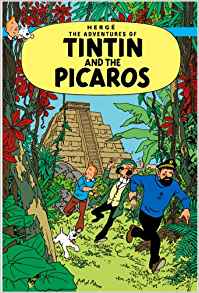
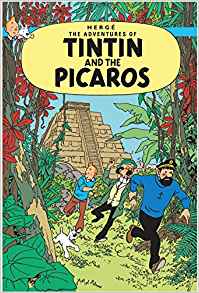
Adventures of Tintin: The Calculus Affair


By Hergé, Bob De Moors and others, translated by Leslie Lonsdale-Cooper & Michael Turner (Egmont UK)
ISBN: 978-1-40520-817-8 (HB) 978-1-40520-629-7 (TPB)

Georges Prosper Remi, known all over the world as Hergé, created an incontrovertible masterpiece of graphic literature with his tales of a plucky boy reporter and his entourage of iconic associates.

Singly, and later with assistants including Edgar P. Jacobs, Bob de Moor and other supreme stylists of the select Hergé Studio, he created 23 splendid volumes (originally produced in brief instalments for a variety of periodicals) that have grown beyond their popular culture roots and attained the status of High Art.

On leaving school in 1925, he worked for the conservative Catholic newspaper Le Vingtiéme Siécle where he fell under the influence of its Svengali-esque editor Abbot Norbert Wallez. A devoted boy scout, a year later Remi produced his first strip series The Adventures of Totor for monthly Boy Scouts of Belgium magazine, and by 1928 was producing the contents of the newspaper’s weekly children’s supplement Le Petit Vingtiéme.

He was illustrating The Adventures of Flup, Nénesse, Poussette and Cochonette, written by the staff sports reporter when Wallez asked Remi to create a new adventure series. Perhaps a young reporter who roamed the world, doing good whilst displaying solid Catholic values and virtues?

The rest is history…

After a troubled period during the war years, the Boy Reporter and his companions became a staple of the European childhood experience through weekly trans-national magazine Le Journal de Tintin and regular album collections. The anthology comic regularly achieved a circulation in the hundreds of thousands, allowing the artist and his team to remaster past tales and create bold new romps reflecting the tone of the times.

Although Hergé’s later life was troubled by personal problems and health issues, this only seemed to enhance his storytelling abilities. The later adventures are all sleek, polished thrillers, rife with intrigue and camaraderie; perfectly garnished with comedy set-pieces of timeless brilliance. Even after decades of working, the artist/auteur continued fresh and challenging, always seeking new arenas of drama to explore.
Hergé entered the most successful period of his artistic career. He had mastered his storytelling craft, possessed a dedicated audience eager for his every effort and was finally able to say exactly what he wanted in his work, free from fear or censure. That meant a return to observations of contemporary themes and situations, as in this effective treatise on the burgeoning Cold War…

L’Affaire Tournesol began in the Christmas issue of the Belgian edition of Le Journal de Tintin (dated December 22nd 1954) and ran uninterrupted until February 22nd 1956. The French editions ran it from February 1955, and the completed saga was collected as an album in 1956 and is notable for the introduction of three characters who would become semi-regular cast members: Jolyon Wagg, Cutts the Butcher, and recurring villain Colonel Spoons.

The Calculus Affair once again sees the zany Professor abducted from the palatial home of Captain Haddock, resulting in a dire and desperate chase through espionage-infested Europe. Our heroes are hampered in their efforts to save their friend by the introduction of the infinitely annoying and crushingly dull insurance salesman Jolyon Wagg and, more ominously, rival bands of relentless, ruthless spies.

As they doggedly pursue Calculus to Geneva, Tintin and Haddock encounter not only the insidious agents of Borduria but find that their erstwhile allies of Syldavia are also trying to make the Professor “disappear”. After frantic chases, pitched battles and assassination attempts, diplomatic duplicity defeats them, and Calculus becomes an unwilling guest of the totalitarian Bordurians, who are pleased to accept as a “gift” his new invention, which they intend to use as a weapon of mass destruction.

Temporarily stymied, Tintin and Haddock finagle their way into the country, and with the aid of Opera Diva and human tornado Bianca Castafiore, bamboozle the secret police to rescue the Professor and save the day.

Although all the elements in play are tried and trusted ingredients of the Tintin formula, the level of artistic achievement here is superb and the interplay of tense drama, slapstick comedy and breakneck action make this brooding thriller the most accomplished of Hergé’s tales. The simple fact that the contemporary Cold War fever is absent for modern readers makes no difference at all to the enjoyment of this magnificent graphic masterpiece.

The Calculus Affair: artwork © 1956, 1984 Editions Casterman, Paris & Tournai. Text © 1960 Methuen & Co Ltd/2012 Egmont UK Limited. All Rights Reserved.

Birds of Prey volume 1


By Chuck Dixon, Jordan Gorfinkel, Gary Frank, Jennifer Graves, Matt Haley, Sal Buscema, Stefano Raffaele, Dick Giordano, Greg Land & various (DC Comics)
ISBN: 978-1-4012-5816-0 (TPB)

Truly groundbreaking at the time, the exploits of the Birds of Prey recount the missions and lives of a rotating team of female crime-fighters led by Barbara Gordon, the computer genius known as Oracle. Daughter of Gotham City Police Commissioner James Gordon, her own career as Batgirl was ended when the Joker blew out her spine in a terrifying kidnap attempt. Trapped in a wheelchair, she hungered for justice and sought new ways to make a difference in a very bad world…

Reinventing herself as a covert information gatherer for the Batman‘s clique of avengers and defenders, she became an invaluable resource for the entire superhero community, but in the first of these collected tales Babs undertakes a new project that will allow her to become an even more effective crusader against injustice…

This volume contains numerous one-shots, specials and miniseries that successfully introduced a mindblowing blend of no-nonsense bad-girl attitude and spectacular all-out action which finally convinced timid editorial powers-that-be of the commercial viability of a team composed of nothing but female superheroes.

Who could possibly have guessed that some readers would like effective, positive, clever women kicking evil butt, and that boys would follow the adventures of violent, sexy, usually underdressed chicks hitting bad-guys – and occasionally each other …? Or even eventually spawn their own TV series and sub-genre?

The issues gathered here – Black Canary/Oracle: Birds of Prey #1, Birds of Prey: Revolution, a pertinent section of Showcase ’96 #3, Birds of Prey: Manhunt #1-4, Birds of Prey: Revolution #1, Birds of Prey: Wolves #1 and Birds of Prey: Batgirl #1 (spanning June 1996 – February 1998) – comprise a breathtaking riot of dynamic, glossy crime-busting, heavily highlighting the kind of wickedness costumed crusaders usually ignore: white collar and thoroughly black-hearted…

The first tale ‘One Man’s Hell’, written by Chuck Dixon and illustrated by Gary Frank & John Dell, is set at a time when veteran martial arts crime-crusher Black Canary was slowly going to hell after the death of her long-time lover Oliver Queen. Of course, he got better a few years later (don’t they all?)…

Broke, uncontrolled and hell-bent on self-destruction, the increasingly violent and adrenaline-addicted heroine is contacted by a mysterious unseen presence and dispatched to a third world country to investigate a series of “terrorist attacks” that always seem to profit one unimpeachably benevolent philanthropist…

With nothing left to lose, Canary undertakes the tragically brutal mission and gains an impossibly valuable prize… purpose.

Peppered with an intriguing array of guest-stars and villains, this socially-conscious high-octane thriller established the Canary as one of the most competent and engaging combatants of the DCU and a roving agent of conscience and retribution more than capable of tackling the villainous scum who were clever enough to stay below the regular superhero radar: a reputation enhanced in the sequel ‘Revolution’.

Here Dixon, Stefano Raffaele & Bob McLeod craft a superbly compelling tale from a time when Oracle was no more than a rumour to everybody but Batman and the Canary, who got “intel” and advice from an anonymous voice that came by phone, text or the radio-jewellery of her new costume. Canary and her silent partner track a human trafficking ring to the rogue state of Santa Prisca and stumble into a dirty campaign by American interests to topple the standing dictator. Not for long…

When the venerable Showcase title was revived in the 1990s it was as a monthly anthology highlighting old unemployed characters and events already originated, rather than wholly new concepts, swiftly becoming a place to test the popularity of the company’s bit players with a huge range of heroes and team-ups passing through its eclectic pages. This made it a perfect place to trot out the new team for a broader audience who might have ignored the one-shots.

Showcase ’96 #3 cover-starred Black Canary and Lois Lane, featuring a frantic collusion between the reporter, the street fighter and the still “silent partner” Oracle in a tale scripted by series editor Jordan B. Gorfinkel, laid out by Jennifer Graves and finished by Stan Woch. ‘Birds of a Feather’ finds Superman’s then Girlfriend and the Birds taking out a metahuman gangmaster who enslaves migrant workers to work in Metropolis’ secret sweat shops. Punchy and potent, the tales led to a 4-issue miniseries which introduced a new wrinkle in the format… teaming Oracle and Canary with an ever-changing cast of DC’s Fighting Females.

‘Manhunt’ has Dixon again scripting a breakneck, raucous thriller which begins ‘Where Revenge Delights’ (illustrated by Matt Haley & Wade Von Grawbadger) as the Birds’ pursuit of a philandering embezzler and scam-artist leads them into heated conflict and grudging alliance with The Huntress – a mob-busting vigilante who even Batman thinks plays too rough…

She also wants the revoltingly skeevy Archer Braun (whom she knows and loathes as Tynan Sinclair) but her motives seem a good deal more personal…

The two active agents cautiously agree to cooperate but the mix gets even headier after Selina Kyle invites herself to the lynching party in ‘Girl Crazy’ (with additional inking from John Lowe).

Canary consents – over the strident objections of the never-more-helpless and frustrated Oracle. Braun, it seems, is into bigger, nastier crimes than anyone suspected and has made the terminal error of bilking the notorious Catwoman…

Fed up with Babs shouting in her ear, Canary goes off-line subsequently getting captured by Braun, ‘The Man That Got Away’ (inked by Cam Smith) and clearly a major threat. He might even be a covert metahuman…

Shanghaied to a criminal enclave in Kazakhstan for the stunning conclusion ‘Ladies Choice’ (with art from Sal Buscema, Haley & Von Grawbadger) Canary is more-or-less rescued by the unlikely and unhappy pairing of Catwoman and Huntress, but none of them is ready or able to handle Braun’s last surprise – Lady Shiva Woosan, the world’s greatest martial arts assassin…

The eponymously entitled Birds of Prey: Revolution (#1, February 1997, limned by Stefano Raffeale & Bob McLeod) then switches locale to Caribbean rogue state and playground of the evil idle rich Santa Prisca, where the Canary trusts the wrong allies but still manages to shut down a human trafficking ring and drug-peddling general with delusions of grandeur.

Another one-shot came cover-dated October as Birds of Prey: Wolves #1 (illustrated by Dick Giordano & Wayne Faucher) saw long-festering tensions over suitable targets seemingly split the duo. However, after separately stopping Ukrainian mobsters and a gang of high-tech home invaders, the warrior women realize that flying solo is for the birds and that they are better together…

The action and adventure pause for the nonce after Birds of Prey: Batgirl #1 (February 1998, with art by Greg Land & Drew Geraci) offers a baffling mystery, with a somehow fully physically functional Batgirl battling beside Black Canary to end the threat of the mindbending Mad Hatter and a host of Batman’s most vicious foes. All is obviously not as it seems, but the true nature of the spellbinding threat is almost too much for cerebral savant Oracle. Almost…

These rollercoaster rides of thrills, spills and beautifully edgy, sardonic attitude finally won the Birds their own regular series which quickly became one of DC’s best and most consistently engaging superhero adventure series of its era.

This opening salvo is both groundbreaking and fantastically fun, and will delight any comics Fights ‘n’ Tights follower.
© 1995, 1996, 1997, 1998, 2015 DC Comics. All Rights Reserved.
Amazing Spider-Man Masterworks volume 17


By Len Wein, Bill Mantlo, Archie Goodwin, Scott Edelman, Marv Wolfman, Ross Andru, Don Perlin, John Romita Jr., Sal Buscema & various (Marvel)
ISBN: 978-0-7851-9186-5 (HB)

Peter Parker was a smart yet alienated kid when he was bitten by a radioactive spider during a school science trip. Developing astonishing arachnid abilities – which he augmented with his own natural chemistry, physics and engineering genius – the boy did what any lonely, geeky nerd would do with such newfound prowess: he tried to cash in for girls, fame and money.

Making a costume to hide his identity in case he made a fool of himself, Parker became a minor media celebrity – and a criminally self-important one. To his eternal regret, when a thief fled past him one night, the cocky teen didn’t lift a finger to stop him. When Parker returned home he learned that his beloved guardian uncle Ben Parker had been murdered.

Crazed with a need for vengeance, Peter hunted the assailant who had made his beloved Aunt May a widow and killed the only father he had ever known, finding, to his horror, that it was the self-same felon he had neglected to stop. His irresponsibility had resulted in the death of the man who raised him, and the traumatised boy swore to forevermore use his powers to help others…

Since that night he has tirelessly battled miscreants, monsters and madmen, with a fickle, ungrateful public usually baying for his blood even as he perpetually saves them.

By the time of the tales in this 17th superbly scintillating full-colour hardcover compendium (and eBook) of web-spinning adventures the wondrous wallcrawler was a global figure and prime contender for the title of the World’s Most Misunderstood Hero. Spanning May 1976 to May 1977 and chronologically re-presenting Amazing Spider-Man#169-180 and Annual #11, plus a crossover story that began in Nova #12 (spanning cover-dates June 1977 to May 1978). The dramas are preceded by an appreciative appraisal from Len Wein in his Introduction before the action resumes with ‘Confrontation’ (by scripter Wein and illustrators Ross Andru & Mike Esposito), wherein obsessive personal gadfly J. Jonah Jameson accosts Peter Parker with photographic proof that confirms the lad is the hated wallcrawler. The evidence has been supplied by a mystery villain but even as our hero seemingly talks his way out of trouble, a new foe emerges in the corpulent form of evil psychologist Doctor Faustus who targets Spider-Man with drugs and illusions to prove ‘Madness is All in the Mind!’ (co-inked by Frank Giacoia)…

Next follows that aforementioned crossover…

The Man Called Nova was in fact a boy named Richard Rider. The new kid was a working-class teen nebbish in the tradition of Peter Parker – except he was good at sports and bad at learning – who attended Harry S. Truman High School, where his strict dad was the principal.

His mom worked as a police dispatcher and he had a younger brother, Robert, who was a bit of a genius.

Rider’s life changed forever when a colossal star-ship with a dying alien aboard bequeathed to the lad all the mighty powers of an extraterrestrial peacekeeper and warrior. Centurion Rhomann Dey had been tracking a deadly marauder to Earth. Zorr had already destroyed the warrior’s idyllic homeworld Xandar, but the severely wounded, vengeance-seeking Nova Prime was too near death and could not avenge the genocide.

Trusting to fate, Dey beamed his powers and abilities towards the planet below where Rich is struck by an energy bolt and plunged into a coma. On awakening, the boy realises he has gained awesome powers… and all the responsibilities of the last Nova Centurion…

Nova #12 (August 1977, by Wolfman, Sal Buscema & Giacoia) asks ‘Who is the Man Called Photon?’ by teaming the neophyte hero with the far-more experienced webslinger in a fair-play murder mystery, brimming with unsavoury characters and likely killers after Rich’s uncle Dr. Ralph Rider is killed by a costumed thief…

However, there are ploys within ploys occurring and, after the mandatory hero head-butting session, the kids join forces and the mystery is dramatically resolved in Amazing Spider-Man #171’s ‘Photon is Another Name For…?’ courtesy of Wein, Andru & Esposito.

Amazing Spider-Man Annual #11 follows as ‘Spawn of the Spider’ (by Archie Goodwin & Bill Mantlo, Don Perlin & Jim Mooney) pits the wallcrawler against a deranged and disgruntled movie special effects man who creates a trio of bio-augmented arachnoid monsters to destroy the wallcrawler…

Brief back up ‘Chaos at the Coffee Bean!’ was written by Scott Edelman and inked by Al Milgrom and details how Peter and Mary Jane Watson are caught up in a hostage situation at their college bistro. It’s probably most noteworthy as the pencilling debut of future superstar creator John Romita Jr.

ASM #172 features ‘The Fiends from the Fire! (Wein, Andru & Giacoia) as Spidey trashes idiotic skateboarding super-thief Rocket Racer only to stumble into true opposition when old enemy Molten Man attacks, desperately seeking a way to stop himself evolving into a blazing post-human funeral pyre…

Mooney inked concluding chapter ‘If You Can’t Stand the Heat…!’ as a cure for the blazing villain proves ultimately ineffectual and personally tragic for Parker’s oldest friends, after which #174 declares ‘The Hitman’s Back in Town!’ (inks by Tony DeZuñiga & Mooney). This sees still relatively unknown vigilante FrankThe PunisherCastle hunting a costumed assassin hired to remove Jameson, but experiencing an unusual reticence since the killer is an old army pal who had saved his life in Vietnam.

Despite Spider-Man being outfought and out-thought in every clash, the tale resolves with the hero somehow triumphant, even though everything ends with a fatality in the Mooney-embellished conclusion ‘Big Apple Battleground!’ in #175.

The remainder of this volume is taken up with an extended epic that sees the return of Spider-Man’s most manic opponent. Illustrated by Andru & DeZuñiga, ‘He Who Laughs Last…!’ features the return of the Green Goblin, who targets Parker’s friends and family…

When the original villain – Norman Osborn – died, his son Harry lost his grip on sanity and became a new version, equally determined to destroy Spider-Man. On his defeat, Harry began therapy under the care of psychiatrist Bart Hamilton and seemed to be making a full recovery. Now both patient and doctor are missing…

The assaults on Parker’s inner circle increase in ‘Goblin in the Middle’ (Esposito inks) with the emerald psychopath expanding operations to challenge crime-boss Silvermane for control of New York’s rackets whilst in ‘Green Grows the Goblin!’ (inked by Mooney) and ‘The Goblin’s Always Greener!’ (Esposito) a devious plot and shocking twist lead to a near-death experience for Aunt May before an astonishing three-way Battle Royale ends the crisis in ‘Who Was That Goblin I Saw You With?’

Added extras this time around include Gil Kane & Giacoia’s front-&-back covers for Marvel Treasury Edition #14 (The Sensational Spider-Man), and its frontispiece by Andru; House ads for Spider-family titles and 1977 Annuals, plus the usual biography pages to complete another superb and crucial selection starring this timeless teen icon and superhero symbol.
© 1976, 1977, 2015 Marvel Characters, Inc. All rights reserved.

E.C. Segar’s Popeye volume 5: Wha’s a Jeep?


By Elzie Crisler Segar (Fantagraphics Books)
ISBN: 978-1-60699-404-7 (HB)

Elzie Crisler Segar was born in Chester, Illinois on 8th December 1894. His father was a handyman and Elzie’s early life was filled with the types of solid, earnest blue-collar jobs that typified his generation of cartoonists. The younger Segar worked as a decorator and house-painter and played drums, accompanying vaudeville acts at the local theatre. When the town got a movie house, he played for the silent films, absorbing the staging, timing and narrative tricks from the close observation of the screen that would become his greatest assets as a cartoonist. It was while working as the film projectionist, aged 18, he decided to become a cartoonist and tell his own stories.

Like so many others of that “can-do” era, Segar studied art via mail, in this case W.L. Evans’ cartooning correspondence course out of Cleveland, Ohio (from where Jerry Siegel & Joe Shuster would launch Superman upon the world), before gravitating to Chicago where he was “discovered” by Richard F. Outcault – arguably the inventor of newspaper comic strips with The Yellow Kid and Buster Brown.

The senior artist introduced him around at the prestigious Chicago Herald. Still wet behind the ears, Segar’s first strip, Charley Chaplin’s Comedy Capers, debuted on 12th March 1916. In 1918 he married Myrtle Johnson and moved to William Randolph Hearst’s Chicago Evening American to create Looping the Loop. Managing Editor William Curley saw a big future for Segar and promptly packed the newlyweds off to the Manhattan headquarters of the mighty King Features Syndicate.

Within a year Segar was producing Thimble Theatre, which launched December 19th 1919 in the New York Journal. In its earliest incarnation the strip was a pastiche/knock off of Movie features like Hairbreadth Harry and Midget Movies, with a repertory cast to act out comedies, melodramas, comedies, crime-stories, chases and especially comedies for huge daily audiences. The core cast included parental pillars Nana and Cole Oyl, lanky daughter Olive, diminutive-but-pushy son Castor and Olive’s plain and simple occasional boyfriend Horace Hamgravy (later just Ham Gravy).

In 1924, Segar created a second daily strip. The 5:15 was a surreal domestic comedy featuring weedy commuter and would-be inventor John Sappo and his formidable wife Myrtle (surely, no relation?).

A born storyteller, Segar had from the start an advantage even his beloved cinema couldn’t match. His brilliant ear for dialogue and accent shone out from his admittedly average melodrama adventure plots, adding lustre to stories and gags he always felt he hadn’t drawn well enough. After a decade or so – and just as cinema caught up with the introduction of “talkies” – he finally discovered a character whose unique sound and individual vocalisations blended with a fantastic, enthralling nature to create a literal superstar.

Popeye the sailor, brusque, incoherent, plug-ugly and stingingly sarcastic, shambled on stage midway through nautical adventure ‘Dice Island’, (on January 17th 1929: see E.C. Segar’s Popeye volume 1: “I Yam What I Yam!”) and once his very minor part was played out, simply refused to leave. Within a year he was a regular and as the strip’s circulation skyrocketed, he became the star. Eventually, the strip title was changed to Popeye and all of the old gang except Olive were consigned to near-oblivion…

Popeye inspired Segar. The near decade of thrilling mystery-comedies which followed revolutionised the industry, laid the groundwork for the entire superhero genre (sadly, usually without the leavening underpinnings of his self-aware humour) and utterly captivated the whole wide world.

These superb oversized (almost 260 mm by 372mm) hardback collections are the ideal way of discovering or rediscovering Segar’s magical tales. Over and above the increasingly incredible tales from the daily and Sunday strips, this vibrantly enticing fifth volume also contains an insightful introductory essay from Richard Marschall – ‘Character and Personality in Thimble Theatre’ – a captivating article of the period (‘Segar’s Hobbies Put Punch in Popeye Comics’) reprinted from Modern Mechanix and Inventions, plus a fascinating end-piece covering assorted original art teasers editors used to promote upcoming tales in the magical days before television or viral ad campaigns.

The monochrome Monday to Saturday section opens this volume, (covering July 25th 1935-December 12th 1936), encompassing one-and-a-half major storylines, and begins with the eagerly-anticipated conclusion of ‘Popeye’s Ark’, wherein our bold sailor-man carries out an ambitious plan to set up his own country of Spinichovia. The incredible scheme is funded by misogynist millionaire Mr. Sphink who insists that the new country be absolutely without women, and Popeye goes along with it, recruiting a host of disaffected guys looking for a fresh start…

Soon however, the thousands of able-bodied men populating the country are starving for any kind of female companionship: – even Olive Oyl, currently exiled on an island of her own. Things get very strange when the lonely Spinichovians discover a tribe of mermaids frolicking off the coast, but romance is soon forgotten when Brutian despot King Zlobbo decides the new nation must be his in ‘War Clouds’.

To scout out potential opposition, Zlobbo dispatches enticing spy Miss Zexa Peal, but as the most beautiful woman in the country – and comprising 50% of Spinichova’s female population – she isn’t exactly inconspicuous…

When war breaks out, it results in Popeye’s greatest victory – with just a little excessively violent help from feisty “infink” baby Swee’ Pea…

By the conclusion of that epic tale all the players have returned to America, just in time for the introduction of the star of this tome.

‘Eugene the Jeep’ debuted on March 20th 1936: a fantastic 4th dimensional beast with incredible powers that Olive and Wimpy use to get very rich, very quickly, only to lose it all betting on the wrong guy in another of Segar’s classic and hilarious set-piece boxing matches between Popeye and yet another barely-human pugilist…

These tales come from an astonishingly fertile period for the strip’s long history. On August 4th, Eugene was instrumental in kicking off another groundbreaking and memorable sequence as the entire ensemble cast took off on as haunted ship to undertake ‘The Search for Popeye’s Papa’.

When Popeye first appeared, he was a shocking anti-hero. The first Superman of comics was not a comfortable icon to idolise. A brute who thinks with his fists and doesn’t respect authority; uneducated, short-tempered, fickle (when hot tomatoes batted their eyelashes – or thereabouts – at him), a gambler and troublemaker, he wasn’t welcome in polite society… and he wouldn’t want to be.

Popeye was the ultimate working-class hero: raw and rough-hewn, practical, but with an innate and unshakable sense of what’s fair and what’s not. He was a joker who wants kids to be themselves, but not necessarily “good”, and a man who takes no guff from anyone.

Of course, as his popularity grew, he somewhat mellowed. He was always ready to defend the weak and had absolutely no pretensions or aspirations to rise above his fellows. He was and will always be “the best of us”… but the shocking sense of unpredictability, danger and anarchy he initially provided was sorely missed by 1936 – so Segar brought it back again…

This memorably riotous tale introduced ancient, antisocial crusty reprobate Poopdeck Pappy and his diminutive hairy sidekick Pooky Jones during another fabulous voyage of discovery. The elder mariner was a rough, hard-bitten, grumpy brute quite prepared and even happy to cheat, steal or smack a woman around if she stepped out of line…

Once that old goat was firmly established, Segar set Popeye and Olive the Herculean task of ‘Civilizing Poppa’ which is where the monochrome adventures here conclude…

The full-colour Sunday pages in this volume span April 4th 1935 to September 13th 1936, and see the bizarrely entertaining Sappo (and mad scientist lodger Professor O.G. Wotasnozzle) supplemental strip gradually diminish to allow the Popeye feature even more room to excel and amaze.

Eventually Sappo became a cartooning tricks section allowing Segar to play graphic games with his readership. Popeye’s Cartoon Club also disappeared, as the focus inexorably shifted to Popeye and Co. in alternating one-off gag strips and extended sagas. However, the Sailor-Man had to fight for space with his mooching co-star J. Wellington Wimpy…

When not beating the stuffing out of his opponents or kissing pretty girls, Popeye pursued his flighty, vacillating and irresolute Olive Oyl with exceptional verve, if little success, but his life was always made more complicated whenever the unflappable, so-corruptible and adorably contemptible Wimpy made an appearance.

The engaging Micawber-like coward, moocher and conman was first seen on 3rd May 1931 as an unnamed and decidedly partisan referee in one of Popeye’s regular boxing matches. The scurrilous but ever-so-polite oaf obviously struck a chord and Segar gradually made him a fixture. Eternally hungry, always eager to take a bribe and a cunning coiner of many immortal catchphrases such as “I would gladly pay you Tuesday for a hamburger today” and “let’s you and him fight”, Wimpy was the perfect foil for a simple action hero and often stole the entire show.

Infinitely varying riffs on Olive’s peculiar romantic notions or Wimpy’s attempts to cadge food or money for food were irresistible to the adoring readership, but Segar wisely peppered the Sundays with longer episodic tales, such as the cast’s gold-prospecting venture to the inhospitable western desert of ‘Slither Creek’ (April 14th – August 25th 1935) and a sequel sequence wherein the temporarily wealthy but eternally starving Wimpy buys his own diner – the ultimate expression of blind optimism and sheer folly…

The uniquely sentimental monster Alice the Goon returned to the strip on February 23rd 1936, permanently switching allegiance and becoming nanny to rambunctious tyke Swee’ Pea. She was a cast regular by the end of April.

August 9th saw Eugene the Jeep make his Sunday debut, and a few demonstrations of the fanciful beast’s incredible powers to make money and cause chaos fill out this fifth fantastic tome…

There is more than one Popeye. If your first thought on hearing the name is an unintelligible, indomitable white-clad sailor always fighting a great big beardy-bloke and mainlining tinned spinach, that’s okay: the animated features have a brilliance and energy of their own (even the later, watered-down anodyne TV versions have some merit) and they are indeed based on the grizzled, crusty, foul-mouthed, bulletproof, golden-hearted old swab who shambled his way into Thimble Theatre and wouldn’t leave. But they are really only the tip of an incredible iceberg of satire, slapstick, virtue, vice and mind-boggling adventure…

There is more than one Popeye. Most of them are pretty good and some are truly excellent. Don’t you think it’s about time you sampled the original and very best?
© 2011 Fantagraphics Books Inc. All comics and drawings © 2011 King Features Inc. All rights reserved.

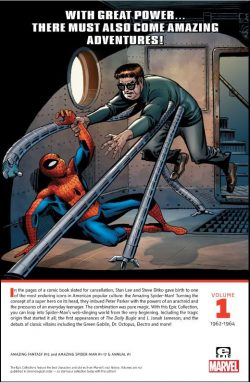
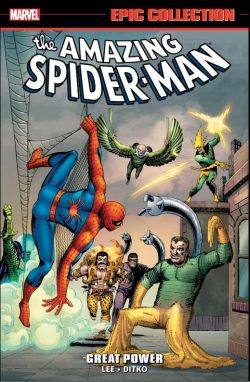
Spider-Man Vs. The Vulture


By Stan Lee & Steve Ditko, Roger Stern, Louise Simonson, J. M. DeMatteis, Peter David, John Romita, Don Heck, John Romita Jr., Greg LaRocque, Sal Buscema, Scot Eaton & various (Marvel)

ISBN: 978-1-3029-0706-8 (TPB)

Heroes are only truly defined by their enemies and superheroes doubly so, with the added proviso that costumed crusaders generally have a rogue’s gallery of fantastic foes rather than just one arch-nemesis. Even so, there’s always one particular enemy who wears that mantle: Moriarty for Sherlock Holmes; Blofeld for James Bond; Luthor for Superman.

Spider-Man has always had two top contenders… but the Vulture isn’t one of them. (*If you can’t guess who, check out the end of the review, puzzle-fans!).

Devised to cash in on the movie Spider-Man: Coming Home, this nifty trade paperback (and eBook) compilation gathers many of the now-cinematic sky bandit’s key clashes with the Wondrous Wallcrawler, tracing his rather rocky development whilst offering an uncomplicated, no-frills thrill-ride of frantic spills and chills, equally appetising to film-inspired new meat and grizzled old veterans of the Fights ‘n’ Tights arena.

Enhanced by an informative Introduction by former Spidey-Editor Ralph Macchio, this titanic tome explores the criminal career of elderly Adrian Toomes: a brilliant scientist twisted by tragedy and persecution into becoming a ruthless predator scavenging on the society which constantly betrayed him and made him unjustly suffer as a shunned outcast.

Amazing Spider-Man #1 (not included in this comprehensive paperback and digital compilation) had a March 1963 cover-date and two complete stories. The opening tale recapitulated the origin whilst adding a brilliant twist to the conventional mix…

The wall-crawling hero was feared and reviled by the general public thanks in no small part to J. Jonah Jameson, a newspaper magnate who pilloried the adventurer from spite and for profit. With time-honoured comicbook irony, Spider-Man then saved Jameson’s astronaut son John from a faulty space capsule…

The second tale found the cash-strapped kid trying to force his way onto the roster – and payroll – of the Fantastic Four whilst elsewhere a spy perfectly impersonated the web-spinner to steal military secrets, in a stunning example of the high-strung, antagonistic crossovers and cameos that so startled the jaded kids of the early 1960s.

With the second issue our new champion began a meteoric rise in quality and innovative storytelling. He also faced his first genuine super-powered, costumed crazy…

Opening the action here is ‘Duel to the Death with the Vulture!’ which revealed how a bizarre flying thief was plundering Manhattan at will, with no police effort effective against him.

Desperate to help his aunt make ends meet, Spider-Man began to take photos of his cases to sell to Jameson’s Daily Bugle, transforming his personal gadfly into his sole means of support.

Along with comedy and soap-operatic melodrama Ditko’s action sequences were imaginative and magnificently visceral, with odd angle shots and quirky, mis-balanced poses adding a vertiginous sense of unease to fight scenes. In the end, however, it was Peter Parker’s brains not the webslinger’s power that brought the Vulture down…

Amazing Spider-Man #7 (December 1963) boasted ‘The Return of the Vulture!’ as the creepy Bird of Ill-Omen became the webslinger’s first bad guy to come back for more. This time the cataclysmic final clash took place inside the Daily Bugle building and remains one Spidey’s best staged fights…

Amazing Spider-Man #48 had introduced Blackie Drago: a ruthless thug who shared a prison cell with the Vulture. After Drago orchestrated a near-fatal-accident for his cellmate, the cunning convict inveigled the ailing super-villain into revealing his technological secrets, enabling Drago to escape and take over the role: a younger, faster, tougher foe who nevertheless failed in every attempt to kill Spider-Man.

In Amazing Spider-Man #63 (August 1968, by Lee, John Romita, Don Heck & Mike Esposito) revealed the old buzzard had not died as Toomes vengefully stalked his successor in ‘Wings in the Night!’ The duel extended into the next issue with both Drago and the wallcrawler reduced to ‘The Vulture’s Prey’ until Spider-Man barely drove the aged maniac away…

A generation later, Amazing Spider-Man #224 (January 1982 by Roger Stern, John Romita Jr. & Pablo Marcos provided a fresh take on the bird bandit in ‘Let Fly These Aged Wings!’ as the now decrepit villain slumped into his imminent death-decline until inadvertently given a new perspective by Aunt May‘s latest beau Nathan Lubensky.

By attempting to boost the confidence of a fellow octogenarian, Nathan instead unleashed Toomes’ dormant inner killer and revived the Vulture’s predatory career… at least until Spidey showed up…

Amazing Spider-Man #240 (May 1983, by Stern, Romita Jr. & Bob Layton) then details how the carrion crook wised up and moved out of NYC, until the business partner who first cheated him out of all his inventions resurfaced. On ‘Wings of Vengeance!’ Toomes soared back into action, even defeating Spider-Man in his righteous fury before the tale concluded with #241’s ‘In the Beginning…’ by Stern, Romita Jr. & Frank Giacoia.

Behind a stunning John Byrne cover, Web of Spider-Man #3 (June 1985 by Louise Simonson, Greg LaRoque & Jim Mooney) ‘Iron Bars Do Not a Prison Make… …Or Vulture is as Vulture Does!’ relates the fate of a gang of thugs who appropriate Toomes’ flying tech to plunder the city as Vulturions. Even the webslinger is unable to stop the old buzzard’s quest for vengeance…

‘Funeral Arrangements’ is a story arc from The Spectacular Spider-Man #186-188 (March-May 1992 by J. M. DeMatteis & Sal Buscema), with the Vulture on a rampage and pitilessly settling old scores. Believing his life to be imminently ending, in ‘Settling Scores’ Toomes murders old allies and contacts before targeting May Parker and J. Jonah Jameson, leading Spider-Man to ‘Desperate Measures’ and a devasting showdown in ‘Final Judgement’…

Set during the first superhero Civil War, 3-parter ‘Taking Wing’ is by Peter David, Scot Eaton & John Dell and comes from Friendly Neighborhood Spider-Man #14-16 (January-March 2007). Peter Parker and his loved ones are on the run, since Spider-Man’s secret identity has been revealed on live TV. To stay safe, Peter has assumed the role of his former clone Ben Reilly…

Unwillingly allied with Wolverine and the Punisher, Spider-Man is learning to be a true outlaw when the government offer the Vulture a shady deal: capture the wallcrawler and earn a pardon…

The scheme instantly goes south when Toomes turns Parker’s old girlfriend Debra Whitman into live bait to draw out his prey and ensnares Betty Brant and Flash Thompson too…

The final battle pushes the wallcrawler to the edge of sanity, almost costing him his life, honour and integrity…

The Vulture has always been one of the most visually arresting of foes and a gallery of covers is supplemented at the close by a wealth of stunning images. Starting with Ditko’s data-file pin-up from Amazing Spider-Man Annual #1, successive covers include Annual #7 (December 1970, by Romita Sr.), Spider-Man Classics #3 (June 1993 by Tom Lyle) and #8 (November 1993 Bret Blevins) plus illustrations by Blevins, Ron Frenz & Josef Rubinstein from Official Handbook of the Marvel Universe Deluxe Edition 1985.

Also on show are original art pages by Ditko, Romita Sr./Heck/Esposito, Romita Jr. & Layton and Sal Buscema, as well as cover reproductions from Essential Spider-Man vol. 11 by Romita Jr. & Layton, a textless version of this book’s cover by Sal Buscema and those from Friendly Neighborhood Spider-Man #14-16 by Eaton.

Epic and engaging, this grab-bag of aerial assaults ant titanic tussles is pure comicbook catharsis: fast, furious fun and thrill-a-minute-melodrama no Fights ‘n’ Tights fan could resist.
© 2010, 2016 Marvel Characters, Inc. All rights reserved.

* Green Goblin Norman Osborn and Doctor Otto Octavius share the dishonours of being Spider-Man’s most dastardly nemeses. If you had trouble with that, you need to read more mainstream comics, Fanboy…

Batman and the Outsiders volume 2


By Mike W. Barr, Jim Aparo, Alan Davis, Jerome K. Moore, Alex Saviuk, Jan Duursema, Rick Hoberg, Bill Willingham, Trevor Von Eeden, Ron Randall & various (DC Comics)
ISBN: 978-1-4012-7753-6 (HC)

During the early 1980s the general trend of comics sales was yet another downturn – although team-books were holding their own – and the major publishers were less concerned with experimentation than with consolidation. Many popular titles were augmented by spin-offs, a recurring tactic in publishing troughs.

At the time the Dark Knight was the star of two and two half titles, sharing World’s Finest Comics with Superman (until its cancellation in 1986) and appearing with rotating guest-stars in The Brave and the Bold, as well as his regular lead spots in both Batman and Detective Comics. He was also a member of the Justice League of America.

In July 1983 B&B was cancelled with issue #200, but inside was a preview of a new Bat-title. One month later Batman and the Outsiders debuted…

The core premise of the new series revealed that Batman was convinced that the JLA was no longer fit for purpose; that too many problems were beyond their reach because they were hamstrung by international red tape and, by inference, too many laws.

To fix the problem he recruited a new team intended to be living weapons in his arsenal: a combination of old allies and new talent.

Markovian scientist Dr. Jace specialised in creating superpowers. When King Victor died, she used her process on Prince Brion and his sister Tara to create Earth-powered Geo-Force (and Terra). Rex (Metamorpho) Mason is a chemical freak able to turn into any element, and Jefferson (Black Lightning) Pierce is an electrically powered urban vigilante.

They were supplemented by female samurai/ninja Katana who wields a magic soul-drinking blade and an amnesiac American girl with inexplicable light-based powers answering to Halo.

The introductory stories cleverly peeled back layers of mystery shrouding all the newcomers, with plenty of plot threads laid for future development in the tried-&-tested super-team formula that had worked so well with the New X-Men and New Teen Titans.

This enticing hardback collection (also available as an eBook) resumes the daring departure of the Gotham Gangbuster, re-presenting BATO #14-23 and Batman and the Outsiders Annual #1, collectively spanning October 1984-July 1985, and also includes relevant pages from the Who’s Who Guide to the DC Universe. The entirety of the book is graced by the adroit writing of Mike W. Barr which – for the majority of the run – meshed perfectly with the understated talents of Jim Aparo; an artist who gave his all to a script. Eventually though he would move on to be replaced by a growing star of the “British Invasion”…

The action opens with the first Annual as ‘…Land Where Our Fathers Died…’ introduces a gang of ultra-patriots seeking to head the country in their own hard right direction called the Force of July in a barbed epic written by Barr and episodically illustrated by Jerome Moore, Alex Saviuk, Jan Duursema and Rick Hoberg with Aparo on inks.

Illustrated by Bill Willingham & Bill Anderson, BATO #14’s ‘Two by Two…’ and #15’s ‘Going for the Gold’ (spectacularly and moodily rendered by Trevor Von Eeden) comprise a two-part thriller set at the 1984 Olympics with raving loon and self-proclaimed god Maxie Zeus unleashing a super-powered minion on the team in an ploy to reclaim the Great Games for his own glory…

Aparo returns in #16 for the start of extended epic ‘The Truth About Halo’: as inconclusive opening ‘…Goodbye…’ sees a couple claiming to be her parents reclaim the memory-wiped child before the next two issues spotlight Metamorpho. This diverting digression takes the depleted team to the desert and back three millennia for ‘We Are Dying, Egypt… Dying’ and ‘Who Wears the Crown of Ra?’, to explore the fateful origins of the ancient antecedents of Element Man.

Seasonal Christmas tale. ‘Who’s Afraid of the Big Red “S”?’ then offers a powerful tale of date-rape and sexual bullying, which results in Geo-Force battling Superman to a standstill, after which a new year resolution details ‘The Truth About Halo: Part Two’ as grotesque gang boss Tobias Whale, debased criminal surgeon Dr. Moon and kinky assassin Syonide reveal the sordid, shocking truth about teenager Violet Harper, if not how she lost her memory and gained her powers. Powerful and haunting, the Barr/Aparo thriller drops as many bodies as secrets…

BATO #23 offers a triptych of solo tales by Barr, with Katana getting ‘The Silent Treatment’ (Jerome K. Moore) while saving priceless and extremely fragile Japanese pottery from thieves in, after which Geo-Force battles a tricked-up and amok robot shark in ‘Jaws 4… Gotham, 0!’ (limned by Von Eeden) and Black Lightning clashes with a sham radical social activist in Ron Randall’s ‘The Roar of the Ghetto-Blaster!’.

Slick stylist Alan Davis became regular artist with issue #22, as ‘The Truth About Halo: Part Three’ promised to disclose ‘What She is and How She Came to Be!’. Invading the recently wrecked and abandoned Justice League Satellite, Batman’s squad and Dr. Jace utilise its advanced technology to scan Violet and finally find what they’ve been looking for…

Sadly, that only leads to Halo being abducted and imprisoned by immortal, antediluvian light beings called Aurakles, prompting the heroes to breach the walls of reality to get her back…

With a full cover gallery, Who’s Who data pages on Black Lightning, Geo-Force, Halo and Katana and a team pin-up by Davis, this is a splendid package to appeal to dedicated Fights ‘n’ Tights fanatics. Batman and the Outsiders was always a highly readable series and is re-presented here in most accessible manner so open-minded new readers in search of quality storytelling could do lots worse than try out this near-forgotten corner of the DCU.
© 1984, 1985, 2018 DC Comics. All Rights Reserved.