Essential Marvel Team-Up volume 1


By various (Marvel)
ISBN: 978-0-7851-2376-6

Inspiration isn’t everything. In fact as Marvel slowly grew to a position of market dominance in the wake of the losing their two most innovative and inspirational creators, they did so less by experimentation and more by expanding proven concepts and properties. The only real exception to this was the en masse creation of horror titles in response to the industry down-turn in super-hero sales – a move expedited by a rapid revision in the wordings of the increasingly ineffectual Comics Code Authority rules.

The concept of team-up books – an established star pairing or battling (often both) with less well-selling company characters – was not new when Marvel decided to award their most popular hero the lion’s share of this new title, but they wisely left their options open by allocating an occasional substitute lead in the Human Torch. In those long-lost days editors were acutely conscious of potential over-exposure – and since super-heroes were actually in a decline they may well have been right.

Nevertheless Marvel Team-Up was the second full-Spider-Man title (an abortive companion title Spectacular Spider-Man was created for the magazine market in 1968 but had died after two issues) and it launched in March 1972, with the Wall-Crawler and his friendly flaming rival reluctantly spending the holidays together as an old foe reared his gritty head in the charming ‘Have Yourself a Sandman Little Christmas!’ by Roy Thomas, Ross Andru and Mike Esposito. (Merry Marvelite Maximii can award themselves a point for remembering which martial arts heroine debuted in this issue but the folk with lives can simply take my word that it was Iron Fist’s sometime squeeze Misty Knight.)

Gerry Conway assumed the writer’s role and Jim Mooney the inker’s for ‘And Spidey Makes Four!’ in the next issue as our heroes then took on the Frightful Four and Annihilus and seemingly without pause went after Morbius the Living Vampire in #3’s ‘The Power to Purge!’ (inked by Frank Giacoia).

The new horror-star was still the villain in MTU #4 as the Torch was replaced by most of the mutant team (The Beast having gone all hairy – and solo) in ‘And Then… the X-Men!’ a pacy thriller illustrated by the magnificent Gil Kane at the top of his form and inked by Steve Mitchell. Kane became a semi-regular penciller, and his dynamic style and extreme anatomy lifted many quite ordinary tales such as #5’s ‘A Passion of the Mind!’, (Conway script and Esposito inks) pitting Spidey and The Vision against Puppet Master and robotic assassin the Monstroid and its follow-up ‘…As Those Who Will Not See!’ (with the Thing against the Mad Thinker) that most other pencillers could only dream of…

‘A Hitch in Time!’ by Conway, Andru and Mooney guest-starred Thor as Trolls froze Earth’s time-line as a prerequisite step to conquering Asgard, whilst issue #8 is a perfect example of the team-up comic’s other function – to promote and popularise new characters.

‘Man-Killer Moves at Midnight!’ was most fans first exposure to The Cat, (later retooled as Tigra) in a painfully worthy if ham-fisted attempt to address feminist issues from Conway and Jim Mooney. Iron Man began the three-part tale ‘The Tomorrow War!’ (Conway, Andru & Frank Bolle) as he and Spidey were kidnapped by Zarkko the Tomorrow Man to battle Kang the Conqueror; the Torch returned to help deal with the intermediate threat of ‘Time Bomb!’ (Conway, Mooney & Giacoia) but it took the entire race of Black Bolt’s Inhumans to help Spidey stop history unravelling in ‘The Doomsday Gambit!’ – with Len Wein scripting Conway’s plot for Mooney and Esposito to illustrate.

The same writing team produced ‘Wolf at Bay!’ from MTU #12 as the Wall-Crawler met the Werewolf (By Night) and the malevolent Moondark in foggy San Francisco, drawn by Andru and Don Perlin, and Kane and Giacoia returned for ‘The Granite Sky!’ where Wein pitted Spider-Man and Captain America against Hydra and the Grey Gargoyle. ‘Mayhem is… the Men-Fish!’ (inked by Wayne Howard) matched him with the savage Sub-Mariner against Tiger Shark and Doctor Dorcas as well as mutant sea-beasts.

Wein, Andru and Perlin created The Orb to bedevil Spidey and the Ghost Rider in ‘If an Eye Offend Thee!’ in #15 whilst Kane and Mooney illustrated ‘Beware the Basilisk my Son!’, a gripping romp featuring Captain Marvel, which concluded in ‘Chaos at the Earth’s Core!’ (inked by “everybody”!) as Mister Fantastic joined the fracas to stop the Mole Man from inadvertently blowing up the world.

The Human Torch teamed with the Hulk in MTU #18 to stop Blastaar in ‘Where Bursts the Bomb!’ inked by Giacoia & Esposito, but Spidey was back with Ka-Zar to witness ‘The Coming of… Stegron, the Dinosaur Man!’ (Wein, Kane & Giacoia) whose plans to flatten New York by releasing ‘Dinosaurs on Broadway!’ was foiled with the Black Panther’s help – as well as the artistic skills of Sal Buscema, Giacoia and Esposito.

Dave Hunt replaced Esposito for ‘The Spider and the Sorcerer!’ in #21 as Spidey and Doctor Strange once more battles Xandu, a wizard first seen in Spider-Man Annual #2, whilst ‘The Messiah Machine!’ pitted Hawkeye and Spidey against Quasimodo and a mechanoid invasion. The Torch and Iceman teamed to stop Equinox, the Thermo-Dynamic Man on ‘The Night of the Frozen Inferno!’ (Wein, Kane & Esposito) and the first two dozen tales conclude with the defiantly quirky ‘Moondog is another Name for Murder!’– illustrated by Mooney and Sal Trapani – as the web-spinner met the decidedly offbeat Brother Voodoo to quash a Manhattan murder cult.

These stories are of variable quality but nonetheless all have an honest drive to entertain and please whilst artistically the work is superb, and most fans of the genre would find little to complain about. Although not really a book for casual or more maturely-oriented readers there’s lots of fun on hand and young readers will have a blast, so there’s no real reason not to add this tome to your library…

© 1972, 1973, 1974, 2006 Marvel Characters, Inc. All Rights Reserved.
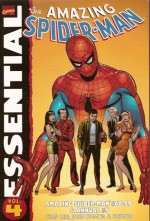
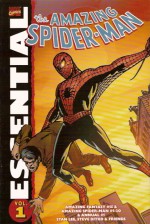
Essential Spider-Man volume 1


By Stan Lee & Steve Ditko (Marvel)
ISBN: 978-0-7851-2192-3

Marvel is often termed “the House that Jack Built” and King Kirby’s contributions are undeniable and inescapable in the creation of a new kind of comic book story-telling, but there was another unique visionary at Atlas-Comics-as-was; one whose creativity and even philosophy seemed diametrically opposed to the bludgeoning power, vast imaginative scope and clean, broad lines of Kirby’s ever-expanding search for gods and the infinite.

Steve Ditko was quiet and unassuming, voluntarily diffident to the point of invisibility though his work was both subtle and striking: innovative, meticulously polished, always questing for detail he ever explored the man within. He found heroism – and humour and ultimate evil – all contained within the frail but noble confines of human scope and consciousness. His drawing could be oddly disquieting… and, when he wanted, almost creepy.

Drawing monster and mystery tales for Stan Lee, Ditko had been given his own title. Amazing Adventures/Amazing Adult Fantasy featured a subtler brand of yarn than Furry Underpants Monsters, invading aliens and the ilk which, though individually entertaining, were slowly losing traction in the world of comics since National/DC had reintroduced costumed heroes. Lee and Kirby had responded with Fantastic Four (and the ahead-of-its-time Incredible Hulk) but there was no indication of the renaissance to come when Amazing Fantasy #15 (the last issue) cover featured a brand new adventure character: Spider-Man.

In 11 captivating pages ‘Spider-Man!’ told the parable of Peter Parker, a smart but aloof High School kid who was bitten by a radioactive spider. Discovering his body had developed arachnid abilities which he augmented with his own natural engineering genius, he did what any lonely, geeky nerd would do when given such a gift – he tried to cash in for girls, fame and money.

Making a costume to hide his identity secret in case he made a fool of himself, Parker/ Spider-Man became a minor celebrity – and a self-important one. To his eternal regret, when a thief fled past he didn’t lift a finger to stop him, only to find a burglar had murdered his uncle Ben when he returned home.

Crazy for revenge Parker hunted the thief who had made his beloved Aunt May a widow and killed the only father he had ever known, only to find that it was the felon he couldn’t be bothered with. His social irresponsibility had led to the death of the man who raised him and the boy swore to use his powers to help others…

It wasn’t a new story, but the setting was one familiar to every kid reading it and the artwork was downright spooky. This wasn’t the gleaming high-tech world of moon-rockets, giant monsters and flying cars- this stuff could happen to anybody… Amazing Fantasy #15 came out the same month as Tales to Astonish #35 (cover-dated September 1962) which was the first to feature the Astonishing Ant-Man in costumed capers, but it was the last issue of Ditko’s Amazing playground.

However the tragic last-ditch tale had struck a chord with the reading public and by Christmas a new comicbook superstar was ready to launch in his own title, with Ditko eager to show what he could do with his first returning character since the demise of the Charlton hero Captain Atom (see Action Heroes Archive volume 1, ISBN 1-4012-0302-7). Holding on to the “Amazing” prefix to help jog reader’s memories, the bi-monthly Amazing Spider-Man #1 had a March cover-date and two stories. It prominently featured the Fantastic Four and took the readers by storm. The first tale, again simply entitled ‘Spider-Man!’ recapitulated the origin whilst adding a brilliant twist to the conventional mix.

The wall-crawling hero was feared and reviled by the general public thanks in no small part to J. Jonah Jameson, a newspaper magnate who pilloried the adventurer from spite and for profit. With typical comic book irony, Spider-Man then had to save Jameson’s astronaut son John from a faulty space capsule… The second story ‘Vs the Chameleon!’ found the cash-strapped kid trying to force his way onto the roster of the Fantastic Four whilst a spy impersonated the web-spinner to steal military secrets, in a perfect example of the high-strung, antagonistic crossovers and cameos that so startled the jaded kids of 1963. Heroes just didn’t act like that…

With the second issue our new kind of hero began a meteoric rise in quality and innovative storytelling. ‘Duel to the Death with the Vulture!’ found Peter Parker chasing after a flying thief as much for profit as justice. Desperate to help his widowed Aunt make ends meet, the hero began to take photos of his cases to sell to Jameson’s Daily Bugle, making his personal gadfly his sole means of support. Along with comedy and soap-operatic melodrama Ditko’s action sequences were imaginative and magnificently visceral, with odd angle shots and quirky, mis-balanced poses adding a vertiginous sense of unease to the fight scenes. But crime wasn’t the only threat to the world and Spider-Man was just as (un)comfortable battling science-fictional menaces like ‘The Uncanny Threat of the Terrible Tinkerer!’

Amazing Spider-Man #3 introduced one of the young hero’s greatest enemies in ‘Versus Doctor Octopus’, a full-length epic wherein a dedicated scientist survived an atomic accident which grafted mechanical tentacles to his body. Power-mad, Otto Octavius even thrashed Spider-Man, sending the lad into a depression until an impromptu pep-talk from the Human Torch galvanized Spider-Man to one of his greatest victories.

‘Nothing Can Stop… the Sandman!’ was another instant classic as a common thug gained the power to transform to sand (another pesky nuclear cock-up) and invaded Parker’s school, whilst issue #5 found the web-spinner ‘Marked for Destruction by Dr. Doom!’ and not so much winning as surviving his battle against the deadliest man on Earth. Presumably he didn’t mind too much as this marked the transition from bi-monthly to monthly status for the series.

Sometime mentor Curtis Connors debuted in #6 when Spidey came ‘Face-to-face with… The Lizard!’ as the hero fought his battle away from the concrete canyons of New York – specifically in the murky Florida Everglades, but he was back in the Big Apple in #7 to tackle ‘The Return of the Vulture’. Fun and youthful hi-jinks were a signature feature of the series, as was Parker’s budding romance with “older woman” Betty Brant.

She was Jameson’s secretary at the Bugle and youthful exuberance was the underlying drive in #8’s lead tale ‘The Living Brain!’ a robot calculator that threatened to expose Spider-Man’s secret identity before running amok at beleaguered Midtown High, just as Parker was finally beating the stuffings out of school bully Flash Thompson. This 17 page joy was accompanied by ‘Spiderman Tackles the Torch!’ (a 6 page vignette drawn by Jack Kirby and inked by Ditko) wherein a boisterous wall-crawler gate-crashed a beach part thrown by the flaming hero’s girlfriend with explosive consequences.

Amazing Spider-Man #9 was a qualitative step-up in dramatic terms as Aunt May was revealed to be chronically ill – adding to Parker’s financial woes – and the action was supplied by ‘The Man Called Electro!’ a super-criminal with grand aspirations. Spider-Man was always a loner, never far from the streets and small-scale-crime, and with this tale wherein he also quells a prison riot single handed, Ditko’s preference for tales of gangersterism began to show through; a predilection confirmed in #10’s ‘The Enforcers!’ a classy mystery where a masked mastermind known as the Big Man used a position of trust at the Bugle to organize all the New York mobs into one unbeatable army against decency. Longer plot-strands are also introduced as Betty Brant disappears, but most fans remember this one for the spectacularly climactic seven-page fight scene in an underworld chop-shop that has still never been topped for action-choreography.

‘Turning Point’ and ‘Unmasked by Dr. Octopus!’ saw the return of the deadly scientist and the revelation of Betty’s dark secret in a tragedy-filled tale of extortion and non-stop that stretched from Philadelphia to the Bronx Zoo and again tempered the melodrama with spectacular fight scenes in unusual and exotic locations.

A new super-foe premiered in #13 with ‘The Menace of Mysterio!’ hired by Jameson to capture Spider-Man but with his own dark agenda, whilst the next issue was a true landmark as a criminal mastermind manipulated a Hollywood studio into making a movie about the wall-crawler. With guest-stars the Enforcers and the Incredible Hulk ‘The Grotesque Adventure of the Green Goblin’ is most notable for introducing Spider-Man’s most perfidious and flamboyant enemy.

Jungle superman and thrill-junkie ‘Kraven the Hunter!’ made Spider-Man his intended prey at the behest of the Chameleon in #15, whilst the Ringmaster and his Circus of Evil prompted #16’s dazzling ‘Duel with Daredevil’ but separating those two classics here are the varied and captivating contents of Amazing Spider-Man Annual #1 (Summer 1964), starting with a 41 page epic peppered with guest-stars from the burgeoning Marvel Universe as the Web-Spinner battled Doctor Octopus, Kraven, Sandman, Mysterio, Electro and the Vulture, collectively known as ‘The Sinister Six!‘ This bombastic clash was augmented by a pin-up gallery of Famous Foes, fact-features ‘The Secrets of Spider-Man’, ‘Spidey’s Super Senses’, ‘Secrets of Spider-Man’s Mask’, a selection of posters and the legendary comedy short ‘How Stan Lee and Steve Ditko Create Spider-Man!’

An ambitious three-part saga began in Amazing Spider-Man #17, which saw the hero touch emotional bottom before rising to triumphant victory over all manner of enemies. ‘The Return of the Green Goblin!’ saw the hero endure renewed print assaults from the Daily Bugle as the Goblin began a war of nerves using the Enforcers, Sandman and a host of thugs to publicly humiliate the hero, just as Aunt May’s health took a drastic downward turn.

Continued in ‘The End of Spider-Man!’ and concluded in ‘Spidey Strikes Back!’ featuring a telling team-up with friendly rival the Human Torch, this extended tale proved that the fans were ready for every kind of narrative experiment (single issue and even two stories per issue were still the norm in 1964) and Stan and Steve were prepared to try it.

The book closes with ‘The Coming of the Scorpion!’ wherein Jameson let his obsessive hatred for the arachnid hero get the better of him, hiring scientist Farley Stillwell to give a private detective Scorpion-based superpowers. Unfortunately the process drove the subject mad before he could capture Spidey, leaving the wall-crawler with yet another super-nutcase to deal with…

Such was the life of comic’s most misunderstood hero and this gloriously economical collection is especially welcome because of a secret I can now reveal:

Colour printing has never really been Steve Ditko’s friend.

His wealth of line variety, his blend of moody blacks and nuanced shading as well as his simplified, almost “big-foot” style of design and drawing is most powerful as dark against light – Black on White. These landmark tales still resonate with power and creativity and they’re at their very best without the pretty tints and hues – although don’t let me stop you from buying other versions of these oft-reprinted gems – just read this book first!

© 1962, 1963, 1964, 1965, 2006 Marvel Characters, Inc. All Rights Reserved.
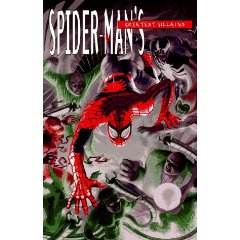
Spider-Man’s Greatest Villains

Spider-Man's Greatest Villains

By various (Marvel)
ISBN13: 978-0-7851-0136-9

Despite this feeling in many ways like a cash-in-quick book this little package does offer a lot of value to the newcomer as a primer into the exotic rogue’s gallery that has be-devilled the web-slinger over the decades. Compiled in 1995, it shows not just the vast variety of the many talented artists who have worked on the character, but also some of the gifted writers who built on Stan and Steve’s masterpiece.

Open and closing the book are two tales by Messrs Lee and Ditko. Firstly the premiere performance of a criminal Special Effects genius who used subterfuge and psychology to wage war as ‘The Menace of… Mysterio!’ (from Amazing Spider-Man #13 1964), nicely book-ends our hero scoring one of his most decisive victories when he was ‘Unmasked by Dr Octopus!’ in issue #12.

Although I’m a little perturbed that it’s the concluding half of a two-parter, the story can be happily read on its own and the art is just so darned good! From Ditko and Mysterio we proceed to the psychopathic Spidey analogue Venom. Taken from issue #316 (1988) ‘Dead Meat’ by David Michelinie and Todd McFarlane is a spectacular action extravaganza, whilst Roger Stern, John Romita and Pablo Marcos’s ‘Let Fly these Aged Wings!’ (issue #224, 1982) is a tense and emotive thriller featuring the Vulture.

The Senior Romita and the desperately under appreciated Jim Mooney worked their magic on Lee’s ‘Mission: Crush the Kingpin!’ (Amazing Spider-Man #69 (1969), a bombastic battle that will leave you hungry for more – and not just because it’s the first part of an extended storyline that’s not included…

The Hobgoblin, usurper and heir of the fearsome Green Goblin (inexplicably not included in this collection) features in a tale of the black-costumed wall-crawler from Web of Spider-Man #38 (1988), by Fabian Nicieza, Alex Saviuk, Kieth Williams and Mike Esposito, which is followed by a pulse-pounding reprise from Lee, Romita Sr. and Mooney entitled ‘And then came Electro!’ originally published in Amazing Spider-Man #82 (1970).

The penultimate tale in this book is ‘The Mortal Past’ by Michelinie, Steven Butler and Bud LaRosa, another chaotic, blood-soaked outing for the mass-murdering shape-changing Carnage, which also delves into his traumatic childhood, taken from Amazing Spider-Man Annual #28 (1994).

This is one of those rare collections that will appeal more to a browser than a fan and thus, despite it’s rather choppy nature, one worth buying for a friend you’re trying to convert rather than a keeper for your own bookshelf.

A UK edition was published by Boxtree (ISBN: 0-7522-0123-9) and may also be available.
©1964-1994, 1995 Marvel Characters, Inc. All Rights Reserved.

The Spectacular Spider-Man: Disassembled

Disassembled
Disassembled

By Paul Jenkins & various (Marvel Comics)
ISBN 0-7851-1084-4

Paul Jenkins tells an interesting, if predictable, tale to tie-in with the Avengers publishing event that “ended” the forty year run of the Superteam. Of course it was only to replace them with both The New and The Young Avengers. Affiliated comicbooks such as the Fantastic Four and Spectacular Spider-Man ran parallel but not necessarily interconnected story-arcs to accompany the Big Show.

Sometime Avenger Spider-Man is in the neighbourhood when a sultry lady calling herself the Queen attacks New York City, causing massive destruction and mind-controlling a number of civilians. She commandeers a building, taking the workers inside hostage. Captain America is quickly on the scene and seems to know a lot more about her and her insect based powers than he’s letting on.

Already suffering from some hidden aspect of her abilities Spider-Man attacks only to be overwhelmed and then infected by The Queen’s kiss. He awakes as her prisoner, and although he escapes he realises that he is somehow mutating…

As Spidey slowly turns into an insectoid monster, Cap is forced to reveal secrets of America’s shameful political past that go all the way back to World War II, and the Queen’s ruthless intentions are revealed. New York and the World have never been closer to absolute disaster…

Wonderfully illustrated by Michael Ryan, Humberto Ramos, Paco Medina, Wayne Faucher and Juan Vlasco, this is a stylish but essentially vacuous tale of monsters, monstrous acts and monstrous betrayals, but there’s never any real tension and it’s very hard to escape the suspicion that Peter Parker’s subsequent metamorphosis was just a way to change his character in such a way as to bring him into line with his movie incarnation.

© 2004 Marvel Characters, Inc. All Rights Reserved.
Spider-Man: Fear Itself

A MARVEL GRAPHIC NOVEL

 Spider-Man: Fear Itself

By Gerry Conway, Stan Lee, Ross Andru & Mike Esposito (Marvel)
ISBN: 0- 87135-752-6

Although an uncomfortable fit as an original Graphic Novel, this taut thriller is a good, old-fashioned, nostalgic Spidey yarn for readers who yearn for simpler times long past. Unlike many all-new works it’s also quite tightly bound to Marvel continuity (perhaps it was intended as an annual but got “promoted” to a more expansive and therefore expensive format?), so if you need a lot of footnotes to read Spider-Man you might want to think carefully before you go hunting it.

The basic plot concerns the return of an old Captain America villain Baron Zemo – radically transformed by Hitler’s geneticist Arnim Zola – who has stolen a new, weaponized drug from the US government. Developed at the company owned by Peter Parker’s friend Harry Osborn, the chemical drives victims mad with fear. In alliance with Nazi-hunting mercenary Silver Sable our hero travels to Bavaria for a life-or death showdown in this terrific ticking-timebomb-thriller.

Although there are some plot holes you could drive a Kampfpanzer through (that’s a big, Nazi tank, you know) the dialogue by two of the wall-crawler’s greatest scribes is still effective and engaging, but the real joy is the last hurrah of the fabulous and criminally undervalued art team of Ross Andru and Mike Esposito, who had been crafting great comics in innumerable genres since the early 1950s, and were Spider-Man’s artists for a huge part of the Seventies.

We comic fans are a notoriously sentimental lot and until someone gets around to doing a definitive collection of their efforts this very readable book will have to do. Old fashioned hero hi-jinks. Go on. You know you want to…

© 1992 Marvel Entertainment Group/Marvel Characters, Inc. All Rights Reserved.
Amazing Spider-Man: Hooky

A MARVEL GRAPHIC NOVEL

Amazing Spider-Man: Hooky

By Susan K Putney & Berni Wrightson (Marvel)
ISBN: 0- 87135-154-4

Marvel’s experiment with graphic novel publishing in the 1980s produced some classy results that the company has seldom come close to repeating since. Both original concepts and their own properties were represented in that initial run and many of the stories still stand out today – or would if they were still in print.

One such is this charming fantasy fable written by Susan K. Putney and painted by comic-book legend Berni Wrightson. Marandi Sjörokker is not the twelve year girl she appears to be. For a start she’s been twelve for over two hundred years, and when she introduces herself by calling Spider-Man “Petey” she reveals how she knew him when he was a toddler and she delivered his Uncle Ben’s newspapers.

And so begins a wild and gently charming other-dimensional romp, full of action and spectacle, as the web-slinger takes a break from his grim and grimy reality to help the permanently adolescent sorceress against the demonic and unstoppable TordenKakerlakk (which I’m reliably informed is Norwegian for Thunder Cockroach). Moreover, this witty, whimsical coming-of-age tale is beautifully and imaginatively illustrated by a master craftsman. A wonderful change-of-pace tale that perfectly displays the versatility of everybody’s favourite wall-crawler – and one long overdue for re-release.

© 1986 Marvel Entertainment Group/Marvel Characters, Inc. All Rights Reserved.
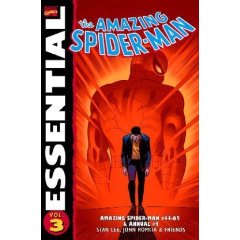
Marvel Masterworks: The Amazing Spider-Man 1965

Marvel Masterworks: The Amazing Spider-Man 1965

By Stan Lee & Steve Ditko (Marvel/Panini UK)
ISBN: 978-1-905239-80-1

This third volume of the chronological Spider-Man sees the World’s Most Misunderstood Hero begin to challenge the dominance of the Fantastic Four as Marvel’s top comic book both in sales and quality. Steve Ditko’s off-beat plots and superlative art had gradually adapted to the slick and potent superhero house-style that Jack Kirby was developing (at least as much as such a unique talent ever could), with less line-feathering and more bombastic villains, and although still very much his baby, Spider-Man had attained a sleek pictorial gloss. Stan Lee’s scripts were perfectly in tune with the times, and although his assessment of the audience was probably the correct one, the disagreements with the artist over the strip’s editorial direction were still confined to the office and not the pages themselves.

Thematically, there’s still a large percentage of old-fashioned crime and gangsterism here. The dependence on costumed super-foes as antagonists was still nicely balanced with thugs, hoods and mob-bosses, but those days were coming to an end too…

The collection (reprinting Amazing Spider-Man #20-31 and Amazing Spider-Man Annual #2) kicks off with ‘The Coming of the Scorpion!’ wherein J. Jonah Jameson lets his obsessive hatred for the arachnid hero get the better of him, hiring scientist Farley Stillwell to give a private detective Scorpion-based superpowers. Unfortunately the process drives the subject mad before he can capture Spidey, leaving the wall-crawler with yet another super-nutcase to deal with.

Issue #21 guest-starred the Human Torch. ‘Where Flies The Beetle’ features a hilarious love triangle as the Torch’s girlfriend uses Peter Parker to make the flaming hero jealous. Unfortunately the Beetle, a villain with a high-tech suit of insect armour (no sniggering) is planning to use her as bait for a trap. As usual Spider-Man is in the wrong place at the right time, resulting in a spectacular fight-fest.

‘The Clown, and his Masters of Menace’ is a return engagement for the Circus of Crime (see Marvel Masterworks: The Amazing Spider-Man 1964 ISBN: 978-1-905239-58-0 for their first appearance) and #23 was a superb thriller blending the ordinary criminals that Ditko loved to feature with the arcane threat of a super-villain attempting to take over the Mob. ‘The Goblin and the Gangsters’ is both moody and explosive, a perfect contrast to ‘Spider-Man Goes Mad!’ This psychological thriller finds a delusional hero seeking psychiatric help, but there’s more to the matter than simple insanity, as an old foe makes an unexpected return…

Issue #25 once again saw the obsessed Daily Bugle publisher taking matters into his own hands: ‘Captured by J. Jonah Jameson!’ introduces Professor Smythe, whose robotic Spider-Slayers would come to bedevil the Web-Spinner for years to come, hired by the newsman to remove Spider-Man for good.

Issues #27 and 28 form a captivating two-part mystery saga featuring a hot duel between The Green Goblin and an enigmatic new criminal. ‘The Man in the Crime-Master’s Mask!’ and ‘Bring Back my Goblin to Me!’ comprise a perfect Spider-Man tale, with soap-opera melodrama and brilliant comedy leavening tense thrills and all-out action. ‘The Menace of the Molten Man!’ (#28) is a tale of science gone bad and is remarkable not only for the action sequences and possibly the most striking Spider-Man cover ever produced but also as the story where Peter Parker graduated from High School.

‘Never Step on a Scorpion!’ sees the return of that lab-made villain, hungry for vengeance against not just the Wall-Crawler but also Jameson for turning him into a monster. Issue #30 is another quirky crime-thriller which lays the seeds for future masterpieces. ‘The Claws of the Cat!’ features the hunt for an extremely capable cat-burglar, (way more exciting than it sounds, trust me!) and sees the introduction of an organised mob of thieves working for the mysterious Master Planner. The sharp-eyed will note that scripter Lee mistakenly calls their boss “The Cat” in one sequence, but really, let it go. That’s the kind of nit-picking that gives us comic fans a bad name and so little chance of meeting girls…

‘If This Be My Destiny…!’ ends the year as the as the Master Planner’s high-tech robberies lead to a confrontation with Spider-Man. The next volume will feature the concluding episodes – in my opinion Lee and Ditko’s best work ever, anywhere, but that’s then not now, so be content (if you can) with Peter at College, the introduction of Harry Osborn and Gwen Stacy, and Aunt May on the edge of death…

However the volume doesn’t end here due to the odd trick of placing the summer Annual’s contents after the December issue. In 1965 Steve Ditko was blowing away audiences with another oddly tangential superhero. ‘The Wondrous World of Dr. Strange!’ introduced the Web-Slinger to a whole other reality when he teamed up with the Master of the Mystic Arts to battle a power-crazed wizard named Xandu in a phantasmagorical, dimension-hopping gem. After this story it was clear that the Spider-Man concept could work in any milieu.

This cheap and cheerful compendium is a wonderful way to introduce or reacquaint readers with the early Spider-Man. The brilliant adventures and glorious pin-ups are superb value and this series of books should be the first choice of any adult with a present to buy for an impressionable child. Or for themselves…

© 1965, 2008 Marvel Characters, Inc. All Rights Reserved.
Spider-Man: Spirits of the Earth

A MARVEL GRAPHIC NOVEL

 Spider-Man: Spirits of the Earth

By Charles Vess (Marvel)
ISBN: 0- 87135-692-9

Correct me if I’m wrong but I don’t think this truly beautiful painted graphic novel has been re-issued since it first came out in 1990. If that is the case then it’s an appalling oversight as Spirits of the Earth is one of the prettiest graphic novels ever produced, not to say one of the most entertaining Spider-Man adventures ever told.

Newlyweds Mary Jane and Peter Parker are astounded and delighted to discover that an unknown relative has left her a castle deep in the Scottish Highlands. Setting off for a second honeymoon they soon become embroiled in ancient magic and high-tech abominations courtesy of the Celtic branch of the perfidious Mutants and Millionaires organisation The Hellfire Club…

Ghoulies, Ghosties and villainous super-criminals combine with some of the best artwork you’ve ever seen for a truly wonderful adventure that desperately needs to be on your bookshelf. My copy also contains a lovely pictorial travelogue by Vess entitled “A Scottish Journey”. Hopefully yours will too once you track down this little gem.

© 1990 Marvel Entertainment Group/Marvel Characters, Inc. All Rights Reserved.
The Daily Adventures of Spider-Man, Vol 1

The Daily Adventures of Spider-Man, Vol 1

By Stan Lee & John Romita (Marvel/ Panini Publishing UK)
ISBN13: 978-1-905239-32-0

By 1977 Stan Lee had all but surrendered his role as editor and guiding light of Marvel Comics for that of a roving PR machine to hype-up the company he had turned into a powerhouse. In that year two events occurred that catapulted Marvel’s trademark character into the popular culture mainstream. One was the long anticipated release of the Amazing Spider-Man live action TV show – a mixed blessing and pyrrhic victory at best – whilst the other, and one much more in keeping with his humble origins was the launch of a syndicated newspaper strip.

Both brought the character to a wider audience but the later offered at least a promise of editorial control – a vital factor in keeping the Wallcrawler’s identity and integrity intact. But even this medium dictated some tailoring of the “Merry Marvel Madness” before the hero was a suitable fit with the grown-up world of the Funny Pages.

Which is a longwinded way of saying that completists and long-time fans will be happy with this collection of strips, as will any admirer of the black-and-white artwork of the senior John Romita (latterly inked by the great Frank Giacoia); but the stories, tame, bowdlerised and rather mediocre, struggle without the support network of a Marvel Universe, and are necessarily dumbed-down for readers not familiar with the wider cast or long history.

If the reader is steeped in the common folklore of Spider-Man, the adventures introducing Dr. Doom and Dr. Octopus are merely heavy-handed, but for newcomers they are presented as if all participants are already familiar, with no development or real explanation. A new villain The Rattler comes next, followed by the more appropriate (for strips at least) gangster The Kingpin before the strip finally gets around to a retelling of the origin, but now based on that aforementioned TV show rather than the classic Lee/Ditko masterpiece. It is safe to say that in those early years the TV series informed the strip much (too much) more than the comic-books.

A revised Kraven the Hunter came next, which presented an opportunity to remove Mary Jane Watson from the strip in favour of a string of temporary girl-friends, more in line with the TV version, and this also signalled a reining-in of super-menaces in favour of a less fantastic string of opponents such as a middle-Eastern terrorist. The launch of a Spider-Man movie took Peter Parker to Hollywood and a new version of deranged special-effects genius Mysterio, before Dr. Doom returned, attempting to derange our hero with robot pigeons and duplicates of Peter Parker’s associates.

This is followed by an exceptional run as three street thugs terrorise Aunt May for her social security money, and Spider-Man has to foil a crazed fashion-model who has discovered his identity and is blackmailing him. These human-scale threats are a perfect use of the hero in this more realistic milieu – and they are the best stories in this collection (reprinting the first two years of the feature; from January 3rd 1977 to January 28th 1979), which regrettably ends with a (feel free to shudder) protection racket story set in the Disco owned by Flash Thompson and Harry Osborn.

The wonderful art sadly can’t counteract the goofy stories that predominate in this collection, nor has time been gentle with the dialogue, which is so antiquated that it might be dug up on Time Team, but there is nonetheless a certain guilty pleasure to be derived from this volume if you don’t take your comics too seriously….

© 1977, 1978, 2007 Marvel Characters Inc. All Rights Reserved.

Ultimate Spider-Man, Vol 4: Legacy

Ultimate Spider-Man, Vol 4: Legacy

By Brian M. Bendis, Mark Bagley & Art Thibert (Marvel)
ISBN: 0-7851-0968-4

After Marvel’s problems of the mid 1990s, the company came back swinging, and one new concept was the remodelling and modernising of their core characters for the new youth culture. The ‘Ultimate’ imprint abandoned the monumental continuity that had been Marvel’s greatest asset and the company’s major characters were given a separate universe to play in and makeovers to appeal to a contemporary, 21st century audience.

As the Ultimate wall crawler ended his second year the characters had stabilised, the relationships had crystallised and everybody concerned accepted that the series was here for the long haul. Bendis, Bagley and Thibert were beyond the experimental stage and were crafting stories in their teen-friendly soap-opera that could aspire to something other than novelty value.

This sequence (originally printed as issues #22-27 of the monthly comic) features the return of Norman Osborn, the insane millionaire industrialist whose experiments led to the creation of Spider-Man. Believed killed as the mutated Green Goblin, he is back, and knows Peter Parker’s secrets. He also intends to make Peter his accomplice, if not slave, and threatens Parker’s nearest and dearest to get his way.

Luckily Nick Fury steps into the picture. Running covert agency S.H.I.E.L.D., Fury is responsible for handling superhuman affairs for the government. Unable to tackle Osborn himself, Fury will safeguard the innocents and give Spider-Man free rein to deal with the deranged and vengeance-crazed Goblin. All Peter needs to do is beat the most dangerous super-maniac in the world….

And even if he wins, he’s only got until he turns eighteen before he’s legally an adult and Fury can legally draft him. How different is it to be owned by a millionaire madman or an elected one?

Frenetic and compelling, the charisma of the misunderstood outsider fuels this readable pot-boiler of teen-angst and school-daze. Light but addictive, and stuffed with hot chicks, this glossy super-soap brings good comics to the post-literate generation.

© 2000, 2001 Marvel Characters, Inc. All Rights Reserved.