
Judge Dredd: the Complete Case Files 01


By John Wagner, Pat Mills, Carlos Ezquerra, Ian Gibson, Mike McMahon, Brian Bolland & various (Rebellion)
ISBN: 978-1-90426-579-0

Britain’s last great comic icon could be described as a combination of the other two, combining the futuristic milieu and thrills of Dan Dare with the terrifying anarchy and irreverent absurdity of Dennis the Menace. He’s also well on the way to becoming the longest-lasting adventure character in our admittedly meagre comics stable, having been continually published every week since February 1977 when he first appeared in the second issue of science-fiction anthology 2000AD – and now that the Dandy’s slated for cancellation, veterans Korky the Cat and Desperate Dan might one day be overtaken in the comedy stakes too…

However with at least 52 2000AD strips a year, annuals, specials, a newspaper strip (in the Daily Star and later The Metro), the Judge Dredd Megazine, numerous reprinted classic comics collections and even two rather appalling DC Comics spin-off titles, that adds up to a phenomenal amount of material, most of which is still happily in print.

Bolland by his own admission was an uneconomically slow artist and much of his Dredd work appeared as weekly portions of large epics with other artists handling other episodes,

Judicial Briefing: Dredd and his dystopian ultra-metropolis of Mega-City One – originally it was to be a 21st century New York – were created by a very talented committee including Pat Mills, Kelvin Gosnell, Carlos Ezquerra, Mike McMahon and others, but with the major contribution coming from legendary writer John Wagner, who has written the largest portion of the canon under his own and several pseudonyms.

Joe Dredd is a fanatically dedicated Judge in the super-city, where hundreds of millions of citizens idle away their days in a world where robots are cheaper and more efficient than humans, and jobs are both beloved pastime and treasured commodity. Boredom has reached epidemic proportions and almost everybody is just one askance glance away mental meltdown. Judges are peacekeepers who maintain order at all costs: investigating, taking action and trying all crimes and disturbances to the hard-won equilibrium of the constantly boiling melting pot. Justice is always immediate…

Dredd’s world is a polluted and precarious Future (In)Tense with all the key analogues for successful science fiction (as ever a social looking-glass for the times it’s created in) situated and sharply attuned to a Cold War Consumer Civilisation. The planet is divided into political camps with post-nuclear holocaust America locked in a slow death-struggle with the Sov Judges of the old Eastern Communist blocs. The Eastern lawmen are militaristic, oppressive and totalitarian – and that’s by the US Judges’ standards – so just imagine what they’re actually like…

They are necessary fascists in a world permanently on the edge of catastrophe, and sadly, what far too many readers never realise is that the strip is a gigantic satirical black comedy with oodles of outrageous, vicarious cathartic action.

Such was not the case when the super-cop debuted in 2000AD Prog (that’s issue number to you) #2 (March 5th 1977), stuck at the back of the new weekly comic in a tale finally scripted after much intensive re-hashing by Peter Harris and illustrated by Mike McMahon & Carlos Ezquerra.

The blazing, humourless, no-nonsense (all that would happily come later) action yarn introduced the bike-riding Sentinel of Order in the tale of brutal bandit Whitey whose savage crime spree was ended with ferocious efficiency before the thug was sentenced to Devil’s Island – a high-rise artificial plateau surrounded by the City’s constant stream of lethal, never-ending, high-speed traffic…

In Prog 3 he investigated The New You in a cunning thriller by Kelvin Gosnell & McMahon wherein a crafty crook tried to escape justice by popping into his local face-changing shop, whilst #4 saw the first appearance of the outcast mutants in The Brotherhood of Darkness (Malcolm Shaw & McMahon) when the ghastly pariahs invaded the megalopolis in search of slaves.

The first hints of humour began in Prog 5’s Krong by Shaw & Ezquerra, with the introduction of Dredd’s Italian cleaner Maria, wherein deranged horror film fan and hologram salesman Kevin O’Neill – yes it’s an in-joke – unleashed a giant mechanical gorilla on the city. The issue was the first of many to cover-feature old Stone Face…

Frankenstein 2 pitted Dredd against an audacious medical mastermind hijacking citizens to keep his rich aging clients in fresh, young organs, after which #7 saw ruthless reprobate Ringo’s gang of muggers flaunting their criminality in the very shadow of The Statue of Judgement until Dredd lowered the boom on them…

Charles Herring & Massimo Belardinelli produced the Antique Car Heist in #8, which first indicated that the super-cop’s face was hideously disfigured, when the Judge tracked down a murderous thief who stole an ancient petrol-burning vehicle, after which co-creator John Wagner returned in Prog 9 to begin his staggering run of tales with Robots, illustrated by veteran British science fiction artist Ron Turner, which set the scene for an ambitious mini-saga in #10-17. The gripping vignette was set at the Robot of the Year Show, and revealed the callous cruelty indulged in by citizens upon their mechanical slaves as a by-product of a violent blackmail threat by a disabled maniac in a mechanical-super chair…

Those casual injustices paved the way for Robot Wars (alternately illustrated over the weeks by Ezquerra, Turner, McMahon & Ian Gibson) wherein carpenter-robot Call-Me-Kenneth experienced a mechanical mind meltdown and became a human-hating steel Spartacus, leading a bloody revolution against the fleshy oppressors. The slaughter was widespread and terrible before the Judges regained control, helped in no small part by loyal, lisping Vending droid Walter the Wobot, who became at the epic’s end Dredd’s second live-in comedy foil…

With order restored a sequence of self-contained stories firmed up the vision of the crazed city. In Prog 18 Wagner & McMahon introduced the menace of mind-bending Brainblooms cultivated by a little old lady career criminal, Gerry Finley-Day & John Cooper described the galvanising effect of the Muggers Moon on Mega-City 1’s criminal class whilst Dredd demonstrated the inadvisability of being an uncooperative witness…

Wagner & McMahon introduced Dredd’s bizarre paid informant Max Normal in #20, whose latest tip ended the profitable career of The Comic Pusher, Finley-Day & Turner turned in a workmanlike thriller as the super-cop tackled a seasoned killer with a deadly new weapon in The Solar Sniper and Wagner & Gibson showed the draconian steps Dredd was prepared to take to bring in mutant assassin Mr Buzzz.

Prog 23 launched into all-out ironic satire mode with Finley-Day & McMahon’s Smoker’s Crime when Dredd trailed a killer with a bad nicotine habit to a noxious City Smokatorium, after which Malcolm Shaw, McMahon & Ezquerra revealed the uncanny secret of The Wreath Murders in #24. The next issue began the feature’s long tradition of spoofing TV and media fashions when Wagner & Gibson concocted a lethal illegal game show in You Bet Your Life whilst #26 exposed the sordid illusory joys and dangers of the Dream Palace (McMahon) and #27-28 offered some crucial background on the Judges themselves when Dredd visited The Academy of Law (Wagner & Gibson) to give Cadet Judge Giant his final practical exam. Of course for Dredd there were no half measures or easy going and the novice barely survived his graduation…

With the concluding part in #28, Dredd moved to second spot in 2000AD (behind brutally jingoistic thriller Invasion) and the next issue saw Pat Mills & Gibson tackle robot racism as Klan-analogue The Neon Knights brutalised the reformed and broken artificial citizenry until the Juggernaut Judge crushed them.

Mills then offered tantalising hints on Dredd’s origins in The Return of Rico! (McMahon) when a bitter criminal resurfaced after twenty years on the penal colony of Titan, looking for vengeance upon the Judge who had sentenced him. From his earliest days as a fresh-faced rookie, Joe Dredd had no time for corrupt lawmen – even if one were his own clone-brother…

Whitey escaped from Devil’s Island (Finley-Day & Gibson) in Prog 31, thanks to a cobbled-together device that turned off weather control, but didn’t get far before Dredd sent him back, whilst the fully automated skyscraper resort Komputel (Robert Flynn & McMahon) became a multi-story murder factory that only the City’s greatest Judge could counter before Wagner (frequently using the pseudonym John Howard) took sole control for a series of  savage whacky escapades beginning with #33’s Walter’s Secret Job (Gibson) as the besotted droid was discovered moonlighting as a cabbie to buy pwesents for his beloved master.

McMahon and Gibson illustrated the two-part tale of Mutie the Pig: a flamboyant criminal who was also a bent Judge, and performed the same tag-team effort for The Troggies, a debased colony of ancient humans living under the city and preying on unwary citizens…

Something of a bogie man for wayward kids and exhausted parents, Dredd did himself no favours in Prog 38 when he burst in on Billy Jones (Gibson) and revealed a massive espionage plot utilising toys as surveillance tools, and tackled The Ape Gang in #39 (19th November 1977 and drawn by McMahon), seamlessly graduating to the lead spot whilst shutting down a turf war between augmented, educated, criminal anthropoids in the unruly district dubbed “the Jungle”…

The Mega-City 5000 was an illegal and murderously bloody street race the Judges were determined to shut down, but the gripping action-illustration of the Bill Ward drawn first chapter was sadly overshadowed by hyper-realist rising star Brian Bolland, who began his legendary association with Dredd by concluding the mini-epic in blistering, captivating style in Prog 41.

From out of nowhere in a bold change of pace, Dredd was then seconded to the Moon for a six-month tour of duty in #42 to oversee the rambunctious, nigh-lawless colony set up by the unified efforts of three US Mega-Cities there. The place was as bonkers as Mega-City One and a good deal less civilised – a true Final Frontier town…

The extended epic began with Luna-1 by Wagner & Gibson, with Dredd and stowaway Walter almost shot down en route in a mysterious missile attack and then targeted by a suicide bomb robot before they could even unpack.

‘Showdown on Luna-1’ introduced permanent Deputy-Marshal Judge Tex from Texas-City whose jaded, laissez-faire attitudes got a good shaking up as Dredd demonstrated he was one lawman who wasn’t gong to coast by for the duration of his term in office. Hitting the dusty mean streets, Dredd began to clean up the wild boys in his town by outdrawing a mechanical Robo-Slinger and uncovering another assassination ploy. It seemed that reclusive mega-billionaire Mr. Moonie had a problem with the latest law on his lunar turf…

Whilst dispensing aggravating administrative edicts like a frustrated Solomon, Dredd chafed to hit the streets and do some real work in #44’s McMahon-limned ‘Red Christmas’. An opportunity arose when arrogant axe-murderer Geek Gorgon abducted Walter and demanded a showdown he lived to regret, whilst ’22nd Century Futsie!’ (Gibson) saw Moonie Fabrications clerk Arthur Goodworthy crack under the strain of over-work and go on a destructive binge with Dredd compelled to protect the Future-shocked father’s family from Moonie’s over-zealous security goons.

The plotline at last concluded in Prog 46 with ‘Meet Mr. Moonie’ (Gibson) as Dredd and Walter confronted the manipulative manufacturer and uncovered his horrific secret. The feature moved to the prestigious middle spot with this episode, allowing the artists to really open up and exploit the colour centre-spread, none more so than Bolland as seen in #47’s Land Race as Dredd officiated over a frantic scramble by colonists to secure newly opened plots of habitable territory. Of course there’s always someone who doesn’t want to share…

Ian Gibson then illustrated 2-part drama ‘The Oxygen Desert’ in #48-49, wherein veteran moon-rat Wild Butch Carmody defeats Dredd using his superior knowledge of the airless wastes beyond the airtight domes. Broken, the Judge quits and slides into despondency but all is not as it seems…

Prog 50 saw the debut of single-page comedy supplement Walter the Wobot: Fwiend of Dwedd – but more of that later – whilst the long-suffering Justice found himself knee-boot-deep in an international interplanetary crisis when ‘The First Lunar Olympics’ (Bolland) against a rival lunar colony controlled by the Machiavellian Judges of the Sov-Cities bloc escalated into assassination and a murderous politically-fuelled land grab. The issue was settled in ostensibly civilised manner with strictly controlled ‘War Games’ yet there was still a grievously high body-count by the time the moon-dust settled… This vicious swipe at contemporary sport’s politicisation was and still is bloody, brutal and bitingly funny…

Bolland also illustrated the sardonic saga of ruthless bandits who were up for a lethal laugh in #52’s The Face-Change Crimes, using morphing tech to change their appearances and rob at will until Dredd beat them at their own game, before Wagner & Gibson crafted a four-part mini-epic (Progs 53-56) wherein motor fanatic Dave Paton’s cybernetic, child-like pride-and-joy blew a fuse and terrorised the domed territory, slaughtering humans and even infiltrating Dredd’s own quarters before the Judge finally stopped Elvis, The Killer Car.

Bolland stunningly limned the savagely mordant saga of a gang of killer bandits who hijacked the moon’s air before themselves falling foul of The Oxygen Board in #57, but only managed the first two pages of 58’s Full Earth Crimes leaving Mike McMahon to complete the tale of regularly occurring chaos in the streets whenever the Big Blue Marble dominated the black sky above…

It was a fine and frantic note to end on as with ‘Return to Mega-City’ Dredd rotated back Earthside and business as unusual. Readers were probably baffled as to why the returned cop utterly ignored a plethora of crime and misdemeanours, but Wagner & McMahon provided the logical and perfect answer in a brilliant, action-packed set-up for the madcap dramas to come.

This first Case Files chronicle nominally concludes with Wagner & McMahon’s Firebug from Prog 60 as the ultimate lawgiver dealt with a crazed arsonist literally setting the city ablaze and discovered a venal motive to the apparent madness, but there’s still a wealth of superb bonus material to enjoy before we end this initial outing.

Kicking off proceedings and illustrated by Ezquerra is the controversial First Dredd strip which was bounced from 2000AD #1 and vigorously reworked – a fascinating glimpse of what the series might have been, followed by the first Walter the Wobot: Fwiend of Dwedd stwips (sowwy – couldn’t wesist!) from 2000AD Progs 50-58.

Scripted by Joe Collins, these madcap comedy shorts were an antidote to the savage and brutal action strips in the comic and served to set the scene for Dredd’s later full-on satirical lampoonery.

Tap Dancer was illustrated by Ian Gibson and dealt with an embarrassing plumbing emergency whilst Shoot Pool! (Gibson) saw the Wobot again taking the Judge’s instructions far too literally…

Brian Bolland came aboard to give full rein to his own outrageous sense of the absurd with the 5-part tale of Walter’s Brother, a bizarre tale of evil twins, a cunning frame-up and mugging that inevitably resulted in us learning all we ever needed to know about the insipidly faithful and annoying rust-bucket. Dredd then had to rescue the plastic poltroon from becoming a prate of the airwaves in Radio Walter before the star-struck servant found his 15 seconds of fame as the winner of rigged quiz-show Masterbrain, and this big, big book concludes with a trio of Dredd covers from Progs 10, 44 and 59, courtesy of artists Ezquerra, Kev O’Neill and McMahon.

Always mesmerising and beautifully drawn, these short punchy stories starring Britain’s most successful and iconic modern comics character are the constantly evolving narrative bedrock from which all the later successes of the Mirthless Moral Myrmidon derive. More importantly, they timeless classics that no real comic fan can ignore – and just for a change something that you can easily get your hungry hands on. Even my local library has copies of this masterpiece of British literature and popular culture…

© 1977, 1978, 2006 Rebellion A/S. All rights reserved. Judge Dredd & 2000AD are ® &™ Rebellion A/S.
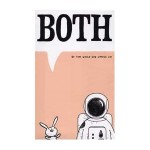
Both


By Tom Gauld & Simone Lia (Bloomsbury)
ISBN: 978-1-77046-065-2

Tom Gauld is a Scottish cartoonist whose works have appeared in Time Out and the Guardian. He has illustrated such children’s classics as Ted Hughes’ The Iron Man and his own books include Guardians of the Kingdom, 3 Very Small Comics, Robots, Monsters etc., Hunter and Painter and The Gigantic Robot.

At the prestigious RCA he met fellow genetically-predisposed scribbler Simone Lia – author of Please God, Find me a Husband! and Fluffy (a Bunny in Denial), kids books Billy Bean’s Dream, Follow the Line, Red’s Great Chase and Little Giant and she produced the strips ‘Sausage and Carrots for The DFC and ‘Lucie’ for Phoenix Comic as well as the Guardian and Independent.

Clearly comics kindred spirits, Gauld and Lia formed Cabanon Press in 2001and began self-publishing quirky, artily surreal strips and features. Their first two publications enigmatically entitled First and Second were collected in 2002 as Both and serve as a shining example of the kind of uniquely authorial/literary cartoon creativity and wonderment British pen-jockeys excel at.

Likened to the works of Edward Gorey, their studied, intense tirades, animorphic escapades and meanderingly perambulatory excursions are more Stream of subtly steered Consciousness than plotted stories: eerily mundane progressions mesmerisingly manufactured and  rendered in a number of styles to evoke response if not elicit understanding.

Which is a long-winded and poncey way of saying: “This stuff is great! You’ve got to see this…”

Within these digest sized, hard-backed monochrome pages you will encounter a talking table lamp, sensitive sentient food, quarrelsome knights, and socially inept and incompatible astronauts, and discover the human tragedy of contracting ‘Road Leg’.

There are of course bunnies, big bugs, sheep, steamrollers, the frustrations of ‘Outside’, love poems, comedy feet and a belligerent, outraged sweetcorn kernel, plus vignettes like ‘I’m in Love’ before the low-key domestic serial ‘End of Season Finale’ introduces off-duty Mexican Wrestlers, as well as political insight from the ‘Bread and Bhagi Show’ and psychological thrills courtesy of ‘Monkey Nut and Harrowed Marrow’. There are, however, no ducks…

Some comics pretty much defy description and codification – and a good thing too.

The purest form of graphic narrative creates connections with the reader that occur on a visceral, pre-literate level, visually meshing together on a page to produce something which makes feelings – if not necessarily sense.

When creators can access that pictorially responsive area of our brains as well as these two by ricocheting around the peripheries of the art form with such hilariously enticing and bizarrely bemusing concoctions, all serious fans and readers should sit up and take notice.

No more hints: go find this fabulously funny book now.

© 2003 Tom Gauld and Simone Lia. All rights reserved.
You can see more of their work at www.tomgauld.com and simonelia.com

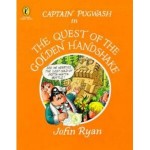
Captain Pugwash and the Quest of the Golden Handshake


By John Ryan (Fontana Picture Lions/Puffin)
ISBN: 0-00-662253-4 (Fontana 1985)   978-0-14055-486-1 (Puffin 1997)

Paperback: 32 pages

I recently reviewed an old John Ryan kid’s book and enjoyed it so much that I simply had to share another all-ages masterpiece with you…

John Ryan was an artist and storyteller who straddled three distinct disciplines of graphic narrative, with equal qualitative if not financial success.

The son of a diplomat, Ryan was born in Edinburgh on March 4th 1921, served in Burma and India and, after attending the Regent Street Polytechnic (1946-48), took up a post as assistant Art Master at Harrow School from 1948 to 1955. It was during this time that he began contributing strips to Fulton Press publications.

On April 14th 1950 Britain’s grey, post-war gloom was partially lifted with the first issue of a new comic that literally gleamed with light and colour with which avid children were soon understandably enraptured; blown away by the gloss and dazzle of Dan Dare, Pilot of the Future, a charismatic star-turn venerated to this day and a host of other spectacularly illustrated stories strips and features.

The Eagle was a tabloid-sized paper with full colour inserts alternating with text and a range of various other comic features. “Tabloid” is a big page and one can get a lot of material onto each one. Deep within, on the bottom third of a monochrome page was an eight panel strip entitled ‘Captain Pugwash – The story of a Bad Buccaneer and the many Sticky Ends which nearly befell him’ delivered with dash and aplomb by John Ryan.

The indefatigable artist’s quirky, spiky style also lent itself to the numerous spot illustrations required throughout the comic every week and he also regularly produced ‘Lettice Leefe, the Greenest Girl in School’ for Eagle’s distaff companion comic Girl.

Pugwash, his harridan of a wife and the useless, lazy crew of the Black Pig ran until issue #19 when the feature disappeared.

This was no real hardship as Ryan had been writing and illustrating the incomparable and brilliantly mordant ‘Harris Tweed – Extra Special Agent’ a full page (tabloid, remember, upwards of twenty crammed and meticulously detail stuffed panels a page, per week) from The Eagle #16 onwards.

Tweed ran for three years as a full page until 1953 when it dropped to a half page strip and was repositioned as a purely comedic venture.

In 1956 the indefatigable old sea-dog (I’m referring to Horatio Pugwash, but it could so easily be Ryan: an unceasing story-peddler with a big family, he still found time to be head cartoonist at the Catholic Herald for four decades) made the jump to children’s picture books and animated features for television.

A Pirate Story was the first Pugwash chronicle (originally published by Bodley Head before switching to the children’s publishing specialist Puffin) and the first of a huge run of children’s books on a number of different subjects. Pugwash himself starred in 21 tomes; there were a dozen books based on the animated series Ark Stories, as well as Sir Prancelot and a number of other creations. Ryan worked whenever he wanted to in the comic world and eventually the books and the strips began to cross-fertilise.

When A Pirate Story was released in 1957 the BBC pounced on the property, commissioning Ryan to produce five-minute episodes (86 in all from 1957 to 1968, which were reformatted in full colour and rebroadcast in 1976). In the budding 1950s arena of animated television cartoons, Ryan developed a new system for producing cheap, high-quality animations to a tight deadline. Naturally he began with Pugwash, keeping the adventure milieu, but replaced the shrewish wife with a tried-and-true boy assistant. Tom the Cabin Boy is the only capable member of a crew which included such visual archetypes as Willy, Pirate Baranabas and Master Mate (fat, thin and tall – all dim) instantly affirming to the rapt, young audience that grown-ups are fools and kids do, in fact, rule.

Ryan also drew a weekly Pugwash strip in the Radio Times for eight years, before going on to produce a number of other animated series including Mary, Mungo and Midge, The Friendly Giant and Sir Prancelot as well as adaptations of some of his many children’s books. In 1997 an all new CGI-based Pugwash animated TV series began.

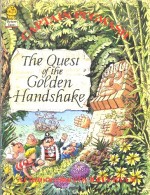
John Ryan returned to pirate life in the 1980s, drawing three new Pugwash storybooks: The Secret of the San Fiasco, The Battle of Bunkum Bay and today’s riot of scurvy delights The Quest of the Golden Handshake…

There was even a thematic prequel in Admiral Fatso Fitzpugwash, in which it is revealed that the not-so-salty seadog had a medieval ancestor who became First Sea Lord, despite being terrified of water…

In the Golden Handshake the Querulous Captain finds a genuine treasure map at an auction but a bidding war with nefarious nemesis Cut-Throat Jake turns into a full-blown riot in which the coveted chart is torn in half.

Never knowingly daunted, Pugwash and company steal Jake’s half of the map that night but on returning to the safety of the Black Pig are horrified to discover that their rival has had the same idea…

Luckily the brilliant cabin boy had anticipated the move and has already copied their portion of the priceless document. Heartened and enraptured by thoughts of vast wealth, the crew hastily set sail for South America, determined to plunder the Lost Treasure of the Stinkas…

However Jake is a brilliant rogue and smuggles himself and two burly accomplices aboard, planning to let Pugwash do all the heavy lifting and await his moment to claim his revenge and the gold…

Packed with in-jokes, glorious tom-foolery and daring adventure, the voyage to the New World in a “haunted” ship culminates in a splendid battle of half-wits before Tom, as usual, saves the day in his quiet, competent and deucedly clever way…

The first Pugwash was very traditional in format with blocks of text and single illustrations that illuminated a particular moment. But by 1982 the entire affair became a lavishly painted comic strip, with as many as eight panels per page, with standard word balloons. A fitting circularity to his careers and a nice treat for us old-fashioned comic drones.

The most recent edition of A Pirate Story (2008 from Frances Lincoln Children’s Books) came with a free audio CD, and just in case I’ve tempted you beyond endurance here’s a full list (I think) of the good(?) Captain’s exploits: Captain Pugwash: A Pirate Story (1957), Pugwash Aloft (1960), Pugwash and the Ghost Ship (1962), Pugwash in the Pacific (1963), Pugwash and the Sea Monster (1976), Captain Pugwash and the Ruby (1976), Captain Pugwash and the Treasure Chest (1976), Captain Pugwash and the New Ship (1976), Captain Pugwash and the Elephant (1976), The Captain Pugwash Cartoon Book (1977), Pugwash and the Buried Treasure (1980), Pugwash the Smuggler (1982), Captain Pugwash and the Fancy Dress Party (1982), Captain Pugwash and the Mutiny (1982), Pugwash and the Wreckers (1984), Pugwash and the Midnight Feast (1984), The Battle of Bunkum Bay (1985), The Quest of the Golden Handshake (1985), The Secret of the San Fiasco (1985), Captain Pugwash and the Pigwig (1991) and Captain Pugwash and the Huge Reward (1991), but quite frankly read any Pugwash pirate publication and you’ll be we’ll and truly hooked…

This magical, wry and enchantingly smart yarn is one of Ryan’s very best and long overdue for re-issue – as are they all – and a sure winner with fans of all ages if you can find it (talk about real buried treasures…).

We don’t have that many multi-discipline successes in comics, so why don’t you go and find out why we should celebrate one who did it all, did it first and did it well? Your kids will thank you and if you’ve any life left in your old and weary adult fan’s soul, you will too…

© 1984, 1997, 2012 John Ryan and presumably the Estate of John Ryan. All rights reserved.

Crockle Saves the Ark


By John Ryan (Hamlyn)
ISBN: hardback 600-754022   paperback: 978-0-60030-461-6

John Ryan was an artist and storyteller who straddled three distinct disciplines of graphic narrative, with equal qualitative if not financial success.

The son of a diplomat, Ryan was born in Edinburgh on March 4th 1921, served in Burma and India and after attending the Regent Street Polytechnic (1946-48) took up a post as assistant Art Master at Harrow School from 1948 to 1955. It was during this time that he began contributing strips to Fulton Press publications.

On April 14th 1950 Britain’s grey, post-war gloom was partially lifted with the first issue of a new comic that literally shone with light and colour. Avid children were soon understandably enraptured with the gloss and dazzle of Dan Dare, Pilot of the Future, a charismatic star-turn venerated to this day. The Eagle was a tabloid-sized paper with full colour inserts alternating with text and a range of various other comic features. “Tabloid” is a big page and one can get a lot of material onto each one. Deep within, on the bottom third of a monochrome page was an eight panel strip entitled Captain Pugwash – The story of a Bad Buccaneer and the many Sticky Ends which nearly befell him. Ryan’s quirky, spiky style also lent itself to the numerous spot illustrations required throughout the comic every week and he produced ‘Lettice Leefe, the Greenest Girl in School’ for Eagle’s distaff companion comic Girl.

Pugwash, his harridan of a wife and the useless, lazy crew of the Black Pig ran until issue 19 when the feature disappeared. This was no real hardship as Ryan had been writing and illustrating the incomparable and brilliantly mordant ‘Harris Tweed – Extra Special Agent’ a full page (tabloid, remember, an average of twenty crammed and meticulous panels a page, per week) from The Eagle #16 onwards. Tweed ran for three years as a full page until 1953 when it dropped to a half page strip and was repositioned as a purely comedic venture.

In 1956 the indefatigable old sea-dog (I’m referring to old Horatio Pugwash, but it could so easily be Ryan: an unceasing story-peddler with a big family, he still found time to be head cartoonist at the Catholic Herald for four decades) made the jump to children’s picture books. Ryan also drew a weekly Pugwash strip in the Radio Times for eight years, before going on to produce a number of other animated series including Mary, Mungo and Midge, The Friendly Giant and Sir Prancelot as well as adaptations of some of his many children’s books and the item on offer today.

In the late 1970’s Ryan wedded his love of maritime adventure, devout faith and facility for telling engaging tales to the young to re-examine the Biblical story of Noah in another delightful animated series.

The Ark Stories comprised a selection of delightful cartoon books in the style of Pugwash (eleven in total, I think) initially released by Beaver Books in 1979, which were translated into a series of ten-minute animated TV shorts, written, made by and presented by Ryan himself with voices by famed animal-imitator Percy Edwards. The show was produced for Trident/ITV by Yorkshire Television in 1980, after which Hamlyn re-released them in both hardback and softcover editions.

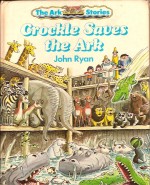
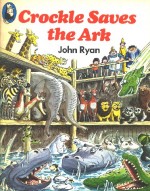
Crockle Saves the Ark is my favourite; whimsical, charming, superbly illustrated and just plain funny. In the days just before the big flood, as Noah and family were filling the Ark with animals, two by two, the youngest son Jaffet brought his best friend Jannet along.

The little lad and lass brought with them a pet baby crocodile and for forty days and nights Noah turned a blind eye whenever he counted all his animals since the giant vessel already had its full compliment of reptiles…

The reason was simple: just when the deluge began and the waters started to cover the land, the fully-laden ark had not risen. Indeed the bottom of the boat began to fill up and all the water-loving beasts thought that they had their own indoor pool.

Luckily little Crockle – for that was the scaly tyke’s name – was small enough to explore the hull of the rapidly-filling vessel until he found the leak and smart enough to fix it, after which the rest of the creatures all pitched in to bale out the water…

This magical, wry and enchantingly smart yarn is one of Ryan’s very best and long overdue for re-issue – as are they all (and the original 1981 video collection too please!) and a sure winner with fans of all ages if you can find it.
© John Ryan and presumably the Estate of John Ryan. All rights reserved.

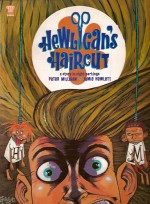
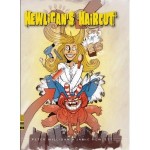
Hewligan’s Haircut


By Peter Milligan & Jamie Hewlett (Fleetway Publishing/Rebellion)
ISBN: 978-1-85386-246-5, Rebellion HC 978-1-90426-506-1, SC 978-1-90673-598-2

Since its inception in 1977 the weekly science fiction anthology comic 2000AD has been a cornucopia of thrills, chills, laughs and anarchic, mind-boggling wonderment as well as springboard for two generations of highly impressive creators.

Beside such “A-List” serial celebrities as Judge Dredd, Slaine, Rogue Trooper and their ilk, the quirky, quintessentially British phenomenon has played host to a vast selection of intriguing yarns with much less general appeal and far more discerning tastes.

Or, to put it bluntly, strips with as many foes as friends amongst the rabidly passionate audience.

Just one such was this outrageously tongue-in-cheek, fantastically surreal and absurdist love story from the era of Rave Parties and Acid Houses from Peter Milligan and Tank Girl co-creator Jamie Hewlett which originally ran in #700-711 of the Galaxy’s Greatest Comic, from 13th October to December 1st 1990.

The story is told in “Eight Partings”, commencing in black and white with the introduction of style-starved psychiatric patient Hewligan, about to be booted out of Five Seasons Mental Hospital.

In ‘Donald, Where’s Your Troosers?’ the hapless innocent spruces up his copious coiffure and accidentally carves a transcendental cosmic symbol into his bedraggled barnet. Suddenly everything that previously made no sense in his bemused and befuddled life instantly makes even less – but now it’s all in full, effulgent dayglo colour…

‘Under a Bridge with Dick and Harry’ finds the latest victim of “Don’t Care in the Community” undergoing even crazier visions and hallucinations than the ones which got him sectioned in the first place and also the subject of a bizarre police – and animated everyday objects – manhunt, until a wall tells him of a safe haven in ‘Don’t Put your Daughter on the Stage Mrs. Worthington’…

Giving Consensual Reality the old heave-ho, the tonsorial target meets the effervescent trans-dimensional gamin and pulchritudinous know-it-all Scarlett O’Gasometer, who offers companionship and the secret of what’s really going on. Still pursued by every cliché in British popular life the pair soon fall victim to a barrage of Art Attacks (Cubism and Warholian Pop) from unsanctioned Pirate Dimensions in ‘A Man , A Plan, Canal Panama’ but as Scarlet reveals the true nature of Everything and the pair leak into cult TV shows in ‘Oh Danny Boy Oh Danny Boy!’ Hewligan begins to understand why his entire life has been plagued with odd voices and images of giant stone heads…

The dashing due take a bus to Easter Island where ‘I Know a Fat Old Pleeceman’ finds them in a position to save all creation in ‘Roget’s Thesaurus’ before the sweet sorrowful monochrome parting of ‘The Psychedelic Experience’ wraps it all up with one last surprise…

Light, frothy, multi-layered with cultural time-bombs and snarky asides; this is a fun-filled, occasionally over-clever, but always magically rendered and intoxicatingly arch, quest-fable that no jaded Fantasy Fashionista or cultural gadabout could resist. However there’s not a tremendous amount of gore, smut or gratuitous violence but I suppose you can’t have everything…

This a gloriously silly piece of pure contemporary Albion perfectly captures a unique period in time and offers a pungent and memorable dose of New Age Nostalgia and there shouldn’t be any trouble finding this is tall, slim tale since it was re-released in a collectors hardback in 2003 and a paperback edition in 2010 by current 2000AD custodians Rebellion.

Coo! What larks…
© 1991 2000AD Books, A division of Fleetway Publications. © 2003, 2011 Rebellion A/S. All rights reserved.

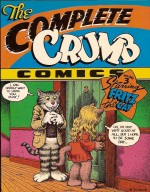
The Complete Crumb Comics volume 3: Starring Fritz the Cat


By Robert Crumb (Fantagraphics Books)
ISBN: 978-0-93019-375-1

Robert Crumb is a unique creative force in the world of cartooning with as many detractors as devotees. His uncompromising, excoriating, neurotic introspections, pictorial rants and invectives unceasingly picked away at societal scabs and peeked behind forbidden curtains for his own benefit, but he has always happily shared his unwholesome discoveries with anybody who takes the time to look…

In 1987 Fantagraphics Books began the nigh-impossible task of collating, collecting and publishing the chronological totality of the artist’s vast output and many of those engrossing compendia are now being reissued.

With the material in this third volume the isolated and secretive artist began to break into the wider world as his first great creation escaped from Crumb’s self-published minicomics and into regular paying venues…

Once again, if intemperate language, putative blasphemy, cartoon nudity, fetishism and comedic fornication are liable to upset you or those legally responsible for you, stop reading this review right here and don’t buy the book.

The son of a career soldier, Robert Dennis Crumb was born in Philadelphia in 1943 into a functionally broken family. He was one of five kids who all found different ways to escape their parents’ shattering problems and comics were always paramount amongst them.

As had his older brother Charles, Robert immersed himself in the strips and cartoons of the day; not simply reading but feverishly creating his own. Harvey Kurtzman, Carl Barks and John Stanley were particularly influential, but also newspaper artists like E.C. Segar, Gene Ahern, Rube Goldberg, Bud (Mutt and Jeff) Fisher, Billy (Barney Google), De Beck, George (Sad Sack) Baker and Sidney (The Gumps) Smith as well as illustrators like C.E. Brock and the wildly imaginative and surreal 1930’s Looney Tunes and Merrie Melodies animated shorts.

Defensive and introspective, young Robert pursued art and slavish self-control through religion with equal desperation. His early spiritual repression and flagrant, hubristic celibacy constantly warred with his body’s growing needs…

Escaping his stormy early life, he married young and began working in-house at the American Greeting Cards Company. He discovered like minds in the growing counterculture movement and discovered LSD. In 1967 Crumb relocated to California and became an early star of Underground Commix. As such he found plenty of willing hippie chicks to assuage his fevered mind and hormonal body whilst reinventing the very nature of cartooning with such creations as Mr. Natural, Devil Girl and the star of this particular show, the utterly amoral, unpredictable, almost human Fritz the Cat…

The rest is history…

From this point onwards the varied and exponentially impressive breadth of Crumb’s output becomes increasingly riddled with his often hard-to-embrace themes and declamatory, potentially offensive visual vocabulary as his strips grope towards the creator’s long-sought personal artistic apotheosis and this third volume covers material created and published between 1960-1966 as the self-tormented artist began to find a popular following in a strangely changing world.

The mercurial pictorial parade is preceded by another fascinating reminiscence from life-long friend Marty Pahls describing ‘The First Girl That Came Along’…

Crumb’s early artistic style was utterly transformed by the introduction of Rapidograph mapping pens and ‘Fritz the Cat, Ace Salesman’ (August 1964) has a raw, mesmerising scratchy linearity that belies the subversive sexual undercurrent of the piece, after which the feline philanderer went hard-core in ‘Fritz Comes on Strong’ (published in satire magazine Help! #22, January 1965). From the same issue ‘Harlem: a Sketchbook Report’ displayed the artist’s gift for visual reportage.

Fritz appeared in the silent and extremely trenchant bobbysoxer strip ‘Fred, the Teen-age Girl Pigeon’ (Help! #24, May 1965), whilst ‘Fritz Bugs Out’ (Cavalier, October 1964-February 1965) found the cat misbehaving in a Bohemian college setting before setting out on an extended hippie-style vision-quest whilst three dumb-show episodes of ‘The Silly Pigeons’ (November 1964-March 1965) perfectly display the creator’s hardwired slapstick roots.

‘Bulgaria: a Sketchbook Report’ (Help! #25, July 1965) saw the artist turn his probing pens on a Cold-War alien culture after which ‘Fritz the Cat, Special Agent for the CIA’ (March-May 1965) perfectly parodied the political scene and the planet’s fascination with suave super-spies. Next up are three more, increasingly surreal, snippets from ‘The Silly Pigeons’ (Spring 1965) and a swift swipe at the modern working woman in ‘Roberta’ (Spring 1965). Working in the production department of a vast greetings card company gave the insular Crumb access to new toys and new inspiration and he would return repeatedly to the white-collar world to for inspiration and pictorial spleen-venting…

‘Fritz the Cat, Magician’ (Summer 1965, and published in Promethean Enterprises #3, 1971) is a sweetly seductive puff-piece whilst the exigencies of earning a little extra cash clearly influenced the speculative pieces ‘Guitar Models of the Future’ (Yell #3, September 1965), Topps Promotional Booklet ‘The Road to Success’ (Fall 1965), ‘Illustrations for Nostalgia Enterprises’ (Fall 1965), ‘The Heap Years of the Auto’ (intended for Nostalgia Illustrated, Fall 1965) and ‘The Small Small Businessman’ (again intended for Nostalgia Illustrated, Fall 1965): all showing Crumb’s versatility, passion for the past and imagination.

‘Punchlines for Color Cards’ features the interior messages for the artworks amongst the large Colour Section which opens here with a spectacular succession of sketches designated ‘Letter to Marty Pahls’ (covering April 4th, June 3rd, October 30th 1960, May 28th and November 5th 1961), after which two ‘Cards to Mike Britt’ (December 1963-January 1964) are followed by the wonderful covers for ‘Fritz Bugs Out’ (February 1965), ‘Agent of the CIA’ (March 1965) and ‘Roberta’ (Spring 1965).

Swiftly following are the aforementioned ‘Selected Topps Monster Greetings Cards’ (Fall 1965) and general ‘Cards for American Greetings’ (1964-1966) which close the rainbow section. Back in black and white another ‘Card to Mike Britt’ precedes the ‘Cover for Fug #1’ (Fall 1965) and the untitled group sex-romp ‘Fritz the Cat’ intended for that debut Fug, before a copious collection of ‘Greetings Cards for American Greetings’ (1964-1966) and the ‘Cover for Gooseberry’ #2 (Fall 1965) complete this meander through the Master’s formative years.

If Crumb had been able to suppress his creative questing he could easily have settled for a lucrative career in any one of a number of graphic disciplines from illustrator to animator to jobbing comic book hack, but as this pivotal collection readily proves, the artist was haunted by the dream of something else – he just didn’t yet know what that was…

Crumb’s subtle mastery of his art-form and obsessive need to reveal his most hidden depths and every perceived defect – in himself and the world around him – has always been an unquenchable fire of challenging comedy and riotous rumination and this chronicle begins to show his growing awareness of where to look.

This superb series charting the perplexing pen-and-ink pilgrim’s progress is the perfect vehicle to introduce any (over 18) newcomers to the world of grown up comics. And if you need a way in yourself, seek out these books and the other fifteen as soon as conceivably possible…
Introduction © 1988 Marty Pahls. Greetings cards © 1964, 1965, 1966, 1967, 1988 American Greetings Corporation. Monster Greetings trading cards © 1965 Topps Bubble Gum, Inc. All other contents © 1964, 1965, 1968, 1969, 1970, 1971, 1974, 1988 Robert Crumb. All rights reserved.

The Complete Crumb Comics volumes 1 and 2


By Robert Crumb and Charles Crumb (Fantagraphics Books)
ISBNs: 0-930196-43-1(hb)   & 978-0-930193-62-8

Robert Crumb is a unique creative force in the world of cartooning with as many detractors as devotees. His uncompromising, excoriating, neurotic introspections, pictorial rants and invectives unceasingly picked away at societal scabs and peeked behind forbidden curtains for his own benefit, but he has always happily shared his unwholesome discoveries with anybody who takes the time to look…

In 1987 Fantagraphics Books began the nigh-impossible task of collating, collecting and publishing the chronological totality of the artist’s vast output and many of those engrossing compendia are now being reissued.

These earliest volumes have been constantly described as the least commercial and, as far as I know, remain out of print, but contrary as ever, I’m reviewing them anyway…

The son of a career soldier, Robert Dennis Crumb was born in Philadelphia in 1943 into a functionally broken family. He was one of five kids who all found different ways to escape their parents’ shattering problems and comics were always paramount amongst them.

As had his older brother Charles, Robert immersed himself in the strips and cartoons of the day; not simply reading but feverishly creating his own. Harvey Kurtzman, Carl Barks and John Stanley were particularly influential, but also newspaper artists like E.C. Segar, Gene Ahern, Rube Goldberg, Bud (Mutt and Jeff) Fisher, Billy (Barney Google), De Beck, George (Sad Sack) Baker and Sidney (The Gumps) Smith as well as illustrators like C.E. Brock and the wildly imaginative and surreal 1930’s Looney Tunes and Merrie Melodies animated shorts.

Defensive and introspective, young Robert pursued art and slavish self-control through religion with equal desperation. His early spiritual repression and flagrant, hubristic celibacy constantly warred with his body’s growing needs…

Escaping his stormy early life, he married young and began working in-house at the American Greeting Cards Company. He discovered like minds in the growing counterculture movement and discovered LSD. In 1967 Crumb relocated to California and became an early star of Underground Commix. As such he found plenty of willing hippie chicks to assuage his fevered mind and hormonal body whilst reinventing the very nature of cartooning with such creations as Mr. Natural, Fritz the Cat, Devil Girl and a host of others. The rest is history…

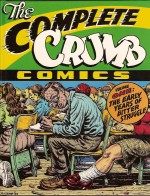
Those tortured formative years provide the meat of the first volume The Early Years of Bitter Struggle which, after ‘Right Up to the Edge’ – a comprehensive background history and introduction from lifelong confidante Marty Pahls – begins revealing the troubled master-in-waiting’s amazingly proficient childhood strips from the self-published Foo #1-3 (a mini-comic project passionately produced by Robert and his older brother Charles from September to November 1958).

Rendered in pencils, pens and whatever else was handy; inextricably wedded to the aforementioned funnybooks, strips and animated shorts cited above, the mirthful merry-go-round opens with ‘Report From the Brussels World’s Fair!’ and ‘My Encounter With Dracula!’: frantic and frenetic pastiches of the artists’ adored Mad material, with Robert already using a graphic avatar of himself for narrative purposes.

Closely following are the satirical ‘Clod of the Month Award’, ‘Khrushchev Visits U.S.!!’ and ‘Noah’s Ark’.

From 1959 comes ‘Treasure Island Days’: a rambling gag-encrusted shaggy dog Russian Roulette experiment created by the lads each concocting a page and challenging the other to respond and continue the unending epic, after which ‘Cat Life’ followed family pet Fred’s fanciful antics from September 1959 to February 1960 before morphing, or perhaps “anthropomorphing” into an early incarnation of Fritz the Cat in ‘Robin Hood’…

That laconic stream of cartoon-consciousness resolved into the raucous and increasingly edgy saga ‘Animal Town’ followed here by a very impressive pin-up ‘Fuzzy and Brombo’, before the central full-colour section provides a selection of spoof covers.

Four ‘R. Crumb Almanac’ images – all actually parts of letters to Pahls – are complemented by three beautiful ‘Arcade’ covers, swiftly followed by a return to narrative monochrome and ‘A Christmas Tale’ which saw Crumb’s confused and frustrated sexuality begin to assert itself in his still deceptively mild-mannered work.

A progression of eleven single-page strips produced between December 1960 and May 1961 precedes three separate returns to an increasingly mature and wanton ‘Animal Town’ – all slowly developing the beast who would become Crumb’s first star until Fritz bows out in favour of ‘Mabel’ – a prototypical big and irresistible woman of the type Crumb would legendarily have trouble with – and this initial volume concludes with another authorial starring role in the Jules Feiffer (see Explainers) inspired ‘A Sad Comic Strip’ from March 1962.


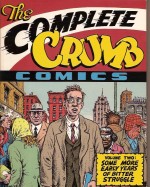
The second volume Some More Early Years of Bitter Struggle continues the odyssey after ‘The Best Location in the Nation…’ – another Pahls reminiscence – describes the swiftly maturing and deeply unsatisfied Crumb’s jump from unhappy home to the unsatisfying world of work.

‘Little Billy Bean’ (April 1962) returns to the hapless, loveless nebbish of A Sad Comic Strip whilst ‘Fun with Jim and Mabel’ revisits Crumb’s bulky, morally-challenged amazon after which the focus shifts to her diminutive and feeble companion ‘Jim’. Next, an almost fully-realised ‘Fritz the Cat’ finally gets it on in a triptych of saucy soft-core escapades from R. Crumb’s self-generated Arcade mini-comic project.

From this point onwards the varied and exponentially impressive breadth of Crumb’s output becomes increasingly riddled with his often hard-to-embrace themes and declamatory, potentially offensive visual vocabulary as his strips grope towards the creator’s long-sought personal artistic apotheosis.

His most intimate and disturbing idiosyncrasies regarding sex, women, ethnicity, personal worth and self-expression all start to surface here…

Therefore, if intemperate language, putative blasphemy, cartoon nudity, fetishism and comedic fornication are liable to upset you or those legally responsible for you, stop reading this review right here and don’t buy the book.

Working in the production department of a vast greetings card company gave the insular Crumb access to new toys and new inspiration as seen in the collection of ‘Roberta Smith, Office Girl’ gag strips from American Greetings Corporation Late News Bulletins (November 1963-April 1964), followed here by another Fritz exploit enigmatically entitled ‘R. Crumb Comics and Stories’ which includes just a soupcon of raunchy cartoon incest, so keep the smelling salts handy…

A selection of beautiful sketchbook pages comes next and then a full-colour soiree of faux covers: letters to Pahls and Mike Britt disguised as ‘Farb’ and ‘Note’ front images as well as a brace of Arcade covers and the portentously evocative front for R. Crumb’s Comics and Stories #1 from April 1964.

The rest of this pivotal collection is given over to thirty more pages culled from the artist’s sketchbooks; a vast and varied compilation that ably displays the artist’s incredible virtuosity and proves that if Crumb had been able to suppress his creative questing he could easily have settled for a lucrative career in any one of a number of graphic disciplines from illustrator to animator to jobbing comic book hack.

Crumb’s subtle mastery of his art-form and obsessive need to reveal his most hidden depths and every perceived defect – in himself and the world around him – has always been an unquenchable fire of challenging comedy and riotous rumination, and these two tomes are the secret to understanding the creative causes, if not the artistic affectations of this unique craftsman and auteur.

This superb series charting the perplexing pen-and-ink pilgrim’s progress is the perfect vehicle to introduce any (over 18) newcomers to the world of grown up comics. And if you need a way in yourself, seek out these books and the other fifteen as soon as conceivably possible…

Report From the Brussels World’s Fair!, My Encounter With Dracula!, Clod of the Month Award, Khrushchev Visits U.S.!! & Noah’s Ark © 1980 Robert and Charles Crumb. Other art and stories © 1969, 1974, 1978, 1987, 1988 Robert Crumb. All rights reserved.

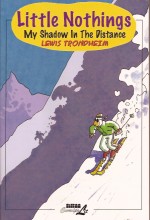
Little Nothings volume 4: My Shadow in the Distance


By Lewis Trondheim, translated by Joe Johnson (NBM/ComicsLit)
ISBN: 978-1-56163-523-8

With over 100 books bearing his pen-name, (Lewis Trondheim is actually Laurent Chabosy) the writer/artist/editor and educator is one of Europe’s most prolific comics creators: illuminating his own work, overseeing animated cartoons of adaptations of previous successes such as La Mouche (The Fly) and Kaput and Zösky or editing the younger-readers book series Shampooing for Dargaud.

His most famous works are the global hits ‘Les Formidables Aventures de Lapinot’ (translated as The Spiffy Adventures of McConey) and, with Joann Sfar, the Donjon (Dungeon) series of nested fantasy epics (translated as the conjoined sagas Dungeon: Parade, Dungeon: Monstres and Dungeon: the Early Years).

In his spare time, and when not girdling the globe from convention to symposium to festival, the dourly shy and neurotically introspective savant has written for satirical magazine Psikopat and provided scripts for many of the continent’s most popular artists – such as Fabrice Parme (Le Roi Catastrophe, Vénézia), Manu Larcenet (Les Cosmonautes du futur), José Parrondo (Allez Raconte and Papa Raconte) and Thierry Robin (Petit Père Noël).

He is a cartoonist of uncanny wit, piercing perspicacity, comforting affability and self-deprecating empathy who prefers to control scrupulously what is known and said about him…

A little while ago the well-travelled graphic self-critic began drawing a deliciously intimate cartoon blog wherein all the people Trondheim knows or encounters are rendered as anthropomorphised animals with him a dowdy, parrot-beaked actor/director. These marvellous meanderings have been periodically released as a series of enchanting full-colour albums. Page after page of whimsical, querulous and enticingly intriguing reportage deliciously rendered in watercolour tones has emerged since and now at last here’s another collecting his daily thoughts on 2009…

This collection focuses heavily on the global peregrinations of Trondheim, with and without his family, to such far-flung places as Iceland, America (for an extended and hilariously unsettling family vacation from New York to Las Vegas), Quebec and Canada, Germany, Prague, Madrid, Italy, Corsica, Argentina, Ushuaia, Antarctica and Africa, with all the attendant joys and night-terrors such voyages engender for him.

As ever he highlights the ways in which humans vary and yet remain intrinsically similar (although only my own German forebears could possibly have devised such a brilliant method of enhancing and yet sanitising men’s urinal experiences…) but also finds time and space to ponder the inevitable decline in quality of movie sequels, roaming credit-card charges, his health, travel etiquette and preparation, the pitfalls of snacking, airports everywhere, the urge to eavesdrop, the varying quality of hotels, weather and climate, forgetfulness, comics conventions, fans and professionals, personal space and getting old, skiing holidays, making your own music and what cats are good for, before concluding with an extended and rather grotesque episode covering his nasal polyp surgery and the inevitable overreaction to it…

These daily bulletins explore little events and really big themes and there are also purely visual moments that you just have to see to believe, whilst the ruminations, micro-dramas and amicably nit-picking pictorial monologues regularly range from his inability to de-clutter, toilet etiquette, gadgets, marriage, parenthood, computers, and getting old, which mercifully comes to us…

Little Nothings is easily one of the most comforting and compelling biographical comics series ever created; gently contemplative, subtly pleasing and ineffably something that no fan of any advanced or significant vintage would care to miss

I once more strongly suggest that if you need a little non-theological, un-theosophical yet hilariously existential spiritual refreshment you take advantage of this fortuitous collection toot da sweet…

© 2009 Trondheim. English translation © 2011 NBM. All Rights Reserved.

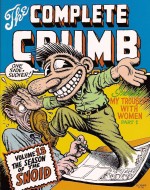
The Complete Crumb Comics volume 13: the Season of the Snoid


By Robert Crumb and others (Fantagraphics Books)
ISBN: 978-1-56097-296-9

Like crisps, chocolate and bad puns; once you get the taste of Robert Crumb on your palate, it’s almost impossible to shift the craving for more. Here’s another re-released edition from the superb and multi-award winning Complete Crumb Comics series that will tickle the bad-taste-buds of discerning comics cognoscenti and is bound to make a whole new generation of fans among the cool kids who will take my usual disclaimer in the full spirit which it is intended.

This book contains really clever and outrageously dirty pictures, rude words, non-condemnatory drug references and allusions, godless questioning of authority and brilliantly illustrated. highly moving personal accounts and opinions. If you – or those legally responsible for you – have a problem with that, please skip this review and don’t buy the book. That will certainly teach us…

Robert Crumb is a unique creative force in the world of comics and cartooning with as many detractors as devotees. His uncompromising, excoriating, neurotic introspections, his pictorial rants and invectives, unceasingly picked away at societal scabs and peeked behind forbidden curtains for his own benefit, but he has always happily shared his unwholesome discoveries with anybody who takes the time to look… In 1987 Fantagraphics Books began the nigh-impossible task of collating, collecting and publishing the chronological totality of the artist’s vast output and those mesmeric volumes are now being reissued.

The son of a career soldier, Robert Dennis Crumb was born in Philadelphia in 1943, into a functionally broken family. He was one of five kids who all found different ways to escape their parents’ highly volatile problems and comic strips were paramount among them.

As had his older brother Charles, Robert immersed himself in the comics and cartoons of the day; not just reading but creating his own. Harvey Kurtzman, Carl Barks and John Stanley were particularly influential, but also strip artists such as E.C. Segar, Gene Ahern, Rube Goldberg, Bud (Mutt and Jeff) Fisher, Billy (Barney Google), De Beck, George (Sad Sack) Baker and Sidney (The Gumps) Smith as well as illustrators like C.E. Brock and the wildly imaginative and surreal 1930’s Looney Tunes and Merrie Melodies animated shorts.

Defensive and introspective, young Robert pursued art and self-control through religion with equal desperation. His early spiritual repression and flagrant, hubristic celibacy warred with his body’s growing needs…

Escaping his stormy early life, he married young and began working in-house at the American Greeting Cards Company. He discovered like minds in the growing counterculture movement and discovered LSD. In 1967 Crumb relocated to California and became an early star of Underground Commix. As such he found plenty of willing hippie chicks to assuage his fevered mind and hormonal body whilst reinventing the very nature of cartooning with such creations as Mr. Natural, Fritz the Cat, Devil Girl and a host of others.

He worked on in what was essentially a creative utopia throughout the early 1970’s but the alternative lifestyle of the Underground was already dying. Soon it would disappear: dissipated, disillusioned, dropped back “in” or demised. A few truly dedicated publishers and artists stayed the course, publishing on a far more businesslike footing as Crumb carried on creating, splitting his time between personal material and commercial art projects whilst incessantly probing deeper into his turbulent inner world.

After an introduction from his brother Maxon Crumb, this re-issued 13th tome opens with ‘Treasure Island Days’ an autobiographical junket of the young Crumb boys from Lemme Outa Here in 1978, produced in collaboration with brother Charles, after which come the nigh-legendary pieces produced for CoEvolution Quarterly #23-26 in 1979-1980, still powerfully impressive after all these years.

The gently biting ‘A Short History of America’, the subversively salacious ‘Bearzie Wearzies’ as well as the stunning black, white and yellow covers to #24, the wildly manic ‘Bop It Out’ (with a canny cameo from the amazing “No-Shit Sherlock”) and the gloriously dry and acerbic fable ‘Adventures of Onionhead’, is followed by the first of a clutch of fabulous American Splendor collaborations with uniquely Ordinary Hero Harvey Pekar in ‘Excerpt’ (from Cleveland Magazine 1980). ‘Me and My Sweetie’ (Portfolio of Underground Art) and the superbly expressionistic cover to Tele Times (vol. 2 #21) end the initial black and white section of the book.

The middle section is full colour and comprises covers and album art; beginning with Bizarre Sex, #8, American Splendor #24 and Snoid Comics, before presenting the rarer (for comics readers at least) material: Blind Boy Fuller: Truckin’ My Blues Away, Banana in Your Fruit Basket, Cheap Suit Serenaders (Crumb’s own Swing nostalgia band), Cheap Suit Party Record, Memphis Jug Band, Yazoo’s History of Jazz, Wild Family Orchestra, a selection of record labels designed by Crumb and Eddie Lange: Jazz Guitar Virtuoso. In addition to these magical concoctions there are also four superb pages of Heroes of the Blues Trading Cards and an Early Jazz Greats poster ad.

The comics section resumes with Crumb’s crudest, most abrasive, confrontational and possibly most cathartic creation: an arrogant, abusive, sex-crazed little homunculus called Mr. Snoid.

Unpleasant and usually unwelcome, Snoid was utterly self-obsessed; a rampaging animate artistic impulse which nevertheless managed to sway or bully those around him into complying with whatever gratuitous flight of the Id he might contemplate or require instant gratification for…

Always his own harshest critic and ever-searching for artistic perfection, it was still hard for even his biggest fans to look at Crumb-the-creator in the same way after the Snoid hit town.

The character debuted in 1980 in – what else – Snoid Comics , grabbing the spotlight from panel one of ‘This Cartooning is Tricky Business’ before declaring his unpleasant manifesto and attitude on everything from art to women in ‘The Snoid Goes Bohemian.’ The most unsavoury origin in comics followed in ‘How Snoids are Born’ after which ‘One Foot to Heaven’ finds the little stinker looking for a little action and ‘Mr. Snoid Among His Fellow Humans’ gives a final insight into his obscenely unique philosophy of life.

As liberating, challenging and guiltily, wrongly funny as Snoid was, his creation – or perhaps escape – certainly reinvigorated Crumb creative juices, both as auteur and artistic collaborator.

‘Freddy Visits for the Weekend’ and the two strips that comprise ‘Vox Populi’ (drawn for Harvey Pekar’s American Splendor #5) resonate with new vehemence and understated tension, whilst the illustrations for Michael Bloomfield’s ‘Me and Big Joe’ from High Times #64 sparkle with affection and warmth.

‘Hospital Fun’ #1-2, scripted by Pekar, first appeared in Village Voice #25, after which Crumb’s next breakthrough series began in Zap #10, 1982, as the introspective, retrospective autobiographical ‘My Troubles With Women’ shockingly and hilariously opened more doors into Crumb’s troubled soul for us all to peer uncomfortably at…

This incautiously appealing edition ends with a selection of covers, ads and illustrations by Crumb from the ecologically proactive (we would now call it “Green”) Californian magazine Winds of Change (volume 2, #1-9 from 1980-1981) and includes articles by wife Aline Kominsky-Crumb and five of their collaborative strips ‘Everyday Funnies’ before this 13th chronicle closes with a typically effective (unpublished) book cover for ‘King of the Freaks’.

None of these collections is free of potentially offensive material and Crumb’s work is riddled with his often hard-to-embrace obsessive self-exploratory concerns. As always his work gouges out the creator’s most intimate and disturbing idiosyncrasies about women, sex, racial stereotypes, unchecked social change and a million other daily beefs and niggles. But there’s no disparagement intended or harm meant – except perhaps to himself – and his staggering honesty, incisive inquisitiveness and neurotic, intimate over-sharing is always leavened with a devastatingly ironic wit and rendered in imagery too powerful to ignore. Be warned but please don’t misunderstand what you’re looking at…

Crumb’s sublime cartooning has brought cachet and serious critical thought to our once ghettoised art form and, love or loathe him, no one can diminish his contribution to the broad world of graphic narrative. These superb books are the perfect introduction to any (definitively over 18) newcomers unaware of grown up comics… so if you are intrigued snatch up this book and all the others as soon as conceivably possible…

All material from American Splendor © 1980, 1998 Harvey Pekar & R.Crumb. All other material © 1976, 1978, 1979, 1980, 1981, 1998, 2011 R. Crumb. All rights reserved.

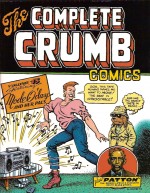
The Complete Crumb Comics volume 15: Featuring Mode O’Day and Her Pals


By Robert Crumb and others (Fantagraphics Books)
ISBN: 978-1-56097-413-0

Robert Crumb is a unique creative force in the world of comics and cartooning with as many foes as fans, but his idiosyncratic, unflinching, uncompromising, controversial and always bewitching work is impossible to ignore.

Therefore if intemperate language, putative blasphemy, artfully grotesque cartoon nudity, fetishism and comedic fornication are liable to upset you, stop reading this review and don’t buy the book. Stop reading now, check out an old, archived review instead or just come back tomorrow…

In 1987 Fantagraphics began the almost impossible task of collating, collecting and publishing the chronological totality of the artist’s output.

Son of a career soldier, Robert Dennis Crumb was born in Philadelphia in 1943 to a large and troubled family. After a tempestuous early life, he began working as an in-house art-drone at the American Greeting Cards Company and trading card giant Topps Publishing, married early and briefly before “dropping out” and joining the Counterculture movement, where he changed the nature of cartooning with such creations as Mr. Natural, Fritz the Cat, Devil Girl and a host of others.

Within a decade the explosively reactive underground movement was gone; dissipated, disillusioned, dropped back “in” or dead, with only a few notable independent and truly dedicated publishers staying the course. Always his own harshest critic and ever-searching for artistic perfection, in 1981 Crumb convinced Ron Turner of Last Gasp to publish a new anthology of underground/alternative/cutting edge commix in a new anthology.

Weirdo – with Crumb as editor and major contributor until 1983 when he handed over the editor’s role to his “discovery” Peter Bagge (who provides a fascinating introduction and overview for the tome under review here) – was, for many of us, the last bastion of a real gone world.

With the onus of deadlines and responsibility of magazine production removed Crumb resumed his quixotic search for artistic satisfaction…

Recently re-released, this 15th softcover volume (originally published in 2001) collects Crumb’s comic strips from Weirdo #9-15, assorted gags, private commissions, freelance illustration work, album covers and other pictorial ephemera plus strips from American Splendor and Zap Comix, covering the hedonistic, greed-soaked early 1980s which were such a painful anathema to someone of the Artist’s socialist/liberal leanings.

After Bagge’s aforementioned text recollections the graphic magic begins with the Crumb contributions in Weirdo #9 (Winter 1983-1984), a stunning and meticulous frontispiece, ‘Arline ‘n’ Bob and that Thing in the Back Bedroom’ – an autobiographical account of the “joys” of parenthood crafted in collaboration with second wife Aline Kominsky-Crumb plus the first snide and sardonic appearance of Reagan-era, appalling and avaricious anti-icon ‘Mode O’Day and Her Pals’ in a barbed observation of fame-hungry wannabes and the pathetic, empty gullibility of the nouveau-riche.

More of Mode (dabbling with the chic of being a benefactor and coffee-magnate of the so-troubled Nicaraguans) and nothing else appeared in Weirdo #10 in Summer 1984 whilst #11 featured a stark and salutary updating of an old favourite in ‘Goldilocks and the Three Bears’ and a magical selection of single panel cartoons declaring ‘Love’s Like That!’

Mode stalked and blagged her way into the good graces of an ugly plutocrat with her usual lack of success or happiness in #12, but Weirdo #13 (Summer 1985) was given over to Crumb’s stunning ‘Psychopathia Sexualis’ wherein the case histories of a number of “deviants” were brought to incredible grimy, sordid, evocative life as Crumb sampled the truly bizarre nature of humanity described by giant of psychology Richard Freiherr von Krafft–Ebing.

Issue #14 featured the far lighter and whimsically bombastic anti-pop (or is it simply anti-maximum decibels?) inquiry ‘Where Has It Gone, All the Beautiful Music of Our Grandparents?’ and the marvellously introspective yet light ‘Life Certainly Is Existential!’, whilst #15 opened with the surreal domesticity of ‘Comics from Other Planets Dept’, slipped comfortably into two pages of splendid ‘Gags’ and closed with a captivating ad parody.

The covers of Weirdo #9-15 (including a heartfelt ‘Parting Shot‘ at Ayn Rand), lead off the expansive central, full-colour section, which continues with record and book covers for The Klezmorim’s Streets of Gold, The Otis Brothers, Charles Bukowski’s Bring Me Your Love and There’s No Business Like Show Business, novel covers Texas Crude and The Monkey Wrench Gang; a Louis Bluie poster plus incidental illustrations and sticker art.

Back in black and white there’s a page of miscellaneous ads and illustrations from 1983, after which ‘Hypothetical Quandry’ (written by Harvey Pekar for his magnificent American Splendor on-going graphic autobiography: issue #9, if you’re keeping count) appears, showcasing Crumb’s far bolder and more liberated big-black-brush art style.

Crumb’s long creative association with author Charles Bukowski produced phenomenal results, and here, after a portrait of the writer and promotional art, follows a sequence of illustrations from Bring Me Your Love and There’s No Business Like Show Business, as well as Ken Weaver’s Texas Crude. More miscellaneous illustration art for Pepper & Stern Rare Books, The Magazine, Co-Education Quarterly and seven pages of vignettes and cameos from The Monkey Wrench Gang round out this section.

‘Constipated Chaos Consortium’ is a mind-bending jam-collaboration with fellow underground luminaries Spain Rodriguez, Bosirus Eerie, Victor Moscoso, S. Clay Wilson and Robert Williams and the first of three contributions to Zap #11 from 1985: the other two being ‘Jesus People USA’ (a hypothetical interview between a fundamentalist Christian reporter and ‘R. Crumb, Underground Pornographer and All-Around Lost Soul’) and the powerful and engaging biography of lost Blues legend (Charley) ‘Patton’.

This sublime – and key – transitional tome in the development of one of the art form’s greatest living proponents concludes with another section of miscellaneous illustrations including collaborations with wife and daughter Aline and Sophie and a poster with Dan O’Neill, Victor Moscoso and Bob Crabb.

As always this varied and impressive selection of Crumb’s craft is riddled with his often hard-to-embrace themes and emblematic declamatory and potentially offensive visual vocabulary: as always the work touches on the creator’s most intimate and disturbing idiosyncrasies regarding sex and women, both in the unsettling Abstract and the painful, side-splitting, lustful, painful and loving Concrete and, as always, the reader’s response can only be Love or Loathe…

Crumb’s subtle mastery of his art-form and obsessive need to reveal his most hidden depths and every perceived defect – in himself and the world around him – has always been a unquenchable wellspring of challenging comedy and riotous rumination. This superb series charting the perplexing pen-and-ink pilgrim’s progress is the perfect vehicle to introduce any (definitively over 18) newcomers of your acquaintance to the world of grown up comics. And if you need a way in yourself, snatch up this book and the other sixteen as soon as conceivably possible…

All material © 2011 R. Crumb and its respective owners or co-owners. All other material © 1978, 1979, 1981, 1982, 1983, 1984, 1985, 2001, 2011 R. Crumb. All rights reserved.