Tales Designed to Thrizzle volume two


By Michael Kupperman (Fantagraphics Books)
ISBN: 978-1-60699-615-7

Sometimes words mean nothing, pictures tell every story and stuff is funny just because it is. That pretty much sums up the work of absurdist Pop Culture Pirate comedy legend Michael Kupperman, whose graphic samplings of old comics, strips and magazines fill the pages of the too-infrequent comicbook Tales Designed to Thrizzle.

Kupperman is a cartoonist who clearly loves to draw and has no difficulty isolating the innate insanity of modern living as well as the way we regard our own past – especially the not-so-important bits – which he delivers in a surreal graphic deadpan style that would turn Buster Keaton grey with envy.

He created the strips Found in the Street and Up all Night, has worked for The New Yorker, Heavy Metal, The Wall Street Journal, The Independent on Sunday, LA Weekly, The New York Times, Libération, Fortune, Screw, Saturday Night Live and many similar reputable venues as well as in such comics as Hodags and Hodaddies, Hotwire, Snake Eyes, Zero Zero, Blood Orange and Legal Action Comics.

Kupperman’s first book Snake ‘n’ Bacon’s Cartoon Cabaret (2000) led to his breaking into the heady world of adult animation and he has been a much in-demand illustrator for other people’s book.

In 2011 he released the astoundingly madcap Mark Twain’s Autobiography: 1910-2010, but Tales Designed to Thrizzle has always been his most personal vehicle of expression, allowing him to play his abstractedly stylish mind-games against a dizzying cultural backdrop of Men’s “sweat mags”, True Confessions pulps, cheesy old comics, B-movies, cheap advertising, and a million other bastions of low-class Americana, all given a unique twist and spin by a man whose skull is clearly too small for his brain…

After far too long an interval, this second classy hardcover collects issues #5-8 in scintillating high-energy colour and opens with ‘Mandate the Magician’ learning a lesson in karmic humility, after which the hilarious cautionary tale of ‘Fart Boobs’ teaches us all why it’s unwise to mock an alien’s name, and a swift succession of short pithy strips introduce ‘Journey into Adventure’, ‘The Librarian in the Tuna Casserole’, ‘The Hoardy Boys’ and superstar team-in-waiting Twain & Einstein who realise ‘Good Grief! Still More Wuthering Heights’…

Many of the pages here are gloriously outré and absurdist graphic sight-gags: sham small ads and faux covers for comics and magazine which really shouldn’t be allowed: utterly daft delights such as ‘Remember the Past?’, ‘Ever-Approaching Grandpa’, ‘Sherlock Holmes versus Jungle Boy’, ‘Tales of the Intestinal Submarine’, ‘Johnny Exposition’ and ‘Show Me Your Weiner!’ but Kupperman is also a dab hand with words and typography as seen in his hilarious biography feature ‘Remember Them?’, the anti-melodic ‘Hum Along With your Grandkids’ and the Twain & Einstein prose vignettes ‘Albert Einstein’s Flashback Scheme’ and ‘Chasin’ the Dream’…

The pairing of the separated twins – at least as he draws them – clearly inspired Kupperman. After a succession of covers for Twain & Einstein comicbooks, the tale of ‘Mark Twain, Hollywood Detective’ pits the venerable satirist author and his pal the Father of Modern Physics against the seamy underworld of Tinseltown as both gumshoes and superheroes in a manic melange of genres and loving pastiche of the long-forgotten 1960s Archie superhero revival of Jerry Siegel & Paul Reinman…

Following an inappropriate letters page and ‘The Twain Files: 1975’, ‘Buzz Aldrin’s Strange Missions’ leads inevitably into ‘Real Old-Timey Horror’, with ‘Birth of the Monkees’ and EC homage ‘Legs to Die For!’ before exposing ‘Ben Franklin: Inventor of the Bar Code’.

‘The Odd Couple of Draculas’ holds some ‘Astonishing Heroes’, the saga of ‘Gladiator & Snivolus’ and ads for ‘Weird Sandwich Magazine’ whilst the astonishing extended epic of ‘Jungle Princess’ reveals how one could balance being a White Goddess with editing a high class fashion mag, and ‘Willie Wealth – the Rich Little Rich Boy’ learns to his cost that money isn’t everything – like proteinaceous for example – before ‘All About Drainage’ takes the lid off the ultra-sexy and glamorous sewage biz…

After discovering ‘Books are Stupid’ and that ‘Women Love Men in an Apiary Hat’ the Twain & Einstein movie ‘So Boldly We Dare’ is adapted into wholesome picture form, after which ‘Cowboy Oscar Wilde’ and some important supernatural commercial messages lead to the public service announcement ‘Old People! You need Insurance!’

Cute ‘Mr. Flopears’ and his little hostage situation segues seamlessly into ‘The Ghost’ and ‘Wonder Book Junior’s “Ride of a Lifetime”’, before ‘Scary Bathtub Stories’ discloses the horrific tale of the ‘Bath of Death’ and the wondrous wares of ‘Hubert’s Shower World’, but the real thrills only arrive with the “Bell Comics” reprint of ‘Quincy, M.E.’ – including the martial arts secrets of ‘Catare’ – which crosses over (literally) into two-fisted ‘Saint Peter Comics’…

Kupperman even dabbles in fumetti strips such as his photo ad for ‘Quincy’s Box of Things You Can Shout’, nicely breaking up the surrealist flow before the coroner and the first Pope slip into movie madness with ‘Quinception’ and ‘Reservoir Dogs 2 – featuring Snake ‘n’ Bacon’ and another fumetti interlude ‘A Voyage to Narnia’…

‘The Hamanimal’ almost brought low a prominent citizen even as crime dog ‘McArf’ stood resolute against all scum and Twain & Einstein faced shocking revelations in ‘Family Affairs’ before more Quincy, old Saint Peter, Air War Stories and Hunchback & the Hydrant covers give way to ‘Gordon Ramsay’s Fairy Tale Toilet Kitchen Nightmares’, even more outrageous covers and the tales of ‘Buddy Baker in the 25th Century’, ‘Billy & the Giant Gangster’ and ‘McGritte, the Surrealist Crime Dog’.

Just for fun you can enjoy a capacious section of ‘Red Warren’s Train & Bus Coloring Book’ (not recommended for the faint-hearted, weak-stomached or rationality-challenged) whilst ‘Murder, She Goat’ deals with the quite understandable concerns of stock characters when crime novelist Jessica Fetcher comes to town, after which a concerned stylist asks ‘Do You Have Thin, Wispy Pubic Hair?’ and we learn all about ‘Great Men of History: Bertrand Copillon, AKA “The Scythe”’.

As our inevitable climax nears, we learn more secret history in ‘Moon 69: The True Story of the 1969 Moon Launch’ – with crucial testimony from President Nixon, Aldrin & Armstrong, reporters Woodward & Bernstein, Quincy and Lieutenant Columbo – before more unseemly ads and one final appearance of Twain & Einstein in ‘Homework? No Work’ brings everything to an irresponsible close.

Also containing loads more stuff I’m too nice to spoil for you and too nervous to mention in even digital print, this implausible challenging and deliciously demented box of screwy surprises is an absolute panacea for all real life’s sundry woes and downers: brash, challenging, brilliantly imaginative and always funny.

This is a book for every grown-up, occasionally immature, couch-based life-form in need of a hearty guffaw every now and then – but much more now than then…
All characters, stories and artwork © 2012 Michael Kupperman. All rights reserved.
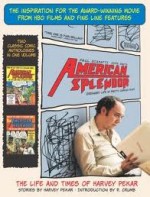

American Splendor: The Life and Times of Harvey Pekar – New Revised Review


By Harvey Pekar, R. Crumb, Gregory Budgett, Gary Dumm, Gerry Shamray,
Kevin Brown, Susan Cavey & Val Mayerik
(Ballantine Books)
ISBN: 978-1-84023-787-0

Before finding relative fame in the 21st century, Harvey Pekar occupied that ghastly niche so good at trapping the truly creative individual: Lots and lots of critical acclaim, and an occasional heart-breakingly close brush with super-stardom, without ever actually getting enough ahead to feel secure or appreciated.

One of those aforementioned brushes came in 1980s with the release of a couple of compilations of selected strips by mainstream publisher Doubleday that even to this day are some of his most powerful, honest and rewarding “literary comics” ever seen. By mercilessly haranguing, begging and even paying (out of his meagre civil service wages and occasional wheeler-deal) any artists who met his exacting intellectual standards, Pekar all but created the comics genre of autobiographical, existentially questing, slice-of-life graphic narratives whilst eking out a mostly lonely, hand-to-mouth existence in Cleveland, Ohio.

How the irascible, opinionated, objectionable, self-educated music-mad working stiff came to use the admittedly (then) impoverished comicbook medium to make a fiercely vital social commentary on American life of the ordinary Joe is a magical journey in the plebeian far better read than read about, but I’m going to have a crack at convincing any holdouts anyway.

Moreover, by the time you’ve seen this I’m already on to my next crusade…

This compendium combines and re-releases those seminal tomes in one big, bold edition and was released to tie-in with the award-winning 2003 indie film biography American Splendor, and opens with the superb contents of the 1985 release American Splendor: the Life and Times of Harvey Pekar, beginning by reproducing the introduction by early collaborator and modern Media Darling Robert Crumb before proceeding with a seductive welter of elegiac, confrontational, compulsive, challenging, painfully frank and distressingly honest observations that collectively changed the way English language comics were perceived, received and even created.

Rendered by Crumb, the excoriating graphic self-analysis begins with ‘The Harvey Pekar Name Story’ as the obsessive yet passive hunt for other people with the same name briefly gripped the self-confessed compulsive personality, whilst ‘The Young Crumb Story’ gave us Pekar’s take on the cartooning career of his collaborator, after which ‘A Fantasy’ again revisited the artist’s relationship with the writer: Pekar uncomfortably bragging over how he had browbeaten and gulled Crumb into drawing his scripts – and still was…

Gary Dumm illustrated the bizarre ‘Ozzie Nelson’s Open Letter to Crumb’ (written in 1972) describing the faded TV celebrity’s snotty pep talk to the cartooning degenerate, after which Crumb returned to deliver self-abusive insight as Pekar revealed ‘How I Quit Collecting Records – and Put Out a Comic Book with the Money I Saved’.

Greg Budgett & Dumm handled many of the most searingly honest introspectives such as ‘The Day Before the Be In’, the equally forthright and painful personal history sequels ‘Awakening to the Terror of the New Day’ and ‘Awakening to the Terror of the Same Old Day’ or the nigh-spiritual rationalisations of ‘Short Weekend – a Short Story About the Cosmic and the Ordinary’…

One of the most impressive facets of Pekar’s tales is the uncompromising depiction of the people he encountered in work or socially (if such a term can apply to such a self-admitted “judgemental jerk”) and the frankly brutal way he attempts to keep narrative polish out of his graphic reportage.

Incidents such as ‘A Compliment’ or ‘Jivin’ With Jack the Bellboy as he Goes About… Hustlin’ Sides’ and ‘Jack the Bellboy and Mr. Boats’ – all illustrated by Crumb – recount episodes with co-workers undistinguished, unremarkable and free of all dramatic embellishment or grace-saving charisma… but they are intoxicatingly real and appealing.

‘Read This’ (Budgett & Dumm) tells how even cynics can be surprised by people, whilst the Crumb-illustrated ‘Standing Behind Old Jewish Ladies in Supermarket Lines’ is as gently hilarious as their ‘Ridin’ the Dog’ vignette of cross-country bus travel is contemplatively reassuring.

Innovative Gerry Shamray tackled the wordy self-examination of life’s pointless frustrations in ‘An Argument at Work’ and the cathartic ‘Working Man’s Nightmare’ with aplomb and smart sensitivity, before Crumb resurfaced to draw an incredible familiar and unwelcome situation as the obnoxious ‘Freddy Visits for the Week End’. Regrettably we all have friends like him…

Pekar’s disastrous history with women was a frequent theme and ‘Ripoff Chick’ (by Budgett & Dumm again) showed why and how. The only difference between the author and most men was that he admitted up front that he wanted sex without complications or commitment…

‘One Good Turn Deserves Another’ (Shamray) invites us to share a typically penny-pinching secret, before Dumm tackled a quirky friendship and the perils of well-intentioned matchmaking in ‘Leonard & Marie’, and ordinary folk got tied up discussing theology and politics in Shamray’s wryly related ‘Noah’s Ark’. The artist then effectively encapsulated ‘Class Antagonism’ before Jewish intellectual Pekar again examined his ethnic and cultural roots by revisiting his relationship with Old World Hebrew ‘Emil’ (Dumm & Budgett) and the danger of first-hand accounts in the Crumb-illustrated ‘The Maggies (Oral History)’ and Shamray’s death-camp memoir ‘Kaparra’…

Crumb then turned in his most claustrophobic and impassioned drawing for the vibrant manifesto ‘American Splendor Assaults the Media’ after which the immensely stylish Kevin Brown limned a tale of frustrated selling out as Harvey attempted to schmooze up-and-coming movie star Wallace Shawn ‘Grubstreet, USA’, after which the first volume ended on a high of sorts with Pekar via Crumb temporarily resolving a ‘Hypothetical Quandary’.

The philosophising, reminiscing, ruminating, observing, eulogizing, questioning and fictively projecting promptly continues in From the Streets of Cleveland Comes… American Splendor: the Life and Times of Harvey Pekar, resuming the painfully honest – and to us here and now perhaps often unsettling and disquieting – accounts of normal lives with the Crumb-crafted classics ‘Pickled Okra (Okry)’, ‘Lunch with Carmella’, ‘Rollins on Time’ and ‘Visualize, Actualize, Realize’ – all containing commonplace friendly interactions with Pekar’s African-American co-workers that would make many genteel folk wince today…

A prospective hot date turned into a gruelling and pointless exercise in furniture moving in the Budgett & Dumm saga ‘Guerrilla Theatre: July ’74 – on the Corner’ with a punch-line not apparent until their ‘On the Corner… a Sequel: June 1976’, after which inker turned illustrator to relate the nostalgic revelations of young lust in the 1950s on the ‘Roller Coaster to Nowhere’, but some measure of cosmic karma was achieved decades later when Pekar finally achieve his  childhood goal of owning ultra-hip and so, so cool ‘Stetson Shoes’…

‘Mrs. Roosevelt and the Young Queen of Greece’ and ‘Busman’s Holiday’ by Dumm & Budgett celebrate the simple joy of guys simply sitting around shooting the breeze, whilst Crumb’s delicious treatment of Pekar’s love for old fashioned Jewish kvetching makes ‘Miracle Rabbis – a Dr. Gesundheit Story’ a minor masterpiece of comics.

‘An Everyday Horror Story’ (Shamray) then recaptures the tension and terror of Pekar’s first brush with serious illness – or so the author thought.

Always a healthy, vigorous but exceptionally excitable shouty man, Pekar got properly sick for the first time in his life and faced the very real prospect of never being able to speak again. This exceedingly gripping account perfectly presents all the fear, frustration, metaphysical pleading and moving emotional and practical support Harvey’s friends and then wife provided – and what happened next…

‘Alice Quinn’ drawn by S. (Susan) Cavey then detailed a portentous meeting with the girl who got away before Shamray’s powerfully captivating ‘I’ll be Forty Three on Friday (How I’m Living Now)’ offers a rare moment of optimistic clarity, and Cavey’s ‘Jury Duty’ shows how even the most earnest hopes and honest ambitions can worry the bejeezus out of “normal” folks…

For most of his life Pekar was that rarest of creatures – an un-typical American who chose not to drive (for good, sound and to my mind admirable reasons). Thus he often spent time cadging lifts and fretting about the etiquette of returning favours to his civilian chauffeurs. In ‘A Ride Home’ (Cavey) the impatience and anxiety grew momentarily too much, whilst in Dumm’s ‘Free Ride’ a long-standing arrangement with a previously admired old Jewish guy escalated into something ferociously passive-aggressive, quite strange and impossibly worrisome…

The same traumas afflicted Pekar when he foolishly bought his ex- wife’s automobile only to find it a cursed Jonah, which plagued him for many snowbound months in ‘Old Cars and Winter’ by Cavey. The superb and vastly underrated Val Mayerik joined the select band of artistic collaborators with the gloriously uplifting ‘A Marriage Album’, depicting life with beloved third wife with Joyce Brabner, and explored Pekar’s wild street-fighting juvenile days and later proclivities in ‘Violence’, whilst ‘History Repeats Itself’ offered a moment of resigned contemplation over teen spirits courtesy of Seán Carroll.

Mayerik contributed a final brace of gently contemplative pieces beginning with ‘A Matter of Life and…’ which saw an older, calmer author recap his life with a little more kindness than ever before, whilst an uneventful bus ride found Pekar gleaning a wealth of down-home ‘Common Sense’ from a voluble instructor driver before this masterful meander through a truly unique mind concludes with Crumb and the perfect solution to life’s ills with ‘Mr. Boats’ Miracle Cure’…

With art by individualistic collaborators who were never content to stay in their Comfort Zones but always endeavoured to make their contributions unique unto the story, and selected from a most adventurous and historically creative decade, these tales of working life, self-esteem, achievement, failure, religion, the media, Nazi atrocity, guilt, acceptable bigotry, proudly defended ignorance, friendship, aloofness and the art of understanding women are timeless slices of life’s dreary brilliance.

As a man who constantly assessed and re-examined his own creative worth and self, Harvey Pekar opened up his life to the world and changed it by being ordinary and average.

…Except he never was, as this superb insight into the mind and heart of a truly original comics creator will attest. This splendid, engrossing book offers readers a chance to see the humour, confusion and frustration of being an American thinker in a world that simply doesn’t value brains and spirit anymore – and I fear that’s going to be one of humanity’s eternal verities…

© 1976-1986, 2004 Harvey Pekar, LLC. All Rights Reserved.

Pogo: the Complete Syndicated Comic Strips volume 2: Bona Fide Balderdash


By Walt Kelly, edited by Carolyn Kelly (Fantagraphics Books)
ISBN: 978-1-60699-584-6

Tragically this review copy didn’t reach me in time for a Christmas recommendation, but that’s okay as books of this calibre are worth buying and reading at every moment of every day, and rather than waste your valuable time with my purely extraneous blather, you should just hit the shops or the online emporia of your choice and grab this terrific tome now…

If you still need more though, and aren’t put off by me yet, I’m happy to elucidate at some length…

Walter Crawford Kelly Jr. was born in 1913 and started his cartooning career whilst still in High School, as artist and reporter for the Bridgeport Post. In 1935, he moved to California and joined the Disney Studio, working on short cartoon films and such features as Dumbo, Fantasia and Pinocchio until the infamous animator’s strike in 1941.

Refusing to take sides, Kelly moved back East and into comicbooks – primarily for Dell who held the Disney funnybook license amongst others at that time.

Despite his glorious work on such popular people-based classics as the Our Gang movie spin-off, Kelly preferred and particularly excelled with anthropomorphic animal and children’s fantasy material. For the December 1942-released Animal Comics #1 he created Albert the Alligator and Pogo Possum, wisely retaining the copyrights in the ongoing saga of two affable Bayou critters and their young African-American pal Bumbazine. Although the black kid soon disappeared, the animal actors stayed on as stars until 1948 when Kelly moved into journalism, becoming art editor and cartoonist for hard hitting, left-leaning liberal newspaper The New York Star.

On October 4th 1948, Pogo, Albert and an ever-expanding cast of gloriously addictive characters began their funny pages careers, appearing in the paper six days a week until the periodical folded in January 1949.

Although ostensibly a gently humorous kids feature, by the end of its run (reprinted in full at the back of Pogo: the Complete Syndicated Comic Strips volume 1) the first glimmers of the increasingly barbed, boldly satirical masterpiece of velvet-pawed social commentary began to emerge…

When The Star closed Pogo was picked up for mass distribution by the Post-Hall Syndicate and launched on May 16th 1949 in selected outlets. A colour Sunday page debuted January 29th 1950 and both were produced simultaneously by Kelly until his death in 1973 (and even beyond, courtesy of his talented wife and family).

At its height the strip appeared in 500 papers throughout 14 countries and the book collections – which began in 1951 – eventually numbered nearly 50, collectively selling over 30 million copies, and all that before this Fantagraphics series began…

In this second of a proposed full dozen volumes reprinting the entire canon of the Okefenokee Swamp citizenry, possibly the main aspect of interest is the personable Possum’s first innocently adorable attempts to run for Public Office – a ritual which inevitably and coincidentally reoccurred every four years whenever the merely human inhabitants of America got together for raucous caucuses and exuberant electioneering – but it’s also remarkable to note that by the close of this two-year period Kelly had increased his count of uniquely Vaudevillian returning characters to over one hundred. The likes of Solid MacHogany, Tammanany Tiger, Willow McWisper, Goldie Lox, Sarcophagus MacAbre, the sloganeering P.T. Bridgeport, bull moose Uncle Antler and a trio of brilliantly scene-stealing bats named Bewitched, Bothered and Bemildred, amongst so many others would pop up with varying frequency and impact over the next twenty years…

This colossal and comfortingly sturdy landscape compilation (three-hundred-and fifty-six 184x267mm pages) includes the monochrome Dailies from January 1st 1951 to December 31st 1952, and the Sundays – in their own full-colour section – from January 7th 1951 to December 28th 1952 – all faithfully annotated and listed in a copious, expansive and informative Table of Contents. Supplemental features comprise a Foreword from pioneering comedy legend Stan Freberg, delightful unpublished illustrations and working drawings by Kelly, more invaluable context and historical notes in the amazing R.C. Harvey’s ‘Swamp Talk’ by and a biographical feature ‘About Walt Kelly’ by Mark Evanier.

In his time the satirical mastermind unleashed his bestial spokes-cast on such innocent, innocuous sweethearts as Senator Joe McCarthy, J.Edgar Hoover, the John Birch Society, Richard Nixon and the Ku Klux Clan, as well as the likes of Hubert Humphrey, Lyndon B. Johnson and – with eerie perspicacity – George W. Romney, U.S. Secretary of Housing and Urban Development, Governor of Michigan and Pa of some guy named Mitt…

This particular monument to madcap mirth and sublime drollery of course includes the usual cast: gently bemused Pogo, boisterous, happily ignorant alligator Albert, dolorous Porkypine, obnoxious turtle Churchy La Femme, lugubrious hound Beauregard Bugleboy, carpet-bagging Seminole Sam Fox, pompous (doesn’t) know-it-all Howland Owl and all the rest, covering not only day to day topics and travails like love, marriage, weather, fishing, the problem with kids, the innocent joys of sport, making a living and why neighbours shouldn’t eat each other, but also includes epic sagas: the stress of Poetry Contests, hunting – from a variety of  points of view – Christmas and other Public Holidays, incipient invasion, war and even cross-dressing to name but a few…

As Kelly spent a good deal of 1952 spoofing the electoral race, this tome offers a magical, magnificent treatment of all the problems associated with grass (and moss) roots politics: dubious campaign tactics, loony lobbying, fun with photo ops, impractical tactical alliances, glad-handing, a proliferation of political promos and ephemera, how to build clockwork voters – and candidates – and of course, life after a failed run for the Presidency…

As the delicious Miz Ma’m’selle Hepzibah would no doubt say: plus ça change, plus c’est la même chose…

Kelly’s uncontested genius lay in his seemingly effortless ability to lyrically, vivaciously portray through anthropomorphic affectation comedic, tragic, pompous, infinitely sympathetic characters of any shape or breed, all whilst making them undeniably human, and he used that gift to blend hard-hitting observation of our crimes, foibles and peccadilloes with rampaging whimsy, poesy and sheer exuberant joie de vivre.

The hairy, scaly, feathered slimy folk of the surreal swamp lands are, of course, inescapably us, elevated by burlesque, slapstick, absurdism and all the glorious joys of wordplay from puns to malapropisms to raucous accent humour into a multi-layered hodgepodge of all-ages delight – and we’ve never looked or behaved better…

This stuff will certainly make you laugh; it will probably provoke a sentimental tear or ten and will certainly satisfy your every entertainment requirement. Timeless and magical, Pogo is a giant not simply of comics, but of world literature and this magnificent second edition should be the pride of every home’s bookshelf, right beside the first one.

…Or, in the popular campaign parlance of the critters involved: “I Go Pogo!” and so should you.

POGO Bona Fide Balderdash and all POGO images, including Walt Kelly’s signature © 2012 Okefenokee Glee & Perloo Inc. All other material © 2012 the respective creator and owner. All rights reserved.

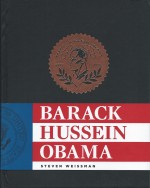
Barack Hussein Obama


By Steven Weissman (Fantagraphics Books International)
ISBN: 978-1-60699-623-2

Steven Weissman was born in California in 1968 and grew up to be an exceptionally fine and imaginative cartoonist. He has worked for Alternative Comics, Last Gasp, Dark Horse, Marvel, DC, Vice and Nickelodeon Magazine among others, and his artistic sensibilities have been influenced and shaped by such disparate forces as Super-Deformed manga, “Our Gang” comedies, Abbott and Costello, Dan Clowes, Mike Allred and Peanuts – the strip, not the foodstuff.

Much of his groundbreaking, award-winning early work, dating from the mid-1990s, offered a post-modern, skewed and alternative view of friendship, childhood, world weirdness and people’s meanness and can all be enjoyed over and over again in such stunning compilations as Tykes, Yikes!, Lemon Kids, Don’t Call Me Stupid, Mean, Chewing Gum in Church, White Flower Day, Chocolate Cheeks and others. The French and Japanese – who really know quality comics – love him lots.

In 2012 Weissman literally went back to the drawing board, un-and-recreating himself and his aesthetic methodology for a weekly online strip entitled Barack Hussein Obama which has since been collected into a stunning and unbelievably enchanting hardcover cartoon book about the unsuspected nature of modern America.

Spiky, acerbic, tellingly mundane and captivatingly absurdist, it follows the day to day tribulations of this ordinary shmoe who just happens to be the President of the USA as he distractedly fails to deal with that persistently annoying old Joe Biden guy, the pushy, overly excitable Rodham Clinton dame and that obnoxious oaf Newt all whilst trying to placate his testily disappointed wife and their terminally trendy kids Malia and Sasha.

It’s a full, if confusing life, always filled with minor crises. When he’s not being accidentally racist at Press Conferences or making jokes journalists don’t get, Barack is happily sharing old family recipes or chatting with foreign dignitaries he can’t understand, even if Joe is always butting in, telling him off and acting hurt whilst the Secret Service guy is constantly hanging around looking mean…

…And then there’s that bad-tempered Clinton lady sneaking off to get cosy with sex-bomb Muammar el-Qaddafi, the recurring stiff-necked, stuck-up ghost of long-dead President James Garfield peddling advice, the ongoing hunt for Osama Bin Laden and the old lady who managed to steal Barack’s identity and bought all that pet food and piano lessons…

No wonder the President needs to occasionally slip away now and then to get totally baked…

All in all though Barack thought it was going pretty well until the bird started talking to him. It wasn’t long before Mr. President transformed into a gigantic parakeet on Air-force One and headed for the peacefully deep blue skies…

With guest appearances – sort of – by Truman Capote, Nicholas Sarközy, Alfred E. Neuman, The Punisher’s War Journal and more, this is a look inside the Oval Office like none you’ve ever seen, but no matter how much Tea Party Republicans would like it to be, it certainly isn’t another searing expose of dubious shenanigans from the pretender to a stolen throne.

It is, though, a generous, gentle and spectacularly surreal trip into the head of a very special and oddly observant US citizen who has creatively concocted a world that all rulers and/or prospective despots should visit at least once.

This isn’t the real Obama, but it might well be the one the average American deserves…

A lot of very smart people are saying a lot of very deep, very clever and appreciative things about this deliciously winning book, so I won’t waste my time competing with them. I will however tell you that Barack Hussein Obama is one of the most enticing, intriguing and sheerly delightful reads of the last year and anybody with half a brain – or even more: more is always better – would be crazy not to pick up a copy.

© 2012 Steven Weissman. All rights reserved.

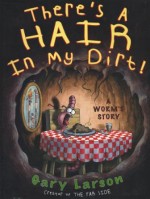
There’s a HAIR in My Dirt! – A Worm’s Story


By Gary Larson, coloured by Nick Bell of Wildstorm Productions (Little, Brown and Co/HarperCollins)
ISBNs: 978-0-31664-519-5 (HC)       978-0060932749 (PB)

We may not be rocket scientists but all cartoonists tend to lurk at the sharp end of the IQ bell curve – and then there’s Gary Larson. He could be a rocket scientist if he wanted to. Happily though, his inclinations tend towards natural history and the Life Sciences.

And making people laugh in a truthful, thinking kind of way…

Larson was born in 1950 and raised in WashingtonState. After school and college (also WashingtonStatewhere he got a degree in communications) he bummed around and got a job in a music store – which he hated. During a self-imposed sabbatical he evolved into a cartoonist by submitting to Pacific Search (now Pacific Northwest Magazine) in Seattle who promptly astonished him by accepting and paying for his six drawings. Bemused and emboldened Larson kept on doodling and in 1979 The Seattle Times began publishing his strip Nature’s Way. When The San Francisco Chronicle picked up the gag feature they renamed it The Far Side…

From 1980 on the Chronicle Syndicate peddled the strip with huge success. The Far Side became a global phenomenon and Larson’s bizarre, skewed and bitingly surreal strip starring nature Smug in Tooth and Claw almost took over the world. With 23 collections (over 45 million copies sold), two animated movies, calendars, greetings cards and assorted merchandise seemingly everywhere, the smartypants scribbler was at the top of his game when he retired the feature on January 1st 1995.

After fifteen years at the top, Larson wanted to quit while he was ahead. He still did the occasional promo piece or illustration but increasingly devoted his time to ecological causes and charities such as Conservation International. He still does.

Of course he couldn’t stop drawing or thinking or, indeed, teaching and in 1998 created the stunningly smart and cool children’s book for concerned and nervous adults under the microscope here.

There’s a HAIR in My Dirt! brilliantly, mordantly tells a parable within a fable and serves up a marvellously meaningful message for us to absorb and ingest whilst simultaneously making us laugh like loons and worry like warts.

One day underground a little worm having dinner with his folks finds something unnatural and icky in his meal and starts bemoaning the lowly status and general crappiness of his annelidic existence (look it up, I’m showing off and making a comedic point too…). To counter this outburst of whingeing Father Worm offers a salutary tale to put things into their proper perspective…

Thus begins the tragic tale of Harriet, a beautiful human maiden living – she believed – at one with world in the woods, enraptured with the bountiful Magic of Nature and of one particular frolicsome day encountering cute squirrels, lovely flowers, icky bugs, happy birds, playful deer, tortoises and every kind of creature… and completely missing the point about all of them…

Masquerading as an acerbic faux fairytale teller, Larson delivers an astoundingly astute and unforgettable ecology lesson equally effective in educating young and old alike about Nature’s true nature – and yet still miraculous wonders – all whilst maintaining a monolithic amount of outrageous comic hilarity.

This sublime illustrated yarn became a New York Times Best Seller on its release and still serves as a fabulous reminder of what really clever people can achieve even if they don’t do rocket science…

Seriously though: There’s a HAIR in My Dirt! is one of the smartest, funniest and most enticingly educational kid’s book ever created and should be on every school curriculum. Since it isn’t, perhaps it’s best if you picked one up for the house…?
© 1998 FarWorks, Inc. All rights reserved.

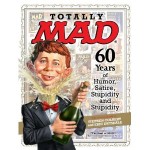
Totally Mad – 60 Years of Humour, Satire, Stupidity and Stupidity


By “The Usual Gang of Idiots” & edited by John Ficarra (Time Home Entertainment)
ISBN: 978-1-61893-030-9

Win’s Christmas Gift Recommendation: a truly timeless tome bringing back a golden age of laughter – no matter how young you are… 10/10

EC Comics began in 1944 when comicbook pioneer Max Gaines sold the superhero properties of his All-American Comics company to half-sister National/DC, retaining only Picture Stories from the Bible. His plan was to produce a line of Educational Comics with schools and church groups as the major target market.

Gaines augmented this core title with Picture Stories from American History, Picture Stories from Science and Picture Stories from World History, but the so-worthy notion was already struggling when he died in a boating accident in 1947.

With disaster looming, his son William was dragged into the family business and with much support and encouragement from unsung hero Sol Cohen – who held the company together until the initially unwilling Bill Gaines abandoned his dreams of a career in chemistry – transformed the ailing enterprise into Entertaining Comics…

After a few tentative false starts and abortive experiments, Gaines and his multi-talented associate Al Feldstein settled into a bold, fresh publishing strategy, utilising the most gifted illustrators in the field to tell a “New Trend” of stories aimed at an older and more discerning readership.

From 1950 to 1954 EC was the most innovative and influential publisher in America, dominating the genres of crime, horror, war and science fiction, spawning a host of cash-in imitations and, under the auspices of writer, artist and editor Harvey Kurtzman, the inventor of an entirely new beast: the satirical comicbook…

Mad also inspired dozens of knock-offs and even a controversial sister publication, Panic.

Kurtzman was a cartoon genius and probably the most important cartoonist of the last half of the 20th century. His early triumphs in the fledgling field of comicbooks (Mad, Two-Fisted Tales, Frontline Combat) would be enough for most creators to lean back on, but Kurtzman was a force in newspaper strips (See Flash Gordon Complete Daily Strips 1951-1953) and a restless innovator, a commentator and social explorer who kept on looking at folk and their doings: a man with exacting standards who just couldn’t stop creating.

He invented a whole new format and gave the USA Populist Satire when he transformed his highly successful full-colour comicbook baby Mad into a mainstream monochrome magazine, safely distancing the outrageously comedic publication from fall-out caused by the 1950s socio-political witch-hunt which eventually killed all EC’s other titles, and bringing the now more socially acceptable publication to a far wider, broader audience.

He pursued his unique brand of thoughtfully outré comedy and social satire with the magazines Trump, Humbug and Help!, all the while conceiving challenging and powerfully effective humour strips such as Little Annie Fannie (for Playboy), The Jungle Book, Nutz, Goodman Beaver, and Betsy and her Buddies. Seemingly tireless, he also inspired the next generation through his creations on Sesame Street and with his teaching of cartooning at the School of Visual Arts in New York. He died far too early in 1993.

…And he was just one of the astonishingly gifted creators who have turned Mad into a staggeringly influential cultural phenomenon and global brand in the intervening years…

Just in time to be an ideal gift, and celebrating the history and progress of an institution we all grew up with if not in, Totally Mad reviews the rise and rise of the magazine with tantalising snippets of gags and features accompanied by great big buckets of captivating excerpts and illustrations from the many brilliant creators who have contributed to its success.

Be Warned: this is not a “best of” collection – it would be impossible to choose, and besides there are hundreds of reprint book compilations and websites for that. This is a celebration of past and present glories and a compulsive taster for further exploration, but with very few complete stories…

At 256 pages this huge (312x235mm) and luxurious compendium includes historical articles, hundreds of pages of amazingly funny art and cleverly barbed observations, divided by decades and augmented by hundreds of full-colour, iconic cover reproductions, referencing favourite features such as Spy vs Spy (both by originator Antonio Prohias and successor Peter Kuper), Mad Fold-Ins, Al Jaffee’s ‘Scenes We’d Like to See’, Dave Berg’s ‘The Lighter Side of…’, ‘Snappy Answers to Stupid Questions’, ‘Mad Mini-Posters’, whilst Film and TV parodies include ‘Gunsmoked’, ‘My Fair Ad-Man’, ‘East Side Story’, ‘Flawrence of Arabia’, ‘Star Blecch’, ‘Jaw’d’, ‘Saturday Night Feeble’, ‘LA Lewd’, ‘Dorky Dancing’, and assorted mega-movie franchises ad infinitum…

Whatever your period, and whichever is your most dearly revered, it’s probably sampled here…

Following an eccentric and loving Introduction from Stephen Colbert and Eric Drysdale -illustrated by Sam Viviano – veteran contributor Frank Jacobs provides a photo-packed profile of the magazine’s unique father-figure by asking – and answering – ‘Who Was Bill Gaines?’ after which ‘Mad in the 1950s’ recalls the Kurtzman era with brightly hued extracts from giant ape spoof ‘Ping Pong!’, ‘Superduperman!’, ‘Lone Stranger Rides Again!’, ‘Sound Effects!’, ‘Melvin of the Apes!’, ‘Mad Reader!’, ‘Bringing Back Father!’ and ‘Starchie’, highlighting the talents of Will Elder, Wallace Wood, Jack Davis, John Severin, Basil Wolverton & Bernie Krigstein, before moving into the magazine phase by spoofing advertising and popular pastimes with ‘Readers Disgust’, ‘What Makes a Glass of Beer Taste so Good?’ and more.

Arch-caricaturist Mort Drucker began his stellar run at this time as did the mildly maniacal Don Martin, whilst proven comics masters Joe Orlando, Wood, Davis and George Woodbridge reached astonishing peaks of artistic excellence with a parade of stunning covers and end-pages by Kurtzman, Kelly Freas, Norman Mingo and others proving as effective now as in your granddad’s day…

In ‘Who is Alfred E. Neuman?’, Jacobs recounts the twisted and turbulent origins of the magazine’s iconic gap-toothed-idiot mascot after which ‘Mad in the 1960s’ highlights the rise of Television and the counter-culture whilst ‘Was Mad Ever Sued?’ finds Jacobs  testifying to some truly daft and troubling moments in the mag’s life…

Some of the very best bits of ‘Mad in the 1970s’ is followed by the conclusion of ‘Who Was Bill Gaines?’ after which Davis, Dick DeBartolo & Jacobs’ legendary ‘Raiders of the Lost Art’ skit opens ‘Mad in the 1980s’ as patriotism, movie blockbusters, Hip-hop and computer games seized the public’s collective imagination…

‘What Were the Mad Trips?’ explores a grand tradition of company holidays, after which the transitional years of ‘Mad in the 1990s’ covers Rap music, the rise of celeb culture and the magazine’s forays into a rapidly changing world. This is followed by ‘Mad After Gaines’ which details the internal adjustments that took place following the death of the hands-on, larger-than life publisher in 1992 whilst ‘Mad in the 2000s’ details the brand’s shift into the digital world, with exemplars from creators old and new spoofing medicines, newspaper strips, elections, dead phrases, celebrity causes, religion, cell-phones, man-boobs, war in Iraq, Obesity, satirical rival ‘The Bunion’, contemporary Racism and media sensations Donald  Trump, whilst parodies included ‘Bored of the Rings’, ‘Sluts in the City’, ‘Spider-Sham’, and so much more…

Current editor John Ficarra provides a suitable Afterword and this magnificent tome also includes a poster pack of a dozen of the very best covers from Mad’s epochal run.

Most of you can happily stop now, but if you’re into shopping lists here’s just a small portion of the other contributing “idiots” who have madr the magazine a national institution… like graft and pimples:

Sergio Aragonés is represented throughout with his Mad Marginals as well as many masterful cartoons and pastiches, and writers include Vic Cohen, Tom Koch, Larry Siegel, Nick Meglin, Earl Doud, Lou Silverstone, Jacobs, DeBartolo, Arnie Kogen, Chevy Chase, Marylyn Ippolito, Max Brandel, Stan Hart, Billy Doherty, Barry Liebman, Desmond Devlin, Russ Cooper, Joe Raiola, Charlie Kadau, Robert Bramble, Michael Gallagher, Butch D’Ambrosio amongst so many others.

All-rounders both scripting and scribbling include Dave Berg, Al Jaffee, Aragonés, Don Martin, John Caldwell, Paul Peter Porges, Don “Duck” Edwing, Tom Cheney, Drew Friedman, Peter Kuper, Christopher Baldwin, Feggo and star artists making a splash range from venerable veterans such as Frank Frazetta, John Cullen Murphy and Angelo Torres to Mark Frederickson, Bob Clarke, Gary Belkin, Paul Coker Jr., Mutz, Jack Rickard, Irving Schild, Gerry Gersten, Rick Tulka, Harry North, Richard Williams, Tom Bunk, Bill Wray, Steve Brodner, Mark Stutzman, Tom Richmond, Gary Hallgren… the list is nigh endless.

Wrist-wreckingly huge, eye-poppingly great and mind-bogglingly fun, this is one all the family will be happy to pore through… and probably fight over.
© 2012 E.C. Publications, Inc. All rights reserved.

The Brain Eaters Bible – Sound Advice for the Newly Reanimated Zombie


By J. D. McGhoul with Pat Kilbane, Brian Ulrich, Dean Jones, Neil D’Monte & others (St. Martin’sGriffin)
ISBN: 978-1-250-02401-5

Win’s Christmas Gift Recommendation: an ideal antidote for adult over-indulgence… 8/10

With the world in the dry, dusty grip of a Zombie Apocalypse and at least oneAmericanUniversityoffering Zombie Studies as part of its curriculum, it was only a matter of time before the perhaps misunderstood flesh-addicted revenants gained their own advocate for their particular post-lifestyle.

I’ve never been the biggest fan of zombie stories but occasionally something really tasty comes along and I’m forced to re-evaluate my position. Such an item is this wryly outrageous almanac from comedian, author and actor Pat Kilbane (Mad TV, Seinfeld, Semi-Pro, My Name Is Earl), a vast production team of artists, designers, photographers, make-up and FX folk, actors, models, martial artists, stuntmen and armourers, and ex-lab technician J.D. McGhoul who, since his passing, has worked tirelessly as an activist and educator for the burgeoning population of meat-seeking martyrs whose only hope is for a little piece – preferably of frontal, temporal or parietal lobe…

Together this dedicated group have merrily compiled a deliciously morbid foundation class in everything the newly-infected but so much more than brain-dead “walker” needs to keep unfit, unwell and full…

Although nobody living really knows the origins of the PACE (Postmortem Ambulation with Cannibalistic Encephalophilia) virus – the unsavoury savant here attributes it to stem-cell research gone wonky – the effects are obvious, apparent and permanent.

Thus there are plenty of sagacious asides about the worthlessness of moisturisers but extreme necessity of Febreze™, the commonsense of keeping your head covered, the pros and cons of working in groups and the necessity of never, ever underestimating the cunning and nastiness of the “Freshies” who constitute your preferred fodder…

Following the introspective Introduction and ‘Mouthful of Mud’ – the first of seven insightful Journal Entries about the unlife of the undead from Mr. McGhoul – the first comprehensive chapter Eat Brains describes in piercing detail ‘A Way of Life’, the ‘Reasons for Eating Brains’, ‘Only Live Brains; Only Human’, mind you, and then advises ‘Listen to your Cravings’, ‘Types of Brains’, ‘A Tough Nut’, ‘Brain Bits for the Connoisseur’ and ‘Health Concerns’ before discoursing ‘On Cannibalism’ and recommending ‘Just Love It’…

Know Your Body deals with ‘A New You’, ‘The PACE Infection’, how ‘A Plague is Born’, ‘Infection’, ‘Zombie Organs’, ‘Bodily Capacities’ and ‘Other Anatomical Facts’ whilst Hunt deals with ‘Brain Acquisition’, ‘Our Right to Make People Extinct’, ‘Pack Hunting’, ‘Ambush Hunting’, ‘New Principles of Combat’, ‘Close Combat Attack Techniques’, ‘Using Firearms’, ‘Using Other Weapons’ and offers some ‘Final Thoughts on Hunting & Combat’.

Interspersed with and following more plangent Journal Entries – ‘Hell’s Ragged Edge’, ‘Bitter and Raw’ and ‘Headhunter Laureate’, chapter 4 details how to Know Your Enemy: categorising the types and tactics of ‘Your Opposition in War’, ‘Sizing Them Up’ and pictorially detailing ‘Human Weaponry’ – ‘Handguns’, ‘Submachine Guns’, ‘Rifles and Carbines’, ‘Shotguns’, ‘Bows and Arrows’, ‘Thrown Weapons’, ‘Swung Weapons’ and ‘Thrusting Weapons’, before demonstrating ‘Human Combat Training’, ‘The Human Fear Response’, ‘Human Vulnerabilities’ and how in the end they are ‘Their Own Worst Enemy’.

‘Whom Shall I Fear’ is another inspiring extract from the author’s Journal Entries after which Move Your Head offers ‘A Defensive Mantra’, ‘Protective Stances’, ‘Self-Defense Techniques’, what is best when ‘Fighting Multiple Foes’, the merits of ‘Zombie Headgear’, ‘Serpentining’, ‘The Invisible Hunter’, how to be ‘The Elusive Traveller’ and why one must learn to ‘Stop, Look, Listen, Smell’, ‘Destroy Captured Assets’ and ‘Leave No Witnesses’…

From the Journal Entries comes the philosophy of ‘Self-Knowledge’ whilst the spiritual aspect and overarching mission of the Zombie Way is detailed in Infect Others as ‘The Four I’s’ – ‘Ingest’, ‘Infect’, ‘Inject’ and ‘Instruct’ before the final Journal Entry – ‘My Brother’s Maker’ reveals the aspirational hope that one day the world can be theirs…

Ostensibly written by erudite undead philosopher J.D. McGhoul, and with a savagely detached tongue firmly embedded in a torn and ragged cheek, this tome delivers a devilishly sly and hilarious fresh take on the undead, told with devastating, deadpan delivery and Goriously illustrated with photos, diagrams and drawings: a uproarious, marvellously authentic treat for every mordantly shambling horror fanatic and bleakly black humourist…

And if you can’t sleep at night just wear a steel crash helmet and keep telling yourself “Zombies don’t exist”.  You’ll be fine.

Probably.
© 2010 Mythodrome Inc. All Rights Reserved.

‘There’s a Lot of it About’


By Geoffrey Dickinson (Columbus Books)
ISBN: 978-0-86287-253-3

Since we’re well into the snot and sniffles season I thought I’d cheer myself up with this handy handbook of ailments and medical mis-practice from one of Britain’s best and most influential cartoonists Geoffrey Dickinson, a veteran mainstay of Punch, Time, The Financial Times and many others. This is probably his best collection of gags but his second opinion on medical matters ‘Probably Just a Virus’ is almost as good but a lot harder to find these days…

British cartooning has been magnificently served over the centuries by masters of form, line, wash and most importantly clever ideas, repeatedly poking our funny bones, pricking our pomposities and feeding our fascinations, and nothing says more about us than our rocky relationship with the beloved yet dreaded agents of the National Health Service.

Award-winning cartoonist Geoffrey Samuel Dickinson was born on May 5th 1933 inLiverpool and studied at Southport School Art (1950-1953) before graduating to the Royal Academy Schools. Set on a career as a landscape painter he taught art in Croyden, atTavistockBoysSchool and theSelhurstGrammar School until 1967.

To supplement his income he freelanced as a graphic designer and animator for the BBC and began selling gags to Punch as early as 1963.

In 1966 his famous cover for the April 15th issue of Time Magazine was deemed to have officially launched “the Swinging Sixties” and London as the capital city of cool, and a year later he took a staff position with Punch as Deputy Art Editor under the legendary Bill Hewison, but still found time to freelance, working for Reader’s Digest, Which?, Esquire, Highlife, Hallmark Cards and many more.

In 1984 Dickinsonleft the humour standard to take up a position at the Financial Times, drawing cartoons for the daily and producing illustration material for the weekend supplement. He died far too young in 1988.

Within the pages of ‘There’s a Lot of it About’ – and following a pithy introduction from much-missed master of acerbic wit Alan Coren – the fit, the fat, the festering and the foolish will all learn the truth about the health of the nation in such chapters of chilling encounters and dodgy diagnoses as ‘The Waiting-Room’, ‘In the Surgery’ and ‘Sharp Practice’, before meeting stroppy secretaries, seen-it-all sawbones and formidably starched matrons as well as the puling punks, cadaverous clerks and clerics, cocky kids, goofy old gaffers, loony little old ladies, brusque businessmen and other tedious time-wasters all abusing valuable visiting hours ‘On the Touchline’, ‘At the Barbers’ and ‘At the Dentist’…

Moreover, as well as warning of ‘Student Doctors’, ‘Showbiz Doctors’ and the ‘Bogus Doctor’, we follow fully-rounded physicians into their private lives ‘On Holiday’, ‘At the Wheel’, in the garden with ‘Doctor Greenfinger’, at the ‘Doctor’s Wedding’, over ‘The Festive Season’ and on ‘The Morning After’, before examining doctors in love undergoing ‘Affairs of the Heart’…

These kinds of cartoon collections were once ubiquitous best-sellers available everywhere, but these days are perennial library and jumble sale fare – in fact I actually found this brilliant cure-all for the blues at a Hospital charity shop – but if you ever see a Dickinson (or indeed, any cartoon collection) in such a place, do yourself a favour, help out a good cause and have a healthy horse-laugh with these all-but-forgotten masters of illustrative mirth.

They’re really good for what ails you…
© 1985 Geoffrey Dickinson. 1933-1988

Lat’s Lot- the Second Collection


By Datuk Mohammad Nor Khalid AKA “Lat” (Berita Publishing)
No ISBN:

Mohammad Nor Khalid is probably Malaysia’s most beloved and prolific cartoonist, having begun his professional career aged 13 and working continuously in comics, strip illustration and journalism as well as the editorial and political works that have made him a household name in Asia.

Born in 1951 the son of a government clerk in the Malaysian military, the artist spent his early life in a rural village (superbly captured and eulogised in his graphic recollection Kampung Boy) before moving to the city in 1962 – with those later autobiographical reminiscences and observations recalled in cartoon sequel Town Boy. As early as 1960 the precocious nine-year old was selling his drawings – or trading them for cinema tickets.

Exposed to a steady diet of music, films and imported comics such as Beano and Dandy, as well as home-grown material such as the bombastic adventure strips of Raja Hamzah, within two years Khalid was supplementing the family income with his edgy, exuberant and sublimely inclusive drawings.

Mentored by senior cartoonist Rejab bin Had (known nationally as “Rejabhad”) the boy sold his first comicbook series Tiga Sekawan (Three Friends Catch a Thief) to Sinaran Brothers Publishers who believed the postal submissions came from an adult professional. Khalid, saddled with his baby nickname “bulat” – which means “round” – from an early age, turned the moniker into the diminutive and distinctive pen-name Lat by which a goodly portion of the world now knows him…

In 1968, he began the weekly strip Keluarga Si Mamat (Mamat’s Family) for Berita Minggu, the Sunday edition of national newspaper Berita Harian. The series ran for 26 years.

On leaving school, Lat became a crime reporter for Berita Harian in the capital Kuala Lumpur, but in 1974 switched to drawing full-time after a cartoon feature in Hong Kong paper Asia Magazine (on the Malaysian circumcision ceremony Bersunat) brought him to the attention of editor-in-chief Tan Sri Lee Siew Yee of the New Straits Times. Unaware that the artist was already an employee, the big boss promptly commissioned a series of cartoons entitled Scenes of Malaysian Life. The paper thereafter also dispatched Lat on a four-month sabbatical toEngland where he studied atSt. Martin’sCollege ofArt inLondon. Whilst there, Lat was exposed to such varied and iconoclastic draughtsmen as Gerald Scarfe, Frank Dickens and Ralph Steadman…

On his return, the inspired young craftsman totally transformed Scenes of Malaysian Life and in 1975 was made chief editorial cartoonist with absolute carte blanche to draw whatever he liked…

Working for such prominent national newspapers Lat blended astute observation, palpable honesty, utter neutrality and a superbly self-deprecating ironic gentility with a keen sense of what ordinary Malaysians knew, felt and were interested about.  In 1978 his first compilation book was released and, ever-bolshie, I’ve decided to review the second one, which was rushed out a few months later to cope with the frantic demand for more, more, more…

Ceaselessly working, Lat has published more than 20 books and cartoon collections and branched out into animation, design, merchandising and even theme-park creation. He’s also produced an animated feature (‘Mina Smiles’) promoting literacy for Unesco.

This glorious over-sized 144 page monochrome masterpiece features 74 of his very best strips and panels, covering all aspects of the Malaysian experience both at home and abroad – even the experiences and emotions of Lat’s ‘Trip Across U.S.A.’ so eerily echo my own ( or indeed anyone’s) first trip to the Big Country…

The full page cartoon statements on ‘Going to Work’, ‘The Long Wait’, ‘Married Life’ and longer pieces dedicated to such diverse topics as Elvis impersonators, ‘Penang Revisited’, ‘Police Force: the Way We Were’ and the Tamil/Bollywood romance of ‘Velappan and Minachi’ display the author’s wickedly sly sense of the absurd, and there’s a stinging selection of political scoops such as ‘Hussein and the Pay Rise’, ‘Pay Claims’, ‘Endau – Rompin Summit’, ‘Asri’s Story’ and ‘Visitor from Japan’ to smirk over.

Poignant childhood memories such as ‘Football in the Kampung’, ‘Life with Dad’, ‘Football Fever’, ‘Exam Time’, ‘Hostel Life’, ‘Metrication Woes’, ‘Our First Woman Soccer Referee’ and ‘Down Negri Way’, the hidden depths of sardonic surreality in ‘My Ardent Fan’, ‘Let’s Do the Bump’ or ‘My Fair Body’ sit happily beside razor-sharp commentaries about ordinary folk in ‘The Male Look’, ‘The Short Cut’, ‘Panorama’ and many more to tickle the fancy.

Moreover the bustling multi-national, multi-faith, complicated but wonderfully functional melting pot is superbly celebrated in such strips as ‘In an Indian Restaurant’, ‘The Hawkers’, ‘At the Tea Stall’, ‘Fasting Time Again’, ‘A Hakka Wedding’, ‘The Orang Putehs’ and so many others which make this book above everything else a perfect advert for an exotic land and welcoming society we should all have on our “must see” list…

In 1994 Lat was awarded the honorific “Datuk” (equivalent to our own Knighthood) by the Sultan of Perak, recognising the cartoonist’s contribution to promoting social harmony and understanding through his years of artistic endeavour.

Referencing recognisable dashes of Searle’s unsavoury oik Nigel Molesworth with an amazing aura of madcap cartoonist Sergio Aragonés, these superb specimens display the vibrant life of a completely different culture – so comfortingly like to our own – but are, most impressively, a brilliant and uniquely personal peek into the mind and heart of a perfect artistic ambassador: one we should all be far more aware of.
© 1978 Berita Publishing Sdn. Bhd. All rights reserved.

Bad Girls


By Steve Vance, Jennifer Graves, Christine Norrie, J. Bone & Daniel Krall (DC comics)
ISBN: 978-1-4012-2359-5

Ever since English-language comics “grew up” and proclaimed they weren’t “just for kids anymore” the industry and art form has struggled to produce material that would appeal to young consumers and a general teen readership.

And Girls. We’ve never been able to keep enough girls reading comics – or even talking to us, if I’m brutally honest…

Haunted by a terrifying suspicion that the core buyers were a specific hooked generation who aged with the passing years and would die out without renewing or replenishing the buying base, mainstream companies have, since the 1990’s, frantically sought ways to make the medium as attractive to new and youthful buyers and potential fans.

Fighting a losing battle on format – it’s always going to be sequential pictures, whether on a screen or in some kind of book or pamphlet, requiring a basic ability to read – and never able to combat the vibrant, bells-and-whistles immediacy of TV, DVDs, streamed video or games consoles, comic producers, apparently distrusting the basic innate strengths of our medium, could only repeatedly attempt to appeal to young consumers’ other sensibilities and interests.

Leaving aside the obvious – and ancient – failed tactic of making comicbook iterations out of their perceived rival entertainments, the only other way to entice newbies into our playground has been to widen the genre divides and offer fresh or imported ideas, stories and art styles that (like manga) might appeal to people who don’t normally think of comics as entertainment.

Sadly most of those – good, bad or indifferent – went unread anyway, because they were only advertised in comics and retailed through dedicated in comicbook stores – infamous as impenetrable girl-free zones…

One such delightful lost experiment was released by DC as a 5-part miniseries in 2003. Author Steve Vance’s best comics work is child-accessible, with long and intensely enjoyable runs on the animation-inspired Adventures in the DC Universe and Simpsons Comics (among others) and in this witty blend of high school comedy and science fiction conspiracy movie, he and artist co-creator Jennifer Graves had a huge amount of sly fun producing what could still be a perfect Teen Movie in the manner of Heathers, Bring It On, Mean Girls, John Tucker Must Die or even Teen Wolf.

As a comicbook, however, it just never found the wide audience it deserved, so kudos to DC for reviving it as a graphic collection in 2009. After all, it’s never too late …

Almost every American kid endures the savage crucible of organised education, and the youthful attendees of San Narciso High are a pretty typical bunch. Even in a brand new institution opening for its very first day, there are the faceless majority and nerds and jocks and the popular ones: all part of the mythically perennial melting pot.

… And then there’s Lauren Case, a forthright, sensible young lady who has changed schools many, many times.

In ‘Girl Power’ she starts off well-enough, safely lost in the crowd, but before the first morning is over, an acrobatic and painful encounter with science geek Ronald Bogley leads to a face off with the community’s ultra-spoiled princesses Tiffany, Brittany, Destinee and Ashley.

Ms Case suffers the hallowed punishment of a crushing snub from the haughty Mean Girls whilst the Jock Squad – ever eager to impress the de facto rulers of the roost – treat poor Ronald to the traditional watery going-over in the restrooms. However a dunking in the oddly purple toilet water results, for just a split second, in the nerd gaining the strength to smash walls in his bare hands. Alert to all sorts of possibilities, Ronald fills a drinking bottle with the lavender lavatory liquid for testing in his lab…

Later in science class Lauren is partnered with Ronald and inadvertently blows up the lab, but at least she makes friend out of quick-thinking Simone who puts out the resultant conflagration.

At the end of a very trying first day Lauren offers a hand of peace and guiltily patronising friendship to the bespectacled geek – who is utterly smitten with her – when the Princess Pack turns up, intrigued that the new girl’s propensity for mischief and mayhem might make her eligible for their condescending attention. She might even, with a lot of hard work, become one of them…

Knowing anything they want is theirs by divine right, the girls drink the strange purple juice Ronald left and invite Lauren to join them at a club that night…

With their departure Ronald comes out of hiding and shows her his science project; lab mice Snowie and Doodles who are demonstrating increased vitality after drinking the purple potion he “discovered”…

Hating herself, Lauren joins the Popular People at Club Trystero and strikes up a conversation with Simone, but quickly drops her when the anointed ones show up. Soon she is lost in the swirl of drink, music and attentive, fawning, testosterone-fuelled boys but gets a severe unreality check when the spoiled ones abruptly begin demonstrating super-powers (Brittany – shape-shifting, Destinee – invisibility, Tiffany – flight and Ashley – super-strength), trashing the place with sublime indifference and their usual casual disregard to consequences.

Knowing that the insanely entitled girls will be more vile and malicious than ever, she tells Ronald, who reveals that after closely observing his beloved mice, he’s discovered that the liquid only imparts permanent abilities to females.

He then suggests that Lauren become a superhero to battle Tiffany and her terrible tarts, but naturally she hotly rejects his insane suggestion. Realising only he can now stop the bad girls, Ronald rushes to the toilets for more of the purple water only to find a repair crew fixing the damage he caused and the water there is fresh, clear and very, very, normal…

In ‘Party Girls’ (illustrated by Christine Norrie & J. Bone) the Petty, Pretty Things are going firmly off the rails, with stealing test answers and framing others for indiscretions – just because they can – quickly graduating to raiding ATMs, purloining booze and shop-lifting.

Meanwhile Ronald accidentally stumbles upon the true source of the purple power juice and begins more testing, unaware that a Federal investigation team is covertly examining the damaged washroom and other odd occurrences in San Narciso…

At an unsanctioned party the girls go wild, at last realising that their incredible abilities can make them… celebrities!

In her egomaniacal smugness Tiffany causes one boy severe injury but when the police arriveBrittanyturns into a cop and “escorts” her sinister sisters out of custody…

Narrowly escaping arrest herself, Lauren awakes the next morning feeling awful and gradually realises that she can read minds…

With her new cacophonous and distracting ability it doesn’t take long to discover that Ronald has dosed her with the mystery fluid, but ‘Mindfield’ offers temptation beyond endurance, as her power – once she gets the hang of it – makes Lauren’s life so much easier. Still a probationary member of Tiffany’s clique, she also becomes privy to the terrified intimate thoughts of Destinee, Ashley and Brittany, and what they really feel about themselves and their self-obsessed leader. Aware of how close to the dark side she has drifted, Lauren confides everything to Simone. Meanwhile Agents Osgood and Buckner are keenly watching the Bad Girls’ every move and when Destinee is caught shoplifting again a frantic chase results in the invisible girl’s death…

‘Girl, Intercepted’ (art by Norrie & Daniel Krall) opens at the funeral with Destinee, Ashley and Tiffany far more concerned about how they’re dressed than the fate of their departed… associate… uncaring of the rumours now circulating. Lauren decides to use her power to surreptitiously help her school mates and teachers – although for some reason she cannot read science teacher Mr. Heisenberg’s mind – but Ronald has his own problems: Snowie and Doodles have broken free of their cage and escaped…

At least that’s what Heisenberg wants the geeky kid to believe…

Events come to an unbelievable head after the girls finally discover Lauren’s sneaky secret power and throw her out of a skyscraper, before going on one final petulant rampage. In a torrent of frantic revelation the agents’ true aims are exposed, the origin of the power-potion disclosed, Heisenberg’s schemes are uncovered and a few more astounding surprises unleashed in ‘All Bad Things Must Come to an End’: a thrilling and cynically satisfying conclusion that will delight fun-loving readers and viewers alike.

This fabulous engaging tome also includes the gallery of spiffy covers by Darwyn Cooke and a Sketches section of Jennifer Graves’ production designs.

By the Way: DC are currently offering a swathe of games-based adaptations specifically aimed at their more mature consumers whilst simultaneously winding down the Cartoon Network comics division which has always produced superb introductory strip material for those pre-school and very young readers who must surely be the industry’s best hope for a new generation of potential life-long fans.

I’m Just Saying…
© 2003 Steve Vance and Jennifer Graves. All Rights Reserved. Cover, text and compilation © 2009 DC Comics. All Rights Reserved.