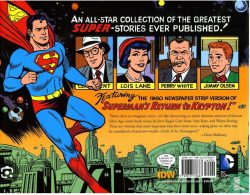
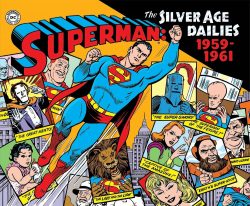
Superman: The Silver Age Dailies volume 1 – 1959-1961


By Jerry Siegel, Curt Swan, Wayne Boring & Stan Kaye, with Otto Binder, Robert Bernstein & Jerry Coleman (IDW Publishing Library of American Comics)
ISBN: 978-1-6137-7666-7 (HB)

It’s indisputable that America’s comic book industry – if it existed at all – would be an utterly unrecognisable thing without Jerry Siegel & Joe Shuster’s Superman. Their unprecedented invention was fervidly adopted by a desperate and joy-starved generation and quite literally gave birth to a genre if not an actual art form.

Spawning an impossible army of imitators and variations within three years of his 1938 debut, the intoxicating blend of eye-popping action and wish-fulfilment which epitomised the early Man of Steel grew to encompass cops-&-robbers crime-busting, socially reforming dramas, science fiction, fantasy, whimsical comedy and, once the war in Europe and the East dragged in America, patriotic relevance for a host of gods, heroes and monsters, all dedicated to profit through exuberant, eye-popping excess and vigorous dashing derring-do.

In comic book terms Superman was master of the world. Moreover, whilst transforming the shape of the fledgling funnybook industry, the Man of Tomorrow relentlessly expanded into all areas of the entertainment media.

Although we all think of the Cleveland boys’ iconic creation as epitome and acme of comic book creation, the truth is that very soon after his debut in Action Comics #1 Superman pretty much left mere funnybooks behind to become a fictional multimedia monolith in the same league as Sherlock Holmes, Tarzan, and Mickey Mouse.

We parochial and possessive comics fans too often regard our purest and most powerful icons in purely graphic narrative terms, but the likes of Batman, Spider-Man, Wonder Woman, X-Men, Avengers and Superman long ago outgrew their four-colour origins and are now fully mythologized modern media creatures instantly familiar in mass markets, platforms and age ranges.

Far more people have seen or heard the Man of Tomorrow than have ever read his comic books. The globally syndicated newspaper strips alone reached untold millions. By the time his 20th anniversary rolled around at the very start of what we know as the Silver Age of Comics, he had been a thrice-weekly radio serial regular, starred in a series of astounding animated cartoons, two chapter play serials, a movie and a novel by George Lowther.

He was a perennial success for toy, game, puzzle and apparel manufacturers and had just ended his first smash live-action television serial. In his immediate future even more shows, a stage musical, a franchise of blockbuster movies and an almost seamless succession of games, bubble gum cards and TV cartoons beginning with The New Adventures of Superman in 1966 and continuing ever since.

Even superdog Krypto got in on the small-screen act…

Although pretty much a spent force these days, for the majority of the last century the newspaper comic strip was the Holy Grail that all American cartoonists and graphic narrative storytellers hungered for. Syndicated across the country – and planet – with millions of avid readers and generally accepted as a more mature and sophisticated form of literature than comic books. It also paid better.

Rightly so: some of the most enduring and entertaining characters and concepts of all time were created to lure readers from one particular paper to another and many of them grew to be part of a global culture. Mutt and Jeff, Flash Gordon, Dick Tracy, Buck Rogers, Charlie Brown and so many more escaped humble newsprint origins to become meta-real: existing in the minds of earthlings from Albuquerque to Zanzibar.

Most still do…

So it was always something of a risky double-edged sword when a comic book character became so popular that they swam against the tide (after all, weren’t the funnybooks invented just to reprint the strips in cheap accessible form?) to become a genuinely mass-entertainment syndicated serial strip.

Superman was the first original comic book character to make that leap – almost as soon as he was created – but only a few have ever successfully followed. Wonder Woman (briefly), Batman (eventually), DC’s aviator Hop Harrigan and groundbreaking teen icon Archie made the jump in the 1940s and only a handful like Spider-Man and Conan the Barbarian have done so since.

The daily Superman newspaper comic strip launched on 16th January 1939 and was supplemented by a full-colour Sunday page from November 5th of that year. Originally crafted by such luminaries as Siegel & Shuster and their studio (Paul Cassidy, Leo Nowak, Dennis Neville, John Sikela, Ed Dobrotka, Paul J. Lauretta & Wayne Boring), the mammoth task soon required the additional talents of Jack Burnley and writers Whitney Ellsworth, Jack Schiff & Alvin Schwartz.

The McClure Syndicate feature ran continuously until May 1966, appearing at its peak in more than 300 daily and 90 Sunday newspapers, boasting a combined readership of more than 20 million. Eventually, artists Win Mortimer and Curt Swan joined unfailing Wayne Boring & Stan Kaye, whilst Bill Finger and Seigel provided stories: serial tales largely separate and divorced from comic book continuity throughout years when superheroes were scarcely seen.

In 1956, Julie Schwartz opened the Silver Age with a new Flash in Showcase #4. Soon costumed crusaders were returning en masse to thrill a new generation. As the trend grew, many companies experimented with the mystery man tradition and the Superman newspaper strip began to slowly adapt: drawing closer to the revolution on the comic book pages.

As the Jet and Atomic Ages gave way to the Space-Age, the Last Son of Krypton was a vibrant yet comfortably familiar icon of domestic modern America: particularly in the constantly evolving, ever-more dramatic and imaginative comic book stories which had received such a terrific creative boost as super heroes began to proliferate once more. Since 1954, and thanks to television, the franchise had been cautiously expanding. In 1959, the Caped Kryptonian could be seen not only in Golden Age survivors Action Comics, Superman, Adventure Comics, World’s Finest Comics and Superboy, but now also in Superman’s Pal Jimmy Olsen, Superman’s Girlfriend Lois Lane and soon Justice League of America. Such increased attention naturally filtered through to the more widely seen newspaper strip and resulted in a rather strange and commercially sound evolution…

After author/educator Tom De Haven’s impassioned Foreword, Sidney Friedfertig’s Introduction explains how and why Jerry Siegel was tasked with turning recently published comic book tales into daily continuities for an apparently more sophisticated and discerning newspaper readership. This meant major rewrites, frequently plot and tone changes and, in some cases, merging two stories into one.

If you’re a comic book fan, don’t be fooled: these stories are not mere rehashes, but variations on an idea for an audience perceived as completely separate from kids’ funnybooks. Even if you are familiar with the source material, the adventures gathered here will read as brand new, especially as they are gloriously illustrated by Curt Swan – and latterly Wayne Boring – at the very peak of their artistic powers.

As an added bonus the covers of the issues those adapted stories came from have been added as a full nostalgia-inducing full-colour gallery…

The astounding everyday entertainment commences with Episode #107 from April 6th to July 11th 1959. ‘Earth’s Super-Idiot!’ by Siegel, Swan & Stan Kaye is a mostly original story that borrows heavily from the author’s own ‘The Trio of Steel’ (Superman #135, February 1960, where it was drawn by Al Plastino). It details the tricks of an unscrupulous super-scientific telepathic alien producer of “Realies” who blackmails the Action Ace into making a fool and villain of himself for extraterrestrial viewers. If the hero doesn’t comply – acting the goat, performing spectacular stunts and torturing his friends – Earth will suffer the consequences…

After eventually getting the better of the UFO sleaze-bag, our hero returns to Earth with a bump and encounters ‘The Ugly Superman’ (July 13th – September 5th). First seen in Lois Lane #8 April 1959, where it was written by Robert Bernstein and illustrated by Kurt Schaffenberger, here eternal spinster Lois agrees to marry a brutish wrestler, and the Man of Tomorrow, for the most spurious of reasons, acts to foil her plans…

Episode #109 ran from September 7th to October 28th 1959, with Superman reluctantly agreeing to make a dying billionaire laugh in return for the miserable misanthrope signing over his entire fortune to charity.

Some of the apparently odd timing discrepancies in publication dates can be explained by the fact that submitted comic book stories often appeared months after they were completed, so their version of Siegel’s ‘The Super-Clown of Metropolis’ didn’t get published until Superman #136 (April 1960) where Plastino took the art in completely different directions…

‘Captive of the Amazons’ – October 29th 1959 to February 6th 1960 – merges two funnybook adventures both originally limned by Boring & Kaye. The eponymous equivalent from Action #266 (Jul 1960) was augmented by Bernstein’s ‘When Superman Lost His Powers’ (Action Comics #262) detailing how super-powered alien queen Jena came to Earth intent on making Superman her husband. On his refused she removed his Kryptonian abilities, subsequently trapping now merely mortal Clark Kent with other Daily Planet staff in a lost valley of monsters where Lois’ suspicions are again aroused…

Episode #111 ran from 8th February to 6th April. ‘The Superman of the Future’ originated in Action #256 (September 1959, by Otto Binder, Swan & Kaye). Both versions seemingly see Superman swap places with a hyper-evolved descendent intent on preventing four catastrophic historical disasters, but the incredible events are actually part of a devious hoax…

Superman’s Girlfriend Lois Lane #10 (July 1959 by Siegel & Schaffenberger) offered up a comedy interlude as ‘The Cry-Baby of Metropolis’ (April 7th – May 28th) sees Lois terrified of losing her looks and exposing herself to a youth ray. Rapidly regenerating into an infant, she provokes much amusement in arch-rival Lana Lang… and that cad Superman…

Episode #113 May 30th – July 2nd features ‘The Super-Servant of Crime’ (Bernstein, from Superman #130, July 1959) as our hero outsmarts a petty crook who has bamboozled the Action Ace into granting him five wishes. Thereafter, ‘The Super-Sword’ (4th July to August 13th and originally by Jerry Coleman & Plastino for Superman #124, September 1958) pits the Kryptonian Crimebuster against an ancient knight with a magic blade that can penetrate his invulnerable skin. Once more, however, all is not as it seems…

Siegel, Boring & Kaye’s comic book classic ‘Superman’s Return to Krypton’ (in Superman #141, November 1960) was first seen in daily instalments from August 15th to November 12th 1960. There it told a subtly different tale of epic love lost as an accident marooned the adoptive Earth hero in the past on his doomed home-world. Reconciled to dying there with his people, Kal-El befriended his own parents and found love with his ideal soul-mate Lyla Lerrol, only to be torn from her side and returned to Earth against his will in a cruel twist of fate.

The strip version here is one of Swan’s most beautiful art jobs ever and, although the comic book saga was a fan favourite for decades thereafter, the restoration of this more mature interpretation might have some rethinking their opinion…

Wayne Boring once more became the premiere Superman strip illustrator with Episode #116 (November 14th – December 31st), reprising his & Siegel’s work on ‘The Lady and the Lion’ from Action #243 (August 1958), wherein the Metropolis Marvel is transformed into an inhuman beast by a Kryptonian exile the ancients called Circe…

Siegel then adapted Bernstein’s ‘The Great Superman Hoax’ and Boring & Kaye redrew their artwork for the episode (January 2nd – February 4th, 1961) from Superman #143 (February 1961). Here, a cunning criminal tries to convince Lois and Clark that he’s actually the Man of Might, blissfully unaware of who he’s failing to fool.

February 6th to March 4th has Superman using brains as well as brawn to thwart an alien invasion in ‘The Duel for Earth’ – originally appearing as a Superboy story in Adventure Comics #277 (October 1960) by Siegel & George Papp.

Superman #114 (July 1957) and scripter Otto Binder provided Siegel with the raw material for a deliciously wry and topical tax-time tale ‘Superman’s Billion-Dollar Debt’ – March 6th to April 8th – wherein an ambitious IRS agent presents the Man of Steel with a bill for unpaid back-taxes, whilst Episode #120 (April 10th – May 13th) introduces ‘The Great Mento’ (from Bernstein & Plastino’s yarn in Superman #147, August 1961): a tawdry showbiz masked mind-reader who blackmails the hero by threatening to expose his precious secret identity…

The final two stories in this premiere collection both come from Superman’s Girlfriend Lois Lane – issues #24, April and #26, July respectively – both originally crafted by Bernstein & Schaffenberger.

In ‘The Perfect Husband’ (15th May to July 1st) – begun and ended by Boring but with Swan pinch-hitting for 2 weeks in the middle – Lois’ sister Lucy tricks the journalist into going on a TV dating show. Here she meets her ideal man: a millionaire sportsman and war hero who looks just like Clark Kent…

Then ‘The Mad Woman of Metropolis’ sees Lois driven to the edge of sanity by a vengeance-hungry killer: a rare chance to see the reporter and butt of so many shameless male gags show her true mettle by solving a case without the Man of Tomorrow’s avuncular, so-often patronising assistance…

Superman: – The Silver Age Dailies 1959-1961 was the first in a series of huge (305 x 236mm) lavish, high-end hardback collections (frustratingly still not available in digital editions!) starring the Man of Steel and a welcome addition to the superb commemorative series of Library of American Comics which has preserved and re-presented in luxurious splendour such landmark strips as Li’l Abner, Tarzan, Little Orphan Annie, Terry and the Pirates, Bringing Up Father, Rip Kirby, Polly and her Pals and many of the abovementioned cartoon icons.

If you love the era, these stories are great comics reading, and this is a book you simply must have.
Superman ™ & © 2013 DC Comics. All Rights Reserved.

Bunny vs Monkey book 8: The Impossible Pig!


By Jamie Smart, with Sammy Borras (David Fickling Books)
ISBN: 978-1-78845-300-4 (Digest HB)

Bunny vs Monkey has been the hairy backbone of The Phoenix since the very first issue back in 2012: recounting a madcap vendetta gripping animal arch-enemies set amidst an idyllic arcadia masquerading as more-or-less mundane but critically endangered English woodlands.

Concocted with gleefully gentle mania by cartoonist, comics artist and novelist Jamie Smart (Fish Head Steve!; Looshkin; Max and Chaffy, Flember), his trendsetting, mind-bending yarns have been wisely retooled as graphic albums available in remastered, double-length digest editions such as this one.

All the tail-biting tension and animal argy-bargy began yonks ago after an obnoxious little beast plopped down in the wake of a disastrous British space shot. Crashlanding in Crinkle Woods – scant miles from his launch site – lab animal Monkey believed himself the rightful owner of a strange new world, despite all efforts from reasonable, sensible, genteel, contemplative forest resident Bunny to dissuade him. For all his patience, propriety and good breeding, the laid-back lepine could not contain or control the incorrigible idiot ape, who to this day remains a rude, noise-loving, chaos-creating, troublemaking lout…

Problems are exacerbated by other unconventional Crinkle creatures, particularly the skunk called Skunky who has a mad scientist’s intellect and attitude to life plus a propensity for building extremely dangerous robots, bio-beasts and sundry other super-weapons…

Here – with artistic assistance from design deputy Sammy Borras – the war of nerves and mega-ordnances resumes even though everybody thought all the battles had ended. They even seemingly forgot the ever-encroaching Hyoomanz…

Divided into seasonal outbursts, this magnificent hardback archive of insanity opens in the traditional manner: starting slowly with a sudden realisation. Probably by using his fingers, Monkey has worked out that Bunny’s side has more good guys (Ai, Pig Piggerton, Weenie, Metal E.V.E. and Le Fox) than his own bad ones! Wisely rejecting Skunky’s offer to make more evildoers, the sinisterly stupid simian seeks to steal some of Bunny’s buddies: making insidious individual approaches in ‘A Big Hole’.

One immediate success goes unnoticed as those worthy stalwarts debate ways to get hapless Pig out of a giant pit before finding the ‘Tunnels’ the sweet simpleton used to get there in the first place…

First contact and a really strange day for all – including a wholly new kind of Crinkle critter – occurs in ‘Jerb-eing Unreasonable’, before Monkey commits carnage in a psychic bodysuit that can literally ‘Imagine That’: opening the doors to another Spring. At this time a certain white rabbit is pilfering carrots from an angry Hyooman, only to be saved by Monkey in the colossal exo-skeletal ‘Spade-O-Matic’, officially opening hostilities between bipeds and beasts…

Meanwhile and maybe later, Bunny experiences ‘Mossy Mayhem’ when Skunky’s latest experiment escapes, even as Metal E.V.E ponders astral reality and rashly asks her friend to explain ‘Pig Science’…

As monkey demands 25% more evil from his crew, he’s distracted by Metal Steve’s latest faux pas – a doomed relationship with ‘Wipey’ – and ‘Sun 2.0’ renders repercussions of Skunky upgrading the source of all light and warmth. Action Beaver is then subject to a ‘Body Swap’ after Monkey covets his apparent immunity to pain and harm. It doesn’t end well…

Once the Great Woodland Bake-off inevitably culminates in ‘Cakes and Bruises’ Monkey use a superstrength serum unwisely. As his bones mend he has a Damascus moment: deducing that being a ‘Good Monkey’ might be less harmful. He gives nobility a go… but it too doesn’t end well…

A fresh face materialises when Pig meets ‘The Visitor’ and inadvertently saves Lucky the Red Panda from atomic discorporation. Sadly, the effect is only temporary and when their memories merge, Lucky is stuck in residence in this dimension with our plucky porcine adrift in the molecular stream of the cosmos…

Trapped on Earth, the stranger tries desperately to convince all and sundry she is ‘Actually Pig’, often assisted by typical distractions like marauding sprout-farting monster ‘Gruntulak!’ and a no-holds-barred campaign to elect ‘President Monkey’.

Skunky starts disassembling woodland residents: harvesting DNA to make endless duplicates in ‘All A-Clone’ but even Skunky’s science can’t handle Lucky…

As Summer starts, mad science wins again. Skunky sets a trap to prove Lucky is ‘Not Pig’ and even finds what happened to the lost one, after which Monkey manages to murder cloud-gazing in ‘Weather or Not’ and Weenie gets a shocking letter in ‘Blackmail’…

With the truth about to out, ‘Pocket Pig’ sees the gentle woodland folk form a torch-waving mob to establish their real friend’s fate, only to find Skunky has already found a way to exploit the situation. However, when he constructs a device to reach the outer realms, Monkey makes a shambles of the ‘Portal Recall’…

When the awful anthropoid gets a mail-order giant robotic Chicken of Darkness, he never anticipated some assembly required and the woods are saved by ‘A Loose Nobble’, allowing good manners and better natures to resurface. Thus, the animals all contribute to ‘Lucky’s Home’: especially Monkey with his goop gun and crushing space-sphere of doom…

Elsewhere, as Metal Steve and Metal E.V.E hold a private contest to decide the best automaton in ‘Who Will Win the War of the Robots’, Skunky’s clumsiness triggers a crop of carnivorous blooms in ‘Chomp!’ Then, as Monkey’s alter ego “Captain Explosives” accidentally uncovers a crop of chronal crystals in ‘Time and Again’ Skunky makes his greatest breakthrough: a remote control for existence with a ‘Freeze Frame’ able to warp and rewind reality…

With everything on pause, ‘The Second Pigging’ heralds the return of a lost friend whose voyage to the cosmos has resulted in Complete Spiritual Enlightenment and manifestation as a Non-Corporeal Vision. Sadly, when nobody cheers, the ultimate Pig pops off in a dudgeon, leaving Lucky to save the day and restore time in ‘Hairy Nearly’: a major turning point that upsets many participants…

In what passes for a return to normality, Monkey is possessed by the ghost of a chicken and triggers an invasion of ‘Zombies!’ just as Autumn begins with Skunky and Monkey unleashing a giant robot that is ‘Turtle-y Ridiculous’…

Former good guy Fantastic Le Fox is also possessed and offers ‘A Warning’ of failure and worse that Monkey immediately reacts badly too, even as transcendent Pig returns to make contact with and elevate ‘Prophet Beaver’. Of course, nobody listens…

Meanwhile, Monkey has been messing with elemental forces and turned the woods into an ‘Expressionistic’ nightmare, before losing patience and challenging Bunny to a duel of ‘Brain Power’. After winning by cheating, the ape learns a painful lesson that is only the beginning of his woes as ‘Double Bunny’ sees a doppelganger emerge who will change the status quo in appalling ways…

Lost and distraught Bunny undertakes a mission for Skunky into the bowels of the earth in search of ‘Long-Lost Flopsy’. Guess how that ends…

The drama intensifies as ‘The Impossible Pig’ returns to reality only to discover that being ‘Disappointingly Mortal’ would be better than life as a power battery for Skunky, and that’s when ‘Lucky’s Fortune’ turns the tide…

Bunny has not been right since meeting the other rabbit and with Metal E.V.E.’s aid ‘The Search is On’ for a boon companion. Only briefly interrupted by realty running wild, the search resumes in ‘Better Luck Next Time!’ and Le Fox’s niece arrives for some rowdy ‘Fennec Fun!’ She’s on the run and another relation isn’t far behind her…

Solitude has bitten our hero hard and nothing Monkey can do will distract ‘A Lonely Bunny’ in his morose meanderings, so the little meany challenges Impossible Pig instead, and learns real suffering in ‘Butt Then…’

When Winter arrives, Lucky sees snow for the first time, enduring cheeky hostiles chucking chilly snowballs until the wonder-pig volunteers as ‘Protector’ and is soon tricked by Skunky who wants to depower the self-promoting saviour ‘At All Costs’…

Now resolved to return to the Molecular Stream, Impossible Pig takes advice from unknowable factor Le Fox, but stumbles into a wild Christmas Party on his way to the fabulous Lake of Eternity. He also meets Lucky who wants to leave this reality just as much, but as they argue over who should take the one-way ride a dear friend and desolate hero is already ‘Jumping the Queue’…

To Be Continued…

The agonised anxiety-addled animal anarchy might have ended for now, but there’s a few more secrets to share, thanks to detailed instructions on ‘How to Draw Lucky’ as well as a handy preview of other treats and wonders available in The Phoenix to wind down from all that angsty furore…

The zany zenith of absurdist adventure, Bunny vs Monkey is weird wit, brilliant invention, potent sentiment and superb cartooning all crammed into one eccentrically excellent package. These tails never fail to deliver jubilant joy for grown-ups of every vintage, even those who claim they only get it for their kids. This is the kind of comic book parents beg kids to read to them. Shouldn’t that be you?
Text and illustrations © Fumboo Ltd. 2023. All rights reserved.

Bunny vs Monkey book 8: The Impossible Pig! will be published on September 28th 2023 and is available for pre-order now.

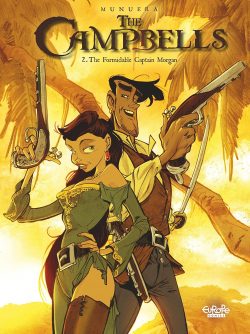
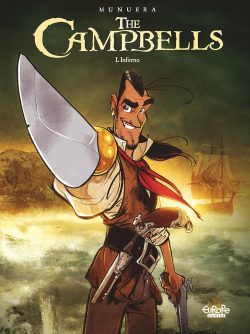
The Campbells volume 1: Inferno & volume 2: The Formidable Captain Morgan


By José Luis Munuera, coloured by Sedyas translated by Emma Wilson (Europe Comics)
Digital Editions – No ISBNs:

Arrr an’ Wot Ho! It be anuvver International Talk Like a Pirate Day once morrrre, me Hearties! That gives me license to act like a complete berk whilst plugging a suitably themed graphic yarn. This ‘un be a real cracker, too…

As heavily influenced by a certain Disney movie franchise as continental Europe’s long-standing affection for the genre, and exhibiting a deft hand with the traditions and history of light-hearted freebooting romps, Inferno is the introductory salvo in a convoluted yet engaging family saga about a most unconventional bunch of buccaneers.

Crafted by Andalusian comics veteran José Luis Munuera (No Hay Domingos en el Infierno, Merlin, Walter le Loup, Spirou et Fantasio, P’tit Boule et Bill) who has been delighting readers since his debut in 1996, the epic voyage of discovery commences here with smart, snappy episodes introducing an extremely large cast of roguish characters. First up are devious rapscallion “Captain” Carapepino and his trusty dogsbody Haggins. A very minor player with huge aspirations, this smooth talker is off burying his first chest of treasure on a sun-kissed tropical island when he is ambushed and hijacked by the infamous – and long-missing – Captain Campbell.

Through a most cunning ploy, the pirate’s pirate (with two young daughters at his side) appropriates the gem-strewn chest and smugly paddles away to another paradisiacal atoll…

The next vignette sees the wonder family man at ease in his luxurious haven on Garden Island, patiently watching teenaged Itaca explode again as her obnoxiously bratty sister Genova reads excerpts from someone’s secret – stolen – diary…

Despite always acting out and indulging in outrageous feats of derring-do, the well-educated, ultra-fit kids love each other and desperately miss their mother.

Out in the briny depths, formidably ferocious Captain Inferno terrorises victims and his own men. A man of dark moods and soaring ambition, he is haunted by visions of a dead woman who comes to him often, repeating three horrifying predictions that he cannot escape. His night terrors are suppressed but not abated by the arrival of unctuous Carapepino who shares that encounter with the sea terror’s most despised enemy… and husband of the ghost who plagues him!

The Campbells might be sea-wolves but they are most unconventional ones. Amongst those who love them most are the inhabitants of the Isle of Bakaloo: a leper colony the family regularly visit with supplies of food, books and other life-easing essentials. On this latest jaunt, the canny corsairs bring along the latest chest of valuables: after all, what normal, superstitious rogues would risk their scurvy skins amongst the unclean and diseased?

Some days later, the family visit fiercely neutral township Bahia Cambalanche, Port Franc. Here all hawks of the seas can meet to trade, carouse and fence their stolen booty. Here and now, Itaca and Genova reluctantly attend lessons arranged by their father.

Right here, right now, Carapepino and a press gang provided by Inferno attempt to abduct the girls only to be beaten back by their unbridled fury and the late intervention of gorgeous teenager Blond Luca. Itaca is instantly smitten by the glorious hero, blithely unaware that her saviour is a pawn in a dastardly long con…

The deception blossoms soon after as Garden Island is invaded by Carapepino’s borrowed forces. Nevertheless, the trio of Campbells fight free, humiliate the craven dogs and make a bold escape to a new sanctuary. In the interim, Inferno has not been idle. By ruthless manipulation and scurrilous deals, he has ingratiated himself with English nobility – and Campbell’s oldest enemies – in order to have himself admitted to the top flight of the corrupt aristocracy. Invested as Baron of England, with a warrant to hunt all shipping but British vessels, Inferno moves quickly to consolidate power and replace the crown’s agents with his own people…

The Campbells have relocated to Bakeloo Island where Itaca broods over Luca’s betrayal as her father worries about her unexplained distress. Father is also blithely oblivious to passionate and sustained adoration of indigenous lovely Nutel-La, but the practical islander finally makes a big impression by suggesting that the devoted dad needs to have “the talk” with his manifestly-maturing older daughter…

Having lost yet another ship, Carapepino and his surviving crew at last link up with former employer Baron Inferno, just in time to become his first detainees as the freshly ennobled provincial ruler moves into his new Governor’s Palace.

The interloper eases gracefully to the head of the aristocratic pack, gleaming in fine clothes, sparkling with newfound power and respectability. After all, aren’t these rich privileged fools just another gang of self-proclaimed predators? Especially shockingly blunt and ruthlessly amoral Lady Helvetia, who becomes his boon companion and more…

When the revels end, the Baron’s mind races back decades to the docks of London where he and his bold, inventive, loyal brother picked pockets and sought to escape their monster of a father. How far they have come since then. How far they have drifted apart…

To Be Continued…

Volume 2: The Formidable Captain Morgan

The seagoing saga resumes with more revelations as 2017’s Les Campbell – 2. Le redoutable pirate Morgan arrives to further the fun-filled furore. As Itaca and Genova find fresh ways to perk up their sisterly rivalry, the younger girl asks about the mother she doesn’t remember. That tricky conversation sparks a flashback to when the bold Campbell brothers first tried to recruit a band of cutthroats to serve under them…

Elsewhere, Dad is having similar reveries of the mere slip of girl he met one day and how Nancy was the most capable streetfighter he had ever seen. Sadly, his reminiscences are interrupted by increasingly forward Nutel-La who can also handle herself when not concentrating on him…

Beneath the grandiose and byzantine Piranese Palace, new governor Inferno entertains former allies in his dungeons until impressionable Lady Sophia of Hollowside brings Carapepino what should be his last meal. She’s actually there to spring her wicked lover, but that was before his flunky Haggins ate the key to the cell…

Another flashback sees the brothers prospering as pirates until again encountering premiere privateer “The Formidable Captain Morgan”. That masked worthy has been regularly poaching their prizes and the older Campbell has had enough…

Back in their present, the girls’ father warms to his willing island girl and discovers a lost connection, whilst at the Piranese Palace, Lady Sophia sparks a frantic chase after finally springing Carapepino and Haggins…

Then he recalls how they all first met scurrilous Carapepino who promised them Captain Morgan, and how his brother reacted to seeing Nancy. That was the moment siblings became rivals, and then competitors. Nevertheless, still resolved to destroy mysterious masked marauder Morgan, the Campbell brothers laid a trap…

Today on the Bakeloo, Nutel-La and Itaca trade unhappy stories about the disappointing men in their lives as Baron Governor Inferno starts emptying dungeons and filling gibbets even as Carapepino’s cohort make a most incredible getaway.

Soon after, the Campbell clan cautiously go shopping. As Itaca returns to her beloved bookshop, treacherous guilt-ridden Luca resurfaces and in the resulting confrontation loses something truly precious…

Meanwhile, father Campbell meets an old friend and is ambushed. Despite valiant resistance down he goes, unleashing another memory: how the trap for Captain Morgan proved successful, what he learned and how his life forever changed…

To Be Continued…

Only currently available in English in digital editions, The Campbells is a fabulously engaging rollercoaster of whimsical but ferocious thrills and fun, as good as the first Pirates of the Caribbean film and far more entertaining and satisfying than the rest of that franchise… or most other cinematic corsair fare.

Combining smart and constant laughs with bombastic action, an enticing generational war, murder mystery and heartbreakingly winning characters – goodies and baddies! – the series goes from strength to strength. These first two volumes are captivating from the outset, with hyper-kinetic Marcinelle School-derived art grabbing the attention and dragging readers along as though caught in a bow wave. The raffish gags subtly counterbalance a strong, complex family-based conflict and just the merest hint of supernatural menace lurks in the shadows.

Don’t wait for a print release, scour the electric oceans and salvage these books and the rest of the series…
© DUPUIS – MUNUERA 2017. All rights reserved.

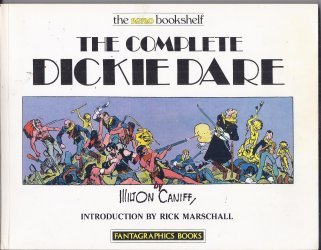
The Complete Dickie Dare


By Milton Caniff (Fantagraphics Books)
ISBN: 0-93019-322-9 (HB)  978-0-93019-321-8 (PB)

Despite being one of the greatest and most influential cartoonists in world history, Milton Caniff wasn’t an overnight sensation. He worked long and hard before he achieved stellar status in the comic strip firmament, before Terry and the Pirates brought him fame, and Steve Canyon secured his fortune.

The strip which brought him to the attention of legendary Press Baron “Captain” Joseph Patterson – in many ways co-creator of Terry – was an unassuming daily fantasy feature about a little boy who was hungry for adventure…

Caniff was working for The Associated Press as a jobbing cartoonist when a gap opened in their strips department. AP was an organisation that devised and syndicated features for the thousands of regional and small-town newspapers which couldn’t afford to produce cartoons, puzzles, recipes and other fillers that ran between the local headlines and regional sports.

Over a weekend, Caniff came up with Dickie, a studious lad who would read a book and then fantasize himself into the story, taking faithful little dog Wags with him. The editors went for it and Dickie Dare premiered on July 31st, 1933.

Caniff wrote and drew the feature for less than 18 months before moving on, although his excellent but unappreciated replacement Coulton Waugh steered the series until its conclusion two decades later.

The first day-dream was with Robin Hood, followed by a frantic, action-packed visit with Robinson Crusoe and Friday, battling hordes of howling savages and scurvy pirates. Rugged combat gave way to fantastic mystery when the tyke perused Aladdin, resulting in a lavish and exotic trip to a very fabled Far East. This segment closed near Christmas, and when his father read Dickie the story of the Nativity, Caniff began his long personal tradition of creating seasonally topical strips.

A visit to Bethlehem ended on Christmas morning, and one of Dickie’s Christmas presents then triggers his next excursion, when he starts reading of General George Armstrong Custer…

King Arthur next, followed by Captain Kidd the Pirate, but by then Caniff was chafing under the self-imposed limitations of his creation. He believed the strip had become formulaic and there was no real tension or drama in mere dreams. In a creative masterstroke, he revised the strip’s parameters, and by so doing produced the prototype for a masterpiece.

On May 11th, 1934, Dickie met a new uncle: globe-trotting author and two-fisted man-of-action Dan Flynn, and one week later the pair embarked on a Round-the-World trip. Caniff had moved swiftly, crafting a template that would become Terry and the Pirates.

The wide-eyed, nervy All-American Kid with adult pal ultra-capable adventurer, whilst a subject of much controversy and even ill-advised and outright scurrilous modern disparagement, was a literary archetype since before Treasure Island. Adapting that relationship to comic strips was commercially sound: a decision that hit a peak of popularity with the horde of sidekicks/partners who followed in the wake of Robin the Boy Wonder six years later.

No sooner have Dickie & Dan taken ship for Africa than the drama begins, when the restless kid uncovers a hidden cargo of smuggled guns. Aided by feisty Debutante Kim Sheridan and sailor Algy Sparrow, our heroes foil the scheme, but not before Dickie is captured by Kuvo, the Arab chieftain awaiting those weapons.

Pursued by French authorities, Kuvo retreats to a desert fortress where Kim, disguised as a slave-girl, rescues the lad, only to be caught herself. The full-tilt action peaks to a splendid conclusion before the boys, with Algy in tow as their butler, head for Tunis only to stumble across a plot to use a World War I U-Boat for ocean-going piracy…

This long adventure (beginning September 13th) is a thoroughly gripping yarn encompassing much of the Mediterranean and Atlantic, as the boys escape pirates and aid the Navy in hunting them down. There’s buckets of action and an astonishing amount of tension, but the tale ends a tad abruptly when Caniff, lured away by Patterson, simply drops the feature and Coulton Waugh takes over the storyline from the next Monday (3rd December).

With no break in the tale Waugh rapidly (in 14 episodes) wraps up the saga. He even has Dickie home by Christmas.

From the New Year the strip would chart new waters with Waugh at the helm, aided (and briefly replaced whilst he wrote his seminal book on Comics and also when he was producing the strip Hank for the New York magazine PM) by assistant and spouse Odin Burvik.

Dickie Dare eventually ended its run in October 1957 with the now adult adventurer beginning a new career as a US Navy Cadet.

Although usually dismissed as a mere stage on the road to his later mastery – and certainly long before Caniff and sometime studio partner Noel Sickles made their chiaroscurist breakthroughs in line-art that revolutionised the form – these early tales delighted and enthralled readers. Full of easy whimsy and charm, the strip evolved into a rip-roaring, all-ages thriller, full of wit and derring-do, in many ways an American answer to Hergé’s Tintin.

They deserve to be appreciated on their own merits and are long overdue for reappraisal in new collections.

At least this edition is still readily available but Dickie Dare is long overdue for rediscovery by the mass-market – and streaming services! – so while we’re at it, let’s see some of the work that the criminally under-valued Waugh originated too.
Artwork originally © 1933-1934 The Associated Press. Other contents this edition © Richard Marschall All rights reserved.

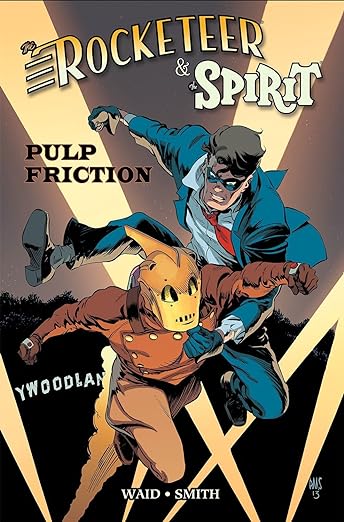
The Rocketeer & The Spirit: Pulp Friction


By Mark Waid, Paul Smith, Loston Wallace, J Bone, Bob Wiacek & various (IDW)
ISBN: 978-1-61377-881-4 (HB/Digital edition)

The American comics industry has generated its fair share of immortal heroes. However, whilst everyone is familiar with household names such as Flash Gordon, Superman, Dick Tracy or Popeye, there are also timeless champions who pretty much remain hallowed names only to the in-crowd and cognoscenti: characters who had their shot at global mega-stardom but for some reason never caught on with the masses. Guys like The Spirit and The Rocketeer…

Will Eisner was a pivotal creative force who helped shaped the entire medium of comics. From 1936 to 1938 he worked as a jobbing cartoonist in the studio-stable known as the “Eisner-Eiger Shop”, creating strips for both domestic and foreign markets.

As Willis B. Rensie he created and drew the opening instalments of a huge variety of characters ranging from funny animal to historical sagas, Westerns, Detectives, aviation action thrillers… and superheroes… lots of superheroes.

In 1940, Everett “Busy” Arnold, of Quality Comics, invited Eisner to take on a new challenge. The Register-Tribune newspaper syndicate wanted a 16-page weekly comicbook insert to be given away with the Sunday editions. Eisner created three strips which would initially be handled by him before two were handed off to his talented assistants.

Bob Powell inherited Mr. Mystic whilst distaff detective Lady Luck first fell into the capable hands of Nick Cardy (nee Nicholas Viscardi) and later the inimitable Klaus Nordling.

Eisner kept the lead for himself, and over the next dozen years masked detective The Spirit grew into the most impressive, innovative, imitated and talked-about strip in the business. In 1952, the venture folded and Eisner moved into commercial, instructional and educational comics, working extensively for the US military in manuals and magazines like P*S, the Preventative Maintenance Monthly, and generally left comics books behind.

In the wake of “Batmania” and the 1960s superhero craze, Harvey Comics released two giant-sized reprint editions with some new material from Eisner. These led to a brace of underground compilations and a slow but inexorable rediscovery and revival of the Spirit’s fame and fortune, via black-&-white newsstand reprint magazines.

Warren Publishing collected old stories, occasionally adding painted colour from contemporary luminaries like Rich Corben, but from #17 the title reverted to Kitchen Sink, who had produced those first two underground collections.

Eisner found himself re-enamoured with graphic narrative and discerned that there now existed a willing audience eager for new works. From producing new Spirit covers for the magazine – something the original newspaper insert had never needed – he became increasingly inspired. American comics were evolving into an art-form and the restless creator finally saw a place for the kind of stories he had always wanted to tell.

Eisner subsequently began crafting some of the most telling and impressive work the industry had ever seen: first in limited collector portfolios and, in 1978, with groundbreaking sequential narrative A Contract With God: thereby jumpstarting our modern comics phenomenon of graphic novels…

Although his output was far smaller and life far shorter, Dave Stevens had an equally revolutionary effect on the industry: his lush and lavish illustration style influencing a generation of artists as his signature retro-futurist character The Rocketeer became the first breakout star of the Independent Comics movement that stemmed from the creation of the comic book Direct Sales Market.

Due to Stevens’s legendarily uncompromising artistic vision – and consequent slow page rate – very few of The Rocketeer’s period exploits appeared before the artist’s death from Hairy Cell Leukaemia in 2008. Since then, diverse hands have added to the canon, as with the miniseries collected in this slim but stunning edition.

Just in case these vintage adventurers are new to you, The Spirit used to be Denny Colt: Central City’s greatest detective and criminologist. After apparently dying in battle with a vile master-villain, Colt opted to remain officially dearly departed to battle evil in a semi-official capacity. The masked enigma was covertly aided by girlfriend Ellen Dolan and her father, the Police Commissioner of that crime-ridden metropolis.

Cliff Secord is an itinerant West Coast pilot who – circa 1938 – found a fantastic jetpack outfit and stumbled into a succession of criminal plots and capers. With the eventual permission of the flight engine’s inventor – one of the greatest heroes of that or any other era – Cliff still finds himself regularly battling bad guys as The Rocketeer. When that’s not occupying his time, he’s busy looking for work or being given the run-around by his star-struck, fame-obsessed, trouble-magnet girl Betty…

Team-ups are part-and-parcel of comics and both heroes have had their share of cataclysmic and catastrophic clashes with the valiant giants of the period and the industry. This yarn however – a 4-issue miniseries by Mark Waid originally spanning July to December 2013 – concentrates as much on humour as bombastic action. It begins on the East Coast in February 1941 as business executives and government men meet to decide the future of the Next Big Thing…

Alderman Cunningham is stridently opposed to letting business cartels control the new medium and argues that, just like with radio, public airwaves must not be owned by any individual or corporation seeking to monopolise recently invented Television…

Mere hours later an early morning fashion shoot on a California beach is ruined when beautiful Betty finds the idealistic politician’s mangled corpse. When the stiff is identified as Cunningham, Commissioner Dolan and Spirit are baffled. How could the victim have travelled more than 3000 miles in one night? Determined to investigate, they book passage on a transcontinental plane, having reluctantly crumbled before the forceful Ellen who demands to join them and see Hollywood…

In Los Angeles, Cliff Secord is still ignored by traumatised Betty. He mopes dejectedly until grizzled old mechanic Peevy points out that whoever killed the Alderman might also want to silence the girl who found the body…

Nearby, a very wealthy entrepreneur places a coast-to-coast call to The Spirit’s greatest enemy to discuss his incredible new invention, the pursuance of their plans and how to stop a certain masked interloper from interfering…

Said hero – still wearing his mask – is stiffly staggering off a plane at Chaplin Field with his equally exhausted cross-country companions. In a weary, unguarded moment he mentions Betty. Learning of the “slip”, an already paranoid Cliff panics and, assuming a masked killer has come for his girl, dons his rocket-man suit to attack…

After a spectacular battle, Ellen finally manages to convince both testosterone-soaked mutton heads they are on the same side, and a tentative alliance forms …at least until Spirit interviews Betty and the flighty starlet finds she’s in love – or thereabouts – with the hunky masked cop.

Illustrator Paul Smith gives way to Loston Wallace & Bob Wiacek as chapter two opens with the fractious, clueless allies heading for the LA Morgue and Cunningham’s cadaver. Elsewhere, television wizard Benedict Trask and The Octopus debate how best to get Betty out of the picture and deal with interlopers meddling in their affairs. Their solution is unique and everything would have worked out swell if not for inveterate tinkerer Peevy who has built his own prototype TV receiver and intercepted something he shouldn’t have…

The villains respond in typical manner but their big mistake is believing planes sent to strafe Peevy’s hangar are enough to stop Rocketeer and The Spirit…

With J Bone stepping in for the final two chapters, the high-octane tale ramps up to top gear as Cliff travels to Central City with The Spirit and the Dolans. All they have to do is find Betty, expose Trask and the Octopus’ sinister scheme, uncover their treacherous connections to a certain Fascist foreign power, prevent America’s airwaves being subverted and save President Roosevelt from assassination by television in a rocket-paced, breathtaking rollercoaster ride that delivers non-stop thrills and chills…

Accompanied with an Introduction from Denis Kitchen, filling in all necessary back-story on the characters, and visually embellished by sketches and a large cover gallery by Darwyn Cooke, Smith, Jordie Bellaire, Bone and Chris Samnee, Pulp Friction is a no-nonsense fun-filled frolic to delight lovers of the good old days of Thud and Blunder…
© 2014 The Rocketeer Trust and Will Eisner Studios, Inc. The Rocketeer is a registered trademark of, and all related characters, their distinctive likenesses and indicia are trademarks of The Rocketeer Trust. All Rights Reserved. The Spirit © 2014 Will Eisner Studios, Inc. The Spirit and Will Eisner ™ & © Will Eisner Studios, Inc. ® in the US Patent and Trademark Office. All Rights Reserved.

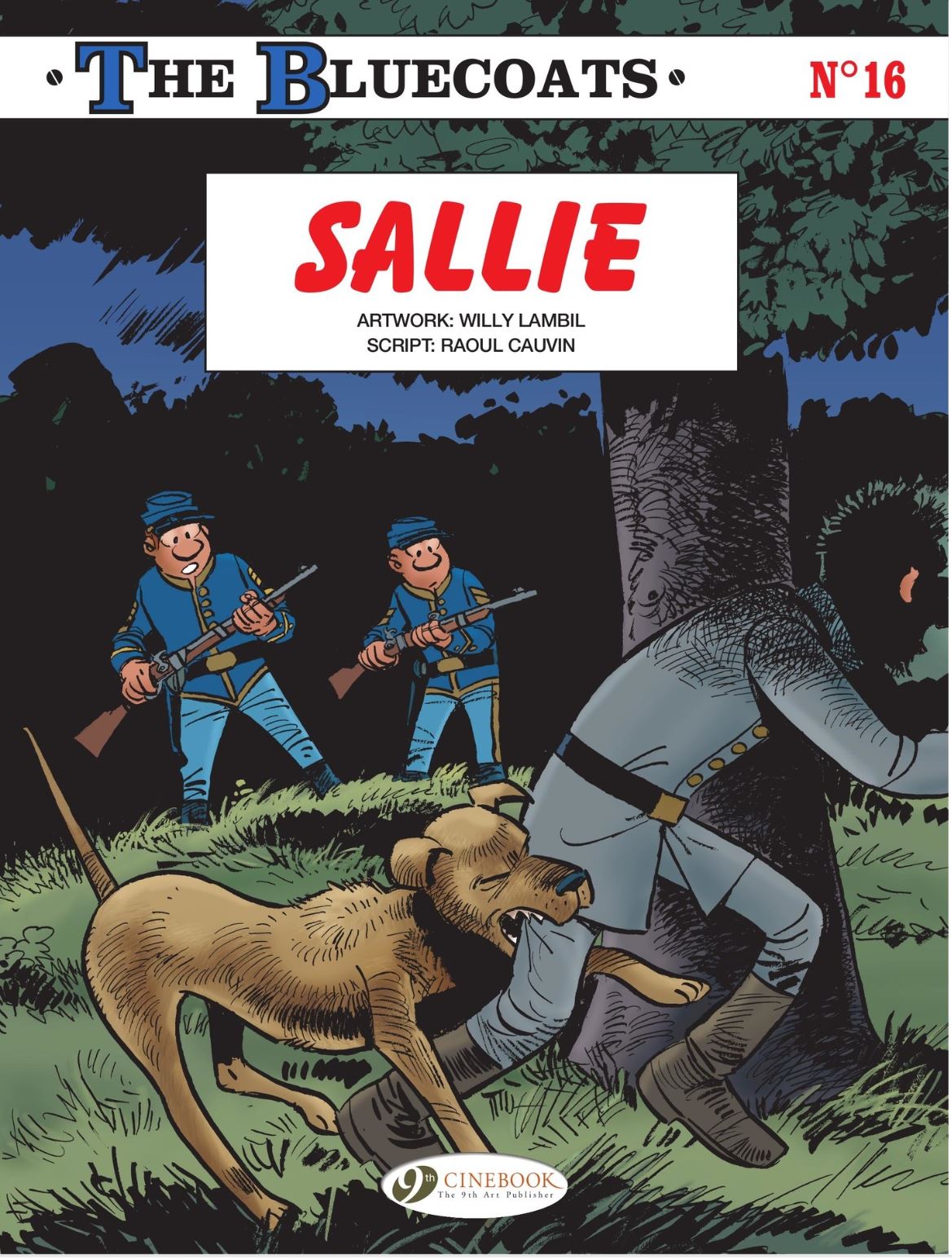
The Bluecoats volume 16: Sallie


By Willy Lambil & Raoul Cauvin, translated by Jerome Saincantin (Cinebook).
ISBN: 978-1-80044-089-0 (Album PB/Digital edition)

Devised by Louis “Salvé” Salvérius & Raoul Cauvin – who scripted the first 64 volumes until his retirement in 2020 – Les Tuniques Bleues (Dutch-language iteration De Blauwbloezen) debuted at the end of the 1960s: created to supplant the irreplaceable Lucky Luke when that laconic maverick defected from weekly anthology Le Journal de Spirou to rival publication Pilote.

From the start, the substitute strip was hugely popular: swiftly becoming one of the most popular bande dessinée series in Europe. It is now scribed by Jose-Luis Munuera and the BeKa writing partnership and up to 66 tomes…

Salvé was a cartoonist in the Gallic big-foot/big-nose humour manner, and after his sudden death in 1972, successor Willy “Lambil” Lambillotte gradually moved towards a more realistic – but still overtly comedic – tone and look. Lambil is Belgian, born in 1936 and, after studying Fine Art in college, joined publishing giant Dupuis in 1952 as a letterer.

Born in 1938, scripter Cauvin was also Belgian and – before entering Dupuis’ animation department in 1960 – studied Lithography. He soon discovered his true calling was comedy and began a glittering, prolific writing career at Le Journal de Spirou. In addition, he scripted dozens of long-running, award winning series including Cédric, Les Femmes en Blanc and Agent 212: totalling more than 240 separate albums. Les Tuniques Bleues alone has sold over 15 million copies… and counting.

Cauvin died on August 19th 2021, but his vast legacy of barbed laughter remains.

Here, designated The Bluecoats, our long-suffering protagonists are Sergeant Cornelius Chesterfield and Corporal Blutch: worthy, honest fools in the manner of Laurel & Hardy; hapless, ill-starred US cavalrymen defending America during the War Between the States.

The original format offered single-page gags set around an Indian-plagued Wild West fort, but from second volume Du Nord au Sud, the sad-sack soldiers were situated back East, perpetually fighting in the American Civil War.

All subsequent adventures – despite often ranging far beyond the traditional environs of the sundered USA and taking in a lot of genuine and thoroughly researched history – are set within the timeframe of the Secession conflict.

Blutch is your run-of-the-mill, whinging little-man-in-the street: work-shy, mouthy, devious and ferociously critical of the army and its inept orchestrators and commanders. Ducking, diving, deserting whenever he can, he’s you or me – except at his core he’s smart, principled and even heroic… if no easier option is available.

Chesterfield is big and burly, a professional fighting man and proud career soldier of the 22nd Cavalry who devoutly believes in patriotism and the esprit-de-corps of the Military. He’s brave, never shirking his duty and hungry to be a medal-wearing hero. He also loves his cynical little pal so naturally, they quarrel like a married couple, fight like brothers yet simply cannot agree on the point and purpose of the horrendous war they are trapped in. That situation again stretches their friendship to breaking point in this cunningly conceived instalment. Coloured by Vittorio Leonardo, Les Tuniques Bleues – Sallie was released continentally in 2018 as the 62nd book, and became Cinebook’s 16th translated Bluecoats album. It is not like the majority of these tales, which tread a fine line between comedy and righteous anger, and if you share these books with younger kids, read it first on your own. Preferably with tissues and your comfort-amplifying food or beverage of choice. Sallie is another incident based on a true story of the war, but if you can refrain from looking up Sallie Ann Jarrett until you finish, it will be to your benefit.

It begins with our protagonists again arguing about the war and their part in it. The little man is grooming his wily steed Polka, a horse so smart it has managed to survive the entire conflict and many manic cavalry charges commanded by a callous high command and led by deranged, seemingly bulletproof Captain Stark. It quickly becomes clear that Chesterfield sees the horses and mules – all animals in fact – as nothing more than equipment: expendable, disposable and replaceable…

The northerners are gearing up for another major battle and as they bicker reinforcements arrive, Pennsylvanians of the 11th Infantry Division despatched by General Ulysses Grant himself. They are battle-hardened veterans who proudly march into camp accompanied a dog. It transpires that Sallie has been with them from the start; fighting beside them on many bloody battlefields. She quickly takes a liking to Polka and, as the soldiers all swap stories around campfires, slowly the ice around Chesterfield’s heart begins to thaw…

The Brass have no time for comradeship: they are cloistered in luxury trying to divine Confederate strategy, outguess their tactics and work out exactly where the enemy is. Ultimately, baffled as always, they resort to an old tactic and order a trustworthy man to go out and capture someone from the other side…

Chesterfield heads out at dusk towards the rebel lines, unaware until far too late that his one-man suicide mission is being covertly augmented by Sallie and – far more reluctantly – by Blutch on Polka. Astoundingly, the job is a success and thanks to the intrepid mutt, they capture Southern spy and old acquaintance Cockroach. Dragged back to camp, the enemy combatant is soon made to talk…

The next day, a flurry of activity sees Union armies confidently moving on the unsuspecting opposition and into the jaws of a disinformation-fuelled trap built from their Generals’ own arrogance and inability to improvise. With no other answer than to throw more bodies into the meat grinder, the battle devolves into a massacre and not just human casualties mount…

In the end all our heroes can do is pick themselves up, honour their fallen and reaffirm what they always knew…

Packed with true but daft anecdotes – like the story of Robert E. Lee’s chicken – and pointedly seditious polemic with moving moments, Sallie shows what war truly costs, weaponizing charm and humour, making occasional moments of shocking verity doubly powerful and hard-hitting. Funny, thrilling, beautifully realised and eminently readable, Bluecoats is the best kind of war-story and Western: appealing to the best, not worst, of the human spirit. And this one is really, really sad…
© Dupuis 2018 by Lambil & Cauvin. All rights reserved. English translation © 2022 Cinebook Ltd.

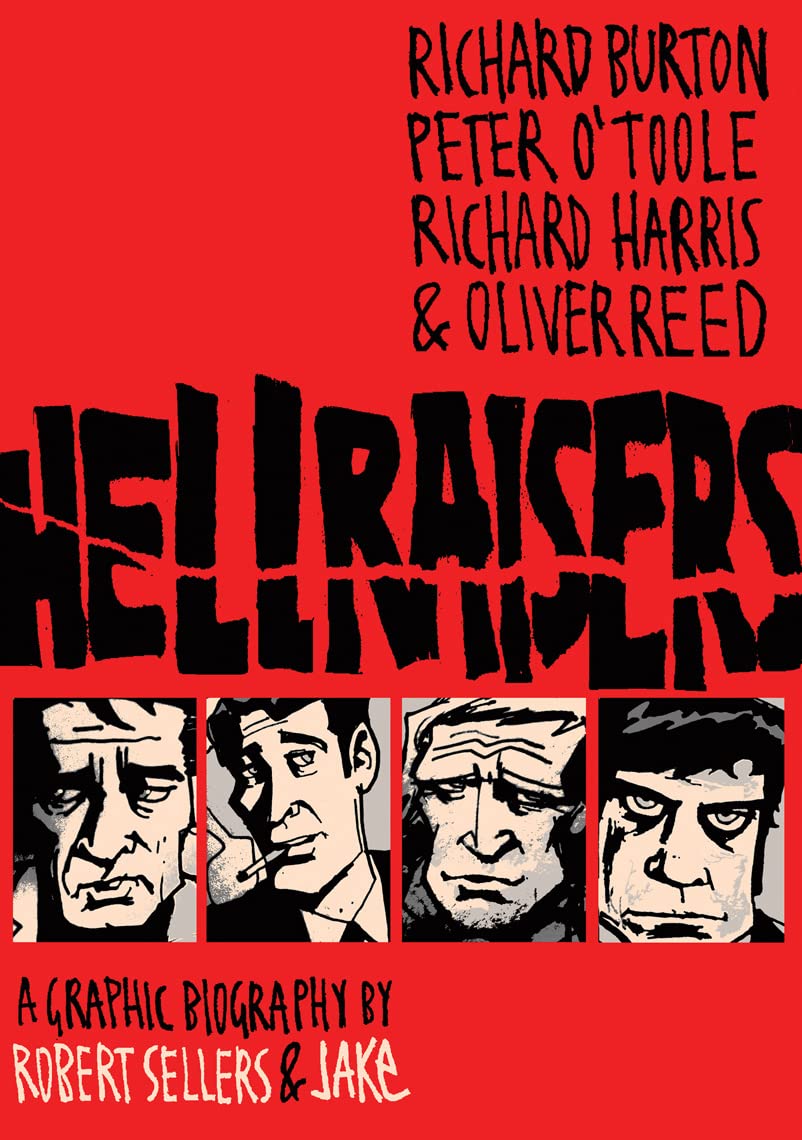
Hellraisers


By Robert Sellers & JAKe (SelfMadeHero)
ISBN: 978-1-906838-36-2 (TPB/Digital edition)

Here’s a quandary for you. Why are we blessed with and so obsessed by the capacity for self-destruction? Answers on a beermat to…

Robert Sellers used to be a stand-up comedian – so he has his own perspective – before settling as an author and film journalist with prose biographies including Sting, Tom Cruise, Sean Connery and the Monty Python phenomenon to his name. He’s also contributed to periodicals and magazines like The Independent, Total Film, Empire, SFX and Cinema Retro. And he’s also been seen on TV quite a bit.

In 2009 he published a magnificent history of theatrical excellence and brilliant excess in his Life and Inebriated Times of Burton, Harris, O’Toole and Reed. Two years later, he revisited and reformatted the material in collaboration with prestigious illustrator, designer and animator JAKe (How to Speak Wookiee, cartoon series Geekboy, Mighty Book of Boosh, The Prodigy’s Fat of the Land and so much more, both singly and with the studio Detonator which he co-founded). The artist keeps himself to himself and lets his superb artistry do all the talking.

Self-adapted from his prose history of the iconic barnstorming British film and theatre legends Richard Burton, Richard Harris, Oliver Reed and Peter O’Toole, Sellers transformed Hellraisers into a pictorial feast of “why did he do THAT?!” These tales of lurid limelight reveal the unique and incredible lives of a quartet of new wave, working class thespian heroes; each more famed for boozing and brawling than for acting. The result is a masterful parable and celebration of the vital, vibrant creative force of rebellion.

The histories are diligently interpreted with savage, witty style – and with a heaping helping of barely-suppressed admiration – in ferociously addictive and expressive monochrome cartoon and caricature novelettes by the enigmatic JAKe.

Working on the principle that a Hellraiser is “a person who causes trouble by violent, drunken or outrageous behaviour” and cloaked in the guise of Charles Dickens’ A Christmas Carol, the salutary fables open as another drunken reprobate is thrown out of another pub. It’s Christmas Eve at the Rose & Crown of Broken Dreams and Martin should be home with his wife and son.

After again disgracing himself, and still shaking with DT’s and unexpunged rage, the pathetic drunk staggers back to his loving but scared family, only to pass out. He is awoken by his hellraising father who drank and smoked himself to death seven years previously.

Told that he has one last chance to save himself, Martin is warned that he will be visited by four spirits (no, sadly not that sort) who will regale him with the stories of their lives and fates and failures and triumphs…

What follows is a beguiling journey of bitter self-discovery as Burton, Harris, Reed and O’Toole (still alive at that juncture, but part of the visitation of “spooky buggers” as it’s just a matter of time, my dear boy…) recount their own soused-and-sodden histories, experiences and considerations in an attempt to turn around the piddling lightweight. They’re certainly not that repentant, however, and even proud of the excesses and sheer exuberant manly mythology they’ve made of their lives…

Managing the masterful magic trick of perfectly capturing the sheer charismatic force and personality of these giants of their craft and willing (or helpless?) accomplices in their own downfalls, this superb saga even ends on an upbeat note. However, that’s only after cataloguing the incredible achievements, starry careers, broken relationships, impossibly impressive and frequently hilarious exploits of debauchery, intoxication and affray perpetrated singly and in unison by the departed, unquiet sozzled soul…

Jam-packed with legendary exploits and barroom legends of four astoundingly gifted men who couldn’t stop breaking rules and hearts (especially their own), and blessed/cursed with infinitely unquenchable thirsts for the hard stuff and the aforementioned appetites for self-destruction, this intoxicating, so very tasty tome venerates the myths these unforgettable icons promulgated and built around themselves, but never descends into pious recrimination or laudatory gratification.

It’s just how they were…

Sellers has the gift of forensic language, perfectly channelling the voices and idiom of each star even as JAKe perfectly blends shocking historical reportage with evocative surreal metafiction in this wonderful example of the power of sequential narrative.

Clever, witty and unmissable; isn’t it time you took a little nip to fortify yourself?
© 2010 Robert Sellers and JAKe. All rights reserved.

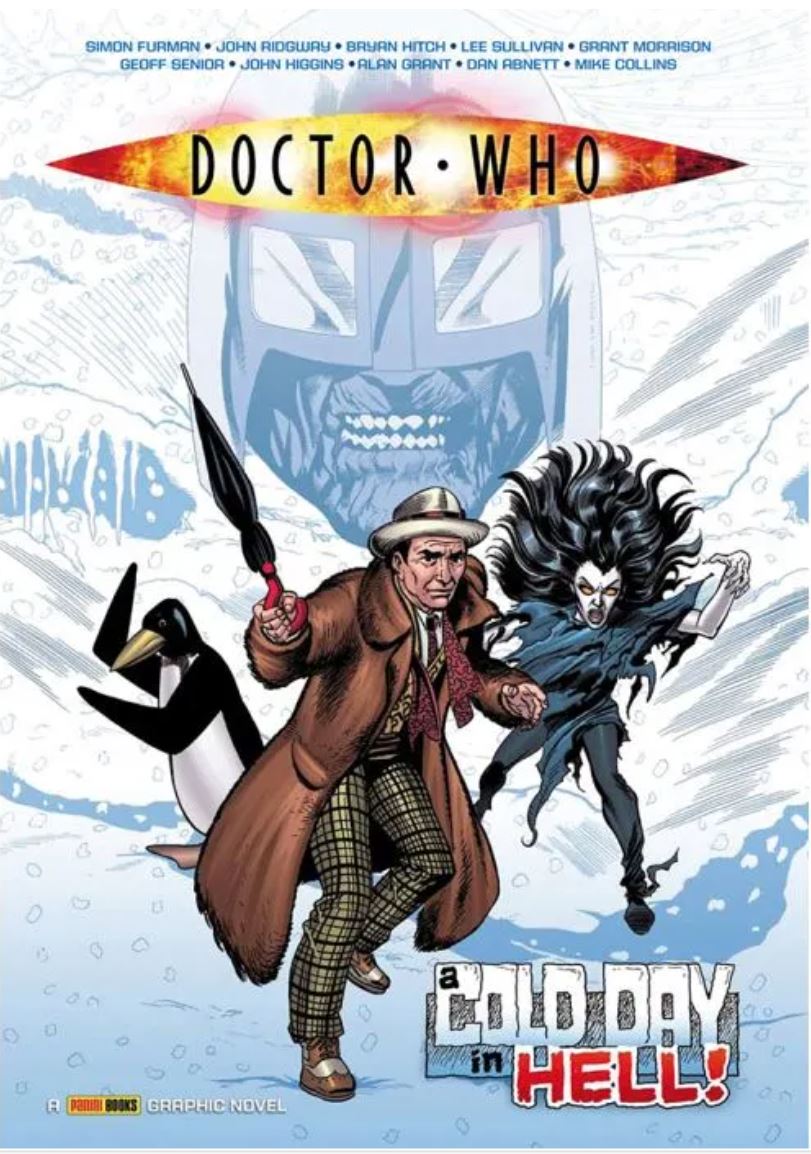
Doctor Who volume 11: Cold Day in Hell


By Simon Furman, Mike Collins, Grant Morrison, John Freeman, Dan Abnett, Richard Alan & John Carnell, Alan Grant, John Ridgway, Kev Hopgood, Tim Perkins, Geoff Senior, David Hine, Bryan Hitch, John Higgins, Lee Sullivan, Dougie Braithewaite & Dave Elliott, Andy Lanning, Martin Griffiths & Cam Smith & various (Panini Books)
ISBN: 978-1-84653-410-2 (TPB)

Despite the volatile vagaries of quantumly entanglementation, if you generally experience reality in a sequential manner, this year remains the 60th Anniversary of Doctor Who. Thus there is/has been/will be a bunch of Timey-Wimey stuff on-going as we periodically celebrate a unique TV and comics institution…

The British love comic strips, adore “characters” and are addicted to celebrity. The history of our homegrown graphic narratives includes an astounding number of comedians, Variety stars and television actors: such disparate legends as Charlie Chaplin, Arthur Askey, Charlie Drake and so many more I’ve long forgotten and you’ve likely never heard of.

As much adored and adapted were actual shows and properties like Whacko!, Supercar, Thunderbirds, Pinky and Perky, The Clangers and literally hundreds of others. If folk watched or listened, an enterprising publisher made printed spectacles of them. Hugely popular anthology comics including Radio Fun, Film Fun, TV Fun, Look-In, TV Comic, TV Tornado, and Countdown readily and regularly translated our light entertainment favourites into pictorial joy every week, and it was a pretty poor star or show that couldn’t parley the day job into a licensed strip property…

Doctor Who premiered on black-&-white televisions across Britain on November 23rd 1963 with the premiere episode of ‘An Unearthly Child’. In 1964, a decades-long association with TV Comic began: issue #674 heralding the initial instalment of ‘The Klepton Parasites’.

On 11th October 1979 (although adhering to the US off-sale cover-dating system so it says 17th), Marvel’s UK subsidiary launched Doctor Who Weekly. Turning monthly magazine in September 1980 (#44) it’s been with us – in various names and iterations – ever since. All of which proves the Time Lord is a comic star of impressive pedigree and not to be trifled with.

Panini’s UK division ensured the immortality of the comics feature by collecting all strips of every Time Lord Regeneration in a uniform series of over-sized graphic albums.

Each concentrates on a particular incarnation of the deathless wanderer and this one gathers stories originally published in the early 1990s (from Doctor Who Monthly #130-150): a time when regular illustrator John Ridgway gave way to a succession of rotating creators as part of the company’s urgent drive to cut costs – although there’s no appreciable drop in quality that I can see.

These yarns feature the Seventh Doctor (Sylvester McCoy): an all monochrome compendium that kicks off with the eponymous ‘Cold Day in Hell!’ by writer Simon Furman, Ridgway and inker Tim Perkins: a 4-part thriller featuring an attack by Martian Ice Warriors on a tropical resort planet, which leads directly into the moody, single story ‘Redemption!’ care of Furman, Kev Hopgood and Perkins.

At that time and in this book Marvel sanctioned some controversial crossovers with other Marvel UK characters. The first of these is Death’s Head: a robot bounty hunter from the Transformers comic guest-starring in Furman & Geoff Senior’s ‘The Crossroads of Time’ (DWM #135), before it’s back to sounder stuff with freak-filled 3-part Victorian Great Exhibition epic ‘Claws of the Klath!’ (Mike Collins, Hopgood & David Hine).

Fresh-faced scribe Grant Morrison wrote of charmingly different ‘Culture Shock!’ for equally neophytic ascending star Bryan Hitch to draw, before John Higgins limned Furman’s ‘Keepsake’: a classy space opera about an indigent salvage man. John Freeman & Lee Sullivan started a long association with the magazine in 2-parter ‘Planet of the Dead’ (DWM #141-142), featuring an ambitious, spooky team-up of all seven Time Lord regenerations, on a world filled with Companions who had died in their service…

Dan Abnett & Ridgway delivered ‘Echoes of the Mogor!’ (DWM #143-144) – an eerie chiller set on a mining planet where Earth workers are mysteriously dying, whilst ‘Time and Tide’ by Richard Alan & John Carnell, illustrated by Dougie Braithewaite & Dave Elliott (DWM #143-144), maroons the Doctor on a drowning world amongst aliens who don’t seem to care if they live or die…

Carnell wrote the other crossover previously mentioned, a far less well-regarded romp with imbecilic detectives The Sleeze Brothers. ‘Follow that Tardis!‘ was illustrated by Andy Lanning, Higgins, Braithwaite & Elliot, before the strip content concludes with Alan Grant’s 3-part ‘Invaders from Gantac!’, wherein a colony of alien torturers invade 1992 London by mistake in a tale as much comedy as thriller, drawn by Martin Griffiths & Cam Smith.

Supplemented with tons of text features, pin-ups, creator-biographies and commentaries, this is a grand book for casual readers, a fine shelf addition for fans of the show and a perfect opportunity to cross-promote our particular art-form to anyone minded to give comics one more go…
All Doctor Who material © BBCtv. Doctor Who, the Tardis and all logos are trademarks of the British broadcasting corporation and are used under licence. Death’s Head and The Sleeze Brothers © Marvel. Published 2009. All rights reserved.

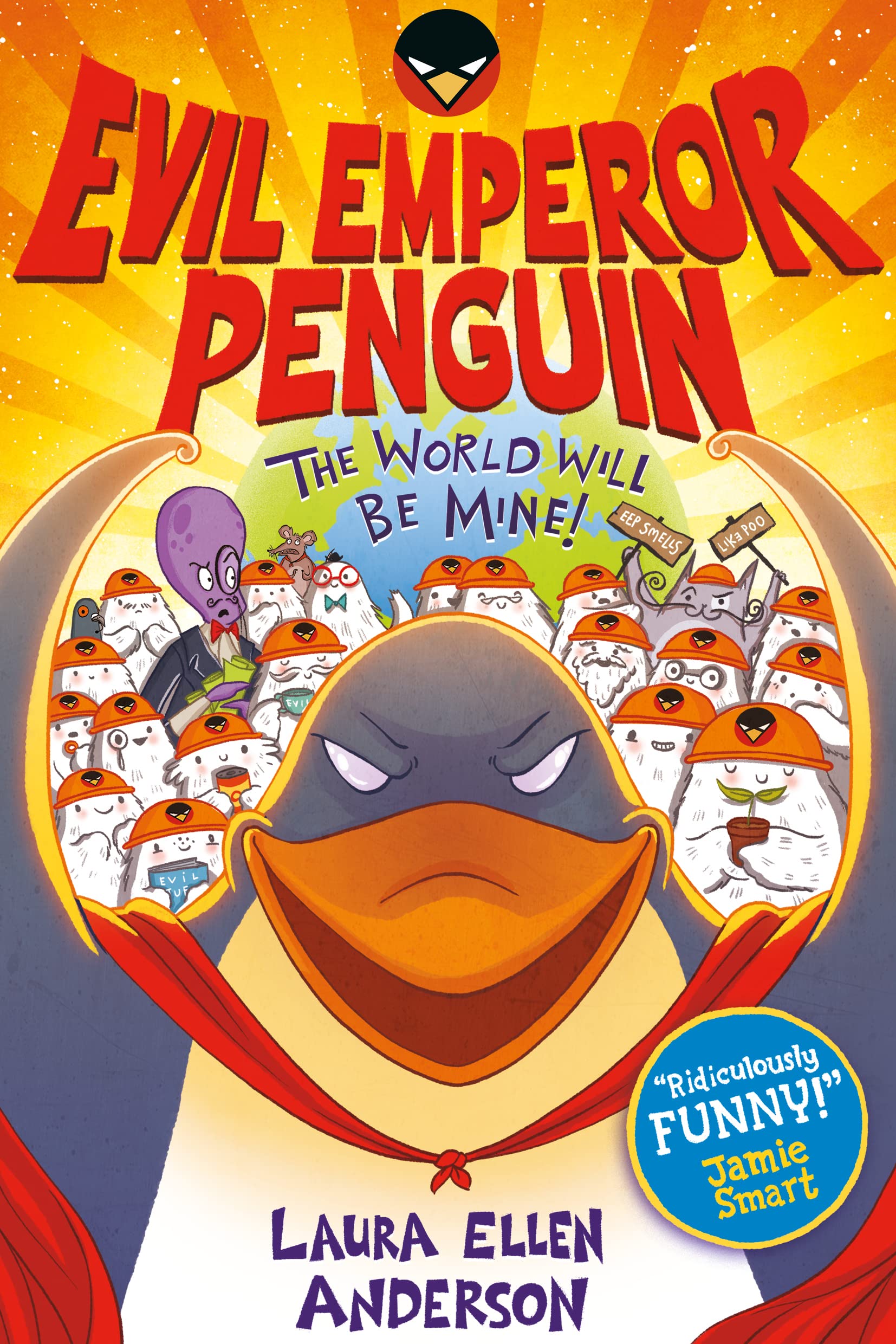
Evil Emperor Penguin: The World Will Be Mine!


By Laura Ellen Anderson, with Kate Brown (David Fickling Books)
ISBN: 978-1-78845-299-1 (Digest PB)

A lifetime ago in 2012 Oxford-based family publisher David Fickling Books launched an “old school” weekly comics anthology aimed at girls and boys between 6 and 12. It revelled in reviving the grand old days of British picture-story entertainment intent whilst embracing the full force of modernity in its style and content. This comprised comic strips, humour, adventure, quizzes, puzzles, educational material and activity pages in a joyous parade of cartoon fun and fantasy.

In the years since, the periodical has gone from strength to strength, its pantheon of superbly engaging strips generating lines of superbly engaging graphic novel compilations, the latest of which is this riotous romp starring a gloriously malign and inept arch-wizard of scientific wickedness who delights readers with a profound sense of mischief and unbridled imagination…

Conceived and created by illustrator and author Laura Ellen Anderson (Kittens, Snow Babies, My Brother is a Superhero, Amelia Fang!, Rainbow Grey, I Don’t Want…), these are the revived, remastered and extended exploits of Evil Emperor Penguin!

The bad bird lives in a colossal fortress beneath the Antarctic, working ceaselessly towards total world domination, assisted by his stylish and erudite many-tentacled administrative lackey Number 8 and cutely fuzzy, passionately loyal Eugene. The latter is an endlessly inventive little abominable snowman clone. EEP had whipped up a batch of 250, but none of the others are quite like Eugene…

The penguin potentate appointed the hairy, bizarrely inspired tyke Top Minion, but somehow never managed to instil him with the requisite degree of evilness. Still, he is a dab-hand with spaghetti hoops, so it’s not a total loss.

Following an crucially informative  pin-up of ‘the Gang’ and some recurring rivals and foes with an info-packed double-page map of the Evil Underground Headquarters (disclosing all you’ll need to know) another assortment of vile vignettes begins with ‘Quantum EEP’ as a mishap with time travelling commodes send the penguin and his tentacular deputy back in time to meet their younger hippie selves – and make them evil if they want to get home and conquer the world. If only their earlier selves weren’t so seductively content…

Back in the present, Eugene and his substandard substitute assistant Neill are trying to fix the glitch but it’s tricky with chunks of reality fading away as you reach for them.

Ultimately, the wrong real is put right and EEP resumes his plans, leading to exploiting a radical new power source in ‘Pomme de Terror’ – which then evolves into a marauding horror made even worse by arch World Domination rival Evil Cat popping in for a spot of smug mockery…

Eugene’s secret passion for footwear inspires the Bad Bird’s next plan for global enslavement in ‘Shoe-Gene’ and results in the good servant being captured by the moustachioed, top-hatted, perfidious puss whose ‘Big Fat Doom-Button’ seems certain to eradicate the top minion’s benevolent guardian jolly unicorn Keith and all his wondrous kin.

Even an unprecedented team-up of EEP and the horned horsey isn’t enough to quell the crisis and it needs the last-minute intervention of valiant narwhal Norman and his finny chums to end the cat’s plans, but at least the rescue has laid the groundwork for a future romance…

Fully restored and ready for more evil, ‘Marshminion Surprise’ sees EEP attempting to turn humanity into gooey taste treats, but instead transforming Eugene after Evil Cat interferes again. No sooner is abnormality restored than reality television inspires even greater horror when the penguin produces hyper-judgemental talent show ‘The Yay Factor’ before Eugene’s love of a Farmer’s Market leads to EEP’s invention of brain-shrinking fruit in ‘An Epple a Day’. Naturally, nothing goes right and Antarctica soon is imperilled by a giant hairy head…

‘A Penguin’s Christmas Carol’ sees the villain forced to examine his own past present and future in the traditional spoofish yet moving manner before a new year welcomes fresh terror as EEP unleashes carnivorous wheelie-bins in ‘Time to Take Out the Trash’, prior to the debut of the politest murderous minion ever as ‘Flegburt’ introduces himself and Evil Cat’s scheme to destroy the penguin’s beloved Invention Room of Evil. Of course, even good manners can’t compensate for Eugene’s unique charm…

A critical postal cock up triggers ‘The Great Chase’ across the icy continent – consequently disrupting Keith and Norman’s first date – before the status quo between potential world tyrants is restored and EEP attempts to subjugate elected world leaders with genetically modified ‘Flower Power’.

The threat level then drops as the penguin suffers a dearth of inspiration in ‘Evil Block’ and takes out his frustrations on everybody until he builds a relaxation machine and really goes off the deep end. Drenched in chaos and worse, EEP must join with Evil Cat and unknown rival Evil Rat enduing countless terrors and discovering the awful truth about pigeons…

With Flegburt having turned turncoat and now minioning for the Evil Penguin, ‘Plan Poover’ finds young unicorn Colin doing his work experience placement with Number 8, thanks to a recommendation from his uncle Keith. It soon looks like he’ll never get that precious Sparkle Scouts Career Badge after designing the Super Epic Human Rainbow Vacuum…

More upset occurs after the unwary penguin plugs in the ‘Evil Printer’ and reality starts rebelling, even as the discovery of ‘Flegburt’s True Calling’ triggers fashion, shopping and a major career change after which brainwash chemical ‘Shampoogene’ is unleashed. It’s meant to clean humanity’s heads… and brains!… but there’s a little unwelcome side effect…

Eugene’s love of blowing bubbles sparks ‘The Unpoppable Plan’ and almost ends everyone until Keith and Norman intercede, before – with “bubblegeddon” averted – master and servants settle back for ‘A Christmas to Remember’ when the bird decides to steal Santa’s job and position…

Rocket-paced, hilariously inventive, wickedly arch and utterly determined to be silly at all costs, this tome of terror also has educational merit as it offers lessons on ‘How to Draw EEP’.

Evil Emperor Penguin: The World Will Be Mine! is a captivating cascade of smart, witty funny adventure, which will delight readers of all ages.
Text and illustrations © Laura Ellen Anderson 2023. All rights reserved.

Evil Emperor Penguin The World Will Be Mine! will be released (but not for good behaviour) on September 7th 2023 and is available for pre-order now.

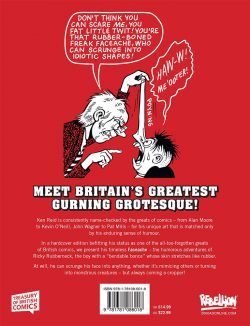
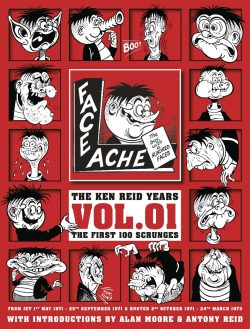
Face Ache volume 1: The First 100 Scrunges


By Ken Reid, with Ian Mennell & various (Rebellion Studios)
ISBN: 978-1-78108-601-8 (HB/Digital edition) 978-1-78108-865-4 (TPB)

Time flies and it’s not long to Halloween now, so if you need a bit of practise making scary faces to extract sweets from suckers, here’s a classic “how-to” manual to get you back up to speed…

If you know British Comics, you’ll know Ken Reid. He was another of those youthful yet rebellious artistic prodigies who, largely unsung, went about transforming British Comics: entertaining millions and inspiring hundreds of those readers to become cartoonists too.

Reid was born in Manchester in 1919 and drew from the moment he could grasp an implement. Aged nine, he was confined to bed for six months with a tubercular hip, and occupied himself with constant scribbling and sketching. Ken left school before his 14th birthday, winning a scholarship to Salford Art School, but never graduated. He was, by all accounts, expelled for cutting classes and hanging about in cafes…

Undaunted he set up as a commercial artist, but floundered until his dad began acting as his agent.

The big break was a blagger’s triumph. He talked his way into an interview with the Art Editor of the Manchester Evening News and came away with a commission for a strip in its new Children’s Section. The Adventures of Fudge the Elf (Stop it! It’s not that sort of strip) launched in 1938 and ran until 1963, with only a single, albeit lengthy, hiatus from 1941 to 1946 when Reid served in the armed forces.

From the late 1940s onwards, Reid dallied with comics periodicals: his work (Super Sam, Billy Boffin, Foxy) were published in Comic Cuts and with submissions to The Eagle, before a fortuitous family connection (Reid’s brother-in-law was Dandy illustrator Bill Holroyd) brought DC Thomson managing editor R.D. Low to his door with a cast-iron offer of work.

On April 18th 1953 Roger the Dodger debuted in The Beano. Reid drew the feature until 1959 and created numerous others including the fabulously mordant doomed mariner Jonah, Ali Ha-Ha and the 40 Thieves, Grandpa and Jinx among many more.

In 1964, Reid and fellow underappreciated superstar Leo Baxendale jumped ship to work for DCT’s arch-rival Odhams Press. This gave Ken greater license to explore his ghoulish side: concentrating on comic horror yarns and grotesque situations in strips like Frankie Stein, and The Nervs in Wham! And Smash! as well as more visually wholesome – but still strikingly surreal – fare as Queen of the Seas and Dare-a-Day Davy.

In 1971, Reid devised Face Ache – arguably his career masterpiece – for debuting weekly Jet. The hilariously horrific strip was popular enough to survive the comic’s demise – after a paltry 22 weeks – and carried over in a merger with stalwart periodical Buster where it thrived until 1987. During that time, Reid continued innovating and creating in a horde of new strips like Creepy Creations, Harry Hammertoe the Soccer Spook, Wanted Posters, Martha’s Monster Makeup, Tom’s Horror World and a dozen others.

Reid died in 1987 from the complications of a stroke he’d suffered on February 2nd, whilst at his drawing board, putting the finishing touches to a Face Ache strip. On his passing the strip was taken over by Frank Diarmid who drew until its cancelation in October 1988.

The astoundingly absorbing comedy classic is a perfect example of resolutely British humorous sensibilities – absurdist, anarchic and gleefully grotesque – and revolves around a typically unruly and unlovely scrofulous schoolboy making great capital out of a unique gift, albeit often to his own detriment and great regret…

Ricky Rubberneck early discovered an appalling (un)natural ability of scrunching (or “scrungeing”) up his face into such ghastly contortions that he can revolt, disgust and terrify anyone who gazes upon him. Over weeks and years, the modern medusa works hard to polish his gifts until his foul fizzog may attain any formation. Eventually his entire body can be reshaped to mimic any creature or form, real or imagined. Naturally, he uses his powers to play pranks, take petty vengeances, turn a temporary profit, deal with bullies and impress his pals.

Just as naturally, those efforts frequently result in the standard late 20th century punishments being dealt out by his dad, teachers and sundry other outraged adults…

Now available in paperback, hardback and digitally this initial celebration is part of Rebellion’s ever-expanding Treasury of British Comics: collecting all 22 Jet episodes (from May 1st to September 29th 1971, plus the remaining 78 weeks’ worth from Buster & Jet, beginning with October 2nd and concluding with March 24th 1973.

The potent package is garnished with an appreciative Introduction by Alan Moore – ‘The Unacceptable Face of British Comics’ – a fondly intimate reminiscence in Antony J. Reid’s ‘My Father Ken Reid’ and a full biography of the great man…

What follows is an outrageous outpouring of raw cartoon creativity as Reid, writing and drawing with inspired effulgence, spins a seemingly infinite skein of comedy gold on his timeless theme of a little boy who makes faces at the world.

Weekly deadlines are a ferocious foe however, and a couple of strips reprinted were written by unsung pro Ian Mennell, whilst – between January & September 1972 – an uncredited fill-in artist (possibly Robert Nixon?) illustrated 16 episodes, presumably as Reid’s other commitments such as Jasper the Grasper, The Nervs or his numerous funny football features in Scorcher & Score mounted.

In these pages though, the accent is on madcap tomfoolery as our plastic-pussed poltroon undergoes a succession of fantastic facial reconfigurations: terrifying teachers, petrifying posh and pushy landowners, mimicking monstrous beasts, outraging officious officialdom and entertaining an army of schoolboy chums and chumps.

Orchards are raided, competitions are entered, plays and school trips are upstaged and aborted and even actual spooks and horrors are afforded the shocks of their unlives as Face Ache gurns his way through an endless parade of hilarious hijinks.

These cartoon capers are amongst the most memorable and re-readable exploits in all of British comics history: smart, eternally funny and beautifully rendered. This a treasure-trove of laughs that spans generations and deserves to be in every family bookcase.
© 1971, 1972, 1973 & 2017 Rebellion Publishing Ltd. Introduction © Alan Moore. Face Ache ™ & © Rebellion Publishing Ltd. All Rights Reserved.