
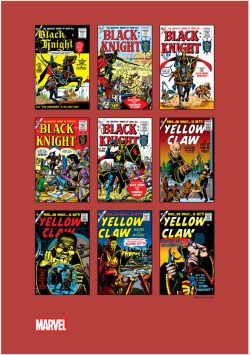
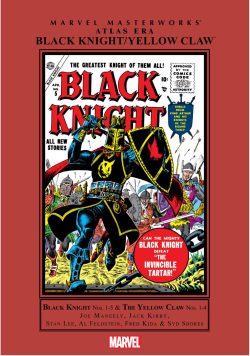
By Stan Lee, Al Feldstein, Joe Maneely, Jack Kirby, Fred Kida, Syd Shores, John Romita, Christopher Rule, Werner Roth, Roz Kirby, John Severin, Manny Stallman, Bill Everett & various (MARVEL)
ISBN: 978-1-59816-522-7 (HB), 978-1-3025-1932-2 (Digital edition)
This book includes Discriminatory Content produced in less enlightened times.
Win’s Christmas Gift Recommendation: Ancient Travellers Bearing Gifts Not To Everyone’s Taste… 9/10
History and myth are valuably malleable but double-edged resources when creating fiction, and even more so when employing a shared interlinked continuity designed to appeal to the lowest kind of populism. All companies in comics publication of any real vintage have reason to regret and be wary of many aspects of past triumphs in these modern, more enlightened and diverse times…
From 1930s Disney to any contemporaneous war comics up (to and including Vietnam, Grenada, the Falklands, Iraq or Bloody Gaza), superheroes, spy stories, westerns or any era and so, so many mainstream publications well into the 1990s all have their own walks of shame. These comprise and include dated ethnic characterisations, any female costume, and/or cringeworthy “era-specific” dialogue which all fall woefully short by our modern ethical and social standards.
However – and ironically for “low culture” – with a few rare exceptions, comics generally fare far better than most movies, plays or novels in the Sensitivity Stakes. Check out the works of Robert E. Howard, H.G. Wells, Edgar Rice Burroughs or crime writers like (King Kong scripter) Edgar Wallace or Agatha Christie for what “polite society” thought acceptable language or portrayals of heroic ideals and race, class, gender and social roles. Never, ever look at the original unexpurgated writings of childhood mainstays like Mark Twain, Arthur Conan Doyle, Enid Blyton or Roald Dahl with children or the impressionable present…
In the end it’s all about context as much as intent, and thankfully most of us have grown up enough to see the futility and potential harm of petrifying role models and national or racial hierarchies. Of course I exclude any political party from joining this debate. Like any needy kid, those slimy bastards will do anything to get noticed…
All of which is a rather longwinded and circuitous way of saying today’s review should come with the advisory “Warning! Not Written Recently! Drawn Decades ago! Contains views WE don’t actually hold, believe, endorse or condone!” That rather begs the question of why we’re even bothering to bring this book to your attention, and my reply is that you don’t fix the present by pretending the past never happened.
If you can’t recognise wrong or uncomfortable things because you’ve never seen them, you won’t be ready when the next bunch of racist, sexist, difference-phobic buttheads start tweaking laws and rules. As they all are right now.
Moreover – with a few extreme exceptions and modifications – in purely comic book terms these Fifties fables constitute a crucial part of the overarching continuity constructed to house the Marvel Universes…
Part of an ongoing project to make Marvel’s Atlas fare available to anybody interested, the oddments and short runs gathered here came at a time when movies and (gradually) television were resetting mass entertainment rules and landscapes. What worked there would soon filter down into comic books and, as well as comedy, horror, western, war, romance and science fiction, filmic fads regularly popped up as funnybook fare…
Gathered here – supported and preceded by an erudite, contextually informative Introduction from industry icon and historian Roy Thomas – are largely exploratory short run titles tested in hot blood. Thus notional historical epic Black Knight #1-5 (May 1995- April 1956) rides beside and overlaps “yellow peril”, “commie-buster” science fantasy The Yellow Claw #1-5 (October 1956-April 1957) and it’s also only fair to remind readers that northern/East Coast liberals abounded at Atlas – and later Marvel – so Stan Lee’s material as writer/editor was always at the forefront of diversity, tolerance and integration – if not (initially) sexual equality.
Downplaying his audience’s ingrained ignorance and cultural lassitude and never applying overt prejudice, Atlas’ pantheon was all about integration and co-existence – albeit only as much as the times and readership would allow. At a cultural moment when medieval knights, crusaders (and pirates) were trending above monsters, contemporary crime and even westerns on screens large and small, a number of comics companies – DC with The Brave and the Bold, EC’s Valor and Magazine Enterprises/Charlton’s Adventures of Robin Hood – all tried their hands at swashbuckling derring-do in the epic manner of Hal Foster’s Prince Valiant newspaper strip. As regards the back of this collection, sinister foreigners seeking white extermination never went out of style…
For Atlas it was business as usual but Lee was never one to abandon traditions that were proven sellers, so when Black Knight was released in early 1955 it was as a masked hero in a distinctive costume anonymously confronting perfidy and wickedness in disguise, just like any superhero or western wonder like newsstand stablemate Black Rider…
These tales were informed by movies including Richard Thorpe’s 1952 adaptation of Ivanhoe, Henry Hathaway’s 1954 interpretation of Prince Valiant and Tay Garnett’s 1954 “epic” The Black Knight (no relation!). If you’ve seen them you’ll be well aware that historical accuracy is not the point or the result. However, as all concerned in crafting these comics were extremely good at their jobs, the result is beautiful looking, thrilling armoured hero action in the style of all the best fairy tales…
Released under the brand new Comics Code Authority aegis, with knighthood fully in flower and behind a stunning Joe Maneely cover, the sword-&-sorcery saga begins in glorious Camelot with ‘The Menace of Modred the Evil’. King Arthur Pendragon’s nephew and his wife Morgan Le Fey plot to rule the realm and sagacious Merlin has secretly summoned the usurper’s distant cousin Sir Percy of Scandia to become his covert agent, the King’s protector and the strong right arm of justice.
Entering Court as a landless noble, effete poet, ingratiating bard and craven coward, Percy is soon equipped by Merlin with striking ebony armour and required to fight for right without recognition whilst openly inviting scorn as a fool no schemers would be wary of. Sadly, such cruel condemnation also comes from Arthur’s ward Lady Rosamund, a beauteous maiden Percy secretly loves…
Black Knight’s first foray explosively concludes with him battling beside Arthur when impatient Modred’s men ambush the king. Saving the sovereign, the mystery man is invested with his liege lord’s greatest honour…
Scene set, the saga pauses for prose vignette ‘Excalibur’ – the story of how a boy pulled a sword from a stone and became king of the Britons – after which a fabulous formula of adventure unfolds. It begins with the mandatory supplemental feature demanded of comic books at this time. In this mag it’s another (but later) serial of kings & warriors.
Scripted by an unknown author but sublimely rendered by Maneely, ‘The Crusader’ debuts a white Muslim warrior in the time of Richard the Lionheart’s crusades. Wielding a fabled, supposedly magical scimitar, noble Saracen El Alemain survives assault by his untrustworthy Mongol ally Tenga Khan and learns from dying knight Sir John O’Dare that he is actually the son of a Frankish lord… and O’Dare’s long-lost brother. The conflicted warrior then converts and changes sides, to assume his precarious position as a knight of two warring worlds and cultures…
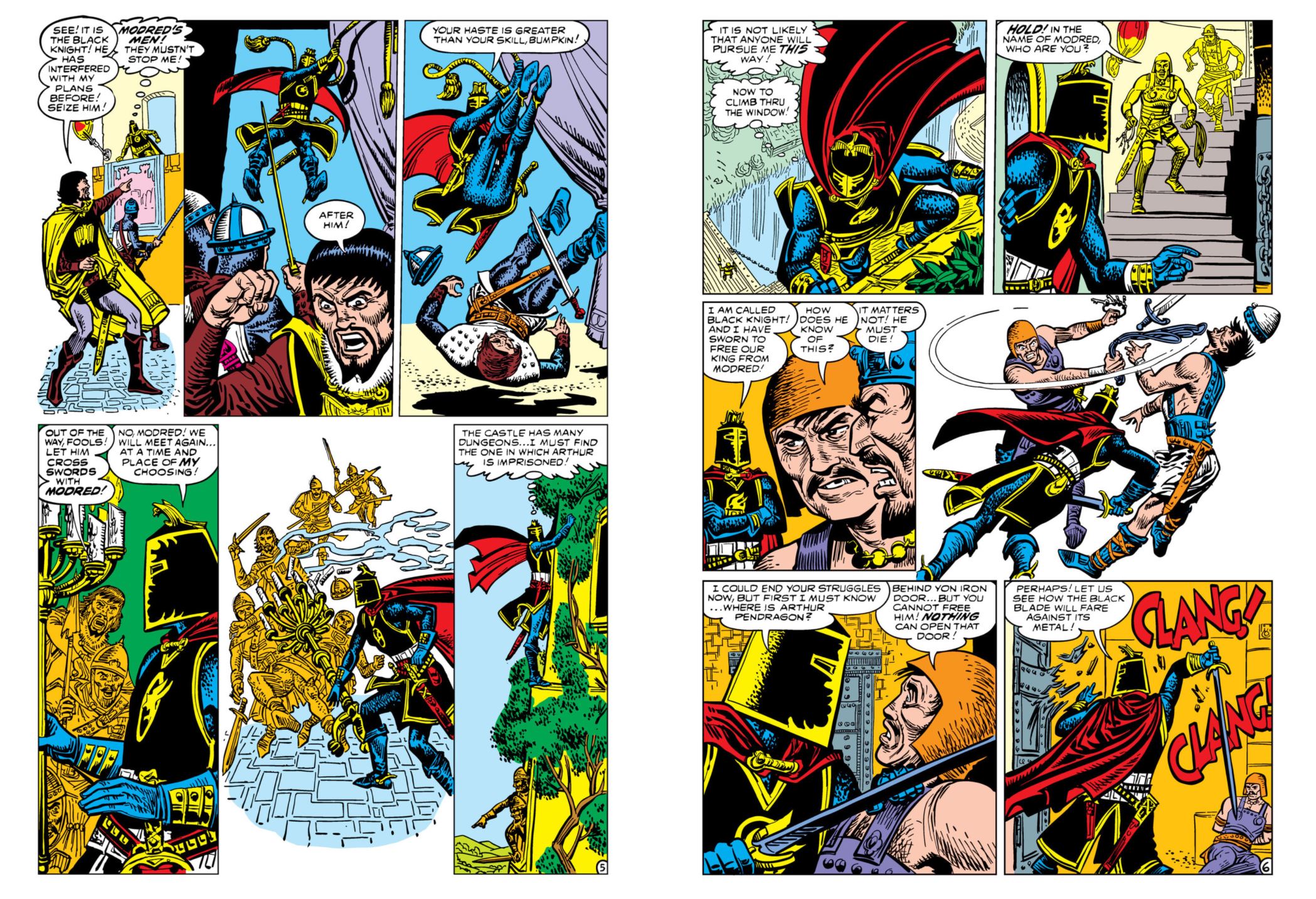
The opening dramas pause once Black Knight savagely stops Mordred’s next gambit as the usurper seizes the throne after his cronies complete ‘The Abduction of King Arthur!’ Merlin’s power easily gleans where the king is held captive, but to defeat an entire cadre of men-at-arms his dark agent will need an extra asset. Thus the mage gifts Percy with a magical weapon the equivalent of Excalibur…
With the Black Blade in his mailed fist, the masked warrior is unstoppable, and soon Arthur is back in Camelot but stubbornly refusing to believe Modred was to blame…
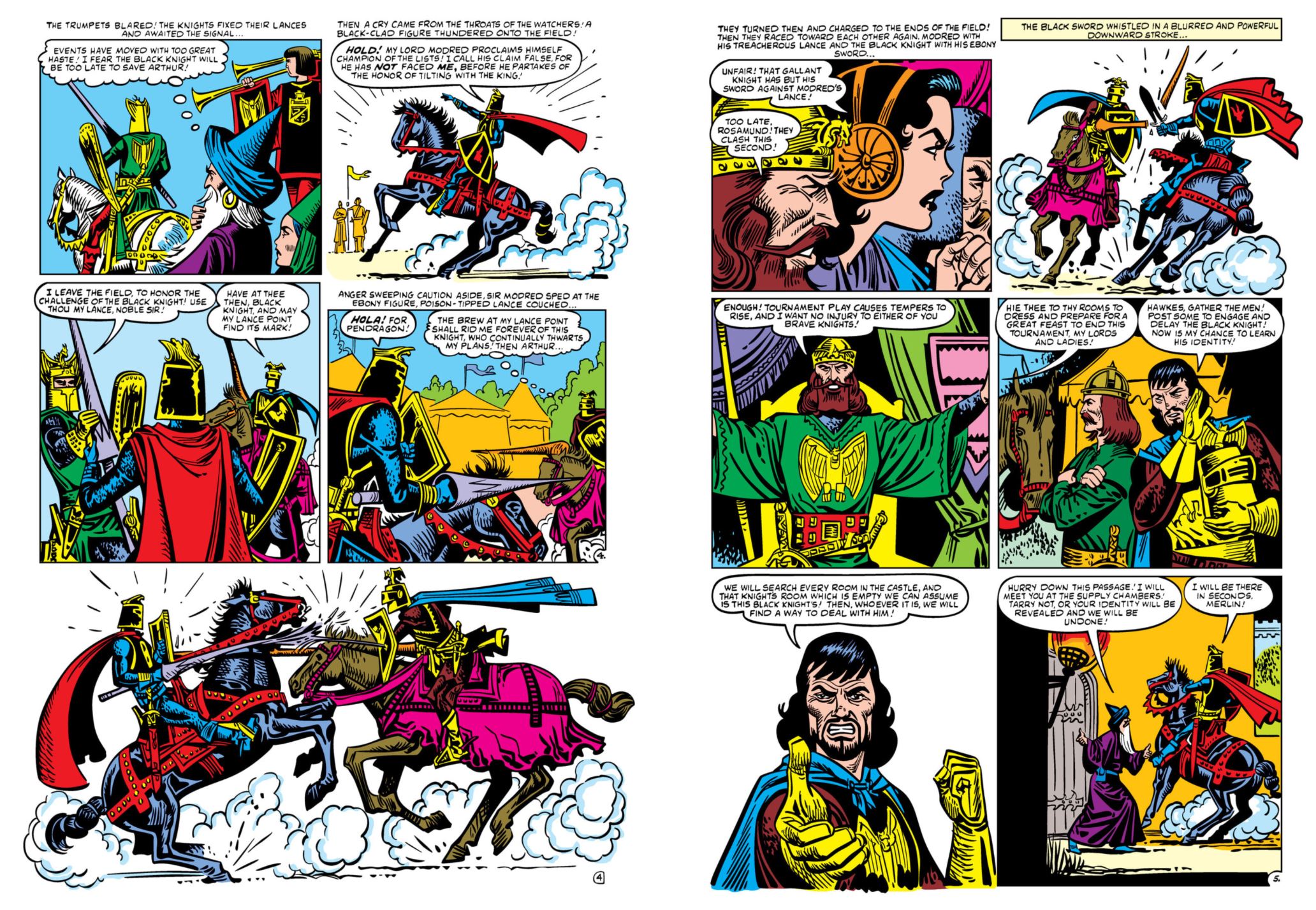
Although no longer signed by Lee (and so possibly scripted by Carl Wessler or Ernie Hart?) the all-Maneely adventure continues in BK #2 (July 1955) beginning – despite some exceedingly confusing contents title designations – with a tale of the Black Knight single-handedly trouncing a Viking raiding party. They had abducted Lady Rosamund and paid hard for it, prior to ‘Tournament of Doom!’ revealing how a plot to poison Arthur during a joust is foiled by the phantom paladin…
Once anonymous prose essay ‘The Round Table’ brings readers up to speed on the most fabled furniture in literature, ‘The Crusader’ – still fighting Mongols seeking to steal his “Saracen Blade” – so impresses Richard Coeur-de-Leon that the king knights him “Sir Crusader” on the spot and invites the orphan into his retinue…
Then cover-featured yarn ‘The Siege of Camelot!’ closes the issue as the Court goes forth on it duties leaving the castle relatively unguarded. When Mordred induces treacherous Sir Robert de Quincy to attack the citadel with hordes of Norman mercenaries, the Black Knight leads the resistance before crashing the besieging lines to summon reinforcements…
Cover dated September, BK #3 was Maneely’s last issue, and began with ‘The Black Knight Unmasked!’ after Modred and vile Sir Guy of Gascombe deliberately wound the hero during a tourney bout. Despite methodically testing all potential candidates for the alter ego of the clandestine champion their scheme failed thanks to the restorative potions of Merlin…
An untitled exploit then sees Modred buying three lions from roving “Gypsies” in a ploy to have Arthur perish on one of his beloved hunting trips. However, thanks to Merlin’s crystal ball and the Black Knight’s quick thinking, it’s the nasty nephew who’s left patching his wounds, before prose piece ‘The Plotters’ sees Merlin and Launcelot foil a scheme to remove the King by stealing Excalibur.
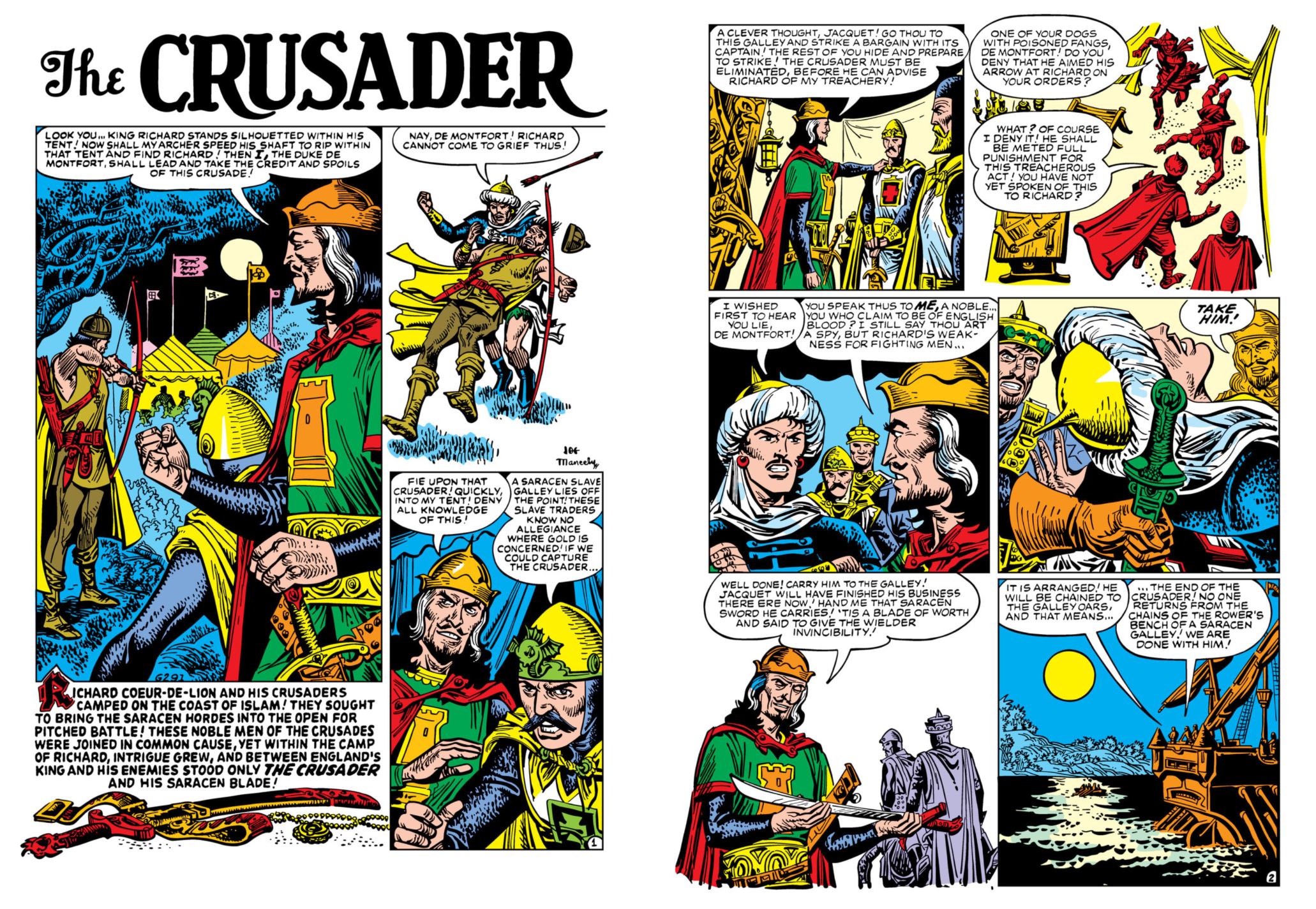
When ‘The Crusader’ foils a murder attempt on the King by ambitious Duke de Montfort, he is subsequently abducted and sold as a galley slave, but easily escapes to reap his own revenge before another untitled epic sees French aristocrat and exceedingly bad loser Sir D’Arcy toppled by the Black Knight in a joust, refused a seat at the Table Round and thwarted from pursuing and possessing Lady Rosamund. With typical gallic grace he then kidnaps her and her noble entourage as a means of getting his way, but has severely underestimated the determination of the masked hero, the patriotism of English peasant Simon the Strong and the nation’s distaste for whining cheats…
Behind a Maneely cover, #4 (November) saw the star artist moved on to more profitable books whilst Fred Kida (Airboy, The Heap, Captain Britain) took over the lead artist role. In ‘Betrayed!’, after literal robber baron turned renegade warlord Sir Guy Wanderell surrenders to Arthur’s justice and mercy, the rogue tries one last trick by impersonating the Black Knight, only to learn that looks do not make the man…
Another nameless tale sees the Black Knight save Tibbett the Beggar from the cruel japes and ministration of (ig-)noble De Montfort and later rescued in turn when the blue-blooded brute and his Scots ally Kevin MacCaul return from exile to destroy Arthur’s dream…
‘The Intruder’ is a text treat telling of how the Lionheart and his trusted minstrel Blondell saved a Christian army from utter destruction before John Romita assumes illustration duties on the similarly-themed comics adventures of ‘The Crusader’. This time the man of two worlds faces Saladin himself to expose a traitor who has framed an honourable old warrior, neatly segueing back to Kida and the Black Knight as Arthur and his vacation courtiers are seized by French and Sicilian pirates. Unknown to all, the raid has been organised by Modred who expects piratical ransom-taker Le Ponneu to kill them all whilst he takes the throne, but they have all underestimated the resolve of apparent poltroon Sir Percy…
Cover-dated April 1956, Black Knight #5 was the last sally. Illustrated throughout by Syd Shores & Christopher Rule, it opened with another untitled bout as the Black Knight rode out to destroy the Dragon of Kentswood Swamp, confident that what he faced was man-made. Indeed it was a deception by frustrated Sir Gilles who sought fair Rosamund’s hand in return for destroying the ravening wyrm, after which Sir Percy was briefly captured by forest-dwelling robbers. Happily, the ‘Men of the Shadows!’ were unjustly evicted honest peasants and when the Black Knight confronted brutal greedy High Sheriff Sir Costain the scales of justice were soon rebalanced…
Prose tale ‘The Invaders’ reveals how initial panic at a Viking landing turned into good news before ‘The Crusader – The Scent of Treason!’ sees the conflicted El Alamein accept Saladin’s aid to rescue imprisoned Richard and punish Crusader traitors De Montfort and Baron Hinden before The Black Knight faces ‘The Invincible Tartar’ and ultimately frustrates the plans of Mohar Jinn and Timultor to add Britain to their empire…
In the mid-1950s the company commonly known as “Atlas” tried to revive their “Big Three” superheroes on the back of a proposed Sub-Mariner television series, hoping to cash in on the success of the monumentally successful Adventures of Superman TV show. This led to some impressively entertaining tales, but no appreciable payoff as the Atlantean antihero, Human Torch & Captain America briefly returned to newsstands… and just as rapidly disappeared again when the Hollywood deal fell through.
When this last gasp of superheroic shenanigans failed, the publisher again concentrated on safe genres like humour, romance and more-or-less straight adventure anthologies with the accent strongly on weird monsters, invading aliens and robotic rogues. They never really stopped exploring that fantasy hero niche though and hooded, cloaked or just well-disguised cowboys like Apache Kid, Black Rider and Outlaw Kid carried on where the mysterious Black Knight had faltered, keep the flame alive.
However in the volatile atmosphere of paranoid 1957, the little company came closest to a full revival of flamboyantly garbed wonders by creating an authentic supervillain for fashionably genre compliant “G-Men” to battle. The very best of the industry’s so-very-many knock-offs of Sax Rohmer’s legendary archetype of Foreign Evil Fu Manchu, The Yellow Claw menaced Freedom & Democracy in the days of apparent Commie technological supremacy and imminent invasion by Sputniks and rampaging Reds. Thankfully, the ruthless fiend was constantly thwarted by the bold endeavours of Chinese American FBI agent Jimmy Woo, but both peaked and faded far too soon, until resurrected by history-loving comics wunderkind Jim Steranko in his Swinging Sixties Nick Fury, Agent of S.H.I.E.L.D. serialised magnum opus, and latterly reconditioned as somehow-assumed less offensive modern supervillain Plan Chu…
Releasing four bi-monthly issues (cover-dated October 1956 through April 1957), the first issue of suspenseful spy-fantasy was written by Al Feldstein and again entrusted to Stan Lee’s friend and most trusted artist Joe Maneely: a man who could draw absolutely anything with style, wit, grace, accuracy and staggering vitality. We old comics fans cannot help but speculate what might have happened if he had not died at age 32 on June 7th 1958, compelling Lee to heap so much on returning Jack Kirby’s broad shoulders. If you are prone to signs and portents, Maneely passed the same week Kirby officially signed on at the company that would not be called Atlas for very much longer…
Yellow Claw # 1 has the same cover-date as Showcase #4 – which introduced a new Flash to comics – but the tone and content could not be more different. Terse, grimly gritty and even a bit scary, Feldstein & Maneely’s ‘The Coming of the Yellow Claw!’, reveals how Maoist generals of the Chinese Communist High Command are stymied in their future plans for conquest by America, in an attempt to remove the sleeping democratic giant, as they seek to recruit an ancient mystic who has terrified the recently conquered nation for centuries. On approaching the terrifying wizard the military men are shocked to learn that the mage will assist them and move to the USA. They have no idea of his true ambitions…
As the Claw secretly transports his many tools and devices, along with devoted, docile, subservient niece Suwan to new quarters in San Francisco, he also seeks out a seasoned criminal to act as his advisor. When he was running Auschwitz, Karl von Horstbaden was matchless in cunning and cruelty. Now the fugitive Nazi war criminal is Fritz von Voltzmann and his years escaping justice have made him the perfect tool for the claw’s campaign…
The living devil has no idea that in Washington DC the FBI have ordered new agent Jimmy Woo to investigate disturbing intel and rumours of a new threat from China, but by the time Woo arrives on the West Coast the villains are ready for him…
Once again the legal vagaries of publishing demanded titles offer a variety of features and Yellow Claw offered text epigrams and an unrelated complete comics tale to moderate the main attraction. Here the text piece is anonymously penned (but with a John Severin illo) ‘Free Agent’, detailing how an enemy agent is outwitted by Yankee ingenuity before ‘The Yellow Claw Strikes!’ After resurrecting a dead convict in San Quentin, the devil doctor sets his new zombie to capture Woo, but underestimates the killer’s patriotism and suffers some minor setbacks. Ultimately, the most telling of these was Woo visiting the Chinatown curio shop the Claw was using as a base, since that’s when Suwan met the rugged he-man hero and fell in love with him…
Following done-in-one spy yarn ‘For Services Rendered’ – limned by Werner Roth and detailing the fate of a traitor who betrays himself – the issue eponymously ends as ‘The Yellow Claw’ anticipates an FBI raid on his curio shop and leaves a trap for Jimmy Woo. Its name is Suwan but the tactic doesn’t work and has unprecedented consequences…
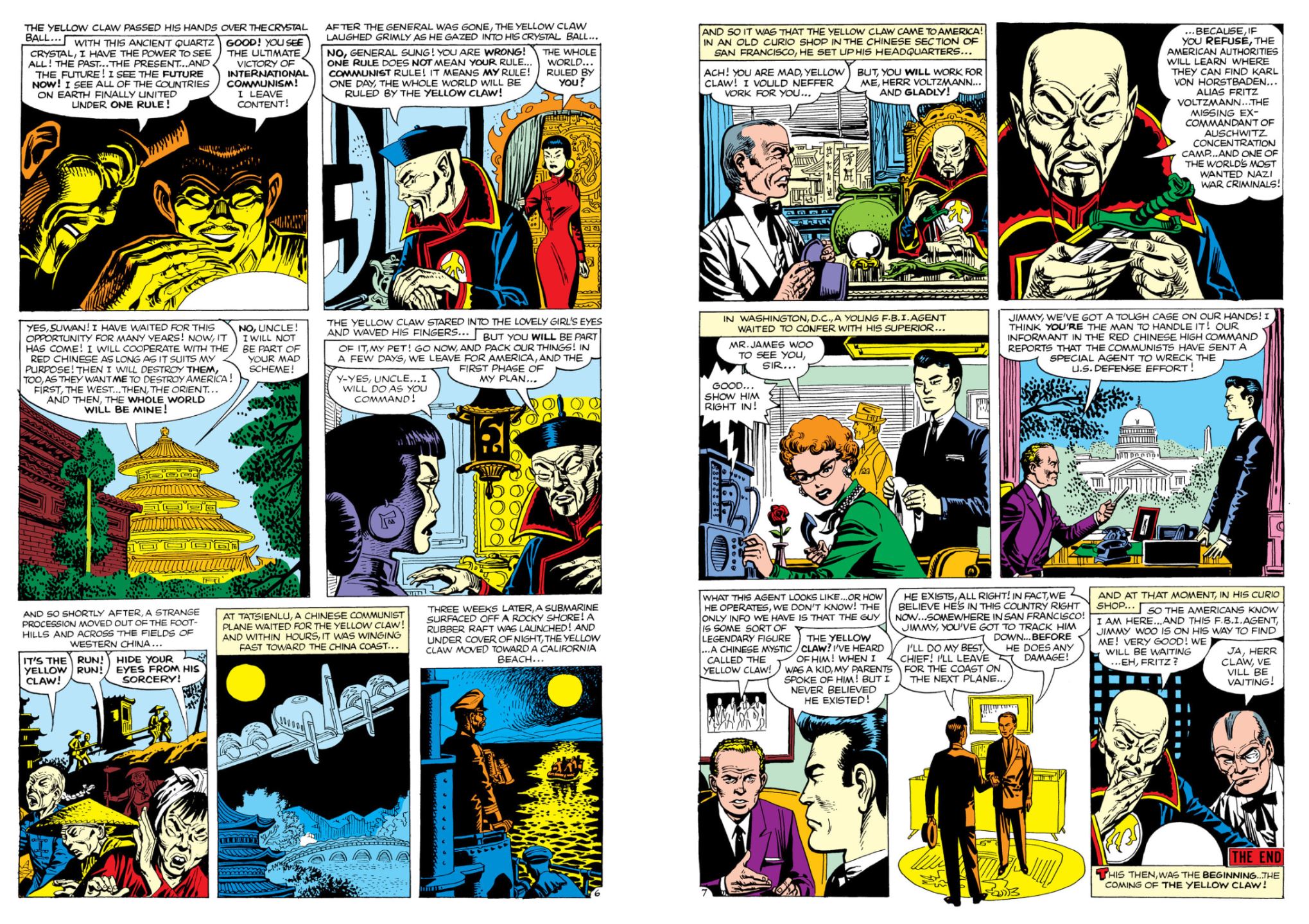
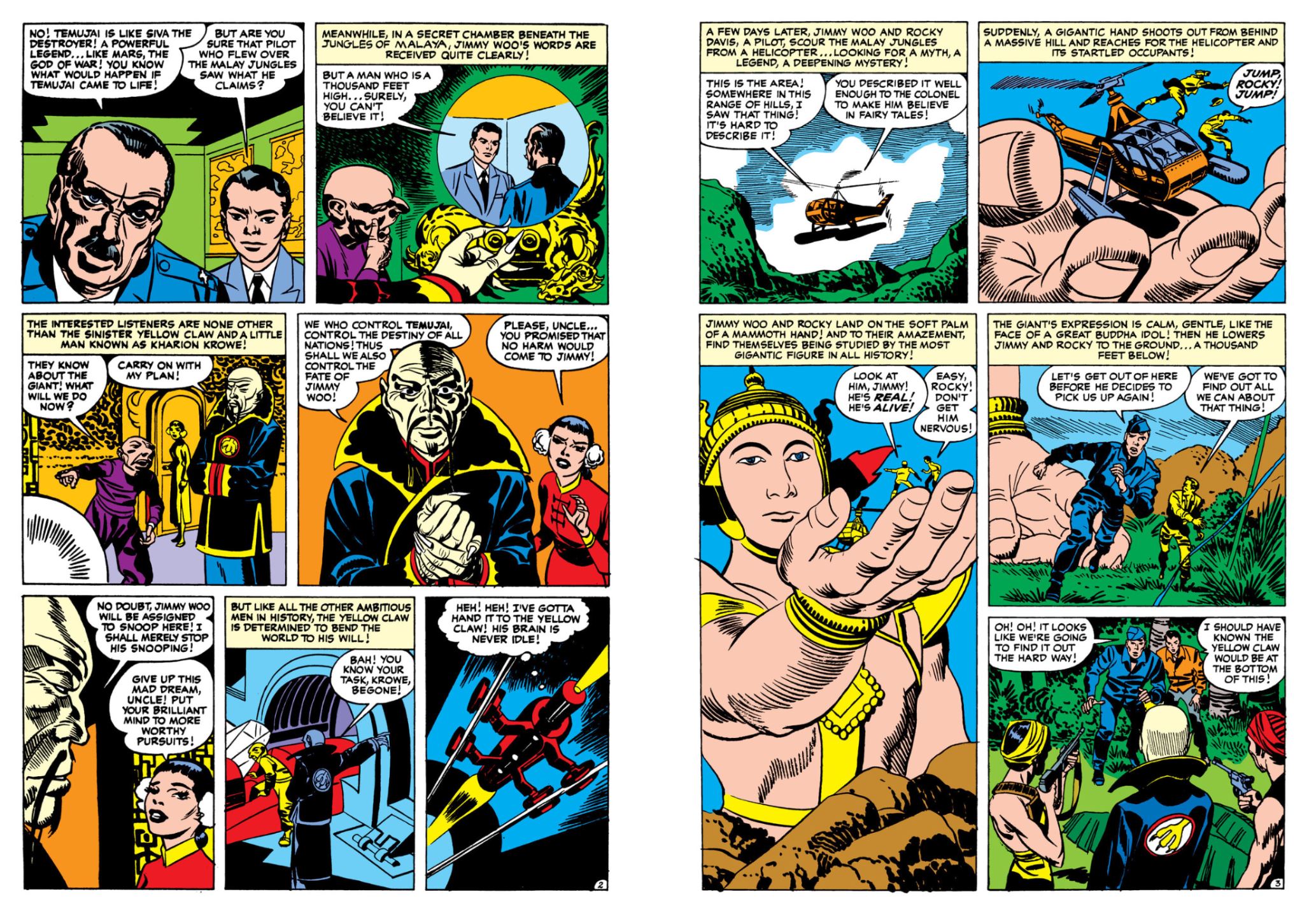
Jack Kirby took over the title with the second issue (December 1956) with wife Roz playing a significant role as co-plotter and inker. Eschewing oriental exoticism and ancient flummery, these tales were shorty, pithy and laced with contemporary mystery or space-age sci fi themes, just like Kirby was also employing in DC’s soon-to-debut Challengers of the Unknown series…
Here though, behind a John Severin cover, Jack & Roz opened YC #2 with ‘Concentrate on Chaos!’ as the malign mastermind enslaves a sextet of mutants and uses their heightened psionic powers to warp reality and spread terror across America. Sadly, despite being trapped in an altered existence, Suwan again chooses Jimmy over her kinsman, to secretly disrupt the plan at its crowning moment…
Anonymous but illustrated by Don Heck, text thriller ‘Cold Danger’ explores espionage at a polar research base before ‘The Mystery of Cabin 361!’ finds Woo chasing the Claw & Co onto an ocean liner heading for Honolulu. Although in retreat and keeping his untrustworthy niece sedated, the villains still attempt to kidnap US diplomats before escaping on a passing soviet submarine only to resurface at a west coast experimental aircraft facility in an untitled tale involving sabotage that is in fact a devious test of love-struck Suwan’s true loyalties…
Possibly rendered by William Weltman & Jack Abel, complete short ‘Footsteps in the Dark’ sees how a heavily-surveilled traitor is finally caught by a most pedestrian ploy before Jack & Roz reveal how world public enemy #1 fetches up in Malaya and unleashes a thousand foot tall terror in ‘Temujai… the Golden Goliath!’ Happily, Agent Woo is no believer in gods or giants and gleans what’s really going on…
Bill Everett limned the cover of YC #3 ( February 1957) wherein Kirby amped up the tension as ‘The Microscopic Army!’ created by the Claw’s molecular convertor rifles every secret file on the West Coast… until Jimmy borrows their tactics and tricks to face them on their own tiny terms…
Text thriller ‘The Spy’ sees an American tourist in Paris mistaken for a courier and stalked by enemy agents before the Claw exploits and manipulates deadly extraterrestrial ‘UFO the Lightning Man!’ into attacking US missile bases before the impossible finally happens. However ‘The Yellow Claw Captured!’ proves be a hoax headline and the monster’s whereabouts remain a mystery whilst George Roussos illustrates self-contained vignette of mistrust and double-cross ‘The Trap!’
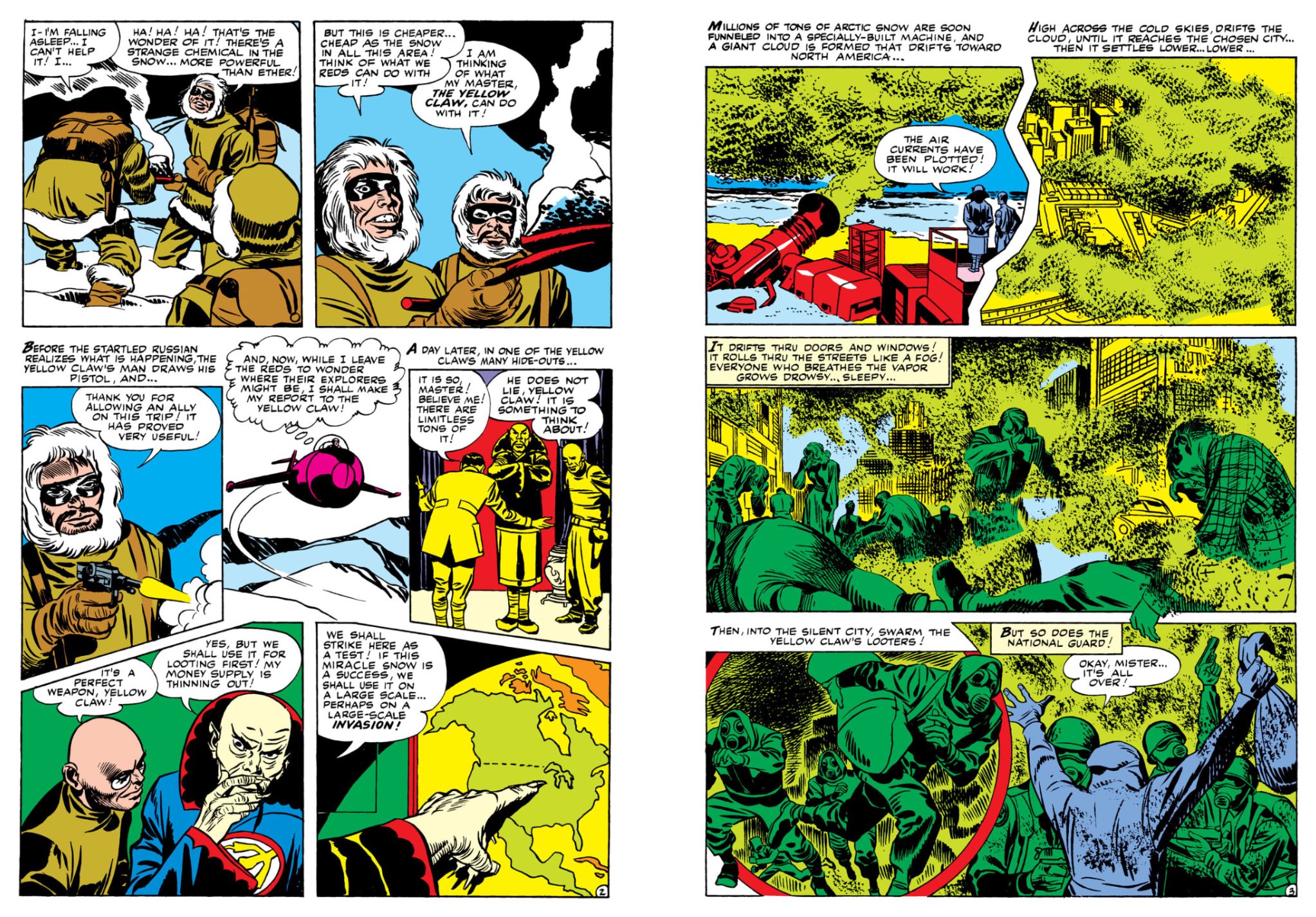
‘Sleeping City!’ sees the terrifying triumphant return of the Claw as the enemy of freedom uses an arctic mineral to induce mass-slumber across the mid-west. Thankfully, Jimmy forewarned is a force to be reckoned with and ultimately the Claw is forced to retreat again..
Severin handled the cover of last issue Yellow Claw #4 (April 1957), and also inked Kirby on each titular episode included here. It began with ‘The Living Shadows!’ as Suwan is snatched from FBI custody by extradimensional beings doing the fiend’s will. Sadly, they’re not smart enough to stop Jimmy tagging along when they ferry her back to her creepily doting uncle, and the mastermind again endures an ignominious retreat…
Prose pause ‘It’s In the Cards’ offers another case of mistaken identity leading to danger (and romance!) before the Claw uses atomic-test mutated birds to endanger shipping and air transport. What the oriental overlord did not reckon on was ‘The Screemies!’ being smart enough to cut a better deal with canny Jimmy Woo…
Penultimate Claw classic ‘Five Million Sleep-Walkers!’ found the fiend using a super-hypnotist and a local television station to seemingly enslave an entire city, but this time even seeing was not believing. Thus after Manny Stallman revealed how an eccentric paranoid inventor doomed himself in ‘The Locked Room’ The Yellow Claw perpetrated one last horror on America in ‘The Thought Master!’ after forcing a man who could make ideas solid to build armies and attack the world…
Then that was it for the moment. Kirby made more magic for DC, Harvey and Archie Comics and even ailing Atlas, as well as on his troubled dream Sky Masters of the Space Force, but it would years before he went back to serial characters with Stan Lee. It was a time of high intensity concepts but low-emotional investment in characters that only really ended when Fantastic Four #1 launched.
Here, however, rounding out the controversial romps from less evolved eras is a scholarly illustrated essay about the other artistic genius whose work graces this tome. ‘Joe Maneely: Adventure Comics’ by Dr. Michael J. Vassallo tells you all you really need to know – and if you love this art form, you do need to – of the lost genius and his ridiculously tragic short life. Not a mainstream Marvel by any means, this collection is a celebration of other times and different tastes, but still offers unparallelled joys to lovers of adventure and addicts of visual stories…
© 2020 MARVEL.