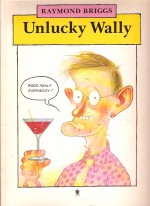
Unlucky Wally


By Raymond Briggs (Hamish Hamilton/Sphere/Penguin)
ISBN: 978-0-24112-106-1(hb),

Sphere pb: 978-074740-065-3   Penguin pb: 978-0-74740-065-348

Cartoonist, political satirist, philosopher, social commentator and delighter of children Raymond Briggs never forgets that kids think too. Many of his books for younger people revel in their fascination with all things gross and disgusting and he never underestimates the young mind’s capacity for empathy and understanding. Moreover, unlike so many working in the children’s book industry he isn’t afraid to be morose or even sad…

The comics industry has always cheerfully neglected Briggs’s graphic narratives which have reached more hearts and minds than Spider-Man or Judge Dredd ever will, yet his books remain among the most powerful and important in the entire field.

His most famous works such as The Snowman, When the Wind Blows and Fungus the Bogeyman are but the tip of an incredibly impressive and uniquely British iceberg of dry wit, cheeky sarcasm and poignant fellow-feeling for even the most ghastly and graceless of protagonists.

After leaving Wimbledon School of Art, Central and The Slade – and completing a stint of National Service in Catterick – Briggs began work as an illustrator in 1958. He has produced 36 superb books; ranging from illuminating other creators’ poetry and stories to crafting his own dingily fabulous yarns such as this mordantly hilarious visual paean to the ultimate “Neveryman” of our modern world.

Unlucky Wally was first published in 1987 and details – in stunning, disgusting detail -the many and various physical, mental and emotional shortcomings of Mr. Wallace Burke: a man the universe just does not like…

Wally isn’t smart, isn’t determined and perpetually suffers from a list of hideous ailments, everything from out-of-control earwax to mega-pimples to suspect testicles. Moreover, whatever he doesn’t have, he thinks he does: Wally is an Olympic-level hypochondriac.

Even the natural world is out to get him: incontinent pigeons hang on for hours until Wally comes outside, maggots always cluster in his takeaway food and he’s never been in water that hasn’t got eels, frogspawn, leeches or jellyfish in it…

Yet even with all the repellent, repugnant and vile visions and situations potently pictured by the astoundingly gifted and iron-stomached Briggs in this painfully hilarious, blackly comedic treat, the author still manages to have a gentle last laugh on us all, by revealing a perfectly plausible happy ending for the unsavoury unfortunate who is surely (to some extent at least) an autobiographical extension of us all…

Foolish fun with a pertinent point to make, Unlucky Wally is lovely tale for an often unloving world and one older kids in an increasingly “looks-are-everything” culture will adore – so isn’t it about time it was back in print?
© 1987 Raymond Briggs. All Rights Reserved.

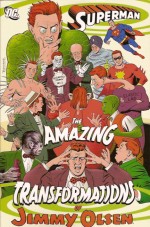
Superman: The Amazing Transformations of Jimmy Olsen


By Otto Binder, Curt Swan, Ray Burnley & various (DC Comics)
ISBN: 978-1-4012-1369-5

Although unnamed, a red-headed, be-freckled plucky kid worked alongside Clark Kent and Lois Lane from Action Comics #6 (November 1938) and was called by his first name from Superman #13 (November-December 1941) onwards. That lad was Jimmy Olsen and he was a major player in The Adventures of Superman radio show from its debut on April 15th 1940; somebody for the hero to explain stuff to for the listener’s benefit and the closest thing to a sidekick the Man of Tomorrow ever needed…

When the similarly titled television show launched in the autumn of 1952 it became a monolithic hit and National Periodicals began cautiously expanding their valuable franchise with new characters and titles. First up were the gloriously charming, light-hearted escapades of the rash, capable but naïve photographer and “cub reporter” from the Daily Planet: new star of Superman’s Pal Jimmy Olsen, which launched in 1954 with a September-October cover date.

The comic was popular for more than two decades, blending action, adventure, broad, wacky comedy, fantasy and science fiction in the gentle manner scripter Otto Binder had perfected a decade previously at Fawcett Comics on the magnificent Captain Marvel. As the feature progressed one of the most popular plot-themes (and most fondly remembered and referenced today by most Baby-Boomer fans) was the unlucky lad’s appalling talent for being warped, mutated and physically manipulated by fate, aliens and even his friends…

The Amazing Transformations of Jimmy Olsen delightfully collects some of the very best and most iconic tales from the series all of which originally appeared in issues #22, 28. 31-33, 41-42, 44, 49, 53, 59, 65, 72, 77, 80, 85 and 105 of the comicbook, as well as the lead story from the giant anthology Superman Family #173, into which Superman’s Pal Jimmy Olsen evolved.

The spellbinding wonderment begins with a selection of beautifully reconfigured covers (from issues 22, 44, 59 and 105) which act as contents and credit pages after which the story segments open with ‘The Super-Brain of Jimmy Olsen’ by Binder, Curt Swan & Ray Burnley, wherein resident crackpot genius Professor Phineas Potter evolved the boy into a man from 1,000,000AD. The seemingly benevolent being seems to have a hidden agenda however and is able to bend Superman to his will…

The same creative team produced ‘The Human Skyscraper’ with another Potter production enlarging Jimmy to monumental size, whilst in ‘The E-L-A-S-T-I-C Lad’ Superman was ultimately responsible for the reporter gaining stretching powers after leaving a chest of alien artefacts with the nosy, accident-prone kid.

‘The Jimmy Olsen from Jupiter’ by Alvin Schwartz, Swan & Burnley saw aliens mutate him into one of their scaly selves, complete with mind reading powers, whilst Binder’s ‘The Human Flame-Thrower!’ saw Potter’s latest experiment cause the worst case of high-octane halitosis in history, after which Robert Bernstein, Swan & John Forte displayed the lad’s negligent idiocy when Jimmy ate alien fruit and became ‘The Human Octopus!’

Craig Flessel inked the hilarious and ingenious ‘Jimmy the Genie!’ in which boy and magical sprite exchanged roles after which ‘The Wolf-Man of Metropolis!’ , by Binder, Swan, Stan Kaye, blended horror, mystery and heart-warming charm in a mini-classic of the genre.

Professor Potter was blamed for, but entirely innocent of, turning Jimmy into ‘The Fat Boy of Metropolis!’ – a daft but clever crime caper from Swan & Forte – whilst sheer mischance resulted in the now-legendary saga of ‘The Giant Turtle Man!’ and his oddly casualty-free rampage (courtesy of scripter Jerry Siegel) before Leo Dorfman, Swan & George Klein collaborated to produce the sparkling tale of alien love gone amiss, which resulted in our boy temporarily becoming ‘Jimmy Olsen, Freak!’

When Jimmy spurned the amorous attentions of supernatural Fifth Dimensional babe Miss Gzptlsnz, she quite understandably turned him into ‘The Human Porcupine’ by Siegel, Swan & Klein, who also crafted the intriguing enigma of ‘The World of Doomed Olsens!’ wherein Jimmy was confronted by materialisations of his most memorable metamorphoses…

‘The Colossus of Metropolis!’ saw Jimmy deliberately and daringly grow into a giant to tackle the rampaging Super-Ape Titano, whilst Siegel, Forte & Klein’s ‘Jimmy Olsen, the Bizarro Boy!’ was a merry comedy of errors with Potter’s cure for the backwards-living Bizarro beings going painfully awry, resulting in the poor lad being ‘Exiled on the Bizarro World!’

The immensely popular Legion of Super-Heroes guest-star in many of these tales and play a pivotal part in ‘The Adventures of Chameleon-Head Olsen!’, a madcap mirth spree as only Siegel, Forte & Klein could make ’em, whilst the far more menacing tale of ‘The World of 1,000 Olsens!’, by Binder, E. Nelson Bridwell & Pete Costanza was a product of changing times and darker tastes; with an actual arch-enemy trapping Jimmy on a murderous planet where everybody looks like but hates the cub reporter…

This fabulously strange brew concludes with a smart thriller set in the Bottled City of Kandor where Jimmy resumed his costumed-hero identity of Flamebird beside Superman to save the last Kryptonians from the ‘Menace of the Micro-Monster!’ …a sharp terrorist shocker by Cary Bates & Kurt Schaffenberger which satisfyingly closes this magically engaging tome.

As well as relating some of the most delightful episodes of the pre angst-drenched, cosmically catastrophic DC, these stories also perfectly depict the changing mores and tastes which reshaped comics from the safe 1950s to the seditious, rebellious 1970s, all the while keeping to the prime directive of the industry – “keep them entertained and keep them wanting more”.

I know I certainly do…

© 1957-1965, 1967, 1975, 2007 DC Comics. All Rights Reserved.

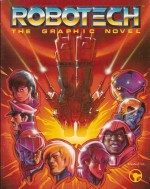
Robotech: the Graphic Novel


By Mike Baron, Neil D. Vokes, Ken Steacy & various (Comico)
ISBN: 978-0-93896-500-8

Robotech was a minor comics phenomenon of the 1980s based on some rather deft marketing of assorted Japanese fantasy exports. Whilst American TV company Harmony Gold was cobbling together and re-editing three separate weekly science fiction anime series (Super Dimension Fortress Macross, Super Dimension Cavalry Southern Cross and Genesis Climber MOSPEADA) US model-kit company Revell was selling Japanese mecha kits based on the aforementioned Fortress Macross, Super Dimension Century Orgus and Fang of the Sun Dougram as Robotech Defenders, complete with an all-new English language tie-in comic produced by DC Comics.

A copyright clash resulted in the DC title being killed after two issues after which TV produced Carl Macek and Revell went into limited partnership in a Macross co-licensing deal which saw three shows translated into an 85-episode generational saga wherein Earth was rocked by successive alien invasions decades apart and only saved from annihilation by a fortuitous spaceship crash which had allowed humans to master extraterrestrial Robotechnology.

The American TV hybrid and mecha toy range naturally led to Role Playing Games, novels, an animated movie, art books and comicbooks which have been semi-continuously in print since 1984.

The premise revolved into The Macross SagaFirst Robotech War a desperate conflict with giant Zentraedi warriors seeking to retrieve a crashed space craft; Robotech MastersSecond Robotech War wherein Terrans battled a fresh wave of Zentraedi, come to discover what happened to their lost fleet and Robotech Masters or Third Robotech War, with enemies becoming allies to confront an even greater foe: the horrendous Invid – from whom the Robotech Masters originally stole the near-magical, cataclysmic, semi-spiritual power source Protoculture, reverentially worshipped as the Flower of Life and the motivating force behind all Robotechnology….

Comico produced separate titles set twenty years apart (Robotech Macross Saga, Robotech Masters and Robotech the New Generation) from 1984-1989, after which Eternity Comics, Academy Comics, Antarctic Press and WildStorm took up the perennial favourites in their turn.

In 1986, at the height of the furore Comico produced an original oversized 48 page European album format graphic novel plotted by Carl Macek which filled in the heretofore unknown backstory; telling the story of that fateful First Contact when a starship crashed on the island of Macross. It was scripted by Mike Baron, illustrated by Neil D. Vokes & Ken Steacy (with painted colour by Tom Vincent and lettering by Bob Pinaha)…

In ‘Genesis: Robotech’ far away on the other side of the universe SDF-1, a two kilometre long spacecraft is seeding desolate worlds with a unique plant. Unconventional and rebellious Philosopher-Scientist Zor is attempting to grow the energy-rich Flower of Life in soil not sanctioned by his Robotech Masters, over the protests of dutiful warrior-commander Dolza.

This allows the insidious Invid to track them and attack, fanatically attempting to wipe out the Zentraedis who stole their sacred bloom and daily desecrate its holy purpose…

Although temporarily driven off, the Invid fatally wound Zor but not before he dispatches the ship on a pre-programmed jaunt across the universe to a world only he knows of…

On orders from the enraged Masters Dolza returns Zor’s body to the homeworld so any useful information can be extracted from his cells whilst Field Comander Breetai is ordered to take a fleet and follow SDF-1. If Zor has been seeding worlds in secret both the ship and its destination must be found…

It is 1999 on planet Earth and a third global conflict is about to erupt. Brush-wars, resource squabbles and border-skirmishes are occurring everywhere. In the sky above the Pacific fighter pilot Roy Fokker is engaged in another deadly dogfight with mercenary T.R. Edwards which once more ends inconclusively…

Returning to the aircraft-carrier Kenosha Roy meets Senator Russo, Admiral Hayes and his own Commander Gloval who have an intriguing plan to end the faux-war before it ends humanity…

Meanwhile in America a little boy named Rick Hunter is learning flying tricks with his grandfather that will one day save the world when the sky is set ablaze by a vast object. Destined to crash far out in the North Pacific, in its thunderous passing the “meteor” triggers storms and earthquakes, disrupts electronic communications and causes global panic…

All over Earth hostilities cease and a military task force led by Gloval and Fokker, with arch enemy Edwards representing the once-opposition, explore the downed SDF-1, which has crashed on a barren rock once used for atomic testing.

On board the humans discover wonder, horror and the potential to create a golden age on Earth, but unbeknownst to them Breetai’s pursuing force is closing in…

Although designed as an in-filling prequel this is a classy traditional sci-fi romp which happily stands on its own merits for new readers whilst providing added narrative value to any readers – or indeed viewers – familiar with the greater saga it introduces.

Fun and adventure in the grand old space opera manner and superbly easy on the eye, it’s about time these 1980s epics were revisited by a more comics friendly readership.
“Robotech” ™ Revell, Inc. © 1986 Harmony Gold, USA, Inc./Tatsunoko Production Company, Ltd. All rights reserved.

Manga Mania Shonen – Drawing Action-Style Japanese Comics


By Chris Hart (Sixth&Spring)
ISBN: 978-1-933027-69-2

Even though the global craze for Japanese comics and cartoons seems to have partially abated the popularity of Manga and Anime style storytelling is pretty much unquenchable, and with Annual Gift-Giving Season rapidly bearing down on us it might be worthwhile to take a look at one of the better “How-to” reference volumes still available to the budding exponent of Japanese comic making.

I actually found this copy whilst browsing the shelves of my local library so your creative impulses might not even have to wait ’till December comes…

Manga Mania Shonen is the part of an extensive series of art-instruction books by prolific graphic guru Chris Hart which includes manga titles such as a Beginner’s Guides and more specialised tomes devoted to Girl Power, Bishoujo, Occult and Horror, Romance and many others as well as other art “genres” such as Wizards Witches and Warlocks or Drawing The New Adventure Cartoons…

This perky volume focuses on the Shonen or action story characters: lavishly illustrated from stick-figure first concept to fully inked and coloured final work, and opens with a section on Shonen Basics: Drawing the Head, generically broken down further into Action Boy, Teen Enemy, Girl With Crush and Dark Beauty with attention paid to Drawing Eyes For Action Characters, Young Teen Boy, Young Teen Girl, Bishie Boy, Bishijo Girl, Male Villain and Female Villain before rounding off with Craaaazy Eyes!, Intense Expressions and Shading Faces.

Swiftly following is Shonen Basics: Drawing the Body divided into Brave Fighter Kid, Powerful Foe, The Hero’s Girl, Alluring Nemesis, Younger Vs. Older Teens, The Fighting Team, The Character Lineup and Action Tattoos whilst Action! provides timeless, educative and extremely useful truths on Action and Balance, Do’s and Don’ts for Drawing Action, defined as Classic Run (side vs. ¾ view), Fast and Furious Run, The Big Windup and the Big Punch, The Punch and Making Contact; examines Forced Perspective through Flying Kick, Standing Kick and Leaping Forward; depicts Extreme Fight Scenes via Running Start and Impact (both with side and ¾ views) and concludes with a variety of Panel Designs For Action Comics, featuring a four-panel page redrawn numerous ways for different effects.

Samurai Characters and how to construct them follows with model sheet “turnarounds” (the drawing rotated through five positions – Front, ¾ front, side, ¾ rear and Rear views) for a Samurai Boy, plus Girl Samurai, Bad Samurai!, Street Warrior and Evil Samurai Grandmaster as well as sidebars on Uncommon Weapons and Samurai Fantasy Fighters.

Fighter Girls is divided into Flying Ninja, Spy Girl, Sharpshooter, Evil Enchantress, Fantasy Fighter and Karate Girl, Supporting Characters into Teen Punk, Evil Kid, Yakuza, Knife Fighter, Big Buddy, The Blockhead, Motorcycle Rider, The Cursed Hand, Sci-Fi Fighter, Costume Makes the Character and The Dramatic Trench Coat after which Monsters and Creepy Creatures covers such popular standards as Rock Monster, Devil Creature, Ogre, Monsters with Special Powers, Monster Fighter! and such Animal-Based Spirits and Demons as Tiger Girl, Scorpion Boy, Wolf Demon and Bear Spirit.

The final chapter checks out Battle-Ready Robots with Drawing the Robot’s Head, Round-Type Robot, Classic Colossal Robot, Elegant but Deadly Robot and Hyper-Mechanized Robot before Robots and Their Human Pals – sectioned off as A Boy and His Robot, Female Robot, All-Firepower Robot, Villainous Robot and The Mecha Team – finishes up the drawing lessons. The book concludes with a very basic four-page introduction to Sketching a Sequential Story.

By applying a “Time-and-Motion”, mechanistically deconstructive approach Hart has isolated those cool facets ardent newcomers always fixate upon and has perfectly described how to become fully facile in their use. After that, it’s up to the neophyte storyteller to progress at their own pace and inclination…

The whole book is pretty much the equivalent of a set of manga “cheat-sheets” detailing how to produce generic action actors, but as I can certainly attest after years of teaching comics-production, scripting and art to kids from age 4 to 60+, that’s most often the initial alluring spark which can kick off the drive to practise, improve and eventually find a uniquely personal creative path…

Created specifically for the American sector of the global marketplace and targeting younger fans, there’s no time spent here on the harder, less fun and downright laborious aspects such as constructing a plot, shaping narrative, designing believable backgrounds, building scenarios, page composition and copy/balloon placement, and the slavish pigeon-holing of the manga/anime phenomenon into basic construction-line “models” may annoy more advanced students, but if the goal is simply to inspire interested parties into making their own people and stories this book does the job affably and enthusiastically…

© 2008 Star Fire, LCC. All rights reserved.

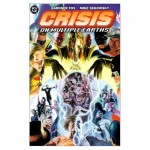
Crisis on Multiple Earths volume 1


By Gardner Fox, Mike Sekowsky, Bernard Sachs & Sid Greene (DC Comics)
ISBN: 978-1-56389-895-2

As I’ve frequently mentioned before, I was one of the “Baby Boomer” crowd which grew up with Julie Schwartz, Gardner Fox and John Broome’s tantalisingly slow reintroduction of Golden Age superheroes during the halcyon, eternally summery days of the early 1960s. To me those fascinating counterpart crusaders from Earth-Two weren’t vague and distant memories rubber-stamped by parents or older brothers – they were cool, fascinating and enigmatically new.

…And for some reason the “proper” heroes of Earth-One held them in high regard and treated them with obvious deference…

It all began, naturally enough, in The Flash; pioneering trendsetter of the Silver Age Revolution. After successfully ushering in the triumphant return of the superhero concept, the Scarlet Speedster with Fox & Broome at the writing reins set an unbelievably high standard for costumed adventure in sharp, witty tales of science and imagination, always illustrated with captivating style and clean simplicity by Carmine Infantino.

The epochal epic that literally changed the scope of American comics forever was Fox’s ‘Flash of Two Worlds’ (Flash #123 September 1961, as seen in Showcase Presents the Flash volume 2) which introduced the theory of alternate Earths to the continuity and by extension resulted in the multiversal structure of the DCU – and all the succeeding cosmos-shaking yearly “Crisis” sagas that grew from it.

And of course, where DC led, others followed…

Received with tumultuous acclaim, the concept was revisited months later in #129′s ‘Double Danger on Earth!’ which also teasingly reintroduced evergreen stalwarts Wonder Woman, Atom, Hawkman, Green Lantern, Doctor Mid-Nite and Black Canary. Clearly Editor Schwartz had something in mind…

‘Vengeance of the Immortal Villain!’ from Flash #137 (June 1963, inked by Giella) was the third incredible Earth-2 crossover, and saw two Flashes unite to defeat 50,000 year old Vandal Savage and save the Justice Society of America: a tale which directly led into the veteran team’s first meeting with the Justice League of America and the start of an annual tradition.

When ‘Flash of Two Worlds’ introduced the concept of Infinite Earths and multiple versions of costumed crusaders, public pressure had begun almost instantly to agitate for the return of the Greats of the “Golden Age” but Editorial powers-that-be were hesitant, fearing too many heroes would be silly and unmanageable, or worse yet, put readers off. If they could see us now…

These innovative yarns generated an avalanche of popular and critical approval (big sales figures, too) so inevitably these trans-dimensional tests led to the ultimate team-up in the summer of 1963.

This gloriously enthralling volume re-presents the first four JLA/JSA convocations: stunning superhero wonderments which never fails to astound and delight beginning with the landmark ‘Crisis on Earth-One’ and ‘Crisis on Earth-Two’ (Justice League of America #21-22, August and September) combining to form one of the most important stories in DC history and arguably one of the most crucial tales in American comics.

Written by Fox and compellingly illustrated by Mike Sekowsky & Bernard Sachs the yarn finds a coalition of assorted villains from each Earth plundering at will, meeting and defeating the mighty Justice League before imprisoning them in their own secret mountain HQ.

Temporarily helpless “our” heroes contrive a desperate plan to combine forces with the champions of another Earth to save the world – both of them – and the result is pure comicbook majesty. It’s impossible for me to be totally objective about this saga. I was a drooling kid in short trousers when I first read it and the thrills haven’t diminished with this umpty-first re-reading.

This is what superhero comics are all about!

‘Crisis on Earth-Three’ and ‘The Most Dangerous Earth of All!’ (Justice League of America #29-30, August and September 1964) reprised the team-up of the Justice League and Justice Society, when the super-beings of a third alternate Earth discovered the secret of trans-universal travel.

Unfortunately Ultraman, Owlman, Superwoman, Johnny Quick and Power Ring were villains on a world without heroes and saw the costumed crime-busters of the JLA/JSA as living practise dummies to sharpen their evil skills upon. With this cracking thriller the annual summer get-together became solidly entrenched in heroic lore, giving fans endless entertainment for years to come and making the approaching end of school holidays less gloomy than they could have been.

(A little note: although the comic cover-date in America was the month by which unsold copies had to be returned – the “off-sale” deadline – export copies to Britain travelled as ballast in freighters. Thus they usually went on to those cool, spinning comic-racks the actual month printed on the front. You can unglaze your eyes and return to the review proper now, and thank you for your patient indulgence.)

The third annual event was a touch different; a largely forgotten and rather experimental tale wherein the dim but extremely larcenous Johnny Thunder of Earth-1 wrested control of the genie-like Thunderbolt from his other-world counterpart and used its magic powers to change the events which led to the creation of all Earth-1’s superheroes. With Earth-1 catastrophically altered in #37’s ‘Earth – Without a Justice League’ it was up to the JSA to come to the rescue in a gripping battle of wits and power before Reality was re-established in the concluding ‘Crisis on Earth-A!’ in #38.

Veteran inker Bernard Sachs retired before the fourth team-up, leaving the amazing Sid Greene to embellish the gloriously whacky saga that sprang out of the global “Batmania” craze engendered by the Batman television series…

A wise-cracking campy tone was fully in play, acknowledging the changing audience profile and this time the stakes were raised to encompass the destruction of both planets in ‘Crisis Between Earth-One and Earth-Two’ and ‘The Bridge Between Earths’ (Justice League of America #46-47, August & September 1966), wherein a bold – if rash – continuum warping experiment dragged the two sidereal worlds towards an inexorable hyper-space collision. Meanwhile, making matters worse, an awesome anti-matter being used the opportunity to break into and explore our positive matter universe whilst the heroes of both worlds were distracted by the destructive rampages of monster-men Blockbuster and Solomon Grundy.

Peppered with wisecracks and “hip” dialogue, it’s sometimes difficult to discern what a cracking yarn this actually is, but if you’re able to forgive or swallow the dated patter, this is one of the very best plotted and illustrated stories in the entire JLA/JSA canon. Furthermore, the vastly talented Greene’s expressive subtlety, beguiling texture and whimsical humour added unheard of depth to Sekowsky’s pencils and the light and frothy comedic scripts of Gardner Fox.

This volume also includes an enthralling introduction by Mark Waid, a comprehensive cover gallery and creator biographies.

These tales won’t suit everybody and I’m as aware as any that in terms of the “super-powered” genre the work here can be boiled down to two bunches of heroes formulaically getting together to deal with extra-extraordinary problems. In mature hindsight, it’s obviously also about sales and the attempted revival of more sellable super characters during a period of intense sales rivalry between DC Comics and Marvel.

But I don’t have to be mature in my off-hours and for those who love costume heroes, who crave these cunningly constructed modern mythologies and actually care, this is simply a grand parade of straightforward action, great causes and momentous victories.

…And since I wouldn’t have it any other way, why should you?
© 1963, 1964, 1965, 1966, 2002 DC Comics. All Rights Reserved.

Showcase Presents Wonder Woman volume 1


By Robert Kanigher, Ross Andru & Mike Esposito (DC Comics)
ISBN: 978-1-4012-1373-2

Wonder Woman was famously created by polygraph pioneer William Moulton Marston – apparently at the behest of his remarkable wife Elizabeth – and illustrated by Harry G. Peter. She debuted in All Star Comics #8 (December 1941) before gaining her own series and the cover-spot in new anthology title Sensation Comics a month later. She was an instant hit and quickly gained her own eponymous title in late Spring of that year (cover-dated Summer 1942).

Using the nom de plume Charles Moulton, Marston scripted all the Amazing Amazon’s many and fabulous adventures until his death in 1947, whereupon Robert Kanigher took over the writer’s role. The venerable H.G. Peter continued on as illustrator until his death in 1958. Wonder Woman #97, in April of that year, was his last hurrah and the discrete end of an era.

This first cheap and cheerful black and white Showcase collection covers issues #98-117 of the Astounding Amazon’s next one…

With the notable exception of Superman, Batman, Wonder Woman and inoffensive back-up B-listers Aquaman and Green Arrow (plus – arguably – Johnny Quick, who held on until December 1954 and cowboy crimebuster Vigilante who finally bit the dust a month earlier), costumed heroes died out at the beginning of the 1950s, replaced by a plethora of merely mortal champions and a welter of anthologised genre titles.

When after almost no time at all Showcase #4 rekindled the public’s imagination and zest for masked mystery-men with a new iteration of The Flash in 1956 (see Showcase Presents the Flash volume 1 or The Flash: Archive Edition volume 1) the fanciful floodgates opened wide once more…

As well as re-imagining a number of Golden Age stalwarts such as Green Lantern, Atom and Hawkman, National/DC consequently decided to update and remake all its hoary survivors such as the aforementioned Emerald Archer and Sea King. Also included in that revitalising agenda were the company’s High Trinity: Man of Steel, Caped Crusader and the ever-resilient Warrior Woman…

Artists Ross Andru & Mike Esposito had actually debuted as cover artists three issues earlier, but with Wonder Woman #98 (May 1958) they took over the entire comicbook whilst Robert Kanigher reinvented much of the old mythology and even tinkered with her origins in ‘The Million Dollar Penny!’ when the goddess Athena visited an island of super-scientific immortal women and told Queen Hippolyta that she must send an emissary to the crime-ridden Man’s World as a champion of justice.

Declaring an open competition for the post, the queen was hardly surprised when her daughter Diana won and was given the task of turning a penny into a million dollars in a day – all profits going to children’s charities, of course…

Just as the new Wonder Woman was about to begin her task, American airman Steve Trevor bailed out of his malfunctioning jet high above the hidden isle, unaware that should any male set foot on Amazon soil the immortals would lose all their powers. Promptly thwarting the impending disaster Diana and Steve teamed up to accomplish her task, encountering along the way ‘The Undersea Menace’ before building ‘The Impossible Bridge!’

Issue #99 opened in similar bombastic fashion with ‘Stampede of the Comets!’ as Trevor was lost undertaking a pioneering space mission and Wonder Woman went to his rescue thanks to incredible Amazon engineering ingenuity. After foiling an alien attack against Earth, the reunited lovers returned in time for the introduction of the Hellenic Heroine’s new covert identity as Air Force Intelligence Lieutenant Diana Prince in ‘Top Secret!’ – beginning a decade of tales with Steve perpetually attempting to uncover her identity and make the most powerful woman on Earth his blushing bride, whilst the bespectacled, glorified secretary stood exasperated and ignored beside him…

The 100th issue was a spectacular battle saga which commenced with ‘The Challenge of Dimension X!’ and an alternate Earth Wonder Woman competing with the Amazing Amazon for sole rights to the title and culminated in a deciding bout in ‘The Forest of Giants!’, whilst ‘Wonder Woman’s 100th Anniversary!’ dealt with the impossibility of capturing the far-too fast and furious Amazon’s exploits on film for the island’s archives…

‘The Undersea Trap!’ opened #101, with Steve tricking his “Angel” into agreeing to marry him if she has to rescue him three times in 24 hours (just chalk it up to simpler times, or you’ll pop a blood vessel, OK?) after which the odd couple were trapped by a temporal tyrant in ‘The Fun House of Time!’

Steve’s affection and wits were tested by an alien giant in ‘The Three Faces of Wonder Woman’ when he was forced to pick out his true love from a trio of identical duplicates and thereby save the world in #102, whilst ‘The Wonder Woman Album’ returned to the previously explored impossible-to-photograph theme in #103, but devoted most space to sinister thriller ‘The Box of Three Dooms!’ wherein the murderous Gadget Maker attempted to destroy the Amazon with a booby-trapped gift.

‘Trial By Fire’ pitted Diana Prince against a host of deadly traps that only Wonder Woman could survive whilst ‘Key to Deception!’ closed #104 by reintroducing Golden Age villain Duke of Deception as a militaristic Martian marauder in a gripping interplanetary caper.

Issue #105 introduced Wonder Girl in the ‘Secret Origin of Wonder Woman’ revealing how centuries ago the gods and goddesses of Olympus bestowed unique powers on the daughter of Queen Hippolyta and how as a mere teenager the indomitable Diana had brought the Amazons to Paradise Island. Continuity – let alone consistency and rationality – were never as important to Kanigher as a strong story or breathtaking visuals and this eclectic odyssey is a great yarn that simply annoyed the heck out of a lot of fans… but not as much as the junior Amazon would in years to come…

The second feature ‘Eagle of Space’ was a more traditional tale of predatory space Pterodactyls and a dinosaur planet where Steve and Diana lent a civilising hand to the indigenous caveman population, after which ‘The Human Charm Bracelet!’ in #106 found Wonder Woman battling an unbeatable extraterrestrial giant who wanted the Earth for his plaything, after which her younger self encountered a chameleonic lass in ‘The Invisible Wonder Girl!’

The high fantasy adventures of the junior heroine clearly caught somebody’s fancy as they now started coming thick and fast: ‘Wonder Woman – Amazon Teen-Ager!’ opened #107 as the youngster found a romantic interest in mer-boy Ronno and underwent a quest to win herself a superhero costume, whilst her adult self was relegated to a back-up battle against ‘Gunslingers of Space!’

‘Wanted… Wonder Woman!’ saw Flying Saucer aliens frame our heroine for heinous crimes as a precursor to a planetary invasion and ‘The Stamps of Doom!’ featured a plot by another murderous inventor to kill the Valiant Valkyrie in #108, but the next issue again stepped back in time to feature ‘Wonder Girl in Giant Land’ as the nubile neophyte easily overcame ambush by colossal aliens. Her mature self was represented here by ‘The Million Dollar Pigeon!’ wherein gangsters thought they’d found a foolproof method of removing the Amazing Amazon from their lives…

Wonder Woman #110 was a full-length saga as the indomitable warrior maid searched the Earth for a missing alien princess in ‘The Bridge of Crocodiles!’ If the wanderer couldn’t be found, her concerned family intended to lay waste the entire planet…

In #111 ‘The Robot Wonder Woman’ commissioned by gangsters provided no real competition for the genuine article, whilst ‘Battle of the Mermen!’ found Wonder Girl drawn into a sub-sea rumble between competing teenaged fish-boy gangs…

The youthful incarnation led off the next issue: ‘Wonder Girl in the Chest of Monsters!’ took the concept to unparallelled heights of absurdity as, in contemporary times, a heroic girl was rewarded with three Amazon wishes and sent back in time to have an adventure with Wonder Woman’s younger self, whilst #113 returned to relatively straight action with ‘The Invasion of the Sphinx Creatures!’ as the Adult Amazon battled the ancient weapons of a resurrected Pharoah-Queen, after which ‘Wonder Girl’s Birthday Party!’ recounted how each anniversary event seemed to coincide with a geological disaster, mythological menace or uncanny event…

Aliens once more attacked in #114’s ‘The Monster Express!’ turning parade balloons into ravening monsters until Diana and Steve stepped in after which ‘Wonder Girl’s Robot Playmate!’ demonstrated how hard it was growing up special…

Old enemy Angle Man returned revamped for the Silver Age in #115’s ‘Graveyard of Monster Ships!’ whilst ‘Mer-Boy’s Undersea Party!’ proved that above or below the waves Wonder Girls just don’t want to have fun, whilst in #116 both Ronno and Young Diana were capable of serious heroism in ‘The Cave of Secret Creatures!’, after which the Adult Amazing Amazon finally stopped a millennial menace to mankind in ‘The Time –Traveller of Terror!’

This initial enchanting chronicle concludes with Wonder Woman #117 wherein ‘The Fantastic Fishermen of the Forbidden Sea!’ reintroduced Etta Candy and the Holliday Girls – in modernised, less offensive incarnations – in a fantastic tale of aquatic invaders before Amazon time-travel techniques allowed the impossible to occur when ‘Wonder Girl Meets Wonder Woman!’… or did she…?

By modern standards these exuberant, effulgent fantasies are all-out crazy, but in the days when less attention was paid to continuity and the concept of a shared universe and the adventure in the moment was paramount these outrageous romps simply sparkle with fun, thrills and sheer spectacle.

Wonder Woman is rightly revered as a focus of female strength, independence and empowerment, but the welcoming nostalgia and easy familiarity of these costumed fairytales must be a delight for all open-minded readers and the true value of these exploits is the incredible quality of entertainment they provide.

© 1958-1960, 2007 DC Comics, Inc. All Rights Reserved.

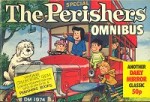
The Perishers Omnibus book 1


By Maurice Dodd & Dennis Collins (Daily Mirror Books)
ISBN: 0-85939-031-4

Although written almost entirely by Maurice Dodd throughout its 48 year history, the National Treasure that is (Are? Am?) The Perishers was actually created in 1957 by artist Dennis Collins, writer Bill Witham (who went on to huge success with the innocent everyman Useless Eustace) and cartoon editor Bill Herbert. The daily exploits of a bunch of typical kids was first published in the Manchester edition of the Daily Mirror in February 1958 but after only a couple of frankly mediocre months the wacky adventures of Maisie and Marlon were withdrawn and retooled.

Jack-of-all-trades, budding artist and advertising whiz-kid Dodd was approached by ex-paratroop service comrade and drinking buddy Herbert and promptly jumped at the chance to reinvent the characters in what was a meandering but beautifully illustrated all-ages feature simply stuffed with untapped potential.

Drawing on his own life (he would describe it as shamelessly pilfering) Dodd created a plethora of new characters, animal and human – although with this strip the distinctions are loose and hard to defend – and rescued an early 1958 casualty in the unkempt and ill-maintained person of laconic orphan and philosophical dilettante Wellington: a street urchin who lived on his wits but still attended school and endured all the daily trials and indignities of British youth.

Relaunched in October 1959 in the London and national editions, the revamped strip quickly caught on and became a morning mainstay for generations of Britons, blending slapstick and surreal comedy with naive charm, miniaturised modern romantic melodramas (Maisie loves Marlon, Marlon loves fashion and “inventing” and Wellington loves sausages), liberally laced with sardonic cultural commentary – especially a wonderfully twisted faux misperception of contemporary politics and the burgeoning advertising and commercial media.

Even in its earliest days the strip was superbly illustrated, conjuring up in a few judicious lines and cannily applied tones a communal urban wonderland we all knew as kids: a familiar post-war wonderland of shops and streets, building sites and overpasses, alleys and parks and fields where we could get on with our adventures and no adults could interfere or spoil the fun.

The major protagonists of the series are Wellington and Boot, his old English Sheepdog (sort of: the wily, hairy chancer and raconteur considers himself a Manorial Milord sufferin’ under the curse of a Gypsy wench). They are ably unsupported by the formidable Maisie, a thoroughly modern miss torn between her passion for the boy of her dreams, sweets, and unrelenting violence and the aforementioned Marlon himself. Cool, suave and debonair are just three of the words he doesn’t know the meaning of, but lots of the girls at school fancy him anyway. If he grows up he wants to be a brain surgeon or a bloke wot goes down sewers in great big gumboots…

Being on his own Wellington takes every opportunity to support himself with sordid scavenging and shoddy schemes –usually involving selling poorly constructed carts and buggies to Marlon who far more money than sense: to be honest Marlon has more noses than sense… Maisie is a shy beautiful maiden waiting for true beloved to sweep her off her feet – and if he doesn’t she gives him a thorough bashing up and nicks his sweets…

Other unreasonable regulars introduced here include Baby Grumplin’ – Maisie’s toddler brother and a diabolical force of nature, Plain Jane – a girl who asks too many questions and the dapper Fiscal Yere, smugly complacent go-getting son of a millionaire and another occasional sucker for Wellington’s automotive inexpertise.

On the anthropomorphic animal front the extremely erudite Boot regularly encounters stroppy ducks, militant squirrels, socialist revolutionary Fred the Beetle and his long-suffering wife Ethel, Asiatic bloodhound journalist B.H. Calcutta (Failed) and latterly, a nicotine-addicted caterpillar who stunted his growth and became Fred’s inseparable comrade in the struggle against canine oppression but implacable rival for any food or dog-ends the Bolshevistic bugs might find…

Every day notable events in this madcap melange include Wellington gentrifying out of the large concrete pipe that he used to live in to take up residence in an old railway station abandoned after the Beeching Cuts decimated the train infrastructure and the first couple of kids-only, unaccompanied camping holidays to the seaside (such innocent times) to encounter sun, surf and the rock-pool crabs who worshipped the uncannily canine “Eyeballs in the Sky” which annually manifest in their isolated “Pooliverse”…

Utterly English, fabulously fantastical and resoundingly working-class, the strip generated 30 collections between 1963 -1990, 4 Big Little Books, 5 novels and 2 annuals as well as an audio record and an immensely successful animated TV series.

The tome under review here was released in 1974; the first of a series of extra-sized recapitulations, and containing most of the contents of the first four Perishers collections (covering 1959-1965) and superbly sets the scene for newcomers with a glorious extravaganza of enchanting fun and frolics, liberally annotated by Dodd himself.

Dennis Collins magnificently and hilariously illustrated the feature until his retirement in 1983, after which Dodd himself took up the pens and brushes. Eventually artist Bill Melvin took over the art chores whilst Dodd scripted until his until death in 2006. Once the backlog of material was exhausted The Perishers finished on June 10th 2006.

Last year The Mirror began reprinting classic sequences of the strip to the general approval of everyone, so perhaps it’s not too much to hope that eventually all the classic collections will once more be freshly available to one and all…
© 1974 IPC Newspapers Limited.

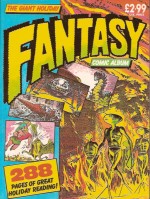
The Giant Holiday Fantasy Comic Album


By various, edited by Mike Higgs (Hawk Books)
ISBN 0-948248-06-8

Being almost universally anthology weeklies, British comics over the decades have generated a simply incomprehensible number of strips and characters in a variety of genres ranging from the astounding to the appalling. Every so often dedicated souls have attempted to celebrate this cartoon cornucopia by reprinting intriguing selections and in 1990 the splendid Hawk Books released this delightfully cheap and cheerful compendium that is still readily available for connoisseurs of the wild and wonderful British oeuvre…

As is so often the case creator credits are nonexistent and although I’ll hazard the odd guess now and then, a lot of these marvellous concoctions will have to remain annoyingly anonymous until someone more knowledgeable than me pipes up…

With little ado the monochrome madness began with a magically whacky superhero tale featuring supernatural warrior Thunderbolt Jaxon who promptly mopped up a gang of saboteurs in ‘The Flying Wreckers’.

Plucky lad Jack Jaxon could transform into the invincible mini-skirted muscleman because he wore the magic belt of Thor, and as comprehensively revealed in Steve Holland’s superb Bear Alley articles, the character was originally designed in 1949 by Britain’s publishing powerhouse Amalgamated Press as an export feature for Australian publisher Kenneth G. Murray after WWII. The strips were commissioned by Editor Edward Holmes and realised by writers TCH Pendower, Leonard Matthews, plus Holmes, with prolific artist Hugh McNeill the original illustrator. The export-only hero soon began appearing in UK comics Comet and Knockout with later stories limned by Geoff Campion, Robert Roger & Ian Kennedy.

Next here is a charming tale of ‘The Space Family Rollinson’ by Graham Coton: a series which ran in Knockout from 1953-1958 and was successfully syndicated in France. Your average Mum, Dad and four kids on a trek across the universe, here stopping to save the natives of Skandok from a hideous space spider and its interplanetary jelly-webs, after which a moodily engrossing adventure of outlandish Victorian escapologist Janus Stark finds the man with rubber bones thwarting a gang of kidnappers in a stirring extravaganza by Tom Tully & Francisco Solano López .

A stunning strip The Jungle Robot debuted in the first issue of Lion in 1952, created by E. George Cowan & Alan Philpott, before vanishing until 1957. On his return he became one of the most popular heroes of the British scene. Reprinted here from the early days after his comeback is ‘Robot Archie and the Mole Men’ illustrated, I suspect, by Ted Kearnon, pitting the amazing automaton and his hapless handlers Ted Ritchie and Ken Dale against a bunch of subterranean bandits plundering Paris in an incredible burrowing machine – a complete 14 week adventure delivered two pages at a time.

Next up is ‘The Men from the Stars’ a complete 60 page sci fi epic originally presented in AP’s digest Super Detective Library #14. In this grand old invasion romp, test pilot and “Special Agent in Space” Rod Collins endured the World’s first contact with a marauding and incomprehensible race of flying saucer people before spearheading Earth’s inevitable resistance and narrow victory, after which paranormal detective ‘Maxwell Hawke’ and plucky girl Friday Jill Adair investigated ‘The Ghost of Gallows Hill Manor’ – a creepy, condensed shocker probably drawn by a young Eric Bradbury.

Knocker White and Jinx Jenkins were ‘The Trouble-Seekers’; two-fisted construction workers who had to add giant monsters to the list of obstacles threatening to delay the completion of South American super city Futuria, after which action-man cover star of Smash! Simon Test narrowly survived ‘The Island of Peril’ in another moody masterpiece of all-ages action-adventure illustrated by Bradbury.

One of the most fondly remembered British strips of all time is the strikingly beautiful Steel Claw. From 1962 to 1973 Jesús Blasco and his small family studio thrilled the nation’s children, illustrating the breakneck adventures of scientist, adventurer, spy and even costumed superhero Louis Crandell. Created by novelist Ken Bulmer, the majority of the character’s exploits were scripted by Tom Tully.

Crandell was a bitter man, missing his right hand, which was replaced with a gadget-packed prosthetic. Moreover, whenever he received an electric shock he became invisible.

After going on a deranged rampage Crandell’s personality shifted and by the time of ‘The Return of the Claw’ (which first saw print in Valiant from 5th June 1971-22nd April 1972) the super-agent was a tired and broken emotional burn-out dragged out of retirement to foil an alien invasion wherein disembodied invaders the Lektrons possessed the bodies of children, turning them into demonic, energy-blasting monsters.

More than any other strip the Steel Claw was a barometer for British comics reading fashions. Starting out as a Quatermass style sci-fi cautionary tale the series mimicked the trends of the outer world, becoming in turn a Bond-like super-spy saga complete with outrageous gadgets, a masked mystery-man romp when Bat-mania gripped the nation, and eventually a Doomwatch era adventure drama combating eerie menaces and vicious criminals.

The thrills of the writing are engrossing enough, but the real star of this feature is the artwork. Blasco’s classicist drawing, his moody staging and the sheer beauty of his subjects make this an absolute pleasure to look at.

Over 90 pages long ‘The Return of the Claw’ alone is worth the price of admission – even with the terribly poor quality printing of this volume. Just imagine the impact when somebody finally completes the deluxe reprinting of this classic series begun in The Steel Claw: the Vanishing Man…

After the main course there’s a few short dessert items to end this feast of nostalgic fun, beginning with an engaging vintage alien invasion chiller ‘The Marching Trees’ after which the light-hearted ‘Toby’s Timepiece’ propels errant schoolboy Toby Todd into a mediaeval nightmare and an epic adventure with an extraterrestrial chrononaut before ‘Thunderbolt Jackson and the Golden Princess’ closes the memorable montage of comics wonderment in a simply splendid tale of Amazonian lost cities and rampaging dinosaurs.

This is a glorious lost treasure-trove for fans of British comics and lovers of all-ages fantasy, filled with danger, drama and delight illustrated by some of the most talented artists in the history of the medium. Track it down, buy it for the kids and then read it too. Most of all pray that somebody somewhere is actively working to preserve and collect these sparkling and resplendent slices of our fabulous graphic tradition in more robust and worthy editions.

Maybe we need a Project Gutenberg for comics…
© 1989 Fleetway Publications. All Rights Reserved.

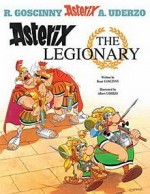
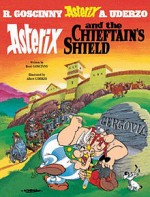
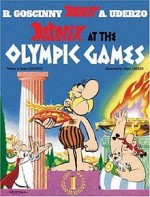
Asterix the Legionary, Asterix and The Chieftain’s Shield & Asterix at The Olympic Games


By Goscinny and Uderzo, translated by Anthea Bell & Derek Hockridge (Orion Books)
ISBNs: 978-0-7528-6621-5, 978-0-7528-6625-3 and 978-0-7528-6626-0

One of the most-read comics in the world, the chronicles of Asterix the Gaul have been translated into more than 100 languages; with animated and  live-action movies, TV series, assorted games and even a theme park (Parc Astérix, near Paris). More than 325 million copies of 34 Asterix books have sold worldwide, making Goscinny & Uderzo France’s bestselling international authors.

The diminutive, doughty hero was created in 1959 by two of the art-form’s greatest proponents, René Goscinny & Albert Uderzo; masters of the form at the peak of their creative powers. Although their perfect partnership ended in 1977 with the death of prolific scripter Goscinny, the creative wonderment still continues – albeit at a slightly reduced rate of rapidity as Uderzo continues to produce new works.

Like everything good, the premise works on multiple levels: ostensibly, younger readers enjoy the action-packed, lavishly illustrated comedic romps where sneaky, bullying baddies get their just deserts whilst more worldly readers enthuse over the dry, pun-filled, sly, witty satire, enhanced for English speakers by the brilliantly light touch of translators Anthea Bell & Derek Hockridge who played no small part in making the indomitable Gaul so palatable to the Anglo-Saxon world. (Personally I still thrill to a perfectly delivered punch in the bracket as much as a painfully swingeing string of bad puns and dry cutting jibes…)

Asterix the Gaul is a cunning underdog who resists the iniquities, experiences the absurdities and observes the myriad wonders of Julius Caesar’s Roman Empire with brains, bravery and a magic potion.

The stories were alternately set on the tip of Uderzo’s beloved Brittany coast, where a small village of redoubtable warriors and their families resisted every effort of the Roman Empire to complete their conquest of Gau,l and throughout the expansive Ancient World circa 50BC.

Unable to defeat this last bastion of Gallic insouciance the mostly victorious invaders resorted to a policy of containment. Thus the little seaside hamlet is permanently hemmed in by the heavily fortified garrisons of Totorum, Aquarium, Laudanum and Compendium.

The Gauls don’t care: they daily defy the world’s greatest military machine by just going about their everyday affairs, protected by the magic potion of resident druid Getafix and the shrewd wits of a rather diminutive dynamo and his simplistic best friend…

Firmly established as a global brand and premium French comics export by the mid-1960s, Asterix the Gaul continued to grow in quality as Goscinny & Uderzo toiled ever onward, crafting further fabulous sagas; building a stunning legacy of graphic excellence and storytelling gold.

In late 1966 they began Asterix the Legionary (running in Pilote #368-389), which was later adapted as half of the plot for the movie Asterix Vs Caesar (the other album incorporated into the animated epic being Asterix the Gladiator).

This clever romp introduced the destabilising concept of true romance to the doughty hero and his prodigious pal Obelix as, whilst boar hunting in the great forest around their still-unconquered village, they encountered the fabulously beautiful Panacea picking mushrooms.

The little darling had freshly returned to the village after years away in Condatum and the sheltered Obelix was instantly smitten. Dazed and confused by the only force that could ever affect him, the gentle giant was teased by Asterix and Getafix, but undaunted, Obelix began bringing the oblivious lass a succession of inappropriate presents.

However, when the befuddled buffoon found Panacea crying he dashingly volunteered to mend her woes. Tragically for him the problem was a boyfriend named Tragicomix, who had been pressed into military service with the Roman Army…

Where other men would take advantage of the hopeless situation, Obelix, afflicted with a True Crush, determined to make Panacea happy and rushed off to rescue her lost love. Ever faithful, Asterix and little Dogmatix accompany him to keep him out of trouble.

In Condatum they discovered that Tragicomic had already been shipped out to Africa where Caesar was battling fellow Roman Scipio in a clandestine Civil War and Asterix realised the only way to find Tragicomix was to enlist in the Roman Army…

In Basic Training they met a motley assortment of fellow recruits – all national stereotypes – allowing for a broad bombardment of gentle ethnic comedy and graphic accent humour. There was Neveratalos the Greek, Goths Allegoric and Hemispheric, Gastronomix from Belgium, Selectivemploymentax the Briton and poor Ptenisnet the Egyptian, who didn’t know the language and thought he was on a holiday package tour…

After lashings of their unique brand of anarchy disrupting regulation army life, Asterix, Obelix and crew shipped out to Africa. When they arrived the war was going badly for Caesar, but more importantly, Tragicomix was missing and believed captured by Scipio’s forces…

With magic potion in hand Asterix, Obelix and Dogmatix decided to take matters in hand…

A hilariously engaging yarn with delicious overtones of the iconic British comedy Carry On Sergeant, this is an action-packed farce big on laughs but with a bittersweet core that will tug at the heartstrings of young and old alike…

Asterix and the Chieftain’s Shield (originally entitled Le bouclier arverne) was the eleventh epic outing for the Greatest French Hero of Them All; debuting in Pilote #399 and running until #421 in 1967. it acted as a kind of tongue in cheek patriotic history lesson and began years before the usual setting of Asterix tales when Gaulish over-chief Vercingetorix surrendered to Caesar at the Battle of Alesia by throwing down his weapons and armour at the Conqueror’s feet.

Such was the shame of the defeated Gauls that the location of the clash was deliberately excised from their memories. Now, nobody remembers where Alesia was…

After the battle the accoutrements lay where they fell until a greedy Legionary stole the Great Shield, subsequently losing it in a game of dice. From there the legendary buckler passed through many scurrilous hands before fading into legend…

Jumping to “modern” times, in the village of indomitable Gauls Chief Vitalstatistix is terribly ill: a sedentary life of over-indulgence has ruined his liver and since Getafix’s druidic potions can’t help him, he has to go to the spa town of Aqua Calidae (Arverne) for a rest-cure and diet.

It isn’t all bad though since his forthright wife Impedimenta has to stay behind….

As a chief he needs an honour guard and Asterix, Obelix and Dogmatix are happy to accompany him, especially as the chief uses the journey to test all the inns and taverns en route. Once there though, the warriors’ robust consumption – and boisterous high jinks – appals all the dieting dignitaries and impatient patients so Asterix and Obelix are summarily kicked out of the Health Resort.

Footloose and fancy-free the boys tour the local countryside of Gergovia idly trying to find the lost site of Alesia until they encounter Roman envoy Noxius Vapus and his cohort. After indulging in their favourite sport of Roman-bashing the lads befriend local merchant Winesandspirix – a veteran of Alesia – while Noxius hightails it to Rome and tells Caesar the Gauls are revolting…

({      } this space provided for you to fill in your own joke)

Set on putting the Gauls in their place and reminding them who’s boss, Caesar determines to hold a Roman Triumph with the shield of Vercingetorix as the centrepiece.

He’s none to happy when he discovers it’s been missing for years…

And thus begins the second stage of this hilariously thrilling detective mystery as the Romans frantically hunt for the missing artefact and Asterix and Obelix set out to thwart them at every turn…

No prizes for guessing which faction succeeds and who scurries home in defeat and disgust in this marvellously slapstick saga with a delightfully daft twist ending…

Asterix at the Olympic Games first appeared weekly in Pilote #434-455, serialised in 1968 to coincide with and capitalise upon the Mexico City Games. The translated British album was released four years later, just before the 1972 Munich Olympiad.

The Romans of Aquarium garrison are in an ebullient mood. Their comrade Gluteus Maximus has been selected to represent Rome at the Greeks’ Great Games in Olympia. Centurion Gaius Veriambitius is happy too, because he knows if Gluteus wins they can both write their ticket in Rome…

It all starts to go horribly wrong when the Roman superman is bested and humiliated by Asterix and Obelix whilst training in the Great Forest. His confidence shattered, Gluteus returns to Aquarium and only regains a modicum of his old form when Veriambitius reminds him that the potion-fuelled Gauls won’t be at the Games…

Meanwhile the men of the village have decided to go to Olympia en masses and have a go themselves…

There follows a uproarious and nigh-scandalous sequence of events as the unbeatable Greeks try to placate their Roman overlords; the Latin competitors undergo the tortures of the arrogant damned to cheat, wheedle and somehow exclude the all-conquering Gauls whilst the basically honest and honourable Asterix devises a cunning yet fair way to beat the politically motivated, greed-inspired “sportsmen” and uphold the best traditions and ideals of the Olympic Games.

Guess who wins…

Spoofing package tours, obnoxious tourists, self-serving sports authorities and doping scandals in equal proportion, this sparkling escapade features some of Uderzo’s most inspired art as he recreates the grandeur and glory of the Ancient World whilst simultaneously graphically lampooning the haughty elites of the Sporting World, the Military and Politics. A genuine classic which should be given to every competitor at London 2012 and especially the organising committees…

Asterix volumes are always stuffed with captivating historical titbits, soupcons of healthy cynicism, singularly surreal action and splendidly addictive adventure, illustrated in a magically enticing manner. These are perfect comics that every one should read over and over again.
© 1967-1969 Goscinny/Uderzo. Revised English translation © 2004 Hachette. All rights reserved.

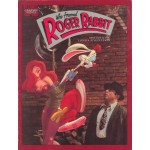
Who Framed Roger Rabbit – the Official Comics Adaptation


By Daan Jippes, Don Ferguson & Dan Spiegle (Marvel)
ISBN: 0- 87135-464-0

The filmed interpretation of Gary K. Wolf’s novel ‘Who Censored Roger Rabbit?’ is the barest shell of the 1981 fantasy which starred comic strip icons, not cartoon characters, so please be aware that I’ll be concentrating here on the graphic adaptation of the film which resulted from a Byzantine 7-year transformational, legal odyssey rather than the source book (which I highly recommend you read, too).

After years of grief, celluloid shuffling and rewrites, Disney and Amblin Entertainment finally released a movie which easily stands on its own oversized, anthropomorphic feet and consequently spawned a couple of pretty impressive comics epics.

You probably know the plot: in the years after WWII, Hollywood was a town in transition with big business moving in and tearing up the good old ways. Animated features were still boffo box office but in this world the animated characters were real: whacky actors called “Toons” starring in live-action productions and incredible creatures who could choose which laws of physics they obeyed. They mostly lived in their own separate enclave; a bizarre ghetto called Toontown.

Eddie Valiant was a tired old private eye eking out a pitiable existence and still bearing a grudge over the loss of his brother, killed by a red-eyed Toon who had never been caught. With the world rapidly changing around him and everything good being bought up and torn down by the Cloverleaf Corporation, the despondent Shamus, against his better judgement, took a job with R.K. Maroon, head of the city’s leading cartoon studio…

It seemed their top star Roger Rabbit was unable to concentrate on his job because his wife Jessica was fooling around…

When Mrs Rabbit’s indiscretions lead to the murder of Marvin Acme, owner of Toontown, and with Roger firmly in the frame for the killing, Eddie was plunged into the lethal lunacy of battling murderous and/or boisterous toons, a ruthless land-grabbing syndicate, corrupt and obsessively homicidal magistrate Judge Doom and a mysterious mastermind determined to take control of Toontown and all of California…

With additional dialogue from Don Ferguson, the movie was adapted by European cartoonist Dann Jippes (Bernard Voorzichtig: Twee Voor Thee, the Gutenberghus Donald Duck, Junior Woodchucks and more) who collaborated with American comics legend Dan Spiegle (equally paramount in realistic comics dramas such as Crossfire, Space Family Robinson, Blackhawk and Terry and the Pirates, a magnificent succession of licensed cartoon adventure properties from Shazzan!, Johnny Quest and Space Ghost to full-on stylised Hanna-Barbera Bigfoot icons such as Scooby-Doo, Captain Caveman and many others) to mimic the unique look of the film.

Who Framed Roger Rabbit was produced with live stars interacting with state-of-the-art animation and here Spiegle and Jippes created a seamless blend of drawing styles that is a perfect amalgam of the real and surreal.

For most of the middle 20th century Disney comicbooks were licensed through the monolithic Western Publishing’s Dell/Gold Key/Whitman imprints, but by the time of this release the printing company had all but abandoned the marketplace and the American edition was released as the 41st Marvel Graphic Novel, joining such creator-owned properties as Dreadstar and Alien Legion, proprietary Marvel tales such as The Death of Captain Marvel or Revenge of the Living Monolith and licensed properties like Conan and Willow in the same glorious oversized European Album format (285 x 220mm on chic and glossy superior paper stock).

As such this fast-paced, fun, above average, all-ages adaptation is one of the very best of its (often substandard) kind and a graphic novel well worth your time and money.

And remember, Jessica isn’t bad: she’s just sublimely drawn that way…
© 1988 The Walt Disney Company and Amblin Entertainment, Inc. All rights reserved.