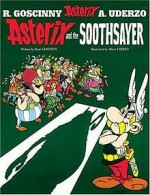
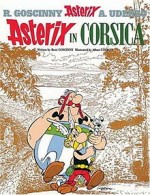
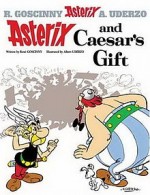
Asterix and the Soothsayer, Asterix in Corsica & Asterix and Caesar’s Gift


By Goscinny & Uderzo, translated by Anthea Bell & Derek Hockridge (Orion Books)
ISBNs: 978-075286-628-4, 978-0-75286-630-7 and 978-0-75286-632-1

One of the most popular comics features on Earth, the collected chronicles of Asterix the Gaul have been translated into more than 100 languages since his debut in 1959, with animated and live-action movies, TV series, assorted games, toys and even a theme park outside Paris (Parc Astérix, unsurprisingly…) all stemming from his glorious exploits.

More than 325 million copies of 34 Asterix books have sold worldwide, making his joint creators France’s bestselling international authors.

The diminutive, doughty, potion-powered paragon of Gallic Pride was created by two of the industry’s greatest masters, René Goscinny & Albert Uderzo. Although their inspirational collaborations ended in 1977 with the death of the prolific scripter, the creative wonderment continued until relatively recently from Uderzo and assistants – albeit at a slightly reduced rate.

The wonderment works on multiple levels: ostensibly, younger readers revel in the action-packed, lavishly illustrated comedic romps where sneaky, bullying baddies get their just deserts, whilst we more worldly readers enthuse over the dry, pun-filled, sly satire, especially as enhanced for English speakers by the brilliantly light touch of translators Anthea Bell & Derek Hockridge, who played no small part in making the indomitable Gaul and his gallant companions so palatable to the Anglo-Saxon world. (Moi, I still rejoice in a perfectly produced “Paf!” to the snoot as much as any painfully potent procession of puns or sardonic satirical sideswipe…)

The stories were set on Uderzo’s beloved Brittany coast, where a small village of warriors and their families resisted every effort of the Roman Empire to complete the conquest of Gaul, or alternately, anywhere in the Ancient World, circa 50BC, as the Gallic Gentlemen visited the fantastic lands and civilisations of the era…

When the heroes were playing at home, the Romans, unable to defeat this last bastion of Gallic insouciance, resorted to a policy of containment. Thus the little seaside hamlet is permanently hemmed in by the heavily fortified garrisons of Totorum, Aquarium, Laudanum and Compendium.

The Gauls don’t care: they daily defy the world’s greatest military machine simply by going about their everyday affairs, protected by the magic potion of resident druid Getafix and the shrewd wits of the rather diminutive dynamo and his simplistic, supercharged best friend…

Firmly established as a global brand and premium French export by the mid-1960s, Asterix the Gaul continued to grow in quality as Goscinny & Uderzo toiled ever onward, crafting further fabulous sagas; building a stunning legacy of graphic excellence and storytelling gold. Moreover, following the civil unrest and nigh-revolution in French society following the Paris riots of 1968, the tales began to increasingly show signs of trenchant satire and more directed social commentary…

Asterix and the Soothsayer was the 19th serialised epic, originally running in Pilote #652-673 throughout 1972, first translated into an English album in 1975, and begins ominously whilst the village’s venerable mystic protector Getafix is away at his annual Druiding conference. During a torrential storm nefarious Soothsayer named Prolix turns up seeking shelter. His dark predictions instantly spread disharmony amongst the hospitable, hot-headed, painfully superstitious and credulous Gaulish stalwarts… except for level headed and canny little Asterix.

As Prolix leaves the Chief’s wife Impedimenta sneaks after him, keen on a personal prediction and the crafty charlatan soon discovers he’s on to a good thing and profitably cushy number…

Before long the entire village is under the soothsayer’s grimy thumb, but when he vanishes the ladies of the village accuse Asterix of driving him off.

In actuality the unsavoury sage has been arrested by the Romans who have standing orders to deal harshly with all non-Roman prognosticators and troublemakers. The wily Prolix barters for his life with Centurion Arteriosclerosus, who sees a way to end his Indomitable Gaul problems by using the obviously fraudulent fortune-teller as a wedge to drive out the obstreperous resistors…

Prolix returns to the village and utters a doom-laden pronouncement: the place has been cursed by the Gods and a pestilential stench will precede plague. Inevitable death will be their fate if they remain…

Panicked, the gullible Gauls head for the beach and take refuge on an off-shore island – all that is, except for Asterix, Obelix and chivalrous canine companion Dogmatix…

With the Romans at last in possession of the village – and all Gaul finally conquered – the bold last rebels make their plans until Getafix returns. On his arrival the three men and a dog embark on an elaborate scheme to take back their home and teach their foolish fellows a much needed lesson.

Concocting a stunningly malodorous vapour which drives the occupiers from the village, the druid convinces the Romans that Prolix is a real soothsayer and ambitious Arteriosclerosus sees a chance to become the next Caesar. Even baffled conman Prolix begins to believe his predictions are real…

After dressing down the refugee Gauls, Getafix leads them back to their beloved homes where the incensed and wiser villagers top up on magic potion and rush off to teach the invaders – and Prolix – a much needed lesson. On this occasion, Impedimenta and the village women accompany their men, determined to expiate their embarrassing gullibility with a little cathartic violence of their own…

This delightfully arch and acerbic attack on gullibility and superstition is a splendid chance to see the minor characters play to their strengths and weaknesses with Asterix and Obelix almost relegated to walk-on parts…

First translated two years earlier in England but chronologically following on from The Soothsayer in the original French serialisations Asterix in Corsica (Pilote #687-708, in 1973) was the 20th adventure and the best-selling French language album of the series.

Another globe-trotting yarn, it begins with the Romans of the four occupying garrisons “deploying for manoeuvres” to avoid having to deal with Gauls’ painfully exuberant celebration of the anniversary of the Battle of Gergovia. Unfortunately for Centurion Hippotamus and his men they are delayed by the arrival of a party from Praetor Perfidius, Governor of Corsica, escorting a dangerous prisoner into exile. They are still in Totorum when the high-spirited villagers (and many guest-star friends from previous adventures) arrive keen for a punch-up and a little annoyed that all the other Roman camps are deserted…

When the dust settles and the groans of pain subside, Asterix discovers the prisoner Boneywasawarriorwayayix and invites him back to the village for a slap-up feed. Over boar and beer the Gauls hear how Perfidius had the popular Corsican leader exiled to prevent him revealing how the Praetor has been over-taxing the people and embezzling the gold for himself instead of sending to Caesar in Rome. Corsica is officially the most troublesome spot in the Empire and the exile is determined to return and expose the hated Governor, so the proud and haughty Boneywasawarriorwayayix is delighted when Asterix and Obelix – with the faithful Dogmatix – determine to help him sneak back to his fiercely over-fortified and contained island (most volumes of this album have a map of Corsica instead of the traditional Gaulish village, and the tiny nation contains four towns and forty-six Roman camps)…

Hilariously obtaining passage on the pirate ship of Redbeard the voyagers soon find themselves on the island – but not unnoticed…

Soon the dissolute and lazy soldiery are hunting the heroes as they make their way inland to the exile’s home village to rally the populace whilst in the city of Aleria Perfidius suspects the jig is up and prepares to flee with his ill-gotten gains…

Trying to rally the natives Boneywasawarriorwayayix comes up against the age-old dilemma: most Corsicans are involved in centuries long vendettas and would much rather fight each other – at least when they’re not taking a siesta – than unite to attack the invaders. However at last, a determined band of warriors marches on Aleria but almost too late. Perfidius has been secretly loading his loot onto a ship but when his soldiers discover it they realise their leader is planning to abandon then to the fierce and furious Corsicans – at least if diplomatic Asterix can manage to stop the natives killing each other first…

Asterix travel epics are always packed with captivating historical titbits, soupcons of healthy cynicism, singularly surreal situations and amazingly addictive but generally consequence-free action, always illustrated in a magically enticing manner.

Stuffed with sly pokes and good-natured trans-national teasing of perceived nationalist characteristics and celebrating the terrifying power of Corsican cheeses and liberally served up with raucous hi-jinks and fast-paced action, this is another magical titbit of all-ages entertainment.

In 1974 Asterix and Caesar’s Gift was the first tale to be published as a complete album before being serialised, with a British translation appearing in 1977. It begins in Rome where two 20-year veteran legionaries drunkenly celebrate being honourably discharged. Tremensdelirious and Egganlettus eagerly look forward to being given their service reward: a parcel of land each.

Unfortunately Tremensdelirious is overheard disparaging Caesar but the sardonically cruel leader does not punish the old soldier or even withhold his pension. In fact he gives Tremensdelirious a lovely portion of the Gaulish coast in Armorica: all he has to do is shift a few recalcitrant Gauls from their village on his new small holding…

A drunk but not a fool the old soldier knows his fate is sealed and soon trades his dispensation to Lutetian inn-keeper Orthopaedix to settle his bar-bill…

The first that the Indomitable Gauls know of this is when Orthopaedix, his wife Angina and daughter Influenza roll up in their cart and try to take possession. After some hilarity the villagers go back about their business and the inn-keeper is left to suffer the fury of his wife at the uprooting of the family to a barbaric hovel where nobody acknowledges their claim.

No stranger to such a tongue-lashing, Chief Vitalstatistix takes pity on Orthopaedix and offers to let them stay and open an inn in the hamlet, but the standoffish villagers are angered by Angina’s superior airs and a riot breaks out on opening night…

The world-weary publican is ready to quit but now the humiliated Angina is in a status duel with Impedimenta and, determined to stay, makes Orthopaedix challenge Vitalstatistix for the post of village Chief. As the campaign to win the support of the always argumentative villagers intensifies, all manner of shoddy tactics, dubious lobbying and outright bribery takes place with each party frantically trying to curry political favour from the fickle but extremely astute potential voters who know the value of their own support…

Simple, gentle oafish Obelix has fallen under the spell of the lovely Influenza, who leads him on cruelly to help out her mother’s naked ambition, leading to fight with his best friend. Only Asterix seems aware that the discord could well be the death of the village and lead to Caesar’s ultimate triumph and soon the waters are further muddied when elderly Lothario Geriatrix declares himself a third party and splits the potential vote even further.

The political crisis reaches boiling point when Tremensdelirious turns up and demands his land-grant back: after all it’s illegal to sell them to Gauls, and Orthopaedix has no say in the matter…

When the ex-legionary turns violent Asterix steps in to save the day and the old sot is driven off at sword-point. He doesn’t go far – only to the garrison of Laudanum where old comrade Egganlettus has re-enlisted – and together they blackmail Centurion Tonsillitus into attacking the Gauls to uphold Roman law and get back that “official” pension land which is every soldier’s right…

That kind of military intervention usually ends disastrously, but this time the village is hopelessly divided by political intrigue and backstabbing and even Asterix cannot unite them against their real and common foe. It seems that the Gauls must lose everything until Orthopaedix makes a supreme sacrifice to save the day…

Brittle, barbed and devilishly sharp, this outrageous political thriller and satire on modern electioneering is as pertinent and punchy as it ever was, proving once again that these Gallic graphic masterpieces are perfect comics which everyone should read over and over again.
© 1972-1974 Goscinny/Uderzo. Revised English translation © 2004 Hachette. All rights reserved.
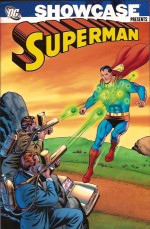
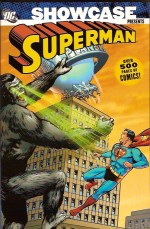
Showcase Presents Superman volume 3


By Otto Binder, Jerry Siegel, Bill Finger, Jerry Coleman, Wayne Boring, Al Plastino, Curt Swan & various (DC Comics)
ISBN: 978-1-4012-1271-1

Superman has proven to be all things to all fans over his decades of existence, and with the character currently undergoing another radical overhaul, these timeless tales of charm and joy and wholesome wit are more necessary than ever: not just as a reminder of great tales of the past but as an all-ages primer of the wonders still to come…

At the time these tales were first published The Man of Tomorrow was enjoying a youthful swell of revived interest. Television cartoons, a rampant merchandising wave thanks to the Batman-led boom in “camp” Superheroes generally, highly efficient global licensing and even a Broadway musical: all worked to keep the Last Son of Krypton a vibrant icon of modern, Space-Age America.

Although we might think of Jerry Siegel & Joe Shuster’s iconic invention as the epitome of comicbook creation the truth is that soon after his launch in Action Comics #1 Superman became a multimedia star and far more people have enjoyed the Man of Steel than have ever read him and yes, that does include the globally syndicated newspaper strip.

By the time his 20th anniversary rolled around he had been a regular on radio, starred in a series of astounding animated cartoons and two movies and just ended his first smash live-action television serial. In his future were three more (Superboy, Lois & Clark and Smallville), a stage musical, a franchise of stellar movies and an almost seamless succession of TV cartoons beginning with The New Adventures of Superman in 1966 and continuing ever since. Even Krypto got in on the small-screen act…

It’s no wonder then that the tales from this Silver Age period should be so draped in the wholesome trappings of Tinseltown – even more so than most of celebrity-obsessed America. It didn’t hurt that editor Whitney Ellsworth was a part-time screenwriter, script editor and producer as well as National/DC’s Hollywood point man. His publishing assistant Mort Weisinger, a key factor in the vast expansion of the Kryptonian mythos, also had strong ties to the cinema and television industry, beginning in 1955 when he became story-editor for the blockbusting Adventures of Superman TV show.

This third magnificent monochrome chronicle collects the contents of Action Comics #276-292, Superman #146-156 and excerpts from Superman Annuals #3-5, spanning May 1961 to October 1962; taking its content from the early 1960’s canon (when the book’s target audience would have been little kids themselves) yet showcasing a rather more sophisticated set of tales than you might expect…

The wide-eyed wonderment commences with ‘The War Between Supergirl and the Superman Emergency Squad’ by Robert Bernstein, Wayne Boring & Stan Kaye from Action #276, wherein Superman is conned into revealing his secret identity and has to resort to incredible measures to make the swindler disbelieve his eyes, after which #277 presented ‘The Conquest of Superman’ (Bill Finger, Curt Swan & John Forte); another brilliantly brooding duel against super-scientist Lex Luthor.

Superman #146 (July 1961) offered ‘The Story of Superman’s Life’ which related more secrets and recapitulated Clark Kent’s early days in a captivating résumé covering all the basics: death of Krypton, rocket-ride to Earth, early life as Superboy, death of the Kents and moving to Metropolis, all by Otto Binder & Al Plastino, by Al Plastino, whilst the closing ‘Superman’s Greatest Feats’ (Jerry Siegel & Plastino) saw the Man of Tomorrow travel into Earth’s past and seemingly succeed in preventing such tragedies as the sinking of Atlantis, slaughter of Christians in Imperial Rome, the deaths of Nathan Hale, Abraham Lincoln and Custer and even the death of Krypton’s population. Of course it was too good to be true…

Action #278 featured ‘The Super Powers of Perry White’ (Jerry Coleman, Swan & Kaye) with the senescent editor suddenly gaining super-powers and an inexplicable urge to conquer the world whilst in Superman #147 ‘The Great Mento!’, by Bernstein & Plastino, a mysterious mind-reader threatened to expose the hero’s secret identity. ‘Krypto Battles Titano’ (Siegel & Plastino) found the wandering Dog of Steel voyaging back to the Age of Dinosaurs to play and inadvertently save humanity from alien invasion alongside the Kryptonite mutated giant ape. The issue closed with ‘The Legion of Super Villains’ (by Siegel, Swan & Sheldon Moldoff) a landmark adventure and stand-out thriller featuring Lex Luthor and the adult Legion of Super-Heroes overcoming certain death with valour and ingenuity.

This was followed by Swan’s iconic cover for Superman Annual #3 (August 1961), the uncredited picture-feature Secrets of the Fortress of Solitude and the superb back-cover pin-up of the Metropolis Marvel.

The author of Action #279’s Imaginary Story ‘The Super Rivals’ is regrettably unknown but John Forte’s sleekly comfortable art happily illustrates the wild occurrence of historical heroes Samson and Hercules being brought to the 20th century by Superman to marry Lois Lane and Lana Lang, thereby keeping them out of his hair, whilst in #280 ‘Brainiac’s Super Revenge’ (Siegel, Swan & Kaye) returned that time-lost villain to our era and saw him attack the Man of Steel’s friends, only to be foiled by a guest-starring Congorilla (veteran Action hero Congo Bill who could trade consciousness with a giant Golden Gorilla)…

Imaginary Stories were conceived as a way of exploring non-continuity plots and scenarios devised at a time when editors believed that entertainment trumped consistency and knew that every comic read was somebody’s first

When Editor Mort Weisinger was expanding the Superman continuity and building the legend he knew that the each new tale was an event that added to a nigh-sacred canon: that what was written and drawn mattered to the readers. But as an ideas man he wasn’t going to let that aggregated “history” stifle a good plot situation, nor would he allow his eager yet sophisticated audience to endure clichéd deus ex machina cop-outs to mar the sheer enjoyment of a captivating concept.

The mantra known to every fan was “Not a Dream! Not a Hoax! Not a Robot!” boldly emblazoned on covers depicting scenes that couldn’t possibly be true… even if it was only a comic book.

Superman #148 opened with ‘The 20th Century Achilles’ by Edmond Hamilton, Swan & Moldoff, wherein a cunning crook devised a way to make himself immune to harm, after which ‘Mr. Mxyzptlk’s Super Mischief’ (Siegel, Swan & Moldoff) once again found the 5th dimensional pest using his magic to cause irritation after legally changing his name to something even easier to pronounce whilst the delightfully devilish ‘Superman Owes a Billion Dollars!’ written by Bernstein, saw the Caped Kryptonian face his greatest foe – a Revenue agent who diligently discovered that the hero had never paid a penny of tax in his life…

Action Comics #281 featured ‘The Man Who Saved Kal-El’s Life!’ (Bernstein & Plastino), which related the story of a humble Earth scientist who had visited Krypton and cured baby Kal-El, all wrapped up in a gripping duel with a modern crook who was able to avoid Superman’s every effort to hold him, whilst in Superman #149 ‘Lex Luthor, Hero!’, ‘Luthor’s Super-Bodyguard’ and ‘The Death of Superman’ by Siegel, Swan & Moldoff formed a brilliant extended Imaginary saga which described the insidious inventor’s ultimate victory over the Man of Steel.

Back in “real” continuity Action #282 revealed ‘Superman’s Toughest Day’ (Bill Finger & Plastino) as Clark Kent’s vacation only revealed how his alter ego never really took it easy, whilst #283 and ‘The Red Kryptonite Menace’ (Bernstein, Swan & Kaye) saw a brace of Chameleon Men from the 30th century afflict the Action Ace with incredible new powers and disabilities after exposing him to a variety of crimson K chunks.

Superman #150 opened with ‘The One Minute of Doom’ by Siegel & Plastino, which disclosed how all the survivors of Krypton – even Super-dog – commemorated the planet’s destruction, after which Bernstein & Kurt Schaffenberger’s ‘The Duel over Superman’ finally saw Lois and Lana teach the patronising Man of Tomorrow a deserved lesson about his smug masculine complacency, before Siegel, Swan & Kaye baffled readers and Action Ace alike ‘When the World Forgot Superman’ in a clever and beguiling mystery yarn

From Superman Annual #4 (January 1962) comes the stunning cover and The Origin and Powers of the Legion of Super-Heroes by Swan & George Klein after which Action #284 featured ‘The Babe of Steel’ (Bernstein, Swan & Klein) wherein Superman endured humiliation and frustration after deliberately turning himself into a toddler – but there was a deadly and vital purpose to the temporary transformation…

Superman #151 opened with the salutary story of ‘The Three Tough Teen-Agers!’ (Siegel & Plastino) wherein the hero set a trio of delinquents back on the right path, after which Bernstein, Swan & Klein’s ‘The Man Who Trained Supermen’ saw Clark Kent expose a crooked sports trainer and ‘Superman’s Greatest Secret!’ was almost revealed after battling a fire-breathing dragon which survived Krypton’s doom in a stirring tale by Siegel, Swan & Klein: probably one of the best secret identity-saving stories of the period…

Since landing on Earth, Supergirl’s existence had been a closely guarded secret, allowing her time to master her formidable abilities, which were presented to the readership monthly as a back up feature in Action Comics. However with #285 ‘The World’s Greatest Heroine!‘ finally went public in the Superman lead spot after which the Girl of Steel defeated ‘The Infinite Monster’ in her own strip, as Supergirl became the darling of the universe: openly saving the planet and finally getting the credit for it in a stirring brace of tales by Siegel & Jim Mooney.

Action #286 offered the Superman saga ‘The Jury of Super-Enemies’ (Bernstein, Swan Klein) as the Superman Revenge Squad  inflicts Red K hallucinations on the Man of Steel which torment him with visions of Luthor, Brainiac, the Legion of Super-Villains and other evil adversaries. The epic continued in Action #287, but before that Superman #152 appeared, offering a surprising battle against ‘The Robot Master’ (Siegel, Swan & Klein), the charmingly outrageous ‘Superbaby Captures the Pumpkin Gang!’ by Leo Dorfman, George Papp and ‘The TV Trap for Superman!’ a devious crime caper by Finger & Plastino which saw the hero unwittingly wired for sound and vision by a sneaky conman…

The Revenge Squad thriller then concluded in #287’s ‘Perry White’s Manhunt for Superman!’ (Bernstein, Swan & Klein) as an increasingly deluded Man of Steel battled his worst nightmares and struggled to save Earth from a genuine alien invasion.

‘The Day Superman Broke the Law!’, by Finger & Plastino, opened Superman #153 as a wily embezzler entangled the Metropolis Marvel in small-town red tape after which ‘The Secret of the Superman Stamp’ (Edmond Hamilton, Swan & Klein) saw a proposed honour for good works turned into a serious threat to the hero’s secret identity, whilst ‘The Town of Supermen’ by Siegel & Forte found the Man of Tomorrow in a western ghost town facing a deadly showdown against ten Kryptonian criminals freshly escaped from the Phantom Zone…

The growing power of the silver screen informed ‘The Man Who Exposed Superman’ (Action #288 by an unknown writer and artists Swan & Klein) when a vengeful convict originally imprisoned by Superboy attempted to expose the hero’s identity by blackmailing him on live television whilst ‘The Super-Practical Joker!’ (in #289 by Dorfman & Plastino) saw Perry White forced to hire obnoxious trust-fund brat Dexter Willis, a spoiled kid whose obsessive stunts almost exposed Superman’s day job.

‘The Underwater Pranks of Mr. Mxyzptlk’ by Hamilton, Swan & Klein led in Superman #154 as the insane sprite returned, determined to cause grief and stay for good by only working his jest whilst submerged, after which ‘Krypton’s First Superman’ (Siegel, Swan & Klein) revealed a hidden tale of baby Kal-El on the doomed world which had unsuspected psychological effects on the full-grown hero. This is followed by an example of the many public service announcements which ran in all DC’s 1960’s titles. ‘Superman Says be a Good Citizen’ was probably written by Jack Schiff and illustrated by Sheldon Moldoff.

Exposure to a Red Kryptonite comet in Action #290 led to the hero becoming ‘Half a Superman!’ in another sadly uncredited story illustrated by Swan & Klein after which

Superman Annual #5 (July 1962) offers another stunning cover and displays the planetary Flag of Krypton, whilst Superman #155 featured the two-chapter ‘Superman Under the Green Sun’ and ‘The Blind Superman’ by Finger, Wayne Boring & Kaye, as the Man of Steel was trapped on a totalitarian world where his powers were negated and he was blinded as part of the dictator’s policy to keep the populace helpless. However, even sightless, nothing could stop the hero from leading the people to victory. As if that wasn’t enough Siegel, Swan & Klein then offered the showbiz thriller ‘The Downfall of Superman!’ with a famous wrestler seemingly able to defeat the Action Ace – with a little help from some astounding guest-stars…

‘The New Superman!’ by Bernstein & Plastino (Action #291) wherein the Metropolis Marvel lost his deadly susceptibility to Kryptonite, only to have it replaced by aversions to far more commonplace minerals, whilst #292 revealed ‘When Superman Defended his Arch Enemy!’ – an anonymous thriller illustrated by Plastino – which saw the hero save Luthor from his just deserts after “murdering” alien robots

This grand excursion into comics nostalgia ends with one of the greatest Superman stories of the decade. Issue #156, October 1962, featured the novel-length saga ‘The Last Days of Superman’ by Hamilton, Swan & Klein which began with ‘Superman’s Death Sentence’ as the hero contracted the deadly Kryptonian Virus X and fell into a swift and painful decline. Confined to an isolation booth, he was visited by ‘The Super-Comrades of All Times!’ who attempted to cure and swore to carry on his noble works until a last-minute solution was discovered on ‘Superman’s Last Day of Life!’ This tense and terrifying thriller employed the entire vast and extended supporting cast that had evolved around the most popular comicbook character in the world and still enthrals and excites in a way few stories ever have…

As well as containing some of the most delightful episodes of the pre angst-drenched, cosmically catastrophic DC, these fun, thrilling, mind-boggling and yes, occasionally deeply moving all-ages stories also perfectly depict the changing mores and tastes which reshaped comics between the safely anodyne 1950s to the seditious, rebellious 1970s, all the while keeping to the prime directive of the industry – “keep them entertained and keep them wanting more”.

I know I certainly do…
© 1961, 1962, 2007 DC Comics. All Rights Reserved.

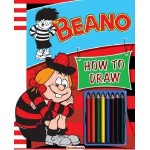
Beano: How to Draw


By anonymous (Beano Books/Parragon Book Service Ltd)
ISBN: 978-1-40548-745-0

I haven’t covered a “How To” book for ages and as this one’s entertaining, wonderfully fit for purpose, still cheap and readily available and even comes with the appropriate toolkit (a set of coloured pencils), it would well serve any budding artists and prospective animators to seek it out and absorb…

This large-scale, slim yet sturdy book gives away the visual secrets behind the anarchic stars of Britain’s best loved comic; offering Getting Started and Basics, assorted Character Profiles and, divided into Faces, Heads and Bodies, the nuts and bolts of how you too can craft the antics of the scurrilous stars of the show in action.

Said scamps include Dennis the Menace, faithful, frightful Gnasher, Minnie the Minx, terrible toddler and arch-rival Ivy the Terrible, weedy Walter the Softy and Baby Bea – the Menace’s sinister baby sister.

Also included are supporting cast members such as the long-suffering Colonel, Police Sgt. Slipper and willing accomplice-in-mischief Curly, precisely broken down into easy to follow graphic steps and supplemented by a gallery of model sheets and handy stock poses to get you started: everything you need to create your own comics once you’ve read, re-read and re-reread the splendid weekly adventures of all concerned.

Brilliantly colourful and with clear concise instructions covering the undeniable basics that every pictorial storyteller – whatever their age – needs to master, this is an indispensable and tremendously inspiring introduction for the aspiring Artist of Tomorrow.
“The Beano” ® © and associated characters ™© D.C. Thomson & Co., Ltd 2007. All Rights Reserved.

Crockle Saves the Ark


By John Ryan (Hamlyn)
ISBN: hardback 600-754022   paperback: 978-0-60030-461-6

John Ryan was an artist and storyteller who straddled three distinct disciplines of graphic narrative, with equal qualitative if not financial success.

The son of a diplomat, Ryan was born in Edinburgh on March 4th 1921, served in Burma and India and after attending the Regent Street Polytechnic (1946-48) took up a post as assistant Art Master at Harrow School from 1948 to 1955. It was during this time that he began contributing strips to Fulton Press publications.

On April 14th 1950 Britain’s grey, post-war gloom was partially lifted with the first issue of a new comic that literally shone with light and colour. Avid children were soon understandably enraptured with the gloss and dazzle of Dan Dare, Pilot of the Future, a charismatic star-turn venerated to this day. The Eagle was a tabloid-sized paper with full colour inserts alternating with text and a range of various other comic features. “Tabloid” is a big page and one can get a lot of material onto each one. Deep within, on the bottom third of a monochrome page was an eight panel strip entitled Captain Pugwash – The story of a Bad Buccaneer and the many Sticky Ends which nearly befell him. Ryan’s quirky, spiky style also lent itself to the numerous spot illustrations required throughout the comic every week and he produced ‘Lettice Leefe, the Greenest Girl in School’ for Eagle’s distaff companion comic Girl.

Pugwash, his harridan of a wife and the useless, lazy crew of the Black Pig ran until issue 19 when the feature disappeared. This was no real hardship as Ryan had been writing and illustrating the incomparable and brilliantly mordant ‘Harris Tweed – Extra Special Agent’ a full page (tabloid, remember, an average of twenty crammed and meticulous panels a page, per week) from The Eagle #16 onwards. Tweed ran for three years as a full page until 1953 when it dropped to a half page strip and was repositioned as a purely comedic venture.

In 1956 the indefatigable old sea-dog (I’m referring to old Horatio Pugwash, but it could so easily be Ryan: an unceasing story-peddler with a big family, he still found time to be head cartoonist at the Catholic Herald for four decades) made the jump to children’s picture books. Ryan also drew a weekly Pugwash strip in the Radio Times for eight years, before going on to produce a number of other animated series including Mary, Mungo and Midge, The Friendly Giant and Sir Prancelot as well as adaptations of some of his many children’s books and the item on offer today.

In the late 1970’s Ryan wedded his love of maritime adventure, devout faith and facility for telling engaging tales to the young to re-examine the Biblical story of Noah in another delightful animated series.

The Ark Stories comprised a selection of delightful cartoon books in the style of Pugwash (eleven in total, I think) initially released by Beaver Books in 1979, which were translated into a series of ten-minute animated TV shorts, written, made by and presented by Ryan himself with voices by famed animal-imitator Percy Edwards. The show was produced for Trident/ITV by Yorkshire Television in 1980, after which Hamlyn re-released them in both hardback and softcover editions.

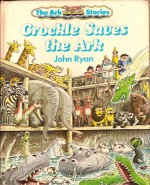
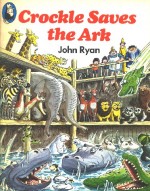
Crockle Saves the Ark is my favourite; whimsical, charming, superbly illustrated and just plain funny. In the days just before the big flood, as Noah and family were filling the Ark with animals, two by two, the youngest son Jaffet brought his best friend Jannet along.

The little lad and lass brought with them a pet baby crocodile and for forty days and nights Noah turned a blind eye whenever he counted all his animals since the giant vessel already had its full compliment of reptiles…

The reason was simple: just when the deluge began and the waters started to cover the land, the fully-laden ark had not risen. Indeed the bottom of the boat began to fill up and all the water-loving beasts thought that they had their own indoor pool.

Luckily little Crockle – for that was the scaly tyke’s name – was small enough to explore the hull of the rapidly-filling vessel until he found the leak and smart enough to fix it, after which the rest of the creatures all pitched in to bale out the water…

This magical, wry and enchantingly smart yarn is one of Ryan’s very best and long overdue for re-issue – as are they all (and the original 1981 video collection too please!) and a sure winner with fans of all ages if you can find it.
© John Ryan and presumably the Estate of John Ryan. All rights reserved.

Spirou & Fantasio volume 3: Running Scared


By Tome & Janry, translated by Jerome Saincantin (Cinebook)
ISBN: 978-1-84918-116-7

Spirou (whose name translates as both “squirrel” and “mischievous” in the Walloon language) was created by French cartoonist François Robert Velter AKA Rob-Vel for Belgian publisher Éditions Dupuis in response to the phenomenal success of Hergé’s Tintin for rival outfit Casterman.

An eponymous magazine was launched on April 21st 1938 with the other red-headed lad as the lead in an anthology weekly comic which bears his name to this day.

He began as a plucky Bellboy/lift operator employed by the Moustique Hotel (a reference to publisher’s premier periodical Le Moustique) whose improbable adventures with his pet squirrel Spip eventually evolved into high-flying surreal comedy dramas.

Spirou and his pals have spearheaded the magazine for most of its life, where a phalanx of truly impressive creators have carried on Velter’s work, beginning with his wife Blanche “Davine” Dumoulin who took over the strip when her husband enlisted in 1939.

She was aided by Belgian artist Luc Lafnet until 1943 when Dupuis purchased all rights to the feature, after which comic-strip prodigy Joseph Gillain (“Jijé”) took over, adding current co-star Fantasio to the mix. Along the way Spirou and Fantasio became globe-trotting journalists, continuing their weekly exploits in unbroken four-colour glory.

In 1946 Jijé‘s  assistant André Franquin assumed the reins, adding a spectacular popular magic animal dubbed Marsupilami to the cast (first seen in Spirou et les héritiers in 1952 and now a spin-off star of screen, plush toy store, console games and albums all his own), crafting increasingly fantastic tales until he resigned in 1969.

He was succeeded by Jean-Claude Fournier who updated the feature over the course of nine stirring adventures that tapped into the rebellious, relevant zeitgeist of the times with tales of environmental concern, nuclear energy, drug cartels and repressive regimes.

By the 1980s the series seemed outdated and without direction: three different creative teams alternated on the serial, until it was at last revitalised by the authors of the adventure under review here: Philippe Vandevelde writing as Tome and artist Jean-Richard Geurts best known as Janry.

These last adapted and referenced the beloved Franquin era, consequently reviving the feature’s fortunes and resulting in fourteen wonderful albums between 1984 and 1998. This one from 1988, originally entitled ‘La frousse aux trousses’ or ‘Fear on the Trail’, was their eighth and the 40th collection of the evergreen adventurers.

Harking back to the Fournier years, it comprises the first of an excellent extended two-part thriller which will conclude in Cinebook’s forthcoming ‘Valley of the Exiles’ (originally released as ‘La vallée des bannis’ or ‘Valley of the Banished’ in 1989).

Since Tome & Janry’s departure both Lewis Trondheim and the team of Jean-Davide Morvan & Jose-Luis Munuera have brought the official album count to fifty (there also are a bunch of specials, spin-offs and one-shots, official and otherwise)…

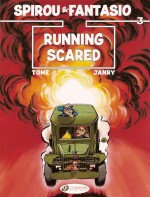
Running Scared opens with a frantic chase scene as Spirou races across the city in splendid breakneck tribute to the silent movies chases of Harold Lloyd and Buster Keaton. He’s late for a conference where he will recount his many harrowing career-related escapes and show films of his numerous close shaves…

Barely making it, he’s disappointed by the reaction of the audience: those that don’t faint dead away from fear flee the theatre in horror…

It’s a huge disappointment: the daring reporter was hoping to use the profits from his lecture tour to fund his upcoming expedition to discover the fate of two explorers who vanished in 1938 whilst attempting to climb a mountain and discover the legendary “Valley of Exiles” in the mysterious Himalayan nation of Yurmaheesun-shan…

Since 1950 the tiny country has been the subject of numerous invasions by rival super-powers and is a hotbed of rebellion, insurgency and civil war, but ever-undaunted Spirou and Fantasio were utterly determined to solve the ancient mystery.

Their plans are only temporarily derailed however. One of the fainters at the conference was the timid but esteemed Dr. Placebo: renowned authority on the medical condition Spasmodia Maligna and a man convinced that the only cure for the condition – prolonged, sustained and life-threatening synchronous diaphragmatic flutters (or hiccups to you and me) – is to be scared out of one’s wits.

Having seen Spirou in action Placebo wants the reporters to take his most chronic patients with them on this assignment and offers to fund the entire expedition to the war-torn jell-hole…

Over Fantasio’s cynical but sensible objection’s a deal is struck and soon the lads, Spip and five disparate, desperate hiccupping victims are sneaking across the Nepalese border where the diligent Captain Yi is tasked with keeping all foreigners – and especially western journalists – out of the country as it undergoes its pacification and re-education…

However, thanks to native translator Gorpah (a wily veteran guide who once proved invaluable to another red-headed reporter, his little white dog and a foul mouthed-sea captain) the daring band are soon deep in-country, but the invaders are quickly hot on the trail in tanks, armoured cars and attack helicopters, providing plenty of opportunities for the annoyingly obnoxious singultus flutterers to be terrified – but with little evidence of a cure…

And then just as they find their first real clue as to the location of the lost Valley of Exiles the explorers are captured by native partisans and rebels…

Even this doesn’t scare off any hiccups, nor does the daring later escape attempt masterminded by Spirou and Fantasio. As the liberated captives all pile into a lorry a huge storm breaks and the rebels give chase.

When one of their pursuer’s vehicles plunges over a cliff, the valiant fugitives frantically form a human chain to rescue the driver and in the horrendous conditions Spirou is washed away and lost in the raging torrent.

…And that’s when all the hiccupping finally stopped…

To Be Continued…

Starting in superb slapstick comedy mode and with gallons of gags throughout, Running Scared nevertheless quickly evolves into a dark-edged and cunningly shaded satirical critique of then current geo-political scandals like the Soviet invasion of Afghanistan and systematic eradication of Tibetan culture by the Chinese – which both of course still resonate in today’s world – as it unfolds an epic and utterly compelling rollercoaster of fun and thrills.

This kind of lightly-barbed, real-world adventure comedy-thriller is a sheer joy in an arena far too full of adults-only carnage, testosterone-fuelled breast-beating, teen-romance monsters or sickly sweet fantasy. Easily accessible to readers of all ages and drawn with all the beguiling style and seductive but wholesome élan which makes Asterix, Lucky Luke, The Bluecoats and Iznogoud so compelling, this is another cracking read from a long line of superb exploits, certain to be as much a household name as those series – and even that other kid with the white dog…

Original edition © Dupuis, 1988 by Tome & Janry. All rights reserved. English translation 2012 © Cinebook Ltd.

Showcase Presents Superman Family volume 1


By Otto Binder, Curt Swan & various (DC Comics)
ISBN: 978-1-4012-0787-8

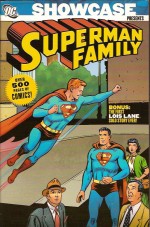
When the blockbusting Man of Tomorrow debuted in Action Comics #1 (June 1938) he was instantly the centre of attention but even then the need for a solid supporting cast was apparent and quickly tailored for. Glamorous daredevil girl reporter Lois Lane premiered with Clark Kent and was a constant companion and foil from the outset.

Although unnamed, a plucky red-headed, be-freckled kid worked alongside Clark and Lois from Action Comics #6 (November 1938) and was called by his first name from Superman #13 (November-December 1941) onwards. That lad was Jimmy Olsen and he was a major player in The Adventures of Superman radio show from its debut on April 15th 1940; somebody the same age as the target audience for the hero to explain stuff to (all for the listener’s benefit) and the closest thing to a sidekick the Man of Tomorrow ever needed…

When the similarly titled television show launched in the autumn of 1952 it became a monolithic hit and National Periodicals began cautiously expanding their increasingly valuable franchise with new characters and titles. First up were the gloriously charming, light-hearted escapades of that rash, capable but naïve photographer and “cub reporter” from the Daily Planet: the first spin-off star of the Caped Kryptonian’s rapidly expanding entourage began with Superman’s Pal Jimmy Olsen #1, which launched in 1954 with a September-October cover date.

As the decade progressed the oh-so-cautious Editors at National Comics tentatively extended the franchise in 1957 just as the Silver Age of Comics was getting underway and it seemed there might be a fresh and sustainable appetite for costumed heroes and their unique brand of spectacular shenanigans. Try-out title Showcase, which had already launched The Flash (#4 & 8 ) and Challengers of the Unknown (#6-7) followed up with a brace of issues entitled Superman’s Girl Friend Lois Lane in #9 and 10 before swiftly awarding her a series of her own – in actuality her second, since for a brief while in the mid-1940s she had her own solo-spot in Superman.

This gloriously nostalgic and scintillatingly addictive monochrome tome chronologically covers those experimental franchise expansions, re-presenting Superman’s Pal Jimmy Olsen #1-22, (September/October 1954 to August 1957 and Showcase #9 July/August 1957, plus the very first Lois Lane solo strip from Superman #28 – May/June 1944 as a welcome bonus.

The fabulous vintage all-ages entertainment (courtesy of dedicated creative team Otto Binder, Curt Swan & Ray Burnley) begins with ‘The Boy of 1000 Faces’ in which the ebullient junior journalist displays his phenomenal facility for make-up and disguise to tap a jewel thief before heading to timber country and solving the ‘Case of the Lumberjack Jinx’ before masquerading as ‘The Man of Steel’s Substitute’ and tackling public requests too trivial for his Kryptonian chum.

‘The Flying Jimmy Olsen’ opened the second issue with a daring tale of idiocy as the lad swallowed an alien power-potion with staggering disregard for the potential repercussions (a recurring theme of those simpler times) whilst ‘The Hide and Seek Mystery’ displayed his crime-solving pluck as he hunted down more jewel thieves after which the boy became ‘Jimmy Olsen, Superman’s Ex-Pal’ to expose a cunning conman.

He became ‘The Boy Millionaire’ in #3 when a wealthy dowager repaid a kind deed with a vast cash reward. Sadly all money brought Jimmy was scammers, conmen and murderous trouble. After that he headed to Tumbleweed, USA to cover a rodeo and somehow became ‘The Fastest Gun in the West’ before meeting the highly suspect eccentric who was ‘The Man Who Collected Excitement’.

‘The Disappearance of Superman’ perplexed Metropolis in #4 until his valiant pal solved the mystery and saved the Caped Kryptonian’s life whilst as ‘The Hunted Messenger’ Jimmy risked certain death to outwit gangsters before replacing a regal look-alike and playing ‘King for a Day’ in a far off land threatened by a ruthless usurper.

In issue #5 ‘The Boy Olympics’ displayed Jimmy’s sentimental side as he risked his job to help young news vendors from a rival paper and almost got replaced by a computer in ‘The Brain of Steel’ before beguiling and capturing a wanted felon with ‘The Story of Superman’s Souvenirs’…

The cutthroat world of stage conjuring found him competing to become ‘The King of Magic’ in JO #6’s first tale after which the diminutive lad endured a punishing diet regime – hilariously enforced by Superman – before covering the sports story of the year in ‘Jockey Olsen Rides Star Flash’. The last tale found Jimmy bravely recovering ‘100 Pieces of Kryptonite’ that fell on the city rendering Superman helpless and dying…

Jimmy Olsen #7 found the boy teaching three rich wastrels a life-changing lesson in ‘The Amazing Mirages’ after which a magic carpet whisked him away to write ‘The Scoop of 1869’ and the lad’s boyhood skills enabled him to become ‘The King of Marbles’, catching a crook and more headlines…

In #8 pride in his investigative abilities and a slick conman compelled him to uncover his pal’s secret identity in ‘The Betrayal of Superman’ after which he was ‘Superboy for a Day’ (sort of) and wowed the chicks when a sore throat enabled him to become ‘Jimmy Olsen, Crooner’, whilst in #9 he disastrously switched jobs to ‘Jimmy Olsen, Cub Inventor’, became a TV quiz mastermind in ‘The Million-Dollar Question’ and piloted a prototype Superman robot in ‘The Missile of Steel’.

In #10 the canny lad turned the tables on a greedy hoaxer in ‘Jimmy Olsen’s Martian Pal’ and suffered amnesia in ‘Jimmy Olsen’s Forgotten Adventure’ before going back to nature as ‘Jungle Jimmy Olsen’, whilst the next issue found him acting, after a stellar accident, as ‘Superman’s Seeing-Eye Dog’, dumping the neglectful and busy Man of Steel for a more appreciative comrade in ‘Jimmy Olsen, Clark Kent’s Pal’ and accidentally exposing a corrupt boxing scam as ‘T.N.T. Olsen, the Champ’.

He helped out a circus chum by becoming ‘Jimmy Olsen, Prince of Clowns’ in #12, thereafter uncovering ‘The Secret of Dinosaur Island’ and falling victim to a goofy – if not plain mad – scientist’s bizarre experiment and reluctantly became ‘The Invisible Jimmy Olsen’, whilst in #13 and tracking a swindler he met a half dozen namesakes in ‘The Six Jimmy Olsens’. Criminals then targeted the cub reporter’s secret weapon in ‘The Stolen Superman Signal’ and the lad found himself the subject of a cruel but necessary deception when the Metropolis Marvel perpetrated ‘Jimmy Olsen’s Super Illusions’…

Issue #14 opened with a time-travel western tale as the lad instigated ‘The Feats of Chief Super-Duper’ after which a scientific accident seemingly imbued the bold boy with Clark Kent’s personality and created ‘The Meek Jimmy Olsen’ before the cub was lost in American wilderness and was outrageously mistaken for ‘The Boy Superman’.

JO #15 found him demoted and at a dog-show where his infallible nose for news quickly uncovered ‘The Mystery of the Canine Champ’ after which an injudiciously swallowed serum gave him super-speed and he became ‘Jimmy Olsen, Speed Demon’ and a strange ailment forced him to dispose of his most treasured possessions in ‘Unwanted Superman Souvenirs’…

A scurrilous scammer in #16 offered to regress the boy’s consciousness and help him re-live ‘The Three Lives of Jimmy Olsen’ after which a series of crazy coincidences compelled identity-obsessed Clark to convince Lois Lane that Jimmy was ‘The Boy of Steel’ before another chemical concoction turned the lad into a compulsive fibber and ‘The Super Liar of Metropolis’.

The next thrill-packed issue featured ‘Jimmy Olsen in the 50th Century’ wherein the lad was transported to an era where history had conflated his and Superman’s lives, whilst in ‘The Case of the Cartoon Scoops’ he rediscovered a gift for drawing and the curse of clairvoyance before an horrific accident turned him into ‘The Radioactive Boy’, whereas in #18, humour was king as ‘The Super Safari’ found him using a “magic” flute to capture animals for a circus, ‘The Riddle Reporter’ saw him lose scoops to a masked mystery journalist and he then had to nursemaid his best friend when a criminal’s time weapon turned the Man of Steel into ‘Superbaby, Jimmy Olsen’s Pal’…

In #19 ‘The Two Jimmy Olsens’ introduced a robot replica of the cub reporter whilst in ‘The Human Geiger Counter’ the kid became allergic to the Action Ace before a brain injury convinced him he was ‘Superman’s Kid Brother’. The next issue opened with ‘Jimmy Olsen’s Super-Pet’ as a souvenir hatched into a living breathing dinosaur. His misguided efforts to save a small-town newspaper culminated in ‘The Trial of Jimmy Olsen’ after which Superman secretly turned his pal into ‘The Merman of Metropolis’ in a convoluted scheme to preserve his own alter ego.

Issue #21 revealed an unsuspected family skeleton and a curse which seemingly transformed reporter into pirate in ‘The Legend of Greenbeard Olsen’, whilst ingenuity and a few gimmicks briefly turned him into junior hero ‘Wonder Lad’ but arrogance and snooping were responsible for the humiliation that resulted from ‘The Wedding of Jimmy Olsen’ to Lois Lane…

A month later the lady finally starred in her own comicbook as, galvanised by a growing interest in superhero stories, the company’s premiere try-out title pitched a brace of issues focused on the burgeoning Superman family of features.

Showcase #9 (cover-dated July/August 1957) featured Superman’s Girl Friend Lois Lane in three tales by Jerry Coleman, Ruben Moreira & Al Plastino and opened with the seminal yarn ‘The Girl in Superman’s Past’ wherein Lois first met red-headed hussy Lana Lang, childhood sweetheart of Superboy and a pushy conniving go-getter out to win Lois’ intended at all costs. Naturally Miss Lane invited Miss Lang to stay at her apartment and the grand rivalry was off and running…

‘The New Lois Lane’ aggravatingly saw Lois turn over a new leaf and stop attempting to uncover his secret identity just when Superman actually needed her to do so and the premier concludes with the concussion-induced day-dream ‘Mrs. Superman’ as Lois imagines a life of domestic super-bliss…

When Lois Lane finally received her own shot at solo stardom it was very much on the terms of the times. I must shamefacedly admit to a deep, nostalgic affection for her bright and breezy, fantastically fun adventures, but as a free-thinking, liberal (nominally) adult of the 21st century I’m simultaneously shocked nowadays at the patronising, nigh-misogynistic attitudes underpinning many of the stories.

I’m fully aware that the series was intended for young readers at a time when “dizzy dames” like Lucille Ball or Doris Day played to the popular American gestalt stereotype of Woman as jealous minx, silly goose, diffident wife and brood-hungry nester, but to ask kids to seriously accept that intelligent, courageous, ambitious, ethical and highly capable females would drop everything they’d worked hard for to lie, cheat, inveigle, manipulate and entrap a man just so that they could cook pot-roast and change super-diapers is just plain crazy and tantamount to child abuse.

Oddly enough the 1940s interpretation of the plucky news-hen was far less derogatory: Lois might have been ambitious and life-threateningly precipitate but at least it was to advance her own career and put bad guys away as seen in the four-page vignette which closes this volume.

‘Lois Lane, Girl Reporter’ debuted in Superman #28 (May/June 1944) a breathless fast-paced screwball comedy-thriller by Don Cameron & Ed Dobrotka wherein the canny lass fails to talk a crazed jumper down from a ledge and saves him in another far more flamboyant manner, reaping the reward of a front page headline.

Before that Golden Age threat however there’s one last issue of the junior member of the Superman Family. JO #22 begins with ‘The Mystery of the Millionaire Hoboes’ as the lad tracked down the reason wealthy men are masquerading as down-and-outs before exposing the evil secrets behind ‘The Super-Hallucinations’ afflicting the Man of Tomorrow and ending with ‘The Super-Brain of Jimmy Olsen’ wherein resident affable crackpot genius Professor Phineas Potter evolved the boy into a man from 1,000,000AD. That cold but surely benevolent being had a hidden agenda however and was able to bend Superman to his hyper-intelligent will…

These spin-off, support series were highly popular top-sellers for over twenty years; blending action, adventure, broad, wacky comedy, fantasy and science fiction in the gently addictive manner scripter Otto Binder had first perfected a decade previously at Fawcett Comics on the magnificent Captain Marvel and his own myriad mini-universe of associated titles.

As well as containing some of the most delightful episodes of the pre angst-drenched, cosmically catastrophic DC, these fun, thrilling and yes, occasionally deeply moving all-ages stories also perfectly depict the changing mores and tastes which reshaped comics from the safe 1950s to the seditious, rebellious 1970s, all the while keeping to the prime directive of the industry – “keep them entertained and keep them wanting more”.

I know I certainly do…
© 1944, 1954, 1955, 1956, 1957, 2006 DC Comics. All Rights Reserved.

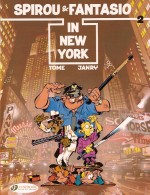
Spirou & Fantasio volume 2: In New York


By Tome & Janry, translated by Jerome Saincantin (Cinebook)
ISBN: 978-1-84918-054-2

For most English-speaking comic fans and collectors Spirou is probably Europe’s biggest secret. The character is a rough contemporary – and calculated commercial response – to Hergé’s iconic Tintin, whilst the comic he has headlined for decades is only beaten in sheer longevity and manic creativity by our own Beano and Dandy.

Conceived at Belgian Printing House by Jean Dupuis in 1936, a magazine targeting a juvenile audience debuted on April 21st 1938; neatly bracketed by DC Thomson’s The Dandy which launched on 4th December 1937 and The Beano on July 30th 1938. It was edited by Charles Dupuis (a mere tadpole, only 19 years old, himself) and took its name from the lead feature, which recounted the improbable adventures of a plucky Bellboy/lift operator employed by the Moustique Hotel (a reference to the publisher’s premier periodical Le Moustique).

Joined on June 8th 1939 by a pet squirrel, Spip (the longest running character in the strip after Spirou himself) the series was conceived by French artist Robert Velter who signed himself Rob-Vel.

A Dutch language edition ‘Robbedoes’ debuted a few weeks later and ran more-or-less in tandem with the French parent comic until it was cancelled in 2005.

The bulk of the comic was taken up with cheap American imports – Fred Harman’s Red Ryder, William Ritt & Clarence Gray’s ‘Brick Bradford’ and Siegel & Shuster’s landmark ‘Superman’ – although home-grown product crept in too. Most prominent were ‘Tif et Tondu’ by Fernand Dineur (which ran until the1990s) and ‘L’Epervier Blue’ by Sirius (Max Mayeu) and they were soon joined by comic-strip wunderkind Joseph Gillain – “Jijé”.

Legendarily, during World War II Jijé drew the entire comic by himself, including home grown versions of banned US imports and also assumed production of the Spirou strip where he created the current co-star Fantasio).

Except for a brief period when the Nazis closed the comic down (September 1943 to October 1944 whilst the Allies liberated Belgium) Spirou and its boyish star – now a globe-trotting journalist – have continued their weekly exploits in unbroken four-colour glory.

Among the other myriad major features that began within those hallowed pages are ‘Jean Valhardi’ (by Jean Doisy & Jije), ‘Blondin et Cirage’ (Victor Hubinon), Buck Danny, ‘Jerry Spring’, ‘Les Schtroumpfs’, ‘Gaston Lagaffe’ and a certain laconic cowboy named Lucky Luke.

Spirou the character (whose name translates as both “squirrel” and “mischievous”) has starred in the magazine for most of its life, evolving under a series of creators into an urbane yet raucous fantasy/adventure hero with the accent heavily on light humour. With comrade and rival Fantasio and crackpot inventor the Count of Champignac, Spirou travels to exotic places, uncovering crimes, revealing the fantastic and garnering a coterie of exotic arch-enemies.

During the War when Velter went off to fight, his wife Blanche Dumoulin took over the strip using the name Davine, assisted by Luc Lafnet. Dupuis assumed control of and rights to the strip in 1943, assigning it to Jijé who handed it to his assistant André Franquin in 1946. It was the start of a golden age.

Among Franquin’s innovations were the villains Zorglub and Zantafio, Champignac and one of the first strong female characters in European comics, rival journalist Seccotine (renamed Cellophine in this current English translation), but his greatest creation – one he retained on his departure in 1969 – was the incredible magic animal Marsupilami (first seen in Spirou et les héritiers in 1952), now a star of screen, plush toy store, console and albums all his own.

From 1959 the writer Greg and background artist Jidéhem assisted Franquin but by 1969 the artist had reached his Spirou limit and resigned, taking his mystic yellow monkey with him. He was succeeded by Jean-Claude Fournier who updated the feature over the course of nine stirring adventures that tapped into the rebellious, relevant zeitgeist of the times with tales of environmental concern, nuclear energy, drug cartels and repressive regimes.

By the 1980s the series seemed to stall: three different creative teams alternated on the serial: Raoul Cauvin & Nic Broca, Yves Chaland and the author of the adventure under review here: Philippe Vandevelde writing as Tome and artist Jean-Richard Geurts AKA Janry. These last adapted and referenced the beloved Franquin era and revived the feature’s fortunes, producing fourteen wonderful albums between 1984 and 1998. This one, originally entitled ‘Spirou à New-York’ from 1987, was their seventh and the 39th collection of the venerable comedy sagas.

Since their departure Lewis Trondheim and the team of Jean-Davide Morvan & Jose-Luis Munuera have brought the official album count to fifty (there also are a bunch of specials, spin-offs and one-shots, official and otherwise)…

In the Big Apple there is war between two criminal factions. The Mafia are steadily losing ground and men to the insidiously encroaching Chinese Triad of the mysterious Mandarin.

Don Vito “Lucky” Cortizone is advised that it’s due to an incredible run of bad luck and undertakes to find and “recruit” the luckiest person on Earth to turn his gang’s fortunes around…

Meanwhile in Paris Spirou and Fantasio are broke again. Starving with days until payday, they scrape just enough coins together from beneath the sofa cushions for one last frozen pizza…

The tasteless American import has a key inside which almost chokes Fantasio but also claims that they’ve won a million dollars. All they have to do is collect it in person from Lucky’s Bank in New York. Their fortunes are rapidly changing: an assignment from the unscrupulous editor of Turbine Magazine gives them airplane tickets and the promise of work covering a car-ball match in NYC – but only if they leave immediately…

Once in the Big Apple the story shifts into lavishly ludicrous high gear: Cortizone -permanently stuck under a rain cloud which follows him everywhere – hides nothing from the lads but appeals to their greed and fellow feeling to help him out of his tight spot. The implacable, insidious Chinese are beating him at every turn. It’s almost like magic…

But as his men continue to fall around him and Triad assassins keep getting closer and closer, The Don wants to carry out a few tests first – just to see how lucky Fantasio actually is…

Meanwhile, the Mandarin and his reluctant but particularly effective wizard stooge have gotten wind of the scheme and move to negate the Europeans’ influence by kidnapping Spip. And even if it doesn’t forestall their interference, at least the enigmatic mastermind will have something new and exotic to eat…

The diabolical cut-and-thrust shenanigans lead to a daring rescue mission on the Mandarin’s skyscraper citadel and an inevitably spectacular showdown in the skies over New York…

With hilarious supernatural overtones, clever criminal capers, sly digs at American movies-as-culture and daring dabblings with racial and cultural stereotypes/archetypes, all leavened with witty in-jokes, spoofs, lampoons and visual puns, this fast-paced, riotous rollercoaster romp is sheer comicbook poetry that it would be a crime to miss.

This type of thrilling mystery, weird science, light adventure and broad slapstick is a pure refreshing joy in a market far too full of adults-only carnage and testosterone-fuelled breast-beating. Easily accessible to readers of all ages and drawn with all the welcoming style and panache that makes Asterix, Lucky Luke and Iznogoud so compelling, this is another cracking read from a long line of superb exploits which should soon be as much a household name as those series – and even Tintin himself…
Original edition © Dupuis, 1987 by Tome & Janry. All rights reserved. English translation 2010 © Cinebook Ltd.

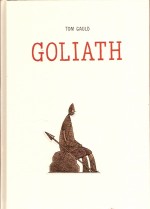
Goliath


By Tom Gauld (Drawn & Quarterly)
ISBN: 978-1-77046-065-2

Everybody knows the story of David and Goliath. Big, mean evil guy at the head of an oppressive army terrorising the Israelites until a little boy chosen by God kills him with a stone from his slingshot.

But surely there’s more to it than that…?

In this supremely understated and gentle retelling we get to see what the petrifying Philistine was actually like and, to be quite frank, history and religion have been more than a little unkind…

Like most really big guys Goliath of Gath is a shy, diffident, self-effacing chap. The hulking man-mountain is an adequate administrator but fifth worst swordsman in the army, which has been camped in opposition to the Hebrew forces for months. Moreover, the dutiful, contemplative colossus doesn’t even have that much in common with the rough-and ready attitudes of his own friends…

When an ambitious captain gets a grand idea he has the towering clerk outfitted in terrifying brass armour and orders him to issue a personal challenge to the Israelites every day.

“Choose a man, let him come to me that we may fight.

If he be able to kill me then we shall be your servants.

But if I kill him then you shall be our servants.”

The plan is to demoralise the foe with psychological warfare: grind them down until they surrender. There’s no reason to believe that Goliath will ever have to actually fight anybody…

Elegiac and deftly lyrical this clever reinterpretation has literary echoes and overtones as broadly disparate as Raymond Briggs and Oscar Wilde and as it gently moves to its sad and inescapable conclusion the deliciously poignant, simplified line and sepia-toned sturdiness of this lovely hardback add a subtle solidity to the sad story of a monstrous villain who wasn’t at all what he seemed…

Tom Gauld is a Scottish cartoonist whose works have appeared in Time Out and the Guardian. He has illustrated such children’s classics as Ted Hughes’ The Iron Man and his own books include Guardians of the Kingdom, 3 Very Small Comics, Robots, Monsters etc., Hunter and Painter and The Gigantic Robot. You can see more of his work at www.tomgauld.com
© 2012 Tom Gauld. All rights reserved.
This book is scheduled for release in mid-March 2012. For book signing/tour dates please consult our Noticeboard or the author’s own website.

Showcase Presents Superman volume 2


By Otto Binder, Jerry Siegel, Jerry Coleman, Bill Finger, Wayne Boring, Al Plastino, Curt Swan & various (DC Comics)
ISBN: 978-1-4012-1041-0

Although we all think of Jerry Siegel and Joe Shuster’s iconic creation as the epitome of comicbook creation, the truth is that very soon after his launch in Action Comics #1 Superman became a fictional multimedia star in the same league as Mickey Mouse, Popeye, Tarzan and Sherlock Holmes.

Far more people have seen or heard the Man of Steel than have ever read him – and yes, that does include the globally syndicated newspaper strips. By the time his 20th anniversary rolled around he had been a regular on radio, starred in a series of astounding animated cartoons, a novel by George Lowther and two movies, He was a perennial success for toy and puzzle manufacturers and had just ended his first smash live-action television serial. In his future were three more (Superboy, Lois & Clark and Smallville), a stage musical, a franchise of stellar movies and an almost seamless succession of games, bubblegum cards and TV cartoons beginning with The New Adventures of Superman in 1966 and continuing ever since. Even Krypto got in on the small-screen act…

However, that’s not all there is to these gloriously engaging super-sagas culled from the Metropolis Marvel’s lead feature in Action Comics #258-277 and the all-star sagas from Superman #134-145 (reliving the period November 1959 to May 1961 and including selected snippets from Superman Annuals #1& 2) presented in crisp, clean black and white for this sterling second Showcase Presents collection.

During the 1950s, even as his back-story was expanded and elaborated, Superman had settled into an ordered existence. Nothing could really hurt him, nothing ever changed, and pure thrills seemed in short supply. With the TV show concentrating on the action, the Comics-Code-hamstrung funnybook writers increasingly concentrated on supplying wonder, intrigue, imagination and, whenever possible, a few laughs as well…

The wholesome intrigue and breathtaking fantasy commence here with Action Comics #258’s ‘The Menace of Cosmic Man’ a sharp mystery written by Bill Finger and illustrated by Wayne Boring & Stan Kaye, wherein an impoverished European dictatorship suddenly announced it had its own all-powerful costumed champion; drawing Lois Lane and Clark Kent into a potentially deadly investigation, whilst #259 featured the hallucinogenic thriller ‘The Revenge of Luthor!’ by Jerry Siegel & Al Plastino with a seemingly impossible clash between the Man of Tomorrow and his own younger self which almost led to certain death for Lois and school sweetheart Lana Lang…

Superman #134 (January 1960) was a full-length epic from Binder, Boring & Kaye as ‘The Super-Menace of Metropolis’ saw the Caped Kryptonian apparently undertake a concerted attack upon humanity, leading to shocking revelations in ‘The Revenge Against Jor-El!’ before a blockbusting final battle against an unsuspected Kandorian foe in ‘Duel of the Supermen!’

There was the usual heartbreak for Lois when Superman and Supergirl perpetrated a romantic hoax on the world to thwart a potential alien attack in ‘Mighty Maid!’ (Action #260, Binder & Plastino), whilst Superman #135 offered three Siegel stories beginning with the Untold Tale ‘When Lois First Suspected Clark was Superman!’, illustrated by Plastino, after which ‘Superman’s Mermaid Sweetheart!’ (Boring & Kaye) reintroduced Clark Kent’s college love Lori Lemaris in another superbly effective, bittersweet tear-jerker and ‘The Trio of Steel!’ found the Man of Steel again battling his most impossible foe in a classy conundrum (art by Plastino again).

Action #261 revealed the secret history of ‘Superman’s Fortress of Solitude!‘ by unravelling a cunning criminal plot against the indomitable hero in a clever yarn from Siegel, Boring & Kaye after which ‘When Superman Lost his Powers!’ (#262, Robert Bernstein, Boring & Kaye) saw the Daily Planet staff trapped in another dimension where the Man of Tomorrow was merely mortal and Lois’ suspicions were again aroused…

Superman #136 began with ‘The Man who Married Lois Lane!’ by Bernstein, Boring & Kaye wherein the frustrated reporter finally gave in and settled for a superman from the future – with tragic results – after which another Untold Tale revealed how the World first learned ‘The Secret of Kryptonite!’ (Jerry Coleman & Plastino) and how, as ‘The Super-Clown of Metropolis!’, Superman was blackmailed into attempting to make a millionaire misanthrope laugh in a smart character-driven yarn from Siegel & Plastino.

Action #263 introduced ‘The World of Bizarros!’ (Binder, Boring & Kaye) wherein the ghastly doppelganger used an imperfect duplicator machine to create an entire race in his broken image, whilst Superman #137, ‘The Super-Brat from Krypton!’, (Siegel, Curt Swan & John Forte) revealed how an energy duplicate of baby Kal-El was raised by criminals to become ‘The Young Super-Bully’ before finally confronting his noble counterpart in ‘Superman vs. Super-Menace!’

In Action Comics #264 a clash with the newly-minted artificial race culminated in the Caped Kryptonian almost becoming ‘The Superman Bizarro!’ in a tense thriller from Binder, Boring & Kaye whilst ‘The “Superman” from Outer Space!’ in #265 (Binder, Swan & Forte) recounted the tragically short career of Hyper-Man, planetary champion of Earth-like world Oceania, after which Superman #138 debuted ‘Titano the Super-Ape!’: a chimpanzee mutated into a Kryptonite-empowered King Kong clone with a devotion to Lois and big hatred for the Man of Steel: a beloved masterpiece by Binder, Boring & Kaye combining action, pathos and drama to superb effect.

‘Superman’s Black Magic!’ (Siegel & Plastino) balanced that epic tear-jerker with a clever yarn wherein the Action Ace instigated a devilish sting to catch superstitious crooks whilst ‘The Mermaid from Atlantis!’ by Siegel Boring & Kaye, saw the newlywed Lori Lemaris attempt to trick Superman into finally proposing to Lois.

Action #266 found the heroic hunk trapped on another world, ‘The Captive of the Amazons.’ Their queen wanted the Man of Tomorrow for her sixth husband and was prepared to destroy Earth to make her dreams come true…

Superman #139 began with ‘The New Life of Super-Merman!’ as the Caped Kryptonian and Lori schemed to marry Lois off to a nice, safe multi-millionaire who really loved her in a rather dated and potentially offensive tale from Siegel, Boring & Kaye, whereas ‘The Jolly Jailhouse!’ (Coleman & Plastino) is safe and solid entertainment, providing a light-hearted clash between a would-be dictator and the World’s Most Uncooperative political prisoner Clark Kent; after which ‘The Untold Story of Red Kryptonite!’ (Binder, Boring & Kaye) offered a dramatic dilemma, a redefinition of the parameters of the deadly crimson mineral, and plenty of thrills with the Man of Steel forced to risk deadly danger and lots of informative flashbacks to rescue a sunken submarine…

Binder, Boring & Kaye produced the spectacular two-part clash ‘Hercules in the 20th Century!’ and ‘Superman’s Battle with Hercules!’ (Action #267-268, and separated here by the cover of Superman Annual #1) as Luthor brought the Hellenic demi-god to Metropolis to battle the “evil king” Superman. Events turned even more serious when the legendary warrior fell for Lois and marshalled all the magical powers of the Olympians to destroy his unwitting rival…

Although later played for laughs, most of the earlier appearances of Superman‘s warped double were generally moving comi-tragedies, such as issue #140 which featured Binder, Boring & Kaye’s ‘The Son of Bizarro!’ wherein the fractured facsimile and his wife Bizarro-Lois had a perfect, human baby. The fast growing tyke had super-powers but was shunned by the populace of the world of monsters.

His simple-minded, heartbroken father had no choice but to exile his son in space where chance brought the lad crashing to Earth as ‘The Orphan Bizarro!’. Sent to the same institution where Supergirl resided, “Baby Buster” soon became a permanent headache for the Girl of Steel until a tragic accident seemingly mutated him and his distraught father came looking for him at the head of an angry army of enraged Superman duplicates. A devastating battle was narrowly avoided and a happy ending only materialised with the introduction of ‘The Bizarro Supergirl!’…

Action Comics #269 told a clever tale of identity-saving when Lois tricked Clark into standing before ‘The Truth Mirror!’ (Siegel, Swan & George Klein), whilst Superman #141 again showed the writer’s winning form in ‘Superman’s Return to Krypton!’ Illustrated by Boring & Kaye the epic Grand Tragedy revealed in ‘Superman Meets Jor-El and Lara Again!’ how an accident marooned the adoptive Earth hero in the past on his doomed home-world. Reconciled to dying there with his people, in ‘Superman’s Kryptonian Romance’ Kal-El found love with his ideal soul-mate Lyla Lerrol, only to be torn from her side and returned to Earth against his will in concluding chapter ‘The Surprise of Fate!’

This bold saga was a fan favourite for decades thereafter, and remains one of the very best stories of the period.

In Action #270 Binder, Swan, Forte provided a whimsical interlude in ‘The Old Man of Metropolis!’ as the Metropolis Marvel glimpsed his own twilight years whilst ‘Voyage to Dimension X!’ by Binder & Plastino in #271 saw him narrowly escape his greatest foe’s latest diabolical plot.

Superman #142 opened with ‘Lois Lane’s Secret Helper!’ by Binder & Kurt Schaffenberger, as faithful Krypto tried to play matchmaker whereas ‘Superman Meets Al Capone!’ saw the time-lost Man of Tomorrow clash with the legendary mobster (Binder, Boring & Kaye) before battling a wandering ‘Flame-Dragon from Krypton!’ with some helpful assistance from his best super-buddies in a sharp yarn from Siegel, Boring & Kaye.

Another prototype team-up featured in Action #272’s ‘Superman’s Rival, Mental Man!’ a clever criminal-sting caper by Siegel, Swan & Kaye, which centred around Lois’ unsuspected talents as comic strip creator, whilst over in Superman #143 ‘The Great Superman Hoax!’ (Bernstein, Boring & Kaye) saw a criminal try to convince Lois that he was actually the Man of Might. ‘Lois Lane’s Lucky Day!’ (Siegel & Forte) found the daring reporter busting a crooked carnival – with a little covert Kryptonian help – before ‘Bizarro Meets Frankenstein!’ by Binder, Boring & Kaye saw the befuddled duplicate invade Earth to prove he was the scariest monster of all time…

Action #273 had Superman turn the table on the pestiferous 5th Dimensional pixie by invading ‘The World of Mxyzptlk!’ in a light-hearted romp from Siegel & Plastino and next issue lose his abilities to Lois in ‘The Reversed Super-Powers!’ (Siegel & Schaffenberger.

Superman #144 led with the combative thriller ‘The Super-Weapon!’ by Siegel, Swan & Kaye, after which Siegel & Plastino revealed the Untold Tale of ‘Superboy’s First Public Appearance!’ before going on to describe the terrifying plight of Superman, Supergirl and Krypto as ‘The Orphans of Space!’

Action #275 saw a classic clash with alien marauder Brainiac whose latest weapon was ‘The Menace of Red-Green Kryptonite!’ (Coleman, Boring & Kaye) after which Superman #145 opened with a salutary fable by Siegel, Swan & Kaye proving why Lois couldn’t be trusted with ‘The Secret Identity of Superman!’ ‘The Interplanetary Circus!’, by Bernstein & Plastino, then held Earth hostage until the Man of Steel agreed to join them, but even after outwitting those scoundrels Superman was utterly flummoxed by the incredible events of ‘The Night of March 31st!’ – a deliciously surreal, whimsical and bizarre mystery-puzzle from Siegel, Swan & Sheldon Moldoff.

This second superb collection concludes with the stirring cover of Superman Annual #2 and the scintillating double-page Map of Krypton by Siegel & Plastino which enflamed the imagination of every kid who ever saw it…

Superman has proven to be all things to all fans over his decades of existence, and with the character undergoing another radical overhaul at this time, these timeless tales of charm and joy and wholesome wit are more necessary than ever: not just as a reminder of great tales of the past but as an all-ages primer of the wonders still to come…

© 1959, 1960, 1961, 2006 DC Comics. All Rights Reserved.

Explorer – The Mystery Boxes


By various, edited by Kazu Kibuishi (Amulet)
ISBNs: HB 978-1-4197-0010-1   PB 978-1-4197-0009-5

Here’s another superb entry into the burgeoning Young Adults graphic novel market that offers a wonderful alternative to Fights ‘n’ Tights furores and interminable extended storylines that will appeal to fans of the art form and fantasy freaks alike.

Edited by Kazu Kibuishi who created the impressive sorcerous saga Amulet, this captivating anthology collection offers seven thought-provoking and decidedly different tales by a coterie of animators and comics-creators all turning their fertile imaginations and illustrative talents to expanding and elucidating upon the core concept of an enigmatic container…

The wonderment begins with a spooky fable by Emily Carroll wherein a solitary and much put-upon girl discovers a very special doll and far more than she bargained for ‘Under the Floorboards’…

‘Spring Cleaning’ by Dave Roman & Raina Telgemeier is a wry and jolly escapade with lazy Oliver finally picking up his toys and discovering a puzzle box he didn’t know he owned. When he tries to sell the thing online all manner of very strange and insistent people start making outrageous and impossible offers…

Jason Caffoe follows a more tradition route as his young warrior overcomes all manner of fantastic odds to win ‘The Keeper’s Treasure’. Of course not everybody agrees on what constitutes fabulous wealth…

‘The Butter Thief’ by Rad Sechrist sees a little girl discover her grandmother’s ineffable wisdom and magical practicality after freeing a thieving spirit from a kitchen trap and undergoing a startling metamorphosis whilst ‘The Soldier’s Daughter’ (by Stuart Livingston with Stephanie Ramirez) reveals the true cost of vengeance as young Clara picks up her murdered father’s sword and mission. Mercifully a mysterious stranger shows her another path in his enthralling cask of wonders…

Johane Matte & Saymone Phanekham display stunning comic timing and astounding fast-paced imagination in the wicked tale of ‘Deet’; a much-maligned junior intergalactic shipping clerk dealing with workplace bullying in the most effective manner conceivable after which editor Kazu Kibuishi brings the perplexing odyssey of a spectacular close with ‘The Escape Option’ as a troubled boy finds an incredible artefact and is presented with an impossible, life-changing, world altering choice…

These dark, beguiling, funny and enticing adventures blend traditional story elements with an inspired eye for the contemporary kid’s broad spectrum of fascinations: warriors, aliens, robots, cartoon animals, rocket-ships, monsters, isolation, alienation, magical quests and glorious battles; all delivered with sly wit and breathtaking exuberance to create a splendid portmanteau rollercoaster ride of laughter, tears, terrors and triumphs.

This a perfect introduction or reintroduction to comics for kids of all ages looking for something beyond the ordinary and hopefully the start of a long line of thematic sequels…

Explorers is scheduled for a March 2012 release in the UK but available for pre-order now in both hardback and paperback editions.

Cover and The Escape Option © 2012 Kazu Kibuishi. Under the Floorboards © 2012 Emily Carroll. Spring Cleaning © 2012 Dave Roman & Raina Telgemeier. The Keeper’s Treasure © 2012 Jason Caffoe. The Butter Thief © 2012 Rad Sechrist. The Soldier’s Daughter © 2012 Stuart Livingston. Whatzit © 2012 Johane Matte. Published by Amulet Books, an imprint of Abrams. All rights reserved.