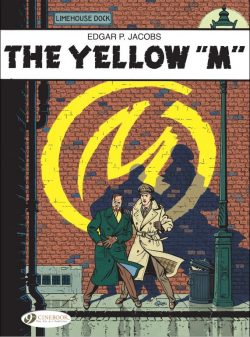
The Adventures of Blake and Mortimer: The Yellow “M”


By Edgar P. Jacobs, translated by Clarence E. Holland (Cinebook)
ISBN: 978-1-905460-21-2

Master storyteller Edgar P. Jacobs pitted his distinguished duo of Scientific Adventurers Captain Francis Blake and Professor Philip Mortimer against a wide variety of perils and menaces in stunning action thrillers which merged science fiction, detective mysteries and supernatural thrillers in the same timeless and universally engaging Ligne Claire style which had done so much to make intrepid boy reporter Tintin a global sensation.

The strip debuted in Le Journal de Tintin #1 (26th September 1946): an anthology comic with editions in Belgium, France and Holland. The new anthology was edited by Hergé, with his eponymous star ably supplemented by a host of new heroes and features…

Le Marque Jaune was the third astounding exploit of the peerless pair, originally serialised from August 6th 1953 to November 3rd 1954, before being collected as the sixth drama-drenched album in 1956.

This moody stand-alone extravaganza was the first in the modern Cinebook sequence with the True Brits for once on home soil as they struggle to solve an eerie mystery and capture an apparently superhuman criminal…

The tale begins a few days before Christmas on a night raining cats and dogs. The guards at the Tower of London are dutifully going about their appointed tasks when a sudden power cut douses all the lights.

By the time Beefeaters and Yeomen can find alternative lighting the damage is done. The Jewel Room is ransacked, the Imperial Crown missing and the wall is defaced: emblazoned with a large letter M in a bold circle of yellow chalk.

The shocking travesty is but the latest in an outrageous series of incredible crimes by a mysterious malefactor the newspapers have taken to calling The Yellow M…

Incensed and humiliated by the latest outrage, the Home Office assigns MI6 to the case and their top man Blake is seconded to assist Chief Inspector Glenn Kendall of Scotland Yard. So serious is the matter that Blake instantly cables his old comrade Professor Mortimer, dragging the bellicose boffin back from a well-deserved vacation in Scotland.

London is ablaze with rumour and speculation about the super-bandit. The crafty old warhorses adjourn to the Centaur Club in Piccadilly to discuss events, but as they settle in for a chinwag, Mortimer gets a fleeting impression that they are being spied upon…

Suddenly they are interrupted by four fellow members also hotly debating the case. Sir Hugh Calvin is a judge at the Central Criminal Court; Leslie Macomber edits the Daily Mail and Professor Robert Vernay is a prominent figure in the British Medical Association. They are all hotly disputing Dr Jonathan Septimus – of the Psychiatric Institute – who propounds a theory that the phantom felon is a prime example of his pet theory of “The Evil Influence of Cellular Development”…

The enlarged group continues the verbal back-and-forth into the small hours, and when they finally break up Vernay follows his habit of walking home. He does not make it. The police find only his hat and a chalked letter in a circle…

The flamboyant rogue seems to be everywhere. When Blake and Mortimer interview Macomber, Calvin and the terrified Septimus next day, the invisible enigma somehow gets close enough to leave his mark on the MI6 officer’s coat, before sending a mocking cable warning the Mail’s Editor that more and worse is coming…

That night Macomber is abducted from his office in plain view of his staff and Kendall is found in a dazed state after failing to protect Judge Calvin from a mystery intruder…

Septimus concludes that he is next and convinces Blake to get him out of London. The pair board a train for Suffolk with a complement of detectives, but even these precautions are not enough. The psychiatrist is impossibly plucked from the Express before it is wrecked in a horrific collision with another train.

In London, cerebral Mortimer has been researching another angle with the assistance of Daily Mail archivist Mr. Stone. The veteran investigator has found a decades-old link between the missing men…

It all revolves around a controversial medical text entitled “The Mega Wave” and a scandalous court case, but when the Professor tries to secure a copy of the incredibly rare volume from the British Museum Library, he is confounded by the Yellow M who invisibly purloins the last known copy in existence…

That evening Mortimer shares his thoughts with the returned Blake, unaware that his house has been bugged. Hours later, a mysterious cloaked intruder breaks in but has a fit after passing some of Mortimer’s Egyptian souvenirs. The noise arouses the household and the masked burglar is confronted by Blake, Mortimer and burly manservant Nasir. Incredibly, the villain defeats them all with incredible strength and electrical shocks, even shrugging off bullets when they shoot him…

Exploding through a second story window, the M laughs maniacally as they continue futilely firing before running off into the London night. In their shock the adventurers return to the drawing room and trip over the intruder’s listening devices…

Later, the recovered Kendall visits just as a package arrives. It contains an anonymous note from someone wishing to share information and directs Blake to a late-night rendezvous at Limehouse Dock. The message also contains a desperate note from the missing Septimus begging Blake to comply…

Well aware that it’s a trap and over Mortimer’s strenuous protests, Blake and Kendall lay plans to turn the meeting to their advantage. Left at home, the Professor is surprised by a late visit from Stone. The remarkably efficient researcher has found a copy of The Mega Wave and rushed over to show Mortimer.

As Blake manfully braves the foggy waterfront and walks into deadly danger, Mortimer is reading the tome, deducing who is behind the plot and perhaps even how the malign miracles are pulled off…

In Limehouse, the empty commercial buildings become a spectacular battleground as Blake and the police confront the masked man. The villain easily holds them all at bay with incredible feats of speed and strength, before breaking out of the supposedly impenetrable blue cordon and escaping.

However, in his destructive flight he tumbles into the frantic Mortimer who is dashing to warn his old friend. Changing tack, the boffin gives chase, doggedly following the superhuman enigma through parks and sewers. Eventually the pursuit leads underground and he finds himself in a hidden basement laboratory being assaulted by mind-control devices devised by the sinister mastermind actually behind the entire campaign of vengeance and terror…

As the smirking villain gives an exultant speech of explanation, triumph and justification, Mortimer sees the fate of the abducted men and meets the human guinea pig who has been terrorising London at the behest of a madman. It is the very last person he ever expected to see again, but even as he reels in shock, Blake and Kendall are on his trail, thanks to the efforts of an avaricious cabbie with a good memory for faces…

As Christmas Day dawns, Blake and Kendall lead a raid on the hidden citadel to rescue Mortimer, but the wily savant has already taken dramatic steps to secure his own release and defeat his insane, implacable opponent…

Fast-paced, action-packed, wry and magnificently eerie, this fabulously retro weird science thriller is an intoxicating moody mystery and a sheer delight for lovers of fantastic fiction. Blake & Mortimer are the graphic personification of the Bulldog Spirit and worthy successors to the likes of Sherlock Holmes, Allan Quatermain, Professor Challenger, Richard Hannay and all the other valiant stalwarts of lost Albion: All valiant champions with direct connections to and allegiance beyond shallow national boundaries…

In 1986 this story was reformatted and repackaged in a super-sized English translation, the last of six volumes with additional material (mostly covers from the weekly Tintin added to the story as eye-catching splash pages): part of a European push to win some of the lucrative Tintin and Asterix market here. They failed to find an audience and there were no more translations until January 2007 when Cinebook released this tome to far greater approval and much success. We’re now at 25 translated volumes and counting…

Gripping and fantastic in the truest tradition of pulp sci-fi and Boy’s Own Adventures, Blake and Mortimer are the very epitome of dogged heroic determination; always delivering grand, old-fashioned Blood-&-Thunder thrills and spills in timeless fashion and with astonishing visual punch. Any kid able to suspend modern mores and cultural disbelief (call it alternate earth history or bakelite-punk if you want) will experience the adventure of their lives… and so will their children.

This Cinebook edition – available in paperback album and digital formats – also includes a selection of colour cover sketches and roughs, plus a biographical feature and chronological publication chart of Jacobs’ and his successors’ efforts.
Original editions © Editions Blake & Mortimer/Studio Jacobs (Dargaud-Lombard s.a.) 1987 by E.P. Jacobs. All rights reserved. English translation © 2007 Cinebook Ltd.

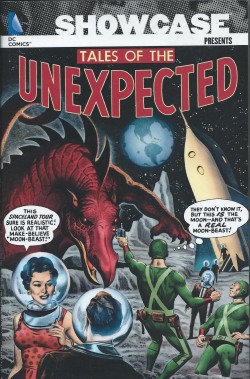
Showcase Presents Tales of the Unexpected volume 1


By Otto Binder, France E. Herron, Jack Miller, Dave Wood, Bernard Baily, Bob Brown, Nick Cardy, Bill Ely, Bill Draut, Jack Kirby, Mort Meskin, Sheldon Moldoff, Jim Mooney, Ruben Moreira, George Papp, John Prentice, George Roussos, Leonard Starr & various (DC Comics)
ISBN: 978-1-4012-3520-8

American comicbooks started rather slowly until the invention of superheroes unleashed a torrent of creative imitation and established a new entertainment genre. Implacably vested in World War Two, the Overman swept all before him (occasionally her or it) until the troops came home and the more traditional themes and heroes resurfaced and eventually supplanted the Fights ‘n’ Tights crowd.

Whilst a new generation of kids began buying and collecting, many of the first fans also retained their four-colour habit but increasingly sought older themes in the reading matter. The war years had irrevocably altered the psychological landscape of the readership, and as a more world-weary, cynical young public came to see that all the fighting and dying hadn’t really changed anything, their chosen forms of entertainment (film and prose as well as comics) increasingly reflected this.

As well as Western, War and Crime comics, celebrity tie-ins, madcap escapist comedy and anthropomorphic funny animal features were immediately resurgent, but gradually another of those cyclical revivals of spiritualism and a public fascination with the arcane led to a wave of impressive, evocative and shockingly addictive horror comics.

There had been grisly, gory and supernatural stars before, including a pantheon of ghosts, monsters and wizards draped in mystery-man garb and trappings (the Spectre, Mr. Justice, Frankenstein, The Heap, Zatara, Dr. Fate and dozens of others), but these had been victims of circumstance: The Unknown as a power source for super-heroics. Now the focus shifted to ordinary mortals thrown into a world beyond their ken with the intention of unsettling, not vicariously empowering, the reader.

Almost every publisher jumped on an increasingly popular bandwagon, with B & I (which became magical one-man-band Richard E. Hughes’ American Comics Group) launching the first regularly published horror comic in the Autumn of 1948. Technically speaking, however, Adventures Into the Unknown was pipped at the post by Avon who had released an impressive single issue entitled Eerie in January 1947; later reviving the title by launching a regular series in 1951. All the meanwhile, parents’ favourite Classics Illustrated had long been milking the literary end of the genre with adaptations of the Headless Horseman, Dr. Jekyll and Mr. Hyde (both 1943), The Hunchback of Notre Dame (1944) and Frankenstein (1945) among others.

As long as we’re keeping score, this was also the period in which Joe Simon & Jack Kirby identified another “mature market” gap and invented Romance comics (Young Romance #1, September 1947) but they too saw the sales potential for spooky material, resulting in the seminal Black Magic (1950) and boldly obscure psychological drama anthology Strange World of Your Dreams (1952).

The wholesome family company that would become DC Comics bowed to the inevitable and launched a comparatively straight-laced anthology that nevertheless became one of their longest-running and most influential titles with the December 1951/January 1952 launch of The House of Mystery. Its success led to a raft of such creature-filled fantasy compendiums in the years that followed such as Sensation Mystery, My Greatest Adventure, House of Secrets and, in 1956 – during a boom in B-Movie science fiction thrillers – Tales of the Unexpected…

A hysterical censorship scandal which led to witch-hunting hearings (check out Senate Subcommittee on Juvenile Delinquency, April-June 1954 on your search engine of choice) was derailed by the industry adopting a castrating straitjacket of draconian self-regulatory rules. Horror titles produced under the aegis and emblem of the Comics Code Authority were sanitised and anodyne affairs in terms of Shock and Gore, even though the market’s appetite for suspense and the uncanny was still high. Stories were dialled back into marvellously illustrated, rationalistic, fantasy-adventure vehicles which dominated until the 1960s when super-heroes (which had begun to creep back after Julius Schwartz reintroduced the Flash in Showcase #4, 1956) finally overtook them.

This mammoth monochrome compilation (still tragically unavailable in colour or in digital editions) offers a stunning voyage to the fantastic outer limits of 1950s imagination, collecting the first 20 issues of the charmingly enthralling anthology – produced under the watchful eyes of the Comics Code Authority – which spans cover dates February/March 1956 to December 1957 and starts with a quartet of intriguing, beautifully rendered pocket thrillers.

Sadly for me and you, records are spotty and many of the authors remain unsung (although possible candidates include Dave Wood, Bill Finger, Ed Herron, Joe Samachson, George Kashdan, Jack Miller and Otto Binder and I’ll just guess whenever I’m more than half-certain) but the pictorial pioneers at least can be deservedly celebrated…

Behind a captivating cover by Bill Ely, Tales of the Unexpected #1 opens our uncanny excursions with ‘The Out-of-The-World Club’, drawn by the astoundingly precise John Prentice, detailing the unearthly secret of a night-spot offering truly original groovy sounds, whilst ‘The Dream Lamp’, limned by Leonard Starr, takes a bucolic glance at a device which seems able to perform impossible feats.

Jack Miller, Howard Purcell & Charles Paris then ironically reveal ‘The Secret of Cell Sixteen’ which fools yet one more prisoner in the Bastille, after which the debut issue ends with a bleak alien invasion fable in ‘The Cartoon that Came to Life’ by Otto Binder & Bill Ely.

Issue #2 offered the uncredited conundrum of ‘The Magic Hats of M’sieu La Farge’ (art by Ruben Moreira) involving ordinary folk impelled to perform extraordinary feats when wearing the titfers of famous dead folk, whilst ‘The Fastest Man Alive’ (drawn by Bill Draut & Mort Meskin) discloses how an obsessive rivalry brings destruction upon a man forever relegated to second best behind his exceptional greatest friend…

‘The Record of Doom’ (Ely art) apparently drives listeners to suicide until a canny cop uncovers the truth, but ‘The Gorilla who Saved the World’ (Starr) is as incredible and alien as you’d expect in a tale of sharp sci-fi suspense…

Issue #3 opened with Purcell’s ‘The Highway to Tomorrow’ wherein a motorway through Native American sacred lands almost results in a new uprising, after which Meskin’s ‘The Man Nobody Could See’ revisits the old plot of an invisible criminal. ‘I Lost My Past’ (art by Mort Drucker) recounts an implausibly complex scheme to cure an amnesiac before ‘The Man with 100 Wigs’ (Miller & Prentice), provides a genuinely compelling mystery about a petty thief who steals a sorcerer’s chest filled with hairpieces that impart bizarre powers to the wearer…

The mix of cop stories, aliens and the arcane acts clearly struck a popular chord as, with Tales of the Unexpected #4, the comic was promoted to monthly. ‘Seven Steps to the Unknown’ (Ely) continued the eclectic winning formula through a perilous puzzle regarding a group of complete strangers inexplicably linked and targeted for murder, whilst ‘The Day I Broke All Records’ – illustrated by Sheldon Moldoff – follows a top athlete who gains something “extra” after finding an elixir once favoured by unbeatable Roman gladiator Apulius…

Then a murderer is brought to justice after becoming obsessed with ‘The Flowers of Sorcery’ (Starr) whilst ‘The House Where Dreams Come True’ (Prentice) offers a far kinder tale of human generosity to melt the heart of the most jaded reader.

In #5 ‘The Man Who Laughed at Locks’ (Moreira) discloses the inevitable fate of a cheat when rival inventors clash; ‘I Was Bewitched for a Day’ (Ely) reveals how easily domestic reality can be overturned, and Moldoff portrays the bewilderment of an Art Investigator faced with ‘The Living Paintings’ before Miller & Prentice again triumph with the tale of an actor literally possessed by his role in ‘The Second Life of Geoffrey Hawkes’…

TotU #6 opens with ‘The Telecast from the Future’ (drawn by George Papp) wherein a technician foolishly convinces himself that his gear hasn’t really opened a peephole into tomorrow, whilst Ely’s ‘Dial M for Magic’ focusses on a prestidigitator’s club that auditions an amazing applicant who doesn’t just do “tricks”…

‘The Forbidden Flowers’ (Moldoff) then exposes a killer who thinks himself safe, after which Moreira’s ‘The Girl in the Bottle’ leads an unsuspecting oceanographer into fantastic peril… and another incredible criminal scam.

Golden Age great Bernard Baily joins the rotating art crew with #7 as ‘The Pen that Never Lied’ visits a number of people, dispensing justice through unvarnished truth, after which ‘Beware, I Can Read your Mind!’ (Moldoff) depicts a telepath discovering the overwhelming cost of his gift.

When a miner finds a talking talisman, it promises anything except ‘The Forbidden Wish’ (George Roussos). Tragically it was the only thing the weak-minded man wanted…

The issue closes with the art debut of the astounding Nick Cardy who lovingly detailed the fate of a murderous thug who refused to listen to the sage advice of ‘The Face in the Clock!’

Tales of the Unexpected #8 opens with fantastic fantasy as ‘The Man Who Stole a Genie’ (Meskin) slowly succumbs to greed and mania, whilst ‘The Secret of the Elephant’s Tusk’ (Ely art) follows the trail of death resulting after a poacher kills a sacred pachyderm. Roussos’ ‘The Four Seeds of Destiny’ chillingly reveals the doom that comes to a TV reporter who stole relics from a Pharaoh’s tomb before ‘The Camera that Could Rob’ (Starr) proves that, even for a thief with an unbeatable gimmick, mistreating a cat never ends well…

In issue #9 ‘The Amazing Cube’ (possibly scripted by George Kashdan and definitely limned by Baily) sees an unscrupulous gambler falling foul of his own handmade dice, whilst a killer conman gets his comeuppance courtesy of ‘The Carbon Copy Man’ (Papp). ‘The Day Nobody Died’ by Roussos is a classic of moody mystery wherein a doctor pursues a dark stranger and regrets catching him, after which a little lad saves the world from alien invasion and know-it-all adults in Starr’s ‘The Man Who Ate Fire’.

The tone of the time was gradually turning and oppressive occultism was slowly succumbing to the Space Age lure of weird science as TotU #10 proved with ‘The Strangest Show on Earth’ (art by Jim Mooney) wherein a bankrupt showman stumbles over a Martian circus. Sadly, the bizarre performers had their own agenda to adhere to…

‘The Phantom Mariner’ (Moldoff) follows an obsessed sea captain to his inescapable fate, before a scientist faces a deadly dilemma after creating ‘The Duplicate Man’ (Ely) and Meskin reveals how an antique collector’s compulsion endangers his life in ‘I Was Slave to the Wizard’s Lamp’…

A criminal inventor pays the ultimate price for his venality in the Baily-limned ‘Who Am I?’ which opened Tales of the Unexpected #11, whilst ‘I Was a Man from the Future’ (Cardy) sees an American mountaineer stumble through a time-warp into adventure and romance in 15th century France and ‘The Ghost of Hollywood’ (Ely) confounds a special effects designer determined to debunk it.

Starr then closed out the issue with ‘The Man Who Hated Green’, as an artist embarks on an extraordinary campaign of terror…

Issue #12 began with Cardy’s tale of a quartet of escaped convicts terrorising three little old ladies and subsequently cursed by ‘The Four Threads of Doom’, after which ‘The Witch’s Statues’ (Meskin) proves to be more scurrilous scam than sinister sorcery.

Following a downturn in the industry, Jack Kirby briefly returned to National/DC at this time: producing a mini-bonanza of mystery tales and drawing Green Arrow, all whilst preparing his newspaper strip Sky Masters of the Space Force.

He also re-packaged for Showcase an original team concept kicking around in his head since he and Joe Simon had closed the innovative but unfortunate Mainline Comics. Blending explosive adventure with the precepts of mystery comics, Challengers of the Unknown became the template for the entire Silver Age superhero resurgence…

After years of working for others, Simon & Kirby had established their own publishing company, producing comics for a more sophisticated audience, only to find themselves in a sales downturn and awash in public hysteria generated by the aforementioned anti-comic pogrom of US Senator Estes Kefauver and psychologist Dr. Fredric Wertham.

Simon quit the business for advertising, but Kirby soldiered on, taking his skills and ideas to a number of safer, if less experimental, companies. Here his run of short fantastic suspense tales commences with ‘The All-Seeing Eye’ (possibly scripted by Dave Wood?) wherein a journalist responsible for many impossible scoops realises that the ancient artefact he employs is more dangerous than beneficial…

The issue ends with Ely’s rousing thriller ‘The Indestructible Man’ wherein a stuntman with innate invulnerability decides to get rich quick, no matter who gets hurt…

In #13, an amnesiac retraces his lost past by seeking out ‘Weapons of Destiny’ (perhaps Binder with Ely art), whilst Meskin’s ‘The Thing from the Skies’ initially proves a boon but ultimately the downfall for a murdering conman. A ghostly ‘Second Warning’ (Papp) saves a tourist when he visits battlefields of WWII, after which France E. Herron & Cardy’s ‘I Was a Prisoner of the Supernatural’ reveals how an actor escapes a deal with the devil before Herron & Kirby steal the show with a grippingly devious crime-caper in ‘The Face Behind the Mask’…

Tales of the Unexpected #14 starts with Meskin’s ‘The Forbidden Game’ as an embezzler plays fast and loose with a wagering wizard, and is followed by ‘Cry, Clown, Cry’ (Baily) which sees a baffled son ignore his father’s injunction not to follow the family tradition to be a gag-man…

Papp pictures the fate of a swindler who wants folk to believe he is ‘The Man Who Owned King Arthur’s Sword’ and Moldoff finishes up proceedings as a crook is haunted by ‘The Green Gorilla’ manifested by his misdeeds.

Kirby led off in #15, his ‘Three Wishes to Doom’ proving that even with a genie’s lamp crime does not pay, after which ‘The Sinister Cannon’ (Baily) employed by an insidious alien infiltrator proves far more than it appears. ‘The Rainbow Man’ (Roussos) is a scientific bandit who overestimates the efficacy of his camouflage discovery and ‘The City of Three Dooms’ – by Meskin – wraps up things with a mesmerising time-travel romp featuring Nazi submariners on a voyage to infinity…

There’s an inexplicable frisson in Kirby’s ‘The Magic Hammer’ which opens #16 as the King of Comics here relates how a prospector finds a mallet capable of creating storms and goes into the rainmaking business… until the original owner turns up…

That superb vignette is augmented by ‘I Was a Spy for Them’ (Meskin) as a canny physicist turns the tables on the star men who captured him, a crooked archaeologist gains unbeatable power from an ancient ring but becomes ‘The Exile from Earth’ (Dave Wood & Moldoff), and Moreira illustrates ‘The Interplanetary Line-Up’, wherein an actual Man from Mars gatecrashes a science fiction writer’s fancy dress party…

In #17 ‘Who is Mr. Ashtar?’ (Kirby) chillingly follows a hotel detective who just knows there’s something off about the new guest in Room 605, whilst ‘Beware the Thinking Cap’ (Ely) describes the rise and fall of a crook who finds the device which inspired all the geniuses of history. Baily illustrates how a lifer in jail uses a unique method of escape in ‘The Bullet Man’, and the issue ends on ‘The Impossible Voyage’ (Mooney) as a couple of alien pranksters take earth suckers for a ride on what only looks like a fairground attraction…

Mooney takes lead spot in #18 as ‘The Man Without a World’ rejects Earth only to learn that a life in space is no life at all, after which Meskin’s ‘The Riddle of the Glass Bubble’ threatens to end all life until a little kid finds an unlikely solution. Cardy opens ‘The Amazing Swap Shop’, where humans trade “junk” for impossibly useful gadgets before Kirby shows how a clever human saves us all by outwitting ‘The Man Who Collected Planets’.

By now thoroughly gripped in UFO fever, Tales of the Unexpected #19 began with ‘The Man from Two Worlds’ (Cardy) wherein nasty Neptunians attempt to abduct an Earth scientist by guile, whereas ‘D-Day on Planet Vulcan’ (Mooney) envisages embattled ETs begging our help to end a world-crushing crisis, after which a meteor turns a hapless technician into ‘The Human Lie Detector’ (Ely) and a dotty old eccentric surprises everybody by ending ‘The Menace of the Fireball’ (with art by Bob Brown).

This terrific tome concludes with issue #20 where ‘The Earth Gladiator’ (Cardy) struggles to save his life and prove Earth worthy of continued existence, an engineer scuppers ‘The Remarkable Mr. Multiplier’ (Ely) before his invention wrecks civilisation and Baily illustrates that not every alien incursion is malign or dangerous in ‘I Was Marooned on Planet Earth’

Moreira then brings the cosmic catalogue to a close with ‘You Stole Our Planet’ wherein gigantic space creatures arrive with a strong claim of prior ownership…

Although certainly dated and definitely formulaic, these complex yet uncomplicated suspenseful adventures are drenched in charm, gilded in ingenuity and still sparkle with innocent wit and wonder. Perhaps not to everyone’s taste nowadays, these fantastic exploits are nevertheless an all-ages buffet of fun, thrills and action no fan should miss.
© 1956, 1957, 1958, 2012 DC Comics. All Rights Reserved.

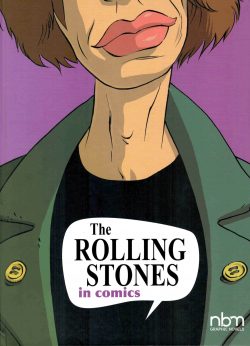
The Rolling Stones in Comics


By Céka, Marin Trystam, Patrick Lacan, Dimitri Piot, Kyung-Eun Park, Domas, Clément Baloup, Dominique Hennebaut, Amandine Puntous, Lapuss, Bast, Patès, Filippo Néri & Piero Ruggeri, Anthony Audibert, Bruno Loth, Aurélie Neyret, Sanzito, Sarah Williamson, Joël Alessandra & Carine Becker, Mao Suy-Heng & various: translated by Montana Kane (NBM)
ISBN: 978-1-68112-198-7 (HB)

Graphic biographies are all the rage at the moment and this one – originally released on the continent in 2017 – is another instant classic likely to appeal to a far larger mainstream audience than comics usually reach. It certainly deserves to…

Like its thematic companion and predecessor featuring The Beatles, The Rolling Stones in Comics is designed to evoke the same nostalgic excitement via cannily repackaged popular culture factoids, contemporary quotes and snippets of celebrity history – accompanied by a stunning assemblage of candid photographs, posters and other memorabilia – in brief, themed essays with cartoon vignettes chronologically highlighting key moments in the development of a band comprising remarkable men of wealth and taste…

Scripted throughout by author and advertising copywriter Céka (with the strips illustrated by an army of top talent) the saga begins with a brief biography of Michael Phillipe Jagger, Keith Richards, Brian Jones, Bill Wyman and Charlie Watts in featurette ‘The Stones, Before the Stones’, before Marin Trystam takes us back to Kent in June 1960 where two youngsters with a love of American Blues albums meet on a train in ‘Blessed Be the Vinyl’…

‘Make Way, Here Come the Blues Boys!’ then details the music scene in England at that time and offers a definition of R&B, after which Patrick Lacan takes us back further in time to reveal the slave roots of a name and the ‘Rollin’ Stones Blues’, whilst ‘Rags Before Riches’ recalls the band’s early poverty, scarce gigs and squalid first creative den, vividly realised in Dimitri Piot’s strip depiction of life in August 1962 at ‘102, Edith Grove’.

The early line-up solidifies in 1963 as ‘Crank Up the Amp!’ covers the contributions of Charlie and Bill, with Kyung-Eun Park limning Brian Jones’ attempts at being a manager in ‘Screw You!’ before Publicist Supreme and Soho Svengali Andrew Loog Oldham takes the band in hand in photo-essay ‘The Man Who Created the Stones’, with Domas recapturing in comics form a defining moment from September 1963 when Stones met Beatles in ‘I Wanna Be Your Man’…

With Oldham as manager, the climb begins in earnest as the band meet the man who infamously turned down the Beatles and seal a record deal in ‘Make Mine Decca’, whilst illustrator Clément Baloup reveals the secrets of Ian Stewart… ‘The Sixth Stone’.

The story of how Jagger and Richards evolved from musicians into songwriters is covered in ‘Singer, Songwriter’, with Dominique Hennebaut capturing that struggle pictorially with the harsh debut of ‘The Glimmer Twins’, after which the dark side manifests in a recapitulation of felonies and misdemeanours in ‘Drug City’, as Amandine Puntous illustrates the police raid on the band now known as ‘The Redlands Affair’.

The band’s growing status as rebels of youth culture is dissected ‘Rock and Role?’, with Lapuss capturing a few shameful truths about the seductive power of wealth and the “Richest Hippie in England” in cartoon vignette ‘Rebel in a Bentley’, after which the tragic life and death of Brian is explored in ‘Light Hair and Dark Thoughts’, before Bast illuminates the 1969 demise of the ‘Fallen Angel’…

The arrival of Mick Taylor and the search for a new sound is covered in ‘Back to the Future’, and Patès accompanying strip explains the intricacies of guitar chord techniques for Keith’s invention of ‘Open Tuning’, even as ‘The End of the Sixties’ manifests in more death and tragedy as Filippo Néri & Piero Ruggeri recapture the shocking debacle of rock festival ‘Altamont’…

After Drugs and Rock and Roll, the Sex part of the unholy trinity comes under the spotlight in photo-essay ‘Some Girls’, whilst Anthony Audibert illustrates the bizarre practices of Jagger’s filmic debut in Nick Roeg’s ‘Performance’, before winding back to making music withy explorations of ‘Harmonica, Sitar, etc.’, as Bruno Loth traces the ultimate love story in ‘Keith and his Electric Guitars’.

The bad times are spotlighted in ‘Smog Over Stone Land’, with Aurélie Neyret encapsulating the release of “the Greatest Slow Song of All Time” in ‘Summer of ’73’ before another momentous personnel change occurs as detailed in ‘Bye Bye The Kid, Hello Ronnie!’, after which Sanzito illumines the most important aspect of the newcomer’s contribution in ‘Dr. Wood’…

Individual – and often ignominious – career paths are traced in ‘Oh, Solo Mio’, and Sarah Williamson draws us into the infamous Jagger/Jeff Beck Nassau album in ‘Erase It!’, before reconciliation and the era of live touring is tackled in ‘Thrills and Chills’, with Joël Alessandra & Carine Becker capturing the band’s rituals and coping mechanisms in strip catalogue ‘Sex, Drugs and… Ping Pong’.

The death of Ian Stewart and resignation of Bill Wyman are marked in ‘The Rolling Stones, Minus Two’, after which Sanzito explores the mind of Wyman in ‘Stone Alone’, whilst silent, diffident Jazz wizard Charlie Watts gets his solo moment in essay ‘Who’s the Guy in the Back?’ and Patès illustrative tribute to ‘The Silent Stone’, before the saga culminates in a status check and a few prognostications in ‘The Stones, Are STILL Rolling’, and Mao Suy-Heng’s strip glorifying the ‘Century Tour’.

This engrossing time capsule concludes on a suitably whimsical note as ‘Nine Fun Facts About This Legendary Band!’ offers engaging anecdotes and factlets to delight – but surely not surprise? – everyone who loves to hear of classic Rock & Roll hedonism. The Rolling Stones in Comics is an astoundingly readable and craftily rendered treasure for comics and music fans alike: one that resonates with anybody who loves to listen and look. Sometimes, you can actually get what you want…

It’s only ink on paper but I like it… and so will you. Satisfaction guaranteed.
© 2017 Editions Petit as Petit. © 2019 NBM for the English translation.

Most NBM books are also available in digital formats. For more information and other great reads see http://www.nbmpub.com/

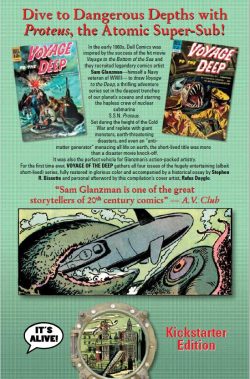
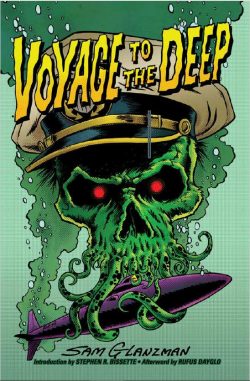
Voyage to the Deep


By Sam J. Glanzman. Paul S. Newman, Lionel Ziprin & various (It’s Alive!/IDW)
ISBN: 978-1-68405-450-3 (HB)

If you have any kind of vintage to you, you’ll have heard of Irwin Allen’s techno-fantasy Voyage to the Bottom of the Sea: as a movie or in its later television incarnation. The franchise was a huge global hit in the 1960’s and spawned lots of the usual spin-offs in games, toys and comicbooks.

You might not be aware that between the comics adaptation of the movie (in Four-Color # 1230, November 1961) and the 16-issue series based on the TV sensation (published between December 1964 and May 1969), another undersea phenomenon saved the world a few times, equally inspired by atomic age wonders of the briny depths and (arguably) that movie…

The details are revealed in Steve Bissette’s informative Introduction ‘The Proteus Prophecies (The Cold War SFusion of Voyage to the Deep)’: tracing the history of submersible vehicles, nuclear subs – in fact and fiction – and the richly-mined seam of subsea adventure in comics. A handy sidebar – ‘The Voyage of Voyage’ – then traces the efforts of director Irwin Allen as he brought Voyage to the Bottom of the Sea to screens large and small and thus created a comics sub-genre (sorry; couldn’t resist).

Once upon a time Dell Comics and Gold Key were the same publishing monolith, Western Print and Litho. As Whitman Publishing, they produced their own books and comics for decades through their Dell and Gold Key imprints, rivalling and often surpassing DC and Timely/Marvel at the height of their powers. Famously, they never capitulated to the wave of anti-comics hysteria which resulted in the crippling self-censorship of the 1950s.

Dell Comics never displayed a Comics Code Authority symbol on their covers. They never needed to: their canny blend of media and entertainment licensed titles were always produced with a family market in mind and the creative staff took their editorial stance from the mores of the filmic Hayes Code and its analogues in the burgeoning television industry.

Just like the big and little screen, the product enticed but never shocked and kept contentious social issues implicit instead of tacit. It was a case of “violence and murder are fine, but never titillate.”

Moreover, most of their adventure comics covers were high quality photos or paintings – adding a stunning degree of veracity and verisimilitude to even the most outlandish of concepts for us wide-eyed waifs in need of awesome entertainment. For decades, the company seemed the only first choice for a licensed comicbook, and to be honest, the results seldom disappointed.

They also employed some of the best artists in America as well as the wider world…

After far too many years as a secret darling of the comics cognoscenti, in his last years Sam J. Glanzman was finally awarded his proper station as one of American comics’ greatest and most remarkable creators – thanks in no small part to the diligent efforts of editor Drew Ford, (initially at publishing house Dover, and later his own It’s Alive! imprint) which revived groundbreaking graphic novel sequence A Sailor’s Story, astonishing semi-autobiographical series USS Stevens and other non-superhero classics and enshrined them on bookshelves across the world.

Apart from his time in the Navy, Glanzman drew and wrote comics from the 1940s until his death in 2017, most commonly in the classic genres – war, western, mystery, adventure and fantasy – where his raw, powerful and subtly engaging style and wry wit made his work irresistibly compelling to generations of readers

On titles such as Kona, Monarch of Monster Island, Combat, Jungle Tales of Tarzan, Hercules, The Haunted Tank, The Green Berets and cult classic The Private War of Willie Schultz, Glanzman always produced magnificently rousing yarns which fired the imagination and stirred the blood. That unceasing output always sold well and won him a legion of fans (most vocally amongst fellow artists), if not from the insular and over-vocal fan-press. Most of the above cited are also now or soon to be available in archival editions (mostly brilliantly cleaned-up and remastered by Now Read This‘ own Allan Harvey) and – if I live long enough – I’ll be urging you to get them too via reviews like this one…

One of Glanzman’s early jobs for Dell was the movie adaptation of Voyage to the Bottom of the Sea, so with his maritime experience and gritty style he must have been the only choice to limn the adventures of another fantastic super submarine: Proteus in Voyage to the Deep…

Scripted by Paul S. Newman and Lionel Ziprin, four fully-restored, mammoth issues of fantastic science fantasy begin with the eponymous ‘Voyage to the Deep’ as #1 introduces the next wave of submersible technology in the fluid form of Proteus: a twin-skinned atomic submarine that can alter its shape to counter the appalling pressure of the sea bottom.

Commanded by Admiral Jonathan Leigh, and skippered by Captain Duke Peters, the exploratory prototype is soon seconded into drastic action after an unseen Enemy inimical to all life tampers with the planet’s molten core and tips the planet off its axis. By attacking the Marianas Trench, the shift displaces all the world’s oceans, sparking colossal tsunamis to wipe out civilisation.

With humanity drowning and undiscovered monsters awakening, Proteus attempts to rectify the apocalyptic damage to the sea floor. They have only one chance, if only the crew can hold their nerve…

Remember I said Dell never acknowledged Comics Code Authority dictates? Be prepared for an astounding and compelling slice of doomsday fiction with a truly staggering body count…

With the battered Earth barely recovering from its close call, the second issue (May-July 1963) saw the doughty submariners facing ‘The Ice Menace’ as a follow-up attack finds humanity facing global extreme snowfalls. Dreading the prospect of a new ice age, Leigh’s super-sub heads to the North pole on a data-gathering mission and the maritime genius devises a way to reverse the Enemy’s geological sabotage and save mankind once more…

The threat had not ended and #3 (August-October 1963) reveals the Proteus being refitted just in time to hunt down ‘The Anti-Matter Threat’ hidden somewhere on Earth and slowly building to a critical mass…

The constant war of nerves concludes but did not end with the ‘Mysterious Mission’ in #4, as Proteus goes hunting for the Enemy technology that sparks a chain of underwater volcanoes that threaten to rip the world apart…

This epic hardcover or digital tome is bursting with extras: beginning with a rousing cover gallery of painted monster masterpieces by John McDermott and continuing with the extra strips that came as standard in the mainly-advert-free comics. These include context-contributing fact-features ‘Creatures of the Deep’, ‘The Great Flood’, ‘Fire and Water’, ‘Ice Ages’, ‘Arctic Creatures’, ‘Dangerous Waters’ and ‘Trial by Fire’ – all by Glanzman – and ‘The Never-Ending Hunt’ by Alex Toth & Mike Peppe.

One place that did sell ad-space was the back cover, and a gallery of those tantalisingly offer again the toys and prizes generations of British kids drooled over because they were exotic, bombastic and generally unreachable on pocket money that didn’t come in dollars and cents…

Wrapping up with a fond appreciation in ‘E Pluribus Unum’, an erudite Afterword by this volume’s cover artist Rufus Dayglo (who also adds a tentacle-bestrewn spot illustration here in the Kickstarter edition that you should pray is included in the mainstream edition!), as well as a welcome biographies section, this is a marvellously manic and sublimely seductive nostalgia wave any fan of fantastic fiction would be mad to miss.
Voyage to the Deep illustrations © the estate of Sam J. Glanzman. “The Proteus Prophecies” © 2018 Stephen R. Bissette. “E Pluribus Unum” © 2018 Rufus Dayglo. Voyage to the Deep All Rights Reserved.

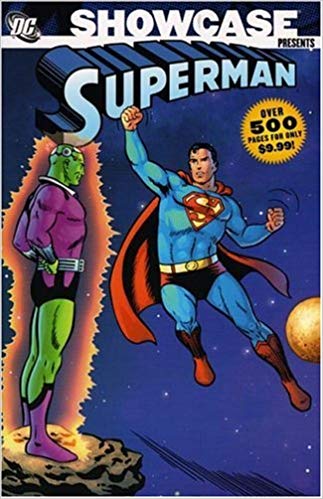
Showcase Presents Superman volume 1


By Otto Binder, Jerry Coleman, Bill Finger, Jerry Siegel, Robert Bernstein, Alvin Schwartz, Wayne Boring, Al Plastino, Curt Swan, Dick Sprang, Kurt Schaffenberger & various (DC Comics)
ISBN: 978-1-4012-0758-8

Although we all think of Jerry Siegel & Joe Shuster’s iconic creation as the epitome of comicbook creation, the truth is that very soon after his launch in Action Comics #1 he became a multimedia star and far more people have seen or heard the Man of Steel than have ever read him – and yes, that does include the globally syndicated newspaper strip.

By the time his 20th anniversary rolled around he had become a mainstay of radio, starred in a series of astounding animated cartoons – plus two movies – and just ended his first smash live-action television serial.

In his future were many more (Superboy, Lois & Clark and Smallville, Krypton et al), a stage musical, a franchise of stellar movies and an almost seamless succession of TV cartoons beginning with The New Adventures of Superman in 1966 and continuing ever since. Even Krypto got in on the small-screen act…

It’s no wonder then that the tales from this Silver Age period should be so draped in the wholesome trappings of Tinseltown – even more so than most of celebrity-obsessed America. It didn’t hurt that editor Whitney Ellsworth was a part-time screenwriter, script editor and producer as well as National DC’s Hollywood point man.

However, that’s not all there is to these gloriously engaging super-sagas culled from Action Comics #241-257 and Superman #122-133, reliving the period June 1958 to November 1959 in crisp, clean black and white in this first economical Showcase Presents collection.

I’d love to plug more modern, full-colour archival editions here, but for some reason DC’s powers-that-be have been woefully slow in gathering this material – and the equally superb all-ages Superboy stuff. I’m not getting any younger but I still eagerly wait in hope – and so should you…

In the meantime, then…

By the mid-1950s The Man of Tomorrow had settled into an ordered existence. Nothing could really hurt him, nothing would ever change, and thrills seemed in short supply. With the TV show cementing the action, writers increasingly concentrated on supplying wonder, intrigue, imagination and, whenever possible, some laughs as well.

The adventure begins here with the lead tale from Action Comics #241 and ‘The Key to Fort Superman’: a fascinating, clever puzzle-play guest-featuring Batman, written by Jerry Coleman and illustrated by Wayne Boring & Stan Kaye, wherein an impossible intruder vexes the Man of Steel in his most sacrosanct sanctuary, after which Superman #122 (July, 1958) proffers 3 yarns by veteran scripter Otto Binder, beginning with ‘The Secret of the Space Souvenirs’ (illustrated by Al Plastino) as temporary madness seems to grip the Man of Steel while he gathers artefacts for a proposed time-capsule. ‘Superman in the White House’ is a fanciful dream by Jimmy Olsen also drawn by Plastino whilst the closing Boring/Kaye bamboozler finds the hero investigating an outbreak of super-powers at a US military base in ‘The Super-Sergeant’…

That same month Binder & Plastino introduce both the greatest new villain and most expansive new character concept the series had seen in years with The Super-Duel in Space’ Action Comics #242) wherein an evil alien scientist named Brainiac tries to add Metropolis to his collection of miniaturised cities in bottles.

As well as a titanic tussle in its own right, this tale completely changed the mythology of the Man of Steel, by introducing Kandor, a city full of Kryptonians who had escaped the planet’s destruction when Brainiac abducted them. Although Superman rescues his fellow survivors, the villain escapes to strike again, and it would be years before the hero could restore the Kandorians to their true size.

Superman #123 (August 1958) featured ‘The Girl of Steel’ by Binder, Dick Sprang & Kaye which tested the potential of a distaff Supergirl as part of a 3-chapter yarn involving a magic wishing totem, which tragically segued into ‘The Lost Super-Powers’ before granting the hero’s greatest dream and facilitating ‘Superman’s Return to Krypton’.

Action #243 (Binder & Boring) sees Superman mysteriously transformed into a beast in ‘The Lady and the Lion’, after which Superman #124 provides the intriguing menace of ‘The Super-Sword’ by Coleman & Plastino, Binder & Kurt Schaffenberger’s delightful desert island drama wherein Lois Lane becomes ‘Mrs. Superman’ and Clark Kent‘s investigation of construction industry corruption which compels him to become ‘The Steeplejack of Steel’ (Binder, Boring & Kaye).

Curt Swan pencilled Binder’s ‘Super-Merman of the Sea’ (inked by Kaye) in Action #244: a canny mystery wherein the Man of Steel abandons the surface world for an alien aquatic princess, before Boring & Kaye delineate Binder’s compelling thriller ‘The Shrinking Superman!’: featuring an insidious menace from the Bottle City of Kandor…

‘Lois Lane’s Super-Dream’ (Coleman & Schaffenberger) led in Superman #125 (October/November 1958) with another potentially offensive and certainly sexist parable wherein the plucky news-hen learns a salutary lesson about powers and responsibility, whilst ‘Clark Kent’s College Days’ (illustrated by Plastino) opened an occasional series of Untold Tales of Superman: revealing just how, when and why Superboy became the Man of Tomorrow, before Boring & Kaye conclude Coleman’s hat-trick with ‘Superman’s New Power’ as the hero gained new and incomprehensible abilities with catastrophic consequences…

Action #246 featured ‘Krypton on Earth!’ (Binder, Boring & Kaye) as a trip to tourist attraction “Krypton Island” reveals a crafty criminal scam, and #247 presented ‘Superman’s Lost Parents!’ (Binder & Plastino), wherein a criminal scheme to reveal the hero’s secret identity prompts an extreme face-saving solution. Superman #126 had Binder, Boring & Kaye reveal ‘Superman’s Hunt for Clark Kent’: a thrilling tale of amnesia and deduction whilst ‘The Spell of the Shandu Clock’ (Coleman, Boring & Kaye), provides spooky chills and clever ploys to outwit a malevolent mastermind and ‘The Two Faces of Superman’ (Coleman & Schaffenberger) again saw “conniving” Lois learn an – apparently – much-needed lesson in humility.

Action #248 (January 1959) was a rare contribution from Bill Finger, illustrated by Boring & Kaye wherein the Caped Kryptonian becomes ‘The Man No Prison Could Hold!’ to topple a war criminal tyrant, before Superman #127 opened with another Untold Tale of Superman, ‘When There Was No Clark Kent!’ (Coleman, Swan & Kaye) as an accident temporarily deprives the hero of his treasured alter ego, after which Coleman, Boring & Kaye expose ‘The Make-Believe Superman’ as a depressed dad tries to impress his son with a most preposterous fib. The issue closed with the debut of another hugely popular character in ‘Titano the Super-Ape!’. The chimpanzee who is transformed into a giant ape with Kryptonite vision was one of the most memorable “foes” of the period, courtesy of Binder, Boring & Kaye’s sublime treatment combining action, pathos and drama to superb effect.

‘The Kryptonite Man!’, by Binder & Plastino in Action #249, sees Lex Luthor deliberately irradiate himself with Green K to avoid capture, but his evil genius proves no match for our hero’s sharp wits, used with equal aplomb in ‘The Eye of Metropolis!’ (Finger & Boring) as a prominent TV journalist seeks to expose Superman’s secret identity in #250.

Finger scripted the entirety of #128 as ‘Superman versus the Futuremen’ (limned by Boring & Kaye) and ‘The Secret of the Futuremen’ finds the Metropolis Marvel framed for heinous crimes and hijacked to the impossible year of 2000AD, before outwitting his abductors and returning in time to encounter ‘The Sleeping Beauty from Krypton!’ – actually Lois in another hare-brained scheme to trap her beloved into marriage, and deliciously illustrated by the unmistakable and fiendishly whimsical Kurt Schaffenberger.

‘The Oldest Man in Metropolis!’ – Robert Bernstein & Plastino – reveals how an unfortunate lab accident ages Superman many decades overnight in Action#251, whilst Superman #129 (May 1959) reveals ‘The Ghost of Lois Lane’ (Coleman, Boring & Kaye) to be anything but before Binder & Plastino’s ‘Clark Kent, Fireman of Steel!’ depicts the reporter’s aggravating and hilarious “luck” as a temporary fire-fighter. Another major debut follows before introducing the bewitching mermaid Lori Lemaris in ‘The Girl in Superman’s Past’ – a moving Untold Tale of Superman (from Finger & Boring) which again refined the Man of Steel’s intriguing early life.

From the same month, Action Comics #252 would have been significant enough merely for introducing the threat of John Corben, a criminal whose crushed skeleton is replaced by a robot body and Kryptonite heart to become ‘The Menace of Metallo!’ (Bernstein & Plastino), but a new back-up strip also began in that issue which utterly revolutionised the Man of Tomorrow’s ongoing mythology.

‘The Supergirl from Krypton!’ introduced Kal-El‘s cousin Kara Zor-El in another captivating, groundbreaking yarn by Binder & Plastino. The Maid of Might would occupy the rear of Action and alternate covers for a decade and more to come, carving her own unique legend…

Issue #253 featured ‘The War Between Superman and Jimmy Olsen!’ by Alvin Schwartz, Swan & Kaye as an alien presence gives the boy reporter super-powers and a mania to conquer the world whilst Superman #130 presented ‘The Curse of Kryptonite!’ (Binder & Plastino), wherein the Action Ace relives his past experiences with the lethal mineral; ‘The Super-Servant of Crime!’ (Bernstein, Swan & John Sikela) which finds the hero turning the tables on a petty crook who thinks he’s fooled the Man of Tomorrow, and ‘The Town That Hated Superman!’ (Binder, Boring & Kaye) which happy hamlet has outlawed the hero. He simply has to know why…

‘The Battle with Bizarro!’(Action #254, by Binder & Plastino) re-introduces an imperfect duplicate super-being who had initially appeared in a well-received Superboy story (#68, from the previous year), courtesy of Luthor’s malfunctioning duplicator ray.

Even way back then high sales trumped death and so popular was the fatally-flawed character that the tale was continued over two issues, concluding with ‘The Bride of Bizarro!’ in #255 – an almost unheard-of luxury back then. Here that bombastic, traumatic conclusion is separated by the contents of Superman #131, which firstly reintroduces a long-vanished pestiferous annoyance with ‘The Menace of Mr. Mxyzptlk!’ by Coleman & Plastino, before Lois Lane is granted a tantalising glimpse of ‘Superman’s Future Wife’ (Bernstein & Schaffenberger) and ‘The Unknown Super-Deeds’ reveals hitherto hidden connections with the Daily Planet staff long before Superboy left Smallville in another Untold Tale… from Binder & Plastino.

Action #256 seemingly unleashes ‘The Superman of the Future’ (Binder, Swan & Kaye) whilst in Superman #132 (October 1959) Batman and the projections of a super-computer show what might have happened had Superman grown up on an unexploded Krypton in the 3-chapter epic ‘Superman’s Other Life’, ‘Futuro, Super-Hero of Krypton!’ and ‘The Superman of Two Worlds!’ by Binder, Boring & Kaye.

Action #257 reveals Clark Kent as ‘The Reporter of Steel!’ after he is hit by a ray from mad scientist Luthor in a cunning yarn by Binder, Boring & Kaye, before the contents of Superman #133 brings to a close this potent premier compendium with ‘The Super-Luck of Badge 77’ (Binder & Plastino) with the reporter trying his hand as a beat cop, before we can enjoy the first new tales by co-creator Jerry Siegel in nearly a decade: ‘How Perry White Hired Clark Kent’ (art by Plastino) and the wryly light-hearted ‘Superman Joins the Army!’ illustrated by Boring & Kaye.

Superman has proven to be all things to all fans over his decades of existence and with the character seemingly undergoing almost constant radical overhaul nowadays, these timeless tales of charm and joy and wholesome wit are more necessary than ever: not just as a reminder of great memories past but also as an all-ages primer of wonders still to come…
© 1959-1963, 2005 DC Comics. All Rights Reserved.

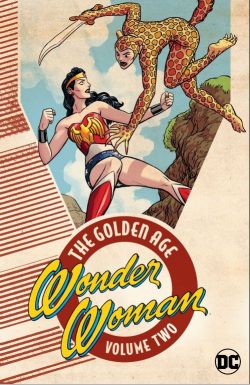
Wonder Woman: The Golden Age Volume Two


By William Moulton Marston & Harry G. Peter with Frank Godwin, Frank Harry & various (DC Comics)
ISBN: 978-1-4012-8536-4 (TPB)

Wonder Woman was conceived by polygraph pioneer William Moulton Marston and illustrated by Harry G. Peter in an attempt to offer girls a positive and forceful role model. She debuted as a special feature in All Star Comics #8 (December 1941), before springing into her own series and the cover-spot of new anthology title Sensation Comics a month later. An instant hit, the Amazing Amazon quickly won her own eponymous supplemental title in late Spring of that year (cover-dated Summer 1942).

Once upon a time on a hidden island of immortal super-women, American aviator Steve Trevor of US Army Intelligence crashed to Earth. Near death, he was nursed back to health by young and impressionable Princess Diana.

Fearing her growing obsession with the creature from a long-forgotten and madly violent world, her mother Queen Hippolyte revealed the hidden history of the Amazons: how they were seduced and betrayed by men but rescued by the goddess Aphrodite on condition that they isolated themselves from the rest of the world and devoted their eternal lives to becoming ideal, perfect creatures.

However, when goddesses Athena and Aphrodite subsequently instructed Hippolyte to send an Amazon back with the American to fight for global freedom and liberty, Diana overcame all other candidates and became their emissary – Wonder Woman.

On arriving in America, she purchased the identity and credentials of lovelorn Army nurse Diana Prince, elegantly allowing the Amazon to be close to Steve whilst enabling the heartsick medic to join her own fiancé in South America. Soon Diana also gained a position with Army Intelligence as secretary to General Darnell, ensuring she would always be able to watch over her beloved. She little suspected that, although the painfully shallow Steve only had eyes for the dazzling Amazon superwoman, the General had fallen for the mousy but superbly competent Lieutenant Prince…

Using the nom de plume Charles Moulton, Marston (with some help in later years from assistant Joye Murchison) scripted almost all of the Amazing Amazon’s many and fabulous adventures until his death in 1947, whereupon Robert Kanigher took over the writer’s role. Venerable veteran illustrator and co-creator H.G. Peter performed the same feat, limning practically every titanic tale until his own death in 1958. A couple of the very rare exceptions appear in this volume…

Spanning March to December 1943 this superb full-colour deluxe softcover compilation (also available as an eBook edition) collects her exploits from Sensation Comics #15-24, Wonder Woman #4-7 plus her adventures from anthological book of (All) Stars Comics Cavalcade #2-5…

In Sensation #15 ‘Victory at Sea’ pits Diana and Steve against murderous saboteurs set on halting military production and working with shady lawyers, whilst in #16 ‘The Masked Menace’ is one of very few stories not illustrated by H.G. Peter but the work of illustrator and strip cartoonist Frank Godwin, stepping in as the crushing workload of an extra 64-page comicbook every couple of months piled the pressure on WW’s artistic director.

The tale sees steadfast Texan Etta Candy ready to elope with slick and sleazy Euro-trash Prince Goulash, until Diana and Steve crash the wedding party to expose spies infiltrating across the Mexican border and a plot to blow up the invaluable Candy family oil-wells…

The inescapable war-fervour was tinged with incredible fantasy in Wonder Woman #4 which opened with ‘Man-Hating Madness!’, wherein a Chinese refugee from a Japanese torture camp reaches America and draws the Amazon into a terrifying scheme to use biological weapons on the American Home Front.

Cruel and misogynistic ‘Mole Men of the Underworld’ then kidnap collegiate sidekicks the Holliday Girls and Diana and reformed and recuperated former-Nazi genius Baroness Paula von Gunther rescue them, free a race of female slaves and secure America’s deepest border from further attack.

‘The Rubber Barons’ provide a rousing romp wherein greedy corporate profiteers attempt to hold the Government and war effort to ransom with a new manufacturing process in a high-tech tale involving mind-control, gender role-reversal and behaviour modification, as only a trained and passionate psychologist could promote them…

The issue concludes with an untitled saga as Paula, now fully accepted into Amazon society, is attacked by Mavis, one of her erstwhile spy-slaves. The traumatised victim then abducts her ex-mistress’ daughter little Gerta and Wonder Woman, burdened with responsibility, is compelled to hunt her down…

A famed classic from Sensation #17 follows ‘Riddle of the Talking Lion’ (also probably drawn by Godwin) wherein Diana Prince visits an ailing friend and discovers that Sally’s kids have overheard a Zoo lion speaking – and revealing strange secrets…

Although Steve and Diana dismiss the tall tale, things take a peculiar turn when the beast is stolen. The trail leads to Egypt and a plot by ambitious Nazi collaborator Princess Yasmini…

At this time National/DC was in an editorially-independent business relationship with Max Gaines that involved shared and cross promotion and distribution for the comicbooks released by his own outfit All-American Publications.

Although technically competitors if not rivals, the deal included shared logos and advertising and even combining both companies’ top characters in the groundbreaking All Star Comics as the Justice Society of America.

However, by 1942 relations between the companies were breaking down – and would culminate in 1946 with DC buying out Gaines, who used the money to start EC Comics.

All-American thus decided to create its own analogue to mammoth sized anthology World’s Finest, featuring top AA characters. The outsized result was Comics Cavalcade…

Next up following a Frank Harry cover of AA Big Three Flash, Green Lantern and our Princess, is Wonder Woman’s first offering from the second issue of that epic title: ‘Wanted by Hitler, Dead or Alive’ (Godwin art), pitting her against devious gestapo agent Fausta Grables…

Also illustrated by superbly gifted classical artist Frank Godwin, ‘The Secret City of the Incas’ from Sensation #18 sees Diana rescue a lost Inca tribe from a despotic theocracy and ancient greed.

  1. G. Peter drew the vast entirety of Wonder Woman #5 (June/July 1943), presenting an interlinked epic in the ‘Battle for Womanhood’. Here war-god Mars (who instigated the World War from his HQ on the distant red planet through his earthly pawns Hitler, Mussolini and Hirohito) returns to plague humanity directly. This time he enlists the aid of a brilliant but deformed and demented woman-hating psychologist with psychic powers. Tormented Dr. Psycho uses his talents to marry and dominate a medium named Marva, and employs her abilities to form ectoplasmic bodies as he seeks to enslave every woman on Earth.

Happily, Wonder Woman counters his divinely-sponsored schemes, after which prominent sidekicks ‘Etta Candy and her Holliday Girls’ comedically crush a burglary before ‘Mars Invades the Moon’ resumes the overarching tale as the frustrated war-god is ousted by devious deputy the Duke of Deception.

In attempting to take over the Moon – home of peace-loving goddess Diana – Mars makes the biggest error of his eternal life as the Amazing Amazon spearheads a spectacular rescue mission which results in the invaders’ utter rout.

The issue then concludes with ‘The Return of Dr. Psycho’, who escapes prison and again perpetrates a series of ghastly attacks on America’s security and the freedom of women everywhere… until the Holliday Girls and their demi-divine mentor stepped in…

Sensation #19 (Godwin again) features ‘The Unbound Amazon’ who responds to a little boy’s letter and stumbles onto big trouble in the far north woods. Of course, Diana knows little Bobby (as seen in the Adventure of the Talking Lion), and with Nazi spy Mavis on the loose, isn’t about to take any chances.

This terrific thriller is notable for the revelation that if an Amazon removes her Bracelets of Submission she turns into a raving, uncontrolled engine of sheer destruction…

Issue #20 was by H.G. Peter – who was coming to grips with the increased extra workload of the explosively popular 64-page Wonder Woman series every 3 months – and ‘The Girl with the Gun’ sees Diana Prince investigating sabotage at a munitions factory and the murder of a General at WAACs training base Camp Doe. To the Amazon’s complete surprise, the culprit seems to be Marva Psycho, but there is far more going on than at first appears…

In Comics Cavalcade #3, Diana exposes and destroys ‘The Invisible Invader’ devastating American men and munitions…

Godwin again handled the art for Sensation Comics #21 as Steve and Diana track down insidious traitor “the American Adolf” as he conducts a murderous ‘War Against Society’, whilst Wonder Woman #6 – another all-Peter extravaganza – introduces another macabrely memorable foe in ‘Wonder Woman and the Cheetah’.

Marston’s psychiatric background provided yet another deeply disturbed antagonist in the form of sugar sweet debutante Priscilla Rich who shared her own body with a jealously narcissistic, savage feline counterpart dedicated to murder and robbery. The Cheetah frames the Amazing Amazon and almost destroys Steve, Etta and the Holliday girls before Wonder Woman finally quashes her wild rampages.

It wasn’t for long: the Cheetah immediately returns to mastermind an espionage-for-profit ring in ‘The Adventure of the Beauty Club’, resulting in the Perfect Princess being captured by Japan’s High Command before spectacularly busting loose for a final confrontation in ‘The Conquest of Paradise’. Here the Feline Fury infiltrates the home of the Amazons and almost irretrievably poisons the minds of the super women sequestered there…

By this time Peter was fully adapted to his new schedule and in Sensation Comics #22 takes the psychological dramas to new heights as a cured Priscilla Rich is seemingly attacked by her manifested evil self after the Cheetah steals America’s latest weapon ‘The Secret Submarine’…

In issue #23 the creators tackle school bullying and women in the workplace as production line staff are increasingly stricken by ‘War Laugh Mania’. Only one of the problems is being promulgated by Nazi spies though…

Comics Cavalcade #4 (Fall 1943) sees Wonder Woman and the Holliday Girls capture Nazi superspy Bertha Nagle and return ‘The Purloined Pressure Coordinator’ before a resumption of straight action in Sensation #24 where ‘The Adventure of the Pilotless Plane’ sees Steve abducted by Japanese agents whilst investigating a new gas weapon which prevents US aircraft from flying. The vile villains have nothing that can stop Wonder Woman from smashing them and freeing him, however, and the status quo is fully restored by the time Wonder Woman #7 offers an optimistic view of the future in a fantastic fantasy tale…

‘The Adventure of the Life Vitamin’ depicts America in the year 3000AD: a utopian paradise ruled by a very familiar female President, where a miracle supplement has expanded longevity to such an extent that Steve, Etta and all Diana’s friends were still thriving.

Sadly, some old throwbacks still yearn for the days when women were second-class citizens subservient to males, meaning there is still work for the Amazing Amazon to do…

‘America’s Wonderland of Tomorrow’ continues the wry but wholesome sex war with Steve going undercover with the rebel forces: uncovering a startling threat in ‘The Secret Weapon’ before the focus returns to the present and a far more intimate crisis for wilful child Gerta whose mother Paula is forced to deal with a ‘Demon of the Depths’. But is that the evil octopus at the bottom of the paddling pool or her daughter’s dangerously anti-authoritarian attitudes…?

Closing out this epic compilation is one last tale from Comics Cavalcade (#5 Winter 1943) as the Amazon Avenger investigates the ‘Mystery of the Crimson Flame’ exposing a cruel cult of subjugation and terrorism led by conniving man-hating High Priestess Zara…

Too few people seem able to move beyond the supposed subtexts and incontrovertible imagery of bondage and subjugation in Marston’s tales – and frankly there really are a lot of scenes with girls tied up, chained or about to be whipped (men too) – but I just don’t care what his intentions might have been.

I’m more impressed with the skilful drama and incredible imaginative story-elements that are always wonderfully, intriguingly present: I mean, just where do such concepts as giant battle kangaroo steeds or sentient Christmas trees stem from…?

Exotic, baroque, beguiling and uniquely exciting, these Golden Age adventures of the World’s Most Famous female superhero are timeless and pivotal classics in the development of comics books and still provide lashings of fun and thrills for anyone looking for a great nostalgic read.
© 1943, 2018 DC Comics. All Rights Reserved.

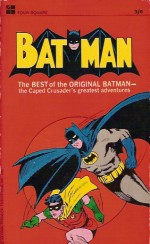
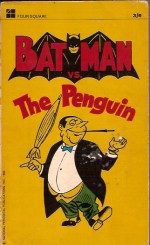
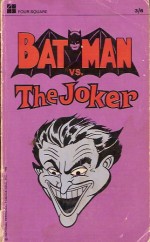
Batman, Batman vs. The Penguin, Batman vs. The Joker


By Bob Kane, Bill Finger, Gardner Fox, Alvin Schwartz, Edmond Hamilton, David Vern Reed, Bill Woolfolk, Dick Sprang, Sheldon Moldoff, Lew Sayre Schwartz & various (Four Square/New English Library)
ISBNs: 1688, 1692 and 1694

The Silver Age of comicbooks utterly revolutionised the medium, bringing a modicum of sophistication to the returning genre of masked mystery men. However, for quite some time the changes instigated by Julius Schwartz in Showcase #4 (October 1956) which rippled out in the last three years of the decade to affect all of National/DC Comics’ superhero characters generally passed by Batman and Robin.

Fans buying Batman, Detective Comics, World’s Finest Comics and even Justice League of America would read adventures that in look and tone were largely unchanged from the safely anodyne fantasies that had turned the Dark Knight into a mystery-solving, alien-fighting costumed Boy Scout just as the 1940s turned into the1950s.

By the end of 1963, Schwartz having – either personally or by example – revived and revitalised much of DC’s line and the entire industry with his modernization of the Superhero, was asked to work his magic with the creatively stalled and nigh-moribund Caped Crusaders.

Bringing his usual team of top-notch creators with him, the Editor stripped down the core-concept, downplaying all the ETs, outlandish villains and daft transformation tales, bringing a cool modern take to the capture of criminals whilst overseeing a streamlining rationalisation of the art style itself. The most apparent change to us kids was a yellow circle around the Bat-symbol but, far more importantly, the stories also changed. A subtle aura of genuine menace had crept back in.

At the same time, Hollywood was preparing to produce a television series based on Batman and, through the sheer karmic insanity that permeates the universe, the producers were basing their interpretation upon the addictively daft material that the publishers were turning their Editorial backs on and not the “New Look Batman” that was enthralling the readers.

The TV show premiered on January 12th 1966 and ran for 3 seasons (120 episodes in total), airing twice weekly for its first two seasons. It was a monumental, world-wide hit and sparked a wave of trendy imitation. The resulting media hysteria and fan frenzy generated an insane amount of Bat-awareness, no end of spin-offs and merchandise – including a movie – and introduced us all to the phenomenon of overkill.

“Batmania” exploded across the world and then, as almost as quickly, became toxic and vanished.

To this day, no matter how much we might squeal and foam about it, or what has occurred since in terms of comics, games or movies, to a huge portion of this planet’s population Batman is always going to be that “Zap! Biff! Pow!” costumed buffoon…

To tap into the frenzy, American book publisher Signet/New American Library – a company well-used to producing media tie-in titles such as Girl from U.N.C.L.E. or novelisations like Breakfast at Tiffany’s – released 5 paperbacks starring Batman and Robin, beginning in March 1966.

Technically, it was 4 plus a prose adaptation of the movie that was released later in the year (and the second was in fact an all-new prose novel by Winston Lyon – AKA William Woolfolk – which I’ll be covering in a later review), so in the proper fashion of the times, British counterparts quickly followed.

This terrific little trio of monochrome paperback pocket books – spearhead of National Periodical Publications’ on-going efforts to reach wider reading audiences – were published in 1966 to accompany the launch of the Batman TV show, and fully fuelled the “Camp” superhero craze which saw Masked Manhunters and costumed crazies sneak into every aspect of popular entertainment.

Each breathtaking tome contains 5 reformatted stories of the Dynamic Duo, culled from the archives and crafted by some of the greatest scripters and illustrators the industry has ever seen. Collected here in incontrovertible black-&-white are the tales from this trio of cartoon books which blew my unformed little mind in that most auspicious year for fun and fantasy escapism…

The first UK release was Batman which featured primarily crime stories rather than the baroque super-villain fare that informed and monopolised the television iteration. In the aforementioned mid-1950s, fancy-dress felons had all but vanished from view, and the new Schwartz Batman also eschewed costumed crazies … at least until the TV show made them stars in their own right.

The reformatted mini-masterpieces start with the positively eerie 1940 origin tale ‘The Legend of the Batman – Who He Is and How He Came to Be!’ by Gardner Fox, Bob Kane & Sheldon Moldoff from Batman #1 (Spring 1940). This piece was actually recycled from portions of Detective Comics #33 and 34 (1939) but still offers in 13 perfect panels what is effectively the best ever origin of the character.

The drama continued with ‘The Web of Doom’ (from Batman #90, March 1955, by Bill Finger, Moldoff & Charles Paris), in which a biologist loses a package of deadly germ phials somewhere in Gotham City. Batman and Robin have only days to track down 3 criminals who hold the key to restoring the savant’s shattered memories and retrieving the deadly parcel…

Batman #92, from June 1955, provided ‘Fan-Mail of Danger!’ (Finger, Moldoff & Paris) as letters to the gracious heroes pile up and the lads hired a secretary to handle the load. Sadly, Susie Smith‘s over-eager diligence almost exposes Batman’s secret identity to a cunning counterfeiter…

There was one exception in this collection to the “no loons” rule. The Joker tale ‘The Crazy Crime Clown!’ is something extra-special from Batman #74 (December 1952/January 1953, by Alvin Schwartz, Dick Sprang & Charles Paris) and sees the exotic but strictly larcenous Harlequin of Hate apparently go bonkers.

He is committed to the Gotham Institute for the Insane but, naturally, there’s method in the seeming madness which Batman only discovers after he too infiltrates the worthy asylum in disguise…

Cunning criminal mastermind Mr. Blank almost takes over the underworld by destroying a new super-computer in ‘The Crime Predictor!’ (Batman #77, June/July 1953, courtesy of Edmond Hamilton, Bob, Lew Sayre Schwartz & Paris), and it took all of the ingenuity of the World’s Greatest Detective to unravel the deadly mire of duplicity and prevent his own infallibly predicted demise…

‘The Man Who Could Change Fingerprints!’ (Batman #82, March 1954 by David Vern Reed, Sprang & Paris) is another clever scheme by brilliant killers who think to outwit the Caped Crusaders, before this initial volume closes with a thrilling suspense shocker in ‘The Testing of Batman!’ (Batman #83, April 1954) by Hamilton, Sprang & Paris.

Here a scientist’s exercise research is usurped by thugs who wanted to have fun killing the enemies of crime. At least that’s what they told the captive Gotham Gangbusters…


Six months later a second volume was released.

Batman vs. The Penguin followed the same beguiling format but, with flamboyant arch-foes predominating on the silver screen, the emphasis had shifted. As the title clearly shows, this compilation concentrated on cases featuring the Felonious Fowl and Bird of Ill Omen, but it also harboured a secret surprise…

The all-ages action and excitement kicked off with ‘The Parasols of Plunder’ (Batman #70 April/May 1952 by Bill Woolfolk, Kane, Sayre Schwartz & Paris) and details how, after being released from prison, The Penguin gives up his obsession with birds and starts selling umbrellas. But, oh… what deadly umbrellas…

He returned to ornithology for ‘The Golden Eggs!’ in Batman #99 (April 1956, Finger, Moldoff & Paris), as whilst on the run his hobby inspired a deadly retaliatory crime wave before Batman scrambled all his plans, whilst in ‘The Penguin’s Fabulous Fowls’ the Umbrella King turns crypto-biologist, capturing mythical avian monsters and turning them loose to devastate Gotham in a sharp suspense shocker from Batman #76 (April/May 1953 by Hamilton, Kane, Sayre Schwartz & Paris)…

His last appearance was in ‘The Return of the Penguin’ (Finger, Moldoff & Paris from Batman #155 May 1963) which sees the Bird Bandit coming out of retirement to match wits with Batman again. If only the Pompous Peacock had ignored the teasing of the other crooks when they called him a “has-been”…

This tome wraps up with a classic Catwoman yarn, as the Feline Temptress puts all the contestants of Gotham City’s “Queen for a Day” gala into catatonic trances. Moreover, suspiciously still-awake competitor Selina Kyle claims complete innocence and insists some other Catwoman was responsible for creating the ‘The Sleeping Beauties of Gotham City!’ in a taut mystery by Reed, Moldoff & Stan Kaye from Batman #84 (June 1954)…


Batman vs. The Joker followed a month later with a full quintet of comicbook curios starring Batman’s ultimate nemesis. The madcap mayhem began with ‘The Challenge of The Joker’ (Batman #136, December 1960 by Finger, Moldoff & Paris) in which the Clown Prince of Crime determines to prove to the world that modern police science is no match for cunning and the 4 ancient elements…

Then ‘The Joker’s Winning Team!’ (Batman #86, September 1954 Woolfolk, Moldoff & Kaye) reveals how the baseball-inspired brigand assembles a squad of crime specialist pinch-hitters to ensure he never loses a match against the Gotham Gangbuster, after which the gloriously engaging saga of ‘The Joker’s Millions!’ (Detective Comics #180, February, 1952 by Reed, Sprang & Paris) discloses how the villain’s crime rival takes deathbed revenge by leaving the Harlequin of Hate too rich to commit capers.

It is a double-barrelled scheme though and makes the Joker twice a fool, as the Caped Crusaders find to their great amusement…

‘The Joker’s Journal’ (Detective #193, March 1953 from Reed, Kane, Sayre Schwartz & Paris) follows the theme after the penniless Punchinello leaves prison and starts a newspaper. Everyone in Gotham knows it was only a matter of time until the Mountebank of Mirth returns to his old tricks, and this final volume concludes in the only way possible as the eternal archenemies’ minds are swapped in a scientific accident. Soon a law-abiding Joker and baffled Robin have to hunt down ‘Batman – Clown of Crime!’: a rousing romp by Reed, Moldoff & Paris from Batman #85, August 1954.

As I’ve constantly averred, the comics tales themselves are always special but somehow when they appeared in proper books it always made those fantastic adventure dreams a little more substantial; and perhaps even real…

Batman has proven to be all things to all fans over his decades of existence and, with the character undergoing almost perpetual overhaul these days, the peerless parables of wit and bravery encapsulated here are more welcome than ever: not just as memorial to what has been but also as a reminder that once upon a time everybody could read the fabulous Tales of Gotham City…

These books are probably impossible to find today – even though entirely worth the effort – but completists can achieve miracles if they put their minds to it and frankly, whatever format or collection you happen upon, in this anniversary year, such forgotten stories of the immortal Dark(ish) Knight are part of our cultural comics heritage and must always be treasured.
© 1940, 1951, 1952, 1953, 1954, 1955, 1956, 1963, 1966 National Periodical Publications. All rights reserved.

The Adventures of Blake and Mortimer: The Secret of the Swordfish


By Edgar P. Jacobs, coloured by Philippe Biermé & Luce Daniels, translated by Jerome Saincantin (Cinebook)
ISBNs: 978-1-84918-148-8, 978-1-84918-161-7 and 978-1-84918-174-7

Belgian Edgard Félix Pierre Jacobs (1904-1987) is rightly considered one of the founding fathers of the Continental comics industry. Although his output is relatively meagre when compared to some of his contemporaries, the iconic series he worked on formed the basis and backbone of the art-form in Europe, and his splendidly adroit, roguish and impeccably British adventurers Blake and Mortimer, created for the first issue of Le Journal de Tintin in 1946, swiftly became a staple of post-war European kids’ life the way Dan Dare would in Britain in the 1950s.

Edgar P. Jacobs was born in Brussels, a precocious child who began feverishly drawing from an early age but was even more obsessed with music and the performing arts – especially opera. He attended a commercial school but – determined never to work in an office – pursued art and drama following his graduation in 1919.

A succession of odd jobs at opera-houses – scene-painting, set decoration, acting and singing as an Extra – supplemented his private performance studies, and in 1929 Jacobs won a Government award for classical singing. His proposed career as an opera singer was thwarted by the Great Depression, however, as the arts took a nosedive following the stock market crash.

Picking up whatever stage work was going – including singing and performing – Jacobs switched to commercial illustration in 1940. Regular employment came from the magazine Bravo. While illustrating short stories and novels, he famously took over the syndicated Flash Gordon strip, after the occupying German authorities banned Alex Raymond’s quintessentially All-American Hero and left the publishers desperately seeking someone to satisfactorily complete the saga.

Jacob’s Stormer Gordon lasted less than a month before being similarly sanctioned by the Nazis, after which Jacobs created his own epic science-fantasy feature in the legendary Le Rayon U: a milestone in both Belgian comics and science fiction adventure.

The U Ray was a huge hit in 1943 and scored big all over again a generation later when Jacobs reformatted the original “text-block and picture” material to incorporate speech balloons and re-ran the series in Le Journal de Tintin with subsequent releases as a trio of graphic albums in 1974.

I’ve read differing accounts of how Jacobs and Tintin creator Hergé got together – and why they parted ways professionally, if not socially – but as to the whys and wherefores of the split, I frankly don’t care. What is known is this: whilst creating the weekly U Ray, one of Jacob’s other jobs was scene-painting, and during the staging of a theatrical version of Tintin and the Cigars of the Pharaoh Hergé and Jacobs met and became friends. If the comics maestro was unaware of Jacob’s comics output before then, he was certainly made aware of it soon after.

Jacobs began working on Tintin, colouring the original monochrome strips of The Shooting Star from newspaper Le Soir for a forthcoming album collection. By 1944, Jacobs was performing similar service for Tintin in the Congo, Tintin in America, King Ottokar’s Sceptre and The Blue Lotus. By now, he was also contributing to the illustration as well, on extended epic The Seven Crystal Balls/Prisoners of the Sun.

Jacob’s love of opera made it into the feature as Hergé (who loathed the stuff) teasingly created bombastic Bianca Castafiore as a comedy foil and based a number of bit players (such as Jacobini in The Calculus Affair) on his long-suffering assistant.

After the war and liberation, publisher Raymond Leblanc convinced Hergé, Jacobs and a number of other creatives to work for his new venture. Launching publishing house Le Lombard, he also started Le Journal de Tintin, an anthology comic edited by Hergé, with editions in Belgium, France and Holland starring the intrepid boy reporter and a host of newer heroes.

Beside Hergé, Jacobs and writer Jacques van Melkebeke, the comic featured Paul Cuvelier’s Corentin and Jacques Laudy’s ‘The Legend of the Four Aymon Brothers’. Laudy had been a friend of Jacobs’ since they worked together on Bravo, and the first instalment of epic thriller serial ‘Le secret de l’Espadon’ starred a bluff, gruff British scientist as well as an English Military Intelligence officer closely modelled on Laudy: Professor Philip Mortimer and Captain Francis Blake…

The story ran from issue #1 (26th September 1946 to 8th September 1949): cementing Jacobs’ status as a star in his own right. In 1950, with the first 18 pages slightly redrawn, Le secret de l’espladon V1 (The Secret of the Swordfish) became Le Lombard’s first album release; with the concluding part published three years later. The volumes were reprinted nine more times between 1955 and 1982, with an additional single complete deluxe edition released in 1964.

In 1984 the story was reformatted and repackaged in English translation as three volumes with additional material (mostly covers from the weekly Tintin added to the story as splash pages) as part of a European push to win some of Britain’s lucrative Tintin and Asterix market, but failed to find an audience and ended after seven volumes.

Happily, Cinebook have successfully introduced us to the dashing duo – albeit after publishing the later adventures first – and you can revel in the wonderment in either paperback album or eBook formats…

Hergé and Jacobs purportedly suffered a split in 1947 when the former refused to grant the latter a by-line on new Tintin material, but since they remained friends for life and Jacob’s continued to produce Blake and Mortimer for the Belgian weekly, I think it’s fair to say that if such was the case it was a pretty minor spat.

I rather suspect that The Secret of the Swordfish was simply taking up more and more of the brilliant, diligent artist’s time and attention…

The U Ray also provided early visual inspiration for Blake, Mortimer and implacable nemesis Colonel Olrik, who bear a more than passing resemblance to heroic Lord Calder, Norlandian boffin Marduk and viperous villain Dagon from that still lauded masterwork – one that is also well overdue for translation…

One minor word of warning: by having the overarching enemies of mankind be a secret Asiatic “Yellow Peril” empire of evil, there’s some potential for offence – unless one actually reads the text and finds that the assumed racism is countered throughout by plenty of “good” ethnic characters and “evil” white folk…


The Secret of the Swordfish Part 1 – Ruthless Pursuit

The incredible journey begins with ‘The Incredible Chase’ as a secret army in the Himalayas prepares to launch a global Blitzkrieg on a world slowly recovering from its second planetary war. The wicked Basam Damdu, Emperor of Tibet, has assembled an arsenal of technological super-weapons and the world’s worst rogues such as insidious Colonel Olrik in a bid to seize control of Earth.

However, a bold British-Asian spy has infiltrated the hidden fortress and surrenders his life to get off a warning message…

In England, physicist and engineer Philip Mortimer and MI5 Captain Francis Blake discuss the worsening situation at an industrial installation where the boffin’s radical new aircraft engine is being constructed. When the warning comes that the war begins that night, the old friends swing into immediate action…

As the super-bombers rain destruction down on all the world’s cities, Mortimer’s dedicated team prepares his own prototype, the Golden Rocket, for immediate launch, taking off just as Olrik’s bombers appear over the desolate complex. Despite heavy fire, the Rocket easily outdistances the rapacious Imperial forces, leaving ruined homes in its wake as the fleeing Britons fly into a hostile world now brutally controlled by Basam Damdu…

Whilst seeking to join British Middle East resistance forces who have another prototype super-plane, teething troubles and combat damage create tense moments in the fugitives’ flight. When the Rocket is attacked by a flight of jets, the test ship’s superior firepower enables it to fight free, but only at the cost of more structural deterioration.

Failing now, the Rocket goes down in the rocky wilds between Iran and Afghanistan. Parachuting free of the doomed Rocket, Blake, Mortimer and the crew are machine-gunned by pursuing Empire jets and only three men make it to the ground safely…

After days of struggle Blake, Mortimer and the indomitable Jim are cornered by Iranian troops who have joined Olrik’s forces. Sensing disaster, the Britons hide the plans to Mortimer’s super-plane but one of the Iranians sees the furtive act. When no one is looking – especially his superiors – Lieutenant Ismail hurriedly scoops up the documents, but misses one…

Under lock and key and awaiting Olrik’s arrival, the prisoners are accosted by Ismail, who sees an opportunity for personal advancement which the Englishmen turn to their own advantage. Denouncing him to his superiors, Blake instigates a savage fight between Ismail and his captain. During the brief struggle Jim sacrifices himself, allowing Blake and Mortimer to escape with the recovered plans. Stealing a lorry, the desperate duo drive out into the dark desert night…

Followed by tanks into the mountain passes, the ingenious pair trap their pursuers in a ravine just as hill partisans attack. The Imperial collaborators are wiped out and, after exchanging information with the freedom fighters, the Englishmen take one of the captured vehicles to a distant rendezvous with the second Rocket. Lack of fuel forces them to stop at a supply dump where they are quickly discovered.

By setting the dump ablaze the heroes escape again, but in the desert Olrik has arrived and finds the sheet of notes left behind by Ismail. The cunning villain is instantly aware of what it means…

Fighting off aerial assaults from Empire jets and streaking for the mountains, Blake and Mortimer abandon their tank. Forced to travel on foot, they at last reach the meeting point where British-trained Sergeant Ahmed Nasir awaits them. The loyal Indian served with Blake during the last war and is delighted to see him again, but as the trio make their way to the target site, they become aware that Olrik has already captured their last hope…

Only temporarily disheartened, the trio use commando tactics to infiltrate Olrik’s camp, stealing not the heavily-guarded prototype but the villainous Colonel’s own Red-Wing super-jet. Back on course to the British resistance forces, the seemingly-cursed trio are promptly shot down by friendly fire: rebels perceiving the stolen plane as another enemy target…

Surviving this crash too, the trio are ferried in relative safety by the apologetic tribesmen to enemy-occupied town Turbat, but whilst there a spy of the Empire-appointed Wazir recognises the fugitive Englishmen. When Nasir realises they are in trouble, he dashes to the rescue but is too late to prevent Mortimer from being drugged.

Sending the loyal Sergeant on ahead, Blake tries frantically to revive his comrade, even as Imperial troopers rapidly mount the stairs to their exposed upper room…

To Be Continued…

This Cinebook edition includes a tantalising preview of the next volume as well as stand-alone adventure The Yellow “M”, plus biographical features and chronological publication charts.


Volume 16: The Secret of the Swordfish Part 2 – Mortimer’s Escape

This second instalment carries the tale to the next epic level, as the frantic action resumes with soldiers bursting into an empty chamber before being themselves attacked by the Khan. After a bloody firefight the Englishmen emerge from their cunning hiding place and flee Turbat, which has been seized by a furious spur-of-the-moment rebellion.

Unknown to the fugitives, devious spy Bezendjas is hard on their heels and soon finds an opportunity to inform Olrik. With the city in flames and fighting in every street, the callous colonel abandons his own troops to pursue Nasir, Blake and Mortimer into the wastes beyond the walls…

On stolen horses the heroes endure all the ferocious hardships of the desert, but cannot outdistance Olrik’s staff-car. After days of relentless pursuit, they reach the rocky coastline and almost stumble into another Empire patrol. Whilst ducking them, Blake nearly falls to his doom…

Narrowly escaping death, the trio continue to climb steep escarpments and it is dusk before the Intelligence Officer realises that he has lost the precious plans and documents they have been carrying since fleeing England…

Realising that somebody must reach the British resistance at their hidden Eastern base, the valiant comrades split up. Blake and Nasir continue onwards whilst Mortimer returns to the accident site. Finding the plans is a stroke of sheer good fortune, immediately countered by an ambush from Olrik’s troops. Despite a Herculean last stand, the scientist is at last taken prisoner but only after successfully hiding the lost plans…

Three months later, Olrik is called to account in the exotic city-fortress of Lhasa. Basam-Damdu’s ruling council are unhappy with the Colonel’s lack of progress in breaking the captive British scientist, and even more infuriated by a tidal-wave of sabotage and armed rebellion throughout their newly-conquered territories. Even Olrik’s own spies are warning him that his days as an agent of the Yellow Empire are numbered…

Given two days to make Mortimer talk, the Colonel returns to his base in Karachi just as another rebel raid allows Nasir to infiltrate the Empire’s HQ. Blake is also abroad in the city, having joined British forces in the area…

With less than a day to act, the MI5 officer rendezvous with a British submarine and travels to a vast atomic-powered secret installation under the Straits of Hormuz. Here, the Royal Navy are stoically preparing for a massive counter-attack on the Empire. With raids liberating interned soldiers all the time, the ranks of scientists, technicians and soldiers are swelling daily…

Meanwhile, Nasir has his own desperate plan to free Mortimer, who is still adamantly refusing to talk of the mysterious “Swordfish” Olrik’s agents continually hear rumours of…

Aware of his danger and the Sergeant’s efforts, Mortimer instead cunningly informs Nasir of the lost plans’ location, even as the impatient Emperor’s personal torturer arrives from Lhasa…

Always concerned with the greater good, Blake and a commando team secure the concealed plans and are met by Nasir who has been forced from Karachi after realising Bezendjas has recognised him. It appears that time has run out for their scholarly comrade…

Mortimer, however, has taken fate into his own hands. When the devious doctor Sun Fo begins his interrogation, the Professor breaks free and escapes into the fortress grounds during an earth-shattering storm.

Trapped in a tower with only a handgun, he is determined to sell his life dearly, but is rescued by Blake and Nasir in a Navy Helicopter. Using the storm for cover, the heroes evade jet pursuit and an enemy naval sweep to link up with a British sub and escape into the night…

To Be Concluded…

This edition includes a preview of the next volume and excerpts from stand-alone saga S.O.S. Meteors, plus the usual biography features.


Volume 17: The Secret of the Swordfish Part 3 – SX1 Strikes Back!

After three years of stunning intrigue, mystery and action, E.P. Jacobs’ groundbreaking saga of a battle for world peace and universal liberty concluded in a spectacular duel below the Earth and in the skies of the embattled world. SX1 Strikes Back! is a tension-drenched race against time as Blake, Mortimer and the shattered dregs of Great Britain’s military forces prepare for a last-ditch strike using the Professor’s greatest inventions to win freedom for the oppressed peoples of Earth…

The final chapter opens with a stunning reprise of past events – cunningly compiled from a succession of six full-page illustrations (presumably original covers from weekly Le Journal de Tintin) – after which a daring commando raid liberates a trainload of British prisoners.

Brought to a fabulous subterranean fortress, the assorted scientists and engineers discover an underground railway, factory, armaments-facilities and even an atomic pile, all furiously toiling to complete the mysterious super-weapon dubbed “Swordfish”.

The former prisoners readily join the volunteers, blithely unaware that supremely capable scoundrel Olrik is amongst them in devilish disguise…

Days pass and as preparations for the Big Push produce satisfactory results, a series of disastrous accidents lead to one inescapable conclusion: there is a saboteur in the citadel…

Eventually Olrik becomes overconfident and Mortimer exposes the infiltrator in a crafty trap, but after a fraught confrontation the Colonel escapes after almost causing a nuclear catastrophe. Fleeing across the seabed, the harried spy narrowly avoids capture by diver teams and a hungry giant octopus…

The flight takes its toll upon Olrik and he barely reaches land alive. Luckily for him, Bezendjas has been checking out the region of coastline and finds the exhausted villain trapped in his stolen deep-sea suit. After a lengthy period, the dazed desperado recovers and delivers his hard-won information. Soon, Imperial forces are converging on the British bastion…

As air and sea forces bombard the rocky island and sea-floor citadel, Olrik dispatches crack troops to break in via a concealed land entrance, resulting in a staggering battle in the depths of the Earth.

They were almost in time…

After months of desperate struggle, Mortimer and his liberated scientists have rushed to complete the incredible Swordfish: a hypersonic attack jet with uncanny manoeuvrability and appallingly destructive armament.

Astoundingly launched from beneath the sea, the sleekly sinister plane single-handedly shoots the Empire jets out of the skies before sinking dozens of attacking ships. Ruthlessly piloting SX1 is Francis Blake; and even as he wreaks havoc upon the invading force, he is joined by SX2 -a second, equally unstoppable super-jet…

Soon the Yellow Empire is in full retreat and a squadron of Swordfish is completed. With the once-occupied planet in full revolt, it’s not long before Lhasa gets a taste of the flaming death it callously inflicted upon a peaceful, unsuspecting and now extremely vengeful world…

They are only just in time: the insane and malignant Emperor is mere moments away from launching a doomsday flight of atomic missiles to every corner of the planet he so briefly owned…

This Cinebook edition also includes fascinating illustrated essay ‘Jacobs: 1946, The Swordfish, starting point of a masterful work’, first seen in The World of Edgar P. Jacobs, a tantalising preview of later epic The Oath of the Five Lords (by Yves Sente & André Juillard) plus a biographical feature and chronological publication chart of Jacobs’ and his successors’ efforts.

Gripping and fantastic in the truest tradition of pulp sci-fi and Boy’s Own Adventures, Blake and Mortimer are the very epitome of dogged, heroic determination; always delivering grand, old-fashioned Blood-&-Thunder thrills and spills in timeless fashion and with astonishing visual punch.

Despite an epic body count and dated milieu, any kid able to suspend modern mores and cultural disbelief (call it alternate Earth history or bakelite-punk if you want) will experience the adventure of their lives… and so will their children.
Original editions © Editions Blake & Mortimer/Studio Jacobs (Dargaud – Lombard S.A.) 1984, 1985, 1986 by E.P. Jacobs. All rights reserved. English translation © 2012, 2013 Cinebook Ltd.


Showcase Presents Young Love


By Robert Kanigher, Julius Schwartz, John Romita, Bernard Sachs, John Rosenberger, Werner Roth, Bill Draut, Mike Sekowsky, Win Mortimer, John Giunta, Tony Abruzzo, Arthur Peddy, Dick Giordano, Jay Scott Pike Gene Colan & various (DC Comics)
ISBN: 978-1-4012-3438-6

As the escapist popularity of flamboyant superheroes waned after World War II, newer genres such as Romance and Horror came to the fore and older forms regained their audiences. Some, like Westerns and Funny Animal comics, had hardly changed at all but crime and detective tales were utterly radicalised by the temperament of the times.

Stark, uncompromising, cynically ironic novels and socially aware, mature-themed movies that would become categorised as Film Noir offered post-war society a bleakly antiheroic worldview that often hit too close to home and set fearful, repressive, middleclass parent groups and political ideologues howling for blood.

Naturally, these new sensibilities seeped into comics, transforming two-fisted gumshoe and Thud-&-Blunder cop strips of yore into darkly beguiling, even frightening tales of seductive dames, big pay-offs and glamorous thugs. Sensing imminent Armageddon, America’s moral junkyard dogs bayed even louder as they saw their precious children’s minds under seditious attack…

Concurrent to the demise of masked mystery-men, industry giants Joe Simon & Jack Kirby famously invented the love genre for comicbooks with mature, beguiling, explosively contemporary social dramas equally focussed on the changing cultural scene and adult themed relationships. They began with semi-comedic prototype My Date in early 1947 before plunging into the torrid real deal with Young Romance #1 in September of that year.

Not since the invention of Superman had a single comicbook generated such a frantic rush of imitation and flagrant cashing-in. It was a monumental hit and the team quickly expanded: releasing spin-offs such as Young Love (February 1949), Young Brides and In Love.

Simon & Kirby presaged and ushered in the first American age of mature comics – not only with their creation of the Romance genre, but with challenging modern tales of real people in extraordinary situations – before seeing it all disappear again in less than eight years.

Their small stable of magazines produced for the loose association of companies known as Prize/Crestwood/Pines blossomed and wilted as the industry contracted throughout the 1950s.

All through that turbulent period, comicbooks suffered impossibly biased oversight and hostile scrutiny from hidebound and panicked old guard institutions such as church groups, media outlets and ambitious politicians. A number of tales and titles garnered especial notoriety from those social doom-smiths, and hopeful celebration and anticipation amongst tragic, forward-thinking if psychologically scarred comics-collecting victims was quashed when the industry introduced a ferocious Comics Code that castrated the creative form just when it most needed boldness and imagination.

We lost and comics endured more than a decade and a half of savagely doctrinaire, self-imposed censorship.

Those tales from a simpler time, exposing a society in meltdown and suffering cultural PTSD, are mild by modern standards of behaviour, but the quality of art and writing make those pivotal years a creative highpoint long overdue for a thorough reassessment.

The first Young Love ran for 73 issues (1949-1956) before folding and re-launching in a far more anodyne, Comics-Code-approved form as All For Love in Spring 1957.

Unable to find an iota of its previous and hoped-for audience it disappeared after 17 issues in March 1959 before resurrecting as Young Love again a year later with #18. It then ran steadily but unremarkably until June 1963 when the experiment and the company died with #38.

Crestwood sold up its few remaining landmark, groundbreaking titles and properties – Young Romance, Young Love and Black Magic being the most notable – to National/DC and faded from the business…

The new bosses released their first edition in the autumn of 1963 as part of their own small, shy and unassuming romance ring: carrying on with it and a coterie of similar titles targeting teenaged girls (for which, read aspirational and imaginative 8 to 12-year olds) over the next fifteen years.

The savage decline in overall comicbook sales during the 1970s finally killed the genre off. Young Love was one of the last; dying with #126, cover-dated July 1977.

This quirky mammoth monochrome compilation gathers the first 18 DC issues (#39-56 spanning September/October 1963 through July/August 1966) but, although beautiful to look upon, it is sadly plagued with twin tragedies.

The first is that the stories quickly become fearfully formulaic – although flashes of narrative brilliance do crop up with comforting regularity – whilst the second is an appallingly inaccurate listing of creator credits.

Many fans have commented and suggested corrections online, and I’m adding my own surmises and deductions about artists whenever I’m reasonably sure, but other than the unmistakable, declamatorily florid flavour of Robert Kanigher, none of us in fandom are that certain just who was responsible for the scripting of these amatory sagas. However, research continues and sites like the Grand Comicbook Database and Lambiek are continually fixing history for us…

Here, likely contenders include Barbara Friedlander, Dorothy Woolfolk, George Kashdan, Jack Miller, Phyllis Reed, E. Nelson Bridwell and Morris Waldinger but I’m afraid we may never really know.

C’est l’amour…

On these anthological pages, the heartbreak and tears begin with the introduction of a soap-opera serial undoubtedly inspired by the romantic antics of television physicians such as Dr. Kildare (1961-1966) and Ben Casey (1962-1966). Written in an uncomfortably macho “me Doctor Tarzan, you Nurse Jane” style by Kanigher and illustrated with staggering beauty by John Romita, ‘The Private Diary of Mary Robin R.N.’ follows the painful journey and regular heartache of a nurse dedicated to her patients whilst fighting her inbuilt need to “settle down” with the man of her dreams, whoever he is… It’s usually a big-headed, know-it-all medic who has no time to waste on “settling down”…

The serial opened with ‘No Cure for Love’, a 2-part novelette in which a newly-qualified Registered Nurse starts her career at County General Hospital in the OR; instantly arousing the ire of surly surgeon Will Ames whose apparent nastiness is only a mask for his moody man-concern over his poor benighted patients – but never their billables…

However, even as he romances Mary and she dares to dream, the good doctor soon proves that medicine will always be his first and only Love…

I’m not sure of the inker but the pencils on stand-alone back-up ‘You’ve Always Been Nice!’ look like Werner Roth in a novel yarn of modern Texans in love that pretty much sets the tone for the title: Modern Miss gets enamoured of the wrong guy or flashy newcomer until the quiet one who waited for her finally gets motivated…

‘The Eve of His Wedding’ – by Bernard Sachs – goes with the other favourite option: a smug, flashy girl who loses out to the quiet heroine waiting patiently for true love to lead her man back to her…

In #40 Kanigher & Romita ask ‘Which Way, My Heart?‘ of Mary Robin and she answers by letting Dr. Ames walk all over her before transferring to Pediatrics. She still found time to fall in love with a thankfully adult patient – but only until he got better…

Filling out the issue are ‘Someone to Remember’ (illustrated by Bill Draut) which sees sensible Judy utterly transform herself into a sophisticated floozy for a boy who actually prefers the old her, and ‘The Power of Love’ (incorrectly attributed to Don Heck but perhaps Morris Waldinger or John Rosenberger heavily inked by Sachs?) in which Linda competes with her own sister over new boy Bill…

Although retaining the cover spot, the medical drama was relegated to the end of the comic from #41 on and complete stories led, starting on ‘End With A Kiss’ by Mike Sekowsky & Sachs, wherein calculating Anna almost marries wrong guy Steve until good old Neil puts his foot down, whilst for a girl who dates two men at the same time, ‘Heartbreak Came Twice!’: a tale that was almost a tragedy…

Mary Robin then cries – she cried a lot – ‘No Tomorrow for My Heart!’ as Will Ames continues to call when he feels like it and she somehow finds herself competing with best friend Tess for both him and a hunky patient in their care. She even briefly quits her job for this man of her dreams…

The superb John Rosenberger inking himself – mistakenly credited throughout as Jay Scott Pike – opens #42 with ‘Boys are Fools!’ wherein young Phyllis is temporarily eclipsed by her cynical, worldly older sister Jayne… until a decent man shows them the error of their ways. Vile Marty then uses unwitting Linda as a pawn in a battle of romantic rivals for ‘A Deal with Love!’ (Rosenberger or maybe Win Mortimer & Sachs?). I don’t have any corroborating proof, but a custom of the era was for artists to trade pages or anonymously collaborate on some stories; making visual identification a real expert’s game…

With a ‘Fearful Heart!’, Mary Robin closes up the issue by accidentally stealing the love of a blinded patient nursed by her plain associate. When the hunk’s sight returned, he just naturally assumes the pretty one was his devoted carer…

Young Love #43 opened with the excellent ‘Remember Yesterday’ (looking like Gil Kane layouts over Sachs) in which Gloria relives her jilting by fiancé Grant before embarking on a journey of self-discovery and finding her way back to love… Then the Sekowsky/Sachs influenced ‘A Day Like Any Other’ and ‘Before it’s Too Late’ disclose the difficulties of being a working woman and the temptations of being left at home all alone…

After that, Kanigher & Romita end the affairs by showing the childhood days of Mary Robin and just why she turned to nursing when her childhood sweetheart becomes her latest patient in ‘Shadow of Love!’

Issue #44 declares ‘It’s You I Love!’ (Kane or Frank Giacoia with Sachs?) as wilful Chris foolishly sets her cap for the college’s biggest hunk, whilst in ‘Unattainable’ Lorna learns that she just isn’t that special to playboy Gary before Mary Robin endures ‘Double Heartbreak!’ when her own sister Naomi sweeps in and swoops off with on-again, off-again Dr. Ames…

Sekowsky & Sachs opened #45 with ‘As Long as a Lifetime!’ wherein poor April finds herself torn between and tearing apart best friends Tommy and Jamie, whilst ‘Laugh Today, Weep Tomorrow!’ (which looks like Jay Scott Pike & Jack Abel) has tragic Janet see her best friend Margot‘s seductive allure steal away another man she might have loved…

‘One Kiss for Always’ then shows Mary Robin as the patient after a bus crash costs her the use of her legs.

During her battle back to health, and loss of the only man she might have been happy with, the melodrama finally achieves the heights it always aspired to in a tale of genuine depth and passion.

The captivating Rosenberger leads in #46 as Maria and Mark conspire together to win back their respective intendeds and discover exactly ‘Where Love Belongs’, after which Mortimer reveals ‘It’s All Over Now’ for Merrill who only gets Cliff because Addie went away to finishing school.

But then she came back…

This surprisingly mature and sophisticated fable is followed by ‘Veil of Silence!’ in which Nurse Robin takes her duties to extraordinary lengths: allowing a patient to take her latest boyfriend in order to aid her full recovery…

In #47 ‘Merry Christmas’ (Rosenberger) shows astonishing seasonal spirit as Thea cautiously welcomes back sister Laurie – and gives her a second chance to steal her husband – after which secretary Vicky eavesdrops on her boss and boyfriend: almost finishing her marriage before it begins in ‘Every Beat of his Heart!’(Mortimer).

Mary Robin’s ‘Cry for Love’ starts in another pointless fling with the gadabout Ames and ends with her almost stealing another nurse’s man in a disappointingly shallow but action-packed effort, after which – in #48 – ‘Call it a Day’ (Mortimer) finds an entire clan of women united to secure a man for little Alice, before Rosenberger limns ‘Trust Him!’ wherein bitter sister Marta‘s harsh advice to love-sick sibling Jill is happily ignored. Kanigher & Romita then explore Mary Robin’s ‘Two-Sided Heart!’ after Ames again refuses to consider moving beyond their casually intimate relationship.

Of course, that shouldn’t excuse what she then does with the gorgeous amnesia patient who has a grieving girlfriend…

Young Love #49 opened with Rosenberger’s ‘Give Me Something to Remember You By!’ with Marge praying that her latest summer romance turns into a something more. Waiting is a torment but ‘Your Man is Mine!’ (Roth) shows what’s worse when sisters clash and Clea again tries taking what Pat has – a fiancé…

‘Someone… Hear my Heart!’ then unselfconsciously dips into the world of TV as Mary Robin dumps Dr. Ames for an actor and a new career on a medical show. It doesn’t end well and she’s soon back where she belongs with the man who can’t or won’t appreciate her…

Roth opened #50 with ‘Second Hand Love’ as Debbie dreads that the return of vivacious Vicky will lead to her taking back the man she left behind, whilst ‘Come into My Arms!’ (Ogden Whitney or Ric Estrada perhaps?) sees Mary Grant visit Paris in search of one man only to fall for another…

Mary Robin then finds herself pulled in many directions as she falls for another doctor and one more hunky patient before yet again rededicating herself to professional care over ‘The Love I Never Held!’

She jumps back to the front in #51 and discovers ‘All Men are Children!’ (still Kanigher & Romita) when an unruly shut-in vindictively uses her to make another nurse jealous, after which Rosenberger delivers a stunning turn with ‘Afraid of Love!’ Here, after years of obsessive yearning, Lois finally goes for it with the man of her dreams.

Romita then took a turn at an anthology solo story with ‘No Easy Lessons in Love’ as Gwen and Peter travel the world and make many mistakes before finally finding each other again.

The nurse finally got her man – and her marching orders – in #52’s ‘Don’t Let it Stop!’, but dashing intern Dan Swift only makes his move on Mary after being hypnotised! Hopefully, she lived happily ever after because, despite being advertised for the next issue, she didn’t appear again…

The abrupt departure was followed by vintage reprint ‘Wonder Women of History: Mary Kingsbury Simkhovitch’ (by Julius Schwartz & John Giunta from Wonder Woman #55, September/October 1952), detailing the life of a crusading social campaigner before Roth – possibly inked by Sheldon Moldoff – details how a flighty girl stops chasing husky lifeguards and finds a faithful adoring ‘Young Man for Me!’

‘The Day I Looked Like This!’ (by Dick Giordano, not Gene Colan) celebrates the day tomboy Judi finally starts gussying up like a proper girl and unhappily discovers she is the spitting image of a hot starlet…

Issue #53 opens with ‘A Heart Full of Pride!’ (Sachs) as naïve Mib proves to herself that, just like in school, determination and perseverance pay off in romance, before Mortimer details how standoffish Cynthia learns how she needs to play the field to win her man in ‘I Wanted My Share of Love’.

Romita describes the designs of Kathy who discovers the pitfalls of her frivolous lifestyle in ‘Everybody Likes Me… but Nobody Loves Me!’ before Draut illustrates the lead feature in #54 as ‘False Love!’ exposes a case of painfully mistaken intentions when a gang of kids all go out with the wrong partners… until bold Nan finally speaks her mind.

‘Love Against Time’ by Tony Abruzzo & Sachs shows schoolteacher Lisa that patience isn’t everything, after which ‘Too Much in Love!’(Romita) hints at a truly abusive relationship until Mandy‘s rival tells her just why beloved Van acts that way…

‘An Empty Heart!’ (Arthur Peddy & Sachs or possibly Mortimer again) opens #55, revealing how insecure Mindy needs to date other boys just to be sure she can wait for beloved Sam to come back from the army, whilst Sachs’ ‘Heart-Shy’ Della takes took her own sweet time realising self-effacing Lon is the boy for her, after which the original and genuine Jay Scott Pike limns the tale of Janie who at last defies her snobbish, controlling mother and picks ‘Someone of My Own to Love’.

The romance dance concludes here with #56 and ‘A Visit to a Lost Love’ (actually Gene Colan): a bittersweet winter’s tale of paradise lost and regained, after which perpetually fighting Richy and Cindy realise ‘Believe it or Not… It’s Love’ (Abruzzo & Sachs), and ‘I’ll Make Him Love Me!’ (Sachs) show how scary Liz stalks Perry until she falls for her destined soul-mate Bud…

As I’ve described, the listed credits are full of errors and whilst I’ve corrected those I know to be wrong I’ve also made a few guesses which might be just as wild and egregious (I’m still not unconvinced that many tales were simply rendered by a committee of artists working in desperate jam-sessions), so I can only apologise to all those it concerns, as well as fans who thrive on these details for the less-than-satisfactory job of celebrating the dedicated creators who worked on these all-but-forgotten items.

As for the tales themselves: they’re dated, outlandish and frequently borderline offensive in their treatment of women.

So were the times in which they were created, but that’s not an excuse.

However, there are many moments of true narrative brilliance to equal the astonishing quality of the artwork on show here, and by the end of this titanic torrid tome the tone of the turbulent times was definitely beginning to change as the Swinging part of the Sixties began and hippies, free love, flower power and female emancipation began scaring the pants off the old guard and reactionary traditionalists…

Not for wimps or sissies but certainly an unmissable temptation for all lovers of great comic art…
© 1963, 1964, 1965, 1966, 2012 DC Comics. All Rights Reserved.

Teen Titans: The Silver Age Volume Two


By Bob Haney, Len Wein, Marv Wolfman, Nick Cardy, Irv Novick, Bill Draut, Gil Kane, Wally Wood, Neal Adams & various (DC Comics)
ISBN: 978-1-4012-8517-3 (TPB)

The concept of kid hero teams was already ancient when the 1960s Batman TV show finally prompted DC to trust their big heroes’ assorted sidekicks with their own regular comic. The outcome was a fab, hip and groovy ensemble as dedicated to helping kids as they were to stamping out insidious evil.

The biggest difference between the creation of the Teen Titans and wartime groups such as The Young Allies, Newsboy Legion and Boy Commandos or even 1950s holdovers like The Little Wise Guys or Boys Ranch was quite simply the burgeoning phenomena of “The Teenager” as a discrete social and commercial force.

These were kids who could – and should – be allowed to do things themselves without constant adult help or supervision…

This quirkily eclectic trade paperback and eBook compilation re-presents the rapidly-evolving and ending swinging Sixties exploits from Teen Titans #12-24 plus a guest-shot from The Brave and the Bold #83 collectively spanning November/December 1967 to November/December 1967 1969.

With Bob Haney still scripting and the accent still heavily on fun, the action resumes here with twin contemporary hot-topics the Space-Race and Disc Jockeys informing whacky sci fi thriller ‘Large Trouble in Space-Ville!’ Illustrated by Irv Novick & Nick Cardy, the gang thwart aliens stealing Earth’s monuments after which Cardy flies solo for TT #13, producing a seasonal comics masterpiece with ‘The TT’s Swingin’ Christmas Carol!’, a stylish retelling that’s one of the most reprinted Titans tales ever.

At this time Cardy’s art really opened up as he grasped the experimental flavour of the times. The cover of #14, as well as the interior illustration for the grim psycho-thriller ‘Requiem for a Titan’, are unforgettable. The tale introduces the team’s first serious returning villain (Mad Mod does not count!): the Gargoyle is mesmerising and memorable, and although Cardy only inked Lee Elias’s pencils for #15’s eccentric tryst with the Hippie counter-culture, ‘Captain Rumble Blasts the Scene!’ is a genuinely unique crime-thriller from a time when nobody over age 25 understood what the youth of the world was doing…

Teen Titans #16 returned to more solid ground with superb, scene-setting thriller ‘The Dimensional Caper!’ as rapacious sinister aliens infiltrate a rural high-school (and how many times have you seen that plot used since this 1968 epic?).

Cardy’s art reached dizzying heights of innovation both here and in the next issue’s waggish jaunt to London ‘Holy Thimbles, It’s the Mad Mod!’ (alternatively and uninspiringly retitled ‘The Return of the Mad Mod’ here). The frantic criminal chase through Cool Britannia which unfolds even includes a command performance from Her Majesty, the Queen!

Next up is a fannish landmark – and hint of things to come – as novice writers Len Wein & Marv Wolfman got their big break with a tale introducing Russian superhero Starfire (latterly redubbed Red Star) which set them firmly on a path of teen super-team writing. ‘Eye of the Beholder’ is a cool cat burglar/super heist yarn set in trendy Stockholm, drawn with superb understatement by Bill Draut, and acting a perfect indicator of the changes in style and attitude that would become part of the Teen Titans and the comics industry itself in later decades…

Maintaining the experiments with youthful authorial voices, the entertainment continues with a beautifully realised comedy-thriller as boy Bowman Speedy joins the team full-time. ‘Teen Titans: Stepping Stones for a Giant Killer!’ (#19, January/February 1969) is by Mike Friedrich, with stunning art from Gil Kane & Wally Wood, and pits the team against youthful criminal mastermind Punch who plans to kill the Justice League of America and thinks a trial run against the junior division a smart idea…

TT #20 took that long-running plot-thread of extra-dimensional invaders and gave it a counterculture twist in ‘Titans Fit the Battle of Jericho’: a spectacular rollercoaster romp deftly blending teen revolt, organised crime, anti-capitalist activism, bug-eyed monsters and cunning extraterrestrial conquerors written by Neal Adams, pencilled by him and Sal Amendola and inked by brush-maestro Nick Cardy – one of the all-out prettiest illustration jobs of that decade.

Team-up vehicle The Brave and the Bold # 83 (April-May 1969) then took a radical turn as in ‘Punish Not my Evil Son!’, the Teen Titans (sans Aqualad, who was dropped to appear more prominently in Aquaman and because there just ain’t that much sub-sea malfeasance) try to save Bruce Wayne‘s latest foster-son from his own inner demons in a tense thriller about trust and betrayal by Haney & Adams.

Symbolic super-teens Hawk and Dove briefly join the proceedings for #21’s ‘Citadel of Fear’ (Adams & Cardy), chasing smugglers, finding aliens and ramping up the surly teen rebellion quotient whilst moving the invaders story-arc towards a stunning conclusion. ‘Halfway to Holocaust’ is only half of #22; the abduction of Kid Flash and Robin leading to a cross-planar climax as Wonder Girl, Speedy and a radical new ally quash the invasion forever, but still leave enough room for a long overdue makeover in ‘The Origin of Wonder Girl’ by Wolfman, Kane & Cardy.

For years the series – and DC in general – had fudged the fact that the younger Amazon Princess was not actually human, a sidekick, or even a person, but rather an incarnation of the adult Wonder Woman as a child. As continuity backwriting strengthened its stranglehold on the industry, it was felt that the team-tottie needed a fuller background and this moving tale reveals that she is in fact a human foundling rescued by Wonder Woman and raised on Paradise Island where their super-science gave her all the powers of a true Amazon.

They even found her a name – Donna Troy – and an apartment, complete with hot roommate. All Donna has to do is sew herself a glitzy new costume…

Now thoroughly grounded in “reality”, the team jet south in #23’s fast-paced yarn ‘The Rock ‘n’ Roll Rogue’ (by Haney, Kane & Cardy), seeking to rescue musical rebel Sammy Soul from his grasping family and subsequently, his missing dad from Amazonian headhunters.

This volume, and an era of relative innocence, ends with ‘Skis of Death!’ by the same creative team which sees the adventurous quartet vacationing in the mountains and uncovering a scam to defraud Native Americans of their lands.

It’s a terrific old-style tale but with the next issue (and collected volume) the most radical change in DC’s cautious publishing history made Teen Titans a comic which had thrown out the rulebook…

Although perhaps somewhat dated in delivery, these tales were a liberating experience for kids when first released and remain a highly entertaining experience even now. They truly betokened a new empathy with independent youth and tried to address problems that were more relevant to and generated by that specific audience. That they are so captivating in execution is a wonderful bonus. This is absolute escapism and absolutely delightful.
© 1967, 1968, 1969, 2018 DC Comics. All Rights Reserved.