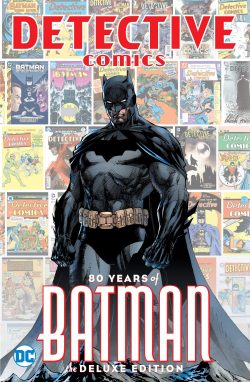
Batman: The War Years 1939-1945


By Bob Kane & Bill Finger with Gardner Fox, Joe Greene, Don Cameron, Alvin Schwartz, Sheldon Moldoff, Jerry Robinson, George Roussos, Fred Ray, Jack & Ray Burnley, Dick Sprang, Stan Kaye, Stan Kaye, Jack Kirby, Ed Kressey & various: curated and edited by Roy Thomas, (Chartwell Books)
ISBN: 978-0-7858-3283-6 (HB)

Win’s Christmas Gift Recommendation: Evergreen Action Adventure… 10/10

March 2019 saw the 80th anniversary of Batman‘s debut in Detective Comics #27. About one year after that dynamic debut his resounding growth in popularity resulted in the launch of Batman #1 (cover-dated “Spring” and released on April 25th, 1940). At that time, only his precursor and stablemate Superman was more successful…

Created a year after and in response to the furore generated by the Man of Steel, “The Bat-Man” (and latterly Robin, the Boy Wonder) confirmed DC/National Comics as the market frontrunner and conceptual leader of the burgeoning comicbook industry.

Having established the parameters of the metahuman with their Man of Tomorrow, the physical mortal perfection and dashing derring-do of the strictly-human Dynamic Duo rapidly became the swashbuckling benchmark by which all other four-colour crimebusters were judged.

However, once the war in Europe and the East snared America’s consciousness, crime and domestic deviltry increasingly gave way to combat and espionage themes. Patriotic imagery dominated most comicbook covers – if not interiors – and the USA’s mass-publishing outfits geared up for a seemingly inevitable conflict.

I feel – like many others of my era and inclinations – that superhero comics were never more apt or effective than when whole-heartedly combating global fascism with explosive, improbable excitement courtesy of a myriad of mysterious, masked marvel men. I have similar thoughts about the early 1970s “relevancy period”, when my masked miracle men turned to tackling slum landlords, super-rich scum, social injustice, crushing poverty and environmental issues: at least we won that one and don’t have to face real atrocities like that anymore…

All the most evocatively visceral moments of the genre seem to come when gaudy gladiators soundly thrashed – and I hope you’ll please forgive the appropriated (but now truly offensive) contemporary colloquialism – “Nips and Krauts”.

A companion to volumes starring Superman and Wonder Woman, Batman: The War Years 1939-1945 is superb hardcover archive curated by comicbook legend Roy Thomas, exclusively honing in on the Gotham Gangbusters’ euphoric output from those war years, even though in those long-ago dark days, comics creators were wise enough to offset and counterbalance their tales of espionage and imminent invasion with a barrage of home-grown threats as well as gentler or even more whimsical four-colour fare…

Past master of WWII-era material Thomas opens this tome with scene-setting Introduction Batman: The War Years and prefaces each chapter division with an essay offering tone and context before the four-colour glories commence with Part 1: From Perfidy to Pearl Harbor…

Following the cover to Detective Comics #27, the first the Dark Knight story offers is the ‘Case of the Chemical Syndicate!’ by Bob Kane and his close collaborator Bill Finger. The spartan, understated yarn introduces dilettante criminologist and playboy wastrel Bruce Wayne, drawn into a straightforward crime wherein a cabal of industrialists are successively murdered. The killings stop only when an eerie figure dubbed “The Bat-Man” intrudes on Police Commissioner Gordon‘s stalled investigation and ruthlessly deals with the hidden killer.

Most of the early tales were untitled, but for everyone’s convenience have in later years been given descriptive appellations by the editors, and were teeming with intriguing extras.

Cover-dated November 1939, Detective Comics #33 featured Gardner Fox & Kane’s (with lifetime ghost-artist Sheldon Moldoff quietly toiling on in unsung anonymity with the named creator) ‘The Batman Wars Against the Dirigible of Doom’: a blockbusting disaster thriller which just casually slips in the secret origin of the Gotham Guardian, as mere prelude to intoxicating air-pirate adventure…

With backgrounds inked by new kid Jerry Robinson, the Grim Detective hunted all-pervasive enemy agents in Finger & Kane’s ‘The Spies’. They ultimately prove no match for the vengeful Masked Manhunter in #37.

The covers for Detective Comics #38 (April 1940 and introducing Robin) and Batman #1 (Spring 1940) then precede Finger, Kane, Robinson & George Roussos’ ‘The Strange Case of the Diabolical Puppet Master’: an eerie episode of uncanny mesmerism and infamous espionage first seen in Batman #3 (Fall 1940).

The all-out action continues with a magnificent horrific Joker jape from Detective Comics #45 (November 1940) as ‘The Case of the Laughing Death’ displays the Harlequin of Hate undertaking a campaign of macabre murder against everyone who has ever defied or offended him. Apart from its release date, the wartime connection comes through the catastrophic climax aboard a ship under full steam…

Detective #55 (September 1941, by Finger, Kane, Robinson & Roussos) favours a back-to-basics approach with spectacular mad scientist thriller ‘The Brain Burglar’ as diabolical Dr. Deker plunders the thoughts and inventions of patriotic armaments inventors.

From Batman #8 (newly-promoted to bi-monthly just as the nation began paper-rationing), cover-dated December 1941-January 1942, comes a then-rare foray into science fiction as a scientist abused by money-grubbing financial backers turns himself into a deadly radioactive marauder in ‘The Strange Case of Professor Radium.’ This tale was later radically revised and recycled by Finger & Kane as a sequence of the Batman daily newspaper strip…

This initial section then closes with the cover to Batman #10 before neatly segueing into Part 2: The Home Front War: a section heavy on the unforgettable patriotic covers crafted by Fred Ray, Jack Burnley, Jerry Robinson and others: preceded here by a context-establishing briefing from Thomas.

As the heroes’ influence expanded, new talent joined the stable of creators. Jerry Robinson had already worked with writer Bill Finger and penciller Bob Kane, and during this period more scripters gradually joined the ever-expanding team to detail morale-boosting adventures during the darkest days of World War II.

I’m certain it’s no coincidence that many of these Golden Age treasures are also some of the best and most reprinted tales in the Batman canon. With Finger at a peak of creativity and production, everybody on the Home Front was keen to do their bit – even if that was simply making kids of all ages forget their troubles for a while…

Beginning with a gallery consisting of World’s Finest Comics #5. 6 and 7 (Ray), Detective #64 and 65 (Robinson, with Joe Simon & Jack Kirby pitching in on the latter) and Batman #12 (Robinson & Roussos), the story portion then offers the astounding case of ‘The Harlequin’s Hoax!’ (Detective #69 November 1942) with Joseph Greene, Kane, Robinson & Roussos detailing the Joker’s latest escapade, which ends explosively in an aircraft factory…

The chapter ends – following the stunning Robinson cover for Batman#12 – with Don Cameron’s ‘Swastika Over the White House!’ (limned by Jack & Ray Burnley from Batman #14, October/November 1942): a typically rousing slice of spy-busting action readers were gratuitously lapping up at the time.

Part 3: Guarding the Home Front opens with another historically-informative essay – and Jack Burnley’s cover to Batman #15 – before Cameron and those Burnley boys introduce plucky homeless boy Bobby Deen as ‘The Boy Who Wanted to be Robin!’ so badly he became an easy mark for a sinister Svengali…

The same art team illustrated Finger’s powerful propaganda tale ‘The Two Futures’, which examined an America under Nazi subjugation after which Cameron, Kane & Robinson go back to spooky basics in Detective Comics #73 (March 1943) as ‘The Scarecrow Returns’, intent on profiting from wrecking American morale through a campaign of terror…

Following Burnley’s cover to World’s Finest #9 (Spring 1943) is Finger, Robinson & Roussos’ saga of a criminal mastermind who invents a sure-fire ‘Crime of the Month!’ scheme from that same anthological issue.

Augmented by the all-Robinson eye-catcher from the front of Batman #17 (June/July 1943), WFC #10 (Summer) provides Finger, Robinson & Roussos’ ‘The Man with the Camera Eyes’: a gripping battle of wits between the tireless Gotham Guardians and a crafty crook possessing an eidetic memory, leading to the chapter’s end and a stunning Burnley masterpiece from the front of World’s Finest #11 (Fall 1943)…

Part 4: Closing the Ring supplements that vital history feature with the cover to Batman #18 – by Ed Kressey, Dick Sprang & Stan Kaye – before Finger, Kane & Roussos introduce a fascinating new wrinkle to villainy with the conflicted doctor who operates ‘The Crime Clinic’ in Detective #77. Crime Surgeon Matthew Thorne would return many times over the coming decades…

The next issue (#78, August 1943) then pushes the patriotic agenda with ‘The Bond Wagon’ (by Greene, Burnley & Roussos) wherein Robin’s efforts to raise war funds through a parade of historical look-alikes is targeted by Nazi spies and sympathisers.

Batman #19 (October/November) then delivers the magnificent artwork of rising star Dick Sprang who pencilled breathtaking fantasy masterpiece ‘Atlantis Goes to War!’ with the Dynamic Duo rescuing that fabled submerged city from overwhelming U-Boat assault.

The same creative team returned for Batman #21 (February/March 1944) as detailing the sly antics of murderous big city mobster Chopper Gant who cons a military historian into planning his capers, briefly bamboozling Batman and Robin with his warlike ‘Blitzkrieg Bandits!’…

‘The Curse of Isis’ comes from WFC #13 (Spring 1944) courtesy of Finger & Jack Burnley with inks by brother Ray & George Roussos: a maritime mystery of superstition, smugglers and sabotage with devious transatlantic crooks targeting hapless American Merchant Marine sailors, after which a legendary classic still proves its worth and punch…

Crafted at the end of 1944, Greene & Sprang’s ‘The Year 3000!’ was a timely allegory of recent terrors and earnest warning to tomorrow as the usual scenario boldly switches to an idyllic future despoiled when the Saturnian hordes of Fura invade Earth and nearly crush humanity.

Happily, one brave man and his young friend find records of ancient heroes named Batman and Robin and, patterning themselves on the long-gone champions, lead a rebellion which overturns and eradicates those future fascists…

The war’s end and aftermath are covered in the feature opening Part 5: Victory after which this titanic tome concludes on a redemptive high note as ‘Batman Goes to Washington!’ (Alvin Schwartz & Robinson, from Batman #28, April/May 1945) finds the Dark Knight supporting a group of former criminals heading to the nation’s capital to argue the case for jobs for ex-offenders.

Typically, some gang bosses react to the threat to their potential labour pool with murderous overkill and the whole affair is neatly completed by a brace of contemporary Sprang covers, from Detective Comics #101 (July) and Batman #30 (August/September 1944).

This stuff set the standard for comic superheroes. Whatever you like now, you owe it to these tales. Superman gave us the idea, and writers like Finger and Cameron refined and defined the meta-structure of the costumed crime-fighter. Where the Man of Steel was as much social force and wish fulfilment as hero, Batman and Robin did what we ordinary mortals wanted and needed to do. They taught bad people the lesson they deserved.

The history of the American comic book industry – in almost every major aspect – stems from the raw, vital and still powerfully compelling tales of DC’s twin icons: Superman and Batman. These wartime tales cemented the popularity of Batman and Robin, bringing welcome surcease to millions during a time of tremendous hardship and crisis. Even if these days aren’t nearly as perilous or desperate – and there ain’t many who thinks otherwise! – the power of such work to rouse and charm is still potent and just as necessary. You owe it to yourself and your family and even your hamster to Buy This Book…
™ & © 2015 DC Comics. All Rights Reserved.

The Complete Aces High issues 1-5 (EC Archives)


By Irv Werstein, Carl Wessler, Jack Oleck, George Evans, Jack Davis, Bernie Krigstein & various (Dark Horse Books)
ISBN: 978-1-50670-308-4 (HB) eISBN 978-1-50670-727-3

Win’s Christmas Gift Recommendation: Compelling Combat Comics Classics… 9/10

No smug commentary today, just appropriate business.
Legendary imprint EC Comics began in 1944 when comicbook pioneer Max Gaines sold the superhero properties of his All-American Comics company to half-sister National/DC.

Gaines only retained Picture Stories from the Bible. His plan was to produce a line of Educational Comics with schools and church groups his major target market. He latterly augmented his core title with Picture Stories from American History, Picture Stories from Science and Picture Stories from World History.

Sadly, the worthy project was already struggling badly when he died in a boating accident in 1947.

His son William was dragged out of college and into the family business and – with much support and encouragement from unsung hero Sol Cohen (who held the company together until the initially unwilling Bill Gaines abandoned his dreams of a career in chemistry) – transformed the ailing enterprise into Entertaining Comics…

After some tentative false starts and abortive experiments, Gaines and his multi-talented associate Al Feldstein settled into a bold and impressive publishing strategy, utilising the most gifted illustrators in the field to tell a “New Trend” of stories aimed at an older and more discerning readership.

From 1950-1954 EC was the most innovative and influential publisher in America, dominating the anthologised genres of crime, horror, war and science fiction. Moreover, under the auspices of writer, artist and editor Harvey Kurtzman, the company introduced an entirely new beast: the satirical comicbook…

Kurtzman was hired to supplement the workforce on the horror titles but wasn’t keen on the genre and instead suggested a new action-adventure title. The result was Two-Fisted Tales which began with issue #18 as an anthology of rip-snorting, he-man dramas. However, with America embroiled in a military “police action” in Korea, the title soon became primarily a war comic and was rapidly augmented by a second, Frontline Combat.

Also written and edited by Kurtzman, who assiduously laid-out and meticulously designed every story, it made for great entertainment and a unifying authorial voice but was frequently a cause of friction with his many artists.

In keeping with the spirit of the New Trend, these war stories were not bombastic, jingoistic fantasies for glory-hungry little boys, but rather subtly subversive examinations of the cost of conflict which highlighted the madness, futility and senseless, pointless waste of it all…

When the McCarthy-era anti-comics crusade of the 1950s crushed the industry and gutted EC output by effectively banning horror, crime, gore, political commentary and social justice, Gaines and Feldstein retrenched: releasing experimental titles under the umbrella of a “New Direction”.

Kurtzman’s Mad – which had defined a whole new genre, bequeathing unto America Popular Satire – converted into a monochrome magazine, safely distancing the outrageously brilliant comedic publication from the fall-out caused by the socio-political witch-hunt which eventually killed all EC’s other titles…

Denied a soapbox to address social ills, Gaines’ new books concentrated on intrigue, adventure and drama informed by new modern fascinations: either intellectual or mass entertainment fads.

Impact, Extra!, Piracy and Valor all clearly reflected themes of contemporary film and TV, whilst Psychoanalysis and M.D. targeted mature audiences through the growing genre of medical dramas. Incredible Science Fiction bridged the transition from old range to new line up whilst also tapping into movie trends. Final offering Aces High carried on a tradition of breathtaking war comics, but omitted ethical commentary to concentrate on aviation sagas dedicated to the myth of honourable combat conducted between knights of the skies…

Although still graced with stunningly beautiful artwork and thoughtful writing, the New Direction titles couldn’t find an audience and died within a year.

This volume of Dark Horse’s EC Archives gathers the entire run of Aces High (#1-5, spanning March to December 1955) gathering some of the most gorgeous art of the era – or ever – but with scripts curtailed by the newly instituted Comics Code Authority and Gaines’ own sense of financial survival, that compelling edge of social crusading was lost…

The fraught history of the company is outlined here in an informative Introduction by Grant Geissman after which Howard Chaykin’s Foreword provides keen insights into the times and the gifted creators involved before the stories begin. Sadly, as is often the case, despite diligent efforts by researchers and historians, many of these tales have no writing credit, but c’est la vie, non?

Aces High was very much a star vehicle slanted towards the interests and expertise of aviation aficionado George Evans who leads off the first issue – after editorial ‘Prop Wash’ – with ‘The Way it Was’, scripted by Irv Werstein. With an WWI veteran taking his grandson to an air show, Evans traces the history and development of his war in the air, emphasising the true cost in lives…

Uncredited prose feature ‘The Stork with Talons’ details the career of legendary aviator Charles Nungesser after which masterful Wally Wood delineates the history of Lieutenant Tom Pomeroy: a newly qualified combat pilot who can’t understand why his fellow airmen consider him ‘The Outsider’

Bernie Krigstein was one of the most innovative illustrators in comics – as well as commercial and gallery art – and in ‘The Mascot’ captures the air of hopeful fervour as an American squadron in France realise that the stray mutt they’ve adopted can predict who will not return from missions…

The premiere outing concludes with Carl Wessler & Jack Davis introducing ‘The New C.O.’ whose ideas of conduct are revolting but unarguably effective…

The second sortie opens with ‘Chivalry!’ by Wessler, Evans: crossing No-Man’s Land for a peek at the German view as a Jagdstaffel of decent, patriotic fliers must find a way to deal with new posting Lt. Horst Viegel, whose only consideration is adding to his kill-tally…

RAF legend Albert Ball is eulogised in text page ‘The Ace of Aces’ after which Krigstein limns a tale of ‘Revenge’ wherein a USAC captain hunts down the German flier who strafed Red Cross nurses and cost him his one true love…

Wessler & Wood detail the vagaries of luck afflicting a string of pilots assigned ‘Locker 9’ before prose page ‘Laughing Warrior’ précis’ the life of France’s greatest air ace Georges Guynemer before Jack Davis renders the devious saga of doctrinaire military martinet Major Trout whose quibbling antics in ‘Footnote’ have salutary, lifesaving underpinnings…

Aces High #3 takes wing with Oleck & Evans’ ‘The Rules’ as novice replacement Lt. Edward Dale disdains hour and fair play to become famous and pays the inevitable price, after which ‘Prop Wash’ reprints the letters of the many fans the comic book won whilst Krigstein’s ‘The Spy’ offers a touch of the old EC magic as American pilots cast suspicious eyes on a fellow squadron member who has a German name…

A tragic pilot-training washout reduced to the role of spanner-wielding ‘Greasemonkey’ redeems himself in a superb Wood rendered yarn before prose fiction ‘The Acid Test’ (with a grizzled raddled veteran having to deal with his baby brother joining the squadron) segues into a gleeful, yet dogged battle of wills between an established ace and a cocky replacement pilot over ‘The Case of Champagne’ by Wessler & Davis.

Jack Oleck & Evans lead off #4 as ‘The Green Kids’ sees a daily argument over sending raw recruits into combat changes complexion after angry, embittered Flight Leader Joseph Caswell is promoted to Squadron Commander and must now decide who flies and who doesn’t..

More postal praise in ‘Prop Wash’ leads to a wry examination of superstition in Wessler & Krigstein’s ‘The Good Luck Piece’ after which the writer teams with Wood for ‘The Novice and the Ace’ wherein a cunning psychological trick unnerves an entire US squadron… until a callow newcomer takes a chance…

Prose fiction ‘The Last Laugh’ details the last mistake of an escaping German pilot, before Wessler & Davis reveal the tribulations of an American mechanic hungry to fly against the Boche in ‘Home Again’

The short-lived series came to a close with #5, leading with Oleck & Evans’ ‘C’est La Guerre!’ as American pilots play dice to decide who goes on a suicide mission after which prose page ‘Airman Unknown’ details how a veteran of the Lafayette Escadrille sought to identify and repatriate the bodies of lost American fliers.

Breaking with tradition, this issue includes episodes from WWII, beginning with the Davis-illumined ‘Iron Man!’ and P-47 pilot Fred Allison who believes he can’t be shot down, after which Wessler & Krigstein take us back to the Great War for ‘Spads Were Trump’.

Here valiant American Lt. Walt Muller conceals a deeply personal reason for avoiding combat against German Ace the Red Eagle…

An incongruous prose review and guide of film and record releases, ‘The Entertainment Box’ leads into a Wood tour de force to end the issue and series. ‘Ordeal’ relates the astounding record of P-40 pilot Lt. Stoner against the Japanese in the Pacific Theatre of War, before exposing the one thing he cannot face…

The covers – by Evans – have all been restored from the masterful colour guides of original colourist Marie Severin, resulting – with modern reproduction techniques – in a sequence of graphic poems of unsurpassed beauty, whilst original house ads and commercial pages from the period tantalise in a way no other ads ever could, completing a nostalgic experience like no other.

The New Direction was a last hurrah for the kind of literate, mature comics Gaines wanted to publish. When they failed, he concentrated on Mad magazine and satire’s gain was comics’ loss. Now you have the chance to vicariously relive those times and trends, I strongly suggest that whether you are an aged EC Fan-Addict or nervous newbie, this is a book no comics aficionado can afford to miss…
© 1955, 2017 William M. Gaines Agent, Inc. All rights reserved. Introduction © 2017 Grant Geissman.

The Simon & Kirby Library: Horror!


By Joe Simon, Jack Kirby, Mort Meskin, Bill Draut, Martin Stein, Ben Oda, George Roussos, Vic Donahue, Bill Walton, Harry Lazarus, Jim Infantino, Bruno Premiani, John Prentice, Jerry Grandenetti, Ernie Schroeder and various (Titan Books)
ISBN13: 978-1-84856-959-1 (HB)

There’s some magnificent vintage Jack Kirby material around these days but tragically a lot of it hasn’t made the jump to digital yet. One such tragic omission is Titan Books’ splendidly sumptuous Simon & Kirby Library: gathering that iconic team’s groundbreaking genre contributions. Today, let’s look at one of the most compelling: a compendium of mystery, suspense and the supernatural…

Kirby’s collaborations with fellow industry pioneer Joe Simon always produced dynamite concepts, unforgettable characters, astounding stories and huge sales no matter what avenues they pursued, blazing trails for so many others to follow and always reshaping the very nature of American comics with their innovations and sheer quality.

Comic books started slowly in 1933, until the creation of superheroes like Superman unleashed a torrent of creative imitation and invented a new genre. Implacably vested in the Second World War, the Mystery Man swept all before him (very occasionally her or it) until the troops came home and older genres supplanted the Fights ‘n’ Tights crowd.

Although new kids kept up the buying, much of the previous generation also retained their four-colour habit, but increasingly sought more mature themes in the reading matter. The war years altered the psychology of society and a more world-weary, cynical reading public came to see that all the fighting and dying hadn’t really changed anything. Their chosen forms of entertainment – film and prose as well as comics – increasingly reflected this.

Western, War and Crime comics, madcap teen comedy and anthropomorphic funny animal features were immediately resurgent, Simon & Kirby introduced Romance comics in 1947 even as pulp-style Science Fiction began to spread. In the real world, another global revival of spiritualism and interest in the supernatural – possibly provoked by the monstrous losses of the recent conflict (just as had happened in the 1920s, following WWI) – led to a wave of increasingly impressive, evocative and even shocking horror comics.

There were grisly, gory and paranormal paragons previously, including a pantheon of ghosts, monsters and wizards draped in costumed hero trappings (The Spectre, Mr. Justice, The Heap, Frankenstein, Sargon the Sorcerer, Zatara, Dr. Fate and dozens of others), but these had been victims of circumstance: the Unknown as convenient power source for super-heroics.

Now the focus shifted to ordinary mortals thrown into a world beyond their ken with the intention of unsettling, not vicariously empowering, the reader…

Practically every publisher jumped on the monumentally popular juggernaut, but B & I (which became the magical one-man-band Richard E. Hughes’ American Comics Group) launched the first regularly published horror comic in the autumn of 1948. Adventures Into the Unknown was technically pipped by Avon whose impressive single issue release Eerie debuted and closed in January 1947. They wised up late and launched a regular series in 1951…

By this time Classics Illustrated had already long milked the literary end of the medium with adaptations of The Headless Horseman, Dr. Jekyll and Mr. Hyde (both 1943), The Hunchback of Notre Dame (1944) and Frankenstein (1945) among others.

It was at this time that Joe Simon and Jack Kirby identified another “mature market” gap for the line of magazines they autonomously packaged for publishers Crestwood/Prize/Essenkay to supplement Headline Comics, Justice Traps the Guilty, Police Trap, Young Romance and their other anthologies.

They too saw the sales potential for macabre material, resulting in the superb and eerily seminal Black Magic (launched with an October/November 1950 cover-date) and boldly obscure psychological drama anthology Strange World of Your Dreams in 1952.

Marvel had jumped on the bloody bandwagon early, but National/DC Comics only reluctantly bowed to the inevitable, launching a comparatively strait-laced short story title that nevertheless became one of their longest-running and most influential titles with the December 1951/January 1952 launch of The House of Mystery.

Soon after, a hysterical censorship scandal led to witch-hunt Hearings (see the Senate Subcommittee on Juvenile Delinquency, April-June 1954) which panicked most comics publishers into adopting a castrating straitjacket of self-regulatory rules…

Just like today, America back then cast about wildly looking for external contaminants rather than internal causes for a perceived shift in social attitudes and youthful rebellion: happily settling on bloodthirsty comics about crime or horror, drenched in unwholesome salacious sex, as the reason their children were talking back, acting up and staying out late.

S&K didn’t do those kinds of comicbooks but they got tarred – and metaphorically feathered too – in the media-fuelled frenzy…

This striking full-colour hardback begins with the essay ‘That Old Black Magic’ by series editor Steve Saffel; delineating the history of the title and tone of the times whilst ‘Simon and Kirby’s Little Shop of Horror’ details the workings of the small but prolific studio of rotating artists who augmented the output of the named stars: creators such as Mort Meskin, Bill Draut, Martin Stein, Ben Oda, George Roussos, Vic Donahue, Bill Walton, Jim Infantino, Bruno Premiani, John Prentice, Jerry Grandenetti and more…

With vast output across many titles, S&K simply couldn’t produce every story and many yarns here are ghosted by other hands, although each and every one does begin with a stunning Kirby splash panel.

As with all their titles, Simon & Kirby offered themed material tweaked by their own special sensibilities. Black Magic – and the Mort Meskin-inspired The Strange World of Your Dreams – eschewed cheap shocks, mindless gore and goofy pun-inspired twist-endings in favour of dark, oppressive suspense soaked in psychological paralysis and inexplicable unease: Tension over Teasing…

The stories presented fantastic situations and, too frequently for comfort, there were no happy endings, pat cosmic justice or calming explanations: sometimes The Unknown just blew up in your face and you survived or didn’t… but never whole or unchanged.

The compendium of bleak cartoon cavortings commences with ‘Last Second of Life!’ (from volume 1 #1, October-November 1950) wherein a rich man obsesses over what the dying see at the final breath, but learns to regret the unsavoury lengths he goes to in finding out, after which ‘The Scorn of the Faceless People!’ (#2 December 1950-January 1951) relates the meaning behind a chilling nightmare.

It’s not hard to believe this one must have prompted the creation of the spin-off Strange World of Your Dreams. Issue #2 also provided a chilling report on a satanic vestment dubbed ‘The Cloak!’ whilst an impossible love in the icy wastes of Canada ended with ‘A Silver Bullet for Your Heart!’ in #3 (February-March 1951).

Issue #4 provided ‘Voodoo on Tenth Avenue’ as a disgruntled wife went too far in her quest to get rid of her man, whilst in #5 ‘The World of Spirits’ recounted the uncanny predictions of Emanuel Swedenborg in a brief fact feature before #6 described psychic connection and a ‘Union with the Dead!’ and a ravaged mariner survived meeting ‘The Thing in the Fog!’ (#7) – an encounter with the legendary Flying Dutchman…

Black Magic #8 (December 1951-January 1952) details the sacrifice a woman made to save her man from ‘Donovan’s Demon!’ (mostly illustrated by Bob McCarty) whilst ‘Dead Man’s Lode!’ (#10 March 1952 – the series now being monthly) related a ghostly experience in an old mine and ‘The Girl Who Walked on Water!’ in #11 showed the immense but fragile power of self-belief…

Meskin & Roussos illustrated #12’s ‘A Giant Walks the Earth!’ as a downed pilot lost his best friend to a roving colossus in India, after which the utterly chilling and unforgettable ‘Up There!’ kicks off three stories from the landmark 13th issue…

The saga of a beguiling siren of the upper stratosphere is followed by ‘A Rag – a Bone and a Hank of Hair!’ (Meskin) and a walking pile of trash that learned to love, whilst ‘Visions of Nostradamus!’ (by Al Eadeh) tracks and interprets the prognosticator’s predictions.

‘The Angel of Death!’ in #15 outlines a horrific medical mystery and ‘Freak!’ (#17, possibly by Bill Draut) exposes a country doctor’s deepest shame.

Black Magic #18 (November 1952) is another multi-threat issue. ‘Nasty Little Man!’ gets my vote for scariest horror art job of all time as three hobos discover to their everlasting regret why you shouldn’t pick on short old men with Irish accents…

‘Come Claim My Corpse’ (Martin Stein?) offers a short, sharp, shocker wherein a convict discovers too late the flaw in his infallible escape plan, before an investigator tracing truck-wreckers learns of ‘Detour Lorelei on Highway 52’ (McCarty)…

‘Sammy’s Wonderful Glass!’ in #19 (December 1952) shows the tragic outcome of a retarded lummox whose favourite toy can expose men’s souls, after which two shorts from #20 (January 1953) follow. ‘Birth After Death’ retells the true story of how Sir Walter Scott‘s mother survived premature burial, whilst ‘Oddities in Miniature: The Strangest Stories Ever Told!’ offers half a dozen uncanny tales on one page.

Issue #21 provided ‘The Feathered Serpent’ in which an American archaeologist uncovers the truth about an ancient god, before #22 (March 1953) slips into sci-fi morality play mode with UFO yarn ‘The Monsters on the Lake!’, and ‘Those Who Are About to Die!’ from #23 sketches out the tale of a painter who can predict imminent doom…

A brace of tales from #24 (May 1953) begins with a scholar who attempts to contact the living ‘After I’m Gone!’, complemented by half-page fact feature ‘Strange Predictions’ (Harry Lazarus) after which ‘Strange Old Bird!’ is the first of three stories from the (again bimonthly) Black Magic #25 (June/July 1953).

In this gently eerie thriller, a little old lady gets the gift of life from her tatty old feathered friend, whilst ‘The Human Cork!’ precis’ the life of literally unsinkable Angelo Faticoni, before a man without a soul escapes the morgue to become ‘A Beast in the Streets!’

There’s a similar surfeit of sinister riches from #26, beginning with ‘Fool’s Paradise!’, wherein a cheap bag-snatcher makes a deal with the devil, even as ‘The Sting of Scorpio!’ sees a rude sceptic wish she’d never taunted a fortune teller.

‘The Strange Antics of the Mystic Mirror!’ terrified nurses in a major metropolitan hospital and ‘Demon Wind!’ (Kirby inked by Premiani) finds a brash Yankee learning the efficacy of a primitive tribe’s justice system…

‘The Cat People’ (#27) mesmerise and forever mark an unwary tourist in rural Spain, and the same issue exposes a seductive Scottish supernatural shindig hosted by ‘The Merry Ghosts of Campbell Castle’, whilst #28 finds an unwilling organ donor reclaiming his “property” in ‘An Eye for an Eye!’ The same issue reveals with mordant wit how a mummy returns to make his truly beloved ‘Alive After Five Thousand Years!’…

From an issue cited during those anti-comic book Senate Hearings, ‘The Greatest Horror of Them All!’ (#29 March-April 1954) tells of a freak hidden amongst freaks, before Black Magic #30 exposes the appalling secret of ‘The Head of the Family!’ (Kirby & Premiani) whilst #31 provides both alien invasion horror ‘Slaughter-House!’ and a cautionary tale of a child raised by beasts in ‘Hungry as a Wolf!’ (Ernie Schroeder).

‘Maniac!’ from #32 is another artistic tour de force and a tale much “homaged” in later years, detailing how a loving brother stops villagers taking his simple-minded sibling away, before the Black Magic section concludes with a terrifying fable of atomic radiation and mutated sea creatures in ‘Lone Shark’ from #33 (November/December 1954).

With the sagacious, industry-hip, quality-conscious Simon & Kirby undoubtedly seeing the writing on the wall, their uniquely macabre title was wisely cancelled in 1954, not long before the Comics Code came into effect. A bowdlerised version was relaunched in 1957, long after they had dissolved their partnership and moved into different areas of the industry.

However, the eerie treats don’t end yet, as a short but sublime sampling from their other mystery title is appended here.

We Will Buy Your Dreams‘ discusses features and stories from abortive, revolutionary title The Strange World of Your Dreams: inspired by studio-mate Mort Meskin’s vivid night terrors. The premise involves parapsychologist Richard Temple explaining and analysing storied nightmares with pictorially dramatised dreams sent in by readers.

The too short comics section begins with ‘Send Us Your Dreams’ from #1 (August 1952); a “typical” insecurity nightmare and the chilling ‘I Talked with my Dead Wife!’, whilst #2 (September/October) provides a trio of taught traumatic tales. ‘The Girl in the Grave!’ is a scary wedding scenario in the ‘You Sent Us This Dream!’ sector, before ‘Send Us Your Dreams’ sees Dr. Tempe describe the extent of self-preservation imagery…

‘The Woman in the Tower!’ comes from #3 (November/December), detailing typical symbolism whilst ‘You Sent Us this Dream’ from the same issue explains away a nightmare climb up an unending tower…

Capping off everything is a spectacular Cover Gallery, reprinting Black Magic #1-33, and a stunning unpublished cover; performing the same service for The Strange World of Your Dreams #1-4, plus the unpublished #5, just to make our lives utterly complete.

The Simon & Kirby Library: Horror! is a gigantic compendium of classic dark delights that perfectly illustrates the depth and scope of their influence and innovation and readily displays the sheer bombastic panache and artistic virtuosity they brought to everything they did. This is a worthy, welcome introduction to their unique comics contributions, and needs the relative immortality of electronic iterations.

It would be far less grim on your hands and wrists, too…
© 2014 Joseph H. Simon and the Estate of Jack Kirby. All Rights Reserved.

Archie Horror Presents Chilling Adventures in Sorcery


By Harry Doyle, Gray Morrow, Marvin Channing, Don Glut, Steve Skeates, Mary Skrenes, Carol Seuling, Phil Seuling, Larry Hama, Bob Holland, Stan Goldberg, Vicente Alcazar, Dick Giordano, Carlos Pino, Dan DeCarlo, Howard Chaykin, Alex Toth, Bruce Jones, Ed Davis, Frank Thorne & various (Archie Comics)
ISBN: 978-1-62738-990-7 (TPB)

Win’s Christmas Gift Recommendation: Shockingly Wicked Chronicle of Chills… 9/10

For nearly 8 decades Archie Comics have epitomised good, safe, wholesome, fun but the company has always been a surprisingly subversive one. Family friendly – and not – iterations of superheroes, spooky chills, sci fi thrills and genre yarns have always been as much a part of the publisher’s varied portfolio as the romantic comedy capers of America’s cleanest-cut teens.

As you probably know by now, the eponymous Archie has been around since 1941, but the publisher has other wholesome stars – such as Sabrina the Teenage Witch or Josie and the Pussycats – in their stable, almost as well known… and just as prone to radical reinterpretation.

To keep all that accumulated attention riveted, the company has always looked to modern trends with which to expand upon their archetypal storytelling brief. The contemporary revival in horror across all media has thus resulted in a few supernatural sidebar titles such as Afterlife with Archie and Jughead: The Hunger.

Moreover, in times past the publisher have cross-fertilised their pantheon through such unlikely team-ups as Archie Meets the Punisher, Archie Vs Sharknado and Archie Vs Predator, whilst every type of fashion fad and youth culture sensation has invariably been accommodated into and explored within the pages of the regular titles.

Following-up the stunning success of aforementioned zombie apocalypse Afterlife with Archie, they took another boldly controversial step: radically reinventing their saccharine-TV teen witch in astoundingly sophisticated Chilling Adventures of Sabrina after playwright, screenwriter and comics scribe Roberto Aguirre-Sacasa (whose many hits include The Mystery Plays, 4: Marvel Knights Fantastic Four, Stephen King’s The Stand and Afterlife with Archie amongst others) pitched the idea to re-imagine the saucy sorceress in terms of Rosemary’s Baby and The Exorcist.

Archie Comics was no stranger to such material. In the 1970s the company created sub-imprint Red Circle for anthology terror tales during a previous supernatural boom time, before gradually converting the line to superhero features as the decade progressed and the fad faded. They even had resident witch-girl Sabrina narrating Chilling Tales of Sorcery for the first two issues…

The title dropped subhead “…As Told by Sabrina” for #3, and with #6 (April 1974) became Red Circle Sorcery until folding in February 1975’s issue #11.

In a great example of circularity, the newly-wicked 21st century Sabrina features snippets from the ’70’s anthology, sparking this edgy compilation of many of those lost classics in a spiffy monochrome collection, available in paperback and digital formats.

Following a fervent Introduction by letterer and fright-fan Jack Morelli, the vintage terrors open with Chilling Tales of Sorcery …as Told by Sabrina #1 (September 1972): a rather standard anthology of short thrillers with twist-endings, little different from those churned out by DC, Gold Key or Charlton at the time and crafted by Archie’s on-staff comedy creators.

‘Behold the Beast’ by Frank Doyle & Stan Goldberg, revealed the fate of a lonely and misunderstood deformed lad, after which ‘The Boy Who Cried Vampire’ (Doyle & Dan DeCarlo) deals out ironic justice to a pesky kid and ‘Assignment in Fear’ (Doyle & DeCarlo) sees a teacher with a secret sort out a class bully in horrific style.

Anonymous prose yarn ‘A Real Hot Talent’ gets under the skin of a juvenile firestarter after which Doyle & DeCarlo return to exhibit ‘Quick Justice’ in an art gallery before Doyle & Goldberg reveal how ‘Curiosity Kills’ in a story of an accursed inheritance.

Issue #2 opens with Doyle & Goldberg’s ‘The Ultimate Cure’ wherein a waiting bride’s tragic misapprehension destroys her man and her sanity, and text tale ‘Look Upon Your Legacy’ warns of the dangers of an over-active imagination. Pictorial perils resume with ‘Sonny’s World’ (Doyle & Dan DeCarlo) with a little brat learning how to make all reality his plaything after which ‘The Measure of a Monster’ Doyle & Goldberg) sees mad science unleash a colossal creature and (almost) find a safe conclusion and the same creators outline the fate of a jewel-obsessed lass succumbs to ‘The Cameo’s Curse’…

A massive shift in style and tone began with issue #3 (October 1973) as writer/artist Gray Morrow came aboard, personally crafting or supervising far more mature fare that seemed closer to Warren’s adult horror magazines than contemporary newsstand fare such as House of Mystery, Ghostly Haunts or Boris Karloff Tales of Mystery.

Dwight Graydon “Gray” Morrow was born in Fort Wayne, Indiana in 1934 and studied at the Chicago Academy of Fine Arts. After serving in the army he moved to New York City in 1955 and began a steady career contributing strips, covers and illustrations to Cracked, Classics Illustrated, Atlas Comics (pre-Marvel), numerous children’s books and pulps such as Galaxy.

A master of graphic realism, his art and stories graced a vast array of comics titles, magazines such as Space: 1999 and alternative vehicles such as Wally Wood’s Witzend. He freelanced for dozens of companies (he co-created DC’s El Diablo and Marvel’s Man-Thing, and revamped Archie’s Black Hood into a gritty urban avenger during his tenure at Red Circle), as well as drawing the newspaper iterations of Tarzan and Buck Rogers. He won numerous awards – including three Hugos – over a long and extremely wide-reaching artistic life. He died in 2001.

His influence on the title was instantaneous. With the imprint renamed Red Circle Comics for the third (almost all-Morrow) issue, the new chief introduced a growing band of fresh writers and master artists, as the title unleashed a wave of terror tales that owed much to movies and TV of the period.

It began with ‘…Cat’ (written, drawn & lettered by Morrow) wherein a ruthless, misogynistic society burglar targets the wrong gem-bedecked senorita and lives to regret it forever.

Following prose thriller ‘A Stab in the Dark’ – exposing a plot to murder by witchcraft – a thematic diversion into EC-tinged science fiction finds a time traveller accidentally become an evolutionary ‘Missing Link!’ whilst a bereaved man investigates the death of a sister and discovers that a new ‘Immortality Factor’ is anything but.

An embezzler then pays the price for his betrayal in ‘Haunted Gallery’ before the issue closes with fact-page ‘Essays into the Supernatural’: a featurette by Phil Seuling & Morrow exploring timeless rituals of magic and the use of ‘Familiars’…

Due to his prestige and sheer artistic quality, Morrow could call upon a lot of high-end associates to fill pages and #4 (December 1973) introduced an internationally famous master of mood as Spaniard Vicente Alcazar (Jonah Hex, Commando Picture Library, Star Trek, Space: 1999) began his association by writing and illustrating ‘Suicide… Maybe’: a saga of Faustian tragedy wherein a lifelong failure makes a fool’s bargain and discovers politics is the Devil’s playground…

Text vignette ‘Loophole’ also explores such contracts before Don Glut & Dick Giordano highlight the ‘Horripilate Host’ whose TV show excesses lead to infernal doom, after which Morrow adds a sinister tweak to the legend of Midas when a greedy creep gains the legendary ‘Golden Touch!’

The power of a Hebrew Golem deals poetic justice to a modern oppressor in ‘A Thousand Pounds of Clay’ by Glut & Alcazar before the issue ends with another fictive factoid as ‘Essays into the Supernatural’ finds Morrow exploring truths and fictions of ‘The Witch’…

Cover-dated February 1974, #5 opens with a vivid pastiche of Arabian adventure courtesy of writers Morrow and Larry Hama. Limned by Alcazar ‘The Two Thieves of Baghdad’ exposes the fatal flaw of overconfidence before the all Alcazar ‘Esme’ details the fate of a hit-&-run victim whose vision is horrifically enhanced by her accident.

Morrow brings his lifelong affinity for baroque, barbaric science fantasy to the creepy epic ‘Barometer Falling…’ after which Alcazar’s ‘The Choker is Wild’ reveals the shocking history of blood-drinking sovereign Queen Maleena and the ‘Essays into the Supernatural’ featurette – by Seuling & Morrow – catalogues the totemic value of ‘Dragons’.

Red Circle Sorcery #6 (April) opens with ‘Warrior’s Dream’ by Steve Skeates, Mary Skrenes & Morrow as a lusty barbarian finally pays the price for all that wenching and, following an ‘Essays into the Supernatural’ page detailing legends of ‘The Werewolf’ (by Marvin Channing & Morrow), sees a conjuring upstart destroyed by a sagacious warlock in ‘Out of Practice’ by Seuling & Ed Davis.

British comics stalwart Carlos Pino was Alcazar’s studio partner for years (often collaborating as “CarVic”) and here he solos in Channing’s tale of vengeance-by-witchcraft ‘Death Goes to a Sales Convention!’, before Carol Seuling & Howard Chaykin go full medieval in epic saga of demonic manipulation and feline vengeance ‘The Patience of a Cat’…

Futuristic sensory-inundation tech is the driving force in T. Casey Brennan’s extended prose mystery ‘Black Fog’ – illustrated by Morrow – after which Channing & Alcazar serve out just deserts to a serial womaniser in ‘Face of Love – Face of Death’ to close the issue.

Red Circle Sorcery #7 commences with ‘A Twist in Time’ by Skeates & Pino as an ancient wizard is drawn into Fate’s plan to punish a modern-day murderer after which Channing & Morrow explore legends of ‘The Dibbuk’ in another gripping ‘Essays into the Supernatural’ featurette before Channing & Alcazar memorably reveal the dangers of owing ‘The Knife of Jack the Ripper’…

Channing scripts a rare but welcome artistic foray for Bruce Jones as ‘The Rivals’ follows two kids from mid-western poverty to dizzying heights and their grim, witchcraft assisted ends after which Brennan & Alcazar showcase the frustrating fate of ‘The Benefactor’ nobody will listen to…

Closing the chronological portion, ‘Essays into the Supernatural’ then offers a featurette by Morrow detailing ‘Possession and Exorcism’ which happily leads not to the end, but rather a selection of Bonus Stories from later issues.

From #9 (October 1974) comes ‘…If I Were King’ by Channing & the magnificent Alex Toth, wherein a meek nobody gets his greatest wish fulfilled – with the usual regrets – before #8 (August 1974) offers a compelling ‘Essays into the Supernatural’ featurette by Channing & Frank Thorne, detailing the tricks of pesky ‘Poltergeists’ and closure via illustrated calligraphic ode ‘The Spectre’ by Bob Holland & Morrow.

The company’s recent resurgence on TV and in the comics has seen a variety of alternate iterations of the timeless pantheons and this no-frills massively monochrome trade paperback (or digital download) is a perfect complement to those aforementioned horror-tinged titles.

Please don’t be put off by the black-&-white reproduction here: these tales are crafted by masters of line art and tonal values and their efforts actually benefit from the subtraction of the cheap colour used in the original releases. These are superb voyages into the bizarre unknown that no lover of dark fiction should miss.
© 2017 Archie Comic Publications, Inc. All rights reserved.
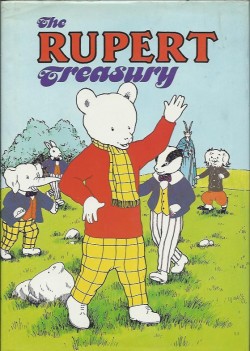
Vintage Geek


By Marshall Julius (September Publishing)
ISBN: 978-1-91283-602-4 (PB)

Win’s Christmas Gift Recommendation: For The Man Who Has Grandchildren Who Never Know What To Get Him… 9/10

I’m notionally interrupting our eldritch Occultoberfest ramblings to offer a “heads up” on a splendidly accessible book that will bring joy and frustration to a good many of you and even, at least tangentially, counts as a celebration of spooky doings. Read on…

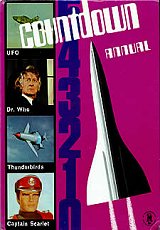
It’s sometimes hard to appreciate, but the world has in some ways improved. When I was a kid, those fringe-&-border youngsters who obsessed over weird stuff like comics or shows like Thunderbirds or Star Trek mostly got beaten up by the Normal Kids who only spent passion and brain cells on pop star names, sports statistics and the right shoes to wear.

Not me, of course. I was able to hide my otherness under a shell of sporting excellence, barbed wit and by occasionally uterly tuoghing up the odd swot or two (that was a test just there, and you’ll only know if you passed it by being already in the know…), Hem Hem…

Anyway, these days the terms Geek – and its concomitant sub-rankings Nerd and Wonk – are badges of affectionate honour (well, alright, not honour, but tolerable enough to have people accept and even grudgingly admire the obsessively tenacious striving for pedantic accuracy and stultifying clarity in subjects of supposedly minimal general interest): enough so that said topics of interest have become appropriate nostalgic fare for family gatherings, game shows and pub quizzes. Some of these forbidden subjects even get blockbuster movies made out of their clunky antecedents…

Knowing stuff other than football and cricket stats and showing off are acceptable activities these days, so uber-fan Marshall Julius – who has expertise and appropriately vast memorabilia collections in many separate disciplines of past pop culture and confesses to being a “film critic, blogger, broadcaster, quizmaster and collector of colourful plastic things” – has compiled a traditional quiz book to do his boasting in print: creating quite possibly one of the most family-friendly group-socializing books of the century.

After Sunday lunch or a during a party, whip out this missive containing 1000 questions and suitably detailed answers and just watch the armchair experts strive to display their personal proficiency whilst reliving their cherished but distant childhoods…

All topics stem from the 20th century (certainly the most entertaining one we’ve had thus far) and offer 50 questions only the most sagacious aficionado and savant could know. Each section even includes brain-busting interrogatives from star guests such as George Takei, Carrie Henn, Sam Neill, Louise Jameson, Mark Hamill, Dan Slott, Pat Mills, James Arnold Taylor and dozens of others. If you don’t know at least four of these celebs then your other excuse for buying the book is for educational purposes…

If you or yours think they know about James Bond: The Roger Moore Years; The Simpsons: The First Ten Years; George A. Romero: Night, Dawn and Day; The Mighty Marvel Age of Comics; The Force is Strong With These Three: Star Wars!/Empire/Jedi or Doctor Who: The Tom Baker Years they can proudly and loudly prove it now.

They might even have puissant affinity for the serried secrets of John Carpenter’s Apocalypse Trilogy; The 2600: Atari’s Electric Dream; Retrofuturistic: Fifties’ Sci Fi Cinema; Crossing Over into The Twilight Zone; Walt’s Wonderful World of Disney; Stephen King: Carrie to Christine and Ray Harryhausen’s Creature Features, but can even they complete the testing to mental abstraction that lies within Star Trek: The Original Series; If It Bleeds We Can Kill It: Eighties’ Action Classics; 2000AD: The First 500 Thrill-Powered Progs; Universal Monsters Unleashed!; Hanna-Barbera: The General Motors of Animation; Steven Spielberg: Jaws to Jurassic Park and – toughest of all – Batman: The Animated Series?

Preceded by a photo-packed Introduction by the author and an effulgent Foreword from The Simpsons writer Michael Reiss, Vintage Geek is the ultimate “Dad” book and will give all oldsters their best chance to prove they once had a life…

Sort of…
© Marshall Julius 2019. All Rights Reserved.

Creepy Presents Bernie Wrightson


By Bernie Wrightson, with Howard Chaykin, Nicola Cuti, Bill Dubay, Carmine Infantino, Bruce Jones, Budd Lewis & various (Dark Horse Comics)
ISBN: 978-1-59582-809-5 (HB)

Win’s Christmas Gift Recommendation: Masterfully Macabre Masterpieces… 9/10

Once upon a time the short complete tale was the sole staple of the comic book profession, where the intent was to deliver to the reader as much variety and entertainment fulfilment as possible. Sadly, that particular discipline is all but lost to us today…

Towards the end of the turbulent 1960s, a lot of fresh talent was trying to break into the comics industry at a time when a number of publishers were experimenting with cheaper black & white magazines rather than four-colour comic books. Companies like Warren, Skywald and a minor host of imitators were hiring kids who then honed their craft in public – just like their forebears had to.

A respectable number of those Young Turks – such as Bruce Jones, Mike Kaluta, Jeff (now Catherine) Jones, Al Weiss and “Berni” Wrightson (a young man who soon became a living legend even in that prestigious cabal), grew into major talents whilst crafting pastiches of the EC Comics they had loved as kids – and paved the way when the comics market again turned to shock, mystery and black comedy to sell funny-books.

Bernard Albert Wrightson was born a few days before Halloween (October 27th) 1948 in Dundalk. Maryland. His artist training came via TV, reading comics and a correspondence course from the Famous Artists School, and his first professional publication was fan art, printed in Creepy #9 (June 1966). Around that time, he was toiling as an illustrator for The Baltimore Sun, and after meeting his EC idol Frank Frazetta at a convention gravitated to New York City. Hooking up with the above-cited band of newcomers, and other hopefuls like Al Milgrom and Walter Simonson, Wrightson was soon crafting short horror tales for National/DC, Marvel and other eager publishers. His first rank reputation was cemented with the co-creation (beside writer Len Wein) of Swamp Thing.

His close and productive association with DC ended in 1974, as he left to work at Warren on more adult-oriented tales allowing him to try different techniques: a bountiful period of experimentation that culminated with his joining Jeffrey/Catherine Jones, Kaluta and Barry Windsor-Smith in expressive narrative arts collective The Studio. During this period, he also produced commercial commissions, film material and humorous strips for National Lampoon whilst creating a series of astoundingly complex plates for his signature work: an illustrated rerelease of Mary Shelley’s novel Frankenstein.

In later years he illustrated posters, trading cards and graphic novels such as Creepshow, Cycle of the Werewolf and Freakshow (with Bruce Jones) among other print collectibles, before returning to mainstream comic books. His notable successes include The Weird and Batman: The Cult with Jim Starlin, and Spider-Man: Hooky and The Hulk and the Thing: The Big Change as well as a number of Punisher miniseries and OGNs.

Wrightson died in 2017. At the time he was working with Steve Niles (30 Days of Night) on a new Frankenstein miniseries, and almost finished it. The ultimate professional to the last, Bernie made provision for another artist to complete the job before passing. We’ll be reviewing that particular wonder later on this month…

This stellar compendium – available in hard copy and digital incarnations – gathers Wrightson’s monochrome, two-colour and full-colour offerings – stories, illustrations and frontispieces – from Creepy #9, 62-64, 66-71, 73, 75-77, 83, 86, 87, 95, 113 & 138 and Eerie #57, 58, 60-68, 70-72, 68 spanning 1966-1982.

The uncanny yarns and portentous depictions appeared in black-&-white magazine anthologies Creepy and Eerie, and those Warren stories have been gathered into a spectacular oversized (284 x 218 mm) hardback compendium – part of a series of all-star artist compilations which also includes superstars Rich Corben and Steve Ditko amongst others.

The terrors begin here with the short shockers from Creepy, but only after fellow raconteur and horror stylist Bruce Jones shares his memories of the great man and those early days in his evocative Foreword…

The dark visions commence with Wrightson’s gripping adaptation of ‘Edgar Allen Poe’s The Black Cat’ (Creepy #62): a man slowly going mad enters into a deadly war of wills and nerve with his wife’s pet…

Moving from his signature linework into deft grey-marker tones for Bruce Jones’s ghastly tale of mutant madness and deviant sexual seduction, Wrightson delivers a potent shocker with the tale of ‘Jenifer’ in issue #63 and compounds the horrors of existential loneliness for his next doomed hero’s icy obsession with ‘Clarice’ (also scripted by Jones in #77)

He inked Carmine Infantino on Jones’ ‘Country Pie’ in #83, a wry variation on both serial killer modernity and American Gothic sensibilities, after which Bill DuBay joins the unlikely artistic duo to expose an Edwardian-era Dime-novel hero in moving sentimental mystery ‘Dick Swift and his Electric Power Ring’ (Creepy #86).

Thematic shades of Ray Bradbury inform Nicola Cuti’s ‘A Martian Saga’ in #87, but the bleak dark humour is all Wrightson – as is the stylish pen-&-ink drawing – whereas the Jones-penned fable of ‘The Laughing Man’ (#95) – which sees a white hunter’s brutal deeds come back to haunt him – comes via stunning grey tones and manic shock that is pure poetic karma…

The Eerie escapades are fewer but just as memorable and start with classic beast hunting fervour as greedy chancer George Summers attempts to capture ‘The Pepper Lake Monster’. Written and drawn by Wrightson from Eerie #58, the stark, heroic chiaroscuro conceals a deliciously mordant and sardonic sting in the tale, after which DuBay details the fears of children who see monsters in the moodily grey-toned vignette ‘Nightfall’ (#60), before Wrightson fulfils a lifetime ambition in issue #62.

A huge fan of classical horror writers, the artist chillingly adapted H. P. Lovecraft’s ‘Cool Air’, detailing the uncanny fate of bizarre lodger Dr. Munoz who warmly befriends a young writer but cannot find a home cold enough to suit him…

Budd Lewis, Wrightson & Howard Chaykin combined to craft a strange tale of ‘Reuben Youngblood: Private Eye!’ who finds himself trapped in a world of intrigue, zeppelins and Nazi vampires in a rambunctious romp entitled ‘Beware the Scarlet Combine’…

Although largely a black-&-white magazine outfit, Warren occasionally sprang for full-painted colour and the all-Wrightson saga of ‘The Muck Monster’ in #68 gave the artist the opportunity to flex his painterly muscles and revisit past glories in a tale of cometary catastrophe to complete the narrative section of our celebrations.

Happily, that’s not the end of the visual valuables, as a ‘Creepy and Eerie Frontispiece and Illustration Gallery’ delivers a selection of images (33 in total, including covers and back covers) designed to introduce the anthological treats of the magazines via narrators Uncle Creepy and Cousin Eerie: allowing Wrightson’s sense of macabre humour full rein in panels, pages and other concoctions in assorted media and various degrees of seriousness…

This voluminous volume has episodes which terrify, amaze, amuse and enthral: utter delights of fantasy fiction with lean, stripped down plots and a dark yet always playful wit which lets the art set the tone, push the emotions and tell the tale, from times when a story could end sadly as well as happily and only wonderment was on the agenda, hidden or otherwise.

These stories display a sharp wit and dark comedic energy which seems largely lacking these days, channelled through Wrightson’s astounding versatility and storytelling acumen: another cracking collection of his works not only superb in its own right but also a telling affirmation of the gifts of one of the art-form’s greatest stylists.

This is a book serious comics fans would happily kill, die or be lost in a devil-dimension for…
Creepy, the Creepy logo and all contents © 1966, 1974, 1975, 1976, 1977, 1978, 1979, 1982 2011 by New Comic Company. All rights reserved.

The Adventures of Captain Pugwash: Best Pirate Jokes


By Ian D. Rylett & Ian Hillyard (Red Fox/Random House)
ISBN: 978-1-862-30793-3

The problem with pirates is that they don’t know when enough’s enough, so here’s another review to reconnoitre: tangentially celebrating the greatest buccaneer of all…

John Ryan was an artist and storyteller who straddled three distinct disciplines of graphic narrative, with equal qualitative if not financial success.

Born in Edinburgh on March 4th 1921, Ryan was the son of a diplomat, served during WWII in Burma and India and – after attending the Regent Street Polytechnic (1946-48) – took up a post as assistant Art Master at Harrow School from 1948 to 1955.

It was during this time that he began contributing strips to Fulton Press publications, in the company’s glossy distaff alternative Girl, but most especially in the pages of the legendary “boys’ paper” The Eagle.

On April 14th 1950, Britain’s grey, post-war gloom was partially lifted with the first issue of a new comic that literally shone with light and colour. Avid children were soon understandably enraptured with the gloss and dazzle of Dan Dare, Pilot of the Future, a charismatic star-turn venerated to this day.

The Eagle was a tabloid-sized paper with full-colour inserts alternating with text and a range of various other comic features. “Tabloid” is a big page and one can get a lot of material onto each one. Deep within, on the bottom third of a monochrome page was an 8-panel strip entitled Captain Pugwash – The story of a Bad Buccaneer and the many Sticky Ends which nearly befell him. Ryan’s quirky, spiky style also lent itself to the numerous spot illustrations required throughout the comic every week.

Pugwash, his harridan of a wife and the useless, lazy crew of the Black Pig ran (or more accurately capered and fell about) until issue 19 when the feature disappeared. This was no real hardship for Ryan who had been writing and illustrating Harris Tweed – Extra Special Agent as a full-page (tabloid, remember, an average of twenty panels a page, per week!) from Eagle #16. (I really must reinvestigate the solidly stolid sleuth too sometime soon…)

Tweed ran as a page for three years until 1953 when it dropped to a half-page strip and was repositioned as a purely comedic venture

In 1956 the indefatigable old sea-dog (I mean old Horatio Pugwash but it could so easily be Ryan) made the jump to children’s picture books. He was an unceasing story-peddler with a big family, and somehow also found time to be head cartoonist for The Catholic Herald for forty years.

A Pirate Story was first published by Bodley Head before switching to the children’s publishing specialist Puffin for further editions and more adventures. It was the first of a vast (sorry, got away with myself again there!) run of children’s books on a number of different subjects.

Pugwash himself starred in 21 tomes; there were a dozen books based on the animated TV series Ark Stories, plus Sir Prancelot and a number of other creations. Ryan worked whenever he wanted to in the comics world and eventually the books and the strips began to cross-fertilise.

The primary Pugwash is very traditional in format with blocks of text and single illustrations to illuminate a particular moment. But by the publication of Pugwash the Smuggler (1982) entire sequences were lavishly painted comic strips, with as many as eight panels per page, and including word balloons. A fitting circularity to his interlocking careers and a nice treat for us old-fashioned comic drones.

After A Pirate Story was released in 1957 the BBC pounced on the property, commissioning Ryan to produce five-minute episodes (86 in all from 1957 to 1968: later reformatted in full colour and rebroadcast in 1976). In the budding 1950s arena of animated television cartoons, Ryan developed a new system for producing cheap, high quality animations to a tight deadline.

He began with Pugwash, keeping the adventure milieu, but replaced the shrewish wife with a tried-and-true boy assistant. Tom the Cabin Boy is the only capable member of a crew which included such visual archetypes as Willy, Barnabas and Master Mate (fat, thin and tall – and all dim), instantly affirming to the rapt, young audience that grown-ups are fools and kids do, in fact, rule.

Ryan also drew a weekly Captain Pugwash strip in The Radio Times for eight years, before going on to produce a number of other animated series including Mary, Mungo and Midge, The Friendly Giant and the aforementioned Sir Prancelot. There were also adaptations of some of his many other children’s books and in 1997 Pugwash was rebooted in an all-new CGI animated TV series.

The first book – A Pirate Story – sets the scene with a delightful clown’s romp as the so-very-motley crew of the Black Pig sail in search of buried treasure, only to fall into a cunning trap set by the truly nasty corsair Cut-Throat Jake. Luckily, Tom is as smart as his shipmates and Captain are not…

A 2008 edition of A Pirate Story from Frances Lincoln Children’s Books came with a free audio CD, and just in case I’ve tempted you beyond endurance here’s a full list of the good (ish) Captain’s exploits that you should make it your remaining life’s work to unearth…:

Captain Pugwash: A Pirate Story (1957), Pugwash Aloft (1960), Pugwash and the Ghost Ship (1962), Pugwash in the Pacific (1963), Pugwash and the Sea Monster (1976), Captain Pugwash and the Ruby (1976), Captain Pugwash and the Treasure Chest (1976), Captain Pugwash and the New Ship (1976), Captain Pugwash and the Elephant (1976), The Captain Pugwash Cartoon Book (1977), Pugwash and the Buried Treasure (1980), Pugwash the Smuggler (1982), Captain Pugwash and the Fancy Dress Party (1982), Captain Pugwash and the Mutiny (1982), Pugwash and the Wreckers (1984), Pugwash and the Midnight Feast (1984), The Battle of Bunkum Bay (1985), The Quest of the Golden Handshake (1985), The Secret of the San Fiasco (1985), Captain Pugwash and the Pigwig (1991) and Captain Pugwash and the Huge Reward (1991). They are all pearls beyond price and a true treasure of graphic excellence…

Although currently out of print, the assembled Pugwash canon (the only sort this band of rapscallions can be trusted with) are still widely available through online vendors and should be a prize you set your hearts on acquiring.

As you might expect, such success breeds ancillary projects, and cleaving close to the wind and running in the master’s wake is this minor mirthquake that no sassy brat could possibly resist. Compiled by Ian D. Rylett and copiously illustrated by Ian Hillyard in stark monochrome, it’s a fairly standard cartoon joke book as beloved by generations of youngsters and loathed beyond endurance by parents, guardians, older siblings and every other adult whose patience is proven quite exhaustible…

Divided into themed chapters ‘The Captain’s Crackers’, ‘Jakes’ Jests’, ‘Blundering Bucaneersk, KHysterics in the Harbour’, ‘Fishy Funnies’ and ‘All Aboard’, the level of wit is almost lethal in its predictability and vintage (Q: why did the irate sailor go for a pee? A: he wanted to be a pirate.) but the relentless pace and remorseless progression is actually irresistible in delivery.

With the world crashing down around us and the water levels inexorably rising, we don’t have that much to laugh at, so why don’t you go and find something to take your minds off the chaos to come? Your kids will thank you and if you’ve any life left in your old and weary soul, you will too…
Pugwash books © 1957-2009 John Ryan and (presumably) the Estate of John Ryan. All rights reserved.
Best Pirate Jokes © Britt-Allcroft (Development Ltd) Limited 2000. All rights worldwide Britt-Allcroft (Development Ltd) Limited.

Shazam! The World’s Mightiest Mortal volume 1


By Denny O’Neil, Elliot S. Maggin, E. Nelson Bridwell, C.C. Beck, Kurt Schaffenberger, Dave Cockrum, Bob Oksner, Dick Giordano & various (DC)
ISBN: 978-1-4012-8839-6 (HB)

One of the most venerated and loved characters in American comics was created by Bill Parker and Charles Clarence Beck as part of the wave of opportunistic creativity that followed the successful launch of Superman in 1938. Although there were many similarities in the early years, the Fawcett character moved swiftly and solidly into the area of light entertainment and even broad comedy, whilst as the 1940s progressed the Man of Steel increasingly left whimsy behind in favour of action and drama.

Homeless orphan and good kid Billy Batson is selected by an ancient wizard to battle injustice and subsequently granted the powers of six gods and mythical heroes. By speaking aloud the wizard’s name – itself an acronym for the six patrons Solomon, Hercules, Atlas, Zeus, Achilles and Mercury – he can transform from scrawny boy to brawny (adult) hero Captain Marvel.

At the height of his popularity Captain Marvel hugely outsold Superman and was even published twice a month, but as the decade progressed and tastes changed sales slowed, and an infamous court case begun in 1941 by National Comics citing copyright infringement was settled. Like many other superheroes the “Big Red Cheese” disappeared, becoming a fond memory for older fans. A big syndication success, he was missed all over the world…

In Britain, where an English reprint line had run for many years, creator/publisher Mick Anglo had an avid audience and no product, and transformed Captain Marvel into atomic age hero Marvelman, continuing to thrill readers into the early 1960s.

As America lived through another superhero boom-and-bust, the 1970s dawned with a shrinking industry and wide variety of comics genres servicing a base that was increasingly founded on collectors and fans rather than casual or impulse buyers. National – now DC – Comics needed sales and were prepared to look for them in unusual places.

After the court settlement with Fawcett in 1953 they had secured the rights to Captain Marvel and his spin-off Family. Now and though the name itself had been taken up by Marvel Comics (via a circuitous and quirky robotic character published by Carl Burgos and M.F. Publications in 1967), the publishing monolith decided to tap into that discriminating if aging fanbase.

In 1973, riding a wave of national nostalgia on TV and in the movies, DC brought back the entire beloved cast of the Captain Marvel crew in their own kinder, weirder universe. To circumvent the intellectual property clash, they named the new title Shazam! (‘With One Magic Word…’): the memorable trigger phrase used by myriad Marvels to transform to and from mortal form and a word that had already entered the American language due to the success of the franchise the first time around.

Now the latest star of film and TV is back in print in this stylish Hardback and digital compendium, collecting the first 18 issues (spanning February 1973 – May/June1975) of a glorious revival. It’s by rapturous and informative introduction With One Magic Word… by Jerry Ordway, writer and artist of latter day reinvention The Power of Shazam!

Back in 1972, the company tapped editor Julie Schwartz – instigator of the Silver Age of Comics and the go-to guy for hero revivals – to steer the project. He teamed top scripter Denny O’Neil with original artist C.C. Beck for the initial re-introductory story. ‘…In the Beginning…’

Delivered in grand old self-referential style, the engaging yarn reprised the classic origin after which ‘The World’s Wickedest Plan’ relates how the entire cast were trapped in a timeless “Suspendium” trap for twenty years after their arch-foes the Sivana family (Doctor Thaddeus Bodog Sivana and his vile but equally brilliant children Georgia and Thaddeus Jr.) attacked them all at a public awards ceremony.

Two decades later, they were all freed, baddies included, to restart their lives. That first issue also included a text-feature/score-card by devotee E. Nelson Bridwell to bring new and old readers up to speed, and ‘Shazam & Son: The Story of the World’s Mightiest Mortal’ is included here to again bring new readers up to super speed.

With issue #2, a format of two stories per issue was instigated. ‘The Astonishing Arch Enemy’ heralds the return of super-intelligent Venusian worm Mr. Mind and a running gag about how strange people in the 1970s are. Written by Elliot Maggin, the second tale introduces eerily irresistible, scrupulously honest Sunny Sparkle who lives awash in the generosity of others who can’t resist giving stuff to ‘The Nicest Guy in the World’. Once again, the fun is counterpointed by a Bridwell text feature listing the many heroes sharing the powers of the gods in ‘Shazam and Family’.

For #3, O’Neil wrote ‘A Switch in Time’ wherein scrofulous underage magician Shagg Nasté disrupts the puny-boy-to-super-adult gimmick for young Billy, whilst Maggin & Beck craft a wry spy tale of daffy inventors in ‘The Wizard of Phonograph Hill’. Next issue evil Captain Marvel analogue ‘Ibac the Cursed’ disastrously re-emerged, courtesy of O’Neil & Beck, with Maggin again opting for a human-interest yarn in ‘The Mirrors that Predicted the Future’.

In the ’70s economics dictated costs in comics be cut whenever possible so there was really no choice about filling pages with reprints, which had been an addition from the start. A huge benefit, however, was that those stories were unknown to the general readership and of a very high standard. Although not included in this volume, I mention them simply because they kept the page-count of most issues to around fifteen pages of new material per month (Shazam! was actually published eight times a year so the savings were even greater). Hopefully DC will get around to reprinting the Fawcett stories too – perhaps in the same format as their excellent Batman, Wonder Woman and Superman Golden Age collections…

Maggin took the lead slot with #5’s ‘The Man who Wasn’t’ (a potentially offensive tale of leprechauns with a rather heavy-handed racial stereotype as the magical foe) as well as a back-up which sees the return of Sunny Sparkle. Here, his obnoxious cousin Rowdy briefly becomes ‘The World’s Toughest Guy!’

O’Neil returned in #6, as did Sivana in time bending tale ‘Better Late than Never!’ whilst Maggin reintroduced a 1940’s boy-genius in the charming ‘Dexter Knox and his Electric Grandmother’. The following issue, loquacious science experiment Tawky Tawny took centre-stage in O’Neil’s ‘The Troubles of the Talking Tiger’ before uber-fan and wonderful guy E. Nelson Bridwell finally got to write a script with the delightfully zany and clever ‘What’s in a Name? Doomsday!

Shazam! #8 was the first of many 100-Page Spectaculars stuffed with great Golden Age reprints, but as such it’s only represented here by the C.C. Beck cover, whilst normal-sized #9 provides us with O’Neil’s ‘Worms of the World Unite’ – another clash with scurrilous dictator Mr. Mind – and the first solo adventure of Captain Marvel Jr. in over twenty years.

‘The Mystery of the Missing Newsstand! is an action-heavy romp and fine tribute to the works of early Fawcett mainstay (and Flash Gordon maestro Mac Raboy); written by Maggin and illustrated by young Dave Cockrum. It is truly lovely to look upon. A third original story completes the issue and Maggin & Beck clearly had heaps of fun on ‘The Day Captain Marvel Went Ape!’ when a mystic jewel deflects Shazam’s magic lightning into a chimpanzee.

Beck, notoriously opinionated, had been unhappy with the stories he was being asked to draw and left the series with #10. He was a supremely understated draughtsman with a canny eye for caricature and gag-timing, and his departure took away some of that indefinable charm. Many other gifted artists continued the strip but a certain kind of magic left the strip with him. He wasn’t even the lead or cover artist on the issue.

Bob Oksner & Vince Colletta illustrated Maggin’s mediocre flying saucer yarn ‘Invasion of the Salad Men’, but happily, Mary Marvel’s solo debut ‘The Thanksgiving Thieves’ is a much better effort with Bridwell’s script handled by Oksner alone (if ever an artist should ink himself it was this superb stylist). Beck bowed out with Bridwell’s ‘The Prize Catch of the Year’ which featured the reappearance of formidable octogenarian villainess Aunt Minerva – one of the most innovative rogues of the Golden Age and here again on the prowl for a new husband…

Issue #11 kicks off with ‘The World’s Mightiest Dessert!’ (Bridwell, Oksner & Colletta) wherein a new sweet treat goes berserk, but the real gem of this comic is ‘The Incredible Cape-Man’. Written by Maggin it saw the long-awaited return of Kurt Schaffenberger, a brilliant and highly accomplished artist who, by his own admission, considered drawing Captain Marvel the best of all possible jobs.

He began his career at Fawcett before moving to DC, ACG and others when the company folded. When the Big Red Cheese returned, his resumption of the art-chores was inevitable. In this tale of a mail man who becomes a Mystery Man, the art positively glows with joyous enthusiasm. This end-of-year issue then concludes with a good old-fashioned Yule yarn featuring the entire extended cast in Maggin & Schaffenberger’s ‘The Year Without a Christmas!’, with our heroes again clashing with the wicked Sivana clan to save the season.

The 12th issue was another 100-Page Spectacular but included 3 all-new stories: modern-day Midas menace ‘The Golden Plague’ (Bridwell & Oksner); another glorious Captain Marvel Jr. adventure ‘The Longest Block in the World!’ (Maggin & Dick Giordano), and cheerfully daft Kung Fu spoof ‘Mighty Master of the Martial Arts!’ by Maggin, Oksner & Colletta. Also included are clip-art features detailing the boy hero’s heroic heritage in ‘Billy Batson’s Family Album’ and his divine sponsors in ‘The Shazam Gods and Heroes’.

The next six issues retained this same format, combining around 20 pages of new material with a superb selection of Fawcett reprints, but once the character was picked up for a children’s TV show, the comic was again slimmed down to a cheaper standard format and increased publication frequency.

Maggin and Oksner led in #13 as ‘The Case of the Charming Crook!’ revealing how a felon manages to synthesise “essence of Sunny Sparkle” to make his crimes easier. This is followed by clip-art historical features ‘The Seven Deadly Enemies of Man!’, ‘Friends of the Shazam Family!’ and ‘Mary Marvel’s Fashion Parade!’ before Oksner returns to familiar ground as an illustrator of beautiful women in Bridwell’s Mary Marvel solo strip ‘The Haunted Clubhouse!’

The entire Marvel Family was needed in the next issue when O’Neil & Schaffenberger crafted ‘The Evil Return of the Monster Society’: a splendid action thriller serving to remind us that the Original Captain Marvel Shazam was never just about charm and comedy…

You know what fans are like: they had been arguing for decades – and still do – over who is best (for which read “who would win if they fought?”) out of Superman or Captain Marvel, so it’s amazing that a face off meeting took as long as it did to materialise.

However, despite the cover, the lead strip in #15 wasn’t it. Instead fans had to be content with a notoriously familiar guest villain when Mr. Mind and ‘Captain Marvel Meets… Lex Luthor!?!’: the work of O’Neil, Oksner and veteran inker (Phillip) Tex Blaisdell, who had worked un-credited on many DC strips over the decades, as well as drawing Little Orphan Annie, On Stage and many others.

Bridwell & Schaffenberger closed the issue with an excellent crime-caper in ‘The Man in the Paper Armor!’, preceded by clip features ‘Shazam’s Scientists and Inventors’ and ‘A Tour of American Cities with Captain Marvel!’

Schaffenberger kicked off #16 with Maggin’s ‘The Man who Stole Justice’; a taut thriller involving the incarnation of the one of the iconic Seven Deadly Enemies of Man (Sins to you and me) and a key part of the legend since the strip’s inception. Bridwell & Oksner utilised another Deadly Enemy in Mary Marvel solo story ‘The Green-Eyed Monster!’, but aliens and a Hippie musician were the antagonists in the feature-length tale leading off #17, the last 100-page issue. ‘The Pied Un-Piper’ is a tongue-in-cheek thriller from O’Neil & Schaffenberger, whereas a slightly more modern tone tinged the whimsy in #18’s ‘The Celebrated Talking Frog of Blackstone Forest!’ (Maggin & Oksner) and Bridwell & Schaffenberger’s CM Jr. clash with Sivana Jr. in ‘The Coin-Operated Caper’, albeit not enough to deaden the charm…

DC pulled out all the stops with their new baby. Production ace Jack Adler teamed with illustrators such as Nick Cardy, Murphy Anderson, Beck and Oksner to create a string of amazing photo/drawn art covers. The experiments ended with 7, but even so, it gave the title a unique presence on newsstands of the time and you can also enjoy them here.

Although controversial amongst older fans, the 1970’s incarnation of Captain Marvel has a tremendous amount going for it. Gloriously free of angst and agony, beautifully, simply illustrated, and wittily scripted, these are clever, funny, wholesome adventures that would appeal to any child and positively promote a love of graphic narrative. There’s a horrible dearth of exuberant fun superhero adventure these days so isn’t it great that there’s somewhere to go for a little light action again?
© 1973, 1974, 1975, 2019 DC Comics. All Rights Reserved.

Henry Speaks for Himself


By John Liney, edited by David Tosh (Fantagraphics Books)
ISBN: 978-1-60699-733-8 (TPB)

Created by veteran cartoonist Carl Anderson as a silent, pantomimic gag-panel first seen on March 19th 1932, Henry was one of the most venerated and long-lived of American newspaper comics strips.  It was developed for The Saturday Evening Post before being picked up by legendary strip advocate and propounder William Randolph Hearst.  He brought it and the then-69 year old Anderson to his King Features Syndicate in 1934. The first comic strip appeared on December 17th with a full colour Sunday half-page following on March 10th 1935.

The Saturday Evening Post had to content itself with a new feature entitled Little Lulu by Marjorie Henderson Buell. I wonder how that worked out…?

Being a man of advanced years, Anderson employed Don Trachte to assist with the Sundays whilst John J. Liney performed the same role for the Monday to Saturday black and white iteration. This continued until 1942 when arthritis forced Anderson to retire. Trachte and Liney became de facto creators of the feature – although the originator’s name remained on the masthead for the next two decades.

Liney (1912-1982) had started as a staff cartoonist on the Philadelphia Evening Ledger and began selling gag ideas to Anderson in 1936 before landing the full-time assistant’s job. After assuming the illustrator’s role in 1942 he took over sole writing responsibilities for the daily in 1945, continuing Henry until 1979 when he finally retired.

His own name had been adorning the strip since 1970.

Liney was also a passionate teacher and educator on comics and cartooning, with a position at Temple University. Nevertheless, he still found time to write and draw a comicbook iteration of the mute and merry masterpiece from 1946 to 1961.

Major licensing monolith Western Publishing/Dell Comics had been successfully producing comicbooks starring animation characters, film icons and strip heroes since the mid 1930s, and when they launched Henry – first in Four Color Comics #122 and #155 (October 1946 and July 1947) and then in his own 65 issue title from January 1948 – they successfully argued for a radical change in the boy’s make-up.

The newspaper strip had always been a timeless, nostalgia-fuelled, happily humour-heavy panoply of gags and slapstick situations wherein the frankly weird-looking little bald kid romped and pranked in complete silence, with superb cartooning delivering all the communication nuance the vast international audience needed.

Now however, with children seen as the sole consumers, the powers-that-be felt that the little mutant should be able to speak and make himself understood. Liney easily rose to the challenge and produced a sublime run of jolly, wild, weird and often utterly surreal endlessly inventive adventures – some approaching “Stream-of-Consciousness” progressions that perfectly captured the ephemeral nature of kids’ concentration. He also introduced a captivating supporting cast to augment the boy, and his appealingly unattractive, forthright and two-fisted inamorata Henrietta.

This splendid softcover (and ebook) collection gathers some of the very best longer tales from the comicbook run in the resplendent flat primary colours that are so evocative of simpler – if not better – days and begins after a heartfelt reminiscence in the Foreword by Kim Deitch, after which Editor, compiler and devotee David Tosh outlines the history of the character and his creators in ‘Henry – the Funniest Living American’.

He then goes on to explain ‘The Dell Years’ before offering some informative ‘Notes on the Stories’.

The magical story portion of this collection is liberally interspersed with stunning cover reproductions; all impressively returning to the quiet lad’s silent comedy gag roots, a brace of which precede a beautiful double-page spread detailing the vast and varied cast Liney added to mix.

Then from issue #7 (June, 1949) we find ‘Henry is Thinking Out Loud!’ as the boy keeps his non-existent mouth shut and explores the medium of first person narrative, inner monologues and thought-balloons whilst getting into mischief looking for odd jobs to do…

October’s edition, Henry #9, introduced the good-natured, cool but increasingly put-upon Officer Yako in ‘You Can’t Beat the Man on the Beat!’ in an escalating succession of brushes with the law, bullies, prospective clients and darling Henrietta.

That bald boy still hadn’t actually uttered a sound, but by #14 (August 1950) he had found his voice, much to the amusement of his layabout Uncle (he never had a name) who eavesdropped on the assorted kids comparing their ‘Funny Dreams’.

After a quartet of covers Henry #16 (December 1950) found Liney playing with words as ‘Rhyme Without Reason’ found all the characters afflicted with doggerel, meter, couplets and all forms poetic with Liney even drawing himself into the madcap procession of japes and jests, whilst ‘A Slice of Ham’ from issue #22 (December 1951) cleverly riffed on Henry’s ambitions to impress Henrietta by becoming an actor. This yarn includes a wealth of Liney caricatures of screen immortals such as Chaplin, Gable, Sinatra and more, whilst introducing a potential rival for Henry’s affections in cousin Gilda…

In #24 (April 1952) Henry ‘Peeks into the Future’ by outrageously pondering on his possible careers as an adult, before plunging into Flintstone or Alley Oop territory – complete with cave city and dinosaurs – as a result of studying too hard for a history test in ‘The Stone Age Story’ from issues #29, February 1953.

After four more clever funny covers, growing up again featured heavily with ‘Choosing Your Career’ (#45, March 1956) as the little fool road-tested a job as a home-made cab driver and accidentally slipped into law enforcement by capturing a bandit.

In #48 (December 1956) Henry attended a fancy dress party and became ‘The Boy in the Iron Mask’, and this completely charming compilation closes by reprising that sojourn in the Stone Age with #49 (March 1957)’s ‘Rock and Roll’…

Concluding the comedy capers is fond personal reminiscence ‘Henry and Me’ by David Tosh; a man justifiably delighted to be able to share his passion with us and hopefully proud that this book gloriously recaptures some of the simple straightforward sheer joy that could be found in comicbooks of yore.

Henry Speaks for Himself is fun, frolicsome and fabulously captivating all-ages cartooning that will enthral anyone with kids or who has the soul of one.
Henry Speaks for Himself © 2014 Fantagraphics Books Inc. All comics and drawings © 2014 King Features, Inc. All other material © its respective creators. This book was produced in cooperation with Heritage Auctions.

The Flash: The Silver Age volume 4


By John Broome, Gardner Fox, Robert Kanigher, Carmine Infantino & various (DC Comics)
ISBN: 978-1-4012-8823-5 (TPB)

The second iteration of the Flash triggered the Silver Age of American comicbooks and – for the first ten years or so – in terms of creative quality and sheer originality, was always the book and hero to watch.

Following his meteoric launch in Showcase #4 (October 1956), police scientist Barry Allen – transformed by a lightning strike and accidental chemical bath into a human thunderbolt of unparalleled velocity and ingenuity – was uncharacteristically slow in winning his own title, but finally (after three more cautiously released trial issues) finally stood on his own wing-tipped feet in The Flash #105 (February-March 1959).

He never looked back, and by the time of this second commemorative compilation was very much the innovation mainstay of DC/National Comics’ burgeoning superhero universe. This fourth trade paperback (and digital) collection re-presents Flash #148-163 – spanning November 1964 through August 1966 – robustly confirming the Vizier of Velocity as the pivotal figure in the all-consuming renaissance of comicbook super-heroics.

Shepherding the Scarlet Speedster’s meteoric rise to prominence, the majority of stories are written by the brilliant John Broome and Gardner Fox with pencils from the infinitely impressive and constantly innovating Carmine Infantino. Their slickly polished, coolly sophisticated rapid-fire short stories set in a welcomingly suburbanite milieu – constantly threatened by super-thieves, sinister spies and marauding aliens – displayed our affable hero always triumphant whilst expanding and establishing the broad parameters of an increasingly cohesive narrative universe. The comicbook had gelled into a comfortable pattern of two short tales per issue leavened with semi-regular book-length thrillers, although in this period that format would slowly switch to longer complete tales.

By this time, it was clear that the biggest draw to the Flash was his mind-boggling array of costumed foes, but there was still time and space for straight adventure, complex quandaries and old-fashioned experimentation, as evidenced by the odd yarn that follows Broome’s Captain Boomerang tale in Flash #248.

‘The Day Flash Went into Orbit!’ (illustrated by Infantino & Murphy Anderson) sees the Monarch of Motion caught in the crossfire after the Ozzie felon becomes a helpless patsy for a nefarious hypnotist…

With the back-up tale in this issue Broome proved creative heart and soul still counted for much. Inked by Joe Giella, ‘The Doorway to the Unknown!’ is the moving story of an embezzler who returns from the grave to prevent his brother paying for his crimes: a ghost story penned at a time when such tales were all but banned and a pithy human drama of redemption and hope that deservedly won the Academy of Comic Book Arts Alley Award for Best Short Story of the year. It still brings a worthy tear to my eyes…

Broome also scripted #149’s ‘The Flash’s Sensational Risk!’: an alien invasion yarn co-starring the Vizier of Velocity’s speedy sidekick Kid Flash, whilst Fox penned the Anderson inked ‘Robberies by Magic!’ featuring another return engagement for future-born stage conjuror Abra Kadabra, before going on to produce #150’s lead tale of a bizarre robbery-spree ‘Captain Cold’s Polar Perils!’ Giella returned for Fox’s second yarn, another science mystery as ‘The Touch-and-Steal Bandits!’ somehow transform from simple thugs to telekinetic terrors…

Flash #151 was another sterling team-up epic co-starring the original Scarlet Speedster. Fox once more teamed his 1940’s (or retroactively, Earth-2) creation Jay Garrick with his contemporary counterpart, this time in a spectacular full-length battle against the black-hearted Shade in ‘Invader From the Dark Dimension’, whilst #152’s Infantino & Anderson double-header consisted of our hero stopping ‘The Trickster’s Toy Thefts’ after which Broome’s light-hearted thriller ‘The Case of the Explosive Vegetables!’ offered another engaging comedy of errors starring Barry Allen’s father-in-law to be: absent-minded Professor Ira West.

Giella settled in for a marathon inker stint as Flash #153 has Broome reprise the much-lauded ‘Our Enemy, the Flash!’ in new yarn ‘The Mightiest Punch of All Time!’

Here villainous Professor Zoom, the Reverse Flash again attempts to corrupt reformed and cured Al Desmond – a multiple personality sufferer who was also Flash-Foes Mr. Element and Doctor Alchemy. The next issue then saw Fox’s medical mystery ‘The Day Flash Ran Away with Himself!’ and Broome’s old-fashioned crime caper ‘Gangster Masquerade!’ which brought back thespian Dexter Myles and made him custodian of an increasingly important Central City landmark: the Flash Museum.

It had to happen – and it finally did – in Flash #155: Broome teamed six of the Rogue’s Gallery into ‘The Gauntlet of Super-Villains!’, a bombastic Fights ‘n’ Tights extravaganza, but one with a hidden twist and a mystery foe concealed in the wings, whilst the following issue revealed Broome’s ‘The Super-Hero Who Betrayed the World!’: an engrossing and exciting invasion saga with the Flash a hunted man accused of treason against humanity…

Fox provided both stories in #157: ‘Who Stole the Flash’s Super-Speed?’ – a return visit for Doralla, the Girl from the Super-Fast Dimension – plus another titanic tussle with the nefarious Top in ‘The Day Flash Aged 100 Years!’ The scripter repeated the feat in #158, beginning with a rather ridiculous and somewhat gross alien encounter in ‘Battle Against the Breakaway Bandit!’ and far more appetising thriller ‘The One-Man Justice League!’, wherein Flash defeats the power-purloining plans of JLA nemesis Professor Ivo without even noticing…

The cover of Flash #159 features his empty uniform and a note saying the hero is quitting, in a tale entitled ‘The Flash’s Final Fling!’ It was written by Fox, and guest-starred Kid Flash and Earth-2 hero Dr. Mid-Nite in a time-busting battle against criminals from the future…

At that time, editors and creative staff usually designed covers that would grab potential readers’ attention and then produced stories to fit. For this issue Julie Schwartz tried something truly novel and commissioned Robert Kanigher (first scripter of the new Scarlet Speedster in Showcase #4) to write a different tale to fit the same eye-catching visual…

Scripted by Broome, ‘Big Blast in Rocket City!’ filled out #159 with another humorous Professor West espionage escapade after which Flash #160 is represented by its cover – highlighting an 80-Page Giant reprint edition.

The first story in issue #161 is where that novel experiment culminated with Kanigher’s gritty, terse and uniquely emotional interpretation in ‘The Case of the Curious Costume’ before the high-octane costumed madness continues with Fox, Infantino & Giella’s portentous Mirror Master mystery ‘The Mirror with 20-20 Vision!’

The tone of the times was gradually changing and scarier tales were sneaking into the bright and shiny Sci Fi world of super-heroics. Flash #162 featured a Fox-penned moody drama entitled ‘Who Haunts the Corridor of Chills?’ in which an apparently haunted fairground attraction opens the doors into an invasion-mystery millions of years old. The resultant clash stretches the Scarlet Speedster’s powers and imagination to the limit…

The next issue – the final entry of this collection – carries two tales by globe-trotting author Broome, beginning with ‘The Flash Stakes his Life – On – You!’ which takes a hallowed philosophical concept to its illogical but highly entertaining extreme after criminal scientist Ben Haddon makes the residents of Central City forget their champion ever existed. That has the incredible effect of making the Flash fade away… if not for the utter devotion of one hero-worshipping little girl who still believes…

By contrast ‘The Day Magic Exposed Flash’s Secret Identity!’ is a sharp non-nonsense duel with a dastardly villain after approbation-addicted illusionist Abra Kadabra again escapes prison and trades bodies with the 64th century cop sent to bring back to face future justice, leaving the Speedster with an impossible choice to make…

These tales were crucial to the development of modern comics and, more importantly, remain brilliant, awe-inspiring, beautifully realised thrillers to amuse, amaze and enthral both new readers and old lags. As always, the emphasis is on brains and learning, not gimmicks or abilities, which is why the stories still work more than half-a-century later.

This is a captivating snap-shot of when science was our friend and the universe(s) a place of infinite possibility. This wonderful compilation is another must-read item for anybody in love with the world of words-in-pictures.
© 1964, 1965, 1966, 2019 DC Comics. All Rights Reserved.