Superman: The Golden Age volume 3


By Jerry Siegel & Joe Shuster, Wayne Boring, Jack Burnley, Paul Cassidy, Ed Dobrotka, Don Komisarow, Leo Nowak, Fred Ray, John Sikela & various (DC Comics)
ISBN: 978-1-4012-7089-6

As his latest record-breaking anniversary rapidly approaches, the popularity of Superman is on the climb again. The American comicbook industry – if it existed at all by now – would have been an utterly unrecognisable thing without The Man of Steel. His unprecedented invention and adoption by a desperate and joy-starved generation gave birth to an entire genre if not an actual art form.

Moreover, with moviegoers anticipating fresh cinematic revelations in the upcoming Justice League blockbuster, expect a wealth of book releases celebrating the serried past of the heroic universe’s ultimate immigrant.

Imitation is the most honest compliment and can be profitable too. Superman triggered an inconceivable army of imitators and variations and, within three years of his Summer 1938 debut, the intoxicating blend of action and social wish-fulfilment which hallmarked the early Action Ace had grown to encompass cops-and-robbers crime-busting, socially reforming dramas, science fiction, fantasy, whimsical comedy and, once the war in Europe and the East finally involved America, patriotic relevance for a host of gods, heroes and monsters, all dedicated to profit through exuberant, eye-popping excess and vigorous dashing derring-do.

In comicbook terms at least, Superman was master of the world. He had already utterly changed the shape of the fledgling industry by the time of these tales. There was a successful newspaper strip, foreign and overseas syndication and the Fleischer studio was producing some of the most expensive – and best – animated cartoons ever conceived.

Thankfully the quality of the source material was increasing with every four-colour release, and the energy and enthusiasm of Jerry Siegel and Joe Shuster had infected the burgeoning studio that grew around them to cope with the relentless demand.

This latest addition to the splendid Golden Age/Silver Age strand of DC reprint compendia presents more of an epochal run of raw, unpolished but viscerally vibrant stories by Siegel, Shuster and the sterling crew of their ever-expanding “Superman Studio” who were setting the funnybook world on fire: crude, rough, uncontrollable wish-fulfilling, cathartically exuberant exploits of a righteous and superior man dealing out summary justice equally to social malcontents, exploitative capitalists, thugs and ne’er-do-wells that initially captured the imagination of a generation.

This third remastered paperback collection (also available digitally) of the Man of Tomorrow’s earliest exploits – reprinted in the order they first appeared – covers the still largely innocent, carefree period between January and September 1941: encompassing Action Comics #32-40, Superman #8-11 and solo-adventures from World’s Best Comics #1 and World’s Finest Comics #2 (an oversized anthology title where he shared cover-stardom with Batman and Robin). As always, every comic appearance is preceded by the original cover illustration, another fine bunch of graphic masterpieces from Paul Cassidy, Wayne Boring and Fred Ray.

Although Siegel & Shuster had very much settled into the character by now, the latter was increasingly involved with the Superman newspaper strip. Even so, the buzz of success still fired them both and innovation still sparkled amidst the exuberance.

Written entirely by Seigel this incredible panorama of torrid tales opens with ‘The Gambling Rackets of Metropolis’ from Action Comics #32.

Like many stories of the time there was no original title and it’s been designated as such simply to make my job a little easier, as Superman crushes an illicit High Society gambling operation that has wormed its nefarious ay into the loftiest echelons of Government, a typical Jerry Siegel social drama magnificently illustrated by the great Jack Burnley.

Superman #8 (January/February 1941) was another spectacular and varied compendium containing four big adventures ranging from fantastic fantasy in ‘The Giants of Professor Zee’ (illustrated by Paul Cassidy); topical suspense in spotlighting ‘The Fifth Column’ (Wayne Boring & Don Komisarow); common criminality in ‘The Carnival Crooks’ (Cassidy) and concluding with an increasingly rare comic-book outing for Joe Shuster – inked by Boring – in the cover-featured ‘Perrone and the Drug Gang’, wherein the Metropolis Marvel battled doped-up thugs and the corrupt lawyers who controlled them.

Action Comics#33 and 34 are both Burnley extravaganzas wherein Superman goes north to discover ‘Something Amiss at the Lumber Camp’, before heading to coal country to save ‘The Beautiful Young Heiress’; both superbly enticing character-plays with plenty of scope for super-stunts to thrill the gasping fans.

Superman #9 (March/April 1941) was another four-star thriller with all the art credited to Cassidy. ‘The Phony Pacifists’ is an espionage thriller capitalising on increasing US tensions over “the European War”, ‘Joe Gatson, Racketeer’ recounts the sorry end of a hot-shot blackmailer and kidnapper, ‘Mystery in Swasey Swamp’ combines eerie rural events with ruthless spies whilst the self-explanatory ‘Jackson’s Murder Ring’ pits the Caped Kryptonian against an ingenious gang of commercial assassins.

The success of the annual World’s Fair premium comic-books had convinced National/DC editors that an over-sized anthology of their characters, with Superman and Batman prominently featured, would be a worthwhile proposition even at the exorbitant price of 15¢ (most 64-page titles retailed for 10¢ and would do so until the 1960s).

At 96 pages, World’s Best Comics #1 debuted with a Spring 1941 cover-date, before transforming into the venerable World’s Finest Comics from issue #2 onwards. From that landmark one-and-only edition comes gripping disaster thriller ‘Superman vs. the Rainmaker’, illustrated by Cassidy, after which Action Comics#35 headlines a human-interest tale with startling repercussions in ‘The Guybart Gold Mine’, and Superman is mightily stretched to cope with the awesome threat of ‘The Enemy Invasion’: a canny and foreboding taste of things to come if – or rather, when – America entered World War II.

Superman #10 (May/June 1941) opens with ‘The Invisible Luthor’ (illustrated by Leo Nowak), ‘The Talent Agency Fraud’ (ditto), ‘The Spy Ring of Righab Bey’ and ‘The Dukalia Spy Ring’ (both by Boring & Shuster), topical and exotic themes of suspense as America was still at this time still officially neutral in the “European War.”

Action Comics #37 (June 1941) returned to tales of graft, crime and social injustice in ‘Commissioner Kent’ (Cassidy art) as the Man of Steel’s timid alter-ego is forced to run for the job of top cop in Metropolis, before World’s Finest Comics #2 (Summer 1941) unleashes Nowak & Cassidy’s ‘The Unknown X’; a fast-paced mystery of sinister murder-masterminds, whilst Action #38 provides a spectacular battle against a sinister hypnotist committing crimes through ‘Radio Control’ (Nowak & Ed Dobrotka)…

Superman #11 (July/August 1941) was an all Nowak affair, beginning with ‘Zimba’s Gold Badge Terrorists’, wherein thinly disguised Nazis “Blitzkrieg” America, after which “giant animals” go on a rampage in ‘The Corinthville Caper’. Seeking a cure for ‘The Yellow Plague’ takes Superman to the ends of the Earth whilst ‘The Plot of Count Bergac’ takes him back home to crush a band of High Society gangsters.

Horrific mad science creates ‘The Radioactive Man’ (Action #39, by Nowak & Shuster) whilst the concluding episode here from issue #40 featured ‘The Billionaire’s Daughter’ (John Sikela) wherein the mighty Man of Tomorrow needs all his wits to set straight a spoiled debutante…

Stories of corruption and social injustice gradually gave way to more spectacular fare, and with war in the news and clearly on the horizon, the tone and content of Superman’s adventures changed too: the scale and scope of the stunts became more important than the motive. The raw passion and sly wit still shone through in Siegel’s stories but as the world grew more dangerous the Man of Tomorrow simply had to become stronger and more flamboyant to deal with it all, with Shuster and his team consequently stretching and expanding the iconography for all imitators and successors to follow.

These Golden Age tales are priceless enjoyment at an absurdly affordable price. How can you possibly resist them?
© 1941, 2017 DC Comics. All Rights Reserved.
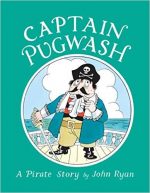
The Joker: A Celebration of 75 Years


By Bob Kane, Bill Finger, Jerry Robinson and many & various (DC Comics)
ISBN: 978-1-4012-4759-1

When the very concept of high priced graphic novels was just being shelf-tested way back in in the late 1980s, DC Comics produced a line of glorious full-colour hardback compilations spotlighting star characters and celebrating standout stories decade by decade from the company’s illustrious and varied history.

They then branched out into themed collections which shaped the output of the industry to this day; such as a fabulous congregation of yarns which offer equal billing and star status to one of the most enduring arch-foes in fiction: The Maestro of Malignant Mirth known only as The Joker.

So much a mirror of and paralleling the evolution of the epochal Batman, the exploits of the Joker are preceded here by a brief critical analysis of the significant stages in the villain’s development, beginning with the years 1940-1942 and Part I: The Grim Jester.

After deconstruction comes sinister action as debut appearance ‘Batman Vs. The Joker’ (by Bill Finger & Bob Kane from Batman #1, Spring 1940) provides suspenseful entertainment whilst introducing the most diabolical member of the Dark Knight’s rogues’ gallery. A chilling moody tale of brazen extortion and wilful wanton murder begins when an eerie character publicly announces that he will kill certain business and civic figures at specific times…

An instant hit, the malignant murdering Joker kept coming back. ‘The Riddle of the Missing Card’ (Finger, Kane & Jerry Robinson, Batman #5 1941) once again saw the Crime Clown pursue loot and slaughter, but this time with a gang of card-themed crooks at his side. It did not end well for the whimsical butcher…

Fame secured, the Devil’s Jester quickly became an over-exposed victim of his own nefarious success. In story terms that meant seeking to “reform” and start over with a clean slate. Turning himself in, the maniac grasses on many criminal confederates but ‘The Joker Walks the Last Mile’ (Finger, Kane & Robinson, Detective Comics #64 June 1942) soon shows that tousled viridian head twisting inexorably back towards murderous larceny…

As years passed and tastes changed, the Laughing Killer mellowed into a bizarrely baroque bandit and Part II: The Clown Prince assesses that alteration, before providing fascinating examples beginning with ‘Knights of Knavery’ from Batman #25 (1944 by Don Cameron, Jack Burnley & Robinson).

Here he and arch-rival The Penguin fractiously join forces to steal the world’s biggest emerald and outwit all opposition, before falling foul of their own mistrust and arrogance once the Caped Crusaders put their own thinking caps on.

‘Rackety-Rax Racket’ Batman #32 (1945 by Cameron & Dick Sprang) is another malevolently marvellous exploit which sees the ideas-starved Prankster of Peril finding felonious inspiration in college-student hazing and initiation stunts, after which ‘The Man Behind the Red Hood’ (Detective Comics #168, February 1951) reveals a partial origin as part of a brilliantly engrossing mystery by Finger, Lew Sayre Schwartz & Win Mortimer, which all began when the Caped Crusader regales eager young criminology students with the story of “the one who got away”… just before the fiend suddenly came back…

In ‘The Joker’s Millions’ (Detective Comics #180, February1952) pulp sci fi writer David Vern Reed, Sprang & Charles Paris provide a gloriously engaging saga disclosing how the villain’s greatest crime rival took revenge from the grave by leaving the Harlequin of Hate too rich to commit capers.

It was all a vindictive double-barrelled scheme though, making the Joker a patsy and twice a fool as the Caped Crusaders eventually find to their great amusement…

Then from World’s Finest Comics #61 (November 1952) Reed, Kane, Schwartz & Paris perpetrate ‘The Crimes of Batman’ as Robin is taken hostage and the Gotham Gangbuster is compelled to commit a string of felonies to preserve the lad’s life. Or so the Joker vainly hopes…

‘Batman – Clown of Crime’ (Batman #85, August 1954 by Reed, Sheldon Moldoff & Paris) captures the dichotomy of reason versus chaos as the eternal arch enemies’ minds are swapped in a scientific accident. Soon a law-abiding Joker and baffled Robin are hunting down a madcap loon with the ultimate weapon at his disposal, the secret of the Gotham Guardian’s true identity

The Silver Age of comicbooks utterly revolutionised a flagging medium, bringing a modicum of sophistication to the returning sub-genre of masked mystery men. However, for quite some time the changes instigated by Julius Schwartz in Showcase #4 – which rippled out to affect all National/DC Comics’ superhero characters – generally passed Batman and Robin by.

Fans buying Batman, Detective Comics, World’s Finest Comics and even Justice League of America would read adventures that in look and tone were largely unchanged from the safely anodyne fantasies that had turned the grim Dark Knight into a mystery-solving, alien-fighting costumed Boy Scout as the 1940s turned into the1950s.

By the end of 1963, Schwartz – having either personally or by example revived and revitalised much of DC’s line and by extension the entire industry with his modernizations – was asked to work his magic with the creatively stalled and nigh-moribund Caped Crusaders just as they were being readied for mainstream global stardom.

‘The Joker’s Jury’ (Batman #163 May 1963) by Finger, Moldoff & Paris was the last sight of the Clown before his numerous appearances on the blockbuster Batman TV show warped the villain and left him unusable for years…

Here, however, Robin and his mentor are trapped in the criminal enclave of Jokerville, where every citizen is a fugitive bad-guy dressed up as the Clown Prince and where all lawmen are outlaws…

The story of the how the Joker was redeemed as a metaphor for terror and evil is covered in Part III: The Harlequin of Hate and thereafter confirmed by the single story which undid all that typecasting damage.

‘The Joker’s Five-Way Revenge’ (Batman #251 September 1973 by Dennis O’Neil & Neal Adams) reversed the zany, “camp” image by re-branding the characters and returning to the original 1930s concept of a grim and driven Dark Avenger chasing an insane avatar of pure evil.

Such a hero needs far deadlier villains and, by reinstating the psychotic, diabolically unpredictable Killer Clown who scared the short pants off the readers of the Golden Age, set the bar high. A true milestone that utterly redefined the Joker for the modern age: the frantic saga sees the Mirthful Maniac stalking his old gang, determined to eradicate them all with the hard-pressed Gotham Guardian desperately playing catch-up. As the crooks die in all manner of Byzantine and bizarre ways, Batman realises his arch-foe has gone irrevocably off the deep end.

Terrifying and beautiful, for many fans this is the definitive Batman/Joker story.

The main contender for that prize follows. ‘The Laughing Fish/The Sign of the Joker’ appeared in Detective Comics #475-476 (February and April 1978) concluding a breathtaking signature run of retro tales by Steve Englehart, Marshall Rogers & Terry Austin

The absolute zenith in a short but stellar sequence resurrecting old foes naturally starred the Dark Knight’s nemesis at his most chaotic; beginning with ‘The Laughing Fish’ before culminating in ‘The Sign of the Joker!’, comprising one of the most reprinted Bat-tales ever concocted and even adapted as an episode of the award-winning Batman: The Animated Adventures TV show in the 1990s.

In fact, you’ve probably already read it. But if you haven’t… what a treat you have awaiting you!

As fish with the Joker’s horrific smile began turning up in sea-catches all over the Eastern Seaboard, the Clown Prince attempts to trademark them. When patent officials foolishly tell him it can’t be done, they start dying… publicly, impossibly and incredibly painfully…

The story then culminated in a spectacular apocalyptic clash which shaped, informed and redefined the Batman mythos for decades to come…

Although Crisis on Infinite Earths transformed the entire DC Universe it left the Joker largely unchanged, however it did narratively set the clock back far enough to present fresher versions of most characters.

‘To Laugh and Die in Metropolis’ comes from Superman volume 2 #9 (September1987) wherein John Byrne & Karl Kesel reveal how the Malicious Mountebank challenges the Man of Steel for the first time. The result is a captivating but bloody battle of wits, with the hero’s friends and acquaintances all in the killer clown’s crosshairs…

The next (frustratingly incomplete) snippet comes from one of the most effective publicity stunts in DC’s history.

Despite decades of wanting to be “taken seriously” by the wider world, every so often a comicbook event gets away from editors and publishers and takes on a life of its own. This usually does not end well for our beloved art form, as the way the greater world views the comics microcosm is seldom how we insiders and cognoscenti see it.

One of the most controversial sagas of the last century saw an intriguing marketing stunt go spectacularly off the rails – for all the wrong reasons – and become instantly notorious whilst sadly masking the real merits of the piece.

‘A Death in the Family’ Chapter Four originated in Batman #427 (December 1988), concocted by Jim Starlin, Jim Aparo & Mike DeCarlo and needs a bit more background than usual…

Robin, the Boy Wonder debuted in Detective Comics#38 (April 1940) created by Bob Kane, Bill Finger & Jerry Robinson. He was a juvenile circus acrobat whose parents were murdered by a mob boss. The story of how Batman took the orphaned Dick Grayson under his scalloped wing and trained him to fight crime has been told, retold and revised many times over the decades and still undergoes the odd tweaking to this day

The child Grayson fought beside Batman until 1970 when, as a sign of the turbulent times, he flew the nest, becoming a Teen Wonder and college student. His invention as a junior hero for younger readers to identify with had inspired an incomprehensible number of costumed sidekicks and kid crusaders, and Grayson continued in similar vein for the older, more worldly-wise readership of America’s increasingly rebellious youth culture.

During the 1980s the young hero led the New Teen Titans, re-established a turbulent working relationship with Batman and reinvented himself as Nightwing. This of course left the post of Robin open…

After Grayson’s departure Batman worked alone until he caught a streetwise young urchin trying to steal the Batmobile’s tires. Debuting in Batman#357 (March 1983) this lost boy was Jason Todd, and eventually the little thug became the second Boy Wonder (#368, February 1984), with a short but stellar career, marred by his impetuosity and tragic links to one of the Caped Crusader’s most unpredictable foes…

Todd had some serious emotional problems which became increasingly apparent in the issues leading up to ‘A Death in the Family’ story arc. As the street kid became more callous and brutal in response to the daily horrors he was exposed to he deliberately caused the death of a vicious drug-dealer with diplomatic immunity. Jason then began a guilty spiral culminating in the story-arc which comprised Batman#426-429.

Ever more violent and seemingly incapable of rudimentary caution, Jason is suspended by Batman. Meanwhile the Joker is returns, but rather than his usual killing frenzy, the Clown Prince is after mere cash, because the financial disaster of “Reaganomics” has depleted his coffers – meaning he can’t afford his outrageous murder gimmicks…

Without purpose, Jason has been wandering the streets where he grew up. Encountering a friend of his dead mother, he learns a shocking secret. The woman who raised him was not his birth-mother, and there exists a box of personal papers indicating three different women who might be his true mother.

Lost and emotionally volatile Jason sets out to track them down…

After monumental efforts, he locates Dr. Sheila Haywood working as a famine relief worker in Ethiopia. As Jason heads for the Middle East and a confrontation with destiny, he is unaware that Batman is also in that troubled region, hot on the Joker’s trail since the Maniac of Mirth is attempting to sell stolen nuclear weapons to any terrorist who can pay…

When Jason finds his mother, he has no idea that she has been blackmailed into a deadly scam involving stolen relief supplies by the Clown Prince of Crime…

I’m not going to bother with the details of the voting fiasco that plagues all references to this tale as it’s all copiously detailed elsewhere, but suffice to say that to test then-new marketing tools a 1-900 number was established and, thanks to an advanced press campaign, readers were offered the chance to vote on whether Robin would live or die in the story.

Against every editorial expectation vox populi voted thumbs down and Jason died in a most savage and uncompromising manner….

The kid had increasingly become a poor fit in the series and this storyline galvanised a new direction with a darker, more driven Batman, beginning almost immediately as the Joker, after killing Jason in a chilling and unforgettably violent manner, became UN ambassador for Iran (later revised as the fully fictional Qurac – just in case…) and at the request of the Ayatollah himself attempted to kill the entire UN General Assembly during his inaugural speech…

And here is the true injustice surrounding this tale: the death of Robin (who didn’t even stay dead) and the media uproar over the voting debacle took away from the real importance of this story – and perhaps deflected some real scrutiny and controversy. Starlin had crafted a clever and bold tale of real world politics and genuine issues which most readers didn’t even notice.

Terrorism Training Camps, Rogue States, African famines, black marketeering, Relief fraud, Economic, Race and Class warfare, Diplomatic skullduggery and nuclear smuggling all featured heavily, as did such notable hot-button topics as Ayatollah Khomeini, Reagan’s Cruise Missile program, the Iran-Contra and Arms for Hostages scandals and the horrors of Ethiopian refugee camps. Most importantly it signaled a new and fearfully casual approach to violence and death in comics-books.

The story selected to represent the lad here is a poor choice, however. This is not to say that ‘A Death in the Family’ is a lesser tale: far from it, and Starlin, Aparo & DeCarlo’s landmark, controversial story of the murder of brash, bright Jason Todd by the Joker shook the industry and still stands the test of time.

However, all that’s included here is the final chapter, and even I, having read it many times, was bewildered as to what was going on.

If you want to see the entire saga – and trust me, you do – seek out a copy of the complete A Death in the Family…

In 1989 Batman broke box office records in the first of a series of big budget action movies. The Joker was the villain du jour and stole the show. That increased public awareness again influenced the comics and is covered in Part IV: Archnemesis before ‘Going Sane’ Part Two ‘Swimming Lessons’ provides a fresh look at the motivations behind the maniacal madness.

The story comes from Batman: Legends of the Dark Knight #66 (December 1994) LoDK began in the frenzied atmosphere following the movie. With planet Earth completely Bat-crazy for the second time in 25 years, DC wisely supplemented the Gotham Guardian’s regular stable of titles with a new one specifically designed to focus on and redefine his early days and cases through succession of retuned, retold classic stories.

Three years earlier the publisher had boldly begun retconning their entire ponderous continuity via the landmark maxi-series Crisis on Infinite Earths; rejecting the concept of a vast multiverse and re-knitting time so that there had only ever been one Earth.

For new readers, this solitary DC world provided a perfect place to jump on at a notional starting point: a planet literally festooned with iconic heroes and villains draped in a clear and cogent backstory that was now fresh and newly unfolding.

Many of their greatest properties were graced with a reboot, all enjoying the tacit conceit that the characters had been around for years and the readership were simply tuning in on just another working day.

Batman’s popularity was at an intoxicating peak and, as DC was still in the throes of re-jigging narrative continuity, his latest title presented multi-part epics reconfiguring established villains and classic stories: infilling the new history of the re-imagined, post-Crisis hero and his entourage.

An old adage says that you can judge a person by the calibre of their enemies, and that’s never been more ably demonstrated than in the case of Batman and The Joker. The epic battles between these so similar yet utterly antithetical icons have filled many pages and always will…

With that in mind, 4-part psychological study ‘Going Sane’ by J.M. DeMatteis, Joe Staton & Steve Mitchell takes us back to a time when Batman was still learning his job and had only crossed swords with the Clown Prince of Crime twice before…

After a murderously macabre circus-themed killing-spree in the idyllic neighbourhood of Park Ridge and abduction of crusading Gotham Councilwoman Elizabeth Kenner, a far-too-emotionally invested Batman furiously plays catch-up. This leads to a disastrous one-sided battle in front of GCPD’s Bat signal and a frantic pursuit into the dark woods beyond the city.

Driven to a pinnacle of outrage, the neophyte manhunter falls into the Joker’s devilishly prepared trap and is caught in an horrific explosion. His shattered body is then dumped in the by an incredulous, unbelieving killer clown reeling in shock at his utterly unexpected ultimate triumph…

Stand-alone extract ‘Swimming Lessons’ opens here with Batman missing and Police Captain James Gordon taking flak from all sides for not finding the Predatory Punchinello or the savage mystery assailant who recently murdered an infamous underworld plastic surgeon…

Under Wayne Manor faithful manservant Alfred fears the very worst whilst in a cheap part of town thoroughly decent nonentity Joseph Kerr suffers terrifying nightmares of murder and madness.

His solitary days end when he bumps into mousy spinster Rebecca Brown. Days pass and the two lonely outcasts find love in their mutual isolation and a shared affection for classic slapstick comedy. The only shadows blighting this unlikely romance are poor Joe’s continual nightmares and occasional outbursts of barely suppressed rage…

As days turn to weeks and then months, Alfred sorrowfully accepts the situation and prepares to close the Batcave forever. As he descends, however, he is astounded to see the Dark Knight has returned…

The story of Joe Kerr – fictive product of a deranged mind which simply couldn’t face life without Batman – is another yarn readers will want to experience in full, but that too will only happen in a different collection…

The World’s Greatest Detective continues to relentlessly battle the Clown Prince in ‘Fool’s Errand’ (Detective Comics #726, October 1998) as Chuck Dixon & Brian Stelfreeze depict a vicious mind-game conducted by the Hateful Harlequin from his cell, using a little girl as bait and an army of criminals as his weapon against the Dark Knight after which ‘Endgame’ Part Three ‘…Sleep in Heavenly Peace’ (Detective Comics #741 February 2000 by Greg Rucka, Devin Grayson, Damian Scott, Dale Eaglesham, Sean Parsons, Sal Buscema & Rob Hunter) sees the Joker plaguing a Gotham City struggling to recover from a cataclysmic earthquake.

It’s Christmas but the stubborn survivors are so stretched striving to stop The Joker’s plan to butcher all the babies left in town they are unable to notice that his real scheme will gouge a far more personal wound in their hearts…

‘Slayride’ by Paul Dini, Don Kramer & Wayne Faucher (Detective Comics #826 February 2007 and another Seasonal special) is one of the best Joker – and definitely the best Robin – stories in decades. This Christmas horror story sees our Crazed Clown trap third Boy Wonder Tim Drake in a stolen car, making him an unwilling participant in a spree of vehicular homicides amongst the last-minute shoppers.

If there is ever a Greatest Batman Christmas Stories Ever Told collection (and if there’s anybody out there with the power to make it so, get weaving please!), this just has to be the closing chapter….

Brining us up to date Part V: Rebirth focuses on the 2011 New 52 continuity-wide reboot and an even grimmer, Darker Knight who debuted in Detective Comics volume 2 #1 with what might be assumed to be the last Joker story. As crafted by Tony Daniel & Ryan Winn, ‘Faces of Death’ follows the mass-murdering malcontent on another pointless murder spree which culminates in his apparent death, leaving behind only his freshly skinned-off face nailed bloodily to an asylum wall…

A year later the Joker explosively returned, mercilessly targeting all of Batman’s allies in a company-wide crossover event dubbed Death of the Family. The crippling mind-games and brutal assaults culminated in ‘But Here’s the Kicker’ (Batman #15, February 2013 by Scott Snyder, Greg Capullo & Jonathan Glapion) and purportedly the final battle between Bat and Clown: but we’ve all heard that before, haven’t we…?

The Joker has the rare distinction of being arguably the most iconic villain in comics and can claim that title in whatever era you choose to concentrate on; Noir-esque Golden Age, sanitised Silver Age or malignant modern and Post-Modern milieus. This book captures just a fraction of all those superb stories…

Including pertinent covers by Sayre Swartz & Roussos, Mortimer, Moldoff, Adams, Rogers & Austin, Byrne, Mike Mignola, Staton & Mitchell, Stelfreeze, Alex Maleev & Bill Sienkiewicz, Simone Bianchi, Daniel & Winn and Capullo, this monolithic testament to the inestimable value of a good bad-guy is a true delight for fans of all ages and vintage.
© 1940, 1941, 1942, 1944, 1945, 1951, 1952, 1954, 1964, 1973, 1978, 1987, 1988, 1994, 1998, 2000, 2007, 2011, 2012, 2014 DC Comics. All Rights Reserved.
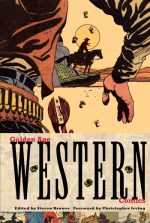
Jiggs is Back


By George McManus (City Lights/Celtic Book Company)
ISBN: 978-0-91366-682-1

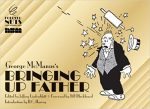
Variously entitled Maggie and Jiggs or Bringing Up Father, the comedic magnum opus of George McManus ranks as one of the best and most influential comic strips of all time: a brilliant blend of high satire and low wit that drapes the rags-to-riches American dream with the cautionary admonition to be careful of what you wish for…

Relatively recently this magnificent series was celebrated with a lavish hardcover collection reprinting the strip’s captivating beginnings (see George McManus’s Bringing Up Father: Forever Nuts – Classic Screwball Strips) but that book, wonderful though it is, only prints black and white daily episodes, whilst this colossal softcover from 1986 concentrates on the exceptionally beautiful Sunday colour pages – a perfect proving ground for the artist’s incredible imagination to run wild with slapstick set-pieces, innovative page design and a near-mystical eye for fashion and pattern.

McManus was born on January 23rd in either 1882 or 1883 and drew from a very young age. His father, realising his talent, secured him work in the art department of the St. Louis Republic newspaper.

At thirteen George swept floors, ran errands and drew when ordered to. In an era before cheap, reliable photography, news stories were supplemented by drawn illustrations; usually of disasters, civic events and executions: McManus claimed he had attended 120 hangings (a national record!) but still found time to produce cartoons: honing his mordant wit and visual pacing. His first sale was Elmer and Oliver. He hated it.

The jobbing cartoonist had a legendary stroke of luck in 1903. Acting on a bootblack’s tip he placed a $100 bet on a 30-1 outsider and used his winnings to fund a trip to New York City. The young hopeful splurged his cash reserves but on his last day got two job offers: one from the McClure Syndicate and a lesser bid from Joseph Pulitzer’s New York World.

He took the smaller offer, went to work for Pulitzer and created a host of features for the paper including Snoozer, The Merry Marceline, Ready Money Ladies, Cheerful Charlie, Panhandle Pete, Let George Do It, Nibsy the Newsboy in Funny Fairyland (one of the earliest Little Nemo knock-offs) and, in 1904, his first big hit The Newlyweds.

This last brought him to the attention of Pulitzer’s arch rival William Randolph Hearst who, acting in tried and true manner, lured him away with big money in 1912. In Hearst’s papers, The Newlyweds became the Sunday page feature Their Only Child, and was soon supplemented by Outside the Asylum, The Whole Blooming Family, Spare Ribs and Gravy and, at last, Bringing Up Father.

At first it alternated with other McManus domestic comedies in the same slot, but eventually the artist dropped Oh, It’s Great to be Married!, Oh, It’s Great to Have a Home and Ah Yes! Our Happy Home! as well as his second Sunday strip Love Affairs of a Muttonhead to concentrate on the story of Irish hod-carrier Jiggs whose sudden and vast newfound wealth brought him no joy, whilst his parvenu wife Maggie and inexplicably comely and cultured daughter Nora constantly sought acceptance in “Polite” society.

The strip turned on the simplest of premises: whilst Maggie and Nora perpetually feted wealth and aristocracy, Jiggs – who only wanted to booze and schmooze and eat his beloved corned beef and cabbage – would somehow shoot down their plans; usually with severe personal consequences.

Maggie might have risen in society but she never lost her devastating accuracy with crockery and household appliances…

Bringing Up Father launched on January 12th 1913, originally appearing three times a week, then four and eventually every day. It made McManus two fortunes (the first lost in the 1929 Stock Market crash), spawned a radio show, a movie in 1928, five more between 1946-1950 (as well as an original Finnish film in 1939) and 9 silent animated short features, plus all the assorted marketing paraphernalia that fetches such high prices in today’s antique markets.

McManus died in 1954, and other creators continued the strip until May 28th 2000, its unbroken 87 years making it the second longest running newspaper strip of all time.

McManus said that he got the basic idea from The Rising Generation – a musical comedy he’d seen as a boy, but the premise of wealth not bringing happiness was only the foundation of the strip’s success.

Jigg’s discomfort at his elevated position, his yearnings for the nostalgic days and simple joys of youth are something everyone is prey to. However, the deciding factor and real magic at work here is an entrancing blend of slapstick, social commentary, sexual politics and flashy fashion, all cannily composted together and delivered by a man who lived and breathed comedy timing and could draw like an angel.

The incredibly clean simple lines and the superb use – and implicit understanding – of art nouveau and art deco imagery and Jazz Age philosophy – especially proffered in full colour – make this book a stunning treat for the eye.

This glorious rainbow of mirth includes an introduction from Pulitzer-winning author William Kennedy and an incisive analytical commentary from comics historian Bill Blackbeard for those that need or desire a grounding for their reading, but of course what we all want is to revel in the 48 magnificent, full-page escapades; thoughtfully divided into palatable sections starting with ‘The Joys of Poverty’ from 1923, wherein the family suffered a reversal of fortune and became once more poor, but happy.

This is followed by ‘The Vacation’ (December 9th 1939 to July 7th 1940), a visually spectacular epic following the wealthy-once-more family – complete with new aristocratic English twit son-in-law – on a city-by-city tour of America, and ‘Maggie, Do You Remember When…’ (selected from the peak period of the feature between 1933 and 1942): a shamelessly sentimental and dryly witty occasional series of bucolic recollections of “the good old days” that produced some of the most heart-warming and inventive episodes in the series’ entire history…

An added surprise for a strip of this vintage is the great egalitarianism of it. Although there is an occasional unwholesome visual stereotype to swallow and excuse, what we regard as racism is practically absent. The only thing to watch out for is the genteel sexism and class (un)consciousness, although McManus clearly pitched his tent on the side of the dirty, disenfranchised and downtrodden – as long as he could get a laugh out of it…

This wonderful, evocative celebration of the world’s greatest domestic comedy strip is a little hard to find but well worth the effort. Hopefully some sagacious entrepreneur will eventually get around to giving Bringing Up Father the deluxe reprint treatment it so deserves or at least creating a digital collection for modern-minded old-fashioned comedy mavens to relish and revel in.
© 1986 Celtic Book Company.

The Adventures of Blake and Mortimer volume 8: The Voronov Plot


By Yves Sente & André Juillard, translated by Jerome Saincantin (Cinebook)
ISBN: 978-1-84918-048-1

Belgian Edgard Félix Pierre Jacobs (1904-1987) is one of the founding fathers of the Continental comics industry. Although his output was relatively modest compared to many of his iconic contemporaries, Jacobs’ landmark serialised life’s work – starring scientific trouble-shooters Professor Philip Mortimer and Captain Francis Blake – practically formed the backbone of the modern action-adventure comic in Europe.

His splendidly adroit, roguish yet thoroughly British adventurers were conceived and realised for the very first issue of Le Journal de Tintin in 1946, and quickly became a crucial staple of life for post-war European kids – much as Dan Dare was in 1950s Britain.

After decades of fantastic exploits, the series apparently ended with the eleventh album. The gripping contemporary adventure had been serialised between September 1971 and May 1972 in Tintin, but after the first volume was completed Jacobs simply abandoned his story due to failing health and personal issues.

Jacobs died on February 20th 1987 before completing extended adventure Les 3 formules du professeur Satō.

The concluding volume was only released in March 1990 after veteran cartoonist Bob de Moor was commissioned by the Jacobs family and estate to complete the tale from the grand originator’s pencils and notes. The long-postponed release led to a republishing of all the earlier volumes, followed in 1996 by new adventures from two separate creative teams hired by the Jacobs Studio. The first was the L’Affaire Francis Blake by Jean Van Hamme & Thierry “Ted” Benoit which settled itself into a comfortably defined and familiar mid-1950s milieu whilst unfolding a rousing tale of espionage and double-dealing.

The tale controversially omitted the fantastic elements of futuristic fiction and fringe science which had characterised Jacobs’ creation, whilst focusing on the suave MI5 officer rather than bombastic, belligerent boffin and inveterate scene-stealer Mortimer…

The same was broadly true for the next release: Le machination Voronov by Yves Sente (Le Janitor, Thorgal) & André Juillard (Bohémond de Saint-Gilles, Masquerouge, Mezek) published in 1999 – although references to the space race and alien infestation did much to restore the series’ credentials regarding threats in uncanny circumstances…

It all begins in a top-secret Soviet rocket base in January 1957 where a test-launch results in disaster as the missile smashes into a comet before crashing back to Earth. It’s not just prestige at stake here, though. It soon becomes apparent that the downed wreckage has picked up a deadly contagion from space. The region is quarantined and the exposed wreckage rushed to KGB medical specialist Professor Voronov at the Cosmodrome…

Working with his assistant Comrade Nastasia Wardynska, the brusque physician quickly determines that a bacterial strain from the comet produces a fast-acting, inevitably fatal haemorrhagic fever in adult humans…

In London as March ends, Captain Francis Blake engages in high level talks with Commander William Steele, his opposite number in MI6. Disturbing news is coming out of Moscow: many high-ranking members of the Politburo have died suddenly and a warning from a highly-placed mole reveals that Voronov has stockpiled a deadly new bio-weapon.

The agent plans on getting a sample to the West, but needs help to accomplish the crucial task…

Later whilst dining with old friend Professor Mortimer, a hasty plan is hatched after Blake learns his pal has been invited to attend a scientific Symposium in Moscow…

And thus unfolds a canny, deviously Byzantine tale of Cold War intrigue as Blake and Mortimer strive to get a sample of alien pathogen Bacteria Z, themselves and all their undercover allies out of the insidious clutches of the KGB before solving a baffling mystery that threatens all of humanity.

As frantic chases lead to desperate battles and inevitable casualties in the shadows, critical questions emerge. If the Russians have an unbeatable bio-weapon, why are only Soviet officials dying? And what part does their oldest and most malevolent enemy play in the convoluted scheme?

Just when the dapper due think they have a handle on the swiftly-developing crisis, Western scientists start succumbing to Bacteria Z and it appears that further investigation into the insidious Voronov is necessary before the plot can be foiled and the true danger to Britain and the Free World finally crushed…

Strongly founded upon and in many ways a loving tribute to John Buchan’s classic thrillers, by way of a delicious tip of the hat to Space Age Cold War movie thrillers such as the Quatermass Experiment and Seven Days to Noon, this is a devious and convoluted spook-show to astound and delight espionage aficionados and a solidly entertaining addition to the captivating canon of the Gentleman Adventurers.
Original edition © Editions Blake & Mortimer/Studio Jacobs (Dargaud-Lombard S. A.) 1999 by André Juillard & Yves Sente. All rights reserved. English translation © 2010 Cinebook Ltd.

Moon Mullins: Two Adventures


By Frank H. Willard (Dover)
ISBN: 978-0486232379

An immensely popular newspaper strip in its day, Moon Mullins grew out of gentle – if bucolically rambunctious – Irish ethnic humour to become the comedy soap opera (one of the very first of its kind) that absolutely everybody followed.

Create by Frank Willard – a two-fisted, no-nonsense type with a cracking ear for dialogue, an unerring eye for winning social faux pas and an incorrigible sense of fun – the strip debuted on June 19th 1923. Willard wrote and drew both monochrome dailies and flashy Sunday colour segments until his death in 1958, whereupon his assistant Ferdinand “Ferd” Johnson (who began working with Willard scant months after the strip launched, and continued even whilst working on his own strips Texas Slim and Lovey-Dovey) assumed full authorship until his own retirement in 1991 – a gloriously uninterrupted tenure of 68 years.

The feature was marketed around the globe by the mighty Chicago Tribune/New York News Syndicate, and recounted the rowdily raucous, ribald, hand-to-mouth, lowbrow life and tribulations of Moonshine Mullins, lovable rogue and unsuccessful prize-fighter who was just getting by in tough circumstances.

The doughty rapscallion spent his time in bars, on the streets (sometimes the gutters) and most tellingly at the pokey boarding house of Emmy Schmaltz, located at 1323 Wump Street. Mullins was amiable and good-natured, liked to fight, loved to gamble, was slick with the ladies and had the worst friends imaginable…

He also had an iconic little brother, named Kayo, who was the visual prototype for every one of those tough-kid heroes in Derby hats (“bowlers” to us Brits) populating Simon & Kirby’s early work.

Brooklyn and Scrapper and all those other two-fisted, langwitch-manglin’ cynical, sassy tykes took their cues from the kid who often had the last word. The other mainstay of the strip was lanky landlady Emmy Schmaltz; a nosy interfering busybody with inflated airs and graces and a grand line in infectious catchphrases.

Other regulars included Uncle Willie – Moon’s utterly dissolute bad relation; saucy, flighty flapper (Little) Egypt – our hero’s occasional girlfriend and a dead ringer for silent film sensation Louise Brooks (and, incomprehensibly, Emmy’s niece), plus Mushmouth – a black character who will make modern audiences wince with social guilt and societal horror – although to be fair, in this strip which celebrated and venerated working class culture, he was far more a friend than foil, stooge or patsy.

One final regular was affluent Lord Plushbottom, whose eye for the ladies – particularly Egypt – constantly brought him sniffing around the boarding house. At the period of the tales in this volume he is a jolly English bachelor, completely unaware that the spidery spinster has set her cap for him. In 1933, after a decade of hilarious pursuit, she finally got her man…

Surprisingly still readily available as a paperback book (surely, if ever anything was crying out to be suitably and permanently digitally archived it’s vintage strips such as this), Moon Mullins: Two Adventures collects and reprints two marvellous extended romps originally reformatted from the newspapers and released in 1929 and 1931 by Cupples & Leon – a publishing company which specialized in reprinting popular strips in lush, black and white albums; very much a precursor of both comicbooks and today’s graphic novels.

In the first story Mullins is given a car in payment for $30 he foolishly lent Emmy’s ne’er-do-well brother Ziggy, unaware the vehicle is stolen. This is a delightful shambolic, knockabout episode with striking slapstick and clever intrigues resulting in the entire cast behind bars at one time or another.

It should be remembered that the cops in these circumstances are always everybody’s enemy and fools unto themselves…

The second tale describes how Plushbottom treats Emmy and Egypt to a Florida holiday, unaware that he’s also paying for Moon and Mushmouth to join them after a brilliantly inventive and madcap road-trip.

Each adventure is delivered via the incredibly difficult method of one complete gag-strip per day combining to form an over-arching narrative… and they’re all wonderfully drawn and still funny. If you’re a fan of classic W.C. Fields, Marx Brothers and other giants of vintage comedy you must see this stuff…

Moon Mullins was one of the key strips in the development of both cartooning and graphic narrative; hugely influential, seditiously engaging, constantly entertaining and perfectly drawn. With such a wealth of brilliant material surely, it’s only a matter of time until some fine publisher releases a definitive series of collected editions…
© 1929, 1931 The Chicago Tribune. All rights reserved.

Buster Brown: Early Strips in Full Color


By Richard F. Outcault with an introduction by August Derleth (Dover Publications)
ISBN: 978- 0-1-486-23006-1

Richard F. Outcault is credited with being the father (fans and historians are never going to stop debating this one, but Outcault is one of the most prime of all contenders) of the modern comic strip. His breakthrough was a scandalous creation dubbed The Yellow Kid for legendary newspaperman Joseph Pulitzer’s New York World in 1895 (the feature was actually entitled Hogan’s Alley) but the cartoon shenanigans captivated the reading public and even led to the coining of a new term: “Yellow Journalism”.

Outcault was notoriously fickle and quickly tired of his creation, and of the subsequent features he created for William Randolph Hearst in the New York Journal during a particularly grave period of bitter newspaper circulation warfare.

In 1902, he created a Little Lord Fauntleroy style moppet called Buster Brown, but the angelic looks actually acted as camouflage for a little boy perpetually wedded to mischief, pranks and poor decision making. Once again Outcault soon became bored and moved on, but this strip was another multi-media sensation, which captured public attention and spun off a plethora of franchises.

Buster was a merchandising bonanza. By a weird set of circumstances, Buster Brown Shoes became one of the biggest chain-stores in America, and in later years produced a periodical comicbook Premium (a giveaway magazine free to purchasers) packed with some of the greatest comic artists and adventure stories the industry had ever seen. Outcault may have dumped Buster, but the little devil darling never quit comics…

Way back in 1974 Dover Publications released this facsimile reproduction of an earlier collection from 1904, then entitled Buster Brown and his Resolutions, featuring fifteen glorious full-colour strips from the first two years of the run, and it’s about time they thought about doing it again – or even of publishing a far more comprehensive edition…

Until then however, let’s re-examine what we have here and meet the cherubic Hellion and his faithful dog Tige, and see that if indelicate or untoward happenstance doesn’t create another round of chaos in the ordered and genteel life of the well-to-do Mr. and Mrs. Brown, then little Buster is always happy to lend a hand.

Each lavish page, rendered in a delightfully classical, illustrative line style – like Cruickshank or perhaps Charles Dana Gibson – ends with a moral or resolution, but one that is subversively ambiguous.

As Buster himself is wont to comment, “People are usually good when there isn’t anything else to do.”

Historically pivotal, Buster Brown is also thematically a landmark in content, and a direct ancestor of the mischievous child strip that dominated the family market of the 20th century. Could Dennis the Menace (“Ours” or “Theirs”), Minnie the Minx or Bart Simpson have existed without Buster or his contemporary rivals The Katzenjammer Kids?

It’s pointless to speculate, but it’s no waste of time to find and enjoy this splendid strip.
© 1974 Dover Publications. All Rights Reserved.

The Phantom – The Complete Series: The Gold Key Years volume 1


By Bill Harris & Bill Lignante with George Wilson (Hermes Press)
ISBN: 978-1-61345-005-5

In the 17th century a British sailor survived an attack by pirates, and, washing ashore in Africa, swore on the skull of his murdered father to dedicate his life and that of all his descendants to destroying all pirates and criminals. The Phantom fights crime and injustice from a base deep in the jungles of Bengali, and throughout Africa is known as the “Ghost Who Walks”.

His unchanging appearance ad unswerving quest for justice have led to him being considered an immortal avenger by the credulous and the wicked. Down the decades one hero after another has fought and died in an unbroken line, and the latest wearer of the mask, indistinguishable from the first, continues the never-ending battle…

Lee Falk created the Jungle Avenger at the request of his syndicate employers who were already making history, public headway and loads of money with his first strip sensation Mandrake the Magician…

Although technically not the first ever costumed hero in comics, The Phantom was the prototype paladin to wear a skin-tight body-stocking, and the first to have a mask with opaque eye-slits.

He debuted on February 17th 1936 in an extended sequence that pitted him against a global confederation of pirates called the Singh Brotherhood. Falk wrote and drew the daily strip for the first two weeks before handing artist Ray Moore the illustration side. The Sunday feature began in May 1939.

For such a successful, long-lived and influential series, in terms of compendia or graphic novel collections The Phantom has been very poorly served by the English language market. Various small companies have tried to collect the strips – one of the longest continually running adventure serials in publishing history – but in no systematic or chronological order and never with any sustained success.

But, even if it were only of historical value (or just printed for Australians, who have long been manic devotees of the implacable champion) surely “Kit Walker” is worthy of a definitive chronological compendium series?

Happily, his comic book adventures have fared slightly better – at least in recent times…

In the 1960’s King Features Syndicate dabbled with a comicbook line of their biggest stars – Flash Gordon, Mandrake and The Phantom – but immediately prior to that the Ghost Who Walks held a solo starring vehicle under the broad and effective aegis of veteran licensed properties publisher Gold Key Comics.

This superb full-cover hardcover (with equivalent eBook editions for the modern minded) gathers the first eight issues – encompassing November 1962 through August 1964 – and, as explained in fan and scholar Ed Rhoades’ Introduction ‘The Phantom and the Silver Age’, offers newspaper strip tales originally illustrated by Wilson McCoy that had been adapted by original scripter Bill Harris and drawn in comicbook format by Bill Lignante.

The Phantom was no stranger to funnybooks, having been featured since the Golden Age in titles such as Feature Book and Harvey Hits, but only as straight strip reprints. These Gold Key exploits were tailored to a big page and a young readership.

The fascinating history lesson is also augmented by pages of original artwork and ends much too soon for my elevated tastes, but if you’re a fan of pictorial adventure there’s plenty more to enjoy.

Each issue was fronted by a stunning painted cover by George Wilson and the excitement kicks off here with ‘The Game’ (Phantom #1, November 1962) as the international man of mystery encounters Prince Ragon Gil, whose idea of fun is to pit abducted or bribed strangers against ferocious beasts. When an interfering masked man closes down his warped games the eastern potentate swears vengeance and kidnaps the hero’s fiancé Diana Palmer. His plan is to force the interloper to play his savage game, but it’s his last mistake…

That premiere issue concludes with a single-page recap of the legend of The Phantom before #2 (February 1963) resumes the wonderment with ‘The Rattle’ as an exploit from The Phantom’s ancestral past flares up again after tiny bird-riding barbarians start stealing from the local tribes.

The current ghost must crack the casebooks of his forefathers and penetrate a most inhospitable region to get to the bottom of the mystery and bring peace back to the jungle…

A second story taps into contemporary Flying Saucer interest as our hero encounters aliens intent on conquest. Thankfully the purple-clad subject of ‘The Test’ proves sufficient to change their minds…

History’s greatest treasures are stored in The Phantom’s fabulous Skull Cave and the first tale in #3 (May 1963) relates how a rescued white man glimpses ‘The Diamond Cup’ of Alexander the Great and accidentally triggers a greed-fuelled crusade by eager criminals and ambitious chances before the Ghost Who Walks finally restores peace and order…

Rounding out the issue, ‘The Crybaby’ finds frail village boy Cecil given a crash course in confidence and exercise by the enigmatic masked man. The experience is literally life-changing…

In #4 (August) disgraced, fraud-perpetrating witchmen strike back against The Phantom through their manufactured deity ‘Oogooru’, only to be shown what real sleight of hand and prestidigitation can achieve, after which ocean voyager Kit Walker solves the enigma of vanishing villains the ‘Goggle-Eye Pirates’…

Two centuries previously The Phantom established a police force dubbed The Jungle Patrol with himself as its anonymous titular head. In #5 (October) those worthy stalwarts are almost outfoxed by a devious gang of bandits known as ‘The Swamp Rats’ until the unseen “Commander” takes personal charge of the mission. The big innovation of the issue is the premiere of a new episodic feature detailing ‘The Phantom’s Boyhood’ as a baby is born in the Skull Cave. Tracing the formative experiences of the current Phantom, the initial yarn follows little Kit from toddler to the dawn of adolescence when his parents regretfully decide it’s time to pack him off to private school in America…

The Phantom #6 (February 1964) leads with ‘The Lady from Nowhere’ as heiress Lydia Land is thrown from a plane and rescued by the masked manhunter. Soon he’s dogging her steps to track down which trusted associate is trying to silence her and steal her fortune…

A life-changing meeting shapes the destiny of the hero-to-be in ‘The Phantom’s Boyhood Part II – Diana’ as Kit falls for the girl next door and makes his mark amongst the cads and bullies of the civilised world…

The peaceful villages of the jungle are thrown into turmoil by the thieving depredations of ‘The Super Apes’ (#7, May) until the Jungle Patrol and The Phantom expose their shocking secret whilst ‘The Phantom’s Boyhood Part III – School’ finds the African émigré making his mark in the classroom, on the playing fields and in the newspapers…

Phantom #8 (August) closes this initial outing with an epic extra-length tale of vengeance as the current Ghost Who Walks finally tracks down ‘The Belt’ and the villain who killed his father and stole it…

Straightforward, captivating rollicking action-adventure has always been the staple of The Phantom. If that sounds like a good time to you, this is a traditional nostalgia-fest you won’t want to miss…
The Phantom® © 1962-1964 and 2011 King Features Syndicate, Inc. ® Hearst Holdings, Inc. Reprinted with permission. All rights reserved.

Captain America Masterworks volume 2


By Stan Lee, Roy Thomas, Jack Kirby, John Romita Sr., Gil Kane, Jack Sparling & various (Marvel)
ISBN: 978-0-7851-1785-8 (HB)        978-0-7851-5931-5(TPB)

After his resurrection in Avengers #4 (March 1964), Captain America grew in popularity and quickly won his own solo feature, sharing Tales of Suspense with former teammate Iron Man (beginning with #59, cover-dated November 1964).

Scripted by Stan Lee and with the astoundingly prolific Jack Kirby either pencilling or laying out each action-packed episode, the series grew in standing and stature until it became must-read entertainment for most comics fans.

This second Masterworks compilation re-presents ToS #82-99 (October 1966 to March 1969) and concludes with Captain America #100 as the Star-Spangled Stalwart took the next big step and returned to solo stardom in the April cover-dated first issue.

The dynamic dramas contained herein signalled closer links with parallel tales in other titles. Thus, with subversive science scoundrels Advanced Idea Mechanics defeated by S.H.I.E.L.D. in Strange Tales ‘The Maddening Mystery of the Inconceivable Adaptoid!’ pitted Cap against one last unsupervised experiment as A.I.M.’s artificial life-form – capable of becoming an exact duplicate of its victim – stalked Cap in a tale of vicious psychological warfare. Sadly, even masterfully manufactured mechanoids are apt to err and ‘Enter… The Tumbler!’ (inked by Dick Ayers) saw a presumptuous wannabe attack the robot after it assumed the identity of our hero before ‘The Super-Adaptoid!’ completed an epic of breathtaking suspense and drama as the real McCoy fought back and overcame everybody…

Such eccentric cross-continuity capers would carry the company to market dominance in a few short years and become not the exception but the norm…

‘The Blitzkrieg of Batroc!’ and ‘The Secret!’ returned to the early minimum-plot, all-action, overwhelming-odds yarns whilst ‘Wanted: Captain America’ (by Roy Thomas, Jack Sparling & Joe Sinnott) offered a lacklustre interval involving a frame-up before Gil Kane took his first run on the character with ‘If Bucky Lives…!’, ‘Back from the Dead!’, ‘…And Men Shall Call Him Traitor!’ and ‘The Last Defeat!’ (TOS #88-91, with the last two inked by Sinnott): a superb thriller of blackmail and betrayal starring the Red Skull. The fascist felon had baited a trap with a robotic facsimile of Cap’s dead partner, triggered it with super-hirelings Power Man and the Swordsman and then blackmailed the Star-Spangled Sentinel into betraying his country and stealing an atomic submarine…

Kirby & Sinnott were back for ‘Before My Eyes Nick Fury Died!’, ‘Into the Jaws of… AIM!’ and ‘If This Be… Modok!’ as the Champion of Liberty fought a giant brain-being manufactured purely for killing…

In rapid succession ‘A Time to Die… A Time to Live’ and ‘To Be Reborn!’ see the hero retire and reveal his secret identity, only to jump straight back into the saddle with S.H.I.E.L.D. for #97’s ‘And So It Begins…’ a four-part epic which concluded in the aforementioned issue #100, with which number Tales of Suspense became simply Captain America. Guest starring the Black Panther, it described the apparent return of long-dead Baron Zemo utilising an orbiting Death Ray to scourge Africa and threaten the world.

‘The Claws of the Panther!’ was inked by both Sinnott and the great Syd Shores – who would continue for the next year as regular inker – beginning with ‘The Man Who Lived Twice!’, whilst the hundredth issue used the extra page-length to retell the origin before concluding a superb thriller with ‘This Monster Unmasked!’

Rounding out this patriotic bonanza is a gallery of original art pages by Kirby and Kane plus uncorrected proofs showing last-minute editorial alterations to the priceless published pearls of wonder.
© 1966, 1967, 1968, 1969, 2016 Marvel Characters, Inc. All rights reserved.

The Shadow 1941: Hitler’s Astrologer


By Dennis O’Neil, Michael William Kaluta, Russ Heath & various (Dynamite Entertainment)
ISBN: 978-1-60690-429-9

In the early 1930s, The Shadow gave thrill-starved Americans their measured doses of extraordinary excitement via cheaply produced pulp periodical novels, and over the mood-drenched airwaves through his own radio show.

“Pulps” were published in every style and genre in their hundreds every month, ranging from the truly excellent to the pitifully dire, but for exotic or esoteric adventure-lovers there were two stars who outshone all others. The Superman of his day was Doc Savage, whilst the premier dark, relentless creature of the night dispensing terrifying grim justice was the putative hero featured here.

Radio series Detective Story Hour – based on stand-alone yarns from the Street & Smith publication Detective Story Magazine – used a spooky-toned narrator (variously Orson Welles, James LaCurto or Frank Readick Jr.) to introduce each tale. He was dubbed “the Shadow” and from the very start on July 31st 1930, he was more popular than the stories he related.

The Shadow evolved into a proactive hero solving instead of narrating mysteries and, on April 1st 1931, began starring in his own printed adventures, written by the astonishingly prolific Walter Gibson under house pseudonym Maxwell Grant. On September 26th 1937 the radio show officially became The Shadow with the eerie motto “Who knows what evil lurks in the hearts of Men? The Shadow knows!” ringing out unforgettably over the nation’s airwaves.

Over the next eighteen years 325 novels were published, usually at the rate of two a month. The uncanny crusader spawned comicbooks, seven movies, a newspaper strip and all the merchandising paraphernalia you’d expect of a smash-hit superstar brand.

The pulp series officially ended in 1949 although Gibson and others added to the canon during the 1960s when a pulp/fantasy revival gripped the world, generating reprinted classic yarns and a run of new stories as paperback novels.

In graphic terms The Shadow was a major player. His national newspaper strip – by Vernon Greene – launched on June 17th 1940 and when comicbooks really took off the Man of Mystery had his own four-colour title; running from March 1940 to September 1949.

Archie Comics published a controversial contemporary reworking in 1964-1965 under their Radio/Mighty Comics imprint, by Robert Bernstein, Jerry Siegel, John Rosenberger and Paul Reinman. In 1973 DC acquired the rights to produce a captivating, brief and definitive series of classic comic sagas unlike any other superhero title then on the stands.

DC periodically revived the venerable vigilante. After the runaway success of Crisis on Infinite Earths, The Dark Knight Returns and Watchman, Howard Chaykin was allowed to utterly overhaul the vintage feature for an audience at last acknowledged as grown-up enough to handle more sophisticated fare.

This led to further, adult-oriented iterations and one cracking outing from Marvel before Dark Horse assumed the license of the quintessential grim avenger for the latter half of the 1990s and beyond.

Dynamite Entertainment secured the option in 2011 and, whilst reissuing much of those other publishers’ earlier efforts, began a series of new monthly Shadow comics.

A year after Howard Chaykin and DC catapulted The Shadow into the grim ‘n’ grungy contemporary arena the dream-team that had first returned him to comic-book prominence reunited for a larger-than-life grand romp, ably abetted by the inking skills of master artist Russ Heath.

Denny O’Neil and Michael Kaluta had produced a stand-out series of adventures in the early 1970s (collected as The Private Files of the Shadow), set in the mad scientist/spy/gangster-ridden ‘thirties, and when they reunited to produce a Marvel Graphic novel expectations were high. As it turned out, in many ways that complex and devious yarn was the final chapter in that astounding graphic procession. In 2013 Dynamite re-released Hitler’s Astrologer with the entire affair re-mastered by Mike Kelleher, finally doing justice to the colouring of Mark Chiarello, Nick Jainschigg and John Wellington – as well as letterer Phil Felix – which had nor fared well under the production processes of the time…

On Easter Sunday 1941 a beautiful woman is pursued through the teeming crowds of Times Square theatre-goers by sinister thugs until rescued in the nick of time by agents of The Shadow.

She is Gretchen Baur, personally despatched to America by Josef Goebbels to gather astrological data for the Reich’s Ministry of Propaganda. However, now the confused fräulein cannot understand why agents of her own government have tried to abduct her…

The Shadow reveals that she is an unwitting pawn in a deadly battle for supremacy within the Nazi Party that revolves around her father, Der Führer’s personal astrologer…

And thus begins a tense and intricate conspiracy thriller that ranges from the bloody streets of New York through the killer skies of Europe to the very steps of Hitler’s palace in Berlin as a desperate plan to subvert the course of the war comes up hard against a twisted, thwarted love and a decades-long hunt for vengeance.

Deliciously and suitably Wagnerian in style, this action-packed mystery drama exudes period charm; nobody has ever realised The Shadow and his cohorts as well as Kaluta, whilst Russ Heath’s sleek inks add weight and volume to the cataclysmic proceedings.

This sinister saga of the man in the black slouch hat with the girasol ring is another superb addition to the annals of the original Dark Knight, and one no one addicted to action and mystery should miss.
The Shadow ® & © 2013 Advance Magazine Publishers Inc. d/b/a Conde Nast. All Rights Reserved.

Captain America Masterworks volume 1


By Stan Lee, Jack Kirby, Dick Ayers, George Tuska, John Romita Sr. & various (Marvel)
ISBN: 978-0-7851-1176-X (HB)                   978-0-7851-4298-0 (TBP)

During the natal years of Marvel Comics in the early 1960’s Stan Lee and Jack Kirby opted to mimic the game-plan which had paid off so successfully for National/DC Comics, albeit with mixed results.

From 1956 to 1960, Julie Schwartz had scored incredible, industry-altering hits by re-inventing the company’s Golden Age greats, so it seemed sensible to try and revive the characters that had dominated Timely/Atlas in those halcyon days two decades previously.

A new Human Torch had premiered as part of the revolutionary Fantastic Four, and in the fourth issue of that title the Sub-Mariner resurfaced after a twenty-year amnesiac hiatus (everyone concerned had apparently forgotten the first abortive attempt to revive an “Atlas” superhero line in the mid-1950s).

The Torch was promptly given his own solo lead-feature in Strange Tales (from issue #101 on) and in #114 the flaming teen fought a larcenous acrobat pretending to be Captain America.

With reader-reaction strong, the real McCoy was promptly decanted in Avengers #4 and, after a captivating and centre-stage hogging run in that title, won his own series as half of a “split-book” with fellow Avenger and patriotic barnstormer Iron Man.

Gathered in this star-spangled celebration – available in hardcover, trade paperback and digital editions – are the stunning all-action adventures from Tales of Suspense #59-81 (cover-dates November 1964 to September 1966), which following the customary retrospective Introduction by author/Editor Stan Lee beginning with the eponymously initial outing ‘Captain America’.

Illustrated by the staggeringly perfect team of Jack Kirby & Chic Stone, the plot is non-existent, but what you do get is a phenomenal fight tale as an army of thugs invades Avengers Mansion because “only the one without superpowers” is at home. They soon learn the folly of that misapprehension…

The next issue held more of the same, as ‘The Army of Assassins Strikes!’ on behalf of evil arch enemy Zemo before ‘The Strength of the Sumo!’ proves insufficient after Cap invades Viet Nam to rescue a lost US airman. The Star-Spangled Swashbuckler then took on an entire prison to thwart a ‘Break-out in Cell Block 10!’…

After these gloriously simplistic romps the series took an abrupt turn and began telling tales set in World War II. ‘The Origin of Captain America’, by Lee, Kirby & Frank Ray (AKA Giacoia) recounts how frail physical wreck Steve Rogers is selected to be the guinea pig for an experimental super-soldier serum, only to have the scientist responsible die in his arms, cut down by a Nazi bullet.

Now forever unique, he is given the task of becoming the fighting symbol and guardian of America, based as a regular soldier in a boot camp. It was there he is accidentally unmasked by Camp Mascot Bucky Barnes, who then blackmails the hero into making the kid his sidekick.

The next issue (Tales of Suspense #64) kicked off a string of spectacular episodic thrillers adapted from Golden Age classics as the heroes defeat Nazi spies Sando and Omar in ‘Among Us, Wreckers Dwell!’ and Chic Stone returned – as did Cap’s greatest foe – for the next tale ‘The Red Skull Strikes!’

‘The Fantastic Origin of the Red Skull!’ found the series swinging into high gear – and original material – as sub-plots and characterisation were added to the all-out action and spectacle.

‘Lest Tyranny Triumph!’ and ‘The Sentinel and the Spy!’ (both inked by Giacoia) combined espionage and mad science with a plot to murder the head of Allied Command, and the heroic American duo stayed in England for moody gothic suspense shocker ‘Midnight in Greymoor Castle!’ (with art by Dick Ayers over Kirby’s layouts – which in case you ever wondered are very simple pencils that break down the story elements on a page).

The second chapter ‘If This be Treason!’ had Golden Age and Buck Rogers newspaper strip artist George Tuska perform the same function before the final part (and last wartime adventure) revealed ‘When You Lie Down with Dogs…!’ – the result is fantastic entertainment. Joe Sinnott inked that rousing conclusion to this frantic tale of traitors, madmen and terror-weapons.

It was back to the present for ToS #72 where Lee, Kirby & Tuska revealed that Cap had been telling war stories to his fellow Avengers for the last nine months. The reverie then triggered a long dormant memory as ‘The Sleeper Shall Awake!’ began a classic catastrophe romp with a Nazi super-robot activating twenty years after Germany’s defeat to exact a world-shattering vengeance.

Continuing in ‘Where Walks the Sleeper!’ and concluding in ‘The Final Sleep!’, this masterpiece of tense suspense perfectly demonstrates the indomitable nature of the perfect American hero.

Dick Ayers returned with John Tartaglione inking ’30 Minutes to Live!’ which introduced both Gallic mercenary Batroc the Leaper and a mysterious girl who would eventually become Cap’s long-term girl-friend: S.H.I.E.L.D. agent Sharon Carter.

The taut 2-part countdown to disaster ends with ‘The Gladiator, The Girl and the Glory’, illustrated by John Romita: the first tale which had no artistic input from Kirby, although he did lay out the next issue (TOS #77) for Romita & Giacoia. ‘If a Hostage Should Die!’ again returned to WWII and hinted at both a lost romance and tragedy to come.

‘Them!’ saw Kirby return to full pencils and Giacoia to a regular inking spot as the Sentinel of liberty teamed with Nick Fury in the first of many missions as a (more-or-less) Agent of S.H.I.E.L.D. It was followed by ‘The Red Skull Lives!’ as his arch nemesis escapes from the grave to menace the Free World again. He is initially aided by the subversive technology group AIM, but promptly steals their ultimate weapon in ‘He Who Holds the Cosmic Cube!’ (inked by Don Heck) and sets himself up as Emperor of Earth before his grip on omnipotence finally falters in ‘The Red Skull Supreme!’ (Giacoia inks).

This volume then concludes with mouth-watering extras in the form of original Kirby cover art and creator biographies.

These are tales of dauntless courage and unmatchable adventure, fast paced and superbly illustrated, which rightly returned Captain America to the heights his Golden Age compatriots the Human Torch and the Sub-Mariner never regained. They are pure escapist magic. Unmissable reading for the eternally young at heart.
© 1964, 1965, 1966, 2016 Marvel Characters, Inc. All rights reserved.