The Bumper Book of Roy of the Rovers


By Tom Tulley & David Sque (Titan Books)
ISBN: 978-1-84576948-2

Win’s Christmas Gift Recommendation: The Next Best Thing to Actually Being There… 9/10

Every Christmas I recommend what I consider to be some of the best new comics-related books on the market as presents, but that’s actually doing a great disservice to material that whilst not new might well be even more welcome as a treat for fans or better yet people who have left comics long behind them.

In a spirit of near-toxic nostalgia then, here’s a notionally old item – although still readily available through online dealers – which might delight British boys and girls of a certain age…

There was a time when British comics reflected the interests of a much broader proportion of our youthful population, and when adults kept their fascination with picture strips a closely guarded secret. Now that it’s actually cool to read graphic narratives, one of the nation’s greatest heroes – sporting, as well as comic related – should be making a proper comeback any day now.

Roy of the Rovers started life on the front cover of Tiger, a brand-new weekly anthology comic published by Amalgamated Press (later IPC and Fleetway Publications) and launched on September 11th 1954.

The “Sport and Adventure Picture Story Weekly” was a cannily crafted companion to Lion, Amalgamated’s successful response to Hulton Press’ mighty Eagle (home of Dan Dare), but from the kick-off Tiger concentrated heavily on sports stars and themes, with issue #1 also featuring The Speedster from Bleakmoor, Mascot of Bad Luck and Tales of Whitestoke School amongst others. In later years racing driver Skid Solo and wrestler Johnny Cougar joined more traditional, earthy strips such as Billy’s Boots, Nipper, Hotshot Hamish and Martin’s Marvellous Mini, but for most of its 1,555-issue Tiger was simply the comic with Roy of the Rovers. Such was his cachet that he starred in his 37 of own Christmas Annuals between 1958 and 2000.

Roy was created by Frank S. Pepper who used the pseudonym Stewart Colwyn, and drawn by Joe Colquhoun (who inherited it when he took over scripting the feature) after which it was written by Tiger’s Editor Derek Birnage (credited to “Bobby Charlton” for a couple of years), with additional tales from Scott Goodall and Tom Tully.

In 1975 Roy became player-manager and the following year graduated to his own weekly comic, just in time for the 1976-77 season, premiering on September 25th and running for 855 issues (ending March 20th 1993).

Roy Race started as a humble apprentice at mighty Melchester Rovers, and gradually rose to captain the first team. After many years of winning all the glories the beautiful game could offer, he settled down to live the dream: wife, kids, wealth, comfort and triumphant adventure every Saturday…

During the first decade of the 21st century Titan Books released a number of compilations starring the ageless sporting ace and one of the most impressive was a selection of material taken from many of those early aforementioned Roy of the Rovers Annuals, cunningly presented as a sturdy hardback which perfectly mimicked those beloved end-of-year treats…

This splendid specimen of nostalgic imposture perfectly resembles those Bumper British books and is stuffed with a selection of the very best strips, prose stories, games, quizzes and features culled from them. The editors have also wisely included ads from the period to better inculcate a flavour of those bygone times.

My only quibble is that the strips and features are all anonymous, so we’ll be labouring under my far from specialised assumptions when apportioning credit. Amongst the likeliest candidates are Colquhoun, acclaimed sports strip artist Paul Trevillion (Hey Ref! and You Are the Ref), plus any number of freelancers who specialised in the Annuals’ production and a selection of cruelly unknown Spanish and South American illustrators who freelanced for British publishers during the 1960s.

The contents kick off with a splendid hark back to simpler times as ‘Meet the Rovers’ – from the 1960 Annual – introduces the doughty 14-man squad in full process colour, and a beautiful painted frontispiece entitled ‘Heads to It!’, by Van from 1959, precedes the kick-off for an untitled ‘Roy of the Rovers’ yarn from 1957 wherein Roy is forced to drastic action after changing room dissent turns into a disastrous vendetta on the field.

Originally published in the 1962 Annual ‘The Rebel Who Made Good’ is a prose yarn, with monochrome spot illustrations by a continental artist sadly unknown to me, revealing how a spate of thuggish vandalism leads Roy to signing a few apprentice stars, promptly followed by light-hearted factual cartoon strip ‘Could You Pass a Kit Inspection?‘ (1964), a full colour commemoration of the Beautiful Game’s contemporary glittering prizes in ‘Silver Trophies for Super Teams’ (1962) and a paralysingly nostalgia-drenched ad for the Action Manâ„¢ Footballer with kit of your choice…

More thinly-veiled strip-style fact-features follow as ‘Meet Trainer Taff Morgan’ (1960) gives a candid glimpse at the work behind the scenes, ‘Great Goalgetters of Yesterday’ (1962) offers brief bios of halcyon superstars before ‘If You Were the Ref…’ (1962) poses and answers the kind of conundrums which keep fans arguing from Saturday to Saturday…

More evocative ads precede a colour account of the stellar career of ‘“Bombshell Bobby”: the Bobby Charlton Story’ – and this was only up to 1961 – before a Dinky Toys commercial segues into ‘Roy’s Soccer Quiz’ (1962) and a relatively late sci-fi tinged monochrome comic adventure wherein the entire team are kidnapped by a bizarre boffin intent on building footballing robots in ‘The Man Who Stole the Rovers’ (1969)…

The sporting gags of ‘Touch-line Fun’ (1965) lead merrily into a revelatory full-colour sneak peek in ‘Take a Tour Round Melchester Stadium with Roy Race as Your Guide’ (1958) and a classic anti-smoking ad by the legendary Brian Lewis, after which another illustrated text tale details a potential mutiny when management hires an Army PT Instructor in ‘Rovers on Parade’ (1966).

In stark black and white ‘Roy Explains the Offside Law’ (1960, and about time somebody did…) before a splash of colour signals ‘Roy Invites You to Come Special Training’ (1960) and ‘All Sorts of “Football”’ (1959) details exotic ball game from around the world.

Another ad break then leads into more sparkling colour fact-features including ‘Wembley, Captains, Clubs and Continental Colours’ and ‘Footer Giants of Foreign Teams’ (all 1960), whilst monochrome is sufficient for ‘“Penalty!”: Facts About Spot-Kicks’ (1958) and a photo-feature on technological advances in ‘Soccer Machines’ (1966).

After drooling wistfully over Corgi Rockets (no longer available at any good toy shop) you can ‘Learn to Play the Roy Race Way’ (1960) before prose thriller ‘Bandit Hunters’ (1959) sees the team held to ransom whilst on a tour of the Pyrenees, whilst – after mulling over stamps for your collection or opting to join the Army Cadets – an untitled

‘Roy of the Rovers’ strip from 1971 reveals how the ace goal-scorer deals with accusations of collusion with a bent referee…

Wrapping up the armchair time-travel is a crucial ‘Answers Page: Don’t Look Now’ and

‘F.A. Cup Fight Record’ (1969) plus one last fact-feature revealing that even in 1961 ‘Soccer Stars Cost Fortunes’ before the final whistle blows with a gorgeous full-colour ‘Roy Race’s Score-A-Goal Game’ from the 1958 Annual (dice and counters not included) to complete that feeling that the Good Old Days really were…

Beautifully and respectfully restored and packaged, this is a splendid slice of memorable fun which hits home with stunning force. So why not get yours Before Saturday Comes…
Roy of the Rovers © Egmont UK Ltd 2008.

Batman: Silver Age Dailies and Sundays 1968-1969


By Whitney Ellsworth, Joe Giella, Al Plastino & various (IDW)
ISBN: 987-1-63140-121-3

Win’s Christmas Gift Recommendation: Sheer Nostalgic Magic… 9/10

For more than seven decades in America the newspaper comic strip was the Holy Grail cartoonists and graphic-narrative storytellers hungered for. Syndicated across the country and often the planet, winning millions of readers and accepted (in most places) as a more mature and sophisticated form of literature than comic-books, it also paid better, with the greatest rewards and accolades being reserved for the full-colour Sunday page.

So it was always something of a poisoned chalice when a comicbook character became so popular that it swam against the tide (after all weren’t the funny-books invented just to reprint strips in cheap, accessible form?) and became a syndicated serial strip. Superman, Wonder Woman and Archie Andrews made the jump soon after their debuts and many features have done so since.

Due to a number of war-time complications, the first newspaper Batman and Robin strip was slow getting its shot, but when the Dynamic Duo finally hit the Funny Pages the feature quickly proved to be one of the best-regarded, highest quality examples of the trend, both in Daily and Sunday formats.

Yet somehow the strip never achieved the circulation it deserved, even though the Sundays were eventually given a new lease of life when DC began issuing vintage stories in the 1960s for Batman 80-page Giants and Annuals. The exceedingly high-quality all-purpose adventures were ideal short stories and added an extra cachet of exoticism for young readers already captivated by simply seeing tales of their heroes that were positively ancient and redolent of History with a capital “H”.

Such was not the case in the mid-1960s when, for a relatively brief moment, mankind went bananas for superheroes in general and most especially went “Bat-Mad”…

The Silver Age of comicbooks revolutionised a creatively moribund medium cosily snoozing in unchallenging complacency, bringing a modicum of sophistication to the returning genre of masked mystery men.

For quite some time the changes instigated by Julius Schwartz (in Showcase #4, October 1956) which rippled out in the last years of that decade to affect all of National/DC Comics’ superhero characters generally passed by Batman and Robin. Fans buying Batman, Detective Comics, World’s Finest Comics and latterly Justice League of America would read adventures that – in look and tone – were largely unchanged from the safely anodyne fantasies that had turned the Dark Knight into a mystery-solving, alien-fighting costumed Boy Scout just as the 1940s turned into the 1950s.

By the end of 1963, however, Schwartz having, either personally or by example, revived and revitalised the majority of DC’s line (and, therefore by extension and imitation, the entire industry) with his reinvention of the Superhero, was asked to work his magic with the creatively stalled and near-cancellation Caped Crusaders.

Installing his usual team of top-notch creators, the Editor stripped down the accumulated luggage and rebooted the core-concept. Down – and usually out – went the outlandish villains, aliens and weird-transformation tales in favour of a coolly modern concentration on crime and detection. Visually, the art-style itself underwent a sleek streamlining and rationalisation. The most apparent change to us kids was a yellow circle around the Bat-symbol but, far more importantly, the stories had changed. A subtle aura of genuine menace had crept back in.

At the same time Hollywood was in production of a television series based on Batman and, through the sheer karmic insanity that permeates the universe, the studio executives were basing their interpretation not upon the “New Look Batman” currently enthralling readers but the rather the addictively daft material DC was emphatically turning its editorial back on.

The Batman TV show premiered on January 12th 1966 and ran for three seasons of 120 episodes, airing twice weekly for the first two. It was a monumental, world-wide hit and sparked a wave of trendy imitation. The resulting media hysteria and fan frenzy generated an insane amount of Bat-awareness, no end of spin-offs and merchandise – including a movie – and introduced us all to the phenomenon of overkill.

No matter how much we might squeal and froth about it, to a huge portion of this planet’s population Batman is always going to be that “Zap! Biff! Pow!” buffoonish costumed Boy Scout…

“Batmania” exploded across Earth and then as almost as quickly became toxic and vanished, but at its height led to the creation of a fresh newspaper strip incarnation. That strip was a huge syndication success and even reached fuddy-duddy Britain, not in our papers and journals but as the cover feature of weekly comic Smash! (from issue #20 onwards).

The TV show ended in March, 1968. As the series foundered and faded away, global fascination with “camp” superheroes – and no, the term had nothing to do with sexual orientation no matter what you and Mel Brooks might think – burst as quickly as it had boomed and the Caped Crusader was left with a hard core of dedicated fans and followers who now wanted their hero back…

However, from the time when the Gotham Guardians could do no wrong comes a second superb compilation re-presenting the bright and breezy, sometimes zany cartoon classics of Batman with Robin the Boy Wonder, augmented by a wealth of background material, topped up with oodles of unseen scenes and background detail to delight the most ardent Baby-boomer nostalgia-freak.

The fun-fest opens with more informative and picture-packed, candidly cool revelations from comics historian Joe Desris in ‘A History of the Batman and Robin Newspaper Strip: Part 2′; stuffed with behind-the-scenes set photos, communications between principal players like Bob Kane and the Producers, clippings and glorious unpublished pencils from strip illustrator Joe Giella as well as newspaper promotional materials, and is followed by compulsive pictorial essays on ‘Newspaper Strip Trivia’ and ‘Batman/Superman Crossovers’, more unpublished or censored strips and a note on the eclectic sources used to compile this collection before the comics cavorting continue…

Dailies and Sundays were scripted by former DC editor (and the company’s Hollywood liaison) Whitney Ellsworth and initially illustrated by Bob Kane’s long-term art collaborator Sheldon Moldoff, before inker Giella was tapped by the studio to produce a slick, streamlined and modern look – usually as penciller but ALWAYS as embellisher.

Since the feature was a seven-day-a-week job, Giella had often called in comicbook buddies to help lay-out and draw the strip; luminaries such as Carmine Infantino, Bob Powell, Werner Roth, Curt Swan and others…

In those days, black-&-white Dailies and full-colour Sundays were mostly offered as separate packages and continuity strips often ran different stories for each. With Batman the strip started out that way, but by the time of the stories in this volume had switched to unified seven-day storylines.

Riding a wave and feeling ambitious, Ellsworth & Giella had begun their longest saga yet in July 1967 combining the tales of ‘Shivering Blue Max with “Pretty Boy” Floy and Flo’ wherein a perpetually hypothermic criminal pilot accidentally downed the Batcopter and erroneously claimed the underworld’s million dollar bounty on Batman and Robin.

Our heroes were not dead, but the crash caused the Caped Crusader to lose his memory and, whilst Robin and faithful manservant Alfred sought to remedy his affliction, Max had collected his prize and jetted off for sunnier climes.

With Batman missing, neophyte crimebuster Batgirl then tracked down the heroes – incidentally learning their secret identities – and was instrumental in restoring him to action if not quite his fully-functioning faculties…

However when underworld paymaster BG (Big) Trubble heard the heroes had returned, he quite understandably wanted his money back, which forced already-broke Max back to Gotham where he gullibly fell foul of Pretty Boy whilst that hip young gunsel and twin sister Flo were enacting a murderous scam to fleece a horoscope-addicted millionaire…

The tale picks up here on January 1st 1968, with Batman held at gunpoint, patiently trying to convince supremely suggestible, wealthy whale Tyrone Koom that he is not there to assassinate him as the tycoon’s new astrologer Madame Zodiac (AKA Flo Floy) was insisting she had foreseen…

When her dupe proves incapable of murder, Flo/Zodiac takes matters into her own hands and knocks out the mighty manhunter, but despite all her and her brother’s arguments the millionaire cannot be convinced to pull the trigger.

Instead befuddled Koom – still thinking the masked marvel wants to him dead – has Batman bundled off to an isolated island where a fully-automated, exotic palace of wonders will act as the Caped Crusader’s impregnable prison for the rest of his life…

With the hero as good as dead Pretty Boy and Flo plan to claim BG’s million dollar bounty, but they have not reckoned on Blue Max horning in…

When the pilot collides with Robin (who has been tracking his senior partner by Bat-Radio) the erstwhile enemies reluctantly join forces but are ultimately unable to prevent Batman’s banishment. Moreover, in the frantic melee, the Boy Wonder suffers a broken leg.

Lost in an endless ocean, Batman slowly adjusts to a life of enforced luxury on palatial penitentiary island Xanadu, unaware that life at home has become vastly more complicated for Robin and Alfred. Not only do they believe the Cowled Crimebuster to be dead but Max has ferreted out their secret identities and blackmailed them into cooperating in his vengeance scheme against Pretty Boy. Max plans to prevent the young thug collecting the reward by impersonating Batman…

Events spiral to a grim climax when Max finally confronts his criminal enemies and Koom realises he’s been played for a fool. The dupe’s guilt-fuelled final vengeance ends all the villains at once, but not before Pretty Boy presses a destruct button that will cause Xanadu to obliterate itself in an atomic explosion.

Thankfully Superman and especially Sea King Aquaman have already been mobilised to help find the missing Masked Manhunter but the countdown – although slow – is unstoppable…

During this sequence the severely overworked Giella bowed out and a veteran Superman illustrator took over the pitiless illustration schedule.

Alfred John “Al” Plastino was a prodigious artist with a stellar career. He had been active in the early days of comicbooks, with credits including Captain America and Dynamic Man before serving in the US Army. His design talents were quickly spotted and he was soon seconded to Grumman Aerospace, The National Inventors Council and latterly The Pentagon, where he designed war posters and field manuals for the Adjutant General’s office.

In 1948 he joined DC and quickly became one of Superman’s key artists. He drew many landmark stories and, with writer Otto Binder, created Brainiac, Supergirl and the Legion of Super-Heroes. From 1960-1969 Plastino ghosted the syndicated Superman newspaper strip and whilst still drawing Batman, also took over Ferd’nand in 1970, drawing it until his retirement in 1989.

He was extremely versatile and seemed tireless: in 1982-1983 he drew Nancy Sundays after creator Ernie Bushmiller passed away and was controversially hired by United Media to produce fill-in episodes of Peanuts when Charles Schulz was in dispute with the company. Al Plastino died in 2013.

With a new policy of introducing guest stars from the DC pantheon, Plastino was the ideal successor and as the assembled champions desperately sought to find and save their missing comrade, a new tone of straight dramatic adventure largely superseded the campy comedy shenanigans of the TV series…

The search for Batman had been continually hampered by the Man of Steel’s strange weakness and loss of powers, but now that the Gotham Gangbusters were reunited they concentrated their efforts on finding out why. The deductive trail soon led to bone fide mad scientist ‘Diabolical Professor Zinkk’ (which originally ran from March 19th to August 6th) and saw the Dynamic Duo tracking down a mercenary maniac who had found a way to broadcast Kryptonite waves and was oh-so-slowly killing Superman for a big payout from Metropolis’ mobsters…

This is a cunningly convoluted, beautifully realised and supremely suspenseful tale with the clock ticking down on a deranged and dying Metropolis Marvel with Batman and Robin hunting rogue radio-physicist Zoltan Zinkk to divine the method by which he has brought low Earth’s greatest defender. It culminates in a savage, spectacular and truly explosive showdown before the World’s Finest heroes finally triumph…

Another tense thriller then sees Aquaman return to share the spotlight and begins as determined dolly-bird Penelope Candy perpetually plagues news outlets and even pesters the Gotham Police Department in her tireless quest to be put in touch with Batman.

The man in question is blithely unaware: Bruce Wayne is dealing with a small personal problem. In his infinite wisdom he intends for Robin to temporarily retire while young Dick Grayson completes a proper education and to that end has engaged a new tutor for the strongly-protesting Boy Wonder…

With that all acrimoniously settled, the Caped Crusader roars out into the night and is filmed falling to his doom in a river trying to save apparently suicidal Penny Candy…

At first the heartbroken lad doesn’t know Batman is still alive but has actually been drawn into a Byzantine scheme devised by Penny to find her missing father.

Oceanographer Archimedes Candy disappeared after working with Aquaman on a serum to allow humans to live beneath the sea. She is convinced somebody has abducted the researcher and, after Batman contacts Robin and has the junior crimebuster send out a radio alert for the Sea King, the impatient pair then try the potion together. ‘Breathing Underwater’ (August 7th – December 15th), they set off on a sub-sea search for the missing sea scientist…

Of course Penny’s suspicions of foul play are all justified and before long she and Batman are reunited with Dr. Candy. Sadly that’s as captives of nefarious international smuggler Cap’n Wolf and they are nearly done to death by being abandoned on a mountain in the airy atmosphere they can no longer breathe before Aquaman arrives to settle matters…

Even as Batman makes his way home the next adventure has started. Gangster fugitive Killer Killey devised the world’s most perfect hiding place and in ‘I Want Bruce Wayne’s Identity!’ (December 15th 1968 – May 30th 1969) abducts the affable millionaire so a crooked plastic surgeon can swap their faces and fingerprints. The scheme is hugely helped by the fact that Dick has been packed off with tutor Mr. Murphy and his daughter Gazelle on a world cruise whilst Alfred has used his accumulated vacation time for an extended visit to England.

When Killer captures Bruce and discovers he also has Batman the mobster is truly exultant. However the plan soon goes awry when the victim escapes the death-trap which should have resulted with the authorities finding “Killey’s” drowned body, and the subsequent move into Wayne Manor becomes a fraught affair.

Perhaps he’d be less troubled if he knew that although alive, the real Bruce Wayne has once again lost his memory…

Moreover, unbeknownst to anybody, neophyte crimebuster Batgirl already knows Batman’s other identity and now her suspicions are aroused by the state of the mansion and behaviour of Bruce and his new girlfriend…

As events escalate and spiral out of control, Killer, still safely hidden behind Wayne’s face – starts to crack and stupidly antagonises the one person he thought he could always rely on…

This volume’s comics cavortings end with the opening shots of ‘My Campaign to Ruin Bruce Wayne’ (which ran from May 31st – December 25th 1969) but as only seven days of that tale unfold in this volume I think we’ll leave that for the next volume and simply say…

To Be Continued, Bat-Fans…

The stories in this compendium reveal how gentler, stranger times and an editorial policy focusing as much on broad humour as Batman’s reputation as a crime-fighter was swiftly turned to all-out action adventure once Batmania gave way to global overload and ennui. That was bad for the strip at the time but happily resulted in some truly wonderful adventures for die-hard fans of the comicbook Caped Crusader. If you’re of a certain age or open to timeless thrills, spills and chills this a truly stunning collection well worth your attention.

Batman: Silver Age Dailies and Sundays 1968-1969 is the second in a set of huge (305 x 236 mm) lavish, high-end hardback collections starring the Caped Crusaders, and a welcome addition to the superb commemorative series of Library of American Comics which has preserved and re-presented in luxurious splendour such landmark strips as Li’l Abner, Tarzan, Little Orphan Annie, Terry and the Pirates, Bringing Up Father, Rip Kirby, Polly and her Pals and many other cartoon icons.

If you love the era, the medium or just graphic narratives, these stories are great comics reading, and this is a book you simply must have.
© 2014 DC Comics. All rights reserved. Batman and all related characters and elements ™ DC Comics.

The Broons and Oor Wullie: The Fabulous Fifties


By R.D. Low & Dudley D. Watkins (DC Thomson)

ISBN: 978-0-85116-678-4

Win’s Christmas Gift Recommendation: How the Holidays Must Be Celebrated… 10/10

The Broons is one of the longest running newspaper strips in British history, having appeared continuously in Scottish newspaper The Sunday Post since their debut in the March 8th 1936 edition: the same issue which launched mischievous, equally evergreen wee laddie Oor Wullie.

Both the boldly boisterous boy and the gregariously engaging working class family were co-created by journalist, writer and Editor Robert Duncan Low in conjunction with DC Thomson’s greatest artist Dudley D. Watkins and, once strips began to be collected in reprint editions as Seasonal Annuals, those yuletide tomes alternated stars and years right up to the present day.

Low (1895-1980) began at the publishing monolith as a journalist, rising to the post of Managing Editor of Children’s Publication and launching, between 1921 and 1933, the company’s “Big Five” story papers for boys: Adventure, The Rover, The Wizard, The Skipper and The Hotspur.

In 1936 his next brilliant idea was the Fun Section: an 8-page pull-out comic strip supplement for Scottish national newspaper The Sunday Post. The illustrated accessory launched on 8th March and from the very outset The Broons and Oor Wullie were unchallenged stars…

Low’s shrewdest notion was to devise both strips as comedies played out in the charismatic Scottish idiom and broad unforgettable vernacular where, supported by features such as Auchentogle by Chic Gordon, Allan Morley‘s Nero and Zero, Nosey Parker and other strips, they laid the groundwork for the company’s next great leap.

After some devious devising in December 1937 Low launched the first DC Thomson weekly comic. The Dandy was followed by The Beano in 1938 and early-reading title The Magic Comic in 1939.

War-time paper shortages and rationing sadly curtailed the strip periodical revolution, and it was 1953 before the next wave of cartoon caper picture paper releases. The Topper started the ball rolling again (with Wullie in the logo and masthead but not included in the magazine’s regular roster) in the same year that Low & the great Ken Reid created Roger the Dodger for The Beano…

Low’s greatest asset was prolific illustrator Dudley Dexter Watkins, whose wholesomely realistic style, more than any other artist’s, shaped the look of DC Thompson’s comics output until the bombastic advent of Leo Baxendale shook things up in the mid-1950s.

Watkins (1907-1969) had started life in Manchester and Nottingham as a genuine artistic prodigy before entering Glasgow College of Art in 1924. It wasn’t long before he was advised to get a job at burgeoning, Dundee-based DCT, where a 6-month trial illustrating boys’ stories led to comic strip specials and some original cartoon creations.

Percy Vere and His Trying Tricks and Wandering Willie, The Wily Explorer made him a dead cert for both lead strips in the Sunday Post‘s proposed Fun Section and, without missing a beat, Watkins later added The Dandy‘s Desperate Dan to his weekly workload in 1937, eventually including The Beano‘s placidly and seditiously outrageous Lord Snooty seven months later.

Watkins soldiered on in unassailable triumph for decades, drawing some of the most lavishly lifelike and winningly hilarious strips in illustration history. He died at his drawing board on August 20th 1969.

For all those astonishingly productive years he had unflaggingly drawn a full captivating page each of Oor Wullie and The Broons every week, and his loss was a colossal blow to the company.

DC Thomson’s chiefs preferred to reprint old Watkins episodes of both strips in the newspaper and the Annuals for seven years before a replacement was agreed upon, whilst The Dandy reran Watkins’ Desperate Dan stories for twice that length of time.

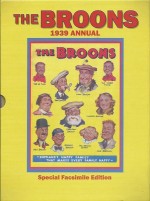
An undeniable, rock-solid facet of Scots popular culture from the very start, the first Broons Annual (technically Bi-Annual) appeared in 1939, alternating with Oor Wullie (although, due to wartime paper restrictions, no annuals at all were published between 1943 and 1946) and for millions of readers a year cannot truly end without them.

So What’s the Set Up?: the multigenerational Broon family inhabit a tenement flat at 10 Glebe Street, in the timelessly metafictional Scottish industrial everytown of Auchentogle (or sometimes Auchenshoogle), based in large part on the working class Glasgow district of Auchenshuggle. As such it’s an ideal setting in which to tell gags, relate events and fossilise the deepest and most reassuring cultural archetypes for sentimental Scots wherever in the world they might actually be residing.

As is always the case, the adamant, unswerving cornerstone of any family feature is long-suffering, understanding Maw, who puts up with cantankerous, cheap know-it-all Paw, and a battalion of stay-at-home kids comprising hunky Joe, freakishly tall Hen (Henry), sturdy Daphne, gorgeous Maggie, brainy Horace, mischievous twins Eck and the unnamed “ither ane” plus the wee toddling lassie referred to only as “The Bairn”.

Not officially in residence but always hanging around is gruffly patriarchal buffoon Granpaw – a comedic gadfly who spends more time at Glebe Street than his own cottage and constantly tries to impart his decades of out-of-date, hard-earned experience to the kids… but do they listen?

Offering regular breaks from the inner city turmoil and a chance to simultaneously sentimentalise, spoof and memorialise more traditional times, the family frequently repair to their But ‘n’ Ben (a dilapidated rustic cottage in the Highlands) to fall foul of the weather, the countryside and all its denizens: fish, fowl and farm-grown…

As previously stated, Oor Wullie also debuted on March 8th 1936 with his own collected Annual compilations subsequently and unfailingly appearing in the even years.

The basic set-up is sublimely simple and eternally evergreen, featuring an imaginative, good-hearted scruff with a talent for finding trouble and no hope of ever avoiding parental retribution when appropriate…

Wullie – AKA William MacCallum – is an archetypal good-hearted rascal with time on his hands and can usually be found sitting on an upturned bucket at the start and finish of his page-a-week exploits.

His regular cast includes Ma and Pa, local copper P.C. Murdoch, assorted teachers and other interfering adults who either lavish gifts or inflict opprobrium upon the little pest and his pals Fat Bob, Soapy Joe Soutar, Wee Eck and others. As a sign of the changing times however in this book he’s sometimes seen in the company of fetching schoolgirl Elizabeth…

An enchanting compilation in monochrome with some colour, The Fabulous Fifties was released in 1998 as part of a concerted drive to keep that early material available to fans: a lavish sturdy hardback (still readily available through internet vendors and something no baby-boomer should be without as our upcoming Christmasses become less and less likely or lively!) offering a tantalising selection of Sunday pages from 1950-1959, covering every aspect of that halcyon era’s rapidly changing technological and sociological existence, and all still deliciously funny even now…

The jolly procession of Celtic comedy commences with atmospheric photo-and news headline feature ‘New Years Day 1950 – and All Year Through’ and bookends every following year with a similar capsule feature of the unfolding decade often accompanied by a full colour Watkins cover or title page from a fifties Annual.

The endless escapades of the strip stars comprise the usual subject-matter: galling goofs, family frolics, sly pranks and cruel comeuppances: whilst the regular menu of gloriously slapstick shenanigans including plumbing pitfalls, decorating disasters, fireplace fiascos, food foolishness, dating dilemmas, appliance atrocities, fashion freak-outs, bothered Bobbies, excessive exercise exploits, chore-dodging and childish pranks by young and old alike, all seen through the lens of a comfortably traditional world inexorably altering as fashionable technology slowly creeps into the lives of everyone, welcoming or otherwise…

Jings! The fuss when a television is obtained for the Coronation or as the advent of Hire Purchase enables a wave of unwanted home appliances to appear…

Uncontested and always welcome are wry and crafty comparisons of the good old days with mere modernity, rib-tickling scenes of sledding and skating, stolen candies, torn clothes, recycled comics, visiting circuses, sparring school kids, ladies and lassies lost and found, harmless practical jokes and social gaffes: stories intended to take our collective mind off troubles abroad, and for every thwarted romance of poor Daphne and Maggie, embarrassing fiasco focussed on Paw’s cussedness or recalcitrance , there’s an uproarious chase, riotous squabble and no-tears scrap for the little ‘uns.

With snobs to deflate, bullies to crush, duels to fight, chips to scoff, games to win and rowdy animals (from cats to cows) to escape, the timeless affable humour and gently self-deprecating, inclusive frolics make these superbly crafted strips an endlessly entertaining superbly nostalgic, unmissable treat.

So why not slip back to a time of soapbox carts, catapults, scrumping, home perm kits, teachers who used rulers for smacking not measuring, best china, full employment, sub-four minute miles, neighbours you knew by first names and trousers that fell apart or blew away?

You can even get in on the end of rationing and birth of family viewing, package holidays, airbeds, long trousers for schoolboys, hire cars, caravans, Op Art and the decline of gas lampposts, indoor wall posters, Daylight Saving Time, Duffel Coats, Sputniks and Rock ‘n’ Roll…

There are even occasional crossovers to admire with Wullie and Granpaw Broon striving to outdo each other in the “adorable horrors” stakes…

Packed with all-ages fun, rambunctious slapstick hilarity and deliriously domestic warmth, these unchanging examples of happy certainty and convivial celebration of a mythic lost life and time are a sure cure for post-modern glums… and you can’t really have a happy holiday without that, can you?
© D.C. Thomson & Co., Ltd. 1998.

Hip Hop Family Tree Book 3: 1983-1984


By Ed Piskor (Fantagraphics)
ISBN: 978-1-60699-848-9

Another year gone and at long last another spectacularly barnstorming, award-winning comicstrip history lesson from proudly self-confessed Hip Hop Nerd and cyber-geek Ed Piskor is here, detailing more secrets about the world’s most explosive musical discipline.

In astounding detail and with a positively chillin’ attention to the art styles of the period, Piskor resumes his astoundingly engaging exploration of the rise of the rhyme-&-rhythm musical art form – all whilst paying equal attention to the symbiotic and parallel growth of graffiti and street art – with wit, charm and astonishing clarity.

Kicking off with a crucial ‘Rogues Gallery’ of the 80 movers and shakers involved, this latest blockbuster-sized volume begins in 1983 after Hip Hop at last makes the leap from local parks and parties to the club scene and onto vinyl. It also sees the street wisdom that Rap doesn’t work on albums finally disproved forever…

Of course now that the strange noise and weirdly evocative dance moves are a proven commodity, the establishment business sharks begin to circle the pioneering proponents and all their hundreds of hungry wannabe, would-be stars…

‘The Freaks Come Out at Night of the Living Bassheads’ closely studies that inexorable rise, following a few key behind-the scenes-personalities like in-at-the-start devotee Russell “Rush” Simmons, fanatical white-boy Rick Rubin and miracle-working Swiss opportunist Charlie Stettler whose tireless efforts are slowly eclipsed as the movement goes global, tracking the tenuous migration to television via shows such as Graffiti Rock and documentaries Style Wars and Breakin’ and Enterin’ until even whites Rock-only MTV finally capitulates …

Filled with feuds, mash-ups and team-ups of the new talents, highlighting Rubin and Simmons unification as Def Jam and focussing closely on British support from landmark books such as Martha Cooper and Henry Chalfant’s Street Art, this titanic tome covers the start of the careers of Whodini, The Fat Boys, Slick Rick, LL Cool J and Doug E Fresh, sees The Beastie Boys adopt rap as their metier and follows Run DMC‘s unstoppable rise.

As always the technical and stylistic innovations, musical struggles and physical battles, management shenanigans and recording landmarks are all encyclopaedically yet engaging revealed as Piskor connects a bewildering number of strands and weaves them into the coolest of tapestries …

To Be Continued…

Produced in the tone and style of those halcyon, grimily urban times and manufactured to look just like an old Marvel Treasury Edition (a tabloid sized 334 x 234 mm -reprint format from the 1970s which offered classic tales on huge and mouth-wateringly enticing pulp-paper pages), this compelling confection also includes a copious and erudite ‘Bibliography’, ‘Reference’ and ‘Funky Index’, a fun-filled Author Bio and another blazing collection of ‘Pin Ups’ with spectacular images from guest illustrators including TLC by Natalie Andrewson, Biz Markie by Miss Lasko Gross, Kool Moe Dee by Jonny Negron, Kool DJ Red Alert by Toby Cypress, Blowfly by Johnny Ryan, Jay Z by Jim Rugg, Wu Tang Clan by Benjamin Marra, Mantronix by Dean Haspiel, Dr. Dre by Jenny Goldstick, MC Hammer by Robert Crumb and Digital Underground by Skottie Young to get your pulses racing, if not your toes tapping…

Informative and irresistible, Hip Hop Family Tree is wild fun and deliciously addictive – and only a year until the next one…
This edition © 2015 Fantagraphics Books. All Hip Hop comic strips by Ed Piskor © 2015 Ed Piskor. Pin ups and other material © 2015 their respective artists. All rights reserved.

Superman the Silver Age Dailies volume 2: 1961-1963


By Jerry Siegel, Wayne Boring, Curt Swan &Stan Kaye with Otto Binder, Leo Dorfman, Edmond Hamilton, Bill Finger & Robert Bernstein (IDW Publishing Library of American Comics)

ISBN: 978-1-6137-7923-1

It’s indisputable that the American comicbook industry – if it existed at all – would have been an utterly unrecognisable thing without Superman. Jerry Siegel & Joe Shuster’s unprecedented invention was fervidly adopted by a desperate and joy-starved generation and quite literally gave birth to a genre if not an actual art form.

Spawning an impossible army of imitators and variations within three years of his 1938 debut, the intoxicating blend of breakneck, breathtaking action and wish-fulfilment which epitomised the early Man of Steel grew to encompass cops-and-robbers crime-busting, socially reforming dramas, science fiction, fantasy, whimsical comedy and, once the war in Europe and the East sucked in America, patriotic relevance for a host of gods, heroes and monsters, all dedicated to profit through exuberant, eye-popping excess and vigorous dashing derring-do.

In comicbook terms Superman was master of the world. Moreover, whilst transforming the shape of the fledgling funnybook industry, the Man of tomorrow relentlessly expanded into all areas of the entertainment media. Although we all think of Cleveland boys’ iconic invention as the epitome and acme of comicbook creation, the truth is that very soon after his debut in Action Comics #1 the Man of Steel became a fictional multimedia monolith in the same league as Popeye, Tarzan, Sherlock Holmes and Mickey Mouse.

We parochial and possessive comics fans too often regard our purest and most powerful icons in purely graphic narrative terms, but the likes of Batman, Spider-Man, X-Men, Avengers and their hyperkinetic kind long ago outgrew their four-colour origins and are now fully mythologized modern media creatures instantly familiar in mass markets, across all platforms and age ranges…

Far more people have seen or heard the Man of Steel than have ever read his comicbooks. His globally syndicated newspaper strips alone reached untold millions, and by the time his 20th anniversary rolled around at the very start of what we know as the Silver Age of Comics, he had been a thrice-weekly radio serial regular, starred in a series of astounding animated cartoons, two films and a novel by George Lowther.

He was a perennial sure-fire success for toy, game, puzzle and apparel manufacturers and had just ended his first smash live-action television serial. In his future were three more shows (Superboy, Lois & Clark and Smallville), a stage musical, a franchise of blockbuster movies and an almost seamless succession of games, bubblegum cards and TV cartoons beginning with The New Adventures of Superman in 1966 and continuing ever since. Even superdog Krypto got in on the small-screen act…

Although pretty much a spent force these days, for the majority of the last century the newspaper comic strip was the Holy Grail that all American cartoonists and graphic narrative storytellers hungered for. Syndicated across the country – and often the planet – it was seen by millions, if not billions, of readers and generally accepted as a more mature and sophisticated form of literature than comic-books. It also paid better.

And rightly so: some of the most enduring and entertaining characters and concepts of all time were created to lure readers from one particular paper to another and many of them grew to be part of a global culture.

Mutt and Jeff, Flash Gordon, Dick Tracy, Buck Rogers, Charlie Brown and so many more escaped their humble tawdry newsprint origins to become meta-real: existing in the minds of earthlings from Albuquerque to Zanzibar.

Most still do…

So it was always something of a risky double-edged sword when a comicbook character became so popular that it swam against the tide (after all weren’t the funny-books invented just to reprint the strips in cheap accessible form?) to became a genuinely mass-entertainment syndicated serial strip.

Superman was the first original comicbook character to make that leap – about six months after as he exploded out of Action Comics – but only a few have ever successfully followed. Wonder Woman, Batman (eventually) and groundbreaking teen icon Archie Andrews made the jump in the 1940s and only a handful like Spider-Man, Howard the Duck and Conan the Barbarian have done so since.

The daily Superman newspaper comic strip launched on 16th January 1939, supplemented by a full-colour Sunday page from November 5th of that year. Originally crafted by such luminaries as Siegel & Shuster and their studio (Paul Cassidy, Leo Nowak, Dennis Neville, John Sikela, Ed Dobrotka, Paul J. Lauretta & Wayne Boring) the mammoth task soon required the additional talents of Jack Burnley and writers like Whitney Ellsworth, Jack Schiff & Alvin Schwartz.

The McClure Syndicate feature ran continuously until May 1966, appearing at its peak in more than 300 daily and 90 Sunday newspapers, boasting a combined readership of more than 20 million. Eventually artists Win Mortimer and Curt Swan joined the unflagging Boring & Stan Kaye whilst Bill Finger and Siegel provided stories, telling serial tales largely separate and divorced from comicbook continuity throughout years when superheroes were scarcely seen.

Then in 1956 Julie Schwartz kicked off the Silver Age with a new Flash in Showcase #4 and before long costumed crusaders began returning en masse to thrill a new generation. As the trend grew, many publishers began to cautiously dabble with the mystery man tradition and Superman’s newspaper strip began to slowly adapt: drawing closer to the revolution on the comicbook pages.

As Jet-Age gave way to Space-Age, the Last Son of Krypton was a comfortably familiar icon of domestic modern America: particularly in the constantly evolving, ever-more dramatic and imaginative comicbook stories which had received such a terrific creative boost when superheroes began to proliferate once more. The franchise had actually been cautiously expanding since 1954 and in 1961 the Caped Kryptonian could be seen not only in Golden Age survivors Action Comics, Superman, Adventure Comics, World’s Finest Comics and Superboy but also in Superman’s Pal Jimmy Olsen, Superman’s Girlfriend Lois Lane and Justice League of America.

Such increased attention naturally filtered through to the far more widely-read newspaper strip and resulted in a rather strange and commercially sound evolution…

This second expansive hardback collection (spanning August 1961 to November 1963) opens with a detailed Introduction from Sidney Friedfertig, explaining the provenance of the strips; how and why Jerry Siegel was tasked with retuning recently published yarns from the comicbooks; making them into daily 3-and-4 panel black-&-white continuities for the apparently more sophisticated and discerning newspaper audiences.

This frequently required major rewrites, subtle changes in plot, direction and tone and, on occasion, merging more than one story into a seamless new exploit to excite and generally amuse sensible, mature grown-ups.

If you’re a veteran fan, don’t be fooled: the tales retold here might seem familiar but they are not mere rehashes: they’re variations and deviations on an idea for an audience perceived as completely separate from kids’ comics. Even if you are familiar with the original comicbook source material, the adventures presented here will read as brand new, especially as they are gloriously illustrated by Wayne Boring (with a little occasional assistance from Curt Swan) at the very peak of his artistic powers.

After years away from the feature Boring had replaced his replacement Curt Swan at the end of 1961, regaining his position as premiere Superman strip illustrator to see the series to its eventual conclusion.

As an added bonus the covers of the issues those adapted stories came from have been included as a full, nostalgia-inducing colour gallery…

The astounding everyday entertainments by Siegel & Boring commence with Episode #123 from August 14th to September 16th 1961 revealing how timid Clark Kent mysteriously excelled as a policeman whilst wearing a legendary old cop’s lucky tin star in ‘The Super Luck of Badge 77!’: a yarn based on an adventure of the same name by Otto Binder & Al Plastino from Superman #133 (November 1959).

‘Superman’s Hunt for Clark Kent’ (September 18th to 5th November and first seen in Superman #126 January 1959, by Binder, Boring & Stan Kaye) then detailed how a Kryptonite mishap deprived the Man of Tomorrow of many of his memories and left him lost in Metropolis trying to ferret out the secret of his other identity after which Episode #125 – running from November 6th-December 23rd – saw the restored Clark as ‘The Reporter of Steel’ (originally a Binder, Boring & Kaye yarn from Action Comics #257, October 1959) after Lex Luthor very publicly inflicted the mild-mannered journalist with unwanted superpowers, setting suspicious Lois Lane off on another quest to prove her colleague was actually the Caped Kryptonian.

‘The 20th Century Achilles’ ran Christmas Day 1961 through January 20th 1962, adapted from an Edmond Hamilton, Curt Swan & Kaye thriller in Superman #148 (October 1961) which detailed how a cunning crook held the city hostage to his apparent magical invulnerability whilst ‘The Man No Prison Could Hold’ (January 22nd – February 24th by Bill Finger, Boring & Kaye from Action Comics #248, in January 1959) saw Clark and Jimmy Olsen captured by a Nazi war criminal using slave labour to construct a mighty vengeance weapon. Unbeknownst to all the Man of Steel had good reason to foil every escape attempt and stay locked up…

An old-fashioned hard lesson informed the Kryptonian Crimebuster’s short sharp shock treatment of ‘The Three Tough Teenagers’ which ran from February 26th to March 31st, based on a Siegel & Plastino collaboration contemporaneously appearing in Superman #151 (February 1962) at the same time. Perhaps the headline-grabbing nature of youth in revolt was too immediate to resist? Usually timing discrepancies in publication dates could be explained by the fact that submitted comicbook stories often appeared months after they were completed, but here it feels like neither iteration of the franchise was willing to surrender sales-garnering topicality…

Swan illustrated portions of the Siegel/Boring strip version of ‘The Day Superman Broke the Law’ (2nd to 28th April) from the original by Finger & Plastino from Superman #153 May 1962, which saw the hero fall foul of a corrupt city councilman rewriting ordinances to hamper him after which the hero became ‘The Man with the Zero Eyes’ (running 30th April to June 2nd from an uncredited tale in Superman #117, November 1957 and first limned by Plastino) as a space virus caused uncontrollable super-freezing rays to blaze from his eyes.

Spanning 4th – 23rd June ‘Lois Lane’s Revenge on Superman’ grew out of a comedy tale by Siegel, Swan & George Klein in Superman’s Girlfriend Lois Lane #32 (April 1962). Here however there’s a dark edge to the story as the frustrated journalist revels in humiliating her ideal man after a magic potion turns him into a baby whilst ‘When Superman Defended his Arch-Enemy’ – published from 25th June to August 4th as adapted from Action Comics #292 and released in September 1962) by writer unknown & Plastino saw the Metropolis Marvel acting as defence Counsel for the ungrateful mad scientist after the fleeing maniac dismantled a sentient mechanoid on a world of machine intelligences…

Appearing daily from 6th August to September 8th ‘Lois Lane’s Other Life’ retold Siegel, Swan & Klein’s tale from Superman’s Girlfriend Lois Lane #35 (August 1962) as the daring doll changes her appearance to go undercover but subsequently loses her memory after which ‘The Feud Between Superman and Clark Kent’ from September 10th to 27th October (originally by Hamilton & Plastino in Action Comics #292, October 1962) saw the two halves of the hero separated by Red Kryptonite. Sadly the goodness and nobility are all in the merely human Clark part and he must stay out of his merciless alternative fraction’s murderous clutches until the effect wears off…

As first conceived by Siegel, Swan & Klein in Superman’s Girlfriend Lois Lane #38 (January 1963) ‘The Invisible Lois Lane’ – which filled newspaper pages between October 29th and December 1st – was more comedy than drama but here the undetectable investigator quickly sees her quarry switch from Clark to Superman and it takes super-ingenuity to convince her otherwise…

‘The Man Who Hunted Superman’ – December 3rd 1962 to January 19th 1963 – originally appeared as Boy of Steel blockbuster ‘The Man Who Hunted Superboy’ (by Leo Dorfman & George Papp in Adventure Comics #303, December 1962) and found Clark subbing for a prince in a Ruritanian kingdom, complete with adoring and compliant princess bride, until the Action Ace could topple a highly-placed usurper and save the kingdom whilst ‘Superman Goes to War’ January 21st to February 23rd (initiated by Hamilton, Swan & Klein in Superman #161, May 1963) sees Lois and Clark on an film-set sponsored by the US military and inadvertently caught up in a real but unconventional alien invasion…

From February 25th to April 20th Red K stripped our hero of his powers leaving ‘The Mortal Superman’ forced to fake it due to an unavoidable prior engagement in a terse reinterpretation of the Dorfman & Plastino yarn seen in Superman #160, April 1963.

The Man of Steel for good and sound patriotic reasons allowed himself to be locked up for the alleged murder of Clark Kent in ‘The Trial of Superman’ between 22nd April and May 25th, later seen in its original format in Hamilton & Plastino’s thriller from Action Comics #301, June 1963.

Hardworking obsessive editor Perry White loses his memory and falls into the clutches of criminals who use his investigative instincts to uncover Earth’s greatest secret in ‘The Man who Betrayed Superman’s Identity’ – 27th May to July 6th – as adapted from Dorfman, Swan & Klein’s suspenseful romp in Action Comics #297, February 1963, whilst with adult sensibilities fully addressed, genuine tragedy and pathos pushes Siegel & Boring’s reinterpretation of ‘The Sweetheart that Superman Forgot’ running from 8th July to August 17th into the heady heights of pure melodrama as Superman loses his astounding powers, memories, and use of his legs; loving and losing a girl who only wanted him for himself.

In one of the most adult of stories of his canon, the hero recovers his lost gifts and faculties and has no notion of what he’s lost and who waits for him forever alone: a depth of emotion the author could only dream of approaching in the Plastino-illustrated original version which appeared in Superman #165, November 1963).

Painfully locked into the un-PC, sexist comedy tropes of the era, from August 19th – September 14th comes ‘Superman, Please Marry Me’ wherein a novelty record of Lois purportedly begging her ideal man to give in makes the reporter’s life a living hell in a “tweaked-for married-readers” yarn based on ‘The Superman-Lois Hit Record’ by Siegel, Swan & Klein from Superman’s Girlfriend Lois Lane #45 (November 1963) after which ‘Dear Dr. Cupid’ – based on Siegel & Kurt Schaffenberger’s light-hearted turn from Superman’s Girlfriend Lois Lane #45, (November 1963), which ran from September 14th to October 12th – details how the news-hen’s surprising and unsuspected gift for doling out advice as an Agony Auntie leads to a series of disturbing gifts from an unexpected admirer…

This epic chronicle concludes with ‘The Great Superman Impersonation’ from October 14th to November 23 1963 and based on Robert Bernstein & Plastino’s Action Comics #306, (cover-dated November 1963) with Clark kidnapped by foreign agents who want to pass him off as the Man of Tomorrow in order to take over a Central American republic: big mistake, especially as Superman is in a playful mood…

Superman: – The Silver Age Dailies 1961-1963 is the second of three huge (305 x 236 mm), lavish, high-end hardback collections starring the Man of Steel and a welcome addition to the superb commemorative series of Library of American Comics which has preserved and re-presented in luxurious splendour such landmark strips as Li’l Abner, Tarzan, Rip Kirby, Polly and her Pals and many of the abovementioned cartoon icons.

If you love the era, these stories are great comics reading, and this is a book you simply must have.
Superman ™ and © 2014 DC Comics. All Rights Reserved.

Young Romance: The Best of Simon & Kirby’s Romance Comics


By Joe Simon & Jack Kirby, restored & edited by Michael Gagné (Fantagraphics Books)
ISBN: 978-1-60699-502-0

Simon & Kirby presaged and ushered in the first American age of mature comics – not just with the Romance genre, but with all manner of challenging modern material of real people in extraordinary situations – before seeing it all disappear again in less than eight years. Their small stable of magazines produced for the loose association of companies known as Prize/Crestwood/Pines blossomed and wilted as the industry contracted throughout the 1950s.

As the popularity of flamboyant escapist superheroes waned after World War II, newer yet more familiar genres such as Crime and Horror came to the fore in American comics, as audiences increasingly rejected upbeat fantasy for grittier, more sober older themes in mass entertainment.

Some, like Westerns and Funny Animal comics, hardly changed at all, but gangster and detective tales were utterly radicalised by the temperament of the post-war world.

Stark, uncompromising, cynically ironic novels and socially aware, mature-themed B-movies that would become categorised as Film Noir offered the new civilian society a bleakly antiheroic worldview that often hit too close to home and set fearful, repressive, middle-class parent groups and political ideologues howling for blood.

Naturally the new forms and sensibilities seeped into comics, transforming good-natured, two-fisted gumshoe and Thud-&-Blunder cop strips of yore into darkly intriguing, even frightening tales of seductive dames, big pay-offs and glamorous thugs.

Sensing imminent Armageddon, the moral junkyard dogs bayed even louder as they saw their precious children’s minds under seditious attack…

Concurrent to the demise of masked mystery-men, industry giants Joe Simon & Jack Kirby – who were already capitalising on a True Crime boom – legendarily invented the comicbook Romance genre with mature, beguiling, explosively contemporary social dramas equally focussed on the changing cultural scene and adult-themed relationships. They also, with very little shading, discussed topics of a sexual nature…

Beginning with the semi-comedic prototype My Date for Hillman in early 1947, S&K plunged in full force with Young Romance #1 in September of that year for Crestwood Publications: a minor outfit which had been creating interesting but not innovative comics since 1940 as Prize Comics.

Following Simon’s plan to make a new marketplace from the grievously uncatered-for older girls of America, they struck gold with stories addressing serious issues and hazards of relationships…

Not since the invention of Superman had a single comicbook generated such a frantic rush of imitation and flagrant cashing-in. Young Romance #1 was a monumental hit and the team acted accordingly: swiftly expanding they releasing spin-offs Young Love (February 1949), Young Brides and In Love under a unique profits-sharing deal that quickly paid huge dividends to the publishers, creators and a growing studio of specialists.

All through that turbulent period comicbooks suffered impossibly biased oversight and hostile scrutiny from hidebound and panicked old guard institutions such as church groups, media outlets and ambitious politicians.

A number of tales and titles garnered especial notoriety from those social doomsmiths and when the industry buckled and introduced a ferocious Comics Code, it castrated the creative form just when it most needed boldness and imagination. Comics endured more than a decade and a half of savagely doctrinaire self-imposed censorship until changing society and plummeting profits forced the art form to adapt, evolve or die.

Those tales from a simpler time, exposing a society in meltdown and suffering cultural PTSD, are mild by modern standards of behaviour but the quality of art and writing make those pivotal years a creative highpoint long overdue for a thorough reassessment.

In 1947 fictionalising True Crime Cases was tremendously popular at the time, and of the assorted outfits that generated such material nobody did it better than S&K. That technique of first-person confession also naturally lent itself to the just-as-hard-hitting personal sagas of a succession of archetypal women and girls who populated their new comicbook smash.

Although their output as interchangeable writers/pencillers/inkers (aided by Joe’s brother-in-law Jack Oleck in the story department) was prodigious and astounding, other hands frequently pitched in, so although these tales are all credited to S&K, art-aficionados shouldn’t be surprised to detect traces of Bill Draut, Mort Meskin, Al Eadeh, George Roussos or other stalwarts lurking in the backgrounds…

Michelle Nolan’s ‘Introduction’ deftly analyses the scope and impact trajectory of the innovation and its impact on the industry before the new era opens with ‘Boy Crazy’ from Young Romance #2 (1947) wherein a flighty teenager with no sense of morality steals her aunt’s man with appalling consequences after which ‘Her Tragic Love’ – from the same issue – delivers a thunderbolt of melodrama as a lovers’ triangle encompassing a wrongly convicted man on death row presented one woman with no solution but the final one…

Scripted by Oleck ‘Fraulein Sweetheart…’ (YR #4, 1948) reveals dark days but no happy endings for two German girls eking out existence in the American-occupied sector of post-war Marburg whilst ‘Shame’ from issue #5 dealt with a high flying young lady too proud to acknowledge her own scrub-woman mother whenever her flashy boyfriend was around.

Next is ‘The Town and Toni Benson’ from Young Romance #11 and contemporarily designated volume 2, #5, 1949, which offered a sequel to ‘I Was a Pick-Up’ from the premiere issue (which is confusingly included in the sequel to this volume Young Romance 2: the Early Simon & Kirby).

Here S&K cleverly built on that original tale creating a soap opera environment which could so easily have spawned a series as the now-newlywed couple struggle to make ends meet under a wave of hostile public scrutiny…

On a roll the creative geniuses began mixing genres and Western Love #2, 1948 offered ‘Kathy and the Merchant of Sunset Canton!’ as a city slicker found his modern mercenary management style made him no friends in cowboy country until one proud girl took the chance on getting to know him whilst ‘Sailor’s Girl!’ (Young Romance #13/Vol. 3, #1 1949) explores the troubles of an heiress who marries a dauntless sea rover who works for daddy, confident that she can tame his wild free spirit…

We head out yonder once more to meet ‘The Perfect Cowboy!’(Real West Romances # 4 1949) – at least on set – and the simple sagebrush lass whose head he briefly turned before social inequality and petty envy inform the brutally heavy-handed ‘I Want Your Man’ Young Romance #21/Vol. 3, #9 1950 wherein a young woman of meagre means realises almost too late the cost of her vendetta against a pretty little rich girl…

‘Nancy Hale’s Problem Clinic’ (Young Romance #23/Vol. 3, #11, 1950) offers a brief dose of sob-sister advice as “treatment for the troubled heart” before the magnificent melodramas resume with ‘Old Fashioned Girl’ (YR #34/Vol. 4, #10 1951) as a forceful young woman raised by her grandmother slowly has her convictions about propriety challenged by intriguing men and her own barely subsumed passions, whereas ‘Mr. Know-It-All Falls in Love’ (Young Love #37/Vol. 7, #10 1952) takes a rare opportunity to use a male narrator’s voice when a buttoned-down control freak decides that with his career in order it’s time to marry. But who’s the best prospect?

Another of those pesky triangles then results in one marriage, one forlorn heartbreak, war, vengeance and a most perfect ‘Wedding Present!’ (Young Love #50/Vol. 5, #8 1953) before this cleverly conceived chronicle takes a conceptual diversion after one last tale from the same issue, detailing the all-business affair of ‘Norma, Queen of the Hot Dogs’ and her (at first) strictly platonic partner…

In 1955 the Comics Code Authority began its draconian anodyneing of the industry’s more mature efforts and the Romance titles especially took a big conceptual hit. The edgy stories became less daring and almost every ending was a happy one – for the guy or the parents at least.

Following a superbly extensive ‘Cover Gallery’ featuring a dozen of the most evocative images from those wild and free early years ‘The Post-Code Era’ re-presents the specific conditions affecting romantic relations from the censorious document, followed by a selection of the yarns S&K and their team were thereafter reduced to producing.

Even the art seems less enthusiastic for the wholesome unchallenging episodes which begin with ‘Old Enough to Marry!’ (Young Romance #80/Vol. 8, #8, 1955) as a young man confronts his grizzled cop dad who has no intention of letting his son make a mess of his life, after which a maimed farmer tries to sabotage the budding romance between his once-faithful girlfriend and the brilliant good-looking doctor who cured him in ‘Lovesick’ from the same issue.

The next four tales all originated in Young Romance #85/Vol. 10, #1 1956, beginning with ‘Lizzie’s Back in Town’ as a strong, competent girl returns home to let daddy pick her husband for her (no, really!); two guys fight and the winner gets the girl in ‘Lady’s Choice’ whilst another, less frenzied duel results in a ‘Resort Romeo’ wedding the girl of everybody’s dreams even as ‘My Cousin from Milwaukee’ exposes a gold-digger and reserves her handsome relative for herself…

The bowdlerised tales mercifully conclude with ‘The Love I Lost!’ (Young Romance #90/Vol. 12, #3, 1959) wherein another hospital case realises just in time that the man she wants is not the man she deserves…

This emotional rollercoaster is supplemented with a number of well-illustrated bonus features including ‘Why I Made this Book’, ‘Simon and Kirby’s Romance Comics: A Historical Overview’, a splendid selection of S&K’s pioneering ‘Photo Covers’ (18 in all) and a fascinating explanation of the process of artwork-rehabilitation in ‘About the Restoration’ before everything wraps up with the now-traditional ‘Biographies’ section.

Simon & Kirby took much of their tone if not actual content from movie melodramas of the period (such as Mr. Skeffington, All About Eve or Mildred Pierce and Noir romances like Blonde Ice or Hollow Triumph) and, unlike what we might consider suitable for romantic fiction today, their stories crackled with tension, embraced violent action and were infested with unsavoury characters and vicious backstabbing, gossiping hypocrites.

Happily those are the tales which fill most of this book, making for an extremely engaging, strikingly powerful and thoroughly addictive collection of great stories by brilliant masters of the comics arts and one no lover of the medium should miss…
Young Romance: the Best of Simon & Kirby’s Romance Comics © 2012 Fantagraphics Books Inc. Introduction © 2012 Michelle Nolan Schelly. All rights reserved.

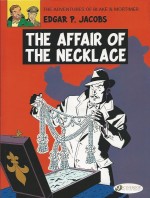
Blake and Mortimer: S.O.S. Meteors


By Edgar P. Jacobs, translated by Jerome Saincantin (Cinebook)
ISBN: 978-1-905460-97-7

Master storyteller Edgar P. Jacobs pitted his distinguished duo of Scientific Adventurers Professor Philip Mortimer and Captain Francis Blake against a wide variety of perils and menaces in stunning action thrillers which merged science fiction scope, detective mysteries and supernatural thrillers in the same timeless Ligne claire style which had done so much to make intrepid boy reporter Tintin a global sensation.

The strip debuted in the first issue of Le Journal de Tintin (dated 26th September 1946): an international anthology comic with editions in Belgium, France and Holland. The magazine was edited by Hergé, with his eponymous star ably supplemented by a host of new heroes and features for the post-war world…

S.O.S. Météores was originally serialised from January 8th 1958 to 22nd April 1959 and subsequently collected in a single album as the eighth drama-drenched epic escapade six months after the conclusion, just in time for the Christmas rush. In 2009 it was translated into English as Cinebook’s sixth Blake and Mortimer release, and – subtitled ‘Mortimer in Paris’ – begins here with the incomparable boffin in the City of Lights, answering a Gallic colleague’s pleas for assistance.

Meteorologist Professor Labrousse, like all his unfortunate ilk, is unhappily shouldering the brunt of public ire over freak weather events which are bringing France to its knees and when Mortimer arrives, he experiences for himself the chaos such tumultuous storms are inflicting upon the traffic-heavy metropolis. Thankfully, the embattled weatherman has despatched a taxi to collect the weary Englishman and bring him to the relative calm of suburban Jouy.

Both driver and passenger are unaware of a flashy American car suspiciously dogging them, and as conditions steadily worsen the ride becomes truly hazardous, leading to an inevitable crash. Separated from the driver and blindly wandering in the storm, Mortimer plunges into a lake and barely manages to scrabble to safety.

Finding his way back to the road, the exhausted scientist thumbs a lift to Labrousse’s house and is gratefully welcomed. Of the taxi driver, however, there is no trace…

The old colleagues discuss the catastrophic weather and uncanny events long into the night but the next morning their further deliberations are curtailed when the police arrive, eager to interview the Englishman about a certain cab driver’s disappearance…

Deeply troubled, the learned men later attempt to retrace Mortimer’s steps and discover the terrain is completely different from Englishman’s memories but encounter a thug and his immense dog going over the same sodden ground. The intruders are clearly following the orders of a boss who keeps well hidden, and a violent altercation is barely avoided with a simple whistle from the unseen voyeur…

Eventually the studied experience of the local postman enables the baffled British boffin to solve the geographical mystery and the recovered trail leads him to a nearby estate with huge walls patrolled by the same terrifying hound he met earlier. Well-versed in surveillance procedure, Mortimer prepares to probe further but is distracted when a sudden snowstorm begins. Determinedly he returns later, well-prepared and using the blizzard as cover to investigate the estate. It proves to be a tremendous mistake…

Next morning in Paris, Divisional Commissioner Pradier of French Intelligence welcomes a counterpart from Great Britain, looking into a new espionage network at work in France. Captain Francis Blake’s keen insight quickly scores a hit and opens up new leads that seem connected to the uncanny weather conditions tormenting the nation, but when he meets hastily-summoned Labrousse Blake learns that old comrade Mortimer has vanished after announcing that the aberrant meteorology is man-made…

Travelling to Jouy with the horrified weatherman, Blake makes a shocking impression on Labrousse’s usually-affable neighbour and suddenly the strange atmospheric conditions start being compounded with odd little accidents and frustrations that can only be seen in total as concerted enemy action…

The saga kicks into high gear when Blake recognises some old – and previously presumed dead – enemies and is chased through unrelenting arctic conditions back to Paris in a deadly, hair-raising game of cat-&-mouse which culminates when he confronts his greatest foe once again…

With the help of Pradier’s forces Blake soon has the villains on the run, spectacularly fleeing over the rooftops of Paris, but the big fish of course escapes and the heroes must face the fact that they might never know what has become of Mortimer…

In Jouy, however, the irascible researcher has made good use of his time incarcerated with the diabolical Professor Milosh Georgevich who has used the vast resources of an aggressor nation to weaponise weather in advance of an audacious scheme to invade France for the third time in a century…

Forced to act alone he escapes his jailers and picks up an unexpected ally as he tries to sabotage the colossal climate engines, utterly unaware that his greatest friend has picked up new clues and is closing in on the plotters…

Moody and comparatively low-key until the final act when the tension builds to explosive heights and a Bond-Movie finish, S.O.S. Meteors is a splendid mystery romp packed with astounding action, scads of sinister suspense and a blockbuster climax to delight spy-buffs and devotees of Distinguished Duo alike.

Addictive and absorbing in the truest tradition of pulp sci-fi and Boy’s Own Adventures, Blake and Mortimer are the very epitome of dogged heroic determination and the natural successors to such heroic icons as Professor Challenger, Bulldog Drummond and Richard Hannay, always delivering grand, old-fashioned Blood-&-Thunder thrills, chills and spills in timeless fashion and with a mesmerising visual punch.

Any kid able to suspend modern mores and cultural disbelief (call it alternate earth history or bakelite-punk if you want) will enjoy the experience of their lives…

This Cinebook edition also includes excerpts from two other B&M albums plus a short biographical feature and publication chart of Jacobs’ and his successors’ efforts.
Original edition © Editions Blake & Mortimer/Studio Jacobs (Dargaud-Lombard S. A.) 1989 by E.P. Jacobs. All rights reserved. English translation © 2009 Cinebook Ltd.

Blackjack: Second Bite of the Cobra


By Alex Simmons & Joe Bennett (Dover Comics & Graphic Novels)
ISBN: 978-0-486-79852-3

Here in the west nearly 150 years of popular publishing – and its spin-off art forms film, radio, television and especially comics – has produced a legion of legendary if human-scaled action adventurers. These larger than life characters have been called Pulp Heroes and their playground is all of human history and every tomorrow…

Whether you prefer Ivanhoe and Prince Valiant, Allan Quatermain, Sir Percy Blakeney, Richard Hannay, El Borak, Bulldog Drummond, Doc Savage, Mack Bolan, James Bond, Jason Bourne or even Indiana Jones, a succession of steely-eyed, immensely powerful men – and even the occasional woman – have prowled the world, righting wrongs and inspiring generations. Although some few had friends, colleagues or assistants of colour, I can’t think of a single protagonist who was black…

That all began to change in 1957 when Chester Himes began writing his tales of brutal, uncompromising cops Coffin Ed Johnson and Gravedigger Jones in the Harlem Detective novels, but then again he was writing them from exile in France.

America’s history of Jim Crow laws and institutionalised racism throughout the media had driven him away and long-stifled the dreams of generations of African-Americans looking for a hero of their own.

That all began to change in the radical 1960s when flunky stereotypes and dumb bad-guy representations began to give way to portrayals of fully-feeling human beings, intelligent moral champions and powerful, vital independent heroes – thanks to the efforts of the same media empires which had for so long censored any such image.

Sadly one look at today’s News tells us America still has some way to go. And of course for most of that time Britain has been no better…

That’s a rather longwinded and pompous way of introducing the latest in Dover’s superb line of lost and rescued graphic gems: a fresh edition of a compelling modern classic of the Good Old Bad Old Days, now resurrected in a softcover collection to astound and enthral all lovers of epic bravado and red-handed justice adventure, packed with the usual extras and bonus material.

Preceded with a Foreword from Joe Illidge and the author’s exhilarating Introduction ‘The Past: A Good Time for a Dark Hero’ before closing with an effusive Afterword by agent David Colley, a world of dangerous extremes perfectly realised by Brazilian born illustrator Joe Bennett (X-Men, 52, Supreme).

Alex Simmons is an award-winning African-American author, playwright, comicbook scripter and educator who has produced innumerable strips, games, shows and art-events all over the world. He’s worked for Marvel, DC, Disney, Archie and others and is a passionate advocate for and champion of equality and racial issues.

In 1996 he finally fulfilled a childhood dream by creating a black character as an equal to and worthy of the fictional meta-kingdom of all his childhood heroes as cited above. Following a cruelly recognisable usual pattern, however, the saga of Arron Day AKA Blackjack proved to be a monster hit everywhere but America…

Following the first two miniseries from Dark Angel Productions, Blackjack adapted to tough times in the comic biz by moving online as both prose and comics forms and through a serial in “Blaxploitation” magazine Bad Azz Mofo. In 2001 there was even an audio adventure – Blackjack: Retribution – recorded in front of a live audience at the Museum of TV and Radio in New York City.

Now with the first epic extravaganza compiled into one scotching saga, action fans have a chance for another bite of the cherry (sorry, couldn’t resist)…

During the Great War, Matthew “Mad Dog” Day found fame and a little prosperity as a soldier-of-fortune fighting all over the world; attaining the respect and acclaim no North Carolina negro could have by staying in America…

One particularly savage commission from a thankless Egyptian government sent him into the Sahara and pitted him and his fellow mercenaries against diabolical, nigh-messianic rebel Farouk Tea a la Af’a, know to insurgents everywhere as The Cobra.

After a climactic battle between eternal, implacable foes the Arab raider paid him the ultimate mark of disrespect by not bothering to kill him and his remaining comrades before vanishing back into the trackless wastes…

Back in Cairo days later the foreign survivors were publicly castigated by an ungrateful populace and Mad Dog’s young son Arron learned a harsh lesson. He knew who was truly to blame however and swore one day he would meet the Cobra…

Years passed and in 1923 the boy and his sister learned another salutary lesson when their parents were murdered by unknown assassins in Spain.

By 1935 Arron has surpassed his father and become a globetrotting man of wealth and means by way of his own martial talents. Possessing a keen sense of justice and never one to shy away from conflict or confrontation, he has used that money to challenge the American Way by buying a palatial home on Manhattan’s West Side, flying in the face of hostility and outright bigotry, even from the city police …

However, setting up home and aggravating the powers-that-be suddenly loses its appeal when a cable from Cairo arrives. His old uncle Silas – a white man who was Mad Dog’s trusted lieutenant – has learned that the Cobra is back and up to his old murderous tricks…

And so begins a spectacular, ferociously gripping duel in the desert as Blackjack hunts for the man who shamed his father – and might well have had him killed – encountering and outwitting corrupt rulers, suspect capitalists hungry for the region’s as yet untapped riches, and gangs of thugs.

Ferreting out the demon from his past accompanied by a trusted band of comrades and lethal new recruit Maryam, Blackjack blazes his way across the war-torn region to meet his promised nemesis and settle forever the family business so long delayed…

As spectacular as Lawrence of Arabia, as fast-paced as The Mummy and as satisfyingly suspenseful as Hidalgo, this is pure pulp experience no lover of the genre can afford to miss.
Story text © 1995 Alex Simmons. Illustrations © 1995, 1996 Joe Bennett. Cover art © 2015 Scott Hanna. All other material © 2015 its respective owners. All rights reserved.

Blackjack: Second Bite of the Cobra will be in stores from July 15th 2015 and is available for pre-order now. Check out www.doverpublications.com, your internet retailer or comic shop

Batman: Annuals volume 2 – DC Comics Classics Library


By Bob Kane, Bill Finger, Edmond Hamilton, Jerry Coleman, David Wood, France Herron, Sheldon Moldoff, Lew Sayre Schwartz, Dick Sprang, Curt Swan & various (DC Comics)
ISBN: 978-1-4012-2791-3

There’s a lot of truly splendid 1940s and 1950s comics material around these days in a lot of impressive formats. DC’s Classics Comics Library hardbacks are a remarkably accessible, collectible range of products and one of the best is this wonderful aggregation of four of the most influential and beloved comicbooks of the Silver Age of American comicbooks.

Batman Annual #1 was released in June 1961, a year after the phenomenally successful Superman Annual #1. The big, bold anthology format was hugely popular with readers. The Man of Steel’s second Annual was rushed out before Christmas and the third came out a mere year after the first. That same month the first Secret Origins compilation and the aforementioned Batman Blockbuster all arrived in shops and on newsstands.

It’s probably hard to appreciate now but those huge books – 80 pages instead of 32 and practically no advertising – were a magical resource with a colossal impact for kids who loved comics. I don’t mean the ubiquitous scruffs, oiks and scallywags of school days who read casually then chucked them away (most kids were comics consumers in the days before computer games) but rather those quiet, secretive few of us who treasured and kept them, constantly re-reading, discussing, pondering, even making our own.

Only posh kids with wicked parents read no comics at all: those prissy, starchy types who were beaten up by the scruffs, oiks and scallywags even more than us bookworms. But I digress…

For budding collectors the Annuals were a gateway to a fabulous lost past. Just Imagine!: adventures your heroes had from before you were even born…

Those fantastic innovative aggregations in the early 1960s changed comics publishing. Soon Marvel, Charlton and Archie were also releasing giant books of old stories, then came new ones, crossovers, continued stories…

Annuals proved two things to publishers: that there was a dedicated, long-term appetite for more material – and that punters were willing to pay a little bit more for it…

This hardback compendium gathers Batman Annuals #4-7 from (1963-1966) in their mythic entirety: 33 terrific complete stories, stunning pin-ups and those magnificently iconic compartmentalized covers. Also included are original publication details and credits (the only bad thing about those big books of magic was never knowing “Who” and “Where”…), creator biographies and another reminiscing Introduction from Michael Uslan, putting the entire nostalgic experience into perspective

Way back then the editors sagely packaged Annuals as themed collections, the first here being ‘The Secret Adventures of Batman and Robin’ (released November 8th 1962) which started the ball rolling with ‘The First Batman’ (by Bill Finger & Sheldon Moldoff and originally seen in Detective Comics #235, September 1956): a key story of this period which introduced a strong psychological component to Batman’s origins, disclosing how when Bruce Wayne was still a toddler his father had clashed with gangsters whilst clad in a fancy dress bat costume…

‘Am I Really Batman?’ (Finger, Moldoff & Charles Paris, Batman #112, December 1957) saw bona fide mad scientist Professor Milo poison the hero with a rare plant, forcing Robin and Alfred to put the Masked Manhunter through a baffling psychological ordeal to counteract the toxin…

Today fans are pretty used to a vast battalion of bat-themed champions haunting Gotham City and its troubled environs, but for the longest time it was just Bruce, Dick Grayson and occasionally their borrowed dog Ace keeping crime on the run. However in Detective Comics #233 (July 1956, three months before the debut of the Flash officially ushered in the Silver Age) the editorial powers-that-be introduced bold heiress Kathy Kane, who incessantly suited-up in chiropteran red and yellow for the next eight years.

‘Origin of the Batwoman’ by Edmond Hamilton, Moldoff & Paris premiered with the former circus acrobat bursting into Batman’s life, challenging him to discover her secret identity at the risk of exposing his own…

The Boy Wonder began very publicly working solo after ‘The Vanished Batman’ (Hamilton, Moldoff & Paris or Stan Kaye, from Batman #101, August 1956) saw the Gotham Gangbuster declared dead and presumed gone by the underworld whilst ‘The Phantom of the Bat-Cave’ (Hamilton, Moldoff & Paris, Batman #99, April 1956) offered a genuine mystery as persons unknown began somehow stealing and replacing items from the heroes’ sacrosanct trophy room…

‘Batman’s College Days’ (Finger, Moldoff & Paris, Batman #96, December 1955) found Bruce Wayne on a sea cruise with three fellow alumni, one of whom planned murder and had deduced his alter ego, after which ‘The Marriage of Batman and Batwoman’ (Finger, Moldoff & Ray Burnley, Batman #122, March 1959) depicted Robin’s nightmares should such a nuptial event occur whereas ‘The Second Boy Wonder’ (France Herron, Moldoff & Burnley, Batman #105, February 1957) was all too real as a stranger apparently infiltrated the Batcave by impersonating the kid crimebuster…

The Annual ended with ‘The Man who Ended Batman’s Career’ (Finger, Moldoff & Paris from Detective Comics #247, September 1957) which presented a significantly different-looking Professor Milo using psychological warfare and scientific mind-control to attack the Dark Knight by inducing a fear of bats…

The next Annual, released in summer 1963, highlighted ‘The Strange Lives of Batman and Robin’ and opened with ‘The Power that Doomed Batman’ (Finger, Moldoff & Paris, Detective Comics #268 June 1959) as exposure to a comet gifted the Dark Knight with super-strength. Sadly the effect was also cumulatively fatal and forced the heroes into a desperate hunt for a missing man who possessed a cure…

The same creative team dredged up ‘The Merman Batman’ (Batman #118, September 1958) wherein an lightning strike transformed the Caped crimebuster into a water-breather, aroused ‘Rip Van Batman’ (Batman #119, October 1958) who fell into a plant-induced coma to seemingly awake in the future and corralled ‘The Zebra Batman’ (Detective Comics #275, January 1960) when the hero was turned into an uncontrollable human magnet…

‘The Grown-Up Boy Wonder’ (Finger, Moldoff & Stan Kaye, Batman #107, April 1957) detailed what happens when space gas turned the likely lad into a strapping young man – but only in body, not mind – after which World’s Finest Comics #109, from May 1960, revealed Robin and Superman‘s tense race to save the Gotham Guardian from an ancient curse in ‘The Bewitched Batman’ by Jerry Coleman, Curt Swan & Moldoff.

‘The Phantom Batman’ (Hamilton, Dick Sprang & Paris, Batman #110, September 1957 showed how an electrical mishap reversed the polarity of the Caped Crusader’s atoms, relegating him to helpless intangibility, and the uncanny yarns end with ‘The Giant Batman’ (from Detective Comics #243 May 1957, by the same team and originally entitled “Batman the Giant!”).

Here the hero was exposed to a well-meaning scientist’s “Maximizer” ray and grew too large to catch the thieves who stole it and the antidote…

Six months later saw publication of Batman Annual #6 (Winter 1963-1964) featuring ‘Batman and Robin’s Most Thrilling Mystery Cases’ which kicked off with ‘Murder at Mystery Castle’ (Finger, Moldoff & Paris, Detective Comics #246 August 1957) as visitors – Batman and Robin included – to a reconstructed medieval fortress witnessed a devilish remote control killing and had to deduce who set the fiendish trap…

‘The Gotham City Safari’ (Finger, Moldoff & Paris Batman #111, October 1957) saw the Dynamic Duo hunting a hidden killer through a fabulous theme-park of exotic locales whilst ‘The Mystery of the Sky Museum’ (Hamilton, Moldoff & Paris, Batman #94, September 1955) found them at an aviation museum on the trail of sinister smugglers.

‘The Mystery of the Four Batmen’ (Hamilton, Sprang & Paris Batman #88, December 1954) was a seagoing enigma with the Partners in Peril seeking a mysterious smuggler with a tenuous connection to bats in one form or another, after which a movie monster made trouble on location, compelling the crimebusting champions to tackle ‘The Creature from the Green Lagoon’ (David Wood, Moldoff & Paris Detective Comics #252 February 1958)…

A stunning chase to expose a killer searching for a lost golden hoard involved solving ‘The Map of Mystery’ (Hamilton, Sprang & Paris, Batman #91, April 1955), whilst a disgruntled family member seemingly threatened to kill every member of ‘The Danger Club’ (Hamilton, Lew Sayre Schwartz & Paris, Batman #76, April/May 1953).

The astounding sleuthing ceases after uncovering ‘Doom in Dinosaur Hall’ (Finger, Moldoff & Paris, Detective Comics #255 May 1958) where the curator’s murder at the Gotham’s Mechanical Museum of Natural History led to a fantastic chase and a surprise culprit…

Summer 1964 produced Batman Annual #7 and ‘Thrilling Adventures of the Whole Batman Family’ beginning with the introduction of the Gotham Guardian’s most controversial “partner” – a pestiferous, prank-playing extra-dimensional elf – in ‘Batman Meets Bat-Mite’ by Finger, Moldoff & Paris from Detective Comics #267 May 1959) after which the eponymous masked dog Ace narrates ‘The Secret Life of Bat-Hound’ (Finger, Moldoff & Paris, Batman #125, August 1959) and his part in capturing the nefarious Midas Gang…

Finger, Moldoff & Paris enlarged the fictitious family in Batman #139 (April 1961), ‘Introducing Bat-Girl’ as Kathy Kane’s niece Betty began dressing up and acting out as her unwanted assistant, eventually proving adults and boys wrong by taking down the deadly King Cobra and his crew, after which Hamilton wrote the only adventure of ‘The Dynamic Trio’ (Detective Comics #245 July 1957), with a very old friend donning cape and cowl as Mysteryman to help combat a smuggling ring facilitating the escape of Gotham’s fugitives.

Courtesy of Finger, Moldoff & Paris, faithful manservant Alfred personally revealed an early failure and its shocking resolution in ‘The Secret of Batman’s Butler’ (Batman #110, September 1957) before ‘The New Team of Superman and Robin’ (Finger, Swan & Moldoff, World’s Finest Comics # 75, March/April 1955) revealed how a disabled Batman could only fret and fume as his erstwhile assistant seemingly dumped him for a better man…

When Bat-Mite elected himself ‘Batwoman’s Publicity Agent’ (Finger & Moldoff, Batman #133, August 1960) the result was naturally chaos and unbridled craziness but not as much as the “Imaginary Story” devised by Alfred debuting ‘The Second Batman and Robin Team’ (Finger, Moldoff & Paris, Batman #131, April 1960) which would inevitably emerge after Bruce and Kathy wed and Dick assumed the mantle of the bat…

Moldoff’s unforgettable back page pin-up ‘Greetings from the Batman Family’ then wraps this final glimpse at simpler, weirder times.

Strange, addictive and still potently engrossing, these weird wonder tales typify a lost time of gentler danger, more wholesome evil and irresistible fun. They’re also impossibly compelling, incredibly illustrated and undeniably influential. A perfect treat for young and old alike.
© 1962, 1963, 2010 DC Comics. All Rights Reserved.

The Adventures of Blake and Mortimer: Atlantis Mystery


By Edgar P. Jacobs, translated by Jerome Saincantin (Cinebook)
ISBN: 978-1-84918-107-5

Master storyteller Edgar P. Jacobs pitted his distinguished duo of Scientific Adventurers Professor Philip Mortimer and Captain Francis Blake against a wide variety of perils and menaces in stunning action thrillers which merged science fiction, detective mysteries and supernatural thrillers in the same timeless Ligne claire style which had done so much to make intrepid boy reporter Tintin a global sensation.

The strip debuted in Le Journal de Tintin #1 (26th September 1946): an international anthology comic with editions in Belgium, France and Holland. The magazine was edited by Hergé, with his eponymous star ably supplemented by a host of new heroes and features for the modern age…

L’enigme de l’Atlantide was the fourth electrifying exploit of the peerless pair, originally serialised from March 30th 1955 to May 30th 1956, and subsequently collected in a single chronicle as the seventh drama-drenched adventure album the following year.

The stunning secret history saga became the 12th translated Cinebook release, and opens here with vacationing Intelligence operative Blake arriving in the Azores on idyllic island Sao Miguel where Mortimer is engaged in exploring deep caves in his ceaseless search for new knowledge.

From the moment he lands the British Agent is under constant scrutiny by mysterious gangsters and no sooner does he join his old comrade than petty acts of vandalism and outright sabotage begin to occur…

Unbeknownst to the pair, whilst they are distracted, a mysterious intruder searches the Professor’s palatial lodgings only to be blasted by an even more fantastic figure with a ray-gun.

The delayed detectives only arrive in time to observe an astounding escape before the bellicose boffin explains how he has apparently discovered a new mineral of incredible potential in the vast cave system far below the surface of the island. He suggests it might be the wonder metal Plato describes as “Orichalcum”; the most prized element of the fabled Atlanteans…

Undeterred by the break-in, the bold Brits lay plans to further evaluate Mortimer’s mammoth cavern and before long a small but dedicated team are scrambling through perilous crevices to terrifying depths in search of more of the mystery.

The “mad English” are no longer the main topic of conversation on the island however: everybody else is glued to newspaper reports of flying saucer sightings…

Glad of their return to obscurity and utterly unaware that one of their team has been replaced by a deadly old enemy, the valiant subterranean explorers struggle on against formidable and oppressive odds underground, but when the Professor’s Geiger Counter begins to react wildly and they recover a huge chunk of the mystery mineral, the saboteur makes his move.

As a sudden storm threatens to wash the entire expedition away, the infiltrator incepts warnings from the surface, swipes the samples and, cutting the rope ladders, abandons Blake and Mortimer to their deaths…

His big mistake is pausing to gloat: a well-aimed rock hurled by the Secret Serviceman seemingly seals the scoundrel’s fate too…

Unable to go back, the plucky duo then decide to chance everything on following a subterranean river under the island in the vanishingly small hope of finding an exit. Instead, after an astounding under-earth odyssey, what they discover is mercilessly marauding pterodactyls and a fantastically advanced civilisation of super-scientists…

Soon the pair are recuperating in the vast bastion of Poseidopolis – thriving last outpost of legendary Atlantis – befriended by young noble Prince Icarus. He happily shares the epic true history of Ancient Earth and his still space-faring nation with them, secure in the knowledge that they will never leave the subterranean metropolis for as long as they live…

Unfortunately, with their customary impeccable timing, the British bravos have arrived just as the city’s most trusted civil servant Magon is about to usurp the hereditary rulers’ millennia of unchallenged power. All too soon they become embroiled in a shattering civil war at the earth’s core.

Not only is the entire kingdom of noble Lord Basileus at stake, but the schemer and his allies also have designs upon the Atlanteans’ outer space dominions and the hapless, ignorant surface nations in between…

Packed with astounding action, double-doses of dastardly duplicity and captivatingly depicting the cataclysmic end of a fabulous secret civilisation, this is one of the Distinguished Duo’s most glorious exploits and one no lover of lost world yarns should miss.

Addictive and fantastic in the truest tradition of pulp sci-fi and Boy’s Own Adventures, Blake and Mortimer are the very epitome of dogged heroic determination; the natural successors to such heroic icons as Professor Challenger, Bulldog Drummond and Richard Hannay, always delivering grand, old-fashioned Blood-&-Thunder thrills and spills in timeless fashion and with mesmerising visual punch.

Any kid able to suspend modern mores and cultural disbelief (call it alternate earth history or bakelite-punk if you want) will experience the adventure of their lives… This Cinebook edition also includes excerpts from two forthcoming albums plus a short biographical feature and chronological publication chart of Jacobs’ and his successors’ efforts.

Original edition © Editions Blake & Mortimer/Studio Jacobs (Dargaud-Lombard S. A.) 1988 by E.P. Jacobs. All rights reserved. English translation © 2011 Cinebook Ltd.