Robin Archives volume 2


By Bob Kane, Bill Finger, Win Mortimer, Jim Mooney & various (DC Comics)
ISBN: 978-1-4012-2625-1

Created by Bob Kane, Bill Finger & Jerry Robinson, Robin the Boy Wonder debuted in Detective Comics #38 (April 1940), which introduced a juvenile circus acrobat whose parents were murdered by a mob boss.

The story of how Batman took the orphaned Dick Grayson under his scalloped wing and trained him to fight crime has been told, retold and revised many times over the decades and still regularly undergoes tweaking to this day.

In the original comics continuity Grayson fought beside his mentor until 1970 when, as an indicator of those turbulent times, he flew the nest, becoming a Teen Wonder, college student and eventually leader of a team of fellow sidekicks and young justice seekers – the Teen Titans.

He graduated to his own solo spot in the back of Detective Comics from the end of the 1960s, alternating with Batgirl, and held a similar spot throughout the 1970s in Batman. The college-based wonder won a starring feature in the anthology comic Batman Family and a run of Giant Detective Comics Dollar Comics before becoming a star all over again in the 1980s as leader of the New Teen Titans, first in his original costumed identity and eventually in the reinvented guise of Nightwing. He even re-established a turbulent working relationship with his dark, driven and dangerous former senior partner.

Robin’s creation as a junior hero for younger readers to identify with inspired an incomprehensible number of costumed kid crusaders and Grayson continues in similar innovative vein for the older, more worldly-wise readership of America’s increasingly rebellious contemporary youth culture… but his star potential was first realised much earlier in his eternally young career…

From 1947 to 1952, (issues #65-130) Robin, the Boy Wonder had a solo series – and cover spot – in Star Spangled Comics at a time when the Golden Age superhero boom was fading, its gaudy bravos gradually being replaced by more traditional heroes in genres such as crime, westerns and boys’ adventure stories.

The exploits herein contained blended in-continuity action capers with more youth-oriented fare, frequently reducing adults Batman, Alfred and Commissioner Gordon to minor roles or rendering them entirely absent, allowing the kid crusader to display not just his physical accomplishments but also his brains, ingenuity and guts.

This second sturdy deluxe hardback Archive Edition re-presents more tales from Star Spangled #86-105 (covering November 1948 to June 1950) recapturing the dash, verve and universal appeal of one of fantasy literature’s greatest youth icons – albeit with a greater role for Batman – and opens with a fascinating Foreword by Bill Schelly who adds a layer of historical perspective and canny insight to the capers to come.

Every beautiful cover is included – although most of the later ones feature colonial-era frontier sensation Tomahawk – and are lovingly rendered by Jim Mooney, Win Mortimer, Charles Paris, Bob Kane and Fred Ray.

Although unverified, writers Bill Finger, Don Cameron, David Vern Reed and Jack Schiff are considered by most comics historians to be the authors of the stories in this volume and I’m going to happily concur here with that assessment until informed otherwise. Easier to ascertain is Mooney as penciller of almost all and inker of the majority, with other pencil and penmen credited as relevant…

The action-packed relatively carefree high jinks commence with Star Spangled Comics #86 and ‘The Barton Brothers!’ (inked by Win Mortimer, who remained until #90) as the Boy Wonder took up the lone vengeance trail to hunt down a trio of killers whose crime spree culminated in gunning down the mighty Batman, after which racketeer Benny Broot discovered he was related to the aristocracy and patterned all his subsequent vicious predations on medieval themes as ‘The Sinister Baron!’…

Robin went AWOL in defiance of his mentor to clear the father of a schoolmate in ‘The Man Batman Refused to Help!’ but his good intentions in clearing the obviously framed felon almost upset a cunning plan to catch the real culprit, after which SSC #89 saw ingenious hoods get hold of ‘The Batman’s Utility Belt!’ and start selling customised knock-offs until the Dynamic Duo crushed the racket.

The murder of a geologist sent the partners in peril out west in #90 to solve ‘The Mystery of Rancho Fear!’, going undercover as itinerant cowboys to deal with a gang of extremely contemporary claim-jumpers whilst, with Mooney now handling all the art-chores, issue #91 found the Boy Wonder instigating a perplexing puzzle to stump his senior partner in ‘A Birthday for Batman!’

It would have all been the perfect gift if not for the genuine gangsters who stumbled upon the anniversary antics…

The crimebusting kid played only a minor role in #92’s ‘Movie Hero No. 1’ wherein Batman surreptitiously replaced and eventually redeemed an action film actor who was a secret coward, but resumed star status in ‘The Riddle of the Sphinx!’ when a mute, masked mastermind seemingly murdered the Dark Knight and supplanted Gotham’s criminal top dog Red Mask.

Entertainment motifs abounded in those days and Star Spangled Comics #94 heralded ‘The End of Batman’ when the Dynamic Duo stumbled on a film company crating movie masterpieces tailored to the unique tastes and needs of America’s underworld after which greed and terror gripped the streets when a crook employed an ancient artefact to apparently transform objects – and even the Boy Wonder – to coldly glittering gold in #95’s ‘The Man with the Midas Touch!’

An indication of changing times and tastes came with the September 1949 Star Spangled as Fred Ray’s Tomahawk took over the cover-spot from #96 onwards whilst inside, Robin’s solo tale ‘The Boy Who Could Invent Miracles!’ was pencilled by Sheldon Moldoff with Mooney inking.

The story saw the kid crusader working alone whilst Batman recovered from gunshot wounds, encountering a well-meaning bright spark whose brilliantly conceived conceptions revolutionised the world – but almost exposed the masked avenger’s secret identity…

First seen in Star Spangled Comics #70, The Clock was an anonymous criminal time-and-motion expert who became the closest thing to an Archenemy Robin had. ‘The Man Who Stole Time!’ returned yet again in #97 (with Mooney back on full art), determined to publicly humiliate and crush his juvenile nemesis through a series of suitably-themed crimes… but with the same degree of success as always…

In #98 a classmate of Dick Grayson’s briefly became ‘Robin’s Rival!’ after devising a method of travelling on phone lines as Wireboy. Sadly his ingenuity was far in excess of his fighting ability or common sense and he was wisely convinced to retire, after which gambling gangster Sam Ferris broke jail and turned his obsession with turning circles into a campaign of ‘Crime on Wheels!’ until Robin set him straight again…

SSC #100 offered a powerfully moving tale as the Boy Wonder gave shelter to ‘The Killer-Dog of Gotham City!’ and proved that valiant Duke could shake off his criminal master’s training to become a boon to society.

In #101 High School elections were being elaborately suborned by ‘The Campaign Crooks!’ with a bizarre scheme to make an illicit buck from students, whilst in #102 ‘The Boy with Criminal Ears!’ developed super-hearing: making his life hell and ultimately bringing him to the attention of sadistic thugs with an eye to the main chance…

Star Spangled Comics #103 saw the introduction of ‘Roberta the Girl Wonder!’ as class polymath Mary Wills decided to follow her heart and try to catch the ideal boyfriend by becoming his crime-fighting rival, whilst #104’s ‘Born to Skate’ revealed how classmate Tommy Wells‘ freewheeling passion led Robin to a gang using a roller-skate factory to mask crimes as varied as smuggling, kidnapping and murder…

The wholesome all-ages action ends with a rewarding tale blending model-making and malfeasance as a guilt-wracked Robin comes to the aid of a police pilot who had been crippled – and worse – whilst assisting on a case.

As part of his rehabilitation the Junior Manhunter devises high-tech models for Bill Cooper‘s aviation club but when ‘The Disappearing Batplanes!’ are purloined by cunning air pirates the scene is set for a terrifying aerial showdown…

Beautifully illustrated, wittily scripted and captivatingly addictive, these rousingly traditional superhero escapades are a perfect antidote to teen-angst and the strident, overblown, self-absorbed whining of contemporary comicbook kids.

Fast-paced, infinitely inventive and ferociously fun, here are superb yarns no young-at-heart Fights ‘n’ Tights fan will want to miss…
© 1948, 1949, 1950, 2010 DC Comics. All Rights Reserved.

Superman: the World’s Finest Comics Archives volume 2


By Jerry Siegel, Don Cameron, Alvin Schwartz, Joe Samachson, Sam Citron, Ed Dobrotka, Ira Yarbrough, John Sikela, George Roussos, Stan Kaye & various (DC Comics)
ISBN: 978-1-4012-2470-7

The debut of Superman rapidly propelled National Comics to the forefront of their fledgling industry and in 1939 the company was licensed to produce a commemorative extra-length comicbook celebrating the opening of the New York World’s Fair. With the Man of Tomorrow prominently featured on the appropriately titled New York World’s Fair Comics, the premium also featured such four-colour stars as Zatara, Butch the Pup, Gingersnap and The Sandman.

The experiment generated another such titanic tome a year later, and since the prodigious card-covered 96 page anthologies were a tolerable hit, the editors were inclined to further test the waters through another oversized anthology starring only their own pantheon of characters with market-leaders Superman and Batman prominently featured.

The format was retained for a wholly company-owned, quarterly high-end package, retailing for the then hefty price of 15¢. Launching as World’s Best Comics #1 (Spring 1941), the book transformed into the somehow-deemed-classier World’s Finest Comics from #2, beginning a stellar 45 year run which only ended as part of the massive clear-out and decluttering exercise that was Crisis on Infinite Earths.

Until a cost-cutting exercise in 1954 reduced the page count, the first 70 issues of World’s Finest only saw Superman, Batman and Robin united on the covers. From #71 (cover-dated July) onwards, however, the three began a long-lived partnership that lasted more or less until the title was cancelled.

This deliciously deluxe hardback Archive edition collects the Action Ace’s solo exploits from World’s Finest Comics #16-32 (Winter 1945 to January/February 1948) in gleaming, seductive full-colour and also includes an incisive Foreword by fan, historian, and comics creator Jim Amash as well as the now-traditional creator biographies.

With stunning, eye-catching covers from Jack Burnley, Dick Sprang and Win Mortimer, this fabulously exuberant compendium opens with the regrettably anonymous ‘Music for the Masses!’ illustrated by Sam Citron & George Roussos wherein Clark Kent and Lois Lane help a starry-eyed hick songwriter escape the machinations of arch conman J. Wilbur Wolfingham to find stardom and true love, and World’s Finest Comics #17 provided thrills and spills in Don Cameron, Citron & Roussos’ ‘The Great Godini!’, wherein a reformed convict struggles to escape his notorious past whilst attempting to forge a career as a stage magician and escapologist…

‘The Junior Reporters!’, by Alvin Schwartz & Ed Dobrotka, sees a young newsboy prove his grit and integrity in a journalism competition, scoring his first major scoop by exposing the crooked schemes of his older brother’s gang, after which WFC #19 details Cameron & Ira Yarbrough’s ‘The Battle of the Zodiac!’ as Lois’ investigation of a shady swami leads to a spectacular, phantasmagorical clash between the Man of Steel and animatedly aggressive astrological embodiments.

After swiping advanced electronic and atomic components, creepy Winslow Schott becomes ‘The Toyman: Super-Scientist!’ (Cameron, Dobrotka & Stan Kaye), bedevilling the Metropolis Marvel with lethally devious devices, whilst from #21, ‘The Plane of Tomorrow!’ (Joe Samachson, Yarbrough & Roussos) finds Superman feeling uncharacteristically jealous when Lois seemingly switches her fickle attentions to a dashing jet designer targeted by a dodgy industrialist…

When Lois and Clark are despatched north to cover radium mining they uncover a strange mystery. Aging prospector John Borealis seems to be just a crazy old man handing out gold to his struggling fellows but he harbours a dangerous secret which draws out an army of bandits in ‘The Siege of Aurora Roost!’ (Schwartz, Yarbrough & Kaye in #22)…

When a handful of silent screen stars attempt a comeback they begin dotting the city with vast imitations of the Seven Wonders of the World. As the poorly built edifices begin to crumble, Superman steps in to save the day as ‘The Colossus of Metropolis!’ (Cameron, Yarbrough & Kaye from World’s Finest Comics #23), after which those artists delineate the again-anonymously-scripted ‘Impossible But True!’ wherein the presenter of a new TV show tells more and more blatant lies on camera.

What nobody knows is that poor Olga Olmstead is being fed false info by ruthless kidnappers and the Man of Tomorrow is biding his time until he can strike…

‘Mad Weather in Metropolis!’ from WFC #25 (Cameron, Yarbrough & Kaye) follows similar themes when Lois is appointed Daily Planet meteorologist and resentfully fabricates impossible forecasts which Superman makes come true. What she doesn’t know is that the Caped Crimebuster is using her potty prognostications to help out an ailing sporting goods store and catch a gang of racketeers…

Co-creator Jerry Siegel returned after war service in 1946 and ‘The Confessions of Superman!’ (art by John Sikela & Kaye) saw him on top form as the promise of a huge charity donation convinces the Man of Might to pen his (somewhat expurgated) autobiography and then have to prove to his publisher that he did indeed perform the feats he described…

World’s Finest #27’s featured ‘The Man who Out-Supered Superman!’ (Siegel, Sikela & Kaye again ) wherein downtrodden love sick schnook Nelson Swayne devised numerous sharp ways of outdoing the Man of Steel to win back his flighty, star-struck girlfriend…

Paramount mad scientist Lex Luthor returned with a “life-ray” to plunder and pillage Metropolis, galvanising a giant statue into becoming ‘Superman’s Super-Self!’ (Cameron, Yarbrough & Kaye) whilst ‘The Books that Couldn’t be Bound!’ (Schwartz, Sikela & Kaye in #29) found Clark and Lois following a harried bookbinder as he strove to fulfil three all-but-impossible commissions. Naturally the Caped Kryptonian also turned up to assist as a unique apprentice…

‘Sheriff Clark Kent’ (Cameron, Win Mortimer & Dobrotka) took the Man of Steel to the Wild West but it was his meek alter ego and feisty little lad Roaring Pete who caught the cunning crook ramrodding the fearsome Rockdust Bandits…

Sheer whimsy guided ‘Superman’s Super-Rival!’ (Schwartz, Yarbrough & Kaye) as punchy boxer Dan the Dunce swipes an experimental sedative which turns him into a mighty muscled mauler able to mangle the Man of Steel and seduce away his girl Lois… The last tale in this volume – from World’s Finest Comics #32, Fall 1944 – is ‘The Seventh Wonder of the World!’ by Siegel, Yarbrough & Kaye, astoundingly detailing how Superman briefly visits ancient Egypt just in time to smash an army of proto-Nazis, liberate Pharaoh’s slaves and complete the Pyramid of Cheops. All in a day’s work, really…

These blockbusting yarns provide a perfect snapshot of the Caped Kryptonian’s amazing development from unstoppable, outlaw social activist to trusted and omnipotent paragon of American virtues in timeless tales which have never lost their edge or their power to enthral and beguile.

This is raw comicbook wonderment at its most primal and perfect.
© 1945, 1946, 1947, 1948, 2009 DC Comics. All Rights Reserved.

Challengers of the Unknown by Jack Kirby


By Jack Kirby, Dave Wood, France “Ed” Herron, Roz Kirby Wally Wood, Marvin Stein, George Klein & various (DC Comics)
ISBN: 978-1-4012-3474-4

The Challengers of the Unknown were a bridging concept between the fashionably all-American human trouble-shooters who monopolised comicbooks for most of the 1950s and the costumed mystery men who would soon return to take over the industry.

As superheroes were being revived in 1956 here was a super-team – the first of the Silver Age – with no powers, the most basic and utilitarian of costumes and the most dubious of motives – Suicide by Mystery.

Yet they were a huge hit and struck a chord that lasted for more than a decade before they finally died… only to rise again and yet again. The idea of them was stirring enough, but their initial execution made their success all but inevitable.

Jack Kirby was – and still is – the most important single influence in the history of American comics. There are quite rightly millions of words written (such as Paul Kupperberg’s enthusiastic Introduction and John Morrow’s pithy Afterword in this superb hardback compilation) about what the man has done and meant, and you should read those if you are at all interested in our medium.

I’m going to add a few words to that superabundance in this review of one of his best and most influential projects which, like so many others, he perfectly constructed before moving on, leaving highly competent but never quite as inspired talents to build upon.

When the comic industry suffered a witch-hunt-caused collapse in the mid-50’s, Kirby returned briefly to DC Comics where he worked on mystery tales and Green Arrow (then simply a back-up strip in Adventure Comics) whilst creating the newspaper strip Sky Masters of the Space Force.

He also re-packaged for Showcase (a try-out title that launched the careers of many DC mainstays) an original super-team concept that had been kicking around in his head since he and long-time collaborator Joe Simon had closed their innovative but unfortunately ill-timed Prize/Essankay/Mainline Comics ventures.

After years of working for others Simon & Kirby had finally established their own publishing company, producing comics with a much more sophisticated audience in mind, only to find themselves in a sales downturn and awash in public hysteria generated by an anti-comicbook pogrom spearheaded by US Senator Estes Kefauver and pop psychologist Dr. Frederic Wertham.

Simon quit the business for advertising, but Kirby soldiered on, taking his skills and ideas to a number of safer, if less experimental, companies.

The Challengers were four ordinary mortals; explorers and adventurers who walked away unscathed from a terrible plane crash. Already obviously what we now call “adrenaline junkies”, pilot Ace Morgan, diver Prof Haley, acrobat/mountaineer Red Ryan and wrestler Rocky Davis summarily decided that since they were all living on borrowed time, they would dedicate what remained of their lives to testing themselves and fate. They would risk their lives for Knowledge and, naturally, Justice.

The series launched with ‘The Secrets of the Sorcerer’s Box!’ in Showcase #6 (cover-dated January/February 1957 – so it was on spinner-racks and news-stands in time for Christmas 1956).

Kirby and scripter Dave Wood, plus inkers Marvin Stein and Jack’s wife Roz, crafted a creepily spectacular epic wherein the freshly introduced doom-chasers were hired by the duplicitous magician Morelian to open an ancient container holding otherworldly secrets and powers.

This initial story roars along with all the tension and wonder of the B-movie thrillers it emulates and Jack’s awesome drawing resonates with power and dynamism, which grew even greater for the sequel, a science fiction drama instigated after an alliance of leftover Nazi technologies and contemporary American criminality unleashes a terrible robotic monster.

‘Ultivac is Loose!’ (Showcase #7, March/April 1957) introduced a necessary standard appendage of the times and the B-movie genre in the form of brave, capable, brilliant and beautiful-when-she-took-her-labcoat-off boffin Dr. June Robbins, who became the fifth Challenger at a time when most comics females had returned to a subsidiary status in that so-conservative era.

The uncanny exploits then paused for a sales audit and the team didn’t reappear until Showcase #11 (November/December 1957) as The Flash and Lois Lane got their respective shots at the big time. When the Challengers returned it was in alien invasion epic ‘The Day the Earth Blew Up’.

Uniquely engaging comics realist Bruno Premiani (a former associate and employee from Kirby’s Prize Comics days) came aboard to ink a taut doomsday chiller that keeps readers on the edge of their seats even today, and by the time of their last Showcase issue (#12, January /February 1958) the Questing Quartet were preparing to move into their own title.

‘The Menace of the Ancient Vials’ was defused by the usual blend of daredevil heroics and inspired ingenuity (with the wonderful inking of George Klein adding subtle clarity to the tale of an international criminal who steals an ancient weapons cache that threatens the entire world if misused), but the biggest buzz would come two months later with the first issue of their own magazine.

Challengers of the Unknown #1 (May 1958) was written and drawn by Kirby, with Stein on inks and presented two complete stories plus an iconic introductory page that would become almost a signature logo for the team. ‘The Man Who Tampered with Infinity’ pitted the heroes against a renegade scientist whose cavalier dabbling loosed dreadful monsters from the beyond onto our defenceless planet, before the team were actually abducted by aliens in ‘The Human Pets’ and had to win their freedom and a rapid rocket-ship (sphere actually) ride home…

The same creators were responsible for both stories in the second issue. ‘The Traitorous Challenger’ is a monster mystery, with June returning to sabotage a mission in the Australian Outback for the very best reasons , after which ‘The Monster Maker’ finds the team seemingly helpless against super-criminal Roc who can conjure and animate solid objects out of his thoughts.

Issue #3 features ‘Secret of the Sorcerer’s Mirror’ with Roz Kirby and Marvin Stein again inking The King’s mesmerising pencils, as the fantastic foursome pursue a band of criminals whose magic looking-glass can locate deadly ancient weapons, but undoubtedly the most intriguing tale for fans and historians of the medium is ‘The Menace of the Invincible Challenger’ wherein team strongman Rocky Davis is rocketed into space only to crash back to Earth with strange, uncanny powers.

For years the obvious similarities of this group – and especially this adventure – to the origin of Marvel’s Fantastic Four (FF #1 was released in November 1961) have fuelled speculation. In all honesty I simply don’t care. They’re both similar but different and equally enjoyable so read both. In fact, read them all.

With #4 the series became artistically immaculate as the sheer brilliance of Wally Wood’s inking elevated the illustration to unparalleled heights. The scintillant sheen and limpid depth of Woody’s brushwork fostered an abiding authenticity in even the most outrageous of Kirby’s designs and the result is – even now – simply breathtaking.

‘The Wizard of Time’ is a full length masterpiece of the art form as a series of bizarre robberies lead the team to a scientist with a time-machine. By visiting oracles of the past rogue researcher Darius Tiko found a path to the far future. When he got there he intended robbing it blind, but the Challengers found a way to follow and foil him…

‘The Riddle of the Star-Stone’ (#5) is a full-length contemporary thriller, wherein an archaeologist’s assistant uncovers an alien tablet which bestows various super-powers when different gems are inserted into it. The exotic locales and non-stop action are intoxicating, but Kirby’s solid characterisation and ingenious writing are what make this such a compelling read.

Scripter Dave Wood returned for #6’s first story. ‘Captives of the Space Circus’ has the boys kidnapped from Earth to perform in a interplanetary show, but the evil ringmaster is promptly outfoxed and the team returns for France “Ed” Herron’s mystic saga ‘The Sorceress of Forbidden Valley’, wherein June becomes an amnesiac puppet in a power struggle between a fugitive gangster and a ruthless feudal potentate.

Issue #7 is another daring double-feature both scripted by Herron. First up is relatively straightforward alien-safari tale ‘The Beasts From Planet 9’, followed by a much more intriguing yarn on the ‘Isle of No Return’ as the team face a scientific bandit whose shrinking ray has left them all mouse-sized.

Issue #8 (July 1959) offered a magnificent finale to a superb run as Kirby & Wally Wood went out in stunning style with a brace of gripping thrillers – both of which introduced menaces who would return to bedevil the team in future tales.

‘The Man Who Stole the Future’ by Dave Wood, Kirby and the unrelated Wally Wood, introduces Drabny – an evil mastermind who steals mystic artefacts and conquers a small nation before the team dethrones him. This is a tale of spectacular battles and uncharacteristic, if welcome, comedy, but the real gem here is space opera tour-de-force ‘Prisoners of the Robot Planet’, (probably) written by Kirby & Herron. Petitioned by a desperate alien, the Challs travel to his distant world to liberate the population from bondage to their own robotic servants, who have risen in revolt under the command of the fearsome autonomous automaton, Kra…

These are classic adventures, told in a classical manner. Kirby developed a brilliantly feasible concept with which to work and heroically archetypical characters. He then tapped into an astounding blend of genres to display their talents and courage in unforgettable exploits that informed and affected every team comic that followed – and certainly influenced his successive landmark triumphs with Stan Lee.

But then Jack was gone…

The Challengers would follow the Kirby model until cancellation in 1970, but due to a dispute with Editor Jack Schiff the writer/artist resigned at the height of his powers. The Kirby magic was impossible to match, but as with all The King’s creations, every element was in place for the successors to run with. Challengers of the Unknown #9 (September 1959) saw an increase in the fantasy elements favoured by Schiff, and perhaps an easing of the subtle tension that marked previous issues (Comics Historians take note: the Challs were bitching, bickering and snarling at each other years before Marvel’s Cosmic Quartet ever boarded that fateful rocket-ship).

But that’s meat for another different book…

Challengers of the Unknown is sheer escapist wonderment, and no fan of the medium should miss the graphic exploits of these perfect adventurers in that ideal setting of not-so-long-ago in a simpler, better galaxy than ours.

© 1957, 1958, 1959, 2004, 2012 DC Comics. All Rights Reserved

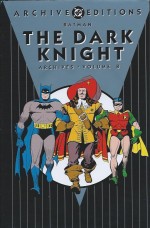
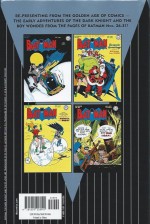
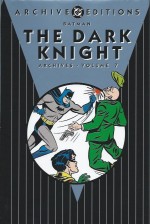
Batman: the Dark Knight Archives volume 6


By Bob Kane, Don Cameron, Bill Finger, Jack Schiff, Alvin Schwartz, Joe Greene, Mort Weisinger, Dick Sprang, Jack Burnley, Jerry Robinson & various (DC Comics)
ISBN: 978-1-4012-2547-6

Debuting a year after Superman, “The Bat-Man” (and latterly Robin, the Boy Wonder) cemented DC/National Comics as the market frontrunner and conceptual leader of the burgeoning comicbook industry.

Having established the parameters of the metahuman in their Man of Tomorrow, the physical mortal perfection and dashing derring-do of the strictly human Dynamic Duo rapidly became the swashbuckling benchmark by which all other four-colour crimebusters were judged.

This sixth lavish hardback Archive Edition volume covers Batman #21-25 and again features exploits from the height of World War II – specifically February/March 1944 to October/November 1944.

These Golden Age greats are some of the finest tales in Batman’s decades-long canon, as lead writers Bill Finger and Don Cameron, supplemented by Joe Samachson, Jack Schiff, Alvin Schwartz, Joe Greene and Mort Weisinger, pushed the boundaries of the adventure medium whilst graphic genius Dick Sprang slowly superseded and surpassed Bob Kane and Jack Burnley, making the feature uniquely his own and keeping the Peerless Pair at the forefront of a vast army of superhero successes.

The sheer creativity exhibited in these adventures proved that the ever-expanding band of creators responsible for producing the bi-monthly adventures of the Dark Knight were hitting an artistic peak which only stellar stable-mate Superman and Fawcett’s Captain Marvel were able to equal or even approach.

Moreover with WWII finally turning in the Good Guys’ favour, the escapades became upbeat and more wide-ranging…

Following a Foreword from former bat-scribe Alvin Schwartz, the Home Front began to offer a brighter – but still crime-ridden – perspective with Batman #21, an all-Sprang art extravaganza which opened with the slick Schiff-scripted tale ‘The Streamlined Rustlers’ which saw the Caped Crusaders way out West solving a devilish mystery and crushing a gang of beef-stealing black-market black hats.

Cameron then described the antics of murderous big city mobster Chopper Gant who conned a military historian into planning his capers, briefly bamboozling Batman and Robin with his warlike ‘Blitzkrieg Bandits!’ whilst Schwartz penned the delightfully convoluted romp ‘His Lordship’s Double’ which sees newly dapper, slim-line manservant Alfred asked to impersonate a purportedly crowd-shy aristocratic inventor… only to become the victim in a nasty scheme to secure the true toff’s latest invention…

It all culminates with ‘The Three Eccentrics’ (written by Joe Greene), which details the wily Penguin‘s schemes to empty the coffers of a trio of Gotham’s wealthiest misfits. The fiendish foray founders because he fails to take into account the time-sensitivity of his information and the dogged grit and ingenuity of the Gotham Gangbusters…

Batman #22 leads with ‘The Duped Domestics!’ by Schwartz, Bob Kane & Jerry Robinson wherein a select number of Gotham’s butlers are targeted by a sultry seductress looking for easy inroads to swanky houses. Despite being an old enemy of Batman’s, “Belinda” more than meets her match when Alfred becomes her next patsy…

When the little rich boy secretly takes a menial job, his generous guardian is rightly baffled but after ‘Dick Grayson, Telegraph Boy!’ (Finger, Burney & Robinson) exposes a criminal enterprise centred around Gotham Observatory, the method of his madness soon becomes clear.

Next a new solo series debuted as Mort Weisinger & Robinson launched ‘The Adventures of Alfred’ with ‘Conversational Clue!’ wherein Batman’s batman misapprehends an overheard word at the library and stumbles into a safecracking gang.

The issue concludes with ‘The Cavalier Rides Again!’ (Finger, Burnley & Charles Paris) as the Dashing Desperado mystifyingly begins bagging cheap imitations rather than authentic booty in his ongoing campaign to best the Batman…

The Joker led in issue #23 with Finger, Sprang & Gene McDonald’s eccentric thriller ‘The Upside Down Crimes!’ wherein the Harlequin of Hate turns the town topsy-turvy in his latest series of looting larcenies after which smitten Dick’s bold endeavours save classmate and ‘Damsel in Distress!’ (Cameron & Sprang) Marjory Davenport and her dad from gangster kidnappers.

Unfortunately for him, she soon has her head turned by flamboyant Robin and the Boy Wonder becomes his own rival…

Anonymously scripted but again rendered by Jerry Robinson, ‘The Adventures of Alfred: Borrowed Butler!’ found the domestic detective loaned out by Bruce Wayne to a snooty neighbour and accidentally uncovering an insider’s scheme to burgle the place.

Wrapping up this outing is another fact-packed “Police Division Story” with Batman and Robin joining the Royal Canadian Mounted Police to stop a vicious ring of fur bandits who have decided to forego robbing big city stores. Instead, the ‘Pelt Plunderers!’ (Joe Samachson & Sprang) head due north to steal directly from the trappers…

Batman #24 added a smidgen of science fiction flair and a dash of sheer whimsy to the regular mix as ‘It Happened in Rome’ (Samachson & Sprang) introduces Professor Carter Nichols who devises a method of time-travel which depends on deep hypnosis.

His first subjects are old friend Bruce Wayne and his ward who both wing back centuries for a sightseeing trip and end up saving a charioteer from race-fixers as Batmanus and Robin…

Bruce also plays a pivotal role in ‘Convict Cargo!’ (Cameron & Sprang), pretending to be an embezzler in order to expose a ring of thugs offering perfect getaways to Gotham’s white-collar criminals. Happily when the villain vacations turn out to be one-way trips, Batman and Robin are on hand to mop up the pirates responsible.

Cameron & Robinson then describe how ‘The Adventures of Alfred: Police Line-Up!’ leads the bewildered butler into trailing the wrong crook but still nabbing a mob of bad eggs before portly purveyors of peril Tweedledum and Tweedledee connive their way into the position of ‘The Mayors of Yonville!’

Their flagrant abuse of civic power dumps the Dynamic Duo into jail but still isn’t enough to keep their goldmine scam from coming to light once the heroes bust out…

This superb hardback compendium concludes with Batman #25 as opening shot ‘Knights of Knavery’ (Cameron, Burnley& Robinson) sees arch rivals Penguin and Joker join forces to steal the world’s biggest emerald and outwit all opposition, before falling foul of their own mistrust and arrogance once the Dark Knight puts his own thinking cap on.

‘The Sheik of Gotham City!’ (Schwartz, Burnley & Robinson) then sees an Arabian refugee working as a cab driver in Gotham restored to rule his usurped desert kingdom after our heroes foil an assassination attempt, whilst ‘The Adventures of Alfred: The Mesmerised Manhunter!’ (Cameron & Robinson) sees the off-duty domestic the plaything of a stage magician whilst simultaneously foiling a box office heist.

The action and suspense wrap up in spectacular style as Finger, Burnley& Robinson detail a saga of sabotage and redemption when the Dynamic Duo join the rough-and-ready electrical engineers known as ‘The Kilowatt Cowboys!’

As if the job of bringing the nation’s newest hydroelectric dam on line is not dangerous enough and a plague of thefts by murderous copper thieves isn’t cutting into productivity, most of Batman’s time is spent stopping rival wire men Jack and Alec from killing each other…

Accompanied by a stunning and iconic Sprang cover gallery and full creator ‘Biographies’, this sublime selection of classic comicbook action is a magnificent ride on the Wayback Machine to a time of high drama, low cunning and breathtaking excitement
© 1944, 2009 DC Comics. All Rights Reserved.

Superman Archives volume 8


By Jerry Siegel, Joe Shuster, Don Cameron, Bill Finger, Alvin Schwartz, Whitney Ellsworth, Ed Dobrotka, Sam Citron, Ira Yarbrough, George Roussos, Jack Burnley, Wayne Boring & various (DC Comics)
ISBN: 978-1-4012-2885-9

Today’s American comicbook industry – if it still existed at all – would have been utterly unrecognisable to us without Superman. His unprecedented invention and adoption by a desperate and joy-starved generation quite literally gave birth to a genre if not an actual art form.

Spawning an impossible army of imitators and variations, within three years of his 1938 debut, the intoxicating blend of eye-popping action and social wish-fulfilment which hallmarked the early Man of Steel had grown to encompass cops-and-robbers crime-busting, socially reforming dramas, science fiction, fantasy, whimsical comedy and, once the war in Europe and the East embroiled America, patriotic relevance for a host of gods, heroes and monsters, all dedicated to profit through exuberant, eye-popping excess and explosive derring-do.

In comicbook terms at least Superman was master of the world, having already utterly changed the shape of the fledgling industry. There was the phenomenally popular newspaper strip, a thrice-weekly radio serial, games, toys, as much global syndication as the war would allow and the perennially re-run Fleischer studio’s astounding animated cartoons.

Despite all the years that have passed since then, I – and so many others – still believe that superhero comics were never more apt or effective than when they were whole-heartedly combating the agents of Fascism (and yes by heck, even the dirty, doggone, Reds-Under-the-Beds Commies, who took their place in the 1960s too!) with mysterious masked marvel men in compulsive, improbable short, sharp exploits,

The most evocative and breathtaking moments of the genre always seem to occur as those gaudy gladiators soundly thrashed – and please forgive the offensive contemporary colloquialism – “Nips, Nazis and Reds”. However, even in those dark days long-ago, the young and enthusiastic creators were wise enough to augment their tales of espionage and invasion with a range of gentler, more whimsical four-colour fare. By the time of the sagas in this superb seventh Superman full-colour hardcover Archive edition – re-presenting #30-35 (September/October 1944 to July/August 1944) of the Man of Tomorrow’s solo title – the apprehension of the early war years had been replaced with eager anticipation as tyranny’s infernal forces were being rolled back on every Front.

Superman was the premier, vibrant, vital role model whose startling abilities and take-charge, can-do attitude had won the hearts of the public at home and the troops across the war-torn world.

Now, although the shooting was all but over, stirring, morale-boosting covers and stories were being phased out in favour of gentler and even purely comedic themes.

Following a funny and informative Foreword: “Look! Up in the Sky! It’s a Bird… it’s a Plane…it’s – An Imp?’ by cartoonist Evan Dorkin discussing the advent of super-foes, social change and a certain fifth dimensional jester, the action-laced whimsy begins with ‘Superman Alias Superman!’ by Don Cameron, Ira Yarbrough & Stan Kaye wherein lovelorn Clark Kent takes romantic advice from office-boy Jimmy Olsen and impersonates his own alter ego to impress Lois.

The doomed imposture is further complicated because his scathing, scoop-obsessed colleague is fully fixated on catching high society bandit Silver Foxx and has no time for Clark’s insecurities and idiocies…

The go-getting journalist was always too busy for romance back then, as can be seen in ‘Lois Lane, Girl Reporter: The Arch-Swindler’ by Cameron, Ed Dobrotka & George Roussos. In those turbulent times the interpretation of the “plucky news-hen” was far less demeaning than the post-war sneaky minx who was so popular in the late 1950s and 1960s.

Lois might have been ambitious and life-threateningly precipitate, but it was always to advance her own career, help underdogs and put bad guys away, not trap a man into marriage.

Her Superman-free exploits began in #28: a succession of 4-page vignettes offering breathless, fast-paced, screwball comedy-thrillers. In this example, spurred on by Clark’s teasing, she tracks down, is captured by and spectacularly turns the tables on murderous conman Jack Dover…

Back with the star feature, Bill Finger, Yarbrough & Roussos revealed how an ancient prophecy turns the Action Ace into ‘The King’s Substitute’ as centuries ago the ruler of tiny nation Poltavia learns that a Superman will one day deliver his country from bondage, restore a true heir and offer the people a wonderful thing called democracy…

Jerry Siegel, Joe Shuster & Yarbrough then herald the start of a new kind of adventure as ‘The Mysterious Mr. Mxyztplk’ debuts. An utterly intoxicating daffy romp introduced the 5th dimensional imp who would henceforward periodically test the Man of Steel’s ingenuity and patience in a still-hilarious perfect example of the lighter side of super-heroics.

Mxyztplk (later anglicised to Mxyzptlk, presumably to make it easier to spell?) became a cornerstone of the Superman mythos: an insufferable pixie against whom all Superman’s strength and power were useless. From then on brains were going to be as important as brawn as frustration became the Man of Steel’s first real weakness…

Superman #31 opens with crime-thriller ‘Tune Up Time for Crime’ (Finger, Sam Citron Roussos) as crooks with a deadly new sonic weapon turn out to have the scientific backing of the Metropolis’ Marvel’s oldest enemy, after which arch-whimsy reappears in ‘A Dog’s Tale’ (Finger, Citron & Roussos) when scruffy mutt Flip proudly tells his canine pals how he helped Superman crack a dognapping racket…

Cameron & Dobrotka then reveal how a gang of jewel thieves prove no match for dumb luck and journalistic moxie in ‘Lois Lane, Girl Reporter: The Aces Doonan Gang’ before Finger, Citron & Roussos close out the issue with a trip to the museum as ‘The Treasure House of History!’ finds Superman saving a noble institution from mismanagement, skulduggery and even closure whilst discovering a lost Mayan city…

In #32 ‘Superman’s Search for Clark Kent!’ (Alvin Schwartz, Dobrotka & Roussos) finds the Action Ace an invincible amnesiac after volunteering for a scientific trial and forced to track down his own other identity whilst ‘Crime on Skis!!’ (Finger, Dobrotka & Roussos) sees the restored hero debunk a malign mythical bird as no more than a cover for more pedestrian killers plaguing a ski resort.

‘Lois Lane, Girl Reporter: Monkey Business’ (Whitney Ellsworth, Dobrotka & Roussos) is another splendidly frothy concoction describing how a ventriloquist at the zoo puts the jaunty journo on the trail of a pack of pickpockets, after which the terrible Toyman resurfaces to plague Metropolis, plundering wealthy antique collectors in search of a treasure hidden since the French Revolution in ‘Toys of Treachery!’ (Cameron, Dobrotka & Roussos).

Superman #33 opened with the hero following foolish Lois into ‘Dimensions of Danger!’ (Cameron, Yarbrough & Roussos) after she road-tested a Mxyztplk spell and ended up stuck in his home realm of Zrfff. Once there the Caped Kryptonian had the opportunity to do a little mischief-making of his own…

With art by Yarbrough & Roussos ‘The Country Doctor!’ is the kind of socially aware redemptive tale Bill Finger was a master of and saw Clark Kent stuck in homey little Middletown watching aging Dr. David Brown make a difference – but little money – ministering to the poor souls around him.

The physician’s only regret was a son who preferred big city glamour cases and big city fees, but then something quite tragic happened…

Ellsworth & Dobrotka’s ‘Lois Lane, Girl Reporter: The Purloined Piggy Bank’ found her being pranked by (male) cops before turning the tables on them and crushing a crime conspiracy. The issue ends with classic mystery yarn ‘The Compass Points to Murder!’ (Finger, Yarbrough & Roussos) finding the Action Ace darting to the four corners of the globe in search of a killer who believed he’d successfully silenced a shipping fleet magnate but had left one telling clue behind…

In #25 Mort Weisinger & Fred Ray’s ‘I Sustain the Wings!’ played a crucial part in America’s attempt to address a shortfall in vital services recruitment – a genuine problem at this time in our real world – and created an instant comics classic.

Artistically Superman #34 is an all Citron/Roussos affair, whose opening shot attempted to repeat the magic formula with Cameron scripted ‘The United States Navy!’ with Clark despatched to follow three college football heroes whilst they progress – in different maritime specialisations – through the war in the Pacific.  

Then ‘Lois Lane, Girl Reporter: The Foiled Frame-Up’ (Ellsworth) sees her upset political scoundrels and expose a smear campaign after which Cameron instigates a prototype “Imaginary Tale” with ‘The Canyon that Went Berserk!’ wherein a fortune teller prompts Clark into daydreaming the prospecting adventure of a lifetime…

‘When the World got Tired!’ (Finger) then ramped up the tension when a sinister epidemic of global indolence and sloth turns out to be the work of Lex Luthor and his new alien allies…

The gaggle of Golden Age goodies conclude with the contents of Superman #35 (mostly illustrated by Yarbrough & Roussos), starting with the Cameron scripted ‘Fame for Sale!’, wherein shady cove and scurvy scoundrel J. Wilbur Wolfingham rears his conniving head once more. The magnificent pastiche of W. C. Fields as a ruthless Mr. Micawber returned like a bad penny over and again to bedevil honest folk and greedy saps and here he acted as an early kind of spin doctor/publicist for a millionaire miser, social climbing parvenu and even the Mayor of Metropolis, promising their names would be on everybody’s lips.

Of course he neglected to mention how he would accomplish the feats and drew the unwelcome attention of an always alert Action Ace…

A gang wanting to profiteer from a new medicine came to a painful end in ‘Lois Lane, Girl Reporter: The Drug Swindle’ (Cameron & Dobrotka) whilst Yarbrough & Roussos resumed their illustrative endeavours for Finger’s ‘Like Father, Like Son!’ wherein Superman cleared the name and reputation of a local politician whose enemies sought to tar him with the same scandalous brush as his supposedly criminal child, and the

‘The Genie of the Lamp!’ (scripted by Schwartz) then sees the Action Ace teach a wealthy young antique collector the difference between precious objects and people in need by masquerading as a wish-fulfilling sprite…

With stunning covers by Jack Burnley, Wayne Boring, Roussos & Kaye, plus a full ‘Biographies’ section this is another stunning selection of the stories which kept the groundbreaking Man of Steel at the forefront of comics for nearly 80 years.

As fresh and thrilling now as they ever were, these endlessly re-readable epics are perfectly situated in these gloriously luxurious Archive Editions; a worthy, long-lasting vehicle for the greatest and most influential comics stories the art form has ever produced.

So what are you waiting for…?
© 1944, 1945, 2010 DC Comics. All Rights Reserved.

Hurricane Isle: The Best of Captain Easy and Wash Tubbs


By Roy Crane, edited by Rick Norwood (Fantagraphics Books)
ISBN: 978-1-60699-809-0

Modern comics evolved from newspaper cartoons and comic strips, and these pictorial features were until relatively recently utterly ubiquitous and hugely popular with the public. They were also highly valued by publishers who used them as an irresistible sales weapon to guarantee and increase circulation and profits.

It’s virtually impossible for us to today to understand the overwhelming power of the comic strip in America (and the wider world) from the Great Depression to the end of World War II. With no television, broadcast radio far from universal and movie shows at best a weekly treat for most folk, household entertainment was mostly derived from the comic sections of daily and especially Sunday Newspapers. “The Funnies” were the most common recreation for millions who were well served by a fantastic variety and incredible quality.

From the very start humour was paramount; hence the terms “Funnies” and “Comics”, and from these gag and stunt beginnings – a blend of silent movie slapstick, outrageous fantasy and vaudeville shows – came a thoroughly entertaining mutant hybrid: Roy Crane’s Wash Tubbs.

Washington Tubbs II was a comedic gag-a-day strip not much different from family favourite Harold Teen (by Crane’s friend and contemporary Carl Ed). Tubbs was a diminutive, ambitious and bumbling young store clerk when the feature debuted on April 21st 1924, but after only three months Crane re-evaluated his little enterprise and made a few changes which would reshape the entire art form.

Having Wash run away to the circus (Crane did much the same in the name of research) the artist gradually moved the strip into mock-heroics, then through a period of gently boisterous action romps to become a full-blown, light-hearted, rip-roaring adventure series. It was the first of its kind and dictated the form for decades thereafter. Crane then sealed its immortality with the introduction of prototype he-man and ancestral moody swashbuckler Captain Easy in the landmark episode for 6th May, 1929.

As the tales gradually became more exotic and thrill-packed, the globe-trotting little dynamo clearly needed a sidekick and sounding board. After a few bright and breezy types were tried and discarded, Crane decided on one who could believably handle the combat side of things, and thus in the middle of a European war, in the fairytale kingdom of Kandelabra, Tubbs liberated a mysterious fellow American from a cell and history was made.

Before long the mismatched pair were inseparable; tried-and-true travelling companions hunting treasure, fighting thugs and rescuing a bevy of startlingly comely damsels in distress…

The bluff, two-fisted, completely capable and utterly dependable, down-on-his-luck “Southern Gentleman” was something not seen before in comics: a taciturn, raw, square-jawed hunk played completely straight rather than the previously popular buffoon or music hall foil seen in such classic serials as Hairsbreadth Harry or Desperate Desmond.

Moreover Crane’s seductively simple blend of cartoon exuberance and design was a far more accessible and powerful medium for action story-telling than the somewhat static illustrative style favoured by artists like Hal Foster: just beginning to make waves on the new Tarzan Sunday page at this time.

Tubbs and Easy were as exotic and thrilling as the Ape Man but rattled along like the tempestuous Popeye, full of vim, vigour and vinegar, as attested to by a close look at the early work of the would-be cartoonists who followed the strip with avid intensity.

Floyd Gottfredson, Milton Caniff, Jack Kirby, Will Eisner and especially young Joe Shuster were eager fans taking notes and following suit…

After a couple of abortive attempts starring his little hero, Crane eventually bowed to the inevitable and created a full colour Sunday page dedicated solely to his increasingly popular hero-for-hire. Captain Easy debuted on 30th July 1933, in wild and woolly escapades set before his fateful meeting with Tubbs.

Both together and separately, reprinted exploits of these troubleshooters became staples of the earliest comic books (specifically The Funnies from October 1936 and The Comics, March 1937 onwards).

With an entire page and vibrant colours to play with, Crane’s imagination ran wild and his fabulous visual concoctions achieved a timeless immediacy that made each page a unified piece of sequential art. The effect of the pages can be seen in so many strips since, especially the works of such near-contemporaries as Hergé and giants in waiting like Charles Schulz. They have all been collected in the four-volume Roy Crane’s Captain Easy, Soldier of Fortune: The Complete Sunday Newspaper Strips.

Those pages were a clearly as much of a joy to create as to read. In fact, the cited reason for Crane surrendering the Sunday strip to his assistant Les Turner in 1937 was NEA Syndicate’s abruptly and arbitrarily demanding that all its strips be henceforward produced in a rigid panel-structure to facilitate them being cut up and re-pasted as local editors dictated. Crane just walked away, concentrating on the daily feature. In 1943 he quit NEA to create the wartime aviator strip Buz Sawyer, and Turner became the able custodian of the heroes’ fate.

Wash Tubbs ran until January 10th 1988.

Before all that however Wash was the affable and undisputed star of a never-ending parade of riotous daily black and white escapades and this superb hardback opens with two of them: part of a cherry-picked compilation of ten of the very best adventures of the bombastic buddies. Hopefully if this book is a hit it will lead to another complete reprinting such as the 18-volume series covering the entirety of the Wash Tubbs run – 1934-1943 and published by NBM from 1987-1992…

Before the non-stop nonsense begins author and pre-eminent comic strip historian Ron Goulart details all you need to know about the tales in ‘A History of Lickety Whop’ and editor Rick Norwood provides further background information in his copiously illustrated Introduction’ after which we’re all plunged into astounding adventure on ‘Hurricane Isle’ (which originally ran daily from February 23rd to June 6th 1928)…

At this time Wash and fellow inveterate fortune-hunter Gozy Gallup are gloating over securing an ancient map which once belonged to the dread pirate Edward Teach AKA Blackbeard!

As they research the infamous buccaneer and scrabble to find a ship to take them to their destination, they are unaware that aggrieved enemy Brick Bane – the Bandit King of Mexico – is hard on their trail and hungry for revenge. Stalking them as they journey from New Orleans to the Caribbean, he takes a nasty sea captain into his confidence and arranges for the sinister salt to hire out his ship to the treasure seekers. The skipper is unsavoury brute Bull Dawson: destined to become Tubbs’ – and later Easy’s – greatest and most implacable foe…

After travelling to the island with them Dawson, having already removed Bane, springs his trap and turns Wash and Gozy into enslaved labourers, digging with the crew to find the fabled horde. The lads soon rebel and escape into the jungle to search on their own, and also abortively attempt to steal Dawson’s ship.

The wily brute is always too much for them however and even after the boys finally locate the loot, the malicious mariner reappears to take it from them. The sadistic swine is preparing to maroon them when Bane shows up with a ship full of his Mexican bandits and a shooting war breaks out…

With bullets flying and bodies dropping, Wash and Gozy convince affable deckhand Samson to switch sides and the trio take off for civilisation with the treasure in the hold…

Money comes and goes pretty freely for these guys but by the time ‘Arabia’ (July 30th – December 12th 1928) begins they are still pretty flush and so opt for a luxurious Mediterranean cruise. Unfortunately Wash’s propensity for clumsy gaffes raises the ire of a very nasty sheik named Abdul Hoozit Hudson Bey and the affronted potentate swears vengeance when the ship docks in Tunis.

As if icing fate’s cake, when wandering through the bazaar Wash is glamoured by a pair of gorgeous eyes and inadvertently seals his doom by attempting to rescue a girl from a seraglio: Jada is not only a distressed damsel but Bey’s favourite wife…

Heeding the French authorities’ advice to leave town quickly, the lads take off on a camel caravan into the Sahara but have no idea they are heading into cunning Bey’s trap…

The fact that Jada is the favourite of the incensed chieftain saves them temporarily, but when the sheik finally finds a way to surreptitiously assassinate them, she and her devoted slave Bola dash into the deep desert to save them, and the quartet strike out for safety and freedom together.

That trek dumps them in the clutches of Bey’s great rival Abdullah Bumfellah and leads to a tribal shooting war. Happily Bola has been busy and found a Foreign Legion patrol to save the day.

And that’s when Jada drops her bombshell. She is actually a princess from a European principality, sold to Bey by her father’s Grand Vizier so that he could steal the throne. Now that she’s free again she must return to liberate her poor people. Despite having to get back to America, Wash won’t shut up about wishing he’d gone with her…

He soon gets the chance as ‘Kandelabra’ (April 11th – July 6th 1929) became the most significant sequence in the strip’s history; introducing Captain Easy in a riotous, rousing Ruritanian epic which we join after Wash reunites with Jada in the postage stamp kingdom she had been so cruelly abducted from.

Our little go-getter soon infiltrates the government and rises to the rank of admiral of the landlocked land but overplays his hand and is framed for stealing the army’s payroll. Delivered to a secret dungeon he (partially) escapes and finds a gruff fellow American who refuses to share his name but insists on being called “Easy”…

Busting out his new pal, soon Wash and the stranger are caught in a bloody revolution when the aggrieved army mutinies. Before long the Vizier’s cronies are ousted, the vile villain accidentally orchestrates his own demise and the regally restored Jada declares the birth of the continent’s newest democracy…

In ‘Desert Island’ (February 6th – June 7th 1930) Bull Dawson returns to steal Tubbs’ entire fortune, flying off across America in a bid to escape with his ill-gotten gains. The robbery becomes a nationwide sensation and we join the action as Wash and Easy frantically pursue the fugitive. Tracking him to San Francisco they continue the chase when the malign mariner takes off in a schooner with our heroes as stowaways and, before long, prisoners…

The sadistic Bull lose faces after being thrashed in a no-holds barred fight with Easy which was merely subterfuge to allow the southern soldier of fortune to pick Dawson’s pocket and recover Wash’s easily portable $200,000 in cash. As the battered thug recuperates the ship is hit by a monster typhoon which apparently leaves our heroes the only survivors aboard the shattered shards of the schooner.

The wreck fetches up on a desolate Pacific atoll where the boys soon fall into the routine of latter-day Robinson Crusoes. The isolated idyll becomes complicated when they find the place is already home to a young woman who was the only survivor of an attack by roving headhunters from Borneo.

Mary Milton is brave, competent and beautiful and before long the lonely pals are fierce rivals for her affections…

The situation grows dangerously intense and only stabilises when the savages return, forcing the warring suitors to stand together or fall separately…

When the brutal battle ends the westerners are in possession of a sturdy war canoe and decide to risk their lives on an epic ocean odyssey to the nearest outpost of civilisation. It is only after the voyagers are far out to sea that Wash agonisingly recalls that he left his stash of dollars behind…

The next adventure (running from June 9th – October 1930) immediately follows on as the weary travellers reach French Indo-China and, thanks to a friendly soldier, escape far inland via a mighty river. After days of travel they reach the previously hidden kingdom of Cucumbria and quickly fall foul of the toad-worshipping emperor Igbay Umbay who takes one look at Mary and decides he must have her…

Being a coward who stole the throne from his brother, the grand poobah hasn’t the nerve to simply take her and orchestrates a succession of scurvy schemes to get rid of Wash and Easy but the boys are too smart and bold to fall for them. Infuriatingly rising in power and status, aided by young prince Hilo Casino – freshly returned from college in America – the Americans finally seem be out of the Umbay’s hair after they agree to lead his armies against the supernatural rebel leader known as ‘The Phantom King’…

Despite deep misgivings “General” Easy and his aide Washington Tubbs set out on a campaign that will ravage the hidden kingdom, unseat an emperor, cost thousands of lives and lose them the girl they both love…

A year later ‘Down on the Bayou’ (March 12th – July 25th 1931) found the world-weary wanderers nearing home again only to be arrested as they approach New Orleans in a stolen plane. They were fleeing a clever frame-up in infamous Costa Grande, but without proof could only evade their US Navy captors and flee into the swampy vastness of the Mississippi Delta…

Lost for days and starving, they are picked up by vivacious gangster’s moll Jean who recruits them into a gang of smugglers and rum-runners who inhabit a huge plantation somewhere between Pelican Island and Barataria dedicated to various criminal enterprises. Tubbs and Easy are soon comfortably settled in amidst the rogues and outcasts but everything changes when Jean’s brother returns from a smuggling trip. His name is Bull Dawson…

The pirate is prevented from killing our heroes by Jean and the huge Cajun in charge of the outlaw outpost, but Dawson takes it badly and with his gang of deadly bodyguards decides to take over the whole enterprise.

A couple of murders later Bull is big boss but also oddly friendly to his most despised enemies. Maybe it’s a ploy to put them off guard, but perhaps it has more to do with the gang of Chicago mobsters who have come down to put an end to the bootlegging mavericks cutting into their profits…

The troubles and bloodshed escalate exponentially and Jean drops her final bombshell: she’s a federal agent working with the Coast Guard to smash the budding criminal empire…

Once the dust settles she has one final surprise in store. In all the years of their friendship Wash could never get his taciturn pal to talk of his past or even reveal his real name. Now the government girl gives Mr. William Lee a message which sends him rushing across country to an old plantation home. Here the astounded Wash hears all about his pal’s shocking life, sordid scandals and abandoned wife …and then he learns the truth…

Soon the impediments and lies which blighted Easy’s life are all removed and the wanderer settles in to a well-deserved retirement with the girl he always loved but could never have. Tubbs moves on, quickly reuniting with old chum Gozy Gallup…

A few weeks later the ever-restless Wash is riding a tramp steamer headed for Europe, intent on paying Jada a visit in Kandelabra but, falling foul of rustic transportation systems, ends up in the similar but so different Principality of Sneezia…

Apart from pretty girls, the tiny kingdom has only one point of interest: the world’s dinkiest railway service. Run by aged expatriate American Calliope Simpson ‘The Transalpina Express’ (August 13th – November 21st 1931) links Sneezia to sister kingdom Belchia and is the most unique and beloved (by its intoxicated customers at least) service in the world.

Wash is especially keen to learn the business since being the engineer has made octogenarian Cal the most irresistible man in two countries, fighting off adorable young women with a stick…

The lad’s greatest dream comes true when Simpson finally elopes with one of his adoring devotees and Washington Tubbs become sole operator of the Express, but his joy at all the feminine attention soon sours when Belchia and Sneezia go to war and both sides want to use his train to move men and material into combat. Of course the dilemma can only end in disaster and before long our boy is running for his life again…

There’s a big jump to the next yarn which finds Wash and Easy reunited and stowing away on the wrong-est ship imaginable. Quickly caught, they are quite understandably assumed to be part of the contingent of prisoners bound for the final destination – ‘Devil’s Island’ (June 9th – August 30th 1932)…

No sooner are they mixed in with the hopeless prison population than the planning of their inevitable escape begins, but success only leads to greater peril as they and their criminal confederates take ship with a greedy captain subject to murderous bouts of paranoia and madness…

‘Whales’ (April 24th – August 30th 1933) is probably the most shocking – to modern sensibilities – of the perennial wanderers’ exploits as Wash and Easy are drugged in a Dutch cafe and dumped aboard one of the last sailing ships to work the whaling trade.

Elderly and nostalgic Captain Folly has been convinced by psychotic First Mate Mr. Slugg to compete one last time against the new-fangled factory whaling fleets, unknowingly crewing his creaking old ship with shanghaied strangers…

The grim minutiae of the ghastly profession is scrupulously detailed as our heroes seek some means of escape but with Slugg becoming increasingly unbalanced and eventually murdering Folly, bloody mutiny soon leads to the ship foundering and both factions – or at least the survivors of each – being marooned on the arctic Alaskan ice, where naturally our heroes find the only pretty girl in a thousand square miles…

This fabulous treasury of thrills concludes with one last battle against Bull Dawson after the incorrigible monster links up with gorgeous grifter Peggy Lake, who fleeces gullible Wash of his savings and disappears into the endless green wilderness of the swamps of ‘Okefenokee’ (June 13th – July 24th 1935).

The crime leads to a massive police manhunt through the mire before the boys personally track down the villains and deliver one more sound thrashing to the malodorous malcontent and his pretty patsy…

Rounding off this superb collection is a thorough ‘Captain Easy and Wash Tubbs Episode Guide’ by Rick Norwood as well as a glorious graphic Mexican travelogue feature by Crane in ‘An Afterword in Pictures’ as well as the informative biography section ‘About the Authors’.

If I’ve given the impression that this has all been grim and gritty turmoil and drama thus far, please forgive me: Crane was a superbly irrepressible gag-man and his boisterous, enchanting serials abound with breezy, light-hearted banter, hilarious situations and outright farce – a sure-fire formula modern cinema directors plunder to this day.

Easy was the Indiana Jones, Flynn (The Librarian) Carsen and Jack (Romancing the Stone) Cotton of his day – and, clearly blazing a trail for all of them – whilst Wash was akin to Danny Kaye or our own Norman Wisdom: brave, big-hearted, well-meaning, clay-footed, irrepressible and utterly indomitable everymen… just like all of us.

This superb monochrome landscape hardback (274 x 33 x 224 mm) is a wonderful means of discovering or rediscovering Crane’s rip-snorting, pulse-pounding, exotically racy adventure trailblazer.

This is comics storytelling of the very highest quality: unforgettable, spectacular and utterly irresistible. These tales rank alongside her best of Hergé, Tezuka and Kirby and led irrefutably to the creations of all of them. Now that you have the chance to experience the strips that inspired the giants of our art form, how can you possibly resist?
Hurricane Isle: The Best of Captain Easy and Wash Tubbs © 2015 Fantagraphics Books. All Wash Tubbs and Captain Easy Strips © 2015 United Features Syndicate, Inc. All other material © the respective copyright holders. All rights reserved.

Spawn of Mars and Other Stories Illustrated by Wallace Wood


By Al Feldstein, Harry Harrison & Wallace Wood (Fantagraphics Books)
ISBN: 978-1-60699-805-2

EC began in 1944 when comicbook pioneer Max Gaines sold the successful superhero properties of his All-American Comics company – including Wonder Woman, Flash, Green Lantern and Hawkman – to half-sister National/DC, retaining only Picture Stories from the Bible. His plan was to produce a line of Educational Comics with schools and church groups as the major target market. He then augmented his core title with three more in similar vein: Picture Stories from American History, Science and World History. The worthwhile but unsustainable project was already struggling when he died in a boating accident in 1947.

His son William was eventually convinced to assume control of the family business and, with much support and encouragement from unsung hero Sol Cohen and multi-talented associate Al Feldstein, transformed the ailing enterprise into Entertaining Comics, consequently triggering the greatest qualitative leap forward in comicbook history…

After a few tentative false starts and abortive experiments, Gaines settled into a bold and impressive publishing strategy, utilising the most gifted illustrators in the field to tell a “New Trend” of stories aimed at an older, more discriminating audience.

From 1950 to 1954 EC was the most innovative and influential publisher in America, dominating the genres of science fiction, war, horror and crime. The company even added a new type of title and another genre with the creation of parody magazine Mad …

This 12th volume of the Fantagraphics EC Library compiles a mind-blowing catalogue of cosmic wonders courtesy of Wallace Allan Wood: one of the greatest draughtsmen and graphic imagineers our art form has ever produced.

Woody was a master of every aspect of the business. He began his career lettering Will Eisner’s Spirit strip, readily moving into pencilling and inking as the 1940s ended and, latterly, publishing. After years working all over the comicbook and syndicated strip industries, as well as in legitimate illustration, package-design and other areas of commercial art, he devised the legendary T.H.U.N.D.E.R. Agents franchise and even created one of the first adult independent comics with Witzend in the late 1960s.

The troubled genius carried the seeds of his own destruction, however. Woody’s life was one of addiction (booze and cigarettes), traumatic relationships, tantalisingly close but always frustrated financial security, illness and eventually suicide. It was as if all the joy and beauty in his existence stayed on the pages and there was none left for real life.

Although during his time with EC Wood became the acknowledged, undisputed Master of Science Fiction art in America, he was equally adept, driven and accomplished in the production of all genres.

This enticingly evocative collection reprints some of his best early science fiction and fantasy masterpieces, re-presented as always, in a lavish monochrome hardcover edition, with supplementary interviews, features and dissertations, beginning with ‘Spawn of Wood’ by Bill Mason, which dissects and appraises the yarns included with forensic discipline and unflinching insight.

Although the usual process at this time was for Gaines and Al Feldstein to plot stories before Feldstein meticulously scripted and laid out each tale for the artists, the worlds of wonder here begin their revelatory orbits with a chilling piece written and illustrated by Wood as ‘Dark Side of the Moon’ (from Weird Fantasy #15 September/October 1950) discloses how the fist lunar landing exposes an alien city of conquerors poised to attack…

Gaines & Al Feldstein were back in charge for ‘A Trip to a Star!’ (Weird Fantasy #16 November/December 1950) as an exploratory excursion far beyond the solar system leads to an astonishing mystery whilst ‘Return’ (Weird Science #15 January/February 1951) sees survivors of an antediluvian and previously unknown race show up on the brink of humanity’s atomic Armageddon to reveal what caused them to flee the planet in ages past…

‘Deadlock!’ was another all-Wood extravaganza (Weird Fantasy #17 January/February 1951), describing a gripping stalemate in space as mankind responded to its First Contact with another star-faring species with typical suspicion. Sadly, the strangers were more like us than different…

A traumatised survivor of the ‘Sinking of the Titanic!’ (Gaines, Feldstein & Wood from Weird Science #6 March/April 1951) built a time-machine to avert the tragedy and became a helpless pawn of destiny, whilst that same month in Weird Fantasy #6 ‘Rescued!’ saw a second ship of Earthly Argonauts fall foul of the cosmic irony which devastated their bold predecessors and ‘The Aliens!’ (Weird Science #7 May/June 1951) detailed another sidereal misapprehension when two belligerent alien species confronted each other and vowed eradication of their newfound foe and its homeworld. Sadly both were on a desolate part of Earth at the time…

“Red Scare” paranoia informed many tales from this time and ‘Breakdown!’ (Weird Fantasy #7, May/June 1951) is one of the best as a distraught wife tries to inform the authorities of imminent invasion only to walk straight into the mind-shatteringly hideous clutches of the infiltrators.

‘The Probers’ (Weird Science #8 July/August 1951) turns the tables on callous human scientists who jump to the wrong conclusions regarding the latest batch of alien guinea pigs whilst that same month in Weird Fantasy #8, all-Wood, ecologically astute saga ‘The Enemies of the Colony’ saw human pioneers on the Galactic Colonization Authority‘s new territory-world drive the wrong predator to extinction – and not live to regret it…

Extraterrestrial biological horror informed ‘The Gray Cloud of Death!’ (Gaines, Feldstein & Wood from Weird Science #9 September/October 1951) as an inimical and voracious thing invades the second ship to voyage to Venus, whilst that month in Weird Science #9 a tragic misunderstanding and itchy trigger-fingers signalled the end of refugees considered ‘The Invaders’ of our world in anther stark parable from Gaines, Feldstein & Wood…

The titular ‘Spawn of Mars’ (Gaines, Feldstein & Wood and also featured in WF #9) detailed the experiences of the first woman explorer on Mars as well as the thing that came back masquerading as her husband…

A brace of yarns from Weird Science #10 November/December 1951 begins with ‘The Maidens Cried’ as spacemen from Earth find themselves beguiled into the bizarre mating processes of beautiful butterfly women whilst ‘Transformation Completed’ offers a stunning moral fable wherein a possessive father uses his new discovery to get rid of his daughter’s “unworthy” suitor by converting him into a woman.

The paranoid Prof comes a cropper because he utterly underestimates his child’s capacity for love and sacrifice…

‘The Secret of Saturn’s Ring!’ was the first of a Gaines, Feldstein & Wood double-bill from Weird Fantasy #10 (November/December 1951), revealing what lurked within that celebrated debris field and how it portended horrific consequences for mankind, whilst ‘The Mutants!’ depicts our selfish bigotry in all its cruelty as the aberrations born in the atomic age are hounded off Earth…

‘The Conquerors of the Moon!’ Weird Science #11 January/February 1952 is a quintessential classic of the form as greedy industrialists steal a portion of Earth’s atmosphere to make the Moon cost-effectively habitable, destroying the birthplace of humanity and consequently laying the seeds of their own destruction, after which Weird Fantasy #11 from the same month offers both the irony-drenched tale of generational colonists undertaking ‘The Two-Century Journey!’ and a time-bending prophecy of inescapable atomic incineration in ‘The 10th at Noon’…

Wry and trenchant black humour resurfaced in ‘A Gobl is a Knoog’s Best Friend’ (Weird Science #12 March/April 1952) as the relationship between Earth spacers and the ship’s dog is misunderstood by aliens before – from the same issue – ‘The Android!’ showed that desire, deception and murder weren’t just facets of mere biology. That month in Weird Fantasy #12 ‘Project… Survival!’ played word games with mythology as mankind sought to survive Armageddon by selecting fragments of Earth to survive aboard rocketship A.R.C.-1 and ‘The Die is Cast!’ gets crushingly literal as explorers find doom and destruction on a desolate flatland plagued by moving mountains…

Shock SuspenStories launched in 1952 and was an anthological anthology – by which I mean that Gaines and Feldstein used it to highlight their other short-story titles by having horror, crime and sci fi yarns in each issue. From #2 (April/May) comes grisly parable ‘Gee Dad… It’s a Daisy!’ which saw explorers find a planet where the inhabitants are as capricious and inadvertently cruel as any earthling 10-year old…

When Wood first began working he formed a studio with a college buddy who would eventually go on to become one of America’s most popular science fiction authors. Working together as writers, pencillers, inkers and letterers it was often impossible to tell who did what.

Short text feature ‘The Enigma of Harrison the Artist’ by Bill Mason covers that uniquely fertile collaboration and includes a glorious Harry Harrison cartoon of his new colleagues in the pulp sci fi watering hole “the Hydra Club” before this volume concludes with a selection of Wood/Harrison EC collaborations beginning with ‘Dream of Doom’ (Harrison script & pencils, Wood inks from Weird Science #12 March/April 1950).

Here a pair of comic creators fall out over creator credit and persistent nightmares after which ‘Only Time Will Tell’ (possibly Gaines, Feldstein with Harrison & Wood from Weird Fantasy #13 May/June 1950) finds a scientist caught in an inescapable time-loop after popping back in time to help himself invent time travel…

Weird Science #13 July/August 1950 unleashed ‘The Meteor Monster’ (Harrison & Wood) which saw a small town slowly succumb to the mental domination of a thing from another world whilst ‘The Black Arts’ (with Harrison inking Wood from Weird Fantasy #14 July/August 1950) offered a rare supernatural horror outing wherein a mousy man tried to used sorcery to get a girlfriend… with disastrous results.

The comicstrip chronicles conclude with an all-Harrison affair as the ‘Machine From Nowhere’ (Weird Science #15 September/October 1950) offers an extremely rare upbeat ending as two scientists stifle their perfectly natural suspicions to help a little flying robot steal uranium for purposes unknown…

Following a delightful ‘Wallace Wood’ caricature by EC colourist and “office girl” Marie Severin, historian S.C. Ringgenberg provides a detailed history of the flawed genius in ‘Wallace Wood’ and this truly captivating compilation closes on another set of ‘Behind the Panels: Creator Biographies’ by Janice Lee and Bill Mason and Ted White’s ‘Crime, Horror, Terror, Gore, Depravity, Disrespect for Established Authority – and Science Fiction Too!: ‘The Ups and Downs of EC Comics: A Short History’ – a comprehensive run-down of the entire EC phenomenon.

The short, sweet, cruelly curtailed EC back-catalogue has been revisited ad infinitum in the decades since its demise. Those amazing yarns changed not just comics but also infected the larger world through film and television to convert millions into dedicated devotees still addicted to New Trend tales.

Whether you are an aged EC Fan-Addict, just a nervous newbie, or simply a mere fan of brilliant stories and sublime art, Spawn of Mars is a book no sane and sensible reader can afford to be without.
Spawn of Mars and Other Stories © 2015 Fantagraphics Books, Inc. All contents © 2015 Fantagraphics Books, Inc. unless otherwise noted. All comics stories and illustrations © 2015 William M. Gaines Agent, Inc., unless otherwise noted. All other material © 2015 the respective creators. All rights reserved.

Batman: Silver Age Dailies and Sundays 1966-1967


By Whitney Ellsworth, Joe Giella, Sheldon Moldoff, Carmine Infantino & various ()
ISBN: 987-1-61377-845-6

For nearly seventy years in America the newspaper comic strip was the Holy Grail cartoonists and graphic narrative storytellers hungered for. Syndicated across the country and the planet, winning millions of readers and accepted (in most places) as a more mature and sophisticated form of literature than comic-books, it also paid better. And the Holiest of Holies was the full-colour Sunday page.

So it was always something of a poisoned chalice when a comicbook character became so popular that it swam against the tide (after all weren’t the funny-books invented just to reprint the strips in cheap accessible form?) and became a syndicated serial strip. Both Superman and Wonder Woman made the jump soon after their debuts and many features have done so since.

Due to a number of war-time complications, the newspaper Batman and Robin strip was slow getting its shot but when the Dynamic Duo finally hit the Funny pages the feature soon proved to be one of the best-regarded, highest quality examples of the trend, both in Daily and Sunday formats.

The strips never achieved the circulation they deserved, but the Sundays were eventually given a new lease of life when DC began issue vintage stories in the 1960s for Batman 80-page Giants and Annuals. The exceedingly high-quality adventures were ideal short stories and added an extra cachet of exoticism for young readers already captivated by simply seeing tales of their heroes that were positively ancient and redolent of History with a capital “H”.

Such was not the case in the mid-1960s when, for a relatively brief moment, mankind went bananas for superheroes in general and most especially went “Bat-Mad”…

The Silver Age of comicbooks utterly revolutionised a creatively moribund medium cosily snoozing in unchallenging complacency, bringing a modicum of sophistication to the returning genre of masked mystery men.

For quite some time the changes instigated by Julius Schwartz (in Showcase #4, October 1956) which rippled out in the last years of that decade to affect all of National/DC Comics’ superhero characters generally passed by Batman and Robin. Fans buying Batman, Detective Comics, World’s Finest Comics and latterly Justice League of America would read adventures that – in look and tone – were largely unchanged from the safely anodyne fantasies that had turned the Dark Knight into a mystery-solving, alien-fighting costumed Boy Scout just as the 1940s turned into the 1950s.

By the end of 1963, however, Schwartz having – either personally or by example – revived and revitalised the majority of DC’s line and, by extension and imitation, the entire industry with his reinvention of the Superhero, was asked to work his magic with the creatively stalled and nigh-moribund Caped Crusaders.

Bringing his usual team of top-notch creators with him, the Editor stripped down the core-concept, downplaying all the ETs, outlandish villains and daft transformation tales, bringing a cool modern take to the capture of criminals whilst overseeing a streamlining rationalisation of the art style itself. The most apparent change to us kids was a yellow circle around the Bat-symbol but, far more importantly, the stories also changed. A subtle aura of genuine menace had crept back in.

At the same time Hollywood was in production of a television series based on Batman and, through the sheer karmic insanity that permeates the universe, the studio executives were basing their interpretation upon the addictively daft material DC was emphatically turning its editorial back on rather than the “New Look Batman” currently enthralling readers.

The Batman TV show premiered on January 12th 1966 and ran for three seasons (120 episodes in total), airing twice weekly for the first two. It was a monumental, world-wide hit and sparked a wave of trendy imitation. The resulting media hysteria and fan frenzy generated an insane amount of Bat-awareness, no end of spin-offs and merchandise – including a movie – and introduced us all to the phenomenon of overkill.

No matter how much we might squeal and foam about it, to a huge portion of this planet’s population Batman is always going to be that “Zap! Biff! Pow!” buffoonish costumed Boy Scout…

“Batmania” exploded across the world and then as almost as quickly became toxic and vanished, but at its height led to the creation of a fresh newspaper strip incarnation. The strip was a huge syndication success and even reached fuddy-duddy Britain, not in our papers and journals but as the cover feature of weekly comic Smash! (with the 20th issue onwards).

The overwhelmingly successful Batman TV show ended in March, 1968. As the series foundered and faded away, the global fascination with “camp” superheroes – and no, the term had nothing to do with sexual orientation no matter what you and Mel Brooks might think about Men in Tights – burst as quickly as it had boomed and the Caped Crusader was left with a hard core of dedicated fans and followers who now wanted their hero back…

From the time when the Gotham Guardians could do no wrong comes this superb collection re-presenting the bright and breezy, intentionally zany cartoon classics augmented by a wealth of background material, topped up with oodles of unseen scenes and detail to delight the most ardent Baby-boomer nostalgia-freaks.

It opens with an astonishingly informative and astoundingly picture-packed, candidly cool introduction from comics historian Joe Desris entitled ‘A History of the Batman and Robin Newspaper Strip’, stuffed with a wealth of newspaper promotional materials, premiums and giveaways, sketches, comicbook covers and the intimate lowdown on how the strip was coordinated to work in conjunction with regular comicbooks.

The Dailies and Sundays were all scripted by former DC editor (and the company’s Hollywood liaison) Whitney Ellsworth and initially illustrated by Bob Kane’s long-term art collaborator Sheldon Moldoff, before inker Joe Giella was tapped by the studio to provide a slick, streamlined and modern look to the visuals – frequently as penciller but ALWAYS as embellisher.

Since the feature was a seven-day-a-week job, Giella often called in few comicbook buddies to help lay-out and draw the strip; luminaries such as Carmine Infantino, Bob Powell, Werner Roth, Curt Swan and others…

In those days, black-&-white Dailies and full-colour Sundays were mostly offered as separate packages and continuity strips often ran different stories for each. With Batman the strip started out that way, but switched to unified seven-day storylines in December 1966.

For convenience, this collection begins with the Sunday-only yarns. ‘Penguin Perpetrated a Prank’ (May 29th – July 10th 1966) saw the Fowl Felon and his masked moll Beulah go on a rather uninspired crime spree, after which ‘The Nasty Napoleon’ (July 17th – October 16th) introduced a pint-sized plunderer with delusions of military grandeur and larcenous intent. Moldoff was replaced by Giella and Infantino at the end of August, if you were wondering…

“Swinging England” was almost as big a craze as Batman at this time so it was no surprise that the Dynamic Duo would hop across The Pond to meet well-meaning but bumbling imitators ‘Batchap and Bobbin’, fighting crime in the sleepy hamlet of Lemon Regis (October 23rd – December 18th) after which the Sundays were incorporated into the working week storylines…

The monochrome Dailies launched on May 30th, Ellsworth & Moldoff kicking off the festivities with a healthy dose of sex & violence as ‘Catwoman is a Wily Wench’ (running until July 9th 1966) had the sultry bandit quickly captured only to break out of jail and go on a vengeance-fuelled spree intended to end Batman’s career and life…

‘Two Jokers and a Laughing Girl’ (July 11th – September 24th) found the Clown Prince of Crime paroled into the custody of Bruce Wayne whilst secretly robbing Gotham blind by employing a body-double.

As Giella took over the art chores, it took a guest shot from Superman to iron out that macabre miscreant’s merry muddle…

Claiming he had been robbed of his rightfully stolen loot the Wily Bird brigand became ‘Penguin the Complainant’ (September 26th – October 8th), demanding his greatest enemies and the Gotham police catch a modern-day pirate plaguing him.

That led in turn to a flotilla of fists and foolishness as Batman and Robin began ‘Flying the Jolly Roger’ (October 10th – December 9th) after which Daily and Sunday segments unified as our courteous but severely outmatched Chivalrous Crusaders faced their greatest challenge from a trio of college girls – The Ivy League Dropouts.

The co-ed crooks and their floral field commander in ‘The Sizzling Saga of Poison Ivy’ (December 10th 1966-March 17th 1967) were unrelated to the psychotic poisoner created by Robert Kanigher (in Batman #181, June 1966) in everything but name…

Like its TV counterpart, the strip began increasingly featuring real-world guest stars and the bad girl’s scheme to plunder hospitality magnate Conrad Hilton‘s latest enterprise – The Batman Hilton – led to comedic cross-dressing hijinks, a doomed affair for Bruce and plenty of publicity for all concerned…

The guest policy was expanded in ‘Jack Benny’s Stolen Stradivarius’ (March 18th – April 30th) as the infamously penny-pinching comedian promised the Gotham Gangbusters a thousand dollar-an-hour stipend (for charity, of course) to recover his fiddle but insisted on accompanying them everywhere to ensure they worked at top speed…

A major character debuted in ‘Batgirl Ain’t your Sister’ (May 1st – July 9th) as a masked mystery woman began prowling the night streets. She was beating up plenty of baddies but their loot never seemed to be recovered…

With no clues and nothing to go on, all Batman and Robin could do was masquerade as crooks and start robbing places in hopes of being caught by the “Dominoed Daredoll”, but by the time they found each other The Riddler had involved himself, planning to kill everybody and keep all that accumulated loot for himself…

Riding a wave and feeling ambitious, Ellsworth & Giella began their longest saga yet as ‘Shivering Blue Max, “Pretty Boy” Floy and Flo’ (running from July 10th 1967 to March 18th 1968) saw a perpetually hypothermic criminal pilot accidentally down the Batcopter and erroneously claim the underworld’s million dollar bounty on Batman and Robin.

The heroes were not dead, but the crash had caused the Caped Crusader to lose his memory and, whilst Robin and faithful manservant Alfred sought to remedy his affliction, Max collected his prize and jetted off for sunnier climes.

With Batman missing, neophyte crimebuster Batgirl then tracked down the heroes – incidentally learning their secret identities – and was instrumental in restoring him to action if not quite his full functioning faculties…

When underworld paymaster BG (Big) Trubble heard that the heroes had returned he quite understandably started procedures to get his money back, forcing Max to return to Gotham where he stupidly fell foul of Pretty Boy before that hip young gunsel and his sister Flo kicked off a murderous scheme to fleece a horoscope addicted millionaire…

To Be Continued, Bat-Fans…

Supplementing the parade of guilty pleasures is a copious, comprehensive and fabulously educational section on ‘Notes on Stories in this Volume’ – also generously illustrated with covers, photos and show-&-strip arcana – as well as a fascinating behind-the-scenes display highlighting editorial corrections and alterations to the strips required by those ever-so-fussy TV studio people. Everything then ends for now with a schematic key to ‘The Batman Cast’ as depicted on the back cover.

The stories in this compendium reflect gentler times and an editorial policy focusing as much on broad humour as Batman’s reputation as a manhunter, so the colourful, psychotic costumed super-villains are in a minority here, but if you’re of a certain age or open to fun-over-thrills this a collection well worth your attention.

Batman: Silver Age Dailies and Sundays 1966-1967 is the first in a series of huge (305 x 236mm) lavish, high-end hardback collections starring the Gotham Gangbusters, and a welcome addition to the superb commemorative series of Library of American Comics which has preserved and re-presented in luxurious splendour such landmark strips as Li’l Abner, Tarzan, Little Orphan Annie, Terry and the Pirates, Bringing Up Father, Rip Kirby, Polly and her Pals and many other cartoon icons.

If you love the era, the medium of just graphic narratives, these stories are great comics reading, and this is a book you simply must have.
© 2014 DC Comics. All Rights Reserved. Batman and all related characters and elements ™ DC Comics.

Zorro – the Complete Classic Adventures volumes One & Two


By Alex Toth & anonymous (Eclipse Books)
ISBNs: 0-913035-41-6 and 0-913035-51-3

Alex Toth was a master of graphic communication who shaped two different art-forms and is largely unknown in both of them.

Born in New York in 1928, the son of Hungarian immigrants with a dynamic interest in the arts, Toth was something of a prodigy and after enrolling in the High School of Industrial Arts doggedly went about improving his skills as a cartoonist. His earliest dreams were of a quality newspaper strip like Milton Caniff’s Terry and the Pirates, but his uncompromising devotion to the highest standards soon soured him on newspaper strip work when he discovered how hidebound and innovation-resistant the family values-based industry had become whilst he was growing up.

Aged 15, he sold his first comicbook works to Heroic Comics and after graduating in 1947 worked for All American/National Periodical Publications (who would amalgamate and evolve into DC Comics) on Dr. Mid-Nite, All Star Comics, the Atom, Green Lantern, Johnny Thunder, Sierra Smith, Johnny Peril, Danger Trail and a host of other features. On the way he dabbled with newspaper strips (see Casey Ruggles: the Hard Times of Pancho and Pecos) but was disappointed o find nothing had changed…

Continually striving to improve his own work he never had time for fools or formula-hungry editors who wouldn’t take artistic risks. In 1952 Toth quit DC to work for “Thrilling” Pulps publisher Ned Pines who was retooling his prolific Better/Nedor/Pines comics companies (Thrilling Comics, Fighting Yank, Doc Strange, Black Terror and many more) into Standard Comics: a publishing house targeting older readers with sophisticated, genre-based titles.

Beside fellow graphic masters Nick Cardy, Mike Sekowsky, Art Saaf, John Celardo, George Tuska, Ross Andru & Mike Esposito and particularly favourite inker Mike Peppe, Toth set the bar high for a new kind of story-telling: wry, restrained and thoroughly mature; in short-lived titles dedicated to War, Crime, Horror, Science Fiction and especially Romance.

After Simon and Kirby invented love comics, Standard, through artists like Cardy and Toth and writers like the amazing and unsung Kim Aamodt, polished and honed the genre, turning out clever, witty, evocative and yet tasteful melodramas and heart-tuggers both men and women could enjoy.

Before going into the military, where he still found time to create a strip (Jon Fury for the US army’s Tokyo Quartermaster newspaper The Depot’s Diary) he illustrated 60 glorious tales for Standard; as well as a few pieces for EC and others.

On his return to a different industry – and one he didn’t much like – Toth resettled in California, splitting his time between Western/Dell/Gold Key, such as these Zorro tales and many other movie/TV adaptations, and National (assorted short pieces such as Hot Wheels and Eclipso): doing work he increasingly found uninspired, moribund and creatively cowardly. Eventually he moved primarily into TV animation, designing for shows such as Space Ghost, Herculoids, Birdman, Shazzan!, Scooby-Doo, Where Are You? and Super Friends among many others.

He returned sporadically to comics, setting the style and tone for DC’s late 1960’s horror line in House of Mystery, House of Secrets and especially The Witching Hour, and illustrating more adult fare for Warren’s Creepy, Eerie and The Rook. He redesigned The Fox for Red Circle/Archie, produced stunning one-offs for Archie Goodwin’s Batman or war comics (whenever they offered him a “good script”) and contributed to landmark or anniversary projects such as Batman: Black and White.

His later, personal works included Torpedo for the European market and the magnificently audacious swashbuckler Bravo for Adventure!

Alex Toth died of a heart attack at his drawing board on May 27th 2006 but before that the kids he’d inspired (mostly comics professionals themselves) sought to redress his shameful anonymity with a number of retrospectives and comics compilations. One of the first and best was this Eclipse Books twin set, gathering his many tales for Dell featuring Disney’s TV iteration of the prototypical masked avenger.

In 2013, Hermes Press released a lavish complete volume in full colour but, to my mind, these black and white books (grey-toned, stripped down and redrawn by the master himself) are the definitive vision and the closest to what Toth originally intended, stripped of all the obfuscating quibbles and unnecessary pictorial fripperies imposed upon his dynamic vision by legions of writing committees, timid editors and Disney franchising flacks.

One the earliest masked heroes and still phenomenally popular throughout the world, “El Zorro, The Fox” was originally devised by jobbing writer Johnston McCulley in 1919 in a five part serial entitled ‘The Curse of Capistrano’. He debuted in the All-Story Weekly for August 6th and ran until 6th September. The part-work was subsequently published by Grossett & Dunlap in 1924 as The Mark of Zorro and further reissued in 1959 and 1998 by MacDonald & Co. and Tor respectively.

Famously, Hollywood royalty Douglas Fairbanks and Mary Pickford read the ‘The Curse of Capistrano’ in All-Story Weekly on their honeymoon and immediately optioned the adventure to be the first film release from their new production company/studio United Artists.

The Mark of Zorro was a global movie sensation in 1920 and for years after, and New York-based McCulley subsequently re-tailored his creation to match the so-different filmic incarnation. This Caped Crusader aptly fitted the burgeoning genre that would soon be peopled by the likes of The Shadow, Doc Savage and the Spider.

Rouben Mamoulian‘s 1940 filmic remake of The Mark of Zorro further ingrained the Fox into the world’s psyche and, as the prose exploits continued in a variety of publications, Dell began a comicbook version in 1949.

When Walt Disney Studios began a hugely popular Zorro TV show in 1957 (resulting in 78 half-hour episodes and four 60 minute specials before cancellation in 1961) the ongoing comics series was swiftly redesigned to capitalise on it and the entertainment corporation began a decades-long strip incarnation of “their” version of the character in various quarters of the world.

This superb set reproduces the tales produced by Toth for Dell Comics; firstly as part of the monumental try-out series Four-Color (issues #882, 920, 933, 960, 976 & 1003), and thereafter as a proven commodity with his own title – of which the restless Toth only drew #12. Other artists on the series included Warren Tufts, Mel Keefer and John Ushler and the Dell series was subsequently relaunched in January 1966 under the Gold Key imprint, reprinting (primarily) the Toth drawn material in a 9-issue run than lasted until March 1968.

Zorro – the Complete Classic Adventures Volume One opens with an effusive and extremely moving ‘Introduction by Howard Chaykin’ before steaming straight into the timeless wonder, but I thought that perhaps a brief note on the scripts might be sensible here.

As part of Disney’s license the company compelled Dell to concentrate on adapting already-aired TV episodes complete with florid, overblown dialogue and stagy, talking head shots which Toth struggled mightily – and against increasingly heated resistance from writers and editors – to pare down and liven up. Under such circumstances it’s a miracle that the strips are even palatable, but they are in fact some of the best adventure comics of the practically superhero-free 1950s.

Sadly, all the covers were photo-shots of actor Guy Williams in character so even that graphic outlet was denied Toth – and us…

One bonus however is that the short, filler stories used to supplement the screen adaptations were clearly generated in-house with fewer restrictions, so here Toth’s brilliance shines through…

The origin and set-up for the series came with Four-Color #882 (February 1958) in ‘Presenting Señor Zorro’. Retelling the first episode of the TV show, it introduces dashing swordsman Don Diego De La Vega, returning from Spain in 1820 to his home in Pueblo De Los Angeles in answer to a letter telling of injustice, corruption and tyranny…

With mute servant Bernardo – who pretends to be also deaf and acts as his perfect spy amongst the oppressors – Diego determines to assume the role of a spoiled and cowardly fop whilst creating the masked identity of El Zorro “the Fox” to overthrow wicked military commander and de facto dictator Capitan Monastario.

Shrugging off the clear disappointment of his father Don Alejandro, Diego does nothing when their neighbour Ignacio “Nacho” Torres is arrested on charges of treason but that night a masked figure in black spectacularly liberates the political prisoner and conveys him to relative safety and legal sanctuary at the Mission of San Gabriel…

The second TV instalment became the closing chapter of that first comicbook as ‘Zorro’s Secret Passage’ finds Monastario suspicious that Zorro is a member of the De La Vega household and stakes the place out. When the Commandante then accuses another man of being the Fox, Diego uses the underground passages beneath his home to save the innocent victim and confound the dictator…

Four-Color #920 (June 1958) adapted the third and fourth TV episodes, beginning with “Zorro Rides to the Mission” which became ‘The Ghost of the Mission Part One’ as Monastario discovers where Nacho Torres is hiding and surrounds the Mission. Unable to convince his lancers to break the sacred bounds of Sanctuary, the tyrant settles in for a siege and ‘The Ghost of the Mission Part Two’ sees him fabricate an Indian uprising to force his way in. Sadly for the military martinet Diego has convinced his bumbling deputy Sergeant Demetrio Garcia that the Mission is haunted by a mad monk…

Despite appearing only quarterly, Zorro stories maintained the strict continuity dictated by the weekly TV show. “Garcia’s Secret Mission” became ‘Garcia’s Secret’ in Four-Color #933 (September 1958) and saw Monastario apparently throw his flunky out of the army in a cunning plot to capture the Fox. Once again the ruse was turned against the connivers and El Capitan was again humiliated.

The last half of the issue saw a major plot development, however, as TV instalment “The Fall of Monastario” became ‘The King’s Emissary’ wherein the Commandante tries to palm off ineffectual Diego as Zorro to impress the Viceroy of California only to find himself inexplicably exposed, deposed and arrested…

The rest of this initial outing comprises a quartet of short vignettes commencing with ‘A Bad Day for Bernardo’ (Four-Color #920) wherein the unlucky factotum endures a succession of mishaps as he and Zorro search for a missing señorita and almost scotch her plans to elope, whilst Four-Color #933 provided the tale of youngster Manuelo, who ran away to become ‘The Little Zorro’. Happily Diego is able to convince the lad that school trumps heroism… in this case…

In ‘The Visitor’ (Four-Color #960, December 1958) Diego and Bernardo find a baby on their doorstep and help the mother to free her husband from jail before the volume concludes with ‘A Double for Diego’ (Four-Color #976, March 1959) wherein Sgt. Garcia – now in temporary charge of Los Angeles – seeks Diego’s help to capture Zorro, necessitating the wily hero trying to be in two places at once…

Zorro Volume Two leads off with ‘A Foreword’s Look Back and Askance’ by Alex Toth, who self-deprecatingly recaps his life and explains his artistic philosophy, struggles with Dell’s editors and constant battle to turn the anodyne goggle-box crusader back into the dark and flamboyant swashbuckler of the Mamoulian movie…

Four-Color #960 (December 1958) has TV tales “The Eagle’s Brood” and “Zorro by Proxy” transformed into visual poetry when a would-be conqueror targets Los Angeles as part of a greater scheme to seize control of California. With new Capitan Toledano despatched to seek out a vast amount of stolen gunpowder, ‘The Eagle’s Brood’ infiltrate the town, sheltered by a traitor at the very heart of the town’s ruling elite…

Made aware of the seditious plot, Zorro moves carefully against the villains, foiling their first attempt to take over and learning the identity of an untouchable traitor…

The saga resumed and concluded in ‘Gypsy Warning’ (Four-Color #976, adapting “Quintana Makes a Choice” and “Zorro Lights a Fuse”) as Zorro foils a plot to murder pro tem leader Garcia and stumbles into the final stages of the invasion of Santa Barbara, San Diego, Capistrano and Los Angeles…

With The Eagle temporarily defeated, short back-up ‘The Enchanted Bell’ (Four-Color #1003, June 1959) sees Zorro prevent the local tax collector confiscating a prized bell beloved by the region’s Indians to prevent a possible uprising, after which the lead story from the same issue details how ‘The Marauders of Monterey’ (adapting “Welcome to Monterey” and “Zorro Rides Alone”) lure officials from many settlements with the promise of vitally needed supplies and commodities before robbing them.

Sadly for them, Los Angeles sent the astute but effete Don Diego to bid for the goods and he had his own solutions for fraud and banditry…

After more than a year away Toth returned for one last hurrah as ‘The Runaway Witness’ (Zorro #12, December 1960/February 1961) found the Fox chasing a frightened flower-girl all over the countryside. Justice rather than romance was on his mind as he sought to convince her to testify against a powerful man who had murdered his business partner… This stunning masterclass in comics excellence concludes with ‘Friend Indeed’ from the same issue wherein Zorro plays one of his most imaginative tricks on Garcia, allowing the hero to free a jail full of political prisoners…

Full-bodied, captivating and beautifully realised, these immortal adventures of a global icon are something no fan of adventure comics and thrilling stories should be without.
Zorro ® and © Zorro Productions. Stories and artwork © 1957, 1958, 1959, 1960, 1961Walt Disney Productions This edition © 1986 Zorro Productions, Inc.

The Mighty Crusaders: Origin of a Super-Team


By Jerry Siegel, Paul Reinman & various (Red Circle Productions/Archie Comics)
ISBN: 978-1-87979-414-6

If you like your superheroes grim, gritty and ultra-serious you won’t like what follows, but honestly in the final analysis it’s not Chekhov or Shakespeare, just people in tights hitting each other, so why not lighten up and have a little fun…?

In the early days of the US comicbook biz, just after Superman and Batman ushered in a new genre of storytelling, a rash of publishers jumped onto the bandwagon and made their own bids for cash and glory. Many thrived and many more didn’t, relished only as trivia by sad old duffers like me. Some few made it to an amorphous middle-ground: not forgotten, but certainly not household names either…

MLJ were one of the quickest outfits to manufacture a mystery-man pantheon, following the spectacular successes of the Man of Tomorrow and Darknight Detective with their own small but inspirational pantheon of gaudily clad crusaders.

Beginning in November 1939 (one month after a little game-changer entitled Marvel Comics #1) with Blue Ribbon Comics #1 the MLJ content comprised a standard blend of two-fisted adventure strips, prose pieces and gag panels before, from #2 on, costumed heroes joined the mix.

The company rapidly followed up with Top-Notch and Pep Comics. …

However, after only a few years Maurice Coyne, Louis Silberkleit and John Goldwater (hence MLJ) spotted a gap in the blossoming market and in December 1941 nudged aside their masked heroes and action strips to make room for a far less imposing hero; an “average teen” who would have ordinary adventures like the readers, but with triumphs, romance and slapstick emphasised.

Pep #22 (December 1941) featured a gap-toothed, freckle-faced, red-headed goof who took his lead from the popular Andy Hardy movies starring Mickey Rooney. Goldwater developed the concept of a youthful everyman protagonist, tasking writer Vic Bloom and artist Bob Montana with the job of making it work. The 6-page tale introduced Archie Andrews and pretty girl-next-door Betty Cooper and his unconventional best friend and confidante Jughead Jones in a small-town utopia called Riverdale.

The feature was an instant hit and by the winter of 1942 had won its own title. Archie Comics #1 was the company’s first solo-star magazine and with it began a gradual transformation of the entire company. With the introduction of rich, raven-haired Veronica Lodge, all the pieces were in play for the comicbook industry’s second Genuine Phenomenon (as influential, if not so all-pervasive, as Superman)…

By 1946 the kids had taken over, and MLJ renamed itself Archie Comics; retiring its heroic characters years before the end of the Golden Age and becoming, to all intents and purposes, a publisher of family comedies. Its success, like Superman’s, changed the content of every other publisher’s titles, and led to a multi-media industry including TV shows, movies, and a chain of restaurants. In the swinging sixties the pop hit “Sugar, Sugar” (a tune from their animated show) became a global smash: their wholesome garage band The Archies has been a fixture of the comics ever since.

Nonetheless the company had by this stage blazed through a rather impressive legion of costumed champions – such as The Shield; America’s first patriotic superhero who predated Captain America by 13 months.

A select core of these lost titans would communally form the backbone of numerous future superhero revivals, most notably during the “High-Camp”, “Marvel Explosion”, “Batmania” frenzied mid-60’s…

Archie Comics had tentatively tried a few new characters (Lancelot Strong: The Shield, The Fly and The Jaguar) when DC began bringing back masked mystery men in the late 1950’s with a modicum of success, and used the titles to cautiously revive some of their Golden Age stable in the early 1960s.

However, it wasn’t until superheroes became a Swinging Sixties global craze, fuelled as much by Marvel’s unstoppable rise as the Batman TV sensation, that the company committed to a full return of costumed craziness, albeit by what seemed to be mere slavish imitation…

They simply couldn’t take the venture seriously though and failed – or perhaps refused – to imbue the revitalised champions with drama and integrity to match the superficial zanyness. I suspect they just didn’t want to.

As harmless adventures for the younger audience the efforts of their “Radio Comics” imprint manifested a manic excitement and uniquely explosive charisma of their own, with the hyperbolic scripting of Superman co-creator Jerry Siegel touching just the right note at exactly the right moment for a generation of kids…

It all began when The Fly (originally created by Joe Simon & Jack Kirby) was renamed Fly-Man to milk the growing camp craze and began incorporating mini-revivals of forgotten heroes such as Shield, Comet and Black Hood in his highly imitative pages.

With the addition of already-well-established sidekick Fly-Girl, an oddly engaging, viable team was formed and for a couple of truly crazy years the company proceeded to rollout their entire defunct pantheon for an exotic effusion of multicoloured mayhem before fading back into obscurity…

Here, then, is a deliciously indulgent slice of sheer backward-looking bluster and bravado from 2003 when the House of Wholesome Fun compiled a selection of Silver Age appearances into a brace of slim – and still mostly overlooked – compilations.

The Mighty Crusaders: Origin of a Super-Team collects the three tenuous team-ups from Fly-Man #31-33 (May- July 1965) plus the first issue of spin-off Mighty Crusaders (November 1965) which finally launched the extremely quarrelsome champions as an official squad of evil eradicators…

The wacky wonderment begins with a history lesson and loving appreciation in a ‘Foreword by Michael Uslan and Robert Klein’ before those first eccentric inklings of a new sensation are re-revealed in Fly-Man #31.

As previously stated, Jerry Siegel provided baroquely bizarre, verbally florid scripts, deftly parodying contemporary storytelling memes of both Marvel and National/DC: plenty of pace, lots of fighting, a whirlwind of characters and increasingly outrageous expository dialogue.

The artist was veteran illustrator Paul Reinman who had been drawing comics since the dawning moments of the Golden Age. His credits included Green Lantern, Sargon the Sorcerer, Atom, Starman and Wildcat.

He drew The Whizzer, Sub-Mariner and Human Torch at Timely and for MLJ he produced strips in Blue Ribbon Comics, Hangman, Jackpot, Shield-Wizard, Top-Notch and Zip Comics on such early stars as Black Hood, the Hangman and the Wizard. He even found time to illustrate the Tarzan syndicated newspaper comic strip.

Reinman excelled at short genre tales for Atlas in the 1950s and became a key inker for Jack Kirby on the Hulk, Avengers and X-Men as the King irrevocably reshaped the nature of comics storytelling in the early 1960s.

Here he used all that Fights ‘n’ Tights experience to depict ‘The Fly-Man’s Partners in Peril’ as criminal mastermind The Spider (nee Spider Spry) broke out of jail to attack his old enemy, only to have all his cunning traps spoiled by alien-equipped tech-master The Comet and, in second chapter ‘Battle of the Super-Heroes’, by The Shield and man of mystery Black Hood (whose irrepressible sidekick at this time was a miraculous robotic horse dubbed “Nightmare”)…

Caustically christening his foes The Mighty Crusaders, the villain attempted to ensnare them all in ‘The Wicked Web of the Wily Spider!’ but ultimately failed in his plot. The story ended with the heroes hotly debating whether they should formally amalgamate and swearing that whatever occurred they would never call themselves by the name The Spider had coined…

Two months later they were back in Fly-Man #32 to battle an incredible psionic dictator from long-sunken Atlantis. With Fly-Girl adding glamour but unable to quell the boys’ argumentative natures, the still un-designated team clashed with the many monstrous manifestations of ‘Eterno the Tyrant’ before confronting the time-tossed terror and banishing him to trans-dimensional doom…

One final try-out appeared in Fly-Man #33 (September 1965) as boisterous bickering boiled over into outright internecine warfare between ‘Fly-Man’s Treacherous Team-Mates’, all ably assisted by the evil efforts of vile villain The Destructor.

The sort-of team had been recently joined by two further veteran heroes climbing back into the superhero saddle, but both The Hangman and The Wizard subsequently succumbed to rapacious greed as the Fly Guys gathered billions in confiscated loot; trying to steal the ill-gotten gains for themselves…

Finally in November 1965 Mighty Crusaders #1 premiered (by Siegel & Reinman with a little inking assistance from Joe Giella or perhaps Frank Giacoia?).

‘The Mighty Crusaders vs. the Brain Emperor’ saw the heroes bowing to the inevitable after a team of incredible aliens attacked at the bilious bidding of an extraterrestrial megamind who could enslave the most determined of individuals with the slightest wrinkling of his see-through brow. However the mental myrmidon was no match for the teamwork of Earth’s most experienced crime-crushers…

Also included in this captivating chronicle is a splendidly strange cover gallery by Reinman.

The heroes all but vanished in 1967 but impressively resurfaced in the 1980s (albeit as a straight dramatic iteration) under the company’s Red Circle imprint but again failed to catch a big enough share of the reading public’s attention.

Archie let them lie fallow – except for occasional revivals and intermittent guest-shots in regular Archie titles – until 1991, when the company licensed its heroes to superhero specialists DC Comics for a magically fun, all-ages iteration (and where’s that star-studded trade paperback collection, huh?!).

Impact Comics was a vibrant, engaging and fun all-ages rethink that really should have been a huge hit but was again incomprehensibly unsuccessful…

When the line folded in 1993 the characters returned to limbo until the company called for one more collaborative crack at the big time in 2008, briefly incorporating Mighty Crusaders & Co into DC’s own maturely angst-ridden and stridently dark continuity – with the usual overwhelming lack of success.

In 2012 Archie began reinventing their superhero credentials with a series of online adventures under the aegis of a revived Red Circle subdivision, beginning with a second generation of The Mighty Crusaders (reinforced by traditional monthly print versions six months later) and latterly The Fox: new costumed capers emphasising fun and action which were equally welcoming to inveterate fanboys and eager newcomers alike, so there’s still hope for the crazy gang to make good…

Jerry Siegel’s irreverent, anarchic pastiche of Marvel Comics’ house-style, utilising Archie’s aged pantheon of superheroes is one of the daftest and most entertaining moments of superhero history, and the sentiment and style of these tales has become the basis of much of modern kids animation, from Powerpuff Girls to Batman: Brave and the Bold to Despicable Me. That tells me these yarns urgently need to be reissued because at last the world is finally ready for them…

Weird, wild and utterly over the top! This is the perfect book for jaded veterans or wide-eyed neophytes in love with the very concept of costumed heroes…
© 1965, 2003 Archie Comics Publications, Inc. All Rights Reserved.