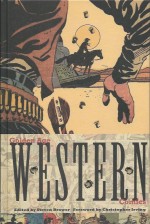
Golden Age Western Comics


By various, compiled and edited by Steven Brower (PowerHouse Books)
ISBN: 978-1-57687-594-0

There was a time, not that very long ago, when all of popular fiction was engorged with tales of Cowboys and Indians.

As always happens with such periodic phenomena – such as the Swinging Sixties Super-Spy Boom and perhaps the more recent Vampire/Werewolf Boyfriend trend (too soon to tell, but I’m sharpening stakes, stocking silverware and having some cola and Perrier blessed, just in case…) – there’s a tremendous amount of dross and a few spectacular gems.

On such occasions there’s also generally a small amount of wonderful but not-quite-life-changing material that gets lost in the shuffle: carried along with the overwhelming surge of material pumped out by TV, film, comics and book producers and even the toy, game and record industries.

After World War II the American family entertainment market – for which read comics, radio and the burgeoning television industry – became comprehensively enamoured of the clear-cut, simplistic sensibilities and easy, escapist solutions offered by Tales of the Old West; already a firmly established favourite of paperback fiction, movie serials and feature films.

I’ve often pondered on how almost simultaneously a dark, bleak, nigh-nihilistic and oddly left-leaning Film Noir genre quietly blossomed alongside that wholesome revolution, seemingly for the cynical minority of entertainment intellectuals who somehow knew that the returned veterans still hadn’t found a Land Fit for Heroes… but that’s a thought for another time and different graphic novel review.

Even though comic books had encompassed western heroes from the very start – there were cowboy strips in the premier issues of both Action Comics and Marvel Comics – the post-war years saw a vast outpouring of anthology titles with new gun-toting heroes to replace the rapidly dwindling supply of costumed Mystery Men, and true to formula, most of these pioneers ranged from transiently mediocre to outright appalling.

With every comic-book publisher turning hopeful eyes westward, it was natural that most of the historical figures would quickly find a home and of course facts counted little, as indeed they never had with cowboy literature…

Europe and Britain also embraced the Sagebrush zeitgeist and produced some pretty impressive work, with France and Italy eventually making the genre their own by the end of the 1960s. Still and all there was the rare gleam of gold and also a fair share of highly acceptable silver in the American tales, and as always, the crucial difference was due to the artists and writers involved…

With all the top-line characters and properties such as Tomahawk, Rawhide Kid, or the Lone Ranger still fully owned by big concerns, this delightful and impressive hardback compilation gathers a broad selection of the second-string (call ’em Sunday matinee or B-movie comics if you want) material and, although there’s no Kinstler or Kubert or Kirby classics, what editor Steven Brower has re-presented here in lavish, scanned full-colour is a magnificent meat-and-potatoes snapshot of what kids of the time would have been avidly absorbing.

Sadly records are awfully spotty for this period and genre but I’m cocky enough to offer a few guesses whenever the creator credits aren’t available and I’m relatively sure of my footing…

After an informative introduction from Christopher Irving and an introductory essay by Brower, the rip-roaring yet wholesome fun and thrills begin with Texas Tim, Ranger (from an undesignated issue of Blazing West in 1948), part of writer/Editor Richard Hughes’ superb American Comics Group line, and a veritable one-man band of creative trend following. In this sadly uncredited yarn (perhaps drawn by Edmond Good).

Hughes is an unsung hero of the industry, competing with the Big Boys in spy, humour, western, horror and superhero titles well into the 1960s and writing the bulk of the stories himself.

Here the Texan lawman tracks down rustlers and foils a plot to frame an innocent man in a rollicking 8-page romp after which movie star Lash LaRue solves the case of ‘The King’s Ransom’ in an adventure stuffed with chases, kidnapping, fights, framed Indians and prodigal sons, originally from #56 (July 1955 and perhaps drawn by John Belfi or Tony Sgroi) of his own licensed title. Fawcett had a huge stable (I said it and I ain’t sorry, neither) of Western screen stars, and when they quit comics in 1953 the gems that didn’t go to DC – such as Hopalong Cassidy – went to Capitol/Charlton Comics who purchased the bulk of retired comics publishers inventory during the 1950’s…

Charlton was always a minor player in the comics leagues, paying less, selling less, and generally caring less about cultivating a fan base than the major players. But they managed to discover and train more big names in the 1960s than either Marvel or DC, and created a vast and solid canon of memorable characters, concepts and genre material. Almost all their stuff was written by Joe Gill or Pat Masulli, although in the 1960s young tyros like Roy Thomas, Steve Skeates, Dave Kaler and Denny O’Neil all got a healthy first bite of the cherry there, and I’m fairly certain “King of Comics” Paul S. Newman was the regular Larue scripter…

‘Magic Arrow Rides the Pony Express’ hails from Youthful Publications’ Indian Fighter (1950) illustrated by S. B. Rosen and detailing how the young Seneca chief and all-around “Good Injun” saves the famed postal service from unscrupulous badmen armed only with his quiver of enchanted shafts.

Fawcett also published screen star Tom Mix Western and from #15, 1949 comes ‘Tom Mix and the Desert Maelstrom’ probably drawn by Carl Pfeufer and John Jordan – as most of the strips were – wherein the legendary lawman braved a stupendous sandstorm to capture bank-robbers and save a wounded rodeo rider from destitution.

Lots of publishers had Jesse James series and the one sampled here comes from Charlton’s Cowboy Western Comics #39, (June 1955, probably written by Gill & illustrated by William M. Allison). In it the always misunderstood gunslinger was framed for a stage hold-up…

Magazine Enterprises produced some the very best comics of the 1950s and from Dan’l Boone #4, December 1955 comes the stirring saga of pioneer America ‘Peril Shadows the Forest Trail’, wherein the mythical scout and woodsman ferrets out a murderous white turncoat in a timeless thriller illustrated by the hugely undervalued Joe Certa.

‘Buffalo Belle’ also comes from the 1948 Blazing West and again displays Hughes’ mastery of the short story strip as a miniskirt-wearing agent of  justice deals with a dragged-up bandit in a terrific yarn possibly limned by Max Elkan or even Charles Sultan…

Also from that ACG title are the lovely ‘Little Lobo the Bantam Buckeroo’ – illustrated by Leonard Starr in his transitional Milton Caniff drawing style – depicting the tempestuous boy’s battle against fur thieves, and the charming ‘Tenderfoot’ (by a frustratingly familiar artist I can’t identify, but who might be Paul Cooper) with the sissy-looking Eastern Dude dispensing western vengeance to bullies and bandits alike…

‘Little Eagle: Soldier in the Making’ also comes from Indian Fighter – illustrated with near-abstract verve by Manny Stallman – and heads firmly into fantasy as a youthful brave equipped with magic wings tackles renegade brave Black Dog before he sets the entire frontier ablaze with war…

Avon Books started in 1941, created when the American News Corporation bought out pulp magazine publishers J.S. Ogilvie, and their output was famously described by Time Magazine as “westerns, whodunits and the kind of boy-meets-girl story that can be illustrated by a ripe cheesecake jacket.”

By 1945 the company had launched a comic-book division as fiercely populist as the parent company with over 100 short-lived genre titles such as Atomic Spy Cases, Bachelor’s Diary, Behind Prison Bars, Campus Romance, Gangsters and Gun Molls, Slave Girl Comics, War Dogs of the U.S. Army, White Princess of the Jungle and many others, all aimed – even the funny animal titles like Space Mouse and Spotty the Pup! – at a slightly older and more discerning audience and all drawn by some of the best artists working at the time.

Many if not most sported lush painted covers that were both eye-catching and beautiful.

Six of their titles had respectable runs: Peter Rabbit, Eerie, Wild Bill Hickock, outrageous “Commie-busting” war comic Captain Steve Savage, Fighting Indians of the Wild West and their own magnificently illustrated fictionalised adventures of Jesse James.

‘Terror at Taos’ comes from Avon’s Kit Carson #6 (March 1955, but reprinted here from Fighting Indians of the Wild West) and pits the famed scout against corrupt officials and traitorous wagon masters in the Commancheria territory, all lavishly rendered by the superb Jerry McCann.

Next is ‘Young Falcon and the Swindlers’ from Fawcett’s Gabby Hayes Western #17 (April 1950) by an artist doing a very creditable impression of Norman Maurer, wherein the lost prince of the Truefeather Tribe tracked down crooked assayers who bilked him of his rightful pay, after which ‘Annie Oakley’ (Cowboy Western Stories # 38, April/May 1952) finds the famed sharpshooter hunting bandits in a canny 4-page quickie illustrated by Jerry Iger under the pen-name Jerry Maxwell.

Charlton’s back catalogue also provided ‘Flying Eagle in Golden Treachery’ from Death Valley #9 October 1955, as the noble brave foils white claim-jumpers togged up like Indians, and ‘Cry for Revenge’ (Cowboy Western #49 May/June 1954) saw old Fawcett star Golden Arrow hunt down more murderous whites posing as Red Men to drive settlers off their land in a gripping (Gill?) yarn illustrated by Dick Giordano & Vince Alascia.

‘Chief Black Hawk and his Dogs of War’ was a historical puff-piece also from the aforementioned Kit Carson #6 with artist Harry Larsen delineating the rise and fall of the legendary Sauk war chief after which Giordano & Alascia’s ‘Triple Test’ (Cowboy Western #49 May/June 1954) laconically describes the dangers of marrying in a rare, wry light-hearted tale from an age of shoot-and-swipe sagas…

Gabby Hayes Western #17 also provided an adventure of the World’s Most Successful Sidekick himself (seriously: Hayes was the comedy stooge to almost every cowboy in Tinsel Town, from Roy Rogers and Hopalong Cassidy to Randolph Scott and John Wayne).

‘The Big Game Hunt’ is a fun-filled riot as the garrulous old coot takes the wind out of snobby globe-trotting safari addict and saves the life of a cantankerous moose in a charming rib-tickler probably written by Rod Reed or Irwin Schoffman and illustrated by Leonard Frank.

The last tales in this tome are from Charlton; starting with the Giordano & Alascia ‘Breakout in Rondo Prison’ (Range Busters #10 September 1955) wherein hard-riding trio Scott, Chip and Doodle were framed for robbery in a pokey cow-town and forced to fight their way to freedom after which the action ends with a superb costumed cowboy thriller ‘For Talon’s Nest’ from Masked Raider #2 (August 1955) wherein the mystery gunslinger is forced to defend his pet Eagle’s honour in a classy classic drawn by Mike Sekowsky (and possibly inked by Standard Comics comrade Mike Peppe?)

Sadly there’s no inclusion of Charlton’s superb and long-running Billy the Kid, Gunmaster or Cheyenne Kid features but hopefully there’s the possibility of a follow-up volume dedicated to them…?

Within these pages cow-punching aficionados (no, it’s neither a sexual proclivity nor an Olympic sport) and all fans of charming and nostalgia-stuffed comics can (re)discover a selection of range-riding rollercoaster rides about misunderstood fast-guns or noble savages compelled to take up arms against an assorted passel of low-down no-goods and scurvy owlhoots, and all the other myriad tropes and touchstones of Western mythology. Black hats, white hats, great pictures and traditional action values – what more could you possibly ask for?

Text, compilation and editing © 2012 Steven Brower. Foreword © 2012 Christopher Irving. All rights reserved.
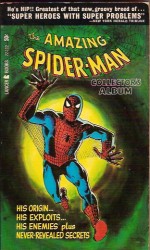
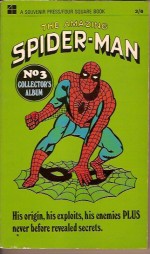
The Amazing Spider-Man Collectors Album (US and UK editions)


By Stan Lee, Jack Kirby, Steve Ditko & various (Lancer/Four Square)
“ISBNs” 72-122 (Lancer) and 1792 (Four Square)

This is another one purely for driven nostalgics, consumed collectors and historical nit-pickers, highlighting the Swinging Sixties’ transatlantic paperback debut of the hero who would become Marvel’s greatest creative triumph…

One thing you could never accuse entrepreneurial maestro Stan Lee of was reticence, especially in promoting his burgeoning line of superstars. In the 1960s most adults, including the people who worked in the field, considered comic-books a ghetto. Some disguised their identities whilst others were “just there until they caught a break.” Stan, Jack Kirby and Steve Ditko had another idea… change the perception.

Whilst the artists pursued their personal creative visions, the editorial mastermind pursued every opportunity to break down the ghetto walls: college lecture tours, animated TV shows (of frankly dubious quality at the start, but constantly improving), foreign franchising and of course getting their product onto “real” bookshelves in real book shops.

There had been a revolution in popular fiction during the 1950s with a huge expansion of cheap paperback books: companies developed extensive genre niche-markets, such as war, western, romance, science-fiction and fantasy. With fans hungry for product from their cheap ubiquitous lines, many old novels and short story collections were republished, introducing a new generation to such authors as Edgar Rice Burroughs, Robert E. Howard, Otis Adelbert Kline, H.P. Lovecraft, August Derleth and others.

In 1955, spurred on by the huge parallel success of cartoon and gag book collections, Bill Gaines began releasing paperback compendiums culling the best strips and features from his landmark humour magazine Mad and comics’ Silver Age was mirrored in popular publishing by an insatiable hunger for escapist fantasy fiction. In 1964 Bantam Books began reprinting the earliest pulp adventures of Doc Savage, triggering a revival of pulp prose superheroes, and seemed the ideal partner when Marvel – on the back of the “Batmania” craze – began a short-lived attempt to “novelise” their comic book stable with The Avengers Battle the Earth-Wrecker and Captain America in the Great Gold Steal.

Far more successful were repackaged books by various publishers: reformatting their comics stories in cheap and cheerful softcovers:

Archie Comics released their Marvel knock-off restyled superheroes in the gloriously silly High Camp Superheroes, Tower collected the adventures of their big two Dynamo and No-Man, DC (then National Periodical Publications) released a number of Batman books and an impressive compendium of Superman stories and Marvel, punching far above their weight, unleashed a sextet of paperbacks featuring five of their stars: Fantastic Four (two volumes), the Incredible Hulk, Daredevil, Thor and of course the Amazing Spider-Man.

Now during the heady, turbulent Sixties pulp heroics seemingly returned: imaginative “Thud and Blunder” fantasy tales that were the epitome of “cool”, and Marvel’s canny pursuit of foreign markets instantly paid big dividends.

Their characters, creators and stories were already familiar to British readers, appearing both in Odhams‘ weekly comics Wham!, Pow!, Smash!, Fantastic and Terrific and also in the black and white monthly anthologies published by Alan Class since 1959…

So when Lancer began releasing Marvel’s Mightiest in potent and portable little collections it was simple to negotiate British iterations of those editions although they were not as cheap and had shorter page counts.

A word about artwork here: modern comics are almost universally full-coloured in Britain and America, but for over a century black and white was the only real choice for most mass market publishers – additional (colour) plates being just too expensive for shoe-string operations to indulge in. Even the colour of 1960s comics was cheap and primitive and solid black line, expertly applied by master artists, was the very life-force of sequential narrative.

These days computer enhanced art can hide a multitude of weaknesses – if not actual pictorial sins – but back then companies lived or died on the draughting skills of their artists: so even in basic black and white – and the printing of paperbacks was as basic as the accountants and bean-counters could get it – the Kirbys and Ditkos and Wally Woods of the industry exploded out of those little pages and electrified the readership. I can’t see that happening with many modern artists deprived of their slick paper and 16 million colour palettes…

As I’ve already mentioned US and UK editions vary significantly. Although both re-present – in truncated, resized monochrome – startling early Marvel tales the British Four Square editions are a measly 128 pages, as opposed to the 176 page Lancer editions: necessitating missing stories and odd filler pages. Moreover the UK books are fronted by deliberately garish and poorly drawn “cartoony covers” instead of art by Ditko or Kirby, as if the publishers were embarrassed by the content…

The Amazing Spider-Man Lancer edition by Lee & Steve Ditko was published in 1966 and opens with ‘Duel With Daredevil’ (from #16, September 1964) which depicted the Wall-crawler’s first bombastic meeting with the sightless Man Without Fear as they teamed up to battle the sinister Ringmaster and his Circus of Evil.

This was followed by ‘The Origin of Spider-Man’ from the first issue (March 1963): recapping the story of how nerdy high-schooler Peter Parker was bitten by a radioactive spider, became a TV star and failed to prevent the murder of his Uncle Ben. After a pin-up of The Burglar the tale continues, introducing gadfly J. Jonah Jameson and relating how the Amazing Arachnid saved a malfunctioning space capsule before revealing ‘The Secrets of Spider-Man!’ which combined portions of the info-features seen in Amazing Spider-Man Annual’s #1 & 2 from 1964 and 1965.

Thus far the US book and the Four Square paperback released in 1967 are all but identical – covers excluded of course – and apart from Kirby pin-up pages of the Hulk, Thor and Fantastic Four, that’s where Britain’s thrills stop dead, whereas the Lancer volume has another complete story and more in store.

From Amazing Spider-Man #13 ‘The Menace of Mysterio!’ introduced an eldritch, seemingly unbeatable bounty-hunter hired by Daily Bugle publisher Jameson to capture the misunderstood hero. Of course the stalker was a complete sham eventually revealed to be pursuing his own dark agenda, but the battle to stop him was – and still is – one of Spidey’s most spectacular exploits…

This edition ends with another brace of Ditko pin-ups – a roster of guest-stars in one, and the magnificent web-spinner at his moody best in the other…

Nowadays all these adventures are readily available in assorted colour collections or dynamic monochrome Essential Editions but for we surviving baby-boomers the sheer thrill of experiencing these books again is a buzz you can’t beat. Moreover there’s still something vaguely subversive about seeing comics in proper book form, as opposed to the widely available, larger and more socially acceptable graphic novels. Strip art might finally be winning the war for mainstream public recognition, but we’ve all lost some indefinable unifying camaraderie of outsider-hood along the way…

These paperbacks and all the others are still there to be found by those who want to own the artefact as well as the material: I suspect that whether you revere the message or the medium that carries it pretty much defines who you are and how you view comics and the world.

Wanna try and guess where I stand, True Believer…?
© 1966 and 1967 the Marvel Comics Group. All Rights Reserved.

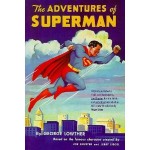
The Adventures of Superman


By George Lowther, illustrated by Joe Shuster (Applewood Books)
ISBN: 978-1-55709-228-1

Without doubt the creation of Superman and his unprecedented reception by a desperate and joy-starved generation quite literally gave birth to a genre if not an actual art form. Within months of his launch in Action Comics #1 the Man of Tomorrow had his own supplementary solo comicbook, a newspaper strip, overseas licensing deals, a radio show and animated movie series, plus loads ands loads of merchandising deals.

In 1942 he even made the dynamic leap into “proper” prose fiction resulting in still more historic “firsts”…

George F. Lowther (1913-1975) was a Renaissance man of radio when sound not vision dominated home entertainment. He scripted episodes of such airwave strip adaptations as Dick Tracy and Terry and the Pirates as well as the Mutual Radio Network’s legendary Adventures of Superman show.

He also wrote episodes for Roy Rogers, Tom Mix and a host of other series and serials. In 1945 he moved into television with equal success as writer, producer, director and even performer, adding a string of novels for kids to his CV along the way.

With the success of the Superman radio broadcasts a spin-off book was a sure-fire seller and in 1942 Random House released a stunning, rocket-paced history of the Man of Steel, which fleshed out the character’s background (almost a decade before such detail became part of the comics canon), described the hero’s rise to fame and even found room for a thrilling pulp-fuelled contemporary adventure in a handsome hardback lavishly illustrated by co-creator Joe Shuster. The novel was the first Superman tale not scripted by Jerry Siegel and the world’s first novelisation of a comicbook character.

That book will set you back upwards of a thousand dollars today but in 1995, Applewood Press (a firm specialising in high-quality reproductions of important and historic American books) recreated that early magic in its stunning entirety in a terrific hardback tome which included a copious and informative introduction from contemporary Superman writer Roger Stern as well as the original Foreword by DC’s Staff Advisor for Children’s literacy, Josette Frank.

The art is by Joe Shuster at the peak of his creative powers and includes the dust-jacket and 4 full-colour painted plates (all reproduced from the original artwork), a half-dozen full-page black and white illustrations and 34 vibrant and vital pen-and-ink spot sketches of the Caped Kryptonian in spectacular non-stop action, gracing a fast and furious yarn that begins with the destruction of Krypton and decision of scientist Jor-El in ‘Warning of Doom’ and ‘The Space Shi’.

The saga continues with the discovery of an incredible baby in a rocket-ship by farmer Eben Kent and his wife Sarah in ‘Young Clark Kent’ and the unique boy’s early days and first meeting with Perry White in ‘The Contest’.

Following ‘The Death of Eben’ the young alien refugee moved to the big city and became ‘Clark Kent, Reporter’ after which we switch to then present-day for the main event as investigative reporter and blockbusting champion of justice combine to crush a sinister plot involving spies, saboteurs, submarines and supernatural shenanigans in the classy conundrum of ‘The Skeleton Ship’ and ‘The Vanishing Captain’ which was resolved in the epic ‘Fire at Sea’, ‘Mystery of the Old Man’, ‘Attempted Murder’, ‘Enter Lois Lane’ and ‘Return of the Skelton Ship’, resulting in ‘The Unmasking’, the revelation of a ‘Special Investigator’ and an amazing ‘Underwater Battle’ before at last the wonderment ends with ‘The Mystery Solved’.

This magical book perfectly recaptures all the frantic fervour and mind-boggling excitement of the early days of action adventure storytelling and is a pulp fiction treasure as well as a pivotal moment in the creation of the world’s premier superhero. No serious fan of the medium or art-form should miss it and hopefully with another landmark Superman anniversary on the horizon another facsimile edition is on the cards. If not, at least this volume is still readily available…
© 1942 DC Comics. Introduction © 1995 DC Comics. All Rights Reserved.

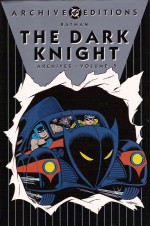
Batman: the Dark Knight Archives volume 5


By Bob Kane, Bill Finger, Jerry Robinson, Jack Burnley, Dick Sprang & various (DC)
ISBN: 978-1-4012-0778-6

War always seems to stimulate creativity and advancement and these sublime adventures of Batman and Robin more than prove that axiom as the growing band of creators responsible for producing the bi-monthly adventures of the Dark Knight hit an artistic peak which only stellar stable-mate Superman and Fawcett’s Captain Marvel were able to equal or even approach…

Following an introduction by newspaper journalist and fan Michelle Nolan, this fantastic fifth edition (collecting Batman #17-20 and spanning June/July 1943 to December 1943/January 1944) opens with the gloriously human story of B. Boswell Brown, a lonely and self-important old man who claimed to be ‘The Batman’s Biographer!’ Unfortunately ruthless robber The Conjurer gave the claim far more credence than most in a this tense thriller by Don Cameron, Bob Kane, Jerry Robinson & George Roussos…

This was counterbalanced by ‘The Penguin Goes A-Hunting’ (Cameron again with art by Jack & Ray Burnley), a wild romp wherein the Perfidious Popinjay went on a hubris-fuelled crime-spree after being left off a “Batman’s Most Dangerous Foes” list.

The same creative team concocted ‘Rogues Pageant!’ when murderous thieves in Western city Santo Pablo inexplicably disrupt the towns historical Anniversary celebrations after which Joe Greene, Kane & Robinson detail the Dynamic Duo’s brutal battle with a deadly gang of maritime marauders in the unique ‘Adventure of the Vitamin Vandals!’

Batman #18 opened with a spectacular and visually stunning crime-caper as the Gotham Gangbusters clashed again with dastardly bandits Tweedledum and Tweedledee whilst solving ‘The Secret of Hunter’s Inn!’ by Joe Samachson & Robinson, after which ‘Robin Studies his Lessons!’ (Samachson, Kane & Robinson) saw the Boy Wonder grounded from all crime-busting duties until his school work improved – even if it meant Batman dying for want of his astounding assistance!

Bill Finger and Burnley brothers crafted ‘The Good Samaritan Cops’; another brilliant human interest drama focused on the tense but unglamorous work of the Police Emergency Squad and this issue concluded with a shocking and powerful return engagement for manic physician and felonious mastermind ‘The Crime Surgeon!’ (Finger, Kane & Robinson),

The writers of the first and third stories in Batman #19 are sadly unknown to us (perhaps William Woolfolk?) but there’s no doubting the magnificent artwork of rising star Dick Sprang who pencilled every tale in this blockbusting issue, beginning with ‘Batman Makes a Deadline!’ wherein the Dark Knight investigated skulduggery and attempted murder at the City’s biggest newspaper after which Don Cameron authored the breathtaking fantasy masterpiece ‘Atlantis Goes to War!’ with the Dynamic Duo rescuing that fabled submerged city from Nazi assault.

The Joker reared his garish head again in the anonymously penned thriller ‘The Case of the Timid Lion!’ with the Clown Prince enraged and lethal whilst tracking down an impostor committing crime capers in his name before Samachson, Sprang and inker Norman Fallon unmasked the ‘Collector of Millionaires’ with Dick Grayson investigating his wealthy mentor’s bewildering replacement by a cunning doppelganger…

Batman #20 featured the Mountebank of Mirth in ‘The Centuries of Crime!’ (Cameron & the Burnleys) with The Joker claiming to have discovered a nefariously profitable method of time-travelling, whilst ‘The Trial of Titus Keyes!’ (Finger, Kane & Robinson) offered a masterful courtroom drama of injustice amended, focussing on the inefficacy of witness statements…

‘The Lawmen of the Sea!’ by Finger & the Burnleys found the Dynamic Duo again working with a lesser known Police Division as they joined the Harbor Patrol in their daily duties and uncovered a modern day piracy ring before the volume ends on a dramatic high with ‘Bruce Wayne Loses Guardianship of Dick Grayson!’ wherein a couple of fraudsters claiming to be the boy’s last remaining relatives petition to adopt him.

A melodramatic triumph by Finger, Kane & Robinson, there’s still plenty of action, especially after the grifters try to sell Dick back to Bruce Wayne…

With an expansive biographies section and glorious covers from Robinson, Ed Kressy and Sprang this gloriously indulgent deluxe hardback compendium is another irresistible box of classic delights that no fan of the medium can afford to miss.

© 1943, 1944, 2006 DC Comics. All Rights Reserved.

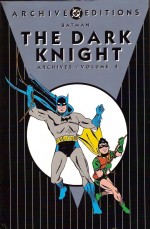
Batman: the Dark Knight Archives volume 4


By Bob Kane, Don Cameron, Bill Finger, Jack Schiff, Jerry Robinson, George Roussos, Jack & Ray Burnley (DC Comics)
ISBN: 1-56389-983-3

This fourth captivating deluxe hardback chronicle of yarns from the dawn of his career encompasses Batman #13-16 (October/November 1942- April/May 1943) and again features adventures produced during the scariest days of World War II which helped to the gladden the young hearts of overseas and home-front heroes alike.

The feature had grown into a media sensation and pocket industry and just as with predecessor and trendsetter Superman had necessitated an expansion of dedicated creative staff.

It’s certainly no coincidence that many of these Golden Age treasures are also some of the best beloved tales in the Batman canon, as co-creator and lead writer Bill Finger was increasingly supplemented by the talents of Don Cameron, Jack Schiff and others as the Dynamic Duo became a hugely successful franchise. The war seemed to stimulate a peak of creativity and production, with everybody on the Home Front keen to do their bit – even if that was simply making kids of all ages forget their troubles for a brief while…

After a comprehensive overview in the Foreword from professional fan and historian Bill Schelly the contents of Batman #13 opened with ‘The Batman Plays a Lone Hand’ (Cameron, Bob Kane, Jerry Robinson & George Roussos) tugging heartstrings as the Dark Knight fired Robin, kicked out Dick Grayson and returned to his anti-crime campaign as a solo act. Of course there was a perfectly logical reason…

They were back together again and on more traditional ground when the Joker caught the acting bug and organised a ‘Comedy of Tears’ (Schiff, Kane, Robinson & Roussos), after which ‘The Story of the Seventeen Stones!’ (scripted by Finger, drawn by Jack Burnley & inked by brother Ray) presented a deliciously experimental murder-mystery and the  heroes slipped into more comfortable Agatha Christie – or perhaps Alfred Hitchcock – territory when they tackled a portmanteau of crimes on a train in ‘Destination: Unknown!’ by Cameron, Kane, Robinson & Roussos.

Cameron wrote all four stories in Batman #14 beginning with ‘The Case Batman Failed to Solve’, (illustrated by Jerry Robinson) – a superb example of the sheer decency of the Caped Crusader as he fudged a mystery for the best possible reason, whilst ‘Prescription for Happiness’ (with art from Kane, Robinson & Roussos) is a classic example of the human interest drama that used to typify Batman tales as a poor doctor discovered his own true worth, and ‘Swastika Over the White House!’ (Jack & Ray Burnley) was typical of the blistering spy-busting action yarns readers were lapping up at the time. The final story ‘Bargains in Banditry!’ – also by the Burnley boys – was another canny crime caper featuring the Penguin wherein the Wily Old Bird stopped committing crimes and began selling the plans for his convoluted capers to other crooks…

Batman #15 led with Schiff, Kane, Robinson & Roussos’s Catwoman romp ‘Your Face is your Fortune!’ with the Feline Fury taking on a job at a swanky Beauty Parlour to gain info for her crimes and inadvertently falling for Society Batchelor Bruce Wayne, whilst Cameron and those Burnley boys introduced plucky homeless boy Bobby Deen ‘The Boy Who Wanted to be Robin!’ and proved he had what it takes to do the job.

The same team created the powerful propaganda tale ‘The Two Futures’, which examined what America would be like under Nazi subjugation and ‘The Loneliest Men in the World’ (Cameron, Kane, Robinson & Roussos) was – and still is – one of the very best Seasonal Batman tales ever created; full of pathos, drama, fellow-feeling and action as the Dynamic Duo brought Christmas to a selection of dedicated but overlooked workers and public servants …

The landmark Batman #16 (April/May 1943) opened with one of three tales by Cameron ‘The Joker Reforms!’ (Kane, Robinson & Roussos) wherein the Clown Prince suffers a blow to the head and a complete personality shift, but not for long – after which Ruth “Bunny Lyons” Kaufman scripted a bold and fascinating black market milk caper in ‘The Grade A Crimes!’ for Ray & Jack Burney to dynamically delineate.

‘The Adventure of the Branded Tree’ (Cameron and the Burnleys) saw the Gotham Gangbusters head to lumberjack country for a vacation and become embroiled in big city banditry before the issue and the action conclude with the hilarious thriller-comedy ‘Here Comes Alfred!’ (Cameron, Kane, Robinson & Roussos) which foisted a rotund, unwelcome and staggeringly faux-English manservant upon the Masked Manhunters to finally complete the classic core cast of the series in a brilliantly fast-paced spy-drama with loads of laughs and buckets of tension.

These torrid tales from creators at their absolute peak and heroes at their most primal are even more readable now that I don’t have to worry about damaging an historical treasure simply by turning a page. This is perhaps the only way to truly savour these Golden Age greats and perhaps one day all ancient comics will be preserved this way…
© 1942, 1943, 2003 DC Comics. All Rights Reserved.

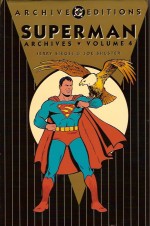
Superman Archives volume 4


By Jerry Siegel, Joe Shuster, Fred Ray John Sikela & Leo Nowak (DC Comics)
ISBN: 1-56389-107-7

By the middle of 1942 fresh and vibrant young superstar Superman had been thoroughly embraced by the panting public, rapidly evolving into a patriotic tonic for the troops and the ones they had left behind. This fourth classic hardcover compendium (collecting Superman #13-16 November-December 1941 to May/June 1942) shows the Man of Steel in all his morale-boosting glory as America shifted onto a war-footing and crooks and master-criminals were slowly superseded by sinister spies and vicious invaders… at least on all the rousing, iconic covers by master artist Fred Ray.

Following a Foreword by film critic Leonard Maltin the action begins with a stunning Nazi-busting example up front on #13 after which artist Leo Nowak illustrated three captivating yarns beginning with ‘The Light’ wherein an implacable old foe tried in a new super-scientific guise and gimmick, whilst ‘The Archer’ pitted the Metropolis Marvel against his first true costumed villain, a psychopathic killer with a self-evident murderous modus operandi…

Scripter Jerry Siegel was on top form throughout this period and ‘Baby on the Doorstep’ offered him  a rare opportunity for foolish fun and the feel-good factor as Clark Kent became a temporary and unwilling parent in a tale involving stolen military battle plans before ‘The City Beneath the Earth’ (illustrated by John Sikela) returned to the serious business of blockbuster adventure and sheer spectacle as the Action Ace discovered a subterranean kingdom hidden since the hoary height of the Ice Age.

Superman #14 (January/February 1942) was again primarily a Nowak art affair beginning with ‘Concerts of Doom’ wherein a master pianist discovered just how mesmerising his recitals were and joined forces with unpatriotic thieves and dastardly  saboteurs, after which the tireless Man of Tomorrow was hard-pressed to cope with the reign of destruction caused by ‘The Invention Thief’.

John Sikela inked Nowak’s pencils in the frantic high fantasy romp when the Man of Steel discovered a friendly mermaid and malevolent fishmen living in ‘The Undersea City’ before more high tension and catastrophic graphic destruction signalled Superman’s epic clash with sinister electrical savant ‘The Lightning Master’.

Issue #15 ‘The Cop who was Ruined’ (illustrated by Nowak) found the Metropolis Marvel clearing the name of framed detective Bob Branigan – a man who believed himself guilty – whilst scurvy Orientals menaced the nation’s Pacific fleet in ‘Saboteurs from Napkan’ with Sikela again lending his pens and brushes to Nowak’s pencil art. Thinly veiled fascist oppression and expansion was spectacularly nipped in the bud in ‘Superman in Oxnalia’ – an all-Sikela art job, but Nowak was back on pencils for a concluding science fiction thriller ‘The Evolution King’ with a malignant mastermind artificially aging his wealthy, prominent victims until the invulnerable Action Ace stepped in…

Sikela flew solo on all of Superman #16, beginning with ‘The World’s Meanest Man’ as a mobster attempted to fleece a scheme to give deprived slum-kids a holiday in the countryside, then moved on to depict the Man of Tomorrow’s battle with an astrologer happy to murder his clients to prove his predictions in ‘Terror from the Stars’, after which ‘The Case of the Runaway Skyscrapers’ pitted the Caped Kryptonian against Mister Sinister, a trans-dimensional tyrant who could make buildings vanish.

The power-packed perilous periodical then concluded with a deeply satisfying and classic war on organised crime as Superman crushed the ‘Racket on Delivery’.

Endlessly re-readable, these epic hardback DC Archive Editions fabulously frame some of the greatest and most influential comics stories ever created, and taken in unison form a perfect permanent record of breathtaking wonder and groundbreaking excitement, which no dedicated fan could afford to do without
© 1942, 2000 DC Comics. All Rights Reserved.

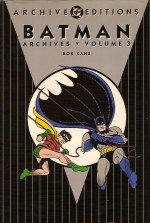
Batman Archives volume 3


By Bob Kane, Bill Finger, Don Cameron, Joe Samachson, Joseph Greene, Jerry Robinson, George Roussos, Jack Burnley & various (DC Comics)
ISBN: 1-56389-099-2

With the Dynamic Duo fully developed and storming ahead of all competition in these stories (originally published in Detective Comics #71-86 between January 1943 and April 1944), the creative chores finally grew too large for the original team. As the characters’ popularity grew exponentially, new talent was hired to supplement Bob Kane, Bill Finger and their assistants Jerry Robinson & inker, colourist and letterer George Roussos. Batman and Robin had become a small industry, just like Superman.

During this period more scripters joined the team and another soon to be legendary artist began adding to the inimitable legend of the Dark Knight…

After a lengthy and thought-provoking Foreword from veteran creator and celebrated cartoonist Jerry Robinson, this third deluxe hardback celebration of the Gotham Guardians’ incredible early exploits begins with ‘A Crime a Day!’ (by Finger, Kane & Robinson) from premiere crime anthology Detective Comics #71, possibly the most memorable and thrilling Joker escapade of the period, after which issue #72 found our heroes crushing murderous con-men in ‘License for Larceny’ by Joe Samachson, Kane & Robinson.

In Detective Comics #73 (March 1943) Don Cameron, Kane & Robinson went back to spooky basics with brutal efficiency when ‘The Scarecrow Returns’, after which moody chiller #74 introduced a pair of fantastically grotesque criminal psychopaths in the far from comical corpulent forms of the Deever cousins, alias ‘Tweedledum and Tweedledee!’ in a stirring yarn by Cameron & Robinson with inks by Kane, Roussos and Charles Paris.

Detective #75 presented a new aristocrat of crime in the pompous popinjay ‘The Robber Baron!’ (Cameron, Jack Burnley & Roussos) and the Joker resurfaced in #76 to ‘Slay ’em With Flowers’ in a graphic chiller by Horace L. Gold, Robinson & Roussos whilst Bill Finger, Kane & Roussos introduced a fascinating new wrinkle to villainy with the conflicted doctor who ran ‘The Crime Clinic’ in #77. Crime Surgeon Matthew Thorne would return many times over the coming decades…

Issue #78 (August 1943) pushed the patriotic agenda when ‘The Bond Wagon’ (Joseph Greene, Burnley & Roussos) to raise war funds was targeted by Nazi spies and sympathisers whilst ‘Destiny’s Auction’ by & Robinson, offered another sterling human interest drama as a fortune teller’s prognostications lead to fame, fortune and deadly danger for a failed actress, has-been actor and superstitious gangster…

Detective #80 saw the fateful fate of Harvey Kent finally resolved in epic manner with ‘The End of Two-Face!’ by Finger, Kane, Robinson & Roussos after which Cameron, Kane & Roussos introduced another bizarre and baroque costumed crazy with ‘The Cavalier of Crime!’ in #81 and explored the dark side of American Football with the explosive downfall of the ‘Quarterback of Crime!’ in #82.

Portly butler Alfred’s diet regime led the Gotham Guardians to a murderous mesmerising medic and criminal insurance scam in ‘Accidentally on Purpose!’ (Cameron, Kane & Roussos again) before ‘Artists in Villainy’ (#84 by Mort Weisinger & Dick Sprang, with layouts by Ed Kressy) pitted the Partners in Peril against an incredible Underworld University.

Detective #85, by Finger, Kressy & Sprang, was the artist’s first brush with the Clown Prince of Crime and one of the most madcap moments in the canon as Batman and his arch-foe both hunted ‘The Joker’s Double’ and this compelling chronicle concludes in high style with #86 as Cameron & Sprang recount how a sleuthing contest between Bruce Wayne, Dick Grayson and Alfred leads to a spectacular battle against sinister smugglers in ‘Danger Strikes Three!’

With glorious covers from Kane, Robinson, Burnley and Sprang this terrific tome is another irresistible box of classic delights that no fan of the medium can afford to miss.
© 1942-1944 DC Comics. Renewed 1971-73. Compilation © 1994 DC Comics. All Rights Reserved.

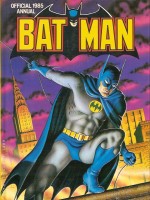
Official Batman Annual 1985


By Gerry Conway, Don Kraar, Roy Thomas, Alan Moore, Jamie Delano, José Luis García-López, Alan Davis, Garry Leach & various (London Editions)
ISBN: 7235-6733-6

Generally I save the Christmas annuals for the nostalgia-drenched Festive Season but this is a little gem I recently re-examined and found to be an item which I had no illogical or purely emotional attachment to. It’s simply an extremely good-looking, thoroughly entertaining package which might be unknown to and of some interest to fans and collectors.

By the end of the 1970s the Superman and Batman Christmas books were a slim and slight shadow of their former bumper selves, but during the mid 1980s a new crop of editors and designers found a way to invigorate and add value to the tired tomes.

Now full-colour throughout but reduced to 64 pages this example stems from the days when I was just starting out in the business and a few of my more talented and famous colleagues and acquaintances on groundbreaking independent comic Warrior, star-studded 2000AD and at gradually expanding Marvel UK were offered a little side-work from Manchester-based London Editions Comics…

Behind the Bryan Talbot cover, ‘The Falcons Lair!’ written by Don Kraar and illustrated by Adrian Gonzales & Mike DeCarlo (originally seen in US comicbook Brave and the Bold #185, April 1982) opened proceedings with a boisterous action-romp teaming the Caped Crusader and Emerald Archer Green Arrow against the wiliest of criminal birds The Penguin, after which a brief prose piece by Jamie Delano lavishly illustrated by Alan & Damian Davis tantalisingly whetted the Fights ‘n’ Tights taste-buds with the wry and salutary tale of a foredoomed pickpocket ”Birdsong’ Mickey’s Day Out’…

The editors were equally canny in selecting the US reprints. ‘Last Laugh!’ first appeared in Batman #353 (November 1982): a dynamite stand alone tale pitting the Gotham Guardian against the archest of villains The Joker; a spectacular and audacious thriller by Gerry Conway magnificently illustrated by the incredibly talented and inexplicably underrated José Luis García-López.

Possibly one of the neatest and most impressive text tales in UK Annuals history ‘The Gun’ reunited Marvelman co-conspirators Alan Moore & Garry Leach (who painted the beguiling pictures which accompany the twisted trail of the weapon which killed Thomas and Martha Wayne) and the seasonal sensationalism concluded with ‘Where Walks a Snowman!’ (Batman #337, July 1981) wherein Gerry Conway& Roy Thomas recounted the horrific history of a chilling killer stalking Gotham in another lost art-masterpiece by García-López & Steve Mitchell.

Being a British Christmas book there’s even a traditional send-off with a brace of

‘Batman’s Puzzles’ pages comprising word games and “spot the difference” panels.

This impressive tome might well be of more interest to comics completists than chronic nostalgists like me, but such items often turn up in jumble sales and charity shops and are frequently well worth the price of admission

© 1984 DC Comics Inc. and London Editions Limited. All characters © 1984 DC Comics Inc.

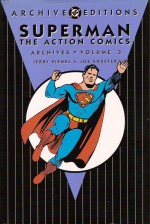
Superman in Action Archive Edition volume 3


By Jerry Siegel, Joe Shuster & the Superman Studio (DC Comics)
ISBN: 1-56389-710-5

In this third tumultuous deluxe hardback collection of the Man of Tomorrow’s earliest groundbreaking monthly adventures, (reprinted from issues #37-52 of epochal anthology Action Comics and spanning June 1941 – September 1942), the never-ending battle for Truth, Justice and the American Way expanded to cover the struggle against Global Tyranny with the war that had been ripping apart the outer world finally spreading to isolationist America.

When these tales first saw print Superman was a bona fide but still fresh phenomenon who had utterly changed the shape of the fledgling comicbook industry. There was a popular newspaper strip, foreign and overseas syndication and the prestigious Fleischer studio was producing some of the most expensive – and best – animated cartoons ever produced.

Thankfully the quality of the source material was increasing with every four-colour release and the energy and enthusiasm of Shuster and Siegel (who was particularly on fire as scripter) had infected the burgeoning group of studio juniors who had been hired to cope with the relentless demand.

After a fulgent and informed Foreword by Producer, author, historian and fan Michael Uslan, the Never-ending Adventure resumed in Action Comics #37 and ‘Commissioner Kent’ (with art by Paul Cassidy): a return to tales of graft, crime and social injustice wherein the timid alter-ego of the Man of Steel was forced to run for the job of top cop in Metropolis, whilst #38 – illustrated by Leo Nowak & Ed Dobrotka – saw a mastermind exert ‘Radio Control’ on citizens and cops in a spectacular battle against a sinister hypnotist.

Horrific mad science was behind the spectacular thriller ‘The Radioactive Man’ (by Nowak and the shop) whilst Action #40 featured ‘The Billionaire’s Daughter’ (John Sikela) wherein the mighty Man of Tomorrow needed all his wits to set straight a spoiled debutante.

Stories of crime, corruption and social iniquity gradually gave way to more earth-shattering fare and with war in the news and clearly on the horizon, the tone and content of Superman’s adventures changed too: the scale and scope of the stunts became more important than the motive. The raw passion and sly wit still shone through in Siegel’s stories but as the world grew more dangerous the Metropolis Marvel simply grew mightier to cope with it all and Shuster and Co stretched and expanded the iconography in ways that all others would follow.

‘The Saboteur’ (Action Comics #41, October 1941) told a terse tale of a traitor motivated by greed rather than ideology, whilst ‘City in the Stratosphere’ in #42 (both illustrated by Sikela) revealed how a troubles-free secret paradise floating above Metropolis had been subverted by an old enemy, whilst ‘The Crashing Planes’ (illustrated by Nowak, from the December Action Comics) actually had Superman attacking Nazi paratroopers on the cover and found the Man of Steel smashing a plot to destroy a commercial airline.

Even though war was as yet undeclared, DC and many other publishers had struck their colours well before December 7th 1941. When the Japanese attack finally filtered through to the gaudy pages the patriotic indignation and desire for retribution would generate some of the very best art and stories the budding art-form would ever see.

Action #44 (drawn by Nowak) featured a frozen ‘Dawn Man’ who thawed out and went wild in the crime-ridden Metropolis, whilst the next issue saw ‘Superman’s Ark’ girdle the globe to repopulate a decrepit and nigh-derelict Zoo and Action #46 featured ‘The Devil’s Playground’ (Ed Dobrotka) wherein masked murderer The Domino stalked an amusement park wreaking havoc and instilling terror.

A blockbusting, no-holds-barred battle ensued in Action #47 (Sikela) when Lex Luthor gained incredible abilities after acquiring the incredible ‘Powerstone’, whilst #48 found the Man of Tomorrow toppling an insidious gang of killers in ‘The Adventure of the Merchant of Murder!’ before outwitting a despicable and deadly maniac dubbed ‘The Puzzler!’ in #49 (Dobrotka & Sikela).

Action Comics #50 saw Clark Kent and Lois Lane despatched to Florida to scope out Baseball skulduggery in a light-hearted tale illustrated by Nowak before ‘The Case of the Crimeless Crimes’ introduced the canny faux-madness of practical-joking bandit The Prankster (#51, by Dobrotka & Sikela, who also illustrated the last tale in this tome).

The glorious indulgence concludes with the ‘The Emperor of America!’ wherein an invading army were welcomed with open arms by all but the indignant and suspicious Action Ace who single-handedly liberated America in a blistering, rousing call-to-arms classic.

The raw passion and sly wit of Siegel’s stories and the rip-roaring energy of Shuster and his team were now galvanised by the parlous state of the world and Superman simply became better and more flamboyant to deal with it all. These Golden Age tales are timeless, priceless enjoyment. How can anyone possibly resist them?
© 1941, 1942, 2001 DC Comics. All Rights Reserved.

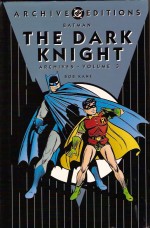
Batman: the Dark Knight Archives volume 3


By Bob Kane, Bill Finger, Jerry Robinson & George Roussos & various (DC Comics)
ISBN: 1-56389-615-X

With this third magnificent compilation of the epochal early Batman, the Dark Knight entered his fourth year of publication and the expanded creative team truly hit their stride, providing spectacular escapist thrills and chills for readers on the home front and even in the far-and-widely deployed armed services as 1942 brought America fully into the war and deadly danger never seemed closer…

This full-colour deluxe hardback tome (collecting the classic contents of Batman #9-12 from February/March to August/September 1942) opens with an expansive introduction from modern Bat-scribe Mike W. Barr, and also saw the introduction of an extensive contents section and detailed biographies for those talented folk who crafted these Golden Age greats.

The Dynamic Duo were popular sensations whose heroic exploits not only thrilled millions of eager readers but also provided artistic inspiration for a generation of comics creators and with America wholeheartedly embracing World War II by this period and the stories – especially the patriotic covers – went all-out to capture the imagination, comfort the down-hearted and bolster the nation’s morale.

Batman #9 is regarded as one of the greatest single issues of the Golden Age and is still a cracking parcel of joy today. Due to the unique “off-sale” dating system of the USA the issue hit the newsstands in time for Christmas 1941, with all the stories written by Bill Finger and illustrated by Bob Kane, Jerry Robinson & George Roussos. Moreover the issue sports possibly the most reproduced Batman cover ever; crafted by the brilliant Jack Burnley.

Within those pages the action began with ‘The Four Fates!’: a dark and moving human interest drama featuring a quartet of fore-doomed mobsters, after which our heroes ship out in ‘The White Whale!’, a mind-bending maritime crime saga loosely based on the classic Moby Dick, followed by another unforgettable Joker yarn ‘The Case of the Lucky Law-Breakers’ and the birth of a venerable tradition in an untitled story called here for expediency’s sake ‘Christmas’.

Over the decades many of the Dynamic Duo’s best and finest adventures have had a Christmas theme (and why there’s never been a Greatest Batman Christmas Stories volume is a mystery I’ve pondered for years) and this touching – even heart-warming – story of absent fathers, petty skulduggery and little miracles is where it all really began. There’s not a comic fan alive who won’t dab away a tear…

Following a stunning, whimsical and fourth-wall busting cover by Fred Ray & Robinson Batman #10 commences with another four classics. ‘The Isle that Time Forgot’ written by Joseph Greene, finds the Dynamic Duo impossibly trapped in a land of dinosaurs and cavemen, whilst ‘Report Card Blues’ also with Greene scripting, has the heroes inspire a wayward kid to return to his studies by crushing the mobsters he’s ditched school for. Jack Schiff typed the words for the classy jewel-heist caper (oh, for those heady days when Bats wasn’t too grim and important to stop the odd robbery or two!) ‘The Princess of Plunder’ starring everyone’s favourite Feline Femme Fatale Catwoman, and the boys finished up by heading way out West where the Gotham Guardian became ‘The Sheriff of Ghost Town!’ in a bullet-fast blockbuster scripted by Bill Finger.

Batman’s unsung co-creator also wrote three of the four epic adventures in Batman #11, beginning with the cover-featured shocker ‘The Joker’s Advertising Campaign’ wherein the Clown prince took ideas for big crimes from the small ads section of the papers whilst ‘Payment in Full’ related a touching melodrama about the District Attorney and the vicious criminal to whom he owed his life. Pulp sci fi author Edmond Hamilton wrote the mystery ‘Bandits in Toyland’ wherein a gang of high-powered burglars and bandits only stole dolls and train-sets from kids before Finger returned to concoct ‘Four Birds of a Feather!’ with Batman in Miami to scotch the Penguin’s dreams of a crooked gambling empire.

Batman #12 (Aug/Sept 1942) promptly follows with another four instant classics. ‘Brothers in Crime’ by Don Cameron & Jerry Robinson, captivatingly revealed the tragic – positively Shakespearean – fates of a criminal family who had every chance to change their ways whilst the Joker returned in ‘The Wizard of Words’ by Finger, Kane, Robinson & Roussos with the Green Haired Horror applying his homicidal mind to murderously making homilies and folk phrases chillingly literal…

Finger also scripted the final two tales in this issue and the volume, with Jack Burnley illustrating the major portion of the spectacular crime thriller about daredevil stuntmen ‘They Thrill to Conquer’ whilst Kane, Robinson & Roussos wrapped it all up with ‘Around the Clock with Batman’ – a “typical” day in the life of the Dynamic Duo complete with blazing guns, giant statues and skyscraper near-death experiences.

These are stories which forged the character and success of Batman. The works of co-creators Finger and Kane and such multi-talented assistants as Robinson, Roussos, Ray, Burnley and the rest are spectacular and timeless examples of perfect superhero fiction. Put them in a lavish deluxe package like this and include the pop art masterpieces that were the covers of those classics and you have pretty much the perfect comicbook book.
© 1942, 2000 DC Comics. All Rights Reserved.