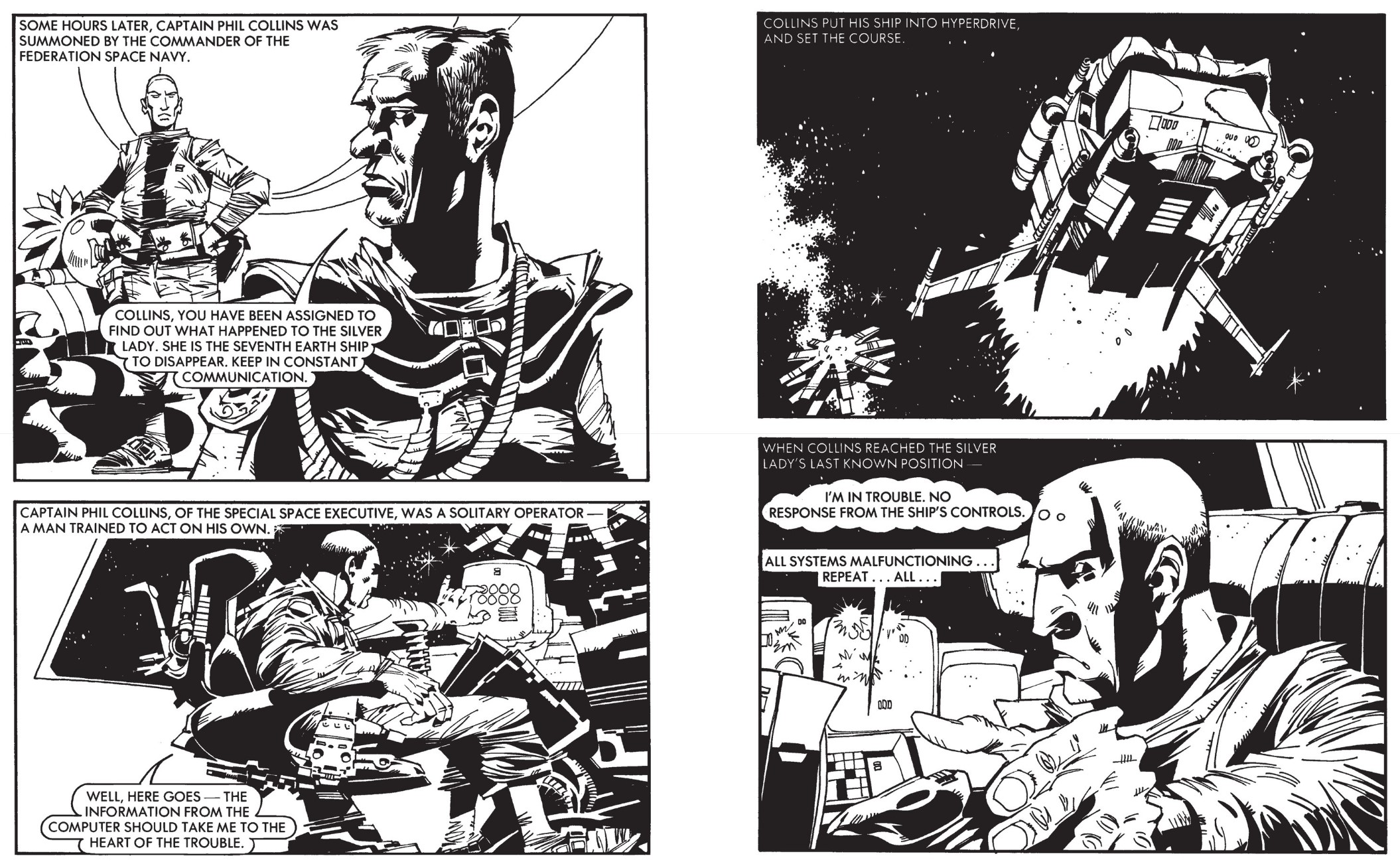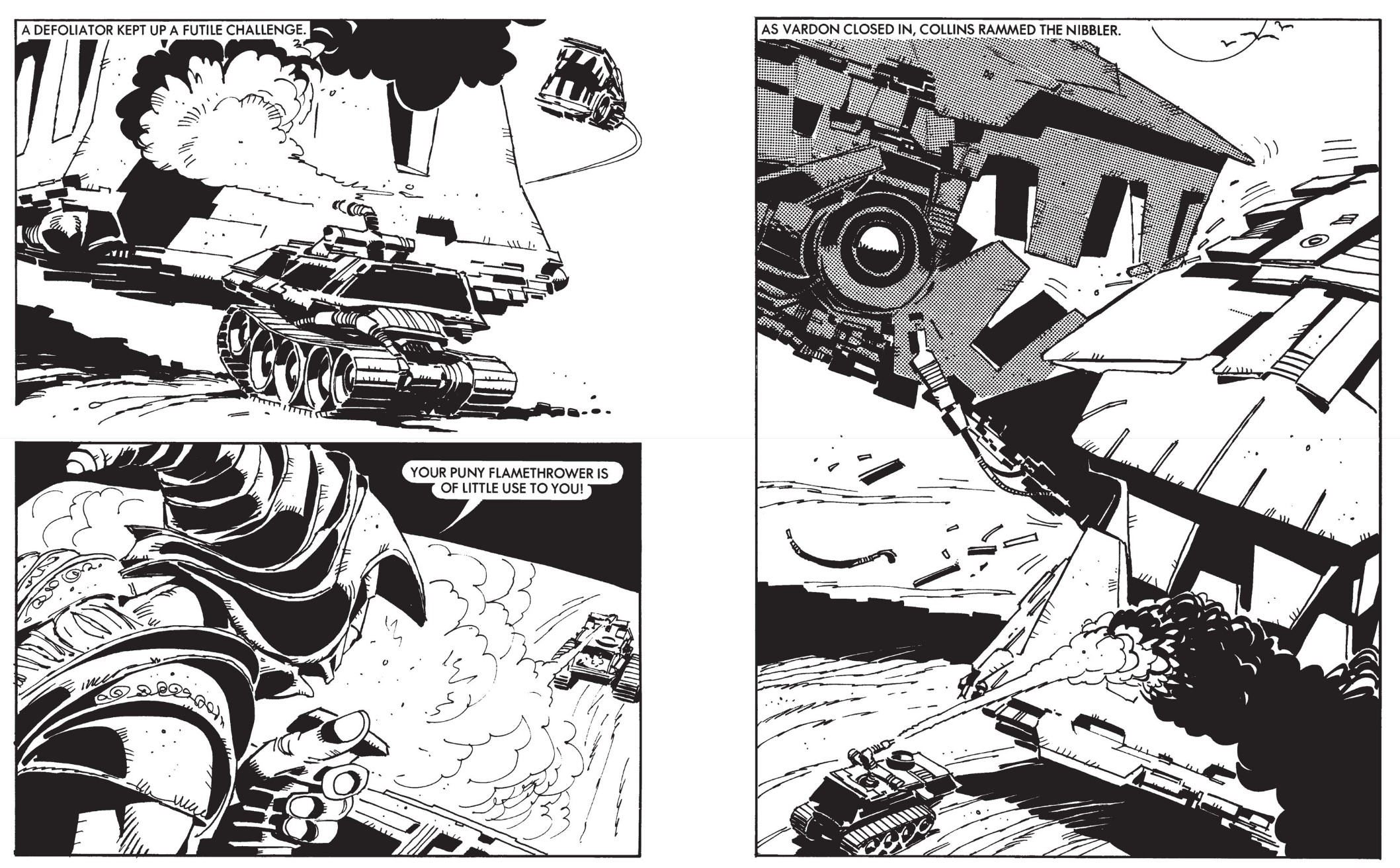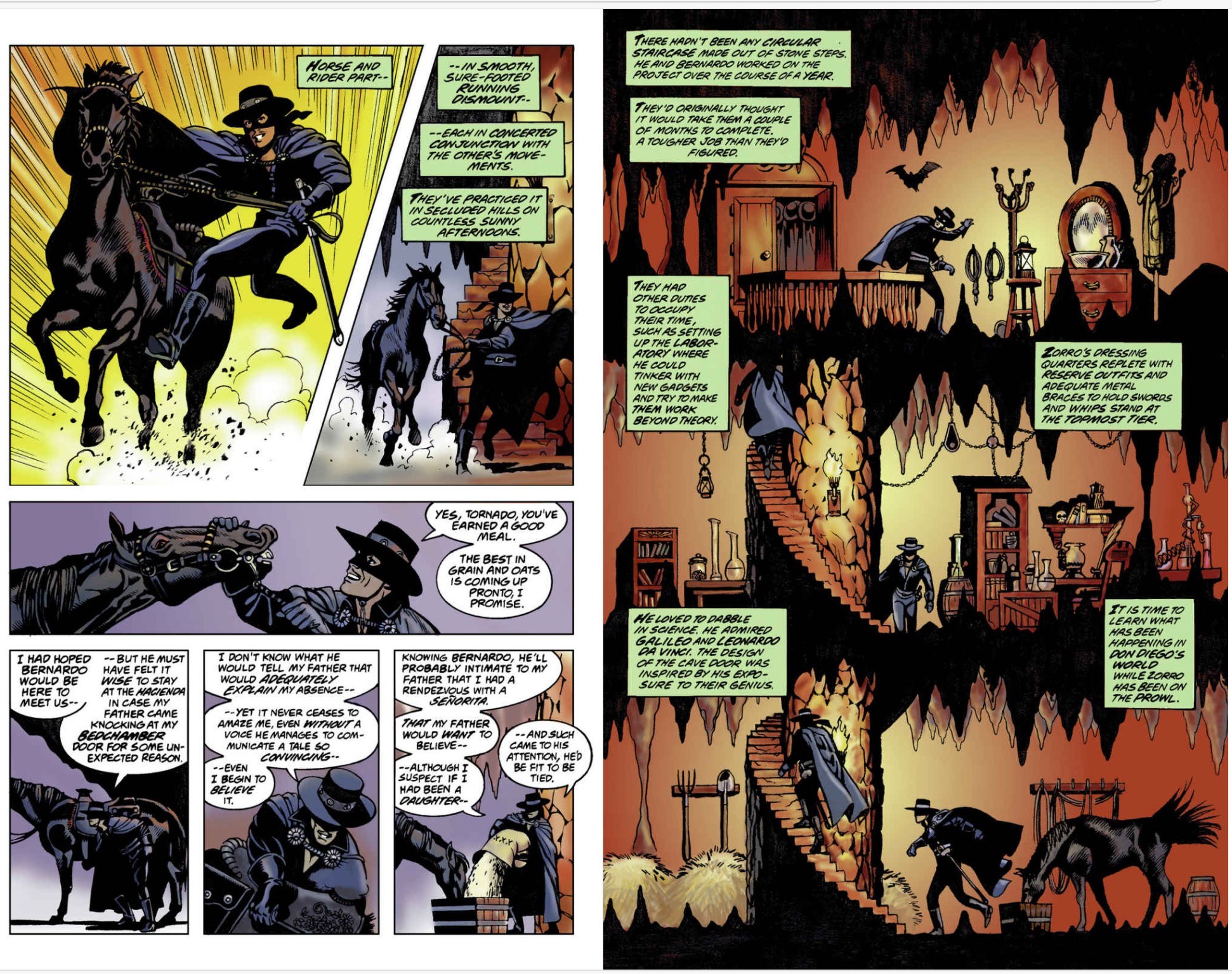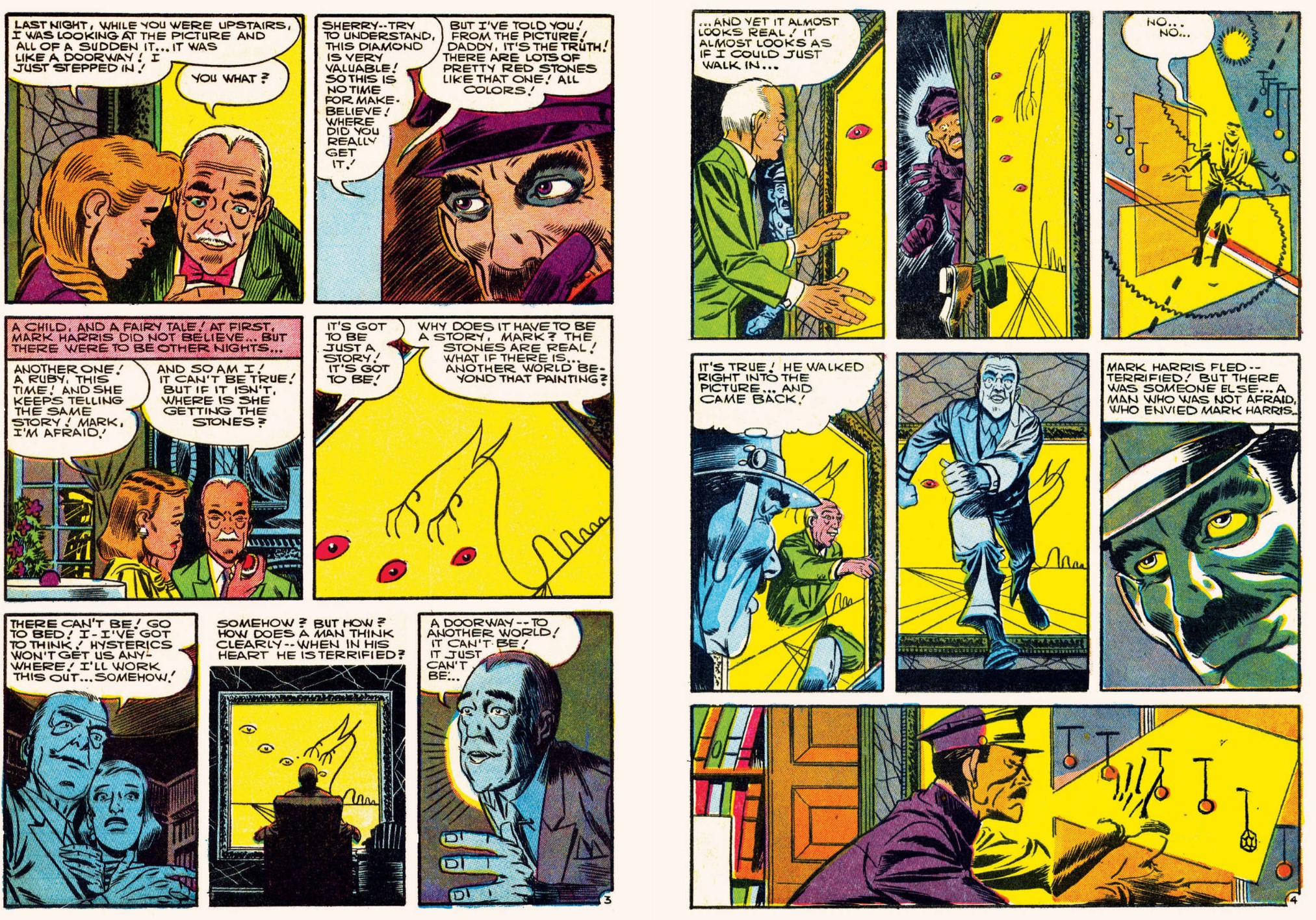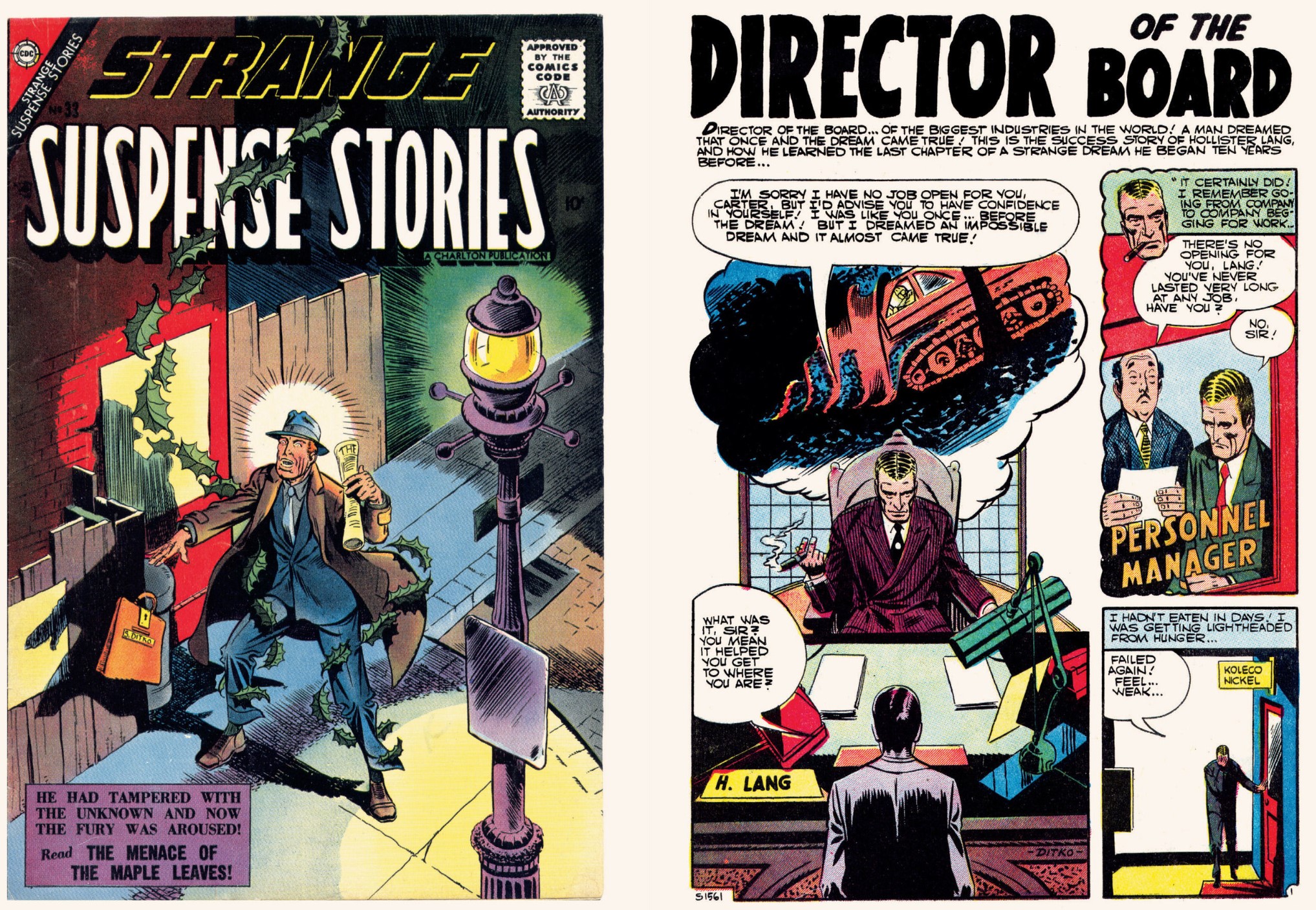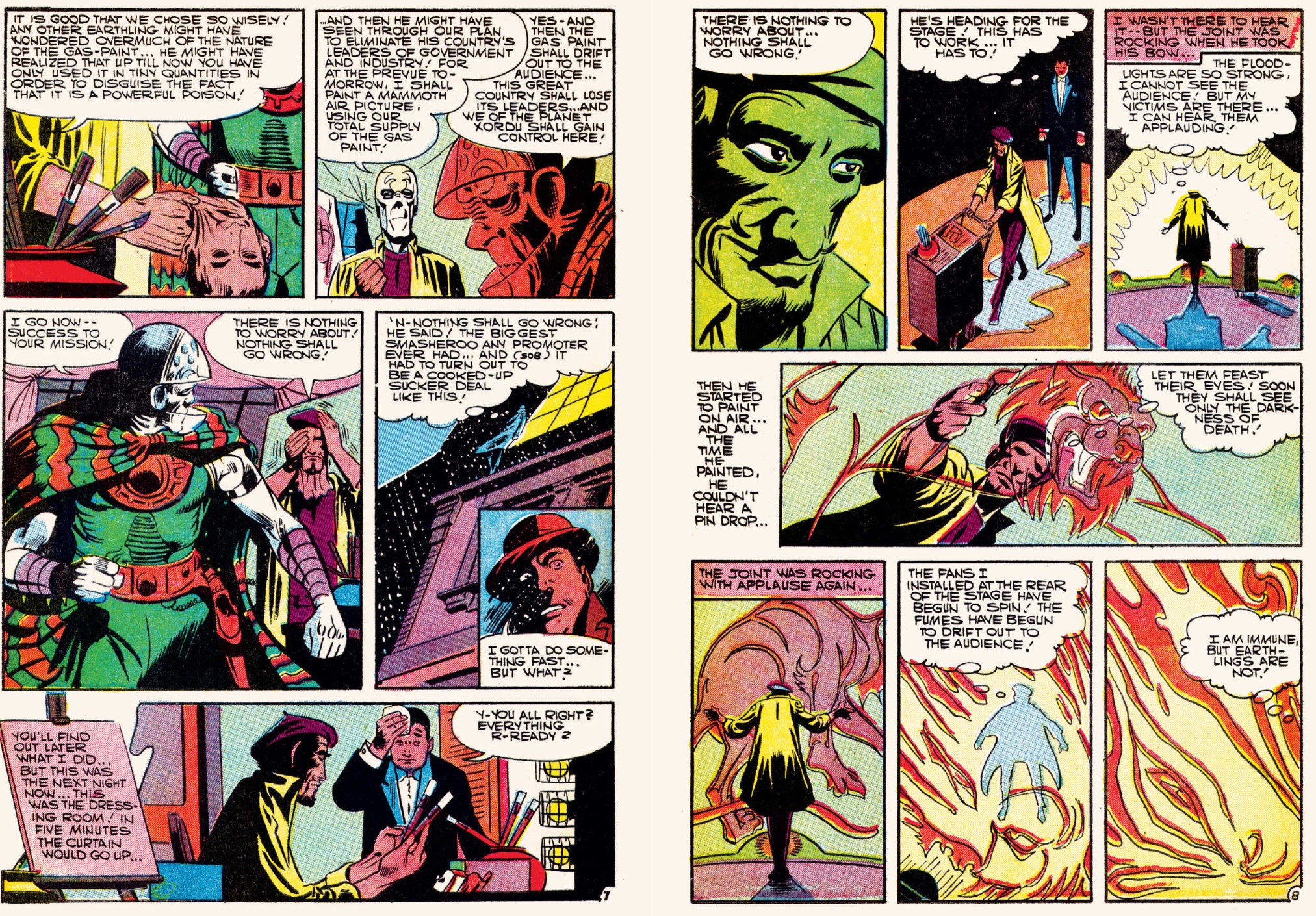
Showcase Presents Ghosts


By Leo Dorfman, Murray Boltinoff, John Broome, Jack Miller, Joe Samachson, George Kashdan, Bob Haney, Richard E. Hughes, Carl Wessler, Tony DeZuñiga, Jim Aparo, Sam Glanzman, Carmine Infantino, Sy Barry, Frank Giacoia, John Calnan, Bob Brown, George Tuska, Wally Wood, Curt Swan, Ruben Moreira, Irwin Hasen, Leonard Starr, Jerry Grandenetti, Nick Cardy, Ramona Fradon, Art Saaf, Michael William Kaluta, Jack Sparling, Win Mortimer, Ernie Chan, Buddy Gernale, Nestor, Quico & Frank Redondo, Alfredo Alcala, Gerry Talaoc, Nestor Malgapo, E.R. Cruz, Rico Rival, Abe Ocampo, Ernesto Patricio & various (DC Comics)
ISBN: 978-0-85768-836-1 (TPB)

Win’s Christmas Gift Recommendation: A Perfect Serving of Spectral Wonderment… 8/10

This book includes Discriminatory Content produced in less enlightened times.

Happy Dia de los Muertos! Let’s wind down our own Halloween celebrations and enjoy the more life-affirming Day of the Dead with a fabulously appropriate tome…

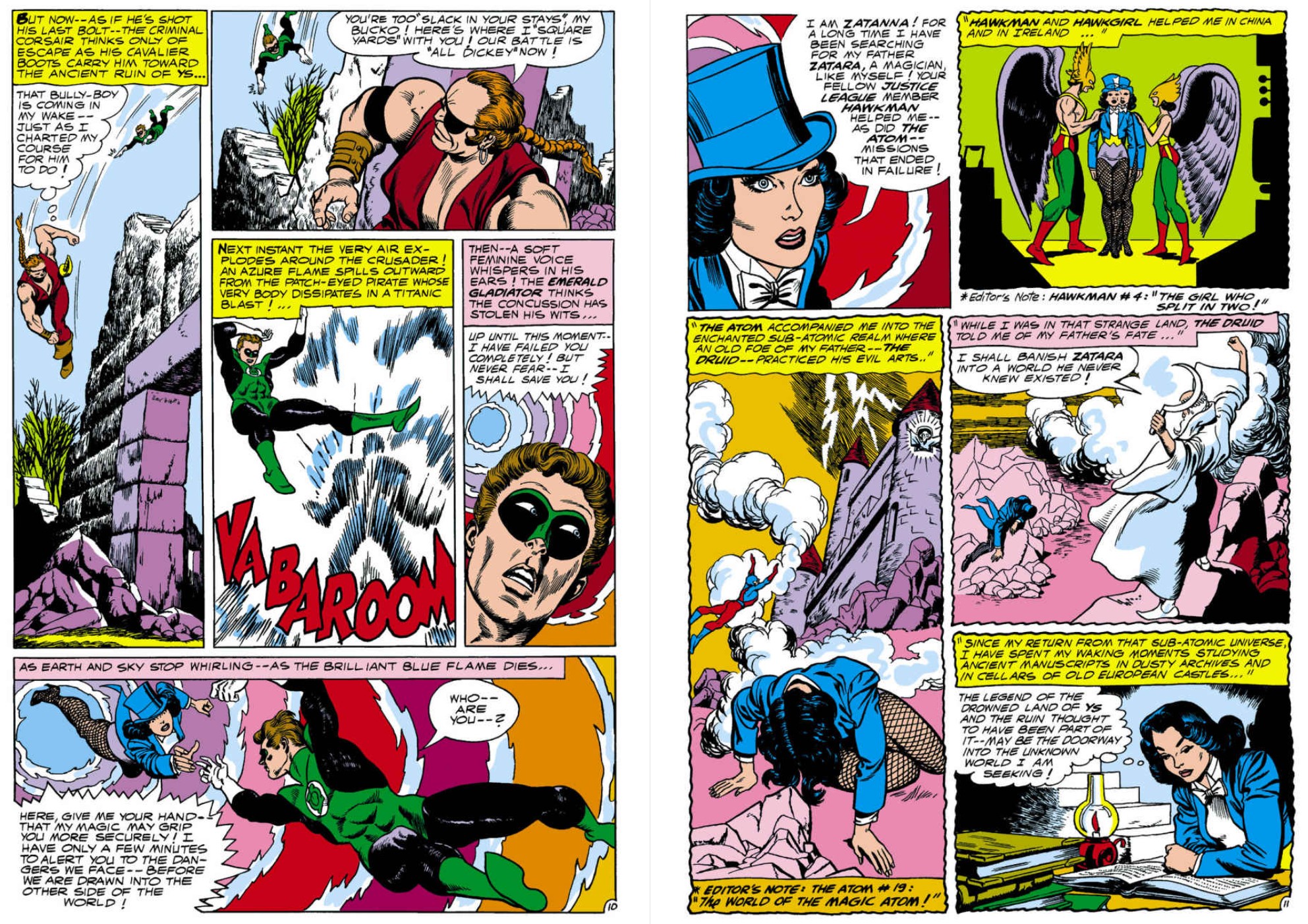
DC Comics came relatively late to funnybooks’ phantom-peril party, only bowing to the inevitable hunger for horror and mystery in the early 1950s. Comparatively straight-laced anthology The House of Mystery (cover-dated December 1951/January 1952) started the ball rolling with a gradual pick up that stopped dead after a hysterical censorship scandal and governmental witch-hunt created a spectacular backlash. It resulted in the industry adopting a castrating straitjacket of self-regulatory rules. Horror titles produced under the aegis of the Comics Code Authority were sanitised, anodyne affairs in terms of Shock and Gore, even though the appetite for suspense was still high. Nevertheless, in 1956 National/DC added sister title House of Secrets which specialised in taut human-interest tales in a fantasy milieu.

Stories were dialled back into marvellously illustrated, rationalistic, fantasy-adventure vehicles which dominated the market until the 1960s when super-heroes finally overtook them. When that bout of cape-and-cowl craziness peaked and popped, sales began bottoming out for Costumed Dramas and comics faced another punishing sales downturn.

Nothing combats censorship better than falling profits. As the end of the 1960s saw the superhero boom end with so many titles dead and some of the industry’s most prestigious series circling the drain too, the publishers took drastic action. This real-world Crisis led to the surviving players in the field agreeing to loosen their self-imposed restraints against crime and horror comics. Nobody much cared about gangster titles but as liberalisation coincided with another bump in public interest in all aspects of the Worlds Beyond, a resurrection of spooky comics was a foregone conclusion…

The chilling comeback resumed with The House of Mystery in 1968, and soon supernatural mystery titles dominated the marketplace, DC began a steady stream of launches along narrowly differing thematic lines. There was gothic horror romance title Sinister House of Secret Love, combat iteration Weird War Tales and, from late summer 1970, a bold new book which proudly boasted “True Tales of the Weird and Supernatural!” and challenged readers to read on… if they dared…

Originally released on St Valentine’s Day 2012, this sadly sole and singular monochrome encyclopaedia of the uncanny collects the first 18 issues of Ghosts, covering like a shroud September/October 1970 to September 1973. Lead scripter and supernatural enthusiast Leo Dorfman produced most of the original material for a title he is generally credited with creating. Dorfman was one of the most prolific scripters of the era (also working as David George and Geoff Brown) and a major scripter of horror stories for DC and Gold Key titles.

The thrills and chills begin with a graphic ‘Introduction’ from Tony DeZuñiga – probably scripted by editor Murray Boltinoff – prior to ‘Death’s Bridegroom’ (Dorfman & Jim Aparo) exposing a conniving bluebeard conman who finally picked the wrong girl to bilk and jilt. Sam Glanzman illustrated a fearsome tale of a shipbuilder slain while sabotaging a Nazi U-Boat before returning as a vengeful ‘Ghost in the Iron Coffin’, after which John Broome, Carmine Infantino & Sy Barry’s ‘The Tattooed Terror’ offers a slice of Golden Age anxiety (from Sensation Mystery #112, November 1952) with a career criminal seemingly haunted by his betrayed partner. Broome, Infantino & Frank Giacoia then relived ‘The Last Dream’ (Sensation Comics #107, December 1951-January 1952) as a 400-year old rivalry results in death for a 20th century sceptic, and this initial issue ends with a Western mystery in ‘The Spectral Coachman’ by Dorfman & DeZuñiga.

The second issue opens with a predatory ghost-witch persecuting a Carpathian village in Dorfman, John Calnan & George Tuska’s ‘No Grave can Hold Me’, whilst ‘Mission Supernatural’ (limned by Bob Brown & Wally Wood) reveals a WWII secret perpetually plaguing a modern English airport. A brace of revered reprints begin with light-hearted romp ‘The Sorrow of the Spirits’ from HoM #21 (December 1953, Jack Miller, Curt Swan & Ray Burnley) wherein a plague of famous phantoms attempt to possess their descendants’ bodies and ‘Enter the Ghost’ (Joe Samachson & Ruben Moreira, HoM #29, August 1954) finds an actor endangered by a dead thespian jealous of anyone recreating his greatest role…

With Dorfman still writing the lion’s share of new material, DeZuñiga renders the sorry fate of an unscrupulous diver seduced by discovery of a ‘Galleon of Death’, as Miller & Irwin Hasen’s ‘Lantern in the Rain’ (Sensation Mystery #113, January/February 1953) recounts an eerie railroad episode. Dorfman & Glanzman reunite to tell an original tale of ‘The Ghost Battalions’ who still haunt the world’s battle sites from Gallipoli to Korea.

Dorfman & DeZuñiga visited 17th century Scotland for #3’s opening occult observation, wherein a sea-born princess demands her child back from a wicked Laird in ‘Death is My Mother’, after which ‘The Magician who Haunted Hollywood’ (George Kashdan & Leonard Starr, HoM #10, January 1953) reveals how actor Dick Mayhew may have been aided by a deceased escapologist when playing the starring role in the magician’s biopic…

Drawn by Calnan, ‘The Dark Goddess of Doom’ reveals how a statue of Kali deals with the ruthless collector who stole her, after which anonymously authored ‘Station G.H.O.S.T.’ (limned by Moreira for HoM #17, August 1953) discloses how a man’s scheme to corruptly purchase a house haunted by his ancestor goes weirdly awry, before Tuska draws the saga of a WWII pilot who crashes into a desert nightmare and fatefully meets a ‘Legion of the Dead’. Following a reprinted fact-file on ‘Ghostly Miners’, Jerry Grandenetti depicts how a French landowner who unwisely disturbs a burial ground meets ‘The Screaming Skulls’

Ghosts #4 starts with a secret history of one of America’s most infamous killers in ‘The Crimson Claw’ (Tuska & cover artist Nick Cardy) before The Ghostly Cities of Gold’ (Grandenetti) reveals some truth about fabled, haunted Cibola as the first reprint reveals The Man Who Killed his Shadow!’ Crafted by Miller, Swan & Burnley for HoM #16 (July 1953) it tells how a murdered photographer reaches from beyond the grave for justice. Thereafter, Ernie Chan limns ‘The Fanged Spectres of Kinshoro’, with a Big Game hunter pitting 20th century rationality against an ancient Ju-Ju threat, whilst the superb team of Bob Haney, Ramona Fradon & Charles Paris shine again with ‘The Legend of the Black Swan’ (HoM #48, March 1956) wherein three sceptical US students in Spain have an eerie encounter with doomed 17th century sailors before concluding on ‘The Threshold of Nightmare House’ with Calnan & Grandenetti illustrating inevitable doom for a woman haunted by her own ghost…

During the invasion of China in 1939, a greedy Japanese warlord meets his fate – and the spirits of the Mongol warriors whose tomb he robbed. Issue #5’s lead tale ‘Death, the Pale Horseman’ (Dorfman & Art Saaf) is followed by ‘The Hands from the Grave’ (Calnan) which somehow saves a young tourist from early death, after which reprint ‘The Telltale Mirror’ (by an unknown author & Grandenetti from HoM #13, April 1953) shows the dread downside of owning a looking glass that reflects the future…

Original yarn ‘Caravan of Doom’ (Jack Sparling) tells of an uncanny African warrior aiding enslaved Tommies in WWI Tanganyika, balanced by uncredited reprint ‘The Phantom of the Fog’ (Moreira art from HoM #123, June 1962), wherein valiant rebels overthrow a petty dictator with the apparent aid of an oceanic apparition, before Grandinetti’s ‘The Hearse Came at Midnight’ ends the issue with spoiled college frat boys learning an horrific lesson about hazing and initiation rites…

With Ghosts #6, page counts dropped from 52 to 32 pages and reprints were curtailed in favour of new material. Proceedings begin with Dorfman & Saaf’s cautionary tale of an avaricious arcane apothecary when ‘A Specter Poured the Potion’, before ‘Ride with the Devil’ (Calnan) tells of a most unexpected lift for an unwary hitchhiker whilst ‘Death Awaits Me’ (Grandenetti) exposes an eerie premonition marking the bizarre death of dancer Isadora Duncan. A rare DC outing for mercurial comics genius Richard E. Hughes illustrated by Sparling closes this slimline edition with ‘Ghost Cargo from the Sky’, exposing the incredible power of wishing to Pacific Islanders in the aftermath of WWII.

Michael William Kaluta stood in for Cardy as cover artist for #7 but Dorfman remained as writer, beginning with ‘Death’s Finger Points’ (Sparling) as a bullying Australian sheep farmer falls foul of aborigines he’d abused, whilst President in waiting Lyndon B. Johnson becomes the latest VIP to learn the cost of ignoring a Fakir’s warning in the Saaf-illustrated ‘Touch not my Tomb’.

Calnan closed things out with ‘The Sweet Smile of Death’ in a doomed romance between a 20th century photographer and a flighty Regency phantom who refused to let this last admirer go. ‘The Cadaver in the Clock’ (art by Buddy Gernale) opened #8, as a succession of heirs learn the downside of an inheritance which perforce included a mummified corpse inside a grand chronometer, but Glanzman’s ‘The Guns of the Dead’ shows a far more beneficial side to spectres as US marines are saved by their unstoppable – deceased – sergeant in 1944. Lovingly limned by the wonderful Nestor Redondo, ‘Hotline to the Supernatural’ recounts cases of supernatural premonition, whilst ‘To Kill a Tyrant’ (Quico Redondo) implausibly links the incredible last hours of Rasputin to the so-necessary death of Stalin decades later…

Ghosts #9 begins with Calnan’s ‘The Curse of the Phantom Prophet’ as an Indian holy man continues his war against the insolent British and rapacious white men long after his death by firing squad. The Last Ride of Rosie the Wrecker’ (gloriously illustrated by Alfredo Alcala) then details the indomitable determination of a crushed US tank that shouldn’t have been able to move at all, and Grandenetti’s ‘The Spectral Shepherd of Dartmoor’ shows how a long-dead repentant convict still aids the weak and imperilled in modern Britain. Events end on an eerie note as vacationers see horrific apparitions but discover ‘The Phantom that Never Was’ has created a real ghost out of a hoax disaster in a genuine chiller drawn by Bob Brown & Frank McLaughlin.

Fact page ‘Experimenters Beyond the Grave’ – from Dorfman & Win Mortimer – details attempts by Harry Houdini, Mackenzie King and Aldous Huxley to send messages from the vale of shades before storytelling resumes in #10 with the Gerry Talaoc/Redondo Studio limned tale of a Vietnamese Harbinger of Doom in ‘A Specter Stalks Saigon’. Increasingly, superb Filipino artists took on art chores for the ubiquitous Dorfman’s scripts, such as ‘The Ghost of Wandsgate Gallows’ by Ernie Chan, detailing the inevitable fate of an English noble who hires and then betrays a contract killer. Although naval savant Sam Glanzman could be the only choice for the US maritime mystery ‘Death Came at Dawn’, Nestor Malgapo artfully handles horrific saga ‘The Hell Beast of Berkeley Square’, which for decades slaughtered guilty and innocents alike in prosperous Mayfair…

Ghosts #11 opened with Eufronio Reyes (E.R.) Cruz’s contemporary thriller wherein Nazi war criminals recovering long-hidden loot finally pay for their foul crimes in ‘The Devil’s Lake’, before Chan sketches a subway journey where the ‘Next Stop is Nowhere’. Graphic master Grandenetti visually captures ‘The Specter Who Stalked Cellblock 13’ (of San Quentin), and Brown returns to illustrate how a church organ killed anyone who played it in ‘The Instrument of Death’ before Sparling charts the sinister coincidences of ‘The Death Circle’ dictating that every US President elected in a year ending in zero dies in office. Of course, not everyone today is happy that the myth has been debunked…

Issue #12 featured ‘The Macabre Mummy of Takhem-Ahtem’ (Calnan): more a traditional monster-mash than purportedly true report, after which Grandinetti’s ‘Chimes for a Corpse’ sees a German watchmaker die for his malicious treatment of an apprentice before the always amazing Glanzman-limned Beyond the Portal of the Unknown’ closed proceedings in magnificent style when French soldiers in 1915 uncover a terrible tomb and unleash a centuries old vendetta of vengeance…

Dorfman & Brown open issue #13 with ‘The Nightmare in the Sandbox’ detailing a war of voodoo practitioners in Haitian garden, whilst Calnan’s ‘Voice of Vengeance’ depicts macabre marionette vengeance on an embezzling official who silences their maker. ‘Have Tomb, Will Travel’ (Talaoc) sees contract killers using a scrapyard to lose their latest corpse discover their brand-new car comes with his unquiet spirit as an angry extra as Nestor Redondo depicts the inexplicable experience of lost GIs spending a night in a castle that isn’t there and learning ‘Hell is One Mile High’

In #14, an heirloom wedding dress that comes with a curse doesn’t stop Diane Chapman marrying her young man in Gernale’s ‘The Bride Wore a Shroud’, whilst ‘Death Weaves a Web’ (Kashdan & Chan) sees a bullying uncle live to regret destroying his little nephew’s spider collection – but not for long. Talaoc’s ‘Phantom of the Iron Horseman’ finds a young train driver and host of passengers saved from disaster by the spirit of his disgraced grandpa before the issue ends with a catalogue of global portents warning of the appalling 1966 Aberfan tragedy in Cruz’s ‘The Dark Dream of Death’.

Gernale opened #15 with ‘The Ghost that Wouldn’t Die’, another case of domestic gold-digging, ectoplasmic doppelgangers and living ghosts, whilst ‘A Phantom in the Alamo’ (Carl Wessler & Glanzman) reveals the ghastly fate of the American who sold out the valiant defenders to the Mexican attackers. Alcala lent his prodigious gifts to the Balkan tale of a corpse collector who abandons morality and to profit from his sacred trust in ‘Who Dares Cheat the Dead?’ and Rico Rival delineates a gripping yarn wherein a corrupt surgeon is haunted by the hit-and-run victim he’d silenced in ‘Hand from the Grave’.

Ghosts #16 has a Spanish “gypsy” cursed to see ‘Death’s Grinning Face’ whenever someone is going to die, in a stirring thriller from Rival, and Glanzman again displays his uncanny knack for capturing shipboard life – and death – when, after 25 years, a deserter finally joins his dead comrades in ‘The Mothball Ghost’. Talaoc then delineates Napoleon Bonaparte’s services to France after the Little Corporal dies to become ‘The Haunted Hero of St. Helena’.

Issue #17 finds a phantom lady saving flood-lost children in Dorfman & Alcala’s moving ‘Death Held the Lantern High’ after which editor Murray Boltinoff & Talaoc reveal ‘The Specters Were the Stars’ as a film company tries to capture the horror of the 1920 Ulster Uprising, whilst Kashdan & Calnan expose the seductive allure and inescapable power of traditional Roma using ‘The Devil’s Ouija’ to combat centuries of prejudice…

This first terrifying tome terminates with Ghosts #18 and Alcala’s account of a hateful Delaware medicine chief still luring white men to his watery ‘Graveyard of Vengeance’, centuries after his death, whilst Abe Ocampo details the unlikely ‘Death of a Ghost’ at the hands of a very smug inventor who has just moved into a haunted mansion. Frank Redondo describes how villagers in old Austria knew young Adolf would come to a bad end because the boy had ‘The Eye of Evil’ and the spookiness at last ceases with Ernesto Patricio & Talaoc’s ‘Death Came Creeping’ as a visiting Egyptian merchant and his unique pet stop a sneak thief’s predations in an age-old manner…

These turbulent terror-tales captivated readers and critics alike when they first appeared and it’s almost certain that they saved DC during one of the toughest downturns in comics publishing history. Their blend of sinister mirth, classic horror scenarios and suspense set-pieces can most familiarly be seen in such children’s series as Goosebumps, Horrible Histories and their many imitators. Everybody loves a good healthy scare – especially today or even on those dark Christmas nights to come – and this beautiful gathering of ethereal escapism (sadly, still only available in monochrome and paperback) is a treat fans of fear and fantastic art should readily take to their cold, dead hearts…
© 1971, 1972, 1973, 2011 DC Comics. All Rights Reserved.

Gary Gianni’s MonsterMen and Other Scary Stories


By Gary Gianni with William Hope Hodgson, Robert E Howard, Clark Ashton Smith, Percival Landon: lettered by Sean Konnot & Todd Klein (Dark Horse Books)
ISBN: 978-1-50670-480-7 (TPB) eISBN: 978-1-50670-481-4

This book includes some Discriminatory Content included for dramatic effect.

The tradition of extraordinary individuals banding together or even acting individually to confront night terrors and supernatural predators probably extends further back than even Gilgamesh or Beowulf. However, it really came to the fore once bards and skalds were rendered obsolete by cheap printing, mass literacy and pulp publishing. Action, crime, weird science and the supernatural all became strange bedfellows in service to monthly (sometimes fortnightly) blood-&-thunder adventures, with the best of the bunch still sneaking out the odd exploit nearly a century later…

The sublime stuff of legend in both story and illustrations has beguiled many a latecomer (Chaykin, Steranko, Wrightson and Kaluta first come to mind) but the absolute doyen of those that followed is Gary Gianni. Born in the Windy City in 1954, he graduated from the Chicago Academy of Fine Arts in 1976 and subsequently worked as a courtroom sketch artist, in network television and as an illustrator for the Chicago Tribune before breaking into comics with modern Classics Illustrated adaptations of Tales of O. Henry and 20,000 Leagues under the Sea.

This led him to Dark Horse Comics’ licensed titles with stints on The Shadow and Indiana Jones (…and the Shrine of the Sea Devil), with other strip work including Tarzan, Tom Strong and Batman. In 2004 he replaced John Cullen Murphy, becoming the third official artist on Prince Valiant, limning the epic Sunday feature until March 25th 2012. His book illustration work includes Savage Tales of Solomon Kane, Bran Mak Morn: The Last King, George R.R. Martin’s A Song of Ice and Fire prequel A Knight of the Seven Kingdoms, Ray Bradbury’s Nefertiti-Tut Express and Michael Chabon’s Gentlemen of the Road.

Always busy and much in demand, Gianni nevertheless managed to create a number of linked serial sorties concerning a mystery-solving ghostbusters, most of which originally appeared in the back of Hellboy titles (specifically Hellboy Christmas Special, Wake the Dead, The Wild Hunt #5-6, Almost Colossus), plus a solo one-shot The MonsterMen: The Skull and the Snowman. The other material filling this scare package all come from The Dark Horse Book of Monsters; the Dead; Hauntings & Witchcraft

Set in the golden-hued yet shadowy environs of America’s pulp past, the tales are witty, elegant thematic pastiches of rip-roaring thriller-chiller masterworks – including early Batman yarns – and are preceded by a whimsical ‘Foreword by Gary Gianni’ and effusive ‘Introduction by Michael Chabon’.

The far too few exploits of The MonsterMen open with ‘Silent as the Grave’ as first seen in Hellboy: Wake the Dead #1-5, revealing a secret organisation who insert themselves in weird events such as the disappearance of actress Julia Adler, strange murder of her lover and inexplicable appearance of ghost images on the latest rushes of maverick director Larry St. George. Doggedly pursued by savvy reporter Sunset Lane, the famed movie maven has a dark unpleasant personal pestilence, but uses it for good, like battling occult whacko monster-wrangler Crulk beside sartorial nightmare/immortal mystic warrior monk Benedict(us) of the Venerable Guild of Corpus Monstrum. The pair are almost insufficient when the fiendish forces behind the plot go on the attack.

Almost…

A shorter, lighter yarn follows in ‘Autopsy in B-Flat’ (Hellboy: Almost Colossus#1-2) as, whilst laboriously exhuming a suspect, Benedict is regaled by an old exploit of his comrade: a tropical island mystery involving monstrous, seductive creatures and pirates who can’t stay dead, that nearly proves his distracting end during the current case…

‘A Gift for the Wicked’ (Hellboy Christmas Special) finds the odd couple cleaning an old dark house of unwanted tenants at the supposedly happiest time of the year – albeit with a little festive assistance – before ‘The Skull and the Snowman’ sees Sunset Lane despatched from a Tibetan Lamasery, carrying a cursed object to the Corpus Monstrum, just as Crulk returns to bedevil Benedict, begging aid to escape marauding Puttyfoons dogging his misshapen steps…

As reality goes wild and the modern metropolis roils under ancient satanic scourgings, all parties converge on the skull (still trying to get out of Tibet) and the power it promises. The quest draws out a legion of terrors and concludes with shocking revelations about two of the world’s most infamous monsters…

The comics cavorting concludes with a staggeringly eccentric and beautiful horror romp as ‘O Sinner Beneath Us’ (Hellboy: The Wild Hunt #5-6) channels Little Nemo in Slumberland in a classic unearthly child tale, with new recruits Sunset and Crulk taking pole positions for a wild chase for the salvation of innocence and retrieval of the ghastly Mustacchio Demoniac…

The Other Scary Stories section of this timeless terror tome offers classic pulp horror prose spectacularly illustrated and illuminated by Gianni, opening with a masterful vignette by William Hope Hodgson as ‘The Gateway of the Monster’ details the crushing fears and tragic outcomes generated by a haunted room in an English country house… and what celebrated spirit photographer Carnacki the Ghost Breaker must endure to end the appalling threat it poses…

It’s followed by the author’s stand-alone nautical tale ‘A Tropical Horror’, detailing the last voyage of the SS Glen Doon out of Melbourne, relentlessly and systematically stripped of its crew by a sea thing both ravenous and pitiless.

Wry, sardonic humour infuses a seductive tale of a powerful woman who takes what she wants in Clark Ashton Smith’s Mother of Toads’, before Robert E. Howard’s horror western ‘Old Garfield’s Heart’ proves he wasn’t all about bulging thews and swinging swords. He could mix a mood as well as any horror master and inspire some potent illustration too…

Wrapping up the bedtime reading is one last period ghost story of haunted houses and murderous rooms imaginatively illuminated, as ‘Thurnley Abbey’ by Percival Landon, all sealed down with a lavishly illumined ‘Biography’.

Madcap, frenzied, skilfully constructed and just plain fun, MonsterMen and Other Scary Stories is stuffed with astounding imagery, packed with incidental iniquities such as zombie cowboys, squid corsairs, abominable snowmen, spectral skulls, movie phantoms, dark dragons and flabby flying demons, all delivered in snippets of smartly nostalgic nonsense. This is kids’ stuff for adults and there’s simply not enough of it, so get what there is while you can, fright fans!
Gary Gianni’s MonsterMen and Other Scary Stories™ © 1996, 1997, 1999, 2003, 2004, 2005, 2006, 2009, 2012, 2017 Gary Gianni. Introduction © 2012, 2017 Michael Chabon. All rights reserved. All other material ™, © or ® respective holders and owners.

Bunny vs Monkey: The Gigantic Joke Fight!


By Jamie Smart, with Sammy Borras (David Fickling Books)
ISBN: 978-1-78845-334-9 (Digest HB)

Bunny vs Monkey has been the hairy/fuzzy backbone of The Phoenix since the very first issue back in 2012: recounting a madcap vendetta gripping animal arch-enemies in an idyllic arcadia masquerading as more-or-less mundane but critically endangered English woodlands.

Concocted with gleefully gentle mania by cartoonist, comics artist and novelist Jamie Smart (Fish Head Steve!; Looshkin; Max and Chaffy, Flember), his trendsetting, mindbending multi award-winning yarns have been wisely retooled as graphic albums available in digest editions such as this one.

All the tail-biting tension and animal argy-bargy began yonks ago after an obnoxious little anthropoid plopped down in some serene British woodland, in the wake of a disastrous local space shot. Crashlanded in Crinkle Woods, scant miles from his launch site, lab animal Monkey reckoned himself the rightful owner of a strange new world… despite every effort to dissuade him by reasonable, rational, sensible, genteel, contemplative forest resident Bunny. No amount of patience, propriety or good breeding on the part of the laid-back lepine could curtail, contain or control the incorrigible idiot ape, who to this day remains a rude, noise-loving, chaos-creating, troublemaking lout…

A keen rivalry arose between them, as the ape intruder crudely made himself at home, and to this day Monkey remains a rude, noise-loving, chaos-creating, troublemaking lout intent on building his perfect “Monkeyopia” – with or without the aid of evil supergenius ally Skunky or their “henches” Metal Steve and Action Beaver

Problems are exacerbated by other unconventional Crinkle creatures, like Pig, Weenie, Ai, Lucky, Le Fox and especially mad scientist Skunky whose intellect and cavalier attitude to life presents as a propensity for building extremely dangerous robots, Brobdingnagian bio-beasts and sundry other super-weapons…

Here the mundane multi-coloured manic war of nerves and mega-munitions is temporarily terminated for a twits & giggles diversion in magnificent monochrome as the entire cast are embroiled in a mysterious competition to determine who knows the best jokes – a cunning ploy to resurrect the subgenre of cartoon joke books that made the 1960s, Seventies and Eighties such a tedious, ear-bending chore for teachers and parents and so much fun for us…

The search to determine “The Funniest Creature in the Woods” grips everybody and over ‘Welcome to the Woods’, ‘Bunny Makes a Funny’, ‘Monkey’s Merciless Mirth!’, ‘Skunky’s Genius Jokes!’, ‘Weenie and Pig’s First Go at Telling Jokes!’, ‘Lights. Camera. Action Beaver!’, ‘Metal Steve and Metal E.V.E.’s Joke Processing’, ‘Le Fox is Far Too Cunning’, ‘Ai is So Fast’, ‘A Very Lucky Joke!’, ‘Weenie and Pig Return!’, ‘Readers’ Jokes – You Make the Laughs!’ and ‘And Now, the Conclusion!’, deliver themed and specialised chapter collections of Dad Jokes, Bum Jokes, Fart Jokes, Poo Jokes, Food Jokes, Baby Jokes, Knock-Knock Jokes and Pirate Jokes, as well as jests & japes about Genius, Robots, Computers, School, Experiments, Monsters, Ghosts, Chickens and Road Crossing, whilst also offering some riddles, brain-teasers and even tips on what Jokes are and How To Tell Them…

Daft, compulsively addictive, dangerously read-out-loud-able and fearfully unputdownable, this cutting edge retro-treat is the perfect gift… for someone else’s kids…
Text and illustrations © Fumboo Ltd. 2024. All rights reserved.

Win’s Christmas Gift Recommendation: Because You’re Only Young Once, unless you’re a Guy… 8/10

Bunny vs Monkey: The Gigantic Joke Fight! Will be published on October 10th 2024 and is available for pre-order now.

The Littlest Pirate King


By David B. & Pierre Mac Orlan, translated by Kim Thompson (Fantagraphics Books)
ISBN: 978-1-60699-403-0 (HB)

Just one more day, me Buckos!

Tim Burton has pretty much cornered the market on outlandish, spooky fairy tales masked as edgy all-ages fantasy, but if you and your kids have a fondness for scary fables and macabre adventure with a uniquely European flavour you might want to seek out this supremely impressive yarn of unquiet buccaneers and phantom piracy.

Pierre Mac Orlan was one of the nom-de-plumes of celebrated French author, musician and performer Pierre Dumarchey who – between his birth in 1882 and death in 1970 – managed to live quite a number of successful, productive and action-packed lives. As well as writing proper books for sensible folk, he also crafted a wealth of artistic materials including children’s fables like this one, hundreds of popular songs and quite a bit of rather outré pornography.

A renowned Parisian Bohemian, Mac Orlan sang and played accordion in nightclubs and cabaret. He was wounded in the trenches in 1916, subsequently becoming a war correspondent. When the conflict ground to a conclusion, he evolved into a celebrated film and photography critic as well as one of France’s most admired songwriters and novelists.

By contrast, David B. is a founder member of the groundbreaking strip artists’ conclave L’Association, and has won numerous awards including the Alph’ Art for comics excellence and European Cartoonist of the Year. He was born Pierre-Françoise “David” Beauchard on February 9th 1959, and began his comics career in 1985 after studying advertising at Paris’ Duperré School of Applied Arts. His seamless blending of Artistic Primitivism, visual metaphor, high and low cultural icons, as seen in such landmarks as Babel, Epileptic and Best of Enemies: A History of US and Middle East Relations, Nocturnal Conspiracies and many more, are here augmented by a welcome touch of morbid whimsy and stark fantasy imbuing this particular gem with a cheery ghoulish intensity only Charles Addams and Ronald Searle might possibly match.

Mac Orlan’s tale perhaps owes more to song than storybook, with its oddly jumpy narrative structure, but M’sieur B.’s canny illustration perfectly captures the true flavour and spirit of grim wit as it recounts the tale of the ghostly crew of The Flying Dutchman, accursed mariners destined to wander the oceans, never reaching port, destroying any living sailors they encounter and craving nothing but the peace of oblivion.

Their horrendous existence forever changes when, on one of their periodic night raids, they slaughter the crew of a transatlantic liner but save a baby found on board. Their heartless intention is to rear the boy until he is old enough to properly suffer at their skeletal hands, but as years pass the eagerly anticipated day becomes harder and harder for the remorseless crew to contemplate…

Stark and vivid, scary and heartbreakingly sad, as only a children’s tale can be, this darkly swashbuckling romp is inexplicably not a global classic in every home (yet) but remains a classy act with echoes of Pirates of the Caribbean (which it predates by nearly a century) that will charm, inspire and probably cause a tear or two to well up.
© 2009 Gallimard Jeunesse. This edition © 2010 Fantagraphics Books. All rights reserved.

The Phoenix Presents: The Pirates of Pangaea Book 1


By Daniel Hartwell & Neill Cameron (David Fickling Books)
ISBN: 978-1-910200-08-7 (TPB)

Why are pirates so mean? I don’t know, they just AARRRR

Moreover, nobody tells pirates they can only have one day to be themselves, so here’s more buccaneer-bootied bravado and bombast with a little lizardly allure tipped in too…

The Phoenix has been the saving grace of British kids’ comics since 2012, regaling readers with anthology comics for girls, boys and all points between, offering humour, adventure, quizzes, puzzles and educational material in a joyous parade of cartoon fun and fantasy.

Although best known for its comedy stylings, it’s always been pretty strong in its action and mystery yarns…

Crafted by Daniel Hartwell (Urban Beasts) and Neill Cameron (Mo-Bot High, How to Make Awesome Comics), by far the most engaging thriller so far featured is a sublime combination of rip-roaring endeavour and enticing fantasy blending canny corsairs, boldly brilliant kids, suspenseful swashbuckling escapades and gloriously gigantic dinosaurs.

The alternate-history lesson begins with 12-year old Sophie Delacourt voyaging out from England in 1717 to join her Uncle Silas, newly appointed Governor of the lost land of Pangaea.

The colossal continent is reputed the oldest landmass on Earth and a place primarily inhabited by stupendous reptiles of land and air. Master Bosun William takes a paternal interest in the girl, explaining the wondrous nature of the place, but nothing prepares her for the shock of a colossal “long-neck” diving under their vessel and lifting it bodily into the air.

The interior of Pangaea is a vast shifting ocean of long grass afflicted and infested with fast, deadly predators no man afoot could survive or escape, so all ships are picked up out of blue Caribbean waters then carried upon Brobdingnagian beasts’ backs between the rocky high points and plateaux where puny humanity has built its dwellings and settlements.

The big beasts are kept docile and compliant by administration of a herb dubbed “Snuff” and piloted by a skilful class of inland mariners known as “Snuffmen”

Sophie has never seen anything so wonderful in her life but, as Snuffman John guides the magnificent Bessie and her formerly-seagoing burden towards the Governor’s capital city, the amazed lass catches sight of an ever-present peril besetting this latest outpost of empire.

Through the shifting verdure hails a pirate vessel strapped atop a terrifying black Land Leviathan and soon the voyagers are fighting for their lives in an ‘Ambush on Pangaea’.

Sophie is locked in her cabin as the ferocious freebooters’ devastating attack pillages the outmatched victim-vessel. After insanely cruel Captain Brookes cries victory and makes the crew walk the plank to their deaths, she is the only survivor…

The second chapter opens with the Governor’s niece imprisoned on Brookes’ land-ship, a potential goldmine in ransom for a rapacious maniac. Furiously defiant, Sophie is slowly befriended by the brute’s cabin boy Timothy Kelsey. This lad is the tormented last survivor of a previous foray, having witnessed the murder of his mentor and master Dr. Shaw: a naturalist come to the lost land to catalogue the ‘Indigenous Fauna of the Pangaean Land-Mass’.

After experiencing Brookes’ cruelty, Sophie agrees to assist Timothy’s desperate plan for escape but as they make their move to fly off on the ship’s captive “Great Wing” lizard, they stumble over the first mate. Ten Gun Jones is also engaged in fleeing on the “Razor Beak”, but the din of their stumbling over each other rouses the ship and the three are forced to flee together into the night amidst a hail of musket fire…

Soon the trio are hopelessly ‘Lost in the Sea of Green’ as their gravely wounded pterosaur expires just shy of a high-projecting stony pinnacle. With deadly “Land Sharks” and “Belly Rippers” closing in, all hope seems lost until an even deadlier beast pounces. The “Tyrant” makes short work of the circling velociraptors, but its ravening hunger remains unsated. Only sheer terror carries the fugitives to relative safety – a rocky islet where, frantically scaling the igneous tower with the horror snapping at their heels, they tumble into a cave and find themselves inside an abandoned pirate lair…

The dusty den holds weapons, lamps, water, liquor and even brontosaur jerky: everything needful to outwait the roaring giant outside, but after a sleepless night with Ten Gun less than forthcoming about why he was deserting, Sophie conceives a dangerous idea.

Feeding the monster chunks of dried meat liberally doused in Snuff found in a barrel, in an act of seeming madness Sophie drops onto the horror’s head and soon has it – her, actually – acting like a very dangerous steed…

The fearless child then explains how an elderly servant in England taught her the secrets of horse-whispering before christening her scaly new pet “Cornflower”. Timothy is elated that they can use the Tyrant to safely cross the lethal Sea of Green to civilisation, but Jones has other plans…

The enigmatic seadog’s guarded directions soon bring them to an active volcano – in truth the neutral port used as safe-haven by all pirates plying the grassy deeps. In a tavern the children learn the ‘Secrets of Raptor Rock’ and are introduced to bombastic Captain Ford, who had planted Ten Gun in Brookes’ crew to secretly secure the second half of a disputed treasure map. With both pieces in hand the privateer immediately sets to emerald sea, but Ten Gun insists on bringing Sophie and Tim along. They have barely left the rock before Cornflower breaks out of her pen and doggedly follows…

The children are put to work and Sophie befriends Iwakian Snuffman Tak: a native Pangaean who steers the buccaneers’ bombastic brontosaur Gertrude, before the exploratory voyage comes to a sudden stop after crossing the eerie “Longnecks Graveyard” and approaches the fantastic plateau known in legend as “The Forbidden Isle”…

An expeditionary party is soon driving inland to an ancient temple in ‘Quest for the Golden Skull’ but upon entering, the greedy raiders are astounded to discover the priceless artefact they’re hunting is not a gilded human head but actually a full-size tyrant’s skull cast in precious metal. That’s when ferocious native defenders – the Kron Iwakia – ambush the party, driving them back to the relative safety of Gertrude. Sadly, the rapidly retreating reivers have no idea of what’s happened in the meantime. Young Kelsey, resentful of being enslaved again, has – more by accident than design – blown up the ship and stampeded Gertrude off into the Sea of Green, just as maniacal Captain Brookes arrives intent on reclaiming his map and slaughtering everyone…

Even though the enraged Iwakians vanished when the ship started burning, Ford’s rattled crew are no match for the nautical newcomers and things look bleak and bloody. Sophie and Kelsey desperately retreat to the temple, chased by Brookes’ men with death seemingly imminent until, from nowhere, Cornflower arrives and eagerly despatches the pursuing pirates. This draws the Kron Iwakia from concealment to guide Cornflower and the kids to their destination. The wilderness warriors worship Tyrant lizards and, after a strange ceremony, deem Sophie and her reptile holy. That’s when Tim realises the Golden Skull is not a mere ornament but battle armour for a tyrannosaur Chosen One…

With the Iwakians in close support, the valiant children return to the ongoing pirate war to settle a number of old scores before taking control of their own destinies…

Superbly engaging and utterly enthralling, this astounding all-action romp is a riotous delight of astonishing adventure: a fabulous first compilation that also includes many maps and crucial fact pages on assorted dinosaurs from Dr. Shaw’s ‘Indigenous Fauna of the Pangaean Land-Mass’: specifically ‘Sauropoda’, ‘Pterosauria’, ‘Dromaeosauridae’ and ‘Tyrannosauridae’, all scrupulously crafted, corrected and annotated by erstwhile cabin boy and greatest living expert Timothy Kelsey…

Bright, breezy furious fun for the entire family, so don’t miss this unburied treasure…
Text © Daniel Hartwell 2015. Illustrations © Neill Cameron 2015. All rights reserved.

The Adventures of Captain Pugwash: Best Pirate Jokes


By Ian D. Rylett & Ian Hillyard (Red Fox/Random House)
ISBN: 978-1-862-30793-3 (PB)

The problem with pirates is that they don’t know when enough’s enough, so here’s another review to reconnoitre: tangentially celebrating the greatest buccaneer of all…

John Ryan was an artist and storyteller who straddled three distinct disciplines of graphic narrative, with equal qualitative if not financial success.

Born in Edinburgh on March 4th 1921, Ryan was the son of a diplomat, served during WWII in Burma and India and – after attending the Regent Street Polytechnic (1946-48) – took up a post as assistant Art Master at Harrow School from 1948 to 1955. It was during this time that he began contributing strips to Fulton Press publications, in the company’s glossy distaff alternative Girl, but most especially to the pages of legendary “boys’ paper” The Eagle.

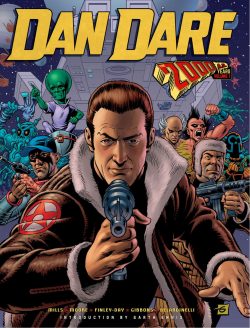
On April 14th 1950, Britain’s grey, post-war gloom was partially lifted with the premier issue of a new comic which literally shone with light and colour. Soon, avid excited boys (and girls!) were understandably enraptured with the gloss and dazzle of Dan Dare, Pilot of the Future: the charismatic star-turn venerated to this day and licensed media stars like PC 49

The Eagle was a tabloid-sized paper with full-colour inserts alternating with text and a range of various other comic features. “Tabloid” is a big page and you can get a lot of material onto each one. Deep within, on the bottom third of a monochrome page was an 8-panel strip entitled Captain Pugwash – The story of a Bad Buccaneer and the many Sticky Ends which nearly befell him. Ryan’s quirky, spiky style also lent itself to the numerous spot illustrations required throughout the comic every week.

Pugwash, his harridan (sorry, not my word) of a wife and the useless, lazy crew of the Black Pig ran (or more accurately capered and fell about) until issue #19 when the feature disappeared. This was no real hardship for Ryan who had been writing and illustrating Harris Tweed – Extra Special Agent as a full-page (tabloid, remember, an average of twenty panels a page, per week!) from Eagle #16 onwards (and there’s a lost star and canon well worth revisiting sometime soon). Super sleuth Tweed ran as a page for three years until 1953 when it dropped to a half-page strip and was repositioned as a purely comedic venture…

In 1956 the indefatigable old sea-dog (I mean old Horatio Pugwash but it could so easily be Ryan) made the jump to children’s picture books. He was an unceasing story-peddler with a big family, but somehow also found time to be head cartoonist at The Catholic Herald for forty years.

A Pirate Story was first published by Bodley Head before switching to children’s publishing specialist Puffin for further editions and more adventures. It was the first of a vast (sorry, got away with meself again there!) run of kids’ books on a numerous subjects. Pugwash himself starred in 21 tomes: there were a dozen books based on the animated TV series Ark Stories, plus Sir Prancelot and many more creations. Ryan worked whenever he wanted to in the comics world and eventually his books and strips began to cross-pollinate.

The primary Pugwash is very traditional in format with blocks of text and single illustrations to illuminate a particular moment. But by the publication of Pugwash the Smuggler (1982) entire sequences were lavishly painted comic strips, with as many as eight panels per page, and including word balloons. A fitting circularity to his interlocking careers and a nice treat for us old-fashioned comic drones.

When A Pirate Story was released in 1957 the BBC pounced on the hot property, commissioning Ryan to produce 5-minute episodes: 86 in all from 1957 to 1968 and later reformatted in full colour and rebroadcast in 1976. In the budding arena of 1950s animated television cartoons, Ryan developed a new system for producing cheap, high quality animations to a tight deadline. He began with Pugwash, keeping the adventure milieu, but replaced shrewish wife with a tried-&-true boy assistant. Tom the Cabin Boy is the only capable member of a crew which included such visual archetypes as Willy, Barnabas and Master Mate (fat, thin, tall and all dim), instantly affirming to the rapt, young audience that grown-ups are fools and kids do, in fact, rule.

For eight years Ryan simultaneously drew a weekly Captain Pugwash strip for The Radio Times, going on to produce a number of other animated series including “latch-key” pals Mary, Mungo and Midge, The Friendly Giant and the aforementioned Sir Prancelot. There were also adaptations of his many other children’s books and in 1997 Pugwash was rebooted in an all-new CGI animated TV series.

The first book – A Pirate Story – sets the scene with a delightful clown’s romp as the so-very-motley crew of the Black Pig sail in search of buried treasure, only to fall into a cunning trap set by the truly nasty corsair Cut-Throat Jake. Luckily, Tom is as smart as his shipmates and Captain are not…

A 2008 edition of A Pirate Story from Frances Lincoln Children’s Books came with a free audio CD, and just in case I’ve tempted you beyond endurance here’s a full list of the good (ish) Captain’s exploits that you should make it your remaining life’s work to unearth…

There’s Captain Pugwash: A Pirate Story (1957), Pugwash Aloft (1960), Pugwash and the Ghost Ship (1962), Pugwash in the Pacific (1963), Pugwash and the Sea Monster (1976), Captain Pugwash and the Ruby (1976), Captain Pugwash and the Treasure Chest (1976), Captain Pugwash and the New Ship (1976), Captain Pugwash and the Elephant (1976), The Captain Pugwash Cartoon Book (1977), Pugwash and the Buried Treasure (1980), Pugwash the Smuggler (1982), Captain Pugwash and the Fancy Dress Party (1982), Captain Pugwash and the Mutiny (1982), Pugwash and the Wreckers (1984), Pugwash and the Midnight Feast (1984), The Battle of Bunkum Bay (1985), The Quest of the Golden Handshake (1985), The Secret of the San Fiasco (1985), Captain Pugwash and the Pigwig (1991) and Captain Pugwash and the Huge Reward (1991). These are all pearls beyond price and a true treasure of graphic excellence, so if you feel tempted to go all “Pirate Pokémon”, feel free to get ‘em all….

Although currently, cruelly out of print, Pugwash’s canon (the only sort this band of rapscallions can be trusted with) are widely available through online vendors and should be a prize you set your hearts on acquiring.

As you might expect, such success breeds ancillary projects, and cleaving close to the wind whilst running in the master’s wake is this minor mirthquake no sassy brat could possibly resist. Compiled by Ian D. Rylett and copiously illustrated by Ian Hillyard in stark monochrome, it’s a fairly standard cartoon joke book as beloved by generations of youngsters and loathed beyond endurance by parents, guardians, older siblings and every other adult whose patience is proven quite exhaustible. It’s the book your teacher confiscates in class but never returns at the end of term…

Divided into themed chapters ‘The Captain’s Crackers’, ‘Jakes’ Jests’, ‘Blundering Bucaneers, Hysterics in the Harbour’, ‘Fishy Funnies’ and ‘All Aboard’, the level of wit is almost lethal in its predictability and vintage (Q: why did the irate sailor go for a pee? A: he wanted to be a pirate.) but the relentless pace and remorseless progression are actually irresistible in delivery.

With the world crashing down around us and the water levels inexorably rising, we don’t have that much to laugh at, so why don’t you go and find something to take your minds off the chaos to come? Your kids will thank you and if you’ve any life left in your old and weary soul, you will too…
Pugwash books © 1957-2009 John Ryan and (presumably) the Estate of John Ryan. All rights reserved. Best Pirate Jokes © Britt-Allcroft (Development Ltd) Limited 2000. All rights worldwide Britt-Allcroft (Development Ltd) Limited.

And in case you were wondering…

This book includes Discriminatory Content produced in less enlightened times.

Pirate Stew


By Neil Gaiman, illustrated by Chris Riddell OBE (Bloomsbury Children’s Books)
ISBN: 978-1-5266-1472-8 (HB) eISBN: 978-1-5266-1470-4

Ha-haarrrr! Tempests toss, the world turns summore and once again ‘tis time to Internationally Talk Like a Pirate!

Happily, it’s never too soon to begin practicing your piracy, and with that in mind here’s a pretty sharp kids’ picture book by certain someones with a lot of not-so-deeply buried treasures to their names getting in on the game, and producing a pretty and potent primer – if not route map – to a venerable profession and therapeutic briny waves…

Delivered as a flotilla of pictorial spreads peppered with blocks of rhyming text, this is the story of that night when Mum and Dad caught dinner and a show and hired ship’s cook Long John McRon to watch and feed their kids…

Before long the house was packed with pirates and before much longer, both brother and sister were acutely aware that if you ate pirate stew, strange things began to happen…

Equally prolific and far-ranging, both Gaiman and illustrator, author, political cartoonist and former UK Children’s Laureate Riddell have done way more stuff than I have time to cite, and it’s all top quality too, so after scoping it all out you should circle back to this wild ride: one guaranteed to deliver all the thrills and frills any adventure-starved tyke or tyro might expect.

Go on, get stuck in and heave ho ho, me hearties…
Text © Neil Gaiman, 2020. Illustrations © Chris Riddell, 2020. All rights reserved.

Namor, the Sub-Mariner Epic Collection volume 3: Who Strikes for Atlantis? (1968-1970)


By Roy Thomas, Marie Severin, John Buscema, Gene Colan, Sal Buscema, Jack Katz, Dan Adkins, Mike Esposito, Johnny Craig, Frank Giacoia, George Klein, Joe Sinnott, Vince Colletta, Jim Mooney & various (MARVEL)
ISBN: ?978-1-3029-4974-7 (TPB/Digital edition)

This book includes Discriminatory Content produced in less enlightened times.

Prince Namor, the Sub-Mariner is the offspring of a water-breathing Atlantean princess and an American polar explorer; a hybrid being of immense strength, highly resistant to physical harm, able to fly, and thrive above and below the waves. Created by young, talented Bill Everett, Namor technically predates Marvel/Atlas/Timely Comics, and this is his 85th year of fictive existence.

He first caught the public’s avid attention as part of an elementally appealing fire vs. water headlining team-up in the October 1939 Marvel Comics #1 (which renamed itself Marvel Mystery Comics from #2 onwards). The amphibian antihero shared honours and top billing with The Human Torch, but was first seen (albeit in a truncated, monochrome version) in Motion Picture Funnies: a promotional booklet handed out to moviegoers earlier in the year. Rapidly emerging as one of the industry’s biggest draws, Namor won his own title at the end of 1940 (cover-dated Spring 1941) and was one of the last super-characters to vanish at the end of the first heroic age.

In 1954, when Atlas (as the company then was) briefly revived its “Big Three” line-up – the Torch and Captain America being the other two – Everett returned for an extended run of superbly dark, mordantly timely fantasy fables. However, even his input wasn’t sufficient to keep the title afloat and eventually Sub-Mariner sank again.

In 1961, as Stan Lee & Jack Kirby were reinventing superheroes with landmark title Fantastic Four, they revived the awesome, all-but-forgotten aquanaut as a troubled, semi-amnesiac antihero. Decidedly more bombastic, regal and grandiose, this returnee despised humanity: embittered by the loss of his subsea kingdom which had been (seemingly) destroyed by American atomic testing. His rightful revenge became infinitely complicated after he became utterly besotted with the FF’s Susan Storm.

Namor knocked around the budding Marvel universe for a few years, squabbling with other star turns such as The Hulk, Avengers, X-Men and Daredevil before securing his own series as one half of Tales to Astonish, and from there graduating in 1968 to his own solo title. This third subsea selection collects The Sub-Mariner #4-27, spanning August 1968 to July 1979

Previously, the hero’s recapitulated origins and some plot seeding had introduced malign super-telepath Destiny (who was responsible for those memory-deficient years), and the Prince had begun a search for the villain which led to his meeting undersea Inhuman courtier Triton. This volume resumes with Namor still hunting Destiny, and falling into the sadistic clutches of subsea barbarian Attuma after the merciless warlord attacks displaced, wandering Atlanteans. Although he triumphs in ‘Who Strikes for Atlantis?’ (by Roy Thomas, John Buscema & Frank Giacoia) and liberates his people, the Sub-Mariner swims on alone, believing his beloved Lady Dorma to have perished in the battle…

Twin nemeses debut next, in the forms of deranged bio-engineer Dr. Dorcas and disabled ex-Olympic swimmer Todd Arliss, who is mutated by mad science and Namor’s own hybrid powers into a ravening amphibian killer in ‘Watch Out for… Tiger Shark!’ As Dorcas’s blind ambition and lust for power unleash an aquatic horror he cannot control, Lady Dorma stumbles into Tiger Shark’s clutches after he seemingly kills Namor. The man-monster parlays the situation into an attempt to seize the throne of Atlantis (once it’s rebuilt) in ‘…And to the Vanquished… Death!’ (inked by Dan Adkins).

Namor is rescued by Arliss’ sister Diane (another beautiful surface-dweller who will be a romantic distraction for Sub-Mariner for years to come) but has no time for gratitude as he tracks the mutated human and defeats him in personal combat. Restored to his throne, people and beloved, the Sub-Mariner is immediately called away when his greatest enemy is located. The tyrant telepath is about to seal his plans by taking control of America in ‘For President… the Man Called Destiny!’ (we all know there have been far worse choices) but as Namor and Dorma challenge him in Manhattan, the villain’s own pride proves to be his downfall (Destiny, that is…)

An epic clash in #8 pits arrogant, impetuous Sub-Mariner against the Fantastic Four’s Ben Grimm – AKA The Thing – for possession of the eerie helmet which furnished Destiny’s mental powers. However, such pointless devastation ‘In the Rage of Battle!’ is almost irrelevant: what is truly significant is the reintroduction of a woman from Namor’s past who can reason with him with as no other human can…

Penciller Marie Severin joins writer Thomas and inker Adkins for a landmark moment as the helmet of power metamorphoses into an arcane artefact that will shape the history of the Marvel Universe. In ‘The Spell of the Serpent!’ the helm is exposed as a seductive supernatural crown that seizes the minds of the citizenry in Namor’s absence, recreating an antediluvian empire ruled by elder god Set. On his return, Namor confiscates the corrupting crown and is granted a glimpse of Earth’s secret history as well as a vision of a lost Pacific undersea race – the Lemurians.

There’s no such thing as coincidence though, so when their emissary Karthon the Quester attempts to take the serpentine totem, Namor is ready to resist in the Gene Colan limned modern-day pirate yarn ‘Never Bother a Barracuda!’ As a tale of dawn age skulduggery unfolds involving demonic immortal priest Naga and valiant Lemurian heroes who saved the world by stealing his crown, the water-breathers are ambushed by airbreathing pirate Cap’n Barracuda and forced to assist his scheme of nuclear blackmail…

Seizing his chance, Karthon swipes the crown and flees, leaving Namor to face ‘The Choice and the Challenge!’ (George Klein inks), and eventually scuttle the atomic armageddon agenda, before making the perilous journey to Lemuria to challenge the mystic might and deadly illusions of Naga in ‘A World Against Me!’ – gloriously pencilled, inked and coloured by Severin. The epic encounter concludes as Joe Sinnott inks ‘Death, Thou Shalt Die!’ with Naga overreaching and losing the world, the crown and everything else…

Next, innovative action and shameless nostalgia vie for attention as Thomas, Severin & Mike Esposito (moonlighting as Joe Gaudioso) decree ‘Burn, Namor… Burn!’ in Sub-Mariner #14, as the Mad Thinker apparently resurrects the original – android – Human Torch and sets him to destroy the monarch of Atlantis. This epic clash was one prong of an early experiment in multi-part cross-overs (Captain Marvel #14 and Avengers #64 being the other episodes of the triptych).

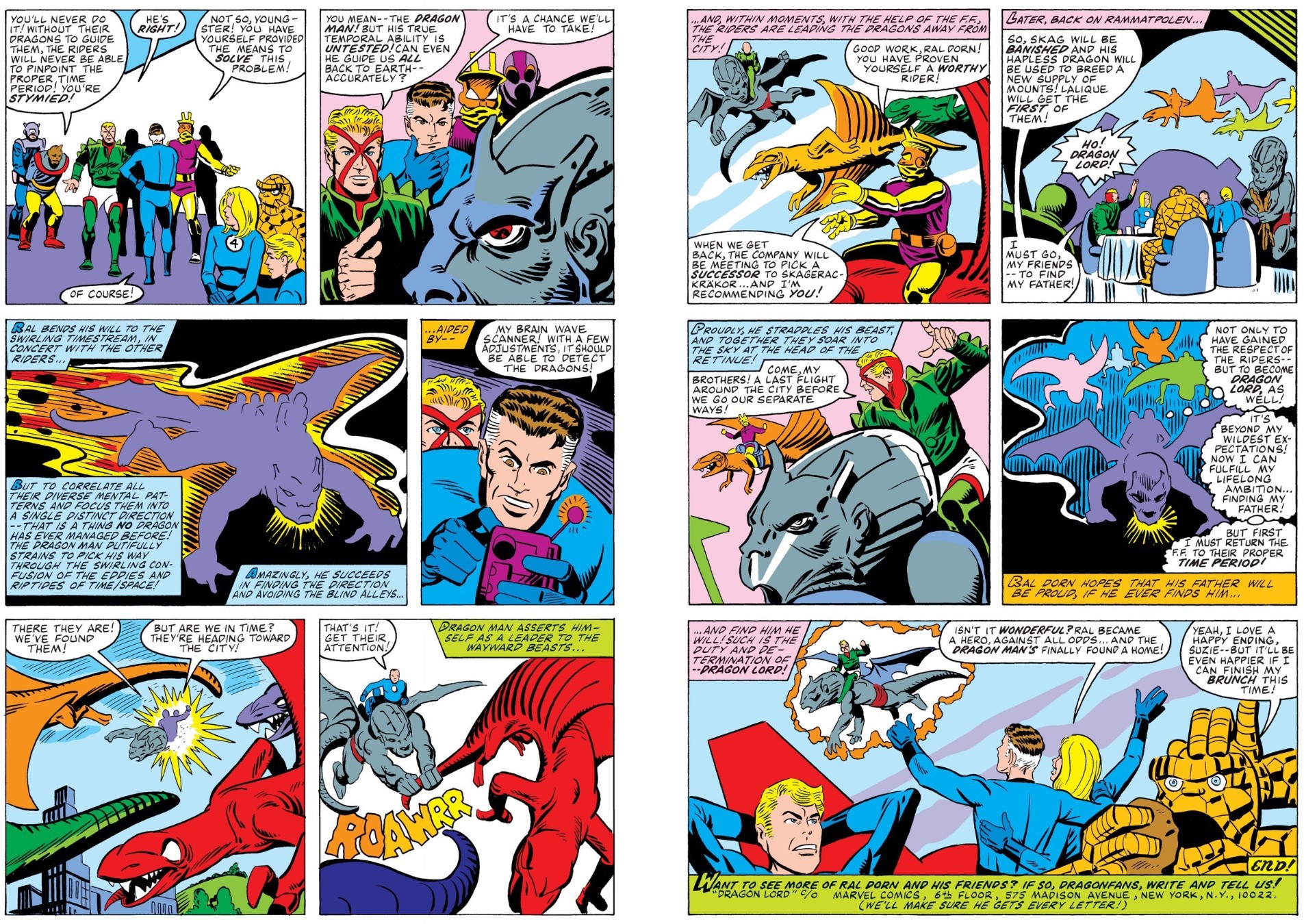
Inked by Vince Colletta, ‘The Day of the Dragon!’ finds Namor back in Atlantis after months away, only to find his beloved Dorma has been abducted by Dr. Dorcas. The trail leads above the waves and to Empire State University, culminating in brutal battle against mighty android Dragon Man

“Gaudioso” inked Namor’s voyage to a timeless phenomenon in search of Tiger Shark who had already conquered ‘The Sea that Time Forgot!’, after which the Avenging Son contends with an alien intent on draining Earth’s oceans in ‘From the Stars… the Stalker!’, pencilled in tandem by Severin and Golden Age Great Jack Katz, under nom de plume Jay Hawk.

The saga ends calamitously in ‘Side by Side with… Triton!’ (Thomas, Severin & Gaudioso) as, with the help of the aquatic Inhuman, Namor repels the extraterrestrial assault, but is stripped of his ability to breathe water. Forced to dwell on the surface, the despised Atlantean then crushingly clashes with an old friend in the livery of a new superhero in ‘Support Your Local Sting-Ray!’ This bombastic battle yarn also delivers a delicious peek at the Marvel Bullpen, courtesy of Severin & inker Johnny Craig’s deft caricaturing skills…

John Buscema resurfaces in #20, with Thomas scripting and Craig inking a chilling dose of realpolitik. ‘In the Darkness Dwells… Doom!’ sees Namor lured by the promise of a cure to his breathing difficulties into the exploitative clutches of the Monarch of Latveria. Trapping Sub-Mariner and keeping him, however, are two wildly differing prospects…

Informed of Namor’s condition, ‘Invasion from the Ocean Floor!’ (Severin & Craig art) features the armies of Atlantis marshalled by Dorma and disgraced Warlord Seth and besieging New York City. The clash almost invokes a new age of monsters…

As Namor’s malady is treated by Atlantean super-science, a key component of a new Superhero concept begins…

Last of the big star conglomerate super-groups, The Defenders would eventually count amongst its membership almost every hero – and many villains – of the Marvel Universe. No surprise there, as initially they were composed of the company’s bad-boys: misunderstood, outcast and often actually dangerous to know. The genesis of the team in fact derived from their status as distrusted “villains”. Before all that latterday inventive approbation, three linked tales of enigmatic antiheroes – Prince Namor, Incredible Hulk and Doctor Strange and stemming from the industry downturn in costumed superheroics started the ball rolling…

Dr. Strange #183 (November 1969 and not included here) introduced infernal elder demon race the Undying Ones, hungry to reconquer the Earth before that title folded. Now – cover-dated February 1970 – Sub-Mariner #22 tells what came next in ‘The Monarch and the Mystic!’ luring the Prince of Atlantis into the macabre mix, as Thomas, Severin & Craig’s moody tale of sacrifice has the Master of the Mystic Arts apparently die to hold the gates of Hell shut with the Undying Ones pent behind them…

In case you’re curious, the saga concludes on an upbeat note in Incredible Hulk #126 (April 1970). You might want to track down that too..

Even restored to full capacity, there’s no peace for the regal, and Sub-Mariner #23 finds Namor contending archvillain Warlord Krang after he and Dr. Dorcas use the power-transfer process to create an Atlantean wonder possessing the might of killer whales (if not their intellects!) in ‘The Coming of… Orka!’ The slow-witted psycho subsequently sets an army of enraged cetaceans against the sunken city as John Buscema & Jim Mooney step in artistically to depict how ‘The Lady and the Tiger Shark!’ finds Namor enslaved and Dorma making Faustian pacts to save Atlantis.

A landmark tale follows as – restored to rule and ready to be riled – Namor becomes an early and strident environmental activist after surface world pollution slaughters some of his subjects. Crafted by Thomas, Sal Buscema & Mooney, ‘A World My Enemy!’ follows Sub-Mariner’s bellicose confrontation with the UN as he puts humanity on notice: clean up your mess or I will. From this point on the antihero would become a minor icon and strident advocate of the issues, even if only to young comics readers.

Prince Namor, the Sub-Mariner #26 offers more of Marvel’s secret history as the recently self-appointed relentless guardian of the safety and ecology of all Earth’s oceans, furtively returns to the surface world. In ‘“Kill!” Cried the Raven!’ (art by Sal B & Gaudioso/ Esposito) the Sub-Mariner comes topside to investigate reports of comatose superhuman Red Raven. He was the human emissary of a legendary race of sky-dwelling Birdmen recently encountered by The Angel (X-Men #44) in their last clash with Magneto. With the covert assistance of Diane Arliss, Namor seeks to forge an alliance with the Avian race, but shocks, surprises and the Raven’s trauma-induced madness all conspire to sink the plan…

Concluding this vintage voyage is another buccaneering bonanza as, back brooding in Atlantis in the wake of another failure, Namor’s mood is further poisoned when a surface pirate uses his giant monster-vessel to attack shipping, leaving Atlantis bearing the brunt of blame ‘When Wakes the Kraken!’.

Namor’s hunt for bizarre bandit Commander Kraken again involves Diane and ends only when the Sub-Mariner demonstrates what a real sea monster looks like…

With covers by John and Sal Buscema, Giacoia, Adkins, Herb Trimpe, Marie Severin, Colan, John Romita, Esposito, Sinnott, Frank Brunner & Craig; plus six pages of original story and cover art by the Buscemas, Giacoia, Severin, Craig, Colan, Adkins, and a magnificent Marie self-portrait print from 1970 this is a treat to savour. Many early Marvel Comics are more exuberant than qualitative, but this volume – especially from an art-lover’s point of view – is a wonderful exception: a historical treasure trove with narrative bite that fans can delight in forever. With the Prince of Atlantis now a bona fide big screen sensation (albeit one nobody’s ever heard of) this might be the time to get wise and impress your friends with the depth of your comics knowledge…
© 2023 MARVEL.

Will Eisner’s Hawks of the Sea


By Will Eisner & various (Kitchen Sink Press/Dark Horse)
ISBN: 978-1-56971-427-0 (DH HB) 978-0-87816-023-5 (Kitchen Sink TPB)

In case you didn’t know, it’s my favourite global holiday next week – International Talk Like A Pirate Day! Fill yer big floppy boots, me ‘earties!

This book includes Discriminatory Content produced in less enlightened times.

It’s pretty much accepted today that Will Eisner was one of the absolute prime creative forces that shaped the comic book industry, but still many of his milestones escape public acclaim in the English-speaking world. This dynamic and pivotal treasure trove is one long overdue for fresh efforts and digital immortality.

From 1936 to 1938 Eisner worked as a jobbing cartoonist in the comics production firm known as the Eisner-Eiger Shop, creating a wave of strips to be published in both domestic US and foreign markets. Using among others the pen-name Willis B. Rensie he wrote and drew the sadly unfinished saga of a mysterious early American adventurer known only as “The Hawk”, who sailed the 18th century Caribbean seas with his piratical band. Intellectual and a dreamer, the freebooter had been taken as a slave, and now dedicated his life to destroying the slave trade and punishing injustice.

With a stalwart yet wholesomely scurvy crew of stock characters at his back, this charismatic blend of Robin Hood, Sir Francis Drake and the Count of Monte Cristo captivated readers all over the world in single-page instalments of swashbuckling thrills delivering spectacular bravura art and narrative ingenuity: appearing in newspapers and weekly magazines as far apart as England, South America, France, and Australia.

After years as a lost classic, it was first curated and gathered into an awesome collected edition (measuring 376 x 270) by the diligent and dedicated Dennis Kitchen, thanks mainly to happenstance and the good graces of another comics legend, Al Williamson. The illustrator had been a huge fan of the strip when it ran in Paquin – a weekly strip anthology magazine he’d avidly read growing up in Bogota, Colombia.

Decades later, now a revered professional artist, Williamson acquired an almost complete run of publisher’s proof sheets – in Spanish – which, when translated and re-lettered, formed the basis of this volume. Fellow well-wishers in France, England and Australia also contributed pages resulting in an (almost) complete run.

Seemingly lost again, Hawks of the Seas was re-issued in 2003 by Dark Horse as part of their Will Eisner Library (although at a more modest and bookshelf-friendly size than the tabloid-scaled KSP edition) and remains a fascinating insight into this creator’s imaginative power, moral and philosophical fascinations and spellbinding ability to tell a great story with magical pictures. It’s also a thumping good tale of action, suspense, and buccaneering derring-do that will captivate kids of all ages, so let’s PUH-LEASE have some savvy publisher makes the necessary moves soon.

Sod and keelhaul Jack Sparrow: get on the trail of The Hawk…
© 1986 Kitchen Sink Press. 2003 Will Eisner. All rights reserved.

Jamie Smart’s Max & Chaffy: Hunt for the Pirate’s Gold!


By Jamie Smart, coloured by Emily Kimbell (David Fickling Books)
ISBN: 978-1-78845-310-3 (PB)

Laced with cheerful welcoming charm by cartoonist, comics artist and novelist Jamie Smart, Max & Chaffy books for younger readers (four when this one comes out) hark back to more traditional times and fare. Initially introduced in Welcome to Animal Island, little Max moved to a new home in a lighthouse and soon made some amazing friends: Orlando, Crumbs, Moose, Pedalo and a strange little creature called Chaffy.

The little fluffball has  mismatched ears and is easily confused: constantly getting lost and needing Max and the reader’s help to be where it belongs. The reason for getting misplaced so much is a desire to locate other Chaffys (as seen in follow-up fables The Great Cupcake Mystery! and Search for the Ice Chaffy!):  a desire magnified once the soon-to-be inseparable pair joined the Official Chaffy Finding Club…

Unlike Smart’s multi award-winning comics offerings (Bunny vs. Monkey, Looshkin – the Adventures of the Maddest Cat in the World!!, Fish Head Steve!, Corporate Skull, Space Raoul, and many brilliant strips for The Beano, Dandy and others) or his illustrated kids novels like the Flember quartet, Max & Chaffy adventures are crafted for early readers, offering strong directed stories laced with interactive pages, with participation an integral part of the storytelling. The most engaging of these page games are regularly recurring Search & Find tableaux – just like Where’s Wally? – cunningly combined with grouping/collecting moments (as they search for new specimens of Chaffy), offering flavours of Pokémon and echoes of Mr. Men whenever they find and befriend them.

Joyous, inclusive and accepting, this fourth outing sees our tiny tot stars seeking new Chaffys – all with a list of identifying characteristics – before teaming up with grumpy sea captain Foghorn. He takes them on a tour of Animal Island’s wilder shores and ultimately under the sea, where one quest is soon satisfied by the discovery of a timid, rapidly-inflating Puffa-Chaffy before they are all distracted and diverted by unearthing a pirate treasure map in a bottle…

When they discover it was drawn by Foghorn’s ancestor – and World’s Greatest Pirate – Captain Boombox Foghorn, they just have to go find it, aided by the restless spirit of Boombox himself. An extended undersea excursion sees them all experiencing fabulous creatures and places, discovering a unique new Chaffy to add to Max’s growing list and learning that there’s much more than one kind of treasure…

That’s reiterated by a bonus feature requiring a second read as Boombox urges a review of the buoyant bouncy pages and a search for his lost valuables in the recesses of the pages and panels.

Exuberant, enticing, rewarding and eminently re-readable, this is another must-have pearl of great wisdom no kid of any age could possibly resist.

Text and illustrations © Fumboo Ltd. 2024. All rights reserved.
Max & Chaffy: Hunt for the Pirate’s Gold! will be released on August 1st 2024 and is available for pre-order now.