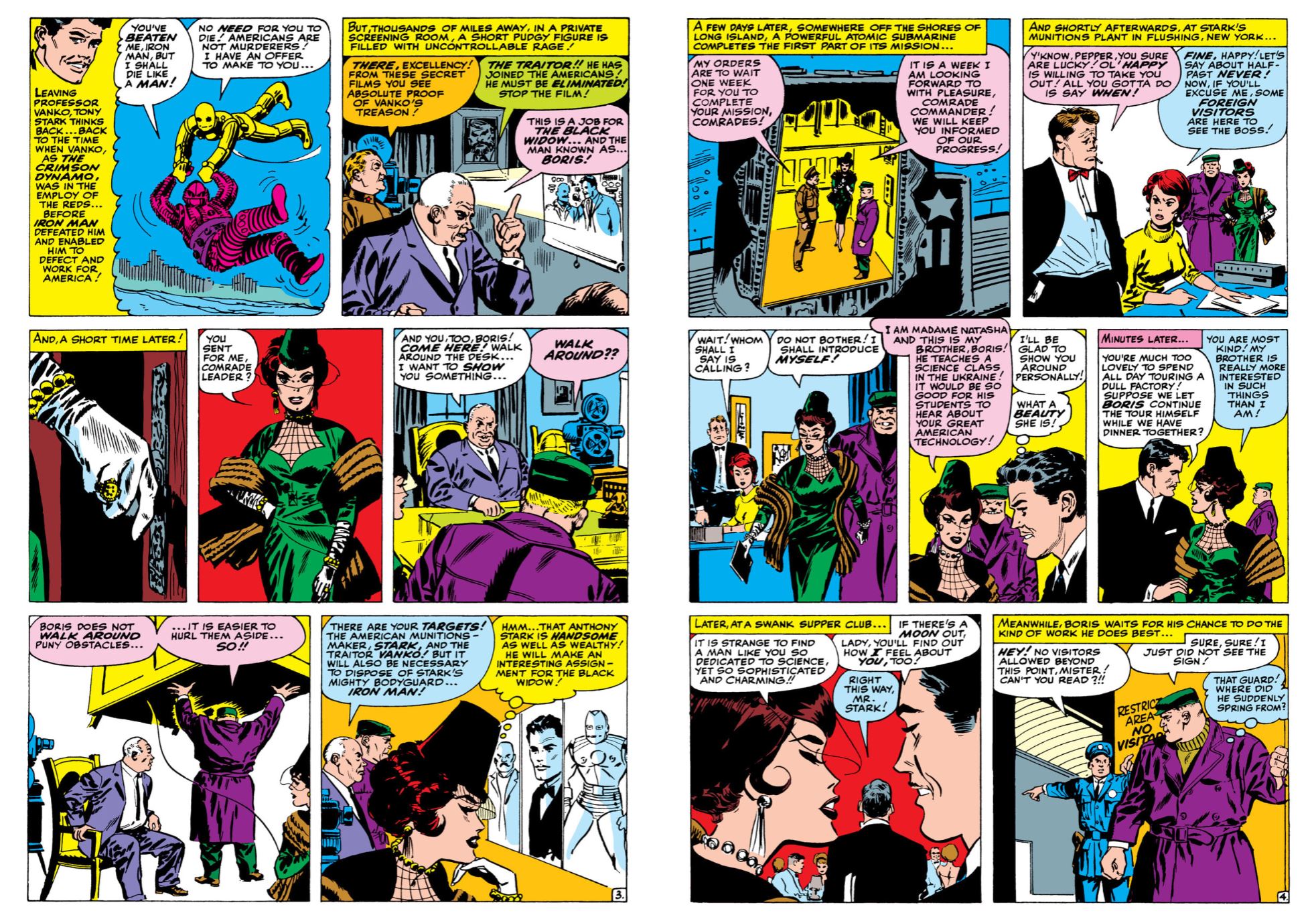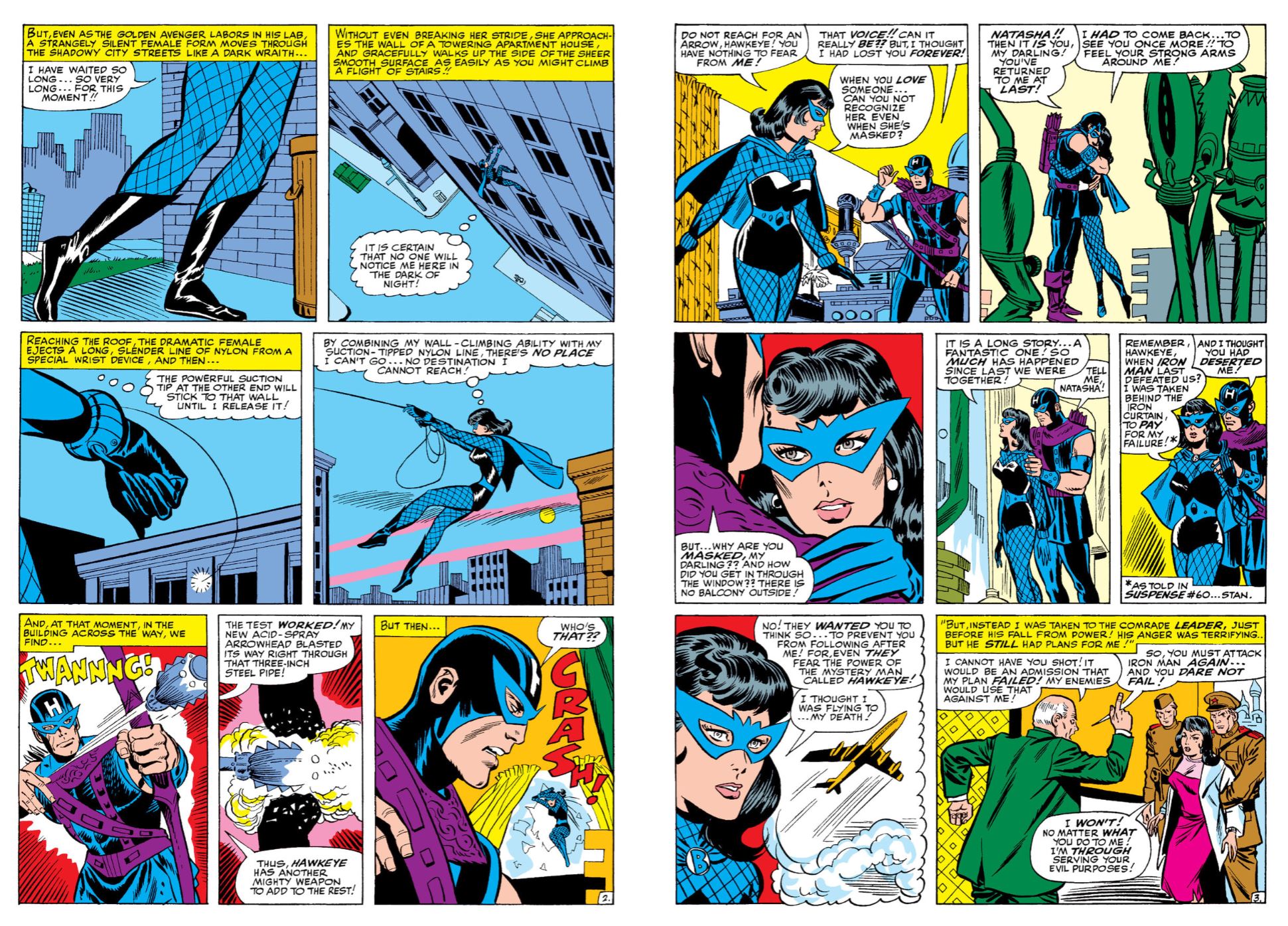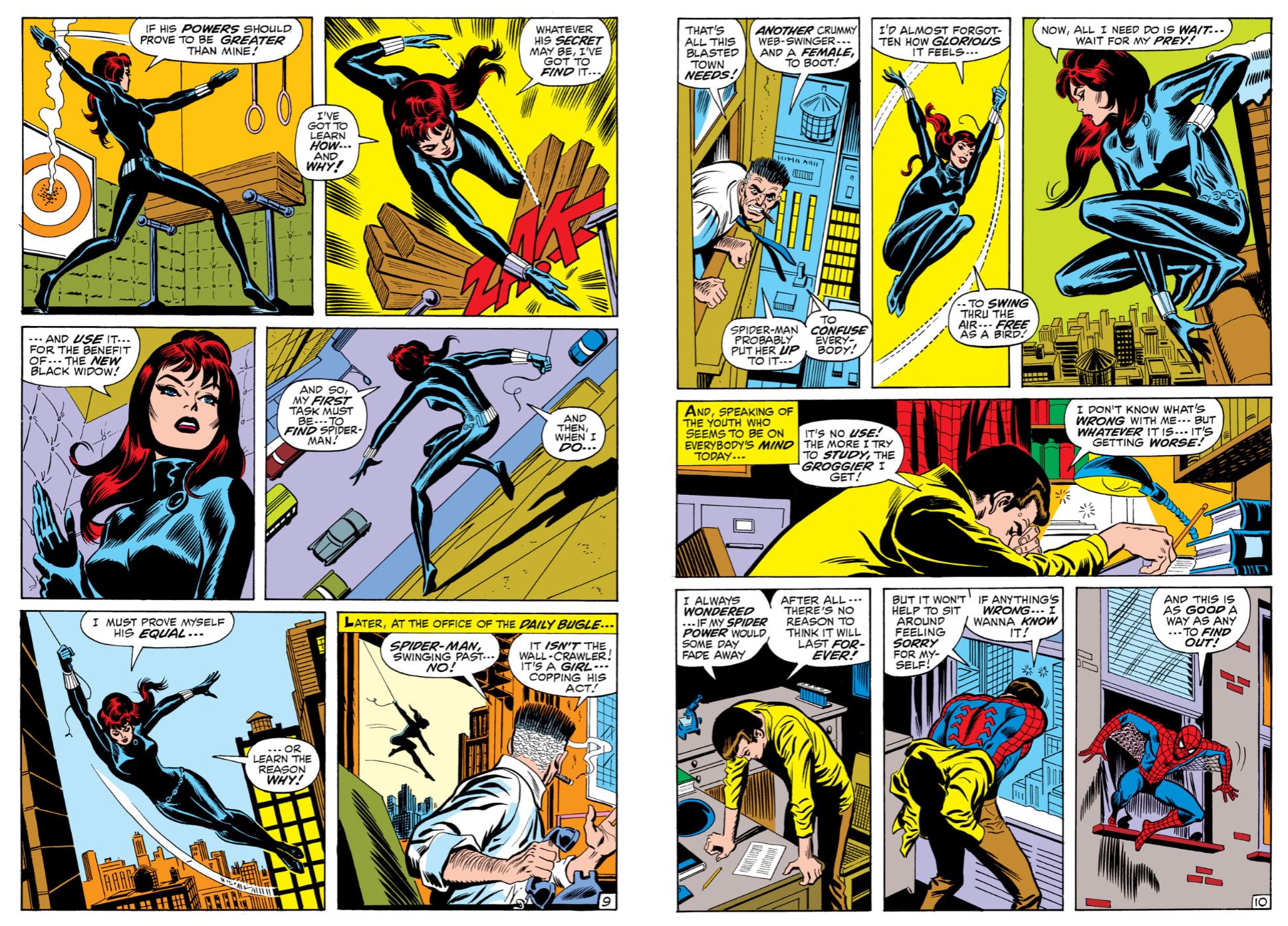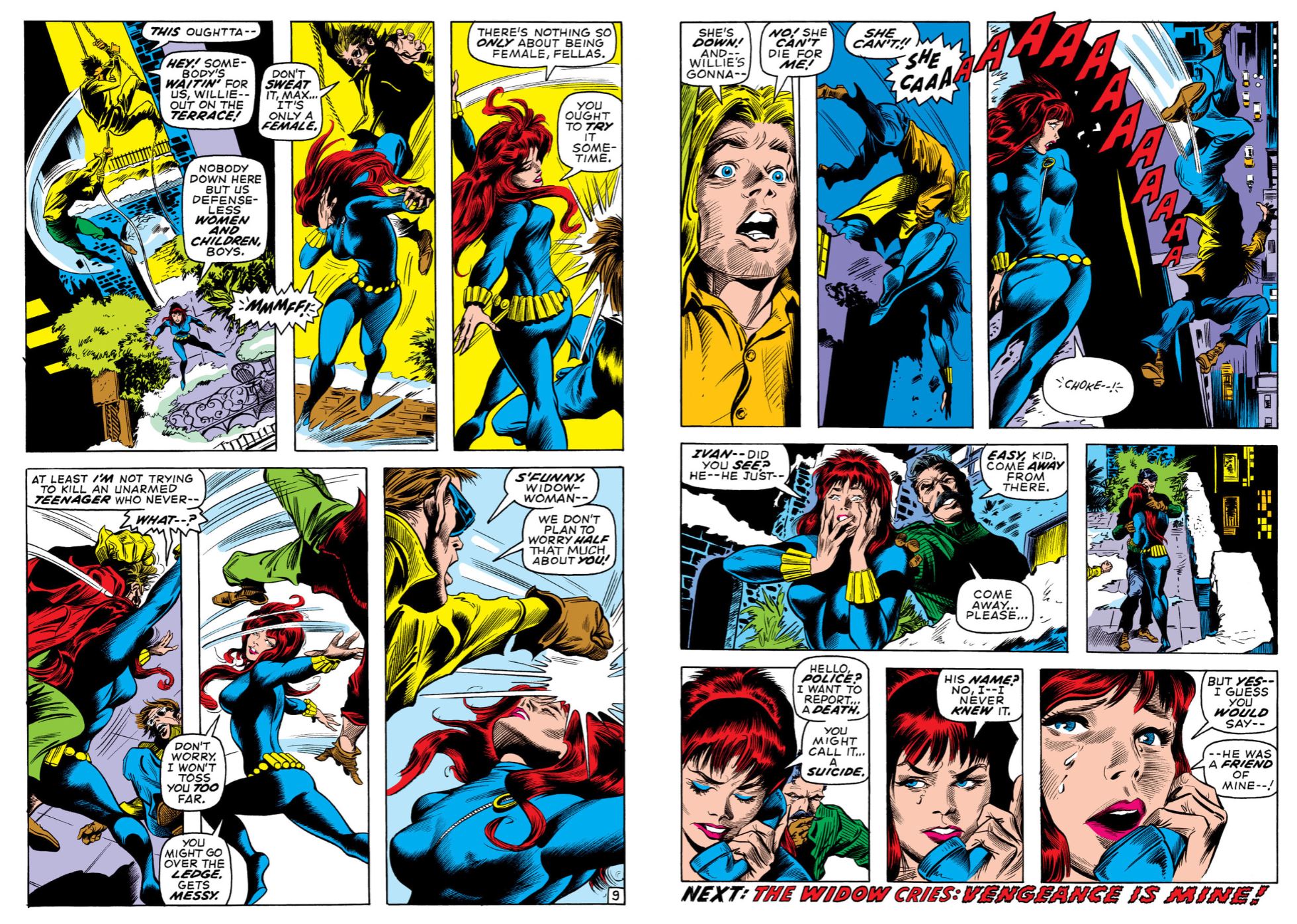
Spirou and Fantasio volume 7: The Rhinoceros’ Horn


By André Franquin, translated by Jerome Saincantin (Cinebook)
ISBN: 978-1-84918-224-9 (Album PB/Digital edition)

This book includes Discriminatory Content produced in less enlightened times. This book also contains Discriminatory Content included for comedic effect.

André Franquin was born in Etterbeek, Belgium on January 3rd 1924 and died on January 5th 1997. In between there were good times and bad, which he offset by creating the most incredible characters and stories, and by making people laugh and think – but mostly laugh. This is one of the very best you can find translated into English.

Adventure-seeking brave lad Spirou headlined the magazine he was named for from the first issue (dated April 21st 1938). He was created by French cartoonist Françoise Robert Velter using his pen-name Rob-Vel for Belgian publisher Éditions Dupuis in direct response to the success of Hergé’s Tintin for rival outfit Casterman. Originally a plucky bellboy/lift operator employed by the Moustique Hotel (a puckish reference to the publisher’s premier periodical Le Moustique), his improbable exploits with pet squirrel Spip gradually but steadily grew into high-flying, far-reaching, surreal comedy dramas. That evolution was mainly thanks to Velter’s wife Blanche “Davine” Dumoulin who took over the strip when her husband enlisted in 1939 and Belgian artist/assistant Luc Lafnet… at least until 1943 when Dupuis purchased all rights to the property, after which comic-strip prodigy Joseph Gillain (Jijé) took the helm.

When Jijé handed his own trainee/assistant total responsibility for the flagship feature part-way through serial Spirou et la maison préfabriqué (Le Journal de Spirou #427, June 20th 1946), André Franquin ran with it for the next 20 years, enlarging the scope and horizons until it was purely his own. Almost every week fans would meet startling new characters such as comrade/rival Fantasio or crackpot inventor and Merlin of mushroom mechanics the Count of Champignac. Spirou and Fantasio became globe-trotting journalists, travelling to exotic places, uncovering crimes, exploring the fantastic and clashing with a coterie of exotic arch-enemies such as Zorglub and Fantasio’s unsavoury cousin Zantafio.

Franquin, plagued in later life by bouts of depression, passed away in 1997 but his legacy remains; a vast body of work which reshaped the landscape of European comics.

With that brave experiment clearly having paid dividends over decades it’s perhaps timely to remind readers that times and taste having changed radically since then, and as such current UK publisher Cinebook felt the need to issue a heartfelt warning and carefully considered apologia regarding some content of The Rhinoceros’ Horn

I’ll précis it here: it was seventy years ago and our attitudes to hunting, other ethnicities and especially the modern obscenity of killing for ivory and horn have thankfully changed. Please read this book with that in mind. The publishers, of course, phrased it much better…

The Rhinoceros’ Horn was originally serialised in two sequences in Le Journal de Spirou: #764-787 (Spirou et la Turbotraction) and #788-797(La corne de rhinocéros), and spanned 1952 and early 1953 before being united in 1955 hardback album La corne de rhinocéros. The story begins with Spirou exulting over the success of Fantasio’s latest enterprise – personal helicopters worn as backpacks – but discovers his pal is rather down in the dumps. The ingenious journo’s just been dressed down by his editor on The Mosquito and warned that the paper has hired a new reporter: a real go-getting hotshot. Dejected and desperate, Fantasio resolves to revive his flagging career by staging a publicity stunt: robbing the Good Bazaar Department Store

As the rattled reporter draws up his plans and sends a warning to the store of his intentions, a colossal explosion shakes the town. Persons unknown have blown up the nearby Turbot car plant. With even more to prove now, Fantasio proceeds…

Dragged along for the ride and to photograph the stunt, Spirou and snarky squirrel Spip reluctantly join their pal in the harebrained venture. Alighting on the roof of the emporium courtesy of those petrol-powered “Fantacopters”, they deftly break in through the fire-door, Spirou recording everything with his gigantic flash camera. Of course, our lead-footed burglars make an appalling clatter and tremendous mess, but no night-watchmen confront them. They’ve all been incapacitated and tied up by real robbers…

Hearing villains approaching, the lads take refuge in a wardrobe in the bedrooms department and discover an old acquaintance already there. Behring works for Turbot and was wounded in the explosion earlier. Moreover, he’s carrying the company’s blueprints for their latest advancement. The burglars in the darkened store are actually trying to finish him off to get them. Handing the boys an envelope and begging them to get it to his employer Mr. Martin, the troubleshooter loses consciousness just as the involuntary heroes are challenged by a shadowy figure demanding the precious prize. It’s not the bad guys, however, but Fantasio’s journalistic nemesis…

Cellophine is already streets ahead of them: she knows of the plot to steal Turbot’s revolutionary supercar. All she needs is the address Behring muttered to secure an interview with the in-hiding Martin and her next terrific scoop.

…And that’s when the gun-toting goons make their move, demanding blueprints and the rendezvous address. Thankfully, Spirou is still holding the camera and super-bright flashgun…

Calamitously – and hilariously – fleeing for their lives through the darkened store, the guys eventually escape via fantacopters from the top storey, allowing Cellophine to lock the bandits up on the roof before dragging Behring to safety. Next morning the boys are in Whistleton but Martin has already fled. His note reveals nothing, but later a sinister stranger in a café advises them to surrender the blueprints and warns them not to join Mr. Martin at Bab-el-bled in North Africa.

Ignoring him and returning home, they encounter distressingly persistent Cellophine and Spirou clues her in. Sadly, the thugs have also tracked them down and overhear the plans, so when the boys catch a jet liner to Africa, heavily disguised heavies are in the seats behind them…

These villains are on the lads’ tails all though the avenues and alleyways of Bab-el-bled, before a wig malfunction in the Souk warns Spirou that they’re being shadowed and another hectic chase ensues. Thinking they’ve at last shaken their pursuers our heroes go to Martin’s house only to learn he was ambushed by the bandits…

Happily the troubled Turbot exec had escaped and fled further into North Africa. He’s apparently rushing off to the M’saragba Animal Reservation but as the boys try to follow Cellophine appears and pips them to the last spot on the plane – stowed away in the baggage hold.

Forced to follow by train, it is eight days later when Fantasio & Spirou finally reach the Reserve and yet again – as infinitely aggravating Cellophine explains – they’ve just missed Martin. He was chased into the bush by the implacable bandits…

Going after him they find him just after the thugs do. Having shot Martin, the villains are smugly gloating when the sinister stranger from Whistleton café appears. He’s a cop and finally has enough evidence to arrest them for blowing up the factory, but they are all too late. The harassed entrepreneur has already got rid of his portion of the plans, giving them to a local friend to hide.

As Martin is carried to hospital, Spirou & Fantasio volunteer to retrieve those accursed documents but have not reckoned on the quirky ingenuity of the chief of the Wakukus, the vastness of the reserve and the sheer bloody-mindedness of local flora and fauna. After days of unpleasant and painful adventures, they finally locate the safeguarding tribe and, following even more nerve-wracking moments convince the chief that they too are friends of Martin. That’s when the king delivers his bombshell…

Tasked with keeping safe the plans – now contained on a spool of microfilm – the wily Wakuku had his subjects capture a rhino before drilling a hole in its horn and sealing the container within. They then released it back into the wild. He has no idea where it is now or even which of the 200 in the park it might be…

Determined to complete their mission, the lads spend months tracking and capturing assorted beasts. The task becomes only slightly easier after they find a dipsomaniac white trader who sells them hunting gear and latterly, yellow paint so that they can tell the rhinos they’ve already checked from the ones so cunningly evading them…

It’s a backbreaking, heartbreaking and increasingly pointless task but only when their resolve crumbles and they brokenly give up and head for home do they find the prize in the very last place they looked…

Even the trip back is a tribulation, and eventually they collapse only to awake in a nice clean hospital with Martin and Cellophine offering to fill in the blanks on this baffling case. Six weeks later the lads are recuperating at home when Behring shows up. He’s got a little reward for them from the grateful Turbot Company but, as usual, Cellophine is on hand to spoil it for Fantasio…

Stuffed with superb slapstick situations, riotous Keystone Cops chases and gallons of gags, this exuberant, high-spirited yarn is a true celebration of angst-free action, thrills and spills. accessible to readers of all ages and drawn with all the beguiling style and seductively wholesome élan which makes Asterix, and Lucky Luke so compelling, this is an enduring comics treat from a long line of superb exploits, certain to be as much a household name as those series – and even that other kid with the white dog…
Original edition © Dupuis, 1955 by Franquin. All rights reserved. English translation 2014 © Cinebook Ltd.

Today in 1942 Underground Commix pioneer Dan O’Neill (Air Pirates Funnies, Odd Bodkins) was born, preceding both Teris Sue Wood (Wandering Star) in1965 and super-glamour artist Michael Turner (Witchblade, Fathom, Superman/Batman) in 1971.

Deaths on this date include British satirist & caricaturist Thomas Rowlandson in 1827. In 1962 Golden Age cartoonist/animator Robert Winsor McCay (Nemo in Adventureland, Impie, Bulletman, Ajax the Sun Man, Blackstone the Magician) and animator turned cartoonist Bob Wickersham (Spencer Spook, Funny Films, Ha Ha Comics, The Kilroys, The Kellys, Flippity and Flop, Colonel Punchy Penguin) both passed on as did veteran comics book illustrator Art Saaf (Sheena, Jumbo Comics, Princess Pantha, Boris Karloff Tales of Mystery, Ripley’s Believe It or Not!, The Twilight Zone, Supergirl) in 2007.

In 1938 on this date, Tif et Tondu and Spirou premiered in the debut issue of Le Journal de Spirou.

The Steel Claw: Invisible Man


By Ken Bulmer & Jesús Blasco & various (Rebellion)
ISBN: 978-1-78108-906-4 (TPB/Digital edition)

This book includes Discriminatory Content produced in less enlightened times.

One of the most fondly-remembered British strips of all time is the startlingly beautiful Steel Claw. From 1962 to 1973 the stunningly gifted Jesús Blasco and his small studio of family members thrilled the nation’s children, illustrating the angst-filled adventures of scientist, adventurer, secret agent and even – occasionally – costumed superhero Louis Crandell.

The majority of the character’s career was scripted by comic veteran Tom Tully, but initially follows the premise of HG Wells’ original unseen adversary with prolific science fiction novelist Ken Bulmer devising a modern spin and contemporary twist on The Invisible Man.

Another superb salvo of baby boomer nostalgia from Rebellion’s Treasury of British Comics strand, initial collection The Steel Claw: Invisible Man gathers material from beloved and enduring weekly anthology Valiant, spanning 6th October 1962 to 21st September 1963 and also includes stories from the Valiant Annuals for 1965 and 1966.

Following an Introduction from Paul Grist, the tense drama begins with our (eventual) hero debuting as a rather surly assistant to the venerable Professor Barringer, working to create a germ-destroying ray. Crandell is an embittered man, possibly due to having lost his right hand in a lab accident. After its replacement with a steel prosthetic and his notional recovery, he is back at work when the prof’s new device explodes. Crandell receives a monumental electric shock and is bathed in radiation from the ray-device which, rather than killing him, renders him totally transparent. Although he doesn’t stay unseen forever, this bodily mutation is permanent. Electric shocks cause all but his metal hand to disappear.

Kids of all ages, do not try this at home!

Whether venal at heart or temporarily deranged, Crandell goes on a rampage of terror against society and destruction of property culminating in an attempt to blow up New York City before finally coming to his senses. Throughout Crandell’s outrages, Barringer is in guilt-fuelled pursuit, determined to save or stop his former friend…

The second adventure channels another classic (The Strange Case of Dr Jekyll and Mr Hyde), intriguingly pitting the Claw against his therapist, who – in an attempt to treat him – is also traumatically and life-changingly exposed to Barringer’s ray. Instead of permanent invisibility, Dr. Deutz develops the ability to transform himself into a bestial ape-man who malevolently turns to crime and frames Crandell for a series of spectacular robberies and outrages.

On the run and innocent for once, Crandell is saved by the intervention of Barringer’s niece Terry Gray. After weeks of beast-triggered catastrophe and panic in the streets, the Steel Claw is vindicated and proved a hero …of sorts…

Bulmer’s next tale changes location to the Bahamas as our star shifts from outlaw to hero. While recuperating on an inventor-friend’s yacht, Crandell is accidentally embroiled in a modern-day pirate’s attempt to hijack an undersea super-weapon system. After would-be bullion bandit Sharkey and his nefarious gang steal the device and use it to capture a submarine, their convoluted scheme to rob an ocean liner finally falters when a steel-fisted ghost starts picking them off one by one…

More than any other comics character, the Steel Claw was a barometer for reading fashions. Starting out as a Quatermass-style cautionary sci fi tale, the strip mimicked fresh trends of the greater world, becoming a James Bond-style superspy strip with Crandall eventually tricked out with outrageous gadgets, and latterly, a masked-&-costumed super-doer when TV-show-sparked “Batmania” gripped the nation and the world.

When that bubble burst, he resorted to becoming a freelance adventurer, combating eerie menaces and vicious criminals. However, before we head too far down that path, his potent contributions to Valiant Annuals 1965 and 1966 – respectively released in Autumn 1964 and 1965 – afford rather more constrained thrills and chills as Crandell defeats a gang using an electricity-supressing gadget to rob a blacked-out London and (one year later) assists the Metropolitan Police force in corralling a bunch of apparently invisible bandits dubbed the Phantom Raiders

The thrills of the writing are engrossing enough, but the real star of this feature is the artwork. Blasco’s captivating classicist drawing, his moody staging and the sheer beauty of his subjects make this an absolute pleasure to look at. Buy it for the kids and read it too; this is a glorious book, and brace yourself for even better yet to come…
© 1962, 1963, 1965, 1966 & 2021 Rebellion Publishing IP Ltd. All Rights Reserved.

Today in 1949 actor turned comics writer John Ostrander (Oracle, The Spectre, Grimjack, Firestorm, Suicide Squad, Star Wars, Magnus Robot Fighter) was born, as was Norwegian creator Christopher Nielson (To Trøtte Typer) in 1963 and funny, funny guy Evan Dorkin (Milk and Cheese, Welcome to Eltingville, Dork, Beasts of Burden) in 1965.

In 1968 comedy master and Katzenjammer Kids creator Rudolph Dirks died. And while we remember laughing, let’s celebrate that Crockett Johnson’s astounding 10-year wonder Barnaby debuted on this date in 1942.

The Phantom – The Complete Series: The Charlton Years Volume Two


By Pat Boyette, Joe Gill, D. J. Arn
eson
& various (Hermes Press)
ISBN: 978-1-61345-032-1 (HB/Digital edition)

This book includes Discriminatory Content produced in less enlightened times.

In the 17th century a British sailor survived an attack by pirates, and, washing ashore on the African coast, swore on the skull of his murdered father to dedicate his life and that of all his descendants to destroying all pirates and criminals. The Phantom fights crime and injustice from a base deep in the jungles of Bengali, and throughout Africa is known as the “Ghost Who Walks”…

His unchanging appearance and unswerving war against injustice have led to him being considered an immortal avenger by the credulous and the wicked. Down the decades one hero after another has fought and died in an unbroken family line, and the latest wearer of the mask, indistinguishable from the first, continues the never-ending battle.

Lee Falk created the Jungle Justice dealer at the request of his syndicate employers who were already making history, public headway and loads of money with his first strip sensation Mandrake the Magician, and although technically not the first ever costumed hero in comics, The Phantom’s astounding popularity made him the prototype paladin: wearing the later demi-compulsory skintight bodystocking and mask with opaque eye-slits.

He debuted on February 17th 1936 (Yep! Ninety nonstop years!!) in an extended sequence pitting him against a global confederation of pirates called the Singh Brotherhood. Falk wrote and drew the daily strip for the first two weeks before handing over the illustration side to artist Ray Moore. A hugely successful Sunday feature began in May 1939. However, for such a long-lived and influential series, in terms of compendia or graphic collections, The Phantom has been very poorly served by the English language market – except in Australia where he has always been accorded the status of a pop culture god.

Numerous companies had begun releasing books of the strips – one of the longest continually running adventure serials in publishing history – but in no systematic or chronological order and never with any sustained success, but, even if only of historical value (or just printed for Australians), surely the mysterious Mr. Kit Walker was worthy of a definitive chronological compendium series?

Happily, and perhaps because of the tights and mask, his comic book adventures have fared slightly better – especially in recent times. From November 1962 through July 1966, all new adventures were published by West Coast giant Gold Key Comics after which King Features Syndicate dabbled with a comic book line of their biggest stars – including Popeye, Blondie, Flash Gordon, Mandrake and The Phantom – between 1966 and 1967. When they gave up the ghost (see what I did there?), plucky dependable, cheap Charlton Comics were there to pick up the slack…

The Phantom was no stranger to funnybooks, having appeared since the Golden Age in titles like Feature Book and Harvey Hits, albeit only as reformatted newspaper strip reprints. Gold Key’s efforts were tailored to a big page and a young readership, a model King Features maintained for their own run, but which was carefully tweaked when Charlton acquired the license. This splendid full-colour tome gathers the contents of The Phantom #39-47 (originally released between August 1970 and December 1971) and opens with an erudite Introduction and appreciation from Don Mangus who reveals everything of the history and involvement of a much-sidelined star in ‘Sworn to the Oath of the Skull – Pat Boyette’.

San Antonio born on 27th July 1923, Aaron P. Boyette was pure mythical Texan: self-taught in everything that mattered and unstoppably confident. A true and tireless entrepreneur, he was a key component of the development of commercial radio in Texas: a journalist who researched, wrote, broadcast, managed, and presented shows. If you’ve read Golden Age Green Lantern, everyman hero Alan Scott – who did all the jobs – could have been patterned on Pat…

Boyette forsook burgeoning stardom to become a cryptographer during WWII. Coming out, he performed the same do-it-all trick with early television and later moved into making movies. After anchoring TV news, he abruptly moved sideways again, and took to comics: writing, editing, lettering, painting and illustrating as Pat Boyette, Sam Swell, Alexander Barnes & Bruce Lovelace.

Working for Charlton, DC, Warren, Archie, Acclaim; a host of eighties indie outfits and as a self-publisher, he produced newspaper strip Captain Flame; drew prestigious DC title Blackhawk; and found a lasting home at Charlton Comics. Here Boyette co-created The Peacemaker and assumed creative duties on Pete (“PAM”) Morisi’s Peter Cannon: Thunderbolt. As the superhero boom faded he increasingly output on their anthological lines, crafting hundreds of genre short stories for romance, war, western horror, science fiction, fantasy and other titles. Boyette also handled Charlton’s biggest and most high-profile licensed features including The Six Million Dollar Man; Space: 1999; Korg: 70,000 B.C; Flash Gordon; Jungle Jim and the company’s runaway top seller: The Phantom. Boyette’s work was continually published at Charlton until at least 1986 when the outfit was being wrapped up. He readily adapted to the growing indie market, with his last work appearing in DC/Paradox Press’s The Big Book of the Weird Wild West in 1998.

Pat Boyette died of oesophageal cancer on January 14th, 2000 in Fort Worth, Texas.

The majority of the bi-monthly yarns here are scripted by Boyette, backed up by Joe Gill in #40, 41 & 45 (and also perhaps occasionally by predecessor scripter D.J. Arneson?): utterly workmanlike and hitting all the expected bases, with each issue offering a pictorial Contents Page teaser and terse, spartan, stripped-back action; mystery yarns with themes and plots that readers of newspapers and dyed-in-the-wool superhero fans could appreciate equally. There are plenty of mad scientists, aliens, monsters, war criminals, brutal beasts, sadistic potentates, thieves & pirates and many admiring women, but no costumed villains…

We open with The Phantom #39 as ‘A Small War!’ sees a ruthless filmmaker provoke conflict between old tribal friends until the Ghost-Who-Walks steps in, after which the hero foils thinly-disguised Nazis seeking to recover lost gold from the ‘Canyon of Death!’, and scuppers ‘The Silent Thieves!’ using their U-Boat to raid a river-adjacent diamond mine…

Boyette and his associates often sagely left their time period vague and unconfirmed, allowing creative anachronism to play out in tales that could often be starring earlier Phantoms of the undying dynasty. In #40, following a sample of original art pages, a wryly fond homage to earlier legends sees the masked marvel battle once again a giant warrior with quarterstaffs over a river crossing in ‘The Ritual’, before a vengeful criminal frames the Phantom for multiple murders with a diabolical device leaving his death’s head signature – ‘The False Mark’ – on native victims. The issue closes with a distraught heiress seeking her long-missing father and momentarily gulled by ‘The Second Phantom’ until the true titan turns up…

Scripted by Joe Gill, #41’s opener ‘Slave of Beauty’ sees our hero captured by an immortal queen resurrecting her fallen desert empire through slavery. However, Hegara is not all she seems and the Jungle Juggernaut readily crushes her dream before chasing a stolen Bandar treasure across the world. Savagely seized by murderous white hunter Waldo Brunn, ‘The Idol’ is only ultimately recovered after a bizarre alliance, and is followed by a devious clash with a ‘Deadly Foe’ developing viruses in the wilderness who proves to be anything but…

The Phantom #42 opens with a cruel high-tech attack on elephants perpetrated by plutocratic monster Rama Jahn and requiring all the ingenuity of the Ghost-Who-Walks to save the ‘Keeper of the Herd!’, before a simple good deed generates chaos in ‘Who Needs Enemies?’ Seeking to repay his debt, multi-millionaire E.R. Randall bombards the Bengali villagers with gifts and money that disrupt their lives. Moreover, he’s extremely unhappy when they begin to reject his unwanted largesse…

‘Prey of the Hunter’ then reveals what must be done when hunter Hugo Lusk becomes addicted to killing and the Judge of the Jungle must stop the slaughter, Sadly, that involves first becoming Lusk’s latest trophy…

Up front in #43 ‘Test of an Idol!’, finds fabulously attractive, utterly spoiled screen star Iris Benton attempting – and initially succeeding – in beguiling the hero and making The Phantom her latest conquest. Thus he permits a movie of his exploits and even participates but is tragically unprepared when her allure crosses the species barrier and leads to her abduction by apes!

A clever use of the hero’s historical longevity drives ‘Paid in Full’ when the descendent of a long-dead British victim of jungle larceny (saved by a Ghost who Walked in 1653) demands reparations – and compound interest – on a sum of money that went missing at the time. Happily Edward Cowper-Smythe is reasonable man…

The issue closed with a clash against most modern witchdoctor Medugli, who refused to follow the Phantom’s Peace and returned to torment the Bandari with a technological terror-weapon provided by colonising secret allies. Happily, ‘The Rain Stopper!’ was no mystery to the hero and ecological catastrophe was averted in the nick of time

In #44, ‘To Right a Wrong!’ sees marauding Achmid Raj successfully plunder the fabled Skull Cave only to be hunted down by the Ghost Who Walks, after which ‘Danger in Bengali’ reintroduces the contemporary hero’s true love Diana Palmer who regrettably arrives at the Cave just as a diabolical, piratical impostor is plundering it. Taken hostage she soon learns that her man – and his wolf Devil – are not dead, but in hot pursuit and really, really angry…

When replacement Bandari witch-man Zulanga proves just as nefarious as his predecessor, The Phantom again exiles him, and almost pays a fatal price as the wily rogue covertly returns with serpents and poisons to inflict ‘Death from Far Away!’ Almost…

A rare Phantom failure is rectified after 105 years in #45’s opening saga ‘Return of the Ruby!’ as the descendent of the hero who lost an unparalleled gem to bandits locates the precious prize. Now he must solve the moral dilemma of depriving its current – honest and innocent – owner to restore it to the family of the original ones…

In 1777, as tyrannical Captain Mustaphi ravaged the seas around Tripoli, an alliance to scuttle the slavers’ schemes paired an earlier Ghost Guardian with a Revolutionary War icon in ‘Phantom and John Paul Jones’ before a return to the present sees the death of the Bandar monarch and a vigil in the ‘Cave of Kings’. Happily The Phantom is paying his respects when hostile blood-enemies the Yumyu attempt to slaughter the grieving subjects and steal the incomparable grave goods…

The Phantom and Diana face devilish duplicates and legendary cult terrors the Leopardmen in #46’s lead yarn ‘Last of the Cat’, only to learn that vengeful old enemy Felix Cattmann is out of jail and behind all the Leopard-y jeopardy (sorry not sorry!) after which fantasy blends with larceny as Piranha Men raid the Skull Cave from the lakes and rivers beneath it. Of course, ‘The Vanishing Thieves!’ grievously underestimated the hero’s lung capacity and resolve, and their defeat lonely led to the Ghost Who Walks daring a deadly mountain peak to rescue abducted princess Inja from slave-raider Kruug and the eagles defending the ‘Nest of the Man-Eaters’

Last issue in this tome of thrills and terrors, The Phantom #47 offered another trio of wild adventures beginning with entry into ‘The False Skull Cave’ constructed after avaricious Busas used government spy-plane systems to map vast “undiscovered” Bengali and ferret out the location of the world’s greatest treasure store. Of course, finding either cave or escaping alive were entirely different matters…

In ‘Soundless Voices!’ another cunning attempt to replace the Ghost with a diabolical doppelganger is foiled by the hero’s ferocious will to live and the long-range communications net of whale song, before the episodes pause after exposure to ‘The Vapors of Vulcan’. When Morpheus Negri, the mostly-dormant volcano in a remote corner of Bengali erupts again, the incredible immortals who live within it again plunder and ravage the land, seeking slave-prospects from the fittest of surface dwellers Who could they possibly pick this millennium?

Undying ruler Brilla has faced a Phantom long before and this one also rejects her offer of eternal “companionship” and escapes her alternate tactic of being consumed to sustain her energies for another century…

Packed and peppered throughout with pages of Boyette original art, this is another riveting, nostalgia-drenched triumph: straightforward, stripped down, nonstop rollicking action-adventure that has always been the staple of comics fiction and the Ghost Who Walks. If that sounds like a good time to you, this is a traditional action-fest you must not miss…
The Phantom® © 1970-1971 and 2013 King Features Syndicate, Inc. ® Hearst Holdings, Inc. Reprinted with permission. All rights reserved.

Today in 1946 horror story mangaka Hideshi Hino (Hell Baby, Hino Horrors, Panorama of Hell) was born, whilst strip debuts include Russell MyersBroom Hilda in 1970 and Aaron McGruder’s The Boondocks in 2006. We lost crucial Disney animator Milt Kahl in 1987, DC cartoonist Henry Boltinoff in 2001 and Mexican creator/founder of their Academy of Arts Alberto Beltrán a year later.

Ant Wars


By Gerry Finley-Day, José Luis Ferrer, Alfonso Azpiri, Luis Bermejo, Lozano, Peña, Simon Spurrier & Cam Kennedy & various (Rebellion/REBCA)
ISBN: 978-1-78108-622-3 (HB/Digital edition)

This book includes Discriminatory Content produced in less enlightened times.

The sun’s out and the sarnies are packed so let’s shamble down memory lane with a bug-beguiling packed lunch for all us oldsters which might, perhaps, offer a fresh, untrodden path for younger fans of the fantastic in search of a typically quirky British comics experience.

This stunning paperback/eBook package provides another knockout nostalgia-punch from Rebellion Studios’ scintillating 2000 A.D. treasure-trove, gathering the 15 weekly episodes of seminal shocker Ant Wars as first seen in Progs #71-85 (July 1st – 7th October 1978). There’s also a later resurgence of creepy creatures, which initially infested The Judge Dredd Megazine (#231-233, May to July 2005).

The strip debuted with ferociously prolific writer Scots Gerry Finley-Day (Ella on Easy Street, The Camp on Candy Island, Rat Pack, The Bootneck Boy, D-Day Dawson, The Sarge, One-Eyed Jack, Hellman of Hammer Force, Sgt. Streetwise, Dredger, Dan Dare, Invasion, Judge Dredd, Harry 20 on the High Rock, The V.C.s, Rogue Trooper, Fiends of the Eastern Front and dozens more) establishing a contemporary scenario to explore human greed and venality against a setting of increased pollution and eco-barbarism in the heart of the Amazon basin. The creepily compelling visuals came via an international tag team of illustrators – beginning with co-creator José Luis Ferrer, and followed by Alfonso Azpiri, Luis Bermejo, Lozano and Peña -who skilfully combined local knowledge of Central/South American locales with old fashioned monster movie riffs to deliver a wicked and wild cautionary tale.

In an era of burgeoning eco-politics, increasing environmental awareness and growing advocacy for Indigenous rights, the saga confronted entrenched corporate greed, Military-Industrial Complex arrogance and political complacency in a rip-roaring, grossly anarchic Doomwatch scenario that revelled in an innate love of irony married to macabre and bloody carnage. It was also pretty cool to see an utter absence of Yanks or Brits casually saving the day…

It begins in the depths of the Brazilian rain forest as helicopter-borne soldiers descend on “wild Indians” they find eating ants. After despatching the disgustingly primitive indigenes, the troops complete their mission, expediting a test of GGS: a new super-insecticide created by a multinational corporation which needs testing without too much oversight…

Some months later captive natives are being forcibly “civilised” by those soldiers in a Reservation Camp. The captives (grudgingly) wear clothes and can speak to their “benefactors” now, but recidivism remains stubbornly high. When one youngster is caught eating ants again, he endures another punishment beating before escaping. Delighted to have something to do, the soldiers board their copters and track him into the verdant hell all around them. That’s when they discover skyscraper-sized anthills and are ambushed by hungry Formicidae the size of buses and far smarter than they are or, indeed, most humans…

The squad are wiped out, but Captain Villa survives, aided by the Indian boy they had disparagingly dubbed “Anteater”. His speed, agility and dexterity with a machete are the only counter to the big bugs – which readily dismember troops and destroy aircraft – so the enemies form a reluctant partnership to escape the ant-controlled jungles and alert humanity to the imminent peril they all face. The boy understands bugs implicitly and his knowledge saves them over and again as they struggle through green hells barely ahead of an endless army of colossal soldier ants apparently intent on eradicating humankind.

After many close calls and stomach-churning hairsbreadth escapes – avoiding the plantation-consuming, outpost-conquering, riverboat-confiscating bugs, Villa and Anteater reach Rio de Janeiro, and at last convince people with actual power and authority of the existential threat, but it is far too late. Ant queens have already established forward bases there and as the humans waste time and resources partying at Carnival, a horrific battle for control of the continent and ultimately the planet begins.

Soon ant colonies are found in Argentina, Bolivia and beyond and the struggle must be decided by humanity’s most unforgivable armaments…

And in the aftermath, there are many profitable opportunities to test even better bug sprays and formulations…

In 2005 the concept was retooled, crafted in tribute to the original by Simon Spurrier & Cam Kennedy. A notional sequel set in the future world of Mega-cities and mass madness where Judges like Joe Dredd were sworn to curtail and control Zancudo was a short serial running across 2000 A.D. spin-off title The Judge Dredd Megazine (issues #231-233). It focused on less-than-upstanding Judges Xavi Ancizar and Sofia Perez as they escort sociopathic “mutie” telepath Fendito “El Bandito” in a medical-supply flyer bound for the penal facility in La Paz. It’s 2171 and they have left sprawling metropolis Cuidad Barranquilla to risk the perils of the Peruvian rainforest, but don’t get far. When the ship is brought down, and even after surviving the crash, their chances diminish every second as they are attacked by giant intelligent mosquitos. They are also blithely unaware that the device neutralising El Bandito’s psionic powers has malfunctioned…

Although Judges are trained to resist, smart giant bugs are easier to handle, and it might have all worked out differently for the mind-thief if they hadn’t stopped to save a little girl and stumbled into Los Zancudo Pichu. This bizarre embattled colony is home to human natives enslaved to Mosquito queens and where all inhabitants – even the big bugs – are slowly expiring of a malarial infection they call The Blight…

Those downed Judge medical supplies promise a cure for the dying city and all its inhabitants, and Fendito is delighted to betray his own (more or less) kind to save his skin, but even corrupted, debased Judges have standards, so their discovery of the original purpose of Zancudo prior to the insects’ triumphal takeover offers a slim chance of atonement if not personal survival…

A grand, old fashioned Mankind vs Monsters yarn dripping with wit and edgy social commentary, Ant Wars is an unreconstructed romp to while away a little time with and a splendid way to prepare for the long hot and possibly few days ahead.
© 1978, 2005 & 2018 Rebellion A/S. All Rights Reserved.

Today in 1828 trailblazing cartoonist, caricaturist and author Frank Bellew was born, with Marvel bulwark Carl (Human Torch) Burgos coming along in 1916 and – in 1986 – mainly-Marvel comic book illustrator Paulo Siqueira.

Ken Reid’s Roger the Dodger debuted in The Beano this date in 1953, but we lost British underground star and newspaper cartoonist Edward Barker (International Times, The Largactilites, The Galactilites) in 1997 and Steve Canyon artist Dick Rockwell in 2006.

SAM volume 1: After Man


By Richard Marazano & Shang Xiao, translated by Jerome Saincantin (Cinebook)
ISBN: 978-1-84918-218-8 (Album PB/Digital edition)

Robots are a beloved theme of fiction, and many stories seem to work on the dichotomy of their innately innocent yet potentially deadly double nature. Channelling elements of A Boy and His Dog via Terminator, here’s one that’s a cut above from French polymath (artist, critic, historian, astrophysicist, politician, comics author) Richard Marazano (The Chimpanzee Complex; Cuervos; Zarathustra and more) with Chinese artist/illustrator/animator Shang Xiao (Midsummer Park).

Told over four volumes, Après l’Homme details a heady tale of trust and survival between apparent natural enemies…

It’s just been the End of the World as We Know It, and in the scattered, shattered rubble of our technological triumphs, gangs of desperate kids forage for food, vitamins and ordnance to help them fend off the autonomous robots that have all but eradicated biological life.

Terse flashbacks disclose the armed rebellion of the mechanised realm and how the mostly subterranean youngsters still alive scavenge and scrounge with roaming mechs hunting them day and night. Tensions are high and emotions fraught, so if someone is a little bit different, negligent or disobedient – like incurable dreamer Ian – it’s a problem for everybody…

Ella looks out for him as much as possible but Ian is destined for doom unless he shapes up. Sadly, he instead takes a step in the other direction after one particular dusk raid to the surface sees Ian instants from annihilation when cornered by a towering killer robot.

Thankfully Russ disables it with his bazooka, but just for a moment there, Ian was sure he had experienced an emotional connection with the droid. It was like it chose not to kill him…

Increasingly obsessed, Ian cannot let the notion go and eventually breaks security to sneak out and examine the remains. They will be easy to find, with the letters SAM boldly painted on the bodywork…

When he comes back, it’s all Ella can do to stop the others killing him. Ultimately, though, tempers subside, but Ian has not learned his lesson. After sharing his earliest memories of his father, fleeing and the lucky escape that saved him, the troubled boy seems to buckle down to the basics of survival, but he’s still gripped by crazy notions, such as abandoning their tunnels and heading out to the fabled suburbs…

With defiance growing and rebellion brewing, the kids head out on another daylight hunt, but again Ian goes looking for “his” robot. Ella catches him and starts yelling, but they are both targeted by a roving mech… and inexplicably saved by another killer machine: SAM!

The victorious horror is badly damaged and as Ella watches in horror, Ian starts to fix it…

When the others find them, more arguing results in Ian getting a deadline: if he can’t make SAM fully operable in two days, he must let them destroy it. The frantic boy strives for the entire time – and succeeds – only to pass out at the end. When he wakes and races to the site, the robot is gone. Bereft and furious, Ian allows Ella to drag him away, but both are unaware that coldly-calculating optic systems are watching them from hiding…

Beguiling and powerfully engaging, this vivid take on an much-explored plot is surprisingly compelling and promises a big payoff in volumes to come.
© Dargaud Paris 2011 by Marazano & Shang. All rights reserved. English translation © 2014 Cinebook Ltd.

Today in 1923, illustrator and cover painter Earl Norem (Savage Sword of Conan, Silver Surfer, Six Million Dollar Man, Planet of the Apes) was born, with French pioneer Claire Bretécher (Agrippine, Cellulite, Les Frustrés) arriving in 1940, American mangaka Ben Dunn (Ninja High School, Warrior Nun Areala) in 1964 and Shawn Martinborough (AngelTown, Thief of Thieves, Luke Cage Noir) in 1972.

The Avengers Marvel Masterworks volume 19


By David Michelinie, Steven Grant, Roger Stern, Mark Gruenwald, Jim Shooter, Bob Layton, Tom DeFalco, John Byrne, George Pérez, Sal Buscema, Carmine Infantino, Arvell Jones, Ron Wilson, John Fuller, Dan Green, Ricardo Villamonte, Josef Rubinstein, Jack Abel, Gene Day, Mike Esposito, Brett Breeding, Joe Sinnott, Bruce Patterson & various (MARVEL)
ISBN: 978-1-3029-1637-4 (HB/Digital edition)

This book includes Discriminatory Content produced in less enlightened times.

The Avengers have always proved that putting all one’s star eggs in a single basket pays off big-time: even when all Marvel’s classic all-stars such as Thor, Captain America and Iron Man are absent, it merely allows the team’s lesser lights to shine more brightly. Of course, all founding stars were regularly featured due to the rotating, open door policy, which means that every issue includes somebody’s fave-rave – and the boldly grand-scale impressive stories and artwork are no hindrance either. With the team now global icons, let’s look again at the stories which form the foundation of that pre-eminence.

Re-presenting Avengers #189-202, plus a pertinent tale from Marvel Premier #55 (August 1980) and a lost snippet from Tales to Astonish (vol. 2 #12, November 1980) these sagas encompass cover-dates November 1979 to December 1980. Jim Shooter, having galvanised and steadied the company’s notional flagship moved on, leaving David Michelinie to impress his own ideas and personality upon the team,. However such transitions are always tricky and a few water-treading fill-ins were necessary before progress resumed. For behind the scenes details you can read of his recollections in his fascinating ‘Introduction by David Michelinie’ before diving in to the fabulous action and drama. Another Introduction by latterday editor Tom Brevoort can be found in the book’s Bonus Section, eulogising and appreciating the return of George Pérez to the Avengers before diving in to the fabulous action and drama…

Previously: After defeating the Absorbing Man, apparently resolving the convoluted origins of Quicksilver and the Scarlet Witch, inviting Ultron’s robot bride Jocasta into their midst, defeating vintage murder-mech enigma Arsenal and stopping world conquering sentient elements, the team were ready for a break but would be disappointed…

Avengers #189 reveals how deeply unhappy official reservist Hawkeye takes a day job at (corrupt and EVIL) tech company Cross Technological Enterprises and inadvertently begins his steady march to solo stardom. When the current administration began interfering in Avengers business intrusive and obsessive NSA Agent Henry Peter Gyrich laid down the law and winnowed the army of heroes down to a federally acceptable (and “manageable”) seven-and-a-spare: Captain America, Iron Man, Falcon, Scarlet Witch, Vision, Wasp, Beast and Ms. Marvel. Gyrich had spitefully rejected the in-your-face archer in favour of Falcon – who was parachuted in (against his own wishes!) to conform to government affirmative action quotas…

Feeling rejected by the team and definitely still persona non grata to the obnoxious pencil-pushing Government gadfly, Hawkeye goes corporate in ‘Wings and Arrows!’ (Steven Grant, John Byrne & Dan Green). It’s not too long before he’s earning every penny as the new security chief by battling alien avian interloper Deathbird of the Shi’ar…

As a terrifying horror from space crashes to Earth and rampages through Manhattan, the Avengers ae summoned to tribunal seeking to close down the group. However, with a monster in the streets, Beast sees a way to dent Gyrich’s credibility and win back Avengers autonomy in chilling monster-mash ‘Heart of Stone’. Despatched to stop the thing, their subsequent battle draws in scarlet swashbuckler Daredevil who helps expose an old enemy in disguise…

Scripted by Micheline, concluding chapter ‘Back to the Stone Age!’ sees the assemblage overwhelmed by petrifying space pirate The Grey Gargoyle and the Falcon prove his worth until the team can rally and render the marauder helpless, after which artists Arvell Jones & Ricardo Villagran limn #192’s ‘Steel City Nightmare!’ When former industrialist/inventor and occasional Avenger Simon Wonder Man Williams visits Detroit to finalise selling his old steel mill to Tony Stark, they uncover an old but lasting connection to Thor’s uru hammer and the site’s new covert status as a centre of organised crime activity. When a whistle-blower is murdered only to return as a rampaging vengeance-driven flame monster, the call goes out and the Avengers find ‘Battleground Pittsburgh!’ (illustrated by Sal Buscema & Green) to be almost more than they can handle.

Inked by Josef Rubinstein, George Pérez draws the Micheline-scripted ‘Interlude’ in #194, as roster changes saw the Scarlet Witch (briefly) and Falcon leave and Wonder Man return. With Jocasta destabilizing the Vision’s marriage, tensions are high but the later discovery that wannabe actor Simon Williams is moonlighting as a clown on children’s television takes off a lot of edges. Focus abruptly shifts when an apparent escaped mental patient circumvents Avengers security, breaks into the mansion and begs for help. Returned to his carers at the Solomon Institute, Selbe’s plight remains uppermost in Wasp’s thoughts. When she investigates the facility she exposes an horrific science abomination in progress before vanishing without trace…

New Ant-Man Scott Lang got his first dose of team action in Avengers #195 (May 1980) in Michelinie, Pérez, Jack Abel & Green’s ‘Assault on a Mind Cage!’ When his benefactor Hank Pym/Yellowjacket asks Lang to help infiltrate the suspect Solomon asylum he believes holds the Wasp hostage the miniature marvels uncover illegal cloning for spare parts and a murderous madman also capitalising on the facilities to profitably train better henchmen for major villains and mob bosses…

The climactic clash resulting from ‘The Terrible Toll of the Taskmaster’ (by Michelinie, Pérez & Abel) wrecks the joint but leaves former burglar and convict Lang one step closer to true redemption…

Cold War paranoia fuels Avengers #197’s ‘Prelude to the War-Devil!’ (illustrated by Carmine Infantino, Abel and a horde of helpers) wherein overwrought scientist Dr. Cowan absconds from Stark Detroit facilities inside a super-mecha warrior initially built to destroy the undisputed king of Kaiju (see Godzilla: The Original Marvel Years). Unable to stand the tension any longer, the boffin intends triggering WWIII and ending the anxiety of humankind once and for all, but must first face the deployed and increasingly desperate Avengers in ‘Better Red Than Ronin!’ (art by Pérez, Brett Breeding & Gene Day) and cataclysmic climax ‘Last Stand on Long Island’ (inked by Dan Green).

Away from the mounting carnage, a disturbing subplot played out as a strange, terrifyingly rapid transformation sees Carol Danvers (Ms, and these days Captain Marvel) impossibly pregnant and bringing an unknown baby with no father to term in a matter of days. Reaching out to the Scarlet Witch, the hasty decision is to call in the full resources of the Mighty Avengers…

The mystery is solved in bonanza anniversary issue #200 (October 1980 by plotters, Jim Shooter, Pérez & Bob Layton; scripter Michelinie, and artists Pérez & Green). In ‘The Child is Father To…?’ with almost the entire past roster on hand, the miracle baby is born without incident, but consequently hyper-rapidly matures as time goes wild around the city. With different eras overwriting the present, the unearthly boy begins building a machine to stabilise the chaos despite the profoundly suspicious heroes misunderstanding his motives. Marcus claims to be the son of time-master Immortus, seeking to escape eternal isolation in transdimensional Limbo by implanting his essence in a mortal tough enough to survive the energy required for the transfer.

Literally reborn on Earth, his attempts to complete the process are foiled by the World’s Most Confused Heroes and he is tragically drawn back to his timeless realm. Carol, suddenly declaring her love for Marcus, unexpectedly goes with him. The heroes unquestioning acceptance of the result might well be the greatest failure and betrayal in Avengers history…

The clean-up begins in #201 where ‘The Evil Reborn’ sees Michelinie, Pérez & Green adapt a Jim Shooter short story as Tony Stark succumbs to previous, deep-buried hypnotic programming to reconstruct cybernetic conqueror Ultron…

The tale is cut short as back-up strip ‘Bully!’ by Michelinie, Roger Stern, Pérez & Day explores the off-duty life of butler Edwin Jarvis as he improves his home neighbourhood with a little human-scaled heroism and defiance in the face of insurmountable odds…

The Avenging escapades pause for now with bombastic brutal closing chapter ‘This Evil Undying’ (Micheline, Pérez & Mike Esposito) as the team (Captain America Thor, Wasp, Vision, Scarlet Witch, Hawkeye and Jocasta free Iron Man from the metal maniac’s domination and apparently end the threat forever…

Supplementing the main drama are a brace of contemporaneous tales beginning with the first Wonder Man solo saga, as published in Marvel Premiere #55 (August 1980). ‘A Force of Two!’ by Micheline, Layton, Ron Wilson & Joe Sinnott sees Simon Williams return to another of his old factories (in Brooklyn this time) to clean out the criminal trash who took over after his “death” and eventual resurrection as being of ionic energy. Even he isn’t quite enough to oust entrenched Maggia mobsters – and their lawyers – and requires a little offbeat assistance from an old pal who risks everything to atone…

Next comes a six-page vignette starring The Vision, created during a rookie initiative program in 1976 by Tom DeFalco, John Fuller & Bruce Patterson, ‘Double Vision’ sat in the inventory drawer until seen in Tales to Astonish (vol 2 #12, November 1980) and relates how the eerie android saves a diplomat and other caught in a plane hijacking…

With covers by Byrne, Pérez, Frank Miller, Dave Cockrum, Wilson, Sinnott, Green, Bob McLeod, Rubinstein and Terry Austin; original art pages from Byrne, Pérez, Green & Day; the Pérez/Tom Smith painted cover to Avengers Visionaries: George Pérez (1999) and the aforementioned Brevoort appreciation of the artist from that tome, this compelling collection is available in hardback and digital iterations, and a must-read moment of wonder every fan must see.
© 2019 MARVEL.

Today in 1877 Catalan comics creator and pioneer Tomàs Padró died, as did French surrealist cartoonist and multimedia maven Roland Topor in 1997. In 1934 Chilean Disney artist Vicar (Víctor José Arriagada Ríos) was born, as was arch-stylist Paul Rivoche (Mister X, Batman, Exile of the Aeons) in 1959.

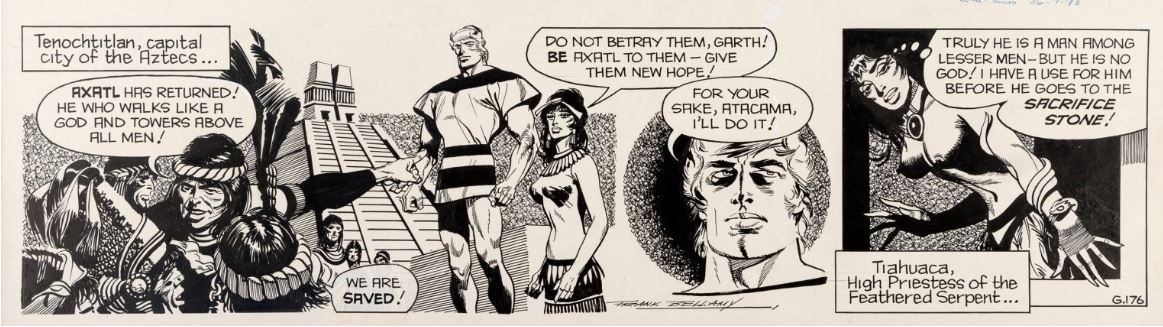
On this date in 1990 The Times of India supplement Indrajal Comics published its last issue. Started in 1964 its 805 issues brought The Phantom, Flash Gordon, Mandrake, Garth, Rip Kirby, Phil Corrigan, Buz Sawyer, Mike Nomad, Kerry Drake, and others to millions of readers, and in 1976 debuted homegrown Indian hero Bahadur by Aabid Surti.

DC Finest: Justice League of America – Starro the Conqueror


By Gardner F. Fox, Mike Sekowsy, Carmine Infantino, Bernard Sachs, Murphy Anderson, Joe Giella & various (DC Comics)
ISBN: 978-1-79950-773-4 (TPB)

This book includes Discriminatory Content produced in less enlightened times.

After the actual invention of the comic book superhero – by which we mean the launch of Superman in 1938 – the most significant event in the industry’s progress was to combine individual sales-points into a group. Thus what seems blindingly obvious to us with the benefit of four-colour hindsight was irrefutably proven: a number of popular characters could multiply readership by combining forces. Plus, of course, a whole bunch of superheroes is far cooler than just one – or even one and a sidekick…

Thus the Justice Society of America is rightly revered as a true landmark in the development of comic books and – when Julius Schwartz began reviving and revitalising the nigh-defunct superhero genre in 1956 – the next key moment would come a few years with the inevitable teaming of reconfigured mystery men. The League launched in The Brave and the Bold #28 (cover-dated March 1960 but actually on sale from December 29th 1959) and cemented the growth and validity of the revived subgenre, triggering an explosion of new characters at every company producing comic books; even spreading to the rest of the world as the 1960s progressed.

Spanning March 1960 to May 1963, this full-colour paperback collection of timeless classics re-presents The Brave and the Bold #28-30, issues #1-19 of the epochal first series of Justice League of America and a crucial early cross-branding event from Mystery in Space #75, with scripter Gardner Fox and illustrators Mike Sekowsky & Bernard Sachs – with the support of Joe Giella, Carmine Infantino & Murphy Anderson – seemingly able to do no wrong. That moment that changed everything for us baby-boomers came in The Brave and the Bold #28, a classical adventure title that had recently become a try-out magazine like Showcase. Just in time for Christmas 1959 ads began running…

“Just Imagine! The mightiest heroes of our time… have banded together as the Justice League of America to stamp out the forces of evil wherever and whenever they appear!…”

When it came that first tale was written by the indefatigable Gardner Fox and illustrated by quirky, understated virtuoso Mike Sekowsky, and inked by Bernard Sachs, Joe Giella & Murphy Anderson. ‘Starro the Conqueror!’ saw Flash, Wonder Woman, Aquaman, J’onn J’onzz – Manhunter from Mars and recent debutante Green Lantern defeat a marauding alien starfish whilst Superman and Batman stood by as a reserve. In those naive days, editors feared their top characters could be “over-exposed” and consequently lose popularity. The team also picked up an average American kid as a mascot. “Typical teenager” Snapper Carr would prove a focus of fan controversy for decades to come, and the yarn was/is supplanted by fact page ‘The “Starfish” Family!’ crafted by clever persons currently unknown…

Confident of his material and the superhero genre’s fresh appeal, Schwartz had two more thrillers ready for the following issues. B&B #29 saw the team defeat a marauder from the future who apparently had history on his side in ‘The Challenge of the Weapons Master!’ (inks by Sachs and Giella) whilst #30 saw the debut of the team’s first mad-scientist archvillain in the form of Professor Ivo who employed and his super android Amazo in ‘The Case of the Stolen Super Powers’ (Fox, Sekowsky & Sachs) to  end the try-out run. Three months later a new bi-monthly title debuted…

Perhaps somewhat sedate by histrionic modern standards, the JLA was revolutionary in a comics marketplace where less than 10% of all sales featured costumed adventurers. Not only consumer imagination was struck by hero teams either. Stan Lee was apparently given a copy of Justice League by his boss Martin Goodman and told to do something similar for the tottering comics company he ran… and look what came of that…

Justice League of America #1 offered a voyage to ‘The World of No Return’, in the insalubrious company of trans-dimensional tour-guide and tawdry tyrant Despero who bedevilled the World’s Greatest Heroes until, once again, plucky Snapper Carr became the key to defeating the villain and saving the day. As previously mentioned, although Superman and Batman were included in the membership their participation was strictly limited as editorial diktat at the start to avoid possible reader ennui and saturation from over-exposure. That ended from this point forward as they joined the regulars in all their games.
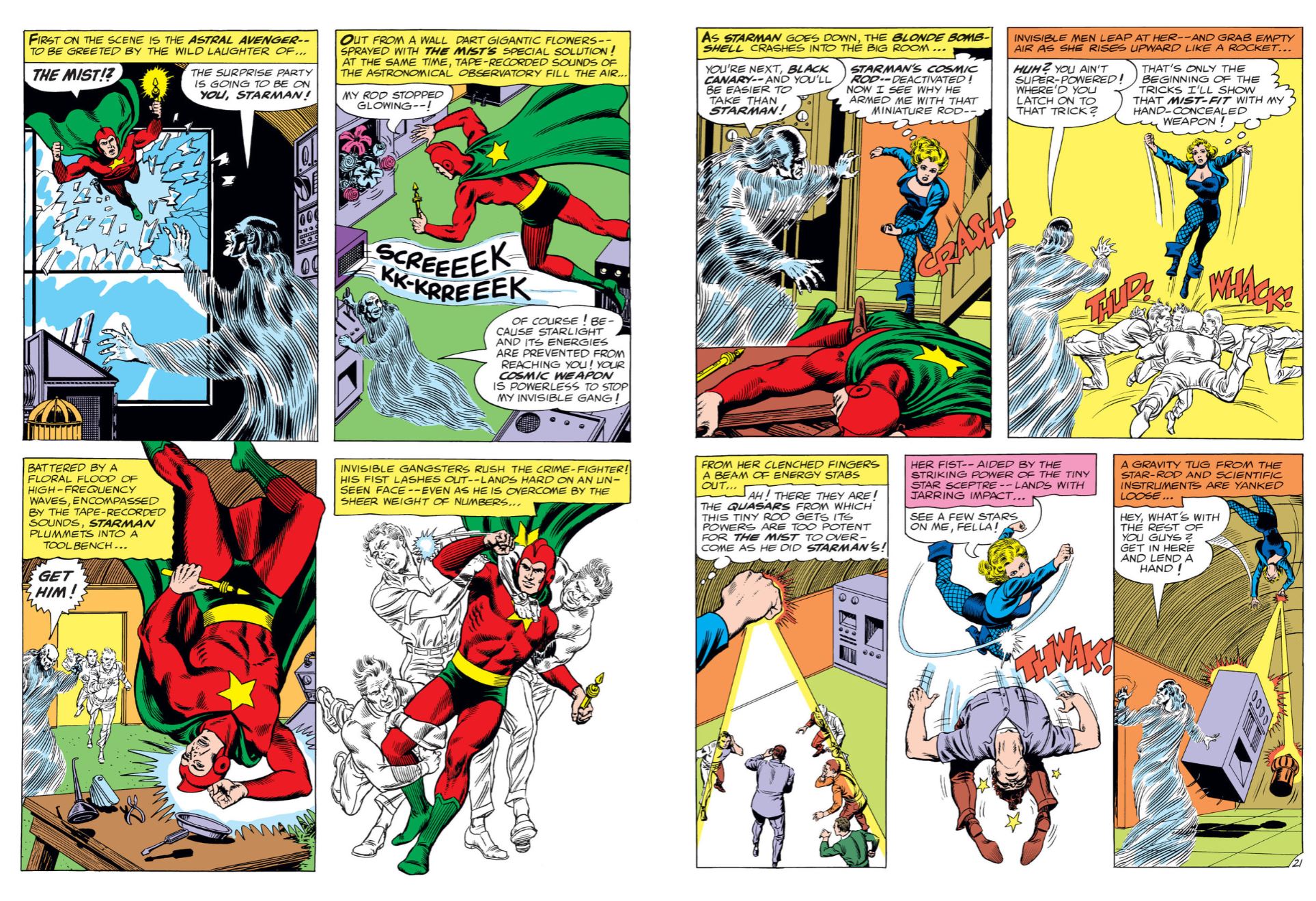
The second issue’s ‘Secret of the Sinister Sorcerers!’ presented an astounding conundrum as the villains of Magic-Land sneakily transposed the location of their dimension with Earth’s, causing the Laws of Science to be replaced with the Lore of Mysticism. The true mettle of the costumed heroes (with Superman & Batman fully participating in the proceedings) was shown when they had to use ingenuity rather than their powers to defeat fearsome foes and set two worlds to rights.

JLA #3 introduced despicable despot and slimy sentient trafficker Kanjar Ro who attempted to turn the team into his personal army in ‘The Slave Ship of Space!’, before the next episode was the first of many to feature a new member joining the team. Green Arrow saved the day in science-fiction thriller ‘Doom of the Star Diamond’, but was almost kicked out in #5 as the insidious evil genius Doctor Destiny inadvertently framed him ‘When Gravity Went Wild!’

The glory days of full-on “costumed crazies” was still in the future and most tales of this period involved extraterrestrial or fringe technology-triggered emergencies such as the mad scientist who encountered them next. ‘The Wheel of Misfortune!’ saw the debut of pernicious and persistent master of wild science Professor Amos Fortune, who weaponised luck to challenge the masked marvels, whilst #7 was another alien invasion plot (Agellaxians this time) who used an amusement park as a live-weapons lab, using humans to beta test their tech and eerily transform the swiftly-investigating heroes infiltrating ‘The Cosmic Fun-House!’

Organised crime then collided with cruel happenstance in January 1962’s JLA #8. ‘For Sale… the Justice League!’ offered a smart gangster caper wherein cheap hood Pete Rickets finds a prototype teaching tool and misuses it as mind-control weapon to enslave the superhero team before simple Snapper once again saves the day.
As often remarked, back then origins and character background were not as important as delivering solid entertaining stories and it was not until Justice League of America #9 (cover-dated February 1962 and on sale from December 21st 1961) that the group shared its motivating first case with enthralled readers via the narrative engine of curious Snapper Carr. Nigh-mythic now and oft-recounted. ‘The Origin of the Justice League’ recounts the circumstances of the team’s birth in an alien invasion saga as mighty space warriors seeking to use Earth as a gladiatorial arena in which to decide the future ruler of their distant world Appellax

It’s followed by the series’ first continued story. ‘The Fantastic Fingers of Felix Faust!’ finds the World’s Greatest Superheroes already battling a marauder from the future – the Lord of Time – when they’re spellbound by a vile sorcerer. Faust has awoken three antediluvian demons (Abnegazar, Rath and Ghast) and sold them the world in exchange for 100 years of unlimited power. Although the heroes eventually outwit and defeat Faust they have no idea that the demons are loose…

Although chronologically and sequentially adrift, next up is  Mystery in Space #75 (May 1962), wherein the worlds-beating team guest-star in a full-length thriller in Adam Strange’s ongoing, off-world epic adventures. Strange is an Earth archaeologist who regularly teleports to a planet circling Alpha Centauri where his wits and ingenuity saved the citizens of Rann from all manner of interplanetary threats and menaces. In ‘The Planet that came to a Standstill!’, Kanjar Ro attempts to conquer Strange’s adopted home, and our gallant hero must enlist the aid of the JLA before once again saving the day himself. This classic team-up was written by Fox, and illustrated by Carmine Infantino & Murphy Anderson.

Then, back in JLA #11 (also cover-dated May 1962) concluding chronological conundrum ‘One Hour to Doomsday!’ sees the JLA pursue and capture initial target The Lord of Time, before becoming trapped a century from their home-era by the awakened, re-empowered demons. This level of plot complexity hadn’t been seen in comics since the closure of EC Comics, and never before in a superhero tale. It was a profound acknowledgement by the creators that the readership was no longer simply little kids – if indeed it ever had been…

Perennial archvillain Doctor Light debuted in #12, attempting a pre-emptive strike on the team by transporting them to carefully selected sidereal worlds where their abilities would be useless, but ‘The Last Case of the Justice League’ proved to be anything but, and in the next issue the heroes saved our entire reality by solving ‘The Riddle of the Robot Justice League’: sinister simulacra created to stop the champions from halting the theft of our life-energy by agents of another cosmic realm. Then ‘The Menace of the “Atom” Bomb!’ in #14 proved to be  a neat way of introducing latest inductee The Atom whilst showing a fresh side to an old villain masquerading as new nemesis Mister Memory

‘Challenge of the Untouchable Aliens’ in JLA #15 added some fresh texture to the formulaic plot of extra-dimensional invaders out for our destruction before ‘The Cavern of Deadly Spheres’ delivered a deceptive change-of-pace tale with a narrative technique that just couldn’t be used on today’s oh-so-sophisticated audience, but still has the power to grip a reader. Ever challenging and always universal continuity building, more links between heroes were formed in #17’s ‘Triumph of the Tornado Tyrant!’ Here a sentient cyclone that had once battled indomitable Adam Strange (in Mystery in Space #61) set up housekeeping on an desolate world and ponder the very nature of Good and Evil and even roleplay out its deliberations. It soon realised that it needed the help of the Justice League to reach a survivable conclusion…

Teaser Alert: As well being a cracking yarn, this story is pivotal in the development of the android hero Red Tornado

JLA #18 found the heroes forcibly summoned to a subatomic universe by three planetary champions whose continued existence now threatened to destroy the very world they were designed to protect. ‘Journey to the Micro-World’ found the JLA compelled to defeat opponents who were literally unbeatable and discovering yet again that Batman’s brains were a super power no force could thwart…

One final perplexing puzzle was posed in ‘The Super-Exiles of Earth’ after unstoppable duplicates of the heroes go on a crime-spree, forcing global governments to banish the League into space. Breaking rules and laws whilst battling undercover in their civilian identities, the team prove too much for the mystery mastermind behind the plot and return to public acclaim in a stellar wrap-up to another fabulous feast of four-colour fun.

With iconic covers by Sekowsky, Infantino and Anderson, these tales are a perfect example of all that was best and purest about US comics’ Silver Age: combining optimism and ingenuity with bonhomie and adventure. This slice of better times also has the benefit of cherishing wonderment whilst actually being historically valid for any fan of our medium. Best of all the stories here are still captivating and enthralling transports of delight.

These classical compendia are a dedicated fan’s delight: an absolute gift for modern fans who desperately need to catch up without going bankrupt. They are also perfect to give to youngsters as an introduction into a fabulous world of adventure and magic…
© 1960, 1961, 1962, 1963, 2026 DC Comics. All Rights Reserved.

Today in 1883 trailblazing strip creator Frank King (Gasoline Alley) was born, as was trendsetting illustrator Mac Raboy (Captain Marvel Junior, Green Lama, Flash Gordon) in 1914; German comics legend Rolf Kauka (Dagobert, Fix und Foxi) in 1917 and Gerard Way (Umbrella Academy, Doom Patrol, some music and TV and movies ‘n’ stuff) in 1977.

In 1978, DC’s The World’s Greatest Superheroes newspaper strip premiered.

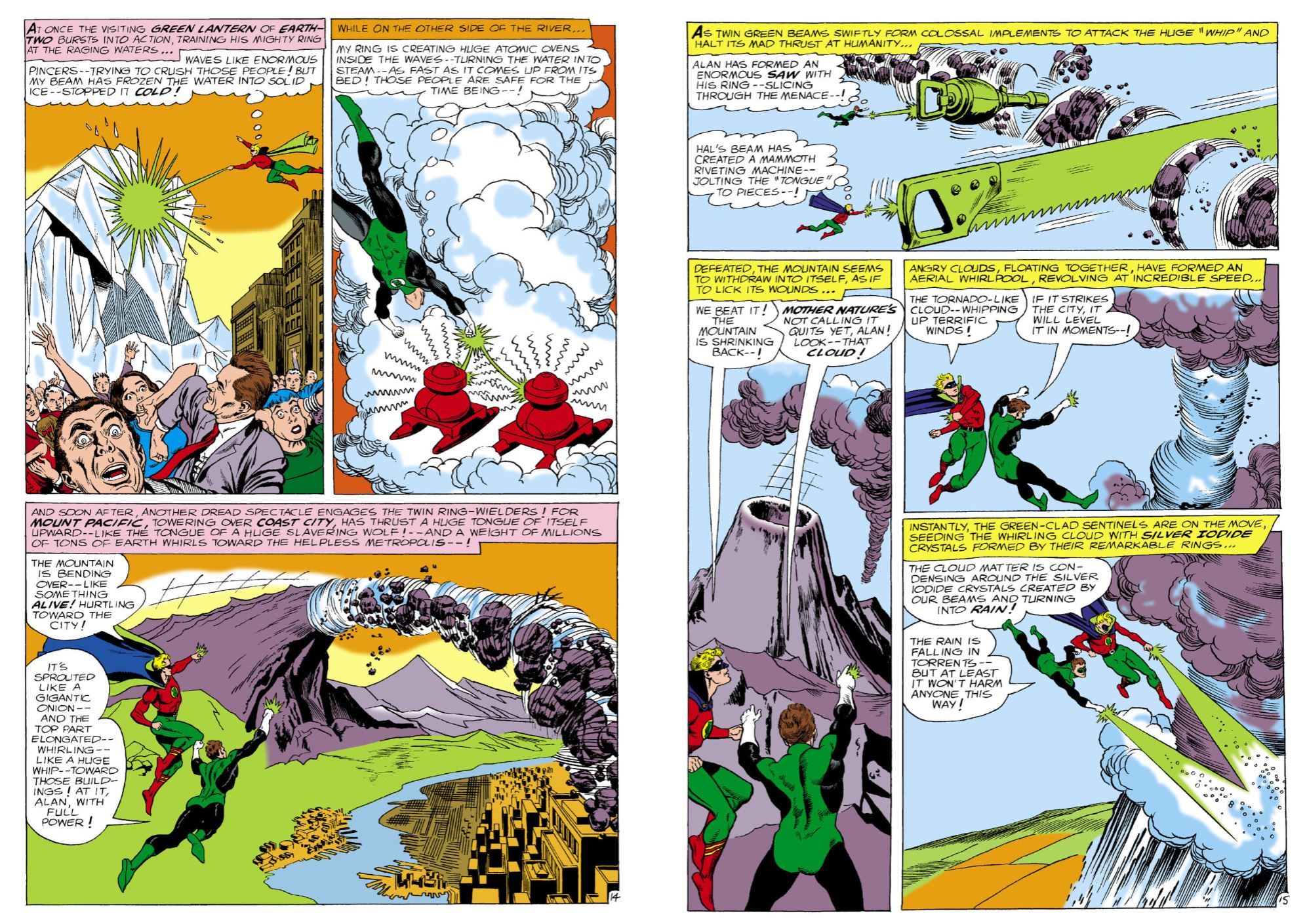
Green Lantern: The Silver Age volume 1


By John Broome, Gardner Fox, Gil Kane, Mike Sekowsky, Carmine Infantino, Ross Andru, Joe Giella, Murphy Anderson & various (DC Comics)
ISBN: 978-1-4012-6348-5 (TPB/Digital edition)

This book includes Discriminatory Content produced in less enlightened times.

Today marks the centenary of Eli Katz, who, as Gil Kane, worked from the Golden Age until his death (on January 31st 2000) to make comics the art form it is today. Diligent, resolute and always challenging himself, Kane was a trendsetting pioneer in style, in form and in comics philosophy. He was also a visual architect of the superhero revival in the Silver Age and a key component in the evolution of the Graphic Novel.
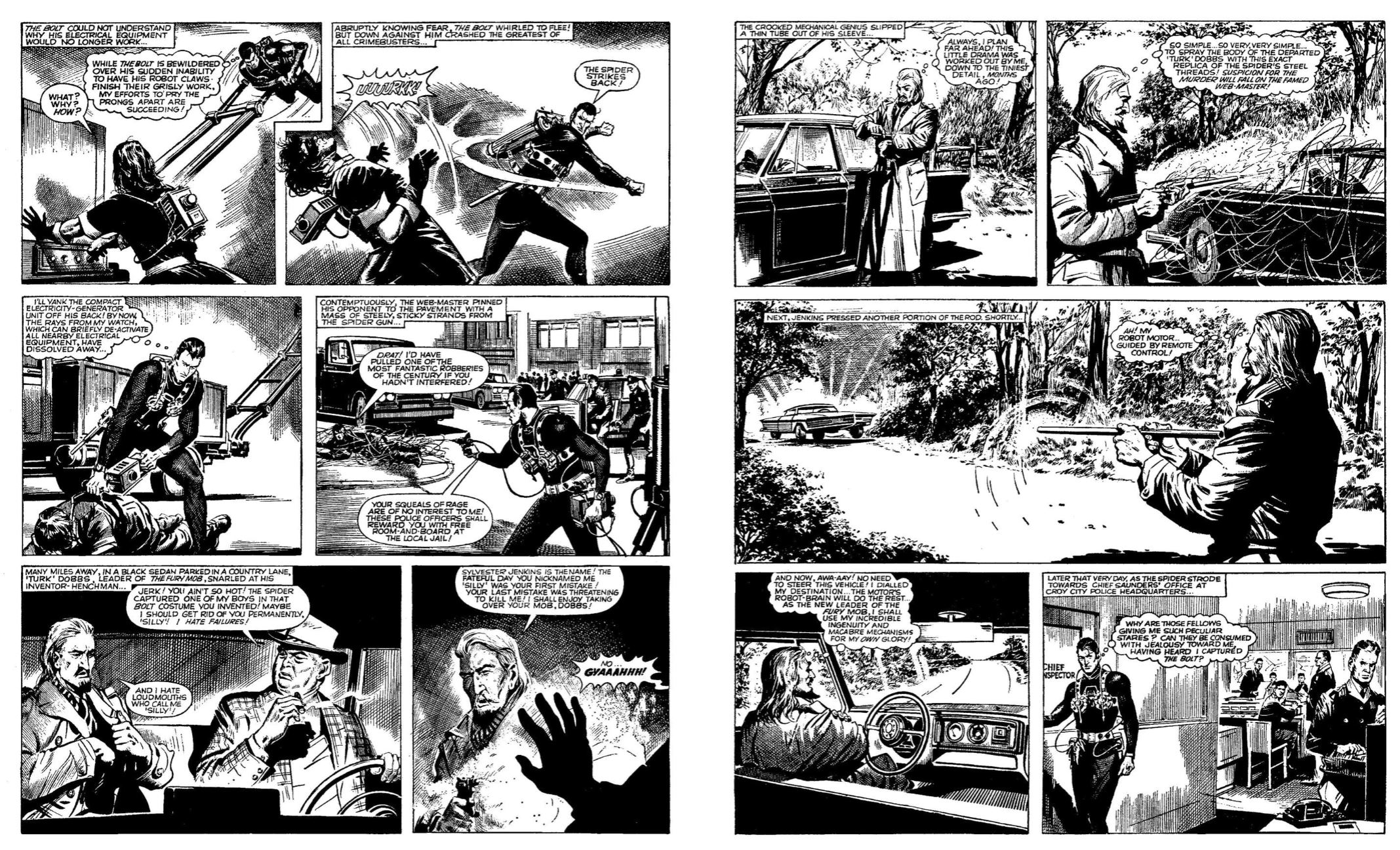
Gil Kane worked as an artist, and an ever-more effective and influential one, drawing – and writing – for many companies since his 1940s debut: on superheroes, action, war, mystery, romance, movie adaptations and, perhaps most importantly, Westerns and Science Fiction tales. In the late 1950s Kane was one of editor Julius Schwartz’s go-to artists for regenerating the superhero. Yet by 1968, at the top of his (admittedly much denigrated) profession, this relentlessly revolutionary and creative man felt so confined by juvenile strictures of the industry that he struck out on new ventures, jettisoning editorial and format bounds of comic books for new visions and media.

His Name Is Savage was an adult-oriented monochrome magazine about a cold and ruthless super-spy in the James Bond/Man Called Flint mould, co-written by friend & collaborator Archie Goodwin. It was very much a precursor in tone, treatment and subject matter to many of today’s adventure titles. The other venture, Blackmark (also with Goodwin), not only ushered in an era of comic book Sword & Sorcery, but became one of the first Graphic Novels. Technically, as the series was commissioned by publisher Ballantine as eight volumes, it was also America’s first comic Limited Series. Volume 1 launched in January 1971, with volume 2 just completed when the publisher killed the project. Albeit a generation Kane’s junior, long term seasoned collaborator Roy Thomas reprinted those tales in Marvel’s Savage Sword of Conan and Marvel Preview, with artwork rejigged to accommodate a different page format.

In comic books Kane’s milieux included Boy Commandos, Young Allies & Newsboy Legion, Johnny Thunder, Jimmy Wakely, Hopalong Cassidy, Rex the Wonder Dog, The Atom, Plastic Man, Robin, Batgirl, Batman, Superman, Flash, Hawk and Dove, Captain Action, T.H.U.N.D.E.R. Agents, U.N.D.E.R.S.E.A. Agent, plus hundreds of genre yarns – romance, war, sci fi, western and horror – before landing at Marvel Comics to reinvent Amazing Spider-Man, Captain America, Thor, Hulk, Ka-Zar and Captain Marvel, co-creating Adam Warlock, Morbius, Iron Fist. He adapted John Carter, Warlord of Mars and other adventure fantasy properties and reinvigorated dozens of horror-hero and superhero stalwarts, all while filling in on seemingly every character and cover going…

Restless and craving what the medium could still achieve, he created newspaper strip Star Hawks (in 1977 with Ron Goulart) and numerous special projects like Jason Drum for Le Journal de Tintin and The Ring of the Nibelung. Also working as Gil Stack, Scott Edward, Stack Til, Stacktil, Pen Star and Phil Martell, Kane was a foundation stone of comics and remains a vivid, vital inspiration to future generations of creators and readers.

With all that in mind let’s revisit a character he co-created and who will be forever associated with Kane: the Silver Age Emerald Gladiator…

After their hugely successful revival and reworking of The Flash, DC (or National Comics as they were) were keen to build on the resurgent superhero trend. Showcase #22 hit the stands at the same time as the fourth issue of the new Flash comic book – #108 – and once again the guiding lights were Editor Julie Schwartz & writer John Broome. Assigned as illustrator was action ace Gil Kane, generally inked by Joe Giella.

This fabulous paperback compilation gathers Showcase #22-24 (September/October 1959 to January/February 1960) and Green Lantern #1-9 (July/August 1960-November 1961) and reveals how a Space Age reconfiguration of the Golden-Age superhero with a magic ring replaced mysticism with super-science.

Hal Jordan was a young test pilot in California when an alien policeman crashed his spaceship on Earth. Mortally wounded, Abin Sur commanded his ring – a device which could materialise thoughts – to seek out a replacement officer, honest and without fear. Scanning the planet it selected Jordan and brought him to the crash-site. The dying alien bequeathed his ring, the lantern-shaped Battery of Power and his profession to the astonished Earthman.

In six pages ‘S.O.S Green Lantern’ established characters, scenario and narrative thrust of a series that would increasingly become the spine of DC continuity, leaving room for another two adventures in that premiere issue. ‘Secret of the Flaming Spear!’ and ‘Menace of the Runaway Missile!’ were both contemporary thrillers set against the backdrop of the aviation industry at a time when the Cold War was at its height. Unlike Flash’s debut, the publishers were now confident of their ground. The next two issues of Showcase carried the new hero into even greater and more fantastic exploits. ‘Summons from Space’ sent Green Lantern to another world: saving an emerging race from a deadly threat at the behest of the as-yet-unnamed leaders of the Green Lantern Corps, whilst ‘The Invisible Destroyer’ pitted the neophyte Emerald Gladiator against earthbound eerie menace – a psychic marauder that lived on atomic radiation.

Showcase #24 (January/February 1960) featured another spy-ring in ‘The Secret of the Black Museum!’ but Jordan’s complex social life took centre-stage in ‘The Creature That Couldn’t Die!’ when the threat of an unstoppable monster paled before the insufferable stress of being his own rival. Hal’s boss Carol Ferris, controversially left in charge of her father’s aviation company (an utterly radical concept in 1960 when most women were still considered fainting-fodder fluff), won’t date an employee, but is deliriously happy for him to set her up with glamorous, mysterious GL…

Six months later Green Lantern #1 was released. All previous tales had been dynamically drawn by Kane & Giella, in a visually arresting and exciting manner, but the lead tale here, ‘Planet of Doomed Men’ was inked by the astoundingly multi-talented Murphy Anderson, and his fine line-work elevated the tale (more emergent humans in need of rescue from another monster) to the status of a minor classic. Giella returned for the second tale, ‘Menace of the Giant Puppet!’, in which GL fought his first – albeit rather lame – supervillain, the Puppet Master.

The next issue originated a concept that would be pivotal to the future of DC continuity. ‘The Secret of the Golden Thunderbolts!’ featured an Antimatter Universe and the diabolical Weaponers of Qward: a twisted race who worshipped Evil, and whose criminals (i.e. people who wouldn’t lie, cheat, steal or kill) wanted asylum on Earth. Also inked by Anderson, this is an early highpoint of tragic melodrama from an era where emotionalism was actively downplayed in comics. The second story ‘Riddle of the Frozen Ghost Town! is a crime thriller highlighting the developing relationship between the hero and his Inuit (then “Eskimo”) mechanic Tom “Pieface”Kalmaku.

The Qwardians returned in the all-Giella-inked #3, leading with ‘The Amazing Theft of the Power Lamp!’ before Jordan’s love life again spun out of control in ‘The Leap Year Menace!’, whilst GL #4 saw the hero trapped in the antimatter universe in ‘The Diabolical Missile from Qward!’ (Anderson inks) nicely balanced by light-&-frothy mistaken-identity caper ‘Secret of Green Lantern’s Mask!’ This last was apparently crafted by a veritable round-robin raft of pencillers including Kane, Giella, Carmine Infantino, Mike Sekowsky and Ross Andru…

Issue #5 was a full-length thriller introducing Hector Hammond, GL’s second official recurring super-foe in ‘The Power Ring that Vanished!’: a saga of romantic intrigue, mistaken identity and evolution gone wild. This was followed by another pure science fiction puzzler ‘The World of Living Phantoms!’ (Kane & Giella), debuting avian Green Lantern Tomar Re and opening up the entire universe to avid readers.

Having shown us other GLs, Broome immediately excelled himself in the next episode. ‘The Day 100,000 People Vanished!’ brought the Guardians of the Universe into the open to warn of their greatest error: renegade Green Lantern Sinestro who, in league with Qwardians, had become a threat to the entire universe. This taut, tense shocker introduced one of the most charismatic and intriguing villains in the DCU, and the issue still had room for a dryly amusing, whimsical drama introducing Tom Kalmaku’s fiancée Terga in ‘Wings of Destiny’.

In the early 1960s DC production wizard Jack Adler devised a process to add enhancing tone to cover illustrations. The finished result was eye-catching and mind-blowing, but sadly, examples such as the cover of #8 here really don’t work with the glossy pages and digitised colour-tints of modern reproduction. Never mind, though, since contents ‘The Challenge from 5700 AD!’ comprise a fantasy tour de force as the Emerald Gladiator is shanghaied through time to save the future from an invasion of mutant lizards…

Sinestro returned in the next issue – the last in this astounding cosmic collection – with his own super-weapon in ‘The Battle of the Power Rings!’ (with Anderson again substituting for Giella) but the real gold is ‘Green Lantern’s Brother Act’, with the revelation of Hal’s two brothers and a snoopy girl reporter convinced young Jim Jordan is secretly the ring-slinging superhero. This wry poke at DC’s house plot-device shows just how sophisticated Schwartz & Broome believed their audiences to be.

In those long ago days costumed villains were always third choice in a writer’s armoury: clever bad-guys and aliens always seemed more believable to creators back then. If you were doing something naughty would you want to call attention to yourself? Nowadays the visual impact of buff men in tights dictates the type of foe more than the crimes committed, which is why these glorious adventures of simpler yet somehow better days are such an unalloyed delight. These Fights ‘n’ Tights romps are in themselves a great read for most ages, but when also considered as the building blocks of all DC continuity they become vital fare for any fan keen to make sense of the modern superhero experience.

Judged solely on their own merit, these are snappy and awe-inspiring; beautifully illustrated by a rapidly evolving graphic narrative superstar in ascendance: captivatingly clever thrillers that amuse, amaze and enthral both new readers and old devotees. This collection is a must-read item for anybody in love with our art-form and especially for anyone just now encountering the hero for the first time through his TV incarnation.
© 1959, 1960, 1961, 2016 DC Comics. All Rights Reserved.

Today in 1882 Spanish creator Salvador Bartolozzi (weekly Pinocchio) was born, with The New Yorker cartoonist Chon Day arriving in 1907, Levi Katz in 1926 and crusading Filipino cartoonist Pol Medina Jr. (Pugad Baboy) in 1960. In 1980 Dash Shaw (Bottomless Belly Button, New School, The Unclothed Man In the 35th Century A.D., Courier) joined that august grouping.

In 1936 Frank Leonard’s Mickey Finn strip debuted, and ran until 10th September 1977.

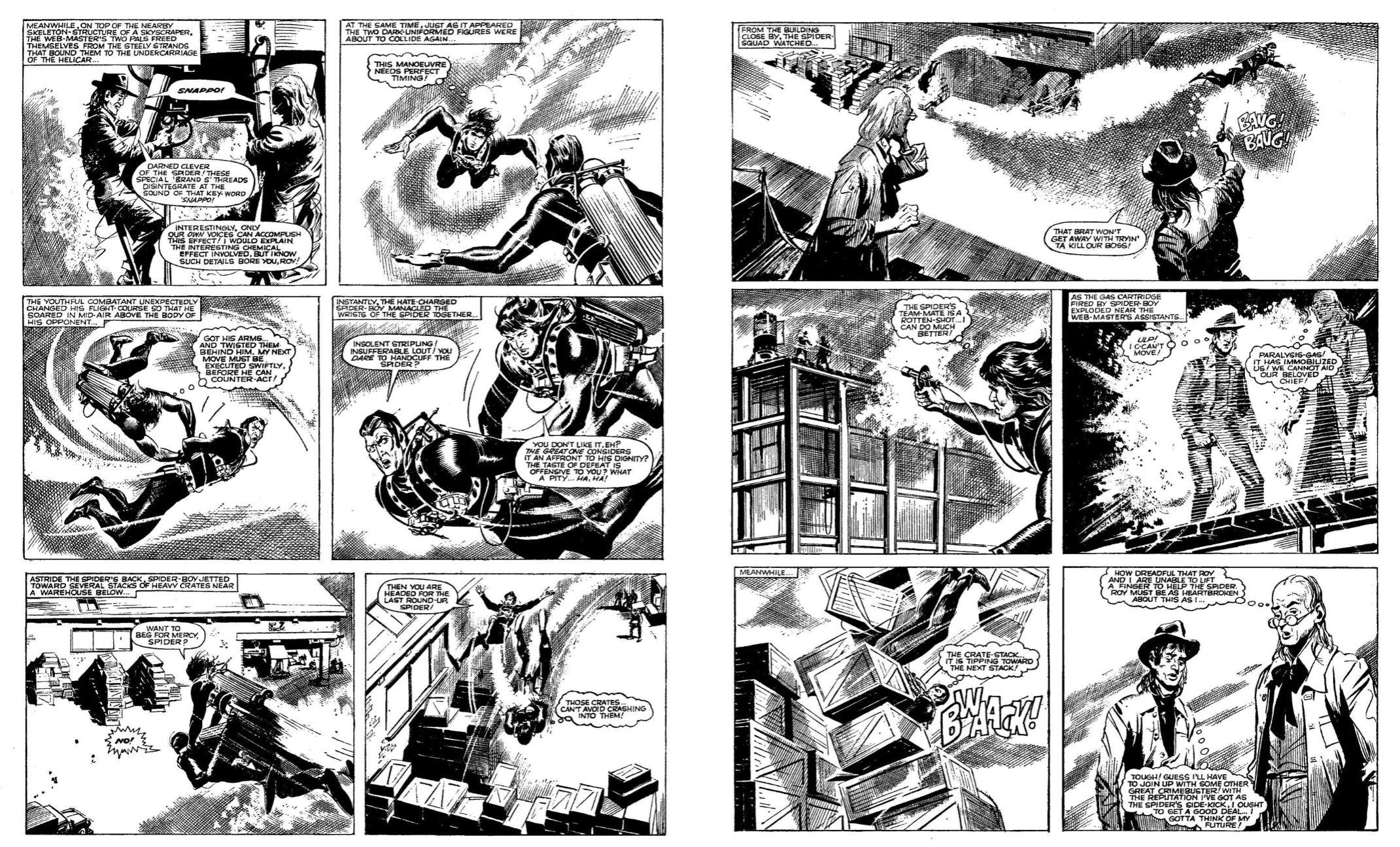
The Spider’s Syndicate of Crime


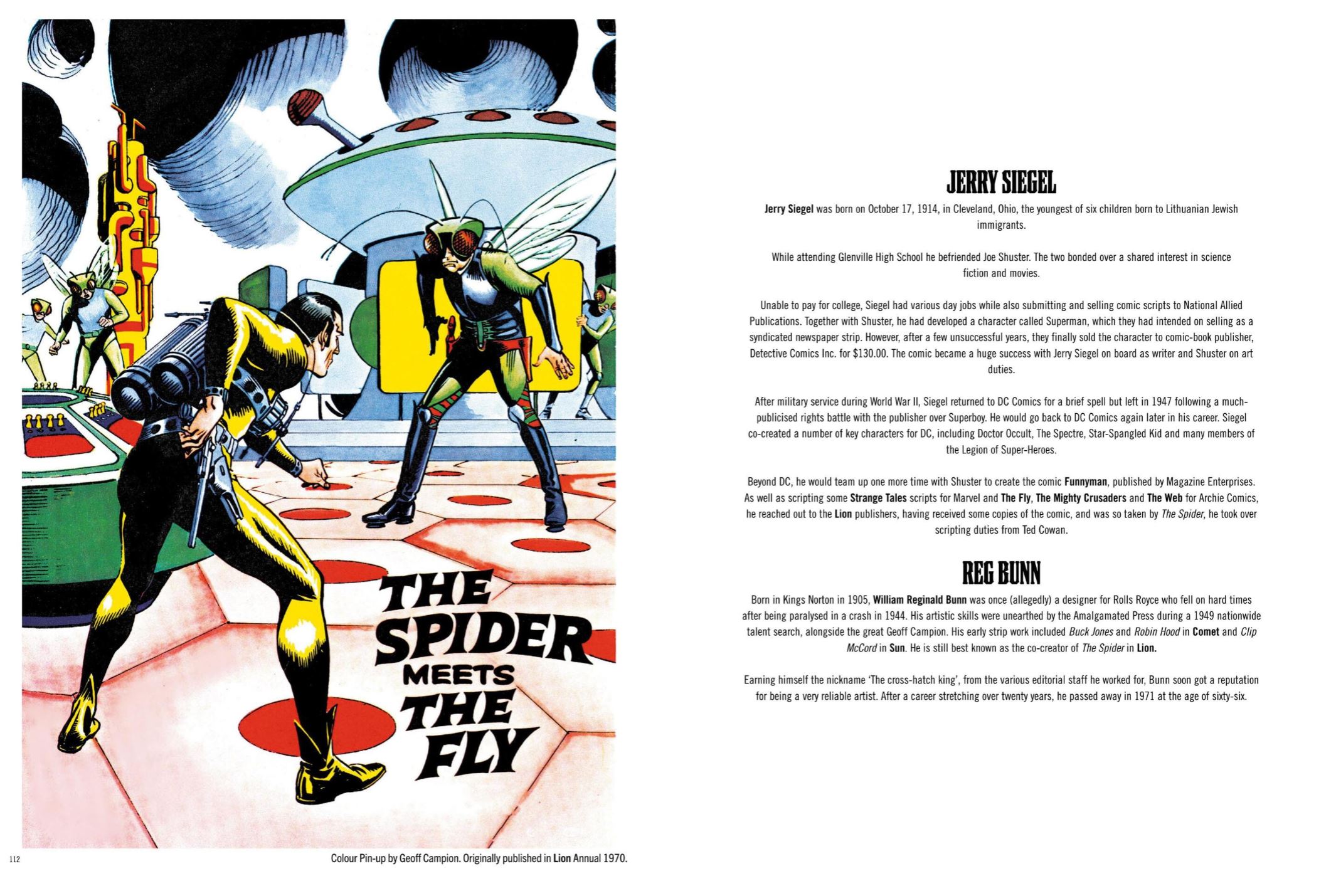
By Ted Cowan, Jerry Siegel & Reg Bunn (Rebellion)
ISBN 978-1-78108-905-7 (Album TPB/Digital edition)

This book includes Discriminatory Content produced in less enlightened times.

As religions, faiths and nations all over the world celebrate their apparently God-given right to kill each other in monumental numbers and vile ways, I’m again retreating into childhood days and safely fictional conflicts this Easter.

At least the adventures of the macabre and malevolent Spider and his personal redemption arc are as engrossing and enjoyable as I always recalled and will provide the newest, most contemporary reader with a huge hit of superb artwork, compelling, caper-style cops ‘n’ robbers fantasy, and thrill-a-minute adventure with no threat to soul or sanity.

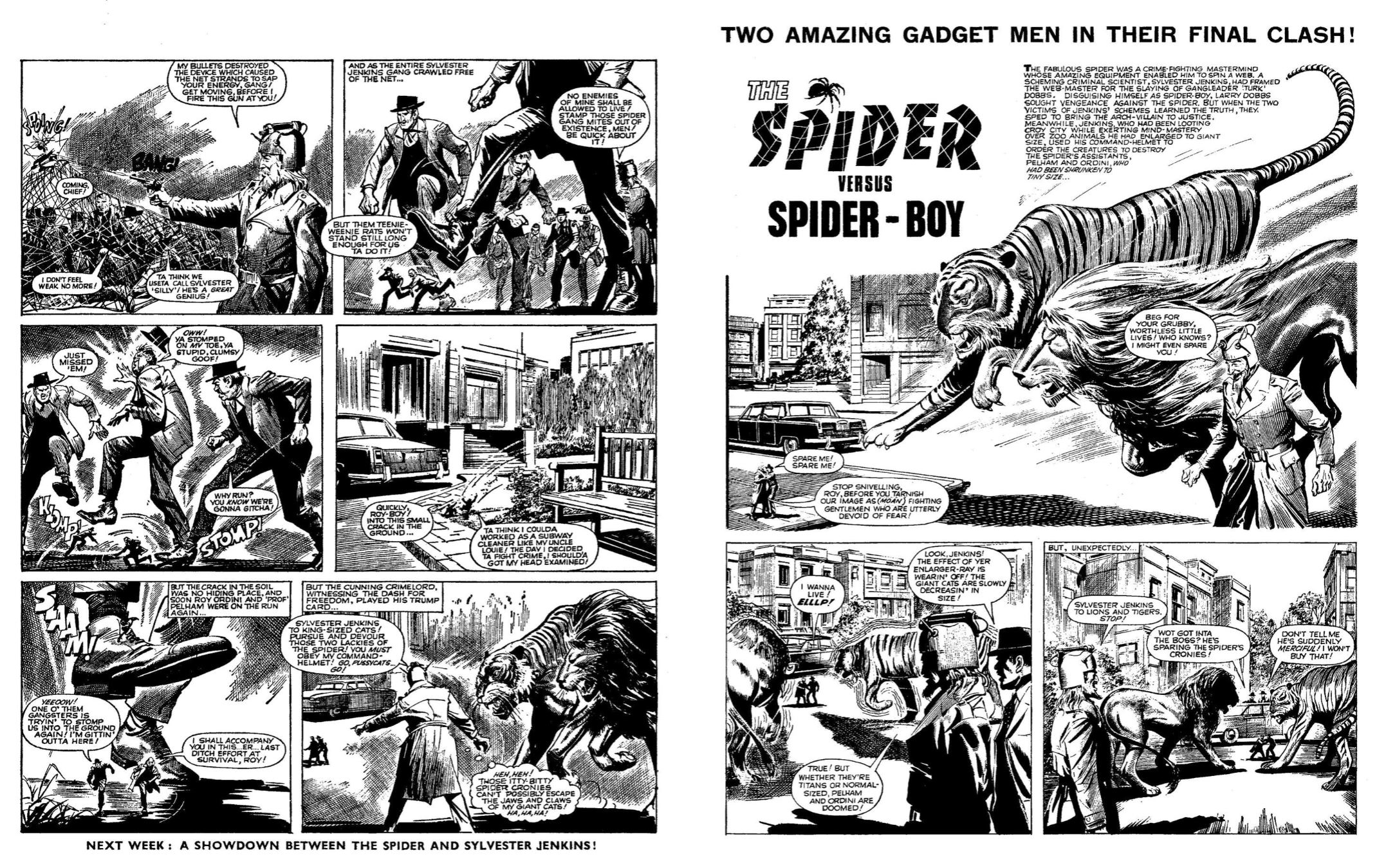
Part of Rebellion’s Treasury of British Comics strand, The Spider’s Syndicate of Crime was the opening salvo of (hopefully) a full and complete reprinting of arachnid amazements. It gathers material from peerless weekly anthology Lion, spanning June 26th 1965 – June 18th 1966 and that year’s Lion Annual which for laborious reasons is designated 1967.

What’s it all about? The Spider is a mysterious super-scientist whose goal is to be the greatest criminal of all time. As conceived by writer/editor Ted Cowan – who among many venerable triumphs created the much-revered Robot Archie feature and also scripted Ginger Nutt, Paddy Payne, Adam Eterno, and more – the flamboyantly wicked narcissist begins his public career by recruiting crime specialists. With moronic master safecracker Roy Ordini and evil inventor Professor Pelham he then attempts a massive gem-theft from a thinly veiled New York’s World Fair. This introduces Gilmore and Trask, the two crack police detectives cursed with the task of capturing the arrogant archvillain.

A major factor in the eerily eccentric strip’s success and reason for the reverence with which it is held is the captivating – not to say downright creepy – artwork of William Reginald Bunn. His intensely hatched linework was perfect for towering establishing shots, arcane angle views and catastrophic chases… and nobody ever drew moodier webbing or more believable weird weapons and monsters. Bunn was an absolute master of his field and much beloved. His work in comics (such as Robin Hood, Buck Jones, Black Hood, Captain Kid and Clip McCord) spanned 1949 to his death in 1971: once the industry found him, he was never without work. He died on the job and is still much missed. For The Spider there was the ultimate accolade as, after opening on two pages per episode, the feature kept winning a bigger page count. Even so, a lot had to happen in pretty short order and Bunn never stinted or short-changed his audience…

Similarly scripted by Cowan, second adventure ‘The Return of the Spider’ sets the tone for the rest of the strip’s run, as the unbelievably colossal vanity of the Spider is assaulted by a pretender to his title. The Mirror Man is a swaggering arrogant super-criminal who uses lethally credible optical illusions to carry out his crimes, and the Spider must crush him to keep the number one most wanted spot – and to satisfy his own vanity. Moreover, pitifully outmatched Gilmore & Trask return to chase the Spider, but must settle for his defeated rival after weeks of devious plotting, bold banditry and spectacular serialized thrills and chills.

‘Dr. Mysterioso’ is the first adventure penned by Jerry Siegel, who was forced to look elsewhere for work after an infamous falling out with DC Comics over the rights to the Man of Steel.

The aforementioned evil genius/criminal scientist of the title is another contender for the Spider’s crown. Their extended battle – paused repeatedly by a crafty subplot wherein the arachnid mastermind’s treacherous, newly-expanded gang of thugs (The Syndicate of Crime) seek to abscond with his stockpiled loot whenever he appears to have been killed – is a retro/camp masterpiece of arcane dialogue, insane devices and rollercoaster antics.

By the time of the final serialised saga here – ‘The Spider v. The Android Emperor’– the page count was up to 4 a week (and now included occasional cover slots): packed with fabulous fantasy and increasingly surreal exploits as the Arachnid Archvillain battles the super science of a monster-making maniac who might (maybe, perhaps?) have survived the sinking of Atlantis, but somehow gets his fun from baiting and tormenting the self-styled king of crime. Big mistake…

Thos initial curated commemoration concludes with a short yarn from the 1967 Lion Annual. ‘Cobra Island’ gives Bunn a chance to show off his skill with brushes and washes as the piece was originally printed in the double-tone format (in this case black and red on white) that was a hallmark of British annuals. It finds the mighty Spider and Pelham drawn to an exotic island where plantation workers are falling under the spell of a demonic lizard being – but all is not as it seems and the very real danger is more prosaic than paranormal…

With an introduction from Paul Grist and full creator biographies, this collection confirmed that the Lord of modern misrule was back at last and should find a home in every kid’s heart and mind, no matter how young they might be, or threaten to remain. Bizarre, baroque and often simply bonkers, The Spider proves that although crime does not pay, it always provides a huge amount of white-knuckle fun…
© 1965, 1966, 1967 & 2021 Rebellion Publishing IP Ltd. All Rights Reserved.

Today in 1885, Mutt and Jeff originator Bud Fisher was born, just like Dylan Dog author Tiziano Sclavi in 1953; auteur Yves Chaland (Spirou, Freddy Lombard) in 1957 and Jamie Hewlett (Tank Girl) in 1968.

The Little King creator Otto Soglow died on this date in 1975, but the day did give us comics-packed youth supplement ‘t Kapoentje’t in Flemish newspaper Het Volk in 1947 whilst later signalling the end of UK weekly Smash! in 1971.

Acid Box


By Sarah Kenney, James Devlin, Emma Vieceli, Ria Grix, Sophie Dodgson, Hassan Otsmane-Elhaou & various (Avery Hill Publishing)
ISBN: 978-1-917355-05-6 (HB/Digital edition)

The entirety of all worlds and each and every time is readily available to any open-minded comics connoisseur. Here’s a fun extrapolation on an old plot, with plenty of twisty raucous fun fully baked in for anyone with an open mind. A working knowledge of recent history (yes, I know that’s a relative term!) and breadth of musical tastes won’t be wasted if you can lay your hands on that too…

Most importantly, if you can remember the Nineties, you might well have been there, but probably a bit too far from the speaker-stacks…

In that context, the term Acid (noun: PRO: “Ass-SEeeeed”) denotes a popular youth culture movement concerned with music, recreational drugs, dancing and wandering about trying to find where the action was happening. It also had lots to do with a specific bit of clever kit called a Roland TB-303 Bass Line (AKA the “303”) that became instrumental in electronic music movements such as “techno”, “Chicago-house” and “acid house”…

At this moment of now in opening chapter ‘Fully Munted’, it’s 2026 in Glasgow and cleaner/presumed orphan Jade Nyo is hoping to forget the shitty world, crap prospects of survival and especially younger brother Rory’s persistent tortured nightmares of tsunamis and global collapse, as personified in recurring images of a big angry sod he calls “AngryMan” leading the inundations.

There’s not a lot she can use to get out and away – and so much to get away from – but her abiding fascination with dance music history tops the list, so soon she’s necked an “E” at local club Tempus and is living in the beats and sweat and non-stop motion. Rory’s there too but his crutches and callipers aren’t really rave-conducive…

Life gets worse and better all at once when three really weird skanky women drag her and Rory into a rather tacky corner that didn’t used to be there, and make an outrageous request/demand. Apparently, Yemaya, Angie and Tracey are “Liminals” commanding the forces of time, space, matter and energy and they have an urgent job that needs doing: restoring order to the geological continuum… or else…

Soon – while disbelieving every minute of it – Jade is jaunting all over infinity, drawn to key and crucial rave moments and beat history milestones chasing vibrations and saving the universe with the aid of a handy little widget dubbed (sorry! Sorry!!) an Acid Box. This one is missing three dials that Jade just must restore to it… or Earth will shake itself to dust within three days. Moreover, AngryMan is very real and resolved to make that big finish happen…

First stop, once all the “yeah, but”-ing is done with, is Berlin in 1994 (devotees of musical culture will soon comprehend what these key moments in time travel mean, and the rest of us can just revel in the pacy action and extremely effective character-play from here on…) as Jade musters some allies – such as tough local-time operators Fizzy & Rhonda – and faces increasing grief and terror in successive, potentially self-explanatory escalating episodes ‘Make Techno Not Friends’, ‘The Fear’ and ‘Go Hard or Go Home’.

The chase exposes family skeletons, loads of closets and repeatedly lands her in 1994 – somehow simultaneously in Detroit, Bradford, Berlin again, Johannesburg, Mysore and Hyde Park, London – gathering allies for an environmental showdown in at La Palma volcano in 2026, supplanted by ten-yearly confrontations in 2034, 2044 and 2054 all round the imperilled world until the big is done… one way or another…

Packed with and augmented by utterly absorbing sidebar bonus material, this is a sublimely absorbing romp embroidered with true love of the period and source music material that will no doubt make a fabulous and funny film one day. The primary creators are led by Sarah Kenney (Surgeon X, She Could Fly, Planet Divoc-91) who writes socially informed speculative fiction (the other, accurate, term for Science Fiction) and works as a scripter, producer and director for the Games industry and television. Her visual collaborator on  Surgeon X and Planet Divoc-91 is Glasgow-based James Devlin (Tomorrow, LaGuardia) who here joins multidisciplinary performance artist Emma Vieceli (Life is Strange, BREAKS) and illustrator Ria Grix (The Anomalous Adventures of Viola Holm and Kotiin).

This macroscopic, musically-inclined peregrination includes further input and compelling comics fare culled from an international workshop group about comics, music, science culture and planet Earth run by Kenney & Kirsten Murray. That resulted in compelling essays and graphic sorties all packed in here too, all stage-set by an accommodatingly informative ‘Afterword’ by Kenney.

The textual thoughts comprise ‘Happy Place by Sarah Zad’; ‘Fund, Marry, Chill: The Ultimate Guide to Guaranteed Creative Success by Adrian Saredia-Brayley’; ‘Research and Discussion of the potential benefits of MDMA on PTSD sufferers by Bobby Gunasekara’; ‘Reviving Rave Roots Resurgence of Clean Rave Culture by Sevitha ’Vadlamudi’; ‘Fact and Fiction by Sarah Zad’ and ‘The Lens of Life… Storytelling and facilitating change through art by Whitney Love’. These are followed by a selection of ‘Youth Workshop Comics’ beginning with eco-chiller ‘We Can’t Stay Here Any Longer’ by Adrian Saredia-Brayley and followed by Ben Avey-Edwards cyber-thriller ‘Vibe’ (lettered by Rob Jones).

ShyWhy shares the joys of ‘Mind Travel’ and Lara Sloane depicts ‘A Housewives Revolution’ before ‘Dancing On My Own’ – scripted by Nyla Ahmad with art by Adrian Saredia-Brayley – carries us to Lucy Porte’s ‘Bad Trip’ after which Paula Karanja brings ‘A Gift to Share’. Rounding out the jam session, Saredia-Brayley limns Phelisa Sikwata’s ‘Sinking HomeS’ and Hannah Maclennan closes the show with ‘Hurry Up! Our Song is Playing!’
© Wowbagger Productions 2025. All rights reserved.

Today in 1929 US Golden Age artist Joe Gallagher was born, as was James Vance (Kings in Disguise, Omaha the Cat Dancer, Aliens, Predator) in 1953, and Todd Nauck (Young Justice, Spider-Man) in 1971.

In1867 Britain and the world lost pioneering cartoonist/caricaturist/political commentator Charles H. Bennett, and in 2002 Stan Pitt (officially the first Australian artist with original material published US  comic books – The Witching Hour #14 & Boris Karloff – Tales of Mystery # 33!) who ghosted Al Williamson’s Secret Agent Corrigan in 1969 and 1972. Also, in 2009 we lost the great unsung Frank Springer (Secret Six, Nick Fury, Agent of SHIELD, Phoebe Zeit-Geist, The Dazzler, Friday Foster, Rex Morgan M.D., Mary Perkins on Stage, The Incredible Hulk newspaper strip).

In 1958 Goscinny & Uderzo’s Oumpah-pah debuted in Le Journal de Tintin.