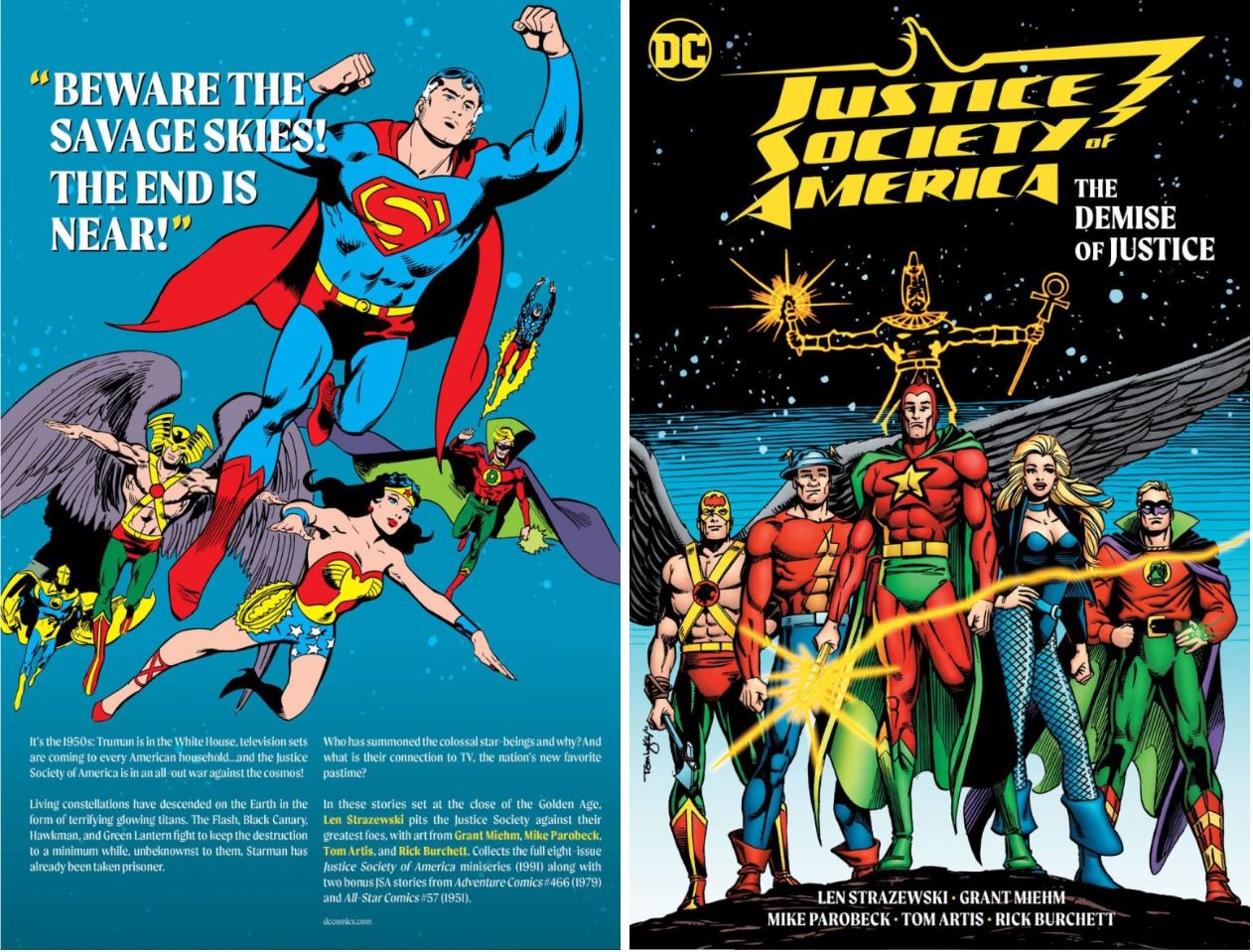
The Spirit: An 80th Anniversary Celebration


By Will Eisner with Abe Kanegson, Sam Rosen, Laura Martin, Jeromy Cox & various (Clover Press)
ISBN: 978-1-95103-805-2 (TPB/Digital edition)

This book includes Discriminatory Content produced in less enlightened times.

It is pretty much accepted today that Will Eisner was one of the prime creative forces that shaped the comic book industry, but still many of his milestones escape public acclaim in the English-speaking world.

William Erwin Eisner was born on March 6th 1917, in Brooklyn, and grew up in the ghettos of the city. They never left him. After time served inventing much of the visual semantics, semiotics and syllabary of the medium he dubbed “Sequential Art” in strips, comicbooks, newspaper premiums and instructional comics, he then invented the mainstream graphic novel, bringing maturity, acceptability and public recognition to English language comics.

In 1978 a collection of four original short stories in comics form released in a single book, A Contract With God and Other Tenement Stories. All the tales centred around 55 Dropsie Avenue: a 1930’s Bronx tenement housing poor Jewish and immigrant families. It changed the American perception of cartoon strips forever.

Eisner wrote and drew a further 20 further masterpieces, opening the door for all other comics creators to escape the funny book and anodyne strip ghettos of superheroes, funny animals, juvenilia and “family-friendly” entertainment. At one stroke comics grew up.

Eisner constantly pushed the boundaries of his craft, honing his skills not just on the legendary Spirit but with years of educational and promotional material. In A Contract With God he moved into unexplored territory with truly sophisticated, mature themes worthy of Steinbeck and F. Scott Fitzgerald, using pictorial fiction as documentary exploration of social experience.

Restlessly plundering his own childhood and love of human nature as well as his belief that environment was a major and active character in fiction, in the 1980s Eisner began redefining the building blocks unique to sequential narrative with a portmanteau series of brief vignettes that told stories and tested the expressive and informational limits of representational drawings on paper. From 1936 to 1938, Eisner worked as a jobbing cartoonist in the comics production firm known as the Eisner-Eiger Shop, creating strips for domestic US and foreign markets. Using pen-name Willis B. Rensie he conceived and drew the opening instalments of a huge variety of characters ranging from funny animal to historical sagas, Westerns, Detectives, aviation action thrillers – and superheroes – lots of superheroes…

In 1940 Everett “Busy” Arnold (head honcho of the superbly impressive Quality Comics outfit) invited Eisner to take on a new challenge. The Register-Tribune newspaper syndicate wanted a 16-page weekly comic book insert to be given away with the Sunday editions. Despite the terrifying workload such a commission demanded, Eisner jumped at the opportunity, creating three strips which would initially be handled by him before two of them were handed off to his talented assistants. Bob Powell inherited Mr. Mystic whilst masked detective Lady Luck fell into the capable hands of Nick Cardy (then still Nicholas Viscardi), and later the inimitable Klaus Nordling.

Eisner kept the lead strip for himself, and over the next twelve years The Spirit became the most impressive, innovative, imitated and talked-about strip in the business. In 1952 the venture folded and Eisner moved into commercial, instructional and educational strips. He worked extensively for the US military in manuals and magazines like P*S, the Preventative Maintenance Monthly, generally leaving comics books behind.

In the wake of “Batmania” and the 1960s superhero craze, Harvey Comics released two giant-sized reprints with a little new material from the artist, which lead to underground/indie editions and a slow revival of the Spirit’s fame and fortune via monochrome newsstand reprint magazines. Initially, Warren Publishing collected old stories, even adding colour sections with painted illumination from such contemporary luminaries as Rich Corben, but with #17 the title reverted to Kitchen Sink, who had produced the first two underground collections.

Eisner found himself re-enamoured with graphic narrative and saw a willing audience eager for new works. From producing new Spirit covers for the magazine (something the original newspaper insert had never needed) he became increasingly inspired. American comics were evolving into an art form and the restless creator finally saw a place for the kind of stories he had always wanted to tell.

Eisner began crafting some of the most telling and impressive work the US industry had ever seen: first in limited collector portfolios and eventually in 1978, A Contract With God. If Jack Kirby was American comics’ most influential artist, Will Eisner undoubtedly was – and remains – its most venerated and exceptional storyteller. Contemporaries originating from strikingly similar Jewish backgrounds, each used comic arts to escape from their own tenements, achieving varying degrees of acclaim and success, and eventually settling upon a theme to colour all their later works. For Kirby it was the Cosmos, what Man would find there, and how humanity would transcend its origins in The Ultimate Outward Escape. Will Eisner went Home, went Back and went Inward.

The Spirit debuted on June 2nd 1940 in the Sunday edition of newspapers belonging to the Register and Tribune Syndicates. “The Spirit Section” expanded into 20 Sunday newspapers, with a combined circulation of five million copies during the 1940s and ran until October 5th 1952. This collection re-presents a selection of classic adventures from the original 12-year canon, in stark stunning monochrome, with five digitally recoloured by Laura Martin and Jeromy Cox. Furthermore, each episode is preceded by an essay from Industry insiders and unashamed fans.

Leading the charge and providing a fascinating breakdown on the history of the masked marvel is former publisher (one of 15 to date) Denis Kitchen, who provides ‘A Brief History and Appreciation of The Spirit before the Cox-coloured ‘Who is The Spirit?’ reveals how a battle of wills between private detective Denny Colt and scientific terror Dr. Cobra leads to the hero’s death and resurrection as the ultimate man of mystery…

Editorial wonder Diana Schutz deconstructs one of Eisner’s most metaphysically mirthful yarns as ‘No Spirit Story Today’ treats us all to monochrome madness with a deadline crunch inspiring a Central City cartoonist to break the fourth wall. Dean Mullaney then spills the beans over atomic era intrigue as Martin’s hues add bite to the 1947 armageddon spoof ‘Wanted’, with the entire world as well as our hero hunting a little man with a deadly secret…

According to Bruce Canwell’s essay, Li’ Abner parody ‘Li’l Adam’ was part of a scheme between Eisner and Al Capp to mutually boost popularity of their respective properties. The jury’s still out, but there no doubt that the Spirit portion is one of the wackiest episodes in the gumshoe’s case files, unlike the moody, compelling tragedy of ‘The Strange Case of Mrs. Paraffin’ (previewed by Charles Brownstein), wherein the ghostly gangbuster strives to convince a widow that she is not also a murderess…

Paul Levitz examines authorial inspiration in anticipation of a return to black & white and The Spirit’s battle against arsonist ‘The Torch’: a potentially passé romp rendered hilariously unforgettable by Eisner’s wry poke at advertising sponsorship, before Beau Smith fondly recalls his mentor’s gift for teaching using modern magic realist western ‘Gold’ as his exemplar…

Coloured by Cox and discussed by Craig Yoe, ‘Matua’ is a deftly winsome tribute to myths and legends disguised as a poke at monster movies with the Spirit wandering the Pacific Islands and meeting an awakened colossal beast, after which Greg Goldstein focusses on ‘Sound’ as a monochrome moment again peeks behind the curtain of a cartoonist’s life.

Eisner always had a superb team to back him up and here letterers Sam Rosen & Abe Kanegson combine with design assistant Jules Pfeiffer to make the wordforms the surreal stars of this picture show about another murdered pencil pusher…

Rounding out this tribute to eight tumultuous decades of Spiritual Enlightenment is a Will Eisner Art Gallery of latterday sketches, pin-ups and covers by the master.

Will Eisner is rightly regarded as one of the greatest writers in American comics but it is too seldom that his incredible draughtsmanship and design sense get to grab the spotlight. This book is a joy no fan or art-lover should be without, and is especially recommended for newbies who only know Eisner’s more mature works.

By the Way: Although Eisner started out utilising the commonplace racial and gender stereotypes employed by so many sectors of mass entertainment, he was among the first in comics – or anywhere else – to eschew and abandon them. In these more enlightened, if not settled, times, it’s nice to see a statement addressing the historical and cultural problems not to mention potential distress these outdated sensibilities might cause right at the front of the collection. So, if funny books can do it, how come statues and people can’t?
THE SPIRIT and WILL EISNER are Registered Trademarks of Will Eisner Studios, Inc. Will Eisner’s The Spirit © 2020 Will Eisner Studios, Inc. All Rights Reserved. All other material © its respective contributor. © 2020 Clover Press, LLC. All Rights Reserved.

In case you missed it, today in 1917 Will Eisner was born, and shared his natal day with Al Milgrom in 1950 and Kieron Dwyer in 1967. The date also marks the deaths of Jack Abel in 1996 and in 2007, groundbreaking woman artist Lina Buffolente who drew Italian comics from age 17 in 1941 ‘til the end.

Golden Age Starman Archives volumes 1 & 2

These books include Discriminatory Content produced in less enlightened times.

Golden Age Starman Archives volume 1
By Jack Burnley, Gardner Fox, Alfred Bester, Ray Burnley & various (DC Comics)
ISBN: 978-1-56389-622-4 (HB)

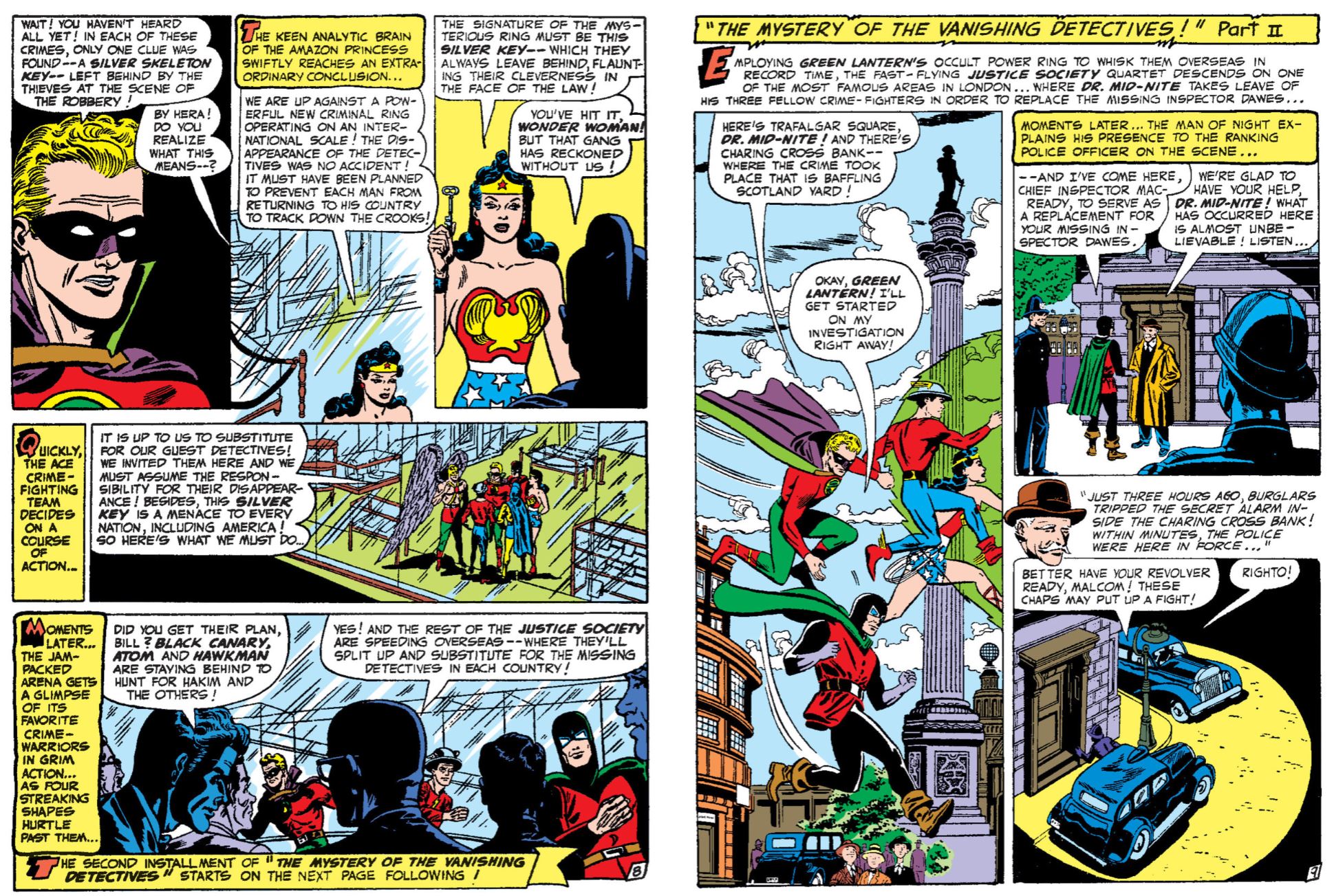
After the staggering, near-instant successes of Superman and Batman, National Comics/DC launched many new mystery men in efforts to capitalise on the phenomenon of superheroes, and – from our almost century-distant perspective – it’s only fair to say that by 1941 the editors had only the vaguest inkling of what they were doing.

Since newest creations The Sandman, The Spectre and Hourman were each imbued with equal investments of innovation, creativity and exposure, editorial powers-that-be were rather disappointed that these additions never took off to the same explosive degree. Publishing partner but separate editorial entity All American Comics had meanwhile generated a string of barnstorming successes like The Flash, Green Lantern, Hawkman and recent radio sensation Hop Harrigan and would imminently produce the only rival to Superman and Batman’s status when Wonder Woman debuted late in the year. Of course, AA had brilliantly “in-tune” creative/editorial prodigy Sheldon Mayer to filter all their ideas through.

Thus, when Starman launched in the April 1941 issue of Adventure Comics (relegating Sandman to a back-up role in the venerable heroic anthology), National/DC trusted in craft and quality rather than some indefinable “pizzazz” they couldn’t get a handle on. The editors were convinced the startlingly realistic, conventionally classical dramatic illustration of Hardin “Jack” Burnley would propel their newest concept to the same giddy heights of popularity as the Action Ace and Gotham Guardian.

Indeed, the strip – always magnificently drawn and indisputably one of the most beautiful of the period – was further blessed with mature and compelling scripts by Gardner Fox and Alfred Bester: compulsive and brilliant thrillers and even by today’s standards some of the very best comics ever produced.

However – according to the artist in his Foreword to this first stunning deluxe hardback collection – that was possibly the problem. Subtle, moody, slower-paced stories just didn’t have the sheer exuberance and kinetic energy of the most popular series, which all eschewed craft and discipline for spectacle and all-out action.

Happily, these days with an appreciably older and more discerning audience, Starman’s less-than-stellar career in his own time can be fully seen for the superb example of Fights ‘n’ Tights wonderment it truly is, and – in his anniversary years – cries out for a definitive archival collection… especially since his legacy descendant Stargirl was a big shot TV sensation…

This epic collection reprints the earliest astounding exploits of the Astral Avenger from Adventure Comics #61-76 (spanning April 1941- July 1942), including some of the most iconic covers of the Golden Age, by Burnley and, latterly, wonder-kids Joe Simon & Jack Kirby.

Burnley came up with the Starman concept but, as was often the case, a professional writer was assigned to flesh out and co-create the stories. In this case said scribe was the multi-talented Gardner Fox who wrote most of them. The illustrator also liberally called on the talents of his brother Dupree “Ray” Burnley as art assistant, and sister Betty as letterer to finish the episodes in sublimely cinematic style.

In those simpler times origins were far less important than today, and the moonlit magic here begins with ‘The Amazing Starman’ from #61. Cover-dated April the book hit newsstands on March 5th 1941. Happy 85th anniversary, space cowboy!

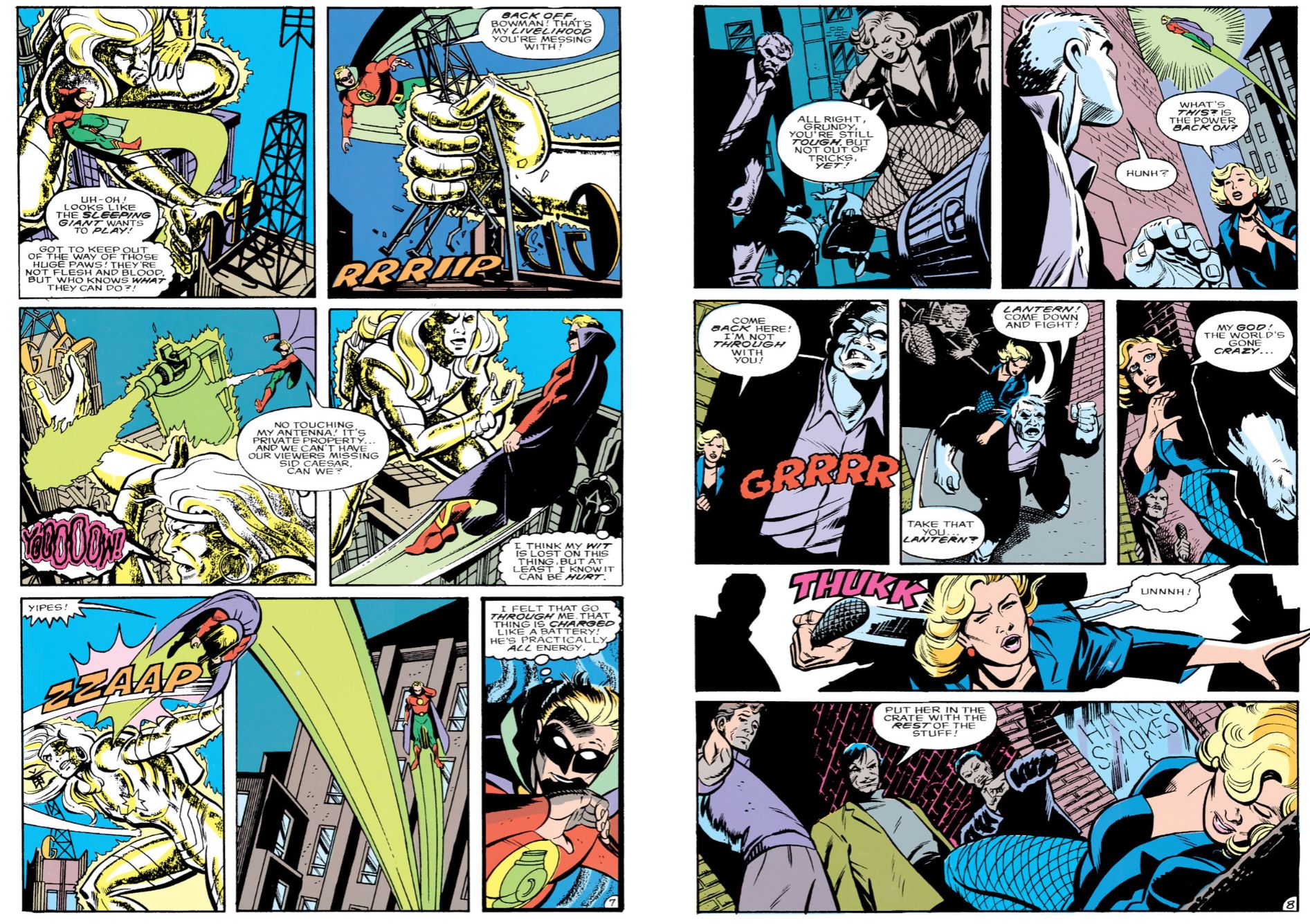
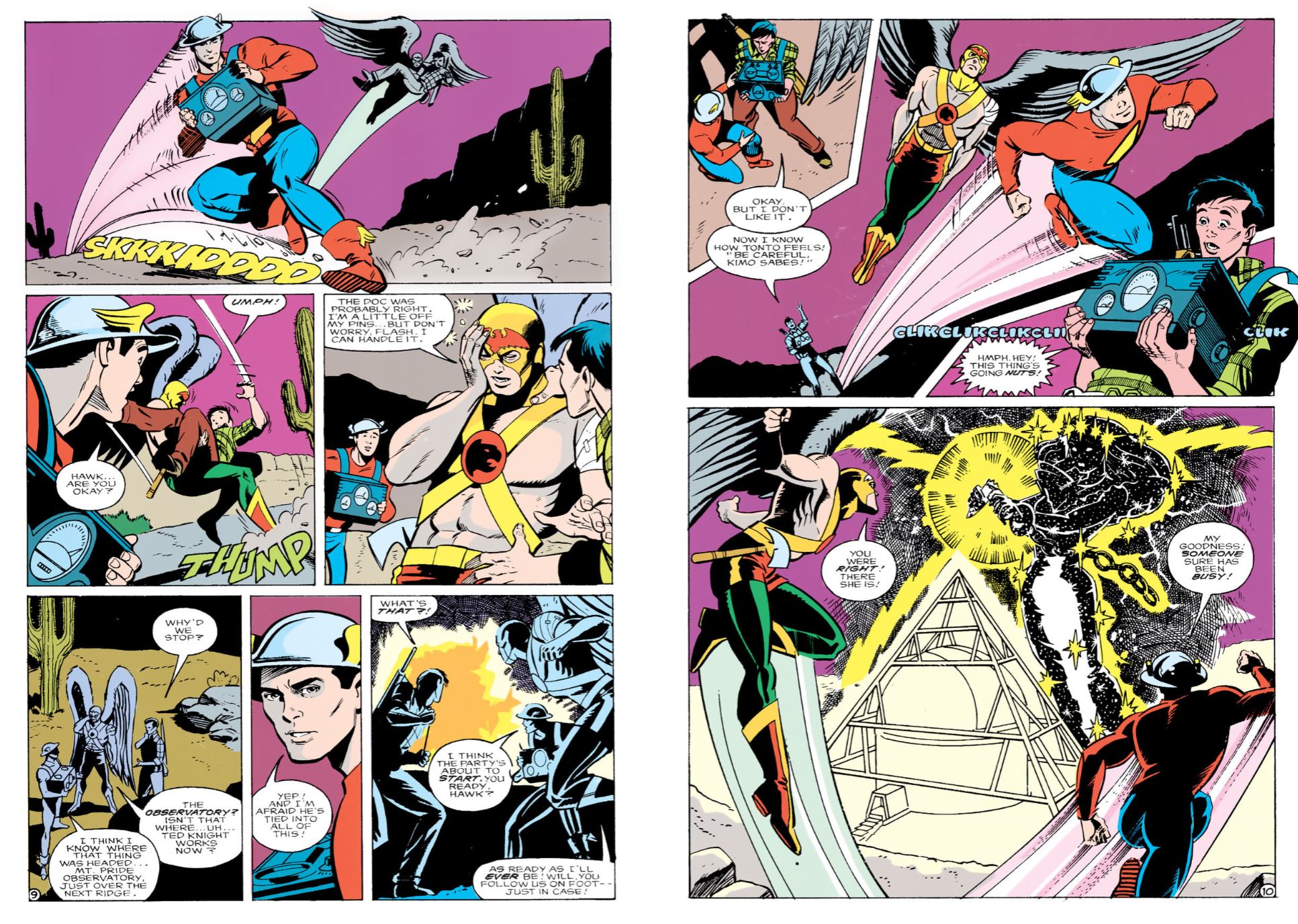
America suddenly suffers a wave of deadly electrical events! Appalled and afraid, FBI chief Woodley Allen summons his latest volunteer operative. Bored socialite Ted Knight promptly abandons his irate date Doris Lee to assume his mystery man persona, flying off to stop the deranged scientist behind all the death and destruction. Almost as an aside we learn that secret genius Knight had previously discovered a way to collect and redirect the energy of starlight through an awesome handheld device he calls a “gravity rod” and thereafter resolved to do only good with his discoveries…

The intrepid adventurer tracks diabolical Dr. Doog to his mountain fortress and spectacularly decimates the subversive Secret Brotherhood of the Electron. Next month, in #62, the Sidereal Sentinel met another deadly deranged genius who had devised a shrinking ray. It even briefly diminishes Starman before the sky warrior extinguishes ‘The Menace of the Lethal Light’, after which ‘The Adventure of the Earthquake Terror’ (#63) depicts the US attacked by foreign agent Captain Vurm, using enslaved South American tribesmen to administer his grotesque ground-shock engines. He too falls before the unstoppable cosmic power of harnessed starlight. America was still neutral at this time, but the writing was on the wall and increasingly villains sported monocles and Germanic accents…

Adventure Comics #64 pitted the Astral All-Star against a sinister mesmerist who makes men slaves in ‘The Mystery of the Men with Staring Eyes’, after which – behind a stunning proto-patriotic cover – Starman solves ‘The Mystery of the Undersea Terror’, wherein the ship-sinking League of the Octopus proves another deadly outlet for the greedy genius of The Light…

In #66 ‘The Case of the Camera Curse’ layered a dose of supernatural horror into the high-tech mix as Starman tackles a crazed photographer employing a voodoo lens to enslave and destroy his subjects, before #67’s ‘The Menace of the Invisible Raiders’ introduced the Astral Avenger’s greatest foe. Mysterious menace had The Mist devised a way to make men and machines imperceptible and would have conquered America with his unseen air force had not the Starry Knight stopped him…

Alfred Bester provides a searing patriotic yarn for #68 as ‘The Blaze of Doom’ sees Starman quenching a forest fire and uncovering a lumberjack gang intent on holding America’s Defence effort to ransom, after which Fox scripts #69’s ‘The Adventure of the Singapore Stranglers’ in which the heavenly hero stamps out a sinister cult. In actuality, the killers were sadistic saboteurs of a certain aggressive “Asiatic Empire”. American involvement in WWII was mere months away…

The martial tone continued in ‘The Adventure of the Ring of Hijackers’ as Starman battled Baron X, whose deadly minions wrecked American trains carrying munitions and supplies to embattled British convoy vessels, although a welcome change of pace came in #71 when ‘The Invaders from the Future’ strike. Brigands from Tomorrow are bad enough, but when Starman discovers one of his old enemies has recruited them, all bets are off…

For #72, an Arabian curse seems the reason explorers are dying of fright, but the ‘Case of the ‘Magic Bloodstone’’ proves to have a far more prosaic – if no less sinister – cause…

With Adventure Comics #73, Starman surrendered the cover-spot, as dynamic duo Simon & Kirby took over ailing strips Paul Kirk, Manhunter and Sandman. However, ‘The Case of the Murders in Outer Space’ proved the Knight Errant was not lacking in imagination or dynamic quality, as he matched wits with a brilliant mastermind murdering heirs to a Californian fortune by an unfathomable method before disposing of the bodies in an utterly unique manner…

Sinister science again reigned in #74 as ‘The Case of the Monstrous Animal-Men’ finds the Starlight Centurion tragically battling ghastly pawns of a maniac who turns men into beasts, whilst #75’s ‘The Case of the Luckless Liars’ details how Ted Knight’s initiation into a millionaires’ fibbing society leads to Starman becoming a hypnotised terror tool of deadly killer The Veil before this initial foray into darkness ends with a rollicking action riot as ‘The Case of the Sinister Sun’ sees cheap thugs of the Moroni Gang upgrade their act with deadly gadgets: patterning themselves after the solar system in a blazing crime blitz… until Starman eclipses them all.

Enthralling, engaging and fantastically inviting, these early Golden Age adventures are a lost highpoint of the era – even if readers of the time didn’t realise it – offering astonishing thrills and amazing chills for today’s sophisticated readership. Starman’s exploits are some of the best of those halcyon days.


Golden Age Starman Archives volume 2
By Ray Burnley, Gardner Fox, Alfred Bester, Don Cameron, Joe Samachson, Ray Burnley, Mort Meskin, George Roussos, Emil Gershwin, Sam Citron & various (DC Comics)
ISBN: 978-1-4012-2283-3 (HB)

When Starman launched in 1941 Adventure Comics National/DC trusted in craft and quality rather than some indefinable pizzazz. Before too long, though, the editors were forced to concede that even the forcefully realistic, conventionally dramatic illustration of Jack Burnley would not propel their newest concept to the same giddy heights of popularity as the Action Ace or Gotham Guardian.

The strip, always magnificently drawn and indisputably one of the most beautifully realised of the period, was further blessed with mature and compelling scripts by Gardner Fox, Alfred Bester, Don Cameron and latterly Joe Samachson but just never really caught on. However, by today’s standards these compelling, compulsive fun-filled and just plain brilliant tales are some one of the very best comics that era ever produced.

Happily these days, with an appreciably older and more discerning audience, Starman’s less-than-stellar War years career might be more fully appreciated for the superb example of Fights ‘n’ Tights fiction it truly was. This volume sees the opening subtly, moody, slow-paced intellectually edgy stories supplanted by shorter yarns brimming with sheer exuberance and kinetic energy as, with the Nazi menace beaten, home grown criminals began to congregate on comics pages…

For this second stunning deluxe hardback outing – completing the Sidereal Sentinel’s tenure in Adventure Comics (issues #77-102, spanning August 1942 to February 1946) – Golden Age guru Roy Thomas offers his own absorbing critical overview in the Foreword and the volume even includes some of the most iconic covers of the Golden Age (by Joe Simon & Jack Kirby) even though most of them only feature Starman in a little insert in one corner!

As was often the case, although Burnley came up with the concept and look for the Astral Avenger, a professional writer was assigned to flesh out and co-create the stories. At first Gardner Fox handled the job, but eventually Alfred Bester supplied the scripts, whilst the illustrator also liberally called on the talents of his brother Ray Burnley as art assistant and inker with sister Betty as letterer finishing the episodes in sublimely cinematic style.

The period peril resumes here with ‘Finders Keepers!’ by Fox & Burnley, wherein arch-nemesis The Mist combined his invisibility gimmicks with a subtle psychological scheme. When members of the public found valuable “lost property” they had no idea each item carried a posthypnotic command to surrender their own valuables to the criminal mastermind, only to become embroiled in a concatenation of increasingly dangerous stunts. Happily Starman was able to turn the repentant fool into a real hero…

Burnley bowed out in style in Adventure #80 (November 1942) in Bester’s ‘The Time-Machine Crime!’ wherein thugs used said purloined device to kidnap William Shakespeare, in hopes his canny mind could plan the perfect crime. Fox returned for another stint in #81 as the explosively kinetic Mort Meskin & George Roussos briefly took on the art. In ‘Starman’s Lucky Star!’ a poor blind boy who wanted to be an astronomer was mistakenly kidnapped instead of his wealthy playmate. Thankfully the Star Sentinel was available to put everything right, after which ‘Hitch a Wagon to the Stars’ (AC #82, Fox, Meskin & Roussos) spotlighted a brilliant young inventor whose obsession with astrology blighted his life, and nearly made him a patsy for Nazi spies… at least until Ted Knight and his alter ego intervened.

With Adventure Comics #83, Emil Gershwin became main illustrator for the series – a solid, polished artist much influenced by Mac Raboy. ‘Wish Upon a Star!’ gave him the opportunity to shine in the moving, socially-charged tale of three prep school boys whose unselfish wishes came true thanks to Starman. At this time the Astral Avenger’s page counts began to decline as his popularity dwindled – from an average of 11 to 7 or 8 – and ‘The Doom From the Skies’ reflected a growing trend towards fast-paced action as a burglar stole the Gravity Rod, leaving our hero an amnesiac and his weapon a deadly death ray, whilst #85’s ‘The Constellations of Crime!’ introduced Astra the Astrologist who used predictions as the basis of extravagantly deadly crimes…

In the next issue a disgraced sportsman pretended to undertake a lunar trip whilst equipping his gang with clever gimmicks to rob and restore his fortune as ‘The Moonman’s Muggs!’ before an element of detection fiction was added in Adventure #87 when Starman exposed a gang selling the inexplicably popular paintings of the worst artist in America as ‘Crime Paints a Picture!’ before rejoining the war-effort in #88 as the Stellar Centurion solved ‘The Enigma of the Vanishing House!’ and smashed a Nazi spy-ring. In #89 old foes the Moroni Gang broke out of jail and restarted their nefarious careers as Sun, Moon and Saturn, but ‘The Plundering Planets!’ quickly fell foul of Starman and a couple of really annoying prankster kids…

Meskin & Roussos popped back in #90 to vividly envision the anonymous thriller ‘Land Beneath the Fog!’ wherein Starman saved a lady scientist accused of witchcraft in a lost medieval kingdom, whilst in the next issue Don Cameron, Meskin & Sam Citron jointly detailed ‘The Rising Star of Johnny Teach!’ as another young man emotionally crippled by a nonsensical faith in astrology found the courage to turn his life around… after a little prompting from Starman.

With Adventure #92 Joe Samachson took over the scripting and Gershwin returned to illuminate the series until its conclusion. The run began with ‘The Three Comets!’ – circus acrobats Starman was convinced doubled as flamboyant thieves. All he had to do was find out where they stashed the loot…

In #93’s ‘Gifts from the Stars!’ the hero almost died after getting in between a squabbling scientist and a financial backer whose protracted arguments allowed robbers to blindside them both, #94’s ‘Stars Fall on Allie Bammer!’ had gangster Blackie Kohl use a meteor shower to gain entrance to an impregnable estate, and ‘The Professor Plays Safe!’ in #95 found a muddle headed astronomer at the wrong conference only to end up locked in a safe – until Starman stepped in. ‘Prediction for Plunder!’ saw Ted Knight and some superstitious crooks both ticked off at the unscrupulous editor of the Weekly Horoscope. The socialite wanted no more scary predictions worrying his nervous friends, but the thugs were actually using those specious prognostications to plan their jobs…

Adventure #97 saw impoverished stargazer Jimmy Wells agree to let wealthy Wesley Vanderloot take all the credit for his discoveries in return for direly needed cash, but his ‘Stolen Glory!’ almost cost the scientist and Starman their lives when the millionaire faced humiliating exposure, after which #98 revealed a stellar conundrum giving the hero belated insight into a bizarre crime-wave where one gang was framing another for their jewel heists in ‘Twin Stars of Crime!’0 Fame was again the spur in ‘My Fortune for a Star!’ when a destitute astronomer discovered a new star and offered to sell the naming rights to the highest bidder. Naturally whenever cash is being thrown around thieves are never far away…

By Adventure Comics #100 Starman had dropped to the back of the book and the plots were beginning to feel a little formulaic. In ‘Life and Death of a Star!’ a friend of Ted’s thought he’d discovered a new star, but upon investigation Starman found the strange light was just a clever signal to convicts planning a jailbreak, whilst in #101 ‘The Sun-Spot Scoundrel!’ featured a savant who posited that mysterious solar blemishes caused increased criminal activity even as they neutralised the mighty Gravity Rod…

It was all over in #102, although the last tale was far from a damp squib. ‘The Meteor Mob’ saw savvy mobster Shiver using a cannon to create his own shooting stars… only these ones only ever fell on banks and jewellery stores…

Despite that unwarranted fizzling out, the Golden Age Starman is a strip that truly shines today. These simple straightforward adventures should be considered a high-point of the era – even if readers of the time didn’t realise it – and his exploits are among the most neglected thrillers of those halcyon days. However modern tastes will find them far more in tune with contemporary mores, making these books unmissable delights for fans of mad science, stylish intrigue mystery, murder and crazy crime capers. Truly terrific treats but what a shame they’re out of print and not available digitally (HINT! HINT!)

© 1941, 1942, 2000 DC Comics. All Rights Reserved.
© 1942, 1943, 1944, 1945, 1946, 2009 DC Comics. All Rights Reserved.

In 1872 Canadian Joseph (Père Ladébauche) Charlebois was born, as was Jean (Iznogoud) Tabary in 1930. One year later Philémon creator Frédéric Othon Théodore Aristidès AKA “Fred” arrived.

In 2007 we lost Yvan Delporte and in 2012 Muntañola AKA Joaquim Muntañola (Josechu el Vasco, Angelina y Cristobalito, Doña Exagerancia), with inker fine artist Dave Hunt dying in 2017 on the same today, and Underground commix legend Jay (Bijou Funnies) Lynch, as well as Dutch journeyman cartoonist/illustrator Frans Meijer (Prikkel-idyllen, Klappertjes, Uzeltje) in 1962.

The Phantom – The Complete Series: The King Years


By Bill Harris, Dick Wood, Pat Fortunato, & Bill Lignante, Giovanni Fiorentini & Senio Pratesi & various (Hermes Press)
ISBN: 978-1-61345-009-3 (HB/Digital edition)

This book includes Discriminatory Content produced in less enlightened times. This book also contains Discriminatory Content included for dramatic effect.

In the 17th century a British sailor survived attack by pirates, and, washing ashore in Africa, swore on the skull of his murdered father to dedicate his life and that of all his descendants to destroying all pirates and criminals. The Phantom fights crime and injustice from a lavish lair deep in the jungles of Bengali, and throughout Africa is known as the “Ghost Who Walks”.

This unchanging appearance and unswerving quest for justice led to him being considered an immortal avenger by the credulous and the wicked. Down the decades one hero after another has fought and died in an unbroken family line, and the latest wearer of the mask, indistinguishable from the first, continues the never-ending battle…

Lee Falk created the Jungle Avenger at the request of his syndicate employers who were already making history, public headway and loads of money with his first strip sensation Mandrake the Magician. Although technically not the first ever costumed hero in comics, The Phantom was the prototype paladin: wearing a skin-tight body-stocking and a mask with opaque eye-slits.

He debuted on February 17th 1936 (Happy 90th anniversary… and a bit!!) in an extended sequence pitting him against a global confederation of pirates dubbed the Singh Brotherhood. Falk wrote and drew the daily strip for the first fortnight before handing over the illustration side to artist Ray Moore. A Sunday feature began in May 1939.

For such a successful, long-lived and influential series, in terms of compendia or graphic novel collections, The Phantom has been very poorly served by the English language market. Various small companies have tried to collect the strips – one of the longest continually running adventure serials in publishing history – but in no systematic or chronological order and never with any sustained success. But, even if it were only of historical value (or just printed for Australians, who have long been manic devotees of the implacable champion) surely Kit Walker is worthy of a definitive chronological compendium series?

Happily, his comic book adventures have fared slightly better – at least in recent times. Between 1966 and 1967 King Features Syndicate dabbled with a comic book line of their biggest stars – Blondie, Popeye, Beetle Bailey, Flash Gordon, Mandrake & The Phantom – developed after the Ghost Who Walks had enjoyed a solo-starring vehicle under the broad and effective aegis of veteran licensed properties publisher Gold Key Comics.

The Phantom was no stranger to funnybooks, having been featured since the Golden Age in titles such as Feature Book and Harvey Hits, but only as straight reformatted strip reprints. The Gold Key exploits were tailored to a big page and a young readership, a model King maintained for their own run.

This superb full-cover hardcover – or eBook for the modern minded – gathers the contents of The Phantom #19-28 (originally released between November 1966 and December 1967) as well as four back-up vignettes from Mandrake #1-4, spanning September 1966 to January 1967. Following fascinating Introduction ‘The Phantom, the King Years’ from fans and scholars Pete Klaus and Howard S. Gesbeck (which includes splendid unseen art and candid photos) the procession of classic wonders resumes.

As with the Gold Key issues, the majority of the stories were scripted by Bill Harris or Dick Wood and (re)drawn in comic book format by Bill Lignante, with covers by or based on images from the daily strip as limned by Sy Barry.

Opening the King archive is a fabulously wry romp as a coterie of crooks inveigles their way into the Phantom’s jungle home, intent on stealing ‘The Treasure of the Skull Cave’. Over the centuries the Ghost Who Walks has amassed the most fantastic hoard of legendary loot and astounding artefacts, but the trio of crooks can’t agree on what is or isn’t valuable and soon pay the price for their folly and genocidal intent…

Issue #19 tapped into the global excitement as America neared its first manned moonshots with ‘The Astronaut and the Pirates’ finding the Phantom hunting seagoing brigands who abduct and ransom an American spaceman after his off-course splashdown lands him in very hot water…

The issue’s second tale relies on more traditional themes with ‘The Masked Emissary’ intervening in a civil war; protecting an ousted democratic leader from a tyrannical despot, until liberty can be restored to the people. The Phantom #20 (cover dated January 1967) led with a bold departure from tradition. Scripted by Pat Fortunato ‘The Adventures of the Girl Phantom’ delved into the meticulous family chronicles to reveal how, a few generations previously, the feisty twin sister of the Ghost Who currently Walked took her brother’s place to police the jungles of Bengali after he was laid low. Counterpointing that radical drama is a moody mad science thriller as the current masked marvel battles old enemy Dr. Krazz and aliens from the Earth’s interior in ‘The Invisible Demon’

In #21, ‘The Treasure of Bengali Bay’ finds The Phantom battling bandits employing their own fake ghost to secure sunken loot, after which grudge-bearing Indian Prince Taran lures our hero to the subcontinent as fodder for specially trained animal assassin ‘The Terror Tiger’. Then full-length drama ‘The Secret of Magic Mountain’ pits the Immortal Avenger against sly shaman Tuluck who mixes misconceived ancient history and a freshly-active volcano to turn local tribes against The Phantom, whilst in #23 merciless pirate ‘Delilah’ takes the place of a Peace Corps worker to get lethally close to the guardian of the jungle.

However, her devious wiles, brainwashing techniques and super-submarine prove of little use against the dauntless and implacable Ghost Who Walks…

Girl Phantom Julie steals the show again in #24 as she and faithful friend Maru challenge the forces of darkness to defeat a vicious manipulator in ‘The Riddle of the Witch’

Writer Giovanni Fiorentini and illustrator Senio Pratesi tackle #25 as the modern hero and famous athlete and sportswoman/prospective bride Diana Palmer frustrate slave-taking diamond smugglers intent on subjugating ‘The Cold Fire Worshippers’ before issue #26 marks a return to double story instalments.

Lignante’s ‘The Lost City of Yiango’ sees the Phantom compelled to solve a 50-year-old mystery and prevent a resurgence of tribal warfare, after which he answers a desperate plea to safeguard an irreplaceable treasure and goes undercover to thwart ‘The Pearl Raiders’

The Phantom #27 reveals the origins of the African Avenger’s wonder-horse as ‘The Story of Hero’ discloses how he once rescued kidnapped Princess Melonie of Kabora and how – following ‘The Long Trip Home’ – he was thanked with a most marvellous equine gift…

The Phantom’s King chronicles concluded in #28 ‘Diana’s Deadly Tour’ as the celebrity embarks on a global exhibition jaunt and is targeted by ruthless spies. Not only must her enigmatic paramour keep her safe but also solve the bewildering mystery of why they keep trying to kill her…

Wrapping up the issue is an ultra-short yarn as a frustrated world champion boxer hunts the Ghost Who Walks determined to prove who’s the toughest guy in ‘The Big Fight’

As previously mentioned the Phantom guested in vignettes in Mandrake #1-4. Those ‘Back-Up Stories’ round out the comics cavalcade here beginning with ‘SOS Phantom’ as the Guardian Ghost responds to secret drum signals to quell an outbreak of fever, before ‘SOS Phantom: The Pirate Raiders’ finds him answering similar “threat tomtoms” to tackle and terrify superstitious coastal raiders…
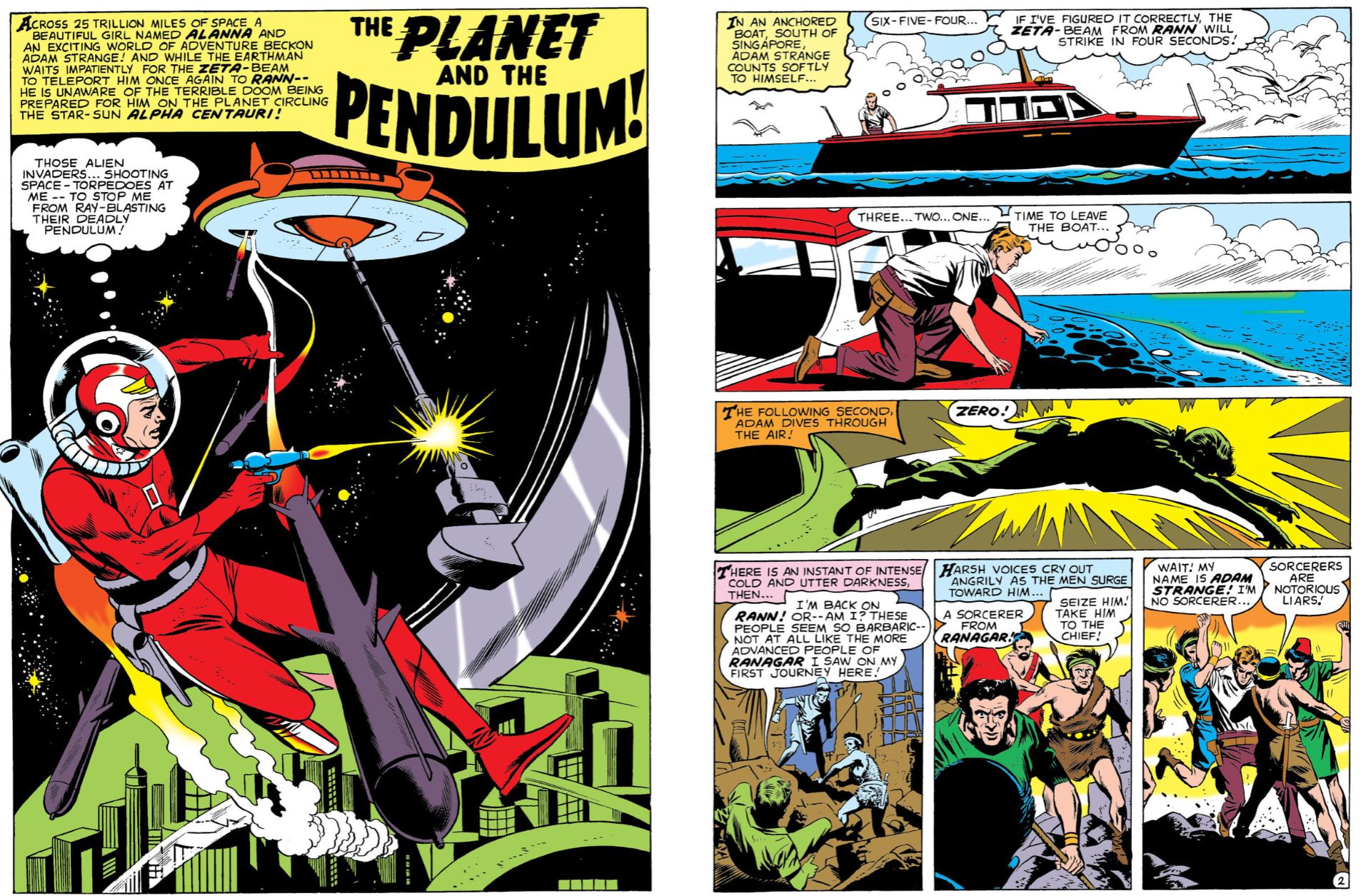
Those self-same drums are crucial in thwarting a murderous criminal mastermind intent on penning the Phantom in ‘The Magic Ivory Cage’ and the flurry of little epics ends with another outing for ‘The Girl Phantom’ who here outwits a brutal strongman whose brawn and belligerence are no match for a cool head…

Sprinkled liberally with original art, unused cover designs for never-printed issues #29 and 30, examples from foreign editions and a wealth of original art pages by Jim Aparo (from forthcoming volume The Phantom: The Complete Series: The Charlton Years: volume 1) this is another nostalgia drenched triumph: straightforward, captivating rollicking action-adventure that has always been the staple of comics fiction. If that sounds like a good time to you, this is a traditional action-fest you can’t afford to miss.
The Phantom® © 1966-1967 and 2012 King Features Syndicate, Inc. ® Hearst Holdings, Inc. Reprinted with permission. All rights reserved.

Today in 1917, master comic illustrator Reed Crandall was born, with animator/artist Pete Alvarado (Roy Rogers, Chip ‘n Dale, Scamp, Tweety & Sylvester, Road Runner, Yogi Bear, Andy Panda) arriving in 1920. Underground commix raconteur Rand Holmes was born in 1942, and Cliff Chiang in 1974.

John Carter of Mars strip artist John Coleman Burroughs died today in 1979, and in 1990 so did South African cartoon legend icon T.O. Honiball (Oom Kaspaas), followed in 2007 by cartoonist Irwin Caplan, creator of The Saturday Evening Post series Famous Last Words.

Harvey Kurtzman’s Strange Adventures


By Harvey Kurtzman, Art Spiegelman, Moebius, R. Crumb, Eric Palma, William Stout, Sergio Aragonés & Tom Luth, Tomas Bunk, Rick Geary, Dave Gibbons, Sarah Downs & various (Epic Comics/A Byron Preiss Book
ISBN: 978-0-87135-675-8 (Album HB)

This book contains Discriminatory Content included for satirical and dramatic effect.

Creative genius Harvey Kurtzman is probably the most important cartoonist of the latter half of the last century – even more so than Jules Feiffer, Jack Kirby, Joe Kubert or Will Eisner. His early triumphs in the fledgling field of comicbooks (Frontline Combat, Two-Fisted Tales and especially the groundbreaking, game-changing Mad comic book) would be enough for most creators to lean back on, but Kurtzman was also a force in newspaper strips (Flash Gordon Complete 1951-1953) and a restless innovator, commentator and social critic who kept on looking at folk and their doings. He just couldn’t stop making art or sharing his conclusions…

Kurtzman invented a whole new format when he converted the highly successful colour comic book Mad into a monochrome magazine, safely distancing the brilliant satirical publication from the fallout caused by the 1950s comics witch-hunt which eventually killed EC’s other titles. He then pursued comedy and social satire further with newsstand magazines Trump (no relation to any orange tossers!), Humbug and Help! – all the while creating challenging and powerfully effective humour strips like Little Annie Fanny (for Playboy), Nutz, Goodman Beaver, Betsy and her Buddies and many more. He died far too soon, far too young today in 1993.

Utterly unavailable in digital editions, this intriguing oddment from 1990 saw the Great Observer return to his comic roots to spoof and lambaste strip characters, classic cinema and contemporary sentiments in a series of vignettes illustrated by some of the biggest names of the day. Following a captivating introduction from ex-student Art Spiegelman, a stunning pin-up from Moebius and an overview from project coordinator Byron Preiss, the fun begins with a typically upbeat cartoon appreciation from R. Crumb: ‘Ode to Harvey Kurtzman’ which was coloured by Eric Palma, after which the Harvey-fest begins in earnest…

‘Shmegeggi of the Cave Men’ visually revives the author’s legendary Goodman Beaver, dislocating him to that mythic antediluvian land of dim brutes, hot babes in fur bikinis and marauding dinosaurs, to take a look at how little sexual politics has progressed in a million years – all exquisitely painted by cartoonist, movie artist and paleontological illustrator William Stout, after which Sergio Aragonés adds his inimitable mania to the stirring piratical shenanigans of the dashing ‘Captain Bleed’ (with striking hues supplied by Groo accomplice Tom Luth).

Western parody ‘Drums Along the Shmohawk’ is an all-Kurtzman affair as the scribe picks up his pens and felt-tips to describe how the sheriff and his stooge paid a little visit to the local tribe…

Cartoonist, fine artist and illustrator Tomas Bunk contributes a classically underground and exuberant job depicting ‘A Vampire Named Mel’ whilst arch-stylist Rick Geary helps update the most famous canine star in history with ‘Sassy, Come Home’. Limey Living Legend Dave Gibbons utilises his too-seldom-seen gift for comedy by aiding and abetting in what we Brits term “a good kicking” to the superhero genre in the outrageous romp ‘The Silver Surfer’ before the cartoon buffoonery concludes with Kurtzman and long-time associate Sarah Downs smacking a good genre while it’s down and dirty in ‘Halloween, or the Legend of Creepy Hollow’.

But wait, there’s more…

This seductive oversized hardback also has an abundant section devoted to creator biographies supplemented with pages and pages of Kurtzman’s uniquely wonderful pencil rough script pages – almost like having the stories printed twice.

Fun, philosophical fantasy and fabulous famous, artist folk: what more do you need to know – other than that SOMEone should re-release tis ASAP?
© 1990 by Byron Preiss Visual Publications Inc. Each strip © 1990 Harvey Kurtzman and the respective artist. All Rights Reserved.

Today in 1922 British comics artist (Bennie & Barley Bottom) and social redeemer Derek Chittock was born, with Belgian comics maven René Hausman (Laïyna), following in 1936 and fantasy illustrator Frank (Doctor Strange, Howard the Duck, Creepy) Brunner arriving in 1949. In 1963 manhua creator Khoo Fuk Lung (Saint) was born, with comics/screenwriter Christopher Yost coming in 1973 and Bryan Lee O’Malley (Scott Pilgrim, Seconds, Snotgirl) in 1979.

Nuts


By Gahan Wilson (Fantagraphics Books)
ISBN: 978-1-60699-454-2 (HB/Digital edition

This book includes Discriminatory Content produced in less enlightened times.

Born on February 18th 1930 and dying November 21st 2019, Gahan Allen Wilson was an illustrator, cartoonist, essayist and author who always had his eyes and heart set on the future. According to Gary Groth, the artist/author grew up reading comic strips as much as fantasy fiction.

It always showed.

The mordantly macabre, acerbically wry and surreal draughtsman tickled funnybones and twanged nerves with his darkly dry graphic confections from the 1960s onwards; contributing superb spoofs, sparklingly horrific and satirically suspenseful drawings and strips and panels as a celebrated regular contributor in such major magazines as Playboy, Collier’s, The New Yorker and others. He also wrote cutting edge science fiction for Again Dangerous Visions, The Magazine of Fantasy & Science Fiction, The Twilight Zone Magazine and Realms of Fantasy as well as contributing criticism, book and film reviews for them all.

In an extremely broad and long career he wore dozens of creative hats, even embracing the modern digital universe by creating – with Byron Preiss – his own supernatural computer game Gahan Wilson’s the Ultimate Haunted House.

When National Lampoon first began its devastatingly satirical (geez, do modern folk even recognize satire anymore?) all-out attack on the American Dream, Wilson was invited to contribute a regular strip to their comics section. His sublimely semi-autobiographical, darkly hilarious paean to lost childhood ran from 1972 and until 1981 and was collected as Nuts, another superb compilation from this publisher that you should own and share. Few people – me included – knew that during that period he also, apparently more for fun and relaxation than profit, produced his own syndicated Sunday strip feature. For two years – beginning on March 3rd 1974 – Gahan Wilson Sunday Comics appeared in a small cross-section of newspapers from Boston to Los Angeles and, as with all his work, it bucked a trend.

At a time when most cartoonists were seeking a daily continuity strip, building a readership and eking jokes out with sensible parsimony, Wilson let himself go hog-wild, generating a half-dozen or so single-shot gags every Sabbath, blending his signature weird, wild monsters, uncanny aliens and unsavoury scenes with straight family humour, animal crackers, topical themes and cynically socio-politically astute observations.

Looking at them here it’s clear to me that his intent was to have fun and make himself laugh as much or even more than his readership: capturing those moments when an idea or notion gave him pause to giggle whilst going about his day job…

I’m not going to waste time describing individual cartoons: there are just too many and despite being a fascinating snapshot of ancient life, they’re almost all still outrageously funny in the way and manner that Gary Larson’s Far Side was a scant six years later.

I will say that even whilst generating a storm of humorous, apparently unconnected one-offs, consummate professional Wilson couldn’t restrain himself and eventually the jokes achieved an underlying shape and tone with recurring motifs (clocks, beasts, wallpaper, etc), and features-within-the-feature such as The Creep and Future Funnies

Here, generally a single-page complete graphic epigram “star” a grotty little chubby homunculus dubbed The Kid. This fabulous monochrome (and occasionally colour) collection gathers that complete serial for collectors and potential addicts in a perfect package that readers will dip into over and over again.

Taking his lead from popular sickly-sweet strips about or starring little children and the brilliant but definitely not jejune Peanuts (which was populated, to all intents and purposes, with teeny-weeny neurotic middle-aged midgets), Wilson sought to do the exact opposite and attempt to access the fear, frustration, confusion and unalloyed joy of being a young, impressionable, powerless, curious and demanding…

… and magnificently succeeded.

Dense, claustrophobic, intense and trenchantly funny, these self-contained strips range from satire to slapstick to agonising irony, linking up over the years to form a fascinating catalogue of growing older in the USA: a fearfully faithful alternate view of childhood and most importantly, of how we adults choose to recall and process those distant days…

Each strip begins with the question “Remember how…?” or “One of the…” or some equally folksy enquiry before unveiling bafflement, bewilderment, night-terrors or a deeply-scarring embarrassment which haunts us till doomsday, all wrapped in a comradely band-of-brothers, shared-coping-mechanism whimsy that is both moving and quintessentially nostalgic.

Topics include the unremitting horror of germs; sudden death; being ill; inappropriate movies; forced visits; grandparents; things adults do that they don’t want you to see; unexplained noises; the butcher’s shop; accidents and rusty nails; things in closets; doctors and needles; dying pets; Santa Claus; seasonal disappointments; summer camp; sleep; bodily functions; school and lessons (two completely different things); fungus; bikes and toys; haircuts; comic books; deaths of relatives; hot weather; candy; overhearing things you shouldn’t; stranger danger; hobby-kits and glue; daydreaming; babies and so many other incomprehensible daily pitfalls on the treacherous path to maturity…

Peppered also with full page, hilariously annotated diagrams of such places of enduring childhood fascination as ‘The Alley’, ‘The Kit for Camp Tall Lone Tree’, ‘Mr. Schultz’s Cigar Store’, ‘The Movie Theater Seat’, ‘Table Set Up For Making Models’, ‘The Doctor’s Waiting Room’, ‘The Closet’, ‘The Sick Bed’ and ‘The Private Drawer’, this glorious procession also covers occasions of heartbreaking poignancy and those stunning, blue moon moments of serendipity and triumph when everything is oh-so-briefly perfect…

Complete with a 3-D strip and ‘Nuts to You’ – a comprehensive appreciation and history by Gary Groth – this funny, sad, chilling and sublimely true picture-passport to growing up is unmissable cartoon gold.
© Fantagraphics Books. All Nuts strips © 2011 Gahan Wilson. All rights reserved.

Today in 1917, Golden Age writer/editor Ruth Roche was born, followed by forgotten genius Joe Maneely in 1926, Gahan Wilson in 1930, Johnny Hart in 1931 and both comic book artist Doug Mahnke and cartoonist Mark Bodé in 1963.

We lost Belgian megastar and Marcinelle School founder Willy Maltaite (“Will”) in 2000 and lifelong multi-style achiever Bob Oksner in 2007.

Comics wise, UK standby Radio Fun (published since 1938) folded today in 1961 and Power Comic Fantastic launched today in 1967.

Daredevil Epic Collection volume 8: To Dare the Devil (1978-1981)


By Roger McKenzie, Frank Miller, David Micheline, Jo Duffy, Michael Fleischer, Mike W. Barr, Frank Robbins, Gene Colan, Steve Ditko, Klaus Janson, Frank Springer, Josef Rubinstein & various (MARVEL)
ISBN: 978-1-3029-60537 (TPB/Digital edition)

This book contains Discriminatory Content included for dramatic effect.

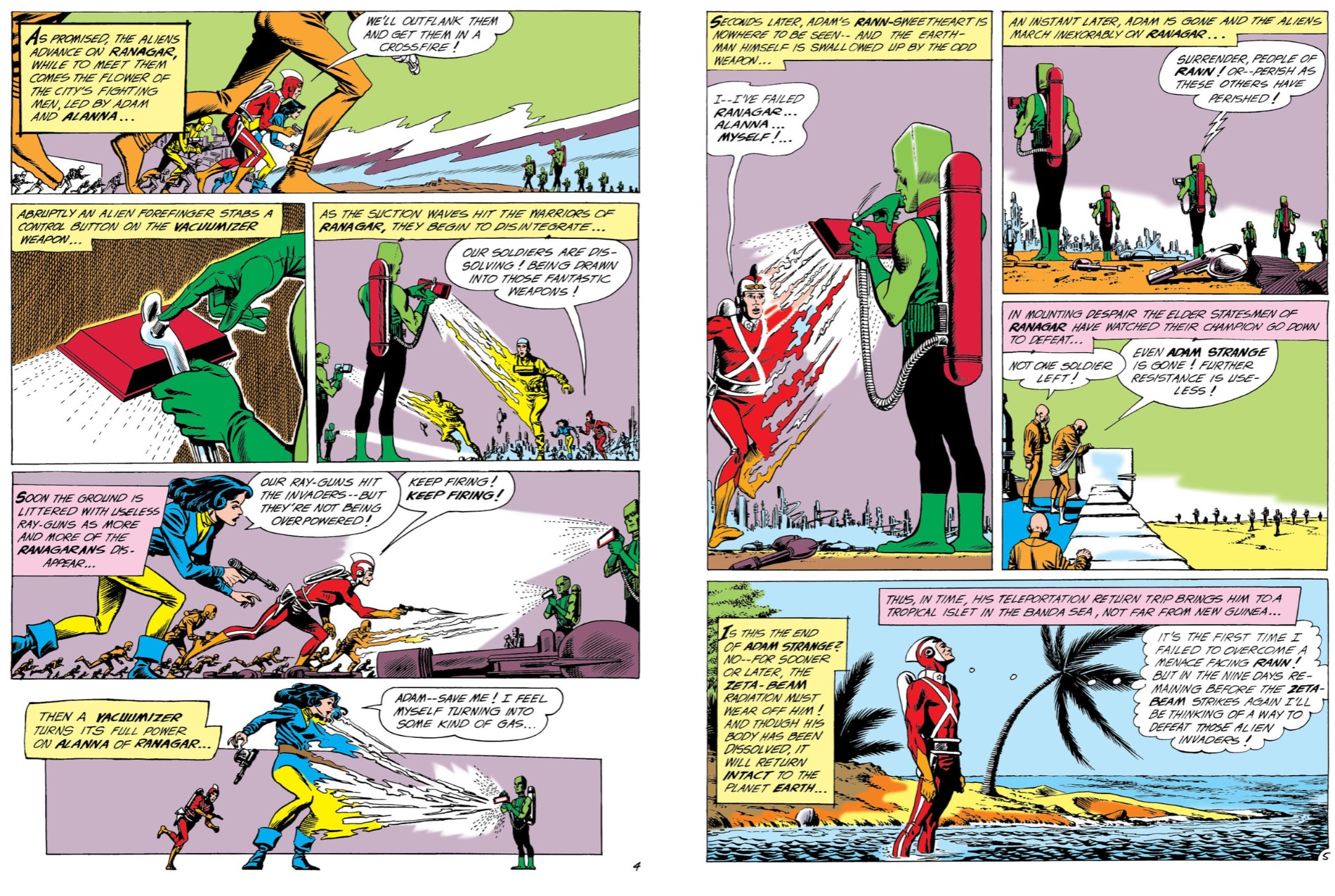
Matt Murdock is a blind lawyer whose remaining senses hyper-compensate, making him an astonishing acrobat, formidable fighter and living lie-detector. He also developed a kind of biological radar, granting him complete awareness of his immediate environment. A second-string hero for much of his early career, Daredevil was nonetheless a striking and popular one, due mostly to the captivatingly humanistic art of Gene Colan. DD fought gangsters, super-villains and even the occasional monster or alien invasion, quipping his way through life and life-threatening combat, utterly unlike the grim, moody, quasi-religious metaphor of justice and retribution that he became.

Under the auspices of Jim Shooter, Roger McKenzie and finally Frank Miller & Klaus Janson, the character transformed into a grimly modern figure, but here we find him navigating choppy relationship waters. After a disastrous on-again, off-again relationship with his secretary Karen Page, Murdock took up with Russian émigré Natasha Romanoff, infamous and notorious former soviet spy Black Widow, but their similarities and incompatibilities led to her leaving and Matt taking up with flighty, fun-loving trouble-magnet heiress Heather Glenn

Spanning cover-dates November 1978 to October 1981, this crucial compilation comprises relevant material from Daredevil #155-176, plus spin-off material generated for a readership that simply could not get enough of their newly darkened avenging devil and his secret paramour, as first seen in What If? #28 & Bizarre Adventures #28. The visual tumult and tension begin sans any delay or debate…

Heroic endeavours resume with writer Roger McKenzie describing the repercussions of a massive ambush on the hero by his worst enemies. Guest-starring Black Widow, Hercules and The Avengers, aftermath episode ‘The Man Without Fear?’ is illustrated by Frank Robbins & Frank Springer, wherein a brain-damaged Murdock repeatedly attacks innocent bystanders and his allies before collapsing. Keenly observing, macabre mystery menace Death-Stalker spots an opportunity and follows the hospitalised hero into #156’s ‘Ring of Death!’ (McKenzie, Colan & Klaus Janson). As DD undergoes surgery and suffers deadly delusions of fighting himself, the teleporting terror with a death-touch seeks to end the scarlet swashbuckler’s meddling forever, but finds the Avengers almost too much to handle…

The assault ends in DD #157’s ‘The Ungrateful Dead’, with Mary Jo Duffy scripting from McKenzie’s plot. Now, after frustrating the vanishing villain, Matt is cruelly kidnapped by a new squad of the Ani-Men (Ape-Man, Cat-Man & Bird-Man) all leading to Miller’s debut as penciller in #158’s ‘A Grave Mistake!’ With McKenzie writing and Janson inking, all plot threads regarding Death-Stalker spectacularly conclude as the monster gloatingly shares his true origins and reasons for haunting the Sightless Swashbuckler for so long. As always, Villain underestimates Hero and the stunning final fight in a graveyard became one of the most iconic duels in superhero history…

From this point on, Daredevil was increasingly repositioned as an outcast urban defender and compulsive vengeance-taker: a tortured demon dipped in blood. The character makeover was carried on initially by McKenzie from his predecessor Jim Shooter, and fully manifested in collaboration with Miller until the latter fully took control to deliver audacious, shocking, groundbreakingly compelling dark delights, making Daredevil one of comics’ most momentous, unmissable, “must-read” series.

That revitalisation resumes with ‘Marked for Murder!’ (McKenzie, Miller & Janson) wherein infallible assassin-broker Eric Slaughter comes out of retirement for a very special hit on the hero of Hell’s Kitchen. Meanwhile elsewhere, veteran Daily Bugle reporter Ben Urich works a nagging hunch: slowly piecing together dusty news snippets that indicate a certain sight-impaired attorney might be far more than he seems……

The spectacular showdown between the Crimson Crimebuster and Slaughter’s hit-man army inevitably compels his covert client to eventually do his own dirty work: brutally ambushing and abducting former flame Natasha Romanoff, aka The Black Widow…

After a single-page fact-feature on ‘Daredevil’s Billy Club!’, the saga continues in #160 with our hero having no choice but to place himself ‘In the Hands of Bullseye!’ – a stratagem culminating in a devastating duel and shocking defeat for the villain in cataclysmic conclusion ‘To Dare the Devil!’

Next issue offered a fill-in tale by Michael Fleisher & Steve Ditko wherein another radiation accident impairs our hero’s abilities and induces amnesia just as a figure from his father’s pugilistic past resurfaces. Becoming a boxer for crooked promoter Mr. Hyle, Murdock unknowingly relives his murdered dad’s last days in ‘Requiem for a Pug!’… until his own memories return and justice is served…

Stunning David & Goliath action belatedly comes in #163 as the merely mortal Man Without Fear battles The Incredible Hulk in ‘Blind Alley’ (McKenzie & Miller, inked by Josef Rubenstein & Janson) wherein Murdock’s innate compassion for hounded Bruce Banner inadvertently endangers Manhattan and triggers a desperate, bone-breaking, but ultimately doomed attempt to save his beloved city…

In #164 McKenzie, Miller & Janson deliver an evocative ‘Exposé’, retelling the origin saga as meticulous, dogged Urich confronts the hospitalised hero with inescapable conclusions from his diligent research and a turning point is reached…

The landmark tale is followed by accompanied by Miller’s unused cover for Ditko’s fill-in yarn, and precedes a mean-&-moody modern makeover for a moribund and over-exposed Spider-Man villain. DD #165 finds the Scarlet Swashbuckler in the ‘Arms of the Octopus’ when Murdock’s millionaire girlfriend Heather is kidnapped by Dr. Otto Octavius. Her company can – and do – rebuild his mechanical tentacles with Adamantium, but “Doc Ock” stupidly underestimates both his hostage and the seemingly powerless Man Without Fear…

A long-running plot thread of Matt’s best pal Foggy Nelson’s oft-delayed wedding finally culminates with some much-needed comedy in #166’s ‘Till Death Do Us Part!’, with true tragedy coming along too as old enemy Gladiator has a breakdown and kidnaps his parole officer. With visions of Roman arenas driving him, tormented killer Melvin Potter only needs to see Daredevil to go completely over the top…

David Michelinie wrote #167 for Miller & Janson, with a cruelly wronged employee of tech company the Cord Conglomerate stealing super-armour to become ‘…The Mauler!’ and exact personal justice. Constantly drawn into the conflict, DD finds his sense of justice and respect for the law at odds when another avoidable tragedy results…

The tale is backed up by an info feature revealing the ‘Dark Secrets’ of DD’s everyday life before segueing neatly into the story that changed everything.

With Daredevil #168 Miller took over the writing and with Janson’s art contributions increasing in each issue, rewired the history of Matt Murdock to open an era of noir-tinged, pulp-fuelled, Eisner-inspired innovation. It begins when Daredevil encounters a new bounty hunter in town which prompts recall of lost college-days first love. Back then, diplomat’s daughter Elektra Natchios shared his secrets – until her father was kidnapped and murdered before her eyes, partly due to Matt’s hasty actions. She left him and vanished, apparently becoming a ninja assassin, but is now tearing up the town hunting Eric Slaughter. Matt cannot help but get involved…

When Daredevil last defeated Bullseye, the psycho-killer was diagnosed with a brain tumour, and in #169 escapes from hospital to enact another murder spree. He is deep in a delusional state where everyone he sees are horn-headed scarlet-draped ‘Devils’. A frenetic chase and brutal battle results in countless civilian casualties and great anxiety as Daredevil has a chance to let the manic die… but doesn’t.

Yet another landmark resurrection of a tired villain begins in DD #170 as Miller & Janson decree ‘The Kingpin Must Die’. The former crimelord of New York had faded into serene retirement in Japan by impassioned request of his wife Vanessa, until this triptych of terror sees him return, more powerful and resourceful than ever. It all begins when the Devil of Hell’s Kitchen hears rumours the syndicate that replaced Wilson Fisk are trying to kill their old boss. Apparently, he has offered all his old records to the Feds…

When Vanessa hires Nelson & Murdock to broker the deal, all hell breaks loose, assassins attack and Mrs Fisk goes missing. Further complicating matters, having survived brain surgery, Bullseye now offers his services to the syndicate, mercenary killer Elektra senses a big business opportunity and a murderously resolute Kingpin sneaks back into the country resolved to save his Vanessa at any cost…

The title at last returned to monthly schedule with #171 as the city erupted into sporadic violence with civilians caught in the crossfire. DD dons a disguise and goes undercover but is soon ‘In the Kingpin’s Clutches’, and seemingly sent to a watery grave prior to Fisk gambling and losing everything.

The saga ends in all-out ‘Gangwar!’ as, with Vanessa lost and presumed dead, Wilson Fisk destroys the in situ Syndicate and takes back control of New York’s underworld. At least Daredevil scores a small-yet-toxic victory by apprehending the Kingpin’s assassin, all the while aware that every death since Bullseye’s operation has been because Murdock was not strong enough to let the monster die…

… And deep in the bowels of the city, an amnesiac woman wanders, a future trigger for much death and destruction to come…

With the city increasingly awash in mobsters, monsters, assassins and deviants, Daredevil 173 returns to the difficult, painful redemption of mentally-ill former foe The Gladiator. Having suffered an emotional crisis Melvin Potter prays his violent old life is over, but when a woman is brutalised in the streets, she identifies the anxious supervillain as her attacker. Murdock begins a stout defence of the ‘Lady Killer’, but despite his truth-sensing abilities, even his confidence takes a battering when his own assistant Becky Blake reveals Potter is the man who put her in a wheelchair years previously. Shocked and betrayed on all sides, Matt lets DD take charge and exposes a world of horror and abuse while tracking down a cunning, opportunistic human beast who tortures women just for kicks…

Elektra co-stars in #174 as her former master The Jonin demands ‘The Assassination of Matt Murdock’, introducing resurrecting zombie ninja cult The Hand just when the Potter trial is going badly and faithful partner Foggy Nelson has abandoned him. The cult’s expansion into America is lethally and effectively countered by Elektra, but when Daredevil joins the fight he is wounded and loses his greatest supersense, leaving him to depend on her and Melvin reluctantly returned to his Gladiator persona…

Now targeted by immortal super ninja Kirigi, Elektra goes after Jonin in ‘Gantlet’ and leaves DD to his own devices prior to ‘Hunters’, showing severely impaired Matt hunting for the old guy who first taught him to use his super senses. He rattles his old foes and street sources so badly that even Z-grade thugs Turk and Grotto are scared enough to steal a super-armour suit and settle with the Scarlet Swashbuckler for good…

To Be Continued…

Here, however, the events sparked a number of ancillary delights represented here by What If? #28’s ‘Matt Murdock, Agent of S.H.I.E.L.D.’ (by Mike W. Barr, Miller & Janson, and cover-dated August 1981), seeing what might have been had Anthony Stark and Nick Fury been nearby when young Matt was hit by that senses-altering radioactive cannister. That’s followed by spectacular monochrome prequel ‘Elektra’, crafted by Miller for Bizarre Adventures #28 (October 1981) with the hired killer going off-book after she finds out an unsavoury truth about her client.

Supplementing throughout with the covers by Colan, Springer, Janson, Rubinstein, Al Milgrom, Miller, Ditko, Bob McLeod, George Roussos and Bob Larkin, this roster depicting the resurgent rise in comics form is further bedecked and bedazzled with contemporary house ads; the Marvel Bullpen Bulletins page heralding Miller’s debut; original art and Miller’s full Daredevil character bible, written in 1980 as he prepared to take over the writing. Also on view are Miller & Janson’s pages from Marvel Comics 20th Anniversary Calendar 1981 (June) and their Spider-Man vs DD plate from Marvel Team-Up Portfolio One. Those are supplemented by Miller covers & frontispieces for Daredevil Visionaries: Frank Miller volume 1 & 2 (with Steve Buccellato) before closing with M&J’s iconic Amazing Heroes #4 cover from September 1981.

As the decade closed, these gritty tales set the scene for truly mature forthcoming dramas, promising the true potential of Daredevil was finally in reach. Their narrative energy and exuberant excitement are dashing delights no action fan will care to miss.

… And the next volume heads full on into darker shadows, the grimmest of territory and the breaking of many more boundaries…
© MARVEL 2025.

In 1958 horror artist John Totleben was born, as was Italy’s Antonio Serra (Nathan Never) in 1963, Tim Bradstreet in 1967 and Warren Ellis one year later.

We lost letterer/colourist/comics artist/animator Frank Engli in 1977 but we can still enjoy Popeye, Betty Boop, Terry and the Pirates, Male Call, Steve Canyon, Scorchy Smith and his own creations On the Wing and Rocky the Stone Age Kid. Don’t you want to go look him up now?

In 1963 UK standby Knockout finally lay down after 24 years and in1980 Nutty launched with the debut of Bananaman. And in 2017 dutchman designer Dick Bruna died, having introduced us all to his bunny star Miffy way back in 1955.

Shorts


By Milo Manara, translated by Tom Leighton (Catalan Communications)
ISBN: 978-087416-060-4 (HB)

For some folks the graphic novel under review here will be unacceptably lewd, even “dirty”. If that’s you, please stop here and come back tomorrow when there will something you’ll approve of but which will surely offend somebody else.

It’s another amatory Final Countdown moment and possibly a last chance to impress that significant one this year so let’s maturely and contemplatively review a rather quirky, philosophical – and typically unattainable – tome by one of the world’s greatest graphic eroticists. Originally translated into English from the French edition Courts Métrages by Catalan in 1989, it’s another inexplicably Out-of-Print graphic gem desperately in need of an English language release.

Maurilio “Milo” Manara (born September 12th 1945) has always been a puckish intellectual and whimsical craftsman with a dazzling array of artistic skills ranging from architecture, product design, filmmaking & animation, painting and of course an elegant, refined, clear-clean line style with pen and ink. He is best known for his wry, controversial and generally sexually explicit material – although that’s more an indicator of our comics market than any artistic obsession. He’s even drawn the X-Men – but mostly the women…

After studying painting and architecture he began crafting comics for money in 1969, beginning with Fumetti Neri series Genius, and thereafter working on the magazine Terror. His life’s goal came in 1971 as he began his “adult” career (see what I did there?) illustrating Francisco Rubino’s Jolanda de Almaviva which led, four years later, to his first major work and success. Originally released as Lo Scimmiotto, The Ape was a bold, bawdy reworking of the Chinese tales of the Monkey King.

By the end of the seventies he was working for the vast Franco-Belgian market where he is still regarded as an A-list creator. It was while creating material for Charlie Mensuel, Pilote and L’Écho des savanes that he created his signature series HP and Giuseppe Bergman for A Suivre.

As the 80’s staggered to a close he wrote and drew, in his characteristic blend of raunchy burlesque and saucy slapstick, the eccentric selection of satirical, baroque tales gathered here as a barbed and penetrating assault on modern media and bastardized popular cultural, which were increasingly being used to cloak capitalist intrusions and commercial seductions.

In these absurdist, voyeuristic, fourth-wall breaking, intellectually-challenging, exceedingly sexy monochrome vignettes, Manara highlights the diminishing divisions between Art and Selling, with tales intended to make your head throb as much as your nethers.

The sensorial incursion commences with ‘Commercial’, as a typical couch-potato is inexorably drawn into the Casanovan drama he’s watching. However, the drama’s TV-contained characters are impeded in their roles by the intrusive presence of the sponsor’s unsavoury product: adult diapers…

All of these yarns are visually influenced by iconography of the Great Arts, like Luciano Pavarotti and Fellini, and ‘Blue Period’ details the ruthless nature of commercialism as a photographic director goes to extraordinary lengths to reproduce a Picasso painting for an album cover. Sadly, under normal conditions, the human body just don’t bend that way…

‘X3’ offers to reveal your sex-portrait with a brief questionnaire survey carried out by aliens well-versed in the techniques of abduction and probing whilst ‘John Lennon’ delightfully describes what happened after the master musician got to Heaven before ‘Acherontia Atropos’ plays a very dark prank on a cameraman who signs up to film a genuine snuff-movie…

‘Untitled’ returns to the role of unsatisfied Casanova as the legendary lover suffers an unquantifiable loss and surreal challenge to his life-style, whilst ‘The Last Tragic Day of Gori Bau & the Callipygian Sister’ sinisterly shows the dark side of “underage” explorations and pubescent curiosity when a trio of kids invoke feelings and powers they are not equipped to cope with. This comes from a far less sensitive time and might well be the most emotionally triggering tale here, so please read with care and your eyes and conscience open…

Our allegorical ambuscade concludes with the calamitously comedic surreal science fiction yarn ‘And’ as an Earthman and an Arcturian escape from a dying planet thanks to the power of a book which writes itself and predicts the future. If only the incredible chronicle had a spell-checker too…

Delineated in Manara’s beautifully rendered, lavish linework this explicit, daringly deep and sexually charged selection makes intriguing points of social and creative commentary in an utterly seductive and fascinating manner, but even at its most raunchy, funny and challenging this tome is first and foremost a work of sublime pictorial entertainment desperately worthy of a new edition.
© 1989 Milo Manara/Staletti, agent, Paris. English Language edition © 1989 Catalan Communications. All rights reserved.

Today in 1877 strip cartoonist SidneyThe GumpsSmith was born as was Bud Blake (Tiger) in 1918 and letterer Danny Crespi in 1926. We lost The New Yorker stalwart Gluyas Williams in 1982 and the astounding Ron Embleton (Wrath of the Gods, Stingray, Biggles, Look and Learn, World of Wonder, Oh Wicked Wanda, those images in the closing credits of Captain Scarlet and the Mysterons).

The day also saw the beginning of Hal Foster’s Prince Valiant in 1937, Leo Baxendale’s The Bash Street Kids in The Beano in 1954 and the last Peanuts strip by Charles M. Schulz in 2000.

Dc Finest: Batman – The Case of the Chemical Syndicate


By Bob Kane, Bill Finger, Gardner F. Fox, Whitney Ellsworth, Sheldon Moldoff, Jerry Robinson, George Roussos & various (DC Comics)
ISBN: 978-1-79950-670-6 (TPB/Digital edition)

This book includes Discriminatory Content produced in less enlightened times.

Although already much reprinted, archived and curated, here’s another sound and stunning collection of the Gotham Guardian’s earliest exploits in original chronological order, forgoing glossy, high-definition paper and reproduction techniques in favour of a newsprint-adjacent feel and the same flat, bright-yet-muted colour palette which graced the originals. There’s no fuss, fiddle or Foreword, and the book steams straight into the meat of the matter with the accumulated first two years of material featuring the masked mystery-man, as well as all those stunning covers (by Kane, Robinson, Roussos, Fred Gurdineer, Creig Flessel, Jack Burnley, Fred Ray and The Strauss Engraving Company). These span Detective Comics #27-51; Batman #1-5; the Dynamic Duo’s endeavours in New York World’s Fair Comics 1940 and World’s Best Comics #1, cumulatively encompassing every groundbreaking escapade from May 1939 to May 1941.

As Evri Fule Kno, Detective Comics #27 featured the Darknight Detective’s debut in the ‘Case of the Chemical Syndicate!’ by Bob Kane and as yet still anonymous close collaborator/co-originator Bill Finger. A spartan, understated yarn introduced dilettante playboy criminologist Bruce Wayne, drawn into a straightforward crime-caper as a cabal of industrialists were successively murdered. The killings stop when an eerie figure dubbed “The Bat-Man” intrudes on Police Commissioner Gordon’s stalled investigation to ruthlessly expose and deal with the hidden killer.

The following issue saw our fugitive vigilante return to crush ‘Frenchy Blake’s Jewel Gang’ before encountering his very first psychopathic killer/returning villain in Detective #29. Gardner Fox scripted these next few adventures beginning with ‘The Batman Meets Doctor Death’, in a deadly duel of wits with deranged, greedy general practitioner Karl Hellfern and his assorted instruments of murder: the most destructive and diabolical of which was sinister “Asiatic” manservant Jabah…

This is my cue to again remind all interested parties that these stories were created in far less tolerant times with numerous narrative shortcuts and institutionalised social certainties expressed in all media that most today will find offensive. If that’s a deal-breaker, please pass on this book… and most literature, pop songs and films created before the 1960s…

Confident of their new villain’s potential, Kane, Fox and inker Sheldon Mayer encored the mad medic for the next instalment and ‘The Return of Doctor Death’, before Fox & Finger co-scripted a 2-part shocker debuting the very first bat-plane, Bruce’s girlfriend Julie Madison and undead horror The Monk in expansive, globe-girdling spooky saga ‘Batman Versus the Vampire (part one)’. It all concluded in part two with an epic chase across Eastern Europe and spectacular climax in a monster-filled castle in #32.

DC #33 featured Fox & Kane’s ‘The Batman Wars Against the Dirigible of Doom’: a blockbusting disaster thriller which just casually slips in the secret origin of the grim avenger, as mere prelude to intoxicating air-pirate action, before Euro-trash dastard Duc D’Orterre finds his uncanny SCIENCE! and unsavoury appetites no match for the mighty Batman in ‘Peril in Paris’. Bill Finger returned as lead scripter in #35, pitting the Cowled Crusader against crazed cultists murdering everyone who had seen their sacred jewel in ‘The Case of the Ruby Idol’ … although the many deaths were actually caused by a far more prosaic villain. Inked by new kid Jerry Robinson, grotesque crime genius ‘Professor Hugo Strange’ debuted with his murderous manmade fog and lightning machine in #36, after which all-pervasive enemy agents lodged in ‘The Screaming House’ prove no match for a vengeful Masked Manhunter in #37.

Detective Comics #38 (April 1940) changed the landscape of comic books forever with the introduction of ‘Robin, The Boy Wonder’ as child trapeze artist Dick Grayson – whose parents are murdered before his eyes – thereafter joins Batman in a lifelong quest after bringing to justice mobster mad dog Boss Zucco

With the Flying Graysons’ killers captured, all-out action continued in #39 with Finger, Kane & Robinson’s ‘The Horde of the Green Dragon’ – “oriental” Tong killers in Chinatown – Batman #1 (Spring 1940) opened proceedings with a recycled origin culled from portions of Detective #33 & 34. ‘The Legend of the Batman – Who He Is and How He Came to Be!’ by Fox, Kane & Moldoff delivers in two perfect pages what is still the best ever origin of the character. ‘The Joker’ (Finger, Kane & Robinson – who also produced all the remaining tales in this astonishing premiere issue) then launches the greatest villain in DC’s pantheon via a macabre tale of extortion and wilful wanton murder.

‘Professor Hugo Strange and the Monsters’ follows as an old adversary returns, unleashing laboratory-grown hyperthyroid horrors to rampage through the terrified city, before ‘The Cat’ – who later added the suffix “Woman” to her name to avoid any possible doubt or confusion – plies her felonious trade of jewel theft aboard the wrong cruise-liner, thereby falling foul for the first time of the dashing Dynamic Duo. Then comics end with the ‘The Joker Returns’ as the sinister clown breaks jail to resume his terrifying campaign of murder for fun and profit before “dying” in mortal combat with the Gotham Guardians. pulse pounding premier package fun folds with Whitney Elsworth’s text piece ‘Meet the Artist’ and a superb Kane pin-up (originally the back cover of that premier issue) of the Dynamic Duo.

Tense suspense and eerie evil is also on show in DC #40 as ‘The Murders of Clayface’ sees the Dynamic Duo solving a string of murders on a film set which almost sees Julie Madison the latest victim of a monstrous movie maniac…

Batman & Robin solve the baffling mystery of a kidnapped pupil in Detective #41’s ‘The Masked Menace of the Boys’ School’ before enjoying a busman’s holiday in ‘Batman and Robin Visit the 1940 New York World’s Fair’ as seen in the second New York World’s Fair Comics. Here Finger, Kane & Roussos follow the vacationing troubleshooters as they track down a maniac mastermind with a metal-dissolving ray, before Detective Comics #42 again finds our heroes ending another murderous maniac’s rampage in ‘The Case of the Prophetic Pictures!’

The heroes’ second solo outing produced another quartet of comics classics in Batman #2 (Summer 1940). It begins with ‘Joker Meets Cat-Woman’ (Finger, Kane, Robinson & new find George Roussos) wherein svelte thief, homicidal jester and a crime syndicate all tussle for the same treasure, with our Caped Crusaders caught in the middle. ‘Wolf, the Crime Master’ then offers a fascinating take on the classic tragedy of Jekyll & Hyde prior to an insidious and ingenious mystery in ‘The Case of the Clubfoot Murderers’. Ultimately Batman & Robin confront uncanny savages and ruthless showbiz promoters in poignant monster yarn ‘The Case of the Missing Link’.

By now an unparalleled hit, Batman stories never rested on their laurels. The creators always sought to expand their parameters, as Detective #43 saw our heroes clash with a corrupt mayor in #43’s ‘The Case of the City of Terror!’ before rather jumping the shark with #44’s nightmarish fantasy of giants and goblins ‘The Land Behind the Light!’, in advance of returning to bizarre baroque basics in #45’s horrific Joker jape ‘The Case of the Laughing Death!’ wherein the Harlequin of Hate undertakes a campaign of macabre murder against everyone who has ever defied or offended him…

Batman #3 (Fall 1940) has Finger, Kane, Robinson & Roussos rise to even greater heights, beginning with ‘The Strange Case of the Diabolical Puppet Master’: an eerie episode of uncanny mesmerism and infamous espionage…

A grisly scheme unfolds next as innocent citizens are mysteriously transformed into specimens of horror, and artworks destroyed by the spiteful commands of ‘The Ugliest Man in the World’ before ‘The Crime School for Boys!’ registers Robin, allowing infiltration of a gang who have a cruel and cunning recruitment plan for dead-end kids, whilst ‘The Batman vs. the Cat-Woman’ lastly reveals the larcenous lady in well over her head when she steals for – and from – the wrong people…

The issue also offered a worthy Special Feature from Ellsworth & Burnley as ‘The Batman Says’ presents an illustrated prose Law & Order pep-talk…

Plunging right into perilous procedures, Detective #46 (Kane, Robinson & Roussos) features the return of Batman’s most formidable fringe scientific adversary as our heroes must counteract the awesome effects of ‘Professor Strange’s Fear Dust’, after which #47 delivers drama on a more human scale by proving ‘Money Can’t Buy Happiness’. This action-packed homily of parental expectation and the folly of greed leads into Detective Comics #48, finding the lads defending America’s bullion reserves in ‘The Secret Cavern’, and is followed by Batman #4 (Winter 1941) which opens with a spiffy catch-all visual resume.

Then its all-out razzle-dazzle as the Gotham Guardians visit and vanquish ‘The Joker’s Crime Circus’, prior to pulling the plug on the piratical plundering of ‘Blackbeard’s Crew and the Yacht Society!’. Immediately after, ‘Public Enemy No.1’ tells a gangster fable in the manner of Jimmy Cagney’s Angels With Dirty Faces, before ‘Victory For the Dynamic Duo!’ involves the pair in the treacherous world of sports gambling.

Detective Comics #49 (March 1941), finds them confronting another old foe when ‘Clayface Walks Again!’ with the deranged actor resuming his passion for murder by re-attempting to kill Bruce Wayne’s old girlfriend Julie before World’s Best Comics #1 (Spring 1941 and destined to become World’s Finest Comics with its second issue) offers an eerie murder mystery concerning ‘The Witch and the Manuscript of Doom!’.

DC #50 pits Batman & Robin against acrobatic burglars in ‘The Case of the Three Devils’, whilst sordid human scaled wickedness informs #51’s ‘The Case of the Mystery Carnival!’: a mood-soaked crimebusting set-piece featuring fairly run-of-the mill thugs, but serving as a perfect palate-cleansers for big bold Batman #5 (Spring 1941). Once again, The Joker plays lead villain in ‘The Riddle of the Missing Card!’, before the heroes prove their versatility by solving a quixotic crime in Fairy Land via ‘Book of Enchantment’.

‘The Case of the Honest Crook!’ follows: one of the key stories of Batman’s early canon. When a mugger steals only $6 from a victim, leaving much more behind, his trail leads to a vicious gang who almost beat Robin to death. The vengeance-crazed Dark Knight goes on a rampage of terrible violence that still resonates in the character to this day. The last story from Batman #5 – ‘Crime does Not Pay’ – once again deals with kids going bad and their potential for redemption, and surely that’s what heroic mythmaking is all about?

Kane, Robinson and their compatriots created a visual iconography which carried Batman well beyond his allotted lifespan until later creators could re-invigorate the concept. They added a new dimension to children’s reading… and their work is still captivatingly accessible. Moreover, these early stories laced with Fingers’ mood-soaked macabre madness set the standard for comic superheroes. Whatever you like now, you owe it to these stories. Superman gave us the idea, but inspired and inspirational writers like Finger & Fox refined and defined the meta-structure of the costumed crime-fighter. Where the Man of Steel was as much Social Force and juvenile wish-fulfilment as hero, Batman and Robin did what we ordinary mortals wanted to do most: teach bad people the lessons they richly deserved…

These are tales of elemental power and joyful exuberance, brimming with deep mood and addictive action. Comic book heroics simply don’t come any better.
© 1939, 1940, 1941, 2025 DC Comics. All Rights Reserved.

Today in 1914 All American editor Ted Udall was born, but we had to wait until 1953 for Richard Bruning, 1956 for animator, director and funnybook renaissance man Bob Camp and 1958 for astounding letterer and sublime illustrator Kevin Nowlan as well as Archie Comics writer/editor Paul Castiglia in 1966.

In the meantime, UK weekly mainstay The Topper began its 37-year run today in 1953, thereby launching Davey Law’s Beryl the Peril unto an unsuspecting world.

Marvel Team-Up Omnibus volume 1


By Roy Thomas, Gerry Conway, Len Wein, Steve Gerber, Ross Andru, Gil Kane, Jim Mooney, Sal Buscema, Don Heck, Mike Esposito, Frank Giacoia, Steve Mitchell, Frank Bolle, Don Perlin, Sal Trapani, Wayne Howard, Dave Hunt, Vince Colletta & various (MARVEL)
ISBN: 978-1-3029-6699-7 (HB/Digital edition)

This book includes Discriminatory Content produced in less enlightened times.

Inspiration isn’t everything. In fact, as Marvel slowly grew to a position of market dominance in the wake of losing their two most innovative and inspirational creators, they did so less by experimentation and more by expanding proven concepts and properties. The only real exception to this was the assembly line creation of horror and horror-hero titles in response to the industry down-turn in super-hero sales – a move expedited by a rapid revision in the wordings of the increasingly ineffectual Comics Code Authority rules.

The concept of team-up books – an established star pairing or battling (usually both) with less well-selling company characters – was not new when Marvel decided to award their most popular hero the lion’s share of this new title, but they wisely left their options open by allocating an occasional substitute lead in the Human Torch. In those long-lost days editors were acutely conscious of potential over-exposure – and since superheroes were actually in a decline they may well have been right.

Marvel Team-Up was the second regular Spider-Man title (abortive companion title Spectacular Spider-Man was created for the magazine market in 1968 but died after two issues). MTU launched at the end of 1971 and went from strength to strength, proving the time had finally come for expansion and a concentration on uncomplicated action over sub-plots…

This engaging hardback and/or eBook compilation gathers the first 30 issues of Marvel Team-Up (spanning cover-dates March 1972 to February 1975) and includes crossover fun from Daredevil (and the Black Widow) #103, plus double length larks from Giant-Size Super Heroes #1 and Giant-Size Spider-Man #1-3. As well as a monolithic assortment of nostalgic visual treats at the back, this mammoth tome is dotted throughout with editorial and letters pages (from ‘Team-Up’ to ‘Mail it to Team-Up’) and also includes recycled Introductions from previous Marvel Masterworks editions (namely Gerry Conway’s ‘Behold: An Introduction’ and Roy Thomas’ ‘A Long, Loose Leash’ and ‘Full Credit – or Blame’) plus other contemporary editorial announcements as seen in each original issue, just to enhance overall historical experience…

Marvel Team-Up #1was crafted by Roy Thomas, Ross Andru & Mike Esposito as a mutual old enemy reared his gritty head in charming seasonal saga ‘Have Yourself a Sandman Little Christmas!’. A light-heated romp full of Christmas cheer, rambunctious action and seasonal sentiment, the story set the tone for all epics to follow. Merry Marvelite Maximii can award themselves a point for remembering which martial arts/TV hero debuted in this issue, but folk with lives can simply take my word that it was Iron Fist’s sometimes-squeeze Misty Knight

Gerry Conway assumed the writer’s role and Jim Mooney the inks for ‘And Spidey Makes Four!’ in the succeeding issue as our hot and sticky heroes then take on and trounce the Frightful Four and Negative Zone bogeyman Annihilus before without pause going after Morbius the Living Vampire in #3’s ‘The Power to Purge!’ (as inked by Frank Giacoia). The new horror-star was still acting the villain in MTU #4 as the Torch was replaced by most of Marvel’s sole mutant team (The Beast having gone all hairy – and solo) in ‘And Then… the X-Men!’

Inked by Steve Mitchell, this boldly enthralling thriller was illustrated by magnificent Gil Kane at the top of his form. Kane became a semi-regular penciller, and his dynamic style and extreme-action anatomy lifted many pedestrian tales such as #5’s ‘A Passion of the Mind!’ (Conway script & Esposito inks), pitting Spidey and The Vision against manipulative mesmeric Puppet Master and robotic assassin the Monstroid. The bad guy again carried over to the next issue and joined by the Mad Thinker in ‘…As Those Who Will Not See!’ pitted the wallcrawler and The Thing against cerebral scoundrels in a cataclysmic battle no Fights ‘n’ Tights fan could be unmoved by…

MTU #7’s ‘A Hitch in Time!’ was produced by Conway, Andru & Mooney: guest-starring Thor with otherworldly Trolls freezing Earth’s time-line as a prerequisite step to conquering Asgard, after which #8 provides a perfect example of the team-up comic’s other function – to promote and popularise new characters. ‘Man-Killer Moves at Midnight!’ was most fans’ first exposure to The Cat (later retooled as Tigra the Were-Woman) in a painfully worthy if ham-fisted attempt to address feminist issues from Conway & Mooney. The hard-pressed heroes joined forces here to stop a male-hunting murderer paying back abusive men. These days we’d probably be rooting for her…

Iron Man collaborated in the opening foray of 3-part tale ‘The Tomorrow War!’ (Conway, Andru & Frank Bolle) as he & Spidey are kidnapped by Zarkko the Tomorrow Man to battle Kang the Conqueror. The Torch returned to help deal with the intermediate threat of a ‘Time Bomb!’ (with art by Mooney & Giacoia) before the entire race of Black Bolt’s Inhumans pile in to help Spidey stop history unravelling in culminatory clash ‘The Doomsday Gambit!’ – this last chapter scripted by Len Wein over Conway’s plot for Mooney & Esposito to illustrate.

Deftly delineated by Andru & Don Perlin, Wein scripted a Conway plot for ‘Wolf at Bay!’ in MTU #12 wherein wallcrawler meets Werewolf By Night Jack Russell to maul malevolent mage Moondark in foggy San Francisco, after which we divert to the Man Without Fear’s own title. Here they share some left coast limelight as Daredevil and the Black Widow #103 (Steve Gerber, Don Heck & Sal Trapani). This sees them join the still-California-bound wallcrawler as a merciless cyborg attacks the odd couple while they pose for roving photojournalist Peter Parker in ‘…Then Came Ramrod!’

Kane & Giacoia limned ‘The Granite Sky!’ wherein Wein pits Spidey & Captain America against Hydra and Grey Gargoyle in a simple clash of ideologies, after which ‘Mayhem is… the Men-Fish!’ (inked by Wayne Howard – and, yes bad grammar, but great action-art!) matches the webslinger with the savage Sub-Mariner against vile villains Tiger Shark and Doctor Dorcas as well as an army (navy?) of mutant sea-beasts.

Wein, Andru & Perlin created The Orb to bedevil Spidey and Ghost Rider in ‘If an Eye Offend Thee!’ in #15 before Kane & Mooney limn ‘Beware the Basilisk my Son!’: a gripping romp featuring (the original Kree) Captain Marvel, concluding with ‘Chaos at the Earth’s Core!’ (inked by “everybody”!), as Mister Fantastic joins the fracas to stop Mole Man inadvertently blowing up the world. Human Torch Johnny Storm teams with The Hulk in MTU #18 to stop antimatter malcontent Blastaar in ‘Where Bursts the Bomb!’ (Giacoia & Esposito inks), but Spidey blazes back a month later with Ka-Zar in situ to witness ‘The Coming of… Stegron, the Dinosaur Man!’ (Wein, Kane & Giacoia). His plans to flatten New York by releasing ‘Dinosaurs on Broadway!’ is foiled with Black Panther’s help… as well as the artistic gifts of Sal Buscema, Giacoia & Esposito.

Dave Hunt replaced Esposito inking ‘The Spider and the Sorcerer!’ in #21 as Spidey and Doctor Strange once more battled Xandu, a wily wizard first seen in Spider-Man Annual #2, before we pause for a brief lecture.

Giant-Size titles were quarterly double-length publications added to the schedule of Marvel’s top tier heroes, and the wallcrawler’s were used to highlight outré or potentially controversial pairings such as Dracula and Doc Savage. Here they are represented by try-out Giant-Size Super Heroes #1 which pitted the wallcrawler against Living Vampire Morbius as well as hirsute and manic Man-Wolf. In a classic clash by Conway, Kane & Esposito. Within months a quarterly double-length Spider-Man team vehicle was added to Marvel’s schedule….

Back in MTU #22, Wein, Sal B & Giacoia’s ‘The Messiah Machine!’ brings the monthly story glories to a brief pause after depicting Hawkeye and the Amazing Arachnid frustrating deranged computer Quasimodo‘s ambitious if absurd mechanoid invasion. Then – cover-dated July 1974 and courtesy of Conway, Andru & Heck – Giant-Size Spider-Man #1 saw the webspinner in frantic pursuit of an experimental flu vaccine, improbably carried on an ocean liner in ‘Ship of Fiends!’ The quest brought him into chilling contact with newly-revived vampire lord Dracula and a scheming Maggia Capo at ‘The Masque of the Black Death!’

Here that bizarre battle is accompanied by its original editorial text feature ‘An Illuminating Introduction to Giant Size Spider-Man’ before we move on to monthly MTU wherein the Torch & Iceman fractiously unite to stop Equinox, the Thermo-Dynamic Man on ‘The Night of the Frozen Inferno!’ (Wein, Kane & Esposito). Still embracing supernatural themes and trends, the webslinger learns ‘Moondog is another Name for Murder!’ in a defiantly quirky yarn illustrated by Mooney & Trapani which brings the decidedly offbeat Brother Voodoo to the Big Apple to quash a Manhattan murder cult…

Wein, Mooney & Frank Giacoia then determine that ‘Three into Two Won’t Go!’ as Daredevil joins Spider-Man in thrashing inept kidnappers Cat-Man, Bird-Man and Ape-Man, after which Giant-Size Spider-Man #2 sees the amazing arachnid drawn into battle with Shang-Chi, Master of Kung Fu as sinister immortal Fu Manchu frames Spider-Man in ‘Masterstroke!’ The duped heroes clear the air in ‘Cross… and Double-Cross!’ before uniting to foil the cunning Celestial’s scheme to mindwipe America from the ‘Pinnacle of Doom!’

MTU #26 finds the Torch and Thor battling to save the world from Lava Men in The Fire This Time…’ by Wein, Mooney, Giacoia & Hunt. At this time, in a desperate effort to build some internal continuity into the perforce brutally brief encounters, the scripters introduced a shadowy trio of sinister observers with an undisclosed agenda who would monitor superhero episodes and eventually be revealed as providers of outrageous technologies for many of the one-shot villains who came and went so quickly and ignominiously…

They weren’t involved when the Chameleon frames Spider-Man (again) and tricks the Hulk into freeing a man – for the most unexpected reason of all – from the New York Men’s Detention Center in #27’s ‘A Friend in Need!’ (Wein, Mooney & Giacoia). They did, however, have a cloaked hand in ‘The City Stealers!’ (#28 by new regular creative team Conway, Mooney & Vince Colletta) when strange mechanoids swipe the island of Manhattan, necessitating Spidey and Hercules (mostly Hercules) having to drag it back to its original position…

After that implausible minor miracle Spider-Man experiences time-displaced disaster as Giant-Size Spider-Man #3 (Conway, Andru & Esposito) explores ‘The Yesterday Connection!’ Now lovely alien Desinna seeks the aid of Spidey in 1974 and – in ‘The Secret Out of Time’ – the hands-on help of legendary 1930s adventurer Doc Savage. Across a gulf of four decades the heroes individually discover something is not right in ‘Other People in Other Times!’ With the escape of a savage rampaging monster, two eras seem doomed to destruction, at least until wiser, more suspicious heads and powers prevail in ‘Tomorrow is Too Late’ ensuring that ‘The Future is Now!’

Marvel Team-Up #29 displays a far less constrained – or even amicable – pairing as flaming kid Johnny Storm and patronising know-it-all Iron Man butt heads whilst tracking a seeming super-saboteur in ‘Beware the Coming of Infinitus! or How Can You Stop the Reincarnated Man?’ before in #30 Spider-Man and The Falcon find ‘All That Glitters is not Gold!’ whilst tracking a mind-control drug back to its crazy concoctor Midas, the Golden Man.

However, adding extra lustre are visual treats aplenty in the form of contemporaneous house ads; covers and frontispieces from seasonal tabloid treasury Giant Superhero Holiday Grab-Bag (with art from John Buscema & John Romita Sr.) and original art pages and covers from Andru, Kane, Esposito, Perlin, Mooney, & Giacoia plus Kane pencil layouts. Also on view are covers from Marvel Tales #234, 249, 254, by Todd McFarlane, Marshall Rogers, Brian Stelfreeze, complete with new bridging pages by Jae Lee. Jan Harpes & Renee Witterstatter, and another gallery of Spider-Man Megazine covers (#1-6) by James Fry, Hector Collazo, Stelfreeze, Jung Choi, Ron Frenz, Al Milgrom, Stuart Immonen, Kirk Jarvinen, Jason Moore and Mark Buckingham, plus the unpublished cover of #7 as crafted by John Romita Sr & Jr.. Closing the book is a truly unique unused cover for #8 by Brian Bolland.

These stories are of variable quality but nonetheless all exhibit an honest drive to entertain and please. Artistically the work is superb, and most fans of the genre would find little to complain about so, although not really a book for casual or more maturely-oriented readers, there’s bunches of fun on hand and young readers will have a blast, so there’s no real reason not to add this tome to your library…
© 2025 MARVEL.

Today in 1892 Korky the Cat creator James Crighton was born as was Golden Age great Creig Flessel in 1912 and Al McWilliams in 1916. Writer/editor/publisher Bob Shreck joined the party in 1955, three years after Crocket Johnson released the final episode of Barnaby.

Back in 1938, the very first Donald Duck newspaper strip was syndicated and in 1987 the astounding Ken Reid drew his last breath – as did Dutch comics maestro Lo Hartog van Banda in 2006. As always, look in the blog for more or just buy anything with these guys’ names on it…

DC Finest: The Doom Patrol – The Death of the Doom Patrol


By Arnold Drake, Bob Haney, Paul Kupperberg, Gerry Conway & Scott Edelman, Bruno Premiani, Bob Brown, Joe Staton, Arvell Jones, Frank Chiaramonte, Bruce Patterson, Romeo Tanghal, Carmine Infantino, Jack Sparling, Joe Orlando, Jim Aparo, Rich Buckler, Vince Colletta, Ross Andru, Dick Giordano & various (DC Comics)
ISBN: 978-1-79950-669-0 (TPB)

This book includes Discriminatory Content produced in less enlightened times.

In 1963 traditionally cautious comic book publishers at last realised superheroes were back in a big way and began reviving and/or creating a host of costumed characters to battle with and against outrageous menaces and dastardly villains. Thus, the powers-that-be at National Comics decided venerable adventure-mystery anthology title My Greatest Adventure would dip its toe in the waters with a radical take on the fad. Still, infamous for cautious publishing, they introduced a startling squad of champions with thematic roots firmly planted in those B-movie monster films of the era that had informed the parent comic.

No traditional team of masked adventurers, this cast comprised a robot, a mummy and an occasional 50-foot woman, joining forces with and guided by a vivid, brusque, domineering, crippled mad scientist. They would fight injustice in a whole new way…

Covering May 1966 to May 1965, this stunning compilation collects the remainder of the earliest exploits of the “Fabulous Freaks”, gathered from Doom Patrol #104-121. For good measure this comprehensive collection also contains the editorial material from reprint revival Doom Patrol #122-124 (February to July 1973); the enticing reboot that eventually returned the team to action from Showcase #94-96 (August 1977-January 1978), and the first official outing in a team-up trilogy from Superman Family #191-193 (October 1978 – January/February 1979).

The dramas were particularly enhanced by the drawing skills of Italian cartoonist and classicist artist Bruno Premiani, whose highly detailed, subtly humanistic illustration made even the strangest situation dauntingly authentic and grittily believable. He was also the ideal hand to squeeze every nuance of comedy and pathos from the captivatingly involved, grimly light-hearted scripts by Arnold Drake who always proffered a tantalising believably world for the outcast heroes to strive in. Premier tale ‘The Doom Patrol’ was co-scripted by Drake & Bob Haney, detailing how a mysterious wheelchair-bound scientist summoned three outcasts to his home through the promise of changing their miserable lives forever.

Competitive car racer Cliff Steele had legally died in a horrific pile up, but his undamaged brain was transplanted into a fantastic mechanical body. Test pilot Larry Trainor should have died. He had been trapped in an experimental stratospheric plane and become permanently radioactive, with the dubious benefit of gaining a semi-sentient energy avatar which could escape his body to perform incredible stunts for up to a minute at a time. To pass safely amongst men Trainor had to constantly wrap himself in special radiation-proof bandages.

Former movie star Rita Farr was exposed to mysterious swamp gases which gave her the terrifying, unpredictable – initially uncontrolled – ability to shrink or grow to incredible sizes.

The outcasts were brought together by brilliant, enigmatic Renaissance Man The Chief, who sought to mould solitary misfits into a force for good. He quickly proved his point when a bomber attempted to blow up the docks. The surly savant directed the trio in defusing it and no sooner had the misfits realised their true worth than they were on their first mission…

Now, years later with the team world-renowned, Doom Patrol #103 opens with the first of two tales: a tragedy ensuing after Professor Randolph Ormsby seeks the team’s aid for a space shot. When the doddery savant mutates into flaming monster ‘The Meteor Man’ it takes the entire patrol plus Beast Boy and Mento to save the day.

For those who haven’t seen the first volume yet: super-rich genius Steve Dayton (think ABSOLUTELY NOTHING like that Tesla guy) created a psycho-kinetic helmet and superhero persona Mento solely to woo and wed Rita, whilst outrageous, obnoxious Gar Logan was a tourist toddler in Africa, who contracted a rare disease. Although his scientist parents’ experimental cure beat the contagion before they died, it left him the colour of cabbage and able to change shape at will. A protracted storyline had commenced in #100 wherein the secretive, chameleonic kid revealed how he was now an abused orphan being swindled out of his inheritance by unscrupulous guardian Nicholas Galtry. The greedy, conniving accountant had even leased his emerald-hued charge to rogue scientists…

Rita especially had empathised with Gar’s plight and resolved to free him from Galtry whatever the cost…

DP #103 also continued unpacking the Mechanical Man’s early days following Caulder’s implantation of Cliff’s brain into an artificial body. In ‘No Home for a Robot’, the shock had seemingly driven the patient crazy as Steele went on a city-wide rampage, hunted and hounded by the police, but here, the ferrous fugitive finds brief respite with his brother Randy, before realising that trouble would trail him anywhere…

In an era devoid of promotional material or media platforms, Doom Patrol #104 astounded everyone as Rita abruptly stopped refusing loathsome billionaire/self-promoting supergenius smart guy Steve Dayton (think Musk with shinier hats) to become ‘The Bride of the Doom Patrol!’ However, her star-stuffed wedding day is almost ruined when alien arch-foe Garguax and The Brotherhood of Evil crash the party to murder the groom. So unhappy are Cliff and Larry with Rita’s “betrayal” that they almost let them…

Even whilst indulging her new bride status in #105, Rita can’t abandon the team and joins them in tackling old elemental enemy Mr. 103 during a ‘Honeymoon of Terror!’ before back-up yarn ‘The Robot-Maker Must Die’ concludes Cliff Steele’s origin as the renegade attempts to kill the mystery surgeon who had imprisoned him in a metal hell… finally giving Caulder a chance to fix a long-term malfunction in Steele’s systems…

‘Blood Brothers!’ in #106 introduces domestic disharmony as Rita steadfastly refuses to be a good trophy wife: resuming the hunt for Mr. 103 with the rest of the DP. Her separate lives continue to intersect, however, when Galtry hires that elemental assassin to wipe Gar and his freakish allies off the books…

The back-up section shifts focus onto ‘The Private World of Negative Man’, recapitulating Larry Trainor’s doomed flight and the radioactive close encounter that turned him into a walking mummy. However, even after being allowed to walk amongst men again, the gregarious pilot finds himself utterly isolated and alone…

Doom Patrol #107 opens epic story-arc ‘The War over Beast Boy’ as Rita & Steve (think Elon but funny and human) start begin proceedings to get Gar and his money away from Galtry, and the embezzler responds by opening a criminal campaign to beggar Dayton, inadvertently aligning himself with the Patrol’s greatest foes. Already distracted by the depredations of marauding mechanoid Ultimax, the hard-pressed heroes swiftly fall to the awesome automaton and Rita is exiled to a barbaric sub-atomic universe…

The secret history of Negative Man continues and concludes on a cliffhanger with ‘The Race Against Dr. Death’. When fellow self-imposed outcast Dr. Drew tries to draw the pilot into a scheme to destroy the human species which had cruelly excluded them both, the ebony energy being demonstrates its incredible power to save the world from fiery doom. In #108, ‘Kid Disaster!’ sees Mento diminished and despatched to rescue Rita whilst Galtry’s allies reveal their true nature before ambushing and killing the entire team…

…Almost.

Despite only Caulder and Beast Boy remaining, our exceedingly odd couple nevertheless pull off a major medical miracle: reviving the heroes in time to endure the incredible attack of alien colossus ‘Mandred the Executioner!’ before Larry’s ‘Flight into Fear’ at the comic’s rear proves Drew hasn’t finished with the itinerant Negative Man yet…

DP #110 wonderfully and wittily wraps up the Beast Boy saga as Galtry, Mandred and the Brotherhood marshal one last futile attack before a ‘Trial by Terror!’ finally finds Logan legally adopted by newlyweds Mrs. & Mr. Dayton. Sadly, it’s just a prelude to expansive extraterrestrial invasion in #111, heralding the arrival of ‘Zarox-13, Emperor of the Cosmos!’

The awesome overlord and his vanguard Garguax make short work of the Fabulous Freaks and – with all Earth imperilled – an unbelievable alliance forms, but not before ‘Neg Man’s Last Road!’ ends Trainor’s tale as the alienated aviator again battles Dr. Death, before joining a band of fellow outcasts in a bold new team venture…

Unbelievably, in #112, the uneasy alliance of DP with The Brain, Monsieur Mallah & Madame Rouge as ‘Brothers in Blood!’ results in no betrayals and the last-minute defeat of the invincible aliens. Moreover, although no rivalries were reconciled, a hint of romance does develop between two of the sworn foes, whilst at the back, untold tales of Beast Boy begin as ‘Waif of the Wilderness’ introduces millionaire doctors Mark & Marie Logan, whose passion for charity took them to deepest Africa and into the sights of “witchman” Mobu who saw his powerbase crumbling as SCIENCE! fixed his subjects’ problems…

When toddler Gar contracts dread disease Sakutia, the Logan’s radical treatment saves their child and grants him metamorphic abilities, but as they subsequently lose their lives in a river accident, the baby boy cannot understand their plight and blithely watches them die. Orphaned and lonely, he inadvertently saves the life of a local chief with his animal antics and is adopted… making of Mobu an implacable, impatient enemy…

DP #113 pits the team against a malevolent one-man mechanoid army in ‘Who Dares to Challenge the Arsenal?’ but the true drama manifests in a subplot showing Caulder seeking to seduce schizophrenic Madame Rouge away from the allure of wickedness and malign influence of the Brotherhood of Evil. The issue includes another Beast Boy short as ‘The Diamonds of Destiny!’ finds thieves kidnapping the amazing boy, just as concerned executor Nicholas Galtry takes ship for Africa to find the heir to his deceased employer’s millions…

Issue #114 opens with the Doom Patrol aiding Soviet asylum seeker Anton Koravyk and subsequently embroiled in a time-twisting fight against incredible caveman ‘Kor – the Conqueror!’ before Beast Boy briefing ‘The Kid Who Was King of Crooks!’ finds the toddler turned into a thief in Johannesburg… until his Fagin-ish abductors have a fatal falling out…

The next issue debuts ‘The Mutant Master!’: pitting the heroes against a trio of hideous, incomprehensibly powerful atomic atrocities resolved to eradicate the world which had so cruelly treated them. Things might have fared better had not the Chief neglected his comrades in his obsessive – and at last successful – pursuit of Madame Rouge…

Also included is ‘General Beast Boy – of the Ape Brigade!’, wherein a Nazi war criminal is accidentally foiled by lost wanderer Gar. The madman’s loss is Galtry’s gain, however, as the crooked money-man’s search ends with him “rescuing” Logan and taking him back to safe, secure America…

The mutant maelstrom concludes in #116 as ‘Two to Get Ready… and Three to Die!’ sees Caulder saving Earth from obliteration and reaping his unexpected reward in a passionate fling with “cured-but-still-fragile” Rouge. The wheelchair wonder seizes centre stage in #117 as his neglect drives his team away, leaving Caulder vulnerable to attack from a mystery man with a big grudge in ‘The Black Vulture!’ Happily, a reunited squad deals with grotesque madman ‘Videx, Monarch of Light!’ even as The Brain challenges Caulder to return his stolen chattel Rouge. Nobody thought to ask her what she wanted, though, and that’s a fatal oversight for all concerned…

Tastes were changing in the turbulent late 1960s and the series was in trouble. Superheroes were about to plunge into mass decline, and the creators addressed the problem head-on in #119: embracing psychedelic counter culture in a clever tale of supernal power, brainwashing and behaviour modification leaving the DP cowering ‘In the Shadow of the Great Guru!’

An issue later they faced a furious Luddite’s ‘Rage of the Wrecker!’ when a crazed scientist declares war on technology… including the assorted bodies keeping Cliff alive and active. The then-unthinkable occurred next and the series spectacularly, abruptly ended with what we all believed at the time to be ‘The Death of the Doom Patrol!’…

Faced with cancellation, Editor Murray Boltinoff and creators Drake & Premiani wrapped up all the long-running plot threads as spurned Madame Rouge went well off the deep end and declared war on both The Brain’s boys and Caulder’s “children”…

Pitilessly blowing up the Brotherhood, she then attacks the city until the Doom Patrol remove themselves to an isolated island fortress. Even there they are not safe and her forces ambush them. Captured and facing death, Rouge offers mercy if they abandon their principles and allow her to destroy a village of 14 complete strangers in their stead…

At a time when comics came and went with no fanfare and cancelled titles seldom provided any closure, the sacrifice and death of the Doom Patrol was a shocking event for us readers. We wouldn’t see anything like it again for decades – and never again with such style and impact. With the edge of time and experience on my side, it’s obvious just how incredibly mature Drake & Premiani’s take on superheroes was, and these superbly engaging, frenetically fun and breathtakingly beautiful stories rightfully rank amongst the very best Fights ‘n’ Tights tales ever told. Even the mercilessly exploitative many returns of the team since can’t diminish that incredible impact, and no fan of the genre or comic dramas in general should consider their superhero education complete until they’ve seen these classics.

However comics means business and eventually attention drifted back to the “World’s Strangest Heroes”. In 1973 as part of a strand of reprint titles, The Doom Patrol title resurfaced for three issues. From them a trio of editorial features – ‘Meet… The Doom Patrol’, ‘The Men Behind… the Doom Patrol’ and ‘The Doom Patrol’s Professional Fans’ – act as round-up and prelude for the final section of this fabulous compendium.

Itself an early cancellation in the superhero downturn, venerable try-out title Showcase was revived with #94 (cover-dated August/September 1977) and offered a new Doom Patrol courtesy of Paul Kupperberg & Joe Staton. It began with ‘The Doom Patrol Lives Forever!’ as Cliffe Steele’s shell is rescued and retooled by Metal Men inventor Will Magnus. Eventually independent again the traumatized survivor visits the only home he knows and discovers a new gang living/hiding in their old HQ.

Energy-caster Joshua “Tempest” Clay is a Vietnam deserter and Valentina “Negative Woman” Vostok absconded from the Soviet air force after she was possessed by a radioactive energy being very much like the one Larry Trainor was afflicted with. They are led by an Indian woman named Arani, whose temperature-shifting powers prompted her code name Celsius. Cliff is outraged and suspicious, but all becomes a bit clearer when arch enemy General Immortus attacks…

Inked by Francisco Chiaramonte, ‘The Origin of Celsius!’ reveals how the icy flamethrower is in fact Niles Caulder’s secret wife, and possesses those secrets of unending life the geriatric general craves above all else. The battle to stop him and save her creates a bond between the team that carries them straight into even deadlier dangers as Vostok is targeted by US federal agent Matt Cable (last seen palling around with the Swamp Thing) and far-less-tractable KGB operative The Cossack, seeking her recovery for the state. With Bruce Patterson inking, ‘Defection!’ sees the quartet begin a life as fugitive heroes in the grand tradition…

Mere months later Superman Family #191 through 193 saw them join Supergirl, confronting ‘A Matter of Gravity’ (by Gerry Conway with Sott Edelman, Arvell Jones & Romeo Tanghal) as rival villains – and distant cousins with a historic grudge – Gravitron Man and Gravity Lord tear up the world in search of validation and vengeance: cruelly proving ‘What Goes Up… Can’t Come Down’ before ‘The Gravity War’ is forcefully and forcible ended by the united champions…

Although as kids we all happily suspended disbelief and bought into the fanciful antics of the myriad masked heroes available, somehow the exploits of Doom Patrol – and their strangely synchronistic Marvel counterparts The X-Men (freaks and outcasts, wheelchair geniuses, both debuting in the summer of 1963) – always seemed just a bit more authentic than the usual cape-&-costume crowd. With the edge of time and experience on my side it’s obvious just how incredibly mature and hardcore Drake, Haney & Premiani’s take on superheroes actually was. These superbly engaging, frantically fun and breathtakingly beautiful tales should be rightfully ranked amongst the finest Fights ‘n’ Tights tales ever told.

With covers by Bob Brown, Premiani, Carmine Infantino, Jack Sparling, Joe Orlando, Jim Aparo, Rich Buckler Vince Colletta, Ross Andru & Dick Giordano this is a grande superhero sampler any fan of comics or the TV series will adore. Hopefully we’ll see it in digital format soon…
© 1966, 1967, 1968, 1973, 1977, 1978, 1979, 2025 DC Comics. All Rights Reserved.

Today in 1929 the astoundingly smart Jules Feiffer was born. Go see Explainers to see why that’s a cause for celebration before wishing super spidery avenging defending art star Sal Buscema Many Happy Returns since his natal arrival in 1936. If there are gods of any sort anywhere PLEASE DON’T JINX THAT!

In 1948 Frank Godwin’s Rusty Riley strip launched, as did UK weekly Boy’s World in 1963.

If you’re a travelling fan say hooray that Richard Alf was born today in 1952. Even if you haven’t visited his comics stores, you’ve probably enjoyed the San Diego Comic Con he co-founded…