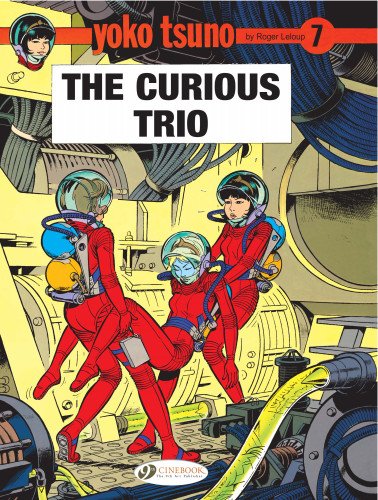
Adventures of Tintin: Flight 714 to Sydney


By Hergé, Bob De Moor, Roger Leloup and others, translated by Leslie Lonsdale-Cooper & Michael Turner (Egmont UK/Methuen/Little Brown Books)
ISBN: 978-1-40520-821-5 (HB) 978-0-31635-837-8 (Album PB)

Win’s Christmas Gift Recommendation: A Great British Tradition of Belgian Origin. Gotta Get ‘Em All… 10/10

Georges Prosper Remi, AKA Hergé, created an eternal masterpiece of graphic literature with his tales of a plucky boy reporter and entourage of iconic associates. Singly, and later with assistants including Edgar P. Jacobs, Bob de Moor, Roger Leloup and other supreme stylists of the Hergé Studio, he created 23 timeless yarns (initially serialised in instalments for a variety of newspaper periodicals) which have since grown beyond their pop culture roots to attain the status of High Art and international cultural icons.

On leaving school in 1925, Remi began working for conservative Catholic newspaper Le Vingtiéme Siécle where he fell under the influence of its Svengali-esque editor Abbot Norbert Wallez. A devoted boy scout, one year later the artist was producing his first strip series – The Adventures of Totor – for monthly Boy Scouts of Belgium magazine. By 1928 Remi was in charge of producing the contents of the newspaper’s weekly children’s supplement Le Petit Vingtiéme.

While he was illustrating The Adventures of Flup, Nénesse, Poussette and Cochonette – written by the staff sports reporter – Wallez required his compliant creative cash-cow to concoct a new and contemporary adventure series. Perhaps a young reporter who roamed the world, doing good whilst displaying solid Catholic values and virtues?

The rest is history…

Some of that history is quite dark: During the Nazi Occupation of Belgium, Le Vingtiéme Siécle was closed down and Hergé was compelled to move his supremely popular strip to daily newspaper Le Soir (Brussels’ most prominent French-language periodical, and thus appropriated and controlled by the Nazis).

He diligently toiled on for the duration, but following Belgium’s liberation was accused of collaboration and even of being a Nazi sympathiser. It took the intervention of Belgian Resistance war-hero Raymond Leblanc to dispel the cloud over Hergé, which he did by simply vouching for the cartoonist through words and deeds.

Leblanc provided cash to create a new magazine – Le Journal de Tintin – which he published and managed. The anthology comic swiftly achieved a huge weekly circulation, allowing Remi and his studio team to remaster past tales: excising material dictated by the Fascist invaders to ideologically shade the wartime adventures. These modernising post-war exercises also generally improved and updated the great tales, just in time for Tintin to become a global phenomenon, both in books and as an early star of animated TV adventure.

With the war over and his reputation restored, Hergé entered the most successful period of his artistic career. He had mastered his storytelling craft, possessed a dedicated audience eager for his every effort and was finally able to say exactly what he wanted in his work, free from fear or censure, if not his personal demons and declining health…

The greatest sign of this was not substantially in the comics tales – although Hergé continued to tinker with the form of his efforts – but rather in how long the gaps were between new exploits. The last romp had finished serialisation in September 1962 and been collected as an album in 1963. Vol 714 pour Sydney began its weekly run in Le Journal de Tintin #936 – 27th September 1966 – and concluded in #997, cover-dated November 28th 1967. The inevitable book collection came in May 1968.

Flight 714 To Sydney appears to be a return to classic adventure, but conceals some ironic modernist twists, opening with our heroes hurriedly en route to Australia. During an intrigue-redolent stopover at Djakarta, Tintin, Captain Haddock and Professor Calculus are inveigled (almost duped) into joining unconventional and somewhat unpleasant aviation tycoon Laszlo Carreidas on his personal supersonic prototype. The petty-minded multi-millionaire obviously has some ulterior design but cannot be dissuaded.

However, due to the type of coincidence that plagues our heroes, that plane has been targeted by the villainous outlaw Rastapopoulos whose gang hijack the aircraft and land it on a desolate Pacific island. The former criminal mastermind has a crazy scheme to siphon off Carreidas’ fortune but has lost a lot of his old sinister efficiency…

After many ploys and countermoves between the opposing forces, and with danger a constant companion, the prisoners escape the villain’s clutches only to discover that the Island is volcanic and conceals a fantastic ancient secret that dwarfs the threat of mere death and penury before escalating to a spectacular climax no reader will ever forget…

Although full of Hergé’s trademark slapstick humour, there is also a sly undercurrent of self-examination that highlights the intrinsic futility of the criminals’ acts. As time has passed, the murderous human monsters have all been exposed as foolish, posturing and largely ineffectual.

Nevertheless, the yarn is primarily an extremely effective, suspenseful action thriller with science fiction roots as the author plays with the multifarious strands of international research then in vogue which led to Erich von Däniken’s Chariots of the Gods and other lesser known tracts of cod science.

Once more the supernormal plays a large part in proceedings – but not as a malign force – and this time science and rationality, not the supernatural, are the basis of the wonderment. Flight 714 To Sydney is slick, compelling and astoundingly engaging: a true epic escapade no fan of fun could fail to adore.
Flight 714 To Sydney: artwork © 1968 Casterman, Paris & Tournai. Text © 1968 Egmont UK Limited. All rights reserved.

The League of Extraordinary Gentlemen: The Tempest


By Alan Moore & Kevin O’Neill, with Ben Dimagmaliw, Todd Klein, Charles Barnard, Christian LeBlanc, Joe Brown & various (Top Shelf/Knockabout)
ISBN: 978-0-86166-282-1 (HB)

Win’s Christmas Gift Recommendation: A Fantastical Celebration of All That’s Profoundly Us… 10/10

The Victorian era saw the birth of both popular and populist publishing, particularly the genres of fantasy and adventure fiction. Writers of varying skill unleashed unbounded imaginations, expounding personal concepts of honour and heroism, wedded unflinchingly to the innate belief in English Superiority. In all worlds – and even beyond them – the British Gentleman took on all comers for Right and Decency, viewing danger as a game and showing “Johnny Foreigner” just how that game should be played.

For all the problems this raises with modern sensibilities, many of the stories remain uncontested classics of literature and form the roadmap for all modern fictional heroes. Open as they are to charges of racism, sexism (even misogyny), class bias and cultural imperialism, the cream of them remain the greatest of all yarns.

In 1999, an august selection of just such intrepid prototypes were seconded by Alan Moore & Kevin O’Neill for a miniseries saying as much about our world as that long-gone one; craftily relating a captivating tale as compelling as any of its antecedents.

In short succession there was an inevitable sequel, once more pressing into service vampire-tainted Wilhelmina Murray, aged Great White Hunter Allan Quatermain, Invisible Man Hawley Griffin, the charismatic piratical genius Captain Nemo and both cultured Dr. Henry Jekyll and his bombastic alter-ego Mister Hyde. As the concept grew – seemingly of its own volition – it eventually encompassed the best and brightest of the planet’s fictive print pantheon from drama, books and comics.

The idea of combining shared cultural brands is not new: Philip Jose Farmer in particular spun many a yarn teaming such worthies as Sherlock Holmes, Doc Savage, Tarzan and their like; Warren Ellis succumbed to similar temptation in Planetary and Jasper Fforde worked literary miracles with the device in his Thursday Next novels, but the sheer impetus of Moore & O’Neill’s para-steampunk revisionism, rush of ideas (and the stunning, startling visuals that carry them) make this book (and all the previous ones) form an irresistible experience and absolute necessity for every fiction fan, let alone comic collector.

Now, after two decades and numerous further sequels and iterations – dotted like stations of the cross through periods of history both utterly imaginary and consensually real – the saga closes with a final chronicle pulling together all the strings of plot and parodies involving these beloved immortal characters, rendered in a startling array of styles from slapstick bigfoot cartoons to realistically-rendered girl’s comics to OTT, hyperkinetic Sci Fi pastiches, the doomed 1960s UK superhero boom and more. There’s even room – and necessity – for sections rendered in 3D (glasses included, kids!) and Fumetti photo stories. Oh, the debilitating force of that nostalgia!

This last volume focuses most ardently on the British comics canon, memorialising past monuments of mirth and mayhem through deftly managed pastiche and homage whilst also incorporating film and TV’s greatest icons as it draws its ever-fluctuating cast into a vast time-bending crisis designed by devious villains to end and remake all existences…

You don’t want me to spoil the deliriously crafted intricacies of this yarn but just let me throw some other names at you: Jerry Cornelius; Captain Universe; Ayesha; Justin – or is it Mark? – Tyme; Tommy Walls; Jason King; James Bond (all of them); the Purple Hood; Quatermass and a leather-clad 1960s daredevil dubbed Emma something, all interacting with subtly altered (curse you, intellectual properties laws) characters you know but can’t mention aloud…

As previously stated, each chapter (first released as six oversized comicbooks) is framed in the style of a bygone British periodical and begins with ‘Illustrated Masterpieces: The Tempest’ laying the trail as the wonders of the Earth are systematically destroyed, forcing a band of protagonists (no actual heroes here!) to undertake a fantastic voyage to stranger places and times in hope of averting impending Armageddon…

Further intrigue unfolds in ‘TV Tempest 2010: Adventures in the Present Century’ as forces malign and benign gather whilst ‘Mina – for Young Ladies’ further stirs the pot as pasts and futures collide with a most fragile present…

A rambunctious paean to Albion’s comedy capers comes via ‘Tempest – incorporating Thud! Gurgle! and Whimper!’, and our cheesy knockoff reprint era is channelled in ‘Blazing Worlds’ before trans-cosmic catastrophe is averted(ish) for earthlets and other sentients in Thrill-throbbing conclusion ‘2010 A.D.’

Since each chapter celebrates an era of homegrown tomfoolery, there’s opportunity for a well-drafted balancing of historical scales. Bringing a tear of injustice to most eyes is a linked prose series of potted biographies memorialising and championing some of our greatest creators.

Leo Baxendale, Frank Bellamy, Marie Duval, Ken Reid, Denis McLoughlin and Ron Turner were all uniformly and deliberately used, abused and written out of history in the name of corporate dominance, and here Al & Kev strike a blow in their name. After looking them up online, you can read the less studious impartial (and therefore more accurate and honest) appreciation of their talents, achievements and fates here…

Celebrating our long-cherished love affair with comic cuts, this epic wheeze treats us to a tantalising taste of gloriously cheap, tawdry and irresistibly wonderful pop entertainment, intended for momentary juvenile diversion, but which locked us all into our own childhoods forever.

An undeserved but so welcome treat for a lost generation of British comics apologists who can now hold their heads a little higher as all the weird, cheap, shamefully knocked off, knocked out yet secretly adored cartoon ephemera of childhood is granted a measure of validity and immortality.

It’s enough to make you join a library and read some other very interesting books…

The League of Extraordinary Gentlemen volume 4: The Tempest © & â„¢ 2019 Alan Moore & Kevin O’Neill. All Rights Reserved.
The League of Extraordinary Gentlemen: The Tempest will be released on November 28th 2019 and is available for pre-order now.
For more information and other great reads see Knockabout Comicsand Top Shelf Productions

V for Vendetta/V for Vendetta 30th Anniversary Deluxe Edition


By Alan Moore & David Lloyd, with Tony Weare, Steve Whitaker, Siobhan Dodds & various (Vertigo)

ISBN: 978-1-4012-8500-5(30th Deluxe HB) 978-1-4012-0841-7(TPB)

Win’s Christmas Gift Recommendation: Groundbreaking, Life-Changing Comics Masterpiece… 10/10

Very few pieces of literature enter public consciousness and fewer still from the relatively young land of graphic narratives. Here’s one of the best…

The serial V for Vendetta began in 1982 in legendary British comics magazine Warrior. The deviously convoluted mystery play describes a highly individualistic resistance campaign conducted by an enigmatic flamboyant and ruthless “anarchist” against a fascistic British government which stumbles into power after a nuclear exchange destroyed all the bigger countries.

Or does it?

This is just as much a tale of intellectual and political awakening. Most events are seen (and the escalating situation unravels) through the eyes and experiences of Evey Hammond, a pathetic little nobody rescued from secret policemen – almost as an afterthought – by V during his first highly public exploit.

The sinisterly suspenseful series was originally presented in stark and stunning black & white, every chapter title beginning with a “v” word. Fans of classic British strip art revelled in occasional contributions from the wonderful Tony Weare (Matt Marriot, Pride of the Circus, Savage Splendour, The Colditz Story and much, much more) who fully illustrated the chapter dubbed ‘Vincent’ and also assisted master stylist David Lloyd in creating a masterpiece of daunting visual atmosphere throughout.

This was no mean feat as V – whilst dismantling with lethal efficiency the machineries of a totalitarian and ever vigilant State that constantly voiced its views that everything was better in the Good Old Days – declared himself the true guardian of lost or forgotten British culture. This demanded a phenomenal amount of research and vital trust that the readership would pick up on some pretty obscure references, both Verbal and Visual…

The then-controversial jump to colour (I, for one, would kill for a fully monochrome director’s cut edition of this saga) following DC’s appropriation of the saga was deftly handled by Lloyd himself, with the hued back-up of much-missed Steve Whitaker and Siobhan Dodds, whilst the relentless lettering of Alan Moore’s astounding script came courtesy of Jenny O’Connor, Steve Craddock & Elitta Fell.

And yes, pitiless protagonist V generally adopts the seeming of ultimate anti-authoritarian rebel Guido “Guy” Fawkes. His once-common masked vulpine visage was rescued from vintage obscurity for this tale: subsequently becoming a symbol and tool of anonymity for new generations of rebels, resisters and occupiers…

The subtle shadings of the large cast and the device of telling this from the point of view of the villains as much as the protagonists adds vast shades of meaning to this exploration of free will and oppression, and it’s still shocking to realise that the “hero” is too often indistinguishable from his opponents: philosophically or physically…

The collected book was released in the early 1990s, re-released to coincide with a movie adaptation and is now available in a snazzy hardback Deluxe edition.

Although temporarily reclaiming the image for good old Guy Fawkes night, this review is actually a paean of praise for our art form’s ultimate resistance tract and I would strongly suggest that if you are still uninformed and unentertained, you should the experience V as soon as viable. Moore & Lloyd made a magnificent beast and it should be viewed in all its glory, before vile politics ends us all…
© 1988, 1989, 1990, 2009, 2018 DC Comics. All Rights Reserved.

The Thirteenth Floor volume 01


By John Wagner, Alan Grant & Jose Ortiz (Rebellion)
ISBN:978-1-78108-653-7 (TPB)

Win’s Christmas Gift Recommendation: Eerie Seasonal Sensation… 9/10

It’s time for another shamble down memory lane for us oldsters whilst, perhaps, offering a fresh, untrodden path for younger fans of the fantastic in search of a typically quirky British comics experience.

This stunning paperback (and eBook) package is another knockout nostalgia-punch from Rebellion Studios’ superb and ever-expanding Treasury of British Comics, collecting the opening episodes of seminal shocker The Thirteenth Floor.

The strip debuted in the first issue of Scream and ran the distance – spanning all 15 issues from 24th March – 30th June 1984. It then survived the comic’s premature cancelation and subsequent merger, continuing for a good long while in Eagle & Scream – with the remaining stories here taking us from 1st September 1984 to 13th April 1985.

Although arguably the most popular – and certainly most lavishly illustrated – of Scream‘s fearsome features, The Thirteenth Floor is actually the third strip to be gathered, having been preceded by Monster in 2016 and The Dracula File in 2017. We’ll get to those in the fullness of time…

This book carries out its terrorising in stark, shocking monochrome but does include at the end a gallery of full-colour wraparound covers by series artist Jose Ortiz, and then-newcomer Brett Ewins, plus introductory contextual notes from editor Ian Rimmer and a darkly dry history lesson from co-author Alan Grant. With regular writing partner John Wagner, he wrote all the electronically eldritch episodes as enigmatic “Ian Holland”.

Grant maintains the strip derived in part from his own time of residence on the 11th floor of a similar tower block, and, having done my own time in a south London multi-story edifice, I can imagine why the sojourn was so memorable for him…

The series benefitted tremendously from the diligent mastery of its sole illustrator – sublime Jose Ortiz Moya – a veteran creator with a truly international pedigree. He was born on September 1st 1932 in Cartagena in the Spanish region of Murcia and started professional illustration early, after winning a comics competition in national comic Chicos.

Whilst working on comics digest books and strips like as Sigur el Vikingo, he gradually transitioned to the better-paying British market to draw newspaper strip Carolynn Baker for the Daily Express in 1962. He also worked for many kids’ comics here before making a wise move to America in 1974, to become a mainstay of Warren Publishing on horror magazines Eerie, Creepy and Vampirella.

In the early 1980s Ortiz returned to Spain, joining Leopold Sanchez, Manfred Sommer and Jordi Bernet in short-lived super-group cooperative Metropol even as he worked with Antonio Segura on a number of long-lasting strips such as post-apocalyptic action-thriller Hombre.

Metropol’s failure brought him back to British comics where he limned The Tower King and The House of Daemon for Eagle, Rogue Trooper and other strips for 2000AD and this macabre masterpiece…

Ortiz continued to excel, eventually settling in the Italian comics biz, with significant contributions to Tex Willer, Ken Parker and Magico Vento. He died in Valencia on December 23rd 2013.

Because of the episodic nature of the material, originally delivered in sharp, spartan 4-page bursts (eventually dropping to a standard 3), I’m foregoing my usual self-indulgent and laborious waffle and leaving you with a precis of the theme and major landmarks…

A little way into the future (as seen from dystopian yet still partially civilised Britain in 1984), a council tower block is equipped with an experimental computer system to supervise all the building systems and services whilst monitors the welfare and wellbeing of tenants. Maxwell Tower (just one of the names we creative contributors waggishly called the offices of IPC’s comics division at the time) looms into the rather bleak urban night.

Within, however, novel computer-controlled systems assure everyone lives happy lives. The servers also manifest a congenial personality offering advice and a bit of company. Dubbed “Max” by tenants, it – like $%*£!! Alexa today – increasingly inserts itself into every aspect of their lives through its constantly active monitoring systems. For their own good, naturally…

Because humans are fallible and a bit silly, the builders and architects fancifully never designated a 13th floor. Cognizant of human superstition, they designed the block to arbitrarily transit straight from 12 to 14. A human onsite controller/concierge/handyman lives in the penthouse. His name is Jerry and everything is just hunky-dory… until one day it isn’t…

The troubles apparently begin when a mother and son move in. They are trying to make a new start after losing the family breadwinner, but are plagued by a particularly persistent and violent debt-collector. After Mr. Kemp threatens the bereaved Henderson family, he stalks into an elevator and is later found on the ground floor, having suffered an agonising and fatal heart attack. The police write it off as an accident or misadventure, but they don’t know the truth.

Over-protective Max is far more powerful than anyone suspects and can turn his lifts into a terrifyingly realistic arena of terror, judgement and retribution at will. He calls it his “Thirteenth Floor”…

Over the weeks and months that follow, Max detects outrages and injustices and subjects assorted vandals, hooligans, burglars, bailiffs, lawyers, conmen, extortionists, shoddy plumbers, shady workmen, and even a family of problem tenants preying on their own neighbours, to the varied and impossibly realistic terrors of the damned.

Equally vexatious to the monitoring machine is the useless bureaucrat from its own housing department who treats people like subhuman trash. Max devises a very special hell for him after his lazy blunders temporarily make one of Max’s families homeless…

Sometimes these experiences are enough to modify behaviour and ensure silence, but too often the end result is simply another death. It happens so often that Max is reluctantly forced to brainwash husky tenant Bert Runch into acting as his agent: a mindless servant hypnotically conditioned to act as Max’s arms and legs, excising incriminating evidence – or bodies – before forgetting what he’s done.

Sadly, veteran policeman Sergeant Ingram suspects something is amiss and doggedly persists in returning to Maxwell Tower over and over again, ultimately forcing the coddling computer into precipitate action…

Moreover, as Max’s actions grow increasingly bold, even Jerry starts to suspect something is wrong. When he checks the hardware and finds a cracked Integrated Function Module, Jerry calls in council computer experts and Max has to act quickly to preserve his newfound intellectual autonomy. This triggers a cascade of uncontrollable events with Max taking ever-crazier risks, resulting in the tower being stormed by an army of police determined to shut down the AI murder machine…

And that’s where this moody masterpiece pauses with a great big To Be Continued, but there’s a second volume coming soon…

These strip shockers are amongst the most memorable and enjoyable exploits in British comics: smart, scary and rendered with stunning imagination and skill. Don’t believe for a moment that the seemingly limited set-up restricts the visual impact. The eerie punitive illusions of The Thirteenth Floor incorporate every possible monster from zombies and dinosaur to hell itself and history’s greatest villains, whilst the settings range from desert islands to the infinities of time and space. This a superb example of sophisticated suspense, leavened with positively cathartic social commentary that is impossible to dismiss.
© 1984, 1985 & 2018 Rebellion Publishing IP Ltd. All Rights Reserved.

Mysterious Traveler: The Steve Ditko Archives volume 3


By Steve Ditko & various, edited by Blake Bell (Fantagraphics Books)
ISBN: 978-1-60699-498-6 (HB)

Win’s Christmas Gift Recommendation: Immaculate Seasonal Yarn-Spinning… 10/10

Once upon a time the anthological title of short stand-alone stories was a top product of the comicbook profession, delivering as much variety as possible to the reader. At the peak of that period, nobody could touch Steve Ditko for variety of touch and tone, not to say sheer volume…

Ditko was one of our industry’s greatest talents and one of America’s least lauded. His fervent desire to just get on with his job and to tell stories the best way he could – whilst the noblest of aspirations – was, at best, a minor consideration and more usually a stumbling block for the commercial interests which controlled all comics production and still exert an overwhelming influence upon the mainstream bulk of comicbook output today.

Before his time at Marvel, young Ditko perfected his craft, creating short, sharp visually attractive vignettes for a variety of companies, and it’s an undeniable joy today to be able to look at this work from such an innocent time when he was just breaking into the industry: tirelessly honing his craft with genre tales for whichever publisher would have him, utterly free from the interference of intrusive editors.

This superb full-colour series of archival hardback collections (also available as digital editions) reprints those early efforts for Charlton Comics published between June 1957 through July 1958 – with material produced after the draconian, self-inflicted Comics Code Authority sanitised the industry following Senate Hearings and a public witch-hunt.

Here are wonderfully baroque and bizarre supernatural or science fiction and fantasy stories – presented in the order he completed and delivered them rather than the more logical, but far-less-revealing, chronological release dates. Moreover, they are all helpfully annotated with a purchase number to indicate approximately when they were actually drawn. Sadly, there’s no indication of how many (if any) were actually written by the moody master, so it’s safest to assume co-creator credits go to the utterly professional Joe Gill…

This third tension-packed presentation reprints another heaping helping of Ditko’s ever-more impressive works: most of it courtesy of the surprisingly liberal (at least in its trust of its employees’ creative instincts) sweat-shop publisher Charlton Comics.

And whilst we’re being technically accurate, it’s also important to reiterate that the cited publication dates of these stories have very little to do with when Ditko crafted them: as Charlton paid so little, the cheap, anthologically astute outfit had no problem in buying material it could leave on a shelf for months (sometime years) until the right moment arrived to print. The work is assembled and runs here in the order Ditko submitted it, rather than when it reached the grubby sweaty paws of us readers. It also coincides with a brief period when the company began releasing double-sized giant issues…

Following another historically informative Introduction with passionate advocacy by Editor Blake Bell, concentrating on Ditko’s military service experience and admiration and relationship with artist, educator and major influence Jerry Robinson, the evocatively eccentric excursions open with ‘From All Our Darkrooms…’ as first seen in Out of This World #4 (cover-dated June 1957) wherein photographers worldwide begin seeing otherwise-invisible aliens in the prints…

When a brash and ecologically unsound new owner threatens an ancient stand of trees he falls foul of ‘The Menace of the Maple Leaves’ (Strange Suspense Stories #33, August).

Ditko was astoundingly prolific – as was writer Gill – and increasingly Charlton’s various mystery and sci fi mags offered more than one effort per issue. As well as the cover to Unusual Tales #8 (also August), the tireless creator crafted ‘Will Power’, a classical tale of the power of love and statues coming to life and ‘The Decision’ wherein a wise precaution saves humanity from a robotic rampage after which Mysteries of Unexplored Worlds #4 (July) sees a devious long con wrecked by paranormal intervention in ‘The Forbidden Room’…

A dictatorial brute earns a grim comeuppance in ‘The Strange Fate of Captain Fenton’ in Mysteries of Unexplored Worlds #6 (December), before the cover of This Magazine is Haunted volume 2 #12 (July) ushers in a titanic tale of mythological woe and the end of ‘The Last One’, whilst, for one misguided soul in Strange Suspense Stories #35 (December), ‘Free’ is just another cruel word.

The belligerent threat of a ‘Stranger in the House’ (Mysteries of Unexplored Worlds #5, October) is tackled through divine intervention, but far more mundane answers are forthcoming for the devilish spy on the run in ‘All Those Eyes’ in Out of This World #6 (November).

A quartet of later-rendered tales from This Magazine is Haunted v2 #12 come next: beginning with alien inimical invaders dubbed ‘The Faceless Ones’ who pick the wrong human to replace, whereas random, kind fate saves humanity from ‘The Thing on the Beach’. A tragic, lonely ventriloquist is unable to escape ‘His Fate’, and the showbiz theme expands to involve a crooked impresario holding shrunken people captive in ‘The Messages’…

Behind the cover of This Magazine is Haunted volume 2 #13 (October) a lonely scientist and man’s best friend thwart ‘The Menace of the Invisibles’, before Strange Suspense Stories #34 (November, and with cover included) discloses an ironic fate for a manic Nazi hidden in the sands who can’t escape ‘The Desert Spell’…

The cover – and its original art – for Out of This World #5 (September) are accompanied by ‘The Night They Learned the Truth’ – a twisted tale of nervous villagers extending a traditional unwelcome to a strange foreigner after which the cover to Unusual Tales #9 (November) segues into a tale of corrupt businessman getting what he deserves in ‘He’s Coming for Me!’…

Two more from Out of This World #5 begin with bizarrely multi-layered tale of retribution ‘I Made a Volcano’, and wrap up with maritime monster mash ‘The Thing from Below’, after whichFather Help Me!’ (Mysteries of Unexplored Worlds #6, December) adds a technological twist to the ancient dilemma of a good parent afflicted with an evil child…

A last contribution to Mysteries of Unexplored Worlds #5, ‘Live for Reunion’ confronts a troubled child with a ghostly dilemma, before ‘Clairvoyance’ (Unusual Tales #9, November 1957) tackles the thorny problem of a super-child who only wants to be ordinary…

Guilt drives an unscrupulous businessman to see ‘The Scar’ everywhere in another mood message from Strange Suspense Stories #34, before more Mysteries of Unexplored Worlds #6 resume with the hunt for a progress-wrecking guru in ‘Where is Kubar?’ and conclude with the unhappy revelations of a hypnotist who sees too much after saying ‘Look Deep into My Eyes’…

Next up is a tale from one of Charlton’s earliest leading characters and the eponymous star of this volume. The title was developed from a radio show that Charlton licensed the rights to, with the host/narrator acting more as voyeur than active participant. “The Mysterious Traveler” broke the fourth wall and spoke directly to us, asking readers for opinion and judgement as he shared a selection of funny, sad, scary and wondrous human-interest yarns, all tinged with a hint of the weird or supernatural.

When rendered by Ditko, whose storytelling mastery, page design and full, lavish brushwork were just beginning to come into its mature full range, the works of Tales of the Mysterious Traveler were always exotic, esoteric and utterly mesmerising…

From issue #6 – and following a deftly compartmentalised cover dated December 1957 – comes ‘Tomorrow’s Punishment’, as a gang of crooks use a fortune-telling mirror to carry out their capers, after which a close encounter for a beggar makes him ‘The Man Who Saw Again’ (Tales of the Mysterious Traveler#8 from July 1958).

‘The Man Who Lost His Face’ is a tight alien invasion fable from Strange Suspense Stories #34 that leads seamlessly into a case of medical time travel salvation on a most fortuitous ‘Night Call’ (Mysteries of Unexplored Worlds #6) before Cold War counter espionage makes an accidental hero of ‘The Atomic Clerk’ in Strange Suspense Stories #34.

Another cover and its original art (Out of This World #6, November) leads into a potent tale of unnatural nature in ‘The River’s Wrath’, after which Unusual Tales #9 shares a tale of perceived ‘Escape’ for an unrepentant fugitive, whilst ‘The Night of Red Snow’ shows an insular town the power of unfettered art and imagination…

‘Plague’ also comes from Out of This World #6, revealing how a bitter scientist almost destroys the world, before the cover to Tales of the Mysterious Traveler #5 (November 1958) precedes a triptych of thrillers beginning with ‘The Sultan’ whose thirst for oil leads to inescapable doom, carries on with the shocking vision an arrogant climber sees ‘Above the Topmost Peak’, and ends with a deadly case of mistaken identity for deep seas divers in ‘The Man Below’…

From Strange Suspense Stories #34 (March 1958) comes a painful homily of trust despoiled when an elderly salesman honestly earns a miracle, only to realise he can’t rely upon his nearest and dearest, before this timeless celebration concludes with a selection from This Magazine is Haunted volume 2 #13 (October, 1957).

A craven white hunter steals an idol but cannot escape ‘The Drums’, even as a bum becomes ‘The Man Who Changed Bodies’, but can’t avoid the pitfalls of his own nature before a driven victim futilely hunts for a hated transgressor in ‘He Shall Have Vengeance’…

This sturdily capacious volume has episodes that terrify, amaze, amuse and enthral: utter delights of fantasy fiction with lean, plots and stripped-down dialogue that let the art set the tone, push the emotions and tell the tale, from times when a story could end sadly and badly as well as happily and only wonderment was on the agenda, hidden or otherwise.

These stories also display sharp wit and honest human aspiration and integrity, making ithis another superb collection in its own right as well as a telling tribute to the genius of one of the art-form’s greatest stylists.

This is something every serious comics fan would happily kill or die or be lost in time for…
Mysterious Traveler: The Steve Ditko Archives Vol. 3. This edition © 2012 Fantagraphics. Introduction © 2012 Blake Bell. All rights reserved.

The Umbrella Academy volume 3: Hotel Oblivion


By Gerard Way & Gabriel Bá, with Nick Filardi & Nate Piekos (Dark Horse)
ISBN: 978-1-50671-142-3 (TPB)

Superheroes have been around so long now that they’ve been able to evolve into different sub-sets: straight Save-the-World continuity types as championed by DC and Marvel, obsessively “real” or rationalist iterations such as Marvelman, Crossfire or Kick-Ass, comedic spins like Justice League International or Next Wave and some rare ducks that straddle a few barstools in between.

Addressing the same Edgy, Catastrophic Absurdism as Grant Morrison’s classic Doom Patrol, the archly anti-didactic antics of The Umbrella Academy offered readers a subtly subversive take on the idiom which impressed the heck out of everybody and lured many disillusioned fans back to the pitifully tired and over-used genre when first released. Author creator Gerard Way even parlayed the extraordinary success of the Weird Science heroes into a TV series for the team and built a second creative career steering DC’s outré, off-the-wall Young Animal imprint of alternative heroes…

Now a decade later, a new miniseries has resulted in the long-awaited third collected volume (available in trade paperback and digital formats) and is presented here with an effulgent Introduction from star writer and late-converted fan Jeff LeMire…

Once upon a time a strange event occurred. All across Earth, 43 babies were unexpectedly born as the result of apparent immaculate conceptions – or perhaps some kind of inexplicable parthenogenesis.

The births even surprised the mothers, most of whom discarded, abandoned, sold or arranged adoption of their unexpected, terrifying newborns.

Notorious scientist, entrepreneur and closet extraterrestrial Sir Reginald Hargreeves – inventor of the Levitator, mobile umbrella communicator, Clever Crisp cereal, Televator and a process which enabled chimps to speak – had a secret plan, and he knew these kids would all be special. He thus acquired seven of these miracle babies for an undisclosed purpose, subsequently rearing and training the children to become his private superhero team to enact it.

He was in no way a “good” parent…

The callously experimental family, after a spectacular early career, eventually proved to be unmanageable and the Umbrella Academy – created and trained “to save the World” – sundered in grief and acrimony, but not before poor Ben, Number 6 AKA “The Horror”, pointlessly lost his brave young life and Number 5 “The Boy” took a short trip into the future and never came back…

The surviving members of the utterly dysfunctional superhero team parted but were reunited twenty years later when the news broke that Hargreeves – whose nom de guerre was The Monocle – had died. You shouldn’t believe everything you hear on the news…

In the interim, Number 1 son Luther had become an off-earth defender and pioneer, so hideously damaged by a doomed journey to Mars that to save him, Hargreeves had grafted The Spaceboy‘s head onto the body of a colossal Martian Gorilla.

Poor, neglected Vanya, whose musical gifts Hargreeves deemed utterly useless, became a drop-out and wrote a scandalous tell-all book before becoming a voluntary exile amidst Earth’s lowest dregs. When Number 7 returned she was again rejected by her “family” and summarily seduced by a manic musician who unleashed her true potential and almost destroyed the world with her untapped power…

The Boy returned after 60 years of ranging through the time-stream and materialised in the body of the 10-year old he had been. However, his physical form was frozen and he stopped aging at that moment…

Favourite friend, technologist, housekeeper, actual lifelong care-giver and talking chimp Dr. Pogo had died in Vanya’s – or rather The White Violin‘s – apocalyptic attack which had left Allison (Number 3, The Rumor) with her throat severed, apparently forever deprived of her talent for warping reality with a word…

Diego (Number 2, The Kraken) remained the obsessive scary vigilante psychopath he’d always been but Klaus (Number 4, The Séance) was even weirder than before: a floating, shoeless space-case who talked to the dead and pulled the wings off the laws of physics…

Once upon a time, long ago and whilst still children, the Umbrella Academy saved Washington DC from an animated and extremely angry Lincoln Memorial. They’ve had an odd relationship with American Presidents ever since…

Having saved the entire world from prophesied destruction, the dysfunctional quintet were at a loss and killing time in the rubble of their old home until a fresh crisis boiled over and was cleaned up after The Boy’s hidden sponsors (ruthless chronal cops the Temps Aeternalis) sought to make him fulfil the mission they had originally recruited and rebuilt him for…

Now in the aftermath of the global carnage that generated, the battered survivors recuperate unaware that old ‘Evil’ is manifesting in their midst. Long ago, Hargreeves had taken steps to create the ultimate penitentiary for the violent, vicious, crazy and too-powerful foes of his pet Academy, but now the “guests” of his Hotel Oblivion are successfully checking out…

As The Boy explosively pursues the minion’s of The Perseus Corporation, elsewhere Spaceboy is consulting with aged savant Doctor Zoo. The old duffer is planning a trip into the bizarre region dubbed “Afterspace” in search of a lost legend…

The Séance has fallen very low, trading seedy encounters with dead loved ones for drugs, but when he attempts to scam his biker-thug minders events overtake him just when his old allies leave the universe behind in KMiniature War in a Miniature Home’

With Hargreeves’ guests loose in the hotel, ‘Violence’ mounts in a range of places and dimensions but the greatest threat comes as the nigh-omnipotent Scientific Man gathers his god-like powers and the deadly Murder Magician secures a televator back to Earth…

Chaos increases exponentially as the Academy heroes battle alone against a host of foes and heir own selfish agendas even as Spaceboy braves ‘The Labyrinth’ and discovers lost legend St. Zero hibernating in

The crisis breaks after The Boy’s current target – Perseus X – infiltrates the hotel to liberate his dad and realises that he’s too late… and that something even more diabolical is ‘Free’

With a host of monsters and super-creeps like Doctor Terminal, the Mothers of Agony and Medusa ravaging Earth, as well as the quandaries of an imminent attack by a trans-dimensional behemoth and a mysterious wonder baby and its revenant, rampaging mother to deal with, the scattered young comrades grudgingly work together against ‘The Fear You Cannot Speak’ but their late collaboration is all for naught as a new team of empowered players materialise with a shocking revelation in concluding chapter ‘Reunion’.

Sadly, the big reveal is a cosmic cliffhanger so be prepared for some major frustration…

Big on mood, bafflement-by-design and astounding action, this is compelling adventure if you’re fully au fait with the previous books and prepared to give the events your full attention, but Hotel Oblivion is only the beginning of the drama and should not be consumed casually. Trust me, though, it’s going to be worth it in the end…

Accompanying all the meta-real wonderment are a wealth of sketches, character drawings and variant covers by Way and Bá under the broad remit ‘Designing the Umbrella Academy Hotel Oblivion’.

Whilst happily swiping, homaging, sampling and remixing the coolest elements from many and varied comics sources, The Umbrella Academy offers a unique synthesis to achieve its own distinctive originality within the tired confines of the superhero genre. It’s a reading experience no jaded Fights ‘n’ Tights fan should miss.
© 2019 Gerard Way and Gabriel Bá. All rights reserved. The Umbrella Academy™ and all properties are trademarks of Gerard Way and Gabriel Bá.

Signal from Space/Life on Another Planet


By Will Eisner with Andre LeBlanc (Kitchen Sink Press/DC Comics/W.W. Norton & Co)
ISBN: 978-0-87816-014-3 (Kitchen Sink colour HB): 0-87816-370-0 (KSP B&W PB):
978-1-56398-677-4 (DC Comics Library PB): 978-0-39332-812-7 (WW Norton PB)

Here’s a long-lost contemporary cartooning classic which – although readily available in a number of formats – is still seen best in its first release. Ambitious and deliberately targeting an adult book-reading rather than comics audience, this initial collection of Will Eisner’s trenchant political thriller-cum-social commentary proves once more that sometimes the medium really is the message…

William Erwin Eisner was one of the pivotal creators who shaped the American comicbook industry, with most of his works more or less permanently in print – as they should be. From 1936 to 1938 he worked as a jobbing cartoonist in the comics production hothouse known as the Eisner-Eiger Shop, creating strips for both domestic US and foreign markets.

Using the pen-name Willis B. Rensie he created and drew opening instalments for a huge variety of characters ranging from funny animal to historical sagas, Westerns, Detective fiction, aviation action thrillers… and superheroes… lots of superheroes …

In 1940 Everett “Busy” Arnold, head honcho of the superbly impressive Quality Comics outfit, invited Eisner to take on a new challenge. The Register-Tribune newspaper syndicate wanted a 16-page weekly comicbook insert for the Sunday editions. Eisner jumped at the opportunity to move beyond the limitations of the nickel and dime marketplace, creating three series which would initially be handled by him before two were delegated to supremely talented assistants.

Bob Powell inherited Mr. Mystic and distaff detective Lady Luck fell into the capable hands of Nick Cardy (then still Nicholas Viscardi) and later the inimitable Klaus Nordling.

Eisner kept the lead feature for his own and over the next twelve years The Spirit became the most impressive, innovative, imitated and talked-about strip in the business. However, by 1952 he had more or less abandoned it for more challenging and certainly more profitable commercial, instructional and educational strips. He began working extensively for the US military in manuals and magazines like P*S, the Preventative Maintenance Monthly, generally leaving comics books behind him.

After too long away from his natural story-telling arena, Eisner creatively returned to the streets of Brooklyn where he was born on March 6th 1906. After years spent inventing much of the visual semantics, semiotics and syllabary of the medium he dubbed “Sequential Art” in strips, comicbooks, newspaper premiums and instructional comics, he capped that glittering career by inventing the mainstream graphic novel, bringing maturity, acceptability and public recognition to English language comics.

In 1978 a collection of four original short stories in strip form were released as a single book: A Contract with God and Other Tenement Stories. All the material centred around 55 Dropsie Avenue, a 1930’s Bronx tenement housing impoverished Jewish and immigrant families. It changed the American perception of cartoon strips forever.

Eisner wrote and drew a further 20 further masterpieces, opening the door for all other comics creators to escape the funnybook and anodyne strip ghettos of superheroes, funny animals, juvenilia and “family-friendly” entertainment. At one stroke comics grew up.

Eisner was constantly pushing the boundaries of his craft, refining his skills not just on The Spirit but with his educational and promotional material. In A Contract with God he honed in on unexplored territory with truly sophisticated, mature themes worthy of Steinbeck or F. Scott Fitzgerald, using pictorial fiction as documentary to examine social experience.

One of the few genres where Eisner never really excelled was science fiction – and arguably he doesn’t in this tale either as, in Signal from Space, the big discovery is just a plot maguffin to explore politics, social interactions and greed – all premium Eisner meat…

As ‘Life on Another Planet’ the material in this collection was originally serialised as eight 16-page episodes in Will Eisner’s Spirit Magazine from October 1978 to December 1980, rendered in toned monochrome (a format adhered to and title revived in subsequent Kitchen Sink, DC and W.W. Norton collections).

However, for this luscious hardback, the auteur and long-time confederate Andre LeBlanc fully-painted the entire saga using evocative tones and hues to subtly enhance the sinister, cynical proceedings…

One momentous night, lonely radio astronomer Mark Argano – based at a New Mexico observatory – picks up ‘The Signal’: a mathematical formula originating from Barnard’s Star and thus proof positive of extraterrestrial intelligence…

One colleague wants to inform the public immediately, but Argano is adamant that they go slowly as he (secretly) harbours schemes to somehow “cash in”. Unfortunately, the other scientist he shares the secret with is a Soviet sleeper agent…

Almost immediately the first murder in a long and bloody succession is committed as various parties seek to use the incredible revelation to their own advantage. World-weary science advisor and maverick astrophysicist James Bludd is dispatched by the CIA to verify and control the situation, but he walks straight into a KGB ambush and narrowly escapes with his life…

There’s now a deadly Cold War race to control contact with the mysterious signallers and ‘The 1st Empire’ follows recovering addict Marco as he turns his life around; using the now-public sensation to create a personality cult dedicated to leaving Earth and joining the aliens. Whilst Marco’s Star People grab all the headlines, ruthless plutocrat Mr. MacRedy uses his monolithic Multinational Corporation to manipulate Russia and America, intending to be the only one to ultimately capitalise on any mission to Barnard’s Star…

Since travel to far space is still impossible for humans, MacRedy sanctions the unethical and illegal creation of a human/plant hybrid and starts looking for volunteers to experiment on in ‘A New Form of Life’, whilst Bludd – now more reluctant spy than dedicated scientist – accepts another undercover assignment.

Casualties moral, ethical and corporeal mount in ‘Pre-Launch’ whilst in distressed African nation Sidiami, a desperate despot declares his bankrupt nation a colony of Barnard’s Star to avoid UN sanctions and having to pay back his national debt to Earthly banks…

Soon, he’s offering a base to Multinational for their own launch site and sanctuary to those Star People anxious to emigrate…

In ‘Bludd’ the scientist and his sultry KGB counterpart find themselves odd-bedfellows just as the Mafia get involved in the crisis – for both personal and pecuniary reasons – whilst in America, MacRedy prepares to install his own President to expedite his company’s requirements…

Now determined to take matters into his own hands and screw all governments and interests, Bludd is caught up in an unstoppable, uncontrollable maelstrom of events in ‘Abort’, and, after the American President has a fatal accident in ‘The Big Hit’ MacRedy thinks he’s finally won. He is utterly unprepared for Bludd’s unpredictable masterstroke in ‘The Last Chapter’…

Signal from Space is a dark and nasty espionage drama as well as a powerfully intriguing ethical parable: a Petrie dish for ethical dilemmas where Eisner masterfully manipulates his vast cast to display human foible and eventually a glimmer of aspirational virtue. This is a hugely underrated tale from a master of mature comics guaranteed to become an instant favourite. And it’s even better in this sumptuous oversized edition which is well worth every effort to hunt it down.

After all, Per Ardua ad Astra…

However, if you can’t find this version, there are numerous later editions, in the original black & white that have their own potent appeal and if you were a really dedicated fan, you’d only be happy with both, wouldn’t you?
© 1978, 1979, 1980, 1983 Will Eisner. All rights reserved.

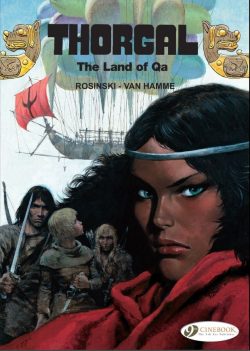
Thorgal volume 0: The Betrayed Sorceress & Almost Paradise


By Rosiński & Van Hamme, translated by Jerome Saincantin (Europe Comics/Cinebook)
No ISBN (Europe Comics digital-only edition)
ISBN: 978-1-84918-443-4 (Cinebook PB Album)

One of the very best and most celebrated fantasy adventure series of all time, Thorgal accomplishes the seemingly impossible: pleasing critics and selling in vast quantities.

The prototypical Game of Thrones saga debuted in iconic weekly Le Journal de Tintin in 1977 with album compilations beginning three years later. A far-reaching and expansive generational saga, it has won a monolithic international following in fourteen languages and dozens of countries, generating numerous spin-off series, and thus naturally offers a strong presence in the field of global gaming.

In story-terms, Thorgal offers the best of all weird worlds, with an ostensibly historical milieu of bold Viking adventure seamlessly incorporating science fiction elements, dire magic, horrendous beasts, social satire, political intrigue, soap opera, Atlantean mystique and mythically mystical literary standbys such as gods, monsters and devils.

Created by Belgian writer Jean Van Hamme (Domino, XIII, Largo Winch, Blake and Mortimer) and Polish illustrator Grzegorz RosiÅ„ski (Kapitan Å»bik, Pilot ÅšmigÅ‚owca, Hans, The Revenge of Count Skarbek), the feature grew unstoppably over decades with the creative duo completing 29 albums between 1980 and 2006 when Van Hamme moved on. Thereafter the scripting duties fell to Yves Sente who collaborated on a further five collections until 2013 when Xavier Dorison wrote one before Yann became chief scribe. In 2019, he and RosiÅ„ski released the 37th epic-album L’Emite de Skellingar.

By the time Van Hamme departed, the canon had grown to cover not only the life of the titular hero and his son Jolan, but also other indomitable family members through a number of spin-off series (Kriss de Valnor, Louve, La Jeunesse de Thorgal) all clustered under the umbrella title Les Mondes de Thorgal – with all eventually winning their own series of solo albums.

In 1985, US publisher Donning released a brief but superb series of oversized hardcover translations, but Thorgal never really found an English-speaking audience until Cinebook began its own iteration in 2007.

The original Belgian series meandered back and forth through the hero’s life and Cinebook’s translated run began with the 7th and 8th albums combined in a double-length premiere edition. By that time the saga of wandering enigma Thorgal Aegirsson had properly gelled, but there were a few books before then, with the hero still finding his literary and graphic feet…

What you’ll learn from later volumes: Thorgal was recovered as a baby from a ferocious storm and raised by Northern Viking chief Leif Haraldson. Nobody could possibly know the fortunate foundling had survived a stellar incident which destroyed a starship full of super-scientific aliens…

Growing to manhood, the strange boy was eventually forced out of his adopted land by ambitious usurper Gandalf the Mad who feared the young warrior threatened his own claim to the throne.

For his entire childhood Thorgal had been inseparable from Gandalf’s daughter Aaricia and, as soon as they were able, they fled together from the poisonous atmosphere to live free from her father’s lethal jealousy and obsessive terror of losing his throne…

Danger was always close but after many appalling hardships, the lovers and their new son finally found a measure of cautious tranquillity by occupying a small island where they could thrive in safety… or so they thought…

Here, however, in these harder-hitting, initial escapades from 1980, the largely unexplained and formulaic Viking warrior is simply a hero in search of a cause. La Magicienne Trahie becomes eponymous debut book The Betrayed Sorceress, opening with a full-grown Thorgal tortured and left to die of exposure and drowning by arch enemy Gandalf.

He is fortuitously rescued by a red-haired woman who demands he work in her service for a year…

Accompanied by a loyal wild wolf, formidable mystic matron Slive is consumed with a hunger for vengeance and orders her reluctant vassal to undertake an arduous quest and great battles to retrieve a hidden casket and its mystical contents. Only after succeeding, does the warrior discover that the target of her ire is Gandalf…

The complex scheme almost succeeds but the witch’s plans eventually lead to bloodshed, calamity, an unsuspected connection to the hero’s beloved Aaricia and the exposure of long-hidden secrets.

As the final clash climaxes, Gandalf is near death and the lovers witness the sorceress’ last voyage into the coldest regions on Earth in a dragonship made of ice…

Follow-up exploit ‘Almost Paradise’ continues the saga and completes the first volume with Thorgal living again amongst Gandalf’s band, but only on sufferance and in constant daily hardship.

Here, a lone ride through winter snows leads to his being hunted by ravening wolves before plummeting into a fantastic time-lost and timeless enclave at the bottom of an icy crevasse. In that tropical Eden he finds a trio of mysterious maidens. Two vie for his attention and argue the seductive benefits of eternal life in a vast garden free of want and danger, but youngest girl Skadia secretly craves the freedom of the outside world and is willing to lead the homesick warrior into horrendous peril to achieve her ends. Desperate to return to his true love, Thorgal escapes with the third immortal, suffering a nightmare journey back to the real world, but not without paying a painful price…

Second collected album L’lle des Mers gelées is also included here as The Island of the Frozen Seas, and begins in spring as Aaricia readies herself to wed Thorgal and leave Gandalf’s lands forever. Those dreams are suddenly shattered when a brace of giant eagles fly down and snatch her away. Soon the entire band of warriors are pursuing in their Drakkars (dragonships), heading ever northwards…

The chase leads to fractious moments aboard ship and imminent mutiny is only forestalled when the Vikings encounter a fantastic vessel that moves without oars or sails. Despite valiant resistance, the barbarians are soon all captives beside Aaricia. All, that is, save for Thorgal and future brother-in-law Bjorn Gandalfson who escaped capture by taking to a lifeboat…

At the top of the world, they meet strange tribes-folk perfectly adapted to arctic existence and Thorgal continues his hunt for his intended bride, meeting and defeating her abductor, discovering an incredible secret citadel and uncovering an incredible story about his long-occluded origins before he can bring his beloved back home to her people…

Although lacking the humour of later tales these works in progress are fierce, inventive and phenomenally gripping: cunningly crafted, astonishingly addictive episodes gradually building towards a fully-realised universe of wonder and imagination whilst offering insight into the character of a true, if exceedingly unwilling hero.

Thorgal is every action fan’s ideal dream of unending adventure. What fanatical fantasy aficionado could possibly resist such barbaric blandishments?

This Europe Comics volume is a digital-only edition from the pan-continental collective imprint which collaborates to bring a wealth of fresh and classic material to English speaking fans. Many of their selections are picked up by established print publishers such as Top Shelf or Cinebook. In fact, this volume will be added to Cinebook’s stable of titles at the end of the year, under special enumeration as Thorgal volume 00: The Betrayed Sorceress, so if you’re already a fan you can wait until then to add the book to your collection. If you can’t wait, though, the past awaits you, only a few keystrokes away…

© Editions du Lombard (Dargaud-Lombard s.a.) 1980 Rosiński & Van Hamme. English translation © 2018 Cinebook Ltd.
Thorgal volume 00: The Betrayed Sorceress is scheduled for a November 2019 release by Cinebook.

Flember – the Secret Book (Advance galley proof copy)


By Jaimie Smart (David Fickling Books)
ISBN: 978-1-910989-46-3 (PB Illustrated novel)

There are precious few perks in the high stakes, cut & thrust world of writing about graphic novels and books, but one is getting to see great stories before you all do and then acting all smugly know-it-all and blasé about how good they are, as if I’m in with the In Crowd.

This review of Flember is based on a proof copy and I’ll probably review the proper book too when it comes out in Early October. It’s that good…

Unlike writer/artist Jamie Smart’s previous outings (Fish Head Steve!, Space Raoul, Bunny vs. Monkey, Looshkin – the Adventures of the Maddest Cat in the World!!, Corporate Skull and bunches of brilliant strips for The Beano, Dandy and others), this is an illustrated novel, not comics strips, but that only means he’s really good at the wordy stuff too, and even so his dynamic cartoons, diagrams and maps are lavished all over the text and act as an integral part of the storytelling.

Here’s a little digression that might assuage any confusions I’ve inadvertently caused…

The old demarcations – whether in format or content – between comics and books are all but gone these days but once the items of printing were reckoned as different as chalk and chuck wagons.

From the pre-print era of illustrated manuscripts, books always possessed a capacity (time, manpower and budgets permitting) to include images in the text. As the book trade evolved, pictures were generally phased out of cheaper, mass-market editions because they required costly, time-consuming extra effort by skilled technicians. Most artists and illustrators wanted payment for their efforts too, so volumes with pictures were regarded as extra special, most often crafted for children, students or aficionados of textbooks…

Comics strips grew out of cartoon images, beginning as static illustrations accompanied by blocks of printed text before gradually developing into pictorial sequences with narration, dialogue and sound effects incorporated into the actual design. Print procedures and physical strictures of manual typesetting often dictated that pictures (printed on the pages or added as separate plates) frequently appeared nowhere near the snippets of text they illumined).

These days digital print processes are speedy, efficient and flexible, and many creative bright sparks have realised that they can combine all these tangential disciplines into a potent synthesis.

Gosh, wasn’t that lecture dull?

What I’m saying is that these days, the immediacy of comics, the enchantment of illustrated images, the power of well-designed infographics and the mesmeric tone and mood of well-written prose can all be employed simultaneously to create tales of overwhelming entertainment. Flember – The Secret Book does it with aplomb, imagination, dexterity and sundry other fruit and veg you’ve never heard of. That’s an inside joke until you read the book…

But what’s it about, Win?

I’m giving little away but suffice to say that somewhere far away the island of Flember houses a rather rural and backwards facing community who live in a little walled village called Eden. The citizens are an odd bunch, set in the old traditional ways and they don’t particularly like inventors anymore.

Young Dev Everdew doesn’t really fit in. His brother is a snarky would-be leader of the local Guild and Mum doesn’t like to cause a fuss. Dad used to be Mayor but he’s gone now…

Life on the island depends on a seemingly-mystical force called Flember: an energising life force that animates the trees, living creatures and crops and even people. Did I mention that Dev’s addicted to inventing? He is, and all his contraptions always go wrong and cause the fuss previously mentioned.

The boy can’t stop himself, though, and just knows his devices can make life better for everybody. Despite the pleadings, help and advice of his young pals, Dev keeps making things and accidentally hurting people, but the situation gets completely out of hand after he builds a giant bear that absorbs all the Flember and comes shockingly alive. Sadly, that puts the little genius on the trail of a colossal secret underpinning everything and teaches him the consequences of rash actions…

Fast-paced, astoundingly inventive, raucously hilarious, deeply moving even while sagely exploring how carefree childishness grows into empathy and responsibility, this is a marvellous romp and an ideal example of words and pictures acting in harmony… almost like a well-oiled machine.

Just to be clear here though; never oil books or any digital reading device, ok? Just use them to acquaint yourself with tales as good as this one…
Text and illustrations © Jamie Smart 2019. All Rights Reserved.

Flember – The Secret Book is scheduled for release on October 3rd 2019 and is available for pre-order now. It’s a perfect item if you’re already stuck for options about Great Big Gift-Giving Season…

Showcase Presents Challengers of the Unknown volume 2


By Arnold Drake, Ed Herron, Bob Brown & various (DC Comics)
ISBN13: 978-1-4012-1725-9 (TPB)

The Challengers of the Unknown was a bridging concept. As superheroes were being revived in 1956 here was a super-team – the first of the Silver Age – with no powers, the most basic and utilitarian of costumes and the most dubious of motives… Suicide by Mystery.

Yet they were a huge hit and struck a chord that lasted for more than a decade before they finally died… only to rise again and yet again. The idea of them was stirring enough, but their initial execution made their success all but inevitable. Springing from tireless and inspirational human hit-factory Jack Kirby – before his move across town to co-create the Marvel Universe – the solid adventure concept and perfect action heroes he left behind were ideal everyman characters for the tumultuous 1960s – an era before super-heroes obtained a virtual chokehold on the comic-book pages.

Kirby had developed a brilliantly feasible concept and heroically archetypical characters in cool pilot Ace Morgan, indomitable strongman Rocky Davis, intellectual aquanaut “Prof.” Haley and daredevil acrobat Red Ryan. The Challengers of the Unknown were four (extra)ordinary mortals; heroic adventurers and explorers who walked away unscathed from a terrible plane crash. Already obviously what we now call “adrenaline junkies”, they decided that since they were all living on borrowed time, they would dedicate what remained of their lives to testing themselves and fate. They would risk their lives for Knowledge and naturally, Justice. They were joined by an occasional fifth member, beautiful (of course) scientist June Robbins in their second appearance (‘Ultivac is Loose!’ in Showcase #7, March/April 1957), and she became a hardy perennial, always popping up to solve puzzles, catch criminals and generally deal with Aliens, Monsters and assorted supernatural threats.

A number of writers, many sadly lost to posterity, wrote these tales, including Bill Finger, Ed Herron, Jack Miller, Bob Haney and Arnold Drake, but one man handled the artwork: Bob Brown.

Brown was born August 22nd 1915 and he died in 1977 following a long illness. He studied at Hartford Art School and Rhode Island School of Design, and worked with his showbiz folks and sister in a song-&-dance act from 1927 onwards. He was drafted in 1940 – the year he also began working as a comics artist and scripter for Fox, timely/Atlas. As the war intensified, he was an aircraft radio operator, an aviation cadet and served in the Pacific as bombardier and navigator in B-29 bombers, earning six air medals and a Distinguished Flying Cross.

After jobbing around the industry during the late 1040s and 1950’s Brown settled at National Comics/DC, co-created the long-running Space Ranger, drawing Tomahawk, western hero Vigilante, Batman, Superboy, Doom Patrol, World’s Finest Comics and a host of other features and genre shorts. He moved to Marvel in the 1970s where he drew Warlock, Daredevil and the Avengers among others.

He was a consummate professional and drew every issue of the Challengers from #9 – 63: almost a decade of high-adventure ranged from ravaging aliens, cute-and-fuzzy space beasts to truly scary supernatural horrors.

The Challengers followed Kirby’s model until cancellation in 1970, but, due to a dispute with Editor Jack Schiff the writer/artist resigned at the height of his powers. The King’s exuberant magic was impossible to match, but as with all The King’s creations, every element was in place for the successors to run with.

Challengers of the Unknown #9 (September 1959) saw an increase in the monster-heavy fantasy elements favoured by Schiff, and perhaps an easing of the subtle tension and inter-group fractious bickering that marked previous issues (Comics Historians take note: the Challs were snapping and snarling at each other years before Marvel’s Cosmic Quartet ever boarded that fateful rocket-ship).

This second cheap-&-cheerful volume collects the contents of Challengers of the Unknown #18 – #37 – spanning February/March 1961 through May 1964 – and opens with ‘The Menace of Mystery Island’ which finds the team fighting crooks on a tropical island that contains a crashed alien probe. This accident has deposited a test animal with uncanny powers…

In the manner of the times, the tenacious troubleshooters adopt the fuzzy li’l space-tyke and name him Cosmo.

The second story of the issue offers darker fare, however, as the team are then shanghaied through time to save ‘The Doomed World of Tomorrow’.

In the ‘The Alien Who Stole a Planet’, the heroes aid refugees from a doomed world, but things turn sour after one of the survivors decides Earth would be suitable replacement home, whilst in ‘The Beasts from the Fabulous Gem’, a soldier-of-fortune uses a stolen mystic jewel liberate monsters imprisoned within it in ancient times. Their very own super-villain then resurfaces as ‘Multi-Man Strikes Again’ in issue #20, and June shows up for a spot of beastie-bashing in the hectic riddle of ‘The Cosmic-Powered Creature!’ In the next issue it’s apparently just the lads who are shanghaied to ‘The Weird World that Didn’t Exist’ but she plays a major role in the follow-up tale when Cosmo returns in ‘The Challengers’ Space-Pet Ally’.

‘The Curse of the Golden God’ proffers the usual action-packed crime-drama in the South American jungles, whereas #22’s second tale hits much closer to home as the squad’s secret base is compromised by ‘The Thing in Challenger Mountain’ and the team find that ‘Death Guarded the Doom Box’ in the form of ancient but still deadly mechanical devices, after which more aliens kidnap humans to ‘The Island in the Sky’.

In ‘The Challengers Die at Dawn’, the hunt for a swindler leads the team to a lost tribe of oriental pirates in the South China Seas, but the big story in #24 is ‘Multi-Man, Master of Earth’: a grand, old-fashioned battle for justice against a seemingly unstoppable foe. Although the stories were becoming a touch formulaic by this stage, the equation was a trusted one, and Brown’s art was constantly improving.

Challengers of the Unknown #25 (April/May 1962) was right on the cusp of the moment full-blown superhero mania hit the world and, although ‘Return of the Invincible Pharaoh’ is a story of ancient mystery and slumbering menaces, its plot of a lost secret bestowing superpowers was to become a recurring staple for “normal, human heroes” such as the Challs, Blackhawk – and even in the Batman titles.

The second tale, ‘Captives of the Alien Hunter’ features another thieving extra-terrestrial up to no good and once more both June and Cosmo are required to foil the fiend.

‘Death Crowns the Challenger King’ is a bizarre variation on the Prisoner of Zenda‘s plot: set in a hidden Mongol city with Prof. replacing the true ruler in a series of ceremonial ordeals, whilst the rest of the gang run interference against the scurvy villains, after which a flamboyant impresario is shown to have an out-of-this-world new act in ‘The Secret of the Space Spectaculars’.

Issue #27 led with ‘The 1,001 Impossible Inventions’, wherein two convicts bamboozle a wounded alien into using his advanced science for crime, whilst ‘Master of the Volcano Men’ (the first story for which we have a confirmed writer – Arnold Drake) introduces another perennial villain: rapacious marauding lava beings from the centre of the earth.

It was once more rebellious robots causing a destructive fuss in ‘The Revolt of the Terrible FX-1’, but the real show-stealer of #28 is a classic time-travel romp sending the team back to ancient Egypt to solve ‘The Riddle of the Faceless Man.’

The next issue brought ‘Four Roads to Doomsday (again by Drake) wherein satellite sabotage draws the team into a plot by alien criminals to conquer Earth, whilst the raucous, antagonistic nature of the team is highlighted in Ed “France” Herron’s ‘The War Between the Challenger Teams’, as Ace and Red battle Prof. and Rocky to end a war between two sub-sea races.

‘Multi-Man… Villain Turned Hero’ turned out to be just another evil ploy by the shape-changing charlatan, but #30’s real treat is the introduction of Gaylord Clayburn (Don’t. Just don’t. Grow up): a spoiled multimillionaire playboy who wants to become ‘The Fifth Challenger’ and is prepared to go to any lengths to achieve his ambition…

‘The Man Who Saved the Challengers’ Lives’ in #31 is the first full-length story since 1960; impressively retelling their dramatic origin, and revealing the debt they possibly owe to a shady industrialist, whilst #32 declares business as usual in Drake’s ‘One Challenger Must Die!’

Here the boys fiercely compete to learn who would sacrifice themselves to stop another rampaging Volcano Man, before rediscovering the power of teamwork, which was just as well since the second tale reveals how and why ‘Cosmo Turns Traitor.’

Each an expert in some field of human endeavour, in #33, the Challs are confronted by a superior individual in Drake’s ‘The Challengers Meet their Master’, but as with ‘The Threat of the Trojan Robot’, teamwork proves the solution to any problem. Ed Herron scripted terse thriller ‘Beachhead, USA’ which opens #34, as a U-Boat full of Nazis frozen since World War II tries to complete their last mission – blowing up the East Coast of America, with only the Chall’s in place to stop them.

Multi-Man then discovers that no matter how smart you are, building the perfect mate is a very bad (and tasteless) idea in ‘Multi-Woman, Queen of Disaster.’

‘The War Against the Moon Beast’ is a spectacular sci-fi yarn, balanced by the quirky prognostications of a carnival seer whose crystal ball predicts an adventure of the ‘Sons of the Challengers’.

One of the death-cheaters became a monster in #36’s ‘The Giant in Challenger Mountain’, but is recovered in time to join the others as ‘Bodyguards to a Star’ on the location of a dinosaur-infested movie-epic.

This splendidly daft second volume ends with #37 and ‘The Triple Terror of Mr. Dimension’ – a cheap thug who lucks into a reality-altering weapon, with Herron scripting the taut drama of ‘The Last Days of the Challengers’ wherein the team struggle to destroy giant robots and thwart an execution-list with their names on it…

Challengers of the Unknown is sheer escapist wonderment, and no fan of the medium should be deprived of the graphic exploits starring these ideal adventurer-heroes in the evocative setting of the recent now; a simpler, better world than ours. Reader-friendly to anyone with a love of wild thrills (or Saturday morning cartoons), these long-neglected tales would make the perfect animated kids show too…
© 1961, 1962, 1963, 1964, 2008 DC Comics. All Rights Reserved.