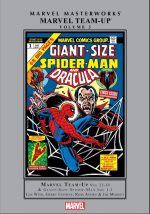
Marvel Team-Up Marvel Masterworks volume 3

By Len Wein, Gerry Conway, Ross Andru, Jim Mooney, Gil Kane & various (Marvel)
ISBN: 978-1-3029-0970-3 (HB)

Win’s Christmas Gift Recommendation: Classic Comics Collaborations… 8/10

In the 1970s, as Marvel slowly grew to a position of market dominance in the wake of the losing their two most innovative and inspirational creators, they did so less by experimentation and more by expanding proven concepts and properties. The only real exception to this was the en masse creation of horror titles in response to the industry down-turn in super-hero sales – a move expedited by a rapid revision in the wordings of the increasingly ineffectual Comics Code Authority rules.

The concept of team-up books was not new when Marvel decided to award their most popular hero the lion’s share of this new title, but they wisely left their options open by allocating an occasional substitute lead in the Human Torch. In those long-lost days, editors were acutely conscious of potential over-exposure – and since super-heroes were actually in a decline at that time – they may well have been right.
Nevertheless, Marvel Team-Up was the second full Spider-Man title (abortive companion title Spectacular Spider-Man was created for the magazine market in 1968 but had died after two issues). It launched in March 1972, and became a resounding hit.

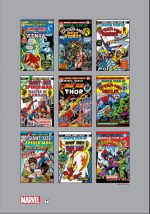
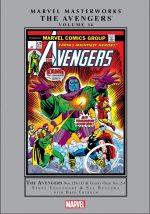
This third titanic compilation (in hardback or digital formats) gathers material from MTU #23-30 plus the team-up styled Giant-Size Spider-Man #1-3: spanning July 1974 to February 1975 and opens with a fond, informative recollection from then Editor-in-Chief Roy Thomas in his cheery Introduction before we plunge into the many-starred dramas…

Following a try-out in Giant-Size Super Heroes that pitted the wallcrawler against Living Vampire Morbius and the manic Man-Wolf, a quarterly double-length Spider-Man team vehicle was added to Marvel’s schedule.

Giant-Size Spider-Man #1 was cover-dated July 1974 and saw the web-spinner in frantic search of an experimental flu vaccine, improbably carried on an ocean liner in ‘Ship of Fiends!’ The quest brought him into clashing contact with newly-revived vampire lord Dracula and a scheming Maggia Capo at ‘The Masque of the Black Death!’, all courtesy of Gerry Conway, Ross Andru & Don Heck…

Here that bizarre battle is accompanied by its original editorial text feature ‘An Illuminating Introduction to Giant Size Spider-Man’ before we move on to the monthly MTU wherein The Torch and Iceman fractiously unite to stop Equinox, the Thermo-Dynamic Man on ‘The Night of the Frozen Inferno!’ (by Len Wein, Gil Kane & Mike Esposito).

Still embracing supernatural themes and trends, the webslinger discovers ‘Moondog is another Name for Murder!’ in a defiantly quirky yarn illustrated by Jim Mooney & Sal Trapani which brings the decidedly offbeat Brother Voodoo to the Big Apple to quash a Manhattan murder cult…

Wein, Mooney & Frank Giacoia then determine that ‘Three into Two Won’t Go!’ as Daredevil joins Spider-Man in thrashing inept costumed kidnappers Cat-Man, Bird-Man and Ape-Man, after which Giant-Size Spider-Man #2 sees the amazing arachnid drawn into battle with Shang-Chi, Master of Kung Fu as sinister immortal Fu Manchu frames Spider-Man in ‘Masterstroke!’ The duped heroes clear the air in ‘Cross… and Double-Cross!’ before uniting to foil the cunning Celestial’s scheme to mindwipe America from the ‘Pinnacle of Doom!’ and MTU #26 finds the Torch and Thor battling to save the world from Lava Men in The Fire This Time…’ by Wein, Mooney, Giacoia & Dave Hunt.

At this time, in a desperate effort to build some internal continuity into the perforce brutally brief encounters, the scripters introduced a shadowy trio of sinister observers with an undisclosed agenda who would monitor superhero episodes and eventually be revealed as providers of outrageous technologies for many of the one-shot villains who came and went so quickly and ignominiously…

They weren’t involved when the Chameleon frames Spider-Man (again) and tricks the Hulk into freeing a man – for the most unexpected reason of all – from the New York Men’s Detention Center in #27’s ‘A Friend in Need!’ (Wein, Mooney & Giacoia). They did, however, have a hand in ‘The City Stealers!’ (#28 by new regular creative team Gerry Conway, Mooney & Vince Colletta) when strange mechanoids swipe the island of Manhattan, necessitating Spidey and Hercules (mostly Hercules) having to drag it back to its original position…

After that minor miracle Spider-Man experiences an odd, time-displaced disaster as Giant-Size Spider-Man #3 explores ‘The Yesterday Connection!’ wherein lovely alien Desinna seeks the aid of Spidey in 1974 and – in ‘The Secret Out of Time’ – the hands-on help of legendary 1930s adventurer Doc Savage.

Across a gulf of four decades the heroes individually discover something is not right in ‘Other People in Other Times!’, and with the escape of a savage rampaging monster, two eras seem doomed to destruction. At least until until wiser, more suspicious heads and powers prevail in ‘Tomorrow is Too Late’ and ensure that ‘The Future is Now!’

Marvel Team-Up #29 displays a far less constrained – or even amicable – pairing as flaming kid Johnny Storm and patronising know-it-all Iron Man butt heads whilst tracking a seeming super-saboteur in ‘Beware the Coming of Infinitus! or How Can You Stop the Reincarnated Man?’

Spider-Man and The Falcon then find that ‘All That Glitters is not Gold!’ in #30 whilst tracking a mind-control drug back to its crazy concoctor Midas, the Golden Man, closing the comics capers for another volume. Adding extra lustre there’s still visual treats aplenty in the form of contemporaneous house ads, covers and frontispieces from seasonal tabloid treasury Giant Superhero Holiday Grab-Bag (with art from John Buscema and John Romita) and a triptych of original art pages and covers Gil Kane, Esposito & Giacoia.

These stories are of variable quality but nonetheless all exhibit an honest drive to entertain and please. Artistically the work is superb, and most fans of the genre would find little to complain about so, although not really a book for casual or more maturely-oriented readers, there’s bunches of fun on hand and young readers will have a blast, so there’s no real reason not to add this tome to your library…
© 1974, 1975, 2018 Marvel Characters, Inc. All rights reserved.

Noggin the Nog


By Oliver Postgate & Peter Firmin (Egmont)
Nogbad Comes Back ISBN: 978-1- 4052-8155-3
Noggin and the Dragon ISBN: 978-1- 4052-8154-6
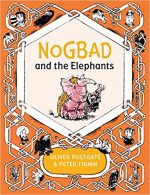
Nogbad and the Elephants ISBN 978-1- 4052-8142-3
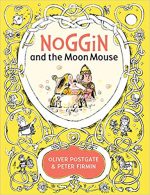
Noggin and the Moon Mouse ISBN: 978-1- 4052-8141-6
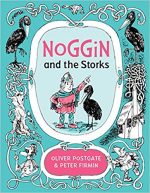
Noggin and the Storks ISBN: 978-1- 4052-8144-7
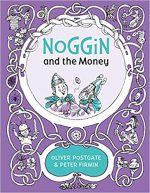
Noggin and the Money ISBN: 978-1- 4052-8143-0

Win’s Christmas Gift Recommendation: Wonderful Stories By and For Human People… 10/10

Baby Boomers like me consider our childhoods – no matter how personally privileged or deprived – to have been a golden age in terms of liberty, agency and especially entertainment. That’s probably due in large part to being exposed to the gentle, life-affirming fantasy worlds of these guys.

Richard Oliver Postgate was a writer puppeteer, animator and unrepentant storyteller who was born to an extremely prestigious, overachieving and drama-drenched family. He was born April 12th 1925 in Hendon Middlesex and educated at Woodstock School, Woodhouse Secondary, Dartington Hall College and Kingston College of Art.

He joined the Home Guard in 1942 but when at last called up, declared himself a Conscious Objector – just as his father did during the Great War. Court martialled and sentenced to Feltham Prison, he eventually became a land-worker growing crops. After the war Postgate worked for the Red Cross in Occupied Germany. He returned to Britain in 1948, went to Drama School and drifted from job to job.

In 1957, whilst working as a stage manager for ITV company Associated Rediffusion, he observed the appalling quality of children’s programming up close and knew he could do better for the same paltry money offered. He wrote Alexander the Mouse and convinced a Central School of Art tutor named Peter Firmin to draw the backgrounds for him.

After moving on to short-lived deaf-viewer project The Journey of Master Ho, in 1959 the creators formalised their partnership as independent studio Smallfilms. The rest is history…

When not shaping the minds of 30-years-worth of kids, Postgate continued trying to save and refine mankind. He was active in the CND movement and wrote their pamphlet The Writing on the Sky and 1981 book Thinking it Through: The Plain Man’s Guide to the Bomb.

In 1986, he created a 15-meter artwork for his latterday romantic partner Naomi Linnell’s book Illumination of the Life and Death of Thomas Beckett, repeating the exercise for the Triumphant Failure (about Christopher Columbus) and triptych A Canterbury Chronicle. You can see them if you visit the city’s Royal Museum Art Gallery and Eliot College Campus…

Working when he pleased, Postgate narrated – in that calm quiet compelling voice hardwired into the brains of millions – radio comedy and documentary shows, wrote more books such as autobiography Seeing Things, and accompanied his greatest creation Bagpuss (voted in 1999 the Most Popular Children’s Television Programme of All Time) as the stuffed cat accrued awards such as an honorary degree from the University of Kent at Canterbury.

He died – hopefully properly and rightly well-contented – in Broadstairs Kent, on December 8th 2008.

Peter Arthur Firmin was born in Harwich on 11th December 1928. Following training at Colchester School of Art and National Service in the Royal Navy, he attended Central School of Art and Design in London from 1949 to 1952. A creative man of many talents and disciplines, he then worked as a stained-glass designer, jobbing illustrator and lecturer.

Whilst teaching at Central in 1957 he was targeted by audacious, up-and-coming children’s TV writer Oliver Postgate who believed (quite rightly) that clever individuals could produce high-quality kids’ viewing at reasonable cost.

After producing backgrounds for Postgate’s Alexander the Mouse and The Journey of Master Ho, Firmin became equal partner in new venture Smallfilms, which grew in a shed at the artist’s Canterbury home. The kindred spirits initially produced hand-drawn cartoons and eventually stop motion animation episodes for series including Ivor the Engine, Pingwings, The Saga of Noggin the Nog, Pogle’s Wood/The Pogles, Bagpuss and The Clangers.

Postgate wrote, voiced and filmed whilst Firmin drew, painted, built sets and made puppets. Their spouses and friends were often dragooned if they showed useful talents such as sewing or knitting…

During those early days Firmin seemed tireless. In addition to the Smallfilms job he also devised, designed and populated other kids shows such as The Musical Box and Smalltime. In 1962 with Ivan Owen he created a fox puppet for The Three Scampies. That creation soon had his own show and career as Basil Brush…

Throughout his life, Firmin continued his cartooning and illustration career. This included writing and/or illustrating a number of books such as Basil Brush Goes Flying, The Winter Diary of a Country Rat, Nina’s Machines and Postgate’s Seeing Things – An Autobiography.

Firmin also worked as a printmaker and engraver, designer and educator. In 1994 he was asked to create a British postage stamp and produced a magnificent offering featuring Noggin and the Ice Dragon.

Even at their most productive and overworked, Postgate & Firmin always ensured there was plenty of ancillary product such as Christmas Annuals, comic strips, spin-off books, games and puzzles for their devoted young fans. One of the most charming and enduring was a series of “Starting-to-Read” books released by Kaye & Ward between 1965 and 1973. Postgate & Firmin crafted all 8 books in a kid-friendly format gently sharing the further adventures of the Nicest Norseman of Them All…

Available again in superb hardcover editions – perfect for tiny hands – the first two (Noggin the King and Noggin and the Whale, both originally released in 1965) were reviewed here; a brace of charming, gently humorous escapades starring the TV cast and beautifully illustrated in a variety of duo-toned line-&-colour with wit and subtle charm by the irrepressible Firmin. Now with the gift-giving season in full swing let’s tempt you with the splendid rest…

On the death of his father, quiet, unassuming Noggin becomes king of the northland Viking tribe known as the Nogs. He rules with understanding and wisdom – generally thanks to his advisors: wife Nooka – who hails from the far north (we’d call her an Inuit or Inuuk princess these days) – bluff old codger Thor Nogson and talking green cormorant Graculus.

Despite many fantastic adventures, Noggin prefers a quiet home life with his people and his boisterous son Knut…

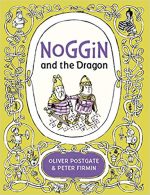
Originally released in 1966, Noggin and the Dragon sees little Prince Knut and his chums pestering the royal couple to let them go on a dragon hunt. Noggin and Nooka are reluctant at first – Dragon Valley is no place for little boys and besides, the best thing to do with dragons is give them sweets and make friends – but eventually the proud parents capitulate to pester power.

To ensure things go smoothly they insist old warrior Thor Nogson goes with them, but as the unruly boys trek out into a gathering storm, no one has any idea regarding the shocking surprise in store for them all…

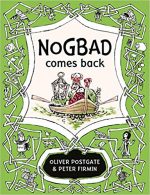
From the same year, Nogbad Comes Back highlights the return from exile of Noggin’s wicked usurping uncle, just in time to try and spoil the King’s annual animal and vegetable show. Living up to his name, Nogbad the Bad tries to win the glittering jewel-encrusted cup for best flora and fauna by devious cheating and, when that fails, through simple shameful theft.

Luckily, Nooka is not as forgiving and kind as her husband and has been keeping a close eye on her outlaw in-law…

The next year saw two more books: one of which was a distant precursor to one of Smallfilms’ most successful franchise creations…

Noggin and the Moon Mouse begins with Knut enacting an official ceremony at a water trough. The proceedings are utterly disrupted when a strange silver ball crashes down and a child-sized rodent-like creature emerges. Caught up in the excitement, the prince and his unruly pals give chase until Queen Nooka takes charge. After admonishing the boys, she and Noggin befriend the strange visitor (who actually comes from another world) and help him gather the odd household items he requires to return to the stars…

And yes, a few years later a peculiar band of woolly beasties began communicating with us all in their universally comprehensible penny-whistle pipings in a little show called The Clangers…

Nogbad and the Elephants proves that there are many perks to being royal. One is wonderful presents such as the gigantic gem-encrusted, long-nosed big-eared beast presented to Prince Knut by the King of Southland. Sadly, the wonderful creature is constantly unhappy and falls under the sway of crafty Nogbad who lures it away to steal its jewelled coat. Realising it’s been hoodwinked, the piteous pachyderm takes restorative action in its own unique manner, compelling Knut to make his first grown-up decision…

The last brace of tales comes from 1973, and begins with the hilarious Noggin and the Money wherein Court Inventor Olaf the Lofty suffers a setback in his dream to modernise the nation. The Nogs have been happily soldiering on using barter and trade as long as anyone can remember, so when the big thinker creates coins as currency, he thinks he’s made life easier for everybody. Thor Nogson soon learns to disagree after he’s despatched to acquire eggs for the royal breakfast and meets rather a lot of resistance to the new-fangled nonsense…

Wrapping up the fun is Noggin and the Storks which finds the King sagely dealing with a minor ecological crisis. Sooty Storks have nested on the chimneys of the town for decades, using the heat of cooking fires to warm their eggs. This year, as the birds are particularly numerous, the populace are continually being smoked out of their own homes.
Angrily, they petition Noggin to let them chase the pests away, but as king of birds as well as people, the smooth sovereign seeks another, more equitable solution. Cue Olaf the Lofty, who has an idea involving an old chalk quarry, a stand of hollow trees, masses of convoluted piping, steel sheets and tons of firewood….

Serenely bewitching, engaging and endlessly rewarding (both these books and their much-missed, multi-talented originators) the works of Postgate and Firmin shaped generations of children and parents. If you aren’t among them, do yourself a great favour and track down those DVD box sets, haunt the streaming services and buy these books. You won’t regret it for an instant…
Text © The Estate of Oliver Postgate 1965-1973. Illustrations © Peter Firmin/The Estate of Peter Firmin 1965-1973.

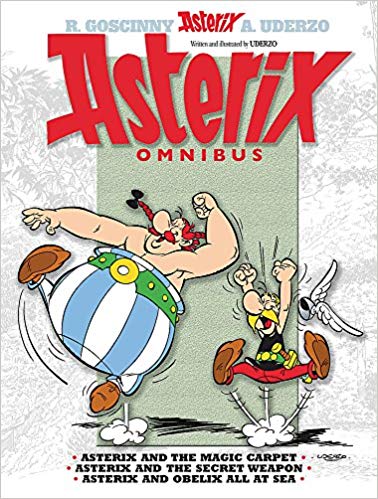
Asterix Omnibus volume 10: Asterix and the Magic Carpet, Asterix and the Secret Weapon, Asterix and Obelix all at Sea


By Uderzo, translated by Anthea Bell & Derek Hockridge (Orion Childrens’ Books and others)

ISBNs: 978-1-40910-134-5 (HB Album) 978-1-44400-425-0 (PB)

Win’s Christmas Gift Recommendation: Celebrating the Season with Historical Hysterics… 10/10

Alberto Aleandro Uderzo was born on April 25th 1927 in Fismes, on the Marne, a son of Italian immigrants. Showing great artistic flair as a child reading Mickey Mouse in Le Pétit Parisien, he dreamed of becoming an aircraft mechanic one day.

He became a French citizen at age seven and found employment at 13, apprenticed to the Paris Publishing Society, where he learned design, typography, calligraphy and photo retouching.

When WWII broke out, Albert spent time with farming relatives in Brittany and joined his father’s furniture-making business. Brittany beguiled and fascinated Uderzo: when a location for Asterix’s idyllic village was being mooted, the region was the only choice.

During the post-war rebuilding of France, Uderzo returned to Paris and became a successful artist in the country’s revitalised and burgeoning comics industry. His first published work – a pastiche of Aesop’s Fables – appeared in Junior, and in 1945 he was introduced to industry giant Edmond-François Calvo (whose own comics masterpiece The Beast is Dead is long overdue for a new edition and, if you follow current events, sorely needed as a warning shot…).

Indefatigable Uderzo’s subsequent creations included indomitable eccentric Clopinard, Belloy, l’Invulnérable, Prince Rollin and Arys Buck. He illustrated Em-Ré-Vil’s novel Flamberge, worked in animation, as a journalist and illustrator for France Dimanche, and created vertical comic strip Le Crime ne Paie pas for France-Soir. In 1950, he illustrated a few episodes of the franchised European version of Fawcett’s Captain Marvel Jr. for Bravo!

An inveterate traveller, the prodigy met Rene Goscinny in 1951. Soon fast friends, they decided to work together at the new Paris office of Belgian publishing giant World Press. Their first collaboration was in November of that year; a feature piece on savoir vivre (how to live right, or perhaps gracious living) for women’s weekly Bonnes Soirée, after which an avalanche of splendid strips and serials poured forth.

Jehan Pistolet and Luc Junior were created for La Libre Junior before they devised a western with a native hero who eventually evolved into the delightfully infamous Oumpah-Pah. In 1955, with the formation of Édifrance/Édipresse, Uderzo drew Bill Blanchart for La Libre Junior, replaced Christian Godard on Benjamin et Benjamine, and in 1957 added Charlier’s Clairette to his bulging portfolio.

The following year he made his debut in Le Journal de Tintin, as Oumpah-Pah finally found a home and rapturous audience. In his quieter moments Uderzo also drew Poussin et Poussif, La Famille Moutonet and La Famille Cokalane.

When Pilote launched in 1959, Uderzo was a major creative force for the new magazine, collaborating with Charlier on Tanguy et Laverdure and launching – with Goscinny – a little something called Astérix le gaulois

Despite Asterix being a massive hit from the start, Uderzo continued working on Les Aventures de Tanguy et Laverdure, but once the first Roman romp was compiled and collected as hit album Astérix le gaulois in 1961, it became clear that the series would demand most of his time – especially as the incredible Goscinny seemed to never require rest or run out of ideas.

By 1967 the strip occupied all Uderzo’s time and attention, so in 1974 the partners formed Idéfix Studios to fully exploit their inimitable creation. When Goscinny passed away three years later, Uderzo had to be convinced to continue the adventures as writer and artist, producing a further ten volumes until 2010 when he retired.

After nearly 15 years as a weekly comic strip subsequently collected into albums, in 1974 the 21st tale (Asterix and Caesar’s Gift) was the first to be published as a complete original book before being serialised. Thereafter, each new release was a long-anticipated, eagerly-awaited treat for the strip’s millions of fans…

According to UNESCO’s Index Translationum, Uderzo is the 10th most-often translated French-language author in the world and the third most-translated French language comics author – right after his old mate René Goscinny and the grand master Hergé.

Global sales will soon top 380 million copies of the 38 canonical Asterix books, making his joint creators – and their successors Jean-Yves Ferri and Didier Conrad – France’s best-selling international authors.

One of the most popular comics features on Earth, the collected chronicles of Asterix the Gaul have been translated into more than 100 languages since his debut, with a wealth of animated and live-action movies, TV series, assorted games, toys, merchandise and even a theme park outside Paris (Parc Astérix, naturellement)…

So what’s it all about?

Like all the best stories the premise works on more than one level: read it as an action-packed comedic saga of sneaky and bullying baddies coming a cropper if you want or as a punfully sly and witty satire for older, wiser heads. We Brits are further blessed by the brilliantly light touch of master translators Anthea Bell & Derek Hockridge who played no small part in making the indomitable little Gaul so very palatable to English tongues.

More than half of the canon is set on Uderzo’s beloved Brittany coast, where – circa 50 B.C. – a small village of cantankerous, proudly defiant warriors and their families resist every effort of the mighty Roman Empire to complete the conquest of Gaul. The land has been divided by the conquerors into compliant provinces Celtica, Aquitania and Amorica, but the very tip of the last cited just refuses to be pacified…

The remaining epics occur in various locales throughout the Ancient World, with the Garrulous Gallic Gentlemen visiting every fantastic land and corner of the myriad civilisations that proliferated in that fabled era…

When the heroes are playing at home, the Romans, unable to defeat the last bastion of Gallic insouciance, futilely resort to a policy of absolute containment. Thus, the little seaside hamlet is permanently hemmed in by the heavily fortified garrisons of Totorum, Aquarium, Laudanum and Compendium.

The Gauls couldn’t care less: daily defying the world’s greatest military machine simply by going about their everyday affairs, protected by the magic potion of resident druid Getafix and the shrewd wits of the diminutive dynamo and his simplistic, supercharged best friend Obelix…

Firmly established as a global brand and premium French export by the mid-1960s, Asterix continued to grow in quality as Goscinny & Uderzo toiled ever onward, crafting further fabulous sagas; building a stunning legacy of graphic excellence and storytelling gold. Moreover, following the civil unrest and nigh-revolution in French society following the Paris riots of 1968, the tales took on an increasingly acerbic tang of trenchant satire and pithy socio-political commentary…

By the time of the first tale in this omnibus edition was released Goscinny had been gone for a decade and Uderzo was slowly but surely finding his own authorial voice…

Asterix and the Magic Carpet (originally and rather ponderously entitled Astérix chez Rahàzade ou Le compte des mille et une heures – which translates as Asterix meets Orinjade or the 1001 Hours Countdown) was released in 1987 and once again saw Asterix and Obelix undertake a long voyage into the unknown: one packed with exotic climes, odd people and bold adventure, all deliciously underpinned by topical lampooning and timeless swingeing satire.

Before the Arabian adventure begins, a delightful in-character portrait of Goscinny and Uderzo as their greatest creations Asterix and Obelix whets the appetite for the fun to come, after which the 28th saga starts with a friendly feast, abruptly ruined twice over by the musical efforts of raucous Bard Cacofonix.

Firstly, there’s the plain fact that he is singing at all, but the real problem is that his newly discovered vocal style summons up storms and creates violent downpours.

The thunderous deluge delivers a surprised visitor to the village. Watziznehm the Fakir was passing by far above on his flying carpet when the tempest tossed him to earth. It’s a painful but happy accident since the Indian wise man is on a mission to find some miraculous Gauls and a certified rainmaker…

Soon Asterix, Obelix and canine wonder Dogmatix are heading Due East to save beautiful princess Orinjade from the machinations of Guru Hoodunnit, who wants to sacrifice her to end a terrible drought and consequently seize the reins of power from her father Rajah Watzit. When the flying wizard left home, it was with a countdown of 1001 hours to doomsday…

Our heroes are only accompanying the real star of the Fakir’s quest: with a deadline looming to execute the princess, Watziznehm needs to get Cacofonix there in time to sing up a storm – or rather a monsoon…

Travel aboard a flying carpet is swift and comfortable but ever-hungry Obelix is continually holding up proceedings with many pit-stops to refuel his cavernous stomach, whilst the Bard’s practising frequently leads to stormy weather and unnecessary diversions…

After the usual dalliance with pirates, a bird’s eye tour of Rome and a brief voyage on a Greek trading ship, our tourists soar over Athens and get shot at above Tyre before a natural storm sets the carpet alight and they crash-land in Persia.

Despite being in the land of carpets, the travellers are unable to secure a replacement until a band of Scythian raiders attack the village. Once Asterix and Obelix negotiate a trade deal, the embattled villagers take charge of hundreds of pummelled plunderers in return for a freshly unbeatable new rug…

As the heroes plunge ever eastward, in the Valley of the Ganges Hoodunnit and his creepy mystic crony Owzat gloat at their impending takeover, even as poor Orinjade’s stout defiance begins to weaken.

When the Gauls and their Fakir chauffeur arrive with only a day to spare, it all seems over for the ghastly guru, but as the Bard begins his song, Cacofonix discovers that the arduous journey has given him laryngitis.

For the first time ever, somebody wants him to sing and he has lost his voice…

With time running out, the Rajah’s doctors’ diagnosis seems crazy: immersion in various unwholesome by-products of sacred elephants. Rather than settle for half-measures the Gauls decide to take Cacofonix to the jungle abode of Howdoo the Elephant Trainer and bury him in the curative well away from civilised senses…

This only gives the villains the opportunity they have been hoping for. When Watziznehm and the Gauls go to collect the Bard in the morning, Owzat engages the Fakir in a magical duel. Leaving them to their tricks Asterix and Obelix press on and find that the storm-singer has been kidnapped…

Happily, dashing Dogmatix is on hand to track down the Bard, an especially easy task as he now smells like he sings…

Hoodunnit is mirthfully preparing the stage for Orinjade’s sacrifice when, after the usual Gallic fisticuffs from our heroes, Cacofonix makes his Asian debut and sets everything – including the skies – to rights in the very nick of time…

Stuffed with light-hearted action, good-natured joshing, raucous, bombastic, bellicose hi-jinks and a torrent of punishing puns to astound and bemuse youngsters of all ages, this tale is full of Eastern Promise, a sublime slice of whimsy and all you need to make any holiday excursion or comfy staycation unforgettable.

The 29th volume Asterix and the Secret Weapon (originally Astérix: La Rose et le Glaive) was released in 1991 and Uderzo’s fifth as solo creator. It begins in the boisterous, far from idyllic little hamlet with a multi-generational battle of the sexes in full swing…

The perpetual jockeying for position between males and females comes to a head when Chief’s wife Impedimenta and the village matrons fire Cacofonix from his role as teacher of their children and bring in a new educator more to their liking.

Bard Bravura is a woman – and someone who knows how to get things done properly. With the village men reluctant to get involved, Cacofonix has no choice but to resign in high dudgeon and go live in the forest…

The situation worsens when the massed mothers demand a party to welcome their new tutor and Chief Vitalstatistix is bullied into arranging it. At the feast, Bravura sings and is discovered to be just slightly less awful than Cacofonix ever was. At least her bellowing doesn’t result in instant thunderstorms…

Meanwhile in Rome, Julius Caesar is listening to another bright spark with an idea to defeat and destroy the Gallic Gadflies who won’t admit they are part of his empire. Wily Manlius Claphamomnibus is convinced he has discovered a fatal chink in the rebels’ indomitable armour…

Bravura is rapidly becoming unwelcome to at least half the village: enflaming the women with her talk of “masculine tyranny”, and aggravating the men by singing every morning before the sun comes up. She even manages to offend easygoing Obelix by refusing to let him bring Dogmatix to the kindergarten class his owner attends every day…

Most shocking of all, the Bard has convinced the women to wear trousers rather than skirts, and Impedimenta has taken to being carried around on a shield just like a proper – Male – Chief…
With the situation rapidly becoming intolerable, outraged Vitalstatistix orders his top troubleshooter to sort it out, but Bravura won’t listen to the diminutive warrior. She thinks Asterix is an adorable little man and bamboozles him into giving her his hut.

… And at sea a band of phenomenally unlucky pirates attack a Roman ship filled with Claphamomnibus’ secret weapons and quickly wish it had been the Gauls who usually thrash and sink them, instead of these monsters sending them to the bottom of the sea…

Relations have completely broken down in the village. The new Bard’s suggestion that Impedimenta should be chief has resulted in a massive spat and Vitalstatistix has repaired to the forest for the foreseeable future. It’s not long before every man in town joins him…

In an effort to calm the seething waters, Druid Getafix organises a referendum to decide who should rule, but whilst all the women naturally vote for Impedimenta, no men except Asterix and Obelix dare to vote for Vitalstatistix. After all, they don’t have wives…

When the little warrior confronts Bravura, she again belittles him: even suggesting that if they get together, they can rule the village jointly. Incensed beyond endurance, the furious hero slaps her when she kisses him and immediately crumbles in shock and horror.

He has committed the unpardonable sin. The Gaulish Code utterly forbids warriors to harm women or maltreat guests and in his honest outrage has betrayed his most sacred principles…

He’s still in shock when Getafix defends him at a trial where Bravura even angers the wise old sage to the point that he also storms off to join Cacofonix and Vitalstatistix…

Before day’s end the entire male contingent – overcome by a wave of masculine solidarity and “Sod This-ery” – is living a life of carefree joy under the stars and Impedimenta is rightly concerned with how the village can be defended without the Druid’s potions.

Bravura has an answer to that too: an infallible peace plan to present to the besieging Romans…

Meanwhile on the dock at Aquarium, the Secret Weapons are disembarking to the amusement and – quite quickly – sheer terror and consternation of the weary garrison. From the safety of some bushes, Asterix and Obelix watch in astonishment as an army of ferocious women – a female Legion of lethal warriors – takes over the running of the fort and prepares for total war…

Extremely worried, the spies quickly report back to the men in the trees. The situation is truly dire for no honourable Gaul could possibly fight a woman. Despite the ongoing domestic situation, Vitalstatistix decides the women of the village must be warned and despatches the horrified Asterix and still-bewildered Obelix to carry the message.

Worried and nervous at their potential reception, the unlikely lads wander into a rather embarrassing fashion show and are greeted with a wave of questions from the women who are missing their men more that they realised…

Bravura arrogantly refuses the offer to provide the women with their own magic potion, confident in her peace plan, but when she meets with Claphamomnibus she is beaten, abused and humiliated by the cocky Roman. She surprisingly finds a sympathetic ear and keen collaborator in Asterix, who has a scheme to take appropriate vengeance and send the notionally irresistible female furies packing…

It will, of course, mean the men and women of the village working closely together…

Although quite heavy-handed by today’s standards, this is at its core a superb lampooning of the endlessly entertaining “Battle of the Sexes”: combining swingeing satire, broad slapstick and surreal comedy in a delicious confection of sexual frisson and eternally evergreen “My Wife…” jokes.

Bravura is one of Uderzo’s most enigmatic caricatures, bearing resemblances to a number of high profile female public figures of the time, including then-French Prime Minister Edith Cresson, Belgian tele-journalist Christine Ockrent and German operatic star Diana Damrau, but the grievances of both male and female combatants are as unchanging and perennial as the characters here who enact and – for a short time at least – embody them…

Uderzo’s sixth solo session was Asterix and Obelix All at Sea (released in 1996 as La Galère d’Obélix) and the 30th volume of the ever-unfolding saga.

It opens in the cruel and callous capital of civilisation wherein the Master of the World is having a bit of a bad day. Not as bad, however, as his Grand Admiral Crustacius, who has just allowed a bunch of galley slaves to mutiny and steal Julius Caesar’s personal galley…

As the severely tongue-lashed mariner and his browbeaten aide Vice-Admiral Nautilus scurry away to pursue the fugitives, aboard the magnificent vessel magnificent Greek rebel Spartakis – bearing a striking resemblance to the magnificent Kirk Douglas in all his glory – debates with his recently-liberated comrades from many nations on where in the Rome-ruled world they can go to remain free…

A British oarsman then suggests a certain Gaulish village on the coast of Armorica which the empire has never conquered…

Meanwhile in the faraway subject of the rebels’ discussions, Asterix and Obelix are in an argumentative mood too, but their clash is put aside when word comes that the entire complement of all four encircling garrisons are massing on the far side of the forest…

Always eager for a little martial recreation, the villagers dose up on Getafix the Druid’s strength-boosting magic potion. Once again, Obelix is frustrated in his attempt to get a share of the tantalising elixir and stumbles off in high dudgeon. The generally genial giant had fallen into a vat of potion as a baby and grown up a permanently superhuman, eternally hungry hulk who hates being told no and doesn’t believe more of the mouth-watering miracle mixture might harm him…

The Romans are utterly unaware of the danger insouciantly sauntering towards them, engaged as they are in military drills to celebrate the imminent arrival of Admiral Crustacius. Thoroughly thrashing the amassed legions, the victorious Gauls wonder why Roman-bashing addict Obelix is absent and Getafix, dreading the worst, dashes back to discover his greatest fears realised.

The intransigent idiot has foolishly imbibed deeply from the potion and been turned to stone…

Nothing the Druid can conceive seems able to cure the calcified colossus and it’s during this time of trouble that Spartakis and his freed slaves arrive, requesting sanctuary. As the welcoming villagers carry the huge ornate galley into the village, the Obelix ordeal takes a strange turn as his stony spell wears off and the former fighting fool returns to flesh and blood – albeit as the puny helpless little boy he was before ever falling into the potion pot. The little wimp can’t even eat roast boar anymore…

The puny pipsqueak is the darling of the town but cannot abide his weak ineffectual status. The situation becomes truly intolerable after the boy is captured by Crustacius and shipped off to Rome. After suitably castigating the soldiery, Asterix, Getafix and faithful mutt Dogmatix give chase in Caesar’s ship, crewed by Spartakis and his valiant band of brothers.

Powered by potion, the pursuers easily overtake the Romans, who have been hampered by the obnoxious antics of Obelix and the predations of the perennially, phenomenally unlucky pirates to whom – after a period of traditional chastisement – Asterix gives Caesar’s stolen galley.

Crucially, however, in his haste the little warrior leaves behind a barrel of potion when his comrades and little Obelix all transfer to a new, less conspicuous vessel.

As the Gauls sail off in the pirate’s ship, Getafix has an inspired idea and suggests to Spartakis that they make for the last remnant of Atlantis, explaining that the idyllic Canary Islands survived the inundation of the magic continent and the people living there now are reclusive beings of great power and knowledge who might be able to restore Obelix to his natural state…

When they arrive in that beautiful land of miracles, they are greeted by aged Absolutlifabulos and hordes of beautiful, happy children riding dolphins, centaurs, swans and winged cattle. The jolly dotard explains that the Atlanteans reverted themselves to carefree immortal childhood, but their powers cannot do anything to cure Obelix. As the downhearted Gauls make their way home, Spartakis and his men opt to stay and become forever kids too…

Meanwhile on Caesar’s galley, Crustacius has discovered Getafix’s stashed potion and powered up, dreaming of ousting his foul-tempered boss and making himself Emperor, even as leagues away, a Roman boarding party invades the pirate galley and menaces the powerless Gauls.

With Asterix about to be killed, little Obelix goes berserk and the emotional overload restores him to his corpulent, hyper-charged older self, much to the distress of the terrified soldiers…

By the time Crustacius reaches Rome, he has made the same mistake Obelix did and his rapid overdosing on potion only provides Julius Caesar with another statue for the Circus Maximus…

In Gaul however, Obelix – with a lot of frustration to work through – debarks at recently repaired Aquarium for a spot of cathartic violence before he accompanies his faithful chums back to the village for a celebratory feast…

This rollicking fantasy and paean to family and true friendship cemented Uderzo’s reputation as a storyteller whilst his stunning illustrative ability affords glimpses of sheer magic to lovers of cartoon art. Asterix and Obelix All at Sea proves that the potion-powered paragons of Gallic Pride will never lose their potent punch. If you still haven’t experienced this sublime slice of French polish and graphic élan, it’s never too late…
© 1980-1996 Goscinny/Uderzo. Revised English translation © 2002-2003 Hachette. All rights reserved.

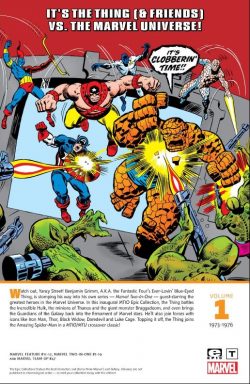
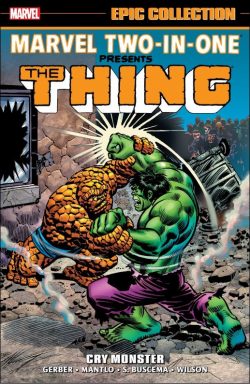
Marvel Two in One Epic Collection volume 1 1973-1976: Cry Monster


By Steve Gerber, Bill Mantlo, Len Wein, Mike Friedrich, Chris Claremont, Roy Thomas, Roger Slifer, Marv Wolfman, Scott Edelman, Tony Isabella, Jim Starlin, Gil Kane, Sal Buscema, Ron Wilson, George Tuska, Herb Trimpe, Bob Brown, Arvell Jones & various (Marvel)
ISBN: 978-1-3029-1332-8 (TPB)

Win’s Christmas Gift Recommendation: A Brash, Bold Cornucopia of Classic Comics Collaborations… 8/10

Imagination isn’t everything. As Marvel slowly grew to a position of dominance in the wake of losing their two most innovative and inspirational creators, they did so less by risky experimentation and more by expanding and exploiting proven concepts and properties.

The only real exception to this was their en masse creation of horror titles in response to the industry down-turn in super-hero sales – a move expedited by a rapid revision in the wordings of the increasingly ineffectual Comics Code Authority rules.

The concept of team-up books – an established star pairing, or battling – often both – with less well-selling company characters, was not new when Marvel decided to award their most popular hero the lion’s share of this new title, but they wisely left their options open by allocating an occasional substitute lead in the Human Torch. In those long-lost days, editors were acutely conscious of potential over-exposure – and since super-heroes were actually in a decline, they may well have been right.

After the runaway success of Spider-Man‘s collaborations in Marvel Team-Up, the House of Ideas reinforced the trend with a series starring bashful, blue-eyed Ben Grimm – the Fantastic Four‘s most iconic member – beginning with two test runs in Marvel Feature before graduating to its own somewhat over-elaborate title.

This compelling compendium – available in trade paperback and digital formats – gathers the contents of Marvel Feature #11-12, Marvel Two-In-One #1-19 and Marvel Team-Up #47, covering the period September 1973 – September 1976, and it all kicks off with a perennial favourite pairing as the Thing once more clashes with the Hulk in ‘Cry: Monster! (by Len Wein, Jim Starlin & Joe Sinnott from MF #11).

Here Kurrgo, Master of Planet X and the lethal Leader manipulated both blockbusting brutes into duking it out – ostensibly to settle a wager – but with the mighty minded, misshapen masterminds concealing hidden agendas…

That ever-inconclusive yet cataclysmic clash leaves Ben stranded in the Nevada desert where Mike Friedrich, Starlin & Sinnott promptly drop him in the middle of the ongoing war against mad Titan Thanos as Iron Man helps the Thing crush monstrous alien invaders in ‘The Bite of the Blood Brothers!’ (#12, November 1973): another spectacular and painfully pretty all-action punch-up.

Still stuck in the desert when the dust settles, Ben eventually treks to an outpost of civilisation just in time to be diverted to Florida in Marvel Two-In-One #1 (cover-dated January 1974) as Steve Gerber, Gil Kane & Sinnott magnificently reveal the ‘Vengeance of the Molecule Man!’ with Ben learning some horrifying home truths about what constitutes being a monster by battling with and beside ghastly, grotesque anti-hero Man-Thing.

With the second issue Gerber cannily trades a superfluous supporting character from his Man-Thing series to add some much-needed depth to the team-up title. ‘Manhunters from the Stars!’ pits Ben, old enemy Sub-Mariner (another series Gerber was currently writing) and the Aquatic Avenger’s powerful cousin Namorita against each other and aliens hunting the emotionally and intellectually retarded superboy Wundarr. Again a dynamically, intoxicatingly tale illustrated by Kane & Sinnott, this case also leaves the Thing as de facto guardian of the titanic teenaged tot…

Sal Buscema signed on as penciller with #3 as the Rocky Ranger joins the Man Without Fear ‘Inside Black Spectre!’: a crossover instalment of the extended epic then playing out in Daredevil #108-112 (in case you’re wondering, this action-packed fight-fest occurs between the second and third chapters) after which ‘Doomsday 3014!’ (Gerber, Buscema & Frank Giacoia) finds Ben and Captain America catapulted into the 31st century to save Earth from enslavement by the reptilian Brotherhood of Badoon, leaving Wundarr with Namorita for the foreseeable future…

The furious future-shocker concludes in MTIO #5 as the Guardians of the Galaxy (not the movie group) climb aboard the Freedom Rocket to help the time-lost heroes liberate New York before returning home. The overthrow of the aliens was completed by another set of ancient heroes in Defenders #26-29 (that’s the subject of a different review).

Marvel Two-In-One #6 began a complex crossover tale with the aforementioned Defenders as Dr. Strange and the Thing witness a cosmic event which begins with a subway busker’s harmonica and leads inexorably to a ‘Death-Song of Destiny!’ (Gerber, George Tuska & Mike Esposito) before Asgardian outcasts Enchantress and the Executioner attempt to seize control of unfolding events in #7’s ‘Name That Doom!’ (pencilled by Sal Buscema).

As they are thwarted by Grimm and the valiant Valkyrie, there’s enough of an ending here for casual readers, but fans and completists will want to hunt down Defenders #20 or Defenders Masterworks volume 3 for the full story…

Back here though, issue #8 teams Grimm and supernatural sensation Ghost Rider in quirkily compelling Yuletide yarn ‘Silent Night… Deadly Night!’ (Gerber, Buscema & Esposito) as the audacious Miracle Man tries to take control of a very special birth in a stable…

Gerber moved on after plotting Thor team-up ‘When a God goes Mad!’ for Chris Claremont to script and Herb Trimpe & Joe Giella to finish: a rather meagre effort with the Puppet Master and Radion the Atomic Man making a foredoomed power play, but issue #10 – by Claremont, Bob Brown & Klaus Janson – is a slice of inspired espionage action-intrigue with Ben and Black Widow battling suicidal terrorist Agamemnon who plans to detonate the planet’s biggest nuke in blistering thriller ‘Is This the Way the World Ends?’.

Marvel Two-In-One quickly became a kind of clearing house for cancelled series and uncompleted storylines. Supernatural series The Golem ran in Strange Tales #174, 176 & 177 (June-December 1974) before being summarily replaced mid-story by Adam Warlock, and MTIO #11 provided plotter Roy Thomas, scripter Bill Mantlo and artists Brown & Jack Abel to offer some spectacular closure when ‘The Thing goes South’: resulting in stony bloke and animated statue finally crushing the insidious plot of demonic wizard Kaballa.

Young Ron Wilson began his lengthy association with the series and the Thing in #12 as Iron Man and Ben tackle out of control, mystically-empowered ancient Crusader Prester John in ‘The Stalker in the Sands!’; a blistering desert storm written by Mantlo and inked by Vince Colletta, after which Luke Cage, Power Man pops in to help stop a giant monster in kI Created Braggadoom!, the Mountain that Walked like a Man!’ – an unabashed homage scripted by Roger Slifer & Len Wein – whilst Mantlo, Trimpe & John Tartaglione deliver a spooky encounter with spectres and demons in #14’s ‘Ghost Town!’ This moody mission was shared with exorcist Daimon Hellstrom, The Son of Satan and left Ben rattled for months to come…

Mantlo, Arvell Jones & Dick Giordano brought on ‘The Return of the Living Eraser!’: a dimension-hopping invasion yarn introducing Ben to Morbius, the Living Vampire, after which a canny crossover epic begins with the Thing and Ka-Zar plunging ‘Into the Savage Land!’ to dally with dinosaurs and defeat resource plunderers. The action then switches to New York as Spider-Man joins the party in MTIO #17 to combat ‘This City… Afire!’ (Mantlo, Sal Buscema & Esposito) after mutated madman Basilisk transports an active volcano from Antarctica to the Hudson River, with the cataclysmic conclusion (from Marvel Team-Up #47) following, wherein Mantlo, Wilson & Dan Adkins have the heroes finish off the epic and save the day in fine style with ‘I Have to Fight the Basilisk!’

Another short-changed supernatural serial is laid to rest in MTIO #18. ‘Dark, Dark Demon-Night!’ – Mantlo, Scott Edelman, Wilson, Jim Mooney & Adkins – sees enigmatic mystical watchdog The Scarecrow escape from its painted prison to foil a demonic invasion with the reluctant assistance of the Thing, after which Tigra the Were-Woman slinks into Ben’s life to vamp a favour and crush a sinister scheme by a rogue cat creature in ‘Claws of the Cougar!’ by Mantlo, Sal Buscema, & Don Heck.

That yarn ends the narrative thrills and chills for now, but there’s still room for a trove of house ads and original art by Kane & Wilson to delight and astound.

These stories from Marvel’s Middle Period are of variable quality but nonetheless represent an honest attempt to entertain and exhibit a dedicated drive to please. Whilst artistically the work varies from adequate to utterly superb, most fans of the frantic Fights ‘n’ Tights genre would find little to complain about.

Although not really a book for casual or more maturely-oriented readers there’s still buckets of fun on hand and young readers will have a blast, so why not to add this colossal comics chronicle to your straining superhero bookshelves?
© 1973, 1974, 1975, 1976, 2018 Marvel Characters, Inc. All rights reserved.

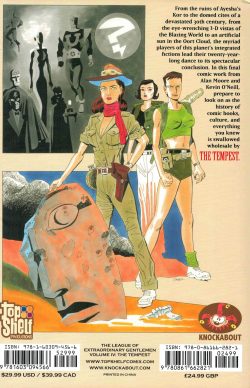
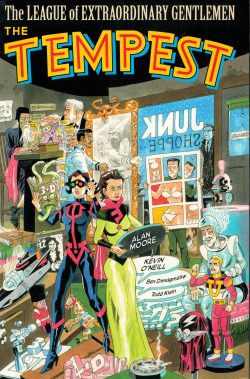
The League of Extraordinary Gentlemen: The Tempest


By Alan Moore & Kevin O’Neill, with Ben Dimagmaliw, Todd Klein, Charles Barnard, Christian LeBlanc, Joe Brown & various (Top Shelf/Knockabout)
ISBN: 978-0-86166-282-1 (HB)

Win’s Christmas Gift Recommendation: A Fantastical Celebration of All That’s Profoundly Us… 10/10

The Victorian era saw the birth of both popular and populist publishing, particularly the genres of fantasy and adventure fiction. Writers of varying skill unleashed unbounded imaginations, expounding personal concepts of honour and heroism, wedded unflinchingly to the innate belief in English Superiority. In all worlds – and even beyond them – the British Gentleman took on all comers for Right and Decency, viewing danger as a game and showing “Johnny Foreigner” just how that game should be played.

For all the problems this raises with modern sensibilities, many of the stories remain uncontested classics of literature and form the roadmap for all modern fictional heroes. Open as they are to charges of racism, sexism (even misogyny), class bias and cultural imperialism, the cream of them remain the greatest of all yarns.

In 1999, an august selection of just such intrepid prototypes were seconded by Alan Moore & Kevin O’Neill for a miniseries saying as much about our world as that long-gone one; craftily relating a captivating tale as compelling as any of its antecedents.

In short succession there was an inevitable sequel, once more pressing into service vampire-tainted Wilhelmina Murray, aged Great White Hunter Allan Quatermain, Invisible Man Hawley Griffin, the charismatic piratical genius Captain Nemo and both cultured Dr. Henry Jekyll and his bombastic alter-ego Mister Hyde. As the concept grew – seemingly of its own volition – it eventually encompassed the best and brightest of the planet’s fictive print pantheon from drama, books and comics.

The idea of combining shared cultural brands is not new: Philip Jose Farmer in particular spun many a yarn teaming such worthies as Sherlock Holmes, Doc Savage, Tarzan and their like; Warren Ellis succumbed to similar temptation in Planetary and Jasper Fforde worked literary miracles with the device in his Thursday Next novels, but the sheer impetus of Moore & O’Neill’s para-steampunk revisionism, rush of ideas (and the stunning, startling visuals that carry them) make this book (and all the previous ones) form an irresistible experience and absolute necessity for every fiction fan, let alone comic collector.

Now, after two decades and numerous further sequels and iterations – dotted like stations of the cross through periods of history both utterly imaginary and consensually real – the saga closes with a final chronicle pulling together all the strings of plot and parodies involving these beloved immortal characters, rendered in a startling array of styles from slapstick bigfoot cartoons to realistically-rendered girl’s comics to OTT, hyperkinetic Sci Fi pastiches, the doomed 1960s UK superhero boom and more. There’s even room – and necessity – for sections rendered in 3D (glasses included, kids!) and Fumetti photo stories. Oh, the debilitating force of that nostalgia!

This last volume focuses most ardently on the British comics canon, memorialising past monuments of mirth and mayhem through deftly managed pastiche and homage whilst also incorporating film and TV’s greatest icons as it draws its ever-fluctuating cast into a vast time-bending crisis designed by devious villains to end and remake all existences…

You don’t want me to spoil the deliriously crafted intricacies of this yarn but just let me throw some other names at you: Jerry Cornelius; Captain Universe; Ayesha; Justin – or is it Mark? – Tyme; Tommy Walls; Jason King; James Bond (all of them); the Purple Hood; Quatermass and a leather-clad 1960s daredevil dubbed Emma something, all interacting with subtly altered (curse you, intellectual properties laws) characters you know but can’t mention aloud…

As previously stated, each chapter (first released as six oversized comicbooks) is framed in the style of a bygone British periodical and begins with ‘Illustrated Masterpieces: The Tempest’ laying the trail as the wonders of the Earth are systematically destroyed, forcing a band of protagonists (no actual heroes here!) to undertake a fantastic voyage to stranger places and times in hope of averting impending Armageddon…

Further intrigue unfolds in ‘TV Tempest 2010: Adventures in the Present Century’ as forces malign and benign gather whilst ‘Mina – for Young Ladies’ further stirs the pot as pasts and futures collide with a most fragile present…

A rambunctious paean to Albion’s comedy capers comes via ‘Tempest – incorporating Thud! Gurgle! and Whimper!’, and our cheesy knockoff reprint era is channelled in ‘Blazing Worlds’ before trans-cosmic catastrophe is averted(ish) for earthlets and other sentients in Thrill-throbbing conclusion ‘2010 A.D.’

Since each chapter celebrates an era of homegrown tomfoolery, there’s opportunity for a well-drafted balancing of historical scales. Bringing a tear of injustice to most eyes is a linked prose series of potted biographies memorialising and championing some of our greatest creators.

Leo Baxendale, Frank Bellamy, Marie Duval, Ken Reid, Denis McLoughlin and Ron Turner were all uniformly and deliberately used, abused and written out of history in the name of corporate dominance, and here Al & Kev strike a blow in their name. After looking them up online, you can read the less studious impartial (and therefore more accurate and honest) appreciation of their talents, achievements and fates here…

Celebrating our long-cherished love affair with comic cuts, this epic wheeze treats us to a tantalising taste of gloriously cheap, tawdry and irresistibly wonderful pop entertainment, intended for momentary juvenile diversion, but which locked us all into our own childhoods forever.

An undeserved but so welcome treat for a lost generation of British comics apologists who can now hold their heads a little higher as all the weird, cheap, shamefully knocked off, knocked out yet secretly adored cartoon ephemera of childhood is granted a measure of validity and immortality.

It’s enough to make you join a library and read some other very interesting books…

The League of Extraordinary Gentlemen volume 4: The Tempest © & â„¢ 2019 Alan Moore & Kevin O’Neill. All Rights Reserved.
The League of Extraordinary Gentlemen: The Tempest will be released on November 28th 2019 and is available for pre-order now.
For more information and other great reads see Knockabout Comicsand Top Shelf Productions

Tamba, Child Soldier


By Marion Achard & Yann Dégruel & various; translated by Montana Kane (NBM)
ISBN: 978-1-68112-236-6 (HB album)

Win’s Christmas Gift Recommendation: Potent, Powerful, Unmissable… 9/10

It may be a wonderful world but modern Earth is far too often a terrible place, especially if you’re weak and powerless.

The global scandal and shame of children forcibly co-opted into paramilitary and terrorist groups is not a new phenomenon. Throughout history boys and girls have fought in adult wars. Comic books are full of them, but there’s two big differences: they all “volunteer” without being groomed by cruel power-obsessed scum and THEY’RE NOT REAL.

So prevalent and pernicious was the practise of African and Asian militias, religious groups and other factions (even governments), that in 2000 the civilised world agreed to an Optional Protocol on the involvement of children in Armed Conflict. The OPAC accord restricts armed forces recruitment to adults of 18 years or over and has become known as the Straight 18 standard.

It’s a good start but hasn’t stopped ambitious war-criminals and monsters raiding villages for kids, who they drug, beat and starve; enslaving and brutalising them to use as cannon fodder and shock troops in hope of securing their own evil ends.

Rather than concentrate on any specific case or example (there are so damned many) this stunning oversized (216 x 279 mm) full-colour hardback and/or digital book gathers and synthesises many true incidents into the dramatised testimony of Tamba Cisso: taken aged eight from his African village – along with all of his young friends – and forcibly inducted into a scavenging band of killers.

The specifics of the tragically documented events he participated in – and the unhappier fates of his fellow abductees – are revealed through the venue of his later testimony to an initially hostile crowd at a Commission for Truth and Reconciliation. Tamba’s account of everyday life as a reluctant warrior for a jumped-up rebel warlord is no less harrowing for being one step removed from our own world’s actual atrocities…

Acutely examining the greater effect of kidnappings on generations of citizens, Young Adults author Marion Achard (Je veux un chat et des parents normaux, Pourquoi je suis devenu une fille) brings bitterness, barely harnessed anger, righteous indignation and potent empathy to an appalling subject. Tamba, l’enfant soldat is her first graphic novel – hopefully not her last – rendered with vivid virtuosity and great subtlety by artist and animator Yann Dégruel (Genz Gys Khan, Sans Famille).

Augmenting their visual narrative is Achard’s text essay Child Soldiers: describing what happens to these shunned victims of violence and sharing some extremely disturbing facts and figures, and is augmented by features on Truth and Reconciliation Commissions and Professor Laure Borgomano’s (Department of Defense, NATO) breakdown of the purpose and functions of The UN High Commissioner for Refugees: UNHCR…

Compellingly engaging and boldly, beautifully illustrated, this is a chilling, sobering yet ultimately encouraging reading experience everyone with a stake in a less toxic future must seek out and share.
© 2018 Edition Delcourt. © 2019 NBM for the English translation.

For more information and other great and challenging reads see http://www.nbmpub.com/

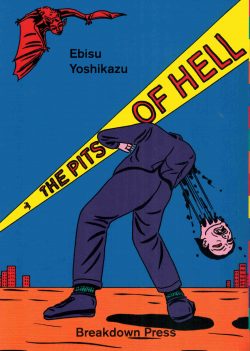
The Pits of Hell


By Ebisu Yoshikazu (Breakdown Press)
ISBN: 978-1-91108-108-1 (PB)

Win’s Christmas Gift Recommendation: Shocking, Momentous, Unmissable… 8/10

Please be warned: I’ll be using some harsh language further down: if you of your dependents are likely to be offended, please skip this review. You certainly won’t be comfortable reading the book we’re reviewing here…

If you’re one of those people who’s never read a manga tale, or who’s been tempted but discouraged by the terrifying number of volumes these tales can run to, here’s a delicious feast of fantasy fables complete in one book revealing all that’s best about comics from the East in one darkly digestible big gulp.

Although an industry of immense, almost incomprehensible variety, much of Japan’s output is never seen in western translation, so for us, most manga – divided into story genres we easily recognise – can be lazily characterised by a fast, raucous, over-stylised, occasionally choppy style and manner of delivery, offering peeks into the quirks of a foreign culture through coy sensuality, carefully managed action and “aw shucks” conviviality.

It’s not all like that.

This volume gathers emphatically eerie and definitely disturbing short stories for adults that originate from the nation’s rebellious heta-uma movement (equivalent to but not the same as our late 1970s Punk revolution), all crafted by a fringe creator who became a true national treasure…

Ebisu Yoshikazu began as an outsider: a self-trained manga maker who shunned the sleek polish of mainstream Japanese comics to craft deeply personal ant-art yarns, initially for avant-garde counter culture anthology style icon Garo and landmark experiment Jam, but later for many other magazines after his harsh material struck a chord with 1970s-1980s readers, increasingly reeling from social and economic change.

Mr. Yoshikazu was born in Amakusa, Kumamoto Prefecture in October 1947 and raised in Nagasaki, where he was fatefully shaped by the post war trauma that permeated the region and the country. Drawing comics from early on, he was especially influenced by the fantasy works of Osamu Tezuka and Mitsuteru Yokoyama, but as a teenager his life changed when he discovered the gekiga (“Dramatic Pictures”) comics sub-genre as well as American action movies.

He moved to Tokyo in 1970 and – while working menial jobs – began submitting stories to Garo in 1973. His bleak, violently surreal, dream-based efforts featured bizarre, antisocial situations and outcomes and found a welcome – if unpaid – home in the magazine. He became a fan favourite without his knowledge and when years later he finally released a compilation of his tales, was astonished to see it become a huge hit with many reprintings.

The creatively-driven working-class manga-maker – think more Harvey Pekar than Harvey Kurtzman – parlayed his growing fame as an outsider artist and misfit into mass-media celebrity, but latterly suffered a great loss of fame, prestige and revenue following a gambling scandal.

In Japan, commercial betting is illegal except in certain, highly proscribed and policed situations. That doesn’t bother Ebisu Yoshikazu who remains a proud advocate and champion of what many people consider a shameful addiction. His passion for wagers has shaped his life and continues to …

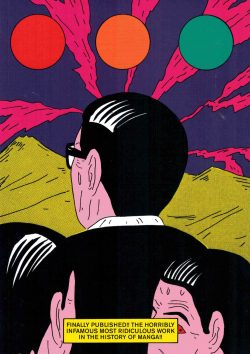
Heta-uma transliterates to “bad-good” or “bad but nice”: glorying in the power of raw, primitivist graphics and narratives that are seductively seditious whilst exploring uncomfortable themes, so please be warned that most of these nine early vignettes are brutally violent and also distressing on other, more intimate levels. If you’re looking for Western equivalents, go no further than the more excessive outings of Gary Panter and Johnny Ryan…

This potent tome reprints that first compilation in English and is preceded (or followed by – depending on your graphic orientation, as the comics portion of the book is traditional manga right to left, end to beginning format) by a series of text features including ‘Why is This So Good?’: a deconstruction of the stories by Garo editor Minami Shinbō from the 1981 original compilation.

‘About these Comics’ offers the author’s own thoughts on the material from 2016 and is followed by extended essay ‘Damn All Gamblers to the Pits of Hell’ by translator/editor Ryan Holmberg affording us not only history, context and insight into the artist but also gauging the effects of his works on the industry and society.

The stories begin with a shocking answer to classroom inattention in ‘Teachers Damned to the Pits of Hell’ after which a poor family hungrily await the results of father’s latest addictive session at the pachinko parlour in ‘Fuck Off’.

Many stories take a hard but always off-kilter look at employment and wage earning. ‘Workplace’ deals with a time when Yoshikazu worked as a sign designer’s much-abused assistant and vicariously, cathartically, depicts what the menial wanted most, whereas ‘Wiped Out Workers’ details a plague of selective narcolepsy that grips salarymen and other hapless toilers during their daily travails.

‘Tempest of Love’ addresses the imbalance and inequality of the sexes as a job-enhancing abacus class devolves into a ghastly crime scene, whilst a punter’s obsessive attention to the sanctioned boat races and his crucial bets result in a strange series of events that can only be explained by ‘ESP’…

More uncomfortable sexual tension is dangerously unleashed at the ‘Late Night Party’ provided by a smug boss before the spiralling cost of living sparks civil unrest and deadly consequences in ‘Battles without Honor and Humanity: A Documentary’.

The walk on the weird wild side then concludes with a phantasmagorical deluge of uncanny situations and crises as a worker takes his son for a walk in ‘Salaryman in Hell’

By no means a work of universal appeal, The Pits of Hell provides a stunning and revelatory look at the other side of Japanese comics: one no fan of the medium can afford to miss.
English edition © 2019 Breakdown Press. Translation and essay © 2019 Ryan Holmberg. All rights reserved.

Billionaires: The Lives of the Rich and Powerful


By Darryl Cunningham (Myriad Editions)
ISBN: 978-1-91240-822-1 (PB)

Win’s Christmas Gift Recommendation: A Timely Heads-Up for the Upcoming Spendfest Season… 9/10

There are books to read, books you should read – and some, perhaps, that you shouldn’t – and there are important books. The relatively new field of graphic novels has many of the first but still boasts precious few important books yet. Thankfully, British documentarian, journalist and cartoonist Darryl Cunningham seems to specialise in the latter…

It’s hard enough to get noticed within the industry (simply excelling at your craft is not enough) but when comics does generate something wonderful, valid, powerful, true to our medium yet simultaneously breaking beyond into the wide world and making a mark, the reviews from that appreciative greater market come thick and fast – so I’m not going to spend acres of text praising this forthright, potentially controversial and damning examination of Earth’s Newest (but hopefully not Last) Gods – the Super Rich.

Multi-disciplined artist Cunningham was born in 1960, lived a pretty British life (didn’t we all?) and graduated from Leeds College of Art. A regular on the Small Press scene of the 1990s, his early strips appeared in legendary paper-based venues such as Fast Fiction, Dead Trees, Inkling, Turn and many others.

In 1998, he & Simon Gane crafted Meet John Dark for the much-missed Slab-O-Concrete outfit and it remains one of my favourite books of the era. You should track it down or agitate for a new edition.

Briefly sidelining comics as the century ended, Cunningham worked on an acute care psychiatric ward: a period that informed 2011 graphic novel Psychiatric Tales, a revelatory inquiry into mental illness delivered as cartoon reportage.

When not crafting web comics for Forbidden Planet or on his creations Uncle Bob Adventures, Super-Sam and John-of-the-Night or The Streets of San Diablo, he’s been consolidating a pole position in the field of graphic investigative reporting; specifically science history, economics and socio-political journalism through books such as Science Tales, Supercrash: How to Hijack the Global Economy, Graphic Science: Seven Journeys of Discovery and The Age of Selfishness: Ayn Rand, Morality and the Financial Crisis.

His latest offering details the rise and pernicious all-pervasive influence of three icons of the plutocratic ideal while debunking such self-deluding and damaging public myths as “self-made”, “coming from nothing” or “fair and honest”.

It opens with a pictorial Introduction outlining how late 19th and early 20th century robber barons of the Gilded Age set the scene for the rise of today’s financial overlords – and how governments responded to them…

Delivered in clear, simple, easily accessible imagery, Cunningham then deconstructs the carefully crafted legends and official biographies of media mogul Rupert Murdoch, energy barons Charles & David Koch and internet retail supremo Jeff Bezos with an even-handed fairness I’m not sure any other investigative author could match – or would want to.

Via an avalanche of always-attributable, deftly delineated facts and reported events, the artist delivers the very opposite of hard-hitting polemic, instead massaging and lathering readers with an ocean of appetising data that allows us make up our own minds about proudly ruthless apex business predators who have controlled governments, steered populations and reshaped the planet in their quest for financial dominance.

Best of all, Cunningham even has the courage to offer bold – and serious – suggestions on how to rectify the current state of affairs in his Afterword, and – should anybody’s lawyers or tax accountants be called upon – backs up all his cartoon classwork with a vast and daunting list of References for everything cited in the book.

Comics has long been the most effective method of imparting information and eliciting reaction (that’s why assorted governments and militaries have used them for hard and soft propaganda over the last century and a half), and with Billionaires: The Lives of the Rich and Powerful we finally see that force being used against today’s greatest threat to continued existence…
© Darryl Cunningham 2019. All rights reserved.
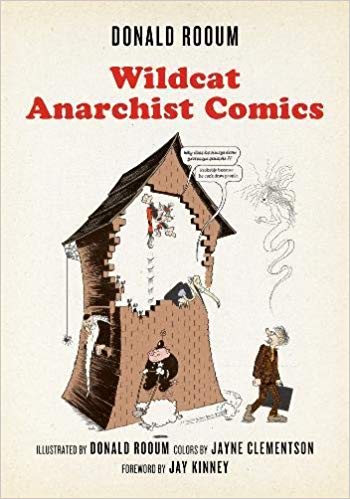
Wildcat Anarchist Comics


By Donald Rooum & guests (PM Press)
ISBN: 978-1-62963-1-271 (PB)

Win’s Christmas Gift Recommendation: Because the Good Fight Never Ends… 10/10

I’m afraid I’m going to overshare a bit here.

This summer was a time of great personal upset and travail for me and mine: a succession of unwelcome events that culminated in the death of a beloved pet, one family funeral, an eventually happily-resolved health scare and another literally hours-from-death life-saving heroic intervention by doctors and nurses of the National Health Service.

How any plutocratic, greedy, self-serving scum can denigrate, gaslight or deny these true heroes decent pay and conditions and job security in the name of economy or ideology is beyond my capacity to understand and I will mock and maim any agent of authority seeking to sell them out…

Sorry: it’s all still a bit raw.

However, the actual point is that – in the throes of trying to maintain an even keel and honour my personal and professional commitments over that period – I managed to completely miss the passing of one of my oldest friends and greatest mentor. I only found out that Donald Rooum died a few days ago, and it’s really preying on me now.

Thankfully, I was raised Catholic and have decades of early programming in accepting and forever internalising burdensome guilt, so I’m dealing it with it my own manner. This is part of it…

Donald Rooum (20th April 1928 – August 31st 2019) became an Anarchist in 1944 and fought the good, reasoned, acerbic but never strident fight for his particular non-political ethical standpoint since the 1950s – most notably, in cartoon form, where he used that most devastating of weapons, the pen, to deliver his payloads of well-reasoned integrity and intellectual challenge.

He was also a thinker, educator, lecturer and tireless seeker after knowledge, adding degrees in Life Sciences to his ever-expanding list of qualifications (which also included Designer, Calligrapher and Historian) before, after years of writing learned articles, becoming a Fellow of the Institute of Biology at the age of 76.

From 1952 onwards, he enjoyed a long career as a cartoonist, providing gags and strips for The Syndicalist, She, The Daily Mirror, Private Eye, The Spectator and many more. He authored many books, illustrated countless articles and bought all of us students in his wake over generations many pints when we couldn’t, and even after we could.

One of his last was Wildcat Anarchist Comics (available in both traditional paperback and cutting edge digitality) which combined a long-overdue and far too short autobiography with a selection of his decades of cartoon triumphs. Donald usual worked in black-&-white but in this compilation most of the material was diligently coloured by Jayne Clementson, making it even more accessible to our overseas cousins.

The book opens with a Foreword by Jay Kinney (Founder and Editor of legendary underground publication Anarchy Comics and a man also still fighting The Fight) before ever gracious and humble Donald uses an extended, copiously illustrated Introduction to share the salient points of his remarkable life and career with typically understated deference.

‘How and Why I Became an Anarchist’ provides historical background, revelatory moments and quite a few laughs before ‘More autobiographical stuff (in case anyone might be interested)’ traces his early exploits, allowing him to slip into lecture mode for ‘The anarchist revolution is now’.

If you check his (extremely fair but too short) Wikipedia entry you’ll see that he was responsible for exposing corruption and changing British Case Law. ‘My fifteen minutes of fame: The Challenor case’, ‘Regina v. Rooum. The Queen versus me.’, ‘Too much other news’ and ‘The public inquiry and the James Report’ gives his side of a time in 1963 when a high-ranking police officer tried (not for the first time and too often successfully) to frame CND protesters, anti-monarchists and anyone else he didn’t like with planted evidence.

Donald was instrumental in the downfall of said corrupt policeman and the changing of English Law. Don’t take my word for it, look it up. It’s still – for now – a free country. When you have checked, then you’ll know who to thank…

Donald Rooum was a force in comics, in education, in science and in the Anarchist movement for longer than I’ve been alive. As well as sharing his knowledge and honing the skills of generations of creative people and producing some of the most gently powerful and trenchant political cartooning of the last half century, he was actually a wonderfully interesting person to talk to – he would engage with anyone: you couldn’t stop him – and we’re all the poorer for his passing.

He was also a bloody fine cartoonist whose drawings and unique lettering skills are overwhelmingly entertaining. You can see that from the merest selection of his work culled from many books and strips that fills the rest of this book.

The majority of the section dubbed The Comics is filled with his signature star, eponymous impatient instigator Wildcat. She is a strident, impatient and unstoppable anthropomorphic feline who has spent decades on the pages of Freedom magazine, puncturing pomposity, inviting debate – and also abruptly ending it – whilst attempting to educate the willing in the ways the world works. She hangs around with a strange crowd of meek but dedicated, intellectual souls such as The Free Range Egghead who offers counterpoint and calming tones. Guess who usually has the last word… or action…

The collection opens with a history lesson or two and some views of alternative politics all delivered in a gentle, charming yet tellingly informative and subtly subversive manner. The jokes don’t forget to be funny and more importantly, there are no blind spots. Anarchists are as good a target as any Establishment or Vested Interest if the aim is to skewer pomposity, injustice or stupidity.

The Enemy is exemplified as Governments, Police, Big Business, The Church and smug Know-It-Alls of all nations, but there are always telling shots at Anarchists themselves – who, as you might suspect, are usually their own worst enemies if there are more than three in any location at once.

The truly amazing – and most depressing – thing is not the superb drawing talent displayed nor even the range of subjects that fall under the bellicose scrutiny of his team of lampooning and lambasting characters. It is that the issues Rooum and his occasional collaborators highlight and skewer never go away. The names and faces of political and industrial scoundrels and mountebanks may change, but the mistakes and problems they create just keep going.

The collection An Anarchist Alphabet is reproduced in its entirety: a discourse and primer on the true meaning and terminology of the work and society as viewed from a purely Anarchist perspective.

Just for the record: since the strips have to spend so much time clarifying this point, I will too. Suspend preconceptions you’ve grown used to. Actual Anarchism is the belief and aspiration that “Society should be a system where there is no Government and Social Relationships are all voluntary.” And while I’ve got the Quotation marks key under my thumb, here’s a couple from the book itself…

“Boss: one who directs, controls or dominates others” and “Government: body of persons who direct, control or dominate a state or other organisation”

Under the guise of a slide show lecture in a church hall, we see some funny and thought-provoking alternatives to commercialism and globalism, and the discussion portion after the lesson continues the mirth with worth.

Clever, challenging, and potentially life-changing: Surely this is what all art dreams of being? And when it makes you laugh too? This alone is a must-have item for any child of the 21st century.

We take a trip into history next as ‘Spartapuss’ gives a long view on the struggle for autonomy and self-reliance before dipping into pertinent paradigms from Anarchists Against Bombs where all the power and vitriol of his deceptively gentle gaze and accessible penmanship target the Arms Industry and the dubious political processes that equate freeing the victims of brutal oppression with blowing them up before their oppressor can get around to doing it themselves.

More deftly-drafted diatribes follow as we prowl the corridors of power and revisit ‘The Big Bang’ and even get the graphic lowdown on Challenor’ before moving on to other triumphs in The Strips.

‘Gandaft the Famous Wizard’ offers less polemical laughs yet still managed to gather controversy after ‘Gandaft’s Garden’ was created for 1987 comics collective chronicle Outrageous Tales from the Old Testament. The tale reinterprets the Christian creation myth with typically gentle savagery and wit, and sees a hairy bloke in a big hat standing in for the Big Man in the Sky…

One of Donald’s longest gigs was delineating the wry adventures of ‘Sprite’: a fairy of Shakespearean mien who debuted in The Skeptic in 1987 and just kept on charming and bewildering the readership.

Wrapping up the show is a canny, politically shaded reinterpretation of the Rumpelstiltskin fairy story as ‘The Tale of the Straw Boggart’ reveals the true human costs and rewards of trying to buy love…

This superb book is a smart, incisive primer for a brilliant and dedicated creator’s treasure trove of cartoon gold. It never forgets that you have to be funny as well as sharp if you want to get your message to stick.

We should cluster-bomb Westminster and all Fifty States (I’m assuming of course that it will still be 50 by the time you read this) of the USA with copies of this book and every election campaign should begin with televised selected readings therefrom. Yeah, Right, If Only…

Just remember, Anarchism is about taking responsibility, not taking charge. I’m trusting you to get your own copy of this book, read it often and tell everyone you know about it.
But please, do it politely and honestly. Just like Donald would.
© Donald Rooum. This edition © 2016 PM Press. All rights reserved.
Avengers Marvel Masterworks volume 14


By Steve Englehart, Roy Thomas, Sal Buscema, Dave Cockrum, Joe Staton, George Tuska, Don Heck & various (Marvel)
ISBN: 978-0-7851-8805-6 (HB)

The Avengers have always proved that putting all one’s star eggs in a single basket pays off big-time: even when all Marvel’s classic all-stars such as Thor, Captain America and Iron Man are absent, it merely allows the team’s lesser lights to shine more brightly.

Of course, all the founding stars were regularly featured due to the rotating, open door policy which means that every issue includes somebody’s fave-rave – and the boldly grand-scale impressive stories and artwork are no hindrance either.

This monumental tome (available in hardback and digital editions) collects the team’s world-saving and universe-preserving from issues #129-135 of their monthly comic book, plus Giant-Size Avengers #2-4 – spanning November 1974 through June 1975 – and sees scripter Steve Englehart explore the outer limits of Marvel history and cosmic geography as he begins an epic revelation of universal structure, the beginnings of Marvel time and the formative years of some of the most intriguing characters in comics…

Preceded by his reminiscent commentaries and secrets of his cognitive process in a fulsome Introduction, the drama opens with issue #129’s ‘Bid Tomorrow Goodbye!’ (illustrated by Sal Buscema & Joe Staton) as Kang the Conqueror appears, determined to possess the legendary female figure he calls the Celestial Madonna.

Apparently, this anonymous creature will birth the saviour of the universe, and since no records survive disclosing which of the three women in Avengers Mansion at that crucial moment (mutant sorcery student Scarlet Witc, martial artist Mantis and aged witch Agatha Harkness) she actually is, the time-reaver is resolved to abduct all three and forcibly make himself the inevitable father of the child…

This time, not even the assembled Avengers can stop him and, after crushing and enslaving them, Kang makes off with his hostages, leaving only the swiftly declining Swordsman free to contest him…

The tale continues into Giant-Size Avengers #2 with ‘A Blast from the Past!’ (rendered by Dave Cockrum) as reluctant returnee Hawkeye rushes to the team’s rescue, reuniting with old adversary/mentor Swordsman and enigmatic entity Rama-Tut – who eventually reveals himself as Kang’s reformed future self…

Against all odds, the merely mortal heroes manage to free the enslaved Avengers and rout the unrepentant Kang – but only at the cost of Swordsman’s life…

Avengers #130 poses ‘The Reality Problem!’ (Sal B & Staton) depicting the heartbroken and much-chastened Mantis joining the team in Vietnam to investigate her mysteriously clouded past, only to be drawn into pointless combat with Communist exiles and former Avenger foes Titanium Man, Radioactive Man and Crimson Dynamo thanks to the devious manipulations of petty sneak thief The Slasher…

Brief but heated battle concluded, the origin trail then leads to ‘A Quiet Half-hour in Saigon!’ during which the American Adventurers are again attacked by Kang who traps them in Limbo and unleashes a macabre Legion of the Unliving – comprising enslaved dead heroes plucked from the corridors of time – against them…

With yet another chronal villain Immortus added to the mix, ‘Kang War II’ sees temporarily resurrected heroes and villains Wonder Man, 1940’s android Human Torch, the Monster of Frankenstein, martial arts assassin Midnight, the actually ghostly Flying Dutchman and Baron Zemo decimate the Avengers and the trauma and tragedy are further exacerbated as Mantis keeps seeing the spectre of her deceased lover…

This absorbing thriller by Englehart, Roy Thomas, Sal Buscema & Staton segues inexorably into Giant-Size Avengers #3’s ‘…What Time Hath Put Asunder!’ Illustrated by Cockrum & Joe Giella, it shows Earth’s Mightiest Heroes pulling victory from the ashes of defeat and receiving a unique gift from one of the assembled Masters of Time…

Avengers #133 travels to ‘Yesterday and Beyond…’ (by Englehart, Sal B & Staton) as the shocked heroes accompany Mantis to the beginnings of recorded Galactic history and the unravelling of her true past, whilst Vision is separately dispatched to glimpse his own obscure and complex origins; a double quest which encompasses both the Kree and Skrull empires, the previously defeated Star-Stalker, the long-deceased Priests of Pama, Thanos and the telepathic Titan dubbed Moondragon, as well as a goodly portion of classic superhero history in ‘The Times That Bind!’ before #135 reveals that ‘The Torch is Passed!’ (limned by George Tuska & Frank Chiaramonte), before bringing all the disparate elements together in Giant-Size Avengers #4.

‘…Let All Men Bring Together’ (art by Don Heck & John Tartaglione) brought a satisfactory conclusion to the long-standing and pitfall-plagued romance between the Scarlet Witch and Vision and detailed another, far more cosmic union with a brace of weddings and the ultimate ascension of the Celestial Madonna – even though demonic extra-dimensional despot Dormammu attempts to spoil the celebrations…

Supplementing the circumstances above described, this collection also offers contemporary features from Marvel’s FOOM magazine #12 which spotlighted the romance and weddings with a vision cover by John Buscema & P. Craig Russell, back cover image by Paty (Cockrum) & Al Milgrom; an overview of the awesome android in ‘Visions’ and ‘Vision, This is Your Life!’ and David Anthony Kraft’s ‘The Scarlet Witch: Meditations on a Ms.’ – all including early art contributions from John Byrne, Paty, Dave Wenzel and an extended family pin-up.

Also on view are a Charley Parker spoof strip starring ‘The Visage’, extended interviews ‘Steve Englehart Speaks!: Journey to the center of a Vision’ and ‘Roy Thomas Speaks!: Journey to the center of a Vision’, plus the cover to all-reprint Giant-Size Avengers #5, house ads, original cover art by Dave Cockrum and interior pages by Sal Buscema & Staton and Tuska & Chiaramonte as well a gallery of covers from previous collections dedicated to the Celestial Madonna…

Roy Thomas and Steve Englehart were at the forefront of Marvel’s second generation of story-makers, brilliantly building on and consolidating the compelling creation of Stan Lee, Jack Kirby & Steve Ditko: spearheading and constructing a logical, fully functioning wonder-machine of places and events that so many others were inspired by and could add to. Between them they also showed how much more graphic narratives could become and these terrific tales are perfect examples of superhero sagas done just right.

Don’t trust my opinions; check out the wonderment for yourselves…
© 1974, 1975 2006 Marvel Characters, Inc. All rights reserved.