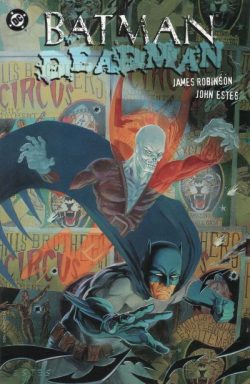
Batman/Deadman: Death and Glory


By James Robinson & John Estes (DC Comics)
ISBN: 978-1-84856-213-4 (HB)                    978-1-56389-228-8 (TPB)

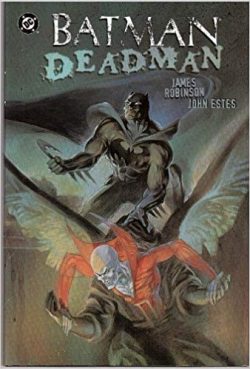
Everybody thinks they know Batman but to only a select few are the secrets of assassinated trapeze artist Boston Brand also revealed. An ordinary man in a brutal, cynical world, Brand was a soul in balance until killed as part of a pointless initiation for a trainee assassin.

When the unlucky aerialist died, instead of going to whatever reward awaited him, Rama Kushna, spirit of the universe, offered him the chance to solve his own murder. That opportunity evolved into an unending mission to balance the scales between good and evil in the world. The ghost is intangible and invisible to all mortals, but has the ability to “walk into” living beings, possessing and controlling them.

Gotham City: Batman gradually regains consciousness, realising he is facing a squad of armed, trigger-happy police and holding a knife to the throat of a hostage. The scene is a nightclub-turned-charnel house and all evidence before the hero’s widened eyes indicates that he is the murderous culprit…

Suddenly clear-headed and rational, he drops his victim and escapes the SWAT teams, determined to find out what has happened since he lost consciousness. Stepping broadly out of character, Batman uses magical items taken from villainous sorcerer Felix Faust to perform an eldritch rite and snags his prime suspect, Boston Brand. Unfortunately, old comrade Deadman is not the guilty party, but does reveal that a rich man who has sold his soul to the devil is responsible for all the Dark Knight’s woes.

Meanwhile, Albert Yeats, terminally ill and imminently dying, is running for what’s left of his life, hunted by things he doesn’t know and can’t understand…

Determined to renege, Frederick Chaplin has offered another’s soul in exchange for his hellbound one, and the devil has accepted. Yeats had been chosen by the universe to reincarnate as the Messiah in his extremely imminent next life, but that can’t happen if he’s paying Chaplin’s tab in the Inferno.

Deadman has been watching over Yeats until he safely passes, but when Batman is first possessed and subsequently distracts the Ghostly Guardian with his spell, Yeats is left alone and unprotected…

Now the kid is in the wind and the heroes must find and shield him long enough to die safely: a task complicated by an entire city hunting what they still think is a murderous Bat-Maniac, whilst the real possession-killer – a phantom, satanic counterpart to Deadman called the Clown who has spread terror and death for 70 years – is loose to spread his own unholy kind of havoc…

Intriguing and pretty, but lacking much of the emotional punch of earlier Batman/Deadman pairings, Death and Glory looks great even if it feels rather dispirited and glib in its attempts to blend urban horror, all-out chase action, cod-religion and hidden histories with a millennial feel-good factor. The result is a top-rate outing for Boston Brand but a rather forced and unlikely performance from the Dark Knight.

Nevertheless, fans of both heroes will find lots to love here and Estes’ painted illustration will win the approval of most comic art lovers. This book is still available through physical and online outlets, in both paperback and hardcover editions but not yet as digital delight…
© 1996 DC Comics. All Rights Reserved.

Nova Classic volume 1


By Marv Wolfman, Len Wein, John Buscema, Sal Buscema, Ross Andru, Carmine Infantino Joe Sinnott & various (Marvel)
ISBN: 978-0-7851-6028-1 (TPB)

By 1975 the first wave of fans-turned-writers were well ensconced at all the major American comic-book companies. Two fanzine graduates, Len Wein and Marv Wolfman, had achieved stellar successes early on, and then risen to the ranks of writer/editors at Marvel, a company in trouble both creatively and in terms of sales.

After a meteoric rise and a virtual root-&-branch overhaul of the industry in the 1960s, the House of Ideas – and every other comics publisher except Archie – were suffering from a mass desertion of fans who had simply found other uses for their mad-money.

Whereas Charlton and Gold Key dwindled and eventually died and DC vigorously explored new genres to bolster their flagging sales, Marvel chose to exploit their record with superheroes: fostering new titles within a universe it was increasingly impossible to buy only a portion of…

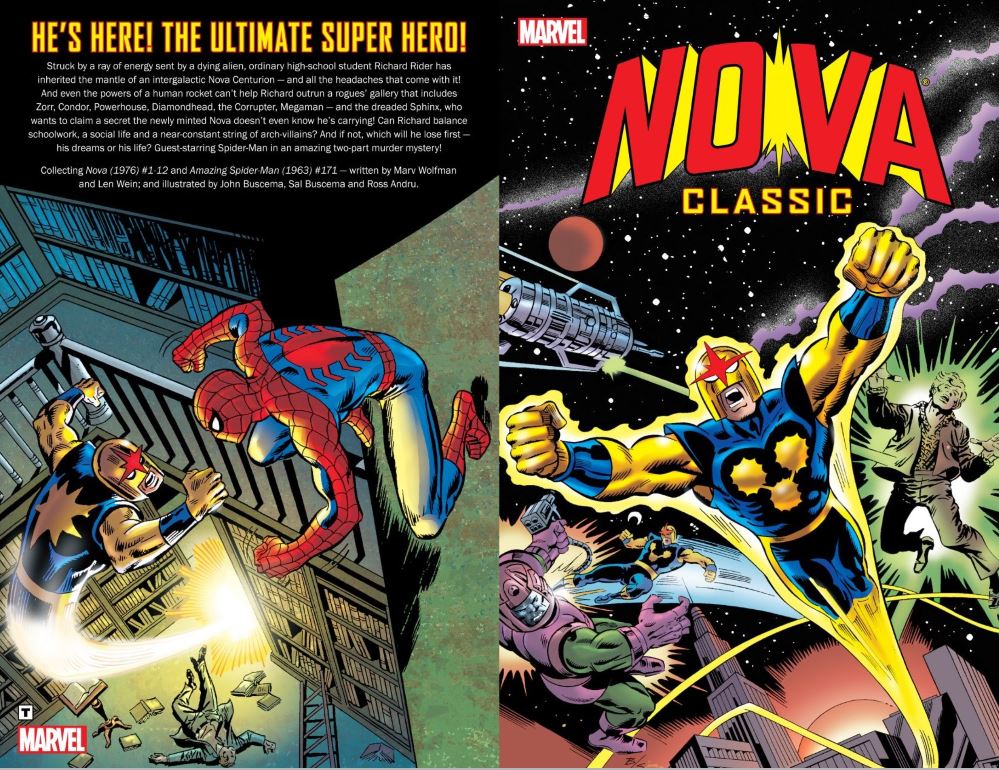
As seen in this no-nonsense compilation collecting the first dozen issues plus a crossover with Amazing Spider-Man #171 (September 1976-August 1977), The Man Called Nova was in fact a boy named Richard Rider. The new kid was a working-class teen nebbish in the tradition of Peter Parker – except he was good at sports and bad at learning – who attended Harry S. Truman High School, where his strict dad was the principal.

His mom worked as a police dispatcher and he had a younger brother, Robert, who was a bit of a genius. Other superficial differences to the Spider-Man canon included girlfriend Ginger and best friends Bernie and Caps, but he did have his own school bully, Mike Burley…

An earlier version, “Black Nova” had apparently appeared in the Wolfman/Wein fan mag Super Adventures in 1966, but with a few revisions and an artistic make-over by the legendary John Romita (Senior), the “Human Rocket” was launched into the Marvel Universe in his own title, beginning in September 1976, ably supported by the illustration A-Team of John Buscema & Joe Sinnott.

‘Nova’ – which borrowed as heavily from Green Lantern as the wallcrawler’s origin – was structured like a classic four-chapter Lee/Kirby early Fantastic Four tale, and rapidly introduced its large cast before quickly zipping to the life-changing moment in Rider’s life when a colossal star-ship with a dying alien aboard transfers to the lad all the mighty powers of an extraterrestrial peacekeeper and warrior.

Centurion Rhomann Dey was tracking a deadly marauder to Earth. Zorr had already destroyed the warior’s idyllic homeworld Xandar, but the severely wounded, vengeance-seeking Nova Prime was too near death and could not avenge the genocide.

Trusting to fate, Dey beams his powers and abilities towards the planet below where Rich is struck by an energy bolt and plunged into a coma. On awakening, the boy realises he has gained awesome powers… and the responsibilities of the last Nova Centurion.

The tale is standard origin fare beautifully rendered by Buscema & Sinnott, but the story really begins – after text feature Nova Newsline! – with #2’s ‘The First Night of… The Condor!’ as Wolfman, playing to his own strengths, introduces an extended storyline featuring a host of new villains whilst concentrating on filling out the lives of the supporting cast.

There’s still plenty of action as the neophyte hero learns to use his new powers (one thing the energy transfer didn’t provide was an instruction manual) but battles against winged criminal mastermind Condor and his enigmatic, reluctant pawn Powerhouse only lead the green hero into a trap…

Nova #3 debuts another brutal super-thug in ‘…The Deadly Diamondhead is Ready to Strike!’ (illustrated by new art-team Sal Buscema & Tom Palmer), but the battles are clearly not as important as laying plot-threads for a big event to come. The next issue

features the first of many guest-star appearances – and the first of three covers by the inimitable Jack Kirby.

‘Nova Against the Mighty Thor’ introduces The Corruptor: a bestial being who transforms the Thunder God – with one magic touch – into a raging berserker whom only the new kid on the block can stop, before ‘Evil is the Earth-Shaker!’ pits the lad against subterranean despot Tyrannus and his latest engine of destruction, although a slick sub-plot concerning the Human Rocket’s attempt to become a comicbook star still delivers some tongue-in-cheek chuckles to this day…

Issue #6 saw those long-laid evil mastermind plans begin to mature as Condor, Diamondhead and Powerhouse return to capture Nova, whilst their hidden foe is revealed in the Frank Giacoia inked ‘And So… The Sphinx!’

The Egyptian-themed bad guy is another world-class, immortal impatiently awaiting his turn to conquer the world…

Meanwhile, young Caps has been abducted by another new nasty who would eventually make big waves for the Human Rocket….

‘War in Space!’ sees Nova a brainwashed ally of his former foes in an invasion of Rhomann Dey’s still orbiting star-ship. The awesome craft will be an invaluable weapon in the encroaching war with the Sphinx, but the boarding raid results in Nova being marooned in deep space once his mind clears.

On narrowly escaping, Rider finds himself initially outmatched and outfought by Caps’ kidnapper in ‘When Megaman Comes Calling… Don’t Answer!’: a tumultuous, time-bending epic that concludes in #9’s ‘Fear in the Funhouse!’

Nova #10 began the final (yeah, right) battle in ‘Four Against the Sphinx!’ with Condor, Diamondhead and Powerhouse in all-out battle against the immortal mage whilst the hapless Human Rocket is caught in the crossfire, after which ‘Nova No More’ focuses on the hero’s short-term memories being removed to take him out of the game. The tactic only partially works since he’s back for the next issue’s classy crossover with the Spectacular Spider-Man.

Closing out this collection ‘Who is the Man Called Photon?’ is by Wolfman, Sal Buscema & Giacoia: teaming the neophyte hero with the much more experienced webslinger in a fair-play murder mystery, after Rich Rider’s uncle is killed by a costumed thief.

However, there are ploys within ploys occurring and after the mandatory hero head-butting session, the kids join forces and the mystery is dramatically resolved in Amazing Spider-Man #171’s ‘Photon is Another Name For…?’ courtesy of Len Wein, Ross Andru & Mike Esposito.

Enthusiastic and action packed, this tome offers lots of competent, solid entertainment and beautiful superhero art and Nova has proved his intrinsic value by returning again and again. If simple, uncomplicated Fights ‘n’ Tights fiction is what you want, look no further.
© 1976, 1977, 2013 Marvel Characters, Inc. All rights reserved.

Crisis on Multiple Earths volume 1


By Gardner Fox, Mike Sekowsky, Bernard Sachs & Sid Greene (DC Comics)
ISBN: 978-1-56389-895-2

As I’ve frequently mentioned before, I was one of the “Baby Boomer” crowd which grew up with Julie Schwartz, Gardner Fox and John Broome’s tantalisingly slow reintroduction of Golden Age superheroes during the halcyon, eternally summery days of the early 1960s. To me those fascinating counterpart crusaders from Earth-Two weren’t vague and distant memories rubber-stamped by parents or older brothers – they were cool, fascinating and enigmatically new.

…And for some reason the “proper” heroes of Earth-One held them in high regard and treated them with obvious deference…

The transcendent wonderment began, naturally enough, in The Flash; pioneering trendsetter of the Silver Age Revolution. After successfully ushering in the triumphant return of the superhero concept, the Scarlet Speedster – with Fox & Broome at the writing reins – set an unbelievably high standard for costumed adventure in sharp, witty tales of science and imagination, always illustrated with captivating style and clean simplicity by Carmine Infantino.

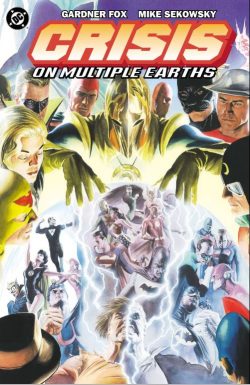
The epochal epic that literally changed the scope of American comics forever was Fox’s ‘Flash of Two Worlds’ (Flash #123 September 1961, and reprinted in loads of places, but not here): introducing the concept of alternate Earths to the continuity and by extension the multiversal structure of the future DCU as well as all the succeeding cosmos-shaking yearly “Crisis” sagas that grew from it.

Moreover, where DC led, others followed…

Received with tumultuous acclaim, the concept was revisited months later in Flash #129 which also teasingly reintroduced evergreen stalwarts – Wonder Woman, the Atom, Hawkman, Green Lantern, Doctor Mid-Nite and Black Canary: venerable members of the fabled Justice Society of America. Clearly Editor Schwartz had something in mind…

That tale directly led into the veteran team’s first meeting with the Justice League of America and the start of an annual tradition. When ‘Flash of Two Worlds’ brought us the notion of Infinite Earths and multiple iterations of costumed crusaders, public pressure had begun almost instantly to agitate for the return of the Greats of the “Golden Age”. The Editorial powers-that-be were hesitant, fearing too many heroes would be silly and unmanageable, or worse yet, put readers off. If they could see us now…

These innovative adventures generated an avalanche of popular and critical approval (big sales figures, too) so inevitably the trans-dimensional tests led to the ultimate team-up in the summer of 1963.

This gloriously enthralling volume – available in trade paperback and digital incarnations – is the first of a glorious sequence of collections celebrating Infinite Diversity in Infinite Costumes (extra fanboy kudos if you get where I filched that from!) and re-presents the first four JLA/JSA convocations: stunning superhero wonderments which never fail to astound and delight. It also comes with context-conveying Introduction ‘1 & 2 = Crisis’ from wonder-scribe Mark Waid detailing even more cool facts behind the phenomenon…

The comic book catharsis commences with the landmark ‘Crisis on Earth-One’ and ‘Crisis on Earth-Two’ (from Justice League of America #21-22, August & September 1963) combining to form one of the most important stories in DC history and arguably one of the most crucial tales in American literature: at least the stuff with pictures in it.

Written by Fox and compellingly illustrated by Mike Sekowsky & Bernard Sachs, the yarn finds a coalition of assorted villains from each Earth plundering at will, meeting and defeating the mighty Justice League before insufferably imprisoning them in their own secret mountain HQ…

Temporarily helpless, “our” heroes contrive a desperate plan to combine forces with the champions of another Earth to save the world – both of it – and the result is pure Fights ‘n’ Tights majesty.

It’s impossible for me to be totally objective about this saga. I was a drooling kid in short trousers when I first read it and the thrills haven’t diminished with this umpty-first re-reading.

This is what superhero comics are all about!

The buying public clearly agreed and one year later ‘Crisis on Earth-Three’ and ‘The Most Dangerous Earth of All!’ (Justice League of America #29-30) reprised the team-up of the Justice League and Justice Society, when the super-beings of a third alternate Earth discover the secret of trans-universal travel.

Unfortunately, Ultraman, Owlman, Superwoman, Johnny Quick and Power Ring are villains on a world without heroes who see the costumed crime-busters of the JLA/JSA as living practise dummies to sharpen their evil skills upon.

With this cracking thriller the annual summer get-together became solidly entrenched in heroic lore, giving fans endless entertainment for years to come and making the approaching end of school holidays less gloomy than they could have been.

(A little note: although the comic cover-date in America was the month by which unsold copies had to be returned – the “off-sale” deadline – export copies to Britain travelled as ballast in freighters. Thus, they usually went on to those cool, spinning comic-racks in the actual month printed on the front. You can unglaze your eyes and return to the review proper now, and thank you for your patient indulgence of an old and misty-eyed man…)

The third annual event was a touch different; a largely forgotten and rather experimental tale wherein the educationally-challenged and extremely larcenous Johnny Thunder of Earth-1 wrests control of the genie-like Thunderbolt from his otherworld counterpart: employing its magical powers to change the events which created of all Earth-1’s superheroes.

With Earth-1 catastrophically altered in #37’s ‘Earth – Without a Justice League’, it’s suddenly up to the JSA to save the day in a gripping battle of wits and power before Reality is re-established in #38’s concluding chapter ‘Crisis on Earth-A!’.

Veteran inker Bernard Sachs retired before the fourth team-up, leaving the amazing Sid Greene to embellish the gloriously whacky saga that closes this tome: one springing out of the global “Batmania” craze engendered by the Batman television series…

A wise-cracking campy tone was fully in play, acknowledging the changing audience profile and this time the stakes are raised to encompass the destruction of both planets in ‘Crisis Between Earth-One and Earth-Two’ and ‘The Bridge Between Earths’ (Justice League of America #46-47, August & September 1966).

Here a bold – if rash – continuum warping experiment drags the twin sidereal worlds towards an inexorable hyper-space collision. Meanwhile, making matters worse, an awesome anti-matter being uses the opportunity to break into and explore our positive-matter universe whilst the heroes of both worlds are distracted by the destructive rampages of monster-men Blockbuster and Solomon Grundy.

Peppered with wisecracks and “hip” dialogue, it’s sometimes difficult to discern what a cracking yarn this actually is, but if you’re able to forgive or swallow the dated patter, this is one of the very best plotted and illustrated stories in the entire JLA/JSA canon. Furthermore, the vastly talented Greene’s expressive subtlety, beguiling textures and whimsical humour add unheard-of depth to Sekowsky’s pencils and the light and frothy comedic scripts of Fox.

These titanic tales won’t suit everybody and I’m as aware as any that in terms of the “super-powered” genre the work here can be boiled down to two bunches of heroes formulaically getting together to deal with extra-extraordinary problems. In mature hindsight, it’s obviously also about sales and the attempted revival of more sellable super characters during a period of intense commercial competition between DC Comics and Marvel.

But I don’t have to be mature in my off-hours and for those who love costumed dramas, who crave these cunningly constructed modern mythologies and actually care, this is simply a grand parade of straightforward action, great causes and momentous victories.

…And since I wouldn’t have it any other way, why should you?
© 1963, 1964, 1965, 1966, 2002 DC Comics. All Rights Reserved.

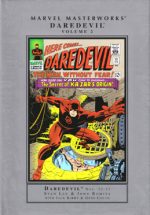
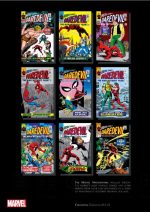
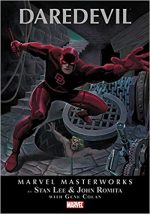
Daredevil Masterworks volume 2


By Stan Lee, Dennis O’Neill, John Romita, Gene Colan, with Jack Kirby & various (Marvel)
ISBN: 978-0-7851-0804-7 (HB)                    978-0-7851-5050-3 (TPB)

As the remnants of Atlas Comics grew in popularity in the early 1960s it gradually supplanted its broad variety of genre titles with more and more super-heroes. The recovering powerhouse that was to become Marvel was still hampered by a crippling distribution deal that limited the company to 16 titles (which would curtail their output until 1968), so each new untried book would have to fill the revenue-generating slot (however small) of an existing title.

Moreover. as the costumed characters were selling, each new similarly-themed title would limit the breadth of the monster, western, war, humour or girls’ comics that had been the outfit’s recent bread and butter. It was putting a lot of eggs in one basket, and superheroes had failed twice before for Marvel.

It all worked out in the end though…

Matt Murdock is a blind lawyer whose remaining senses hyper-compensate, enabling him to perform astonishing acrobatic feats and fight like a demon. He is a formidable fighter for justice in both identities and a living lie-detector. Very much a second-string hero for most of his early years, Daredevil was nonetheless a striking and popular one, due in large part to the roster of brilliant artists who illustrated the strip.

DD battled thugs, gangsters, a plethora of super-villains and even the occasional monster or alien invasion, quipping and wise-cracking his way through life and life-threatening combat. His civilian life consisted of assorted legal conundra and manfully standing back while quenching his own feelings as his portly best friend and partner Franklin “Foggy” Nelson romanced their secretary Karen Page…

Still, Lee and a rotating line-up of artists plugged on, concocting some extremely engaging tales until the latest Marvel Sensation found his feet. This potent compilation from the much-loved and crucial series of Marvel Masterworks – available in hardcover, trade Paperback and eBook formats – traces the fascinating transition of moody masked avenger to wisecracking Scarlet Swashbuckler, which can be enjoyed in this collection. It gathers Daredevil #12-21 (spanning January to October 1966) into one boldly boisterous package of thrills and spills which commence following another effervescent Introduction from Stan Lee…

The previous year had seen Golden Age giant Wally Wood leave his own unmistakable mark on the series but with his departure Lee turned to an old friend who had left during the harshest days of the Atlas implosion. He was to eventually become Marvel’s top – and most loyal – star…

‘Sightless, in a Savage Land!’ was laid out by Jack Kirby and illustrated by John Romita, who had worked for Timely/Atlas in the 1950s before moving to relatively steady work on National/DC.’s romance comics, as well as freelance advertising.

He returned to take DD on an epic quest, guest-starring Tarzan-analogue Ka-Zar, ranging from the dinosaur-haunted Savage Land via an extended battle with high-tech pirates led by The Plunderer to Jolly Olde England-land (in #13’s ‘The Secret of Ka-Zar’s Origin!’) and ultimately to a US Early Warning Base (#14, ‘If This be Justice…’, and with what I’m sure is some un-credited assistance from George Tuska).

With this multi-part globe-girdling epic, Daredevil began to confirm his persona as a wisecracking Scarlet Swashbuckler: one that would carry him all the way to the grim ‘n’ gritty Frank Miller days, far, far in the future.

Romita’s graceful, flamboyant style and expressiveness imparted new energy into the character (especially since Frank Ray Née Giacoia had been inking the series since # 14) and #15’s ‘…And Men Shall Call Him… Ox!’ showed the artist’s facility for explosive superhero action as the dim strongman last seen in DD #6 resurfaced, albeit in a new and sinister fashion as the lummox is made the subject of a macabre brain-swapping experiment…

When a certain webslinger guest-starred in #16, little did anyone suspect how soon Romita would be leaving…

‘Enter… Spider-Man!’ introduces criminal mastermind Masked Marauder who has big plans; the first of which is to get DD and the wallcrawler to kill each other…

With next issue ‘None are so Blind…’, a convoluted a sub-plot began which would lead to some of the highest and lowest moments of the early Daredevil series, beginning after the wondrous wallcrawler accuses Foggy of being the Man Without Fear!

Although the webspinner quickly realizes his mistake, others present don’t…

Issue #18’s ‘There Shall Come a Gladiator!’ introduces a manic armoured villain and archetypal super-thug in a tale two-thirds scripted by legend-in-waiting Denny O’Neil. Here Foggy tries to sway Karen by bolstering the idea that he is Daredevil… and almost perishing as a result of the deception.

Issue #19 then sees the Masked Marauder ally with Gladiator in action-packed big fight tale ‘Alone… Against the Underworld!’: a fitting farewell for Romita who was moving over to Amazing Spider-Man after Steve Ditko’s abrupt, controversial and utterly unexpected departure.

Originally tipped for a fill-in issue, Gene Colan came aboard as penciller with #20’s ‘The Verdict is: Death!’ Inked by Mike Esposito (as Mickey DeMeo). Colan’s superbly humanistic drawing and facility with expressions was a little jarring at first – since he drew Daredevil in a passable Romita imitation and everything else in his own manner – but he soon settled in and this two-part revenge thriller featuring the Owl (concluding with the Giacoia, Dick Ayers & Bill Everett inked ‘The Trap is Sprung!’) is a fine beginning to his long, impressive run on the series, incorporating the Sightless Swashbuckler’s battle against his ferocious arch-foe, an army of thugs, deadly flying robots and even an exploding volcano to keep the readers on their toes….

Augmented by Kirby’s designs for the Plunderer, his pencil page layouts, house ads and Romita’s very first pencil sketch of ‘Ol Hornhead, this classy compendium is a nostalgic delight for one and all.

Despite a few bumpy false starts Daredevil blossomed into a truly magnificent example of Marvel’s compelling formula for success: smart stories, human characters and magnificent illustration. If you’ve not read these tales before I strongly urge you to rectify that error as soon as superhumanly possible.
© 1965, 1966, 2015 Marvel Characters, Inc. All Rights Reserved.

Buz Sawyer volume 2: Sultry’s Tiger


By Roy Crane & various (Fantagraphics Books)
ISBN: 978-1-60699-499-3

Modern comics evolved from newspaper comic strips, and these pictorial features were, until relatively recently, utterly ubiquitous. Hugely popular with the public and highly valued by publishers who used them as an irresistible weapon to guarantee sales and increase circulation, the strips seemed to find their only opposition in the short-sighted local paper editors who often resented the low brow art form, which cut into advertising and frequently drew complaint letters from cranks…

It’s virtually impossible for us today to understand the overwhelming allure and power of the comic strip in America (and the wider world) from the Great Depression to the end of World War II. With no television, broadcast radio far from universal and movie shows at best a weekly treat for most folk, household entertainment was mostly derived from the comics sections of daily and especially Sunday Newspapers. “The Funnies” were the most universally enjoyed recreation for millions who were well served by a fantastic variety and incredible quality of graphic sagas and humorous episodes over the years.

From the very start comedy was paramount; hence the terms “Funnies” and “Comics”, and from these gag and stunt beginnings – a blend of silent movie slapstick, outrageous fantasy and the vaudeville shows – came a thoroughly entertaining mutant hybrid: Roy Crane’s Wash Tubbs.

Debuting on April 21st 1924, Washington Tubbs II was a comedic, gag-a-day strip which evolved into a globe-girdling adventure serial. Crane produced pages of stunning, addictive high-quality yarn-spinning for years, until his eventual introduction of moody swashbuckler Captain Easy ushered in the age of adventure strips with the landmark episode for 6th May, 1929.

This in turn led to a Sunday colour page that was possibly the most compelling and visually imaginative of the entire Golden Age of Newspaper strips (see Roy Crane’s Captain Easy, Soldier of Fortune: The Complete Sunday Newspaper Strips volumes 1-4).

Practically improving minute by minute, the strip benefited from Crane’s relentless quest for perfection: his imaginative, fabulous compositional masterpieces achieved a timeless immediacy that made each page a unified piece of sequential art. The influence of those pages can be seen in the works of near-contemporaries such as Hergé, giants-in-waiting like Charles Schulz and comicbook masters such as Alex Toth and John Severin ever since.

The material was obviously as much fun to create as to read. In fact, the cited reason for Crane surrendering the Sunday strip to his assistant Les Turner in 1937 was NEA/United Features Syndicate’s abrupt and arbitrary demand that all its strips must henceforward be produced in a rigid panel-structure to facilitate their being cut up and re-pasted as local editors dictated.

They just didn’t lift the artist any more so Crane stopped making them.

At the height of his powers Crane just walked away from the astounding Captain Easy Sunday page to concentrate on the daily feature, and when his contract expired in 1943 he left United Features, lured away by that grandee of strip poachers William Randolph Hearst.

The result was a contemporary aviation strip set in the then still-ongoing World War II: Buz Sawyer.

Where Wash Tubbs was a brave but largely comedic Lothario and his pal Easy a surly, tight-lipped he-man, John Singer “Buz” Sawyer was a joyous amalgam of the two: a good-looking, popular country-boy who went to war because his country needed him…

Buz was a fun-loving, skirt-chasing, musically-inclined pilot daily risking his life with his devoted gunner Rosco Sweeney: a bluff, brave and simply ordinary Joe – and one of the most effective comedy foils ever created.

The wartime strip was – and still is – a marvel of authenticity: picturing not just the action and drama of the locale and situation but more importantly capturing the quiet, dull hours of training, routine and desperate larks between the serious business of killing and staying alive. However when the war ended the action-loving duo – plus fellow pilot and girl-chasing rival Chili Harrison – all went looking for work that satisfied their penchant for adventure and romance wherever they could find it…

Crane was a master of popular entertainment, blending action and adventure with smart drama and compellingly sophisticated soap opera, all leavened with raucous comedy in a seamless procession of unmissable daily episodes.

He and his team of creative assistants – which over the decades comprised co-writer Ed “Doc” Granberry and artists Hank Schlensker, Clark Haas, Al Wenzel, Joel King, Ralph Lane, Dan Heilman, Hi Mankin and Bill Wright – soldiered on under relentless deadline pressure, producing an authentic and exotic funny romantic thriller rendered in the signature monochrome textures of line-art and craftint (a mechanical monochrome patterning effect used to add greys and halftones to the superb drawing for miraculous depths and moods) as well as the prerequisite full-colour Sunday page.

This primarily black-&-white tome contains an impressive selection of those colour strips – although Crane came to regard them only as a necessary evil which plagued him for most of his career…

The eternal dichotomy and difficulty of producing Sunday Pages (many client papers would only buy either Dailies or Sunday strips, but not both) meant that most creators had to produce different story-lines for each feature – Milt Caniff’s Steve Canyon being one of the few notable exceptions.

Whereas Dailies needed about three weeks lead-in time, hand-separated colour plates for the Sabbath sections meant the finished artwork and colour guides had be at the engravers and printers a minimum of six weeks before publication.

Crane handled the problem with typical aplomb; using Sundays to tell completely unrelated stories. For Wash Tubbs he created the prequel series starring Captain Easy in adventures set before the mismatched pair had met, whilst in Buz Sawyer he turned the slot over to Roscoe Sweeney for lavish gag-a-day exploits, big on slapstick laughs and situation comedy.

During the war years it was set among the common “swabbies” aboard ship: a far more family-oriented feature and probably much more welcome among the weekend crowd of parents and children than the often chilling or disturbing realistically sexy sagas that unfolded Mondays to Saturdays.

A year before Steve Canyon began, Crane tried telling a seven-days-a-week yarn in Buz Sawyer – with resounding success, to my mind, and you can judge for yourself here – but found the process a logistical nightmare. At the conclusion he retuned to weekday continuity whilst Sundays were restored to Roscoe with only occasional guest-shots by the named star.

This second lush and sturdy archival hardback re-presents the tense and turbulent period from October 6th 1945 to July 23rd 1947 wherein de-mobilised adrenaline addict Buz tries to adjust to peacetime life whilst looking for a job and career – just like millions of his fellow ex-servicemen…

Before getting out, he had returned home on leave and ended up accidentally engaged. Buz was the son of the town’s doctor; plain, simple and good-hearted. In that ostensibly egalitarian environment the school sporting star became the sweetheart of ice-cool and stand-offish Tot Winter, the richest girl in town,

Now when her upstart nouveau riche parents heard of the decorated hero’s return they hijacked the homecoming and turned it into a publicity carnival. Moreover the ghastly, snobbish Mrs. Winter conspired with her daughter to trap the lad into a quick and newsworthy marriage.

Class, prejudice, financial greed and social climbing were enemies Buz and Sweeney were ill-equipped to fight, but luckily annoying tomboy-brat girl-next-door Christy Jameson had blossomed into a sensible, down-to-earth, practical and clever young woman.

She’d scrubbed up real pretty too and showed Buz that his future was rife with possibility. Mercifully soon, the leave ended and he and Sweeney returned to the war. The Sawyer/Winter engagement fizzled and died…

When their discharge papers finally arrived (in the episode for September 9th 1945) an era of desperate struggle was over. However that only meant that the era of globe-girdling adventure was about to begin…

Before the comics wonderment resumes, Jeet Heer and Rick Norwood take some time here discussing ‘The Perfectionist and his Team’. Concentrating initially on ‘After the War’ the fascinating explorations then delve deep into the detail of the artist’s troubled and tempestuous relationship with ‘Crane’s Team’ before offering ‘A Word on Comic Strip Formats’ and the censorious iniquities local newspaper editors would regularly inflict upon Crane’s work…

With all the insightful stuff over, the cartoon adventure begins anew as the newly civilian Mr. Sawyer goes home to a life of indolence before his own restless nature starts him fretting again. The old town isn’t the same. Tot has inherited her father’s millions and moved to New York and even Christy is gone: away attending his old alma mater…

After a brief interlude wherein he visits the cheery Co-Ed and debates the merits of returning to college on the G.I. Bill, Buz instead opts for fulltime employment and heads to the Big Apple where Chili Harrison has a new job offer and an old flame waiting.

As he heads East, Buz chooses to ignore his instincts and the huge mysterious guy who seems to turn up everywhere he goes…

In NYC the aloof, alluring Tot is the cream of polite “arty” society but her wealth and clingy new fiancé – opera singer Count Franco Confetti – are all but forgotten when “the one who got away” hits town and she finds her interest in her High School beau rekindled.

Buz has moved in with Chili, blithely unaware that the strange and ubiquitous giant has inveigled himself into the apartment next door and is now actively spying on him…

Sawyer wants a job flying but is only one of hundreds of war-hero pilots looking for a position at International Airways. Moreover his reputation as a hot-shot risk-taker makes him the last person a commercial carrier might consider. However after well-connected Chili intercedes with a major player in the company – something does come up…

The truth about Buz’s hulking stalker comes out when the Maharani of Batu‘s yacht docks in New York. The exotic Asian princess is one of the wealthiest women on Earth and cuts a stunning figure with her tiger on a leash. However when Buz first met her she was simply “Sultry”: a ferocious, remorseless resistance fighter helping him kill the occupying Japanese on her Pacific island.

She never forgot him and will ensure no other woman can have him…

Sultry moves into the penthouse adjoining Tot’s and is witness to the ploys of the Winter woman as she sidelines Confetti and makes a play for Buz. She is also a key figure in the tragic heiress’ sudden death…

Just prior to Tot’s gruesome demise Buz had finally met the unconventional Mr. Wright of International Airways. The doughty executive had no need for pilots but wanted a quick-thinking, capable fighter who could solve problems in the world’s most troubled conflict zones. He even has a spot open for good old Roscoe Sweeney…

Buz is all set for his first overseas assignment when the cops decide he’s the other prime suspect in Tot’s murder and, with Sawyer and Count Confetti in jail, Sultry tries to flee America before the truth comes out.

However Sweeney and the freshly exonerated Buz soon track her down, but Sultry turns the tables on them and shanghais her erstwhile lover, imprisoning him on her yacht, determined to make him her permanent boytoy, far, far away from American justice…

Never short of an idea and blessed with the luck of the damned, Buz’s escape results in a terrifying conflagration and the seeming death of his obsessed inamorata – but Sultry’s body isn’t recovered…

It takes a lot of pleading to get Mr. Wright to give him another chance but, soon after, Buz and Sweeney are winging north to Greenland to stop a crazed sniper taking pot-shots at aircraft passing over the “Roof of the World”.

This savage, visceral extended saga soon reveals the shooter to be a deranged leftover Nazi and his hapless attendants, but the heroes’ astonishing hunt for and capture of the Teutonic trio is as nothing compared to the harrowing trek to get them back to civilisation: especially since poor Roscoe is putty in the hands of Frieda, beautiful devil-daughter of the utterly mad Baron von Schlingle.

Before Buz get the survivors home safely, he loses his plane, has to forcibly trek across melting floes, gets them all stranded on a iceberg and even has his pretty-boy face marred forever…

Worst of all by the time he gets back to civilisation his job no longer exists. Mr. Wright has quit and moved on to another company…

It’s not all bad news: Wright has euphemistically become “Personnel Director” for Frontier Oil, a truly colossal conglomerate active all over Earth and wants Buz to carry on his unique problem-solving career for his new employers.

Despite a large bump in salary, the weary war hero is undecided – until he hears Christy is helping her father in the Central American nation of Salvaduras in his role as a geologist for Frontier Oil. This happily ties in with an outstanding missing persons case; said vanished victim being Bill Daniels, playboy son of a prominent company executive.

It takes very little to convince Wright to despatch Buz and Roscoe south of the border to investigate, opening the floodgates to a spectacular epic of light-hearted romantic adventure a world apart from the previous harrowing tale…

The story also saw Crane and Co. merging the Daily and Sunday strips into a single storyline (with the Sundays primarily illustrated by Schlensker) as the boys tried to trace the missing American in a country that seems locked in fear and poverty…

After initially hitting a wattle-and-daub wall, Buz takes time off for a picnic with Christy and, after a close call with a faux Mexican bandit (in actuality a Yankee fugitive from justice with an atrocious fake accent), declares his undying lover for her.

He is not rebuffed and there’s the hint of wedding bells in the air…

First however he and Sweeney need to finish their mission, and help comes from a brave peon who breaks the regional code of silence to put them on the trail of the mysterious Ranch of the Caves and its American émigré who runs the isolated canton with blood and terror.

After romancing the daughter of vicious “Don Jaime” Buz and Roscoe infiltrate the desolate fiefdom and the gang boss’ international band of thugs, discovering not only the very much alive missing playboy but an incredible lost Mayan treasure trove…

Mission accomplished, Buz returns to New York to marry Christy, only to find he’s already needed elsewhere. Christy too is having doubts, worried that she will always play second fiddle to her man’s lust for action, whereas in truth the real problem is that trouble usually comes looking for Buz…

Boarding a Frontier plane for the Yukon, Sawyer is merely a collateral casualty when the ship’s other passenger is kidnapped. The mysterious men abducting plastic surgeon Dr. Wing take their helpless hostages all the way to deepest Africa where they expected the medic to change the face of an infamous madman everybody in the world believes died in a Berlin Bunker…

Tragically the fanatics are not prepared for the physician’s dauntless sense of duty and sacrifice nor Buz’s sheer determination to survive…

The latter part of this tale describes Buz’s epic river trek with mercenary turncoat honey-trap Kitty as they flee from the vengeful Nazis, but even after reaching the coast and relative safety the insidious reach of the war-criminals is not exhausted and one final attack looms…

Eventually Buz returns to New York alone and wins time from the slave-driving Mr. Wright to settle things with Christy. He follows her to Nantucket Sound but even their romantic sailboat ride turns into a life-changing adventure…

This splendid collection is the perfect means of discovering – or reconnecting with – Crane’s second magnum opus: spectacular, enthralling, exotically immediate romps that influenced generations of modern cartoonists, illustrators, comics creators and storytellers.

Buz Sawyer ranks amongst the very greatest strip cartoon features ever created: stirring, thrilling, outrageously funny and deeply moving tale-telling that is irresistible and utterly unforgettable.
Buz Sawyer: Sultry’s Tiger © 2012 Fantagraphics Books, all other material © 2012 the respective copyright holders. All Strips © 2010 King Features Syndicate, Inc All rights reserved.

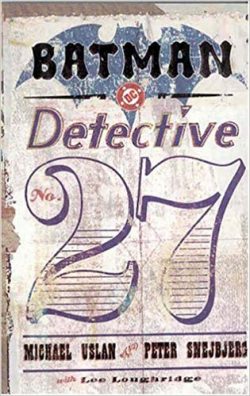
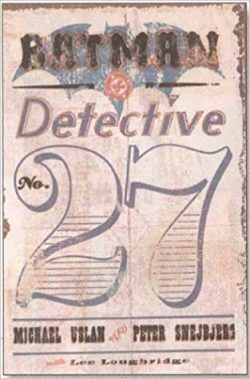
Batman: Detective #27


By Michael Uslan & Peter Snejbjerg with Lee Loughridge (DC Comics)
ISBN: 978-1401201852 (HB)                        978-1401201074 (TPB)

Oooh! Ooh! More Batman!! …Ish.

Not so long ago and for a brief while, DC’s experimental Elseworlds imprint, where familiar characters and continuity were radically or subtly re-imagined, was a regular hive of productivity and generated some wonderful – and quite a few ridiculous – stories.

Moreover, by using what the readers thought they knew as a springboard, the result, usually constricted into a disciplined single story, had a solid and resolute immediacy that was too often diluted in regular, periodical publications where the illusion of change always trumps actual innovation in long-running characters.

A fine example is this intriguing pulp mystery and generational drama blending the lineage of the Wayne family of Gotham City with covert societies and the secret history of the United States of America.

April 1865, Washington DC: President Lincoln overrides the objections of Allan Pinkerton (who had created the Secret Service to protect him) and goes to see Our American Cousin at Ford’s Theatre. His assassination prompts the infuriated security genius to create a dedicated clandestine force beyond the reach of everything but their mission and their own consciences…

April 1929, Gotham City: a doctor, his wife and their young son exit a movie theatre where they have thrilled to the exploits of Douglas Fairbanks as Zorro. Suddenly, sneak thieves confront them and in the struggle Thomas and Martha Wayne are gunned down, leaving a grieving boy kneeling over their bloody corpses. Family butler Alfred packs the coldly resolute boy off on a decade-long world tour to study with masters of criminology around the globe…

Lincoln’s murder was planned by a cabal of Confederate plotters named the Knights of the Golden Circle. Their leader, an early eugenics-inspired geneticist named Josiah Carr, outlines a Doomsday vengeance plot that will take decades to complete…

January 1st 1939: Bruce Wayne returns to Gotham ready to begin his life’s mission, but is diverted when crusading newspaperman Lee Travis reveals the existence of the Secret Society of Detectives and invites the young man to become their 27th operative since Pinkerton…

Charming and relentlessly compelling, this superbly pacy thriller follows two time-lines as the founding Detective hunts the Golden Circle through the years, enlisting the covert aid of many historical figures such as Kate Warne (America’s first female detective), journalist and President-to-be Teddy Roosevelt and biologist/monk Gregor Mendel whilst Wayne closes in on the climax of the Doomsday plot with the aid of Babe Ruth and Sigmund Freud. He even confronts customised versions of such classic Bat-foes as Catwoman, Scarecrow, Hugo Strange and the Joker.

Best of all there’s a deliciously wry cameo from the Golden Age Superman as well as a magnificent surprise ending to this two-fisted tribute to the “Thud-and-Blunder” era of the 1930s pulps…

This is a conspiracy thriller stuffed to overflowing with in-jokes, referential asides, pop culture clues and universal icons that make The Da Vinci Code and its legion of even more tedious knock-offs look like a bunch of dry words on dusty paper. The only flaw is that writer Uslan and artists Snejbjerg & Loughridge were never able to create a sequel…

And just in case you’re wondering…Detective Comics #27 (May 1939) featured the very first appearance of a certain Dark Knight…
© 2003 DC Comics. All Rights Reserved.

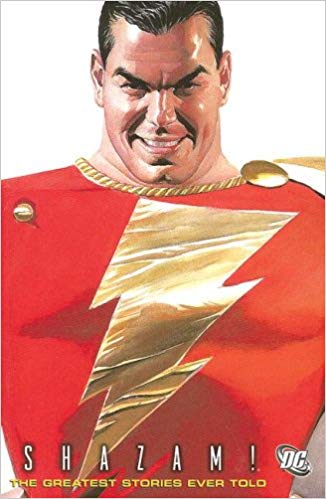
SHAZAM!: The Greatest Stories Ever Told


By Bill Parker, C.C. Beck, Joe Simon & Jack Kirby, Otto Binder, Denny O’Neil, Elliot S! Maggin, Roy Thomas, Joey Cavalieri, Alan Grant, Jerry Ordway, Steve Vance, Kurt Schaffenberger, Curt Swan, Gil Kane, Barry Kitson, Peter Krause, John Delaney & various (DC Comics)
ISBN: 978-1-4012-1674-0 (TPB)

Superhero movies season is hurtling down on us now so let’s cash in a bit…

Hard on the heels of the superb Shazam!: Monster Society of Evil collection came a most welcome addition to DC’s much missed Greatest Stories… line: an anthological review featuring some wonderful moments from the stellar, if chequered, career of the World’s Mightiest Mortal.

First seen in the February 1940 issue of Whiz Comics (#2 – there was no #1) and cashing in on the sales phenomenon of Superman, the big red riot was the brainchild of writer/editor Bill Parker and young illustrator Charles Clarence Beck.

Drawn in a style reminiscent of early Hergé, ‘Introducing Captain Marvel’ saw homeless orphan Billy Batson lured into an abandoned subway tunnel to a meeting with millennia-old wizard Shazam. At the end of a long, long life fighting evil, the white-bearded figure grants the lad the power of six gods and heroes (Solomon, Hercules, Atlas, Zeus, Achilles and Mercury) and urges him to carry on the good fight. In thirteen delightfully clean and simple pages Billy gets his powers, has his secret origin revealed (he’s heir to a fortune embezzled by his crooked uncle Ebenezer), gets a job as a radio reporter and defeats the mad scheme of Doctor Thaddeus Bodog Sivana who is holding the airwaves of America hostage.

Originally dispensing the same sort of summary rough justice as his contemporaries, the character soon distanced himself from the pack – Man of Steel included – by an increasingly light, surreal and comedic touch, which made Captain Marvel the best-selling comics character in America. For a period, Captain Marvel Adventures was published twice a month, and he was the star in a number of other titles too.

(Billy’s alter ego could beat everybody but copyright lawyers; during his years of inactivity the trademarked name passed to a number of other publishers before settling at Marvel Comics and they are never, never, never letting go. You can check out their cinematic blockbuster version this summer…)

In the formative years there was actually a scramble to fill pages. From Captain Marvel Adventures #1 (1941) comes an untitled drama of alien slavers produced in a bit of a hurry by Golden Age Dream-Team Joe Simon & Jack Kirby.

It’s probably fair to say that this rambunctious rarity is included for its name-value alone, but the third tale, ‘The Trio of Terror’ (The Marvel Family #21, 1948), is prime stuff from Beck and brilliant prolific writer Otto Binder, full of sly whimsy as three demons escape the netherworld to plague ours.

Many of the storytelling innovations we find commonplace today were invented by the creative folk at Fawcett – the original publishers of Captain Marvel. From Captain Marvel Adventures #137 (1952) comes ‘King Kull and the Seven Deadly Sins’ by Binder and Beck, wherein a beast-king from a pre-human civilisation frees the embodiments of Man’s greatest enemies to plague the planet.

These are wholesome tales for the entire family, however, so don’t worry – “Lust” has become “Injustice” and “Wrath” is “Hatred”, here.

There are two yarns from the good Captain’s final year of Golden Age publication. DC, in their original identity of National Periodical Publications, had filed suit against Fawcett for copyright infringement as soon as Whiz Comics #2 was released, and the companies had slugged it out ever since. In 1953, with sales of superhero comics decimated by changing tastes, Captain Marvel’s publishers decided to capitulate.

DC eventually acquired all rights, titles and properties to the characters. But that last year saw some of the best tales in the entire run, represented here by the wonderfully surreal ‘Captain Marvel Battles the World’ (Captain Marvel Adventures #148, September1952, by Binder and Beck) and ‘The Primate Plot’ (The Marvel Family #85, July 1953): a dramatic and very funny precursor to the movie Planet of the Apes, by Binder and Kurt Schaffenberger.

Beck returned to commercial and magazine illustration, but Binder & Schaffenberger soon joined the victorious opposition, becoming key Superman creators of the next few decades.

In 1973, DC decided to revive the Good Captain for a new generation and see if his unique charm would work another sales miracle during one of comics’ periodic downturns.

From the comicbook re-titled, for those pesky copyright reasons, Shazam!, the tale that bought him back was written by Denny O’Neil, and illustrated by the returned and resurgent Beck.

‘In the Beginning…’ and ‘The World’s Wickedest Plan’ (Shazam! #1, February 1973) retold the origin and explained that the Captain, his super-powered family and all the supporting cast (there’s a very useful seating chart-cum-biography page provided for your perusal) had been trapped in a timeless state for 20 years by the invidious Sivana Family who had subsequently been trapped in their own Suspendium device.

The sales and fan rivalry of the Man of Steel and The Big Red Cheese (Sivana’s pet name for his stout-hearted nemesis) had endured for decades, and in 1974 Julius Schwartz took full advantage by having the two finally – if notionally – meet.

Superman #276 featured ‘Make Way for Captain Thunder’ by Elliot S! Maggin, Curt Swan and Bob Oksner, a trans-dimensional tussle to delight 10-year-olds of all ages. Incidentally, Captain Thunder was one of the options considered in 1940 before Fawcett went with the Marvel name.

Beck was profoundly unhappy with the quality of stories he was given to draw and soon left the series. One of his assistants and stable-mates from the Fawcett days had been a Superman Family mainstay for nearly twenty years and smoothly fitted into the vacated lead-artist position. Kurt Schaffenberger was delighted to again be drawing one of his all-time favourite assignments again, and his shining run is represented here by #14’s ‘The Evil Return of the Monster Society’ scripted by Denny O’Neil in 1974.

Captain Marvel’s blend of charm, drama and whimsy made and remade many fans, even prompting a live action TV series, but never enough to keep the series going in such economically trying times. Despite its cancellation, however, the series persevered in back-up slots in other magazines and the character still made the occasional bombastic guest-appearance such as 1984’s DC Comics Presents Annual #3.

‘With One Magic Word’ saw Sivana appropriate the mystic lightning that empowers Billy Batson, leading to a Battle Royale with not just the Marvel Family but also the Supermen of both Earth’s 1 and 2 (this was mere months before Crisis on Infinite Earths lumped all these heroes onto one terribly beleaguered and crowded world).

This cracking 40-page romp was plotted by long-time fan Roy Thomas, written by Joey Cavalieri and illustrated by the fabulous Gil Kane.

Now fully part of the DC universe Captain Marvel popped up everywhere. He was even a long-suffering straight man in Justice League International for a while…

From L.E.G.I.O.N ’91 #31 (1991), by Alan Grant & Barry Kitson, comes the wickedly funny slugfest ‘Where Dreams End’, as the big guy has to try and reason with a drunk and hostile Lobo, and when he once more had his own series, spinning off from the superb original graphic novel The Power of Shazam!, a new high-point of quality entertainment was achieved – and sustained – by Jerry Ordway, Peter Krause & Dick Giordano.

‘Yeah – This is a Face Only a Mother Could Love…’ (from The Power of Shazam! #33, 1997) is a powerful, poignant treatment of intolerance and the collateral damage of superhero encounters where Billy tries to help a school-friend hideously scarred by his arch-foe the Arson Fiend. It’s possibly the best executed and least known story in the book.

This lovely compilation ends with a zesty delight from all-ages Adventures in the DC Universe (#15, 1998). Here Steve Vance, John Delaney & Ron Boyd create a testing time for Billy when Zeus decides to see if his modern beneficiary is actually worthy of his power in ‘Out of a Dark Cloud’.

The original Captain Marvel is a genuine icon of American comics history and a brilliantly conceived superhero for all ages. This collection, which only scratches the surface of the canon of delights produced over the years, is a perfect introduction to the world of comics and one that will appeal to readers of any age and temperament. Still available in paperback, let’s hope the modern hoopla convinces DC to rerelease it in both printed and digital editions…
© 1940, 1941, 1948, 1952, 1953, 1973, 1974, 1984, 1991, 1997, 1998, 2008, DC Comics. All Rights Reserved.

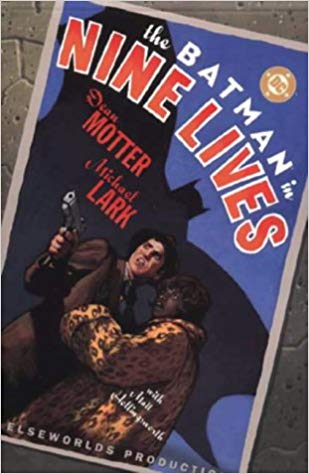
Batman: Nine Lives


By Dean Motter, Michael Lark & Matt Hollingsworth (DC Comics)
ISBN: 978-1-56389-853-2 (HC)                    978-1-84023-358-2 (Titan Books HC edition)

This March sees the 80th anniversary of the Bat-Man’s debut and gosh-by-golly I’m getting pretty stoked with all the anticipation. I trust there to be some fuss about the event. I’m also getting my Nerd on by indulging myself in a few fond looks back. Here’s another taste of the amazing influence the Dark Knight has exerted over the decades, and one more tome just begging for a new edition and some digital exposure…

The depictions and narrative signatures of the post-war genre “Film Noir” are powerful and evocative, celebrating a certain weary worldliness as much as stark lighting and visual moodiness ever did. That said, this murky world seems a natural milieu for Batman tales, but there are precious few that make the effort, and so very few of those successfully carry it off.

This superb alternative adventure published under DC’s Elseworlds imprint (wherein the company’s key characters are translated out-of-continuity for adventures that don’t really count) is a magnificent exception, combining hard-boiled detective yarning with the icons of gangster movies.

1946: Selina Kyle was a woman everybody wanted, and who exploited that fact fully. When The Batman finds her ravaged corpse in the sewers, there’s no shortage of suspects. Was she murdered by a high-society big-shot like Oliver Queen, Harvey Dent or Bruce Wayne, desperate to keep her quiet, or was one of her more sinister consorts-du-crime to blame?

Gangsters like jilted embezzler Eddie Nigma, mob-boss ‘Clayface’ Hagen, The Poker Joker, The Penguin or even the stone-cold hit-man Mr Freeze might have snuffed her in an instant if expedient, and seedy gumshoe Dick Grayson knows that he’ll be just as expendable if he digs too deep into the private affairs of the Highest and Lowest denizens of Gotham. But somehow, he just can’t let go…

Reconfiguring key figures of the venerable mythos as such recognisable archetypes – although perhaps obvious – is still a wonderfully effective way to revitalize them. The plot is as engrossing as any movie masterpiece and the human analogues of the bizarre and baroque Bat-cast are just as menacing even without outlandish powers and costumes. And through it all lurks a bizarre vigilante dressed as a bat, once again a mad element of relentless chaos that he can no longer be in his regular mainstream comic outings…

Although a pastiche derived from many sources, Nine Lives is a brilliant and engrossing read, seamlessly and stylishly blending mystery, crime-caper and sophisticated suspense thriller with moody visuals and a cynical tone that will show any hold-out naysayer that comics have as much to offer as any other creative medium.

Hunt this down and make it yours or pray that it’s due for a fresh release ASAP.
© 2002 DC Comics. All Rights Reserved.

Showcase Presents Strange Adventures volume 2


By John Broome, Otto Binder, Gardner Fox, Edmond Hamilton, France E. Herron, Dave Wood, Ed Jurist, Joe Millard, Carmine Infantino, Gil Kane, Sid Greene, Jerry Grandenetti, Howard Sherman, Frank Giacoia, Manny Stallman & various (DC Comics)
ISBN: 978-1-4012-3846-9

Do you know what I miss? Compilations of classics anthological genre adventures.

Marvel finally wised up and recently began releasing gloriously evocative collections of their pre-superhero horror, sci fi and even war yarns but since DC stopped producing their cheap and cheerful compendia of similar material, something fabulous has been missing from our lives. Now with so many kinds of eBooks editions, it’s a crying shame that these whimsical, moody early fantasy romps are unavailable to readers of all ages and vintage. Let’s see why with this splendid and still enticing monochrome paperback tome

As the 1940s closed, masked mystery-men dwindled in popularity and the American comicbook industry found new heroes. Classic pulp fiction genre titles flourished; anthologies dedicated to crime, war, westerns, humour and horror were augmented by newer fads like funny animal, romance and most especially science fiction. In 1950, National Periodicals/DC finally escaped that last genre’s glorious thud-&-blunder/ray guns/bikini babes in giant fishbowl helmets magazine roots (as perfectly epitomised in the uniquely wonderful Golden Age icon Planet Comics) with Julius Schwartz’s introduction of Strange Adventures.

Packed with short adventures from jobbing SF writers and a plethora of new heroes such as Chris KL99, Captain Comet, Atomic Knights and others, the magnificent monthly compendium (supplemented a year later with sister-title Mystery in Space) introduced wide-eyed youngsters to a fantastical yet intrinsically rationalist universe and all its possible/probable wonders …

On a thematic note: a general but by no means concrete rule of thumb was that Strange Adventures generally took place on Earth or were at least Earth-adjacent whilst as the name suggests Mystery in Space offered readers the run of the rest of the universe…

Reprinting Strange Adventures #74-93 (November 1956 to June 1958), this second compelling collection features stories from the dawn of the Silver Age, offering fantastic fantasy plots and spectacular scenarios as an industry-wide resurgence of confidence and creativity gathered momentum and superheroes began to successfully reappear.

These stellar sagas would continually inform and shape DC’s slowly growing heroic adventure revival, whilst proving over and again that Weird Science and cosmic disaster were no match for the infallibility of human intellect and ingenuity. During this period many of the plots, gimmicks, MacGuffins, cover designs and even interior art were recycled for the more technologically-based, emergent costumed champions creeping back into public favour…

This mind-blowing, physics-challenging monochrome colossus opens with four classic vignettes, beginning with a terse thriller by John Broome & Carmine Infantino wherein a writer gains the power to see beyond the normal range and is the only human who can combat ‘The Invisible Invader from Dimension X!’, after which ‘The Metal Spy from Space!’ (Gardner Fox, Sid Greene & John Giunta) is similarly exposed and defeated by fictive pulp fictioneer “Edmond Hamilford”…

Fox, Greene & Bernard Sachs then reveal the vested interest of an investigator who obsessively seeks out ‘Earth’s Secret Visitors!’ before Edmond Hamilton, Gil Kane & Joe Giella detail how a notoriously hapless DIY dabbler finds himself in possession of the ‘Build-it-Yourself Spaceship!’

During this period editors were baffled by but still exploited a bizarre truism: every issue of any title which featured gorillas on the cover always showed increased sales. Little wonder then that so many DC comics had hairy headliners…

Strange Adventures #75 led with ‘Secret of the Man-Ape!’ by Otto Binder, Infantino & Giella, wherein a scientist intent on evolving apes into men accidentally acquires a test subject who just happens to be the vanguard of an invading alien anthropoid army, whilst ‘The 2nd Deluge of Earth!’ (Ed Jurist, Greene & Giella) sees a blind scientist save the world from Martians intent on taking over our water-rich world…

A meddlesome technologist happily makes amends and saves an imperilled alien civilisation after curiously poking his nose into the ‘Mystery of the Box from Space!’ (Binder, Kane & Sachs) before ‘This is Timearama!’ (Hamilton, Greene & Sachs) wittily and scathingly relates what happens when an honest researcher trusts businessmen with the secrets of his televisual time probe…

In issue #76 Broome, Infantino & Sachs explored the mission of a galactic saviour handicapped by fate as he strives to save humanity in ‘The Tallest Man on Earth!’, after which ‘The Flying Saucers that Saved the World!’ (Binder, Greene & Giella) reveals how a professional UFO debunker uses all he’s learned about hoaxes to counter an actual invasion by sinister subterraneans.

Although a short story anthology title, over the run of years Strange Adventures featured a number of memorable returning characters and concepts such as Star Hawkins or Space Museum. Darwin Jones of the Department of Scientific Investigation debuted in the very first issue, solving fringe or outright weird science dilemmas for the Federal Government.

A genius-level scientific detective, he made thirteen appearances over as many years and here resurfaces to foil the insidious schemes of ‘The Robot from Atlantis!’ (Binder, Kane & Giella), which feigns benevolent friendship whilst actually trying to eradicate mankind. The issue then concludes with the struggle of a geologist to get rid of ‘The Hungry Meteorite!’ (Dave Wood, Greene & Sachs) which threatens to absorb all the metal on Earth…

Another Darwin Jones thriller – by Broome, Infantino & Sachs – opened issue #77 when a Death Row convict is given superhuman intellectual abilities by desperate trans-dimension beings facing extinction. However, “Lobo” Torrence is prepared to let two worlds die to save himself, forcing the Science Detective to gamble everything on a last-ditch plan…

Hamilton, Greene & Giella then detail how ‘The Incredible Eyes of Arthur Gail!’ – damaged by a chemical accident and unable to detect non-organic materials – uncover a cruel criminal plot; Binder, Kane & Sachs expose the tragic secret of ‘The Paul Revere of Time!’ whose anonymous warnings prevent colossal loss of life and ‘The Mental Star-Rover!’ (Binder, Greene & Giella) reveals an uncanny connection between an Earth author and a piratical alien marauder…

Broome, Greene & Sachs opened Strange Adventures #78 with a spirited mash-up of Arthurian legend and The Prisoner of Zenda as mechanic Bruce Walker pinch-hits for an alien emperor in ‘The Secret of the Tom-Thumb Spacemen!’ after which Fox, Kane & Giella chillingly explore how existence depends on meteors when aliens attempt to steal ‘The Life Battery!’ which sustains our bio-sphere…

Binder & Infantino pose a classic quandary of ingenuity and survival after a prospector is stranded on a primitive island with a dead alien and a matter-transmuting device he believes is ‘The Magic Horn of Space!’ Immediately following, a test pilot is abducted into another dimension to become a guinea pig for inhuman predators as ‘The Prisoner of Space X!’ (France E. Herron, Greene & Sachs).

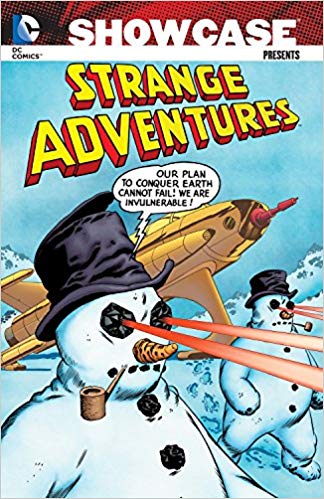
Issue #79 offered chilly seasonal fare with ‘Invaders from the Ice World!’ by Fox, Infantino & Sachs. When energy beings from Pluto possess snowmen in advance of an invasion it takes all of Darwin Jones’ deductive abilities to fathom their only weakness, after which ‘Around the Universe in 1 Billion Years!’ (Herron, Greene & Giella) follows a band of explorers who return to Terra after an eternity in space to discover a new race has supplanted them.

‘A Switch in Time!’ (Fox, Kane & Giella) then examines the fate of a conman who thinks himself the lucky recipient of the greatest deal in history before Hamilton, Jerry Grandenetti & Giella expose the incredible secret of ‘The Living Automobile!’ which kidnaps its driver…

Binder handled most of the writing in #80, beginning with a smart take on intellectual property as the Kane & Giella illustrated ‘Mind Robbers of Venus!’ depicts alien crooks stashing their loot in the brain of electronics engineer Ian Caldwell before Greene & Giella take over for ‘The Worlds That Switched Places!’ wherein an astronaut makes a terrible mistake that almost dooms two different dimensions.

Fox & Infantino demonstrated the duplicitous saga of Plutonian Jul Van and ‘The Anti-Invasion Machine!’ which almost destroyed Earth before Binder returns with artist Howard Sherman to seal the fate of an avaricious inventor who believes himself ‘The Man who Cheated Time!’

Strange Adventures #81 featured a subatomic would-be tyrant kidnapping convict brothers to be his tools in an ambitious plot, but the deranged alien has no idea of the ‘Secret of the Shrinking Twins!’ (Broome, Infantino & Sachs) and consequently pays a heavy price, after which Binder, Greene & Giella pit an Earth naturalist against a potential world conqueror in ‘The Spaceman of 1,000 Disguises!’

‘The Friendly Enemies of Space!’ (Herron, Kane & Sachs) details a series of natural disasters which ruin Earth’s first contact with benevolent extra-solar life before Fox, Grandenetti & Frank Giacoia examined the fallout of a lost artefact from a higher dimension when ‘The Magic Box from Nowhere!’ drops into the hands of ordinary, greedy humans…

In #82, Herron, Infantino & Sachs’s bellicose and awesome ‘Giants of the Cosmic Ray!’ meet their match in a humble earth scientist, whilst a gobsmacked youth is astounded to discover his adoptive parents were aliens when he becomes ‘The Man Who Inherited Mars!’ (Binder, Greene & Giella)…

A lack of communication would have led to disaster had science fiction writer Owen Bently not deduced the incredible ‘Secret of the Silent Spaceman!’ (Binder, Giacoia & Giella) after which a researcher saves Earth from invaders by turning their technology against them on ‘The Day Science Went Wild!’ (Binder, Greene & Giella).

Strange Adventures #83 sees a simple college Professor revealed as an amnesiac chrononaut who has to rediscover and complete his ‘Assignment in Eternity!’ before time runs out (Binder, Greene & Giella again), whilst actor Mark Gordon finds himself hunting fans-turned-spree criminals as the ‘Private Eye of Venus!’ (Fox & Infantino) when his hit TV show inadvertently becomes the sensation of the telepathic inhabitants of our sister planet…

Herron, Greene & Giella detail a misunderstanding which reduces gigantic Good Samaritan ‘The Volcanic Man!’ to the status of an invading monster after which an accident leads to brain injury for an ordinary mortal. As crafted by Herron, Kane & Sachs, his wounds are repaired by passing aliens, but the victim develops uncanny precognitive abilities in ‘The Future Mind of Roger Davis!’

Ray Jenkins is a wealthy man who brings unearned fame and prestige in SA #84, but the glory-hound meets his fate when he encounters the ‘Prisoners of the Atom Universe!’ (Broome, Infantino & Sachs) whilst a harried scientist prevents ‘The Radioactive Invasion of Earth!’ (Fox, Greene & Sachs) when he realises Martians also can’t abide his kids’ Rock ‘n’ Roll music…

Darwin Jones returns to solve the ‘Riddle of the Walking Robots!’ (Herron, Infantino & Giella) which ceaselessly roam Earth sowing alien seeds, after which schoolboy Tommy Ward‘s “Electronic Brain” kit becomes ‘The Toy that Saved the World!’ (Binder, Greene & Giella)… once he stops scrupulously following the instructions…

John Broome scripted the first half of issue #85, leading with artists Greene & Sachs’ ‘The Amazing Human Race!’, wherein a scientist uncovers a plot by Praying Mantises to conquer humanity before a colour-blind student finds affirmation when his disability saves an alien civilisation from destruction in ‘The Colorless World of Peter Brandt!’ (Infantino & Giella).

Binder closed the issue with a brace of tales: ‘The Riddle of Spaceman X!’ (Greene & Giella) with human scientists trying to deduce the form of an alien from examining his “abandoned” ship whilst ‘Thieves of Thought!’ (Infantino & Sy Barry) follows a speleologist who unearths a city of robots telepathically appropriating human inventions for the purposes of conquest…

In SA #86, ‘The Dog That Saved the Earth!’ (Broome, Infantino & Sachs) discloses how alien energy transforms an ordinary mutt into a telepathic genius in time to prevent a cosmic catastrophe after which Binder, Infantino & Giella reveal how an ordinary chemist ends an ‘Interplanetary Space-Feud!’ threatening to devastate the world.

Gardner Fox then finished off the issue with two intriguing enigmas. Spelunker Bill Jackson stumbles onto an alien ship and discovers only he can stop ‘The One-Hour Invasion of Earth!’ (art by Giacoia), whilst Greene & Giella reveal how schoolboy John Haldane is saved by a mysterious stranger in payment for a similar service performed two decades hence during ‘The Weather War of 1977!’

Strange Adventures #87 begins with Herron, Infantino & Giella’s ingenious ‘New Faces for Old!’, wherein the ultimate plastic surgery craze is nothing but a crafty scheme by aliens to ferret out freedom fighters hiding amidst teeming humanity whilst ‘Mystery Language from Space!’ (Fox, Greene & Sachs) shows how a warning of planetary doom is nearly wasted as nobody can read the messages…

Fox, Infantino & Giella then detail how a freshly graduated Air Force pilot is abruptly seconded to the red planet to combat the ‘Meteor Menace of Mars!’ before Binder, Greene & Giella describe how an ingenious writer is tapped by aliens in dire distress to be ‘The Interplanetary Problem-Solver!’

Simian allure informed issue #88 as Herron, Infantino & Giella depicted Darwin Jones thwarting ‘The Gorilla War against Earth!’ and uncovering another alien invasion scheme whilst ‘The Warning Out of Time!’ (Binder, Greene & Sachs) reveals how a lost Da Vinci masterpiece conceals prophetic warnings of future disasters.

A mysterious and diligent ‘Bodyguard from Space!’ (Fox, Infantino & Sachs) attaches himself to cameraman Jim Carson because the human’s brain contains knowledge to save a dying civilisation, after which Binder, Greene & Giella pose a classic survival conundrum as Earth scientists struggled to discern ‘The Secret of the Sleeping Spaceman!’

When Saturnians raided our world in issue #89, one scientist advises neither capitulation nor resistance but instead suggests offering ‘Earth for Sale’ (Herron, Infantino & Sachs) to save humanity, after which a professor vanishes from view to find himself a ‘Prisoner of the Rainbow!’ (Binder, Greene & Giella).

A pilot on a mercy mission takes an accidental ‘Detour in Time!’ and saves future humanity in a chiller by Fox, Grandenetti & Giella before Binder, Greene & Giella’s ‘Mystery of the Unknown Invention!’ sees a nosy neighbour’s prying accidentally saving a world… but not his own…

Issue #90 opens with ‘The Day I Became a Martian!’ (Binder, Infantino & Sachs), revealing how prospective invaders periodically transform a sci fi writer to see if Earth can sustain them after which Fox, Greene & Giunta recount how a bookshop owner endures regular clandestine visits from an extraterrestrial seeking ‘The 100,000 Year Old Weapon!’

Binder also scripted the final brace of astounding yarns as an ‘Amazing Gift from Space!’ (illustrated by Infantino & Sachs) sees human suspicion nearly spurn an incredible opportunity and doom two civilisations, whilst the Greene & Giella limned ‘Mystery of Meteor Crater!’ offers a thrilling battle between Jovian invaders and ordinary Earthmen for the most powerful element in creation…

In #91 ‘The Midget Earthman of Jupiter!’ (Broome, Greene & Sachs) portrays how an Olympic decathlete assists Brobdingnagian aliens in a struggle for democratic freedom whilst Binder, Greene & Giunta’s ‘Warning to Earth!’ features an oceanographer afflicted with a mental block attempting to circumvent his psychic gag and alert the surface-world to impending undersea invasion…

Fox, Manny Stallman & Giella then detail a shipwrecked extraterrestrial swindler’s scheme to trick Earth into building his ride home after discovering ‘The Amazing Tree of Knowledge!’, before ‘Prisoner of the Space Satellite!’ (Binder, Infantino & Sachs) reveals how an isolated astronomer solves a mathematical mystery and saves the last survivor of Atlantis from death in space…

SA #92 offered a more literal tale from Joe Millard, Infantino & Sachs as ‘The Amazing Ray of Knowledge!’ boosts the intellect of children just as a sidereal phenomenon threatens to destroy the solar system. Sadly, the effect was only temporary and when the kids revert to normal their solution is beyond the ken of their parents…

When an alien impostor dies in an accident the authorities uncover a plot to end humanity. ‘Earth – Planetary Bomb!’ by Fox & Giunta sees Jeff Morgan impersonate his own doppelganger to infiltrate the doom-ring and save the world, after which Fox, Stallman & Giella reveal how a magazine artist encounters ‘Models from Saturn’ and becomes embroiled in an interplanetary revolution.

‘The Ice-Age Message!’ by Binder & Greene then sees a TV weatherman deliver a forecast of meteorological Armageddon after clashing with aliens seeking to steal Earth’s carbon dioxide…

Strange Adventures #93 wraps up the nostalgic future-watching, beginning with extra-length thriller ‘Heart of the Solar System!’ (Millard, Infantino & Giella) wherein a space-traffic patrolman strives to protect the artificial organ which regulates the laws of physics in our sector of space from stellar marauders, after which Fox, Stallman & Sachs expose temporal meddlers whose experiments drop the first volume of a cosmic dictionary in the lap of a contemporary quiz show contestant.

Sadly as ‘The Wizard of A!’, Joe Bentley‘s brief moment of fame almost eradicates the time continuum…

The final tale in this titanic tome is one last Darwin Jones romp as Fox & Giunta’s ‘Space Rescue by Proxy!’ describes the Science Sleuth’s dealings with a telepathic alien sent to warn Earth of impending doom. Tragically, the saviour himself falls into deadly danger and has to be rescued by Jones’ ingenuity…

Couched in the grand tradition of legendary pulp sci-fi editor John Campbell, with human ingenuity and decency generally solving the assorted crises of cosmic interaction, these yarns and sagas are a timeless highpoint of all-ages comics entertainment.

If you dream in steel and plastic and are still wondering why you don’t yet own a personal jet-pack or live on food-pills, this volume might go some way to assuaging that unquenchable fire for the stars…
© 1956, 1957, 1958, 2013 DC Comics. All Rights Reserved.…

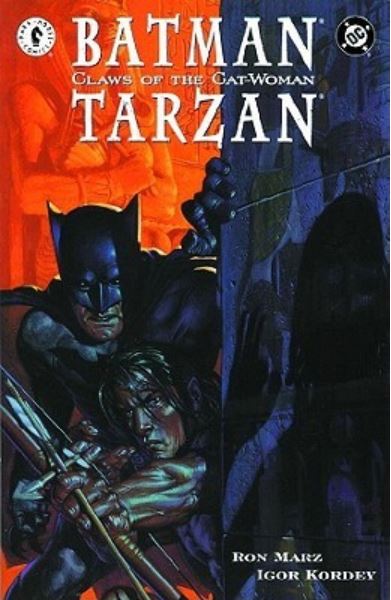
Batman/Tarzan: Claws of the Catwoman


By Ron Marz, Igor Kordey & various (Dark Horse Books/DC Comics)
ISBN: 978-1-5697-1466-9 (US TPB)            978-1-84023-235-6 (Titan Books edition)

I’m never particularly comfortable with the passion for cross-pollination that seems to obsess comics publishers. I admit that occasionally something greater than the sum of the originals does result, but usually the only outcome of jamming two different concepts into the same package is an uncomfortable, ill-fitting mess. So this tale – originally a 4-issue inter-company miniseries from the turn of the century – is a welcome example of success, and I’ll even offer a possible explanation for why…

This March sees the 80th anniversary of the Bat-Man‘s debut. I expect there to be some fuss about the event and maybe even the re-release of a few lost treasures from his vast canon. I hope this is one of them…

Although primarily a literary and filmic phenomenon, Tarzan of the Apes has certainly won his spurs in graphic narrative. Edgar Rice Burroughs’ novel was published in 1912, with movies cropping up from 1917 onwards. The first pictorial adventures came on January 7th 1929: a newspaper daily strip by Hal Foster augmented by a full-page Sunday serial by Rex Maxon from March 15th 1931. It’s still running. In 1947, Lord Greystoke conquered the comicbook arena, beginning in Dell’s Four Color Comics #134 and 161 before hurtling into his own long-lived title in January 1948.

So what’s on offer here?

When Great White Hunter Finnegan Dent returns to Gotham City with artefacts from a lost city he has discovered in Africa, his sponsor and backer is delighted. But Bruce Wayne has reason to change his mind when he meets John Clayton, a charismatic English Lord known alternatively as Greystoke or Tarzan of the Apes…

The two quickly discover they have a lots in common: both orphans due to crime, extraordinary men shaped by wealth, privilege and mutual interest in Justice, albeit in very different and particular jungles…

When the feline Princess Khefretari tries to steal back the looted treasures of her very-much-thriving civilisation, she catapults the heroes into a frantic chase and dire battle against a ruthless monomaniac.

This classical pulp-informed tale invokes all the basic drives of both characters without ever getting bogged down in continuity or trivia. It is first and foremost an action adventure, full of emotional punches delivered with relentless rapidity. There are good guys and bad guys, no extraneous fripperies and plenty of cliffhanger moments before virtue triumphs and evil is punished.

In Claws of the Catwoman you need only have the most meagre grounding in either character to enjoy this simple thriller – and you will, so let’s hope it’s on someone’s schedule for republishing…
Text and illustrations © 1999, 2000 Dark Horse Comics, Inc., DC Comics, Inc. & Edgar Rice Burroughs Inc. All Rights Reserved.