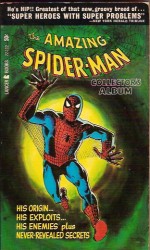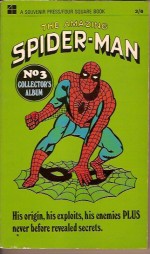
Marvel Masterworks volume 1: The Amazing Spider-Man 1-10


By Stan Lee & Steve Ditko (Marvel)
ISBN: 0-87135-305-9, 2nd edition 978-0-7851-1181-8

Marvel is often termed “the House that Jack Built” and King Kirby’s contributions are undeniable and inescapable in the creation of a new kind of comicbook story-telling, but there was another unique visionary toiling at Atlas-Comics-as-was: one whose creativity and even philosophy seemed diametrically opposed to the bludgeoning power, vast imaginative scope and clean, broad lines of Kirby’s ever-expanding search for the external and infinite.

Steve Ditko was quiet and unassuming, voluntarily diffident to the point of invisibility though his work was both subtle and striking: innovative, meticulously polished, always questing for detail, he ever explored the man within. He found heroism – and humour and ultimate evil – all contained within the frail but noble confines of human scope and consciousness. His drawing could be oddly disquieting… and, when he wanted, almost creepy.

Drawing extremely well-received monster and mystery tales for Stan Lee, Ditko had been given his own title. Amazing Adventures/Amazing Adult Fantasy featured a subtler brand of yarn than Rampaging Aliens and Furry Underpants Monsters and the ilk which, though individually entertaining, had been slowly losing traction in the world of comics ever since National/DC had successfully reintroduced costumed heroes. Lee & Kirby had responded with Fantastic Four and the ahead-of-its-time Incredible Hulk but there was no indication of the renaissance to come when the already cancelled Amazing Fantasy #15 cover featured a brand new and rather creepy adventure character.

In 11 captivating pages ‘Spider-Man!’ told the parable of Peter Parker, a smart but alienated kid bitten by a radioactive spider on a High School science trip. Discovering he had developed arachnid abilities which he augmented with his own natural engineering genius, he did what any lonely, geeky nerd would do when given such a gift – he tried to cash in for girls, fame and money.

Making a costume to hide his identity in case he made a fool of himself, Parker became a minor celebrity – and a self-important one. To his eternal regret, when a thief fled past he didn’t lift a finger to stop him, only to find when he returned home that his uncle Ben had been murdered.

Crazy for vengeance, Parker hunted the assailant who had made his beloved Aunt May a widow and killed the only father he had ever known, only to find that it was the felon he couldn’t be bothered with. His social irresponsibility had led to the death of the man who raised him and the boy swore to always use his powers to help others…

It wasn’t a new story, but the setting was one familiar to every kid reading it and the artwork was downright spooky. This wasn’t the gleaming high-tech world of moon-rockets, giant monsters and flying cars – this stuff could happen to anybody…

Amazing Fantasy #15 came out the same month as Tales to Astonish #35 (cover-dated September 1962) – the first to feature the Astonishing Ant-Man in costumed capers, but it was the last issue of Ditko’s Amazing playground.

However the tragic last-ditch tale had struck a chord with the reading public and by Christmas a new comicbook superstar was ready to launch in his own title, with Ditko eager to show what he could do with his first returning character since the demise of the Charlton hero Captain Atom (see Action Heroes Archive volume 1).

Holding on to the “Amazing” prefix to jog reader’s memories, the bi-monthly Amazing Spider-Man #1 had a March 1963 cover-date and two complete stories. It prominently featured the Fantastic Four and took the readers by storm. The opening tale, again simply entitled ‘Spider-Man!’, recapitulated the origin whilst adding a brilliant twist to the conventional mix.

The wall-crawling hero was feared and reviled by the general public thanks in no small part to J. Jonah Jameson, a newspaper magnate who pilloried the adventurer from spite and for profit. With time-honoured comicbook irony, Spider-Man then had to save Jameson’s astronaut son John from a faulty space capsule…

The second yarn ‘Vs the Chameleon!’ found the cash-strapped kid trying to force his way onto the roster – and payroll – of the Fantastic Four whilst elsewhere a spy perfectly impersonated the web-spinner to steal military secrets, in a stunning example of the high-strung, antagonistic crossovers and cameos that so startled the jaded kids of the early 1960s.

Heroes just didn’t act like that…

With the second issue our new champion began a meteoric rise in quality and innovative storytelling. ‘Duel to the Death with the Vulture!’ found Parker chasing a flying thief as much for profit as justice. Desperate to help his aunt make ends meet, Spider-Man began to take photos of his cases to sell to Jameson’s Daily Bugle, making his personal gadfly his sole means of support.

Along with comedy and soap-operatic melodrama Ditko’s action sequences were imaginative and magnificently visceral, with odd angle shots and quirky, mis-balanced poses adding a vertiginous sense of unease to fight scenes. But crime wasn’t the only threat to the world and Spider-Man was just as (un)comfortable battling “aliens” in ‘The Uncanny Threat of the Terrible Tinkerer!’

Amazing Spider-Man #3 introduced possibly the apprentice hero’s greatest enemy in ‘Versus Doctor Octopus’, a full-length epic wherein a dedicated scientist survived an atomic accident only to find his self-designed mechanical tentacles permanently grafted to his body. Power-mad, Otto Octavius initially thrashed Spider-Man, sending the lad into a depression until an impromptu pep-talk from the Human Torch galvanized Spider-Man to one of his greatest victories.

‘Nothing Can Stop… the Sandman!’ was another instant classic wherein a common thug who had gained the power to transform to sand (another pesky nuclear snafu) invaded Parker’s school, and had to stopped at all costs whilst issue #5 found the web-spinner ‘Marked for Destruction by Dr. Doom!’ – not so much winning as surviving his battle against the deadliest man on Earth. Presumably he didn’t mind too much as this marked the transition from bi-monthly to monthly status for the series. In this tale Parker’s social nemesis, jock bully Flash Thompson, first displayed depths beyond the usual in contemporary comicbooks, beginning one of the best love/hate buddy relationships in popular literature…

Sometime mentor Dr. Curtis Connors debuted in #6 when Spidey came ‘Face-to-face with… The Lizard!’ as the wallcrawler fought his battle far from the concrete canyons and comfort zone of New York – specifically in the murky Florida Everglades. Parker was back in the Big Apple in #7 to breathtakingly tackle ‘The Return of the Vulture’.

Fun and youthful hi-jinks were a signature feature of the series, as was Parker’s budding romance with “older woman” Betty Brant, Jameson’s PA at the Daily Bugle. Youthful exuberance was the underlying drive in #8′s lead tale ‘The Living Brain!’ an ambulatory robot calculator that threatened to expose Spider-Man’s secret identity before running amok at beleaguered Midtown High, just as Parker was finally beating the stuffings out of school bully Flash Thompson.

This 17 page joy was accompanied by ‘Spiderman Tackles the Torch!’ (a 6 page vignette drawn by Jack Kirby and inked by Ditko) wherein a boisterous wall-crawler gate-crashed a beach part thrown by the flaming hero’s girlfriend… with explosive consequences.

Amazing Spider-Man #9 was a qualitative step-up in dramatic terms as Aunt May was revealed to be chronically ill – adding to Parker’s financial woes – and the action was supplied by ‘The Man Called Electro!’ a super-criminal with grand aspirations. Spider-Man was always a loner, never far from the streets and small-scale-crime, and with this tale wherein he also quells a prison riot single handed, Ditko’s preference for tales of gangersterism began to show through; a predilection confirmed in #10′s ‘The Enforcers!’ a classy mystery where a masked mastermind known as the Big Man used a position of trust at the Bugle to organize all the New York mobs into one unbeatable army against decency. Longer plot-strands were also introduced as Betty Brant mysteriously vanished (her fate to be revealed in the next issue and here the second Mighty Marvel Masterworks volume), but most fans remember this one for the spectacularly climactic seven-page fight scene in an underworld chop-shop that has still never been topped for action-choreography.

These immortal epics are available in numerous formats (including softcover editions of the luxurious and enticing hardback under review here), but for a selection that will survive the continual re-readings of the serious, incurable fan there’s nothing to beat the substantial full-colour feel of these Marvellous Masterwork editions.
© 1962, 1963, 1964, 1987, 2003 Marvel Characters, Inc. All Rights Reserved.

Crisis on Multiple Earths volume 1


By Gardner Fox, Mike Sekowsky, Bernard Sachs & Sid Greene (DC Comics)
ISBN: 978-1-56389-895-2

As I’ve frequently mentioned before, I was one of the “Baby Boomer” crowd which grew up with Julie Schwartz, Gardner Fox and John Broome’s tantalisingly slow reintroduction of Golden Age superheroes during the halcyon, eternally summery days of the early 1960s. To me those fascinating counterpart crusaders from Earth-Two weren’t vague and distant memories rubber-stamped by parents or older brothers – they were cool, fascinating and enigmatically new.

…And for some reason the “proper” heroes of Earth-One held them in high regard and treated them with obvious deference…

It all began, naturally enough, in The Flash; pioneering trendsetter of the Silver Age Revolution. After successfully ushering in the triumphant return of the superhero concept, the Scarlet Speedster with Fox & Broome at the writing reins set an unbelievably high standard for costumed adventure in sharp, witty tales of science and imagination, always illustrated with captivating style and clean simplicity by Carmine Infantino.

The epochal epic that literally changed the scope of American comics forever was Fox’s ‘Flash of Two Worlds’ (Flash #123 September 1961, as seen in Showcase Presents the Flash volume 2) which introduced the theory of alternate Earths to the continuity and by extension resulted in the multiversal structure of the DCU – and all the succeeding cosmos-shaking yearly “Crisis” sagas that grew from it.

And of course, where DC led, others followed…

Received with tumultuous acclaim, the concept was revisited months later in #129′s ‘Double Danger on Earth!’ which also teasingly reintroduced evergreen stalwarts Wonder Woman, Atom, Hawkman, Green Lantern, Doctor Mid-Nite and Black Canary. Clearly Editor Schwartz had something in mind…

‘Vengeance of the Immortal Villain!’ from Flash #137 (June 1963, inked by Giella) was the third incredible Earth-2 crossover, and saw two Flashes unite to defeat 50,000 year old Vandal Savage and save the Justice Society of America: a tale which directly led into the veteran team’s first meeting with the Justice League of America and the start of an annual tradition.

When ‘Flash of Two Worlds’ introduced the concept of Infinite Earths and multiple versions of costumed crusaders, public pressure had begun almost instantly to agitate for the return of the Greats of the “Golden Age” but Editorial powers-that-be were hesitant, fearing too many heroes would be silly and unmanageable, or worse yet, put readers off. If they could see us now…

These innovative yarns generated an avalanche of popular and critical approval (big sales figures, too) so inevitably these trans-dimensional tests led to the ultimate team-up in the summer of 1963.

This gloriously enthralling volume re-presents the first four JLA/JSA convocations: stunning superhero wonderments which never fails to astound and delight beginning with the landmark ‘Crisis on Earth-One’ and ‘Crisis on Earth-Two’ (Justice League of America #21-22, August and September) combining to form one of the most important stories in DC history and arguably one of the most crucial tales in American comics.

Written by Fox and compellingly illustrated by Mike Sekowsky & Bernard Sachs the yarn finds a coalition of assorted villains from each Earth plundering at will, meeting and defeating the mighty Justice League before imprisoning them in their own secret mountain HQ.

Temporarily helpless “our” heroes contrive a desperate plan to combine forces with the champions of another Earth to save the world – both of them – and the result is pure comicbook majesty. It’s impossible for me to be totally objective about this saga. I was a drooling kid in short trousers when I first read it and the thrills haven’t diminished with this umpty-first re-reading.

This is what superhero comics are all about!

‘Crisis on Earth-Three’ and ‘The Most Dangerous Earth of All!’ (Justice League of America #29-30, August and September 1964) reprised the team-up of the Justice League and Justice Society, when the super-beings of a third alternate Earth discovered the secret of trans-universal travel.

Unfortunately Ultraman, Owlman, Superwoman, Johnny Quick and Power Ring were villains on a world without heroes and saw the costumed crime-busters of the JLA/JSA as living practise dummies to sharpen their evil skills upon. With this cracking thriller the annual summer get-together became solidly entrenched in heroic lore, giving fans endless entertainment for years to come and making the approaching end of school holidays less gloomy than they could have been.

(A little note: although the comic cover-date in America was the month by which unsold copies had to be returned – the “off-sale” deadline – export copies to Britain travelled as ballast in freighters. Thus they usually went on to those cool, spinning comic-racks the actual month printed on the front. You can unglaze your eyes and return to the review proper now, and thank you for your patient indulgence.)

The third annual event was a touch different; a largely forgotten and rather experimental tale wherein the dim but extremely larcenous Johnny Thunder of Earth-1 wrested control of the genie-like Thunderbolt from his other-world counterpart and used its magic powers to change the events which led to the creation of all Earth-1’s superheroes. With Earth-1 catastrophically altered in #37’s ‘Earth – Without a Justice League’ it was up to the JSA to come to the rescue in a gripping battle of wits and power before Reality was re-established in the concluding ‘Crisis on Earth-A!’ in #38.

Veteran inker Bernard Sachs retired before the fourth team-up, leaving the amazing Sid Greene to embellish the gloriously whacky saga that sprang out of the global “Batmania” craze engendered by the Batman television series…

A wise-cracking campy tone was fully in play, acknowledging the changing audience profile and this time the stakes were raised to encompass the destruction of both planets in ‘Crisis Between Earth-One and Earth-Two’ and ‘The Bridge Between Earths’ (Justice League of America #46-47, August & September 1966), wherein a bold – if rash – continuum warping experiment dragged the two sidereal worlds towards an inexorable hyper-space collision. Meanwhile, making matters worse, an awesome anti-matter being used the opportunity to break into and explore our positive matter universe whilst the heroes of both worlds were distracted by the destructive rampages of monster-men Blockbuster and Solomon Grundy.

Peppered with wisecracks and “hip” dialogue, it’s sometimes difficult to discern what a cracking yarn this actually is, but if you’re able to forgive or swallow the dated patter, this is one of the very best plotted and illustrated stories in the entire JLA/JSA canon. Furthermore, the vastly talented Greene’s expressive subtlety, beguiling texture and whimsical humour added unheard of depth to Sekowsky’s pencils and the light and frothy comedic scripts of Gardner Fox.

This volume also includes an enthralling introduction by Mark Waid, a comprehensive cover gallery and creator biographies.

These tales won’t suit everybody and I’m as aware as any that in terms of the “super-powered” genre the work here can be boiled down to two bunches of heroes formulaically getting together to deal with extra-extraordinary problems. In mature hindsight, it’s obviously also about sales and the attempted revival of more sellable super characters during a period of intense sales rivalry between DC Comics and Marvel.

But I don’t have to be mature in my off-hours and for those who love costume heroes, who crave these cunningly constructed modern mythologies and actually care, this is simply a grand parade of straightforward action, great causes and momentous victories.

…And since I wouldn’t have it any other way, why should you?
© 1963, 1964, 1965, 1966, 2002 DC Comics. All Rights Reserved.

Showcase Presents Wonder Woman volume 1


By Robert Kanigher, Ross Andru & Mike Esposito (DC Comics)
ISBN: 978-1-4012-1373-2

Wonder Woman was famously created by polygraph pioneer William Moulton Marston – apparently at the behest of his remarkable wife Elizabeth – and illustrated by Harry G. Peter. She debuted in All Star Comics #8 (December 1941) before gaining her own series and the cover-spot in new anthology title Sensation Comics a month later. She was an instant hit and quickly gained her own eponymous title in late Spring of that year (cover-dated Summer 1942).

Using the nom de plume Charles Moulton, Marston scripted all the Amazing Amazon’s many and fabulous adventures until his death in 1947, whereupon Robert Kanigher took over the writer’s role. The venerable H.G. Peter continued on as illustrator until his death in 1958. Wonder Woman #97, in April of that year, was his last hurrah and the discrete end of an era.

This first cheap and cheerful black and white Showcase collection covers issues #98-117 of the Astounding Amazon’s next one…

With the notable exception of Superman, Batman, Wonder Woman and inoffensive back-up B-listers Aquaman and Green Arrow (plus – arguably – Johnny Quick, who held on until December 1954 and cowboy crimebuster Vigilante who finally bit the dust a month earlier), costumed heroes died out at the beginning of the 1950s, replaced by a plethora of merely mortal champions and a welter of anthologised genre titles.

When after almost no time at all Showcase #4 rekindled the public’s imagination and zest for masked mystery-men with a new iteration of The Flash in 1956 (see Showcase Presents the Flash volume 1 or The Flash: Archive Edition volume 1) the fanciful floodgates opened wide once more…

As well as re-imagining a number of Golden Age stalwarts such as Green Lantern, Atom and Hawkman, National/DC consequently decided to update and remake all its hoary survivors such as the aforementioned Emerald Archer and Sea King. Also included in that revitalising agenda were the company’s High Trinity: Man of Steel, Caped Crusader and the ever-resilient Warrior Woman…

Artists Ross Andru & Mike Esposito had actually debuted as cover artists three issues earlier, but with Wonder Woman #98 (May 1958) they took over the entire comicbook whilst Robert Kanigher reinvented much of the old mythology and even tinkered with her origins in ‘The Million Dollar Penny!’ when the goddess Athena visited an island of super-scientific immortal women and told Queen Hippolyta that she must send an emissary to the crime-ridden Man’s World as a champion of justice.

Declaring an open competition for the post, the queen was hardly surprised when her daughter Diana won and was given the task of turning a penny into a million dollars in a day – all profits going to children’s charities, of course…

Just as the new Wonder Woman was about to begin her task, American airman Steve Trevor bailed out of his malfunctioning jet high above the hidden isle, unaware that should any male set foot on Amazon soil the immortals would lose all their powers. Promptly thwarting the impending disaster Diana and Steve teamed up to accomplish her task, encountering along the way ‘The Undersea Menace’ before building ‘The Impossible Bridge!’

Issue #99 opened in similar bombastic fashion with ‘Stampede of the Comets!’ as Trevor was lost undertaking a pioneering space mission and Wonder Woman went to his rescue thanks to incredible Amazon engineering ingenuity. After foiling an alien attack against Earth, the reunited lovers returned in time for the introduction of the Hellenic Heroine’s new covert identity as Air Force Intelligence Lieutenant Diana Prince in ‘Top Secret!’ – beginning a decade of tales with Steve perpetually attempting to uncover her identity and make the most powerful woman on Earth his blushing bride, whilst the bespectacled, glorified secretary stood exasperated and ignored beside him…

The 100th issue was a spectacular battle saga which commenced with ‘The Challenge of Dimension X!’ and an alternate Earth Wonder Woman competing with the Amazing Amazon for sole rights to the title and culminated in a deciding bout in ‘The Forest of Giants!’, whilst ‘Wonder Woman’s 100th Anniversary!’ dealt with the impossibility of capturing the far-too fast and furious Amazon’s exploits on film for the island’s archives…

‘The Undersea Trap!’ opened #101, with Steve tricking his “Angel” into agreeing to marry him if she has to rescue him three times in 24 hours (just chalk it up to simpler times, or you’ll pop a blood vessel, OK?) after which the odd couple were trapped by a temporal tyrant in ‘The Fun House of Time!’

Steve’s affection and wits were tested by an alien giant in ‘The Three Faces of Wonder Woman’ when he was forced to pick out his true love from a trio of identical duplicates and thereby save the world in #102, whilst ‘The Wonder Woman Album’ returned to the previously explored impossible-to-photograph theme in #103, but devoted most space to sinister thriller ‘The Box of Three Dooms!’ wherein the murderous Gadget Maker attempted to destroy the Amazon with a booby-trapped gift.

‘Trial By Fire’ pitted Diana Prince against a host of deadly traps that only Wonder Woman could survive whilst ‘Key to Deception!’ closed #104 by reintroducing Golden Age villain Duke of Deception as a militaristic Martian marauder in a gripping interplanetary caper.

Issue #105 introduced Wonder Girl in the ‘Secret Origin of Wonder Woman’ revealing how centuries ago the gods and goddesses of Olympus bestowed unique powers on the daughter of Queen Hippolyta and how as a mere teenager the indomitable Diana had brought the Amazons to Paradise Island. Continuity – let alone consistency and rationality – were never as important to Kanigher as a strong story or breathtaking visuals and this eclectic odyssey is a great yarn that simply annoyed the heck out of a lot of fans… but not as much as the junior Amazon would in years to come…

The second feature ‘Eagle of Space’ was a more traditional tale of predatory space Pterodactyls and a dinosaur planet where Steve and Diana lent a civilising hand to the indigenous caveman population, after which ‘The Human Charm Bracelet!’ in #106 found Wonder Woman battling an unbeatable extraterrestrial giant who wanted the Earth for his plaything, after which her younger self encountered a chameleonic lass in ‘The Invisible Wonder Girl!’

The high fantasy adventures of the junior heroine clearly caught somebody’s fancy as they now started coming thick and fast: ‘Wonder Woman – Amazon Teen-Ager!’ opened #107 as the youngster found a romantic interest in mer-boy Ronno and underwent a quest to win herself a superhero costume, whilst her adult self was relegated to a back-up battle against ‘Gunslingers of Space!’

‘Wanted… Wonder Woman!’ saw Flying Saucer aliens frame our heroine for heinous crimes as a precursor to a planetary invasion and ‘The Stamps of Doom!’ featured a plot by another murderous inventor to kill the Valiant Valkyrie in #108, but the next issue again stepped back in time to feature ‘Wonder Girl in Giant Land’ as the nubile neophyte easily overcame ambush by colossal aliens. Her mature self was represented here by ‘The Million Dollar Pigeon!’ wherein gangsters thought they’d found a foolproof method of removing the Amazing Amazon from their lives…

Wonder Woman #110 was a full-length saga as the indomitable warrior maid searched the Earth for a missing alien princess in ‘The Bridge of Crocodiles!’ If the wanderer couldn’t be found, her concerned family intended to lay waste the entire planet…

In #111 ‘The Robot Wonder Woman’ commissioned by gangsters provided no real competition for the genuine article, whilst ‘Battle of the Mermen!’ found Wonder Girl drawn into a sub-sea rumble between competing teenaged fish-boy gangs…

The youthful incarnation led off the next issue: ‘Wonder Girl in the Chest of Monsters!’ took the concept to unparallelled heights of absurdity as, in contemporary times, a heroic girl was rewarded with three Amazon wishes and sent back in time to have an adventure with Wonder Woman’s younger self, whilst #113 returned to relatively straight action with ‘The Invasion of the Sphinx Creatures!’ as the Adult Amazon battled the ancient weapons of a resurrected Pharoah-Queen, after which ‘Wonder Girl’s Birthday Party!’ recounted how each anniversary event seemed to coincide with a geological disaster, mythological menace or uncanny event…

Aliens once more attacked in #114’s ‘The Monster Express!’ turning parade balloons into ravening monsters until Diana and Steve stepped in after which ‘Wonder Girl’s Robot Playmate!’ demonstrated how hard it was growing up special…

Old enemy Angle Man returned revamped for the Silver Age in #115’s ‘Graveyard of Monster Ships!’ whilst ‘Mer-Boy’s Undersea Party!’ proved that above or below the waves Wonder Girls just don’t want to have fun, whilst in #116 both Ronno and Young Diana were capable of serious heroism in ‘The Cave of Secret Creatures!’, after which the Adult Amazing Amazon finally stopped a millennial menace to mankind in ‘The Time –Traveller of Terror!’

This initial enchanting chronicle concludes with Wonder Woman #117 wherein ‘The Fantastic Fishermen of the Forbidden Sea!’ reintroduced Etta Candy and the Holliday Girls – in modernised, less offensive incarnations – in a fantastic tale of aquatic invaders before Amazon time-travel techniques allowed the impossible to occur when ‘Wonder Girl Meets Wonder Woman!’… or did she…?

By modern standards these exuberant, effulgent fantasies are all-out crazy, but in the days when less attention was paid to continuity and the concept of a shared universe and the adventure in the moment was paramount these outrageous romps simply sparkle with fun, thrills and sheer spectacle.

Wonder Woman is rightly revered as a focus of female strength, independence and empowerment, but the welcoming nostalgia and easy familiarity of these costumed fairytales must be a delight for all open-minded readers and the true value of these exploits is the incredible quality of entertainment they provide.

© 1958-1960, 2007 DC Comics, Inc. All Rights Reserved.

Marvel Masterworks (volume 2): The Fantastic Four 1-10


By Stan Lee, Jack Kirby & various (Marvel)
ISBN: 0-87135-307-5

I love a bit of controversy so I’m going start off by saying that Fantastic Four #1 is the third most important American comicbook of the Silver Age and ever since, ranking just behind Showcase #4, which introduced the Flash and The Brave and the Bold #28, which brought superhero teams back via the creation of the Justice League of America. I’m just saying…

After a troubled period at DC Comics (National Periodicals as it then was) and a creatively productive but disheartening time on the poisoned chalice of the Sky Masters newspaper strip Jack Kirby settled into his job at the small outfit that used to be the publishing powerhouse Timely/Atlas, churning out mystery, monster, romance and western material in a market he suspected to be ultimately doomed.

But his fertile imagination couldn’t be suppressed for long and when the JLA caught the public’s massed imagination it gave him and writer/editor Stan Lee an opportunity which changed the industry forever.

Depending upon who you believe a golfing afternoon led publisher Martin Goodman to order his nephew Stan to try a series about super-characters like the JLA, and the resulting team quickly took the industry and the fans by storm. It wasn’t the powers: they’d all been seen since the beginning of the medium. It wasn’t the costumes: they didn’t even have any until the third issue.

It was Kirby’s compelling art and the fact that these characters weren’t anodyne cardboard cut-outs. In a real and recognizable location, (New York City from #3 onwards) imperfect, rather touchy people banded together out of tragedy and disaster to face the incredible.

In many ways The Challengers of the Unknown (Kirby’s prototype quartet whose escapades are available in two wonderful DC Archives as well as a single economical, black and white Showcase Presents volume) laid all the groundwork for the wonders to come, but the staid, almost hide-bound editorial strictures of National would never have allowed the, undiluted energy of the concept to run all-but unregulated.

This glorious and lavish hardcover compilation reprints the first ten trend-setting, empire-building issues beginning with Fantastic Four #1 (bi-monthly and cover-dated November 1961, by Lee, Kirby and an uncredited inker whose identity remains a topic of much debate to this day) – a raw, rough, passionate and uncontrolled blend of traditional monster adventure and sci-fi saga. Thrill-hungry kids pounced on it.

‘The Fantastic Four’ saw maverick scientist Reed Richards summon his fiancé Sue Storm, their friend Ben Grimm and Sue’s teenaged brother Johnny before heading off on their first mission. In a flashback we discover that they are driven survivors of a private space-shot that went horribly wrong when Cosmic rays penetrated their ship’s inadequate shielding. They crashed back to Earth and found that they had all been hideously mutated into outlandish freaks.

Richards’ body became elastic, Sue gained the power to turn invisible, Johnny Storm could turn into living flame and tragic Ben turned into a shambling, rocky freak. Shaken but unbowed they vow to dedicate their new abilities to benefiting mankind.

In ‘The Fantastic Four meet the Mole Man’ they foil a plan by another outcast who controls monsters and slave humanoids from far beneath the Earth. This summation of the admittedly mediocre plot cannot do justice to the engrossing wonder of that breakthrough issue – we really have no grasp today of just how different in tone, how shocking it all was.

“Different” doesn’t mean “better” even here, but the FF was like no other comic on the market at the time and buyers responded to it hungrily. The brash experiment continued with another old plot in #2. ‘The Skrulls from Outer Space’ were shape-changing aliens who framed the FF and made them hunted outlaws (a fruitful theme often returned to in those early days) before the genius of Mister Fantastic bluffed their entire invasion fleet into abandoning their plans for conquering Earth.

Issue #3 (inked by Sol Brodsky) featured ‘The Menace of the Miracle Man’ whose omnipotent powers had a simple secret, but is more notable for the first appearance of their uniforms and a shocking line-up change, which led directly into the next issue. Continued stories were an innovation in themselves, but the revival of a Golden Age Great instantly added depth and weight to the six month old and still un-named Marvel Universe.

‘The Coming of the Sub-Mariner’ reintroduced the all-powerful amphibian Prince of Atlantis, who had been lost for decades, a victim of amnesia. Recovering his memory thanks to the Human Torch, Namor returned to his sub-sea home only to find it destroyed by atomic testing. A monarch without subjects, he swore vengeance on humanity and attacked New York City with a gigantic monster. This saga is when the series truly kicked into high-gear…

Until now the creative team, who had been in the business since it began, had been hedging their bets. Despite the innovations of a contemporary superhero experiment their antagonists had relied heavily on the trappings of popular trends in the media – and as reflected in their other titles. Aliens and monsters played a major role in the earlier tales but Fantastic Four #5 took a full-bite out of the fight n’ tights apple and introduced the first full-blown super-villain to the budding Marvel Universe.

I’m not discounting Mole Man, but that tragic little gargoyle, for all his plans of world conquest, wouldn’t truly acquire the persona of a costumed foe until his more refined second appearance in #22.

‘Prisoners of Doctor Doom’ (July 1962, inked by the subtly slick Joe Sinnott) has it all. An attack by a mysterious enemy from Reed’s past, magic and super-science, lost treasure, time-travel – even pirates. Ha-haar, me ‘earties! One brief aside for collectors here: the 1987 first printing of this Marvel Masterworks has a number of the pages in this tale wrongly sequenced – an error rectified in later releases – so if this is a problem, buy a different edition.

Sheer magic, and the so on-form creators knew they were on to a winner since the deadly Doctor returned the very next issue, teamed with a reluctant but gullible Sub-Mariner to attack our heroes in #6’s ‘Captives of the Deadly Duo!’ inked by new regular embellisher Dick Ayers.

In this first super-villain team up Prince Namor’s growing affection for Sue Storm forced the sub-sea stalwart to save his foes from dire death in outer space – but only after Doom tried to kill him too…

The first inklings of the rough-and-tumble humour and familial byplay smoothed the raw edginess from now on and Alien abductors were the motivating force when the team became ‘Prisoners of Kurrgo, Master of Planet X’, a dark and grandiose off-world thriller in FF#7 (the first monthly issue) whilst a new villain and the introduction of a love-interest for the monstrous Ben Grimm were the breakthrough high-points in the action-packed ‘Prisoners of the Puppet Master!’

The December issue, #9, trumpeted ‘The End of the Fantastic Four’ as Sub-Mariner returned to exploit another brilliant innovation in comic storytelling. When had a super-genius, superhero ever messed up so much that the team had to declare bankruptcy? When had costumed crime-fighters ever had money troubles at all? The eerily prescient solution was to “sell out” and make a blockbuster movie – giving Kirby a rare chance to demonstrate his talent for caricature…

1963 was a pivotal year in the development of Marvel. Lee and Kirby had proved that their new high concept – human heroes with flaws and tempers – had a willing audience. Now they would extend that concept to a new pantheon of heroes. Here is where the second innovation would come to the fore.

Previously, super-heroes were sufficient unto themselves and shared adventures were rare. Here, however was a universe where characters often tripped over each other, sometimes even fighting each other’s enemies! The creators themselves might turn even up in a Marvel Comic! Fantastic Four #10, which rounds out this deluxe box of delights, featured ‘The Return of Doctor Doom!’ wherein the arch villain used Stan and Jack to lure Reed Richards into a trap where his mind was switched with the Iron Dictator’s until hubris, arrogance and valiant heroism inevitably saved the day…

These immortal epics are available in numerous formats (including softcover editions of the luxurious and enticing hardback under review here), but for a selection that will survive the continual re-readings of the serious, incurable fan there’s nothing to beat the substantial full-colour feel of these Marvellous Masterwork editions.

If you’re going to read the World’ Greatest Comics Magazine’s finest moments, surely you’ll be wanting to do it in style?
© 1961, 1962, 1963, 1987, 2003 Marvel Characters, Inc. All Rights Reserved.

The Comics Journal #301


By various, Edited by Gary Groth & Kristy Valenti (Fantagraphics Books)
ISBN: 978-1-60699-291-3

After far too long a hiatus the new incarnation of The Comics Journal is available and as inspired as ever.

The Journal is the paramount English-language publication dedicated to the Art of graphic narrative, covering comics, cartooning and related fields domestic and global; interviewing creators, disseminating the facts and even advertising the best and most challenging product. They’ve done it competently, passionately and proudly for decades. You won’t always agree with the opinions expressed – editorial or from the many and various insiders and cognoscenti who have been featured – but you’d be an idiot to ignore or dismiss them if you care at all about the industry or the medium.

This latest offering, a truly monolithic square-bound book; 624 mostly monochrome pages but with lots of colour where necessary, devotes most of its mass to possibly the most important comics work of this new century whilst still finding ample room to examine one of its few rivals for primacy from the entire 20th century, an appreciation of a lost classic, an examination of the latest blockbuster from the founder and master of comics-reportage and much, much more.

In 2009 W. W. Norton and Co. released The Book of Genesis Illustrated by R. Crumb. The 200 page comics adaptation of the Robert Alter version of the old testament was the stunning result of four years of intense research, creative thought and non-stop drawing… and for most of us it’s a big contender for the artist’s absolute magnum opus.

R. Crumb: The Genesis Interview sees the always intriguing and painfully forthcoming master draughtsman talking to Gary Groth about every aspect of the project after which Roundtable: the Book of Genesis Illustrated by R. Crumb is thrown to a pack of critics and cognoscenti for analysis, rebuttal, refutation and literary transubstantiation. Rick Marschall contributes ‘Pilgrim’s Process’, Donald Phelps describes ‘An Epic Visualized’, Robert Stanley Martin declares ‘Crumb Finally Finds his Limits’, Jeet Heer dispassionately examines ‘Genesis Revisited’ and Tim Hodler follows the ‘Straight Lines’, whilst Alexander Theroux considers why and how ‘Crumb Goes to Church’ and Kenneth R. Smith caps off the initial set of theses with ‘A Book For Man Recounted in a Book By/For/Of Man’.

This is followed by an utterly absorbing Roundtable Responses feature in which the assembled contributors react to what each other propounded…

After that compelling 190-odd page lead section the first Sketchbook instalment delves into the mind and portfolio of Jim Woodring, in a compelling interview liberally spiced with the cartoonist’s working drawings, doodles and photos from Weathercraft and a host of other superbly eclectic classics

Al Jaffee & Michael Kupperman in Conversation is another magical dose of back and forth banter between an industry legend and rising star, moderated by Groth and liberally illustrated with work from both parties in case you’re unfamiliar with their oeuvre. In this case the stellar career and newest work of the Mad Magazine veteran and inventor of “Fold-ins” is counterbalanced with the surreal enticements of the unique talent behind Tales Designed to Thrizzle.

Warren Bernard (co-author of Drawing Power: A Compendium of Cartoon Advertising 1870-1940) outlines the career of one of the early industry’s greatest stars in John T. McCutcheon: A Cartoonist and His Dog before Sketchbook: Tim Hensley highlights the work of the relative newcomer behind the wonderful Ticket Stub.

Tim Kreider is the brilliantly acerbic and effective cartoonist/essayist/political gadfly behind Twilight of the Assholes and here he examines a series I’ve always loved but been too timid and lazy to review in Irredeemable: Dave Sim’s Cerebus.

Joe Sacco on Footnotes in Gaza is another illuminating interview by Groth, wherein indomitable champion of truth Sacco discusses his latest graphic novel, whilst Sketchbook: Stephen Dixon reveals the stunning an nigh-obsessive graphic facility of the prolific novelist and short-story writer behind Tisch, I, Time to Go, Meyer and so many others…

The ‘Reviews’ section further covers Sacco’s Footnotes in Gaza with a comprehensive dissertation from Kent Worcester, Ryan Holmberg dissects Yoshiro Tatsumi’s Gekiga manga masterwork Black Blizzard and Robert Stanley Martin delves into the collected wonderment of Eddie Cambell’s semi-autobiographical gem Alec: the Years Have Pants.

Marc Sobel’s ‘The Decade in Comics’ examines what might be the milestones of the last ten years – you decide – R. Fiore has “another Go-round with Racial Caricature” in the challenging ‘Affectionate, Sympathetic and Completely Racist’ and ‘Cartoonists Leading Cartoonists’ by Rob Clough reports on a unique industry mentoring program at the Center for Cartoon Studies.

In ‘Gus Arriola and the Comic Strip that Never Was – Until Now’ R. C. Harvey explores another strip which might have added to the late ‘Gordo‘ creator’s lustre: the adumbrated adventures of Persian delight Pussy Willow – a cat of means and many sharp ends…

‘Maggots and Time’ by Chris Lanier examines Brian Chippendale’s expressive and experimental Maggots comic in the context of art capturing motion and progression and a huge full colour comics section reprints Dell’s comicbook adaptation and licensed continuation of UPA’s cartoon classic ‘Gerald McBoing Boing’ – itself an animation of a superb Dr. Seuss tale – introduced here by animation legend Gene Deitch, after which the whole colossal chronicle circles back to point zero by revealing ‘Three Questions Answered about Robert Crumb’: a retrospective disquisition by Tom Crippin which closes this fabulous treasure trove of intellectual comics discourse.

Although it feels like it has always been part of our lives, TCJ only began business in 1976, interviewing creators, reporting on trends and events and generally assuming the critical role of critique-ing: a self-aware gadfly within and without our industry: celebrating the history and innovation of all aspects of cartooning and graphic narrative, keeping the balance between sales and artistic integrity firmly tipped on the side of the latter. It has for decades been the only place Americans hear of what the rest of the world of comics is doing.

This is a superb uber-magazine for comics lovers: it won’t ever tell you where and when to buy but it will certainly make you wonder why you do or don’t…
© 2011 Fantagraphics Books, Inc. All images/photos/text © their respective copyright holders. All rights reserved.

Drawing Power: A Compendium of Cartoon Advertising volume 1


By many and various, edited by Rick Marschall & Warren Bernhard (Fantagraphics Books & Marschall Books)
ISBN: 978-1-60699-399-6

From its earliest inception cartooning has been used to sell: initially ideas or values but eventually products themselves. In newspapers, magazines and especially comicbooks the sheer power of narrative with its ability to create emotional affinities has been linked to the creation of unforgettable images and characters. When those stories affect the daily lives of generations of readers the force that they can apply in a commercial arena is almost irresistible…

Popular culture historian Rick Marschall and biographer/researcher Warren Bernhard have compiled here a captivating potted history of the rise of the art of commercial cartooning in an increasingly advertising-aware America (…and make a strong argument that one could not have thrived without the other) whilst providing a glorious panoply of staggeringly evocative, nostalgic and enduring picture-poems which shaped the habits of a nation. This volume covers the birth of the medium until the outbreak of World War II – which will be tackled in a subsequent book.

After Marschall’s compelling and intoxicating discourse on the growth of the twin industries in ‘Cartoons and the Selling of America’ the individual chapters of copiously illustrated memorabilia commence with ‘The Origins of Cartoon Advertising’ featuring truly magical art from the likes of Joseph Keppler, Thomas Nast, Frederick Burr Opper, Clare Victor “Dwig” Dwiggins, Winsor McCay and others for Beef Tea, Steinway pianos, insurance, wines, “electric” cigarettes, washing powder, sausages, entertainments and political rallies after which the legendary R.F. Outcault stars in the first Portfolio Section.

The creator of Hogan’s Alley, The Yellow Kid, Buster Brown and so many others was the first cartoonist to cut out the commercial middleman and directly market his skills as a pioneering advertising executive with his own agency in 1907 and this 10-page gallery is stuffed with his incredible inventions and innovations.

‘Cartoon Ads Go to War’ celebrates the patriotic fervour engendered by masters of brush and pen such as Ralph Barton, Rose (“Kewpies”) O’Neill, Charles Dana Gibson, McCay again, John T. McCutcheon and many more with the attendant Portfolio piece dedicated to ‘Sheet Music’ illustrations from Homer Davenport, Outcault, McCay, George McManus, Russell Patterson, Rube Goldberg and more, illustrating a growing trend – the licensing of established strip characters and stars to “endorse” and sell products.

‘The Jazz Era’ spotlights a graphic Golden Age both for advertising and newspaper strip merchandising: everything from promotional postcards to personalised calendars, decoder rings and assorted premium statuettes. Here the portfolio features illustrated blotters (absolutely vital in an era when most transactions where inscribed using fountain pens) starring such cartoon heavyweights as Mutt and Jeff, Bull of the Woods, They’ll Do It Every Time, Krazy Kat, Mickey Mouse and Donald Duck, Bringing Up Father, the Gumps and William Heath Robinson.

Another portfolio covers the left-wing cartoonists who openly thrived in the USA in the days before Communism became a dirty word and Liberal Tendencies a hanging offence. Contributors include Otto ‘the Little King’ Soglow, Art Young, Syd Hoff AKA “A. Redfield”, Herbert Johnson, Charles Sykes, John Held Jr., after which the ‘Tobacco’ industry gets its own section with terrifyingly effective contributions from Outcault’s Yellow Kid, Martin Branner’s Winnie Winkle, Bud Fisher’s Mutt and Jeff plus original strips from Frank Godwin, Ann “Fish” Septon, James Pinkney, Winsor McCay, Nicholas Afonsky and others.

The depression era is dissected in ‘Hard Times and Good Times’ concentrating on food, nutrition and making ends meet in strips drawn by Ludwig Bemelman, Opper and others whilst the Portfolio concentrates on ‘Baseball’ with strips starring celebrities such as Babe Ruth and Dizzy Dean – by a variety of unnamed artists – promoting the benefits of everything from grape nuts to cigarettes.

After which another selection of strip promotions and premiums highlights school supplies from Buck Rogers, comic masks from Wrigley’s gum, star buttons, Popeye transfers and more.

A ‘Celebrities’ Portfolio focuses on the selling power of tennis ace Big Bill Tilden, western stars Tom Mix and Andy Devine, movie comedians Jimmy Durante, Joe E. Brown and many more whose stars have faded with time.

Theodore Geisel gets an entire section to himself under his cartoon alter ego of Dr. Seuss and ‘Cartoonists as Pitchmen’ examines the phenomenon of artists as celebrities with Peter Arno, James Montgomery Flagg, Rube Goldberg, Sidney “The Gumps” Smith, Ham Fisher and others plugging a variety of goods and services after which Tom Heintjes recounts the story of the cartoonists ad agency ‘Johnstone and Cushing’, with illustrations from such employees as William Sakren, Creig Flessel, Albert Dorne, Austin Briggs, Lou Fine, Stan Drake and more.

This magnificent and beautiful collection concludes with an examination of perhaps the most effective cartoon advertising symbol ever created. ‘Mr. Coffee Nerves’ was designed to sell a vile-tasting, caffeine-free ersatz coffee named Poston – which it successfully did for 40 years – probably due to the entertaining scripts and superb art of artists such as Noel Sickles and Milton Caniff…

Stuffed with astounding images, fascinating lost ephemera and mouth-watering photos of toys and trinkets no fan could resist, this colossal collection is a beautiful piece of cartoon Americana that will delight and tantalise all who read it… and the best is yet to come.
This edition ©2011 Fantagraphics Books and Marschall Books. All text ©2011 Rick Marschall except ‘Johnstone and Cushing’ ©Tom Heintjes. All Rights Reserved.

The Kingdom


By Mark Waid & various (DC)
ISBN: 978-1-56389-567-6   Titan Books edition 978-1-84023-122-9

After the staggering success of the 1996 miniseries Kingdom Come a sequel was utterly inevitable, but things didn’t exactly go according to plan and it was three years before a 2-issue return to that intriguing “Elseworld” was released; book-ending 6 individual one-shots, all set in the aftermath of the epochal epic which saw Superman return from a self-imposed exile to once more save the world.

Before all that though a prologue was released in Gog (Villains) #1, which segued into The Kingdom #1 and continued in an interwoven mosaic progression through spin-offs The Kingdom: Son of the Bat, The Kingdom: Nightstar, The Kingdom: Offspring, The Kingdom: Kid Flash and The Kingdom: Planet Krypton before concluding in The Kingdom #2.

This second “what if?” saga boldly managed to connect the once-separate continuity to the mainstream DC universe and introduced another bridging concept that opened the way for all the storylines and history eradicated in Crisis on Infinite Earths to once more be “real and true”.

Illustrated by Jerry Ordway & Dennis Janke, ‘The Road to Hell’ opens in the devastated fallout zone of Kansas where the returned Superman rescues a little boy – sole survivor of a holocaust caused by warring superheroes. Decades later that boy has grown into Minister William: a beneficent Samaritan and religious zealot who literally worships the Man of Steel as a redeeming God – until the hero painfully and finally disabuses him of the notion.

With his world torn apart for a second time William is given the true history of the universe by the Phantom Stranger and the broken preacher is reborn as Gog, a being of vast power able to manipulate events and change history.

The Stranger is part of a Cosmic alliance called the Quintessence and believes he is creating a force for good, tasked with undoing great tragedy; but the deranged Gog has another idea and promptly murders Superman – the destroyer of his faith and thus the maniac’s personal anti-Christ…. Moreover, the psychotic William begins to travel back in time intending to jump-start the Kansas Incident. On the way he will stop every 24 hours and kill Superman again: every day of his evil alien life and one day at a time… Most terrifying of all is the fact that the Quintessence are quite happy with Gog’s horrifying scheme…

Kingdom Come #1 (art by Ariel Olivetti) recapitulates the ‘Never Ending Slaughter’ as spectral adventurer Deadman gathers all of Superman’s ghosts slain since August 11th 2040 in an unending variety of gruesomely imaginative ways, victims of Gog’s reality-rupturing mania.

The resultant time-disruption energises Chronal guardians The Linear Men, but before they can act to protect the Space-Time Continuum one of their number betrays them and sets out to tackle the crisis his own way.

A year after the events of Kingdome Come Wonder Woman is giving birth to the son she and Superman conceived when Gog arrives to once more kill the Man of Tomorrow. Driven off by that era’s massed superhero population Gog escapes into the timestream taken the newborn child with him to 1998 where he will raise it as his disciple Magog.

With all of existence liable to vanish at any second the renegade Linear Man invites Superman, Wonder Woman and Batman to accompany him on a last-ditch mission to stop the maniac and save Kansas.

But now, whatever happens, the entire timeline and everybody in it will alter and might even never have existed…

As the World’s Greatest heroes vanish into the past they leave behind a shell-shocked band of new warriors desperately making their peace with imminent, inescapable and irreversible doom…

The Kingdom: Son of the Bat introduces Ibn al Xu’ffasch, heir of both Batman and Ra’s al Ghul, who uses his incredible intellect and astounding resources to resurrect the world’s greatest villains in hope of forestalling the apocalypse in ‘Convergence’, illustrated by Brian Apthorp & Mark Farmer, whilst The Kingdom: Nightstar finds the daughter of Nightwing and Starfire going ‘Not So Gently’ (art by Matt Haley & Tom Simmons) as one of her closest metahuman friends cracks under the pressure of impending non-existence and attempts to end it all quickly and cleanly by destroying the satellite which provides most of Earth’s food. Both these tales conclude with a time-bending stranger offering a way to fight back against the impossible situation…

‘Flexibility’ from The Kingdom: Offspring – superbly rendered by Frank Quitely – takes a softer approach by examining a unique father and son relationship as the clownish heir of Plastic Man tries to mend a few fences and have one last fling before the end, whilst The Kingdom: Kid Flash presents a ‘Quick Fix’ (Mark Pajarillo & Walden Wong) as the over-achieving daughter of the Fastest Man Alive attempts to live up to an impossible standard before the individual interludes end with The Kingdom: Planet Krypton wherein ordinary waitress Rose D’Angelo spends her last day working at the same hero-themed fast food restaurant she always has. Of course the place is ‘Haunted’ by ghosts only she can see – ephemeral, impossible alternate versions of costumed champions that never existed… or did they?

The Barry Kitson limned mystery leads directly into the concluding issue of The Kingdom, illustrated by Mike Zeck & John Beatty. ‘Mighty Rivers’ sees Magog reach the present in the mainstream DC universe and open his campaign to nuke Kansas. The current Superman is unable to defeat him until the time-travelling trinity of older heroes arrive, precipitating a calamitous battle and a technological Deus ex Machina wherein the imperilled champions of the doomed tomorrow save themselves and their still-potential reality thanks to the convenient miracle of Hypertime – where all things are possible…

Despite being all-but impenetrable to casual readers this climactic costumed caper is visually impressive and tremendously clever – if you’re au fait with the details of the DC canon – and much of the meat of this saga has since permeated such series as Justice Society of America and other titles, with wary readers continuing to wonder which of these “imaginary” characters will eventually manifest in the “real” world of DC Comics…

A definite fun-fest for DC devotees but perhaps a trifle over-focused for the casual consumer…
© 1999 DC Comics. All Rights Reserved.

The Hunting Party


By Enki Bilal & Pierre Christin translated by Elizabeth Bell (Les Humanoid/Titan Books)
ISBN: hardback 978-0-96724-017-6,   softcover 978-1-85286-289-3

To highlight the Memoirs of a Cold Utopia exhibition plugged in our Noticeboard section here’s a fascinating graphic novel long overdue for a thorough revisit…

Here’s a masterpiece of subtle moody comics storytelling criminally out of print and long overdue for rediscovery in the frankly incomprehensible modern English language comics marketplace.

Enes Bilalović AKA Enki Bilal was born in Belgrade in 1951 and broke into French comics in 1972 with Le Bal Maudit for Pilote. Throughout the 1970s he grew in skill and fame and achieved English-language celebrity once his work began appearing in America’s Heavy Metal magazine.

Although best known for his self-scripted Nikopol Trilogy (Gods in Chaos, The Woman Trap and Cold Equator) I’ve always felt that his most effective art appeared in this contemplative Cold War drama. Partie de chasseThe Hunting Party – scripted by old comrade Christin is arguably Bilal’s most powerful and heartfelt effort. In recent years Bilal returned to contemporary political themes with his much-lauded self-penned Hatzfeld tetralogy…

As if writing one of the most successful and significant comics series in the world (the groundbreaking and influential Valérian and Laureline series) was not enough, full-time Academician Pierre Christin has still found time over the years to script science-fiction novels, screenplays and a broad selection of comics, beginning in 1966 with Le Rhum du Punch with Valérian co-creator Jean-Claude Mézières.

Christin has produced stellar graphic stories with such artistic luminaries as Jacques Tardi, Raymond Poïvet, Annie Goetzinger, François Boucq, Jijé and many others, but whenever he collaborated with the brilliant Bilal, beginning in 1975 with their exotic and surreal Légendes d’Aujourd’hui or in later classic tales such as The City That Didn’t Exist or The Black Order Brigade, the results have never been less than stunning.

In this, their best work, idealism and human nature have never been more coldly and clearly depicted…

As the Soviet system begins to crack, ten old men of the Party gathered at an exclusive Polish estate for an extended winter holiday of reminiscing and shooting. Stars and survivors in their own Warsaw Pact countries, the guests are all linked in deed and indebted to one charismatic man…

He is legendary figure and hard-line apparatchik Vassili Alexandrovich Chevchenko who has given his long life to the pursuit of the Communist ideal, but is now a doomed man; half-paralysed, rendered mute by a stroke and sidelined by the Politburo which is again repurposing itself, as it has so many times during Chevchenko’s life.

The aged politician’s long career has been one of surrendering self and sacrificing personal desire to serve the State and now he has gathered his closest colleagues about him for one last diverting weekend of vodka, chess, hunting and history…

As the festivities proceed the silent grandee is plagued with red-handed memories of the things he has done and the love he’d lost for the sake of the Dream, but his internal colloquy is balanced by the naïve questions and attitudes of the young and anonymous French Communist hired to translate for the other interloper among the old Comrades – reforming go-getter Sergei Shavanidze, who has been appointed Chevchenko’s successor and can’t wait to start pruning dead wood and outmoded ideas…

The entire history of the Movement is examined via the personal reminiscences of these creaking remnants of the system recalling past glories, old horrors and narrow escapes, but the bemused and bewildered Frenchman has no inkling as he absorbs the secrets of their socialist past of the part he will unwittingly play in its future…

This mesmerising, beguiling and utterly chilling thriller methodically skins the hide from an idealistic dream and spills the dark hot guts of guilt, arrogance and the pursuit of power in a sublime example of graphic narrative’s unique facility to tell a story on a number of levels.

In 1990 Titan Books released The Hunting Party in a captivating softcover album as part of their push to popularise European comics classics and in 1992 Humanoids Publishing published a sturdy oversized (12.6 x 9.4inches) hardback edition for the US market, either of which will delight any fan in search of a more mature and thought-provoking reading experience.
© 1990 Les Humanoides Associes. English language edition © 1990 Titan Books. All Rights Reserved.

The Desert Peach Collection book 1: Beginnings


By Donna Barr (Mu-Aeon/Atlantic Books)
Aeon no ISBN, Atlantic ISBN: 978-1-88384-713-5

In Acknowledgement of the upcoming Comics in Conflict event at the Imperial War Museum this weekend – see our Noticeboard for details – I’m going to be reviewing a few intriguing and hopefully pertinent classics beginning with this criminally neglected comics gem…

Donna Barr is one of the comic world’s most unique talents. She has constructed a fully realised fantasyscape to house her stories and tells them with a style and voice that are definitely one-of-a-kind.

Her most well known creations are Stinz Löwhard, the Half-Horse and the star of this particular volume, Pfirsich Rommel the outrageously out, homosexual brother of the legendary perfect German soldier dubbed “The Desert Fox”.

The stories are set in World War II Africa and effortlessly combine hilarity, surreality profound sensitivity and glittering spontaneity.

Oberst Manfred Pfirsich Marie Rommel, like his Field Marshal brother Erwin, was part of the German invasion force in from 1940-1943. However, although as capable as his elder sibling, the gracious and convivial Desert Peach was a man who loathed harming anybody physically or emotionally and thus spent his days with the ever-so-motley crew of the 469th Halftrack, Gravedigging & Support Unit of the Afrika Korps. trying to remain stylish, elegant and non-threatening to the men under his command, the natives and the rather trying British – not all of whom were party to the clandestine non-aggression pact he had made with his opposite numbers in the amassed Allied Forces…

Pfirsich was also wildly in love with Rosen Kavalier: manly Luftwaffe ace and the Peach’s fiancé…

The Desert Peach ran for 32 intermittent issues from a number of publishers and was subsequently collected as eight graphic novel collections between 1988-2005, with a prose novel – Bread and Swans, a musical and an invitational collection by other artists entitled Ersatz Peach. A larger compendium, Seven Peaches, collects issues #1-7 and Pfirsich’s further exploits continue as part of the Modern Tales webcomics collective…

However, this hard-to-find first softcover collection reprints issues #1-3, opening with ‘Who is This Man?‘ as Pfirsich inspects his tiresomely peculiar band of maverick military men (the 469th is where the real army transfers its problem cases) prior to losing a map crucial to the German army’s advance. Not that the Peach is particularly upset over the military ramifications… he just doesn’t want to get his beloved brother into trouble…

And of course that’s the very moment Erwin pops over for a visit…

The real star of these fabulous comedy epics is the Peach’s long-suffering, unkempt, crafty, ill-mannered, bilious and lazily scrofulous orderly Udo Schmidt, whose one redeeming virtue is his uncompromising loyalty and devotion to the only decent officer in the army. As the broad and cunning farce unfolds the lost map leads inevitably to a confrontation with a bunch of British soldiers unaware of the unofficial truce, who then make the inexcusable gaffe of opening fire on Pfirsich and his desperately distressed subordinates.

Big mistake…

This first captivating excursion is capped off with a magical extra: cut-out paper-dolls of Pfirsich’s personal pilot von Drachenberg (whose plane is not, Not, NOT painted Pink, but actually a delightful shade of Peach) and his assorted uniform clothes…

In #2 after a gloriously experimental fourth-wall busting scratchboard sequence the military merriment continues unabated in ‘The Bar Fight’ as the urbane and generally peaceable Peach is provoked beyond all human endurance by a homosexual-hating Russian at the enlisted men’s unsanctioned watering hole…

Barr herself is ex-military and a devoted researcher in love with the often paradoxical minutiae of the martial life, so her scripts are rife with daft but true facts and circumstances, all utilised to enhance her brilliant tales, such as the knowledge that anti-communist Don Cossacks were allies of the Wehrmacht. One such, ultra-macho Semyon Bryonovich Givsonov, learns here to his temporary regret and eternal gratitude that some “fancy-boys” have a temper when pushed too far…

This spectacular boozy, bottle-busting battle yarn is followed by an utterly off-the-wall and indescribable exploit which nevertheless hangs together perfectly as Pfirsich commandeers Brother Erwin’s search for Allied submarines off the African coast to teach the Desert Fox the finer points of surfing in ‘A Day at the Beach’.

It doesn’t start too well but things quickly shape up once the work-shy Udo accidentally captures an American soldier from Hawaii who is convinced to give the gathered troops a few tips…

One note of warning for the usually squeamish hetero male readership: bathing suits were not standard issue for German soldiers during WWII so if exposed – but historically accurate – military buttockry is apt to unsettle, you might want to turn these pages carefully – although bluff old straight me personally found the Peach’s non-regulation swimsuit of svelte diaphanous pink (sorry, peach) ruffles a far more distracting notion…

Barr’s work is distinctive and honest but not to everybody’s taste, which is a shame as she has lots to say and a truly wondrous way of saying it.

Referencing the same vast story potential as Sgt. Bilko, Hogan’s Heroes, Oh, What a Lovely War! and even a little bit of Catch 22, the Desert Peach is bawdy, raucous, clever, authentically madcap and immensely engaging. These first tentative tastes of the fruits of combat were some of the very best comic tales of the 1980s and 1990s and still pack the comedic punch of a chartreuse howitzer, liberally leavened with situational jocularity, accent humour and lots of footnoted Deutsche cuss-words for the kids to learn.

Illustrated in Barr’s fluidly seductive wood-cut and loose-line style this book is a must-have for any history-loving, war-hating fun seeker and comes with an added attraction.

‘Ratzen’, scripted and drawn by Chuck Melville, is a clever vignette in which the assorted vermin of the 469th fall out over the definition of what is and isn’t a pet…

Beginnings and the 1998 reissue are pretty scarce these days but if you have a Kindle Robot Comics have just begun to release the individual comicbook issues for anybody who can get the hang of all this verfluchte new technology…
© 1988-1989, 1995 Donna Barr. Introduction © 1995 D. Aviva Rothschild. “Ratzen” © 1995 Chuck Melville. All rights reserved.

The Crow Special Edition


By James O’Barr (Titan Books)
ISBN: 978-1-85768-795-1

In 1989 just as the independent comics boom was coming to a halt a troubled writer/artist named James O’Barr re-interpreted the classic plot of revenge from beyond the grave to create a media sensation and work through a shattering personal trauma.

Produced as an inspired form of art therapy following the killing of his lover by a drunk driver O’Barr’s cathartic and emotive spirit of revenge debuted in 1989 in black and white anthology comic Caliber Presents #1, before graduating to his own title. Due to the downturn in comics sales the proposed 5-issue limited series was cancelled before its conclusion and the feature moved to Tundra, where it was reconfigured and re-released in 1991 as three volumes ‘Pain and Fear’, ‘Irony and Despair’ and the unseen double-length conclusion ‘Death’.

When Kitchen Sink Press absorbed Tundra in 1993 the saga was combined into one graphic novel (with even more new material). The seemingly-cursed series caught the public imagination a year later when actor Brandon Lee died during the filming of a movie adaptation and the franchise has since generated 3 further celluloid sequels, a TV series, prose novels and The Crow: Shattered Lives and Broken Dreams – a collection of short stories by fantasy novelists such as Gene Wolf and Alan Dean Foster.

There were also numerous comics sequels by O’Barr and guest creators including The Crow/Razor: Kill the Pain, Dead Time, Flesh and Blood, Wild Justice and Waking Nightmares as well as a 10-issue ongoing series from Image Comics.

A new movie remake is in production…

This long-awaited remastered Special Edition is probably the final word on the original tale: a graphic Director’s Cut which restores much intended material dropped during the 1989-1991 run due to space considerations, cost and, as stated in the author’s introduction, O’Barr’s then-lack of ability and “limited visual vocabulary”.

As well as restored and reconceived graphic narrative sequences, this mostly monochrome volume also includes a colour cover gallery section, illustrated poems by Rimbaud, Rose Fyleman and Baudelaire, loads of extra art, an appreciation by John Bergin and an Afterword by A.A. Attanasio.

‘Book One: Lament’ opens the ‘Pain and Fear’ segment with the Caliber Presents short ‘Inertia’ wherein a leather-clad Goth/clown extracts some information from a very nasty street-thug, after which ‘Shattered in the Head’, rendered in grey tones and washes, follows a tragic young man as he rides a very special train and sees something truly horrific…

Book One proper then describes ‘Pain’ as a melancholy figure prowls an empty, desolate house before going out hunting. Five names resound in his head, a handful of men he has plans for…

Meanwhile one of those unlucky targets is going about his unlawful business, killing for sheer entertainment. When confronted in ‘New Dawn Fades’ Tin Tin doesn’t even remember the clown with the crow on his shoulder…

Intercut with flashes of a grievous crime and atrocity inflicted on a loving young couple, the drama proceeds with ‘Shadowplay’ as rising criminal star Top Dollar receives a visitor who decimates his gang before ‘The Kill’.

The vengeance taker is plagued by memories of his lost, perfect life in ‘The Anti-Architect Dreams’ before proceeding ‘…Like a Concave Scream’ with his hell-bent mission…

Second book ‘Fear’ briefly focuses on sadistic scumbag Tom Tom who is convinced to share valuable information with the implacable ghost in ‘Dead Souls’. When he was alive the sensitive soul was called Eric and here he makes a slight detour in ‘Submission’ to reclaim the engagement ring taken from his ravaged love’s dead finger before making an ally in the police force and continuing his death march in ‘Elegy: Irony & Despair’.

Another tender memory racks his conscience in ‘Atmosphere’ and the agonised angel finds time to save a little girl’s future before resuming his hellish campaign in ‘Velocity’ as the drug addicted, pain-immune Fun Boy is sent a message and becomes a living example for the remaining targets before we gain a further inkling into the role of the ever-present Crow in ‘Watching Forever’…

‘Book Three: Irony’ hints at the coming conclusion in ‘Immolation’ as Eric destroys the massed street-gangs employed by the harried targets as a final warning before some of the mysteries are revealed in a harrowing flashback ‘The Atrocity Exhibition: One Year Ago’ which opens ‘Book Four: Despair’. Closely following is the secret of Eric’s “survival” in ‘Head Trauma’ leading to the inescapable ‘Crescendo’…

The largest new segment ‘An August Noel’ precedes the beginning of the end and in ‘Angel, All Fire’ Eric makes his peace with life and dances one last ghastly pavane to his lost past before setting out for a gruesome ‘Hammer Party’…

‘Book Five: Death’ starts the final confrontation with last target T-Bird in ‘Gravity’ and, as another army of society’s worst dregs get in Eric’s way his bloody ‘Attrition’ at last begins to elicit some human response from the unrepentant monster. With bodies falling like red rain ‘Looking Down the Cross’ sees Eric become an unstoppable slaughter machine and ‘Steel Tide on an Asphalt Beach’ has the campaign of vengeance conclude the only way it could…

After the denouement a new postscript ‘Sparkle Horse’ offers some long-needed healing to augment the gory closure before order is restored in the elegiac ‘Passover’ and ‘Coda’.

Epic, simplistic, poetic and powerfully moving, this darkly uncompromising tale is a monolith of modern comics and this stellar compilation is the only way to truly experience it in all its gothic glory.

© 1981, 1989, 1992, 1993, 1994, 1995, 2011 James O’Barr.