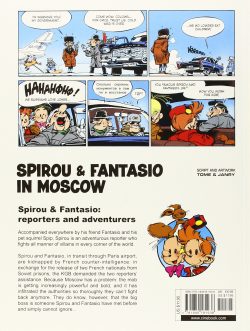

Spirou & Fantasio in Moscow (volume 6)


By Tome & Janry, coloured by Stephane De Becker & translated by Jerome Saincantin (Cinebook)
ISBN: 978-1-84918-193-8 (Album PB)

For most English-speaking comics readers, Spirou & Fantasio might be Europe’s biggest secret. The phenomenally long-lived character was a rough contemporary – and shrewdly calculated commercial response – to Hergé’s iconic Tintin, whilst the fun-filled periodical he has headlined for decades is only beaten in sheer longevity and manic creativity by Detective Comics and our own Beano.

Since launching on January 10th 1929 in Le Petit Vingtième – junior supplement to Belgian newspaper Le Vingtième Siècle – the phenomenal success of the carrot-topped boy reporter had become a money-spinning phenomenon for publisher Casterman and rival printing house Éditions Dupuis saw opportunity knocking…

Conceived in 1936 by boss-man Jean Dupuis, a proposed new magazine targeting juvenile audiences launched on April 21st 1938; debuting neatly between DC Thomson’s The Dandy (4th December 1937) and The Beano (July 30th 1938) in the UK. In America at that time a small comicbook publisher was preparing to release a new anthology entitled Action Comics. Ah, good times…

Le Journal de Spirou – the publication – was to be edited by 19-year-old Charles Dupuis, deriving its name from the lead feature, which related the improbable adventures of a plucky bellboy/lift operator employed at the glamorous Moustique Hotel (a sly in-joke reference to the publisher’s premier periodical Le Moustique).

Spirou – the hero, whose name translates as both “squirrel” and “mischievous” in the Walloon language – was first realised for his Belgian bosses by French cartoonist François Robert Velter under his pen-name Rob-Vel.

The magazine premiered with the plucky bellboy – and pet squirrel Spip – as leads in an anthology weekly which bears his name to this day; featuring fast-paced, improbable cases which gradually evolved into high-flying surreal comedy dramas.

Spirou and his pals have spearheaded the magazine for most of its life, with a phalanx of truly impressive creators carrying on Velter’s work, beginning with his wife Blanche “Davine” Dumoulin who took over the strip when her husband enlisted in 1939. She was aided by Belgian artist Luc Lafnet until 1943 when Dupuis purchased all rights to the feature, after which comic-strip prodigy Joseph Gillain (“Jijé”) took over.

In 1946 Jijé‘s assistant André Franquin assumed the reins, slowly sidelining shorter, gag-style vignettes in favour of longer adventure serials whilst introducing a wide and engaging cast of regulars. Eventually he added a animal act Marsupilami to the mix (first seen in Spirou et les héritiers in 1952 and now a spin-off star of screen, plush toy store, console games and albums all his own), crafting increasingly fantastic tales until he resigned in 1969.

He was then succeeded by Jean-Claude Fournier who updated the feature over the course of nine stirring adventures that tapped into the rebellious, relevant zeitgeist of the times with tales of environmental concern, nuclear energy, drug cartels and repressive regimes.

By the 1980s the series seemed outdated and without direction and three different creative teams were commissioned to alternate on the serial, until it was at last revitalised by Philippe Vandevelde writing as Tome and artist Jean-Richard Geurts AKA Janry.

Their winning approach was to carefully adapt, reference and, in many ways, return to the cherished and revered Franquin era. Their sterling efforts consequently revived the floundering feature’s fortunes, resulting in 14 wonderful albums between 1984 and 1998.

This one, originally entitled Spirou & Fantasio à Moscou from 1990, was their 10th collaboration and the 42nd collected exploit of the tireless wanderers.

Set just after the fall of the Berlin Wall – and effective end of Soviet socialism – there’s a lot of editorial footnoting going on to maintain understanding and sustain context but it’s all done in a witty and amusing manner, so there’s no loss of narrative traction or forced suspension of willing disbelief…

The drama begins with Spirou, Fantasio and Spip heading for a well-deserved vacation in the sweltering heat of Tahiti when they are suddenly abducted by a gang of spooks. As the lads groggily recover from cruelly applied chemical coshes, their assailants offer a (hilariously shaded) review of Russian character and recent history since the end of the Communist State. They pay special attention to the fact that even in the newly capitalist country, the KGB are still in charge…

Russia is in big trouble. The fall of the Iron Curtain has resulted in an influx of gangsterism, with the Mafia paramount in seeking out new territory for their nasty old rackets. Lacking experience in this kind of struggle, the security forces have requested the assistance of experts, and the French government – for it is they who have shanghaied our heroes – are happy to serve up Spirou and Co in return for the return of a couple of well-connected teenagers who got themselves arrested for protesting at the Kremlin…

By the time the pressganged press-men are conscious enough to refuse, they are already on the chilly tarmac of Moscow Airport and being handed badges as fully-accredited – if temporary – members of the KGB…

As they drive via a torturous and convoluted secret route into the city under the care of rowdily boisterous Colonel Dubyoutyev, they are briefed on the untenable situation.

It is not only the newcomers’ past record of success against the Mob which has brought them, albeit unwillingly, to this sorry state of affairs, but also the fact that they aren’t Russian.

When the Mafia first started operating, they were quickly infiltrated by KGB operatives, whilst the gangsters did exactly the same thing to the state police. Now nobody can trust anybody else and the authorities are forced to outsource credible and dependable assistance…

Just as they pull up at the Kremlin, the Colonel shows them a fuzzy photo of an oddly familiar face: suspected top mobster and fellow outsider Ivan Ivanovich Tanaziof. Then a shot rings out and the chauffeur slumps down. With the out-of-control car crashing onto the frozen river, in an office of the ministry, Count Nikita Bloyuredov places a call to his boss to claim “mission accomplished”…

Crawling from the wreckage, our battered but still intrepid lads opt to use their freshly-minted credentials to get to the French Embassy. En route in a commandeered taxi, Spirou shares his suspicions. Perhaps the ruthless westerner Tanaziof has some previous connection to them? Perhaps he’s Fantasio’s insane and merciless cousin Zantafio, back with another murderous scheme to grab power and wealth, no matter who has to suffer?

Arriving just as a grand Fancy Dress Ball commences, they are refused entry by security guards. They do, however, let them see the Embassy Chief of Protocol. Bloyuredov is absolutely delighted to meet them… until he sees his master Prince Tanaziof crash the party with a gang of armed heavies…

Happily, Spirou and Fantasio also spot the intrusion and take cover whilst the mobsters boldly rob the gathering. The jumped-up aristocrat arrogantly boasts his next move to reclaim Russia for his family will be to steal the sacred relic of Lenin’s embalmed body from its utterly secure tomb in Red Square…

As the gangsters gleefully exit, agents “Spirov” and “Fantasiev” are contacted by the miraculously alive and rather wisely deep, deep, deep undercover Dubyoutyev, who has also survived the crash…

Trading information, they all agree Tanaziof/Zantafio is fraudulently proclaiming himself “White Prince of the Russian Mafia” whilst attempting to pass himself off as the next Tsar. The KGB Colonel is horrified to hear of the sacrilegious plot to desecrate Lenin’s mausoleum and dashes off to implement the appropriate security measures, but his reluctant agents know it won’t be enough…

Returning to a now quiet Embassy the rightly suspicious visitors finally meet the Ambassador, who merely tells them it’s a Russian matter. On their way out the disgruntled pair receive an anonymous note promising the whereabouts of Tanaziof. Despite certain knowledge that it’s a trap, the neophyte spies later rendezvous at the spectacular outdoor spa known as the Moskva Pool…

When a horrific “accident” once again kills the wrong people, delighted and oblivious Bloyuredov heads straight for Tanaziof’s palatial hideout to share the good news, utterly unaware of two men and a squirrel on his tail…

The plan to steal Lenin is about to commence and without a moment’s pause Spirou and Fantasio disguise themselves and join the raiding party…

Cannily blending wry humour, broad slapstick, light-hearted action and rollicking adventure with a swift-paced espionage caper, all topped-off with the so-satisfying return of a world-class arch villain to sweeten the deal, this rollercoaster romp builds to a brilliantly madcap conclusion as funny as it is breathtaking… and all lavishly smothered in oodles of wicked irony.

This kind of lightly-barbed, keenly-conceived, fun thriller is a sheer joy in an arena far too full of adults-only carnage, testosterone-fuelled breast-beating, teen-romance monsters or sickly-sweet fantasy. Readily accessible in print and digitally to readers of all ages, drawn with all the beguiling style and seductively wholesome élan which make Asterix,Lucky Luke, Blake & Mortimer and Iznogoud so compelling, this is another cracking read certain one day to be as much a household name as that other pesky kid with the white dog…
Original edition © Dupuis, 1990 by Tome & Janry. All rights reserved. English translation 2014 © Cinebook Ltd.

Hawkworld


By Timothy Truman, Alcatena, Sam Parsons & various (DC Comics)
ISBN: 978-1-4012-4329-6 (TPB)

In the mid-1980s, DC first culled and remade their vast continuity. Post-Crisis on Infinite Earths inspired creators re-imagined many the company’s hottest properties and a lot of beloved history was rewritten, only to be un-written in the decades since – which only shows how fiercely us fanboys hold onto our nostalgic treasures.

One of the few incidences of a reboot that deserved to stay untouched was when the Silver Age Hawkman was recreated in the wake of the 1989 braided mega-epic known as Invasion!

Previously, Katar Hol and his wife Shayera had been wholesome law officers from utopian planet Thanagar. Stationed on Earth to observe police methods, they were subsequently banished here when their homeworld fell to an alien “equalizer plague” and the dictator Hyanthis. This was then all abandoned for a back-story where Thanagar was always a sprawling, fascistic intergalactic empire in decline, utterly corrupt, and bereft of all creativity and morality.

Here lords live in floating cities, indulging in every excess whilst servants and slaves from a thousand vassal worlds cater to their every whim when not festering in gutter-ghettos far below. In this version, Hol is just another useless young aristocrat, but with an unnameable dissatisfaction eating away inside him.

Joining the security forces – or Wingmen – he experiences the horrors of the world below and rebels. Corruption is the way of life and he uses that to advance the conditions of the slaves, earning the enmity of his drug-running commander, Byth Rok. When his secret charity is exposed, Hol is framed and imprisoned on a desolate island where he meets alien shaman/philosophers and undergoes a spiritual transformation.

Learning compassion, he sets out to right the wrongs of a world, aided only by the dregs of the underclasses and fellow Wingman Shayera Thal: a mysterious, warped version of his girl-friend who was murdered years previously…

This lost classic – originally released in 1989 as a 3-part Prestige miniseries and now available in digital and paperback formats – lovingly blends the most visual, visceral elements of Gardner Fox, Joe Kubert and Murphy Anderson’s iconic Hawkman, with shades of The Count of Monte Cristo, Apocalypse Now and Alfred Bester’s The Stars My Destination: solidly set against the backdrop of the harsh and cynical Reagan/Thatcher years to tell a dark moody tale which garnered great success and quickly spawned a compelling monthly series.

Now that modern DC is acknowledging debt to its creative and historical Infinite Frontiers, it’s high time this masterful thriller was again in print and regular production.
© 1989, 1991, 2014 DC Comics. All Rights Reserved.

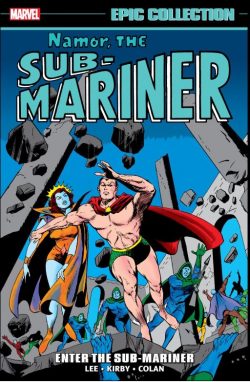
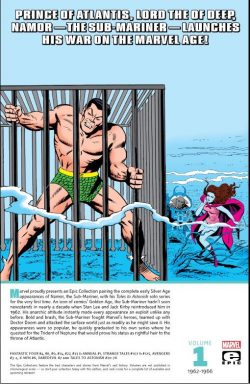
Namor, the Sub-Mariner Epic Collection volume 1 1962-1966: Enter the Sub-Mariner


By Stan Lee & Jack Kirby, Larry Lieber, Gene Colan, Dick Ayers, Wallace Wood & various (Marvel)
ISBN: 978-1-3029-2836-0 (TPB)

Prince Namor, the Sub-Mariner is the offspring of a water-breathing Atlantean princess and an American polar explorer: a hybrid being of immense strength; highly resistant to physical harm; able to fly and exist above and below the waves. Created by young, talented Bill Everett, Namor technically predates Marvel/Atlas/Timely Comics.

He first caught the public’s attention as part of the fire vs. water headlining team in Marvel Comics #1 (October 1939 and soon to become Marvel Mystery Comics). He shared honours and top billing with The Human Torch, but had originally been seen (albeit in a truncated monochrome version) in Motion Picture Funnies: a promotional giveaway handed out to moviegoers earlier in the year.

Quickly becoming one of the company’s biggest draws, Namor gained his own title at the end of 1940 (cover-dated Spring 1941) and was one of the last super-characters to go at the end of the first heroic age.

In 1954, when Atlas (as the company then was) briefly revived its costumed character “Big Three” (the Torch and Captain America being the other two), Everett returned for a run of superb fantasy tales, but even so the time wasn’t right and the title sunk again.

When Stan Lee & Jack Kirby started reinventing comic-books in 1961 with the Fantastic Four, they revived the all-but-forgotten awesome amphibian as a troubled, semi-amnesiac, and decidedly more regal, if not grandiose, antihero. The returnee despised humanity; embittered at the loss of his sub-sea kingdom (seemingly destroyed by American atomic testing) whilst simultaneously besotted with the FF‘s Sue Storm.

Namor knocked around the budding Marvel universe for a few years, squabbling with other assorted heroes such as the Hulk, Avengers and X-Men, before securing his own series as one half of Tales to Astonish.

Marvel’s “split-books” had been devised as a way to promote their burgeoning stable of stars whilst labouring under a highly restrictive distribution deal limiting the number of titles they could release per month. In 1968 the company ended this commitment and expanded exponentially.

This first celebratory volume – available in trade paperback and eBook formats collects all those early 1960’s guest shots in one tumultuous tome. Here you’ll find Fantastic Four # 4, 6, 9, 14, 27, 33 and Annual #1; Strange Tales #107 & 125; Avengers #3-4; X-Men #6, Daredevil #7 and the first arc of his own series from Tales to Astonish #70-76. These span May 1962 – February 1966 and open without preamble on that fateful first encounter in this cataclysmic clutch of curated classics…

Crafted by Lee Kirby & Sol Brodsky, Fantastic Four #4 proudly shouted ‘The Coming of the Sub-Mariner’, reintroducing (or introducing) the all-powerful amphibian Prince of Atlantis. The star of Timely’s Golden Age had been lost since 1955 – almost a lifetime for the kids believed to be the prime consumer of comics.

A victim of amnesia, the relic recovers his memory thanks to some rather brusque treatment by teen delinquent and AWOL Human Torch Johnny Storm. Namor rapidly returns to his sub-sea home only to find it destroyed by atomic testing. A monarch without subjects, he swears vengeance on humanity and attacks New York City with a gigantic monster. After its demise amidst a mass of collateral destruction, Sub-Mariner espies and falls for the Invisible Girl: a fascination that will fuel many a monumental battle…

This saga is when the Fantastic Four series truly kicked into high-gear and Reed Richards was the star of the pin-up section reprinted here…

FF #5 debuted the diabolical Doctor Doom who returned in the next issue after duping and teaming up with a reluctant Sub-Mariner to attack the quarrelsome quartet heroes as ‘The Deadly Duo!’ – inked by new regular embellisher Dick Ayers.

Issue #9 declared ‘The End of the Fantastic Four’ as Sub-Mariner Prince Namor returns to exploit another brilliant innovation in comic storytelling. When had a super-genius superhero ever messed up so much that the team had to declare bankruptcy? When had costumed crimefighters ever had money troubles at all? The eerily prescient solution was to “sell out” and make a blockbuster movie – giving Kirby a rare chance to demonstrate his talent for caricature…

Of course, Sub-Mariner’s film project is simply a ruse to divide and conquer and everything is settled with bombastic action and typically off-kilter romantic twist…

The saga is topped off with a Fantastic Four Feature Page explaining ‘How the Human Torch Flies!’

By this time kid-friendly teen Johnny Storm had been awarded a solo-starring lead series in former mystery anthology Strange Tales. Scripted by Larry Lieber and limned by Ayers, #107 featured a splendidly mindless punch-up with the ‘Sub-Mariner’ – a tale powerfully reminiscent of the spectacular and immensely popular Golden Age battles of their publishing forebears.

It’s back to Fantastic Four next as #14 (Lee, Kirby & Ayers) features the return of ‘The Sub-Mariner and the Merciless Puppet Master!’: with one vengeful fiend the unwitting mind-slave of the other, after which 1963’s Fantastic Four Annual #1 offers a spectacular 37-page epic battle as, finally reunited with their wandering prince, the warriors of Atlantis invade New York City and the rest of the world in ‘The Sub-Mariner versus the Human Race!’ by Lee, Kirby & Ayers.

A monumental tale by the standards of the time, the saga saw the FF repel the undersea invasion through valiant struggle and brilliant strategy, and includes the secret history of the secretive race Homo Mermanus. Nothing is really settled except a return to the original status quo, but the thrills are intense and unforgettable…

Also included is a rousing pin-up of Namor from ‘A Gallery of the Fantastic Four’s Most Famous Foes!’.

By now Marvel had many more superheroes and Namor met some in Avengers #3. In the previous issue, the volatile Hulk quit the nascent team in disgust, only to return here as an outright villain in partnership with ‘Sub-Mariner!’ (by Lee, Kirby & Paul Reinman). This globe-trotting romp delivers high-energy thrills and one of the best battle scenes in comics history as the assorted titans clash in abandoned World War II tunnels beneath the Rock of Gibraltar.

Inked by George Roussos, Avengers #4 was a groundbreaking landmark as Marvel’s greatest Golden Age sensation returned in another increasingly war-torn era. ‘Captain America joins the Avengers!’ has everything that made the early tales so fresh and vital. The majesty of a legendary warrior returned in our time of greatest need: stark tragedy in the loss of his boon companion Bucky, aliens, gangsters, the menacing majesty of Sub-Mariner and even subtle social commentary capped by vast amounts of staggering Kirby Action.

The creators had hit on a winning formula by including other stars in guest-shots – especially as readers could never anticipate if they would fight with or beside the home team. FF #27 again finds the undersea anti-hero in amorous mood, but after abducting Sue, he finds the boys have called in called in Doctor Strange, Master of the Mystic Arts to aid them in ‘The Search for Sub-Mariner!’

Delivered by Lee & Kirby, X-Men #6 features ‘Sub-Mariner Joins the Evil Mutants!’: a self-explanatory tale of gripping intensity elevated to magical levels of artistic quality as superbly slick inker Chic Stone adds crisp clarity to proceeding when potential mutant Namor is duped into joining malevolent Magneto and his sinister brotherhood. The issue also incorporates a stunning ‘Special Pin-up page’ starring “Cyclops”.

Impetus was building and support growing for renewed sub-sea skirmishes starring Namor, and Strange Tales #125 (October 1964) presented another bombastic battle between the old adversaries as the Torch and Thing picked a fight with the sea lord in ‘The Sub-Mariner Must Be Stopped!’ courtesy of Lee, Ayers & Reinman.

The princely PR campaign then blossomed into unlikely alliance as FF #33 saw the team ‘Side-by-Side with Sub-Mariner!’ (Lee, Kirby & Stone): bringing the aquatic antihero one step closer to his own series as they lend surreptitious aid to the embattled undersea monarch against deadly barbarian Attuma and supplemented by a glorious Kirby & Stone ‘Prince Namor Pin-up’.

As previously stated, prior to Tales to Astonish, Namor appeared in numerous titles as guest villain du jour. One last guest shot with Namor acting as a misunderstood bad-guy was Daredevil #7 (April 1965): a tale that qualifies as a perfect comic book and a true landmark – to my mind one of the Top Ten Marvel Tales of all Time.

Here, Lee and creative legend Wally Wood concocted a timeless masterpiece with ‘In Mortal Combat with… Sub-Mariner!’ as Prince Namor of Atlantis – recently reunited with the survivors of his decimated race – returns to the surface world to sue mankind for their crimes against his people. To expedite his claim, the Prince engages the services of Matt Murdock‘s law firm; little suspecting the blind lawyer is also the acrobatic Man without Fear.

Whilst impatiently awaiting a hearing at the UN, Namor is informed by his lover Lady Dorma that his warlord Krang has stolen the throne in his absence. The tempestuous monarch cannot languish in a cell when the kingdom is threatened, so he fights his way to freedom through the streets of New York, smashing battalions of National Guard and the dauntless Daredevil with supreme ease.

The hopelessly one-sided battle with one of the strongest beings on the planet shows the dauntless courage of DD and the innate nobility of a “villain” far more complex than most of the industry’s usual fare at the time.

Augmented by a rejected Wood cover repurposed as ‘A Marvel Masterwork pin-up: Namor and D.D.’ this yarn is merely a cunning prequel…

A few months later Tales to Astonish #70 heralded ‘The Start of the Quest!’ as Lee, Gene Colan (in the pseudonymous guise of Adam Austin) & Vince Colletta set the Sub-Mariner to storming an Atlantis under martial law. The effort is for naught and the returning hero is rejected by his own people. Callously imprisoned, the troubled Prince is freed by the oft-neglected and ignored Lady Dorma…

As the pompous hero begins a mystical quest to find the lost Trident of King Neptune – which only the rightful ruler of Atlantis can hold – he is unaware that treacherous Krang allowed him to escape, the better to destroy him with no witnesses…

The serialised search carries Namor through a procession of fantastic adventures and pits him against a spectacular array of sub-sea horrors: a giant octopus in ‘Escape… to Nowhere’; a colossal seaweed man in ‘A Prince There Was’ and a demented wizard and energy-sapping diamonds in ‘By Force of Arms!’

As the end approaches in ‘When Fails the Quest!’, revolution grips Atlantis, and Namor seemingly sacrifices his kingdom to save Dorma from troglodytic demons the Faceless Ones.

In issue #75 ‘The End of the Quest’ finds the Prince battling his way back into Atlantis with a gravely-injured Dorma, before the saga calamitously concludes in ‘Uneasy Hangs the Head…!’ with the status quo restored, Namor again on the stolen throne and further danger and drama to come…

Supplemented with House ads, a full cover gallery, unseen, unused and original artwork pages and more, this assemblage of tales feature some of Marvel’s very best artists at their visual peak, with creative verve and enthusiasm shining through.

Perhaps more vicarious thrill than fan’s delight, many early Marvel Comics are more exuberant than qualitative, but this volume, especially from an art-lover’s point of view, is a wonderful exception: a historical treasure that fans will find irresistible.
© 2021 MARVEL.

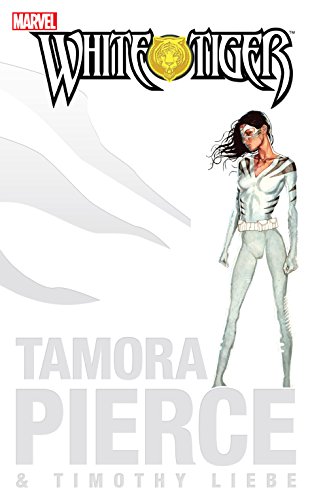
White Tiger: A Hero’s Compulsion


By Tamora Pierce, Timothy Liebe, Phil Briones, Alvaro Rio & various (Marvel)
ISBN: 978-0-7851-2273-9 (TPB)

I’ll try to be brief but bear with me because this might be a little complex for anyone not hardened by 55 years of constant exposure to raw comic-books…

After the mid-1970’s Kung Fu craze subsided Marvel was left with a couple of impressive themed properties (Master of Kung Fu and Iron Fist) and a few that needed some traditional superhero “topping up”. The Sons of the Tiger debuted in monochrome magazine Deadly Hands of Kung Fu: a multi-racial martial arts team who – augmented by three mystic amulets – fought the usual mystic ninja/secret empire types until internal dissent and an obvious lack of creative imagination split them up.

The amulets – a Tiger’s Head and two paws carved from magical jade – passed on to young Hector Ayala who donned all three to become a super-martial artist calling himself the White Tiger. After an inauspicious, short and excessively violent career including team-ups with both Spider-Man and Daredevil, the “first Puerto Rican Superhero” all but vanished until (in a Man Without Fear storyline I’ll get around to reviewing one day) he lost his life…

In the meantime, a new White Tiger had appeared in the 1997 revival of Heroes for Hire: an actual tiger evolved into a humanoid by renegade geneticist the High Evolutionary. In 2003 Kaspar Kole, a black, Jewish cop briefly replaced the Black Panther, becoming the third White Tiger shortly thereafter…

Which finally brings us here as this volume collects the first 6-issue miniseries to feature Angela Del Toro, niece of the first White Tiger; one time cop, de-frocked FBI agent and eventual recipient of the amulets that empowered and doomed her uncle Hector.

Normally I’d steer clear of reviewing a graphic novel like this because by all rights it should be all but impenetrable to non-fans, but novelist Tamora Pierce and co-scripter Timothy Liebe have made the necessary and mandatory recaps and references to other books (particularly the extended Daredevil storyline that dealt with the death of Angela’s uncle and her becoming a costumed vigilante in his memory) relatively painless: a seemingly seamless part of the overall narrative thrust of this tale and one that perfectly suits the action-packed, highly realistic artwork of Phil Briones, Alvaro Rio, Ronaldo Adriano Silva & Don Hillsman.

Angela Del Toro was a high-ranking Federal Agent, but now she’s jobless and bewildered, terrified of becoming just another masked crazy on the streets and skyways of New York City. Luckily, she still has a few friends – both in the legal and extra-legal law enforcement community – and soon links up with a private security firm while sorting out her new double life.

That mostly means coming to terms with being a costumed superhero, stopping a covert cabal of asset-stripping terrorists from turning the USA into a highly profitable war-zone and getting final closure if not revenge on Yakuza prince Orii Sano, the man who killed her partner…

White Tiger: A Hero’s Compulsion is a canny blend of family drama, cop procedural and gritty superhero thriller, with an engaging lead character, believable stakes, just enough laughs and truly sinister baddies who should appeal to the widest of audiences. Fun-filled and frantic with loads of guest-stars, including Spider-Man, Daredevil, Iron Fist, Luke Cage, Black Widow, and such scurrilous dirtbags as the Cobra, the Lizard, Deadpool and the assembled underworld of three continents, this is a read for devotees and dilettantes alike.

Whether cleaning up the mean streets and saving the entire world or just busting heads in her new day job, White Tiger has everything necessary to stay the course, but even if she somehow doesn’t, there will always be this thoroughly fascinating trade paperback and digital book to mark her territory, if not her passing…
© 2006, 2007, 2015 MARVEL. All rights reserved.

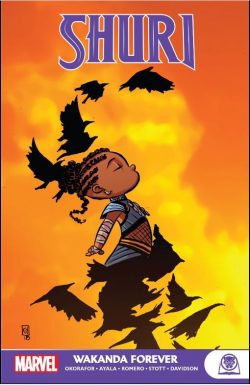
Shuri: Wakanda Forever


By Nnedi Okorafor, Vita Ayala, Leonardo Romero, Paul Davidson, Rachael Stott, Jordie Bellaire, Tríona Farrell, Carlos Lopez, VC’s Joe Sabino & various (Marvel)
ISBN: 978-1-3029-2369-3 (TPB)

Lauded as the first black superhero in American comics and one of the first to carry his own series, the Black Panther‘s popularity and fortunes have waxed and waned since the 1960s when he first attacked the FF (in Fantastic Four #52; cover-dated July 1966) as part of an extended plan to gain vengeance on the murderer of his father.

T’Challa, son of T’Chaka was revealed as an African monarch whose hidden kingdom was the only source of a vibration-absorbing alien metal upon which the country’s immense wealth was founded. Those mineral riches – derived from a fallen meteor which struck the continent in lost antiquity – had turned his country into a technological wonderland.

The tribal wealth had long been guarded by a hereditary feline champion deriving physical advantages from secret ceremonies and a mysterious heart-shaped herb that ensured the generational dominance of the nation’s warrior Panther Cult.

In recent years, Vibranium made the country a target for increasing subversion and incursion. After one all-out attack by Doctor Doom – culminating in the Iron Dictator seizing control of Wakanda – T’Challa was forced to render all Vibranium on Earth inert, defeating the invader but leaving his own homeland broken and economically shattered.

During that cataclysmic clash T’Challa’s flighty, spoiled brat half-sister Shuri took on the mantle of Black Panther, becoming clan and country’s new champion whilst her predecessor struggled with the disaster he had deliberately caused and recuperated from near-fatal injuries.

Despite initially being rejected by the divine Panther Spirit, Shuri proved a dedicated and ingenious protector, serving with honour until she perished defending the nation from alien invader Thanos. When T’Challa resumed his position as warrior-king, one of his earliest tasks was resurrecting his sister. She had passed into the Djalia (Wakanda’s spiritual Plane of Memories) where she absorbed the entire history of the nation from ascended Elders. On her return to physicality, she gained mighty new powers as the Ascended Future…

Since then – thanks to the equally formidable magic of a bravura role in a blockbuster movie – a slightly reimagined Shuri starred in her own series, blending established comics mythology with the fresh characterisation of a spunky, savvy, youthful super-scientist.

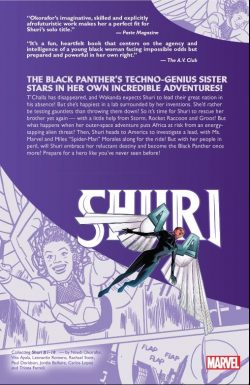
Initially written by multi award-winning fantasy author Nnedimma Nkemdili “Nnedi” Okorafor (Binti, Who Fears Death, Broken Places & Outer Spaces, Black Panther: Long Live the King) and illustrated by Leonardo Romero (Hawkeye, Captain America, Doctor Strange), this collection – gathering #1-10 of Shuri (spanning December 2018-September 2019 and available as a trade paperback or digitally) – finds Wakanda in turmoil.

In the aftermath of the nation’s first (official) manned space mission, King T’Challa is ‘Gone’, leaving Shuri to initially revel in the sheer joy and freedom of technological creation. However, the pressures of her family position always bedevil her. If it’s not frequent overtures from a mystery hacker she’s befriended and dubbed Muti or the constant chidings of the Ancestral Spirits who connect her to the Djalia, it’s her unwelcome invitation to join a secret society of women who have covertly steered and safeguarded Wakanda for generations…

The Sisters of the Elephant’s Trunk have a cherished goal: despite the nation recently becoming a constitutional monarchy, they want Shuri to step up in T’Challa’s absence and be the country’s spiritual leader … a new Black Panther…

Her answer in ‘The Baobab Tree’ pleases no one, but she has no time for second thoughts as sister-in-law Storm comes to her with news that T’Challa is now lost in space. The crisis is further compounded after Queen Mother Ramonda also vanishes. When Shuri resorts to spiritual means of locating her missing family, the ritual accidentally catapults her astral personality across the universe and into the vegetable body of a Guardian of the Galaxy…

Trapped but never helpless, Shuri’s brains save the alien heroes from dire peril and a deadly energy, memory and sound-eating bug in ‘Groot Boom’, but her return to Earth brings more trouble as the energy-insectoid follows to cause chaos in ‘Timbuktu’ – thanks in large part to the machinations of opportunist supervillain Moses Magnum. More concerning is the fact that many of her Ascended powers have gone…

With catastrophe all around and the planet in deadly peril, Shuri calls in a favour and Iron Man responds to assist in preventing ‘The End of the Earth’, but ultimately Shuri knows that the call of the Panther cult must be answered no matter what she wants…

The crisis deepens in ‘A Friend in Need’ parts 1 and 2 (illustrated by Paul Davidson & Tríona Farrell) as the reluctant new Black Panther traces a living black hole generator to Brooklyn, USA and shares a perilous romp with second Spider-Man Miles Morales and modern Ms. Marvel Kamala Khan, redeeming genius kid Augustin Torres from a dangerous association with major mag guy Graviton…

Events spiral to a spectacular conclusion as Vita Ayala (Livewire, New Mutants) takes over scripting for #8-10 with Rachael Stott & Carlos Lopez tackling the picture-making. In ’24/7 Vibranium’, that pesky bug resurfaces to imperil Earth prompting a fact-find visit to the Djalia, a fraught confrontation at Wakanda’s Vibranium mines in ‘Godhead’ and an unexpected resolution in ‘Living Memory’ that answers most of Shuri’s questions, restores her powers and sets her up for the next great adventure…

Balancing the fantastic fun and affirmative inspiration, this delightfully angst-free action romp also offers an Afterwordfrom Okorafor; Variant cover gallery by Skottie Young, Jamal Campbell, Carlos Pacheco, Travis Charest, John Tyler Christopher, Afua Richardson (plus movie photo-cover) and Romero design pages.

Wakanda Forever is a fast-moving, funny and supremely inventive delight: a splendidly fresh take on female superheroes that is compulsive reading for any fan of tight continuity, breathtaking action and smart characterisation as well as everyone who fell in love with the super-smart young woman who stole every scene in the Black Panther movie. What are you waiting for?
© 2020 MARVEL.

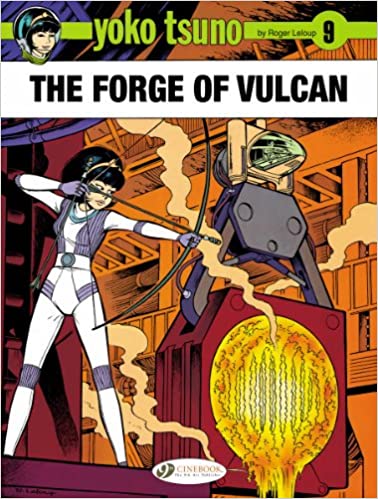
Yoko Tsuno volume 9: The Forge of Vulcan


By Roger Leloup (Cinebook)
ISBN: 978-1-84918-197-6 (Album PB)

The uncannily edgy yet excessively accessible European exploits of Japanese scientific adventurer Yoko Tsuno began first began gracing the pages of Le Journal de Spirou in September 1970 and are still going strong.

The explosive, eye-popping, expansively globe-girdling, multi award-winning series was devised by Roger Leloup, another hugely talented Belgian who worked as one of Hergé’s assistants on the Adventures of Tintin strip before striking out on his own.

Compellingly told, superbly imaginative but always solidly placed in hyper-realistic settings sporting utterly authentic and unshakeably believable technology, these illustrated epics were at the vanguard of a wave of strips starring smart, competent and brave female protagonists which revolutionised Continental comics from the last third of the 20th century onwards and are as potently empowering now as they ever were.

The initial Spirou stories ‘Hold-up en hi-fi’, ‘La belle et la bête’ and ‘Cap 351’ were introductory vignettes before the formidable Miss Tsuno and her always awestruck and overwhelmed male comrades truly hit their stride with premier extended saga Le trio de l’étrange which began serialisation with the May 13th 1971 issue.

That epic of extraterrestrial intrigue was the first of 30 European albums, with this one was first serialised in 1973 (Spirou #1819-1840) before being released the same year as La forge de Vulcain. A spectacular earth-shaking rollercoaster romp, it was chronologically the third album and reached us as Cinebook’s ninth translated chronicle.

It all begins when Yoko spots a TV report of a disaster on an oil rig near Martinique and realises the drill has impacted and penetrated the same strange material – “vitreous, luminous and ultra-magnetic” – that was a basic building material of the subterranean aliens known as the Vineans…

Those ancient wanderers had been secretly hibernating deep within the earth for hundreds of thousands of years until she, TV producer Vic Van Steen and his frivolous cameraman pal Pol Paris encountered them to set the lost race on a new path…

Now the Vineans seem to be at the heart of a burgeoning ecological catastrophe of cataclysmic proportions, and none too soon Yoko and the lads are winging their way to the Caribbean. Upon landing, they waste no time in bluffing their way into the offices of oil company Forex, aided by a few mementoes of their under-earth adventure.

They are, however, about to be unceremoniously ejected when news comes that the soon-to-explode rig has encountered a new problem: a strange craft, unlike any ever seen, trapped in the rig’s legs even as inexplicable seismic distortions propagate, creating an area of meteorological instability.

Yoko convinces the manager she has prior experience in matters like these and is promptly jetting over in a helicopter. Of course, she had to stow away first…

Before long she is valiantly prying a live Vinean and his scout vessel out of a boiling gusher of mud and has discerned the true scale of the threat. The rig’s drill has intercepted a Vinean magma tunnel – used in their construction projects – which has strayed too close to the oil field, triggering a potential geological time-bomb…

Thankfully the crisis has brought forth an unexpected benefit too as old friend and benevolent alien scientist Khanyarrives to take charge. The forthright technologist already has a plan but needs her old surface allies’ assistance to carry it out. Soon Yoko, Pol and Vic are abandoning the incredulous rig engineers and heading back under earth where an unpleasant surprise is awaiting them.

The Vineans had slept in huge, manufactured caverns for almost half a million years, but since recently reviving, internecine strife has entered the lives of the blue-skinned colonist/refugees.

In The Curious Trio, ambitious militaristic throwback Karpan made a play to seize power from the vast electronic complex known as The Centre which regulated the lives of the colonists. The blustering bully was ultimately frustrated by Khany and her newfound surface pals but now – thanks to humanity’s underground atomic testing – has returned to prominence amongst his terrified people and set in motion a dangerous scheme to destroy Earth’s civilisation and conquer the survivors.

Subverting a plan to divert magma and grow a new continent for the Vineans to occupy, Karpan wants to use the colossal magma-shifting technology to drown the surface world. Khany and her followers were already attempting to scuttle the scheme, but now grim fortune and the humans’ drill have damaged the super-engineered magma-tubes, a drastic solution is necessary to save the planet both species occupy from exploding like a cosmic firecracker…

Naturally Yoko has a plan, but this one depends as much on luck as her scientific ingenuity and martial arts prowess as she tries to mould lava like plasticine and thwart Karpan’s globally suicidal schemes…

As always, the most potent asset of these breathtaking dramas is the staggeringly detailed draughtsmanship, which benefits from Leloup’s diligent research and meticulous attention to detail, honed through years of working on Tintin.

Possibly the most frenetic and visually spectacular of all her adventures, The Forge of Vulcan is a relentless, rocket-paced race to doom or salvation that will appeal to any fan of blockbuster action fantasy.
Original edition © Dupuis, 1973, 1979 by Roger Leloup. All rights reserved. English translation 2014 © Cinebook Ltd.
Supergirl: Cosmic Adventures in the 8th Grade


By Landry Q. Walker, Eric Jones & various (DC Comics)
ISBN: 978-1-7795-0670-2 (

As a rule, superhero comics don’t generally do whimsically thrilling anymore. They especially don’t do short or self-contained. The modern narrative drive concentrates on extended spectacle, major devastation and relentless terror and trauma. It also helps if you’ve come back from the dead once or twice and wear combat thongs and thigh boots…

Although there’s nothing intrinsically wrong with that – other than the inappropriateness of striving to fix wedgies during life-or-death struggles – sometimes the palate just craves a different flavour.

Once such continued cosmic cataclysm was the exception, not the rule, and this enchanting re-issue from 2009 – available on paperback and digital formats – harks back to simpler days of complex plots, solid characterisation and suspenseful fun by way of an alternative take on Superman’s cousin Kara Zor-El, late of Argo City and Earth’s newest alien invader…

After a few intriguing test-runs, Supergirl began as a future star of the expanding Superman pocket universe in Action Comics #252 (May 1959). Superman’s cousin Kara had been born on a city-sized fragment of Krypton, hurled intact into space when the planet exploded. Eventually, Argo turned to Kryptonite like the rest of the detonated world’s debris, and Kara’s dying parents, observing Earth through their scopes, sent their daughter to safety even as they perished.

Landing on Earth, she met the Action Ace, who subsequently created the cover-identity of Linda Lee and hid her in an orphanage in bucolic Midvale whilst she learned of her new world and mastered her powers in secrecy and safety.

In 2009 much of that treasured back-history was joyously reinstated for a superb miniseries for younger readers with Saturday morning animation sensibilities. As reimagined by Landry Walker (Clash of Kings, Red Lanterns, Teenage Mutant Ninja Turtles) and Eric Jones (Scary Larry, Little Gloomy, Batman: The Brave and the Bold), here Kara Zor-El is recast as a plucky 12-year-old whose world is suddenly turned upside down: a decidedly ordinary kid forced to adapt to and cope with impossible changes at the craziest time of her life…

It all begins as Superman and Lex Luthor indulge in another life-and-death duel. The battle ends suddenly as the evil genius’ war machine is wrecked by a gleaming rocket, from which emerges a dazed girl in a knock-off Man of Steel outfit. Panicked by the press pack that converges on her, the waif jumps back and suddenly catapults into the air.

Soon, however, Superman catches and calms the careering child and explanations ensue. She’s his cousin Kara from Argo City, which escaped the destruction of Krypton by a fantastic fluke: being hurled by the blast unharmed and entire into another dimension…

The Argoans thrive in their pocket reality and watch baby Kal-El become a mighty hero. In fact, it’s a message-probe aimed at him that Kara sneaked onto before being accidentally sent to Earth and a horrific shock to learn Superman has no idea how to get her back to them…

Marooned on a weird, primitive planet with powers she doesn’t understand and cannot control is bad enough, but discovering her cousin has no time or space to look after her is the worst. Soon, wearing a pair of awful glasses, orphan “Linda Lee” begins a new life at Stanhope Boarding School…

The lessons are dull or baffling; nobody likes her, Principal Pycklemyer is a snide, snarky ass and worst of all, Kara’s powers keep turning off and on without any rhyme or reason. The first week is sheer hell, but ends on an up note as, after another fruitless attempt to get home, Linda heads back to the girls’ dormitory and finds a present waiting: a super-phone which can reach her mum and dad…

The Pre-Teen Powerhouse is still screwing up in class and her troubles multiply in detention when an odd green mineral interacts with a light projector in the science lab and creates an evil doppelgang.

Smug, arrogant Superiorgirl calls herself Belinda Zee and is instantly more popular with everybody. She also determined to make Linda’s life an unending succession of petty aggravations and annoyances…

However, Belinda’s greatest scheme to humiliate Linda is foiled by a new transfer student. High-maintenance misfit Lena Thorul is a scary genius who takes an instant liking to fellow outcast Linda and saves the day with a mind-control helmet she whipped up. Soon the weird pair are dorm-mates, even though Lena is a bit clingy and rather aggressive. She might even be preventing other students befriending Linda…

Life is never quiet and when Supergirl intercepts a glowing red meteor in space the fallout scatters scarlet debris all over Stanhope. The effect is amazing, as almost everybody develops superpowers…

Naturally Linda can’t reveal her own hidden abilities, so she and a few pitiful others are quickly relegated to a remedial class for the “super-heroically challenged”. When her powers suddenly fade, Supergirl is kept busy saving students from their own youthful follies and is astonished to later discover the power drain was caused by Lena…

And that’s when things get truly complicated, as her solution to the on-going problem gives Supergirl the ability to time-travel and the notion that she can warn her earlier self to respond differently to the crisis…

Another day, and another disaster dawns as Linda’s experiments with Green Kryptonite – in hopes of finding a cure – instead grant an alley cat superpowers. As Streaky stalks the halls of Stanhope, Lena reveals her true nature and Superiorgirl is forced to choose sides…

The adventure concludes on ‘Graduation Day’. Chaos reigns and the real reason for all the incredible events Linda has endured are finally revealed. Luthor escapes jail, Streaky returns, Belinda becomes queen of Bizarro Zombies, Fifth Dimensional Sprites attack and Supergirl meets Supragirl before ending with a new trusty companion – Comet the Superhorse. Sadly, he’s not enough to aid Linda as she strives to prevent the destruction all there is…

With Reality unravelling, Supergirl needs a little help, and it comes from the last person she expects…

Joyous, thrilling, warm-hearted and supremely entertaining, this festival of Fights ‘n’ Tights fun is a delightful romp for youngsters and a fabulous tribute to DC’s Silver Age, and fans can also enjoy bonus features including sketch sections on ‘Redesigning Supergirl’, lovely pencil roughs and a full cover gallery.

Also included is a tantalising preview taste of Diana: Princess of the Amazons by Shannon & Dean Hale, illustrated by Victoria Ying: a similarly intentioned reinvention for the smaller set focusing on the school days of the peerless Princess of Power…

Some characters are clearly capable of surviving seemingly infinite reinvention and the Girl of Steel is certainly one of those. Here in this charming, engaging, inspiring yarn you can enjoy a pure and primal romp: simultaneously action-packed and funny as it perfectly demonstrates how determination, smarts and courage trump superpowers and cosmic omnipotence every time.

© 2009, 2020 DC Comics. All Rights Reserved

The Black Canary: Bird of Prey


By Bob Kanigher, Gardner Fox, Denny O’Neil, Carmine Infantino & Joe Giella, Murphy Anderson, Alex Toth & various (DC Comics)
ISBN: 978-1-7795-0908-6 (TPB)

Black Canary was one of the first of relatively few female heroes to hold a star spot in the DC universe, following Wonder Woman, Liberty Belle and Red Tornado (who actually masqueraded as a man to comedically crush crime – with a couple of kids in tow, too!). The Canary predated Merry, the Gimmick Girl – remember her? No, you don’t – and disappeared with most the majority of costumed crusaders at the end of the Golden Age: a situation that was not remedied util her revival with the Justice Society of America in 1963.

She was created by Bob Kanigher & Carmine Infantino in 1947, echoing the worldly, dangerous women cropping up in a burgeoning wave of crime novels and on the silver screen in Film Noir tales better suited to the wiser, more cynical Americans who had just endured a World War and were even then gearing up for a paranoiac Cold one…

Clad in a revealing bolero jacket, shorts, fishnet stockings and high-heeled pirate boots, the devastating shady lady who looked like Veronica Lake even began life as a thief…

This superb collection capitalises on the character’s recent screen incarnations, gathering her admittedly short run of tales from Flash Comics (#86-104, August 1947-February 1949), Comics Cavalcade #25 (February/March 1948), plus two adventures that went unused when the comicbook folded: one of the earliest casualties in the wave of changing tastes which decimated the superhero genre until the late 1950s. Those last only resurfaced at the end of the Second Great Superhero Winnowing and were subsequently published in DC Special #3 and Adventure Comics #399 (June 1969 & November 1970 respectively).

Also intriguingly included are two stellar appearances from Brave and the Bold #61-62 (September & November 1965), teamed up with JSA team-mate Starman as part of a concerted yet ultimately vain editorial effort by Julius Schwartz to revive the Golden Age squad of champions then comfortably situated on parallel world Earth-2.

Best of all is the re-presentation of a 2-part thriller from Adventure Comics #418-419 (April-May 1972) following her migration to “our” world to replace Wonder Woman in the Justice League of America.

After years languishing in a hard-to-find or afford Archive edition, these treasures have thankfully migrated to the paperback and digital forms found here. I trust you are suitably grateful and will purchase and peruse accordingly…

In the heady, desperate days of post-war uncertainty, continuity was meagre and nobody cared much about origins. All that mattered was pace, plot, action and spectacle. As we’ll see, even when the Black Bird got her own strip, where she came from was never as important as who she faced…

Flash Comics #86 was just another superhero anthology publication, suffering a slow sales decline wherein perennial B-feature Johnny Thunder had long since passed his sell-by date. Although a member of the Justice Society of America, Johnny was an old-fashioned comedy idiot; a genuine simpleton who just happened to control a genie-like Thunderbolt.

His affable, good-hearted bumbling had carried him through the war, but changing fashions had no room for a hapless (adult) hero anymore. When he encountered a seductively masked female Robin Hood who stole from crooks, the writing was on the wall. In this introductory yarn, ‘The Black Canary’ tricks him and T-Bolt into acquiring an invitation to a crime-lord’s party, lifts the ill-gotten loot and leaves Johnny to mop up the hoods. It was lust at first sight…

Nothing much was expected from these complete-in-one-episode filler strips. Hawkman and The Flash still hogged all the covers and glory, and although young artists Infantino & Joe Giella gave it their all as they learned their craft on the job, writer/editor Kanigher was often clearly making it up as he went along…

The next Johnny Thunder instalment in #87 featured ‘The Black Canary Returns’ with the Blonde Bombshell again making the big goof her patsy by leaving a perilous package in his inept hands. When mobsters retrieve the purloined parcel and secret documents it contains, Johnny follows and, more by luck than design, rescues the Canary from a deadly trap.

She returned in #88 – sans domino-mask – using trained (black) canaries to deliver messages as again landing in over her head. Once more forced to use the big sap and his magic pal to extricate herself, she nevertheless retrieves ‘The Map that Wasn’t There’ from a pack of human jackals.

Flash Comics #89 held the last Johnny Thunder solo tale – so it’s not included here – but she returned in full force for #90 as Johnny Thunder and the Black Canary officially team up to thwart a photographic frame-up and blackmail plot in ‘Triple Exposure!’

The partnership evolves in #91 as gangsters use rockets and ‘The Tumbling Trees!’ in their efforts to trap the svelte nemesis of evil – and just to be clear: that’s her, not Johnny…

The strip became Black Canary with the next issue. She even got to appear on the Lee Elias cover with Flash and Hawkman. Johnny simply vanished without trace or mention and his name was peremptorily applied elsewhere to a new cowboy hero as the rise of traditional genre material such as westerns relentlessly rolled on…

In ‘The Huntress of the Highway!’ however, feisty florist Dinah Drake is being pestered by arrogant, obnoxious but so-very-manly private eye Larry Lance, only to realise the wreath she’s working on is for him. Doffing her dowdy duds to investigate, she is just in time to save him from a wily gang of truck hijackers.

And that’s all the set-up we got. The new status quo was established and a pattern for fast-paced but inconsequential rollercoaster action romps took off…

To celebrate her arrival, the Canary also appeared in catch-all anthology Comics Cavalcade – specifically #25 (February/March 1948) where she flamboyantly finishes a ‘Tune of Terror!’ inflicted on a rural hick trying to claim an inheritance, but encountering nothing but music-themed menace…

A word of warning: Kanigher was a superbly gifted and wildly imaginative writer, but he never let sense or logic come between him and a memorable visual. The manic Deus ex Machina moment where a carpet of black canaries snatches the eponymous avenger and victim out of a death-plunge is, indeed, utter idiocy, but in those days, anything went…

Back in a more rational milieu and mood for Flash Comics #93, the ‘Mystery of the Crimson Crystal!’ sees the Canary tracking down a conman who bamboozled gullible women into parting with their fortunes for spurious immortality. On the home front, the utterly oblivious Larry has pressured shy Dinah into letting him use her shop as his detective office. Of course, the oaf has no idea his mousy landlady is the lethal object of his crime-busting desires…

The rather pedestrian ‘Corsage of Death!’ in #94 sees them save a scientist’s ultimate weapon from canny crooks, whilst ‘An Orchid for the Deceased!’ finds her framed for murder in an extremely classy Noir murder mystery before #96 combines equestrian robbery with aerial combat as gem thieves risk innocent lives to solve ‘The Riddle of the Topaz Brooch!’

Finally finding a formula that worked, Kanigher had Larry and the Canary investigate textile thieving thugs involved in ‘The Mystery of the Stolen Cloth!’ and murdering stamp-stealers in #98’s ‘The Byzantine Black’, as Infantino’s illustration grew ever more efficient and boldly effective.

‘Time Runs Out!’ in #99 ups the drama as ruthless radium-stealing gangsters trap the duo in a giant hourglass, before #100 again utilises baroque props and plots as they track a model-making gang of burglars and are unexpectedly caught in ‘The Circle of Terror!’

Just as the stories were building momentum and finding a unique voice, the curtains were beginning to draw closed. ‘The Day that Wouldn’t End!’ in #101 sees Canary and gumshoe uncover a sinister scheme to drive a rich man mad; Dinah’s shop becomes an unsuspected tool of crafty crooks in ‘The Riddle of the Roses!’ and ‘Mystery on Ice!’ finds the capable crime-crushers suckered by a pack of thieves determined to steal a formula vital to America’s security.

Flash Comics closed with #104, making way for new titles and less fantastic thrills. ‘Crime on Her Hands!’ ended the Canary’s crusade on a high, however, with an absorbing murder-mystery involving a college class of criminologists. She wouldn’t be seen again until the return of the Justice Society as part of the Silver Age revival of costumed mystery men, when awestruck readers learned that there were infinite Earths and untold wonders to see…

Nevertheless, the sudden cancellation meant two months’ worth of material was in various stages of preparation when the axe fell. The “All-Girl Issue” (yes, I know, but it was actually progress for the times, so please just go with it if you can) of reprint series DC Special (#3) subsequently printed one of the Canary yarns in April 1969. Bernard Sachs inked Infantino as ‘Special Delivery Death!’ finds Lance framed for murder and both Dinah and Black Canary using their particular gifts to clear him. Adventure Comics #399 (November 1970) printed the last story as ‘Television Told the Tale!’, revealing how a live broadcast tips off the Blonde Bombshell to crime in the making…

Once the Silver Age revival took hold, superheroes were everywhere and response to Earth-2 appearances prompted DC to try-out a number of impressive permutations designed to bring back the World’s first team of costumed adventurers.

Try-out comic The Brave and the Bold #61 (August-September 1965) offered a brace of truly titanic tales by Gardner Fox & Murphy Anderson, pairing the Canary with Ted Knight, the Sentinel of Super-Science called Starman. The deliriously delights began with ‘Mastermind of Menaces’, as vile techno-wizard The Mist returned, using doctored flowers to hypnotise his victims into voluntarily surrendering their wealth. When he utilised Dinah’s flower shop to source his souped-up blooms, she, husband Larry and visiting pal Ted were soon on the villain’s trail…

Mystery and intrigue gave way to all-out action in #62’s ‘The Great Superhero Hunt!’ as husband-and-wife criminals Sportsmaster and Huntress stalked superheroes for kicks and profit. By the time Feline Fury Wildcat became their first victim, Ted and Dinah were on the case and ready for anything…

These latter classic tales alone are worth the price of purchase, but this splendid tome still has the very best to come as Adventure Comics #418 & 419 provide a scintillating 2-part graphic extravaganza by Dennis O’Neil & the legendary Alex Toth.

Originally an Earth-2 crime-fighter, Dinah was transplanted to our world by the wonders of trans-dimensional vibration after husband Larry was killed (see Justice League of America #73-75 and assorted JLA compilations).

Beginning a possibly rebound romance with Green Arrow, Dinah struggled to find her feet on a strangely different yet eerily familiar world. In ‘Circle of Doom Parts 1 & 2’ she accepts a job teaching self-defence to women. The bereaved troubleshooter has no idea her pupils are hirelings of vicious criminal Catwoman and the martial arts moves she shares will lead to her death and the liberation of a deadly menace…

Augmented by detailed biographies of the many people who worked on the character, this admittedly erratic collection starts slow but builds in quality until it ranks amongst the very best examples of Fights ‘n’ Tights fantasy. Why not see for yourself?

© 1947, 1948, 1949, 1965, 1969, 1970, 1972, 2021 DC Comics. All Rights Reserved.

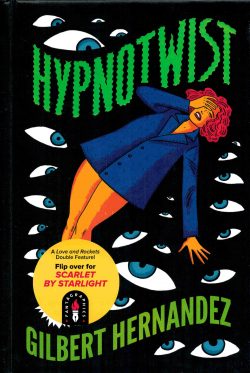
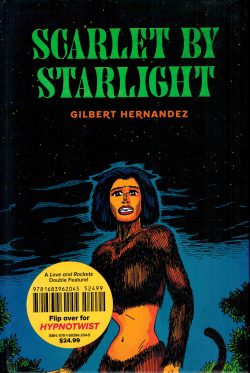
Hypnotwist/Scarlet by Starlight


By Gilbert Hernandez (Fantagraphics Books)
ISBN: 978-1-68396-204-5 (HB)

In addition to being part of the graphic/literary revolution of Love and Rockets (where his astonishingly addictive tales of rural Palomar first garnered overwhelming critical acclaim), Gilbert Hernandez has produced stand-alone books such as Sloth, Birdland, Grip and Girl Crazy: all graced with his bold, compellingly simplified artwork and inspired adaptation of literary techniques used by Magical Realist writers such as Carlos Fuentes and Gabriel García Márquez – techniques which he has amplified and, visually at least, made his own.

Hernandez also frequently acknowledges such outré mainstream influences as filmmakers Roger Corman and John Cassavetes, and crime writers Elmore Leonard and Jim Thompson, as he explores new territories and reforms the cultural influences which shaped all us baby-boomers.

In Luba we glimpsed the troubled life of the lead character’s half-sister Rosalba “Fritzi” Martinez: a brilliant, troubled woman, speech-impaired psychotherapist, sex-worker, belly-dancer and “B-movie” starlet of such faux screen gems as We Love Alone, Seven Bullets to Hell, Chest Fever, Blood is the Drug and Lie Down in the Dark.

Although Fritzi only had a bit part in it, Hernandez “adapted” one of those trashy movies into a graphic novel (Chance in Hell, 2007) and repeated the story-within-a-story-within-a-story gimmick in 2009 with The Troublemakers – a frantic, hell-bent pulp fiction crime thriller which was part of the screen queen’s canon – and did it again in 2011 with Love from the Shadows.

Here, he’s gone a step further by revisiting the tone of those tales in the format of the 1960’s publishing trend for two-cover paperback releases offering a double-bill of exceedingly eccentric adult-themed sagas drawn from the schlocky, sleazy B-movie subculture of those times.

Deftly mimicking a compelling-but-trashy post-Noir psycho thriller and titillating Sci-Fi melodramas, both of these tales originated a decade ago in Love and Rockets: The New Stories and have been expanded for this volume.

You can start at whatever end you like – it’s a democracy, after all – and I’ll go with the wildly experimental graphic mime Hypnotwist. With overtones of Justine (or The Misfortunes of Virtue, the 1791 novel by Donatien Alphonse François de Sade), this eerie meander through the perils of modern debauchery follows a lost and vulnerable young woman on an astonishingly bizarre voyage of discovery…

If you flip to the far end, you’ll then be regaled by Scarlet by Starlight: a multi-perspective narrative that appears at first to be a science fictional fable of humanity despoiling a primitive Eden, before evolving into something far more disturbing. On a distant world, a team of three earthling explorers are helpless to prevent themselves becoming far too intimate with the primitive yet buxom anthropoids that populate the planet. As the human relationships break down, unwise new bonds are formed with unpleasant and even harrowing results…

Savage and sexually explicit, this exploration of drives and desires takes a further step into forbidden territory after the bold explorers return home…

Dark, evocative and astoundingly compelling, these are perfect pastiches of revered genres from a time period growing increasingly remote and fabulous. This slim hardback/digital delight is a stunning graphic rollercoaster ride of sex, violence, greed and obsession: a mesmerising treat jam-packed with Hernandez’s coolly understated narrative suspense, intoxicating illustration, brutally raw tension, sly elements of filmic surrealism and sheer surreal excess which carry and beguile the reader in classic style.
Hypnotwist/Scarlet by Starlight © 2021 Gilbert Hernandez. This edition © 2021 Fantagraphics Books, Inc. All rights reserved.

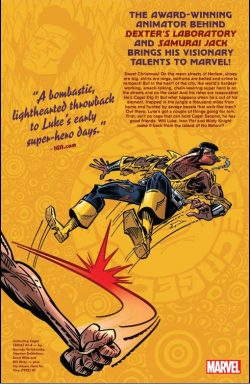
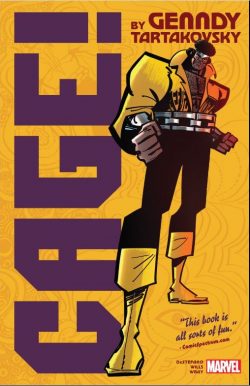
Cage!


By Genndy Tartakovsky, Stephen DeStefano & various (Marvel)
ISBN: 978-0-7851-2786-4 (TPB)

For most of modern history black consumers of popular entertainments enjoyed far too few fictive role models. In the English-speaking world that began changing in the turbulent 1960s and truly took hold during the decade that followed. Many characters stemming from those days come from a cultural phenomenon called Blaxploitation. Although criticised for its seedy antecedents, stereotypical situations and violence, the films, books, music and art were the first mass-market examples of minority characters in leading roles, rather than as fodder, flunkies or flamboyant villains. If you scroll back a bit, you’ll see a rather pompous review by (old, white) me detailing how that groundbreaking era led to the birth of superheroic cultural icon Luke Cage. You should read those stories: they’re rather good.

In 2016, animation superstar Genndy Tartakovsky (Dexter’s Laboratory, Samurai Jack, Hotel Transylvania) reminded readers of something else: those tales were outrageously frantic fun too.

Four-issue miniseries Cage! dials us back to that fabulous mythical moment – or at least 1977 in New York – for a sublimely daft interlude as the street-jivin’ Hero for Hire interrupts roller skating bank robbers before being drawn into an incredible mystery…

Super heroes and top ass-kickers like his friends Misty Knight and Iron Fist are going missing and diligent investigation leads him into nothin’ but trouble…

Soon the bewildered champion is facing off against an army of old enemies, enduring psychedelic enlightenment, and battling simian Professor Soos to liberate the lost defenders and survive a deadly festival of combat on a lost island…

With raucous and rowdy guest appearances from the pre-Dark Phoenix X-Men, Dazzler, Black Panther, Ghost Rider, Brother Voodoo and a host of period stars of the Marvel Pantheon, this timeless delight also includes a full reprint of origin/debut ‘Out of Hell… A Hero!’ (by Archie Goodwin, George Tuska, Billy Graham, Roy Thomas &John Romita Senior) as seen in Luke Cage Hero for Hire #1, plus a stunning covers-&-variants gallery by Tartakovsky, Trevor Von Eeden, Marco D’Alfonso, Joe Quesada, Damion Scott, Bruce Timm, Bill Pressing and Arthur Adams & Paul Mounts

I honestly don’t know what the commissioning editors were thinking, but By Gosh, It Works! This is a superb pastiche and spoof of distant days, packed with fun and frenetic energy. Read it fast with loud music playing and preferably wearing orange rayon slacks. Dig it in paperback or digital, but do, do dig it Baby…
© 2016 Marvel Characters, Inc. All rights reserved.