
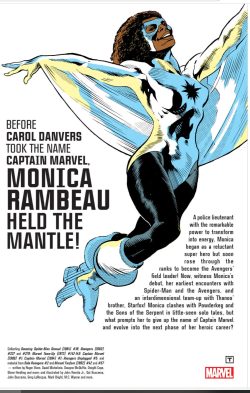
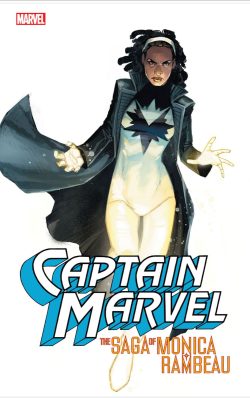
By Roger Stern, David Michelinie, Dwayne McDuffie, Dwight Coye, Glenn Herdling, Dennis Mallonee, Bill Mantlo, John Romita Jr., Sal Buscema, Greg LaRocque, John Buscema, Kieron Dwyer, Mark D. Bright, Bob Hall, George Freeman, M.C. Wyman, John Romita Sr., Brett Breeding, Mike Esposito, Tom Palmer, Frank Bolle, Bob McLeod, Bill Sienkiewicz, Stan Drake, Al Milgrom, Dennis Jensen, Barb Kaalberg, Mark McKenna, Sandu Florea, Ramona Fradon, Norm Breyfogle, Olivier Coipel, Mark Morales, Justin Ponsor, Michael Allred, Veronica Gandini & various (MARVEL)
ISBN: 978-1302950996 (TBP) 978-1302525569 (Digital)
This book includes Discriminatory Content produced in less enlightened times.
In comic book terms, the soubriquet “Marvel” carries a lot of clout, and equal amounts of baggage. It has been attached to a wide number of vastly differing characters over many decades and in 2014, was successfully attached to comics’ first mainstream top flight Muslim superhero, becoming the third iteration of Ms. Marvel – or fourth if you count the villainous Moonstone’s stint impersonating Carol Danvers during Norman Osborn’s “Dark Reign”. Isn’t the amount of comics you still have to read daunting sometimes?
On sale from late December 1939, Whiz Comics (#2 – there was no #1) debuted Superman-analogue Captain Marvel who proved – sales-wise at least – to be far mightier and more popular than the Man of Steel. After a notorious decade-long DC vs Fawcett court case, that began in 1940, the name and title Captain Marvel disappeared from newsstands. In 1967, during the second superhero boom – and “camp” craze generated by the Batman TV show – publisher MLF seemingly secured rights to the name and produced a number of giant-sized comics. Their star was a sapient alien robot who could fly, divide his body into segments and shoot lasers from his eyes. Despite a certain quirky charm, and being devised by Timely veteran Carl (Human Torch) Burgos, he failed to attract a following. Its demise saw the name snapped up by the expanding Marvel Comics Group, who used it for their next new creation – a Kree spy/super-warrior called Mar-Vell who went native, rejected his colonising people and died as the Protector of the Universe.
The name lay fallow barely long enough to be respectful before it transferred to a new hero. This was an African American cop in New Orleans, who soldiered on mostly as team player until some editorial bright spark decided to use it on another character, who might generate better sales. The process was repeated and unless I’ve missed someone has been attributed to Mar-Vell’s son Genis-Vell, daughter Phyla-Vell, Skrull infiltrator Khn’nr, and alternate reality Kree agent Noh-Var, before former Ms. Marvel Carol Danvers took on the rank and duties. You can read all about them elsewhere… and you should.
Here, however, we’re looking at that black cop. Her name is Monica Rambeau, and thanks to her recurring role in Marvel’s Cinematic Universe, her peripatetic career and many revisions that cry out for a proper appraisal at least warranted this compilation of formative tales….
Captain Marvel: The Saga of Monica Rambeau gathers – in whole or in part – pertinent stories from Amazing Spider-Man Annual #16; Avengers #227 &279; Marvel Team-Up #142-143; Solo Avengers #2; Captain Marvel (vol 2) #1 & 2; Marvel Fanfare #42 & 57; Avengers Unplugged #5 and assorted bonus material. It is an almost identical reissue of 2019’s Captain Marvel: Monica Rambeau and we’ll cover the differences at the end for all us completists…
New Orleans Police Lieutenant Monica Rambeau debuted in Amazing Spider-Man Annual #16, cover-dated October 1982; courtesy of Roger Stern with penciller John Romita Jr. inked by dad John Romita Sr. ‘Who’s That Lady?’ finds the underappreciated officer actively stifled by professional misogyny and held back in her career with the Harbor Patrol. Maybe that’s why she goes off-book when Professor Andre LeClare comes to the police with a story that his former employer – South American dictator Generalissimo Ernesto Ramirez – is turning LeClare’s energy conversion experiments to build a weapon…
Hiring LeClare’s greedy assistant Dr. Felipe Picaro, the tyrant is testing a prototype that taps extra-dimensional forces on an isolated oil rig in the Gulf of Mexico. It actually belongs to evil energy corporation Roxxon, and Rambeau decides to go undercover to investigate…
In traditional manner, her interference leads to an accident bombarding her with extra-dimensional energy which grants Rambeau the ability to become any form of energy from light to x-rays to lightning. She can also project mirages; pass through solid objects; travel at lightspeed and manipulate energy.
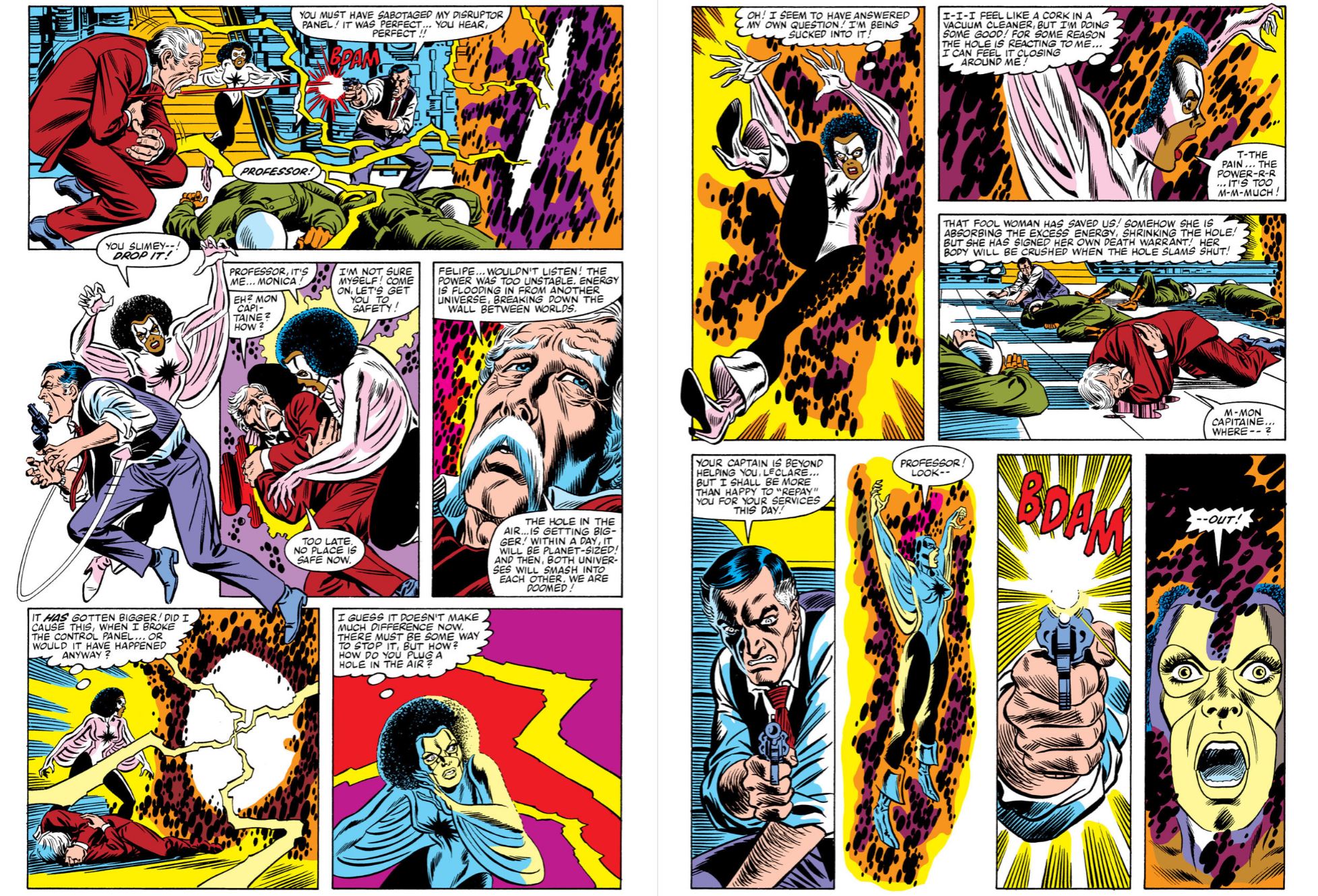
Having foiled the villains – and been christened Captain Marvel by one shellshocked mercenary in the process – Rambeau quits her job and heads to New York City. She immediately clashes with Spider-Man whose danger-sense goes berserk in her vicinity. He thinks she’s a potential foe but in fact her powers are out of control and she’s about to explode and eradicate two interlinked realities…
During a frantic chase, Monica meets the Fantastic Four and Avengers before tech bros Iron Man and the webspinner unite to fix her escalating meltdown. In the aftermath the novice – painfully aware that she might be one of the most powerful beings on Earth – takes an apprenticeship position with the World’s Mightiest Heroes. It officially starts in The Avengers #227’s ‘Testing… 1… 2…3!’ (January 1983 by Stern, Sal Buscema & Brett Breeding). Soon she’s settling in and learning all about her predecessor and namesake and more than she cares to about the rest of the team. Her willing position as one of the crowd eventually led to her becoming team leader (for which you should see specific Avengers compilations) whereas here another adventure with the wallcrawler follows. Crafted by David Michelinie, Greg LaRocque & Mike Esposito Marvel Team-Up #142 finds her ‘Foiled!’ (June 1984) as she and Spider-Man separately face teleporting bandits stealing cutting edge tech and a mysterious crystal. When Captain Marvel’s powers start glitching, she and the arachnid discover well-meaning loon Dr Paulson intends to save humanity and radically reduce Earth’s excess population by exiling its biggest cities to another realm. Although Spidey stops the bandits, their boss and the plot, in the aftermath Rambeau is permanently trapped in a disembodied state…
Cover-dated July 1984, MTU #143’s ‘Shifts and Planes’ sees the webspinner and Monica’s fellow Avenger apprentice Starfox (AKA Thanos’ brother Eros) travel to a distant dimension in search of a quick fix, only to become entangled in a war between genders prior to saving Captain Marvel and returning to the relative calm of Manhattan…
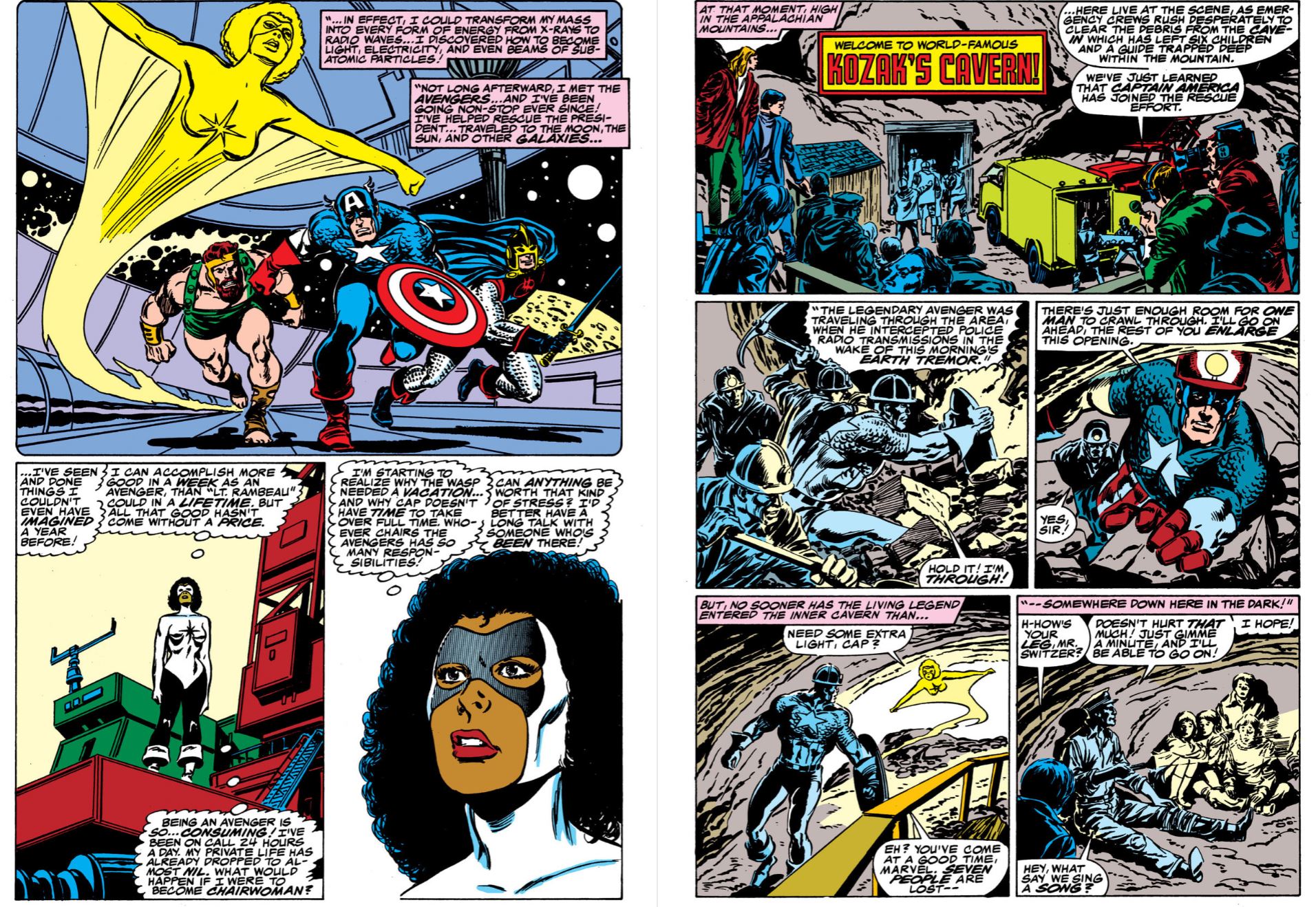
By May 1987 Rambeau is a seasoned superhero veteran and in Avengers #279, Stern, John Buscema & Tom Palmer reveal her ‘Command Decision’ after Captain America nominates her to be next team leader. Throughout this time aged professor LeClare has been her mentor and go-to science guy and after reviewing her origins, consulting him and saving trapped kids beside the legend of Liberty, Marvel accepts the role and responsibility.
Cover-date January 1988, Solo Avengers #2’s ‘Out of Control’ by Stern, Kieron Dwyer & Bob McLeod offered Rambaeu’s first lone adventure as Dr. Picaro returns to steal her powers for himself and spectacularly fail, after which Dennis Mallonee, Bob Hall & Bill Sienkiewicz detail Captain Marvel’s meeting with New Orleans legend Marie Laveau and subsequent time travel quest back to 18th century Paris and Marvel Fanfare #42 (February 1989). ‘Once More in the City of Light’ exposes a short but momentous alliance with sorcerer Cagliostro and near-fatal clash with Count Dracula that lays the groundwork for countless future battles…
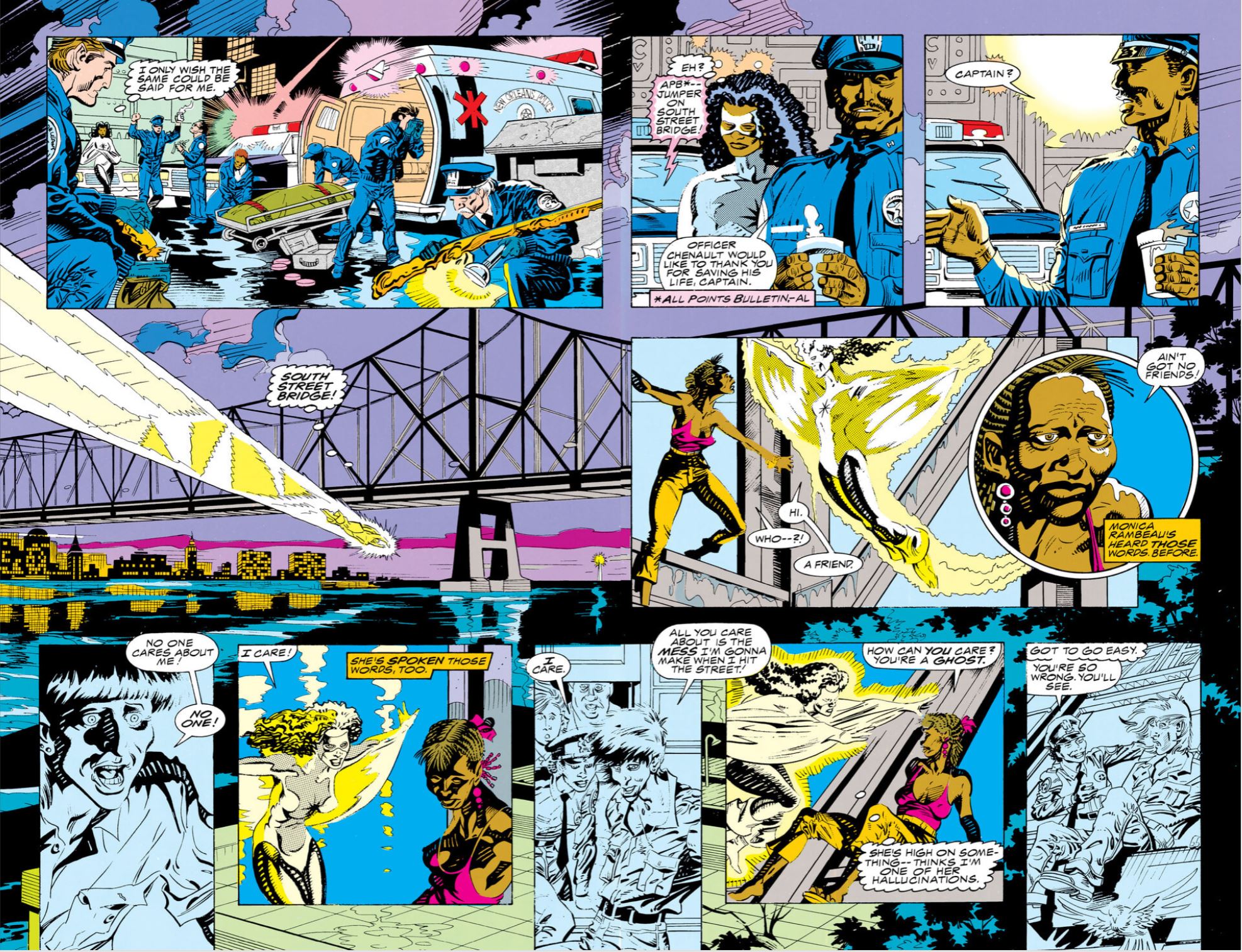
By this time her powerset had changed a few times and ways, and on July 11th 1989 (and cover-dated November) Rambeau was given her own title at last. Captain Marvel (vol 2) #1 delivered one extra-long tale by Dwayne McDuffie, Mark D. “Doc” Bright, Stan Drake & Frank Bolle wherein a now-powerless and human Monica starts her own shipping business. It ends before it began as super-thugs Powderkeg and Moonstone and their Brazilian crime boss Kristina Ramos murder her crew in search of missing Stark Tech. Thankfully, in ‘The Dream is the Truth’, the trauma reignites her energy-abilities – but in a reduced, more physical manner – and after beating the bad guys, Captain Marvel resumes her destined path.
In Marvel Fanfare #57 (June 1991) that path is perfectly described by Bill Mantlo, George Freeman & Al Milgrom as a single night’s work protecting the ordinary people of the Big Easy in ‘Power & Duty’.
Released on December 7th 1993, Captain Marvel (vol 2) #2, and cover-dated February 1994, ‘Speaking Without Concern’ sees CM on campus to confront hate crimes and targeted racism instigated by shapeshifting demagogue Skinhead and enforced by recruiters from the vile supremacist Sons of the Serpent. Written by McDuffie & Dwight D. Coye and limned by Bright, Dennis Jensen, Barb Kaalberg & Mark McKenna, the hard-hitting tale says all the right things but ultimately failed to follow up, before this compilation closes its story section with a big reunion and major change…
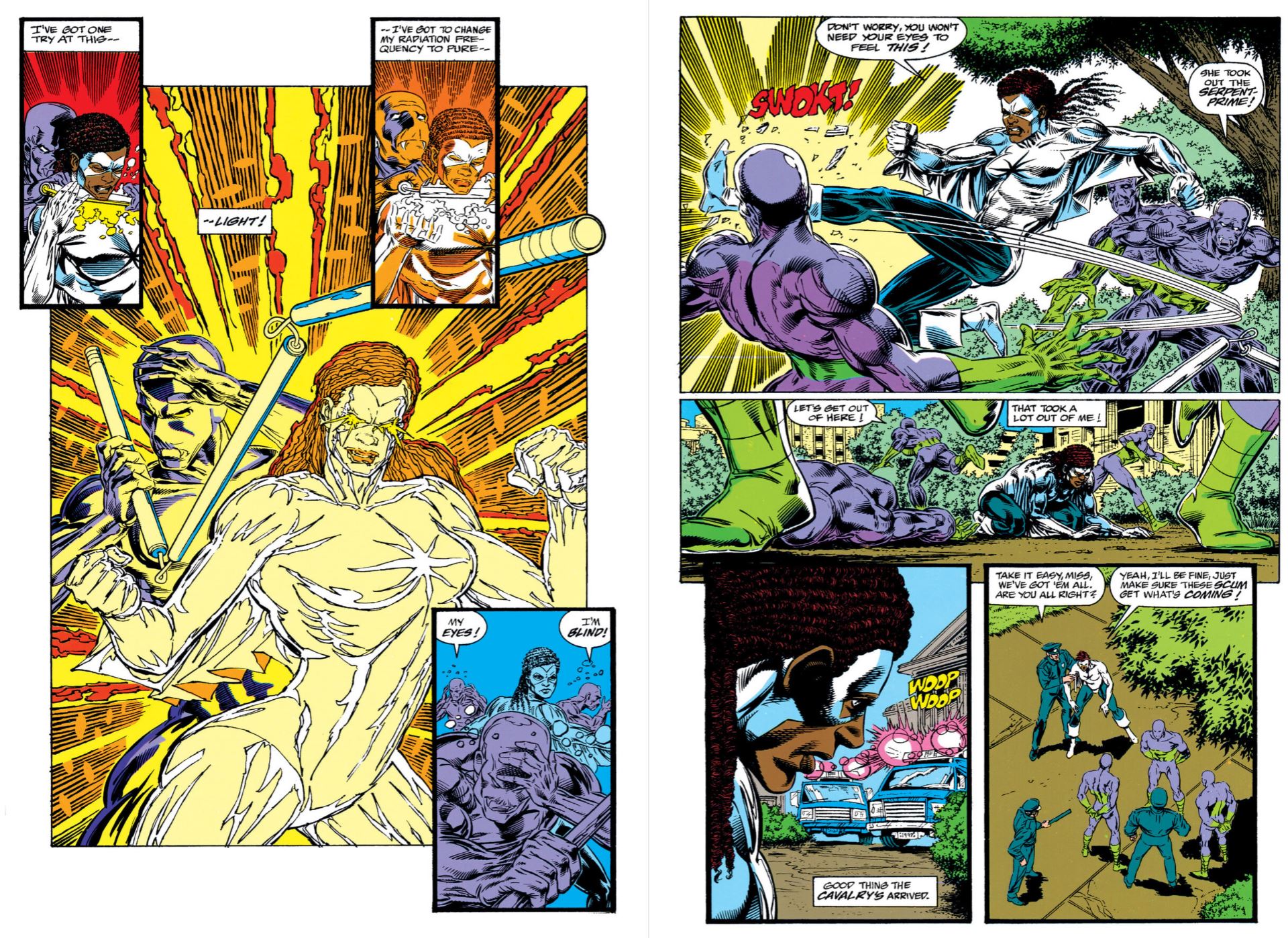
In Avengers Unplugged #5 (June 1996) Glenn Herdling, M.C. Wyman & Sandu Florea reduce Rambeau to a mind-thrall of psychic slaver The Controller. In recent months the son of Mar-Vell had begun using the title Captain Marvel. After the Kree/Eternal hybrid inheritor thrashed The Controller, the cyborg monster set Rambeau to seduce and destroy immature, impetuous Genis-Vell. However, ‘Legacies’ reveals that her old Avenging allies (at least Starfox, Vision & Deathcry) have not forgotten or abandoned her and after savage battles against each other the heroes, Genis-Vell and newly-liberated Monica deal with the true threat. In the aftermath Rambeau gifts Genis with the Captain Marvel title and rebrands herself Photon; a gesture she will repeat a few more times as she works with later Avengers sub-groups, Next Wave, The Ultimates and other teams under noms de guerre including Spectrum, Pulsar and Monica Rambeau…
Besides covers by the Romitas, Breeding, Hannigan, Bob Wiacek, Hall, Lee Weeks, Josef Rubinstein, John Buscema, Tom Palmer, Freeman, Bright, Wyman, Florea, & various, the book’s bonus material includes a Norm Breyfogle pinup from Marvel Fanfare #57; original art from AS-M Annual #16 & the LaRoque & Rubinstein cover art for MTU #143; the Women of Marvel: Celebrating Seven Decades Omnibus cover by Olivier Coipel, Mark Morales & Justin Ponsor, plus a variant cover by Ramona Fradon, Michael Allred & Veronica Gandini, before closing with exhaustive prose dossier ‘Monica Rambeau’ offering context and life-history augmented by illustrations from The Handbook of the Marvel Universe.
As previously mentioned, Saga of Monica Rambeau is an almost exact reissue of 2019’s Captain Marvel: Monica Rambeau except the earlier tome has a modified version of the cover in the bonus section and a shorter prose appreciation of the Second Marvel Comics Captain Marvel’s exploits.
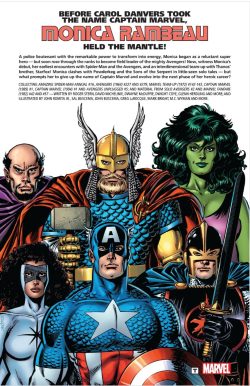
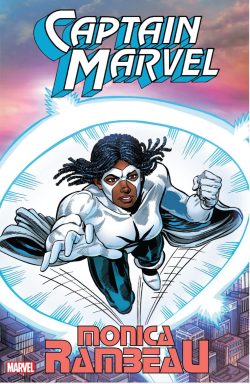
Too often regarded as a second-stringer but never second-rate, the extensive adventures of Monica Rambeau are bread-&-butter Superhero fare to delight any Fights ‘n’ Tights fan. Why not check them out now?
© 2023 MARVEL.
Win’s Christmas Gift Recommendation: Enduring Light in the Darkness & Wandering Star in Marvel’s Firmament …8/10