
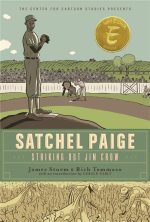
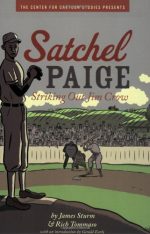
By James Sturm & Rich Tommaso (Jump at the Sun/Hyperion Books for Children/House of Anansi/Little Brown Young Readers US)
ISBN: 978-0-88899-753-1 (TPB), 978-0-78683-901-8 (Jump at the Sun/Hyperion Books for Children TPB), 978-1-36802-232-3 (Little Brown, HB), 978-1-36804-289-5 (Little Brown, TPB, 2019)
This book includes Discriminatory Content employed for dramatic effect.
I’m on record as not being a big fan of American Sports, favouring the ease and simple complexity of our own gentle pastimes like rugby and cricket. I am however a complete sucker for history and graphic biographies – especially when they are as innovative and imaginative as this sublimely low key, passionate, evocative and imaginative synthesis of cruel fact and uplifting fiction.
Satchel Paige: Striking Out Jim Crow masterfully samples the life and achievements of a groundbreaking, pioneering and historically significant sportsman and role-model whose efforts greatly advanced the lives of all Americans of colour. His gifts and long, long career eventually helped change the way a divided nation thought and worked, and here that triumph is compellingly balanced by a tantalising supposition that should have happened; even if it never did…
This tale comes courtesy of writer James Sturm (The Golem’s Mighty Swing, Adventures in Cartooning, Off Season, Unstable Molecules, James Sturm’s America) and illustrator Rich Tommaso (Clover Honey, Black Phoenix, In the Garden of Earthly Delights, She-Wolf, The Corten Steel Phoenix) under the auspices of Sturm’s Center for Cartoon Studies, and happily supplies context for the uninitiated via a biographical appreciation/introduction from essayist, author, educator and cultural commentator Gerald Early at the start, and a fulsome and informative appendix ‘Striking Out Jim Crow Panel Discussions’ at the close.
All you need do is to read this stunningly engaging historical drama, but – just for the sake of clarity – Leroy “Satchel” Paige (1906 – 1982) was a American whose skin colour and ethnicity prevented him from playing “whites-only” professional baseball in the Major Leagues. He thus spent most of his 50-year career performing sporting miracles playing in “the Negro Leagues”v(usually for as many as three teams at a time!) and making more money than any other player of any hue in exhibition matches where all colours played – and even spectated – without incident.
Like later legend Mohamad Ali, Paige was a brilliant self-promoter fully in charge of his own career and press, and was probably the most famous black man in America for half a century. Eventually, long after his prime days were done, he (and other excluded sportsmen like Jackie Robinson) smashed the “colour-line” and were invited to play on white teams… and pulled in crowds of all races.
Here, however, the focus is on a narrator cruelly denied the same experiences. Starting in 1929, we follow an 18-year old, already married sharecropper who has the potential to be far better-off… maybe even another Satchel Paige. The dream ends early when Emmet sustains a career-ending injury playing in the Negro Leagues. The fact that he had just scored a run off Paige himself is no consolation…
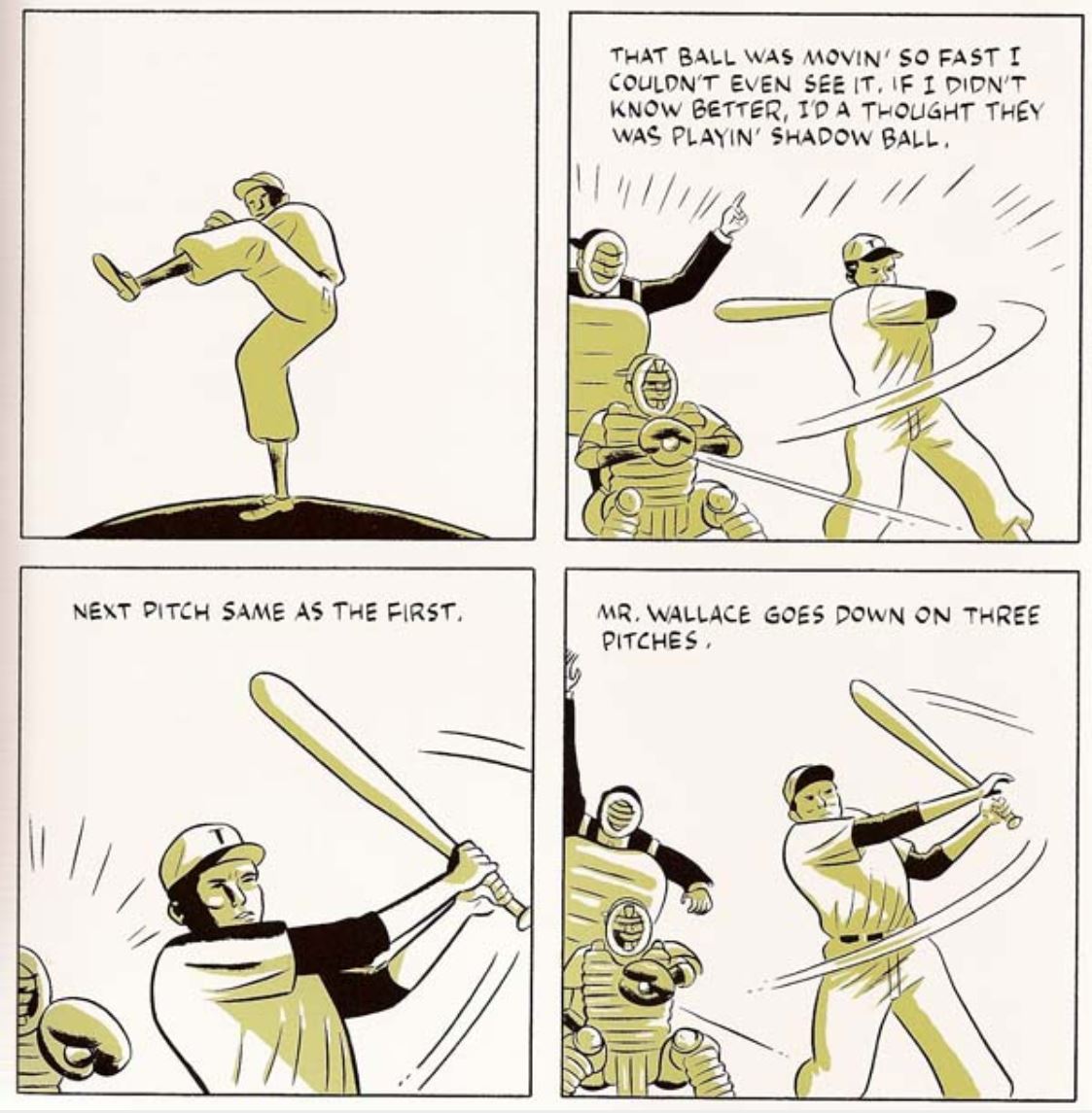
Crippled and returned to the cotton fields of Tuckwilla, Alabama, embittered Emmet endures a far more traditional life, abused, terrorised and exploited by the wealthy, baseball-loving Jennings brothers. They own all the fields in the county and believe that includes the croppers living and toiling on them…
Emmett keeps his head down, his mouth shut and no one talks baseball around him – especially wife Frances and their son Emmet, Jr. It’s hard enough just keeping the boy in school especially since the overbearing, brutal Jennings boys think the kid is long past the age when he should be picking their cotton by now…
And then in 1944, Paige’s barnstorming war-bond-raising, morale-boosting tour across the USA brings him and his negro All-Star to Tuckwilla to play against the Jenning’s private (all-white) team. At an eventful match Emmet meets his idol/nemesis once again and nothing is ever the same for these Alabama “coloreds” ever again…
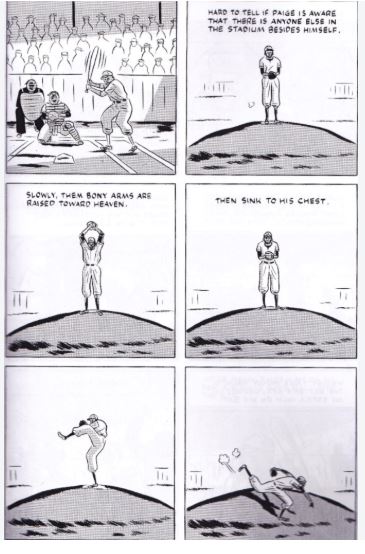
Contrasting the extraordinary triumphs of the frankly unique Paige with actual experience of most persons of colour in that severe and segregated South – and to be honest most of the rest of America at that juncture – is a potent device for showing how far we have come. Sadly it’s also a reminder of what we now risk losing again, not only there but all over the world. Let this no-so-simple sports story be your ticket to a greater awareness and better days.
No rainchecks here. Read This Now!
© 2007, 2019 The Center for Cartoon Studies. All rights reserved.