
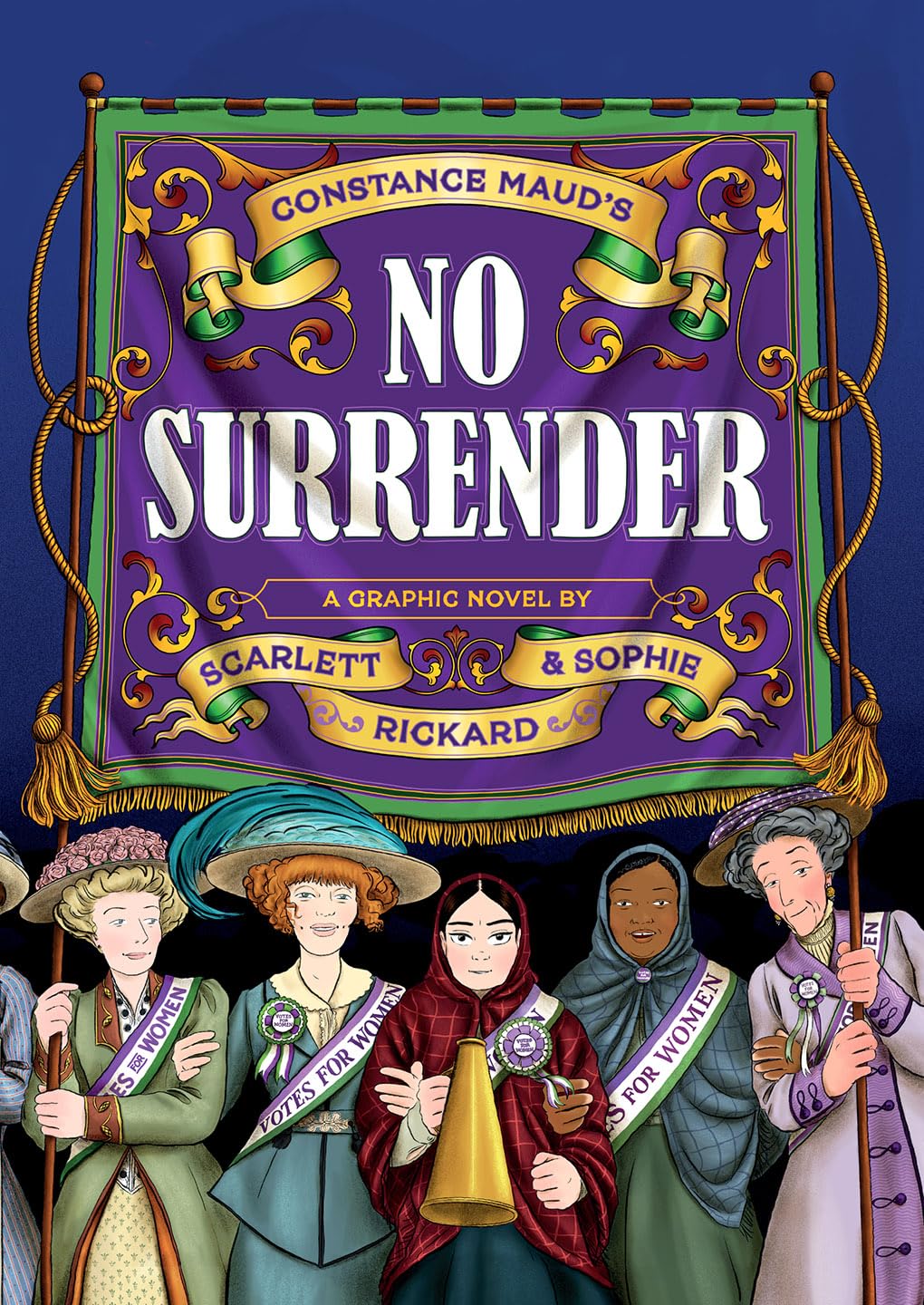
By Constance Maud: adapted by Scarlett & Sophie Rickard (SelfMadeHero)
ISBN: 978-1-91422-406-5 (TPB/Digital edition)
Happy International women’s day 2026! And if you’re a guy who groaned. swore and reached for your huge, Massive THROBBING keyboard to type out those trollish insults someone else made up for you, HAPPY INTERNATIONAL WOMEN’S DAY 2026 AGAIN! SEE YOU NEXT YEAR?
Constance Elizabeth Maud (1857-1929) was a child of privilege: daughter of a celebrated English scholar and cleric. She was primarily educated in France and lived there or in Chelsea for most of her life. Between 1895 and 1924 she wrote numerous articles and 8 novels – of which No Surrender was the penultimate – and became a member of the 400-strong Women Writers Suffrage League. In 1908 she joined The Women’s Social and Political Union and The Women’s Freedom League: turning her writings to the needs of the cause. Her work subsequently appeared in many periodicals, especially magazines like the Suffragist movement’s newspaper Votes For Women.
In No Surrender (published in 1911 – and again in an annotated centenary edition released by publisher Persephone in 2011), Maud incorporated actual events with fictionalised analogues of many contemporary activists participating in the struggle to craft a history and playbook of the campaign for emancipation. The book became a rallying point and recruiting tool for the movement and was used to promote the soft end of the battle for equality. It inspired countless women (and presumable many male sympathisers) with a dramatised story of how the great and good would join with the humblest workers and unite to overcome…
Maud lived just long enough to see British women secure the right to vote: in 1918 with the Representation of the People Act – which enfranchised women over 30 years old – and at last witnessing universal female suffrage established in 1928’s Act, legislating that all Britons of 21 years or above could freely vote.
The main reason why No Surrender was such an effective weapon in the war to win the vote for all is that its propaganda and polemic were deftly disguised by readily accessible drama. Beginning in industrial hub Greyston, ‘The Mill’ tells how northern mill worker Jenny Clegg is fired up by the many injustices afflicting women’s lives: with cruelty, unfair taxation, financial neglect, legitimised maltreatment and a status of second-class citizens chaining every female to a man of the gutter…
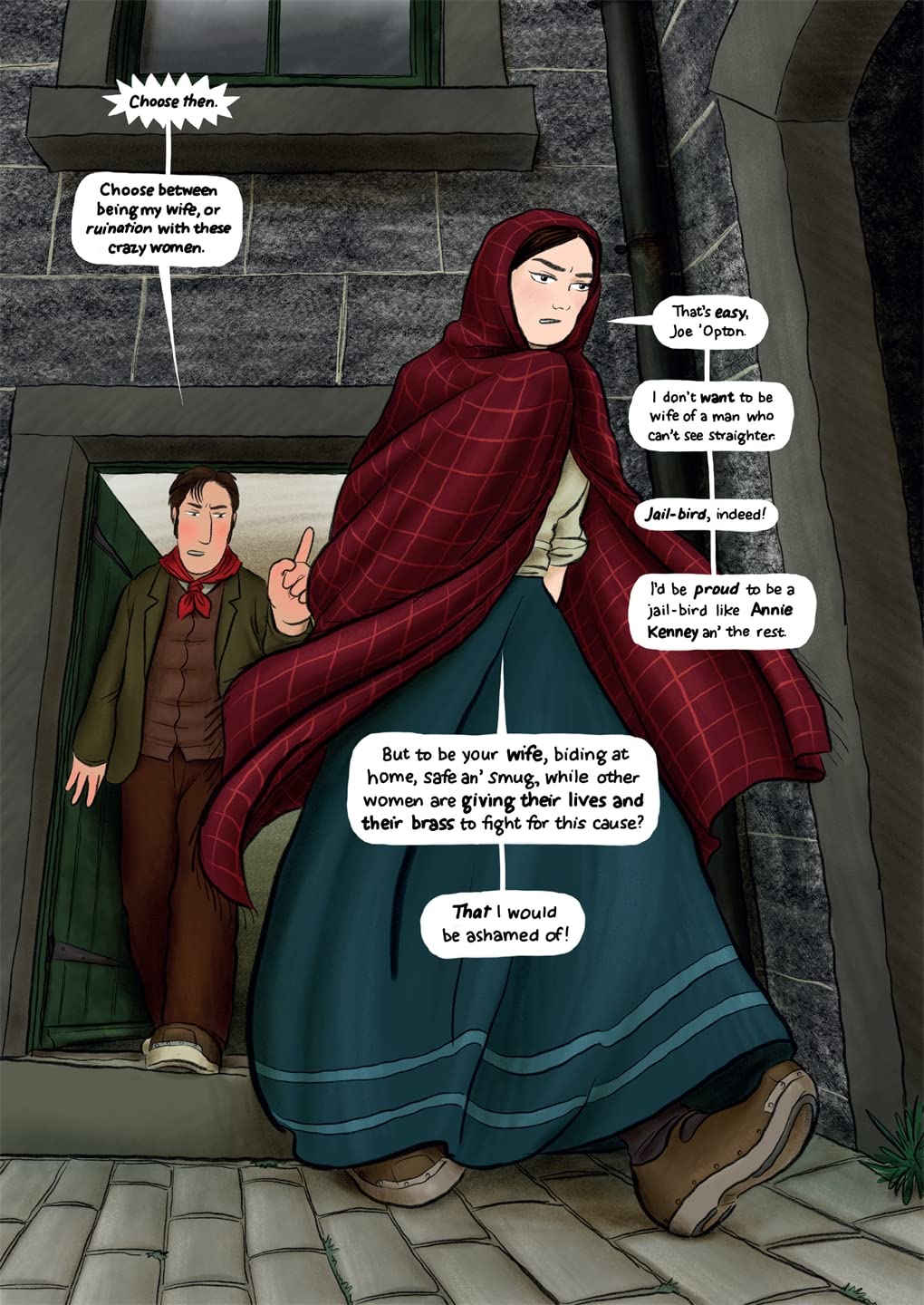
Rebelling, she forsakes her crusading socialist love interest Joe Hopton – a successful prime mover in winning better lives and wages for male workers – and dedicates her life to winning those same rights and representation for women. Upper class Suffragist Mary O’Neill has a more refined but similarly intransigent family at ‘The Country House’, all decrying her passion for women’s suffrage. She and Jenny will become friends, allies and leading lights in the struggle, inspiring millions of women, converting men, embarrassing the authorities and challenging a society where even other women refuse to see a status quo threatened…
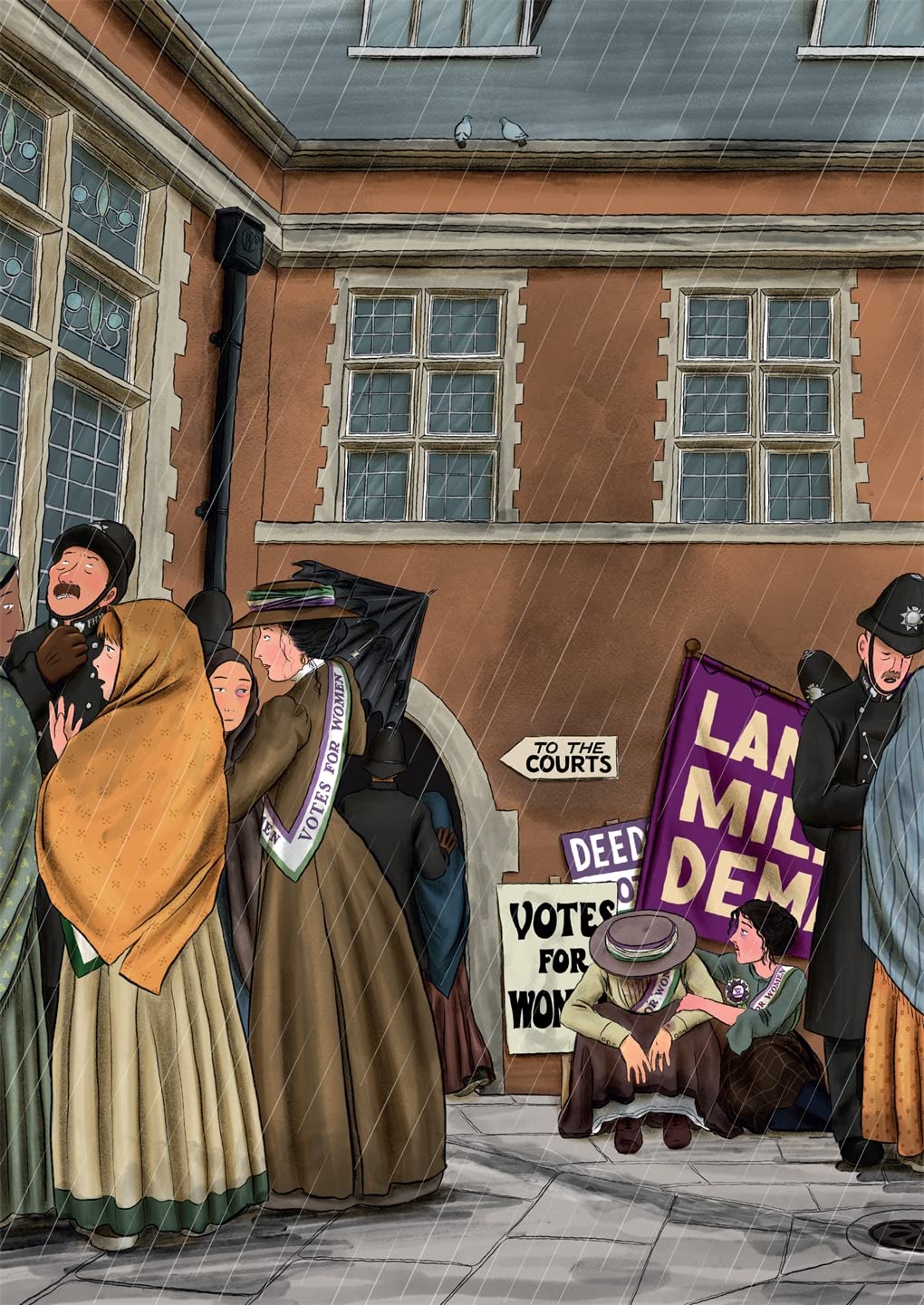
Both driven by ‘The Calling’, they and a growing army of allies will invade London and suffer police and legal suppression in ‘The Courtyard’ and face ‘The Magistrate’ but never stray from their course. Whether testing tactics in ‘The Routes To Battle’ or challenging their detractors through heated debate on ‘The Cart’, the socially-distanced allies never stop their work, and gradually make converts even amongst the stratified intelligentsia who enjoy the closeted luxuries of ‘The Weekend Cottage’…
Just like a soap opera, the story sees multiple characters interact on many levels but underpinning it all is a roster of actual protest events woven into the plot, such as ambushing off-duty cabinet ministers in ‘The Church’ and then infiltrating ‘The Dinner Party’ to reinforce their message.
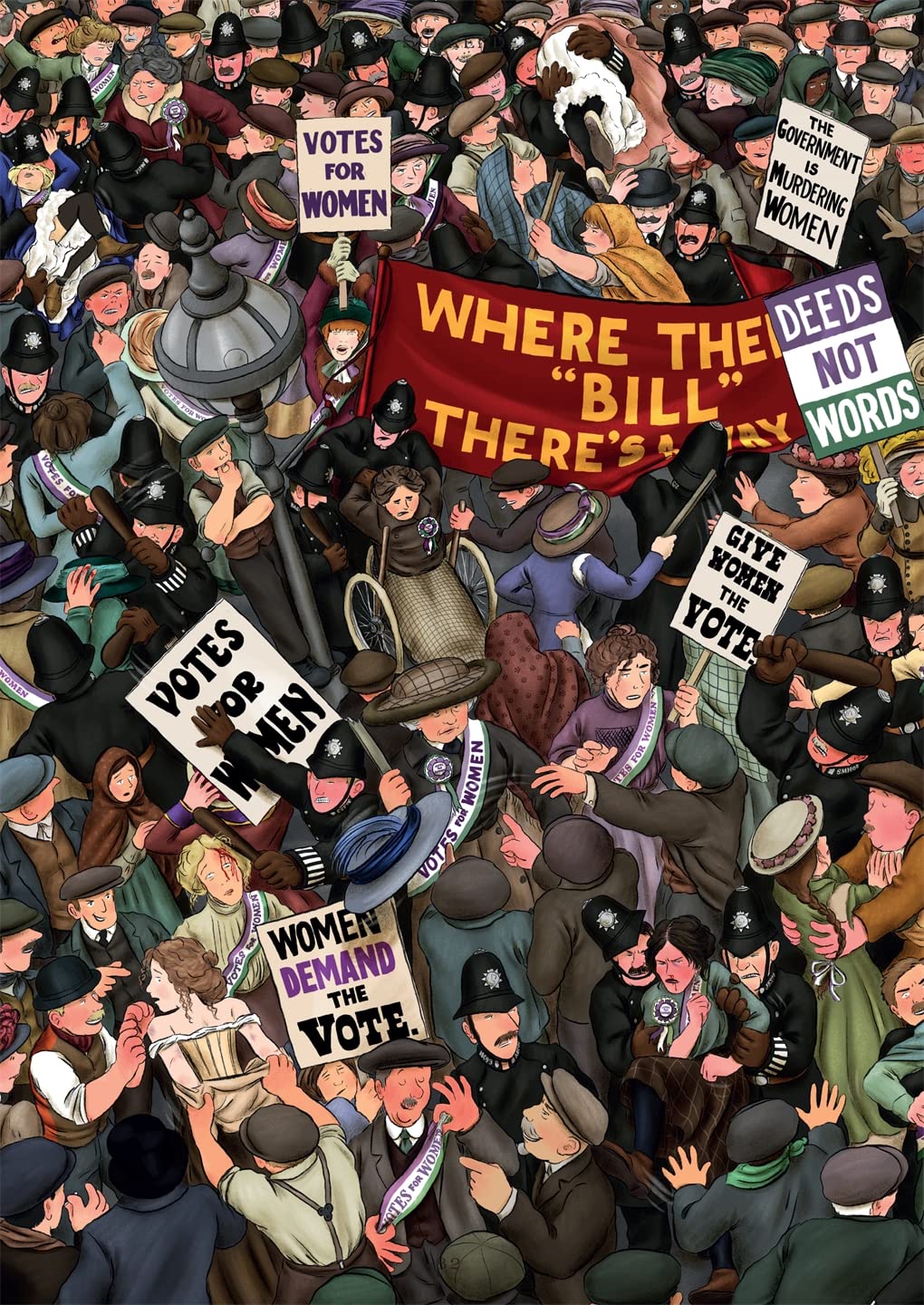
The darkest and most notorious moments of the cause are also featured, as Clegg, O’Neill and other noted activists of every class endure imprisonment, abuse and medical torture – but each according to their own social rank and standing – in ‘The Crushed Butterfly’, ‘The Prison’ and the deeply distressing culmination of ‘The Punishment’. Always, efforts to disunite and separate rich from poor, inherently virtuous from tawdry and lowborn, fails as their core principle – that they are all women together – utterly eludes the smug, hectoring, insensate elitist male oppressors; prejudiced and scared working men and the Anti-Suffrage Women’s groups populated with ladies who know and defend their privileged positions in the world…
Ultimately, Jenny and Joe are united in the cause and Mary makes her own converts in ‘The Homecoming’ before the story ends with a proud rallying of all in the march to inevitable universal enfranchisement and victory in ‘The Standard is Raised’ – a rousing graphic tour de force with illustrator Sophie Rickard crafting a stunning multi-page fold-out any art fan would cry to see…
Maud’s tale was ostensibly a romance and account of families in crisis with a thinly disguised moral message like any Dickens or Thomas Hardy novel. She explored and contrasted the lives of poor working folk with gentry and aristocracy, but also scrupulously catalogued the added travails and insecurities of working women. At this time women had been successively deprived of most financial and civil rights and privileges. They had to pay taxes but enjoyed no representation under the law; could not be legal guardians of their own children or property and, if married, could not divorce whilst their husbands could. The men could also beat them, but only with cudgels of judicially-mandated size…
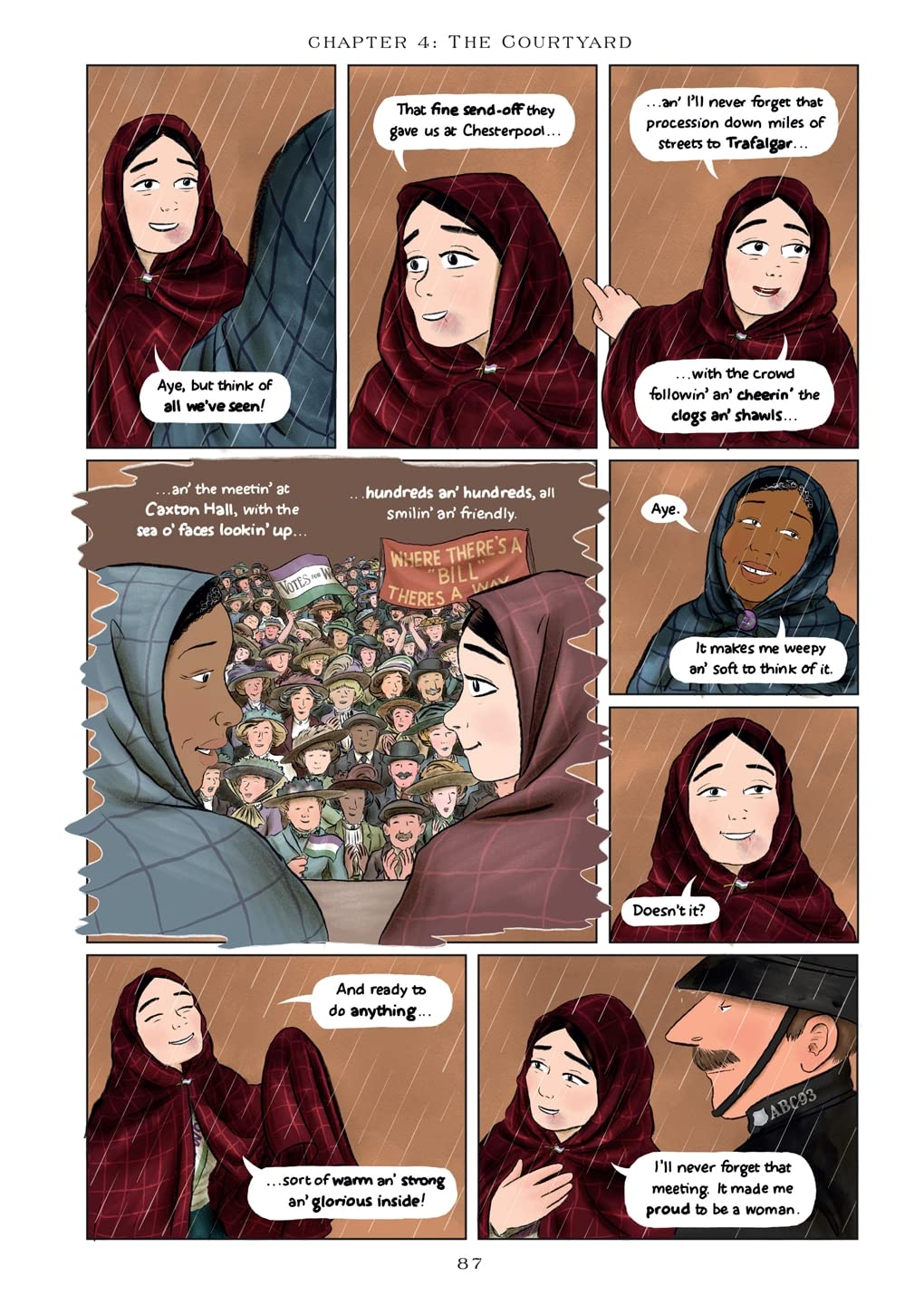
At the end of this hefty and deliciously substantial graphic novel there’s a chart showing when – and how incrementally – nations of the world instituted female enfranchisement, and an Afterword by adapting creators Scarlett & Sophie Rickard (This Slavery, Mann’s Best Friend, A Blow Borne Quietly, The Ragged Trousered Philanthropists), naming names and offering factual provenance for incidents and characters enriching the narrative. It also declares why – in the current environment where a citizen’s right to dissent and protest is being deviously and criminally whittled away – the principles of organised resistance and role and consequences of righteous civil disobedience must be stridently defended…
Fair minded, honestly and powerfully expressing the views of all – including those opposing universal enfranchisement (and restoration of previously-removed social and civil rights) – Maud’s words are reinvigorated here with the authorities, capitalists, police and judiciary all given a fair hearing – and generally convicted out of their own mouths. Of particular interest to modern readers will be the opinions of women who didn’t want a vote and the low workingmen who were generally the most passionate and violent opponents of change and equality…
Powerful, enraging, engaging and even occasionally funny, this never-more-timely tale of the force of the disenfranchised with their backs to the wall and ready to fight is supremely readable and should be compulsory viewing for all – as long as we don’t force anyone to…
© 2022 SelfMadeHero. Text © 2022 Sophie Rickard. Artwork © 2022 Scarlett Rickard. All rights reserved.
Today in 1880 Wonder Woman co-creator Harry G. Peter was born.
In 1907 Dutch comics master Charles Boost (Broeder Bastiaan, Knor de Pot, Neppie Tuun, Jan de Zeehond, Robinson Crusoë) was born, as was Mad magazine cartoonist Jack Rickard in 1922, Sal Amendola in 1948, and Eric Powell in 1975.
In 1936 The Sunday Post featured Dudley D. Watkins’ The Broons & Oor Wullie for the first time, and in 1975 iconic UK comic Battle Picture Weekly launched the first of its 644 issues, and just kept on doing it until January 1988.