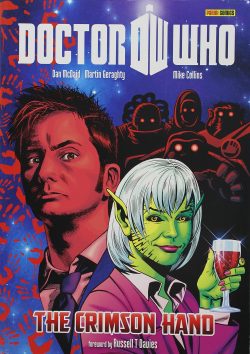
Doctor Who Graphic Novels volume 13: The Crimson Hand


By Dan McDaid, Martin Geraghty, Jonathan Morris, Mike Collins, David A. Roach, Sean Longcroft, Rob Davis, Paul Grist, Ian Culbard, Roger Langridge & various (Panini Books)
ISBN: 978-1-84653-451-5 (TPB)

Doctor Who launched on television with the first episode of ‘An Unearthly Child’ on November 23rd 1963. Happy 60th, Time Lord!

Within a year, his decades-long run in TV Comic began with issue #674 and the premier instalment of ‘The Klepton Parasites’.

On 11th October 1979 (although adhering to the US off-sale cover-dating system so it says 17th) Marvel’s UK subsidiary launched Doctor Who Weekly, which became a monthly magazine in September 1980 (#44) and has been with us under various names ever since.

All of which only goes to prove that the Time Lord is a comic hero with an impressive pedigree…

Marvel/Panini spent a lot of effort – and time! – collecting every strip from its archive in a uniform series of over-sized graphic albums, each concentrating on a particular incarnation of the deathless wanderer.

This one gathers stories from Doctor Who Magazine (AKA DWM) issues #394 & 400-420 plus The Doctor Who Storybook 2010 (originally published between 2008 and 2010): all featuring the escapades of the recently re-enlisted David Tennant incarnation of the Galloping Gallifreyan.

This is actually the third and final collection of strips featuring “the Tenth Doctor” and whether that statement made any sense to you largely depends on whether you are an old fan, a new convert or a complete beginner.

None of which is relevant if all you want is a darn good read. All the creators involved have managed the ultimate “Ask” of any strip creator – to produce engaging, thrilling, fun yarns that can be equally enjoyed by the merest beginner and the most slavishly addicted fan.

After an effusive introduction from Russell T. Davies, the full-colour graphic grandeur begins with a one-off romp from 2008 entitled ‘Hotel Historia’ by writer/artist Dan McDaid, wherein the Good Doctor fetches up in a spectacular resort for time-travellers.

Here he first encounters pushily obnoxious corporate raider Majenta Pryce and uses her shoddy and slipshod time-technology to counter a threat from the chronal brigands known as the Graxnix.

This is riotously followed by a delightful clash with ‘Space Vikings’ (by Jonathan Morris, Rob Davis & Ian Culbard, taken from the 2010 Christmas Doctor Who Storybook) wherein slave-taking star-rovers prove to be far less than they appear…

The main body of stories here formed something of an experiment as DWM #400-420 were designed as an extended story-arc leading up to the big change on television wherein Matt Smith would replace Tennant as “The Eleventh Doctor”.

Therefore McDaid was tasked with scripting the entire 21-issue run and began by reintroducing scurrilous money-mad chancer Majenta Pryce in ‘Thinktwice’ (#400-402, illustrated by Martin Geraghty & David A. Roach); an intergalactic penal institution with some decidedly off-kilter ideas on reforming prisoners.

Pryce is a prisoner but has amnesia. So does her cellmate Zed and – in fact – most of the convicts aboard. The supposedly cushy debtor’s prison is actually a horror-house of psychological abuse where suicide is endemic, cunningly maintained by creepy Warden Gripton who is messing with inmates’ memories to satisfy the hungers of something he calls “memeovax

Luckily, new prison doctor “John Smith” is a dab hand with a Sonic screwdriver…

With her memory far from restored, wickedly entrepreneurial Majenta becomes the unlikeliest of Companions, demanding that the “legally liable” Doctor makes restitution for all the trouble he’s caused by ferrying her to planet Panacea where she can be properly cured.

As we all know however, the Tardis goes where She wants and at Her own pace…

‘The Stockbridge Child’ (#403-405 and illustrated by Mike Collins & Roach) deposits the unhappy partners to that peaceful English village where three different incarnations of the Time Lord have encountered incredible alien incursions.

When the Doctor is reunited with outcast skywatcher Maxwell Edison they uncover at last the ancient horror beneath the hamlet which has made the place such a magnet for madness and monsters, before finally despatching the brooding anti-dimensional threat of the Lokhus

Meanwhile Majenta’s big secret hasn’t forgotten her, and is rapidly closing in…

DWM #406-407 featured ‘Mortal Beloved’ limned by Sean Longcroft – wherein the Doctor and “Madge” arrive at a decrepit asteroid mansion on the edge of the biggest storm in creation.

Amidst the flotsam and jetsam lurk poignant clues to Pryce’s past, as tantalisingly revealed by the robots and holograms left to run the place after a far younger Majenta jilted brilliant playboy industrialist Wesley Sparks. Of course, after such an immense length of time, even the most devoted of loves and programs can falter, doubt and even hate…

‘The Age of Ice’ (#408-411, by McDaid, Geraghty & Roach) brings the Last Time Lord and Lost Executive to Sydney Harbour for a fond reunion with Earth Defence Force UNIT, just as time-distortions begin dumping dinosaurs in the sunny streets, and crystalline knowledge stealers The Skith once more attempt to assimilate all the Doctor’s vast and varied experiences. Majenta too finds an old friend in the shape of her long-lost junior associate Fanson, who admits to wiping her memory. When he becomes part of the huge body-count before revealing why, Madge thinks she would lose what was left of her mind…

‘The Deep Hereafter’ (#412, by Rob Davis with above-and-beyond calligraphy from letterer Roger Langridge) is a scintillating space detective story, pastiching classic Will Eisner Spirit Sunday sections, but still succeeds in advancing the overarching plot as Madge and the Doctor complete the last case of piscine P.I. Johnny Seaview and chase down the threat of the reality warping World Bomb…

DWM #413 (Collins & Roach) exhibits ‘Onomatopoeia’ and pits the reluctant pair against space-rats and out-of-control pest prevention systems in a clever and heart-warming fable told almost exclusively without dialogue.

The superb ‘Ghosts of the Northern Line’ (#414-415) follows with Paul Grist working his compositional magic in a chilling yarn of murderous phantoms slaughtering tube passengers in present day London. Obviously they can’t be spirits, so what is the true cause of the apparitions?

This yarn leads directly into the big payoff as the assembled forces of galactic Law and Order suddenly show up to arrest Majenta, plunging the voyagers into a spectacular epic ending as the stroppy impresario at last regains her memory and acquires the power to reshape all of reality. It’s all the fault of the cosmic consortium known and feared as ‘The Crimson Hand’ (DWM #416-420, by McDaid, Geraghty & Roach)…

This blockbuster rollercoaster epic perfectly ends the saga of Majenta Pryce and signs off the Tenth Doctor in suitable style, but dedicated fans still have a wealth of added value bonuses in the posterior text section, which includes a commentary from editor Tom Spilsbury, the origins of the saga from McDaid, Doctor Who Story Notes, the Majenta Pryce “Pitch” and an annotated story background section: copiously illustrated with behind-the-scenes photos, sketches and production art.

We’ve all got our little joys and hidden passions. Sometimes they overlap and magic is made. This is a superb sequence of strips, starring an undeniable bulwark of British Fantasy. If you’re a fan of only one, this book might make you an addict to both. The Crimson Hand is a fabulous book for casual readers, a fine shelf addition for devotees of the show and a perfect opportunity to cross-promote our particular art-form to anyone minded to give comics another go.

If only someone would get around to getting these tales digitised…
All Doctor Who material © BBCtv. Doctor Who logo © BBC 2009. Tardis image © BBC 1963. Doctor Who, the Tardis and all logos are trademarks of the British Broadcasting Corporation and are used under licence. © Marvel. Published 2012 by Panini Publishing, Ltd. All rights reserved.

Fists Raised – 10 Stories of Sports Star Activism


By Chloé Célérien & Karim Nedjari translated by Peter Russella (NBM)
ISBN: 978-1-68112-303-5 (HB) eISBN: 978-1-68112-304-2

Having just recently endured the most nauseating and crass example of sports-washing I can think of – and I’m including the 1936 Berlin Olympics, Moscow 1980 and Los Angeles 1984 in that statement – here’s a wonderful comics counterpoint and riposte, detailing the power of sports to do good.

Sadly – and as seems quite usual now – it’s generally cases of well-meaning individuals working against the advisement and wishes of their own sporting governing bodies and governments. It’s almost as if the people running the show care more about money and power than honour, history, achievement or the fans that pay their wages…

It seems there’s nothing you can’t craft compelling comics about if you’re talented and inspired, as seen in this spellbinding celebration of sports stars weaponising their fame and glory to change the world in ways that truly matter.

Originally released au Continent in 2021 as Générations Poing Levé, quand le sport percute l’histoire, this beguiling and amusingly infuriating book blends history, biography and social commentary thanks to scripter Karim Nedjari (French pundit, journalist and CEO of Radio Monte Carlo and RMC Sport) who teams up with sports-mad cartoonist Chloé Célérien to précis the lives and careers of ten true champions.

These noteworthy stars have all used their celebrity to call out hypocrisy and injustice, fighting to better the lives of the Poor, Disenfranchised, Oppressed or otherwise Othered our rulers choose to ignore or outlaw…

Sports and public competition have always enraptured the masses: eternally viewed as a great and unifying leveller. Even the most lowly and downtrodden can derive joy from playing or participating and, for the impoverished, excellence has always offered a means of escape: a way to turn their talents into a kind of liberty and agency.

It has never, however, been enough to make players into billionaires. Even the greatest can’t make the leap from “player” to “owner”. That takes generational wealth…

Moreover, we haven’t changed much from ancient times. Women are still excluded or simply included on arbitrary male terms and there’s little difference in the status and treatment of a top footballer and a champion racehorse, a boxer or a show dog: ultimately they’re all property of an elite that runs the game and makes – and changes – the rules.

Even so, some modern-day gladiators risking themselves for the benefits granted by cunning commerce and contemporary Caesars may have personal Spartacus moments: telling the powers-that-be when, how, how much and how often they are betraying the people they smugly lord over…

That’s certainly the case in the brief biography of ‘Marcus Rashford – Big Brother to the Poor (1997, soccer, England)’. He’s a young black athlete who translated his astounding footballing triumphs into a very public war of wills with the entire British Government, and especially inept, pitifully attention-addicted prime minister Boris Johnson.

Émigré comedian Henning Wenn summed it up best when he said “We don’t do charity in Germany. We pay taxes. Charity is a failure of Government’s responsibilities…”

A grateful beneficiary of free school meals as a child, Rashford used his elevated public position to school the ruling Conservative party – who had near-unanimously voted AGAINST FEEDING STARVING CHILDREN – in a media campaign that resulted in Johnson repeatedly bowing to the footballer’s gadfly “suggestions”.

In a backward-looking Britain that has adopted the dogma that money is more important than people, the toxic policies of the Tories had never been more powerfully or effectively opposed than in this case of a working-class hero who never forgot where he came from…

‘Muhammad Ali – The Greatest (1942-2016, boxing, United States)’ recalls the career of another icon. Ali was a sporting superstar who evolved into a paragon of black liberation and human equality, and global symbol of power, endurance and dignity.

American prize fighter Cassius Marcellus Clay Jr., found his true name and purpose after years of social othering, where he was readily permitted to entertain millions of Americans, but only to eat, sleep or share space where white people said he could…

Born in Louisville, Kentucky on January 17th 1942, Clay began boxing at age 12. He won titles and acclaim and notoriety, not simply for his incredible sporting achievements but for his quick wit, cultural savvy and moral standing. Gold medal Olympian, World heavyweight champion, critic, pundit and street poet, in 1966 Clay took on the American government and paid a high personal price for refusing to fight a “white man’s war” in Vietnam.

Originally declared 4F due to dyslexia, he was abruptly re-classified and called up after becoming a voice of the Civil Rights Movement. Many still believe he was only drafted to shut him up… a tactic repeated over and over again throughout modern history.

A lifelong equal rights advocate, in 1964, the forceful Conscientious Objector had converted to Islam and formally renounced his “slave name”, adopting new appellation Muhammad Ali.

A living symbol of black pride, Ali retired from boxing in 1981 to concentrate on commercial, social, political and philanthropic works. He was declared Sportsman and Sports Personality of the (20th) Century by Sports Illustrated and the BBC respectively, and died in June 2016 from complications associated with Parkinson’s disease. Like Pelé, he changed the way the world saw colour…

Such was also the case with ‘Surya Bonaly – Black Blades (1973, figure skating, France)’: a black female skater who overcame all odds, broke records and revolutionised her sport, only to be denied its greatest awards and rewards thanks to constant gaslighting and the immovable forces of institutionalised racism. Her fight to correct those injustices for all who followed in her spectacular footsteps comprises the greater part of her entry here.

The same is true for the now largely anonymized icon whose very stance and image gave rise to the concept of sport as symbolic culture weapon.

‘Tommie Smith – The Black Clenched Fist of America (1944, track and field, United States)’ overcame poverty and entrenched bias to win gold at the 1968 Olympics, educating himself to the rank of college professor

His actions particularly outraged closet racist and antisemite and President of the Olympic Committee Avery Brundage (you should look up his sterling record…): a man whose influence tainted sport for generations from his apologist stance at the 1936 “Nazi Olympics” all the way through to the terrorist-blighted 1972 Munich games. He’s worthy of his entry if not book, but it wouldn’t be very complimentary…

How Tommie Smith willingly surrendered everything to make the political statement he believed more important than his own future, and how not just he and black teammate John Carlos (bronze medallist) but also white Australian silver medallist Peter Norman (who contributed a crucial twist to the Raised Fist incident) were punished for the visual statement is something every sports lover should be ashamed of and outraged by…

This chapter also carefully deconstructs the events and planning leading to that moment and the carefully conceived symbolic assault on the Establishment. Here we see Smith enduring decades of FBI surveillance in the aftermath. Moreover, he was designated one of ten athletes considered “a threat to America”, but ended on a triumphal high as the man who inspired Colin Kaepernick’s latterday protest, the Black Lives Matter movement and the career of Barack Obama finally received the acclaim he deserved…

Just as ingrained and unassailable was the attitude to women in sport and ‘Megan Rapinoe – An American Feminist (1985, soccer, United States)’ traces a painfully similar and oft-rerun path. Rapinoe was born to a poor white staunchly Republican family, and endured a different kind of bigotry. She and her siblings employed sport – or petty crime – to escape their stifling social problems, but Megan’s unique triumphs in soccer made her a global icon.

World Cup winner, Gold-winning Olympian, openly gay and a media megastar, she used her fame to champion pay inequality in US sport and constantly battled racial, sexual and gender bias. She was the first sports professional to support and emulate Colin Kaepernick’s stance and gesture, and proudly basked in the wrath of one-time President Donald Trump: constantly doubling down in a personal campaign to “smash the Patriarchy”, against the express wishes of much of her family. She too was celebrated and encouraged by more rational American Presidents and continues her forthright war on repressive conservatism…

‘Caster Semenya – The Woman Who Ran Too Fast (1991, track and field, South Africa)’ relates the shameful treatment of an African Olympian whose actual biology was considered aberrant and unwelcome. Targeted by (some) fellow competitors as well as international sporting authorities, the World Champion runner’s achievements and gender were constantly and repeatedly questioned. She was accused of being a man unfairly competing against women, and that man Brundage had plenty of unpleasant, unhelpful things to say on this issue too…

Her struggle for personal validation encompassed and overcame many official attempts to reclassify the sporting definitions of gender, and her later life has been dedicated to championing the rights of intersex women across the world…

‘Arthur Ashe – Humanitarian Aces (1943-1993, tennis, United States)’ was a world-shaking trailblazer who broke a monopoly. As seen above, sporting success has always been the only real weapon poor people have in a world tailored to accommodate the wealthy – usually white – and their offspring. A descendent of slaves, second class Virginian citizen Ashe shattered an age-old State colour bar preventing “his kind” playing tennis against white players. He fought hard and progressed, going on to become a global superstar: the first black man on UCLA’s team, first to play on the USA’s International (Davis Cup) team and first to win a prestigious Wimbledon tournament (where he controversially raised a Tommie Smith style fist after beating ferocious rival and Great White Hope Jimmy Connors).

Ashe was also a self-educated intellectual, a pacifist, a fashion icon and born social warrior who happily made waves. He too was classified as fodder for Vietnam, but his brother – a veteran – volunteered to take his place, leaving Arthur to continue his campaigns against injustice and intolerance, such as his early opposition to Apartheid in South Africa.

The crusader seemed born under an unlucky star: his sporting career ended early after a massive heart attack, and he survived quadruple bypass surgery to become a tennis coach who numbered John McEnroe amongst his protégés. His influence inspired many players of colour, from Yanick Noah to Venus and Serena Williams

A second heart attack led to an agonisingly slow decline and dictated the course of his last crusade. Blood used during another heart operation had been contaminated with HIV and infected Ashe with AIDS. Diagnosed in 1988 with the mystery disease then decimating gay and black communities – and whilst writing a definitive history of black sportsmen and women in America – Ashe became the spokesman for AIDS sufferers everywhere after blackmailers threatened to expose his condition.

Instead, he went public, frustrating the criminals, demystifying the modern bête noir and becoming a UN consultant on HIV/AIDS until his death in February 1993. He lived long enough to see Apartheid end and meet his idol Nelson Mandela

An unending fight for personal freedom and autonomy follows in the history of ‘Nadia Comaneci – The Dictator’s Doll (1961, gymnastics, Romania)’. Raised in the Soviet satrapy of Romania, determined sportswoman and legendary Olympic gymnast Comaneci fell under the absolute control of monstrous dictators and deranged personality cultists Nicolae and Elena Ceau?escu. Henceforth, her astounding accomplishments (first ever to achieve maximum possible scores and youngest athlete to win gold) became just like her pay, awards and prizes: property of the State as manifested in Mrs & Mrs Ceau?escu – whose many insane edicts included classifying sex education as a state secret and establishing Menstruation Police to enforce a population boom the bankrupt nation could not support…

Nadia’s abuse, struggle, flight to freedom in the West and subsequent bondage to a coercive controller is the stuff of nightmares and her eventual triumph and loving later life an utter cathartic joy.

Even for a nation that has produced many messianic footballers ‘Sócrates – Half Plato, Half Pelé (1954-2011, football, Brazil)’ is a remarkable figure. Another poor, talented and self-educated soccer star drawn from the underclasses, his struggles against addiction (“beer, cigarettes and women”) and the toxic allure of celebrity fed a fierce desire to be the best, but never affected his aims to help the people through socialism, medicine and ultimately political power. His early death might have robbed the world of a force for change, but his admirers’ and followers’ successful struggles against the Right – as manifested in dictatorial President Jair Bolsonaro – prove that his legacy ranges far beyond his sporting miracles…

Ending this potent exploration of individual achievement lifting all boats is the inspirational story of ‘Hiyori Kon – Little Miss Sumo (1997, sumo wrestling, Japan)’.

A resolute Japanese girl of lowly origin, she was early besotted by the national sport and battled two millennia of entrenched chauvinism and anti-female prejudice in a paradoxically forward-looking but hidebound society where many male and female roles are backed up by draconian laws and ironclad cultural conditioning. Even today Japan is one of the most gender-restricted societies on Earth (ranked 121st of 153 in terms of gender inequality by the World Economic Forum). The very term “feminism” equates with “hate” and “hysteria”…

Hiyori’s battles to compete as a female sumo wrestler were the stuff of legend, taking her across the country and the world as both competitor and coach for a sport growing evermore popular amongst women everywhere but in its nation of origin.

She has won medals everywhere but Japan, where the National Olympic governing body actually excluded the sport/discipline from their own (Covid-delayed) 2021 games because all events in any Olympiad must be open to male and female competitors…

Nevertheless, as part of a growing, inexorable tide of resolute women working for change, Hiyori has started a wave of reform and her crusade continues to this day…

These days a seemingly infinite variety of subjects fit under the umbrella of modern graphic novels – everything from superheroes, sci fi and the supernatural to philosophy, journalism and education. Thanks to their global reach and outlook, NBM are at the forefront of this welcome revolution, bringing a range of visions to the English-speaking table that apparently daunt most mainstream publishers here and in America.

Today’s book is a perfect case in point: a sequence of visual adaptations of some of the world’s most celebrated role models, chosen not only for their scintillating accomplishments but also the force of their convictions. The result is an utterly enticing graphic treasure, and there’s not a single tragic supervillain in sight… unless you count assorted governments, individual politicians, scurrilous administrators and business owners…

NBM’s library of graphic biographies are swiftly becoming the crucial guide to the key figures of modern history and popular culture. If you haven’t found the answers you’re seeking yet, then you’re clearly not looking in the right place…
© Hatchette Livre (Marabout) 2021. © 2022 NBM for the English translation. All rights reserved.

Fists Raised – 10 Stories of Sports Star Activism will be released on January 12th 2023 and can be pre-ordered now in both print and digital editions.

Most NBM books are also available in digital formats. For more information and other great reads see http://www.nbmpub.com/


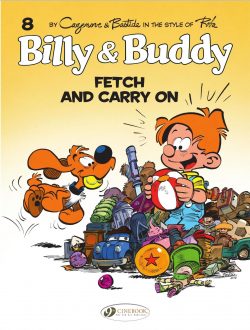
Billy & Buddy volume 8: Fetch and Carry On


By Christophe Cazenove & Jean Bastide in the style of Roba, translated by Jerome Saincantin (Cinebook)
ISBN: 978-1-80044-070-8 (Album PB/Digital)

Known as Boule et Bill in Europe (at least in the French speaking bits – the Dutch and Flemish call them Bollie en Billie or perhaps Bas et Boef if readers first glimpsed them in legendary weekly Sjors), this evergreen, immensely popular cartoon saga of a dog and his boy first debuted at Christmas in 1959.

The perennial family favourite resulted from Belgian writer-artist Jean Roba (Spirou et Fantasio, La Ribambelle) putting his head together with Maurice Rosy: the magazine’s Artistic Director and Ideas Man, who had also ghosted art and/or scripts on Jerry Spring, Tif et Tondu, Bobo and Attila during a decades-long, astoundingly productive career at the legendary periodical.

Intended as a European answer to Charles Schulz’s Peanuts, Boule et Bill quickly went its own way, developing a unique style and personality and becoming Roba’s main occupation for the next 45 years. He had launched the feature as a mini-récit (32-page, half-sized freebie inserts) in the December 24th edition of Le Journal de Spirou.

Like Dennis the Menace in The Beano, the strip was a huge hit from the start, and for 25 years held the coveted and prestigious back-cover spot. It was even syndicated to rival publishers and became a popular feature in Le Journal de Mickey, rubbing shoulders with Walt Disney’s top stars. Older Brits might recognise the art as early episodes – retitled It’s a Dog’s Life – ran in Fleetway’s weekly Valiant from 1961 to 1965…

A cornerstone of European life, the strip has generated a live-action movie, four animated TV series, computer games, permanent art exhibitions, sculptures and even postage stamps. As with a select few immortalized Belgian comics creations, Bollie en Billie were awarded a commemorative plaque and have a street named after them in Brussels…

Large format album compilations began immediately, totalling 21 volumes throughout the 1960s and 1970s from publisher Dupuis. These were completely redesigned and re-released in 1985 when Roba moved to Dargaud and became his own editor. The standard albums (43 to date) are supplemented by a range of early-reader books for toddlers. Assorted collections are available in 14 languages, selling well in excess of 25 million copies.

Roba crafted more than a thousand pages of gag-strips in his beguiling, idealised domestic comedy setting, all about a little lad and an exceedingly smart Cocker Spaniel. Long before his death in 2006, the auteur wisely appointed successors for the strip, which has thus continued to this day. He began by surrendering the art chores to his long-term assistant Laurent Verron in 2003, and the successor subsequently took on the scripting too upon Roba’s passing. Verron was soon joined by gag-writers Veys, Corbeyran, Chric & Cucuel whilst this tome comes courtesy of new team Christophe Cazenove & Jean Bastide. In this collection Verron is present as illustrator of the “cabochons”: illustrated icons at the top of each strip. They’re what old folks like us employed before emoticons…

As Billy and Buddy, the strip returned to British eyes in 2009: stars of enticing Cinebook compilations introducing to 21st century readers an endearingly bucolic sitcom-styled nuclear family set-up consisting of one bemused, long-suffering and short-tempered dad; a warmly compassionate but constantly wearied and distracted mum; a smart but mischievous son and a genius dog who has a penchant for finding bones, puddles and trouble.

As the feature accommodates the passage of time, we see a few more mod-cons and a bigger role for girls – such as skipping sharpie Juliet – but, in essence, nothing has changed… and that’s the whole point…

Bill est un gros rapporteur! was the 37th European collection, comfortingly resuming in the approved manner and further exploring the evergreen relationship of a dog and his boy (and tortoise) for our delight and delectation. Available in paperback and digital editions and delivered as a series of stand-alone rapid-fire, single-page gags, Fetch and Carry On is packed with visual puns, quips, slapstick and jolly jests and japes: all affirming the gradual socialisation and behaviour of little Billy as measured in carefree romps with four-footed friends and an even split between parental judgements and getting away with murder…

Buddy is the perfect pet for an imaginative and playful boy, although the manipulative mutt is overly fond of purloined food, buried bones (ownership frequently to be determined), and as seen in this volume sleeping where he really shouldn’t. When not being a problem, he’s also ferociously protective of his boy, tortoise and ball.

The pesky pooch simply cannot understand why everyone wants to constantly plunge him into foul-tasting soapy water, but it’s just a sacrifice he’s prepared to make to be with Billy…

Buddy’s fondly platonic relationship with tortoise Caroline is played up in this book and his knack for clearing off whenever Dad has one of his explosive emotional meltdowns over the cost of canine treats, repair bills or the Boss’ latest impositions is dialled down, but most of the traditional themes and schemes are revisited abundantly

Our inseparable duo interact with many pals – particularly Billy’s school chum Pat – who acts as confidante and best two-legged crony in all mischief making – and at every carefree moment they all play pranks, encounter other animals, dodge surveillance, hunt and hoard (bones, toys, shoes, phones and other crucial household items), rummage in bins, wilfully and/or honestly misunderstand adults, cause accidents and cost money, with both kid and mutt equally adept at all of the above.

This time, domestic chaos is heightened by the introduction of classmate Celia’s new French Bulldog Brice. The pedigreed dog meets all the breed standards – which means he makes noises like a ruptured steam train when eating, sleeping or even just watching the others in bewilderment and becomes a cause celebre for the growing cast. A rival retriever makes his bow too: Pixel might look like a movie star mutt but he’s not a patch on mastermind Buddy…

Another much explored story strand involves Billy emulating a zookeeper, and his many attempts to train Buddy via “treat encouragement” – a system the dog instinctively distrusts and much time is spent comedically exploiting the doggy message retrieval system of widdling on lampposts…

And of course, when Buddy and Caroline aren’t futilely trying to teach Billy and Pat how to talk to human girls Celia and Hazel, hostile neighbour Madame Stick and her evil cat Corporal are a on hand to spoil all fun and frustrate their frolics…

Roba was a master of this cartoon art form and under his successors the strips remain genially paced, filled with wry wit and potent sentiment: enchantingly funny episodes running the gamut from heart-warming to hilarious, silly to surreal and thrilling to just plain daft.

This collection is exactly what fans would expect and deserve: another charming tribute to and lasting argument for a child for every pet and vice versa. Here is a supremely engaging family-oriented compendium of cool and clever comics no one keen on introducing youngsters to the medium should be without.
Original edition © Dargaud, 2016 by Cazenove & Bastide in the style of Roba © Studio Boule & Bill 2016. English translation © 2022 Cinebook Ltd.

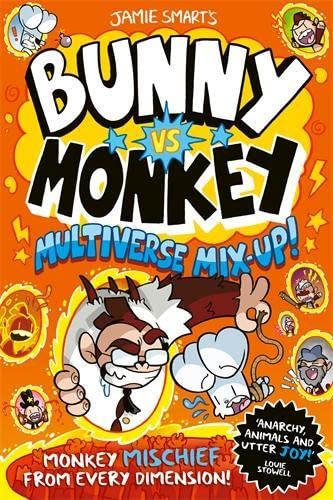
Bunny vs Monkey: Multiverse Mix-Up!


By Jamie Smart & with Sammy Borras (David Fickling Books)
ISBN: 978-1-78845-292-2 (Digest PB)

Bunny vs. Monkey has been a staple of The Phoenix from the first issue in 2012: detailing a madcap vendetta gripping animal archenemies amidst an idyllic arcadia masquerading as more-or-less mundane but critically endangered English woodlands.

Concocted with gleefully inspired mania by cartoonist and novelist Jamie Smart (Fish Head Steve!; Looshkin; Flember), these trendsetting, mindbending yarns have all the tail-biting tension and animal argy-bargy of a uniquely off-kilter magnum opus – not to be confused with the veritable magnificent octopus – although there’s them occasionally popping up too…

It all began yonks ago after an obnoxious little simian slapped down in the wake of a disastrous British space shot. Crashlanding in Crinkle Woods – scant miles from his launch site – lab animal Monkey believed himself the rightful inheritor of a strange new world, despite all efforts from reasonable, sensible, genteel, contemplative forest resident Bunny to dissuade him. For all his patience, propriety and good breeding, the laid-back lepine just could not contain the incorrigible idiot ape, who was – and is – a rude, noise-loving, chaos-creating loutish troublemaker…

Problems are ever-exacerbated by other unconventional Crinkle critters, particularly a skunk – AKA Skunky – who has a mad scientist’s attitude to life and a propensity to build extremely dangerous robots and overly technological super-weapons…

Here – with artistic assistance from design deputy Sammy Borras – the war of nerves and mega-ordnances is rekindled after briefly seeming to be all over. Our unruly assortment of odd bods cluttering up the bucolic paradise had finally picked sides and sorted it all out and – with battles ended – even apparently forgot the ever-encroaching Hyoomanz

Rather than the traditional opening and tales ranked by changing seasons, this titanic trade paperback archive of insanity offers two massive chapters subdivided into short instalments. The astounding new adventure opens in Part One and ‘Pond Life’ wherein a quiet moment of skating in the chilly evening of a New Year is going so well until our apish antagonist renews old dreams of a planet united under his rule and the banner of “Monkeyopia”.

Sadly, the banner is attached to a staff with a really pointy end… and ice is really brittle…

An epoch of bewildering calamity commences when animal alternates from a parallel universe pop in through a portal. On their home plane everyone is evil but even so, their abduction of panuniversal innocent Pig Piggerton goes terribly wrong: stranding the instigator of the ‘Pig Swap’ on the wrong realm…

Meanwhile, Skunky has temporarily got rid of his annoying Monkey mate with some pointless make-work in ‘Snow Fun’ and ‘Evil Pig’ has introduced himself to the other Crinkle critters. Of course, Monkey must prove he’s the most wicked…

With Skunky, Monkey and the transplanted Pig all menacing and recruiting minions, confused Bunny calls on everyone to again ‘Choose Your Side’, but things get a bit out of hand when Metal Steve, Metal E.V.E. and brain-battered, bewildered former stuntman Action Beaver all join in the party games…

Thankfully, Eve allies with the good guys and Bunny affirms that their prime directive is “protecting the woods at all costs”: ‘A Mammoth Task’ made even harder once Skunky and Monkey unleash giant undergrounds monsters…

Dedicated to doom and destruction, the bad boys try – and ultimately fail – to synthesize Mongolian Death molluscs in ‘With Snails & I’ and try to pluck the ‘Big Moon’ out of the night sky before clashing with Evil Pig…

The transplanted transdimensional then meets his counterpart’s best bud Weenie Squirrel and has ‘A Falling Out’ even as Monkey unleashes exploding duplicates in ‘All A-Clone’ before trying his hand at scary documentary making in ‘The Sand-Witch Project’. All that cloning around comes back to bite him in the form of ‘Monkeysaurus’

Desperate for peace and quiet, Bunny, Eve and superfast Ai seek solace and silence in the river, but find only more mad excitement when evil spies get into difficulties and require their ‘Canoooe’, unaware that temporary allies Evil Pig, Skunky and Monkey were messing with serums and animals and had ‘Gone Batty’…

When Skunky tries to upgrade obsolete robotic oaf Metal Steve, reformed Eve is trapped in his bandwidth and is transformed into ‘Eve 2.0’, whilst Evil Pig – still seeking to win over Weenie – instead subverts Steve into ‘Alan the Unicorn’

Existence gets truly meta when godlike human beings abruptly intervene, inadvertently sharing a glimpse behind the cosmic curtains of reality and by inflicting a distressing touch of The Matrix in ‘The First Glitch’ offers our quotidian cast of layered realities a hideous glimpse of what reality really means. Thoroughly re-educated, the bad guys then lose control of another experiment, unleashing shapeshifter ‘Polymorph’ on the easily embarrassed denizens of the Woods.

Fearless and stupid, Monkey discovers a sleeping beast and refuses to listen when everyone tells him ‘Don’t Wake the Bear’…

After too long and portentous an interval, the evil doppelgangers return, banishing their counterparts across many ‘Dimensions’ before ending the multiverse itself. Only Bunny escapes and with the unlikeliest of allies begins exploring ‘The Infinite’ and – thanks to a Portable Dimension Hopper – seeks ways to restore reality and rescue his comrades from the Real World.

That means many appalling experiences including ‘Babysitting’ toddler-versions of all his friends and foes, clashing with ghosts, vampires and Halloween Dimension beings before – as ‘Grumpy Bunny’ – saving a cowboy realm from the perils of a ‘Wilder West’. Bridging warring lava and frost dimensions ‘Of Fire and Ice’ that are also infested with familiar variants of everyone he knew, the thankless quest finally pays off in a commerce dimension ruled by an ‘Office Monkey’ only too glad to be rid of the annoying anarchic duplicate pestering his people and threatening his bottom line…

When the idiot ape eats Bunny’s travel tech, the status quo starts to resettle but by then the voyagers have found a dystopian desert where civilisation has gone ‘Mad to the Max’. Happily, Skunky is there to fix the gadget and get them on their way to the Christmas Dimension, and then out of the land of ‘Ho Ho Oh No’: so lovely that no one ever leaves…

The assembled animals ultimately prove that’s not true, but only at the cost of their ship which is badly hit, leaving them ‘Doomed’ to fall between 9.7 billion dimensions until they unselfishly work together in a team up. As a result they touch down at the Very End of Existence Itself! Stuck in a formless void, only Bunny and Skunky seem able to go on and use the lack of working time to recreate useful bits of what’s been eradicated. Once they rerun ‘The Birth of Science’ it’s not too long before they’re ready to fix everything and open a portal… sparking a massive time loop…

Forewarned by déjà vu, the voyagers overreact and reality goes boink! again, dumping everyone into the dimension of excrement and causing a nasty ‘Pooey Christmas’

It looks like a fresh beginning for all as Part Two opens with ‘A New Start’. The nice animals are having picnics and Skunky and Monkey are building better mecha-weapons, but something’s still not quite right, and when the miscreants unleash transforming terror ‘Octoplops’ the repercussions really aren’t that bad…

Still off his game, cupcake-addicted Monkey is easily exposed as a ‘Thief!’ and Weenie and Pig endure the sheer horror of losing their ‘Ducky’ to a mystery fiend, before an escaped Time Droid goes berserk and generates a ‘Looooooop’ in reality…

Thanks to Transmogrification Pants, Bunny is assaulted by fake friends he never knew in ‘Pants for the Memories’ whilst Skunky, Monkey, the Beaver and Metal Steve are stuck inside their own malfunctioning ‘Chameleotron’: a chaotic debacle that results in Monkey being sucked back into the appalling ‘Poo Dimension’ where he accidentally liberates a fearsome alternate self who is a genuine threat to everyone in Crinkle Woods…

A brief dalliance as superhero ‘Brave Bunny’ quickly palls for our genteel star and ‘Law and Order’ is brutally abused when ultra-efficient Office Monkey begins to modernise and corporatize the green paradise…

Initially set back and hindered by the workforce he has to work with, OM retrenches and debuts his polluting ‘Furps’ engine (don’t ask and don’t breathe in!) before forming a merger with Skunky…

The other critters are all enjoying ‘Lobnut Day!’ and trying to gather the most nuts, but wise up when the apish alternate dimension asset-stripper launches Monkey Corp. and seeks to put all the furry time-wasters ‘To Work’. However, by casually betraying Skunky, Office Monkey has sown the seeds of his own downfall and his ‘Streamlining’ the Woods into a modernistic business park triggers a groundswell of consumer resistance…

After losing a contest and being acclaimed ‘The Worst Inventor’ Skunky joins that rebellion, and ‘Wrong Monkey’ finds him planning to dismantle the corporate stronghold of Monkeytopia, revealing to the astounded woodlanders that the menace is not the annoying idiot they’re used to, but an extradimensional invader…

That said, the mercurial monochrome megamind recruits some alternate selves with his Time-o-tron and he and ‘Father Skunky’ plunge into the vortex void to unmake their current dire situation…

Tragically, all that multiversal mismanagement causes a few ‘Portal Problems’ and an unwise stopover at their starting point (three in one book!) prompts an unexpected self-promotion as  Office Monkey exploits the confusion to become Boss Level and ‘Takeover’ the universe…

Ejected from Reality, archnemesis Bunny is flung into the Poo Dimension where his usual enemy has become ‘King Monkey’. Implausibly, he has a plan to save the day and put everything back the way it was… more or less…

The narrative animal anarchy might have pawsed (not sorry!) for now but there’s more secrets to share thanks to detailed instructions on ‘‘How to Draw Cowboy Monkey!’, ‘How to Draw Hellcage Monkey!’ and ‘How to Draw Office Monkey!’ to wind down from all that angsty parallel peril and future-bending furore…

The zany zenith of absurdist adventure, Bunny vs Monkey is weird, wild wit, brilliantly bonkers invention, potent sentiment and superb cartooning all crammed into one eccentrically excellent package. These tails never fail to deliver jubilant joy for grown-ups of every vintage, even those who claim they only get it for their kids. This is the kind of comic parents beg kids to read to them. Shouldn’t that be you?
Text and illustrations © Jamie Smart 2023. All rights reserved.

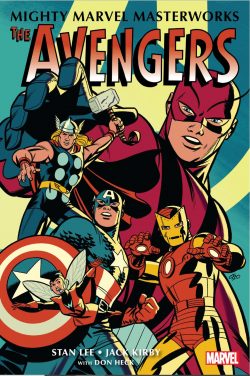
Mighty Marvel Masterworks The Avengers volume 1: The Coming of The Avengers


By Stan Lee & Jack Kirby, Don Heck, Dick Ayers, Paul Reinman, George Roussos, Chic Stone, Sam Rosen, Art Simek & various (MARVEL)
ISBN: 978-1302929787 (TPB/Digital edition)

Probably Marvel’s biggest global franchise success, The Avengers celebrate their 60th anniversary in September 2023, so let’s start the New Year with acknowledgement of that landmark event and a promise of more of the same over the next 12 months…

These stories are timeless and have been gathered many times before but here we’re looking at The Mighty Marvel Masterworks line: designed with economy in mind and newcomers as target audience. These books are far cheaper, on lower quality paper and smaller – about the dimensions of a paperback book. Your eyesight might be failing and your hands too big and shaky, but at 152 x 227mm, they’re perfect for kids. If you opt for the digital editions, that’s no issue at all.

After a period of meteoric expansion, in 1963 the burgeoning Marvel Universe was finally ready to emulate the successful DC concept that had cemented the legitimacy of the Silver Age of American comics. The notion of putting a bunch of all-star eggs in one basket had made the Justice League of America a winner and subsequently inspired the moribund Atlas outfit – primarily Stan Lee, Jack Kirby & Steve Ditko – into conceiving “super-characters” of their own. The result – way back in 1961 – was the Fantastic Four

Nearly 18 months later, the fledgling House of Ideas had generated a small and (mostly) successful stable of costumed leading men (but still only 2 sidekick women!), allowing Lee & Kirby to at last assemble a select handful of them into an all-star squad, moulded into a force for justice and soaring sales…

Seldom has it been done with such style and sheer exuberance. Cover dated September 1963, and on sale from Early July, The Avengers #1 launched as part of an expansion package which also included Sgt. Fury and his Howling Commandos and The X-Men

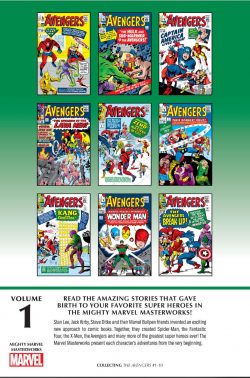
This premier volume gathers The Avengers #1-10 (running to cover-date September 1965): a stellar sequence of groundbreaking tales no lover of superhero stories can do without…

The tense action kicks off with ‘The Coming of the Avengers! where – rather than starting at a neutral beginning – Stan & Jack (plus inker Dick Ayers) assumed buyers had a passing familiarity with Marvel’s other heroes and wasted very little time or space on introductions.

In Asgard, immortal trickster Loki is imprisoned on a dank isle, hungry for vengeance on his noble half-brother Thor. Whilst malevolently observing Earth, the god of evil espies the monstrous, misunderstood Hulk and mystically engineers a situation wherein the man-brute seemingly goes on a rampage, simply to trick the Thunder God into battling the monster.

When the Hulk’s teen sidekick Rick Jones radios the FF for assistance, Loki scrambles and diverts the transmission, smugly awaiting the blossoming of his mischief. Sadly for the schemer, Iron Man, Ant-Man and the Wasp also pick up the redirected SOS…

Only after the alerted heroes all converge on the American Southwest to search for the Jade Giant, do they realise that something is oddly amiss…

This terse, epic, compelling and wide-ranging yarn (New York, New Mexico, Detroit and Asgard in 22 pages) is Lee & Kirby at their bombastic best, and remains one of the greatest stories of the Silver Age (it’s certainly high in my own top ten Marvel Tales) and is followed by ‘The Space Phantom(Lee, Kirby & Paul Reinman), wherein an alien shape-stealer infiltrates and almost destroys the team from within.

With latent animosities exposed by the malignant masquerader, the epic ends with the volatile Hulk quitting the team in disgust, only to return in #3 as an outright villain in partnership with ‘Sub-Mariner!This globe-trotting romp delivers high-energy thrills and one of the blistering best battle scenes in comics history as the assorted titans clash in abandoned World War II tunnels beneath the Rock of Gibraltar. The tale was preceded hereby the galvanic house ad announcing the clash as seen in Avengers #2…

Inked by George Roussos, Avengers #4 was an indisputable, game-changing landmark as Marvel’s greatest Golden Age sensation returns for another increasingly war-torn era. ‘Captain America joins the Avengers!has everything that made the company’s early output so fresh and vital. The majesty of a legendary warrior returned in our time of greatest need; stark tragedy in the loss of his boon companion Bucky; aliens, gangsters, tragedy-drenched antagonist The Sub-Mariner and even subtle social commentary, all naturally wrapped up in vast amounts of staggering Kirby Action. It even begins with a cunning infomercial as Iron Man unsuccessfully requests the assistance of the company’s other fresh young stars, giving readers a taste of the other mighty Marvels on offer to them…

Reinman returned to ink ‘The Invasion of the Lava Men!: another staggering adventure romp wherein the team – with the unwilling assistance of the ever-incredible Hulk – battle incendiary subterraneans and a world-threatening mutating mountain…

However, even all that pales before the supreme shift in artistic quality that is Avengers #6.

Chic Stone – arguably Kirby’s most effective inker of the period – joined the creative team just as a classic arch-foe was born. ‘The Masters of Evil!reveals how Nazi super-scientist Baron Zemo (who debuted that same month as a Nazi scientist in Sgt. Fury and his Howling Commandos #8) returns from self-exile in South America.

The petty tyrant is forced by his own arrogance and paranoia to emerge from the anonymity of the jungle he’s been skulking in since the Third Reich fell, after learning his despised nemesis Captain America has returned from the dead…

To this end, the war-criminal recruits a gang comprising previously established supervillains to attack New York City and destroy the Avengers. The unforgettable clash between valiant heroes and vile murdering mercenaries Radioactive Man, Black Knight (Nathan Garrett) and The Melter is to this day an unsurpassed example of prime Marvel magic.

Issue #7 followed up with two more malevolent recruits for the Masters of Evil, as Asgardian outcasts Enchantress and The Executioner are exiled to Midgard by Odin and waste no time allying with Zemo. This coincides with Iron Man being suspended from the team, due to “misconduct” occurring in his own series at that time. This was the start of the era of close-continuity where events in one series were regularly referenced and built upon in others. The practise quickly became a rod for the creators’ own backs and led to a radical rethink…

It might have been ‘Their Darkest Hour!, but follow-up Avengers #8 delivered the team’s greatest triumph and tragedy as Kirby (inked with fitting circularity by Ayers) relinquished his full drawing role with a superbly entrancing invasion-from-time thriller. Riffing on The Day the Earth Stood Still, the B-movie-toned classic introduced ‘Kang the Conqueror!: depicting an impossible powerful foe defeated by the cunning of ordinary teenagers and the indomitable spirit of Earth’s Mightiest Heroes…

Whenever Kirby left a title he’d co-created, it took a little while to settle into a new rhythm, and none more so than with these collectivised costumed crusaders. Although Lee and the fabulously utilitarian Don Heck were perfectly capable of producing cracking comics entertainments, they never had The King’s uncanny sense of panoramic scope and scale which constantly sought bigger, bolder blasts of excitement.

The Avengers evolved into an entirely different series when the subtle approachability of Heck’s human-scaled vision replaced Kirby’s larger-than-life bombastic bravura. The series had advanced to monthly circulation and even King Kirby could not draw the massive number of pages his expanding workload demanded.

Heck was a gifted and trusted artist with a formidable record for meeting deadlines and, progressing under his pencil, sub-plots and character interplay finally got as much space as action and spectacle. After Kirby, stories increasingly focused on scene-stealing newcomer Captain America: concentrating on frail human beings in costumes, rather than wild modern gods and technological titans bestriding and shaking the Earth…

Inked by Ayers, Heck’s first outing was memorable tragedy ‘The Coming of the Wonder Man!wherein the Masters of Evil plant superhuman Trojan Horse Simon Williams within the heroes’ ranks, only to have the conflicted infiltrator find deathbed redemption by saving them from the deadly deathtrap he creates…

Another Marvel mainstay debuted with the introduction of (seemingly) malignant master of time Immortus, who briefly combines with Zemo’s devilish cohort to engineer a fatal division in the ranks by removing Cap from the field in ‘The Avengers Break Up!A sign of the Star-Spangled Sentinel’s increasing popularity, the issue is augmented by a Marvel Masterwork Pin-Up of ‘The One and Only Cap, courtesy of Kirby & Ayers, and is followed by a 1963 house ad for Avengers #1 to close this pocket-sized bombshell of wonders.

These are immortal tales that defined the early Marvel experience and are still a joy no fan should deny themselves or their kids. How can you survive without them?
© 2021 MARVEL.

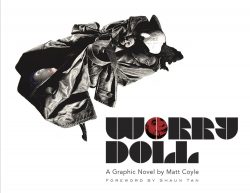
Worry Doll


By Matt Coyle (Dover Comics & Graphic Novels)
ISBN: 978-0-486-80616-7 (PB/Digital edition)

In the comics biz it’s far too infrequent that something truly different, graphically outstanding and able to subvert or redirect the medium’s established forms comes along. Sadly, when it does we usually ignore it whilst whining that there’s nothing fresh or new in view. That’s certainly the case with this sublime chiller first released internationally in 2016 and still not globally infamous…

Actually, Matt Coyle’s astounding Worry Doll was initially unleashed – after six years of work on the dark epic – by Mam Tor in 2007 to sink from the collective audience’s sight after causing but the barest of ripples.

To be fair, British-born, Australia-based Coyle (see also, if you can, his mordant, socio-political satire Registry of Death) did win the 2007 Rue Morgue Award for Best Comic Book Artist for his incredible photo-realistic line-art on Worry Doll, but the innovative delivery of one of the creepiest tales in comics history never garnered the acclaim it deserved in our superhero/sci-fi saturated toy, TV and film license-loaded entertainment arena.

Then, thanks to Dover Books’ Comics & Graphic Novels division, another lost classic of the art form won a second chance to shine…

A soft-cover monochrome landscape affair; enigmatic observations and conversations are delivered in the oldest format of pictorial narrative, with blocks of text on one page balanced by an illustrated panel or sequence of images on the facing folio. Via this venerable mechanism, a most distressing story unfolds…

A happy home becomes a charnel scene of slaughter and in the aftermath, amidst the bloody remains of a recently-despatched family, a trio of beloved mannequins intended to assuage anxiety take on ghastly animation and leave in search of answers – or perhaps just different questions?

Furtively making their way across familiarly picturesque and simultaneously terrifying country, the dolls increasingly depend on the kindness of strangers, until their nightmare road-trip is eventually subsumed in someone else’s story. As our perspective shifts, we get clues that other hands are working these puppets and the story is not as it seems nor quite done yet…

Spooky and subversive, blending classic noir mood and tone with storybook quests and psychologically daunting introspection, Worry Doll operates on multiple layers of revelation, both in the staggeringly detailed illustration and the prose accompaniment; constantly offering hints and forebodings, if not answers…

With a Foreword from comics author and filmmaker Shaun Tan (The Lost Thing, The Red Tree, The Arrival, Cicada) who sagely deconstructs the journey and Coyle’s virtuosity with line and form, this is a complex, engaging and ominously beautiful masterwork no true lover of comics or addict of sinister suspense can afford to miss.
© 2007 by Matthew Coyle. Foreword © 2016 by Shaun Tan. All rights reserved.

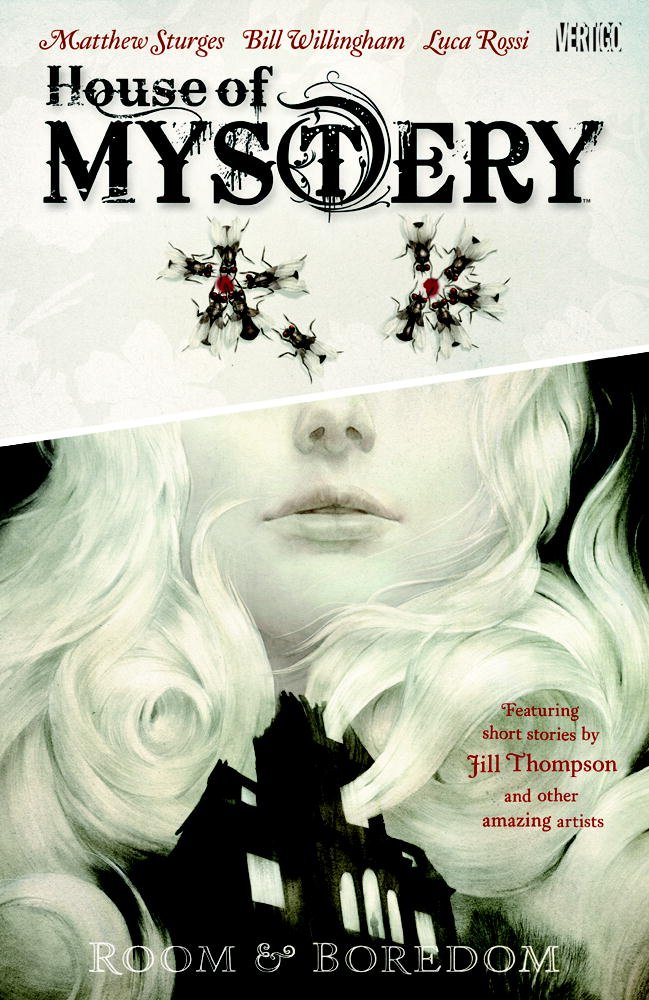
House of Mystery: Room & Boredom


By Matthew Sturges, Bill Willingham, Luca Rossi & various (Vertigo)
ISBN: 978-1-401220792 (TPB)

I suspect we’re on the cusp of another periodic global wave of interest in supernatural suspense fiction. Even if we’re not, there’s a lot of superb comics of that genre that should be reviewed and revisited. Here’s one that hasn’t been seen for a dozen years; long overdue for a digital edition…

Re-imagined under the impressive Vertigo umbrella, one of DC’s most venerable titles returned after years in limbo as a tribute to Something Old cunningly disguised as Something New. Apart from a brief period in the Bat-crazed super-heroic mid-1960s when the Martian Manhunter and the ineffably quirky Dial H for Hero seized control, House of Mystery was an anthology title telling tales of mystery and imagination in the tasteful, sedate manner of its parent company.

The series launched with a December 1951/January 1952 cover-date and ran for 321 issues, before finally folding in October 1983. When superheroes fell out of favour at the end of the 1960s, a little deft retooling made it one of DC’s top selling titles.

Here, however, at a place where realities meet – or at least overlap – a ramshackle house of indeterminate size, shape and age sometimes stands. In its own capacious grounds the unique structure offers a welcome to the star-crossed and time-lost souls of infinity. The lower floor has been converted into a welcoming hostelry.

Like the bar in Cheers, creatures from literally anywhere (many looking like characters out of the previous comic book incarnation) drop in for a brew and a chinwag, often paying their way with a novel yarn. For a select few – such as the Bartender, the Poet, the Pirate and the Drama Queen – the House is more like the Hotel California – in that they can check out any time they like, but they can never leave…

Fig Keele is an architecture student with a problem and a history. Her home fell apart and two spectral, floating horrors started chasing her. Fleeing in panic, she fortuitously found an entrance to the House, and now it won’t let her go. Surprisingly, she adapts pretty quickly to the inhabitants, but what really freaks her out is that the House speaks to her…

Writer Matthew Sturges, with sometime collaborator Bill Willingham, managed the nigh-impossible task of combining the best elements of the old within this compellingly fresh horror yarn, and even concocted a cocktail of actual mysteries to keep the pot boiling away. Strikingly illustrated by Luca Rossi, who incorporated a stylistic ghost of Bernie Wrightson into the artwork, the story of Fig and her fellow residents is punctuated by a series of very classy “pub-stories”, illustrated by some of the industry’s best and brightest talents.

The vignettes include two by Willingham; ‘The Hollows’ – a disturbing love-story by Ross Campbell – and the delightfully far-fetched ‘In Too Deep’ (from Jill Thompson), whilst Sturges scripted the remaining three ‘Spats and the Neck’ (with Zachary Baldus), ‘Familiar’ by Steve Rolston and ‘Jordan’s Tale’ by Sean Murphy.

Collecting issue #1-5 of the much-missed Vertigo comic book series, this is an enchanting blend of ancient & modern, horror & comedy and mystery & adventure, delivering a colossal portion of fearful fun for anyone old enough to handle a little sex and a smidgen of salty language: all whilst unravelling the intricacies of a great big, all-absorbing puzzle.

Just remember once you’re in, you might never want to come out…
© 2008 DC Comics. All Rights Reserved.

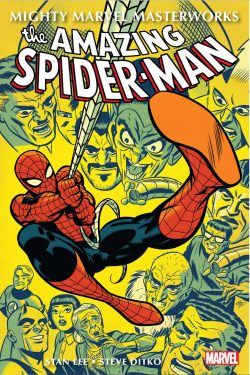
Mighty Marvel Masterworks Spider-Man volume 2: The Sinister Six


By Stan Lee & Steve Ditko, with Sam Rosen & Art Simek (MARVEL)
ISBN: 978-1-3029-3195-7 (TPB/Digital edition)

As any fule kno, The Amazing Spider-Man celebrated his 60th anniversary in 2022. However, I’m one of those radicals who feel that 1963 was when he was really born, so let’s start the New Year with acknowledgement of that opinion and warning of many more of the same over the next 12 months…

These stories are timeless and have been gathered many times before but this time we’re looking at The Mighty Marvel Masterworks line: designed with economy in mind and newcomers as target audience. These new books are far cheaper, on lower quality paper and smaller, about the dimensions of a paperback book. Your eyesight might be failing and your hands too big and shaky, but at 152 x 227mm, they’re perfect for kids. If you opt for the digital editions, that’s no issue at all.

Marvel is often termed “the House that Jack Built” and King Kirby’s contributions are undeniable and inescapable in the creation of a new kind of comic book storytelling. However, there was another unique visionary toiling at Atlas-Comics-as-was, one whose creativity and philosophy seemed diametrically opposed to the bludgeoning power, vast imaginative scope and clean, gleaming futurism that resulted from Kirby’s ever-expanding search for the external and infinite.

Steve Ditko was quiet and unassuming, diffident to the point of invisibility, but his work was both subtle and striking: innovative and meticulously polished. Always questing for affirming detail, he ever explored the man within. He saw heroism and humour and ultimate evil all contained within the frail but noble confines of humanity. His drawing could be oddly disquieting… and, when he wanted, decidedly creepy.

Crafting extremely well-received monster and mystery tales for and with Stan Lee, Ditko had been rewarded with his own title. Amazing Adventures/Amazing Adult Fantasy featured a subtler brand of yarn than Rampaging Aliens and Furry Underpants Monsters: an ilk which, though individually entertaining, had been slowly losing traction in the world of comics ever since National/DC had successfully reintroduced costumed heroes.

Lee & Kirby had responded with The Fantastic Four and so-ahead-of-its-time Incredible Hulk, but there was no indication of the renaissance ahead when officially just-cancelled Amazing Fantasy featured a brand new and rather eerie adventure character…

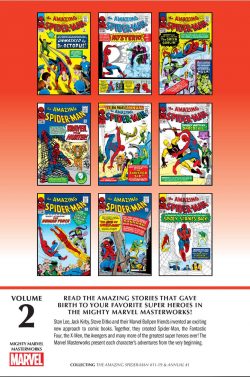
This compelling compilation re-presents the rise of the wallcrawler as first seen in Amazing Spider-Man #11-19 and Amazing Spider-Man Annual #1 (spanning cover-dates April – December 1964) and is lettered throughout by unsung superstars Sam Rosen & Art Simek, allowing newcomers and veteran readers to comprehensively relive some of the greatest moments in sequential narrative.

The parable of Peter Parker began when a smart but alienated high schooler was bitten by a radioactive spider on a science trip. Discovering he’d developed arachnid abilities – which he augmented with his own ingenuity and engineering genius – Peter did what any lonely, geeky nerd would when given such a gift… he tried to cash in for girls, fame and money.

Creating a costume to hide his identity in case he made a fool of himself, Parker became a minor celebrity – and a vain, self-important one. To his eternal regret, when a thief fled past him, he didn’t lift a finger to stop the thug, and days later returns discovered that his Uncle Ben has been murdered by the same criminal…

Crazy for vengeance, Parker stalked and captured the assailant who made his beloved Aunt May a widow and killed the only father he had ever known. Since his social irresponsibility led to the death of the man who raised him, the boy swore to always use his powers to help others…

It wasn’t a new story, but the setting was familiar to every kid reading it and the artwork was downright spooky. no gleaming high-tech world of moon-rockets, mammoth monsters and flying cars here… this stuff could happen to anyone…

Amazing Fantasy #15 came out the same month as Tales to Astonish #35 – the first to feature the Astonishing Ant-Man in costume, but it was the last issue of Ditko’s Amazing playground. However, the tragic last-ditch tale struck a chord with the public and by year’s end a new comic book superstar launched in his own title, with Ditko eager to show what he could do with his first returning character since the demise of Charlton’s Captain Atom

Holding on to the “Amazing” prefix to jog reader’ memories, the Amazing Spider-Man #1 hit newsstands in December sporting a March 1963 cover-date and two complete stories.

Sans frills and extras, the ongoing saga resumes here with Amazing Spider-Man #11. Ditko’s preference for tales of gangersterism drove the stories and his plot for ‘Turning Point’ involves the reappearance of a major supervillain and a growing dependence on soap opera drama, but his solitary, driven hero was always a loner, never far from the streets and small-scale-crime…

In the aftermath of the webspinner crushing a prison riot single handed and defeating the Big Man and The Enforcers, longer plot-strands were introduced as Peter’s potential girlfriend Betty Brant mysteriously vanishes.

Resolved to find her, Parker discovers she’s somehow involved with the multi-armed menace and the Philadelphia mob and goes after her, clashing again with the lethally deranged scientist whilst seeking to expose a long-hidden secret which had haunted Brant for years. It all ended in a spectacularly climactic fight scene on a ship that has still never been beaten for action-choreography…

The wonderment actually intensifies with ‘Unmasked by Dr. Octopus!’, detailing a dark, tragedy-filled tale of extortion and excoriating tension that stretches from Philadelphia to the Bronx Zoo: cannily tempering trenchant melodrama with spectacular clashes in unusual and exotic locations, before culminating in a truly staggering super-powered duel as only the masterful Ditko could orchestrate it.

A new super-foe premiered in Amazing Spider-Man #13 with ‘The Menace of Mysterio!’ as a seemingly eldritch bounty-hunter hired by Daily Bugle publisher J. Jonah Jameson to capture Spider-Man eventually lets slip his own dark criminal agenda, whilst ASM #14 delivers an absolute milestone in Marvel History when a hidden criminal mastermind manipulates a Hollywood studio into making a movie about the wall-crawler.

Even with guest-star opponents The Enforcers and The Incredible Hulk (his last true guest shot before moving into his new residency in Tales to Astonish), ‘The Grotesque Adventure of the Green Goblin’ is most notable for introducing Spider-Man’s most perfidious and flamboyant enemy.

Jungle superman and thrill-junkie ‘Kraven the Hunter!’ makes Spider-Man his intended prey at the behest of embittered Spidey-foe The Chameleon in #15, and – after ignominiously failing to trap his target in the wilds of Central Park – promptly reappears in the first Amazing Spider-Man Annual

A timeless landmark and still magnificently thrilling Fights ‘n’ Tights tussle, the ‘Sinister Six!’ begins after a team of villains comprising Electro, Kraven, Mysterio, The Sandman, Vulture and Doctor Octopus abduct Aunt May and Betty. Briefly deprived of his powers – lost to a guilt-fuelled panic attack – Peter is forced to confront them without nothing but courage & determination.

A staggeringly enthralling combat clash, with Spider-Man systematically taking down each enemy in a death-defying duels, this influential tale featured cameos (or, more honestly, product placement segments) by every other extant hero of the budding Marvel universe: everyone from The Avengers to The X-Men

Also included from that colossal comic book are special feature pages on ‘The Secrets of Spider-Man!’; comedic short ‘How Stan Lee and Steve Ditko Create Spider-Man’ and a gallery of pin-up pages starring ‘Spider-Man’s Most Famous Foes!’ (namely the Burglar, Chameleon, Vulture, Terrible Tinkerer, Dr. Octopus, Sandman, Doctor Doom, The Lizard, Living Brain, Electro, The Enforcers, Mysterio, Green Goblin and Kraven the Hunter).

There are also pin-ups of Betty and Jonah, Peer Parker’s House and classmates plus a heroic guest stars page…

Amazing Spider-Man #16 extended that circle of friends and foes as the webslinger battles the Ringmaster and his Circus of Crime: consequently meeting – and inevitably battling – a fellow loner hero in a dazzling and delightful ‘Duel with Daredevil’.

We conclude this outing with an ambitious 3-part saga that began in Amazing Spider-Man #17, wherein the rapidly-maturing hero touches emotional bottom before rising to triumphal victory over all manner of enemies. It begins with ‘The Return of the Green Goblin!’ as the wallcrawler endures renewed print assaults from the Daily Bugle and its obsessed publisher J. Jonah Jameson, just as the enigmatic Green Goblin commences a war of nerves and attrition, using the Enforcers, Sandman and an army of bargain basement thugs to publicly humiliate the Amazing Arachnid and make him look like a fool in front of rival frenemy Johnny StormThe Human Torch.

To exacerbate matters, Peter’s beloved Aunt May’s health takes a drastic downward turn…

In ‘The End of Spider-Man!’ pressure continues to mount and the troubled champion quits, concentrating exclusively on finding money to pay for his aunt’s treatment and leaving the Torch to handle the Goblin’s crime rampage…

It all explosively concludes in ‘Spidey Strikes Back!’ featuring a turbulent team-up with the Torch – as a powerful pep talk from May galvanises the disgruntled teen terror and sets him back on his fated path: to the everlasting regret of the Goblin, his gangsters, the Enforcers and Sandman… and Jameson…

This extended tale proved fans were ready for every kind of narrative experiment (single issue or even two stories per issue were still the norm in 1964) and Stan & Steve were more than happy to try anything…

I claimed no extras here, but I lied. Closing the book are some lovely art treats: an unedited view of Ditko’s original cover for ASM #11, the original splash page art for #12 plus page 12and the closing page of #18; every one reason enough to buy this book…

These immortal epics are something no serous fan can be without, and will make an ideal gift for any curious newcomer or nostalgic aficionado.

Happy Unbirthday Spidey and many, many more please…
© 2021 MARVEL.

Marsupilami volume 6: Fordlandia


By Yann & Batem; created by Franquin, coloured by Leonardo and translated by Jerome Saincantin (Cinebook)
ISBN: 978-1-80044-026-5 (Album PB/Digital edition)

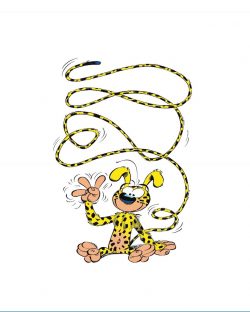
One of Europe’s most popular and evergreen comic stars is an eccentrically irascible, loyally unpredictable, super-strong, rubber-limbed yellow-&-black ball of explosive energy with a seemingly infinite elastic tail. The mighty manic Marsupilami is a wonder of nature and icon of European entertainment invention who originally spun-off from another immortal comedy adventure strip…

In 1946 Joseph “Jije” Gillain was crafting the eponymous keystone strip for flagship publication Le Journal de Spirou when he abruptly handed off the entire kit and caboodle to his assistant André Franquin. The apprentice gradually shifted format from short complete gags to pioneer longer adventure serials, and began introducing a wide and engaging cast of new characters.

For 1952’s Spirou et les heritiers, he devised a beguiling and boisterous South American critter and tossed him like an elastic-arsed grenade into the mix. Thereafter – until his resignation from the feature – Franquin frequently included the bombastic little beast in Spirou’s increasingly exotic escapades…

The Marsupilami returned over and over again: a phenomenally popular magical animal who inevitably grew into a solo star of screen, toy store, console games and albums all his own.

In 1955 a contractual spat with Dupuis resulted in Franquin signing up with publishing rivals Casterman on Le Journal de Tintin: collaborating with René Goscinny and old pal Peyo and concocting raucous gag strip Modeste et Pompon. However, Franquin quickly patched things up with Dupuis and returned to Le Journal de Spirou. In 1957, he unleashed Gaston Lagaffe, whilst still legally obligated to carry on his Tintin strip work too and, in 1959, writer Greg and background artist Jidéhem formally began assisting him, but after ten more years the artist had reached his Spirou limit. In 1969 Franquin quit for good, taking his mystic yellow monkey with him…

Plagued by bouts of depression, Franquin passed away on January 5th 1997, but his legacy remains: a vast body of work that reshaped the landscape of European comics. Moreover, having learned his lessons about publishers, Franquin retained all rights to Marsupilami and in the late 1980’s began publishing his own adventures of the rambunctious miracle-worker…

Tapping old comrade Greg as scripter and inviting commercial artist/illustrator Luc Collin (pen-name “Batem”), he launched his new raucous comedy feature. The first of these was La Queue du Marsupilami, released in 1987 (translated by Cinebook as The Marsupilami’s Tale) by Franquin’s own Marsu Productions. Ultimately, his collaborators monopolised the art duties, and in recent years, crass commercialism triumphed again. Since 2016 the universes of Marsupilami and Spirou have reconnected, allowing the old gang to act out in shared stories again…

Fordlandia was released in November 1989: the sixth of 33 solo albums (not including all-Franquin short-story collection/volume #0 Capturez un Marsupilami), a gripping comedy action romp, bigging up the fantasy element and capitalising on both weird-but-true history and a growing cast of regular players…

Blessed with a talent for mischief, the Marsupilami is a deviously adaptive anthropoid regarded as one of the rarest animals on Earth. It inhabits the rain forests of Palombia, speaking a language uniquely its own, and has a reputation for causing trouble and instigating chaos. The species is rare and is fanatically dedicated to its young. Sometimes that extends to associates of different species…

The tale is set in the timeless but increasingly fragile teeming life-web of the Palombian rainforest, as it endures its latest environmental disaster. The current grandiose folly of the humans from Palombian capital city Chiquito is a huge dam that has dried up the Amazonian tributary of the once inaccessible Rio Huaytoonarro.

El Presidente’s pride & joy – dubbed “Huetnomor” – has triggered a domino effect for all who depend upon the river waters, from the ubiquitous piranha and crocodiles infesting it to the savage Havoca folk exploiting it, and the lost and broken degenerates of many nations hiding along its length…

Normally such projects would have failed from human malfeasance or due to the interference of the mighty Marsupilami and his extended clan, but our golden wonder is currently preoccupied by a mystery: the disappearance of his adored mate Marsupilamie …and even rival primate Mars the Black

A creature of great empathy and primordial sensitivity, the bereft beast quickly deduces they have been taken by an old enemy: vile hunter Bring M. Backalive

Left alone to care for their three cubs, Marsupilami’s vengeful screams alert jungle-dwelling white kids Sarah and Bip, who have been raising themselves in the green hell – with a little oversight from the Marsupilami patriarch they call “Marsu”. The human youngsters soon save the babies from drugged darts and – as enraged papa goes after the abductors – set off on a parallel investigation which takes then to disreputable shanty town and den of thieves Leyofdasaus…

It’s a canny move, as the rogues and scoundrels squatting and rotting there are currently being beguiled by a deadly glamour queen also looking for Backalive. A serial millionaire marrier, “Gringa” Rosanna Roquette is tracking down a couple of old spouses whilst ostensibly seeking the location of 20th century lost city Fordlandia.

If you’ve never heard of the place I strongly urge you to crank up your search engine of choice right now…

Also converging on the tatty township and the craven hunter is animal trainer Noah, currently helping Mars’ beastly bride Venus find her missing mate. Soon he and she are working with Sarah and Bip to save all the stolen Marsupilamis.

Marsu’s search has been plagued by misfortune. He too is closing in on Backalive and his former flunky (dissolute riverboat captain Bombonera) but cannot stop Roquette and the shabby captain teaming up and heading for the fabled missing metropolis…

Fortune finally shifts the good guys’ way when Marsu links up with Sarah, Bip, Noah and Venus. By dubious means, they then secure their own steamboat from an outcast who used to work in Fordlandia. After many more trials and tribulations, they finally confront the tawdry trapper and consequently uncover a bizarre and deranged plot by one of Rosanna’s former husbands…

Croesus Gummyfeather is convinced the world will soon suffer a second biblical flood and has been paying Backalive to gather two of every animal to stock his fabulous flying ark, and the inevitable confrontation between all aggrieved parties occurs just as the cloud-wracked heavens open…

And, as the deluge kicks off a climactic clash, back at Huetnomor, the engineers and architects wish they hadn’t skimped and grafted and cut so many corners when building the massive – but apparently soluble – hydro-megalith…

Combining astute political commentary with high octane blockbuster action and outrageous comedy antics, this tale is a superbly smart fantasy and masterfully madcap rollercoaster of hairsbreadth escapes, close shaves and sardonic character assassinations, packed to the whiskers with wit and hilarity.

These eccentric exploits of the garrulous golden monkeys are moodily macabre, furiously funny and pithily pertinent, offering engagingly riotous romps and devastating debacles for wide-eyed kids of every age all over the world.
© Dupuis, Dargaud-Lombard s.a. 1991 by Franquin, Yann & Batem. All rights reserved. English translation © 2021 Cinebook Ltd.

Best of Year: 2022

Let’s face it: this past year was bloody awful for everybody. Nevertheless some very gifted people created some remarkable comics works and I’ll be damned if I don’t give you all one last chance to see that for yourselves.

Thus here’s our compilation of the best graphic novels of 2022. You should check them out…

Happy New Year from all of us to all of you.

Mature reading/General  

No Surrender
By Constance Maud: adapted by Scarlett & Sophie Rickard (SelfMadeHero)
ISBN: 978-1-91422-406-5 (TPB/Digital edition)
© 2022 SelfMadeHero. Text © 2022 Sophie Rickard. Artwork © 2022 Scarlett Rickard. All rights reserved.

Algorithmic Reality
By Damian Bradfield & David Sánchez (NBM) ISBN: 978-1-68112-306-6 (PB) eISBN: 978-1-68112-307-3
Text and illustrations © 2021, 2022 Damian Bradfield and David Sánchez. All rights reserved. © 2022 NBM for the English translation.

Captain America – Truth
By Robert Morales, Kyle Baker & various (MARVEL)
ISBN: 978-1-3029-3427-9 (TPB/Digital Edition) 978-0785136668 (Premiere HB)
© 2022 MARVEL.

The Steel Claw: The Reign of the Brain
By Tom Tully, Jesús Blasco & various (Rebellion)
ISBN: 978-1-78108-681-2 (TPB/Digital Edition) © 1963, 1964 & 2022 Rebellion Publishing IP Ltd. All Rights Reserved.

White All Around
By Wilfrid Lupano & Stéphane Fert, translated by Montana Kane (Europe Comics)
No ISBN: digital only edition
© 2021 DARGAUD BENELUX, (Dargaud-Lombard s. a.) – LUPANO & FERT. All rights reserved. English translation © 2009 Cinebook Ltd.

Colored – The Unsung Life of Claudette Colvin
By Émilie Plateau, with Tania de Montaigne, translated by Montana Kane (Europe Comics)
No ISBN: digital only edition © 2019 – DARGAUD – Émilie Plateau. All rights reserved. This graphic novel is based on the book Noire, by Tania de Montaigne. © Éditions Grasset & Fasquelle, 2015.

Suzanne: The Jazz Age Goddess of Tennis
By Ted Humberstone (Avery Hill Publishing)
ISBN: 978-1-910395-69-1 (HB)
© 2022 Tom Humberstone.

Adam Eterno – A Hero for All Time
By Tom Tully, Tom Kerr, Colin Page Francisco Solano López, Eric Bradbury Ted Kearon, Rex Archer & various (Rebellion)
ISBN: 978-1-78108-869-2 (TPB/Digital edition) © 1970, 1971, 1972, 1973, & 2021 Rebellion Publishing IP Ltd. All Rights Reserved.

One Beautiful Spring Day
By Jim Woodring (Fantagraphics Books)
ISBN: 978-1-68396-555-8 (TPB/Digital edition) 978-1-68396-588-6 (slipcased HB)
© 2022 Jim Woodring. This edition © 2022 Fantagraphics Books. All rights reserved.

Letters to Margaret
By Hayley Gold, with Andy Kravis, Mike Selinker & various (Lone Shark Games)
ISBN: 978-1-7356380-2-7 (TPB/Digital edition)
© 2021 Hayley Gold, Andrew Kravis and Mike Selinker on behalf of Lone Shark Games, Inc..

Hitchcock: Master of Suspense
By Noel Simsolo & Dominique Hé, translated by Matt Maden (NBM)
ISBN: 978-1-68112-296-0 (HB) eISBN: 978-168112-289-2
© 2018 Dargaud-Benelux. © 2020 NBM for the English Translation. All rights reserved. © DUPUIS 2020 by Rubio, Efa. All rights reserved.

Cyberman – An On-Screen Documentary
By Veronika Muchitsch AKA L.B. Jeffries (Myriad Editions)
ISBN: 978-1-8383860-2-3 (TPB) eISBN: 978-1-8383860-3-0
© Veronika Muchitsch 2021.

Georgia O’Keeffe
By Maria Herreros; translated by Lawrence Schimel (SelfMadeHero)
ISBN: 978-1-914224-05-8 (TPB/Digital edition)
Text and illustrations © 2021 by Maria Herreros. All rights reserved. English translation © 2021 SelfMadeHero.

The Boxer – The True Story of Holocaust Survivor Harry Haft
By Reinhardt Kleist; translated by Michael Waaler (SelfMadeHero)
ISBN: 978-1-906838-77-5 (TPB/Digital edition)
© Text and illustrations 2012 CARLSEN Verlag GmbH, Hamburg, Germany. © Appendix 2012 Martin Krau & CARLSEN Verlag. English translation © 2021 SelfMadeHero. All rights reserved.

Boot Black
By Mikael, translated by Matt Maden (NBM)
ISBN: 978-1-68112-296-0 (HB) eISBN: 978-1-68112-297-7
© 2019, 2020 Dargaud-Benelux (Dargaud-Lombard s.a.) – Mikael.

Welcome Home
By Clarrie & Blanche Pope (Minor Compositions)
ISBN: 978-1-57027-394-0 (PB) © Clarrie & Blanche Pope, 2022.

Days of Sand
By Aimee De Jongh, translated by Christopher Bradley (SelfMadeHero)
ISBN: 978-1-914224-04-1 (HB) Jours de sable © DARGAUD-BENELUX (DARGAUD-LOMBARD S.A.) 2021, by Aimee De Jongh. All rights reserved.

Alice Guy: First Lady of Film
By Catel & Bocquet, translated by Eward Gauvin (SelfMadeHero) ISBN: 978-1-914224-03-4 (TPB/Digital edition)
© Casterman 2021. All rights reserved.

Big Scoop of Ice Cream
By Conxita Herrero Delfa: translated by Jeff Whitman (NBM)
ISBN: 978-1-68112-294-6 (PB) eISBN: 978-1-68112-295-3
© 2016 Conxita Herrero Delfa and apa apa comics. © 2022 NBM for the English translation. All rights reserved.

Dungeon: Twilight Vols. 1-2 – Cemetery of the Dragon
By Joann Sfar, Lewis Trondheim & Kerascoet, translated by Joe Johnson (NBM)
ISBN: 978-1-68112-293-9, (TPB/Digital)
© Editions Delcourt 1999-2005. (Donjon Crepescule #101-104, by J. Sfar, L.Trondheim & Kerascoet). © 2006 NBM for the English translation.

The Con Artists
By Luke Healy (Faber)
ISBN: 978-1-91274-008-6 (HB)
© Luke Healy, 2022. All rights reserved.

The Ragged Trousered Philanthropists
By Robert Tressell; adapted by Scarlett & Sophie Rickard (SelfMadeHero)
ISBN: 978-1-910593-92-9 (TPB/Digital edition)
© 2020 SelfMadeHero. Text © 2020 Sophie Rickard. Artwork © 2020 Scarlett Rickard. All rights reserved.

Kid Friendly Classics
I don’t suppose kids ever rush to the comics racks and shelves these days, but if they did, This Baker’s Dozen is what we think they might like:  a purely random number of potent picture books made with you and me in mind. Enjoy and don’t be snobbish… check out the kids’ stuff too…

Batman’s Mystery Casebook
By Sholly Fisch, Christopher A. Uminga & various (DC Comics)
ISBN: 978-1-7795-0586-6 (TPB/Digital edition)
© 2022 DC Comics. All Rights Reserved.

Bunny vs Monkey: Machine Mayhem!
By Jamie Smart, with Sammy Borras (David Fickling Books)
ISBN: 978-1-78845-285-4 (Digest HB)
Text and illustrations © Jamie Smart 2022. All rights reserved.

Primer
By Jennifer Muro & Thomas Krajewski, illustrated by Gretel Lusky (DC Comics)
ISBN: 978-1-4012-9657-5 (TPB/Digital edition)
© 2020 DC Comics. All Rights Reserved.

Mega Robo Bros: Meltdown
By Neill Cameron with Abby Bulmer & Lisa Murphy (David Fickling Books)
ISBN: 978-1-78845-281-6 (TPB)
Text and illustrations © Neill Cameron 2022. All rights reserved.

Mighty Marvel Masterworks Thor volume 1
By Stan Lee & Jack Kirby with Larry Lieber, Robert Bernstein, Joe Sinnott, Al Hartley, Don Heck & various (MARVEL)
ISBN: 978-1-302931681 (PB)
© 2021 MARVEL

The Bible
By Sheldon Mayer & Nestor Redondo, with Joe Kubert (DC Comics)
ISBN: 978-1-4012-3425-6 (HB/Digital edition)
© 1975 National Periodical Publications, Inc. All Rights Reserved.

Bunny vs. Monkey: Rise of the Maniacal Badger
By Jaimie Smart, with Sammy Borras (David Fickling Books)
ISBN: 978-1-78845-280-9 (TPB) 978-1-78845-118-5 (Waterstones Exclusive Edition)
Text and illustrations © Jamie Smart 2022. All rights reserved.

Tails of the Super-Pets
By Jerry Siegel, Robert Bernstein, Otto Binder, Leo Dorfman, Bill Finger, Edmond Hamilton, William Moulton Marston, Jim Shooter, Curt Swan, Jim Mooney, Pete Costanza, John Forte, Ramona Fradon, Sheldon Moldoff, George Papp, Harry G. Peter, Sy Barry, Stan Kaye, George Klein, Charles Paris & various (DC Comics)
ISBN: 978-1779513397 (TPB/Digital edition)
© 1947, 1955, 1958, 1959, 1960, 1961, 1962, 1964, 1965, 1968, 2022 DC Comics. All Rights Reserved.

Ken Reid’s Football Funnies – The First Half
By Ken Reid (Rebellion Studios)
ISBN: 978-1-78108-883-8 (HB/Digital edition)
© 1970, 1971, 1972, & 2021 Rebellion Publishing Ltd. All Rights Reserved.

Cedric vol. 7: Isn’t It Past Your Bedtime?
By Laudec & Cauvin; colours by Leonardo, translated by Jerome Saincantin (Cinebook)
ISBN: 978-1-80044-025-8 (PB Album/Digital edition)
© Dupuis 1995 by Cauvin & Laudec. All rights reserved. English translation © 2021 Cinebook Ltd.

Popeye volume 1: Olive Oyl and Her Sweety
By Elzie Crisler Segar with Sergio Ponchione, Cathy Malkasian & various(Fantagraphics Books)
ISBN: 978-1- 68396-462-9 (PB/digital edition)
© 2021 Fantagraphics Books Inc. All Segar comics and drawings © 2021 King Features Syndicate. Inc./ Hearst Holdings, Inc. All rights reserved.

Young Hellboy – The Hidden Land
By Mike Mignola, Thomas Sniegoski, Craig Rousseau, Dave Stewart & Clem Robins (Dark Horse Books)
ISBN: 978-1506723983 (HB) eISBN: 978-1-50672-399-0
Young Hellboy ™ and © 2021 Mike Mignola. All rights reserved.

Mighty Marvel Masterworks The Incredible Hulk volume 1
By Stan Lee & Jack Kirby, with Steve Ditko & various (MARVEL)
ISBN: 978-1-3029-3180-3 (TPB)
© 2021 MARVEL