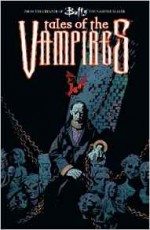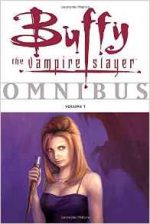
Buffy the Vampire Slayer: Tales of the Vampires

New expanded review

By Joss Whedon, various (Dark Horse Books)
ISBN: 978-1-56971-749-3

Although debuting as a motion picture starlet, Buffy the Vampire Slayer only really found her high-kicking feet after migrating to the small screen. Soon after securing her status as a certified media sensation, she won her own comicbook in 1998, with smart, suspenseful, action-packed yarns (in a monthly series and graphic novels, fully supplemented by spin-off miniseries and short stories in showcase anthology Dark Horse Presents) which perfectly complemented the sensational, groundbreaking and so culturally crucial TV show.

And just like in the TV arena, many of those spin-offs had plenty going for them in their own right: not just character-driven vehicles like Angel or Spike and Drusilla, but also more anthological and tangential fare such as this intriguing, cleverly-themed collection of bloodsucking short tales notionally scattered throughout the “Buffyverse”. Interweaving vignettes with an overarching in-continuity story these episodes – which originally appeared as part of one-shot Drawing on Your Nightmares Halloween Special and 5-issue miniseries Tales of the Vampires from September 2003 to April 2004 – are mostly coloured by Michelle Madsen with lettering primarily by Annie Parkhouse.

It all eerily opens with eponymous introduction ‘Tales of the Vampires’ by Joss Whedon, Alex Sanchez & Derek Fridolfs as a rather select school party visits some most peculiar historical sights…

Deep underground, four precocious children are brought to interview a long captive vampire. The aspiring Watchers – who will one day witness and war against all the forces of supernatural horror – are smugly conscious of their abilities, but have never truly imagined a vampire like Roche. The enchained Nosferatu is pleased: he can share stories of his kin and wait for his moment…

‘Father’ begins a triptych of tales written by Jane Espenson. Illustrated by J. Alexander it starts in Hollywood, circa 1922 and ends in 2003, tracing the strange relationship of boy grown old beside his evergreen last blood-kin whilst ‘Spot the Vampire’ (lavishly limned by Scott Morse) playfully and poetically offers some sage advice to monster-hunters at Christmas before ‘Dust Bowl’ (Jeff Parker) settles in 1933 Kansas; a land sucked dry and desolate, but where one family has found an inexhaustible supply of something refreshing, thanks to a wandering stranger…

A strange relationship is developing between raconteur and his deceptively dangerous listeners as Roche recounts the story of ‘Jack’ – by Brett Matthews & Vatche Mavlian – which sheds new light on events in Whitechapel in 1888, whilst ‘Stacy’ (Whedon & Cameron Stewart with colours by Chip Zdarsky) reveals the innermost thoughts of an imaginative lass who believed in magic and so wanted to be different. Then ‘Some Like it Hot’ (Sam Loeb & Tim Sale, with letters from Richard Starkings and Comicraft) comedically considers the outcomes when a mad doctor meets a vampire fed up of living in the dark…

Of much darker mien is ‘The Problem with Vampires’ (Drew Goddard & Paul Lee) as Spike returns to Prague to rescue his insane inamorata Drusilla from a human determined to torture her to second death after which ‘Taking Care of Business’ by Ben Edlund & the Nick of Time Crew (with Fridolfs inks and colours by David Nestelle), offers a moment of devotion as a centuries old-vamp who specialises in eating clergymen has a gas station “road to Damascus” moment after meeting a little man who says he’s God…

As little Edna slowly comes to the conclusion that Roche has more in mind than mere storytelling, the vampire relates how a bloodsucking gambling addict met his match thanks to ‘Dames’ (Brett Matthews & Sean Phillips) in Depression-era Las Vegas and before the monstrous Roche makes his move against those sweet little kids (sarcasm alert!) he tells them of when puissant Vlad Dracula clashed with Buffy Summers, Kira, Xander and other newly activated Slayers in ‘Antique’ (Goddard & Ben Stenbeck) whilst redeemed vamp Angel was feeling ‘Numb’ (Matthews & Cliff Richards) from recollections of the evil acts he had so recently committed…

And then Roche makes that move… and Edna makes hers…

If you’re a Buffy fan this collection featuring the kinds of beasties that she so adroitly despatched is for you. If you’re a devotee of kick-ass action/horror comics you’ll love this too. And if you’ve just been a fan of the television show this is your chance to get addicted to comics ’cause this one’s so terribly hard to put down.
Tales of the Vampires ™ & © 2004 Twentieth Century Fox. All rights reserved.

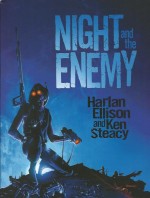
Night and the Enemy


By Harlan Ellison & Ken Steacy (Dover Comics & Graphic Novels)
ISBN: 978-0-486-79961-2

Win’s Christmas Gift Recommendation: Stunning Sci Fi Blockbuster Brilliance… 9/10

Harlan Ellison’s dark and chilling space war tales are always eminently readable.

This gloriously impressive re-issued volume gathers five of the best and most celebrated – all taken from the long-running but intermittent sequence of novellas and short-stories detailing Mankind’s extended intergalactic struggle against a race of star-spanning rivals – adapted in a variety of visual formats by air-brush wizard and aviation-addict Ken Steacy, together with a new prose framing-sequence from the author.

Humanity’s literary battle against the Kyben spanned ten generations and involved all manner of technologies up to and including time-travel. Probably the most famous of them is the award-winning Demon with a Glass Hand, adapted as both an episode of The Outer Limits TV show in 1964 and as one of the very best of the long-gone and much-lamented DC Graphic Novel series, but that’s a graphic extravaganza we’ve already covered elsewhere…

Right here, right now, this classy full-colour album-sized paperback resurrects a glorious artefact first released by Comico and Graphitti Designs in 1987, just as the market for English-language graphic novels was taking off, and piles on the goodies by adding a brace of fabulously informative and keenly reminiscent Introductions: ‘In these Pages, the War Still Wages’ from author Ellison and ‘…As We Go Forward, Into the Past!’ by astoundingly multi-talented adaptor Ken Steacy.

Closing down the show there’s more goodies: an eye-popping glimpse at Steacy’s visual virtuosity in the feature ‘Afterwords & Pictures’ revealing unpublished art, roughs, layouts and finished covers as well as working models and more, plus the original Afterwords ‘War Artist’ and ‘Whispers from the Telling Box’ by Steacy and Ellison respectively from the 1987 edition.

Following a specially created ‘Prologue’ by E & S, the pictorial panoply shifts seamlessly into the earliest tales in the epic conflict, beginning with the apocalyptic ‘Run for the Stars’, a traditional panels and balloons strip describing life and its imminent end on Deald’s World after the hordes of Kyba drop in, followed by ‘Life Hutch’, a grim survival tale combining blocks of text with large images in both lavish colour and stark monochrome highlighting a soldier-survivor’s battle against a malfunctioning robot…

‘The Untouchable Adolescents’ is a bright and breezy art job disguising a tragic and powerful parable of good intentions gone awry, whilst sardonic two-pager ‘Trojan Hearse’ rates just one powerful, lonely illustration for its cunning tale of invasion. ‘Sleeping Dogs’ is a moody epic which fittingly concludes the adaptations with the story of a force of liberating Earth men who trample all over a few aliens in their rush to defeat the Kyben and realise too late they’ve poked the wrong bear…

However fans will be delighted to find this volume also carries an original entry in the annals of the Earth-Kyba conflict with the prose and picture ‘The Few… The Proud’: at the time of this collection’s original release, Ellison’s first new story for the series in fifteen years…

This epic tome was a groundbreaking landmark and the time of its original release and remains an innovative and compelling treat for both old and new fans of the writer, lovers of seductively unconventional graphic narrative and of course comic readers in general.
Written by Harlan Ellison®. © 1987, 2015 The Kilimanjaro Corporation. All Rights Reserved. New material by Harlan Ellison®. © 2015 The Kilimanjaro Corporation. All Rights Reserved. Cover and illustrations © 1987, 2015 Ken Steacy. All Rights Reserved.

Night and the Enemy is available in comic shops and online around the world right now and can be pre-ordered online for a December 25th release in the UK.

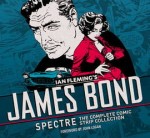
Ian Fleming’s James Bond: Spectre – the Complete Comic Strip Collection


By Henry Gammidge, Jim Lawrence, John McLusky & Yaroslav Horak (Titan Books)
ISBN: 987-1-78565-155-7

Win’s Christmas Gift Recommendation: A Truly Traditional Licence to Thrill… 9/10

There are sadly few British newspaper strips that can rival the influence and impact of the classic daily and Sunday “funnies” from America, especially in the field of adventure fiction. The 1930’s and 1940’s were particularly rich in popular, not to say iconic, creations and you’d be hard-pressed to come up with household names to rival Popeye, Dick Tracy or Flash Gordon, let alone Blondie, Li’l Abner, Little Orphan Annie or Popeye – and yes, I know I said him twice, but Elzie Segar’s Thimble Theatre was funny as well as thrilling, constantly innovative, and really, really good.

What can you recall for simple popularity let alone longevity or quality in Britain? Rupert Bear? Absolutely. Giles? Technically, yes. Nipper? Jane? Garth? I’d hope so, but I doubt it. The Empire didn’t quite get it until it wasn’t an empire any more. There were certainly many wonderful strips being produced: well-written and beautifully drawn, but that stubborn British reserve just didn’t seem to be in the business of creating household names.

Until the 1950’s…

Something happened in the Britain of the New Elizabethans – and I’m not going to waste any space here discussing it. It just did. Now we’re moving on.

In a new spirit that seemed to crave excitement and accept the previously disregarded, comics got carried along on the wave. Eagle, Lion, the regenerated Beano and girls’ comics in general all shifted into visually receptive high gear and so did newspapers.

Those facts and the canny repackaging of some classy classics which tie in to current Bond Blockbuster SPECTRE – just in time for the Christmas presents rush – means I can happily go on about one of British strip cartooning’s greatest triumphs as Titan Books release a splendidly lavish and sturdy oversized (294 x 277 mm) monochrome compilation of all the canonical adaptations of Fleming’s novels featuring the SPecial Executive for Counter-intelligence, Terrorism, Revenge and Extortion…

The first 007 novel – Casino Royale – was published in 1953 and diligently serialised in the Daily Express beginning in 1958, beginning a run of book adaptations (by Anthony Hern, Henry Gammidge, Peter O’Donnell and Kingsley Amis) before eventually Jim Lawrence, a jobbing writer who had scripted the aforementioned Buck Rogers, came aboard with The Man With the Golden Gun to complete the transfer of the Fleming canon to comics format, thereafter staying to create all new adventures, which he did until the strip’s demise in 1983.

The art was always of the highest standard. John McLusky provided the gripping illustrations until 1966 and the conclusion of You Only Live Twice. Although perhaps lacking in flash or verve, the workmanlike clarity and solidly rugged drive of his drawing easily handled an immense variety of locales, technical set-ups and sheer immensity of cast members, whilst accomplishing the then-novel conceit of advancing a plot and ending each episode on a cliff-hanging “hook” every day.

He was succeeded by Yaroslav Horak, who like Lawrence debuted on Man With the Golden Gun, bringing a looser, edgier style to proceedings, at once more cinematic and with a closer attention to camera angle and frenzied action which seemed to typify the high-octane, all-action 1960’s.

Horak illustrated 26 complete adventures until 1977 when The Daily Express ceased carrying Bond and the then-running case suddenly switched to The Sunday Express (from January 30th until conclusion on May 22nd).

None of which is relevant for this stand-alone edition which commences with fond memories and keen insights in the Introduction ‘The Threat of Spectre’ by playwright, film producer and current 007 screenwriter John Logan…

The strip ‘Thunderball’ (11th December 1961-10th February 1962) adapted the ninth novel and proved to be both calamitous and controversial at the time of publication. The plot involves the theft of nuclear bombs by millionaire treasure hunter Emilio Largo, fronting an unsuspected terrorist group called SPECTRE …

Inexplicably for the paper, the tale was censored and curtailed at the direct demand of the Daily Express‘ owner Lord Beaverbrook. Five days worth of strips were excised (and for the full story you’ll need to read the book or track down Titan’s 2007 paperback album edition which provided an ancillary text feature detailing what was cut).

Nevertheless, what remains by Henry Gammidge & McLusky is still pretty engrossing comics-fare and at least some effort was made to wrap up the storyline before the strip ended.

It was then dropped for almost a year before Bond triumphantly returned with an adaptation of eleventh novel On Her Majesty’s Secret Service…

Here however there’s latitude to print the strip adaptation in proper chronological order so next up is ‘The Spy Who Loved Me’ (which appeared from 18th December 1967 to 3rd October 1968).

The action goes into overdrive as the ongoing strip saga reaches the point where Fleming’s last work is adapted, promptly to be followed by all-new adventures. The story is also generously fleshed out (Fleming’s novel was written from the viewpoint of damsel in distress Vivienne Michel and Bond doesn’t show up until the last third of the text).

What we have here is a complex and intriguingly taut battle of wits as Bond and Vivienne combat a duo of deadly arsonists and hitmen with the super-agent’s foray against the revived SPECTRE mob in Canada providing a tense battle of wits and suitably gratuitous just deserts all around…

Arguably the two best novels were then adapted back-to-back. After the falling out with the Express‘ owner, the Bond strip was absent from the paper’s pages from February 1962 until June 1964. The gap was explained as Bond’s year-long search for arch villain Ernst Blofeld…

On Her Majesty’s Secret Service – by Gammidge & McLusky – ran from 29th June 1964 to 17th May 1965) and depicted how the hunter finally discovered his worst enemy and his own ideal woman in a coolly suspenseful and blistering action-drenched extravaganza set primarily in the Swiss Alps. Closely adhering to Fleming’s script – as did the George Lazenby film version – it all ends with the wedding day murder of Bond’s bride Tracy (Draco) di Vicenzo, an atypically downbeat conclusion that directly led into ‘You Only Live Twice’ (18th May 1965 – 8th June 1966, by Gammidge & McLusky) wherein the shattered hero degenerates to the point of almost being fired by M until despatched to Japan on a milk-run to assassinate Dr Guntram Shatterhand and realises his target is actually despised monster and wife-killer Blofeld…

These stories are a must for not only aficionados of 007 but for all thriller fans; stunning examples of terse, gripping adventure uncluttered by superficial razzamatazz, jam-packed with adventure, sex, intrigue and sudden death and starring the world’s greatest clandestine operative who never rests in his vital mission to keep us all free, safe, shaken, stirred and thoroughly entertained.

Get back to basics and remember that classic style is never out of fashion in this, the Greatest Bond Film You’ll Ever Read…
Thunderball © Ian Fleming Publications Ltd/Express Newspapers Ltd 1961. The Spy Who Loved Me © Ian Fleming Publications Ltd/Express Newspapers Ltd 1962. On Her Majesty’s Secret Service © Ian Fleming Publications Ltd/Express Newspapers Ltd 1963. You Only Live Twice © Ian Fleming Publications Ltd/Express Newspapers Ltd 1964. James Bond and 007 are â„¢ of Danjaq LLC used under licence by Ian Fleming Publications Ltd. All Rights Reserved.

Sven Hassel’s Wheels of Terror: the Graphic Novel


By Sven Hassel, illustrated by Jordy Diago (Weidenfeld & Nicolson)
ISBN: 978-1-60699-878-6

Although his true history remains controversial and hotly contested in his home country, Børge Willy Redsted Pedersen AKA Sven Hazel AKA Sven Hassel is indisputably one of the most influential authors of the late 20th century. The fourteen novels bearing his nom de guerre/plume, based on his war-time experiences as a decorated soldier in the German army (and latterly as a POW), have sold 53 million copies worldwide, published in more than 50 countries, and a fair few of those were to readers who went on to create many of the last forty-five years’ worth of great war comics.

He was born in 1917 and, after turbulent times in the post-war years following his return to his fatherland, left forever his native Denmark in 1964 for Barcelona. He stayed put and peacefully passed away in there in 2012. Now, with his canon once more lined up for screen adaptations, his stories have finally begun the transition to the genre he so particularly inspired: graphic novels.

Published in 1953, Legion of the Damned was a colossal hit, delineating his entire time in the Army of the Reich, including prompt desertion, recapture, confinement and sentencing to a Penal Battalion on the Eastern Front.

The remaining thirteen books are elaborations of that book and period, offering greater depth and many more unforgettable moments of horror and camaraderie, which is presumably why these adaptations – by son Michael and granddaughter Mireia, illustrated with subdued yet expressionistic verve by Spanish artist and photographer Jordy Diago (Fix und Foxi, El Cuervo, the Disney Company) – begin with the second novel.

Wheels of Terror was first released in 1958 and is regarded by many as the ultimate anti-war novel; each chapter a gut wrenching, thought-provoking, seemingly pointless exploit in a never-ending succession of brushes with near-death, human brutality and the appalling consequences of total war as experienced by the diffident narrator and his comrades. Those include charismatic thief Joseph Porta, hulking Tiny, former Foreign Legionnaire Alfred Kalb, elderly Troop Sergeant “The Old ‘Un”, somehow still-religious Möller, aging Bauer, big, steadfast Pluto and the rest…

This oversized (296 x 208 mm) full-colour paperback opens with no preamble or fanfare with ‘Nox Diaboli’ as the old lags are driven into Hamburg during an Allied firebombing raid and used as a clean-up crew during the still on-going devastation. The worst part was probably the children’s home…

‘Furioso’ then pauses to introduce the cast as they return to the Eastern Front, but still lumbered with shifting corpses, “aided” by Russian POWs with whom they have far more in common than any German officer. ‘A Shot in the Night’ then describes an uneventful night in the barracks at the Sennelager Training Grounds involving a near-fatal confrontation with a martinet Sergeant-Major who has no time for convicts and unconventional Commandant Colonel Von Weisshagen. As usual, Porta’s nervy, anarchic impromptu antics turn potential catastrophe into a war-story worth retelling many times over…

Penal battalions get all the choice jobs and ‘State Murder’ describes what happens when the squad are ordered to execute prisoners – even young women – after which ‘Porta as Pope’ finds the still-distraught men gathered to drink and play cards whilst the indefatigable fixer regales his chums with the time he accidentally became padre to the barbarous counterattacking “Ivans” before Sven sneaks away to enjoy an unlikely ‘Love Scene’ with a woman living in the bombed-out ruins…

The account kicks into grim high gear with ‘Return to the Eastern Front’ as the dirty business of trench-fighting resumes in earnest, punctuated with moments of inactivity spiced up by Porta’s ribald stories and songs, but soon the gregarious scene-stealer is risking his life with our narrator at a forward listening post mere metres from the Russians where he learns that ‘At 11.30 AM the Germans Will be Blown Sky High’.

The subsequent devastating clash between advancing Ivans and a doughty crew of German flamethrower operators is appalling to witness and the pointless action soon leads to ‘Close Combat in Tanks’ with the reprobates stuck inside a malfunctioning Tiger, narrowly avoiding being butchered by the advancing enemy before having to fight for their lives in freezing close quarters at apocalyptic atrocity-site ‘Cherkassy’…

A relative moment of calm only gives the squad time to brood and indulge in torture masquerading as interrogation before ‘The Sneaking Death’ sees another firefight erupt, killing a third of the company…

In the bright day of a forest reconnaissance, loquacious Porta describes his favourite meal of ‘Mashed Potatoes with Diced Pork’ to the ones who made it, leading to a shockingly bloodless and almost comic confrontation with a Russki patrol before ‘The Partisan’ sees the scruffy survivors trying to help a girl rescue her already-arrested father from execution. Nazi fanatic Julius Heide then learns to his cost that the scum hate him as much as he despises them…

When the quartermaster asks the starving troops in all seriousness ‘What Do You Want to Eat?’ following an upcoming attack, the wary warriors realise the hell they’re about to enter, resulting in the loss of yet another cast regular, after which a frenzied retreat in tanks is interrupted by more murderous Soviets and a crazy interlude wherein Kalb risks everything to help a Russian woman in the final stages of ‘Childbirth’…

This story doesn’t end; the reader just finds a place to stop watching and that occurs here with ‘Long Live Death’ as the ravaged survivors hide in a trench with Ivans inexorably advancing. The grim moments pass as the convict soldiers observe how proper German officers die before finding two Soviet women soldiers who would rather stay with them than be returned to their male Russian comrades. And then the shooting starts again and your narrator is hit. Fade to black…

Grim, bleak, blackly funny and still ferociously forceful, this pictorial interpretation is a splendid first outing from all involved, deftly negotiating the minefield of how to keep the necessarily horrendous visual aspect from overpowering the events. Purists who love the prose novels might, however, feel cheated that some of the more racy (by today’s standards that might as well read as sexually exploitative) content has been toned down or expurgated, but all in all this is a book to satisfy old fans and make a legion of new ones.
© MHAbooks aps 2015. All rights reserved.

The Monsterjunkies Graphic Novel #1


By Eric Daniel Shein & Theresa A. Gates, illustrated by Jay Fotos Studios (ArkWatch)
ISBN: 978-0-9963872-0-0

It’s tough being an outsider and doubly so if you’re a teenager with weird interests and strange parents.

Just think how much worse it can be if you’re notionally foreign, have no friends and your family has a long tradition of keeping secrets…

Introduced in prose Young Adult novels The Monsterjunkies: An American Family Odyssey and its sequel Sanctuary, impressionable Cromwell and his far more sociably adaptable older sister Indigo negotiated the tricky path through high school, slowly finding friends and companionship, gradually sharing their clandestine clan’s big secret with the ordinary folk of Foggy Point, Maine.

Now that first gently inclusive tale of integration and assimilation has been adapted into a beguiling graphic novel by original authors Eric Daniel Shein & Theresa A. Gates and opens at the daunting gates of 1313 Road to Nowhere. Within the vast wilderness compound lurk an assortment of oddities who have found safety, anonymity and peace of mind under the custodianship of glamorous cryptozoologist Dr. Talon Monsterjunkie and his eldritch, ethereal wife Pandora.

The dedicated preservationists of everything outré have turned their secluded estate into a haven for the world’s rarest and most endangered lifeforms, and although young Cromwell (he prefers “Crow”) may lack for strictly human companionship he is beloved by the creatures resident on the expansive Eden-like grounds.

Amongst his closet confidantes are Chico the chupacabra, poetry-writing sasquatch Beauregard, pituitary giants Frances and Betty, Periwinkle Pterodactyl, Fan – who runs the family mailbox – and sea serpent Sybil joyously sporting in the waters off scenic Bizarre Beach.

A loner at school, Crow’s life is made even worse by spoiled rich kid and practised bully Rutherford Grimes, but things start to radically change for the better after local lads Larry, Todd and Edgar sneak beyond the forbidding walls on a dare.

Shocked and awed by what they find, the kids are “rescued” by the aloof Goth kid from a succession of terrifying but ultimately friendly beasts and monsters and are soon the best of buddies. They even form a gang of their own to stand up to the predatory “popular kids” at school…

Soon the centuries-long family policy is being gradually tweaked and before long select individuals are being invited to share the hidden treasures of the estate. Ruth Grimes, however, isn’t happy at all and after Crow creates a unique way for school kids to stand up to him the closet psychopath subsequently tricks his boorish, millionaire dad into instigating a malicious whispering campaign to drive the weird foreigners out…

Then comes the worst news of all: daredevil dad Talon has been lost on an expedition to Bolivia…

Comparisons to the filmic Addams Family are unavoidable, but there is a superficial similarity at best. The dark humour of unsettling fear and voluntary isolation which underpins the movies has been replaced here with a cast of warm, accommodating outriders heroically performing great works, eagerly accepting newcomers into their circle and prepared to change and enter the wider world that encroaches upon them…

Wild, imaginative, compassionate and packing a potent and welcome moral message, this is a wonderful interface between modern supernatural thrillers for teens and grand old-fashioned family romps like Willard Price’s “Adventures” series.

And there are more to come…
© 2015 Arkwatch Holdings LLC. All Rights Reserved.

For more information check out http://www.themonsterjunkieuniverse.com/ and www.redanvilcomics.com

Robert Louis Stevenson’s Strange Case of Dr. Jekyll and Mr. Hyde – the graphic novel


Adapted by Alan Grant & Cam Kennedy (Waverley Books)
ISBN: 978-1-902407-44-9

As part of the celebrations for Edinburgh’s selection in 2004 as the first UNESCO City of Literature, Scottish comics veterans Alan Grant and Cam Kennedy were invited to convert a brace of classic tales by Robert Louis Stevenson to publishing’s hottest medium…

The second appeared in 2008 with a bare minimum of abridgement or adulteration by Grant and galvanically brought to life through the stunning art of the inimitable Kennedy with colours and letters provided by Jamie Grant: all seamlessly collaborating to perfectly picture one of the most famous and groundbreaking tales of terror in the annals of storytelling.

The timeless tale opens as lawyer Mr. Utterson becomes intrigued by the ‘Story of the Door’ as related by walking companion Richard Enfield. That worthy describes how, after remonstrating with a bestial, shrivelled homunculus of a man who was thrashing a street child, he discovered a possible although unlikely and unwelcome connection to a mutual friend of superlative honour and worthiness.

However what connection a depraved creature such as Edward Hyde might have with the benevolent and brilliant Dr. Henry Jekyll was beyond either man’s conception. Blackmail perhaps…?

The multi-layered and convoluted chain of events unfolds at a beguiling pace as the pair begin a systematic ‘Search for Mr. Hyde’, even consulting the scientist’s great mentor Dr. Lanyon before unexpectedly encountering the despicable decadent himself, sneaking into Jekyll’s home through the means of his own key.

Eventually Utterson is compelled to ask the suspected extortion victim himself but ‘Dr. Jekyll was Quite at Ease’ and even extracted a promised that the lawyer would ensure that Hyde got his legal due should untoward circumstances warrant…

Events overtake everyone when details of ‘The Carew Murder Case’ become a public sensation and Hyde is hunted for killing a prominent politician in fit of unprovoked fury. Long-shrouded secrets begin to leak out after the ‘Incident of the Letter’ as Jekyll assures his distraught and apprehensive friends that Hyde will be seen no more, leaving Utterson to conclude that Henry is completely under the thumb of the desperate fugitive…

‘The Remarkable Incident of Dr. Lanyon’ precipitates further speculation as the failing sage gives the inquisitors a letter to be opened upon his (imminent) demise, prompting Enfield and Utterson to reluctant action and intervention on ‘The Last Night’ which reveals the shocking truth of the affair…

With the tragedy complete all that remains is to discover the reasons and causes which are provided by the aforementioned letter containing ‘Henry Jekyll’s Full Statement of the Case’…

Chances are high that nobody reading this is unaware of the general events of this much retold tale but the moody, evocative, dynamic and suspenseful reiteration here is a sheer pictorial triumph which adds freshness to familiarity and emerges as not simply a distillation, adjunct or accommodation but actually works as well in comics terms as the original literary ones.
Adapted text © 2008 Alan Grant. Illustrations © 2008 Cam Kennedy. All rights reserved.

The Evil of Oz


By Ryan Fuller & Sanjana Baijnath (CreateSpace)
ISBN: 978-1-49351-704-6

Depending on your outlook, you’re either going to adore or despise this one…

We all know the story of The Wizard of Oz – or at least the bare bones of it harvested to make the admittedly stunning 1939 film – but the truth is there’s a vast amount from that legendary 1900 novel by jobbing journalist and prolific author Lyman Frank Baum that remained unfilmed and unaddressed.

In recent years a number of books, comics, films and stage productions have taken another look – and many liberties – with the modern myth, but this is one of the most forthright, unrepentant and engaging – especially if you’re a lover of gory horror stories.

It begins at the scene of bloody multiple homicides in ‘Kansas’. A maniac has brutally ended the lives of an old farmer and his wife and their niece Dorothy Gale isn’t making a bit of sense over the crime.

Then again there’s not much sense to be had when the perp steals hearts after crudely removing them with an axe…

Once the cops have gone, however, the survivor undertakes a strange course of action. Activating her silver slippers, she summons a raging storm and, gripping the gory murder weapon, heads back to ‘Munchkinland’ in search of answers and justice…

Her return to the beautiful happy place she once liberated is a nightmare of shattered dreams. The wonderful kingdom is dark and blighted, reeking of decadence, decay and death. Dorothy isn’t surprised when she is mobbed by disgusting diminutive aberrations. She just wields the axe with terrifying dexterity in a deadly dance of destruction…

Grimly retracing her steps on a once-golden path she makes her way to ‘The Emerald Stockade’, encountering en route an old friend brought low and made example of.

He relates the reason for Oz’s decline but does not accompany her as she moves on to ‘The Stumps’ and a shocking confrontation with another beloved former comrade fallen on hard and mercilessly uncompromising times…

Having dealt justice to her guardians’ murderer means nothing after Dorothy learns who has overseen the tainting of the magical land and she struggles onward, enduring a similar heartrending reunion in ‘The Petrified Forest’ before reaching ‘The Bright City’ and a final battle with the avaricious traitor who instigated the corruption…

However, even after winning her last smidgen of scarlet retribution, Dorothy still has one last happy memory to ruin and betrayal to avenge when she meets ‘The Man Behind the Curtain’…

Bleak, nihilistic and superficially feeling like Titus Andronicus meets I Spit on Your Grave, Ryan Fuller’s sparse, spartan and extremely evocative violent chiller is realised with lush and lavish painted artwork by Sanjana Baijnath and carries a subtle but venerable message: be careful what you wish for…

The acquisition of all those so-long-desired and hard-won gifts did nothing but sour and poison the once-noble champions who strived so mightily to attain them and now the heroes are monsters who need to be put down…

Visceral, unflinching, possibly exploitative but with a moral subtext that cannot be denied, this is a terror tale to tantalise fans with adult tastes and post modern sensibilities.

No copyright notice that I could find so I’m assuming Text © 2015 Ryan Fuller and Illustrations © 2015 Sanjana Baijnath.
The Evil of Oz is also available as a Kindle edition.

Prometheus: Fire & Stone


By Paul Tobin, Juan Ferreyra & various (Dark Horse)
ISBN: 978-1-61655-650-1

Spinning out of the movie Prometheus and its comicbook iteration, Fire and Stone was a bold and ambitious publishing event begun in 2014 designed to link four separate franchises into a coherent – if rather time-distanced – universe.

A quartet of 4-part miniseries featuring core concepts from Prometheus, Alien, Predator and AVP: Aliens Vs Predator was conceived by scripters Paul Tobin and Kelly Sue DeConnick, with the calamitous clash of cultures and creatures culminating in one-shot Fire and Stone: Omega.

The first of those pocket series is now available as a sleek paperback collection scripted by Tobin and moodily designed and illustrated by Juan Ferreyra, opening the time and space shredding saga in 2219 AD above the third moon of the Calpamos planetoid in the Zeta 2 Reticuli system.

Four Earth craft have rendezvoused there, seeking answers to the question of what happened to a long-lost research ship.

Historian and filmmaker Clara Atkinson aboard command ship Helios ponders the ongoing mission as the crews of engine core vehicle Geryon, military patrol ship Perses and salvage vessel Kadmos slowly shake off the effects of deep space hibernation and get reacquainted.

Captain Angela Foster is cranky but seems exhilarated at the prospect of hugely valuable salvage and effusive medical officer James Weddel is his usual grabby self, but apparently affable astrobiologist Francis Lane is hiding something. He’s coincidentally in charge of maintaining and servicing the service humanoids such as meek-seeming synthetic assistant Elden – the only being aware of the secretive boffin’s failing health…

What nobody except Foster knows is the true purpose of the mission. She is hunting legendary exploratory ship Prometheus and chimeric, inspirational leader Sir Peter Weyland. Moreover, when Weyland was lost on LV-223 in 2090 he was seeking to prove a crazy theory that a race of giants he called “The Engineers” had seeded the universe with life. He wanted to find the creators of humanity, and now so does she…

Leaving Geryon in orbit, the smaller ships confidently head for solid ground. Foster takes the Helios down and soon discovers that the supposedly barren moon is rich with weird, superabundant, aggressive and extremely ugly lifeforms. Strangely, most of it seems to be concentrated in a single implausible and very forbidding micro-rainforest…

Discoveries come thick, fast and increasingly disquieting. A strange, viscous black goo which seems to be the very essence of raw life. Bizarre corpses and skeletons crushed, torn apart or burned by acid. An ecosystem of fauna filling every biological niche and all looking as if they were patterned on the same creature…

Lane is particularly taken with the omnipresent black ooze and he and Elden are missing when the main party discover a lost human-colony ship somehow shifted to the wrong planet and submerged by a wall of overgrown undergrowth.

They are utterly unprepared for the marauding xenomorphs hungrily waiting inside for fresh prey…

It all goes pretty much as you’d expect (and, I suspect, hope) after that, but whilst the Aliens begin their hideous and inexorable dance of death, other things that will impact the succeeding story-arcs come into play too.

Whilst Foster’s party is searching, a wave of the big-headed bugs swarm the Helios, leaving it locked down and besieged…

Lane begins experimenting with the black goo in a cave, seeking a cure for his cancer. When he injects poor, passive Elden with a sample, the astrobiologist is appalled to see rapid and terrifying forced evolution in action, transforming a harmless and completely docile programmed servant into a monster with a ruthless will and deadly agenda of its own…

Others explorers find a crashed craft of incontrovertibly alien origin and dependable, staunch and fun-loving ebullient military man Galgo grabs up extraterrestrial weaponry. Later, seeing the way the winds are blowing, he promptly abandons the science teams and the Helios to fate…

None of the wide-ranging humans are prepared for the consequences when a long-dormant Engineer begins checking his planetoid-sized laboratory again and, seeing assorted specimens and unidentified creatures running riot, starts dispassionately clearing up the mess and shutting down the chaos…

Soon only three humans are left cowering in the dark but refusing to give in…

To Be Continued…

Fast-paced, intensely gripping and closely following the tried-and-tested formula of the film franchises, this is a superb horror/sci fi romp to delight fans of the cinematic classics and breathtaking thrill rides in general, which also offers a cover gallery and chapter-break art by David Palumbo plus a potent and beguiling selection of designs and notes from illustrator’s Juan Ferreyra’s ‘Sketchbook’.

™ & © 2014, 2015 20th Century Fox Film Corporation. All rights reserved.
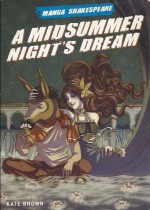
Robert Louis Stevenson’s Kidnapped – the graphic novel


Adapted by Alan Grant & Cam Kennedy (Waverley Books)
ISBN: 978-1-902407-38-8

Practically as soon as comicbooks were invented, high-minded enterprising souls were using the new medium to get readers interested in great literature: paring down deathless prose whilst adding the sheer power of pictures in narrative sequence.

In most cases over the intervening decades these adaptations have been less than stellar, but every so often a piece of work emerges that is not just a mere distillation, adjunct or accommodation but actually works as well in comics terms as the original literary ones.

One sterling example of such graphic magic came out of the 2004 selection of Edinburgh as the first UNESCO City of Literature, when Scottish funnybook veterans Alan Grant and Cam Kennedy were invited to convert a brace of classic tales by Robert Louis Stevenson to publishing’s hottest medium…

With a bare minimum of abridgement or adulteration and astonishingly augmented by the stunning art and colours of the inimitable Kennedy, the timelessly classic tale unfolds beginning with seventeen year old David Balfour who in June 1751 strides away from rural Essendean and the only home he has even known into peril, terror and astounding adventure…

Upon his father’s death Davie receives a letter which reveals the existence of a relative he never knew he possessed, so he promptly walks all the way to Edinburgh and sees for the first time the dilapidated, broken-down but still imposing House of Shaws.

At a time when the oppressive English conquerors are still openly revelling in crushing the Jacobite Rebellion, his progress is slow and cautious. One day David reaches the manor but is not comforted nor relieved, having heard no good word from any he passed about Ebenezer Balfour and his “house built on blood”…

The Laird is an elderly, scared-seeming, guilt-wracked scoundrel who grudgingly takes David in after declaring himself his uncle. Soon, however, David comes to realise that not only has Ebenezer long ago swindled his deceased brother out of his inheritance but is prepared to kill his only kin to keep it…

Forewarned, outraged and wary, Davie nonetheless falls into a trap when he accompanies his uncle to the family lawyer Rankeillor – purportedly to make amends and square accounts – at Queen’s Ferry. The lad is tricked aboard the brig Covenant where he learns Ebenezer has paid villainous Captain Hoseason to transport him to the New World to be sold as a slave…

Clubbed unconscious and inescapably trapped, David plunges into despair and illness. His unwanted journey is marked with brutality and horror, but marginally improves after he witnesses the murder of the cabin boy Ransome and is compelled to become that poor soul’s replacement.

A week later everything changes after the Covenant collides with a smaller vessel in the fog and a survivor is hauled aboard. The small, ferocious and exceedingly dangerous-looking straggler is Alan Breck Stewart: an earnest Jacobite who spends his days collecting debts for the defeated Highland chiefs-in-exile and smuggling the money to them in France.

More avaricious than political, the captain agrees to ferry Breck to a friendly destination for sixty golden guineas but when David overhears Hoseasons and First Mate Mr. Shuan planning to murder the Highlander, he makes a fateful life-changing decision…

Allying himself with Breck, young Balfour gets his first taste of battle and bloodletting when the pair heroically confront the crew from a readymade fortress in the main cabin. With nine men dead or maimed, Hoseasons has no choice but to negotiate and sullenly agrees to put them both ashore at Linnhe Loch, but even before the Covenant can reach that outpost of relative safety, the ship founders on a reef with David and Breck lost over the side…

Cast away and lost he is eventually reunited with Breck, only to endure hardship, horror, pursuit and personal degradation as he and his contentious, complicated comrade are hunted by Royalist forces for the murder of Colin Roy Campbell, known and dreaded as King George’s agent “the Red Fox” who punishes and persecutes Highlanders and honest men, even selling them into slavery…

Their trials and tribulations as outlaws of the heather, their meetings with kindred spirits, strains on their newfound friendship and eventual bringing to justice of the conniving Ebenezer Balfour are all deliciously revealed in gripping form and glorious imagery (although purists might miss much of Breck’s more esoteric phraseology) as the novel comes to rousing life in an iteration certain to please both devotees and first time readers.

Moody, evocative, fast-paced and gripping, this graphic goldmine was also released in two local languages: translated and dialogued in Lowland Scots as Kidnappit by Matthew Fitt & James Robertson and as Fo Bhruid – a Gaelic iteration translated by Iain MacDhòmhnaill.
Adapted text © 2006 Alan Grant. Illustrations © 2006 Cam Kennedy. All rights reserved.

Michael Moorcock’s Elric volume 2: Stormbringer


By Julien Blondel, Jean-Luc Cano, Julien Telo, Robin Recht & Didier Poli, translated by Edward Gauvin (Titan Comics)
ISBN: 978 -1-78276-125-9

Michael Moorcock began his career as a comics creator aged 15; writing and editing classic strips like Dogfight Dixon, Jet Ace Logan, Captain Condor, Olac the Gladiator, Tarzan and many, many other British favourites. As the swinging Sixties began he made the leap to prose fiction where he single-handedly revitalised a genre in 1961 with the creation of Elric and the high-concept notion of the Eternal Champion.

Elric is a landmark of the Sword and Sorcery genre: fore-doomed last ruler of the pre-human civilisation of Melniboné, a race of cruel, nigh-demonic sorcerers. These arrogant, dissolute creatures are in a slow, decadent decline after millennia of dominance over the Earth.

An albino, Elric is physically weak, buoyed up by drugs, blood and dark magic, and of a brooding, philosophical temperament. He cares for little save his beautiful cousin Cymoril, who will die one day whilst he battles her loathsome usurping brother Prince Yyrkoon in service to a manipulative god of Chaos.

The White Wolf doesn’t even really want to rule, but it is his duty, and he is the only one of his debased race to see the (comparatively) freshly evolved race of Man as a threat to the Empire.

As this volume opens he is yet to be owned by the terrible black sword: one of a matched pair of sorcerous weapons which steal the souls of their victims and feed that stolen life and vitality to the wielder…

Elric is a tragic incarnation of the restless Eternal Champion, reincarnated in every time, place and alternate dimension. His life is violence, blood and unending tragedy, exacerbated by dependence on that soul-drinking ebony blade and his sworn – if somewhat compelled and thus reluctant – allegiance to the chimerical Lords of Chaos.

Everybody knows all that, right?

In 2013, however, the creator of the iconic wanderer – and arguably a whole sub-genre of fantasy fiction – has allowed his premiere paladin to undergo a visceral, spectacular and enchanting make-over under the auspices of a team of premiere French graphic arts prodigies.

Tasking themselves to re-adapt, augment and expand Moorcock’s tales and novels (with his willing and eager permission and supervision), writers Julien Blondel and Jean-Luc Cano, illustrators Julien Telo, Robin Recht & Didier Poli, with colour-artists Recht, Jean Bastide & Scarlett Smulkowski, resume the reinvigoration in Stormbringer.

This second chapter in the doom-drenched saga is preceded by a powerful introduction and affirmation of Elric’s impact in Alan Moore’s ‘Reflections in a Pink Eye’ and this sumptuous oversized (284x212mm) colour hardback album also includes – at the back – another look at the creative process in ‘Genesis’; via pages of design sketches (Elric and Stormbringer and the Dragon Caves) and a exploration of the working process of the ‘New Talents’ who recently joined the large storytelling team…

What Has Gone Before: usurper Yyrkoon has escaped his punishment through sorcery and taken Cymoril with him. Despite pledging himself to Arioch, Duke of Swords, weeks pass and all Elric’s arcane might is unable to glean where the fugitive has taken her.

The pallid, impotent Emperor has become a raging fury of frustration…

The dark, brooding epic continues as the albino brutally chastises Melnibonéan subjects and elemental agents tasked with finding Yyrkoon and Cymoril. The streets of Imrryr run red with sacrificial blood and the gory scraps of ghastly auguries, but no answer can be found.

At last the dejected sovereign calls again upon Arioch and this time the puissant hell-lord offers a shred of useful information…

Impatient and incandescent with rage Elric then exploits his ancestral relationship with majestic sea god Straasha, who once more honours his ancient pact with the rulers of Melniboné but again indicates times are changing and such services are soon to end…

In the Dragon Caves below the city, faithful Tyvim Tvar inducts his sons into the arts of commanding The Great Winged Ones, fearing that his latest endeavour with Elric will end badly…

On a quiet morning Staasha’s proffered aid hoves into magnificent view: an astounding vessel unlike any other. The Ship Which Sails over Land and Sea was built in eons past to seal a truce between Straasha and his brother Grome, Lord of the Earth Elementals who had warred for half the age of the world. Soon the incredible thought-guided vessel is soon hurtling towards the Young Kingdoms.

Elric anticipates satisfaction but enjoys no peace. His dreams are plagued with scenes of his consort-cousin Cymoril expiring in blood and fire…

Nearing their hidden quarry a grievous setback halts the chameleonic craft in its tumultuous course as mountainous Grome manifests, demanding the return of his ship. Nothing will sway him and, with his soldiers valiantly perishing, their enraged commander capitulates…

Undaunted, Elric leads his surviving warriors on foot across the foreboding terrain, infested with the upstart monkey people who would challenge their betters. He accepts terrified hospitality from peasants and rewards the humans in ways that delight his rattled and despondent, casually sadistic Melnibonéan warriors…

Eventually the weary task force arrives at the antediluvian and horrific city of Dhoz-Kam – site of a terrible battle between the Lords of Law and Chaos – and immediately readies himself for battle with Yyrkoon. His vile cousin is a great magical adept and is certain to have taken precautions.

The Emperor couldn’t be more right and an indescribably protean thing decimates his troops. Elric does not care and pushes on, finding Yyrkoon just as the madman butchers Cymoril…

Screaming out to Arioch, Elric pleads for her life and the whimsical god answers… after a fashion. Having made similar deals with both cousins, he suggests they fight using the demonic weapons he has been safeguarding: huge, deadly sisters of shining black metal, calling eagerly for someone to hold them…

With Elric wielding Stormbringer and Yyrkoon its demonic twin Mournblade, all the hate and fury the cousins bear each other comes out in mind-bending combat. However as the duel escalates the albino realises his sword is communicating with him, urging him on to ever-greater excess and demanding a price paid in blood and souls…

Much as he wants Yyrkoon dead he won’t be any being’s puppet and refuses to administer a killing blow. Still furious however he realises Arioch has his own agenda and needs him. Defiantly arrogant, the Emperor dictates new terms for their relationship…

None the less, Stormbringer must be fed and, after ministering to the resurrected Cymoril and setting course for the Dreaming City, Elric finds a way to give the blade its appalling reward…

Back in Imrryr at last, the emperor begins his service to Arioch with an astounding announcement. He is abdicating and names the traitor Yyrkoon as his successor…

To Be Continued…

Elric is a primal character whose sheer imaginative force has inspired a host of superb graphic interpretations – and probably daunted many eager movie producers – with the astonishing complexity and emotional power of his dying, dawning world. This latest tremendously dark and deeply engaging graphic extravaganza again raises the creative bar and proves why he is the leading light of fantasy fiction.

Elric: Stormbringer and all contents are © 2014 Éditions Glénat. This Translated Edition © 2014 Titan Comics. Adapted from the works of Michael Moorcock related to the character of Elric of Melniboné © 2013, Michael & Linda Moorcock. Introduction © 2015, Alan Moore.
Michael Moorcock’s Elric volume 2: Stormbringer will be released on March 31st 2015 and is available for pre-order now.