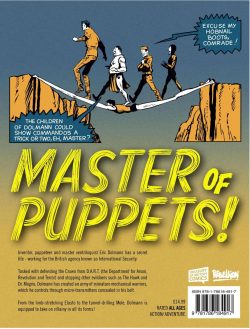
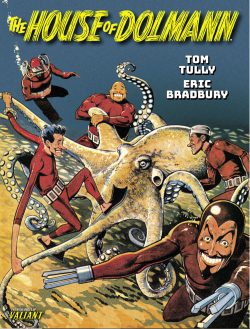
House of Dolmann


By Tom Tully & Eric Bradbury, with Carlos Cruz & various (Rebellion)
ISBN: 978-1-78618-491-7 (TPB/Digital edition)

Win’s Christmas Gift Recommendation: Weird, Wonderful, So Why Not?… 9/10

Wrapping up a week of Unamerican Superheroes is a classic British confection which might well be the closest we ever got to a Silver Age super-team – even if the members are technically all the same bloke…

Valiant debuted as a “Boys’ Paper” in 1962, as our indigenous periodicals industry struggled to cope with spiralling costs and a sudden mass importation of brash, flashy, full-colour comics from America. A weekly anthology dedicated to adventure features and providing a constantly-changing arena of action, the comic became the company’s most successful title for over a decade: absorbing many less successful titles whilst preserving their top features between its launch on October 6th and eventual amalgamation into new-styled, immensely popular Battle Picture Weekly in 1976. It also generated dozens of extra-sized Summer Specials and 21 Annuals between 1964 and 1985: combining original strips with prose stories; sports, science and general interest features, short humour strips and – increasingly from the 1970s onwards – reformatted reprints from IPC/Fleetway’s copious back catalogue.

In February of 1963 it merged with the company’s previous star vehicle Knockout and, mere months later, became the brand title for a series of fortnightly – later monthly – digest-sized comics volumes. The Valiant Picture Library offered longer stories at the cost of 1 shilling. It ran to 144 issues ending in 1969…

In May 1965, the weekly Valiant increased its price from sixpence to 7d (that was in old money, of course) but also increased the page count from 28 to 40 action and fun-packed pages, and ramped up the innovative anthological entertainment…

British weekly comics in the 1960s and early 1970s were a phantasmagorical playground of bizarre wonders. Truly recognisable heroes appeared in war, western and its gradually declining straight crime serials, whilst the most memorable momentum devolved to a hybrid, bastardized mixture of fantasy, horror and science fiction themes to spawn an evil-crushing pantheon unlike any other…

The Spider, Steel Claw, Thunderbolt, Phantom Viking, Captain Hurricane, Robot Archie, Kelly’s Eye, Cursitor Doom and others utterly tainted the gleaming pristine gene pool of noble superheroism with its bleak and often manic sensibilities. You can thank this stuff for the 1980s “British Invasion” of American comic books and the dystopian weltschmerz that dominated the industry for a decade thereafter, peppering the genre with our sort of misfit, maverick and malcontent misanthrope…

Even early on when we briefly adopted full-blown US style superheroes like Marvelman, Captain Universe, Danger Man and Thunderbolt Jaxon, or late entries Tri-Man, The Leopard from Lime Street, Gadget Man & Gimmick Kid and the wondrous Johnny Future at the height of “Batmania”, Brits could never really take it straight. There was always something daft, anarchic, quirky or just scarily warped in the final result…

Here’s a sublimely perfect example of all that: a seedy solitary inventor with a hidden past who spends his days playing with puppets: an obsessive who can’t help literally putting words into their mouths…

Another stunning salvo of baby boomer nostalgia courtesy of Rebellion’s Treasury of British Comics strand, this first collection of The House of Dolmann gathers the early material from Valiant, spanning October 8th 1966 (issue #208) to May 6th 1967, plus a late entry from Valiant Super Special 1980. The strip itself ran until May 1970, and has resurfaced a few times since then, both in reprint form and new tales…

It also offers an incisive Introduction from modern day comics scribe Simon Furman and begins with a handy character guide in ‘Meet Dolmann’s Dolls (part 1)’ providing a pictorial and text run-down of Astro, Elasto, Giggler, Micro, Mole, Raider and Togo: purpose-built robots designed with amazing specialised abilities. I’m sure I don’t need to remind you that this was the mid-Sixties, so racial depictions like the half-sized sumo wrestler-bot last cited were perpetrated “in fun”, and not fairness or good taste…

House of Dolmann was a curious, inexplicably compelling blend of super-spy and crime-buster strip scripted by the magnificently prolific Glasgow-born Tom Tully. His astoundingly broad output included classic delights like Roy of the Rovers, Heros the Spartan, Dan Dare, Master of the Marsh, Janus Stark, Mytek the Mighty, The Wild Wonders, Nipper, Adam Eterno, The Mind of Wolfie Smith, Johnny Red, Harlem Heroes, Mean Arena, Inferno, The Robo Machines, Football Family Robinson, Buster’s Ghost as well as many of the strips cited above.

His collaborative co-creator here also worked on many of those sagas. The incredibly gripping moody comic art of Eric Bradbury had begun gracing newsagents shelves in 1949 in Knockout. Frequently working with studio mate Mike Western, Bradbury drew strips like Our Ernie, Blossom, Lucky Logan, Buffalo Bill, No Hiding Place, The Black Crow and Biggles. He was an “in-demand” illustrator who worked into the 1990s on landmark strips like The Avenger, Phantom Force 5, Maxwell Hawke, Death Squad, Doomlord, Darkie’s Mob, Hook Jaw, The Sarge, Invasion, Invasion 1984, Rogue Trooper, Future Shocks, Tharg the Mighty and so much more…

From the start, Tully & Bradbury delivered intense, claustrophobic tension-drenched, action-packed episodic adventures, opening with a spectacular kidnapping at the London Opera House.

When Professor Hanson – head of Britain’s atomic missile program – is abducted by jetpack-wearing masked thugs, the police and security services are stumped and the authorities have no recourse but to call in independent contractors International Security. Enigmatic chief Mr. Marshal and his top aide promptly pop over to the East End and The House of Dolmann: a pokey shop owned by a grimy, creepy puppet seller who apparently makes ends meet as a mannequin repairman who also dabbles in second-hand dolls, puppets, animatronics and shop or museum dummies.

However, in the grotty emporium – looking like a blend of junk shop and the parlour set of Steptoe & Son – a brilliant inventor has been clandestinely building an army of automated assistants – if not actual friends – to do his bidding. The IS operatives are greeted by a 3-foot tall articulated sumo automaton who invites them inside. They are as yet unaware that the voice – and appallingly racist accent – in fact belongs to proprietor Eric Dolmann who uncontrollably puts words in the mouths of all his creations… and perhaps divides a series of multiple personalities amongst them all at the same time. Shabby Dolmann’s life is pure subterfuge. (I digress here, but an awful lot of “our” heroes were tattily unkempt: we had “Grunge” down pat decades before the Americans made a profit out of it!)

The bizarre figure is in fact a troubled engineering genius who designs and constructs an army of specialised robots disguised as puppets to act as his shock-troops in his a dark and crazy war against the forces of evil. They are all directly radio-controlled by the inventor, but seem to act with increasing autonomy as the months go by …

Top of his hit list is subversive organisation D.A.R.T. – the Department for Arson, Revolution and Terror – and he eagerly accepts the job of foiling their plans by single-handedly raiding their London secret HQ with small army of super-bots…

The assault is a complete success but in the resultant rout and rescue, D.A.R.T. boss Rafe Garrott gets away from Dolman and his “children”…

Pattern set, what follows is a potent and spectacular parade of peril-packed romps: complete 4-page thrillers alternating with extended sagas wherein the troubled and frankly disturbing puppeteer and an ever-expanding team tackle high-tech kidnappers, rascally protection racketeers, road haulage hijackers, weapons dealers, bullion bandits, museum marauders, blackmailers and a silver-obsessed madman…

In his unceasing war on wickedness, the daring Dolls hunt and confront modern-day river pirates, escaped killer convicts, train robbers and mail van raiders, fur-thieves, mad scientists Dr. Magno and Doctor Volt, a costumed cat-burglar, super-sophisticated safecrackers, deranged arsonist Firebug, cunning counterfeiters in their tricked-out funfair of doom, a brutal biker gang and – repeatedly – the massed minions of arch super-criminal ‘The Hawk’. The half-pint heroes even infiltrate a prison in search of justice…

As the series progressed, additions were made to the synthetic squad – like tactical calculator Egghead – and supplemental gadgets such as a flying Dolmobile and all-terrain Dol-Bike (with sidecar for the fractious, ever-squabbling toy boys), tacitly acknowledging the tropes and trends gripping the world beyond the comic.

A slow backstory develops, hinting at the inventor’s murky past. Eventually his real name – Jonas Luthor – is revealed after his obscuring clown mask falls off in a tussle with a career criminal. The accident belatedly leads to his squalid shop being threatened by a police raid as diabolical plunderer The Gold Miser drives London into a glistering plutocratic panic and it takes all Dolmann’s ingenuity and dexterity to deflect, divert, disinform and save the day…

Ultimately, wild sci fi spy paraphernalia like levitation ray thieves and the tank-driving Commando Raiders inform and dominate the stories, with D.A.R.T.’s resurrection adding layers of fearsome fantasy frenzy. Crucially, the always-unsettling sight of dolls perpetually arguing amongst themselves grows more frenetic, generating moments of apparently genuine animosity within the automatic adventurers …

The weekly stories were always a mix of action, surreal humour and topical bombast, which close here with a rowdy, rousing romp involving saving the Tower of London and the Crown Jewels from fake guards tunnelling under the walls…

One final treat opens the ‘Extras’ section, with the 1980 Valiant Summer Special providing an extended maritime exploit from Tully and Spanish artist Carlos Cruz (AKA Carlos Cruz González, who limned many UK yarns including Sergeant Kirk, The Shrinker’s Revenge, Mighty McGinty, Sergeant Rock – Paratrooper, Dr. Mesmer’s Revenge, Bloodfang, Union Jack Jackson, M.A.S.K., Dan Dare: Pilot of the Future, The Phantom and so forth) detailing how a jaunt to Cornwall leads to the plastic pack scuppering a gang of transatlantic pirates raiding shipping in a submarine…

That’s supplemented by prose thriller ‘Slaves of the Spider’: a tantalising promo and extract by Barrington J. Bayley & Bradbury taken from the forthcoming Mind of Jason Hyde collection and a batch of Creator Biographies…

Brilliantly bizarre, creepily compelling and stuffed to overflowing with zany thrills and chills, The House of Dolmann is inconceivably engrossing and incontrovertibly British to the core: fast-paced, freakily funny and once seen, never forgotten. Buy it for the kids and read it too; this is a glorious book, and you should brace yourself for better yet to come…
© 1966, 1967 & 2022 Rebellion Publishing IP Ltd. All Rights Reserved.
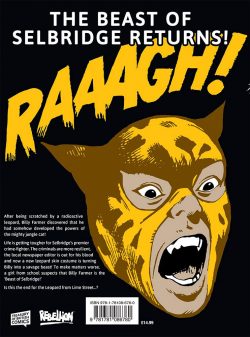
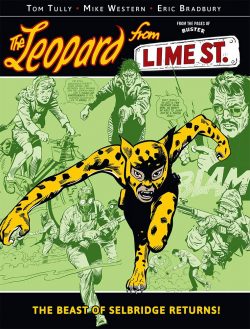
The Leopard from Lime St. Book Two: the Beast of Selbridge Returns!


By Tom Tully, Mike Western, Eric Bradbury & various (Rebellion Studios)
ISBN: 9-781-78108-678-0 (TPB/Digital edition)

Other than lawyers, most people claim imitation as the sincerest form of flattery. You can make your own mind up on that score when seeking out these quirky and remarkable vintage treats offering a wonderfully downbeat, quintessentially British spin on a very familiar story…

British comics have always enjoyed a strange, extended love affair with what can only be described as “unconventional” (for which feel free to substitute “weird” or “creepy”) heroes. So many stars and putative role models of our serials and strips have been outrageous or just plain “off”: self-righteous voyeurs-vigilantes like Jason Hyde, sinister masterminds in the manner of The Dwarf, self-absorbed outsiders like Robot Archie, arrogant former criminals like The Spider or outright racist supermen such as Captain Hurricane…

Joking aside, British comics were unlike any other kind: having to be seen to be believed and enjoyed – especially if “homaging” such uniquely American fare as costumed crimefighters…

Until the 1980s, UK periodicals employed an anthological model, offering variety of genre, theme and character on a weekly – sometimes fortnightly – basis. Humorous comics like The Beano were leavened by action-heroes like The Q-Bikes or General Jumbo whilst adventure papers like Smash, Lion or Valiant always carried palate-cleansing gagsters like The Cloak, Grimly Feendish, Mowser and other laugh treats.

Buster offered the best of all worlds. Running 1902 issues from May 28th 1960 to 4th January 2000, it delicately balanced drama, mystery, action and comedy, with its earliest days – thanks to absorbing Radio Fun and Film Fun – heavily dosed with celebrity-licensed material starring media mavens like Charlie Drake, Bruce Forsyth and Benny Hill backing up the eponymous cover star billed as “the son of (newspaper strip star) Andy Capp”. The comic became the final resting place of many, many companion papers in its lifetime, including The Big One, Giggle, Jet, Cor!, Monster Fun, Jackpot, School Fun, Nipper, Oink! and Whizzer & Chips, so its cumulative strip content is wide, wild and usually pretty wacky…

At first glance, British comics prior to the advent of 2000AD – and Happy 45th Anniversary to you all, Mighty Tharg! – seem to fall into fairly ironclad categories. Back then, you had genial and/or fantastic preschool fantasy; a large selection of licensed entertainment properties; action; adventure; war; school dramas, sports and straight comedy strands. Closer looks would confirm that there was always a subversive merging, mixing undertone, especially in such antihero series as Dennis the Menace or our rather strained interpretation of superheroes. Just check out The Phantom Viking, Kelly’s Eye or early Steel Claw…

We had dabbled with the classic form in the early Marvel and Batman-influenced 1960s (and slightly before and beyond), but Tri-Man, The Black Sapper, Gadgetman & Gimmick Kid, Johnny Future, Red Star Robinson and Thunderbolt Jaxon remained off-kilter oddities. In the March 27th 1976 edition of Buster everything changed…

Now part of Rebellion Publishing’s line of British Comics Classics, The Leopard from Lime Street originally ran 470 episodes (comprising 50 adventures until May 18th 1985 – and even later as colorized reprints and a wealth of foreign-language and overseas editions). For most of that time it was a barely-legal knock-off of Marvel’s Spider-Man – with hints of DC Thomson’s Billy the Cat – as viewed through a superbly time-stamped English lens of life in a Northern Town. It was also, however, utterly unmissable reading…

This second collected volume – available as an oversized (213 x 276 mm) paperback and digital edition – was released in 2019, gathering Buster and Buster & Monster Fun strips spanning 18th June 1977 to 15th July1978.

What you need to know: in the middle (or maybe north-ish) of England lies Selbridge, where scrawny 13-year-old Billy Farmer was constantly bullied, by kids at school and especially his Uncle Charlie. Billy’s abiding interests were journalism and photography. He started a school newspaper (Farmer’s World) all by himself, probably to compensate for his home life. He lived with loving but frail Aunt Joan and her vicious, indolent, physically abusive partner Charlie Farmer who avoided honest work like the plague but was always ready to deliver a memorable life-lesson with fist, boot or belt…

Billy’s life forever changed when he visited the Jarman Zoological Institute and was accidentally scratched by Sheba, an escaped leopard being treated for an unspecified disease with radioactive chemicals.

In the days before Health and Safety regulations or a culture of litigation, Billy was given a rapid once-over by the boffins in charge and declared fine before being sent home. When Uncle Charlie tried to hit him. the brute was casually chucked into the dustbins and the lad realised he had developed  the strength, speed, stamina and agility of a jungle cat as well as enhanced senses, empathic feelings, a paralysing roar and a predator’s “danger-sense”…

Soon, clad in a modified pantomime costume, Billy prowled Selbridge’s dark streets and low rooftops, incurring the curiosity and animosity of Thaddeus Clegg: editor of local paper The Selbridge Sun whilst ever-more confidant Billy sold exclusive news photos of burglars, crooks and kidnappers the vigilante “leopard man” preyed upon at night. Somehow, the raw kid could also get candid shots of many secluded celebrities no adult journo could get near…

Moreover, the boy’s earnings – grudgingly paid by Clegg – started making life easier for Aunt Joan, whilst the Beast’s constant proximity to Lime Street ensured Charlie kept his outbursts verbal and his drunken fists unclenched…

School remained a nightmare of bullies and almost-exposure of Billy’s secret, but home life improved further once the police identified Billy as an official confidante of the vigilante. They even noted how Charlie was regularly brutalised by the feral fury in defence of his “friend”…

Over months the leopard man caught many criminals, was implicated – and cleared – of arson and theft, was abducted by a crooked circus owner, caught  child abductors, battled a fame-obsessed masked wrestler and thwarted a circus acrobat mimicking the cat’s abilities to frame the Leopard for crimes.

On a school trip to a Safari Park, Billy was reunited with his accidental creator Sheba and his powers seemed to exponentially increase beyond his ability to control them…

The costumed melodramas resume now as hero-struck kids start imitating “Leopardman”, and the Selbridge Sun puts a cash bounty on his head, precipitating a string of minor annoyances. The real crisis comes when Farmer gets home and learns Aunty Joan is seriously ill and needs cash urgently to help pay for an operation. The only solution is for Billy to surrender his alter ego to Clegg…

Uncle Charlie also wants the cash and starts tracking the sneaky kid, hoping Billy will lead him to the cat beast. As the town erupts with opportunistic hopefuls and the cops close in, Billy prepares to end his double life, before Charlie’s interference provides a last-minute chance of escape and a solution to Joan’s dilemma…

The debacle makes an accidental and unwilling media star of Charlie, but Billy finds a way to safely sabotage the abuser’s 15 minutes of fame, leading to being singled out by more shady fairground showmen who initially seek to co-opt the boy. When rebuffed, they attempt to foist an imitation catman on the gullible public…

After the charlatans schedule a battle between leopard man and actual leopards, Billy is forced to intervene, finding himself in action against a huge, deranged, fame-hungry maniac with steel claws. Suffering a rare defeat, he awakes a captive of vile showman Flanagan who now has the scary beast he’s always hungered to exploit in his underground cages…

A glimpse for freedom comes after the fairground staff move their prize, displaying him at the distant Alf Campbell’s Circus. A moment’s distraction leads to Billy’s escape, liberating all the other big cats and briefly turning the tables on the human beasts before leaving them in the hands of a baffled constabulary and turning tail back to Selbridge…

In school, scrawny Billy is still the butt of bigger kids “jokes”, but finds a new if unwelcome ally in classmate Debra Stevens who secretly looks out for him and discovers that he’s not at all who he pretends to be…

When the cat crusader foils a wages van raid, she confronts the masked mystery, prompting a sustained and spectacular campaign of disinformation as Billy seeks to change her mind and stifle her suspicions. The task is made more difficult when reclusive millionaire (remember them?) Henry Hammond also targets the boy. His motives are far less benevolent but after cornering his prey (and Debra) everything spirals out of control when a criminal gang tries to abduct everybody…

As Christmas rolls around and Joan’s operation fund grows, Selbridge is blanketed in snow (remember that?). As Billy romps alone in the winter wonderland he is joined by Sheba who has once again escaped from Windburn Safari Park, but his joy is tempered with terror as he meets her far less friendly fellow fugitive… angry, unreasonable male leopard Raja…

Barely escaping, the boy hero is appalled to find that in intervening hours hordes of gun-toting hunters have converged on the town, eager for a spot of hometown big game fun. Suiting up, Billy is desperate to stop them – especially gun-nut Buck Redford – killing either Raja or beloved pal Sheba…

Their battle of wits and skills takes hunters, hunted and human cat all over the rugged icy landscape with numerous tragic close calls. The increasingly incensed gunman slowly loses all sense and starts menacing people as well as apex predators until a frenzied assault on Windburn finally sees Billy end the bonkers bwana’s campaign of terror…

Despite being shot, Billy’s greatest casualty is his repurposed costume and the New Year sees him searching out a replacement – or at least spare parts for a patch job. Opportunity knocks in the form of a genuine leopard skin in a junk shop, but even after arduous toil to earn the revolting antique remnant his troubles magnify not diminish when Charlie tries to steal the hard-won prize.

Things get completely out of hand and young Farmer physically rebuffs his guardian before secretly donning the modified suit. Suddenly, somehow, his human personality is utterly overwhelmed by savage, primal killer-cat instincts…

On the prowl and seeking brutal release, Billy comes to his senses just as Charlie is mugged. The town is currently swamped with ruthless violent street thieves and the leopard man instantly, instinctively intervenes: almost losing all semblance of humanity before ultimately regaining control and suppressing his newly awakened wild side after giving the muggers – and Charlie – the fright of their lives…

Ever ready to exploit a situation for profit, the vindictive uncle calls the police, blaming the cat vigilante for the rash of thefts. His lies spark a popular explosion of fear as embattled residents of Selbridge organise a protest which quickly degenerates into a riot and rabid mob on a leopard hunt…

Chased across rooftops, masked Billy tracks down the real muggers and falls into a trap laid by criminal mastermind Nipper Nemo. The elderly bandit is not as smart as he thinks, though, and before long the boy has made him and mugger army his latest chew toys…

Trouble of a different nature materialises at school when well-intentioned teacher Mr. Gleeson encourages the budding journalist and makes Farmer the preferred target of psychotic bully Barry Towler. Fighting back, Billy momentarily loses control before calming down, but the real damage is to his printing gear. With his pride and joy seemingly finished, the desperate boy approaches his employer Clegg, who cruelly offers to print the magazine for him if Billy can get a photo of the legendary ghost haunting the derelict Regal Cinema.

The editor thinks it a tremendous joke, but he’s underestimated the mettle of his victim…

Diligently researching, Billy learns the spook is reputedly old projectionist Lurcher Creel, who perished on the night before the fleapit closed for good. Strange visions have been seen ever since, but oddly, new owner Mr. Miller is violently opposed to letting the kid take a peek inside, for reasons which become blindingly obvious and increasingly deadly when the enigmatic leopard man starts sniffing round…

Enthrallingly scripted by British comics superstar Tom Tully (Roy of the Rovers; Heros the Spartan; Janus Stark; Mytek the Mighty; Adam Eterno; Johnny Red; Harlem Heroes and many of the strips cited above) these tales are magnificently illustrated.

Working collaboratively British comics royalty Mike Western (Lucky Logan; No Hiding Place; The Avenger; Biggles; The Wild Wonders; Darkie’s Mob; The Sarge; HMS Nightshade; Jack O’Justice; Billy’s Boots; Roy of the Rovers) shared pencilling and inking with mood master Eric Bradbury (Mytek the Mighty; Maxwell Hawke; Cursitor Doom; Von Hoffman’s Invasion; House of Dolmann; Death Squad; Hook Jaw; Doomlord; Rogue Trooper; Invasion; Mean Arena; Tharg the Mighty and more) to craft a pre-modern masterwork affording a fascinating insight into the slant a different culture can bring to as genre.

The concept of a “real-life” superhero has never been more clearly and cleverly explored than in these low-key tales of the cat kid who survives not supervillains but a hard-knock life…
The Leopard from Lime Street ™ & © 1977, 1978, 2019, Rebellion Publishing Ltd. All Rights Reserved.

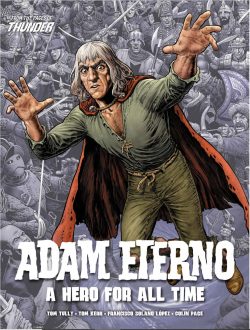
Adam Eterno – A Hero for All Time


By Tom Tully, Tom Kerr, Colin Page, Francisco Solano López, Eric Bradbury Ted Kearon, Rex Archer & various (Rebellion)
ISBN: 978-1-78108-869-2 (TPB/Digital edition)

British comics had a strange and extended love affair with what can only be described as “unconventional” (for which feel free to substitute “creepy”) heroes. So many of the stars and potential role models of our serials and strips were just plain “off”: self-righteous, moody voyeurs-turned vigilantes like Jason Hyde, sinister masterminds like The Dwarf, deranged geniuses like Eric Dolmann, so many reformed criminals like The Spider or just outright racist supermen like Captain Hurricane…

…And don’t get me started on our legion of lethally anarchic comedy icons or that our most successful symbol of justice is the Eagle-bedecked jack-booted poster boy for a fascist state. Perhaps that explains why these days we can’t even imagine or envision what a proper leader looks like and keep on electing clowns, crooks and oblivious privileged simpletons…

All joking aside, British comics are unlike any other kind and simply have to be seen to be believed and enjoyed. One of the most revered stars of the medium has finally begun to be collected in archival editions, and perfectly encapsulates our odd relationship with heroism,  villainy and particularly the murky grey area bridging them…

Until the 1980s, comics in the UK were based on an anthological model, offering variety of genre, theme and character on a weekly – or sometimes fortnightly – basis. Humorous periodicals like The Beano were leavened by thrillers like Billy the Cat or General Jumbo and adventure papers like Lion or Valiant always included gag strips such as The Nutts, Grimly Feendish, Mowser and a wealth of similar quick laugh treats.

Thunder and Jet were amongst the last of this fading model. Fleetway particularly was shifting to themed anthologies like Shoot, Action and Battle, whilst venerable veterans like Lion, Valiant and Buster hung on and stayed fresh by absorbing failing titles. Thunder ran for 22 weeks before merging into Lion & Thunder, bringing with it Black Max, The Steel Commando, The Spooks of Saint Luke’s and Adam Eterno. With Steel Commando, Adam would survive and thrive, as the comic later merged into Valiant & Lion (June 1974) until 1976. He also appeared in numerous Annuals and Specials thereafter.

Eterno was initially devised by Thunder assistant editor Chris Lowder and editor Jack Legrand, with top flight artist Tom Kerr (Monty Carstairs, Rip Kerrigan, Kelly’s Eye, Charlie Peace, Captain Hurricane, Steel Claw, Kraken, Mary-Jo, Tara King/The Avengers, Billy’s Boots) initially designing and visualising the frankly spooky antihero and drawing the first episode.

The feature was scripted by equally adept and astoundingly prolific old hand Tom Tully (Roy of the Rovers, Heros the Spartan, Janus Stark, Dan Dare, The Wild Wonders, Johnny Red, The Leopard from Lime Street) but after he left in 1976 Kerr, Donne Avenell, Scott Goddall and Ted Cowan would write Adam’s later adventures for star turns like Joe Colquhoun, John Catchpole, Eric Bradbury, Page, Carlos Cruz and others to illustrate.

Gathering the debut and all episodes from Thunder (October 17th 1970 – 13th March 1971 plus material from Thunder Annual 1972, 1973 & 1974, the chronal calamities and dark doings are preceded by ‘A Hero in Time’: an editorial reminiscence by artist Colin Page.

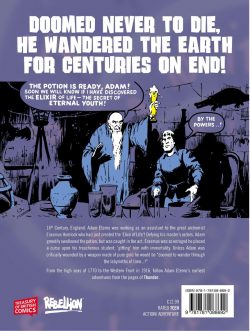
Delivered in stark, moody monochome, and further illustrated by Page, Francisco Solano López (and his family studio), Bradbury, Ted Kearon and Rex Archer, these tales are the earliest exploits of the tragic immortal chronal-castaway Adam Eterno who began life as a 16th century apprentice to alchemist Erasmus Hemlock…

When his master perfects an immortality serum, headstrong impatient Adam samples the potion against the sage’s command, precipitating the ancient’s death and a fiery conflagration that destroys the house. The alchemist last act is to curse his disobedient student to live forever and “wander the world through the labyrinths of time”. His only surcease would come from a mortal blow struck by a weapon of solid gold…

The curse is truly effective and as centuries pass, Adam becomes a recluse: his unchanging nature driving him away from superstitious mortals and denying him over and over again simple contact with humanity. He fought in all of Britain’s wars, but combat comradeship always ended when a seemingly fatal blow of wound left him unharmed…

Everything changed and the second part of the alchemist’s curse came true in 1970 when the traumatised, barely sane 421-year-old tramp staggered into a bullion robbery and was shot by the thieves. Realising their victim is invulnerable, the bandits attempt to use him in a raid on the Bank of England, but when that fails, Adam slowly starts to regain his wits – just in time to be struck by the fully-gold-plated limousine of a speeding millionaire…

The impact would be fatal for any other being, but for Adam Eterno it is the beginning of redemption as the shock hurls him into the time stream to land over and again in different eras…

With Page (D-Day Dawson, Paddy Payne) at the helm, his first jaunt lands Adam on a sailing ship in 1770, inadvertently saving seagoers from murderous pirate Barnaby Shark, before joining the buccaneer to steal his solid gold dagger to end his twice-lived life…

When that ploy fails, Adam is whisked away to rematerialize in Texas. The year is 1872 and the gold rush has ended a decade since, but evil still abounds as local cattle baron Bret Logan seeks to drive settlers away. When Adam sides with them, the rancher hires deadly gunslinger The Yellowstone Kid, a killer with guns of gold. It seems like Adam would finally get his wish, but sadly the bullets are simply lead.

And so it goes: Adam comes tantalisingly close on every arrival, seemingly drawn to terror and injustice with each event linked to some sort of potential auric armageddon. In Victorian London he battles masked madman the Flying Footpad as the villains seeks to steal a golden turban; foils contemporary South American dictator and war criminal General Carlos Cabeza despite the threat of another golden dagger and returns to World War I’s Western Front and confronts seemingly indestructible German General Von Gruber and his golden sabre in extended multi-chapter exploits.

Returning to modern days, Eterno joins treasure-hunting divers facing an apparent ghost guarding a sunken galleon: battling brutal thug dubbed Hammerhand (because of his gold prosthesis). Courtesy of the magnificent Solano López (Kelly’s Eye, Janus Stark, Master of the Marsh, Raven on the Wing), a voyage to Dark Ages England to stave off a Viking invasion, segues into Saxon times (by Colin Page) in the wake of the Norman conquest and a small war against wicked golden knight Baron de Gride before a turning point and further facts on the enigmatic wanderer arrives when he land in a 20th century reconstruction of the house where he served and was cursed by Erasmus Hemlock…

Limned by Solano-López, the tale discloses how modern crooks seek to use the house to swindle a rich American until “dissuaded” by the original occupant, who then fetches up in Africa during the Boer War, with Page detailing how he saves English troops from brutal Afrikaans tactical mastermind The Butcher. This time, the weapon to watch is a gold-tipped bullwhip…

Solano López returns for a Roman holiday as Adam saves a gladiator from assassination and becomes embroiled in a plot by wicked Odius Limpus to make himself even more wealthy. Such a shame it’s happening in Pompeii’s arena in August, 79 AD…

This spectacular yarn closed Adam Eterno’s run and indeed the comic Thunder, but this collection holds more gleaming extras in the form of a quintet of tales from Thunder Annuals. The first is from the 1972 edition, rendered by British national treasure Eric Bradbury who depicts a snowy drama in a German town circa 1598, where “the Old Man of Vartzberg” is again terrorising the populace with his sudden manifestations. In situ – prior to becoming lost in time – is English Witchfinder Adam Eterno, on a personal crusade to wipe out alchemists and other mystic dabblers. When he roots out the wizard he is damned by a prophecy to beware a golden sword… but the crisis point only happens in 1943 when British commando Eterno leads a team against Nazi-held Vartzberg…

Next comes a brace of tales from 1973, beginning with an adventure illustrated by Rex Archer. Here, after Merlin seals the Goblin Crown of the Dark Gods in his Golden Tower, Adam is plucked from Limbo to battle a dragon and duped by vile Sir Mordrac into fetching the artefact out again. Thankfully, King Arthur’s mage had made contingency plans…

In accompaniment is a prose tale with spot illustrations from Ted Kearon, wherein Adam saves enslaved Saxons from Vikings and is forced to prove his unkillable nature over and over again.

The following year Solano-López opened proceedings as the Man Who Could Not Die arrived in the Americas just in time to aid privateer captain Francis Drake in his legendary raid on Panama, but only after Adam clears out a host of giant mutated monsters created by a crazed Spanish Don-turned-alchemist.

Bradbury then added two-toned images (red & black) to another prose saga as Adam arrived in London fog in 1896: avoiding the police whilst tracking a murderous “Leaping Terror” with a strong resemblance to a giant bat…

Closing with biographies on the many creatures featured herein and dotted with covers and teaser visuals, Adam Eterno – A Hero Out of Time is potently thrilling and rewarding romp to delight readers who like their protagonists dark and conflicted and their history in bite-sized bursts.
© 1970, 1971, 1972, 1973, & 2021 Rebellion Publishing IP Ltd. All Rights Reserved.
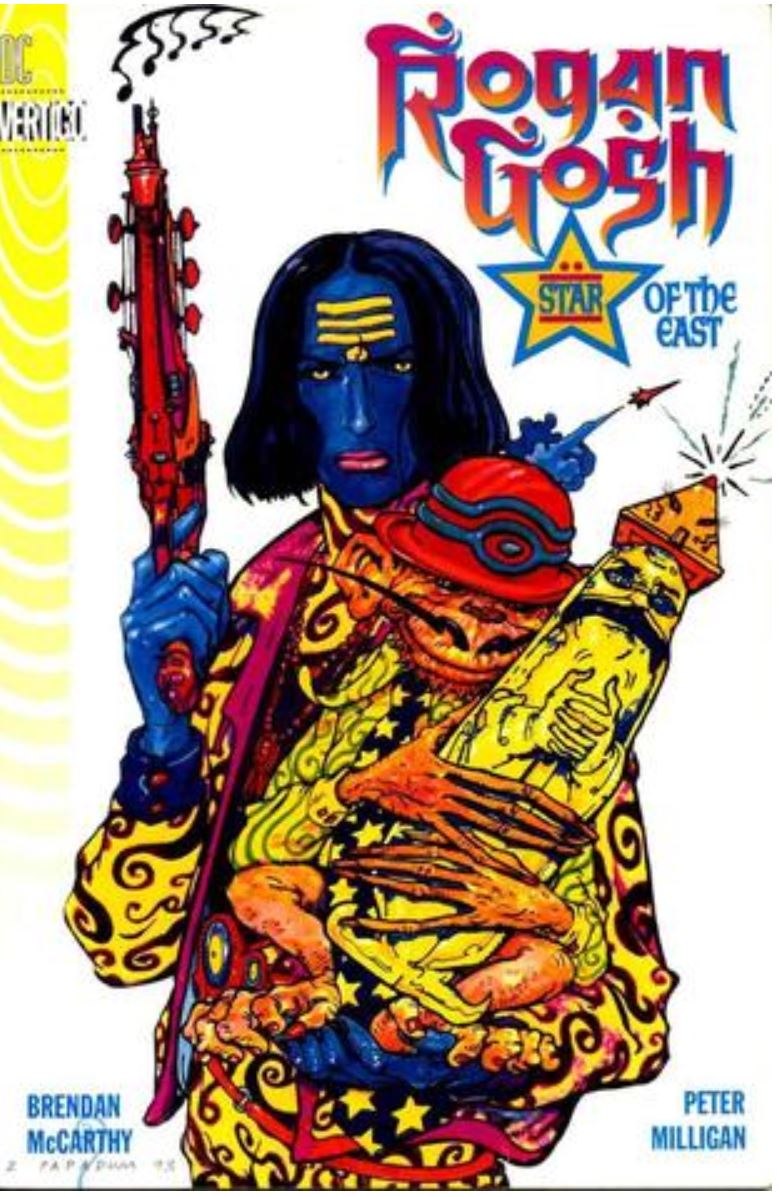
Rogan Gosh: Star of the East


By Pete Milligan & Brendan McCarthy with Tom Frame (Vertigo/Little, Brown & Co)
ISBN: 978-1-56389-143-4 (Vertigo TPB) 1-85386-253-3 (Little, Brown PB)

It feels like a cop-out and total dereliction of duty, but none the less true that some graphic novels simply defy categorisation and defeat the reviewers’ dark arts: they just have to be read, experienced and judged on a personal basis. We could stop there and it’s over to you…

However, should you require more…

Rogan Gosh is a short serial by Pete (Skin; John Constantine, Hellblazer; Strange Days; The Human Target; Batman; Red Lanterns; Shade, the Changing Man; Enigma; The Extremist; X-Statix; Johnny Nemo, Bad Company) Milligan and Brendan (Dream Gang; Mad Max: Road Fury; Judge Dredd; Spider-Man: Fever; ReBoot; Zaucer of Zilk; Skin; Swimini Purpose; Strange Days; Sometime Stories) McCarthy with notable contributions from letterer/colourist Tom Frame.

It first appeared in short-lived, controversial, cutting edge, experimental British comic magazine Revolver – specifically issues #1-6 spanning July-December of the Fleetway Publication. It was later collected into a graphic album by DC/Vertigo in 1994. I’m pretty sure there was also a Fleetway collection, but if so, it’s nigh impossible to find now, and that was a lifetime ago, so I might be dreaming of another reality…

Like companion/precursor title Crisis, Revolver’s brief was to make comics for people who had outgrown funny picture stories and adults who claimed to have never read them. It was supposed to be political, fashionable, contemporary and contentious, and it succeeded over and over again, in strips like Dare, Purple Days, Happenstance and Kismet, God’s Little Acre, Pinhead Nation and Plug Into Jesus.

For many, the jewel in the crown was a bizarre and beautiful, sardonically surreal saga incorporating English curry houses, karmic renewal and exploration, science fiction iconography, cultural commentary and (in)appropriation, ferociously irreverent satirical comedy, and – apparently – concealed creator autobiography. It referenced Indian philosophy and religions, British colonial history and modern urban street life in an onrushing miasma of visual and ideological concepts that blew the mind and generated outrageous belly laughs. There were loads of guns and rockets and tons of sex too…

Like many Milligan & McCarthy creations the strip is often described as “post-modern psychedelia”, evolving from channelled childhood experiences of two white art school kids who had grown up amidst the burgeoning fallout of the Desi Diaspora. That’s when families from the countries of the Asian sub-continent – specifically Pakistan, Bangladesh and India – migrated to western countries like Britain, bringing new thought, music, fashions, scents and especially food to broaden and enrich an evolving multiculture. There were even comics unlike any we’d ever seen before when cruising the streets of Southall or Brick Lane…

Proud products of such an environment and rising superstars thanks to 2000AD, writer Milligan and co-plotter/illustrator McCarthy had planned to deliver a kind of “Bollywood Blade Runner”, but the story sort of got away from them… as is often the case with passion projects…

I’m feeling truly redundant trying to precis the plot, but for the sake of form, try this…

The universe exists on many levels and at all times. In Raj-era India Rudyard Kipling has shamed himself with a native houseboy and now roams the streets of Lahore, seeking a holy man to save his sanity and reputation by putting him in touch with the fabled Karmanauts.

His quest succeeds and the author is – via drugs and magic and ancient wisdom – elevated to a state where he witnesses a future where laddish London oaf Dean Cripps escapes stroppy girlfriend Mary Jane to go for a curry at the magnificent Star of the East in Stoke Newington.

When Dean feels a frisson of connection with beautiful waiter Raju Dhawan, the energy unleashes time-travelling wonder warrior Rogan Gosh just in time to defend enlightenment and all realities from the clandestine attacks of destructive Kali and her malign vampiric agent the Soma Swami…

It all gets a bit strange after that, what with audacious experimental love, devastation and recreation, Karma Kops, and that pest monkey god Hanuman, but rest assured that by the end, what you presume to be the regulation natural universe is back near where it belongs…

Although the story and events might bewilder, what is beyond question is the astounding art by Brendan McCarthy: utilising a blend of pen, paint and early digital technology to create a lush and vibrant homage to the startlingly bright colours of the subcontinent and plush décor of favourite London curry houses and tapping the wellsprings of a fevered and sublimely seasoned imagination to beguile the eyes. This stuff is just so damn pretty…

Hard to find in its original form, the entire trip is reprinted in 2013 anthology The Best of Milligan & McCarthy beside lots of other great stuff like Freakwave, Paradax! and Skin. The collection (which is on my to-do list…) is also available in digital format so there’s no need to wait.

Your destiny awaits, you only have to choose to embrace it…
™ & © 1990, 1994, 2013 Peter Milligan & Brendan McCarthy. All rights reserved.

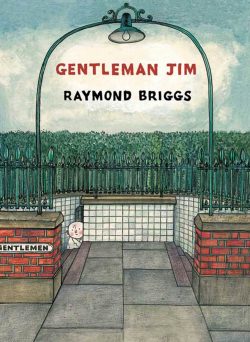
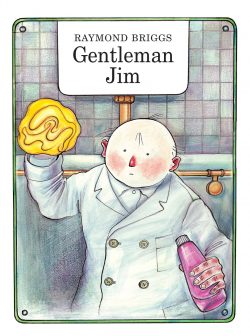
Gentleman Jim


By Raymond Briggs (Jonathan Cape/Drawn & Quarterly)
ISBN: 978-0-22408-524-3 (HB, Jonathan Cape) 978-1-8972-9936-4 (PB, D&Q edition)

Once again a master of comics art has been taken from us, and this time it’s one of the greatest in our medium’s history: a hugely gifted maverick who worked largely outside the established industry, but whose decades of work truly turned sequential graphic narrative into an art form.

Cartoonist, political satirist, philosopher, social commentator and delighter of children of all ages, Raymond Redvers Briggs CBE (18th January 1934 – 9th August 2022) never forgot that kids aren’t fools. Many of his books – ostensibly targeting the young – revel in the target audience’s fascination with all things gross and disgusting and the artist never underestimated an “unformed” mind’s capacity for empathy and understanding. Moreover, unlike so many working in the children’s book industry, he wasn’t afraid to be morose or even sad…

The comic book industry always wilfully neglected and sidelined Briggs’s graphic narratives – which nevertheless reached more hearts and minds than Spider-Man or Dennis the Menace ever will. Briggs’ books remain among the most powerful and important in the entire field.

Deservedly famous works such as Father Christmas, The Snowman, When the Wind Blows, Fungus the Bogeyman, The Bear, Ethel and Earnest, Ug: Boy Genius of the Stone Age and Time for Lights Out are but the tip of an astoundingly impressive, remarkably wide-ranging and quintessentially British iceberg of dry, mordant wit, cheeky sarcasm and poignant fellow-feeling for even the most ghastly and graceless of his unlikely protagonists…

After studying at Wimbledon School of Art, Central and The Slade – and completing a stint of National Service in Catterick – Briggs started working as an illustrator in 1958. He produced dozens of books, ranging from illuminating other creators’ poetry and stories to crafting his own dingily fabulous yarns such as this slyly seditious treatise on self-betterment that first appeared in 1980.

One of his most charmingly bittersweet and contemplative efforts, Gentleman Jim is a mesmerising affectionate portrait of one of life’s always-dreaming no-hoper’s, published just as Thatcherite dogma began to bite and tear into Britain’s already reeling social structures.

Jim Bloggs is a middle-aged bloke who mans a Council-run public toilet or “Gentleman’s Convenience” in Birmingham: diligently and uncomplainingly cleaning and maintaining his subterranean office whilst constantly dreaming of bigger, better, bolder things.

There’s nothing wrong with the job; it’s just that Jim feels he was meant for greater challenges…

At every quiet moment, Jim scans the job section of the newspaper, imagining himself a hero of the Royal Marines or a tail-gunner in a fighter-bomber or an artist or even a doorman in a fancy uniform. It’s never too late…

Jim’s problem is education: he hasn’t any and all these vacant situations want people with “The Levels”… O’s and A’s and whatnot…

At home with his wife Hilda, Jim discusses a change of direction. Inspired by a late film on television, he decides to become a cowboy, maybe even a sheriff. A quick bit of research convinces him that the start-up costs for cowboying are beyond his means and the paperwork would be a nightmare, but after popping into the second-hand bookshop Jim realises that what he really wants to be is a Highwayman…

Even here though, money is a problem. Great black chargers or even plain old valiant steeds cost thousands of pounds. However, when the local Donkey Sanctuary lets him have one of their older ones for free, Jim’s off and running in his new career and living his dream…

Sublimely low key and gentle, the fall into arrant criminality of this ambitious dreamer is a sheer, understated masterpiece of sardonic whimsy to enthral and delight older kids as well as all us adults who never quite made it. Yet…

Raymond Briggs was the human turning point in the evolution of comics from tawdry waste of time to esteemed art form and his books will live forever. If you’re not a fan yet, you inevitably will be …once you start reading them.
© 1980, 2008 Raymond Briggs. All Rights Reserved.

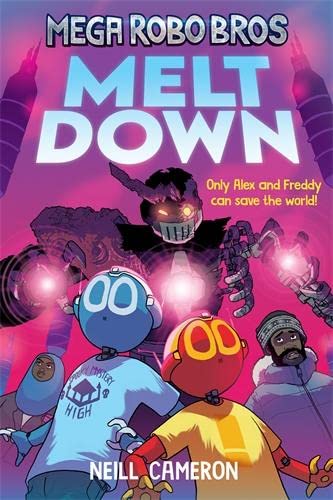
Mega Robo Bros: Meltdown


By Neill Cameron with Abby Bulmer & Lisa Murphy (David Fickling Books)
ISBN: 978-1-78845-281-6 (TPB)

Just in time to keep the kids occupied for the summer break, here’s another sterling all-ages outing for Neill (Tamsin of the Deep, How to Make Awesome Comics, Pirates of Pangea) Cameron’s marvellous purpose-built paladins. This time the rambunctious Mega Robo Bros share more of their awesome adventures and growing pains – and even some Secret Origins – in a far darker and more violent tale than their previous fun fare…

It’s the Future!

In a London far cooler than ours, Alex and his younger brother Freddie are (sort of) typical kids: boisterous, fractious, eternally argumentative yet devoted to each other, and not too bothered that they’re adopted. It’s really no big deal for them that they were constructed by the mysterious Dr. Roboticus before he vanished, and are considered by those in the know as the most powerful – and only SENTIENT – robots on Earth.

Dad may be just your average old guy who makes lunch and does a bit of writing, but it’s recently become apparent that when not being a housewife Mum is a also a bit extraordinary. As surprisingly famous and renowned robotics boffin, Dr. Nita Sharma harbours some surprising secrets of her own…

All the same, life in the Sharma household is pretty normal. Freddie is insufferably exuberant and over-confident whilst Alex is at the age when self-doubt and anxiety begin to manifest. Of course, their parents’ other robot rescues can also be a bit of a trial. Programmed as a dog, baby triceratops Trikey is ok, but French-speaking deranged ape Monsieur Gorilla can be mighty confusing, whilst gloomily annoying, existentialist aquatic fowl Stupid Philosophy Penguin constantly quotes dead philosophers and makes most people rapidly consider self-harm or manic mayhem.

The boys have part-time jobs as super-secret agents, but aren’t very good at the clandestine part and now almost the entire world knows of them. Generally, however, it’s enough for the digital duo that their parents love them, even though they are a bit more of a handful than most kids. They live as normal a life as possible: going to human school, playing with human friends and hating homework. It’s all part of their “Mega Robo Routine”, combining dull lessons, actual fun, games-playing, watching TV and training in the covert combat caverns under R.A.I.D. HQ.

Usually, when a situation demands, the lads carry out missions for bossy Baroness Farooq: head of government agency Robotics Analysis Intelligence and Defence. They still believe it’s because they are infinitely smarter and more powerful than the Destroyer Mechs and other man-made minions she usually utilises. Of course, they’re on suspension from R.A.I.D. at the moment, due to the fallout and collateral damage of their last case…

Originally published in UK weekly comic The Phoenix, this revised, retooled and remastered saga opens as the bored, curfewed boys sneak into Mum’s workshop. Whilst defeating a reject robot rebellion sparked by artificial life activist the Caretaker, the Bros met monstrous, cruelly damaged droid Wolfram and learned that he might be their older brother…

Now they’re trying to break into Mum’s locked datafiles to learn the truth, and her part in their creation, as this saga opens with ‘Part 1: Fifteen Years Ago’. When Dr. Sharma catches the little perishers in the act, instead of punishment, she gives them full access.

What unfolds is a shocking story of when their mother was a young, pretty and brilliant roboticist who landed her dream job working beside incomparable (but weird) pioneering genius Dr. Leon Robertus. His astounding advances had earned him the unwelcome nickname Dr. Roboticus. Maybe that was what started pushing him away from humanity…

Over months, Nita grew into her job and eventually convinced Robertus to let her repurpose his individually superpowered prototypes into a rapid-response team for global emergencies. Mum used to be a superhero, leading manmade Rapid Response team the Super Robo Six! While saving lives with them she first met future husband Michael Mokeme who proudly took her name when they eventually wed…

So Dad was also present at the moment everything changed!

Robertus was astoundingly devoid of human empathy but – intrigued by the team’s acclaim and global acceptance – was inspired to create a new kind of autonomous robot. Wolfram was more powerful than any other construct, and also possessed certain foundational directives that allowed him to make choices and develop his own systems. He could think, like Alex and Freddy! Only, as it transpired, not quite…

When Robertus demoted Nita and made his new “child” leader of new Super Robo Seven, the result was an even more effective unit, until the day Wolfram’s three Directives clashed during a time-critical mission. Millions of humans paid the price for his confusion and hesitation…

In the aftermath, RAID was formed and sought to shut down Robertus and decommission Wolfram. When the superbot rejected their judgement, the agency deployed jets and missiles. Following a terrific struggle, they believed him destroyed. They were wrong…

…And while RAID was occupied, Roboticus vanished…

Story told, the amazed Robo Bros realise why Mum called the recently-returned Wolfram their brother. They are all unaware that the damaged, deranged droid is observing and has made a decision that will affect all humanity…

‘Part 2: Meltdown’ opens with an increase in casual human-on-robot abuse. Perhaps this triggers Wolfram’s final solution as Dad heads to the North Pole to interview chief scientist Professor Mahfouz spearheading an attempt to restore the polar ice cap with a colossal freezing machine.

Jötunn Base covers many miles and is carefully rebalancing the world’s climate, but has no defence when Wolfram arrives to reverse the chilling process to burn the Earth and drown humanity…

Alex and Freddy are making the best of their house arrest, playing a game with classmates Mira and Taia when news comes of the attack. Ordered again by Baroness Farooq to stay put and not help, they enlist the girls in an escape plan that takes them through the secret basement lab and far below London, using the abandoned transport tunnels beneath the city.

By the time the Bros reach Jötunn Base, Wolfram has already ruthlessly crushed the RAID force led by their friend Agent Susie Nichols and all that’s possible is to stop their determined and utterly unreasonable brother by any means necessary…

That grim task falls to “older” bro Alex, whilst Freddy works with Dad and Professor Mahfouz to repair and reprogram the giant freezer machine and stop the planet becoming a water world…

With humanity safe again the boys are well rewarded by Farooq, but completely unaware that an old enemy has ensured that the threat of Wolfram is not ended…

Crafted by Cameron and colouring assistant Alice Leclert, this rather more grim adventure still offers exceedingly engaging excitement and hearty hilarity, roaring along like an anti-gravity rollercoaster, offering thrills, chills, warmth, wit and incredible verve. Alex and Freddy are utterly authentic kids, irrespective of their artificial origins, and their antics strike exactly the right balance of future shock, family fun and bombastic superhero action to capture readers’ hearts and minds. What movies these tales would make!
Text and illustrations © Neill Cameron 2022. All rights reserved.

Mega Robo Bros Meltdown will be released on August 4th 2022 and is available for pre-order now.

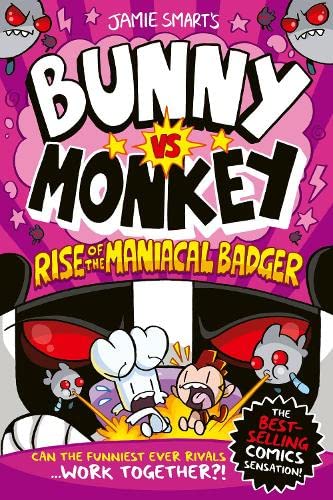
Jaimie Smart’s Bunny Vs Monkey: Rise of the Maniacal Badger


By Jaimie Smart, with Sammy Borras (David Fickling Books)
ISBN: 978-1-78845-280-9 (TPB) 978-1-78845-118-5 (Waterstones Exclusive Edition)

Bunny vs. Monkey has been a staple of comics phenomenon The Phoenix since the very first issue in 2012: recounting a madcap vendetta gripping animal arch-enemies set amidst an idyllic arcadia masquerading as more-or-less mundane but critically endangered English woodlands.

Concocted with gleefully gentle mania by cartoonist, comics artist and novelist Jamie Smart (Fish Head Steve!; Looshkin; Flember), the trendsetting, mindbending yarns have been wisely retooled as graphic albums available in remastered, double-length digest editions such as this one.

All the tail-biting tension and animal argy-bargy began yonks ago after an obnoxious little beast popped up in the wake of a disastrous British space shot. After crashlanding in Crinkle Woods – scant miles from his launch site – lab animal Monkey believed himself the rightful owner of a strange new world, despite all efforts from reasonable, sensible, genteel, contemplative forest resident Bunny to dissuade him. For all his patience, propriety and good breeding, the laid-back lepine just could not contain the incorrigible idiot ape, who was – and is – a rude, noise-loving, chaos-creating loutish troublemaker…

Problems are exacerbated by the other unconventional Crinkle creatures, particularly a skunk called Skunky who has a mad scientist’s attitude to life and a propensity to build extremely dangerous robots and super-weapons…

Here – with artistic assistance from Sammy Borras – the war of nerves and mega-ordnances resumes and intensifies. The unruly assortment of odd critters loitering around and cluttering up the bucolic paradise have finally picked sides: shifting and twisting into bipartisan factionalism. They all seem to have forgotten that rapidly encroaching Hyoomanz as they respond to another personal crisis and the rise to power of an unsuspected third force in woodland politics…

As ever divided into seasonal outbursts, the saga starts slowly with a chilly teaser tale as Winter ends in the ‘Thaw of the Snow-Bots’…

The assorted animals have been in stasis in a giant freezer, and once fire-breathing snowmen attack, they decide it’s best to have a little more kip… or do they?

The story actually resumes in Spring and the far future where time-traveller Ai – a superfast Ai-Ai not naturally indigenous to our sylvan glades and endangered shores – learns of a disaster that’s history here but her tomorrow. A good person, she undertakes ‘The Journey Home’ but arrives too late as ‘A Rather Maniacal Badger’ details how the woods have been conquered at last…

Previously, a catastrophic rivalry erupted when rival evil genius Maniacal Badger vied with Skunky for the title of “The Most Brilliant Animal in the Woods”. Now, while everyone was hibernating, the black-&-white bounder has occupied the region and established a base in a 50-foot (15-24 meters) high statue of himself as the first step in building his dream of Badgertopia.

The shock of defeat particularly affects Skunky, who descends into a spiral of depression and lowering esteem…

Universal innocents Weenie squirrel and Pig have their own way of de-stressing and not even roving robot drones can upset ‘A Quiet, Uneventful Day’ on the lake. Old animosities are paused and enemies become temporary allies planning to resist through ‘Distraction’ and strategic deployment of brain-battered, bewildered suicide bomber/former stuntman Action Beaver, but when that scheme flops we instead focus on ‘A Sad Skunk’ as the original mad scientist undergoes an existential crisis and needs Bunny to share it with…

The relative inactivity soon triggers his robot back-up to mischief mode, but even ‘Mecha Skunky!’ is not immune to the doldrums and there’s nothing ‘Action Beaver!’ can do to rectify the situation, especially after the badger activates a gross flying terror who swallows everybody in ‘The Whale!’

Having retreated to the tunnels built by long-gone but not forgotten local legend Fantastic Le Fox, the uneasy animal animals hide from the tyrant’s tantrums in ‘Too Noisy!’: unexpectedly discovering a hidden, weapon-stocked lair that will be the base for their fight back… once they have safely reassembled ‘All the Toys in the Toyshop!’

Although initial giant robot ‘Battle Bat!’ spectacularly fails, resistance efforts continue, but Monkey is easily distracted and soon moves to make his own empire in ‘Monkeyopia Rises!’ and as Summer begins ‘Divisions!’ proliferate. Before long the war with Bunny flares up again and instantly moves into the province of war crimes as the simian unleashes his flatulence-powered ‘Rofl-Copter!’

Weenie and Pig go on a ‘Treasure Hunt!’ in the mouldering pile of toxic rubbish kindly left by the Hyoomanz, but find no shield from the badger’s latest infamy: mind controlling everyone and turning the Woods into his digital plaything in ‘Game Over!’

A brief diversion follows in an exclusive Bunny vs Monkey Detective Story, but ‘The Curious Case of the Pig in the Night-Time’ is less baffling than Bunny’s failure to join mystic brotherhood ‘The Order of the Moose’…

When young Hyoomanz find themselves ‘(Not) Alone in the Woods’ during a class trip one little girl renews her old acquaintance with Metal Steve after he saves them from Maniac Badger attacks, whilst elsewhere ‘Monst-Ughs!’ run wild after improper use of Skunky’s old monster ray, leading to a glimpse at the tyrant’s origins and family issues in ‘The Making of a Maniacal Badger!’

Incorrigible Monkey then loses control of marauding robot ‘Doom Fists!’ after he is attacked by his wicked doppelganger Evil Monkey and partner in crimes Evil Monkey Wife, whilst elsewhere Skunky recovers some of life’s zest after helping Weenie and Pig repair one of the badger’s ‘Evil Drones!’

Three part saga ‘The Saving of Skunky!’ sees order restored after the badger’s plan to kidnap Skunky and steal what’s left of his evil genius goes awry. Trapped together in the Dark Woods, the skunk experiences a ghastly visitation and by the time the Maniacal one gets back to his conquered kingdom, there’s a restored archenemy waiting to deliver ‘A Sharp Shock’ with electrified clouds and a Zeus costume…

Badger’s retaliation is ancient thought monster ‘Ragnaggtrix!’ but there’s an inherent flaw in something dependent on belief that the evil genius didn’t consider. Thankfully, Skunky is preoccupied ‘Distracting the Monkey!’ from cadging more superweapons to misuse…

Bunny becomes guinea pig when Skunky and Monkey test emotion-warping Mind Mines in ‘Highly Strung!’ and as ‘Autumn begins The Rise of an Empire!’ finds expansionist Monkeytopia devasted by its ruler’s idiocy, even as the badger traps the woodland creatures inside his new phone app in ‘Game On!’ It’s a huge, costly mistake…

‘Balloonacy!’ breaks out when Weenie and Pig try to attend Ai’s birthday party, before a new character debuts. ‘Lucky!’ is a red panda who escaped a lab doing weird experiments. It might not have been in time though, since the three-way war for supremacy in the woods triggers an odd reaction…

The action and drama ramp up for a big finish as Badger is made to clean his room and employs the ‘Doomsday Device!’ that opens portals to Hell. Shame about his mum and dad…

Skunky makes a silly mistake and gives the wrong animal some atomic powered ‘Explosive Sweets!’ which makes Halloween’s ‘Fright Night!’ Scare-Off pretty anticlimactic war, before another peek at the future reveals the legend of ‘Jetpack Beaver!’

A distant relative tries to make one woodland weirdo ‘Pigging Rich!’ with little success, after which a bad tooth and unwise consultation with Skunky results in Monkey taking a big bite out of everything in ‘Chomp!’

The cataclysmic end begins when the Maniacal one pressgangs ‘The Badger Army’ to do his bidding but forgets the species’ tendency to unionise even as Skunky creates a ‘Terraforming Orb!!’ to purpose-build a new world. It’s a shame Monkey dropped it on his own head while it was switched on…

Winter begins with 3-chapter epic ‘A Very Badger Christmas’ that delivers shocking big reveals, pulls all the plot threads of the past year together, ends the world and still leaves rueful survivors wondering what comes next in ‘Aftermath’. Whatever you think happened you’re wrong, so you just have to buy this book to see how…

The animal anarchy might end for now there’s one more secret to share with detailed instructions on ‘How to Draw Maniacal Badger’ so, as well as beguiling your young ‘uns with stories, you can use this book to teach them a trade…

The zany zenith of absurdist adventure, Bunny vs Monkey is weird wit, brilliant invention, potent sentiment and superb cartooning crammed into one eccentrically excellent package: never failing to deliver jubilant joy for grown-ups of every vintage, even those who claim they only get it for their kids. This is the kind of comic parents beg kids to read to them. Is that you yet?

Text and illustrations © Jamie Smart 2022. All rights reserved.
Bunny vs Monkey: Rise of the Maniacal Badger is published on July 7th 2022 and is available for pre-order now.

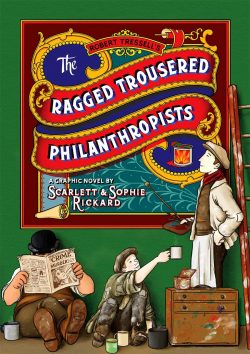
The Ragged Trousered Philanthropists


By Robert Tressell; adapted by Scarlett & Sophie Rickard (SelfMadeHero)
ISBN: 978-1-910593-92-9 (TPB/Digital edition)

Born in Dublin to unfavourable circumstances, Robert Croker – AKA Robert Noonan – (17 April 1870 – 3 February 1911) was a man of many parts. His short, globetrotting, eventful life ended with him a housepainter and signwriter (a skilled trade) dying of tuberculosis in The Liverpool Royal Infirmary in 1911.

In all likelihood nobody today would remember him if he hadn’t spent his off hours in the declining years of 1906 to 1910 writing a book. He failed to have it published in his lifetime, but his daughter Kathleen Noonan persevered and a first (heavily edited, highly abridged and politically redacted) version was released on April 23 1914 – four months before the Great War began. That clash resulted in a changed planet and the first socialist (sic) state…

The full manuscript didn’t reach the public until 1955. Even bowdlerized editions were potent enough to make it one of the most important books of the century. Released under the nom de plume Robert Tressell, the cultural satire and barely-disguised socialist polemic was The Ragged Trousered Philanthropists.

After reading the million plus-selling, never out-of-print pioneering prose opus of working class literature, you should research the times it was set in and read up on the author, if you want to see how a fascinating man responded to the injustice of his world. There’s a splendid Afterword by the creators in this hefty graphic novel to get you started…

A more jaded person might assume current businesses and governments have also studied the text, with a view to rolling back all the hard-won advances made since then, returning us to the days where workers toiled in a brutal gig economy without safety nets of social housing, medicine or pensions. Work or die was the way of world and it’s well on its way back…

The tale – masquerading, like a Thomas Hardy Wessex novel, as a peek at the lives of poor working folk – was a major influence on thinkers in the aftermath of WWI, and many of the civil rights and common benefits of civilisation that we’re gradually allowing to be taken from us were predicted in its more utopian moments…

Politics aside however, it’s also a sublime realisation and examination of the working classes in all their warty, noble, scurrilous, generous, mean-spirited, self-sacrificing, self-serving, gullible, aspirational, tractable, intractable, skiving, hard-working, honest and human glory: a state perfectly realized in this warm-hearted and supremely inviting comics adaptation by Sophie Rickard, illustrated with charm, simplicity and abiding empathy by Scarlett Rickard. You will also want to see Mann’s Best Friend and A Blow Borne Quietly and their eagerly-anticipated adaptation of suffragist Constance Maud‘s inspirational No Surrender…

The semi-autobiographical story detailed here closely follows a group of workers and their families over a year in the town of Mugsborough: proudly go-getting municipal powerhouse (closely based on Hastings, where Croker had worked) with the usual band of rich, mercantile bastards in charge and on the Council, feathering their own lavish nests with the approval and assistance of the local churches and clergy…

The 23 chapters span a year as seen through the eyes of skilled labourers at a time when jobs were scarce and cut-throat competition had the men who hire them fiercely undercutting each other to secure commissions. The artisans are currently refurbishing an ornate house on the cheap for a grasping boss, under the penny pinching eye of foreman Mr. ‘Unter.

In breaks and off moments the disparate crew – dispassionately at first – discuss the job, the way of the world and ever-present threat of work drying up again. Artisan painter/signwriter Frank Owen argues the greed and dishonesty of capitalism and enlightening sense of socialism to his highly resistant and openly hostile mates. Over many days, they all hotly debate ‘The Causes of Poverty’ and the Church’s complicity in maintaining an unfair status quo in ‘The Lord Our Shepherd’. Further discussion in ‘The Economists’ focuses on the impossibility of making do on ever-diminishing wages and ‘The Ever-Present Danger’ of being thrown away once a worker is no longer usable.

This is no pedant’s dry and dusty tirade. “Tressell’s” arguments are bolstered by the declining state of the wives, elders and children of the workers – most of whom still argue ferociously against improvement of their own conditions. As those above them reduce wages and increase hours, uncaring of the horrific repercussions of their parsimony, Frank and enigmatic associate George Barrington gradually convert many, but a resolute group cannot countenance any change to the old system.

That begins changing in ‘The Truth’, and revelation is heightened after the Church is exposed to ‘The Shining Light’, especially once Owen makes a breakthrough by explaining ‘The Money Trick’ underpinning Capitalism.

The damaging power of booze on the hopeless is witnessed after a night at ‘The Cricketers’, presaging work briefly pausing for ‘The Christmas Party’. A New Year exposes corporate skulduggery and public malfeasance by ‘The Council’ of Mugsborough…

Every opinion expounded by the painters can be seen here and now: echoed on modern TV vox-pop segments with today’s exploited, bread & circus sated citizens repeating that we should let the rich (our “betters”) do the hard job of making the big decisions for us, happily abrogating all responsibility for their own evermore parlous state…

Deepening personal crises auger greater tragedies as ‘The Beginning of The End’ finds a beloved friend condemned to the Workhouse as a cynically tongue-in-cheek glimpse at what the Establishment considers ‘The Solutions’ to poverty lead to a long look at ‘The Meetings’ inside the Municipal Council and how a glimmer of reform is crushed by the prestigious clique…

After a period of scarcity, fresh work at a lower wage comes in ‘The Summer’ before a turning point comes when Barrington challenges the Bosses on a rare day’s holiday jaunt in ‘The Beano’ (slang for “BNO” – Boys Night Out).

Again arguing – but with a much smaller and more vocal group of workmates – Owen and Barrington begin ‘The Great Oration’, overruling and disproving ‘The Objections’ of bellicose working class holdouts – the apologists and willing henchmen who happily betray their own sort for elevated status, extra pennies and the cheery disdain of the capitalists. However, grief has not ended and as talk of elections and the growth of a socialist Labour Party blooms, death comes again. Even here the rich and their lackeys find a way to make a profit in ‘The Rope’ and a sordid exhibition at ‘The Funeral’. After the worker’s death comes what we today call “the cover-up”…

Feelings of hope manifest in final chapters ‘The Will of the People’, ‘The Sundered’ and ‘The New Position’ as utopian ideals and practical solutions are leavened with home truths, and a concentration on making change happen…

Uplifting ending notwithstanding, The Ragged Trousered Philanthropists is a major milestone in the west’s path to becoming truly civilised, and this beautifully accessible iteration – deliciously illustrated in the manner of an inviting children’s picture book – could not be more timely, both as a reminder and warning from history. It’s also a wonderfully human drama gauging the limitations and frailties of the most exploited and vulnerable in society and “a book that everyone should read”.

I didn’t write that, George Orwell did, in 1946. Who could argue with that? Class is class no matter what you think…
© 2020 SelfMadeHero. Text © 2020 Sophie Rickard. Artwork © 2020 Scarlett Rickard. All rights reserved.

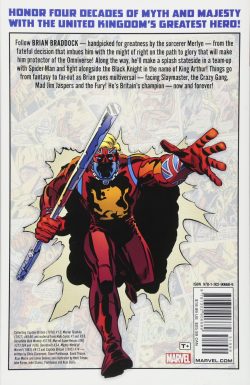
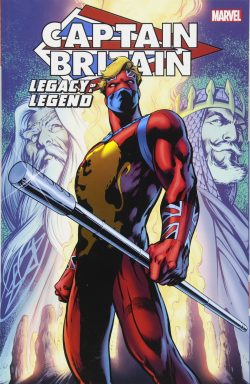
Captain Britain: Legacy of a Hero


By Chris Claremont, Steve Parkhouse, David Thorpe, Alan More, Jamie Delano, Herb Trimpe, John Byrne, John Stokes, Alan Davis, Fred Kida, Dave Hunt, Mark Farmer & various (Marvel)
ISBN: 978-1-3029-0668-9 (TPB/Digital Edition)

Marvel UK set up shop in 1972, reprinting the House of Ideas’ earliest hits in our traditional weekly papers format, and swiftly carving out a substantial corner of the market. It wasn’t the first time American glitz and glamour turned staid heads here: the works of Lee, Kirby, Ditko, et al had appeared in British comics Smash!, Wham!, Pow!, The Eagle, Fantastic! and Terrific! since the early 1960s and, in the case of Alan Class Publications’ anthologies, since before they actually became Marvel Comics…

In 1976, Marvel UK augmented their recycled output with an all-new British superhero. The eponymous weekly offered original material, with the majority of the page count reprinting fan favourites Fantastic Four and Nick Fury, Agent of S.H.I.E.L.D. One bold departure was full colour printing for the debutante champion to supplement standard monochrome reproduction in the titles remaining pages.

This compilation/primer gathers #1-2 of Captain Britain; US Marvel Team-Up #65-66 and select material from #1, 3-5 and 57-59 of the 1979 UK Hulk Comic/Hulk Weekly; Marvel Super-Heroes #377-384 & 386; The Daredevils #3-4, The Mighty World of Marvel #8-12 and Captain Britain volume 2 #14, collectively spanning October 1976 to May 1986, and also includes a fondly reminiscing Introduction from scripter Dave Thorpe.

Extras include cover roughs, concept and costume sketches by Herb Trimpe plus Alan Davis’ revamp designs and character studies for Slaymaster, The Fury and Crazy Gang. Sadly, not every pertinent cover is included, but those that are come from Larry Lieber & Frank Giacoia, George Pérez & Joe Sinnott, John Byrne, and Alan Davis.

Captain Britain’s earliest adventures read quite well in the hyper-tense 21st century. There is a matter-of-fact charm and simplicity to them that is sorely missing in these multi-part, multi-issue crossover days, and the necessity to keep reader-attention riveted and hungry for more in eight page instalments sweeps the willing consumer along.

Chris Claremont was given the original writing assignment – apparently due to his being born here – and Trimpe the pencilling chores because he was actually resident here for a while. Gary Friedrich eventually replaced Claremont, but the artist, inked by golden age legend Fred Kida (Airboy, The Heap, Black Knight) provided rip-roaring art for much of the initial run. Later artists included John Buscema, Larry Lieber, Ron Wilson and Bob Budiansky, before the feature folded. It was later revived by British creators Steve Parkhouse, John Stokes, Dave Thorpe, and ultimately, Alan Moore and Alan Davis…

Cover-dated Week-Ending October 13th 1976, Captain Britain #1 began his origin, told in ‘Captain Britain!’ and completed in #2 with ‘From the Holocaust… A Hero!’. Together, they reveal how physics student Brian Braddock was in just the wrong place when raiders attacked the Atomic research centre on Darkmoor. Fleeing imminent death, he stumbled onto a source of fantastic power and inescapable destiny. Chosen by the legendary Merlin himself, the teen Braddock was transformed into the symbolic paragon of our Island Nation, destined to battle incredible threats as its valiant and indomitable champion…

The weekly Captain Britain closed with #39 and in tried-&-true tradition was merged with a more successful title. Braddock’s exploits continued in Super Spider-Man & Captain Britain Weekly (#231-253). Except for covers, the book reverted to black-&-white and featured reprints for the last months. Before too long though, he resurfaced in America…

Crafted by Claremont and British-born, Canada-bred John Byrne, ‘Introducing Captain Britain’ in Marvel Team-Up #65, was the first half of a riotous romp. It depicted Brian Braddock on a student transfer to Manhattan and as the unsuspecting house-guest of Peter Parker. Before long the heroes had met, fought and then teamed-up to defeat flamboyant, games-obsessed hit-man Arcade. The transatlantic tale concluded in #66 as the abducted antagonists systematically dismantled the maniac’s ‘Murderworld’.

And then the Lion of Albion disappeared on both sides of the pond… until March 1979, when British weekly Hulk Comic debuted with an eclectic mix of Marvel reprints that veteran editor Dez Skinn felt better suited the British market.

There were also all-new strips featuring Marvel characters tailored – like the reprints – to appeal to UK kids. The Hulk was there because of his TV show, Nick Fury (by babe-in-arms Steve Dillon) – because we love spies here, and noir-tinged pulp/gangster thriller Night Raven came courtesy of David Lloyd, John Bolton & Steve Parkhouse.

…And then there was The Black Knight.

This feature appeared in issues #1, 3-30, 42-55 and 57-63 – the comic’s last issue. The paladin was a former member of the Avengers, but for this engrossing epic, costumed shenanigans gave way to classical fantasy set in modern Britain, but with Tolkienesque/Alan Garner overtones and Celtic roots interwoven into Arthurian myths.

Dispatched on a mission by Merlin (sometimes Merlyn here) to the wilds of Cornwall, the Knight and his winged horse Valinor are tasked with saving the Heart and Soul of England from Modred and a host of goblins and monsters. The selection here sees the quest spring into high gear with the reluctant/openly hostile aid of a broken, amnesiac Captain Britain.

Delivered in 3-page, monochrome episodes by writer Parkhouse & John Stokes (joined from #6 by penciller Paul Neary) this fantastical pot-boiler captured the imagination of the readership, became the longest running original material strip in the comic (even The Hulk lead feature reverted to reprints by #28) and often stole the cover spot from the lead feature.

It’s still a captivating read, beautifully realized, and the only real quibble I have is that the whole thing isn’t included here. If you’re wondering, the sword-and-sorcery action ends on a cliffhanger with our heroic Captain swearing fealty to a newly arisen King Arthur…

When the weekly ended in 1979, Captain Britain began a period of renewal plagued by peripatetic wanderings through numerous UK titles: starting with monthly reprint anthology Marvel Super Heroes #377-389 and continuing in The Daredevils #1-11. Eventually, he got another short-lived solo title…

Here we resume in colour (a fringe benefit of later reprint editions) with Captain Britain reimagined and redesigned by editor/plotter Neary and a new creative team, writer Dave Thorpe and artist Alan Davis. Their serial debuted in MSH #377 (September 1981).

Lost in the gaps between alternate worlds the hero and elf sidekick Jackdaw are drawn back to Earth, but upon arrival they discover it is a hideous parody of Britain, bleak, distressed, hopeless and depressed – a potent vision of the country that would exist after real-world tyrannical fanatic Margaret Thatcher had finished with it.

Thorpe’s desire was to inject some subversive social realism into the feature – and he encountered plenty of resistance – but the resultant analogies and allegories didn’t diminish the strip’s wildly escapist, potently dynamic, fabulously entertaining injection of fresh air. Coupled with Davis’ strikingly purist superhero art, the feature at last delivered a truly British-flavoured adventure. In short order the confused Captain met anarchic bandits The Crazy Gang, reality-warping mutant Mad Jim Jaspers, electorally-sanctioned British Nazis and a truly distressed population in ‘Outcasts’ (MSH #378).

The Good Captain then tackled animated rubbish monster ‘The Junkheap that Walked Like a Man’ (#379), and was introduced to the pan-Reality colossus The Dimensional Development Court and its sultry, ruthless operative Opal Luna Saturnyne, who intended to compulsorily evolve the whole dimension, beginning with ‘In Support of Darwin!’, ‘Re-Birth!’, ‘Against the Realm’ and ‘Faces of Britain!’ in #380-383).

‘Friends and Enemies’ is a pretty-looking but thoroughly de-clawed examination of sectarianism and racism, after which – now deeply involved in Saturnyne’s plan to force humanity to evolve – Captain Britain was trapped in a clash between the underclasses and the government in Thorpe’s final story ‘If the Push Should Fail…’

His departure heralded the beginning of Alan Moore’s landmark tenure on the character but most of that is also absent here. The feature migrated from Marvel Super-Heroes #389 to The Daredevils, beginning with #1. During that passage, Braddock and Jackdaw were destroyed and rebuilt with reality-warping Jim Jaspers crossing over to a new Earth, intent on destroying all superbeings. Also surviving a catastrophic dimensional collapse was an artificial killer which would evolve itself into an unstoppable Fury…

Here, however, The Daredevils #3 reveals how Brian Braddock’s sister Betsy reappeared in ‘Thicker than Water’. Alans Moore & Davis detail a purple-haired telepath hunted by an assassin taking out esper-agents recruited by British covert agency S.T.R.I.K.E – and yes she is the girl who became Psylocke in The X-Men.

The battle against the killer Slaymaster concluded in a spectacular in-joke clash among the shelves of the Denmark Street Forbidden Planet store – in 1982, arguably the country’s best fantasy/comic book store – so any old fans might want to try identifying the real staff members who “guest-star” – in ‘Killing Ground.’

There’s a whole book’s worth of material omitted before we return to Braddock’s Britain – interdimensional imbroglios; cosmic clashes; multidimensional mercenaries, metamorphic love interest Meggan’s debut, alternate universe superheroes; the multiversal Captain Britain Corps, shock, awe, intrigue, and the aforementioned assassin artifact’s relentless advance – but here we resume with the shattering conclusion of all those intersecting plot points…

Mighty World of Marvel #8 sets up a cataclysmic confrontation in ‘The Twisted World (Reprise)’ as the Fury continues its hunting, even though Jaspers has reshaped this world into his own twisted version of a totalitarian paradise. As Jaspers consolidates his psychotic hold on the nation, Captain Britain, Betsy, Omniversal fugitives Saturnyne and Captain UK – sole survivor of her murdered dimension – lead the last few rebels against the New Reality. The fugitives’ consensus choice is “fight or die”…

Meanwhile in the higher realms, Merlin and his daughter Roma move their human pieces in the great game to save existence. In ‘Among These Dark Satanic Mills’, Braddock struggles on despite telling losses, confronting Jaspers as the madman begins an ascent to literal godhood in ‘Anarchy in the UK’.

Even so, the cause seems hopeless until the Fury enters the fray on nobody’s side, but intent on taking out the greatest threat first. ‘Fool’s Mate’ is only the beginning of an unbelievably intense and imaginative battle with Jaspers across the multiverse, using the building blocks of reality as ammunition. The chaotic clash continues in ‘Endgame’ with shocks and surprises aplenty, leading to unexpected victory, the death of a major player in Mighty World of Marvel #12. Moore left after the next chapter – not included here – leaving artist Davis in charge of the strip. The great responsibility came with a new home…

Captain Britain volume 2 ran for 14 issues (January 1985 to February 1986) and is represented here by closing story ‘Should Auld Acquaintance…’ from the last issue. An all-Davis affair, it shows the hero and Meggan reunited after more incredible trials: a far from happy family experiencing one last hurrah by rescuing a mutant-powered “Warpy” from a exploitation at the hands of a Glasgow vigilante, in an expansive display of Happy Ever After…

Captain Britain took a long time and a very twisted road to becoming a key component of the Marvel Universe. Most of that material is astounding and groundbreaking and deserving of a far more comprehensive home than this book. Although a solid introduction to the character, Legacy of a Hero merely skims some cream from a powerful and rewarding comics confection that fed decades of stories and still underpins much of modern continuity. Consider it a teaser for old-timers and lure or newer readers and a promise of more to come. If that fails you can always hunt down the 5-volume complete Captain Britain library published by Marvel UK/Panini between 2007-2011. Trust me, you won’t be sorry
© 2016 Marvel Characters, Inc. All rights reserved.

Ken Reid’s Football Funnies – The First Half


By Ken Reid (Rebellion Studios)
ISBN: 978-1-78108-883-8 (HB/Digital edition)

If you know British Comics, you’ll know Ken Reid.

He was one of a select and singular pantheon of rebellious, artistic prodigies who – largely unsung and regularly uncredited – went about transforming British Comics, entertaining millions and inspiring hundreds of those readers to become cartoonists too.

Reid was born in Manchester in 1919 and apparently drew from the moment he could hold an implement. Aged nine, he was confined to bed for six months with a tubercular hip, and occupied himself by constantly scribbling and sketching. He left school before his fourteenth birthday and won a scholarship to Salford Art School, but never graduated.

He was, by all accounts, expelled for cutting classes and hanging about in cafes. Undaunted, he set up as a commercial artist, but floundered until his dad began acting as his agent.

Ken’s big break was a blagger’s triumph. Accompanied by his unbelievably supportive and astute father, Ken talked his way into an interview with the Art Editor of the Manchester Evening News and came away with a commission for a strip for its new Children’s Section.

The Adventures of Fudge the Elf debuted in 1938 and ran until 1963, with only a single, albeit lengthy, hiatus from 1941 to 1946 when Reid served in the armed forces.

From the late 1940s onwards, Reid dallied with comics periodicals. Super Sam, Billy Boffin, Foxy were published in Comic Cuts and he sent submissions to prestigious market leader The Eagle, before a fortuitous family connection – Dandy illustrator Bill Holroyd was Reid’s brother-in-law – brought DC Thomson managing editor R.D. Low to his door with a cast-iron offer of work.

On April 18th 1953 Roger the Dodger debuted in The Beano with Reid drawing the feature until 1959. He created numerous others, including the fabulously mordant doomed mariner Jonah, Ali Ha-Ha and the 40 Thieves, Grandpa and Jinx amongst many more.

In 1964, Reid and fellow under-appreciated superstar Leo Baxendale jumped ship to work for DCT’s arch rival Odhams Press. This gave Ken greater license to explore his ghoulish side: concentrating on comic horror yarns and grotesque situations in strips like Frankie Stein, and The Nervs in Wham! and Smash!, as well as more visually wholesome but still strikingly surreal fare as Queen of the Seas and Dare-a-Day Davy.

In 1971 Reid devised Face Ache – arguably his career masterpiece – for new title Jet. The hilariously horrific strip was popular enough to survive the comic’s demise – after a paltry 22 weeks – and was carried over in a merger with stalwart periodical Buster where it thrived until 1987. Ken Reid died that year from the complications of a stroke he’d suffered on February 2nd . He was at his drawing board, putting the finishing touches to a Face Ache strip. On his passing, the strip was taken over by Frank Diarmid who drew it until cancelation in October 1988.

All his working life, Reid innovated; constantly devising new strips like Harry Hammertoe the Soccer Spook, Wanted Posters, Martha’s Monster Makeup, Tom’s Horror World, Creepy Creations and World-Wide Weirdies. He was also always open to fresh opportunities. This collection gathers a quartet of series he created for specialist comics weeklies Scorcher and Scorcher and Score: both specialist boys’ periodicals blending strips, photo-features and general sports journalism dedicated to the beautiful game.

Preceding them is text feature ‘Kicking it Off…’ by Reid’s son Antony J., describing the circumstances that saw a man in his 50s with no appreciable interest in or knowledge of football accept an offer from a desperate editor and pull off a hat trick (plus one!) of unique series by displaying the seldom seen side of the great scribbler: his inspirational and ironclad professionalism and admirable “have-a-go” attitude…

Scorcher kicked off on January 10th 1970, became Scorcher and Score after 77 issues (by merging with Score ‘n’ Roar in early July 1971) and called “time” with the October 5th 1974 issue – a further 171 outings. Its best bits were ultimately absorbed into Tiger, but Annuals and Summer Specials continued to appear until 1984.

As suits the nature of the magazines, each Reid picture riot (originally running from January 1970 to mid-1972) is individually hilarious but in total a bit formulaic. That was never a problem at the time as editors held the belief that readers had a definite shelf-life and would quickly move on to better things… like Chaucer, Len Deighton, or the back pages of The Sun or Daily Mirror…

Moreover, Reid was meant to be a half-time palate cleanser. Straight football comics content was already covered by traditional – if often unconventional – strips like Kangaroo Kid, Royal’s Rangers, Bobby of the Blues, Paxton’s Powerhouse, Lags Eleven, Jack of United, Jimmy of City, and later classics Hotshot Hamish, Nipper, and Billy’s Boots.

The line-up for Scorcher #1 included Reid’s Sub (He’s always on the sidelines!), with unfit, unloved and decidedly fiendish Duggie Dribble on the touchline. He was always there: as well as being hated by Biggleswick Wanderers’ manager and other players, Dribble was useless on the field. His disappointment turned to malice and he spent his days trying to take out his own teammates just so he could get a game…

Before being replaced in the August 15th edition, Duggie conspired to maim, poison, hypnotise, overfeed, electrocute his colleagues, and regularly employed other tactics, like sabotaging kit, relocating matches, wrecking pitches and even occasionally offering to play for the opposition in his fervour for a kickabout in front of roaring crowds – who didn’t much like him either.

Each episode is a single page masterclass in black comedy, macabre timing and grotesque excess that would do the Addams Family proud…

Substituting for Dribble’s doomed tactics, Football Forum (August 15th 1970-January 16th 1971) took a satirical and often absurdly surreal swipe at TV pundits as a panel of experts answered questions posed by readers – for the usual £1 postal order despatched to the lucky cove who fired Reid’s imagination that week. The panel included referee Percival Peeps, Centre-Forward Charlie Cannon and a guest speaker carefully tailored to deliver maximum laughs. Subjects covered included ‘The best way to take a penalty’; ‘is soccer too dirty?’; ‘players’ hair length’; ‘are players overpaid?’, ‘are referees too soft?’ and ‘how to deal with teams who play the offside trap’ but the answers were never helpful and frequently led to mayhem, carnage and use of the damp sponge…

Arguably, Reid’s most well-regarded contribution was Manager Matt, who began his career in the January 23rd edition. Pompous and self-important Matt was fed up with the standard of positions he was offered at the Labour Exchange and was fortunate enough to be passing by Mudchester United’s ground just as the corrupt and doddering Board of Directors agreed that what they needed was a complete fool to take the blame for their mismanagement and malfeasance. Soon the perfect scapegoat was in situ: a man who knew nothing about anything…

To be fair, it was the perfect set-up, because the stadium was a shambolic neglected ruin and the players were little better than beasts and bullies. Over the next 29 weeks, team and neophyte tyrant slowly gelled into a bunch of useless strangers who hated each other but somehow managed to win a few matches and even go on a world tour that enabled them to bring home a sack full of European silverware…

Manic and compulsive, these tales are less about football than the fundamentals of slapstick comedy, but they are astoundingly entertaining.

Concluding this first foray into football fun comes a strip you can’t help but feel is Reid being utterly honest with himself and the readers.

Hugh Fowler – The man who HATES football! launched in the August 14th issue (and ran until May 6th 1972), with a man very much the prototype of Basil Fawlty fulminating and thundering over his loathing for the Beautiful Game.

Each week he attempted to spoil matches, maim players and even excise the sport from the ken of mankind. Obviously he ultimately failed in his endeavours as people still gather to sing songs, eat pies and cheer on fit people as they chase a ball, but that’s probably due more to the interference of pesky kids spoiling his schemes than his facility with explosives, superglue, kidnapping, pitch sabotage, match fixing, ball tampering and so forth.

He even tried to remove the sport from libraries and stop the printing of Scorcher and Score, but somehow his divine crusade never achieved its aims…

There’s a bit of extra time left in this initial foray, and an Annuals sections calls up a couple of Sub shorts from the Scorcher Annual 1970 whilst the 1971 seasonal package finds Manager Matt languishing in laundry woes and the 1973 edition sees Hugh Fowler extend his campaign to include arcade games with equally unpleasant outcomes…

This astoundingly absorbing comedy classic is another perfect example of resolutely British humorous sensibilities – absurdist, anarchic and gleefully grotesque – and these lesser known cartoon capers are a welcome reintroduction to the canon of British comics history: painfully funny, beautifully rendered and ridiculously unforgettable. This is one more treasure-trove of laughs to span generations which demands to be in every family bookcase. Part of Rebellion’s ever-expanding Treasury of British Comics, this is a superb tribute to the man and a brilliant reminder of what we all love…
© 1970, 1971, 1972, & 2021 Rebellion Publishing Ltd. All Rights Reserved.