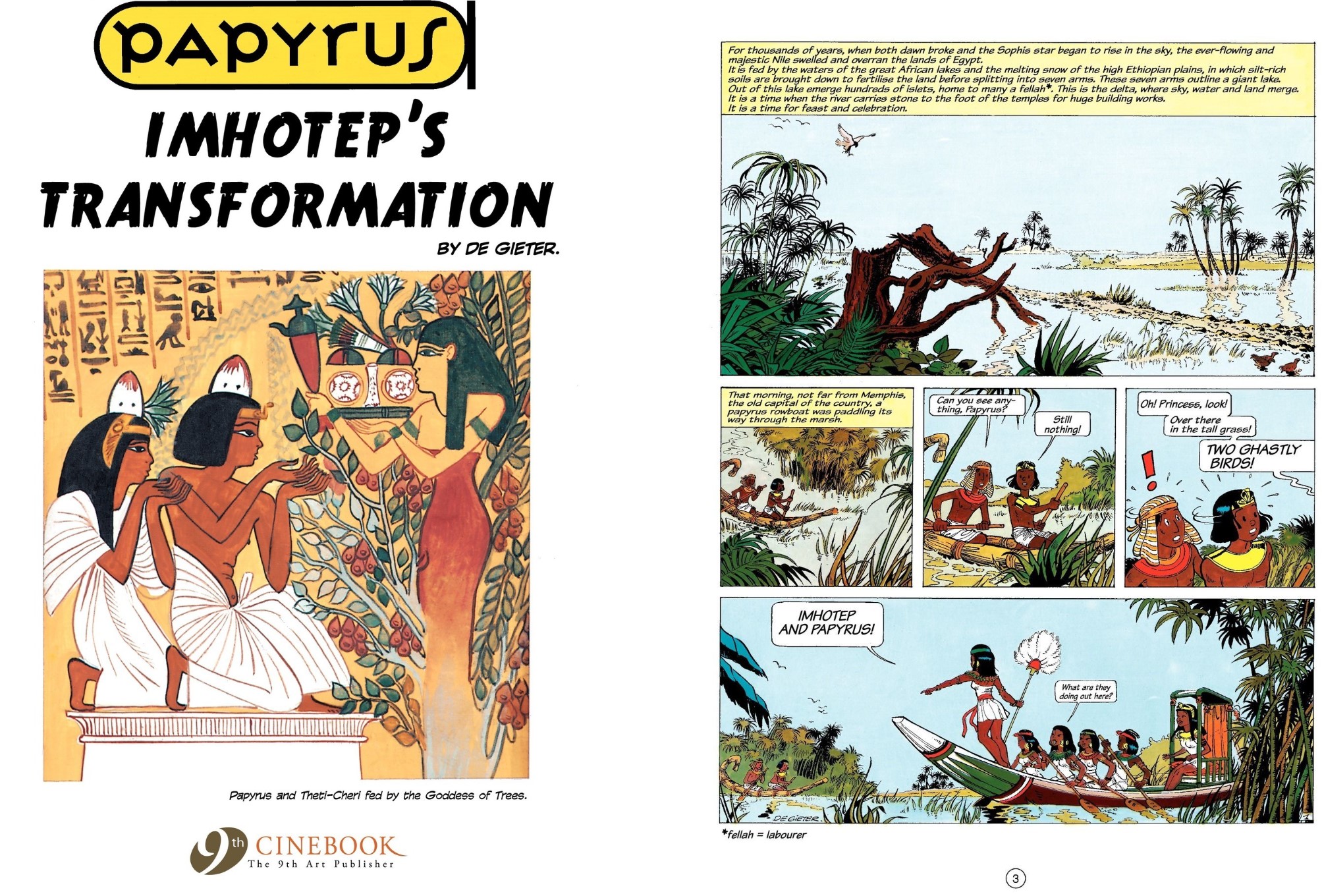
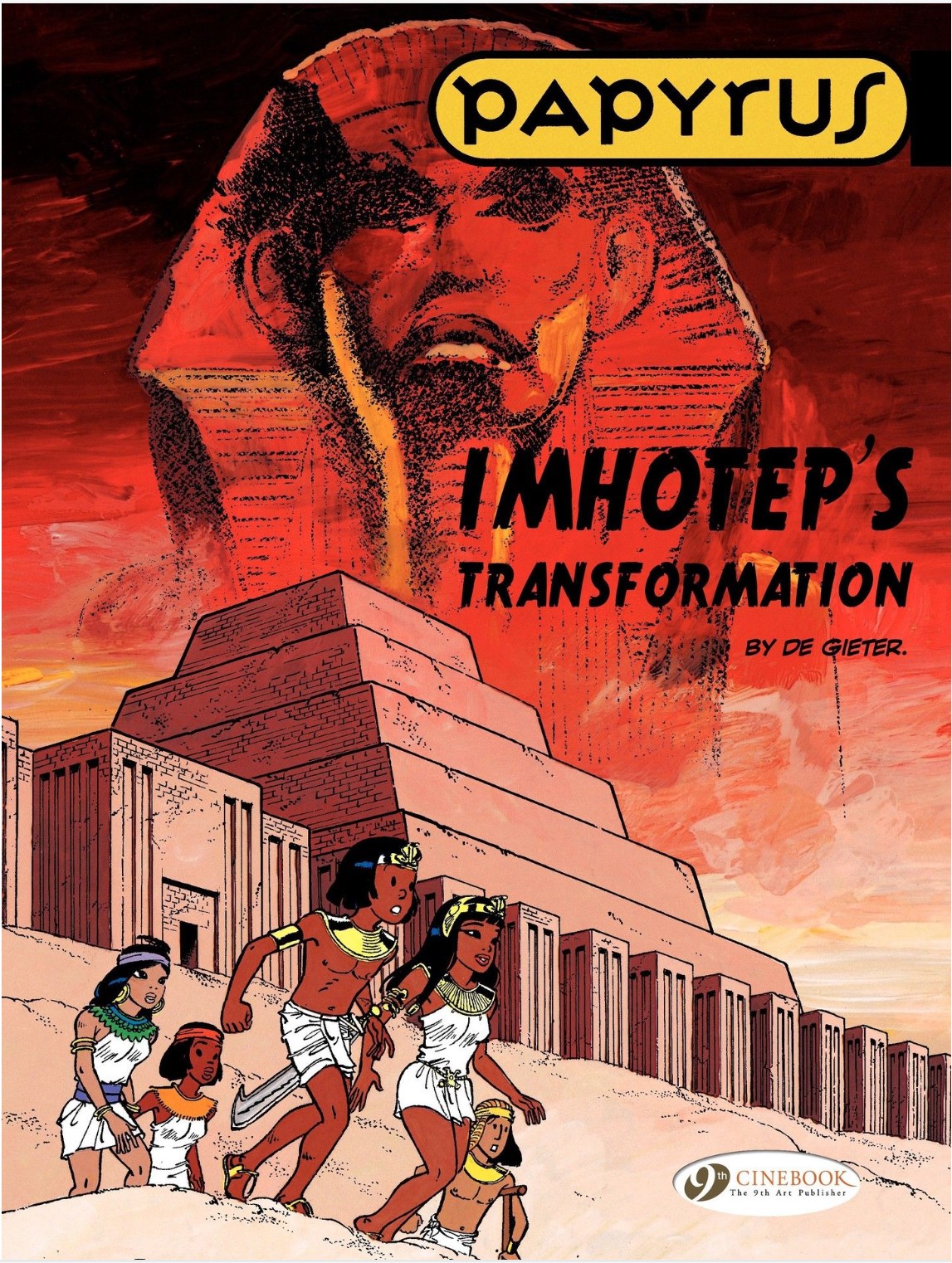
Papyrus volume 2: Imhotep’s Transformation


By Lucien De Gieter, coloured by Colette De Gieter: translated by Luke Spear (Cinebooks)
ISBN: 978-1- 905460-50-2 (Album PB/Digital edition)

This book includes Discriminatory Content produced in less enlightened times.

British and European comics have always been happier with historical strips than our cousins across the pond (a pugnacious part of me wants to say that’s because we have so much more past to play with – and yes, I know they can claim Prince Valiant, but it’s an exception, not a rule), and our Franco-Belgian brethren in particular have made an astonishing art form out of days gone by.

The happy combination of past lives and world-changing events blended with drama, action and especially broad humour has generated a genre uniquely suited to beguiling readers of all ages and tastes. Don’t take my word for it – just check out Asterix, Adele Blanc-Sec, The Towers of Bois-Maury, Empress Charlotte, Iznogoud or Thorgal to name the merest few which have made it into English, or even our own much missed classics such as Olac the Gladiator, Dick Turpin, Heros the Spartan or Wrath of the Gods – all long overdue for collection in mass market album form and on the interweb-tubes…

Papyrus is the spectacular magnum opus of Belgian cartoonist Lucien de Gieter. It began in 1974 in the legendary weekly Le Journal de Spirou, running to 36 albums, plus a wealth of merchandise, a television cartoon show and a video game.

The plucky “fellah” (go look it up) was blessed by the gods and gifted with a magic sword courtesy of the daughter of crocodile-headed Sobek. His original brief was to free supreme Horus from imprisonment in the Black Pyramid of Ombos and thereby restore peace to the Two Kingdoms. More immediately however the lad was also charged with protecting Pharaoh’s wilful and high-handed daughter Theti-Cheri – a princess with an unmatchable talent for finding trouble…

De Gieter was born in 1932 and studied at Saint-Luc Art Institute in Brussels before going into industrial design and interior decorating. He made the logical jump into sequential narrative in 1961, first through ‘mini-récits’ inserts (fold-in, half-sized-booklets) for Le Journal de Spirou of his jovial little cowboy Pony, and later by writing for established regular art stars as Kiko, Jem, Eddy Ryssack and Francis.

He then joined Peyo’s studio as inker on Les Schtroumpfs – AKA The Smurfs – and took over the long-running newspaper strip Poussy. In the mid-1960s he created South Seas mermaid fantasy Tôôôt et Puit’, even as Pony was promoted to the full-sized pages of Spirou, so De Gieter deep-sixed his Smurfs gig to expand his horizons, producing work for Le Journal de Tintin and Le Journal de Mickey. From 1972-1974 he assisted cartooning legend Berck on Mischa for Germany’s Primo, whilst putting finishing touches to his new project. This creation would occupy his full attention – and delight millions of fervent fans – for the next 40 years.

The annals of Papyrus encompass a huge range of themes and milieus: blending boys-own adventure with historical fiction and interventionist mythology, gradually evolving from traditionally appealing Bigfoot cartoon content towards a more realistic, dramatic and authentic iteration. Throughout, these light fantasy romps depict a fearless, forthright boy fisherman favoured by the gods as a hero of Egypt and friend to Pharaohs.

Imhotep’s Transformation was the second Cinebook translation (and 8th yarn, originally released in 1985 as La Métamorphose d’Imhotep): opening with our hero and his one-legged friend Imhotep (no relation) paddling a canoe through the marshes of the Nile. The peaceful idyll is wrecked when Theti-Cheri and her handmaidens hurtle by in their flashy boat, but the boys don’t mind as they have a message for the princess and were looking for her…

The new sacred statue of her father has arrived from the Priests of Memphis and the daughter of Heaven is required at the ceremony to install it at the pyramid of Saqqara before the annual Heb Sed King’s Jubilee. As girls and boys race back, an old peasant is attacked by a crocodile and diving after him; Papyrus wrestles the reptile away. He is about to kill it when Sobek appears, beseeching him to spare it.

On the surface Theti-Cheri and her attendants are ministering to the aged victim and the princess can’t help noticing how he bears an uncanny resemblance to her dad…

By the time they all reach the pyramid, the monumental task of hauling the statue into place is well under way, but suddenly blood begins pouring out of the monolith’s eyes. Terrified workers panic and the colossal effigy slips, crashing to destruction. The populace are aghast and murmurs of curses and ill omens abound. Rather than running away, Imhotep heads for the rubble and discovers the statue’s head is hollow. Moreover, inside there is a dead dwarf and a smashed flask which had held blood…

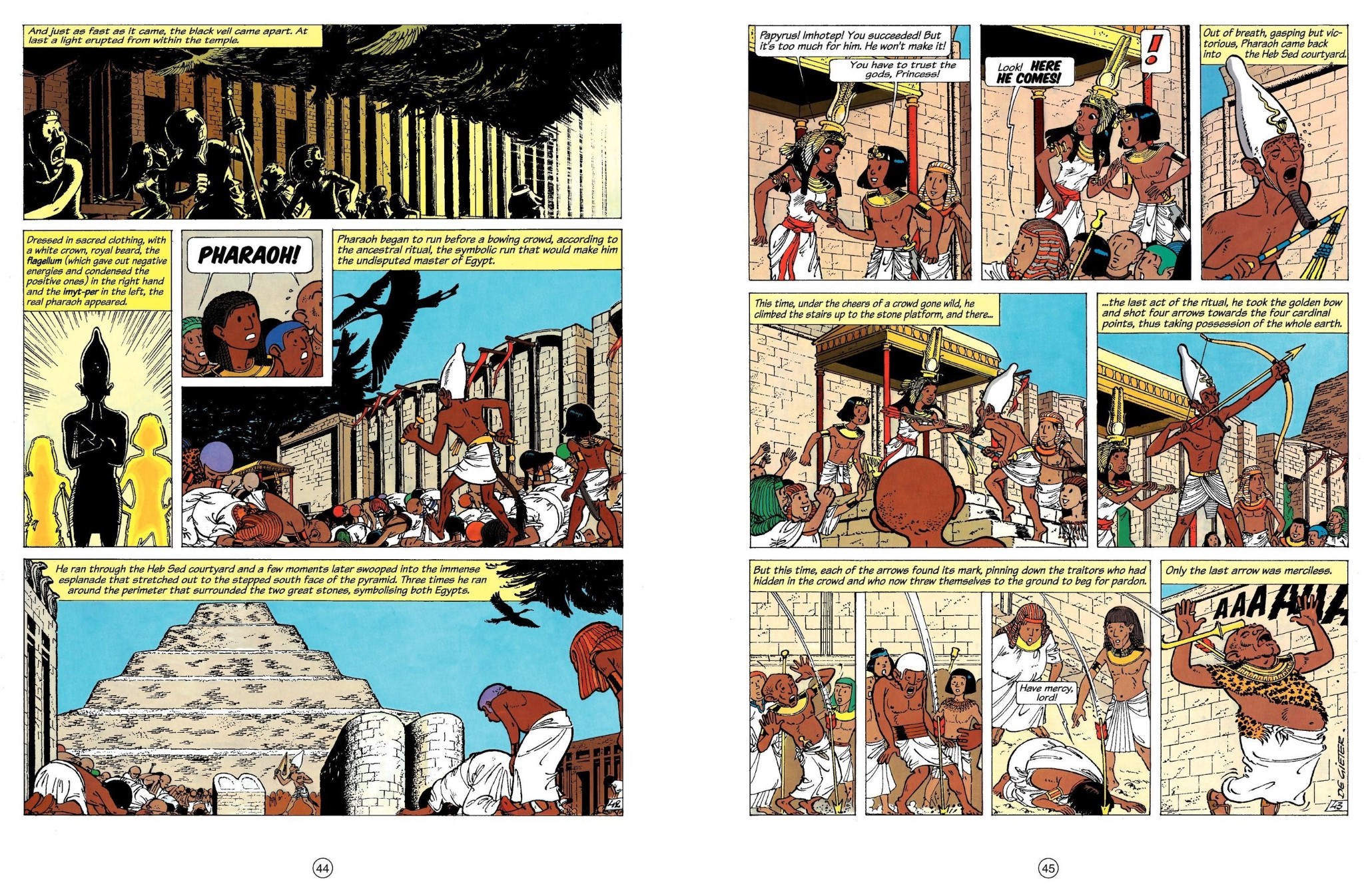
Papyrus is in the royal compound where recent events have blighted the anticipation of the court. During Heb Sed, the Pharaoh has to run around the sacred pyramid three times and fire his bow at the four corners of the kingdoms to prove his fitness to rule, but now it appears the gods have turned against their chosen emissary on Earth…

Papyrus is not so sure and when he tries to speak to a royal server the man bolts. Giving chase, the lad is in time to prevent the attendant’s murder, but not his escape. Then a cry goes up: Pharaoh has been poisoned…

Knowing there is no love lost between the Memphis Priests of Ptah and loyal Theban clerics doctoring the fallen king, Papyrus warns of a possible plot, but can offer no proof. What is worse, Chepseska, leader of the Memphis faction, is of royal blood too and will inherit the kingdom if Pharaoh is unable to complete the Heb Sed ritual. As loyal physicians and priests struggle to save their overlord’s life, Theti-Cheri remembers the old man in the swamp. If only the crocodile bite has not left him too weak to run…

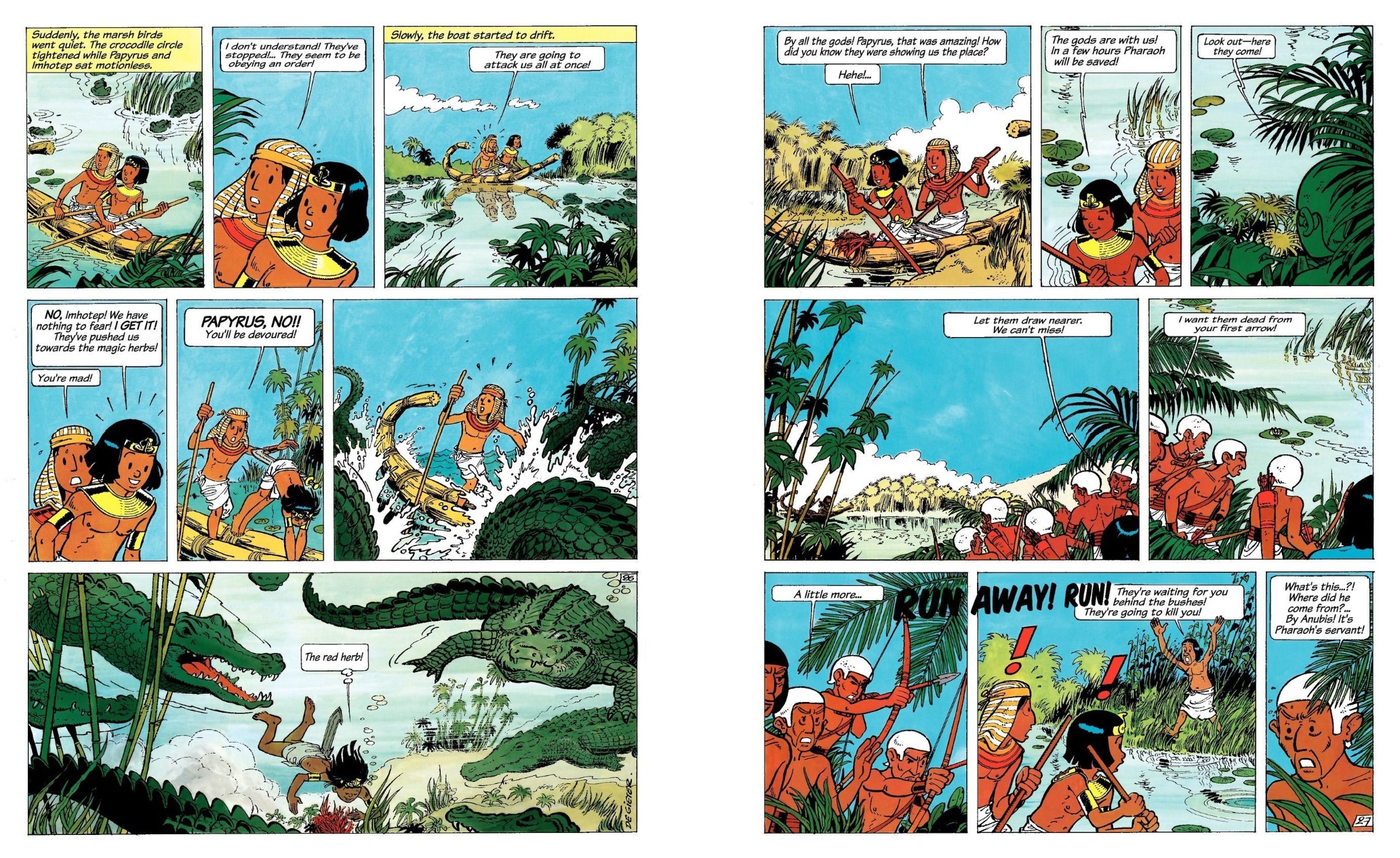
The doughty dotard is willing to try and also knows of a wise woman whose knowledge of herbs can cure Pharaoh. However, ruthless Chepseska is on to the kids’ ploy and dispatches a band of killers to stop Papyrus and Imhotep.

The gods, however, are behind the brave kids and after the assassins fall to the ghastly judgement of Sobek, the boys rush an antidote back to Saqqara, only to fall into the lost tomb of Great Imhotep, first Pharaoh, builder-god and divine lord of the Ibis.

With time running out for his distant descendent, the resurrected ruler rouses himself to administer justice for Egypt and inflict the punishment of the gods upon the usurpers…

This is an amazing exploit to thrill and astound fans of fantastic fantasy and bombastic adventure. Papyrus is a brilliant addition to the family-friendly pantheon of continental champions who marry heroism and humour with wit and charm. Anybody who has worn out those Tintin, Lucky Luke or Asterix tomes would be wise beyond their years in acquiring these classic chronicles tales.

… And Cinebook would be smart to resume translating these magical yarns, too…
© Dupuis, 1985 by De Gieter. All rights reserved. English translation © 2008 Cinebook Ltd.

Born today in 1920 was pioneering woman mangaka Machiko Hasegawa (Sazae-san) as was Belgian auteur Jef Nys (Jommeke) in 1927. Writer Dann Thomas (Conan, All-Star Squadron, Young All-Stars, Arak, Son of Thunder, Crimson Avenger, Avengers West Coast) turned up in 1952 with comics cartoonist and satirist Fred Hembeck arriving a year later. It’s also Denys Cowan’s birthday (1961), Rhoda (Pakkin’s Land) Shipman (1968) and Michael Avon-Oeming (1973); and in 1971 we saw the last episode of Abbie an’ Slats.

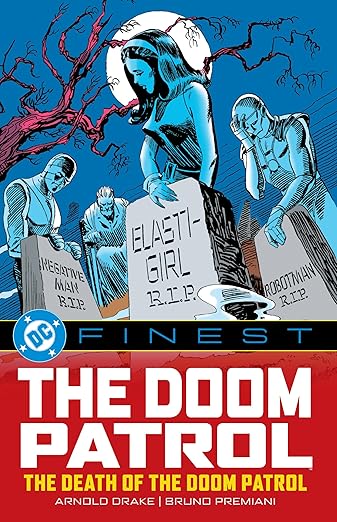
DC Finest: The Doom Patrol – The Death of the Doom Patrol


By Arnold Drake, Bob Haney, Paul Kupperberg, Gerry Conway & Scott Edelman, Bruno Premiani, Bob Brown, Joe Staton, Arvell Jones, Frank Chiaramonte, Bruce Patterson, Romeo Tanghal, Carmine Infantino, Jack Sparling, Joe Orlando, Jim Aparo, Rich Buckler, Vince Colletta, Ross Andru, Dick Giordano & various (DC Comics)
ISBN: 978-1-79950-669-0 (TPB)

This book includes Discriminatory Content produced in less enlightened times.

In 1963 traditionally cautious comic book publishers at last realised superheroes were back in a big way and began reviving and/or creating a host of costumed characters to battle with and against outrageous menaces and dastardly villains. Thus, the powers-that-be at National Comics decided venerable adventure-mystery anthology title My Greatest Adventure would dip its toe in the waters with a radical take on the fad. Still, infamous for cautious publishing, they introduced a startling squad of champions with thematic roots firmly planted in those B-movie monster films of the era that had informed the parent comic.

No traditional team of masked adventurers, this cast comprised a robot, a mummy and an occasional 50-foot woman, joining forces with and guided by a vivid, brusque, domineering, crippled mad scientist. They would fight injustice in a whole new way…

Covering May 1966 to May 1965, this stunning compilation collects the remainder of the earliest exploits of the “Fabulous Freaks”, gathered from Doom Patrol #104-121. For good measure this comprehensive collection also contains the editorial material from reprint revival Doom Patrol #122-124 (February to July 1973); the enticing reboot that eventually returned the team to action from Showcase #94-96 (August 1977-January 1978), and the first official outing in a team-up trilogy from Superman Family #191-193 (October 1978 – January/February 1979).

The dramas were particularly enhanced by the drawing skills of Italian cartoonist and classicist artist Bruno Premiani, whose highly detailed, subtly humanistic illustration made even the strangest situation dauntingly authentic and grittily believable. He was also the ideal hand to squeeze every nuance of comedy and pathos from the captivatingly involved, grimly light-hearted scripts by Arnold Drake who always proffered a tantalising believably world for the outcast heroes to strive in. Premier tale ‘The Doom Patrol’ was co-scripted by Drake & Bob Haney, detailing how a mysterious wheelchair-bound scientist summoned three outcasts to his home through the promise of changing their miserable lives forever.

Competitive car racer Cliff Steele had legally died in a horrific pile up, but his undamaged brain was transplanted into a fantastic mechanical body. Test pilot Larry Trainor should have died. He had been trapped in an experimental stratospheric plane and become permanently radioactive, with the dubious benefit of gaining a semi-sentient energy avatar which could escape his body to perform incredible stunts for up to a minute at a time. To pass safely amongst men Trainor had to constantly wrap himself in special radiation-proof bandages.

Former movie star Rita Farr was exposed to mysterious swamp gases which gave her the terrifying, unpredictable – initially uncontrolled – ability to shrink or grow to incredible sizes.

The outcasts were brought together by brilliant, enigmatic Renaissance Man The Chief, who sought to mould solitary misfits into a force for good. He quickly proved his point when a bomber attempted to blow up the docks. The surly savant directed the trio in defusing it and no sooner had the misfits realised their true worth than they were on their first mission…

Now, years later with the team world-renowned, Doom Patrol #103 opens with the first of two tales: a tragedy ensuing after Professor Randolph Ormsby seeks the team’s aid for a space shot. When the doddery savant mutates into flaming monster ‘The Meteor Man’ it takes the entire patrol plus Beast Boy and Mento to save the day.

For those who haven’t seen the first volume yet: super-rich genius Steve Dayton (think ABSOLUTELY NOTHING like that Tesla guy) created a psycho-kinetic helmet and superhero persona Mento solely to woo and wed Rita, whilst outrageous, obnoxious Gar Logan was a tourist toddler in Africa, who contracted a rare disease. Although his scientist parents’ experimental cure beat the contagion before they died, it left him the colour of cabbage and able to change shape at will. A protracted storyline had commenced in #100 wherein the secretive, chameleonic kid revealed how he was now an abused orphan being swindled out of his inheritance by unscrupulous guardian Nicholas Galtry. The greedy, conniving accountant had even leased his emerald-hued charge to rogue scientists…

Rita especially had empathised with Gar’s plight and resolved to free him from Galtry whatever the cost…

DP #103 also continued unpacking the Mechanical Man’s early days following Caulder’s implantation of Cliff’s brain into an artificial body. In ‘No Home for a Robot’, the shock had seemingly driven the patient crazy as Steele went on a city-wide rampage, hunted and hounded by the police, but here, the ferrous fugitive finds brief respite with his brother Randy, before realising that trouble would trail him anywhere…

In an era devoid of promotional material or media platforms, Doom Patrol #104 astounded everyone as Rita abruptly stopped refusing loathsome billionaire/self-promoting supergenius smart guy Steve Dayton (think Musk with shinier hats) to become ‘The Bride of the Doom Patrol!’ However, her star-stuffed wedding day is almost ruined when alien arch-foe Garguax and The Brotherhood of Evil crash the party to murder the groom. So unhappy are Cliff and Larry with Rita’s “betrayal” that they almost let them…

Even whilst indulging her new bride status in #105, Rita can’t abandon the team and joins them in tackling old elemental enemy Mr. 103 during a ‘Honeymoon of Terror!’ before back-up yarn ‘The Robot-Maker Must Die’ concludes Cliff Steele’s origin as the renegade attempts to kill the mystery surgeon who had imprisoned him in a metal hell… finally giving Caulder a chance to fix a long-term malfunction in Steele’s systems…

‘Blood Brothers!’ in #106 introduces domestic disharmony as Rita steadfastly refuses to be a good trophy wife: resuming the hunt for Mr. 103 with the rest of the DP. Her separate lives continue to intersect, however, when Galtry hires that elemental assassin to wipe Gar and his freakish allies off the books…

The back-up section shifts focus onto ‘The Private World of Negative Man’, recapitulating Larry Trainor’s doomed flight and the radioactive close encounter that turned him into a walking mummy. However, even after being allowed to walk amongst men again, the gregarious pilot finds himself utterly isolated and alone…

Doom Patrol #107 opens epic story-arc ‘The War over Beast Boy’ as Rita & Steve (think Elon but funny and human) start begin proceedings to get Gar and his money away from Galtry, and the embezzler responds by opening a criminal campaign to beggar Dayton, inadvertently aligning himself with the Patrol’s greatest foes. Already distracted by the depredations of marauding mechanoid Ultimax, the hard-pressed heroes swiftly fall to the awesome automaton and Rita is exiled to a barbaric sub-atomic universe…

The secret history of Negative Man continues and concludes on a cliffhanger with ‘The Race Against Dr. Death’. When fellow self-imposed outcast Dr. Drew tries to draw the pilot into a scheme to destroy the human species which had cruelly excluded them both, the ebony energy being demonstrates its incredible power to save the world from fiery doom. In #108, ‘Kid Disaster!’ sees Mento diminished and despatched to rescue Rita whilst Galtry’s allies reveal their true nature before ambushing and killing the entire team…

…Almost.

Despite only Caulder and Beast Boy remaining, our exceedingly odd couple nevertheless pull off a major medical miracle: reviving the heroes in time to endure the incredible attack of alien colossus ‘Mandred the Executioner!’ before Larry’s ‘Flight into Fear’ at the comic’s rear proves Drew hasn’t finished with the itinerant Negative Man yet…

DP #110 wonderfully and wittily wraps up the Beast Boy saga as Galtry, Mandred and the Brotherhood marshal one last futile attack before a ‘Trial by Terror!’ finally finds Logan legally adopted by newlyweds Mrs. & Mr. Dayton. Sadly, it’s just a prelude to expansive extraterrestrial invasion in #111, heralding the arrival of ‘Zarox-13, Emperor of the Cosmos!’

The awesome overlord and his vanguard Garguax make short work of the Fabulous Freaks and – with all Earth imperilled – an unbelievable alliance forms, but not before ‘Neg Man’s Last Road!’ ends Trainor’s tale as the alienated aviator again battles Dr. Death, before joining a band of fellow outcasts in a bold new team venture…

Unbelievably, in #112, the uneasy alliance of DP with The Brain, Monsieur Mallah & Madame Rouge as ‘Brothers in Blood!’ results in no betrayals and the last-minute defeat of the invincible aliens. Moreover, although no rivalries were reconciled, a hint of romance does develop between two of the sworn foes, whilst at the back, untold tales of Beast Boy begin as ‘Waif of the Wilderness’ introduces millionaire doctors Mark & Marie Logan, whose passion for charity took them to deepest Africa and into the sights of “witchman” Mobu who saw his powerbase crumbling as SCIENCE! fixed his subjects’ problems…

When toddler Gar contracts dread disease Sakutia, the Logan’s radical treatment saves their child and grants him metamorphic abilities, but as they subsequently lose their lives in a river accident, the baby boy cannot understand their plight and blithely watches them die. Orphaned and lonely, he inadvertently saves the life of a local chief with his animal antics and is adopted… making of Mobu an implacable, impatient enemy…

DP #113 pits the team against a malevolent one-man mechanoid army in ‘Who Dares to Challenge the Arsenal?’ but the true drama manifests in a subplot showing Caulder seeking to seduce schizophrenic Madame Rouge away from the allure of wickedness and malign influence of the Brotherhood of Evil. The issue includes another Beast Boy short as ‘The Diamonds of Destiny!’ finds thieves kidnapping the amazing boy, just as concerned executor Nicholas Galtry takes ship for Africa to find the heir to his deceased employer’s millions…

Issue #114 opens with the Doom Patrol aiding Soviet asylum seeker Anton Koravyk and subsequently embroiled in a time-twisting fight against incredible caveman ‘Kor – the Conqueror!’ before Beast Boy briefing ‘The Kid Who Was King of Crooks!’ finds the toddler turned into a thief in Johannesburg… until his Fagin-ish abductors have a fatal falling out…

The next issue debuts ‘The Mutant Master!’: pitting the heroes against a trio of hideous, incomprehensibly powerful atomic atrocities resolved to eradicate the world which had so cruelly treated them. Things might have fared better had not the Chief neglected his comrades in his obsessive – and at last successful – pursuit of Madame Rouge…

Also included is ‘General Beast Boy – of the Ape Brigade!’, wherein a Nazi war criminal is accidentally foiled by lost wanderer Gar. The madman’s loss is Galtry’s gain, however, as the crooked money-man’s search ends with him “rescuing” Logan and taking him back to safe, secure America…

The mutant maelstrom concludes in #116 as ‘Two to Get Ready… and Three to Die!’ sees Caulder saving Earth from obliteration and reaping his unexpected reward in a passionate fling with “cured-but-still-fragile” Rouge. The wheelchair wonder seizes centre stage in #117 as his neglect drives his team away, leaving Caulder vulnerable to attack from a mystery man with a big grudge in ‘The Black Vulture!’ Happily, a reunited squad deals with grotesque madman ‘Videx, Monarch of Light!’ even as The Brain challenges Caulder to return his stolen chattel Rouge. Nobody thought to ask her what she wanted, though, and that’s a fatal oversight for all concerned…

Tastes were changing in the turbulent late 1960s and the series was in trouble. Superheroes were about to plunge into mass decline, and the creators addressed the problem head-on in #119: embracing psychedelic counter culture in a clever tale of supernal power, brainwashing and behaviour modification leaving the DP cowering ‘In the Shadow of the Great Guru!’

An issue later they faced a furious Luddite’s ‘Rage of the Wrecker!’ when a crazed scientist declares war on technology… including the assorted bodies keeping Cliff alive and active. The then-unthinkable occurred next and the series spectacularly, abruptly ended with what we all believed at the time to be ‘The Death of the Doom Patrol!’…

Faced with cancellation, Editor Murray Boltinoff and creators Drake & Premiani wrapped up all the long-running plot threads as spurned Madame Rouge went well off the deep end and declared war on both The Brain’s boys and Caulder’s “children”…

Pitilessly blowing up the Brotherhood, she then attacks the city until the Doom Patrol remove themselves to an isolated island fortress. Even there they are not safe and her forces ambush them. Captured and facing death, Rouge offers mercy if they abandon their principles and allow her to destroy a village of 14 complete strangers in their stead…

At a time when comics came and went with no fanfare and cancelled titles seldom provided any closure, the sacrifice and death of the Doom Patrol was a shocking event for us readers. We wouldn’t see anything like it again for decades – and never again with such style and impact. With the edge of time and experience on my side, it’s obvious just how incredibly mature Drake & Premiani’s take on superheroes was, and these superbly engaging, frenetically fun and breathtakingly beautiful stories rightfully rank amongst the very best Fights ‘n’ Tights tales ever told. Even the mercilessly exploitative many returns of the team since can’t diminish that incredible impact, and no fan of the genre or comic dramas in general should consider their superhero education complete until they’ve seen these classics.

However comics means business and eventually attention drifted back to the “World’s Strangest Heroes”. In 1973 as part of a strand of reprint titles, The Doom Patrol title resurfaced for three issues. From them a trio of editorial features – ‘Meet… The Doom Patrol’, ‘The Men Behind… the Doom Patrol’ and ‘The Doom Patrol’s Professional Fans’ – act as round-up and prelude for the final section of this fabulous compendium.

Itself an early cancellation in the superhero downturn, venerable try-out title Showcase was revived with #94 (cover-dated August/September 1977) and offered a new Doom Patrol courtesy of Paul Kupperberg & Joe Staton. It began with ‘The Doom Patrol Lives Forever!’ as Cliffe Steele’s shell is rescued and retooled by Metal Men inventor Will Magnus. Eventually independent again the traumatized survivor visits the only home he knows and discovers a new gang living/hiding in their old HQ.

Energy-caster Joshua “Tempest” Clay is a Vietnam deserter and Valentina “Negative Woman” Vostok absconded from the Soviet air force after she was possessed by a radioactive energy being very much like the one Larry Trainor was afflicted with. They are led by an Indian woman named Arani, whose temperature-shifting powers prompted her code name Celsius. Cliff is outraged and suspicious, but all becomes a bit clearer when arch enemy General Immortus attacks…

Inked by Francisco Chiaramonte, ‘The Origin of Celsius!’ reveals how the icy flamethrower is in fact Niles Caulder’s secret wife, and possesses those secrets of unending life the geriatric general craves above all else. The battle to stop him and save her creates a bond between the team that carries them straight into even deadlier dangers as Vostok is targeted by US federal agent Matt Cable (last seen palling around with the Swamp Thing) and far-less-tractable KGB operative The Cossack, seeking her recovery for the state. With Bruce Patterson inking, ‘Defection!’ sees the quartet begin a life as fugitive heroes in the grand tradition…

Mere months later Superman Family #191 through 193 saw them join Supergirl, confronting ‘A Matter of Gravity’ (by Gerry Conway with Sott Edelman, Arvell Jones & Romeo Tanghal) as rival villains – and distant cousins with a historic grudge – Gravitron Man and Gravity Lord tear up the world in search of validation and vengeance: cruelly proving ‘What Goes Up… Can’t Come Down’ before ‘The Gravity War’ is forcefully and forcible ended by the united champions…

Although as kids we all happily suspended disbelief and bought into the fanciful antics of the myriad masked heroes available, somehow the exploits of Doom Patrol – and their strangely synchronistic Marvel counterparts The X-Men (freaks and outcasts, wheelchair geniuses, both debuting in the summer of 1963) – always seemed just a bit more authentic than the usual cape-&-costume crowd. With the edge of time and experience on my side it’s obvious just how incredibly mature and hardcore Drake, Haney & Premiani’s take on superheroes actually was. These superbly engaging, frantically fun and breathtakingly beautiful tales should be rightfully ranked amongst the finest Fights ‘n’ Tights tales ever told.

With covers by Bob Brown, Premiani, Carmine Infantino, Jack Sparling, Joe Orlando, Jim Aparo, Rich Buckler Vince Colletta, Ross Andru & Dick Giordano this is a grande superhero sampler any fan of comics or the TV series will adore. Hopefully we’ll see it in digital format soon…
© 1966, 1967, 1968, 1973, 1977, 1978, 1979, 2025 DC Comics. All Rights Reserved.

Today in 1929 the astoundingly smart Jules Feiffer was born. Go see Explainers to see why that’s a cause for celebration before wishing super spidery avenging defending art star Sal Buscema Many Happy Returns since his natal arrival in 1936. If there are gods of any sort anywhere PLEASE DON’T JINX THAT!

In 1948 Frank Godwin’s Rusty Riley strip launched, as did UK weekly Boy’s World in 1963.

If you’re a travelling fan say hooray that Richard Alf was born today in 1952. Even if you haven’t visited his comics stores, you’ve probably enjoyed the San Diego Comic Con he co-founded…

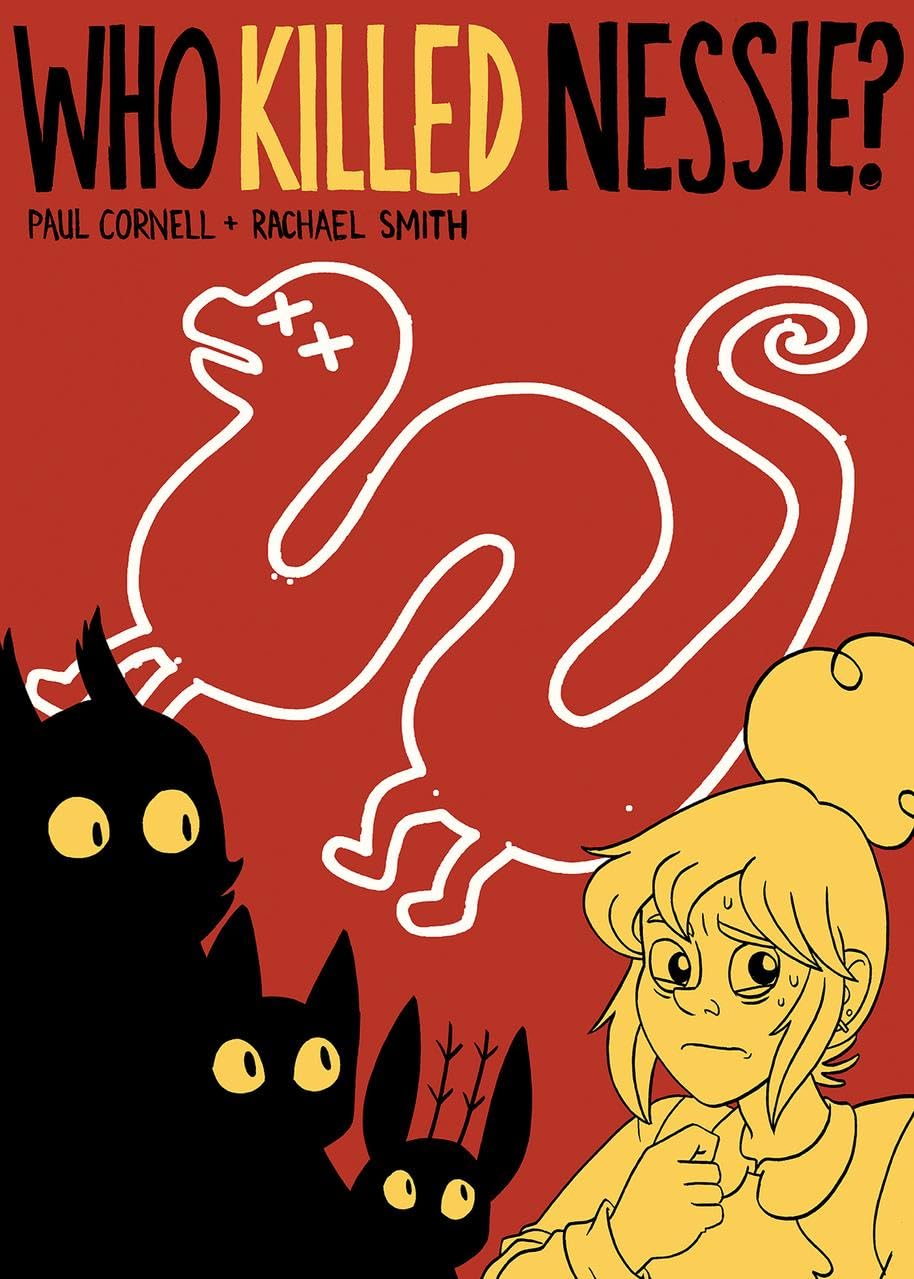
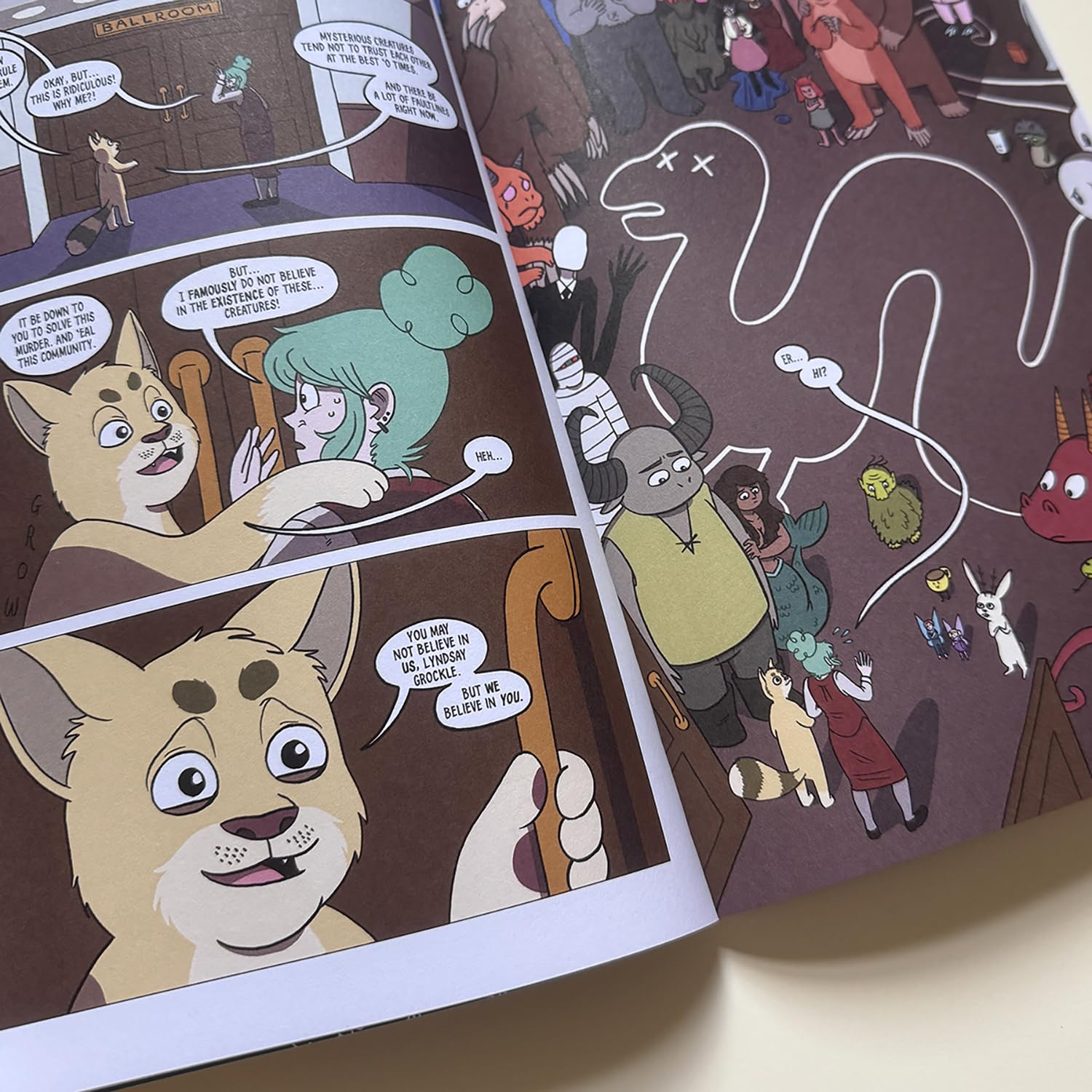
Who Killed Nessie?


By Paul Cornell & Rachael Smith (Avery Hill Publishing)
ISBN: 978-1-917355-23-0 (TPB/Digital edition)

The world is not as you imagine.

Actually, it probably is and the cosy creepy mystery that unfolds here will happily confirm it for you. It’s worth a shot, isn’t it?

The hospitality industry has been through some tough times lately and generally tries extra hard to keep even the most difficult of customers happy. That’s especially true of repeat gigs, as new hire Lindsay Grockle discovers when she’s left in sole charge of the Lakeside Hotel near Turoga, Wisconsin. She’s three weeks on the job and the entire staff have entrusted her with running, supervising and accommodating an annual convention. Apparently they’re lovely but a bit weird and she should expect a lot of strange appearances and pretty intense cosplay…

Prepped but nervous, the hordes arrive (57 guests actually!) and settle in. As she was warned Lindsay learns they take their role-playing really seriously. At least it’s all familiar stuff – monsters, cryptids, fairies, legendary beasts and the like – giving Grockle time to stew in what went wrong in her recent bust-up and ponder what life’s all about…

Sadly, things go south on the first night after a great deal of alcohol has been consumed all around. Awakened by a very upset but remarkably poised and composed talking cat (The Beast of Bodmin Moor or “Bob” to you) Lyndsay is informed that one of the guests – The Loch Ness Monster – has been murdered… and, by the way, all the guests are actual magic-infused monsters, fairies, legendary beasts and the like…
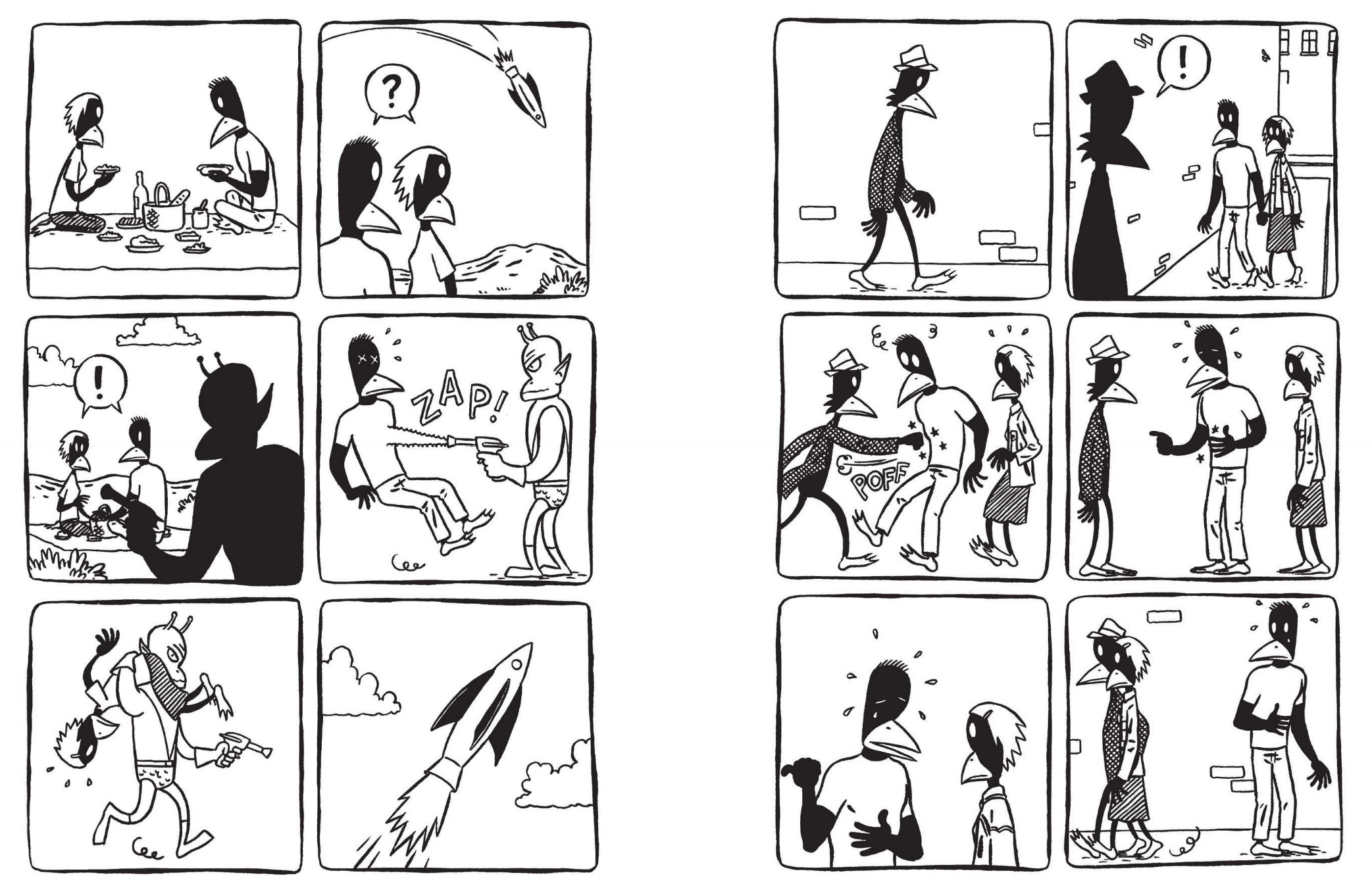
Once she’s properly convinced that she’s awake and it’s all happening, Grockle grudgingly takes on the job of finding the killer: trudging through bizarre relationships, outré politics, wild historical grudges and all the traditional tawdriness that comes with a domestic killing as opposed to (say) slaying a dragon or facing a gorgon…

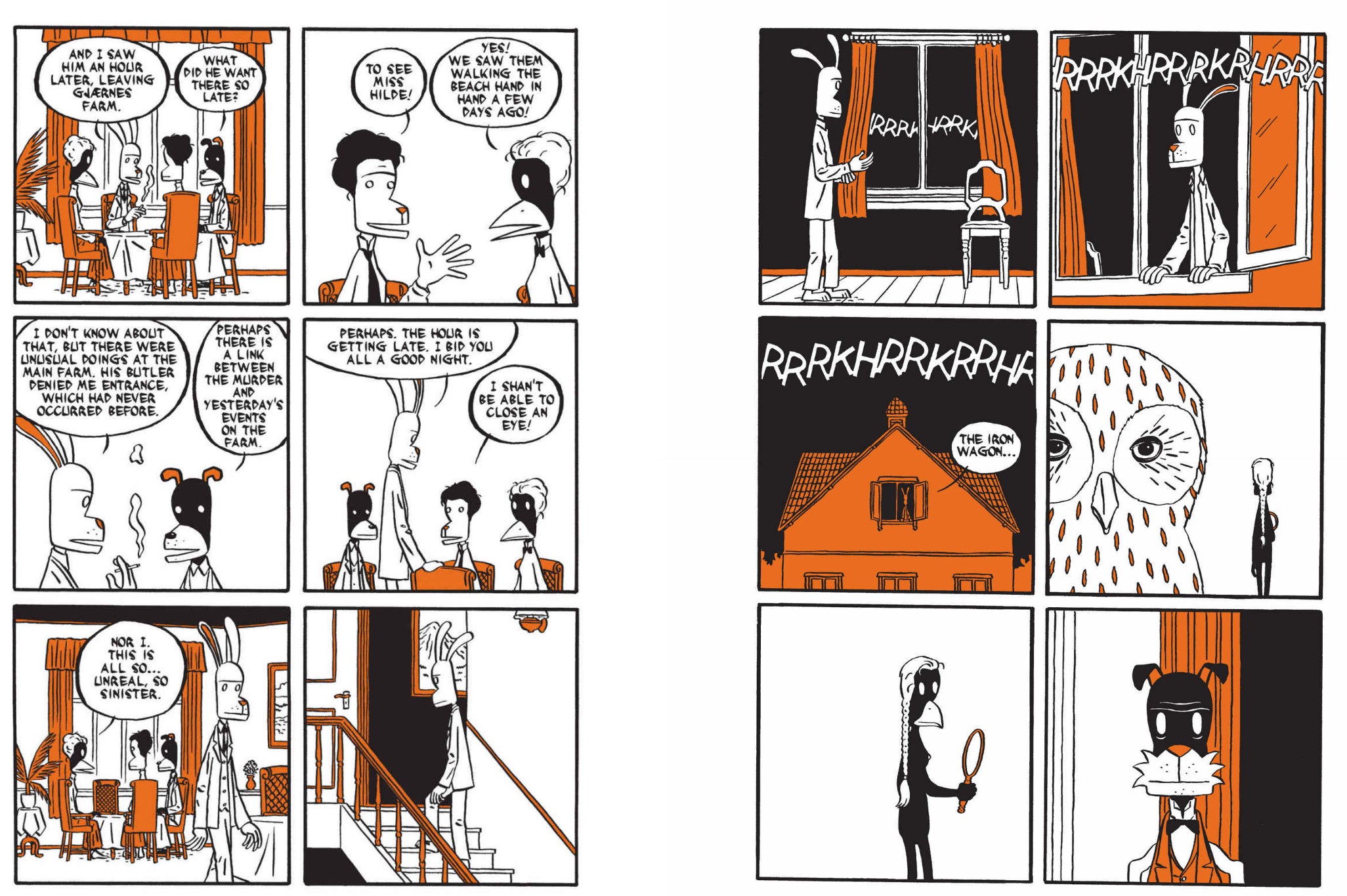
Depressed and overwhelmed, Grockle persists against a wall of weird mis- and dis-information: probing, interviewing, crosschecking and visiting the underworld to question the victim (a rare perk in most murder cases); and slowly a pattern forms. Hopefully she can resolve it before the regular staff turn up on Monday morning and before the next murder attempt succeeds…

Crafted by multi award-winning wordsmith Paul Cornell (screen, podcast, prose and comics pages) who has crafted tales of everything from Doctor Who to Sherlock Holmes and Batman to Wolverine – as well as his many self-originated series and star, this fabulously wry and charming chiller is rendered by equally award-winning illustrator Rachael Smith, whose other delights include NAP COMIX, Doctor Who, Wired Up Wrong, Quarantine Comix and Isabella & Blodwen.

Beguiling, subversive, intensely absorbing and delightfully full-on and off-kilter, Who Killed Nessie? is a smart and witty foray of froth and fantasy no one with dreams and wishes still to enjoy should miss.
© Paul Cornell, Rachael Smith, 2025. All rights reserved.

Today in 1932 was born everyman Jack Caprio; writer, agent, artist, editor of Creator’s Syndicate and Vice President of the National Cartoonists Society. One thing he didn’t do was create Hergé’s Jo, Zette and Jocko which launched today in 1936.

In 1948 Joe (E-Man, Dick Tracy, Scooby Doo, everything) Staton was born, just like Tom (Swamp Thing, Prince Valiant) Yeates in 1955. Ella Cinders cartoonist Charles Plumb died in 1982, and we lost George Woodbridge (Mad Magazine) in 2004 as well as Dutch cartoonist Jan Kruis (Jan, Jans en de Kinderen/Jack, Jacky and the Juniors) in 2017.

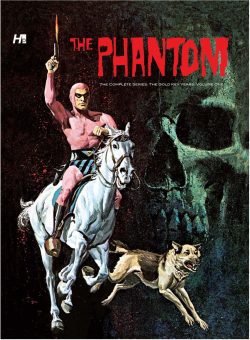
The Phantom – The Complete Series: The Gold Key Years volume 1


By Bill Harris & Bill Lignante with George Wilson (Hermes Press)
ISBN: 978-1-61345-005-5 (HB/Digital edition)

This book includes Discriminatory Content produced in less enlightened times.

In the 17th century a British sailor survived an attack by pirates, and, washing ashore in Africa, swore on the skull of his murdered father to dedicate his life and that of all his descendants to destroying all pirates and criminals. The Phantom fights crime and injustice from a base deep in the jungles of Bengali, and throughout Africa is known as the “Ghost Who Walks…

His unchanging appearance ad unswerving quest for justice have led to him being considered an immortal avenger by the credulous and the wicked. Down the decades one hero after another has fought and died in an unbroken line, and the latest wearer of the mask, indistinguishable from the first, continues the never-ending battle.

Lee Falk created the Jungle Avenger at the request of his syndicate employers who were already making history, public headway and loads of money with his first strip sensation Mandrake the Magician. Although technically not the first ever costumed hero in comics, The Phantom was the prototype paladin to wear a skintight bodystocking, and the first to have a mask with opaque eye-slits.

He debuted on February 17th 1936 in an extended sequence pitting him against a global confederation of pirates – the Singh Brotherhood. Falk wrote and drew the daily strip for the first two weeks before handing artist Ray Moore the illustration side. The Sunday feature began in May 1939. For such a successful, long-lived and influential series, in terms of compendia or graphic novel collections The Phantom has been very poorly served by the English language market. Various small companies have tried to collect the strips – one of the longest continually running adventure serials in publishing history – but in no systematic or chronological order and never with any sustained success.

However, even if it were only of historical value (or just printed for Australians, who have long been manic devotees of the implacable champion) surely “Kit Walker” is worthy of a definitive chronological compendium series?

Happily, his comic book adventures have fared slightly better – at least in recent times.

In the 1960’s King Features Syndicate dabbled with a newsstand line of their biggest stars – Flash Gordon, Mandrake, Popeye and The Phantom – but immediately prior to that, the Ghost Who Walks held a solo starring vehicle under the broad and effective aegis of veteran licensed properties publisher Gold Key Comics.

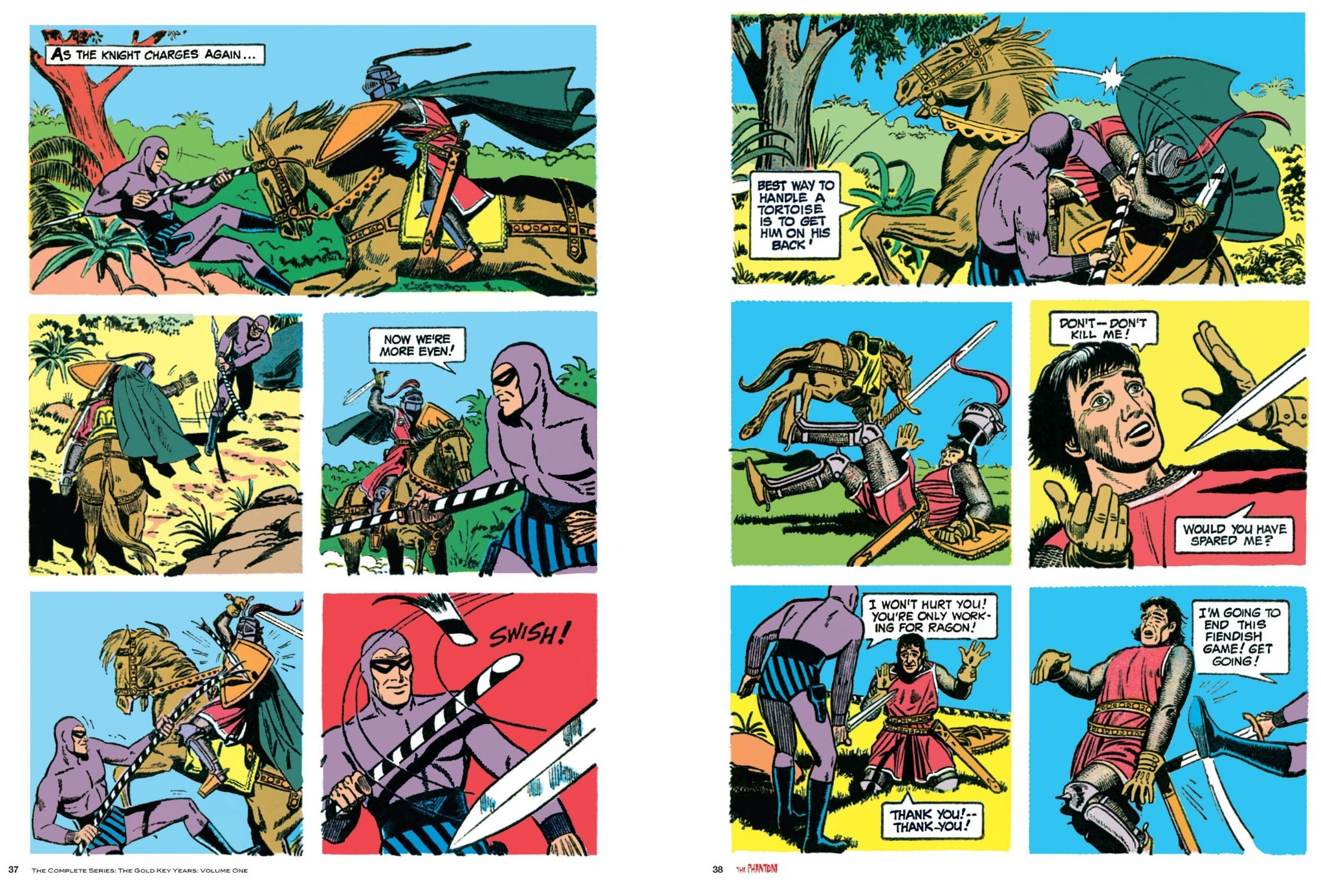
This superb chronological compendium gathers the first eight issues – cover-dates November 1962 through August 1964 – and, as explained in fan/scholar Ed Rhoades’ Introduction ‘The Phantom and the Silver Age’, offers newspaper strip tales originally illustrated by Wilson McCoy that were adapted by original scripter Bill Harris and redrawn in comic book format by Bill Lignante. The Phantom was no stranger to funnybooks, having appeared since the Golden Age in titles such as Feature Book and Harvey Hits, but only in straight strip reprints. His Gold Key exploits were tailored to a big page and a young readership. The fascinating history lesson is also augmented by pages of original artwork and ends much too soon for my elevated tastes, but if you’re a fan of pictorial adventure there’s plenty more to enjoy.

Each issue was fronted by a stunning painted cover by George Wilson and the excitement kicks off here with ‘The Game’ (The Phantom #1, November 1962) as the international man of mystery encounters Prince Ragon Gil, whose idea of fun is to pit abducted, bought or bribed strangers against ferocious beasts. When an interfering masked man closes down his warped games, the eastern potentate swears vengeance and kidnaps the hero’s fiancée Diana Palmer. His plan is to force the interloper to play his savage game, but it’s his last mistake…

That premiere issue concludes with a single-page recap of the legend of The Phantom before #2 (February 1963) resumes the wildwood wonderment with ‘The Rattle’ as an exploit from The Phantom’s ancestral past flares up again after tiny bird-riding barbarians start stealing from the local tribes. The current ghost must crack the casebooks of his forefathers and penetrate a most inhospitable region to get to the bottom of the mystery and bring peace back to the jungle…

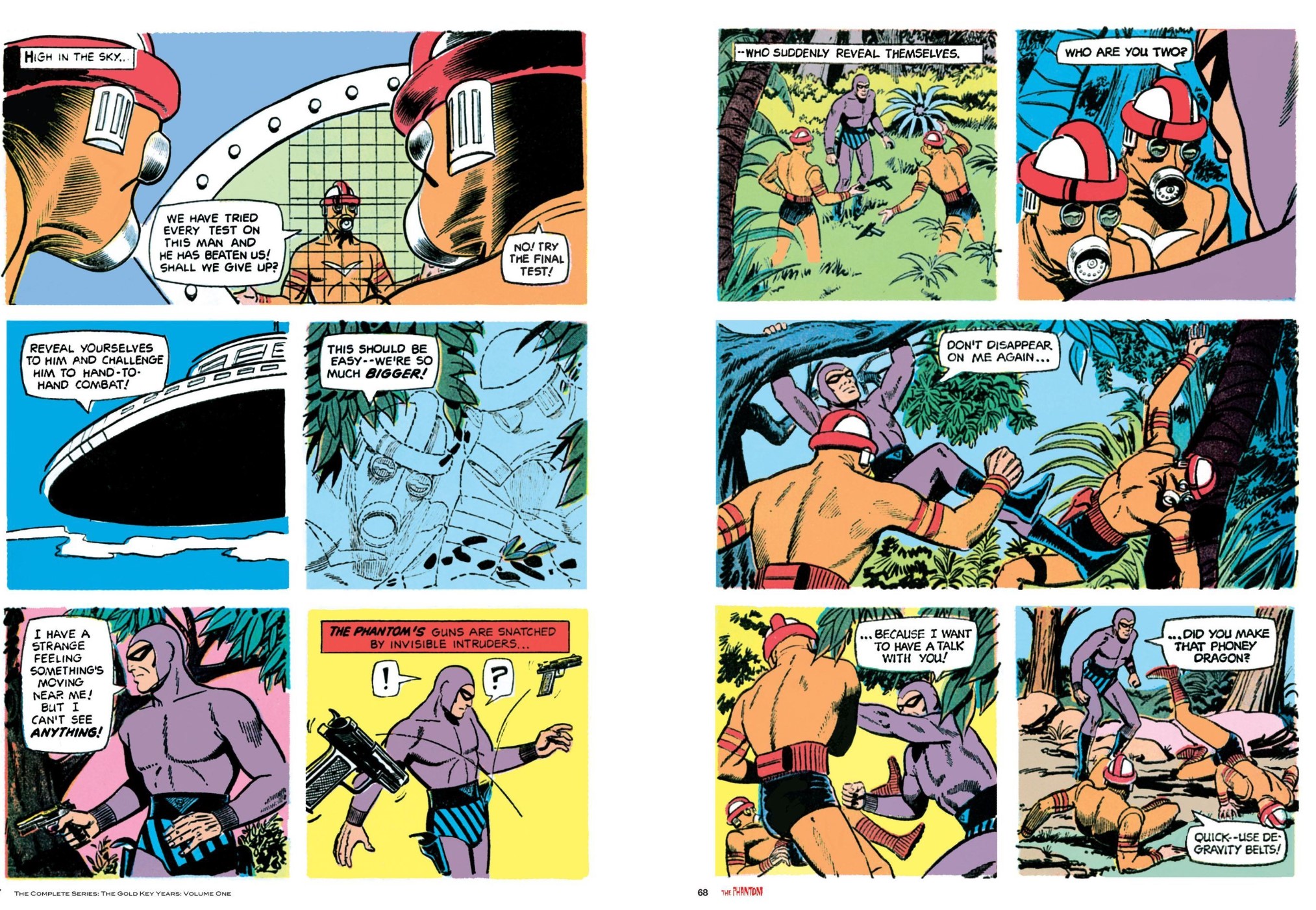
A second story taps into contemporary Flying Saucer interest as our hero encounters aliens intent on conquest. Thankfully, the purple-clad subject of ‘The Test’ proves sufficient to change their inquiring extraterrestrial minds…

History’s greatest treasures are stored in ghost’s fabulous Skull Cave, and the first tale in #3 (May 1963) relates how a rescued white man glimpses ‘The Diamond Cup’ of Alexander the Great and accidentally triggers a greed-fuelled crusade by eager criminals and ambitious chancers before the Ghost Who Walks finally restores peace and order. Rounding out the issue, ‘The Crybaby’ finds frail village boy Cecil given a crash course in confidence and exercise by the enigmatic masked man. The experience is literally life-changing…

For #4 (August) disgraced, fraud-perpetrating witchmen strike back against The Phantom through their manufactured deity ‘Oogooru’, only to be shown what real sleight-of-hand and prestidigitation can achieve, after which ocean voyager Kit Walker solves the enigma of vile vanishing villains the ‘Goggle-Eye Pirates’

Two centuries previously, The Phantom established a police force dubbed The Jungle Patrol with himself as its titular but anonymous head. In #5 (October) those worthy stalwarts are almost outfoxed by a devious gang of bandits known as ‘The Swamp Rats’ – until the unseen Commander takes personal charge.

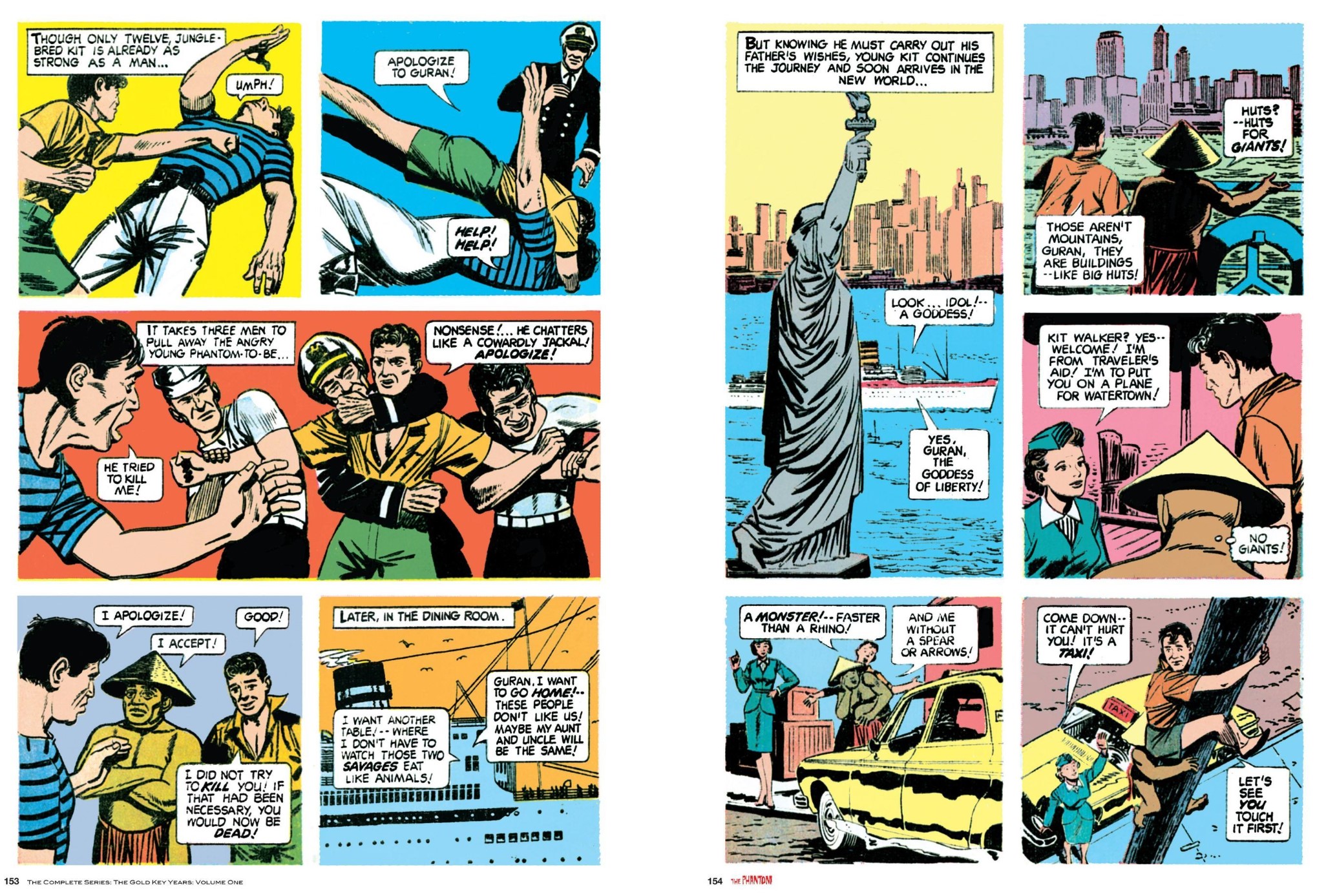
The big innovation of the issue is the premiere of a new episodic feature detailing ‘The Phantom’s Boyhood’, as a baby is born in the Skull Cave. Tracing the formative experiences of the current Phantom, the initial yarn follows little Kit from toddler to dawn of adolescence, when his parents regretfully decide it’s time to pack him off to private school in America…

The Phantom #6 (February 1964) leads with ‘The Lady from Nowhere’ as heiress Lydia Land is thrown from a plane and rescued by the masked manhunter. Soon he’s dogging her steps to track down which trusted associate was trying to silence her and steal her fortune…

A life-changing meeting shapes the destiny of the hero-to-be in ‘The Phantom’s Boyhood Part II – Diana’ as Kit falls for the girl next door and makes his mark amongst the cads and bullies of the civilised world.

The peaceful villages of the jungle are thrown into turmoil by the thieving depredations of ‘The Super Apes’ (#7, May) until the Jungle Patrol and The Phantom expose their shocking secret whilst ‘The Phantom’s Boyhood Part III – School’ finds the African émigré making his mark in the classroom, on the playing fields and in the newspapers…

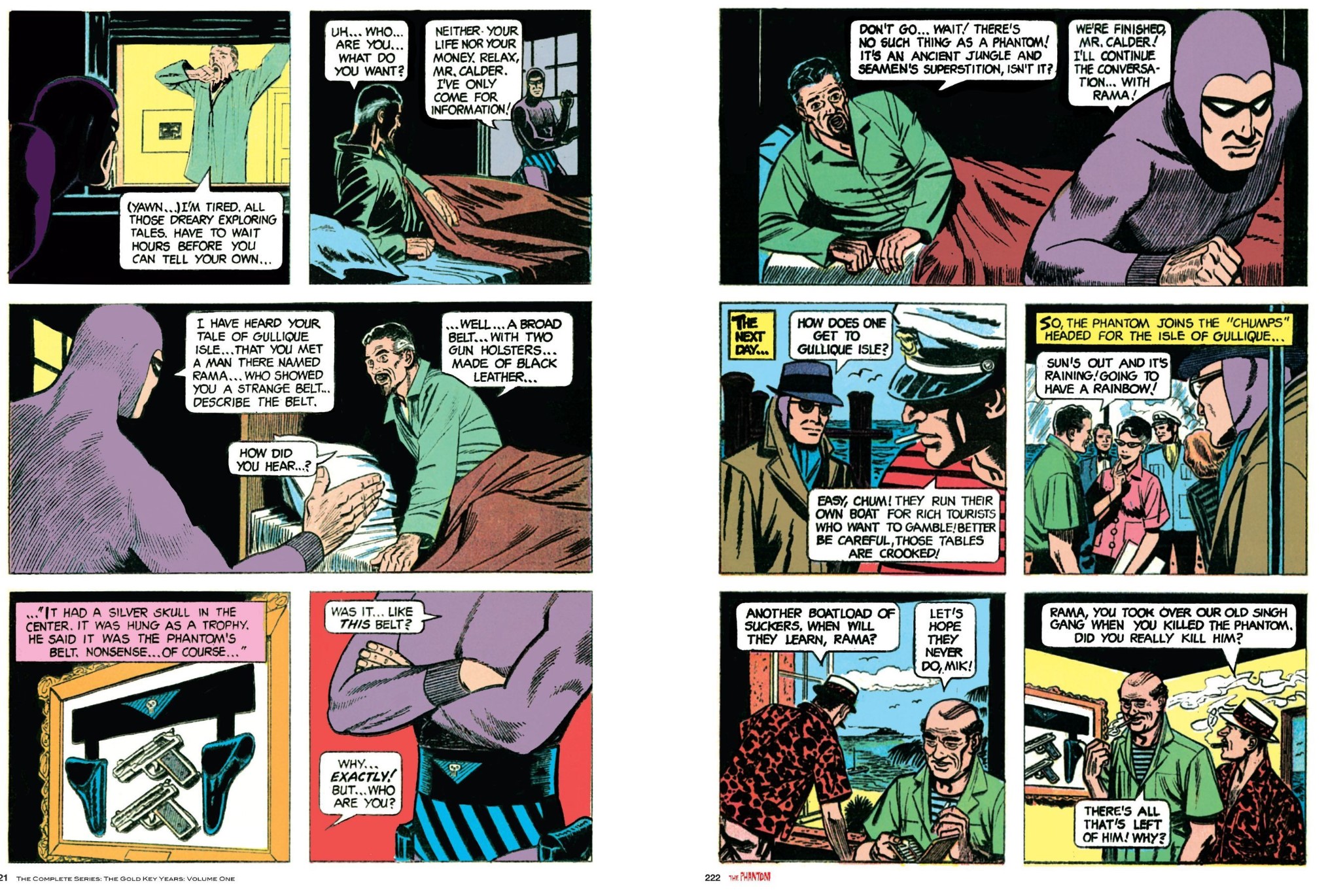
The Phantom #8 (August) closes this initial outing with an epic extra-length tale of vengeance as the current Ghost Who Walks finally tracks down ‘The Belt’ and dispenses the Phantom’s justice to the villain who killed his father and stole it…

Straightforward, captivating rollicking action-adventure has always been the staple of The Phantom. If that sounds like a good time to you, this is a traditional nostalgia-fest you won’t want to miss…

The Phantom® © 1962-1964 and 2011 King Features Syndicate, Inc. ® Hearst Holdings, Inc. Reprinted with permission. All rights reserved.

Today in 1908 publishing Svengali and Marvel Comics godfather Martin Goodman was born. Graphic philosopher and storyteller supreme Raymond Briggs arrived today in 1934, as did artistic Mon o’ Mystery “Frank Quitely” in 1968. Sadly he was far too young to ever collaborate with the amazing Bill (Batman, Green Lantern, Wildcat, Robin, Joker, Catwoman, Batgirl, Bat-Mite, Ace, the Bat-Hound, Lana Lang, All Winners Squad) Finger, who passed away today in 1974.

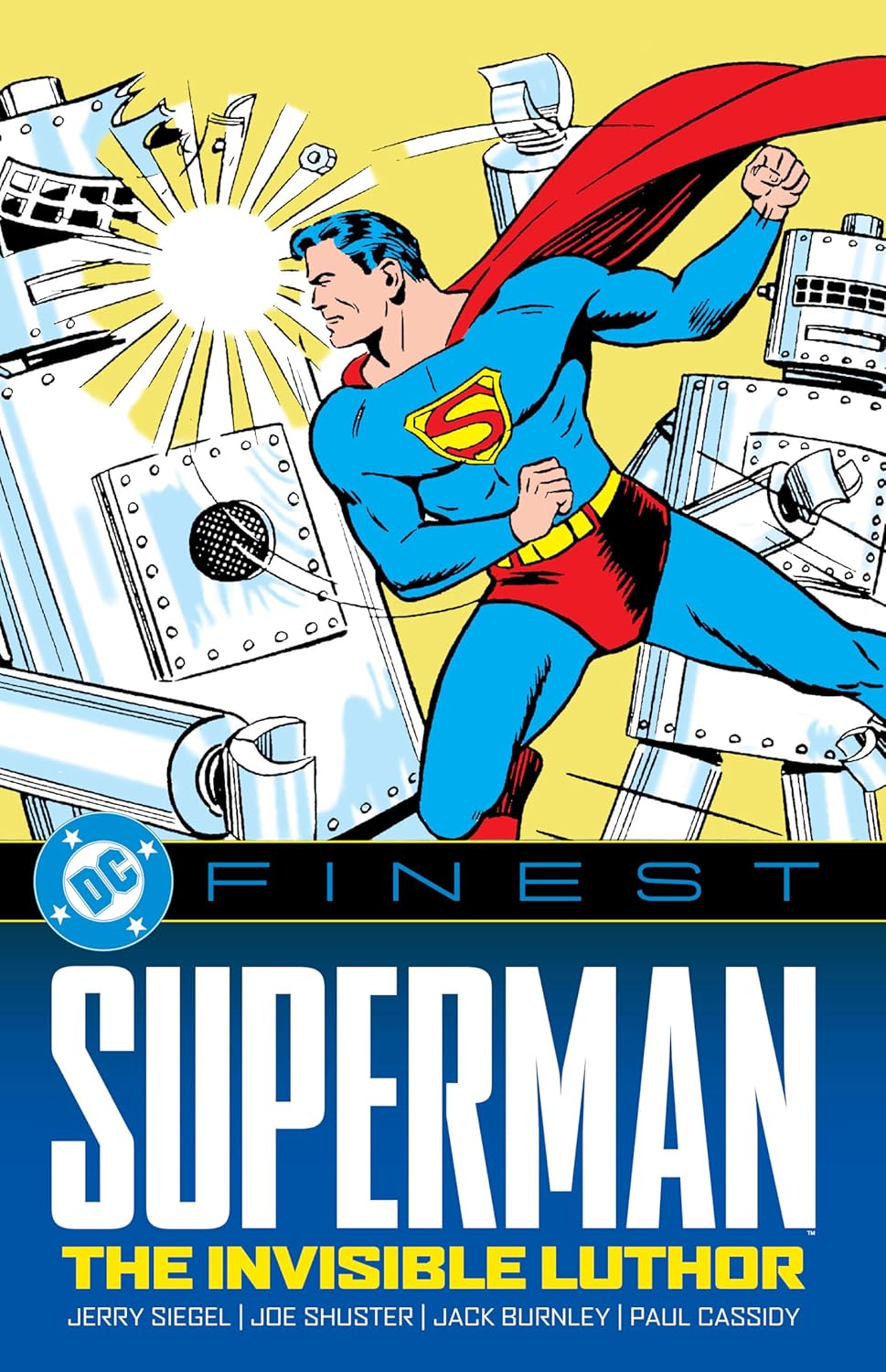
DC Finest: Superman – The Invisible Luthor


By Jerry Siegel & Joe Shuster, Jack Burnley, Paul Lauretta, Wayne Boring, Jack Burnley, Paul Cassidy, Ed Dobrotka, Leo Nowak, Fred Ray, John Sikela, Dennis Neville, Don Komisarow, lettered by Frank Shuster, Betty Burnley Bentley, the Superman Studio & various (DC Comics)
ISBN: 978-1-77950-332-3 (TPB)

This book includes Discriminatory Content produced in less enlightened times

Nearly 90 years ago, Superman rebooted planetary mythology and kickstarted the entire genre of modern fantasy heroes. Outlandish, flamboyant, indomitable, infallible and unconquerable, he also saved a foundering industry by birthing an entirely new genre of storytelling: the Super Hero. Since April 18th 1938 (the generally agreed day copies of Action Comics #1 first went on sale) he has grown into a mighty presence in all aspects of art, culture and commerce, even as his natal comic book universe organically grew and expanded. Within three years of that debut, the intoxicating blend of eye-popping action and social wish-fulfilment that had hallmarked the early exploits of the Man of Tomorrow had grown: encompassing crime-busting, reforming dramas, science fiction, fantasy and even whimsical comedy. However, once the war in Europe and the East captured America’s communal consciousness, combat themes and patriotic imagery dominated most comic book covers, if not interiors.

In comic book terms alone Superman was soon a true master of the world, utterly changing the shape of the fledgling industry as easily as he could a mighty river. There was a popular newspaper strip, a thrice-weekly radio serial, games, toys, foreign and overseas syndication and as the decade turned, the Fleischer studio’s astounding animated cartoons.

Moreover, the quality of the source material was increasing with every four-colour release as the energy and enthusiasm of originators Jerry Siegel & Joe Shuster went on to inform and infect the burgeoning studio which grew around them to cope with the relentless demand.

These tales have been reprinted many times, but this latest compilation might arguably be the best yet, offering the original stories in reading – if not strictly chronological publishing – order and spanning cover-dates July 1940 to September 1941. It features landmark sagas from Action Comics #26-40 and Superman #6-11, plus pivotal appearances in New York’s World Fair No. 2, World’s Best Comics #1 and World’s Finest Comics #2 & 3 (all with eye-catching groundbreaking covers by Jack Burnley). Although most early tales were untitled, here, for everyone’s convenience, they have been given descriptive appellations by the editors, and I should also advise that as far as we know it’s written entirely by Seigel, with the majority of covers by Fred Ray (unless I say otherwise!).

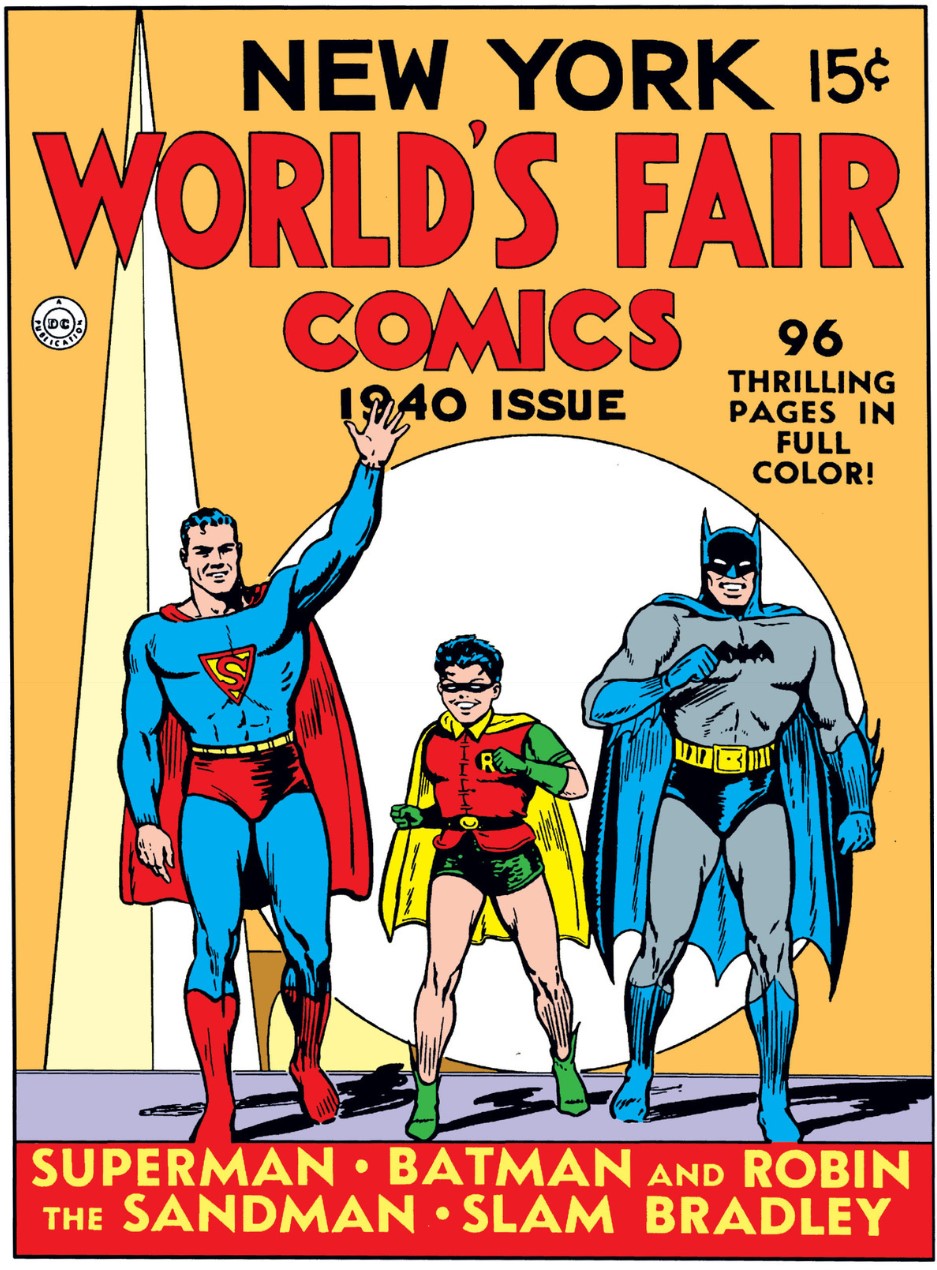
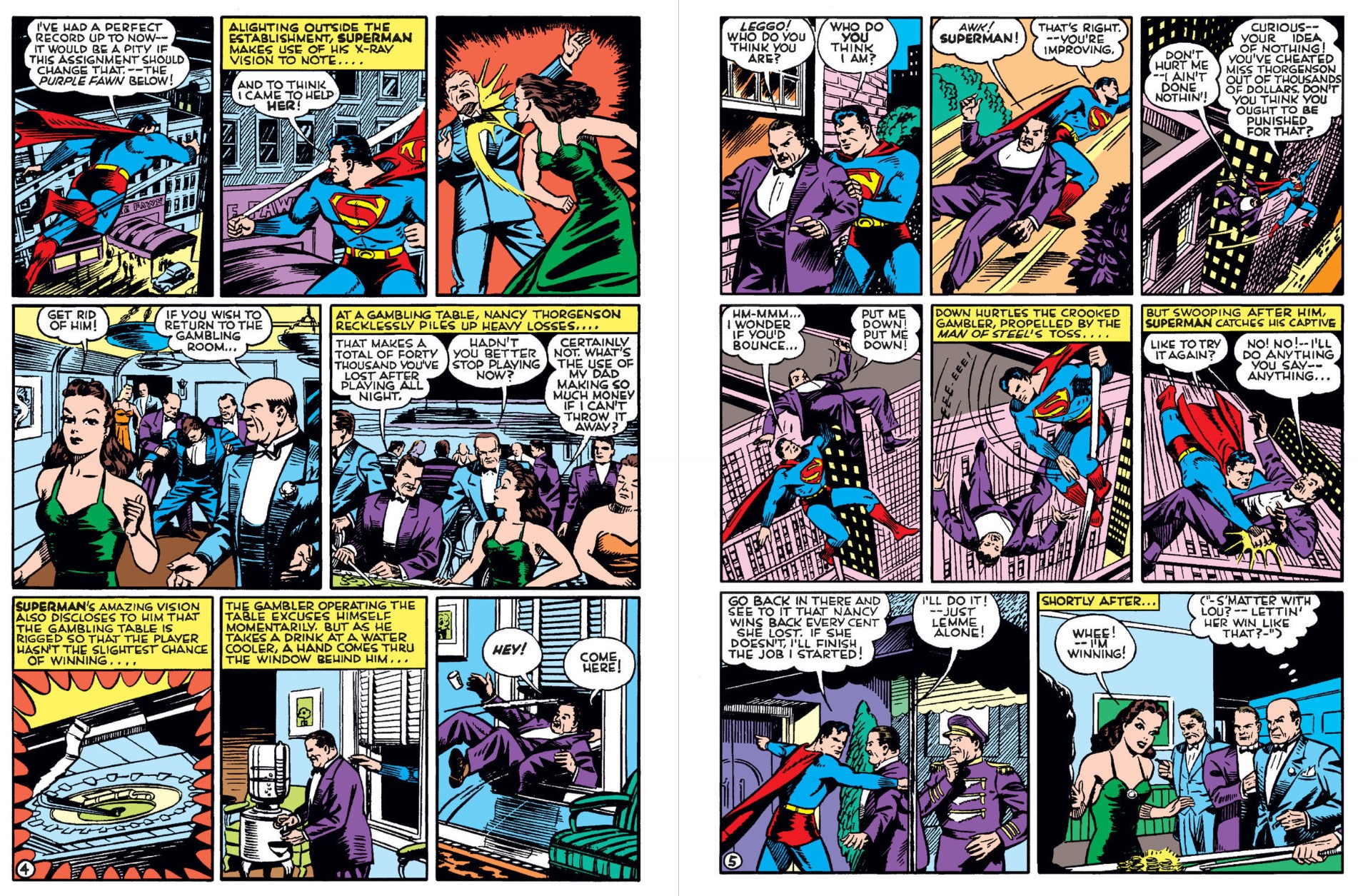
This incredible panorama of torrid tales opens with gangsters attempting to plunder jewels from exhibits at the biggest show on earth. Taken from premium package New York World’s Fair #2, ‘Superman at the 1940 World’s Fair’ is credited to Siegel & Schuster, but actually illustrated by Burnley who also provided the first ever pairing of the Man of Tomorrow with Dynamic Duo Batman and Robin on the cover to drag readers in…

Siegel & Shuster had created a true phenomenon and were struggling to cope with it. As well as monthly and bimonthly comics a new quarterly publication, initially World’s Best and ultimately World’s Finest Comics – springing from the success of the publisher’s New York World’s Fair comic-book tie-ins – would soon debut with their indefatigable hero featuring prominently in it. Superman’s daily newspaper strip began on 16th January 1939 (Yes! Today but back then!), with a separate Sunday strip following from November 5th: garnering millions of new devotees. The need for new material and creators was constant and oppressive, so expansion was the watchword at the Superman and Shuster studios.

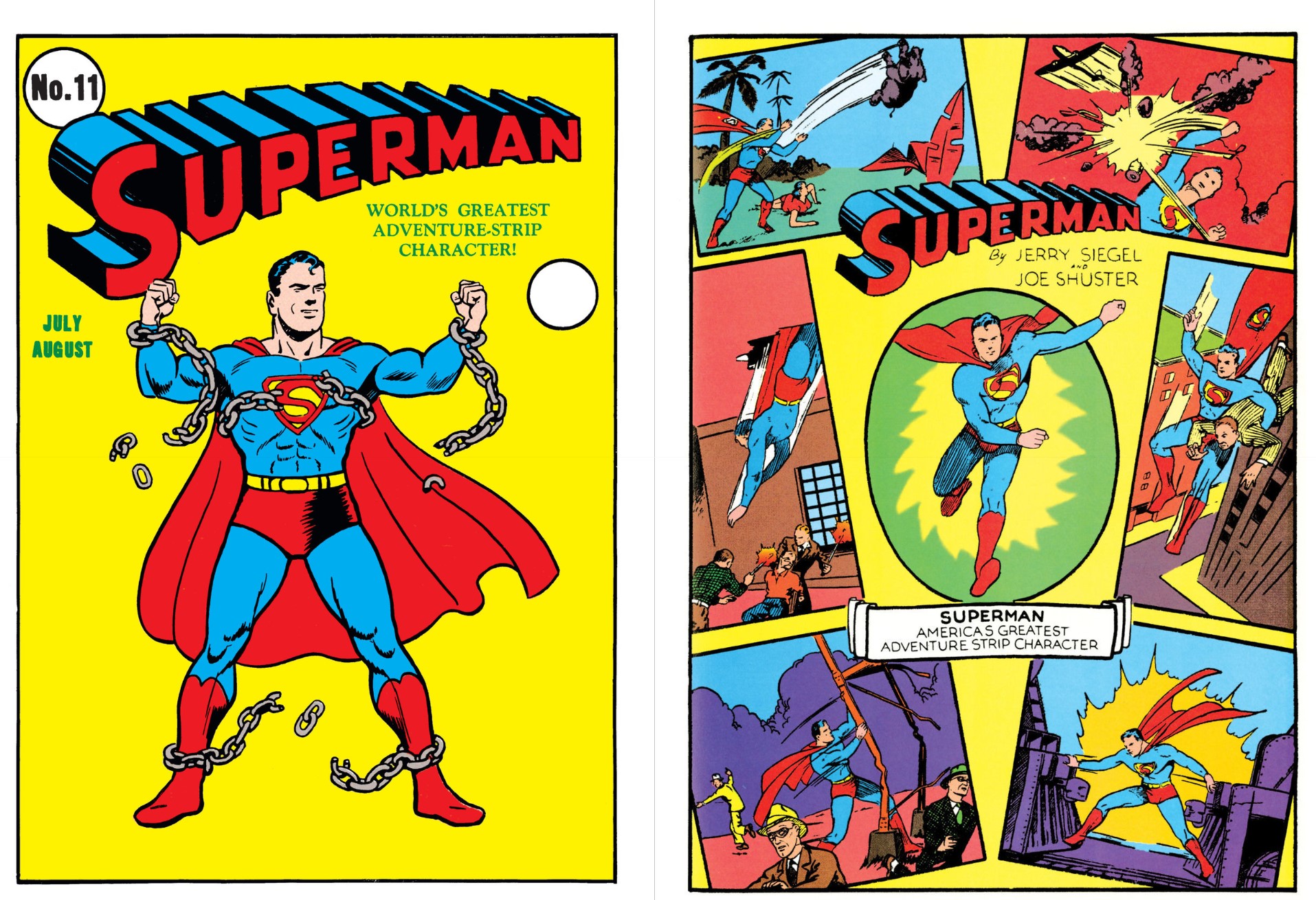
On the primary pages though, Action Comics#26 (July 1940) introduced ‘Professor Cobalt’s Clinic’ (limned by Pauls Lauretta & Cassidy with Siegel inking and Frank Shuster lettering) wherein Clark Kent & Lois Lane expose a murderous sham Health Facility with a little Kryptonian help, whilst the following month dealt a similar blow to corrupt orphanage the ‘Brentwood Home for Wayward Youth’. September’s issue found Superman at the circus, solving the mystery of ‘The Strongarm Assaults’, a fast-paced thriller beautifully illustrated by the astonishingly talented and versatile Burnley. Whilst thrilling to all that, kids of the time could also have picked up the sixth issue of Superman (cover-dated September/October 1940). Produced by Siegel and the Superman Studio, with Shuster increasingly overseeing and only drawing key figures and faces, this contained four more lengthy adventures. Behind its Shuster & Cassidy cover, ‘Lois Lane, Murderer’, and ‘Racketeer Terror in Gateston’ by Cassidy had the Man of Action saving his plucky co-worker from a dastardly frame up and rescuing a small town from a mob invasion. An infomercial for the Supermen of America club and the secrets of attaining ‘Super Strength’ as shared by Burnley, Shuster & Cassidy follows. These lead to more adventure and action from Lauretta & Cassidy as ‘Terror Stalks San Caluma’ and ‘The Construction Scam’ sees the Man of Tomorrow foil a blackmailer who’s discovered his secret identity before spectacularly fixing a corrupt company’s shoddy, death-trap buildings.

Action Comics #29 (October 1940) again features Burnley art in a gripping tale of murder for profit. Human drama in ‘The Life Insurance Con’ was followed by deadly super-science as the mastermind Zolar created ‘The Midsummer Snowstorm’, allowing Burnley a rare opportunity to display his fantastic imagination as well as his representational acumen and dexterity. Then Superman #7 (November/December1940) marked a creative sea-change as occasional cover artist Wayne Boring became Schuster’s regular inker, whilst seeing the Man of Steel embroiled in local politics when he confronts ‘Metropolis’ Most Savage Racketeers’; quells manmade disasters in ‘The Exploding Citizens’; stamps out City Hall corruption in ‘Superman’s Clean-Up Campaign’ (illustrated fully by Boring) and puts villainous high society bandits ‘The Black Gang’ where they belong… behind iron bars.

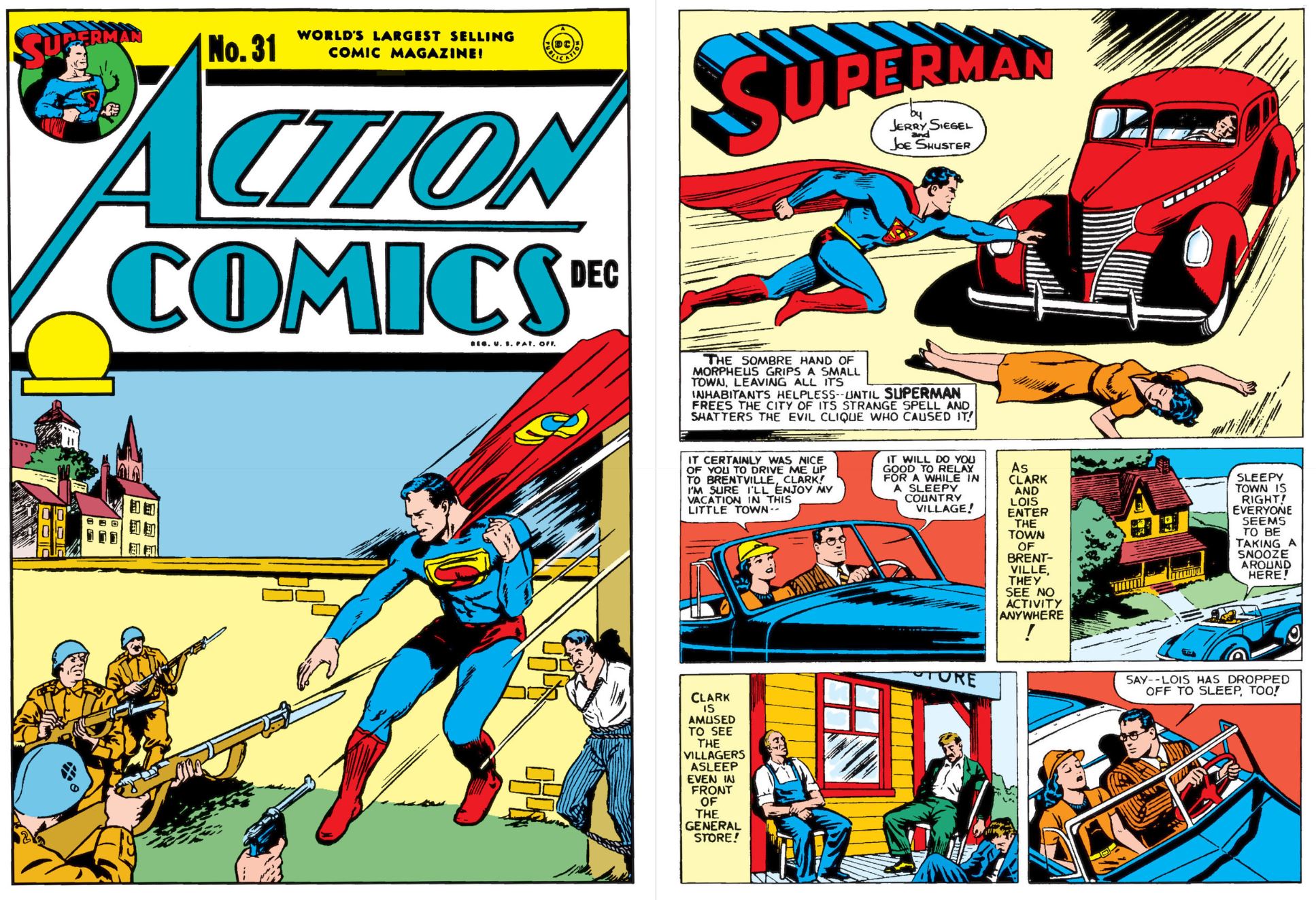
For Action # 31 Burnley draws another high-tech crime caper as crooks put an entire city to sleep and only Clark Kent isn’t ‘In the Grip of Morpheus’ after which ‘The Gambling Rackets of Metropolis’ (AC #32) finds Lois almost institutionalised until the Big Guy steps up to crush an illicit High Society operation that has wormed its nefarious way into the loftiest echelons of Government, a typical Siegel social drama magnificently illustrated.

Cover-dated January/February 1941, Superman #8 was another spectacular and wildly varied compendium containing four big adventures ranging from fantastic fantasy in ‘The Giants of Professor Zee’ (Cassidy & Boring); topical suspense in spotlighting ‘The Fifth Column’ (Boring & Komisarow) and common criminality in ‘The Carnival Crooks’ (Cassidy) before concluding with cover-featured ‘Parrone and the Drug Gang’ (Boring), wherein the Metropolis Marvel duels doped-up thugs and corrupt lawyers controlling them.

Action Comics #33 & 34 are both Burnley extravaganzas wherein Superman goes north to discover ‘Something Amiss at the Lumber Camp’, before heading to coal country to save ‘The Beautiful Young Heiress’; both superbly enticing character-plays with plenty of scope for super-stunts to thrill the gasping fans.

Superman #9 (March/April 1941) was another four-star thriller with all art credited to Cassidy. ‘The Phony Pacifists’ is an espionage thriller capitalising on increasing US tensions over “the European War” whilst ‘Joe Gatson, Racketeer’ recounts the sorry end of a hot-shot blackmailer and kidnapper. ‘Mystery in Swasey Swamp’ combines eerie rural events with ruthless spies whilst the self-explanatory ‘Jackson’s Murder Ring’ pits the Caped Kryptonian against an ingenious gang of commercial assassins. The issue also improves health and well-being with another Shuster & Cassidy ‘Supermen of America’ update and exercise feature ‘Super-Strength’ by Shuster.

The success of the annual World’s Fair premium comic books had convinced editors that an over-sized anthology of their characters, with Superman and Batman prominently featured, would be a worthwhile proposition even at the exorbitant price of 15¢ (most 64-page titles retailed for 10¢ and would do so until the 1960s). At 96 pages, World’s Best Comics #1 debuted with a Spring 1941 cover-date and Fred Ray frontage, before transforming into the soon-to-be-venerable World’s Finest Comics from issue #2 onwards. From that landmark one-&-only edition comes gripping disaster thriller ‘Superman vs. the Rainmaker’, illustrated by Boring & Komisarow, after which Action Comics #35 headlines a human-interest tale with startling repercussions in Boring & Leo Nowak’s ‘The Guybart Gold Mine’, before even Superman is mightily stretched to cope with the awesome threat of ‘The Enemy Invasion’ rendered by Boring & Shuster: a canny, foreboding taste of things to come if – or rather, when – America entered World War II.

Superman #10 (May/June 1941) opens with eponymous mystery ‘The Invisible Luthor’ (Nowak), follows with ‘The Talent Agency Fraud’ (Cassidy, Nowak, Siegel & the Studio), steps on the gas in ‘The Spy Ring of Righab Bey’ and closes with ‘The Dukalia Spy Ring’ (both by Boring, Siegel & the Studio): topical and exotic themes of suspense as America was still at this time still officially neutral in the “European War”. Conversely, Action Comics #37 (June 1941) returned to tales of graft, crime and social injustice in ‘Commissioner Kent’ (Cassidy) as the Man of Steel’s timid alter-ego is forced to run for the job of Metropolis’ top cop, before World’s Finest Comics #2 (Summer 1941) unleashes Cassidy & Nowak’s ‘The Unknown X’ – a fast-paced mystery of sinister murder-masterminds, before AC #38 (and Nowak & Ed Dobrotka) provide a spectacular battle bout against a sinister hypnotist committing crimes through ‘Radio Control’

Other than a Cassidy pinup, Superman #11 (July/August 1941) was an all Nowak affair, beginning with ‘Zimba’s Gold Badge Terrorists’ wherein thinly disguised Nazis “Blitzkrieg” America, after which “giant animals” go on a rampage in ‘The Corinthville Caper’. Seeking a cure for ‘The Yellow Plague’ then takes Superman to the ends of the Earth whilst ‘The Plot of Count Bergac’ brings him back home to crush High Society gangsters. All by Nowak but accompanied by a Cassidy pinup.

Horrific mad science creates ‘The Radioactive Man’ in Action #39 (Nowak & Shuster Studios), whilst #40 featured ‘The Billionaire’s Daughter’ (by John Sikela) wherein the mighty Man of Tomorrow needs all his wits to set straight a spoiled debutante before we closing with ‘The Case of the Death Express’: a tense thriller about train-wreckers illustrated by Nowak from the Fall issue of World’s Finest (#3).

Stories of corruption and social injustice were gradually moving aside for more spectacular fare, and with war in the news and clearly on the horizon, the tone and content of Superman’s adventures changed too: the scale and scope of the stunts became more important than the motive. The raw passion and sly wit still shone through in Siegel’s stories but as the world grew more dangerous the Man of Tomorrow simply had to become stronger and more flamboyant to deal with it all, with Shuster and his team consequently stretching and expanding the iconography for all imitators and successors to follow.

These Golden Age tales are priceless enjoyment at an absurdly affordable price. My admiration for the stripped-down purity and power of these stories is boundless. Nothing has ever come near them for joyous, child-like perfection. You really should make them part of your life. In fact, how can you possibly resist them?
© 1940, 1941, 2025 DC Comics. All Rights Reserved.

Today in 1939 Jean Van Hamme (XIII, Thorgal, Largo Winch) was born, which you now know was the same moment – allowing for time zone differentials – that the Superman newspaper strip launched. It ended in 1966 but Van Hamme’s still going…

In 1960 UK comic Judy debuted, and ten years later so did Garth Ennis.

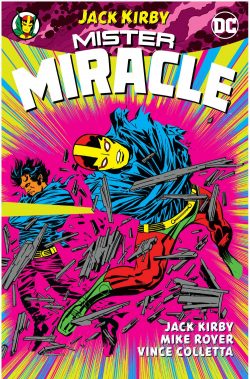
Mister Miracle by Jack Kirby


By Jack Kirby, Mike Royer, Vince Colletta, Don Heck, D. Bruce Berry, Greg Theakston, Mike Thibodeaux, Dick Giordano, Mike Machlan, Bill Wray, Steve Rude & various (DC Comics)
ISBN: 978-1-4012-7717-8 (TPB/Digital edition)

This book includes Discriminatory Content produced in less enlightened times.

Today in 1971 American comic books again changed forever with the third component of a graphic masterpiece. On December 1st 1970 newsstands saw Superman meet counterculture head-on courtesy of Jack Kirby in a title like no other ever before. It was only one strand of a bold experiment that quite honestly failed, but still undid and remade everything. That was Forever People #1 and it was followed on December 22nd with New Gods #1. Then on January 14th 1971 comic books delivered a NEW new world that just kept on changing…

When Jack Kirby returned to the home of Superman in 1970 he was working on one of the most powerful concepts in comic book history. The expansive grandeur of his Fourth World saga grafted a complete new mythology onto and over the existing DC universe and blew the developing minds of a generation of readers. If only there had been a few more of them…

Superman’s Pal Jimmy Olsen, where Kirby revived his 1940s kid-team The Newsboy Legion, introduced large-scale cloning in the form of The Project and hinted that the city’s gangsters had extraterrestrial connections. He then moved on to a main course beginning with The Forever People, intersecting where appropriate with New Gods and Mister Miracle to form an interlinked triptych of finite-length titles that together presented an epic mosaic. Those three groundbreaking titles collectively introduced rival races of gods, dark and light, risen from the ashes of a previous Armageddon to battle forever… and then their conflict spreads to Earth…

Kirby’s concepts, as always, fired and inspired contemporaries and successors. Gods of Apokolips & New Genesis became a crucial keystone of DC continuity and integral foundation of that entire fictional universe, surviving the numerous revisions and retcons which periodically bedevil long-lived comics fans. Many major talents dabbled with the concept over decades and a host of titles have come and gone starring Kirby’s creations. That’s happening now even as I type this…

As previously stated, the herald of all this innovation had been Superman’s Pal Jimmy Olsen, which Kirby had used to lay groundwork since taking it over with #133. There readers first met Darkseid, The Evil Project, Intergang and so much more, but it was also used as an emotional setup for a fascinating notion that had seldom if ever previously troubled the mighty, generally satisfied and well situated Man of Tomorrow…

After The Forever People #1, crossovers with DC mainstays were largely sidelined in favour of a tense and relatively isolated new normal. Those kids were Kirby’s way of depicting how conflict affected peripheral players and dragged them in and down, and the next (and most important) component was seeing seasoned soldiers do their work. New Gods would focus on the war itself…

With that all going on, next came something utterly unexpected: a non-hero who reflected a changing world and sought to capture the turbulent era’s zeitgeist by also looking out for himself and breaking loose of expectations and societal shackles…

Cover-dated February/March 1971 and on sale 55 years ago today, the premiere issue of Mister Miracle – Super Escape Artist sprang the last piece of the puzzle on readers by opening with a sedate set of mysteries balanced with emotional tension and explosive action. The star – notoriously based on Jack & Roz Kirby’s friend (comics genius, magician and escapologist) Jim Steranko – was a fugitive and runaway avoiding (perhaps dodging?) his responsibilities and searching for deeper truths. No matter how wild things got, that set-up was pure reportage…

Inked by Vince Colletta with Kirby doing most of the rest, ‘Murder Missile Trap!’ introduces aging entertainer Thaddeus Brown, an old war horse trying to get back in the saddle, and practicing his old escapology act to win an unwise wager with Metropolis’ Intergang boss Steel Hand. A terrifying test run is interrupted by a young stranger who observes with shock Brown’s apparent suicide and the panic of equally aged assistant Oberon before rushing in to help them.

That act of getting involved leads to orphan Scott Free inheriting the identity and stage persona of Mister Miracle after Steel Hand cheats and has Thaddeus shot and killed. Angry, intrigued and ready to settle down at last (or for a while at least), the wanderer – who has an astounding carpet bag of high tech tricks – wins justice for his predecessor by beating a spectacular rocket trap and decides to try something strange but substantial, for a change.

However, the coils of his past prepare to ensnare him…

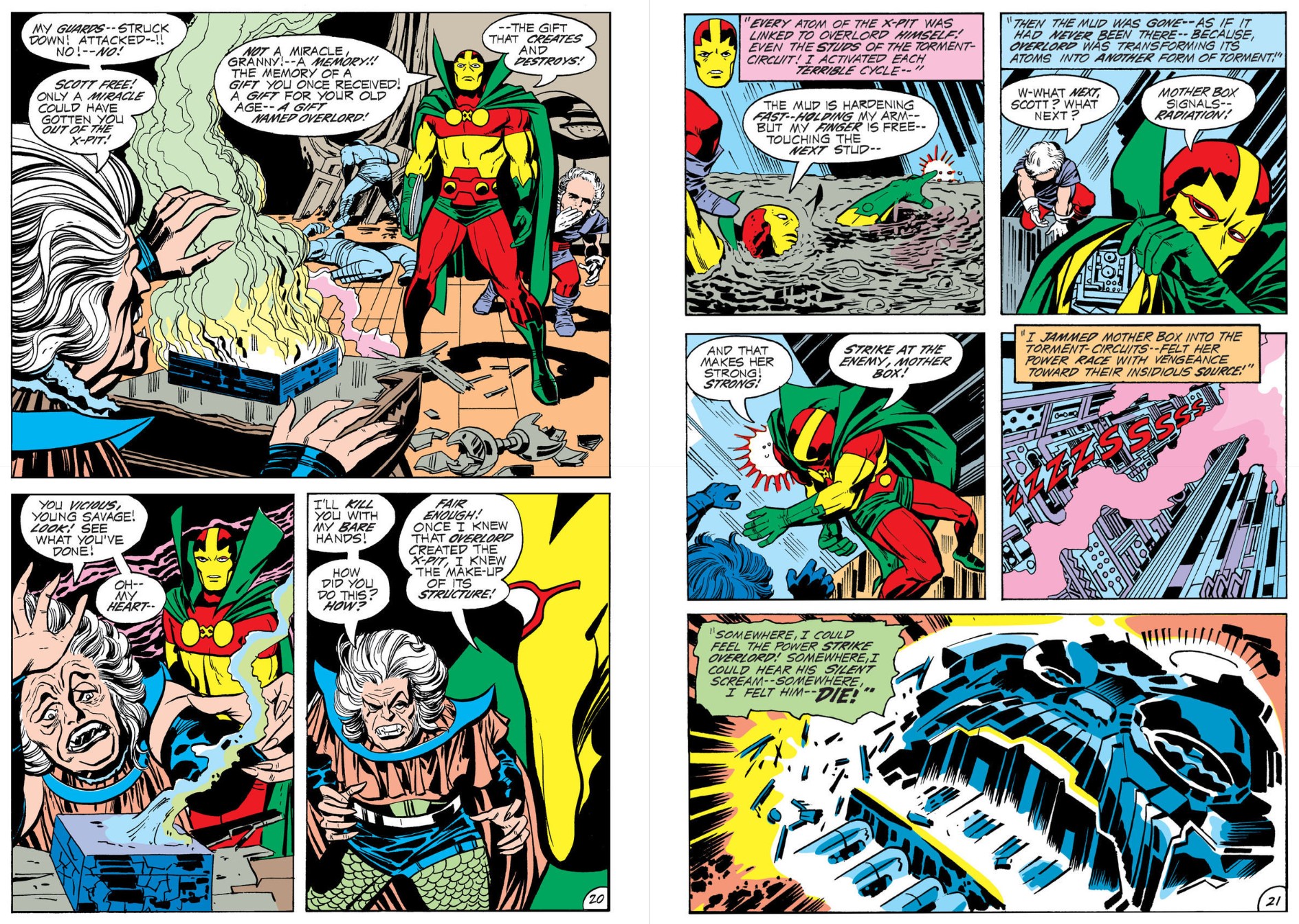
The prosaic life of a showman was a beguiling setting as Scott and Oberon planned a comeback and the beloved old stagehand learned just how different the new kid really was. His suspicions of a wider, wilder side were confirmed as the orphanage Scott fled came looking for him and vicious Apokolyptian virago Granny Goodness unleashed the techno-terrors of matter-warping monster Overlord before trapping the targets in the insidious, infernal ‘X-Pit!’

Because comics fans were always abstruse, Mister Miracle regularly outsold its companion titles, but Kirby felt no compunction to explain his expanding pantheon and universe – or indeed space to do so. Here, though, please allow me to lay out some groundwork…

Soon after creation began, gods were born, thrived and perished – primarily by warring with each other. When the Old Gods died in a cosmos-shaking conflagration their perfect primal world was split into two. Eventually cooling fragments congealed into two new yet lesser worlds: the dark vicious globe of Apokolips and gleaming noble orb New Genesis. Over millennia, generations of superior beings of might and majesty populated the spinning spheres. Sadly, a tragic trait New Gods shared with their progenitors was the capacity for destruction and taste for conflict. Denizens of both planets always and inevitably found fresh ways to end each other’s immortal lives.

The tale proper began on joyous, spiritual New Genesis years after the latest all-out war with Apokolips ended. Mighty Orion arrived in paradisical Supertown where deific patriarch Highfather communes with cosmic mystery The Source. The metaphysical conduit despatched the turbulent wolf in their fold to its antithetical hell-world, only to find despot Darkseid gone. Against all treaties, captive humans from Earth had been abducted and probed for signs of the tyrant’s dream.

The lord of Apokolips wanted to do away with free will and rule personally over all that lived, employing an irresistible, intangible ultimate weapon. The “Anti-Life Equation” is a cheat code for totalitarianism: instant negation of choice, and command of all thought. Darkseid’s obsessive search for it led him to Earth where finding it would guarantee total triumph and dispense with his need for Parademons, Dog Cavalry, assorted terror weapons, and his elite inner circle of monstrous minions. Powerful and technologically advanced, for both races the basic tool is Mother Box: sentient circuitry connected to The Source and a lifelong cyber-symbiotic companion, able to communicate, advise and manipulate the physical world…
Mister Miracle #3 opens a bravura double-issue imbroglio as Scott agrees to an honourable duel with dishonourable disembodied robot-wearing intelligence Doctor Bedlam. Darkseid’s war code is strict and binding and finds the escape artist challenged to make his way out of a packed 50-storey skyscraper. The problems comes because the edifice is sealed tight and every person inside it is a raving homicidal maniac thanks to mental murderer Bedlam’s administering of ‘The Paranoid Pill!’

As Oberon frets back at the Brown mansion, he is visited by an old friend of Scott’s, but master warrior Big Barda is not out to assassinate the runaway. She seems more interested in his wellbeing and fate and teleports to the trap site in time to watch Mister Miracle avoid ‘The Closing Jaws of Death!’  Barda is another abstention from the Apokolips method and a rowdy runaway like no other…

With Mike Royer taking over inking, Kirby’s twin loves – history and movies – are happily exercised and expressed in the next yarn as a manic military martinet (based on James Mason’s Rupert of Hentzau in The Prisoner of Zenda) attempts to humiliate and destroy the rebel in MM #5. Another stiff-necked clash of Codes of Honour, it sees elite Apokolips soldiers rendition and reclaim Barda, making her freedom contingent on Scott surviving the Wile E. Coyote-like inventions of ‘Doctor Vundabar and his Murder Machine!’ Of course he does just that, and the issue continues with the first episode in an occasional backstory featurette. Inked by Colletta, ‘Young Scott Free!!’ shares boyhood exploits of Granny’s appalling orphanage/war college where cadet Free just doesn’t fit in. He complains, he has ideas and, when no one’s looking, has extra lessons from New Genesis in the form of emotionless even-handed God of Scientific Curiosity Metron

Humour and a heaping pile of unleashed agita underpin the wry tale of a sharp-talking conman seeking to profit off a creative star’s efforts when obnoxious, dissolute ‘Funky Flashman!’ (MM #6) seeks to monetise Scott’s act, only to run full on into “debt-collectors” from Apokolips. Happily settled in with Scott, Barda is targeted by old squadmates Stompa, Lashina, Bernadeth and Mad Harriet who have come to take her home to the Female Furies battalion she used to lead. They don’t like Flashman either and really resent missing her and taking him thanks to some sneaky sleight-of-hand…

Another brief Royer-inked ‘Young Scott Free!!’ episode finds the daily drugged & programmed dissident becoming more brazen and noticeable in his rebellions, prior to #7 opening an ‘Apokolips Trap!!’ Done with constant ambushes Scott resolves to return to the hell planet and win his right to permanent life-long liberty from Granny’s reprisals, but it all goes awry when battle-hungry Barda comes along, forcing the duo to fight the length of the evil kingdom against “Lowlies”, soldiers, war-machines and even Darkseid’s chief assassin Kanto before this duel of honour can even begin…

‘Young Scott Free!!’ adds nuance with the tale of that time the boot camp pariah somehow trashed deadly Parademons in a training exercise, after which the main event concludes in MM#8 as Scott surrenders to his nemeses and becomes a showpiece execution event against an unbeatable psychic horror during ‘The Battle of the Id!’ Unwilling to let her lover languish or die, Big Barda organises a Female Fury foray that rocks the joint, but as always, she needn’t have bothered…

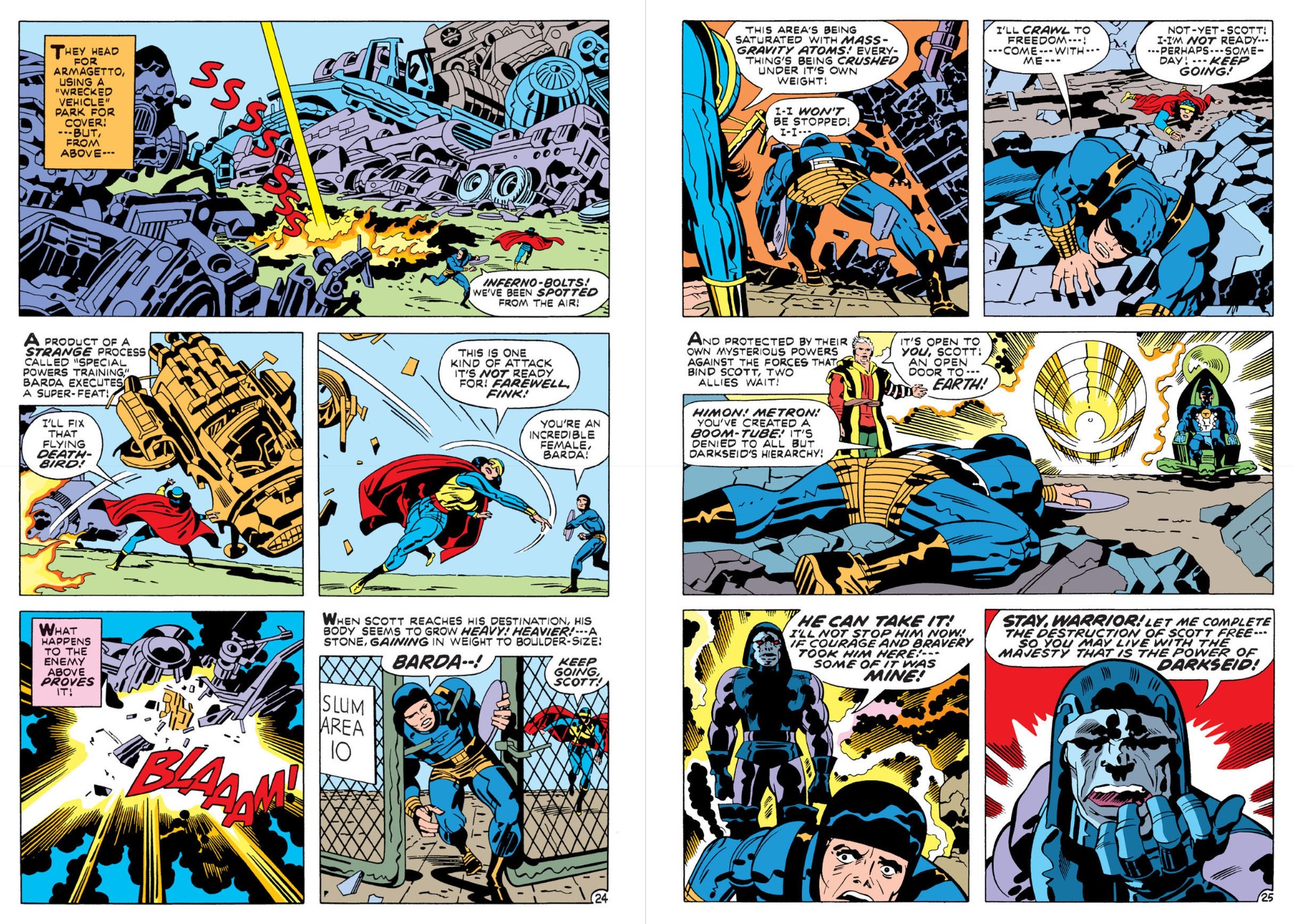
In New Gods #7 Kirby revealed the origins of the current war and how Darkseid’s son Orion was traded for Highfather’s infant to become tokens of intent and hostage princes to assure a ceasefire. Now Mister Miracle #9 concludes the history lesson with the tragic how and why young man Scott Free breaks the truce, escapes the chains of expectation and chooses his own path after meeting outlaw philosopher ‘Himon!’ Cover-dated July 1972, the tale uses the last exploit ‘Young Scott Free!’ to show how, with rising-star soldier/covert rebel Lieutenant Barda, Scott challenged and dodged the system, no matter the cost…

Kirby’s intention for his Fourth World trilogy was three 12-chapter finite series working in tandem, but fate and sale demanded otherwise. Forever People and New Gods both ceased abruptly and without those intended conclusions, but something else happened for the Super Escape Artist…

The entire notion was a huge risk and massive gamble for an industry and company that was a watchword for conservatism. It was probably incredibly tough for editors and publishers to stop themselves interfering, and they often didn’t. With numbers low, and spooky stories proliferating everywhere, Kirby was pressured to drop the weird stuff and concentrate on old standards. Despite promises of support and complete autonomy, the King had already surrendered much to get his dream rolling. Crushing deadlines and ridiculous expected monthly page counts were one thing, but management had no understanding of what he was planning and promotion was non-existent. Thus, inevitably these series failed to find sufficient sales to keep on until that planned and promised conclusion. Nobody in comics argued with numbers so Forever People and New Gods #11 were the last, cancelled before Kirby could complete his grand experiment.

… Except Mister Miracle carried on. Its sales warranted continuation so with a sharp change of emphasis anticipated and accommodated by Kirby and Co, #10 saw Scott, Barda and AWOL ringleader Stompa, Lashina, Bernadeth & Mad Harriet move to Earth in a tense pause and apparent détente. With time on their hands the squad became an entertainment troupe as ‘The Mister Miracle to Be!’ finally explored showbiz and touring. Sadly, they regularly encountered outlandish human-scaled foes, such as high-tech racketeers the World Protective League and their deranged boss The Head, who mistook the wild wonders for international agents sent to derail a bio-weapon blackmail plot…

With Thaddeus’ son Ted and Oberon filling out the roster, #11 promised ‘The Greatest Show Off Earth!’ and delivered once Doctor Bedlam momentarily trapped Scott aboard an exploding spaceship before the extended run carried on with the death-cheaters challenged by an ancient artefact that stacked the odds during a deadly wager. The truth behind ‘Mystevac!’ was cruel, shocking and transient…

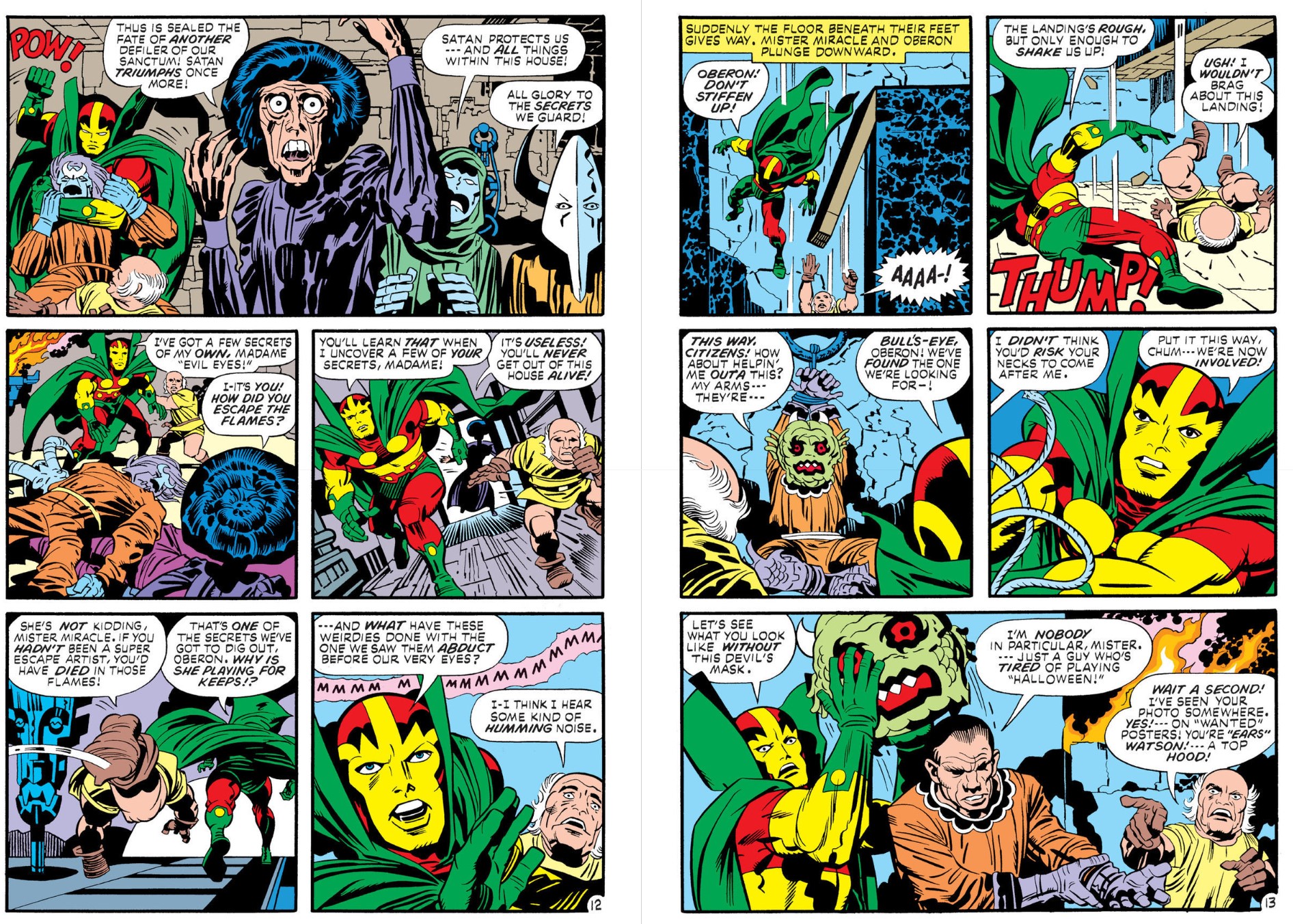
Next the hardworking stiffs were hijacked by a deranged fascist sect and dumped in ‘The Dictator’s Dungeon!’ (obviously not for long!) after which the growing horror trend saw them stumble over Satanists with an even more sinister secret in #14’s ‘The Quick and the Dead!

The tone of those troubled turbulent times was then acknowledged by the introduction of a smart, capable black kid. ‘The Secret Gun!’ found Mister Miracle and friends fostering a witness to murder and eventually hiring him as the next big thing in escapology as seen in follow-up yarn ‘Shilo Norman, Super Trouble!’ as the team clash with invasive “insecto-sapiens” created by Professor Egg – a shrinking savant set on conquest and consumption. Then crime-busting returns with Scott, Barda and Shilo mistaken for hitmen when they inadvertently book in at ‘Murder Lodge!’ and are extravagantly earmarked for execution…

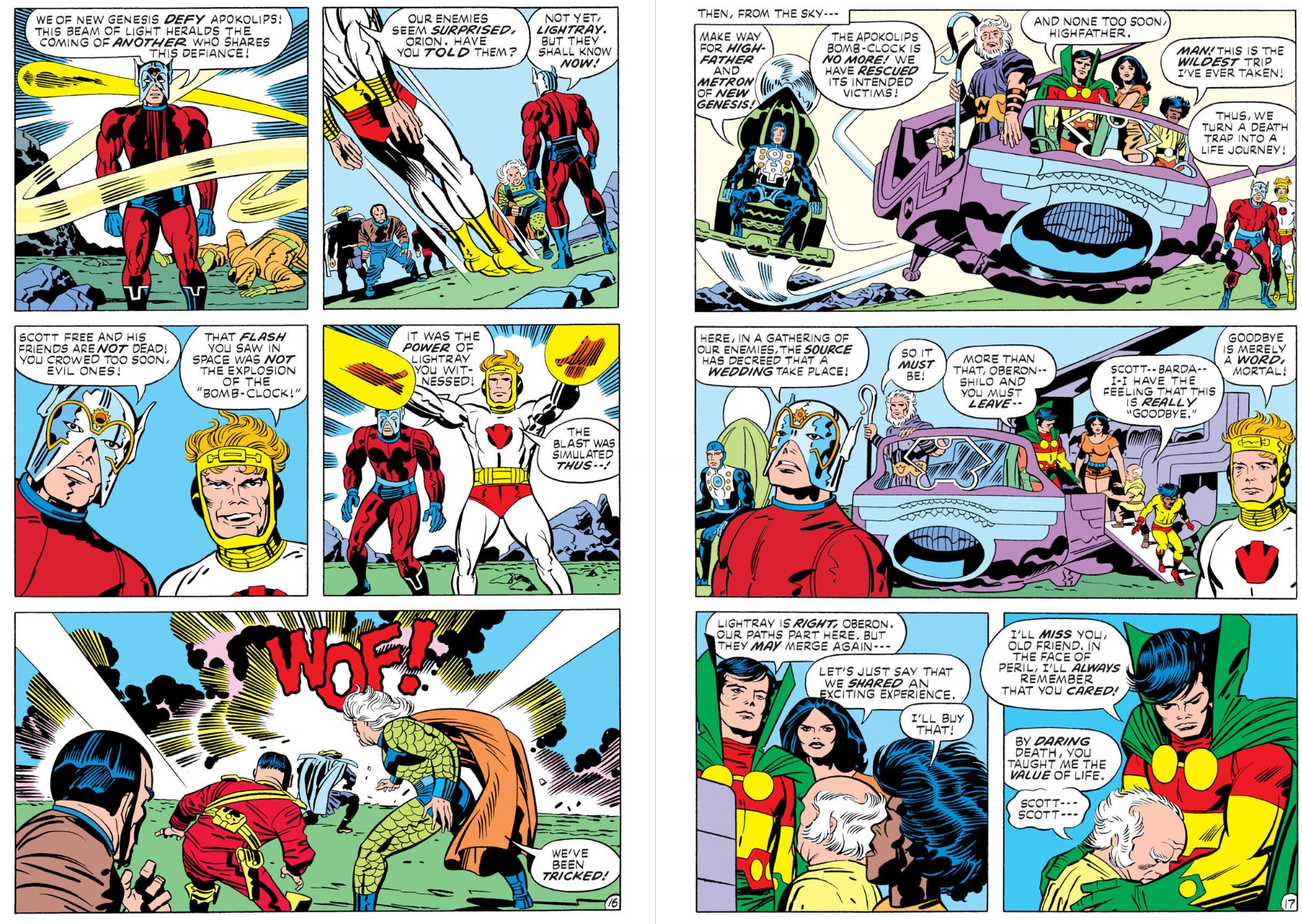
Eventually the encore came to a conclusion as – cover dated March 1974 – Mister Miracle #18 saw all the New God players become ‘Wild, Wild Wedding Guests!’ as Scott and Barda tied the one knot they couldn’t defy before moving in with his dad on New Genesis.

That followed one last all-out assault by Darkseid’s minions which went some way to finally looping readers back to the overarching spectacle as lovers from warring worlds decided to wed in the face of impending doom.

With that the saga was paused but time and changing tastes soon brought sequels and, at long last, Kirby’s return to craft a proper ending… of sorts. We’ll get to those in the fullness of time-space…

Mister Miracle remained a uniquely reusable concept for decades with Scott, Barda and the crew regularly getting guest gigs and new shots at the limelight in Fourth World revivals, DC titles ranging from Action Comics to Brave and the Bold to Justice League, and in solo comeback series.

This cosmic compendium offers bonus ‘Mother Box Files’ material comprising pertinent Kirby characters as revisited by himself, and select inkers from assorted DC Who’s Who fact files. Here a tremendous group treatment of The Female Furies, inked by Greg Theakston, backs up a clutch of solo entries for ‘Mister Miracle’ (Giordano), ‘Big Barda’ and ‘Granny Goodness’ (Theakston), ‘Doctor Bedlam’ (Mike Machlan), ‘Funky Flashman’ (Bill Wray) & ‘Virman Vundabar’ embellished by Steve Rude. Closing the wonderment are more delights in ‘The Art of Jack Kirby’, including an unused cover for MM #7 plus a selection of stunning pencilled pages from the original run.

That metaphor for freedom and a hero who chooses to stop running, to turn and to fight is a fundamental aspect of fiction, and one that will always deliver the goods. You know what to do so what’s holding you back?
© 1971, 1972, 1973, 1974, 2017 DC Comics. All Rights Reserved.

Today in 1863 Richard F. Outcault was born as were Golden Age artists Vince Alascia in 1914 and John Tartaglione in 1921. Filipino artist Rudy Nebres joined the crowd in 1937.

Fictionally, Elzie Segar’s Thimble Theatre debuted Castor Oyl today in 1920 and British standby Comet launched in our smoggy foggy newsagents today in 1950.

On a sad note, the deeply underappreciated Pat Boyette (Flash Gordon, The Phantom, Peacemaker, Blackhawk) passed on today in 2000.

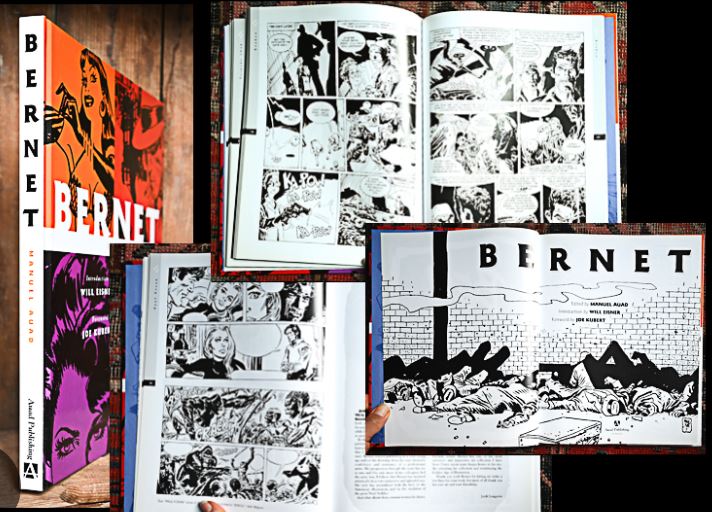
Bernet


By Jordi Bernet & various, edited by Manual Auad (Auad Publishing)
ISBN: 978-0-96693-812-8 (HB)

In anticipation of the impending Legend Testers collection from Rebellion Studios expected next week, here’s a glance at a translated treat from a bygone era confirming why you should adore this graphic genius as much as I do. It’s well worth the search and I’ll be cribbing from it heavily when I get around to the turbulent time troubleshooters themselves…

When you’re a life-long thrill-starved kid enchanted by comics, the first stage of development is slavishly absorbing everything good, bad and indifferent. Then comes the moment that you see subtle nuances which inexplicably makes some features favourites whilst others become simply filler.

I first recognised Jordi Bernet’s work on UK thriller serial The Legend Testers… and by “recognised” I mean the very moment I first discerned that somebody actually drew the stuff I was mesmerised by, and that it was better than the stuff either side of it. This was 1966 when British comics were mostly monochrome and never had signatures or credits, so it was years before I knew who had sparked my interest.

Jordi Bernet Cussó was born in Barcelona in 1944, son of a prominent, successful humour cartoonist. When his father died suddenly Jordi, aged 15, took over his father’s strip Doña Urraca (Mrs. Magpie). A huge fan of Alex Raymond, Hal Foster and especially expressionist genius Milton Caniff, Jordi yearned for less restrictive horizons and left Spain in the early 1960s and moved into dramatic storytelling.

He worked for Belgium’s Le Journal de Spirou, and Germany’s Pip and Primo, before finding a home in British weeklies. Bernet worked for UK publishers between 1964 and 1967, and as well as the Odhams/Fleetway/IPC anthologies Smash, Tiger and War Picture Library, also produced superb material for DC Thomson’s Victor and Hornet. He even illustrated a Gardner Fox horror short for Marvel’s Vampire Tales #1 in 1973, but mainstream America was generally denied his mastery (other than a few translated Torpedo volumes and a Batman short story) until the 21st century reincarnation of Jonah Hex which he truly made his own…

His most famous strips include thrillers Dan Lacombe (written by his uncle Miguel Cussó), Paul Foran (scripted by José Larraz) the saucy Wat 69 and spectacular post-apocalyptic barbarian epic Andrax (both with uncle Cussó again). When fascist dictator Franco died, Bernet returned to Spain and began working for Cimoc, Creepy and Metropol, collaborating with Antonio Segura on the sexy adult fantasy Sarvan and the dystopian SF black comedy Kraken, and with Enrique Sánchez Abuli on the gangster and adult themes tales that have made him one of the world’s most honoured artists. These culminated on the incredibly successful crime saga Torpedo 1936.

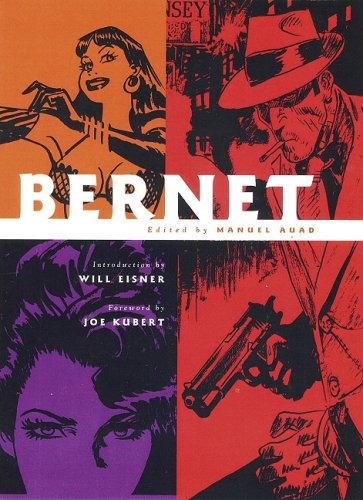
This magnificent commemoration of his career thus far spans those years when he first echoed his father’s style through to the sleek minimalist, chiaroscuric, emphatic line economy that drills into readers hindbrains like hot lead from a smoking 45. Also on view, as well as the violence there’s ample example of his sly, witty (and just as hot!) sex comedy material. Bernet is an absolute master of the female form and his adult material – created with Carlos Trillo – such as Custer, Clara De Noche and Cicca is truly remarkable and unforgettable.

This glorious deluxe hardback gathers together a vast quantity of covers; book illustrations; sketches; drawings, pin-ups &studies; advertising work and that Batman stuff, with a separate chapter on Bernet’s Beauties, a biography (which could, I must admit, have done with one last proof-read before going to press) and full checklisting of his works and awards. There are heartfelt artistic contributions and tributes from some of his vast legion of fans: Will Eisner, Joe Kubert, Jordi Langaron, Carlos Nine, Josep M. Bea, Luca Biagnini, Al Dellinges, Josep Toutain, Eduardo Risso, Horacio Altuna, Carlos Gimenez, Sergio Aragonés, Carlos Trillo, Juan Gimenez and Hobie MacQuarrie, but the true delights here are the 16 complete stories – Torpedo 1936, Sarvan, Custer, Clara De Noche and Kraken – as well as westerns, war stories, comedies and crime thrillers.

This is an incredible tribute to an incredible creator, and one no artist with professional aspirations can afford to miss, but parents be warned – there’s lots of nudity and violence beautifully depicted here – so be sure to read it yourselves first. Just in case…
All art and characters © 2009 their respective copyright holders. All Rights Reserved.

Today in 1955, sleek design master/airbrush aviation nut Ken Steacy was born, and we lost master craftsmen Victor (Redbeard, Buck Danny) Hubinon in 1979 and Bernard Krigstein in 1990. If you read nothing else by “Krig”, go find “Master Race” (Impact Comics #1, April 1955) and learn something important…

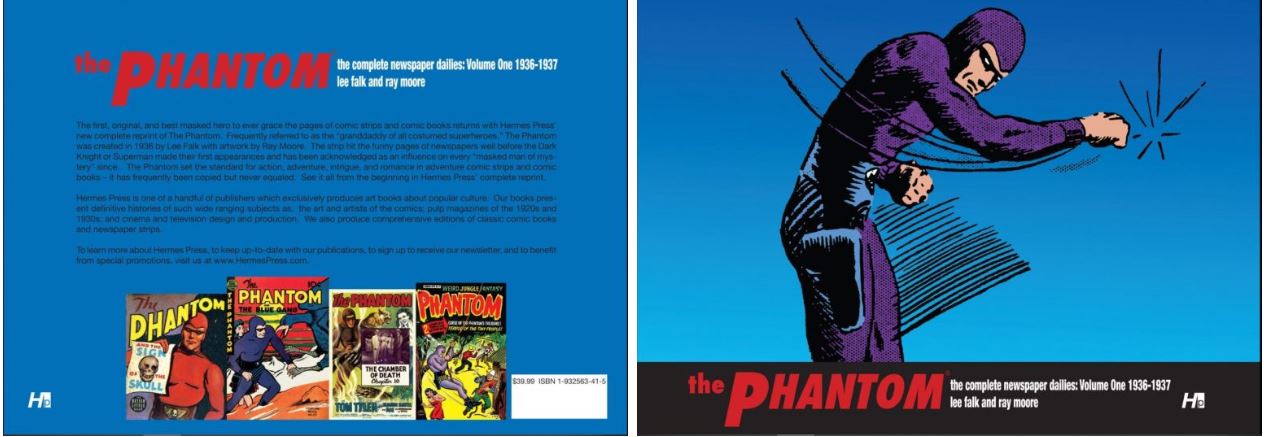
The Phantom: The Complete Newspaper Dailies volume 1 1936-1937


By Lee Falk & Ray Moore: introduction by Ron Goulart (Hermes Press)
ISBN: 978-1-932563-41-5 (HB/Digital edition)

This book includes Discriminatory Content produced in less enlightened times.

There are plenty of comics-significant anniversaries this year, and this guy is probably right at the top of the birthday cake. As next month sees his 90th anniversary here’s tasty reminder of why he is considered one of our industry’s landmark figures.

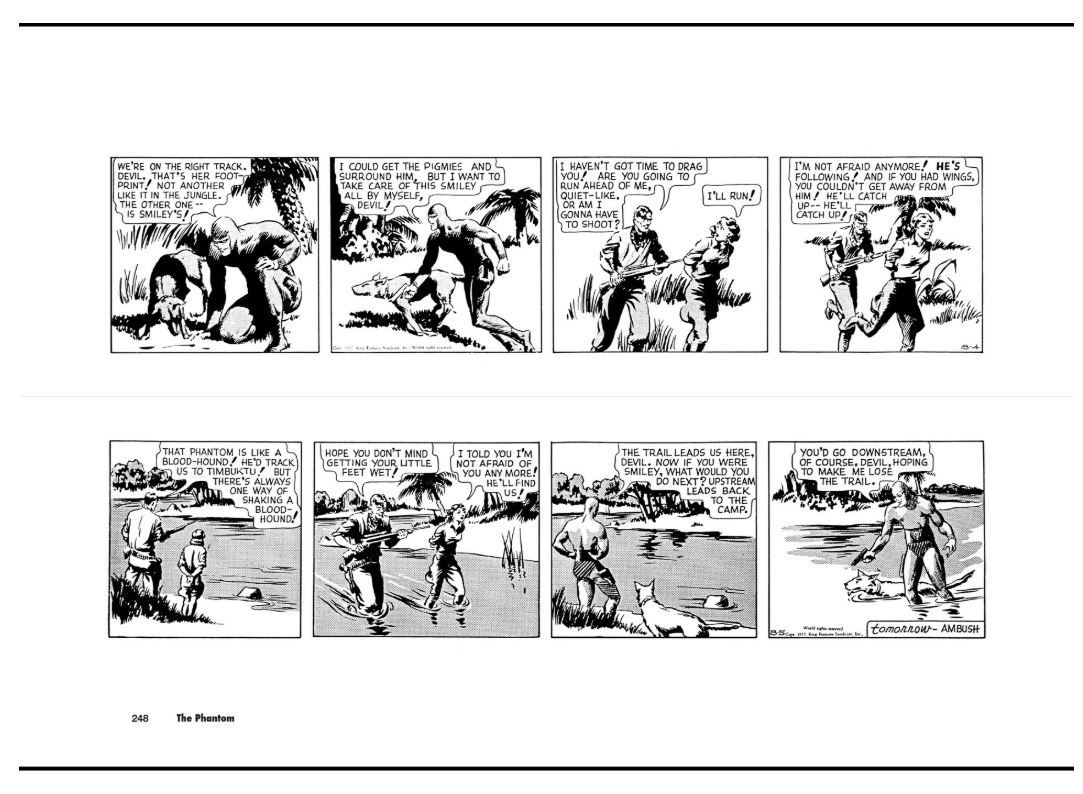
For such a long-lived, influential series, in terms of compendia or graphic novel collections, The Phantom has been very poorly served by the English language market (except in Australia where he has always been accorded the status of a pop culture god). Numerous companies have sought to collect the strips – one of the longest continually running adventure serials in publishing history – but in no systematic or chronological order and never with any sustained success. At least the former issue began to be rectified with this initial curated collection from Archival specialists Hermes Press. This particular edition is a lovely large hardback (albeit also available in digital formats), printed in landscape format, displaying two days strip per page in black & white with ancillary features and articles in dazzling colour where required.

Born Leon Harrison Gross, Lee Falk created the Jungle Avenger at the request of his King Features Syndicate employers who were already making history, public headway and loads of money with his first strip sensation Mandrake the Magician. Although technically not the first ever costumed champion in comics, The Phantom’s instant popularity made him the prototype paladin as he was the first to wear a skin-tight body-stocking and have a mask with opaque eye-slits…

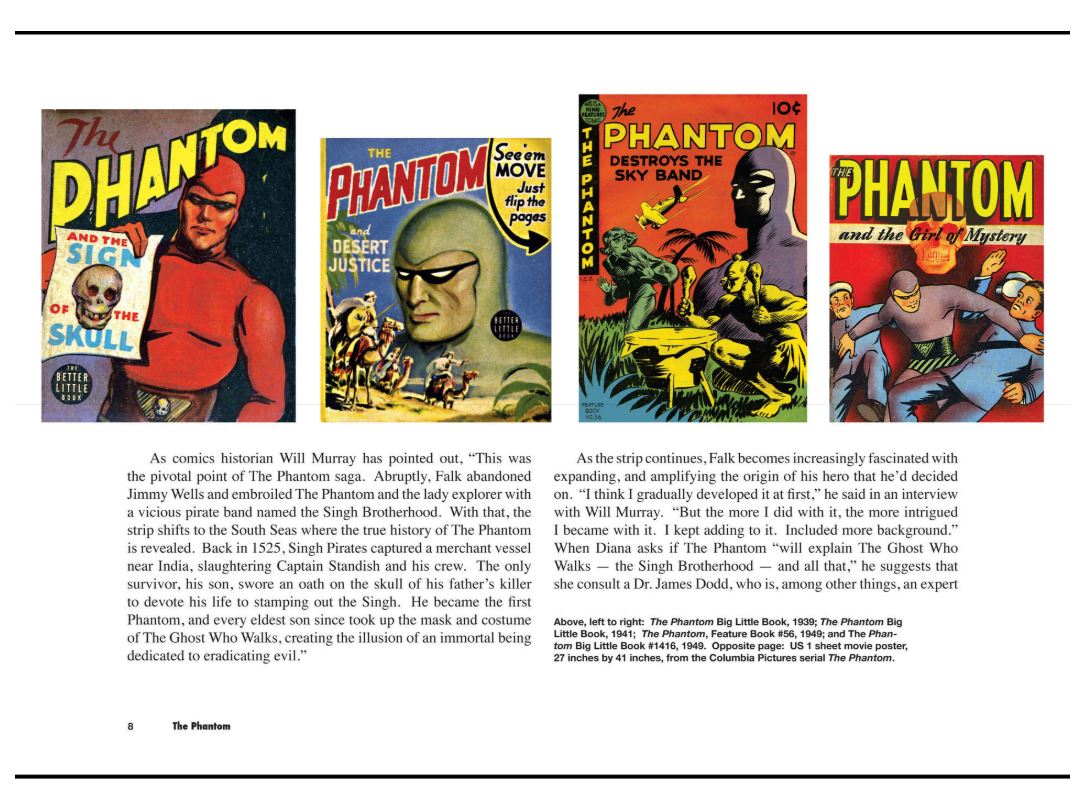
“The Ghost Who Walks” debuted on February 17th 1936 in an extended sequence pitting him against an ancient global confederation of pirates. Falk wrote and drew the daily strip for the first two weeks before handing over illustration to artist Ray Moore. A spectacular and hugely influential Sunday feature began in May 1939. In a text feature stuffed with sumptuous visual goodies like movie posters; covers for comics, Feature and Little Big Books plus many kinds of merchandise, Ron Goulart’s eruditely enticing ‘Introduction: Enter the Ghost Who Walks’ tells all you need to know about the character’s creation before the vintage magic begins with ‘Chapter 1: The Singh Brotherhood’.

American adventurer Diane Palmer returns to the USA by sea, carrying a most valuable secret making her the target of mobsters, sleazy society ne’er-do-wells and exotic cultists. Thankfully, she seems to have also attracted an enigmatic guardian angel who calls himself the Phantom

Successive attacks and assaults endanger the dashing debutante, and she learns an ancient brotherhood of ruthless piratical thieves wants her secret, but that they have been opposed for centuries by one man. Kidnapped and held hostage at the bottom of the sea, Diana is saved by the mystery man who naturally falls in love and eventually shares an incredible history with her…

In the 17th century a British sailor survived an attack by pirates, and – washing ashore on the African coast – swore on the skull of his murdered father to dedicate his life and that of his descendants to destroying all pirates and criminals. The Phantom fights crime and injustice from a base deep in the jungles of Bengali, and throughout Africa is known as the Ghost Who Walks. His unchanging appearance and unswerving war against injustice have led to him being considered an immortal avenger by the credulous and the wicked. Down the decades, one hero after another has fought and died in an unbroken family line, and the latest wearer of the mask, indistinguishable from the first, continues the never-ending battle. And he’s looking to extend the line and the legend…

In the meantime, however, there’s the slight problem of Emperor of Evil Kabai Singh and his superstitious armies to deal with…

‘Chapter 2: The Sky Band’ (originally published from 9th November 1936 to April 10th 1937) finds the mystery avenger caught in love’s old game as a potential rival for Diana’s affections materialises in the rather stuffy form of career soldier Captain Meville Horton: a decent, honourable man who sadly knows when he’s outmatched, unwanted and in the way. Mistakenly determined to do the right thing too, our masked mystery man concentrates on destroying a squadron of thieving aviators targeting the burgeoning sky clipper trade: airborne bandits raiding passenger planes and airships throughout the orient. Initial efforts infuriatingly lead to the Phantom’s arrest: implicated in the sky pirates’ crimes, before escaping from police custody with the aid of his devoted “pygmy witch doctor” Guran and faithful Bandar tribe allies, he’s soon hot on the trail of the real mastermind…

Upon infiltrating their base, he discovers the airborne brigands are all women, and that his manly charms have driven a lethal wedge between the deadly commander and her ambitious second in command Sala

A patient plaything of the manic Baroness, The Phantom eventually turns the tide not by force but by batting his invisible eyes and exerting his masculine wiles upon the hot-blooded – if certifiably psychopathic – harridan, unaware until too late that his own beloved, true-blue Diana is watching. When she then sets a trap for the Sky Band, it triggers civil war in the gang, a brutal clash with the British army and the seeming end of our hero, triggering Diana’s despondent decision to return alone to America…

‘Chapter 3: The Diamond Hunters’ opened on April 12th 1936 and revealed how the best laid plans can go awry. In Llongo territory, white prospectors Smiley and Hill unearth rich diamond fields but cannot convince or induce local tribes to grant them mineral rights to the gems they consider worthless. Like most indigenous Africans, they’re content to live comfortably under the “Phantom’s Peace” and it takes all the miners’ guile – including kidnapping a neighbouring chief’s daughter and framing the Llongo; gunrunning and claiming the Ghost Who Walks has died – to set the contented residents at each other’s throats. Recovering from wounds, the Phantom is slow to act, but when he does his actions are decisive and unforgettable…

With the plot foiled and peace restored, Smiley flees, only to encounter a returned Diana who has acted on news that her man still lives. Seeing a chance for revenge and profit, Smiley kidnaps “the Phantom’s girl”, provoking his being shunned by all who live in the region, a deadly pursuit and spectacular last-minute rescue. Smiley’s biggest and last mistake is reaching the coast and joining up with a band of seagoing pirates…

At least he is the catalyst for Diana and The Ghost finally addressing their romantic issues…

To Be Continued…

‘Afterword: For Those Who Came in Late…’ then sees editor Ed Rhoades offer his own thoughts on the strip’s achievements and accomplishments.

Stuffed with chases, assorted fights, torture, blood & thunder antics, daredevil stunts and many a misapprehension and coincidence – police and government authorities clearly having a hard time believing a pistol-packing masked man with a pet wolf might not be a bad egg – this a pure enthralling excitement that still packs a punch and plenty of sly laughs.
© 2010 King Features Syndicate, Inc.: ® Hearst Holdings, Inc.; reprinted with permission. All rights reserved.

Today in 1907, astounding illustrator Bruno (Doom Patrol, Teen Titans) Premiani was born, as was artist and inker Chic (Nemesis, Batman, all the best 1960s Thor, X-Men and FF stories) Stone in 1923.

In 1975 Archie co-creator Bob Montana died; and the day is infamous in the UK as the last day Buster was published. Kidding. Nobody noticed because we’d all stopped buying it. We are really sorry now though…

Showcase Presents Robin The Boy Wonder


By E. Nelson Bridwell, Ed Hamilton, John Broome, Leo Dorfman, Gardner F. Fox, Cary Bates, Mike Friedrich, Frank Robbins, Denny O’Neil, Bob Haney, Elliot Maggin, Bob Rozakis, Ross Andru, Curt Swan, Sheldon Moldoff, Pete Costanza, Chic Stone, Gil Kane, Irv Novick, Murphy Anderson, Dick Dillin, Rich Buckler, Bob Brown, Mike Grell, A. Martinez Al Milgrom & various (DC Comics)
ISBN: 978-1-4012-1676-4 (TPB)

This book includes Discriminatory Content produced in less enlightened times.

As previously mentioned, there are a lot of comics anniversaries occurring in this otherwise dreadful year. The ultimate and original sidekick is probably the most significant of DC’s representatives, and indeed there have been a few intriguing collections released to celebrate the occasion. This one, however, is probably the best but remains criminally out of print, if not utterly unavailable…

Robin the Boy Wonder debuted in Detective Comics #38 (cover dated April 1940 and on sale from March 6th). Co-created by Bob Kane, Bill Finger & Jerry Robinson, he was a juvenile circus acrobat whose parents were murdered by a mob boss. The story of how Batman took the orphaned Dick Grayson under his scalloped wing and trained him to fight crime has been told, retold and revised many times over the decades and still regularly undergoes tweaking to this day.

Grayson fought beside Batman until 1970 when, as an indicator of those turbulent times, he flew the nest, becoming a Teen Wonder college student. His creation as a junior hero for younger readers to identify with has inspired an incomprehensible number of costumed sidekicks and kid crusaders, and Grayson continued in similar innovative vein for the older, more worldly-wise readership of America’s increasingly rebellious youth culture.

The first Robin even had his own solo series in Star Spangled Comics from 1947 to 1952, a solo spot in the back of Detective Comics from the end of the 1960s – a position he alternated and shared with Batgirl – and a starring feature in anthology comic Batman Family. During the 1980s he led the New Teen Titans, initially in his original costumed identity but eventually in the reinvented guise of Nightwing, all while re-establishing a (somewhat turbulent) working relationship with his masked mentor.

This broad ranging easy on the eye monochrome compilation covers the period from Julie Schwartz’s captivating reinvigoration of the Dynamic Duo in 1964 until 1975 with Robin-related stories and material from Batman #184, 192, 202, 213, 227, 229-231, 234-236, 239-242, 244-246, 248-250, 252, 254 and portions of 217; Detective Comics #342, 386, 390-391, 394-395, 398-403, 445, 447, 450-251; World’s Finest Comics #141, 147, 195, 200; Superman’s Pal Jimmy Olsen #91, 111, 130 and Justice League of America #91-92.

The wonderment begins with the lead story from Batman #213 (July-August 1969) – a 30th Anniversary reprint Giant – which featured an all-new retelling of ‘The Origin of Robin’ courtesy of E. Nelson Bridwell, Ross Andru & Mike Esposito, perfectly reinterpreting that epochal event for the Vietnam generation. After that, the tales proceed in (more or less) chronological order, covering episodes where Robin took centre-stage.

First up is ‘The Olsen-Robin Team versus… the Superman-Batman Team!’ (from World’s Finest #141, May 1964, by Edmond Hamilton, Curt Swan & George Klein). In a stirring blend of science fiction thriller and crime caper, the underappreciated sidekicks fake their own deaths to undertake a secret mission even their adult partners must remain unaware of – for the very best of reasons of course. A sequel from WF #147 (February 1965) delivers an engaging drama of youth-in-revolt as ‘The New Terrific Team!’ quit their assistant roles to strike out on their disgruntled own. Naturally there’s a perfectly reasonable – if incredible – reason here, too…

Detective Comics #342 (August 1965) featured ‘The Midnight Raid of the Robin Gang!’ by John Broome, Sheldon Moldoff & Joe Giella, wherein the Boy Wonder joins a youthful gang of costumed criminals, after which Superman’s Pal Jimmy Olsen #91 (March 1966) delivers ‘The Dragon Delinquent!’ (Leo Dorfman & Pete Costanza) as Robin and the cub reporter, unknown to each other, both infiltrate the same biker gang with potentially fatal consequences.

‘The Boy Wonder’s Boo-Boo Patrol!’ – originally a back-up in Batman #184 (September 1966, Gardner Fox, Chic Stone & Sid Greene), shows the daring lad’s star-potential in a clever tale of thespian skulduggery and classic conundrum solving, before ‘Dick Grayson’s Secret Guardian!’ (Batman #192, June 1967, Fox, Moldoff & Giella) depicts his physical prowess in one of comic books’ first instances of the exo-skeletal augmentation gimmick.

‘Jimmy Olsen, Boy Wonder!’ (SPJO #111, June 1968, by Cary Bates & Costanza) finds the reporter trying to prove his covert skills by convincing the Gotham Guardian that he was actually Robin, whilst that same month in Batman #203 the genuine article tackles the ‘Menace of the Motorcycle Marauders!’ (Mike Friedrich, Stone & Giella) consequently learning a salutary lesson in the price of responsibility…

Cover-dated April 1969, Detective Comics #386 featured the Boy Wonder’s first solo back-up in what was to become his semi-regular spot for years. ‘The Teen-Age Gap!’ (as described by Friedrich, Andru & Esposito) depicts a High School Barn Dance which only narrowly escapes becoming a riot thanks to his diligent intervention, after which Gil Kane & Murphy Anderson assume the art-chores with #390’s ‘Countdown to Chaos!’ (August 1969), bringing the series stunningly alive. Friedrich concocted a canny tale of corruption and kidnapping leading to a paralysing city ‘Strike!’ for the Caped kid to spectacularly expose and foil in the following issue.

Batman #217 (December 1969) was a landmark in the character’s long history as Dick leaves home to attend Hudson University. Only the pertinent portion from ‘One Bullet Too Many!’ by Frank Robbins, Irv Novick & Dick Giordano is included here, closely followed by ‘Strike… Whilst the Campus is Hot’ (Detective #394 from the same month, by Robbins, Kane & Anderson) as the callow freshman stumbles into a campus riot organised by criminals and radical activists, forcing the now Teen Wonder to ‘Drop Out… or Drop Dead!‘ to stop the seditious scheme…

Detective #398-399 (April & May 1970) ran a 2-part spy-thriller with Vince Colletta replacing Anderson as inker. ‘Moon-Struck’ has lunar rock samples borrowed from NASA apparently causing a plague among Hudson’s students until Robin exposes a Soviet scheme to sabotage the Space Program in ‘Panic by Moonglow’. The 400th anniversary issue (June 1970) finally teamed the Teen Wonder with his alternating back-up star in ‘A Burial For Batgirl!’ (Denny O’Neil, Kane & Colletta): a college-based murder mystery which again heavily references the political and social unrest then plaguing US campuses, but which still finds space to be smart and action-packed as well as topical, before chilling conclusion ‘Midnight is the Dying Hour!’ wraps up the saga.

Never afraid to repeat a good idea, Superman’s Pal Jimmy Olsen #130 (July 1970) sees Bob Haney & Murphy Anderson detail the exploits of ‘Olsen the Teen Wonder!’ as the boy reporter again apes Batman’s buddy – this time to infiltrate an underworld newspaper – whilst World’s Finest #195 (August 1970) finds Jimmy & Robin targeted for murder by the Mafia in ‘Dig Now, Die Later!’ by Haney, Andru & Esposito. Simultaneously in DC #402 ‘My Place in the Sun’ (Friedrich, Kane & Colletta), embroils Grayson and fellow Teen Titan Roy Speedy Harper in a crisis of social conscience, before our scarce-bearded hero wraps up his Detective run with corking crime-busting caper ‘Break-Out’ in the September issue.

Robin’s romps transferred to the back of Batman, beginning with #227 (December 1970) and ‘Help Me – I Think I’m Dead!’ (Friedrich, Novick & Esposito) as ecological awareness and penny-pinching Big Business catastrophically collide on the campus, beginning an extended epic seeing the Teen Thunderbolt explore communes, alternative cultures and the burgeoning spiritual New Age fads of the day. Inked by Frank Giacoia ‘Temperature Boiling… and Rising!’ (#229, February 1971) continues the politically-charged drama, albeit uncomfortably interrupted by a trenchant fantasy team-up with Superman sparked when the Man of Steel attempts to halt a violent campus clash between students and National Guard.

Crafted by Friedrich, Dick Dillin & Giella, ‘Prisoners of the Immortal World!’ (WFC #200, February 1971), has brothers on opposite sides of the teen scene abducted with Robin & Superman to a distant planet where undying vampiric aliens wage eternal war on each other. A return to more pedestrian perils in Batman #230 (March 1971) sees ‘Danger Comes A-Looking!’ for our young hero in the form of a gang of right-wing, anti-protester jocks and a deluded friend who prefers bombs to brotherhood, courtesy of Friedrich, Novick & Dick Giordano. ‘Wiped Out!’ (#231, May 1971) then offers an eye-popping end to the jock gang whilst #234 sees a clever road-trip tale in ‘Vengeance for a Cop!’, when a campus guard is gunned down forcing Robin to track the only suspect to a commune. ‘The Outcast Society’ has its own unique system of justice, but eventually the shooter is apprehended in the cataclysmic ‘Rain Fire!’ (#235 & 236 respectively).

The Collective experience blooms into psychedelic and psionic strangeness in #239 as ‘Soul-Pit’ (illustrated by new penciller Rich Buckler) finds Grayson’s would-be girlfriend, “Jesus-freaks” and runaway kids all sucked into a telepathic duel between a father and son, played out in the ‘Theatre of the Mind!’ before exposing the ‘Secret of the Psychic Siren!’ and culminating in a lethal clash with a clandestine cult in ‘Death-Point!’ (Batman#242, June 1972). After that eerie epic we slip back a year to peruse the Teen Wonder’s participation in one of the hallowed JLA/JSA summer team-ups, beginning in Justice League of America #91 (August 1971) and ‘Earth… the Monster-Maker!’, as Supermen, Flashes, Green Lanterns, Atoms and a brace of Hawkmen from two separate Realities simultaneously and ineffectually battle an alien boy and his symbiotically-linked dog (sort of) on almost identical planets a universe apart. There’s still time to painfully patronise the Robins of both until ‘Solomon Grundy… the One and Only!’ gives everyone a brutal but ultimately life-saving lesson on acceptance, togetherness, youthful optimism and lateral thinking…

Elliot Maggin, Novick & Giordano then set ‘The Teen-Age Trap!’ (Batman#244, September 1972), with Grayson mentoring troubled kids – and finding plenty of troublemakers his own age – whilst ‘Who Stole the Gift from Nowhere!’ is a delightful old-fashioned change-of-pace mystery yarn. However, ‘How Many Ways Can a Robin Die?’ by Robbins, Novick, Dillin & Giordano (Batman #246, December 1972) is actually a Dark Knight story with Teen Wonder helpless hostage throughout, whereas #248 opens another run of solo stories with ‘The Immortals of Usen Castle’ (Maggin, Novick & Frank McLaughlin) wherein another deprived-kids day trip turns into an episode of Scooby-Doo, Where are You? The ‘Case of the Kidnapped Crusader!’ (pencilled by Bob Brown) then puts the Student Centurion on the trail of an abducted consumer advocate and ‘Return of the Flying Grayson!’ (Maggin, Novick & McLaughlin from #250) painfully reminds the hero of his Circus past after tracking down pop-art thieves.

Batman #252 (October 1973) sees Maggin, Dillin & Giordano’s light-hearted pairing of Robin with a Danny Kaye pastiche for charming romp ‘The King from Canarsie!’, before ‘The Phenomenal Memory of Luke Graham!’ (#254 January/February 1974 and inked by Anderson) causes nothing but trouble for the hero, his college professors and a gang of robbers…

It was a year before the Teen Wonder’s solo sallies resumed with ‘The Touchdown Trap’ in Detective Comics #445 as new scripter Bob Rozakis and artist Mike Grell catapulted our hero into a 50-year-old college football feud that refused to die, whilst ‘The Puzzle of the Pyramids’ (#447 and illustrated by A. Martinez & Mazzaroli) offers another clever crime conundrum. This eccentrically eclectic monochrome compendium concludes with an action-packed, chase-heavy human drama by Al Milgrom & Terry Austin as ‘The Parking Lot Bandit!’ & ‘The Parking Lot Bandit Strikes Again!’ (DC #450-451, August & September 1975), giving the titanic teen one last chance to strike a bit of terror into the hearts of evil-doers…

These stories span a turbulent and chaotic period for comic books: perfectly encapsulating and describing the vicissitudes of the superhero genre’s premier juvenile lead: complex yet uncomplicated adventures drenched in charm and wit, moody tales of rebellion and self-discovery, and rollercoaster, all-fun romps. Action is always paramount, and angst-free satisfaction is pretty much guaranteed. These cracking yarns are something no fan of old-fashioned Fights ‘n’ Tights fiction should miss.
© 1964-1975, 2008 DC Comics. All Rights Reserved.

Today in 1922, Belgian auteur Marc Sleen was born. We still haven’t seen English versions of his Nero yet, but have slavishly and repeatedly begged you all to tune in to the oeuvre of Ronald Searle, who left us all far less today in 2011.

What I Did


By Jason, translated by Kim Thompson (Fantagraphics Books)
ISBN: 978-1-60699-414-6 (HB/Digital edition)

Win’s Christmas Gift Recommendation: Absurdly Enchanting Comics Capers… 9/10

This book includes Discriminatory Content included for dramatic, comedic and ironic effect.

Born in 1965 in Molde, Norway, John Arne Sæterøy is known by enigmatic, utilitarian nom de plume Jason. The shy & retiring auteur first took the path to cartoon superstardom in 1995, once debut graphic novel Lomma full ay regn (Pocket Full of Rain) won Norway’s biggest comics prize: the Sproing Award. From 1987 he had contributed to alternate/indie magazine KonK while studying graphic design and illustration at Oslo’s Art Academy.

From there he took on Norway’s National School of Arts and, on graduating in 1994, founded his own comic – Mjau Mjau. Constantly refining his style into a potent form of meaning-mined anthropomorphic minimalism, Jason cited Lewis Trondheim, Jim Woodring & Tex Avery as primary influences. He moved to Copenhagen, working at Studio Gimle alongside Ole Comoll Christensen (Excreta, Mar Mysteriet Surn/Mayday Mysteries, Den Anden Praesident, Det Tredje Ojet) & Peter Snejbjerg (Den skjulte protocol/The Hidden Protocol, World War X, Tarzan, Books of Magic, Batman: Detective 27). Jason’s efforts were internationally recognised, making waves in France, The Netherlands, Slovenia, Spain, Germany and other Scandinavian countries as well as the Americas. He won another Sproing in 2001 – for self-published series Mjau Mjau – and in 2002 turned nigh-exclusively to producing graphic novels. He won even more major awards.

His breadth of interest is wide & deep: comics, movies, animated cartoons, music, literature art history and pulp fiction all feature equally with no sense of rank or hierarchy. Jason’s puckish, egalitarian mixing & matching of inspirational sources always and inevitably produces picture-treatises well worth a reader’s time. Over a succession of tales he has built and re-employed a repertory company of stock characters to explore deceptively simplistic milieux based on classic archetypes distilled from movies, childhood yarns, historical and literary favourites. These all role-play in deliciously absurd and surreal sagas centred on his preferred themes of relationships and loneliness. Latterly, Jason returned to such “found” players as he built his own highly esoteric universe, and even has a whole bizarre bunch of them “team-up” or clash…

As always, visual/verbal bon mots unfold in beguiling, sparse-dialogued (or even, as here, silently pantomimic) progressions, with compellingly formal page layouts rendered in a pared back stripped-down interpretation of Hergé’s Claire Ligne style: solid blacks, thick outlines dominating settings of seductive monochrome simplicity augmented by a beguiling palette of stark pastels and muted primary colours.

A master of short-form illustrated tales, many Jason yarns have been released as snappy little albums perfect for later inclusion in longer anthology collections like this one which gathers a triptych of his very best. The majority of tales brim with bleak isolation, swamped by a signature surreality. They are, as warned, largely populated with cinematically-inspired, darkly comedic, charmingly macabre animal people ruminating on inescapable concerns whilst re-enacting bizarrely cast, bestial movie tributes

This sterling hard cover compilation gathers ‘Hey, Wait…’, ‘Sshhhh!’ and ‘The Iron Wagon’ which first appeared in Mjau Mjau between 1997 & 2001, and if you’re keeping score, the reviews and illustrations are taken from the 2018 second edition…

The volume opens with an eerie and glorious and wildly funny paean to boyhood friendships – in the manner of the movie Stand By Me – as young Bjorn and Jon enjoy a life of perfect childhood until a tragic accident ends the idyll and reshapes them forever. Life, however, goes on, but for one of the lads it’s an existence populated forever onwards with ghosts and visions…

Jason’s work always jumps directly into the reader’s brain and heart, using the beastly and unnatural to gently pose eternal questions about basic human needs in a soft but relentless quest for answers. That you don’t ever notice the deep stuff because of the clever gags and safe, familiar funny-animal characters should indicate just how good a cartoonist he is…

‘Sshhhh!’ is a delightfully evocative romantic melodrama created without words: a bittersweet extended tale of boy-bird meeting girl-bird in a world overly populated with spooks and ghouls and skeletons but afflicted far more harshly by missed chances, loneliness and regret.

These comic tales are strictly for adults but allow us all to look at the world through wide-open young eyes. This is especially true of the final tale in this collection – a slyly beguiling adaptation of a classic detective story from 1909, but enhanced to a macabre degree by the easy cartooning, skilled use of silence and moment and a two-tone colour palette.

As you’d expect of a classic “Scandi-crime drama” ‘The Iron Wagon’ is a clever, enthralling and deeply dark mystery yarn originally written by Stein Riverton, and has the same quality of cold yet harnessed stillness which makes the Swedish television adaptations of Henning Mankell’s Wallander so superior to those English-language interpretations. Here, the stylised artwork is delivered in formalised page layouts; solid blacks, thick lines and settings of seductive simplicity are augmented here by stunning Deep Red overlays to enhance the Hard Black and Genteel White he usually prefers.

In the coastal retreat of Hvalen a desperate author is haunted by ghosts and nightmares. However, the townsfolk are all too engrossed with the death of the game warden on the Gjaernes Estate to notice or care. The family seems cursed with constant troubles. First the old man was lost at sea, now the murder of Warden Blinde just as he was betrothed to Hilde Gjaernes blights the farm. People are talking, saying it’s all the fault of the long dead grandfather who lost his fortune and life dabbling with weird inventions…

Even now, sensitive souls still hear his accursed Iron Wagon roaring through the night, presaging another death in the village…

Luckily there are more sensible folk abroad to summon a detective from Kristiania (Oslo), but Asbjørn Krag is not the kind of policeman anybody was anticipating and as the young writer becomes enmired in the horrific unfolding events, he realises that not only over-imaginative fools hear things.

In the depths of the night’s stillness he too shudders at the roaring din of the Iron Wagon…

Moody, suspenseful and utterly engrossing, this would be a terrific yarn even without Jason’s superbly understated art, but in combination the result is pure dynamite.

This collection – despite being “merely” early works – resonates with the artist’s signature themes and shines with his visual dexterity. It’s one of Jason’s very best and will warm the cockles of any fan’s heart.
All characters, stories, and artwork © 2010 Jason. All rights reserved.

Today in 1900 cartoonist Otto Soglow was born; he’s most revered for The Little King strip. Someone else utterly neglected by modern comics publishers is wartime patriot and Anglo-Canadian creator Jon Stables AKA Jon St. Ables (get it?) who carried most of the creative workload at Maple Leaf Comics until it closed down in 1946. As he was born in 1912, he had to find other artistic outlets until his death in 1999. And he did.

A year earlier (in 1998, okay?) we lost the astounding Joe Orlando. The editor who saved DC in the late 1960s through his horror comics revival was also a superb illustrator, gag-guy and story-man, as you could see in Judgment Day and Other Stories or any of the superb DC horror comics editions we’ve covered over the decades.