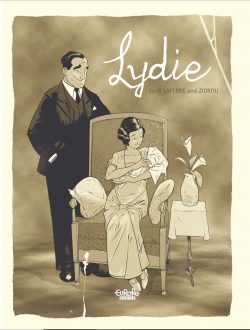
Lydie


By Zidrou & Jordi Lafebre, translated by Mercedes Claire Gilliom (Europe Comics)
No ISBN: digital edition only

Win’s Christmas Gift Recommendation: Lyrical, Lovely, Unforgettable… 10/10

It’s the season for spirits and spectres and we all love a good, healthy scare, but it’s wise to remember that ghost stories aren’t just about revenge, unfinished business or unreasoning irrational terror. So often, what’s at play is feeling of duty and ineffable loss…

As you’d expect, our Continental cousins are exceeding adept at exploring humanity’s softer sides through the medium of comics, and Lydie is a masterclass in emotive, evocative, ruthlessly sensitive storytelling to delight our senses by quietly affirming our better natures.

Be warned though: this tale is funny, heartwarming and sad. No one (at least nobody even borderline human) will scoff or sneer if you need tissues to get you to the end.

Lydie was originally released in 2012, courtesy of empathetically enthralling scripter Zidrou (Benoît Drousie) and illustrator Jordi Lafebre. Drousie is Belgian, Brussels born in 1962 and until 1990 a school teacher – prior to quitting marking books to instead make them. His primary successes include school dunce series L’Elève Ducobu, Petit Dagobert, Scott Zombi, La Ribambelle, Le Montreur d’histoires, African Trilogy, Shi, Léonardo, a revived Ric Hochet and so many more. His most celebrated and beloved stories are the Les Beaux Étés sequence (translated by Europe Comics as Glorious Summers) – and this stand-alone saga. Both are illustrated by Spanish artist Jordi Lafebre.

The sublimely gifted illustrator and art teacher was born in Barcelona in 1979 and has been a comics professional since 2001 – initially for magazines like Mister K, where he limned Toni Font’s El Mundo de Judy. Lafebre found regular work at Le Journal de Spirou, creating the romance Always Never and collaborating with Zidrou on La vieille dame qui n’avait jamais joué au tennis et autres nouvelles qui font du bien, and La Mondaine.

Even for such gifted creators and in-tune collaborators, Lydie is something special: A combination of semi-tragic feel-good fable and genteel working class ghost story, this is a beguiling confection dealing out potent emotional punches one after another – so be braced with plenty of hankies. Nevertheless, it still manages to find the good and the laudable in us, even in the lowest moments and worst of aspects of our natures: enrobing what should be crushing tragedy in the uplifting actions of a community looking out for all of its members, no matter how flawed or forgotten they might become…

It starts sometime in the last century with a little enclave of an ordinary district in the kind of town that used to be everywhere. The crowded cul-de-sac of Baron Van Dick Court is a tiny, independent world of its own, where everyone knows everyone – and most of their personal business. However, since kids will be kids, when a little bit of mischief occurred, the place became irrevocably and foreverafter “Mustachioed Baby Court”…

The denizens live piled up on each other and are a typical bunch: hard-working, industrious, painfully practical and all eking out a living as best they can, but one night something rather extraordinary happens…

It truly started some time earlier. Down in the backyard, poor, hard-up Victor Lefort was again forced to destroy his cat’s beautiful kittens, even as upstairs Doctor “Fables” Fabian was failing to save a baby. Perhaps it was for the best. Distressed mother-to-be Camille Tirion is painfully simpleminded, and had been cruelly taken advantage of by some vile anonymous sinner, so what possibly life could her child have had?

Camille – and her poor father Augustin – were subject of much gossip in the local general store/bar. Despite being a train driver and often away overnight, he has done his best raising his afflicted daughter all on his own… at least until this…

Camille’s mother also died in childbirth and now cruel fate has struck the family again…

The event affects everyone in the Court and many parents must explain to their own children how – if not why – Camille’s baby has gone and must live in a tiny wooden box under the ground in the church graveyard…

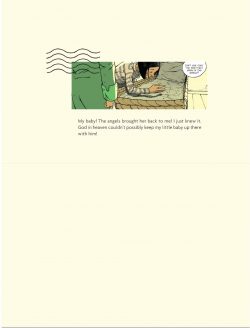
However, once all the necessary ceremonies have taken place and life in the Court moves back towards normal, something happens. It begins when Augustin finds his bereft child crumpled under the little statue of the Madonna that’s been overlooking the court for who knows how long, and continues the next day when Camille dashes joyously into the store, ecstatically telling all inside that her baby has come back.

Of course, little Lydie is invisible now…

Her joy is infectious, and no one wants to disabuse the poor simpleton of her fanciful notion, but things take a stranger turn after the feral and prolific delinquent Ayhard brothers brutally tease the “new mother “and her swaddled, intangible infant. When aged Madame Paris helps distraught Camille comfort the latest addition to the Court, the community rallies around, and before long even the most curmudgeonly dweller in Mustachioed Baby Court is playing along: from crusty shopkeeper Théophile Lefort to acid-tongued sot Madame Malisse. The priest is even cajoled into performing a special baptism for the unseen infant…

…And gradually, with everyone contributing to the fantastic lie for decades, it all seems to come fantastically true…

From this point on, the story takes on a life of its own too, so please for the sake of soul and all the lost joy modern life has stripped from you, find and read this glorious fable dedicated to the miraculous strength of imagination, power of love and irresistible force of humanity united in a grand cause…
© 2018 DARGAUD BENELUX (Dargaud-Lombard s.a.) – Jordi Lafebre and Zidrou. All rights reserved.

Rork: The Ghosts


By Andreas, coloured by Isa Cochet and translated by Montana Kane (Europe Comics)
No ISBN: digital edition

Born in January 1951, Andreas Martens is an incredibly versatile artist from East Germany (and from a time when that meant another country, not a different location). He trained at the Academy of Fine Arts in Düsseldorf and the Saint-Luc Institute/comics school in Brussels. His work appeared in college magazine Le 9e Rêve, À suivre, Heavy Metal and Le Journal de Tintin where – in conjunction with his teacher Eddie Paape – he created the seminal Udolfo.

Relocating to France, Andreas adapted the works of Francois Rivière (collected in 1980 as Révélations Posthumes) and produced a graphic edition of Charlotte Brontë’s Jane Eyre for Je Bouquine.

Stand-alone works include La Caverne du Souvenir, Coutoo, Dérives and Aztèques, but his reptation was earned through gripping original series such as Raffington Detective, Cyrrus, Arq and others. His entire oeuvre is steeped in classical style, draped in period glamour and drenched in visual tension. Many are thematically linked. However, before all these, he created one of the most stylish and memorable “Challengers of The Unknown” in horror fiction: enigmatic psychic savant Rork.

His pale and moody period hero, (who first appeared in Le Journal de Tintin in 1978) draws on the tone, time and sometimes even “homaged” content of dark-fantasists August Derleth, H. P. Lovecraft and especially the Carnacki stories of William Hope Hodgson. Spiritual nomad Rork wanders the world and great beyond, unravelling mysteries and discovering startling wonders, not for fame or glory, but because he must…

In the early 1990s Dark Horse Comics serialized his adventures in their superb anthology of European comics Cheval Noir, and those translations formed the basis of a little seen or remarked upon series of albums from NBM.

After too long in absentia – that’s past Neverland, a little to the left of Narnia but not as far as The House on the Borderland – the mystic marvel returned in 2017, courtesy of digital-only publishing collective Europe Comics who kicked off what I still hope will be a complete revival by translating into English the final book in the sequence.

Released in 2012, Les fantômes is a prequel tale, regarded by devotees as volume #0, despite its being preceded by seven spooky tomes and crossovers with other Andreas concepts…

By this time, readers had learned that the snowy-haired enigma was a wizard from another dimension, compelled to solve supernatural mysteries even as he sought the secret of his own origins: twin quests that carried him all over creation and into scary battles beside many of the author’s other uncanny warriors of justice…

In this tale – vividly coloured by Isa Cochet (and I make this point as most Rork exploits have appeared in starkly stunning monochrome, in the manner and style of visual pioneers Bernie Wrightson and Jim Starlin) – the wanderer is consulted by Samuel, who has been the channel by which unquiet spirits informed the living of missing (and ultimately dead) persons…

Somehow linked to trees and forests, phantoms came to him ,and Samuel made his living helping others until the day he met Daphne and her son Cary. These living seekers’ search for a husband and father was for greed, not love or closure, and soured the diviner’s relationship with his ghosts. Now decades later, Samuel convinces Rork to intercede for him…

It’s not all altruism, though. The haughty, stubborn finder has been compelled to seek aid since ruthless treasure hunter Tryan has begun to threaten torture and worse unless Samuel uses his gifts to unearth hidden wealth. However, when the white wizard uses his own ability to converse with the departed, he hears a subtly different story and realizes he’s being played for a fool…

Andreas is fascinated by levels of reality and states of comprehension, so Rork tales always come layered with allegorical symbolism, abstract interpretation and trenchant pictorial clues pointing towards deeper meaning. As this story progresses, the mage draws Samuel into verbal duels whilst gradually removing him from the arcadian forests that harbour his ghosts: leading them to an arid desert of the American west where a godlike being offers hints to a greater truth, and where sinister pursuer Tryan falls into a cunning trap…

Ultimately, Rork divines the truth beneath strata of lies and self-deception and the mystery of Samuel is revealed for all to see…

For me, a great comic strip begins with the simple line. The greatest drawing is always about the power of black against white. Colour enhances but it seldom creates in our business. Andreas is one of the best line artists in the modern business so I’m delighted to confirm that there’s a stunning ‘Rork Gallery’ of seven breathtaking images closing his book.

Exotic, eccentric, chilling and lyrically beguiling, the traditional mysticism and otherworldly dread of these tales is a heady and captivating brew, especially with the intense, linear illustration and stark design of Andreas to mesmerize and shock your widened eyes.

Come see for yourselves why this series should be at the top of the list of books to re-release…
© 2017 ÉDITIONS DU LOMBARD (DARGAUD-LOMBARD S. A.) – ANDREAS. All rights reserved.

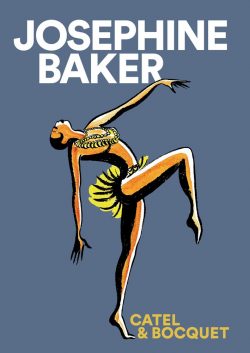
Josephine Baker


By Catel & Bocquet, translated by Edward Gauvin (SelfMadeHero)
ISBN: 978-1-91059-329-5 (TPB/Digital edition)

Win’s Christmas Gift Recommendation: The Story of an Actual Wonder Woman… 9/10

Here’s a rather short review of an astonishingly eventful life celebrated in a superbly expansive, compellingly detailed account from two of the best graphic biographers working in the field. As I’m always implying, my Less is your More, and this is one story you’ll want to appreciate fresh and full-on, so just buy it and be done. You won’t be sorry and will have a revelatory time…

Born Freda Josephine McDonald on June 3rd 1906 in St Louis, Missouri, the black icon, free spirit and symbol of self-determination who called herself Joséphine Baker was no scholar or schemer, but used her innate gifts as a dancer and entertainer to survive horrific acts of random racist violence and ultimately escape her origins as a despised second class citizen in the land of her birth.

A forceful, irrepressible, warm-hearted optimist with colossal empathy and a relentless sense of humour, Baker’s drive and willingness to take chances carried her to the peak of European sophistication and culture: rubbing shoulders with royalty and the cream of global creative intelligentsia: everyone from Picasso and Man Ray to Le Corbusier and Hemingway, Max Reinhardt, Buñuel, Cocteau, Colette, Pirandello, Georges Simenon and so many glittering others.

She was a vedette, singer, dancer, actress, movie star, civil rights activist, paramount artistic inspiration and – during WWII – an actual spy and French resistance operative working for future President Charles de Gaulle, as well as a ferocious defender of animals and devoted mother. Above all else, she was an entertainer par excellence…

Here, Baker’s incredibly eventful life is traced from cradle to grave in black-&-white vignettes, concentrating on her achievements, family life and relationships, seen through her progress from exploitable bit player to media sensation “La Baker”: Queen of Paris in the Jazz Age.

Her astounding energy, creativity and resolve to succeed was only exceeded by her adoration of children, secret acts of charity and unfailing ability to love men who were bad for her, but her legacy was almost erased in the years after she stopped working. Countless comeback attempts and financial troubles followed.

Perhaps she was never truly in earnest but pursuing the means to a greater end. Due to her inability to have children and immense fellow feeling for the downtrodden, Josephine had turned her post war years into an incredible social experiment, gathering orphans from many devastated countries into a single loving family… her multinational, multi-ethnic Rainbow Tribe

All that achievement, accomplishment, unprofitable charity, disillusionment and ultimate abandonment by the august and wealthy in her own country (both of them!) led to Josephine fading from history until relatively recent times, but now she is being reclaimed by a world which could really benefit from her example…

Baker’s international fame led to frequent and painful attempts to reclaim her birth nation’s attention. Eventually – in 1937 – she renounced her American citizenship to become officially French. In later years she tried to help America’s fight against Segregation, but was shunned by both side of that struggle. At the end, as economic woes, life and ongoing illness plagued her final years, she found a few unexpected friends in powerful women like Brigitte Bardot and her final years were spent in Monaco, a guest of equally constrained and misused female icon Grace Kelly. Josephine Baker died on 11th April 1975.

Her public and private lives coalesce in this chronological dramatised narrative from award-winning graphic novelist Catel Muller (Ainsi soit Benoîte Groult, Adieu Kharkov, Lucie s’en soucie, Le Sang des Valentines) and crime novelist, screenwriter/biographer/comics writer José-Louis Bocquet (Métal Hurlant, Sur la ligne blanche, Mémoires de l’espion, Panzer Panik, Anton Six), who in their other collaborations have also explored the lives of Kiki de Montparnasse and Olympe de Gouges (…and we’ll get to them in the fullness of time).

Entertaining, enthralling, informative, and continually sparking explosions of aggrieved but justified outrage on Baker’s behalf, the book is supplemented by a vast supporting structure of extras, beginning with a heavily illustrated and highly informative ‘Timeline for Josephine Baker’, incorporating pivotal events in her public and private lives. It’s further augmented by ‘Biographical Notes’: 55 character portraits in prose and sketch form of the historical figures with supporting roles feature in this epic saga, plus as an essay on ‘The Rainbow Tribe’ by her son/historical consultant Jean-Claude Bouillon-Baker. Also included are a Bibliography and Filmography for further study.

If you love history, comics, justice triumphant or just great stories, you really need to set some records straight and read this book.
© Casterman 2021. All rights reserved.

Mélusine volume 3: The Vampires Ball


By Clarke & Gilson, coloured by Cerise and translated by Jerome Saincantin (Cinebook)
ISBN: 978-1905460694 (Album PB/Digital edition)

Witches – especially cute and sassy teenage ones – have a long and distinguished pedigree in fiction. One of the most engaging first appeared in legendary Belgian magazine Le Journal de Spirou in 1992. Mélusine is actually a sprightly 119-years old and spends her days – and many nights – working as an au pair/general dogsbody to a most ungracious family of haunts and horrors inhabiting a vast monster-packed, ghost-afflicted chateau. It pays her bills whilst she diligently studies to perfect her craft at Witches’ School…

The long-lived much-loved feature is presented in every format from one-page gag strips to full-length comedy tales, all riffing wickedly on supernatural themes and detailing her rather fraught life, filled with the demands of the appallingly demanding master and mistress of the castle and even her large circle of exceedingly peculiar family and friends.

The strip was devised by writer François Gilson (Rebecca, Cactus Club, Garage Isidore) and cartoon humourist Frédéric Seron – AKA Clarke – whose many features for the all-ages LJdS and acerbic adult humour publication Fluide Glacial include Rebecca, Les Cambrioleurs, Durant les Travaux, l’Exposition Continue… and Le Miracle de la Vie.

Under pen name Valda, Seron also created Les Babysitters and as Bluttwurst Les Enquêtes de l’Inspecteur Archibaldo Massicotti, Château Montrachet, Mister President and P.38 et Bas Nylo.

A former fashion illustrator and nephew of comics veteran Pierre Seron, Clarke is one of those insufferable guys who just draws non-stop and is unremittingly funny. He also doubles up as a creator of historical and genre pieces such as Cosa Nostra, Les Histoires de France, Luna Almaden and Nocturnes – apparently he is free from the curse of having to sleep…

Collected editions began appearing annually or better from 1995, with the 27th published in 2019. Thus far five of those have transformed into English translations thanks to the fine folk at Cinebook.

Originally released on the Continent in 1996, Le bal des vampires was the second Mélusine album, setting the scene delightfully for newcomers as the majority of content is comprised of 1- or 2-page gags starring the sassy sorceress who makes excessive play with fairy tale and horror film icons, conventions and themes.

When brittle, moody Mélusine isn’t being bullied for her inept cleaning skills by the matriarchal ghost-duchess running the castle, ducking cat-eating monster Winston, dodging frisky vampire The Count or avoiding unwelcome and often hostile attentions of horny peasants and over-zealous witch-hunting priests, the domestic enchantress can usually be found practising spells or consoling and coaching inept, un-improvable and lethally unskilled classmate Cancrelune.

This sorry sorceress-in-training is a sad case: her transformation spells go awfully awry, she can’t remember incantations and her broomstick-riding makes her a menace to herself, any unfortunate observers and even the terrain and buildings around her…

At least Mel’s boyfriend is a werewolf, so he only troubles her a couple of nights each month…

This turbulent tome features the regular procession of slick sight gags and pun-ishing pranks but also features some longer jocular jaunts such as the fate of a rather rude knight in armour, a brush with what probably isn’t a poltergeist in the Library and Mel’s unfortunate experience with daunting dowager Aunt Adrezelle’s patented Elixir of Youth…

Wrapping up a barrage of ghostly gaffes, ghastly goofs and grisly goblin gaucheries is the sordid saga of the eternal elite at their most drunkenly degenerate, as poor Mélusine is not only expected to organise and cater ‘The Vampires’ Ball’ but has to stick around and handle the explosive clean-up for those especially intoxicated Nosferatus who tend to forget why the revelry has to die down before dawn…

Wry, sly, fast-paced and uproariously funny, this compendium of arcane antics is a great taste of the magic of European comics and a beguiling delight for all lovers of the cartoonist’s art. Read before bedtime and don’t eat any hairy sweets…
Original edition © Dupuis, 2000 by Clarke & Gilson. All rights reserved. English translation 2007 © Cinebook Ltd.

Werewolves of Montpellier


By Jason, translated by Kim Thompson (Fantagraphics Books)
ISBN: 978-1-60699-359-0 (HB/Digital edition)

Jason is secretly John Arne Saeterrøy: born in Molde, Norway in 1965 and an overnight international cartoon superstar since 1995 when his first graphic novel Lomma full ay regn (Pocket Full of Rain) won Norway’s biggest comics prize A Sproing Award.

He won another in 2001 for the series Mjau Mjau and by 2002 was almost exclusively producing graphic novels. Now a global star, he has won many more major awards from such disparate regions as France, Slovakia and the USA.

Rife with his signature surreality, this novella was first released in 2010; populated with cinematic, darkly comic anthropomorphs and featuring more bewitching ruminations on his signature themes of relationships and loneliness, viewed as ever through a charmingly macabre cast of bestial movie archetypes and lost modern chumps.

Here he focuses on the hollow life of expatriate Swede Sven, a purposeless artist who has gravitated into a stagnant, romance-lite existence in a provincial French town. Sven fritters away his days just like his close friend Audrey – another listless intellectual looking for the right lady to love.

The only thing quickening his pulse these days is the occasional nocturnal foray over the rooftops: burglarizing houses dressed as a werewolf. Unfortunately, Montpellier already has a genuine lycanthrope community and they don’t look kindly upon gauche parvenus intruding into their world with criminal cosplay…

This post-modern short-&-spooky fable unfolds in Jason’s beguiling, sparse-dialogued, pantomimic progressions delivering resonances of Hitchcock’s bubbly comedy-thrillers, quirkily blended with Bergman’s humanist sensibilities. The enchantingly formal page layouts are rendered in his minimalist evolution of Hergé’s Claire Ligne style: solid blacks, thick lines and settings of seductive simplicity augmented here by a stunning palette of stark pastels and muted primary colours.

Jason’s work always jumps directly into the reader’s brain and heart, deftly probing the nature of “human-ness” by using the beastly and unnatural to ask persistent and pertinent questions. Although the clever sight-gags are less prominent here, his repertory company of “funny-animal” characters still uncannily displays the subtlest emotions with devastating effect, proving again just how good a cartoonist he is.

This comic tale is best suited for adults but makes us all to look at the world through wide-open childish eyes. Jason is instantly addictive and a creator every serious fan of the medium should move to the top of the “Must-Have” list. Buy, borrow or even steal it if you must, but be aware that actions have consequences… even for faux monsters…
© 2010 Jason. All rights reserved.

Superdupont – The Revival


By Marcel Gotlib, François Boucq & Karim Belkrouf, translated by Edward Gauvin (Europe Comics)
No ISBN: Digital only release

In a world that has apparently devolved far beyond the reach of satire and parody – if not quite yet grotesque caricature – it’s always comforting to look back and recall a time when such creative acts had some effect on morality if not actual behaviour. Once upon a time everyone in Europe believed that the French, British, Germans, Italians, Spanish, Belgians, Irish, Scots and all the rest languished, locked into cultural acts and idiom that made them all unique unto themselves, even as politicians became unwilling “guest stars” in numerous strips.

These days we just call it racism and acknowledge that nearest neighbours are the ones we argue with most, but that doesn’t mean that Asterix, Spirou, Lucky Luke, Clifton and all the rest aren’t still hilarious…

The most comforting aspect of the situation was that the nationalistic, jingoistic True Believers of every nation have always been best taken to task by their own fellow citizens, calling out their innate idiocies via comedy and cartoons. In France, the tradition achieved greater impact when adult comics pioneer Marcel Gotlib (1934-2016: Les Dingodossiers; Rubrique-à-Brac; Clopinettes; Gai-Luron; Pervers Pépère; Hamster Jovial) united with artist Jacques Lob (1932 – 1990): maker of Jerry Spring; Ténébrax; Submerman; Blanche Épiphanie; Ulysse; Snowpiercer and more. As a united front they confronted Gallic nationalism head-on by pinching an idea from America to create a Patriotic Superhero for the post-De Gaulle era…

Superdupont was a strip spoof of patriotic costumed crusaders, targeting France’s ingrained national attitudes in the manner many British comedians today have used when lampooning “frothing Gammons” and “Little Englanders”. Feel free to carry out your own research on those terms…

The strip debuted in the September 21st 1972 issue of increasingly radical comic Pilote, prior to colonising Gotlib’s own mature-reader publication Fluid Glacial three years later. The reason for Superdupont being a collaborative effort is wonderfully egalitarian and fraternal too. When writer/artist Gotlib and Jacques Lob discovered they had both simultaneously come up with the same idea, they joined forces and achieved an even greater satirical synergy as “GotLob”!

They soon relinquished art duties to Alexis (Dominique Vallet) until that artist died in 1977, and thereafter workshopped irregularly seen releases over the years: episodes encompassing visual and verbal contributions from and joint efforts with Jean Solé, Daniel Goossens, Al Coutelis, François Boucq & Karim Belkrouf, Lefred-Thouron and even original American inspiration Neal Adams, who all contributed after Lob’s untimely death in 1990. Sadly, no-one has felt able to continue the feature since Gotlib’s passing in 2016…

In that year, the six original collected Superdupont tomes were at last supplemented by one final sally from Gotlib, in conjunction with modern marvel François Boucq (La Vie, La Mort et Tout le Bazar, Les Leçons du Professeur Bourremou, The Magicians Wife, Face de Lune, Bouncer, Le Janitor, Jérôme Moucherot), and his frequent work-partner Karim Belkrouf (Rock Mastard, Cocktail Transgenic). Superdupont: Renaissance introduced a fresh face to the francophone oeuvre as the mighty modern champion of all things Gaul returned in the role of proud father…

One point to remember here: a big part of Gotlib’s legacy was the brutal enforcement of a modern adult sensibility to the previous kid’s only comics biz. It shows in much of his comics work and particularly in his editorial stance and choices as co-founder of Fluide Glacial and L’Écho des savanes. In Superdupont, it’s seen as deliberately crass and vulgar situations, scenarios and language as well as cruelly satirical social commentary. If you can’t handle it, don’t look, but truly it’s no worse than late night TV or the cartoon equivalent of modern radio “shock jocks”…

In the original texts the beret-bedecked wonder was the son of the Unknown Soldier entombed beneath the Arc de Triomphe: super-powered, manically chauvinistic and resolute in his defence of all things French – especially business, colonialism and women. He battled terrorist gang Anti-France and foreigners in general, who all spoke an unruly linguistic polyglot of English, Spanish, Italian, German and Russian he dismissed as “Anti-Français”…

Clad in slippers, baggy slacks with a tricolour belt, striped jersey beret and safety-pinned cape, he led the resistance against modernism and foreign contamination, swilling red wine, smoking Gauloises and eating far too much soft cheese. Despite his powers, the champion of Camembert prefers to punish his many foes with his mastery of boxe française …what us interlopers would likely call “Savate”…

Translated as Superdupont: The Revival, the fun-filled French lessons restart following Gotlib’s fond reminiscences on the creation of the Gallic Guardian – and his reasons for returning – in revelatory Introduction ‘The Birth of a Legend’, after which the Good Old Days resume with some shocks and surprises…

The cosmos reels like a DC Comics mega-crossover as a nervous, flying, chain-smoking figure circles the maternity wing of a hospital. Inside the doctors and midwives are panicking at a most unusual birth. After some frantic – not to say gross – moments, Superdupont greets his new son: a bonny baby even more gifted and glorious than his proud sire…

After a rapid flashback précising his parents’ amorous assignation and precarious natal achievement, the early days of Superdupont Jr. detail why and how papa takes over the childrearing in a series of spectacular stunts and training exercises – whilst poor mummy recuperates in the ICU…

The infant’s sky-rending antics and fabulous frolics alarm the nation’s trigger-happy military and – after ‘Superdupont Changes a Diaper!’ – lead to a spot of civil unrest when the nipper starts interacting with alarmed ground-based mortals, prompting Da-Da to deliver a quick lecture on power and responsibility in Real Man style.

Tragically, as Superdupont demonstrates the fine art of saving plunging passenger jets, ruthlessly relentless, ever-present evil strikes, abducting his titanic toddler!

Plunged into despondency, Superdupont digs deep into ‘Le Coeur d’un Père’ before renewing his search, unaware that human devil The Pope of Darkness and his lamentable legion of malign malcontents is trying to contaminate the innocent babe with their own wickedness and create an appalling counterpoint to the champion of goodness…

However, as the furious father closes in, wrecking the assembled arsenal of evil, neither he nor his fetid foes have considered how junior might feel about being a pawn in someone else’s game…

Surreal, splendidly self-deprecating and self-referential whilst unceasingly breaking fourth walls – and a bit of the ceiling too – these raucous romps continually play with the accepted tropes and memes of superheroic fiction and even the graphics and visual lexicon of superhero idiom; adding layers of mirth and meta-meaning to the barbed, concealed critiques of the doomed and decaying world we’re now lumbered with…

If you have a quick mind, strong stomach and a dry wit in need of whetting, this is a ludicrous but lovely laugh-bomb you should not miss. Just don’t do the accent, okay?
© 2015 – DARGAUD – BOUCQ, GOTLIB & BELKROUF. All rights reserved.

Benny Breakiron volume 4: Uncle Placid


By Peyo & Gos with backgrounds by François Walthéry: translated by Joe Johnson (Papercutz/NBM)
ISBN: 978-1-59707-717-0 (HB Album/Digital edition)

Let’s just clear up something here. Although they are both magnificent producers of comics past and present – and either singly or in collaboration – Belgium and France are not “the same”. Shared cultural mores and language, interlinked history and adjacent geographies have may have generated superficial similarities but the inventors of international icons Tintin and Asterix have always been as much defined by their unique views as mutual visions. All of which is my blathering brain-fodder to introduce a Belgian “superhero” today and a very different French one tomorrow…

In 1928, Pierre Culliford was born in Belgium to a family of British origin dwelling in the Schaerbeek district of Brussels. An admirer of the works of Hergé and the American comics licensed to Le Journal de Mickey, Robinson and Hurrah!, the lad honed his own artistic skills but the war and family bereavement forced him to forgo further education and get a job…

After working as a cinema projectionist, in 1945 Culliford joined C.B.A. animation studios, where he met future comics megastars André Franquin, Maurice De Bevere – who would become Morris – and Eddy Paape. When the studio closed, Pierre briefly studied at the Brussels Academy of Fine Arts before moving full-time into graphic advertising. In his spare time, he began submitting strips to the burgeoning post-war comics publishers.

His first sale was in April 1946. Pied-Tendre was a tale of American Indians that landed in Riquet, the comics supplement to the daily L’Occident newspaper. Further sales to other venues followed and in 1952 his knight Johan found a permanent spot in Le Journal de Spirou. Retitled Johan et Pirlout, the strip prospered and in 1958 introduced a strange bunch of blue woodland gnomes into the ongoing tale. They were called Les Schtroumpfs.

Culliford – by now using the nom de plume Peyo – would gradually turn those adorable little mites (known to most of the world as The Smurfs) into an all-encompassing global empire, but before being sucked onto that relentless treadmill, he found time to create a few other noteworthy strips such as the titanic tyke on view here today.

In December 1960, Benoît Brisefer – AKA Benedict Ironbreaker and/or (in Dutch) Steven Sterk – debuted in Le Journal de Spirou #1183. With some sly tips of the hat to Siegel & Shuster’s Superman – and Superboy – these wryly bucolic adventures celebrated a small boy with superhuman strength, speed, durability and vitality living in a generally quiet and unassuming little Belgian town.

Quiet, well-mannered, gentle and a bit lonely, Benny just happens to be the mightiest boy on Earth: able to crush steel or stone in his tiny hands, leap huge distances and run faster than a racing car. He is also generally immune to all physical harm, but his fatal and peculiarly ubiquitous weakness is that his astounding strength deserts him whenever he catches the slightest hint of a cold…

Most kids avoid him. It’s hard to make friends or play games when the merest kick pops a football like a balloon or a shrug can topple trees…

Benny seldom seeks to conceal his abilities – in fact he informs anyone who will listen – but other than startled crooks and bad guys, somehow no adults ever believe or catch on. They usually think he’s telling fibs or boasting and whenever he attempts to prove his claims, the unlucky lad gets another dose of galloping sniffles…

Well-past-it Brits of my vintage might remember him from weekly comics in the 1960’s. As Tammy Tuff – The Strongest Boy on Earth – and latterly as Benny Breakiron or Steven Strong, our beret-wearing champion appeared in Giggle and other periodicals from 1967 onwards.

With Peyo’s little blue cash-cows taking up ever larger amounts of his concentration and time, other members of his studio assumed greater responsibilities for Benoît/Benny. Years passed and Will (Willy Maltaite), Gos (Roland Goossens), Yvan Delporte, François Walthéry and Albert Blesteau all pitched in, with Jean Roba crafting many eye-catching Spirou covers, but by 1978 the demands of the Smurfs were all-consuming and all the studio’s other strips were retired.

You can’t keep a good super-junior down, though, and after Peyo’s death in 1992, his son Thierry Culliford and cartoonist Pascal Garray revived the strip, adding six more volumes to the eight generated by Peyo and his team between 1960 and 1978.

Thanks to the efforts of US publisher Papercutz, the first four (promised fifth release Bodoni Circus still languishes in limbo, but we can always hope…) gloriously genteel, outrageously engaging power fantasies are available to English-language readers. This yarn was originally collected in 1968 as 4th album Tonton Placide, with Peyo, co-writer Walthéry & co-artist Gos tapping into the global spy trend with marvellous aplomb.

It begins in sedate Vivejoie-la-Grande, where the sweet kid goes about his well-meaning, somewhat solitary life: doing good deeds in secret (like quietly popping a piano up to the fifth floor of an apartment block whilst weary delivery men are having a refreshing bevvy in a bar), respecting his elders and being as good a boy as he can…

At school, Prize Day closes and we learn that Benny’s true weakness is maths, although he did win a Good Conduct award and came top in Gym. The happily liberated kids trade tales of the holidays ahead of them and the titanic tyke reveals he’s spending his vacation with his uncle who works for P.O.O.T. Benny explains that his temporary guardian is a civil servant at the Department of “Protection Of Officials Travelling”… an actual armed bodyguard…

Disembarking later at a rural train station, the boy is greeted a by boisterous hulking blonde Adonis and quickly settles into a perfect country idyl, but the rest is ruined the next morning – initially by Uncle Placid’s workout and machine gun practise – but soon after by an urgent visit from the operative’s boss. The colonel needs a capable escort for the Finance Minister of the Principality of Fürengrootsbadenschtein when he collects his nation’s currency printing plates.

It’s such a simple, risk-free job that the Colonel even suggests the bodyguard could bring his current “babysitting assignment” along for the ride. Nobody has any inkling that a ruthless gang know of the potentially lucrative transfer and has begun a complex operation to secure the means of printing their own money…

Dutiful Placid reluctantly agrees, bringing the eager lad along to his Central Bank rendezvous with prickly, obnoxious Minister Mr. Chnik and straight into a complex ambush! With the adults all gassed by a disguised cleaning lady, Benny is completely unobserved when he foils the robbery by plucking her and an observation helicopter out of the sky and wrecking her sportscar-driving backup team.

Listening in from his secret lair, the sinister mastermind behind the plot cannot understand what he’s hearing…

By the time Benny brings the plates back to the bank, everybody is blearily regaining consciousness. As usual, nobody believes his story – or his polite claims that he’s really strong for his size – but the job is reassessed as highly risky. A police convoy is despatched, but the immediacy of the crisis means the little boy has to stay with Placid – which is fine with Benny…

As the plates, Mr. Chnik, Placid and Benny set out on a fraught drive to the Principality, they are dogged by cautious observers: career criminals who are having their own problems acclimatising to modern innovations like guns and shoes that double as radio communicators and tracking devices. Their reticence and ineptitude does nothing for the Boss’ manners or patience…

The covert reconnaissance leads to a massive, spectacular multi-vehicle highway ambush, and Placid cannot understand how they all survive the barrage of bullets and car crash. He does not believe it was Benny’s incredible intervention or that the kid subsequently clobbered a small army of thugs and armoured ATVs…

Now on high alert, Placid opts for subterfuge, taking his charges undercover and getting ever closer to Fürengrootsbadenschtein by commercial plane, trains and automobiles. At every stage, progress is stymied by the Boss and his ubiquitous operatives, with the villains winnowed down by the incredible – unseen – actions of the weird kid in the black beret…

Ultimately, however, the mastermind succeeds in capturing his targets, only to meet his match at his moment of triumph when Benny at last loses his temper…

A masterpiece of timing and breakneck pace, and deliciously informed by the 1960s pop culture espionage fad, Uncle Placid delivers daft delights via bombastic bouts of uproarious slapstick comedy action. A superbly stirring spoof with echoes of classic comedies such as Carry on Spying, The Intelligence Men or The Spy with a Cold Nose, it displays the wonder boy’s resolute dynamism, helpful nature and need to be a good citizen: blending deft wit with hilarious stunts. Here is another fabulously winning fantasy of childhood agency and validation, offering a distinctly Old-World spin to the notion of superheroes by providing adventure and chortles for all.
© Peyo™ 2014 – licensed through Lafig Belgium. English translation © 2014 by Papercutz All rights reserved.
Yoko Tsuno volume 2: The Time Spiral


By Roger Leloup translated by Luke Spear (Cinebook)
ISBN: 978-1-905460-43-4 (Album PB)

In 1970, indomitable intellectual adventurer and “electronics engineer” Yoko Tsuno began her career in Le Journal de Spirou. She is still delighting readers and making new fans to this day in astounding, all-action, excessively accessible adventures which are amongst the most intoxicating, absorbing and broad-ranging comics thrillers ever created.

The globe-girdling, space-&-time-spanning episodic epics starring the Japanese investigator were devised by monumentally multi-talented Belgian maestro Roger Leloup, who began his own solo career after working as a studio assistant and technical artist on Hergé’s timeless Adventures of Tintin.

Compellingly told, superbly imaginative and – no matter how implausible the premise of any individual yarn may appear – always firmly grounded in hyper-realistic settings underpinned by authentic, unshakably believable technology and scientific principles, Leloup’s illustrated escapades were at the vanguard of a wave of strips revolutionising European comics.

That long-overdue sea-change heralded the rise of competent, clever, brave and formidably capable female protagonists taking their rightful places as heroic ideals; elevating Continental comics in the process. These endeavours are as engaging and empowering now as they ever were, and none more so than the trials and tribulations of Miss Tsuno.

Her very first outings (the still unavailable Hold-up en hi-fi, La belle et la bête and Cap 351) were mere introductory vignettes before the superbly capable troubleshooter and her valiant if less able male comrades Pol Paris and Vic Van Steen properly hit their stride with premier full-length saga Le trio de l’étrange in 1971 (Le Journal de Spirou’s May 13th edition)…

Yoko’s journeys include explosive exploits in exotic corners of our world, sinister deep-space sagas and even time-travelling jaunts like this one. There are 30 European albums to date but only 16 translated into English thus far. This one was first serialised in 1980 (Spirou #2189-2210 before being released the following year as compellingly gripping thriller album La Spirale du temps. Chronologically the 11th album, due to the quirks of publishing it reached us Brits as her second English-language Cinebook outing, offering enigma and mystery and three shots of global Armageddon…

Miss Tsuno is visiting a cousin and enjoying old childhood haunts in Borneo, with Vic and Pol along for the ride: as ever scouting film footage for another of their documentary projects. As the boys take to the skies in a helicopter, their companion is befriending elephants and exploring an ancient, ramshackle and beloved temple. She is particularly taken with the bas-relief of a beautiful dancer on the wall of the crumbling edifice which has fascinated her since her earliest years…

This night, however, her bucolic routine is shattered by bizarre events. Staying out later than usual, Yoko observes a weird machine appear out of thin air near the temple. When a young girl steps out of the contraption, she is barracked by two men, one of whom then shoots her.

Instantly Yoko intervenes, but when she decks the shooter he vanishes in an explosive swirl of light. Incredible explanations follow as “Monya” introduces herself as a time traveller from the 39th century. It’s hard to believe, but she does have a gadget which closes and repairs her wound in seconds…

Monya has voyaged back in time to prevent a contemporary scientific experiment running in the area causing Earth’s destruction in her era. In fact, the visitor from 3872 saw her own father die and the planet turn to a cinder relative moments before arriving. Now she is intent on finding scientist Stephen Webbs and stopping his imminent test of an antimatter bomb…

At her cousin Izumi’s home, Yoko confers with Vic and Pol, who hear with astonishment a tale of future war, a devastated ecology planetary destruction and how the 14-year old has been tasked with ensuring that her reality never comes to pass.

Monya’s attacker had been a man named Stamford: a fellow time-traveller who had gone off-mission and died because of it. Chrononauts cannot exist outside their own time without biological regulators to attune them to foreign times, and he must have damaged his when he tried to kill her…

A lucky chance then points them to a remote area where an Australian named Webbs has set up a site for an international telecoms company. The next morning our heroes are heading for the Dragon Mountain in two helicopters, although they are not sure what they will do when they get there. It certainly won’t be to kill Webbs like Stamford wanted…

Bluffing their way in, Yoko and Monya leave the boys in the air as back-up and quickly discover the site has precious little to do with radio communications. It’s an old Japanese fortress from WWII, reconditioned to be utterly impregnable and manned by a private army. They even have a particle accelerator!

Whatever the researchers are up to, they don’t discount Monya’s story. Too many strange things have occurred lately. Webbs was acquainted with Stamford; another colleague – Leyton – has gone missing and a rash of strange events still plagues the project. Before suspicious Webbs can explain further, and as if to underscore the point, a massive piece of machinery flies across the room and almost kills the nosy girls…

Webbs is at his wits end, but Monya’s futuristic tech detects a strange energy field and leads Yoko to another fantastic discovery. On a tunnel wall sealed for decades she reads a military warning inscription. It is signed by her uncle, Toshio Ishida. An engineer and part of the occupation forces, he stayed and married a local after the war. Yoko is staying in his home with the colonel’s son Izumi…

Webbs is desperate to talk. Taking the girls aside he reveals what Monya already knows: he has isolated antimatter. What she didn’t know, however, is that this revelation was given to him by some unknown manipulator and only he can handle the material. Everybody else is held back by the kind of force causing objects to fly about and explode. Most terrifying of all, Webbs has uncovered evidence that the Japanese also had antimatter. But if so, why didn’t they win the war with it?

With no other option available, Yoko decides she and Monya must travel back to 1943 to solve the mystery…

What they discover is a viper’s nest of criminality and intrigue, a scheme to unleash hell on Japan’s democratic enemies and an arcane horror which tests Yoko’s guts and ingenuity to the limit. Moreover, even after spectacularly defeating the threat in 1943, the alien menace remembers its enemies once they return to the present…

Complex, devious and superbly fast-paced, this mesmerising thriller is an onion-skinned marvel of ingenious plotting: a fabulous monster-hunting yarn which reveals more of Yoko’s past as she tackles a threat to today and saves a distant tomorrow.

Building to a thundering climax and uplifting conclusion, it again confirms Yoko Tsuno as an ultimate hero, at home in every kind of scenario and easily able to hold her own against the likes of James Bond, Modesty Blaise, Tintin or other genre-busting super-stars: as coolly capable facing spies and madmen as alien invaders, weird science or unchecked forces of nature…

As always the most effective asset in these breathtaking tales is the astonishingly authentic and staggeringly detailed draughtsmanship and storytelling, which superbly benefits from Leloup’s diligent research and meticulous attention to detail. The Time Spiral is a magnificently wide-screen thriller, tense and satisfying, and will appeal to any fan of blockbuster action fantasy or devious derring-do.
Original edition © Dupuis, 1981 by Roger Leloup. All rights reserved. English translation 2007 © Cinebook Ltd.

Valerian – The Complete Collection volume 5


By J-C Méziéres & P Christin with colours by E. Tranlé: translated by Jerome Saincantin (Cinebook)
ISBN: 978-1-84918-400-7 (Album HB/Digital edition)

Valérian: Spatio-Temporal Agent first took to the skies and timestream in 1967: gracing the November 9th edition of Pilote (#420) in an introductory serial which ran until February 15th 1968. Although an instant hit, album compilations only began with second tale – The City of Shifting Waters – as the creators considered their first yarn as a work-in-progress, not quite up to their preferred standard.

You can judge for yourself by getting hold of the first hardcover compilation volume in this sequence of compilations Or you can consider yourself suitably forward-looking and acquire an eBook edition…

The groundbreaking fantasy series followed a Franco-Belgian boom in science fiction comics sparked by Jean-Claude Forest’s 1962 creation Barbarella. Other notable hits of that era include Greg & Eddy Paape’s Luc Orient and the cosmic excursions of Philippe Druillet’s Lone Sloane, which all – with Valérian in the vanguard – boosted public reception of the genre. It all led, in 1977, to the creation of dedicated fantasy periodical Métal Hurlant

Valérian and Laureline (as the series became) was light-hearted and wildly imaginative: a time-travel action-adventure romp drenched in wry, satirical, humanist and political social commentary. The star was – at least initially – an affable, capably unimaginative, by-the-book cop tasked with protecting universal timelines and counteracting paradoxes caused by casual, incautious or criminally-minded chrononauts…

In the course of that debut escapade, Valerian picked up impetuous, sharp-witted peasant lass Laureline, who was born in the 11th century before becoming our star’s assistant and deputy. In gratitude for her truly invaluable assistance, the he-man hero brought her back to Galaxity, the 28th century super-citadel administrative capital where the feisty firebrand took a crash course in spatiotemporal ops before accompanying him on his cases…. luckily for all existence.

The series is not only immensely popular but also astoundingly influential.

This fabulous fifth oversized hardback – also available digitally – re-presents 1988’s On the Frontiers, 1990’s The Living Weapons and 1994’s The Circles of Power, and again offers a treasure trove of text features, beginning with critical appraisals ‘Valerian and Laureline: The Stuff of Heroes’; ‘Valerian, the Accidental Hero’; ‘Laureline, Bewitching and Wise’ and ‘The Heroes’ Metamorphosis’ by Stan Barets. Accompanying them are clip-art photo features ‘The Secret Charms of Laureline’, ‘The Colours of Laureline’ and essay ‘And Meanwhile…’ (detailing the creative duo’s other occupations at the time of creation).

A flurry of photos, sketches, designs and reference material detail the connections between comic album The Circles of Power and movie epic The Fifth Element in ‘A Taxi for Two’, and rounding out the extras is a selection of reportage comics by inveterate traveller Christin, illustrated by Philippe Aylmond, Alain Mounier, Enki Bilal, Méziéres, Olivier Balez and Max Cabanes.

Then, following a retrospective overview of the albums, it’s time to blast-off…

Valerian is arguably the most influential science fiction series ever drawn – and yes, I am including both Buck Rogers and Flash Gordon in that undoubtedly contentious statement. Although to a large extent those venerable newspaper strips formed the medium’s foundations, anybody who has seen a Star Wars movie has seen some of Jean-Claude Méziéres & Pierre Christin’s brilliant imaginings which the filmic franchise has shamelessly plundered for decades: everything from the look of the Millennium Falcon to military uniforms to Leia’s Slave Girl outfit…

Simply put, more carbon-based lifeforms have experienced and marvelled at the uniquely innovative, grungy, lived-in tech realism and light-hearted, socially-critical swashbuckling of Méziéres & Christin’s co-creation than any other cartoon spacer ever imagined. Now having scored their own big budget movie, that surely unjust situation is finally addressed and rectified…

Packed with cunningly satirical humanist action, challenging philosophy and astute political commentary, the mind-bending yarns always struck a chord with the public and especially other creators who have been swiping, “homaging” and riffing off the series ever since.

Sur les frontiers (On the Frontiers to English-speakers) was the 13th tale and marked a landmark moment in the series’ evolution.

When first conceived, every adventure started life as a serial in Pilote before being collected in album editions, but with this adventure from 1988, the publishing environment changed. This subtly harder-edged saga debuted as an all-new, complete graphic novel with magazine serialisation relegated to minor and secondary function. The switch in dissemination affected all top characters in French comics and almost spelled the end of periodical publication on the continent…

In the previous storyline the immensity of Galaxity had been erased from reality and our Spatio-Temporal Agents – with a few trusted allies – were stranded in time and stuck on late 20th century Earth…

Here, and now, we open in the depths of space as a fantastic and fabulous luxury liner affords the wealthy of many cultures and civilisations the delights of an interstellar Grand Tour. Paramount amongst guests are two god-like creatures amusing themselves by slumming amongst lower lifeforms whilst performing an ages old, languidly slow-moving mating ritual of their kind…

Sadly, puissant, magnificent Kistna has been utterly deceived by her new intended Jal. He actually has no interest in her or propagating the species: he intends stealing her probability-warping powers…

Jal is a disguised Terran and once he has completed his despicable charade, compels the ship’s captain to leave him on the nearest world: a place its indigenes call Earth…

Stranded on that world since Galaxity vanished, partners-in-peril Valerian and Laureline have been using their training and a few futuristic gadgets they had with them to become freelance secret agents. At this moment they’re in Soviet Russia where Val has just concluded that the recent catastrophic meltdown of the Chernobyl nuclear reactor was deliberately sparked by persons unknown…

As officials on site absorb the news, Val is extracted from the radioactive hotspot and ferried by laborious means across the frozen wastes to Finland and a belated reunion with Laureline and Mr. Albert: previously Galaxity’s jolly, infuriatingly unflappable 20th information gatherer/sleeper agent. The topic of discussion is tense and baffling: who could possibly profit from sparking Earth’s political tinderbox into atomic conflagration?

Far away in a plush hotel, a man with extraordinary luck discusses a certain plan with his awed co-conspirators, unaware that in the Tunisian Sahara near the frontier with Libya, three time-travelling troubleshooters are following his operatives…

That trail leads to a nuclear mine counting down to detonation, but happily the agents are well-versed in tackling primitive weaponry and the close call allows Albert to deduce why Libya and an unknown mastermind are working to instigate nuclear conflict in Africa…

After another near-miss on the US-Mexican border, investigators finally get a break, isolating the enigma behind these many almost-Armageddon moments. However, when Laureline approaches the super-gambler financing global nuclear terrorism through his bank-breaking casino sprees, she is astounded to realise the deadly disaster capitalist knows Galaxity tech…

As Valerian hurtles to her rescue, he discovers the enemy is an old comrade. For what possible reason could a fellow Galaxity survivor orchestrate Earth’s destruction? After all, isn’t it the home and foundation of the time-travelling Terran Empire they are all sworn to protect and restore?

This stunning caper was Christin & Méziéres deft re-rationalisation and clarification of their original drowned Earth storyline (as seen in 1968’s The City of Shifting Waters): adjusting it to the contemporary period that they were working in, with the added benefit of sending Valerian and Laureline into uncharted creative waters. Thus the agents’ solution to the problem of their deranged, broken – and god-powered – comrade was both impressively humane and winningly conclusive…

It was followed by 1990’s Les Armes Vivantes, with Valerian and Laureline forced to expend their last assets – a damaged astroship, some leftover alien gadgets and their own training – to eke out a perilous existence as intergalactic trans-temporal mercenaries.

Despite the misbehaviour of fractious inter-dimensional circuits in the much-travelled ship, our celestial voyagers are bound for distant, disreputable planet Blopik where Val has agreed to hand-deliver some livestock-improvement supplies. Moralistic Laureline is deeply suspicious of the way her man is behaving: it’s as if he’s doing something he knows she will disapprove of…

After a pretty hairy landing, she exits the ship to explore the burned-out pest-hole on her own. making the acquaintance of a trio of unique individuals: intergalactic performers stranded in their worst nightmare – a world without theatres and an absentee manager…

Before long they are all travelling together. The showbiz trio – malodorous metamorphic artiste Britibrit from Chab, indestructible rock-eater Doum A’goum and the indescribable Yfysania are seeking a venue to play in and appreciative audience to admire them, whilst taciturn Valerian is simply hunting the proposed purchaser of the wares in his case.

Laureline is, by now, frankly baffled. The centaurs who inhabit Blopik only understand and appreciate one thing – combat – and the planet’s cindered state is due to them setting fire to everything during the annual war between rival tribes. She can’t imagine what such folk would want with “farming gear”. For that matter, she also can’t imagine why Valerian keeps arguing with whatever he has in his travel-case…

Eventually, however, the alien Argonauts reach a grassy plain to be met by a bombastic centaur general. For “met”, read attacked without warning, but the natural abilities of the astounding performers soon gives pause to the hooved hellions and warlord Rompf agrees to parlay. He’s a centaur with a Homeric dream and Shakespearean leanings as well as the proposed purchaser of the bio-weapon in Valerian’s case. That thing has come direct from Katubian arms dealers and Laureline is appalled that Val has sunk so low and been devious enough to keep her out of the loop…

Rompf has declared War on War. He seeks to unify the tribes of Blopik by beating them all into submission and desperately needs the flame-spitting, foul-mouthed Schniafer couriered by the shamefaced former Spatio-Temporal peacekeeper to seal the deal. However, now that he’s seen what the offworld clowns can do, Rompf wants them too…

The various vaudevillians are not averse to the idea, but pride demands they put on a show too! They even have ideas how Laureline can be part of the fun.

…And that gives Valerian a chance to redeem himself too…

This tesseract of timely tales close here for now with The Circles of Power (released continentally in 1994 as Les Cercles du pouvoir). The hard-ridden, worn-out brutally battered astroship has finally given up the ghost after reaching planet Rubanis: an advanced but violently volatile and dangerous world divided into five nested rings of influence and specialism. Leaving the ship for some extremely costly repairs in the anarchic, technological boomtown of the First Circle, the Spatio-Temporal Agents start looking for some way of earning enough cash to pay for it all…

Worryingly, their occasional allies the Shingouz have already found a profitable prospect (and naturally factored in their own cut): sending the humans to meet old acquaintance and current planetary Chief of Police Colonel Tlocq in his palatial, low-orbit, high security citadel. That means taking a flying taxi and learning more than they wanted to as their highly excitable, enthusiastic and informative cabbie briefs them on the planet. He is also a young man with strong beliefs, big ideas and an often expressed violent streak…

Tlocq is a venal, casually violent but extremely efficient being policing a brutal, callous rogue world with permanently conflicting interests. Moreover, he has adopted mistrust, deception and institutional corruption as the most effective methodology to keep everything on an even keel. His policy seems to be “keep your enemies close and your allies and subordinates close enough to stab in the back”…

His chief deputy Krupachov holds the exalted rank of “Informer” and they maintain a constant atmosphere of productive, self-limiting disorder in and between the ringed regions…

However, even Tlocq has realised that something extra nasty is unfolding below him: not just in the always-explosive Heavy Industry First Circle but also in the Second (Business) Circle; the Trade/Entertainments/Arts morass of the Third Circle and even the elitist, crime-free and off-limits Fourth Circle reserved for Religion, Administration, Finance and Aristocracy. This rarefied region generates what passes for Tlocq’s directives, orders and operating rules, but he hasn’t received anything from them for some time now…

In the past he received direction via one of the ubiquitous enigmatic “machines” dotted around the cities, but is utterly opposed to letting the humans poke around inside them. He believes the machines are somehow connected to the sporadically spreading, microcephaly-inducing Scunindar virus cropping up all over Rubanis. In fact, the last time Valerian and Laureline saw him (in The Ghosts of Inverloch), Tlocq was dying from it, but he seems to have fully recovered now…

To ensure they do things his way, Tlocq doubles their fee and, knowing exactly how his world works, also gives an advance: a Grumpy Transmuter from Bluxte, able to spontaneously generate any kind of cash to buy their way out of trouble…

What he wants is not clearcut or straightforward. Although the Colonel still controls the utterly mercenary, self-serving forces under him, he has lost faith in and contact with those above who issue his orders. He wants the outsiders to bypass them and invade the ineffable Fifth Circle and find out who or what truly governs this world…

Valerian and Laureline begin by heading for the Third Circle in the flying cab, but are immediately targeted by a hidden foe. Attacked by a by a mystery woman in a tricked-up luxury vehicle that could only come from the richer echelons, they are forced down, but thanks to the cabbie’s combat skills, bring the war-limousine down with them. Go-getting taxi pilot S’traks also leads them to shelter in a seedy club in the region of entertainment…

The Shingouz are already there, haggling with a seedy mechanic who claims to know a secret way into the Last Circle…

All dickering and bargains are put on hold when their attacker bursts in, leading a squad of Vlago-Vlago mercenaries and wielding a “moroniser” whip that paralyzes, pauses cognition and wipes short-term memory. Helpless and hidden, Val and the cabbie watch merciless crime lord Na-Zultra cart off stupefied Laureline, much to the anger and frustration of her incorrigible, besotted new admirer S’traks…

It’s his idea for the undeclared love rivals to conceal themselves in the crashed limo and wait for vicious virago Na-Zultra to reclaim her highly exclusive property, and it almost works, but when they emerge from the vehicle thy are deep in unknown territory, covertly watching a procession of High Priests, business moguls and assorted aristopatrons attend a secret ceremony. They all have preternaturally shrunken heads…

Regaining consciousness a prisoner, Laureline resists all Na-Zultra’s entireties and threats of torture whilst extracting the schemer’s intentions. She learns that the ambitious criminal was hired by some faction in the Fourth Circle to secure control of Rubanis for them, but now intends to seize power for herself. When Valerian and S’Traks are discovered, Na-Zultra goes after them with the majority of her forces and Laureline makes her move…

After recuing the men and having exposed a web of conspiracies as well as the deliberate pointless of their commission, the heroes split up with Valerian confronting Tlocq about his true intent whilst Laureline seeks out the Shingouz to finally expose the mystery of the Last Circle, with go-getting S’traks using the deteriorating situation and his cabbie connections to mobilise the lower classes in an armed uprising…

Ultimately the shocking truth is exposed, triggering planetary revolution with Tlocq, Na-Zultra and S’Traks leading separate factions. Before the dust at last settles, he is well on his way to controlling Rubanis via a popular revolution across all the Circles…

Smartly subtle, sophisticated, complex and hilarious, the exploits of Valerian and Laureline mix outrageous satire with blistering action, stirring the mix with wryly punishing, allegorically critical social commentary: challenging contemporary cultural trends to forge one of the most thrilling sci fi strips ever seen.

These stories are some of the most influential comics in the world, timeless, dynamic, funny and just too good to be ignored. The time is now and there’s no space large enough to contain the sheer joy of Valerian and Laureline, so go see what all the fuss is about right now…
© Dargaud Paris, 2017 Christin, Méziéres & Tran-L?. All rights reserved. English translation © 2018 Cinebook Ltd.

Bluecoats volume 13: Something Borrowed, Something Blue


By Willy Lambil & Raoul Cauvin, translated by Jerome Saincantin (Cinebook)
ISBN: 978-1-84918-531-8 (Album PB/Digital edition)

Devised by Louis “Salvé” Salvérius & Raoul Cauvin – who scripted the first 64 volumes until retirement in 2020 – Les Tuniques Bleues (or Dutch co-incarnation De Blauwbloezen) debuted at the end of the 1960s: created to replace Lucky Luke when that laconic maverick defected from weekly anthology Le Journal de Spirou to rival publication Pilote.

From its first sallies, the substitute strip swiftly became hugely popular: one of the most popular bande dessinée series in Europe. In case you were wondering, it is now scribed by Jose-Luis Munuera and the BeKa writing partnership…

Salvé was a cartoonist of the Gallic big-foot/big-nose humour school, and after his sudden death in 1972, successor Willy “Lambil” Lambillotte gradually adopted a more realistic – but still overtly comedic – tone and manner. Lambil is Belgian, born in 1936 and, after studying Fine Art in college, joined publishing giant Dupuis in 1952 as a letterer.

Born in 1938, scripter Cauvin was also Belgian and – before entering Dupuis’ animation department in 1960 – studied Lithography. He soon discovered his true calling – comedy – and began a glittering, prolific writing career at Le Journal de Spirou. In addition, he scripted dozens of long-running, award winning series including Cédric, Les Femmes en Blanc and Agent 212: more than 240 separate albums. Les Tuniques Bleues alone has sold more than 15 million copies of its 66 (and counting) album sequence. Cauvin died on August 19th 2021, but his vast legacy of laughter remains.

Here, as The Bluecoats, our long-suffering protagonists are Sergeant Cornelius Chesterfield and Corporal Blutch; worthy fools in the manner of Laurel & Hardy: hapless, ill-starred US cavalrymen defending America during the War Between the States.

The original format offered single-page gags set around an Indian-plagued Wild West fort, but from the second volume – Du Nord au Sud – the sad-sack soldiers were situated back East, fighting in the American Civil War. All subsequent adventures – despite ranging far beyond the traditional environs of America and taking in a lot of genuine and thoroughly researched history – are set within the timeframe of the Secession conflict.

Blutch is your run-of-the-mill, whinging little-man-in-the street: work-shy, mouthy, devious and ferociously critical of the army and its inept commanders. Ducking, diving, or deserting whenever he can, he’s you or me – except at his core he’s smart, principled and even heroic …if no easier option is available.

Chesterfield is a big, burly professional fighting man; a proud career soldier of the 22nd Cavalry who passionately believes in the patriotism and esprit-de-corps of the Military. He is brave, never shirks his duty and hungers to be a medal-wearing hero. He also loves his cynical little troll of a pal. They quarrel like a married couple, fight like brothers and simply cannot agree on the point and purpose of the horrendous war they are trapped in: a situation that once more stretches their friendship to breaking point in this cunningly conceived instalment.

Des bleus et des dentelles was originally serialised in 1983 in Le Journal de Spirou (#2384-2387) before collection into another mega-selling album in 1985. It was the 22nd European release and in 2020 became Cinebook’s 13th translated volume. As Something Borrowed, Something Blue it offers a lighter touch and tone than many, with the underlying horror salved by a kind-of romance and ridiculously surreal black comedy.

Once again Union forces are stalemated with no advance possible. Even the cavalry – under the leadership of utterly deranged, apparently invulnerable maniac Captain Stark – are stuck in dugouts, dodging enemy artillery fire beside ordinary foot soldiers. The zealot’s constant, costly, pointless charges at Confederate gun emplacements have left them short of riders and out of horses…

Sergeant Chesterfield is furious, but Blutch is perfectly happy keeping his head down and playing cards… until a shell lands on his position. By some miracle, he survives, but as Chesterfield brings him to the casualty-packed field hospital, it becomes clear that the odds of remaining so are against him.

Only the sarge’s armed intimidation can get a doctor to even look at his pal, and when they try to hack off Blutch’s leg, only the little man’s hidden gun stops them from completing the unnecessary surgery…

Suddenly, the entire camp’s attention is switched to the hospital, as the General’s latest morale-boosting scheme arrives: volunteer medical assistants – all women…

Suddenly, the entire army is stricken with some malady or other. Even Stark abandons the joy of slaughter to secure some female attention, and a top level secret plan is enacted to retore order. It involves scrupulous triage before any soldier can be admitted for treatment and to make doubly sure of weeding out malingerers, the formidable Miss Bertha will examine every man claiming injury.

The most secret part is that she is actually the hugely unhappy Private Burke in drag. His greatest fear is dying in a dress, but at least he won’t have to explain his new “uniform” to the wife and kids…

Meanwhile, actually injured Blutch is slowly recovering, thanks in great part to the diligent ministrations of nurse Jenny. Angel and patient are always together now, and Chesterfield finds himself increasingly lonely and jealous …but not as much as Blutch’s incredibly smart horse Polka

As the shirker heals, the military situation is worsening. The unassailable artillery is grinding the Union stronghold to rubble and ruin, but things start changing after another futile Stark sortie leads to the enemy troops learning there are women in their enemies’ camp. Soon, Rebel wounded are demanding that they be treated in the Union hospital too…

The situation is untenable and Chesterfield is going crazy, but the biggest bombshell comes not from enemy guns but little Blutch, as he hobbles around on crutches. The little guy is going to marry Jenny…

Initially horrified, the General unexpectedly agrees to the match, but as preparations take the men’s minds off the perpetual bombardment another shock lands after Stark requests he be allowed to wed “Bertha”…

Moreover, as Mr and Mrs Blutch ride a buggy back to safety and civilisation, Chesterfield discovers the truth about Bertha and is ordered to take his place as a female-presenting triage nurse. When “Miss Cornelia” then discovers how Blutch and Jenny have fooled everybody and escaped the war, he goes ballistic and sets off after the delinquents. He finds them frantically coming towards him scant yards ahead of a Confederate sneak attack approaching the Union camp from the rear.

Suddenly, it’s time for everyone to get back to the real business of war, with the Bluecoats survival dependant on Stark’s insane tactics…

Combining searing satire with stunning slapstick, Something Borrowed, Something Blue deftly delivers a beguiling message about the sheer stupidity of war equally clear  to younger, less world-weary audiences and old lags who have seen it all.

These stories weaponise humour, making occasional moments of shocking verity doubly powerful and hard-hitting. Funny, thrilling, beautifully realised and eminently readable, Bluecoats is the kind of war-story and Western, appealing to the best, not worst, of the human spirit.
© Dupuis 1985 by Lambil & Cauvin. All rights reserved. English translation © 2020 Cinebook Ltd.