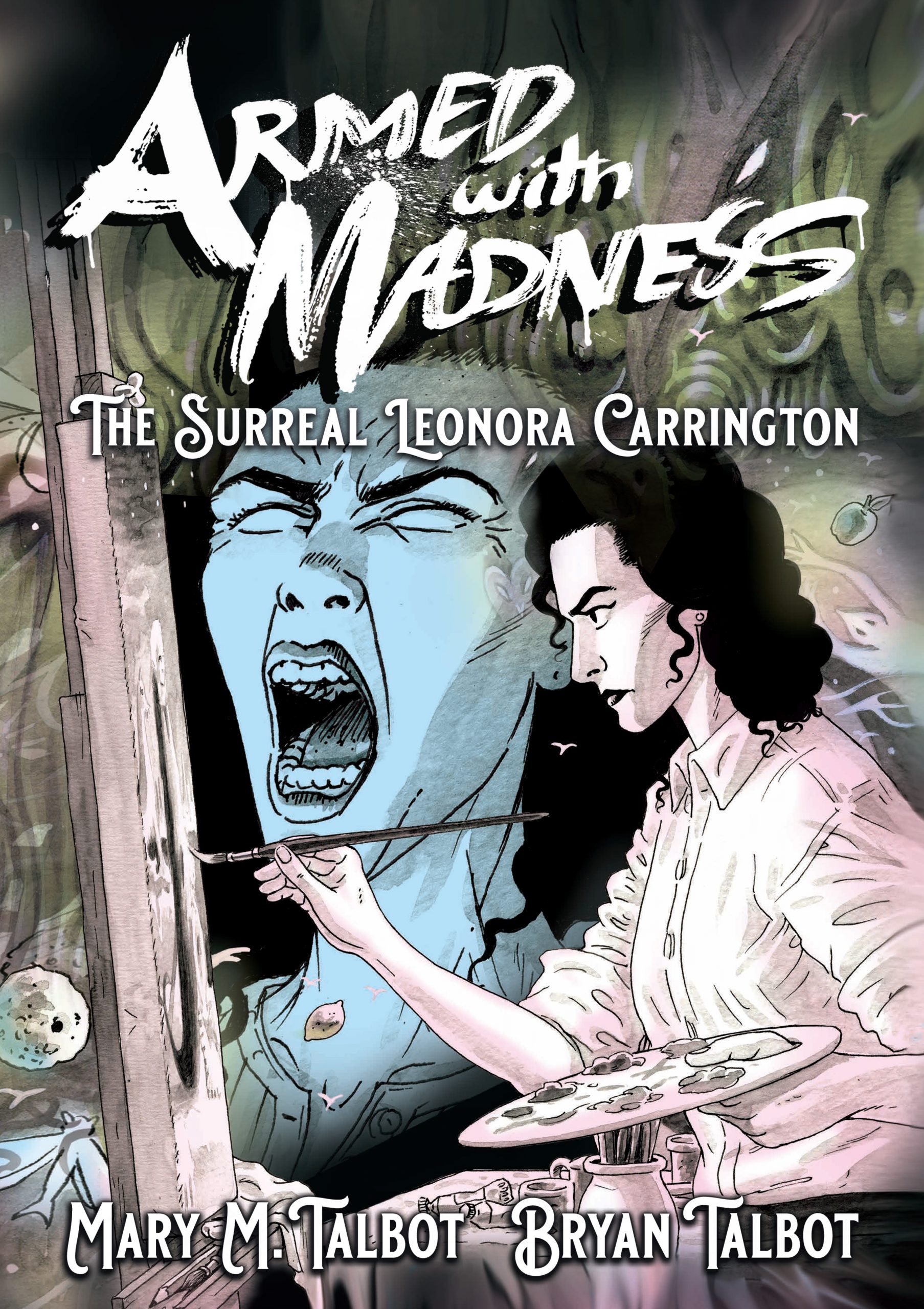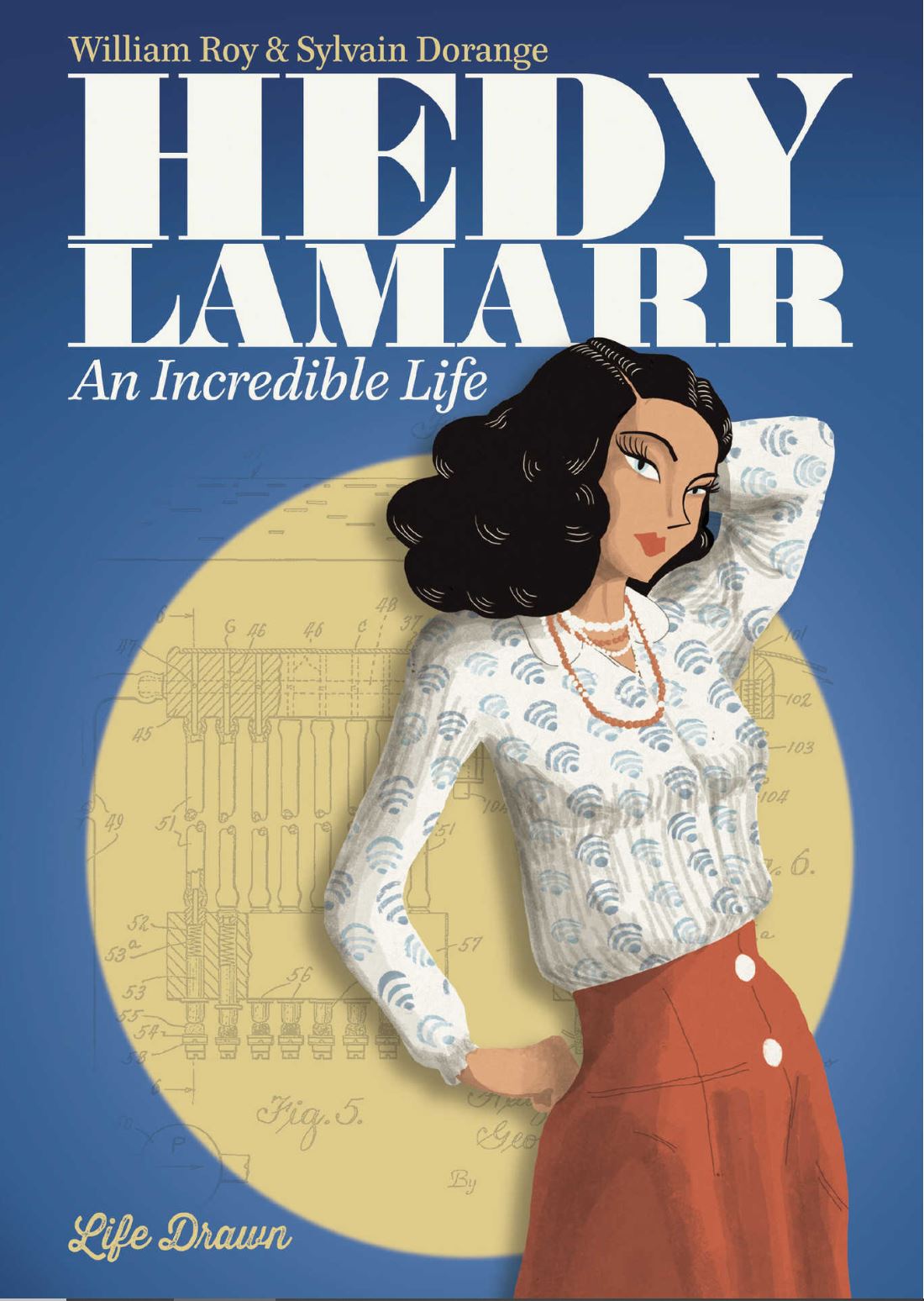
Hedy Lamarr: An Incredible Life


By William Roy & Sylvain Dorange, translated by Montana Kane (Humanoids/Life Drawn)
ISBN: 978-1-59465-619-4 (PB/Digital edition)

It’s been a man’s world almost from the start, and for so very long, most roles we’ve allowed for women have been ones that benefit us. Just why are so many female heroes young, pretty, buxom and nearly naked?

…And don’t even try to mansplain away why and how we Lords of Creation settle down with a housekeeper/mother who provides fringe benefits, comfort breaks and data storage. “Honey, do I like this?” “Darling, where are my…?”

Happily, despite all our most determined efforts, women keep on being independent, resolute, optimistic, free thinking and autonomous: constantly confounding male expectations and forcing us to gaslight, denigrate, diminish or bully them back into submission… or at least ominous silence…

It doesn’t always work, but at least whenever they achieve triumphant, spectacular highs and enjoy their own lives, it’s on their own terms – at least until some guy finds a way to make them regret it…

Let’s see an example of that as it happened to one of the most important human beings in modern history. Hedy Lamarr: La plus belle femme du monde was released in 2018: a superbly engaging, vividly realised passion project by writer, artist and documentarian William Roy (De Père en FIV, Freud, Le moment venu) and multi-disciplined illustrator Sylvain Dorange (For Justice: The Serge & Beate Klarsfeld Story, Gisèle Halimi – Une jeunesse tunisienne, Un conte de l’Estaque, Les Promeneurs du Temps, Psychotique). It quickly became one of the most important biographies of recent times. You can even read it in English or online…

Delivered in non-sequential snippets and clippings, it all slots together like a puzzle to show how, as a Viennese youngster, Hedwig Eva Maria Kiesler developed two life-long passions: acting and learning how things worked. The latter obsession came thanks to her beloved father Emil, a progressive, forward-looking banker who shared at every opportunity a profound love of knowledge and tinkering with his beautiful child …

Concerned by the uninvited attention their daughter’s looks were garnering, Hedwig’s parents decided to never comment on her appearance. However, as she grew from pretty child to ravishing young woman, those looks inevitably shaped her world.

As a teenager one passion dominated: so much so that the model student began taking unsanctioned truant days to pursue acting – especially in the burgeoning, high-tech film business. When her parents learned of the school absences, they granted her leeway to explore those options. Hedwig initially sought to become a script girl, but once again her beauty took her to a different destination and one moment as an “extra” opened up a whole new world…

Emil loved how she shared his fascination with how things worked, but primarily he just wanted her to be happy. Thus, Hedwig learned to roll with life’s punches – and in later life there were many – but was generally supported in her wild endeavours. She never realised how the acting lessons her father willingly paid for would lead to her becoming a notorious, global figure of infamy after a highly sexualised nude scene in 1933 drama Extase

Just as the film was being banned in Austria, neighbouring Germany welcomed a new Chancellor. Adolf Hitler would affect the girl’s life in unimaginable ways…

Retreating from celluloid to a life of stage acting, Hedwig was pursued by astoundingly rich manufacturer and businessman Friedrich “Fritz” Mantel. Dazzled by wealth, rapt attention, and honied words, she eventually married him.

Despite her Jewish ancestry, as the wife of Mussolini’s best friend and the Third Reich’s favourite arms dealer/munitions supplier, Hedwig spent the early years of Nazism cushioned from a growing horror. Hosting dinner parties for human monsters whilst incessantly, invisibly overhearing fascinating details about the new weapons hubby was pioneering quickly paled, and Mantel’s obsessive possessiveness and controlling behaviour soon made her realise the liaison was a huge mistake.

Whilst displaying his trophy wife like a prize, and bedecking her with jewels and gems, Mantel had spent a fortune buying up and destroying every print of Extase. No man would ever cast lascivious eyes on his property ever again…

Increasingly terrified, Hedwig crafted a plan and escaped her marriage, eventually landing in London in 1937. At that time American movie mogul Louis B. Mayer – supreme dictator of Metro-Goldwyn-Mayer Studios – was there to scout out sophisticated European film talent fleeing growing social unrest…

Like so many women and girls maturing in that era, Hedwig learned to be suspicious of authority and men in powerful positions: to keep her secrets to herself whenever possible. She probably always sought assured security and never believed she had it, even at the top of a wildly fluctuating showbiz career. At least inventing kept her grounded and allowed her to find an escape that was purely personal. Mayer was a lifeline, but he too came with conditions…

In 1938, Hedy Lamarr began her tenure as a Screen Goddess with the movie Algiers. Mayer had her billed as “the most beautiful woman in the world” and changed her name to evoke that of deceased silent movie star Barbara La Marr. According to this version of her story, he also never stopped urging her to enhance her bust…

A wash of films followed, of remarkably varying quality, but work, acclaim, marriage and the heady social whirl wasn’t a satisfying existence. When war came, Hedy was eager to help. It coincided with her first meeting engineering marvel/millionaire playboy Howard Hughes. He wasn’t as impressed as others by her looks, but wanted to hear all about her inventions…

Almost as notorious as any role she played, Hedy knew many men, but had few male friends. Foremost of those she did persist with was George Carl Antheil, a “piano prodigy” who had first outraged the musical establishment in 1924 with his Ballet Mechanique score.

The Dadaist work was delivered by player-pianos working in synch with airplane engines, and Antheil had meticulously cut out the player rolls of each instrument personally, in a monumental feat of pre-computer coding and programming…

Antheil was also an acclaimed and published endocrinologist who supported his family by composing Hollywood film music, and first met Hedy Lamarr during another of her fruitless, pointless searches for a safe way to embiggen her boobs…

In the course of their friendship they discussed German torpedoes and – recalling past dinner conversations amongst Nazi bigwigs – Hedy had an idea that would have shortened the war; and did change the way all humanity communicates…

Typically, Lamarr and Antheil’s un-jammable torpedo was poo-poohed and rejected by the US Navy and a congressional committee who were astonished to notice that the project had no actual Male Scientists attached to it. It’s a good thing the inventors had every bit of the work, concept and attendant programming patented…

One admiral did helpfully suggest that she could serve her country best by selling war bonds, so she did, in record-breaking amounts…

Years passed, husbands and families came and went, and Hedy’s career devolved from megastar to TV guest celebrity to self-imposed exile. In 1960 she got her star on the Hollywood Walk of Fame and six years later an autobiography she maintained she never wrote was released. It pretty much trashed what was left of her reputation.

It all turned around for her in 1996, when her son Anthony Loder was contacted by representatives of the burgeoning telecommunications industry. They really needed to speak to the inventors – and patent-holders – of a frequency-hopping system devised to protect torpedoes from being jammed. It was also the absolute best way to connect multiple electronic devices via radio waves”. We call it wi-fi these days…

This is an emphatic, empathetic dramatisation of a much-told tale and an inevitable, inescapable theme, but Hedy Lamarr: An Incredible Life shows not that resilience pays off, or that it all works out in the end, but that remarkable achievements cannot be buried or diminished…

After all, how many gullible kids tricked into getting their baps out change the entire world, all of human culture and get an asteroid and a quantum telescope named after them, let alone get awarded an anniversary goggle doodle and inducted into the National Inventor’s Hall of Fame, and are interred in a National Honorary grave?

Admit it, though, it was the bit about her baps that made you sit up and pay attention, right?

The struggle continues…
© 2018 La Boîte à Bulles. All Rights Reserved. This edition © 2018 Humanoids, Inc., Los Angeles (USA).

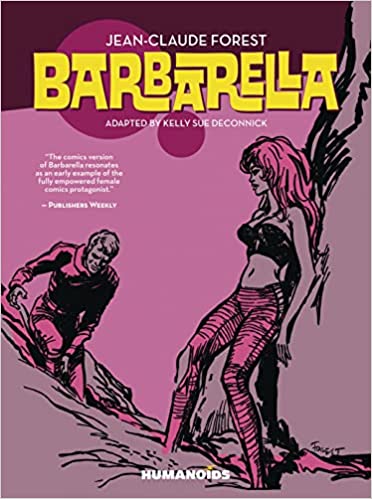
Barbarella volume 1 & Barbarella and the Wrath of the Minute Eater (volume 2)


By Jean-Claude Forest, adapted by Kelly Sue DeConnick (Humanoids)
ISBN: 978-1-59465-533-3 (HB/Digital edition vol. 1) 978-1-59465-104-5 (HB/Digital edition vol. 2): 978-1-64337-883-1 (TPB combined 2 vols)

Europe’s post-war fascination with science fiction and baroque space opera arguably all stems from the innocently raunchy antics of a starry-eyed gamin holding forthright, ultra-modern views on sexual politics. Jean-Claude Forest’s Barbarella stimulated public acceptance of socially-inclusive futuristic themes in an era of Cold War and Atomic Anxiety: one that coincided with a highly publicised “sexual revolution” that was simultaneously beloved of and excoriated by screaming pundits and headline writers.

…And it all occurred just as France was locked into a momentary but absolute obsession with “sex kitten” Brigitte Bardot…

France’s love affair with speculative fiction actually goes back – at least – to the works of Jules Verne and maybe even as far as Cyrano de Bergerac’s posthumously published fantasy stories L’Autre Monde: ou les États et Empires de la Lune (The Other World: or the States and Empires of the Moon) and Les États et Empires du Soleil (The States and Empires of the Sun). They were first released in 1657 and 1662.

Happily for us, European comic iterations have always been groundbreaking, superbly realised and deeply enjoyable…

Proudly Parisian Forest (1930-1998) was a graduate of the Paris School of Design who began selling strips while still a student. His Fleche Noire (Black Arrow) feature opened a career illustrating for newspapers and magazines like France-Soir, Les Nouvelles Littéraires and Fiction throughout the 1950s. This was whilst producing Charlie Chaplin-inspired comic series Charlot and being chief artist for Hachette’s sci fi imprint Le Rayon Fantastique.

For this last client, Forest also produced illustrations and covers for translations of imported authors A. E. Van Vogt, Jack Williamson, and others.

Thus in 1962, with headlines trumpeting liberation and armageddon in the home and for the family, Forrest created Barbarella in V-Magazine. The innocently super-charged sex icon quickly took country and world by storm, generating an explosion of like-minded SF Bandes Dessinées features. Her first collected album was released by Editions Eric Losfeld in 1964, with further tales released until 1982. Those later stories were illustrated by Daniel Billon and the entire canon has never been out of print for long.

Forest never looked back, subsequently creating Baby Cyanide and more serious fare like Hypocrite; the Verne-inspired Mysterious Planet; La Jonque fantôme Vue de l’Orchestre and Enfants, c’est l’Hydragon qui Passe. He also found time to script for other artists: Les Naufrages du Temps (translated as Castaways in Time or Lost in Time) with Paul Gillon in 1964; Ici Meme for Jacques Tardi, and occult detective series Leonid Beaudragon for Didier Savard. These have been inexplicably all-but-ignored by English language publishers since the 1980s. If you read French, however, all are available in print and digitally…

The First Lady of Space sparked a Franco-Belgian fantasy mini-boom – classic series like Méziéres & Christin’s Valérian, Greg & Eddy Paape’s Luc Orient and Philippe Druillet’s Lone Sloane among so many others – thereby triggering the creation of dedicated periodical touchstone Métal hurlant in 1974.

At that time Forest was still finding new worlds for Barbarella to conquer, even though outside the Continent the concept was pretty much hijacked by Roger Vadim’s 1968 movie adaptation.

Here, however, we’re concentrating on Forest’s comics, as re-adapted and translated by Kelly Sue DeConnick (Bitch Planet, Pretty Deadly, Captain Marvel, Wonder Woman, Castle, Avengers). The stories then and now are very much in the manner of every British newspaper strip leading lady since Jane (so, see also Axa, Danielle, Amanda, Scarth, George and Lynn, et al) and follow the plot of classic Flash Gordon strips…

Barbarella volume 1 finds a free, independent young woman, self-willed and over 21, curiously and confidently wandering away from Earth: taking to space to find a new lover, having had more than enough of her old one…

Now she’s having guilt-free relations with any rational and consensual creature, mechanism or being she wants to, but abruptly finds her travels interrupted when her ship breaks up over planet Lothion. The world is divided into a number of autonomous city states where her ever-intimate introduction procedure for new cultures provides moments of baffled bewilderment and deadly danger…

Tumbling into a war between exploitative horticultural aristocrats and their too-slowly expiring, no-longer required serfs, she finds a solution to the crisis and escapes to clash with a cosmic desert jellyfish, before leading space-crash survivors to relative safety before an eerie encounter with deadly beautiful Medusa

Attrition takes its toll, and ultimately, only Barbarella and hunky stud Dildano make a desert crossing to a bizarre underground forest, where the feudal Olopiades harvest sunlight to battle underground terrors and a hunting-obsessed madmen regards everyone else as potential trophies…

More subterrine voyaging – beside untrustworthy Martian companion Klill – deposits her in Yesteryear, where history-besotted minor royalty take an instant dislike to the free-spirited Earthling libertine – who is almost murdered by spoiled princesses…

Frantic flight brings them to the outskirts of wicked city Sogo, where aging Earth scientist Durand (originally Durand Durand pop trivia fans!) acquaints them with the perils of its lethal defensive labyrinth. Here bizarre outcasts huddle to escape the dread perversion of the vile Black Queen who rules all and courts utter chaos…

Allied to blind angel Pygar and other noncommittal rebels, Barbarella’s innate innocence is key to deposing the debauched tyrannical sovereign and ending her paranoid reign of terror…


Second volume Barbarella and the Wrath of the Minute Eater began as 1974’s Les Colères du Mange-Minutes which finds the cosmic nomad voyaging across the void as owner/manager of a travelling show of bizarre beasts and beings: Circus Delirium.

Amongst her exotic menagerie of exhibits is cunning water-breathing humanoid Narval whose revelations regarding a time and space warping device masks his sinister secret agenda.

Despite protestations of faithful clown Bill, Narval’s sly manipulations gradually convince Barbarella to traverse cosmic barriers and take their “astronef” vessel to the interface between the normal cosmos and a region of reality where time itself runs differently. In the heart of that weird destination lies chronally adrift planet Spectra…

It is another world of vastly disparate sectors, where Barbarella makes more friends and lovers, constantly becomes embroiled in political and revolutionary strife, experiences the inexplicable and indescribable and generally wrecks another planet’s cultural identity, replacing it with something new.

Supreme amongst them is Narval himself, who seeks to mutate into a more superior form and subsequently conquer many planets…

On this occasion, sleeping with the enemy is a tactic that finally fails our peace-loving wonder and in the end Barbarella fails her own philosophy, by taking the abhorrent but necessary steps to stop him…

Unquestionably a comics landmark, yet expounding a few questionable swinging Sixties attitudes us folk from the future might take exception to, these wild voyages reshaped our fictions if not our consensual reality, and are a canon of celestial wonders everyone should see at least once.

In 2020, Humanoids released a trade paperback edition combining both albums in one single commemorative volume.

© 2014, 2015, 2022 Humanoids’, Inc., Los Angeles (USA). All rights reserved.

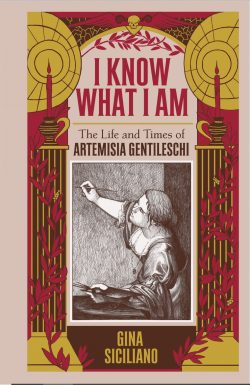
I Know What I Am: The Life and Times of Artemisia Gentileschi


By Gina Siciliano (Fantagraphics Books)
ISBN: ?978-1-68396-211-3 (HB/Digital edition)

A denizen of Seattle, Gina Siciliano studied at Pacific Northwest College of Art and has worked as a musician and bookseller whilst self-publishing highly personal comics such as Summertime. In 2019 she released her first graphic novel, a compelling and comprehensive pictorial biography and sociological reassessment of a figure who has become of late a hard-fought-over darling of art historians and feminists.

In recent years, Artemisia Gentileschi has become the desired property of many factions, all seeking to bend her life and mould her struggles and triumphs to fit their beliefs, opinions, and agendas, almost as much as kings, clerics and merchant princes sought to own her paintings whilst she was alive.

Monumental and scholarly, meticulously researched and refined from what is often too much conflicting information and assumptions, this utterly absorbing account successfully restores some humanity and a portion of muddled, day-by-day dancing to stay alive and ahead of the game desperation that must surely have preoccupied the gifted but generally powerless woman under all those layers of heaped-up symbolism…

I Know What I Am: The Life and Times of Artemisia Gentileschi is an earnest, incredibly engaging narrative built on (whenever possible) first hand quotes and primary sources, whilst also employing some reasonable speculation, extrapolation, and narrative dramatization, all delivered via ball-point pen illustration deriving from Artemisia’s own great works and other contemporary art sources.

Author’s Preface ‘Making New Worlds Out of Old Worlds’ shares Siciliano’s motivations which sparked the project whilst drawing appropriate parallels between creators as subjects of study and how renaissance Europe strangely resonates with modern #MeToo society. Think of it as “A girl artist in 21st century Seattle writes about a girl artist in 17th century Rome…”

The narrative tracks the life of professional artist Orazio Gentileschi and his extended family of jobbing artisans, paying particular – but not exclusive – attention to his daughter Artemisia. Here we see her immediate ancestors and influences: seeing her grow from anonymous assistant to celebrated painter in her own right in a society where women were property, sex objects, servants, bargaining chips or worthless.

As the 17th century opened, art – especially painting – had matchless force as currency and proof of power, with royalty and even Popes commissioning religious, classical and mythological works. There was an especial value to images incorporating beautiful – usually partially clothed – women. That Artemisia used herself as a model and sold many, many biblical scenes will provide a clue to the other recurring motif in her life; how so many men sought to possess her…

A story equal parts sordid, infuriating, shockingly unjust and ultimately just like so many others is shared in Parts I, II and III as the childhood, working life, constant betrayals and eventual passing of one of Europe’s greatest art makers is unpicked in forensic detail and with an empathy that is simply astounding. It’s not dry history here, it’s life in the raw…

Moreover, you’ll soon grasp how multifarious levels of politicking from family dynamics to the whims of kings shapes the lives of ordinary people, no matter how talented they are or of worth to the wealthy…

The compelling melodrama of Artemisia’s struggles are augmented by a ‘Reference section’ comprising a truly massive prose-&-picture section of ‘Notes’, offering context, commentary, specific factual detail plus clarification or speculation. It also expands on general points of detail brought up by the main illustrated narrative and provides candid guidance to Siciliano’s own interpretations of a life now fully co-opted by history-writers seeking to validate their own viewpoints.

Should you seek further fuel for discourse – and yes, I did deliberately avoid mentioning the infamous, attention-diverting rape (because everyone else hasn’t) – there’s a copious and colossal ‘Bibliography’ to work through on your own time.

Passionate, enlightening, emphatically empathetic and unforgettable, this is a book for all seasons and all humans wanting to learn from the past and form a fitter future.
All characters, stories, and artwork © 2019 Gina Siciliano. This edition of I Know What I Am © Fantagraphics Books, Inc. All rights reserved.

Lady Killer volume 1


By Joëlle Jones, Jamie S. Rich, Laura Allred & various (Dark Horse)
ISBN: 978-1-61655-757-7 (TPB/Digital edition)

1962 was a strangely portentous and memorable year.

We all nearly died in a Cuban-based mushroom cloud; the United States Supreme Court ruled mandatory prayers in public schools were unconstitutional; The Beatles released their debut single Love Me Do and Vivian Vance became the first person to portray a divorcée on a US TV series (The Lucy Show).

Elsewhere, paragon of femininity and American First Lady Jacqueline Kennedy took television viewers on an intimate tour of the White House.

Way back then in a cosy era of prim, proper and perfectly contented wives and mothers, Josie Schuller is a bit of an oddball – although you’d never know it to look at her. In all ways she certainly looks like she always fitted in…

In a boldly thrusting consumer culture when men wear hats and smoke at work (and everywhere else), proper ladies are pliable, pliant, obedient and admirable deferential “homemakers” whose appearance and conformity are paramount. Sadly, Josie is shamefully keeping a secret from hubby Gene, their two adorable kids and especially her nosy live-in mother-in-law.

The busybody biddy has her suspicions though: a strange man is always hanging around, trying to talk to Josie when no one’s looking, and Mother Schuller suspects the shameful worst…

Her nasty mind might be relieved to know that her daughter-by-marriage is not cheating on her beloved boy, but merely indulging in a little freelance work on the side… although of course, even that would reflect badly on the breadwinner and Man of the House.

No, it’s not illicit sex that’s endangering this perfect union. Our deceitful little minx is just a covert assassin and really, really good at her job…

Unfortunately, Josie wants to leave the business, but her increasingly obnoxious handler Peck and his boss Stenholm keep piling on the pressure: forcing Josie to take on more and more contracts, with no regard to the happy home-life she wants to preserve.

Eventually, the devotedly domestic death-dealer decides that her dreams mean nothing to her employers and – after she’s despatched to dispatch another lady similarly seeking to quit the lethal game – Josie realises that if she ever gets to retire, she’s going to have to remove the organisation that owns her…

Devised and illustrated by Joëlle Jones (Catwoman, Wonder Girl, Mr. Higgins Come Home, Supergirl: Being Super, Fables), scripted by Jamie S. Rich (Ares & Aphrodite, Cut My Hair, Archer Coe and the Way to Dusty Death, It Girl and the Atomics, Justice League: Endless Winter) and coloured by Laura Allred, this wickedly witty satirical blow for femininity and feminism collects issues #1-5 of Lady Killer from January-May 2015.

By mischievously mauling the virginal, compliant stereotypes handed down to us from the heydays of Doris Day, Leave it to Beaver and Ozzie and Harriet – by way of Mad Men and Bullet Train – the creators have crafted a fast-paced high-octane period thriller which is a true joy to behold.

Bedded in with a wealth of additional material including an Introduction from crime-writer Chelsea Cain, roughs, working studies, faux contemporary ads, cover-&-variants gallery and commentary from the creators in a stylish Sketchbook section, this taut, timeless and tantalising thriller is packed with pots of action and swathes of suspense delivered with electric Élan and perilous panache to delight every reader who loves their comedy black and their body-counts high.

Read this quietly and make no fuss, and if you’re all good boy and girls and others, I’ll let you in on the shocking sequels…
Lady Killer ™ & © 2015 by Joëlle Jones and Jamie S. Rich. All rights reserved.

The Best of Sugar Jones


By Pat Mills, Rafael Busóm Clùa & various (Rebellion Studios)
ISBN: 978-1-78108-770-1 (TPB/Digital edition)

At first glance British comics prior to the advent of 2000 AD fall into fairly ironclad categories. Back then, you had cosily fantastic preschool whimsy, a large selection of adapted TV and media properties, action, adventure, war and comedy strands, with the occasional dash of mild supernatural horror. Closer scrutiny would confirm a persistent subversive undertone, especially in such antihero series as Dennis the Menace and The Spider, or simply quirky fare like Marney the Fox or His Sporting Lordship.

British comics have always been able to tell big stories in satisfyingly moreish small instalments. Coupled with superior creators and the anthological nature of our publications, this has ensured hundreds of memorable characters and series have seared themselves into the little boy’s psyche inside most adult males. I gather that’s equally true of the stuff girls were reading at the time…

Like most of my comics contemporaries I harbour a secret shame. Growing up, I was well aware of the weeklies produced for girls, but would never admit to willingly reading them. My loss: I now know that they were packed with amazing strips by astounding artists and writers, many of whom were (sadly anonymous) favourites who also drafted sagas of stalwart soldiers, marauding monsters, evil aliens or weird wonders …because all British superheroes were bizarrely off-kilter.

I now know that – in terms of quality and respect for the readership’s intelligence, experience and development – girls’ comics were far more in tune with the sensibilities of their target audience, and I wish I’d paid more broad-minded attention back then. Thus, I’m delighted to share here another peek at superb and oddly sophisticated comics from a publication I never went near, even though it was just as groundbreaking as its later stablemates Action or 2000AD – albeit not as nostalgically revered or referenced nowadays…

Girl’s Juvenile Periodicals always addressed modern social ills and issues, and also embraced those things women needed to be indoctrinated in: Fashion, pop trends, pets, toys, style-consumerism, make-up and more (even cooking, general knowledge and sewing!).

Pink came out of IPC’s girl’s publications division in 1973 and was quite successful before finally merging with Mates in 1980, just as television and teen fashion mags finally supplanted the mix of comics stories and trend journalism foe female audiences. Those girls’ grandkids are now lost in social media and the world turns ever on…

During its mercurial run of 377 issues, Pink offered targeted “news” features, games, puzzles, competitions and a wealth of strip mystery, adventure and particularly romantic fare in serials like Don’t Let him Fool You, Faye!, The Haunting of Jilly Johnson, The Island of Stones, Shadows of Fear, Memories of Mike, Rich Girl, Poor Girl, The Sea People and Remember, Rosanna, Remember!

As years rolled by, it was clear that the editors were gradually shifting the demographic, targeting older teens by developing a saucy, cheeky persona in keeping with a readership getting ready for adult life. One of those editors was Pat Mills – arguably the greatest creative force in British comics.

He began his career at DC Thomson in Dundee, scripting and editing for teen romance title Romeo and others before going freelance. At this time Mills wrote girls comics and humour strips, and moved south to London to join IPC and do the same for them. After editing and writing for Tammy, Pink and Sandy – and starting a small evolution in content and style on Jinty – he moved on and killed posh-comics-for-middle-class-boys (and girls) stone-dead.

After creating Battle Picture Weekly (1975, with John Wagner & Gerry Finley-Day), as well as Action (1976) and 2000AD (1977), Mills launched Misty and Starlord (both 1978). Along the way, he also figured large in junior horror comic Chiller

As a writer he’s responsible for Ro-Busters, ABC Warriors, Nemesis the Warlock, Slaine, Button Man, Metalzoic, Marshal Law and Requiem Vampire Knight among so many, many others. That especially includes Battle’s extraordinary Charley’s War (with brilliant Joe Colquhoun): the best war strip of all time and one of the top five explorations of the First World War in any artistic medium.

Unable to hide the passions that drive him, Mill’s most controversial work is probably Third World War which he created for bravely experimental comics magazine Crisis. This fiercely socially conscious strip blended his trademark bleak, black humour, violence and anti-authoritarianism with a furious assault on Capitalism, Imperialism and Globalisation. It contained elements of myth, mysticism, religion and neo-paganism – also key elements in his mature work. You should also see his run on Doctor Who Weekly and Serial Killer – his final collaboration with Kev O’Neill…

Mills has always kept a judgemental eye on the now and recognised the power of humour and satire. In 1974 that led to his debuting a new kind of star for Pink. In 1973, the much-maligned and deliberately misunderstood (we call it “gaslighting” these days) “Sexual Revolution” hit a media high.

It was an epoch of “cheesecake” and “girly” strips: a genre stuffy old-fashioned Britain used to excel at and happily venerate. Saucy postcards, Carry-On films, ingenuously innocent smut and a passion for double entendre had for decades obscured and obfuscated genuine concerns like institutionalised gender pay-gaps, unwarranted interest in and control of female reproductive rights and sexual behaviour. There were double standards for men and women’s work and recreational behaviours, and that incomprehensible Mystery of Mysteries: just why men are utterly certain that anything they see automatically fancies them back and is therefore fair game for creepy jollity and unwanted attentions excused as “just having bit of fun” or “paying a compliment”…

After years of feminist agitation and balanced by entrenched institutional male mockery, countless publications and TV shows suddenly boiled at a wave of unexpected militancy. Everywhere women were demanding equal rights, equal pay and fair treatment …and isn’t it simply marvellous that they’ve got all those things now?..

Contraception was becoming more readily – if not quite universally – available and apparently everywhere bras were burning. This meant men actually coming to believe that sex might be less expensive and perhaps even repercussion/responsibility free. It was a reactionary Male Chauvinist Pig’s Dream, and unrepentant, old-school stand-up comedians had a field day. The only changes I can recall were more skin on TV, a wave of female-starring comics strips like Amanda, Scarth, Danielle, Axa and Wicked Wanda (in which each of the titular heroes lost her clothes on a daily basis) and the rise of “Page 3” newspaper nudies…

I’m not sure how many editors of daily and Sunday papers were supporters of the Women’s Liberation movement, or whether they simply found a great excuse to turn the industry’s long tradition of beautifully rendered naked birds on their pages into something at least nominally hip, political and contemporary.

I do know that an awful lot of new features appeared, with aggressive, strident (if not actually liberated), forceful women who nevertheless still had hunky take-charge boyfriends in tow…

In comics, Pat Mills created a rather greedy and generally nasty piece of work who – if not actually a villain – was certainly utterly selfish, shallow and self-absorbed. We Brits love rogues and scoundrels and will forgive them for almost anything – just look at the result of any election in the last 30 years

Thus Sugar Jones expertly capitalised on our national tradition of forgiving appallingly egregious actions and public weakness for inept wickedness: standing legs akimbo at the vanguard of a growing compulsion to slavishly follow what we now call “celebrity culture”. She too spent a lot of time in her underwear or less…

The series was illustrated by Spanish master of style Rafael Busóm Clùa who was a fixture of girls comics from the era. As well as The Island of Stones in Pink, he also limned The Three Wishes serial in Tammy, Two of a Kind in Misty and Warm Love in Oh Boy!

The Best of Sugar Jones features material seen in Pink from 16th October 1974 to 21st May 1977: episodic snippets that are all loving and lavish riffs on a single theme: cruel self-delusion.

Sugar is a beautiful, successful sexy thing. She has her popular TV variety show and knows everyone. She sings, dances, does chat and interviews, opens fetes and sponsors charities. The public all love her… or at least the heavily made-up, cynically manufactured image of the sweet 20-something “fabulous super sex symbol” she unceasingly pretends to be.

Sugar is actually in her 40s: an amalgamated masterpiece of the skills of make-up artists, and art of clothiers, camera technicians and trainers. The enable her to frantically cling on to the illusion of vivacious attainability. She wants everyone to want her, and only her dutiful but increasingly disenchanted and abused assistant Susie Ford knows the plain truth.

Every week Sugar goes through formulaic sitcom motions of another scheme to build the star’s ego, reputation, bank account or bedpost notch count, with Susie forced to assist or secretly sabotage the shameless plot.

It sounds pretty tedious and repetitive, but Mills’ deft scripts and manic plotting, so sublimely rendered by good girl artist Busóm Clùa, make these assorted cheesecake treats absolutely captivating to see. High on glamour, the strips would have made so many pubescent boys rethink their views on girls comics, but thankfully, nobody let us in on the secret…

Here you’ll see the never-long-defeated fame-&-acclaim chaser adopt a hunky jungle man; scupper the careers of up-&-coming rivals; seduce impresarios and showbiz bigwigs; fail to launch a respectable movie/pop/theatrical/dance career; lose many prospective rich husbands or simply sow utter chaos with new and unwise, unsanctioned publicity stunts.

Her plans always fail, but somehow the self-absorbed seductress never really pays for her misdeeds, except in secret shame and frustration. Always, she bounces back with a new notion…

Sugar’s not averse to using her assets to make an illicit buck either, but her financial skulduggery always leaves her poorer in pocket. Even if the oblivious masses can’t get enough of her, whenever she tries to exploit charities, or breaking political crises, Susie’s there to see no one is harmed or suffers hardship…

A wickedly barbed social fantasy and satire on fame, fortune and pride, Sugar Jones presents a truly unique, likably unlovable antihero who’s one step beyond normal role model fare – or even standard raunchy cheesecake classification: someone who also transcends the rather shocking core assumption of that era, which seems to be “women are worthless once they turn 21”…

Exploring fashion, branding, celebrity culture, and the toxic legacy of glamour – on male terms and in a playing field controlled by men – from a time when that “laddish” culture of “banter” and “cheekiness” was even seeping into girls comics and magazines, Sugar Jones affords a totally different view of a woman on top: one any student of sexual politics and legacy of the culture cannot afford to miss…
© 1974, 1975, 1976, 1977 & 2020 Rebellion Publishing IP Ltd. All rights reserved.

KIKI de Montparnasse


By Catel & Bocquet, translated by Nora Mahoney (SelfMadeHero)
ISBN: 978-1-90683-825-6 (TPB/Digital edition)

Like all art students in the 1970s and early 1980s I fell in love with Surrealism and Dada and even had a copy of Man Ray’s print of the naked chick mimicking a cello on a wall for a while. The model was his greatest muse – Kiki of Montparnasse.

I revelled in how the image was a clever juxtaposition of idea and image and never gave much thought to the actual woman in the picture. That was a huge mistake, thankfully rectified here in this supremely moving account of the life of an indomitable soul who encapsulated and epitomised an extraordinary era…

Please take heed: this book contains both nudity and nakedness in large amounts. Don’t read it if such drawings might affect you in unwholesome ways…

Alice Ernestine Prin (2nd October 1901 – 29th April 1953) was born in Châtillon-sur-Seine, Côte-d’Or. She was a child of shame and poverty, wilful and a bit wild: surviving life amongst the lowest classes. She grew up in northern France in a region of agriculture, heavy industry and especially winemaking: raised by a grandmother and often-visiting godfather. Alice had her first drink and danced for inn patrons at ten. It kept happening until her already-disgraced mother abruptly returned in 1913 before the girl was packed off to Paris to learn a trade.

That’s when her life really began.

That life is traced from cradle to grave in a rapid-fire procession of black-&-white vignettes, that first focuses on her childhood and brushes with education, whilst concentrating on her happy but unconventional family life and relationships.

Already wise beyond her years in the things that mattered, Alice clashed with a number of employers in crappy jobs – such as bakery assistant or domestic servant – and dreamed of love and adventure, independence and fame…

She reached her majority just as Europe was changed forever by “The War to End All Wars”, and was on hand and at the forefront as the entire continent – but especially France – survived the communal mass PTSD dubbed the Années Folles or “Crazy Years”. An era of wild excess, free thought and fresh art and literary exploration, much of it triggered by shock, disenchantment and crumbling social order: the reaction of a generation who thought they were rebuilding themselves and society, but were in fact only gearing up to do it all over again…

With wounded soldiers everywhere and employment scarce, in 1916 Alice agreed to model for a sculptor buying bread: a scandalous job she at first concealed from her mother. When the outraged matron learned the truth, she disowned her daughter…

Two years later, she was an occasional singer and dancer and a paid escort too, but poverty was still biting too deep. Modelling was not a highly paid profession and most artists were just as poor as their subjects, but life took an upward turn after she was introduced to a promising prospect named Amedeo Modigliani

He showed her to Utrillo, and thus to Mendjinsky and…

By 1920 she had remade herself and was known only as “KIKI”: bold, brassy, shamelessly confidant and utterly in command of the close community and artistic colony of defiant non-comformists of Montparnasse. Her star was on the rise and everyone one wanted to capture her in their own way. Her intimate associations would include Sanyu, Chaïm Sountine, Jean Cocteau, Julie Mandel, Constant Detré, Francis Picabia, Arno Breker, Alexander Calder, Per Krogh, Hermine David, Pablo Gargallo, Tono Salazar, John Glassco, Moïse Kisling and so many others who would reshape the creative world.

In 1921 she met her most devoted acolyte in Tsuguharu Foujita and the man who would make her immortal: American photographer Man Ray (Emmanuel Radnitzky). She had also begun selling her own paintings, starring in numerous surrealist and Dadaist films and even performed in Ferdinand Leger’s Ballet mécanique in 1923…

Somehow, however, fame never quite equated to fortune, even though in June 1924 Man Ray’s image Le Violon d-Ingres (Ingre’s Violin) was first published in Surrealist magazine Littérature, with her astounding energy, creativity and catalogue of innovations and successes acting as a mere spine to form an impression of the woman whose guiding motto was always “be natural”. In May 2022, an original print of the image sold at auction for $412,400,000.

In love with fame and too forgiving with her lovers, KIKI flowered through those wild days luxuriating in independence and glamour, approval and rejection, notoriety, renown, and – outside her world and the art world – utter anonymity. Always, though, she lived it on her own terms…

How that all worked out comprises the majority of this stunningly inviting and compellingly absorbing cartoon biography: an award-winning tale that is the very picture of a rags-to-“riches”-to-rags melodrama and one as charming and uncompromising as any carefully constructed work of fiction.

This sublimely moving episodic dramatised narrative is a tasty wonder in bite-sized pieces and the first multi award-winning collaboration between graphic novelist Catel Muller (Ainsi soit Benoîte Groult, Adieu Kharkov, Lucie s’en soucie, Le Sang des Valentines, Joséphine Baker, Olympe de Gouges, Alice Guy) and crime novelist, screenwriter, biographer/comics writer José-Louis Bocquet (Sur la ligne blanche, Mémoires de l’espion, Panzer Panik, Joséphine Baker, Olympe de Gouges, Anton Six, Alice Guy).

The result is an exceptionally entertaining, engaging and informative account which is supplemented by a vast supporting structure of extras, beginning with a heavily illustrated and highly informative ‘Chronology’ tracing in minute detail all the pivotal events in KIKI’s short sharp life, which never changed the world but certain embraced and enjoyed it…

That’s further augmented by ‘Biographical Notes’ offering scholarly character portraits in prose and sketch form: all key historical figures impacting the model’s life, including Chaïm Sountine, Amedeo Modigliani, Moïse Kisling, Tsuguharu Foujita, Henri-Pierre Roché, Man Ray, Marie Vassilieff, Pablo Picasso, Tristan Tzara, Robert Desnos, André Breton, Marcel Duchamp, Trieze, Ivan Mosjoukine, Jean Cocteau, Henri Broca, Lee Miller, Ernest Hemingway, Jamblan, and André Larocque, and a Filmography of the movies researchers have since confirmed and acknowledged, and a colossal ‘Bibliography’ of books about her.
© 2011 SelfMadeHero. Illustrated by Catel. Written by José-Louis Bocquet. All rights reserved. Digital edition © May 2016.

The Mental Load – A Feminist Comic


By Emma, translated by Una Dimitrijevic (Seven Stories Press)
ISBN: 978-1-60980-918-8 (TPB) eISBN: 978-1-60980-919-5

It’s never been a fair world, although until relatively recently (if our choice of leaders can be seen as contrarily evidential) that’s a situation we all apparently aspire to create and maintain. Simultaneously in that nebulous “recent” period, many have sought to address imbalances between the roles and burdens of men and women in a civil and cohesive society, but the first problem they all hit was simply how to state the problems in terms all sides could understand. We have a lot more names and concepts to utilise now in discourse, but the difficulties don’t seem to have diminished at all…

In 2010, software engineer Emma had a revelation and first joined the public debate: crafting and curating a book of strips reflecting upon social issues impacting women, from long hours to workplace politics and getting on with partners… and how unfair and unjust the world was.

The daughter of two mathematicians from Troyes – in the North-eastern region of France – she studied computer science, grew older and lived like most adults: work, fun (when possible), relationships, family. Things changed after she had her first child…

At age 30 she became an avowed feminist, having been compelled to closely observe and re-assess her life in society even as she discovered the concept of “collective intelligence”. Her approach to formalising her thoughts was to identify and deftly dissect components of behaviour – hers and everyone else’s – and the result was The Mental Load. This was her term for all the unacknowledged, unpaid, incessant, invisible crap (mostly thanks to men, absolutely to partners in relationships, but also to many other women) that comprises and comes with almost every relationship.

Those observations were translated into activism, initially as self-published and distributed pamphlets, and in 2016 she started adding cartoons and drawings to the mix. The extreme positive response led her to launch cartoon blog Emmaclit, focussing on issues of racism, capitalism and police violence as well as feminism, following up a year later with sister webcomic Fallait demander (“You only had to ask”) which first posited the notion of an inescapable relational imbalance… a mental load…

In the webcomic, Emma used her own domestic and work life to provide biographical examples of how an unfair, unspoken – and often unrecognised – distribution of labour and responsibility falls on women in even the most equitable and ostensibly harmonious heterosexual relationships. The material went viral and struck a global chord…

Delivering her thoughts as a series of pictorial essays/lessons, Emma convincingly and compellingly argues that the vast majority of the overwhelming, relentless, inescapably burdensome life-tonnage had somehow settled on one side of the bed in most households…

The book – and sequel The Emotional Load (strips from them subsequently appeared in British newspaper The Guardian) – caused something of a commotion and as much trollish kickback as you’d expect from all the usual (and usually wrong) places…

Because a large proportion of humans who won the gender (genital?) lottery don’t really give a damn about other people’s woes – especially if the food keeps coming and the appropriate drawers magically refill with clean clothes and groceries – I fear there’s a segment of truly needy folk who will never benefit from this selection of treatises, anecdotes, statistics and life-changing stories.

Nevertheless, since many guys are genuinely clueless and baffled but willing to adapt, maybe enough of us will give change and thought a chance, even at this late stage. It’s certainly clear that there’s quite some way to go yet…

Best of all, most women reading this will realise that it’s not just them feeling the way they do and may even risk starting a conversation with their significant others, or at the very least, start talking to other women and organising together…

Working in the manner of the very best observational stand-up comedy, Emma forensically identifies an issue and dissects it, whilst offering advice, suggestions and a humorous perspective. Here that’s subdivided into a dozen comical chapters, preceded by an autobiographical context-setting Introduction, before ‘You Should’ve Asked’ finds sexism and discrimination at work heaped upon anyone bold enough to use their legal right to maternity leave, whilst cataloguing who does what around the house in terms of cooking, cleaning, provisioning, time managing, general “adulting”, noticing and remembering stuff needs to be cooked and cleaned, and providing clear-cut alternatives even an old geezer like me could understand, As always telling examples are offered…

‘Violence of the Oppressed’ offers a non-establishment view of 2016s protests against the dismantling of the French Labor Code and citizens’ rights, supplemented by a history of how women got them in the first place, followed by shocking facts about childbirth experiences and time-saving tactics of some medical practitioners in ‘The Story of My Friend C.’

What guys have always claimed they can’t control is carefully explored in ‘The Male Gaze’ and more fully explored in ‘Show Me That Bosom’ (via a deliciously barbed allegory of a land where bared breasts are mandatory).

‘The Wonderful Tale of Mohamed’ singles out one case to detail the treatment of immigrants and brown people in general. It examines what happens when police can use terrorism threats as justification for overreaction, whilst ‘The Wait’ explores individual freedoms and action in committed relationships with specific attention to Emma’s own life and who usually gets left holding the baby. ‘Work!’ then lays out a possible solution and alternatives to the rat race roles if only we ensure time and resources could be more evenly distributed. There’s also plenty of revelations on the way women have messed up the value of the work market…

Other than making men uncomfortable, ‘Check Your Pussy!’ then offers a public service announcement on knowing oneself for all women, setting out actual facts – and even biological route maps! – before social iniquity returns in the form of another exposé on police treatment of non-whites after the death of ‘Just Another Guy from the Hood’…

The ultimate male shield is the concept of “banter” and most effective weapon is the concept of “just kidding”. Both get a well-deserved and thoroughly effective kicking in ‘Chill Out’ before – to celebrate a year of the blog – Emma opted to share a formulative experience that triggered her late-found militancy. The upshot was personal anecdote ‘The Holidays’: describing her bout of childbirth and how it changed her life in all the ways absolutely no one had warned her about…

Now a full-time cartoonist, broadcaster and columnist, Emma continues to poke and probe an unfair world, but this subversively smart, amusingly addictive, slickly convincing, plausibly rational discussion of the way things should not be is undoubtedly a high point in her work and our communal advancement. It may still be a largely male-centric society, but amidst the many moments that will have any decent human weeping in empathy or raging in impotent fury, there are decisive points where a little knowledge and a smattering of honest willingness to listen and change could work bloody miracles…

Buy this book, learn some stuff. Be better, and please accept my earnest apologies on behalf of myself and my entire gender.

Dial it down and literally Man Up guys!
© 2017 by Emma. English translation © 2018 by Una Dimitrijevic. All rights reserved.

Wonder Woman: The Golden Age volume 1


By William Moulton Marston & Harry G. Peter & various (DC Comics)
ISBN: 978-1-4012-7444-3 (TPB/Digital edition)

We can’t get too far into a month of comics by and/or about women without acknowledging the greatest role model of all time…

Wonder Woman was famously created by polygraph pioneer William Moulton Marston – apparently at the behest of his formidable wife Elizabeth – and illustrated by Harry G. Peter in a well-intentioned attempt to offer girls a positive and forceful role model. Her spectacular launch and preview (that’s the comic book superstar, not Mrs. Marston) came in one of the company’s most popular publications: an extra feature inside All Star Comics #8, home of the immortal Justice Society of America.

One month later the Perfect Princess gained her own series – including the cover-spot – in new anthology title Sensation Comics, and was a huge and instant hit. She won her own eponymous title in late Spring of that year (cover-dated Summer 1942).

Using the nom de plume Charles Moulton, Marston scripted all the Amazing Amazon’s many and miraculous adventures until his death in 1947, whereupon Robert Kanigher took over the writer’s role. Venerable co-creator H.G. Peter illustrated almost every WW tale until his own death in 1958.

Spanning December 1941 – February/March 1943, this superb full-colour compilation (also collects that seminal debut from All Star Comics #8, and her every iconic adventure from Sensation Comics #1-14 and Wonder Woman #1-3, plus the first outing in anthological book of (All) Stars Comics Cavalcade.#1

Naturally, we begin with ‘Introducing Wonder Woman’

On a hidden island of immortal super-women, an American aviator crashes to Earth. Near death, US Army Intelligence Captain Steve Trevor is nursed back to health by young Princess Diana. Fearing her growing obsession with the man, her mother Queen Hippolyte reveals the hidden history of the Amazons to the child. Diana learns how her people were seduced and betrayed by men but rescued by the goddess Aphrodite on condition that they thenceforward isolate themselves from the rest of the world and devote their eternal lives to becoming ideal, perfect creatures.

However, after Trevor explains the perfidious spy plot which accidentally brought him to the Island enclave, divine Athena and Aphrodite appear, ordering Hippolyte to assign an Amazon warrior to return with the American to fight for freedom and liberty.

Hippolyte diplomatically and democratically declares an open contest to determine the best candidate and, despite being forbidden to participate, Diana enters and wins. Accepting the will of the gods, the worried mother outfits her in the guise of Wonder Woman and sends her out to Man’s World…

A month later the story continued where the introduction had left off. Sensation Comics #1 declares ‘Wonder Woman Comes to America’, seeing the eager immigrant returning the recuperating Trevor to the modern World. She also trounces a gang of bank robbers and falls in with a show business swindler…

One major innovation here is the newcomer buying a secret identity: that of lovelorn Army nurse Diana Prince, elegantly allowing the Amazon to be close to Steve whilst enabling the heartsick medic to join her own fiancé in South America…

Even with all that going on, there was still room for Wonder Woman and Captain Trevor to bust up a spy ring attempting to use poison gas on a Draft induction centre, before Steve breaks a leg and ends up in hospital again, where “Nurse Prince” is assigned to tend him…

Sensation #2 introduced deadly enemy agent ‘Dr. Poison’ in a cannily crafted tale which also debuted the most radical comedy sidekicks of the era…

The plucky fun-loving gals of the Holliday College for Women and their chubby, chocolate-gorging Beeta Lamda sorority-chief Etta Candy would get into trouble and save the day in equal proportions for years to come: constantly demonstrating Diana’s – and Marston’s – philosophical contention that girls, with correct encouragement, could accomplish anything that men could…

With War raging and in a military setting, espionage and sabotage were inescapable plot devices. ‘A Spy at the Office’ finds Diana arranging a transfer to the office of General Darnell as his secretary so that she can keep a closer eye on the finally fit Steve. She isn’t there five minutes before uncovering a ring of undercover infiltrators amongst the typing pool and saving her man from assassination.

Unlike most comics of the period, Wonder Woman employed tight continuity. ‘School for Spies’ in #4 sees some of those fallen girls murdered by way of introducing inventive genius and Nazi master manipulator Baroness Paula von Gunther. She employs psychological tricks to enslave girls to her will and sets otherwise decent Americans against their homeland.

Even Diana succumbs to her machinations… until Steve and the Holliday Girls crash in…

America’s newest submarine is saved from destruction and cunning terrorists brought to justice in ‘Wonder Woman versus the Saboteurs’ before issue #6 has the Amazing Amazon accepting a ‘Summons to Paradise’ to battle her immortal sisters in Kanga-riding duels before receiving her greatest weapon: an unbreakable Lasso of Truth which compels and controls anyone who falls within its golden coils.

It proves quite handy when Paula escapes prison and uses an invisibility formula to wreak havoc on American coastal defences…

‘The Milk Swindle’ is pure 1940s social advocacy drama, with homegrown racketeers and Nazi von Gunther joining forces to seize control of America’s milk supply with the incredibly long-sighted intention of weakening the bones of the country’s next generation of soldiers.

Closely following in Sensation #8 is ‘Department Store Perfidy’ wherein the Amazon goes undercover in the monolithic Bullfinch emporium to win better working conditions and fair pay for the girls employed there.

There was a plethora of surprises in #9 with ‘The Return of Diana Prince’ from South America. Now Mrs Diana White, the young mother needs her job and identity back until her inventor husband can sell his latest invention to the US army. Luckily, Wonder Woman and an obliging gang of saboteurs help to expedite matters…

The next major landmark was the launch of the Amazon’s own solo title. The first quarterly opens here a text feature on the Amazon’s pantheon of godly patrons in ‘Who is Wonder Woman?’ after which comic action commences with a greatly expanded revision of her first appearance in ‘A History of the Amazons: The Origin of Wonder Woman’. This precedes a beguiling mystery tale as ‘Wonder Woman Goes to the Circus’ wherein Diana solves the bizarre serial murders of the show’s elephants before Paula von Gunther rears her shapely head again in ‘Wonder Woman versus the Spy Ring’ wherein the loss of the Golden Lasso almost causes her demise and ultimate defeat of the American Army…

The issue ends with ‘The Greatest Feat of Daring in Human History’ as Diana and Etta head for Texas, only to become embroiled in a sinister scheme involving Latin Lotharios, lady bullfighters, lethal spies and a Nazi attempt to conquer Mexico…

Back in Sensation Comics #10 (October 1942) ‘The Railroad Plot’ celebrates Steve and Wonder Woman’s first anniversary by exposing a sinister plan devised by Japanese and German agents to blow up New York using the labyrinth of subway tunnels under the city, whilst ‘Mission to Planet Eros’ debuts the Princess’ long line of cosmic fantasy exploits. The Queen of Venus requests Diana’s aid in saving an entire planetary civilisation from gender inequality and total breakdown, before ‘America’s Guardian Angel’ – from Sensation #12 – sees the Warrior Princess accepting an offer to play herself in a patriotic Hollywood movie, only to find the production infiltrated by the insidious Paula and her gang of slave-girls…

Preceded by an illustrated prose piece about ‘The God of War’, Wonder Woman #2 comprises a 4-part epic introducing the Astounding Amazon’s greatest enemy in ‘Mars, God of War’. He apparently instigated a World War from his HQ on the distant red planet but chafes at the lack of progress since Wonder Woman entered the fray on the side of the peace-loving allies. He now opts for direct action, no longer trusting his earthly pawns Hitler, Mussolini and Hirohito

When Steve goes missing, Diana allows herself to be captured and ferried to Mars. Here she starts disrupting the efficient working of the war-god’s regime and fomenting unrest amongst the slave population, before rescuing Steve and heading home to Earth. ‘The Earl of Greed’, one of Mars’ trio of trusted subordinates, takes centre stage for the second chapter, with orders to recapture Steve and Diana at all costs.

As the duo attempt to infiltrate Berlin, Greed uses his influence on Hitler to surreptitiously redirect the German war effort, using Gestapo forces to steal all the USA’s gold reserves…

With Steve gravely injured, the Amazon returns to America and whilst her paramour heals, uncovers and foils the Ethereal Earl’s machinations to prevent much-needed operating funds from reaching Holliday College, where young girls learn to be independent free-thinkers…

With Greed thwarted, Mars dispatches ‘The Duke of Deception’ to Earth, where the spindly phantom impersonates Wonder Woman and frames her for murder.

Easily escaping from prison, the Princess of Power not only clears her name but also finds time to foil a Deception-inspired invasion of Hawaii, leaving only ‘The Count of Conquest’ free to carry out Mars’ orders.

His scheme is simple: through personal puppet Mussolini, the Count tries to physically overpower the Amazing Amazon with a brutal giant boxing champion, even as Italian Lothario Count Crafti attempts to woo, seduce and suborn her. The latter’s wiles actually worked, too, but capturing and keeping her are two different things entirely and after breaking free on the Red Planet, Diana delivers a devastating blow to the war-machine of Mars…

This issue ends with a sparkling double page patriotic plea when ‘Wonder Woman Campaigns for War Bonds’

Sensation Comics #13 (January 1943) claims ‘Wonder Woman is Dead’ when a corpse wearing her uniform is discovered, and the astounded Diana Prince discovers her alter ego’s clothes and the irreplaceable magic lasso are missing…

The trail leads to a diabolical spy-ring working out of Darnell’s office and an explosive confrontation in a bowling alley, whilst ‘The Story of Fir Balsam’ in #14 presents a seasonal tale concerning lost children, an abused mother and escaped German aviators. All was happily resolved around a lonely pine tree, after which the Immortal Warrior celebrated her next publishing milestone…

The 1938 debut of Superman propelled National Comics to the forefront of their fledgling industry and a year later the company was licensed to produce a commemorative comicbook celebrating the opening of the New York World’s Fair.

The Man of Tomorrow prominently featured on the appropriately titled New York World’s Fair Comics among such four-colour stars as Zatara, Butch the Pup, Gingersnap and The Sandman. In 1940 another abundant premium emerged with Batman and Robin added to the roster, and the publishers felt they had an item and format worth pursuing commercially.

The spectacular card-cover 96-page anthologies had been a huge hit: convincing editors that an over-sized anthology of their pantheon of characters, with Superman and Batman prominently featured, would be a worthwhile proposition. Thus, the format was retained for a wholly company-owned, quarterly high-end package, retailing for the then-hefty price of 15¢.

Launching as World’s Best Comics #1 in Spring 1941, the book morphed into World’s Finest Comics from #2, beginning a stellar 45-year run which only ended as part of the massive clear-out and decluttering exercise that was  Crisis on Infinite Earths. During the Golden Age, however, it remained a big blockbuster bonanza of strips to entice and delight readers…

At this time National/DC was in an editorially-independent business relationship with Max Gaines that involved shared and cross promotion and distribution for the comicbooks released by his own outfit All-American Publications. Although technically competitors if not quite rivals, the deal included shared logos and advertising and even combining both companies’ top characters in the groundbreaking All Star Comics as the Justice Society of America.

However, by 1942 relations between the companies were increasingly strained – and would culminate in 1946 with DC buying out Gaines, who used the money to start EC Comics.

All-American thus decided to create its own analogue to World’s Finest, featuring only AA characters. The outsized result was Comics Cavalcade

Cover-dated December 1942-January 1943 – and following Frank Harry’s gloriously star-studded cover to Comic Cavalcade #1 – Wonder Woman’s fourth regular star slot began with the company superstar solving the ‘Mystery of the House of the Seven Gables’ (as ever the fruits of Marston & Peter’s fevered imaginations) wherein Diana Prince stumbles upon a band of Nazi spies. All too soon, the Amazing Amazon needs the help of some plucky youngsters to quash the submarine-sabotaging brutes…

Wonder Woman #3 then dedicates its entirety to the return of an old foe; commencing with ‘A Spy on Paradise Island’ as the undergrads of Holliday College for Women – and Etta Candy – are initiated into some pretty wild Amazon rites on Paradise Island. Sadly, the revels inadvertently allow an infiltrator to gain access and pave the way for an invasion by Japanese troops…

Naturally Wonder Woman and the Amazons prevail on the day but the sinister mastermind behind it all is exposed and strikes back in ‘The Devilish Devices of Baroness Paula von Gunther’.

Whilst the on-guard Amazons build a women’s prison that will be known as “Reform Island”, Wonder Woman – acting upon information received by the new inmates – trails Paula and is in time to crush her latest scientific terror: an invisibility ray…

‘The Secret of Baroness von Gunther’ offers a rare peek at a villain’s motivation when the captured super-spy reveals how her little daughter Gerta has been a hostage of the Nazis for years and remains a goad to ensure the genius’ total dedication to the German cause… Naturally, the Amazing Amazon instantly determines to reunite mother and child at all costs after which ‘Ordeal by Fire’ confirms the Baroness aiding Diana and Steve in dismantling the spy network and slave-ring the Nazis had spent so long building in America… but only at great personal and physical cost to the repentant Paula…

Much has been posited about subtexts of bondage and subjugation in Marston’s tales – and, to be frank, there really are lots of scenes with girls tied up, chained or about to be whipped – but I just don’t care what his intentions (subconscious or otherwise) might have been: I’m more impressed with the skilful drama and incredible fantasy elements that are always wonderfully, intriguingly present: I mean, just where does the concept of giant war-kangaroos come from?

Exotic, baroque, beguiling and uniquely exciting, these Golden Age tales of the World’s Most Famous female superhero are timeless, pivotal classics in the development of comic books and still provide lashings of fun and thrills for anyone looking for a great nostalgic read. If that’s you, you know what you need to do…
© 1941, 1942, 1943, 2017 DC Comics. All Rights Reserved.

Fruit of Knowledge – The Vulva vs. The Patriarchy


By Liv Strömquist, translated by Melissa Bowers (Virago)
ISBN: 978-0-349-01072-4 (B/Digital edition)

We’re going to be using grown-up words today and there’s stuff discussed and depicted here that many strident, officious (and mostly male) people simultaneously deny, deny access to, denigrate and demonise. They even dare to police how actual possessors & users of these body parts may employ or maintain them. Those guys won’t like this book at all.

If that’s you, Go Away. There’s nothing for you to see here and you’ll only get upset. If that’s not you, but you know where they live or hang out, there’s no law that prevents you from buying a copy and sending it to them. Just a thought…

If you know anything about female anatomy, all this will be funny, frightening, glaringly obvious and even enlightening. However, if you’re male – or really, really repressed and/or religious to a fundamental degree – you might want to stop here and pretend this book doesn’t exist.

Wars are fought with intolerant attitudes, economics and misinformation far more than with guns, bombs, knives or deadly chemicals. Oddly enough, that latter arsenal has been used far more than you might imagine: by an ostensibly well-meaning parochial and explicitly patriarchal establishment intent on suppressing women in every walk of life.

In 1978, Liv Strömquist was born in Lund, Sweden. After studying political science, she rekindled an early interest in comics and fanzines to explore topics that gripped her. A cartoonist and radio presenter, she is dogged, diligent, meticulous and devastatingly hilarious when exploring themes important to her. Her first graphic enquiry was 2005’s Hundra procent fett (Hundred Percent Fat) and she’s since followed up with another 10 books, as well as articles and features for newspapers, magazines, assorted media platforms …and comics. She leans left, despises hypocrisy and champions socio-political iniquities like income inequality and gender-determined disempowerment. She does it with scrupulously researched facts translated into cruelly hilarious satirical cartoons.

A ferocious truth-speaker incensed by injustice, in 2014 Strömquist released Kunskapens frukt, an historical exploration of taboos surrounding women’s bodies. It was a global sensation translated into a dozen languages and arrived in English as Fruit of Knowledge.

In a string of carefully constructed comic polemics, she explores, elucidates upon and demystifies the biology of women, how power-seeking groups and individuals have suppressed female autonomy, how male-led societies suppress knowledge, stifle debate, and use shame and gaslighting techniques to keep females downtrodden, destabilised and totally dependent at every level. We’ve even twisted science and history to the cause: excising the very terms needed to efficiently debate the problem…

Guided by a curating avatar, a journey of rediscovery begins with Chapter 1: a history lesson discussing the quirks, insane beliefs and perpetrated atrocities of ‘Men Who Have been Too Interested in the Female Genitalia’

A staggering listicle of ignorance, arrogance and criminal callousness, this section details beliefs and actions of prominent personages who dictated how women should be. I’m staying vague on detail for reasons of taste, but our countdown begins with the socially-applauded misdeeds of John Harvey Kellog and Dr. Isaac Baker Brown before spending lots of time with mega-misogynist St. Augustine.

The shocking influence of “sexologist” John Money is outdone by the combined results of the instigators of Europe and America’s witch trials (including an outrageous game of “hunt the devil’s teat/clitoris”), before aristo fetish slaver Baron George Cuvier mixes kink with racism to a degree that shaped decades of followers. Top dishonours go to those who exhumed Queen Christina of Sweden’s 300-year old corpse in an attempt to prove that the incredibly effective and pioneering monarch had been a “pseudo-hermaphrodite” – AKA Man – all along…

The appalling litany of deranged anti-female delusion is not simply cited for comedic effect (much of it is actually stomach churning to read) but is used to prove Strömquist’s argument that the aggregated efforts of “Men” shaped today’s unjust system: from toxic medical attitudes regarding “women’s issues” to the nonsense-&-prejudice minefield of gender attribution/reassignment policies to the eternal verity that women only exist for men’s use…

Crushing pressure to conform and excel is tackled in ‘Upside-Down Rooster Comb’: showing how women and girls are deprived of knowledge of themselves and groomed to believe their most intimate parts are sub-standard, ugly, unhygienic, freakish and utterly unacceptable.

In discussing a rise in labial plastic surgery, we see how men from every walk of life dictate what women must look like. There is special, prolonged, recurring an hilarious focus on how NASA airbrushed out a human vulva in images on the 1972 Pioneer space probe, and how successive male experts “proved” the female state of being (and attendant reduced self-esteem) was subordinate and dependent on male primacy…

The philosophical, negativistic macho clap trap of Jean-Paul Sartre, Stig Larsson and others is balanced by the views of psychologist Harriet Lerner, but in the end science and school books confirm that the world believes women are there for men to put things in…

It wasn’t always so though, and Strömquist’s masterstroke is a formal lesson on anatomy, supported by thousands of years of art proudly “putting the Vulva on display.” Starting with the Greek myth of Demeter, an almost sidelined fuller history of civilisation follows, citing how women “exposing” themselves remained a component of life everywhere well into the 1800s…

Because there aren’t shocks enough yet, ‘AAH HAA’ re-examines female orgasm, revealing how much even the most supportive and in-tune bloke has been misinformed and misled, and how that elusive “Big O” was cynically reclassified and deemphasised. God and his earthly representatives don’t do well in this chapter, and there’s a stunning parade of quotes from medical men down the ages showing how we all slowly switched from “did the earth move?” to “what’s wrong with you?”…

Throughout, but especially here, historical anecdotes back up the argument. If the thought of woman after woman being maimed or killed by male intransigence is likely to upset you, suck it up: it’s the least anyone can do to expiate centuries of accumulated and unwarranted sexual privilege…

A whimsical peek at a potential matriarchy and more revelatory biology regarding the clitoris heralds a full colour reworking of the Judaeo-Christian creation story in ‘Feeling Eve – or: In Search of Our Mother’s Gardens’. Interview excerpts illustrate women’s eternal concerns: uncovering intimate moments of shame, fear, guilt, menstruation, masturbation, assault, body image and general ego-sabotage…

The book confronts head-on the uncomfortable occurrence we’ve all been programmed to shy away from in ‘Blood Mountain’: challenging adamant yet unshakably coy assumptions that make period products so gosh-darned profitable via some inspired role swapping, targeted historical trawling, a catalogue of nasty myths, modern psychoanalytic theories, episodic exposés of the magic power of blood from “down there”, reports of male PMS from ancient Greece, the revolting habits of Sigmund Freud and fellow period fan Dr. Wilhelm Fliess and examples and depictions of the “red flowering” from as far back as 15,000 years ago…

All that climaxes with a hard look at manufacturers’ obsession with “freshness” and “cleanliness” and how many of their “hygiene” products are killing the planet, all backed up by evaluations of fairy tales through the lens of menstruation rituals…

Fierce, funny and thoroughly thought-provoking, Fruit of Knowledge is acute, astute and magnificently uplifting: challenging and negating centuries of divisive bias and propaganda by asking women to be their own person. This is a book to arm and unite everyone everywhere in accepting that women’s biology and sexuality has never been the business of any man or organisation.
© Liv Strömquist. Original Swedish edition 2014 Ordfront/Galago. Translation © 2018 Fantagraphics Books. All rights reserved.

The Provocative Collette


By Annie Goetzinger, translated by Montana Kane (NBM)
ISBN: 978-1-68112-170-3 (HB)

Publisher NBM struck pure gold with their line of European-created contemporary arts histories and dramatized graphic biographies. This one is one of the very best but is tragically still only available in physical form. Hopefully that oversight will be addressed soon as it is a most enticing treat: diligently tracing the astoundingly unconventional early life of one of the most remarkable women of modern times.

Sidonie-Gabrielle Colette (January 28th 1873 – August 3rd 1954) escaped rural isolation and stagnation via an ill-considered marriage but, by sheer force of will and an astonishing gift for self-expression, rose to the first rank of French-language (and global) literature through her many novels and stories. The one you probably know best is Gigi, but you should really read a few more such as La Vagabonde or perhaps The Ripening Seed

For her efforts she was elected to the Belgian Royal Academy in 1935 and France’s Académie Goncourt a decade later. She became its President in 1949, the year after she was nominated for a Nobel Prize. Her grateful country also celebrated her as Chevalier (1920) and Grand Officer (1953) of the Légion d’honneur.

Colette’s relentless search for truths in the arena of human relationships – particularly in regard to women’s independence in a hostile and patronising patriarchal society – also led her to pursue freedom of expression through dance, drama, acting & mime, in film and as a journalist.

The fact that – for most of her early life – men controlled her money also prompted her far-reaching career path until she finally managed to win control of her own destiny and coffers…

Our drama unfolds in 1893 as 20-year-old Sidonie-Gabrielle readies herself for her wedding to prestigious and much older music journalist Henry Gauthier-Villars. The great man is celebrated nationally under his nom de plume “Willy”.

That’s also the name under which he will publish his wife’s first four, hugely successful Claudine novels whilst pocketing all the profits and attendant copyrights…

Eventually breaking free to live a life both sexually adventurous and utterly on her own terms, Colette never abandoned her trust in love or reliance on a fiercely independent spirit. And she shared what she believed about the cause of female liberty with the world through her books and her actions…

This bold, life-affirming chronicle was meticulously crafted by the superb and much-missed Annie Goetzinger (18th August1951 – 20th December 2017). Tragically it was her last in a truly stellar career. The award-winning cartoonist, designer and graphic novelist (The Girl in Dior, The Hardy Agency, Félina, Aurore, Marie Antoinette: Phantom Queen, Portraits souvenirs series) supplied here sumptuous illustration perfectly capturing the complexities and paradoxes of the Belle Epoque and the wars and social turmoil that followed. Her breezy, seductively alluring script brings to vivid life a wide variety of characters who could so easily be reduced to mere villains and martinets, but instead resonate as simply people with their own lives, desires and agendas…

The scandalous escapades are preceded by an adroit and incisive Preface from journalist and author Nathalie Crom: and bookended with informative extras such as ‘Literary References’, and full ‘Chronology’ of the author’s life, plus potted biographies of ‘Colette’s Entourage’: offering context and background on friends, family and the many notables inevitably gathered around her.

Additional material includes a suggested Further Reading and a Select Bibliography.

A minor masterpiece honouring a major force in the history and culture of our complex world, this book should be at the top of the reading list for anyone who’s thought “that’s not fair” and “why do I have to?”

The Provocative Colette is a forthright and beguiling exploration of humanity and one you should secure by any means necessary.
© DARGAUD 2017 by Goetzinger. All rights reserved. © 2018 NBM for the English translation.