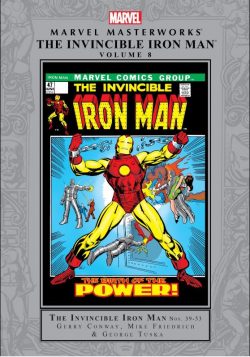
Action Heroes Archive Vol 1: Captain Atom & Vol. 2 Captain Atom, Blue Beetle & The Question


By Steve Ditko and various (DC Comics)
ISBN: 978-1-4012-0302-3  ISBN: 978-1-4012-1346-6 (vol 2)

It’s been a grim few weeks for lovers of the graphic arts. Peter Firmin passed away at the beginning of the month, and I’ve just heard that Steve Ditko has been found dead in his apartment. Both these men shaped my life and so many millions of others, especially the solitary work-obsessed genius who gave us Spider-Man, The Creeper, Mr. A and so many more. A more considered response and review will come in the weeks to come, but for now let’s consider these books: classic outsider wonderment from a creator who reshaped every aspect of comics by sniping from the edge and never once buying into the hype…

Steve Ditko is possibly comics’ most unique stylist. Love him or hate him, you can’t mistake his work for anyone else’s. His career began in the early 1950’s and, depending on whether you’re a superhero fan or prefer the deeper and more visually free and experimental work, peaked in either the mid-1960’s or 1970’s.

Leaving the Avenging World, Mr. A and his other philosophically derived creations for another time, the super-hero crowd should heartily celebrate this deluxe collection of the first costumed do-gooder that Ditko worked on. Although I’m a huge fan of his linework – which is best served by black and white printing – the crisp, sharp colour of this Archive edition is still much better than the appalling reproduction on bog-paper that first displayed Charlton Comics’ Atomic Ace to the kids of Commie-obsessed America, circa 1960.

Captain Adam is an astronaut accidentally atomised in a rocketry accident. Eerily – and the way it’s drawn spooked the short pants off me when I first read it more than fifty years ago – he reassembles himself on the launch pad, gifted with astounding powers. Reporting to the President, he swiftly becomes the USA’s secret weapon.

In those simpler times the short, terse adventures of Captain Atom seemed somehow more telling than the anodyne DC fare, and Marvel was still pushing monsters in underpants; their particular heroic revolution was still months away. Ditko’s hero was different and we few who read him all knew it.

Mostly written or co-written with Joe Gill, the first wonderful, addictive run of 18 stories from Space Adventures #33-42 (and three of those were drawn by the uninspired and out-of-his-depth Rocke Mastroserio) are a magnificent example of Ditko’s emerging mastery of mood, pacing, atmosphere and human dynamics.

In 1961, as Ditko did more and more work for the blossoming – and better paying – Marvel, Charlton killed the series. But when Dick Giordano created a superhero line for Charlton in late 1965, Captain Atom was revived. Space Adventures was retitled, and the Captain’s first full length issue was numbered #78.

As he was still drawing Amazing Spider-Man and Doctor Strange, Ditko could only manage pencils for the Captain and Mastroserio was recruited to ink the series, resulting in an oddly jarring finish. With #79 Ditko became lead writer too, and the stories took on an eccentric, compelling edge and tone that lifted them above much of the competition’s fare. Eventually the inker adapted to Ditko’s style and much of the ungainliness had disappeared from the figurework, although so had the fine detail that had elevated the early art.

This volume ends with issue #82, leaving six more published issues and a complete unpublished seventh for another time…

This second volume completes Ditko’s costumed hero contributions with the remainder of the Captain Atom tales, and the introduction of a new Blue Beetle and the uniquely iconic Question.

Captain Atom #83 (November 1966) starts the ball rolling here with a huge blast of reconstructive character surgery. Although ‘Finally Falls the Mighty!’ was inked by Rocke Mastroserio and scripted by David Kaler, thematically it’s pure Ditko. Plotted and drawn by him, it sees an ungrateful public turn on the Atomic Ace, due to the manipulations of a cunning criminal.

Intended to remove some of the omnipotence from the character, the added humanity of malfunctioning powers made his struggles against treacherous Professor Koste all the more poignant, and the sheer visual spectacle of his battle against a runaway reactor is some of Ditko’s most imaginative design and layout work. The tale ends on a cliffhanger – a real big deal when the comic only came out every two months – and the last seven pages featured the debut of a new superhero with one of the oldest names in the business.

The Blue Beetle first appeared in Mystery Men Comics #1, released by Fox Comics and dated August 1939. Created by Charles Nicholas (née Wojtkowski) the character was inexplicably popular and survived the death of a number of publishers to end up as a Charlton property in the mid 1950s. After releasing a few issues sporadically the character disappeared until the superhero revival of the early 1960s when young Roy Thomas revised and revived the character for a ten issue run (June 1964 – February 1966).

Here Ditko completely recreated the character. Ted Kord was an earnest young scientist with a secret tragedy in his past but Ditko and scripter Gary Friedrich wisely eschewed origin for action in a taut and captivating crime-thriller where the new hero displayed his modus operandi by stopping a vicious crime-spree by the Killer Koke Gang.

This untitled short has all the classic elements of a Ditko masterpiece: outlandish fight scenes, compact, claustrophobic yet dynamic layouts, innovative gimmickry and a clear-cut battle between Right and Wrong. It’s one of the very best introductory stories of a new hero anywhere in comics – and it’s seven pages long.

The remodeling of the Atomic Ace concluded in the next issue with ‘After the Fall a New Beginning.’ Once again Ditko rattled his authorial sabre about the fickleness of the public as the villainous Koste exposed the hero’s face on live TV. Escaping, Atom got a new costume with his curtailed powers and consequently a lot more drama entered the series.

Now there was a definite feeling of no safety or status quo. The untitled Beetle back-up (scripted by Gary Friedrich with pencils and inks by Ditko) pitted the hero against the masked Marauder but the real kicker was the bombshell that Homicide detective Fisher, investigating the disappearance of Dan Garrett, suspected a possible connection to scientist Ted Kord…

‘Strings of Punch and Jewelee’ introduced a couple of shady carnival hucksters who found a chest of esoteric alien weapons and used them for robbery whilst extending a running plot-line about the mysterious Ghost and his connection to a lost civilization of warrior women. Although Cap and partner Nightshade are somewhat outclassed here, the vigour and vitality of the Blue Beetle was undeniable when a mid-air hijack is foiled and a spy sub and giant killer octopus are given short thrift by the indomitable rookie crusader.

Captain Atom #86 finally brought the long-simmering plot-thread of tech thief The Ghost to a boil as the malevolent science-wizard went on a rampage, utterly trouncing Nightshade and our hero before being kidnapped by the aforementioned Warrior girls. ‘The Fury of the Faceless Foe!’ is by Ditko, Kaler & Mastroserio whilst in the (still) untitled Blue Beetle strip by Friedrich and Ditko the azure avenger battled a ruthless scientist and industrial spy.

This led directly into the first issue of his own comic-book. Blue Beetle #1 (June 1967) is an all-Ditko masterpiece (he even scripted it under the pen-name D.C. Glanzman) and saw the hero in all-out action against a deadly gang of bandits. ‘Blue Beetle… Bugs the Squids’ is crammed with the eccentric vitality that made the Amazing Spider-Man such a monster hit, and the crime-busting joie de vivre is balanced by the moody, claustrophobic introduction of Steve Ditko’s most challenging superhero creation.

‘The Question’ is Vic Sage, a TV journalist with an uncompromising attitude to crime and corruption and an alter-ego of faceless, relentless retribution. In his premiere outing he exposes the link between his own employers’ self-righteous sponsors and gambling racketeer Lou Dicer. This theme of unflinching virtue in the teeth of both violent crime and pernicious social and peer pressure marked Ditko’s departure from straight entertainment towards philosophical – some would say polemical – examination of greater societal issues and the true nature of both Good and Evil that would culminate in his controversial Mr. A, Avenging World and other independent ventures.

Captain Atom #87, ‘The Menace of the Fiery-Icer’ (August 1967) presaged the beginning of the end for the Atomic Ace as Kaler, Ditko & Mastroserio dialed back on the plot threads to deliver a visually excellent but run-of-the-mill yarn about a spy ring with a hot line in cold-blooded leaders.

Blue Beetle #2 however, an all-Ditko affair from the same month, showed the master at his heroic peak, both in the lead story ‘The End is a Beginning!’ which finally revealed the origin of the character as well as the fate of Dan Garrett, (the original Beetle) and even advanced his relationship with his girl Friday Tracey. The enigmatic Question, meanwhile, tackled the flying burglar known as the Banshee in a vertiginous, moody thriller reminiscent of early Doctor Strange strips.

Frank McLaughlin took over the inking for ‘Ravage of Ronthor’ in Captain Atom #88 (October 1967) as the hero answered a distress call from outer space to preserve a paradise planet from marauding giant bugs, in a satisfying no-nonsense escapist romp. Blue Beetle #3 was another superbly satisfying read as the eponymous hero routed the malevolent, picturesque thugs ‘The Madmen’ in a sharp parable about paranoia and misperception. Equally captivating was the intense and bizarre Question vignette as a murderous ghostly deep-sea diver stalks some shady captains of industry.

Issue #89 was the last Captain Atom published by Charlton (December 1967): an early casualty of the burn-out afflicting the superhero genre that led to a resurrected horror/mystery craze. This genre would then form a new backbone for the company’s 1970’s output; one where Ditko would shine again in his role as master of short story horror.

Scripter Dave Kaler managed to satisfactorily tie up most of the hanging plot threads with the warrior women of Sunuria in the sci-fi-meets-witchcraft thriller ‘Thirteen’ although the Ditko/McLaughlin art team was nowhere near their best form.

The next episode promised a final ‘Showdown in Sunuria’, but this never materialized.

Blue Beetle #4 (released the same month) is visually the best of the bunch as Ted Kord followed a somehow returned Dan Garrett to an Asian backwater in pursuit of lost treasure and a death cult. ‘The Men of the Mask’ is pure strip poetry and bombastic action, perfectly counterbalanced by a seedy underworld thriller as the Question sought to discover who gave the order to ‘Kill Vic Sage!’ This was scripted by Steve Skeates (as Warren Savin) and was the last action any Charlton hero saw for the better part of a year.

Cover-dated October 1968, The Question returned as the star of Mysterious Suspense #1. Ditko produced a captivating cover and a three-chapter thriller (whilst Rocke Mastroserio provided a rather jarring full-page frontispiece).

‘What Makes a Hero?’ (probably rescued from partially completed inventory material) saw crusading Vic Sage pilloried by the public, abandoned by friends and employers yet resolutely sticking to his higher principles in pursuit of hypocritical villains masquerading as pillars of the community. Ditko’s interest in Ayn Rand’s philosophical Objectivism had become increasingly important to him and this story is probably the dividing line between his “old” and “new” work. It’s also the most powerful and compelling piece in the entire book.

A month later one final issue of Blue Beetle (#5) was published. ‘The Destroyer of Heroes’ is a decidedly quirky tale that features a nominal team-up of the azure avenger and the Question as a frustrated artist defaced heroic and uplifting paintings and statues. Ditko’s committed if reactionary views of youth culture, which so worried Stan Lee, are fully on view in this controversial, absorbing work.

Other material had been created and languished incomplete in editorial limbo. In the early 1970s a burgeoning and committed fan-base created a fanzine called Charlton Portfolio. With the willing assistance of the company, a host of kids who would soon become household names in their own right found a way to bring the lost work to the public gaze.

Their efforts are also included here, in black and white as they originally appeared. For Charlton Portfolio #9 and 10 (1974), Blue Beetle #6 was serialized. ‘A Specter is Haunting Hub City!’ is another all-Ditko extravaganza, pitting the hero against an (almost) invisible thief whilst the follow-up magazine Charlton Bullseye (1975) finally published ‘Showdown in Sunuria’ in its first two issues.

Behind an Al Milgrom Captain Atom cover, Kaler’s plot was scripted by Roger Stern (working as Jon G. Michels) and Ditko’s pencils were inked by rising star John Byrne – a cataclysmic climax almost worth the eight year wait. But even there the magic doesn’t end in this magnificent Archive volume.

From Charlton Bullseye #5 (1975) comes one final pre-DC tale of The Question: eight, gripping, intense, beautiful pages plotted by Stern, scripted by Michael Uslan and illustrated by the legendary Alex Toth, This alone is well worth the rather high price of admission.

These weighty snapshots of another era are packed with classic material by brilliant craftsmen. They are books no Ditko addict, serious fan of the genre or lover of graphic adventure can afford to be without. It’s impossible to describe the grace, finesse, and unique eclectic shape of Steve Ditko’s art. It should be experienced. And this is as good a place to start as any, and probably a lot easier to obtain than much of this lost genius’ back catalogue.

© 1966, 1967, 1968, 1974, 1975, 1976, 2007 DC Comics. All Rights Reserved.

Black Lightning volume two


By Dennis O’Neil, Gerry Conway, J.M. DeMatteis, Martin Pasko, Paul Kupperberg, Dick Dillin, George Tuska, Rick Buckler, Marshall Rogers, Mike Netzer/Nasser, Romeo Tanghal, Joe Staton, Pat Broderick, Dick Giordano, Gerald Forton & various (DC Comics)
ISBN: 978-1-4012-7546-4

Black Lightning was DC’s first African American superhero to star in his own solo title, which launched in 1977…

When former Olympic decathlete Jefferson Pierce returned to the streets of Suicide Slum, Metropolis to teach at inner city Garfield High School, he was determined to make a real difference to the disadvantaged and often troubled kids he used to be numbered amongst. However, when he interrupted a drug buy on school grounds and sent the dealer packing, he opened everyone around him to mob vengeance and personal tragedy…

When the ruling racketeers – an organised syndicate dubbed The 100 – came seeking retaliation, one of Pierce’s students paid the ultimate price. The traumatised teacher realised he needed the shield of anonymity if he was to win justice and safety for his beleaguered home and charges…

Happily, tailor Peter Gambi – who had raised Jefferson and taken care of his mother after the elder Pierce was murdered – had a few useful ideas and inexplicable access to some pretty far-out technology…

Soon, equipped with a strength-&-speed-enhancing forcefield belt and costume, plus a mask and wig that completely changed his appearance, a fierce new vigilante stalked the streets of Metropolis…

Now with the urban avenger the star of his own television series, those early groundbreaking adventures have been gathered into a series of astoundingly accessible, no-nonsense trade paperback and eBook collections.

This second outing gathers a flurry of back-up and guest appearances from May 1979 to October 1980, gathered from various titles where the urban avenger prowled after his solo title folded. They cumulatively comprise World’s Finest Comics #256-259 and #261, DC Comics Presents #16, Justice League of America #173-174, Detective Comics #490-491 and #495-495 and The Brave and the Bold #163 plus pertinent material from Who’s Who: The Definitive Directory of the DC Universe #3 (1985) and Who’s Who in the DC Universe #16 (1992).

Following an informative Introduction by character originator Tony Isabella reprising Black Lightning: The In-Between Years, the (relatively) down-to-earth superhero antics commence with ‘Encounter with a Dark Avenger!’ (by Denny O’Neil, Dick Dillin & Frank Chiaramonte, taken from World’s Finest Comics #256).

Here the electric warrior is manipulated into a potentially fatal confrontation with equally fervent urban vigilante Green Arrow. As the heroes clash neither is aware that the 100’s ousted boss Tobias Whale is behind their mutual woes…

That short yarn saw Black Lightning as GA’s guest star and served as a prelude to ‘Death Ransom!’ in WF #257, the beginning of Pierce’s second (strictly backup) series. Crafted by O’Neil, George Tuska & Bob Smith, it sees a fateful, brutal clash with The Whale and results in a wary ceasefire for the archenemies as they unite to destroy the swiftly rebuilding 100 cartel…

Of course, a scorpion’s gotta sting and the alliance only lasts one issue before Whale betrays Lightning’s trust and another innocent dies in ‘The Blood of the Lamb!’ (O’Neil, Rich Buckler & Romeo Tanghal, World’s Finest #258)…

World’s Finest #259 provides a labyrinthine conundrum as the hero and a horde of gunman act on a deathbed tip-off and converge on a seedy welfare hotel that might be ‘The Last Hideout’ (O’Neil, Marshall Rogers, Michael Nasser/Netzer & Vince Colletta) of a legendary criminal and his ill-gotten gains. Sadly, only the masked hero cared about collateral casualties…

‘Return of the River Rat!’ (O’Neil, Tanghal & Colletta, World’s Finest #261) ended this back-up run on a mediocre note as school chaperone Jefferson Pierce is fortuitously on hand during a river cruise party just when an exiled mobster tries to sneak back into the USA by submarine…

A co-starring role in DC Comics Presents #16 (December 1979) then finds the street-smart urban avenger and Superman confronting a heartsick and violently despondent alien trapped on Earth for millennia in ‘The De-volver!’ (courtesy of O’Neil, Joe Staton & Frank Chiaramonte) after which the lone avenger gets a nod of approval from the Big Guns of Superheroing…

Justice League of America #173-174 (December 1979 and January 1980) offered a smart two-parter with a twist ending as the League try to induct the mysterious, unvetted vigilante.

After much fervent debate, they decide to set their still-unsuspecting candidate a little problem to prove his worth.

However, as a vermin-controlling maniac unleashes terror upon Metropolis, the ‘Testing of a Hero’ and ‘A Plague of Monsters’ (Gerry Conway, Dillin & Frank McLaughlin) takes the old recruitment drive into a very fresh direction and leads to disappointment all around…

Still Not Quite Popular Enough, the hero was found tenure in the more moody and grounded Detective Comics beginning with #490 (May 1980). Here Martin Pasko, Pat Broderick & McLaughlin reveal how ‘Lightning Strikes Twice Out!’ as a protracted clash with a ruthless Haitian gang led by Mama Mambu leads to his kidnap and the loss of his powers and gimmicks in concluding chapter ‘Short-Circuit’ (Detective #491).

A corrupt Senator stealing oil shipments to finance a private army and attempted takeover of America is brought down by separate-but-convergent investigations conducted by Black Lightning and Batman in ‘Oil, Oil… Nowhere’ (Paul Kupperberg & Dick Giordano; The Brave and The Bold #163, June 1980) after which J.M. DeMatteis & Gerald Forton assume creative control of the Lightning’s path in Detective Comics #494 Detective Comics #494.

‘Explosion of the Soul’ (September 1980) sees the streets haunted by a murderous junkie-killing vigilante, and all Pierce’s investigations seem to lead inexorably back to one of his students…

Ending on a dark note of tragedy, ‘Animals’ (DeMatteis & Forton, Detective #494) then sees the Suicide Slum School Olympics turned into a charnel house when a juvenile street gang seizes the girls’ hockey team and demands safe passage and new lives in Switzerland. When Black Lightning intercedes, not everybody gets out alive…

Supplemented with a cover gallery by Ross Andru, Giordano, Jim Aparo, Neal Adams & Dillin, and including fact-packed background and data pages about ‘Black Lightning’ from Who’s Who: The Definitive Directory of the DC Universe #3 (1985) and an updated entry from Who’s Who in the DC Universe #16 (1992) this potent package of fast-paced Fights ‘n’ Tights thrillers are so skilfully constructed that even the freshest neophyte will be able to settle in for the ride without any confusion and enjoy a self-contained rollicking rollercoaster of terrifically traditional superhero shenanigans.

So, what are you waiting for?
© 1979, 1980, 2018 DC Comics. All Rights Reserved.

Ant-Man: Scott Lang


By David Michelinie, Bob Layton, Tom DeFalco, John Byrne, Jerry Bingham, George Pérez, Luke McDonnell, Ron Wilson, Greg LaRocque & various (Marvel)
No ISBN

With another Marvel filmic franchise follow-up hitting screens around the world, here’s a timely tie-in trade paperback (or eBook) collection designed to perfectly augment the cinematic exposure and cater to movie fans wanting to follow up with a comics experience.

This treasury of tales reprints all the early adventures of legacy hero Scott Lang, taken from Marvel Premiere #47-48, Iron Man #133-135 and 151, Avengers #195-196 & 223, Marvel Team-Up #103 and Marvel Two-in-One #87, convolutedly spanning April 1979 to March 1983.

The unlikeliest of valiant titans originally appeared in Tales to Astonish #27, released at the end of 1961, one month after Fantastic Four #1 hit the newsstands: a 7-page short which introduced maverick scientist Dr Henry Pym, who discovered a shrinking potion and became ‘The Man in the Anthill!’

Overwhelmed and imperilled by his startling discovering, the lonely researcher found wonder and even a kind of companionship amongst the lowliest creatures on Earth… and under it…

It was intended as nothing more than another here-today, gone-tomorrow filler in one of the company’s madly engaging pre-superhero “monster-mags”. However, the character struck a chord with someone since, as the DC Comics-inspired superhero boom flourished and Lee sprung the Hulk, Thor and Spider-Man on the unsuspecting kids of America, Pym was economically retooled as a fully-fledged costumed do-gooder for TtA #35 (September 1962).

You can read about his extremely eccentric career elsewhere, but suffice it to say Pym was never settled in his persona and changed name and modus operandi many times before junking his Ant-Man identity for the reasonably more stable and far more imposing identity of Yellowjacket…

Comics creators are six parts meddler and five parts nostalgia buff and eventually somebody convinced somebody else that the concept and property of Ant-Man could be viable again…

Thus we begin here with the introduction of reformed thief Scott Lang who debuted in Marvel Premiere #47 (April 1979). Those first somebodies were David Michelinie, John Byrne & Bob Layton who produced ‘To Steal an Ant-Man!’, revealing how a former electronics engineer had turned to crime – more out of boredom than necessity – and after being caught and serving his time joined Stark Industries as a determinedly reformed character…

But then his daughter Cassie developed a heart condition which wiped out his savings, forcing Scott to revert to old ways to save her…

Desperate to find the wherewithal to hire experimental surgeon Dr. Erica Sondheim, he begins casing likely prospects, but is shattered when she is abducted by psychotic industrialist Darren Cross who is currently using all the resources – legal or otherwise – of his mega-corporation Cross Technological Enterprises to keep himself alive…

Needing cash now just to broach the CTE complex, Lang goes back to Plan A and burgles the lab of retired superhero Henry Pym and discovers mothballed Ant-Man gear and size-changing gases. In a moment of madness Lang decides not to sell the stolen tech but instead use the outfit to break in to Cross’ citadel and rescue Sondheim…

That plan doesn’t go so great either as the dying billionaire, in a desperate attempt to stay alive, had been harvesting the hearts of homeless people to power an experimental device which had mutated him into a monstrous brute…

After learning with horror ‘The Price of a Heart!‘ (June 1979), Scott eventually triumphs; unaware until the very last that Pym had allowed him to take the suit and was backstopping him every inch of the way. With Cassie saved, Yellowjacket then invites Lang to continue as the new Ant-Man…

Crafted by Michelinie, Jerry Bingham & Bob Layton, Iron Man #133-135 (February – April 1980) then delivers the Small Wonder’s first proper exploit in ‘Hulk is Where the Heart Is! after his boss Tony Stark is confronted with a rampaging gamma goliath attacking the Long Island factory.

Having successfully calmed the creature back into his human Bruce Banner state, Stark calls in his newest whiz kid employee Scott Lang to help craft a micro-device to keep the tortured scientist in passive mode permanently.

Of course, that works out well…

With Hulk’s persona trapped in Banner’s body, the Stark team race to fix the foul-up before the patient fatally strokes out or worse in ‘The Man Who Would be Hulk’ but their success only leaves them with a really ticked-off Emerald Titan who resumes smashing everything in sight.

Forced to amp his armour to overload, Iron Man manages to knock out the Hulk, only to collapse, trapped and dying inside his own metal suit…

With his boss and friend in dire need, Scott then suits up and shrinks down to open the high-tech shroud and save ‘The Hero Within!’… if the suit’s internal defences don’t get him first…

In Iron Man #151 (October 1981, by Michelinie, Luke McDonnell & Layton) Ant-Man again takes centre-stage for ‘G.A.R.D.’s Gauntlet’ as the repercussions of yet another attack on Stark’s factory triggers a catastrophic systems failure, trapping Lang in an extremely hostile lab environment with the mechanized defence systems treating him as an intruder. Cue shrinking gas, many six-legged pals and total chaos…

Ant-Man got his first dose of team action in Avengers #195 (May 1980) in ‘Assault on a Mind Cage!’ (Michelinie, George Pérez, Jack Abel & Dan Green) when Hank Pym asks him to help infiltrate a suspicious asylum believed to be holding the Wasp hostage. What the miniature marvels uncover is illegal cloning for spare parts and a madman using the facilities to train henchmen for major villains and mob bosses…

The climactic clash resulting from ‘The Terrible Toll of the Taskmaster’ (#196 June 1980, by Michelinie, Pérez & Abel) wrecks the joint but leaves Lang one step closer to redemption and stardom…

Thanks to Michelinie, Greg LaRocque, Brett Breeding & Crew, Lang again faced Taskmaster in ‘Of Robin Hoods and Roustabouts’ (Avengers #223, September 1982) when he and Cassie attended a circus and stumbled into Hawkeye trying to extricate an old friend from the maniac’s clutches and influence.

It started becoming a regular event when Taskmaster resurfaced in Marvel Team-Up #103 (March 1983). Crafted by Michelinie, Jerry Bingham & Mike Esposito ‘The Assassin Academy’ sees the diminutive neophyte hero saving Spider-Man from becoming an object lesson for the graduating class at another deadly school for henchmen: a spectacular and memorable clash against the villainous lifestyle coach…

The last tale comes from Marvel Two-In-One #87 (May 1982) and begins when the Fantastic Four call in Ant-Man after The Thing is abducted by sub-atomic beings. The resultant rescue mission sees Scott help the rocky rogue defeat a duplicitous queen, high-tech barbarians and awesome aliens in the ‘Menace of the Microworld!’ by Tom DeFalco. Ron Wilson & Chic Stone…

The pint-sized, power-packed delights then conclude with a fulsome cover gallery, a fact-filled entry from the Marvel Universe Handbook, original art pages by Byrne, Layton, Bingham and McDonnell as well as a few surprise extras…

Hopefully answering any questions the silver screen sagas might throw up, whilst providing an immense amount of spectacularly bombastic fighting fun, this quirky slice of up-scaled and down-sized derring-do is a non-stop feast of tense suspense, whacky fun and blockbuster action: another well-tailored, on-target tool to turn curious movie-goers into fans of the comic incarnation and one more solid sampling to entice the newcomers and charm even the most jaded slice ‘n’ dice fanatic.
© 1978, 1979, 1980, 1982, 1983, 2015 Marvel Characters Inc. All rights reserved.

Batman in The Brave and the Bold: The Bronze Age volume one


By Bob Haney, Mike Sekowsky, Marv Wolfman, Ross Andru & Mike Esposito, Neal Adams, Bob Brown, Nick Cardy, Irv Novick & various (DC Comics)
ISBN: 978-1-4012-7517-4 (TPB)

The Brave and the Bold began in 1955 as an anthology adventure comic featuring short complete tales about a variety of period heroes: a format that mirrored the contemporary movie fascination with historical dramas.

Written by Bob Kanigher, issue #1 led with Golden Gladiator, the Silent Knight and Joe Kubert’s now legendary Viking Prince. From #5 the Gladiator was increasingly alternated with Robin Hood, but such manly, mainly mainstream romps carried the title until the end of the decade when the burgeoning costumed character revival saw B&B transform into a try-out vehicle like sister publication Showcase.

Issue #25 (August-September 1959) featured the debut of Task Force X: Suicide Squad, followed by Justice League of America (#28), Cave Carson (#31) and Hawkman (#34). Since only the JLA hit the first time out, there were return engagements for the Squad, Carson and Hawkman. Something truly different appeared in #45-49 with the science fictional Strange Sports Stories before Brave and the Bold #50 provided a new concept that once again truly caught the reader’s imagination.

That issue paired two superheroes – Green Arrow and Martian Manhunter – in a one-off team-up, as did succeeding issues: Aquaman and Hawkman in #51, WWII combatants Sgt Rock, Captain Cloud, Mme. Marie and the Haunted Tank in #52 and Atom and Flash in #53. The next team-up – Robin, Aqualad and Kid Flash – evolved rapidly into the Teen Titans. After Metal Men/the Atom and Flash/Martian Manhunter new hero Metamorpho, the Element Man debuted in #57-58.

Then it was back to superhero pairings with #59, and although no one realised it at the time this particular conjunction (Batman with Green Lantern) would be particularly significant.

After a return engagement for the Teen Titans in #60, the next two issues highlighted Earth-2 champions Starman and Black Canary, whilst Wonder Woman met Supergirl in #63.

Then, in an indication of things to come, and in anticipation of the TV-induced mania mere months away, Batman duelled hero/villain Eclipso in #64. Within two issues, following Flash/Doom Patrol (#65) and Metamorpho/Metal Men (#66), Brave and the Bold #67 saw the Caped Crusader take de facto control of the title and the lion’s share of the team-ups. With the exception of #72-73 (Spectre/Flash and Aquaman/Atom) the comic was henceforth to be a place where Batman invited the rest of company’s heroic pantheon to come and play…

For the sake of brevity and clarity and according to the wise ones who dictate such arbitrary demarcations, it’s also the point at which Comics’ Silver Age transitioned into the Bronze Age…

This first collection of unalloyed Batman pairings with other luminaries of the DC universe reprints B&B #74-91 (spanning October/November 1967 to August/September 1970) featuring the last vestiges of a continuity-reduced DC where individual story needs were seldom submerged into a cohesive overarching scenario, and where lead writer Bob Haney crafted stories that were meant to be read in isolation, drawn by a profusion of artists with only one goal: entertainment.

The Caped Crime-crusher took full possession of Brave and the Bold with #74’s fast-paced and dryly funny ‘Rampant Run the Robots’ as the Metal Men confront human prejudice and perfidious inventors whilst in #75 The Spectre joins the Dark Knight to free Gotham City’s Chinatown from an ancient wizard and ‘The Grasp of Shahn-Zi!’; both tales drawn by the new semi-regular art team of Ross Andru & Mike Esposito.

Illustrated by Mike Sekowsky & Jack Abel, Plastic Man helped solve the mystery of plastic-obsessed maniac The Molder in #76’s ‘Doom, What Is Thy Shape?’ after which Andru & Esposito return to limn the Atom’s participation in foiling a criminal circus performer in ‘So Thunders the Cannoneer!’

The vastly underrated Bob Brown stepped in to draw ‘In the Coils of the Copperhead’ wherein Wonder Woman found herself vying with the newly-minted Batgirl for Batman’s affections. Of course, it was all a cunning plan… or was it?

Neal Adams was a young illustrator who had worked in advertising and ghosted some newspaper strips whilst trying to break into comics. With #75 he had become a cover artist for B&B and with #79 (August-September 1968) he took over the interior art for a game-changing groundbreaking run that rewrote the rulebook for strip illustration.

‘The Track of the Hook’ paired the Dark Knight Detective with a justice-obsessed ghost. Deadman was murdered trapeze artist Boston Brand who perpetually hunted his own killer, and whose earthy, human tragedy elevated the series’ campy costumed theatrics into deeper, more mature realms of drama and action. The stories matured ten years overnight and instantly became every discerning fan’s favourite read.

‘And Hellgrammite is his Name’ then finds Batman and the Creeper defying a bug-themed super-hitman, and the Flash aids the Caped Crusader in defeating an unbeatable thug in ‘But Bork Can Hurt You!’ (both inked by Dick Giordano) before Aquaman becomes ‘The Sleepwalker from the Sea’ in an eerie tale of mind-control and sibling rivalry.

Issue # 83 took a radical turn as the Teen Titans try to save Bruce Wayne‘s latest foster-son from his own inner demons in ‘Punish Not my Evil Son!’ but the next team-up was one that got many fans in a real tizzy in 1969.

‘The Angel, the Rock and the Cowl’ recounted a World War II exploit where Batman and Sgt. Rock of Easy Company hunt Nazi gold and a war criminal together, only closing the case twenty-five years later. Ignoring the kvetching about relative ages and which Earth we’re on, which raised a storm in an eggcup back then, you should focus on the fact that this is a startlingly gripping tale of great intensity and beautifully realised: one which was criminally discounted for decades as “non-canonical”.

Brave and the Bold #85 is arguably the best of an incredible run. ‘The Senator’s Been Shot!’ reunited Batman and Green Arrow in a superb multi-layered thriller of politics, corruption and cast-iron integrity, wherein Bruce Wayne stands in for a law-maker and the Emerald Archer receives a radical make-over that turned him into the fiery liberal gadfly champion of the relevancy generation…

Boston Brand returned in #86, as Batman found ‘You Can’t Hide from a ‘Deadman!’: a captivating epic of death, redemption and resurrection that became a cornerstone of Bat-mythology forever after.

What follows is a decidedly different adventure written and drawn by Mike Sekowsky and starring the venerable comics icon he had made fresh and exciting all over again.

Inked by Giordano and entitled ‘The Widow-Maker’, it tells of the son of one of Batman’s old foes who attempts to add to his tally of motoring murders by luring the Caped Crusader into a rigged high-performance car race. That’s when recently de-powered Diana Prince, once and future Wonder Woman, steps in…

Following Adams’ iconoclastic and influential run was always going to be a tough act, but veteran Irv Novick – who would also unfairly tread in Adams’ mighty shadow on Batman for years to come – did sterling work here on a gritty tale of boxing and Cold War mind-games as the Caped Crusader meets golden age troubleshooter Wildcat in ‘Count Ten… and Die!’ (B&B #88, February-March 1970).

Esposito inked that tale before reuniting with long-time collaborator Ross Andru for a brief return engagement that began with a spooky suspense-thriller pitting Batman against the mystery sensation Phantom Stranger (and his rationalist rival Dr. Terry Thirteen) in #89’s ‘Arise Ye Ghosts of Gotham!’

The team then switch pace and genre for a time-bending science fiction thriller ‘You Only Die Twice!’ guest-starring interstellar champion Adam Strange and threatening to record the fall from grace and death of the Gotham Guardian.

The comics content concludes here with issue #91, as ‘A Cold Corpse for the Collector’ provides a true gem of love and death. Haney was always at his best with terse, human scale dramas, especially “straight” crime thrillers, and his pairing of the Batman with Black Canary (transplanted from Earth-2 to replace Wonder Woman in the Justice League) saw the recently-widowed heroine searching for the Earth-1 counterpart of her dead husband…

What she got was self-delusion, heartbreak and imminent death in a masterpiece of ironic melodrama. It also signalled the advent of the superb Nick Cardy as illustrator: a short run of beautifully drawn and boldly experimental assignments that are still startling to see nearly five decades later.

These are some of the best and most entertainingly varied yarns from a period of magnificent creativity in the American comics industry. Aimed at a general readership, gloriously free of heavy, cloying continuity baggage and brought to stirring, action-packed life by some of the greatest artists in the business, this is a Batman for all seasons and reasons with the added bonus of some of the most fabulous and engaging co-stars a fan could imagine. How could anybody resist? Seriously: can you…?
© 1967, 1968, 1969, 1970, 2017 DC Comics. All Rights Reserved.

Super Powers by Jack Kirby


By Jack Kirby with Joey Cavalieri, Paul Kupperberg, Adrian Gonzalez, Pablo Marcos, Alan Kupperberg, Greg Theakston & various (DC Comics)
ISBN: 978-1-4012-7140-4

Famed for his larger than life characters and gigantic, cosmic imaginings, Jack Kirby (1917-1994) was an astute, imaginative, spiritual man who lived through poverty and gangsterism, the Great Depression, Post-War optimism, Cold War paranoia, political cynicism and the birth and death of peace-seeking counter-cultures. He was open-minded and utterly wedded to the making of comics stories on every imaginable subject. He also always believed that sequential narrative was worthy of being published as real books right beside mankind’s other literary art forms.

Looks like he was right, and – as usual – just ahead of the times, doesn’t it?

Thanks to his recent centenary there’s a magnificent abundance of Kirby commemorative collections around these days (though still not all of it, so I remain a partially disgruntled dedicated fan). This particular trade paperback and eBook compendium re-presents The King’s last complete conceptual outing for DC and one that has been neglected by fans for far too long.

During the 1980s costumed heroes stopped being an exclusively print cash cow as big toy companies licensed Fights ‘n’ Tights titans and reaped the benefits of ready-made comicbook spin-offs. DC’s most recognizable characters became a best-selling line of action figures and were inevitably hived off into a brisk and breezy, fight-frenzied miniseries.

Super Powers launched in July 1984 as a 5-issue miniseries with Kirby covers and his signature Fourth World characters prominently represented. Jack also plotted the stellar saga with scripter Joey Cavalieri providing dialogue, as Adrian Gonzales & Pablo Marcos illustrated a heady cosmic quest comprising numerous inconclusive battles between agents of Good and Evil.

Eschewing any preamble, we hurtle straight into action with ‘Power Beyond Price!’, as ultimate cosmic nemesis Darkseid despatches four Emissaries of Doom to destroy Earth’s superheroes. Sponsoring and empowering Lex Luthor, The Penguin, Brainiac and The Joker, the Dark God’s emissaries and their stooges jointly target Superman, Batman & Robin, Wonder Woman, Flash, Aquaman and Hawkman…

The combat escalates in #2’s ‘Clash Against Chaos’ with the Man of Steel and Scarlet Speedster tackling Luthor, whilst Aquaman and Green Lantern scupper the Penguin. Meanwhile Dark Knight and Winged Wonder confront an astoundingly-enhanced Harlequin of Hate…

With Alan Kupperberg inking #3, an inconclusive outcome leads to a regrouping of evil and an attack by Brainiac on Paradise Island, as in ‘Amazons at War’ the Justice League rally until Superman is devolved into a brutal beast who attacks his former allies.

All-out battle ensues in ‘Earth’s Last Stand’ before King Kirby steps up to write and illustrate the fateful finale: a cosmos-shaking conclusion designated ‘Spaceship Earth – We’re All on It!’ (November 1984, with Greg Theakston suppling inks)…

A bombastic Super Powers Promotional Poster then leads into the second Super Powers miniseries, spanning September 1985 to February 1986.

Scripted by Paul Kupperberg, the Kirby/Theakston saga ‘Seeds of Doom!’ recounts how deadly Darkseid despatches techno-organic bombs to destroy Earth, a diabolical deed requiring practically every DC hero to unite to counter the threat.

With teams of Super Powers travelling to England, Rome, New York, Easter Island and Arizona the danger is magnified ‘When Past and Present Meet!’ as the seeds warp time and send Aquaman and Martian Manhunter J’onn J’onzz back to days of King Arthur…

Super Powers #3 (November 1985) finds Red Tornado, Hawkman and Green Arrow plunged back 75 million years in ‘Time Upon Time Upon Time!’ even as Doctor Fate, Green Lantern and Wonder Woman are trapped in 1087 AD, battling stony-faced giant aliens on Easter Island.

Superman and Firestorm discover ‘There’s No Place Like Rome!’ as they battle Darkseid’s agent Steppenwolf in the first century whilst Batman, Robin and Flash visit a far-flung future where Earth is the new Apokolips in #5’s ‘Once Upon Tomorrow’.

Eventually Earth’s scattered but indomitable champions converge on Luna to spectacularly squash the schemes-within-schemes of ‘Darkseid of the Moon!’

Jack Kirby was and remains unique and uncompromising: his words and pictures comprise an unparalleled, hearts-and-minds grabbing delight no comics lover can possibly resist. If you’re not a fan or simply not prepared to see for yourself what all the fuss has been about then no words of mine will change your mind.

That doesn’t alter the fact that Kirby’s life’s work from 1937 to his death in 1994 shaped the entire American comics scene – and indeed the entire comics planet – affecting the lives of billions of readers and thousands of creators in all areas of artistic endeavour for generations. Most tellingly, he is still winning new fans and apostles every day, from the young and naive to the most cerebral of intellectuals. His work is instantly accessible, irresistibly visceral, deceptively deep and simultaneously mythic and human.

He is the King and there will never be another.
© 1984, 1985, 2018 DC Comics. All Rights Reserved.

Iron Man Marvel Masterworks volume 7


By Archie Goodwin, Allyn Brodsky, Mimi Gold, Gerry Conway, Don Heck, George Tuska, Gene Colan & various (Marvel)
ISBN: 978-0-7851-5044-2

Created in the aftermath of the Cuban Missile Crisis and at a time when “Red-baiting” and “Commie-bashing” were American national obsessions, the emergence of a brilliant new Thomas Edison employing Yankee ingenuity, invention and wealth to safeguard and better the World seemed inevitable.

Combined with the then-sacrosanct belief that technology and business could solve any problem with the universal imagery of noble knights battling evil, the concept behind the Invincible Iron Man seems an infallibly successful proposition.

Of course where once Tony Stark was the acceptable face of 1960s Capitalism: a glamorous millionaire industrialist/inventor and a benevolent all-conquering hero when clad in the super-scientific armour of his metal alter-ego, the tumultuous tone of the times soon resigned his suave, fat cat image to the dustbin of history and, with ecological disasters and social catastrophe from the abuse of industry and technology the new mantras of the young, the Golden Avenger and Stark International were soon confronting some tricky questions from the increasingly socially conscious readership.

All of a sudden maybe that money and fancy gadgetry weren’t quite so fun or cool anymore…?

This sterling hardback – or eBook – compilation covers the period June 1970 through June, re-presenting Iron Man #26-38 and incorporating a tumultuous team-up with the Man Without Fear from Daredevil #73 which held a key portion of a rather complex comics crossover.

Following Gerry Conway’s informative retrospective Introduction ‘Iron in the Fire’ original Iron Man artist Don Heck returned for the fantasy-fuelled romp ‘Duel in a Dark Dimension!’ (scripted by Archie Goodwin and inked by Johnny Craig) with guest villain The Collector kidnapping Tony Stark’s right-hand man Happy Hogan in an arcane plot to secure an extradimensional super-sword…

America’s mounting racial tensions take centre-stage in ‘The Fury of the Firebrand!’, introducing an inflammatory radical with a secret and highly personal agenda of hate aimed squarely at Stark and the fat cats he represents. The incendiary fiend is also a human napalm grenade…

Goodwin bowed out with #28’s riotous return match ‘The Controller Lives!’, wherein the mind parasite attacks Tony Stark and SHIELD agent Jasper Sitwell through an old girlfriend, after which Mimi Gold scripted an old-fashioned commie-buster yarn, drawn by Heck and inked by Chic Stone in #29, as Iron Man liberates a tropical paradise from its enslaving socialist overlords in ‘Save the People… Save the Country!’.

Impressive new kid on the block Allyn Brodsky took over as scripter with #30’s ‘The Menace of the Monster-Master!’: a rousing rampage full of Maoist menace as a giant lizard ravages Japan until the Golden Avenger steps in, takes charge and uncovers a cunning plot…

Far more intriguing is ‘Anything… For the Cause!’ wherein back-to-nature hippie protesters and outraged teen radicals are manipulated by an unscrupulous local businessman. This social drama also adds cool, young Irish brainbox Kevin O’Brian to the regular cast.

Then in #32’s ‘Beware… The Mechanoid!’ (illustrated by George Tuska & “Joe Gaudioso”) relates a salutary tale of a benign alien explorer who makes the lasting mistake of exploring America whilst disguised as a black man…

Heck & Gaudioso (actually moonlighting Mike Esposito) handled the art for ‘Their Mission: Destroy Stark Industries!!’ as corporate raider Spymaster unleashes his Mission: Impossible-inspired team the Espionage Elite to deprive America of both the inventor and his company. This fast-paced thriller concluded in bombastic finale ‘Crisis… and Calamity!!’ which saw the near-death of a cast regular and the advent of a darker, more driven Armoured Avenger…

Something of a comics wunderkind, Gerry Conway assumed the writer’s reins in Iron Man #35 as the traumatised hero seeks ‘Revenge!’ on the Spymaster but is distracted by an ongoing battle between Daredevil, Nick Fury, Madame Masque and the global criminal network called Zodiac – all contesting ownership of an extra-dimensional wish-granting super weapon.

That battle spills over into Daredevil #73 and a mass abduction into another dimension in ‘Behold… the Brotherhood!’ (by Conway, Gene Colan & Syd Shores) before messily and inconclusively concluding halfway through Iron Man #36 (illustrated by Heck & Esposito).

The battle for the Zodiac Key is necessarily shelved as the Steely Centurion is waylaid by terra-forming aliens in ‘…Among Men Stalks the Ramrod!’

Incapacitated and with his recently transplanted new heart critically damaged, Stark reveals his secret to Kevin O’Brian ‘In This Hour of Earthdoom!’ (inked by Jim Mooney) before retrenching and ultimately repelling the invaders. The drama pauses here in hard-boiled fashion and a pleasantly low-key note in an engaging gangster caper from Conway, Tuska & Esposito wherein Iron Man is forced to respond quite assertively ‘When Calls Jonah…!’

The galvanised wonderment also includes the cover of Iron Man Annual #1 and a selection of house ads to wrap up this collection with the Golden Gladiator being politically repositioned at a time when Marvel solidly set itself up at the vanguard of a rapidly changing America increasingly at war with itself.

With this volume Marvel firmly set itself in the camp of the young and the restless experiencing first-hand the social upheaval America was undergoing. This rebellious teen sensibility and increased political conscience permeated the company’s publications as their core audience grew from Flower Power innocents into a generation of aware activists. Future tales would increasingly bring reformed capitalist Stark into many unexpected and outrageous situations…

But that’s the meat of another review, as this engrossing graphic novel is done. From our distant vantage point the polemical energy and impact might be dissipated, but the sheer quality of the comics and the cool thrill of the perennial dream of man in perfect synchrony with magic metal remains. These superhero shenanigans are some of the most underrated but impressive tales of the period and are well worth your time, consideration and cold hard cash…
© 1970, 1971, 2017 Marvel Characters, Inc. All rights reserved.
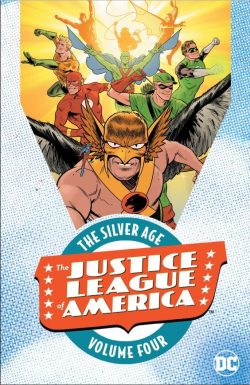
Doom Patrol volume 1: Crawling from the Wreckage


By Grant Morrison, Richard Case, Doug Braithwaite, Scott Hanna & various (DC Comics)
ISBN: 978-1-56389-034-5

In 1986, mega-monster continuity reboot Crisis on Infinite Earths led to DC overwriting fifty years of continuity and revamping or reinventing their major properties. The massive spring cleaning exercise led to a swathe of bold, innovative titles and a fresh look at how comicbooks could be done.

A revival that began quite conventionally almost overnight became the one of company’s most radical enterprises. Despite having solid roots back in the Silver Age, Doom Patrol was a series that really dared to be different…

In 1963 DC/National Comics – without no prior warning – converted venerable anthology-mystery title My Greatest Adventure into a (remarkably fringe) superhero team-book with the 80th issue.

The debut tale introduced a startling squad of arguably disabled champions with their thematic roots still firmly planted in the B-movie monster films of the era which had for so long informed the tone and timbre of the parent title.

That aesthetic subtly shaped the progression of the strip – which took total control of the comic within months, prompting a title change to The Doom Patrol with issue #86 – and throughout its 6-year run, made the series one of the most eerily innovative and happily hip reads of that generation.

No traditional team of masked adventurers, the cast comprised a robot, a mummy and a pliable 50-foot woman in a mini-skirt, who joined forces with and were guided by a brusque, domineering, paraplegic mad scientist; each and all equally determined to validate themselves by fighting injustice their way…

Those damaged champions comprised competitive car racer Cliff Steele, but only after he had “died” in a horrific pile up, with his undamaged brain transplanted into a fantastic mechanical body… without his knowledge or permission…

Test pilot Larry Trainor had been trapped in an experimental stratospheric plane and become permanently and lethally radioactive, with the dubious benefit of gaining a semi-sentient energy avatar which could escape his body to perform incredible stunts for up to a minute at a time. To pass safely amongst men Trainor had to constantly wrap himself in specially-devised radiation-proof bandages.

Former movie star Rita Farr had been exposed to mysterious swamp gases which gave her the unpredictable and, at first, uncontrolled ability to shrink or grow to incredible sizes.

These outcasts were brought together by brilliant but enigmatic Renaissance Man Niles Caulder who, as The Chief, sought to mould marginalised misfits into a force for good. The wheelchair-bound savant directed the trio of solitary strangers in many terrifying missions as they slowly grew into a uniquely bonded family…

Even the way the series ended was radical for its time. Final issue Doom Patrol #121 (September/October 1968) saw three quarters of the team sacrifice their lives to save a village of inconsequential nobodies.

Over succeeding years clever backwriting revived them all, but to us readers at the time, that issue was shocking and incomprehensible.

In 1987, supplemented by new team-mates, the Doom Patrol – now based in Kansas City – returned to muddle along for 18 issues (and a few one-shots and specials), before again being devastated by death and living up to their perhaps ill-considered name. Following an invasion by an alliance of alien races, a “gene bomb” was detonated in Earth’s atmosphere which warped, erased or triggered the powers of many metahumans.

In the resulting fallout, the team suffered appalling losses…

Thus here, as neophyte Scottish import and unknown quantity Grant Morrison began his American writing career, Negative Man has been separated from his human host, Cliff Steele has suffered a psychological collapse, energy-caster Tempest has ceased using his abilities and teenaged trainee Lodestone lies in a coma…

This collection gathers Doom Patrol volume 2 #19-25 (the monthly issues from February-August 1989, as first collected in one of DC’s earliest trade paperbacks in 1992), wherein traditional team super-heroics were abruptly and ignominiously jettisoned in favour of Big Concept science, “sophisticated suspense” and macabre creeping terror.

A less celebrated but equally crucial component of the revolutionary change was penciller Richard Case, whose stylish, low-key interpretation of some of the (at that time) strangest scripts, situations and characters ever seen in mainstream comics imbued the wildest conceptions with plausible veracity. The illustrator was usually aided and abetted by the steady assured assistance of unflappable inker Scott Hanna.

Here, however, the opening chapter is inked by Carlos Garzón as an eerie, eponymous adventure begins with ‘Crawling from the Wreckage’ with a nightmare-wracked Cliff Steele receiving a visitor in the sanatorium where he voluntarily languishes.

Robotics wunderkind Dr Will Magnus – who created the Metal Men and had rebuilt and reconstructed Cliff from the scraps which survived the explosion which ended the first Doom Patrol – has come calling, eager to fix his former patient and repair this latest glitch…

As intense, obsessive Niles Caulder browbeats burned out Josh Clay (AKA Tempest) into staying with the team in a “non-combat” capacity, over at the Alamance Memorial Hospital Larry Trainor is recovering from major injuries and revelling in the fact that he is no longer a radioactive freak hosting a bizarre energy parasite.

The only down side is the cost: the death of his partners and protégés and the persistent comatose state of youthful new team-mate Rhea Jones, the magnetically-empowered Lodestone.

Larry’s complacency is shattered when he starts seeing the Negative force again, howling to be let back in…

As Magnus struggles to counsel Cliff, the energy apparition moves again on Larry, possessing both him and his attending doctor Eleanor Poole coldly remoulding them all into an eerie three-part, multiple-gendered amalgamated being calling itself Rebis…

Magnus meanwhile plays his last card: with Robotman locked in self-pity and self-loathing, the master engineer switches tactics by appealing to Cliff’s heroic humanity and abiding compassion. He introduces the man of metal to fellow-patient Kay Challis: a young woman known to all as Crazy Jane.

Afflicted with multiple personality disorder, she manifests as (at least) 64 very different people, and since the gene bomb detonation, each one has manifested a different super power…

And elsewhere, a hideously burned crash victim who takes far too long to die drops a very strange black book and stops muttering the phrase “the Scissormen”. Federal agents on the scene resignedly realise this case needs the unique attention of Niles Caulder and his band of freaks…

Strange phenomena begin to proliferate globally in ‘Cautionary Tales’ (inked by Hanna) culminating in reports of many disappearances. Each vanished victim is marked by the silhouetted hole he or she leaves in reality…

As Caulder is cautiously recruiting hyper-intelligent, emotionally distant Rebis, across town Magnus cannot believe the change in Cliff. With Jane now his inseparable companion, Steele has regained much of his previous poise and lucidity: so much so, that Magnus offers to rebuild him a new body with sensors and feedback systems which will restore or approximate all the physical senses lost since becoming a brain trapped inside an ambulatory metal jail cell…

Apparently also back is Robotman’s gift for attracting trouble, as his evening walk with Jane is interrupted by a plummeting body screaming about “Scissormen”. With arcane abductions and cross-dimensional incursions mounting, the sanatorium becomes ground zero for packs of terrifying, gibberish-spouting, blade-handed invaders who attack staff and inmates, with only Jane’s arsenal of new abilities keeping her and Cliff out of the scything clutches and apparent extra-dimensional excisions…

All over the world bizarre phenomena and uncanny events mount…

More information – if not understanding – accrues with ‘Worlds in Collision’ as Kansas City begins to merge with a ghastly otherplace metropolis. Cliff and Alice battle macabre and unnatural foes all the way to the Doom Patrol’s new HQ in the Rhode Island mountain that was the original sanctuary of the Justice League of America.

Here, Caulder deduces their enemy is actualised metafiction stemming from a philosophical thought experiment that escaped its own boundaries to invade consensual reality but before he can formulate a response an army of Scissormen converge on their location and cut Josh out of existence. With no other choice and fed up with running, Cliff leads Rebis and Alice on a counterstrike into the heart of ‘The Ossuary’ to demolish the predatory city of Orqwith from within using brute force and pedantic logic…

With a semblance of normality restored just in time, the Doom Patrol settle in and welcome hirsute simian pre-teen Dorothy Spinner into the fold. Her uncontrolled ability to manifest monsters from her memory and imagination is only the most minor of annoyances, however, compared to the incursion of an ancient extradimensional hunter who abducts Lodestone’s comatose body from the hospital.

Thankfully, Crazy Jane has just the personality and powerset to follow ‘The Butterfly Collector’…

Divining his many names and history of slaughtering women throughout history, she leads the team’s break in to ‘The House that Jack Built’ where the red-handed butcher’s many outrageous claims and sadistic acts prove ultimately no proof against the Patrol and a suddenly awake if not aware Lodestone…

This initial trade paperback (and digital) compilation concludes with a smaller-scaled but still potentially lethal tale of ‘Imaginary Friends’. Illustrated by Doug Braithwaite & Hanna it focuses on shy, meek little Dorothy Spinner and her growing relationship with Josh Clay. A key point in her life is almost derailed and turned to bloodbath when her burgeoning biology catastrophically interacts with her thought-materialisation power and a leftover (but-still-active) trophy from the JLA’s past…

Including a context-building Introduction from Tom Peyer and ‘A Word from the Author’ first seen in DP #20, this collection of strange brews were – and remain- a magnificent mission statement for the revitalised DC Universe, offering gritty, witty fancifully cohesive and contemporary stories that appealed not just to Fights ‘n’ Tights fanatics but also lovers of wild concepts, beguiling metafiction and thrilling supercrime capers. As such they are still perfect fodder for today’s so-sophisticated, informed and ultimately sensation-hungry readers.
© 1987, 2005, 2015 DC Comics. All Rights Reserved.

Son of Superman


By Howard Chaykin, David Tischman, J.H. Williams III & Mick Gray (DC Comics)
ISBN: 978-1-56389-595-1 (HB)                    :978-1-56389-596-8 (TPB)

Dads are difficult: it’s their main role in life. They’re designed to protect and sustain but with so few lions and tigers and bears to fend off, they just hang around and become less understandable and more embarrassing – or if you’re a daughter, increasingly suspicious of and hostile to your friends with every month you age.

They are absolute hell to find gifts for on made-up occasions intended to fill corporate coffers.

Too late now, but why not try a nice book next year…

Originally released as a spiffy hardback in February 2000 (and rushed out in paperback four months later), Son of Superman saw Howard Chaykin and his writing partner David Tischman exploring modern themes of self-image and abandonment through a timeless lens of teenage rebellion writ large…

Set in the then far-future of 2017 AD. and an overwhelmingly conservative and corporate America, it posits that Superman has been missing since 2000. The Justice League has become an oppressive arm of Federal Government, and the biggest threat to homeland security is the terrorist organisation The Supermen.

This revolutionary cell is led by the vanished hero’s oldest friends Pete Ross and Lana Lang and the menace of humanity is ruthless, unscrupulous Lex Luthor who now claims ownership of most of the planet.

Jon Kent is a brash, smart-mouthed high school kid and his mother Lois is a Hollywood screenwriter. Their lives are pretty normal (for rich Americans) …until the worst solar storm in history abruptly triggers her boy’s unsuspected and dormant superpowers. Now mom has to reveal that his long-dead dad was in fact the world’s greatest hero.

From having to deal with girls, grades and puberty the turbulent teen suddenly finds himself the focus of all manner of unpleasant and unwelcome attention; heroes and villains, the Feds and his own budding conscience…

How this new and exceedingly reluctant hero saves the world, busts the bad guys, and solves the mystery of his missing father makes for a good old-fashioned “never trust anyone over the age of 30” romp: full of thrills and spills thanks to the snarkily superior scripting skills of arch-nonconformists Chaykin and Tischman, sublimely enhanced by spectacular artwork from J.H. Williams III (Starman, Promethea, Rex Mundi, Batwoman) and Mick Gray.

This surprisingly enjoyable, if unchallenging, alternative tale of the Man of Steel comes courtesy of the much missed Elseworlds imprint, which was designed by DC as a classy vehicle for what used to be called “Imaginary Stories” – for which read using branded characters in stories that refute, contradict or ignore established monthly continuities. Although often a guaranteed recipe for disaster, every so often the magic of unbridled creativity brought forth gems. This is one of the latter and should be re-released ASAP.

Then you could nick it from your dad…
© 1999 DC Comics. All Rights Reserved.

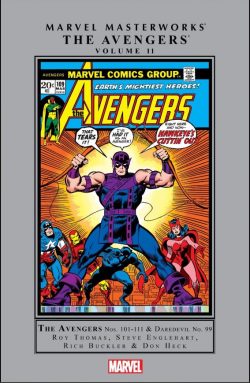
Avengers Marvel Masterworks volume 10


By Roy Thomas, Neal Adams, Sal Buscema, Barry Windsor-Smith, John Buscema, & various (Marvel)
ISBN: 978-0-7851-3331-5 (HB)

One of the most momentous events in Marvel Comics history occurred in 1963 when a disparate array of individual heroes banded together to stop the Incredible Hulk.

The Avengers combined most of the company’s fledgling superhero line in one bright, shiny and highly commercial package. Over the decades the roster has unceasingly changed, and now almost every character in their universe has at some time numbered amongst their colourful ranks…

The Avengers always proved that putting all one’s star eggs in on single basket paid off big-time; even when all Marvel’s all-stars such as Thor, Captain America and Iron Man were absent, it merely allowed the lesser lights of the team to shine more brightly.

Of course, all the founding stars regularly featured due to a rotating, open door policy which meant that most issues included one of any reader’s favourites. The increasingly bold and impressively ambitious stories and artwork were no hindrance either.

This sturdy hardcover and eBook compilation gathers the astounding contents of Avengers issues #89-100 collectively spanning June 1971 – June 1972: a riot of cosmic calamity which confirmed scripter Roy Thomas as a major creative force in comics whilst simultaneously demonstrating the potential the “debased” medium could aspire to.

At the time Thomas’ bold experiment was rightly considered the most ambitious saga in Marvel’s brief history: astounding sagas of tremendous scope which dumped Earth into a cosmic war the likes of which comics fans had never before seen. The Kree/Skrull War set the template for all multi-part crossovers and publishing events ever since and it was followed by another astounding epic proving that more and better was to come…

Following Thomas’s lengthy discourse on how it all happened in his Introduction, the drama begins relatively quietly as marooned Kree warrior Captain Marvel is finally freed from virtual imprisonment in a ghastly antimatter universe.

Mar-Vell was originally sent as a spy to Earth but he quickly went native and became a protector of humanity. After an intergalactic mission to save his former masters he was flying back to Earth when he was suddenly sucked into the anti-matter hell of the Negative Zone…

The trapped warrior found a loophole through long-dormant Kree artefacts and Nega-bands. Inextricably bonding to professional human side-kick Rick Jones, he could switch places whenever danger loomed, but would be drawn back into the dread domain after three hours.

Following interminable, agonising months when Rick refused to trade atoms with his alien alter ego, ‘The Only Good Alien…’ (art by Sal Buscema & Sam Grainger) sees the bonded brothers finally separated just as, in the distant Kree Empire, the ruling Supreme Intelligence is overthrown by his enforcer Ronan the Accuser…

On Earth, the rebellion results in the activation of a long-dormant robotic Kree Sentry which attacks Mar-Vell and the Avengers before enacting a deep-programmed protocol to devolve humanity to the level of cavemen in concluding chapter ‘Judgment Day’ (drawn and inked by Sal B)…

Even with Ronan taking personal charge of a compromised polar base, the scheme to eradicate humanity is narrowly defeated in ‘Take One Giant Step… Backward!’, but the cat is let out of the bag about the panic-inspiring notion that extraterrestrials lurk among us. Moreover, public opinion turns against the heroes for concealing the threat of repeated alien incursions…

In a powerful allegory of the anti-Communist witch-hunts of the 1950s, the epic expands in issue #92 (Sal B & George Roussos) as ‘All Things Must End!’ sees riots in American streets and a political demagogue capitalising on the crisis. Subpoenaed by the authorities, castigated by friends and public, the current team – The Vision, Scarlet Witch and Quicksilver – is ordered to disband by founding fathers Thor, Iron Man and Captain America.

Or are they…?

The plot thickens as Neal Adams & Tom Palmer assume the chores with double-sized Avengers #93 and ‘This Beachhead Earth’. Here the Vision is nigh-fatally attacked and those same founding fathers evince no knowledge of having benched the regular team.

With original Ant-Man Henry Pym undertaking ‘A Journey to the Center of the Android!’ to save the Vision’s artificial life, the Avengers become aware of not one, but two hostile alien presences on Earth: bellicose Kree and sinister, seditious shape-shifting Skrulls. The revelation triggers a ‘War of the Weirds!’ on our fragile globe.

Acting too late, the human heroes are unable to prevent mutant siblings Scarlet Witch and Quicksilver as well as their protector Mar-Vell from being abducted by the Super-Skrull…

With more stunning Adams art, ‘More than Inhuman!’ in issue #94 entangles the long-hidden race of advanced beings called Inhumans in the mix, disclosing that their advanced science and super-powers are the result of genetic meddling by the Kree in the depths of prehistory. Now, with Inhuman king Black Bolt missing and his mad, malign brother Maximus in charge, the Kree are calling in their ancient markers…

Second chapter ‘1971: A Space Odyssey’ (pencilled by John Buscema) focuses on Mar-Vell as he is increasingly pressured to reveal military secrets to his shape-shifting captors. The Skrulls are ready to launch a final devastating all-out attack on their eons-old rivals, even as on Earth ‘Behold the Mandroids!’ exposes the American authorities attempting to arrest all costumed heroes…

In Avengers #95 ‘Something Inhuman This Way Comes…!’ coalesces the disparate story strands as aquatic Inhuman Triton helps defeat the US government robotic Mandroids before beseeching the beleaguered heroes to find his missing monarch and rescue his people from the pressganging Kree.

After so doing, and with a solid victory under their belts at last, the Avengers head into space to liberate their kidnapped comrades and save Earth from becoming collateral damage in the impending cosmos-shaking clash between Kree and Skrulls…

‘The Andromeda Swarm!’ (with additional inking from Adams and Al Weiss) is perhaps the Avengers’ finest hour, as a small, brave band of valiant heroes hold off an immense armada of star-ships, losing one of their own in the conflict. Meanwhile the Supreme Intelligence is revealed to have been pursuing its own clandestine agenda all along, after having bewildered sidekick Rick Jones abducted to further its terrifyingly ambitious plans….

The astounding final episode ‘Godhood’s End!’ brings the uncanny epic to a climactic close with a literal Deus ex Machina as the Supremor‘s master-plan is finally revealed. However, the war is actually ended by the most unlikely of saviours and an avalanche of costumed heroes: an action overload extravaganza which has never been surpassed in the annals of Fights ‘n’ Tights fiction…

Even after saving the world, life goes on and seemingly gets more dangerous every day. ‘Let Slip the Dogs of War’ (Avengers #98, by Thomas, Barry Windsor-Smith & Sal Buscema) sees harried heroes Captain America, Iron Man, Vision, Quicksilver, Scarlet Witch and Thor debating the loss of their comrade Goliath, missing in action since he explosively stopped an alien warship from nuking Earth…

As the Thunderer heads for Asgard and its magic scrying mirrors, the fruitless debate is curtailed as war-mongering demagogue Mr. Tallon incites riot in the streets of New York. The gathered crowds attack the Avengers when they tried to quell the unrest and it is soon evident that the war-hawk has supernatural assistance.

…And in the dimensional void the Thunder God discovers all access to the Immortal Realms has been cut off…

By the time Thor returns to Earth his comrades are bewitched too. Joining with the seemingly immune Vision in a last-ditch, hopeless battle, the Storm Lord fights his best friends until the tide is turned by a perfectly aimed arrow, heralding the return of Goliath to his original Hawkeye identity…

Moreover, he has with him another Avenger: an amnesiac Hercules, Prince of Power, whose only certain knowledge is that Earth and Asgard are doomed…

Inked by Tom Sutton ‘…They First Make Mad!’ expands the epic as the Avengers call on all their resources to cure Hercules and decipher his cryptic warning whilst the World’s leaders seem determined to catapult the planet into atomic Armageddon.

As Hawkeye explains his miraculous escape from death in space and how he found Hercules the call goes out, summoning every hero who has ever been an Avenger. Suddenly two Grecian Titans materialise to trounce the team, dragging the terrified Prince of Power back to Olympus…

The epic ends in the staggeringly beautiful anniversary 100th issue ‘Whatever Gods There Be!’ (inked by Smith, Joe Sinnott & Syd Shores) as thirteen Avengers – including even the scurrilous Swordsman and blockbusting Hulk – indomitably invade the home of the Hellenic Gods to discover old enemy Enchantress and war god Ares are behind the entire malignant plot…

This titanic tome is packed with extra treats, including the cover of all-reprint Avengers Annual #5 plus the covers and new bridging material created by Alan Zelenetz, Walt Simonson & Palmer for the 1983 Kree-Skrull War starring the Avengers reprint miniseries. Also on show is Neal Adams’ take on the creation of the tale in ‘Three Cows Shot me Down’, supplemented by his cover for the 2000 and 2008 trade paperbacks. Upping the ante are original art pages and a selection of his un-inked pencil pages to delight every fan of fabulous Fights ‘n’ Tights fantasy action…

Roy Thomas and his artistic collaborators were always at the forefront of Marvel’s second generation of creators: brilliantly building on and consolidating Lee, Kirby and Ditko’s initial burst of comics creativity whilst spearheading and constructing a logical, fully functioning wonder- machine of places and events that so many others could add to.

These terrific tales are ideal examples of superheroes done exactly right and also act as pivotal points as the underdog company evolved into a corporate entertainment colossus. There are also some of the best superhero stories you’ll ever read…
© 1971, 1972, 2015 Marvel Characters, Inc. All rights reserved.
Adventures of Tintin: Cigars of the Pharaoh


By Hergé & various; translated by Leslie Lonsdale-Cooper & Michael Turner (Egmont)
ISBN: 978-1-40520-803-1 (HB)                    : 978-1-40520-615-0 (PB)

By the time Georges Remi began Tintin‘s fourth serialised adventure – in weekly instalments in Le Petit Vingtiéme from December 1932 to February 1934 and gathered in a collected volume by Casterman in 1934 – he was well on the way to mastery of his art but was still growing as a writer.

Although the periodical format meant that a certain degree of slapstick and seemingly directionless action was necessary to keep the attention of the reader, Remi (known the world over as Hergé) was evolving by leaps and bounds, mastering the ability to integrate these set-piece elements into the building of a complete narrative.

Cigars of the Pharaoh is stylistically much more of a fully-realised and craftily-designed thriller, with a solid plot underpinning all the episodic hi-jinks.

Following directly on from Tintin in America, here the valiant boy reporter is returning from Chicago on an oceangoing liner headed to Egypt. Here he and Snowy meet Sophocles Sarcophagus – the first in a string of absent-minded professors which would ultimately culminate in the outlandishly irascible yet lovable Cuthbert Calculus.

Dithering archaeologist Sarcophagus has divined an ancient mystery that is somehow connected to a ring of ruthless drug smugglers. Tintin memorably encounters bumbling detectives Thompson and Thomson at this juncture, when narcotics are planted in his cabin, and a complex drama riotously unfolds as the lad and Sarcophagus discover a lost pyramid is not only the smuggler’s base but the foundation for a much darker game – the overthrow of nations!

Hergé introduced many other recurring and supporting characters in this tale. As well as the shambling policemen, there is the villainous seaman Captain Allan, globe-girdling small-trader Oliveira da Figueira and oily movie mogul Roberto Rastapopoulos, who would all figure strongly in later stories.

The author was gearing up for the long creative haul, and thus began inserting plot-seeds that would only flower in future projects…

When Tintin’s relentless investigations take him to India, where the villains are attempting to topple a Maharajah trying to destroy the Opium poppy industry, the plucky lad befriends the potentate and thwarts the plan of a crazed Fakir. This villain frequently employs a drug called Rajaijah, which permanently drives men mad, and is also somehow connected to the Egyptian gang.

The contemporary version of this tale was revised by Hergé in 1955, and sharp-eyed fans will spot a few apparent anachronisms, but the more open-minded will be able to unashamedly wallow in a timeless comedy-thriller of exotic intrigue and breakneck action.

Although the mystery of the Cigars of the Pharaoh ends satisfactorily with a climactic duel in the rugged and picturesque hill-country, the threat and relevance of Rajaijah would not be resolved until Hergé’s next tale, and his first masterpiece…

It’s hard to imagine that comics as marvellous as these still haven’t found their way onto everybody’s bookshelf, but if you are one of this underprivileged underclass, this lush series of hardback collections is a very satisfying way of rectifying that sorry situation. So why haven’t you..?
The Cigars of the Pharaoh: artwork © 1955, 1983 Editions Casterman, Paris & Tournai. Text © 1971 Egmont UK Limited. All Rights Reserved.