Valerian – The Complete Collection volume 3


By J.-C. Méziéres & P. Christin with colours by E. Tranlé and translated by Jerome Saincantin (Cinebook)
ISBN: 978-1-84918-357-4

Valérian: Spatio-Temporal Agent blasted off in 1967 in the November 9th edition of Pilote (#420) in an introductory tale which ran until February 15th 1968. Although a huge hit, graphic album compilations only began with second tale – The City of Shifting Waters – as the creators concerned considered the first yarn more a work-in-progress and not quite up to their preferred standard.

You can judge for yourself, by getting hold of the first hardcover compilation volume in this cinematic tie-in sequence…

The groundbreaking series followed a Franco-Belgian mini-boom in science fiction comics triggered by Jean-Claude Forest’s 1962 creation Barbarella. Other notable hits of the era include Greg & Eddy Paape’s Luc Orient and the cosmic excursions of Philippe Druillet’s Lone Sloane, which all – with Valérian – boosted public reception of the genre and led in 1977 to the creation of dedicated fantasy periodical Métal Hurlant.

Valérian and Laureline (as the series became) was a light-hearted, wildly imaginative time-travel adventure-romp (a bit like Doctor Who, but not really so much), drenched in wry, satirical, humanist and political social commentary, starring (at least at first) an affable, capably unimaginative by-the-book cop tasked with protecting universal time-lines and counteracting paradoxes caused by casual, incautious or criminally minded chrononauts…

In the course of that debut escapade Valerian picked up fiery, far smarter Laureline, who originated in the 11th century before becoming our hero’s assistant and deputy. The indomitable lass was hot-housed as a Spatio-Temporal operative and soon accompanying Val on missions throughout time and space… luckily for him…

Valérian adventures were initially serialised in weekly Pilote until the conclusion of 13th mission The Rage of Hypsis (January 1st-September 1st 1985) after which the mind-bending exploits simply premiered as all-new, complete graphic novels, until the saga ended in 2010.

(One clarifying note: in the canon “Hypsis” is counted as the twelfth tale, due to the collected albums being numbered from The City of Shifting Waters. When Bad Dreams was finally released in a collected edition in 1983 it was designated number #0).

This terrific third oversized hardback compendium – released to capitalise on the summer’s spectacular movie adaptation from Luc Besson, and also available as an eBook – once again boasts a wealth of text features, including the final chapter of ‘Interview Luc Besson, Jean-Claude Méziéres and Pierre Christin’.

Stan Barets highlights the creative highpoints and methodology of illustrator Méziéres in his essay Méziéres, or the Art of Bande Dessinee’ with plenty of epic examples, garnishing those delights with sidebar ‘Méziéres Seen by Christin’ before throwing a well-deserved spotlight on ‘Évelyne. Tranlé: The One by Whom the Colour Comes’…

‘And Meanwhile’ then explores the artist’s mid-1970s other strips: specifically, semi-autobiographical ‘Mon Ameriqué à moi’ (Pilote, 1974) and sci fi shorts ‘Les Baroudeurs de l’espace’ (1976) and ‘Retour à la nature‘ (1979), both seen in aforementioned Métal Hurlant. This is backed up by Méziéres’ own photo-feature reminisces of his 18 months living the American dream as a cattleman in Montana, Wyoming and Utah as recounted in ‘Far West 67 – The Adventures of a Parisian Cowboy’, before ‘The Stories in this Book’ provides context and a taste of things to come in the stories that follow…

Once more re-presenting a trio of classic formative fantasy-fests, the fabulous fun resumes here with Ambassador of the Shadows originally from Pilote July to October 1975.

The craftily subversive story finds the wide-ranging Spatio-Temporal agents assigned to an arrogantly obnoxious Terran diplomat transferring to the cosmically cosmopolitan space edifice known as Point Central.

Over eons many races and species have converged there for commerce and social intercourse by the simple expedient of bolting their own prefabricated and constructed segment to the colossal, continually expanding higgledy-piggledy whole…

With no central authority, different species take turns presiding over the amassed multitudes via the immense Hall of Screens. However, no decent species would ever physically leave its own tailor-made environment…

And now it is Earth’s turn to take the lead, but, as they vector in for landing, the pompous martinet they are escorting informs Valerian and Laureline of a slight modification in their orders. They are still to act as the Ambassador’s bodyguards but must stay extra-vigilant as Earth is going to uses its term in office to bring “order and discipline” to the lackadaisical way the universe is run.

Think of Britain in the months leading up to the Brexit referendum, if you like…

The assembled races will be invited to join a federation run – and policed – by Earth …and just to make sure, there’s a Terran space fleet of 10, 000 warships manoeuvring just out of Point Central’s sensor range…

Laureline is outraged, but like Valerian can do nothing except acquiesce. For her pains, she is put in charge of the mission’s funds: a Grumpy Transmuter from Bluxte, which can mass-excrete any currency or object of trade or barter forcibly swallowed by its always-scowling other end…

All kitted-out, the human trio and living cash-machine spacewalk to Point Central, but before the mission can begin an alien ambush occurs. Mystery warriors using Xoxos cocoon guns inundate the attending officers and dignitaries and only Valerian escapes plastic entombment.

As the raiders make off with the Ambassador, the Spatio-Temporal Agent gives chase but is easily captured and dragged off too…

By the time Laureline breaks loose they are long gone and she is left to pick up the pieces with stiff-necked human bureaucrat Colonel Diol, Under-Chief of Protocol. Determined but with little to go on, Laureline is cautiously optimistic when a trio of aliens come knocking. Ignoring Diol’s protest at the shocking impropriety, she invites the scurrilous Shingouz into the Earth Segment. They are mercenary information-brokers and claim to have been invited by the Ambassador before his abduction…

From them – and thanks to the discomforted efforts of the Grumpy Transmuter – she purchases a few hints and allegations as well as a map of Point Central which might lead to Earth’s secret allies in the cosmopolis…

With the constantly bleating Diol reluctantly in tow, Laureline undertakes a quest through the underbelly of the station, seeing for the first time the mute but ubiquitous Zools: a much-ignored under-race who have been maintaining Point Central for millennia.

The Earthlings’ perambulations take them to the centaur-like Kamuniks: barbaric feudal mercenaries allied to Galaxity and appreciative of humanity’s martial prowess. Over a lavish feast – liberally augmented by another painfully exotic payment courtesy of the overworked Transmuter – the warriors steer Laureline towards potential suspects the Bagulins: low grade muscle-for-hire who frequent the tawdry red-light sector run by The Suffuss…

Despite Diol’s nigh-apoplexy, the adamant and inquisitive Laureline follows the trail to the sin segment where she experiences the particular talents of the hosts: amorphous shapeshifters who can make any carnal dream literally come true.

Well into overtime now, the exhausted Grumpy buys the help of one Suffuss who smuggles the junior Spatio-Temporal operative into a Bagulin party and the next link in the chain…

And so it goes as, with occasional prodding from the Shingouz, Laureline gets ever closer to the enigmatic beings truly pulling all the strings on Point Central whilst elsewhere Valerian frees the Ambassador from bizarre, ethereal captivity only to find the doctrinaire war-maker is undergoing a peculiar change of heart.

Seemingly landing their deserted ship on a paradisiacal “world with no name” they bask in an idyllic paradise and converse with noble primitives who have an uncanny aura of great power.

These beings built the original section of Point Central – and ruled the universe – before withdrawing from mundane material affairs, but they still maintain a watch over their creation from the shadows and won’t allow any race or species to dominate or conquer their pan-galactic melting pot of space…

In a more physical portion of reality, Laureline follows her final clues to reach the strange central area where Val and the Ambassador lie dazed and confused. By the time they all return to the Earth Segment a few major changes have taken place in the governance of the immense star station but, oddly, the Ambassador doesn’t seem to mind…

Socially aware and ethically crusading, this is one of the smartest, most beguilingly cynical comics tales to catch the 1970s wave of political awareness and still ranks amongst the very best to explore the social aspects and iniquities of colonialism.

And, of course, there’s the usual glorious blend of astounding action, imaginative imagery and fantastic creatures to leaven the morality play with space-operatic fun-filled, visually breathtaking and stunningly ingenious wide-eyed wonderment…

On the False Earths first ran in the newly monthly Pilote (issues #M31 to M34, from 30th November 1976 to March 1st 1977) before being collected as seventh album Sur le terres truquées – spectacularly reinforcing the “Spatio-Temporal” aspect of our heroes through a beguiling cosmic conundrum…

The mission starts in frantic full flow as a very familiar figure fights valiantly and dies ignominiously during a pitched battle in 19th century Colonial India. He doesn’t go easy, however, using his ray gun to disintegrate an attacking tiger before beaming back crucial data stolen from a sinister maharaja equipped with technology he simply shouldn’t have…

In deep space, distraught Laureline sees her man die, but her protests are ignored by heartless, man-despising historian Jadna. The scholar cares little for the oafish warrior undertaking a top-secret mission for her. After all, there’s plenty more where he came from…

That’s literally the case as, a little later, another Valerian infiltrates Victorian London Society; breaking into a swank Gentleman’s Club and crashing a meeting of the Empire’s greatest movers and shakers. Once again, these potentates are communicating with a hidden high-tech master, and once again the star-cop expires trying to determine the mastermind’s exact whereabouts.

He resurfaces in San Francisco’s Chinatown in 1895 where enquiries arouse the wrath of the local tongs. This Valerian perishes after noting an increasing number of anachronisms – such as an Easy Rider on a chopped Harley Davidson motorbike…

From their secure vantage point on a vast satellite, Jadna and Laureline see their agent expire in another artificially constructed historical microcosm. The callous historian ruminates on their mystery opponent: a being capable of reshaping matter, crafting perfect little worlds and recreating human eras with the skill of a master artist whilst remaining utterly hidden from all their probing searches.

If the enigma hadn’t been detected rifling through Terran time zones – presumably for research – no one would even know of its existence…

The enigmatic creator’s simulacrums are progressively advancing through brutal yet always significant periods of Terran history, but each visit by Valerian brings the investigation team closer to the mysterious maker’s actual location. Soon our hero is cautiously exploring a slice of Belle Époque France, but his enigmatic quarry is cognizant of the constant intrusions and has taken a few liberties with verisimilitude.

Waiting in ambush for Valerian are American gangsters with Tommyguns…

Rubbed out before he can even begin, Valerian is swiftly replaced by another short-lived duplicate whilst the original and genuine lies comatose in a clone-command tank. This last rapid substitution, however, finally allows the watching women to zero in on their target’s true location and they instantly shift their ship through the Universal Continua to reach the incredible being’s astounding base… and none too soon, as Jadna posits that the creature’s next construction will most likely be World War I…

She is proved painfully correct. As they ready themselves for a confrontation with the maker, Laureline and the scholar realise that the astral citadel is a perfect replica of a Great War battlefield. Seizing the initiative, Jadna activates and musters all the remaining clones – as well as the original real McCoy – programming them to play the marauding “boche” in an apocalyptic re-enactment simply as a diversion to allow her to get to the impossibly powerful being she so admires…

Caught up in the incomprehensible slaughter and its bizarre aftermath the Spatio-Temporal agents can only watch in astonishment as Jadna and the seemingly all-powerful artisan discover just how much they have in common…

Trenchant, barbed, socially aware and ethically crusading, Valerian and Laureline stories never allow message to overshadow fun and wonder and On the False Earths is one of the sharpest, most intriguing sagas Méziéres & Christin ever concocted, complete with a superb twist in the tale to delight and confound even the most experienced starfarer…

Wrapping up the interstellar ultra-cosmic antics is Heroes of the Equinox: a sparkling, over-the-top spoof of superheroes and political ideologies which also found time and space to take a good-natured, gentle poke at the eternal battle of the sexes. It was originally serialised in monthly Pilote #M47 – M50 (covering March 21st to June 27th 1978) before being collected later that year as eighth album Les héros de l’équinoxe.

Spectacularly designed and inspirationally conceived, the story starts as a quartet of vastly disparate planetary champions depart for the distant and distressed world of Simlane, where an ancient and cultivated civilisation is experiencing a uniquely tragic crisis…

The heroes comprise three dedicated nigh-fanatical supermen, whilst Galaxity – far more concerned with courting public opinion than actually helping – have packed off a handy and presently unoccupied Spatio-Temporal agent named Valerian, just to show willing…

With Laureline mocking him for the entire trip, Earth’s Prime Champion touches down on Simlane to be greeted by a crowd of effusive doddering oldsters from a glorious city of once-magnificent but now crumbling edifices all with an incredible story to tell.

The inhabitants of the derelict tourist trap are uniformly old, sterile and desperately in need of a new generation of children to repopulate the world, but their manner of achieving their goal is unique. For the lifetime of their civilisation, every hundred equinoxes the best and bravest males of Simlane venture to isolated Filine, Island of Children in a fierce and often deadly competition. The winner then somehow spawns a whole new generation in incredibly quick time, who sail back on little boats to re-people the world.

That didn’t go entirely according to plan last time, so the planetary leaders have invited four prime specimens from other worlds to do the necessary this time – much to the anger and dismay of a creaky host of crotchety, doddering indigenous elderly would-be sire-heroes…

At the packed but painfully weathered Great Theatre the assembled geriatrics are treated to a destructive floor show as the brazen alien warriors display their prowess.

Bombastic Irmgaal of Krahan is a godlike superman wielding a flaming sword whilst proletarian technological wonder Ortzog of worker’s paradise Boorny reveals the power of a united people through his blazing, flailing chains. Mystic nature boy Blimflim of elysian, Arcadian Malamum calmly displays the gentle irresistibility of the spirit harnessed to willpower. Each couldn’t be more different yet the result of each display is catastrophic destruction.

When eager eyes turn to Galaxity’s representative, Valerian simply shoots a chip off a distant stone cornice with his blaster… to tumultuous disinterest…

Dwarfed by Herculean alien supermen, he shambles off to prepare for the great contest and dawn finds him with his fellow contestants, ready to brave the stormy skies for the grand prize and glory…

This is one of the most visually extravagant and exuberant of all the albums, with a huge proportion of the book dedicated to the fantastic foursome overcoming their particular challenges and monstrous foes in astounding demonstrations of bravura puissance and awesome might… well, three of them anyway. The earthman’s travails are generally nasty, dirty, smelly and ingloriously dangerous…

Eventually however, all the warriors prove themselves a credit to their particular lineage and system before facing one final test. It’s in the form of a simple question: “If you sired the next generation how do you envision their future?”

Each strange visitor propounds a glorious agenda of expansion according to the customs and principles of his own culture but it’s the rather diffident and lacklustre vision of the Terran slacker that wins the approval of the incredible being who is the eternal mother of Simlane’s repopulation…

When the trio of failed supermen wash up on the shores of the city, the people realise who has fathered their soon-to-arrive new sons and daughters and patiently wait for the equinox tide to bring them over.

Laureline, horrified to discover that each successful father is never seen again, quickly sails to the Island of Children and navigates with comparative ease the trials which so tested the wonder men. She arrives at the misty citadel atop Filine in time to see an army of disturbingly familiar-looking toddlers tumble into little sailboats…

Broaching the idyllic paradise further she finally meets the Great Mother and sees what the breeding process has made of her reprehensible, sleazy, typically male partner…

Reaching an accommodation with the gargantuan progenitor, Laureline negotiates the release of her partner and soon they are winging home to Terra, with him having to listen to just what she thinks of him whilst praying Galaxity’s medical experts can make him again the man he so recently was…

Sharp, witty and deliciously over-the-top, this tale is a wry delight, spoofing with equanimity human drives, notions of heroism and political and philosophical trendiness with devastating effect.

Whether super-heroic fascism, totalitarian socialism or even the woolly mis-educated, miscomprehensions of new age eco-fundamentalists who think aromatherapy cures broken legs or that their kids are too precious to be vaccinated and too special to share herd immunity, no sacred cow is left soundly unkicked…

However, no matter how trenchant, barbed, culturally aware and ethically crusading, Valerian and Laureline stories never allow message to overshadow fun and wonder and Heroes of the Equinox is one of the most entertaining sagas Méziéres & Christin ever concocted, complete with a superb sting in the tale…

These stories are some of the most influential comics in the world, timeless, thrilling, funny and just too good to be ignored. The time is now and there’s no space large enough to contain the sheer joy of Valerian and Laureline, so go see what all the fuss is about right now…
© Dargaud Paris, 2016 Christin, Méziéres & Tran-Lệ. All rights reserved. English translation © 2016 Cinebook Ltd.

Young Justice Book 1


By Peter David, Todd DeZago, D. Curtis Johnson, Mark Waid, Karl Kesel, Jay Faerber, Tom Peyer, Todd Nauck, Mike McKone, Humberto Ramos, Angel Unzueta, Craig Rosseau, Roberto Flores, Alé Garza, Joe Phillips, Cully Hamner, Amanda Conner, Ethan Van Sciver, Marty Egeland & various
ISBN: 978-1-4012-7116-9

There are many different aspects that contribute to the “perfect mix” in the creation of any continuing character in comics. How much more so then, when the idea is to build a superhero team that will stand out from the seething masses that already exist?

In the late 1990s a fresh batch of sidekicks and super-kids started cropping up at DC after some years of thematic disfavour, and as the name and modus operandi of the Teen Titans was already established, something new needed to be done with them.

But why were kid crusaders back at all? Ignoring the intrinsic imbecility – and illegality if you count numerous child-endangerment laws – of on-the-job training for superheroes who can’t shave yet, why should juvenile champions appeal at all to comics readers?

I don’t buy the old saw about it giving young readers someone to identify with: most kids I grew up with wanted to be the cool adult who got to drive the whatever-mobile, not the squawking brat in short pants. Every mission would feel like going out clubbing with your dad…

I rather suspect it’s quite the reverse: older readers with responsibilities and chores could fantasize about being powerful, effective, cool and able to beat people up without having to surrender a hormone-fuelled, purely juvenile frat-boy sense of goofy fun…

Spanning August 1998 – April 1999 and collecting Young Justice #1-7, JLA: World Without Grown-Ups #1-2, Secret Origins 80-Page Giant #1, Young Justice: The Secret and material from Young Justice 1.000,000 and Young Justice: Secret Files #1; this outrageously entertaining trade paperback (and eBook edition) offers a fetching blend of explosive action, sinister suspense and captivating comedy to delight every jaded Fights ‘n’ Tights fans.

‘World Without Grown-Ups’ sees a young boy use an Ancient Atlantean talisman to exile all adults, leaving the planet a responsibility-free playground. Planetary guardians the Justice League can only stew helplessly in some other isolated realm of existence as all the underage heroes left on Earth tackle a wave of idiocy and irresponsibility whilst trying to cope with the spiralling disasters caused by a sudden dearth of doctors, drivers, pilots and so forth.

Boy Wonder Robin, clone Superboy Kon-El and ADHD posterchild/super-speedster Impulse meanwhile seek out the root cause, desperate to set things right but painfully unaware that the malign entity imprisoned in the talisman has its own sinister agenda…

This canny blend of tension with high jinks, amusement and pathos, action plus mystery rattles along with thrills and one-liners aplenty courtesy of writer Todd DeZago aided and abetted by Humbert Ramos & Wayne Faucher (Kids World) and Mike McKone, Paul Neary & Mark McKenna (JLA sequences) who combine a compelling countdown to calamity with outright raucous buffoonery.

Closely following on is a related one-shot appearing as part of 1998 skip-week publishing event “GirlFrenzy”.

‘Young Justice: The Secret’ (by the Todds DeZago & Nauck, with inks by Lary Stucker) finds Robin, Superboy and Impulse being interviewed over the suspicious circumstances leading them to rescue a young girl composed entirely of smoke and vapour from supposedly benign federal agency the Department of ExtraNormal Operations – an exploit which will have major repercussions in later tales…

Close on those compelling scene-setters, the latest crop of “ands…” promptly stampeded into their own highly habit-forming monthly series. The monthly Young Justice comicbook saw fan-favourite writer Peter David script inspired, tongue-in-cheek, gloriously self-referential adolescent lunacy, beginning with ‘Young, Just Us’ (illustrated by Nauck & Stucker) wherein the unlikely lads arrange a sleepover in the old Justice League Secret Sanctuary and fall into a whole new career…

Whilst a nearby archaeological dig uncovers an ancient New Genesis Supercycle, the masked boys are busy vandalising the decommissioned mountain lair until similarly decommissioned superhero android Red Tornado objects. Before things become too tense the boys are called away to the dig-site where DEO operatives Fite and Maad are attempting to confiscate the alien tech.

After a brief skirmish with fabulously mutated minor villain Mighty Endowed (transformed by a “booby trap!”) the bike adopts the kids and makes a break for it…

The action then switches to the Middle East for ‘Sheik, Rattle and Roll’ as the semi-sentient trans-dimensional cycle deposits Robin, Superboy and Impulse in a sandy paradise. Apparently uncounted years ago an Apokoliptian warrior named Riproar was entombed beneath a mountain there after stealing the bike from New Genesis. Now the machine, enslaved to the thief’s ancient programming, is compelled to free the monster, but it has brought some superheroes to fight Riproar once he’s loose. Of course, they’re rather small heroes and a bit inexperienced…

A short diversion courtesy of Young Justice 1.000,000 introduces future versions of the lads and some foes from the 853rd century – that’s a million months into the future, science fans!

Devised by David, Nauck, Stucker, Angel Unzueta, Norm Rapmund, Craig Rosseau, Sean Parsons, Roberto Flores & Faucher, ‘Just Ice. Cubed’ sees a future YJ squad reviewing the exploits of their antecedents with reference to Doomsday, the JLA, Two-Face, the Sun-Eater and the Millennium Chicken before a measure of normality resumes with the 20th century kids back in America just in time for Halloween…

A riotous Trick-or-Treat time-travel romp ensues as those meddling kids dabble in magic and accidentally snatch a nerdy Fifth Dimensional scholar out of his appointed place – naturally endangering the entire continuum.

Sadly, although YJ’s best efforts in ‘The Issue Before the One Where the Girls Show Up!’ restore reality, they might have had a delayed bad influence on the quietly studious juvenile sprite Master Mxyzptlk…

Secret Origins 80-Page Giant #1 provides background insights on our stars, beginning with ‘Decisions’ by D. Curtis Johnson, Unzueta & Jaime Mendoza with Red Tornado regaling intangible recruit Secret with ‘The Secret Origin of Impulse (Actual Reality)’ by Mark Waid, Ramos & Faucher, ‘Superboy! Secrets! Origins (This One’s Got ‘Em All!)’ by Karl Kesel, Joe Phillips & Jasen Rodriguez and ‘Little Wing’ by Chuck Dixon & Cully Hamner.

The revelations continue with the history of Spoiler in ‘Daddy’s Little Vigilante’ from Dixon, Amanda Conner & Jimmy Palmiotti, ‘Truth is Stranger – the Secret Origin of Wonder Girl’ by Jay Faerber & Ethan van Sciver, and conclude with ‘Shafted the Secret Origin of Arrowette!’ by Tom Peyer, Marty Egeland & Rapmund…

With the scene properly set, a whole bunch of meddling females then join the exclusive boys’ club in ‘Harm’s Way’ as writer David unerringly injects some potently dark undercurrents into the frenetic fun.

Impulse’s sometime associate Arrowette (a second-generation trick archer forced into the biz by her fearsome Stage Mother, the original Arrowette) is being hunted by a psychotic youth who intends to become the world’s greatest villain.

Aforementioned mist-girl Secret and the latest incarnation of Wonder Girl are dragged into the clinically sociopathic Harm‘s lethal practice-run before the assembled boys and girls finally manage to drive him off…

Johnson, Alé Garza & Cabin Boy then step in for ‘Take Back the Night’ (from Young Justice: Secret Files #1) as Secret leads the now fully-co-ed team in a raid against the clandestine and quasi-legal DEO orphanage-academy where metahuman kids are “trained” to use their abilities. It seems an awful lot of these youngsters aren’t there voluntarily or even with their parents’ approval…

Back in Young Justice #5 ‘First, Do No Harm’ (David, Nauck & Stucker) spotlights the malevolent young nemesis as he invades YJ HQ and turns Red Tornado into a weapon of Mass destruction (that’s a pun that only makes sense if I mention that the Pope guest-stars in this tale). As the Justice League step in, the tale wraps up with a majestic and moving twist ending…

The senior superstars are concerned about the kids’ behaviour and set out a virtual test, but since this is comics, that naturally goes spectacularly wrong in ‘Judgement Day’ when the ghost of alien horror Despero turns the simulation into a very practical demonstration of utter mayhem.

This terrific tome – hopefully the first of many – concludes with the edgy and hilarious ‘Conferences’ as assorted guardians and mentors convene for a highly contentious parents/teachers evening, blissfully unaware that their boy and girls have since snuck off for an unsanctioned – and unchaperoned – overnight camping trip together.

As ever, it’s not what you’d expect but it is incredibly entertaining…

In Young Justice, perennial teen issues and traditional caped crusading are perfectly combined with captivating adventure and deft, daft home-room laughs to produce a magical blend of tension, comedy, pathos and even genuine horror.

The secret joy of sidekicks has always been the sheer bravura fun they inject into a tale and this book totally epitomises that most magical of essences. Unleash your inner rapscallion with this addictive gem and remember behind every world-saving champion is a big kid trying to get noticed.
© 1998, 1999, 2017 DC Comics. All Rights Reserved.
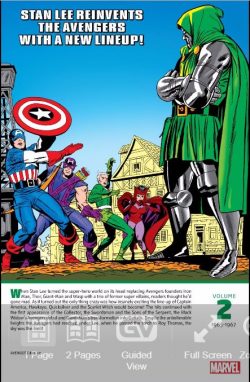
Iron Man: Armor Wars


By David Michelinie, Mark D. Bright, Bob Layton, Barry Windsor Smith & various (Marvel)
ISBN: 978-0-7851-1250-8

For many years Anthony Stark was the modern Thomas Edison; a glamorous genius-inventor and (largely) self-made billionaire. However, for much of the time he secretly moonlights as a super-hero. Unknown to all but his closest friends and allies, Stark dons a self-created suit of futuristic armour packed with his ingeniously-crafted technological marvels, making him the master of any situation, the Invincible Iron Man.

The innovations he has created to build his armour are so ground-breaking that he has never dared patent them because they have the potential to cause great harm.

In this classic and often-reprinted saga (also available in a digital edition) we see that after years of valiant crusading and the overcoming of great personal hardships, Stark’s life comes crashing down around him when he discovers his secrets have been compromised…

Collaboratively crafted by David Michelinie, Mark D. Bright & Bob Layton and latterly known as The Armor Wars, the epic serial comprises Iron Man #225-232 – spanning December 1987 to July 1988 – and begins with ‘Stark Wars!’ as the inventor examines the battle-suit of defeated foe Force and realises that the murderous weaponry and defensive systems are based on his own top-secret technology…

Researching further he discovers that not only do many tech-enhanced villains use his discoveries but so do government and military units. Plagued with guilt at the untold blood spilled with his inventions, Stark resolves to make amends by reclaiming or destroying all incidences of his stolen secrets, bringing him into conflict with his country, his friends and his comrades in the Avengers. Unwilling to compromise, unable to accept the new status quo, Iron Man’s attempts to salve his conscience can only lead to tragedy and disaster…

Diligent investigation reveals the proprietary gimmicks and systems have leaked far and wide, augmenting the capabilities of numerous criminals, mercenaries and military specialists…

Killers all…

As well as locating the source of the initial leak, Stark and his trusted team must take back or destroy every iota of his stolen ordnance if the man is to sleep with a clear conscience ever again…

With the help of Ant-Man Scott Lang, a virus is uploaded to eat all digital records and instances of Stark-tech, but the job of negating actual armoured users is one only Iron Man can accomplish…

Nobody cares when the hero starts tackling villains such as Stilt-Man, The Maulers or Controller, but real trouble comes knocking when Stark mistakenly attacks federal agent and fellow Avenger Stingray in ‘Glitch’ and goes after SHIELD operatives in ‘The Last Mandroid’ and US military personnel in ‘Who Guards the Guardsmen?’ – a clash that causes a mass escape at super-prison The Vault and brings him into conflict with one of his oldest allies: Steve Rogers, the former Captain America…

In ‘Red Snow’ Stark’s West Coast Avengers allies finally demand an explanation and the end of the war but are utterly ignored. Instead Iron Man invades Russia to confront Crimson Dynamo and Titanium Man, resulting in an international incident and the first fatality of the campaign…

Shaken but obsessively undeterred, Iron Man soldiers on with everybody now against him until the unthinkable happens after the US Army bring in a new armoured titan dubbed Firepower.

The tech colossus constructed by Stark’s bitter rival Edwin Cord proves everything the military was hoping for, but as ‘The Day the Hero Died’ ends, the authorities quickly realise that with Iron Man gone nothing can stop Cord and Firepower from doing whatever they want…

Having barely escaped with his life Tony Stark strongly considered quietly retiring, but with the world again imperilled gets back to his drawing board to build something new and better and save the day once more in ‘Reborn Again’…

However, even after his triumphant re-emergence, the psychological cost of his actions must be dealt with in the startling ‘Stark Wars: Epilogue – Intimate Enemies’ by Michelinie, Barry Windsor-Smith & Layton

This enthralling yarn is a compelling examination of honour, heroism and sacrifice exposing the dark side of vigilantism and cost of integrity, deeply embedded in Marvel continuity, with lots of guest-stars and plenty of action. A solid example of what super-hero comics are all about, this classic Fights ‘n’ Tights thriller is pure evergreen Marvel escapism.
© 1987, 2011 Marvel Characters, Inc. All rights reserved.

Superman vs. Mongul


By Len Wein, Paul Levitz, Alan Moore, Jim Starlin, Curt Swan, Dave Gibbons & various (DC Comics)
ISBN: 978-1-4012-4256-5

Almost 80 years ago Superman jump-started the entire modern era of fantasy heroes: indomitable, infallible, unconquerable, outlandish and flamboyant. He also saved a foundering proto-industry by personifying an entirely new narrative construct – the Super Hero.

Since June 1938 The Man of Tomorrow has grown into a mighty presence in all aspects of the arts, culture and commerce, even as his natal comicbook universe organically grew and expanded to today’s heady heights.

Superman is comics’ outstanding icon: the hero who effectively started a whole genre and, in the decades since his nativity, one who has survived every kind of menace imaginable. With this in mind, it’s tempting – and usually very rewarding – to gather up whole swathes of his prodigious back-catalogue and re-present them in specifically-themed collections, such as this fun frolic chronicling the genesis of an awesome antagonist designed to be the hero’s modern antithesis: a monstrous militaristic madman with greater power, better resources and far more sinister values and motivations…

As initially envisioned, Mongul the Merciless was an alien tyrant and extinction-level threat in the manner of Jack Kirby’s Darkseid and Jim Starlin’s own Thanos: an unrepentantly evil intelligent monster beyond the scope of everyday costumed crusaders. He debuted in DC Comics Presents #27 (November 1980). The title was one wherein the Man of Steel would star beside a different company character (mostly heroes but not always…) and the other champion involved here was J’onn J’onzz, Manhunter from Mars.

Unlike companion team-up vehicle The Brave and the Bold – which boasted a regular artist for most of its Batman co-starring run – a veritable merry-go-round of creative talent contributed to DCCP. Issue #27 proved the value of such tactics when Len Wein, Jim Starlin, Dick Giordano & Frank McLaughlin (as inking collective “Quickdraw”) collaboratively changed the shape of Superman mythology by introducing seemingly unstoppable marauder Mongul in ‘The Key that Unlocked Chaos!’

The overwhelmingly powerful deposed despot of a far-away planet kidnapped Lois Lane, Jimmy Olsen and Daily Planet gadfly Steve Lombard to force Superman to attack his former JLA comrade. This was because the Martian had already successfully driven off the rapacious fiend when Mongul attacked New Mars in search of an artefact granting its possessor control of the universe’s most terrible weapon…

The Yellow Devil wanted the Metropolis Marvel to get it for him and, although the resulting planet-shaking clash between old allies did result in the salvation of his friends, Superman subsequently failed to keep the coveted crystal key out of the villain’s gigantic hands…

The story continued in #28 (December 1980) as Supergirl united with her Kryptonian cousin to scour the cosmos for the Sallow Supremacist and the ancient doom-weapon ‘Warworld!’ (Wein, Starlin & Romeo Tanghal) that he now controlled.

Unfortunately, once they found him and it, Mongul unleashed all its devastating resources to destroy his annoying adversaries and in the resultant cataclysm the mobile gun-planet was demolished. The resultant detonation also blasted Kara Zor-El out of existence…

(Although not included in this tome, that triptych concluded a month later as Ghostly Guardian The Spectre helped retrieve his cousin from Where No Superman Has Gone Before! At least now you won’t wonder or worry…)

Back here and now the cosmic clashes continue with ‘A Universe Torn Asunder!’ (also known as ‘Whatever Happened to Starman?‘) by Paul Levitz & Starlin: another system-shaking saga first seen in DC Comics Presents #36 (August 1981).

Here the Great Dictator resurfaces, having turned his nefarious attention to Prince Gavyn, ruler of a distant sidereal empire as well as a covert stellar powered crusader, rather confusingly employing the title Starman for his secret superhero shenanigans.

After snatching the monarch’s beloved fiancé Merria, Mongul tries to take over the masked hero’s interplanetary empire but is thwarted once more by the timely arrival of the Man of Steel and the vengeful fury of the cosmic crusader he has challenged…

You can’t keep a good citrine psychopath down, however, and the brutal beast resurfaced in DCCP #43 (March 1982) to challenge both Superman and the Legion of Super-Heroes ‘In Final Battle’ (Levitz, Curt Swan & Dave Hunt). Hungry for revenge, Mongul again steals a universal ultimate weapon – this time a Sun-Eater (the clue is in the name) – and points it in the direction of Sol. He never expected the cavalry to arrive from the 30th century though… The all-out, all-action exploits then conclude with a modern masterpiece by Alan Moore & Dave Gibbons who produced one of the last truly memorable Superman stories before the cosmic upheaval and reboot triggered by the Crisis on Infinite Earths publishing event.

‘For the Man Who Has Everything’ (Superman Annual #11) sees despicable deceptive Mongul cunningly invade the Fortress of Solitude to ambush the Action Ace with the most insidious of weapons on his birthday.

A valiant last-minute intervention by Batman, second Robin Jason Todd and Wonder Woman are barely enough to turn the tide…

Moreover, when the Man of Steel recognises the culprit for the emotional hell he has barely survived his furious response is terrifying to behold…

Essentially a blockbusting battle royale, this tale carries plenty of intellectual weight too, showing a dystopian Krypton for the first time: a view that the fabulous lost world might not have been a utopian super-scientific paradise after all and one that has become a given for most later interpretations…

Also including an illustrated fact-file of Mongul (from Who’s Who #16, June 1986) and a cover gallery by Starlin, Brian Bolland & Gibbons, this is an incomprehensibly enthralling collection of Fights ‘n’ Tights feasts: a pure package of superhero magnificence: fun-filled, action-packed, absolutely addictive and utterly irresistible.
© 1980, 1981, 1982, 1985, 1986, 2013 DC Comics. All Rights Reserved.
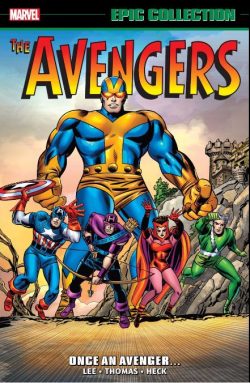
Defenders Masterworks volume 2


By Steve Englehart, Tony Isabella, Len Wein, Sal Buscema, Bob Brown, Jim Starlin & various (Marvel)
ISBN: 978-0-7851-4216-4

The Defenders were the last of the big star-name conglomerate super-groups, and would eventually number amongst their membership almost every hero – and some few villains – in the Marvel Universe. No real surprise there, since the initial line-up was composed of the company’s major league bad-boys: misunderstood and mad, outcast and bad and so often actually dangerous to know.

The genesis of the team derived from their status as publicly distrusted “villains”, and they never achieved the “in-continuity” fame or acceptance of other teams, but that simply seemed to leave the creators open to taking a few more chances and playing the occasional narrative wild card.

This second sterling and sturdy hardcover (and eBook) masterworks collection assembles a veritable host of Fights ‘n’ Tights wonders from a large list of sources: Defenders #7-16, Giant Sized Defenders #1 and Avengers #115-118, encompassing cover-dates August 1973 to October 1974 and commences after author Steve Englehart shares recollections of his groundbreaking tenure in an informative Introduction, after which Defenders #7 jumps right in as Len Wein co-scripts with Englehart and Frank Bolle inks Sal Buscema in ‘War Below the Waves!’

Here tempestuous ex-Avenger Hawkeye temporarily climbs aboard the “non-team” bandwagon to help defeat the undersea threat of Attuma and soviet renegade the Red Ghost; a bombastic battle to usurp the Sub-Mariner of his titles and kingdom concluded a month later in ‘…If Atlantis Should Fall!’ with Englehart once more providing all the words and Frank McLaughlin inking…

Since Defenders #4 the forward-thinking scripter had been putting players in place for a hugely ambitious cross-over experiment: one that would turn the comics industry on its head, and next here comes a little prologue taken from the end of Avengers #115 which finally set the ball rolling.

Drawn by Bob Brown & Mike Esposito, ‘Alliance Most Foul!’ sees interdimensional despot the Dread Dormammu and Asgardian god of Evil Loki unite to search for an ultimate weapon to give them final victory against their foes. They resolve to trick the Defenders into securing the six component parts by “revealing” that the reconstructed Evil Eye could restore the petrified Black Knight.

That plan was initiated at the end of Defenders #8: a brief opening chapter in ‘The Avengers/Defenders Clash’ entitled ‘Deception!’ as a message from the spirit of the Black Knight is intercepted by the twin entities of evil, leading directly to ‘Betrayal!’ in Avengers #116 (by Englehart Brown & Esposito) wherein the World’s Mightiest Heroes – hunting for their missing comrade – “discover” their old enemies Hulk and Sub-Mariner may have turned the Black Knight to stone.

This and third chapter ‘Silver Surfer Vs. the Vision and the Scarlet Witch’ see the rival teams split up: one to gather the scattered sections of the Eye and the other to stop them at all costs…

Defenders #9 (with Buscema & McLaughlin art) begins with tense recap ‘Divide …and Conquer’ before ‘The Invincible Iron Man Vs. Hawkeye the Archer’ and ‘Dr. Strange Vs. the Black Panther and Mantis’ sheds more suspicion and doubt on the vile villains’ subtle master-plan…

Avengers #117 ‘Holocaust’, ‘Swordsman Vs. the Valkyrie’ and crucial turning point ‘Captain America Vs. Sub-Mariner’ (Brown & Esposito) lead to the penultimate clash in Defenders #10 (Buscema & Bolle) in ‘Breakthrough! The Incredible Hulk Vs. Thor’ and the inevitable joining together of the warring camps in ‘United We Stand!’, but tragically too late as Dormammu seizes the reconstructed Evil Eye and uses its power to merge his monstrous realm with Earth.

Avengers #118 delivers the cathartic climactic conclusion in ‘To the Death’ (Brown, Esposito & Giacoia) wherein all the heroes of the Marvel Universe resist the demonic invasion as Avengers and Defenders plunge deep into the Dark Dimension itself to end forever the threat of the evil gods (or for the moment, at least…).

With the overwhelming cosmic threat over the victorious Defenders attempt to use the Eye to cure their petrified comrade, only to discover that his spirit has found a new home in the 12th century. In #11’s ‘A Dark and Stormy Knight’ (Bolle inks), the group battle black magic during the Crusades, fail to retrieve the Knight and acrimoniously go their separate ways – as did overworked departing scripter Englehart…

With issue #12 Len Wein assumed the writer’s role, starting a run of slightly more traditional costumed capers as Sal Buscema & Jack Abel illustrated the return of the mind-bending Xemnu in ‘The Titan Strikes Back!’ against a pared-down cast consisting of Strange, Valkyrie and the Hulk.

A bona fide hit, the non-team were part of a big experiment in extra-value comics that began with opens with Giant Sized Defenders #1 (July1974): a stunning combination of highly readable reprints wrapped in a classy framing sequence by Tony Isabella, Jim Starlin & Al Milgrom. The vintage thrills commence with Stan Lee, Jack Kirby & Dick Ayers’ ‘Banished to Outer Space’ from The Incredible Hulk #3, followed by magnificent 1950s Bill Everett Sub-Mariner fantasy-feast ‘Bird of Prey!’

From there the focus switches to Dr. Strange and the Denny O’Neil/Steve Ditko mini-masterpiece ‘To Catch a Magician!’ (Strange Tales #145) before the concoction concludes with a blockbusting battle as the star trio, sorcerer’s apprentice Clea and the valiant Valkyrie dispatch a self-inflicted mystic menace.

After a splendid double-page pin-up by Sal Buscema the regular epics resume for a spectacular Saves-the-World struggle against the villainous Squadron Sinister that opens in ‘For Sale: One Planet… Slightly Used!’ (featuring an early inking job for Klaus Janson) and concludes in the Dan Green-embellished ‘And Who Shall Inherit the Earth?’ as Marvel’s Batman-analogue Nighthawk unites with the Defenders to defeat his murderous former team-mates and aquatic alien marauder Nebulon, the Celestial Man.

Defenders #15 initiates a two-part duel with manic mutant Magneto who first institutes a ‘Panic Beneath the Earth!’ – courtesy of Wein, Buscema & Janson – leading X-Men mentor Charles Xavier to enlist the outcast heroes’ aid. The concluding clash includes the insidious Brotherhood of Evil and ‘Alpha, the Ultimate Mutant’ (inked by Esposito) as well as the apparent end of true master of evil…

Also included here are behind-the-scenes treats including contemporary house ads, creator biographies and previous collection covers by Carlos Pacheco, John Romita and Richard Isanove.

For the longest time, The Defenders was the best and weirdest superhero comicbook in the business, and if you love superheroes but crave something just a little different these yarns are for you… and the best is still to come.
© 1973, 1974, 2011 Marvel Characters, Inc. All rights reserved.

Supergirl: The Silver Age volume 1


By Otto Binder, Al Plastino, Jerry Seigel, Jim Mooney & various (DC Comics)
ISBN: 978-1-4012-7292-0

Superhero comics seldom do sweet or charming anymore. Modern narrative focus concentrates on turmoil, angst and spectacle and although there’s nothing intrinsically wrong with that, sometimes the palate just craves a different flavour.

Such was not always the case as this superb trade paperback compendium – spanning Action Comics #252-284 (May 1959 to January 1962) and also available in eBook editions – of the early career of Superman’s cousin Kara Zor-El of Argo City joyously proves.

Also included and kicking off proceedings is the delightful DC House Ad advertising the imminent arrival of a new Girl of Steel. Sadly missing, however, is the try-out story The Three Magic Wishes’ – written by Otto Binder and illustrated by Dick Sprang & Stan Kaye from Superman #123, August 1958 – which told how a mystic totem briefly conjured up a young girl with super powers as one of three wishes made by Jimmy Olsen. Such was the reaction to the plucky heroine that within a year a new version was introduced to the Superman Family…

Here, then, the drama commences with ‘The Supergirl from Krypton!’, the third story from Action Comics #252 introducing Superman’s cousin Kara, who had been born on a city-sized fragment of Krypton, which was somehow hurled intact into space when the planet exploded.

Eventually Argo City turned to Kryptonite like the rest of the giant world’s debris, and Kara’s dying parents, having observed Earth through their scanners and scopes, sent their daughter to safety as they perished.

Landing on Earth, she meets Superman who creates the cover-identity of Linda Lee whilst hiding her in an orphanage in small town Midvale allowing her to learn about her new world and powers in secrecy and safety. This groundbreaking tale was also written by Binder and drawn by the hugely talented Al Plastino.

Once the formula was established Supergirl became a regular feature in Action Comics (starting with #253), a residency that lasted until 1969 when she graduated to the lead spot in Adventure Comics. In ‘The Secret of the Super-Orphan!’, at her new orphanage home she makes the acquaintance of fellow orphan Dick Wilson (eventually Malverne) who would become her personal gadfly (much as the early Lois Lane was to Superman), a recurring romantic entanglement who suspects she has a secret. As a young girl in far less egalitarian times, romance featured heavily in our neophyte star’s thoughts and she frequently met other potential boyfriends: including alien heroes and even a Merboy from Atlantis.

Many of the early tales also involved keeping her presence concealed, even when performing super-feats. Jim Mooney was selected as regular artist and Binder remained as chief scripter for most of the early run.

In Action #254’s ‘Supergirl’s Foster-Parents!’, sees an unscrupulous couple of con-artists easily foiled, after which Linda meets a mystery DC hero when ‘Supergirl Visits the 21st Century!’ in #255. Her secret is almost exposed in ‘The Great Supergirl Mirage!’ before she grants ‘The Three Magic Wishes!’ to despondent youngsters and teaches a mean bully a much-needed lesson.

The Man of Steel often came off rather poorly when dealing with women in those less enlightened days, always under the guise of “teaching a much-needed lesson” or “testing” someone. When she plays with Krypto, ignoring his secrecy decree, cousin Kal-El banishes the lonely young heroine to an asteroid in ‘Supergirl’s Farewell to Earth!’ but of course there’s paternalistic method in the madness…

‘The Cave-Girl of Steel!’ then sees her voyage to the ancient past and become a legend of the Stone Age before Action #260 finds her transformed by the mystical Fountain of Youth into ‘The Girl Superbaby!’

The next tale introduced feline fan-favourite Streaky the Super-Cat in ‘Supergirl’s Super Pet!’ after which ‘Supergirl’s Greatest Victory!’ delivers a salutary lesson in humility to the Girl of Steel. Binder moved on after scripting ‘Supergirl’s Darkest Day!’ in which the Maid of Might rescues an alien prince, after which Jerry Siegel took over the storytelling as ‘Supergirl Gets Adopted!’: a traumatic and sentimental tale which only ends with the lonely lass back at Midvale orphanage.

I’ve restrained myself so please do the same when I say that the next adventure isn’t what you think. ‘When Supergirl Revealed Herself! (Siegel & Mooney from Action#265) is another story about nearly finding a family, after which Streaky playfully returns in ‘The World’s Mightiest Cat!’

Supergirl encounters fantastic fellow super-kids in Action #267’s ‘The Three Super-Heroes!‘ but narrowly fails to qualify for the Legion of Super Heroes through the cruellest quirk of fate. Picking herself up she then exposes ‘The Mystery Supergirl!’ before Siegel & Mooney introduce Mer-boy Jerro who becomes ‘Supergirl’s First Romance!’

‘Supergirl’s Busiest Day!’ is packed with cameos from Batman and Robin, Krypto and Lori Lemaris all celebrating a very special occasion, after which Streaky makes another bombastic appearance as the wonder girl builds ‘Supergirl’s Fortress of Solitude!’.

Otto Binder wrote ‘The Second Supergirl!’, an alternate world tale that was too big for one issue. A sequel, ‘The Supergirl of Two Worlds!’ appeared in Action #273 – as did a novel piece of market research. ‘Pick a New Hairstyle for Linda (Supergirl) Lee!’ involved eager readers in the actual physical appearance of their heroine and gave editors some valuable input into who was actually reading the series…

Siegel & Mooney then soundly demonstrate the DC dictum that history cannot be changed in ‘Supergirl’s Three Time Trips!’ before ‘Ma and Pa Kent Adopt Supergirl!’ offers a truly nightmarish scenario, rapidly followed by a return visit to the Legion of Super Heroes in ‘Supergirl’s Three Super Girl-Friends!’, whilst Action #277 featured an animal epic in ‘The Battle of the Super-Pets!’

The next five tales in this volume form an extended saga taking the Girl of Steel in totally new directions. On the eve of Superman announcing her existence to the world, Supergirl loses her powers and – resigned to a normal life – is adopted by the childless Fred and Edna Danvers. Tragically it’s all a deadly plot by wicked Lesla-Lar, Kara’s identical double from the Bottle City of Kandor. This evil genius plans to replace Supergirl and conquer the Earth. This mini-epic – ‘The Unknown Supergirl!’, ‘Supergirl’s Secret Enemy!’, ‘Trapped in Kandor!’, ‘The Secret of the Time-Barrier!’ and (following the results of the Hair Style competition) ‘The Supergirl of Tomorrow!’ ran in Action #278-282 and solidly repositioned the character for a more positive, effective and fully public role in the DC universe. The epic also hinted of a more dramatic and less paternalistic, parochial and even sexist future for the most powerful girl in the world, over the months to come…

The young heroine still in very much a student-in-training, her very existence kept secret from the general public and living with adoptive parents who are completely unaware that the orphan they have recently adopted is a Kryptonian super-being.

The accent on these stories generally revolves around problem-solving, identity-saving and loneliness, with both good taste and the Comics Code ensuring readers weren’t traumatised by unsavoury or excessively violent tales. Plots akin to situation comedies often pertained, as in ‘The Six Red “K” Perils of Supergirl!’

Peculiar transformations were a mainstay of 1960s comics, and although a post-modern interpretation might discern some metaphor for puberty or girls “becoming” women, I rather suspect the true answer can be found in author Seigel’s love of comedy and an editorial belief that fighting was simply unladylike.

Red Kryptonite, a cosmically-altered isotope of the radioactive element left when Krypton exploded, caused temporary physical and sometimes mental mutations in the survivors of that doomed world and was a godsend to writers in need of a challenging visual element when writing characters with the power to drop-kick planets…

Here the wonder-stuff generates a circus of horrors, transforming Supergirl into a werewolf, shrinking her to microscopic size and making her fat (I’m not going to say a single bloody word…).

The drama continues and concludes – like this initial Silver Age compilation – with the next instalment ‘The Strange Bodies of Supergirl!’ wherein Linda Lee Danvers’ travails escalate after she grows a second head, gains death-ray vision (ostensibly!) and morphs into a mermaid. This daffy holdover to simpler times presaged a big change in the Maid of Might’s status but that’s a volume for another day…

Throughout her formative years Kara of Krypton underwent more changes than most of her confreres had in twenty years, as editors sought to find a niche the buying public could resonate with, but for all that, these stories remain exciting, ingenious and utterly bemusing.

Possibly the very last time a female super-character’s sexual allure wasn’t equated to sales potential and freely and gratuitously exploited, these tales are a link and window to a far less crass time and display one of the few truly strong and resilient female characters parents can still happily share with even their youngest children.
© 1959, 1960, 1961, 1962, 2017 DC Comics. All Rights Reserved.
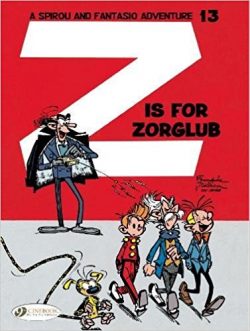
Justice League International volume 2


By Keith Giffen, J.M. DeMatteis, John Ostrander, Kevin Maguire, Bill Willingham, Luke McDonnell & various (DC Comics)
ISBN: 978-1-4012-2020-4 (TPB)

Way back in 1986 DC’s editorial leaders felt their then-vast, 50-year continuity was stopping them winning new readers. The draconian solution was a colossal braided-mega series to streamline and redefine whilst adding even more fresh characters to the mix.

The worlds-shattering, reality-altering bombast of Crisis on Infinite Earths resulted in such spectacular commercial success, those movers-&-shakers felt justified in revamping a number of their hoariest icons for their next fifty years of publishing. As well as Superman, Flash and Wonder Woman, the moribund and crucially un-commercial Justice League of America was earmarked for radical revision.

Editor Andy Helfer assembled plotter Keith Giffen, scripter J.M. DeMatteis and untried penciller Kevin Maguire to produce an utterly new approach to the superhero monolith: they played them for laughs…

The series launched as Justice League with a May 1987 cover-date before retitling itself as Justice League International with #7. The new super-team was formed from the ashes of the old on the basis of events comprising follow-up DC crossover-event Legends. The gathering comprised a roster of newcomers and relative second-stringers as America’s newest champions – Black Canary, Blue Beetle, Captain Marvel, Guy Gardner/Green Lantern, Dr. Fate and Mr. Miracle with heavyweights Batman and Martian Manhunter J’onn J’onzz as nominal straight-men.

As the often-silly saga unfolded the squad was supplemented by Captain Atom, Booster Gold, Dr. Light and Russian mecha-warrior Rocket Red. In many ways the most contemporary new pick was charismatic, filthy-rich manipulator Maxwell Lord – who used wealth and influence to recreate the super-team…

The creators took their time, crafting a convoluted mystery over the first year and this second volume of the (as-was) All-New, All-Hilarious Justice League completes that saga as insidious entrepreneur and1980’s archetype Lord reshapes the World’s Greatest Super-team for his own mysterious purposes and is transformed himself in the process…

The stories gathered here (Justice League International #8-13, Justice League Annual #1, and corresponding crossover issue Suicide Squad #13) are taken from a period when comics publishers were first developing the marketing strategies of the “Braided Mega-Crossover Event.”

That hard-on-the-pockets innovation basically crafted really big stories involving every publication in a company’s stable, for a limited time period – so a compilation like this perforce includes adventures that seem confusing because there are in truth “middles” with no beginnings or endings.

In this case the problem is deftly solved by inserting (mercifully) brief text pages explaining what’s happened before and elsewhere. It also doesn’t hurt that being a comedy-adventure, plot isn’t as vital as character and dialogue in this instance…

The merriment begins with ‘Moving Day’ (deftly inked by regular embellisher Al Gordon), wherein the heroes endure a catalogue of disasters whilst taking possession of sundry new UN embassy premises: a slyly cynical tale of institutionalized ineptitude and arguably one of the funniest single stories in American comicbook history.

Here, the main episodes are supplemented by brief back-up vignettes drawn by Giffen and ‘Old News’ deals with the abrupt and precipitous closure of previous UN superhero resource The Dome – summarily axed when the League achieved international charter status. The dismissals leave a very sour taste in the mouths of previously valiant and devoted defenders of mankind…

‘Seeing Red’ is the first of two episodes forming part of the Millennium crossover hinted at above. Broadly, the Guardians of the Universe are attempting to create the next stage of human evolution, and their robotic enemies the Manhunters want to stop them. The heroes of Earth are asked to protect the Chosen Ones, but the robots have sleeper agents hidden among the friends and acquaintances of every hero on the planet.

Millennium was DC’s first weekly mini-series, and the monthly schedule of the other titles meant that a huge amount happened in the four weeks between their own tied-in issues: for example…

The Rocket Red attached to the JLI is in fact a Manhunter, who first tries to co-opt then destroy the team by sabotaging an oil refinery, but by the second part, ‘Soul of the Machine’, the JLI are jarringly transplanted to deep space and attacking the Manhunter homeworld as part of a Green Lantern strike force.

Nevertheless, the story is surprising coherent, and the all-out action is still well-leavened with superbly banter and hilarity.

The back-ups follow the suddenly unemployed Dome hero Jack O’Lantern as he travels to terrorist state Bialya in ‘Brief Encounter’ and then show an unfortunate training exercise for Blue Beetle and Mister Miracle in ‘…Back at the Ranch…’

JLI #11 started exposing all the mysteries of the first year by revealing the secret mastermind behind the League’s reformation. With ‘Constructions!’ – and the concluding ‘Who is Maxwell Lord?’ in #12 – the series came full circle, and the whacky humour proved to have been the veneer over a dark and subtle conspiracy plot worthy of the classic team.

The drama and action kicked into overdrive and the characters were seen to have evolved from shallow, albeit competent buffoons into a tightly knit team of world-beating super-stars – but still pretty darned addicted to buffoonery…

Giffen illustrated #13, wherein the team ran afoul of America’s highly covert Suicide Squad (convicted and imprisoned super-villains blackmailed by the government into becoming a tractable metahuman resource – and happily lacking the annoying morality of regular superheroes).

‘Collision Course’ found US agent Nemesis imprisoned in a Soviet jail with the UN-sponsored League forced into the uncomfortable position of having to – at least ostensibly – fight to keep him there even as the Suicide Squad seeks to bust him out.

Written by John Ostrander and illustrated by Luke McDonnell & Bob Lewis, concluding chapter ‘Battle Lines’ originated in Suicide Squad #13 and offers a grim and gritty essay in superpower Realpolitik which remains a powerful experience and chilling read decades later.

This volume wraps up with an out-of-chronology yarn from the first JLI Annual. Drawn by Bill Willingham and inked by Dennis Janke, P. Craig Russell, Bill Wray, R. Campanella, Bruce Patterson & Dick Giordano, ‘Germ Warfare’ is an uncharacteristically grim horror tale involving inhuman sacrifice and all-out war against sentient bacteria, with oodles of savage action and a tragic role for new team leader J’onn J’onzz…

This collection was – and still is – a breath of fresh air at a time where too many comicbooks are filled with over-long, convoluted epics that are stridently, oppressively angst-ridden. Here is great art, superb action and a light touch which mark this series as a true classic. So, read this book and then all the rest….
© 1987, 1992, 2007 DC Comics. All Rights Reserved.
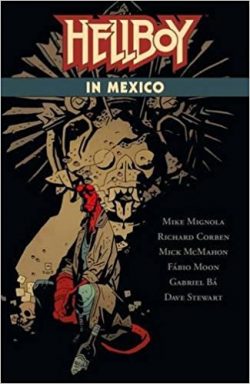
Spidey volume 1: First Day


By Robbie Thompson, Nick Bradshaw, André Lima Araújo & various (Marvel)
ISBN: 978-0-7851-9675-4

Since its earliest days the company now known as Marvel has always courted the youngest comicbook consumers. Whether through animated tie-ins and licensed properties such as Terrytoons Comics, Mighty Mouse, Duckula, assorted Hanna-Barbera and Disney licenses and a myriad of others, or original characters such as Tessie the Typist, Millie the Model, Homer the Happy Ghost and Calvin, the House of Ideas has always understood the necessity of cultivating the next generation of readers.

These days, however, kids’ interest titles are on the wane and, with the Marvel Universe’s characters all over screens large and small, the company usually prefers to create child-friendly versions of its own proprietary pantheon, making that eventual hoped-for transition to more mature comics as painless as possible.

In the 1980s Marvel published an entire line of kiddie titles through its Star Comics line and in 2003 the company created a Marvel Age line which updated and retold classic original tales by Stan Lee, Jack Kirby and Steve Ditko and mixed it in with the remnants of its manga-inspired Tsunami imprint: again all intended for a younger readership.

The experiment was tweaked in 2005, becoming the Marvel Adventures line, with titles reflecting the most popular characters and whatever was on TV screens at the time.

In 2012 these were superseded by specific comicbook titles tied to Disney XD TV shows designated as “Marvel Universe cartoons”.

Today’s featured item – Spidey: First Day – is a horse of a different colour: similar but different…

Rather than simply crafting a wallcrawler for younger sensibilities, this iteration – presumably sparked by the teenaged, light-adventure version seen in the Spider-Man: Homecoming movie – innovates and modernizes by looking back and succeeds in recapturing a sense of the madcap gaiety that counterbalanced the action and pathos of the earliest Lee/Ditko stories. This series is all about thrills and fun…

Scripted throughout by Robbie Thompson and re-presenting Spidey #1-6 (originally released from February to July 2016), the non-stop, youngster-appropriate mayhem commences with a fresh introduction to ‘The Amazing Spider-Man’, illustrated by Nick Bradshaw and colourists Jim Campbell & Rachelle Rosenberg

Firmly set in The Now, our hero is still (or rather once again) a callow schoolboy, fighting crime and making enemies between classes. He’s also a crimefighting sensation of the internet and social media when he puts on his blue-&-red duds. As ever news magnate J. Jonah Jameson is there to vilify the webslinger at every opportunity…

Sadly, thanks to the kid’s double life, Peter Parker‘s grades – except for science and maths – are tanking now, and the secret superhero is forced to accept Popular Girl Gwen Stacy as a much-needed history tutor.

Not only is she the hottest girl in school but she also decks Flash Thompson with one punch after the jocks starts bullying “Puny” Parker again…

Things really kick off later, on a field trip to techno-industrial wonderland Oscorp, when a madman calling himself Doctor Octopus busts in and the neophyte Spider-Man is compelled to intervene and drive the maniac away.

That’s when uber-creepy Norman Osborn introduces himself to Peter, predicting big things for Peter…

The really smart trick in this series is that battles with other supervillains such as Kraven the Hunter and Mysterio are backdrop: referenced simply as having occurred in other moments, allowing Peter Parker’s life and character room to develop, with only new battles dictating how certain villainous players have evolved from standard Spider-Man mythology…

A month later Peter is still coming to terms with his double life when ‘Enter the Sandman’ finds him battling a grittily shapeshifting bank robber, after which New York is overrun by tiny reptiles as old ally Dr. Curt Connors is once again tragically transformed into the ravenous ravening Lizard…

In Spidey #4 André Lima Araújo assumes the art duties with ‘Doomsday Off!’ as Peter stumbles into an art robbery. He might even have stopped the thief… if the bad guy hadn’t been Doctor Doom! Tracking down the ultimate villain does no good and Spidey is once again soundly thrashed, but after the Amazing Arachnid gets a pep talk from a little kid, he tries again and achieves a partial victory…

‘Dead End’ (with Java Tartaglia joining the colouring squad) sees the first inconclusive confrontation with a major nut job called the Green Goblin after which the ebullient effervescent escapades conclude with a first team-up in ‘Making the Grade’, as the mysterious Spider-Man intervenes when flying felon The Vulture burgles Stark Industries.

The Invincible Iron Man shows up but naturally gets the wrong idea – as does SHIELD agent Phil Coulson – before the situation is straightened out. One crisis over and feeling cocky, the very junior hero – smitten with Gwen Stacy – even asks the Armoured Avenger for dating tips but that doesn’t go so well…

Featuring a covers and variants gallery by Bradshaw, Lima Araújo, Skottie Young, Humbert Ramos & Edgar Delgado, Oliver Coipel, Julian Totino Tedesco and Gyimah Gariba, this a sublimely refreshing reinterpretation of an evergreen heroic icon offering an intriguing and certainly more culturally accessible means of introducing character and concepts to kids born two and three generations or more away from those far-distant 1960s originating events. These Spidey super-stories are outrageously enjoyable yarns, and well worth seeking out.
© 2016 Marvel Characters, Inc. All rights reserved.

Tiny Titans volume 1: Welcome to the Treehouse


By Art Baltazar & Franco (DC Comics)
ISBN: 978-1-4012-2207-5

The links between animated features and comicbooks are long established and I suspect, for young consumers, indistinguishable. After all, it’s just entertainment in the end…

For quite some time at the beginning of this century, DC’s Cartoon Network imprint was arguably the last bastion of children’s comics in America and worked to consolidate that link between TV and 2D fun and thrills with stunning interpretations of such television landmarks as Ben 10, Scooby Doo, Powerpuff Girls, Dexter’s Laboratory and many other video favourites.

The kids’ comics line also produced some truly exceptional material based on TV iterations of the publisher’s proprietary characters such as Legion of Super Heroes, Batman: Brave and the Bold and Krypto the Super Dog as well as material like Billy Batson and the Magic of Shazam! which was merely similar in tone and content.

Perhaps the line’s finest release was a series ostensibly aimed at early-readers but which quickly became a firm favourite of older fans and a multi-award winner too.

Superbly mirroring the magical wonderland inside a child’s head where everything is happily all mooshed up together, Tiny Titans became a sublime antidote to continuity cops and slavish fan-boy quibbling (all together now: “erm, uh… I think you’ll find that in…”) by reducing the vast cast of the Teen Titans Go! animated series, the far greater boutique of the mainstream comicbooks – and eventually the entire DC Universe – to little kids and their parents/guardians in a wholesome kindergarten environment.

It’s a scenario spring-loaded with multi-layered in-jokes, sight-gags and the beloved yet gently mocked trappings and paraphernalia generations of strip readers and screen-watchers can never forget….

Collecting issues #1-6 (April-September 2008) of the magically madcap and infinitely addictive all-ages mini-masterpiece, this debut volume begins after an as-standard identifying roll-call page at ‘Sidekick City Elementary’ where new Principal Mr. Slade is revealed to be not only Deathstroke the Terminator but also poor Rose‘s dad! How embarrassing…

Art Baltazar and co-creator Franco (Aureliani) mastered a witty, bemusingly gentle manner of storytelling that just happily rolls along, with the assorted characters getting by and trying to make sense of the great big world while having “Adventures in Awesomeness” like Beast Boy getting a new pet and becoming Man’s Dog’s Best Friend’

The method generally involves stringing together smaller incidents and moments into an overall themed portmanteau tale and it works astoundingly well.

Back in class Robin and Kid Flash tease a fellow student in ‘Speedy Quiz’ even as ‘Meanwhile in Titans Tower’ (the treehouse of the title) finds Wonder Girl, Bumblebee, Raven and Starfire discussing whether to let Batgirl Barbara Gordon join their circle…

Later they all meet up and help scary blob Plasmus cope with an ice cream crisis but shocks still abound at school. Raven’s dad is an antlered crimson devil from another universe but his most upsetting aspect is as the class’ new substitute teacher!

Happily, however, at the treehouse the kids can forget their worries, as Wonder Girl Cassie‘s new casual look – after initial resistance – wins many admirers among the boys…

The original comics were filled with activity pages, puzzles and pin-ups, so ‘Help Best Boy Find his Puppy Friend!’ and awesome group-shot ‘Awwwww Yeah Titans!!!’, offers an artistic break before the shenanigans resume with ‘Ow’ as new girl Terra persists in throwing rocks at the boys but knows just how to make friends with the girls…

Not so much for the little lads though: they’ve got into another confrontation with mean kids Fearsome Five. Is the only way to determine who wins to keep ‘Just a-Swingin” and ignore those bullies…?

After teeny-weeny Little Teen Titan Kid Devil finds a delicious new way to use his heat power, Beast Boy becomes besotted by Terra in ‘Shadows of Love’, even though his obvious affection makes him act like an animal. While ‘Easy Bake Cyborg’ saves the day at snack time, the lovesick green kid follows some foolish advice and transforms into a ‘Beast Boy of Steel’,

At least Kid Devil is making friends by providing ‘Charbroiled Goodness’ for a local food vendor, just as the Fearsome Five show up again…

Following a pin-up of the bad kids and a brainteaser to ‘Match the Tiny Titans to their Action Accessories!’ a new school day finds science teacher Doctor Light losing control in ‘Zoology 101’ thanks to Beast Boy’s quick changes, after which ‘Sidekick’s Superheroes’ debate status and origins whilst Rose’s ‘Li’l Bro Jericho’ causes chaos and closes school for the day.

When Robin brings some pals home Alfred the Butler is reluctant to let them check out the ‘Batcave Action Playset’. He should have listened to his suspicions: that way there wouldn’t be so much mess or so many penguins…

After Aqualad’s suggestion ‘Let’s Play: Find Fluffy!’ the Boy Wonder has a strange day, starting with ‘Robin and the Robins’ and culminating in a new costume. Before that though, you can see ‘Beast Boy at the Dentist’, Wonder Girl enduring a ‘Babysittin’ Baby Makeover’, meet ‘Beast Boy’s Prize’ and experience hair gone wild in ‘Do the ‘Do”.

Eventually, though, ‘It’s a Nightwing Thing’ revisits the exotic yesteryears of disco mania as Robin’s new outfit debuts to mixed reviews and reactions…

Once done testing your skill with the ‘Tiny Titans Match Game!’ and admiring a ‘Little Tiny Titans Bonus Pin-up’ there are big thrills in store when ‘Playground Invaders’ introduces annoying Titans from the East side of the communal games area…

Sadly, the Fearsome Five are still around to tease the former Robin in ‘Nightwing on Rye’ even whilst continuing epic ‘Enigma and Speedy’ sees the Boy Bowman trapped in a very one-sided battle of wits with the Riddler‘s daughter…

Robin’s costume crisis continues to confuse in ‘May We Take a Bat-Message?’, resulting in a kid capitulation and ‘Back to Basics’ approach to the old look, after which ‘Tiny Titans Joke Time!’ and a ‘Tiny Titans East Bonus Pin-up’ segues neatly into ‘Meet Ya, Greet Ya’ with newcomers Supergirl and Blue Beetle turning up just ahead of a host of wannabee Titans (Power Boy, Zatara, Vulcan Jr., Hawk & Dove, Li’l Barda and Lagoon Boy)…

With the riotous regulars away camping, Raven opens her eyes to a potential daybreak disaster as ‘Home with the Trigons’ finds her dressed by her dad for a change. Meanwhile, ‘Let’s Do Lunch’ finds Blue Beetle losing a very public argument with his backpack and when the kids bring their super-animal pals in, it all goes horribly wrong. At least they decide that the “First Rule of Pet Club is: We Don’t Talk About Pet Club”…

This insanely addictive initial collection then wraps up with visual and word puzzles ‘How Many Beast Boy Alpacas Can You Count?’ and ‘Blue Beetle Backpack Language Translation!’, a huge and inclusive Pin-up of ‘The Tiny Titans of Sidekick City Elementary’ and a hilarious ‘Tiny Titans “Growth Chart”’…

Despite being ostensibly aimed at super-juniors and TV kids, these wonderful, wacky yarns – which marvellously marry the heart and spirit of such classic strips as Peanuts or The Perishers with something uniquely mired and marinated in pure American comic-bookery – are outrageously unforgettable yarns and gags no self-respecting fun-fan should miss: accessible, entertaining, and wickedly intoxicating.
© 2008, 2009 DC Comics. All Rights Reserved.

Valerian – The Complete Collection volume 2


By J.-C. Méziéres & P. Christin with colours by E. Tranlé and translated by Jerome Saincantin (Cinebook)
ISBN: 978-1-84918-356-7

Valérian is arguably the most influential pictorial science fiction series ever published – and yes, I am including both Buck Rogers and Flash Gordon in that expansive and undoubtedly contentious statement.

Although to a large extent those venerable newspaper strips formed the medium itself, anybody who has seen a Star Wars movie has seen some of Jean-Claude Méziéres & Pierre Christin’s brilliant imaginings which the filmic phenomenon has shamelessly plundered for decades: everything from the look of the Millennium Falcon to Leia’s Slave Girl outfit…

Simply put, more carbon-based lifeforms have experienced and marvelled at the uniquely innovative, grungy, lived-in tech realism and light-hearted swashbuckling roller-coasting of Méziéres & Christin than any other cartoon spacer ever imagined possible.

Valérian: Spatio-Temporal Agent launched in the November 9th 1967 edition of Pilote (#420, running until February 15th 1968). Although it was a huge hit, graphic album compilations only began with second tale The City of Shifting Waters, as all concerned considered the first yarn as a work-in-progress and not quite up to a preferred standard.

You can judge for yourself, by getting hold of the previous hardcover compilation volume…

The groundbreaking series followed a Franco-Belgian mini-boom in science fiction triggered by Jean-Claude Forest’s 1962 creation Barbarella. Other notable successes of the era include Greg & Eddy Paape’s Luc Orient and Philippe Druillet’s Lone Sloane cosmic excursions, which all – with Valérian – stimulated mass public reception to science fiction and led to the creation of dedicated fantasy periodical Métal Hurlant in 1977.

Valérian and Laureline (as the series became) was a light-hearted, wildly imaginative time-travel adventure-romp (a bit like Doctor Who, but not really all that much), drenched in wry, satirical, humanist and political social commentary, starring (at least at first) an affable, brawny, capably unimaginative and by-the-book cop tasked with protecting the universal time-lines and counteracting paradoxes caused by casual time-travellers…

In the course of the first escapade Valerian picked up fiery, capable Laureline – originating in the 11th century but later becoming our hero’s (far smarter) assistant and deputy. The indomitable girl trained as a Spatio-Temporal operative and was soon an accompanying Val on missions throughout time and space… luckily for him…

Valérian adventures were initially serialised in weekly Pilote until the conclusion of 13th adventure The Rage of Hypsis (January 1st-September 1st 1985) after which the mind-bending exploits were simply premiered as all-new complete graphic novels, until the magnificent saga concluded in 2010.

(One clarifying note: in the canon “Hypsis” is counted as the twelfth tale, due to the collected albums being numbered from The City of Shifting Waters. When Bad Dreams was finally released in a collected edition in 1983 it was given the number #0).

This splendid second oversized hardback compendium – designed to cash in on this summer’s spectacular movie adaptation from Luc Besson – once again boasts a wealth of text features. These include the next chapter of the continuing ‘Interview Luc Besson, Jean-Claude Méziéres and Pierre Christin’, after which Stan Barets picks out the creative highpoints and methodology of the creators in his essay ‘The Intergalactic Unites the Human Race!’.

‘Valerian in His Own Time’ traces the development of the strip in France, with unseen and remastered art examples. Between 1981 and 1985, Dargaud-Canada and Dargaud-USA published a quartet of albums in English (with a limited UK imprint from Hodder-Dargaud) under the umbrella title Valerian: Spatiotemporal Agent. Written by Will Eisner and Daniel Richie, the original Introductions to two pertinent early editions are included here after which ‘The Stories in this Book’ offers context and a taste of things to come…

Once more re-presenting a trio of classic formative fantasy-fests, the fabulous fun recommences here with The Land Without Stars. This originally ran in Pilote #570-592 (October 8th 1970 to March 11th 1971) and follows the Spatio-Temporal agents as they undertake a tedious pro forma inspection of a cluster of new Terran colonies in the Ukbar star-system at the very edge of inter-galactic space…

However, the mission soon goes awry when a wandering world is detected on a collision course with the system and Valerian, still labouring under the effects of too many local alcoholic “diplomatic protocols”, decides that they should investigate at close quarters…

Despite being pickled, the rather insufferable lead agent lands with his long-suffering assistant on the runaway planet and discovers that this celestial maverick is hollow. Moreover, a thriving ancient culture or three thrive there, utterly unaware that they are not the only beings in all of creation…

Typically, however, of sentient beings everywhere, two of the civilisations are currently locked in a millennia-old war, armed and supplied by the third…

After an accident wrecks their exploratory scout ship Valerian and Laureline deduce the constant warfare originally caused the hollow world to tumble unchecked through space and will eventually result in its complete destruction, so in short order the professional meddlers split up to infiltrate the warring nations of Malka and Valsennar.

However, they are in for more surprises. Both city-states are divided on gender grounds, with Malka home to prodigious warrior women who subjugate their effete and feeble males whilst the aristocratically foppish but deadly dandies of Valsennar delight in beautiful, proficient and lethally lovely ladies – but only as totally compliant servants and chattels…

The highly-trained Galaxity operatives quickly rise in the ranks of each court – from slaves and toys to perfectly placed, trusted servants – and soon have ample opportunity to change the nature of the doomed civilisations within the collision-course world, after which the heroes even concoct a cannily cunning method of ending the planet’s random perambulations; giving it a stable orbit and new lease on life…

All in a day’s work, naturally, although it does take a few months to sort out: still what’s time to a couple of brilliant Spatio-Temporal agents?

Happily, this mind-boggling socio-sexual satire is packed with astounding action, imaginative imagery and fantastic creatures to provide zest to a plot that has since become rather overused – sure proof of the quality of this delightful, so-often imitated original yarn – but, as always, the space-opera is fun-filled, witty, visually breathtaking and stunningly ingenious. Drenched in wickedly wide-eyed wonderment, science fiction sagas have never been better than this.

Welcome to Alflolol was first seen in Pilote #631-652 (December 1971-May 1972) and starts as the Spatio-Temporal agents depart from Technorog, a desolate industrial planet whose vast resources are crucial to the running of human civilisation.

So vital in fact, that Galaxity sends her best agents just to inspect it every now and then…

As the S-T agents carefully negotiate the immense forcefield and lethal asteroid belt that surrounds the harsh, ferociously capitalistic factory world, Laureline is repeatedly possessed by an uncanny force. The fits draw the couple to an immense ship which has foundered between the floating rocks and searing energy screen…

Investigating the vessel, which is purposely open to hard vacuum, Laureline again lapses into a glowing coma and eerily drifts towards a family of incredibly powerful yet rustically affable alien primitives sitting on the hull of their seemingly derelict vehicle.

Valerian, closely following behind, prevents a terrible accident to his companion and is warmly greeted by the strangers, who explain that the eldest of their contingent is very ill and in her fevered throes has locked minds with his female. If they’re not careful, both might die…

Garrulous, easy-going Argol agrees to let Valerian treat the problem, so his wife Orgal telekinetically transports the Earthlings, her entire family and their pet Gumun back to the Earthlings’ astroship in mere moments. Soon, Terran technology has saved both human and alien and Argol settles back to explain what has happened…

These wanderers are naively friendly and immensely long-lived – like all their species – and are simply returning to their homeworld Alflolol after an amusing and gentle perambulation through space. However, since their departure – 4,000 Earth years ago – somebody else has moved in…

Problems soon occur. Despite the Technorog Governor’s outraged protests, Galaxity law is clear and the Alflololians must be allowed back on their planet, no matter the cost to productivity or profits…

However, the wheedling plutocrat – secure in his job’s importance to the empire – realises he doesn’t have to hand over the keys, just make room for five meekly polite cosmic gypsies. The nomadic returnees, meanwhile, simply cannot grasp the concept of business and don’t understand why anybody would put up lots of flimsy, ugly buildings which spoil the hunting……

As Valerian allows the businessmen to walk all over the aliens’ rights, Laureline goes berserk: arguing for Argol’s family whilst indulging in a little light-hearted sabotage because the gentle giants won’t do it for themselves…

She needn’t bother though: their mere presence and incredible abilities are enough to disrupt the Governor’s precious productivity, especially when they get bored of sterile human accommodations and return to their ancestral ranges…

The real crisis only begins when the rest of the nomadic Alflololians return: one hundred separate ships full of natives protected by law and fully entitled to reclaim their homes.

The humans won’t leave, however, and soon the Governor is herding the wanderers onto a reservation and demanding they work if they want to eat.

Big mistake…

Poignantly challenging if not actually ruthlessly crusading, this is one of the earliest comics tales to catch the 1970s wave of ecological awareness and still ranks amongst the very best to explore the social iniquities which beset indigenous peoples at a time when most European ex-empires were still grudgingly divesting themselves of their colonial possessions.

The theme of Capitalism versus Native Culture and the eternal struggle between territorial imperatives, moral rights and holy profit have seldom been dealt with in such an effective, sardonic and hilariously surreal manner. Ending on an outrageous twist, the story has lost none of its wit and punch forty years later.

And, of course, there’s the usual glorious blend of astounding action, compelling imagery and fantastic creatures to leaven the morality play with space-operatic, visually breathtaking and stunningly ingenious wide-eyed wonderment…

Concluding the intergalactic investigations this go-round is Birds of the Master (originally serialised in Pilote #710-720 from June 14th to September 16th 1973) rejoining our now perpetually bickering odd couple as they are drawn into an eerie space Sargasso and marooned on a planetoid that has become a cemetery for spaceships.

Swept away by a tidal wave over a colossal waterfall, they are drowning amidst beds of kelp when a motley band of fisherfolk – comprised of many different species – haul the Spatio-Temporal agents aboard a ramshackle boat. In the skies high above, a vast cloud of malevolent birds circle, the same incredible creatures which had brought down their astroship.

Compelled to join in gathering the seaweed, the humans soon learn that the crop is destined for a mysterious unseen overlord dubbed The Master and the critically circling ugly avians are his enforcers: violent creatures inflicting madness with a bite…

The workers are nothing but despondent slaves. Bitterly discontented recent arrival Sül takes it upon himself to teach Valerian and Laureline what they need to know to survive as the slimy cargo is torturously shipped across bleak, unforgiving and forlorn terrain. As they toil onwards the newcomers observe an entire society all dedicated to providing vast amounts of food for the hidden overlord.

At the central gathering point where assorted food items from a hundred different sources are reduced to a liquid mass dubbed “Klaar” one of the starving toilers cracks, seeking to consume a morsel of the Master’s provender, and is immediately set upon by the sinister Birds of Madness. Furious Sül breaks too and – dashing to the worker’s aid – is similarly accosted. Cautious Valerian can barely stop his partner using her concealed ray-weapons in a futile attempt to save them…

When the Birds are done the battered survivors can barely speak. The first rebel now believes he can fly whilst Sül is left a babbling, aggressive shadow of his former self.

With the Klaar safely dispatched through a complex system of pipes to a distant hidden destination, the emaciated workers fall upon the spilled scraps before hurling the latest victims of the birds into the Pit of Crazies. Despite being thoroughly beaten in the melee, our heroes follow and join Sül in a peculiar enclave of deranged beings, each manifesting their own brand of bewilderment yet all sharing the same strange and disturbing speech impediment…

Valerian and Laureline are again viciously attacked when they seek aid from the “sane” slaves, and instead opt to follow the pipeline with the most ambulatory of the insane, heading deep into increasingly inhospitable country to confront the hidden cause of all their woes.

At first frantically followed by the outraged slave force, the strange crew eventually outdistance their pursuers as they head deeper into the harsh, barren wastelands until they are attacked by the ever-circling birds. As a result, the Spatio-Temporal agents are also infected by the speech-wrecking madness…

Pressing on regardless, the raving rovers follow an eerie glowing mist and at last face the vile creature which has lured, trapped and enslaved so many sentient beings. Subjected to an overwhelming psychic assault that no single mind – sane or otherwise – could resist, all hope seems lost.

Happily, the Master has never faced anyone as ingenious as Laureline and her desperate plan enables the assembled “Loonies” to fight back and drive the predatory horror off-planet and into the depths of space…

With the creature’s pernicious influence dispelled, the voyagers’ senses return and the victims head back to the settlements where the slaves have descended into a food-fuelled debauch. Surprisingly, once Valerian and Laureline have freed and repaired their astroship from the stellar graveyard, only Sül wants to leave with them…

Expansive, thrilling, funny, clever and holding back one last wry twist in the tale, The Birds of the Master might be one of the lesser galactic classics of this superb series, but it still packs a gripping narrative punch and some of the most impressive artwork ever to grace sci-fi comics.

These spectacular space-opera romps are fun-filled, action-packed, conceptually engaging and mind-bogglingly ingenious: drenched in wide-eyed fantasy wonderment, this is a slice of sheer science fiction heaven that has never been bettered…
© Dargaud Paris, 2016 by Christin, Méziéres & Tranlệ. All rights reserved. English translation © 2016 Cinebook Ltd.