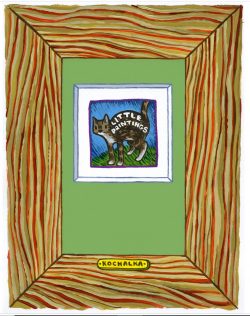
Little Paintings


By James Kochalka (Top Shelf Productions)
ISBN: 978-1-60309-017-9 (HB/Digital edition)

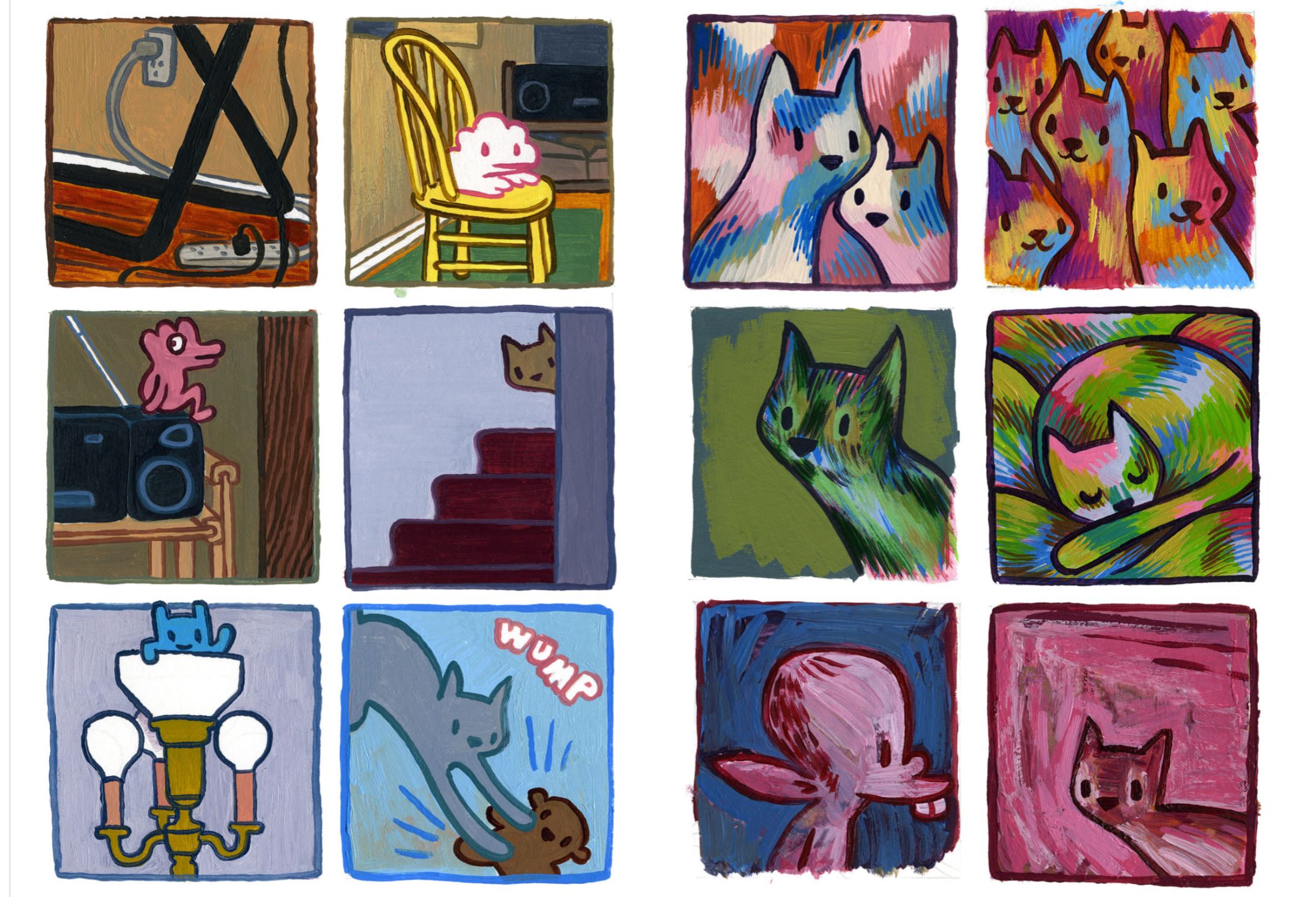
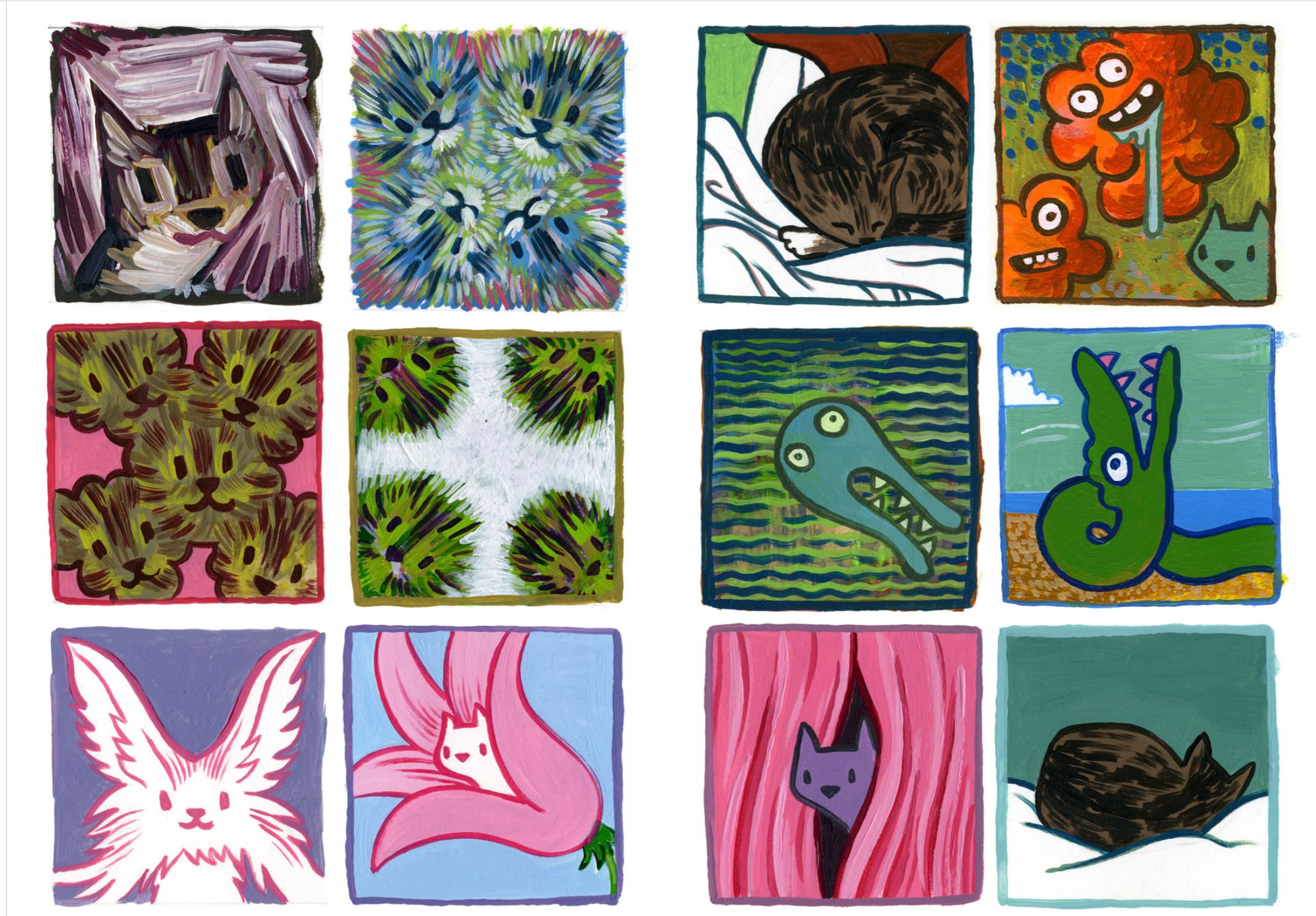
James Kochalka is a prolific and always entertaining giant of comics creation, whose vast, sublimely surreal, enticing works range from kid-friendly romps such as the Glorkian Warrior and Johnny Boo series, to excoriatingly honest self-examining daily journal strip American Elf and the indescribably fun SuperF**kers – and that’s my censorious edit there, not his…

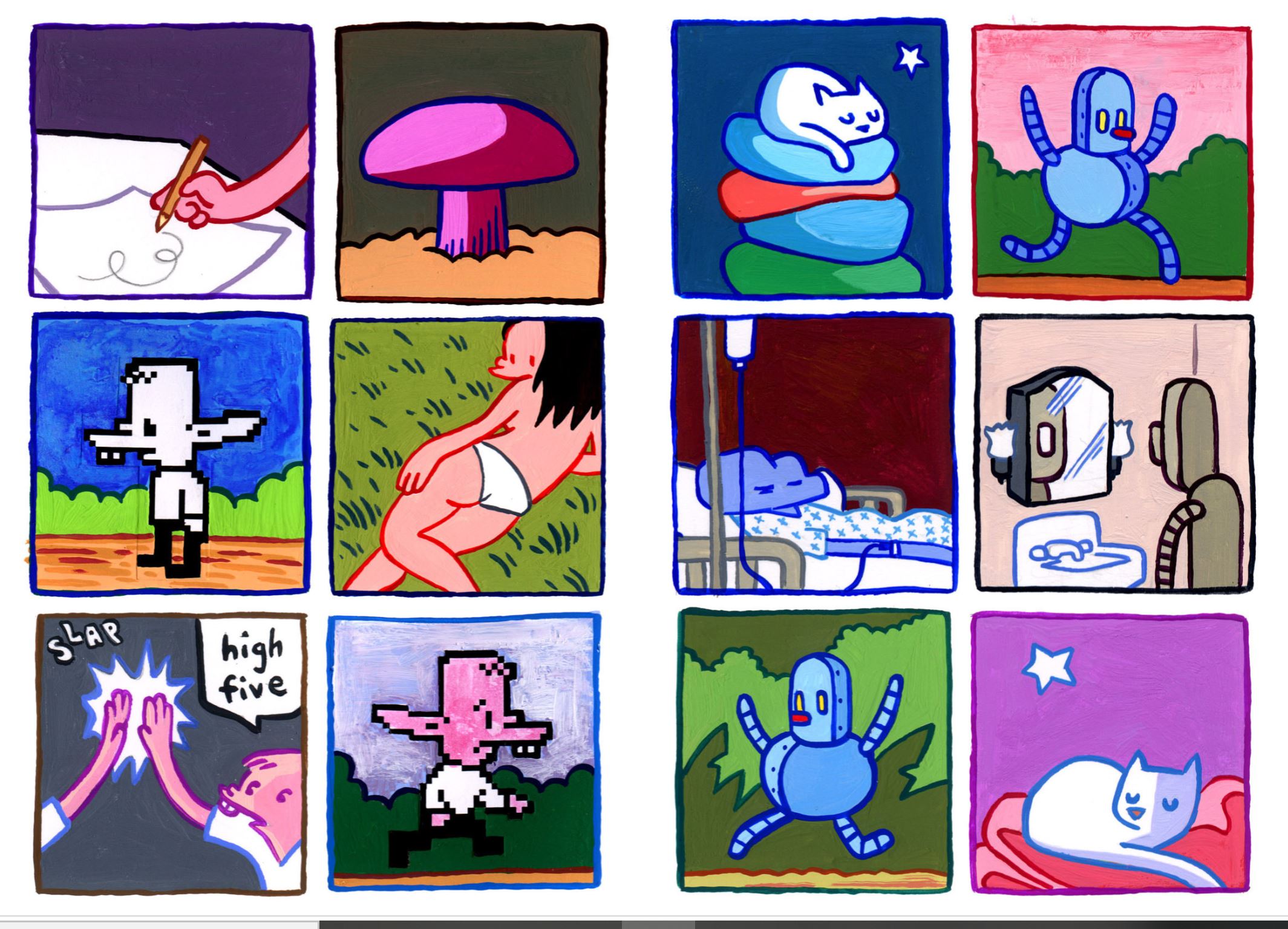
The author, artist, animator. educator and rock musician is utterly wedded to the energies of creativity and this tantalizing tome gathers hundreds of mini-paintings he knocked up to sell at various conventions between 2001 and 2007. All his old familiar faces are there: cats, ghosts, robots, monsters, aliens, cats, bathrooms, birds, chicks and dudes, mushrooms, animals, landscapes and weather, cats, machines and random images, all apparently arranged in no particularly order and inviting your response. Did I mention, there are some cats?

There is a narrative here, but it’s completely generated by the viewer who can’t help but create a story around the hundreds of thumbnail paintings of gloriously hued things and folks and stuff, and a lot to read in if you’re willing to take some time. This is one of my absolute favourite go-to books whenever I need a little pictorial pick-me-up and you should share the joy.

Go on, you know you want to…
© James Kochalka 2011. All rights reserved.

Today in 1939 artist and storyteller Herb Trimpe was born (Hulk, Iron Man, Godzilla, GI Joe) as was Tom Mandrake (The Spectre, Grimjack, Martian Manhunter) in 1956. In 1967 VIP creator and future Cartoonist Laureate of Vermont James Kolchaka (American Elf, Sketchbook Diaries) joined the party.

On this date in 1872, Punch artist & illustrator Alfred Henry Forrester died, as did prolific and multi-pseudonymous French comics creator Robert Dansler/“Bob Dan” (Bill Tornade, Jack Sport, La Jonque en Flammes) in 1972, and Canadian strip cartoonist Jim Unger (Herman) in 2012.

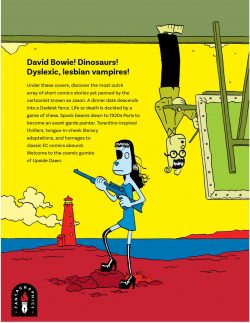
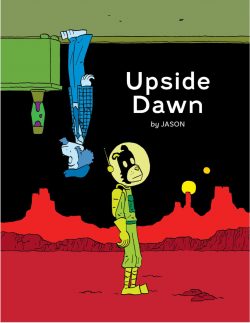
Upside Dawn


By Jason (Fantagraphics Books)
ISBN: 978-1-68396-652-4 (HB/digital edition)

This book includes Discriminatory Content included for dramatic, comedic and ironic effect.

Born in 1965 in Molde, Norway, John Arne Sæterøy is known by enigmatic, utilitarian nom de plume Jason. The shy & retiring auteur first took the path to cartoon superstardom in 1995, once debut graphic novel Lomma full ay regn (Pocket Full of Rain) won Norway’s biggest comics prize: the Sproing Award. From 1987 he had contributed to alternate/indie magazine KonK while studying graphic design and illustration at Oslo’s Art Academy.

From there he took on Norway’s National School of Arts and, on graduating in 1994, founded his own comic book Mjau Mjau. Constantly refining his style into a potent form of meaning-mined anthropomorphic minimalism, Jason has cited Lewis Trondheim, Jim Woodring & Tex Avery as primary influences. He moved to Copenhagen, working at Studio Gimle alongside Ole Comoll Christensen (Excreta, Mar Mysteriet Surn/Mayday Mysteries, Den Anden Praesident, Det Tredje Ojet) and Peter Snejbjerg (Den skjulte protocol/The Hidden Protocol, World War X, Tarzan, Batman: Detective 27).

Jason’s efforts were internationally noticed, making waves in France, The Netherlands, Slovenia, Spain, Germany and other Scandinavian countries as well as the Americas and he won another Sproing in 2001 – for self-published series Mjau Mjau – before in 2002 turning nigh-exclusively to producing graphic novels. He won even more major awards.

Jason’s breadth of interest is wide & deep: comics, movies, animated cartoons, music, literature, art, history and pulp fiction all feature equally with no sense of rank or hierarchy. Jason’s puckish, egalitarian mixing & matching of inspirational sources always and inevitably produces picture-treatises well worth a reader’s time. Over a succession of tales he has built and re-employed a repertory company of stock characters to explore deceptively simplistic milieux based on classic archetypes distilled from movies, childhood yarns, historical and literary favourites. These all role-play in deliciously absurd and surreal sagas centred on his preferred themes of relationships and loneliness. Latterly, Jason returned to such “found” players as he built his own highly esoteric universe, and even has a whole bizarre bunch of them “team-up” or clash…

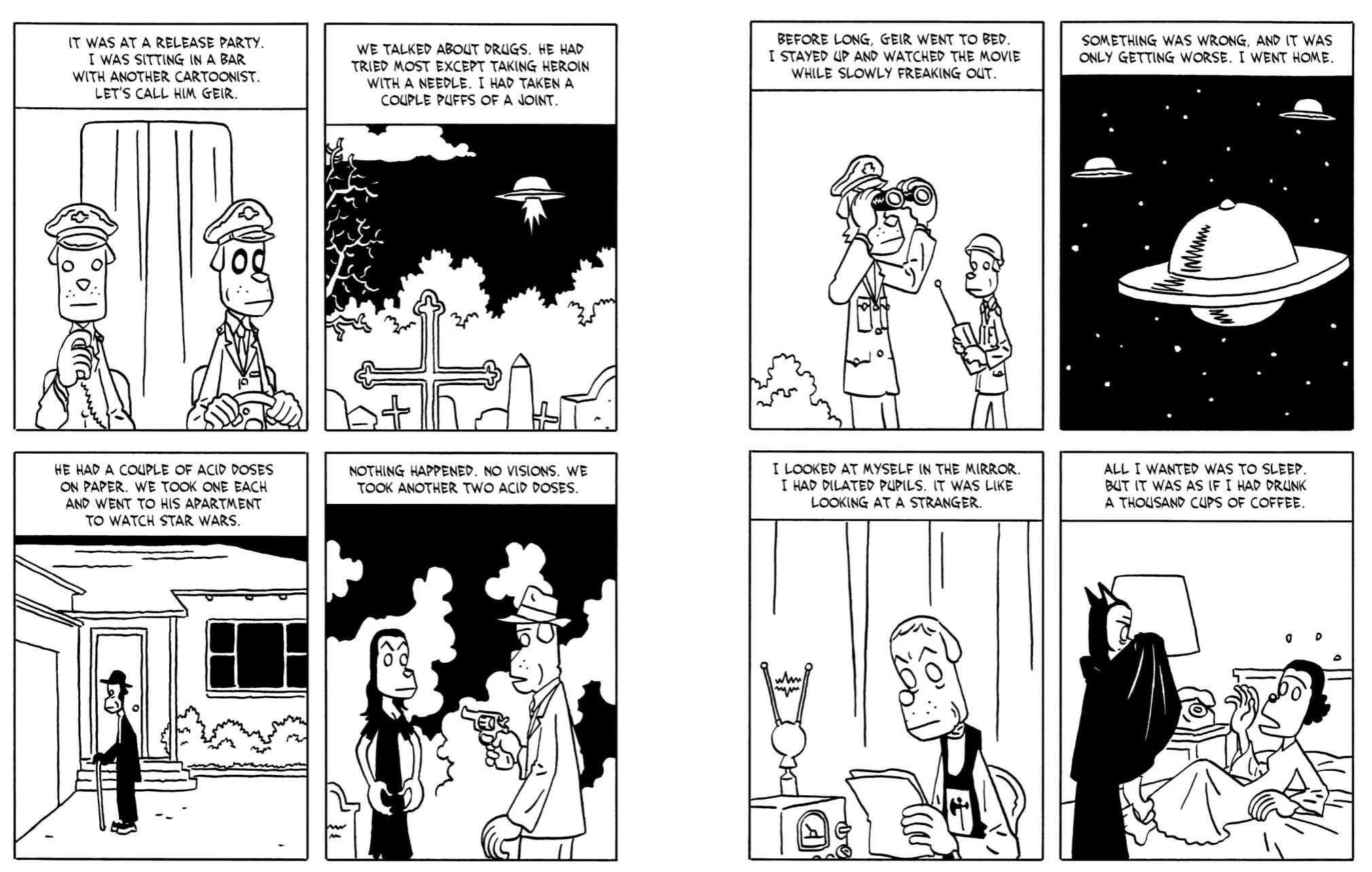
As always, visual/verbal bon mots unfold in beguiling, sparse-dialogued, or even as here silently pantomimic progressions, with compellingly formal page layouts rendered in a pared back stripped-down interpretation of Hergé’s Claire Ligne style: solid blacks, thick outlines dominating settings of seductive monochrome simplicity augmented by a beguiling palette of stark pastels and muted primary colours.

A master of short-form illustrated tales, many Jason yarns have been released as snappy little albums before later inclusion in longer anthology collections. The majority of tales brim with bleak isolation, swamped by a signature surreality even in the most comedic of moments. They are largely populated with cinematically-inspired, darkly comic, charmingly macabre animal people ruminating on inescapable concerns whilst re-enacting bizarrely cast, bestial movie tributes. That’s a style that has never been more apropos than right here, as the more modern Art Forms bow before the onslaught and tirade of organised anti-art philosophers, socially intellectual terrorists, wandering pop stars and a lost Vulcan…

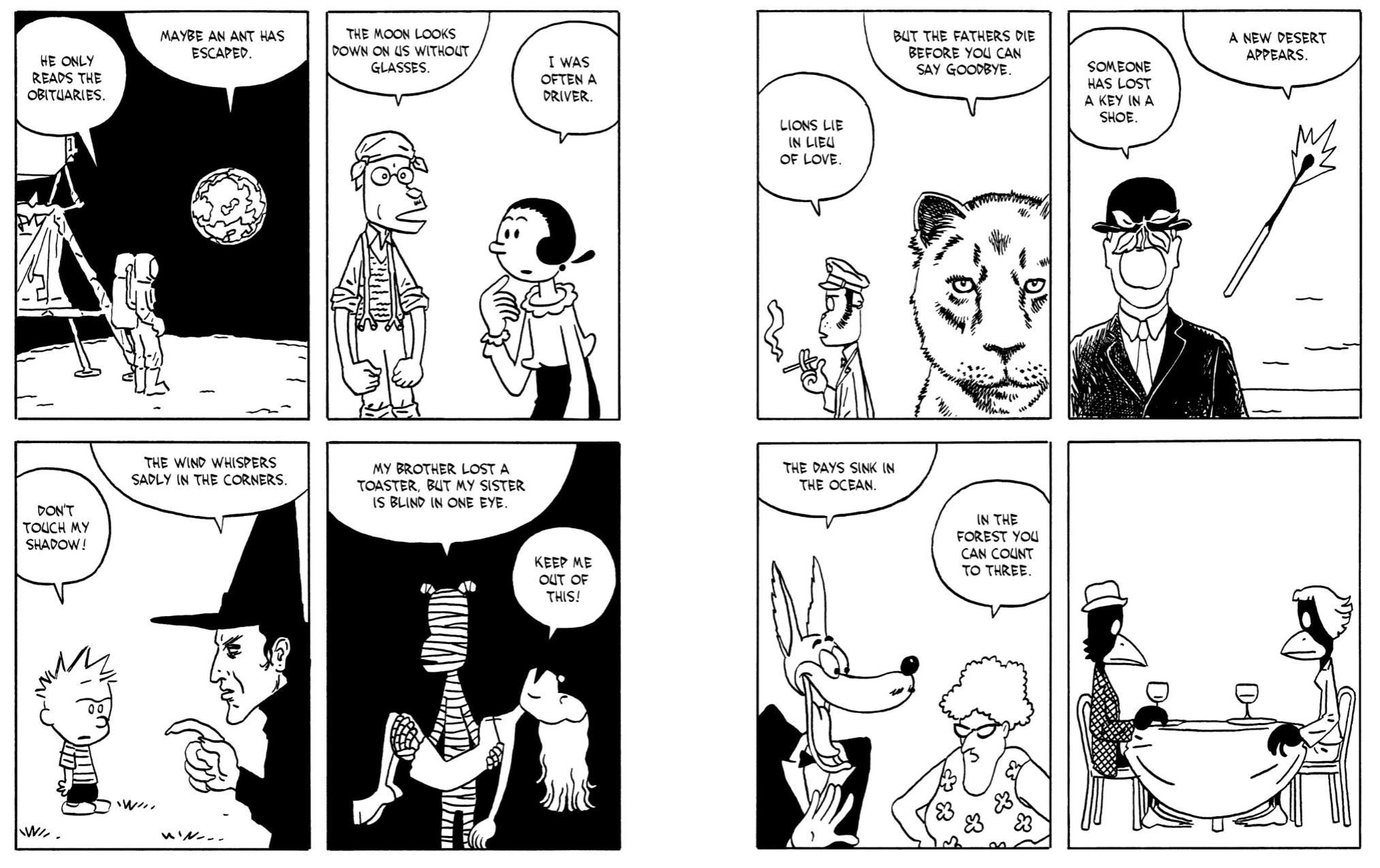
Here the auteur returns to short individual pieces – or are they? – and fondly dabbles with words, terms and aural meanings whilst opening with an understandable failure to communicate over a meal in ‘Woman, Man, Bird’ before noted cerebral French auteur/filmmaker and playfully adrift word-&-meaning warper Georges Perec is repositioned as a hardboiled gumshoe searching for a missing woman in a yarn laced with omissions, mis-hearings and misapprehensions. Nevertheless, if you’re looking for a truth – any truth – ‘Perec PI’ is on the case…

A rapid pictorial transit to a peregrination through a typical life is recalled at full pelt in ‘I Remember’ after which ‘Vampyros Dyslexicoa’ dips deep into literary hinterlands in a pastiche/homage to Joseph Sheridan Le Fanu’s 1872 Gothic novella Carmilla. However the sordid obsessions of sapphic vampire Mircalla are only the entrée to wilder scriptorial regions and a nasty case of creative anachronism as ‘Seal VII’ takes us deep into modern “Scandi” folklore when a certain Knight and Death meet up for a game in Sweden in 1357 and don’t really cotton to the notion of chess for souls…

The scenes shifts to Prague in 1919 where a certain agent of the crown abruptly quits his job and is renditioned to a strange, picturesque high-tech surveillance Village where he has to wear a blazer as ‘The Prisoner in the Castle’ prior to popping back to St Peterburg in 1865 to gorily relive the trials and tribulations of Great Russian Literature at first hand via some eccentric ‘Crime and Punishment’

As much as Jason has played with visual meaning and manipulated derived imagery-context in his past forays, the later relater is here gripped by the confusing potentials of words and verbal meanings. Such facile surface fascinations are apparent during Leopold Bloom’s rather violent visit with the absolute master of “what did that mean” Dublin in June offers a walk with James Joyce, a leprechaun, Stephen Dedalus and Molly as we ponder stuff and not-nonsense in ‘Ulysses’. Then ‘Ionesco’ introduces random judgement to the final days of avant-garde playwright Eugène Ionesco, as a parade of bizarre celebrities and notables eulogise or defame him before he goes…

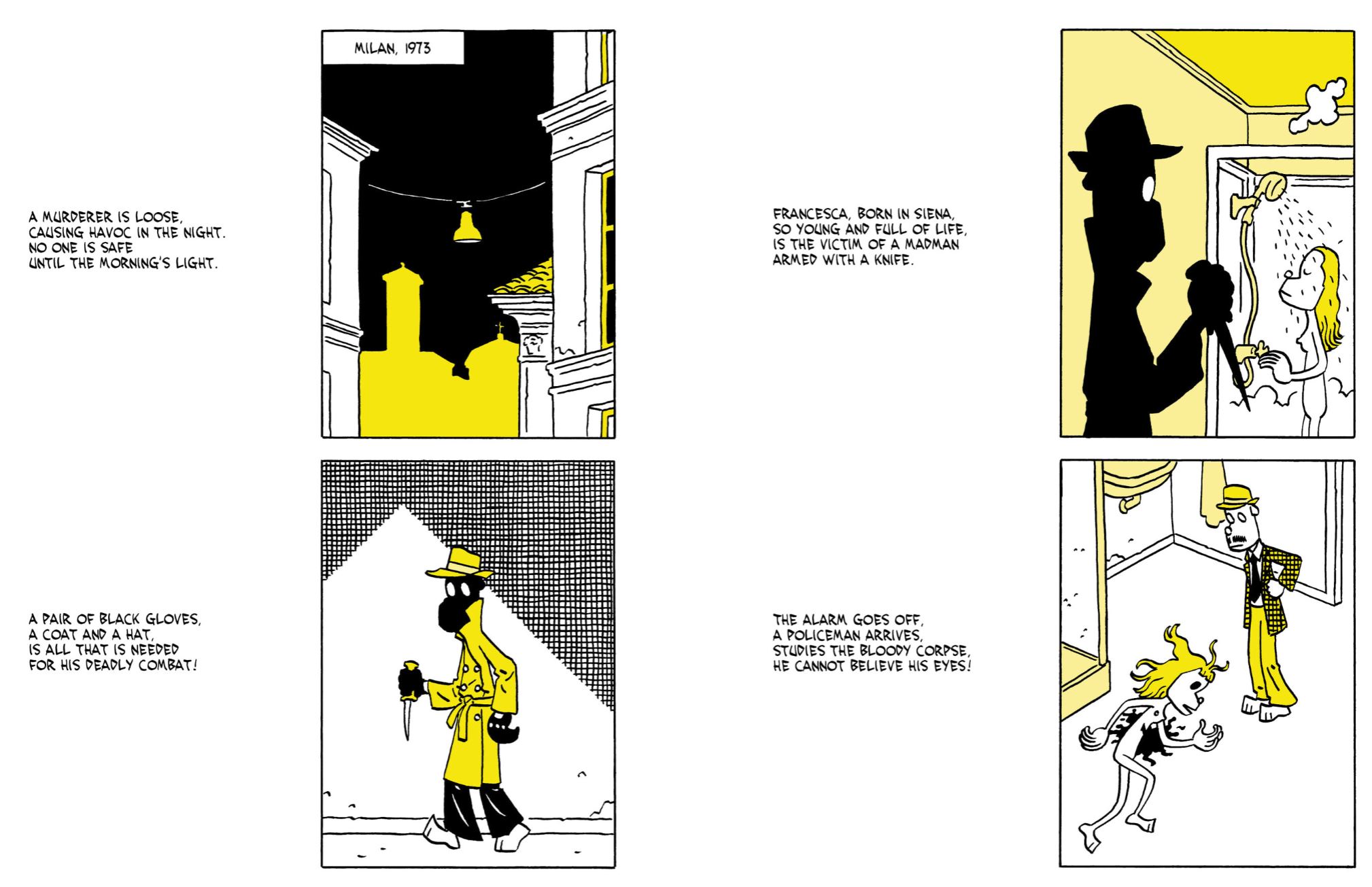
Slipping into a partial colour palette (yellow, if you care), ‘What Rhymes with Giallo?’ uses rhyming couplets to detail a sordid stabbing spree before resuming monochromatic mode as the tense future proves too much for one scientific stoic. Stress compels Mr Spock to desert the Enterprise and migrate to Montparnasse, Paris in ‘The City of Light, Forever’. It’s 1925 and he finds contentment as a minor Japanese painter (of cats) until Captain Kirk comes looking for him. If you follow Jason, this is where you start to realise that a lot of his work overlaps and intercepts itself in the strangest places…

Adding red and blue to black & white, ‘Who Will Kill the Spider?’ is a classic child’s nightmare of terror and confusion as Dad uses escalating tools and allies to deal with a bug in the bedroom who just won’t quit, after which words literally fail us in ‘One Million and One Years B.C.’: a silent science spoof of dinosaurs, cave-folk, time-travelling soldiers and stupid assumptions which leads into tribute diptych ‘EC Come…’ (a bloody tale of domestic ghouls and zombies) and ‘…EC Go’ (pointed satire of the comic company’s sublime Ray Bradbury adaptations of interplanetary First Contacts).

Then inevitably it devolves into a spoofing shot at the Sci Fi Fifties care of Curt Siodmak via Ed Wood in alien invasion ‘From Outer Space’ before ‘Etc.’ stages a celebrity-stacked movement-moment that begins in London circa 1972 as immortal musketeer Athos meets David Bowie meets a mummy meets Elvis meets Moses meets Sinatra meets Van Gogh meets Frank Zappa meets Death ad infinitum for a miasmic, abstractly construed big finish…

Visually mesmerising, this cunningly concocted Dadaist picture salad conceals underlying connections you really have to stay untuned for, referring relentlessly to modern icons and ancient shibboleths in equal measure, and perpetually sampling the feeling and furniture of war films, scary stories, true romances gone bad, Monty Python, Star Trek, a million movies, books, tunes and comics and even his own burgeoning “Jason-verse”. Upside Dawn absolutely should not be your first dip into his works, but don’t let that stop you from getting them all and getting all caught up…
All characters, stories, artwork and translation © 2022 Jason.
This edition of Upside Dawn © 2022 Fantagraphics Books, Inc. All rights reserved.

Today in 1892 Scots artist and future Charlie Chaplin comics illustrator Wally Roberson was born, followed in 1912 by John Liney (who limned the Henry strip), and in 1917, Hal Seeger who wrote & drew Betty Boop and later Leave it to Binky. In 1925 eventual East German cartoonist Hannes Hegen (Mosaik) arrived, with US letterer-to be Stan Starkman (Batman, Doom Patrol, Metamorpho) coming along in 1927. 3D comics guy Ray Zone was born in 1947, the same day and year that we lost the astounding Reg Perrott, artist on Roly and Poly the Two Bear Cubs, Land of the Lost People, Whirling Around the World, Wheels of Fortune, Red Ryder, The Young Explorers, The Golden Arrow, Golden Eagle, Sons of the Sword and more, as well as becoming producer/studio manager of UK mainstay Mickey Mouse Weekly.

In 1952 Hägar the Horrible artist Chris Browne was born, as was Chester Brown (Yummy Fur, Louis Riel) in 1960 and John Arne Sæterøy/Jason in 1965.

This date in 1964 Malcom Judge’s Billy Whizz first hurtled into the hearts of Beano readers, and in 2012 marked the passing of comic book workhorse Ernie Chan (Conan, Batman, Dracula Kull, The Hulk).

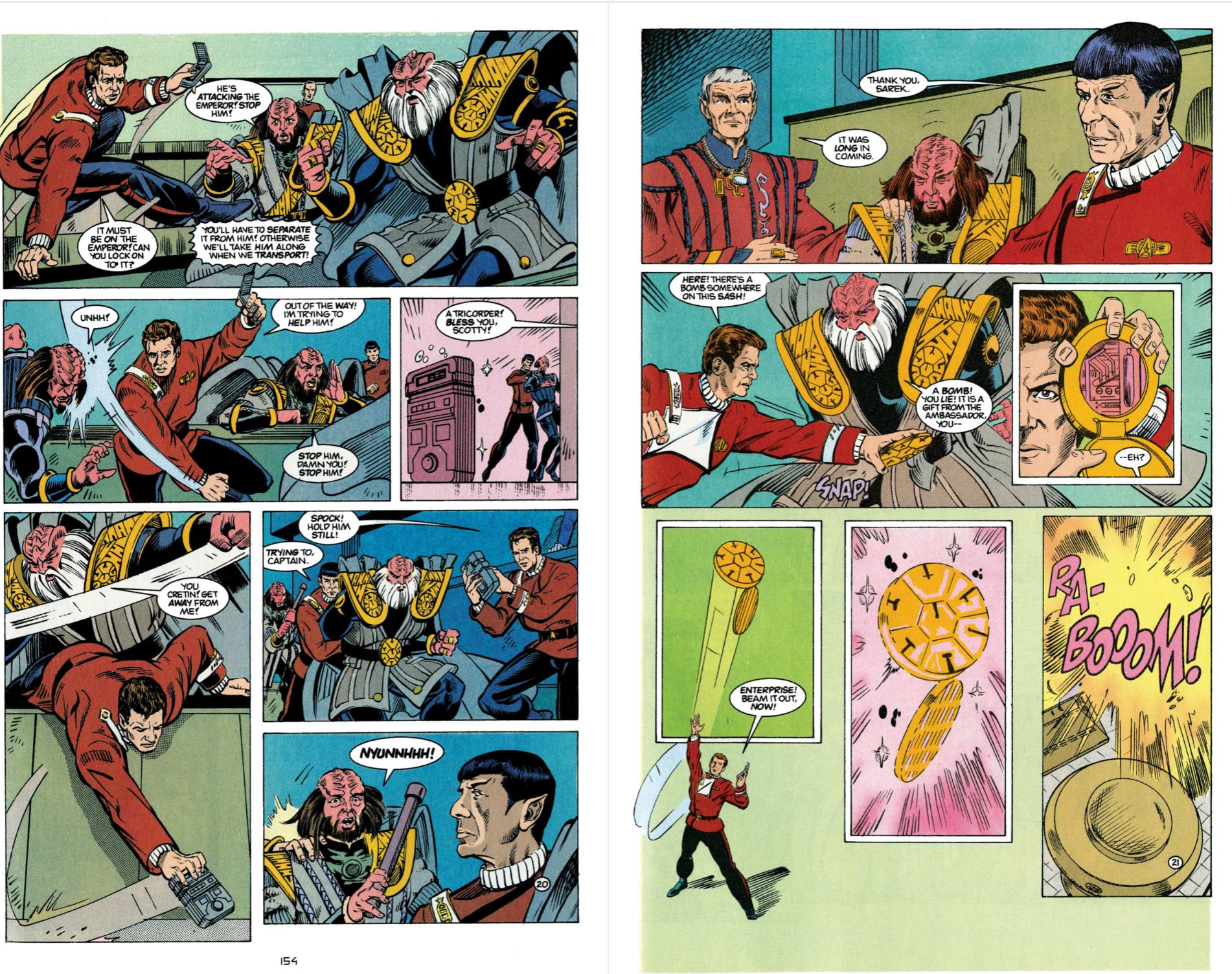
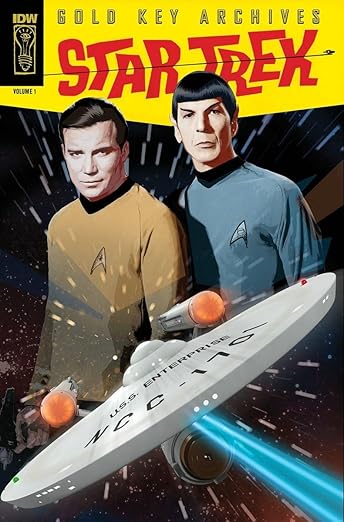
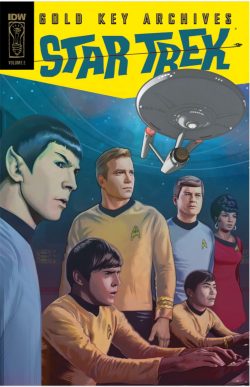
Star Trek: Gold Key Archives volume 1


By Dick Wood, Nevio Zaccara, Alfredo Giolitti & various (IDW)
ISBN: 978-1-61377-922-4 (HB/Digital edition)

This book includes Discriminatory Content produced in less enlightened times.

Star Trek debuted on American televisions on September 8th 1966 and ran until June 3rd 1969: three seasons comprising 79 episodes. A moderate success, it only really became popular after going into syndication, running constantly throughout the 1970s. It was also sold all over the world, popping up seemingly everywhere and developing quite a devoted fanbase.

Being a third world country, Britain didn’t see the show until July 12th 1969 during the rocket fever surrounding the Apollo moon landings, when BBC One screened “Where No Man Has Gone Before” in black-&-white before proceeding to broadcast the rest of the series in the wrong order. “Arena” was the first episode screened in colour (November 15th 1969), but viewers didn’t care. We were all hooked anyway and many of the show’s catchphrases – many erroneous and some entirely fictitious – quickly entered the popular lexicon of the nation.

The series spawned a licensed, British-originated comic strip which ran in Joe 90, TV21 and TV21 and Valiant from the late 1960s into the 1970s. These have also been collected and I’ll get to them in the fullness of time and space.

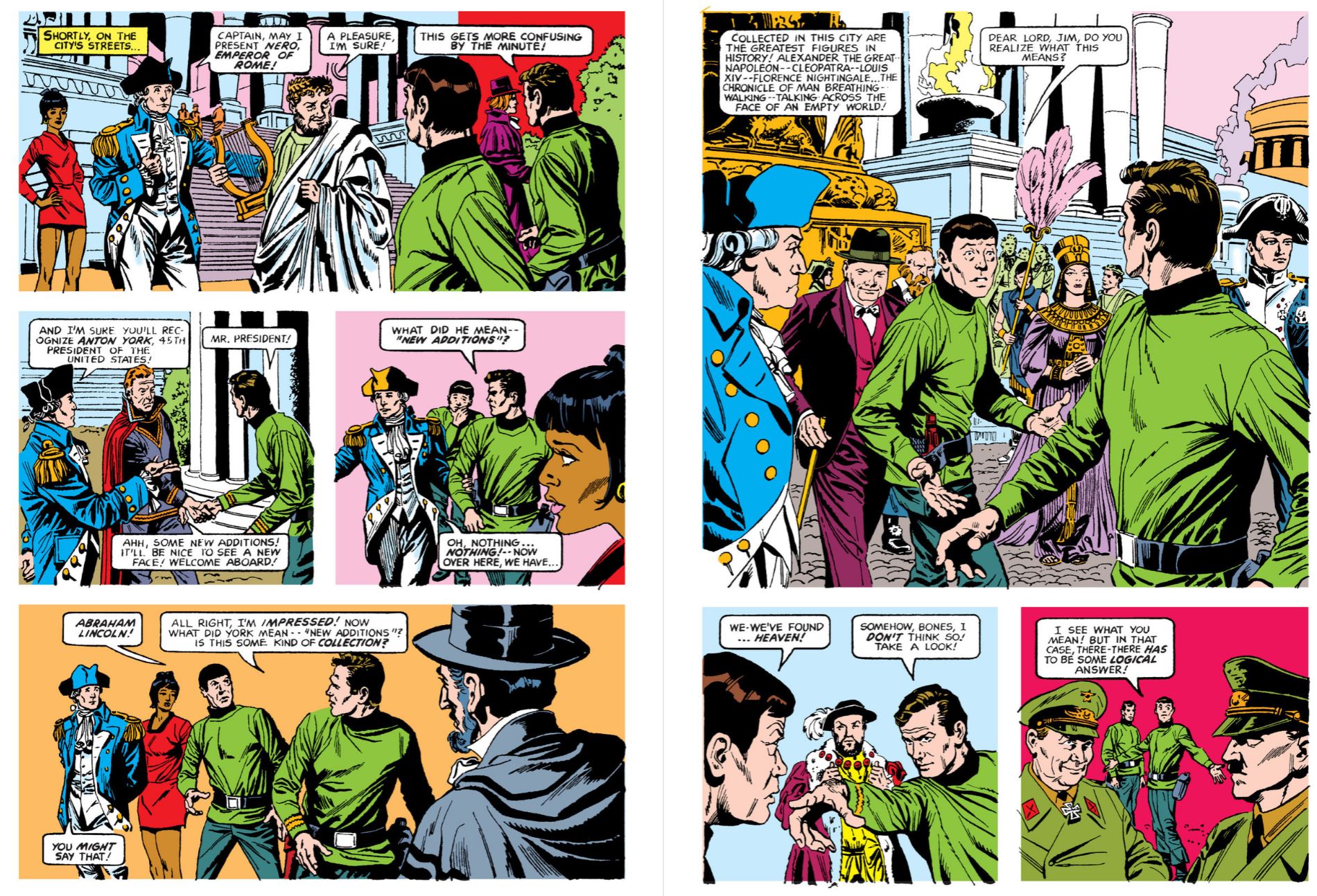
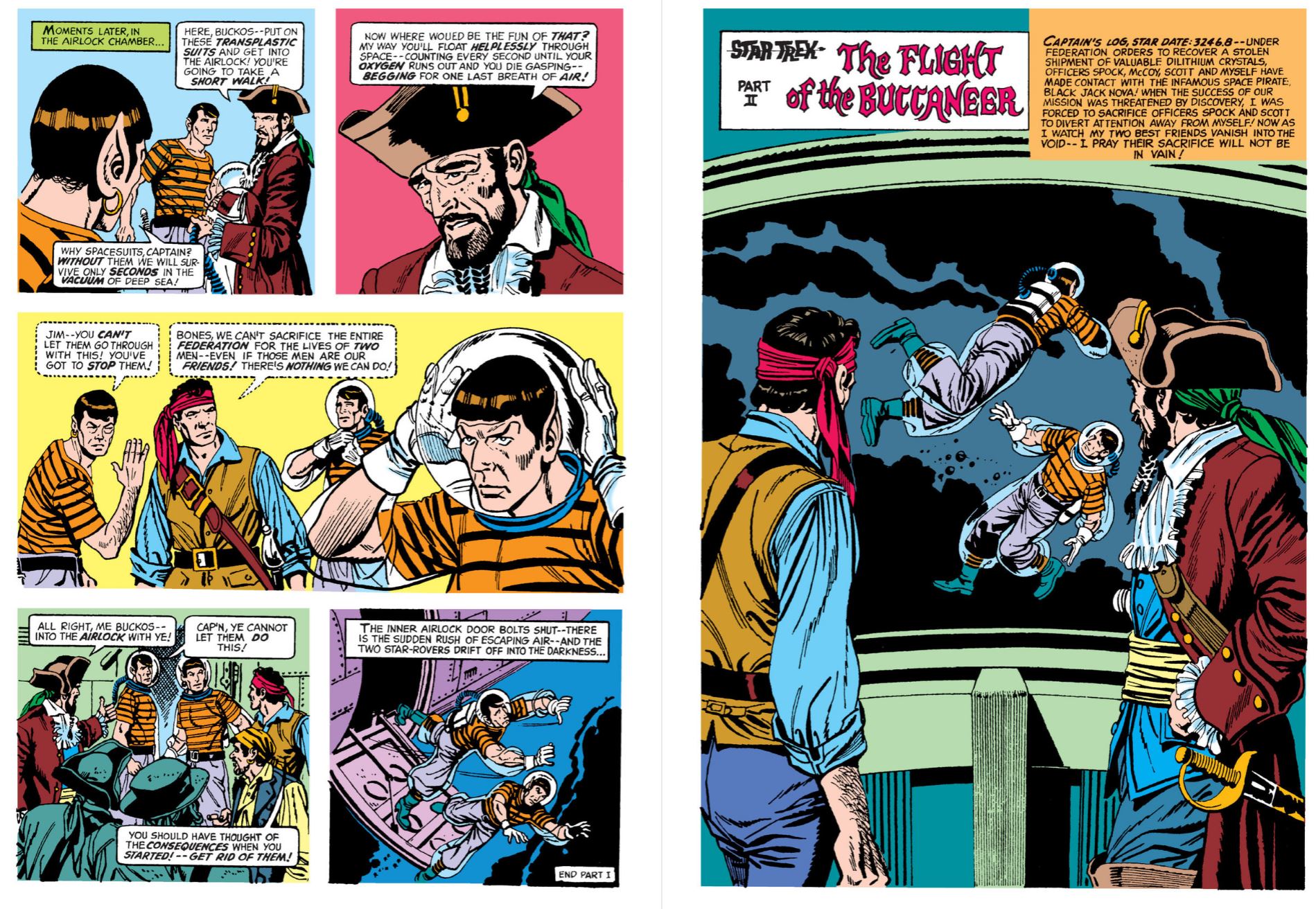
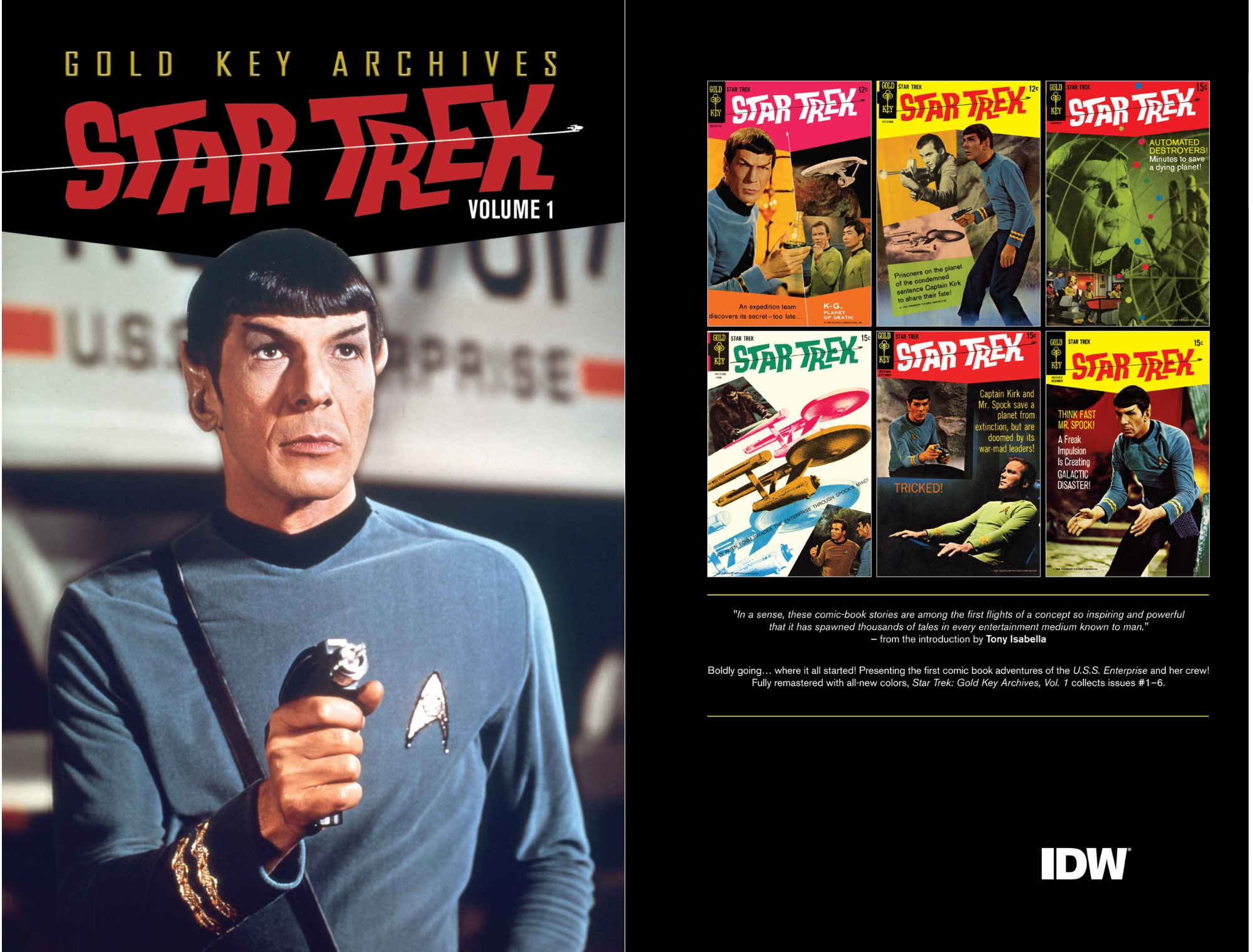
In the USA, although there was some merchandising, things were a little less enthusiastically embraced. Even though there was a comic book – from “properties magnate” Gold Key and running for almost a decade after the show’s cancellation – authenticity at the start wasn’t really a watchword. Nor was immediacy or urgency an issue. In fact, only six issues were released during the show’s entire three-season run. Published between July 1967 and December 1968, they are all gathered in this first archive Star Trek

Printing giant Whitman Publishing had been producing their own books and comics for decades through their Dell and Gold Key imprints, rivalling and often surpassing DC and Timely/Marvel at the height of their powers in sales and popularity. Famously Whitman never capitulated to the wave of anti-comics hysteria resulting in the crippling self-censorship of the 1950s and Dell Comics never displayed a Comics Code Authority symbol on their covers.

They never needed to: their canny blend of media and entertainment licensed titles were always produced with a family market in mind and the creative staff took their editorial stance from the mores of the filmic Hayes Code and the burgeoning television industry.

Just like the big and little screen, the product enticed but never shocked and kept contentious social issues implicit instead of tacit. It was a case of “violence and murder are fine, but never titillate”…

Moreover, the vast majority of their adventure comics’ covers were high quality photos or paintings – adding a stunning degree of veracity and verisimilitude to even the most outlandish of concepts for us wide-eyed waifs in need of awesome entertainment. The company seemed the only logical choice for a licensed comic book, and to be honest, these stories are cracking space opera yarns, even if they occupy an odd position in the hearts of older screen-dominant fans. In the UK, distribution of US comics was haphazard at best, but Gold Key Trek yarns were reprinted in our beloved and trusted hardback Christmas annuals. Nevertheless, the earliest ones bore little resemblance to what we’d seen on TV.

Our little minds were perplexed and we did wonder, but as the tales offered plenty of action and big sci fi concepts we just enjoyed them anyway.

Original British Star Trek yarns came in serialised comic-strip form, superbly illustrated and bearing a close resemblance to the source material. The feature only appeared as 2 or 3-page instalments in weekly anthologies, but was at least instantly familiar to TV viewers.

I discovered the answer to the jarring discrepancy, years later. Apparently scripter Dick Wood (a veteran writer who had worked on hundreds of series from Batman and the original Daredevil to Crime Does Not Pay and Doctor Solar, Man of the Atom) had not seen the show when commissioned to write the comic book iteration, and both he and Italian artists Nevio Zaccara – and latterly Alberto Giolitti – received only the briefest of outlines and scant reference materials from the show’s producers. They were working almost in the dark…

When you read these stories, you’ll see some strange sights and apparent contradictions to Trek canon lore, but they were all derived from sensible assumptions by creators doing the very best with what meagre information they had. If you’re likely to have your nostalgic fun spoiled by wrong-coloured shirts or Lasers rather than Phasers, think alternate universe or read something else. Ultimately, you are the only one missing out…

That’s enough unnecessary apologising. These splendidly conceived all-ages tales don’t deserve or need it, and even the TV wellspring was a constantly developing work-in-progress, as fan and occasional Trek scripter Tony Isabella reveals in his Introduction ‘These Are the Voyages…’

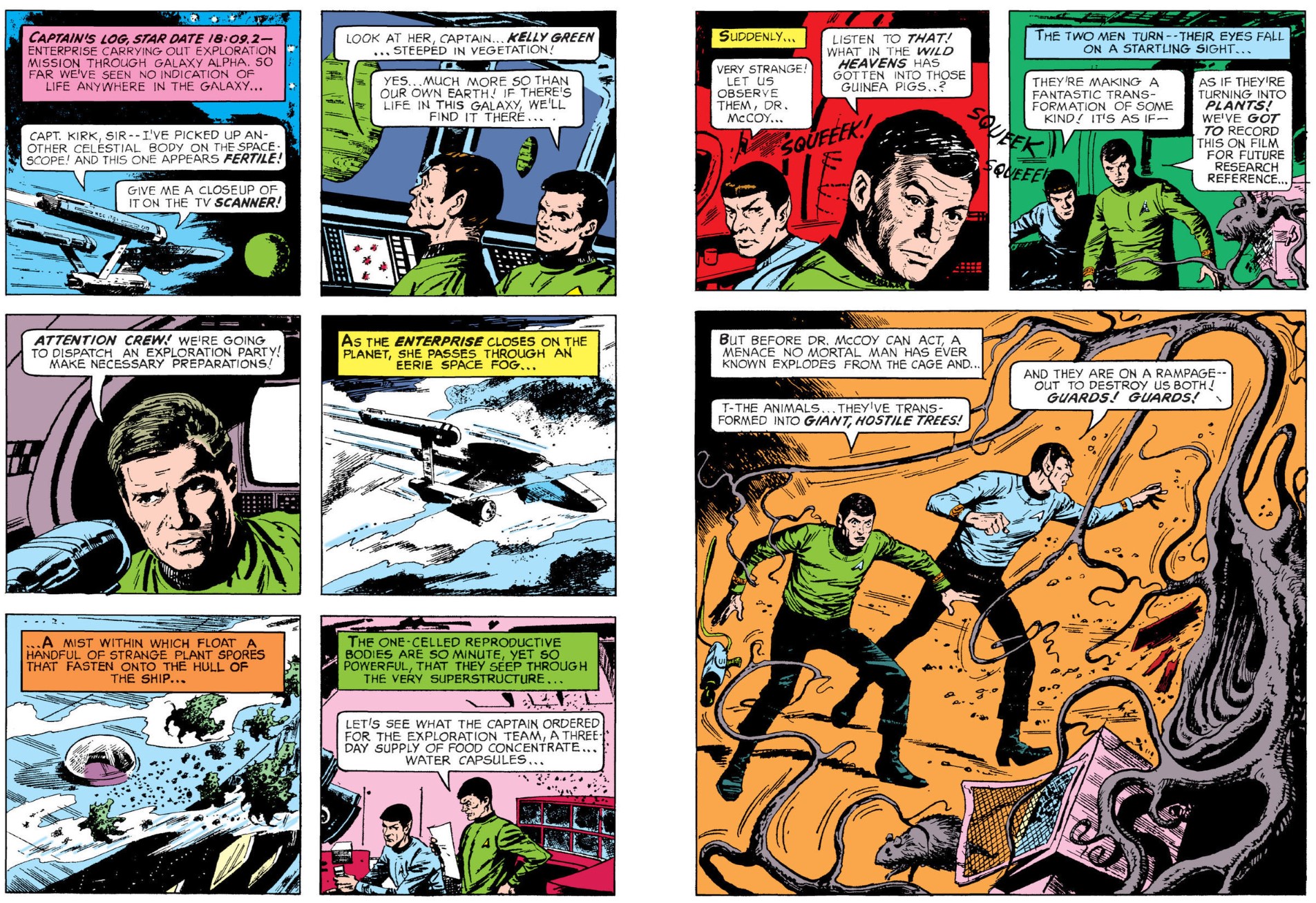
Accompanied by the stunning photo-collage covers and endpapers (an expensive rarity at the time outside Gold Key titles) the quirky collation of cosmic questing commences with ‘The Planet of No Return’ (by Wood & Zaccaria, from #1, July 1967) as the Enterprise enters a region of space oddly devoid of life and encounters predatory spores from a planet designated Kelly-Green. This is a world of horror where vegetative life contaminates and transforms flesh whilst mindlessly seeking to constantly consume and conquer. After the survivors of the landing party escape deadly doom and return to the safety of space, there is only one course of action Captain Kirk can take…

‘The Devil’s Isle of Space’ was released with a March 1968 cover-date and found the ever-advancing Enterprise trapped in a space-wide electronic net. The technology was part of a system used by an alien race to pen death-row criminals on asteroids, where they would be (eventually) executed in a truly barbarous manner. Sadly, it’s hard not to interfere in a sovereign culture’s private affairs when the doomed criminals hold Federation citizens hostage and want Kirk to hand his ship over to them…

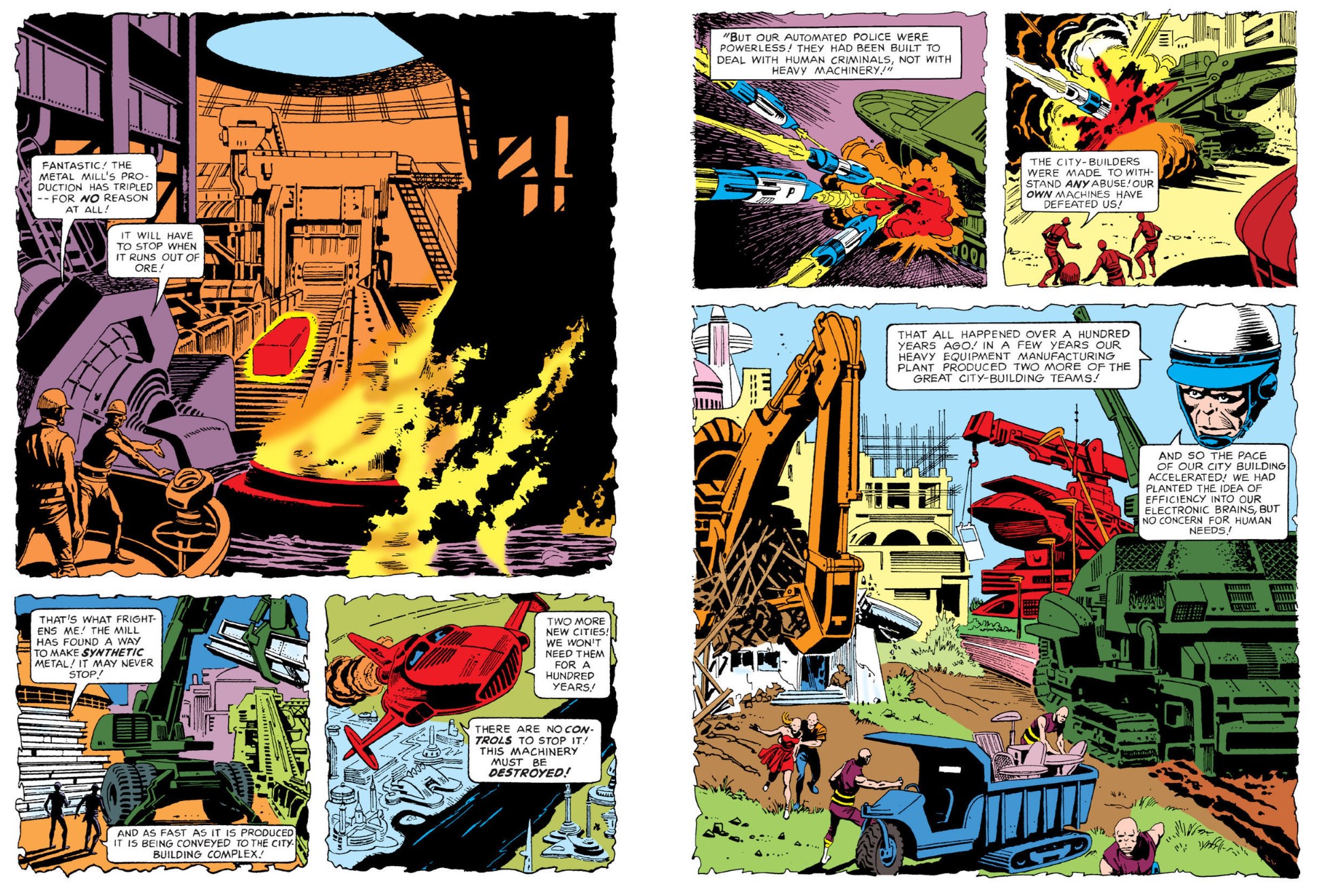
Bombastic. beguiling and spectacular, ‘Invasion of the City Builders’ (#3, December 1968) saw legendary Alberto Giolitti take the artistic reigns. Prolific, gifted and truly international, his work and the studio he founded produced a wealth of material for three continents; everything from Le Avventure di Italo Nurago, Tarzan, The Phantom, Mandrake, Flash Gordon, Zorro, Cisco Kid, Turok, Gunsmoke, King Kong, Cinque anni dopo, Tex Willer and dozens more. In England, the Giolitti effect enhanced many magazines and age ranges; everything from Flame of the Forest in Lion to Enchanted Isle in Tammy. His textural adeptness and gritty line-work added visual terseness and tension to the mix, as seen in his first outing here, as Enterprise crewmembers land on a planet where automated machines originally programmed to build new homes and roads have been out of control for a century. Forcing the organic population to the edge of extinction, the mechs build cities no one can live in over the soil they need to grow food. The machines seem utterly indestructible, but Mr. Spock has an idea…

Social commentary gave way to action and suspense when ‘The Peril of Planet Quick Change’ (June 1969) finds the explorers investigating a world of chimerical geological instability, only to see Spock possessed by beings made of light. These creatures use him to finally stabilise their unruly world, but once the crisis is averted, one of the luminous spirits refuses to exit the Vulcan and plans to make the body its own…

‘The Ghost Planet’ (September 1969) was fast approaching parity with the TV incarnation as Enterprise reaches a world ravaged by radiation rings. Its twin rulers are eager for the star men’s help in removing the rings, but don’t want them hanging around to help rebuild the devastated civilisation. A little quiet investigation reveals that most of the carnage is due to eternal warfare which the devious despots plan to resume as soon as the Federation ship destroys the radiation rings and leaves…

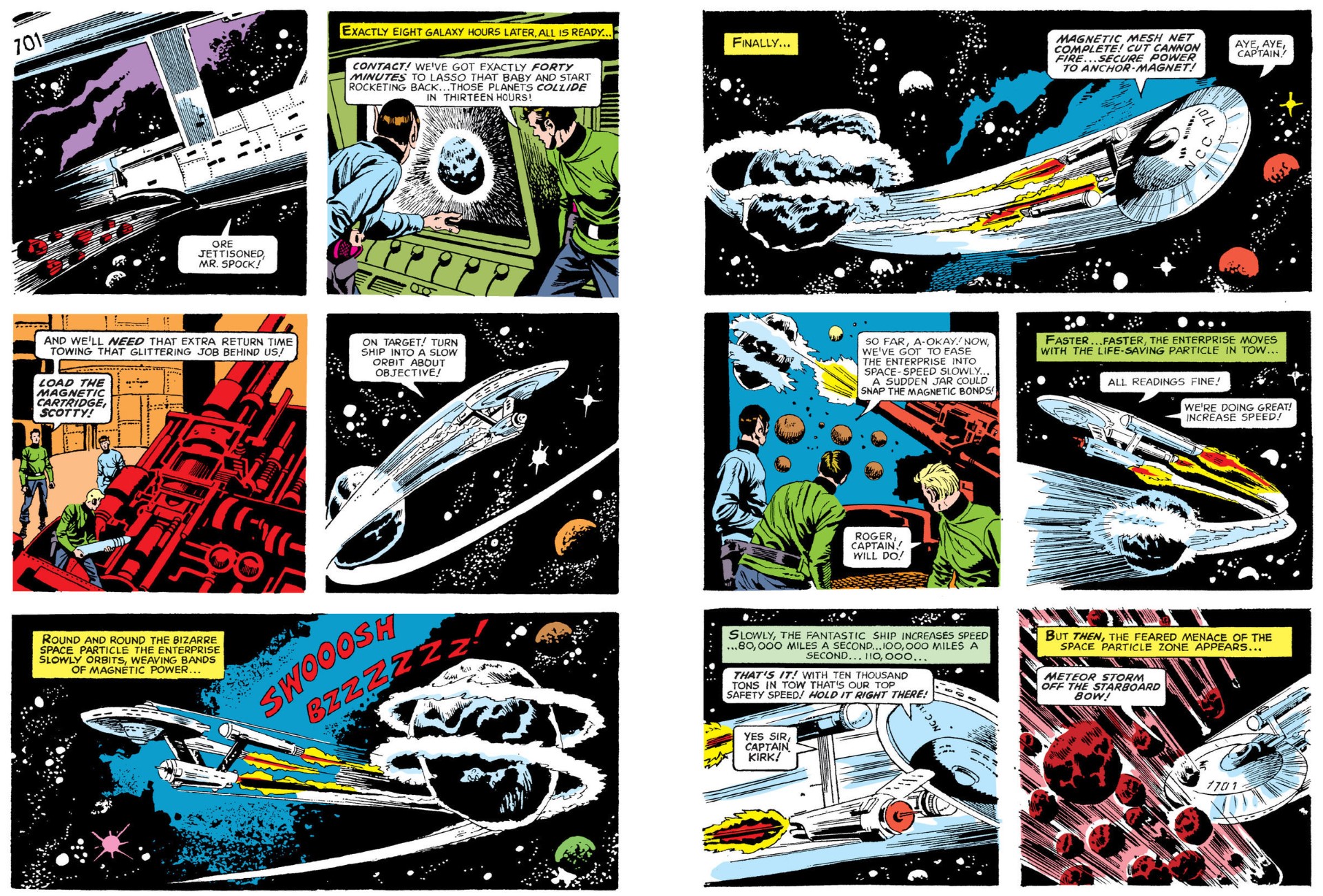
Wrapping up this initial TV treasure-trove is ‘When Planets Collide’ (December 1969): a classic conundrum involving two runaway worlds inexorably drawn to each other and mutual destruction. What might have been a simple observable astronomical event becomes fraught with peril when the Enterprise’s crew discover civilisations within each world: both of which would rather die than evacuate their ancient homes…

With time running out and lives at stake there’s only one incredible chance to save both worlds, but it will take all Spock’s brains and Kirk’s piloting skill to avert cosmic catastrophe…

Bold, expansive and epic, these are great stories to delight young and old alike and well worth making time and space for. Why not explore lost worlds and sagas of guaranteed merit via the comics wayback machine? You know the one: it’s the comic shop located on the Edge of Forever?

® and © 2014 CBS Studios, Inc. Star Trek and related marks are trademarks of CBS Studios, Inc. All Rights Reserved.
Today Finnish cartoonist Lars Jansson was born today in 1926. You can see his work in Moomin Volume 9.

Today in 1937, Archie Goodwin was born: a gentle genius and still the Nicest Man in Comics, of whom you can learn more and appreciate his subtle mastery by checking Tales of the Batman: Archie Goodwin.

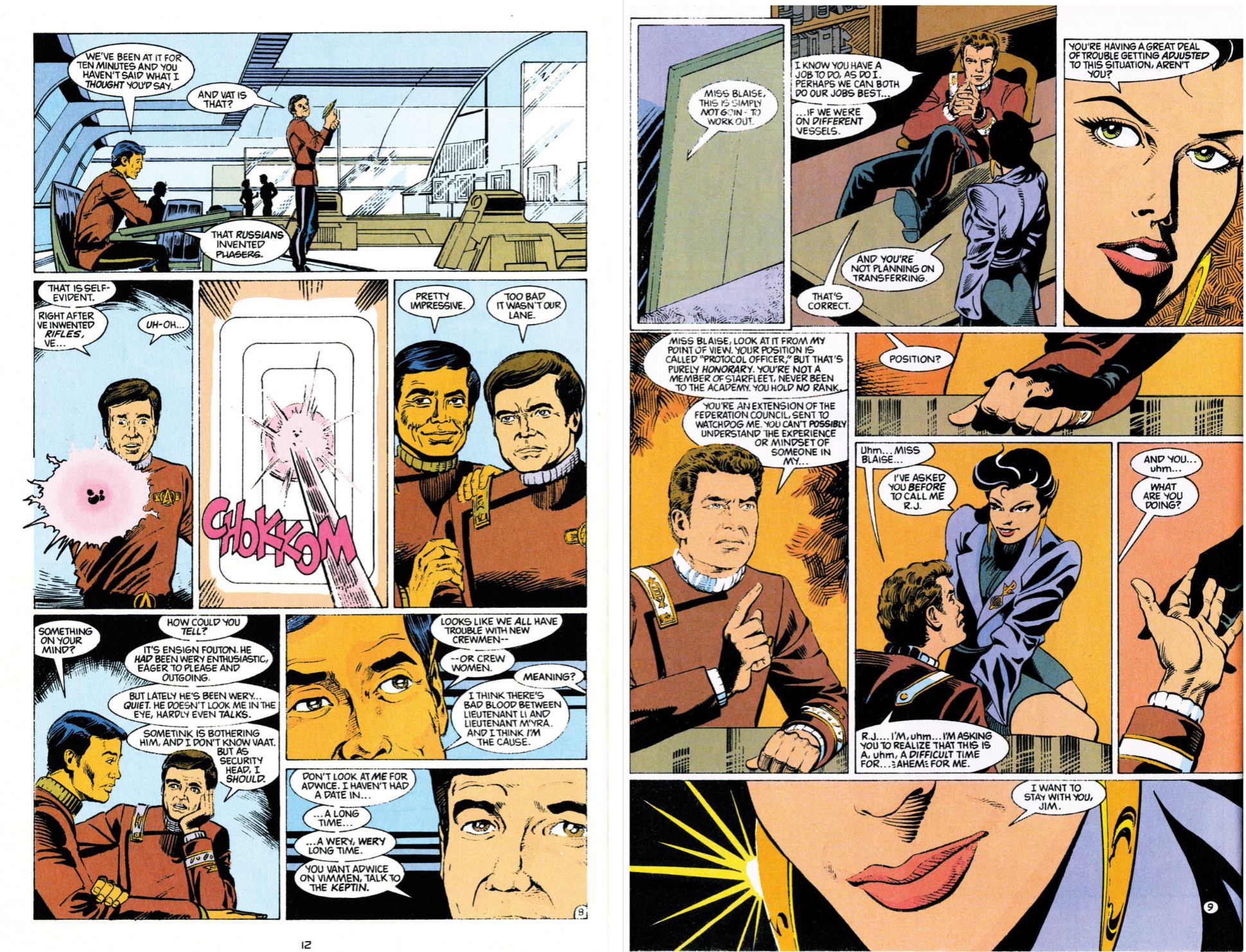
Star Trek Classics volume 5: Who Killed Captain Kirk?


By Peter David, Tom Sutton, Gordon Purcell, Ricardo Villagran & various (IDW)
ISBN: 978-1-61377-831-9 (TPB/Digital edition)

Word came today that we’ve lost another comics giant. Peter Allen David (23rd September 1956 – 24th May 2025) wrote thousands of comics stories, including continuity-changing runs on Spider-Man, The Incredible Hulk (which he wrote for 12 years), Aquaman, Supergirl, Captain Marvel, She-Hulk, Scarlet Spider, The Phantom, Young Justice, Dreadstar, X-Factor and Wolverine, as well as notable runs on countless more.

In an industry heavily reliant on adapting media properties, Peter David was the go-to guy for dozens of tie-in titles including all Star Trek books at various companies, Babylon 5, manga import Negima, Halo: Helljumper, Tron and younger reader titles like Powerpuff Girls and Little Mermaid. His television credits include Babylon 5, and animated series like Ben 10 and Young Justice, and Space Cases which he co-created with Bill Mumy.

In comics he created or co-created Spiderman 2099, Fallen Angel, Sachs and Violens, Soulsearchers and Co., SpyBoy, The Atlantis Chronicles and more.

A tireless scribe and popular culture maven, his nigh 100 books include original creations, genre and franchise spin-off  novels for all Star Trek franchises, Babylon 5, Alien Nation, Battlestar Galactica, Swamp Thing, Transformers, novelisations and adaptations, movie, biographies commentary and nonfiction.

Outspoken, ferociously liberal, minority-advocating and never, never boring, he was a master of spit-take comedy moments and crushing emotional body blows in his work, and we are all poorer for his going.

A fuller appreciation and a bunch of stuff I should have got around to reviewing long ago will follows in the weeks to come. Here, however, is a re-review of one of his very best. Go buy this, or indeed anything with his name on it. You won’t be disappointed.

The stellar Star Trek brand and franchise probably hasn’t reached any new worlds yet, but it certainly has permeated every aspect of civilisation here on Earth. You can find daily live-action or animated TV appearances constantly screening somewhere on the planet as well as toys, games, conventions, merchandise, various comics iterations generated in a host of nations and languages and a reboot of the movie division proceeding even as I type this.

Many comics companies have published sequential narrative adventures based on the exploits of Gene Roddenberry’s legendary brainchild, and the splendid 1980s run produced under the DC banner were undoubtedly some of the very finest, especially when scripted by novelist, journalist, screenwriter and all-around comics genius Peter David.

Never flashy or sensational, the series embraced the same storytelling values as the shows, movies and original prose adventures; being simultaneously strongly character- & plot-driven – and starring some of the most well-known (and well-quoted) characters in the world.

An especially fine example is this superior epic, blending spectacular drama, subtle but rational dramatic interplay and good old fashioned thrills, with the added bonus of much madcap whimsy thanks to David’s impassioned fan-pandering efforts…

The swashbuckling space-opera (originally printed in DC’s Star Trek #49-55 and boldly spanning April to October 1988) remains a devotee’s dream, pulling together many prior and ongoing plotlines – albeit in a manner easily accessible to newcomers – to present a fantastic whodunit liberally sprinkled with in-jokes and TV references for über-fans to wallow in.

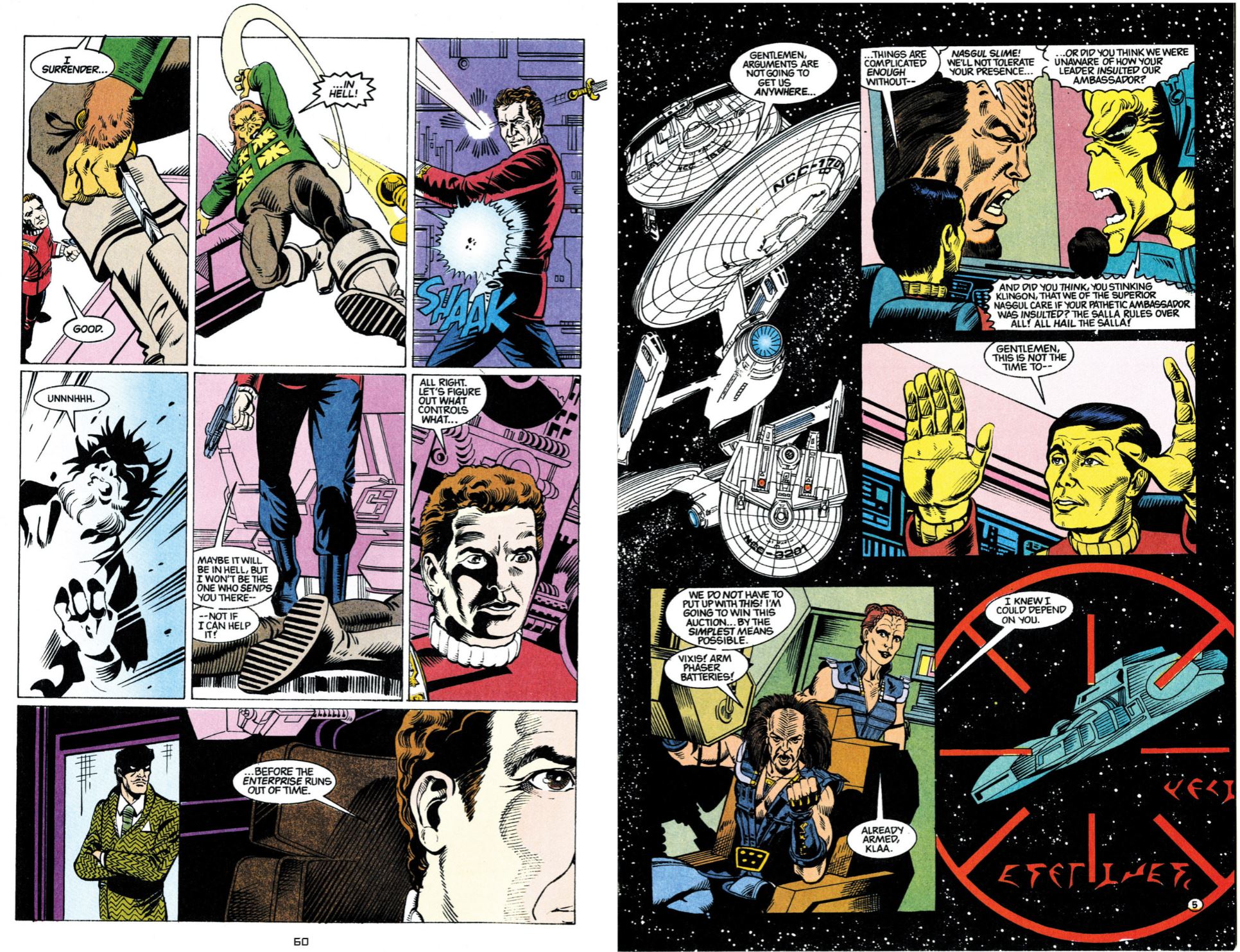
Illustrated by Tom Sutton & Ricardo Villagran, it began in ‘Aspiring to be Angels’ as, following the aftermath of a drunken shipboard stag night riot (caused by three very senior officers separately spiking the punch), the Enterprise crew discover a rogue Federation ship with impenetrable new cloaking technology is destroying remote colonies in a blatant attempt to provoke all-out war with the Klingons.

At one decimated site they discover a stunted, albino Klingon child who holds the secrets of the marauders, but his traumatised mind will need patience and very special care to coax them out…

Naturally the suspicious, bellicose Klingons also investigating the atrocity want first dibs on the supposed Federation “rebels”, and political tensions mount as Kirk and his embattled opposite number Kron not-so-diplomatically spar over procedure in a ‘Marriage of Inconvenience’. Emotions are already fraught aboard Enterprise. Preparations for a big wedding are suffering last-minute problems and a promising ensign is currently being cashiered for the High Crime of Species Bigotry…

Moreover, unknown to all, a telepathic crew-member has contracted Le Guin’s Disease (that’s one of those in-jokes I mentioned earlier), endangering the entire ship. The crisis point comes with the Federation and Klingon Empire on the verge of open hostilities. Thankfully the renegade ship moves too precipitately and is defeated in pitched battle. However, when Security teams board the maverick ship what they recover only increases the mystery of its true motives and origins…

Taking advantage of a rare peaceful moment, ensigns Kono and Nancy Bryce finally wed, only to be drawn into a ‘Haunted Honeymoon’ as the Enterprise is suddenly beset by uncanny supernatural events, culminating in the crew being despatched to a biblical torture-realm resembling ‘Hell in a Handbasket’. When the effects of the telepathic plague are finally spent, normality returns for the crew, just in time for them to discover Kirk has been stabbed…

Gordon Purcell illustrates ‘You’re Dead, Jim’, with Dr. McCoy swinging into action to preserve the fast-fading life of his friend. Lost in delirium, Kirk is reliving his eventful life and is ready to just let go when Spock intervenes. With the Captain slowly recovering and categorically identifying his attacker, justice moves swiftly. The assailant is arrested and the affair seems open and shut, but ‘Old Loyalties’ deliver a shocking twist to set up a fractious reunion as Kirk’s Starfleet Academy bullying nemesis Sean Finnegan (who first appeared in beloved classic TV episode Shore Leave – as written by the legendary Theodore Sturgeon) arrives to sort everything out…

The senior officer has been sent by the Federation Security Legion to investigate the case, and what he finds in ‘Finnegan’s Wake’ (with Sutton & Villagran reuniting for the epic conclusion) is an astounding revelation upsetting everyone’s firmly held convictions, before unearthing a sinister vengeance scheme decades in the making…

Masterfully weaving a wide web of elements into a fabulous yarn of great and small moments, Peter David crafted one of his best and most compelling yarns in these pages: a tale to rank amongst the greatest Star Trek stories in any medium and one which will please fans of the franchise and any readers who just love quality comics as well as underscoring just how much poorer we are all today.
® and © 2013 CBS Studios, Inc. © 2013 Paramount Pictures Corp. Star Trek and related marks and logos are trademarks of CBS Studios, Inc. All Rights Reserved.

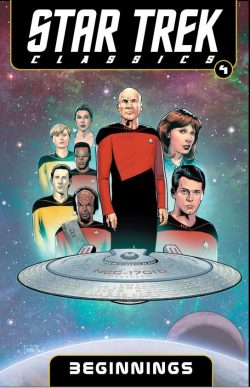
Star Trek Classics Volume 4: Beginnings


By Mike Carlin, Pablo Marcos & various (IDW)
ISBN: 978-1-61377-671-1 (TPB)

Many companies have published comic book adventures based on the exploits of Gene Roddenberry’s legendary brainchild, and the run from the 1980s produced under DC’s aegis were some of the finest. Never flashy or sensationalistic, the tales embraced the same storytelling values as the shows and movies, and were strongly character and plot-driven.

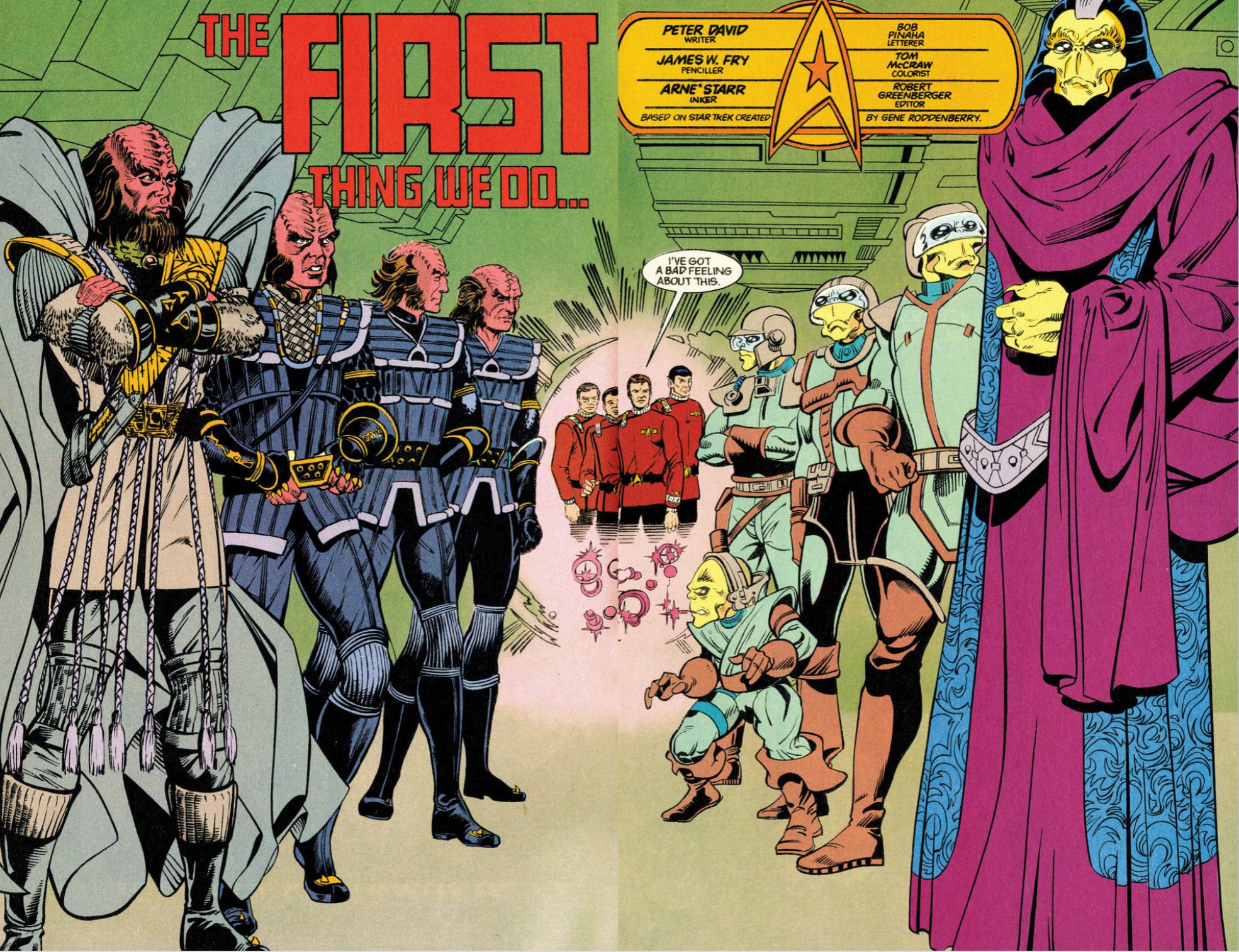
A fine example can be found in this epic primer by long-time writer Michael Carlin, illustrated by the underrated Pablo Marcos, which collects miniseries Star Trek: The Next Generation #1-6 from February – July 1988 and not to be confused with the monthly comic-book that followed it.

With inks by Carlos Garzon & Arne Starr, colours by Carl Gafford and letters from Bob Pinaha, the bold adventures – available in trade paperback or in digital formats you can scan on your personal PADDâ„¢ – commence with double length saga ‘…Where No One Has Gone Before!’

Here, the revamped and reimagined NCC-1701-D starship Enterprise heads into a completely unexplored sector of the galaxy. As freshly-installed and formidably prestigious Captain Jean-Luc Picard acclimatises to his new crew and mission, the ship is fired upon by beings unknown on recently discovered planet Syntagus Thelev.

That’s a bizarre mystery, considering the unseen inhabitants are currently negotiating with the Starfleet vessel and claim they know nothing about the attacks…Although the ship is in no imminent danger, the quandary Picard to despatch a top-level Away Team to find out where the barrages are coming from…

In the end, it requires the uncanny psychic abilities of Ship’s Counsellor Deanna Troi to reveal the uncanny source and motives of the astral assaults…

The second tale is a Christmas yarn wickedly spoofing a certain tale by Dr. Seuss, as ‘Spirit in the Sky!’ finds the Enterprise in festive mode, with the many cultures and families all celebrating their particular version of the Yule Season, before a flock of mysterious strangers invite themselves to the feasts. Happily, their obsessive covert hunt for a eerie energy spirit ends joyously… after a few tense moment and close encounters…

Issues #3-5 comprise an extended repeat confrontation with an apparently omnipotent moral gadfly. ‘Factor Q’ finds the crew assaulted by terrifying memories made real. Particularly targeted is Security Chief Tasha Yar who relives her appalling abusive early years as a survivor of The Colony, when an Away Mission traps her on an alien vessel, even as the almighty Q attempts to seduce Picard into a shooting war with an equally-manipulated stranger ship.

Events escalate in ‘Q’s Day’ as the increasing unstable instigator turns the screw: bringing Yar’s old abuser back to torment her, killing helmsman Geordi LaForge, terrifying the crew and rapidly descending into frustration-induced insanity, before the impossible becomes commonplace as more judgemental intruders from the Q Continuum manifest with their own imponderable agenda in concluding chapter ‘Q Affects!’…

Wrapping up this initial foray into the future, ‘Here Today’ sees Enterprise ordered to investigate seeming paradise planet Faltos via concealed orders somehow hardwired into android crewman Lieutenant Data. An extragalactic Shangri-La, the weird world has – over uncounted eons – been able to pacify and integrate every hostile visitor, but when the benevolent emissaries of the Foundation beam down, they find that the miraculous haven is a unique and inescapable trap…

Or is it?

These tales originate from the earliest days of the TV series so there are a few uncertain moments and quirks of characterisation obsessive fans might quibble over, but overall these are solid adventure yarns in the tried-&-trusted Rodenberry manner that will astound and satisfy Trekkies, Trekkers, comics fans and even the Next-est Generation just coming to the franchise via the current Star Trek: Picard TV revival/revamp…
® & © 2013 CBS Studios Inc. STAR TREK and related marks and trademarks of CBS Studios Inc. © 2013 Paramount Pictures Corporation. All rights reserved.

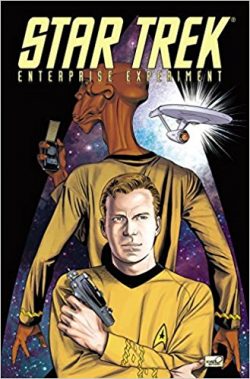
Star Trek: Year Four – The Enterprise Experiment


By D.C. Fontana, Derek Chester, Gordon Purcell, Joe & Rob Sharp & various (IDW)
ISBN: 978-1-60010-279-0

Win’s Christmas Gift Recommendation: A Cosmic Christmas Cracker… 8/10

Star Trek debuted on American televisions on September 8th 1966 and pursued its declared “five-year mission” for three seasons comprising 79 episodes and running until June 3rd 1969.

Although a moderate success, the series only truly became a phenomenon after going into syndication, running constantly in American local TV regions throughout the 1970s. It was also sold all over the world, popping up seemingly everywhere and developing a remarkably passionate and devoted fanbase.

The stellar brand is probably one of the biggest franchise engines on Earth, permeating every merchandisable sector imaginable and becoming part of global popular culture and idiom. You can find daily live-action or animated screen appearances constantly screening somewhere on the planet, toys, games, conventions, merchandise, various comics iterations generated in a host of nations and languages and a reboot of the movie division proceeding apace even as I type this. There’s even a new rebooted TV series Star Trek Discovery…

Many companies have published comicbook adventures based on the exploits of Gene Roddenberry’s greatest brainchild. During IDW’s control of the treasured funnybook license they revived and re-released older iterations crafted by previous licensees and combined those choice selections of vintage exploits with great new tales from every aspect of the fictive universe.

In 2012 the company began adapting, updating and retelling classic episodes of the original 5 Year Mission in the context and with the likenesses of actors from the 2008 rebooted film franchise (as re-imagined by J. J. Abrams, Roberto Orci and Alex Kurtzman). To supplement that graphic reconfiguration IDW also initiated another strand: exploring the most fundamental aspect of the mythology by crafting new tales from the never-filmed Fourth Year of the original mission…

To be strictly accurate, the 1973-1974 animated series from Filmation/Norway Productions is considered by most fans to cover that year and indeed a few of the characters from that era have made it into this story which was originally published in 2007 as 5-issue miniseries Star Trek: Year Four – The Enterprise Experiment before being collected as this engaging paperback or eBook edition.

‘The Enterprise Experiment’ springs from the fertile imagination of Classic Star Trek television scripter Dorothy Catherine “D.C.” Fontana, who wrote ten episodes of the original series and was story editor for the first two seasons. She also wrote for the Animated Series, Next Generation and Deep Space Nine.

Here, with writing partner Derek Chester (Star Trek: Legacy) she explores that aforementioned Fourth Year, whilst revisiting her own teleplay The Enterprise Incident…

With the artists utilising the likenesses of the original 1960s cast, the action begins as Captain Kirk and Mr. Spock pilot the shuttle Galileo towards the Enterprise. It shouldn’t be difficult, but the starship is testing a prototype cloaking device and is not responding as the projections predicted…

After heroic measures and deep cerebrations, the worried officers finally plot their craft aboard the Enterprise only to discover that the crew have utterly vanished. Moreover, even as Spock deduces what has happened and begins fixing the problem, the situation worsens after a Romulan Warbird decloaks to reveal an old enemy Commander who plans to reenergise her stalled career path by capturing the Federation prize, plundering its experimental technology and expiating her pent-up hostilities on the human and Vulcan who made a fool of her…

Blending tense suspense with stirring action this exploit is but a prelude to a far bigger story as the victorious Captain Kirk is plunged into another duel with Klingon enemy Kor.

After they first clashed (in TV episode Errand of Mercy) a highly advanced race calling themselves Organians used their god-like powers to enforce a détente between The Federation and Klingon Empire.

Now however, whilst illegally raiding a human mining colony, Kor has discovered and stolen ancient technology belonging to the primal species known as The Preservers. His plan is to sunder the Organians’ chafing brake on Klingon expansion and revenge himself on Kirk, but the desperate mission to stop him makes allies out of ancient enemies and neatly ties together numerous old exploits to reveal the origins of the great races of the universe and the Great Barrier sealing the galaxy from the greater universe.

And then the Organians return to pass judgement on the Federation and Klingons…

A total treat for lovers of the original series masterfully told and weaving together story-strands every fan grew up with, this is pure Trek gold.

Augmented by inkers Terry Pallot, Drew Geraci, José Marzán, Jr., Tom Nguyen, Bob Smith & Bob Almond, colourists Mario Boon, John Hunt & Jason Jenson and letterers Chris Mowry, Robbie Robbins and Neil Uyetake, veteran Trek illustrator Gordon Purcell delivers drama and tension in his immaculate understated manner, never forgetting that we’re here for the Enterprise crew not flashy graphics.

Supplementing the stellar experience is a full cover “Art Gallery” by the Sharp Brothers & Leonard O’Grady plus Fontana’s ‘Comic Book Proposal’ for the series to complete a heady experience of newly-minted nostalgia.

This is another fabulously enticing, expansive and engrossingly epic compendium of thrills, offering wonderfully engaging stories to delight young and old, fan or casual reader alike, and well worthy of your eager attentions.
STAR TREK ® and © 2008 CBS Studios, Inc. All Rights Reserved. Star Trek and related marks are trademarks of CBS Studios, Inc. All Rights Reserved.

Star Trek Classics volume 1 – The Gorn Crisis


By Kevin J. Anderson, Rebecca Moesta & Igor Kordey (IDW)
ISBN: 978-1-61377-129-7

The Star Trek franchise has had many comic book homes. This action-heavy paperback tome (also available digitally) was originally released in the early years of the 21st century by DC/WildStorm and is narratively positioned during the period when Deep Space 9 was first being broadcast on television.

The book therefore tangentially informs and contributes to a seasons-long storyline featuring an intergalactic war between the Federation and its Alpha Quadrant allies on one side and the J’em Haddar warriors of The Dominion on the other. So if you’re a bugbear, completist or unfamiliar with the mileau, you might be left feeling a little bewildered. Nevertheless if you’re of a forgiving mien this adventure is a real ripsnorter…

In case you were wondering, The Gorn were an aggressive civilisation of reptiles who appeared in an episode of the original 1960s Star Trek TV show. The story was in fact an adaptation of a classic SF short story by Fred Brown entitled “Arena”, in which Captain Kirk and his Gorn opposite number were co-opted by a super-advanced race to represent their species in a brutal duel for galactic supremacy. The loser race would be curbed to avoid horrendous, bloody and nigh-eternal space-war.

A century later mankind and its intergalactic partners are losing just such a conflict with the Dominion and desperately seeking fresh allies. Thus Captain Jean-Luc Picard has been dispatched to the embargoed Gorn solar system to renew relations and broker a military alliance, but the USS Enterprise arrives just as the reptile’s own black-crested Warrior Caste – frustrated by a century of enforced peace – stages a bloody coup and subsequently launches an all-out attack on neighbouring worlds.

These planets are now, perhaps unwisely, packed with human colonists and Federation/Klingon bases…

Beaming down just in time to be captured amidst the remains of the Administrative caste, Picard, Dr. Beverly Crusher and their Away Team are promptly captured and can only subtly influence the outcome as Commanders Will Riker and amazing android Data battle with brilliance on two very different fronts to stop the marauding Gorn war-lovers…

With no back-up available from hard-pressed Starfleet, the Next Generation stalwarts must act independently and ingeniously to quell the barbarous uprising, restore order and build that elusive alliance with the Gorn. Their efforts won’t just dictate how the humans, Federation and reptiles will co-exist in the future, but might well decide if they exist at all…

Although not to everybody’s taste, and despite an occasional certain rough hesitancy in Igor Kordey’s fully-painted artwork, this tale from Kevin J. Anderson & Rebecca Moesta does rattle along in the approved Star Trek manner, and even casual readers will come away with a sense of expectation fulfilled.

Moreover, augmenting the interstellar excitement is a comprehensive fact-file on the sinister sarurians entitled ‘The Gorn Dossier’, contributed by illustrator Kordey who apparently moonlights as a “Federation Anthropologist”. Here he highlights his root and branch redesign of the alien antagonists with biology, language, symbology, livery and weaponry all updated for discerning modern readers

Fast, fierce fun for lovers of high quality Space Opera so boldly go and give it a look.
Star Trek ® & © 2011 CBS Studios, Inc. All Rights Reserved.

Star Trek: Year Four


By David Tischman, Leonard O’Grady, Steve Conley, Gordon Purcell, Joe & Rob Sharp & various (IDW)
ISBN: 978-1-62302-515-1

Win’s Christmas Gift Recommendation: A Cosmic Christmas Cracker… 8/10

Star Trek debuted on American televisions on September 8th 1966 and pursued its declared “five-year mission” for three seasons comprising 79 episodes and running until June 3rd 1969.

Although a moderate success, the series only truly became a phenomenon after going into syndication, running constantly in American local TV regions throughout the 1970s. It was also sold all over the world, popping up seemingly everywhere and developing a remarkably devoted fanbase.

The stellar brand is probably one of the biggest franchise engines on Earth, permeating every merchandisable sector imaginable and becoming part of global popular culture and idiom. You can find daily live-action or animated screen appearances constantly screening somewhere on the planet, toys, games, conventions, merchandise, various comics iterations generated in a host of nations and languages and a reboot of the movie division proceeding apace even as I type this. There’s even a new rebooted TV series beginning in 2017…

Many companies have published comicbook adventures based on the exploits of Gene Roddenberry’s greatest brainchild. Currently IDW have the treasured funnybook license and have combined choice selections of older exploits from other publishers with great new tales.

In 2012 the company began adapting, updating and retelling classic episodes of the original Five Year Mission in the context and with the likenesses of actors from the 2008 rebooted film franchise (as re-imagined by J. J. Abrams, Roberto Orci and Alex Kurtzman). To supplement that graphic reconfiguration IDW also initiated another strand: exploring the most fundamental aspect of the mythology by crafting new tales from the never-filmed Fourth Year of the original mission…

To be strictly accurate, the 1973-1974 animated series from Filmation/Norway Productions is considered by most fans to cover that year and indeed a few of the characters from that era have made it into this book…

This full-colour collection – also available as an eBook – gathers tales from July-December 2007, comprising the first six issues of Star Trek: Year Four plus material from Focus on… Star Trek. It begins with a scene-setting recap from series scripter David Tischman & visiting illustrator Leonard O’Grady who reintroduce the cast via the ‘Captain’s Personal Log’…

Tischman & Steve Conley then get boldly going as the Enterprise encounters a bizarre syzygy of planets, moons and asteroids forming a double helix. Beaming down to The Strand, Captain Kirk, Mr. Spock and Dr.McCoy meet flamboyant geneticist Dr. Othello Beck who has appropriated the millennia-old abandoned medical facility and its wealth of data.

Seemingly benign and welcoming, Beck is happy to show them his recent successes such as subservient, recreated alien lifeforms, both alluring and ferociously aggressive. However, when a security officer is butchered and McCoy’s technical questions start to hit home, a dreadful secret is uncovered and Beck’s actual motives are revealed. It’s not long until the shooting starts…

Conley then illuminates a tale of civil strife as the Enterprise stops at ice world Aarak 3 to replenish her stores of Dilithium Crystals and finds the kingdom riven by rebellion and terrorism. Whilst King Marak welcomes the technological advancement trading crystals brings, many of his subjects still worship the mineral and consider bartering it to offworlders as blasphemy and sacrilege…

Of course, once Kirk and his crew begin to investigate and both sides try to kill them a different picture begins to emerge…

Veteran Trek artist Gordon Purcell illustrates the next mission as a stopover on colony world Phi-11 reveals that the entire population died suddenly of brain trauma. When the crew start acting oddly, it becomes clear that a lethal virus has invaded the sterile corridors of the USS Enterprise. Unfortunately for Nurse Christine Chapel, the truth is far stranger and soon she is battling her mind-controlled comrades to return a lost sentience to its place of origin…

Social commentary was a key part of the original TV series and here manifests as the Federation ship begins a cultural exchange mission on Viden – a world where the entertainment industry is the planetary government.

Tempers fray and Kirk’s landing party are arrested when an extra is killed on the set of a popular show, and soon the “spacemen” visitors are involved in a ratings war. If rival networks cannot outbid each other to own the Federation sensation they are ready and willing to eradicate them in a wry romp by Tischman and artists Joe & Rob Sharp.

In issue #5 Conley returned to depict the horrific results of a deep space experiment. Gemini was intended to prove the existence of Quark Gluon plasma, and went ahead despite the warnings of Enterprise helmsman Arex who predicted the unleashed energies could create an uncontrollable gravitational anomaly that would cause incalculable harm.

Of course the doomsayer is correct and the resulting phenomenon sucks in the Gemini Station, all its scientists and visiting supervisor Spock…

With the Quark Gluon cloud rapidly becoming a black hole, the entire region is endangered and to make matters worse a communication is received demonstrating that somewhere inside the anomaly the Vulcan is still alive…

Happily, both the time-dilated Spock and his shipboard replacement Temporary Science Officer Chekov have simultaneously and separately concocted a desperate last-ditch survival plan…

Wrapping up this volume of untold voyages, Tischman & Purcell reunite to detail a doomed rescue mission with the Enterprise systematically scanning the third planet of the Gobi system for signs of lost hospital ship USS Pasteur.

What they find instead is an automated horror-factory where an ancient robotic nursery system strip-mines visiting life for DNA and other elements to create a new generation of trans-species babies for sterile clients who have long since died out…

With a full covers-&-variants gallery by Kelsey Shannon, Conley & Joe Corroney, this is another fabulously enticing, expansive and engrossingly epic compendium of thrills, offering wonderfully engaging stories to delight young and old, fan or casual reader alike, and well worthy of your eager attentions.
STAR TREK ® and © 2008 CBS Studios, Inc. All Rights Reserved. Star Trek and related marks are trademarks of CBS Studios, Inc. All Rights Reserved.

Star Trek: Gold Key Archives volume 5


By Arnold Drake, John David Warner, George Kashdan, Allan Moniz, Alfredo Giolitti & various (IDW)
ISBN: 978-1-63140-598-3

Star Trek launched in the USA on September 8th 1966, running until June 3rd 1969: three seasons comprising 79 episodes. A moderate success, the show only really achieved its stellar popularity after going into syndication; appearing in all American local TV regions perpetually throughout the 1970s and beyond.

It was also sold all over the world, popping up seemingly everywhere and developing a fanatically devoted fanbase.

Comicbook franchising specialist Gold Key produced a series which ran for almost a decade beyond the show’s cancellation. Initially these were controversially quite dissimilar from the screen iteration, but by the time of the tales in this sturdy full-colour hardback collection (reprinting issues #25-28 and #30-31 from July 1974 to July 1975), quibbling fans had little to moan about and a great deal to cheer as the series was the only source of new adventures starring the beloved crew of the Starship Enterprise.

Following an Introduction – ‘Discovering New Tales’ by Trek writer expert Bjo Trimble – the exploratory escapades resume with a fast-paced thriller written by Arnold Drake and illustrated as always by Alberto Giolitti.

Here the USS Enterprise arrives at a planet which seems recently deserted, only to discover aberrant solar radiation is causing planetary matter and objects to shrink into non-existence. With the landing party captured by the diminishing natives, Chief Engineer Scott investigates the sun itself and gets a major overdose of the radiation. In a desperate race against time, Mr. Spock and Dr. McCoy must pull out all the stops to save the incredible shrinking man and the ‘Dwarf Planet’…

John David Warner scripted and Angelo Todaro assisted Giolitti in crafting ‘The Perfect Dream’ for the next issue as the Enterprise crew face a Starfleet board of inquiry after their last mission ends with the obliteration of a planet.

As the testimony unfolds the bemused officials hear the incredible story of an unstable world-sized ship, a utopian culture chillingly reminiscent of Earth’s feudal Shogunate of Japan, a deranged geneticist using clones to build an impossibly idealised and stratified society and a mad scheme to repeat the experiment with Vulcans grown from Spock’s stolen DNA…

In ‘Ice Journey’ (Warner & Giolitti) the Enterprise is conducting a highly suspect population survey on sub-arctic world Floe I which soon drops Captain Kirk, Spock and evolutionary specialist Dr. Krisp into the middle of a eugenics-fuelled race war…

‘The Mimicking Menace’ – written by George Kashdan – pits the veteran starmen against deadly duplicates of themselves on a bleak volcanic asteroid before they discover the attacks and bizarre energy drains are the result of First Contact with a radically new form of life…

Star Trek #29 was a reprint of the very first issue so we skip here to #30 and ‘Death of a Star’ (scripted by Allan Moniz) with the Enterprise on site to observe a star going nova and catapulted into calamity as sensors pick up a planet full of life-readings where none should be. Moving swiftly to evacuate the endangered beings they are astonished to discover only one creature: an old woman who claims to be the dying sun…

Warner then concludes the entertainment with ‘The Final Truth’ with the Starfleet vessel officiating as new planet Quodar officially joins the Federation. The mission goes dreadfully awry after Captain Kirk’s shuttle – full of crewmembers and a Starfleet Admiral – crashes on pariah world Tristas where the survivors are captured by sadistic scientists obsessed with discovering the secrets of life. As Spock organises a rescue mission the embattled Kirk uncovers a staggering cosmic secret the Ministers of Science have been carefully concealing for eons…

Rounding out this compelling compendium are cast photos, a gallery of painted covers and a picture-packed historical feature highlighting ‘George Wilson: Gold Key Reprints’. Stunning sci fi thrills and dashing derring-do abound in this thrilling collection of comics classics which will delight not just TV devotees and funnybook fans but also any reader in search of a pictorially powerful grand adventure.
® and © 2016 CBS Studios, Inc. Star Trek and related marks are trademarks of CBS Studios, Inc. All Rights Reserved.
Star Trek Gold Key Archive volume 4


By Arnold Drake, John David Warner, Gerry Boudreau, Alfredo Giolitti & various (IDW)
ISBN: 978-1-63140-449-8

Star Trek launched in the USA on September 8th 1966, running until June 3rd 1969: three seasons comprising 79 episodes. A moderate success, the show only really achieved its stellar popularity after going into syndication; running constantly in American local TV regions throughout the 1970s.

It was also sold all over the world, popping up seemingly everywhere and developing a fanatically devoted fanbase.

There was very little merchandising but an inevitable comicbook – from franchising specialist Gold Key – which ran for almost a decade beyond the show’s cancellation. The initial comics tales were controversially quite dissimilar from the screen episodes in many details, but by the time of the tales in this sturdy full-colour hardback collection (reprinting Star Trek #19-24 from July 1973 to May 1974), most inconsistencies had been ironed out and Italian superstar illustrator Alberto Giolitti had hit a peak of creativity.

Following Introduction ‘Where No Star Trek Comic Had Gone Before’ from Trek merchandising expert Paula M. Block, the trans-galactic trips resume with ‘The Haunted Asteroid’ – written by Arnold Drake and offering a rare Stateside inking job by Sal Trapani over Giolitti’s pencils – as the Starship Enterprise is despatched to investigate uncanny events at the universe’s most romantic tourist spot: a glittering space tomb built by an ancient ruler as a tribute to his lost love.

Before long the crew too are experiencing bizarre visions and seemingly supernatural visitations, leading Captain Kirk and his team to uncover an even more amazing solution and proof that true love is eternal…

Drake & Giolitti then detail how the odious task of escorting spoiled brat Crown Prince Raviki home to take up the reins of government becomes a deadly affair after planet Nukolee becomes ‘A World Gone Mad’. Moreover, whatever poisoned the minds of the boy’s subjects soon starts affecting the crew of the Enterprise…

John David Warner scripted ‘The Mummies of Heitius VII’ as Kirk and Company are ordered to escort an archaeological find to a research facility. When the body in question comes to life and shanghais the ship, the Captain, Mr. Spock and Dr. McCoy are drawn into a terrifying struggle against ancient automatons programmed to turn organic beings into slave cyborgs…

‘Siege in Superspace’ – written by Gerry Boudreau – sees the Enterprise drawn through a black hole into a higher realm and sucked into a war between humanoid refugees and ghastly war-machines grown by a marauding artificial intelligence from the flora and geology of their homeworld…

‘Child’s Play’ (also by Boudreau) follows a desperate SOS to a planet wracked by plague and devoid of adults. Infected by a disease which kills in days, the starship crew’s search for a cure is hampered by bellicose kids indulging in full-contact war games and well used to seeing everybody die before their thirteenth birthday…

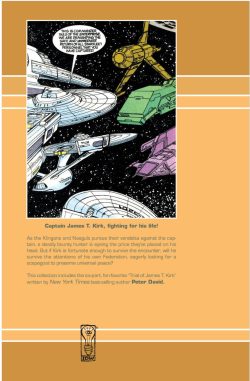
This cosmic compendium concludes with another Drake & Giolitti collaboration as ‘The Trial of Captain Kirk’ finds the bold hero back on Earth to answer charges of bribery, corruption and collusion with pirates.

Subject of a most assiduous frame-up, Kirk happily acts as a stalking horse while Spock, McCoy and Engineer Scott ferret out the real traitor: a trail which leads into the highest echelons of Star Fleet…

Rounding out this compelling collection is a gallery of painted covers and a remarkably scanty biographical feature ‘George Wilson: About the Artist’; a man of immense imagination, prodigious talent and prolific output, but one about whom precious little is known.

Straightforward sci fi thrills and dashing derring-do pack this thrilling and astoundingly compelling collection of comics classics which will delight not just TV fans and comics collectors but also any reader in search of a graphically superior good time.
® and © 2015 CBS Studios, Inc. Star Trek and related marks are trademarks of CBS Studios, Inc. All Rights Reserved.