The Phoenix Presents… Bunny vs. Monkey Book One


By Jamie Smart (David Fickling Books)
ISBN: 978-1-910200-07-0

The other day I heaped much well-deserved praise upon Von Doogan and the Curse of the Golden Monkey whilst congratulating David Fickling Books both on its superb weekly comic The Phoenix and new line of graphic albums.

I also noted that their first two book releases had made this year’s list for The Reading Agency’s prestigious Summer Reading Challenge (which begins on 12th July): the first comic-books ever to have been awarded such an honour. It seems only fair then that I cover that other nominee – especially as it’s one of the funniest all-ages books I’ve seen in years.

Concocted with gleefully gentle mania by Jamie Smart (Fish Head Steve!), Bunny vs. Monkey has been a fixture in The Phoenix from the very first issue, a madcap duel of animal arch rivals set amidst the idyllic arcadia of a more-or-less ordinary English Wood.

With precious little unnecessary build-up The Phoenix Presents… Bunny vs. Monkey opens with a ‘Prologue!’ introducing placid, wise, helpful Bunny and not-so-smart pals Pig and Weenie Squirrel.

The foolish innocents have found a hibernating bear and Bunny really wants them to stop trying to wake it up. Meanwhile, over the hill and not so faraway, a bunch of boffins are attempting to launch a really annoying monkey into space…

Year One: January to June then commences a barrage of seasonal silliness as the proposed launch goes hideously awry and the loud, stroppy, obnoxious simian lands in the snow covered glade and declares himself king of this strange alien world in with ‘Bunny vs. Monkey’ …

Monkey loves noise, strife, chaos and trouble and wants to raise a rumpus – everything genteel, contemplative Bunny abhors – so when the apish astronaut introduces techno music in ‘Keep it Down!’ the lines of battle are irrevocably drawn…

Thing escalate in February ‘When Monkey Met Skunky’: a brilliant inventor with a bombastic line in animal-inspired terror weapons such as the Cluck Cluck Zeppelin used to bomb the woods with 10-year old rotten eggs or the giant metal robot hands which give the destructive Monkey ‘Fists of Furry’…

The winter draws on with ‘Soggy ‘n’ Froggy’ wherein a monstrous Frog-O-Saurus becomes the wicked duo’s latest Weapon of Meadow Destruction, after which poor little Pig is transformed into cyborg sensation Pig-O-Tron 5000 in ‘Robo-Chop’ and a simple change of pace sees Weenie and Pig put on a circus show to counter all the nasty animosity but get painfully caught ‘Clowning Around’…

Up until now Monkey has been risking his own pelt road testing all Skunky’s inventions, but when a bewildered former stuntman turns up the sneaky simian is happy to leave all the dangerous stuff to ‘Action Beaver’…

March leads to a profusion of beautiful buds and blossoms which delight the soul of nature loving Bunny.

Tragically they utterly disgust Monkey, who tries to eradicate all that flora in ‘Down with Spring!’ until he comes a-cropper thanks to a sack of spiky Hodgehegs, whilst in ‘Bonjour, Le Fox’ the spacy invader finally goes too far, forcing Bunny to align with a rather radical environmentalist possessed of a big, bushy tail and a French accent…

Some of Bunny’s friends are their own worst enemies. ‘Race to the Moon!’ sees Weenie and Pig build their own spaceship out of natural materials like moss and mushrooms only to have Monkey disastrously commandeer it, after which Skunky builds a terrifying cyber crocodile dubbed ‘Metal Steve!’ which promptly ignores its perfidious programming to spend the day swimming.

Such failures thus compel Monkey to steal a steamroller to personally get rid of all that hateful, ugly cherry blossom infesting the trees in ‘Rollin’ Rollin’ Rollin’!’

The war against nature intensifies in April as ‘Eat Your Greens!’ finds Skunky’s Caterpillar-Zilla devouring the forest foliage until a real creepy crawly steps in, whilst ‘The Whuppabaloo!’ shows the niffy tinkerer’s softer side as he drags Monkey on a wilderness trek to track down the most amazing thing in nature…

‘Hide and Squark!’ depicts the rabbit’s fight back thanks to the double-dealing help of a certain giant parrot, after which a momentary détente for a spot of angling soon turns into another heated duel in ‘Fish Off!’

There’s a brief falling out of the axis of evil in May as ‘Invisi-Monkey’ sees the strident simian squabbling with Skunky to possess a sneaky stealth suit before reuniting to spoil a joyous game of Cake-Ball with their monolithic, monstrous ‘Mole-a-Rolla!’ After that Monkey attempts to turn the Wood into an oil field in ‘Black Gold’ before spoiling Bunny’s dream of a ‘Quiet Day!’ with a giant Robot Cockroach…

Blazing June opens with ‘Bring Him Back!’ as Action Beaver attempts to retrieve watery wanderer Metal Steve whilst simple souls Weenie and Pig accidentally kick off an invention Armageddon which only gets worse when that long-slumbering ursine finally wakes up in ‘Who’s Afraid of the Big Bad Bear?’

‘The Bat!’ apparently introduces a nasty new faction to the ongoing conflict (but all is not as it seems), and there’s no confusing the stakes when Bunny agrees to a winner-take-all fight in ‘Wrestlepocalypse!’ where Monkey learns that cheats never prosper…

Just when things seem likely to settle down fresh chaos ensue when a violent piratical rabbit with an eye-patch storms in to cause stir up trouble in ‘Bunny B!’ leaving us with the delightful prospect of more hair-raising, masterfully magical cartoon mayhem to come…

Endlessly inventive, sublimely funny and outrageously addictive, Bunny vs. Monkey is the kind of comic parents beg the kids to read to them. Don’t miss out on the next big thing.

Text and illustrations © Jamie Smart 2014. All rights reserved.

The Phoenix Presents… Von Doogan and the Curse of the Golden Monkey


By Lorenzo Etherington (David Fickling Books)
ISBN: 978-1-910200-02-5

These days, young kids are far more likely to find their formative strip narrative experiences online or between the card-covers of specially tailored graphic novels rather than the comics and periodicals of my long-dead youth.

Once upon a time, however, the comics industry was a commercial colossus which thrived by producing copious amounts of gaudy, flimsy pamphlets in a multitude of subjects and sub-genre, all subdivided into a range of successful, self-propagating, seamlessly self-perpetuating age-specific publications.

Such eye-catching items generated innumerable tales and delights intended to entertain, inform and educate such well-defined target demographics as Toddler/Pre-school, Younger and Older Juvenile, General, Girls, Boys and even Young Teens, but today Britain can only manage to maintain a few paltry out-industry licensed tie-ins and spin-offs for a dwindling younger readership.

Where once cheap and prolific, strip magazines in the 21st century are extremely cost-intensive and manufactured for a highly specific – and dying – niche market, whilst the beguiling and bombastic genres that originally fed and nurtured comics are more immediately disseminated via TV, movies and assorted interactive media.

There are one or two venerable, long-lived holdouts such as the Beano and 2000AD but overall the trend has been downwards for decades.

That maxim was happily turned on its head in January 2012 when Oxford-based family publisher David Fickling Books launched The Phoenix: a traditional-seeming anthology comic weekly aimed at girls and boys between 6 and 12 which revelled in reviving the good old days of picture-story entertainment Intent whilst embracing the full force of modernity in style and Content.

Each issue offers humour, adventure, quizzes, puzzles and educational material in a joyous parade of cartoon fun and fantasy and, in the years since its premiere, the comic has gone from strength to strength, winning praise from the Great and the Good, child literacy experts and the only people who really count – the astoundingly engaged kids and parents who read it…

The Phoenix was recently voted No.2in Time Magazine‘sglobal list of Top Comics and Graphic Novels and is the only strip publication started in the UK in the last forty years to have reached issue #100 (#129 and counting). The magazine celebrated its first anniversary by developing a digital edition available globally as an iPad application and is continually expanding its horizons.

It is, most importantly, big and bold and tremendous fun.

Moreover, whilst comics companies all seem to have given up the ghost, in this country at least, old-school prose publishers and the newborn graphic novel industry have evolved to fill their vacated niche.

With a less volatile business model and far more sustainable long-term goals, book sellers have prospered from magazine makers’ surrender, and there have never been so many and varied cartoon and comics chronicles, compilations and tomes for readers to enjoy.

Happily at long last many of the serials and series in The Phoenix have finally joined that growing market, having been superbly repackaged as graphic albums with the first two debuting in July 2014.

Both have already been selected for The Reading Agency’s prestigious Summer Reading Challenge (which begins on 12th July): the first comic-books ever to have featured on a Summer Reading Challenge list.

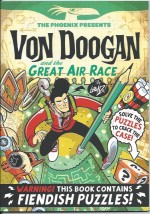
The one we’re looking at today is The Phoenix Presents… Von Doogan and the Curse of the Golden Monkey: a dazzling display of cartoon virtuosity and brain-bursting comic challenges composed by Lorenzo Etherington, originally seen as captivating, addictively challenging weekly instalments of The Dangerous Adventures of Von Doogan.

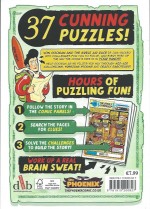
The serialcombines captivating cartoon narrative with observational tests, logic puzzles and other kids’ favourite brain-teasers, craftily taking readers and participants on a magnificently constructed progressive voyage of adventure and discovery in 37 clue, game, maze and mystery-packed episodes.

Von Doogan and his partner in peril Jake Wingnut are brilliant and intrepid young explorers with a keen sense of justice and an insatiable thirst for action who here tackle all manner of conundra and – with your help – track down a band of pirate cutthroats, battle a magical monster and rescue a fantastic treasure from obscurity by solving such imposing posers as ‘The Nine Locks’, ‘The Telltale Cell’, ‘A Knotty Problem’ and ‘Finding Captain Nemo’ …

Naturally we aren’t all as smart as Von Doogan or a six-year old so this spectacular colourful cornucopia comes with a page explaining ‘How the Book Works’, an ‘Equipment Checklist’ and a fulsome secret section giving extra help with ‘The Clues’ and thankfully ‘The Solutions’.

There’s even a free printable download page providing your own handy dandy copy of ‘Doogan’s Danger Kit’ to stop you cutting up the one in this mesmerising manuscript of mystery.

Story! Games! Action! …and all there in the irresistible shape of entertaining pictures. How much cooler can a book get?
Text and illustrations © Lorenzo Etherington 2014. All rights reserved.

The Reading Agency is a charity whose mission is to give everyone an equal chance in life by helping people become confident and enthusiastic readers. The Summer Reading Challenge encourages children aged 4 to 11 to read six books during the long summer holiday.

Children can read whatever they like just as long as they are borrowed from the library. Every time children finish a book they get stickers and rewards and there’s a certificate for everyone who finishes. The Summer Reading Challenge is open to all school children and is designed for all reading abilities.

Visit www.readingagency.org.uk

To find out more about The Phoenix or subscribe, visit: www.thephoenixcomic.co.uk

Barnaby volume 2


By Crockett Johnson (Fantagraphics Books)
ISBN: 978-1-60699-709-3

This is one of those rare books worthy of two reviews. So, if you’re in a hurry…

Buy Barnaby volume 2 now – it’s one of the five best comic strips of all time and this superb hardcover compilation has lots of fascinating extras. If you harbour any yearnings for the lost joys of childish wonder and the suspicious glee in catching out adults trying to pull a fast one, you would be crazy to miss this book…

However, if you’re still here and need a little more time to decide…

Today’s newspapers have precious few continuity drama or adventure strips. Indeed, if a paper has any strips – as opposed to single panel editorial cartoons – chances are they will be of the episodic variety typified by Jim Davis’ Garfield or Scott Adams’ Dilbert.

You might describe these as single-idea pieces with a set-up, delivery and punch-line, all rendered in a sparse, pared-down-to-basics drawing style. In that they’re nothing new and there’s nothing wrong any of that ilk on their own terms.

Narrative impetus comes from the unchanging characters themselves, and a building of gag-upon-gag in extended themes. The advantage to the newspaper is obvious. If you like a strip it encourages you to buy the paper. If you miss a day or two, you can return fresh at any time having, in real terms, missed nothing.

Such was not always the case, especially in America. Once upon a time the daily “funny” – comedic or otherwise – was a crucial circulation builder and preserver, with lush, lavish and magnificently rendered fantasies or romances rubbing shoulders with thrilling, moody masterpieces of crime, war, sci-fi and everyday melodrama. Even the legion of humour strips actively strived to maintain an avid, devoted following.

And eventually there was Barnaby, which in so many ways bridged the gap between then and now.

On April 20th 1942, with America at war for the second time in 25 years, the liberal New York tabloid PM began running a new, sweet little kid’s strip which was also the most whimsically addicting, socially seditious and ferociously smart satire since the creation of Al Capp’s Li’l Abner – another utter innocent left to the mercy of scurrilous worldly influences…

The outlandish 4-panel daily, by Crockett Johnson, was the product of a perfectionist who didn’t particularly care for comics, but who – according to celebrated strip historian Ron Goulart – just wanted steady employment…

David Johnson Leisk (October 20th 1906-July 11th 1975) was an ardent socialist, passionate anti-fascist, gifted artisan and brilliant designer who had spent much of his working life as a commercial artist, Editor and Art Director.

Born in New York City and raised in the outer wilds of Queens when it was still semi-rural – very near the slag heaps which would eventually house two New York World’s Fairs in Flushing Meadows – “Dave” studied art at Cooper Union (for the Advancement of Science and Art) and New York University before leaving early to support his widowed mother. This entailed embarking upon a hand-to-mouth career drawing and constructing department-store advertising.

He supplemented his income with occasional cartoons to magazines such as Collier’s before becoming an Art Editor at magazine publisher McGraw-Hill. He also began producing a moderately successful, “silent” strip called The Little Man with the Eyes.

Johnson had divorced his first wife in 1939 and moved out of the city to Connecticut, sharing an ocean-side home with student (and eventual bride) Ruth Krauss, always looking to create that steady something when, almost by accident, he devised a masterpiece of comics narrative…

However, if his friend Charles Martin hadn’t seen a prototype Barnaby half-page lying around the house, the series might never have existed. Happily Martin hijacked the sample and parlayed it into a regular feature in prestigious highbrow leftist tabloid PM simply by showing the scrap to the paper’s Comics Editor Hannah Baker.

Among her other finds was a strip by a cartoonist dubbed Dr. Seuss which would run contiguously in the same publication. Despite Johnson’s initial reticence, within a year Barnaby had become the new darling of the intelligentsia…

Soon there were book collections, talk of a Radio show (in 1946 it was adapted as a stage play), a quarterly magazine and rave reviews in Time, Newsweek and Life. The small but rabid fan-base ranged from politicians and the smart set such as President and First Lady Roosevelt, Vice-President Henry Wallace, Rockwell Kent, William Rose Benet and Lois Untermeyer to cool celebrities such as Duke Ellington, Dorothy Parker, W. C. Fields and even legendary New York Mayor Fiorello La Guardia.

Of course the last two might only have checking the paper because the undisputed, unsavoury star of the strip was a scurrilous if fanciful amalgam of them both…

Not since George Herriman’s Krazy Kat had a piece of popular culture so infiltrated the halls of the mighty, whilst largely passing way over the heads of the masses and without troubling the Funnies sections of big circulation papers.

Over its 10-year run (April 1942 to February 1952), Barnaby was only syndicated to 64 papers nationally, with a combined circulation of just over five and a half million, but it kept Crockett (a childhood nickname) and Ruth in relative comfort whilst America’s Great and Good constantly agitated on the kid’s behalf.

What more do you need to know?

One dark night a little boy wished for a Fairy Godmother and something strange and disreputable fell in through his window…

Barnaby Baxter is a smart, ingenuous and scrupulously honest pre-schooler (four years old to you) and his ardent wish was to be an Air Raid Warden like his dad. Instead he was “adopted” by a short, portly, pompous, mildly unsavoury and wholly discreditable windbag with pink pixie wings.

Jackeen J. O’Malley, card carrying-member of the Elves, Gnomes, Leprechauns and Little Men’s Chowder and Marching Society – although he hadn’t paid his dues in years – unceremoniously installed himself as the lad’s Fairy Godfather. A lazier, more self-aggrandizing, mooching old glutton and probable soak (he certainly frequented taverns but only ever raided the Baxter’s icebox, pantry and humidor, never their drinks cabinet…) could not be found anywhere.

Due more to intransigence than evidence – there’s always plenty of physical proof, debris and fallout whenever O’Malley has been around – Barnaby’s mum and dad adamantly refuse to believe in the ungainly, insalubrious sprite, whose continued presence hopelessly complicated the sweet boy’s life.

The poor parents’ greatest abiding fear was that Barnaby was cursed with Too Much Imagination…

At the end of the previous volume O’Malley became implausibly – and almost overnight – an unseen and reclusive public Man of the Hour, preposterously translating that cachet into a political career by accidentally becoming a patsy for a corrupt political machine. In even more unlikely circumstances O’Malley was elected to Congress…

This strand gave staunchly socialist cynic Johnson ample opportunity to ferociously lampoon the electoral system, the pundits and even the public. As usual Barnaby’s parents had to perpetually put down their boy: assertively assuring him that the O’Malley the grown-ups had elected was not a fat little man with pink wings…

Despite looking like a fraud – he’s almost never seen using his magic and always has one of Dad’s stolen panatela cigars as a substitute wand – J. J. O’Malley is the real deal: he’s just incredibly lazy, greedy, arrogant and inept. He does sort of grant Barnaby’s wishes though… but never in ways that might be wished for…

Once O’Malley had got his foot in the door – or rather through the bedroom window – a succession of bizarre characters began to regularly turn up to baffle and bewilder Barnaby and Jane Shultz, the sensible little girl next door.

Even the boy’ new dog Gorgon was an oddity. The pooch could talk – but never when adults were around, and only then with such overwhelming dullness that everybody listening wished him as mute as every other mutt…

The mythical oddballs and irregulars included timid ghost Gus, Atlas the Giant (a two foot tall, pint sized colossus who was not that impressive until he got out his slide-rule to demonstrate that he was, in truth, a mental Giant) and Launcelot McSnoyd, an invisible Leprechaun who was O’Malley’s personal gadfly: always offering harsh, ribald counterpoints and home truths to the Godfather’s self-laudatory pronouncements…

Johnson continually expanded his gently bizarre cast of gremlins, ogres, ghosts, policemen, Bankers, crooks, financiers and stranger personages – all of whom could see O’Malley – but the unyieldingly faithful little lad’s parents were always too busy and too certain that the Fairy Godfather and all his ilk were unhealthy, unwanted, juvenile fabrications.

This second stupendous collection opens with a hearty appreciation from Jules Feiffer in the Foreword before cartoonist, biographer and historian R. C. Harvey provides a critical appraisal in ‘Appreciating Barnaby and the Power of Imagination’ after which the captivating yarn-spinning takes us from January 1st 1944 to December 31st 1945.

There’s even more elucidatory content at the back after all those magic-filled pictures too, as education scholar and Professor of English Philip Nel provides another fact-filled, scene-setting, picture-packed ‘Afterword: O’Malley Takes Flight’ and Max Lerner’s 1943 PM feature ‘Barnaby’s Progress’ is reprinted in full.

Nel also supplies strip-by-strip commentary and background in ‘The Elves, Leprechauns, Gnomes, and Little Men’s Chowder & Marching Society: a Handy Pocket Guide’…

However what we all love is comics so let’s jump right in as the obese elf gets caught up in exhibiting his miniscule expertise in ‘The Manly Art of Self-Defense’ (which ran from 28th December 1943 to 19th January 1944), and follows Mr. Baxter’s purchase of a few items of exercise equipment.

Always with an eye to a fast buck, O’Malley organises a prize fight between poor gentle Gus and the obstreperous Brooklyn Leprechaun, all whilst delaying his long overdue return to the Capitol.

The godfather is expert in delay and obfuscation but eventually, in a concatenation of curious circumstances, the Congressman buckles under pressure from both his human and fairy-folk constituents to push through a new hydroelectric project – in actuality two vastly different ones – and wings off to begin the process of funding ‘The O’Malley Dam’ (20th January – 22nd April)…

As the political bandwagon gets rolling, further hindered by Mr. Baxter and Barnaby visiting the Congressman’s never-occupied office in Washington DC, the flighty, easily distracted O’Malley takes it upon himself to enscribe the natural history of his people in ‘Pixie Anthropology’ (24th April-18th May), even as back home the Big Fight gets nearer and poor Gus continues to flap under his punishing training regimen…

‘Mr. O’Malley, Efficiency Expert’, which ran from 19th May to 8th June, then saw the Fairy Fool step in when overwork and worry laid Mr. Baxter low. The factory manager was pilloried by concerns over production targets, but whilst he was remanded to his sickbed, the flying figment was busy “fixing” the crisis for him…

During that riotous sequence another oddball was introduced in the diminutive form of Gridley the Salamander: a “Fire Pixey” who couldn’t raise a spark even if supplied with matches and gasoline…

The under-worked winged windbag was a master of manipulation and ‘O’Malley and the Buried Treasure’ (9th June – 7th September) saw the airborne oaf inveigle invitations for the Baxters to the beachside cottage owned by Jane’s aunt. Once there it wasn’t long before avaricious imagination and a couple of old coins spawned a rabid gold rush amongst the adults who really should have known better.

The extended vacation also saw the first appearance of moisture-averse sovereign of the seas Davy Jones…

Whilst the Congressman was busily avoiding work, his seat vanished during boundary reorganisation, but ever-undaunted the pixilated political animal soldiered on, outrageously campaigning in the then-ongoing Presidential Election throughout the cruelly hilarious ‘O’Malley for Dewey’ (8th September – 8th November 1944)…

Newspaper strips always celebrated seasonal events and, after the wry satire of the race for power, whacky whimsy was highlighted with the advent of ‘Cousin Myles O’Malley’ (9th – 24th November). The puny Puritan pixie had come over on the Mayflower and was still trying to catch a turkey for his very first Thanksgiving Dinner.

Naturally his take-charge, thoroughly modern relative was a huge (dis)advantage to his ongoing quest…

With Christmas fast approaching, an injudicious expression from Ma Baxter regarding a fur wrap sets Barnaby and his Fairy guardian on the trail of the fabled and fabulous, ferocious ermine beast and sees the introduction of ‘The O’Malley Fur Trading Post’ (25th November 1944 to 27th January 1945).

Although legendary and mythical gnomish huntsman J. P. Orion fails to deliver, an unlucky band of fur thieves fall into the hunters’ traps and soon find their latest haul missing. Before long poor Mr. Baxter is looking at the chilling prospect of jail time for receiving stolen property…

With the global conflict clearly drawing to a close, Johnson threw himself into the debate of what the post-War world would be like in a swingeing attack on the financial system and the greedy gullibility of professional money men. Barnaby and most especially his conniving godfather almost shatter the American commercial world in a cunning fable entitled ‘J.J. O’Malley, Wizard of Wall Street’ (29th January – 26th May)…

With America still reeling, the ever-unfolding hilarity took an arcane turn and saw Mr. Baxter suffer more than the usual degree of personal humiliation and confusion when he took Barnaby, Gorgon and Jane for a short walk and lost them in the littlest woods in America.

They had of course been led astray by O’Malley who accidentally dumped them on ‘Emmylou Schwartz, Licensed Witchcraft Practitioner’ (28th May – 3rd July). She had been in a bad mood since the Salem Witch Trials…

As a result of this latest unhappy encounter and a shameful incident with a black cat, the dogmatic dog was hexed and became ‘Tongue-Tied Gorgon’ (4th – 10th July)… not that most people could tell…

When Barnaby’s Aunt Minerva wrote a bestseller, O’Malley felt constrained to guide her budding career in ‘Belles Lettres’ (11th July – 17th August). The obnoxious elf was a little less keen when he discovered it was only a cookbook, but perked up when it led to Minerva being offered a newspaper column.

Being an expert in this field too, O’Malley continued his behind-the-scenes support amidst ‘The Fourth Estate’ (18th August-8th September), renewing his old acquaintance with an impishly literal Printers Devil named Shrdlu…

Despite O’Malley’s best efforts Minerva remained a success and was soon looking for her own place. In ‘Real Estate’ (10th September – 10th October), Barnaby was helpless to prevent poor Gus being used by the godfather as a ghostly goad to convince a spiritualist-obsessed landlady to let to his aunt rather than a brace of conmen…

A perfect indication of the wry humour that peppered the feature can be seen in ‘Party Invitations’ which ran from 11th – 20th October as O’Malley attempts to supersede the usual turkey-and-fixin’s feast with a fashionable venison banquet – even though he can’t catch a deer and won’t be cooking it once it’s been butchered…

Congruent with that was the introduction of erudite aborigine ‘Howard the Sigahstaw Indian‘ (22nd October-23rd November) – who was just as inept in the hunting traditions of his forefathers – after which the festive preparations continued with ‘O’Malley’s Christmas List’ (24th November-15th December) wherein the always-generous godfather discovers the miracle of store credit and goes shopping for presents for everybody.

Never one to concentrate for long, he is briefly distracted by a guessing competition in ‘Bean-Counting’ (8th – 15th December) – the prize of a home movie camera being the ideal gift for young Barnaby – and this parade of monochrome cartoon marvels concludes with the dryly hilarious saga of ‘The Hangue Dogfood Telephone Quiz Program’ (17th December 1945-1st January 1946) wherein Gorgon’s reluctant answers to an advertising promotion again threaten to hurl the entire American business world into chaos…

Intellectually raucous, riotous, sublimely surreal and adorably absurd, the untrammelled, razor-sharp whimsy of the strip is always instantly captivating, and the laconic charm of the writing is well-nigh irresistible, but the lasting legacy of this ground-breaking strip is the clean sparse line-work that reduces images to almost technical drawings, unwavering line-weights and solid swathes of black that define space and depth by practically eliminating it, without ever obscuring the fluid warmth and humanity of the characters.

Almost every modern strip cartoon follows the principles laid down here by a man who purportedly disliked the medium…

The major difference between then and now should also be noted, however.

Johnson despised doing shoddy work, or short-changing his audience. On average each of his daily encounters – always self-contained – built on the previous episode without needing to re-reference it, and contained three to four times as much text as its contemporaries. It’s a sign of the author’s ability that the extra wordage was never unnecessary, and often uniquely readable, blending storybook clarity, the snappy pace of “Screwball” comedy films and the contemporary rhythms and idiom of authors such as Damon Runyan and Dashiel Hammett.

He managed this miracle by type-setting the dialogue and pasting up the strips himself – primarily in Futura Medium Italic but with effective forays into other fonts for dramatic and comedic effect.

No sticky-beaked educational vigilante could claim Barnaby harmed children’s reading abilities by confusing the tykes with non-standard letter-forms (a charge levelled at comics as late as the turn of this century), and the device also allowed him to maintain an easy, elegant, effective balance of black and white which makes the deliciously diagrammatic art light, airy and implausibly fresh and accessible.

During 1946-1947, Johnson surrendered the strip to friends as he pursued a career illustrating children’s book such as Constance J. Foster’s This Rich World: The Story of Money, but eventually he returned, crafting more magic until he retired Barnaby in 1952 to concentrate on books.

When Ruth graduated she became a successful children’s writer and they collaborated on four tomes, The Carrot Seed (1945), How to Make an Earthquake, Is This You? and The Happy Egg, but these days Crockett Johnson is best known for his seven “Harold” books which began in 1955 with the captivating Harold and the Purple Crayon.

During a global war with heroes and villains aplenty, where no comic page could top the daily headlines for thrills, drama and heartbreak, Barnaby was an absolute panacea to the horrors without ever ignoring or escaping them.

The entire glorious confection that is Barnaby is all about our relationship with imagination. This is not a strip about childhood fantasy. The theme here, beloved by both parents and children alike, is that grown-ups don’t listen to kids enough, and that they certainly don’t know everything.

For far too long Barnaby was a lost masterpiece. It is influential, ground-breaking and a shining classic of the form. You are all the poorer for not knowing it, and should move mountains to change that situation. I’m not kidding.

Liberally illustrated throughout with sketches, roughs, photos and advertising materials as well as Credits, Thank Yous and a brief biography of Johnson, this big hardback book of joy is a long-overdue and very welcome addition to 21st century bookshelves – most especially yours…

Barnaby vol. 2 and all Barnaby images © 2014 the Estate of Ruth Krauss. Supplemental material © 2014 its respective creators and owners.

Unlovable volume 3


By Esther Pearl Watson (Fantagraphics Books)
ISBN: 978-1-60699-737-6

I first encountered Unlovable when the second volume turned up unannounced in my “please review” mail-pile. I’d never heard of the strip nor the magazine Bust where it had run for years, but as I’m always in the market for a new graphic experience, I dutifully sat down and lost myself in the world of a Texas Teen from a long, long time ago…

Based on or perhaps rather inspired by an actual schoolgirl diary Ester Pearl Watson found in a gas-station restroom in 1995, the strip – now collected in three diminutive yet huge hardback volumes – as translated and reconfigured by the cartoonist, reveals the innermost thoughts, dreams, experiences and doodles of a dumpy, utterly ordinary American girl of the tastelessly intoxicating Eighties – forensically displayed for our examination in a catchy, breathless, effusive warts ‘n’ all cartoon-grotesque style.

In the course of these garish and oddly compulsive tomes we follow ferociously aspirational Tammy Pierce as she goes through the unrelenting daily rollercoaster ride dictated by hormones, strict, religious mom, social pressure and the twin drives to both stand out and fit in.

From my lofty male vantage point here in the future it is achingly sad and hysterically funny.

Now it’s the Summer of 1989, the party decade is almost over and this third collection covers the heady, aimless days of the vacation as ever-more mature and sophisticated (I’m pretty sure they’re the words I’m looking for) Miss Pierce of Texas increasingly spars with her obnoxious tool of a brother Willis and his annoying best bud Tim Starry… Other world-ending distractions include an overwhelming fascination with boys of the wrong sort, cars, pimples, clothing brands, bands from Pop to Punk, Reggae to Heavy Rock, adolescent poetry, violent movies, mascara, perpetual humiliation from friends and enemies alike, the idiocy of parents and the looming prospect of finally doing “it”…

Amongst the most memorable sequences in store here are the extended mixed signal interactions with psycho best pal Kim‘s loser “not-boyfriend” Erick Burns, her own mother’s constant carping on Tammy getting a part-time job, monumental make-up mistakes, a succession of inane get-rich-quick schemes, learning to breakdance, the ongoing war with mean girl Courtney Brown, petty vandalism, cheerleader tryouts, being condemned to Summer School whilst her friends get to just hang out and why Tammy had to stop practising her wrestling moves with that Tim Starry boy…

These visual epigrams reference universal aspects of puberty and adolescence: parents are unreasonable and embarrassing, siblings are scum and embarrassing and your body is humiliatingly embarrassing; always finding new and horrifying ways to betray you practically every day…

Your friends can’t be trusted, you’re attracted to all the wrong people and you just know that no one will ever want you…

Drawn in a two-colour – black and purple are this year’s tones – faux-grotesque manner (you can call it intentionally primitive and ugly if you want) the page by page snapshots of a social hurricane building to disaster are absolutely captivating.

Although this is a retro-comedy experience, behind her fatuous obsession with fashion, boys, money, fame, music, designer labels, peer acceptance and traitorous bodily functions, Tammy is a lonely bewildered child who it’s impossible not to feel sorry for.

Actually it’s equally hard to like her (hell, its difficult to curb the urge to slap her at times) but that is, after all, the point…

If you live long enough you’ll experience the pop culture keystones of every definitive era of your life at least twice more. Here the base, tasteless and utterly superficial aspects of 1980s America are back to harrow a new generation which is too young to remember them, but you and I can get all nostalgic for the good bits and blithely ignore all the bad stuff.

This big little hardback (416 pages each and 146 x 146mm) affords a delightful and genuinely moving exploration of something eternal, given extra punch with the trappings of that era of tasteless self-absorption, and like those other meta-real diarists and social commentators Nigel Molesworth, Bridget Jones and Adrian Mole, the ruminations and recordings of Miss Tammy Pierce have something ineffable yet concrete to contribute to the Wisdom of the Ages.

Modern and Post-Ironic, Unlovable is unmissable; offering a perfect opportunity to discover the how and why of girls and possibly learn something to change your life.

Now please excuse me, I need to replace the 96 batteries in my boom box…
© 2014 Esther Pearl Watson. All rights reserved.

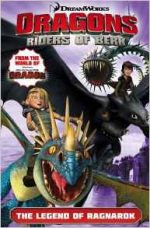
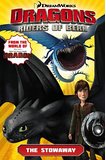
DreamWorks Dragons: Riders of Berk volume 1: Dragon Down


By Simon Furman, Iwan Nazif & Bambos Georgiou (Titan Comics)
ISBN: 978-1-78276-076-4

These days, young kids are far more likely to find their formative strip narrative experiences online or between the card-covers of specially tailored graphic novels rather than the comics and periodicals of my long-dead youth.

In times past the commercial comics industry thrived by producing copious amounts of gaudy, flimsy pamphlets subdivided into a range of successful, self-propagating, seamlessly self-perpetuating age-specific publications. Such eye-catching items generated innumerable tales and delights intended to entertain, inform and educate such well-defined target demographics as Toddler/Kindergarten, Younger and Older Juvenile, General, Girls, Boys and even Young Teens, but today the English-speaking world can only afford to maintain a few paltry out-industry, licensed tie-ins and spin-offs for a dwindling younger readership.

Where once cheap and prolific, strip magazines in the 21st century are extremely cost-intensive and manufactured for a highly specific – and dying – niche market, whilst the beguiling and bombastic genres that originally fed and nurtured comics are more immediately disseminated via TV, movies and assorted interactive media.

Happily, in this country old-school prose publishers and the newborn graphic novel industry have a different business model and far more sustainable long-term goals, so the magazine makers’ surrender has been turned into a burgeoning victory, as solid and reassuringly sturdy Comics-in-Books increasingly buck the pamphlet/papers downward spiral.

Moreover, many of those old comics enjoyed a successful affiliation and almost symbiotic relationship with television (and before that, Films and radio shows), and these days when even the ubiquitous goggle-box business is paralysed and endangered by on-demand streaming, too many channels and far too much choice, those connections have been taken up by the graphic novel trade too.

The links between animated features and comicbooks are long established and I suspect, for young consumers, indistinguishable. After all, in the end it’s all just entertaining pictures…

One of the most popular TV cartoons – and certainly the most gripping and entertaining – of recent years is DreamWorks Dragons: Riders of Berk (and its follow-up Defenders of Berk). It’s based on the wonderful movie How to Train Your Dragon – which was itself loosely adapted from Cressida Cowell’s glorious and charming sequence of children’s books.

The show has internationally wowed audiences young and old alike and, in this first full-colour Titan Comics digest-sized collection by Simon Furman, Iwan Nazif & BambosGeorgiou, those amazing adventures continue as brilliant but introverted boy-hero Hiccup and his compatriots of the Dragon Rider Academy gleefully roam the skies with their devoted scaly friends.

When not fighting each other the trusty teens attempt to keep the peace between the rambunctious multiplicity of saurians and the island of Berk’s irascible Viking settlers: protecting the humans’ village from the constant attacks of nastier folk such as Alvin the Treacherous and his fleet of piratical Outcasts or new and unknown monsters…

Following a brace of handy information pages introducing Hiccup and his devoted Night Fury Toothless, as well as tom-boyish Astrid on Deadly Nader Stormfly, obnoxious jock Snotlout and Monstrous Nightmare Hookfang, portly scholar Fishlegs on ponderous Gronckle Meatlug and the terribly dim but merrily violent twins Tuffnut and Ruffnut on double-headed Zippleback Belch & Barf, this initial saga opens as the riders go through their spectacular aerial combat paces over the waters around Berk.

Trouble is never far away where Dragons are concerned, and when Hookfang begins shedding incandescent scales, they soon have half the village putting out the resultant flash-fires…

For the safety of the town and the ailing Wyrm, Hiccup’s father Chief Stoick has no choice but to quarantine Hookfang off-island and ground the rest of the flight. However, when the Monstrous Nightmare goes missing the kids decide to ignore orders and go looking for the poor beast…

Chapter two opens during a massive squall with the Dragon Riders being bawled out by Stoick. Snotlout is heartbroken – but won’t show it – and guilty Hiccup furtively sneaks off to continue the search alone with Toothless.

Hookfang is in real trouble. He’s been cornered by Alvin the Treacherous, who wants to make dragons his war weapons. Now he has bait and only needs a skilled trainer to enslave… and he knows that one will be along soon to rescue the still-shedding Monstrous Nightmare he has trapped in a cave…

The evil scheme works almost perfectly. Hiccup is easily captured by the hulking Outcast warriors, but manages to convince the sleek, speedy Night Fury to abandon him and fetch help…

Valiantly making his way back to Berk, the loyal Toothless rouses the Riders and Stoick’s men who speed to the rescue. Meanwhile, ingenious Hiccup has already engineered his own escape. It would have worked, too, if the islet they were on hadn’t been a not-quite dormant volcano with explosively shedding Hookfang inadvertently stoking the geological fires…

The saga concludes in an astounding sea battle as Stoick’s fleet engages Alvin’s pirates whilst Astrid and Stormfly spring Hiccup. Reunited with Toothless, the leader of the Dragon Riders then shows the Outcasts the dangers of messing with the boys and girls of Berk before deducing a (rather perilous) way to reunite Snotlout and Hookfang before the islet melts down or goes up in flames…

Despite being ostensibly aimed at excitable juniors and TV kids, this sublimely sharp yarn is a smart and engaging fantasy romp no self-indulging fun-fan of any vintage should miss: accessible, entertaining, and wickedly habit-forming.
DreamWorks Dragons: Riders of Berk © 2014 DreamWorks Animation L.L.C.

Iznogoud and the Magic Computer


By Goscinny & Tabary, translated by Anthea Bell & Derek Hockridge(Cinebook)
ISBN: 978-1-905460-79-3

During his too-short lifetime (1926-1977) René Goscinny was one of the most prolific, most read writers of comic strips the world has ever seen.

He still is.

Among his most popular comic collaborations are Lucky Luke, Le Petit Nicolas and, of course Asterix the Gaul, but there were so many others.

Scant years after the Suez crisis, the French returned to the deserts when Goscinny teamed with the sublimely gifted Swede Jean Tabary (1930-2011 and numbering Richard et Charlie, Grabadu et Gabaliouchtou, Totoche, Corinne et Jeannot and Valentin le Vagabond amongst his other hit strips) to produce imbecilic Arabian (im)potentate Haroun el-Poussah. However it was the strip’s villainous foil, power-hungry vizier Iznogoud, who stole the show – possibly the conniving little devil’s only successful scheme.

Les Aventures du Calife Haroun el Poussah was created for Record, with the first instalment appearing in the January 15th issue in1962. A minor hit, it jumped ship to Pilote – a magazine created and edited by Goscinny – where it was refashioned into a starring vehicle for the devious little rat-bag who had increasingly hogged all the laughs and limelight.

Like all the best storytelling, Iznogoud works on two levels: as a comedic romp with sneaky baddies coming a cropper for younger readers, and as a pun-filled, witty satire for older, wiser heads, much like its more famous cousin Asterix – and also translated here by the master translators Anthea Bell & Derek Hockridge who made the indomitable little Gaul so very palatable to the English tongue. Moreover the deliciously malicious whimsy is always heavily laden with manic absurdity and brilliantly applied creative anachronism to keep the plots bizarrely fresh and inventive.

Our insidious anti-hero is Grand Vizier to affable, easy-going Haroun Al Plassid, Caliph of Ancient Baghdad, but the sneaky little toad has loftier ambitions, or as he is always shouting “I want to be Caliph instead of the Caliph!”

The revamped series launched in Pilote in 1968, quickly becoming a huge European hit, with 29 albums so far (carried on by Tabary’s children Stéphane, Muriel and Nicolas), his own solo comic, a TV cartoon show and even a live action movie.

When Goscinny died in 1977 Tabary assumed the scripting as well as the superbly stylish illustration from the 13th album, moving to book-length complete tales, rather than the compilations of short punchy stories that typified their collaborations.

This fourth Cinebook album was actually the sixth French album (released in 1970 as L’ordinateur magique) and features a clenched and grasping fistful of short, sharp salutary tales beginning, after a handy catch-up profile page, with ‘A Calculated Risk’, wherein the cunning conniver, desperate to forestall a pact between the Caliph and mighty military neighbour Sultan Pullmankar, hires forward-thinking I-Bee’Em and his ponderous problem-solving “computer” to stop the signing of the treaty.

The big grey box might be brilliant, but it’s agonisingly slow in reaching its infallible conclusions…

Things then get hilariously surreal when Iznogoud and his long-suffering, bumbling assistant Wa’at Alahf discover a mystic crossroads that can lead the unwary traveller onto an unending, pointless journey from which they can neither escape nor return.

Dashing back to lure the Caliph onto ‘The Road to Nowhere’ our wicked wayfarers eventually realise that they’ve been stuck on it all along…

Back in Baghdad and itching to take over, the Vile Vizier then seeks to employ the tragic gifts of lonely hermit Ghoudas Gho’ld, a direct descendent of legendary King Midas, in ‘The Golden Handshake’. All he has to do to remove the Caliph is get the accursed involuntary metal-maker back to the palace without him touching anything…

There’s more direct skulduggery afoot in ‘The Caliph’s Sceptre’ when Iznogoud hires a master thief to sneak him into the high-security vault where the Staff of Office is cached. If he takes it and keeps the Caliph from presenting it to the people in the annual reaffirmation of worthiness to rule ceremony, the Vizier can legally assume control of the country. Of course, it doesn’t quite play out that way…

This fine kettle of funny fish concludes with ‘The Mysterious Ointment’ as fabled explorer Notsobad the Sailor returns to the port of Basrah and, having forgotten to bring the undetectable Occidental poisons he promised the Vizier, palms him off with a tube of “Schpouk toothpaste’.

Assured the container holds a lethal and undetectable toxin, poor Iznogoud embarks on an eccentrically convoluted campaign to convince the Caliph and the court that cleaning one’s choppers is the latest and most beneficial of scientific advancements. Care to guess how well that goes?

Snappy, fast-paced hi-jinks and gloriously agonising pun-ishing (see what I did there?) abound in this mirthfully infectious series which is a household name in France where “Iznogoud” is common parlance for a certain type of politician: over-ambitious, unscrupulous – and often of diminutive stature.

When first released here in the 1970s, these tales made little impression, but hopefully this snappy, wonderfully affable strips can finally find an appreciative audience among today’s more internationally aware, politically jaded comics-and-cartoon savvy Kids Of All Ages…
© 1970 Dargaud Editeur Paris by Goscinny & Tabary. All rights reserved.

Buddy Buys a Dump: the Complete Buddy Bradley Stories from “Hate” volume III


By Peter Bagge with Joanne Bagge (Fantagraphics Books)
ISBN: 978-1-60699-745-1

Peter Bagge is best regarded these days as a fiery, cauldron-mouthed, superbly acerbic and well-established award-winning cartoonist, animator and musician, responsible for incredibly addictive, sharply satirical strips examining contemporary American life, through a small but memorable cast of sharply defined characters compellingly reflecting his views.

Born in Peekskill, Westchester County, New York in December 1957, he was one of four kids in a ferociously Catholic military family. Like esteemed colleague Robert Crumb a generation earlier, Bagge escaped that emotionally toxic, fight-filled environment as soon as possible, moving to New York City in the mid-1970s to study at the celebrated School of Visual Arts.

He soon dropped out and began working in the vibrant alternative publishing field, producing strips and panels for Punk Magazine, Screw, High Times, East Village Eye, World War Three and others.

Meeting like-minded artists he began self- and co-publishing comics, and when Crumb saw copies of Comical Funnies (produced with new chum John Holstrom in 1981 and the birthplace of the unsavoury star of this collection), Bagge was offered space in and eventually the Editorship of the seminal commix magazine Weirdo in 1983.

He augmented his 3-year tenure there with various paying gigs at Screw, Swank, Video X, Video Games Magazine, The Rocket, Bad News and elsewhere.

In 1984 Bagge relocated to Seattle, Washington State and began his association with alternative/Independent publisher Fantagraphics. The following year his spectacularly idiosyncratic cartoon magazine Neat Stuff launched as a thrice-yearly vehicle of outrageous personal expression and societal observation.

His stark, manic, topically surreal strips, starring old creations like Studs Kirby, Junior, Girly Girl and quintessential ineffectual rebel Buddy Bradley swiftly turned the cartoonist into a darling of the emerging West Coast Grunge scene, and before too long Neat Stuff and its successor Hate made Bagge a household name… at least in more progressive households…

As the 90’s became the next century, Bagge’s quasi-autobiographical Buddy starred in a succession of titles and strips (collected in Buddy Does Seattle and Buddy Does New Jersey); the cartoon character’s excitable existence mirroring typical life in that chaotic lost decade. In 2001 the author began releasing Hate Annuals wherein, amongst other strident graphic treats, middle-aging Buddy was seen having fully transitioned from angry teen slacker to working dad with a family to support…

This deliciously hilarious and painfully uncompromising full-colour collection gathers those traumatic middle years of Harold “Buddy” William Bradley Jr.– originally seen in Hate Annual #1-9, 2001-2011 – and opens with ‘Are You Nuts?’ as the irascible everyman is almost beguiled by crazy friend and occasional co-worker Jay Spano into buying a dilapidated aquabus and going into the guided-tour business in scenic New Jersey.

Naturally, his certifiably crazy wife Lisa has a few opinions on the matter…

A year later ‘A-Rod Goes to the Moon’ featured the catastrophic day when the Bradley women go for a “Ladies weekend” and leave Buddy in charge of not only his own baby boy, but sister Bab’s maladjusted brood. Soon however with half the kids in the neighbourhood tagging along, Buddy realises the depths of his folly and opts for a tried and true solution to his unwanted responsibilities…

‘The Domestication of Lisa Leavenworth-Bradley’ focuses on the little woman’s obsession with homemaking and search for a way to occupy her dull, dire days which translates to Buddy having to look for a better place for them to dwell, whilst in ‘Buddy Bradley gets a “Real” Job’ the old collectibles shop gets so stale that our hero takes gainful employment as a UPS delivery man.

However the shocking scams and appalling attitudes of his fellow honest workers soon drive him back to the relatively honourable profession of trading in junk, nostalgia and dreams…

‘Fuddy Duddy Buddy’ saw a drastic change in the visual aspect of the family man as, after a medical scare, he shaved his head, began sporting an eye-patch and took to wearing a naval captain’s cap. He also made a move to the nastier part of Jersey to fulfil his lifelong dream of running a rubbish dump…

With Lisa and toddler Harold safely if reluctantly ensconced in the big house attached to the tip, ‘Skeletons in the Closet’ then focuses on Buddy and Jay’s shift into the surprisingly lucrative scrap metal business, and the resurfacing of the most unsavoury of Buddy’s siblings and their childhood hoodlum friends. It seems folks are asking unwelcome questions about old Stinky Brown (a pal of Buddy’s who disappeared years ago), prompting gun-nut brother Butch Bradley and his cronies to move the body… but only finding that someone had already taken it…

‘The Future’s in Scrap!’ surprisingly finds Buddy and Jay prosperous if shabby partners in an exponentially expanding business, whilst ‘Lisa Leavenworth-Bradley Discovers her Creative Outlet’ details how the bored mother seeks out a fresh hobby and new friends only to finds herself embarrassingly embroiled in an all-girl band with strip club ambitions…

With things looking pretty sweet and stable in ‘Heaven’, the abrasive, raucous comedy takes a darkly observational turn in ‘Hell’ when Lisa drags the family back to Seattle to meet her ferociously religious mom and obnoxious dad.

It transpires that the parents she despises are both in dire health and legal straits and, after meeting her creepy fundamentalist foster brother and sex offender cousin, Buddy realises why his wife became the neurotic mess she is.

When Buddy and Harold return to the East Coast Lisa isn’t with them…

Everything wraps up without really ending in ‘Fuck it’ as, whilst Lisa struggles to cope with her folks’ decline in Seattle, back in the Garden State the man and his boy make big dramatic and definitely felonious changes to their lives…

Just like the eponymous star character, the hopefully still unfolding story of Buddy Bradley has slowly matured from razor-edged, broadly baroque, comedically clamorous observations and youthful rants into sublimely evocatively enticing treatises on getting by and getting older, although the deliciously fluid drawings and captivating cartoon storytelling remains as fresh and innovative as ever.

Bagge has always been about skewering stupidity, spotlighting pomposity and generally exposing the day-to-day aggravations and institutionalized insanities of modern life, but the strips in Buddy Buys a Dump also offer a beguiling view of passion becoming, if not wisdom, certainly shrewd appreciation of the unchanging verities of life: a treat no cartoon-coveting, laughter-loving rebel should miss…
© 2013 Peter Bagge. This edition © 2013 Fantagraphics Books. All rights reserved.

Dirty Pair: Biohazards


By Toren Smith & Adam Warren (Eclipse Books)
ISBN: 1-56060-008-X (softcover), 1-56060-007-1 (hb), 1-900097-04-4 (UK edition)

Here’s something you don’t see every day: a genuine international collaboration that merged the best of Japanese and American sensibilities to create something genuinely appealing and tremendously fun.

In a fast and furious future of 2141AD, intergalactic proliferation of human civilisation has led to a monumental bureaucracy, greater corruption and more deadly criminals preying upon the citizens of the United Galactica.

Thus the constant need for extra-special Trouble Consultants: pan-planetary private paramilitary police employed by the 3WA (or Worlds Welfare Work Association) to maintain order in hotspots across the sort-of civilised universe…

Kei and Yuri are team #234, officially designated “The Lovely Angels” after their sleek and efficient starship. They are lethal, capable and infallible. Whenever they are deployed, they strike fast and hard and never fail…

…Although the collateral damage they propagate is completely unimaginable and usually causes client worlds to regret ever asking for their aid in the first place….

Much to the crisis agents’ disgust and chagrin, the universe knows them best as The Dirty Pair and planetary authorities have to be in the most appalling straits to let them help…

The concept was conceived for light novels by Japanese author Haruka Takachiho (Crusher Joe) in 1985 and quickly made the jump to TV, movie and OVA anime, but there was no comics/manga iteration (until over a decade later), inspiring Adam Warren and Toren Smith of Manga translation company Studio Proteus to approach independent publisher Eclipse Comics with an idea for a comicbook miniseries…

The result was Biohazards; 4 issues (December 1988 to April 1989)of licensed light-hearted, manic murder and monstrous mayhem which was then swiftly collected in a brash and breezy graphic album. The many reprintings from the franchise’s successors Dark Horse in the USA and Manga Books in the UK heralded a blistering run of wry and raucous adventures that still read as well today as they did when the Japanese comics experience was seen as a rare, quaint and exotic oddity…

In ‘Biohazard’ the deadly babes are going about their lawful but excessively violent business – subsequently and of course unintentionally devastating a colossal space station and killing fifty civilians – when a call comes from Alex Goldin, Security Director of corporate paradise Pacifica.

He has a thorny problem to manage: a brutally efficient theft of personality-preserving bio-construct Brainchips and tissues samples, plus the loss of a full-grown clone, is only the latest skirmish between rival bioengineering industrialists Kelvin O’Donnell and Abraham Streib.

The escalating battle between magnates too powerful to censure compels the obsequious and duplicitous Goldin to tread softly. Both men are massive wealth-creators: master-makers of bio-weapons, body augmentations and innovative medicines, but he still doesn’t want anything incurable or unkillable loose on his streets if their economic struggle continues.

The organo-industrialists are both experts in skirting what rules and regulations exist and officially test their wares on their private manufacturing moons but you never know…

The situation is particularly tenuous at present because O’Donnell, thanks to the unfortunate lab accident, is a space-chipmunk.

…Or rather the brainchip encoding his personality currently resides in a Whelan’s Pseudo-Fuzzy in the possession by Streib. When cyborg chief enforcer M97 destroyed O’Donnell’s almost matured Adonis-like new body in the raid, the triumphant genegineer couldn’t resist an opportunity to gloat. After all, with no spare chips, no proper body to put them in and O’Donnell on a leash, surely Streib has finally won…

Triumphant Streib is actually no better off. After similar bioagent “misfortunes” over the years of their rivalry, his organic head is now stuck on a robot body whilst his organics are so messed up he can’t be cloned or brainchipped.

Tracking O’Donnell’s chip to Streib’s private estate, Goldin has called on 3WA and is now stuck with Kei and Yuri. In the final assessment he needs someone from outside the system to rescue O’Donnell’s brainchip and genetic material from Streib without starting a horrific WMD war that will end life on Pacifica…

What could possibly go wrong?

With their enigmatic, electronics-warping alien super-cat Mughi the girls easily infiltrate the vast compound just in time to find Streib employing horrific techno-organic warbeasts to hunt O’Donnell.

Employing the catastrophic violence they are renowned for, the Dirty Pair easily lay waste to the human soldiers and rapacious mechanoids, but rather than turn the little Fuzzy over to Goldin they are cajoled and are convinced by the little cutie to take him to his own lab where he has himself transferred into one of his own trademarked warbeasts.

And up until then the case had been practically catastrophe-free…

‘Complications’ occur when Kei sees the body O’Donnell will eventually return to and gets all girly-fluttery and romantically entangled; allowing herself to be convinced that they should take Streib down for good.

It’s not hard to get Yuri to agree and soon Lovely Angels and wrathful warbeast are breaking into Streib’s main lab citadel.

As the girls convincingly crush all resistance O’Donnell discovers a deliciously illegal bioagent weapon which will prove his rival’s downfall – even in Pacifica’s courts – and asks Yuri to hold onto it as they escape, but in the resultant firefight the canister is breached and she is doused in something very nasty…

Luckily, rather than a disease or toxin it’s “only” a chemical to enhance aggression and violence and ‘Outbreak’ finds Yuri descending into a berserker mode even more dangerous than her regular state; ruthlessly efficient and wildly careless of consequences. Manically outfighting the army and air force despatched to stop them, she and the astounded Kei and O’Donnell soon completely destroy a major population centre before escaping M97 and his fanatically pursuing cohorts…

With Yuri fully recovered from the combat craziness, the Angels decide to take the battle to the arrogantly gloating and seemingly unimpeachable Streib, infiltrating his industrial moon Telek and ultimately reducing it to slag and space dust and free-floating bio-bombs in their own inimitable style.

However there are two more surprises in store: a rather predictable last stab from the stylishly indefatigable M97 and a more personal heartbreak bombshell for Kei once Goldin gets his hands on O’Donnell…

Both incredibly information-dense and astonishingly action-packed, this cool, light-hearted cyber-punk space opera romp is a solidly satisfying slice of Sci Fi magic that will delight all fans of tech-heavy blockbusters, and the book comes with an afterword by co-author Toren Smith – heavily illustrated with Adam Warren sketches – detailing the love of hard science and social extrapolation which flavoured and textured the creators’ trans-Pacific interpretation of Haruka Takachiho’s concept.

The digest-sized (210 x 150mm) UK edition has the tag line “in the tradition of Red Dwarf” and that assessment is not a million miles from the truth, as long as you factor in sexy death-dealing ingénues, wry socio-political commentary, very skimpy costumes and oodles of cartoon carnage.

Fun and frolics future-style: you know you want it…

The Dirty Pair © 1989, 1994 Haruka Takachiho. English language version © 1989, 1994 Adam Warren and Studio Proteus. All rights reserved.

Hilarious Consequences


By Babak Ganjei (Records Records Records Books)
ISBN: 978-0-9566330-0-2

When I was kid comics weren’t cool and were all a bit the same. You couldn’t find them in most shops and once you got a bit older, you read them from the camouflaging concealment of a large book – or possibly a smutty magazine – so your mates wouldn’t laugh at you.

Now there are strips and graphic novels everywhere, nobody under 90 bats an eye at adults scoping out picture stories and – most importantly – the range, variety and sheer quality of material available today is absolutely staggering.

A wonderful Case In Point is this delightfully enthralling slice of whimsical urban documentary by Babak Ganjei, published by Records Records Records Books.

Hilarious Consequences lovingly details in joyously crushing detail the sad sack saga of an agonisingly self-excoriating, self-effacing, self-proclaimed middle-aging loser who just can’t seem to get his life together…

Babak is a not-at-all successful musician in London. He has a kid, no career, no money and his hair is falling out – which seems to be the most worrisome of his many woes and worries. Still, what can you do, huh?

With nothing better in his future he decides to make a comic strip of his life and that’s also part of the story and another eventual hassle…

We pick up the threads of a fraying life in ‘The Chinese Herbalist’ as the shaggy shambler opts to try alternative medicine to solve his depreciating barnet problem. He feels uncomfortable doing it, unsure it’s working and is unable to pay, but is no match for the pushy purveyors who offer him reasonable-sounding advice and hire purchase terms. He trundles off with assorted unsavoury teas and soups that make his next few days a toxic misery…

His angst levels increase when he reluctantly agrees to go to ‘The Fancy Dress Party’, but just can’t get as invested as his girlfriend Ellie. The booze helps but when he sees a pig-masked person chatting her up, his head – still fiercely shedding follicles – goes to a bad place…

‘Another Morning’ and in the shower there are fresh horrors associated with getting old, exacerbated later when Babak is cajoled into performing at a local acoustic night by Dog, an ambitious kid with a gleaming transcendent mop of healthy hair. There’s no pay but Dog promises really excellent pizza…

Always strapped for cash Babak attends ‘The Interview’ and somehow gets a part-time job at a pub. It’s okay, but the other bar staff think he’s so very old.

He’s thirty…

Shorter moments reveal the more gloomy aspects of ‘The Creative Process’, ‘Drinks’, ‘The Call’ and a ‘Grim Notion’ before Ellie and his son accidentally create ‘Glitter Slugs’ whilst making card presents, leading to a surreal ‘Lynchian Insert’ before a return to the pub proves ‘Tough Work’ can be ameliorated by the right drugs…

After a diversion to ponder ‘Animal Work’, ‘Bad News and Thinkings’ finds our zero compelled to somehow scrape together £300 a week and regretting his childhood educational choices after which a ‘Kaufman-Esque’ confrontation leads to quite understandable ‘Panic’…

Then, after a relatively calming ‘Family Hour’ it’s off to the pub and an epic ‘Work Party’ which reveals the problems ineffectual blokes blessed with bushy beards can encounter when trying to snort lines of coke, before things get strange ‘Conversing’ with a homeless guy. And then the slugs return in ‘New Beginnings’…

A ‘Near Death Experience’ leads to a half-hearted ‘Work Out’ attempt, but jogging and newspaper headlines result in parental ‘Sadness’ and more self-doubt which even a gallery-hopping ‘Art Trip’ can’t fix.

Conceptual walls start to crack as cartooning diarist Babak suffers ‘Writers Block’ which might be why the slugs slurp back in ‘Them Again’ after which Ellie and the boy come home in ‘They’re Back’…

That promised acoustic set is looming in ‘Please’ whilst an unsavoury encounter with the still unpaid Herbalist prompts some uncomfortable ‘Advice’ even as the little lad shows off his ‘Interests’ just before the artist expresses his ‘Issues’ with ‘The Big Show’.

Things go badly for the slugs in ‘Blackout’ but when the pizza arrives at least Babak feels a modicum of satisfaction ‘And Then Happiness’…

There’s a comic aside to wrap thing up with an ‘Epilogue’…

Episodic but utterly appealing, these dire and dolorous everyday antics of a (very) humble contemporary Eeyore offer a gentle, meandering and endearingly self-deprecating ramble through modern life. There’s even a free soundtrack CD that comes with this extremely readable fun feast, featuring: Dignan Porch, Singing Adams, The Bronsteins, Macks Faulkron, Wonderswan, Round Ron Virgin, Dan Michaelson and the Coastguards, Cheatahs, Big Deal, Wet Paint, and Matthew C.H. Tong to sweeten the deal and further facilitate knowing acquiescence…

Hilarious Consequences is the sort of book that becomes a cult hit TV series and certainly doesn’t fail to beguile and bemuse as a cartoon history.

Track it down and feel part of something too big to cope with…
© 2010 Babak Ganjei. © & ℗ Records Records Records Books.

My Little Monster volume 1


By Robico translated by Joshua Weeks (Kodansha Comics USA)
ISBN: 978-1-61262-597-3

Solidly appealing to lovers of traditional  Shōjo (“girls’ comics”) comes a grand and sassy tale of Right Girl, Right Time, Wrong Boy from enigmatic mangaka Robico, dealing with the thorny topic of wasteful distractions at school…

Tonari no Kaibutsu-kun or ‘The Monster Sitting Beside Me’ debuted in Dessert Magazine in 2008 with the first volume of a dozen collections appearing a year later. The serial ran until June 2013 and spawned a highly successful anime adaptation.

Shizuku Mizutani is a schoolgirl determined to succeed. Only one person has ever gotten higher grades than her throughout her entire scholastic career – and she’s still burned up about it – but otherwise she’s solidly – comfortably – set her sights on exceptional achievement and a great job and nothing’s going to force her off her well-planned, carefully projected course.

Her teen travails begin in ‘My Classmate Yoshida-kun’ as she explains how she’s never seen the boy who sits next to her. He got into a fight on his first day and hasn’t come to school since. That was three years ago.

Now for some incomprehensible reason the ideal student is stuck delivering printouts to the epic absconder as a “favour” (bribe) to teacher Saeko-Sensei. She finds him in the skeevy games arcade where he hangs out. Shizuku wasn’t expecting much, but Haru Yoshida fails to live up to even those low expectations.

He’s a veritable wild boy: manic, ill-mannered, actively extremely rude and his associates are little better than thugs and gangsters.

He even attacks her, accusing her of spying on him.

All the school rumours must be true; how he hospitalised three upperclassmen and was suspended…

The ice broken, Saeko then pushes her star student to lure the boy back to school (his suspension being long expired) but when he starts regularly attending tongues start wagging. He then arbitrarily decides they’re friends and begins to follow Shizuku everywhere…

She’s never been more angry or frustrated. He’s always there, distracting her, getting in the way of her future. She can’t stop thinking about him…

Following a brace of humorous of mini-strips ‘I was Running as Fast as I Could!’ and ‘Spot-Billed Duck’ the School Daze resume with ‘I Don’t Hate You’ as the apparently imprinted malcontent begins appearing everywhere she goes and captivatingly showing his softer, fragile side.

Unfortunately he’s painfully gullible and falls for many embarrassing pranks from his classmates which he responds to with devastating violence. Soon he has gained an irresistibly dangerous reputation…

He also seems to start noticing other girls, but why should Shizuku care about that? She’s far more upset to learn that he was the student who beat her test scores and that even after three years of skipping education he’s probably still smarter than her…

And now for some reason she’s finding it impossible to bear down and study, the only thing she used to be good at…

And then Haru kisses her… but decides they can still be friends anyway…

After micro strips ‘Because She’s a Lady’ and ‘It’s Hard Not to Say It’, the main event starts again with ‘Weird’, wherein the wild boy starts displaying the attention span of a mayfly.

Adopting and then palming off a chicken on his newfound friends and tutoring vacuous Asako Natsune so she can avoid going to Afterschool Classes instead of partying are bad enough, but most significantly he utterly ignores the change in their own relationship, or even that they have one…

Two small interludes with ‘Natsume and Haru’ then lead into the final chapter as Shizuku is forced to admit to herself how much Haru has changed her life. However when she finally confesses just how much she likes the annoying, confusing oaf, all he can say in response is that she’s not a ‘Nuisance’…

To Be Continued…

Wrapping things up are two final cartoon vignettes ‘Just as Short’ and ‘That Guy’, plus a Comment from the author and a section of handy Translation notes.

Sweet, cruel and silly by turns, this is a delightful coming of age comedy, brimming with those crucial, critical moments that stay with you for decades after high school ends, but cleverly leavened with light charming characters and situations all superbly illustrated by a master of the genre.

Not everybody’s cup of tea but sheer poetry for those of us who remember love can – and should – be fun.
© 2009 Robico. English translation © 2014 Robico. All rights reserved.

This book is printed in ‘read-from-back-to-front’ manga format.