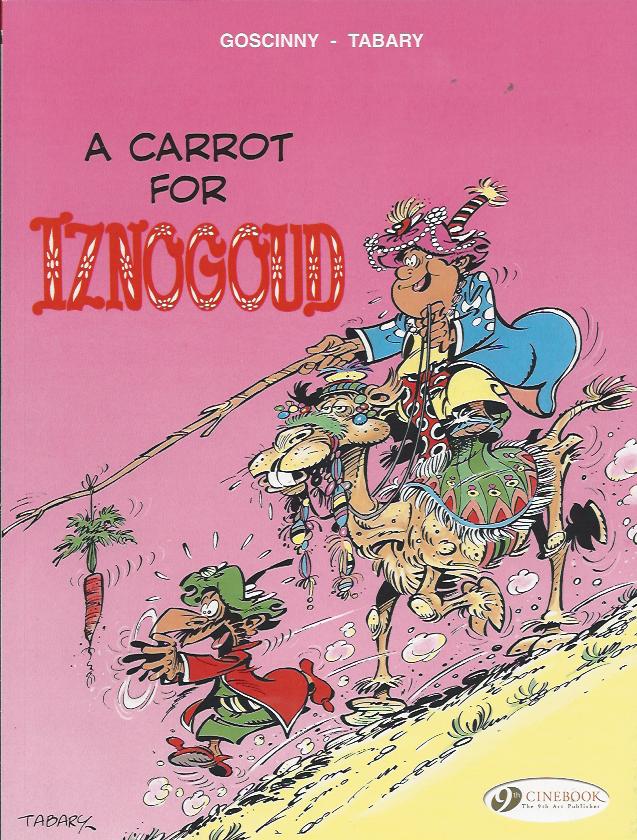
A Carrot for Iznogoud (Iznogoud volume 5)


By Goscinny & Tabary, translated by Anthea Bell & Derek Hockridge (Cinebook)
ISBN: 978-1-84918-021-4 (Album PB)

For the greater part of his too-short life, René Goscinny (1926-1977) was one of the most prolific and most-read writers of comic strips the world has ever seen. Incredibly, he still is.

Among his most popular comic collaborations are Lucky Luke, Le Petit Nicolas and of course Asterix the Gaul, but there were so many others, such as the dazzling, dark deeds of a dastardly usurper whose dreams of diabolical skulduggery all proved to be ultimately no more than castles in the sand…

Scant years after the Suez crisis, the French returned to the hotly contested deserts when Goscinny teamed with sublimely gifted Swedish émigré Jean Tabary (1930-2011) – who numbered Richard et Charlie, Grabadu et Gabaliouchtou, Totoche, Corinne et Jeannot and Valentin le Vagabond amongst his other hit strips – to concoct the innocuous history of imbecilic Arabian (im)potentate Haroun el-Poussah.

However it was the strip’s villainous foil, power-hungry vizier Iznogoud, who stole the show – possibly the conniving little imp’s only successful coup.

Les Aventures du Calife Haroun el Poussah was created for Record; the first episode appearing in the January 15th issue in 1962. A minor hit, it subsequently jumped ship to Pilote – a comics magazine created and edited by Goscinny – where it was refashioned into a starring vehicle for the devious little rat-bag who had increasingly been hogging all the laughs and limelight.

Like all the best storytelling, Iznogoud works on two levels: as a comedic romp with sneaky baddies invariably hoisted on their own petards and coming a cropper for younger readers, whilst older, wiser heads revelled in the pun-filled, witty satire: the same magic formula which made its more famous cousin Asterix such a global success.

…And just like the saga of the indomitable little Gaul, this irresistibly addictive Arabian nonsense is adapted here by master translators Anthea Bell & Derek Hockridge who made those Roman Follies so very palatable to the English tongue.

Moreover the deliciously malicious whimsy is always heavily laden with manic absurdity and brilliantly applied creative anachronism to keep the plots bizarrely fresh and inventive.

Insidious anti-hero Iznogoud is Grand Vizier to affable, easy-going Haroun Al Plassid, Caliph of Ancient Baghdad, but the sneaky little toad has loftier ambitions, or as he is always shouting “I want to be Caliph instead of the Caliph!”

The revamped series launched in Pilote in 1968, quickly becoming a massive European hit, with 30 albums to date (carried on by Tabary’s children Stéphane, Muriel and Nicolas), his own solo comic, a computer game, animated film, TV cartoon show and even a live action movie.

When Goscinny died in 1977 Tabary added the scripting to his sublimely stylish illustration (from the 13th album onwards), moving to book-length complete tales, rather than the compilations of short punchy stories that typified the collaborations.

This fifth Cinebook English language edition was actually the seventh French album (released in 1971 as Une carotte pour Iznogoud) with the lead tale an exceptional, extended epic comprising half the book, bolstered by a triumvirate of shorter yarns and prefaced as ever with a handy catch-up profile page of the usual suspects…

The eponymous A Carrot for Iznogoud’, is a rare bird indeed as the verminous Vizier is all but absent from proceedings which commence when gentle, isolated and very dim Haroun Al Plassid finally gets an inkling of what his trusted deputy is truly like…

Stealing out into Baghdad disguised as an insurance salesman, the Caliph finally gets the message that his beloved people fear, despise and revile his precious Iznogoud. Shocked and dismayed, he ponders what to do before – politely – accidentally aiding an ancient wizard (or perhaps crazy old coot…).

In gratitude the dotard tells him of a fabled vegetable that makes people nice. Desperately keen to redeem and “cure” his advisor, the Caliph instantly dashes off on a monumental solo voyage of discovery to secure some of the legendary “Carrot”.

The logic is simple: if eating carrots makes you nice all he has to do is find a place where people are pleasant, kind, honest and generous. The deed is nowhere near as simple as the thought – or indeed, the Caliph…

After exhausting and enraging the grocers and market sellers of his own lands, the search takes the determined Haroun Al Plassid to neighbouring kingdoms, across deserts and even oceans (where he encounters a certain band of pirates moonlighting from their damp and dangerous day jobs in Asterix), but everywhere all he finds are conmen, chancers, rude brutes and impatient surly types just like the ones at home in Baghdad.

He is almost ready to give up when he is sold as a slave to lordly Rhu’Barbfoul in distant Lastyearatmarienbad and sent to the kitchens to grate carrots for soup.

Excited beyond belief he begs his master to give him a carrot and release him, which after hearing the tale of woe and (perhaps) thanks to the steady diet of nice-making veg, the nervous lord does…

The journey home is no less dramatic or magical, though fraught with painful ironies, but even after the Caliph reclaims his vacated throne, the ameliorating herb he fought so hard to secure does not at the last find its way to its intended target…

Wry and deliciously surreal, the epic is an especial change of pace as the evil architect of all woes only appears in two panels over the 19 hilarious pages…

He is completely present for the three venal vignettes which follow, beginning with an outrageously bizarre close encounter in the desert entitled ‘Magic-Fiction’.

When Iznogoud and bumbling, long-suffering crony Wa’at Alahf are taking a break from the sorcery-besotted city of Baghdad they stumble across a couple of Martian explorers. The curious, affable alien explorers want facts and data for their records but, after seeing the power of their Spatial-Temporaliser ray-guns, all the Vizier can envisage is the effect the weapons would have on the royal simpleton he wants to replace: an indolent oaf who couldn’t answer a straight question if his dinner depended on it…

Sadly, after sneaking the E.T.’s back to the palace, Iznogoud’s intemperate temperament gets the better of him before his plan can succeed…

Baghdad is a city that suffers with an excess of heat but in ‘Iznogoud on Thin Ice’the vile vizier hears tell of a drinks seller whose wares are always freezing cold. Ever inquisitive and always looking for an angle he investigates and discovers that the unfortunate lady in charge is so unseemly that anyone who glimpses her face is frozen solid with shock. She just stacks the chilled out victims in her cellar and stores her drinks beside them…

The infernal imp’s heart soars! All he has to do is get the Caliph to peek under the appalling and enigmatic Gehtorehd‘s ever-present veil and the throne is his…

Sadly, her gift doesn’t work on anyone with an elevated temperature, so even after getting the gorgon into the palace Iznogoud has to wait for the doctors to cure the Caliph who has a touch of fever. All he has to do is wait a while, but Iznogoud is a very impatient potentate-in-waiting…

There’s more direct skulduggery afoot in ‘Tried and Tsetsed’ which closes this compilation of crazy criminality. When bribe-taking Iznogoud officially greets an embassage from Africa he is given the most dangerous beast they know as a placating present by the chief ambassador who came ill-prepared to grease palms.

He is less than impressed until he is advised that the dread Tsetse Fly can put victims into a permanent slumber with one little bite. Now seeing his dreams falling into place at last, the Vizier lays his plans to introduce the bug to his boss, but is distracted by his idiot servant Wa’at Alahf and releases the flying terror in the wrong room…

Snappy, fast-paced hi-jinks and abundantly stocked with gloriously agonising pun-ishments (see what I did there?), this mirthfully infectious series is a household name in Europe, and especially in France where “Iznogoud” is common parlance for a certain type of politician: over-ambitious, unscrupulous – and frequently not that tall.

Still a cartoon barometer for chicanery and inanity, Iznogoud is a masterpiece of savvy commentary in a world where realpolitik has finally caught up and – inconceivably – surpassed the fertile imaginations of comics’ premiere wits.
© 1971 Dargaud Editeur Paris by Goscinny & Tabary. All rights reserved.
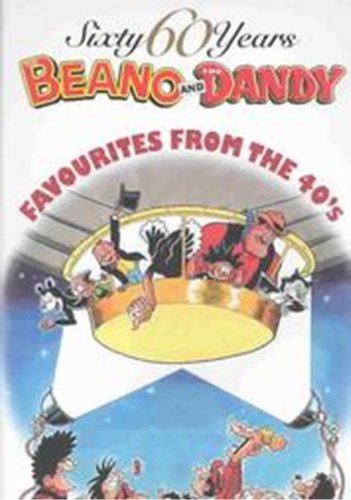

The Beano and the Dandy: Favourites from the Forties


By many & various (DC Thomson & Co)
ISBN: 978-0-85116-821-0 (HB)

I couldn’t let the occasion pass unremarked, so here’s a suggestion of better times and more carefree entertainments to celebrate Britain’s longest running comic. On July 30th 1938, The Beano was unleashed upon the Great British Public…

Released in 2003 as part of the DC Thomson’s Sixtieth Anniversary celebrations for their children’s periodicals division – which has more than any other shaped the psyche of generations of kids – this splendidly oversized (296 x 204mm) 144 page hardback compilation rightly glories in the incredible wealth of ebullient creativity that paraded through the flimsy colourful pages of The Beano and The Dandy during a particularly bleak and fraught period in British history. Tragically, neither it nor its companion volumes are available digitally yet, but hope springs ever eternal…

Admittedly the book goes through some rather elaborate editing and paste-up additions whilst editorially explaining for modern readers the vast changes to the once-commonplace that have occurred over eight decades, and naturally the editors have expurgated a few of the more egregious terms that wouldn’t sit well with 21st century sensibilities (Mussolini lampoon Musso the Wop becomes the far-less ethnically unsound “Musso”, for instance) but otherwise this is a superb cartoon commemoration of one of the greatest morale-building initiatives this nation ever enjoyed.

They’re also superbly timeless examples of cartoon storytelling at its best…

Until it folded and was reborn as a digital publication on 4th December 2012, The Dandy was the third-longest running comic in the world (behind Italy’s Il Giornalino – launched in 1924 – and America’s Detective Comics in March 1937).

Premiering on December 4th 1937, The Dandy broke the mould of traditional British predecessors by using word balloons and captions rather than narrative blocks of text under the sequential picture frames.

A huge success, it was followed eight months later by The Beano – which launched on July 30th 1938 – and together they utterly revolutionised the way children’s publications looked and, most importantly, how they were read.

Over the decades the “terrible twins” spawned a bevy of unforgettable and beloved household names who delighted countless avid and devoted readers, and the unmissable end of year celebrations were graced with bumper bonanzas of the comics’ weekly stars in extended stories in magnificent bumper hardback annuals.

As WWII progressed, rationing of paper and ink forced the “children’s papers” into an alternating fortnightly schedule: on September 6th 1941, only The Dandy was published. A week later just The Beano appeared. The rascally rapscallions only returned to normal weekly editions on 30th July 1949.

This superb tribute of Celtic creativity is packed literally cover-to-cover with brilliant strips and the mirth starts on the inside front with a wonderful Biffo the Bear exploit, illustrated by indisputable key man Dudley D. Watkins, followed by a sharp Korky the Cat gag-page by James Crichton and a listing of ‘Forty from the 40’s’, before the vintage fun properly proceeds, sensibly sub-divided into themed chapters.

Sadly, none of the writers are named and precious few of the artists, but I’ve offered a best guess as to whom we should thank, and of course I would be so very happy if anybody could confirm or deny my suppositions…

Then and Now offers a smart selection of comparisons to life in the past measured against 21st century existence, with hilarious examples and contributions from Lord Snooty – by the incredibly prolific Watkins – cowboy superman Desperate Dan at the doctor’s, ostrich antics with Big Eggo (by Crichton or perhaps Reg Carter), Wild West woman sheriff Ding-Dong Belle – from Bill Holroyd – and a glimpse at primitive fast-food courtesy of Dandy‘s Bamboo Town duo Bongo and Pongo as limned by Charlie Gordon.

There’s medical mirth with Desperate Dan, wash day blues with Mickey’s Magic Book (Crichton?) and a prose yarn pinpointing the funnier points of the class war in The Slapdash Circus – with a stirring illustration by Toby Baines – before Charlie Chutney the Comical Cook (Allan Morley) plays pie-man, whilst Watkins produces another Biffo blast.

Next comes The Horse That Jack Built, a rousing medieval adventure yarn starring a clockwork charger by Holroyd, and the chapter concludes in another Desperate Dan fable about messing around growing vegetables…

Entertainment explores how fun was had in the war years – i.e. before television – beginning with a phonographic Korky yarn and the first fine example of licensed film feature Our Gang illustrated by that man Watkins.

In case you were wondering… Our Gang (later known as Li’l Rascals) movie shorts were one of the most popular series in Film history. Beginning in 1922, they featured the fun and folksy humour of a bunch of “typical kids” (atypically, though, there was full racial equality and mingling – but the little girls were still always smarter than the boys) having idealised adventures in times both safer and simpler. The rotating cast of characters and slapstick shenanigans were the brainchild of film genius Hal Roach (who directed and worked with Harold Lloyd, Charley Chase and Laurel and Hardy amongst many others) and these brief cinematic paeans to a mythic childhood entered the “household name” category of popular Americana in amazingly swift order.

As times and tastes changed Roach was forced to sell up to the celluloid butcher’s shop of MGM in 1938, and the features suffered the same interference and loss of control that marred the later careers of the Marx Brothers, Laurel and Hardy and Buster Keaton.

In 1942, Dell Comics in the USA released an Our Gang comicbook written and drawn by Walt Kelly who, consummate craftsman that he was, restored the wit, verve and charm of the cinematic glory days with a progression of short tales that elevated the lower-class American childhood to the mythic peaks of Dorothy Gale in Oz or Huckleberry Finn.

Long before then, however (1937 and in The Dandy #1, in fact), DC Thomson had secured the British rights to produce their own uniquely home-grown weekly escapades of Alfalfa Switzer, Scotty Becket, Spanky McFarland, Darla Hood,Buckwheat Thomas and the rest, such as the quirky keep-fit frolic included here…

Desperate Dan then endures some cool radio fun with Aunt Aggie whilst Keyhole Kate (Allan Morley) has trouble with a Magic Lantern show, and Biffo’s juggling act brings nothing but pain and strife.

As depicted by the wonderful Eric Roberts, Podge find drumming is unwelcome around the village and the not-so-wild animals of Bamboo Town strike up – and out – the band, after which both Biffo and Korky suffer terribly for their R-and-R.

Posh poseur Swanky Lanky Liz (Charles Holt) comes a-cropper in a brace of telling tales after which the aforementioned dictator of Italy is mercilessly lambasted in a cruel quartet of Musso strips from Sam Fair, even as Charlie Chutney bakes to excess, Our Gang take vengeance on a bullying boxer and Podge foils a bunch of schoolboy cheats.

How the daily travails of conflict were relieved is examined in Wartime 1 with Jimmy and his Magic Patch (Watkins) accidentally visiting bellicose Lilliput, whilst Lord Snooty’s pals battle a Nazi spy and his pigeons and barmy barber Hair Oil Hal (by John Brown) cuts up in a clever quartet.

Sam Fair was in excoriating top form with the superbly manic Addie and Hermy slapstick assaults on Adolf Hitler and Hermann Wilhelm Göring/Goering, Meddlesome Matty (Fair or Malcolm Judge?) becomes a different sort of siren and Mickey’s Magic Book proves more hindrance than help during an air raid…

The complex world of Fashion begins with a plethora of Korky on parade, Beano’s Ding-Dong Belle offers some six-gun hints on good manners, Doubting Thomas (by Roberts) is overwhelmed by a shop dummy and Meddlesome Matty went shoe shopping… for a horse…

Hugh McNeil’s Pansy Potter, the Strongman’s Daughter was legendary for her unique looks – as seen in three strips here – but Swanky Lanky Liz, Charlie Chutney, Musso, Hair Oil Hal and Biffo all offer their own stylistic visions to round out this section before the un-PC past is more fully and shamefacedly explored in Out of Fashion. Here Biffo, Desperate Dan, Tin-Can Tommy, the Clockwork Boy (by the Torelli Brothers), Meddlesome Matty, Korky, Doubting Thomas, Bamboo Town and Mickey’s Magic Book all exhibit behaviours we just don’t condone nowadays…

Strips depicting Transport follow with Multy the Millionaire (Richard Cox), Korky and Biffo all experiencing some distress and delay after which Watkins displays his superb dramatic style for 1946 fantasy adventure Tom Thumb.

There are also more travel travails for Korky, Ding-Dong Belle, Doubting Thomas, Podge, Swanky Lanky Liz and Desperate Dan before a prose chapter from an epic Black Bob serial (a Lassie-like wonder dog illustrated by Jack Prout) precedes a Big Eggo pantomime romp and a 1944 Watkins spectacular starring Jimmy and his Magic Patch as a slave on a Roman ship.

Our trip down memory lane concludes with another bout of combat fever in Wartime 2, offering stunning contributions from Bamboo Town and Desperate Dan plus a treat for Pansy Potter fans: four fill-in strips illustrated by different artists who might or might not be McNeil, Basil Blackaller, Sam Fair, James Clark and/or Charles Grigg.

The campaign continues with a 1942 Tin-Can Tommy tale plus more Podge, Keyhole Kate, Doubting Thomas, Desperate Dan, and Korky strips as well as more Jimmy and his Magic Patch and a lovely Lord Snooty and his Pals yarn – with the kids helping the Home Guard – before Biffo ushers us out just as he had invited us in…

A marvel of nostalgia and timeless comics wonder, the true magic of this collection is the brilliant art and stories by a host of talents that have literally made Britons who they are today, and bravo to DC Thomson for letting them out for a half-day to run amok once again.
© 2003 DC Thomson & Co. Ltd. All rights reserved.

Wandering Witch: The Journey of Elaina volume 1


By Jougi Shirashi illustrated by Itsuki Nanoa: character design by Azure: translated by Taylor Engel (SQUARE ENIX)
ISBN: 978-1-64609-035-8 (TPB)

Written by Jougi Shiraishi, Majo no Tabitabi began in 2014 as an original eBook on Amazon’s Kindle service. Initially the book struggled, but diligent politicking on message and bulletin boards built a solid fanbase and the series was picked up in 2016 by SB Creative for their ranobe (Light Novel) division. With illustrations and designs by Azure the stories of the Wandering Witch took off – with ten volumes thus far – and ultimately led to an online manga adaptation by Itsuki Nanao. That launched in November 2018 as a smartphone app and on Square Enix’s Manga UP! website. April 2019 saw the release of a paperback tankōbon collection in Japan which now comes to the English-speaking world in anticipation of a TV series slated to launch in October 2020.

Firmly entrenched in the whimsical, joyous and exceedingly popular arena of benevolent magic-users operating in comfy medieval other-verses, these are engaging episodes starring a capable young woman just getting to grips with her mystic gifts. Moreover, Elaina is a lass who loves to travel, meaning she can help folk of many interesting places…

Her peregrinations begin when she arrives in ‘The Land of Magicians’: a walled city filled with mages and sorcerers…

Elaina fondly recalls how her love of books – especially the saga of travelling witch Nique – set her own childhood ambitions firmly on following her idol’s path. Now a freshly-graduated full sorceress dubbed the Ashen Witch, her progress is stalled after an apparently accidental crash involving neophyte student Saya. Somehow, in that fateful collision, Elaina loses her potent Brooch of Office and cannot move on without recovering it. As she seeks, however, the Ashen Witch discovers that all is not as it seems…

A tone of menace and thwarted romance permeates ‘The Land of Flowers’ as Elaina encounters an eerie field of blossoms and unwisely agrees to deliver a bunch of blooms for the young maiden reclining there. Strangely, it doesn’t matter who accepts the bouquet, only that someone from the nearby city does. Even more peculiar is that no one will and that flowers have been ruled illegal in the conurbation. Ever-inquisitive, Elaina soon learns of a fantastic situation and is embroiled in a fantastic tragedy before moving on…

Smart and self-sufficient, the Ashen Witch arrives in a nondescript kingdom and faces an unprecedented crisis as ‘Raising Funds’ find her trapped in a land where runaway inflation ripples the populace and drains her of her own living capital. Struggling to meet basic expenses, she soon uncovers an incredible plot against the new king and must take dramatic action to help him and escape with her travelling cash intact…

The dramas conclude with an origin tale as she recalls her time as ‘Apprentice Witch Elaina’: a talented but naive acolyte striving to please her ferociously eccentric mentor Fran the Stardust Witch. It was quite some time before the student divined the method behind her tutor’s apparent madness…

Rounding out this jolly grimoire are brief prose vignette ‘What Would You Take to a Desert Island?’, taken from Elaina’s student days with Fran, plus a selection of short strips concerning ‘The Tale of the Muscle Man Who’s Looking for his Little Sister On the Road’, ending the fun on a suitably bizarre note…

Engaging and wry, this superbly illustrated slice of fanciful fluff will delight lovers of the genre and offers plenty of potential for developing into a true all-ages fan phenomenon. Why not check it out, if you’re looking for something light and frothy to balance life’s darker realities…
Wandering Witch volume 1 © Jougi Shiraishi/SB Creative Corp. Character Design by Azure. © 2019 Itsuki Nanao/ SQUARE ENIX CO., LTD. English translation © 2020 SQUARE ENIX CO., LTD. All rights reserved.

Batter Up, Charlie Brown!


By Charles M. Schulz (Fantagraphics Books)
ISBN: 978-1-60699-725-3 (HB)

Peanuts is unequivocally the most important comics strip in the history of graphic narrative. It is also the most broadly accepted, since – after the characters made the jump to television – the little nippers become an integral part of the American mass cultural experience.

Cartoonist Charles M. Schulz crafted his moodily hilarious, hysterically introspective, shockingly philosophical epic for fifty years. He published 17,897 strips from October 2nd 1950 to February 13th 2000 and died from the complications of cancer the day before his last strip was published…

At its height, the strip ran in 2,600 newspapers in 75 countries, translated into 21 languages. Many of those venues are still running perpetual reprints, as they have ever since his departure. Attendant book collections, a merchandising mountain and TV spin-offs made the publicity-shy artist a billionaire. That profitable sideline – one Schulz devoted barely any time to over the decades – is where this little gem originates from…

Peanuts – a title Schulz loathed, but one the syndicate forced upon him – changed the way comics strips were received and perceived by showing that cartoon comedy could have edges and nuance as well as pratfalls and punchlines.

The usual focus of the feature (we just can’t call him “star” or “hero”) is everyman loser Charlie Brown who, with high-maintenance, fanciful mutt Snoopy, endures a bombastic and mercurial supporting cast who hang out doing kid things in a most introspective, self-absorbed manner.

The daily gags centred on playing (pranks, sports, musical instruments), teasing each other, making ill-informed observations and occasionally acting a bit too much like grown-ups. The consistently expanding cast also includes mean girl Violet, infant prodigy Schroeder, “world’s greatest fussbudget” Lucy Van Pelt, her other-worldly baby brother Linusand dirt-magnet “Pig-Pen”: each with a signature twist to the overall mirth quotient and sufficiently fleshed out and personified to generate jokes and sequences around their own foibles. As a whole, the kids tackled every aspect of human existence in a charming and witty manner, acting as cartoon therapists and graphic philosophical guides to the world that watched them.

Charlie Brown is settled into his existential angst and resigned to his role as eternal loser as if singled out by a gleeful Fate. It’s a set-up that remains timelessly funny and infinitely enduring…

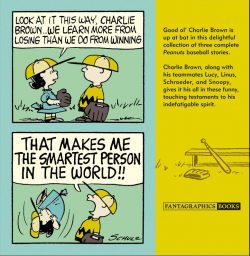
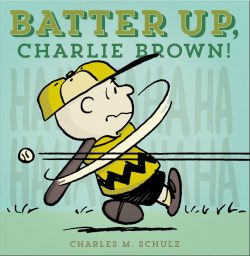
Available in a child-friendly hardback and the usual digital formats, Batter Up, Charlie Brown! offers a trio of extended vintage sequences dedicated to the kids’ attempts to distinguish themselves as sporting superstars in the heady arena of America’s favourite summer pastime. As a metaphor for living life to the full, sports has never been more accurate in its foreshadowings…

The tales are told in a series of monochrome panels (generally four to a page) and begin with ‘Team Manager’ as the perpetually anxious and responsibility-burdened Charlie anticipates the start of a new season. His worries are only further exacerbated by his devoted team who are all eager to act as back seat strategists…

Eponymous delight ‘Batter up!’ sees our gallant but overwhelmed commander stretched beyond his own herculean capacities as the squad call on him to lead from the front as usual but Charlie is weighed down with new familial stress as he’s ordered to push his new sister Sally in her stroller all day long. Can he cope with the stress of twin challenges and still save the game in the final inning?

Wrapping up the field fiascos, ‘Slide!’ sees the plucky player/manager (groundsman, talent scout, coach, organiser, tailor…) called upon to end the team’s permanent losing streak through innovative new tactics and heroic last-minute athleticism…

Timeless and evergreen – although that might just be grass stains – Charlie Brown’s existentialist travail have been delighting readers seemingly forever and clearly will not be stopping or superseded anytime soon. If you haven’t joined this club yet, why not sign up now?
Batter Up, Charlie Brown! © 2014 Peanuts Worldwide, LLC. All rights reserved.

I Love You, Broom-Hilda


By Russell Myers (Tempo Books/Grossett & Dunlap)
ISBN: 978-0-44805-593-0 (mass market PB)

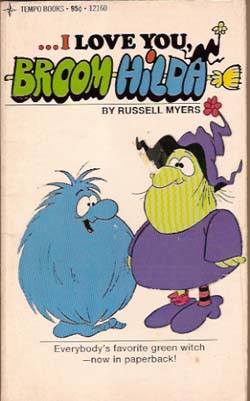
Broom-Hilda launched on April 19th 1970, the conception of newspaper comics veteran big wheel Elliot Caplin (1913-2000) He was the brother of Al (Li’l Abner) Capp and writer and/or creator of The Heart of Juliet Jones, Little Orphan Annie, Big Ben Bolt, Long Sam, Abbie and Slats and a host of other classic strips). He passed the concept on to then 32-year old Russell Myers to write and draw, choosing to remain in the background as agent and business manager. The strip is still in syndication today, but the 25 collections (of which I Love You, Broom-Hilda was the second) are all inexplicably out of print and you’ll need your trusty search engine of choice to enjoy the zinger-bestrewn mystic marvel in action…

Myers, who’d previously worked as a Hallmark Card artist whilst trying to break in to the strip biz, hit the ground running and the zany antics of the old girl soon garnered lots of fans through the Chicago Tribune Syndicate’s numerous client papers.

Like all popular strips, Broom-Hilda dances on that line dividing homogeneity and uniqueness. Back then – and even now – a successful strip concept has to appeal to a relatively vast audience (not all of them rocket scientists) but be strong enough to provide lots of gags and still be perceived as a stand-out property.

The brief, terse and decidedly surreal adventures of a homely, sharp-tongued witch and her peculiar supporting cast (which in this book from the third year of publication includes Irwin the Troll, Gaylord Buzzard, and the enigmatic and professionally abusive Grelber) proved exactly what the 1970s public wanted.

Claiming to be 1500 years old and Attilla the Hun‘s ex-wife, Broom-Hilda’s cleaned up a little over the years. She is no longer a booze-swilling, stogie-smoking harridan, and she’s a little lonely. She’s still looking for a second husband…

Broom-Hilda has had a few brushes with fame. In 1971 she had her own segment on the Filmation animated series Archie’s TV Funnies and in 1978 she was part of the line-up for The Fabulous Funnies – another Filmation vehicle which ranked her alongside strip royalty Alley Oop, Tumbleweeds, and Nancy. There was even serious talk of a stage musical in 2004…

Myers was awarded the Best Humour strip Award in 1975 by the American National Cartoonist Society and the strip is still going strong today. If you do track down any of the collections from the 1970s and early 1980s, the stylish, loose yet meticulous line-work of Myers lends an abstract weight and intensity to the panels that got gradually left behind as papers forced strips into smaller and smaller boxes, although the pointed and deprecating humour remains a constant for this splendid feature.

Happy 50th, Broom-Hilda and many more.
© 1973 The Chicago Tribune. All Rights Reserved.

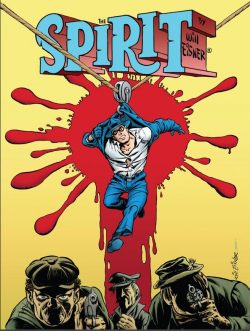
The Spirit: An 80th Anniversary Celebration


By Will Eisner & various (Clover Press)
ISBN: 978-1-95103-805-2 (TPB)

It is pretty much accepted today that Will Eisner was one of the prime creative forces that shaped the comicbook industry, but still many of his milestones escape public acclaim in the English-speaking world.

William Erwin Eisner was born on March 6th 1906, in Brooklyn, and grew up in the ghettos of the city. They never left him. After time served inventing much of the visual semantics, semiotics and syllabary of the medium he dubbed “Sequential Art” in strips, comicbooks, newspaper premiums and instructional comics, he then invented the mainstream graphic novel, bringing maturity, acceptability and public recognition to English language comics.

In 1978 a collection of four original short stories in comics form released in a single book, A Contract With God and Other Tenement Stories. All the tales centred around 55 Dropsie Avenue: a 1930’s Bronx tenement housing poor Jewish and immigrant families. It changed the American perception of cartoon strips forever.

Eisner wrote and drew a further 20 further masterpieces, opening the door for all other comics creators to escape the funny book and anodyne strip ghettos of superheroes, funny animals, juvenilia and “family-friendly” entertainment. At one stroke comics grew up.

Eisner constantly pushed the boundaries of his craft, honing his skills not just on the legendary Spirit but with years of educational and promotional material. In A Contract With God he moved into unexplored territory with truly sophisticated, mature themes worthy of Steinbeck and F. Scott Fitzgerald, using pictorial fiction as documentary exploration of social experience.

Restlessly plundering his own childhood and love of human nature as well as his belief that environment was a major and active character in fiction, in the 1980s Eisner began redefining the building blocks unique to sequential narrative with a portmanteau series of brief vignettes that told stories and tested the expressive and informational limits of representational drawings on paper.

From 1936 to 1938, Eisner worked as a jobbing cartoonist in the comics production firm known as the Eisner-Eiger Shop, creating strips for domestic US and foreign markets. Using the pen-name Willis B. Rensie he conceived and drew the opening instalments of a huge variety of characters ranging from funny animal to historical sagas,

Westerns, Detectives, aviation action thrillers… and superheroes – lots of superheroes …

In 1940 Everett “Busy” Arnold – head honcho of the superbly impressive Quality Comics outfit – invited Eisner to take on a new challenge. The Register-Tribune newspaper syndicate wanted a 16-page weekly comic book insert to be given away with the Sunday editions. Despite the terrifying workload such a commission demanded, Eisner jumped at the opportunity, creating three strips which would initially be handled by him before two of them were handed off to his talented assistants. Bob Powell inherited Mr. Mystic whilst masked detective Lady Luck fell into the capable hands of Nick Cardy (then still Nicholas Viscardi), and later the inimitable Klaus Nordling.

Eisner kept the lead strip for himself, and over the next twelve years The Spirit became the most impressive, innovative, imitated and talked-about strip in the business. In 1952 the venture folded and Eisner moved into commercial, instructional and educational strips. He worked extensively for the US military in manuals and magazines like P*S, the Preventative Maintenance Monthly, generally leaving comics books behind.

In the wake of “Batmania” and the 1960s superhero craze, Harvey Comics released two giant-sized reprints with a little material from the artist, which lead to underground editions and a slow revival of the Spirit’s fame and fortune via black and white newsstand reprint magazines. Initially, Warren Publishing collected old stories, even adding colour sections with painted illumination from such contemporary luminaries as Rich Corben, but with #17 the title reverted to Kitchen Sink, who had produced the first two underground collections.

Eisner found himself re-enamoured with graphic narrative and saw a willing audience eager for new works. From producing new Spirit covers for the magazine (something the original newspaper insert had never needed) he became increasingly inspired. American comics were evolving into an art-form and the restless creator finally saw a place for the kind of stories he had always wanted to tell.

He began crafting some of the most telling and impressive work the industry had ever seen: first in limited collector portfolios and eventually, in 1978, A Contract With God.

If Jack Kirby is American comics’ most influential artist, Will Eisner undoubtedly was – and remains – its most venerated and exceptional storyteller. Contemporaries originating from strikingly similar Jewish backgrounds, each used comic arts to escape from their own tenements, achieving varying degrees of acclaim and success, and eventually settling upon a theme to colour all their later works. For Kirby it was the Cosmos, what Man would find there, and how humanity would transcend its origins in The Ultimate Outward Escape. Will Eisner went Home, went Back and went Inward.

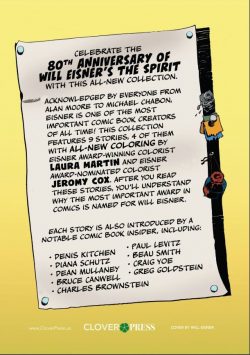
The Spirit debuted on June 2nd 1940 in the Sunday edition of newspapers belonging to the Register and Tribune Syndicate. “The Spirit Section” expanded into 20 Sunday newspapers, with a combined circulation of five million copies during the 1940s and ran until October 5th 1952. This trade paperback and digital collection re-presents a selection of classic adventures from the original 12-year canon, in stark stunning monochrome, with five digitally recoloured by Laura Martin and Jeromy Cox. Furthermore, each episode is preceded by an essay from Industry insiders and unashamed fans.

Leading the charge and providing a fascinating breakdown on the history of the masked marvel is former publisher (one of 15 to date) Denis Kitchen, who provides ‘A Brief History and Appreciation of The Spirit before the Cox-coloured ‘Who is The Spirit?’ reveals how a battle of wills between private detective Denny Colt and scientific terror Dr. Cobraleads to the hero’s death and resurrection as the ultimate man of mystery…

Editorial wonder Diana Schutz deconstructs one of Eisner’s most metaphysically mirthful yarns as ‘No Spirit Story Today’treats us all to monochrome madness with a deadline crunch inspiring a Central City cartoonist to break the fourth wall.

Dean Mullaney then spills the beans over atomic era intrigue as Martin’s hues add bite to the 1947 armageddon spoof‘Wanted’, with the entire world as well as our hero hunting a little man with a deadly secret…

According to Bruce Canwell’s essay, Li’ Abner parody ‘Li’l Adam’ was part of a scheme between Eisner and Al Capp to mutually boost popularity of their respective properties. The jury’s still out, but there no doubt that the Spirit portion is one of the wackiest episodes in the gumshoe’s case files, unlike the moody, compelling tragedy of ‘The Strange Case of Mrs. Paraffin’ (previewed by Charles Brownstein), wherein the ghostly gangbuster strives to convince a widow that she is not also a murderess…

Paul Levitz examines authorial inspiration in anticipation of a return to black & white and The Spirit’s battle against arsonist ‘The Torch’: a potentially passé romp rendered hilariously unforgettable by Eisner’s wry poke at advertising sponsorship, after which Beau Smith fondly recalls his mentor’s gift for teaching using modern magic realist western ‘Gold’ as his exemplar…

Coloured by Cox and discussed by Craig Yoe, ‘Matua’ is a deft and winsome tribute to myths and legends disguised as a poke at monster movies with the Spirit wandering the Pacific Islands and meeting an awakened colossal beast, after which Greg Goldstein focusses on ‘Sound’ as a monochrome adventure again takes a peek behind the curtain of a cartoonist’s life.

Eisner always had a superb team to back him up and here letterers Sam Rosen and Abe Kanegson combine with design assistant Jules Pfeiffer to make the wordforms the surreal stars of this picture show about another murdered pencil pusher…

Rounding out this tribute to eight tumultuous decades of Spiritual Enlightenment, is a Will Eisner Art Gallery of latterday sketches, pin-ups and covers by the master.

Will Eisner is rightly regarded as one of the greatest writers in American comics but it is too seldom that his incredible draughtsmanship and design sense get to grab the spotlight. This book is a joy no fan or art-lover can afford to be without, and is especially recommended for newbies who only know Eisner’s more mature works.

By the Way: Although Eisner started out utilising the commonplace racial and gender stereotypes employed by so many sectors of mass entertainment, he was among the first in comics – or anywhere else – to eschew and abandon them. In these more enlightened, if not settled, times, it’s nice to see a statement addressing the historical and cultural problems not to mention potential distress these outdated sensibilities might cause right at the front of the collection. So, if funny books can do it, how come statues can’t?

THE SPIRIT and WILL EISNER are Registered Trademarks of Will Eisner Studios, Inc. Will Eisner’s The Spirit © 2020 Will Eisner Studios, Inc. All Rights Reserved. All other material © its respective contributor. © 2020 Clover Press, LLC. All Rights Reserved.

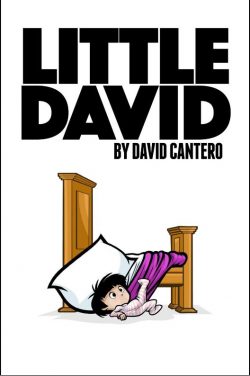
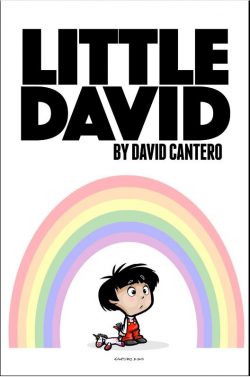
Little David


By David Cantero (Northwest Press)
eISBN: 978-1-9438900-0-2 (digital only)

Families are important: by all metrics the foundation of human society. If we swallow our arrogant exceptionalism for a moment, it’s also the binding concept of all mammalian life and a fair bit of the rest of Earth’s breathing occupants. You just need to be flexible, amenable to change and willing to re-examine and where necessary loosen any old hidebound definitions you might have acquired while growing up…

The concept is one we’re finally shedding: escaping centuries of oppressive preconditioning and the diktat of whatever autocratic – or, more usually, theocratic – hegemony presumes to run your life.

I’ll restate that just in case I wasn’t clear: human beings are all about families and what constitutes a family is open to interpretation…

David Cantero Berenguer (The Little Swallow Light, Cunitoons, People) was born in Cartagena, Spain and – after graduating in 1996 from the Royal Academy of Fine Arts in Liège – embarked on a stellar career as an author, cartoonist, illustrator, concept artist, designer and games maker. He is a prolific creator of books and graphic novels for kids and adults. Many of his works involve gay themes, ranging from inclusive all-ages chronicles (like the one under review here) to beguiling adult erotica.

First released in 2015 and deftly referencing Winsor McCay’s classic fantasy Little Nemo in Slumberland, Little David is a delicious selection of short gags wherein the ever-inquisitive titular star cavorts, chats and interacts with nine other kids, all cumulatively representing the wealth of options qualifying as family units today.

David himself has two dads, and pal Ulysses has a widowed mother, a stepdad and two half-brothers, whilst forthright Marie just has her mum. Abrasive Big Harry is full-nuclear in a biological clan of mum, dad and one sister, whereas Lenais a result of artificial insemination undertaken by her already-divorced mother. Anastasia has a mum and dad who conceived her in vitro, and PJ was adopted. Completing the menu, Ian has a trans dad and a mum whilst twins Yoko and Keiko have two mums and are the result of natural insemination…

That’s a heady mix and the subject of exactly the kind of innocently incisive, hilarious conversations you’d imagine a bunch of smart, curious kids to indulge in when the adults are absent and they’re trying to get to know each other.

The result is a charming and wittily compelling string of spit-take moments, especially as David (and his beloved stuffed unicorn Little Poo Poo) not only learn about many other ways of living but also explore various ways of dressing and expressing his own developing personality, interests and choices…

As innocently enchanting as Peanuts, as astute as Bloom County and as revelatory as Calvin and Hobbes, this peewee playground of family fun offers as sincerely inclusive and heartwarming kindergarten of comics messaging as you’d ever want your kids to see and is also a superb example of top rate cartooning to gladden the eyes.

Little David is a book every home and elementary school should have and use.
© 2015 David Cantero. All rights reserved.

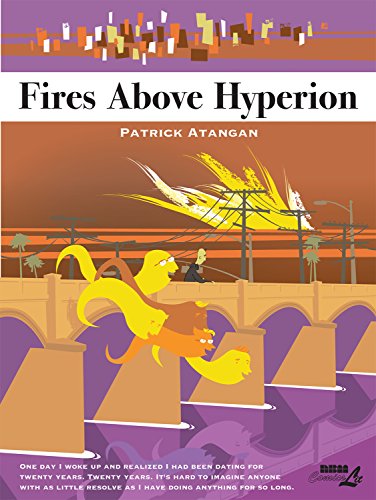
Fires Above Hyperion


By Patrick Atangan (NBM/Comics-Lit)
ISBN: 978-1-56163-986-1 (TPB)

Bad times for human beings, these days. With people dying in incalculable numbers and denied the simple solace of friendly or familial contact at the end, with most of the world’s leaders fumbling the ball as the planet dies from commercial abuse and exploitation and with haters and bigots proudly – and without a trace of shame – spreading their bile again, it seems odd to moan about comparatively minor issues.

Nevertheless, I’m adding another sin to the menu. Perhaps the cruellest and most pitiful of the minor horrors besieging us at the moment is the simple absence of a chance to congregate with friends and assert the right to live life your own way (hypocritically, that’s a right I’d happily deny every racist, fascist and homophobe in existence, but hey, I’m “complicated”)…

After millennia of struggle, a large proportion of mankind eventually decided it was okay for men to love men, women to love women and in fact every variety of person to enjoy the company of any other person or persons as long as it was consenting.

I know it’s hard for some to let go of hate and fear, but we’d made a good honest start. Over time people even convened in vast, colourful bustling parades and parties: a rowdy affirmation of a struggle that was generally being won.

That’s not happening this year, but LGBTQ+ folk are resilient and have adapted. Go join an online or distanced event if you can. And then there’s books and comics. The fraternity is superbly proficient at using art and narrative and the Queer comics genre is vast, expansive and astoundingly worthwhile and entertaining. Here’s one of my favourites, still available in paperback and many digital formats that you really should see…

It’s long been an aphorism – if not outright cliché – that LGBTQ+ comics are the only place in the graphic narrative game where real romance still thrives. As far as I can see though it’s true; an artefact, I suppose, of a society which seems determined to demarcate and separate sex and love as two utterly different – and even opposite – things.

I’d prefer to think that in the 21st century – at least the more civilised bits which actually acknowledge and welcome that times have changed – we’ve outgrown those juvenile, judgemental, religion-blighted bad old days and can simply appreciate powerful, moving, wistful, sad and/or funny comics about ordinary people without any kind of preconception. That battle’s still not completely won yet, but hopefully thoughtful, inspirational memoirs such as this will aid the transition…

Californian Patrick Atangan (Songs of Our Ancestors, Invincible Days) is a multi-talented Filipino-American creator with many strings to his creative bow: as deft and subtle in his computer-generated comic tales and retellings of Asian myths as with the tools he uses to craft high-end designer furniture.

Here, to his printed canon for youngsters, he’s added a wry, charming yet deeply moving collection of short intimate musings and recollections on his “romantic gaffes and failures” and the results are enough to make the toughest cookie crumble…

Pitched as if “Sex and the City had been created by a gay Charlie Brown” these utterly compelling, seditiously humorous slices of a life lived a little too much inside one’s own head kick off with chronological logic as the still-closeted Patrick attends his ‘Junior Prom’. The problem is that he is escort to obsessive beard Mildred, whose attention to detail and determination to make the event “absolutely perfect” cannot help but fail. At least the string of disasters the fervent Promzilla endures takes the spotlight off his own failings, petty jealousies and perceived inadequacies…

‘Secrets’ skips ahead to the emotional liberation of college as our introvert resolves to reinvent himself and begins an ongoing process of Outing which gradually encompasses friends, family and everybody new in his life. Sadly, that in turn leads to a sort-of romance with Calvin who never really comes to terms with his own sexual identity…

On leaving academe, another character-building debacle involves ‘Gary’; someone our author judged far too lovely for a dweeb like himself – and therefore something of a self-fulfilling prophecy – before eponymous vignette ‘The Fires Above Hyperion’ turns the screws even tighter.

The tale finds Patrick coolly contemplating the now-annual forest fires threatening Los Angeles whilst foolishly attempting to rekindle or reinvent the three-year relationship he has just ended with Roger…

Eschewing his usual ‘New Year’s Eve’ ritual, the narrator attends a big party and suffers inebriation, gastric trauma and the humiliation of mistakenly putting the moves on a chain-smoking straight guy before ‘APE Shit’ reveals the sorry fallout of a trip to San Francisco to attend his first Alternative Press Expo in a decade: a concatenation of domestic disasters comprising old friends with new children, commuter congestion and a total change in the way Indy comics are sold.

At least he connects with gorgeous, seemingly ideal Bryan – before Fate and Patrick’s own conscience play a few pranks to spoil what might have been a perfect moment…

More notionally self-inflicted trauma comes out of ignoring the custom of a lifetime and attending a wedding as a ‘Plus One’. Naturally he didn’t mind his “date” Julia going off with a guy, but when Patrick zeroes in on wonderful, apparently available Peter, events and the author’s own treacherous tuxedo conspire to make the soiree memorable for all the wrong reasons…

A heartbreakingly harsh assessment of Patrick’s failings then lead to the awful conclusion that he is ‘Nobody’s Type’before the excoriating romantic recriminations end with another ill-fated, self-sabotaged first date that founders because of too much introspection and an accumulation of ‘Baggage’…

Insightful, penetrating, invitingly self-deprecating, guardedly hopeful and never afraid to be mistaken for morose when occasion demands, this collection of misjudged trysts and missed chances offers a charming glimpse at the eternally hopeful way most folks of every persuasion live their love-lives and the result is magical and unforgettable.

This is a must-have item for anyone graced with heart and soul…
© 2015 Patrick Atangan.

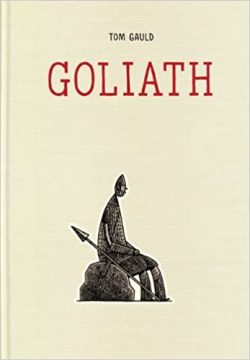
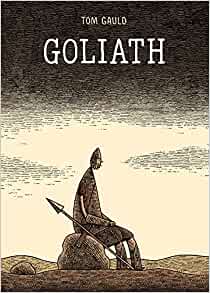
Goliath


By Tom Gauld (Drawn & Quarterly)
ISBN: 978-1-77046-065-2(HB) 978-1-77046-299-1(TPB)

Everybody knows the story of David and Goliath. Big, mean evil guy at the head of an oppressive army terrorising the Israelites until a little boy chosen by God kills him with a stone from his slingshot.

But surely there’s more to it than that…?

In this supremely understated and gentle retelling we get to see what the petrifying Philistine was actually like and, to be quite frank, history and religion have been more than a little unkind…

Like most really big guys, Goliath of Gath is a shy, diffident, self-effacing chap. The hulking man-mountain is an adequate administrator but fifth worst swordsman in the entire army which has been camped in opposition to the Hebrew forces for months. Moreover, the dutiful, contemplative colossus doesn’t even have that much in common with the rough-and-ready attitudes of his own friends…

When an ambitious captain gets a grand idea, he has his titanic towering clerk outfitted in terrifying brass armour and orders him to issue a personal challenge to the Israelites every day.

“Choose a man, let him come to me that we may fight.
If he be able to kill me then we shall be your servants.
But if I kill him then you shall be our servants.”

The plan is to demoralise the foe with psychological warfare: grind them down until they surrender. There’s no reason to believe Goliath will ever have to actually fight anybody. It’s a bit like government policy, where announcing that something is being discussed to be actioned to be carried out is exactly the same as having done the task and moved on to the next crucial problem that needed fixing immediately, if not four years ago…

Elegiac and deftly lyrical, this clever reinterpretation has literary echoes and overtones as broadly disparate as Raymond Briggs and Oscar Wilde and, as it gently moves to its grimly inescapable conclusion, the deliciously poignant, simplified line and sepia-toned sturdiness of this lovely hardback or comforting paperback (unfortunately no digital edition yet!) add a subtle solidity to the sad story of a monstrous villain who wasn’t at all what he seemed…

Tom Gauld is a Scottish cartoonist whose works have appeared in Time Out and the Guardian. He has illustrated such children’s classics as Ted Hughes’ The Iron Man and his own books include Guardians of the Kingdom, 3 Very Small Comics, Robots, Monsters etc., Hunter and Painter and The Gigantic Robot. I particularly recommend his cartoon collections You’re All Just Jealous of My Jetpack, Department of Mind-Blowing Theories and Baking with Kafka…
© 2012, 2017 Tom Gauld. All rights reserved.

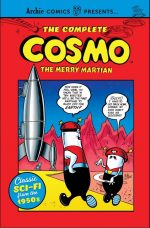
Archie Comics Presents… The Complete Cosmo, the Merry Martian


By Sy Reit, Bob White & Terry Szenics, with Tom DeFalco, Dan Parent, Fernando Ruiz, Ian Flynn, Jeff Schultz, Tracy Yardley & various (Archie Comics)
ISBN: 978-1-68255-895-9(TPB)

MLJ were a publisher who promptly jumped on the “mystery-man” bandwagon following the debut of Superman. They began their own small but inspirational pantheon of gaudily clad crusaders in November 1939, starting with Blue Ribbon Comics, and followed up by Top-Notch and Pep Comics. The content was the standard blend of costumed heroes, two-fisted adventure strips, prose pieces and gag panels.

After a few years, Maurice Coyne, Louis Silberkleit and John Goldwater (hence MLJ) spotted a gap in their blossoming market. From December 1941 the masked champions and rugged he-men were gradually but insistently nudged aside by a far less imposing paragon: an “average teen” enjoying ordinary adventures like the readers, but with the laughs, good times, romance and slapstick emphasised.

Pep Comics #22 introduced a gap-toothed, freckle-faced red-headed goof showing off to the pretty blonde next door. Taking his lead from the popular Andy Hardy matinee movies starring Mickey Rooney, Goldwater developed the concept of a young everyman protagonist, tasking writer Vic Bloom & artist Bob Montana with the job of making it work.

The feature was an instant hit and by the winter of 1942 had won its own title. Archie Comics #1 was the company’s first non-anthology magazine and with it began the gradual transformation of the entire company. The slapstick teen travails of Archie Andrews, girl-next-door Betty Cooper, Archie’s unconventional best friend/confidante Jughead Jones and filthy rich, raven-haired Veronica Lodge in scenic small-town utopia Riverdale were the components of the comic book industry’s second Genuine Phenomenon (Superman and superheroes being the first).

By 1946, the kids had taken over, so the company renamed itself Archie Comics, retiring its costumed characters years before the end of the Golden Age and becoming, to all intents and purposes, a publisher of family comedies.

Its success, like the Man of Steel’s, changed the content of every other publisher’s titles, and led to a multi-media industry including TV, movies and a chain of restaurants. In the swinging sixties pop hit Sugar, Sugar (a tune from their first animated television show) became a global smash. Wholesome garage band “The Archies” has been a fixture of the comics ever since. Adapting seamlessly to every trend and fad of youth culture since before there even was such a thing, the host of writers and artists who’ve crafted the stories over the decades have made the “everyteen” characters of utopian Riverdale a benchmark for childhood development and a visual barometer of growing up.

Throughout that meteoric rise, however, the company never left all its eggs in one basket. Its superhero line periodically resurfaces and reboots and their forays into all-ages supernatural thrillers and straightforward adult-themed horror comics are always worth reading. Archie Comics also periodically sought to repeat the success of its original humour breakthrough with titles such as Katy Keene, Wilbur, Super Duck, Pat the Brat, That Wilkin Boy and many others. Each attempt took inspiration from the tone of the times…

In 1958, the world was abuzz with science, science fiction and the accelerating space race, and the time seemed right for an amusing series about a bold but affable explorer from the Red Planet. The result was Cosmo the Merry Martian by Sy Reit, Bob White & Terry Szenics.

Seymour Victory Reit (1918-2001) was an accomplished humourist, children’s author, historian, cartoonist and animator. His many clients and employers included Mad Magazine and his greatest claim to fame now is co-creating – with Joe Oriolo – Casper the Friendly Ghost.

Comics veteran Robert “Bob” White (1928-2005) was an Archie mainstay until the mid-1960s when he was apparently summarily fired for daring to moonlight (on Tower Comics’ Tippy Teen). He had a keen eye for sight gags, a deft line in monster-design and a slick accessible style as seen in this years-ahead-of-its-time gently satirical comedy sci fi series… Often, that term is mere hyperbole, but it’s true here, as Cosmo the Merry Martian was revived in 2014, and has been with us ever since…

Running between September 1958 and October 1959, the series began with ‘Destination Earth!’ as all Mars watches spacer Cosmo and his extremely reluctant co-pilot Orbi blast off on the first flight to another planet. Ship designer Professor Thimk is anxious, and Cosmo’s girlfriend Astra is still trying to finagle her way onto the ship with the astronauts…

Eventually however the ship blasts off, exploiting the close proximity of the worlds to cut travel time. They are only 2000 miles from their destination when a meteor punctures the fuel tanks and forces them to crash land on Luna…

‘Moon Merriment’ then manifests as the explorers are rescued by bizarre, fractious, pun-obsessed but scientifically advanced moon people called Oogs. After much fuss and kerfuffle they ferry Cosmo and Orbi to their intended destination just in time to take in and disastrously disrupt a baseball game. As confusion reigns, the ‘Planet Playmates!’ hastily return to Luna…

When the Martians decide to explore the Dark Side of the Moon in #2 (November 1958), they are drawn into ‘The Great Gillywump Hunt!’: encountering a dread beast with an undeserved reputation and very bad cold. Seeking to placate centuries of misunderstanding in ‘Sneezy Does It!’ our heroes again cadge a lift ‘Down to Earth!’ to secure a cure for that pestilential cold, but the attempt again triggers chaos on the third rock from the Sun…

Meanwhile on Mars, Thimk and Astra board a spare rocket to save Cosmo and Orbi…

The issue then finds time and space for a brace of quick complete tales: one featuring egghead alien jimmy jupiter and his hand-made robot girlfriend whilst the second sees cuboid ET Squarehead pick up a rather unique method of travel…

Cosmo the Merry Martian #3 didn’t launch until April 1959 and found the moon-marooned astronauts ‘Venus Bound!’ after Thimk’s rescue rocket arrives on Luna and delivers orders to explore the second planet. Setting out, the ship carries the quartet of Red Planeteers, a contingent of Oogs, Orbi’s dog Jojo and a subtle stowaway… the bellicose Gillywump…

Arrival on the mysterious misty planet denotes ‘Trouble for Orbi!’ in the form of a sleeping giant, until his comrades rush ‘To the Rescue!’ Eventually, cooperation and communication with the residents offset a ‘A Slap-Happy Ending!’ and the adventure ends with the voyagers rushing to meet the boss…

The interplanetary antics then conclude with mathlete jimmy jupiter finding the upside of a hit-&-run in ‘Lovely Day!’…

June 1959 saw the release of issue #4 and an audience with ‘The Queen of Venus’. The gorgeous monarch sets Astra’s hackles rising and causes ‘Trouble for Cosmo!’ by declaring her intention to marry him…

His fellow explorers soon devise a way to ‘Rescue in Peace!’ culminating in another example of ‘A Slap-Happy Ending!’, but the frantic flight from Venus damages their ship and the appalled escapees find themselves shooting straight for deep space with no way to turn, stop or even decelerate…

The tense cliffhanger is slightly offset by another jimmy jupiter/Squarehead double bill featuring calculus chuckles and cubic cartoon whimsy…

‘Stand by for Saturn!’ opens #5 (August 1959), with the out-of-control Mars ship hurtling towards the planet’s rings. Happily, the collision is not fatal and the voyagers make relatively harmless planetfall before meeting the friendly vegetable inhabitants. All too soon though, the explorers fall foul of ‘The Magic Gumdrops!’ Cosmo’s reluctant co-pilot undergoes shocking transformations in ‘Pardon My Size!’, culminating in ‘A Ride for Orbi!’ to those rings and then astoundingly ‘On to Mars!’, leaving his companions to hitch a lift home with the Saturnians, whilst Squarehead closes the issue with ‘The Mirror the Merrier!’…

The series was abruptly curtailed with the October 1959 release, as ‘Make Mine Mars!’ saw the Red Planet hosting a convocation of visitors from Luna and Saturn only to be imperilled by a potential world-conquering villain as ‘Meet Dr. Beatnik!’ introduces a Martian mad scientist intent on conquering Earth.

His horrified compatriots are determined to thwart his plans, resulting in ‘The Great Space Chase!’ and an outer space confrontation in ‘Fire Away!’ before a multi-world coalition finally accomplishes ‘The End of Dr. Beatnik!’ and opts to land on Earth for a friendly visit…

Fun and thrilling, packed with easily-relatable facts and astronomical data, the saga was a splendid example of family-friendly entertainment, but had failed to find sufficient readership over a year of continuous frolicsome adventure. Although it ended there, the series was fondly remembered and was revived in the space-friendly 21st century.

In Archie #655 (June 2014) Tom DeFalco, Fernando Ruiz & Rich Koslowski reintroduced a more take-charge iteration of the jolly voyager in short story ‘The Good Guys of the Galaxy!’ Here, Archie and Jughead teamed up with past characters such as Captain Sprocket, Cat-Girl, Captain Pumpernik and Super Duck in a multiversal action romp to save creation from the reality-warping threat of the Miracle Mitten…

The Martian then popped up in ‘From Mars with Love’ (Jughead & Archie Double Digest #15, October 2015, by Ruiz & Bob Smith) with a disastrous gift suggestion for Veronica’s birthday and again as a computer game in ‘Cosmo Go!’ (Archie Comics Double Digest #275 February 2017, by Dan Parent & Jim Amash).

The game version reappeared in ‘Ready, Set, Go!’ (Archie Comics Double Digest #285 February 2018 by Parent, Jeff Schultz & Amash), before the Martian finally reclaimed his own comic book series in January 2018. Cosmo #1 was crafted by Sonic the Hedgehog team Ian Flynn, Tracy Yardley & Matt Helms who reinvented the Red Rover as a space cop and leader of a team of cosmic heroes in ‘Space Aces!’

If you’re only interested in the vintage tales, you might want to pick up the cheaper Pep Digital #42 which gathers the Reit & White ’50’s series and also includes a snippet from 2011’s Archie & Friends: Night at the Comic Shop by Alfonso Ruiz, Bill Galvan & Amash.

In the chapter ‘Comic Cosmosis’ the original Cosmo, Orbi and Jojo explosively arrive in Riverdale’s PEP Comics store at the vanguard of a wave of comics characters from alternate realms – and MLJ/Archie’s back catalogue. It’s a great teaser for the introduction of Archie’s own multiverse…

Packed with charm, elucidation and restrained action, the exploits of Cosmo offer a happy view of the Martian way that will delight fun-lovers and wonder-addicts everywhere.
© 1958-2018 Archie Comics Publications, Inc. All rights reserved.