

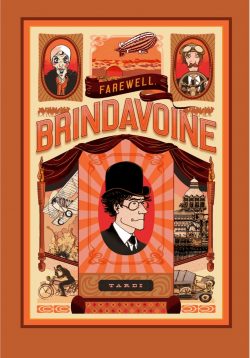
By Tardi, translated by Jenna Allen (Fantagraphics)
ISBN: 978-1-68396-433-9 (Album HB)
This book includes Discriminatory Content produced in less enlightened times. This book also includes Discriminatory Content included for dramatic & literary effect and to make a point.
Credited with creating a new style of expressionistic illustration subsequently dubbed “the New Realism”, Jacques Tardi is one of the greatest comics creators in the world, blessed with singular vision and adamantine ideals. A strident anti-war activist, he apparently refused France’s greatest honour because he wanted to be completely free to say and create what he wants.
Tardi was born in the Commune of Valence, Drôme in 1946, studying at École Nationale des Beaux-Arts de Lyon and prestigious Parisian École Nationale Supérieure des arts décoratifs. He launched his comics career in 1969 at home of modern French comics Pilote with the series we’re looking at today, as first seen in 1972-1973. From illustrating stories by Jean Giraud, Serge de Beketch and Pierre Christian, he moved on to westerns, crime tales and satirical works in magazines like Record, Libération, Charlie Mensuel & L’Écho des Savanes, whilst graduating to adapting prose novels by Louis-Ferdinand Céline & Léo Malet.
The latter’s detective Nestor Burma was the subject of all-new albums written and drawn by Tardi once the established literary canon was exhausted, and led to the creation of Polonius in Métal Hurlant (1976) and the now-legendary Les Aventures Extraordinaires d’Adèle Blanc-Sec: an epic “gaslamp” period fantasy running in daily periodical Sud-Ouest. The series numbers 10 tomes thus far and inhabits the same pocket reality as the star of this book.
Our passionate raconteur has crafted crushingly powerful anti-war books and stories (C’était la guerre des tranchées, Le trou d’obus, Moi, René Tardi, prisonnierde guerre au Stalag IIB and others) dealing with the common soldier’s plight; written novels; created radio series; worked in movies and co-created – with writer Jean Vautrin – Le Cri du Peuple: a quartet of albums about the Parisienne revolt of the Communards.
This lavish full-colour extravaganza began life as Adieu Brindavoine, offering obscure, complex yet enticingly shady political intrigues; dastardly plutocratic plotters and cast-iron-&-clockwork chic in a grand mode of Victoriana & Edwardiana; and saw Tardi proclaimed in later years the “Godfather of Steampunk”. His surreally-structured, absurdist episodes and incidents – strung together in nigh-stream-of-consciousness mode – work best on the visual perceptions with dialogue used only to ensure clarity or bemuse perception…
Following a context-supplying appreciation in Benoît Mouchart’s Preface, we begin in Neuilly-Sur-Seine in May 1914, as an aged messenger braves the cluttered and controversial home of gentleman photographer Lucien Brindavoine. Surly Basil Zarkhov has a startling and potentially life-changing proposition, but is gunned down by a skylight-shattering intruder before he can share it. However, thanks to his deathbed exposition, Lucien is soon heading by steamship for Istanbul, and another risky meeting…
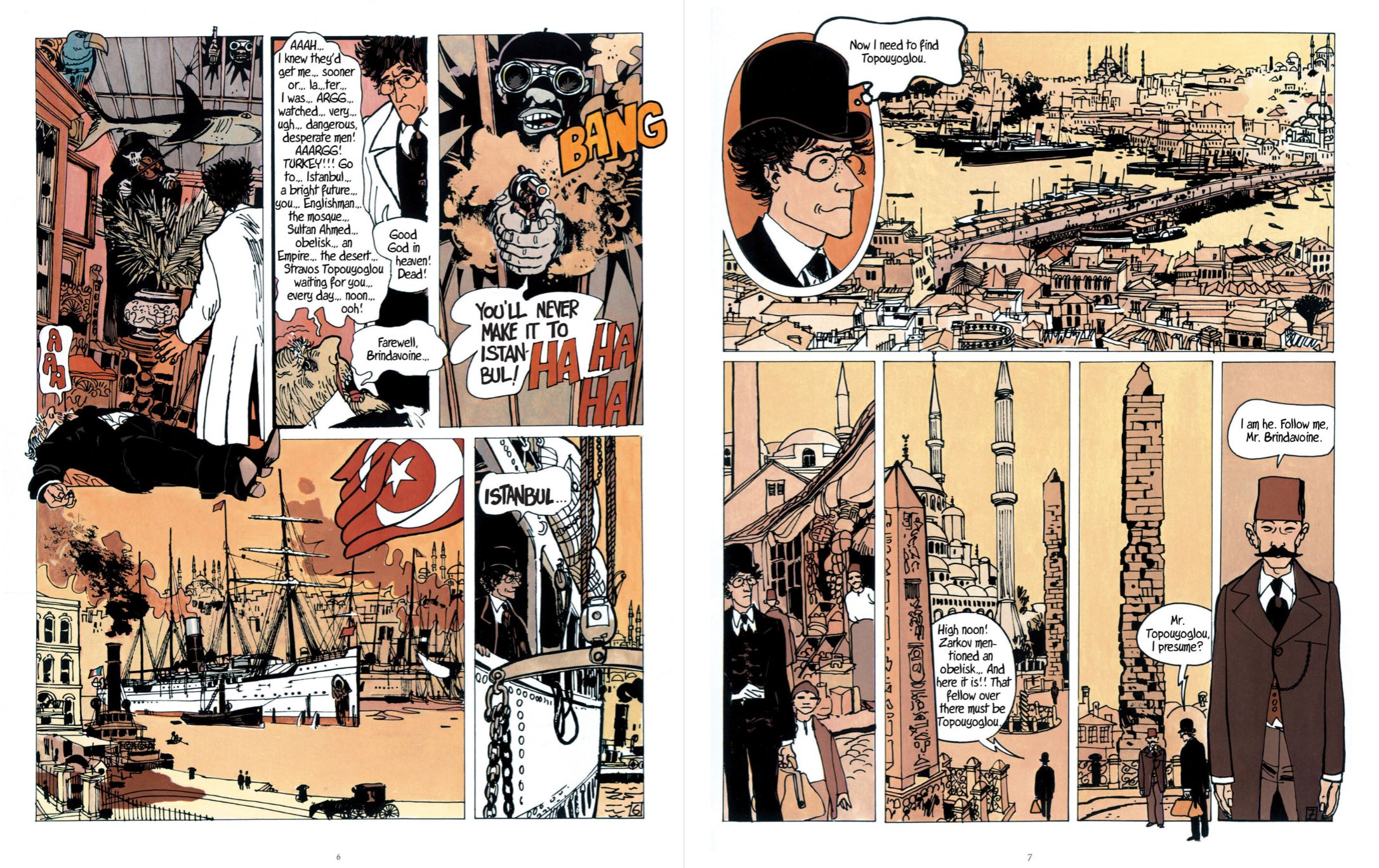
Constantly encountering strikingly odd individuals, Lucien is soon unwillingly partnered with effetely obnoxious intoxicated Englishman Mr. Oswald Carpleasure and hurtling across the desert towards Afghanistan in a battered motor vehicle. In their immediate future is a fantastic lost city, but the sinister gunman is in hot pursuit, with wicked Olga Vogelgesang also determined to destroy them from her deadly state-of-the-military-art biplane…
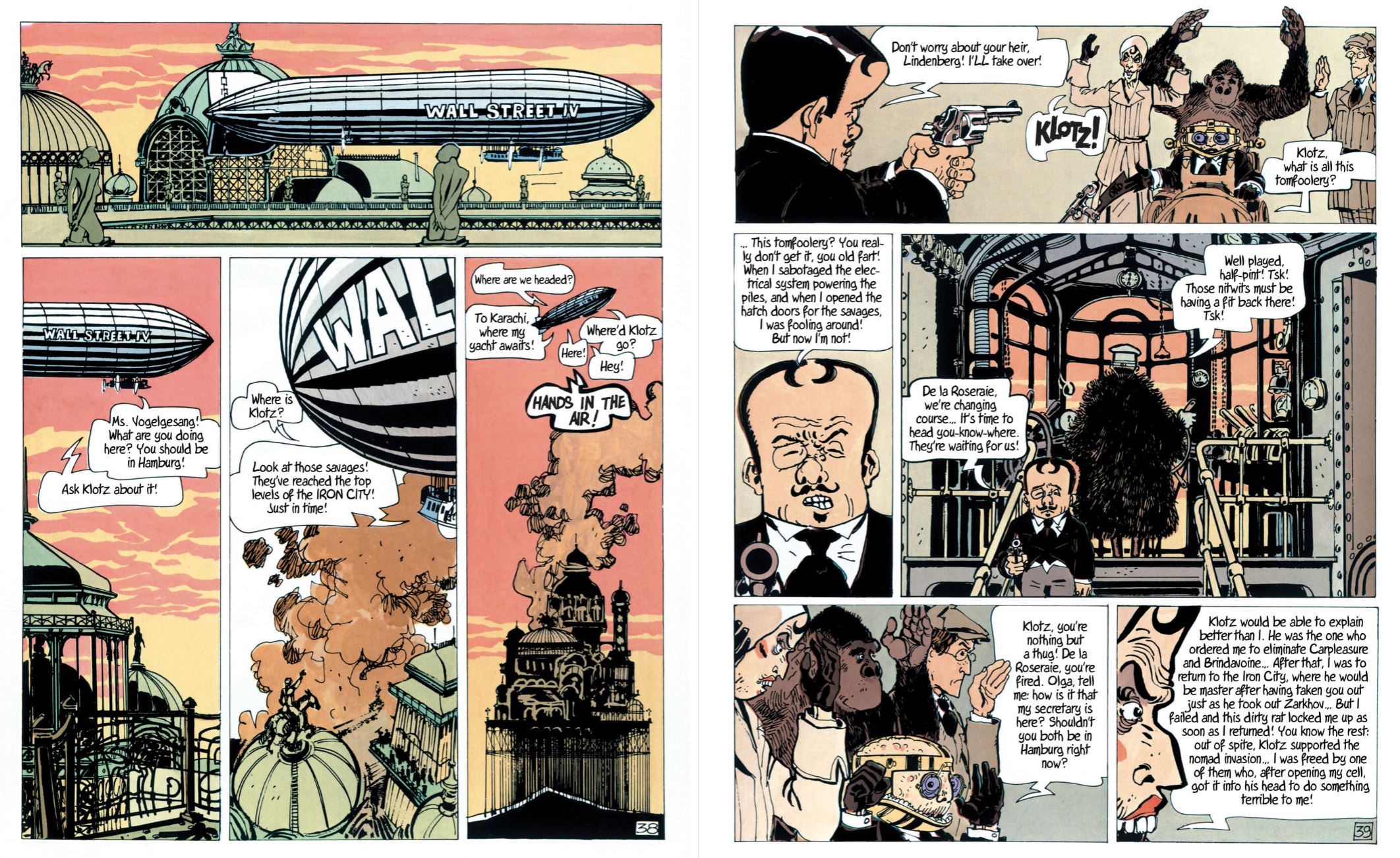
After much privation and bewilderment, Lucien finally reaches the lost Iron City and is greeted by the orchestrators of many of his woes. Learning of an incredible plutocratic plot affords him little comfort, but before long the baroque devils in nominal charge fall upon each other like deranged wolves, enabling – if not compelling – Brindavoine to flee in the most advanced passenger craft in the world…
Thanks to a breaking world war, he doesn’t get far.
Following the tale’s conclusion, a compelling comic epilogue from a previously unseen narrator (think The Rocky Horror Show) deviously adds to the confusion by “explaining” what’s happened and what will be Lucien’s ultimate fate before introducing a thematic follow-up.
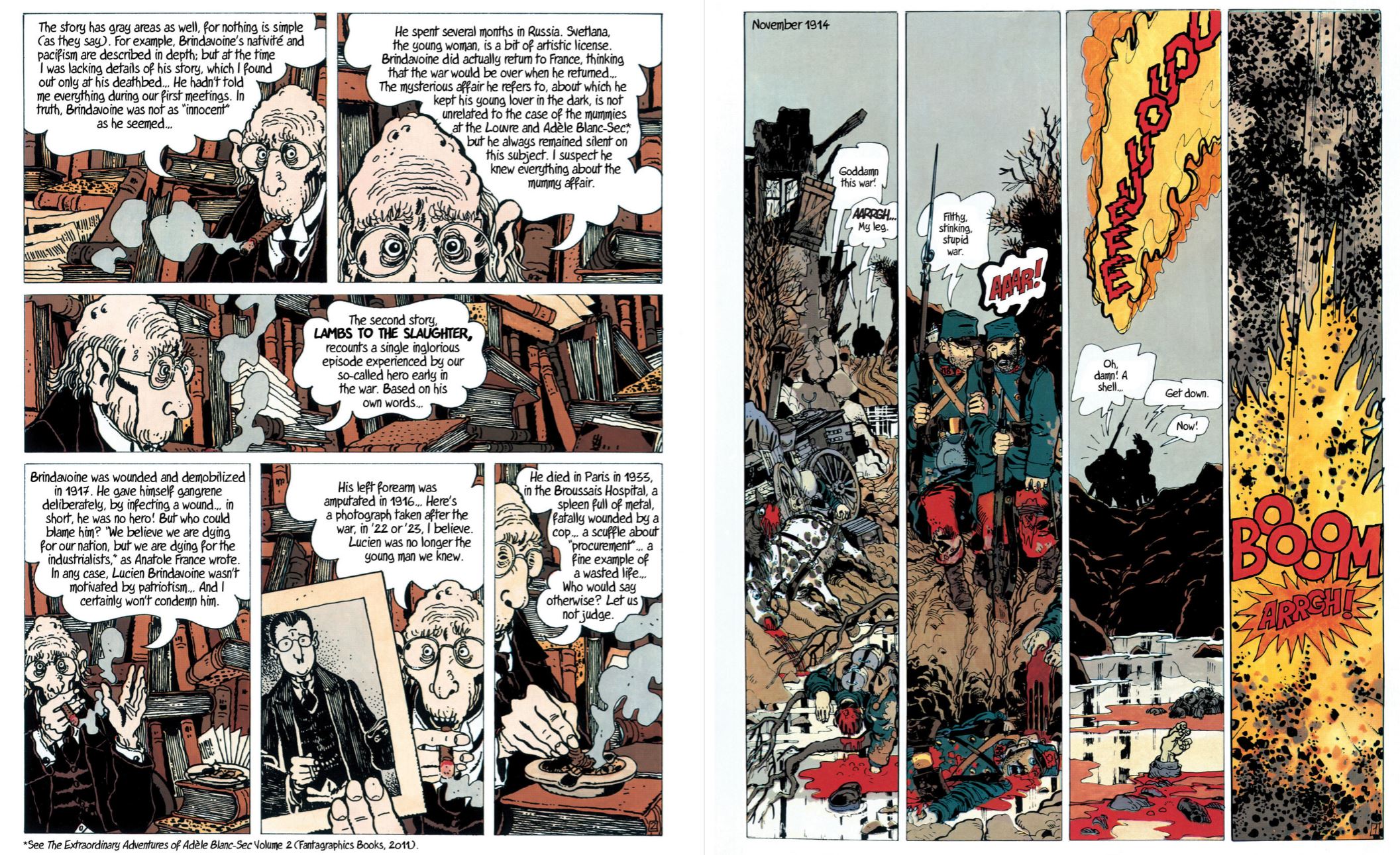
‘Lambs to the Slaughter’ is set in November 1914 with deserters from all the armies involved holing up in a shattered church. Plagued by visions of perfect pasts and potential tomorrows, they are utterly unprepared for when the mad military of today finds them…
Bizarre, visually resplendent, darkly funny, evocative and deliciously challenging, Farewell, Brindavoine is a comic tour de force on every level and a sublime example of how fashion, fantasy and futurism can work miracles when woven together by a master craftsman.
This edition of Farewell, Brindavoine © 2021 Fantagraphics Books, Inc. Adieu Brindavoine © 2011 Casterman. Translation © 2021 Jenna Allen. Preface © 2021 Benoît Mouchart. All rights reserved.
Today in 1909, British strip stalwart Barry Appleby (The Gambols) was born, sharing birthday honours with groundbreaking manic maestro Robert Crumb (My Troubles with Women, Fritz the Cat, Mr Natural, The Book of Genesis) in 1943 and utterly amazing Jacques Tardi (It Was the War of the Trenches!, Nestor Burma, Griffu, Ici Même, Tueur de cafards, Tueur de cafards,) in 1946. Fellow natal newcomers include writer/editor Jack C. Harris (Kamandi, Wonder Woman, The Ray), in 1947 and letterer/typographer Ken Bruzenac (American Flagg!, E-Man, Mr Monster) in 1952.
We lost Belgian actress and that nation’s very first woman cartoonist Jeanne Hovine AKA Anne-Marie Ferrières (Nic et Nac) in 1992; French artist Raymond Poïvet (Colonel X, Guy Lebleu, Mam’zelle Nitouche, Les Pionniers de l’Espérance) in 1999; colourist Bob LeRose in 2006 and Spanish artist Roger Subirachs i Burgaya, (Vaselín y Loto, Emili Piula, Destino Gris) in 2017.