
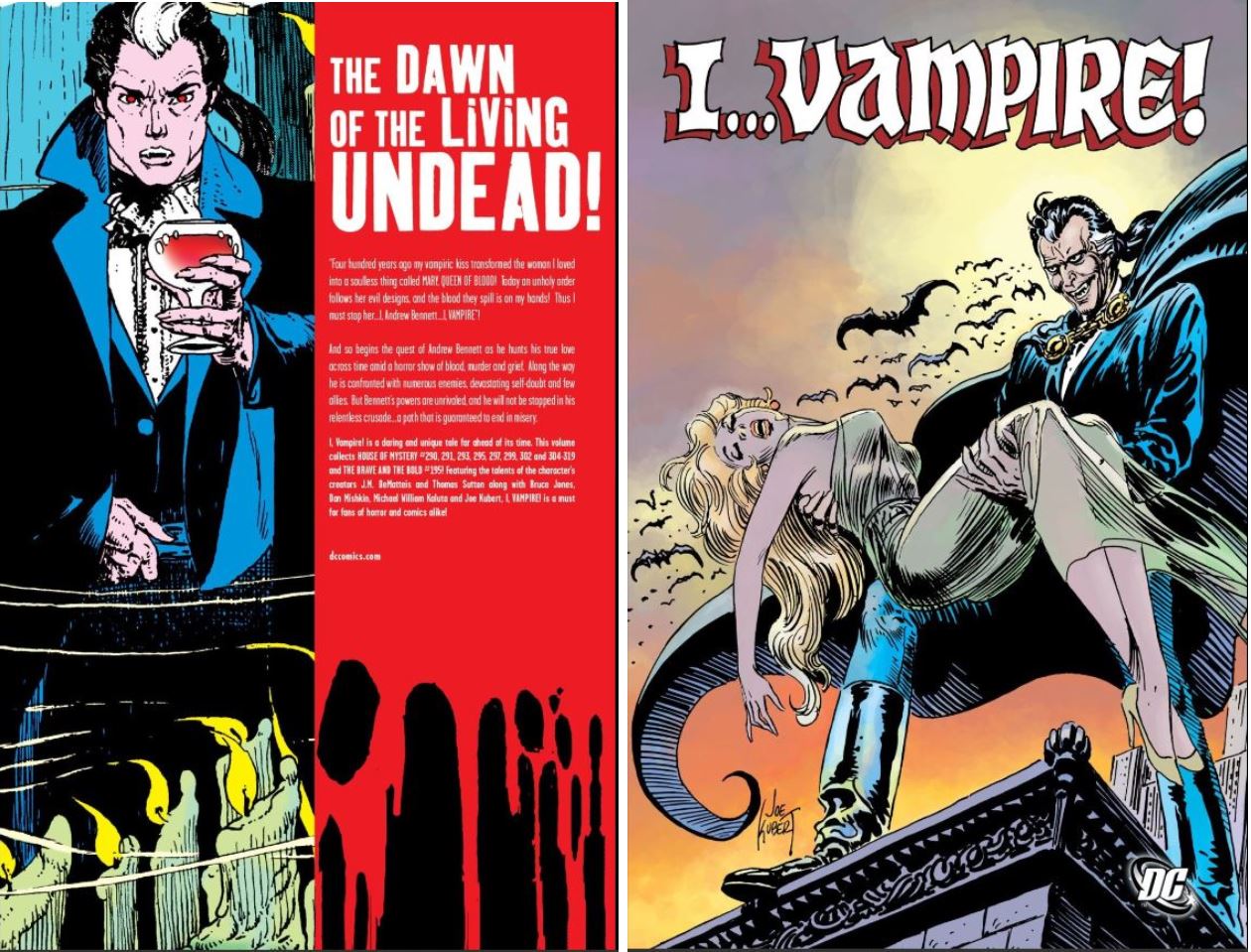
By J.M. DeMatteis, Bruce Jones, Dan Mishkin, Gary Cohn, Mike W. Barr, Tom Sutton, Ernie Colon, Adrian Gonzales, Paris Cullins, Dan Day, Jim Aparo, Joe Kubert, Michael Wm. Kaluta, Tatjana Wood, Adrienne Roy & various (DC Comics)
ISBN: 978-1-4012-3371-6 (TPB), 978-1-4012-5507-7 (Digital edition)
This book includes Discriminatory Content produced in less enlightened times.
Scary times ahead so let’s ease in to the season of mists mellow fruitfulness and spine sucking terror! with a guaranteed classic grimoire of reasonably family oriented ghoulish gore and wonder…
When superheroes entered their second decline at the end of the 1960s, four of the six surviving newsstand comic book companies (Archie, Charlton, DC, Gold Key, Harvey & Marvel) increasingly turned to horror and suspense anthologies to bolster their flagging sales. Even wholesome Archie briefly produced Red Circle Sorcery/Chillers comics, diverting a portion of their teen-comedy core gently into superb tales of witchcraft, mystery and imagination.
DC’s first generation of mystery titles blossomed at the end of the Golden Heroic Age when most comic book publishers of the era started switching to Crime, Romance, Western, Sci Fi and Horror genre anthologies to recapture an aging readership which was drifting away to other mass-market entertainments like TV and movies. Intriguingly, 1950’s TV also adopted en masse the anthological mystery tale model as seen in a wealth of repertory company anthology shows like The Veil, One Step Beyond, Tales of Tomorrow, and later, better remembered classics like The Outer Limits and The Twilight Zone.
After a few tenuous attempts with supernatural-themed heroic leads in established titles (Johnny Peril in Comic Cavalcade, All-Star Comics and Sensation Comics; Dr. Terry Thirteen, The Ghostbreaker in Star-Spangled Comics) by 1951 National Comics had bowed to the inevitable and launched a comparatively straight-laced anthology sans recurring lead stars… which nevertheless became one of their longest-running and most influential titles. It all began on October 3rd with the launch of The House of Mystery (cautiously cover-dated December 1951/January 1952).
When a hysterical censorship muck rake led to witch-hunting hearings attacking comic books and newspaper strips (just type Senate Subcommittee on Juvenile Delinquency, April-June 1954 into your search engine at any time), the industry panicked and hurriedly adopted a castrating straitjacket of stringent self-regulatory rules and admonitions. Despite mystery/suspense titles produced under the aegis of the Comics Code Authority being sanitised, anodyne affairs in terms of Shock & Gore, the readership’s appetite for mystery and suspense stayed high, and in 1956 National introduced sister titles Tales of the Unexpected & House of Secrets.
Supernatural thrills and spooky monsters were dialled back into marvellously illustrated, genteel, rationalistic fantasy-adventure vehicles which nonetheless dominated the market until the end of the 1950s when the super-hero returned in force – having begun a renaissance in 1956 after Julius Schwartz reintroduced The Flash in Showcase #4. Revivals of Green Lantern, Hawkman, The Atom and new costumed cavorters generated a gaudy global bubble of masked myrmidons which even forced these dedicated anthology suspense titles to transform into super-character split-books with J’onn J’onzz, Manhunter from Mars and Dial H for Hero in House of Mystery and paranormal investigator Mark Merlin (latterly Prince Ra-Man) sharing space with anti-hero Eclipso in HoS. When caped crusader craziness peaked and popped, Secrets was one of the first casualties, folding with the September/October 1966 issue. House of Mystery carried on with its eccentric costumed cohort until #173, and Tales of the Unexpected endured until #104.
However, nothing combats censorship better than plunging profits, and as the Sixties ended the superhero boom busted again. With once-popular titles promptly perishing and many of the industry’s most prestigious series circling the drain, this real-world Crisis led to surviving publishers agreeing to loosen their self-imposed restraints against horror (and crime) comics. Nobody much cared about gangster titles at the time, but as this liberalisation coincided with another bump in global public interest in all aspects of the Great Unknown, the resurrection of spooky story comics was a foregone conclusion and obvious no-brainer…
Thus, with absolutely no fanfare at all, House of Mystery and Unexpected switched back to tales of magic, mystery and imagination whilst already cancelled House of Secrets rose again with #81, (cover-dated August/September 1969), retooled to feed a seemingly insatiable appetite for terror and suspense…
Before long, an expansive battalion of supernatural thriller titles dominated DC’s – and competitors’ – publishing schedules again. This time, however, although the initial impetus died out by 1978, horror comics had secured a dedicated audience, soldiering on despite declines in sales into the turbulent 1980s. During that period, the venerable periodical experimented with varying formats and became a springboard for many creative careers, but never returned to established, recurring characters until the reign of publishing whiz kid Karen Berger who officially assumed control with HoM #292. Some issues earlier, a new longform miniseries (we used to call them “serials”) had debuted, detailing the exploits of a reluctant monster seeking to atone for past sins…
The full groundbreaking, tragic, idiosyncratic saga was gathered into a chilling chronicle recounting the afterlives of the bloodsucker and his human allies and re-presents here pertinent material from House of Mystery #290-291, 293, 295, 297, 299, 302, 304-319, plus a guest-shot in The Brave and the Bold #195, cumulatively spanning cover-dates March 1980 to August 1983. It opens without fanfare or preamble in ‘I… Vampire’ by co-creators J.M. DeMatteis & Tom Sutton.
In 10 tightly-packed yet smoothly inviting pages we meet English noble Sir Andrew Bennett, who died at the hands of a nosferatu during the reign of Queen Elizabeth I. Beloved by his fiancée Mary Seward, Bennett succumbed to her desperate pleas to be similarly infected, so that their love might last forever. Only afterwards did he realise that the transformation generally creates soulless monsters, even though, somehow, he has retained his conscience and personality…
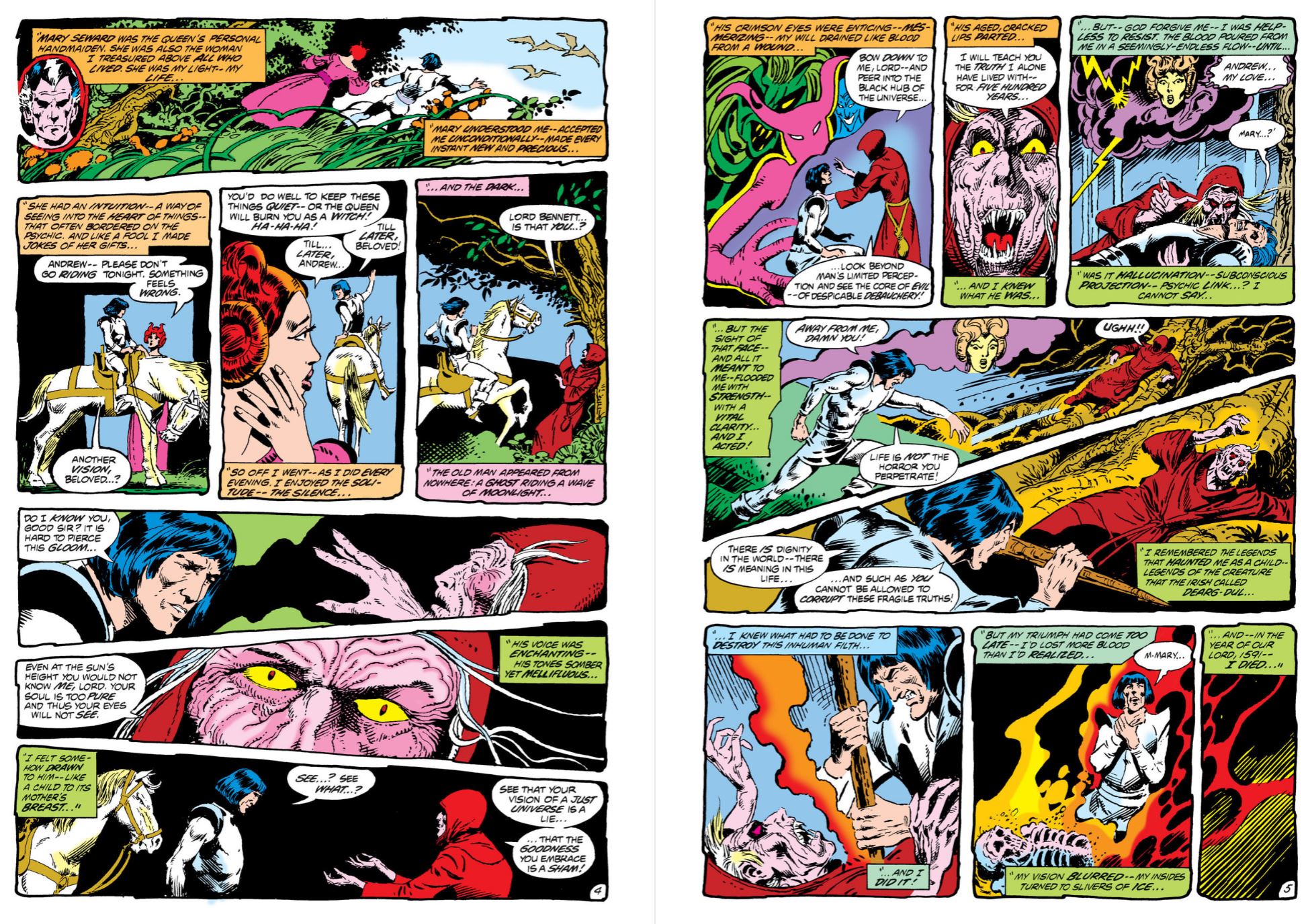
Over four centuries, “Bloody Mary” becomes a prestigious leader of massed vampires in an insidious, influential covert global cult dubbed the Blood Red Moon. They sow chaos and destruction whilst working towards the ultimate goal of vampires ruling a world of human cattle. Heartbroken and guilt ridden, Bennett has opposed her schemes for all that time, aided by human allies such as his most recent “daywalkers”: aged Russian warrior Dimitri Mishkin and go-getting “Eighties Woman” Deborah Dancer…
Blessed with all the traditional gifts of the undead (shapeshifting, supernatural vigour, hypnosis, etc) and similarly afflicted by their weaknesses (sunlight, crucifixes, Holy Water, stakes, et al) Bennett staves off his insatiable hunger for blood by sheer willpower and the determination that he will not die until he has ended Mary’s depredations…
The introductory episode covers all that even as Mary’s minions lose another running battle with Bennett’s team but escape to instigate their latest plan…
The adventure concludes in ‘Night of the Living Undead’ as team Bennett expose and end a proposed alliance between the cult and New York’s biggest drug dealer, after which ‘The Burning’ sees the hunters scotch a scheme to infiltrate the White House once Mary affiliates with a race-hate spouting demagogue whose influential links include the KKK and US President. The closure of that case tears open old wounds, as Mishkin subsequently clashes with one of Mary’s lieutenants, only to discover a dreaded family connection in ‘Mother Love/Mother Hate’, leading to a look into how Bennett recruited him as a boy just as the 19th century became the 20th…
DeMatteis moved on after the dark heroes foil Mary’s attempt to destroy an ashram and its spiritual guru in ‘Zen Flesh! Zen Bones!’ after which Bruce Jones moves in, offering a more fanciful approach in ‘The Sun Also Burns’. Here Bennett and his human friends are ambushed and left to die in a mine. As time passes, the valiant vampire – deprived of bottled blood – must battle his irresistible thirst before abandoning them. Resolved never to endanger them again, he sets out on a solo quest for vengeance…
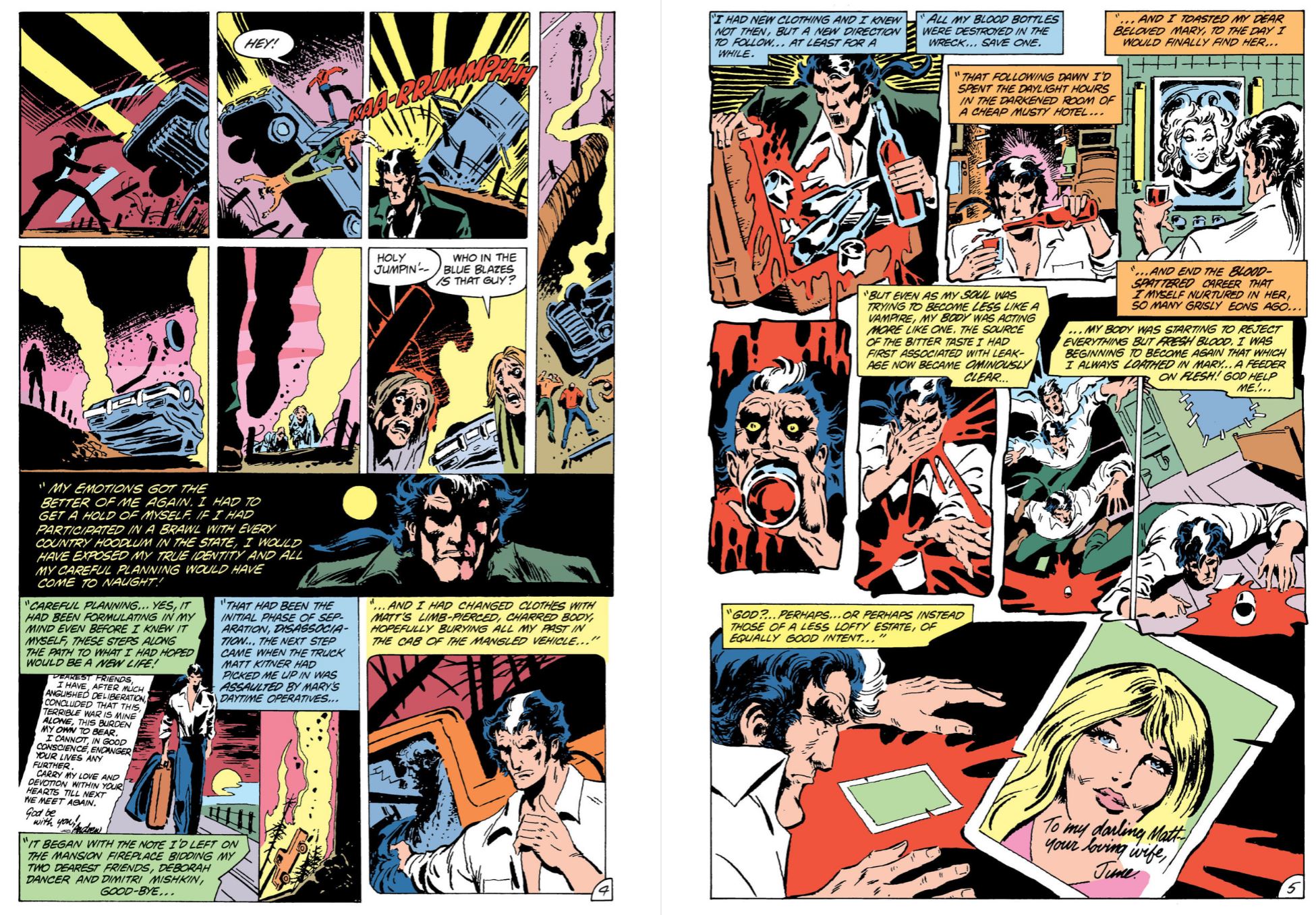
In HoM #302 ‘Blood Ties’ sees that lonely walkabout take him to Eudora, Kansas where odd events culminate in Bennett accidentally causing the deaths of an entire family of innocents before stumbling across a predatory circus abducting innocents for profit, and sponsored by Mary. His war against the ‘Carnival of Souls’ lasts until #304 where – with Ernie Colon substituting for Sutton – Bennett learns ‘The Night Has Eyes’ and proves that he has no pity for child stealers…
Jones then offers a lengthy saga in ‘Blood and Sand’ as the still-solo Bennett tracks Mary’s agents to Egypt in the wake of a global anti-cancer vaccine rollout that has the unexpected side-effect of making human blood toxic to the undead. Meanwhile, and for all this time, Mishkin & Dancer have been hunting for their leader, and are finally closing in…
Made unwilling allies by fate, Andrew and Mary invade a lost tomb, where the cult queen steals the time-travelling Rings of Anubis from a mystic mummy before setting off into the past to undo the creation of the vaccine. In hot pursuit, thanks to a second ring, Bennett arrives in Whitechapel, London at the height of history’s most infamous serial killer spree.
Crafted by Jones and the returned Sutton, ‘A Rip in Time’ sees all Mary’s efforts thwarted, and the ancestor of mysterious vaccine creator Dr. Barr escape unharmed, even as the vampires are hurled back into the time stream. Bennett washes ashore in Maine in November 1964, just in time to save a little girl from drowning. ‘Lovers Living, Lovers Dead’ reveals that in the present Deborah Dancer has developed a psychic link and can “see” vampires’ past actions as they happen. She is suitably horrified to observe Mary attack the child and aghast to realise that the child is herself…
After heroic intervention from Bennett saves the child, the time chase pauses as the undead knight battles a crew of revenant Nazi submariners in ‘Mirrors That Look Back’ before his pursuit resumes, depositing him and his quarry in Elizabethan England mere days before their first deaths. A bewildering succession of time-tossed doubles and mistaken identity switches culminates in a deadly ‘Witch Hunt’ with religiously enflamed peasants running riot before the chronal paradoxes dump them both back in the 20th century where new writers Dan Mishkin (no relation) & Gary Cohn concoct a ‘Manhattan Interlude’ (#310, November 1982) foe penciller Adrian Gonzales and ever-faithful Tom Sutton to render. Here Bennett encounters another vampire who has retained both soul and innocence and regretfully helps her meet her final end on her own terms…
Paris Cullins joins Mishkin & Cohn, Gonzales & Sutton for a dark peek at Deborah Dancer’s teen years in ‘By the Time We Got to Woodstock…’, revealing how she “first” stumbled into the Blood Red Moon’s schemes of conquest after losing all her friends to hippy bloodsuckers at the legendary festival, only surviving thanks to an old Russian and an eerie, red-eyed Englishman…
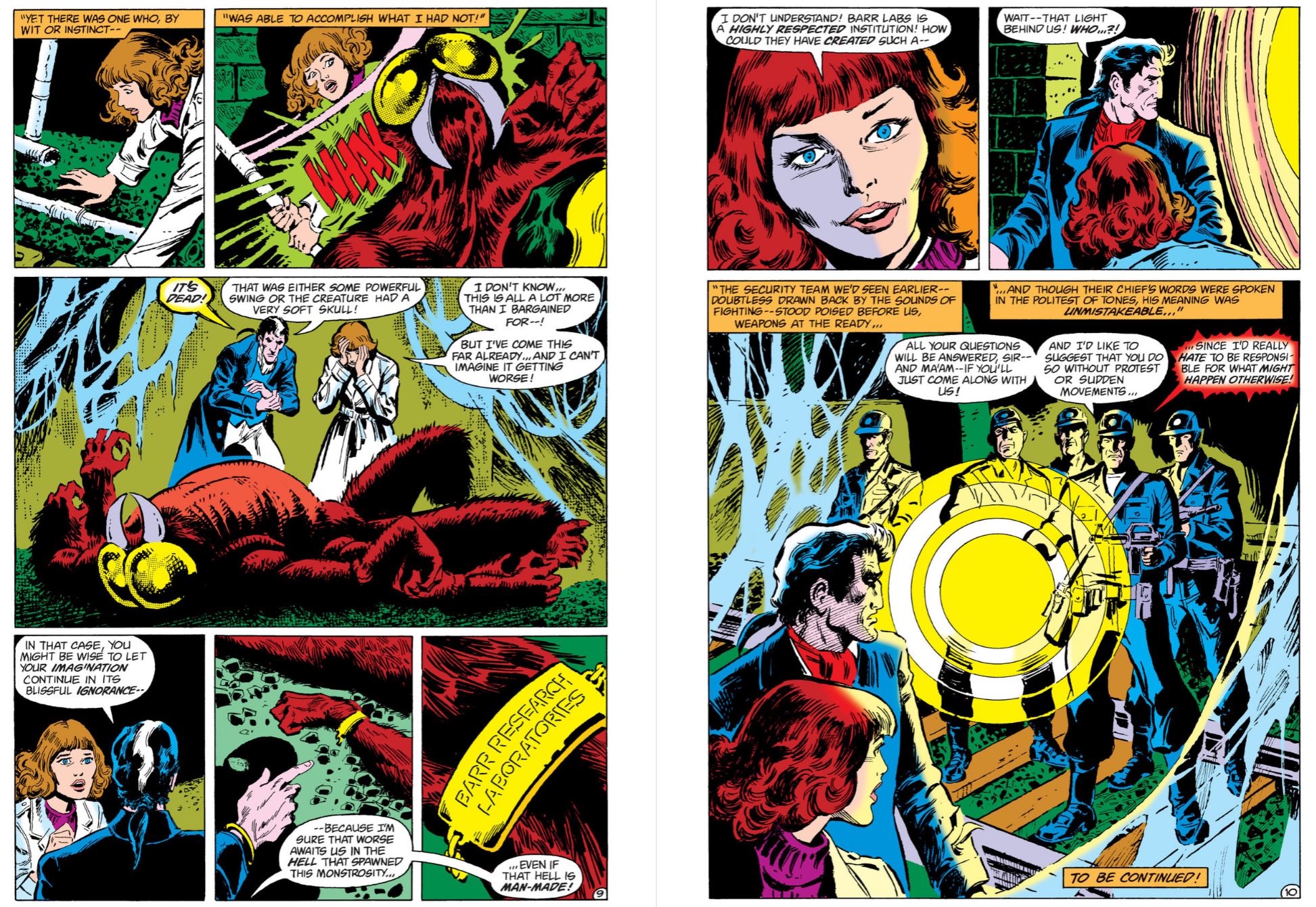
HoM #312 reunites the trio in time to tackle ‘The Thing in the Tunnel’ (Mishkin, Cohn, Gonzales & Sutton), a predatory beast escaped from the familiar-sounding Barr Research Laboratories and leading to a deadly clash with an enigmatic, extraordinarily long-lived (hint, hint) biologist in ‘Side Effects’, before ‘I.. Edward Trane, I… Vampire’ in #314 (illustrated solely by Sutton) sees a tragic reunion for Bennett with one of his own Victorian acolytes who fell in battle, but never fully died…
Mishkin, Cohn, Cullins & Sutton then detail an untitled exploit wherein the vampire hunters are targeted by sanctimonious religious zealots hunting the unholy. Sadly, their leader’s top aide is not only undead herself, but also Dimitri’s mother, and the Presidency is once more the glittering prize being sought…
Although the plot is foiled, the cost is high, compelling Bennett to turn eastwards, and ‘Back in the U.S.S.R.’ he uncovers a KGB program to weaponize vampirism and extend the joys of eternity to the aging Politburo. The result is open warfare between Mary’s cult and a Soviet secret army, ultimately proving in ‘Blood is Thicker…’ that not all military spending is pointless, and not every hero gets to ride off into the sunset…
Despite a long run, changing times and tastes were indicating that the title and, indeed, entire genre were not a viable contemporary comics option. With the series building to climax, #318 offered another untitled yarn (with Dan Day pencilling) wherein a freshly bereaved Andrew Bennett employs stolen Soviet technology to force a final confrontation with Mary and the Blood Red Moon, resulting in his final demise and birth of a new kind of hero in climactic last episode ‘Dreams of Death’ by Mishkin, Cohn & Sutton in House of Mystery #319 (August 1983).
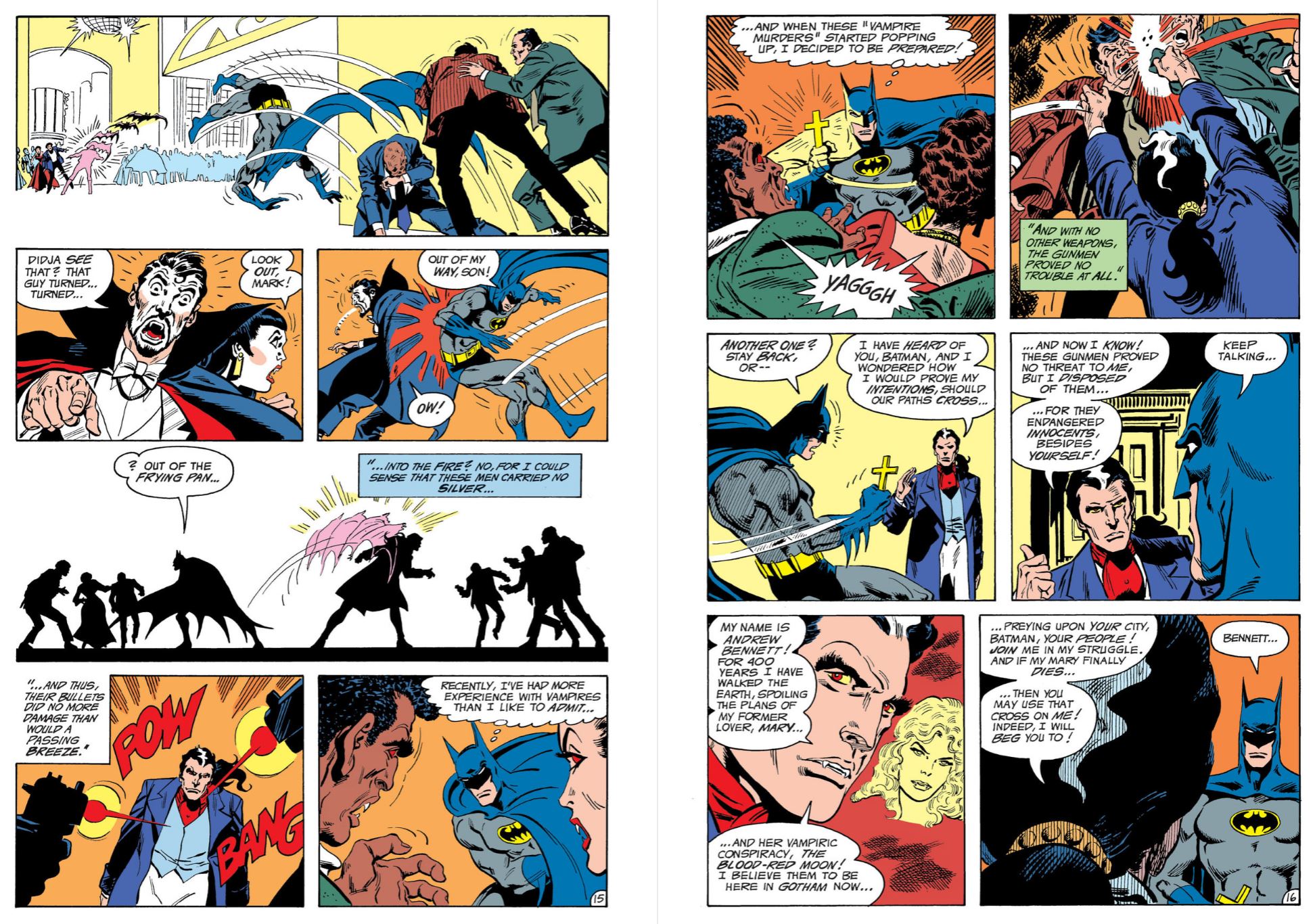
Aggravatingly, that big finish isn’t the end here, as there follows a solid but painfully out-of-continuity tale taken from The Brave and the Bold #195 (February 1983). For ‘Night of Blood’ (Mike W. Barr & Jim Aparo) Bennett’s perpetual hunt for Mary brings him to Gotham City after a gangster’s daughter becomes the latest victim of a vampire. Batman is firmly convinced the attacks are fake – and he’s right – until an actual magic-accursed blood drinker shows up. At least this time the standard misunderstanding doesn’t result in pointless battle before reason prevails and the mismatched heroes unite to catch the real culprits…
Graced with staggeringly compelling covers by Joe Kubert, Michael Wm. Kaluta, Aparo, Tatjana Wood & Adrienne Roy, this is a genuine slice of engaging, unorthodox and vastly entertaining horror action that predates – and probably influenced – later hits like Buffy the Vampire Slayer & Angel. A hugely enjoyable edgy romp, well-scripted, imaginative and gorgeously illustrated I… Vampire is a timeless tome for all lovers of dark delight and one no arcane aficionada can afford to be without.
© 1981, 1982, 1983, 2012 DC Comics. All Rights Reserved.