Marvel Presents The X-Men Collector’s Edition (1982 Annual)


By Roy Thomas, Neal Adams, Tom Palmer & various (Grandreams/Marvel Comics International)
ISBN: 0-86227-038-3 (HB Annual)

When Stan Lee stormed the American comic-book industry in the early 1960s, his greatest weapon wasn’t the compact and brilliant talent pool available nor even the proverbial idea whose time had come, but rather his canny hucksterism and grasp of marketing and promotion. DC, Dell/Gold Key and Charlton all had limited overseas licenses (usually in black-and-white reprint anthologies) but Lee went further, reselling Marvel’s revolutionary early efforts all over the world.

In Britain, the material appeared in Class Comics and reformatted in weeklies like Pow!, Wham!, Smash! and even the venerable Eagle. There were also two almost wholly Marvel-ised papers, Fantastic and Terrific, which ran from 1967 to 1968 with only one UK originated strip in each. These slick format comics mimicked Marvel’s US “split-books” and originally featured three key Marvel properties in each. However, appearing every seven days quickly exhausted the company’s back catalogue.

After years of guesting in other publications, Marvel secured their own UK Annuals at the end of the 1960s through the publishing arm of World Distributors and – after launching their own British-based subsidiary – began a line of hardback premium reprints which made Christmas a special treat for growing Marvelites across the Kingdom and the House of Ideas a mainstay of the Yuletide season…

This particular oddment stems from 1982: a slim, sleekly repackaged but brutally trimmed down tome abridging a classic but somewhat tale from the end of the Silver Age: specifically, X-Men volume 1, #56-59, courtesy of Roy Thomas, Neal Adams & Tom Palmer.

It begins by asking ‘What is… the Power?’ and reveals an uncanny connection between the villainous Living Pharaoh and emergent mutant Alex Summers younger brother of team leader Cyclops.

By imprisoning Alex the Egyptian mastermind transforms into a colossal Living Monolith, but when he breaks free the terrified boy’s mutant energies are unleashed with catastrophic results. Savagely edited together with issue #57 the story jumps to reveal the team’s most relentless adversaries have returned and a public witch-hunt prompts the mutant-hunting Sentinels to capture X-Men and other Homo superior across the globe.

Chapter 2, ‘Mission: Murder!’ ramps up the tension as the toll of fallen mutants increases, with Iceman, the Pharaoh, Angel and Mesmero all falling to the murderous mechanoids, but when their human controller discovers an unsuspected secret the automatons strike out on their own…

With most mutants in the Marvel universe captured, Cyclops, Marvel Girl and Beast are reduced to a suicidal frontal assault, pulling off a spectacular victory, but only at great cost…

Gone are the text stories, quizzes and game pages which traditionally padded out most British Christmas books, replaced with cover-to-cover superhero action produced by the House of Ideas at the very peak of its creativity. Moreover, it’s in full colour throughout – an almost unheard-of largesse at the time.

More a sign of changing attitudes than a celebration of good old days, this is still a quirky nostalgic treat for all concerned.
© MARVEL COMICS INTERNATIONAL LTD. All rights reserved

Mighty Warriors Annual 1979


By Paul S. Newman, Don Glut, Dick Wood, José Delbo, Jesse Santos, Paul Norris & various (Stafford Pemberton Publishing)
ISBN: 0 86030 140 0(HB) ASIN: B001E37D7U

The comics colossus identified by fans as Dell/Gold Key/Whitman had one of the most complicated publishing set-ups in history but that didn’t matter to the kids of all ages who consumed their vastly varied product. Based in Racine, Wisconsin, Whitman was a crucial part of the monolithic Western Publishing and Lithography Company since 1915, and drew on the commercial resources and industry connections that came with editorial offices on both coasts (and even a subsidiary printing plant in Poughkeepsie, New York).

Another useful connection was with fellow Western subsidiary K.K. Publications (named for licensing legend Kay Kamen who facilitated extremely lucrative “license to print money” merchandising deals for Walt Disney Studios between 1933 and 1949).

From 1938 on, Western’s comic book output was released through a partnership deal with a “pulps” periodical publisher under the umbrella imprint Dell Comics – and again those creative staff and commercial contacts fed into the line-up of the Big Little, Little Golden and Golden Press books for children that featured in thousands of stores and newsstands. When the partnership ended in 1962 Western swiftly reinvented its comics division as Gold Key.

As previously cited, Western Publishing was a major player since comics’ earliest days, blending a huge tranche of licensed material including newspaper strips, TV and Disney titles (such as Nancy and Sluggo, Tarzan, or The Lone Ranger) with home-grown hits like Turok, Son of Stone and Space Family Robinson.

In the 1960s, during the camp/superhero boom these original adventure titles expanded to include Brain Boy, Nukla, M.A.R.S. Patrol, Total War (created by Wally Wood), Russ Manning’s Magnus, Robot Fighter and much more. There were even heroic classic monsters Dracula, Frankenstein and Werewolf which were utterly irresistible. The sheer off-the-wall lunacy of features like Neutro or Dr. Spektor I shall save for a future occasion…

Such output was a perfect source of material for British publishers whose regular audiences were profoundly addicted to TV and movie properties. For decades, Western’s comics from Frankenstein Jr. to Voyage to the Bottom of the Sea, Yogi Bear and the Beverly Hillbillies to Land of the Giants and Star Trek filled out Christmas Annuals, and along the way also slipped in a few original character concepts.

Despite supremely high quality material and passionate fan-bases, Western never really captured the media spotlight of DC or Marvel’s costumed cut-ups, and in 1984 – having lost or ceded their licenses to DC, Marvel and Charlton – closed the comics division.

crime-fighting iterations of classic movie

The company’s most recognisable stab at a superhero was an understated nuclear era star with the rather unwieldy codename Dr. Solar, Man of the Atom who debuted in an eponymous title dated October 1962, sporting a captivating painted cover by Richard M. Powers that made the whole deal feel like a grown up book rather than a mere comic.

Crafted by writers Paul S. Newman & Matt Murphy with art by Bob Fujitani, the 2-part origin detailed how a campaign of sabotage at research base Atom Valley culminated in the accidental transmutation of a scientist into a (no longer) human atomic pile with incredible, impossible and apparently unlimited powers and abilities. Of course, his very presence is lethal to all around him…

Here – sans any such useful background – the now well-established atomic troubleshooter battles his old cyborg enemy Nuro to prevent marauding energy beings using ‘The Ladder to Mars’ to invade Earth and solves ‘The Mystery Message’ before winning an outer space ‘Battle of the Electronic Fighters’. The done-in-one yarn originally appeared in Doctor Solar, Man of the Atom #27 (April 1969) crafted by Dick Wood & José Delbo.

During its lifetime the parent company was keenly attuned to trends, and when comic book Sword & Sorcery bloomed they had their own offering: a darkly toned barbarian blockbuster dubbed Dagar the Invincible. Reprinting the first issue origin of an orphan who became a vengeance-seeking mercenary ‘The Sword of Dagar’ is by Don Glut & Jesse Santos, providing motivating backstory, an epic quest and tragic doomed loves story culminating at the ‘Castle of the Skull’ as first witnessed in October 1972’s Tales of Sword and Sorcery – Dagar the Invincible #1.

Ending the outré adventure is a tale of Magnus Robot Fighter 4000 AD which comes from issue #25 (February 1969) of his US comic. The mighty mech masher was first seen in the UK as part of a Gold Key comic strip package deal comprising Tarzan, The Green Hornet, Lone Ranger, Phantom and Flash Gordon for weekly TV Tornado and here battles ‘The Micro-Giants’ – size-shifting alien automatons – and a nefarious human entrepreneur in a classy action-romp by an unidentified author and artists Paul Norris & Mike Royer.

Superb quality and a beguilingly off-beat feel makes these stories and this book a truly enticing prospect. Why don’t you give it a shot?
© MCMLXXVIII by Western Publishing Company, Inc. All rights reserved throughout the world.

Superboy Annual 1967


By Jerry Siegel, Otto Binder, Robert Bernstein, Dave Wood, Henry Boltinoff, John Broome, George Papp, Curt Swan, John Sikela, Carmine Infantino, Irwin Hasen & various (Atlas Publishing/K.G. Murray)
No ISBN:

Before 1959, when DC Comics and other American publishers began exporting directly into the UK, our exposure to their unique brand of fantasy fun came from licensed reprints. British publishers/printers like Len Miller, Alan Class and bought material from the USA – and occasionally, Canada – to fill 68-page monochrome anthologies – many of which recycled the same stories for decades.

Less common were (strangely) coloured pamphlets produced by Australian outfit K.G. Murray and exported here in a rather sporadic manner. The company also produced sturdy and substantial Christmas Annuals which had a huge impact on my earliest years (I strongly suspect my adoration of black-&-white artwork stems from seeing supreme stylists like Curt Swan, Carmine Infantino, Al Plastino, Wayne Boring, Gil Kane or Murphy Anderson uncluttered by flat, limited colour palettes).

This particular tome of was one of the last licensed DC comics compilations before the Batman TV show turned the entire planet Camp-Crazed and Bat-Manic, and therefore offers a delightfully eclectic mix of material far more in keeping with the traditionally perceived interests of British boys than the suited-&-booted masked madness that was soon to follow in the Caped Crusader’s scalloped wake.

Thankfully, this collection was still produced in the cheap and quirky mix of monochrome, dual-hued and weirdly full-coloured pages which made Christmas books such a bizarrely beloved treat.

Sturdily stiff-backed, the sublime suspense and joyous adventuring begins with ‘The Secret of Fort Smallville!’ by Otto Binder & John Sikela and first seen in Superboy Comics #56 (April 1957). When a celebratory historical re-enactment is highjacked by an unscrupulous  rogue and poses a tough test for the Boy of Steel, he needs the aid of native American classmate Swift Deer to crack the case. Despite being produced in a far less understanding era, this yarn displays degrees of taste and cultural sensitivity practically unheard of in mass entertainment of the time…

Cartoonist Henry Boltinoff was a prolific and nigh-permanent fixture of DC titles in this period, providing a variety of 2, 1, and ½ page gag strips to cleanse visual palates and satisfy byzantine US legal directives that allowed comics publishers to sustain cheaper postal shipping rates. He’s here in strength, as his gentle humour jibes perfectly with British tastes, opening with Homer who leans a big lesson while fishing at sea after which ‘Superboy’s Best Friend!’ (by Robert Bernstein & George Papp from Superboy #77, December 1959) tugs at heartstrings by playing on a favoured theme: that of the Boy of Steel’s isolation from kids his own age.

Here that manifests as a doomed friendship with new kid Freddy Shaw, who briefly shares all Clark Kent’s secrets, but inadvertently shares the biggest one with his criminal older brother. Cue tragedy and cover-up…

Boltinoff’s Peter Puptent, Explorer deals with arctic antics prior to the first outing of seminal comics lunacy in the hirsute form of Detective Chimp: a Florida-based stalwart who was an assistant sheriff. ‘The Riddle of the Riverside Raceway!’by John Broome, Irwin Hasen & Joe Giella (from Rex the Wonder Dog #11, September/October 1953) sees a mystery cracked as impressionable Bobo befriends a prize steed and stymies gangsters set on fixing a race, after which Binder, Curt Swan & John Forte revisit the theme of loneliness as a modern teen freshly arrived on Earth travels back in time to meet her cousin as a kid in ‘Superboy Meets Supergirl!’ (Superboy Comics #80, April 1960). There’s fun aplenty, but it can’t last…

Bobo is back as Detective Chimp solves ‘The Case of the Suspicious Signature!’ (Broome & Carmine Infantino from Rex the Wonder Dog #11, September/October 1954) when his new passion for autograph collecting accidentally inserts him into a Hollywood star’s kidnapping.

Jerry Siegel & Papp then reveal how baby Kal-El inadvertently thwarted ‘The Invasion of Krypton! (Superboy #83, September 1960) and Boltinoff’s Doctor Rocket makes merry at an atomic eatery before by Broome, Hasen & Bernard Sachs share their passion for sports when Detective Chimp rescues his favourite baseball star from kidnappers in ‘Crime Runs the Bases’ (Rex the Wonder Dog #9, May/June 1953).

Superboy #84, October 1960, provides a brace of tales by Siegel & Papp beginning with ‘The Rainbow Raider!’ as a mystery thief seemingly enslaves the Boy of Steel, after which the self-explanatory ‘Superboy Meets William Tell!’reveals how the time-travelling hero gives the Swiss legend a few pointers on battling injustice.

Broome & Infantino the transform Detective Chimp into ‘The Scientific Crook-Catcher!’ (Rex the Wonder Dog #29, September/October 1956) when the savvy simian sneaks into a symposium of savants and the old world charm and drama conclude with another western themed tale. Although now an incredibly inappropriate title, ‘The Super-Injun of Smallville!’ (by Dave Wood & Papp and again from Superboy #84) offers a heart-warming tale of redemption when a bully in a store-bought Superboy costume abuses the other kids on the nearby Corobee Reservation, until an undercover Clark Kent teaches him the error of his ways…

Gently thrilling and absorbingly uplifting, these yarns of yesteryear are timeless delights for properly supervised kids of all ages. If that’s not a good thing, what is?
© National Periodical Publications, Inc. Published by arrangement with the K.G. Murray Publishing Company, Pty. Ltd., Sydney.

The Dandy Book 1970


By Many & various (D.C. Thomson & Co.)
ISBN: 978-0-85116-008-5 (HB)

For generations of British fans Christmas means The Beano Book, The Broons, Oor Wullie and making every December 25th magical. There used to be many more DC Thomson titles, but the years have gradually winnowed them away. Thankfully, time means nothing here, so this year I’m concentrating on a another Thomson Christmas cracker that made me the man wot I am. As usual my knowledge of the creators involved is woefully inadequate but I’m going to hazard a few guesses anyway, in the hope that someone with better knowledge will correct me when I err.

The Dandy comic predated The Beano by eight months, utterly revolutionising the way children’s publications looked and – most importantly – how they were read. Over decades it produced a bevy of household names that delighted millions of households, with end of year celebrations being bumper bonanzas of the weekly stars in magnificent bumper hardback annuals.

Premiering on December 4th December 1937, The Dandy broke the mould of its hidebound British predecessors by using word balloons and captions rather than narrative blocks of text under the sequential picture frames. A colossal success, it was followed on July 30th 1938 by The Beano and together they completely changed children’s publications. Dandy was the third longest running comic in the world (behind Italy’s Il Giornalino – launched in 1924 – and America’s Detective Comics in March 1937).

Over the decades the “terrible twins” spawned countless cartoon stars of unforgettable and beloved household names who delighted generations of avid and devoted readers…

The fun-filled action begins on the inside front cover as seasoned star Korky the Cat (by Charles Grigg?) set the ball rolling as he dodges the rozzers after a spot of illicit angling. As was traditional at this time, he also performed similar service at the far end – there falling foul of his own meagre engineering skills after building a triple decker “cartie” (think of the Red Bull Soapbox Challenge but sans the manic testosterone overload…)

These annuals were traditionally produced in the wonderful “half-colour” that many British publishers used to keep costs down whilst bringing a little spark into our drab and gloomy young lives. This was done by printing sections of the books with two plates, such as blue/Cyan and red/Magenta. The versatility and palette range provided was astounding. Even now this technique screams “Holidays” to me and my contemporaries, and this volume uses the technique to stunning effect.

D.C. Thomson were also extremely adept at combining anarchic, clownish comedy with solid fantasy adventure tales such as opening comedy thriller ‘King of the Sawdust Ring’ (limned by Paddy Brennan) wherein circus boy Billy King has to recapture an escaped lion and save his pet deer when a parade through town goes badly wrong…

As seen here, these picture thrillers usually came in the old-fashioned captioned format, with blocks of typeset text rather than lettered word balloons. Drama gives way to daft destruction as cowboy superman Desperate Dan (by Dudley D. Watkins) gets lost in fog, whilst another Korky the Cat short wreaks havoc in an ironmonger’s shop before his picture puzzle ‘Twig the Twins!’ – by the always-magnificent Eric Roberts – tests mind and eye.

The Smasher was a lad cut from the same mould as Dennis the Menace and in the episodes here (by Hugh Morren) he carves a characteristic swathe of anarchic destruction, even if his first encounter proves he’s not the toughest lad in town…

Drawn by Ron Spencer, pint-sized Dinah Mite proves she has no need of martial arts training after which hard-pressed squaddie Corporal Clott (by Dennis the Menace originator Davy Law or possibly his successor David Sutherland) disrupts the Army Camp sports day and accidentally and painfully boosts surly Colonel Grumbly to undreamed of heights.

Drawn by Jimmy Hughes, Bully Beef and Chips invariably proved that a weedy underdog’s brain always trumped brutal brawn, as here where little Chips orchestrates a well-deserved water-pistol drubbing…

Eric Roberts does triple-duty this year with puzzles, schoolboy grifter Winker Watson and perennial bath-dodger Dirty Dick who here plays chalk-based pranks on the police, after which Winker Watson’s Dandy Doodles baffle and bemuse before crafty Korky is outsmarted by a peg-legged sailor…

Another package of light-hearted drama then ensues courtesy of schoolboy Charley Brand and his robotic pal ‘Brassneck’– by the fabulous Bill Holroyd – who are largely innocent spectators as Christmas Day devolves into a toy and snowball brawl for all the adults in the street, after which Desperate Dan learns the cost of his well-meaning but excessive generosity and Dinah Mite discovers another benefit to small size and big muscles at a football match…

Bully Beef and Chips then clash whilst fishing which segues into a tale of The Island of Monsters (drawn by Q-Bikes artist Andrew Hutton?): a thrilling castaway series with two boys marooned on a tropical paradise where all the animals are incredibly enlarged. This time, the lads witness the results of human pirates underestimating the power and ferocity of giant gulls, beetles, bees and grasshoppers…

Next ‘Dirty Dick’s Picture Puzzle’ tests our brains before Korky’s superstitious nature pays off in a fish supper and our little Dick pops back, finally meeting his match in an escaped zoo chimp in a grubby but great strip by (perhaps) Tom Williams.

Whilst a great deal of material was based on school as seen by pupils, George Martin’s ‘Greedy Pigg’ featured a voracious teacher always attempting to confiscate and scoff his pupils’ snacks. Here he abandons kids’ tuck boxes to extend his appetite to encompass the pantries and larders of adults and even a wandering tramp gets what he deserves…

Dinah Mite then returns to train her new gang to the peak of punishing fitness, after which Desperate Dan’s heavy-footed antics wreck the skating pond and The Smasher takes three pages to ponder his job when he grows up.

Korky’s parrot declares war on the cat but comes to regret allying with the mice, whilst Corporal Clott successfully spoils target practice and Dirty Dick cleans up as golf caddy.

Jimmy Hughes’ geriatric delinquent Smarty Gran’pa mentors little kids in scrumping, pranking and dodging coppers whilst Corporal Clott wrecks record-keeping and penmanship before we return to drama as ‘Ricky’s Racer’ (probably by Brennan) sees a poor but proud kid master a found sledge: tearing up the icy landscape, making friends with a rich toff’s son and even foiling a burglary in a ripping yarn only DC Thomson could pull off…

A brutal training regime pays off in scoff for The Smasher’s new gang, before Bully Beef and Chips escalate a darts match into armoured warfare heralding classic comedy japes in a posh private school…

Winker Watson was always a triumph for artistic legend Eric Roberts, who here turns a visiting TV documentary crew into the spur for another string of victories against boarding school tyranny. Our devious mastermind easily humiliates the masters and treats his chums to a “slap-up feed” of the kind ‘Greedy Pigg’ constantly contrived to steal.

In a neat segue, George Martin’s voracious pie predator is led to his “just desserts” by toffee apples stuck on arrows before Robert returns with picture teaser ‘Winker Watson’s Class for Clever Dicks’ – combining comedy with brain testing scenarios before Dirty Dick encounters a military mascot and learns how the army deal with dust and disarray…

Korky’s flying lessons soon bring him into dispute with squadrons of geese, after which family favourite ‘Spunky and his Spider’ offers another delightfully rustic tale of an affable, truanting kid and his devoted, amiable apple-loving, giant antediluvian arachnid as limned by the fabulous Bill Holroyd. This time the eight-legged wonder helps school kids beat bullies trying to snatch the cash made from carol-singing…

Greedy Pigg’s appetite and lack of scruples scupper him again just as Desperate Dan’s snow balls make him lots of enemies whilst Bodger the Bookworm (by Shamus O’Doherty) uses some novel notions to retrieve a confiscated ball before the fun climaxes with the saga of Barefoot Bill (Hutton again?): a schoolboy whose gigantic feet and love of soccer forced him to learn to play sans footwear…

With Puzzle Answers and the aforementioned Korky endpapers wrapping up proceedings, let’s celebrate another tremendously fun book, with so much merriment on offer I can’t believe this book is over half a century old and still available through second hand outlets.

The only thing better would by curated archive reissues and digital editions…
© 1968 D.C. Thomson & Co., Ltd. All rights reserved.

The DANDY is a trademark of and © D. C. Thomson & Co. Ltd. 2006. Associated characters, text and artwork © D. C. Thomson & Co. Ltd. 2006. All rights reserved.

Hurricane Annual 1968


By Many & various (Fleetway)
No ISBN:

From the late 1950s and increasingly through the 1960s, Scotland’s DC Thomson steadily overtook their London-based competition – primarily monolithic comics publishing giant Amalgamated Press. Founded by Alfred Harmsworth at the beginning of the twentieth century, AP sought to regain lost ground, and the sheer variety of material the southerners unleashed as countermeasures offered incredible vistas in adventure and – thanks to the defection of Leo Baxendale and Ken Reid to the enemy – eventually found a wealth of anarchic comedy material to challenge the likes of the Bash Street Kids, Dennis the Menace, Minnie the Minx and their unruly kin.

During the latter end of that period the Batman TV show sent the entire world superhero-crazy. Amalgamated had almost finished absorbing all its local rivals – such as The Eagle‘s Hulton Press – to form Fleetway/Odhams/IPC and were about to incorporate American-styled superheroes into their heady brew of weekly thrills.

Once the biggest player in children’s comics, Amalgamated had stayed at the forefront of sales by latching onto every fad: keeping their material contemporary, if not strictly fresh. The all-consuming company began reprinting early Marvel Comics successes for a few years: feeding on the growing fashion for US style adventure which had largely supplanted the rather tired True-Blue Brit style of Dan Dare or DC Thompson’s Wolf of Kabul.

Even though sales of all British comics were generally – and in some cases, drastically -declining, the 1960s were a period of intense and impressive innovation with publishers embracing new sensibilities; constantly trying new types of character and tales. At this time Valiant and its stable-mate Lion were the Boys’ Adventure big guns (although nothing could touch DC Thomson’s Beano and Dandy in the comedy arena).

Hurricane was an impressive-looking upgrade that began during that period of expansion and counterattack, apparently conceived in response to DCT’s action weekly Hornet. It launched the week of February 29th 1964 and ran for 63 issues, but was revamped three times during that period before ultimately being merged into companion paper Tiger.

It carried a superbly varied roster of features in that time, including two (and a half) stars who survived its extinction. Racing driver Skid Solo and comedy superman Typhoon Tracy as well as Sgt Rock – Paratrooper… but not for so long for him…

There was heavy dependence on European and South American artists initially, among them Mario Capaldi, Nevio Zeccara, Georgio Trevisan, Renato Polese and Lino Landolfi, some of whom lasted into the Annuals. As with so many titles, although the comics might quickly fade, Christmas Annuals maintained a presence for years after and Hurricane seasonal specials were produced for every year from 1965 to 1974…

Following a tried-&-true formula, this book – published in 1967 – offers comics adventures, prose stories, fact-features, funnies and puzzles and kicks off with stunning full-colour fact feature strip ‘Lawmen and Badmen of the Wild West’.

Looking  like they’re painted by Reg Bunn or Tony Weare, these comics outline the lives and times of Wyatt Earp, Tom Smith, Black Bart, Sam Bass, Billy the Kid and Bat Masterson, before fully fictional western star Drago teaches a headstrong young cavalry officer the meaning of command in monochrome thriller ‘He Rides Alone’ – possibly illustrated by Polese.

Regular prose feature ‘The Worst Boy in the School’ (illustrated by Geoffrey Whittam?) follows a page of medical gags entitled ‘Take a dose of Chuckles!’ The long-running boarding school saga was enlivened by its star Duffy coming from Circus stock. Here the comedy, chaos and espionage excitement stems from a New Boy who’s convinced enemies of his father – a South American president – are trying to kidnap him. He’s not wrong…

Returning to monochrome strips, ‘Sgt. Rock – Special Air Service’ ferrets out Nazi infiltrators masquerading as American GIs before we switch back to fact for a photo-feature offering capacious coverage of modern British military might in ‘The Army Marches on its Wheels!’ whilst the comedy capers of ‘Rod the Odd Mod and ‘is old pal Percy Vere’ literally bring the house down when he gets the Hi Fi bug.

‘Casey and the Champ’ stars a veteran railroad man and his steam engine who here reveal in strip form the unlikely salvation of a played-out mining town as prelude to photo feature ‘Why Not Go by Balloon?’ before heading to 1804 where Regency prize-fighter Jim Trim stumbles upon a Napoleonic plot to conquer England in ‘Two Fists Against the World!’ (perhaps illustrated by Carlos Roume)…

Prose yarn ‘Carlos of the Wild Horses’ details the story of conquistadores imperilled by rebellious Aztecs and saved by the bond between the governor’s young son and a herd of mustangs and is followed by text fact-features ‘War Dogs’ – commemorating canines in combat – and ‘Atlantic Greyhounds’ explaining why the glory days of cruise liners had passed and why they could be built no bigger. Ah, the joys of schadenfreude and hindsight in action…

Next is a prose-&-photo precis current of movie release ‘The Train’(starring Burt Lancaster, but I’d never heard of it): a tale of Nazi collaboration and pursuit of transport of stolen art, followed by photo feature ‘When Nature Turns Nasty!’ before the incontestable star of Hurricane thunders in on a wave of colour illustration. ‘The Juggernaut from Planet Z’ is again despatched to aid his Earth chum Dr. Dan Morgan only to be overridden – and temporarily enslaved – by crazed would-be dictator General Zeb.

Sport next as ‘Hurry of the Hammers’ finds the football star in black-&-white and almost deprived of club and grounds by an unscrupulous new owner more interested in profit than the beautiful game. Historical factual strip ‘They Climbed… the Matterhorn’ then leads to a prose outing for the worst ship in the WWII navy. One again confounding the British Admiralty and escaping being broken up for parts in ‘HMS Outcast – Pride of the Fleet’ sees Geoff Campion’s unruly mob save the Pacific flotilla from destruction by the Japanese using ping pong balls and tomato sauce…

‘Typhoon Tracy’s Lucky Strike!’ finds the mighty moron in Alaska, battling bears, triggering a gold rush and helping an old friend stave off poverty, after which Giovanni Ticci employs duo-colour to limn a superbly light-hearted ‘Sword for Hire’ romp starring Cavalier soldier-of-fortune Hugo Dinwiddie who saves a fugitive king’s agent from capture even while acting as an unwilling substitute for a duellist.

Reverting to prose, ‘The Terrible Revenge of Dr. Parvo’ stars atomic accident survivors Ace Sutton and Flash Casey who use their journalistic skills and ability to walk through walls to stop a madman weaponizing weather, after which strip ‘Danger at Manakee Deep’ details a futuristic undersea habitat and resource factory endangered by greed and treachery.

‘Rodeo!’ traces the history of the sport with photos front the Calgary Stampede whilst monochrome strip ‘The Ragged Racer’ offers early environmental activism from its Wildman hero as he thwarts a circus’ scheme to destroy his mountainous animal preserve and gag page ‘It’s a Dog’s Laugh!’ brings us the text cover feature ‘R.A.F. to the Rescue’ outlining the history and activities of the coastal guardians.

The prose perseveres with adventure yarn ‘The Fiery Furnaces’ as two roving sportsmen accidentally dethrone a South American tyrant with delusions of grandeur (with illustrations by either Nevio Zaccara or Alfredo Giolitti) before ‘Rod the Odd Mod and ‘is old pal Percy Vere’ endure a calamitous bath night…

Sport was a major fascination of publishers at this time and ‘Soccer Special by The Ref’ opens an extended section of pictorial mini-features comprising ‘Famous Captains before they were Famous’, ‘Soccer Trophies Worth Winning’ and ‘Strange Things Happen in Soccer’ before we all ride off into the sunset, ending with comic strip masked cowboy ‘The Black Avenger’ who chases and then saves a “white magician” stirring up Indian tribes.

Eclectic, wide-ranging and always of majestically high quality, this blend of fact, fiction, fun and thrills is a splendid evocation of lost days of joy and wonder. We may not be making books like this anymore but at least they’re still relatively easy to track down. Of course, what’s really needed is for some sagacious publisher to start re-issuing them…
© Fleetway Publications Ltd., 1967

The Outer Limits Annual 1966


By Paul S. Newman(?) & Jack Sparling, & various (World Distributors {Manchester} Limited)
No ISBN. ASIN: B0042Q9PAE (HB)

British Comics have always fed heavily on other media and as television grew during the 1960s – especially the area of children’s shows and cartoons – those programmes increasingly became a staple source for the Seasonal Annual market. There would be a profusion of stories and strips targeting not readers but young viewers and more and more often the stars would be American not British.

Much of this stuff wouldn’t even be as popular in the USA as here, so whatever comic licenses existed usually didn’t provide enough material to fill a hardback volume ranging anywhere from 64 to 160 pages. Thus, many Annuals such as Daktari, Champion the Wonder Horse, Lone Ranger and a host of others required original material or, as a last resort, similarly-themed or related strips. That’s not the case here…

The Outer Limits launched in the USA on September 16th 1963, running until January 16th 1965: two seasons comprising 49 self-contained episodes of an anthological science fiction series with no returning stars where drama, suspense and uncanny situations beguiled paranoid, culturally shell-shocked audiences seeking a brief release from real-world threats like the Cold War and Cost of Living. Like contemporary rival show The Twilight Zone, it was sold all over the world and developed a fanatically devoted fanbase, thereby achieving a kind of immortality, with modern reboots and merchandising.

Comic book franchising specialist Gold Key produced a series of 18 issues spanning March 1964 to October 1969, running almost half a decade beyond the show’s cancellation (but presumably sustained by regional TV syndication). They were part of print monolith western Publishing whose Dell Comics, Gold Key, Big Little, Little Golden and Golden Press books for children were a staple of kids’ lives in America for decades.

Western Publishing was a major player since comics’ earliest days, blending a huge tranche of licensed material including newspaper strips, TV and Disney titles, (such as Nancy and Sluggo, Tarzan, or The Lone Ranger) with home-grown hits like Turok, Son of Stone and Magnus, Robot Fighter.

Their output was an ideal perfect source of material for British publishers whose regular audiences were profoundly addicted to TV and movie properties. For decades, Western’s comics from The Impossibles and Bugs Bunny to Voyage to the Bottom of the Sea and Star Trek filled our Christmas treats and also slipped in some original character concepts.

“All Killer and No Filler”, this book – the second of two Outer Limits editions – was produced in a non-standard UK format, with full-colour for three American reprints and nothing else: no prose pieces, puzzles, games or fact-features on related themes. It looks and feels like it’s one from the wonderful Mick Anglo’s packaging company Gower Studios, however and I’m fairly certain the originals were scripted by prolific wonder Paul S. Newman (Dr. Solar, Man of the Atom, Space Family Robinson, Turok, The Lone Ranger)

There’s no doubt the illustrator was the uniquely stylish and equally prolific John Edmond “Jack” Sparling (Hap Hopper, Washington Correspondent, Claire Voyant, Doc Savage, Challengers of the Unknown, Unknown Soldier, Captain America) who in sterling fashion produced this trio of terrors…

‘The Dread Discovery’ debuted in quarterly issue #5 (April 1965) and is set in a NASA base where Peter Norton, with his pals Andy and Fred, accidentally shoot down a flying saucer with their model rocket. The kids’ parents all work on-base and are – eventually – delighted to meet the vessel’s occupant. FR-2 is a defector from his own people, arriving in advance of their invasion fleet and willing to give his life to save humanity…

The Outer Limits #6 (July 1965) recounted the saga of ‘The Mystery Moon’ wherein little Jim Burke is abducted by aliens when he exposes their seeming mission of mercy as a devious scheme to fling earth out of orbit. Luckily for humanity, the lad’s a lot smarter and more cunning than his kidnappers…

The brooding mystery and omnipresent menace conclude with ‘The Message from Space’ (#8, July 1966) as radio-astronomer Arthur Godderd decodes a communication from distant star 102 Beta and has his chemist chum Charles Dilling mix up the resulting formula. When sunlight hits the goo, it super-expands and attacks civilisation on multiple fronts. Seemingly unstoppable, the glob is only countered when all the previously warring nations on Earth act in unison in accordance with a crazy theory put forward by desperate Dr. Dilling…

Quirky but chilling, and always applying sound scientific principles to the most outlandish plot circumstances, this is a superb scare package for kids in the manner of Goosebumps and well worth a latter-day revisit.
© MCMLVX, MCMLVXI by Daystar-Villa Di Stefano-United Artists Television. All rights reserved throughout the world.

Superman Annual 1963-1964


By Jerry Siegel, Edmund Hamilton, Bill Woolfolk, Ed Herron, Alvin Schwartz, Dave Wood, Henry Boltinoff, George Papp, Curt Swan, Wayne Boring, Al Plastino, Jack Kirby, Lee Elias & various (Atlas Publishing and distributing Co./K.G. Murray)
No ISBN:

Before DC and other American publishers began exporting comic books directly into the UK in 1959, our exposure to their unique brand of fantasy fun came from licensed reprints. Seemingly ubiquitous British publishers/printers like Len Miller, Alan Class and Top Sellers bought US material – and occasionally Canadian – to fill 68-page monochrome anthologies, many of which recycled the same stories for decades.

Less commonplace were strangely coloured pamphlets produced by Australian outfit K. G. Murray: exported to the UK in a rather sporadic manner. The company also produced sturdy Annuals which had a huge impact on my earliest years (I suspect my abiding adulation of monochrome artwork stems from seeing supreme stylists like Curt Swan, Carmine Infantino, Gil Kane and Murphy Anderson strut their stuff uncluttered by flat colour…).

In Britain we began seeing hardcover Superman Annuals in 1950, Superboy Annuals in 1953, Super AdventureAnnuals in 1959 and Batman books in 1960. Since then many publishers have carried on the tradition. This particular tome comes from 1963 as the super-hero craze was barely beginning, allowing us to see a range of transitional material that fell between the Golden and Silver Ages …

This particular tome predates the Batman TV show that turned the entire planet Camp-Crazed and Bat-Manic, and therefore provides a delightfully eclectic mix of material far more in keeping with traditionally perceived interests of British boys than the suited-&-booted masked madness that was soon to follow in the Caped Crusader’s scalloped wake.

It’s also produced in the cheap and quirky mix of monochrome, dual-hued and weirdly full-coloured pages which made Christmas books such a bizarrely beloved treat.

The sublime suspense and joyous adventuring begins with a rare treat as in black, blue and red on white, we meet ‘The Menace from the Stars!’ by Bill Woolfolk, Wayne Boring & Stan Kaye, coming from World’s Finest Comics #68 (January/February 1954) in which a brush with a Green Kryptonite-infused asteroid gives the Man of Steel amnesia.

Happily, before he can inadvertently expose his secret identity, another sudden impact sets things aright, just as Green Arrow clashes with a devious criminal, necessitating the inexplicable side-lining of Boy Bowman Speedy and recruitment of ‘The Legion of 100 Archers!’: an anonymously-authored yarn drawn by George Papp and originating in Adventure Comics #189 (June 1953).

British books always preferred to alternate action with short gag strips, and Murray Line perfectly exploited the phenomenal DC output of cartoonist Henry Boltinoff, whose various gag-strip stars acted as palate-cleansing chapter breaks between dramas. Here a convict conundrum for ‘Warden Willis’ and bedtime woes for ‘Moolah the Mystic’ presage another archery adventure as the Battling Bowmen meet ‘The Amazing Miss Arrowette’.

Taken from WFC #113 (November 1960), the painfully parochial and patronising tone of the times seeped into the saga (scripted by Dave Wood and limned by Lee Elias) as a hopeful, ambitious Ladies’ Archery competitor tries her very best to become Green Arrow’s main helpmeet. Moreover, in a series notorious for absurd gimmick shafts, nothing ever came close to surpassing the Hair-Pin, Needle-and-Thread, Powder-Puff or Lotion Arrows stashed in Bonnie King‘s fetching and stylish little quiver…

Quirky colour returns with gag strips ‘Pop’ and ‘Jail Jests’ before the Man of Tomorrow recalls ‘The Girls in Superman’s Life’ in a slightly reformatted by Edmond Hamilton & Al Plastino from Superman #78 (September/October 1952) bring an adult Lana Lang into the full-grown hero’s life as a rival for Lois Lane and suspicious stalker of Clark Kent…

‘Moolah the Mystic’ and ‘Warden Willis’ japes precede a return to monochrome and a spectacular Jack Kirby GA extravaganza from WFC #97 (October 1958). ‘The Menace of the Mechanical Octopus!’ is a grand old-school high-tech crime-caper scripted by Ed Herron and inked by Roz Kirby.

Superman #137 (May 1960) then delivers an epic sci fi shocker in The Super-Brat from Krypton!’ (Jerry Siegel, Curt Swan & John Forte), revealing how an energy duplicate of baby Kal-El was raised in secret by Earth criminals to become ‘The Young Super-Bully’ before finally confronting his noble counterpart in ‘Superman vs. Super-Menace!’

Slapstick colour interludes from ‘Hy Wire’ and ‘Fireman Pete’ segue neatly into doomsday drama as an unknown writer, Boring & Kaye unearth ‘Jor-El’s Last Will!’ (WFC #69 March/April 1954) and sees the Man of Tomorrow strive to save his adopted home from his father’s deadliest inventions.

Fact fillers were also popular and a ‘Quick Quiz’ and one more ‘Hy Wire’ gag brings us back to black-&-white as Green Arrow tackles the lethally informative threat of alternative fact distributor ‘Crime’s TV Station’ in a canny teaser from Adventure Comics #197 (February 1954) before killer fillers ‘Science Says You’re Wrong’, ‘Scientific Word Origins’ and ‘Jerry the Jitterbug’ herald ‘The Return of Miss Arrowette’ by Wood & Elias from WFC#118 (June 1961) which proves far less cringeworthy than her debut but still manages to make the Bow Babe both competent and imbecilic at the same time.

One last stab at colour sees ‘Science Says You’re Wrong’ and ‘Jerry the Jitterbug’ lay the groundwork for ‘Batman – Double for Superman’ by Alvin Schwartz,  Swan & Kaye from World’s Finest Comics #71, July/August 1954. A landmark piece made in response to economic circumstances, it details the first official team-up of Superman and Batman…

With dwindling page counts, rising costs but a proven readership and years of co-starring but never mingling, it saw the Man of Tomorrow and the Gotham Gangbuster in the first of their shared cases as the merely mortal hero traded identities to save his Kryptonian comrade’s alter ego and, latterly, life…

Simple, straightforward action-adventure never goes out of style and these tales could as easily beguile today’s young scamps as they did my lot. Worth a shot, right?
© National Periodical Publications, Inc., New York.  Published by arrangement with the K.G. Murray Publishing Company, Pty. Ltd., Sydney.

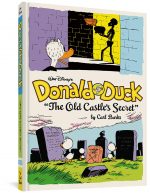
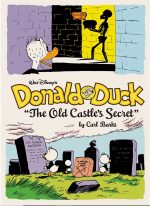
Walt Disney’s Donald Duck volume 5: “Christmas on Bear Mountain” by Carl Barks


By Carl Barks (Fantagraphics Books)
ISBN: 978-1-60699-697-3 (HB)

Win’s Christmas Gift Recommendation: The Utter Acme of All-Ages Entertainment… 10/10

Carl Barks was born in Merrill, Oregon in 1901, growing up in the rural areas of the West during some of the leanest times in American history. He tried his hand at many jobs before settling into the profession that chose him. His early life is well-documented elsewhere if you need detail, but briefly, Barks worked as a animator at Disney’s studio before quitting in 1942 to work in the new-fangled field of comic books.

With cartoon studio partner Jack Hannah (another occasional strip illustrator) Barks adapted a Bob Karp script for an animated cartoon short into the comic book Donald Duck Finds Pirate Gold. It was published as Dell Four Color Comics Series II #9 in October of that year and – although not his first published comics work – it was the story that shaped the rest of his career.

From then until his official retirement in the mid-1960s, Barks worked in self-imposed seclusion, writing and drawing and devising a vast array of adventure comedies, gags, yarns and covers that gelled into a Duck Universe of memorable and highly bankable characters. These included Gladstone Gander (1948), Gyro Gearloose (1952), Magica De Spell (1961) and the nefarious Beagle Boys (1951) to supplement Disney’s stable of cartoon actors. His greatest creation was undoubtedly the crusty, energetic, paternalistic, money-mad giga-gazillionaire Scrooge McDuck: the World’s wealthiest winged septuagenarian and the harassed, hard-pressed star of this show.

Whilst producing all that landmark material Barks was just a working guy, generating cover art, illustrating other people’s scripts when asked and contributing stories to the burgeoning canon of Duck Lore. After Gladstone Publishing began re-packaging Barks material – and a selection of other Disney strips – in the 1980s, he discovered the well-earned appreciation he never imagined existed…

So potent were his creations that they inevitably fed back into Disney’s animation output itself, even though his brilliant comic work was done for licensing company Dell/Gold Key, and not directly for the studio. The greatest tribute was undoubtedly the animated series Duck Tales: heavily based on his comics output.

Most notably, Barks was a fan of wholesome action, unsolved mysteries and epics of exploration, and this led to him perfecting the art and technique of the blockbuster tale: blending wit, history, plucky bravado and sheer wide-eyed wonder into rollicking rollercoaster romps that utterly captivated readers of every age and vintage. Without the Barks expeditions there would never have been an Indiana Jones…

Throughout his working life Barks was blissfully unaware that his work (uncredited by official policy as was all Disney’s cartoon and comicbook output), had been singled out by a rabid and discerning public as being by “the Good Duck Artist.” When some of his most dedicated fans finally tracked him down, his belated celebrity began.

In 2013 Fantagraphics Books began collecting Barks’ Duck stuff in wonderful, carefully curated archival volumes, tracing his output year-by-year in hardback tomes and digital editions that finally do justice to the quiet creator. These will eventually comprise the Complete Carl Barks Disney Library. The physical copies are sturdy and luxurious albums – 193 x 261 mm – that would grace any bookshelf, with volume 5 – Walt Disney’s Donald Duck: “Christmas on Bear Mountain” (for reasons irrelevant here) acting as debut release, re-presenting works from 1947 – albeit not in strictly chronological release order.

It begins eponymously with landmark introduction of Bark’s most enduring creation. Scrooge McDuck premiered in seasonal full-length Donald Duck yarn ‘Christmas on Bear Mountain’ (Four Color #178 December 1947): a mere disposable comedy foil to move along a simple tale of Seasonal woe and joy. Here a miserly relative seethed in opulent isolation, hating everybody and opting to share the gloom by tormenting his nephews Donald, Huey, Louie and Dewey by gifting them his mountain cabin for the Holidays. Scrooge schemed, intent on terrorising them in a bear costume, but fate had other ideas…

The old coot  was crusty, energetic, menacing, money-mad and yet oddly lovable – and thus far too potentially valuable to be misspent or thrown away. Undoubtedly, the greatest cartoon creation of the legendary and magnificent story showman Carl Barks, the Downy Dodecadillionaire returned often and eventually expanded to fill all available space in the tales from the scenic metropolis of Duckburg.

From the same issue a brace of one-page gags expose Donald’s views on car culture in ‘Fashion in Flight‘ and annoying people looking for directions in ‘Turn for the Worse’ before

‘Donald’s Posy Patch’ (Walt Disney’s Comics and Stories#80, May) turns into another painful and humiliating experience as the bellicose bird tries getting rich by growing blooms…

June’s WDC&S #81 finds him and the kids prospecting and running foul of the post-war arms and rocket-race in ‘Donald Mines his Own Business’ before Four Color #147 (May) takes them on an epic voyage of fantastic discovery to ‘Volcano Valley’ after accidentally buying an army surplus bomber…

Always looking for a quick buck, Donald and the kids turn to commercial charters: flying innocuous-seeming Major Pablo Mañana back to Central American beauty-spot Volcanovia, but they all have a devilishly difficult time getting out again. This yarn sets a solid pattern for Bark’s adventure/travelogue yarns in years to come, blending comedy, thrills, whimsy and social commentary into an irresistible treat…

WDC&S #82 (July) sees adult and juvenile ducks in an ever-escalating war over who’s the best conjuror in ‘Magical Misery’ and by the time Daisy Duck deals with them, Donald is ready for a day of peace and quiet. Sadly, ‘Ring Wrongs’(AKA ‘Vacation Time’ from August’s Walt Disney’s Comics and Stories #83 reveals that thanks to Huey, Louie and Dewey, he’s the target of a relentless wave of door-to-door salesmen and reacts with typical zest and vigour…

An inappropriate experiment in hypnosis transforms Donald (mentally) into a kangaroo and prompts an ‘Adventure Down Under’ (Four Color #159 August) with the eventually restored Drake and his nephews compelled to become ‘roo hunters to pay for return passage to Duckburg. They are mightily outmatched by Mournful Mary “Queen of the Kangaroos” until they meet some local aborigines and experience a change of heart.

Please be aware that – despite Bark’s careful research and diligent, sensitive storytelling – some modern folk might be upset by his depictions from over seven decades ago.

‘If the Hat Fits’ is a gag-page of chapeau japery from Four Color #147 (May), that precedes a medium-length tale describing Donald’s efforts to master dancing in ‘The Waltz Kings’ from WDC&S #84 (September) counterbalanced a month later by #85’s ‘The Masters of Melody’ wherein the boys struggle to learn to play musical instruments…

‘Donald Duck and the Ghost of the Grotto’ is an early masterpiece originating in Four Color #159 (August 1947), with Donald and the kids in the West Indies, running a kelp boat and harvesting seaweed from the abundant oceans.

After being temporarily stranded on an isolated reef, they discover monsters, a shipwrecked galleon, an ongoing abduction mystery dating back centuries and a particularly persistent phantom all blending into a supremely thrilling and beguiling mystery that has never dated…

WDC&S #86 exposes the rise and fall of ‘Fireman Donald’ whose smug hubris deprives him of a job he’s actually good at, after which ‘The Terrible Turkey’ from details the Duck’s frankly appalling efforts to secure a big bird for the Thanksgiving feast despite skyrocketing poultry prices…

Donald and Mickey Merry Christmas 1947 (cover-dated January 1948) sees the boys strive a little too late and much too hard to be ‘Three Good Little Ducks’ and ensure a wealth of swag on Christmas morning before one final single-pager sees kitchen confusion for Donald in ‘Machine Mix-up’ from Four Color #178 (December)…

With the visual verve done we move on to validation as ‘Story Notes’ provides erudite commentary for each Duck tale and Donald Ault relates ‘Carl Barks: Life Among the Ducks’ before ‘Biographies’ reveals why he and commentators Alberto Beccatini, Joseph Robert Cowles, Craig Fischer, Jared Gardner, Rich Kreiner, Ken Parille, Stefano Priarone, R, Fiore, Mattias Wivel are saying all those nice and informative things.

We then close with an examination of provenance as ‘Where Did These Duck Stories First Appear?’ explains the somewhat byzantine publishing schedules of Dell Comics.

Carl Barks was one of the greatest exponents of comic art the world has ever seen, and almost all his work featured Disney’s characters: reaching and affecting untold millions of readers across the world and he all too belatedly won far-reaching recognition. You might be late to the party but it’s never too soon to climb aboard the Barks Express.
Walt Disney’s Donald Duck “Christmas on Bear Mountain” © 2013 Disney Enterprises, Inc. All contents © 2013 Disney Enterprises, Inc. unless otherwise noted. All rights reserved.

Yakari volume 18: The Wall of Fire


By Derib & Job, coloured by Dominique and translated by Jerome Saincantin (Cinebook)
ISBN: 978-1-84918-591-2 (Album PB)

Win’s Christmas Gift Recommendation: Superb All-Ages Entertainment and Adventure… 9/10

Children’s magazine Le Crapaud à lunettes was founded in 1964 by Swiss journalist André Jobin who then wrote for it under the pseudonym Job. Three years later he hired fellow French-Swiss artist Claude de Ribaupierre AKA “Derib”. The illustrator had launched his own career as an assistant at Studio Peyo (home of Les Schtroumpfs), working on The Smurfs strips for venerable weekly Le Journal de Spirou. Together, they created the splendid Adventures of the Owl Pythagore before striking pure comics gold a few years later with their next collaboration.

Derib – equally au fait with enticing, comically dynamic “Marcinelle” cartoon style yarns and devastatingly compelling meta-realistic action illustrated action epics – went on to become one of the Continent’s most prolific and revered creators. It’s a crime that groundbreaking strips such as Celui-qui-est-né-deux-fois, Jo (the first comic ever published dealing with AIDS), Pour toi, Sandra and La Grande Saga Indienne) haven’t been translated into English yet, but we still patiently wait in hope and anticipation…

Many of Derib’s stunning works over the decades feature his cherished Western themes; magnificent geographical backdrops and epic landscapes. Yakari is considered by fans and critics to be the strip which first led him to deserved mega-stardom.

Debuting in 1969, Yakari follows the life of a young Oglala Lakota boy on the Great Plains and is set sometime after the introduction of horses by the Conquistadores but before the coming of modern Europeans.

The series – which has generated two separate animated TV series and a movie release last year – has achieved 40 albums thus far: a testament to the strip’s evergreen vitality and the brilliance of its creators, even though originator Job has moved on and Frenchman Joris Chamblain assumed the writer’s role in 2016.

Overflowing with gentle whimsy and heady compassion, young Yakari enjoys a largely bucolic existence: at one with nature and generally free from privation or strife. For the sake of our delectation, however, the ever-changing seasons are punctuated with the odd crisis, generally resolved without fuss, fame or fanfare by a little lad who is smart, brave… and can – thanks to a boon of his totem guide the Great Eagle converse with all animals …

Originally released in 1993, la barrière de feu was the 19th European album, but – as always with the best books – the content and set-up are both stunningly simple and effectively timeless, affording new readers total enjoyment with a minimum of familiarity or foreknowledge required…

This time, the little wonder is embroiled in uncharacteristically dark deeds as a raiding party led by Wild Mane results in the loss of all the horses – except valiant pony Little Thunder who not only escapes but also raises the alarm and rouses the sleeping tribe.

As the adults set out on foot to recover their steeds and reclaim their honour, little Yakari tracks his equine friend and is amazed to find Little Thunder is trailing his stolen herdmates. As he follows, the loquacious lad meets a flying squirrel who kindly offers to act as an advance scout…

While the grown-ups are stymied by their cunning quarry’s tactics, the tiny tree-hugger rapidly reunites the boy with his horse and the trio set off together after the thieves. All too soon they have located the raiders, but instead of useless heroic gestures they sagely seek out Yakari’s father and lead his team to the thieves.

Dauntingly, it’s a nomadic convocation of thousands, and a retaliatory raid seems impossible. Moreover, something is shadowing the stalkers themselves, ever unseen but even getting close enough to steal supplies while they’re being carried! The adults are seriously considering swallowing their shame and retreating, but Yakari cannot let go of the notion that something is smarter than he is…

Ultimately, with help from his bestial buddies, the mystery is solved and the boy meets a new friend: a wounded lynx. The beautiful, cunning creature shows the curious kid a new trick: a sticky black liquid that oozes out of the ground and is ideal for sealing wounds.

When the shaman sees it he recognises it for all its many properties, including a tendency to burn, which gives Yakari’s father an inspired idea for countering the raiders’ superior numbers and getting back the tribe’s most treasured possessions…

Exotically enticing, deviously educational and wildly entertaining, this boldly action-packed and splendidly spectacular yarn sees Yakari’s gifts not only used to benefit his people and animal friends but also with the full acknowledgement of the adults he’s previously been unknowingly slighted by. Is our boy finally on the path to being a man?

Once again, Derib & Job display their astounding and compelling narrative virtuosity in another glorious graphic tour de force capturing the appealing courage of our diminutive heroes, and a visually stunning, seductively smart saga to delight young and old alike.

Yakari is one of the most unfailingly absorbing all-ages strips ever conceived and should be in every home, right beside Tintin, Uncle Scrooge, Asterix and The Moomins.
Original edition © Derib + Job – Editions du Lombard (Dargaud- Lombard s. a.) 1993. All rights reserved. English translation 2020 © Cinebook Ltd.

Hubert Reeves Explains BiodiversitY


By
Hubert Reeves, Nelly Boutinot & Daniel Casanave, coloured by Claire Champion and translated by Joseph Laredo (Europe Comics)
No ISBN: digital release only

Win’s Christmas Gift Recommendation: Lasting Lessons Lavishly Limned and Laudably Learned… 9/10

It’s sometimes easy to forget that other countries have national treasures, too: popular spokes-folk sharing their passions for the good of us all. Living folk, that is, not pilfered artefacts taken into “protective custody” by most western “explorers” whilst visiting other people’s continents: that’s just shameful and unforgivable…

Sir David Attenborough, Greta Thunberg, Professors Brian Cox, Lucy Worsley, Neil DeGrasse Tyson and many others have translated their passions into education, elucidation, mass entertainment and good works, but they are not alone and most nations have their own voices of wonder, reason and sanity. For French-speakers, one of those effulgent natural educators is Professor Hubert Reeves.

Born Quebecois in 1932, raised and educated in Montreal but now resident in Paris, the physicist and professional educator is a major name in Thermonuclear Reactions, Light Nuclei and “Positronium”; advises NASA and has – since 1965 – been Director of Research at the Centre national de la recherche scientifique.

In later life he became the go-to guy for science stuff on French TV and has contrived a series of bande dessinée detailing Earth’s rapidly dwindling and almost expired bounties. Following the translated book featured here – which started life in 2017 as Hubert Reeves explique: La bioversité – he turned his sagacious eye to Oceans and Forests, which I’ll probably get around to later, assuming we still have any next year…

Working with co-writer Nelly Boutinot (vice-president of the Humanity and Biodiversity Association) and publisher/illustrator Daniel Casanave (Shelly; Romantica; Une Aventure rocambolesque) the Man of Letters has here inserted himself into a gentle and laconic nature ramble with a group of school children exploring lush countryside which inescapably includes all our mighty works. Delivered with simple but strictly factual directness in a captivating cartoon style that enchants and seduces, the relationships and shared history of cities, suspension bridges and other technologies is deconstructed in terms of their impact on the natural world.

Clarifying and connecting the link between microorganisms and petrochemicals; weather cycles and climate change; the balance between prey and predators in healthy ecosystems; the impact of invasive species (both deliberately imported and free-roaming); the cost to us all of every extinction and the no-brainer importance and function of the oxygen cycle that keeps us all alive, Le Professeur makes his case and proves his points while exulting in the majesty and complexity of existence…

Explained with stunning clarity using powerful symbols and examples from all across the embattled globe, yet still able to end on an optimistic note, Hubert Reeves Explains Biodiversity affords a superb and satisfying life lesson that belongs in every classroom, library and boardroom. Get it for the kids, or maybe they’ll get it for you…
© 2019 – LE LOMBARD (DARGAUD-LOMBARD s.a.) – CASANAVE, REEVES, & BOUTINOT