Billy Hazelnuts & Billy Hazelnuts and the Crazy Bird


By Tony Millionaire (Fantagraphics Books)
ISBN: 978-1-56097-701-8 (Billy Hazelnuts HB) 978-1-56097-917-3 (Crazy Bird HB)

Win’s Christmas Gift Recommendation: Gobsmacking Graphic Wonderment… 9/10

Cartoonists have more than their fair share of individuals possessing a unique perspective on the world. Elzie Segar, Ronald Searle, Charles Addams, George Herriman, Gerald Scarfe, Rick Geary, Steve Bell, Berke Breathed, Ralph Steadman, Bill Watterson, Matt Groening, Norman Dog, Gary Larson – the list is potentially endless. Perhaps it’s their power to create entire sculptured worlds coupled with the constant promise of vented spleen that so colours their work – whether they paint or draw.

Born Scott Richardson, Tony Millionaire clearly loves to draw and does it very, very well; seamlessly referencing classical art, the best of children’s books and an eclectic blend of pioneer draughtsmen like George McManus, Rudolph Dirks, Cliff Sterrett, Frank Willard, Harold Gray as well as the aforementioned Segar and Herriman with European engravings from the “legitimate” side of the ink-slinging biz. He especially cites Johnny Gruelle (Raggedy Ann and Andy) and English illustrator Ernest H. Shepard (The Wind in the Willows, Winnie the Pooh) as formative influences.

As well as assorted children’s books and the fabulous Sock Monkey, Millionaire produces powerfully bizarre weekly strip Maakies: delineating the absurdly rude, crude and surreal adventures of an Irish monkey called Uncle Gabby and his alcoholic nautical comrade Drinky Crow. You really should see Drinky Crow’s Maakies Treasury for further details and lots of riotous reprobate shenanigans.

In 2007, he produced the acclaimed and award-winning Billy Hazelnuts. It’s the salutary tale of a Golem built from garbage by oppressed, vengeful rats and mice. Originally a ghastly, fly-bedecked monstrosity, Billy is rescued and redeemed by little girl/mad scientist Becky who gives him Hazelnut eyes and a fresh-baked confectionary body, after which they undertake a series of incredible adventures in and around the solitary domain of Rimperton Farm.

Apart from conquering the unknown through science, Becky’s major goals in life are having uniquely fantastic adventures and avoiding the unwelcome attentions of prissy nerd and aspiring poet Eugene. However, just as she and Billy explore the heavens above them, the odious ode-ster – fuelled by rejection – turns to sky-borne piracy, leading a crew of robots… until they mutiny…

Thankfully Hazelnuts is a forgiving loon and accepts his apology just in time to bring him aboard their new animal ark for a showdown with the mechanical malcontents and an eye-popping exploration of the starry night…


In 2021 the entire crew returned for further fantastic frolics in another strident, striking, fantastical folktale voyage. Irascible, good-hearted, fiery-tempered and super-strong, Billy is adapting to life on the farm, but has a few philosophical problems with the natural world: notably everything in it is icky, oozy and wants to eat everything else in it.

After a titanic tussle with the farm cat and an owl, Billy reluctantly takes responsibility for a newly hatched owl chick – an ugly, vicious, violent baby brute that keeps consuming whole chunks of his baked pre-fab body…

After consulting the confectionary conjuror and all-around wise man Rupert Punch, Billy resolves to return the chick to its lost mother, undertaking a hazardous and utterly surreal journey through Millionaire’s incredible signature land, sea and sky-scapes, with the malevolent and opportunistic farm cat “assisting”. He has to hurry though: the ungrateful fledgling has already eaten the back of his head and an entire arm…

Rendered in Millionaire’s captivating monochrome line, this is another darkly frantic race against time and charmingly belligerent fantasy yarn with the requisite happy ending that will appeal to kids on any age, full of action, wonder, imagination and good intent, clearly promising that the author will soon be the worthiest contemporary successor to Baum, Sendak, the Brothers Grimm and Lewis Carroll.

Brilliant, scary, poignant and lovely, make Billy Hazelnuts a part of your leisure-life now.
© 2005, 2010 Tony Millionaire. All rights reserved.

The Moomins and the Great Flood


By Tove Jansson, translated by David McDuff (Sort Of Books)
ISBN: 978-1-90874-513-2 (HB)

Win’s Christmas Gift Recommendation: Heartfelt, Fantastic, Perfect… 10/10

Tove Jansson was one of the greatest literary innovators and narrative pioneers of the 20th century: equally adept at shaping words and images to create worlds of wonder. She was especially expressive with basic primal tools like pen and ink, manipulating slim economical lines and patterns to manifest sublime realms of fascination, whilst her deeply considered dexterity made simple forms into incredibly expressive and potent symbols.

Tove Marika Jansson was born into an artistic, intellectual and practically bohemian Swedish family in Helsinki, Finland on August 9th 1914. Her father Viktor was a sculptor, her mother Signe Hammarsten-Jansson a successful illustrator, graphic designer and commercial artist. Tove’s brothers Lars and Per Olov became a cartoonist/writer and photographer respectively. The family and its tight-knit intellectual, eccentric circle of friends seems to have been cast rather than born, with a witty play or challenging sitcom – or immortal kids’ fantasy – as the piece they were all destined to act in.

After intensive study (from 1930-1938, at the University College of Arts, Crafts and Design, Stockholm, the Graphic School of the Finnish Academy of Fine Arts and L’Ecole d’Adrien Holy and L’Ecole des Beaux-Arts, Paris) she became a successful exhibition artist throughout the troubled Second World War period. She was immensely creative in numerous fields, and began her first novel as war clouds began blighting Europe in 1939. As she recounts in her Preface to the 1991 Scandinavian edition, it soon became too much and she laid it aside. Only once the war was over did she acquiesce to the urgings of friends to complete it.

In 1945 the first fantastic Moomins adventure was published: SmÃ¥trollen och den stora översvämningenThe Little Trolls and the Great Flood or latterly and more euphoniously The Moomins and the Great Flood – a whimsical epic of gentle, inclusive, accepting, understanding, bohemian, misfit trolls and their strange friends, all searching for something precious but now lost in the aftermath of a terrible calamity…

A youthful over-achiever, from 1930-1953 she worked as an illustrator and cartoonist for Swedish satirical magazine Garm, and achieved some measure of notoriety with an infamous political sketch (of Hitler in nappies) that lampooned the Appeasement policies of British Premier Chamberlain and other European leaders in the build-up to World War II.

She was also an in-demand illustrator for many magazines and children’s books, and had started selling comic strips as early as 1929. Moomintroll was her signature character.

Literally.

The lumpy, lanky, gently adventurous big-eyed romantic goof began life as a spindly sigil next to her name in her political works. She called him “Snork”: claiming to have designed him in a fit of pique as a child. He was the ugliest thing a precocious little girl could imagine and a response to losing an argument with her brother about Immanuel Kant.

The term “Moomin” came from her maternal uncle Einar Hammarsten who attempted to stop her pilfering food when she visited by warning her that a Moomintroll guarded the kitchen: creeping up on trespassers and breathing cold air down their necks. Over the years Snork/Moomin filled out, became timidly nicer – if a bit clingy and insecure – acting as a placid therapy-tool to counteract the grimness of the post-war world.

The Moomins and the Great Flood didn’t make much of an initial impact but Jansson persisted, probably as much for her own edification as any other reason, and in 1946 her second book Kometjakten (Comet in Moominland) was published. Many critics and commentators have reckoned the terrifying tale a skilfully compelling allegory of impending Nuclear Armageddon. I’m sure we all have some idea what that feels like, these days…

When it and her third illustrated novel Trollkarlens hatt (1948’s Finn Family Moomintroll also occasionally seen as The Happy Moomins) were translated into English in 1952, they reaped great acclaim, prompting British publishing giant Associated Press to commission a newspaper strip about her seductively sweet and sensibly surreal creations.

Jansson had no misgivings, pretensions or prejudices about strip cartoons and had already adapted Comet in Moominland for Swedish/Finnish paper Ny Tid. Mumintrollet och jordens undergängMoomintrolls and the End of the World – was a popular feature, so she readily accepted the chance to invite her eclectic family into homes across the world.

In 1953, The London Evening News began the first of 21 Moomin strip sagas which inevitably captivated readers of all ages. Tove’s involvement in the cartoon feature ended in 1959, a casualty of its own success and a punishing publication schedule. So great was the strain that towards the end she had recruited brother Lars to help. He took over completely, continuing the feature until its end in 1975, captivating generations of children and adults alike and pushing Jansson’s gentle gang to the forefront of literary universes…

Eventually, after a succession of 9 novels, 5 picture books and that sublime strip, Tove returned to painting, writing and her other creative pursuits, generating plays, murals, public art, stage designs, costumes for dramas and ballets, a Moomin opera as well as 13 books and short-story collections strictly for grown-ups.

Tove Jansson died on June 27th 2001 and her awards are too numerous to mention, but consider this: how many modern artists – let alone comics creators – get their faces on the national currency?

Her Moomin strips are now available in many languages – including English – and just waiting for you to enjoy. Expect untrammelled delight and delectation.

Available in hardback and ecologically sound digital editions, The Moomins and the Great Flood was out of print for years in Europe and never translated into English at all until 2005 – published by Schildts of Finland in a 60th anniversary of the series – probably because it’s slightly more sombre than the later tales. This particularly resplendent hardback hails from 2012, published in Britain by Sort Of Books and a charmingly moving little thing it is.

Neither comic strip or graphic novel, but rather a beautifully illustrated picture book, it remains unafraid to be allegorical or scary or sad yet closes with a message of joy and hope and reconciliation. Something else we could all do with…

It begins one day at the end of August as quietly capable Moominmamma and her nervous little son enter the deepest part of the great Forest. They are tired and hungry and have been searching for the longest time for Moominpappa. The big gallant oaf went off adventuring with the crazy wandering Hattifatteners and no one has seen him since. It’s been years…

Soon they are joined by a nervous Little Creature and, after escaping a Great Serpent, meet a blue haired girl named Tulippa who used to live in a flower…

Travelling together, they meet an old gentleman who lives in a tree containing a huge park full of sweets and treats, traverse a terrific abyss in a railway cart and narrowly escape an ant-lion. Persevering, the hopeful party continue their wandering search until encountering a band of Hattifatteners: joining them on their boat just as the skies begin to darken and a vast deluge begins…

The tumultuous voyage search takes all concerned through a world turned upside down by calamity, but eventually leads to a joyous reunion after all the assorted individualistic creatures affected by disaster pull together to survive the inundation and its effects…

Augmented with 14 stunning sepia-wash illustrations and 34 spot-illos in various styles of pen and ink scattered like cartoon confetti throughout the confection, this is a magical lost masterpiece for the young, laced with unfettered imagination, keen observation and mature reflection. It all enhances and elevates a simple kid’s story into a sublime classic of literature. Charming, genteel, amazingly imaginative and emotionally intense, this is a masterpiece of fantasy no one could possibly resist…
Text and illustrations © Tove Jansson 1945, 1991. English translation © David McDuff 2012.

There’s a HAIR in My Dirt! – A Worm’s Story


By Gary Larson, coloured by Nick Bell (Little, Brown and Co/HarperCollins)
ISBNs: 978-0-31664-519-5 (HB) 978-0060932749 (PB)

We may not be rocket scientists but all cartoonists tend to lurk at the sharp end of the IQ bell curve – and then there’s Gary Larson. He could be a rocket scientist if he wanted to. Happily though, his inclinations tend towards natural history, Jazz and Life Sciences.

And making people laugh in a truthful, thinking kind of way…

Larson was born in 1950 and raised in Washington State. After school and college (also Washington State where he got a degree in communications), he bummed around and got a job in a music store – which he hated. During a self-imposed sabbatical he evolved into a cartoonist by submitting to Pacific Search Magazine) in Seattle, who astonished him by accepting and paying for his six drawings. Bemused and emboldened, Larson kept on doodling and in 1979 The Seattle Times began publishing his strip Nature’s Way. When The San Francisco Chronicle picked up the gag feature, they renamed it The Far Side

From 1980 on, the Chronicle Syndicate peddled the strip with huge success. The Far Side became a global phenomenon and Larson’s bizarre, skewed and bitingly surreal strip – starring nature Smug in Tooth and Claw – almost took over the world. With 23 collections (over 45 million copies sold), two animated movies, calendars, greetings cards and assorted merchandise seemingly everywhere, the smartypants scribbler was at the top of his game when he retired the feature on January 1st 1995.

After fifteen years at the top, Larson wanted to quit while he was ahead. He still did the occasional promo piece or illustration but increasingly devoted his time to ecological causes and charities such as Conservation International. He is still passionately crusading for environmental reform – hell, even a slim simple common sense will do – and other issues affecting us all. Happily, on July 7th this year, he began releasing new material online: just go to the Far Side website and check out “New Stuff”…

Of course, even back in the 1990s, he couldn’t stop drawing or thinking or, indeed, teaching even if officially off the clock. In 1998 he crafted this stunningly smart and cool children’s book for concerned and nervous adults. It was a huge hit and is more relevant now than ever…

There’s a HAIR in My Dirt! brilliantly, mordantly tells a parable within a fable and serves up a marvellously meaningful message for us to absorb and ingest whilst simultaneously making us laugh like loons and worry like warts.

One day underground, a little worm having dinner with his folks finds something unnatural and icky in his meal and starts bemoaning the lowly status and general crappiness of his annelidic existence (look it up, I’m showing off and making a comedic point too…).

To counter this outburst of whingeing, Father Worm offers up a salutary tale to put things into their proper perspective…

Thus begins the tragic tale of Harriet, a beautiful human maiden living – she believed – at one with the whole world. Dwelling in the woods, she was enraptured with the bountiful Magic of Nature and on one particularly frolicsome day encountered cute squirrels, lovely flowers, icky bugs, happy birds, playful deer, tortoises and every kind of creature… and completely missed the point about all of them…

Masterfully mimicking an acerbic fairytale teller, Larson delivers an astoundingly astute and unforgettable ecology lesson, equally effective in educating young and old alike about Nature’s true nature – and yet still miraculous wonders – whilst maintaining a monolithic amount of outrageous comic hilarity.

This sublime illustrated yarn became a New York Times Best Seller on its release and still serves as a fabulous reminder of what really clever people can achieve even if they don’t do rocket science…

There’s a HAIR in My Dirt! is one of the smartest, funniest and most enticingly educational kid’s books ever created and should be on every school curriculum. Since it isn’t, perhaps it’s best if you picked one up for the house…?
© 1998 FarWorks, Inc. All rights reserved.

Nathan Hale’s Hazardous Tales: One Dead Spy


By Nathan Hale (Abrams/Amulet Books)
ISBN: 978-0-4197-0396-6 (HB)

Author/cartoonist Nathan Hale has a famous namesake and has been riffing on him, with great effect, for nearly a decade now. I don’t know if he – and his familial collaborators – have any genealogical connection to the American undercover operative and war hero of the same name, but the lightly comedic cartoon history books – such as Alamo All-Stars, Big Bad Ironclad and more bearing their shared name – are a sheer, educative treat. They make some pretty tough and harrowing material palatable and memorable by mixing fact and happenstance with a witty veneer of whimsy. You might also want a peek at more of his general fiction fun stuff like Rapunzel’s Revenge, One Trick Pony and Apocalypse Taco…

Debuting the series in 2012, One Dead Spy sets the scenario on a surreal yet jolly note as September 22nd 1776 sees a dim but jolly executioner and British Army Provost bring an earnest young man to the Hanging Tree on Manhattan Island. The eager crowd of spectators soon leave after learning the day’s entertainment is not the arsonist plaguing the district but only a spy. Moreover, even he can’t be dealt with promptly because no one’s brought the official orders…

With time to kill, Hangman and Nathan Hale strike up a conversation: discussing last words, possible regrets, sandwiches and – eventually – just how a meek school teacher became America’s “first” spy. As is duly noted, Nathan Hale really wasn’t a very good one…

The delay is then further extended by a bizarre event involving a magic tome (“The Big Huge Book of American History”) that shows him all his nascent nation’s years to come – a key factor in future volumes – and Hale becomes a revolutionary era Scheherazade, spinning yarns to extend his last moments on Earth…

Rendered in welcoming, comfortable but fact-intense muted color and monochrome cartoon strips with beguiling overtones of the Horrible History books, “unlucky” Hale’s own unremarkable life unfolds, tracing the build-up to and key moments of the War of Independence through his acquaintance with figures such as George Washington, Ben Tallmadge, Henry Knox,

Major battles like Bunker Hill, Winter Hill and the siege of Boston are demythologised and legendary figures such as Ethan Allen (and his Green Mountain Boys), traitorous Major Robert Rogers and Colonel Thomas Knowlton are reassessed. It was Knowlton who convinced the obsessively honest and utterly out of his depth Hale to take up the shameful role of clandestine information-gatherer in his one and only espionage mission…

And as this book closes with the promise of more gallows’ yarns to come, there-even an illustrated section offering ‘A Little More Biographical Info About…’ Hale Knox, Knowlton, Allen, Benedict Arnold, Rogers, Stephen Hempstead, Benjamin Tallmadge and the actual execution of our spy star as well as map of North America showing which nations owned what in 1775; a full bibliography; a Q&A feature and ‘First to Defy, First to Die!‘ – an 8-page mini-comic tale of African American Revolutionary and former slave Crispus Attucks who died during the 1770 Boston Massacre.

Charming, wittily informative, extremely funny and delightfully compelling, Hale’s cartoon tales detail incredible exploits that will enthral you and your kids and – like the other volumes of this wonderful series – ought to be a treasured part of every school library… if we ever have those again…
Text and illustrations © 2012 Nathan Hale. All rights reserved

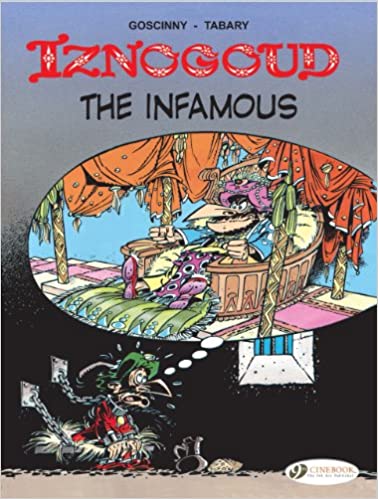
Iznogoud and the Magic Carpet (volume 6)


By Goscinny and Tabary (Cinebook)
ISBN: 978-1-84918- 044-3 (Album PB)

For the greater part of his too-short lifetime (1926-1977), René Goscinny was one of the most prolific and most-read writers of comic strips the world has ever seen. He still is.

Among his most popular comic collaborations are Lucky Luke, Le Petit Nicolas and, of course Asterix the Gaul, but there were so many others, such as the dazzling, dark deeds of a dastardly usurper whose dreams of diabolical skulduggery perpetually proved to be ultimately no more than castles in the sand…

Scant years after the Suez crisis, the French returned to the hotly contested deserts as Goscinny teamed with sublimely gifted Swedish émigré Jean Tabary (1930-2011) – who numbered Richard et Charlie, Grabadu et Gabaliouchtou, Totoche, Corinne et Jeannot and Valentin le Vagabond amongst his hit strips – to detail the innocuous history of imbecilic Arabian (im)potentate Haroun el-Poussah. However, it was the strip’s villainous foil, power-hungry vizier Iznogoud who stole the show – possibly the conniving imp’s only successful coup.

Les Aventures du Calife Haroun el Poussah was created for Record; with the first episode appearing in the January 15th1962 issue. A minor hit, it subsequently jumped ship to Pilote – a comics magazine created and edited by Goscinny – artfully refashioned into a starring vehicle for the devious ratbag who had increasingly been hogging all the laughs and limelight.

Like all great storytelling, Iznogoud works on many levels: as a comedic romp with adorably wicked baddies invariably hoisted on their own petards and coming a-cropper for the youngsters, whilst older, wiser heads revelled in the pun-filled, witty satire of marvellously accessible episodic comic capers.

The same magic formula had made its more famous cousin Asterix a global success, and just like the saga of the indomitable Gaul, this irresistibly addictive Arabian nitwit is adapted by master translators Anthea Bell & Derek Hockridge who made those Roman Follies so very palatable to the English tongue.

Moreover, the deliciously malicious whimsy is always heavily laden with manic absurdity and brilliantly delivered creative anachronism which keeps the assorted escapades bizarrely fresh and inventive.

Insidious antihero Iznogoud is Grand Vizier to affable, easy-going Haroun Al Plassid, Caliph of Ancient Baghdad, but the sneaky little toad has loftier ambitions, or as he is always declaiming “I want to be Caliph instead of the Caliph!”…

The retooled series launched in Pilote in 1968, and soon became a massive European hit, with 30 albums to date (carried on by Tabary’s children Stéphane, Muriel and Nicolas); his own solo comic, computer games, animated films, a TV cartoon show and even a live-action movie.

When Goscinny died in 1977 Tabary began scripting his own sublimely stylish tales (from 13th album onwards), switching to book-length complete adventures, rather than the compilations of short, punchy vignettes which typified the collaborations.

There haven’t been any new translated volumes since 2017, but this sixth Cinebook album (actually the ninth French album, released in 1973 as Le Tapis Magique) is now available in digital formats and opens with lead tale ‘The Magic Carpet’: an exceptional, extended 20-page epic bolstered by a triumvirate of shorter yarns and prefaced as ever with a handy catch-up profile page of the unusual suspects…

It all starts in gloriously bustling Baghdad where the verminous Vizier unaccountably encounters a few famous faces (moonlighting from their day jobs in Le Journal de Tintin) before returning to plotting how to remove the gentle, isolated and very dim obstacle to power …

It’s the birthday of corpulent oaf Haroun Al Plassid and a nasty notion finally occurs: employing impecunious Fakir Khaledonyahn to make a very special kind of rug. Flying carpets are no big deal in the empire and the skies of Baghdad are crammed with them, but the Fakir’s are extraordinary…

They only travel one way. Anybody standing on one of these when the trigger word is pronounced takes a flight to who-knows-where and never returns…

Who-knows-where is actually Ancient Peking (you can say Beijing if you want) and soon the venerably inscrutable and imperturbable citizens there are having their legendary patience and implacability tested as rug after rug arrives because untrusting Iznogoud continually demands proof of concept before parting with cash. Meanwhile, the gullibly hapless Caliph can’t get the hang of the magic word his trusted advisor wants him to repeat…

This sharply convoluted pun-punctuated yarn is followed by a sneaky dose of inspired iniquity dubbed ‘Incognito’. The well-meaning Caliph has no idea of the dire depredations Iznogoud inflicts upon the populace in his name, or that his beloved people fear, despise and revile the Caliphate because of excessive taxes, prisons filled with tortured citizens and schools empty of children. When chimerically inquisitive Haroun Al Plassid decides to go out amongst the populace in all his regal splendour, he is disappointed and surprised to find the streets utterly deserted by the terrified common folk…

Asking his precious Iznogoud for advice, the Commander of the Faithful is then convinced to sneak out alone dressed as a common beggar. Unable to believe his luck, the venal Vizier quickly briefs bumbling, long-suffering crony Wa’at Alahfand orders the guards to throw into the deepest dungeon any beggars who approach the palace.

On his fact-finding mission, the shabby Caliph learns a lot he doesn’t like and determines to fix things as soon as he gets back. Unfortunately, being a newcomer in his own city he gets lost…

Soon Iznogoud is going insane with suspense. Al Plassid should be back and languishing in jail by now, but as long as he’s out there somewhere the coup cannot begin. Thus, the despot-in-waiting and his fatuous flunky are forced to disguise themselves as beggars, covertly creeping out into Baghdad to search for their missing lord.

In the meantime, the Caliph has the brilliant notion of asking for directions and shambles home just as the Guard is being changed. Nobody even notices the scruffy indigent who shambles back to his apartments and becomes again The Caliph. Down in the city the tired and frustrated plotters give up and head for home, just as the order to arrest all beggars becomes law…

Sheer broad slapstick-riddled farce is the secret ingredient of the perfectly paced saga of ‘The Tiger Hunt’ when Iznogoud convinces his boss to go for a low key safari – just him, the Vizier and faithful Wa’at Alahf, all armed with bows and blunt arrows – to bag the perfect bedside rug.

Typically, the murder plot goes hideously awry as a succession of hunters provide perfectly suitable, already skinned rugs to the happy ruler and the only living apex predators they can find are just not interested.

Forced to improvise, Iznogoud resorts to digging a huge pit, but whilst he’s at the bottom of it Haroun at last finds a way to really tick off a tiger – just before it tumbles into a great big hole in the ground…

The manic mirth concludes with ‘The Box of Souvenirs’ as a visitor from distant Nippon visits Baghdad with a strange device. Judoka Karate is a destitute tourist whose incredible hand-held cube can turn solid objects into two-dimensional pictures.

Instantly sensing an opportunity Iznogoud – after much spirited dickering – acquires the mystic souvenir-maker, but hasn’t fully considered the details. To turn a jug, jewel or Caliph into a black-&-white image, the object has to be the proper distance from the lens and the subject absolutely must keep completely still for a minute or two.

Confident he can cope, the Vizier has utterly underestimated the Caliph’s mayfly attention span and ingrained vanity which has led to large mirrors being placed all over the palace…

Just such witty, fast-paced hi-jinks and craftily crafted comedy set pieces have made this addictive series a household name in France where “Iznogoud” is common term for a certain type of politician: over-ambitious, unscrupulous – and frequently not that tall.

When first released in Britain in the 1970s (and again in 1996 as a periodical comic book) these tales made little impression, but this snappy, wonderfully beguiling strip deserves an appreciative audience among today’s more internationally aware, politically jaded comics-and-cartoon savvy Kids of All Ages…
Original edition © Editions TABARY 1991, by Goscinny & Tabary. All rights reserved. This edition published 2010 by Cinebook Ltd.

When Big Bears Invade


By Alexander Finbow & Nyco Rudolph with Ryan Ferrier (Renegade Arts Entertainment)
ISBN: 978-1-987982-549-7 (HB)

You might not know it when he/she/they put peanut butter poptarts on your vintage vinyl turntable or hide unwanted vegetables in the laptop, but kids always want to be heroes. They pick up what’s going in the world – local or global – and look for ways to fix it. Just compare the number of septuagenarians to middle schoolers who heard Greta Thunberg’s call to arms and decided now was the time to act…

There’s a wonderful tinge of all that in this hardback and digital picture book for the young and restless of all ages. Courtesy of writer/editor/publisher Alexander Finbow and illustrator Nyco Rudolph, When Big Bears Invade offers traditional rhyming couplets for humongous, cathartic painted spreads predicting what will happen when Earth finally has enough of humanity’s wasteful destructive ways and sets a legion of gigantic ursine avengers to settling scores and fixing the mess in the most effective manner possible…

Witty, pretty and deliciously satisfying, this is a full-on eco-fable for the rightly concerned of every vintage and persuasion: a perfect gift and a welcome diversion when the real world’s imminent demise drags you down…
© 2017 Alexander Finbow & Nyco Rudolph.

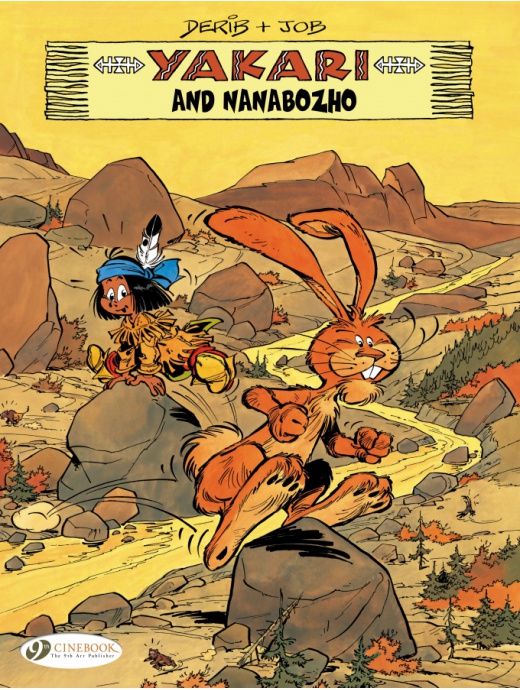
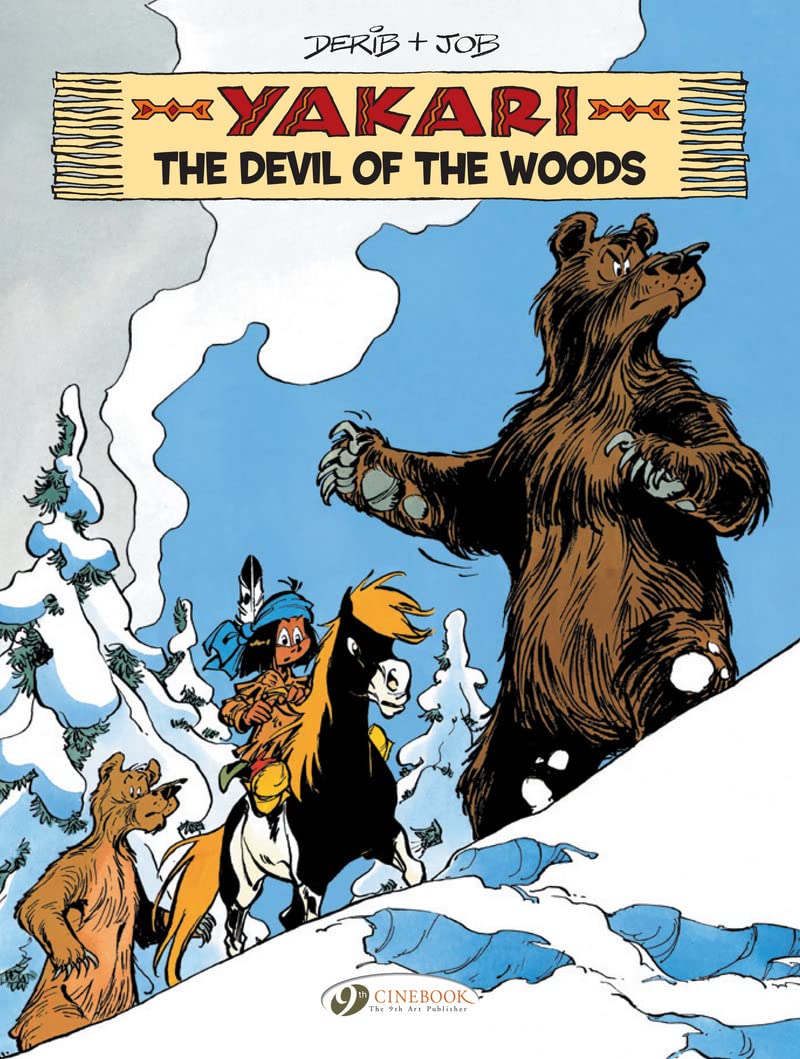
Yakari and the Beavers


By Derib & Job, translated by Erica Jeffrey (Cinebook)
ISBN: 978-1-905460-09-0 (Album PB)

Children’s magazine Le Crapaud à lunettes was founded in 1964 by Swiss journalist André Jobin who then wrote for it under the pseudonym Job. Three years later he hired fellow French-Swiss artist Claude de Ribaupierre AKA “Derib”. The illustrator had launched his own career as an assistant at Studio Peyo (home of Les Schtroumpfs/The Smurfs), working on strips for venerable weekly Le Journal de Spirou.

Together at Le Crapaud à lunettes, Derib & Job created the splendid Adventures of the Owl Pythagore before striking pure comics gold a few years later with their follow-up collaboration.

Derib – equally au fait with enticing, comically dynamic “Marcinelle” cartoon style yarns and devastatingly compelling meta-realistic action illustrated action epics – went on to become one of the Continent’s most prolific and revered creators. It’s a crime that groundbreaking strips such as Celui-qui-est-né-deux-fois; Jo (the first comic ever published dealing with AIDS); Pour toi, Sandra and La Grande Saga Indienne) haven’t been translated into English yet, but we still patiently wait in hope and anticipation…

Many of Derib’s stunning works over the decades feature his cherished Western themes; magnificent geographical backdrops and epic landscapes. Yakari is considered by fans and critics to be the strip which first led him to deserved mega-stardom.

Debuting in 1969, Yakari follows the life of a young Oglala Lakota boy on the Great Plains; set sometime after the introduction of horses by the Conquistadores but before the coming of modern Europeans.

The series – which has generated two separate TV cartoon series and a movie release – has achieved 40 albums: a testament to the strip’s evergreen vitality and brilliance of its creators, even though originator Job has moved on and Frenchman Joris Chamblain assumed the writer’s role in 2016.

Overflowing with gentle whimsy and heady compassion, young Yakari enjoys a largely bucolic existence: at one with nature and generally free from privation or strife. For the sake of our delectation, however, the ever-changing seasons are punctuated with the odd crisis, generally resolved without fuss, fame or fanfare by a little lad who is smart, brave… and can – thanks to the boon of his totem guide the Great Eagle – converse with all animals…

Published in 1977, Yakari chez les castors became the third European album, released as the strip grew in prominence and popularity. A year after, the feature began running in Le Journal de Tintin, subsequently spawning two animated TV series (1983 and 2005), all the usual merchandising spin-offs and achieving monumental global sales in 17 languages to date.

Yakari and the Beavers opens in summer as the nomadic Sioux make camp at a confluence of rivers. The children are playing, testing their strength, speed and archery skills, but with burly Buffalo Seed winning most of the honours – and the fascinated attention of pretty Rainbow – physically less-developed Yakari soon slopes off to cavort with his faithful and forthright pony Little Thunder.

As they romp and swim in the river, they encounter a strange wooden construction ranging from bank to bank and unexpectedly arouse the ire of an excitable beaver named Thousand Mouths. He is the impatient and irascible foreman of a band of buck-toothed brethren, determined to finish the family home in record time, but his fellows are far less enthusiastic…

When one – Linden Tree – spots the palomino, it starts a stampede of rodents who would all rather ride horses than chew timber and move mud. Soon, while they’re all goofing around, their boss is going ballistic and a wise old beaver is teaching a rapt Yakari everything he needs to know about dam-building…

After more idle days in camp, Yakari’s thoughts return to the beavers. Before long he and Little Thunder are heading back to the dam, but are distracted by an astonishing noise. Tracing it, they discover extremely ambitious beaver Double-Toothfar from the river, attempting to chew down a colossal tree all alone…

This eager beaver confides his dreams of being a sculptor, but their conversation is curtailed when a bad-tempered grizzly bear wanders up, menacing little straggler Wild Rose. With the ursine interloper clearly not amenable to reason, Yakari drives the surly brute off with a rough-hewn jousting lance rapidly gnawed into shape by Double-Tooth’s flashing gnashers…

On escorting the kits back to the river, Yakari is astounded to see the progress made in the wood-and-mud abode and delighted to be asked to help. In actual fact most of the assistance comes from hard-pressed Little Thunder who reluctantly becomes the engine transporting trees and saplings from the woods to the river…

Returning late to camp, Yakari is observed by Rainbow who wants to know what her friend is up to. Next morning, she invites herself along as they return to the Beaver Lodge and cannot understand why, in the midst of listening to the hairy toilers chattering, Yakari spurs his pony away and races away.

Mounted behind him she listens incredulously as the boy explains that little Linden Tree is missing and then makes him backtrack to the really important bit. Yakari understands and can talk to all birds and beasts…

Racing downriver the children are soon joined by Yakari’s totem animal, sagacious Great Eagle, who provides a telling clue to the lost beaver’s whereabouts. However, after daring subterranean depths, the little brave eventually finds his lost friend but is himself trapped. Happily, the artistic skills of late-arriving Double-Tooth prove invaluable in devising a climbing device and soon everybody – even utterly bemused Rainbow – are all celebrating back at the Lodge.

With things back to normal the irrepressible, frustrated artist corners Yakari for one last secret project. Some days later, the busy beavers are stunned to see Double-Tooth’s river-borne aesthetic magnum opus poled into the lee of the dam by the proud Yakari…

The exploits of the valiant little brave who can speak with animals and enjoys a unique place in an exotic world is a decades-long celebration of joyously gentle, moving and inexpressibly entertaining adventures honouring and eulogising an iconic culture with grace, wit, wonder and especially humour.

These gentle sagas are lost treasures of kids’ comics literature and Yakari is a series no fan of graphic entertainment should be without.
Original edition © 1977 Le Lombard/Dargaud by Derib + Job. English translation 2005 © Cinebook Ltd.

Sock Monkey: Into the Deep Woods


By Tony Millionaire & Matt Danner (Fantagraphics Books)
ISBN: 978-1-60699-746-8 (HB)

Tony Millionaire’s Sock Monkey first appeared as a Dark Horse comic book in 1998. The extraordinary cast of characters have since achieved bizarre notoriety as adored favourites of gentle lovers of whimsy and the degenerate darlings of clued-in, cynical post-moderns.

The original tales featured a lovable handmade simian puppet, a toy crow with button eyes and a much-repaired doll experiencing multiple-award-winning all-ages adventures published as occasional miniseries between 1998 and 2007. Between 2002 and 2004, they starred in a couple of hardcover storybooks and were later recycled and repurposed for an adult-oriented (by which I mean surreal and clever, not tawdry and titillating) newspaper strip…

Tony Millionaire comes from a dynasty of exemplary artists, loves to draw and does it very, very well: referencing classical art, the acme of children’s book illustration and an eclectic mix of pioneering comic strip draughtsmen like George McManus, Rudolph Dirks, Cliff Sterrett, Frank Willard, Harold Gray, Elzie Segar and George Herriman.

His own creative endeavours – words and pictures – seamlessly blend their styles and sensibilities with European engravings masters from the “legitimate” side of the pictorial storytelling racket.

Born Scott Richardson, Mr Millionaire especially cites Johnny (Raggedy Ann and Andy) Gruelle and English illustrator Ernest H. Shepard (The Wind in the Willows; Winnie the Pooh) as definitive formative influences. That’s particularly obvious from the range of stunning pictures in this rousing yarn starring his plushy paragons in a memorable collaboration with animator, screen writer and director Matt Danner (Ren & Stimpy, Loony Toons, Monster High and The Drinky Crow Show).

With a variety of graphical strings to his bow such as various animation shows, his own clutch of books for children – particularly the superbly stirring Billy Hazelnuts series – and the brilliant if disturbing weekly strip Maakies (detailing riotously vulgar, absurdly surreal adventures of a nautically-inclined Irish monkey called Uncle Gabby and fellow über-alcoholic Drinky Crow: grown-up world iterations and mirror universe equivalents of the sweet and simple stars herein), every Millionaire project seems to be a guarantee of endless excitement and quality.

This one pushes the featured creatures into the rarefied atmosphere inhabited by such esteemed and established children’s favourites as the Moomins, Wonderland, The Velveteen Rabbit and the assorted chronicles of Oz…

A prose tale scripted primarily by Danner with ideas, contributions and 46 stunning monochrome illustrations (in a variety of media from soft pencil tones to crisp stark pen & ink) from Millionaire: the sublime saga details how, one day in a Victorian House by the sea, an old Sock Monkey named Gabby and his constant companions Crow and dilapidated, much-repaired doll Inches discover their beloved guardian Ann-Louise is missing – presumed taken by the recently discovered monstrous beast dubbed the Amarok…

Determined to save her, the ill-prepared trio plunge into the terrifying Deep Woods, armed only with maps and a compass from the library of Ann-Louise’s grandfather Professor Rimperton. Braving all manner of terrors – and with the occasional assistance of strange creatures such as wood-elf Trumbernick, a partly digested sea captain and an undersized bear carpenter – the toybox heroes defeat, or more usually narrowly escape, such threats as Venomous, Triple-Spiked, Hog-Faced Caterpillars, stormy seas, a Sea Serpent, horrid Harpies and the unpleasantly ursine Eastern Mountain Guards of Bear Town, until they find her.

However even after the dauntless searchers have finished dodging pursuers, roaming the wilds and soaring the skies to be reunited with Ann-Louise, there is one final trial after the remorseless Amarok tracks them to the beloved little girl they would lay down their lives for…

Like the very best children’s classics, this is a book (available in proudly traditional hardback and ultra-modern digital formats) that isn’t afraid to confront dark matters and actively embraces fear and sadness amidst the wonders in an effort to craft a better story.

Compelling, beguiling and visually intoxicating, this Sock Monkey yarn judiciously leavens discovery with anxiety, heartbreak with gleeful imaginative innocence and terror with bold triumph.

Millionaire describes his works as intended for “adults who love children’s stories” but this collaboration may just have turned that around by concocting a tall tale of adult intent which is one of the greatest kids’ books of modern times.
Sock Monkey: Into the Deep Woods © 2014 Tony Millionaire & Matt Danner. This edition © 2014 Fantagraphics Books.

Box (Book One)


By Patrick Wirbeleit & Uwe Heidschötter (Top Shelf Productions)
ISBN: 978-1-60309-449-8 (IDW TPB) eISBN: 978-1- 68406-747-3 (Top Shelf Productions)

It’s been a while since we covered a simple done-in-one yarn anybody can and everybody should read. Let’s fix that…

Box was originally released in Germany in 2014 as Kiste, winning a bunch of prestigious awards across the globe. It’s the brainchild of veteran author and illustrator Patrick Wirbeleit, who has notched up more than 50 books since he migrated from freelance artist to comics creator in 2001. His collaborator on this slice of inspirational whimsy is illustrator, character designer and animation director Uwe Heidschötter, whose past work includes The Little Boy and the Beast; The Gruffalo’s Child and Kahlil Gibran’s The Prophet.

Available in English-language paperback and digital editions since 2019, the tale is a charming, heartwarming and enticing fable which begins when young Matthew Wheeler returns home to find a large cardboard box by the bin outside his house. He’s an imaginative, inventive kid who loves making stuff, but also well-brought up too, so he asks permission before co-opting the container for the space station he’s currently building.

That doesn’t stop him slightly freaking out when the package starts offering advice and some expert technical aid…

It transpires the battered cardboard used to be a sorcerer’s toolbox, holding an infinitude of gear in a seemingly empty interior, but intensely frustrated because his owner never made anything physical, but only messed about with spells.

Rapidly adapting, Matthew starts a new project at Box’s suggestion but ‘The See-Saw’ is a bit of a bodge and proves the container might have the tools, but is sorely lacking in knowhow…

The talking toolkit’s next idea is ‘The What-Happens-Then Machine’, affording opportunity to share its origins whilst also warning that most humans who see its true nature freeze and forget quite quickly. When Mum and Dad end up utterly spellbound, it transpires that only the sorcerer can unlock their paralysis, so boy and Box immediately head for ‘The House in the Forest’ and a rendezvous with the terrible unknown…

After enduring nature at its worst and braving the polite-but-firm outer deterrents of the solitary mage, they eventually enter his lonely house, only to discover ‘Torquist Binklestunk’ is missing and a giant snake is now in residence.

Thus begins a desperate race to restore the magician and find a cure for Mum and Dad, with Matthew’s budding skills crucial in crafting a solution. When he succeeds and goes home to magically effect ‘The Awakening’, he successfully hides just how long his parents have been switched off…

It’s a bittersweet resolution because Box isn’t with him, but – armed with the promising possibility of further projects with the sorcerer and his toolkit – Matthew looks forward to more inventing and constructing…

Short, sweet, and amazingly appetising, this delightful comic series is certain to make many fans and inspire kids to build their own worlds of wonder.
© 2019 Patrick Wirbeleit & Uwe Heidschötter English translation © Pete Devlin. All rights arranged through Nicolas Grivel Agency.

Osamu Tezuka’s Original Astro Boy volume 6 & 7


By Osamu Tezuka, translated by Frederik L. Schodt (Dark Horse Manga)
ISBN: 978-1-56971-681-6 (TPB 6) 978-1-56971-790-5 (TPB 7)

There’s nothing like the real thing. After a range of robotic rapscallions and kid-friendly constructions, here’s a double dose of the original and genuine mechanical marvel of any age…

From beginning his professional career in the late 1940s until his death in 1989, Osamu Tezuka generated an incomprehensible volume of quality work which transformed the world of manga and how it was perceived in his own country and, ultimately, across the globe. Devoted to Walt Disney’s creations, he performed similar sterling service with Japan’s fledgling animation industry.

The earliest stories were intended for children but right from the start Tezuka’s expansive fairy tale stylisations harboured more mature themes and held hidden pleasures for older readers and the legion of fans growing up with his manga masterpieces…

“God of Comics” was born in Osaka Prefecture on November 3rd 1928, and as a child suffered from a severe illness. The doctor who cured him inspired the lad to study medicine, and although Osamu began drawing professionally whilst at university in 1946, he persevered with college and qualified as a medical practitioner too. Then, as he faced a career crossroads, his mother advised him to do the thing which made him happiest.

He never practiced as a healer but the world was gifted with such masterpieces as Kimba the White Lion, Buddha, Black Jack and so many other graphic narratives.

Working ceaselessly over decades, Tezuka and his creations inevitably matured, but he was always able to speak to the hearts and minds of young and old equally. His creations ranged from the childishly charming to the distinctly disturbing such as The Book of Human Insects.

Tezuka died on February 9th 1989, having produced more than 150,000 pages of timeless comics; created the Japanese anime industry and popularised a uniquely Japanese graphic narrative style which became a fixture of global culture.

These monochrome digest volumes (173 x 113 mm in the physical world and any size you like if you get the eBook edition) continue to present – in non-linear order – early exploits of his signature character, with the emphasis firmly on fantastic fun and family entertainment…

Tetsuwan Atomu (literally “Mighty Atom” but known universally as Astro Boy due to its dissemination around the world as an animated TV cartoon and one of post-war Japan’s better exports) is a spectacular, riotous, rollicking sci fi action-adventure starring a young boy who also happens to be one of the mightiest robots on Earth.

The series began in 1952 in Shōnen Kobunsha and ran until March 12th 1968 – although Tezuka often returned to add to the canon in later years, both in comics but in also in other media such as the newspaper strips reprinted and repackaged here. Over that period, Astro Boy spawned the aforementioned global TV cartoon boom, starred in comic book specials and featured in games, toys, collectibles, movies and the undying devotion of generations of ardent fans.

Tezuka frequently drew himself into his tales as a commentator, and in his later revisions and introductions often mentioned how he found the restrictions of Shōnen comics stifling; specifically, having to periodically pause a plot to placate the demands of his audience by providing a blockbusting fight every episode. That’s his prerogative: most of us avid aficionados have no complaints…

Tezuka and his production team were never as wedded to close continuity as fans are. They constantly revised both stories and artwork in later collections, so if you’re a purist you are just plain out of luck. Such tweaking and modifying is the reason this series of collections seem to skip up and down the publishing chronology. The intent is to entertain at all times so stories aren’t treated as gospel and order is not immutable or inviolate.

It’s just comics, guys…

And in case you came in late, here’s a little background to set you up…

In a world where robots are ubiquitous and have won (limited) human rights, brilliant Dr. Tenma lost his son Tobio in a traffic accident. Grief-stricken, the tormented genius used his position as head of Japan’s Ministry of Science to build a replacement. The android his team created was one of the most groundbreaking constructs in history, and for a while Tenma was content.

However, as his mind re-stabilised, Tenma realised the unchanging humanoid was not Tobio and, with cruel clarity, summarily rejected the replacement. Ultimately, the savant removed the insult to his real boy by selling the robot to a shady dealer…

One day, independent researcher Professor Ochanomizu was in the audience at a robot circus and realised diminutive performer “Astro” was unlike the other acts – or indeed, any artificial being he had ever encountered. Convincing the circus owners to part with the little robot, the Prof closely studied the unique creation and realised just what a miracle had come into his hands…

Part of Ochanomizu’s socialization process for Astro included placing him in a family environment and having him attend school just like a real boy. As well as providing friends and admirers the familiar environment turned up another foil and occasional assistant in the bellicose form of Elementary School teacher Higeoyaji (AKA Mr. Mustachio)…

The wiry wonder’s astonishing exploits resume after the now traditional ‘A Note to Readers’ – explaining why one thing that hasn’t been altered is the depictions of various racial types in the stories.

The author was also keen on combining all aspects of his creation into one overarching continuity. This volume opens with ‘“Once Upon a Time” Astro Boy Tales Part 1′ January 24th – December 23rd 1967: reprinting modified strips from the serial that ran in the Sankei newspaper. In his cartoon persona, the God of Comics explains how the cliffhanger ending of the TV series (falling into the sun on a malfunctioning nuclear fusion blocker) never sat well with him.

Filling in gaps, Tezuka here reveals how the depowered robot boy was originally rescued and repaired by insectoid aliens and restored to Earth, but also how he has since rejected that plot twist and replaced it with a new one in ‘Beginning of the Contradiction’…

Now, while enjoying an evening flight over his beloved city, Astro is caught in the explosion of a crashing spaceship. He also saves a locust woman passenger who has taken more-or-less human form. After sharing her tale convoluted tale of romantic woe – involving two males determined to fight to the death for her – Scara Ohara realizes she is marooned on Earth, but that’s not the biggest problem she and her robot rescuer face. When Astro goes for help, he discovers the detonation has cracked the time barrier, plunging them back 50 years to March 1969…

While scouting ancient (by his lights) Tokyo and reeling in shock, Astro meets and befriends a little boy. He soon learns that there are no other true robots in existence and that little Shin-Chan is the world’s greatest beggar.

The diligent mendicant offers the stranded strangers accommodation in his plush house and is astounded when Astro reveals his artificial nature and great dilemma. The mechanoid needs constant atomic fuel top-ups or he will cease to function, but now – decades away from sustenance – is living on borrowed time…

‘Living on Earth 101’ finds Shin-Chan urgently schooling the strangers on the primitive, intolerant world they now live in: building a home, getting jobs as Astro deduces that – if he’s careful – he can live three more years. There are numerous embarrassing and simply dangerous moments where their secret is almost exposed, such as the time he digs up rare gems from inside a volcano but cannot explain how he got them to extremely curious diamond sellers…

Scara cannot understand the concept of work, but easily adapts to the joys of shopping, and lure of “fun” with a succession of attentive men, piling pressure on the sensible robot and triggering an encounter with ruthless thieves and the first of Astro’s contacts with people he will know half a century from “now”.

It’s the birth of the age of automation and Astro regularly meets prototype constructs that painfully remind him of home, where robots are sentient and have equal rights. Here, his kind are considered, silly fantasy, toys and potential job-stealers. Pioneering scientists often work in secret, such as the masked dabbler building his metal men in a secret underground lair.

The Birth of Neva #2′ sees a painfully young Ochanomizu take on the human-seeming weird kid Astro as an assistant… with startling repercussions.

As Scara continues to flounder in a strange world, ‘Baro, the Robot’ finds her at odds with her rescuer after she reveals that on her world, all mechanoids are slaves. Incensed, Astro rockets away, wasting precious energy to ostensibly investigate the rogue nation of Peakok, which has shocked the world with twin announcements: it is now a nuclear power, and its H-bombs are deployed by a robot delivery system…

As Astro enters the sinister police state, President Bundell is already taking charge of scientist Carpon‘s beloved brainchild Baro. The dictator has no idea that the sentient machine has the mind and personality of a human toddler, whilst the nuclear weapon really hates the idea of killing or dying: opinions fortified after meeting and debating with Astro. That all tragically changes when the President murders rebellious Carpon and Baro seeks revenge…

Squandering power, Astro only has six months energy remaining when the next crisis occurs. ‘Scara Disappears’, reveals how the emotionally dislocated alien – growing evermore discontented – flees to the mountains to escape humanity. When the boy bot returns, guilt drives him to investigate Mount Tanigawa, eventually finding Scara has changed shape and joined the bugs living there. With time running out, he and Shin-Chan make contingency plans: a scheme to store Astro’s power-depleted form for the decades necessary to catch up with the technology needed to sustain him, when the moment of total depletion finally comes…

In the meantime, Astro works with young Ochanomizu on developing robots. Faced with constant failure and the fact that society hates and does not want truly autonomous mechanoids, the boffin is despondent and Astro considers sharing his astonishing secret. Suddenly disaster strikes when a building collapses, and the heroic droid sacrifices most of his dwindling reserves to save people trapped in the wreckage. To keep his secret, Astro wears an old robot shell, but the act provokes a crisis as the authorities want the saviour machine that Ochanomizu knows could not have even moved, let alone independently rescued the victims. Revealing his true nature to the Professor, Astro accidentally sparks a national manhunt before falling into the hands of spies with only three days power remaining.

These monstrous thugs have their eyes on another nation’s top-secret technology.

‘The Energy Tube’ could preserve Astro’s existence so he reluctantly agrees to join them and is soon being smuggled out of Japan in a submarine…

This volume ends on a chilling cliffhanger as Astro’s conscience overrides his survival instincts. Refusing to be anybody’s secret weapon, he scuppers the sub and escapes, only to fly into a massacre: US jets bombing peasants. The war in Southeast Asia was in full swing when Osamu Tezuka crafted these stridently anti-war episodes which depicts the Mighty Atom routing American ground and air forces with his last vestiges of energy. When he collapses and is reverently interred, his “corpse” is disturbed and sinks into the Mekong river when the revenge-hungry Americans return to obliterate the village that even ‘The Angel of Viet Nam’ could not save…

To Be Continued…

Osamu Tezuka’s Original Astro Boy Volume 7 offers the same standard preliminaries and The Story Thus Far’ before resuming the Sankei newspaper adventure ‘“Once Upon a Time” with Astro Boy Tales Part 2′ (spanning December 24th1967 to September 27th 1968). Returning to prognostication, the master jumps to ‘The Summer of 1993’ and a world largely at peace and thriving on scientific progress. A dredger in the Mekong plucks a strange doll out of the mud, and – thanks to a handy note attached by Astro Boy – is returned to a certain person in Tokyo.

Little beggar Shin-Chan is now prestigious, powerful businessman Shingo Yamanaka, but he has never forgotten his childhood companion and despite his subordinates suspicious quibbling, spends a fortune on a new energy tube system to repower the inert doll. Marginally successful, the magnate introduces Astro to a world far closer to, but still not his own.

He and his flighty daughter Surume are the only ones who know his secret, and share his woe that although robots are now commonplace, they are still deliberately limited: a worker underclass who “know their place” and always end up on scrap heaps…

With only one day of full power, Astro knows this is not a situation he can fix. Dutiful and loyal, his first action is to check on Scara, who has been with the locusts on Mount Tanigawa for a quarter of a century now. Unsuccessful in this task, he allows Surume to show him the sights, especially the colossal Fun-Zone where humans go to release tensions, Dancing, playing or acting out their frustrated desires to kill in robot-staffed theme parks. Thy have to be careful though, unsupervised robots are illegal and subject to instant destruction if caught in human zones…

Professor Ochanomizu has not been idle. He still seeks to perfect sentient robot creation and his latest success is his pride and joy. However, its advanced nature makes the construct a perfect patsy when criminals frame it for a bold robbery. ‘Robot Chiruchiru in Danger’ finds the nobly stoic automaton on trial for its life. Surume and Astro strive mightily and heroically to save it, but tragedy strikes when the thieves outsmart the robot boy and justice takes a cruelly biased turn…

After turning the tables on the crooks ‘Astro’s Energy Runs Out’ and his day in the sun ends with him again shutting down, this time in the meadow where he had last seen Scara…

More time passes and the story almost comes full circle, as the origins of Astro Boy revisited in ‘Dr. Tenma’ with the tragedy of the deranged genius and his son Tobio expanded to reveal how parental neglect, overwork and compensating guilt all contributed to the construction of the dead boy’s synthetic substitute, and what the obsession to build him actually cost…

A further unknown complication is simultaneously beginning on Mount Tanigawa, where hibernating Scara awakes beside the eroded body of Astro Boy and realises a long-anticipated time-loop paradox is about to occur with two versions of the same person now occupying the same timeline. The solution is horrible, inevitable and ultimately miraculous…

‘The Tragedy of Bailey’ focuses on the robot boy’s painful failure to fit into the Tenma household: his mother’s anxiety and father’s spiralling into madness, and reappearance of aged Professor Ochanomizu, with constantly-baffled “Tobio” stumbling from crisis to crisis before being summarily handed over to a businessman whose behind the scenes dealings had enabled Tenma to complete his resurrection project…

This embroils him in a bizarre doomed plot to force America to recognize robot rights, but end horrifically for pioneering freedom fighter Bailey…

Returned to Japan, Tobio’s relationship with Tenma further deteriorates and ‘Astro Goes to the Circus’ sees time turn a full circle as the Science Minister wearies of the farce and sells his robot boy to inspirationally sadistic circus impresario Hamegg who renames his goldmine star attraction Astro Boy…

Subjected to an escalating round of gladiatorial combats and life-threatening stunts, Astro rebels and runs away, but even personal tragedy and the wiles of Ochanomizu are enough to keep the mighty mech out of Hamegg’s brutal clutches and despite showing his valiant mettle, this tome concludes on another cliffhanger with Astro Boy a battered slave of the worst that humanity can produce…

To Be Continued…

Breathtaking pace, outrageous invention, slapstick comedy, heart-wrenching sentiment and frenetic action are hallmarks of these captivating comics constructions: perfect examples of Tezuka’s uncanny storytelling gifts, which can still deliver a potent punch and instil wide-eyed wonder on a variety of intellectual levels. The melange of marvels is further enhanced here by an older, more sophisticated tone and the introduction of political and social commentary, proving Astro Boy to be a genuine delight for all ages.
Tetsuwan Atom by Osama Tezuka © 2002 by Tezuka Productions. All rights reserved. Astro Boy is a registered trademark of Tezuka Productions Co., Ltd., Tokyo Japan. Unedited translation © 2002 Frederik L. Schodt.