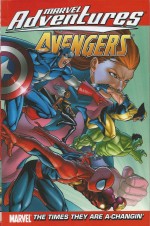
Marvel Adventures Avengers volume 9: The Times They Are A’Changin’


By Paul Tobin, Matteo Lolli, Ig Guara, Casey Jones, Christian Vecchia & Sandro Ribeiro (Marvel)
ISBN: 978-0-7851-3832-7

Since its earliest days Marvel has always courted young comicbook audiences. Whether through animation tie-ins such as Terrytoons Comics, Mighty Mouse, Super Rabbit Comics, Duckula, assorted Hanna-Barbera and Disney licenses and a myriad of others, or original creations such as Tessie the Typist, Millie the Model, Homer the Happy Ghost, Li’l Kids or Calvin, the House of Ideas always understood the necessity of cultivating the next generation of readers.

These days, however, accessible child-friendly titles are in decline and with Marvel’s proprietary characters all over screens large and small, the company generally prefers to create adulterated versions of its own pantheon, making that eventual hoped-for transition to more mature comics as painless as possible.

In 2003 the company created a Marvel Age line which updated and retold classic original tales by Stan Lee, Jack Kirby and Steve Ditko and subsequently merged it with remnants of its failed manga-based Tsunami imprint, which was also intended for a junior demographic.

The experiment was tweaked in 2005, becoming Marvel Adventures with the core titles transformed into Marvel Adventures: Fantastic Four and Marvel Adventures: Spider-Man and the reconstituted classics replaced by all-original yarns. Additional titles included Marvel Adventures: Super Heroes, Power Pack, Hulk and The Avengers, which ran until 2010 when they were cancelled and replaced by new volumes of Marvel Adventures: Super Heroes and Marvel Adventures: Spider-Man.

This particularly light-hearted digest-sized collection re-presents issues #32-35 of Marvel Adventures Avengers (from 2009) and offers a succession of stand-alone yarns that will delight fans with a sense of humour and iota of wit…

What You Need To Know: this incarnation of the World’s Mightiest Superheroes operates an “open-door” policy where almost every metahuman marvel might turn up for duty. However – presumably because of their TV cartoon popularity – the Wondrous Wallcrawler and Jade Juggernaut are on scene in almost every episode…

Written throughout by Paul Tobin, the fast-paced fun begins with ‘The Big Payoff’ illustrated by Matteo Lolli & Christian Vecchia, wherein the team gets a most unpleasant visit from Special Agent Clark Harvey of the Internal Revenue Service.

This weaselling civil servant is ostensibly there to collect the individual Avengers’ taxes, but it’s all a ploy to blackmail the team into forcing a bunch of defaulting villains into paying up…

Smart and deviously hilarious, the clashes between Giant-Girl, Spider-Man and Luke Cage against Whirlwind, the Web-spinner and erudite philosophical monster/political activist Oog or Man-Bull versus Iron Man are entertainment enough, but Iron Man and Giant-Girl overmatched against the Absorbing Man and the childlike Hulk convincing assassin Bullsesye to do his patriotic duty are literally priceless…

When jungle king Ka-Zar visits from the Antarctic lost world all he can think about is learning how to use a car. Sadly Wolverine, Storm, Giant-Girl, Hulk and Spidey all feel safer battling an invasion of super-Saurians unleashed by Stegron the Dinosaur Man than sitting in the same vehicle as the Lord of the Savage Land in ‘You’re Driving Me Crazy’ (art by Ig Guara & Sandro Ribeiro)…

When ancient Egyptian magicians turn time into an out of control merry-go-round, ‘Sgt. Fury and his Howling Commandos!’ (Lolli & Vecchia) are caught up in the assorted eras of chaos, with Ant-Man, Giant-Girl, Tigra, Storm, the Wallcrawler and Hulk frantically fighting just to keep up…

This titanic tiny tome then concludes on a romantic note in ‘Lovers Leaper’, rendered by Casey Jones, when all the female Avengers head off for a vacation break. They foolishly thought Captain America, Cage, Spider-Man, Hawkeye and Wolverine could handle things for awhile, but boys will be slobs and soon the HQ is a ghastly mess of “man-cave” madness…

Moreover, since Hawkeye now needs a date for the Annual Archer Awards, he tries an on-line dating service and manages to upload not just his but all his buddies’ information onto the site…

With seemingly every eligible lady – super-powered and not – in New York City subscribing to the Lovers Leap site, the unsuspecting heroes are soon being bombarded by an army of annoyed women who think they’ve been stood up by the utterly oblivious Avengers.

…And when they try to get the owner to remove their details, the heroes discover former French bad-guy Batroc the Leaper is in charge and unwilling to do them any favours…

Smart and fun on a number of levels, bright and breezy with lots of light-hearted action and many solid laughs, this book really offers a fabulous alternative to the regular Marvel Universe angst and agony.

Even with the violence toned down and “cartooned-up” the stories are superbly thrilling and beautifully depicted: a perfect introduction for kids and adults alike to the vast realm of adventure we all love…

In 2012 the Marvel Adventures line was superseded by specific comicbook titles tied to Disney XD TV shows designated as “Marvel Universe cartoons”, but these collected stories are still an intriguing and perhaps more culturally accessible means of introducing character and concepts to kids born often two generations or more away from those far-distant 1960s originating events.
© 2010, 2011 Marvel Characters, Inc. All rights reserved.

Video Classics volume 1: The Adventures of Mighty Mouse / Video Classics volume 1: More Adventures of Mighty Mouse

By various (Malibu Graphics)
ISBNs: 0-944735-22-3 & 0-944735-06-1

The animated cartoon legend who became Mighty Mouse started out as a Superman parody from the Paul Terry animation studio (known as Terrytoons) in 1942. “The Mouse of Tomorrow”, launched his crusade against cat-on-mouse crime after fleeing from marauding moggies and taking refuge in a Supermarket. Whilst there, exposure to Super Soap and consumption of Super Soup, Super Celery and Super Cheese transformed him into a peewee powerhouse clad in a dangerously litigation-attracting blue-&-red, caped outfit.

Super Mouse was a huge hit for Terrytoons and spawned a welter of cartoon shorts. However after the seventh in 1943 the name changed to Mighty Mouse (with the earlier animations re-dubbed by 1944 to eradicate any trace of the original. The studio produced more than ninety features between 1942 and 1961…

The Rodent Avenger also survived a closet-full of costume changes before settling on the vibrant red and yellow outfit of his television years and (in anticipation of today’s constant revamping of heroic motives) almost as many origins, but the one that eventually stuck in the comicbooks was that he was a mysterious foundling baby in a basket and raised by an elderly couple in the deep, dark woods…

Such a screen smash naturally spawned a successful comicbook career. His first outing came in Timely’s (Marvel Comics as was) Terrytoons #38, November 1945, with creative contributions from Stan Lee, Jim Mooney, Mike Sekowsky and Al Jaffee. The Magnificent Mus Musculus then sprang into his own solo title for four issues until Timely lost the lucrative license to St. John/Pines Publications in 1947.

Generating a host of issues, giants and specials (including one of the industry’s earliest 3D comics) throughout the 1950s, eventually Western Publishing’s Gold Key imprint secured the rights at the end of the decade, carrying on the cute crusade until 1968.

The reason for the comic’s longevity – other than the fact that it offered simple, fun and thrilling action for younger readers – was simple.

In 1955 the fledgling CBS television network bought out Paul Terry, transferring his entire pantheon to the flickering silver screens of a nation about to go home entertainment crazy. Mighty Mouse and the animator’s other movie theatre stars (especially anarchic smart-mouthed double-act Heckle and Jeckle, the Talking Magpies) were soon early TV sensations, with kids subsequently pushing their comicbooks sales through the roof…

As you are probably aware, Mighty Mouse has come and gone from our TV screens a multitude of times since then…

This brace of cheap-&-cheerful monochrome samplers from 1989 gathers the tantalising contents of a few of those mid-1950s yarns, regrettably with nothing definite in the way of creative credits, but fascinating to cartoon as well as comics aficionados, because of the intriguing fact that many of Terry’s key animation studio artists moonlighted on illustrating the strips.

Thus with art (possibly) by Connie Rasinski, Art Bartsch, Carlo Vinci and the legendary Jim Tyler plus scripts (potentially) by Tom Morrison – storyman at Terrytoons and the on-screen speaking voice of Mighty Mouse – these slim tomes offer a stunning example of just how kids comics aren’t done anymore… but should be.

What you need to know: the extremely sensible and hardworking mice live harmoniously in prosperous Mousetown (or sometimes Terrytown), their happy lives only occasionally blighted by attacks from mean and nasty cats…

Video Classics Volume One opens with a handy, informative historical introduction feature ‘The World’s Mightiest Mouse’ by Jim Korkis, before the wondrous whimsy commences with ‘Tunnels of Terror’ (from Mighty Mouse Comics #36, December 1952) wherein worst of all feline felons The Claw has had his inventive associate Professor Ohm construct a deadly burrowing device dubbed the Land Submarine to raid the overly complacent rodent population.

Claw isn’t worried about Mighty Mouse either, as he’s laid a trap for the Mouse of Tomorrow, using the beautiful Mitzi Mouse as bait…

Unfortunately for the conniving cats, even undermining a mountain and dropping it on the big-eared champion isn’t enough to ensure victory…

From Mighty Mouse Comics #73, May 1957, ‘False Alarm’ reveals how a rare day off is spoiled when meowing miscreants broadcast fake distress calls to distract the fast-flying hero whilst they steal everything in Mousetown, after which The Claw returns in ‘Mail Robbery’ (Mighty Mouse Comics #31, March 1952), stealing the post, a host of jewels and poor old Mitzi – until you know who blazes in to Save the Day…

Of course not all cats are evil. When a wicked witch kidnaps a black kitten to use in her magic spells the Meteoric Muridae is more than willing to risk the sinister perils of ‘Goblin Grove’ (Mighty Mouse Comics #73, again) to rescue little Junior…

This initial vintage collection concludes in spectacular fashion with a tale from The Adventures of Mighty Mouse #13 (July 1957) as the Claw uses a shrinking ray to diminish our hero to bug size. Of course even as a ‘Pint-Sized Protector’ the Mouse of Tomorrow is utterly unbeatable…

Volume Two also opens with a cracking Korkis introduction as ‘What a Mouse!’ reveals more lost pop culture lore before an epic 5-chapter saga sees a hundred foot tall cat menace the mice in ‘A Visitor from Outer Space’ (Mighty Mouse Comics #36, December 1952). When the Rocketing Rodent intervenes he ends up marooned on the creature’s home planet Pluto but still manages to overcome impossible odds and return in time to Save the Day…

No, I’m not being redundant here: in the cartoons the characters always broke into song and Mighty Mouse always warbled his personal signature tune “Here I Come to Save the Day” whilst pummelling perfidious poltroons and menacing monsters…

‘Fake Cake’, also from Adventures of Mighty Mouse Comics #13 offers a one page example of why chaotic crows Heckle and Jeckle were so well regarded, after which ‘A Visit from Aunt Prudy’ (MMC #73, again) exposed feline felon Ripper‘s most cunning con, when Mighty Mouse’s long-lost and very prim relative turned up and enjoined him to remember that nice mice never indulged in fisticuffs…

Adventures of Mighty Mouse Comics #13 then proves the merit of those magpies of mayhem with a vacuum cleaner caper dubbed ‘In the Bag’ before a kitty coterie of kidnappers operate a foolproof ploy to capture innocent mice in ‘Magnet Dragnet’ from the same issue. Foolproof yes – but not Mighty Mouse proof…

The all-ages action then ends with the Mouse of Tomorrow lending the Elves of Terrytown a helping paw before being ‘Caught in a Web’ (Mighty Mouse Comics #31, March 1952) by the merciless misanthrope Sam Spider. Never fret though: nothing is mightier than furry justice…

Once upon a time, comics for young kids were a huge and important component of the publishing business. Even if that isn’t the case anymore, surely there are enough old gits like me – and parents prepared to offer their offspring something a little bit different from the brain-blitzing modern fare of computers and TV cartoons – to warrant a revival and new comprehensive compilation of such wonderful, charm-filled nostalgic delights?

Any takers?
© 1989 Malibu Graphics, Inc.

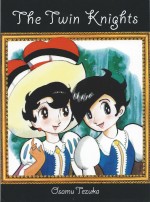
The Twin Knights


By Osamu Tezuka, translated by Maya Rosewood (Vertical)
ISBN: 978-1-939130-01-3

Osamu Tezuka first rescued and then utterly revolutionised the Japanese comics industry during the 1950s and 1960s. Being a devoted fan of the films of Walt Disney he also performed similar sterling service in the country’s fledgling animation industry.

Many of his earliest works were aimed at children but right from the start his expansive fairytale stylisations – so perfectly seen in this splendid romp – harboured more mature themes and held hidden treasures for older readers…

Ribon no Kishi or “Knight of the Ribbon” was a breakthrough series which Tezuka returned to repeatedly during his life and one that is being continued even in the 21st century by his disciples. The simplistic but engaging fable of a Princess forced by political intrigue and cruel fate to pose as a man – and a warrior knight at that – has been adapted into movie and TV anime seen all over the world (generally known as some variation of “Choppy and the Princess” in places as far-flung as Canada, France Australia and Brazil) and in 2006 a stage musical was launched.

The serial was first published in Kodansha’s Shoujo Korabu (Shōjo Club), running from January 1954 to January 1956, with the generational sequel collected here appearing in Nakayoshi magazine as Futago no Kishi between January 1958 and June 1959.

The series is a perennial favourite and classic of the medium and this complete-in-one-volume yarn continues the saga begun in the two-volume softcover English-language Princess Knight.

Influenced heavily by Disney’s fairytale feature-films, each chapter herein is designated a “Scene” and opens with an homage to movie musical set-pieces in a ‘Prologue’ which reveals that the beautiful Queen Sapphire of Silverland has just given birth to a boy and a girl…

Scene 2 reveals ‘The Twin’s Secret’ as ambitious nobles of the court begin lobbying for one or other of the newborns to be named as heir (apparently, the subject of male primogeniture doesn’t appear to be a hindrance or issue in Silverland), with such vigour that proud father Franz is spending all his time breaking up duels…

Depressed and flustered the King gets a helping hand from the angel Tink, and Prince Daisy rather than Princess Violetta is officially nominated Heir Apparent.

However ambitious Duchess Dahlia and her ineffectual husband are unprepared to accept the decision and make treasonous plans. Soon, baby boy Daisy has been abducted and left to die in a wooded wilderness ruled over by the ferocious monster Slobb…

The people are divided and, in an effort to curtail civil war, Sapphire and Franz devise an insane plan. The twins were identical and now Violetta will play the part of both siblings, for as long as it takes to find her lost brother and preserve the kingdom. The Queen is particularly distraught that, for sake of duty, her daughter must endure the selfsame hardships that forced a young Sapphire to become the turbulent Knight of the Ribbon all those years ago…

‘In the Forest’ meanwhile, the Prince has been adopted by a fawn whose love and devotion is so great that the Goddess of the Forest grants her the power to become human from dusk till dawn. Papi will raise the boy as her little brother “Ronnie”, but the Goddess warns that her shape-shifting gift comes with some serious provisos and inevitable tragic consequences…

A decade passes and Daisy, left alone every day, becomes a headstrong, independent lad and mighty hunter. His greatest dream is to shoot a certain deer that always avoids him with almost human intelligence…

At the palace ‘Violetta’s Sadness’ grows as she is one day demure damsel and the next a boy harshly schooled in all the manly arts of war. Eventually she runs off and meets the palace gardener’s boy Tom Tam, but her brief, carefree respite kindles an incredible suspicion in the ever-scheming, always watching Dahlia…

More time passes and on the separated children’s fifteenth birthday a crisis is reached when only Violetta attends the huge party. Thankfully, the arrival of enigmatic envoys ‘Prince White and Prince Black’ distracts the ever-watching plotters and allows the distraught Princess to change into her masculine mode. The visiting brothers are keen on hunting in the Forest of Slobb, however, and when “Daisy” accompanies them Dahlia confirms her suspicions using the keen nose of a savage hunting hound…

Prince Black is as dark as his name and belligerently picks a fight with “Daisy”. Although beaten in the ensuing duel he cheats and is admonished by his noble brother, but in his heart hatred blooms and festers…

Prince White, meanwhile, finds himself impossibly drawn to the beautiful boy Daisy and is delighted to hear that the plucky lad has a sister who is his exact match and equal…

Dahlia, seeing an opportunity, distracts Prince Black from taking out his ire on the local fauna and offers him an intriguing proposition…

When White is wounded by Slobb, the hunting party returns to the palace – with Papi in her deer form one of the captured prizes – and as Daisy changes into her girl clothes to meet and minister to the visiting Prince’s injuries the scurrilous Black observes the transformation and discovers the nation’s greatest secret…

As the sun sets the trussed but living fawn becomes human again and ‘What Papi Saw’ describes how her eavesdropping on Black and Dahlia changes the fate of Silverland forever…

Horrifically, however, after escaping the palace and earnest pursuit from Prince Black, she is shot in her own home by the boy she has raised. Reverting to human and on her deathbed she tells heartbroken Ronnie everything she has learned and urges him to fulfil his true destiny …

That begins with a final fateful battle against the terrifying Slobb after which the keen hunter forever forswears his boyhood pursuits and finds all the animals in the forest pay him homage. Meanwhile in the palace Dahlia makes her move, forcing the compromised Royal Family into temporary custody in ‘The North Tower’.

Even her husband is surprised at her plan to ensure that they never leave it…

Long ago the King of Mice pledged his allegiance to Sapphire, and his successor now informs Violetta of her lost brother’s location and even aids her escape – clad in the legendary guise of Knight Ribbon – but she is too late.

Her brother has vanished. As the disguised Violetta slumps in dejection she is accosted by a saucy wench most taken with the beautiful young man before her. The wild, teasing creature offers aid which is gratefully accepted…

Emerald is in fact a ‘Gypsy Queen’ and, promising to aid the Knight, takes “him” to their wizened fortune teller Nara Yama, who reveals the missing brother is alive. She also divines the masquerader’s true identity and gender!

Just then the usurper Duke’s men raid the camp but the gypsies fight them off and flee…

At the palace Dahlia’s husband as acting regent gets a double surprise. The first is the corpse of the once-unstoppable Slobb and the other is the youth who dragged it in.

Common woodsman Ronnie is the spitting image of the missing Violetta in her male aspect and might well act as a pliable ‘Substitute Daisy’ when the Royal Family finally succumb to the slow-acting poison secretly being administered to them…

Things take a magical turn when Emerald and Knight Ribbon stumble upon the hidden ‘Palace of Roses’ and learn the true nature of Princes Black and White. Both are mystical creatures but whilst the good Prince wishes he could lose his powers and wed Violetta, Black is determined to cause her extreme suffering and death…

With the faithful, still-oblivious Gypsy Queen’s aid the Ribbon Knight survives Black’s garden of horrors and the pair escape ‘Inundation’ and eldritch ‘Storm’ as they fight their way out of Rose Citadel, but are soon trapped in a ghastly ‘Mirage Forest’ controlled by the witch Begonia until a magical sprite adopts them. However ‘Devoted Tiln’ must pay an awful price for her valiant intercession which only brings the fugitives to the relative safety of a small village.

Prince Black leads the Regent’s soldiers to them there and Violetta is exposed. Shocked and angry, Emerald nevertheless helps her escape to ‘Wolf Mountain’ where another tragic sacrifice leads the rebels into one final battle against the plotters, restores order for the just and inflicts well-deserved punishment upon the wicked in the action-packed, wildly romantic – if inappropriately entitled – ‘Epilogue’…

The Twin Knights is a spectacular, riotous, rollicking adventuresome fairytale about desire, destiny and determination which cemented the existence of the Shoujo (“Little Female” or young girl’s manga) genre in Japan and can still deliver a powerful punch and wide eyed wonder on a variety of intellectual levels. One of the most beguiling kid’s comics Tezuka ever crafted, it’s a work that all fans and – especially parents – should know, but be warned, although tastefully executed, this tales doesn’t sugar coat the drama and more than one favourite character won’t be alive at the end. If you have sensitive kids read it first and, if you too have a low woe quotient, pack handkerchiefs…

This black and white book is printed in the traditional ‘read-from-back-to-front’ manga format.
© 2013 by Tezuka Productions. Translation © 2013 by Vertical, Inc. All rights reserved.

Archie 1000 Page Comics Digest


By many and various (Archie Comics)
ISBN: 978-1-936975-50-1

There’s an American TV show which embraces everything about the culture. It’s called Man vs. Food and in it a roguishly charming gentleman travels the nation, sampling the fare of many wonderful and beguiling independent eateries. The climax to each episode occurs as the narrator pits himself against a speciality dish: one either vast in volume, toxically spicy or in some other way simply too much good stuff for any individual to handle safely in one sitting…

Following the debut of Superman, MLJ were one of many publishers that jumped on the “mystery-man” bandwagon with their own small but inspirational pantheon of gaudily clad crusaders. In November 1939 they launched Blue Ribbon Comics, promptly adding Top-Notch and Pep Comics to their bill of fare. The content was the standard blend of costumed heroes, two-fisted adventure strips, prose pieces and gag panels.

After a few years Maurice Coyne, Louis Silberkleit and John Goldwater (hence MLJ) spotted a gap in the blossoming but crowded market. In December 1941 the costumed heroes and two-fisted adventure strips were nudged aside by a far less imposing hero, an “average teen” who would have ordinary adventures like the readers, but with the laughs, good times, romance and slapstick emphasised.

Pep Comics #22 introduced a gap-toothed, freckle-faced red-headed boy showing off to the pretty blonde next door. Inspired by the popular Andy Hardy matinee movies starring Mickey Rooney, Goldwater developed the concept of a youthful everyman protagonist, tasking writer Vic Bloom and artist Bob Montana with the job of making it work.

The six-page tale entitled ‘Archie’ introduced hapless boob Archie Andrews and pretty girl-next-door Betty Cooper. Archie’s unconventional best friend and confidante Jughead Jones also debuted in that first story as did the idyllic small-town utopia of Riverdale.

The feature was an instant hit and by the winter of 1942 had won its own title. Archie Comics #1 was the company’s first non-anthology magazine and with it began the gradual transformation of the entire company. With the introduction of stinking rich, raven-haired Veronica Lodge, all the pieces were in play for the comicbook industry’s second Genuine Phenomenon (the aforementioned Man of Tomorrow being the first).

By 1946 the kids had totally taken over, so the company renamed itself Archie Comics, retiring most of its heroic characters years before the end of the Golden Age and becoming, to all intents and purposes, a publisher of family-friendly comedies.

Its success, like Superman’s, changed the content of every other publisher’s titles and led to a multi-media brand encompassing TV, movies, merchandise, a chain of restaurants and, in the swinging sixties, a pop music sensation when “Sugar, Sugar” – a song from their animated TV show – became a global smash. The wholesome garage band “The Archies” has been a fixture of the comics ever since.

Archie is good-hearted, impetuous and lacking common sense, Betty his sensible, pretty girl next door – with all that entails – who loves the ginger goof in spite of everything, and Veronica is rich, exotic and glamorous: only settling for our boy if there’s nobody better around. She might actually love him too, though. Archie, of course, is utterly unable to choose who or what he wants…

The unconventional, food-crazy Jughead is Mercutio to Archie’s Romeo, providing rationality and a reader’s voice, as well as being a powerful catalyst of events in his own right. That charming triangle (and annexe) has been the rock-solid foundation for seven decades of funnybook magic. Moreover the concept is eternally self-renewing…

This perennial eternal triangle has generated thousands of charming, raucous, gentle, frenetic, chiding and even heart-rending humorous dramas ranging from surreal wit to frantic slapstick, with the kids and a constantly expanding cast of friends (antagonist Reggie Mantle, boy genius Dilton Doily and school jock Moose amongst many others) growing into an American institution and part of the American Cultural landscape.

Adapting seamlessly to every trend and fad of ever-changing youth culture, the army of writers and artists who’ve crafted the stories over the decades have made the “everyteen” characters of mythical Riverdale a benchmark for youth and a visual barometer of growing up.

Archie has thrived by constantly reinventing those core archetypes; seamlessly adapting to the changing world outside its bright, flimsy pages, shamelessly co-opting youth, pop culture and fashion trends into its infallible mix of slapstick and young romance.

Each and every social revolution has been painlessly assimilated into the mix (over the years the company has managed to confront a number of social issues affecting youngsters in a manner both even-handed and tasteful) and the constant addition of new characters such as African-American Chuck – who wants to be a cartoonist – his girlfriend Nancy, fashion-diva Ginger, Hispanic couple Frankie and Maria and a host of others such as spoiled home-wrecker-in-waiting Cheryl Blossom all contributed to a broad and refreshingly broad-minded scenario. In 2010 Archie jumped the final hurdle with Kevin Keller, an openly gay young man and a clear-headed advocate capably tackling and dismantling the last major taboo in mainstream kids comics.

And here’s where I’m going to throw in the towel…

This current sublime confection of Man vs. Comics is just too much for even me to consider listing here – and I’m one of the most tedious, picky and longwinded comics-bores still regularly dog-earing pages…

So brace yourself for an abbreviated review: there are more than 100 stories in this mammoth, meaty, mirth-filled monolith and by mentioning some it will seem as if some are better than others. That’s not the case. They’re uniformly fabulous but there are only 24 hours in a day and my hands are getting tired…

Amongst the torrent of long tales, short stories, half and single page gags, fashion pages, puzzles and so much more comedies, fantasies, love stories and even crime capers: such outrageous episodes as ‘The Nature of the Beast’, ‘Bee Well?’, ‘Shirting the Issue’, ‘Testy Taste’, ‘Babyproofed!!’, ‘She’s Too Bossy’, ‘It Takes Two to Tangle!’ and ‘How to Meet Boys!’

Moreover you’d be amazed at the antics of ‘Blade Bummer!’, ‘Flick Pick!’, the dubious ‘Genius of Love’ or ‘The Big Chance’ and suffer from ‘Virtual Frivolity’, ‘The Dance Flaw!’, ‘Spring Fever’ or ‘Telling it Like It Is!’.

Especially cool are such sharp parodies as ‘The Puff Piece’ (a la the Powerpuff Girls) and numerous keep fit fad lampoons like ‘High Impact Shopping!’

With contributions from Bob Bolling, George Gladir, Bill Vigoda, Bill Golliher, Stan Goldberg, Frank Doyle, Jon D’Agostino, Fernando Ruiz, Bob Smith, Al Milgrom, Henry Scarpelli, Al Hartley, Kurt Schaffenberger, Barbara Slate, Mike Esposito, T & Pat Kennedy, Paul Kupperberg, Holly G!, Chic Stone, Dan Parent, Jeff Shultz, Rudy Lapick, Kathleen Webb, Jim Amash, Mike Pellowski, Rich Koslowski, Craig Boldman, Rex Lindsey, Steven Butler, Doug Crane, Dick Malmgren, a dynasty of DeCarlos and many more, this is a true gem of perfectly crafted all-ages fun.

Featuring vintage stories (including much spectacular and formative material from Archie’s Girls Betty and Veronica #2, 3, 4, 6 and 13 from 1952-3) and up-to-the-minute modern mini-masterpieces, this is an ideal book for kids or grandparents on the beach or in the car this summer – and once they’re playing in the surf or snoozing in the sun you can snaffle it for yourself…
© 2013 Archie Comics Publications, Inc. All rights reserved.

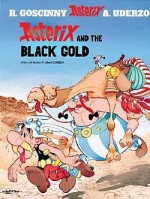
Asterix and the Great Divide, Asterix and the Black Gold, Asterix and Son


By Uderzo, translated by Anthea Bell & Derek Hockridge (Orion Books and others)
ISBNs: 978-0-75284-773-3, 978-0-75284-774-0 and 978-0-75284-775-7

Alberto Aleandro Uderzo was born on April 25th 1927, in Fismes, on the Marne, son of Italian immigrants. As a child reading Mickey Mouse in Le Pétit Parisien he dreamed of becoming an aircraft mechanic and showed artistic flair from an early age. Albert became a French citizen when he was seven and found employment at 13, apprenticed to the Paris Publishing Society, where he learned design, typography, calligraphy and photo retouching.

When WWII broke out he spent time with farming relatives in Brittany and joined his father’s furniture-making business. Brittany beguiled and fascinated Uderzo: when a location for Asterix’s idyllic village was being mooted the region was the only choice.

In the post-war rebuilding of France Uderzo returned to Paris and became a successful artist in the country’s burgeoning comics industry. His first published work, a pastiche of Aesop’s Fables, appeared in Junior, and in 1945 he was introduced to industry giant Edmond-François Calvo (whose own masterpiece The Beast is Dead is long overdue for a new edition…).

The tireless Uderzo’s subsequent creations included the indomitable eccentric Clopinard, Belloy, l’Invulnérable, Prince Rollin and Arys Buck. He illustrated Em-Ré-Vil’s novel Flamberge, worked in animation, as a journalist and illustrator for France Dimanche, and created the vertical comicstrip ‘Le Crime ne Paie pas’ for France-Soir. In 1950 he illustrated a few episodes of the franchised European version of Fawcett’s Captain Marvel Jr. for Bravo!

An inveterate traveller, the prodigy met Rene Goscinny in 1951. Soon fast friends, they decided to work together at the new Paris office of Belgian Publishing giant World Press. Their first collaboration was in November of that year; a feature piece on savoir vivre (how to live right or gracious living) for women’s weekly Bonnes Soirée, after which an avalanche of splendid strips and serials poured forth.

Jehan Pistolet and Luc Junior were created for La Libre Junior and they produced a western starring a Red Indian who eventually evolved into the delightfully infamous Oumpah-Pah. In 1955 with the formation of Édifrance/Édipresse, Uderzo drew Bill Blanchart for La Libre Junior, replaced Christian Godard on Benjamin et Benjamine and in 1957 added Charlier’s Clairette to his portfolio.

The following year later, he made his debut in Tintin, as Oumpah-Pah finally found a home and a rapturous audience. Uderzo also drew Poussin et Poussif, La Famille Moutonet and La Famille Cokalane.

When Pilote launched in 1959 Uderzo was a major creative force for the new magazine collaborating with Charlier on Tanguy et Laverdure and launching with Goscinny a little something called Asterix…

Although Asterix was a massive hit from the start, Uderzo continued working on Les Aventures de Tanguy et Laverdure, but soon after the first adventure was collected as Astérix le gaulois in 1961 it became clear that the series would demand most of his time – especially as the incredible Goscinny never seemed to require rest or run out of ideas.

By 1967 the strip occupied all Uderzo’s time and attention, so in 1974 the partners formed Idéfix Studios to fully exploit their inimitable creation. When Goscinny passed away three years later, Uderzo had to be convinced to continue the adventures as writer and artist, producing a further ten volumes until 2010 when he retired.

After nearly 15 years as a weekly comic strip subsequently collected into compilations, in 1974 the 21st tale (Asterix and Caesar’s Gift) was the first to be published as a complete original album before being serialised. Thereafter each new release was a long anticipated, eagerly awaited treat for the strip’s millions of fans…

According to UNESCO’s Index Translationum, Uderzo is the tenth most-often translated French-language author in the world and the third most-translated French language comics author – right after his old mate René Goscinny and the grand master Hergé.

More than 325 million copies of 34 Asterix books have sold worldwide, making his joint creators France’s best-selling international authors. There is even the tantalising yet frightening promise of a new volume sometime this October by replacement creative team Jean-Yves Ferri and Didier Conrad…

One of the most popular comics features on Earth, the collected chronicles of Asterix the Gaul have been translated into more than 100 languages since his debut, with twelve animated and live-action movies, TV series, assorted games, toys, merchandise and even a theme park outside Paris (Parc Astérix, naturellement)…

So what’s it all about?

Like all the best stories the premise works on more than one level: read it as an action-packed comedic romp of sneaky and bullying baddies coming a cropper if you want or as a punfully sly and witty satire for older, wiser heads. We Brits are further blessed by the brilliantly light touch of master translators Anthea Bell & Derek Hockridge who played no small part in making the indomitable little Gaul so very palatable to English tongues.

More than half of the canon occurs on Uderzo’s beloved Brittany coast, where, circa 50 B.C., a small village of cantankerous, proudly defiant warriors and their families resisted every effort of the mighty Roman Empire to complete the conquest of Gaul. The land had been divided by the conquerors into the provinces of Celtica, Aquitania and Amorica, but the very tip of the latter just refused to be pacified…

The remaining epics occur in various locales throughout the Ancient World, where the Garrulous Gallic Gentlemen visited every fantastic land and corner of the civilisations that proliferated in that fabled era…

When the heroes were playing at home, the Romans, unable to defeat the last bastion of Gallic insouciance, futilely resorted to a policy of absolute containment. Thus the little seaside hamlet was permanently hemmed in by the heavily fortified garrisons of Totorum, Aquarium, Laudanum and Compendium.

The Gauls couldn’t care less: daily defying the world’s greatest military machine simply by going about their everyday affairs, protected by the magic potion of resident druid Getafix and the shrewd wits of the diminutive dynamo and his simplistic, supercharged best friend Obelix…

Firmly established as a global brand and premium French export by the mid-1960s, Asterix the Gaul continued to grow in quality as Goscinny & Uderzo toiled ever onward, crafting further fabulous sagas; building a stunning legacy of graphic excellence and storytelling gold. Moreover, following the civil unrest and nigh-revolution in French society following the Paris riots of 1968, the tales took on an increasingly acerbic tang of trenchant satire and pithy socio-political commentary…

By the time this edition was released Goscinny had been gone for three years and Uderzo soldiered on alone…

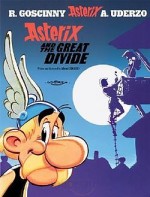
Asterix and the Great Divide was the 25th volume, released in 1980 as Le Grand Fossé, which was in many ways something of departure and a stylistic compromise.

In another Gaulish village internecine strife is brewing. Political rivals Cleverdix and Majestix have split the sleepy hamlet down the middle with an election for chief which ended in a dead tie. They then made the figurative literal by having a huge trench dug through the centre of town, cutting the place in two, with the population resolved into uncompromising Leftists and stubborn Rightists…

It’s a tragedy in many ways, with friends and families split into feuding camps, but the most heartrending separation concerns dashing Histrionix, son of Leftist Cleverdix and his one true love Melodrama, daughter of Majestix. Their warring sires refuse to concede or compromise and that simmering Cold War has frustrated their children’s happiness forever…

The lover’s pleas cannot move either deadlocked party leader and the intolerable situation is further exacerbated by the insidious, coldly calculating advisor to Majestix who secretly eggs on the old warrior for his own purposes.

Wily toady Codfix‘s latest idea is to get their Roman overlords to intervene, installing Majestix as sole ruler by force. In return Codfix would be given Melodrama in marriage. Of course that would make him next in line for the ruler’s position. Codfix is both patient and ambitiously far-sighted…

When Melodrama learns of the plan she immediately informs Histrionix and the prince tells Cleverdix – who knows full well he cannot resist the overwhelming might of the Romans. The former soldier then remembers an old war-buddy who still successfully resists the conquerors. His name is Vitalstatistix…

As Histrionix heroically dashes to the village of Indomitable Gauls – he does everything heroically – Codfix has gone to the local garrison with his request. Centurion Umbrageous Cumulonimbus however, has his own problems: discipline is lax and the soldiers are grumbling because of the menial chores they are forced to perform. Codfix has the perfect solution. If the Romans put Rightist Majestix in charge they could take the pacified Leftists as slaves…

In the meantime Histronix has returned with Vitalstatistix’ best men. Asterix, Obelix and Getafix the Druid are discussing the matter with Cleverdix when Roman soldiers arrive. Codfix however has overstepped himself and underestimated the nobility of Majestix…

The doughty Rightist refuses to let any Gaul be enslaved – even political opponents – so the uncaring Romans grab him and his followers instead. Impressed with his rival’s integrity, Cleverdix accepts Asterix’ offer of assistance and our heroes infiltrate the garrison as volunteer slaves using an elixir that revitalises the body but causes a touch of amnesia…

Having fun by exploiting these new Romans’ ignorance of their true identities, the heroes feed the imprisoned Gauls soup fortified with the Druid’s strength potion before Asterix and Obelix lead a mass breakout which soon finds the prisoners back in their divided hamlet but no closer to an amicable resolution.

And both sides know that the Romans will soon come, eager for revenge…

Codfix has wisely stayed with the garrison and found the last of Getafix’ elixir, left behind during the liberation. When he sneaks back into the village he also discovers a fresh batch of power-potion whipped up in advance of the impending attack and steals it.

The next day the Gauls wake to find the invaders marching upon them, fortified by the elixir which has erased the punishing memory of their recent defeat, and super-charged by the power potion.

Left with nothing but Obelix and Gaulish courage, the villagers unite to fight and fall with honour but are astonished when a bizarre series of transformations wrack the potion-powered Romans. It takes a long time to become a Druid and apparently the first thing you learn is to never mix potions…

Codfix has used the distraction to kidnap Melodrama. Demanding ransom and safe passage he has not reckoned on Histrionix’ determination, Asterix’ ingenuity or Obelix’ strength and – after a climactic confrontation involving our luckless Pirates – gets what’s coming to him…

With the Romans routed and Codfix suitably punished, Cleverdix and Majestix settle their differences with a traditional Gaulish duel after which someone else becomes chief of the reunified village. The former divide is transformed into an appropriate symbol of their unity and life goes on happily…

Asterix and the Great Divide was devised by Uderzo as a critique on current affairs and metaphorical attack on the Berlin Wall which had, since 1961, split the city physically, Europe symbolically and the world ideologically. His earnest tale was more dramatic and action-oriented than previous Asterix fare, with the regulars frequently reduced to subordinate roles, but for all that there are still cunning laughs and wry buffoonery in welcome amounts.


Asterix and the Black Gold (L’Odyssée d’Astérix) debuted in 1981 and again saw Asterix and Obelix undertake a long voyage into the unknown, rife with bold adventure and underpinned by topical lampooning and timeless swingeing satire.

The 26th saga begins with a brace of wild boar demonstrating that they were canny opponents for the voracious Obelix. Whenever the gigantic Gaul spotted these particular pigs in his daily hunts they would evade him by leading him to the nearest Roman patrol. The only thing Obelix loved more than eating pork was bashing Romans…

Back in RomeJulius Caesar is livid. He’s just received news that the insufferable, indomitable Gauls have been training wild boars to lead Roman patrols into Gaulish ambushes…

The raging ruler’s continued attempts to end the aggravating resistance always fail and in a fit of fury he charges his chief of the Roman Secret Service M.I.VI (geddit?) with ending his galling Gallic grief – or else…

M. Devius Surreptitius has just the man for the job. Dubbelosix is of Gaulish-Roman extraction and has, by persistence and deviousness, qualified as a Druid. He is charming, wily, debonair and comes with a host of cunning hidden gadgets – and he’s also the spitting image of Sean Connery…

Dispatched on a mission to stop the French resisting, Dubbelosix is secretly working with his boss M to supplant Caesar, but also harbours ambitions to rule Rome alone …but first he has to destroy the infernal Gauls. His chance comes almost as soon as he arrives in that little village…

Getafix is in a near-panic. The Druid has been eagerly awaiting the arrival of Phoenician merchant Ekonomikrisis who is bringing a vital ingredient for the magic potion which keeps the Romans at bay. When the ship at last arrives and the peddler apologises for forgetting the fabled rock oil, the highly strung Getafix has a fit and passes out.

Luckily a young Druid dubbed Dubbelosix is passing and, after a minor skirmish with a Roman patrol, accompanies Asterix and Obelix back to their comatose friend…

The spy might be a double agent but he knows his stuff and soon cures the ailing Getafix, who explains that the generally useless black ooze from the Middle East is vital to the potion: without a fresh supply they are all doomed.

When Asterix and Obelix – and faithful hound Dogmatix, of course – volunteer to obtain some of the crucial rock oil, Dubbelosix insists on going with them. But as they commandeer the Phoenician’s ship for the emergency mission, Getafix clandestinely warns Asterix to watch the too-good-to-be-true young Druid…

Expediting matters by selling off Ekonomikrisis’ wares at prices nobody – even Pirates – dares refuse, our heroes make their way to Mesopotamia, unaware that Dubbelosix, using his unique messaging service, has briefed Caesar and M to stop the ship at all costs.

After a succession of military vessels are sent to the bottom of the Mediterranean by the joyfully belligerent Gauls, the Ruler of the World is forced to change tactics and blockade all ports to prevent Asterix and Obelix from disembarking.

With time running out, Ekonomikrisis eventually sneaks the Gauls and Dubbelosix ashore in distant Judea and the trio travel overland to Jerusalem where they are befriended by the locals who have no love for the Romans. The oppressors are always just one step behind the voyagers, though. It is as if someone is telling them every time they alter their plans…

After a memorable night in a village called Bethlehem, the Hebrews’ attempt to smuggle the Gauls into Jerusalem is sabotaged by Dubbelosix. However the Middle Eastern garrisons have never seen fighters like Asterix and Obelix and the doughty heroes escape, leaving the scurrilous double agent behind.

With time running out at home and no word of the fate of their friends the Gauls are hidden by friendly merchants, and learn that the Romans have seized and burned all the rock oil in the city – and probably the entire region. Their only chance to secure some of the previously worthless black goo is to get it from the source – in Babylon, where it just seeps out of the ground…

Assisted by brave, helpful guide Saul ben Ephishul (a loving visual tribute to Uderzo’s deeply-missed partner René Goscinny, who was Jewish) Asterix and Obelix undertake another perilous journey into the deep desert, frolicking in the Dead Sea and encountering a procession on fanatical tribes all warring on each other for long-forgotten reasons in a savage lampoon of modern Middle East strife…

Eventually though, the Gauls are completely lost; waterless and without hope under the scorching sun. However when little Dogmatix starts digging in the sand, the resultant oil gusher provides more than enough to buoy up their hopes and they battle on to rendezvous with Ekonomikrisis for a frantic return to Gaul.

Unfortunately, Dubbelosix has tracked them down again and has one last trick to play…

This return to the style and format of classic collaborations features hilarious comedy set-pieces, thrilling drama and a bitingly gentle assault on the madness of keeping ancient feuds alive, the intransigence of religious tensions and the madness of recurring oil crises; lampooning ideologies and dogmas whilst showing how great it is when people can just get along.

Fast, furious and funny-with-a-moral, this is one of the artist/author’s very best efforts and even manages a double-shock ending…


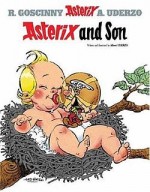
Asterix and Son was released in 1983, the 27th saga and another unconventional step off the well-worn path as it touched on a rather touchy subject…

One particularly fine morning in the Village of Indomitable Gauls Asterix and Obelix awake to discover someone has left a baby in a basket on their doorstep. Nonplussed and bewildered they try to care for the infant – much to the horror of the local cows who would be delighted to provide sustenance if milked in a normal manner – but human tongues in the village are beginning to wag…

Things only get worse after the feisty tyke develops a taste for magic potion and somehow keeps finding new supplies of it…

Determined to clear his name and find the boy’s real parents, Asterix begins his investigations at the four Roman Garrisons, even as Crismus Cactus, Prefect of Gaul begins a suspiciously sudden emergency census of the local villages…

Hyper-charged on potion, the baby keeps getting out and following Asterix and Obelix, who discover that the Romans seem to be looking for one child in particular…

After a painful encounter with our heroes, Crismus Cactus retires to his villa where a VIP from Rome is waiting. Marcus Junius Brutus is Caesar’s adopted son and is most insistent that the mystery baby is found and turned over to him – even if he has to raze all Gaul to achieve his aim…

The infant in question is still causing trouble for the villagers and Brutus marshals an army near the isolated hamlet, successfully confirming the child’s location with a rather inept spy. The kid’s treatment of the intruder prompts Asterix to seek out a nanny, but as the village women are still suspicious and condemnatory, he hires a rather unsavoury stranger named Aspidistra for the task…

This causes even more vicious tongue-wagging amongst the Gaulish women, who assume the worst of both her and Asterix. Inexplicably nobody notices the ferocious childminder’s astonishing resemblance to the Prefect of Gaul…

Unfortunately once Crismus has successfully infiltrated the village he can’t get out again, and spends a punishing time amusing the infant horror until his nerve breaks. Out of patience, Brutus then attacks with the full might of Rome, torching the village and bombarding it with catapults.

As the men tank up on potion and counterattack, the village women head for the beach, but Brutus, willing to sacrifice his entire army, is waiting and grabs the baby…

As soon as the Roman Legions are crushed Asterix and Obelix return and discover what has occurred. Filled with rage they set off in deadly pursuit and save the child just in time for his real mother and father to arrive. Two of the most powerful people in the world, they are extremely angry with somebody…

Laced with a dark and savage core, this rollicking rollercoaster ride combines tragedy with outrageous slapstick, transforming historical facts into a compelling comedy-drama that is both delightful and genuinely scary in places…

Stuffed with sly pokes and good-natured joshing, featuring famous caricatures to tease older readers whilst the raucous, bombastic, bellicose hi-jinks and fast-paced action astounds and bemuses the younger set, these tales all celebrate the spectacular illustrative ability of Uderzo and prove that the potion-powered paragon of Gallic Pride was in safe and steady hands.

If you still haven’t experienced this sublime slice of French polish and graphic élan there’s no better time than now…
© 1980-1983 Goscinny/Uderzo. Revised English translation © 2002 Hachette. All rights reserved.

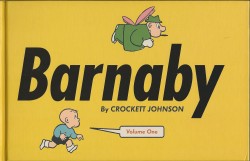
Barnaby volume 1: 1942-1943


By Crockett Johnson (Fantagraphics Books)
ISBN: 978-1-60699-522-8

This is one of those books that’s worthy of two reviews, so if you’re in a hurry…

Buy Barnaby now – it’s one of the most wonderful strips of all time and this superb hardcover compilation has lots of fascinating extras. If you harbour any yearnings for the lost joys of childish glee you would be crazy to miss this book…

However, if you’re still here and need a little more time to decide…

As long ago as August 2007 I whined that one of the greatest comic strips of all time was criminally out of print and in desperate need of a major deluxe re-issue. So, as if by the magic of a fine Panatella… Cushlamocree! Here it is…

Today’s newspapers have precious few continuity drama or adventure strips. Indeed, if a paper has any strips – as opposed to single panel editorial cartoons – at all, chances are they will be of the episodic variety typified by Jim Davis’ Garfield or Scott Adams’ Dilbert.

You might describe these as single-idea pieces with a set-up, delivery and punch-line, all rendered in a sparse, pared-down-to-basics drawing style. In that they’re nothing new.

Narrative impetus comes from the unchanging characters themselves, and a building of gag-upon-gag in extended themes. The advantage to the newspaper is obvious. If you like a strip it encourages you to buy the paper. If you miss a day or two, you can return fresh at any time having, in real terms, missed nothing.

Such was not always the case, especially in America. Once upon a time the Daily “funny” – comedic or otherwise – was a crucial circulation builder and preserver, with lush, lavish and magnificently rendered fantasies or romances rubbing shoulders with thrilling, moody masterpieces of crime, war, sci-fi and everyday melodrama. Even the legion of humour strips actively strived to maintain an avid, devoted following.

And eventually there was Barnaby which in so many ways bridged the gap between then and now.

On April 20th 1942, with America at war for the second in 25 years, the liberal New York tabloid PM began running a new, sweet little kid’s strip which was also the most whimsically addicting, socially seditious and ferociously smart satire since the creation of Al Capp’s Li’l Abner – another complete innocent left to the mercy of scurrilous worldly influences…

The outlandish 4-panel Daily, by Crockett Johnson, was the product of a man who didn’t particularly care for comics, but who – according to celebrated strip historian Ron Goulart – just wanted steady employment…

David Johnson Leisk (October 20th 1906-July 11th 1975) was an ardent socialist, passionate anti-fascist, gifted artisan and brilliant designer who had spent much of his working life as a commercial artist, Editor and Art Director.

Born in New York City and raised in the outer borough of Queens when it was still semi-rural – very near the slag heaps which would eventually house two New York World’s Fairs in Flushing Meadows – Leisk studied art at Cooper Union (for the Advancement of Science and Art) and New York University before leaving early to support his widowed mother. This entailed embarking upon a hand-to-mouth career drawing and constructing department-store advertising.

He supplemented his income with occasional cartoons to magazines such as Collier’s before becoming an Art Editor at magazine publisher McGraw-Hill. He also began producing a moderately successful, “silent” strip called The Little Man with the Eyes.

Johnson had divorced his first wife in 1939 and moved out of the city to Connecticut, sharing an ocean-side home with student (and eventual bride) Ruth Krauss, always looking to create that steady something when, almost by accident, he devised a masterpiece of comics narrative…

However, if his friend Charles Martin hadn’t seen a prototype Barnaby half-page lying around the house, the series might never have existed. Happily Martin hijacked the sample and parlayed it into a regular feature in prestigious highbrow leftist tabloid PM simply by showing the scrap to the paper’s Comics Editor Hannah Baker.

Among her other finds was a strip by a cartoonist dubbed Dr. Seuss which would run contiguously in the same publication. Despite Johnson’s initial reticence, within a year Barnaby had become the new darling of the intelligentsia…

Soon there were hard-back book collections, talk of a Radio show (in 1946 it was adapted as a stage play), rave reviews in Time, Newsweek and Life. The small but rabid fan-base ranged from politicians and the smart set such as President and First Lady Roosevelt, Vice-President Henry Wallace, Rockwell Kent, William Rose Benet and Lois Untermeyer to cool celebrities such as Duke Ellington, Dorothy Parker, W. C. Fields and even legendary New York Mayor Fiorello La Guardia.

Of course the last two might only have checking the paper because the undisputed, unsavoury star of the show was a scurrilous if fanciful amalgam of them…

Not since George Herriman’s Krazy Kat had a piece of popular culture so infiltrated the halls of the mighty, whilst largely passing way over the heads of the masses and without troubling the Funnies sections of big circulation papers.

Over its 10-year run from April 1942 to February 1952, Barnaby was only syndicated to 64 papers nationally, with a combined circulation of just over five and a half million, but it kept Crockett (a childhood nickname) and Ruth in relative comfort whilst America’s Great and Good constantly agitated on the kid’s behalf.

This splendid collection opens with a hearty appreciation from Chris Ware in the Foreword before cartoonist and historian Jeet Heer provides a critical appraisal in ‘Barnaby and American Clear Line Cartooning’ after which the captivating yarn-spinning takes us from April 20th 1942 to December 31st 1943.

There’s even more elucidatory content after that, though, as education scholar and Professor of English Philip Nel provides a fact-filled, picture-packed ‘Afterword: Crockett Johnson and the Invention of Barnaby’, Dorothy Parker’s original ‘Mash Note to Crockett Johnson’ is reprinted in full, and Nel also supplies strip-by-strip commentary and background in ‘The Elves, Leprechauns, Gnomes, and Little Men’s Chowder & Marching Society: a Handy Pocket Guide’…

The real meat begins with ‘Mr. O’Malley Arrives’ which ran from 20th-29th April 1942, setting the ball rolling as a little boy wished one night for a Fairy Godmother and something strange and disreputable fell in through his window…

Barnaby Baxter is a smart, ingenuous and scrupulously honest pre-schooler (four years old to you) and his ardent wish was to be an Air Raid Warden like his dad. Instead he was “adopted” by a short, portly, pompous, mildly unsavoury and wholly discreditable windbag with pink wings.

Jackeen J. O’Malley, card carrying-member of the Elves, Gnomes, Leprechauns and Little Men’s Chowder and Marching Society – although he hadn’t paid his dues in years – installed himself as the lad’s Fairy Godfather. A lazier, more self-aggrandizing, mooching old glutton and probable soak (he certainly frequented taverns but only ever raided the Baxter’s icebox, pantry and humidor, never their drinks cabinet…) could not be found anywhere.

Due more to intransigence than evidence – there’s always plenty of physical proof whenever O’Malley has been around – Barnaby’s father and mother adamantly refused to believe in the ungainly, insalubrious sprite, whose continued presence hopelessly complicated the sweet boy’s life.

The poor parents’ greatest abiding fear was that Barnaby was cursed with Too Much Imagination…

In fact this entire glorious confection is about our relationship to imagination. This is not a strip about childhood fantasy. The theme here, beloved by both parents and children alike, is that grown-ups don’t listen to kids enough, and that they certainly don’t know everything.

Despite looking like a fraud – he never uses his magic and always has one of Dad’s stolen cigars as a substitute wand – O’Malley is the real deal: he’s just incredibly lazy, greedy, arrogant and inept. He does sort of grant Barnaby’s wish though, as his midnight travels in the sky trigger a full air raid alert in ‘Mr. O’Malley Takes Flight’ (30th April-14th May)…

‘Mr. O’Malley’s Mishaps’ (15th-28th May) offer further insights into the obese elf’s character – or lack of same – as Barnaby continually failed to convince his folks of his newfound companion’s existence, and the bestiary expanded into a topical full-length adventure when the little guys stumbled onto a genuine Nazi plot with supernatural overtones in the hilariously outrageous ‘O’Malley vs. Ogre’ which ran from 29th May to 31st August.

‘Mr. O’Malley’s Malady’, 1st-11th September, dealt with the airborne oaf’s brief bout of amnesia, but as Mum and Dad thought their boy was acting up they took him to a child psychologist. However ‘The Doctor’s Analysis’ (12th-24th September) didn’t help…

The war’s effect on the Home Front was an integral part of the strip and ‘Pop vs. Mr. O’Malley’ (25th September-6th October) and ‘The Test Blackout’ (7th-16th October) saw Mr. Baxter become chief Civil Defense Coordinator despite – not because – of the winged interloper, and suffer the usual personal humiliation.

There was plenty to go around and, when ‘The Invisible McSnoyd’ (17th-31st October) turned up, O’Malley got it all.

The Brooklyn Leprechaun, although unseen, was O’Malley’s personal gadfly, always offering harsh, ribald counterpoints and home truths to the Godfather’s self-laudatory pronouncements, and ‘The Pot of Gold’ (2nd-20th November) with which he perpetually taunted and tempted JJ provided a wealth of laughs…

When Barnaby won a scrap metal finding competition and was feted on radio, O’Malley co-opted ‘The Big Broadcast’ (21st-28th November) and brought chaos to the airwaves, but once again Mr. Baxter wouldn’t believe his senses. Dad’s situation only worsened after ‘The New Neighbors’ (30th November-16th December) moved in and little Jane Shultz also started candidly reporting Mr. O’Malley’s deeds and misadventures…

Barnaby’s faith was only near-shaken when the Fairy Fool’s constant prevarications and procrastination meant Dad Baxter’s Christmas present arrived late. The Godfather did accidentally destroy an animal shelter though, so ‘Pop is Given a Dog’ (17th-30th December) concluded with a happy resolution of sorts…

A perfect indication of the wry humour that peppered the feature can be seen in ‘The Dog Can Talk’ which ran from 31st December 1942 to 17th January 1943. New pooch Gorgon could indeed converse – but never when the parents where around, and only then with such overwhelming dullness that everybody listening wished him as mute as all other mutts…

Playing in an old abandoned house (don’t you miss those days when kids could wander off for hours unsupervised by eagle-eyed, anxious parents – or even able to walk further than the length of a garden?) served to introduce Barnaby and Jane to ‘Gus, the Ghost’ (18th January-4th February) which in turn involved the entire ensemble with ration-busting thieves when they uncovered ‘The Hot Coffee Ring’ (5th-27th February). Barnaby was again hailed a public hero and credit to his neighbourhood, even as poor Dad stood back and stared, nonplussed and incredulous.

As Johnson continually expanded his gently bizarre cast of Gremlins, Ogres, Ghosts, Policemen, Spies, Black Marketeers, Talking Dogs and even Little Girls, all of whom could see O’Malley, the unyieldingly faithful little lad’s parents were always too busy and too certain that the Fairy Godfather and all his ilk were unhealthy, unwanted, juvenile fabrications.

With such a simple yet flexible formula Johnson made pure cartoon magic.

‘The Ghostwriter Moves In’ (1st-11th March) found Gus reluctantly relocate to the Baxter dwelling, where he was even less happy to be cajoled into typing out O’Malley’s odious memoirs and organising ‘The Testimonial Dinner’ (12th March-2nd April) for the swell-headed sprite at the Elves, Leprechauns, Gnomes, and Little Men’s Chowder & Marching Society clubhouse and pool hall…

With the nation urged to plant food crops, ‘Barnaby’s Garden’ (3rd-16th April) debuted as a another fine example of the things O’Malley was (not) expert in, whilst ‘O’Malley and the Lion’ (17th April-17th May) found the kid offering sanctuary to a hirsute circus star even as the conniving cheroot-chewing cherub contemplated his “return” to showbiz, after which ‘Atlas, the Giant’ (18th May-3rd June) wandered into the serial. At only 2 feet tall the pint sized colossus was not that impressive… until he got out his slide-rule and demonstrated that he was, in essence, a mental giant…

‘Gorgon’s Father’ (4th June-10th July) turned up to cause contretemps and consternation before disappearing again, after which Barnaby and Jane were packed off to ‘Mrs. Krump’s Kiddie Kamp’ (12th July-13th September) for vacation rest and the company of normal children.

Sadly, although the wise matron and her assistant never glimpsed O’Malley and Gus, all the other tykes and inmates were more than happy to see them…

Once the kids arrived back in Queens – Johnson had set the series in the streets where he’d grown up – the Fairy Fool was showing off his “mechanical aptitude” on a parked car with its engine wastefully running and broke the idling getaway car just in time to foil a robbery.

Implausibly overnight, he became an unseen and reclusive ‘Man of the Hour’ (14th-18th September) and preposterously translated that into a political career by accidentally becoming a patsy for a corrupt political machine in ‘O’Malley for Congress!’ (20th September-8th October).

This strand gave staunchly socialist cynic Johnson ample opportunity to ferociously lampoon the electoral system, the pundits and even the public. Without spending money, campaigning – or even being seen – the pompous pixie won ‘The Election’ (9th October-12th November) and actually became ‘Congressman O’Malley’ (13th-23rd November) with Barnaby’s parents perpetually assuring their boy that this guy was not “his” Fairy Godfather’…

The outrageous satire only intensified once ‘The O’Malley Committee’ (24th November-27th December 1943) began its work, by investigating Santa Claus, despite the newest, shortest Congressman in the House never actually turning up to do a day’s work…

Raucous, riotous sublimely surreal and adorably absurd, the untrammelled, razor-sharp whimsy of the strip is always instantly captivating, and the laconic charm of the writing is well-nigh irresistible, but the lasting legacy of this ground-breaking strip is the clean sparse line-work that reduces images to almost technical drawings, unwavering line-weights and solid swathes of black that define space and depth by practically eliminating it, without ever obscuring the fluid warmth and humanity of the characters.

Almost every modern strip cartoon follows the principles laid down here by a man who purportedly disliked the medium…

The major difference between then and now should also be noted, however.

Johnson despised doing shoddy work, or short-changing his audience. On average each of his daily encounters, always self-contained, built on the previous episode without needing to re-reference it, and contained three to four times as much text as its contemporaries. It’s a sign of the author’s ability that the extra wordage was never unnecessary, and often uniquely readable, blending storybook clarity, the snappy pace of “Screwball” comedy films and the contemporary rhythms and idiom of authors such as Damon Runyan.

He managed this miracle by type-setting the dialogue and pasting up the strips himself – primarily in Futura Medium Italic but with effective forays into other fonts for dramatic and comedic effect.

No sticky-beaked educational vigilante could claim Barnaby harmed children’s reading abilities by confusing the tykes with non-standard letter-forms (a charge levelled at comics as late as the turn of this century), and the device also allowed him to maintain an easy, elegant, effective balance of black and white which makes the deliciously diagrammatic art light, airy and implausibly fresh and accessible.

During 1946-1947, Johnson surrendered the strip to friends as he pursued a career illustrating children’s book such as Constance J. Foster’s This Rich World: The Story of Money, but eventually he returned, crafting more magic until he retired Barnaby in 1952 to concentrate on books.

When Ruth graduated she became a successful children’s writer and they collaborated on four tomes, The Carrot Seed (1945), How to Make an Earthquake, Is This You? and The Happy Egg, but these days Crockett Johnson is best known for his seven “Harold” books which began in 1955 with the captivating Harold and the Purple Crayon.

During a global war with heroes and villains aplenty, where no comic page could top the daily headlines for thrills, drama and heartbreak, Barnaby was an absolute panacea to the horrors without ever ignoring or escaping them.

For far too long Barnaby was a lost masterpiece. It is influential, ground-breaking and a shining classic of the form. You are all poorer for not knowing it, and should move mountains to change that situation. I’m not kidding.

Liberally illustrated throughout with sketches, roughs, photos and advertising materials as well as Credits, Thank You and a brief biography of Johnson, this big book of joy is a long-overdue and very welcome addition to 21st century bookshelves – especially yours…

Barnaby and all its images © 2013 the Estate of Ruth Kraus. Supplemental material © 2013 its respective creators and owners.

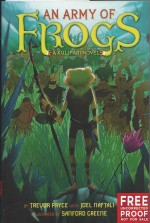
An Army of Frogs – A Kulipari Novel


By Trevor Pryce with Joel Naftali, illustrated by Sanford Greene (Amulet)
ISBNB: 978-1-4197-01726

We haven’t covered a straight kid’s prose novel (with the mandatory secret ingredient of loads of cool pictures) for a while now, so it’s good to break that particular duck (sorry, British Sporting metaphor – best look it up under cricket, as I’m being annoyingly clever here…) with a fascinating new series debut from NFL football-star turned author Trevor Pryce, his authorial collaborator Joel Naftali and illustrator Sanford Greene, all dedicated to addressing and rectifying a long-standing literary disparity.

These days, it’s hard enough to get any kid into reading but of late stories targeting – and of interest to – young boys have been pretty much non-existent. Back in the dark ages when we read by candlelight, there was a wealth of essentially Boy’s Only fiction, ranging from fantasies like Heinlein’s Tunnel in the Sky or Clive King’s Stig of the Dump to uncounted war and detective stories of Biggles, Sexton Blake and their square-jawed ilk, classroom classics such as Tom Brown’s Schooldays, Billy Bunter or Just William, tales of innumerable sporting heroes and perennial adventure landmarks like Treasure Island, Ivanhoe, Call of the Wild and so forth.

There were also loads and loads of other books and series like Narnia tales or The Hobbit but those were a bit egalitarian: equally enjoyable by most girls too – so they didn’t count…

Whilst laudable on so many levels, the increasingly generalised fiction experience over the decades left a lot of lads with no introductory boyish literary equivalent to modern men’s fiction: the Sven Hassels, Zane Greys, Alistair Macleans and Mickey Spillanes who service those particularly manly mainstays of fighting, chasing, outwitting and overpowering your properly evil enemies.

I mean these days even Daleks and Klingons are merely misunderstood and have their own valid points of view…

Seeking to tackle the problem of a whole sub-set of youngsters who just give up on reading, the creators involved here pulled off a masterful trick. This is a “boys book” girls, parents and all other softies are going to want to see too…

In the Outback of Australia Darel is a young frog who dreams of being a mighty warrior just like the vanished Kulipari Poison Frogs of legend.

When the horrendous spell-casting Spider Queen Jarrah and massed scorpion armies tried to invade and consume the lush Amphibilands long ago, those valiant heroes led the frog and turtle resistance, ultimately giving their all to save everyone from annihilation. Now everybody lives in idyllic peace, safely hidden from further assault by supreme Sergu, the Turtle King who dream-cast a mystic Veil around the oasis, masking it from all predators – especially the ever-growing, always hungry, malevolently rapacious scorpion horde.

Darel’s dream is no idle childish fantasy: although his mother was an ordinary wood frog (as is he), his father was Kulipari and heroically gave his life to save the wetland paradise from ultimate destruction during The Hidingwar.

These day’s though, nobody really cares about the old stories: safe and complacent behind the Veil, the various frog tribes carry on their dull, happy lives and don’t care to remember the bad old days…

Even Darel’s best friends Gurnagan and Coorah just play along as the frustrated would-be champion constantly practises fighting, sneaking and strategising, preparing for a day which might never come.

Just in case…

Out in the harsh desert badlands however, supreme scorpion Lord Marmoo plans to destroy the Veil forever and feast on the frogs he knows reside beyond it. To facilitate his scheme he has entered into a risky alliance with monstrous Jarrah and even recruited divisions of lizards and “sandpaper frogs” – debased mercenaries who would do anything, even betraying their own kind for profit…

One day, whilst hunting herbs for apprentice healer Coorah at the very edge of the all-concealing barrier, Darel and Gurnagan encounter a scorpion reconnaissance party ensorcelled by the Spider Queen to breach the hem of the Veil and lay the foundations of the mystic shield’s destruction. Further out, the terrified froglets can see an impossibly huge army just waiting in the shimmering sands for the fall of the wall…

Sensing his moment has come, Darel sends faithful “Gee” back to warn the village whilst he spies on the invaders but Gurnagan is quickly captured and dragged off before he can carry out his task.

With all hope resting in his pads, Darel boldly infiltrates the Scorpion Lord’s camp to save his friend, and begins an astonishing heroic odyssey that will bring his people and homelands to the brink of extinction and take him to the mythic allies needed to fulfil his inescapable destiny…

Superbly illustrated by Sanford Greene who provides maps, character studies and more than fifty fascinating fun and scary full-colour illustrations, An Army of Frogs is an enthralling and captivatingly rousing read which rattles along and will hopefully lead to a host of stirring sequels.

Text © 2013 Trevor Pryce. Illustrations © 2013 Sanford Greene. All rights reserved.

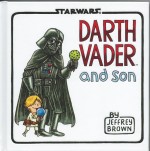
Star Wars: Darth Vader and Son


By Jeffrey Brown (Lucas Books/Chronicle Books)
ISBN: 978-1-4521-0655-7

It’s never too late to find a treasure or have a good time. Cartoonist Jeffrey Brown certainly knows that, as a glance at any of his painfully incisive autobiographical mini-comics, quirky literary graphic novels and hilarious all-ages comedy cartoons will show.

Born in Grand Rapids, Michigan in 1975, Brown studied Fine Art at the Chicago Art Institute but abandoned painting to concentrate on comics.

His painfully intense, bizarrely funny observational strips soon garnered him fans amongst in-the-know consumers and fellow creators alike: all finding something to love in such varied fare as Every Girl Is The End of the World For Me, Cat Getting Out of a Bag and Other Observations, Little Things or current on-going series Sulk.

Happily, unlike so many creators with such an eclectic oeuvre, Brown has also achieved a measure of mainstream success thanks to his keen artistic sense and a lifelong love affair with the most significant popular arts phenomenon of the last 35 years.

In 2012 Brown created a breakout and mainstream best-seller with his hilarious spin on the soft and nurturing side of the Dark Lord of the Sith: exploring what might have been, had the most dangerous man (more or less) in the Empire had the opportunity to spend a little quality time with his missing son and heir…

The hilarious pre (Jedi) school experiences of Star Wars – Episode Three and a Half: Darth Vader and Son features deliriously daft and telling snatches of Skywalker domesticity highlighting such memorable moments as baseball practise with light sabre, a day at the beach (on Tatooine), budding sibling rivalry with a stupid-head sister, having “the talk” about babies, Trick or Treating with dad in tow, playing in Trash (compactors), finding a babysitter for a precocious kid, shovelling snow on Hoth, playing with that Solo kid and the joy of that first (Speeder) bike as well as a host of other awkward, touching warm moments in the otherwise drab life of a galactic nemesis.

No fan of the all-conquering franchise could possibly do without this deliciously sweet and still readily available hardcover hit – or its recent sequel Vader’s Little Princess – and these superbly subversive cartoon treats could easily make converts of the hardest hearted, fun-starved rationalist or clone.

Gloriously daft and entrancingly fun, this is a superb treat for fans and unbelievers alike and there’s even the promise of a third volume in the pipeline…

© 2012 by Lucasfilm Ltd & ® or ™ where indicated. All rights reserved.

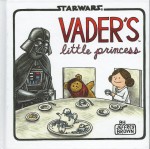
Stars Wars: Vader’s Little Princess


By Jeffrey Brown (Lucas Books/Chronicle Books)
ISBN: 978-1-4521-1869-7

Since its launch in 1977 the Star Wars franchise has spawned an awful lot of comic books, toys, games, countless examples of merchandise and even some more movies. The disciples, followers, fans, adherents and devotees are as helplessly dedicated as Trekkies and Whovians (without, as far as I’m aware, being subject to a demeaning descriptive appellation) and are well on the way to becoming the first religion to actively admit it’s completely fictional.

In 2012 Jeffrey Brown, star of such quirkily irresistible indy comics as Unlikely, Clumsy, Bighead, Funny, Misshapen Body and Incredible Change-Bots, scored his first global best-seller with a hilarious spin on the soft and nurturing side of the Jedi experience in Darth Vader and Son and now – just in time for National Star Wars Day – has expanded the concept with “Episode Three and Three-Quarters” to cover Luke Skywalker’s long-lost, turbulent, truculent twin sister Leia (we don’t call her Ambassador Organa anymore… yet… whatever…) in Vader’s Little Princess.

If we peek behind the midnight cape and ebony re-breather helmet of the long-suffering Lord of the Sith, we can glimpse the dark side for the hard-working single parent trying his best to bring up a rebellious girl child and her rather disappointing brother…

Dear daddy Darth only wants a little peace and quiet to destroy the Rebel Alliance and maybe rule the Galactic Empire, but it’s not easy as we can see in this sublime, full colour hardcover charting the rocky road of his capricious, changeable and charming little madam, from nosy, bossy, know-it-all brat to feisty, capable independent know-it-all college applicant in a series of gloriously arch and whimsical cartoons that will delight young and old alike.

It’s the same oft-told tale of parenthood: one minute she’s knitting you ugly presents, hiding your X-Wing’s keys or making faces behind your back whilst you admonish Grand Moff Tarkin, and the next she’s embarrassed to be seen with you; not taking messages from The Emperor and trying to stop you from even “talking” to that good-for-nothing, obnoxious, sneaky Corellian Solo kid who’s always hanging around…

Of course it’s not all one way traffic: Dads – no matter how important – don’t care about important things like fashion, never like your boyfriends and can be so-ooo embarrassing when you’re trying to impress the cool kids…

Gloriously daft and entrancingly fun, this is a superb treat for fans and unbelievers alike and there’s even the promise of a third volume in the pipeline…

© 2013 by Lucasfilm Ltd. LCC & ® or ™ where indicated. All rights reserved.

Asterix and the Great Crossing, Obelix and Co., Asterix in Belgium


By Goscinny & Uderzo, translated by Anthea Bell & Derek Hockridge (Orion Books and others)
ISBNs: 978-0-75286-648-2, 978-0-75286-652-9-and 978-0-75286-650-5-

One of the most popular comics features on Earth, the collected chronicles of Asterix the Gaul have been translated into more than 100 languages since his debut in 1959, with twelve animated and live-action movies, TV series, assorted games, toys, merchandise and even a theme park outside Paris (Parc Astérix, unsurprisingly…); all stemming from his glorious exploits.

More than 325 million copies of 34 Asterix books have sold worldwide, making his joint creators France’s best-selling international authors. There is even the tantalising yet frightening promise of a new volume sometime this year by a substitute creative team: Jean-Yves Ferri and Didier Conrad…

The diminutive, doughty, potion-powered paragon of Gallic Pride was created by two of the industry’s greatest masters, René Goscinny & Albert Uderzo, as a weekly strip in Pilote, swiftly becoming a national success and symbol. Although their inspirational collaborations ended in 1977 with the death of the prolific scripter, the creative wonderment continued until 2010 from Uderzo and assistants – albeit at a slightly reduced rate.

After nearly 15 years as a comic strip subsequently collected into compilations, in 1974 the 21st tale (Asterix and Caesar’s Gift) was the first to be published as a complete original album before being serialised. Thereafter each new release was a long anticipated, eagerly awaited treat for the strip’s millions of fans…

The comics magic operates on multiple levels: ostensibly, younger readers revel in the action-packed, lavishly illustrated comedic romps where sneaky, bullying baddies get their just deserts, whilst we more worldly readers enthuse over the dry, pun-filled, sly satire, especially as enhanced for English speakers by the brilliantly light touch of translators Anthea Bell & Derek Hockridge, who played no small part in making the indomitable Gaul and his gallant companions so palatable to the Anglo-Saxon world. (Pour Moi, though, a perfectly produced physically poetic “Paf!” to the phizzog is as welcome and wondrous as any painfully potent procession of puns or sardonic satirical sideswipes…)

More than half of the canon occurs on Uderzo’s beloved Brittany coast, where, circa 50 B.C., a small village of cantankerous, proudly defiant warriors and their families resisted every effort of the Roman Empire to complete the conquest of Gaul. The land had been divided by the conquerors into the provinces of Celtica, Aquitania and Amorica, but the very tip of the latter just refused to be pacified…

The remaining epics occur in various locales throughout the Ancient World, as the Garrulous Gallic Gentlemen visited all the fantastic lands and corners of civilisations of the era…

When the heroes were playing at home, the Romans, unable to defeat the last bastion of Gallic insouciance, futilely resorted to a policy of absolute containment. Thus the little seaside hamlet was permanently hemmed in by the heavily fortified garrisons of Totorum, Aquarium, Laudanum and Compendium.

The Gauls don’t care: daily defying the world’s greatest military machine simply by going about their everyday affairs, protected by the magic potion of resident druid Getafix and the shrewd wits of the diminutive dynamo and his simplistic, supercharged best friend…

Firmly established as a global brand and premium French export by the mid-1960s, Asterix the Gaul continued to grow in quality as Goscinny & Uderzo toiled ever onward, crafting further fabulous sagas; building a stunning legacy of graphic excellence and storytelling gold. Moreover, following the civil unrest and nigh-revolution in French society following the Paris riots of 1968, the tales took on an increasingly acerbic tang of trenchant satire and pithy socio-political commentary…

Asterix and the Great Crossing was the 22nd saga and second original book release in France, premiering in 1975, with a British hardcover edition the following year.

It begins with the usual village kerfuffle as to the true and relative vintage of Unhygienix the fishmonger’s wares and descends into the standard brawl. However, the situation is rather more serious this time as Druid Getafix needs really fresh fish for the magic potion that keeps them all free of Rome…

A merchant but not a fisherman, Unhygienix refuses to catch his own stock and Asterix and Obelix volunteer take to sea in old Geriatrix’ dilapidated skiff to replenish the wizard’s stores even tough a big storm is brewing. Sadly they aren’t fishermen either, and after losing the nets are blown far from home…

Lost at sea and starving they encounter their old pals the Pirates, but Obelix eats all their provisions in one go and soon the mismatched mariners – and faithful mutt Dogmatix – are in even direr straits as another storm blows them ever further westward.

Just as death seems inevitable, the Gauls wash up on an island of the Empire they have never seen before. In this strange outpost the Romans have red skins, paint their faces and wear feathers in their hair. Terrifyingly, there are no wild boar to eat, only big ugly birds that go “gobble, gobble”…

After the usual two-fisted diplomacy with the “Iberians, or perhaps Thracians”, Asterix and Obelix settle down comfortably enough, but things change when the chief decides the big pale face is going to marry his daughter. Desperately the Gauls steal a canoe one night and strike out across the Big Water towards home but only get as far as a little islet where they’re picked up by Viking explorers Herendethelessen, Steptøånssen, NøgøødreÃ¥ssen, HÃ¥rÃ¥ldwilssen and their Great Dane HuntingseÃ¥ssen, who are looking for unmapped continents…

Convinced their odd discoveries are natives of this strange New World, the Danes try to entice the oddly eager indigenes to come home with them as proof of Herendethelessen’s incredible discovery. Braving icy Atlantic seas the dragon ship is soon back in cold, mist-enshrouded Scandinavia where gruff, dismissive Chief Ødiuscomparissen is amazed…

However when Gaulish slave Catastrofix reveals they are from his European homeland, tempers get heated and another big fight breaks out.

Taking advantage of the commotion, Asterix, Obelix and Catastrofix – a fisherman by trade – steal a boat and head at last for home, picking up some piscine presents for Getafix en route…

This is a delightfully arch but wittily straightforward yarn, big on action and thrills, packed with knowing in-jokes and sly references to other French Western strips such as Lucky Luke and Ompa-pa (Oumpah-pah in French) as well as Shakespeare’s Hamlet, and formed the basis of the animated feature film Asterix Conquers America.


Strong, stinging satire was the foundation of the next saga. Obelix and Co. debuted in 1976 with the English-language hardcover launching in 1978 and again saw the frustration-wracked Julius Caesar attempting to end the aggravating resistance of the indomitable Gauls.

To that effect the most powerful man in the world dispatches a bold, brash go-getter from the Latin School of Economics to destroy their unity forever. Financial whiz-kid Preposterus has a plan that simply can’t fail and will pay huge dividends to the Empire.

Meanwhile, the replacing of the Totorum Garrison with fresh troops has allowed the Gauls to give Obelix a truly inspired birthday gift. After beating up the entire contingent on his own and without having to share the soldiers, the delighted big man goes back to carving and delivering Menhirs and meets a strange young Roman.

Preposterus (a cruelly effective caricature of France’s then Prime Minister Jacques Chirac) intends to destroy the villagers by making them as greedy, lazy and corrupt as any Roman Patrician through the introduction of Capitalism and Market Forces.

To that end he pretends to be a Menhir buyer, willing to pay any amount for the giant stone obelisks (which have no appreciable use or worth and were usually swapped for small treats or favours) telling the big gullible oaf that money makes men important and powerful.

Without really understanding, gullible Obelix begins accepting ever-larger sums for each stone, forcing himself to work harder and never stop. He doesn’t know what to do with the money but is caught up in an ever-hastening spiral of production.

Too busy to have fun hunting wild boars or play with Dogmatix, he begins hiring his equally gullible friends and neighbours: first to hunt for him and later to help sculpt Menhirs. All does is work and spend his growing mountain of cash on increasingly daft fancy clothes as he drives himself to miserable exhaustion.

Soon most of the village is caught in the spiral, except wily Asterix, who attempts to bring his old pal to his senses by suggesting to his friends that they set up as rival Menhir manufacturers. He’s inadvertently helped in this by the status-obsessed village wives who push their men to become as “successful and influential” as the fat oaf…

In Totorum, the megaliths are beginning to pile up as Preposterus proceeds to exhaust all Rome’s funds purchasing Menhirs. Centurion Ignoramus is happy the plan to destroy the Gauls through cutthroat competition is working, but wants the mountain of shaped stones out of his camp, so Preposterous has them shipped back to Rome and starts selling them to rich trendies as indispensable fashion accessories.

The whiz-kid had nearly emptied Caesar’s coffers but his swish and intensive advertising campaign looks sets to recoup the losses with a folk art sales boom… until Italian entrepreneur Meretricius starts selling cut-rate Rome produced Menhirs and the Boom leads to a ruthless price war and inevitable Bust which almost topples the Empire…

Success has not made Obelix happy and he’s thinking of quitting, just as the desperate Preposterous returns and inconsiderately, immediately stops buying Menhirs. Of course being simple peasants the Gauls don’t understand supply and demand or the finer principles of a free market: they’re just really annoyed and frustrated. Luckily there’s lots of Romans around to help deal with their pent-up tensions…

Soon the air is cleared and the villagers have returned to their old-fashioned ways and Asterix and Getafix can laugh at news of the financial crisis wracking Rome…

This hilarious anti-Capitalist tract and telling parody shows Goscinny & Uderzo at their absolute, satirical best, riffing on modern ideologies and dogmas whilst spoofing and lampooning the habits and tactics of greedy bosses and intransigent workers alike. Many politicians and economists have cited this tale which is again stuffed with cameos and in-joke guest shots. I’m told that the beautiful page 36, which featured Preposterus explaining his ad campaign, was also the 1000th page of Asterix since his debut in 1959.


Asterix travel epics are always packed with captivating historical titbits, soupcons of healthy cynicism, singularly surreal situations and amazingly addictive but generally consequence-free action, always illustrated in a magically enticing manner. Such was certainly the case with Asterix in Belgium, the 24th adventure and Goscinny’s last. The indefatigable writer passed away in 1977 just as the book was nearing completion.

The story is a grand old romp of friendly rivalries and begins when a relief troop takes over the garrison of Laudanum. These soldiers are delighted to be in Amorica, because it means they are no longer fighting the Belgians. Those barbarians are even worse than the indomitable villagers in Amorica and Caesar himself has called them “the bravest of all the Gaulish Peoples”…

Perplexed by the laid-back attitude of the new occupiers, who consider their new posting a “rest cure”, Asterix and Obelix question one of the new Romans. They report his unbelievable news to Chief Vitalstatistix, who is beside himself with indignation. Most of the others don’t really care, but when the furious Chief storms off for the border to see for himself, the old pals follow to keep him out of trouble…

Soon they have crossed the border and encounter the fabled warriors, led by their chiefs Beefix and Brawnix. They are indeed mighty fighters but arrogant too, and soon Vitalstatistix has become so incensed with their boasting that he proposes a competition to see who can bash the most Romans and prove just who are the Bravest Gauls.

Obelix doesn’t mind: the Belgians are just like him. The only thing they like more than hitting Romans is eating and they seem to do the latter all day long…

Before long however there are no more Roman forts in the vicinity and the matter of honour is still unsettled. What they need is an unbiased umpire to judge who is the greatest and luckily Julius Caesar, moved to action by the terrible news from Belgium and rumours that the Amoricans (three of them at least) are also rising in revolt, has rushed to the frontier with the massed armies of the Empire…

Against such a force the squabbling cousins can only unite to force Caesar to admit who’s best…

Stuffed with sly pokes and good-natured joshing over perceived national characteristics and celebrating the spectacular illustrative ability of Uderzo, this raucous, bombastic, bellicose delight delivers splendid hi-jinks and fast-paced action, and is perhaps the most jolly and accessible of these magical all-ages entertainments.
© 1975-1979 Goscinny/Uderzo. Revised English translation © 2005 Hachette. All rights reserved.