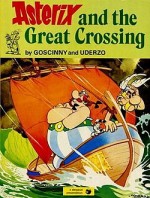
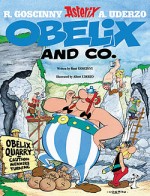

Asterix and the Great Crossing, Obelix and Co., Asterix in Belgium


By Goscinny & Uderzo, translated by Anthea Bell & Derek Hockridge (Orion Books and others)
ISBNs: 978-0-75286-648-2, 978-0-75286-652-9-and 978-0-75286-650-5-

One of the most popular comics features on Earth, the collected chronicles of Asterix the Gaul have been translated into more than 100 languages since his debut in 1959, with twelve animated and live-action movies, TV series, assorted games, toys, merchandise and even a theme park outside Paris (Parc Astérix, unsurprisingly…); all stemming from his glorious exploits.

More than 325 million copies of 34 Asterix books have sold worldwide, making his joint creators France’s best-selling international authors. There is even the tantalising yet frightening promise of a new volume sometime this year by a substitute creative team: Jean-Yves Ferri and Didier Conrad…

The diminutive, doughty, potion-powered paragon of Gallic Pride was created by two of the industry’s greatest masters, René Goscinny & Albert Uderzo, as a weekly strip in Pilote, swiftly becoming a national success and symbol. Although their inspirational collaborations ended in 1977 with the death of the prolific scripter, the creative wonderment continued until 2010 from Uderzo and assistants – albeit at a slightly reduced rate.

After nearly 15 years as a comic strip subsequently collected into compilations, in 1974 the 21st tale (Asterix and Caesar’s Gift) was the first to be published as a complete original album before being serialised. Thereafter each new release was a long anticipated, eagerly awaited treat for the strip’s millions of fans…

The comics magic operates on multiple levels: ostensibly, younger readers revel in the action-packed, lavishly illustrated comedic romps where sneaky, bullying baddies get their just deserts, whilst we more worldly readers enthuse over the dry, pun-filled, sly satire, especially as enhanced for English speakers by the brilliantly light touch of translators Anthea Bell & Derek Hockridge, who played no small part in making the indomitable Gaul and his gallant companions so palatable to the Anglo-Saxon world. (Pour Moi, though, a perfectly produced physically poetic “Paf!” to the phizzog is as welcome and wondrous as any painfully potent procession of puns or sardonic satirical sideswipes…)

More than half of the canon occurs on Uderzo’s beloved Brittany coast, where, circa 50 B.C., a small village of cantankerous, proudly defiant warriors and their families resisted every effort of the Roman Empire to complete the conquest of Gaul. The land had been divided by the conquerors into the provinces of Celtica, Aquitania and Amorica, but the very tip of the latter just refused to be pacified…

The remaining epics occur in various locales throughout the Ancient World, as the Garrulous Gallic Gentlemen visited all the fantastic lands and corners of civilisations of the era…

When the heroes were playing at home, the Romans, unable to defeat the last bastion of Gallic insouciance, futilely resorted to a policy of absolute containment. Thus the little seaside hamlet was permanently hemmed in by the heavily fortified garrisons of Totorum, Aquarium, Laudanum and Compendium.

The Gauls don’t care: daily defying the world’s greatest military machine simply by going about their everyday affairs, protected by the magic potion of resident druid Getafix and the shrewd wits of the diminutive dynamo and his simplistic, supercharged best friend…

Firmly established as a global brand and premium French export by the mid-1960s, Asterix the Gaul continued to grow in quality as Goscinny & Uderzo toiled ever onward, crafting further fabulous sagas; building a stunning legacy of graphic excellence and storytelling gold. Moreover, following the civil unrest and nigh-revolution in French society following the Paris riots of 1968, the tales took on an increasingly acerbic tang of trenchant satire and pithy socio-political commentary…

Asterix and the Great Crossing was the 22nd saga and second original book release in France, premiering in 1975, with a British hardcover edition the following year.

It begins with the usual village kerfuffle as to the true and relative vintage of Unhygienix the fishmonger’s wares and descends into the standard brawl. However, the situation is rather more serious this time as Druid Getafix needs really fresh fish for the magic potion that keeps them all free of Rome…

A merchant but not a fisherman, Unhygienix refuses to catch his own stock and Asterix and Obelix volunteer take to sea in old Geriatrix’ dilapidated skiff to replenish the wizard’s stores even tough a big storm is brewing. Sadly they aren’t fishermen either, and after losing the nets are blown far from home…

Lost at sea and starving they encounter their old pals the Pirates, but Obelix eats all their provisions in one go and soon the mismatched mariners – and faithful mutt Dogmatix – are in even direr straits as another storm blows them ever further westward.

Just as death seems inevitable, the Gauls wash up on an island of the Empire they have never seen before. In this strange outpost the Romans have red skins, paint their faces and wear feathers in their hair. Terrifyingly, there are no wild boar to eat, only big ugly birds that go “gobble, gobble”…

After the usual two-fisted diplomacy with the “Iberians, or perhaps Thracians”, Asterix and Obelix settle down comfortably enough, but things change when the chief decides the big pale face is going to marry his daughter. Desperately the Gauls steal a canoe one night and strike out across the Big Water towards home but only get as far as a little islet where they’re picked up by Viking explorers Herendethelessen, Steptøånssen, NøgøødreÃ¥ssen, HÃ¥rÃ¥ldwilssen and their Great Dane HuntingseÃ¥ssen, who are looking for unmapped continents…

Convinced their odd discoveries are natives of this strange New World, the Danes try to entice the oddly eager indigenes to come home with them as proof of Herendethelessen’s incredible discovery. Braving icy Atlantic seas the dragon ship is soon back in cold, mist-enshrouded Scandinavia where gruff, dismissive Chief Ødiuscomparissen is amazed…

However when Gaulish slave Catastrofix reveals they are from his European homeland, tempers get heated and another big fight breaks out.

Taking advantage of the commotion, Asterix, Obelix and Catastrofix – a fisherman by trade – steal a boat and head at last for home, picking up some piscine presents for Getafix en route…

This is a delightfully arch but wittily straightforward yarn, big on action and thrills, packed with knowing in-jokes and sly references to other French Western strips such as Lucky Luke and Ompa-pa (Oumpah-pah in French) as well as Shakespeare’s Hamlet, and formed the basis of the animated feature film Asterix Conquers America.


Strong, stinging satire was the foundation of the next saga. Obelix and Co. debuted in 1976 with the English-language hardcover launching in 1978 and again saw the frustration-wracked Julius Caesar attempting to end the aggravating resistance of the indomitable Gauls.

To that effect the most powerful man in the world dispatches a bold, brash go-getter from the Latin School of Economics to destroy their unity forever. Financial whiz-kid Preposterus has a plan that simply can’t fail and will pay huge dividends to the Empire.

Meanwhile, the replacing of the Totorum Garrison with fresh troops has allowed the Gauls to give Obelix a truly inspired birthday gift. After beating up the entire contingent on his own and without having to share the soldiers, the delighted big man goes back to carving and delivering Menhirs and meets a strange young Roman.

Preposterus (a cruelly effective caricature of France’s then Prime Minister Jacques Chirac) intends to destroy the villagers by making them as greedy, lazy and corrupt as any Roman Patrician through the introduction of Capitalism and Market Forces.

To that end he pretends to be a Menhir buyer, willing to pay any amount for the giant stone obelisks (which have no appreciable use or worth and were usually swapped for small treats or favours) telling the big gullible oaf that money makes men important and powerful.

Without really understanding, gullible Obelix begins accepting ever-larger sums for each stone, forcing himself to work harder and never stop. He doesn’t know what to do with the money but is caught up in an ever-hastening spiral of production.

Too busy to have fun hunting wild boars or play with Dogmatix, he begins hiring his equally gullible friends and neighbours: first to hunt for him and later to help sculpt Menhirs. All does is work and spend his growing mountain of cash on increasingly daft fancy clothes as he drives himself to miserable exhaustion.

Soon most of the village is caught in the spiral, except wily Asterix, who attempts to bring his old pal to his senses by suggesting to his friends that they set up as rival Menhir manufacturers. He’s inadvertently helped in this by the status-obsessed village wives who push their men to become as “successful and influential” as the fat oaf…

In Totorum, the megaliths are beginning to pile up as Preposterus proceeds to exhaust all Rome’s funds purchasing Menhirs. Centurion Ignoramus is happy the plan to destroy the Gauls through cutthroat competition is working, but wants the mountain of shaped stones out of his camp, so Preposterous has them shipped back to Rome and starts selling them to rich trendies as indispensable fashion accessories.

The whiz-kid had nearly emptied Caesar’s coffers but his swish and intensive advertising campaign looks sets to recoup the losses with a folk art sales boom… until Italian entrepreneur Meretricius starts selling cut-rate Rome produced Menhirs and the Boom leads to a ruthless price war and inevitable Bust which almost topples the Empire…

Success has not made Obelix happy and he’s thinking of quitting, just as the desperate Preposterous returns and inconsiderately, immediately stops buying Menhirs. Of course being simple peasants the Gauls don’t understand supply and demand or the finer principles of a free market: they’re just really annoyed and frustrated. Luckily there’s lots of Romans around to help deal with their pent-up tensions…

Soon the air is cleared and the villagers have returned to their old-fashioned ways and Asterix and Getafix can laugh at news of the financial crisis wracking Rome…

This hilarious anti-Capitalist tract and telling parody shows Goscinny & Uderzo at their absolute, satirical best, riffing on modern ideologies and dogmas whilst spoofing and lampooning the habits and tactics of greedy bosses and intransigent workers alike. Many politicians and economists have cited this tale which is again stuffed with cameos and in-joke guest shots. I’m told that the beautiful page 36, which featured Preposterus explaining his ad campaign, was also the 1000th page of Asterix since his debut in 1959.


Asterix travel epics are always packed with captivating historical titbits, soupcons of healthy cynicism, singularly surreal situations and amazingly addictive but generally consequence-free action, always illustrated in a magically enticing manner. Such was certainly the case with Asterix in Belgium, the 24th adventure and Goscinny’s last. The indefatigable writer passed away in 1977 just as the book was nearing completion.

The story is a grand old romp of friendly rivalries and begins when a relief troop takes over the garrison of Laudanum. These soldiers are delighted to be in Amorica, because it means they are no longer fighting the Belgians. Those barbarians are even worse than the indomitable villagers in Amorica and Caesar himself has called them “the bravest of all the Gaulish Peoples”…

Perplexed by the laid-back attitude of the new occupiers, who consider their new posting a “rest cure”, Asterix and Obelix question one of the new Romans. They report his unbelievable news to Chief Vitalstatistix, who is beside himself with indignation. Most of the others don’t really care, but when the furious Chief storms off for the border to see for himself, the old pals follow to keep him out of trouble…

Soon they have crossed the border and encounter the fabled warriors, led by their chiefs Beefix and Brawnix. They are indeed mighty fighters but arrogant too, and soon Vitalstatistix has become so incensed with their boasting that he proposes a competition to see who can bash the most Romans and prove just who are the Bravest Gauls.

Obelix doesn’t mind: the Belgians are just like him. The only thing they like more than hitting Romans is eating and they seem to do the latter all day long…

Before long however there are no more Roman forts in the vicinity and the matter of honour is still unsettled. What they need is an unbiased umpire to judge who is the greatest and luckily Julius Caesar, moved to action by the terrible news from Belgium and rumours that the Amoricans (three of them at least) are also rising in revolt, has rushed to the frontier with the massed armies of the Empire…

Against such a force the squabbling cousins can only unite to force Caesar to admit who’s best…

Stuffed with sly pokes and good-natured joshing over perceived national characteristics and celebrating the spectacular illustrative ability of Uderzo, this raucous, bombastic, bellicose delight delivers splendid hi-jinks and fast-paced action, and is perhaps the most jolly and accessible of these magical all-ages entertainments.
© 1975-1979 Goscinny/Uderzo. Revised English translation © 2005 Hachette. All rights reserved.

Atalanta: The Race Against Destiny


By Justine & Ron Fuentes and Thomas Yeates (Graphic Universe)
ISBN: 978-1-58013-317-3

The heroic tales and beliefs of ancient cultures have for centuries formed an integral part of children’s educational development – and a good thing too. These days though, those magnificently inspiring and unforgettably visual yarns are as likely to be disseminated via graphic novel as through the sparsely illustrated prose books which had such a formative influence on my early days.

Atalanta: The Race Against Destiny was released in 2007, one self-contained chronicle in a large series which similarly retold through sequential narrative many other myths and legends such as Jason’s Quest with the Argonauts, the Labours of Hercules or the Saga of King Arthur.

Illustrated by the brilliant Thomas Yeates (Saga of the Swamp Thing, Time Spirits, Zorro and more) and adapted from traditional sources by Justine and Ron Fontes, the tragic tale of the World’s first feminist and a ferociously independent woman opens in heaven as the gods of Olympus observe a king railing at his wife, furious that she has given him a useless daughter instead of the son and heir he needed.

Ordering the infant to be ‘Abandoned’ on an exposed hillside, he thinks of her no more, blithely unaware that the baby has been found and adopted by a she-bear…

Nurtured and reared by her ursine protector the child grew strong and tough and exceedingly swift. Nothing could match her speed.

One day, years later, she was ‘Found’ and adopted by hunters who civilised her and gloried in her might and skill with a bow. These simple folk had no time for traditional women’s work and Atalanta grew with no knowledge of a woman’s traditional role in Greek society. She could not spin wool, weave or sew and knew nothing of cleaning or keeping a man’s house in proper order. Moreover she had no time or need to idly make herself pretty for a man…

As she grew to womanhood she often pondered her role and fate. Eventually she was advised by her adopted family to consult an oracle and journeyed to Delphi to seek ‘Answers and Adventures’ from the oracle of Apollo, where her shocking manner, dress and attitudes scandalised the refined citizens.

Sadly the responses of the closeted, drugged seer were far from helpful. The Oracle merely mumbled “avoid husband… can’t avoid… keep life… lose self” and the interpretations and rationalisations of the male priests were little better.

Atalanta returned to a life of hunting and lived day to day until an invitation came to enter a great competition to destroy a fearsome boar ravaging distant Calydon, kingdom of Oeneus and his son Prince Meleager.

Invitations had gone out to the greatest heroes of Greece and en route Atalanta met fabled Jason, and many Argonauts including Castor and Pollux, Theseus, Nestor, last survivor of the Trojan War, and Telemon who was once companion to Hercules himself. All hungered for glory and readily accepted her amongst their company as they discussed the fearsome beast they were to fight against.

Legend had it that the boar was a divine punishment sent by Artemis to punish a slight accidentally perpetrated by Oeneus, but as the champions talked the huntress realised many of the heroes also thought of her as a beguiling quarry…

The hunt for the boar was a disaster. Although she easily outdistanced her companions and drew first blood, many heroes died that day and when Meleager finally slew the beast he wanted Atalanta to share in the triumph. Her skill had indeed led to his killing stroke, but his jealous uncles refused to let a woman share in his glory and a fight broke out.

Besotted with her – and she with him – the Prince slew his uncles in a rage and called upon himself the final, fatal vengeance of the gods as well as his own mother.

Heartbroken and uncomprehending of the sheer spitefulness of celestials, Atalanta returned to the wilds, convinced that her love would ever doom any man she favoured…

Her legend grew however and in a far away kingdom her father pieced together the details and realised the celebrated huntress must be the daughter he had tried to kill. Seeing an opportunity he invited her into his household and the dutiful, curious young woman complied.

It was a disaster. She hated the rules and confinements of a palace princess and her sire only saw her as a means of gaining power, wealth and prestige. When he proffered the famed huntress in wedlock, many suitors came forward. Although the horrified, prophecy-haunted Atalanta knew that any man she married would die, she soon realised her greedy father did not care…

Thus she desperately devised a cunning competition to warn the fools away, demanding that only a man who could catch her would have her hand. To deter them further she insisted that any who failed must die but she had greatly underestimated the arrogance, greed and lust of princes…

A beautiful suitor named Hippomenes did get the message however and acted only as judge for ‘The Race of her Life’, watching the beautiful girl easily outdistance and thereby doom a host of potential husbands. Seeing her run though, he too was smitten and began his own campaign to win the lonely, tragic princess.

A great grandson of sea-god Poseidon, he made Atalanta feel she could beat her oracular curse and then petitioned love goddess Aphrodite to aid him in beating the unbeatable girl in a second race…

Equipped with the gleaming Golden Apples of the Hesperides, the wily youth distracted the fleet huntress enough to cross the finishing line first and won ‘A Bride After All’ but in his elation Hippomenes forgot to properly thank Aphrodite and the outraged deity promptly planned an awful vengeance for the slight.

At the moment of her greatest joy Atalanta learned the true power of prophecy when Aphrodite tricked the happy newlyweds into desecrating a shrine to Zeus’ mother Rhea for which sacrilege she furiously transformed them into a lion and lioness.

For the rest of eternity the lovers would remain together, keeping their lives but losing their selves, becoming the divine beasts pulling Rhea’s chariot across the world…

All religious stories are devised to explain away contemporary unsolved questions, unknowable mysteries or established social structures.

The liturgical history lesson retold here was one proudly patriarchal people’s attempt to rationalise their lives whilst explaining how and why such laws and customs exist and, although grossly simplified here, works in an engaging manner that should certainly tempt readers to go and find out more.

Engrossing, dynamic, pretty and blessed with a light touch, this splendid introduction to mythology is designed for kids with a reading age of nine or above – that’s Year 4, I suspect – and also contains a full ‘Glossary’ of characters and concepts, suggested ‘Further Reading, Websites and Films’, background on ‘Creating Atalanta: The Race Against Destiny‘, creator biographies in ‘About the Author and the Artist’ and an ‘Index’.

Packaged as full-colour, 48 page, card-cover booklets, they were designed to introduce youngsters to the magical riches of human history and imagination.

Although this particular saga retells a rather tragic and indubitably unfair tale of sexism, oppressive destiny and the costs of attempting to defy fate, it does read very well as sequential narrative in its own right and serves not just as an educational aid or social warning but as a smart way to get your youngsters into comics.
© 2007 Lerner Publishing Group, Inc. All rights reserved.

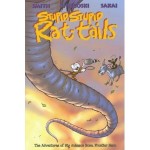
Bone: Stupid, Stupid Rat-Tails – the Adventures of Big Johnson Bone, Frontier Hero


By Jeff Smith, Tim Sniegoski & Stan Sakai (Cartoon Books)
ISBN: 978-1-88896-306-9

Jeff Smith burst out of relative obscurity in 1991 and changed the comics-reading landscape with his captivating all-ages comicbook Bone. The compelling black and white saga intoxicated the market and prospered at a time when an endless procession of angst-ridden, steroid-breathed super-vigilantes and implausibly clad “Bad-Grrls” came and went with machine-gun rapidity.

Born in Pennsylvania and raised in Ohio, Smith avidly absorbed the works of Carl Barks, Charles Schultz and especially Walt Kelly from an early age, and purportedly first began producing the adventures of his Boneville creations at age ten.

Whilst attending OhioStateUniversity he created a prototype strip for the College newspaper: ‘Thorn’ was another early incarnation of his personal universe and a valuable proving ground for many characters that would eventually appear in Bone. A high school classmate became a Disney animator and Smith subsequently gravitated to the field before striking out on his own, having mastered the graceful gentle slapstick timing and high finish style which typifies his art style.

He founded Cartoon Books to self-publish 55 delightful black and white issues: a fantasy-quest yarn that owed as much to Tex Avery as J.R.R. Tolkien, as well as his personal holy trinity, Barks, Schultz & Kelly. The thrilling and fantastically funny saga progressed at its own unique pace between 1991 and 2004 and since then has been collected into nine volumes from Cartoon Books (with two further collections of prequels and side tales), reissued in colour by Scholastic Books and even reprinted in Disney Adventures magazine.

Fone Bone is the strange, amorphous, affably decent little hero, a thematic blend of Mickey Mouse and Asterix, who had been run out of the town of Boneville along with his tall, not-so-bright cousin Smiley due to the financial and political irregularities, misdemeanours and malfeasances of their dastardly, swindling relative Phoncible P. “Phoney” Bone…

After an incredibly journey the trio ended up in LostValley: an oasis of pastoral beauty hidden from the rest of the world. Along the way Bone was adopted by a dragon he doesn’t believe in, stalked by ghastly rat monsters and befriended by many talking animals and people…

At series’ end, Smith issued a monumental one volume compilation (more than 1300 black and white pages) which Time magazine dubbed “the best all-ages graphic novel yet published” and one of the “Top Ten Graphic Novels of All Time.”

Smith has won many awards including 11 Harveys and 10 Eisners. In 2011, a spectacular 20th anniversary full-colour edition of the Brobdingnagian single volume was released, stuffed with extras and premiums. If you’ve got the dough, that’s the book to shoot for…

The core series also spawned a few prequel series such as dark origin tale Rose and this far-lighter yarn introducing the Bone cousins’ pioneering ancestor: a rootin’ tootin’ rip-snorter of a trapper and loud-mouthed, itinerant Frontier Scout named Big Johnson Bone who found and saved an idyllic valley from an all-consuming threat and made the place safe from marauding monsters. Since there are plenty of versions to opt for, purist that I am, I’ve again plumped for an original monochrome Cartoon Books collection.

Originally appearing as back-ups in the original comicbook and the one-shot Stupid, Stupid Rat-Tails between 1998 and 1999. these tremendously intoxicating tall tales were first gathered together in 2000 and remain one of the best and most entertaining all-ages comics sagas of the modern age.

Once upon a time a distant land was filled with huge, scary, fiercely rapacious rat creatures with magnificent tails…

Scripted by Tom Sniegoski and illustrated by Smith, the eponymous 3-part epic ‘Stupid, Stupid Rat-Tails: the Adventures of Big Johnson Bone, Frontier Hero’ opens with the boastful lone scout – except for his mule Blossom and Mr. Pip, a dolorous, depressive, nagging monkey he won in a card game – getting snatched up in a real rip-roarer of a twister and whirled across the landscape to be unceremoniously dumped in a beautiful, unspoiled valley…

Actually it’s not completely perfect: there are a vast number of stupid but rapacious monsters eating all the local fauna. After giving two of the surly critters a sound drubbing, Johnson finds the last few animal kids still unconsumed by the long-tailed, giant ratty beasts. Lily the bearcub, Pete the Porcupine, Ramona the fox kitten and Porter the turtle then ask the big-hearted little guy for help in getting their mummies and daddies back…

The kits, cubs, pups and tads already have a protector of sorts but Stillman is a very little dragon, lacking in size, power and confidence as he can’t breathe flame because it gives him indigestion and makes him puke. He’s a dab hand at throwing rocks though…

Stillman says that a proper protector from the High Council of Dragons is on the way, but has no idea how soon the saviour will arrive.

Some distance away Maud, queen of the rat creatures, has problems of her own. It’s really hard to stay happy and well-groomed when your son is as big as a mountain, dumb as a rock and hungrier than all the rest of her stupid, stupid subjects combined. The big darling might be a hundred feet tall, but he has such a sensitive tummy and is a martyr to bilious attacks. With a kid like Prince Tyson it’s no wonder she has to kill so often.

If you’ve ever heard the phrase “mad as a bag of rats”? Maud is the bag they were taking about.

When she hears from her chastened subjects of tough, two-fisted mammals falling from the sky, stopping her subjects from rightfully expanding her territory and just plain refusing to be eaten, she decides to send a party to capture them – which coincidentally is just what Johnson Bone has decided to do to her…

The rat things attack first however but only get another fierce trouncing for their troubles. In fact the old scout might well have ended it all then and there had not Stillman joined in with an extremely poorly thrown stone…

Taking advantage of Bone’s temporarily stunned state, the rats scoop up Lily and Pete and amscray pronto, leaving the slowly recovering trapper with but one thought… those giant varmint pelts would be worth a fortune back home…

As soon as his head clears Johnson is off in pursuit, tracking the rat things to Maud’s cave, where the accounts of what the sky-dropped mammal does to rat beast tails has the entire tribe in a tizzy. In a fit of regal rage Maud sends everybody to kill the invaders…

When the opposing forces clash, despite routing the ordinary man-sized rodent rogues, even the dapper trapper is daunted when Tyson snatches up him and Ramona and swallows them whole…

Left behind, Blossom and snooty Mr. Pip are in a world of trouble until the wily monkey tries to romance Maud, whilst inside the cavernous Tyson Bone is still alive and kicking and he’s even found most of the animal kids’ missing parents alive and as yet undigested. Elsewhere Stillman has discovered his inner firedrake – much to the rat creatures’ dismay… and that’s when the wily explorer in Tyson’s tum gets a hankering for a good old hootenanny and roaring bonfire barbeque…

A stunning blend of slapstick and wry laughs for young and old alike, this gloriously over-the-top, tall tales prequel and modern “Just So” story is a pure cartoon delight of all-ages action and comedy adventure, but this terrific tome has even more fun in store.

Again scripted by Sniegoski, Riblet introduces a real problem child to the valley’s animal population in a fabulously arch yarn illustrated by the amazing Stan Sakai.

The other cubs and kits don’t like hanging out with Riblet. The baby boar is a bully: mean, rough and developmentally challenged, he just doesn’t play well – or safely – with the other kids. So when a couple of starving rat creatures capture him, thinking ‘A Little Pork Would be Lovely’ they have no idea of the trouble they’ve made for themselves…

In ‘Bringing Home the Bacon’, the suddenly liberated kids celebrate their good fortune and nobody tries that hard to get him back even as Riblet begins working his unique charms on his unlucky abductors, revelling in his favourite ‘Fun & Games’ even as the hungry horrors learn the logic of ‘Losing One’s Appetite’ and resort to ‘Something Drastic’ even as the kids begin to feel the tiniest pangs of conscience…

Fast-paced, trenchant and wickedly uproarious, Riblet is a smart, beguiling counterpoint to the sometime saccharine sweetness of the Valley Forest’s frolicsome animal kids and a sheer ribald riot in its own right.

Bone is a truly perfect cartoon tale and one that appeals with utterly universal appeal. Already it is in the rarefied ranks of Tintin, Pogo, Rupert Bear, Little Nemo and the cherished works of Schultz, Kelly and Barks, and it’s only a matter of time before it breaks out of the comic club completely and becomes kin to the likes of The Wind in the Willows, Alice in Wonderland, the Moomins and Oz.

If you have kids or can still think and feel like one you must have these books…
© 1998, 1999 and 2000 Jeff Smith. All rights reserved.

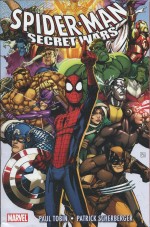
Spider-Man & the Secret Wars


By Paul Tobin, Patrick Scherberger, Clayton Henry & Terry Pallot, with Jim Shooter, Mike Zeck & John Beatty (Marvel)
ISBN: 978-0-7851-4449-6

Presented in the manner of the company’s all-ages Marvel Adventures format, this notionally “in-continuity” tale offers cosmic thrills, chills and light drama by in-filling on one the House of Ideas’ biggest successes. Assiduously revisiting the epic “maxi-series”, writer Paul Tobin, penciller Patrick Scherberger and inkers Clayton Henry & Terry Pallot have cannily crafted an engagingly expanded selection of Spider-sagas faithful to the original whilst adding a contemporary complexity and depth to the iconic wall-crawler

This highly satisfying digest-sized collection collects the 4-issue miniseries from February-May 2010, and also re-presents the original Secret Wars #1 (May 1984) and its opening chapter by James Shooter, Mike Zeck & John Beatty.

The premise of the original 1980s blockbuster was that an all-powerful alien calling itself The Beyonder abducted an army of Earth heroes and villains to an alien purpose-built Battleworld created as an arena in which to prove which was mightier – Good or Evil.

Whilst by no means a new plot, it gave the entire company a massive commercial boost and allowed a number of major series to radically retool at a time when comicbook sales were in a dire downturn. This canny slice of infilling explores some of the saga’s untold moments in an engaging and appealing way, adding contemporary sensibilities and a lighter take to a classic but rather dated and straightforward Fights ‘n’ Tights yarn.

I would strongly suggest however, that if you’ve never seen the original epic, you track it down before tackling Spider-Man & the Secret Wars – it’s not actually necessary but you will get the most out of the new material that way…

The drama opens at a most critical moment, seconds after the almighty Molecule Man has dropped an entire mountain on top of the embattled heroes. With the Incredible Hulk holding up millions of tons of rock, the entombed good guys perforce take a few moments to chill and reminisce.

Top of Spider-Man’s list is the many gaffes he’s made since arriving, particularly the way he’s treated Captain America and the monstrous Green Goliath currently holding all their lives in his big green hands…

Thanks to heroic teamwork, all of the buried brigade eventually emerge safely but the wall-crawler has learned a hard lesson in a most harrowing manner…

The second chapter also focuses strongly on damaging mis- and pre-conceptions as the residents of Denver, Colorado – simultaneously shanghaied by the Beyonder and dumped on his remodelled planet as some kind of control group – is assaulted by a horde of marauding aliens, and the heroes form a living barricade with the valiant but all-too-human civilian defenders to lives and property.

They are surprisingly assisted by arch-nemesis and ultimate evil Doctor Doom, but try as he might Spider-Man cannot fathom the Iron Dictator’s true purpose…

At one critical juncture the world-devouring cosmic god Galactus decided to end the contest early by eating Battleworld, prompting a desperate alliance by the transplanted heroes and villains to stop him. Here, portions of their combined assault are examined in detail as Spider-Man experiences bizarre reality-warping episodes – a natural side effect of proximity to the perilous planetivore – and flashes back and forward through his personal past and futures, experiencing happiness and the darkest of imagined terrors…

The original miniseries culminated with Doom actually stealing the Beyonder’s power and becoming omnipotent. In this modern re-visitation, that conditional triumph is examined as the web-spinner is granted a taste of paradise by the troubled new god who is finding it hard to hang on to lust for conquest, or even personal ambition, after achieving all-consuming divinity…

The cleverly introspective human adventure is capped off by a re-presentation of the original saga’s first issue from 1984, wherein ‘The War Begins’ with the Avengers, X-Men and Fantastic Four, Magneto, the Hulk and the utterly out-of-his-depth Spider-Man all teleported into the deep unknown to see a galaxy destroyed and a world constructed purely so that a cosmic force could determine which of two philosophies was correct.

Arrayed against them were Doom, Galactus, Molecule Man, Ultron, the Lizard, Dr. Octopus, the Enchantress, Absorbing Man, Kang the Conqueror and the Wrecking Crew, all of whom had no problem with a disembodied voice telling them “Slay your enemies and all you desire shall be yours”…

Unceremoniously dumped on the brand new world the sides split into factions and the War began…

This blockbusting little box of delights also includes a full cover gallery by Scherberger, Christina Strain, Chris Sotomayor, Veronica Gandini, Jean-Francis Beaulieu, Zeck & Beatty as well as pages of Scherberger’s early character sketches.

Fast-paced and impressive, bright and breezy with lots of light-hearted action and some solid sly laughs, this book really sees the alternative web-spinner hitting his wall-crawling stride with the violence toned down and “cartooned-up” whilst the stories take great pains to keep the growing youth-oriented soap opera sub-plots pot-boiling on but as clear as possible.

In 2012 the Marvel Adventures line was superseded by specific comicbook titles tied to Disney XD TV shows designated as “Marvel Universe cartoons”, but these collected stories are still an intriguing and perhaps more culturally accessible means of introducing character and concepts to kids born often two generations or more away from those far-distant 1960s originating events. However even though these Spidey super stories are extremely enjoyable yarns, parents should note that some of the themes and certainly the violence might not be what everybody considers “All-Ages Super Hero Action” and might perhaps better suit older kids…
© 2010, 2011 Marvel Characters, Inc. All rights reserved.

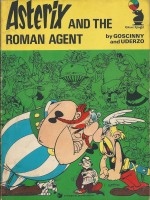
Asterix and the Roman Agent


By Goscinny & Uderzo, translated by Anthea Bell & Derek Hockridge (Brockhampton/Knight Books)
ISBN: 0-340-20285-8

This is another one purely for driven nostalgics, consumed collectors and historical aficionados, highlighting the marvellous variety of formats and methods used to elevate and disseminate brilliant comics from the gutters of prejudice by turning them into proper books…

One of the most-read series in the world, the collected chronicles of Asterix the Gaul have been translated into more than 100 languages since his debut in 1959, with animated and live-action movies, TV series, assorted games, toys and even a theme park outside Paris (Parc Astérix, if you’re planning a trip…) spinning off from his hilarious exploits.

More than 325 million copies of 34 Asterix books have sold worldwide, making his joint creators France’s bestselling international authors. The diminutive, doughty hero was created as the transformative 1960s began by two of the art-form’s greatest masters, René Goscinny & Albert Uderzo, and even though their perfect partnership ended in 1977 the creative wonderment still continues – albeit at a slightly reduced rate of rapidity.

When Pilote launched in 1959 Asterix was a massive hit from the very start. At first Uderzo continued working with Charlier on Michel Tanguy, (Les Aventures de Tanguy et Laverdure), but soon after the first epic escapade was collected as Astérix le gaulois in 1961 it became clear that the series would demand most of his time – especially as the incredible Goscinny never seemed to require rest or run out of ideas (after the writer’s death the publication rate dropped from two books per year to one volume every three to five).

By 1967 the strip occupied all Uderzo’s attention. In 1974 the partners formed Idéfix Studios to fully exploit their inimitable creation and when Goscinny passed away three years later Uderzo had to be convinced to continue the adventures as writer and artist, producing a further ten volumes thereafter.

Like all great literary classics the premise works on two levels: for younger readers as an action-packed comedic romp of sneaky, bullying baddies always getting their just deserts and as a pun-filled, sly and witty satire for older, wiser heads, enhanced here by the brilliantly light touch of master translators Anthea Bell & Derek Hockridge who played no small part in making the indomitable Gaul so very palatable to the English tongue. (Me, I still admire a divinely delivered “Paff!” to the snoot as much as any painfully potent pun or dry cutting jibe…)

The feature debuted in Pilote #1 (29th October 1959, with the first page actually appearing a week earlier in a promotional issue #0, June 1st 1959). The stories were set on the tip of Uderzo’s beloved Brittany coast where a small village of redoubtable warriors and their families resisted every effort of the all-conquering Roman Empire to complete their conquest of Gaul. Alternately and alternatively the tales took the heroes anywhere in the Ancient World, circa 50BC, as the Gallic Gentlemen wandered the fantastic lands of the Empire and beyond…

Unable to defeat or even contain these Horatian hold-outs, the Empire resorted to a desperate policy of containment with the seaside hamlet perpetually hemmed in by the heavily fortified garrisons of Totorum, Aquarium, Laudanum and Compendium.

The Gauls don’t care: they daily defy the world’s greatest military machine simply by going about their everyday affairs, protected by the magic potion of resident druid Getafix and the shrewd wits of the rather diminutive dynamo and his simplistic, supercharged best friend…

Firmly established as a global brand and premium French export by the mid-1960s, their gradual rise to prominence this side of the pond was tentative but as unstoppable as Obelix’s pursuit of roast boar or Roman playmates…

The translated albums are available in a wealth of differing formats and earlier editions going all the way back to the first 1969 Brockhampton editions (still readily available from a variety of retail and internet vendors – or even your local charity shop and jumble sale).

Asterix and the Roman Agent premiered in 1970 in Pilote #531-552, simultaneously making the jump to a French album and English translated editions in 1972 – from when this delightful digest-sized (212 x 150mm), kid-friendly collectors’ item originates, and highlighted homeland insecurity as Caesar, under attack by the Roman Senate over the indomitable, unconquerable Gauls, deploys his greatest weapon: a double-edged sword named Tortuous Convolvulus, whose every word and gesture seems to stir ill-feeling and conflict in all who meet him.

Where Force of Arms has failed the wily despot hopes this living weapon of mass of dissension might forever fracture the Gauls’ unshakable comradeship and solidarity with a dose of Roman entente dis-cordiale…

On the crossing, just two minutes with the conniving Convolvulus has a sworn brotherhood of pirates at each other’s throats, and even while discussing the plan with Aquarium’s commander Felix Platypus, the agent’s unique gift sows discord and violence, so when he finally enters the village it’s not long before the high-spirited and fractious Gauls are at war with each other…

The women are cattily sniping at each other, the traders are trading blows and even Asterix and Obelix are on the outs. But that’s not the worst of it: somehow the idea has gotten around that their sharp little champion has sold out to the Romans…

With discord rife, the Romans soon have the secret of the magic potion too – or do they? The cunningly ingenious Convolvulus hasn’t reckoned on two things: the sheer dimness of Imperial troops and the invaluable power of true friendship, leaving Asterix and Obelix a way to overcome their differences, turn the tables and once more save the day.

At last, the agent provocateur is forced to realise that sometimes one can be too smart for one’s own good…

Brittle, barbed and devilishly sharp, this yarn was reputedly based on lingering ill-feeling following an internal power-struggle at Pilote which almost cost editor Goscinny his job. The original title for the tale was La Zizanie – “The Ill-feeling” or “The Dissension”. Seen through the lens of forty years of distance, however, all that can be seen now is stinging, clever, witty observational comedy and magnificently engaging adventure, and surely that’s what matters most?

Asterix sagas are always stuffed with captivating historical titbits, soupcons of healthy cynicism, singularly surreal situations and amazingly addictive action, illustrated in a magically enticing manner. These are perfect comics that everyone should read over and over again.

Surely you don’t disagree?
Text © 1970 Dargaud Editeur. English language text Text © Hodder & Stoughton, Ltd.

Isis & Osiris: To the Ends of the Earth – An Egyptian Myth

Isis
By Jeff Limke & David Witt (Graphic Universe)
ISBN: 978-1-58013-320-3, 978-0-82256-570-3

The heroic tales and beliefs of ancient cultures have for centuries formed an integral part of children’s educational development – and a good thing too. These days though, those magnificently inspiring and unforgettably visual yarns are as likely to be disseminated via graphic novel as through the sparsely illustrated prose books which had such a formative influence on my early days.

Isis & Osiris: To the Ends of the Earth was released in 2007, one self-contained chronicle in a larger series which similarly retold through sequential narrative many other myths and legends such as Jason’s Quest with the Argonauts, the Labours of Hercules or the Saga of King Arthur.

Packaged as full-colour, 48 page, card-cover booklets, they were designed to introduce kids to the magical riches of human history and imagination. This particular epic retells one of the oldest stories of our species, revealing a story of love, hate and the devotion of marriage, as well as describing the invention of Egypt’s infamous burial ceremony and system of justice.

The story begins in the most ancient of days as the divine Isis begins a holy ritual with the royal infant Dactyl, simultaneously regaling him with a tale of ‘A Party to End all Parties’. At that long-ago festival her beloved and revered husband Osiris was betrayed by his jealous, ambitious and infinitely wicked brother Set.

The dark plotter had brought a lavish and ornate stone sarcophagus carved from solid rock to the celebration and proposed a party game: whomever the beautiful bier best fitted would win it forever. Everybody tried and failed to settle into it until noble, jolly Osiris at last lay within, at which time it magically sealed itself, trapping the king of the gods within ‘A Stone-Cold Prize’…

His fate sealed, Osiris and the sarcophagus were hurled into the mighty Nile River by Set’s servants, to vanish from sight as the triumphant usurper assumed control of the world. Heartbroken but determined, Isis became a ‘Goddess Interrupted’ as she roamed the Earth for years, searching for her lost husband.

The Nile was the source of all life and Osiris’ magical passage had wrought wondrous changes and transformations Isis could track as she wearily walked the world. Eventually Isis arrived in the land ruled by Queen Astarte where she was made most welcome even as she saw the stump of a huge Tamarisk tree and felt the presence of he long-lost love.

The mighty growth was so impressive that the King had ordered it to be carved into a glorious imperial column for his palace, and when she travelled there Isis knew her quest was ended.

Arriving at our story’s starting point, the divine goddess, in her gratitude, was attempting to bless Astarte’s infant son Dactyl with her heavenly gifts when the suspicious queen inadvertently burst into her chamber and interrupted the benison. This contravention of the law of courtesy cost the mother and her son greatly…

Angered and impatient, Isis shattered the ceremonial column and released the hated sarcophagus from within it, before commandeering a boat and crew to take her beloved back up the Nile to his stolen kingdom.

‘A God Comes Home, a God Goes Missing’ found the reunited couple preparing to celebrate Osiris’ resurrection, with amazing new gifts for the people – such as farming tools and wheat – aided by their hawk-headed son Horus and Set’s jackal-headed boy Anubis. As they busied themselves, nobody saw a giant boar steal in and remove the still-slumbering Osiris…

When she discovered him missing the goddess exploded in fury, unleashing her wrath against the people until fair-minded Horus calmed her down and restored her reason.

By the banks of the river, the boar resumed his true shape and spiteful, jealous Set, determined never to lose or share the worship of mankind, cut his brother into many pieces and scattered them ‘To the Ends of the World’…

Shattered and disconsolate, Isis is comforted and encouraged by Set’s wife Nephthys, who urges her to find the strength to search for her husband again. With the aid of her sister-in-law, Anubis, and Horus, Isis once more roams the earth until all the scattered segments of Osiris are found and reconstituted. All but one…

With a vital fragment missing, Isis has a potter construct a clay replacement from the earth her husband had previously blessed, and undertakes a new ceremony to recombine, reunite and reanimate the pieces. By ‘Making a Mummy’ she and her priests totally heal the withered husk and bring Osiris back to vibrant life.

His journey to the Land of the Dead had greatly changed the mighty ruler and, restored to health and power, he has accepted a great burden. Henceforth he will judge all those going to the afterlife with a set of scales balancing the evil in men’s hearts against the weight of a heavenly feather…

All religious stories are devised to explain away contemporary unsolved questions and unknowable mysteries. The liturgical history lesson retold here was one people’s attempt to rationalise the course of their lives as farmers whilst explaining how and why their laws and customs began and, although grossly simplified here, works in an engaging manner that should certainly tempt readers to go and find out more.

Engrossing, dynamic, pretty and blessed with a light touch, this splendid introduction to mythology is designed for kids with a reading age of nine or above – that’s Year 4, I suspect – and also contains a full ‘Glossary’ of characters and concepts, suggested ‘Further Reading, Websites and Films’, creator biographies in ‘About the Author and the Artist’ and an ‘Index’.

They also read very well as sequential narrative in their own right and would serve not just as educational aid but as a smart way to get your youngsters into comics.
© 2007 Lerner Publishing Group, Inc. All rights reserved.

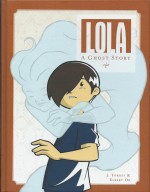
Lola – a Ghost Story


By J. Torres & Elbert Or (Oni Press)
ISBN: 978-1-934964-33-0

These days young kids are far more likely to find their formative strip narrative experiences online or between the card-covers of specially tailored graphic novels rather than the comics and periodicals of my long-dead youth.

In times past the commercial comics industry thrived by producing copious amounts of gaudy, flimsy pamphlets subdivided into a range of successfully, self-propagating, seamlessly self-perpetuating age-specific publications. Such eye-catching items generated innumerable tales and delights intended to entertain, inform and educate such well-defined target demographics as Toddler/Kindergarten, Younger and Older Juvenile, General, Girls, Boys and even Young Teens, but today the English-speaking world can only afford to maintain a few paltry out-industry, licensed tie-ins and spin-offs for a dwindling younger readership.

Where once cheap and prolific, strip magazines in the 21st century are extremely cost-intensive and manufactured for a highly specific – and dying– niche market, whilst the beguiling and bombastic genres that originally fed and nurtured comics are more immediately disseminated via TV, movies and assorted interactive games media.

Happily, old-school prose publishers and the newborn graphic novel industry have a different business model and far more sustainable long-term goals, so the magazine makers’ surrender has been turned into a burgeoning victory, as solid and reassuringly sturdy Comic-Books increasingly buck the pamphlet/papers trend.

Some of the old-fashioned publishers even evolved…

Independent comics mainstay Oni deftly made the switch to sturdy stand-alone one-offs at the end of the last century, publishing a succession of superb illustrated tales splendidly pushing the creative envelope whilst providing memorable yarns that irresistibly lure young potential fans of the form into our world…

That looks quite creepy in type-form but that’s okay – this is a beguilingly spooky story and you should be on your guard…

Aimed at readers of seven and above, Lola – a Ghost Story follows young Canadian Jesse as he returns to the rural Philippine farm where his parents grew up. It’s not his first visit, but it is the saddest. They’re going back for the funeral of his grandmother…

In the native Tagalog language Lola means “grandmother” and Jesse’s was pretty scary. She was old and ugly, had a hump on her back and – he thinks – tried to drown him when he was a baby.

She also saw dead things and monsters and the future… just like Jesse does.

Despite all this he loved her very much and really doesn’t want to accept that she’s gone forever. After hours of exhausting travel Jesse and his folks at last arrive at the old farmhouse which has seen so much tragedy. The visitor fulsomely greets his uncle and cousin Maritess, but doesn’t acknowledge her brother JonJon.

The kid’s acting like a jerk as usual, and besides he’s been dead for over a year and no-one else can see him…

Soon the family are gathered together: eating, remembering the departed and telling stories of Lola – like the time she saw the giant devil-pig and saved the entire family from financial ruin – but Jesse is still ill at ease. Even though everyone here believes his grandmother had second sight and blessed gifts, the sensibly modern boy can’t bring himself to believe the things he sees are real…

Maritess believes though and she suspects what Jesse won’t admit even to himself…

After JonJon teases him some more and taunts him with the giant bestial, cigar-smoking Kapre lurking at the window, Jesse finally drops into an exhausted, nervous slumber.

The funeral next day is horrible. Everybody is sad, the church is filled with so many shockingly damaged spirits and Jesse is afflicted with a vision of being trapped and burning which makes him run terrified from the ceremony.

Still traumatised that evening, he finds JonJon’s old toybox on his bed and Maritess guesses what has happened.

She tells her cousin the story of the bloodsucking Manananggal which attacked Lola’s mother causing her unborn daughter’s hump-back and magical sight. Such gifts and curses usually skip a generation and Maritess always assumed she’d be the one to get the sight, but now that it’s clear Jesse is the one to inherit she’s determined to give him all the help he needs.

The box is full of JonJon’s toy cars, and after playing with them Jesse and the dead boy romp over by the farm wall – the one where nobody is allowed to go anymore…

Jesse’s uncle isn’t doing very well: all the tragedies have made him very sad and he’s drinking an awful lot.

There are other problems bothering Jesse. The entire family have stories about his grandmother and it’s clear that she was brave and determined and fought monsters all her life: is that, then, why she tried to drown him when he was a baby?

As Maritess tells her Canadian cousin about the time young Lola saved her school friends from a predatory Tiyanak – a baby-shaped carnivorous monster – and he prepares to ask her if she thinks he might be evil, her father comes in very drunk and shouts at him for leaving JonJon’s cars in the garden.

They are all he has left to remember his son and the boy’s favourite one is already missing. Jesse knows which one it is… the striped one JonJon calls “Zebra” which he wouldn’t share with him last night by the wall…

Uncle Tim hates the wall. It had something to do with his son’s death and Jesse knows he’ll get into trouble if he goes over it. But Uncle is so sad. He misses his boy and really wanted to bury Zebra with JonJon, but it’s gone and the man is so drunk and angry all the time now…

Jesse’s fear that Lola saw something evil in him is assuaged by Maritess who thinks he should use his gift to help people – just like just their grandmother used to -  so when JonJon appears again, Jesse climbs the hated wall and vanishes into the wild unknown beyond…

With Jesse’s first good deed successfully accomplished JonJon can rest and Uncle Tim is at peace. The troubled psychic is even a little less disturbed by his power and his apparent destiny, but that all changes on the trip back to the airport when Jesse sees something utterly horrifying…

Evocative, compelling, gently enthralling and with a genuinely scary shock ending, this superb kid’s chiller is filled with a fascinating new bestiary of monsters and boogey-men to bedazzle Western eyes and imaginations, but mostly relies on captivating art and top-notch storytelling to draw readers in. I loved it and I’m actually praying there’s a sequel in the pipeline…
Lola is ™ & © 2009 J. Torres. All other material © 2009 Oni Press, Inc. All Rights Reserved.

Thrill Murray – a Colouring-In Book


By Mike Coley & various (Belly Kids)
ISBN: 978-0-9574909-0-1

Belly Kids are a quirky multimedia arts company with a fun-fuelled, anything goes attitude, producing art-based books, records, DVDs, t-shirts, merchandise, live shows and comics just because they can.

This decidedly peculiar collective tribute to a true Hollywood original features twenty three memorable coloured images of the masterful William James “Bill” Murray in many of his most iconic roles, crafted by a bevy of uniquely individualistic artists.

Moreover there are adjacent monochrome iterations of each image just so you and your young ‘uns can have a go at improving upon each…

Ranging from passionately illustrative to baldly comic, these cartoon contributions from Hattie Stewart, Murray Somerville, Logan Fitzpatrick, Anneka Lange, Jonny Packham, James Burgess, Alice Devine, Bridget Meyne, Brooke Olsen, Tobias Hall, Mike Kilkelly, Nicholas Stevenson, Thomas Key, Chris Arrowsmith, Richard Fairhead, Marie-Louise Plum, Catherine Askew, Mya Munnelly, Rosie Roberts, Beth Harris, Donald Ely, Mary Cheung and Nathan Dirienzo recapture the magic of the great man’s celluloid hits from Caddyshack to Groundhog Day, Ghostbusters to The Life Aquatic with Steve Zissou and much more.

It’s never too soon or too late to get in touch with your visually expressive side, and the only way this wonderfully wry and imaginative activity book could be improved is with a box of crayons or some paints and pens…

Irreverent, subversive and appallingly addictive, the combination of great characters, compelling pictures and mirthful attention-seizing is a welcome weapon to get kids reading and creating rather than sluggishly absorbing whatever’s on the TV or computer screen.

Forget video-games – buy that child or your partner this book. If you’re worried about exercise, make ’em do the colouring-in standing up and if they make a mess you can boost their cardio rate by getting them to clean up.

Boy, you have a lot of problems having a bit of fun…
© 2012 Belly Kids. All Rights Reserved.

Pogo: the Complete Syndicated Comic Strips volume 2: Bona Fide Balderdash


By Walt Kelly, edited by Carolyn Kelly (Fantagraphics Books)
ISBN: 978-1-60699-584-6

Tragically this review copy didn’t reach me in time for a Christmas recommendation, but that’s okay as books of this calibre are worth buying and reading at every moment of every day, and rather than waste your valuable time with my purely extraneous blather, you should just hit the shops or the online emporia of your choice and grab this terrific tome now…

If you still need more though, and aren’t put off by me yet, I’m happy to elucidate at some length…

Walter Crawford Kelly Jr. was born in 1913 and started his cartooning career whilst still in High School, as artist and reporter for the Bridgeport Post. In 1935, he moved to California and joined the Disney Studio, working on short cartoon films and such features as Dumbo, Fantasia and Pinocchio until the infamous animator’s strike in 1941.

Refusing to take sides, Kelly moved back East and into comicbooks – primarily for Dell who held the Disney funnybook license amongst others at that time.

Despite his glorious work on such popular people-based classics as the Our Gang movie spin-off, Kelly preferred and particularly excelled with anthropomorphic animal and children’s fantasy material. For the December 1942-released Animal Comics #1 he created Albert the Alligator and Pogo Possum, wisely retaining the copyrights in the ongoing saga of two affable Bayou critters and their young African-American pal Bumbazine. Although the black kid soon disappeared, the animal actors stayed on as stars until 1948 when Kelly moved into journalism, becoming art editor and cartoonist for hard hitting, left-leaning liberal newspaper The New York Star.

On October 4th 1948, Pogo, Albert and an ever-expanding cast of gloriously addictive characters began their funny pages careers, appearing in the paper six days a week until the periodical folded in January 1949.

Although ostensibly a gently humorous kids feature, by the end of its run (reprinted in full at the back of Pogo: the Complete Syndicated Comic Strips volume 1) the first glimmers of the increasingly barbed, boldly satirical masterpiece of velvet-pawed social commentary began to emerge…

When The Star closed Pogo was picked up for mass distribution by the Post-Hall Syndicate and launched on May 16th 1949 in selected outlets. A colour Sunday page debuted January 29th 1950 and both were produced simultaneously by Kelly until his death in 1973 (and even beyond, courtesy of his talented wife and family).

At its height the strip appeared in 500 papers throughout 14 countries and the book collections – which began in 1951 – eventually numbered nearly 50, collectively selling over 30 million copies, and all that before this Fantagraphics series began…

In this second of a proposed full dozen volumes reprinting the entire canon of the Okefenokee Swamp citizenry, possibly the main aspect of interest is the personable Possum’s first innocently adorable attempts to run for Public Office – a ritual which inevitably and coincidentally reoccurred every four years whenever the merely human inhabitants of America got together for raucous caucuses and exuberant electioneering – but it’s also remarkable to note that by the close of this two-year period Kelly had increased his count of uniquely Vaudevillian returning characters to over one hundred. The likes of Solid MacHogany, Tammanany Tiger, Willow McWisper, Goldie Lox, Sarcophagus MacAbre, the sloganeering P.T. Bridgeport, bull moose Uncle Antler and a trio of brilliantly scene-stealing bats named Bewitched, Bothered and Bemildred, amongst so many others would pop up with varying frequency and impact over the next twenty years…

This colossal and comfortingly sturdy landscape compilation (three-hundred-and fifty-six 184x267mm pages) includes the monochrome Dailies from January 1st 1951 to December 31st 1952, and the Sundays – in their own full-colour section – from January 7th 1951 to December 28th 1952 – all faithfully annotated and listed in a copious, expansive and informative Table of Contents. Supplemental features comprise a Foreword from pioneering comedy legend Stan Freberg, delightful unpublished illustrations and working drawings by Kelly, more invaluable context and historical notes in the amazing R.C. Harvey’s ‘Swamp Talk’ by and a biographical feature ‘About Walt Kelly’ by Mark Evanier.

In his time the satirical mastermind unleashed his bestial spokes-cast on such innocent, innocuous sweethearts as Senator Joe McCarthy, J.Edgar Hoover, the John Birch Society, Richard Nixon and the Ku Klux Clan, as well as the likes of Hubert Humphrey, Lyndon B. Johnson and – with eerie perspicacity – George W. Romney, U.S. Secretary of Housing and Urban Development, Governor of Michigan and Pa of some guy named Mitt…

This particular monument to madcap mirth and sublime drollery of course includes the usual cast: gently bemused Pogo, boisterous, happily ignorant alligator Albert, dolorous Porkypine, obnoxious turtle Churchy La Femme, lugubrious hound Beauregard Bugleboy, carpet-bagging Seminole Sam Fox, pompous (doesn’t) know-it-all Howland Owl and all the rest, covering not only day to day topics and travails like love, marriage, weather, fishing, the problem with kids, the innocent joys of sport, making a living and why neighbours shouldn’t eat each other, but also includes epic sagas: the stress of Poetry Contests, hunting – from a variety of  points of view – Christmas and other Public Holidays, incipient invasion, war and even cross-dressing to name but a few…

As Kelly spent a good deal of 1952 spoofing the electoral race, this tome offers a magical, magnificent treatment of all the problems associated with grass (and moss) roots politics: dubious campaign tactics, loony lobbying, fun with photo ops, impractical tactical alliances, glad-handing, a proliferation of political promos and ephemera, how to build clockwork voters – and candidates – and of course, life after a failed run for the Presidency…

As the delicious Miz Ma’m’selle Hepzibah would no doubt say: plus ça change, plus c’est la même chose…

Kelly’s uncontested genius lay in his seemingly effortless ability to lyrically, vivaciously portray through anthropomorphic affectation comedic, tragic, pompous, infinitely sympathetic characters of any shape or breed, all whilst making them undeniably human, and he used that gift to blend hard-hitting observation of our crimes, foibles and peccadilloes with rampaging whimsy, poesy and sheer exuberant joie de vivre.

The hairy, scaly, feathered slimy folk of the surreal swamp lands are, of course, inescapably us, elevated by burlesque, slapstick, absurdism and all the glorious joys of wordplay from puns to malapropisms to raucous accent humour into a multi-layered hodgepodge of all-ages delight – and we’ve never looked or behaved better…

This stuff will certainly make you laugh; it will probably provoke a sentimental tear or ten and will certainly satisfy your every entertainment requirement. Timeless and magical, Pogo is a giant not simply of comics, but of world literature and this magnificent second edition should be the pride of every home’s bookshelf, right beside the first one.

…Or, in the popular campaign parlance of the critters involved: “I Go Pogo!” and so should you.

POGO Bona Fide Balderdash and all POGO images, including Walt Kelly’s signature © 2012 Okefenokee Glee & Perloo Inc. All other material © 2012 the respective creator and owner. All rights reserved.

Showcase Presents Superman Family volume 2


By Otto Binder, Curt Swan, Kurt Schaffenberger & various (DC Comics)
ISBN: 978-1-84576-812-4

During the 1950s and early 1960s in America, being different was a bad thing. Conformity was sacrosanct, even in comicbooks, and everybody and thing was meant to keep to its assigned and intended role.

For the Superman family and cast that meant a highly strictured code of conduct and parameters: Daily Planet Editor Perry White was a stern, shouty elder statesman with a heart of gold, Cub Reporter Jimmy Olsen was a brave and impulsive, unseasoned fool – with a heart of gold – and plucky News-hen Lois Lane was brash, nosy, impetuous and unscrupulous in her obsession to marry Superman although she too was – deep down – another possessor of an Auric aorta.

Yet somehow even with these mandates in place the talented writers and artists assigned to detail their wholesomely uncanny exploits managed to craft tales both beguiling and breathtakingly memorable and usually as funny as they were exciting.

This second cunningly combined chronologically complete compendium collects the affable, all-ages tales from Superman’s Pal Jimmy Olsen #23-34 (September 1957-January 1959), Lois’s second tryout issue  from Showcase #10 (September/October 1957) as well as Superman’s Girlfriend Lois Lane #1-7 (March/April 1958-February 1959) and promptly commences with the Man of Steel’s Go-To Guy and the three tales which comprised issue #23 of his solo title, illustrated as almost always by the wonderful Curt Swan & Ray Burnley. ‘Jimmy Olsen’s Two Super-Pals’ was the first of three scripts by the irrepressible Otto Binder and described how our lad gained an other-dimensional Genie as another faithful Super-Friend. Of course with sinister radium bandits plaguing Metropolis there was more to the cosmic companion than met the eye…

This was followed by ‘Jimmy Olsen, the Bearded Boy’ wherein boastful hubris and a magic potion inflicted runaway whiskers on many Daily Planet staff – even ClarkKent – prompting many face-saving secret feats from the identity conscious Man of Tomorrow. As Jimmy’s series progressed, one of the most popular plot-themes (and most fondly remembered and referenced today by most Baby-Boomer fans) was the unlucky lad’s appalling talent for being warped, mutated and physically manipulated by fate, aliens, magic, mad science and even his friends… a fate which frequently befell Lois too although Jimmy got a lot less marriage proposals from aliens, murderers of monsters…

The boy’s bits then concluded with ‘The Adventures of Private Olsen’ wherein the Cub Reporter was assigned to write articles on Army life and – with Superman’s assistance – taught an unscrupulous drill sergeant a much-needed lesson…

When Lois Lane – arguably the oldest supporting character/star in the Superman mythology if not DC universe – finally received her own shot at a solo title, it was very much on the terms of the times. I must shamefacedly admit to a deep, nostalgic affection for her bright and breezy, fantastically fun adventures, but as a free-thinking, (nominally) adult liberal of the 21st century I’m often simultaneously shocked nowadays at the jolly, patronising, patriarchally misogynistic attitudes underpinning too many of the stories.

Yes, I’m fully aware that the series was intended for young readers at a time when “dizzy dames” like Lucille Ball or Doris Day played to the popular American gestalt stereotype of Woman as jealous minx, silly goose, diffident wife and brood-hungry nester, but to ask kids to seriously accept that intelligent, courageous, ambitious, ethical and highly capable females would drop everything they’d worked hard for to lie, cheat, inveigle, manipulate and entrap a man just so that they could cook pot-roast and change super-diapers is just plain crazy and tantamount to child abuse. They’re great, great comics but still…

I’m just saying…

Showcase #10 (September/October 1957) was the second and final try-out appearance – all illustrated by Wayne Boring & Stan Kaye – for Superman’s Girlfriend, Lois Lane and opened with ‘The Jilting of Superman’ by Binder, wherein the Action Ace almost fell for a most ancient ploy when Lois pretended to marry another man to make the alien oaf realise what she meant to him…

‘The Sightless Lois Lane’ written by Jerry Coleman told how a nuclear accident temporarily blinded the journalist, and how her sudden, unexpected recovery almost exposed Clark Kent‘s secret when he callously changed to Superman in front of the “sightless” lass, after which Binder delightfully detailed the contents of ‘The Forbidden Box from Krypton’: a cache of devices dug up by a Smallville archaeologist originally packed by Jor-El and intended to aid the infant Superbaby on Earth. Of course when Lois opened the chest all she saw was a way to become as powerful as the Man of Steel and soon became addicted to being a super-champion in her own right…

The Jaded Journo launched into her own title scant months later, clearly offering exactly what the reading public wanted…

Jimmy Olsen #24 featured another trio of top tales from Binder, Swan & Burnley beginning with ‘The Superman Hall of Trophies’ which found a Kryptonite-paralysed Metropolis Marvel trapped in a museum and rescued by the brave boy reporter, whilst ‘The Gorilla Reporter’ saw the poor sap briefly brain-swapped with a mighty (confused) Great Ape before Superman again had to divert attention from his exposure-threatened alter ego by convincing the world at large that Jimmy was ‘The Luckiest Boy in the World’…

Issue #25 as ever by Binder, Swan & Burnley, featured ‘The Secret of the Superman Dummies’ wherein a trip to a magic show resulted in Jimmy being inescapably handcuffed to the last man in the world Superman dared to approach, ‘The Second Superboy’ saw the poor kid accidentally rocketed to an alien world where he gained incredible abilities – courtesy of resident absent-minded genius Professor Potter – and ‘The Day There Was No Jimmy Olsen’ offered a tantalising hoax and mystery which ended with an unexpected promotion for the pluckily ingenious boy…

He began #26 subjected to inexplicable bouts of deadly mass fluctuations as ‘The World’s ‘Heavyweight’ Champ’ before the newly appointed ‘Jimmy Olsen, Foreign Correspondent’ uncovered a sinister scheme to defraud the Ruritanian Kingdom of Hoxana.  Back home however he had to again undergo a well-intentioned con from his best pal after he saw Clark flying and subsequently – inadvertently – himself became ‘The Birdboy of Metropolis’…

Superman’s Girlfriend Lois Lane #1 (March/April #1958) at last arrived sporting three stunning yarns illustrated by sleek, slick Kurt Schaffenberger whose distinctive art-style would quickly become synonymous with the reporter. Everything kicked off with ‘The Bombshell of the Boulevards’ (scripted by Leo Dorfman) wherein she donned a blonde wig to deceitfully secure aHollywood interview and soon provoked a death-duel between rival enflamed suitors. Of course it was only another scheme by Superman and Jimmy to teach her a lesson in journalistic ethics. Good thing reporters are so much less unscrupulous these days…

During this Silver Age period with Superman a solid gold sensation of the newly ascendant television phenomenon, many stories were draped in the wholesome trappings of Tinseltown – even more so than most of celebrity-obsessed America. It didn’t hurt that editor Whitney Ellsworth was a part-time screenwriter, script editor and producer as well as National DC’sHollywood point man.

Otto Binder then reunited with his old Captain Marvel collaborator for ‘Lois Lane, Super-Chef’ as Lois disastrously tried to master home cooking in her latest scheme to get the Man of Steel to propose, whilst in ‘The Witch of Metropolis’ a science assignment went horrifically awry and transformed her into a wizened old hag every time the sun set…

JO #27 opened with ‘The Boy from Mars’ wherein the reporter got his own lesson in integrity after trying to create a circulation-boosting hoax, and another in the perils of pride and over-confidence after messing up ‘A Date with Miss Metropolis’ before the issue ended with a riotous battle with his own evil duplicate after Professor Potter accidentally created ‘The Outlaw Jimmy Olsen’: all courtesy of Binder, Swan & Burnley.

Ever so slowly a more mature tone was developing in the Cub’s adventures. In #28’s ‘The Spendthrift and the Miser’ an alien gift from Superman caused wildly manic mood swings whilst an accidental time-trip impossibly revealed that Jimmy was destined to become ‘The Boy who Killed Superman’ whilst in ‘The Human Skyscraper’ another botched Potter product enlarged the kid to monumental, city-endangering size.

In the second Lois Lanecomicbook she was apparently appalled to uncover ‘Superman’s Secret Sweetheart’ (uncredited here but possibly Bill Finger?), but was in fact on her very best mettle helping a bullied college girl fight back against her mean sorority sisters, after which Binder recounted how Tinseltown improbably called and the reporter became – eventually – an extremely high maintenance actress in ‘Lois Lane in Hollywood’…

‘Superman’s Forbidden Room’ then closed proceedings with a cruel hoax playing on her well-publicised infatuation, but this time it wasn’t the Man of Tomorrow doing the fooling and the stakes had never been higher in a moody thriller illustrated by Boring & Kaye and probably written by Jerry Coleman.

In Jimmy Olsen #29 the usually adept reporter hit a monumental writer’s block whilst working on a novel, but ‘The Superman Book that Couldn’t be Finished’ eventually was – with a little hands-on Kryptonian help – whilst in ‘Jimmy Olsen’s Super-Pet’ the Cub Reporter was adopted by super-hound Krypto in his twilight years – and was instrumental in rejuvenating the Dog of Steel for a new generation. ‘The Amazing Spectacles of Doctor X’ then ended the issue with a clever thriller as Jimmy appropriated goggles which could see the future and glimpsed something he wished he hadn’t…

‘The Rainbow Superman’ by Binder & Schaffenberger, opened Lois Lane #3 and saw the News-hen at her very worst as a cosmic accident made the Man of Tomorrow an ambulatory spectrum and she set about trying to see if Clark too glowed, whilst ‘The Man who was Clark Kent’s Double’ (scripted by Coleman, as was the final tale here) broke her heart after she again proved too nosy for her own good. ‘Lois Lane and the Babe of Steel’ then gave her a terrifying glimpse of her dreams come true when Superman traded temporal places with his toddler self and caused all manner of problems for the capable bachelorette…

In JO #30 ‘The Son of Superman’, Binder, Swan & Burnley jerked our tears when an attempt by the Kryptonian to adopt the reporter went tragically wrong after which they proved equally adept at creating mystery and tension as criminals schemed to destroy Jimmy by making him ‘The Cub who Cried Wolf’. ‘Superman’s Greatest Enemy’ – with Dick Sprang standing in for Curt Swan – then revealed how the naïve lad fell for a crook’s scam but had enough smarts to turn the tables…

Binder & Schaffenberger opened LL #4 with a well-meaning Jimmy using hypnotism to get Clark to propose to Lois, utterly unaware who he was actually using those gimmicks on, catastrophically leading to ‘The Super-Courtship of Lois Lane’…

Times have changed, but when Coleman scripted ‘Lois Lane, Working Girl’ he was simply referring to her being challenged to undertake a job in manual labour, so shame on you. Alvin Schwartz then crafted a canny conundrum in ‘Annie Oakley Gets her (Super)man’ for Boring & Kaye to illustrate, as a riding accident out West caused Lois to believe she was the legendary cowgirl sharpshooter whilst hunting some very nasty gangsters with very real guns…

Jimmy Olsen #31 highlighted the now mythic tale of ‘The E-L-A-S-T-I-C Lad’ (Binder, Swan & Burnley) wherein Superman was ultimately responsible for the reporter gaining stretching powers after leaving a chest of alien artefacts with the nosy, accident-prone kid, whilst in ‘The Mad Hatter of Metropolis’ the power of suggestion convinced the kid that he could imitate the feats of famous folks simply by donning their characteristic chapeaus before ‘The Boy who Hoaxed Superman’ saw the lad attempt to get a pay raise by pretending to leave for the future. It didn’t work, and everybody seemed to prefer the replacement Perry hired who was, of course, Jimmy in disguise…

In #32 Professor Potter’s latest chemical concoction made Jimmy look like Pinocchio but did give him ‘The Super Nose for News’ whilst an uncanny concatenation of crazy circumstances turned the sensibly staid Man of Tomorrow into ‘The Rock ‘n’ Roll Superman’ every time the reporter masquerading as a pop star twanged his old guitar, and ‘The Jimmy Olsen from Jupiter’ (by Alvin Schwartz) revealed how aliens mutated the Cub Reporter into one of their scaly selves, complete with extremely useful mind-reading abilities, much to Superman’s chagrin…

‘Superman’s Greatest Sacrifice’ by Robert Bernstein & Schaffenberger led in Lois Lane #5, as the journalist met her millionaire double and seemingly lost her beloved Metropolis Marvel to her, whilst in ‘The Girl of 100 Costumes’ the canny lass tried to use a myriad of new looks to catch his attention, in an uncredited story drawn by Al Plastino. It was back to silly usual in Binder & Schaffenberger’s ‘The Fattest Girl in Metropolis’;  a plant growth ray accidentally super-sized the vain but valiant reporter. Imagine her reaction when she found out that Superman had deliberately expanded her dimensions… for good and solid reasons, of course…

Binder, Swan & Burnley were in sparkling form in JO #33, starting with ‘Legends that Came to Life’, wherein a nuclear accident animated the strangest foes from fairytales and only Jimmy, not his mighty mentor, could save the day, whilst in ‘The Lady-Killer from Metropolis’ a classic case of boyish arrogance and girlish gossip led to the boy reporter briefly becoming the sexiest thing in Hollywood. The horror and hilarity was capped with ‘The Human Flame-Thrower!’ as Potter’s latest experiment caused Jimmy the worst case of high-octane halitosis in history…

Coleman, Boring & Kaye opened LL #6 with ‘The Amazing Superman Junior’ as yet another attempt to teach Lois a lesson backfired on the pompous Man of Steel and she brought in a mysterious kid to show the Kryptonian what it felt like…

This was followed by a brace of tales by Bill Finger & Schaffenberger, starting with ‘Lois Lane… Convict’ which saw seemingly saw the reporter take a bribe from gangster Baldy Pate and pay a terrible price, whilst in ‘Lieutenant Lois Lane, U.S. Army’ she and Clark joined the military for a story only to have the – temporary – rank turn her into a man-hating bully. Surely some mistake, no…?

‘Superman’s Pal of Steel’ by Binder, Swan & Burnley, opened the last Jimmy Olsen issue in this marvellous monochrome collection as another secret identity-preserving scheme took a bizarre turn after the boy reporter genuinely gained an incredible power. Alvin Schwartz then wrote ‘The Underworld Journal’ which saw the kid inherit his own newspaper and swiftly go off the journalistic rails before Potter’s newest invention turned Jimmy’s clunky old kit into ‘The Most Amazing Camera in the World’ (Binder) – and a deadly danger to Superman’s greatest secret…

Superman’s Girlfriend Lois Lane #7 closes out this volume with three more mixed-message masterpieces beginning with ‘Lois Lane’s Kiss of Death’ (by Bernstein & Schaffenberger), wherein a canny conman tried to fool the reporter into botching her biggest crime exposé. Schwartz then had Lois use hypnotism to wash her heroic obsession out of her mind in ‘When Lois Lane Forgot Superman’.

Illustrated by Boring & Kaye, the tale took an unlikely turn when she then turned her passionate, unfulfilled attentions on poor Clark, after which Lana Lang fully entered the Man of Steel’s modern mythology. When Lois took in the destitute, down-at-heel lass who once held the Boy of Steel’s heart, she seemingly allowed her to also become ‘The Girl who Stole Superman’ in a tense and clever tale from Coleman and Schaffenberger…

These spin-off support series were highly popular top-sellers for more than two decades; blending action, adventure, broad, wacky comedy, fantasy and science fiction in the gently addictive manner scripter Binder and artist Schaffenberger had perfected at Fawcett Comics on the magnificent Marvel Family.

As well as containing some of the most delightful episodes of the pre angst-drenched, cosmically catastrophic DC, these fun, thrilling and yes, occasionally deeply moving, all-ages stories also perfectly depict the changing mores and tastes which reshaped comics from the safe 1950s to the seditious, rebellious 1970s, all the while keeping to the prime directive of the industry – “keep them entertained and keep them wanting more”.

I certainly do…
© 1957, 1958, 1959, 2008 DC Comics. All Rights Reserved.