Neil Gaiman’s Neverwhere


Adapted by Mike Carey & Glenn Fabry (Vertigo)
ISBN 1-84576-353-X

Just as he was reaching the narrative heights with his comics works Neil Gaiman wrote a six part television series for the BBC which met with mixed responses from the not-necessarily overlapping audiences of print and TV. Neverwhere had plenty of literary antecedents but its contemporary setting and post-punk attitude clearly caused a few confusions, whilst the legendary BBC budget “make-do-and-mend” policy and financial restrictions left the show looking far less impressive than the writing and acting warranted (a superficial viewer prejudice which still deprives far too many potential fans from taking the pre-1989 Dr. Who series as seriously as they should…)

Concocted by Gaiman and comedian Lenny Henry – long-time comics fan – the show was broadcast on BBC 2 in 1996 and was soon forgotten, but they eventually returned to the concept and it was adapted, restored and expanded as a novel which became a substantial hit (most recently re-published in 2006 in an “Author’s Preferred Text” edition). The core concepts have also been referenced in some of Gaiman’s subsequent fiction.

In 2005 the story was adapted to comics form by Mike Carey and Glenn Fabry as a 9-part miniseries from Vertigo and this compilation graphic novel seems to be the ultimate and most comfortable arena for this engaging urban quest into the dark and hidden side of cities and civilisation.

Abridged and distilled rather than adapted from the novel, Neverwhere recounts the journey and fate of harassed would-be yuppie Richard Mayhew who, against his fiancée’s wishes, stops to help a young homeless girl they find collapsed on the streets of London.

The frail, Goth-like waif calls herself Door and reveals that she is running for her life. Unfortunately that life is a mystical, metaphysical, subterranean analogue of reality notionally located under the sewers beneath our feet. Populated by the lost and forgotten, indigents, outcasts and creatures of legend and fevered fantasy this world is both seductive and dangerous. Moreover, once on those hidden paths mere mortals almost never return…

Door is the last of House Portico, a dynasty once powerful in “London Below” but all dead now. Her family’s relentless enemies have followed her to the world above and when Mayhew is threatened by thugs-for-hire Messrs Croup and Vandemar, pressing him for her location, he inadvertently crosses over, becoming forgotten and eventually invisible to his old friends and acquaintances.

As Door assembles allies to combat the plot against her, Mayhew is dragged along; a well-meaning innocent determined to win back his old life by completing a quest to cross Night’s Bridge, defeat Croup, Valdemar and their hidden master, overcome the fearsome Beast of London and win the support of the supreme power of this underworld: the Angel called Islington.

The path is long and hard however and Mayhew isn’t sure if he and the orphan Door can trust such unique, uncompromising companions as the derelict Iliaster, the Marquis de Carabas, Lord Rat-Speaker, Old Bailey and Hunter. Most importantly, should he win his heart’s desire, is Mayhew even aware of what it might truly be…?

Clever and engaging this dark romance is packed with tension, drama and the lure of the arcane and exotic, skilfully wrangled by Carey and Fabry into a pretty, enthralling package. This is a solid comics treat for full-on fans and tantalised dabblers alike.

© 2005, 2006 Neil Gaiman. All Rights Reserved.

Tomorrow Stories Books 1 & 2


By Alan Moore & various (America’s Best Comics)

ISBN: 978-1-56389-985-0 and 978-1-4012-0166-1

Alan Moore revolutionised American Comics with a series of stunningly well-crafted series and shorter stories featuring characters created by others and in the late 1990s began working for Jim Lee’s Wildstorm outfit. Initially writing for the imprint’s reductive and post-modern line of superheroes (see Alan Moore’s Complete WildC.A.T.s and Alan Moore: Wild Worlds) he gradually began constructing his own universe, loosely based on a number of perennial concepts, genre archetypes and the visual likenesses of some Golden-Age characters long unused – and unclaimed – by copyright farmers…

In 1999 he deftly injected some fun back into a medium plagued and overwhelmed by grim tales of assorted vengeances and mind-numbing violence. The stories also found room to intellectually challenge as well as play with the readership. Moore and a selection of his very talented friends employed all the vast benefits of a shared continuity without getting bogged down in histrionics and shallow bombast, producing a line of clever, witty, beautifully illustrated adventures aimed at those adults grown from the Baby-boomers who had fed the Silver-Age comics revolution and only to be somehow deprived of their fundamental fascination by an industry increasingly devoted to fads and short-term profits.

The most perfect example of this erudite graphic philosophy was undoubtedly Tomorrow Stories, a series designed as a themed anthology title and the greater part of which has been collected in two splendidly whacky volumes of action, suspense, adventure, mystery and imagination.

Volume one, fully scripted throughout by Moore, led with the introduction of Jack B. Quick – Boy Inventor illustrated by the incredibly talented Kevin Nowlan who introduced a junior Edison in ‘Smalltown Stardom.’ The juvenile super-genius, resident on a farm in rural Queerwater Creek, rashly created a miniature sun in the back pasture and had to deal with the diminutive solar system that develops – causing traffic chaos and concomitant conniptions amongst the townsfolk and livestock…

Blending cutting edge science with wondrous surreality this feature always concealed an uplifting laugh amongst its conceptually challenging wonders…

Rick Veitch illustrated Greyshirt (a fulsome tribute to Will Eisner’s urbane detective the Spirit) and the feature began here with ‘Amnesia’ a tale of stylish murder whilst Jim Baikie slipped comfortably into broad parody and biting satire with the patriotic wonders The First American and U.S.Angel; battling Nazis, aliens and daytime television audiences in ‘Dumbsday!’

The first issue closed with ‘The Cobweb’ an exotic pastiche of such (scantily) costumed Golden-Age mystery women as Phantom Lady and Tarpe Mills’ Miss Fury in a plethora of artistic styles provided by Melinda Gebbie. This crusading feminist Lady of the Night starred in a thought-provokingly whimsical yet sinister tale of scandalous delights and forbidden horrors wherein the Amorous Avenger battled a mad scientist who literally turned women into toys and playthings…

Issue #2 opened with Greyshirt in a visually arresting generational yarn of four stories in a building’s life. ‘How Things Work Out’ (illustrated by Veitch) played with Time, Space and vertical altitude to define how crime affects people over the course of decades whilst physics got another well-honed kicking from Jack B. Quick in ‘The Unbearableness of Being Light’ as the brainy boy determined that photons in Queerwater had been over-imbibing intoxicants…

It was ‘Waltztime’ for Cobweb when she encountered dancing alien phantoms in the asteroid belt whilst the First American crushed a backwards-looking felon wielding a deadly Nostalgitator in ‘The Curse of the Reverse!’ to close the proceedings.

Quick’s ‘Pet Theory’ is a triumph of bad-taste: an animal-testing black comedy that tips a cocky hat to Orwell’s Animal Farm; the ever experimental Moore & Gebbie pulled off an illustrated prose thriller-tragedy in the Cobweb fragment ‘Eurydice: A Retrospective’ and First American took a painful look at youth culture and juvenile crime in ‘The Peril of the Pediatric Perpetrators’ before the smoke-coloured man of mystery once more stole the show in ‘The Making of Greyshirt’: a different kind of origin from Moore & Veitch.

The President Clinton/Ken Starr clash got a jovial shout-out in #4’s First American micro-saga as ‘The Bitter Crumbs of Defeat!?!’ almost saw the Patriotic Poltroon investigated and legislated out of business whilst ‘Li’l Cobweb’ married the innocent charms of childhood with a more sordid look at modern relationships and ‘Tempus Fugitive’ pitted Greyshirt against a conceptually inept time-bandit, after which Jack B. Quick hilariously, confoundingly also got the chronal itch as he underwent ‘A Quick Geography of Time’.

Musical explorer ‘Dr. Crescendo!’ paid an ultimate price for his virtuosity in the Greyshirt tale that opened issue #5 whilst Cobweb slipped into moody old territory with the fabulous old Romance fragment ‘La Toile dans le Chateau des Larmes’ a gothic triumph hinting at the true vintage of the spidery siren and first American got in the festive spirit just in time for ‘A Christmas Cop-Out’.

The premiere volume closed with #6 and a Greyshirt saga entitled ‘Day Release’ wherein the supernatural supplanted the grimly urban blight of crime and First American manfully resisted any urge to get all “Touchy-Feely” in the impressively brusque ‘Lo! There Shall Come a Closeness and Commitment!’ with the ever-ambivalent U.S.Angel dragged along for the ride, after which Cobweb found herself distressingly confined with an arachnid opponent who left her ‘Shackled in Silk!’

The final tale is a debut, as an old champion awakened to a world that had pretty much outgrown him. Inky Idol Splash Brannigan: Indelible Avenger made a long-overdue first reappearance in ‘The Return of the Remarkable Rivulet!’ by Moore and Hilary Barta, wherein a downtrodden comics artist accidentally freed an ebullient liquid asset to fight crime and crush her intolerable deadlines…

The hardcover tome under review here also includes all the covers, a selection of sketches and artwork by Nowlan, Veitch, Gebbie and Barta and a copious informative biographies section.

The second volume (reprinting issues #7-12) was also fully written by Moore and riotously opened with the Barta limned Splash Brannigan romp ‘A Bigger Splash!’ as the Dark Stain and Miss Daisy Screensaver stumbled into the atrocity of the modern art market, after which Melinda Gebbie revealed the Maid of Mysteries’ flower-power experiences in the trippy flashback ‘Grooveweb’ and First American selectively recalled recent history from an ideal perspective in ‘The 20th Century: My Struggle’ before Veitch again stole the show with the compulsive Greyshirt thriller ‘How’s My Driving?’

First American muffed the chance to tell his story as a docu-soap in the biting ‘Justice in Tights!’, that Brannigan chap endured horror beyond description when he attended a comics convention and battled ‘Testostor the Terrible!’, Cobweb fans got a rare treat with the uncovering of rare (and faux) newspaper strips featuring her and bosom buddy Clarice clashing with a lost tribe of jungle women, and Greyshirt’s ever-varying cast examined their own interior monologues in the innovative ‘Thinx’.

Alternative Comics darling Dame Darcy illustrated Cobweb’s hardboiled fairytale detective yarn ‘Farewell, My Lullabye’, but series regular Jim Baikie stayed the course to mistreat us to ‘The Origin of the First American’ and Rick Veitch went for the gusto in the show-stopping ‘Greyshirt: The Musical!’ before Splash Brannigan ended the issue with a heartfelt parody parable in ‘Splash of Two Worlds!’

Jack B. Quick triumphantly returned in #10 to solve the mystery of Manure Circles in an alien extravaganza of bovine bombast ‘Why the Long Face?’, ably complimented by the fast-paced Greyshirt thriller ‘…For a Blue Lady’ whilst First American was inaugurated for his ultimate role in the uproarious ‘What We Probably Inhaled at the Toilet’s Last Cleaning!’ and Dame Darcy again enthralled in the quirky travelogue ‘Cobweb of the Future!’.

Splash Brannigan left an inky residue on the pristine world of Pop music in ‘Splash City Rocker!’, Greyshirt went all monster-hunter in the cleverly crafted ‘Vermin’ and we had a behind-the-scenes glimpse of super-patriotic life in ‘Being the First American’ before Joyce Chin illustrated the eerie Cobweb period-piece ‘Bedsheets & Brimstone!’.

This volume and the original series concluded with #12 (although a couple of Specials were later released) so Moore and Veitch celebrated the wind-up in grand style with a Greyshirt/Cobweb team-up ‘Strands of Desire’ wherein the Sultry Sleuth and Man of Smoke and Mirrors set out to catch the sinister, sexy Moneyspider, concluding in the evocative ‘Shades of Grey’ after which Jack B. Quick took one last chance to shock and amaze with the hilariously straight-faced vignette ‘The Facts of Life!!’, leaving the Flag-Draped Fool to close the comics experimentation with an audacious homage to the breadth of comics imagination in ‘The Death/Marriage/Son of the First American of the Future!’ neatly revering and skewering it and ourselves in one swell foop.

Bold, insightful, witty and not at all precious Tomorrow Stories was a brave attempt at being fresh with archetypes whilst asking audiences to respond with brain as well as gut. Comics fans alternatively love it, hate or don’t get it: I really hope you get it (them, they, whatever…)

© 1999, 2000, 2001, 2002, 2004 America’s Best Comics, LLC. All rights reserved.

The Broadcast


By Eric Hobbs & Noel Tuazon (NBM/ComicsLit)
ISBN: 978-1-56163-590-0

When you read that as many as one millions Americans were fooled into hysterical panic by Orson Welles’ Halloween radio broadcast of the War of the Worlds it’s had not to think “how dumb are you?” or “don’t you people read books?” but the sad fact remains that a vast proportion of the population heard a portion of the innovative updating of the HG Wells classic on October 30th 1930 and genuinely thought the end of humanity had come.

This superbly low-key monochromatic tale takes a canny peek at human nature in a time of sustained privation (the Great Depression had just hit the USA a damned sight harder than any Martian death-ray could) and urgent – if only imagined – emergency as a small community in rural Indiana endures a couple of unhappy coincidences that result in a horrific confrontation…

At the height of a brutal storm a small band of farmers and families huddle in a barn. It’s been a bad day all around. Young Gavin Baker has finally asked wealthy Thomas Shrader if he could marry his daughter, Kim, but the meeting didn’t go well. Nevertheless the lovers still planned to escape to New York where Kim could become a writer…

Shrader had made a killing bailing out and buying up failing farms over the past year and wasn’t well liked by the newly destitute townsfolk such as widower Jacob Lee or cropper Eli Dawson, but he’s the only employer left so they make do…

A severely beaten, wandering Negro named Martin Steinbeck stumbled into the Baker place later that day. He’d clearly had a brutally rough encounter and was astonished when the family offered him help and sustenance rather than hatred and further violence…

Later, throughout the community the townsfolk tuned in their radios and all caught what they believed to be newscasts reporting Martian invaders blasting New York and New Jersey when suddenly a storm hit and the town lost power. With the phones and lights out, panicked, terrified people all headed towards the Shrader place with its solid storm cellar but when Kim discovered a truck with dead bodies it in, the only conclusion could be that the aliens have already reached the Heartland…

But when the families arrive Shrader delivered an ultimatum: only five people will be allowed refuge, him, his wife and three other and only then if rebellious Kim is one of them…

With imminent doom lurking in the darkness, friendship, civility and human empathy begin to breakdown and a very human atrocity seems inevitable…

This is an enchantingly subtle and impressive tale, carefully avoiding histrionics and bombast, and ultimately uplifting and positive. Eric Hobbs has focused on the communal heroism of the common man and the misty, raw line-and-wash illustration of Noel Tuazon marries dreamy introspection with painful sufferance to give the ensemble cast a look far removed from the general run of modern comics.

The book also contains a photo and clippings gallery displaying the media’s response to the original radio broadcast, deleted scenes, character sketches and a brief commentary on the creator’s working process. Tense, ironic and deeply moving this may well be the sleeper-hit of the year and a major motion picture soon after…

© 2010 Eric Hobbes.

Mome 20: Fall 2010


By various (Fantagraphics Books)
ISBN: 978-1-60699-365-1

Mome is a quarterly compendium of sequential narratives; a magazine that looks like a book, featuring strips, articles, graphic artworks and sometimes interviews from and about a variety of talented, dedicated creators ranging from the internationally renowned to the soon-to-be. It is where the smart kids with the sharpest pencils, shiniest pens, biggest brushes and best software go to play before they blow your minds in great big award-winning graphic novels. It is intense, sometimes hard to read and crafted to the highest production standards. This volume signals five incredibly impressive years and the eclectic graphic mix presented here augurs well for the next fifty…

After the previous edition’s brief sabbatical a number of continued features return, but before that Dash Shaw opens proceedings with an oddly disturbing short romance entitled ‘Blind Date 2’ – cited as “an adaptation of an episode of Blind Date”, followed by a quirkily affecting parable of eternal romantic triangles entitled ‘The Bird, The Mouse and The Sausage’ by Sara Edward-Corbett before the spectacular and disturbing fantasy from The (Shaun) Partridge in the Pear Tree & Josh Simmons continues in part 2 of ‘The White Rhino’ as an extremely obnoxious man also awakes in the nerve-wracking, deceptively welcoming rainbow-nation of Racelandia…

T. Edward Bak’s pictorial biography of 18th century German naturalist Georg Wilhelm Steller finds the Siberian explorer reaping a few well-deserved carnal rewards for his efforts in ‘Wild Man Chapter 2: A Bavarian Botanist in St. Petersburg, part 4’ before Conor O’Keefe returns with the first chapter of another charmingly potent watercolour fantasy in ‘The Coconut Octopus’: part 1 – surreal, nostalgic, seductively compulsive…

Nate Neal (and don’t miss his recently released graphic novel The Sanctuary) goes all song-and-dancey with the magically macabre message of ‘Magpie Inevitability’ before moody World War II mystery ‘Devil Doll’ by Michael Jada and Derek Van Gieson returns with a captivating third part.

Steven Weissman utterly impresses with his time-twisting, haunted boy’s adventure ‘This Already Happened’, award-winning Italian cartoonist Sergio Ponchione reprises his marvelously enticing horror-hunter with ‘The Grotesque Obsession of Professor Hackensack’ and painter Jeremy Tinder explores ‘Time and Space’ with cunning intimacy and wild imagination.

Genteelly experimental and sadly inquisitive Aidan Koch pushes her seductive pencil to explore the transitory briefness of relationships in ‘Green House’ whilst Viennese cartoonist Nicholas Mahler ponders the life of a working comics artist in ‘Convention Tension’ and ‘Goodbye Mr. Nibs’. Fans should prepare for a bracing encounter with themselves…

Cover-featured Ted Stern’s anthropomorphic sad-sacks Fuzz & Pluck return in their ongoing nautical quest for wealth and safety with ‘The Moolah Tree’ part 4 and graphic designer Adam Grano ends this volume with a tantalising glance at his ‘$crapbook’…

Whether you’re new to comics, fresh from the mainstream ghettos or just need something new, Mome always promises – and delivers – a decidedly different read. You may not like all of it, but it will always have something you can’t help but respond to. After half a decade it’s here to stay …so why haven’t you tried it yet?

Mome © 2010 Fantagraphics Books. Individual stories are © the respective creator. All rights reserved.

Elephant Man


By Greg Houston (NBM)
ISBN: 978-1-56163-588-7

Cartoonist, caricaturist, designer, educator, actor and big fan of old movies Greg Houston delights in the baroque and comically grotesque; positively revelling in taking taste-free pot-shots at societal and popular culture icons (see Vatican Hustle for more of his measured, manic musings) and his latest brilliant black and white book has a go at the very bedrock of our medium by parodying and pastiching the classic superhero scenario.

Baltimore has its own Costumed Crusader and he is the perfect symbol of a city with so little to recommend it. He doesn’t have any proper powers, but the people love him and on the fifth anniversary of his first appearance the minor metropolis is holding a week of commemorative events.

Local paper the Daily Crab is following events, particularly feisty journo Tracie Bombasso, cub reporter Dud Cawley and mild-mannered, colonically-challenged reporter Jon Merrick (yes, that kind of Elephant Man), despite the rantings of unpopular on-air TV presenter Handsome Dick Denton – but he’s just jealous, right?

Also determined to spoil everything is sinister conjoined villain The Priest, the Rabbi and the Duck, twisted victim of an old joke and a tragic accident involving alcohol and science…

Can Merrick keep his identity secret from his fellow reporters, foil the machinations of Denton and stop the three-headed Hydra of Pique? Of course he can, but along the way there’s bizarre characters old and new (keep your eyes peeled for cameos from Boss Karate Black Guy Jones and other Vatican Hustle alumni), cripplingly painful embarrassing moments and enough ugly hilarity to have a very good time indeed.

And lest you think we’re being unkind to the place let me reveal that Houston is Baltimore born-and-bred…

Beneath the outrageous parody and extreme mock-heroics is another witty and genuinely funny adult romp which pokes edgy fun at everything from politicians to donuts, weathermen to beauticians, making some telling observations about heroes and how to treat them, all rendered in a busy, buzzy, black and white line that appeals and appals in equal amounts.

Warning: this book contains Six-foot talking flies and shaved, car-racing monkeys.

© 2010 Greg Houston. All rights reserved.

Vlad the Impaler: the Man Who Was Dracula (paperback edition)


By Sid Jacobson & Ernie Colón (Plume/Penguin Group USA)
ISBN: 978-0-452-29675-2

Win’s Christmas Gift Recommendation: 8/10: Perfect spin on the seasonal traditional terror tales

Here’s a handy “heads-up” Horrible History hint if you’re looking for an ideal Christmas gift for your horrors at home: an economical softcover edition of one of the best graphic biographies of 2009 unleashed just in time to read in front of the Yule Log.

As writer and editor, Sid Jacobson masterminded the Harvey Comics monopoly of strips for younger American readers in the 1960s and 1970s, co-creating Richie Rich and Wendy, the Good Little Witch among others, before working the same magic for Marvel’s Star Comics imprint, where he oversaw a vast amount of family-friendly material; both self created – such as Royal Roy or the superb Planet Terry – and a huge basket of licensed properties.

In latter years he has worked closely with fellow Harvey alumnus Ernie Colón on such thought-provoking graphic enterprises as The 9/11 Report: a Graphic Adaptation (2006) and its 2008 sequel, After 9/11: America’s War on Terror. In 2009 their epic Che: a Graphic Biography was released: separating the man from the myth of Ernesto Guevara de la Serna, universal icon of cool rebellion.

Ernie Colón was born in Puerto Rico in 1931: a creator whose work has been loved by generations of readers. Whether as artist, writer, colourist or editor his contributions have benefited the entire industry from the youngest (Monster in My Pocket, Richie Rich and Casper the Friendly Ghost for Harvey Comics, and many similar projects for Marvel’s Star Comics), to the traditional comicbook fans with Battlestar Galactica, Damage Control and Doom 2099 for Marvel, Arak, Son of Thunder and Amethyst: Princess of Gemworld, the Airboy revival for Eclipse, Magnus: Robot Fighter for Valiant and so very many others.

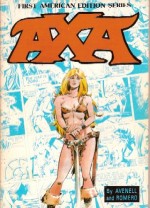
There are also his sophisticated experimental works such as indie thriller Manimal, and his seminal genre graphic novels Ax and the Medusa Chain. Since 2005 he’s been hard at work on the strip SpyCat for Weekly World News.

Jacobson and Colón together are a comics fan’s dream come true and their bold choice of biography and reportage as well as their unique take on characters and events always pays great dividends. Vlad the Impaler is by far their most captivating project to date: a fictionalised account of the notorious Wallachian prince who was raised by his enemies as a literal hostage to fortune, only to reconquer and lose his country not once, but many times.

The roistering, bloody, brutal life of this Romanian national hero and basis of Bram Stoker’s Count Dracula, is a fascinating, baroque, darkly funny yarn, capturing a troubled soul’s battle with himself as much as the Muslim and Christian superpowers that treated his tiny principality as their plaything.

With startling amounts of sex and violence this book makes no excuses for a patriot and freedom fighter who was driven by his horrific bloodlust and (justifiable?) paranoia to become a complete beast: clearly the very worst of all possible monsters – a human one.

Sharp, witty, robust and engaging, with a quirky twist in the tale, this is a good old-fashioned shocker that any history-loving gore-fiend will adore.

Text © 2009 Sid Jacobson. Art © 2009 Ernie Colón. All rights reserved.

Will Eisner Color Treasury


By Will Eisner, written by Catherine Yronwoode (Kitchen Sink Press)
ISBN: 0-87816-006-X

It is pretty much accepted today that Will Eisner was one of the key creative forces who shaped the American comic book industry, with most of his graphic works more or less permanently in print – as they should be. But as far as I know at least one of his milestones has generally escaped public attention.

From 1936 to 1938 Eisner worked as a jobbing cartoonist in the comics production firm known as the Eisner-Eiger Shop, creating strips to be published in both domestic US and foreign markets. Using the pen-name Willis B. Rensie he created and drew the opening instalments of a huge variety of characters ranging from funny animal to historical sagas,

Westerns, Detectives, aviation action thrillers… and superheroes – lots of superheroes …

In 1940 Everett “Busy” Arnold, head honcho of the superbly impressive Quality Comics outfit, invited Eisner to take on a new challenge. The Register-Tribune newspaper syndicate wanted a 16-page weekly comicbook insert to be given away with the Sunday editions. Eisner jumped at the opportunity, creating three strips which would initially be handled by him before two of them were handed off to his talented assistants. Bob Powell inherited Mr. Mystic and distaff detective Lady Luck fell into the capable hands of Nick Cardy (then still Nicholas Viscardi) and later the inimitable Klaus Nordling.

Eisner kept the lead strip for himself, and over the next twelve years The Spirit became the most impressive, innovative, imitated and talked-about strip in the business. In 1952 the venture folded and Eisner moved into commercial, instructional and educational strips, working extensively for the US military in manuals and magazines like P*S, the Preventative Maintenance Monthly, generally leaving comics books behind.

In the wake of “Batmania” and the 1960s superhero craze, Harvey Comics released two giant-sized reprints with a little material from the artist, which lead to underground editions and a slow revival of the Spirit’s fame and fortune via black and white newsstand reprint magazines. Initially Warren Publishing collected old stories, even adding colour sections with painted illumination from such contemporary luminaries as Rich Corben, but with #17 the title reverted to Kitchen Sink, who had produced the first two underground collections.

Eisner found himself re-enamored with graphic narrative and saw a willing audience eager for new works. From producing new Spirit covers for the magazine (something the original newspaper insert had never needed) he became increasingly inspired. American comics were evolving into an art-form and the restless creator finally saw a place for the kind of stories he had always wanted to tell.

He began crafting some of the most telling and impressive work the industry had ever seen: first in limited collector portfolios and eventually, in 1978, with the groundbreaking graphic novel A Contract With God.

If Jack Kirby is the American comicbook’s most influential artist, Will Eisner is undoubtedly its most venerated and exceptional storyteller. Contemporaries originating from strikingly similar Jewish backgrounds, each used comic arts to escape from their own tenements, achieving varying degrees of acclaim and success, and eventually settling upon a theme to colour all their later works. For Kirby it was the Cosmos, what Man would find there, and how humanity would transcend its origins in The Ultimate Outward Escape. Will Eisner went Home, went Back and went Inward.

This fictionalised series of tales about the Jewish immigrant experience led to a wonderful succession of challenging, controversial and breathtakingly human stories for adults which changed how comics were perceived in America… and all because the inquisitive perfectionist was asked to produce some new covers for old stories.

This glorious oversized hardback (still available through internet retailers) features two full Spirit adventures, fully re-coloured by the master (who was never particularly pleased with how his strips were originally limned), pencil sketches and a magnificent confection of those aforementioned covers – plus some really rare extras.

The eerie 1948 chiller ‘Lorelei of Odyssey Road’ leads off this tome followed by a barely seen science fiction Spirit story. ‘The Invader’ – produced in the 1970s as the result of a teaching gig Eisner had at Sheridan College in Canada.

Eisner created the first page in class to show students the fundamentals of comics creation, and after months of coaxing was convinced to complete the tale, which was published in an extremely limited edition as the Tabloid Press Spirit in 1973. The action and sly, counter-culture comedy is impressively compact and well coordinated: ‘The Invader’ comfortably fits 57 panels into its five pages whereas the old eight-page yarns used to average a mere 50 frames…

Following two gloriously lush wraparound Kitchen Sink covers (complete with a pencil rough) and the hilarious cover to underground anthology Snarf #3, the single page Warren pieces commence. Originally seen on issues #2 through 10 they have all been re-mastered by Eisner and are simply stunning.

After these come the fully-painted wraparounds (all magnificently presented as double-page spreads) that graced the Kitchen Sink Spirit issues #18,-24, #27-29 and #31 and then the rare 1977 Spirit Portfolio is reproduced in the same generous proportions: eleven stunning paintings encapsulating key moments in the masked detective’s astonishing career.

‘The Hideaway’, ‘The Scene of the Crime’, ‘The Women’, ‘The Duel’, ‘Dead End’, ‘The Convention’, ‘The Rescue’, ‘The Chase’, ‘The Capture’ and ‘The City’ plus the portfolio cover are followed by the contents of 1980’s ‘City: a Narrative Portfolio’ a series of evocative black line and sepia ghetto images with obverse blank verse and cameo images dealing with the eternal themes that shape man as a metropolitan dweller. Once more including the cover image, ‘The Spark’, ‘The City’, ‘Predators’, ‘Mugger’, ‘Family’ and ‘Life’ are powerfully moving and magically rendered one-frame stories that presage his growing use of the urban landscape as an integral character in his later works.

With a fascinating biography and commentary from historian and publisher Cat Yronwoode this book is a lavish treat for Eisner aficionados, but the treats still aren’t exhausted: there are also rare colour works and illustrations from Cosmos magazine and Esquire, plus poster art, unpublished Spirit paintings and a preview of his then forthcoming book Big City…

Will Eisner is rightly regarded as one of the greatest writers in American comics but it is too seldom that his incredible draughtsmanship and design sense get to grab the spotlight. This book is a joy no fan or art-lover can afford to be without.
© 1981 Will Eisner. All rights reserved.

Ronin


By Frank Miller with Lynn Varley (DC Comics)
ISBN: 978-0-930289-21-8

I always feel a bit daft reviewing stuff that everyone already knows about, but I’m constantly being reminded that even though somebody talks about the classics of our art-form it doesn’t mean they actually have read them. Moreover, the great thing about comics is that they’re meant to be re-experienced, over and over and over…

So here’s a quick look at Frank Miller’s breakthrough epic: a canny blending of East and West, ancient and futuristic, mythical and technological, all used to scrutinise the unchanging nature of human passion, readily available in a number of paperback versions and even as an Absolute Ronin edition, released in 2008…

Set mostly in a near future where society has irretrievably broken down, our story actually opens eight centuries ago in feudal Japan, where a beloved, noble lord and his youngest, most untried samurai are besieged by the forces of a terrible demon named Agat who wants the mystical sword the old daimyo protects.

Eventually the unrelenting attacks succeed and Lord Ozaki is compromised and murdered. Shamed at his failure and maimed by the shape-shifting demon, the samurai becomes a masterless warrior, a Ronin, forced to wander the Earth until he can regain his honour…

Meanwhile in the 21st century, New York City and indeed the entire planet are dying, destroyed by economic, industrial and societal abuse. However at the heart of the dystopian nightmare a small team of free-thinking and idealistic scientists are pioneering a scheme to save humanity from itself.

Technological wizard Peter McKenna has invented self-replicating “bio-circuitry” that feeds itself from the polluted earth to grow clean buildings and even new prosthetic limbs. His greatest achievement is the Aquarius complex, a self-staining habitat governed by a benevolent Artificial Intelligence dubbed Virgo. Peter’s wife Casey runs the security of the complex whilst their friend Taggart runs the corporation they jointly founded, selling their world saving tech – and message – to the rest of humanity.

The maternal Virgo is increasingly becoming the fourth member of the team: making autonomous decisions for the benefit of all. She works closely with Billy Challas, an extreme congenital quadriplegic with latent psionic abilities. His hidden mental abilities have enabled Virgo to make huge leaps in replacement limbs, but recently his dreams have been disturbed by visions of Ozaki, Agat and the Ronin. Virgo is troubled by how historically accurate the nightmares are…

In ancient Japan the Ronin has wandered for years continually defending the magic sword from Agat’s forces, until in one self-sacrificing final duel demon and hero are both killed by the eldritch blade…

When Virgo’s researches uncover the dream Katana in a junk shop eight centuries later she accidentally causes an explosion which decimates part of the Aquarius complex, releasing Agat into our world again. Mercifully the spirit of the Ronin simultaneously enters Billy, who uses his submerged mind-powers to reconfigure his deformed flesh into the form of the ancient warrior.

Lost, dazed and confused, the Ronin wanders through the horrific landscape of post-civilised New York amongst a debased and corrupted populace whilst the demon possesses the body of Taggart and begins to subvert the pacifist, redemptive mission of Aquarius.

Casey McKenna, as head of security, begins to dig (quite literally) into the problem and with Virgo’s help is able to track down Billy/Ronin, but rather than saving the lad she is terrifyingly drawn into his mystical confusion. Meanwhile, as “Taggart” retools the complex into a munitions super-factory, Peter McKenna begins unravelling the mystery and discovers that nothing is as it seems and that there are far more sinister threats than debased gang-mutants and ancient demonic creatures. The entire world is under imminent threat and the clock is ticking…

This tale was not well received when it initially launched: the heady mix of manga influences (particularly Kazuo Koike and Goseki Kojima’s stunning Lone Wolf and Cub saga which permeates and guides this tale like a ghostly grandfather), science fiction, social politics and supernatural ultra violence was clearly not what the superhero reading fans had expected. Although some of the thematic overtones remained this was clearly no continuation of Miller’s landmark Daredevil run for Marvel: those issues were returned to in successive DC epics The Dark Knight Returns and Batman: Year One.

However Ronin did effectively alter the comicbook marketplace forever, allowing the adult sensibilities that had flourished in Europe and Japan for decades to finally gain a solid foothold in the dogmatically juvenile American comics market. Of course it wasn’t alone, but with American Flagg! and a few precious others it was at the vanguard of the zeitgeist that put style and mature content above Fights, Tights and empty frights…

Oppressive, exhilarating and scarily mystifying, Ronin is a spectacular visual tour de force that reshaped what we read and how we read it. As a fan you have a divine obligation to see it for yourself…
© 1983, 1984, 1987 Frank Miller, Inc. All Rights Reserved.

The Sanctuary


By Nate Neal (Fantagraphics Books)
ISBN: 978-1-60699-388-0

There’s a wonderful abundance of impressive and talented cartoonists crafting superbly thought-provoking comics these days. Moreover they are all blessed with perfect timing, by which I mean they’re more or less able to support themselves thanks to modern technology and markets where, in the past, the imaginative likes of Kirby, Ditko and even R. Crumb had to filter themselves through a system of editors, publishers and distributors to get their work published.

In this new arena ideas can take you anywhere and religious ideologues, self-righteous pressure groups and blinkered editors have only negligible effect: indeed, their assorted squeals of outrage or timid support for fresh thoughts can actually help get contentious graphic material to the audiences it was actually intended for.

Not that Nate Neal’s first graphic novel is particularly contentious or outrageous. Even though there is nudity, fornication, wanton violence and gleeful irreverence, what mostly comes through in The Sanctuary is the sheer hard-work and intelligent philosophical questioning in this primordial tale of a band of cave-dwellers living and dying at the birth of our greatest inventions… language and art.

Neal is Michigan born and Brooklyn dwelling and was one of the creative crew that launched the splendid indy comics anthology Hoax (alongside Eleanor Davis, Dash Shaw & Hans Rickheit) and has produced a string of impressive colour and monochrome pieces such as ‘Delia’s Love’, ‘Mindforkin” and ‘Fruition’ in Fantagraphics’ stunning arts periodical Mome. His high-profile commercial gigs include ‘Truckhead’ for Nickelodeon Magazine and Mad‘s perennial favourite Spy Vs. Spy (originally created by Antonio Prohias and since covered by such diverse lights as Dave Manak and Peter Kuper).

Like kitsch movie masterpieces When Dinosaurs Ruled the Earth and 1,000,000 Years B.C. this primeval parable is produced with a unique and supremely limited intrinsic language (which, if you pay attention, you will decipher) and which serves to focus the reader on the meat of the tale: how art and graphic narrative became a fundamental aspect of human cognition.

Don’t be put off by my jokey references to classic bubblegum cinema; The Sanctuary has far more in common with the antediluvian aspects of Alan Moore’s Voice of the Fire than with any “big lizard meets busty cave-babe” flick (although if you’re a fan of Quest for Fire, that film’s gritty, grey and darkly sardonic ethos does eerily resonate here…)

Largely silent and broadly pantomimic, the snapshot episodes in this bleak black and white generational sage describe a small clan – or more properly “pack” – of brutal hominids eking out a squalid and desperate existence about thirty-two thousand years ago. The tribal equilibrium is altered when a young female is traded to them offering the lowest male in the pack a crumb of comfort. Until then he was practically outcast having to steal food from the alpha males and females, who have been and continue to struggle for control of the group.

This omega-male has a gift and a passion. He commemorates the tribe’s hunts through art, but when the girl arrives he discovers a new use and purpose for his abilities. However, life is hard and hunger and danger go hand in hand. The cold war between young and old, fit and maimed, male and female is inevitably coming to a head…

This is a powerful tale about creativity, morality, verity and above all, responsibility which demands that the reader work for his reward. As an exploration of imagination it is subtly enticing, but as an examination of Mankind’s unchanging primal nature The Sanctuary is pitilessly honest. Abstract, symbolic, metaphorical yet gloriously approachable, this devastatingly clever saga is a “must-see” for any serious fan of comics and every student of the human condition.

© 2010 Nate Neal. All rights reserved.

Heroes volume 1


By various (WildStorm/Titan Books)
ISBN: 978-1-84576-706-8

Some people are never satisfied. When I was a kid constantly defending or even hiding my reading preferences, I and so many others, used to dream of a day when “normal” people – especially grown-ups and girls – would appreciate and love the superheroes, pulp fiction and space-opera that we devoured in comics. One day, I muttered, they’ll get it too…

These days not only are the concepts and traditions of my childhood inamoratas common currency, but actual favourite characters have been shared with the general populace to such a broad extent and with such ruthless commercial interpretation that often I can’t recognise the cheery costumed champions I once longed for others to partake of…

The world’s Batman isn’t mine, the celluloid (do we even use celluloid anymore?) Spider-Man is a complete stranger and I won’t have Daredevil or the X-Men in my house… Moreover I cringe inside when “the comicbook plot” appears in any cop or fantasy show: Nobody in the industry actually considers themselves “graphic novelists” – nobody I know would be that poncey…

So I was understandably a little nervous when a prime-time TV series debuted steeped in the fictive concepts of meta-humanity and attempted to bring the fringe experience and continuity shenanigans of the empowered outsider to the wider audience of soap fans and armchair sportsmen…

Tim Kring’s pedigree is admittedly quite good. He has worked extensively with fantasy concepts and clever adventure heroes on TV: Knight Rider, Strange World, Crossing Jordan, Teen Wolf Too (which he co-wrote with long-time collaborator Jeph Loeb) and the spectacularly under-appreciated Misfits of Science, an earlier and wittily cool attempt at a silver screen super-team.

Heroes ran for four controversial seasons, beginning in 2006, initially garnering huge audience figures and critical acclaim but gradually tapering off in popularity and direction before being finally euthanised by NBC in February 2010.

Recounting the secret history and evolution of a broad and disparate offshoot of superhumans amongst us the series attempted to transfer comicbook sensibilities to the television audience, following up to dozen separate metahumans as they came to terms with their abilities in a dangerously out of kilter world.

An overarching narrative thread was provided by Indian scientist Mohinder Suresh who had inherited his dead biologist father’s secret research into and fascination with these hidden but rapidly evolving beings, whilst constant menace was provided by a covert organisation hunting the paranormals and a rogue superhuman dubbed Sylar, who also stalked them – but only to kill them and steal their powers.

The concept’s lowly pop culture origins were coyly and constantly referenced in the show by including a meta-fictional comic, Ninth Wonder, written and drawn by a future-gazing character, into the ongoing plots. There was also a weekly webcomic produced to supplement the series and those webisodes are compiled in this book, comprising a stream of sidebar stories to enhance the overall experience, crafted by some of our industry’s leading talents.

Obviously if you never saw or didn’t like the show this would be the time to stop reading this review, but as I’m going to carry on regardless feel free to accompany me as I attempt to weigh the merits of the comics strips collection on its own terms…

Numbered as Ninth Wonder #1-34 these short stories – averaging 4-6 pages and a cover per instalment – begin with ‘Monsters’ by Aron Eli Coleite and artists Michael Turner & Koi Turnbull, wherein Mohinder moves to America, reintroducing the core concepts to us whilst investigating his father’s death, after which time-bending Japanese salaryman Hiro offers a peek into his own past with ‘The Crane’ by Coleite, Micah Gunnell & Mark Roslan.

Flying politician Nathan Petrelli experiences an eye-opening ‘Trial by Fire’ (Chuck Kim, Marcus To & Roslan)’ whilst invulnerable cheerleader Claire realises how much her life has changed after teaching a date-rapist a brutal lesson in ‘Aftermath’ (Joe Pokaski, Gunnell & Roslan). In ‘Snapshot’ by Pokaski, To & Peter Steigerwald, intangible convict DL Sanders breaks out of jail, unaware that his wife Niki is also abhuman and currently beginning a part-time career as a violent criminal in ‘Stolen Time’ (Pokaski, To & Roslan)…

Telepathic cop Matt Parkman feels his orderly life slipping away in ‘Control’ (Oliver Grigsby, Gunnell & Roslan) and that aforementioned precog artist discovers his powers in Coleite, Gunnell & Roslan’s ‘Isaac’s First Time’. Then Pierluigi Cothran, To & Roslan introduce a very special, irresistible little girl in ‘Life Before Eden’.

The tenth episode featured the sinister Sylar in ‘Turning Point’ (Christopher Zatta, Gunnell & Roslan), we got a look into the life of the chief agent hunting paranormals in ‘Fathers and Daughters’ (Andrew Chambliss, Travis Kotzebue, Gunnell & Steigerwald), power-magnet Peter Petrelli dreamed of ‘Super-Heroics’ (Harrison Wilcox, Gunnell & Steigerwald) before the format got an overdue upgrade with a continued story and an all new character.

‘Wireless’ (Coleite, Pokaski, Gunnell, Phil Jimenez & Roslan) introduced Israeli soldier Hana Gitelman who had the ability to interact with computers and electronic data-streams and recounted how she was recruited by the agency that hunts Heroes, a four-part tale of frustrated vengeance, fraud and disillusionment, followed in #17-18 with ‘How Do You Stop an Exploding Man?’ (Jesse Alexander, Coleite, Travis & Jordan Kotzebue & Roslan) as Hana tracks down the tragic Ted Sprague, fugitive paranormal cursed with the ability to explode like a nuke…

DL and Niki have a son and little Micah also has an ability – controlling machinery, but that’s not a great deal of help in ‘Bully’ (Kim, Gunnell & Roslan), whilst Sylar experiences a setback of his own in ‘Road Kill’ (Pokaski & Jason Badower). Hana returns in ‘The Path of the Righteous’ (Coleite & Staz Johnson), protecting the innocent from internet predators whilst cheerleader Claire’s unorthodox adoption is examined in Jesse Alexander & Michael Gaydos’ ‘Hell’s Angel’.

Episode #23 ‘Family Man’ (Alexander & Staz Johnson) deals with the aftermath of Claire’s exposure as a metahuman as her adoptive father, chief agent for the organisation that hunts her kind, makes a life changing decision, before another extended saga opens with ‘War Buddies: The Lonestar File’ (Mark Warshaw & Steven Lejeune).

Deep undercover Hana discovers the story of a previous generation of superhumans in ‘Unknown Soldiers’ (Chambliss, Cothran, DJ Doyle, Wilcox, Adam Archer, Roslan & Badower) detailing the story of a special ops mission in the Mekong Delta in 1968.

After incalculable horror the two survivors of the US team realise they are both more than mortal and lay plans that will eventually shake the world: a scheme that comes closer to fruition in ‘War Buddies: Call to Arms’ (Warshaw & Johnson)…

Time traveler Hiro Nakamura meets himself in the portentous ‘String Theory’ (Pokaski & Johnson) and events spiral to a climax – or more accurately Season Finale – with the 2 parter ‘Walls’ from Pokaski, Tom Grummett & Gaydos, as the heroes of a possible future strive to change their past. This volume then closes with a final 2-part thriller ‘The Death of Hana Gitelman’ by Coleite & Badower. It’s not what you think…

The book also contains a number of extra text features, the webisode covers and TV show art by Tim Sale and others such as Jim Lee and Alex Ross and despite my initial misgivings does actually present a fairly cohesive picture that most readers should enjoy and appreciate even with no prior experience of the primary material. And of course with Boxed set DVDs make ideal presents – almost as good as graphic novels, in fact…

© 2007 Universal Studios. Heroes is ™ & © NBC Studios, Inc. All rights reserved.