Birdland


By Gilbert Hernandez (Eros Comics/Fantagraphics Books)
ISBN: 1-56097-200-9

This book contains stories and images of an extremely adult nature, specifically designed for adult consumption and the kind of coarse and vulgar language that most kids are fluent in by the age of ten. If reading about such things is likely to offend you, please stop now and go away. Tomorrow I’ll write about something with violence and explosions, so come back then. Please.

I’ll let you in on a little secret: if you do it right – and who does? – sex is supposed to be fun.

Now we all know that in the real world nobody’s actually any good at sex, and there’s always someone trying to put a stop to it (hopefully not your consenting participating partner-of-choice) but fun-filled fictional fornication has usually sought to be a jolly, joyous affair – which is why so much pornography aspires to low comedy.

When champion of diversity Fantagraphics jumped on the smut bandwagon that proliferated in the American comics industry at the very end of the 1980s with their Eros Comics imprint, they gathered the most stylish of European and foreign adult material (such as Solano Lopez & Barreiro’s Young Witches) to complement the quality home-grown creators such as Bill Willingham and Ho Che Anderson (with their superb Ironwood and I Want to be Your Dog, respectively). In such an instance how could they not also tap major talent and socio-sexual revolutionary Gilbert Hernandez for such an “adults-only” project?

In addition to being part of the graphic and literary revolution that is Love and Rockets (where his incredibly insightful tales of Palomar and the later stories of those characters collected as Luba gained such critical acclaim) Beto has produced stand-alone tales such as Sloth, Grip and Girl Crazy, all marked by his bold, instinctive, compellingly simplified artwork and a mature, sensitive adoption of the literary techniques of Magical Realist writers such as Carlos Fuentes and Gabriel García Márquez: techniques which he has added to and made his own.

All of these graphic novels – indeed all his works – have been notable for a matter-of-fact and totally explicit treatment of all aspects of sexual behaviour. It’s like he realised that everybody screws – and screws around.

In the comic miniseries Birdland collected here and tangentially linked to his earlier Heartbreak Soup and his later Luba in America material he focused on the very strange lives of two strippers, Bang Bang and Inez, providing all the nudity, hard-core action and squirty, slurpy stuff demanded by porn consumers, but also adding psychiatry, bodybuilding, realistic relationships, painful infidelities, tragedy and regret to the usually repercussion-free mix. He also couched the entire thing in a surreal, absurdist, alien-abduction mystery… Smut with a storyline – now, that’s radical…

There’s only so much rampant, recrimination-free bonking I can take (and of course I mean reading about and reviewing, not doing) and clearly Hernandez understands that too: so although the sex is literally non-stop for the insatiable devotees there’s some actual narrative shoved in to be getting on with whilst readers are catching their breath…

Utterly adults-only, this book reprints the black and white miniseries, the short tale ‘Tierra de Pajaro’ from the Free Speech benefit comic True North #2 and a copious quantity of bonus material, and fans might recognise some of the work as having featured heavily in the recent Best Erotic Comics 2009.
© 1990, 1991, 1992 Gilbert Hernandez. All rights reserved.

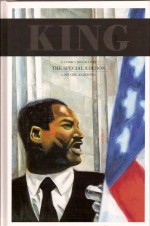
King – a Comic Biography: The Special Edition


By Ho Che Anderson (Fantagraphics Books)
ISBN: 978-1-60699-310-1

There are books to read, books you should read – and some perhaps, that you shouldn’t – and there are important books. The relatively new field of graphic novels has many of the first but precious few important books yet.

It’s hard enough to get noticed within the industry (simply excelling at your craft is not enough) but when we do generate something wonderful, valid, powerful, true to our medium yet simultaneously breaking beyond into the wide world and making a mark, the reviews from that appreciative greater market come thick and fast – so I’m not going to spend acres of text praising this superb, controversial and unique examination of the man that lived beside – not “behind” or “within” the myth of Martin Luther King, Jr.

Over the course of ten years (1993-2002) young Canadian cartoonist Ho Che Anderson struggled to produce three comics books that offered another perspective of a man who was as much sinner as saint, but whose determination, passion, energy and sheer luck drove a cleansing wedge into a rotting, repressive, stifled society and succeeded in opening enough doors for America’s racial underclass, so that forty years later a black American can govern the World’s greatest superpower.

Not that four decades is so brief an interlude: but than again, how many European or white Commonwealth countries can boast that their highest echelons of power have made even that much progress?

In both stark black and white and mesmerising colour, Anderson uses all the strengths and tools of sequential narrative to reveal, relate, question and challenge the oft-recounted facts of the Georgia Pastor’s life in this magnificent volume, released to celebrate Barack Obama’s – and the American people’s – landmark achievement. Gathered within are those hard-crafted three issues, extra and deleted scenes, the thematically linked one-shot Black Dogs and many other extras in one compelling tome, with a fascinating overview from Anderson; sketches and reminisces, a treatise on his working practises and a gallery of related art.

This is a true historical examination and a perfect example of comics at its most effective – biography not hagiography – and as important a landmark achievement for our art-form as Maus, Safe Area Goražde or American Splendor, Watchmen, Pride of Baghdad or Persepolis. Whenever and wherever we have to defend our Art from decriers and peddlers of prejudice, King will be one of the paltry few examples that cannot be contradicted or ignored. It’s a book no thinking fan can afford to miss.
King: The Special Edition © 2010 Fantagraphics Books. All content © 2010 Ho Che Anderson. All rights reserved.

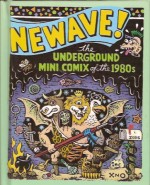
Newave!- The Underground Mini Comix of the 1980’s


Edited by Michael Dowers (Fantagraphics Books)
ISBN: 978-1-60699-313-2

Everybody has at some stage in their lives used pictures to tell stories. It’s a fundamental step in the cognitive development of children and for some of us that magic never goes away. For most people the crushing weight of the world squelches the joy of creation so that we become observers and consumers rather than makers, but a privileged few carry on: drawing, exploring, and in some cases, where technology allows, producing and sharing.

This book explores, recounts and celebrates those driven artisans who came out of the “anything goes” 1960s and 1970s Underground Comix movement, craving a vehicle of expression, not caring about money, and with enough time to draw – or gather – artwork (mini comics people are notoriously generous, contributing work at the drop of a hat: just check out the huge array of notable creators listed below) before laboriously photocopying, cutting, folding, stapling and then distributing the miniscule but marvellous results.

Just by way of definition: most mini comix were home produced pamphlets using borrowed or when necessary paid for print processes. The most popular format was an 8½ x 11inch sheet, folded twice, and printed at local copy-shops (or made on school/work repro systems like early Xerox, Photostat, Mimeo or Spirit Banda machines) on letter-size – or any – paper. Because they weren’t big, they were called mini comix. Duh!

Although this book concentrates on a specific time, place and creative ethos, the phenomenon was truly world-wide and covered all genres from superhero knock-offs to the sexually explicit, violent, political and drug-related work that typified Newave! Nobody who wanted to and had access to the technology ever resisted making their own comics…

In this 892 page collection the many craftsmen who began the tradition that led inexorably to today’s thriving Alternative and Small Press publishing movements as well as the current internet comics phenomenon, discuss at length their motives and methods, and naturally the best of that adventurous decade are reprinted in crisp black and white.

Among the hundreds, (thousands?) of people who have made or contributed to mini comix many have gone on to more well-received and popular things. Some of them include (and feel free to save time, skip this section and just buy the book) Jeff Gaither, Michael Roden, Wayno, Artie Romero, Brad Foster, Fred Hembeck, Mary Fleener, The Pizz, Rick Geary, Dennis Worden, Steve Willis, Roy Tompkins, Tom Christopher, XNO, Clay Geerdes, Bob X, Jim Siergey, J.R. Williams, Jim Blanchard, Norman Dog, Molly Kiely, Mack White, Daniel Clowes, Doug Allen, Art Penn, Sam Henderson, Gary Whitney, George Erling, Bob Vojtko, Doug Potter, David Miller, Jim Ryan, Par Holman, Roger May, Meher Dada, Wayne Gibson, Tom Motley, Marc Arsenault, Ion, Bruce Chrislip, Dale Luciano, C. Bradford Gorby, Robin Ator, Douglas O’Neil, C. E. Emmer, Kurt Wilcken, Doug Holverson, Jamie Alder, Tom Hosier, Steven Noppenberger, W.C. Pope, Jim Gillespie, John Howard, Tucker Petertil, Gary Lieb, Bob Conway, and Jim Thompson.

I’ve done it myself, for fun – even once or twice for actual profit – and it’s an incredible buzz (I should note that I have a wife not only tolerant but far more skilled and speedy in the actual “photocopy, cut, fold, staple” bit and willing, if not keen, to join in just so she could see the oaf she married occasionally…)

The sheer boundless enthusiasm and joy of making comics is celebrated in this astonishingly vast, incredibly heavy and yet still pocket-sized hardback collection, with over 700 pages of the very best of that decade’s adult cartoons on show, accompanied by not just historical information on key publishers such as Brad Foster, Artie Romero, Steve Willis, Dennis Worden, Bob X, J.R. Williams, Roger May, Tom Hosier, George Erling, Bob Vojtko and others but also a list of website addresses so you can check out how the compulsion to create has survived into the 21st century.

A joy for every fan of the art-form: as long as they’re old enough to vote and strong enough to lift the thing.
Newave!- The Underground Mini Comix of the 1980’s © 2010 Michael Dowers and Fantagraphics Books. All contents © 2010 their respective creators. All rights reserved.

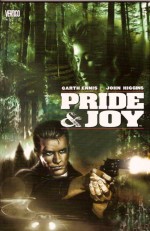
Pride & Joy


By Garth Ennis & John Higgins (Vertigo)
ISBN: 978-1-84023-803-7

Garth Ennis has a well deserved reputation for shocking, moving and wickedly funny storytelling, and is accomplished in blending genres for maximum effect, as his successes with Preacher, Hellblazer, True Faith and a dozen other tales will attest.

One of his least regarded – in my opinion unjustly so – is this saga of a painfully domestic world turned upside down by an unredeemed past. It is a story of dreadfully ordinary folk with none of the baroque or flamboyant characters that populate regular fiction.

There’s this guy called Jimmy Kavanagh. His wife is long-dead, his son Patrick is at that revolting sulky teen age, but at least his little daughter Rachel is still the most beautiful girl in the whole world. Life is hard: his own dad, a war-hero, has just passed on, but the family are doing okay…

That all changes when Jimmy’s stupid past resurfaces. In 1972 he and a couple of his idiot friends dreamed they were going to be big-time hoods when they agreed to rip-off a gang boss. The gig had been planned by the boss’ bodyguard, Stein, who promised them a million dollars… Unfortunately for everybody but Jimmy, his pals were real shmucks, and cocked up the caper. Cops arrived, busted Stein before he could kill them all and took him away for twenty-to-life.

Scared straight by the experience, Jimmy got on with his life – until now. One night he gets a call and his world starts to implode. Coming home to finds the babysitter gutted like a fish. Stein is out and he wants revenge…

Gathering his kids and linking up with his old “colleagues” they go on the run together, but the hunter can’t be shaken and innocent people keep dying. Unable to bond with his son during their entire life together Jimmy finally, tragically connects with Patrick as the sorry saga comes to a small and dirty close…

With chilling echoes of Cape Fear (the 1962 Gregory Peck/Robert Mitchum version) this tale seeks to examine how ordinary people cope with ordinary evil: a cheap thug with a knife is just as deadly as a horde of vampires. You and your family can only die once – painfully, horribly; but just once. Pride and Joy is a tale about dreams and heritage and shows how mediocre people cope, illustrated with perfect subtle understatement by John Higgins. Nothing about this story is big or bold or bombastic: but it could really happen. It’s That Scary…

© 1997, 2004 Garth Ennis and John Higgins. All Rights Reserved.

Vamps


By Elaine Lee and Will Simpson (Vertigo)
ISBN: 978-1-56389-220-2

As a long overdue antidote to the deluge of lovey-dovey, kissey-poo tales of forbidden love between innocent modern maids and moody, tragic carriers of the Curse of the Night’s Children, here’s a reminder of a different sort of Vampire Tale – one that is sleazy, nasty and very, very scary…

Vampires are heartless, bloodsucking raptors that wander the night, slaughtering whomever they wish. In this story set in the Badlands of modern America, they’re still generally regarded as creatures of myth, but apart from not turning into bats all the usual movie lore applies: fast, strong, non-reflective, scared of stakes and sunlight. The big new wrinkle is that blood gets them crazy-dumb drunk…

Our epic ride follows the liberating run of five hungry, hot and horny undead bad-girls called Screech, Whipsnake, Skeeter, Mink and Howler who begin their longed-for emancipation by finally killing Dave, the male Vamp who “turned” them all, then lorded it over them like a fat and lazy lion in a savannah Pride. After staking and dismembering him the girls go on a wild spree across the States, riding Harley’s down Hell’s highways, killing bikers and ne’er-do-wells (and the odd innocent bystander) wherever they find them.

They’re completely unaware that one of them has been manipulating her sisters all along and orchestrating the seemingly random slaughter. As a private detective and Howler’s psychic – and still breathing – sister Jenny tracks them, the pack hits Las Vegas and we discover that when she was alive Howler was a stripper whose baby was taken from her by a corrupt judge and sold in a black market adoption deal. Dave’s destruction, the road-rage, everything has been a plan to get her baby back.

All the pieces and pursuers are headed for a bloody crash and climax when Howler finally locates her son, but there’s an unwelcome complication: Dave has pulled himself together and is really, really annoyed…

Far more True Blood than Twilight (and predating both by more than a decade) this fast-paced, sardonic and gorily wild ride of love and death is a spectacular and absorbing riot by two of the industry’s best and most unsung talents: sordid, sexy and totally compelling, riddled with far deeper metaphors than “unrequited love sucks”, Vamps is a solid reminder that there are such things as monsters and some beasts just won’t be tamed…
© 1994, 1995 DC Comics.  All Rights Reserved.

Jack of Fables: Jack of Hearts


By Bill Willingham, Matthew Sturges, Tony Akins, Steve Leialoha & Andrew Pepoy (Vertigo)
ISBN: 978-1-84576-628-3

In case you didn’t know, Fables are refugee fairytale, storybook and legendary characters who (which?) fled to our mundane Earth from their various mythic realms to escape a mysterious and unbeatable Adversary. Disguising their true natures from humanity they created enclaves where their immortality, magic and sheer strangeness (all the talking animals are sequestered on a remote farm in upstate New York) would not threaten the life of uneasy luxury they built for themselves. Many of these immortals wander the human world, but always under injunction never to draw any attention.

In Fables: Homelands the utterly self-absorbed and absolutely amoral Jack of the Tales (everyman hero of Beanstalk, Giant-killer, Be Nimble fame) did just that by stealing Fabletown funds and becoming a movie producer, creating the three most popular fantasy films of all time, based on (his version) of his life, consequently drawing physical power from the billions who inadvertently “believed” in him – and coining vast amounts of filthy lucre in the process.

A key tenet of the series is that the more “mundies” (that’s mundane humans like you and me… well, me anyway) who think about a fable character, the stronger that character becomes. Books TV, songs, all feed their vitality. In the first volume of his eponymous irreverent series Jack was brought low by the publicity-shy Fables Police: banished from Hollywood and ordered to disappear, with only a suitcase full of cash to tide him over.

He was captured and escaped from a particularly horrific fate – metaphysical neutering by The Golden Bough, a clandestine organisation that had been “vanishing” Fables for centuries – and is now on the run from those selfsame forces (in the attractive shape of the Page Sisters, dedicated hunters of everything Fabulous and Uncanny) after instigating a mass-break-out of forgotten and abridged Fables…

This second volume (collecting issues #6-11 of the Vertigo comicbook) opens with ‘Jack Frost’ illustrated by Steve Leialoha, as the legendary blowhard links up with a few other escapees in snow-bound Wyoming, and “entertains” everyone with the story of how he once knocked-up Lumi, the Snow Queen, after which he then helpfully “borrowed” her role in the supernatural cosmology and almost destroyed the cycle of Seasons before the Queen’s sisters Summer Spring and Autumn brought him to book…

The sharp eyed might notice that although the two chapters smoothly follow one another the attendant reproduced covers indicate that the concluding part was actually #11, not #7. Yes. Correct. You’re not wrong. Chalk it up to the magical drama of deadlines and move on.

‘Viva Las Vegas’ illustrated by Tony Akins and Andrew Pepoy, opens in that legendary Sin City with Jack waking up hung over and married to a cutie who is also the billionaire heiress who will one day inherit much of that aforementioned modern Gomorrah. But things aren’t as great as they seem. For starters Jack has somehow been reunited with fellow escapee Gary, the engagingly peculiar but trouble-attracting Pathetic Fallacy. For another, nobody likes an obvious gigolo gold-digger and everybody is trying to kill him. Most importantly though, the disgustingly bloodthirsty Fable Lady Luck already secretly controls Vegas and doesn’t want someone like Jack around just when her lost magic horseshoe has finally, serendipitously returned to the city after being missing for decades…

Saucy, self-referential, darkly, mordantly funny, this series is a deliciously whimsical fairytale for adults concocted with much more broad, adult, cynical humour and sex than your average comicbook – so mothers and matrons be warned! This enchanting series is a wonderful view of how the world should be and every volume should be compulsory reading for jaded fantasists everywhere.

© 2007 Bill Willingham and DC Comics. All rights reserved.

Love and Rockets: New Stories No. 2


By The Hernandez Brothers (Fantagraphics Books)
ISBN: 978-1-60699-168-8

Like clockwork the second volume collecting the latest creations of Los Bros Hernandez appeared and proved well worth the wait, once more leading with the cleanly classical visual sophistication of Jaime’s ‘Ti-Girls Adventures Number 34.

This enchanting super-heroine homage bookends the volume beginning with ‘Part Three: Daughters of Doom’ and concluding with the delightful ‘Part Four: Mothers of Mercy’ which finds time and space for poignancy and (rather surreal) family relationships amidst a joyous, vicarious avalanche of costumed mayhem of the type we loved as kids in the 1960s. Not since Scott McCloud’s delicious tribute ‘Destroy!’ has the poetry of gauntleted fisticuffs been so memorably celebrated…

The central portion features Gilberto who contributed two longer pieces this time: the challenging ‘Sad Girl’ wherein young and pneumatic Killer takes an unorthodox and oblique revenge reminiscent of the heady days of Palomar whilst the boldly experimental graphic mime ‘Hypnotwist’ follows a lost and vulnerable young woman on an astonishingly bizarre voyage of discovery…

As with Love and Rockets: New Stories No. 1 these tales form part of an unfolding work-in-progress, and I’m praying that just as with the original series thirty years ago, some unseen connections will reveal themselves to my hungry eyes in the months to come. And even if they don’t, these are still some of the best drawn and intriguing comics tales of the last few years.

A mature fan’s secret delight, don’t miss these books…

© 2009 Gilberto, Jaime and Mario Hernandez. This edition © 2009 Fantagraphics Books.  All Rights Reserved.

Love and Rockets: New Stories No. 1


By The Hernandez Brothers (Fantagraphics Books)
ISBN: 978-1-56097-951-7

In the 1980s a qualitative revolution forever destroyed the clichéd, stereotypical ways different genres of comic strips were produced and marketed. Most prominent in destroying the comfy pigeonholes we’d built for ourselves were three guys from Oxnard, California; Jaime, Mario (occasionally) and Gilberto Hernandez.

Love and Rockets was an anthology comics magazine that featured the slick, intriguing, originally sci-fi tinted larks of punky young things Maggie and Hopey – las Locas – and the heart-warming, terrifying, gut-wrenching soap-opera fantasy of Palomar. The Hernandez Boys, gifted synthesists all, entranced us all with incredible stories that sampled a thousand influences conceptual and actual – everything from Archie Comics, kids TV, the exotica of American Hispanic pop culture to German Expressionism and masked wrestlers. There was also perpetual backdrop displaying the holy trinity of youth: Sex and Drugs and Rock and Roll – or at least alternative music and punk.

The result was pictorial and narrative dynamite.

Mario only officially contributed on rare occasions but the slick and enticing visual forays by Jaime explored friendship and modern love whilst destroying stereotypes of feminine attraction through his fetching coterie of Bright Young Things and Gilberto created the super-hyper-real landscape of Palomar: a playground of wit and passion created for the extended serial Heartbreak Soup. Here was a poor Latin-American village with a vibrant, funny and fantastically quotidian cast.

Everything from life death, adultery, magic, serial killing and especially gossip could happen its meta-fictional environs, and did, as the artist mined his own post-punk influences in a deceptively effective primitivist art style incorporating the mythologies of comics, music, drugs, strong women, gangs, sex and family using a narrative format informed by everything from Magical Realism to Saturday morning cartoons.

Despite gaining huge critical acclaim but little financial success the brothers temporarily went their own ways but a few years ago creatively reunited to produce annual collections of new material. This initial volume of 112 pages finds Jaime once more pastiching female superheroes and the Mexican Masked Wrestler phenomenon in the captivating ‘Ti-Girls Adventures Number 34 Part One: The Search for Penny Century’ – an extended whimsical romp featuring Maggie and clashing dynasties of lady crime-fighters all trying to subdue an old friend crazed by her gifts and the pressures of modern motherhood. The second part ‘Penny is found’ closes the volume but the story is so big that it continues into the 2009 volume…

Brother Beto opted for a selection of shorter tales ranging from the quirky newspaper strip parody ‘The Funny Pages’, the graphic parable of ‘Papa’, whose Job-like faith and determination were singularly tested and ‘The New Adventures of Duke and Sammy’ – a broadly absurdist spoof of the Dean Martin/Jerry Lewis team, whose outer space exploits are as wacky as any of their 1950s DC comics outings.

‘Victory Dance’ is an enigmatic, obscurantist offering on one of life’s Big Questions, after which Mario returns to script ‘Chiro el Indio’, a barbed satire on Catholic/white treatment of native South Americans cunningly disguised as a cartoon sitcom for Gilberto to draw, whilst ‘Never say Never’ is another highly adult cartoon spoof from Beto alone starring a gambling kangaroo, which acts as palette-cleanser for the sheer graphic exuberance of ‘?’; a free-ranging, visual free-association trip.

With the aforementioned ‘Ti-Girls Adventures Number 34 Part Two: ‘Penny is found’

closing out this volume on a cliffhanger, it’s only fair to state that initial response to this new work was mixed and guarded when it first appeared. However with the hindsight of a second edition released and a third on the way it’s safe to assume that Los Bros still know exactly what they are doing and that the magic is unfolding as it should…

Stark, charming and irresistibly seductive, Love and Rockets: New Stories is a grown up comics fan’s dream come true and remains – just as it predecessors have been – the forge of the cutting edge of graphic narrative.

© 2008 Gilberto, Jaime and Mario Hernandez. This edition © 2008 Fantagraphics Books.  All Rights Reserved.

The Unclothed Man in the 35th Century A.D.


By Dash Shaw (Fantagraphics Books)
ISBN: 978-1-60699-307-1

Being an old dinosaur who cut his teeth on old-fashioned 1970s print technology, I’m constantly surprised when modern computer tech so remarkably emulates and enhances what I still consider to be “painted” art. I stare in wonder until I fool myself that I can actually see all those hard, straight-edged pixels on the page, and my head begins to hurt and my eyes to water…

None of which is particularly germane, but which does indicate just how entrancing is this lovely book. Dash Shaw is an extremely talented creator with a singular authorial voice and a huge repertoire of styles to call upon. Born in 1983, he is part of a “new wave” (please note no capital letters there) of multi-tasking cartoonists, animators and web-content creators whose interests and sensibilities have heralded a renaissance in graphic narrative.

Like so many fresh creators he began young with independently published small press comics before graduating to paid work, and his available books include Love Eats Brains, GoddessHead, Garden Head, Mother’s Mouth and the superb and haunting Bottomless Belly Button.

In 2009 the Independent Film Channel commissioned him to convert his short stories from the comic arts quarterly Mome, The Unclothed Man In the 35th Century A.D., into an imaginative and compelling animated series and this incredibly impressive hardback gathers not only those evocative, nightmarish and tenderly bizarre tales but also the storyboards, designs and scripts Shaw constructed to facilitate the transition from paper to screen.

Wrapped in a stylish printed dust jacket made from what appears to be an animation cel (celluloid), the stories include the eponymous Unclothed Man, ‘Look Forward, First Son of Terra Two’, ‘Galactic Funnels’, My Entire High School… Sinking into the Sea!, ‘Blind Date 1’, Making the Abyss, the captivatingly droll examination of comic and cartoon special effects ‘Cartooning Symbolia’ and others. For many however the revelatory insights of how the creative process unfolds will be the biggest draw of all…This is an achingly visual and surprisingly accessible yet intellectual bunch of gems that every dedicated fan of the medium simply must see, and every reader of challenging fiction will Have to read.

© 2009 Dash Shaw. This edition © 2009 Fantagraphics Books.  All Rights Reserved.

Goddess


By Garth Ennis & Phil Winslade (Vertigo)
ISBN: 978-1-84023-327-3

Some stories are just a good, vicarious read and there’s no better description for this achingly funny, over the top eco-romp from the lord of outrageous shock comedy Garth Ennis. That it’s beautifully illustrated by master of the meticulous Phil Winslade is a tremendous plus of course…

London Zoo keeper Rosie Nolan went for a walk in the Highlands. As she was revelling in the wonders of nature something odd happened: she was gripped by an eerie emerald power and accidentally split Scotland and England apart…

At that moment ineffectual Jeff (our narrator) was cocking up his latest relationship and ecological psychopath Mudhawk was slaughtering some more people who didn’t share his passion for animal rights, but someone who did notice Rosie’s little gaffe was paranoid narcisscist  Harry Hooks, a CIA spook who had been hunting for telekinetic people to turn into US weapons for decades. He immediately headed for England where a concatenation of circumstances brought Jeff, Mudhawk – and his bellicose ex Samantha Flint – to Rosie’s doorstep just as the Yank arrived…

Mad as a bag of badgers, Hooks tried to abduct Rosie, leading to the deaths of five American agents, and when the local beat copper arrived Hooks shot him. This rash act brought cheerful old Desk Constable George Dixon into the mix. Dixon was the kind of rozzer who always got his man – and then assiduously disposed of the body before anybody could register a complaint. An old fashioned sort, he didn’t much like cop-killers, so with the sadistic Bovver Bruvvers in tow Dixon went after the kill-crazy Hooks, incidentally racking up a body-count of his own that a middle-eastern dictator would be proud of…

In a voyage that traverses the entire globe Rosie’s powers expand exponentially and as the frantic chases of all the authority figures rapidly converge on her the attendant carnage escalates. With her companions in tow she uncovers the incredible secret of her gift in a gloriously trenchant and darkly sardonic satire on society, like a gore-splattered “Carry-On” film with no limits and not even a modicum of good taste.

Fast, furious, funny and wickedly whimsical, this is classic over-the-top Ennis fare, which was purportedly postponed during its conversion from eight issue miniseries to trade paperback compilation because the terrorist themes were deemed too raw after the September 11th attacks. As one of the most impressive scenes here concerns crashing an airliner, I think I can see their point. Nevertheless, as the series premiered six years before the towers fell, and it’s been a long while since, perhaps the time is right to revisit this incredible fantasy tale for consenting, contrary adults…

© 1995, 1996, 2002 Garth Ennis and Phil Winslade. All Rights Reserved.