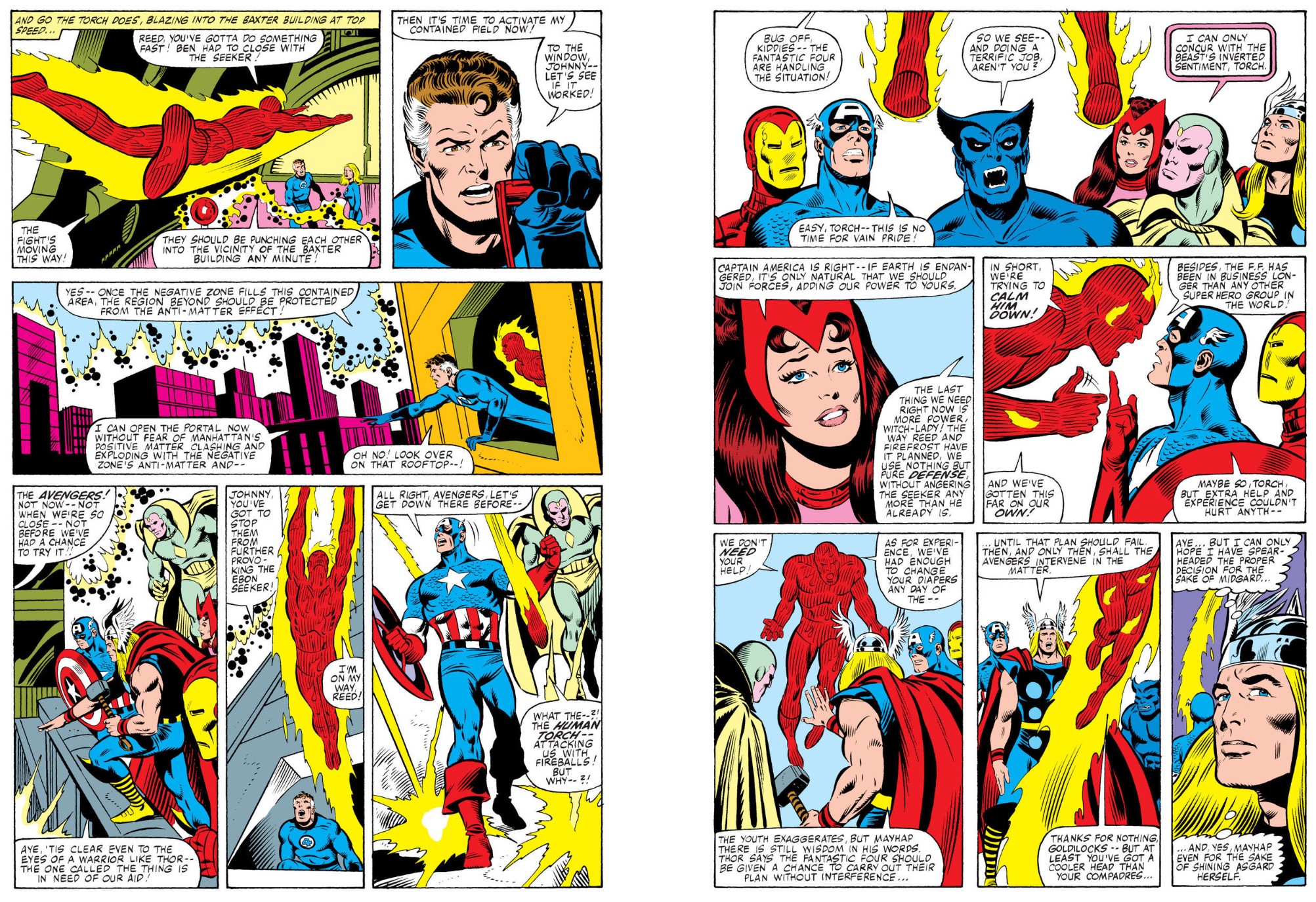
The Tomb of Dracula Marvel Masterworks volume 1


By Marv Wolfman & Gene Colan, Gerry Conway, Archie Goodwin, Gardner F. Fox, Roy Thomas, Vince Colletta, Tom Palmer, Ernie Chan, Jack Abel, Steve Gerber, Rich Buckler & Pablo Marcos, Neal Adams & various (MARVEL)
ISBN: 978-1-3029-2947-3 (HB/Digital edition)

This book includes Discriminatory Content produced in less enlightened times.

Today in 1926 Eugene Jules Colan was born. In a long and illustrious career, this is what most people remember him for, and rightly so as it was always his baby…

At the end of the 1960s American comic books were in turmoil, much like the youth of the nation they targeted. Superheroes had dominated the market and zeitgeist for most of the decade; peaking globally before explosively falling to ennui and overkill. Familiar, trusted genres like horror, westerns and science fiction were resurgent, and fed back into comics thanks to radical trends in moviemaking, where the kids who had grown up with Marvel now pursued the bulk of their young adult entertainment needs.

Inspiration isn’t everything. In fact, as Marvel slowly grew to a position of market dominance in the wake of the losing their two most innovative and inspirational creators, they did so less by experimentation and more by returning to and expanding proven concepts and properties. The only real exception to this was the en masse creation of horror titles: an initial response to that industry downturn in super-hero sales – and a move vastly aided and expedited by a rapid revision in the wordings of the increasingly ineffectual Comics Code Authority rules.

The switch to supernatural stars had many benefits. Crucially, it particularly brought a new readership to Marvel comics, one attuned to the global revival in spiritualism, Satanism and all things sinisterly spooky. Almost as important, it gave the reprint-crazy company opportunity to finally recycle old 1950s horror stories that had been rendered unprintable and useless since the code’s inception in 1954.

A scant 15 years later Comics Code prohibitions against horror were hastily rewritten – amazing how plunging sales can affect ethics – and scary comics came back in a big way. A fresh crop of supernatural heroes and monsters popped up on newsstands to supplement the ghosts, ghoulies and goblins already infiltrating the once science-only scenarios of the surviving mystery men titles. Crucially, lifting the Code ban resulted in so many horror titles (both new characters and reprints from the massive, multi company horror-boom of 1949-1955) that it undoubtedly caused a few more venerable costumed crusaders to (temporarily, at least) bite the dust.

Almost overnight nasty monsters (and narcotics, but that’s another story) became acceptable fare on four-colour pages and – whilst a parade of pre-code reprints made sound business sense – the creative aspect of the contemporary buzz for bizarre themes was catered to by adapting or incorporating established and still-popular cultural icons before risking whole new concepts on an untested public. As always in entertainment, the watchword was fashion: what was hitting big outside comics must be incorporated into the mix as soon as possible. When science-backed proto-horror Morbius debuted in Amazing Spider-Man #101 (cover-dated October 1971) and the sky failed to fall in, Marvel moved ahead with a line of shocking superstars.

They began with a traditional werewolf and then an already infamous vampire before chancing something new with a haunted biker who tapped into both Easy Rider’s freewheeling motorcycling chic and the prevailing supernatural zeitgeist. Recycling an old western’s title, an all-new Ghost Rider debuted in Marvel Spotlight #5, August 1972. He had been preceded by western hero Red Wolf in #1 and the aforementioned Werewolf by Night in #2-4. From these beginnings, spooky floodgates opened to such an extent there was even room for non-white stars such The Living Mummy, Brother Voodoo and zombie Simon Garth

This momentously mean & moody compendium collects the neck-nuzzling dark lord’s earliest exploits from a time when he was regarded as an implacable outsider and murderous conquest-obsessed predator. They come from The Tomb of Dracula #1-11, April 1972 – August 1973, and are supported by material from mature-themed, monochrome magazine iteration Dracula Lives! #1-3 which – confusingly for the era – were constantly referenced in the colour comics even if us kids weren’t supposed to have them…

Thus they all lurk at the back of this grimoire of gore rather than unfold chronologically in-world.

Opening with a brace of revelatory, reminiscing Introductions from Roy Thomas and Marv Wolfman we learn the convoluted details and twisty path that led to disinterring the Count for his landmark debut in The Tomb of Dracula #1 cover dated April 1972 but actually on sale from November 16th 1971. By all accounts the simple use of a public domain character was an idea with many owners. Publisher Martin Goodman apparently pushed editor Stan Lee and never originally considered the project as a Marvel colour comic book. Nor was Gene Colan in the frame to draw it. The illustrator thought otherwise and aggressively and successfully campaigned for the job…

Eugene Jules Colan – sometimes AKA Adam Austin – was born in the Bronx and drew comics for almost his entire life. They included countless genre shorts in every conceivable field, plus character s like Daredevil, Batman, Superman, Wonder Woman, Howard the Duck, Iron Man, Sub-Mariner, Captain America, The Spectre, Hulk, Avengers, Kid Colt. Outlaw, Brother Voodoo, Star-Lord, Wolverine and more. His co-creations include first African-American superhero The Falcon, Guardians of the Galaxy, two Captain Marvels (Mar-Vell & Carol Danvers), Blade the Vampire Hunter, Dracula’s daughter Lilith, Night Force, Nathaniel Dusk, Silverblade, Detective Inc., Jemm, Son of Saturn, Jughead’s Time Police, Ragamuffins, and much work for Archie, Bongo, Comico, CrossGen, Disney, Fiction House, IDW & and Ziff-Davis Comics.

He also worked on franchises such as Unknown Worlds of Science Fiction, Jaws, Meteor, Elvira’s House of Mystery, Little Shop Of Horrors, DC Science Fiction Graphic Novel (#2, 1986 – Robert Silverberg’s Nightwings co-adapted with Cary Bates), Predator, Clive Barker’s The Harrowers: Raiders of the Abyss, Teenage Mutant Ninja Turtles Adventures, Buffy the Vampire Slayer and To Riverdale and Back Again.

Very much the Native New Yorker, Colan was schooled at George Washington High School, Washington Heights before attending the Art Students League of New York and being caught trying to enlist underage in the US Marines. Gene began drawing for pay in 1944 (for Wings Comics). Legitimate military service came quickly enough and he joined the Army Air Corps, but served on the ground in the Philippines until 1946. Thereafter, as a demobbed corporal he quickly found work drawing and lettering for Timely Comics: primarily crime, horror and war shorts… and the last few issues of Captain America Comics.

When the company imploded in 1948, Colan began freelancing for National/DC and Timely’s successor Atlas comics until their subsequent demise. His meticulous, authentic humanist style made him the go-to guy for the surging war comics genre at both companies and led to his first regular gig, illustrating DC licensed property Hopalong Cassidy from 1954-1957. From there he moved into National’s lucrative romance division, contributing regularly to all seven of their titles. Like fellow comics master John Romita and so many others, Colan was lured to Stan Lee’s latest enterprise when the Marvel Phenomenon properly took hold, and became a mainstay on the Man without Fear and literally dozens of other titles. Hedging his bets, at the time of his move he also began working on mature monochrome magazine horror tales for Archie Goodwin at Warren publications, contributing to Eerie and Creepy.

His unique artistic style of fluid motion and moody shadows meant he was always first choice when Marvel tried something off the beaten superhero track, such as Medusa, Doctor Doom and especially Doctor Strange, Howard the Duck (with comics “soulmate” Steve Gerber) and Dracula, but in 1981 increasing tensions between Colan and Editor-in-chief Jim Shooter led to the artist’s return to DC, experiments with the burgeoning Direct Sales marketplace and the most productive and expansive period of his comics career.

He periodically returned to Marvel with an award winning Captain America yarn, a fresh stint on Daredevil, further Tomb of Dracula tales with Marv Wolfman (as well as different Dracula series for Dark Horse) and an epic, revelatory anti-apartheid Black Panther saga penned by preferred collaborator Don McGregor Panthers Quest please link to Black Panther Marvel Masterworks volume 3, 9th August 2021.

In 2009 Captain America #601’s anniversary tale ‘Red, White and Blue-Blood’ (with scripter Ed Brubaker and inker Dave Gutierrez) won Colan an Eisner Award to add to his lifetime of prizes. Despite severe and escalating eyesight problems, Colan worked constantly and – as he had since the 1980s – still found time for gallery shows and teaching the next generation of pictorial storytellers at Manhattan’s School of Visual Arts and Fashion Institute of Technology. He died from complications of cancer and liver failure on June 23rd 2011.

For many afficionados, his work on Tomb of Dracula is probably his finest. Colan’s enthusiasm for the character and project were limitless and he survived a merry-go-round of early writers before the series found its feet. It also survived the crash of horror titles as the 1970s closed and carved a unique space for itself in Marvel continuity. It was revived many, many times, treating classic horror themes and tropes with deference, generating new stars and even wedging the Count into superhero crossovers that should not have worked but did. ToD deftly evolved from classic horror comics into a dark soap opera of character-based terror whilst seeking to get inside the mind of a protagonist who literally thought of humanity as food…

Extra-long, inked by Colan himself, and with the illustrator basing his star on the movie star Jack Palance, ‘Dracula’ stemmed from an idea by Lee, and was plotted by Roy Thomas with the final script coming via Gerry Conway & Colan. It introduces bankrupt wastrel Frank Drake, a bone fide descendent of the legendary literary icon. On learning he has inherited the family castle, Drake heads for Transylvania accompanied his new girlfriend Jeanie Ovington. Distressingly they also bring her last boyfriend Clifton Graves along. He’s convinced Frank to turn the foreboding fortress into a theme park and not-so-secretly seeks to reclaim Jeanie…

The villagers are divided between modernity and genuine fear of their “fictitious” Overlord who clearly hasn’t been dead very long…

Marooned in the village, the Americans take refuge in Castle Dracula where an attack by bats, ill-disguised jealousy and mounting tensions force bitter Clifton to explore. When he finds Count Dracula’s actual tomb, he inevitably pulls a stake out of the skeleton’s chest, and the fate of the world is sealed…

Before travelling from London, Frank had “researched” the project by studying Bram Stoker’s novel, but is utterly unprepared for the very real Lord of Vampires who reconstitutes, disposes of Clifton and hungrily attacks Jeanie. The monster is only driven off by his human relative’s new-found knowledge and unanticipated courage. Still weak and ravenous the Count instead descends upon to the village for much-needed liquid sustenance. With another blood-drained corpse in the street and the thought of a renewed campaign of terror, the villagers rise and attack the castle, but not in time to save Jeannie from Dracula’s assault…

Vince Colletta inks second issue continuation ‘The Fear Within!’ as heartbroken Drake explores his fire-gutted inheritance with new companion Gort. When their search uncovers Clifton still alive, they return to London with the monster’s coffin, blithely unaware that the vampire has already begun reactivating his widespread network of slaves and servants. Within a fortnight Dracula stalks the metropolis again, and sets his hungry thrall Jeanie on Drake and Graves whilst he recovers his dissipated energies in slaughter and feeding. However, when he finally attacks the interfering mortals it is Jeanie who pays the price…

Suicidal after losing his fiancée twice, Drake is saved from plunging off Westminster Bridge in ToD #3 by unsuspected allies. Written by Archie Goodwin and inked by Tom Palmer, ‘Who Stalks the Vampire?’ introduces Rachel van Helsing and mute Indian/Sikh Taj Nital, as well as Scotland Yard’s Inspector George Chelm. The lifelong vampire fighters have followed Drake’s actions and now recruit the despondent descendent, but are unable to prevent the undead devil enslaving Clifton, who then helps Dracula recover his much-needed coffin.

The foray is foiled by both police and thieves and the vampire is driven off, leaving behind not only his desperately needed bier but also the millions in gold bullion secreted within it: operating capital that could have helped the undead disappear from official scrutiny. Now forced to ignominiously flee, Dracula arrives at the isolated mansion of mystical collector Ilsa Strangway

A faded fashion model obsessed with regaining her beauty, Strangway has obtained Dracula’s journal and bargains with him to “turn” her in return for a mystical looking-glass that can open portals into time. However, his voyaging ‘Through a Mirror Darkly!’ (Goodwin, Colan & Palmer) only occurs after a cruel trick played on the decrepit ingenue, one she fully reciprocates before Frank, Rachel and Taj ambush the plotters and in the melee, Dracula slips into the mirror taking Taj with him…

Pulp stylist Gardner F. Fox signed on for two issues beginning with #5 as ‘Death to a Vampire-Slayer!’ found the Count consigned to a demon-dimension and protecting his human companion as his only viable food supply. Eventually another mirror takes them to 19th century Transylvania affording Dracula an opportunity to assassinate Rachel’s grandfather Abraham van Helsing decades before she was conceived…

His plans and veritable orgy of bloodletting are ruined however, when Rachel & Frank solve the mystery of the Strangway’s mirror and arrive in time to drive him off. Frustrated and furious Dracula returns to 1972 with his age-old vampire bride Lenore in tow…

Hotly pursued by Rachel, Frank and Taj, the chase returns them all to the heaths around the Strangway house where the vampire couple’s first kill is saved by ‘The Moorlands Monster!’ This misunderstood, shambling hulk is a family shame and secret covered up by the manorial Deering clan, who are currently hosting Inspector Chelm after he arrived to investigate more blood-loss killings…

The tragic brute also plays a crucial part in saving the vampire fighters when the Count and Lenore ambush them. After turning the tables on the vampires, Dracula is forced to sacrifice his returned love just to save himself…

Following months of fast paced rapidly changing uncertainty, a degree of stability arrived as Marv Wolfman took over scripting with #7’s ‘Night of the Death-Stalkers!’ When Dracula returns to modern-day London, he attacks young Edith Harker but is driven off her wheelchair-bound father and his dog Saint. He is Rachel’s mentor Quincy Harker (son of one of the original 19th century vampire hunters cited in Stoker’s novel) and a man merging knowledge with high tech innovation. After he summons van Helsing, Taj Nital & Drake, Quincy shares his history of battling Dracula, even as the undead lord further abuses Clifton Graves. Done with his foes’ interference Dracula hypnotically recruits an army of children and rats to destroy them but the attack goes wrong and the Count is poisoned by a wooden dart…

With Ernie Chua/Chan inking, the tale steps into high gear as ‘The Hell-Crawlers’ sees the wounded fiend head for another of his sleeper agents even as the vampire-fighters are surrounded by homicidal knife-wielding children. Although the adults initially escape, the kids’ programming is unshakable and pursuit relentless. However, Dracula’s long absence has weakened his control of clandestine bloodsucker Dr Heinrich Mortte – who has faithfully safeguarded a devilish device to raise the dead as vampires – and his servant rebels, battling his master for the doomsday ray.

Although triumphant, Dracula is severely wounded by the clash and loses control of his child death squad. He also falls into the ocean, and – with Colletta inking – resurfaces in quiet fishing village Littlepool which is soon blighted by ‘Death From the Sea!’ after local priest Father William exploits “Mr. Drake”’s miraculous survival to drive a local religious revival. However, as locals – such as biker/future vampiric archfoe Lucas Brand, goodtime girl Gladys and petty thug Corker continue to die, the remaining villagers are forced into the same kind of response that drove Dracula from Transylvania…

The colour chapters of our journey conclude with the introduction of what was frankly a daft idea but which was transformed by later writers in a mega-selling character-concept. Not here but soon, readers discovered a mouthy Jazz musician was immune to vampire bites (yes, I know, how feasible is it to be immune to bleeding to death?) whose mother was killed by a vampire whilst he was being born…

Released at the height of the movie “Blacksploitation” phenomenon, The Tomb of Dracula #10 was cover-dated July 1973 and introduced a hip, cool dude who played sax in nightclubs when not butchering Vamps and Fangers. Inked by Jack Abel, ‘His Name is… Blade!’ sees the wooden-knived wonder save dockside teens from Dracula’s ever-growing legions before rejecting a team-up plea from Harker. The rude refusal is a waste of breath as the object of their lethal desires is long gone, having already joined the sybaritic cruise of billionaire Garbiel Trulaine who has spiced up his voyage of Showing Off To Rival One-percenters with a unique guest and showpiece.

To their horror they all soon realise that money isn’t everything…

All but too late, Blade arrives to destroy Dracula but must settle for Clifton Graves and scuttling the Count’s scheme to swell his ranks and coffers, before we neatly segue into the Abel-embellished tale of ‘The Voodoo-Man!’ wherein Dracula’s desperate attempt to outfly the rising sun and reach a coffin stashed in Surrey Forest(!) gives way to some plot thread laying. Safely ensconced on native soil again, the Count considers further punishing the biker gang of Lucas Brand who had the temerity to attack his betters…

That thug is currently employed by iron-lung-entombed grudge-holder Jason Faust, tasked with torturing and killing three people who thwarted the paralysed potentate. The method is what is most important: Brand must use a hex doll and long sharp needle. However, Fate throws Brand to his own unsuspected tormentor when the proxy-killer attacks Faust’s third and final target… Quincy Harker. Dracula chooses to defer vengeance on his oldest enemy and instead play a cruel jest on the pawn he already has plans for…

Although painfully dated in places and cripplingly afflicted with what Americans thought British (and Transylvanian!) people sounded like, the power of the tales and especially Colan’s clearly inspired visualisations make these early exploits unmissable comics. Fans clearly agreed as the title spawned many, spin-off and guest-shots. Once Colan & Co completed the 70-issue series (plus all those extras) Comics Bulletin (2010) judged the result as #5 on the Top Ten List of 1970s Marvel comics…

As previously stated, an adult-oriented adjunct iteration was launched to capitalise on the comic book’s success. Dracula Lives! #1 coincided with the release of ToD #8, sporting a cover by Boris Vallejo and comprised of articles, photos, new comics and horror reprints.

The Contents page and editorial ‘Dracula is Alive and Well and Living on Madison Avenue!’ here join with house ads, recaptioned monochrome classic movie stills prior to black, white & red comics novella ‘To Walk in Daylight!’ as Steve Gerber, Rich Buckler & Pablo Marcos probe the Count’s past. The result finds Dracula prowling 19th century Vienna in search of an alchemist who claims to have a cure for the Undead’s fatal aversion to sunshine…

A grisly next issue ad precedes a selection from Dracula Lives! #2 with a cover by Penalva.

A Contents page, more funny photos precede a stunning historical yarn by Wolfman & Neal Adams. Set in 1459, ‘That Dracula May Live Again!’ observes how heroic Prince Vlad of Wallachia falls to Turkish invaders and why all-conquering Lord Turac came to regret leaving his broken trophy with vampiric gypsy Lianda. Origin done, more ads herald the contents of Dracula Lives! #3 (October 1973) where another Adams cover, Contents page and Movie Still continues the origin saga, as bereft of family, newborn vampire Vlad meets current king of the Undead Nimrod. Crafted by Wolfman, John Buscema & Syd Shores, ‘Lord of Death… Lord of Hell!’ reveals exactly how the proud noble became ruler of the dark legions, after which one last next issue ad brings the comics to a conclusion.

However, more treasure lies in store. As well as covers throughout by Adams, John Severin, Gil Kane, Palmer, John Romita, John Buscema & Frank Brunner, bonus materials include Thomas’s original plot synopsis for ToD #1; Colan’s try-out submission, 13 pages of original art, covers by Colan and Adams, Kane & Palmer cover #5, plus editorial alterations on this always contentious and worrisome title. There’s also Colan’s 1992 cover for The Savage Return of Dracula and a truly massive biographies section.

Beginning in a rather muddled, undirected and opportunistic manner The Tomb of Dracula developed under the guidance of scripter Wolfman and sublime artist Colan – especially when inked by Tom Palmer – into one the most celebrated and popular comics series of all time: one able to be subtracted from its conjoined continuity to stand alone as a classic of horror fiction. By today’s standards these are oddly coy horror stories for a generation born before “video nasties” and teen-slasher movies, so it’s unlikely that you’ll need a sofa to hide behind…
© 2021 MARVEL.

Win’s Christmas Gift Recommendation: Magical unrealism… 9/10

Comics master José Ortiz was also born today, in 1932. For more of us on him, you can go to The 10,000 Disasters of Dort or The Thirteenth Floor volume 01.

Superman’s Pal Jimmy Olsen by Jack Kirby


By Jack Kirby, Vince Colletta & Mike Royer, with Murphy Anderson, Neal Adams, Al Plastino & various (DC Comics)
ISBN: 978-1-84576-746-4 (TPB/Digital edition)

This book includes Discriminatory Content produced in less enlightened times.

For nearly nine decades, Superman has provided excitement, imagination and fun in more or less equal amounts. Although unnamed, since Action Comics #6 (November 1938), a red-headed, be-freckled plucky kid worked alongside Clark Kent & Lois Lane and enjoyed a unique and special relationship with the Metropolis Marvel.

We saw him called by his first name in Superman #13 (November/ December 1941). Jimmy Olsen became a major player on The Adventures of Superman radio show from its debut on April 15th 1940: someone for the hero to explain stuff to for the listener’s benefit and the closest thing to a sidekick the Man of Tomorrow ever needed. That partnership transferred to the comics. Following a string of hit movie chapter plays, when the similarly titled television show launched in the autumn of 1952, it was a monolithic hit and co-star Jimmy was in constant attendance. Thus, National Periodicals began cautiously expanding their precious franchise with new characters and titles. First up was the gloriously charming, light-hearted escapades of an impetuous, naïve but capable Daily Planet cub reporter/photographer forever onward saddled with the cognomen Superman’s Pal. Jimmy Olsen, which launched in 1954 carrying a September/October cover date. For 20 years the comic blended action, adventure, wacky comedy, fantasy and science fiction in the gentle, wry, exceedingly popular manner scripter Otto Binder had perfected in the 1940s at Fawcett Comics on the magnificent Captain Marvel.

Over those years, one of its most popular plot-themes (and most fondly revered and referenced today by Baby-Boomer fans) was the unlucky lad’s appalling talent for being warped, mutated and physically manipulated by fate, aliens and even his supposed friends. Latterly, however, Leo Dorfman had begun the process of remaking Jimmy as a more competent action hero and serious investigative journalist in tune with the rebellious era when the worlds of DC forever altered on the pages of what was then considered one of their least appreciated and poorest-selling titles.

According to fan myth & legend, none of it apparently mattered when Jack Kirby – hot from making Marvel the top company in the business – took over. By all popular accounts, he had asked for DC’s worst performing title to prove what he could do, and used it to spearhead a wave of changes whilst adapting grand schemes his old employers were too timid to countenance on their pages…

Jack’s first issue was #133, cover-dated October and on sale from August 25, 1970.

Jack Kirby (28th August 1917 – 6th February 1994) was – and, more than three decades after his death, remains – the most important single influence in the history of American comics. There are innumerable accounts of and testaments to what the man has done and meant, and you should read all of those if you are at all interested in the bones and breath of our medium. Kirby was a man of vast imagination who translated big concepts into astoundingly potent, instantly accessible symbols, thereby creating an iconography for generations of fantasy fans. If you were exposed to Kirby as an impressionable child, you were his for life. To be honest, that probably applies at whatever age you jump aboard the “Kirby Express”…

Synonymous with larger-than-life characters and vast cosmic imaginings, he was an astute, spiritual man who lived through poverty, prejudice, gangsterism, The Great Depression and World War II. He experienced Pre-War privation, Post-War optimism, Cold War paranoia, political cynicism and the birth and death of peace-seeking counter-cultures, but always looked to the future while understanding human nature intimately. Beginning his career in the late 1930s, it took a remarkably short time for Jack and creative collaborator Joe Simon to become the wonder-kid dream-team of the newborn comic book industry. Together they produced a year’s worth of influential monthly magazine Blue Bolt, dashed off Captain Marvel Adventures #1 for overstretched Fawcett, and – after Martin Goodman appointed Simon editor at Timely Comics – launched a host of pivotal characters including Red Raven, Marvel Boy, Mercury/Hurricane, The Vision, Young Allies and million-selling mega-hit Captain America. When Goodman failed to honour his financial obligations, Simon & Kirby were snapped up by National/DC, who welcomed them with open arms and a fat chequebook.

Bursting with ideas these staid industry leaders were never really comfortable with, the pair were initially an uneasy fit. Awarded two moribund strips to play with until they found their creative feet, they turned around both Sandman and Manhunter virtually overnight and, once safely established and left to their own devices, switched to the “Kid Gang” genre they had pioneered at Timely. Joe & Jack created wartime sales sensation Boy Commandos and Homefront iteration The Newsboy Legion before being called up to serve in the war they had been fighting on comic pages since 1940. Once demobbed, they returned to a very different funnybook business, and soon after left National to create their own empire…

S&K ushered in the first age of mature American comics – not just by inventing the Romance genre, but with all manner of challenging modern material about real people in extraordinary situations, only to see it all disappear again in less than eight years. Simon & Kirby had established their own publishing house, creating comics for far more sophisticated readerships, but found themselves in a sales downturn and awash in public hysteria generated by an anti-comic book pogrom. Their small stable of magazines – generated for an association of companies known as Prize, Crestwood, Pines, Essenkay and Mainline Comics – blossomed and as quickly wilted when the industry contracted throughout the 1950s, but had left future generations fascinating ventures such as Boys’ Ranch, Bullseye, Crime Does Not Pay, Black Magic, Boy Explorers, Fighting American and the entire genre of Romance Comics…

Hysterical censorship fever spearheaded by US Senator Estes Kefauver and opportunistic pop psychologist Dr. Frederic Wertham led to witch-hunt Senate hearings. Most publishers caved, adopting a castrating self-regulatory straitjacket of draconian rules and guidelines. Crime & Horror titles produced under the aegis and emblem of the Comics Code Authority were sanitised, anodyne affairs in terms of mature themes, political commentary, shock and gore even though the market’s appetite for suspense and the uncanny was still high. Crime comics vanished as adult sensibilities challenging an increasingly stratified and oppressive society were suppressed. Salaciousness, suspense and horror were dialled back to the level of technological fairy tales and whimsical parables…

Simon left the business for advertising, but Jack soldiered on, taking his skills and ideas to safer, more conventional, less experimental companies. As the panic abated, he returned to DC Comics, working on bread-&-butter anthological mystery tales and revamping Green Arrow (at that time a back-up feature in Adventure Comics and World’s Finest Comics) whilst concentrating on a passion project: newspaper strip Sky Masters of the Space Force.

During this period Kirby also re-packaged a superteam concept that had kicked around in his head since he and Joe closed their innovative, ill-timed ventures. At the end of 1956, Showcase #6 premiered Challengers of the Unknown and following three further test issues they won their own title with Kirby crafting the first eight. Then a dispute with Editor Jack Schiff exploded and the King was gone…

He found fresh fields and an equally hungry new partner in Stan Lee at the ailing Atlas Comics outfit (AKA once mighty Timely Comics), launching and spearheading a revolution in comics storytelling. However, after just over a decade of a continual innovation and wonderment, Kirby felt increasingly stifled. His efforts had transformed a dying publisher into industry-leader Marvel, but success had left him trapped in a profitable rut. Thus, he moved back to DC to generate another tidal wave of sheer imagination and pure invention. The result was experimental adult magazines Spirit World & In the Days of the Mob followed by a stunning reworking of Superman’s Pal Jimmy Olsen – and by the time he had finished, all DC continuity. The latter was a prelude to his landmark Fourth World Saga comprising interlinked and contemporaneous titles Forever People, New Gods & Mister Miracle: the very definition of something game-changing and too far ahead of its time…

Incidentally, on many levels Jimmy was an ideal match for the King and not an incongruous display of breast-beating or do-or-die audition. Olsen was an idealistic, heroic young man in the thick of the incredible at all times, and Kirby had a long history with such boy heroes. He and Joe Simon had invented the comic book “kid gang” subgenre and for the next two years Kirby revived it with a new take on The Newsboy Legion… albeit interlaced with a future-embracing backstory, and aspirational wonder, rather than the poverty, privation and ongoing war of survival embodied by the Forties iteration…

In last non-Jack issue, Jimmy had been abducted by gangsters convinced he knew Superman’s secret identity, before battling a soviet champion for sovereignty of a floating island (as you do…) but everything abruptly changed with Superman’s Pal Jimmy Olsen #133. Suddenly readers were thrown into a bravely strange new world where, out of nowhere, extremely shady incoming Daily Planet owner Morgan Edge gifts Jimmy with a fantastic supercar – the “Whiz Wagon” – and demands that he and his previously unseen pals ‘The Newsboy Legion!’ (actually the “New Newsboy Legion” comprising the sons of Tommy, Big-Words, Gabby & Scrapper, with the addition of African-American, scuba diving addict Flipper Dipper) deliver an exclusive scoop on a strange counterculture movement living in the wilds outside Metropolis. The mysterious subjects are all weird hippie-types and don’t trust anyone over age 25, so he needs youth and experience…

However, the one who can’t be trusted is Edge himself. He has undisclosed connections to crime combine Intergang and a chilling stone-faced alien called Darkseid

After very publicly surviving an assassination attempt, Clark Kent goes into hiding allowing Superman to take off after Jimmy and the boys as they probe a fantastic unsuspected region dubbed the Wild Area. Here Olsen survives trial by combat to become leader of futuristic biker gang The Outsiders, and is sucked into their quest for meaning by hunting a moving mountain inhabited by techno-pacifists “The Hairies”

Linking up with the Man of Steel as tremors rock the organically grown refuge city of Habitat, Jimmy and the Newsboys chase the ultimate test of existence alongside all the other motor nomads, unaware that pal Superman already knows the secret they’re all seeking. What Jimmy isn’t aware of is that Edge has boobytrapped the Whiz Wagon to satisfy his master’s desire to destroy what might the next step in human evolution and a threat to his own schemes…

Although Kirby and Inker Vince Colletta put their hearts and souls into the job, and despite Publisher Carmine Infantino’s promise of strict non-intervention, meddling with the concept began early with regular Superman art staff redrawing Superman and Jimmy’s faces. We’ll never know what they tried to do to the overall story arc…

Without pause for breath, exposition or recap Superman’s Pal Jimmy Olsen #134 saw Jimmy and his biker wild bunch catch up to monstrous mechanised white whale ‘The Mountain of Judgement!’ after astoundingly taking out Superman with weapons casually discarded by inveterate tinkerers the Hairies. Thankfully, Edge’s bomb is easily defused by the techno-hippies who all share an incredible secret – one Superman is fully aware of. In short order Jim and the lads are briefed on “The Project”: the US government’s cracking of the human genome and extensive duplication and experimentation of life forms. This has already resulted in cloning the deceased, mass-producing soldiers and staff and, most incredibly, meddling with/reconfiguring chromosomal structure to create new life forms: “D.N.A.liens” like the pacifist techno-wizards called Hairies…

Moreover, the Project is run by none other than slum-kids made good the original Newsboy Legion!

Although commonplace now, the notion of cloning was practically unknown in 1970 and Kirby took the idea and ran with it: blending eternal questions about Life itself with Spy Fi tropes, gansterism and Bond movie settings, all packed with freaks and monsters and underpinned by a constant threat posed by a mysterious mastermind and his own experimental devils. The inspired auteur was also pulling out all the stops visually and his experimental concepts were backed up by equally innovative art and photo collages.

In SPJO #135 we meet Simyan & Mokkari, whose raid on the Project’s genetic storehouse provides raw material to constantly reproduce wilder and wilder versions of our heroes in their own hidden ‘Evil Factory!’ Being utterly without restraint or ethical scruple, their goal of destroying the Project for Darkseid is well-advanced, and – as previously stated – Jimmy’s genes are a particularly promising medium for random transformations…

Their control of what they make is less impressive however, and a superstrong, giant Jimmy infused with Kryptonite is teleported without a plan into the Project simply to save Simyan & Mokkari being killed by their own experiment. Although it almost kills Superman and his pal, the day is saved by the Senior Newsboys’ passion project – a new iteration of their murdered WWII superhero patron Jim Harperthe (Golden) Guardian – in concluding, action-packed background-filling expository chapter ‘The Saga of the D.N.A.liens!’ (cover-dated March 1971 and leading into the launch of Kirby’s opening Fourth World titles Forever People and New Gods #1. We’ll be covering those and final plank Mister Miracle later in the year).

With the scene set, Jimmy’s further exploits are generally Fourth World adjacent: a forge and funnel for concepts linking Superman to the ongoing narrative of Gods and Armageddons whilst exploring Mankind’s dangerous tendencies and corruptible natures. In Superman’s Pal Jimmy Olsen #137, as the Newsboys and Jimmy learn more about their own (utterly non-consensual) contributions to the Project (without their knowledge Scrapper has been mass-produced as soldiers and guards in different sizes from six feet to six inches, and innumerable Gabbys man switchboards and communications consoles!) the Evil Factory strike again.

As Jimmy meets The Project’s emergent telepath/resident D.N.A.lien Dubbilex, elsewhere Darkseid demands results and Simyan & Mokkari unleash another Olsen variant on the hidden science citadel. Gifted with astounding strength and uncanny energy powers ‘The Four-Armed Terror!’ has been bred to feed on nuclear radiation and carves a wave of destruction that extends into the Wild Area on its path to the Project’s atomic power plant. Superman and the boys are easily disposed of and discarded, with the crisis escalating even further after Simyan & Mokkari lose control of all the other quadra-killers and beam the entire rampaging herd into the subterranean Project’s tunnels, forcing Superman to pull out all the stops to get free and save everything in cataclysmic closing chapter ‘The Big Boom!’

Despite those promises of non-interference, DC editors and promotional staff perpetually sought to “goose up” the Kirby flagship title. Always a team player, the King acquiesced to a guest-appearance by currently-hot comedian Don Rickles and oddly – in the manner of Marmite – it either worked uproariously or appalled readers. I thought it was a genuine hilarious hoot. Further undercutting the narrative, the saga was bifurcated by a reprint 80-Page Giant of pre-Kirby Olsen escapades in SPJO #140 and not included here.

Nevertheless #139 and 141 ( July’s ‘The Guardian Fights Again!!!’ and September’s ‘Will the Real Don Rickles Panic?’) is a compelling tale of Edge’s unfolding evil, Intergang’s growing influence and the creeping menace of Darkseid, who allows his tech to be used to send Clark Kent into hyperspace destined for Apokolips whilst Jimmy and the Golden Guardian are poisoned by slow-acting incendiary poison Pyro-Granulate: a slow death that will turn them into human torches unless they find an antidote. Slowing them down is equally doomed Galaxy Broadcasting staffer Goody Rickles whom Edge wants gone because he looks like the star Edge wants to sign up… and is really, really annoying…

With Kent saved from a modern hell by New God Lightray, Kirby next addressed the rise in horror and supernatural tales via another two-parter that began in #142 with ‘The Man from Transilvane!’ Here, apparent vampire Count Dragorin and his wolfman assistant Lupek target and “turn” Edge’s PA Laura Conway in their desperate hunt for long-missing mad scientist Dabney Donovan: a planetologist who apparently built worlds in his laboratory and shaped civilisations by screening movies in their skies. Like all sensible scientists, Donovan planned to end his research project on a certain day and set up programmed measures involving his ‘Genocide Spray!’ with no consideration of the beings he had made and discarded… but Jimmy and Superman certainly did…

Elsewhere, the Newsboy Legion had their own case, one that again led to Intergang but also the thug who murdered the original Jim Harper/Guardian…

In SPJO #142, Kirby began adding short background-enhancing vignettes and here 2-pager ‘Strange Stories of the D.N.A. Project!! “Hairie” Secrets Revealed!!!’ offered a glimpse of the techno-hippies and their Mountain of Judgment, whilst the next issue added drama to fact-finding as ‘Strange Stories of the D.N.A. Project!! The Alien Thing!!!’ details the terrifying results of creating the first non-human clone…

More much-needed laughs underpin a return to and imminent ending of Olsen’s involvement with the Evil Factory and Apokolips after Edge sends the lads to Britain on a snipe hunt to find and film ‘A Big Thing in a Deep Scottish Lake!’ in Superman’s Pal Jimmy Olsen #144 (cover-dated December 1971). Sadly, it’s just another baroque attempt to kill the pesky, interfering kids, but Edge’s delightfully outré assassins are not up to the task and actually facilitate the Whiz Wagon wonders finally finding the long-sought Evil Factory…

Back in Metropolis, as Superman, the Guardian and Dubbilex visit a discotheque and accidentally uncover a connection to the Project and the New Gods, the back of the book discloses ‘Strange Stories of the D.N.A. Project! – The Torn Photograph!’, hinting that not all the mysteries of the top secret base were created by modern scientists…

Jimmy at last gets transformed himself as the Newsboys encounter a menagerie of uncanny creatures in ‘Brigadoom!’ (#145, January 1972) before falling victim to Simyan & Mokkari’s tender ministrations. Unfortunately for them, reverting Olsen to primal revenant ‘Homo Disastrous!’ opens the door to chaos and their own destruction, even if it does add a (semi-) friendly monster to the team in affable escapee “Angry Charlie”

Issue #146 also added a little lore to Superman’s personal canon after ‘Tales of the DNA Project! Arin the Armored Man!!!’ reveals how the geneticists found a way to safeguard the man of Steel’s precious and potential deadly cell cultures and decoded genetic structure from potential abuse…

An issue later, heavily-edited down from his original idea, and inked by Mike Royer rather than Colletta, SPJO #147 saw ‘A Superman in Supertown!’, completing a plot thread begun in Forever People #1, wherein the one-&-only Man of Tomorrow accidentally ends up amongst his “own kind” on paradise planet New Genesis, only to realise he cannot rest until his work is done. An example of that carries over into Kirby’s final issue as Jim, the Newsboys and Angry Charlie head across the Atlantic for a confrontation with Morgan Edge and are abducted in mid-air by purely earthborn menace Professor Victor Volcanum.

Incongruously backed up by one last revelatory episode of ‘Tales of the DNA Project – Genetic Criminal’ with cloned killer Floyd “Bullets” Barstow apparently answering the question of whether evil is an inherited trait, the tale of a Victorian-era supergenius who made himself immortal by distilling the essence of volcanoes wrapped up Jimmy’s Kirby-Era. Volcanum had ended a lengthy period of solitude and isolation by attacking the modern world with robots, death-rays and an advanced flying gondola in his efforts to become ‘Monarch of All He Subdues!’ (SPJO #148, April 1972). His first mistake was capturing the Whiz Wagon riders, but when Highfather of New Genesis graciously dropped Superman into his ongoing campaign, the writing was on the wall.

Of course it had been for Jack for some while. Happy to be deprived of the poison chalice of the committee-mindset governing every aspect of all Superman titles, the King soldiered on with his original intention of creating a timeless saga of celestial drama, passion and mind-bending scope – but there too he would be ultimately thwarted and frustrated. Basically and as was always the case, management wanted New and Different, but didn’t like or understand it when they got it…

Almost overnight and in one broad flourish, Kirby had created one of the most powerful concepts in comic book history. His Fourth World inserted a whole new mythology into the existing DC Universe and blew the developing minds of a generation of readers and especially those who would become the next generation of creators. Who know what could have happened if the publishers had had a little more courage, patience and vision?

Kirby instinctively grasped the fundamentals of pleasing his audience and always diligently struggled against the appalling prejudice regarding the comics medium – especially from industry insiders and professionals who despised the “kiddies world” they felt trapped in. After his grandiose, controversial editorially unappreciated Fourth World was cancelled immediately prior to his long-planned grand finale, Kirby explored other projects that would stimulate his own vast creativity yet still appeal to a market growing ever more fickle. These included supernatural stalwart The Demon, traditional war stories starring established DC team The Losers, OMAC: One Man Army Corps and even a new metaphysically mighty Sandman – co-created with old pal Joe Simon and his biggest hit since science fictional survival saga Kamandi. However, although ideas kept coming (Atlas, Kobra, a new Manhunter and Dingbats of Danger Street), once again editorial disputes took up too much of his time. Reluctantly, he left again, choosing to believe in promises of more creative freedom elsewhere…

As early as 1974, worn down by a lack of editorial support and with his newest creations inexplicably tanking, Kirby considered returning to Marvel, but – ever the consummate professional – scrupulously rode out his contract and carried out every detail of an increasingly onerous, emotionally unrewarding DC contract. The Demon was cancelled after 16 issues and he needed another title to maintain his Herculean commitments (legally obliged to deliver 15 completed pages of art and story per week!): Kamandi – The Last Boy on Earth had found a solid and faithful audience. It also provided further scope to explore big concepts as seen in thematic companion OMAC. Both series granted Kirby’s darkest assumptions and prognostications free rein, and his “World That’s Coming” has proved far too close to the World we’re frantically trying to fix or escape from today…

It’s hard to see these stories – supplemented in this edition by ‘Mother Box Files’ culled from 1986’s Who’s Who: The Definitive Directory of the DC Universe #16 and glorious pages of pencils featuring ‘The Art of Jack Kirby’ – isolated from the original Fourth World titles, and to be honest Jimmy plays a back seat role in most of the tales here. When not driving, being chased by or turned into assorted monsters, he’s Superman’s sounding board and supervising adult for the new Newsboy Legion, but at least he’s treated as a clever and competent active player rather than charming directionless idiot…

Once Kirby left the book things changed slowly. The Newsboys and Angry Charlie stuck around for a while and characters like The Guardian, Morgan Edge and the Project became fundamentals of the Superman universe and continuity. The ongoing continuity repercussions of Kirby’s passing were mostly addressed in, of all places, Superman’s Girlfriend Lois Lane, so much as I’d like otherwise, there’s little chance of seeing collected curated editions of those…

Here though is Kirby at his finest and most iconoclastic, doing what he always did: telling stories of wonder, verve and unparalleled imagination. What more could you possibly want?
© 1970, 1971, 1972, 1986, 2019 DC Comics. All Rights Reserved.

Carl Barks died today in 2000. If you want to learn about him, our most recent review of his magic can be found here.

The Marquis of Anaon volume 4: The Beast


By Vehlmann & Bonhomme: coloured by Delf and translated by Mark Bence (Cinebook)
ISBN: 978-1-84918-278-2 (PB Album/Digital edition)

This book includes Discriminatory Content employed for dramatic effect.

In 1972 Fabien Vehlmann entered the world in Mont-de-Marsan. Raised in Savoie, he grew up to study business management before taking a job with a theatre group. His prodigious canon of pro comics work began in 1998 and soon earned him the soubriquet of “Goscinny of the 21st Century”. In 1996, after entering a writing contest in Le Journal de Spirou, he caught the comics bug and two years later – with illustrative collaborator Denis Bodart – crafted mordantly quirky, sophisticated portmanteau period crime comedy Green Manor. From there his triumphs grew to include amongst many others Célestin Speculoos for Circus, Nicotine Goudron in L’Écho des Savanes and a noteworthy stint on major property Spirou and Fantasio

Scion of an artistic family, Matthieu Bonhomme received his degree in Applied Arts in 1992, before learning the comics trade working in the atelier of western & historical strip specialist Christian Rossi. Published between 2002 and 2008, Le Marquis d’Anaon was Bonhomme’s first regular series, after which he began writing as well as illustrating a variety of tales, from L’Age de Raison, Le Voyage d’Esteban, The Man Who Shot Lucky Luke and much more.

Now, where were we? Imagine The X-Files unfolding in Age of Enlightenment Europe (circa 1720-1730), but played as a solo piece by a young hero reluctantly growing to accept the role of crusading troubleshooter.

With potent overtones of Jane Eyre, Wuthering Heights, The Fall of the House of Usher and similar gothic romances, it all began in 2001’s L’Isle de Brac: first of 5 albums (available in English-language/digital formats) tracing the development of a true champion of humanity against darkness and venality.

Under-employed middle class merchant’s son Jean-Baptiste Poulain is a scholar, pragmatic philosopher, ardent disciple of Cartesian logic and former medical student. Smart and well educated but impoverished, he accepted a post to tutor the son of the mysterious Baron of Brac. It was a career decision that reshaped the course of his life…

On the storm-battered, isolated island off the Brittany Coast, Poulain experienced fear and outrage, superstition and suspicion before ultimately exposing the appalling secret of the island overlord serfs called “the Ogre”, and bringing justice, finality and closure to all concerned. In the bitter aftermath, Poulain left, but could never outrun the obnoxious title the islanders bestowed upon him in their Bretagne argot: Le Marquis d’Anaon – “the Marquis of Lost Souls”…

Two years later Poulain caught a presumed demonic (but actually faith-based) serial killer (The Black Virgin) before tackling ship-borne plague that demanded the most draconian treatment to save all Europe from annihilation (The Providence) – all without recompense or even enhanced renown or esteem…

La Bête tackles a most traditional challenge from the unknown, as still-struggling, nigh-starveling Poulain is convinced by his beloved cousin Xavier to assist and consult for a company of French Dragoons. A monster is ravaging mountain villages along the border with the Kingdom of Savoy and these doughty non-nonsense warriors have been sent to sort it out.

Their initial scepticism rapidly adjusts to the repeated scenes of carnage and consumption, and Poulain is impressed by the way they can reconstruct events from observing the scattered, battered remains. The accounts of panicked surviving villagers are unreliable, and as the company tracks the animal ever higher into mountainous snowlines, their suppositions begin to affect the soldiers, Soon they too are debating the existence of giant bears and werewolves…

What they do indisputably know is that it’s huge, attacks at dusk, kills wantonly and is unnaturally choosy in what it then eats. One survivor claims it has bulging red, almost human eyes…

After just missing it again Captain Xavier is officially stymied when it crosses into Savoy, before opting to surrender his commission and uniform – but not his gun, shot and powder – to pursue it without creating a diplomatic incident. His most devoted men are just as determined and follow without regimental colours, whilst actual civilian Poulain cannot abandon his hunt for what seems to be malignant proof of supernatural forces…

Sadly, monsters are not the only peril and a clash with smugglers soon makes the hunters into fugitives, allowing Xavier to complete Jean-Baptiste’s schooling by teaching him to shoot…

It’s a wise and fortunate tactic as attrition by weather, environment and the ever-taunting, never seen but constantly heard monster winnows the comrades down to a weary handful. At last a scrap of useful information comes to them in an alpine village where the dwindling populace know well the haunts and tactics of what they call “the Shadow Beast”…

Armed with knowledge, Poulain and Xavier follow the horror higher and higher into its mountain top lair and final battle is joined with truly terrible costs to all…

This gritty derivation of the tales of grendel, krakens and dragons comes to us as another tautly authentic compellingly scripted saga from Vehlmann, depicted via Bonhomme’s densely informative but never obtrusive illustrated realism. As such, it adds a moody, ingenious, utterly enthralling tale of primal endurance to the literary legacy of Man against Monster, perfectly poised on the cusp of societal change from an era of superstition, class separation, burgeoning natural wonder, to one where reason should be ascendant and belief must be verified.
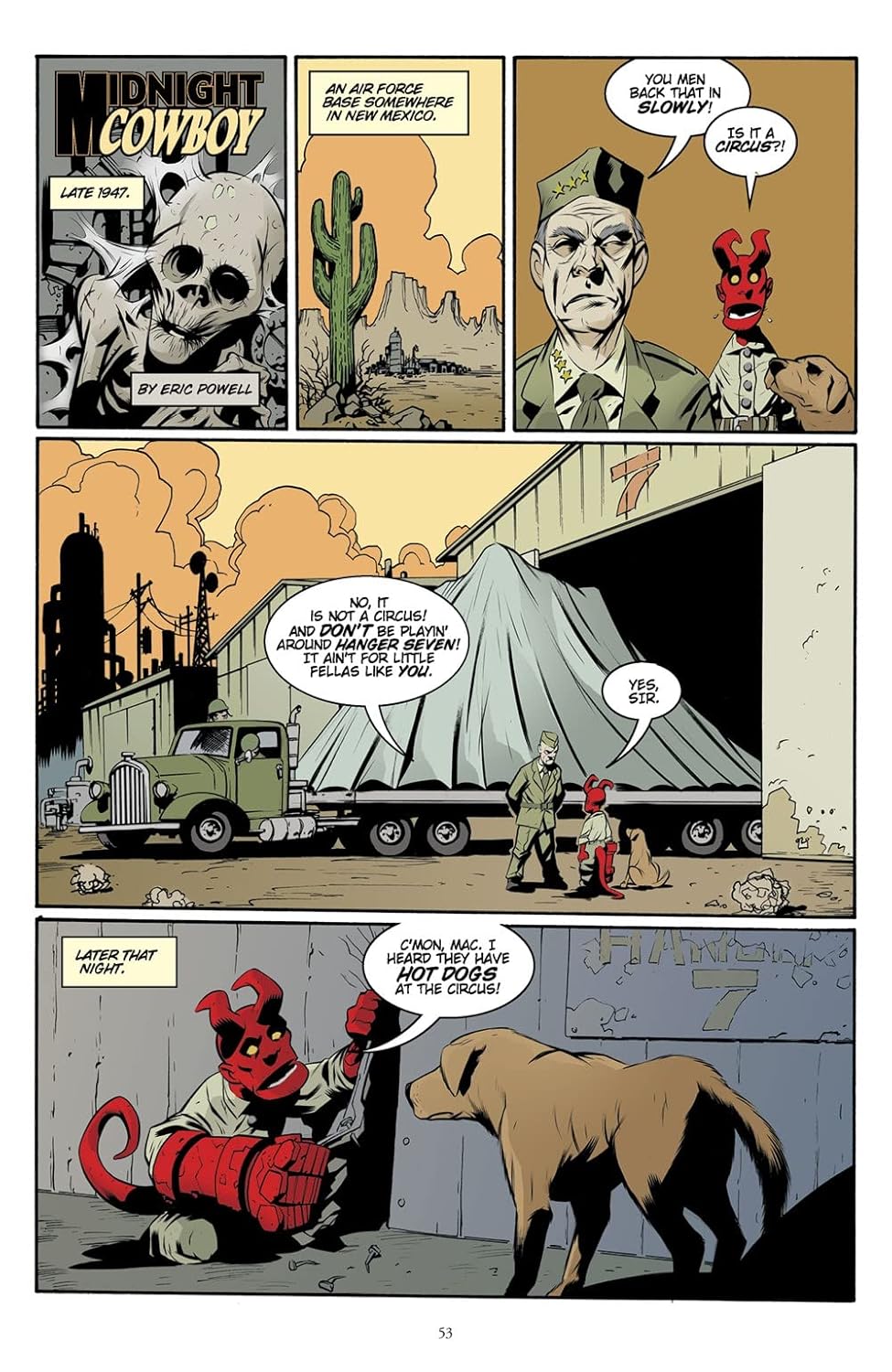
This chilling conundrum of a self-doubting quester barely holding at bay the crippling notion that all his knowledge might be trumped one night by the ever-lurking unknown is utterly compulsive entertainment, making the travails of The Marquis of Anaon mystery milestones no thinking fear fan should miss, and exploits deserving a much greater audience.
Original edition © Dargaud Paris 2006 by Vehlmann & Bonhomme. All rights reserved. English translations © 2016 by Cinebook Ltd.