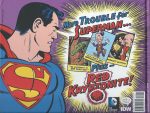
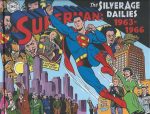
Superman Chronicles volume 10


By Jerry Siegel & Joe Shuster, John Sikela, Leo Nowak, Ed Dobrotka, George Roussos, Jack Burnley, Fred Ray & various (DC Comics)
ISBN: 978-1-4012-3488-1

Without doubt the creation of Superman and his unprecedented adoption by a desperate and joy-starved generation quite literally gave birth to a genre if not an actual art form.

Within three years of his Summer 1938 debut, the intoxicating mix of eye-popping action and social wish-fulfilment which hallmarked the early exploits of the Man of Tomorrow had grown to encompass cops-and-robbers crime-busting, reforming dramas, science fiction, fantasy and even whimsical comedy, but once the war in Europe and the East snared America’s consciousness, combat themes and patriotic imagery dominated most comicbook covers if not interiors.

In comic book terms at least Superman was master of the world, and had already utterly changed the shape of the fledgling industry. There was the popular newspaper strip, a thrice-weekly radio serial, games, toys, foreign and overseas syndication and the Fleischer studio’s astounding animated cartoons.

Thankfully the quality of the source material was increasing with every four-colour release and the energy and enthusiasm of Jerry Siegel & Joe Shuster had informed and infected the burgeoning studio that grew around them to cope with the relentless demand.

Superman was definitely every kid’s hero, as confirmed in this classic compendium, and the raw, untutored yet captivating episodes reprinted here had also been completely embraced by the wider public, as comicbooks became a vital tonic for the troops and all the ones they had left behind…

I sometimes think – like many others I know – that superhero comics were never more apt or effective than when they were whole-heartedly combating global fascism with explosive, improbable excitement courtesy of a myriad of mysterious, masked marvel men.

All the most evocatively visceral moments of the genre seem to come when gaudy gladiators soundly thrashed – and I hope you’ll please forgive the offensive contemporary colloquialism – “Nips and Nazis”.

However, even in those long-ago dark days, comics creators were wise enough to offset their tales of espionage and imminent invasion with a barrage of home-grown threats and gentler or even more whimsical four-colour fare…

This tenth astounding Superman chronological chronicle – collecting #18-19 of his solo title, episodes from flagship anthology Action Comics #53-55 and the Man of Steel segment of World’s Finest Comics #7 (covering September to December 1942) – sees the World’s Premier Superhero pre-eminent at the height of those war years: a vibrant, vital role-model and indomitable champion whose sensational exploits spawned a host of imitators, a genre and an industry.

Behind the stunning covers by Jack Burnley and Fred Ray – depicting our hero smashing scurrilous Axis War-mongers and reminding readers what we were all fighting for – scripter Siegel – who authored everything in this volume – was crafting some of the best stories of his career, showing the Action Ace in all his morale-boosting glory; thrashing thugs, spies and masters of Weird science whilst America kicked the fascist aggressors in the pants…

Co-creator Joe Shuster, although plagued by punishing deadlines for the Superman newspaper strip and rapidly failing eyesight, was still fully involved in the process, overseeing the stories and drawing character faces whenever possible, but as the months passed the talent pool of the “Superman Studio” increasingly took the lead in the comicbooks as the demands of the media superstar grew and grew.

Thus most of the stories in this volume were illustrated by studio stalwarts John Sikela, Leo Nowak and Ed Dobrotka with occasional support from others…

The debut of Superman had propelled National Comics to the forefront of the fledgling industry. In 1939 the company collaborated with the organisers of the New York World’s Fair: producing a commemorative comicbook celebrating the opening. The Man of Tomorrow prominently featured on the appropriately titled New York World’s Fair Comics beside such four-colour stars as Zatara, Gingersnap and The Sandman.

He starred again a year later in the sequel issue with newly-launched Batman and Robin in another epochal mass-market premium – World’s Fair 1940.

The monolithic 96-page card-cover anthologies were a huge hit and convinced National’s Powers-That-Be to release a regularly scheduled over-sized package of their pantheon of characters, with Superman and Batman prominently featured.

The bountiful format was retained for a wholly company-owned quarterly which retailed for the then-hefty price of 15¢. Launching as World’s Best Comics #1 (Spring 1941), the book transformed into World’s Finest Comics from #2, beginning a stellar 45 year run which only ended as part of the massive decluttering exercise that was Crisis on Infinite Earths.

Here – illustrated by Nowak & Sikela – the thrills begin with ‘The Eight Doomed Men’ (World’s Finest Comics #7); a tale involving a coterie of ruthless millionaires targeted for murder because of the wicked past deeds of their privileged college fraternity. This enthralling crime mystery is suitably spiced up with flamboyant high-tech weaponry that pushes the Action Ace to his limits…

Superman #18 (September/October 1942) then offers a quartet of stunning sagas, leading with the all-Sikela’s ‘The Conquest of a City’ wherein Nazi infiltrators used a civil defence drill to infiltrate the National Guard and conquer Metropolis in the Fuehrer’s name until Superman spearheads the counter-attack, whilst in Nowak’s ‘The Heat Horror’ an artificial asteroid threatens to burn the city to ashes until the Metropolis Marvel defeats Lex Luthor, the manic mastermind who aimed it at Earth.

‘The Man with the Cane’ offers a grand, old-fashioned and highly entertaining espionage murder mystery for Ed Dobrotka & Sikela to illustrate after which Superman takes on his first fully costumed super-villain after ‘The Snake’ perpetrates a string of murders during construction of a river tunnel in a moody masterpiece drawn by Nowak.

Sikela is inked by George Roussos on fantastic thriller ‘The Man Who put Out the Sun!’ from Action Comics #53, wherein bird-themed menace Night-Owl uses “black light” technology and ruthless gangsters to plunder at will until the Man of Steel takes charge, whilst in #54 ‘The Pirate of Pleasure Island!’ (Sikela) follows the foredoomed career of upstanding citizen Stanley Finchcomb, a seemingly civilised descendent of ruthless buccaneers, who succumbs to madness and becomes a modern day merciless marine marauder. Or perhaps he truly was possessed by the merciless spirit of his ancestor Captain Ironfist in this enchanting supernatural thriller…?

A classic (and much reprinted) fantasy shocker opened Superman #19. ‘The Case of the Funny Paper Crimes’ (by Sikela & Dobrotka) saw bizarre desperado Funnyface bring the larger-than-life villains of the Daily Planet’s comics page to terrifying life in a grab for loot and power, after which ‘Superman’s Amazing Adventure’ (Nowak) finds the Man of Tomorrow battling incredible creatures in an incredible extra-dimensional realm – but all is not as it seems…

Some of the city’s most vicious criminals are commanded to kill a stray dog by the infamous Mr. Z in ‘The Canine and the Crooks’ (Nowak) and it takes all of Clark and Lois Lane‘s deductive skills to ascertain why before ‘Superman, Matinee Idol’ breaks the fourth wall for readers as the reporters visit a movie house to see a Superman cartoon in a shameless but exceedingly inventive and thrilling “infomercial” plug for the Fleischer Brothers cartoons then currently astounding movie-goers; all lovingly rendered by Shuster and inked by Sikela.

This latest leaf through times gone by concludes with a witty and whimsical Li’l Abner spoof illustrated by Sikela & Dobrotka. ‘A Goof named Tiny Rufe’ focuses on desperate cartoonist Slapstick Sam who plagiarises – and ruins – the simple lives of a couple of naïve hillbillies to fill his idea-empty panels and pages until Superman intercedes to give the hicks their lives back and the devious dauber the drubbing he so richly deserves……

Although the gaudy burlesque of evil aliens, marauding monsters and slick super-villains still lay years ahead of Superman, these captivating tales of villainy, criminality, corruption and disaster are just as engrossing and speak powerfully of the tenor of the times.

Most importantly all problems are dealt with in a direct and captivating manner by our relentlessly entertaining champion in summarily swift and decisive fashion. No “To Be Continueds…” here!

As fresh, thrilling and compelling now as they ever were, the endlessly re-readable epics re-presented here are perfectly presented in these glorious paperback collections where the graphic magic defined what being a Super Hero means and with every tale defined the basic iconography of the genre for all others to follow.

These Golden Age tales are priceless enjoyment at absurdly affordable prices and in a durable, comfortingly approachable format. What dedicated comics fan could possibly resist them?
© 1942, 2012 DC Comics. All Rights Reserved.

Elvis


By Fabrice Le Hénanff & Philippe Chanoinat, translated by Joe Johnson (NBM)
ISBN: 978-1-68112-076-8

Win’s Christmas Gift Recommendation: A Perfect Present for the One who won’t read comics… Yet 10/10

If I have to explain who Elvis Presley was this book is not going to be of much interest to you.

So… ready now? Let’s Rock…

A glorious full-colour hardback addition to NBM’s magnificent line of graphic novel biographies, this is less a critical or revelatory expose of the musician’s existence away from the cameras and microphones and more of a captivating visual celebration of the King’s life, achievements and influence.

Painted with superb design sensibilities by historical comics specialist Fabrice Le Hénanff (Les Caméleons, H. H. Holmes, Ostfront, Westfront, Amedeo Modigliani) this truncated tour from scripter Philippe Chanoinat touches all the bases – high points and low – in tracing the rise, levelling off and post-demise ascendance of Elvis Aaron Presley.

A stunning graphic aide memoir, it follows his parents’ humble beginnings through Elvis’ early days of strife and struggle. As fame came you can see the cascade of breaking cultural taboos and social barriers, experience the thrill of each record released, movie made, original bluesmen buddied-up with and mega-star met.

A joyous and surprisingly moving nostalgia ride, this beautiful book also includes a large and captivating section of Le Hénanff’s roughs, sketches, reference layouts, preliminary paintings and storyboards venerating and revealing the creation of ‘Elvis: the King’.

Ephemeral fun giving sturdy solidity through the beautiful illustration, this book is also available as an e-book, should you be making the transition to a less physical existence, so you can even store on a digital device beside your music downloads and give yourself an appropriate soundtrack whilst reading.
© 2015 Jungle. © 2016 NBM for the English translation.

For more information and other great reads see http://www.nbmpub.com/

The Art of Vampirella: The Warren Years


By Frank Frazetta, Enrich, Sanjulián, Ken Kelly Vaughn Bodé & various artists, written by David Roach (Dynamite Entertainment)
ISBN: 978-1-60690-390-2

Jim Warren originally established himself in the American comics marketplace with monochrome B-Movie fan periodical Famous Monsters of Filmland and satire magazine Help! In 1965 he took his deep admiration of the legendary 1950s EC Comics to its logical conclusion: reviving anthology horror periodicals and pitching them at older fans.

Creepy was stuffed with clever strip chillers illustrated by the top artists in the field (many of them ex-EC stars) and Warren neatly sidestepped the all-powerful Comics Code Authority – which had ended EC’s glory days and eventually their entire comics line – by publishing his new venture as a newsstand magazine.

It was a no-lose proposition. Older readers didn’t care to be associated with “kid’s stuff” comicbooks whilst magazines already held tempting extra cachet (i.e. mild nudity and a little more explicit violence) for readers of a transitional age.

Best of all, the standard monochrome format cost a quarter of what colour periodicals did to print.

Creepy was a huge and influential hit, especially among the increasingly rebellious, Rock ‘n’ Roll crazed teen market; often cited as a source of inspiration for the nascent underground commix movement and now furiously feeding on the growing renewed public interest in the supernatural.

In true Darwinian “Grow or Die” mode, Warren looked around for new projects, following up with companion shocker Eerie and the controversial war title Blazing Combat.

As the decade closed he launched a third horror anthology, but Vampirella was a little bit different. Although it featured the traditional “host” to introduce and comment on stories, this narrator was a sexy starlet who occasionally participated in the stories: eventually becoming hero and crowd-pulling star of her own regular feature.

Another radical variation was that here female characters played a central role. They were still victims and targets but increasingly, whether name stars or bit players, were as likely to be the big menace or save the day. Whatever their role, though, they were still pretty much naked throughout. Some traditions must be protected at all costs…

Another beguiling Warren innovation and staple was the eye-catching painted covers on every issue…

The hidden story behind Warren’s introduction of Vampirella is fully disclosed in David Roach’s incisive history of the magazine whose covers are reprinted in their entirety – spanning September 1969 to March 1983 – in this pictorial treasury.

Accompanied by informative context and commentary, they are presented as both finished newsstand-ready product with all typography and logos and as full-page reproductions of the original artworks, denuded of all distracting text and editorial modification.

This magnificent oversized (234 x 307 mm) hardback proudly displays every cover from the run: 112 issues, the 1972 Annual and the Pantha Special – and even includes a series of photographic entries featuring Barbara Leigh in full costume. She was pegged to play the deliciously Deadly Drakulonne in a sadly-unrealised Hammer Horror movie.

Following a revelatory Introduction from Enric Torres-Prat who as “Enrich” painted dozens of astoundingly eye-catching covers, Roach’s ‘Vampirella: an Introduction’ traces her history and development as well as the company-saving arrival of the Spanish illustrators of Josep Tutain’s European S.I. agency.

The astonishing work of these astounding painters and draughtsmen turned Warren around and made them the most visually unique publisher on the American scene. Moreover this Introduction is illustrated not just with American material but also pages of comics and covers S.I. provided for the British market during the 1960s and 1970s.

The major portion of this beguiling tome is quite rightly all about the art, and the parade of painterly peril and pulchritude includes works by Aslan (Alain Gourdon), Frank Frazetta, Bill Hughes, Vaughn Bodé, Jeff Jones, Larry Todd, Ken Kelly, Boris Vallejo, Sanjulián (Manuel Pérez Clemente), Pepe Gonzalez, Luis Dominguez, Josep Marti Ripoll, Lluís Ribas, Hank Londoner (photographer for the Leigh covers), Bob Larkin, Kim McQuaite, Jordi Penalva, Esteban Maroto, Steve Harris, Paul Gulacy, Terrance Lindall, Jordi Longaron, Noly Panaligan, Albert Pujolar and Martin Hoffman.

This captivating, vibrant tome is as much a historical assessment as celebration of stellar talent: a beautiful, breathtaking and brilliantly inspirational compendium for the next generation of artists and illustrators.

If you are gripped by the drive to make pictures but want a little encouragement, this luxurious compendium offers all the encouragement you could possibly hope for – and is powerfully intoxicating too.
Vampirella ™ and © 2013 Dynamite Entertainment. All rights reserved.

The Living Mummy and other Stories


Illustrated by Jack Davis, written by Al Feldstein with Ray Bradbury (Fantagraphics Books)
ISBN: 978-1-60699-929-5

Win’s Christmas Gift Recommendation: What’s Christmas without Ghost Stories… or vampires or werewolves or mad murderers or… 8/10

Jack Davis is probably one of the few artists better known outside the world of comics than within it. His paintings, magazine covers, advertising work and sports cartoons have reached more people than his years of comedy cartooning for such magazines as Mad, Panic, Cracked, Trump, Sick, Help!, Humbug, Playboy, etc., and very few modern comic collectors seem aware of his horror, war and other genre masterpieces for EC, his Westerns for Marvel comics or his pivotal if seminal time at Jim Warren’s Eerie and Creepy magazines.

Entertaining Comics began in 1944 when comicbook pioneer Max Gaines – presumably seeing the writing on the wall – sold the superhero properties of his All-American Comics company to half-sister National/DC, retaining only Picture Stories from the Bible. His plan was to produce a line of Educational Comics with schools and church groups as the major target market.

He augmented his flagship title with Picture Stories from American History, Picture Stories from Science and Picture Stories from World History but these worthy projects were all struggling when he died in a boating accident in 1947.

As detailed in the comprehensive closing essay of this superb graphic compilation (‘Crime, Horror, Terror, Gore, Depravity, Disrespect for Established Authority – and Science Fiction Too: the Ups and Downs of EC Comics’ by author, editor, critic and comics fan Ted White), Max’s son William was dragged into the company by unsung hero and Business Manager Sol Cohen who held the company together until initially unwilling Bill Gaines abandoned dreams of being a chemistry teacher and transformed the ailing educational enterprise into the EC we all know and love…

After some tentative false starts and abortive experiments mimicking industry fashions, Gaines took advantage of multi-talented associate Al Feldstein, who promptly graduated from creating teen comedies and westerns to become Gaines’ editorial supervisor and co-conspirator.

As they began co-plotting the bulk of EC’s stories together, they changed tack, moving in a boldly impressive new direction. Their publishing strategy, utilising the most gifted illustrators in the field, was to tell a “New Trend” of stories aimed at older and more discerning readers, not the mythical semi-literate 8-year-old all comicbooks ostensibly targeted.

From 1950 to 1954 EC was the most innovative and influential publisher in America, dominating the genres of crime, horror, war and science fiction and originating an entirely new beast: the satirical comicbook…

Feldstein had started as a comedy cartoonist and, after creator/editor Harvey Kurtzman departed in 1956, Al became Mad‘s Editor for the next three decades…

This 16th volume of the Fantagraphics EC Library gathers a mind-boggling selection of Feldstein’s stories – mostly co-plotted by companion-in-crime Gaines – and all illuminated by the company’s most versatile illustrator: a young hopeful who literally walked in off the street with his portfolio and walked away with the first commissions of a stellar career.

Davis was to grow into a master of macabre mood, earthy true grit and flamboyantly excessive gallows humour and his work has never looked better than in this stark and lavish monochrome hardcover edition packed with supplementary interviews, features and dissertations.

It begins with historian and lecturer Bill Mason’s Introduction ‘Jack Be Quick’ relating how John Burton “Jack” Davis left Atlanta, Georgia – via the Navy – for a life in art after which the groundbreaking pictorial yarn-spinning commences with ‘The Living Mummy’ (from Haunt of Fear #4, November/December 1950) wherein three unwise scientists soon regret revivifying an ancient mummified cadaver.

Then a dutiful man is forced to confront family tragedy and exterminate a lycanthropic loved one in ‘The Beast of the Full Moon!‘ in a potent shocker from Vault of Horror #17 (February/March 1951).

A weary, storm-tossed traveller stumbles into the wrong house in Haunt of Fear #5, (January/February 1951) and become a ‘A Tasty Morsel!’ after completely misdiagnosing the kind of monster he’s trapped with, whilst murder strikes close to home in the tale of a comicbook artist embroiled in a lethal romantic triangle in ‘Conniver!’ from Crime SuspenStories #4 (April/May 1951).

A transplant surgeon survives a crippling car crash and is forced to cry ‘Lend Me a Hand!’ (Vault of Horror #18 April/May 1951) before he can continue his life’s work after which ‘Cheese, That’s Horrible!’ (Haunt of Fear #6, March/April 1951) sees a greedy dairy-factory owner come to regret murdering his finicky, idealistic partner even as ‘Mr. Biddy… Killer!’ (Crime SuspenStories #5, June/July 1951) explores the psychological underpinnings of a murdering maniac…

‘The Jellyfish!’ – from Vault of Horror #19 (June/July 1951) – was based on and inspired by Ray Bradbury’s short story “Skeleton” and reveals the grisly revenge of a chemist framed by his own brother for adulterating insulin, before regular writers Feldstein and Gaines resume their grisly games with ‘The Basket!’ (Haunt of Fear #7, May/June 1951): a shocking tale of monstrous deformity and murderous misdirection.

Davis’ art had been gradually developing its characteristic loose energy over the months, and with ‘The Reluctant Vampire!’ (Vault of Horror #20 August/September 1951) entered a new stage: perfectly capturing the grisly humour of a bloodsucker who worked nights in a blood bank and took extraordinary measures to keep the place open in the face of economic hardship and a paucity of donations…

‘The Irony of Death!’ (Haunt of Fear #8, July/August 1951) traces the rise and demise – through supernatural agency – of a metal worker who takes over an iron foundry through judicious marriage and murder; ‘Phonies’ (Crime SuspenStories #7, October/November 1951) is a delicious caper of crooks swindling crooks and ‘Trapped!’ (Vault of Horror #21 from the same month) details the final fate of a fugitive killer whose mad dash for safety came to very sticky end.

‘The Gorilla’s Paw’ (Haunt of Fear #9, September/October 1951) is an extremely gory take on the classic tale of wishes granted in the most grudging manner imaginable whilst ‘Gone… Fishing!’ (Vault of Horror #22 December 1951/January 1952) demonstrates arcane tit-for-tat to an angler who revelled in the inherent cruelty of his sport.

Then, a disgraced bullfighter murders his young rival and pays an horrific price for his sin in Bum Steer!’ from Haunt of Fear #10 (November/December 1951) whilst in Crime SuspenStories #9 (February/March 1952), an ambitious stand-in kills the star he doubles for but is tripped up by his own ineptitude in ‘Cut!’

Davis was probably the fastest artist in EC’s stable and versatile enough to cover any genre. For Vault of Horror #23 (February/March 1952) he provided a brace of chillers, beginning with ’99 44/100% Pure Horror!’ as a soap factory owner is reduced to packets of his own premium product yet still manages to wipe the slate clean by killing his killer, whilst ‘Dead Wait!’ focuses on the distant tropics as an obsessive thief schemes to steal a priceless gem, unaware that he is actually a pearl of equal price to his most trusted and ruthless confederate…

The rest of Davis’ 1952 was equally impressive and wide-ranging. ‘Ear Today… Gone Tomorrow!’ (Haunt of Fear #11, January/February) told of two bonemeal fertiliser salesmen who mistakenly saw a graveyard as a way to cut costs whilst ‘Missed by Two Heirs!’ (Crime SuspenStories #10, April/May) details the sheer dumb luck which plagued two wastrels eager to off their old man and start spending big.

Shady used car salesmen who gleefully sold un-roadworthy vehicles met justice through supernatural intervention and joined ‘The Death Wagon!’ in Vault of Horror #24 (April/May) before ‘The Patriots!’ (Shock SuspenStories #2, April/May) moved from horror and humour to stark social commentary which still resonates today as a crowd of spectators cheering a parade of recently returned soldiers turns on one man not showing the proper respect to the marching military heroes…

A return to baroque grisly giggles is seen in ‘What’s Cookin’?’ (Haunt of Fear #12, March/April) as two greedy partners in a fast food franchise decide to cut the genius who created the phenomenon out of the profit-equation before Davis demonstrates his speed in a new occasional features – “EC Quickies”.

These were linked 4-page tales on a shared theme and begins with a pair from Crime SuspenStories #11 (June/July): an examination of how con men dupe suckers beginning with ‘Two for One!’ as a cash-strapped business opts for a deal which is literally too good to be true whilst ‘Four for One!’ reveals an even more cunning way to embezzle huge sums from banks…

‘Kickin’ the Gong a Round!’ (Vault of Horror #25 June/July) reveals the lethal lengths to which a boxing champion goes to keep his title after which ‘Stumped!’ (Shock SuspenStories #3, June/July) follows fur trappers in the far north who use ferocious bear traps to make a profit – and remove rivals – after which Davis delineates one of Feldstein’s most visceral and innovate tales in ‘Wolf Bait!’ (Haunt of Fear #13, May/June).

Here a sleigh full of desperate men, women and children frantically outrace a pack of starving predators. However, once all the ammunition is expended and they’ve thrown all the food they have at them, what else can be jettisoned to slow the ravenous pursuit?

The cartoon chills build to a crescendo with another double-feature EC Quickie segment – from Crime SuspenStories #12 (August/September) – wherein two friends go hunting in the deep woods: both of them prepared to kill more than moose to secure a woman they both want.

‘Murder the Lover!’ then explores the consequences of one set of circumstances whilst ‘Murder the Husband!’ proffers a grim alternative, but in each example the victorious killer pays a price in pure poetic justice for his crime. The weird wonderment then concludes with sardonic cynical satire in ‘Graft in Concrete’ (Vault of Horror #26 August/September) as the building of a simple road bogs down in layer upon layer of corrupt backhanders and is only expedited by desecration and sacrilege. Of course, certain dead parties take grave offence at the intrusion and make their umbrage known in a most effective manner…

Adding final weight to the tome is an outrageous contemporary caricature of the artist by EC staffer Marie Severin accompanying S.C. Ringgenberg’s biography of the cartoonist who became America’s most popular illustrator in ‘Jack Davis’, plus the aforementioned history of EC and a comprehensive ‘Behind the Panels: Creator Biographies’ feature by Mason, Tom Spurgeon and Janice Lee.

The short, sweet but severely limited output of EC has been reprinted ad infinitum in the decades since the company died. These astounding stories and art not only changed comics but also infected the larger world through film and television and via the millions of dedicated devotees still addicted to New Trend tales.

The Living Mummy is a superb celebration of the astounding ability of a comics legend and offers a fabulously engaging introduction for every lucky fear fan encountering the material for the very first time.

Whether you are an aging fear aficionado or callow contemporary convert, this is a book you cannot miss…
The Living Mummy and other Stories © 2016 Fantagraphics Books, Inc. All comics stories © 2016 William M. Gaines Agent, Inc., reprinted with permission. All other material © 2014 the respective creators and owners.

Vampirella Archives volume One


By Forrest J. Ackerman, Don Glut, Nicola Cuti, Tom Sutton, Neal Adams, Ernie Colon, Billy Graham, Jeff Jones, Dan Adkins, Frank Frazetta & various (Dynamite Entertainment)
ISBN: 978-1-60690-175-5

After years of stifling restriction, the American comic book industry finally started to break out of a self-imposed straitjacket in the mid 1960s. The kids of the Counterculture had begun creating and disseminating material relevant to their lives in largely self-produced “Underground Commix” whilst other publishers sought other ways around the draconian Comics Code applied to comic books.

The most elegant solution was the one chosen by Jim Warren, who had originally established himself with black and white B-Movie fan periodical Famous Monsters of Filmland and satire magazine Help!

In 1965 he took his deep admiration of the legendary 1950s EC Comics to its logical conclusion: reviving the concept of anthology horror short stories and pitching them at older fans. Creepy was stuffed with clever, sardonic, tongue-in-cheek strip chillers illustrated by the top artists in the field (many of them ex-EC stars). Warren circumvented the all-powerful Comics Code Authority – which had ended EC’s glory days and eventually their entire comics line – by publishing his new venture as a newsstand magazine.

It was a no-lose proposition. Older readers didn’t care to be associated with “kid’s stuff” comic-books whilst magazines had tempting cachet (i.e. mild nudity and a little more explicit violence) for readers of a transitional age; moreover the standard monochrome format was a quarter of the costs of colour periodicals.

Creepy was a huge and influential hit, especially among the increasingly rebellious, Rock ‘n’ Roll crazed teen market; often cited as a source of inspiration for the nascent underground commix movement and now furiously feeding on the growing renewed public interest in the supernatural.

In true Darwinian “Grow or Die” mode, Warren looked around for new projects, following up with companion shocker Eerie and the controversial war title Blazing Combat.

As the decade closed he launched a third horror anthology, but Vampirella was a little bit different. Although it featured the now traditional “host” to introduce and comment on the stories, this narrator was a sexy starlet who occasionally participated in the stories. Before too long she actually became the hero and crowd-pulling star of her own regular feature, but that’s material for a later volume…

The other big change was that here female characters played a far more active role. They were still victims and target but increasingly, whether name stars or bit players, they were as likely to be the big menace or save the day. Whatever their role, though, they were still pretty much naked throughout. Some traditions must be protected at all costs…

Another beguiling Warren staple was the eye-catching painted cover on every issue. Here they are the only full colour pages in an otherwise magnificently monochrome or duo-toned tome, crafted by Frank Frazetta, Bill Hughes, Larry Todd & Vaughn Bodé, Jeff Jones & Bodé and Ken Kelly. However to be fair I must say that the reproduction on some black-&-white pages leaves a lot to be desired…

This massive magazine-size (216 x 32 x 279 mm) hardback collection gathers – in their entirety – the contents of the first seven issues (spanning September 1969 to September 1970). This was a crucial transitional period which saw superheroes dying out at every publishing company; replaced by a genre revival and spearheaded by a tidal wave of horror titles after the Comics Code was frantically rewritten to combat plunging sales.

This volume begins with Vampirella #1, that aforementioned painted cover and a black-&-red Frazetta frontispiece – probably scripted by Editor Bill Parente – setting the blackly humorous tone for a fearsome fangtastic fun fest.

The original contents page follows – as do they all in their appropriate place. This compendium also includes every letters page and fan feature – and even the nostalgia-triggering ads of the era. If you are a modern monster fan or kit collector you’ll probably simultaneously weep and drool at the sight of these lost treasures…

The strip sensationalism begins with ‘Vampirella of Drakulon’ by Forrest J. Ackerman & Tom Sutton; introducing a planet where the rivers ran with blood and life evolved to drink it.

However, following a withering drought Drakulon was dying. Happily for the sultry starving vampire a ship from Earth arrives, full of people with food in their veins and a ship that can take her to where there’s plenty more.

Vampi’s role from the outset was to be another story host and for the rest of this collection that’s what she mostly is. Her role as an active adventurer didn’t properly begin for quite awhile…

So here the chills continue with ‘Death Boat!’ by Don Glut & Billy Graham with the survivors of a shipwreck being picked off one by one by a bloodsucker in their midst. They perish one per night but when the mortals number just two both are still wrong about who the killer is…

Glut & master draughtsman Reed Crandall conspired on ‘Two Silver Bullets!’ as a trapper fights to save his daughter from a werewolf after which ‘Goddess from the Sea’ by Glut and Neal Adams offers a splendid treat for art-lovers: the story of a man seduced by a sea-siren was shot directly from the illustrator’s incredible pencil art.

Glut & Mike Royer offer a timely Halloween warning in ‘Last Act: October!’ whilst ‘Spaced-Out Girls!’ (Glut & Tony Tallarico) sees a saucer full of extraterrestrial honeys come shopping for husbands before the premier package closes with Nicola Cuti & Ernie Colon’s mindbending magical murder mystery ‘A Room Full of Changes’.

The spooky story-bonanza resumes in issue #2, opening with coming attraction featurette ‘Vampi’s Feary Tales…’ – courtesy of Sutton – after which Vampi’s putative cousin ‘Evily’ is introduced by Bill Parente & veteran horror-meister Jerry Grandenetti. Here Drakulonian émigré and Earthly sorceress climactically clash over star-billing and bragging rights…

‘Montezuma’s Monster’ is scripted by R. Michael Rosen (incorrectly credited to Glut) and illustrated by Bill Fraccio & Tallarico in their composite identity of Tony Williamsune, detailing the fate of a treasure-hungry explorer who doesn’t believe in feathered serpents whilst ‘Down to Earth!’ by Ackerman & Royer leaves the hosting to Vampirella’s blonde counterpart Draculine as our star auditions for a film role…

That theme continues in ‘Queen of Horror!’ (Glut & Dick Piscopo) wherein a B-Movie starlet uses unique and uncanny advantages to get everything she deserves whilst Cuti & William Barry reveal the tragedy of two brothers who discover a new predatory species of inland cephalopod in ‘The Octopus’.

Cuti & Colon’s ‘One, Two, Three’ then explores the power of love in a world of robots and Glut & Graham render a ‘Rhapsody in Red!’ with a weary travellers fetching up at a lonely house to deliver a big surprise to the resident vampire…

The third issue augmented ‘Vampi’s Feary Tales…’ with correspondence section ‘Vampi’s Scarlet Letters’ before ‘Wicked is Who Wicked Does’ features the return of Evily in a short shocking battle against ogres by Parente & Sutton.

Al Hewetson & Jack Sparling count ‘4- 3- 2- 1- Blast Off! To a Nightmare!’ in the tale of a spaceship full of 24-hour party people who end up as hors d’oeuvres for something very nasty even as ‘Eleven Steps to Lucy Fuhr’ (by Terri Abrahms [story]; Nick Beal [adaptation] and art by Ed Robbins) sees many men drawn to a bizarre bordello and a sinister fate… until the unlikeliest of saviours takes a hand…

‘I Wake up… Screaming!’ is an all Billy Graham affair as a frightened girl is made aware of her true nature in a sci fi chiller whilst Cuti & Piscopo plunder mythology to deliver a salutary tale of fairy tale oppression and bloody liberation in ‘The Calegia!’

A cunning vampire meets his lethal match in Graham’s ‘Didn’t I See You on Television?’ after which Rosen & Sparling close the issue detailing the downfall of a vicious spoiled brat caught in ‘A Slimy Situation!’

Vampirella #4 opened with Sutton revealing past episodes of witch killing in ‘Vampi’s Feary Tales: Burned at the Stake!’ before Parente & David StClair reach psychedelic heights in a tale of alien amazons and their deadly ‘Forgotten Kingdom’ whilst Cuti & Royer combine murder and time travel in ‘Closer than Sisters’…

A city-slicker falls for a hillbilly hottie and gets sucked into a transformative shocker after trying ‘Moonshine!’ (Glut & Barry), Bill Warren & Sparling reveal the fate of a beautiful and obsessive scientist who bends the laws of God and Man ‘For the Love of Frankenstein’ and a very modern black widow asks a controlling stalker to ‘Come Into My Parlor!’ in a wry yarn by Rosen & Piscopo.

Richard Carnell (story); Jack Erman (adaptation) & Sparling then close the show with a weird and nasty tale of a nobleman auditioning women for marriage in ‘Run for Your Wife!’

The fifth issue begins with the usual ‘Vampi’s Feary Tales…’ as Sutton exposes ‘The Satanic Sisterhood of Stonehenge!’ before Glut, Fraccio & Tallarico see a greedily impatient heir speed his benefactress to her ultimate end, unheeding of her beloved pets and ‘The Craft of a Cat’s Eye’.

Cavemen battle dinosaurs in an arena of ‘Scaly Death’ in a visceral treat from Glut & Graham whilst the astounding Jeff Jones lends fine art sensibilities to the murderous saga of a girl, a guy and ‘An Axe to Grind’ after which Parente & Sutton detail the crimes of a sadistic Duke whose fate is sealed by an aggrieved astrologer and astrally ‘Avenged by Aurora’…

Glut, Fraccio & Tallarico see graves robbed and corpses consumed in neat bait-&-switch thriller Ghoul Girl’ whilst T. Casey Brennan & Royer reveal the solution of a bereaved husband who finds an ‘Escape Route!’ back to his dead beloved before Glut & Sparling end it all again via an implausible invasion from the moon in ‘Luna’.

Vampi’s Feary Tales…’ in Vampirella #6 features Dan Adkins’ graphic discourse on centaurs acting as a prelude to romantic tragedy the ‘Curse of Circe!’ as Gardner Fox & Grandenetti combine to relate how a strange sea creature offers the witch’s latest conquest his only certain method of escape.

Cuti & Sparling then share a story of civil war in the land of ghosts and how love toppled ‘The Brothers of Death’ whilst ‘Darkworth!’ by Cuti & Royer shows how a stripper graduates to murdered assistant of a stage magician and pulls off her own amazing trick in the name of vengeance after which Fox & Adkins explore the lives of the recently dead with ‘New Girl in Town!’ and Vern Burnett & Frank Bolle return to gothic roots to depict embattled humans outwitting nocturnal predators by volunteering a ‘Victim of the Vampyre!’

Larry Herndon, Fraccio & Tallarico (as Tony Williamsune) get creepily contemporary as a doctor tries to fix an overdosed patient and sends him way, way out on a ‘One Way Trip!’ before Buddy Saunders & Bolle combine adultery and attempted murder in ‘The Wolf-Man’: a wickedly scientific shocker about a very different kind of feral killer…

Vampirella #7 saw Archie Goodwin join as Associate Editor and perhaps his influence can be seen as the issue experiments with a connected theme and extended tale scripted by Nicola Cuti. Graham and Frazetta start the ball rolling by explaining ‘Why a Witch Trilogy’ and Vampirella introduces ‘Prologue: The Three Witches’ before Sutton to segues into the sad story of ‘The White Witch’ who could never feel the sunlight.

Ernie Colon picks up the experimental progression as ‘The Mind Witch’ trades magic for science to expose the fate of a psychic predator, after which Graham closes the deal with ‘The Black Witch’ who thought she could conquer love but failed to realise its appalling power…

After Cuti & Sutton’s palate-cleansing ‘Epilogue: The Three Witches’, Doug Moench graduates from letter writer in #3 to scripter as ‘Plague of the Wolf’ – illustrated by Bolle – tracks a bloody serial killer’s progress under the full moon and ‘Terror Test’ offers a shocking psychological thriller by Rosen & “Williamsune” with more than one sting in the tail.

In ‘The Survivor’, Saunders & Colon unite to explore a post-apocalyptic world where dedicated archaeologists still struggle to escape their bestial natures and this mammoth first compilation concludes with Rosen & Grandenetti viewing ‘The Collection Creation’ with an artist who finds the wrong kind of immortality…

Stark, surprisingly shocking and packed with clever ideas beautifully rendered, this epic tome (narrowly) escapes and transcends its admittedly exploitative roots to deliver loads of laughs and lots of shocks: a tried and true terror treat for fans of spooky doings and guiltily glamorous games.
© 2012 DFL. All rights reserved.

The Broons and Oor Wullie: The Sensational Sixties


By Dudley D. Watkins & various (DC Thomson)
ISBN: 978-0-85116-712-8

Win’s Christmas Gift Recommendation: Evergreen Seasonal Traditions Celebrated and the ideal last minute gift… 10/10

Published eternally in perfect tandem, The Broons and Oor Wullie are two of the longest running newspaper strips in British history, having appeared almost continuously in the Scottish Sunday Post since their dual debuts in the March 8th 1936 edition.

Both the boisterous boy and the gregariously engaging inner city clan were co-created by writer and Editor Robert Duncan Low in conjunction with Dudley D. Watkins; a man who would become DC Thomson’s greatest – and signature – artist.

Three years later the strips began being collected in reprint editions as Seasonal Annuals; alternating stars and years right up to the present day and remaining best-sellers every single time.

Low (1895-1980) began at the publishing monolith as a journalist, rising to the post of Managing Editor of Children’s Publication and launching, between 1921 and 1933, the company’s “Big Five” story-papers for boys: Adventure, The Rover, The Wizard, The Skipper and The Hotspur.

In 1936 his next brilliant idea was the Fun Section: an 8-page pull-out comic strip supplement for Scottish national newspaper The Sunday Post. The illustrated accessory launched on 8th March and from the very outset The Broons and Oor Wullie were its unchallenged stars…

Low’s shrewdest move was to devise both strips as domestic comedies played out in the charismatic Scottish idiom and broad unforgettable vernacular. Ably supported by features such as Auchentogle by Chic Gordon, Allan Morley’s Nero and Zero, Nosey Parker and other strips, they laid the groundwork for the company’s next great leap.

In December 1937 Low launched the DC Thomson’s first weekly pictorial comic. The Dandy was followed by The Beano in 1938 and early-reading title The Magic Comic the year after that.

War-time paper shortages and rationing sadly curtailed this strip periodical revolution, and it was 1953 before the next wave of cartoon caper picture-papers. The Topper started the ball rolling again (with Oor Wullie in the logo and masthead but not included amongst the magazine’s regular roster) in the same year that Low & the great Ken Reid created Roger the Dodger for The Beano…

Low’s greatest advantage was his prolific illustrator Dudley Dexter Watkins, whose style, more than any other, shaped the look of DC Thompson’s comics output until the bombastic advent of Leo Baxendale shook things up in the mid-1950s.

Watkins (1907-1969) had started life in Manchester and Nottingham as an artistic prodigy. He entered Glasgow College of Art in 1924 and it wasn’t long before he was advised to get a job at Dundee-based DCT, where a 6-month trial illustrating boys’ stories led to comic strip specials and some original cartoon creations.

Percy Vere and His Trying Tricks and Wandering Willie, The Wily Explorer made him a dead cert for both lead strips in the Sunday Post‘s proposed Fun Section and, without missing a beat, Watkins later added The Dandy‘s Desperate Dan to his weekly workload in 1937, eventually including The Beano‘s placidly and seditiously outrageous Lord Snooty seven months later.

Watkins soldiered on in unassailable homely magnificence for decades, drawing some of the most lavishly lifelike and winningly hilarious strips in illustration history. He died at his drawing board on August 20th 1969. For all those astonishingly productive years he had unflaggingly drawn a full captivating page each of Oor Wullie and The Broons every week, and his loss was a colossal blow to the company.

DC Thomson’s chiefs preferred to reprint old Watkins episodes of the strips in both the newspaper and the Annuals for seven years before a replacement was agreed upon. The Dandy reran Watkins’ Desperate Dan stories for twice that length of time.

An undeniable, rock-solid facet of Scots popular culture from the very start, the first Broons Annual (technically Bi-Annual) appeared in 1939, alternating with the first Oor Wullie book a year later (although, due to wartime paper restrictions, no annuals at all were published between 1943 and 1946) and for millions of readers no year can truly end without them.

This particular commemorative collection is tinged with sadness as the strips included here – probably written by David Donaldson, Iain Reid and some anonymous others – are perhaps the very best of Watkins’ astounding career, as well as his last.

So What’s the Set Up?: the Brown family inhabit a tenement flat at 10 Glebe Street, in the timelessly metafictional Scottish industrial everytown of Auchentogle (sometimes Auchenshoogle); based on the working class Auchenshuggle district of Glasgow. As such it’s an ideal setting in which to tell gags, relate events and fossilise the deepest and most reassuring cultural archetypes for sentimental Scots wherever in the world they might actually be residing. And naturally, such a region was the perfect sounding board to portray all the social, cultural and economic changes that came after the war…

The adamant, unswerving cornerstone of the family feature is long-suffering, ever-understanding Maw, who puts up with cantankerous, cheap, know-it-all Paw, and their battalion of stay-at-home kids. These comprise hunky Joe, freakishly tall Hen (Henry), sturdy Daphne, gorgeous Maggie, brainy Horace, mischievous twins Eck and the unnamed “ither ane” plus a wee toddling lassie referred to only as “The Bairn”.

Not officially in residence but always hanging around is sly, patriarchal buffoon Granpaw – a comedic gadfly who spends more time at Glebe Street than his own cottage and constantly tries to impart his decades of out-of-date, hard-earned experience to the kids… but do they listen?

Offering regular breaks from the inner city turmoil and a chance to simultaneously sentimentalise, spoof and memorialise more traditional times, the family frequently repair to their But ‘n’ Ben (a dilapidated rustic cottage in the Highlands) to fall foul of the weather, the countryside and all its denizens: fish, fowl, farm-grown, temporary and touristic…

As previously stated, Oor Wullie also launched on March 8th 1936 with his own collected Annual compilations subsequently and unfailingly appearing in the even years.

The basic set-up is sublimely simply and eternally evergreen, featuring an imaginative, scruff with a weakness for mischief, talent for finding trouble and no hope of ever avoiding parental retribution when appropriate…

Wullie – AKA William MacCallum – is an archetypal good-hearted rascal with time on his hands who can usually be found sitting on an upturned bucket at the start and finish of his page-a-week exploits. His regular cast includes Ma and Pa, local copper P.C. Murdoch, assorted teachers and other interfering adults who either lavish gifts or inflict opprobrium upon the little pest and his pals Fat Boab, Soapy Joe Soutar, Wee Eck and others. As a grudging sign of changing times, in later volumes such as this, he’s occasionally caught in the company of fetching schoolgirls like Rosie and Elizabeth…

A compilation in monochrome with some full-colour pages, The Sensational Sixties was released in 1999 as part of a concerted drive to keep earlier material available to fans: a lavishly sturdy hardback (still readily available through internet vendors) offering a tantalising selection of Sunday pages from 1960 to August 24th 1959, covering every aspect of that white-hot era of rapid change, and yet all still uproariously funny even now…

Each year of selected gems commences with an atmospheric photo-clippings and news-headlines feature, book-ending every following year with a similar capsule feature of the unfolding years and usually accompanied by a colour Watkins cover or title-page from an Annual of the period.

The endless escapades of the strip stars comprise the happily standard subject-matter: galling goofs and gaffes, family frolics, sly pranks and cruel comeuppances: a regular menu of gloriously slapstick shenanigans including plumbing pitfalls, decorating disasters, fireplace fiascos, school foolishness, dating dilemmas, appliance atrocities, fashion freak-outs, bothered Bobbies, teacher tantrums, excessive exercise exploits, chore-dodging and childish pranks by young and old alike, all glimpsed through the lens of a comfortably traditional world inexorably transitioning as fashionable technology slowly altered the lives of everyone, whether they wanted it to or not…


Although The Beatles, political and celebrity assassinations, space races and moon-shots or Vietnam apparently played little part in the lives of our Scottish stars, contemporary dance crazes are acknowledged, as are student-hostellers, package holidays, electric blankets and long-haired, fashion-crazed boys. There’s even an increase in football-related japery in the 1966 and 1967 chapters for some reason…

Uncontested and always welcome are wry and weighted comparisons of the good old days with mere modernity, rib-tickling scenes of sledding and skating, stolen candies, Christmas revels, torn clothes, recycled comics, breakings into one’s own home, sparring school kids, ladies and lassies lost and found, harmless practical jokes and social scandals: stories intended to take our collective mind off troubles abroad and at home, and for every thwarted romance of poor Daphne and Maggie or embarrassing fiasco focussing on Paw’s cussed recalcitrance, there’s an uproarious chase, riotous squabble and no-tears scrap for the little ‘uns.

With snobs to deflate, bullies to crush, duels to fight, chips to scoff, games to win and rowdy animals (from cats to cows) to escape, the eternally affable humour and gently self-deprecating, inclusive frolics make these superbly crafted strips an endlessly entertaining, superbly nostalgic treat.

Fans of the creative process will also delight in bonus features such as unused pencilled pages of Watkins’ art and the fulsome tribute section showing the illustrator’s first and last Broons and Oor Wullie strips: simply four more of the near 3500 pages he immaculately conceived for the staunchly timeless features.

Packed with all-ages fun, rambunctious homespun hilarity and deliriously domestic warmth, these examples of comedic certainty and convivial celebration are a sure cure for post-modern glums… and you can’t really have a happy holiday without that, can you?
© D.C. Thomson & Co., Ltd. 1998.

Archie Americana Series: The Best of the Seventies


By Frank Doyle, George Gladir, Dan DeCarlo, Samm Schwartz, Harry Lucey, Stan Goldberg & various (Archie Comics)
ISBN 978-1-87979-405-4

The monolith of wholesome fun that is Archie Comics had fully cemented its place in America’s popular culture scene by the 1960s. With the Youth Market an acknowledged commercial powerhouse, the red-haired archetype (and the company which created him) was known as much for animated TV shows, the pop single “Sugar, Sugar” and soon a chain of restaurants. Archie also totally dominated the comicbook humour market.

This volume – now also available as a digital download – collects a scant few of the stories from that decade; concentrating on fashions and fads such as Hot Pants, CB radio, Protest Movements, the Bicentennial, Disco, the advent of video games and even popular movie and TV sensations as well as the ever-widening divide between rebellious teens and oppressive adults.

It also delightfully shows the overwhelming power of good writing and brilliant art to captivate an audience of any age. Padding out this potently nostalgic package is a brace of House-ads from the period and a fulsome cover-gallery of iconic power and riotous wit.

The eternal verities are still in effect. Jughead Jones is still wise, weird and eternally hungry. The teachers at Riverdale High School are still hard-pressed and harassed. Archie Andrews is, as ever, that good-hearted, well-meaning boy lacking common sense. Betty Cooper is still the pretty, sensible girl next door, and glamorous Veronica Lodge is as rich, exotic and quixotic as ever, whilst the school and leisure antics of the broader cast are hip, engaging and hugely entertaining.

The eternal triangle and perfect laugh formula was first seen in 1941 and forms the basis of decades of charming, raucous, gentle, frenetic, chiding and even heart-rending comedy ranging from surreal wit to frantic slapstick, and has never been better depicted than here.

Following a poetic Introduction from actress Shirley Jones, the merriment kicks off with

‘Protest’ (Life with Archie #93, January 1970) by Frank Doyle & Samm Schwartz, seeing an ever-more frantic Archie desperate to join the national wave of teen rebellion but unable to find anything to dissent over or anyone angry enough to march with him…

George Gladir, Dan DeCarlo & Rudy Lapick regale us with Riverdale’s response to daring new fashion must-have ‘Hot Pants’ in a wry observation from Laugh #248 (November 1971) after which ‘Decisions, Decision’ (Archie #214, December 1971, by Doyle, Harry Lucey & Marty Epp) deliciously reveals how that Archie-Betty-Veronica quandary keeps going…

The anonymously crafted ‘Bubble Trouble’ (Everything’s Archie #21, April 1972, possibly Stan Goldberg pencilling?) then reveals how the garage band The Archies disprove media accusations that they are merely a bubblegum rock band with the help of a certain legendary star of Rock ‘n’ Roll…

From Archie #217 (April 1972) by Doyle, Lucey & Epp comes ‘The Late Archie Andrews!’ as desperate Principal Mr. Weatherbee goes to outrageous lengths to get the unlucky red-head to school on time, before a quartet of cool covers bridge the gap until the wackiness resumes.

‘Patch Match’ (Betty & Veronica #198, June 1972, Gladir & DeCarlo) details how Betty monopolises that Andrews boy by offering to sew onto his jacket all the cool badges he’s been collecting. Veronica of course responds with all the wealth in her arsenal but still comes out second-best…

‘Loyalville, USA’ (Archie at Riverdale High #12 December 1973, Doyle, DeCarlo & Lapick) sees Betty and Archie help out the town’s worst memorabilia vendor whilst Gladir, Goldberg & Jon D’Agostino prove there’s ‘No Fuel Like an Old Fuel’ (Pep #296, December 1974) by finding a way to save gas during an energy crisis that nevertheless lands Archie and Jughead in a storm of trouble…

Probably the most affecting tale in this collection, ‘You Came a Long Way, Baby’ (Betty & Veronica #233, May 1975, by Doyle, DeCarlo & Lapick) dramatically teaches the condescending girls how much progress in gender equality old maid Miss Grundy has been responsible for at Riverdale High. Then sadly uncredited ‘Bicentennial Banter’ (Archie’s TV Laughout #36 December 1975) sees those same lasses girls teach the boys about the female contributions and the decisive roles played by women during the American Revolution as they rehearse for a commemorative school play…

Archie’s eager fondness for CB radio is detailed in ‘Over and Out’ (Archie #256, September 1976: Doyle, Dan DeCarlo & Lapick) before more covers whet the palate for further fun which comes through an animal-free ‘Pet Parade’ (Everything’s Archie #57, June 1977).

Our gormless star naturally becomes ‘A Fool for Cool’ (Archie Giant Series/World of Archie #461 September 1977) after listening to bad advice and patterning his dating techniques on the Fonz from TV phenomenon Happy Days…

Betty & Veronica #263 (November 1977) was the original home for Gladir & DeCarlo’s ‘Video Vexation’, with the girls losing their place as the boys’ abiding passion once Pop Tate installs a computer arcade system, after which Star Wars gets thoroughly spoofed in ‘Costume Caper’ (Reggie & Me #104, April 1978) with Lapick adding his inking sheen to Gladir & DeCarlo’s smart rib-tickler.

‘Melvin’s Angels’ (Betty & Veronica #277, January 1979) by Doyle, DeCarlo & Lapick then sees Betty & Veronica undertaking a bruising mission for a mystery man on a speaker phone before the glitzy glamour-era comics celebration concludes with ‘Disco Dude’ (Laugh #343 October 1979) as a big food prize entices slovenly slowpoke Jughead to show off his amazing dance moves. Of course, his cunning plan goes disastrously awry…

These charming and comfortable yarns are a gentle delight and a much neglected area of cartoon and graphic narrative. It would benefit us all to take another long look at what they have to offer. If only to see how far fashion has not come…
© 1970-1979, 1998 Archie Publications Inc. All rights reserved.

The Adventures of Blake and Mortimer: The Francis Blake Affair


By Jean Van Hamme & Ted Benoit (Cinebook)
ISBN: 978-1-905460-63-2

Belgian Edgard Félix Pierre Jacobs (1904-1987) is one of the founding fathers of the Continental comics industry. Although his output was relatively modest compared to many of his iconic contemporaries, Jacobs’ landmark serialised life’s work – starring scientific troubleshooters Professor Philip Mortimer and Captain Francis Blake – practically formed the backbone of the modern action-adventure comic in Europe.

His splendidly adroit, roguish yet thoroughly British adventurers were conceived and realised for the very first issue of Le Journal de Tintin in 1946, and quickly became a crucial staple of life for post-war European kids – much as Dan Dare was in 1950s Britain.

After decades of fantastic exploits the series apparently ended with the eleventh album. The story had been serialised between September 1971 and May 1972 in Tintin but after the first volume was completed the author simply abandoned his story due to failing health and personal issues.

Jacobs died on February 20th 1987 before completing extended adventure Les 3 formules du professeur Satō.

The concluding volume – Mortimer contre Mortimer – was only released in March 1990 after veteran cartoonist Bob de Moor (Bart de Scheepsjongen, Monsieur Tric, Balthazar, Barelli and many others) was commissioned by the Jacobs family and estate to complete the tale from the grand originator’s pencils and notes.

The long-postponed release led to a republishing of all the earlier volumes, followed in 1996 by new adventures from two separate creative teams hired by the Jacobs Studio…

The first was the L’Affaire Francis Blake by Jean Van Hamme (Thorgal, XIII, Largo Winch) & Thierry “Ted” Benoit (Bingo Bongo et son Combo Congolais, Ray Banana) which settled itself into a comfortably defined and familiar mid-1950s milieu whilst unfolding a rousing tale of espionage and double-dealing.

The tale also controversially omitted the fantastic elements of futuristic fiction and fringe science which had characterised Jacobs’ creation. The story also focused on the cool, suave MI5 officer rather than bombastic, belligerent boffin and inveterate scene-stealer Professor Mortimer…

It all begins in the highest echelons of the government’s security services as news of a mole reaches the press and creates a scandal. MI5 chief Francis Blake carefully explains how difficult tracking the infiltrator has become, but none of the great men in the room have any patience for excuses…

Blake explains the dilemma to Mortimer at their Club that evening, but events are unfolding which will soon curtail their cosy get-togethers. British surveillance operatives may be slow but they are inexorably steady and when a photograph of a drop-off reveals that Blake himself is the traitor, MI5 moves quickly to arrest their disgraced leader. Unmasked, the spy master only escapes detention through a spectacular fast getaway across London, leaving shocked friends and associates in his wake.

Despite a mountain of damning evidence, Mortimer cannot believe his greatest ally against evil is a money-hungry villain and begins his own investigations, despite also being the subject of an MI5 watch team. The scientist is also keenly aware that in regard of man with all the secrets like Blake, death is preferable to capture as far as his pursuers are concerned.

Ditching his government shadows Mortimer also goes on the run…

Naturally Captain Blake is completely innocent, and has been playing his own deep game. Now, having has shaken loose the real traitor, our cunning hero has gone straight to the mastermind behind the infiltration of the security services. Sadly that human devil has not been fooled for a moment and acts accordingly…

Mortimer meanwhile has trailed his friends through some skilfully laid clues and breadcrumbs; uncovering Blake’s secret army of off-the-books, utterly loyal sleeper agents who render him every assistance as he closes in on Blake and the true masterminds behind an unbelievably bold plot…

With the country in an uproar, Mortimer heads ever-northward, having deduced Blake’s intended final destination and the incredible real motive behind all the cloak-&-dagger skulduggery. He arrives just in time for a grand reunion with his old comrade and a blistering battle against the forces of evil and subversion threatening our way of life…

Strongly founded upon and in many ways a loving tribute to John Buchan’s classic thriller The Thirty-Nine Steps, this is a devious and convoluted spook show to delight espionage aficionados and a solidly entertaining addition to the canon of the Gentleman Adventurers.
Original edition © Editions Blake & Mortimer/Studio Jacobs (Dargaud-Lombard S. A.) 1996 by Ted Benoit & Jean Van Hamme. All rights reserved. English translation © 2008 Cinebook Ltd.

Tarzan Archives: The Joe Kubert Years volume 3


By Joe Kubert with Robert Kanigher, Russ Heath & various (Dark Horse Comics)
ISBN: 978-1-59307-417-3

The early 1970s were the last real glory days of National/DC) Comics. As they slowly lost market-share to Marvel they responded by producing controversial and landmark superhero material, but their greatest strength lay, as it always has, in the variety and quality of its genre divisions. Mystery and Supernatural thrillers, Science Fiction, Romance, War and Kids’ titles remained powerful attractions and the company’s eye for a strong licensed brand was as keen as ever.

A global multi-media phenomenon, Edgar Rice Burroughs’ Tarzan had long been a comicbook mainstay of Dell/Gold Key/Whitman, and when DC acquired the title they rightly trumpeted it out, putting one of their top Artist/Editors, Joe Kubert, in charge of the immortal Ape-man’s monthly exploits.

After decades as Whitman staples, total licensing of ERB properties was transferred to DC – not just Tarzan and his extended family, but also the author’s pioneering science fantasy characters – with DC wisely continuing the original numbering.

Tarzan #207 was the first (with an April 1972 cover-date) and the series stormed, garnering great acclaim until #258 in February 1977. Thereafter Marvel, Malibu, Dark Horse and Dynamite extended the Jungle Lord’s comicbook canon in sporadic sorties to recapture the sales and popularity of the 1950s…

The latter days of the Gold Key run had suffered ever since Russ Manning left the title to draw the syndicated newspaper strip, and even the likes of Doug Wildey were unable to revive the comic’s success in the face of constantly rising costs and a general downturn in sales across the market. DC’s continuation of the franchise premiered in a blaze of publicity at the height of a nostalgia boom and was generally well-received by fans.

DC pushed the title in many places and formats (such as bookstore digest collections and the gloriously oversized Tabloid Editions) and adapted other properties such as John Carter of Mars, Pellucidar and Carson of Venus in their own features and titles.

This third and final fabulous hardcover archive collection (also available in digital formats) re-presents material from Tarzan #225-235, covering November 1973 through February/March 1975 and concluding the master’s interior artistic contributions – writing, illustrating and lettering.

After more fond reminiscences in Kubert’s Introduction, the pictorial wonderment resumes with original tale ‘Moon Beast’ which sees a mother and child brutally slaughtered and Tarzan framed for the hideous crime by cunning medicine man Zohar. When the vile trickster overreaches himself, the captive Ape-Man breaks free but still has to deal with the mutant brute Zohar employed to perpetrate the atrocity…

Kubert only produced the cover for #226 as the crushing deadline pressures finally caught up with him. The contents – not included here – featured a retelling of the Ape-Man’s origins by Russ Manning, taken from the Sunday newspaper strips of 15th November 1970-7th February 1971.

Back in control for #227, Joe took Tarzan out of his comfort zone as ‘Ice Jungle’ saw young native warrior Tulum endure a manhood rite at the top of a mountain. Also converging on the site for much the same reason is American trust-fund brat J. Pellington Stone III, determined to impress his father by bagging a legendary snow ape. Sensing impending doom, Tarzan follows them both and is not wrong in his assessment…

After single-handedly killing an immense Sabretooth tiger in an unexplored region of the continent, Tarzan is captured by pygmies intent on offering him as to a mighty monster who has terrorised them for years. However, his ‘Trial By Blood!’ sees Tarzan cleverly outwit the giant lizard and teach the tribal elders a valuable lesson in leadership, after which albino queen Zorina seeks to extend her power by making him her consort.

The Ape-Man wants nothing to do with ‘The Game!’, and, after the kingdom descends into savage civil war, sees ironic Fate deal the white queen a telling death blow…

With Tarzan #230 (April/May 1974), the title transformed into a sequence of 100-page giants, mixing new material with reprints of ERB characters and thematically-aligned stars from DC’s vast back-catalogue.

Leading off that issue was a brief all-Kubert vignette as ‘Tarzan’ saved a deer from a lioness which neatly segued into ‘Leap into Death’ starring Korak, Son of Tarzan, written by Robert Kanigher, drawn by Kubert and inked by Russ Heath.

Here the titanic teen nomad hunted for his stolen true love Meriem and the barbarian Iagho who had taken her, before stumbling into a nest of aggressively paranoid bird-people who learned to respect his courage but still flew away with his lover…

The next issue featured the start of another-Kubert-adapted Burroughs novel: possibly the most intriguing conception of the entire canon.

‘Tarzan and the Lion Man Part One’ saw a movie company on location in the deep jungle to make a picture about a white man raised by animals to become undisputed master of all he surveyed. The chain of coincidences grew more improbable as actor Stanley Obroski was a dead ringer for Tarzan… which probably explained why he was taken by savages set on torturing him to death…

Rescued by Tarzan, Stanley explained how the expedition was attacked, unaware exactly how much trouble his fellow actors were in. During Obroski’s absence, stand-in Rhonda Terry and starlet Naomi Madison were kidnapped by El Ghrennem‘s Arab bandits who believed the production’s prop map actually led to a valley of diamonds…

When Tarzan found the rest of the film crew he was mistaken for Stanley and drawn into their search for the missing women. The plucky Americans had already made a mad dash for freedom, however, and Rhonda had been captured by creatures she simply could not believe…

After a fascinating bonus section revealing Kubert’s ‘Layouts and Thumbnails’ for the opening chapter, ‘Tarzan and the Lion Man Part Two’ sees Rhonda taken by apes who speak Elizabethan English, and made the subject of a fierce debate. Half of the articulate anthropoids want to take her to “God” whilst the other faction believes her a proper prize of their liege lord “King Henry VIII”…

After being briefly recaptured by El Ghrennem, Naomi too is taken by the talkative Great Apes. When Tarzan discovers the kidnapper’s corpses he follows the trail up an apparently unscalable escarpment. Rescuing and returning Miss Madison to her surviving friends, Tarzan/Stanley then returns to ascend the stony palisade and discover an incredible pastoral scene complete with feudal village and English castle…

Tracking Rhonda, he enters the citadel and meets a bizarre human/ape hybrid calling himself God. The garrulous savant explains that once he was simply a brilliant Victorian scientist pursuing the secrets of life. When his unsavoury methods of procuring test subjects forced him to flee England and relocate to this isolated region of Africa, he eventually resumed his experiments and transformed himself into a superior being and apes into fitting servants.

Now they have a society of their own – based on the history books he brought with him – and his experiments are nearing completion. Having already extended his life and vitality far beyond its normal span by experimenting upon himself, God is now ready to attain immortality and physical perfection. All he has to do is consume Tarzan…

Of course the madman has no conception of his captive’s capabilities, and when the Ape-Man and Rhonda promptly vanish from their dungeon it sends the palace into turmoil and God into a paroxysm of insanity…

The chaos also prompts already ambitious apostate King Henry to begin a revolution to overthrow his creator. As ‘Tarzan and the Lion Man Part Three‘ opens, the war between Church and State is in full swing and Tarzan battles to rescue Rhonda whilst God’s castle becomes a flaming hell.

Losing her in the chaos Tarzan is forced into a hasty alliance with God, unaware that maniacal monarch Henry has taken her back to the jungles below the escarpment and into a region where God casts his scientific failures…

All too soon Henry is dead and Rhonda is facing beings even stranger than talking apes. Thankfully ‘Tarzan and the Lion Man Part Four‘ sees “Stanley” arrive in time to save her from incredible peril and return her to the film party in the dazzling, tragic conclusion…

Kubert then ended his close association with Tarzan in #235’s ‘The Magic Herb’. After the jungle hero saves a couple from a crashed aeroplane, siblings Tommy and Gail urge him to help them find a legendary flower that might cure the man’s fatal ailment. However, something about them makes Tarzan suspicious…

Nevertheless he takes them to the primeval lost valley where it grows, only to be betrayed as the intruders frame him: throwing the jungle lord to the resident lizard men whilst they make off with specimens that will make them millionaires in the outside world.

Sadly, the treacherous pair have completely misunderstood the powers of the plant and pay the ultimate price all betrayers must…

Wrapping up the astounding thrills and captivating artistry (splendidly remastered by Sno Cone Studious and Jason Hvam) is a revelatory selection of drawings from ‘Joe Kubert’s Sketchbook’ tracing the art process from page-roughs to competed page

Supplemented by Creator Biographies of Burroughs and Kubert, this tome is another unmissable masterpiece of comics creation and wild adventure no lover of the medium or fantasy fan can afford to be without.
Edgar Rice Burroughs’ Tarzan ® The Joe Kubert Years Volume Two © 1973, 1974, 1975, 2006 Edgar Rice Burroughs, Inc. All rights reserved. Tarzan ® is owned by Edgar Rice Burroughs Inc., and used by permission.

The Broons and Oor Wullie 1939-1945: The Lighter Side of World War II


By R.D. Low & Dudley D. Watkins & various (DC Thomson)
ISBN: 978-0-85116-651-3

The Broons and Oor Wullie are, singly or in eternal conjunction, one of the longest running newspaper cartoon features in British history, having appeared continuously in Scotland’s The Sunday Post since their debut in the March 8th 1936 edition.

Both boisterous wee boy and eccentrically engaging working class clan were co-created by journalist, writer and Editor Robert Duncan Low and DC Thomson’s greatest artist Dudley D. Watkins. Once their addictively engaging strips began to be collected in reprint editions as Seasonal Annuals – with solo books or each star-feature appearing in alternate years, right up to the present day – the Broons and Oor Wullie became an international milestone, beloved by Scots far from home and all devotees of cartooning mastery.

Low (1895-1980) began at DC Thomson as a journalist, rising to the post of Managing Editor of Children’s Publication and launching, between 1921 and 1933, the company’s “Big Five” story papers for boys: Adventure, The Rover, The Wizard, The Skipper and The Hotspur.

In 1936 his next brilliant notion was the Fun Section: an 8-page comic-strip supplement to the publishing giant’s most popular national newspaper. This illustrated accessory launched on 8th March and from the outset The Broons and Oor Wullie were its standout stars…

Low’s shrewdest notion was devising both strips as domestic comedies played out in the charismatic Scottish idiom and vernacular. Supported by features such as Auchentogle by Chic Gordon, Allan Morley‘s Nero and Zero, Nosey Parker amongst others, they laid the groundwork for the company’s next great leap. In December 1937 Low launched the very first DC Thomson weekly comic. The Dandy was cautiously followed by The Beano in 1938 and an early-reading title entitled The Magic Comic a year later.

War-time paper shortages and post-war rationing strictures curtailed this budding strip periodical revolution, and it was 1953 before the next wave of groundbreaking picture paper releases. The Topper started the ball rolling again (with Oor Wullie in the logo and masthead but not part of the magazine’s regular roster) and in that same year Low and Ken Reid created Roger the Dodger for The Beano…

Low’s greatest weapon in those early days was his prolific illustrator Dudley Dexter Watkins, whose style shaped the look of DC Thompson’s comics output until the bombastic arrival of Leo Baxendale shook things up in the mid-1950s.

Watkins (1907-1969) had started life in Manchester and Nottingham as a genuine artistic prodigy before entering Glasgow College of Art in 1924. It wasn’t long before he was advised to get a job at burgeoning, Dundee-based DCT, where a 6-month trial illustrating boys’ stories led to comic strip specials and some original cartoon creations.

Percy Vere and His Trying Tricks and Wandering Willie, The Wily Explorer made him a the only choice for both lead strips in the new Fun Section and, without missing a beat, in 1937 Watkins added Dandy‘s Desperate Dan to his weekly workload and Beano‘s placidly outrageous Lord Snooty seven months later.

Watkins soldiered on in unassailable magnificence for decades, drawing some of the most lavishly lifelike and winningly hilarious strips in comics history. He died at his drawing board on August 20th 1969.

For all that time he had unflaggingly crafted a full captivating page each for Oor Wullie and The Broons every week as well as his many comics pages. His loss was a colossal blow to the company. DC Thomson reprinted old episodes of both strips in the newspaper and Annuals for seven years before a replacement was settled upon, whilst The Dandy reran Watkins’ Desperate Dan stories for twice that length of time.

A rock-solid facet of Scottish popular culture from the start, the first Broons Annual (technically Bi-Annual) had appeared in 1939, re-presenting the best of the Sunday strips; followed and replaced with Oor Wullie the next Christmas. However, as wartime paper restrictions increasingly began to bite, no annuals were published between 1943 and 1946.

Here you have a chance to scrutinise the rare strips of the war years in a sublime collection of pages tracking the cartoon icons’ experiences as typical folk getting by in the worst of all possible times…

Need a Mission Briefing?

Most of the multigenerational Brown family inhabit a tenement flat at 10 Glebe Street, in the timelessly metafictional Scottish industrial everytown of Auchentogle (sometimes alternatively dubbed Auchenshoogle and based on working-class Glasgow district of Auchenshuggle). It was and still is an ideal setting in which to tell gags, comment on events, spoof trends and fossilise the deepest and most reassuring cultural archetypes for sentimental Scots, wherever in the world they might actually be residing.

As is always the case, the adamant, unswerving keystone of any family feature is long-suffering, understanding Maw, who puts up with cantankerous, cheap, know-it-all Paw, and their battalion of stay-at-home kids – comprising in descending order of age and military preparedness – hunky, husky Joe, freakishly tall and thin Hen (Henry), sturdy Daphne, pretty Maggie, brainy Horace, mischievous twins Eck and the unnamed “ither ane” and a wee toddler referred to only as “The Bairn”.

Not officially billeted there but always hanging around is gruff patriarchal buffoon Granpaw – a comedic gadfly who spends more time at Glebe Street than his own cottage, constantly striving to impart decades of hard-earned if outdated experience to the kids…

Offering regular breaks from inner city turmoil and another chance to simultaneously sentimentalise, spoof and memorialise more traditional times, the family often repair to their But ‘n’ Ben (a dilapidated rustic cottage in the Highlands), always falling afoul of the weather, the countryside and all its denizens: fish, fowl, farm-grown and farm-folk…

In these wartime strips that formula was naturally disrupted as the entire family found different ways to contribute to the war-effort.

As able-bodied patriots, Joe and Hen instantly joined up but frequently found time to pop back to share tantalising tastes of the army game. Paw became an ARP (Air Raid Precautions) Warden – as did Granpaw – revealing exhausting nights on fire watch and days working at the ship yards, Maw worked with the Red Cross whilst the older girls joined the V.A.D. (Volunteer Aid Detachment). Was it merely joshing when their siblings reckoned it was just to meet more men in uniform…?

Even the fractious and boisterous young ‘uns found ways to “contribute”…

Oor Wullie also soldiered on, giving a splendidly childlike boost to morale with his own version of “chin up and carry on, regardless”. His basic set-up has always been sublimely simply and eternally evergreen: the lad is just an overly-imaginative, good-hearted scamp with a talent for finding trouble and no hope of ever avoiding parental retribution when it becomes appropriate…

Wullie – AKA William MacCallum – is an archetypal rascal with time on his hands. He can usually be found ruminatively sitting on an upturned tin bucket at the start and finish of his page-a-week exploits.

His regular cast includes Ma and Pa, local copper P.C. Murdoch, assorted embattled teachers, relatives and other interfering adults who lavish gifts or inflict opprobrium upon the little pest and his pals Fat Bob, Soapy Joe Soutar, Wee Eck et al.

During this period Wullie’s world was heavily populated with adults always ready to apply some corporal punishment and thuggish bullies equally eager to prove their physical superiority – a fact repeatedly explained away and apologised for by the embarrassed and more-evolved editors of our more civilised age…

The Lighter Side of World War II was released in 1997: part of a concerted drive to keep the earlier material available to fans. This lavish and sturdy hardback compilation (still readily available through internet vendors) offers a captivating selection of strips from April 30th 1939, with the conflict still brewing far away, and includes the entire war era before concluding in December 1945 as servicemen all over the Empire – including Hen and Joe – readied themselves for demobilisation and life on Civvie Street.

These mostly monochrome memos of mirth-under-fire begin with – and are periodically punctuated by – full-colour cover adaptations of early Annual frontispieces. In attendance are atmospheric and informative year-by-year photo-features, period editorial cartoons, fact pages and excerpted headlines from The Sunday Post and other newspapers of the time, all combining to create a chronological chronicle of the Second World War through warm, funny and indomitably defiant eyes…

The endless escapades begin in 1939 with a few pre-Hostilities traditional teasers starring Oor Wullie before The Broons kick off the “Big Show” with a strip from October 1st reflecting everyone’s sudden concern over food supplies and the draconian discipline of The Blackout. The situation soon becomes a new normal and the cartoon stars slip back into familiar gag territory enlivened by recurring themes such as Hen and Joe coming a cropper after getting the lasses to launder their uniforms…

Bonus feature ‘Oor Wullie’s War Effort’ offers a colourful perspective on the wee lad’s morale-boosting capers (with plenty of superbly cruel caricaturing of Axis leaders Hitler and Mussolini) and is followed by fact-filled asides revealing how a major publishing house accommodated the public drive to cut paper use and recycle whilst still plugging sales for Dandy, Beano and the rest…

Many Wullie strips dealt with the boisterous boy’s attempts to dodge school and join any branch of the Services who would take him, whilst, not to be outdone, Paw Broon became obsessed with spies, suspiciously bulging bags and foreign accents…

The New Year dawned with a comedy poem from the Oor Wullie 1940 Annual plus a photo-feature explaining how the conflict had progressed, after which the usual subject-matter – gleeful goofs, family frolics and slapstick tomfoolery – are augmented by gas-mask gags, bomb shelter shenanigans and childish war-games involving young and old alike, as well as strips addressing the perennial problem of how to throw parties under government restrictions. Moreover, you can’t spit (or polish) without hitting some posh officer in need of taking down a peg and all involved are constantly collecting scrap to Hurt the Hun…

A similar eccentric ode – ‘The Broons’ Hoose’ – culled from their 1941 Annual with attendant news-based picture-feature leads into that tumultuous year as an aura of artistic anarchy returned, with tales of good-natured poaching, calamitous make-do-and-mend moments, brief encounters with spivs, conmen and black marketeers as well as increased emphasis on making your own entertainment and growing your own food.

Every so often, however, the strips became a vehicle for public information as when Maw Broon uses her Co-Op “Divvy” to buy Government Savings Certificates. Every war brings out blowhards and know-it-alls, but the ones here always regret their windy pontificating whether the unwilling audiences contain Wullie or the Broon clan…

A selection of headlines, full-colour reproductions of the painted covers for 1941’s Broons and 1942’s Oor Wullie Annuals (the last ones until 1946) and the by-now traditional photo-piece precede a range of strips from the key year of the conflict, with rationing and privation now an accepted part of daily life.

It only made the strips more imaginative and funny as Watkins’s style matured into a mesmerising melding of smooth caricature with slickly realistic slapstick as morale-boosting sporting fixtures and brief forays into the countryside countered the grim or gloomy news in the rest of The Sunday Post. The year concludes with ‘At the Barber’s’: a Wullie strip from 1944 deconstructing the artist’s skill with line and form…

The 1943 photo-feature deals with good news from North Africa and Southern Italy and leads directly into yet more graphic goonery; but although specific events are never mentioned it’s clear that growing optimism is infecting all the cartoon characters. Many Wullie strips in particular could be happening before or after the conflict and no one would be any the wiser.

Men in uniform are far more common in the Broons segments, but here too they’re having fun, playing pranks and chasing lassies again…

‘Domestic Bliss’ is another deconstructed exploration of Dudley Watkins’ astounding facility with comedy staging and characterisation and precedes the 1944 photo-feature which concentrates naturally enough on D-Day.

What follows is a splendid succession of classic gag outings, with sweets back in stock, eggs aplenty, holiday outings, hospital visits and parties taking the attention away from the real world. Proper Toffs are regularly embarrassed again, officious policemen outraged and teachers are once more hard-pressed to keep control as Wullie returns to japes, misguided helpfulness and get rich-quick schemes, whilst the Glebe Street irregulars go back to teasing Daphne and Maggie over thwarted romances, finding new definitions for Paw’s cussedness, embarrassing Maw in front of guests and indulging in all sorts of uproarious bad behaviour…

After a selection of Sunday Post headlines from 1943-1945, the accompanying history photo concentrates on V.E. Day 1945 showing renewed exuberance, focusing on servicemen and loved ones coming home and funny business very much back getting back to normal.

Most individual years are especially celebrated with their specific memorable and joy-inducing Christmas/Hogmanay strips and the collection concludes with Wullie’s May 13th celebration of the European war’s ending whilst The Broons episode for December 2nd 1945 shows Joe and Hen still in uniform but unable to tell the difference between home chores when On Leave and Jankers when back in Camp…

Crammed with all-ages fun, rambunctious hilarity and comfortably domestic warmth, these inspirational examples of enviable disgrace and wit under fire celebrate a mythic lost life and time are a sure cure for post-modern glums… and you can’t say fairer than that, can you?
© D.C. Thomson & Co., Ltd. 1997.